Pope Leo XIV began Advent with a journey to Turkey and Lebanon. It wasn’t the original plan for the visit, but popes learn, as Mary and Joseph did, that while journeys are often unexpected, they always serve as opportunities to put our hope and trust in God.
In his homily for the first Sunday of Advent, offered in Istanbul’s Volkswagen Arena, Pope Leo shared his hope that our Advent resolutions would ensure that “we may love God and our brothers and sisters with all our hearts in order to journey together and find ourselves one day united in the house of the Father.”
Dear Sisters and Brothers in Christ,
Since last month’s article, you’ll be happy to know I’ve found a “job.” I’m now the Administrator of the Diocese of Metuchen. (Technically I am the “Diocesan Administrator” in that I was elected by the diocese’s College of Consultors, as opposed to an “Apostolic Administrator” who is appointed directly by The Holy See). I’m honored to serve in this role and ask you to please remember me in your prayers.
Last month, I explained, in the absence of a bishop as “Ordinary,” an Administrator is elected by the College of Consultors and serves until such time that the Holy Father appoints a new Bishop of Metuchen who will be ceremonially installed in our Diocese. (An “Ordinary” is more than someone ordained a Bishop within the Sacrament of Holy Orders, but, also, officially the administrative head of a diocese).
The Advent season is now more than halfway through. The Church asks us to use this time to get our hearts, minds, and souls ready for Christmas. The very fact that there is such a season shows how important the Church sees the celebration of Christ-
We need a little Advent, as we prepare for Christmas – and a new bishop
mas. It’s a short season (four weeks at the most), and, in my opinion, has also become the hardest one to appreciate during the last few years. Why? I’ve found that, during Advent, we have to fight the big looming distraction from the secular world that says Christmas has already begun.
Don’t misunderstand me and don’t call me Scrooge. I love Christmas. I only wish we delayed the start of the festivities the way I nostalgically remember when I was young. Back then, Santa Claus didn’t arrive at Woodbridge Center Mall until around December 15. Now it seems he’s there before Thanksgiving and the mall decorations are up by Halloween! I disagree with the song that
says, “We need a little Christmas right this very minute.” I don’t think it would cause any harm to hold off a bit.
Am I asking for too much that I wish there could be just one “Advent Channel” amidst the unending Christmas-themed stations that have popped up on conventional and satellite radio? Would it be so bad to listen to “O Come, Divine Messiah,” or, “Come, Thou Long Expected Jesus,” compared to the frequently played ballad about a grandmother’s unfortunate altercation with a reindeer?
I propose to all of you to “Let Advent be Advent.” It’s a beautiful season that calls us to prepare for Christmas the way athletes warm up their muscles
Prayer for a New Bishop
Lord Jesus Christ, Eternal High Priest and Good Shepherd, we thank you for the many blessings that you have poured on our local Church of Metuchen.
We thank you for James, our fifth Bishop, and for his many gifts in shepherding your people.
Hear our prayer for the selection of a new bishop for the Church of Metuchen.
We pray for Leo, our Pope, that he is given wisdom in discernment and given wise counsel as he selects our next bishop who would be ever more conformed to You, the Divine Master.
before exercising. Advent is a season of anticipation, a season of preparation, a season to wait.
This year especially, the season has taken on a new poignancy, given our Diocese’s collective advent in anticipation of a new bishop. By now perhaps you’ve noticed the absence of the mention of a bishop’s name during the Eucharistic Prayer of Mass? While we wait for that future day when the news is announced that Pope Leo has given our Diocese our new shepherd, we can use this time in preparation for that day.
Remember the intentions of our next bishop in your prayers each day (even if we don’t know who it will be, the Holy Spirit does know). Pray a Rosary for Pope Leo’s intentions as he decides who will lead the Metuchen Diocese. If you’d like some spiritual reading to help you understand better the role of the bishop in the Church and in a diocese, read paragraphs 857-896 in the Catechism of the Catholic Church, and/or paragraphs 1121 of Christus Dominus, which was the Second Vatican Council’s document on the Pastoral Office of the Bishop.
Finally, as the Administrator of the Diocese, allow me to wish you a joyful, blessed Christmas. I pray you and your loved ones find renewed joy and hope in recalling the Savior’s birth. Enjoy the sights and sounds, the foods, and even the chaos of hyperexcited children running around your house or your parish church. May the new year bring you peace and joy.
Lord, we pray that our next bishop will have a heart on fire for you and for your Church. May he be filled with wisdom, faithfulness, holiness and zeal for reigniting the faith and spreading the Gospel throughout our Diocese.
Through the prayers of the Blessed Virgin Mary, Your mother and ours, draw our new bishop, and the flock entrusted to his care, to the fullness of eternal life, where you live and reign with the Father and the Holy Spirit, God, forever and ever, Amen.
to report abuse If you were sexually abused by a member of the clergy or anyone representing the Catholic Church, or you know of someone who was, you are encouraged to report that abuse to local law enforcement, the New Jersey Division of Child Protection and Permanency at 1-877-NJ ABUSE (652-2873) or 1-800-835-5510 (TTY/TDD for the deaf), and also the Diocesan Response Officer at (908) 930-4558 (24 hours/7 days a week).
Archbishop Checchio welcomed by Archdiocese of New Orleans
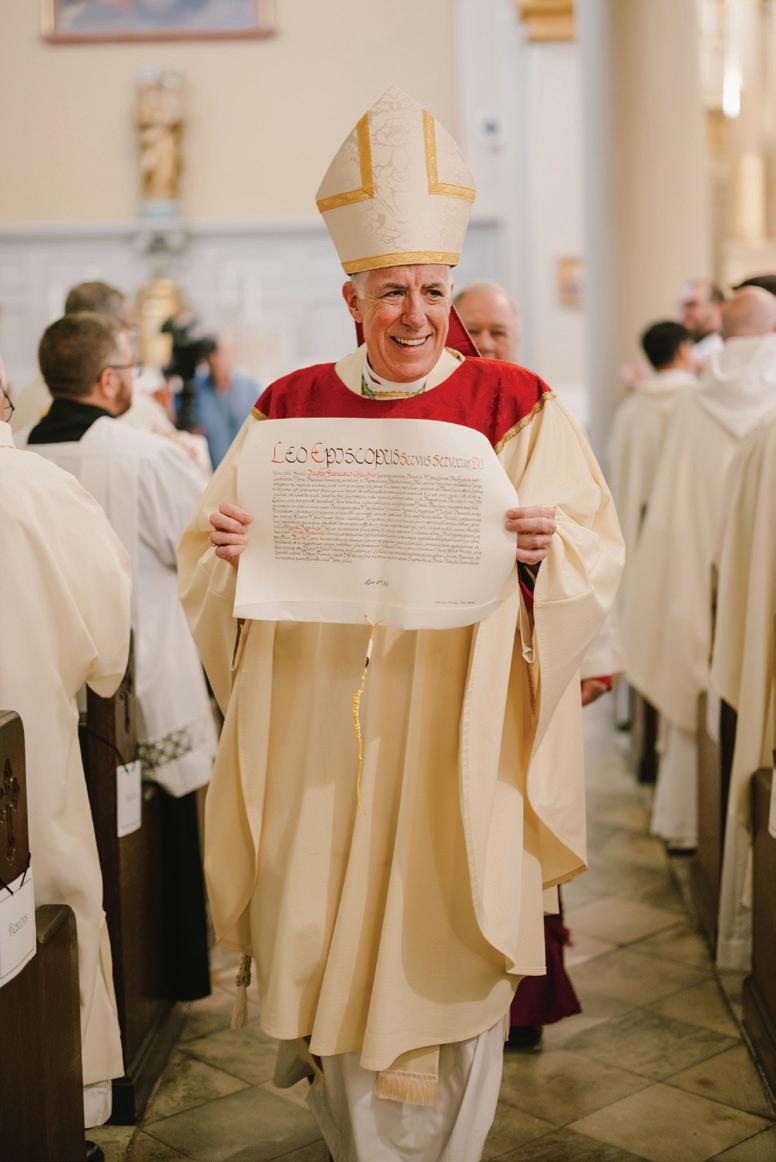
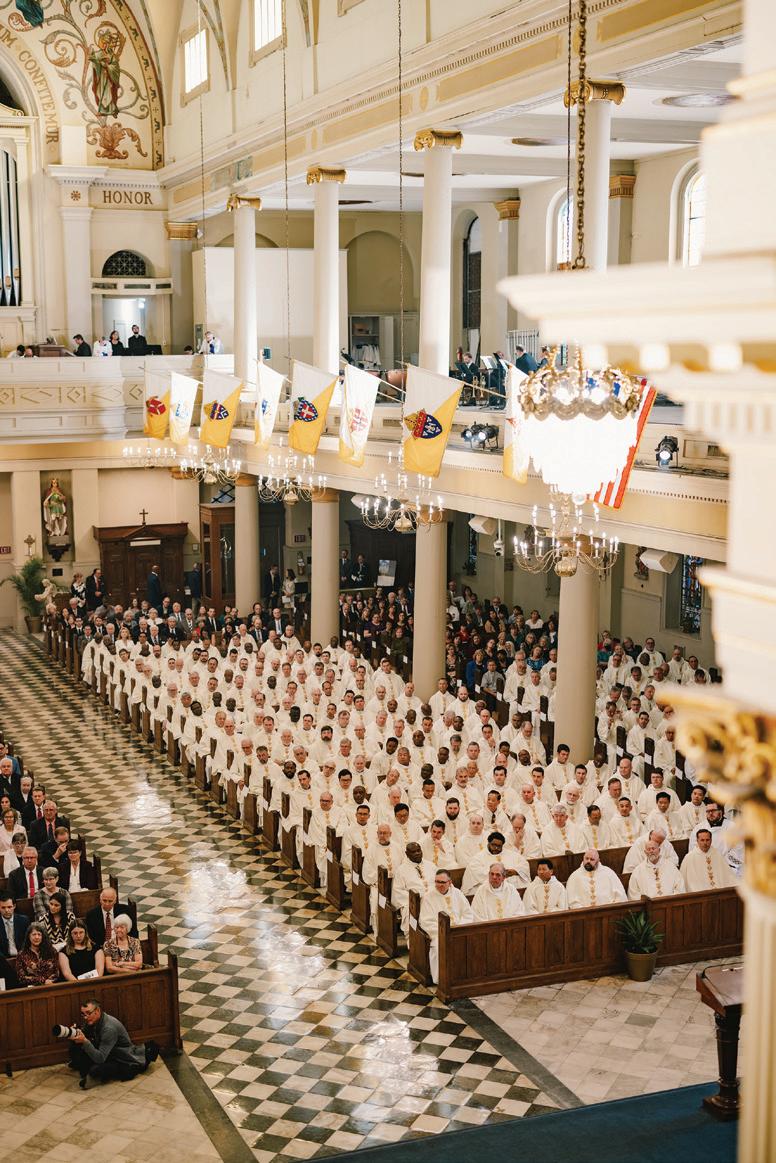
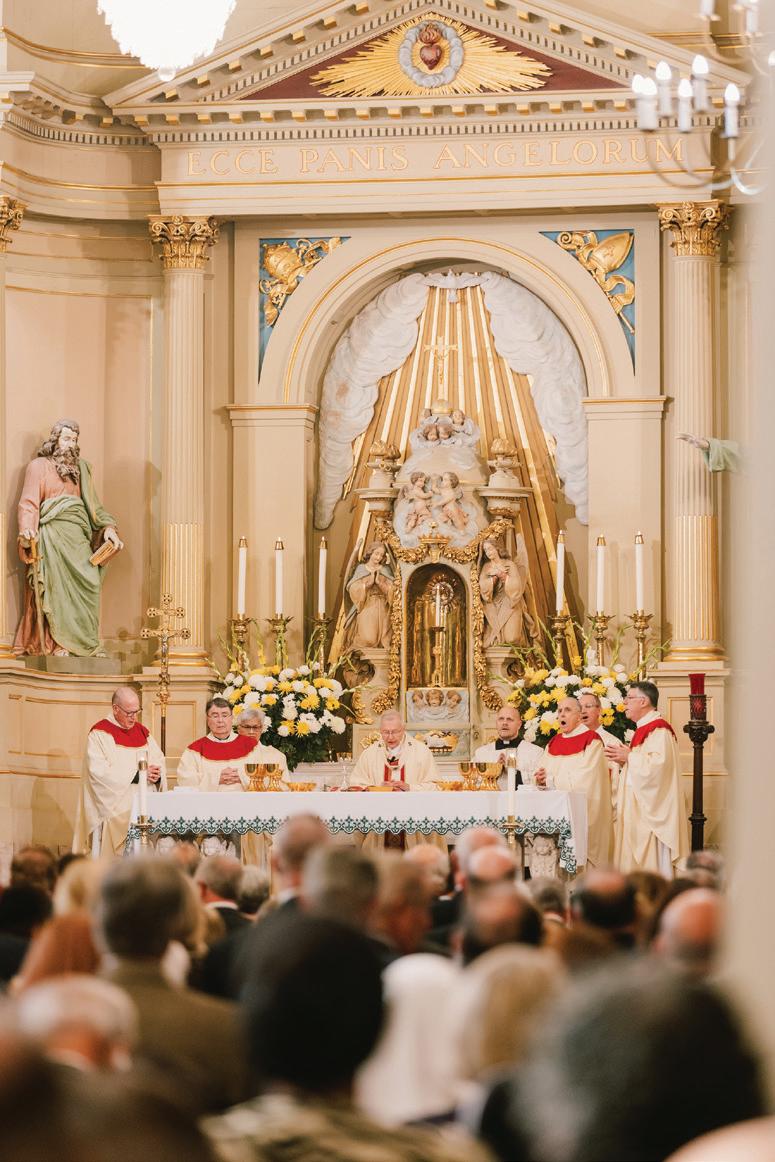
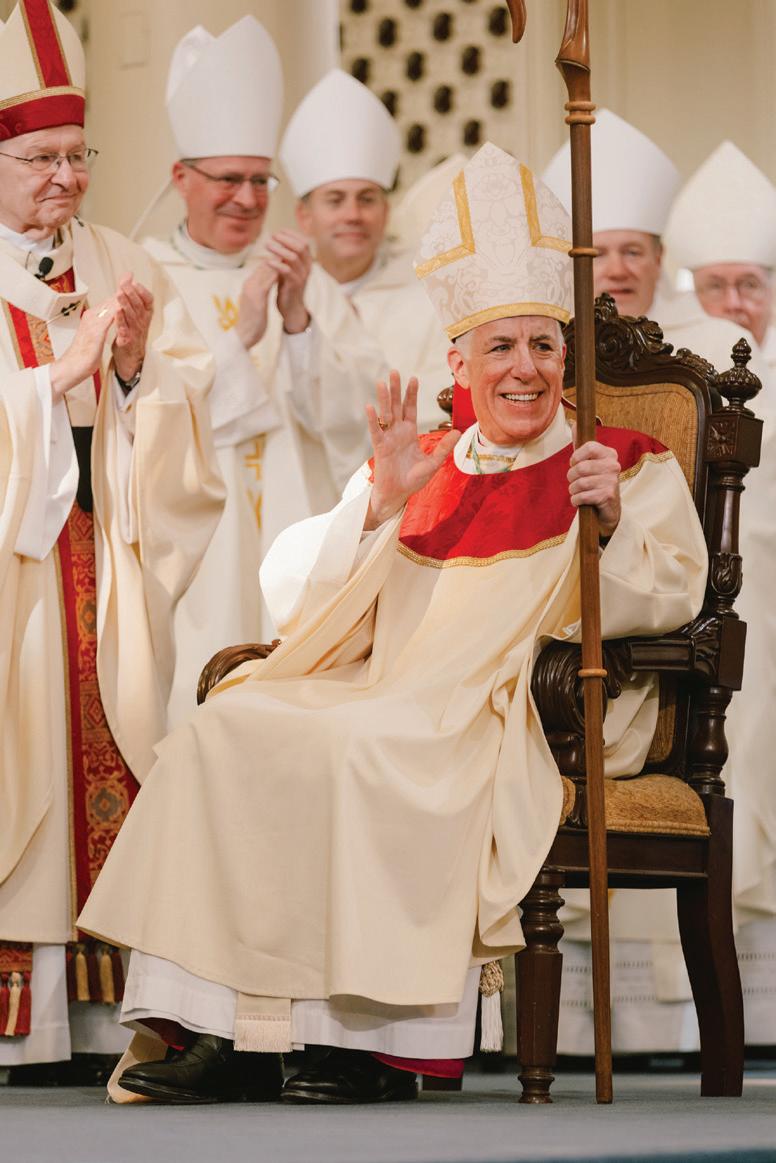
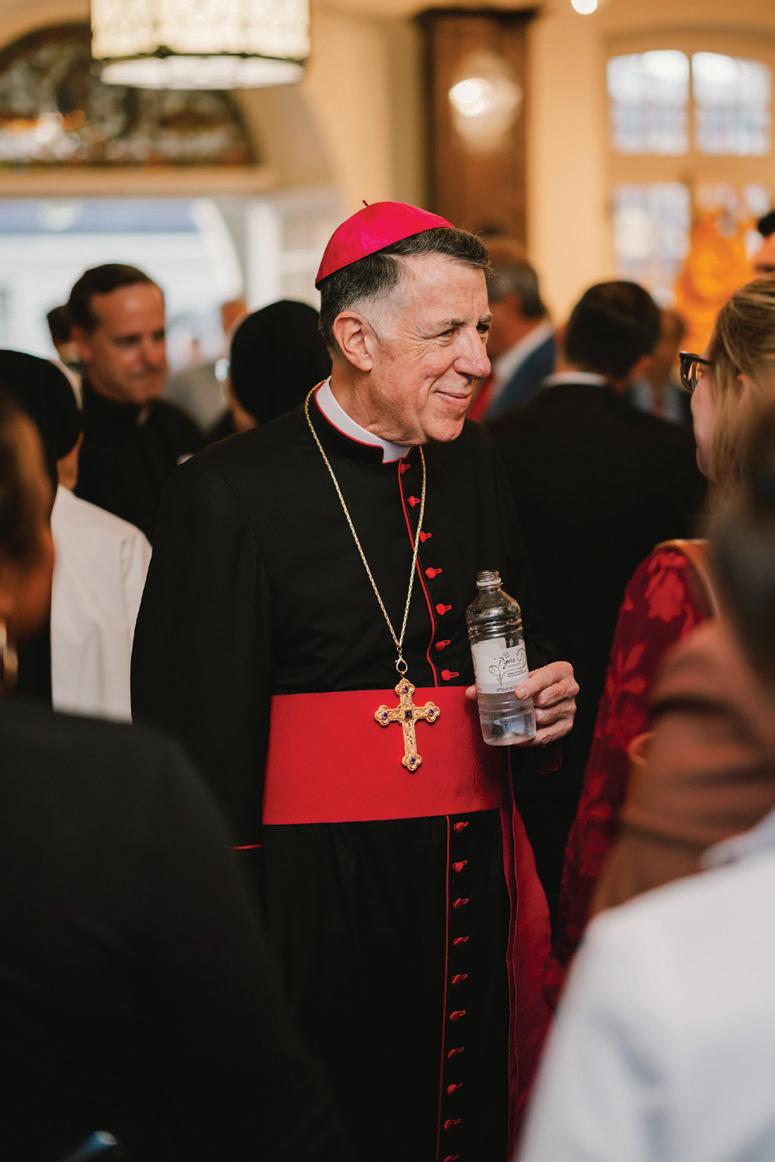
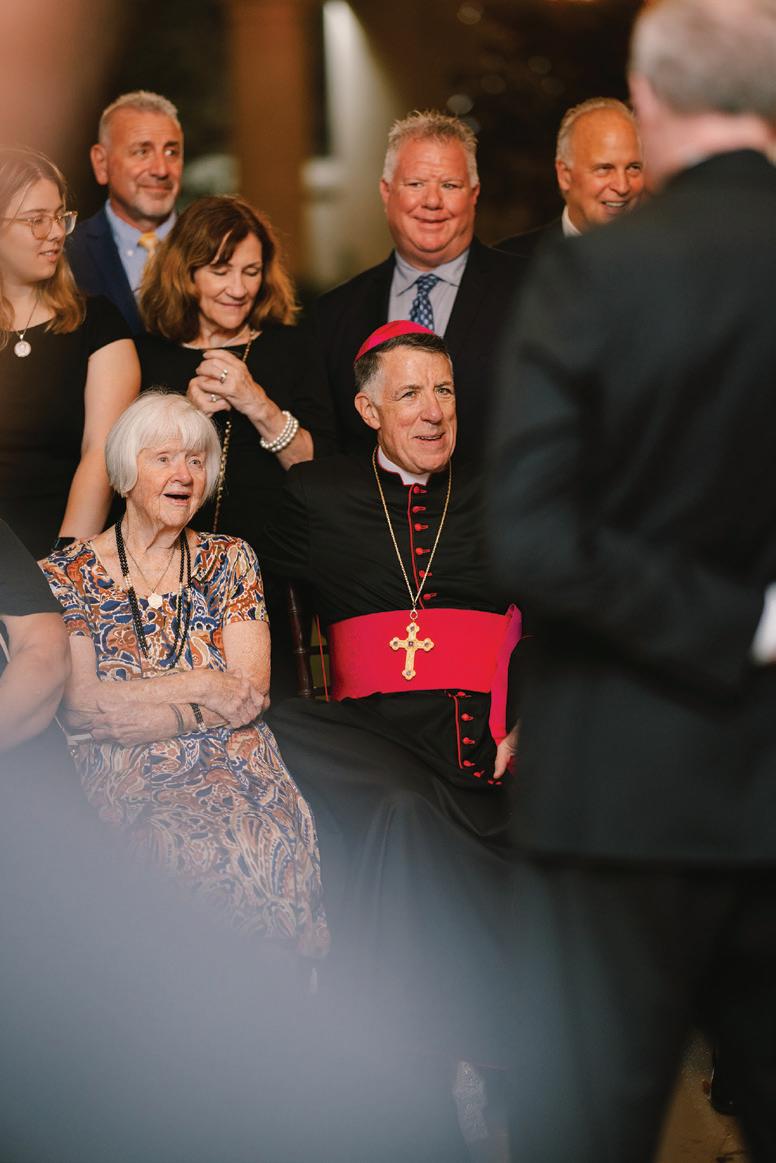
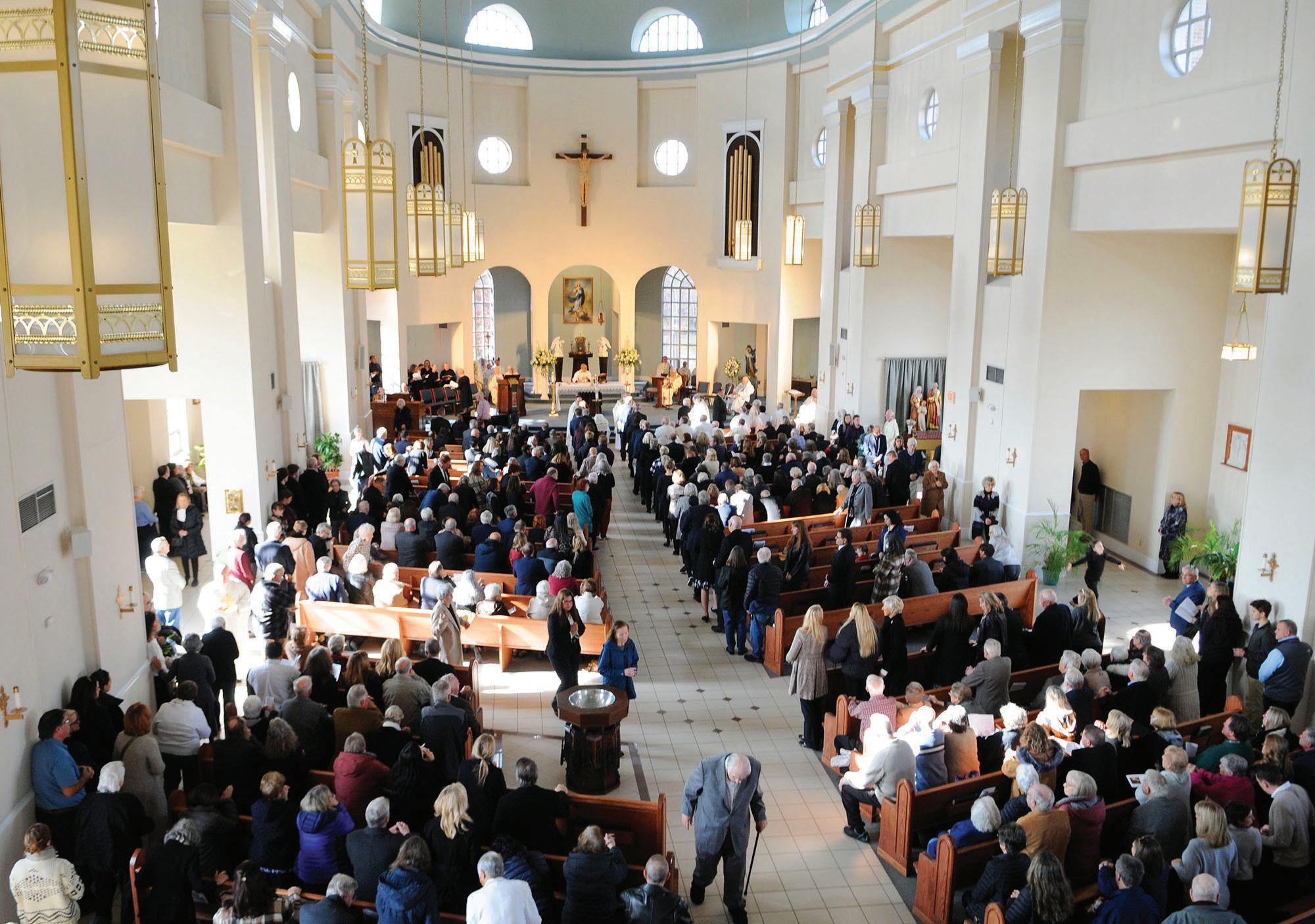
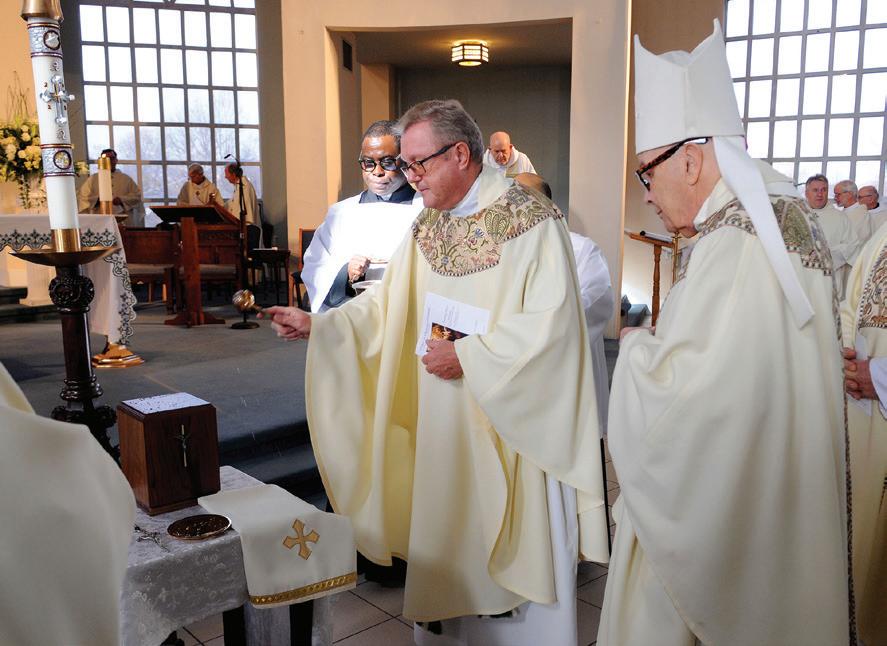
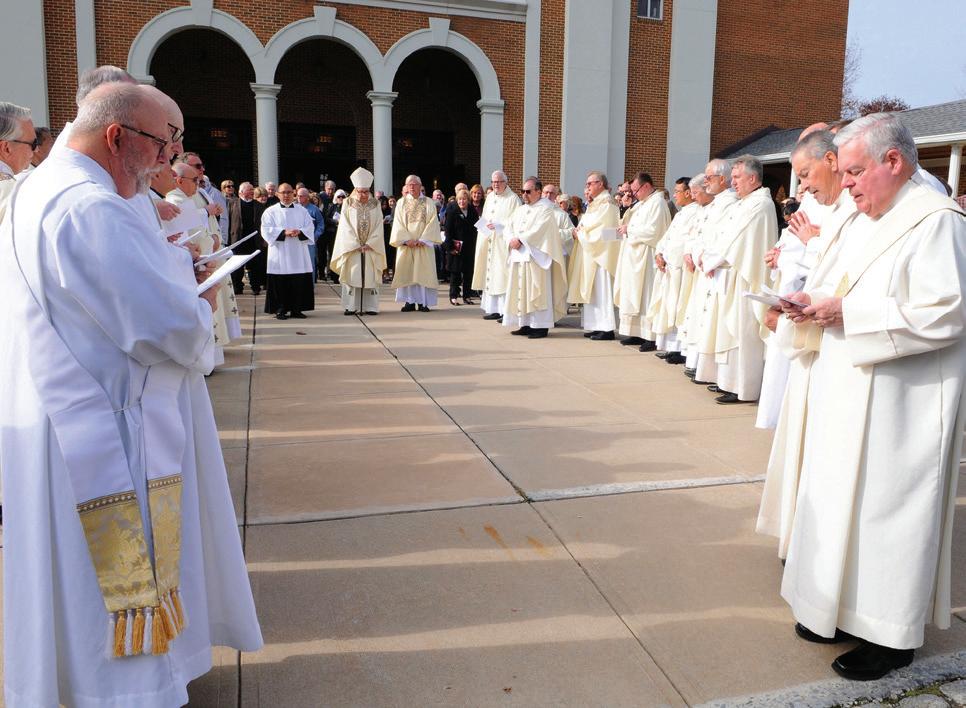
The Archdiocese of New Orleans and its people extended a warm, prayerful welcome to their new coadjutor leader, Archbishop James F. Checchio, during two faith-based events: a Solemn Vespers service Nov. 17 in the city’s St. Dominic Church, and a joyful Mass of Welcome in the St. Louis Cathedral the next afternoon.
Archbishop Gregory Aymond presided over the Solemn Vespers with Cardinal Timothy Dolan, Archdiocese of New York, serving as homilist. The full church included some 100 priests and deacons, a gathering of cardinals, family
and friends of the new archbishop, along with faithful of the archdiocese.
The following day, with a congregation of some 1,000 faithful, Archbishop Aymond served as principal celebrant of the Mass of Welcome including 38 concelebrating prelates from across the country.
The regal opening procession was accompanied by strains of a hymn honoring Archbishop Checchio’s episcopal motto, “Be Reconciled to God.” Reconciliamini Deo was composed by Tim Keyes, composer in residence for the Diocese of Metuchen, when the piece
was commissioned for the Episcopal Ordination of Bishop Checchio in 2016.
During the Rite of Possession of Office, Cardinal Christophe Pierre, the Holy Father’s personal representative to the United States, read a translation of the papal bull, through which Pope Leo XIV appointed Archbishop Checchio as coadjutor archbishop of New Orleans.
This act formally announced and confirmed the bishop’s appointment to the clergy, religious, and lay faithful. It symbolizes that the bishop’s authority comes directly from the Holy Father and
that his ministry is in full communion with the universal Church.
In his homily, Coadjutor Archbishop Checchio acknowledged, “I am so grateful … to join my voice to yours and praise our Father and hopefully add to your good and charitable works. Together, we are so privileged to write the next chapter of this archdiocese.”
Compiled by Christina Leslie, Contributing Editor —Mass of Welcome: Tyler Neil/ Archdiocese of New Orleans photos
By Rev. Msgr. Joseph Kerrigan Special Contributor
Part of being at the helm of leader ship in many organizations is to be the re cipient of a hodgepodge of suggestions, recommendations and ideas from all sorts of folks hoping to improve things, as they see it. The quantity of this input seems to be especially numerous if the entity (e.g., a parish) is in some sort of transition.
By far the most outlandish rec ommendation I’ve ever received as an incoming pastor came from a gentleman who, upon my arrival, greeted me with an anecdote of a neighboring parish. The former pastor there, who was by that point long-deceased, supposedly attract ed numerous parishioners from my nownew parish to switch to his because he offered a nine-minute Saturday afternoon vigil Mass! I was incredulous, of course, and had no way to verify this, but I didn’t have to hesitate when the parishioner then asked if I would consider shortening our Saturday afternoon Mass closer to a nine-minute limit so we could lure “our” parishioners back: “No, thank you!”
assMonastic PRAYINGTHELITURGY
also speak of contemplative liturgies and eucharists.
It’s not how much time we spend in worship, but how we spend the time.
Recently, via ZOOM, I tuned into a daily Mass that originated in Dublin, Ireland, and stretched past 70 minutes. The Mass was billed as a “Contemplative Eucharist,” part of a multi-day seminar led by the World Community for Christian Meditation (WCCM), an organization founded by the Benedictine monks Father John Main and Father Laurence Freeman in the 1970s.
A “Contemplative Eucharist” is a thing – you can do a Google search and see for yourself – but not in any official Catholic sense, as with having its own place in the Roman Missal and such. Other Christian denominations
A Contemplative Mass can best be likened to a “Youth Mass,” “Blue Mass,” “Folk Mass,” “Outdoor Mass,” and various other unofficial labels we use for themed liturgies, labels which have more to do with the people in attendance, the music or the “vibe” of the celebration.
Fully 20 minutes of that Mass in Dublin was filled in the Communion Meditation segment of the liturgy. Compared to what we normally experience in that moment – a brief pause or perhaps a hymn – for the WCCM attendees it was an invitation to practice a regular-length session of Christian Meditation within the context of the eucharistic liturgy.
In general, contemplative liturgies are characterized by reflective stretches
of silence and a slower, simpler overall pace. What makes for a good Contemplative Mass is the same for contemplation experiences generally: silence, stillness and simplicity.
We don’t need a Mass to be titled “Contemplative” for it to be so. If we bring our own inner silence, stillness and simplicity to Mass, it can be contemplative for us personally. In fact, if we don’t do some “inner work” in preparing and praying the liturgy, the “outer work” of worship suffers. The two are vitally related.
Although clergy and participants have roles in setting the tone for a liturgy, our inner disposition also plays a part. It was said that the late Cistercian Father Thomas Keating was able to practice centering prayer in noisy airport terminals while waiting for a flight. While we
might not be able to match that meditative feat, if we at least have some level of inner steadfastness, we don’t have to let the crying toddler or off-key music shape our experience of prayer in public.
Advent, that most contemplative time of the year, is a great invitation to incorporate a more meditative accent to our public worship. It’s a season of joyful expectation that implies a sense of receptivity. Silence enhances that receptivity, and there are spots in the liturgy where silence is encouraged. As St. John Paul II said in 2004, “The Liturgy, with its different moments and symbols, cannot ignore silence.”
The time after the homily and after Communion may have the more built-in periods for silence that we can profitably use, but there are also moments whenever we hear “let us pray” that can help ground us in silence.
Of course, if possible, we can always come to church early and/or stay late, and use that extended time of arrival and departure for silent prayer. For example, when I’m at Mass on retreat or otherwise on the road, I like to practice a form of Lectio Divina, where I read the day’s Gospel three times meditatively in the minutes before the Mass starts, and then hear it meditatively in the proclamation during Mass, in the hopes that I’ll receive an insight or two that might go beyond what I’d hear in the homily alone.
St. Teresa of Calcutta famously said, “The fruit of silence is prayer. The fruit of prayer is faith. The fruit of faith is love. The fruit of love is service. The fruit of service is peace.” That’s quite a harvest of fruits! But note how it starts – in silence.
Msgr. Kerrigan is pastor of St. Joseph Church, Bound Brook, and an instructor in the Institute of Contemplative Leadership at Mepkin Abbey, S.C.
Pope gives Catholics in Turkey Advent ‘resolutions’ – building bridges
By Cindy Wooden Catholic News Service
With their different rites, cultures, languages and races, Catholics find a unity around the altar that “is a gift from God. As such, it is strong and invincible, because it is the work of his grace,” Pope Leo XIV said.
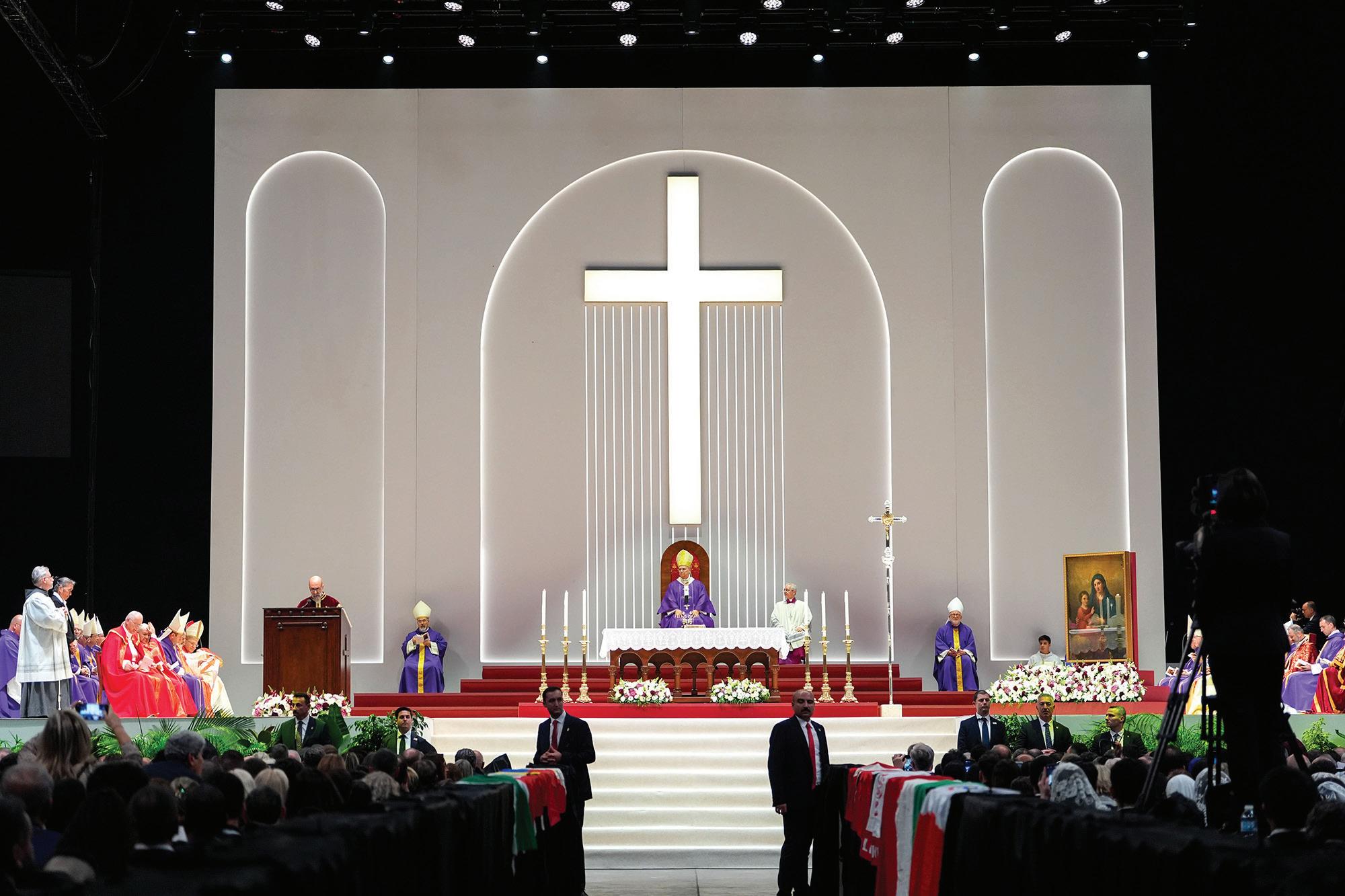
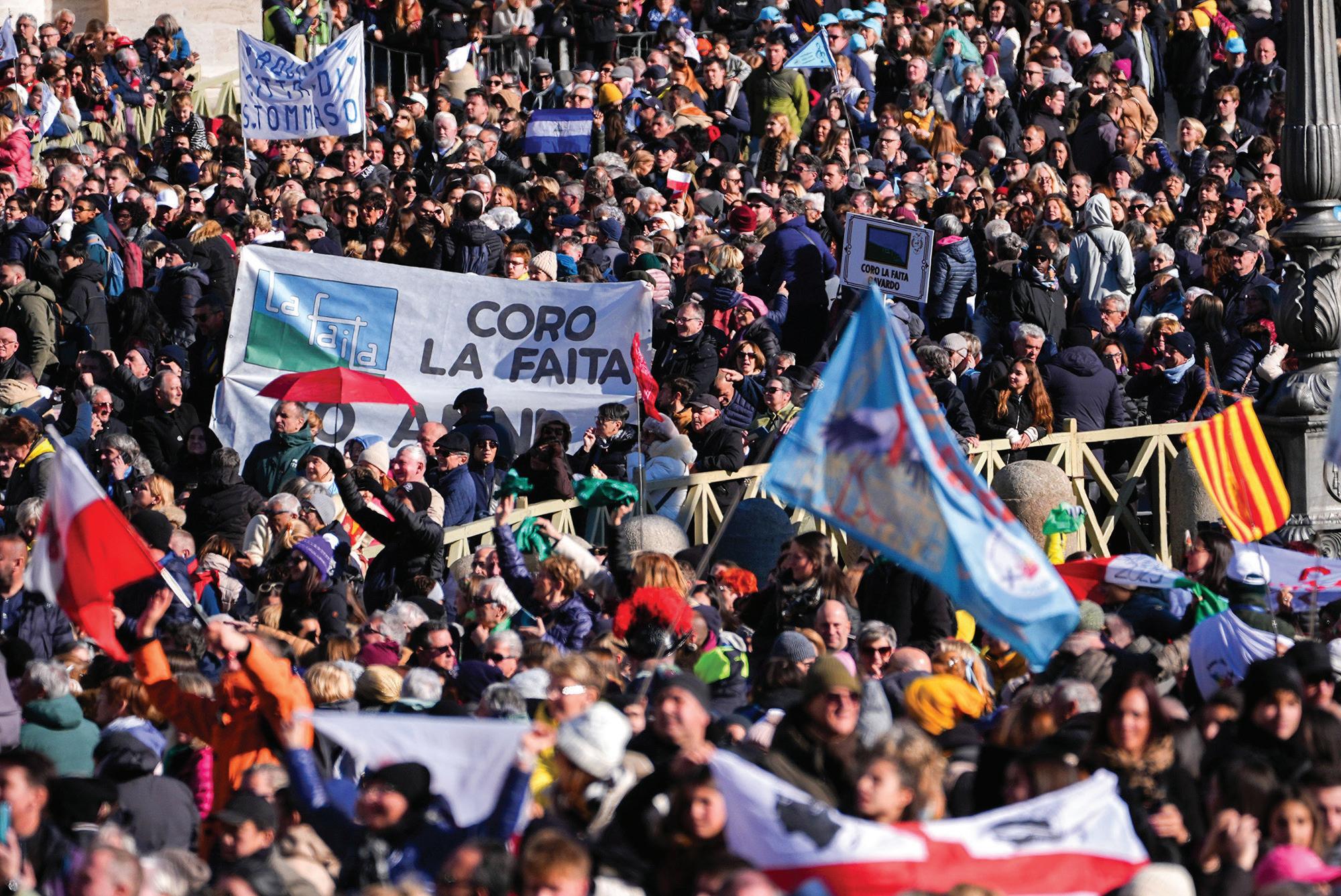
Celebrating Mass Nov. 29 in Istanbul’s Volkswagen Arena, Pope Leo was joined by laypeople, priests and bishops from the Latin, Chaldean, Armenian and Syriac Catholic churches.
The readings and prayers at the Mass were recited in Latin, Turkish, English, Armenian, Arabic and Italian.
Orthodox Ecumenical Patriarch Bartholomew of Constantinople and representatives of other Christian communities attended as well.
Celebrating the vigil Mass for the first Sunday of Advent, Pope Leo gave the Catholics what he described as “reso-
lutions” to work on this Advent: building bridges with other Catholics, other Christians and other believers in God.
The unity in diversity on display in the arena, like three Istanbul bridges over the Bosphorus Strait linking Europe and Asia, need constant maintenance to stay strong, Pope Leo said.
Speaking to the diverse Catholic communities, the Pope urged them to make every effort “to foster and strengthen the bonds that unite us, so that we may enrich one another and be a credible sign before the world of the Lord’s universal and infinite love.”
The second bond Catholics must cultivate, he said, is that with other Christians, because “the same faith in Jesus our savior unites not only those of us within the Catholic Church, but all our brothers and sisters belonging to other Christian churches.”
And, in a nation where about 99% of the population is Muslim, Pope Leo said, Catholics must practice dialogue and tol-
erance, promoting respect and peace in “a world where religion is too often used to justify wars and atrocities.”
“We want to walk together by appreciating what unites us, breaking down
the walls of prejudice and mistrust, promoting mutual knowledge and esteem in order to give to all a strong message of hope and an invitation to become peacemakers,” he said.
—Robert Thiemann/Unsplash photo
Pope Leo XIV celebrates Mass with members of Turkey’s Catholic communities at the Volkswagen Arena in Istanbul Nov. 29, 2025. —CNS photo/Lola Gomez
Advent reflections from the women doctors of the Church
By Michelle Jones OSV News
(OSV
News)
– We radiate the life of Jesus to the world to the extent that we live with the conviction that we are divinely loved. Advent calls us beyond the false
security of the merely virtuous person and into the daring surrender to God’s love of the saint.
But our feelings and the circumstances of our lives and the world around us so often make it difficult for us to be rooted and grounded in the love of God.
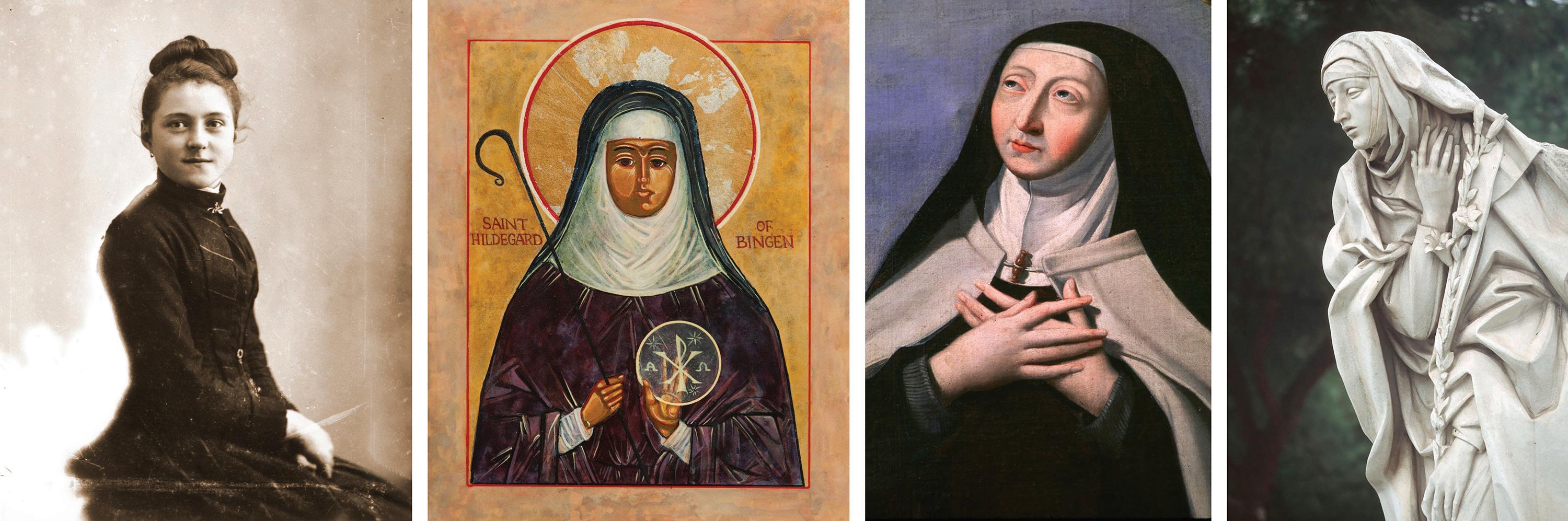
St. Hildegard of Bingen on transformation
Thankfully, what the Advent season calls us to, it also makes possible. These weeks are fertile ground for cultivating trust in the truth that no matter how things may seem to us, we are intimately and tenderly loved by God. And in living this conviction, we may ever more radiantly learn to bear Christ to others.
As we contemplate Advent themes in this spirit, we welcome into our company three radiant women, all doctors of the church, who put all their hope in God’s love: Hildegard of Bingen, Teresa of Avila and Catherine of Siena.
so be for others the presence of the living God? Is it simply a matter of dogged spiritual will-power?
John the Baptist promises that Jesus “will baptize you with the Holy Spirit” (Mk 1:1-8). The Holy Spirit enables us to enter into and live by the life of Jesus. This means that every decision we make to live in the truth that we are loved by God, while certainly our own decision, is mysteriously enabled; it is a sharing in Jesus’ trusting “yes” to live as the beloved Son of God.
At every moment, no matter our internal or external circumstances, the Holy Spirit is holding us in the flow of Trinitarian love; we simply have to choose to participate.
The writings of St. Hildegard of Bingen crackle with a living awareness of the transforming power of the Holy Spirit. For Hildegard, the Holy Spirit is the source of “viriditas,” or greenness – that vitality, freshness, dynamism which makes all life, both physical and spiritual, alive.
We glimpse Hildegard’s perception of what it means to be baptized with the Holy Spirit in the closing lines of a letter she wrote to a friend: “May He anoint you with the viridity of the Holy Spirit, and may He work good and holy works in you through that devotion with which true worshipers worship God.” The strength to live confidently as loved sons and daughters of God is not something we muster from our own interior resources. It is what, with our cooperation, the Holy Spirit causes to spring up within us.
We again hear Hildegard portraying the Holy Spirit’s power to make the divine life take root within us in her “Antiphon to the Holy Spirit.” Ringing out across the centuries and greening our Advent journey with healing and hope, she sings:
“The Spirit of God / is a life that bestows life, / root of world-tree / and the wind in its boughs. / Scrubbing out sin, / she rubs oil into wounds. / She is glistening life / alluring all praise, / all-awakening, / all-resurrecting.”
Take some time this week to notice the creation around you. Seek out any surprising signs of life and hopefulness amongst that which seems dormant and barren. Ask the Holy Spirit to stir such surprising vitality in the dormant and barren areas of your interior life, bringing about new vigor, joy and commitment.
After all, our decision to cooperate with the divine enablement of the Spirit and to live radiant with the steadfast conviction that we are beloved by God is all about growing in our living union with Jesus. We are invited in the Advent season to expose our minds and hearts anew – or maybe even for the first time – to the ecstasy of self-giving love, the torrent of utterly attentive affection, incarnate and accessible to us in the person of Jesus.
The Christian spiritual tradition teaches that praying with the Gospels is a singularly effective way of coming to know Jesus more intimately. St. Teresa of Avila has precious wisdom to offer us in this regard. For Teresa, the Gospels are a fruitful context for focusing our attention on Jesus and speaking with him in faith.
She gives us a beautiful demonstration of doing just this when she contemplates keeping Jesus company in the Garden of Gethsemane. She had been writing to her sisters about prayer, but she spontaneously bursts into prayer: “O Lord of the world, my true Spouse! … Are You so in need, my Lord and my Love, that You would want to receive such poor company as mine, for I see by your expression that you have been consoled by me?”
Teresa makes the stunning claim here that we can console the Lord in his sufferings. When she teaches us about encountering Jesus in the Gospels, she is not merely suggesting some imaginative exercise or reconstructing in our minds a historical scene. She is talking about encountering a living person.
Teresa is alive to the truth that the Gospel episodes are not over and done with, irretrievably in the past. The Jesus who lived then, lives now and all his earthly life is alive in him; the way he was for the people he encountered in the past is the way he is now for us. So, we can, in fact, be the person touching his cloak, or asking him for mercy, or pleading for living water or consoling him. The episodes of the Gospels truly are pathways to deepening our knowledge of the living Jesus.
us to step back and discern the same flourishing at work in our own lives – or at least potentially so.
Throughout Advent we have prayed that our lives may more and more bear the radiant glory of God to others. We radiate God’s presence inasmuch as we live from the truth that God loves us; this means coming to know more intimately the God revealed in Jesus, cooperating with the transforming power of the Holy Spirit, and surrendering unreservedly to that love which sustains us in being through thick and thin. To be alive with the divine life means the blossoming of our deepest identity. We become light to the world and more fully ourselves as we let ourselves be loved.
St. Catherine of Siena had a vivid insight into the reality that our true self flourishes as we grow in union with God. Her prayer “My Nature is Fire” takes our self-understanding to audacious new depths and profoundly enriches our sense of what our life in Christ offers others.
The prayer reads: “In your nature, eternal Godhead, I shall come to know my nature. And what is my nature, boundless love?
“It is fire, because you are nothing but a fire of love. And you have given humankind a share in this nature, for by the fire of love you created us. And so with all other people and every created thing; you made them out of love. O ungrateful people! What nature has your God given you? His very own nature! Are you not ashamed to cut yourself off from such a noble thing through the guilt of deadly sin? O eternal Trinity, my sweet love! You, light, give us light. You, wisdom, give us wisdom. You, supreme strength, strengthen us. Today, eternal God, let our cloud be dissipated so that we may perfectly know and follow your Truth in truth, with a free and simple heart. God, come to our assistance! Lord, make haste to help us! Amen.”
Advent both reminds us of our transcendent calling and nurtures its fulfillment within us. Throughout this sacred season, we are created into beacons of divine tenderness as the Holy Spirit shapes our lives into Jesus’ “yes” to the Father’s love.
This Advent, guided by the wisdom of the women doctors of the Church, let us throw our hearts open to God’s transforming work of love as never before. Our world needs us to do nothing less.
St. Teresa of Avila on encounter
St. Catherine of Siena on Christian identity
Michelle Jones writes from Australia. —OSV News file photos
After 111 years, St. Stanislaus Kostka Parish assigned seventh pastor
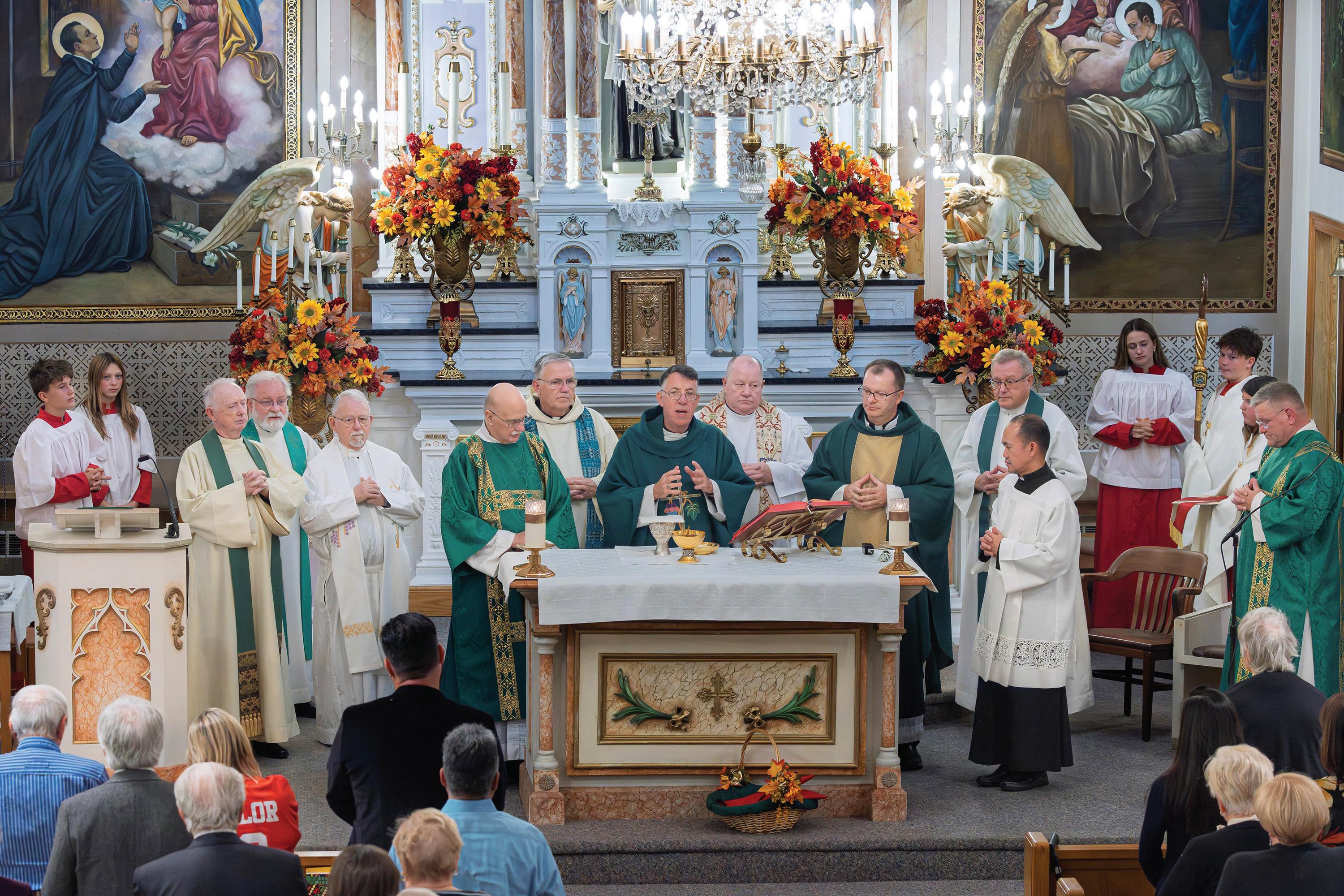
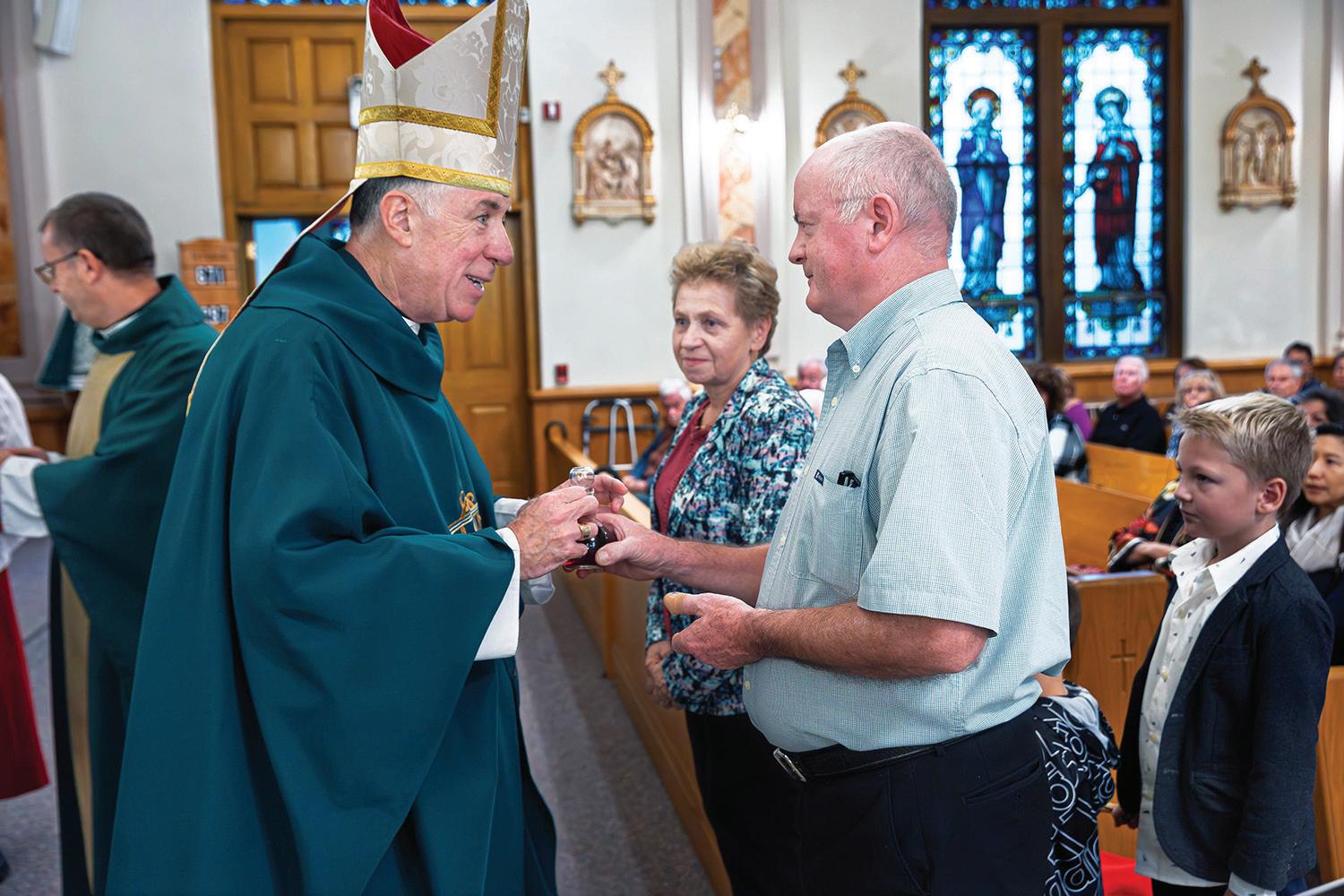
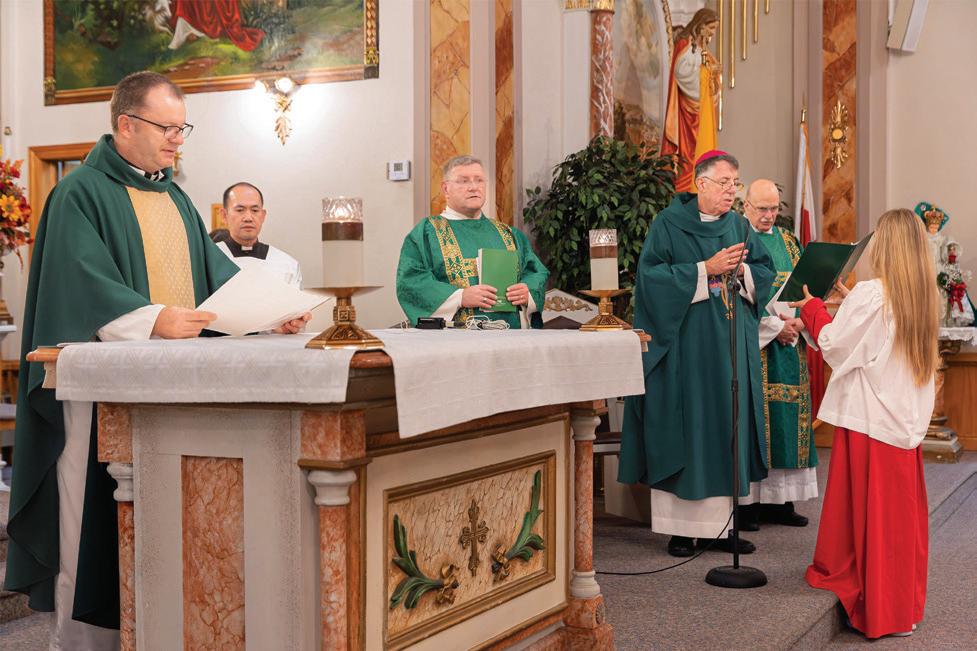
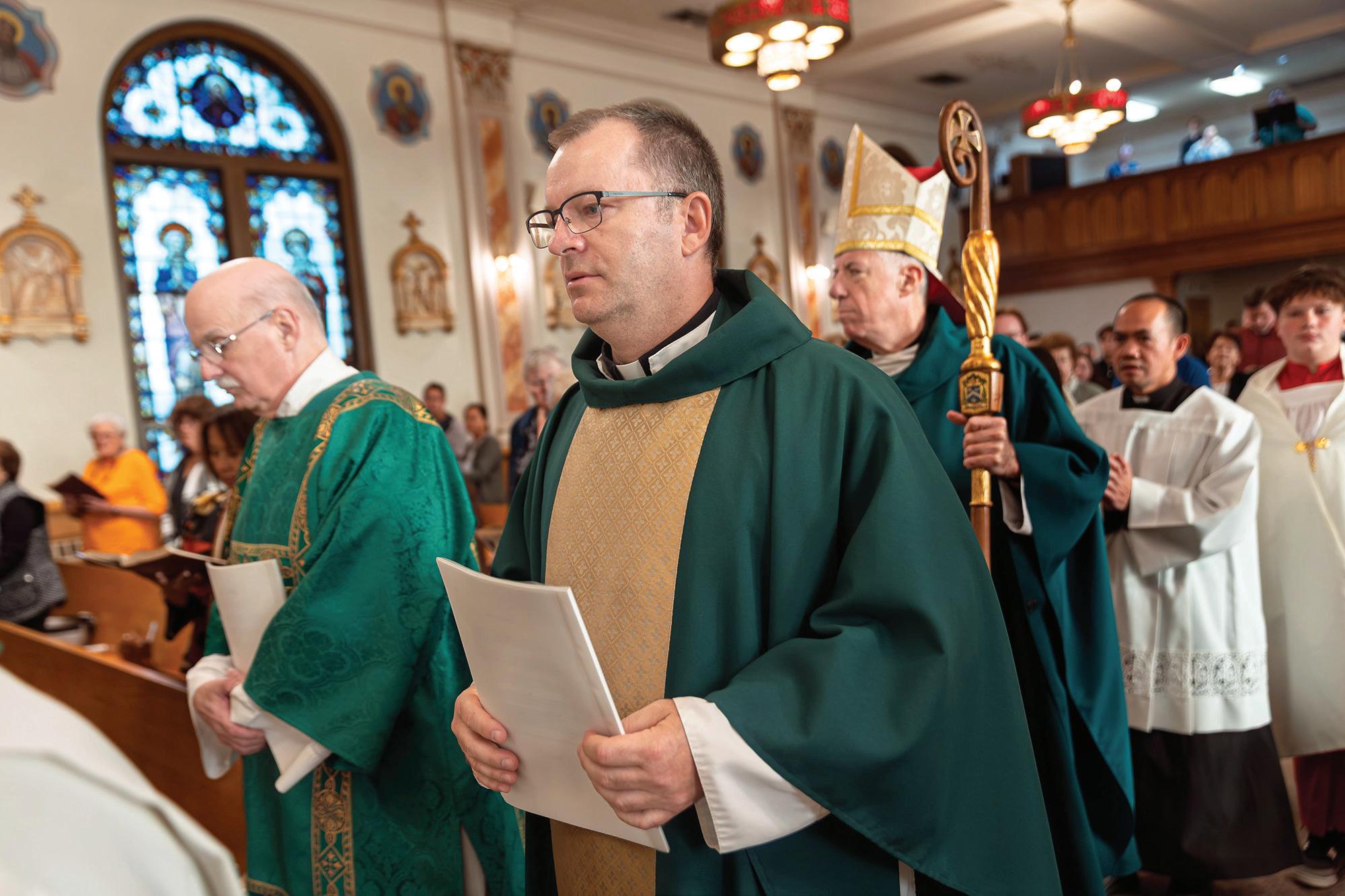
The Catholic community of St. Stanislaus Kostka Parish, Sayreville, welcomed its seventh pastor, Father Pawel Michalowski, during a Mass celebrated Oct. 18 by Archbishop James F. Checchio (top photo). The new pastor, fluent in Polish and English, was formally introduced to the parish’s clergy and staff, finance and pastoral councils and civil trustees as he prayed his Oath of Fidelity (left and center pictures.) At right, Father Pawel processes to the altar; he later remarked, “I feel very much at home in Sayreville.”
—Hal Brown photos
By Deacon Patrick Cline Correspondent
The history of St. Stanislaus Kostka Parish, Sayreville, is unique. Though established in 1914, during the ensuing 111 years there have only been six pastors. On Oct. 18, Archbishop James F. Checchio installed the seventh, Father Pawel Michalowski, who had previously served as parish administrator.
Serving as principal celebrant and homilist for the Mass of Installation, Archbishop Checchio quoted Pope St. John Paul II, saying, “The first task of a priest is to be a believer, to become one and to renew evermore. The gift of the priesthood is to give every single member of the human family someone to believe with, no one is left to believe alone. As your Bishop I assure you that without a doubt I am a believer and I happily entrust you to another believer, your new pastor, Father Paul Michalowski.”
The Archbishop reminded the congregation, “In our Gospel today we heard Jesus teaching on the need to persevere
in prayer. He tells us that perseverance in prayer is what will keep the faith alive. Prayer is certainty important in the Gospel of St. Luke where he recounts eight instances of Jesus withdrawing to pray.
Jesus wants us to draw closer to him each day. The Eucharist of course is the most important prayer that we have. It inspires us to be the type of disciples that Jesus wishes us to be.”
After the homily, Father John Alvarado, retired priest of the Diocese, formally introduced the members of the four groups that the pastor will have to work with and rely on: the clergy and staff of the parish, the finance council, the pastoral council and the civil trustees.
Father Michalowski acknowledged his appreciation for the work of each group and committed to seek their counsel in their respective areas. He then led his parishioners in praying the Creed and proclaimed his Oath of Fidelity.
Father Michalowski was born in Częstochowa, Poland, home of the Black Madonna, where he received his primary and secondary education. “I thought of
serving the Church as a priest just before I finished high school. I was inspired by the spirit of the local youth group at that time.”
Father Michalowski entered the seminary in Krakow, Poland where he studied philosophy and completed his theological studies in Nairobi, Kenya, where he received a Bachelor of Sacred Theology in Sacred Scriptures. He also has a Bachelor of Commerce in Management Accounting from the University of South Africa.
After Ordination, he said, “My assignments in the missions included Johannesburg and Cape Town, South Africa, as well as in the Kingdom of Lesotho (Maseru), working with the youth in those locations.” He came to the United States in 2019 and was incardinated into the Diocese of Methuen in October 2024.
Before being named as the administrator of St. Stanislaus in November 2024, Father Michalowski was assigned to Immaculate Conception Parish, Somerville, as parochial vicar.
St. Stanislaus is an active parish community comprised of many Polish
speaking as well as English speaking parishioners. The fact that Father Michalowski is fluent in both languages made his transition into the new role very easy for all. “I feel very much at home in Sayreville, among many people of Polish descent,” he said.
He continued, “Our parishioners are very dedicated to keeping the parish and school open. At a time when so many Catholic Schools are closing we would like to offer a good Catholic education and even more to the children in our parish.”
Michael Galesiowski, a parishioner for 25 years said, “Father Michalowski deals very well with both communities. From the beginning he has tried to get to know all the parishioners and has asked for suggestions for the future of the parish.”
Archbishop Checchio asked the parishioners, “to pray for our priests and pray for more holy priests, for young men to join the priesthood. We need priests for our Church and our world, maybe now more than ever. I am grateful to you and I am praying for you. And I ask you to pray for me.”
Hispanic Heritage Mass a joyful Eucharistic celebration of faith, unity
By Adriana Molina, Correspondent
The Diocese of Metuchen celebrated the Hispanic Heritage Mass Oct. 10, with a full house. This year’s celebration carried not only the joy of honoring multicultural roots, shared flavors, and parish reunions at the Cathedral of St. Francis of Assisi, a beloved tradition for many years, but, also, with a feeling of wistful farewell for Archbishop James Checchio, the principal celebrant, who has been appointed by Pope Leo XIV as the new Archbishop of New Orleans.
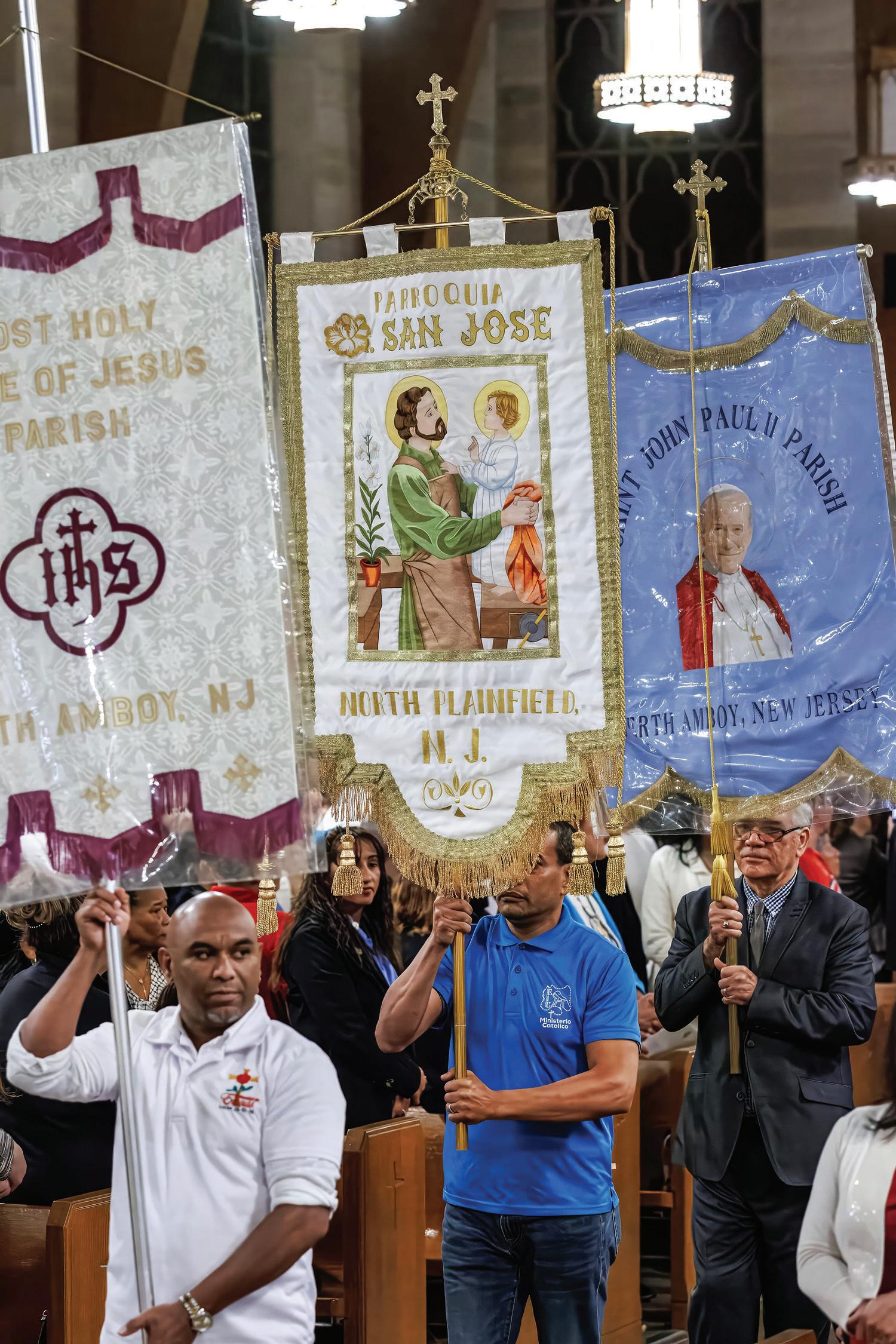
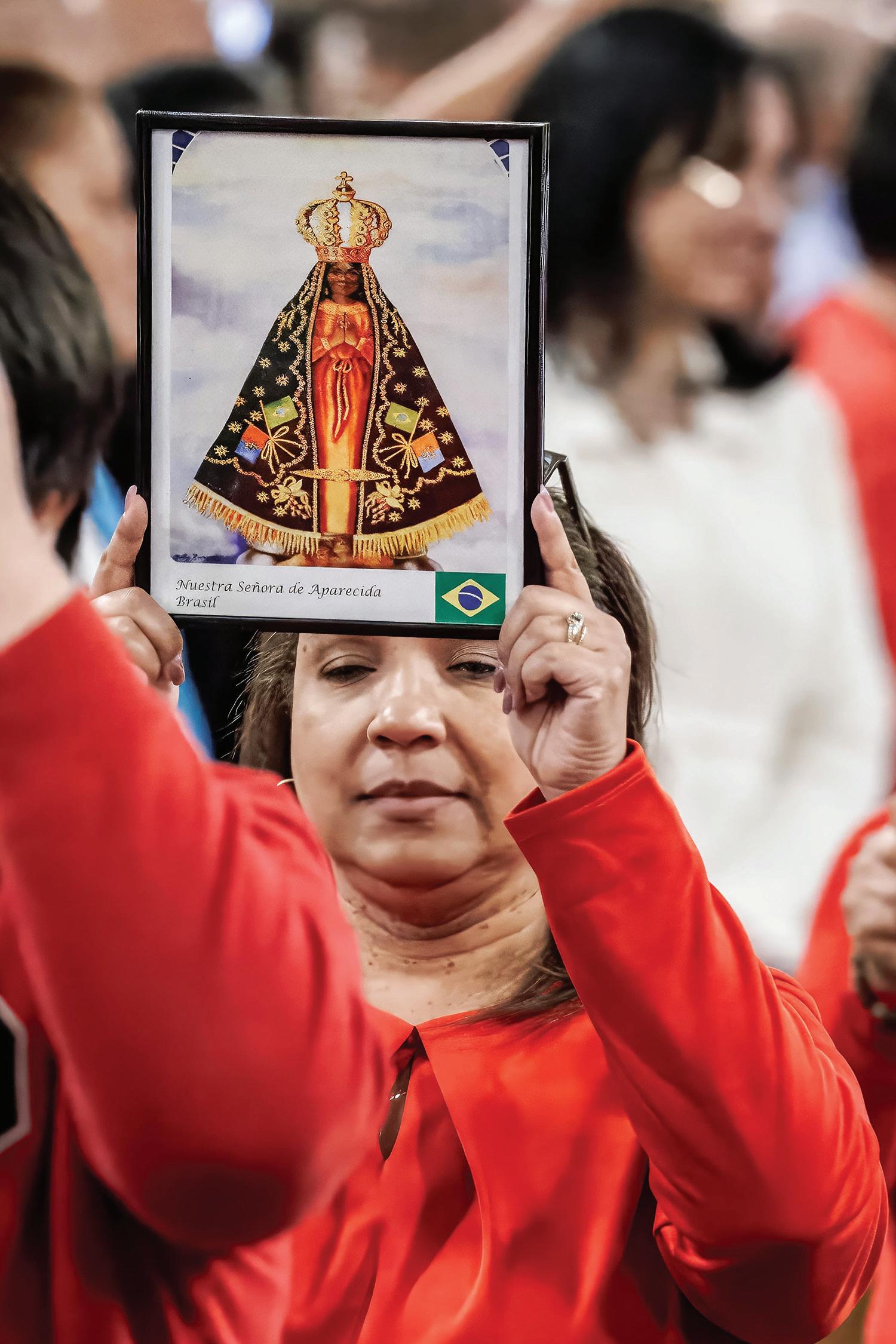
The celebration began with the Holy Rosary, led by Father Ronald Vega Pastrana, assistant to the coordinator of lay formation in the diocesan Office for Hispanic Evangelization. The procession featured Our Blessed Mother Mary under her many Latin American titles. Some 22 Marian images were carried in, preceding Archbishop Checchio, the priests, and deacons of the Diocese who gather each year to celebrate and share the Hispanic Heritage Mass with the community.
During his homily, Father Randy Gamboa Espinoza, parochial vicar of St. Mary Magdalene de Pazzi Parish, emphasized that the Diocese of Metuchen is united in Christ Jesus. He highlighted the contributions of the Hispanic community to the life of the Church in the United States and the deep Catholic faith that strengthens this unity day by day.
In a world marked by division and conflict, he reminded everyone that the Lord calls us to solidarity, to love one another, and to seek justice, as we live the fruits of Christ’s Kingdom even when we do not always recognize them.
Reflecting on the Gospel reading, in which Jesus prays for his disciples and for those who will believe in him, Father Gamboa reminded the faithful that this prayer is an invitation to live unity as a visible testimony of God’s love. It is not only about gathering in celebration, but about recognizing that each person is part of the Body of Christ, called to
reflect his light amid the darkness of the world, to support their local community and priests, and to build a living, active faith that radiates authentic love and true communion in Christ.
Among the parishioners attending were the Pérez-Dennis and Santos families from Holy Name of Jesus Parish, Perth Amboy, who have joyfully served at this celebration for 30 years, welcoming all the faithful each year.
Also present were Reina and Rafael Hernández from St. Joseph Parish, North Plainfield, members of the Emmaus group, who attended the Hispanic Mass for the first time with their children. The family, consecrated to Our Lady of Guadalupe, expressed their devotion and gratitude for the opportunity to grow in faith together.
Dionisia Pérez, from the Prayer and Hospitality Group at St. Mary Magdalene de Pazzi Parish, participated for the second consecutive year. She shared her joy in seeing everyone come together as one to celebrate the Eucharist: “I feel the songs touch my soul and open the way to the Word of God. The joyful Hispanic spirit lifts us up and reminds us of the warmth that unites us,” she said.
Archbishop Checchio thanked the community for their presence at the Hispanic Heritage Mass, recognizing their collaboration, contributions, and the affection they show in all they do. He expressed that he will deeply miss the Hispanic community and carries with him its warmth, joy, and steadfast commitment.
Deacon Edgar Chávez, director of the Office of Evangelization, offered final words of gratitude to the Archbishop for his unwavering support, participation, and love for the Hispanic community through all its ministries, events, and initiatives.
At the conclusion of the Mass, the community shared a touching moment with the Archbishop, viewing a photo presentation of memories from his time among them, followed by a multicultural reception.
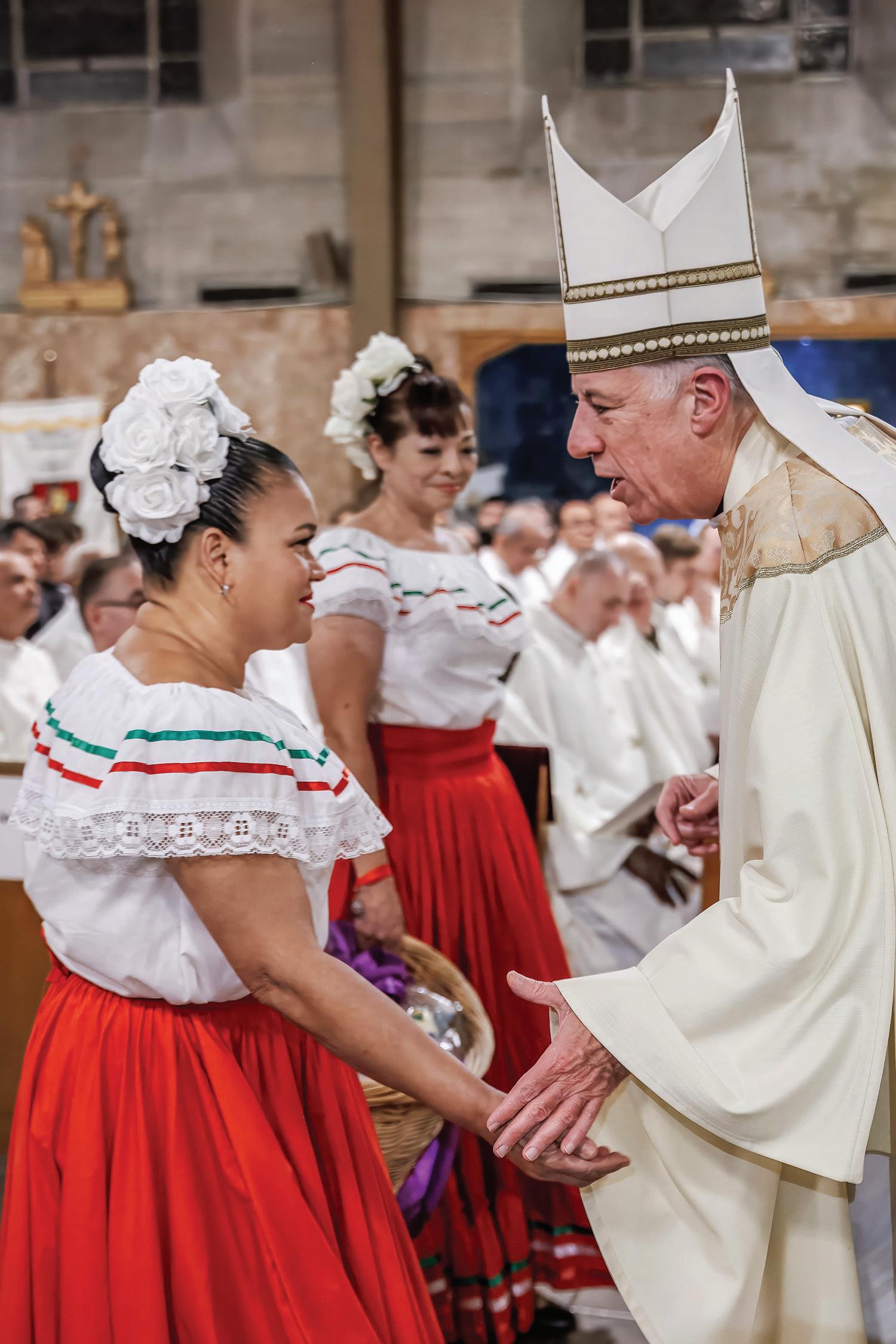
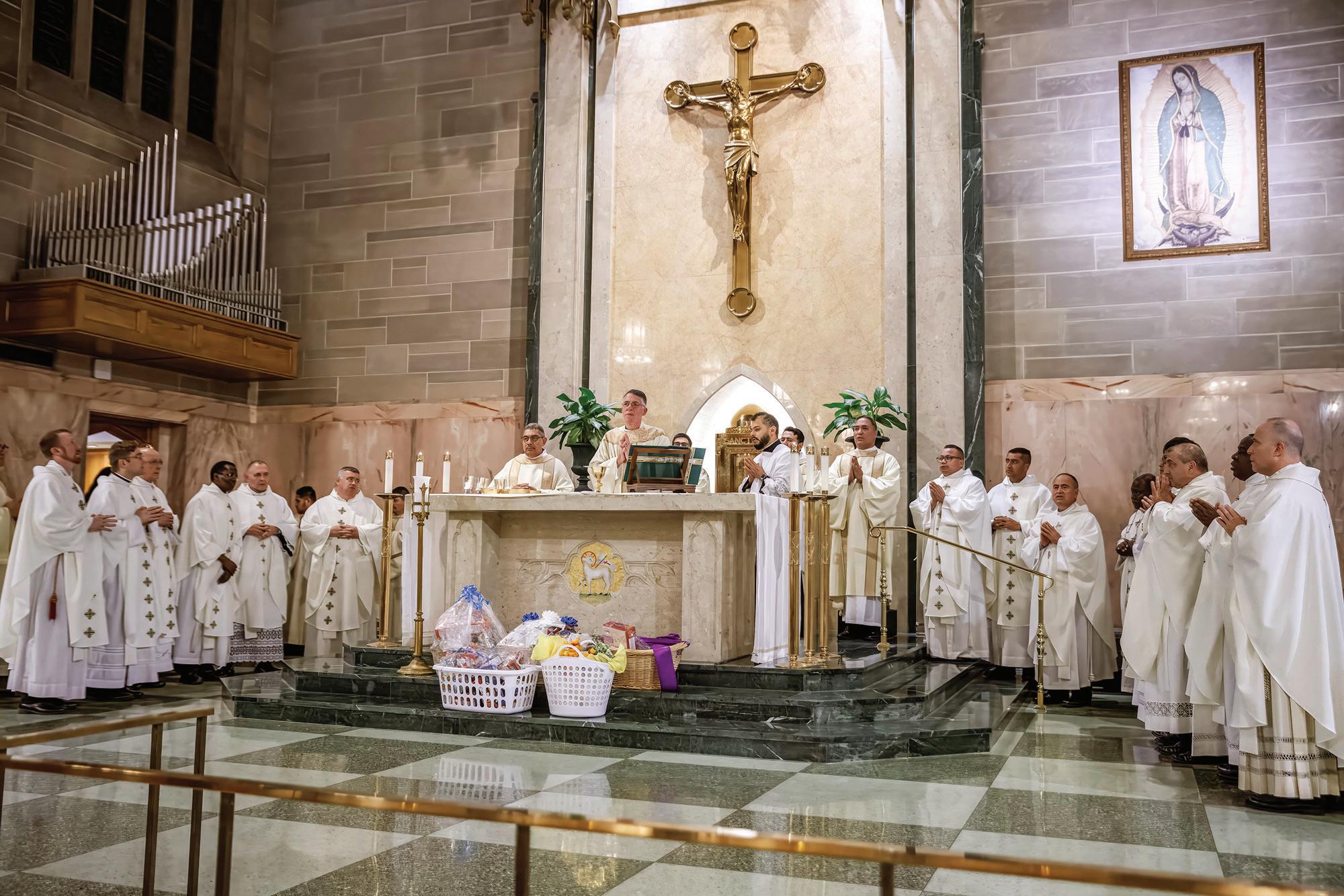
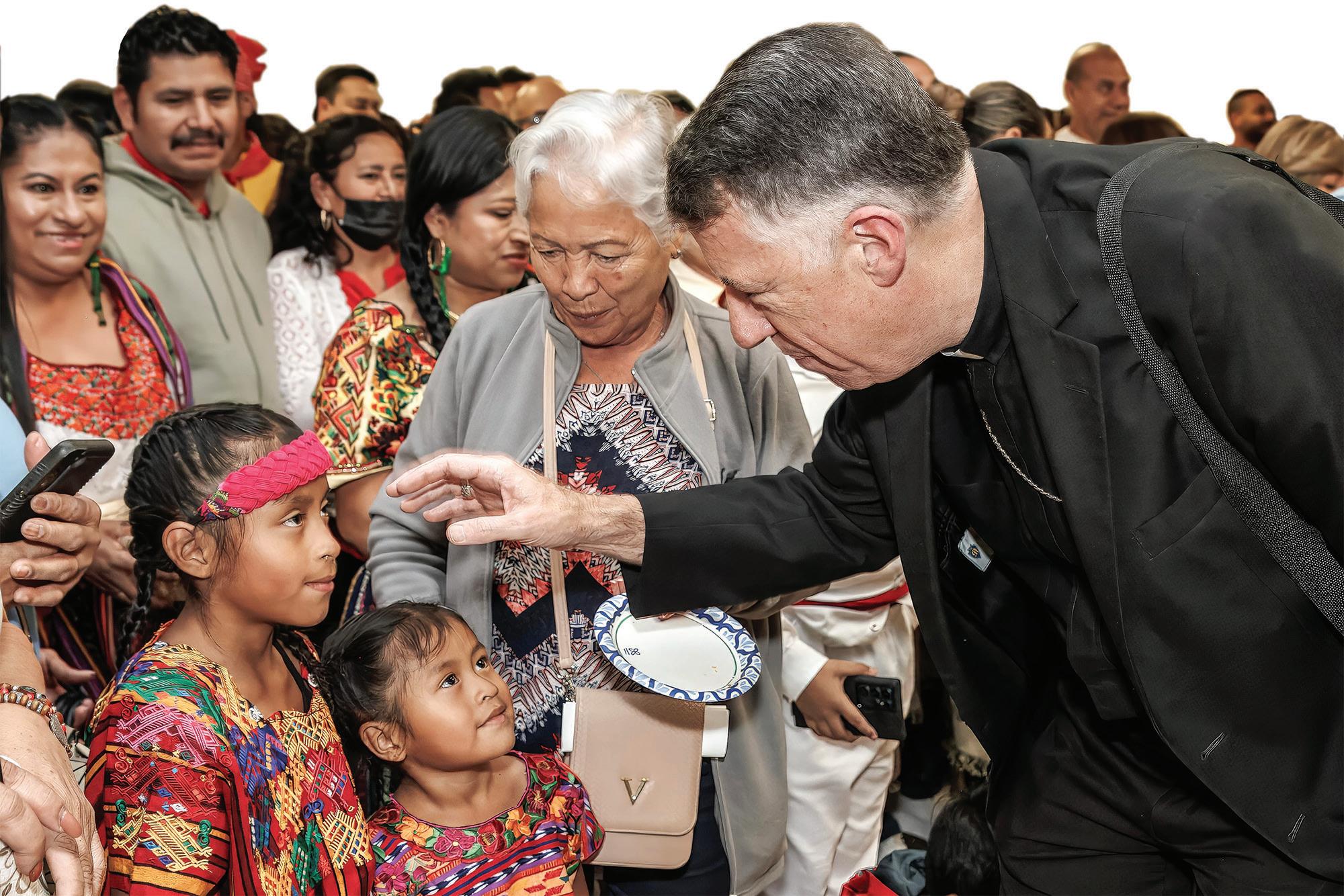
diocesan Hispanic Heritage Mass Oct. 10 held in the Cathedral of St. Francis of Assisi began with a joyful procession of banners and pictures of some 22 Marian images (top left and center) as well as worshippers in ethnic dress presenting the gifts of bread, wine and food for the needy (top right). Clergy from numerous multicultural faith communities (lower right) echoed the words of homilist Father Randy Gamboa Espinoza, who asserted that, despite its differences, the Diocese of Metuchen is united in Christ Jesus. Bottom right, Archbishop Checchio greets some of the littlest attendees. —Hal Brown photos
The
What should a parish actually look like?
November 19 marked the 44th anniversary of the Diocese of Metuchen, established by Pope John Paul II in 1981. While the Diocese is home to many vital places like St. Peter’s Hospital, the Blue Army Shrine, and the Blessed Sacrament Shrine, not to mention our schools and cemeteries, the heart of its mission lies somewhere else. The primary way the Church actually connects with and serves people is through our 90 parishes scattered throughout Middlesex, Somerset, Hunterdon, and Warren counties.
This leaves us with an important question to consider: What should a parish actually look like?
Most parishioners may visit the pastoral office of their parish church at one time or another. Some do so for Mass cards or to drop off donations missed in the regular collection, while some find themselves visiting their priest or pastoral minister to arrange for a loved one’s funeral or to prepare for an upcoming wedding.
Others visit the parish office to ask
about a new program announced at Mass or to find a parish group that best suits their interest in building a better relationship with the Lord Jesus, such as a women’s or men’s group or Knights of Columbus. Some wish to get more actively involved in the liturgical life of the parish as members of the choir, or lectors (readers), altar servers, musicians or extraordinary ministers of Holy Communion, or to become catechists to teach the children our precious Catholic faith.
Some wish to learn more about
servants from our local municipalities come to visit or to worship, whether they be police officers, fire fighters, EMS workers, nurses, doctors or hospital workers. We are here for them, supporting them in their unique service roles to the public!
Priests and pastoral ministers (deacons, consecrated Sisters/Brothers and lay leaders) are charged with providing leadership, support and inspiration to the people of God for evangelization and pastoral renewal. Therefore, the churches, and the offices and parish rooms they use should be inviting and clutter-free.
All parishioners have contributed to the upkeep of buildings through their sacrificial gifts and need to see with their own eyes that the parish environment reflects and promotes higher spiritual values with surroundings that are clean, inviting, and a blessing!
Heaven, Hell or Purgatory or are interested in one or more of the seven Sacraments of Baptism, Confession, Holy Communion, Confirmation, Holy Matrimony, Holy Orders, and the Sacrament of the Sick and Dying. Some come for meetings or prayer groups or to contribute to a special project or prepare gift baskets or food for the poor or to help prepare for a parish event that requires fellowship (food or drink).
When a parishioner walks into the parish office, what greets them? They should step into a space that feels pristine, well cared for and inviting, run like a well-oiled machine. The office (and really every building on the parish grounds) should feel distinctively Catholic with a crucifix in every room and statues of our Blessed Mother and the Saints. Details matter: Walls should be well maintained, paint fresh, and carpets and floors spotless. Behind the scenes, technology needs to be up to the task, with computers updated for the census and accounting kept current.
And perhaps most importantly, the people, from the custodians to office staff and priests, must always offer a welcoming presence. Parish staff and volunteers in the office are meant to be, in the words of St. Paul, “Ambassadors for Christ” (2 Corinthians 5:20). It is about being ready and willing to let the Holy Spirit speak the truth through them, always with a joyful and inviting spirit.
A parish church is essentially Christ’s presence in the neighborhood. That means all staff and volunteers need to truly recognize the crucial role they play in doing the Lord’s work and not being afraid to stand firm in faith and love the Lord in all ways.
We live in a time when evil wins if we stay silent. We each need to enjoy a deep prayer life, proud of our faith, inviting people into our circle of Christian life, whether mail carriers, subcontractors, visitors from an outside retail outlet, people from local restaurants, florist shops, or other places.
We are also delighted when public
The greatest blessing for every parish, of course, is to have priests who Preach the Gospel Prophetically. “By Ordination (the Holy Spirit) confers on the priest the prophetic task of announcing and explaining, with authority, the Word of God... The priest with the help of the Holy Spirit and the study of the Word of God in the Scriptures, with the light of Tradition and of the Magisterium, discovers the richness of the Word to be proclaimed to the ecclesial community entrusted to him.” (Directory on the Ministry and Life of Priests, 9).
Therefore, by way of example, the priest should never preach politics! Rather, the priest ought to preach the full Gospel, which in itself includes all aspects of reality including politics!
With and for his parishioners, the priest is also charged with celebrating the Eucharist and other liturgical services with sincere devotion. “For priests, as ministers of sacred things, are first and foremost ministers of the Sacrifice of the Mass: the role is utterly irreplaceable, because without the priest there can be no Eucharistic offering. (Pastores Dabo Vobis, 48). And, of course, without the Eucharist there is no Church.
We are most blessed, as well in the Diocese of Metuchen, with the many religious communities that are represented, including the Augustinian Recollect Nuns, the Congregation of the Sisters of Saint Martha, the Sisters of Mercy, the Sisters of St. Lucy Filipini, the Little Servant Sisters of the Immaculate Conception, the Brothers of the Sacred Heart, the Brotherhood of Hope, and many others.
And finally, we are truly blessed to have our 90 parishes staffed, not only by Diocesan priests, but by priests from various religious communities reflecting an abundance of spiritualities, all under the umbrella of the One, Holy, Catholic and Apostolic Church!
Father Hillier serves as diocesan director, Office of Pontifical Mission Societies, the Office for Persons with Disabilities and Censor Luborum.
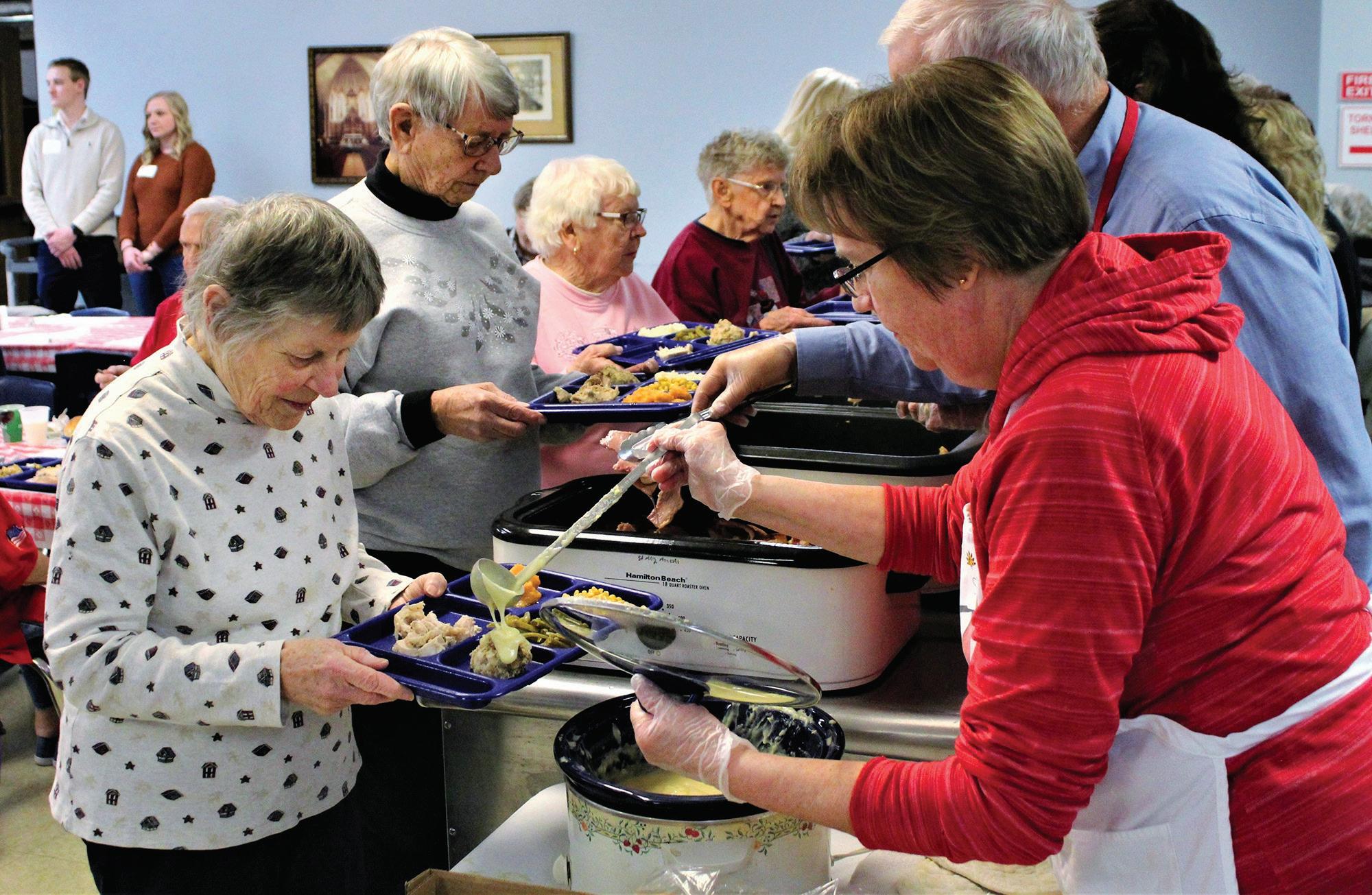
Volunteers serve food during the 20th annual Community Thanksgiving Dinner at St. Mary Parish in Menasha, Wis. —OSV News photo/Brad Birkholz
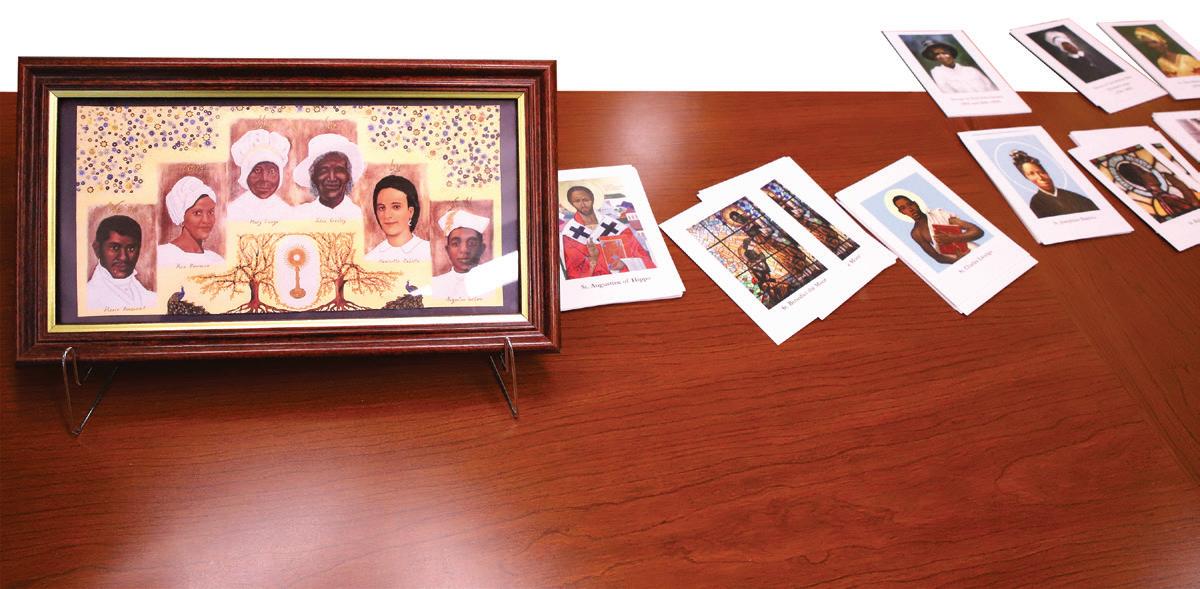
Black Catholic History Month Mass celebrates contributions, vibrant faith of Black Catholics
Black Catholic History month is celebrated every November to honor the history and contributions of Black Catholics to the Church. It was established in 1990 by the National Black Catholic Clergy Caucus of the United States. November was chosen to align with important dates like the feast day of St. Martin de Porres (Nov. 3), the patron saint of mixed-race people and racial harmony and the birthdate of St. Augustine of Hippo (Nov. 13), an influential North African, doctor of the Church. November also marks the Church’s remembrance of all saints and souls.
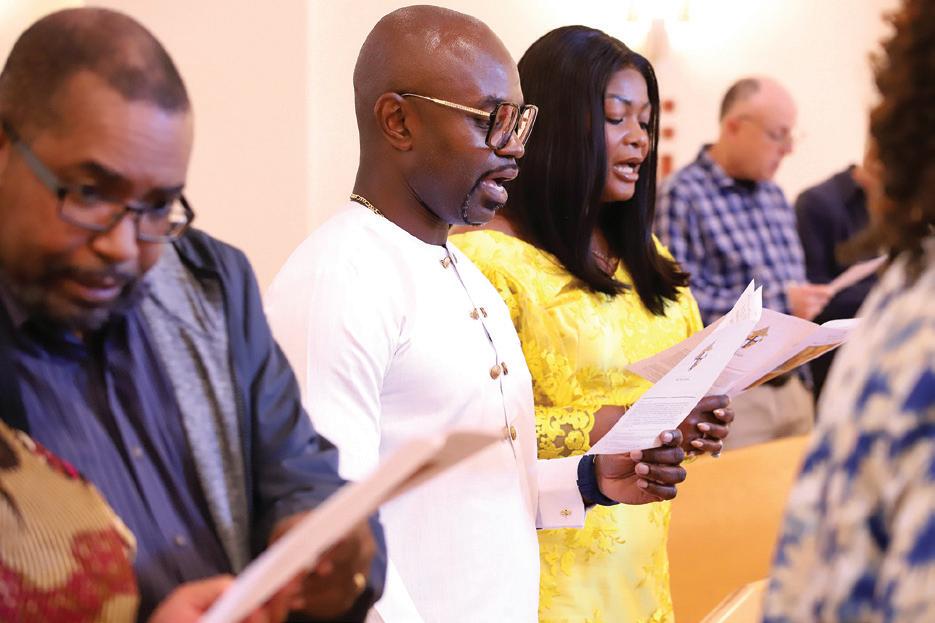
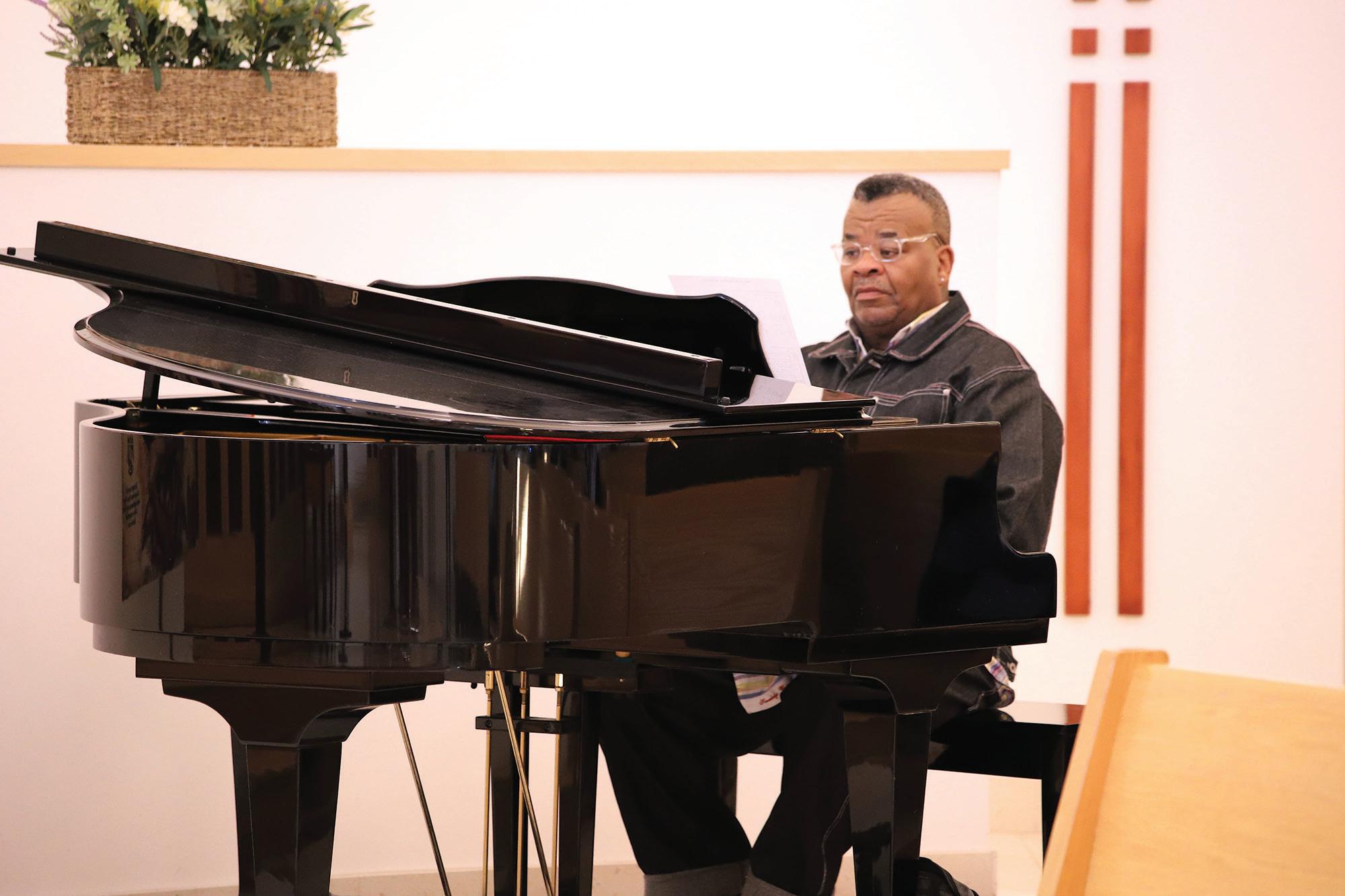
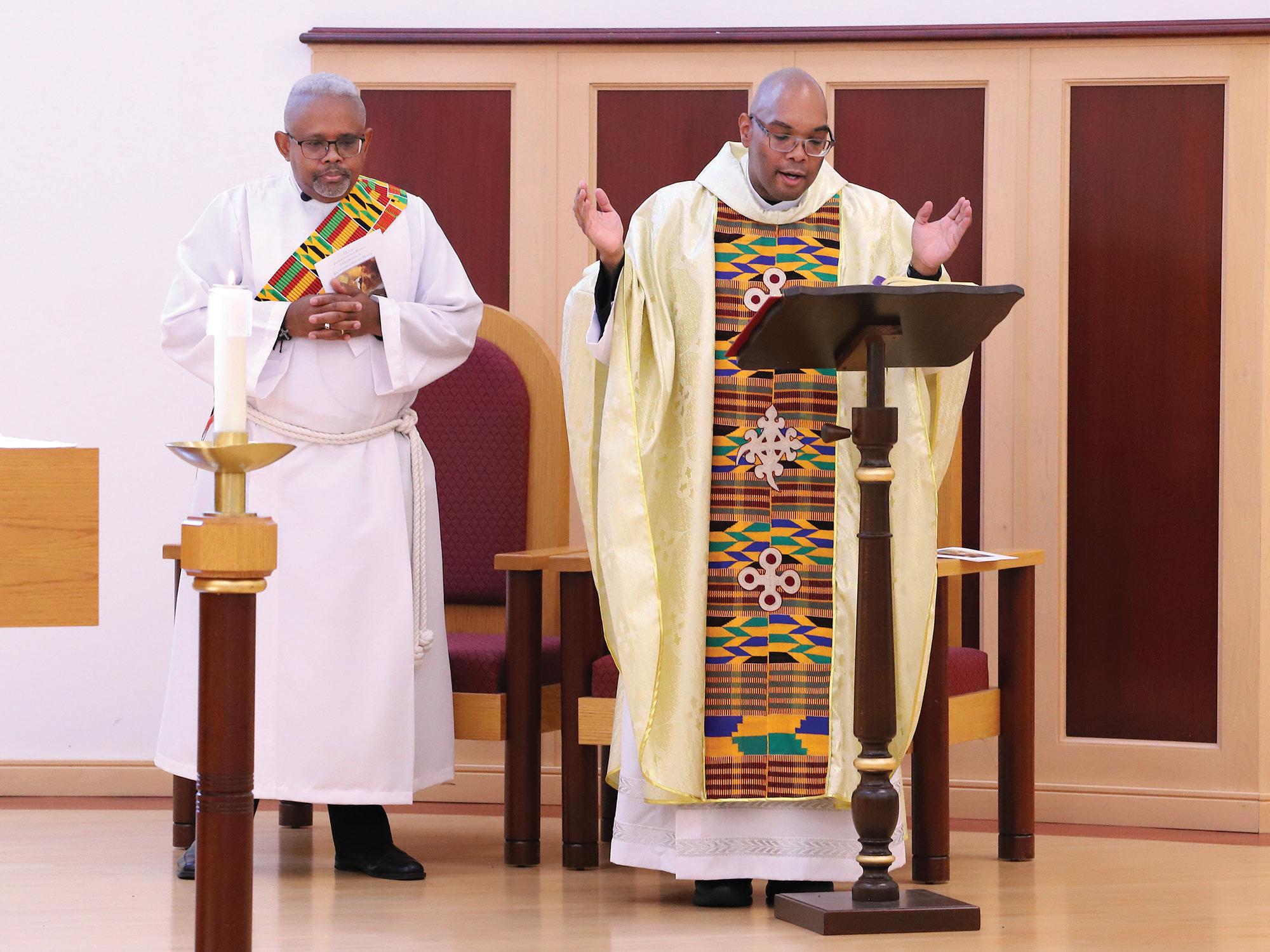
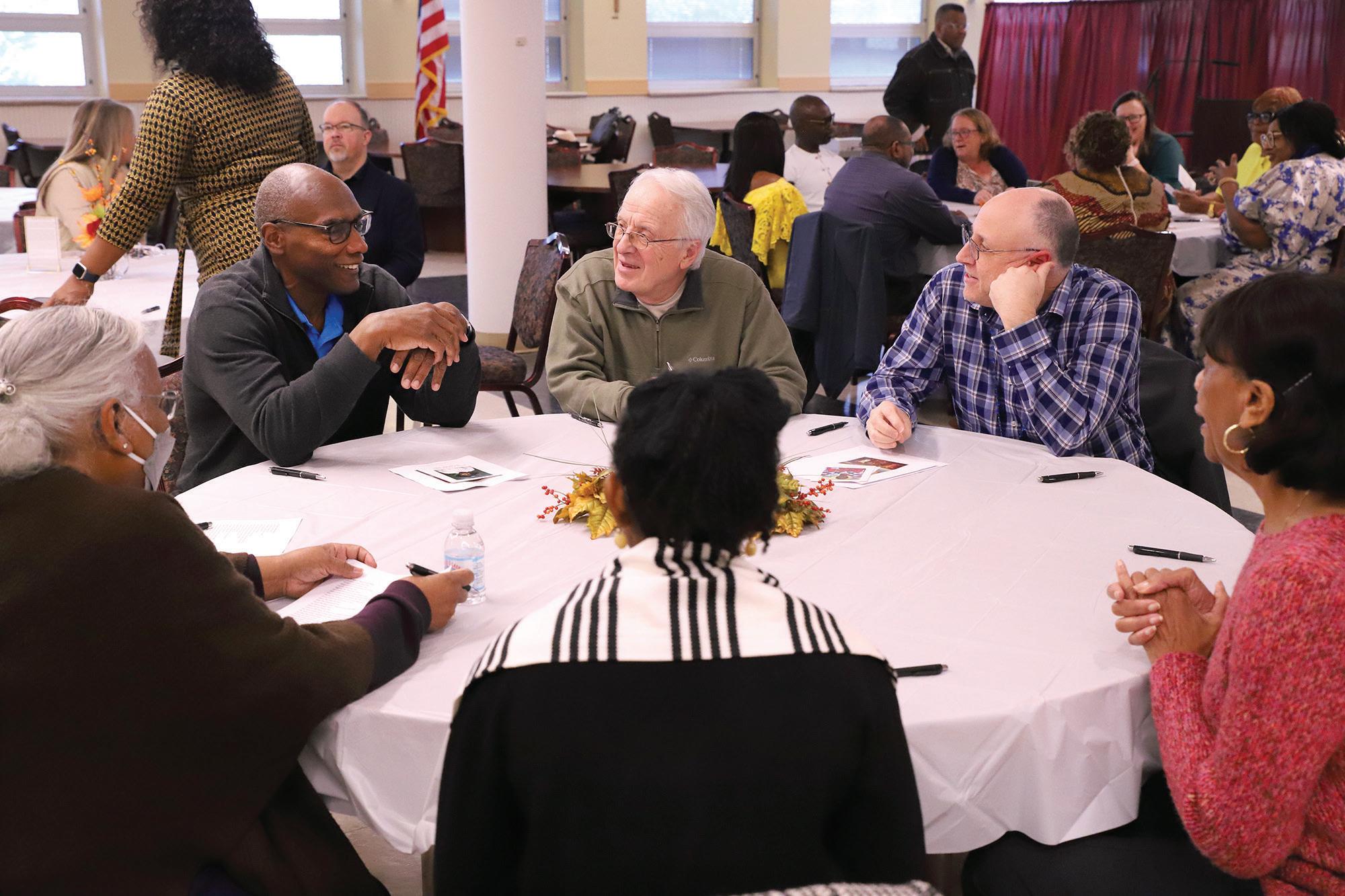
In an effort to lift up and acknowledge the presence of Black Catholics actively contributing to the vibrant life of the Diocese of Metuchen, the Office of Multicultural Ministries hosted a Black Catholic History Month Mass on Nov. 8, at the St. John Neumann Pastoral Center. The liturgy reflected the rich African culture with lively music, vibrant colors and spirited expressions of praise.
The celebrant for the Mass was Father Patrick Winbush, O.S.B, a member of the Benedictine Monks of Newark Abbey in Newark. He began his homily by quoting Servant of God, Sister Thea Bowman, who devoted her life to sharing her rich African American heritage and spirituality in song, prayer, teaching and preaching. He started by reciting an excerpt of her powerful 1989 address to the U.S. Bishops on Black Catholic Spirituality.
Church fully functioning. I bring myself; my black self, all that I am, all that I have, all that I hope to become. I bring my whole history, my traditions, my expe rience, my culture, my African-American song and dance and gesture and move ment and teaching and preaching and healing and responsibility - as gifts to the Church. I bring a spirituality that is contemplative and biblical and holistic, bringing to religion a totality of mind and imagination, of memory, of feeling and passion, and emotion and intensity.
A faith that is embodied incarnate praise - a spirituality that knows how to find joy even in the time of sorrow – that steps out on faith that leans on the Lord. A spirituality that is commoner – that tries to walk and talk and work and pray and play together. Even when we’re busy, we’re busy around and we want to find Him, where we want to reach out and touch Him. Where we can talk to Him. A spirituality that in the middle of your Mass or in the middle of your sermon we just might have to shout out and say “Amen,” “Hallelujah,” “Thank you Jesus!”
Reflecting on Sister Thea’s words, Father Patrick reminded us of the urgent need to recognize and embrace diversity in the Church. In the Gospel Reading (Matthew 28:19), Jesus commands us to go forth and “make disciples of all nations,” reminding us that his mission transcends race, culture and geography. Father Patrick pointed to Cardinal Wilton Gregory, the first African American Car-
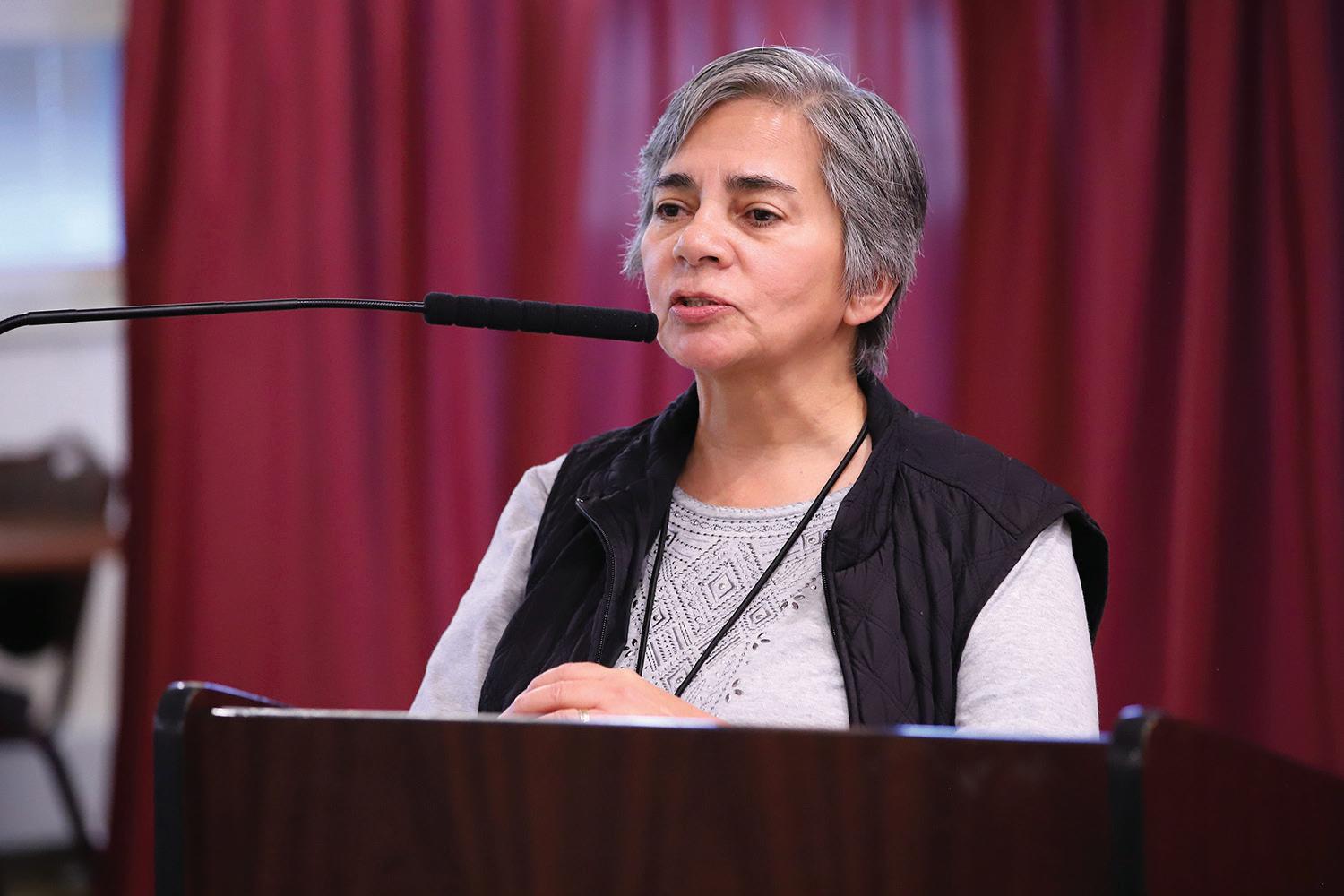
The Black Catholic History Month Mass Nov. 8 drew worshippers from throughout the diocese and the state, including Sister of Christian Charity Miriam Peres, diocesan coordinator of the Office of Multicultural Ministries (top right); Deacon Rick Fortune, who ministers at the Cathedral of St. Francis of Assisi, and Father Patrick Winbush, O.S.B, a member of the Benedictine Monks of Newark Abbey in Newark (bottom right). —John Batkowski photos
D.C., as a beacon of hope and leadership.
Father Patrick ended with a call to action. “Let us commit ourselves to honoring the contributions of Black Catholics and work together to build a more inclusive Church. We are all called to evangelize, to be bold in our faith and courageous in our actions.”
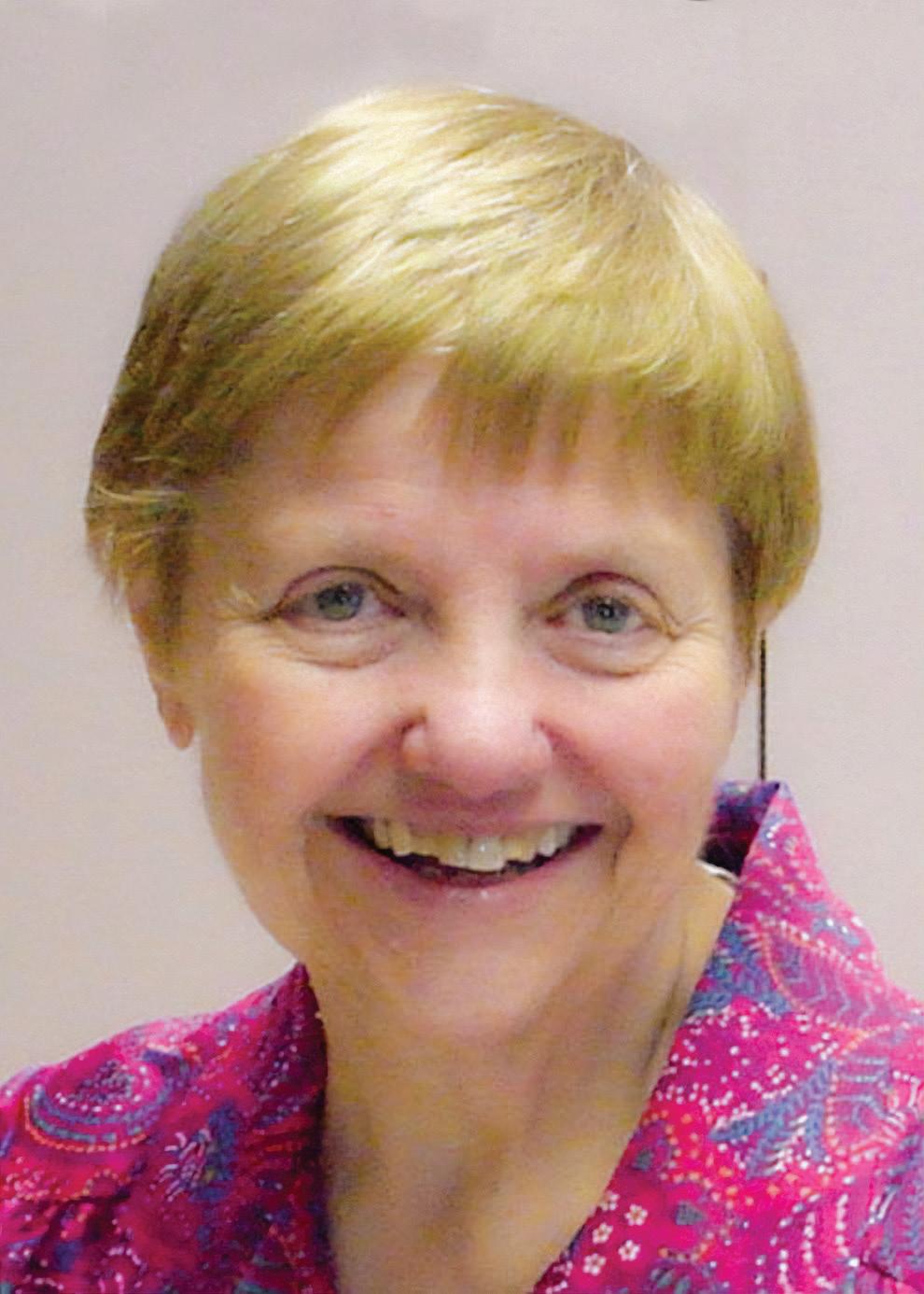
Following the Mass, participants gathered for brunch, music and fellowship. Sister of Christian Charity Miriam Perez, diocesan coordinator of the Office of Multicultural Ministries, stated, “This event will be an annual one to
bring together, not only Black Catholics but also, all Catholics with the hope of creating a more vibrant and welcoming community, especially for today’s young Black Catholics.”
Deacon Rick Fortune, coordinator of the diocesan Apostolate for African American Catholics, thanked everyone for attending and urged everyone to pray for vocations, citing that currently there are only 250 African American priests in the United States.
Jennifer Ruggiero serves as diocesan Secretary, Secretariat for Family and Pastoral Life.
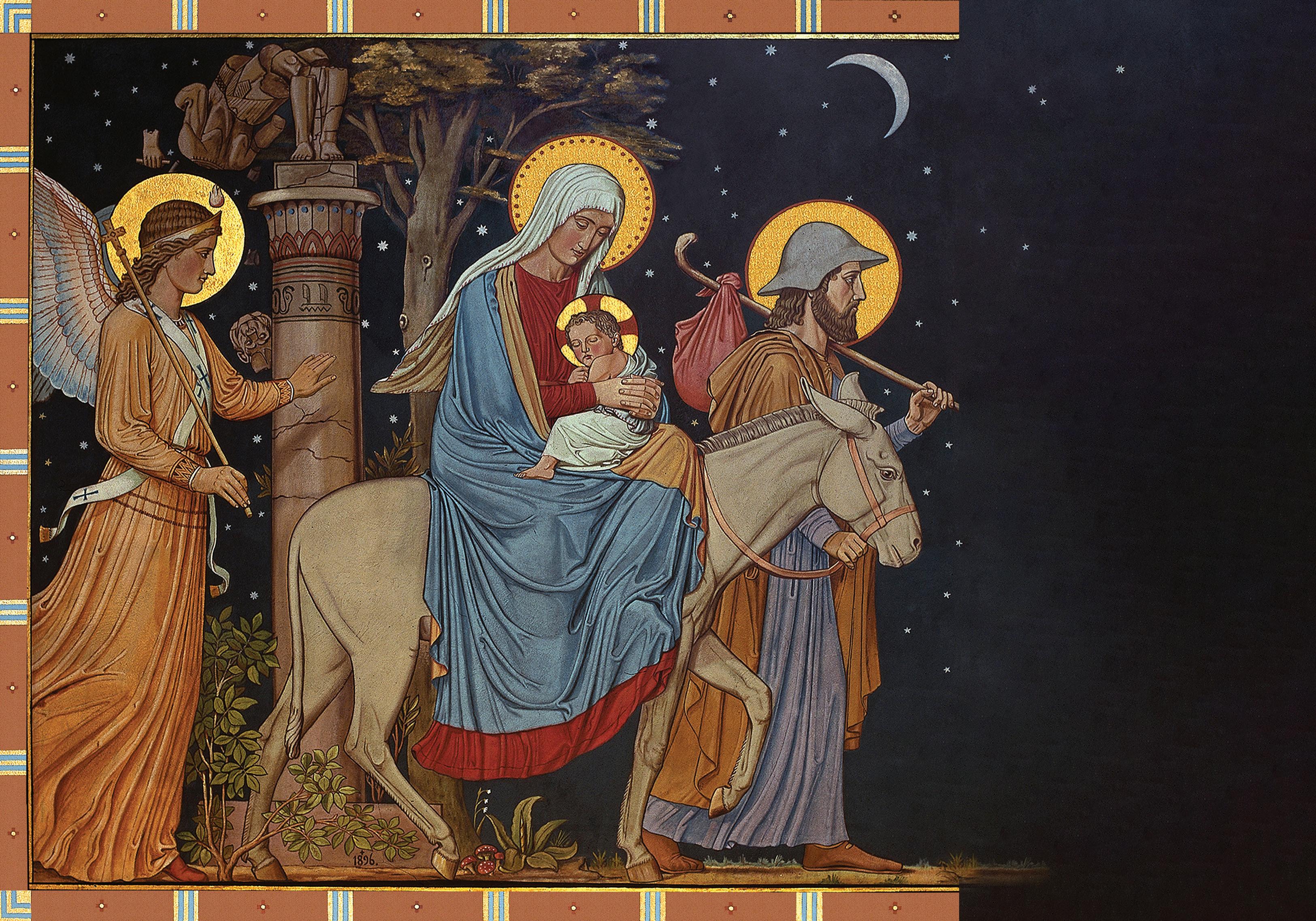
Mary’s journeys
teach us to embrace ‘the day before’
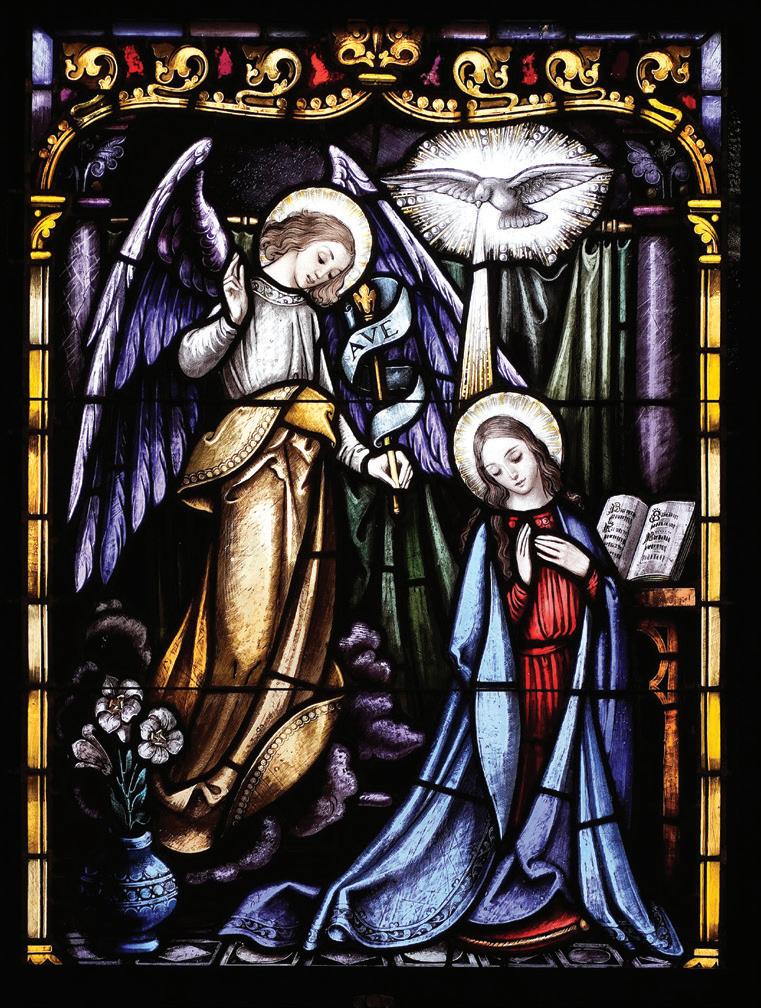
Through all the years of moving through the Advent season toward Christmas I have thought often of Mary’s journeys from the time of the Annunciation. Those moments of reflection have taught me something extraordinary.
—OSV News photo/Gregory A. Shemitz
There is something quietly powerful about the day before – before the arrival, before the change, before the celebration, before the moment that will reshape us in small or significant ways.
It is a time we often overlook, rushing toward what tomorrow promises. Yet the day before carries its own kind of wisdom, inviting us to slow down and notice the subtle tension between anticipation and presence. I believe that is how Mary lived the day before, as she planned to visit her cousin Elizabeth; as she, accompanied by Joseph, took the long and arduous journey to Bethlehem in the days before
the birth of Jesus; as she embarked on a journey to Egypt with Joseph and Jesus hoping to arrive safely at a place of refuge.
Like the Holy Family, in the day before, we stand at the edge of what we know and what we hope for. It is a moment suspended between familiarity and the unknown. Instead of resisting this uncertainty, embracing it allows us to grow more comfortable with life’s unpredictability. It teaches us that not every part of life can be planned or perfected, and that sometimes our greatest strength lies in simply showing up with openness, showing up with faith in God.
This in-between time also reminds us to appreciate how far we’ve come. I imagine Mary and Joseph stopping to rest along the roads they traveled, offering prayers to God for the moments and the grace that moved them forward, step-by-step, and after Jesus’ birth, for the incredible gift of their child.
Every milestone is built on countless small steps – efforts that were once invisible or uncelebrated. The day before gives us a chance to recognize that quiet progress, to honor the work, patience, and resilience that brought us here, and the work of God who makes all things possible.
There is beauty in these thresholds. They offer moments to breathe, to reflect, and to gather ourselves before moving forward. They encourage us to feel our emotions fully – excitement, fear, hope – without judgment. In doing so, we learn to meet what’s ahead with faith instead of fear.
As we travel toward Christmas, it’s good to remember that embracing the day before is to respect the journey as much as the destination. It is to acknowledge that meaning doesn’t arrive only with the event itself, but also with the preparation, the waiting, and the intentional pause that gives tomorrow its weight.
When we learn to embrace the day before, we discover that the moments before change are not empty – they are essential. They are where we find our grounding, our gratitude, and the quiet courage to face whatever comes next. As they proved for Mary and Joseph, they are moments when we learn the truth of Scripture: “I can do all things through Christ who strengthens me.”
The angel said to them, “Do not be afraid; for behold, I proclaim to you good news of great joy that will be for all the people. For today in the city of David a savior has been born for you who is Messiah and Lord."
Luke 2:10-11
Leadership Summit challenges Catholic men to ‘step up’
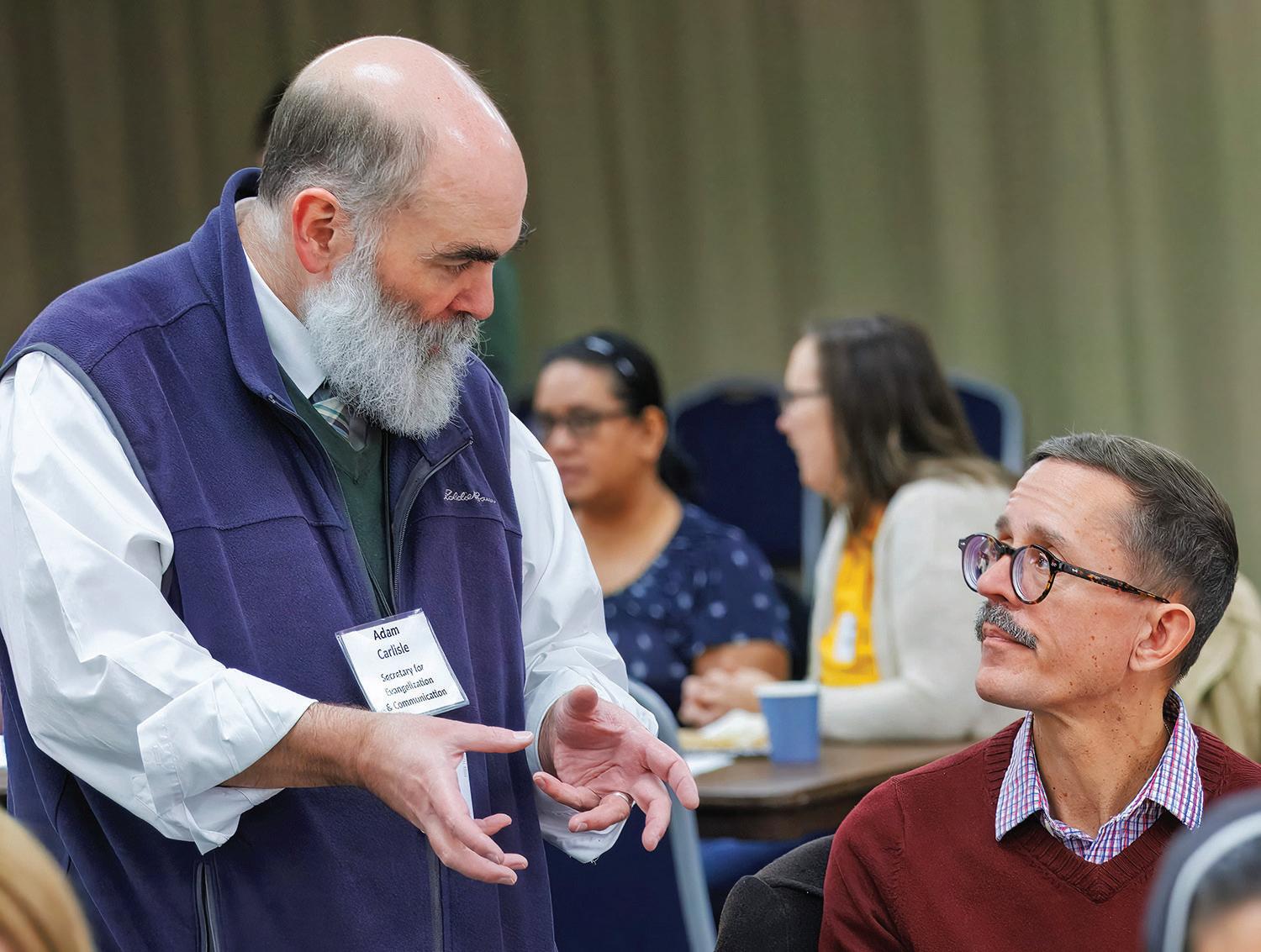
In the summer of 2023, Adam Carlisle, diocesan Secretary for Evangelization and Communication, attended a men’s leadership summit sponsored by the Catholic Men’s Leadership Alliance in Malvern, Pa. He left that experience inspired to strengthen men’s ministries across the Diocese of Metuchen, and he has been working to do just that ever since.
“Men’s conferences are great, but they are often one-day events,” said Carlisle. “I knew that I needed to come up with a model that would strengthen ministry to men from the bottom-up, not from the top-down. We needed to strengthen ministry to men in the parishes.”
That same fall, the first diocesan Leadership Summit for men was held in the Somerset Hills Deanery, and last month Carlisle wrapped up the fifth summit in the series with a focus on men in the Forsgate Deanery – covering southwestern Middlesex County. The goal is for a summit to be held in each of the eight diocesan deaneries to reach men across all 90 diocesan parishes.
Some 50 men registered for the recent summit, which included a continuation of Carlisle’s collaboration with John
and host of the podcast, “Just a guy in the pew.” The day and a half-long programs each include Mass as well as five sessions, complete with group discussions and reflections.
“I believe the leadership summit for the men of the Forsgate Deanery was one of the more successful summits we have hosted,” said Carlisle. “The men seemed emboldened by John’s presentations. I have spoken with several groups, just in the last few weeks, who have already met with their pastors about creating ministry to men in their parishes.”
The larger objective is around strengthening men’s leadership and ministry across the diocese – through an approach catered to each individual parish community.
“Ministry to men will look different in every single parish…and that’s a good thing,” said Carlisle. “The important thing is that men are getting together with other men, that they have a place where they can be vulnerable. Men need other men. They need other men to hold them accountable and they need other men to challenge them to be better men.”
He added, “Ultimately, we just want men to step up.”
And for participants in the recent
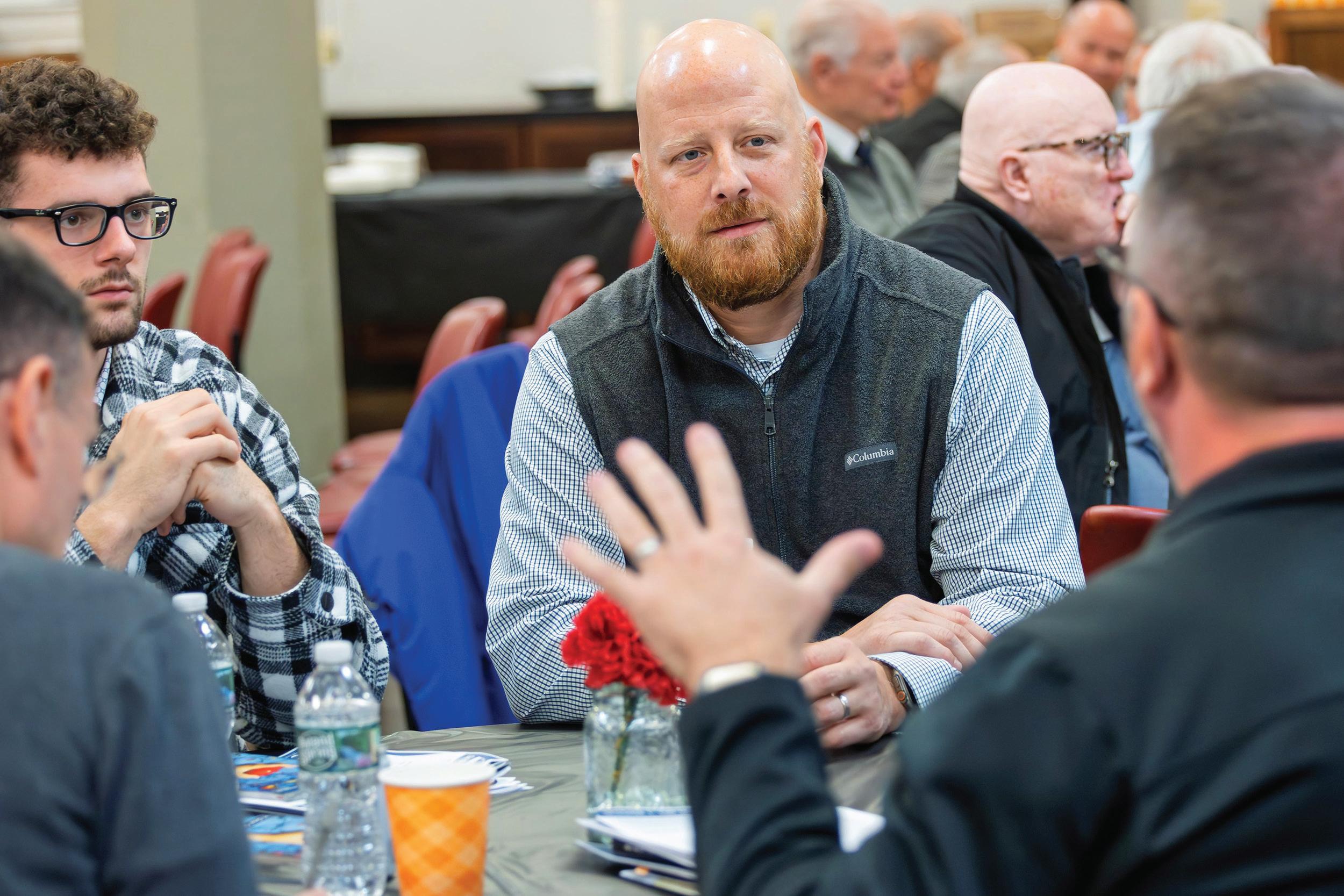
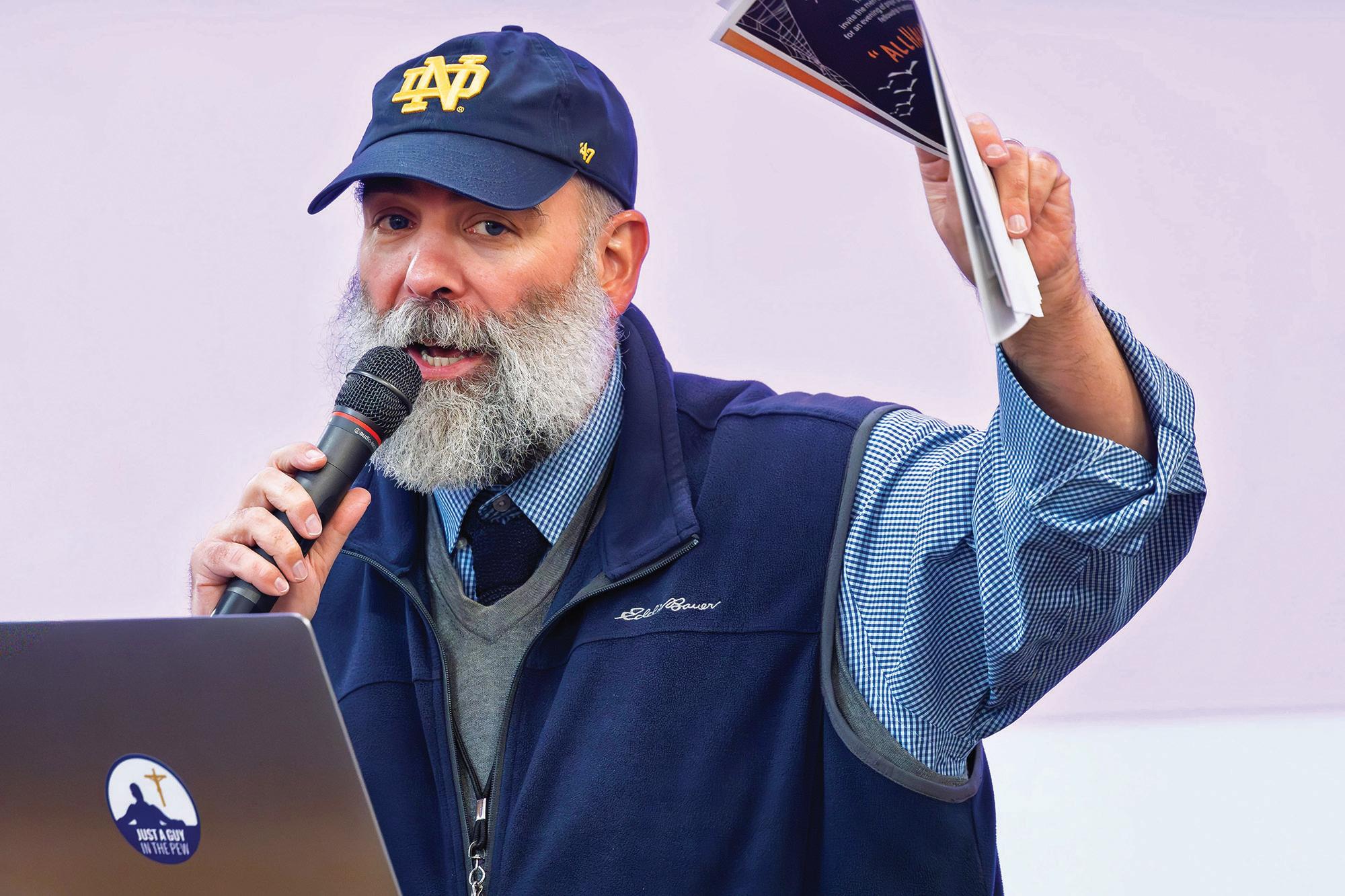
John Edwards, founder of Pew Ministries and host of the podcast, “Just a guy in the pew” (left) joins men for a table discussion during the recent leadership summit for the men of the Forsgate Deanery. At right, Adam Carlisle, diocesan Secretary of the Office of Evangelization and Communication, addresses the 50 men in attendance.
summit, they have walked away with the tools to make this happen in their parishes.
“The group from The Nativity of Our Lord Parish found the weekend educational and encouraging,” said John Guarrera, a member of the Monroe Township parish. “We believe we were given the tools and support to start a group for our parish and are taking preliminary steps to do that.”
Paul Messina, a member of St. Cecilia Parish, Monmouth Junction, had a similar positive experience.
“The Leadership summit has renewed my call to make a difference not only in my life but for those of other men,” he shared. “I have been given many of the tools needed to start a men’s ministry in my parish at St Cecilia’s. Also knowing that the Diocesan group stands with me and will support me will make this journey much easier. Catholic men do not need to walk alone.”
Another participant, David Pinto, is a member of Our Lady of Peace Parish,
—Hal Brown photos
North Brunswick. He described the summit as “illuminating,” and left feeling empowered.
“It highlighted benefits derived from men with strong Catholic faith that positively affects families, parishes and the communities as a whole,” he said. “In addition, it underscored the need for strong fellowship amongst Catholic men that allows for the exchange of faith development ideas.”
Plans are underway for the sixth leadership summit, which will be organized for men in the Morris Canal Deanery from April 24-25 at the National Blue Army Shrine, Asbury. The series will culminate in leadership summits for the Middlebrook and Raritan Bay Deaneries in the fall of 2026 and the spring of 2027, respectively.
For further information, contact Adam Carlisle, diocesan Secretary for Evangelization and Communication, at acarlisle@diometuchen.org or 732-5297936.
Pope Leo is first pontiff to go to St. Charbel’s tomb; visit is source of ‘great joy’ for Lebanon
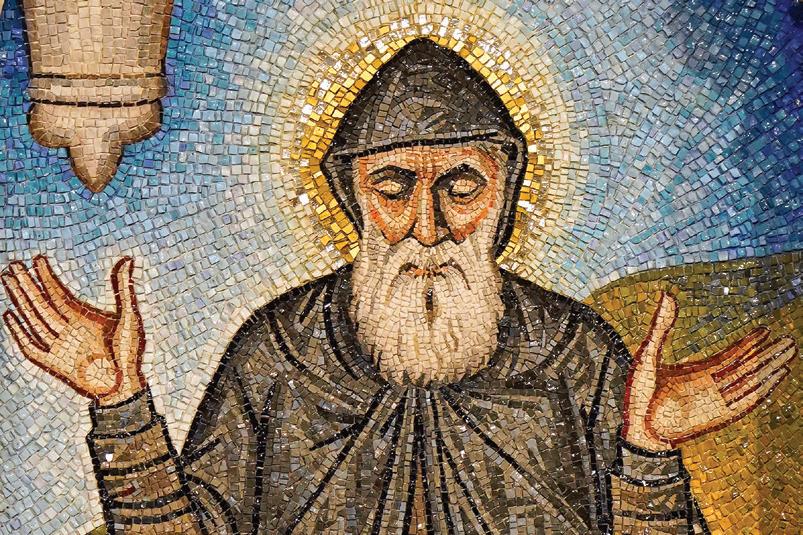
OSV NEWS – Pope Leo XIV made history on Dec. 1 as the first pontiff to pray at the tomb of St. Charbel Makhlouf in Annaya. The hilltop Monastery of St. Maron, overlooking the Mediterranean, draws millions each year to venerate the 19th-century Maronite monk known for miraculous healings that attract Christians, Muslims and believers of other faiths. Father Youssef Matta, one of the monks who lives at the shrine, said the Pope’s visit sends a powerful message to a country battered by crisis. He calls it a moment of “healing from divisions and corruption,” and a sign that Lebanon – and the wider Middle East – has not been abandoned. St. Charbel’s broad appeal, Father Matta explained, stems from both his reported miracles and his life of radical asceticism, which resonates across religious traditions. The Pope’s prayer at his tomb, he said, renews hope for coexistence, peace and bringing global attention to Lebanon’s struggles. “It will reaffirm the historical importance of these communities in the Middle East, because there are so many young Lebanese who are leaving the country to seek work elsewhere in order to survive,” he insisted.
2025, Pope Leo XIV became the first pontiff to visit the final resting place of St. Charbel Makhlouf at the Monastery of St. Maron in Annaya. His visit came during his first apostolic trip to Turkey and Lebanon Nov. 27-Dec. 2. —OSV News photo/ Gregory A. Shemitz
King Charles’ historic visit to Rome takes small ecumenical steps
By Father Guy Selvester, Special Contributor
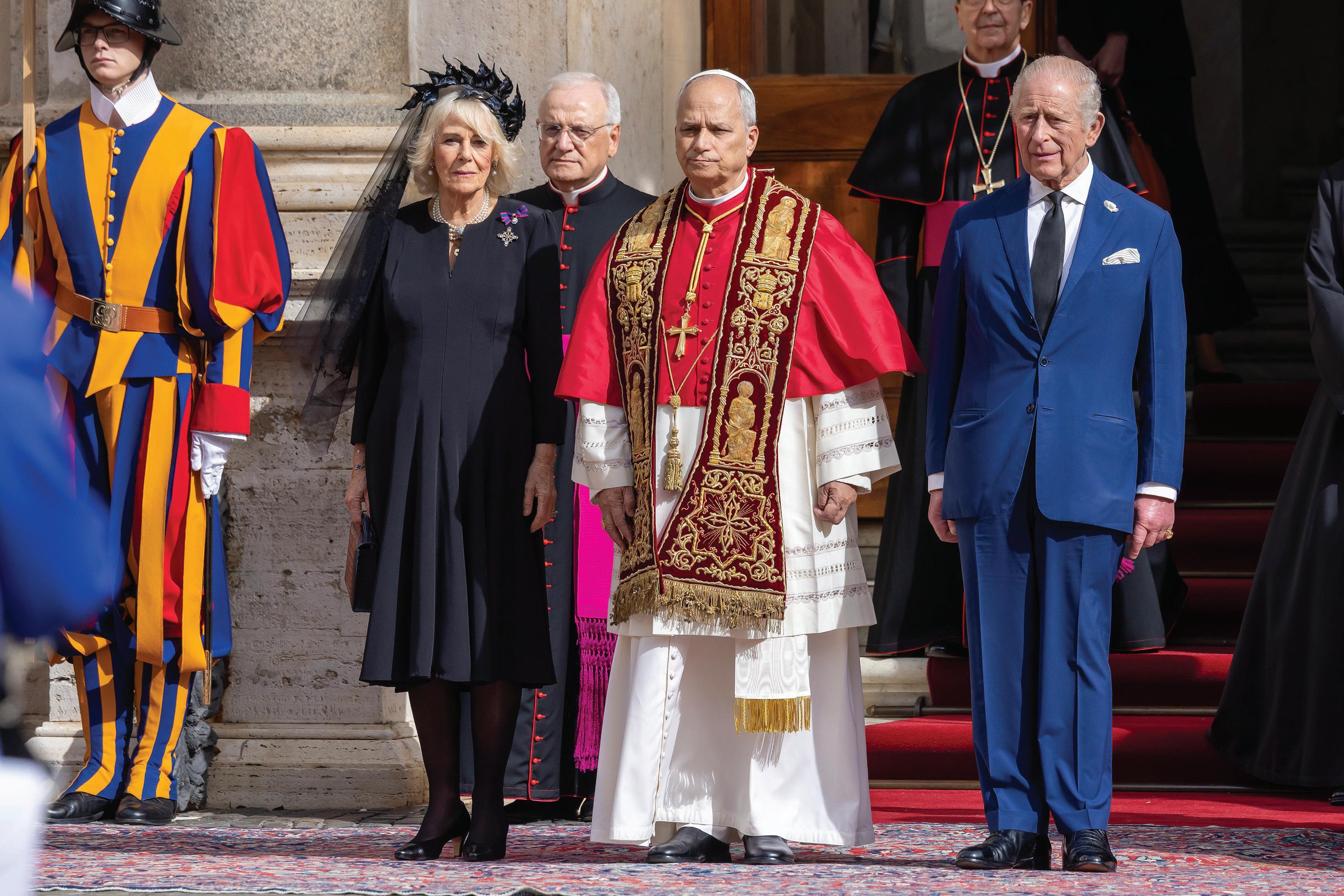
On October 23 King Charles III of the United Kingdom visited the Holy See and was received by Pope Leo XIV. Charles and Pope Leo, in addition to the usual exchange of gifts between two heads of state, participated together in a brief celebration of Midday Prayer in the Sistine Chapel.
There have been official visits from dif ferent archbishops of Canterbury who function as the senior bishop (the official title is primate of All England) in the Church of England, but also as the titular head of the worldwide Anglican Com munion – a federation of all the various provinces in Anglicanism throughout the world, including the Episcopal Church in the United States. These previous visits usually included a moment of prayer, and some of those also have taken place in the Sistine Chapel. However, it has been several hundred years since the monarch of what is now the United Kingdom, who also still holds the title “Supreme Governor of the Church of England,” has prayed publicly with the pope.
On many occasions, the British monarch has met the pope, either in the Vatican or in the U.K., but those have mostly been unofficial (or non-state) occasions with less formality, and they did
highest-ranking bishop in the Church of England until Archbishop Sarah Mullally is installed as archbishop of Canterbury in March. Clerks and choristers of the Chapel Royal also accompanied the king and provided music for the prayer service along with the Sistine Chapel Choir.
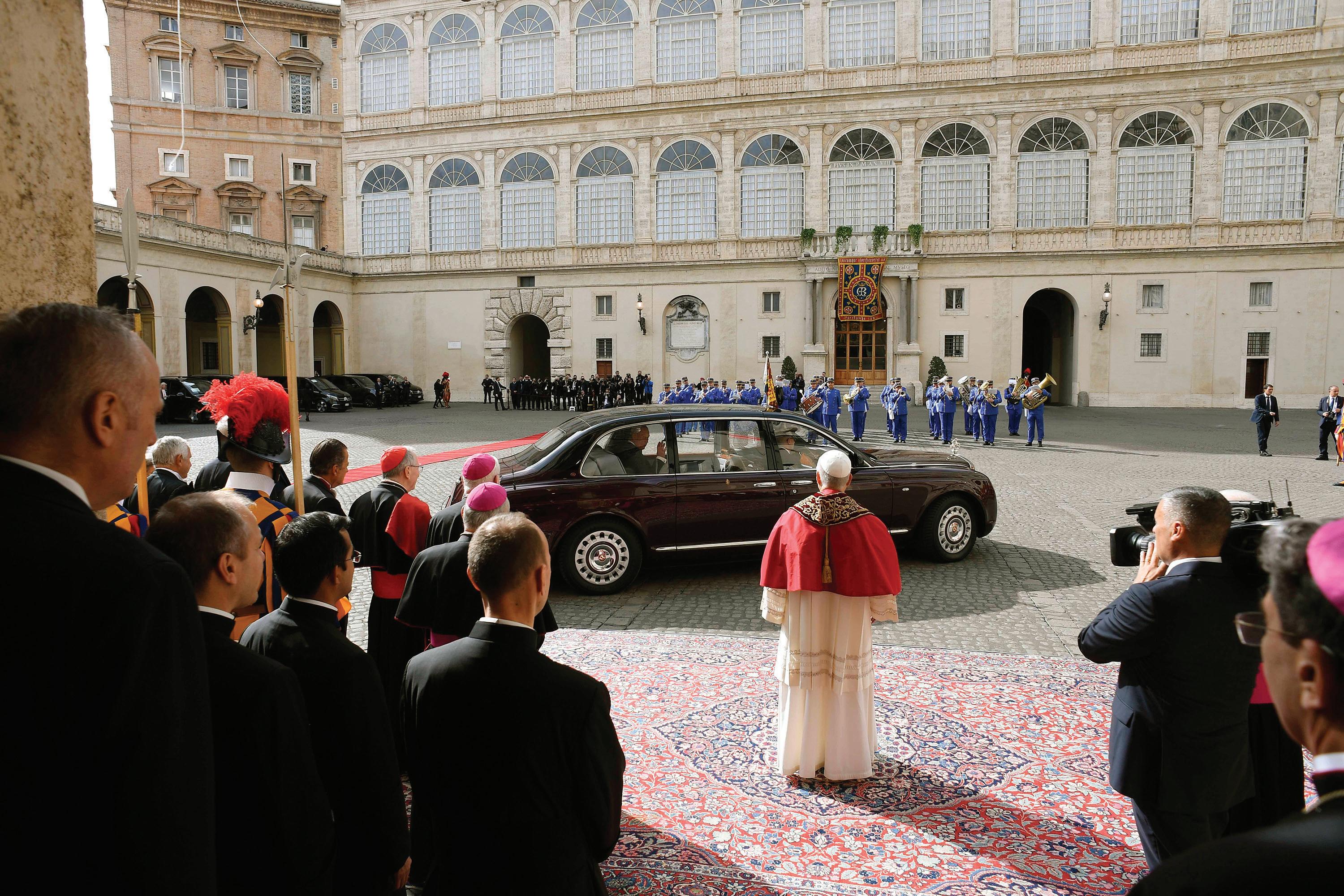
The full pomp of a state visit by a British monarch, which hasn’t occurred at the Vatican since the late Elizabeth II had a state visit with St. John XXIII in 1961, was on display as the king and queen arrived in the San Damaso Courtyard in the Apostolic Palace and were escorted by the Gentlemen of His
beautiful images of formal ceremony and genuinely meditative prayer, it was only one part of the two-day visit the king was making to Rome, and arguably the more important aspect of the visit occurred on the second day, when king and queen stopped at the Basilica of St. Paul Outside-the-Walls on the other side of Rome from the Vatican.
The basilica’s archpriest, Cardinal James Harvey, an American originally from Milwaukee, bestowed Charles with the title “Royal Confrater of St. Paul’s.” In return, Pope Leo has been made a “Papal Confrater of St. George’s Chapel, Wind-
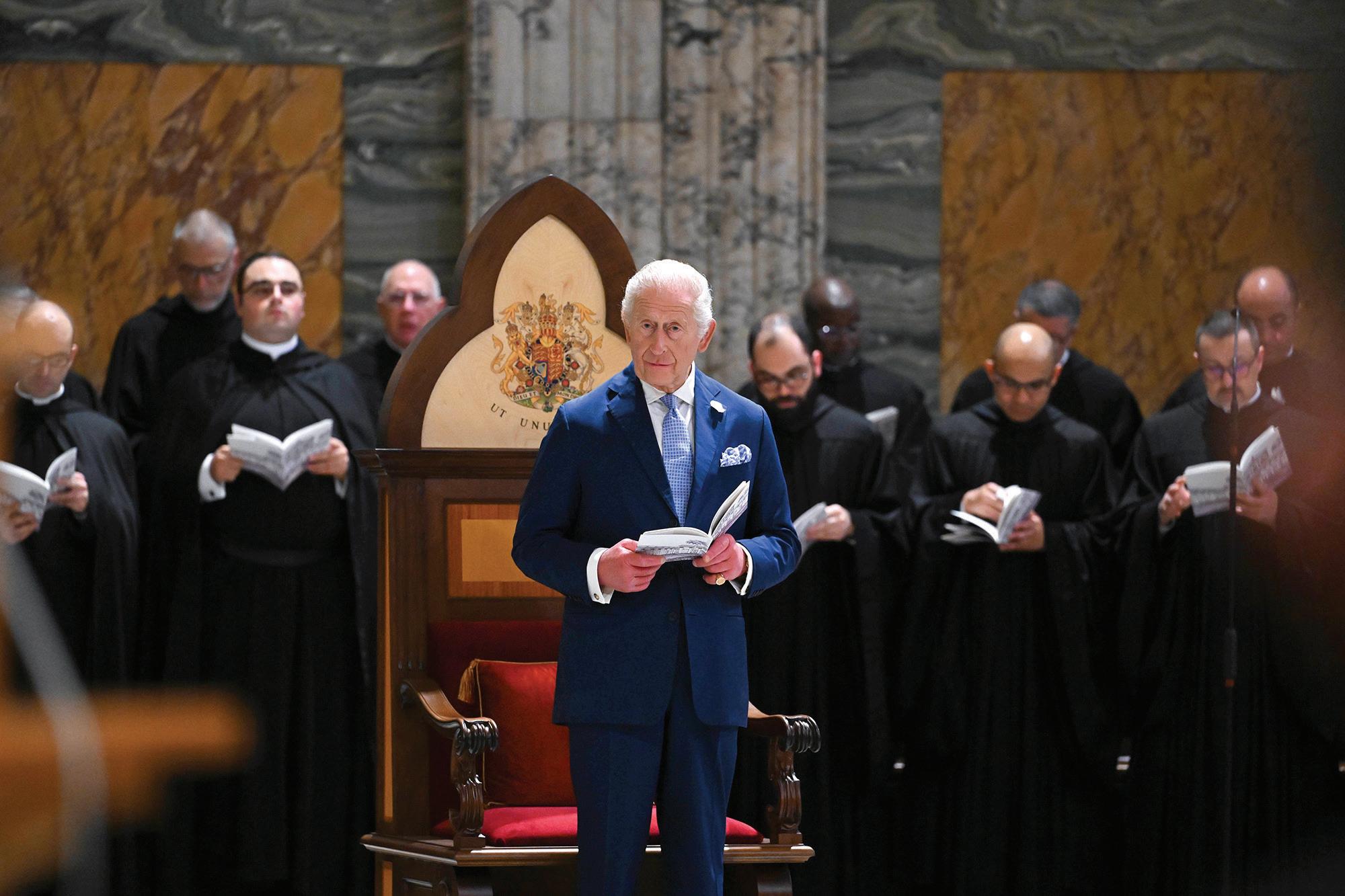
es and funerals. A special chair bearing the king’s coat of arms and the words “Ut Unum Sint” (Jn 17:21) meaning, “That They May Be One,” was prepared for the occasion and will be kept in the basilica for future use by either Charles or any of his successors. The term “confrater” means “a brother with,” indicating a sense of fraternity and spiritual union. This event, including the bestowing of the title and the designation of a permanent seat in the basilica, has significance for ecumenical relations between Catholics and Anglicans now but also hearkens back into history. In what might be called the height of Christendom when the popes – as sovereigns of the Papal States, an independent country that covered most of central Italy prior to Italian unification – it was customary for the other monarchs of Europe to show patronage to the most important churches in
Page 12 photo, Pope Leo XIV and Britain’s King Charles III with Queen Camilla listen to the Vatican police band play the Vatican and British national anthems in the San Damaso Courtyard of the Apostolic Palace at the Vatican Oct. 23, 2025. —CNS photo/Pablo Esparza
Left, Britain’s King Charles III stands in front of a chair made to mark his being honored as a “royal confrater” of the Benedictine monks at the abbey at Rome’s Basilica of St. Paul Outside the Walls during an ecumenical prayer service Oct. 23, 2025.
Below, Pope Leo XIV watches Britain’s King Charles III and Queen Camilla depart the Vatican from the San Damaso Courtyard of the Apostolic Palace Oct. 23, 2025. —CNS photo/Vatican Media
Rome as centers of pilgrimage. In return for this patronage, these monarchs were honored by various popes with honorary titles that indicated a special relationship to the Church in Rome. This most often took the form of making the monarch an honorary Canon of a significant church. The ecclesiastical rank of Canon is somewhat foreign to most Americans because we don’t have them in the United States.
Simply put, in many cathedral and collegiate churches throughout the world, there is a Chapter of Canons, the clergy attached to that particular church. They take care of the liturgical life of the church as well as oversee its temporal administration. In some places they also have a role in choosing the bishop of the diocese.
Some of the Canons are active and some are honorary. The latter are clergy (or sometimes other individuals, including laymen) whom the bishop may wish to honor by including them in the cathedral chapter. Those are the kind
that Americans occasionally encounter. A priest in the U.S. may have been made an honorary Canon of a cathedral or collegiate church chapter in another country like Spain, Poland or Italy. The most important and historic churches in Rome – the four papal basilicas – all have chapters of Canons, and each of those may have some honorary Canons.
Before World War I, when there was still an Austro-Hungarian Empire, the Austrian emperor was an honorary Canon of St. Peter’s Basilica in the Vatican. Similarly, the king of Spain is still made an honorary Canon of the Basilica of St. Mary Major. The king of France used to be an made an honorary Canon of the Basilica of St. John Lateran and, in an odd twist of history, that prerogative has been carried on by the presidents of the French Republic, including Emmanuel Macron. In the case of the Basilica of St. Paul Outside-the-Walls, the honorary Canon was always the king of England.
basilica of St. Paul’s also was interrupted. Making Charles a Royal Confrater of St. Paul’s is not the same thing as making him an honorary Canon. Nevertheless, it still serves as a significant ecumenical gesture and one that seeks to take a step, albeit a small step, toward improving relations between Catholics and Anglicans.
It seems fitting to honor a previous historic relationship between the Catholic Church and England. It is coincidental but equally significant that this should draw the British monarch into a deeper relationship with St. Paul Outsidethe-Walls. This ancient basilica – the second-largest church in Rome after St. Peter’s – has long been a place that plays a role in the ecumenical movement. Each year at the close of the Week of Prayer for Christian Unity in January, which coincides with the feast of the Conversion of St. Paul, the pope presides over an ecumenical prayer service at the basilica. It was on this occasion in 1959 that St. John XXIII announced his intention to convoke the ecumenical council that is now known as Vatican II.
Over the centuries, English kings took a great interest in helping to preserve the tomb of St. Paul in Rome. He is buried under the high altar of the basilica that bears his name.
The kings of England acted as patrons of the basilica and also granted it honors. To this day, the coat of arms of the basilica is decorated by having the shield surrounded by the insignia of the Order of the Garter, England’s most senior order of chivalry. The king’s own coat of arms is encircled by this same insignia. The use of it by the basilica illustrates the historically close relationship between the basilica and the English monarchy.
When King Henry VIII broke with Rome over the authority of the papacy and, effectively, established a separate church, the Church of England, the relationship between Catholics and Anglicans was severed and, likewise, the relationship between the English Crown (later to become the U.K. Crown) and the
The basilica is staffed and maintained by an international community of Benedictine monks whose abbey adjoins the basilica. The Order of St. Benedict has played a long and historic role in the spread of the Gospel to England because of the missionary efforts of St. Augustine of Canterbury, who Pope Gregory the Great chose in 595 to become the first archbishop of Canterbury and the “apostle to the English.” These two connections – a place significant in the ecumenical movement and staffed by an order with historic ties to English Christianity – make this most recent development very fitting and more important than the mere symbolism of niceties exchanged on the occasion of a state visit.
It points to something deeper: the desire of Christians throughout the world who are sadly divided by the circumstances of history to continue to engage in dialogue with each other. The idea of reuniting divided Christians may be a difficult task that is still a long way into the future, but that is no reason to give up hope. Gestures such as these, although symbolic, point to the longing that all Christians feel to be one again as the Lord prayed, “That they may all be one, as you, Father, are in me and I in you” (Jn 17:20).
Father Selvester has served as the diocesan director of Ecumenical & Interfaith Affairs since 2017 and is also pastor of St. Mary Star of the Sea Church in South Amboy.
Catholic author and social media influencer leads young adult Marian retreat
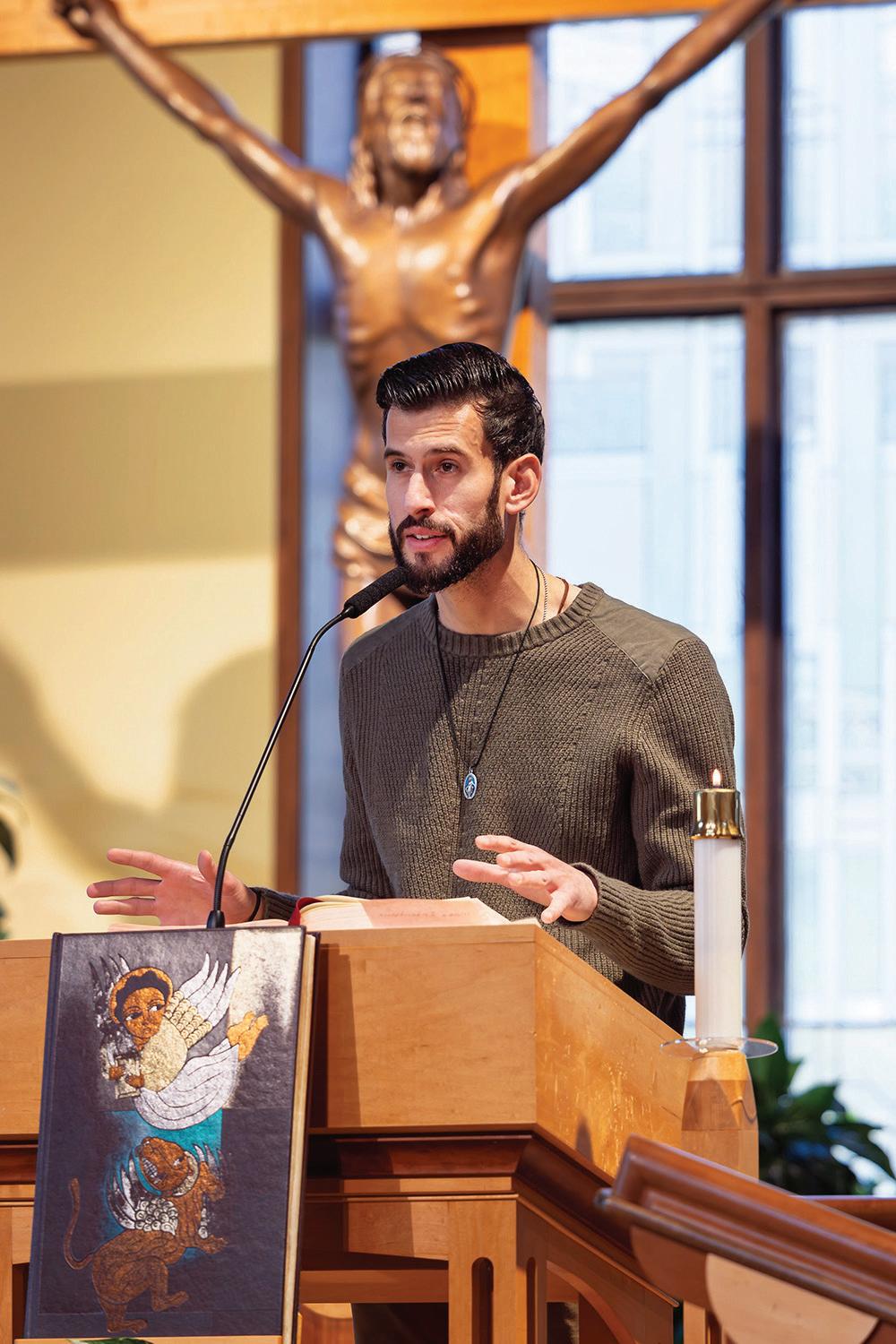
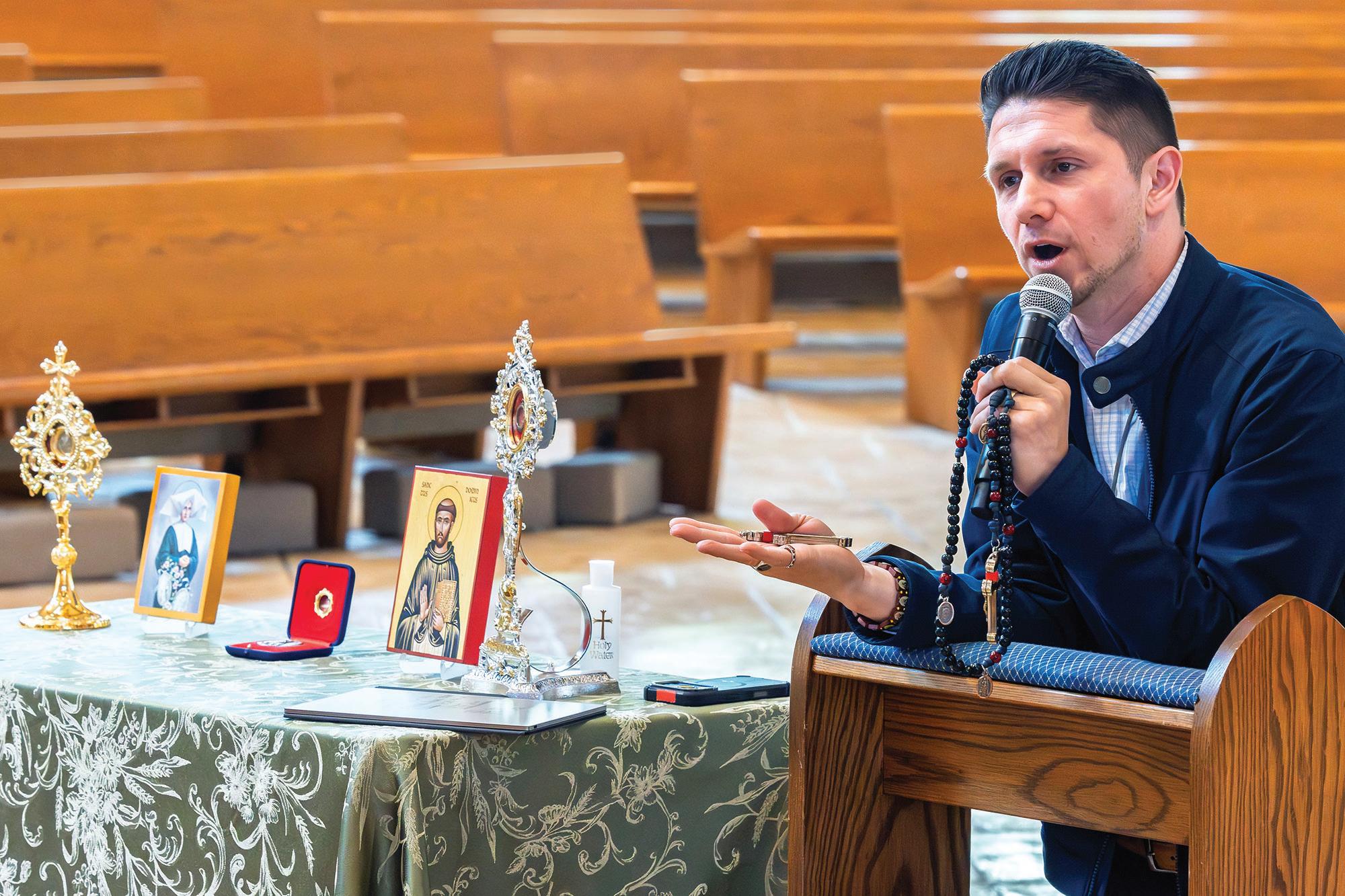
Well-known Catholic YouTuber, Gabriel Castillo, served as welcomed leader and speaker Oct. 25, when more than 40 young adults gathered at St. Joseph Parish, Hillsborough, to deepen their love and devotion to Our Blessed Mother, Mary. The Marian retreat was organized by the diocesan Office of Youth and Young Adults.
Castillo, who is known for this great love for and extensive knowledge of Mary and the rosary, is one of the largest independent Catholic content creators worldwide. His popular YouTube channel has more than 345,000 subscribers.
He recently released a book titled “The Power of The Rosary,” an ode to St. Louis de Montfort’s classic “The Secret of The Rosary.”
“Gabriel’s devotion to Our Lady and her holy rosary are beautifully present when he speaks. When you listen to him talk, you yearn to deepen your relationship with Mary which in turn deepens your relationship with Jesus,” said Jay Donofrio, diocesan director, Office of Youth and Young Adults.
The morning started with Mass celebrated by Father Hank Hilton, pastor of St. Joseph Parish, whose homily high-
lighted the importance of Mary’s role in Jesus’ mission. The day also included Eucharistic Adoration, Confessions, and two talks given by Castillo.
Maria Agnese, diocesan program coordinator for the Office of Family and Pastoral Life, reflected on the event, saying, “It was inspiring to hear from someone who is clearly a “both/and” Catholic, in that he fully embraces tradition and encouraged us to pray with people on the spot when God gives us a sense that they need prayer.” She added, “Personally, I appreciated Gabriel’s challenging language, reminding us that theosis* is the
goal of life and truly acting like saints is not something to shy away from.”
“Mary longs to mother us,” Castillo said, “God wires us for mom, and like a nursing mother she aches to nurse you.” Castillo also offered practical tips for praying the Rosary, such as always carrying one and making a plan or a schedule to pray it. As the young adults left the retreat, with either a new or renewed love of Mary, one attendee referred to the event as a “game changer.”
*Theosis is the process by which the human being is transformed by grace to participate in God’s divine nature.
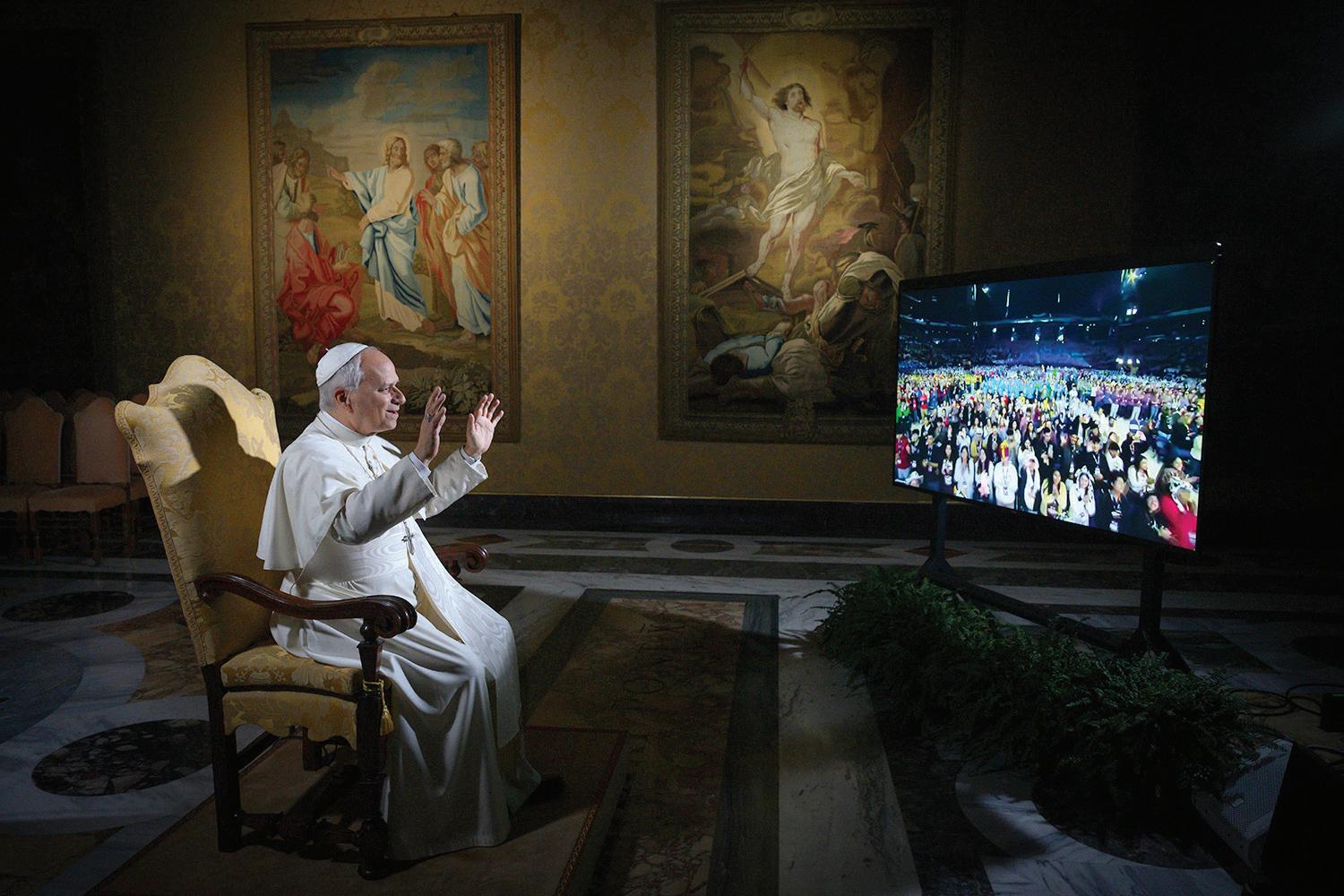
Pope Leo offered wisdom for all ages during digital encounter
By Gretchen R. Crowe, OSV News
I was planning to drive the short couple of hours to Indianapolis Nov. 21 to be present for the digital encounter between the young people at the National Catholic Youth Conference and Pope Leo XIV. But at the last minute, plans changed, and I ended up watching the livestream on TV with my husband and children.
While I’d been looking forward to being among the American crowd addressed live by an American pope – a sentence that I still find remarkable to write – the distance and my own particular audience of five gave me another perspective.
For months, a group of teens had been putting together the list of questions they asked Pope Leo, and the final choices reflected thought, prayer, intentionality and personality. But while the questions were ideated and crafted by Gen Z’ers, and while the answers from Pope Leo were prepared for the same audience, I found the exchange resonated deeply with my Millennial heart and with the Gen Alpha hearts of my kids.
How does one accept God’s mercy when you’ve made mistakes or feel like you’ve let people down? How can I give my problems to God when I feel sad or overwhelmed? How can we communicate better? How do we battle distractions? How do we balance technology with interpersonal relationships? What should we be cautious about when using AI? How is the Church preparing for the future? And how can we play a part in the life and the future of the Church?
These were great questions – narrow enough to be authentic to the creators and the audience, but broad enough for universal application. And they were made even better by Pope Leo’s ability to answer the fundamentally human questions with beautifully eternal truths. His clear words, thoughtful preparation and accessible delivery made it a momentous event for all who watched – young, old and anywhere in-between.
How does one accept God’s mercy? Don’t focus only on our sins but go to Jesus with confidence. How do we give our problems to God? Spend time with
him in prayer. Communication? Pray for the gift of true friends, and speak honestly about what you feel, what you think, what you experience.
Don’t we all need such advice?
And then there was the tech conversation – a conversation that, in 2025, applies to each one of us, regardless of generation. “There are all kinds of temptations and all kinds of distractions, but there’s only one, Jesus Christ,” Pope Leo said. “We need to use it (technology) wisely without letting it overshadow our relationships. Make sure technology serves your life and not the other way around.”
Yes. This, this and this. Finally, for those of us who feel a little ragged sometimes by some of the negative news in the Church, or those of us who are still battling wounds at the hands of ecclesial leaders, Pope Leo offers this consolation: “The Church prepares for the future by staying faithful to what Jesus asks of us today. He told us not to be overwhelmed by worries, but to seek first the kingdom of God, trusting
Jay Donofrio, diocesan director, Office of Youth and Young Adults (left), welcomed YouTube Catholic content creator Gabriel Castillo (center) to St. Joseph Parish, Hillsborough, for a Marian retreat Oct. 25. The day included Holy Mass celebrated by pastor, Father Hank Hilton, Confessions and Eucharistic Adoration as well as two talks by Castillo attended by some 40 youth and young adults (right). —Hal Brown photos
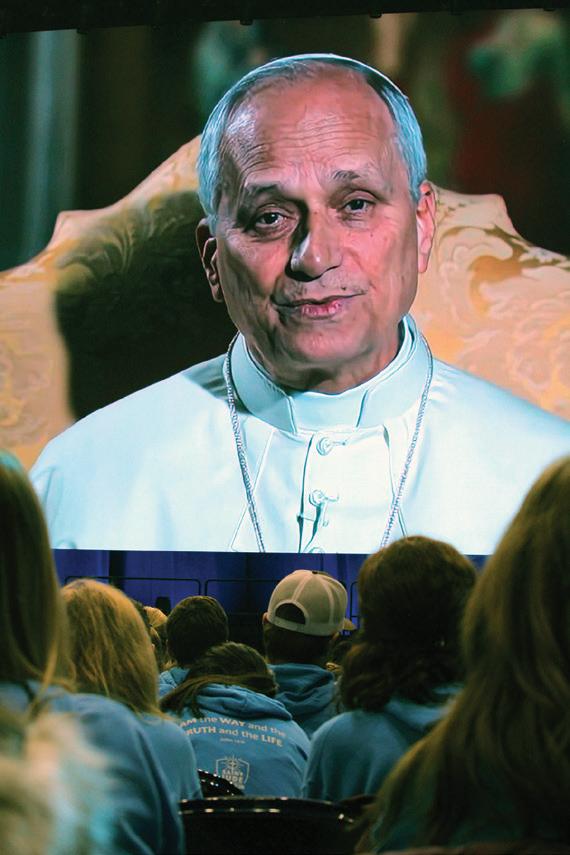
Pope Leo XIV speaks on screen during his first digital encounter with 15,000 youths at Lucas Oil Stadium in Indianapolis Nov. 21, 2025, who were gathered for the 2025 National Catholic Youth Conference.
OSV News photo/Margaret Murray
New program director ‘eager to serve’
By Christina Leslie Contributing Editor
“I knew I needed God, structure, something to guide me to a destination,” said Maria Agnese as she reflected upon her spiritual life during her college studies. “I knew I wasn’t giving enough of myself.”
Today, Agnese will enjoy plenty of opportunities to share her faith as she fills the role of program director for the diocesan Office of Human Life and Dignity, but the road she travelled to her mission in the Metuchen Diocese took a few detours.
The youngest of five children in the Agnese family, and a lifelong member of Our Lady of Perpetual Help Parish, Bernardsville, Maria graduated from that town’s Bernards High School, then enrolled in visual arts and technology classes at the Stevens Institute of Technology, Hoboken. After a year, she realized that a career as an illustrator would not fulfill that yearning to give back.
Despite participating in classes and events at St. Paul Inside the Walls center for evangelization in Madison, the young woman admitted, “I hadn’t given enough of myself. I knew I wanted to be thinking about God and doing his work all through the day. It’s where my mind wanted to be.”
With the encouragement of OLPH
pastor Father John C. Siceloff, Agnese changed direction and took up the challenge to serve in youth and young adult ministry in her own parish. She drew spiritual blessings through working with others close to her age, as well as those gained during pilgrimage trips to World Youth Day in Portugal in 2023 and the National Eucharistic Congress in Indianapolis the following year.
Agnese relished working with young adults at OLPH, but “it was time for a change,” she admitted. “I was working in the religious education office, in the same school [School of St. Elizabeth] I went to as a child, and I was ready to learn more in a different setting.”
She began her role at the diocesan Chancery in early November. Her experience in ministry with young adults will prove to be valuable in her new diocesan role. “Being a leader in the Church is not about knowing how to run an event, but about an expression of who you are and how you interact together,” she observed.
The Office of Human Life and Dignity, according to its mission statement, strives to “promote the sanctity of human life in all stages and all conditions through education, outreach, public policy and prayer.” Agnese eagerly anticipates working to facilitate many upcoming workshops, rallies and events such as the annual Choices Matter Conference
Maria Agnese, program director for the diocesan Office of Human Life and Dignity.
—Tiffany Workman photo
and Feminine Genius workshop. “My faith is boosted when I see other people praying,” she asserted.
One additional event will evoke a personal blessing; she and her fian cé, Kyle, are slated to marry next year, making the upcoming Silver and Gold Wedding Anniversary Evening Prayer all the more special. “My faith is boosted when I see other people praying,” she explained.
Saturday, March 21, 2026 at the St. John Neumann Pastoral Center, Piscataway, NJ
Opening Mass at 9 a.m., Conference 10:15 a.m. to 3 p.m. “Safeguarding Human Dignity … Shining a Light on Human Trafficking”
Learn more at www.diometuchen.org/choicesmatter
“The fastest way to get me back on track was to serve,” Agnese said of
her spiritual reawakening and pursuit of faith ministry, first with youth at OLPH, then with a broader array of individuals seeking enrichment at the Diocese. “If I didn’t go down that track, life would have looked very, very different. God saved my faith.”
She added, “I can examine things now through the lens of faith. I want to tell good stories… I had wanted to separate myself from the Church; it seems like my mistakes were meant to happen, but God works everything out.”
Stress in your Marriage?
JANUARY 30 –FEBRUARY 1, 2026
Is your marriage going down the right road . . . or is it a little off track?
Life can be difficult, and so can the challenges you face in marriage. Does the distance between you seem wide? Are you already separated? Looking for a better way? Retrouvaille can help and offers hope for a better relationship. Retrouvaille is a peer ministry of volunteer couples that can help you learn the tools of healthy communication, build intimacy and heal, just as they have done in their own marriages. Retrouvaille is Christianbased, and Catholic in origin, but welcomes couples of all faiths as well as non-religious couples. Retrouvaille can help get your relationship back on track.
16
Polish Americans mark 1,000 years of Polish Crown
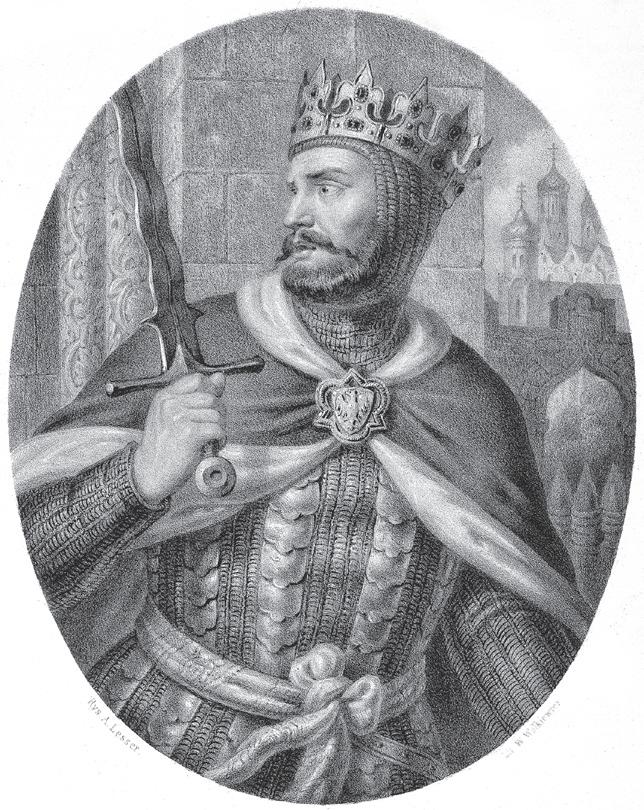
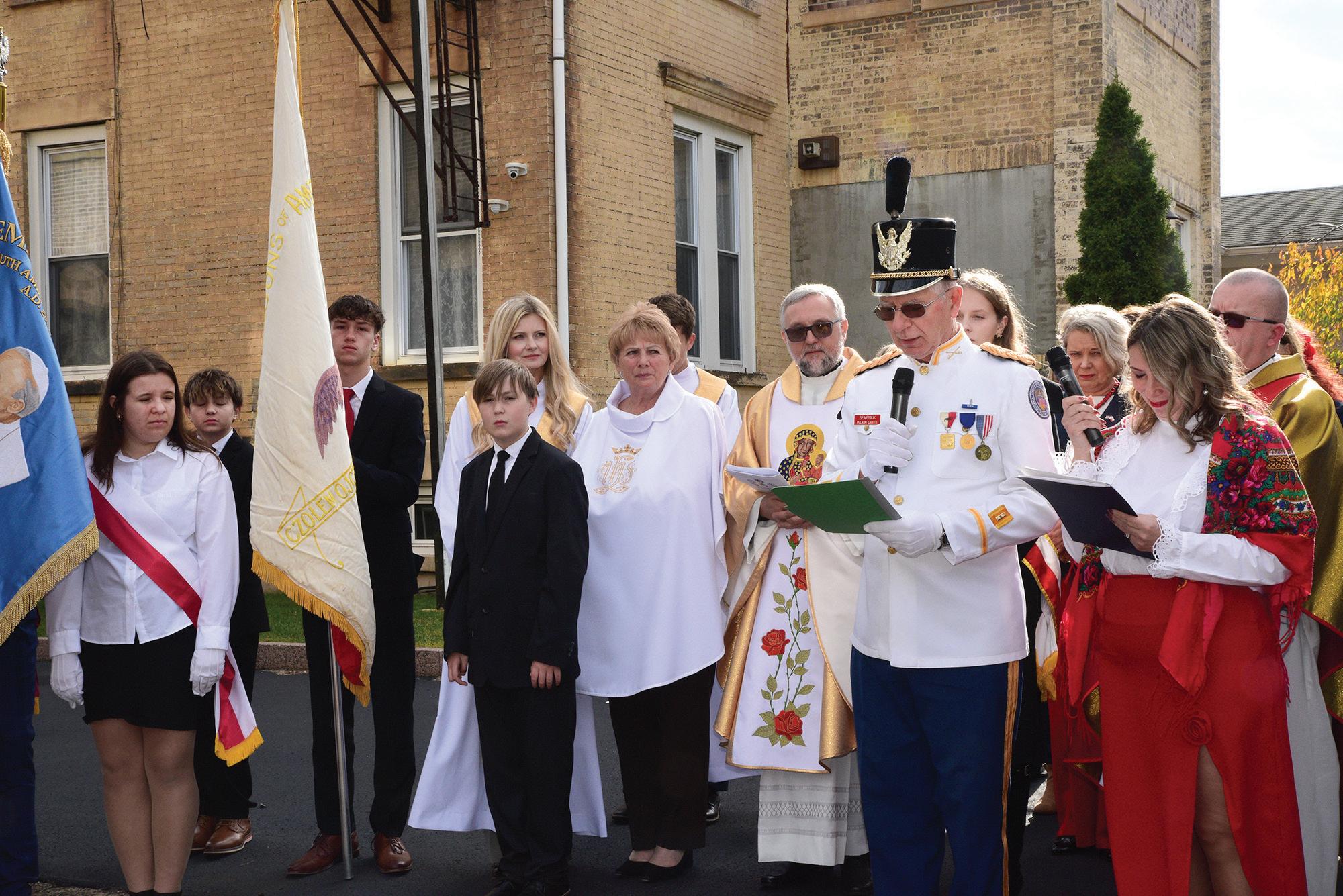
The Polish-American community gathered at St. John Paul II Church in Perth Amboy Nov. 9 for a celebration marking the 1,000 anniversary of the coronation of its first king, Bolesław Chrobry.
The local celebration, part of the Polish jubilee year marking the event, commemorated Poland’s rich Christian heritage, the thousand-year tradition of its statehood and efforts throughout the centuries to secure independence and growth.
The central moment of the celebration was the Mass for the Homeland, celebrated by Redemptorist Father Stanisław Słaby, Diocesan coordinator of Polish ministry. The Mass included prayers for those who, throughout the centuries, built Polish identity – its rulers, national heroes, and all who gave their lives for Poland’s freedom.
The Diocesan Polish Ministry organized the event in cooperation with local Polish organizations and parishes. It was attended by numerous parishioners, honor guards, representatives of Polish-American groups, as well as students and teachers from Polish supplementary schools, programs outside the regular school hours that teach Polish language, history and culture.
Redemptorist Father Sławomir Romanowski, pastor of St.
John Paul II Parish, gave the Mass homily, reflecting on Polish-American heritage and the meaning of this millennial anniversary.
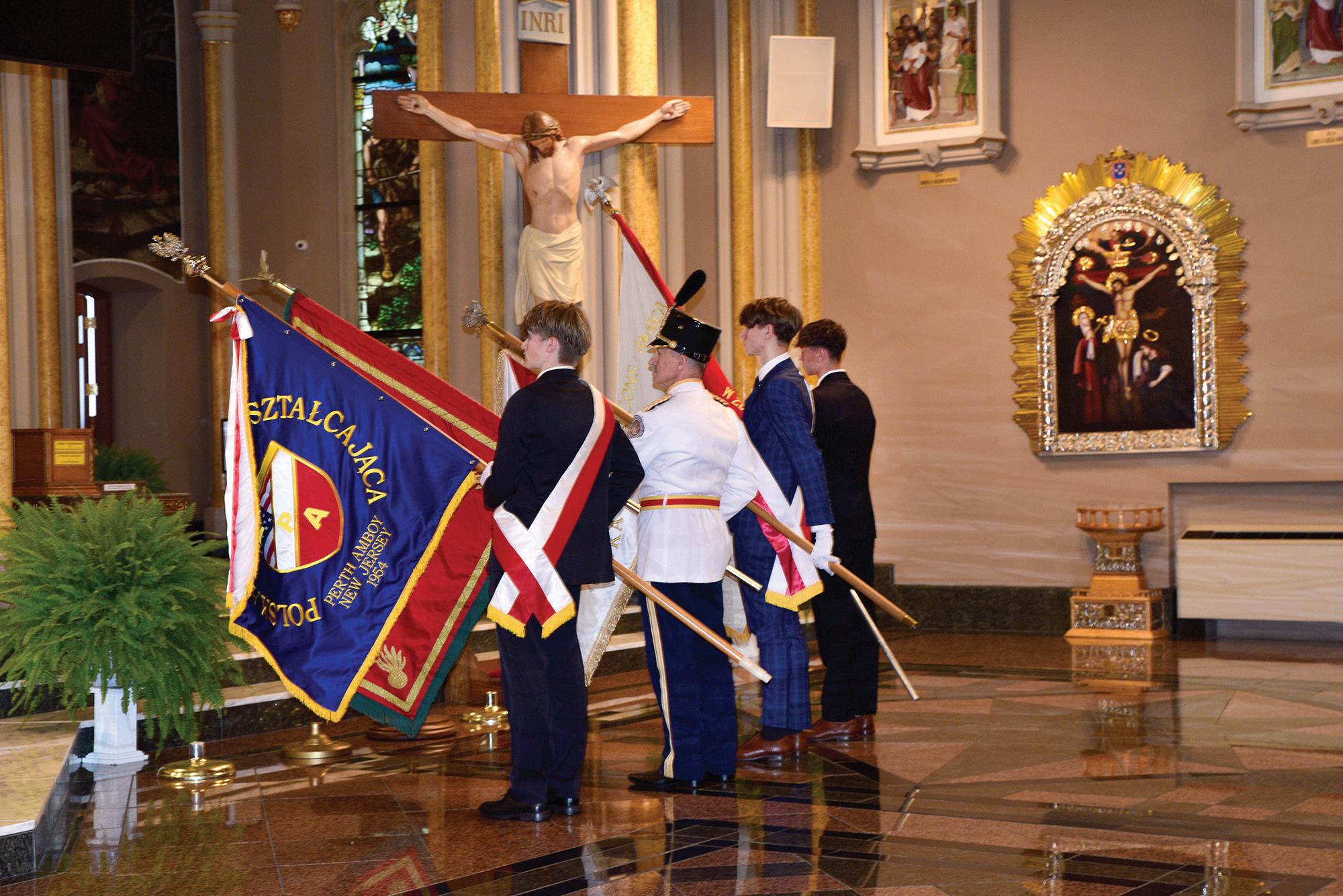
After the Mass, representatives of the Polish-American organization Pulaski’s Cadets raised the Polish and American flags, emphasizing the unity and patriotism of the Polish community living in the United States. Cadet members also read names of those who died for an independent Poland.
Two exhibitions were prepared as part of the celebration: one presenting the most important events in the history of the Polish monarchy, and another dedicated to Ignacy Jan Paderewski, a composer and politician with a mission to promote Polish culture around the world.
Afterward, students from Polish schools in Perth Amboy and Manville presented a cultural program. Children, youth and adults offered recitations, patriotic songs, and short performances, highlighting the spiritual strength and richness of Polish heritage.
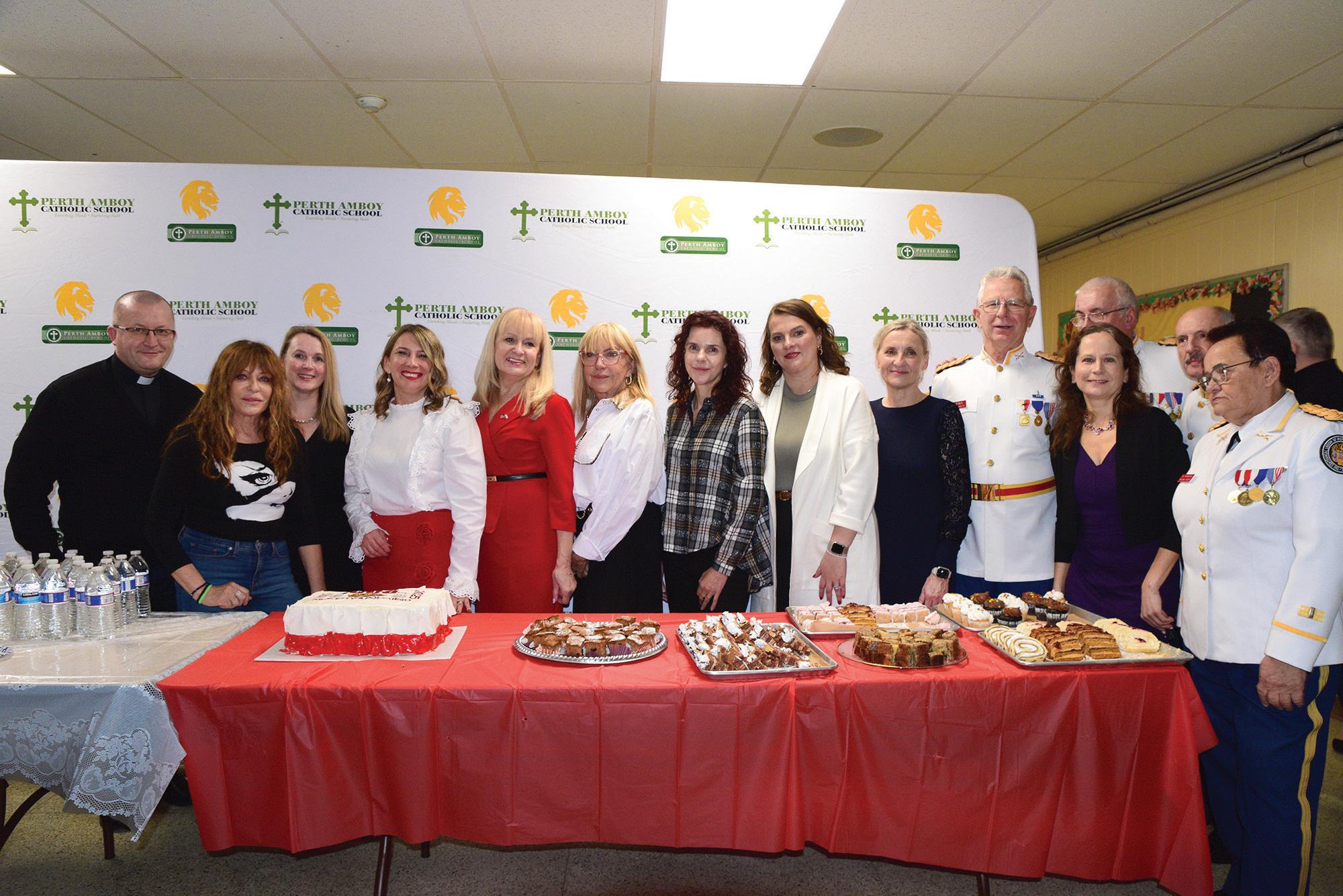
The celebration concluded with a reception. Father Słaby thanked the organizers and participants, noting, “Your presence, dedication, and care for preserving Polish tradition are a beautiful testimony of faith and love for the Fatherland, which endures despite the distance from it.”
The first king of Poland, Boleslaus I the Brave by Aleksander Lesser (public domain image), 1, was honored by the Polish-American community Nov. 8 with a celebration in St. John Paul II Parish, Perth Amboy. The event, which began with Mass, included honor guards, representatives of Polish-American groups, as well as students and teachers from Polish supplementary schools programs, 2 and 4. After the Mass, representatives of the Polish-American organization Pulaski’s Cadets raised the Polish and American flags, 3. The celebration ended with a reception, 5, during which Father Stanislaw Slaby, diocesan coordinator of Polish ministry, thanked organizers and participants. — Courtesy photos
Presentation clarifies principles for serving ‘out of sequence’ youth and their families
A full day presentation by Dr. Bill Keimig, director of the Catechetical Institute of Franciscan University of Steubenville, Ohio, top left, addresses religious educators, middle and top right, on the topic of forming out of sequence youth. Jill Kerekes, diocesan director, Office of Discipleship Formation for Children, and Adam Carlisle, diocesan Secretary for the Secretariat for Evangelization and Communication, engage with participants. —Hal Brown photos
By Jill Kerekes, Special Contributor
Parish catechetical leaders, OCIA directors, and catechists from across the Diocese gathered Nov. 15 at Our Lady of Lourdes Parish, Whitehouse Station, for a morning focused on forming ‘out of sequence’ children and teens – those youth who have not attended parish religious formation in the standard grades 1 through 8 sequence.
The full day presentation by Dr. Bill Keimig, director of the Catechetical Institute of Franciscan University of Steubenville, Ohio, was oriented toward clarifying basic principles upon which to base decisions regarding how parish catechetical leaders and OCIA directors can best serve these children and teens and their families.
Dr. Keimig began his presentation with a discussion about the difference between education and formation. Education primarily involves informing the intellect whereas formation involves igniting desire of the heart. Dr. Keimig emphasized that the goal of all of our parish programs is formation rather than education.
“We not only need to teach the parts of the Mass, we need to prompt them to hunger for the Mass. We need to teach them their prayers and to teach them about God, but we also need to foster the
desire to pray and enkindle the yearning for God,” explained Dr. Keimig.
Dr. Keimig explained that religious formation should not be aimed at imparting truth to pass tests, but should be aimed at forming trust. He used the example of the fall of Adam and Eve to illustrate that original sin was the result of the failure of a “trust test.” Adam and Eve experienced a gap of knowledge when told not to eat from the tree of knowledge of good and evil without explanation. Their lack of trust in God’s goodness prompted them to disobey His command.
“It is not a lack of knowledge that is at the core of our brokenness,” explained Dr. Keimig, “it is a lack of trust.” God presents us a myriad of ‘trust tests’ in our lives that involve a lack of knowledge and understanding and it is trust that determines our response to these tests. “We grow in faith when we grow in trust when we don’t understand, don’t see, and don’t agree.”
“Sacraments are not to be dangled in front of our eyes until we gain enough knowledge to have them. Sacraments are to be given because we desperately need grace.” For this reason, said Dr. Keimig, “The more access points to grace the better.” Canon law approaches the celebration of the Sacraments of Initiation with a sense of urgency and generosity because
of this desperate need.
The presentation included a discussion of the importance of parental involvement in the formation of children and teens. Parents accept the role of primary educators of their children in the Catholic faith during the Rite of Baptism, yet the majority of parish formation programs minimize parental involvement in the formation process. Dr. Keimig pointed to a recent study that revealed that the most important predictor of adult faith practice is the consistent Catholic witness of parents from childhood on. Participation in youth groups, retreats, parish religious formation programs, and Catholic school attendance are all minor predictors of adult faith practice according to this study, but not one of these factors comes close to the contribution of the Catholic witness of parents.
Dr. Keimig explained that all of the modern catechetical documents of the universal Church, from the 1971 General Catechetical Directory to the 2020 Directory for Catechesis, teach that the primary formational work of the Church should be aimed at adults. Despite this direction, parish programs are typically focused exclusively on children. In parishes where adult formation is offered, the majority of attendees are ‘non-parent’ adults. This means that the majority
of formation efforts in parishes are not aimed at the audience with the most need and with the greatest potential impact on the future growth of the Church: parents.
With these points in mind, Dr. Keimig presented an analogy with which to judge a parish formation program. Describing a circus tent with the center pole as the primary element of support, Dr. Keimig asked the question, “Is your approach supporting the center pole?” This “center pole” is the family. Each child, he noted, should be viewed not as a single person, but as a family. Everything in a parish program should be judged based upon “whether or not it supports the center pole.”
Dr. Keimig made the further point that the passing on of the faith is “an intimacy process.” “Grace flows along lines of intimacy to the soul and our programs need to support whatever is the primary intimacy influence to the child: the parents. Consider anything else we do in our programs as extra.”
The day concluded with a robust Q and A session and an explanation of the various resources provided in a handout by Dr. Keimig. For a recording of this event and various follow-up resources, email Jill Kerekes at jkerekes@diometuchen.org.
Jill Kerekes serves as diocesan director, Office of Discipleship Formation for Children.
Being perfectly still allows us to be caught up in the love of God
In southern France, it is traditional to decorate the Nativity with little statues called “Santons” or “Little Saints.”
These figures represent the people of trades found in rustic French society: for example, the baker and his wife, the
It is often said that children are the hope of the future and we agree. We recently welcomed another member as a novice into our community, and we celebrated this event as much as any family celebrates a Baptism! Unlike a baby, who doesn’t have much say about being born or about choosing the family it joins, a novice asks to join a community, and the community decides whether to accept her. The request and its approval are a challenge to both the novice and the community. Is she sent by God to this community? Is the community truly a place where God is at work? Will she find him in our midst?
The novice, after a period of discerning, judges that this group of people is worth committing her life to, and the community, also discerning, decides that the novice is sent by God to join them and that this call from God means that he approves of the way that the community is living. A new novice, like a new baby, is far more than just another member in the group. She is a tremendous validation of both the novice and the community. She is a promise for the future that God will give his graces to that community and will help it to blossom and to shine as a light to the world.
They say that rats leave a sinking ship. They don’t trust that the ship will survive, much less reach its destination. But for someone to go on board a ship is
these “Little Saints” were witnesses to the birth of Christ – and because they had the privilege of watching this, they turned to stone, preserved forever in their clothing to resemble little statues.
But every year, on Dec. 25 at midnight, they re-live that moment of salvation and come back to life in the Nativity set of some French family where they gaze upon an image of what they saw with their own eyes in Bethlehem.
Our lives are somewhat the opposite of those Santons. None of us saw the birth of Christ. None of us are preserved forever in stone. Unlike the Santons who are frozen year-round but come to life for one minute on Christmas at midnight, few of us have the luxury of time to be perfectly still and ponder the mysteries of our faith.
kind to us; nor are these cards always fair. But we try to believe that God is not the dealer of those cards; life in an imperfect world is dealing here.
shoe-maker, the lady who sells flowers on the corner, the fisherman, the woman who crochets sweaters, a man who is out hunting with his dog.
The “Pastorale” or French version of the Christmas story holds that all of
But here’s the wonder of Christmas. We are indeed a people in constant motion. We live in an ever-changing world, where life does not always make sense. In addition, we are a people whose freedom is limited by the constraints of our age, our disabilities, our situations in life, and our relationships.
And we are a people resigned to accept the sad truth that the cards dealt to us from “the deck of life” are not always
Yet, in spite of all this, we make the time year after year to gather peacefully in this Church on Christmas and allow ourselves to be perfectly still before our Nativity Scene, perfectly still as we contemplate the baby in the Crèche who was born some 2,000 years ago – perfectly still before the baby in whom we see our God made visible, perfectly still as we, through this baby, allow ourselves to get caught up in the love of the God we cannot see.
That yearly phenomenon at Christmas, which is happening right now, is no legend. It’s a miracle!
Father Comandini serves as diocesan coordinator of the Office for Ongoing Faith Formation.
Christmas shows how much God trusts us
an act of trust that the ship won’t sink, that it is seaworthy and will take you through whatever storms and sea monsters wait out there and that it will in the end bring you to your destination and drop anchor in a safe harbor. Every inquiry about a possible vocation is a reassurance to us that we are – however fumblingly – living the call we have received from God and that he will see us through. We are worth joining.
We see a similar reassurance in the Church itself. I have noticed in several articles that there seems to be a surge in people coming into the Church. People are looking for something that they don’t find elsewhere, and they are taking the risk that the Church can provide what they are seeking. The Church has gone through a very rocky period recently because of believers who didn’t live what
That is the first meaning of the Latin word “fides:” trust, then also belief. This holds true in Greek and Hebrew. When Jesus says, “Your faith has saved you,” he is not talking about an idea that one holds. He is talking about a willingness to commit oneself to him and his challenges. Faith means that I trust him enough to accept to join him in his journey, a journey that began in a cave in Bethlehem over 2,000 years ago.
This world of ours is not a happy place. It is, in many places, not a safe place. It can easily be described as a sinking ship. Not a few couples do not want to have children because they don’t trust that
A figurine of the Christ Child is seen in the Church of St. Catherine, adjacent to the Church of the Nativity, in Bethlehem, West Bank, Dec. 17, 2023. —OSV News photo/ Debbie Hill
there will be a world suitable for them to live in. They do not trust the future.
God trusts our future. He trusts us enough to join us in that future with all its horrors and suffering and uncertainties. He became a human being, not temporarily but permanently. He joined us in the most abject situation so that we could not complain that he doesn’t know what we suffer and endure. He experienced it all and he can truly say, “I know what you are talking about.”
He trusted us enough to join us and to walk with us and he continues to be with us in the Eucharist. He will never leave our ship.
Sister Gabriela of the Incarnation is a member of the Discalced Carmelites order in Flemington. Learn more at www. flemingtoncarmel.org.
—Father Glenn J. Comandini photo
Traveling Eucharistic Rosary Congress: My weeklong journey around the Diocese
By Adam Carlisle, Special Contributor
October, traditionally known as the month of Mary, is a time when the Church encourages devotion and prayer to the Blessed Virgin Mary. For one week this past October, from Oct 4-10, the Diocese of Metuchen, in partnership with the Eucharistic Rosary Congresses, offered the people of God a Traveling Eucharistic Rosary Congress, bringing together parishioners to spend time with the Blessed Sacrament and with our Mother through the Rosary and the Divine Mercy Chaplet.
According to the Eucharistic Rosary Congress’s website, “A Rosary Congress is the continual Adoration and hourly recitation of the Rosary before the Blessed Sacrament for seven days and nights in a particular parish or diocese, wrapping our country, our states, our cities, our dioceses, and our families within the protective Heart of Mary.”
For 168 hours, parishioners in all four counties prayed for those in public office, for those discerning God’s will, for the unity of all Christians, for the sick and suffering, and, also, for our Bishop, James F. Checchio. Little did we know that our Bishop would be appointed coadjutor Archbishop of New Orleans just a few weeks later.
As the principal organizer of the event, I am so thankful for the opportunity to have participated in this year’s Congress. In speaking with parishioners from all over the Diocese, I was struck by the love that our people have for the Eucharist and for the Rosary.
My first stop was at the National Blue Army Shrine in Asbury. There I met Diane Cordero, who spoke of the “urgent need” to answer Our Lady’s call to pray the Rosary, especially “with everything that’s going on in the world.” Diane, a parishioner of Our Lady of Fatima, Piscataway, noted that the rosary is a “powerful weapon” that we should all incorporate into our lives as a safeguard against evil.
Sister Sali Antony, a Vocationist Sister, who was thankful for the opportunity to participate in the Rosary Congress, spoke of her love for the Blessed Mother and the importance of staying “close to Jesus and Mary” during the Jubilee of Hope. Father Brian Nolan, pastor of Blessed Sacrament, Martinsville, who was also in attendance, encouraged his parishioners to participate in this important event.
On Monday, I spoke with Megan Lim and her father, Antonio, both of whom are parishioners of Our Lady of Mount Virgin, Middlesex. Megan, a recent college graduate, tries to attend Adoration with her parents at least once a week. She explained that Adoration is important because it “creates a space of
Mary through praying the Rosary.”
Here, I also met Joe Diaz, father of a 10-month-old, who signed up to sit with the Blessed Sacrament at 4 a.m. When asked why he chose to participate in this year’s Congress, Joe said he was “looking for an opportunity to thank the Lord for all he has done, especially during the times I didn’t know it was him and for how he is currently working even now in my life.”
Joe also spoke of his grandmother’s devotion to the rosary which he didn’t fully embrace as his own until after college. The “practice” of praying the Rosary has grown into a “loving devotion” throughout Joe’s adult life, leading him and his wife to select the Feast of the Holy Rosary as their wedding date.
it was watching the National Eucharistic Congress last summer, so while she wasn’t able to travel to Indianapolis herself, she knew that she needed to be part of the Traveling Eucharistic Rosary Congress. Having taught at Koinonia Academy for many years, Patti has seen first-hand the importance of praying the Rosary, especially for young people.
I ended my pilgrimage at the Shrine Chapel of the Blessed Sacrament in Raritan. Here, I spoke with Maritza Vives, who talked about the need to get back to “the basics of our faith in order to minister to a confused and hurting world.”
intimacy between you and God.” According to Megan, setting aside time, even if it’s just one day a week, is critical in establishing a “one-on-one relationship” with God through prayer. Megan and her father were among a dozen people praying the Rosary at Our Lady of Fatima Monday evening.
The following afternoon, I had the good fortune of speaking with Grace Hu Travinsky, a parishioner at Queenship of Mary, Plainsboro. Grace was born in Taiwan, and converted to Catholicism about a decade ago. Grace talked about her period of “searching,” about her introduction to the parish some twenty years ago, “the beginning of my Catholic life,” and about how “wonderful” it has been getting to know so many kind and generous people.
Later that evening, I traveled to St. Bernard of Clairvaux, Bridgewater, where I spoke with Philip and Cynthia Parayil, a husband and wife whose three adult children had attended Saint Joseph High School, Metuchen, and Mount Saint Mary Academy, Watchung. The couple spoke about the importance of a Catholic education and how it instilled in their children a love for the Eucharist. I was reminded of Father Patrick Peyton’s now famous quote that “the family that prays together stays together.” When I asked why she chose to participate in this year’s Congress, Cynthia said she felt it was important to pray for peace in the world, as well as for our Holy Father, Pope Leo XIV.
Perhaps the biggest crowd I encountered was at St. Ambrose, Old Bridge, where, on a late Wednesday evening, I unexpectedly encountered some three dozen middle school students. In speaking with Lisa O’Keefe, a PCL at the parish/school, I learned that Father Jack Grimes, pastor, “puts a priority on having our students attend Eucharistic Adoration weekly.” Attending the Congress was a “wonderful opportunity” for her students who were learning about the International Exhibition of Eucharistic Miracles, created and designed by St. Carlo Acutis in the hope that they might develop “a devotion to
On Thursday, I spent time at St. Ann, Hampton, where I spoke with Father Michael Saharic, pastor, as well as Patti Kinney, a frequent adorer at the parish. Father Michael noted that, “Eucharistic Adoration was once described to me as the experience of the disciples on the road to Emmaus. In our busy lives, it takes considerable energy to shake off the ‘middle of the day blahs,’ the worldly cares that cling to our souls and weigh them down.”
It is for this reason that Eucharistic Adoration is central to parish life at St. Ann’s, with Exposition of the Most Blessed Sacrament taking place three times a week.
Patti also shared that praying the Rosary with Ascension Press has “changed my life.” Patti talked about how exciting
Maritza acknowledged she was thrilled to learn that the Shrine Chapel would be hosting the final day of the Rosary Congress. Maritza also talked about the need for healing and about how so many people are walking around wearing “masks,” looking happy on the outside, but inside they are hurting. Spending time with the Eucharist is an antidote to loneliness and isolation, she stressed.
As we look to the future, may we join the growing list of dioceses nationwide who are willing to set aside one week each October, “allowing more souls,” in the words of Kristin Bird, president of the Eucharistic Rosary Congress, “to encounter Jesus, truly present in the Eucharist, through Our Lady and her Rosary.”
Adam Carlisle serves as Secretary for the Secretariat for Evangelization and Communication.
ROSARY for LIFE
FRIDAY, JANUARY 23, 2026 AT 1:00 PM MAIN
You are asked to park and meet in the St. James Parish parking lot at 12:45 pm, 369 Amboy Ave., Woodbridge, NJ There is a 12:10 pm daily Mass at St. James for those who wish to attend. For more information, please contact magnese@diometuchen.org
U.S. Catholics Join the Church in Guatemala to Provide Safe Shelter to the Suffering Poor
Cross Catholic Outreach has launched a major effort to provide safe housing for destitute families in rural Guatemalan villages. It is asking U.S. Catholics to become part of that lifetransforming mission of mercy through its “Be Someone’s Miracle” campaign.
The U.S.-based ministry, which has been recognized by the Vatican for its relief and development work in more than 90 countries, has a goal to build 224 storm-resistant homes to benefit 1,164 family members in 15 communities. It also seeks to help needy families with nutritional, educational and health care needs. (See the related story on the opposite page.)
While this appeal has many technical objectives, Cross Catholic Outreach President Michele Sagarino is focused on the individual families that will be impacted.
“This is really about Santiago and Carmen and families like theirs. The challenges they face every day are heartbreaking. Santiago, Carmen and their five precious daughters live in a flimsy dwelling and fear for their
health because rain often floods their house, turning the dirt floor to mud. It’s also easy for vermin like scorpions and rats to crawl through the gaps in its walls,” she said. “It’s a situation that must grieve God — so it should be unacceptable to us too!”
According to Sagarino, Cross Catholic Outreach is working alongside Catholic leaders in the dioceses of Santa Rosa de Lima, Sololá-Chimaltenango and Suchitepéquez-Retalhuleu to find solutions for families like Santiago and Carmen’s. The plans they have developed can produce lifetransforming results — if U.S. Catholics will step forward to help support their work.
“Our primary goal is to construct durable, concrete-block houses for the poorest families,” she explained.
“The homes will have two bedrooms and a common area that can serve as a dining room and living room. Each will have a concrete foundation and walls, a galvanized metal roof, a sanitary latrine, a secure metal door and shuttered windows, providing a level of comfort and safety these families have never experienced.”
Because the design is simple, the construction of one of these homes costs less than $9,000.
“That is a large sacrificial gift for one donor or family to make, but many have done that and were so happy they got involved. Most had been looking for something specific and significant they could do to bless others,” Sagarino said. “This outreach was exactly what they were looking for because a home does more than offer safe shelter. It gives families a foundation for building a better life.”
Unique Christmas Catalog Created To
Many readers may remember, as children, browsing through catalogs and circling the presents they want for Christmas.
This Advent and Christmas season, Cross Catholic Outreach is offering a catalog too — but theirs is a very different one with a very different purpose. It is designed to bless both givers and receivers by using the holiday gift-giving tradition to help the world’s poorest families.
Rather than displaying toys, neckties and jewelry, the Cross Catholic Outreach Christmas Catalog offers
medicines, seeds for farming and educational scholarships. It gives Catholics an opportunity to share the blessings in their lives with impoverished families by sponsoring practical and urgently needed items.
Of course, it also offers blessings for children, including toys and sports equipment, as a way to bring joy to children who might otherwise go without a gift this Christmas.
“Like most Christmas catalogs, ours offers lots of items so donors can choose something specific that resonates with them. In addition, they
Serving the poor through the local Church also has important spiritual benefits, according to Sagarino. “When people learn local Church leaders love them and want a better life for them, it strengthens their faith and restores their hope,” she said. “Many have felt isolated and unseen. They need to know we care about them.”
Father Alejandro Garcia, director of the local Caritas ministry in the Diocese of Santa Rosa de Lima, has these words of encouragement for U.S. Catholics: “We pray for you. We pray that you continue to be generous, that you continue to be a valiant hand to those who are so needy among us. As
Jesus said, ‘What you have done for the least of these, you have done also for me.’”
Readers interested in supporting Cross Catholic Outreach’s housing programs and other outreaches can contribute through the ministry brochure inserted in this issue or send tax-deductible gifts to: Cross Catholic Outreach, Dept. AC06041, P.O. Box 97168, Washington, DC 20090-7168. Those interested in making gifts on a monthly basis can indicate that on the brochure in order to become a Mission Partner, or write “Monthly Mission Partner” on mailed checks to be contacted about setting up those arrangements.
Honor Christ and the World’s Poor
can make a general gift to address the poor’s greatest needs,” explained Michele Sagarino, president of Cross Catholic Outreach, the relief and development ministry offering the catalog. “When donors choose to support urgent needs around the world, they provide us and our Catholic ministry partners the ability to help where it is needed most. The priests and religious sisters we support really appreciate that flexibility. It’s an excellent way to empower their work among the poor.”
This unique Christmas catalog is
easy to find. Readers can link to it at the ministry’s website (CrossCatholic. org) or they can reach it directly by entering the following web address: CrossCatholic.org/Christmas.
“Our hope is that everyone will be blessed by the experience,” Sagarino said. “It’s a fitting way for us to celebrate the birth of our merciful Lord!”
Scan this code to visit Cross Catholic Outreach’s Christmas Catalog web page.
Father Alejandro Garcia stands with the Ramirez family outside their leaky makeshift home — one of the many in his Diocese of Santa Rosa de Lima that he hopes to replace with the help of Cross Catholic Outreach supporters.
DIOCESE OF SUCHITEPÉQUEZRETALHULEU
DIOCESE OF SANTA ROSA DE LIMA
DIOCESE OF SOLOLÁ-CHIMALTENANGO
Guatemalan Families Living in Extreme Poverty Look to the Church for Renewed Faith and Hope
In the rural Guatemalan community of Laguna Seca, a cluster of dirt-floor homes with scrap metal roofs sits in a low spot of a valley. Steep hillsides send floods of water that inundate these makeshift shelters during the rainy season, turning floors into mud and soaking families’ belongings.
Brenda and René have raised their daughter, Ana, in one of these unstable dwellings, rebuilding time and again as storms wreak havoc. Inside the house, a wood fire poses an extra health hazard. Looking at the soot-blackened sheet metal ceiling, Brenda lamented, “Imagine what our lungs look like!”
Ana is a bright grade-schooler and takes this challenging way of life in stride. But after she put the family’s new chicks into their cage, she sat on the dirt floor next to them and imagined what it would be like to live in a home like her dollhouse with a solid roof and floor. She made her own clay figurines to stand in that toy house and enjoy the security within.
“It’s heartbreaking to meet children like Ana who have never known what it’s like to be protected from the elements. In rural Guatemala, many families are trapped in extreme poverty, with few opportunities to improve their situation,” explained Michele Sagarino, president of Cross Catholic Outreach, a trusted Catholic relief and development ministry recognized by the Vatican for its effective humanitarian and spiritual programs. “When we witnessed the extreme needs of Ana’s family and so many others, we felt compelled to provide help — and our hope is that compassionate Catholics in the U.S. will want to get involved too.”
Sagarino said that many of the communities Cross Catholic Outreach wants to serve can only be reached by dirt roads. These villages have little or no infrastructure, so parents there are raising their children without running water, suitable sanitation facilities or reliable electricity.
Most of the men and women in these rural areas are subsistence farmers who work long hours planting, tending and harvesting corn and beans, defenseless against unpredictable weather. Their hard work may provide simple meals for their children, but it is rarely enough to fully cover their housing, health and educational expenses.
Families without access to land for
farming face even greater challenges. They typically take work as day laborers, earning about $10 a day when work is available. The Church in Guatemala reports that those families typically earn between $125 and $190 a month — far too little to afford adequate housing. Ultimately, these families must make do with what they have, cobbling together plastic sheets, scrap metal and wood planks to build flimsy, unsafe shacks.
“Our ultimate goal is to improve living conditions in those communities. We want to help families break free from the cycle of poverty that has plagued them for generations,” Sagarino said. “We’ve learned that providing safe housing plays a major part in improving lives, so we are making that our priority. As families move into safer, sturdier homes, their hope is restored and they have a foundation for building a better life.”
Cross Catholic Outreach has been partnering with Guatemalan dioceses since 2013 to help rescue families from the poverty that keeps them malnourished, sick and devoid of hope. With the help
of U.S. supporters, the ministry has built more than 800 homes in Guatemala, in addition to providing educational scholarships for children, microenterprise investments for adults, feeding programs for the malnourished and more.
Through its “Be Someone’s Miracle” appeal, Cross Catholic Outreach is asking compassionate U.S. Catholics to serve as God’s instrument of mercy by funding the construction of homes for the poor and by helping struggling families in three Guatemalan dioceses through other important development and spiritual programs. In 2026, it aims
How to Help
to surpass 1,000 homes built since it began work in Guatemala.
“The homes we will build are simple but sturdy, secure and sanitary,” Sagarino said. “They will change the lives of these families in profound ways, and the benefits will be lasting. Generational poverty has been a major factor in the hardships these families have been facing. Opening this door to generational prosperity will be a major step in the right direction. My prayer is that Catholics in the U.S. will want to play a role in that restoration of hope. Imagine what a powerful testimony of God’s love that would be!”
To fund Cross Catholic Outreach’s effort to help the poor worldwide, use the postage-paid brochure inserted in this newspaper, scan the QR code, or mail your gift to Cross Catholic Outreach, Dept. AC06041, PO Box 97168, Washington, DC, 20090-7168. The brochure also includes instructions on becoming a Mission Partner and making a regular monthly donation to this cause.
If you identify an aid project, 100% of the donation will be restricted to be used for that specific project. However, if more is raised for the project than needed, funds will be redirected to other urgent needs in the ministry.
Ana’s dollhouse represents her hope for a safe home in the remote village of Laguna Seca, Guatemala.
“The enchanting image of the Christmas crèche, so dear to the Christian people, never ceases to arouse amazement and wonder. The depiction of Jesus’ birth is itself a simple and joyful proclamation of the mystery of the Incarnation of the Son of God. The nativity scene is like a living Gospel rising up from the pages of sacred Scripture. As we contemplate the Christmas story, we are invited to set out on a spiritual journey, drawn by the humility of the God who became man in order to encounter every man and woman. We come to realize that so great is his love for us that he became one of us, so that we in turn might become one with him.”
“’Let us go over to Bethlehem and see this thing that has happened, which the Lord has made known to us’ (Lk 2:15). So the shepherds tell one another after the proclamation of the angels. A beautiful lesson emerges from these simple words. Unlike so many other people, busy about many things, the shepherds become the first to see the most essential thing of all: the gift of salvation. It is the humble and the poor who greet the event of the Incarnation. The shepherds respond to God who comes to meet us in the Infant Jesus by setting out to meet him with love, gratitude and awe. Thanks to Jesus, this encounter between God and his children gives birth to our religion and accounts for its unique beauty, so wonderfully evident in the nativity scene.”
“Gradually, we come to the cave, where we find the figures of Mary and Joseph. Mary is a mother who contemplates her child and shows him to every visitor. The figure of Mary makes us reflect on the great mystery that surrounded this young woman when God knocked on the door of her immaculate heart. Mary responded in complete obedience to the message of the angel who asked her to become the Mother of God. Her words, ‘Behold I am the handmaid of the Lord; let it be to me according to your word’ (Lk 1:38), show all of us how to abandon ourselves in faith to God’s will. By her ‘fiat’, Mary became the mother of God’s Son, not losing but, thanks to him, consecrating her virginity. In her, we see the Mother of God who does not keep her Son only to herself, but invites everyone to obey his word and to put it into practice”(cf. Jn 2:5).
“At Mary’s side, shown protecting the Child and his Mother, stands Saint Joseph. He is usually depicted with staff in hand, or holding up a lamp. Saint Joseph plays an important role in the life of Jesus and Mary. He is the guardian who tirelessly protects his family. When God warned him of Herod’s threat, he did not hesitate to set out and flee to Egypt (cf. Mt 2:13-15). And once the danger had passed, he brought the family back to Nazareth, where he was to be the first teacher of Jesus as a boy and then as a young man. Joseph treasured in his heart the great mystery surrounding Jesus and Mary his spouse; as a just man, he entrusted himself always to God’s will, and put it into practice.”
“The presence of the poor and the low ly in the nativity scene remind us that God became man for the sake of those who feel most in need of his love and who ask him to draw near to them. Jesus, ‘gentle and hum ble in heart’ (Mt 11:29), was born in poverty and led a simple life in order to teach us to recognize what is essential and to act ac cordingly. The nativity scene clearly teaches that we cannot let ourselves be fooled by wealth and fleeting promises of happiness. We see Herod’s palace in the background, closed and deaf to the tidings of joy. By be ing born in a manger, God himself launches the only true revolution that can give hope and dignity to the disinherited and the outcast: the revolution of love, the revolution of tenderness. From the manger, Jesus proclaims, in a meek yet powerful way, the need for sharing with the poor as the path to a more human and fraternal world in which no one is excluded or marginalized.”
“Standing before the Christmas crèche, we are reminded of the time when we were children, eagerly waiting to set it up. These memories make us all the more conscious of the precious gift received from those who passed on the faith to us. At the same time, they remind us of our duty to share this same experience with our children and our grandchildren. It does not matter how the nativity scene is arranged: it can always be the same or it can change from year to year. What matters is that it speaks to our lives. Wherever it is, and whatever form it takes, the Christmas crèche speaks to us of the love of God, the God who became a child in order to make us know how close he is to every man, woman and child, regardless of their condition.”
~ Pope Francis,
24 Immaculate Conception Parish welcomes parishioners to ministry fair
By Susan Odenthal, Special Contributor
Leaders of more than 50 parish ministries were on hand to greet parishioners after Masses on Sunday, Nov. 2, at Church of the Immaculate Conception in Somerville.
From learning to ring handbells to helping to feed the homeless, there was an opportunity for every parishioner visiting the Ministry Fair to find where he or she fit in. The many ministries were organized by pillars: prayer and evangelization, worship and sacraments, education, and social. Ministry organizers welcomed new recruits, whether their talents were singing, sewing or serving.
Monsignor Joseph Celano, pastor, has provided the parish over recent weeks with a series on stewardship in which he emphasized, “When most people hear the word ‘stewardship,’ they tend to think of it as Catholic jargon for fundraising. While it is true that stewardship has something to say about our financial giving habits, the concept of stewardship is much broader than this.
“When understood correctly, stewardship is not a slogan for fundraising.
Stewardship is our response to the God who has entrusted to us the very mission of Christ and the Church, giving us gifts of grace beyond measure to accomplish it and resources both temporal and spir itual to support it. The only response to this trust is humility and gratitude. This stewardship is not so much about what we do in the parish or how much we give, but why we do it in the first place. God has given generously to us, and we, in turn, are called to give back in gratitude to serve the mission.”
The ministry fair, the first at Im maculate Conception since Monsignor Celano joined as pastor, was organized by Stacey Geary of the parish staff and ministry leaders Michelle Reno and Ker rie Cummins. The team was pleased with the outcome, with Reno noting that the event “provided a great opportunity for parishioners to connect with one another and learn about areas of parish life they may not have been aware of before.”
Susan Odenthal serves as Immacu late Conception Parish interim director of advancement
—Courtesy photo
Immaculata honors deceased at 22nd Spartan Memorial Mass
By Susan Odenthal, Special Contributor
Nearly 200 alumni, family members and friends of deceased alumni and high school supporters attended the 22nd Spartan Memorial Mass at Immaculata High School on Sunday, November 9. Colleen Paras, a graduate in the class of 1999 and now director of Campus Ministry at the school, welcomed the attendees, many of whom joined an opening procession presenting flowers at the altar in memory of a beloved member
of the Immaculata community.
“The Spartan spirit is alive and strong,” Paras said. “It reverberates through our hallways as our students come together, living our pillars of Faith, Scholarship, Service and Friendship. Although known by these names only in the past decade or so, these are the same pillars on which those of you who walked these halls in generations past built so many lifelong relationships – relationships that have transcended time and place and brought you back here today.”
The Mass was celebrated by Monsignor Joseph Celano, pastor, on the feast of the dedication of the Lateran Basilica in Rome. He reminded attendees that ‘church’ is not a building, but the faithful who commit to it, like those gathered there. He was joined by Immaculata 2004 graduate Father John Calabro of Saint Pope John XXIII Regional High School in Sparta as concelebrant. Church of the Immaculate Conception Deacons John Czekaj, class of 1966, and David Lang, class of 1983, assisted.
Following the final blessing, current
Immaculata senior Christopher Ryan addressed the group, inviting them to tour the campus to see what has changed over the years. “My job here today is to show you that the Spartan spirit is alive and thriving, more than 60 years since some of you walked these halls,” he said. “Much of what we have was built on the shoulders of men and women like you, whose commitment to Catholic education, and to Catholic education in this special place, has never wavered.”
—Lila Torpey ‘26 photo
God bridged the gap between human, divine
Fourth Sunday of Advent (A)
“Behold, the virgin shall conceive and bear a son, and they shall name him Emmanuel, which means ‘God is with us’” (Matthew 1:23). As we enter the final days of this Advent season, our Sunday Gospel prepares us to celebrate the birth of the virgin’s son, aware of the significance of the divine and human action forever linked in this crucial event of salvation history.
Our Gospel text this Fourth Sunday of Advent is St. Matthew’s account of the angel’s announcement to St. Joseph “into whose custody,” Saint John Paul II wrote, “God entrusted his most precious treasures” (Redemptoris Custos, par. 1). St. Matthew has just completed his presentation of Jesus’ genealogy through Joseph, a genealogy tracing his lineage to David the King. With this as his backdrop, he continues his account telling us “this is how the birth of Jesus Christ came about” (Matthew 1:18).
Mary and Joseph were married. According to Jewish custom, however, there was often a significant interval between the time a young girl was formally married (usually around age 12 ½) and the time when she actually went to live with her husband. It was during this interval that Joseph discovered that Mary was pregnant. St. Matthew tells us that Joseph was a “righteous” man, that is, a man who fully lived the Mosaic Law. He now faced a dilemma; the letter of the law demanded that he denounce Mary and put her on trial. But Joseph did not simply know the law’s prescriptions, he also understood its spirit. And so, he wished to treat Mary gently. He decided to simply divorce her quietly and end the matter.
It is in the midst of this dilemma that an angel appeared to Joseph in a dream. The angel tells him, “Joseph, son of David, do not be afraid to take Mary your wife into your home. It is through the Holy Spirit that this child has been conceived in her” (Matthew 1:20b). Saint John Paul commented on this scene, “What Joseph did united him in an altogether special way to the faith of Mary. He accepted as truth coming from God the very thing she had already accepted at the Annunciation” (Redemptoris Custos, par. 4).
The angel’s visit, however, was not simply to provide Joseph with this information, but also to commission him to take up the human legal role as Jesus’ father. The angel continued, telling Joseph that Mary “will bear a son and you are to name him Jesus, because he will save his people from their sins” (Matthew 1:21).
By giving Jesus his name, Joseph would acknowledge that he was legally his father, thus inserting Jesus into his own genealogy tracing back to King David (one of the fundamental Old Testament expectations was that the Messiah would be of the house and lineage of King David). “In conferring the name, Joseph declares his own legal fatherhood over Jesus, and in speaking the name, he proclaims the child’s mission as Savior” (Redemptoris Custos, par. 12). By accepting Jesus as his legal son, Joseph would simultaneously accept his role of providing Jesus with the love and nurturance that human fathers provide for their children.
St. Matthew continues, noting that all this took place in accord with Old Testament expectations. Finally, he reports that “when Joseph awoke, he did as the angel of the Lord had commanded him …” (Matthew 1:24).
The tensions at work in this Gospel reading reflect well the tensions at work in the Incarnation itself. On the human side, we learn that the Messiah’s birth had been expected, that the Messiah would be born as a descendent of David, and that he would be raised in a human family. Emphasizing the divine majesty of the moment, the Gospel text also stresses Jesus’ conception by the power of the Holy Spirit as well as Mary’s virginity. We further learn the divine identity of the child in his names; first “Jesus” which means “God saves,” and then “Emmanuel,” meaning “God is with us.” The interweaving of these details highlights the profound truth of the Incarnation, that Jesus Christ is certainly fully God and fully human.
The Incarnation, the fact that the Eternal Word of God and Son of the Father assumed human nature, is one of the central truths of our Christian faith. Whereas the people of the Old Testament period had to settle for God’s word coming to them through the mediation of history and the prophets, with the coming of Jesus Christ, humanity is able to gaze upon the fullness of God’s self-manifestation, to recognize the glory of the Father in the face of his only-begotten Son. The profound significance of the Incarnation lies in the fact that God himself has bridged the gap between the human and the divine. Jesus Christ assumed human flesh for us and for our salvation forever uniting God’s presence with human history, thereby ennobling human nature, renewing all creation, and transforming the darkness of guilt into the brightness of hope. May we celebrate and cherish the coming of our Savior, as a newborn child and as Lord of History. In the Incarnation of Christ the Lord, we are all transformed. In this we can truly rejoice – throughout our upcoming Christmas festivities and always.
Msgr. John N. Fell serves as Episcopal Vicar for the Vicariate for Clergy.
SCRIPTURE SEARCH®
Gospel for December 21, 2025
Matthew 1:18-24
Following is a word search based on the Gospel reading for the Fourth Sunday of Advent, Cycle A: the story of Joseph and Mary. The words can be found in all directions in the puzzle.
THE BIRTH OF JESUS CHRIST MARY
JOSEPH BEFORE WAS FOUND
CHILD HOLY SPIRIT HER HUSBAND
SHAME DIVORCE BEHOLD
ANGEL APPEARED A DREAM
WIFE SAVE PEOPLE
VIRGIN EMMANUEL AWOKE
BIRTH COMING
R O S H A M E
W O H U Y T B D O A
I H F A S S B I F M T N F D N E U C E V S U R U E G N H B H H O A E I
Let us pray that praying with the Word of God be nourishment for our lives and a source of hope in our communities, helping us build a more fraternal and missionary Church.
Senior Care at Home
Senior Care at Home is the lower cost alternative to nursing homes or assisted living. Family Care Placement, LLC, provides live-in caregivers allowing them the comfort of their own home. We specialize in placing FILIPINO caregivers. All candidates are fluent in English with excellent References. For our personalized placement services, call Karen at 908-377-9375
Immaculata student earns U.S. Patent for audio invention
For most high school students, goals might include a high GPA and a full schedule of extra-curricular activities, but Jack Falcone is not a typical student. At 16, Jack Falcone is a junior at Immaculata High School, Somerville, a gifted pianist, a pioneering inventor, and a community leader whose impact resonates far beyond the classroom.
A pianist since the age of 4, Falcone has performed with the highly competitive and prestigious Wharton School of Music, New Jersey Philharmonic and Chamber ensembles. Falcone was awarded a Catholic Organ Guild Scholarship and has been recently awarded the President’s Award for Outstanding Service to his community, which included 3-D printing of military emblems for vets and performing at nursing and assisted living homes. This past summer, Falcone was granted a U.S. patent for the Sound Glove, a wearable haptic feedback system designed for deaf and hard-ofhearing individuals.
Falcone’s passion for music began at his local parish, Blessed Sacrament, Martinsville. Falcone attended Mass every week and, upon receiving his First Communion, was a devout altar server and participant in many talent shows and the Christmas pageant. He came up with the idea of bringing music to the elderly or sick person’s homes and tagged it “Music Brings Smiles.” Jack saw the joy that music brought to people, especially those who felt alone and isolated. He knew his gifts were a service that brought others joy and made an impact to those in need. He began to play for nursing and assisted living homes and is often joined by his peers at Christmas and seasonal performances.
“When I play for nursing homes, I’ve
‘Hope
noticed many residents have struggles in hearing the music and are depressed from being away from their family life,” Falcone said “Some have to lean closer to hear what I’m playing, but when I play hits from the 1920s, they’ll tap their foot or fingers and try to say ‘more.’ That joy inspires me. I want to create something that helps them feel the music.”
His invention began as his 7th grade science project at Saint James School, Basking Ridge, earning an award in tech nology the next year. He is currently the captain of the Immaculata High School Champion Robotics Team.
The Sound Glove takes in audio and (in real time) processes the information into patterns that a haptic device outputs onto the user, Falcone explained.
“It’s a glove that the user puts on their hand, and within the inner layers of the glove there are motors that vibrate, like a massage device on the palm; there’s a device that takes in vibrations from the air and then sends that into a CPU, which is also inside. Through a line of code that I wrote, notes are converted to vibrations in the glove,” he added.
Ellen Corcoran, who ran the school’s technology department, Falcone used a 3D printer to create the first version of his Sound Glove.
“While I was presenting it, multiple people told me I should get this idea patented,” Falcone said. “From there, I incorporated my coding and musical concepts and researched the requirements to achieve an intellectual property which finally got patented.”
Falcone has already been approached by a few companies looking for licensing on his new invention. His goal is to continue to improve on his invention, and hopefully, see it brought to market. “I want to keep innovating and creating devices that make people’s lives better,” he said.
“It’s different sets of vibrations,” Falcone said. “For example, a C-note could be a very fast and hard vibration, while a D-note could be very soft, or notes could be different speeds. The CPU tells each motor what to do, and the user learns which vibration matches each note.”
“I think I was 12 years old when I came up with the idea and thought this can be realized to an actual patent to make breakthrough and impact people” he said. At the Saint James School science fair, students were challenged to identify a problem in the world and to design a solution. With the guidance of
Falcone began the process for the patent by creating a flowchart, and technical drawings of the device. He had to create a unique code as well and then submitted his first application to the U.S. Patent and Trademark Office in mid to late 2024. It was initially denied, due to being too similar to other patents he was competing against (two medical device companies and a major U.S. Technology University). Falcone changed the original claims and resubmitted the application which was eventually approved by the U.S. Patent Office in Washington, D.C. this past summer.
In addition to his work with robotics, Falcone is currently the captain of the Immaculata Fencing Team and was recently inducted into the National Honors Society. He placed first for his age group in Men’s Foil Fencing for the state of New Jersey in 2025 and 15th overall competing against juniors and seniors. He recently qualified for the second year in a row for the Men’s Foil Junior Olympics.
Falcone is actively exploring universities that align with his interdisciplinary passions–technology, music, medicine, and entrepreneurship. His goal is to keep innovating and creating devices that improve lives, while continuing to serve through music and mentorship.
Compiled from staff reports.
—John Falcone photo
does not disappoint:’ A Jubilee for the history books
By OSV News
As the Church marks the end of the Jubilee Year of Hope of two popes, Catholics are reflecting on how that theme took on new meaning after the death of Pope Francis and the election of Pope Leo XIV.
In his papal bull “Spes Non Confundit” – “Hope Does Not Disappoint” – the late pope wrote that hope lives in every human heart, unaware that his own declining health would soon mark the year.
Pope Francis died April 21, just after delivering his final Easter blessing, casting a palpable silence over Rome.
Young Catholics celebrate ahead of the welcome Mass of the Jubilee of Youth in St. Peter’s Square at the Vatican July 29, 2025. —OSV News photo/Yara Nardi, Reuters
Archbishop Rino Fisichella, who oversaw Jubilee events, said the pope’s death transformed the Jubilee’s message: Hope became not sentiment, but promise.
Through the interregnum and the election of Pope Leo XIV, Jubilee celebrations continued and even grew, drawing massive crowds – including a million young people for the Jubilee of Youth, where many testified to renewed faith, like Joey Pfeiffer, 17, from Miami.
He said meeting with Catholics his age and witnessing their joy despite facing similar doubts helped him build “a foundation in my faith.”
Archbishop Fisichella said the unfinished gesture of Francis’ Holy Door opening and a perspective of their closing by Pope Leo on Jan. 6, 2026, now challenges all believers to carry hope, peace and communion into the world.
St. Thomas Aquinas community makes an impact helping those in need
By Isioma Odium Student contributor, ‘27
Service done for the community is a passionate effort rooted in providing goodwill for others. This fall, the St. Aquinas High School community volunteered to help those in need in and outside of school. At STAHS service is a community effort by students and teachers alike.
In September, students and parents came together to participate in the Pediatric Hydrocephalus Walk with Diane Fucci, STA service coordinator, and her family to raise awareness for the condition and help fund research to find a cure. Together, compassion, unity and commitment were demonstrated toward children and families affected by the condition. The STA community helped shed light on the disorder and contributed to the fight for improved treatments, a possible cure and hopeful futures.
STA students also came together to make peanut butter and jelly sandwiches for the Trenton Area Soup Kitchen With the combined efforts of the students, hundreds of meals were made and given to those in need. The effort helps provide nourishing meals that serve a purpose beyond visiting the soup kitchen itself. The needs for comfort, care and dignity were shared with members of the community who rely on these resources.
As temperatures dropped in October, 43 bags of coats and blankets were donated to FISH Inc. With the generous efforts of the STA community, warmth and comfort were provided to those in need in preparation for the colder months. The success of the drive showcases the compassion and unity our community brings to serving others, defining the spirit of our school.
Students also went to the Trenton Area Soup Kitchen to volunteer by preparing and serving meals to those in need. They worked in the kitchen and interacted with guests, learning about service, dignity and the importance of helping others. The experience taught students the value of empathy, humility and active citizenship while providing needed assistance to those who are less fortunate.
As the first quarter came to a close, students traveled to the Veterans Home in Menlo Park to spend time with and assist veterans residing there. Having conversations, offering help and playing games with the residents were just some of the activities students participated in. Through these moments of enthusiastic warmth, students helped brighten the residents’ day.
“Service is one of the pillars of our school. Students, faculty and administrators participate in multiple service activities each year,” said Fucci. “These opportunities open our eyes to the world outside of STA and make us appreciate all the gifts God has given us.”
1. In September, St. Thomas Aquinas students and parents united to participate in the Pediatric Hydrocephalus Walk (top), raising awareness and helping fund research to find a cure.
2, 3. STA students come together to make peanut butter and jelly sandwiches for the Trenton Area Soup Kitchen, creating hundreds of meals for those in need.
4. As temperatures dropped in October, 43 bags of coats and blankets were donated to FISH Inc.
— Photos courtesy of Diane Fucci, STA Service Coordinator
Pictured from left, Olivia Battista, Emiliana Galeone, Julia Daus, Claire Johnson, Avery Pfistner, Thomas Malloy, John Roberts, Christian Hummel, Kaden Pye, Liam Johnson, Filip Sasko, and James Malloy. —Courtesy photo
St. James had two other girls crack the top 100 in the country, with Livy Battista coming in 57th and Julia Daus taking 94th. Avery Pfistner and Emiliana Galeone finished in the top half, taking 114 and 144 respectively.
St. James girls crack the Top 5 at Nationals, boys take 7th
The Saint James School Cross Country Team, a small parochial school from Basking Ridge, locked horns with the biggest and most storied running programs in the country and became the first middle school from New Jersey to ever crack the top five at the Middle School National XC Championships!
The Middle School XC Nationals are held annually in Louisville, Kentucky, and this meet has a level of competition that is simply not seen anywhere else on the Middle School Level. With 1,100 athletes registered from 30 different states, this meet sees the fastest times of the season, year in and year out.
An analysis of the top 10 schools showed the average enrollment at these middle schools (not including Saint James) was approximately 1,000 – St. James is around 100. That means on average, the schools lined up against St. James were 10 times larger. But St. James has
faced these sorts of numbers before, and they don’t even think about it anymore.
Coach Matthew Wizeman noted that, “We line up who we have against who they have – we can’t think about our injuries or the size of other schools, because in the end you have to run against the athletes in your race and it doesn’t matter where they are from or what size school they have.”
Internally, there was a lot of energy related to the travel, lodging and team gear leading up to the meet, but when it was finally race time, the young athletes from St. James were ready to perform on the biggest stage in middle school racing. Due to the large number of athletes in the race, it was tight pretty much start to finish, but in the end it was an Ohio athlete, Baylynn Berndik, who won the race. Emma Pham out of Maryland and Lylah Keller of Colorado rounded out the podium spots.
At Nationals, the top 25 earn medals and are more significantly named
Sister Beatrix Wieczorek spent 67 years as a Little Servant Sister of the Immaculate Conception
Sister M. Beatrix Wieczorek, Little Servant Sister of the Immaculate Conception, died Nov. 29 in St. Joseph Nursing Home, Woodbridge. She was 87 years old and served in the Congregation of the Little Servant Sisters of the Immaculate Conception for 67 years.
Born Feb. 3, 1938, in Lodz, Poland, she was baptized Janina in the parish of St. Casimir, where the Little Servant Sisters operated a preschool. During World War II, her father was arrested and died in a Nazi concentration camp. Sister Beatrix and her two brothers were raised by her mother and grandmother. Sister Beatrix applied for admission to the Congregation at the age of 15, but she waited almost five years for her mother’s consent. During this time, she graduated from high school and began working as a receptionist at a medical clinic to support
All-Americans. In XC, the athlete that finishes in that first spot outside of the medals is widely considered to have landed in the toughest position – where it is almost cruel to see that last medal being handed out right in front of you. That tough spot went to Claire Johnson of St. James, who finished one second outside of being named an All-American.
“I had to hold back my own emotions on that tough finishing position for Claire,” said Coach Wizeman. “She had worked so hard, dating back to our summer training in July. She had such an incredible season and finishing 26th in the US Nationals is just an amazing accomplishment, but this one just seemed tougher than any ‘first out’ finish I have seen any of our kids go through. That said, I could not be any more proud of her performance. She probably picked off at least five places in the final 200 meters. Just an amazing and gutty performance.”
her family and actively participated in her parish. She entered the Congregation of the Little Servant Sisters at the Motherhouse in Stara Wieś, Brzozow County in 1958 and made her first profession of vows in 1961; her final vows in 1964.
As a second-year novice and temporary professed, Sister Beatrix helped in two kindergartens of the Congregation and then served as a catechist. She returned to Łódź in August 1962 where, after her mother’s death, she took care of her grandmother and worked for a year in the nursing home where her grandmother lived. Sister Beatrix then studied nursing for two years to 1965 and then worked at a nursing home in Lodz until 1972.
The next chapter in Sister Beatrix’s life was her service in the American Province. She learned English and later took courses for two years to be able to practice nursing in the United States. She also took courses to qualify as an administrator. She served as a provincial councilor and superior in two communities.
Sister Beatrix originally worked from St. Joseph Convent, Woodbridge, serving the sick in the Mount Carmel Visiting Nursing Service, for six years until 1983,
Having all five in the upper half of the race yielded the St. James girls a 5th place finish and a Top 5 National ranking for all middle schools in the U.S. – and the only northeast school in the top 10.
The boys were up next, and the pace was insanely fast. The pace was record-setting through the first half of the race but cooled off slightly in the second half of the race, but still amazingly fast.
It was Oliver Scott of Ohio who led from starting line to finishing tape. He was joined on the podium by Emerson Redcay of Virginia and Thomas Kline of Kentucky. The Saint James boys who swept the podium at States – Kaden Pye, Liam Johnson and Johnny Roberts – ran tight as a group and all cracked the top 100. They were joined on the scoring sheet by CJ Hummel and Filip Sasko who finished neck and neck, just as they did in the State Championships. The St. James seven was rounded out by Tommy Malloy and Bentley Heinze. This was enough to have the St. James boys break into the top ten nationally with a 7th place overall finish.
St. James has now won back-to-back County Championships, five straight League Championships and three straight Catholic School State Championships.
Contributed by St. James School.
and eventually was assigned at Cherry Hill, St. Mary’s Catholic Home, where she worked as a charge nurse until 1988, and then as administrator of the Camden diocesan Nursing Home for the Elderly.
From 2010, she continued to provide pastoral care for residents. With declining health, she lived in the community of the Provincialate in Cherry Hill until 2019, and for the last six years of her life, she was a resident of St. Joseph Nursing home in Woodbridge.
Sister Beatrix is remembered as a devoted, energetic member of her Congregation which she loved in the Lord. Also, as a compassionate, caring nurse, who, when residents were near death, would pray day or night by their side. A joyful religious of faith, she was ready to welcome all members of society.
A Mass of Christian Burial was celebrated Dec. 4 in St. Joseph’s Assisted Living Chapel, Woodbridge, with interment following at St. Joseph Cemetery, Blackwood/Chews Landing.
Memorial contributions in Sister Beatrix’s memory may be sent to the Little Servant Sisters, Provincialate, 1000 Cropwell Road, Cherry Hill, NJ 08003.
Father Krzysztof Kaczynski: A missionary finally goes home
By Robert Christie, Correspondent
Hundreds of parishioners paid tribute to a beloved priest Nov. 15 as Bishop Emeritus Paul G. Bootkoski celebrated a Mass of Christian Burial for Father Krzysztof “Kris” Kaczynski in Immaculate Conception Church, Annandale. Father Kaczynski died Nov. 5 at age 61.
A Knights of Columbus honor guard led a delegation of more than forty priests and deacons into the church, set high on a hilltop, as the choir from St. Joseph, High Bridge, and other musicians filled the air; St. Joseph had been the priest’s final pastoral assignment.
Bishop Bootkoski served as homilist and recalled Father Kaczynski’s path to service for the Metuchen Diocese. Born in Poland, he attended the Pontifical Academy of Theology in Krakow, where he earned a Doctorate of Theology. He was ordained to the priesthood for the Society of St. Francis DeSales (Salesians of Don Bosco) in Krakow on June 18, 1993.
Father Kaczynski served as a mis sionary in Africa and taught at Catholic University of Eastern Africa in Kenya. The priest contracted malaria and was told by doctors that, if he remained in Africa, he would probably not survive. Back in his own country, he learned of opportunities in the Newark Archdio cese; his application for a transfer and incardination there was approved by then-Newark Diocesan Administrator Bootkoski.
Upon Administrator Bootkoski’s naming as Bishop of the Metuchen Di ocese, Father Kaczynski’s ministry was transferred there as well. He served as parochial vicar at Immaculate Concep tion, and St. Matthew Parish, Edison. His pastorates included St. Edward Parish, Milford, in 2009; and in 2012 pastor of Our Lady of Victories, Baptistown. In 2023, he was appointed pastor of St. John Neumann Parish, Califon, and St. Joseph Parish, High Bridge.
Mercy Sister Kathleen McDonnell, 83
Mercy Sister Kathleen McDonnell, age 83, entered eternal rest peacefully Nov. 22. at McAuley Hall Health Care Center, Watchung.
Born in Perth Amboy to John and Kathryn McDonnell, Sister Kathleen began her education at St. Joseph Elementary School, Carteret, and continued at St. Mary High School. In 1960, she entered the Sisters of Mercy in Watchung from Saint Anthony’s Church, Port Reading, taking the name Sister Mary Kilian before returning to her baptismal name in the late 1960s.
She earned a Bachelor of Arts in Elementary Education from Georgian Court College (now University) in Lakewood in 1970, followed by a Masters Degree in Elementary Education from Central Connecticut State University in 1976. Her teaching ministry began at St. Joseph Elementary School, North Plainfield and continued at St. John Elementary School, Collingswood, and Sacred Heart Elementary School, South Plainfield.
From 1972 to 1981, Sister Kathleen served as principal of St. Mary Elementary School, South Amboy. She then taught at St. Joseph School, Bound Brook, from 1981 to 1995, teaching there until 1987, when she became principal. In 1991, she was named principal of Holy Family Academy, formed through the con
solidation of Saint Mary and Saint Joseph Schools. In 1994, she received the Outstanding Educator Award from the Diocese of Metuchen in recognition of her excellence in education.
In 1995, Sister Kathleen transitioned to secondary education at Mount Saint Mary Academy in Watchung, where she served in multiple roles, including technology coordinator, bookstore manager, student council advisor, and coordinator of student activities.Throughout her many years in education, Sister Kathleen was deeply committed to her students and colleagues. She found joy in helping young people grow in knowledge and faith, and her gentle guidance left a lasting impression on all who learned from her.
Sister Kathleen spent her final months at McAuley Hall Health Care Center, embraced by the community she loved. She was predeceased by her brothers Gerald McDonnell, Brian McDonnell, and Jack McDonnell. She is survived by her sisters Patricia Gallagher and Maureen Clark, along with many beloved nieces, nephews, and cousins.
A Mass of Christian Burial was celebrated Nov. 29, with burial taking place Dec. 2 in Holy Redeemer Cemetery, South Plainfield.
— Ed Koskey photos
WORLD & NATION
Catholic agencies strategize how to serve homeless amid major US policy change
WASHINGTON (OSV News) – The Trump administration has issued plans for a complete turnaround in homelessness policy, which involves a two-thirds reduction in current funding used to place homeless people in permanent dwellings. Nationally, it could make as many as 170,000 people – all of them either disabled, suffering from drug addiction, mental health issues, or otherwise “unable to pay the rent” – vulnerable to losing housing and being back on the streets, Brian Corbin, executive vice president of member services at Catholic Charities USA, told OSV News. The statistic came from internal Housing and Urban Development documents obtained by Politico, which first reported the development Sept. 29. The major change in federal policy on homelessness and its potential impact on the people Catholic Charities agencies serve was among the issues discussed at a summit of Catholic Charities’ leaders and local politicians on Nov. 18. Also discussed was the use of surplus church properties such as schools and hospitals to convert to emergency housing, an idea that’s been developed for more than a decade. The 168 diocesan agencies within the Catholic Charities USA network supervise 38,000 housing units, Corbin said. The consensus of most speakers was that homelessness would be best addressed through cooperation with local governments and CCUSA member agencies sharing ideas.
Leaders of local Catholic Charities agencies from around the country traveled to Washington for a Nov. 18, 2025 summit organized by Catholic Charities USA, to share firsthand insights and experiences in serving those experiencing homelessness in their communities.
—OSV News photo/courtesy Elias Kontogiannis, Catholic Charities USA
Pope
tells
U.S. high school students their voice, ideas, faith matter
VATICAN CITY (CNS) – Pope Leo XIV urged U.S. high school students to be “intentional” with their screen time, their prayer time and their involvement in a local parish. “One of my own personal heroes, one of my favorite saints, is St. Augustine of Hippo,” the Pope told 16,000 young Catholics meeting in Indianapolis. “He searched everywhere for happiness, but nothing satisfied him until he opened his heart to God. That is why he wrote, ‘You have made us for yourself, O Lord, and our heart is restless until it rests in you.” With a livestream connection, Pope Leo spoke for close to an hour Nov. 21 with participants at the National Catholic Youth Conference meeting at Lucas Oil Stadium in Indianapolis. The Pope responded to questions from five high school students: Mia Smothers from the Archdiocese of Baltimore; Ezequiel Ponce from the Archdiocese of Los Angeles; Christopher Pantelakis from the Archdiocese of Las Vegas; Micah Alcisto from the Diocese of Honolulu; and Elise Wing from the Archdiocese of Dubuque, Iowa.
University
of
Notre
Dame puts ‘Catholic Mission’
at top of staff values after earlier revision
SOUTH BEND, Ind. (OSV News) – The University of Notre Dame has updated its recently “refreshed” staff values, not just restoring a direct reference to the institution’s Catholic mission, but making it more prominent than before. Weeks earlier, the reference had been removed from the list and described instead as an overarching value governing the others. In a Nov. 21 statement posted to the university’s online hub for staff and faculty communications, Holy Cross Father Robert A. Dowd, the university’s president, introduced the latest version of the staff values. The list is now topped by “Catholic Mission,” which calls on staff to “be a force for good and help to advance Notre Dame’s mission to be the leading global Catholic research university.” Father Dowd said in his message that the change was sparked by “some constructive feedback we received” in the wake of the first update of the values. “I hope this change makes clear what I believe we all understand: Our Catholic mission guides and informs all that we do and how we work together,” said Father Dowd in his statement.
Pope Leo XIV waves at 16,000 young people gathered at the National Catholic Youth Conference in Indianapolis as he holds a livestreamed question-and-answer session with them from the Vatican Nov. 21, 2025. —CNS photo/ Vatican Media
Pope Leo urges ‘immediately release’ of kidnapped children and teachers after gunmen abduct over 300 in a Nigerian Catholic school
PAPIRI, Nigeria (OSV News) – During the Nov. 23 Angelus prayer, Pope Leo XIV appealed for the release of over 300 children and teachers abducted from a Catholic school in central Nigeria. “I make a heartfelt appeal for the immediate release of the hostages and urge the competent authorities to take appropriate and timely decisions to ensure their release,’ Pope Leo said. The number of children abducted from a Nigerian Catholic school on Nov. 21 has been updated to 303 schoolchildren, the Christian Association of Nigeria said Nov. 22. Twelve teachers also have been taken by gunmen. Earlier reports indicated that 215 schoolchildren had been abducted. The abducted students were both male and female and ranged in age from 10 to 18, CAN said in a statement. A Catholic diocese in central Nigeria is appealing for prayer and calm after gunmen stormed St. Mary’s Catholic Primary and Secondary School in Papiri, Niger State. The Diocese of Kontagora said the attack happened between 1 and 3 a.m. local time, leaving security personnel seriously wounded. Bishop Bulus Yohanna said the church is working closely with security agencies and community leaders as rescue operations continue. Nigeria’s police confirmed they’ve deployed tactical units and military partners to comb nearby forests, aiming to bring the hostages home safely. The Christian Association of Nigeria also condemned the assault, calling it part of a disturbing rise in violence against Christian communities.
University of Notre Dame in Indiana Sept. 7, 2025, to pray the Rosary and celebrate the life and ministry of Father Patrick Peyton, a Holy Cross priest and a Notre Dame graduate named “Venerable” in 2017 who encouraged families to pray the Rosary together. —OSV News photo/Gretchen R. Crowe
A combination of undated handout images obtained by Reuters on Nov. 23, 2025, following reports of a kidnapping of more than 300 children and staff from St. Mary’s School, in Papiri, Niger state, Nigeria, on Nov. 21, shows bunk beds in a dormitory and left-behind clothes and other belongings of the kidnapped children.
—OSV News/courtesy Diocese of Kontagora via Reuters
introduces new minimally-invasive robotic technology for earlier lung cancer detection
According to the American Cancer Society, about 226,650 new cases of lung cancer are projected in the U.S. in 2025. The challenge is that most lung cancers are detected late because they cause few or no symptoms in their early stages. Additionally, early-stage lung cancers are often located deep in the lungs, where standard bronchoscopes have difficulty reaching. Saint Peter’s University Hospital is introducing Ion Robotic Bronchoscopy technology that allows clinicians to reach small lesions in all 18 segments of the lung with more accessibility, precision, and stability – changing potential outcomes for patients and saving lives.
Many early tumors can’t be accessed or biopsied with traditional tools, delaying diagnosis and treatment. Even short delays – as little as 12 weeks between diagnosis and intervention – are linked with a higher risk of recurrence and worse overall survival. Additionally, conventional bronchoscopy can have a diagnostic yield as low as 30 to
40 percent for small, peripheral lesions. While newer guidance systems like virtual or electromagnetic navigation and radial endobronchial ultrasound have improved outcomes, they still face limitations, especially when the lesion lacks a visible airway path. For patients, this means turning to more invasive procedures such as needle biopsies through the chest wall, which can increase risks like lung collapse (pneumothorax), or surgical biopsies which can extend recovery times.
Saint Peter’s first Ion Robotic Bronchoscopy was performed in October by Douglas Frenia, MD, a pulmonologist at Saint Peter’s University Hospital. Through the minimally invasive procedure, the pulmonary team was able to diagnose an early-stage lung cancer. The patient will be referred to thoracic surgery for a possible curative resection.
“Time is on your side when lung cancer is detected early because early-stage cancers are usually localized.
Saint Peter’s University Hospital earns an ‘A’ hospital safety grade from The Leapfrog Group
Saint Peter’s University Hospital, New Brunswick, earned an “A” Hospital Safety Grade from The Leapfrog Group, an independent national nonprofit watchdog focused on patient safety. Leapfrog assigns an “A,” “B,” “C,” “D” or “F” grade to general hospitals across the country using evidence-based measures of patient safety focused exclusively on errors, accidents, injuries and infections.
“In this ever-evolving healthcare landscape, we recognize that patients and families have choices. We are grateful that The Leapfrog Group offers credible rankings so that those in need of services have access to data and are able to make more informed decisions about where to seek care,” said Leslie D. Hirsch, FACHE, president and CEO of Saint Peter’s Healthcare System. “At
This significantly increases the odds for a cure,” said Dr. Frenia.
How it works
The process begins with a high-resolution CT scan that creates a detailed 3D map of the patient’s lungs. Using this image, the pulmonologist plots a precise pathway through a breathing tube to concerning lesions. During this minimally invasive procedure, the pulmonologist uses a thin, guided, flexible catheter through the lung’s complex airways.
“The catheter can articulate up to 180 degrees in any direction, maintaining stability as it moves deeper into smaller airways,” said Amar Bukhari, MD, chief of the Division of Pulmonary, Critical Care and Sleep Medicine at Saint Peter’s University Hospital. “Real-time navigation feedback ensures accurate positioning, and advanced X-ray imaging confirms that the biopsy tool is exactly where it needs to be. Once in place, the physician can deploy biopsy instruments to collect tissue from the target lesion,” he adds.
Key advantages of the new technology include:
• Less invasive: The procedure is performed through the mouth, without the need for surgical incisions.
• Lower complication rates: The risk of lung collapse is significantly lower compared with transthoracic needle biopsy.
• Faster recovery: Most patients go home the same day.
• Faster diagnosis: Patients will receive treatment earlier when needed.
When lung cancer is found before
it spreads to other parts of the body, patients have far better outcomes. According to the American Cancer Society, the five-year survival rate for localized lung cancer is about 67 percent, compared with 12 percent for cases diagnosed after the disease has spread. Ion Robotic Bronchoscopy helps eliminate delays by giving pulmonologists faster, safer access to hard-to-reach areas of the lung.
“Ion Robotic Bronchoscopy gives our pulmonology team the ability to reach lung nodules that most technologies can only monitor. Now we can intervene earlier, reduce procedural risks, and shorten the patient’s path to diagnosis,” said Dr. Bukhari.
The first step for patients is to schedule a low-dose CT lung screening. Patients eligible for the lung screening include adults ages 50 to 80 years old (or 50 to 77 for Medicare patients) who meet the following criteria:
• Have a history of smoking over 20 packs-year
- A pack year is equal to smoking to 1 pack (or about 20 cigarettes) per day for a year. For example, a person can have a 20 pack-year history by smoking 1 pack a day for 20 years, or by smoking 2 packs a day for 10 years.
- Are a current smoker OR was previously, having quit within past 15 years
Speak with your primary care provider or pulmonologist to see if you are eligible for a low-dose CT scan. If you do not have a pulmonologist or want more information, contact Saint Peter’s Division of Pulmonary, Critical Care and Sleep Medicine at 732.745.8564.
Saint Peter’s, we pride ourselves on not only adhering to the highest safety standards but exceeding them every day. Congratulations to our team for once again achieving the highest hospital safety grade (A) and reassuring our patients and community that they are in the best hands.”
“Earning an ‘A’ Grade means Saint Peter’s University Hospital made a true commitment to put patient safety first,” said Leah Binder, president and CEO of The Leapfrog Group. “We congratulate the leadership, Board, clinicians, staff and volunteers that all had a role to play in this achievement.”
The Leapfrog Hospital Safety Grade stands as the only hospital ratings program focused solely on preventable medical errors, infections and injuries that kill more than 500 patients a day
in the United States. This program is peer-reviewed, fully transparent and free to the public. Grades are updated twice annually, in the fall and spring.
To explore Saint Peter’s University Hospital’s full grade details and to find valuable tips for staying safe in the hospital, visit HospitalSafetyGrade. org. Connect with The Leapfrog Group on Twitter, Facebook, LinkedIn and Instagram and stay informed through The Leapfrog Group newsletter.
About The Leapfrog Group
Founded in 2000 by large employers and other purchasers, The Leapfrog Group is a national nonprofit organization driving a movement for giant leaps for patient safety. The Leapfrog Hospital Safety Grade, Leapfrog’s other main initiative, assigns letter grades to hospitals based on their record of patient safety, helping consumers protect themselves and their families from errors, injuries, accidents and infections.
Stepping forward in charity
Spartan Spirit and St. James Generosity: High school team delivers turkeys to YES families
By Tiffany Workman Special Contributor
In a heartwarming display of community spirit and holiday generosity, Immaculata High School’s Basketball Team, Somerville, and St. James Roman Catholic Church, Basking Ridge, teamed up recently to make the holidays brighter
ensuring that numerous families connected to the YES Early Learning Center at Holy Family would receive a crucial element for their holiday meals.
The Immaculata High School boys’ basketball team took on the responsibility of distributing the donations directly to the families and community members of YES Early Learning Center. In total, 100 turkeys
Varsity Head Coach Ryan McKeever (IHS class of 1999) organizes this service every year. He said, “Being able to help with the turkey distribution was a powerful reminder of what Immaculata is all about –faith, service, and family. Our Immaculata boys’ basketball program is proud to give back to a community that supports us every single day. It’s a great reminder of how lucky and blessed we all are.”
Senior Nick Swartwood said, “Helping with the team’s turkey distribution was a meaningful experience for me and the team. We spent the morning giving out Thanksgiving meals and full turkeys to the parish’s families and some local people. Seeing their gratitude reminded me why service matters. This is organized because Immaculata, Coach McKeever, and the whole coaching staff
have always valued giving back, and it felt good to know we were helping people and bringing the team together through giving back.”
“It makes us very proud of our students to see them come together as a team to provide for those in need, especially on a Saturday when they could be doing many other things if they wanted,” says Kristen Meyers, Immaculata High School campus ministry. “This is truly what makes Immaculata special – students strive to follow in the footsteps of Christ and love their neighbors.”
The impact of the team’s involvement went beyond the physical donation. Yolanda Castillo from the YES Early Learning Center expressed profound gratitude, noting, “The time they spent giving a beacon of hope to each of these clients speaks to the meaning of the season.”
The success of the drive was rooted in strong partnership. The initial generosity came from St. James Parish, which graciously provided the funding necessary to purchase the 100 turkeys.
Dave Chowansky and Eileen Gavagan took over the food drive after COVID had suspended the operation and previous coordinators moved out of town. In November, St. James sets up a sign-up table in the parish hall and after all weekend Masses. Parishioners stop by the table to donate a frozen turkey and/ or to pick up a shopping bag with a list of the items we need for the dry goods. All the turkeys and bags of dry goods are transported by volunteer drivers the Saturday before Thanksgiving to Catholic Charities in New Brunswick.
“I contact Yolanda Castro at Catholic Charities in September and tell her we are pledging 150 frozen turkeys and bags of canned and dry goods to complete a Thanksgiving dinner,” said Gavagan. She continued, “We even contact our local Boy Scout troop and ask them to collect leftover Halloween candy from parishioners and our school families to sort and make candy goody bags to add to the bags of canned and dry goods to be donated with the turkeys.”
By working together, Immaculata High School, St. James Parish, and the YES Early Learning Center ensured that Thanksgiving tables across the community were full, spreading a message of hope, solidarity, and true holiday charity.
Like and Follow Catholic Charities on Facebook, Instagram, and X @ ccdom1 to stay updated on upcoming events and ways CCDOM helps clients get the services and assistance they need.
Tiffany Workman is the communications specialist in the diocesan Office of Communications and Public Relations.
—Photos by Yolanda Castillo, YES Early Learning Center Worker
Men’s group explores spirituality, restlessness
Father Tabera-Vasquez, pastor of Sts. Joseph and Luke Parish, North Plainfield, detailed his journey from a youth in Columbia to his current pastoral position. Father then stated his anthropological philosophy of religion and the human person. “The foundation of spirituality is within our nature,” he said. “The human person is a religious being. Even atheists possess this capacity.”
As we age, he said, we come to understand this better. It is an implanted seed which, in time, will grow. Psalm 42 stresses that our dignity is because we have been made in the image of God. “No other creature has this dimension of spirituality.“
Father Tabera-Vasquez then asked the group, “When in your daily life do you feel restless? When do you feel weak, alone, as if you had no purpose?” Participants noted they had trouble finding their purpose after retirement, after the tragedy of Sept. 11, and in response to violence in schools, Ukraine and Auschwitz concentration camps. Father Vasquez responded that he, too, despaired.
prayer, such as those we say at Mass and the rosary; meditation, which consists of focusing on an object, and contemplation, which is emptying one’s mind to be receptive to the presence of God, such as during adoration of the Eucharist.”
The Sacraments can aid in developing spirituality, the priest continued. Baptism and Confirmation initiate and strengthen our relationship with God, and reception of the Eucharist completes it. In the Mass we engage the feelings of communal experience of prayer, celebration, and the development of our moral life through the exhortation to virtue, the prime examples of which are the Beatitudes, the goal of human existence. This is the response to God’s love and the living out of our faith. All of these practices contribute to the development of the theological virtues of faith, hope, and charity.
of the Catholic Church and St. Augustine state, ‘Our hearts are restless until they rest in Thee.’”
Men from all walks of life have been gathering for the last 6-1/2 years at the retreat house in Watchung, eager to, in the words of their mission statement, “find time to reflect on the loss and gain of their lives.” Whether married, single, religious, enmeshed in work, stress, loss or joy, the men are welcomed to meet the fourth Tuesday of each month either in person or via Zoom.
New Ministry of Loss at North Plainfield parish completes first series of four sessions
By Robert Christie, Correspondent
The Parish of Sts. Joseph and Luke recently convened a new ministry on loss which strives to bring comfort through exploring the emotions and thoughts involved in grief and, with a new understanding, learn how to cope with it.
The ministry’s mission statement reads: “Have you lost someone in the recent or distant past, or are you about to lose someone? Or have you lost something else precious to you? Or do you have a sense of being lost yourself? Do you grieve your loss? Then this group was created with you in mind.”
The group recently completed its first series of four sessions, meeting in St. Luke’s parish center on Wednesdays,
beginning Oct. 15. Participants from any parish were welcome.
The sessions were designed to include selected readings, specially prepared questions, open discussion among participants and a short take-home reading each week. Throughout the series, participants became increasingly open to discussing their varied losses, with each session running overtime, in some cases by more than an hour as participants appreciated the opportunity to discuss some of the most challenging events in their lives.
A major resource was the book “When a Loved One Dies,” by Philip W. Williams. A collection of very short essays on topics bearing on this subject, participants were asked to take the
Members also shared what aided them in their search for help. One brought up performing the Beatitudes as helpful, while yet another said he has become more conscious of his thoughts, particularly the opposite realities of the Crucifixion as both horrible yet beautiful in its salvific effect.
Father Tabera-Vasquez continued that, while spirituality is the core of our being, prayer is its expression. The Catechism as well as St. Paul’s Epistle to the Romans tell us that the Holy Spirit teaches us how to pray. He himself spends 30 to 45 minutes daily meditating. “There are three forms of prayer,” he noted: “Vocal
“We have one simple goal – to follow the call to holiness through prayer, liturgy, and the Beatitudes, achieved by means of charity. We are engaged in spiritual combat. As the Gospel of St. Matthew says, ‘You are called to be perfect, even as your heavenly Father is perfect.’”
Father Tabera-Vasquez concluded the evening by asking what one step members will take to deepen their spirituality. He was the first to answer the question: he must work more to encounter people. Responses from members included: to be more forgiving, to be more open towards others, to be more engaging, more considerate of others, and to be more open to their needs.
The Man2Man men’s group is always open to new members, and anyone so inclined to do so can contact Gerry McKenna, co-founder, at 908-472-3969.
“Blessed are those who mourn, for they will be comforted” (Matthew 5:4).
This is good news to any of us who has been deprived, robbed of a life, who has lost a loved one.
Jesus, our Lord, with intuitive sensitivity toward people, encouraged grief and bereavement. He was saying: “Do it! Grieve!” Why? He knew its potential for good”
material home and the following week respond to it.
The theme of hope ran throughout the sessions, which included time set aside for short prayers, the examination of Scripture passages and a set of questions for personal reflection.
Session four, which completed the program, included a visit by psychologist Jeffrey Danco, a specialist in grief therapy, who discussed the four traditional
stages of grief – shock and numbness, yearning and searching, disorganization and despair, and reorganization and recovery, compared to Dr. Elisabeth Kübler-Ross’s famous five stages of grief – denial, anger, bargaining, depression, and acceptance.
For more information on Men2Men’s Ministry of Loss call Sts. Joseph and Luke Parish office at 908-756-3383 x5.
Father Mauricio Tabera-Vasquez, pastor of Sts. Joseph and Luke Parish, North Plainfield. —Robert Christie photo
Philip W. Williams, “When a Loved One Dies.”
The Crucifix: A sacred sign of marital love
There is a Croatian tradition during the Sacrament of Matrimony in which the man and woman hold a crucifix and recite their vows. The priest bestows a marital blessing upon the couple whose hands are clasped on the crucifix beneath his stole. He says, “You have found your cross. And it is a cross to be loved, to be carried, a cross not to be thrown away, but to be cherished.”
After the ceremony, the newlyweds kiss the crucifix, bring it home and give it a sacred place of honor. In their nuptial union, Christ Crucified, the greatest example of sacrificial love, becomes their sacramental sign of mutual self-giving love. Whenever troubles arise they take them to the foot of the cross, kneel before the One who joined them together, and pour out their hearts to Jesus in prayer.
This common custom grounds husband and wife in faith giving them the right perspective of marriage from the beginning. Rather than enter marriage with a distorted notion of love, they place Christ in the center, the embodiment of genuine love, who loved the Church, his Bride, and gave himself up for her (cf. Eph 5:25).
Siroki-Brijeg in Bosnia-Herzegovina, the town that honors this marital tradition, is a place of 30,000 inhabitants, mostly Catholic, where not one divorce has been recorded in living memory. Perhaps if Christians throughout the world followed their tradition divorce may be significantly eradicated.
Here in America the “soul mate” notion of love seems to prevail, or the idea that we each have a “twin soul” who completes us, so we may live blissfully and harmoniously together forever. As someone who once espoused that notion, studying Saint John Paul II’s Theology of the Body was an eye opening and
grew to understand more fully the indissoluble bond that husband and wife form in Covenant with God.
Beyond Hallmark movies, however, spouses are meant to complement, rather than complete, each other, as each spouse is a full, unique person made in the image and likeness of God. Complement means living as a “communion of persons,” Saint John Paul II described, and as a “reciprocal gift for each other.” The goal of their union is communion with God. “In the ‘unity of the two,’ man and woman are called from the beginning not only to exist ‘side by side’ or ‘together,’” he said, “but they are also called to exist mutually ‘one for the other’” (Mulieris Dignitatem, 1988).
The cross truly is the most fitting sign of marital love, as nuptials are precisely what take place at the Crucifixion.
As Fulton Sheen explained, “Now we’ve always thought, and rightly so, of Christ the Son on the cross and the mother beneath him. But that’s not the complete picture. That’s not the deep understanding. Who is our Lord on the cross? He’s the new Adam. Where’s the new Eve? At the foot of the cross. … And so the bridegroom looks down at the bride. He looks at his beloved. Christ looks at his Church. There is here the birth of the Church” (“Through the Year” with Bishop Fulton Sheen, Ignatius Press 2003).
As Jesus’ Sacred Heart was pierced, a sword pierced Mary’s Immaculate Heart (Luke 2:35). As blood and water poured forth from his side, Mary, Mother of the Church and Spouse of the Holy Spirit, stood at the foot of the cross and received it, offering it up for our salvation.
A Redemptorist Spiritual Center overlooking the Atlantic Ocean offering preached retreats, days of prayer and use of the facility for outside groups.
LOYOLA JESUIT CENTER
161 James Street • Morristown, NJ 07960 973-539-0740 • Fax: 973-898-9839 www.loyola.org • retreathouse@loyola.org
Retreats for lay men, women, priests, religious; days/evenings of prayer. Groups planning their own programs are welcome.
THE SHRINE OF ST. JOSEPH 1050 Long Hill Road, Stirling, NJ 07980
908-647-0208 • www.stshrine.org Day & Overnight Retreats Gift & Book Shop - open daily
ST. JOSEPH BY THE SEA 400 Route 35 North, S. Mantoloking, NJ 08738 732-892-8494 • sjbsea@comcast.net • sjbsea.org
A Retreat House Sponsored by the Religious Teachers Filippini overlooking the Atlantic Ocean and Barnegat Bay. Offering days of prayer, retreat weekends, spiritual programs, meetings and staff days.
has been subject to spiritual warfare. One who is willing to love God and love his or her spouse in total self-gift is living a life of self-sacrifice in union with Christ. There is no stronger armor to safeguard marriages.
In Herzegovina couples enter marriage accepting their cross together, agreeing to love as Christ loved. Bride and groom willingly die to themselves so they may rise into a new life together in Christ. To husband and wife the cross says: “Pour yourselves out to each other; do everything you possibly can for each other.” Helping one another in patience and kindness, bearing and enduring all things out of love for each other (cf. 1 Cor 13) creates an unbreakable bond rooted in faith filled with joy.
“True love is love that causes us pain, that hurts, and yet brings us joy,” said Mother Teresa. “That is why we must pray to God and ask him to give us the courage to love.”
We are called to accompany, not abandon, each other and to bring our needs to our Divine Healer, Jesus, for only he can complete us. God wouldn’t send his son to die for us if we were not able to redeem and save. If he can save each one of us, he can save two together in marriage.
Anna M. Githens is a freelance writer with a career background in finance, teaching and journalism. She holds an MA in Theology, a BA in Economics and a Certification in Theology of the Body.
Ever since the devil attacked God’s first husband and wife every marriage
Please see our website for a full list of upcoming retreats and programs. sanalfonsoretreats.org info@sanalfonsoretreats.org 732-222-2731, x140 755 Ocean Ave., Long Branch, NJ 07740
VILLA PAULINE RETREAT AND SPIRITUAL CENTER
352 Bernardsville Road, Mendham, NJ 07945
Sr. Theresa Marie Tran, SCC 973-543-9058 • villapauline@scceast.org sccus.org • Preached/Directed/Guided & Private Retreats, Spiritual Direction, day & weekend programs
—OSV News photo/CNS filer, Gregory A. Shemitz
2026 Retreat Theme: Come Home: Opening Your Heart to Unconditional Love, Mercy, and Forgiveness
Contemplative Retreat for Beginners February 13-15
Monthly Days of Prayer: 9:30 am - 3:00 pm January 21, February 18, March 17, April 20, June 8
Weekend Retreats for Women
March: 6-8, 27-29 (Palm Sunday), April 10-12, 17-19, May 1-3, 15-17, June 12-14
Holy Week Retreat, April 1-5
Priests and Deacons Renewal Week June 8-12, Theme: Clergy as an Icon of Christ Retreat Director and Facilitator: Rev. Larry Richards Retreat for Deacons, June 5-7
To join this retreat guide, email mgregory@diometuchen.org
Pope issues apostolic letter on the Creed, marking anniversary of Nicaea
By Cindy Wooden Catholic News Service
When Christians recite the Creed, it should prompt an examination of conscience about what they truly believe and what kind of example of faith in God they give to others, Pope Leo XIV wrote.
“Wars have been fought, and people have been killed, persecuted and discriminated against in the name of God,” he wrote. “Instead of proclaiming a merciful God, a vengeful God has been presented who instills terror and punishes.”
Publishing In Unitate Fidei (“In the Unity of Faith”) Nov. 23, Pope Leo marked the 1,700th anniversary of the Council of Nicaea and its Creed. He said he wanted it released in anticipation of his visit to Turkey Nov. 27-30 to celebrate with Orthodox and Protestant leaders the anniversary of the Creed Christians share.
The bishops who had gathered in Nicaea in 325 had survived anti-Christian persecution, the Pope said, but were facing the fracturing of their communities over disputes regarding “the essence of the Christian faith, namely the answer to the decisive question that Jesus had asked his disciples at Caesarea Philippi: ‘Who do you say that I am?’”
Pope Leo XIV gives his blessing to people attending Mass for the Jubilee of Choirs and the feast of Christ the King Nov. 23, 2025, in St. Peter’s Square at the Vatican. At the end of Mass, the Pope announced the release of his apostolic letter, “In Unitate Fidei” (“In the Unity of Faith”) on the Creed and the 1,700th anniversary of the Council of Nicaea. —CNS photo/Vatican Media
“Arius, a priest from Alexandria in Egypt, taught that Jesus was not truly the Son of God,” the Pope explained. Arius taught that “though more than a mere creature,” Jesus was “an intermediate being between the inaccessible God and humanity. Moreover, there would have been a time when the Son ‘did not exist.’”
The challenge facing the bishops, he said, was to affirm their faith in one God while making it clear that, as the creed now says, Jesus is “the Only Begotten Son of God, born of the Father before all ages ... true God from true God, begotten, not made, consubstantial with the Father.”
The bishops, he said, knew “no mortal being can, in fact, defeat death and save us; only God can do so. He has freed us through his Son made man, so that we might be free.”
Pope sings praises of choirs, affirms importance of their ministry
By Catholic News Service
VATICAN CITY (CNS) – Church choirs help everyone at Mass experience harmony while expressing love for God through the beauty of music, Pope Leo XIV said. Celebrating the Jubilee of Choirs on the Nov. 23 feast of Christ the King, the Pope said Christ’s “power is love, his throne the Cross, and through the Cross his Kingdom shines forth upon the world.” The feast day also is when dioceses around the world celebrate World Youth Day, which featured in the Mass prayers and in the Pope’s remarks at the end of the liturgy. During the Mass, the congregation prayed for young people, that “by following Christ, our Lord and King,” they would “set the world on fire through their ardor and creativity, so that they may bear witness to the humble strength of the Gospel.”
Pope Leo XIV
The Creed should prompt an examination of conscience: “What does God mean to me and how do I bear witness to my faith in him?”
“Is the one and only God truly the Lord of my life, or do I have idols that I place before God and his commandments?”
“Is God for me the living God, close to me in every situation, the Father to whom I turn with filial trust?”
“Is [God] the Creator to whom I owe everything I am and have, whose mark I can find in every creature?
“Am I willing to share the goods of the earth, which belong to everyone, in a just and equitable manner?”
“How do I treat creation, the work of his hands? Do I exploit and destroy it, or do I use it with reverence and gratitude, caring for and cultivating it as the common home of humanity?”
In affirming monotheism and the true humanity and divinity of Christ, the Pope said, “they wanted to reaffirm that the one true God is not inaccessibly distant from us, but on the contrary has drawn near and has come to encounter us in Jesus Christ.”
“This is the heart of our Christian life,” Pope Leo wrote. “For this reason, we commit to follow Jesus as our master, companion, brother and friend.”
The version of the Creed recited by most Catholics at Mass each Sunday and shared with other mainline Christians is formally called the Nicene-Constantinopolitan Creed, because it includes an article of faith inserted by the bishops at the First Council of Constantinople in 381 about the Holy Spirit.
Western Christians say: “I believe in the Holy Spirit, the Lord, the giver of life, who proceeds from the Father and the Son, who with the Father and the Son is adored and glorified, who has spoken through the prophets.”
A footnote in the Pope’s letter said that the phrase known as the “filioque” –and proceeds from the Father and the Son – “is not found in the text of Constantinople; it was inserted into the Latin Creed by Pope Benedict VIII in 1014 and is a subject of Orthodox-Catholic dialogue.”
Recent popes, including Pope Benedict XVI, Pope Francis and Pope Leo, have omitted the phrase at ecumenical prayer services.
In his letter, Pope Leo affirmed the Catholic Church’s commitment to the search for Christian unity and said, “The Nicene Creed can be the basis and reference point for this journey.”
And he prayed that the Holy Spirit would come to all Christians “to revive our faith, to enkindle us with hope, to inflame us with charity.”
“The Nicene Creed does not depict a distant, inaccessible and immovable God who rests in himself, but a God who is close to us and accompanies us on our journey in the world, even in the darkest places on earth,” Pope Leo wrote.
Believing that God became human in Jesus means “that we now encounter the Lord in our brothers and sisters in need,” the Pope said. That is why Jesus said, “As you did it to one of the least of these brothers and sisters of mine, you did it to me.”
The Creed “does not formulate a philosophical theory,” Pope Leo wrote. “It professes faith in the God who redeemed us through Jesus Christ. It is about the living God who wants us to have life and to have it in abundance.”
Banners and flags from various choirs attending the Jubilee Mass for Choirs with Pope Leo XIV are seen among the crowd in St. Peter’s Square at the Vatican Nov. 23, 2025. —CNS photo/Lola Gomez
Morgan’s Message Chapter established at the Mount focuses on athletes’ mental health
softball, “but I’m sure that with all the underclassman who are interested in being ambassadors it will grow into a safe space for anyone to join and will help the mission to reduce the stigma around metal health.”
Ella, who plays field hockey and lacrosse, added that the New York Yankees, Vanderbilt University’s lacrosse team, and a number of other college teams have taken up the cause as well. She said the Mount would be furthering the Morgan’s Message mission during special dedication games throughout the year where they give out wristbands, t-shirts, and explain the importance of the club to all attendees.
“Our dedication games are going to involve the whole Mount community, bringing motivation, excitement, and sisterhood,” said Courtney.
The Mount Lions roar a lot stronger thanks to the new chapter of Morgan’s Message which was formally established on campus of Mount Saint Mary Academy, Watchung, this year. Co-Ambassadors, Courtney Carew ’26 of Westfield, and Ella Lawlor ’27 of Basking Ridge, are at the helm of this initiative which removes the stigma surrounding mental health and provides a safe space for athletes to thrive emotionally while facing the pressures of daily life.
According to the Morgan’s Message website, Morgan Rodgers had endured a knee injury in 2017 which abruptly
changed her life, leading to surgeries, in tensive rehabilitation, anxiety, depression, feelings of isolation, and an overwhelming mental health battle. Choosing not to share her battle with friends and family, she died by suicide in July of 2019.
“Although her life was cut way too short,” the website statement says, “Morgan’s legacy of unconditional love remains. Her energy empowers those she has left behind to transform devastation into action. We elevate her story to provide a platform where others feel safe to share their own, be a catalyst for change within our mental healthcare systems and
- Runyon Funeral Homes Joseph V. Costello III - Manager NJ Lic. No.3670 568
foster a community for which tomorrow always exists. Morgan’s Message is clear: as an athlete, there is no shame in seeking physical healthcare – the same should be true for mental healthcare.”
“I think that Morgan’s Message is going to have a positive impact not only on club members but the Mount community as a whole,” said Courtney, who also serves as President of the 20252026 Student Council Executive Board. “It’s a way to bring fun and relief to student-athletes.
“It may be a new club,” added Courtney, who plays field hockey and
“The members of Morgan’s Message at the Mount feel heard, feel like they have a voice, and want to give others a chance to share their feelings if they are struggling,” said Ella.
Kevin Kozic, Director of Athletics, said, “Establishing a Morgan’s Message chapter here at the Mount is about more than adding another club. It’s about changing the culture for our students. This chapter gives our athletes a safe space to talk about mental health, support one another, and know they are never alone in what they’re feeling. I believe this will help our students grow not just as competitors, but as healthier, more compassionate people long after the final whistle.”
Pictured, left to right, are some of the members of the Morgan’s Message Club at Mount Saint Mary Academy: Sadie Soriero, Seraphina Galeone, Katelyn Bassolino, Courtney Carew, Ella Lawlor, Abigail Stout, Claire Thackery, and Mia Durso. —Courtesy photo
Justin Scaramuzzo
leaves legacy as one of top quarterbacks in St. Joe’s history
By Greg Johnson, Correspondent
Ever since he started playing flag football with the Brick Dragons when he was four years old, Justin Scaramuzzo has been a leader.
He is the first player to arrive at practice and the last one to leave. He runs to grab water for the team. And he motivates his teammates to succeed with his words and actions.
“That’s just what’s been instilled in me since I was a kid, and being that type of leader that everyone can follow and look up to,” said Scaramuzzo, now a senior at Saint Joseph High School in Metuchen. “You need that as a team and as a program, so I thought I needed to bring that to St. Joe’s. I love the school, and I’ll do anything to help our program out.”
Scaramuzzo will soon graduate as one of the best quarterbacks in school history. In two seasons as the varsity starter, he compiled 30 passing touchdowns, 3,165 passing yards, 20 rushing
touchdowns and 904 rushing yards.
More importantly, he and the other seniors guided the Falcons to eight wins this season (the team’s most in six years) and a second straight division title, turning around a program that had gone through two consecutive losing seasons when they arrived as freshmen.
In fact, Scaramuzzo didn’t even know St. Joe’s offered football as a sport when his parents decided to enroll him. He moved to Metuchen in middle school after growing up in Brick and Old Bridge. He initially hoped to attend a bigger football school such as DePaul Catholic or Paramus Catholic, but he quickly fell in love with St. Joe’s.
“The selling (point) is the brotherhood, and it’s great academics,” Scaramuzzo said. “It shapes you into who you are as a man. I think I’ve become a way better man than I was four years ago … that person you need to be, just help people out and really being the leader and that role model for people and for kids
run-heavy offense this season because of the types of players on the roster. That meant Scaramuzzo wouldn’t get to throw the ball as much, but he was again willing to make sacrifices for the betterment of the team. He led the Falcons in rushing attempts (100), yards (580) and touchdowns (12) while also passing for 12 touchdowns and throwing only one interception in 10 games.
Scaramuzzo was a team captain alongside three other productive seniors. Reggie Bropleh was his top target with 522 receiving yards and seven touchdowns, and Bropleh also had three interceptions on defense. Michael Wellet III scored three touchdowns as a running back and a receiver and also played linebacker. Brody Picariello was one of the team’s top linemen.
When Scaramuzzo reflects back on the season, the 41-19 win over rival St. Thomas Aquinas and the 21-0 win over public school powerhouse Phillipsburg come to mind as great memories.
He credits older players like Jeremy DeCaro, Jason Ridges Jr., Elias Scott and Daniel DeGennaro for laying the foundation for success when he was a freshman, and quarterbacks coach Jeffrey Morton for developing him both on and off the field.
“Without them, I don’t know if I would have still been at St. Joe’s,” Scaramuzzo said. “They were such great role models, and that’s why I’m such a great leader. I wanted to be just like them and then even better, and I think us as seniors, that’s what we wanted to do: leave a legacy and make St. Joe’s known. People know that we could play some football, and we’re not nothing to just throw under the bus.” Scaramuzzo has been communicating with various schools about college football opportunities. He is aspiring to play at the Division I level – potentially on a scholarship – and study finance.
Until then, he will cherish his last semester of high school at a place that has given him friends for life.
looking up to you. If I had this opportunity again, I would choose St. Joe’s 100 more times, so I’m really thankful.”
Scaramuzzo’s leadership qualities stem from his father, a former high school and college football player who helped his son attend various youth programs and work with quarterback trainers.
So naturally, Scaramuzzo quarterbacked the freshman and JV teams in his first two years at St. Joe’s. But he also considered himself a Swiss Army Knife athlete. He told the coaches he would do whatever the team needed, and this season he was also in the starting lineup as a safety.
It was a hefty workload, but Scaramuzzo was up for the challenge after bulking up from 175 pounds as a junior to 195 as a senior.
“That was a big key, just being that presence on the field,” Scaramuzzo said. “That helped my running ability definitely, just breaking tackles and taking those hits so I could keep playing each week.”
St. Joe’s transformed into a more
“This was an opportunity for me to bring something here and make a legacy, and I think I did,” Scaramuzzo said. “I’m happy with the decision we made. God always has it planned.”
Top left, St. Joe’s quarterback Justin Scaramuzzo, left, runs with the ball as Colin Otrander, right, looks to make a block.
Above, St. Joe’s quarterback Justin Scaramuzzo throws the ball during a game at St. Thomas Aquinas on Oct. 17. —Hal Brown photos
Crossword Puzzle
QIn my rosary group, I suggested we pray for all those experiencing feelings of hopelessness. My friend said that since it’s the month of November, we should pray for the dead who are feeling hopeless.
I’ve never heard of this intention before. Is it legit?
AI think your friend’s heart is certainly in the right place. But while Catholics are called to pray for the dead – and while it’s a wonderful spiritual work of mercy to pray for living persons currently feeling hopeless – our Catholic teaching does not allow for the logical possibility of hopeless deceased souls who can still benefit from our prayers.
What are appropriate prayer intentions when praying for the souls of the dead?
As you probably already know, we as Catholics believe that a soul faces one of three possibilities after death: They will go to either heaven, hell or purgatory. As we read in the Catechism of the Catholic Church: “Each man receives his eternal retribution in his immortal soul at the very moment of his death, in a particular judgment that refers his life to Christ: either entrance into the blessed-
ness of heaven, through a purification or immediately, or immediate and everlasting damnation” (CCC, No. 1022).
Heaven is the state of perfect happiness that comes from full union with God, the source of all goodness. The saints in heaven (and everyone in heaven is technically a saint, whether or not that are formally canonized with that title) are obviously not hopeless, since in heaven all true hope is ultimately fulfilled. Consequently, the saints have no need of our prayers – instead, we ask them to prayerfully intercede for us here on earth.
Of course, not every person – not even every basically good person – will be living a saintly life at the time of their death, and therefore might not be spiritually prepared to encounter God face-to-face. God still mercifully provides for these souls with the state of purgatory, which is a period of purification and healing of the wounds left behind from repented sins.
We believe that purgatory does involve a degree of suffering, but that this suffering is “entirely different from the punishment of the damned” (CCC, No. 1031). We on earth can help the souls in purgatory through our prayers and sacrific-
Jenna Marie Cooper, who holds a licentiate in canon law, is a consecrated virgin and a canonist whose column appears weekly at OSV News. Send your questions to CatholicQA@osv.com.
es. However, while the souls in purgatory can use our prayers, this is not because they feel hopeless! All souls in purgatory are destined for heaven, and so the state of purgatory is a fundamentally hopeful one.
With respect to hell, as we read in the Catechism of the Catholic Church: “The teaching of the Church affirms the existence of hell and its eternity. Immediately after death the souls of those who die in a state of mortal sin” [that is, unrepented moral sin] descend into hell, where they suffer the punishments of hell, ‘eternal fire.’ The chief punishment of hell is eternal separation from God, in whom alone man can possess the life and happiness for which he was created and for which he longs” (CCC, No. 1035).
It’s important to keep in mind that the souls in hell suffer not because God is vengeful and eager to punish, but rather because such souls have freely rejected God through their own embracing of sin. God does not actively send souls to hell as much as He simply respects their choices.
Unlike purgatory, which is a journey toward something greater, hell is an absolutely permanent state. In the Divine Comedy, the poet Dante famously imagines the gates of hell as bearing the inscription: “Abandon all hope, you who enter here,” and this is theologically accurate. Because of hell’s finality, the souls there cannot benefit from anyone’s prayers for them.
Still, in many cases we don’t know the eternal destiny of any particular soul. Even for those who lived very sinful lives, we can always hope that they turned toward God in their final moments. And so it’s safe to say that as far as we should be concerned, prayers for the dead are never wasted.
NCYC up close ... from a distance
Continued from page 14
that everything else will fall into place, and he promised that the Holy Spirit would guide us and help us understand what we need to do.”
I am grateful to Archbishop Nelson Perez of Philadelphia, episcopal adviser for the National Federation for Catholic Youth Ministry, for coordinating the visit with EWTN’s Montse Alvarado, who met with Pope Leo back in September.
The digital encounter gave us the opportunity to watch Pope Leo come to life as he connected to the youths gathered in Indianapolis. At the same time, it strengthened his connection with each of
us watching from a distance. For a few minutes, we got to feel a part of the banter (the Chicago baseball fan only wears “white socks”), to get a taste of Leo’s personality (“don’t let AI do your homework!”) and to feel like we entered into a deeper relationship with him, one that inspired us to seek out a deeper relationship with Our Lord.
The digital encounter was an unexpected and delightful pre-Thanksgiving gift, and it left Americans filled with gratitude – and more than ready for the real thing.
Gretchen R. Crowe is editor-in-chief of OSV News.
A woman holds a rosary as she prays at a grave on All Souls’ Day at Holy Sepulchre Cemetery in Coram, N.Y., Nov. 2, 2025. —OSV News photo/Gregory A. Shemitz
Books
of the Month
How the Claretians helped Latino immigrants build community nationally, including Perth Amboy
Across the United States, Claretian Missionaries fostered Spanish-speaking parishes for Latino migrants in working-class neighborhoods. Claretians put these parishes on the map by hiring architects, planting the seeds of parish societies, and creating opportunities for lay leadership. In her new book, Pioneers of Latino Ministry historian Deborah Kanter reveals how Claretians successfully mediated diocesan preferences for centralization and Americanization and Mexican and Puerto Rican Catholics’ desire to nurture the culture of home. Nowhere better represents this approach than industrial Perth Amboy, New Jersey, where Claretians shepherded a Latino Catholic community despite the city’s industrial decline. Since 1947, Latino Catholics cycled through several reused buildings, waiting decades to realize their dream of building a modern church of their own.
When Claretian priests dedicated the new Our Lady of Fatima Church on September 19, 1971, the city of Perth Amboy was suffering from deindustrialization and population loss. As jobs left the city, older Euro-American congregations struggled to maintain their parishes. From coast to coast, and especially in inner cities, new church construction had ground to a halt. But the Claretians recognized the great need and the potential of Perth Amboy’s growing Latino population. Presenting their vision to the diocese, the Claretians showed how a new parish could reverse these trends and become a center of spiritual and community life.
After a procession led by the bishop, over 700 people poured into the new sanctuary for a bilingual liturgy. Former Claretian pastors Fathers Thomas Matin and Walter Mischke returned for the dedication and first Mass, alongside Fr. Raymond Bianchi CMF. Holy Name men, Apostolate of Prayer women, families with roots in many parts of Latin America filled the pews that fanned out in a near semi-circle. They marveled at the sanctuary’s clean lines and uncluttered views. The space embodied the Vatican II ideal that “the church building is the house of people”; like a modern house, “roomy, bright, pleasant, restful, open”, allowing people to “see each other, hear each other rejoice in each other’s presence.” The up-to-date church, built to enable the laity’s active participation in the changing Catholic church, probably took some getting used to. Yet after twenty years in temporary worship spaces, católicos rejoiced in their
The Claretians rose to the challenge of establishing parishes in dioceses throughout the country. They visited families in boxcars and scattered apartments, listened to their needs, and then initiated regular worship – often in provisional spaces, such as a repurposed barracks or a two-story house. The Claretians convinced diocesan authorities that Latino communities deserved proper, dignified churches in unlikely spaces such as a barrio with unpaved streets, under the shadow of steelyards, or on a bottling plant brownfield. When these new churches opened their doors, the Claretians met the spiritual needs of arrivals from Mexico and the Spanish Caribbean, and their children growing up in the United States. The parishes of Immaculate Heart of Mary in San Antonio, Our Lady of Guadalupe in Chicago, and Our Lady of Fatima in Perth Amboy stand today as the fruits of the Claretians’ commitment and as vital Catholic sites of refuge.
A Q&A with Deborah Kanter
How did you end up working on this project?
of your research?
The history of the U.S. Claretian missions in Guatemala c. 1967–2001 astounds me. I discovered a box of hundreds of ID cards for women and men who trained as catechists and health workers, many of whom were Indigenous. The cards were a bit of a mystery until I learned about the 18 lay martyrs from eastern Guatemala that the Vatican now recognizes as Servants of God. Pioneers tells the stories of several of these laypeople who worked directly with the Claretians.
What can readers learn from this book, about the Church’s role in the history of immigration in the United States?
modern, spacious home in Perth Amboy.
Four Claretian priests and six Mexican sisters “totally committed to the catechetical and social work” supported the parish’s vibrant spiritual life. The sisters, with thirteen lay teachers, ran the CCD program that served 800 children each week. Fr. Luis Turon CMF supported new parishes societies to increase lay involvement in the spirit of Vatican II. At Fatima, the largest parish societies included the Holy Name, the Dominican Hijos de Altagracia, the Apostolado de Oración, and the Hijas de María. Other active societies included Young Christian Students, Niños de la Cruzada Eucarístico, and the Christian Family Movement. Hundreds of people had taken part in cursillos. The free-standing church social center had a large gym that hosted plays, concerts, retreats, and banquets. The social center was–and remains–a busy place. The Claretian stamp on downtown continues: the old, makeshift parish center from the 1960s was attractively rehabbed as the Claret Center in 2019.
Since the arrival of Fr. James Tort CMF in the late 1940s, the Claretians advocated on behalf of the once small population of Puerto Ricans, who had often been painted in a negative light by the local press and police. The Claretians created spaces in which the community could grow, offer mutual aid, and meet on Sundays and throughout the week. The parish’s modern, large buildings in downtown were a highly visible sign of católicos’ arrival and respectability in Perth Amboy.
My previous book, Chicago Católico: Making Catholic Parishes Mexican (University of Illinois Press), explored the Claretian Missionaries’ groundbreaking work in Chicago. No one, I realized, had written a book on the Claretians in the United States. So, I took the story national, from Texas to Illinois, California to New Jersey, and beyond. The project allowed me to explore the evolving world of Catholic America in a way that centers Latinos.
What was the most challenging aspect of working on this book?
The Claretians worked in more than 100 places in the United States, of which 30 had a longtime Claretian presence. I had to narrow down which places and people to concentrate on. The quality and variety of sources often tipped my decisions. Ideally a combination of intriguing photos, well-written letters or diaries, and secular as well as religious sources helped me assemble compelling historical scenes.
In the course of your research, did you discover anything that surprised you?
The international composition of Claretian priests and brothers today, with many men from Latin America, Asia, and Africa! Pioneers of Latino Ministry (New York University Press) largely focused on the transition from an entirely Spanish membership before 1930 to an American majority and leadership circa 1960. But today the province stands at another turning point. In the next decade or so, no national group will dominate. The USA-Canada province embodies “mission in reverse.”
What was your favorite story or detail that you learned, in the course
Catholic churches have been essential to immigrants’ homemaking. Bishops throughout the country invited the Claretian Missionaries to begin ministry for the growing Spanish-speaking population. For immigrants, these parishes became sites of refuge and spaces of Catholic Americanization. These churches connect immigrant parents and their U.S.-reared children. With the assault on immigrants today, more than ever, Catholic dioceses and parishes need to include and support immigrants and their families in meaningful ways.
What can this book teach us about the pastoral and mission-focused nature of the church?
Pope Francis urged in Fratelli Tutti (On Fraternity and Social Friendship), “For all the progress we have made, we are still ‘illiterate’ when it comes to accompanying, caring for and supporting the most frail and vulnerable members of our developed societies. We have become accustomed to looking the other way, passing by, ignoring situations until they affect us directly.” Given the preponderance of Latino laypeople in the United States, many clergy members remain “illiterate” in accompanying and recognizing their needs. Clergy and lay leaders can learn from Claretians’ pioneering Latino ministry in generations past. The Claretians’ accompaniment of Hispanic Catholics stands out in over a century of work in this country.
Why is it important to keep alive the history of the Claretians’ Latino ministry?
Today, Latinos make up about half of U.S. Catholics. The Claretians were intimately linked to the Latino people they served and continue to serve. They carried out missions and sustained parishes in marginalized communities whose histories deserve telling.
This article is reprinted with permission from U.S. Catholic (Copyright 2025 U.S. Catholic). See the original at: https://uscatholic.org/articles/202510/ how-the-claretians-helped-latino-immigrants-build-community/.
By John Mulderig, OSV News
John Mulderig is media reviewer for OSV News. Follow him on Twitter @JohnMulderig1.
“It’s a Wonderful Life” (1946)
Seasonal favorite about the joys and trials of a good man (James Stewart) who, facing financial ruin on the eve of Christmas, contemplates suicide until his guardian angel (Henry Travers) shows him how meaningful his life has been to those around him. Director Frank Capra’s unabashedly sentimental picture of mainstream American life is bolstered by a superb cast (including Lionel Barrymore as a conniving banker) and a wealth of good feelings about such commonplace virtues as hard work and helping one’s neighbor. Young children may find the story’s dark moments unsettling. The OSV News classification is A-II – adults and adolescents. Not rated by the Motion Picture Association.
(OSV News) – In the lead-up to Pope Leo XIV’s Nov. 15 meeting with a group of Hollywood actors and directors, the Vatican offered an insight into the American-born pontiff’s cinematic taste by publishing a short list of his favorite films. Despite its brevity, the collection of four movies covers quite a lot of thematic and tonal territory.
The quartet starts off with a holiday classic from Tinseltown’s golden age that presents viewers with a ringing affirmation of the value of a life well lived. In somewhat the same vein, it also includes a mostly lighthearted, fact-based musical about the formation of a family singing group.
But weightier dramas are not neglected. In fact, the catalogue is rounded out by the tale of a family tragedy and its emotional fallout as well as a study of paternal love set against the harrowing cruelty of the Holocaust.
Below, in alphabetical order, are capsule reviews of the pictures highlighted by Pope Leo together with their OSV News classifications and, where applicable, their Motion Picture Association ratings.
“Life Is Beautiful” (1998)
Bittersweet comic fable in which an Italian Jewish bookseller (Roberto Benigni) uses his imagination to convince his little son that their grim existence in a Nazi concentration camp is just an elaborate contest and that they are sure to win the grand prize. Also co-written and directed by Benigni, the story starts off as a slapstick comedy with the young man courting his future wife, then midway becomes a touchingly human story of a parent’s irrepressible determination to protect his child from terror and misery. Theme of genocide. The OSV News classification is A-II – adults and adolescents. The Motion Picture Association rating is PG-13 – parents strongly cautioned. Some material may be inappropriate for children under 13.
“Ordinary People” (1980)
Donald Sutherland and Mary Tyler Moore give fine performances as confused and troubled parents trying to cope with the psychological aftershocks that result when the older of two sons dies in a boating accident and the surviving son (Timothy Hutton) attempts suicide. Directed by Robert Redford, the movie hints that the characters’ complacent and wholly materialistic environment may have contributed to the family’s instability, but these aspects remain underdeveloped. The problems are very real yet the movie is strangely cool and distanced from them. Due to the heaviness of the theme and some instances of rough language, it’s best for mature viewers. The OSV News classification is A-III – adults. The Motion Picture Association rating is R – restricted. Under 17 requires accompanying parent or adult guardian.
“The Sound of Music” (1965)
Particularly fine screen version of the Rodgers and Hammerstein musical about the formative years of the Trapp Family Singers in Austria between the two world wars. Its interesting story, solid cast (headed by Julie Andrews and Christopher Plummer), lovely music and intelligent lyrics, colorful scenery and pleasant fantasy will entertain the mind and enliven the spirit. Directed by Robert Wise, the movie has held up over the years as thoroughly refreshing family entertainment. The OSV News classification is A-I – general patronage. The Motion Picture Association rating is G – general audiences. All ages admitted.
Poster and photo from Paramount Pictures Theatrical release poster by Howard Terpning. Photo: OSV News file photo
7:30 p.m., Handel’s Messiah The Saint Francis Chamber Orchestra and Cathedral Choir will perform George Frederik Handel’s Messiah. Under the direction of Maestro Christopher M. C. Deibert, conductor, the Advent/Christmas portion of this work will be performed in its entirety, along with excerpts from the second and third parts. Don’t miss this delightful candlelit concert, set in beautiful Gothic Revival architectural surroundings. A wine and cheese reception will follow the concert.
Office for Discipleship for Children Family Series via Zoom with Dr. Stella Jeffrey: Jan. 15, 7 - 8 p.m., The Family as the Context of Catechesis; Feb. 12, 7-8 p.m., Involving Family in First Penance and First Eucharist Preparation; March 12, 7-8 p.m., Involving Family in Confirmation Preparation. Contact Jill Kerekes: Jkerekes@diometuchen.org
AROUND THE DIOCESE
The Metuchen Diocese Cursillo Movement will conduct a Men’s Cursillo Weekend from June 18 -21, 2026, at the Villa Pauline Retreat Center in Mendham. For further information about Cursillo visit the website at metcursillo.org
DIOCESAN PROGRAMS
Adoration at Pastoral Center – The faithful are invited to Eucharistic Adoration at the St. John Neumann Pastoral Center, Monday through Friday, from 9 -11:45 a.m. As Pope St. John Paul II noted. “The Church and the world have a great need of Eucharistic adoration.” Anyone interested in signing up should contact Maria Agnese at magnese@diometuchen.org.
Perpetual Adoration – Shrine Chapel of the Blessed Sacrament The Shrine Chapel of the Blessed Sacrament, Raritan, is looking for adorers to sit with the Blessed Sacrament Monday through Friday from 10:00 a.m. to 4:00 p.m. Exposition of the Blessed Sacrament is also being offered the first Saturday of each month (Night Vigil) from 8:00 p.m. to 8:00 a.m. Anyone interested in signing up should visit https://blessedsacramentshrine.com.
Volunteers Needed – Catholic Charities Thrift Store and Food Pantry Catholic Charities needs volunteers for their thrift store and food pantry in Phillipsburg. Your time can directly help those in need. Contact Maria Hunter at 732-387-1315 or mhunter@ccdom.org to learn more about how you can contribute.
SELLING YOUR HOME?
Willing to buy your home or townhouse in as-is condition. Quick 30 day cash closing. I’m a Licensed realtor in the State of NJ. Eugene “George” Pantozzi 908-392-2677 (call or text) georgepantozzi@hotmail.com
EMPLOYMENT OPPORTUNITY - FREELANCE PHOTOGRAPHER
The Diocese of Metuchen is seeking a freelance photographer to cover important events throughout the Diocese, particularly the Bishop’s pastoral visits. The ideal candidate will have knowledge of how to appropriately photograph liturgical events in the Diocese and assist the Office of Communications and Public Relations, as well as The Catholic Spirit. Interested candidates should contact Adam Carlisle at acarlisle@diometuchen.org.
Share the news of the Diocese and the Church in the world with a one-year subscription to The Catholic Spirit newspaper. To pay by credit card, call Mary at 732-529-7934, or simply mail a check for $30 payable to The Catholic Spirit: Circulation, The Catholic Spirit, PO Box 191, Metuchen, NJ 08840 We’ll take care of the rest.
Christmas Blessings
Sponsored by the Roman Catholic Diocese of Metuchen