Moving into March – from Martius, the first month of the earliest Roman calendar and named after Mars, the Roman god of war – we approach the Vernal Equinox on the 20th, from when the daylight hours start becoming longer than those of darkness
March has two Saints Days – David’s (1st) and Patrick’s (17th) – and also Mothering Sunday (Mothers’ Day: 15th) originally a day when Christians returned to their 'mother' church to worship but which, over time, has evolved into a church celebration of mothers and motherhood.
The Worm Moon – the full moon at 11.38am on the 3rd – this year coincides with a total lunar eclipse; due to the reddish colour this phenomenon creates, it is also known as a ‘blood moon’ .
Amongst other things, in this issue you will find: how to enjoy and care for the River Stour (Page 5); the Bus Service Consultation outcome (Page 7); Pebmarsh School’s innovative way, in this National Year of Reading, to encourage pupil literacy (Page 11); how to locate your local Defibrillator (Page 15); what to do about Light Pollution (Page 22); and a plea for suggestions to help save The Round Church (Page 25).
In our new series – Lost to Time – we are looking to feature former local places and people of interest along with other aspects of parish life that are now just part of our history. We launch with the salutary story of a Vanished Village Hall (Page 9) but would love to hear about other local things, people or crafts that have been similarly Lost to Time: send your information, articles or pictures to the Editorial address (Page 27).
We look forward to hearing from you!
Cover Picture: March Hares by David Featherbe
Letter from the Reverend Beverley Vincent
As March arrives, are you longing for brighter, drier days? The persistent gloom and rain of the past months have weighed on us, making the need to see the changing of the seasons even more pressing. Many of us are eagerly anticipating not only improved weather but also more uplifting news from around the world, as recent headlines have often been just as dispiriting as the weather.
With the arrival of Lent, the Church marks the beginning of a new season. Although Lent is sometimes misunderstood as a sombre period focused solely on giving things up and feeling guilty, its true essence is rooted in honesty and hope.
Lent is an invitation to pause, reflect, and consider where God is calling us to grow. Just as gardens require pruning and care to thrive, so too do our own lives need attention and nurturing to flourish.
This need for growth and renewal is particularly relevant in our relationships with one another. Lent presents a valuable opportunity to reflect on how we connect with those around us. It prompts us to consider whether there are conversations we have been avoiding, forgiveness we have withheld or acts of kindness that we could offer more freely. Even small changes – such as listening more attentively, exercising patience, and showing greater understanding – have the power to make a significant difference in our relationships.
As the world gradually awakens from the depths of winter, we are reminded that renewal is taking place all around us. The gradual lengthening of the days is a sign of the light and hope that lies ahead, even when circumstances feel challenging. Lent leads us on a journey towards Easter, a time that symbolises hope and new beginnings.
My prayer for us all is that we make the most of this season – not by striving for perfection, but by remaining open to God’s gentle work in our lives and by supporting one another with grace. May Lent be a time of deepening faith, strengthened relationships, and growing hope for each of us.
River of Dreams
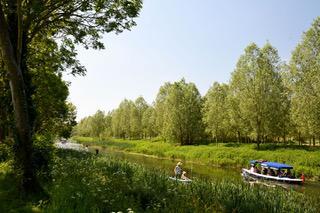
For generations the River Stour has occupied a central position in the working lives and leisure activities of people living on its banks. It is one of the country’s most attractive rivers, winding through a pastoral and wooded valley past towns and villages of great beauty and with many historical associations.
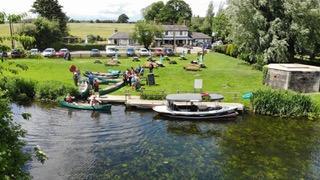
The River Stour Trust was set up to improve access and navigation and to encourage use of the river. Since its foundation in 1968, it has helped preserve the river, which was falling into abandonment. There are now large numbers of anglers, rowers, canoeists and paddle-boarders enjoying the river. The Trust also recently led the ‘Clean Water Initiative’ which resulted in the river at Friars Meadow in Sudbury getting a ‘Bathing Water’ designation.
Over the years the Trust has been able to reinstate Flatford, Cornard, Stratford St Mary and recently Dedham Locks, allowing greater access to and use of the Stour ‘Navigation’. In recent years it has also had a traditional 46-foot Stour Lighter restored – the ‘John Constable’ – which will be in regular operation with trips from Sudbury to Henny; definitely a unique experience and great way to experience the river and its history.
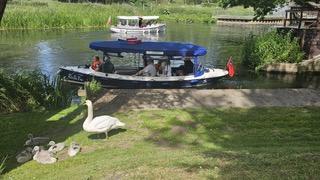
The Trust runs regular boat trips from Flatford and Sudbury using its fleet of mostly electric launches that enable hundreds of visitors every year, including wheelchair passengers, to experience the beauty and wildlife of the river –iconic creatures such as Kingfishers, Grebe, Water Voles and Otters have all been spotted. If you would like to experience this amazing part of the countryside on one of these boats, please get in touch – details are below.
Apart from running and maintaining the trip boats at Flatford and Sudbury, Trust volunteers also operate a much-appreciated Tea Room at the Granary in Subdury. They also help when local schools’ children come to learn about the river’s history and ecology in the Visitor Education Centre at Cornard Lock. Volunteers also help maintain the numerous jetties and keep the river itself in good condition by clearing fallen trees, encroaching reeds and other obstacles to navigation, which benefits local wildlife and all river users alike.
If you would like to experience this amazing part of the countryside by taking a trip on one of the boats – or want to get more involved by training to crew or skipper one of them, help the river maintenance team, help in the Tearoom, with the school visitors or at many of the other events – or simply just find out a bit more about the River Stour Trust, please contact:
Essex County Council has secured more than £68m to support and improve local bus services across the county over the coming years.
This new Government funding will support initiatives to improve reliability, strengthen local connections, encourage more people to travel by bus and help ensure services remain accessible and responsive to local needs.
The Government’s consolidated bus funding framework combines Bus Service Improvement Plan (BSIP) funding with the Local Authority Bus Service Operator Grant (LA BSOG). Essex will receive £10,778,248 annually from 2026/27 to 2028/29, a total of £32,334,744.
In addition to this revenue funding, ECC will receive £36.26m in Local Authority Bus Grant capital funding between 2026 and 2030.
ECC currently subsidises bus services where there is no commercial service but there is a need to help residents stay connected. These make up around 15% of the bus services in the county.
At the end of last year ECC consulted publically on two proposals for replacing the current DaRT3 on-demand service covering the four parishes: either a once-a-week Timetabled Service or a Digital Demand Responsive Transport (DDRT) flexible public transport service operating in real time, responding to passenger booking requests, within a defined geographical area and daily time window (e.g. 7.00am until 10.00pm).
The consultation outcome, as it affects the DaRT3 service, was as follows:
Consultation responses:
32 responses were received:
o 7 respondents agreed/3 disagreed with both proposals
o 13 agreed with Proposal 1 (the Timetabled option)
o 9 agreed with Proposal 2 (the DigiGo D-DRT option)
o 8 people could not make their journey, 22 could still make their journeys and 2 could still make their journey, but it would be less convenient.
ECC response:
‘ECC have carefully considered the responses to the consultation options. The enhanced service offered by DigiGo and the growth demonstrated on the existing service suggest this is the best way to secure the long-term sustainability of the service. This will secure all journeys currently being made’.
Recommendation:
To proceed with Proposal 2, the introduction of DigiGo D-DRT
This decision reflects public feedback, passenger usage data, value-formoney assessments and wider network sustainability considerations.
You can read the full consultation decision report, along with detailed appendices and decision summaries, by going to the link below: Local Bus Consultation 2025 Consultation - Background and Final Outcome | Travel Essex
Events
Lost to Time – Little Maplestead Village Hall
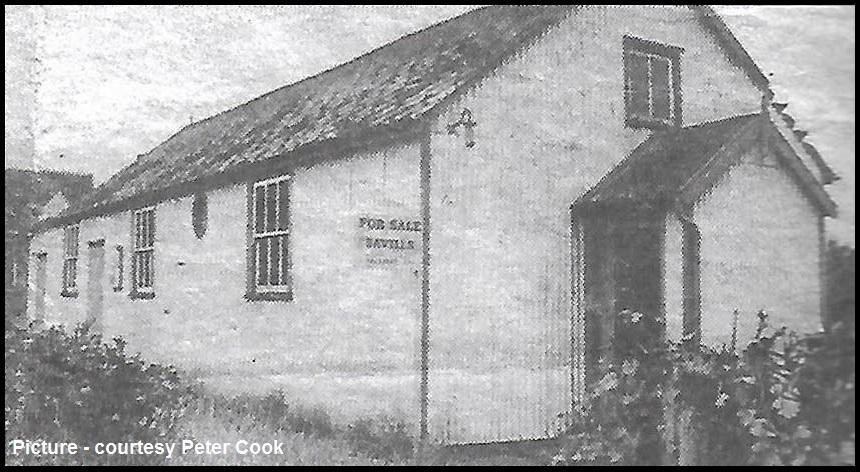
Today Little Maplestead stands alone amongst the four parishes in not possessing a Village Hall. This has not always been the case however – for about 50 years the village had a Hall that was a thriving amenity, a central community hub where villagers would regularly meet and socialise.
Built on land given to the parish by Alfred Blomfield, Little Maplestead’s Village Hall was constructed with the help of money raised by Mr. K Vaizey and Mr Percy of Deans Hall and was located in School Road, near Hall Corner. It opened on 28th April 1925 with a grand concert, for which Mr Percy arranged a troupe of chorus girls to perform on stage…
For a long time the Hall was at the heart of village life, with dances, whistdrives and other social events regularly taking place. For King George V’s and Queen Mary’s Jubilee in 1935 a children’s party was held in the Hall, with each child being given a ‘Jubilee Mug’ as a memento of the occasion.
Admission charges for the social events held in the Hall were used to pay for the church choir and Sunday school children’s summer outings to Clacton; at one time there were enough funds to pay for a new piano!
During the Second World War a large group of workers was brought in to clear scrub from areas around Maplestead Hall farm to increase the productive land available for cultivation: they all stayed in the Village Hall and were looked after and given meals by the villagers.
The Hall continued to be at the centre of village life until the early 1970s when changes in population, along with the non-local working and lifestyles of those then new to the village, caused it to gradually fall into disuse.
This meant the continuing costs of the Hall’s upkeep and maintenance could no longer be justified and it was eventually demolished, the land being sold off by the Parish Council. Two houses, Maple Chalet and Baytrees, were built soon afterwards and now stand on the site.
Source: Little Maplestead – A Millenium History: Patricia Fletcher
Pebmarsh School’s Read2Dogs Programme
The charity Pets As Therapy (PAT) was founded in 1983 by Lesley Scott-Ordish after she noticed the positive impact her dog had on the residents of a nursing home.
Nationwide, PAT facilitates visits by registered volunteers with their temperament-assessed dogs (and sometimes cats and rabbits) to schools, hospitals, hospices, day care centres and residential/nursing homes, bringing comfort, companionship and therapy to thousands of pupils, patients and residents.
PAT describe their work as “…creating everyday moments of magic. From reducing stress and anxiety to boosting confidence and communication, our visits make a real difference to people’s wellbeing. With thousands of volunteers nationwide, we’re working to reach more people every year –ensuring that wherever there’s a need for a lift in mood, a wagging tail or a gentle purr is never too far away”.
The charity’s Read2Dogs initiative was set up in 2010 with the aim of helping young people improve their literacy skills and encouraging confidence and concentration in the classroom.
Since June 2024 our students at St John the Baptist school have been eagerly participating in the Read2Dogs programme, where they read aloud to Lola, our dedicated therapy dog. The bond that has developed between the children and Lola has fostered trust and empathy, making reading a joyful experience for them rather than a daunting task.
Lola the Cockapoo’s presence as a therapy pet has had a significant impact on our children’s wellbeing. Many students who previously experienced anxiety about attending school have found comfort in her gentle presence. The dog’s warm and friendly demeanour has helped ease the worries of our young learners, making the school environment feel more welcoming and supportive.
Moreover, the programme has notably boosted our students’ confidence in their reading abilities. Reading a story aloud to our PAT dog, a great non-judgemental listener, has helped our young people to enjoy their reading experience. They look forward to spending time with their four-legged friend and this has created a bond of trust, empathy and understanding of the needs of the dog. Children who once hesitated to read aloud are now excited to share stories with Lola. This newfound confidence has not only enhanced their literacy skills but has also encouraged a love for reading that extends beyond the classroom.
Teresa Gage – Head Teacher
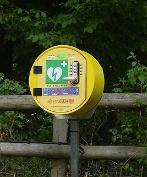
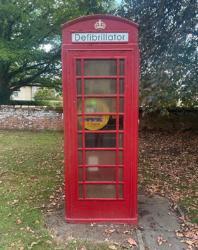
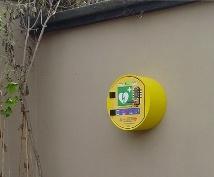
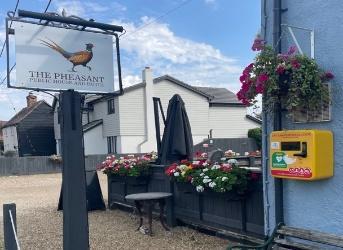
Parish Defibrillators and Where To Find Them
Defibrillators (also known as AEDs) are medical devices that help and support a rescue for a patient in cardiac arrest. They achieve this by applying a current of electricity across the heart to stop it, allowing it to reconfigure automatically. Defibrillators are not ‘Heart Re-starters’.
In a case of cardiac emergency, dial 999 first to request an ambulance; the Emergency Services will tell you if a defibrillator is required.
Each parish has at least one defibrillator – a couple have two – placed in locations that are central, convenient and easy to reach.
Access to each of the defibrillators is controlled by a lock code, which will be given to you by the Emergency Services (via the 999 call) when you confirm the What3Words location of the one nearest to the emergency incident you are dealing with.
When using the defibrillator it will guide you, through a sequence of voice commands and screen messages, as to what to do and when. You do not need a medical background or training to use the defibrillator.
For your future reference, the What3Words locations for each of the parish defibrillators are shown below:
Great Maplestead
Village Hall (on wall near planter): ///inefficient.love.walks
Little Maplestead
Gestingthorpe Road (on Meadowside fence near post box, opp. Church Road): ///divisible.bunks.relations
Little India (in car park): ///woof.hiding.salaried
Gestingthorpe
Church Green (in telephone box): ///frail.underline.saga
Pheasant Pub/Restaurant (on wall): ///actor.scrapping.steam
Pebmarsh
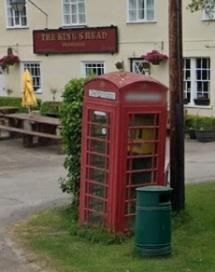
Kings Head (in telephone box by car park): ///animates.wipes.unique
Gardening Corner
Once we reach March, the days really start to lengthen and we have the prospect of the clocks going forward to anticipate.
If the ground is dry enough, rake down a seedbed for an early sowing of onion sets, shallots, parsnips and radish. Lettuce can also be sown under a cover. Tomatoes and peppers can be started off on a warm windowsill, ready to prick out into individual pots at the end of the month. Sweet peas can still be sown this month but, as I have said previously, just beware of mice!
Dogwoods [Cornus] can be cut back this month, I would suggest about 10 inches from the crown of the shrub. When you have finished a pruning session, it’s a good idea to wipe the blades of your secateurs with a little soapy water and oil afterwards, a hygiene tip well worth practising.
My plant of the month – Moroccan or Pineapple Broom [Cytisus battandieri] – is a summer flowering shrub, which needs to be planted against a southfacing wall and protected with horticultural fleece in winter. The flowers give off the gentle smell of pineapple – it can reach a height of 12 to 14 ft, and the silver leaf, which has a silky texture, sets this large shrub off well.
March is a good month to start giving the lawn some care. If you have a swath of grass with moss in it, a brisk rake over with a spring tine rake will loosen the compacted thatch. Treat the area with a feed-and-weed mix and water in, should we have a dry spell. You may also need to apply grass seed to any bald patches. Rake in the seed to agitate the soil and cover the area with fleece or a little sieved compost to deter the birds from having a feast.
Towards the end of the month start Dahlia tubers off by placing them in seed trays; cover the tubers in compost and water in well. Place them in a light, frost-free location and there should soon be small green shoots appearing. Plant out in the garden in mid to late May.
It’s a good idea to apply some preservative to wooden garden furniture which has been stored under cover during the cold, wet months. Similarly, wrought iron chairs and tables can benefit from a coat of external paint. Hopefully we can all look forward to getting back into our gardens after this long, wet winter…
Do try and keep dry!
The Arborist
Book Reviews
The first of these was a Number One Sunday Times bestseller and a Richard and Judy Book Club pick whilst Claudia Winkleman said of the second: “I inhaled it. I love dogs and I love detectives. This is actually my dream book”.
THE TRIAL: Rob Rinder
One murder. One impossible case. Who is guilty?
This novel provides the reader with an enticing glimpse behind the scenes of a barristers’ chambers that has been given the task of defending a seemingly guilty client of a major murder. This is trainee barrister Adam Green's first case and what a heavy-weight one it is.
Initially, all the evidence for the murder of the hero policeman points to a Jimmy Knight, who has been convicted of multiple offences before. Adam knows that defending him will be no easy task – but it will quickly become clear that suspicion could fall elsewhere.
Moreover, Adam has to contend with a seemingly jealous competitor for the one place in the chambers that is available for trainees and a very unpleasant barrister who directs his working day. The only thing that's certain is that this is a trial which will push Adam – and the justice system itself – to the limit.
This is a terrific, page-turning read – the first of a trio featuring Adam Green, with a fourth to come in Summer 2026
THE DOG WALKERS’ DETECTIVE AGENCY: Michael Hogan
I admit that, although I was intrigued by the subject material since, like Claudia Winkleman, I like dogs and detectives, I approached this book with a fair degree of misgivings because I thought it might just be cashing in on the “Agency” type of books currently in vogue.
And, although it was indeed much in keeping with other books of this format (a group of older folk getting together to solve previously unsolved crimes, viz: THE THURSDAY MURDER CLUB), it was an easy read with very few surprises. A gentle sort of unchallenging and familiar concept but none the worse for that. All in all a cosy sort of tale, the kind of book you might take to bed with you as a comfort blanket.
The characters are mostly likeable, each having their own ideas and strengths but who nevertheless work effectively together to reach the result. It is a debut novel for successful journalist Michael Hogan; I cannot find any mention of a follow up!
I will keep looking, so please watch this space
The Bookworm
Fun for all the Family…
Gestingthorpe Goings-on
Gestingthorpe Village Hall Coffee Morning & Book Exchange
Fortnightly on Fridays from 10.00am to 12 noon
Join friends and neighbours in the Village Hall for tea, coffee, cake and a chat. All cakes are homemade and served by our fabulous team of volunteers. Tea or coffee and cake £3.00 – pay by card or cash.
Bring a book to swap or buy a book for £1. Our bookcase is located next to the big window in the small hall. There is a large range of books and genres to choose from.
The next Coffee Mornings and Book Exchange will be on 13th & 27th March and 10th & 24th April
All funds raised go towards running & maintaining the Village Hall.
Village Litter Pick, Plant Sale and Gestingthorpe Grill Saturday 16th May 10.00am to 12.30pm Gestingthorpe Village Hall
Forthcoming Local Events
Hedingham Heritage Society
Our forthcoming talks continue on a naturalist theme, with wildlife and wild birds taking centre stage – we do hope you can join us for both of these:
Thursday 5th March: ‘Small Ways To Wild The World’. In this talk, James Canton describes how he transformed the green space behind his new countryside dwelling into a wildlife haven, buzzing with life.
7.30pm – Castle Hedingham Memorial Hall
Thursday 2nd April: ‘The Peregrine – Soaring High with J. A. Baker’. This talk on J. A. Baker – who was born in Chelmsford and became a renowned authority on birdlife in Essex – is by David Simmons, who celebrates Baker’s love of the peregrine falcon and his book ‘The Peregrine’.
7.30pm – Castle Hedingham Memorial Hall
Do join our local and natural history society. Annual membership for 2026 remains at £15.
Members come free to all walks and talks : Non-Members - £5. Everybody is Welcome. Contacts: Trudi: 01787 462 889 : Mark: 07906 472 636 E-mail: hedinghamheritage@gmail.com or visit www.hedinghamheritage.org.uk
Let There Be (Less) Light…
Artificial light in the wrong place at the wrong time can be intrusive, especially if it is allowed to illuminate areas outside of its intended scope.
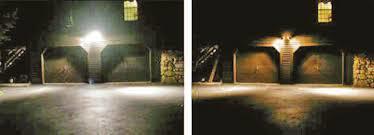
With the increasing use of ‘security’ lighting around domestic properties in many of our villages, ‘light trespass’ is becoming a growing problem. Many installations use floodlighting with 250-500 watt tungsten halogen lights controlled by passive infra-red (PIR) movement sensors, but:
• their activation can be intermittent and unreliable.
• they emit a harsh, intrusive and environmentally unfriendly light that can often be a serious nuisance to neighbours.
• they are extremely energy inefficient.
Depending on how such floodlighting has been installed, it may also:
• not be in the best position or angled correctly.
• be lighting areas it doesn’t need to.
• be affecting nearby properties.
If lighting for a particular area is really needed, a better alternative to movement-controlled flood-lighting is to use high-efficiency, low-energy lighting controlled by a photo-electric cell – a dusk-to-dawn switch. This kind of low wattage lighting, which can be left on permanently during the hours of darkness, usually provides more than adequate, and less intrusive, levels of illumination.
Avoiding problems…
Although light pollution is classified as a statutory nuisance under S102 of the Clean Neighbourhoods and Environment Act 2005, if a neighbour’s lighting is causing you a problem it is best, initially, to try and resolve your complaint by discussing it with them.
You may find that they’re unaware that their light is causing a disturbance and, in most cases, all that’s required is a re-angling of the light, adjustment of the shielding or the fitting of a lower wattage bulb.
If the problem cannot be resolved informally, more information about what action you may take can be found by going to the Braintree District Council website and entering ‘Light Pollution’ in the Search box.
Church Matters
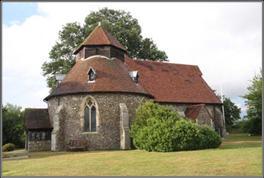
St John the Baptist – Little Maplestead
We are sorry to have to inform you that, unfortunately, there will be no Plant Sale in May at the Round Church this year.
I would like to take this opportunity to say a huge thank you to Sheila Fulcher and Peter Nott for their incredible support for the Plant Sale over the years. Sheila provided about 80% of the plants and is retiring due to her greenhouse giving up; nothing to do with her advanced age of course!
A big thank you also to Enid Baines and the stalwart PCC members, who always step up in support, and we mustn’t forget the incredible tea ladies!
We are still looking to recruit new people to serve on the PCC and help to raise funds to keep our Church open – please get in touch before the APCM on 23rd April if you are able to help.
Without new PCC members the Craft Fair in September will also not be taking place and, if the church has to close through lack of funding, we will not be allowed to use it for any events in the future.
Please contact me on 07981 965 751 or Rev’d Beverley on 01787 460 273 (or e-mail khvicar@gmail.com) if you have any suggestions about how to help save the Round Church from possible closure.
Jane Stone
St Giles’ Café Church – Great Maplestead
Parish News Information
Advertising/Announcements/Articles
The 2026 Parish News Business Advertising Rates for the year (10 issues, pro-rated as applicable) and for monthly single issue advertisements and event announcements are shown below, along with the Copy/Artwork Deadline dates for the next eight issues of Parish News:
Contacts:
Articles
Please submit these by e-mail, preferably as a Word document attachment with separate images:
½ page: 150-160 words + images Full page: 400-420 words + images
Advertising Ann Harris ann66harris@gmail.com Editorial Parish News Team parishnewsmaplestead@gmail.com
The Parish Representatives, to whom articles and event announcement submissions should be sent, are listed on the Inside Front Cover