We are delighted to present the latest edition of Pickle on the vibrant occasion of Berlinale and the European Film Market 2026. This marks the 17th consecutive year that Pickle has participated in the Berlinale, highlighting the ever-growing presence and accomplishments of India in the global film industry.
This year, Berlinale continues its tradition of discovery, with four Indian films featured in the official selection, two Indian representatives serving on international juries, and significant strides made in the restoration of Indian cinematic heritage. India’s creativity, diversity, and technical prowess remain a focal point for the festival, reinforcing the country’s reputation as a wellspring of fresh narratives and talent.
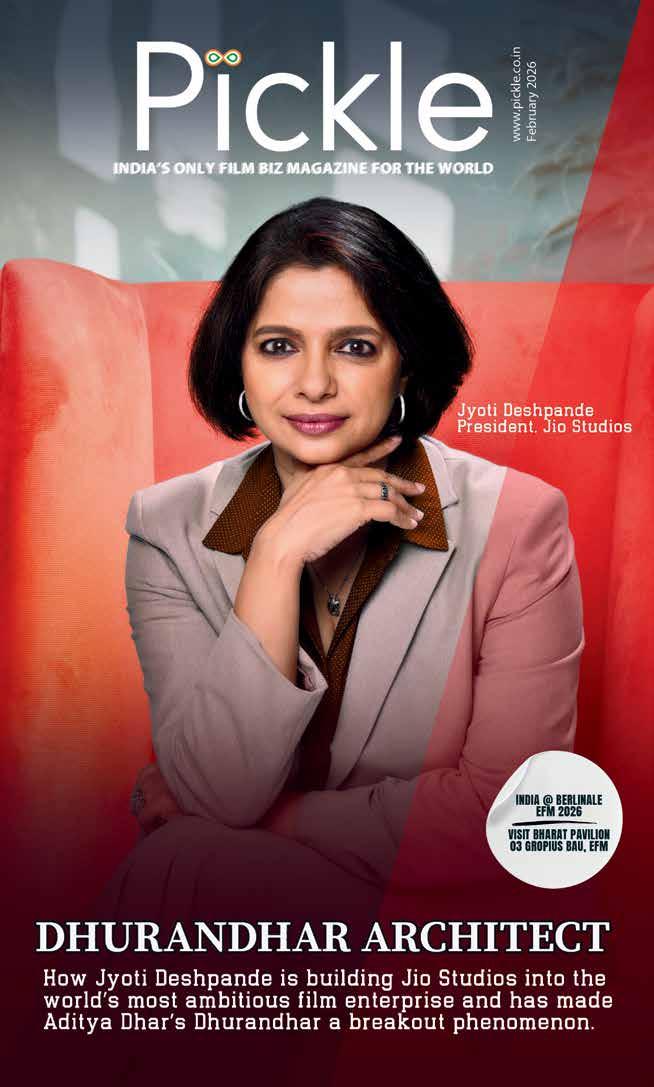
In this edition, we showcase a cover feature on Jyoti Deshpande, President of Jio Studios. Jyoti has been instrumental in architecting the phenomenal success of “Dhurandhar,” working closely with the talented team led by director Aditya Dhar. A veteran with over three decades of experience in the Indian film industry, Jyoti exemplifies the resilience and vision that continue to propel Indian cinema onto the global stage. Our congratulations to her, one of the most successful global producers India has produced.
The India advantage is clearly visible this year through the
WAVES Bazaar initiative, which is supported by the Ministry of Information & Broadcasting and the National Film Development Corporation. WAVES Bazaar at Berlinale EFM 2026 is a curated platform, spotlighting Indian film projects, pioneering media-tech startups, and emerging creative voices, all aiming to foster international sales, co-productions, and strategic investment partnerships.
This issue also brings you insightful columns from Ashish SK and Biren Ghose on IICT, and Prof.Raghunath’s perspectives on scaling India’s creative and technical talent pool. We also highlight the CII Big Picture Summit’s exploration of artificial intelligence through the lens of media and entertainment, underscoring India’s openness to technological innovation.
India’s media and entertainment sector is at an exciting inflection point, offering immense opportunities for domestic growth and international collaboration. Recognized as a champion sector by the Government of India, the policies encourage an enabling environment and reduced barriers to market

We invite your thoughts and suggestions, and encourage you to reach out. We’re only a few clicks away (www.pickle.co.in), ready to help you connect and collaborate with India’s vibrant media and entertainment
nat@pickle.co.in, www.pickle.co.in
Pickle Volume XVIII 8th Edition
Published by Pickle Media Private Limited
Email: natvid@gmail.com l Mumbai l Chennai No.2, Habib Complex Dr Durgabhai Deshmukh Road
RA Puram CHENNAI 600 028
For advertising: natvid@gmail.com / pickle@pickle.co.in
Pickle Business Guide 2026 Copyright 2026 by Pickle Media Pvt Ltd. All Rights Reserved.
Senior Editor : Vivek Ratnakar
Editorial Coordinators : Maitreyi Vidyasagar, Shruti Sundaranand
Design: Jose J Reegan, James, D Sharma, S Lakshmanan
Photo Editor : K K Laskar
Admin & Operations : B Rajalakshmi
Email: natvid@gmail.com
Pickle is an ad supported business guide tracking the filmed entertainment business in India.
From WAVES to Indian Institute of Creative Technologies (IICT), India has quietly built the full creative stack. Talent, tech, creators and scale now form an M&E engine designed to serve global entertainment demand
Media and entertainment (M&E) in India has moved from growth to global advantage. What was once a huge consumer market is now a global production engine with scale, talent, technology, policy clarity, and cultural depth. India is becoming a strategic hub for content creation, post-production, AVGC-XR, and AI-led storytelling as global studios, streamers, creators, and tech platforms seek cost-effective, innovation-ready creative ecosystems.
Over the past decade, India’s M&E sector has grown at a CAGR of 10–12%, making it among the fastest-growing creative economies globally. The industry is projected to reach $70 billion by 2030, powered by digital consumption, rising incomes, affordable data, and regional content growth. But numbers alone do not explain India’s rising strategic importance. The deeper story is how India is building a full-stack creative ecosystem — from policy frameworks and education pipelines to creator monetisation, AI innovation, and global market access.
India’s policy direction is an M&E strength. The government’s “Create in India for the World” vision is being implemented through institutional reform, financing, education, and international collaboration. The Film Facilitation Office became the India Cine Hub, simplifying permissions, clearances, and incentives for international shoots and co-productions.
Location filming and positioning India as a plug-and-play production destination for global studios depend on this.
Equally important is the policy focus on AVGC-XR (Animation, Visual Effects, Gaming, Comics and Extended Reality). Multiple states — Maharashtra, Karnataka, Telangana, and Tamil Nadu — are building creative clusters with tax incentives, infrastructure, and Centres of Excellence. These are not isolated policy experiments; they reflect a coordinated push to ensure India competes in high-value creative services, not only in content consumption.
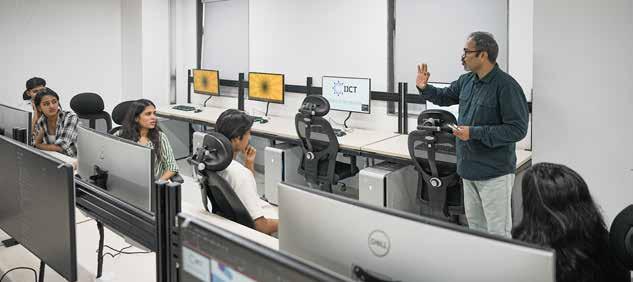
A defining upgrade in India’s M&E ecosystem is the creation of institutional capacity for creative technology. The Indian Institute of Creative Technology (IICT) in Mumbai is being positioned as a national centre of excellence for AVGC-XR, akin to what IITs represent for
2000 Feature Films Produced
900 tv channels
960 mn active internet users
700 mn smart Phone users
50,000 + hours oF tv content created every year
600 mn ott viewers
50+ ott PlatForms
900 mn reach oF movies via tv
engineering. Its mandate spans education, research, incubation, and policy support — addressing one of India’s historic weaknesses: fragmented skill development in creative technologies.
The 2026–27 Union Budget’s allocation of Rs 250 crore to establish creative labs in schools and colleges further strengthens this pipeline. IICT’s role in aligning curricula, training faculty, and building continuity from secondary education to advanced creative tech programs marks a structural shift. This is not just about producing animators or VFX technicians; it is about building a workforce fluent in AI tools, real-time engines, immersive storytelling, and global production workflows.
For global studios and platforms, this talent infrastructure reduces longterm risk. It signals that India’s creative workforce will not only be large and affordable, but future-ready — capable of handling complex pipelines in virtual production, AI-assisted animation, real-time rendering, and global IP development.
WaveS: rePoSitioninG india aS a Creative nation
WAVES has played a powerful role in reshaping how India presents itself to the world. Beyond being an industry summit, WAVES has functioned as a brand platform — repositioning India not merely as a content exporter, but as a creative partner for the global M&E ecosystem. The emphasis on cross-border collaboration, creator challenges, startup acceleration, and IP marketplaces has aligned India’s M&E ambitions with global industry priorities.
This rebranding matters. For decades, India’s creative strength was often seen through the lens of Bollywood or domestic entertainment. WAVES reframed that narrative, showcasing India’s depth in gaming, VFX, post-production, regional storytelling, immersive tech, and creator entrepreneurship. In global markets increasingly shaped by IP franchises, platform partnerships, and transnational storytelling, perception is strategic capital — and India is now actively shaping it.
the Creator eConomy: From inFluenCerS to iP entrePreneurS
India’s creator economy goes beyond influencers and brand integrations. It is becoming an IP economy where creators build franchises, communities, and monetisable universes across platforms. With over 78 crore internet users and the cheapest data, India gives creators scale and experimentation room. Entertainment is expanding with short-form video, regionallanguage content, podcasts, gaming streams, and virtual creators. Policy support, startup incubation, and platform partnerships are turning creators into small studios. The rise of hyperlocal OTT platforms and regional content networks shows how India’s linguistic and cultural diversity is becoming a competitive advantage, not a fragmentation challenge. For global platforms, this creator ecosystem offers a living lab for audience engagement models that can be exported to other emerging markets.
india’S ai advantaGe in Creative ProduCtion
India’s AI advantage in M&E is emerging at the intersection of scale and engineering talent. AI-powered dubbing, subtitling, localisation, asset generation, and workflow automation are being rapidly adopted across
production pipelines. With one of the world’s largest pools of STEM graduates and a fast-growing AI startup ecosystem, India is well-positioned to build creative AI tools at scale.
Future content production requires faster, smarter pipelines, not just cheaper labor. Virtual production, real-time environments, AI-assisted editing, and procedural animation are changing content creation. India’s cost advantage and tech advantage are allowing global studios to shorten production cycles without sacrificing quality.
India’s M&E workforce is both vast and increasingly specialised. From editors and sound designers to game artists, motion capture specialists, and virtual production technicians, the talent base has deepened across disciplines. The sheer density of creative professionals creates network effects: studios scale faster, freelance markets mature, and production ecosystems become resilient.
Technical education and rapid upskilling in India boost this workforce advantage. IICT and state-level initiatives to integrate creative technology into formal education ensure that India’s talent pipeline grows and adapts to industry needs. Predictable capacity helps global partners plan longterm production.
India’s domestic market remains a strategic anchor for global M&E players. With OTT consumption rising sharply, regional content booming, and gaming and immersive entertainment expanding, India offers scale few markets can match. This internal demand fuels experimentation — allowing studios, platforms, and creators to test formats, technologies, and monetisation models before exporting them globally.
The domestic market also supports IP development. Franchises born in India increasingly find international audiences, while co-productions blend local narratives with global sensibilities. This two-way flow of content and capital strengthens India’s position as both a consumer and creator economy.
India’s post-production advantage is often underplayed — but it is one of the country’s most export-ready M&E strengths. VFX, animation, sound design, editing, and colour grading services are already integrated into global pipelines for films, series, and games. The cost-quality equation remains compelling, but what sets India apart now is scale. With hundreds of studios and thousands of skilled professionals, India can absorb large volumes of global work without bottlenecks.
AVGC capabilities extend beyond service work into original IP creation, gaming studios, and immersive experiences. As global demand for digital content outpaces traditional production capacities, India’s post-production and AVGC ecosystem positions it as a global capacity provider for the creative economy.
reGional huBS and the GeoGraPhy oF Creative SCale
India’s M&E growth is no longer Mumbai-centric. Hyderabad, Bengaluru, Chennai, Kochi, and emerging hubs in the North East are expanding the geography of creative production. State policies, infrastructure investments, and local talent pools are creating distributed creative clusters. This regionalisation reduces cost pressure, diversifies creative voices, and builds resilience into the national ecosystem.
For global studios, this means access to multiple production centres with different cost structures, creative styles, and logistical advantages — all within a single national framework.
ShootinG, SoFt PoWer, and the GloBal mindSet
India continues to attract international shoots, supported by streamlined facilitation and diverse locations. While not positioned as a headline advantage, on-ground production remains a strategic soft-power lever. More importantly, India’s creative sector is adopting a global mindset — thinking in terms of exportable IP, cross-border partnerships, and international audiences from the outset.
This mindset shift is perhaps India’s most important M&E upgrade. The industry is no longer content with being a domestic success story. It is actively positioning itself as a participant in global value chains — from ideation and production to post-production, technology development, and IP monetisation.
the eXPandinG GloBal FootPrint
The opportunity ahead lies in expanding India’s global footprint — not just as a market, but as a creative partner. Co-production treaties, platform partnerships, and international festivals are creating pathways for Indian studios, creators, and tech firms to embed themselves into global workflows. As content globalises and audiences seek diverse narratives, India’s cultural depth, technical capacity, and cost efficiency form a powerful combination. India’s M&E advantage today is not a single factor; it is an ecosystem advantage. indiA’S M&E






This 76th Berlinale programme reflects not only an extraordinary breadth of filmmaking but also the deep passion and expertise of our programming team for whom I feel enormous gratitude and admiration. you will find films selected from more than 8,000 submissions from hundreds of countries: works that confront the pressing issues of our time –political, ecological, social, personal – not as dry abstractions, but as moments that make you laugh or cry and take your breath away with the beauty of an image, the brilliance of a performance or the precision of the edit or sound design.
tricia tuttle, Festival director Berlin International Film Festival
At EFM 2026, the old playbook is out—Berlin’s global market is where new ideas, new models, and new worlds are ready for their close-up
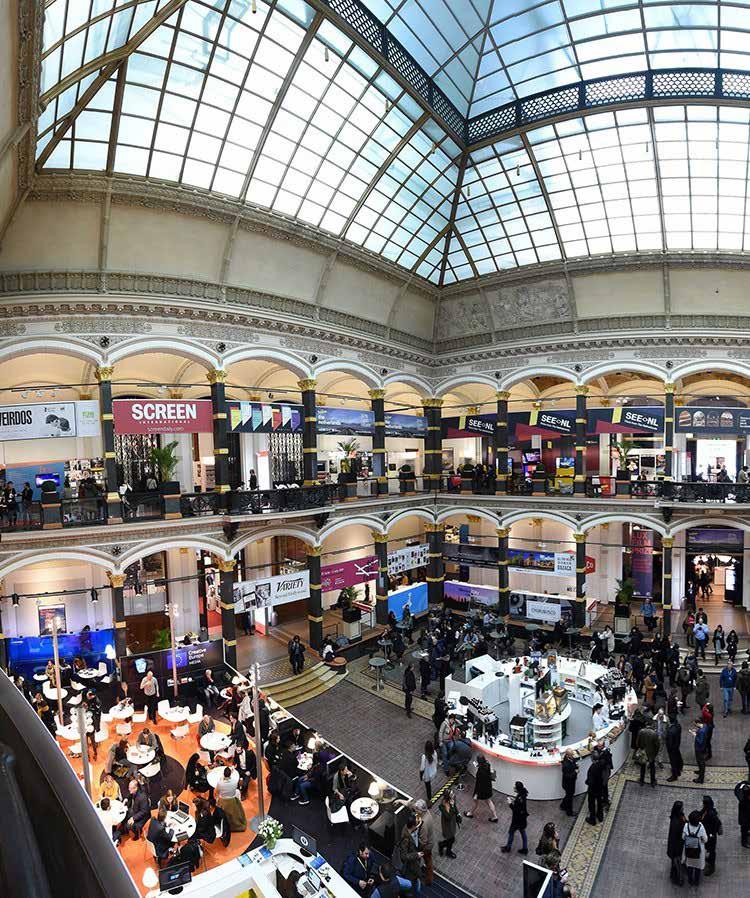
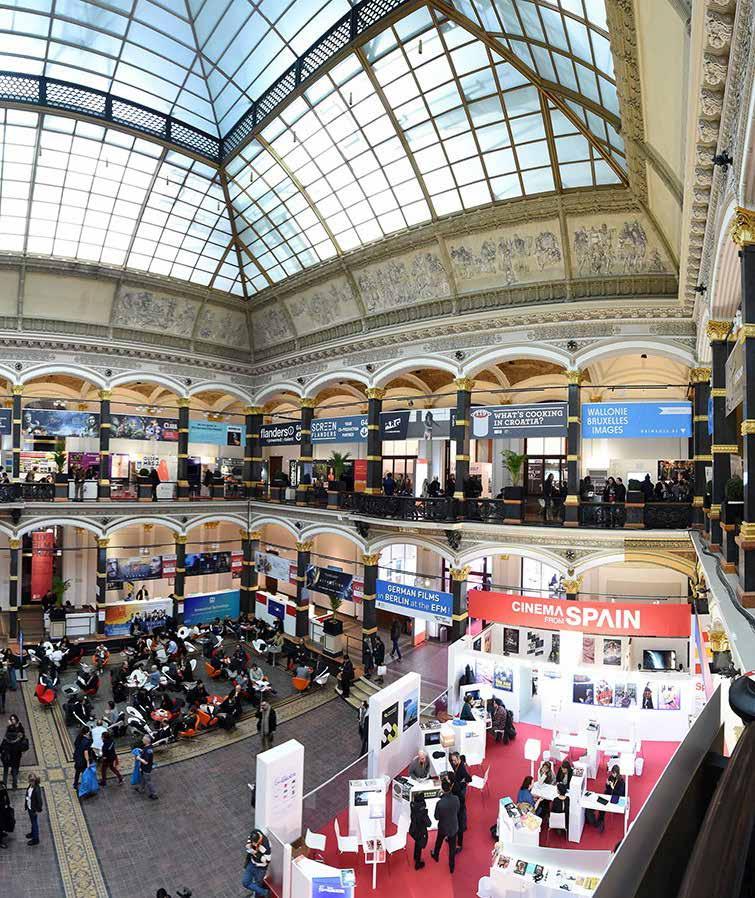
Each February, as the winter chill lingers over Berlin, the European Film Market (EFM) pulses at the heart of the Berlinale, drawing industry leaders from across the globe. For decades, EFM has been synonymous with dealmaking—a barometer for the state of the international film and television business.
yet, as the curtain rises on EFM 2026, it’s clear the market has evolved into something far more ambitious: a strategic laboratory where the business models shaping the future of audiovisual storytelling are being engineered in real time.
Now recognized as the world’s second-largest audiovisual B2B platform, EFM 2026 expands its remit with a dynamic Industry Programme, the debut of EFM Beyond, and a transformative focus on animation. The market’s integration with initiatives like the Berlinale CoProduction Market, Berlinale Talents, and the World Cinema Fund under the Berlinale Pro umbrella underscores its emergence as a comprehensive ecosystem—one where stories are nurtured from concept to global scale, spanning film, series, games, XR, and immersive content.
At the core of this year’s market is the EFM Conference Programme, convening nearly 100 thought leaders, creatives, and decision-makers to dissect the seismic shifts transforming film finance, distribution, and audience engagement.
Money remains a central theme, with masterclasses by industry stalwarts like Alex Walton (WME Independent) and Timo Argillander (IPR.VC) delving into innovative funding strategies, institutional capital, and the art of structuring rights. The Entertainment Finance Forum introduces a macroeconomic perspective, tracking global capital flows and the rise of private equity in content creation.
But EFM 2026 is about more than funding; it’s about a fundamental shift in industry mindset. Direct
monetisation strategies, data-driven audience development, and inventive marketing approaches are front and center.
Producers are encouraged to embrace a growth strategist’s perspective, leveraging data not just to sell, but to design films tailored to evolving audience tastes. Workshops from ACE Producers, EAVE, and the European Producers Club explore how AI, new regulations, and creative independence will reshape the decision-making landscape.
Marketing, too, is being reimagined. Dr. Marina Kosten’s deep-dive into global film marketing challenges the traditional paradigm, positioning audience engagement as a science rather than a post-release afterthought.
Sessions on fandom-driven growth— from the viral power of TikTok book adaptations to cross-platform creator collaborations—demonstrate that in today’s landscape, authentic community-building can be as influential as traditional campaigns.
A significant highlight of EFM 2026 is the launch of Animation Days, reflecting animation’s newfound prominence in global co-production and IP development. Early-stage projects from Europe and Canada are spotlighted in curated pitching sessions, while the Annecy Animation
Showcase offers industry insiders a preview of works in progress poised for international acclaim.
The emphasis on process—realtime pipelines, virtual production, and cross-border collaboration— underscores animation’s commercial and creative viability.
Animated documentaries further broaden the definition of what animation can achieve, bridging fact and fiction, art and commerce. Animation Days also serve as a vital matchmaking hub, where film producers, game developers, and animation studios converge in a flurry of networking events, breakfast clubs, and happy hours, reinforcing EFM’s identity as a convergence zone for the entire screen industry.
Perhaps the most transformative development at EFM 2026 is the unveiling of EFM Beyond at the Producers & Innovation Hub. Here, the message is clear: in a fragmented content economy, success hinges on moving beyond isolated projects to IP-first worldbuilding. Producers are urged to imagine stories as narrative universes designed to span film, series, games, animation, XR, and branded content.
The Film-to-Game Accelerator and Cross-IP Accelerator Programme formalize this approach, fostering collaborations between filmmakers and interactive storytellers to codevelop expansive narrative worlds. The Games to Screen showcase inverts the traditional adaptation pipeline, highlighting how game IP is increasingly serving as rich source material for film and series adaptation.
In the EFM Innovation Hub, virtual production, game engines, and immersive technologies are no longer on the industry’s periphery—they are at its center. The debut of the Immersive Zone cements XR and VR as essential markets for producers seeking to future-proof their IP strategies.
the neW GloBal market arChiteCture
EFM Startups, now in its twelfth year, offers a window into the industry’s
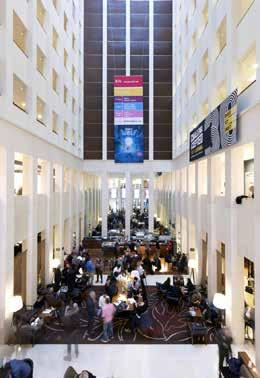
The introduction of a startup award, in partnership with Screen International, signals the market’s commitment to embedding innovation within its very DNA. at eFm, marketinG, too, iS BeinG reimaGined. dr. marina koSten’S deeP-dive into GloBal Film marketinG ChallenGeS the traditional ParadiGm, PoSitioninG audienCe enGaGement aS a SCienCe rather than a PoSt-releaSe aFterthouGht
evolving infrastructure. Alumni like Letterboxd and Respeecher exemplify how platforms, AI tools, and data solutions are becoming as crucial as traditional sales agents.
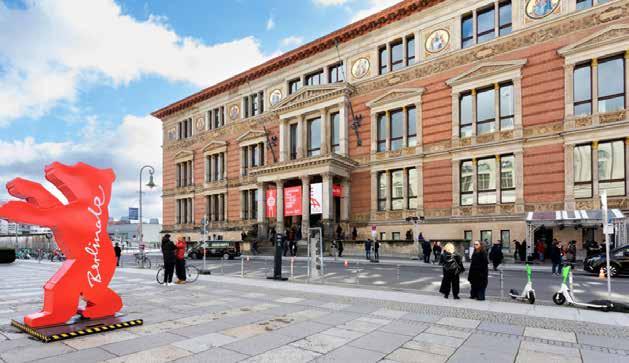
Whether you’re a producer, distributor, creative, or just passionate about the evolving world of film, the European Film Market 2026 is packed with opportunities to connect, learn, and innovate. Here are twelve can’t-miss activities to make the most of your Berlin experience
Dive into rare footage and archival treasures at the on-site Archive Market at Café Connect—perfect for documentary makers and history buffs alike.
Connect with the Next Big Thing at EFM
Meet 12 trailblazing media startups, catch live demos, and network with innovators shaping the future of production, development, and distribution.
Join Masterclasses by Industry Leaders
Off-campus screenings held simultaneously in and around Mumbai during MIFF ensure widespread audience engagement. Award-winning films are also showcased in various parts of India following the festival.
Learn from top minds like Alex Walton and Timo Argillander on financing, capital strategy, and rights management in exclusive, expert-led sessions.
With an average of 35 to 40 countries participating, MIFF truly embraces global cinema. Selection Committees comprising renowned documentary filmmakers, technicians, writers, and critics meticulously shortlist films for competition, judged by eminent filmmakers from India and abroad.
Discover how TikTok, book adaptations, and creator collaborations are powering new waves of audience engagement.
Visit the Producers & Innovation Hub
Attend Animation Days
Immerse yourself in curated pitching sessions, showcases, and networking for the booming world of animation, including cross-border collaborations.
Speed-Date with Partners at Networking Events
Join breakfast clubs, happy hours, and curated matchmaking to connect with new collaborators from film, games, and animation.
The Indian Documentary Producers’ Association (IDPA) and the Government of Maharashtra collaborate to institute special awards, including the esteemed V. Shantaram Lifetime Achievement Award, honoring individuals for their contributions to the documentary movement in India.
Increased Participation
Experience EFM Beyond, where producers collaborate with gaming and XR experts to transform projects into multiplatform IP universes.
MIFF 2024 witnesses a remarkable 40% increase in participation, with over 1200 entries received, promising a diverse and enriching cinematic experience for attendees.
Take Part in the Entertainment Finance Forum
Get the inside scoop on global capital trends, private equity, and the economic forces reshaping screen content.
MIFF fosters learning and skill development through Master Classes and Workshops, curated to equip filmmakers with the latest tools and techniques in visual storytelling, keeping pace with evolving technology in cinema.
Experiment with XR, VR, and the latest in virtual production— see how the cutting edge of storytelling is being prototyped.
The 18th edition of MIFF promises a captivating selection of carefully curated international films, ensuring an enthralling experience for cinephiles and filmmakers alike.
Attend Case Study Workshops
Go behind the scenes of projects like The Last Whale Singer and The Amazing Maurice 2, and learn about real-time pipelines and new animation workflows.
Check Out the Games to Screen Showcase
See how game IPs are becoming hot properties for film and TV adaptation—and meet the teams behind the cross-media hits.
Discover and Support Fresh Talent at Berlinale Talents
Engage with rising creatives, attend talks, and spot the talent that’s set to shape the industry’s next decade.
indian cinema makes waves at Berlinale 2026, with four films spanning diverse regions, two indians on prestigious juries, and a landmark restoration—signaling a shift from festival hopeful to global tastemaker and heritage powerhouse
At the 2026 Berlinale, Indian cinema commands unprecedented attention, presenting an eclectic slate of four films, two prominent jury appointments, and a powerful archival story. Together, these elements mark a significant evolution: from festival participant to an institutional force shaping global cinematic discourse.
a CinematiC moSaiC: Four FilmS, Four voiCeS
India’s selections this year traverse geographic, linguistic, and thematic diversity. Tamil director R. Gowtham’s debut, Members of the Problematic Family, makes history as the first-ever Tamil Nadu debut in the Berlinale Forum. The 140-minute drama, lauded for its nuanced exploration of familial violence and trauma, signals a bold new voice in socially engaged cinema.
National Award-winner Rima Das returns for a third consecutive outing with Not a Hero, an Assamese-language coming-of-age story in the Generation Kplus section. The film’s tale of rural resilience and youth courage not only cements Das’s international standing but also highlights the emergence of Northeast Indian cinema on the world stage.
Documentary filmmaker Madhusree Dutta breaks a two-decade hiatus with Flying Tigers, a Germany-India production delving into the environmental aftershocks of World War II’s Himalayan
military airlift. The film’s nuanced narrative—eschewing easy sentimentality—charts the displacement of tigers into Assam’s tea estates, where Dutta’s own family history is rooted.
Completing the quartet is a landmark restoration: In Which Annie Gives It Those Ones, Pradip Krishen’s 1989 indie classic. Featuring early performances by Shah Rukh Khan and Manoj Bajpayee, the film returns to the screen in Berlinale Classics after an intensive 4K restoration by the Film Heritage
india’S CinematiC FootPrint at Berlinale 2026 SPanS Four
SeleCtionS, From tamil and aSSameSe narrative GemS to an indo-German doCumentary and the reStoration oF a Cult ClaSSiC. the lineuP reFleCtS the Country’S viBrant reGional voiCeS and itS GroWinG Stature in GloBal FilmmakinG.
r. GoWtham’S “memBerS oF the ProBlematiC Family” BeComeS the FirSt tamil deBut to enter the Berlinale Forum, While rima daS’S third ConSeCutive SeleCtion With “not a hero” SolidiFieS northeaSt india’S emerGenCe on the World StaGe. madhuSree dutta’S “FlyinG tiGerS” eXPloreS ForGotten eColoGiCal hiStorieS, and a 4k reStoration oF “in WhiCh annie GiveS it thoSe oneS” BrinGS an ‘80S indie mileStone BaCk into the limeliGht.
iN
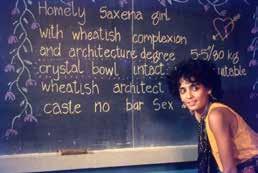
At architecture college in 1974 New Delhi, student Annie fails his final exams four times because the dean has it in for him. Now he is facing his fifth attempt. This whimsical campus comedy with a screenplay by Arundhati Roy became a cult hit.
Berlinale Classics In Which Annie Gives It Those Ones Director: Pradip Krishnan
A man dies young. Funeral rites – yes; mourning – not so much. A death that stirs and shakes things up. A lm that shows the violence of family relationships with uncanny subtlety and verve, the pendulum of void and solace. What a debut feature!
Forum
Members of the Problematic
Family Director: R Gowtham

For the FirSt time, indianS oCCuPy tWo inFluential jury SeatS. Shivendra SinGh dunGarPur, Founder oF the Film heritaGe Foundation, joinS the international jury. Shaunak Sen— Well-knoWn For hiS oSCar nomination For all that BreatheS— BrinGS hiS environmental inSiGht and aCademiC riGor to the doCumentary aWard jury
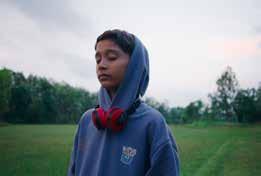
Exiled from city comforts to his ancestral village, Mivan meets his embittered aunt, befriends a horse and joins the local kids on wild adventures, discovering the beauty of life and a courage he never knew he had.
Generation Kplus Not a Hero Director: Rima Das
An Alzheimer’s-plagued mother’s fear of tigers in Assam sparks a multi-location probe into the US army unit supplying Kunming in WWII. A collective quest through history’s butterfly effects, told via found stories and turned hybrid.
Forum Flying Tigers Director: Madhusree Dutta

indian inFluenCe deePenS oFF-SCreen, too. Shivendra SinGh dunGarPur’S hiStoriC role on the international jury markS a neW era oF inStitutional PartnerShiP, While oSCar-nominated Shaunak Sen’S Seat on the doCumentary jury hiGhliGhtS delhi’S Creative edGe and environmental ConSCiouSneSS.
Foundation. Described as “arguably India’s first true ‘English’ film,” the project stands as a testament to India’s growing expertise in film preservation.
ShaPinG the FeStival: indian voiCeS on the jury
For the first time, Indians occupy two influential jury seats. Shivendra Singh Dungarpur, founder of the Film Heritage Foundation, joins the International Jury, chaired by celebrated director Wim Wenders. Dungarpur’s presence is more than symbolic—he now holds decisive sway over the festival’s top honors, including Best Film and Best Director, underscoring India’s transition from outsider to collaborative partner in global cinema.
Meanwhile, Shaunak Sen—well-known for his Oscar nomination for All That Breathes—brings his environmental insight and academic rigor to the Documentary Award Jury. His involvement not only elevates conversations around ecological storytelling but also places Delhi’s independent filmmaking in the international spotlight.
arChival reSurGenCe: Chetna vora’S unlikely leGaCy
Adding further depth to India’s Berlinale narrative is the rediscovery of Chetna Vora’s Frauen in Berlin. Though not part of the official program,
this 1981-82 Cold War-era film—created during Vora’s time as an India-GDR exchange student—documents East German women across generations. When the film school demanded cuts, Vora refused, and the original was destroyed. yet, through a secret VHS recording, the work survived, now resurfacing via international screenings and research. Vora’s daughter, filmmaker Neelesha Barthel, carries forward this legacy, linking suppressed histories with contemporary practice.
a neW ChaPter For indian Cinema
The convergence of diverse film selections, strengthened institutional participation, and archival recovery signals a maturing Indian presence at Berlinale. No longer content with seeking external validation, Indian cinema is now an active architect of its global narrative— championing its heritage, contributing to festival decisions, and showcasing the creative pulse that spans its many regions.
Berlinale 2026 thus stands as a milestone: a celebration of Indian cinema’s journey from participant to powerhouse, shaping the contours of international film for years to come.
a Parallel arChival narrative unFoldS With Chetna vora’S rediSCovered “Frauen in Berlin,” a Cold War-era Film Saved By SuBverSive vhS inGenuity. the ProjeCt, noW ChamPioned By her dauGhter neeleSha Barthel, underSCoreS the endurinG imPaCt oF india-Gdr Cultural eXChanGe and the reSilienCe oF SuPPreSSed voiCeS.
From powerful new films to AIpowered media-tech, WAVES Bazaar at Berlinale EFM 2026 presents India as a confident creative force ready for global partnerships and co-production opportunities
At the heart of the 2026 Berlinale European Film Market, India’s WAVES Bazaar stands as a vibrant bridge between Indian creativity and the world, curated under the aegis of the Ministry of Information & Broadcasting, Government of India. This initiative champions a new era of cross-continental storytelling, innovation, and collaboration, bringing together filmmakers, media-tech entrepreneurs, and creative visionaries.
WAVES Bazaar’s film showcase features nine outstanding projects that traverse India’s rich tapestry of languages, genres, and cultural landscapes. From the gentle resilience of childhood in
Theja Rio’s Ade (On a Weekend) set in Nagaland, to Echoes of the Herd, a poignant tale of survival and aspiration amidst Himachal’s Himalayan valleys, each project pulses with authenticity and global resonance.
Aseem Sinha’s Ice-Pice offers a tender, unsettling look inside a child’s life within the walls of an Indian prison, highlighting how innocence persists despite systemic indifference. Meanwhile, Kabootar, by Ishan Sharma, explores the intersection of folklore and urban realities in Delhi through the eyes of a homeless detective and a Japanese teacher, showcasing India’s openness to cross-cultural stories.
Other highlights include Kahin Door (Still Somewhere), a moving drama about a mother’s desperate quest for her
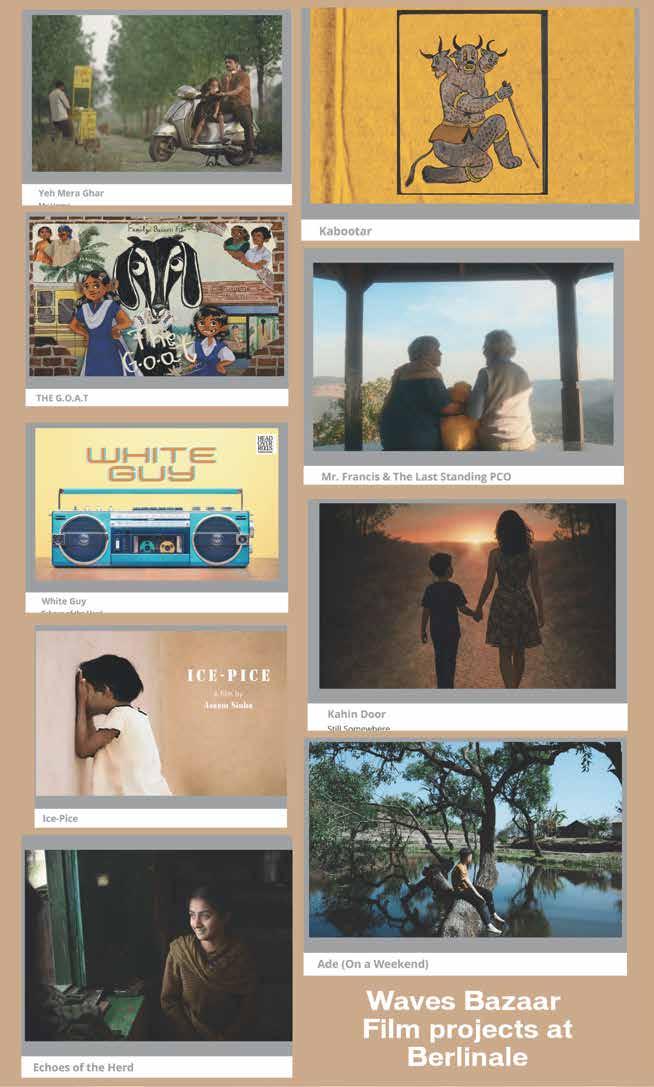
son’s survival, and Divya Kharnare’s whimsical Mr. Francis & The Last Standing PCO, where magic realism meets the universal themes of love and loss in Goa.
Animation and innovation find their place with THE G.O.A.T, a hilarious and heartwarming tale inspired by real events, and White Guy, a coming-of-age musical comedy delving into identity and race in 1980s Birmingham through the lens of the South Asian diaspora.
yeh Mera Ghar (My Home), rounds out the selection with an intimate take on migration and its impact on families, set against the backdrop of Qatar’s transformation for the FIFA World Cup.
In parallel, WAVEX highlights India’s surging media-tech sector. Four dynamic companies lead the charge:
Crewbella Ecosystem streamlines film production and distribution, empowering creators to access new markets and revenue streams.
Folktech Studios’ FolkLog app brings India’s vast folk heritage into the digital age, captivating young learners through immersive storytelling and animation.
Tuttifrutti Games crafts womencentric, mythologically-inspired games, aiming to build the “Pixar of Gaming” for a global audience.
Zangoh pioneers AI-powered localization, enabling content to reach
audiences in over 100 languages, and offers advanced generative video creation and archival restoration.
The Create in India Challenge recognizes bold new voices pushing the boundaries of storytelling:
• Road to Jinji (Pathlight Animations), an animated historical epic, retraces the daring escape of Rajaram, son of Chhatrapati Shivaji, blending history, action, and patriotism in a visually stunning format.
• The Dream Balloon (Toonz Media Group), is a magical adventure where a young boy embarks on a fantastical quest to return dreams stolen from his world—a celebration of hope and imagination for children everywhere.
WAVES Bazaar at Berlinale EFM 2026 serves as a launchpad for international partnerships—inviting sales, co-production, distribution, and investment across cinema, animation, gaming, and media-tech.
Whether it is the deeply human stories of India’s heartlands or the cutting-edge solutions powering the next generation of content, this curated showcase signals India’s readiness to inspire, innovate, and collaborate on the global stage.
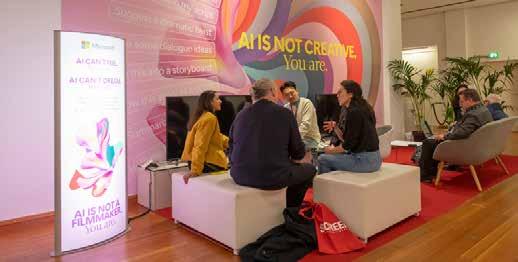

Jyoti deshpande President, Jio Studios
, President, Jio Studios is proving that authentic, unapologetic cinema can captivate audiences worldwide. Her vision is transforming Indian cinema to the World
By natarajan vidyasagar & vivek Ratnakar
Jyoti Deshpande stands at a threshold few studio heads ever reach.
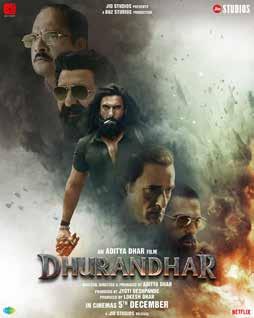
With dhurandhar shattering every box office record in Indian cinema— grossing ₹1,350 crore worldwide and becoming a cultural juggernaut that transcends national borders—she has accomplished something far more significant than commercial success. She has fundamentally repositioned how India’s stories are told, who tells them, and for whom they are told.
Directed and written by Aditya Dhar— the National Award-winning creator of Uri: The Surgical Strike—the film ventures into territory Indian cinema has rarely explored with such narrative
ambition and honesty. The film is produced by Jio Studios and B62 Studios.
Ranveer Singh leads the film through deliberate restraint, transforming into undercover operative Hamza Ali Mazhari with patience conveyed through subtle eye work. Akshaye Khanna steals the ensemble as Rehman Dakait, wielding masterful, layered charisma tinged with unpredictable and razor-edged intensity.
Sanjay Dutt commands with seasoned gravitas and measured authority; R. Madhavan injects an intellectually sharp strategic dimension; Arjun Rampal exerts control through
BaCked By relianCe’S jio eCoSyStem, deShPande ChallenGeS deCadeS oF SuBServienCe to WeStern narrativeS, BuildinG a Studio PhiloSoPhy that SPeakS to india FirSt— authentiCally and unaPoloGetiCally
calculated, threatening silence. Sara Arjun, in her high-profile debut, brings unexpected emotional authenticity.
Dhurandhar, now streaming globally on Netflix, is the first Indian film in a generation to compete internationally without diluting its identity.
Backed by Reliance’s Jio ecosystem, Jyoti Deshpande has positioned herself as India’s preeminent film producer, architecting a studio philosophy that challenges decades of subservience to Western narrative frameworks.
Over thirty years navigating India’s media landscape, Jyoti Deshpande has witnessed every technological revolution that reshaped storytelling. yet she speaks of none with the urgency she reserves for what happened after Jio’s launch.
“I always think of it as the era before Jio and after Jio,” she reflects, her tone carrying the weight of witnessing transformation firsthand.
“India was 155th in the world in data consumption before Jio. Today, we’re number one. That’s not just about internet speed. That’s about democratizing information, about rewriting who gets to speak and who gets to listen.”
This democratization, she argues, obliterated cinema’s old guardrails. The opening weekend no longer controls a film’s fate. Critics’ reviews no
longer manage narrative momentum. Information travels instantaneously, unfiltered.
Audiences immediately know whether a film is worth their time, their money, and their collective energy. There is no place left to hide.
Deshpande began her career in the single-screen era, a time when distribution was challenging and audience reach was a logistical feat.
She witnessed the multiplex revolution that democratized theatrical access. She navigated the birth of satellite television in the 1990s and watched VHS yield to VCD and VCD to DVD. She saw OTT arrive and initially threaten the cinema’s extinction.
“What I’ve seen in these three decades is a medium constantly forced to justify its existence,” Deshpande says. “Every new technology that arrived was supposed to kill cinema. yet cinema survived because it offers something else—collective experience, emotional resonance, and cultural meaning.”
But survival required evolution. And it required someone with the conviction to reimagine Indian cinema without its Western market apologetics.
In an earlier era, films were made—in air-conditioned boardrooms, by executives deciding what stories India should tell, often through a lens warped by assumptions about what “international audiences” wanted.
She arrived at Jio Studios with a revolutionary mandate: build something that spoke to India first, authentically, and without apology. And trust that if the story were told with sufficient conviction, it would find audiences everywhere.
Reliance Industries’ media arm, Jio Studios, has acquired a 50.1% stake in Oscar-winning Sikhya Entertainment for ₹150 crore, signalling a strategic push to take Indian stories to global audiences. The partnership combines Jio Studios’ scale, distribution power and IP-building ambition with Sikhya’s culturally rooted, globally resonant storytelling. Jio Studios has backed major commercial and critical successes such as Dhurandhar, Laapataa Ladies and the Stree franchise, while Sikhya—founded by Guneet Monga Kapoor and Achin Jain—has earned rare global recognition with Academy Awards for Period. End of Sentence. and The Elephant Whisperers, alongside National Awards for films like Masaan and Soorarai Pottru. Beyond marquee titles, Sikhya is known for nurturing new filmmakers and performance-led narratives across languages. Together, the two aim to co-create films and series for Indian and international audiences, strengthening India’s creative presence on the world stage and building globally scalable, creator-led intellectual property.
The rise of streaming platforms seemed to doom cinema. When quality content is streaming at home, why go to the multiplex?
Deshpande saw this as a catalyst, not a threat. Three years ago, she made a strategic shift that defined Jio Studios.
“Unless you make films with massive cinematic excellence, there’s no urgency to go to the theater,” she states with clarity.
“Audiences now know that after eight weeks, a film will arrive on a streaming platform. They’re educated consumers. So the only reason to go is if the theatrical experience itself is non-negotiable— if it demands a big screen.”
Recalibration followed this realization. A new distribution strategy was needed for small-budget sleeper hits like Laapataa Ladies, which became cult classics.
They were great films, but not cinematic enough to warrant theater attendance. Bedroom screens mimic their viewing experience. The multiplex doesn’t help.
So Deshpande decided: Jio Studios would make fewer, more ambitious films. A harsh standard would examine every project: Does this require theater? Does this clarify the narrative? Does it have cinematic weight?
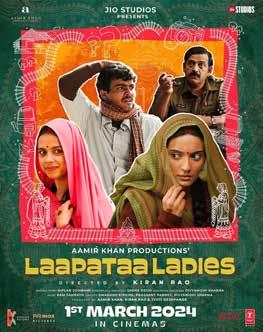
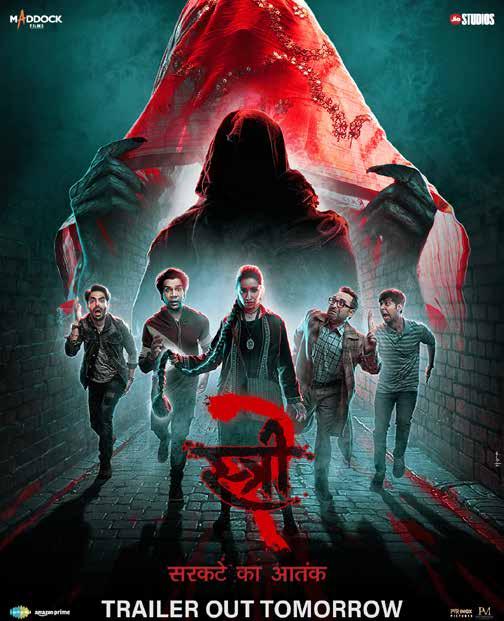
The following films showed a fast-learning studio. Laapataa Ladies, despite modest box office, became India’s Oscar entry—proving excellence travels. Stree 2 broke records without an A-list star, creating a horror-comedy universe that rivaled Hollywood.
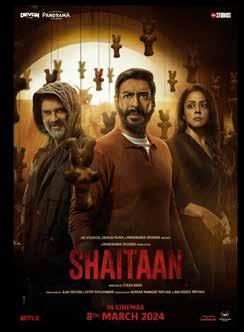
Shaitaan reimagined genre conventions, casting Madhavan as a psychological thriller antagonist rather than a romantic lead. Each film targeted different demographics, employed diverse
genres, and featured wildly different budgets and talent configurations. yet they shared an obsessive focus: script excellence, casting precision, and technical rigor. ”
But the successes compounded. Outliers may be coincidences. Two may be lucky. The narrative flipped when Jio Studios’ films broke its own records and were box office hits, critical darlings, and cultural phenomena. Not a coincidence. This was philosophy in action.
Then came Dhurandhar.
Aditya Dhar’s plot was nearly career suicide: a film set entirely in Pakistan, narrated by a terrorist mastermind, exploring the 26/11 attacks from his perspective.
The story required investigating motivation, geopolitical complexity, and political violence’s human side. The film was morally ambiguous in a genre known for moral clarity.
Most studios would have passed.
“When I heard the narration, I had goosebumps,” Deshpande recalls, the emotion still present.
dhurandhar’S audaCiouS narrative—From the PerSPeCtive oF a terroriSt maStermind—WaS a Career GamBle that Paid oFF, BeCominG a GloBal Phenomenon Without dilutinG itS indian identity
jyoti deShPande rejeCtS WeStern media lenS oF india, demandinG StorieS With StronG ConviCtion and viSion that Break Clutter and elevate indian Cinema to World-ClaSS StandardS
“The script hadn’t been shot. I was just listening to the story. And I had goosebumps. I immediately knew this would be an extraordinarily difficult film to make. It’s set in Pakistan. How will Indian audiences receive it? But I felt this was a story too important not to be told.”
Conviction alone prompted action.
The production was a collaboration masterclass. The film’s cinematography, Shashwat’s score, Smriti Chauhan’s costume design, set direction, and virtuoso performances by a cast of dedicated actors.
Putting together such talent causes chaos. Everyone has strong opinions. Nobody just obeys. Magic crystallized from friction.
Physical production was grueling. The script was longer than typical Indian film scripts and included elaborate action sequences.
After forty days of shooting in Thailand, Jyoti Deshpande and Aditya Dhar reviewed rushes and realized the script could not be condensed into a single film. The budget ran over. Abort the project, cut the script, or venture into uncharted territory.
Jyoti Deshpande made the bet that would define her career. “We decided to shoot the entire script without thinking about parts,” she explains.
“Not to tell anyone the budget was doubling. We would shoot it all. Then Aditya would edit. If the narrative didn’t hold as two parts, if it needed to be one film, we’d make it one film anyway, whatever the cost. As a studio, I took a massive gamble.”
The end of the first part would be Rehman Dakait’s death. Everything beyond—the best action sequences, Hamza’s backstory, the climactic revelation—was preserved for a second instalment.
When they examined the first cut, the answer was undeniable. Three hours and forty-five minutes of cinema that never dragged, never lost momentum. After trimming to three hours and forty-five minutes, it remained a cinematic colossus.
“We knew we had a winner,” Jyoti Deshpande states. “Not because we designed it, but because of how each scene was being executed—the cinematography, the background score, the music licensing, and the performances. It all came together as magic.”
Dhurandhar released into a landscape primed for provocation. The film’s perspective—sympathetic to the terrorist, exploring his motivations, his conviction, his humanity—invited immediate criticism from multiple vectors.
Leftists called it jingoistic propaganda. Right-wing viewers questioned why it sympathized with a Pakistani operative. Politicians from all sides claimed their interpretation.
Deshpande’s response proved both defiant and philosophical: “This film is nothing about left-wing or right-wing. It’s about the deep state—about how narratives are controlled, about how foreign elements sponsor certain media
voices to push contrarian positions. That’s what we showed.”
She believes a film’s power is in starting debates, not ending them. Films move audiences and cause reactions. Provocation, in her view, is a key metric of success.
Box office response was unprecedented. Dhurandhar grossed ₹1,330 crore worldwide, breaking Khan-led records and setting new standards for Indian cinema.
It beat Gadar 2’s lifetime haul by day 15. It surpassed RRR, Jawan, and every historical comparison point. International markets that had never engaged with Indian cinema as serious cinema suddenly recognized Dhurandhar as an unmissable cultural event.
More significantly, audiences returned. They returned because the film had become more than entertainment—it had become a statement about India’s right to tell its own stories, its own way, without seeking Western validation.
Now streaming globally on Netflix, Dhurandhar has achieved what Indian cinema has long aspired to but rarely accomplished: it competes on the world stage not as “Indian cinema” (a category that often implies exoticism or cultural specificity) but as cinema itself.
It’s watched by audiences who don’t speak Hindi, who have never been to India, and who encounter it as a geopolitical thriller of extraordinary ambition and technical precision.
The film has transcended its status as content to become a cultural artifact.
Think pieces proliferate not just in Indian publications but in international media examining how a non-English film executed such a sophisticated narrative about terrorism, statecraft, and moral complexity.
“Any discussion is great,” Jyoti Deshpande says. “Whether you like it, don’t like it, or agree or disagree—if you’re discussing it, that’s the true success. Movies want to move the audience. They must touch that person, and they must react. That’s when a film becomes part of popular culture.”
Dhurandhar has taken the world by storm, currently holding the No. 1 spot in non-English film category on Netflix in Bahrain, Oman, Qatar, Pakistan, and Mauritius. Its remarkable international appeal is also reflected in its Top 10 ranking across diverse regions, including Australia, Lebanon, Bangladesh, Maldives, Canada, Kuwait, Hong Kong, Jordan, the UK, Morocco, Singapore, Sri Lanka, New Zealand, Saudi Arabia, and Nigeria. The film’s success highlights the growing global appetite for diverse storytelling and marks a significant milestone for Indian cinema, proving that compelling stories transcend language and cultural barriers on the world stage.
Yet Dhurandhar’s significance extends far beyond its commercial or critical success. For Jyoti Deshpande, the film represents a turning point in how Indian cinema positions itself globally.
“How many Indian actors or music stars are crossing over to the West right now?” she asks, invoking Korea’s cultural revolution as a counterpoint.
“Korean pop stars became hot property in America. K-drama became a thing. Korean food got Michelin stars. It happened across culture—food, fashion, music, and content—because they controlled their narrative.”
However, India has let its narrative be manipulated. In cinema, this meant portraying India as poor, corrupt, and exotic—Indian stories filtered through
a Western lens. Brainwashing began in the black-and-white era and lasted decades.
Western studios, international festivals, and global distribution channels—all reinforced the message that Indian cinema existed to serve Western audiences’ consumption of India.
“We’ve all accepted: ‘We are a poor country,’” Jyoti Deshpande says, the frustration evident.
“But what about the narrative that Indians are leading some of the biggest tech companies in the world? What about Indian entrepreneurs, Indian startups, and the reversal of brain drain? Why isn’t that the India shown in cinema? Why are we still showing poverty, corruption, and exoticism?”
She speaks of filmmakers who arrive with pitches constructed entirely around Western reference points. “Extraction meets Fast and Furious,” they’ll pitch. Or they’ll reference some Hollywood success and ask, “Can we make an Indian version of that?”
Jyoti Deshpande rejects this framework entirely. “As a studio, I’m not fixated with big stars. I’m not fixated with whether something’s like a successful Hollywood movie that’s been tried and tested. Those are never my criteria for greenlighting. What I demand is strong conviction from the storyteller. That the story breaks clutter. That it has vision. That’s it.”
Dhurandhar, in her reading, represents a reclamation. It’s a film with a distinctly Indian voice, operating from an Indian consciousness, exploring Indian anxieties and Indian geopolitical interests.
“I think Indian cinema has arrived with this film,” she says, weighing the words carefully. “I’ve had other successes— Stree 2, the franchises, the commercial victories. But of thousands of films across my lifetime, Dhurandhar holds the deepest personal meaning. It’s like how a great tennis player might retire after winning Wimbledon. That’s the emotional weight this carries for me.”
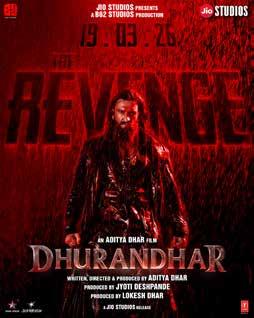
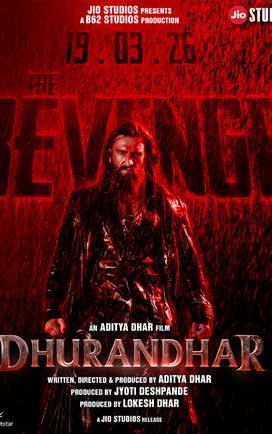
With Dhurandhar: The Revenge scheduled to release on March 19, 2026, Jyoti Deshpande prepares to complete what many consider the most ambitious film project in Indian cinema history.
“The best scenes are still in the second part,” she explains. “The best action sequences, the best dramatic moments, the climax—all of it. Hamza’s backstory, how he evolved, and the names he’s crossed out. There are so many more years spanning across the second part. It’s going to be an extraordinary payoff for everyone who invested their time and emotion in the first part.”
But beyond Dhurandhar, Jyoti Deshpande articulates a studio philosophy that’s counter cultural in Indian cinema. She’s not interested in releasing more films—in meeting arbitrary production targets or ensuring constant content flow. Her mandate for 2026 and beyond is to “get more right than wrong.”
Upcoming releases include Raja Shivaji (a Marathi film about the legendary warrior), Khashaba (another Marathi project centered on an Olympian), and select OTT releases. But the approach is deliberately constrained.
“I’m increasingly greenlighting things for the big screen, which takes time,” she explains. “I want to do fewer films with greater meaning. I want to work with filmmakers like Aditya Dhar who have strong voices, who are geniuses at
their craft, and who can bring Indian stories to the world. Because how do we project Indian narratives globally without filmmakers who can compete at a world-class level?”
She speaks of her dream with unusual candor: “I want to be a studio that gives wings to young filmmakers, that backs stories nobody else will back, that proves Indian cinema can compete with anything made anywhere in the world— not on spectacle alone, but on craft, on artistic integrity, on the power of the story itself.”
Instead, she asks, “Does the storyteller have strong conviction?” Is the story clutter-breaking? Is the vision compelling? And crucially—has every penny gone on screen? When actors consume the maximum budget and few resources remain for production design, cinematography, and execution, mediocre cinema results.
“In Dhurandhar, every penny went into the film,” she emphasizes. “you can feel it. Every moment is rich in production value. Every image, every action sequence—it’s all evident. That’s what we pursue.”
Jyoti Deshpande repeatedly discusses restoring pride in India’s youth, changing global perception, and reversing decades of Western-dominated media’s narrative of national inferiority.
She’s careful to distinguish this from jingoism. There’s no flag-waving rhetoric. Instead, it’s grounded in facts: Indian leadership in global tech companies, Indian entrepreneurship driving innovation, and India’s emerging economic trajectory toward superpower status.
“Movies have the power to influence young minds,” she says. “If we give them the message that America is Big
Daddy, that we’re a poor country, they internalize that shame. If we give them the right message—with substantial backup, with merit—they internalize pride. It’s important we bring that pride back. Because in the next decade, I want to see India as the superpower the world will look to, not out of fear, but out of respect for what we’ve built.”
Her vision extends beyond cinema into the broader cultural project of national narrative.
“When Indians tell Indian stories—with conviction, with technical excellence, with artistic integrity—that’s when the world listens. Not because we’re seeking validation, but because the authenticity itself becomes undeniable.”
With Dhurandhar having already redefined what Indian cinema can achieve, and Dhurandhar: The Revenge poised to complete that statement on March 19, 2026, Deshpande has accomplished something that transcends box office records or critical acclaim.
She has changed the conversation about who gets to tell India’s stories and from what vantage point.
“If I had to call it a day now and retire, Dhurandhar would be the moment I’d point to,” she says, and the emotion in her voice is unmistakable.
“Like a great tennis player… winning Wimbledon. That level of meaning. But I know this will go down as one of the most defining moments of my career.”
She pauses, then adds with quiet conviction, “What we’re building here isn’t just a studio. It’s a mission to ensure that Indian voices tell Indian stories to the world. No apologies. No compromise. Just cinema, crafted with the rigor and artistry it deserves. That’s the legacy I want to leave.”
aCross three DeCaDes, Jyoti has evolveD the infrastruCture of inDian storytelling. but with DhuranDhar, she’s maDe something granDer. that’s the real measure of a stuDio leaDer -— not the bloCkbusters they greenlight, but the impossible films they finD the Courage to make

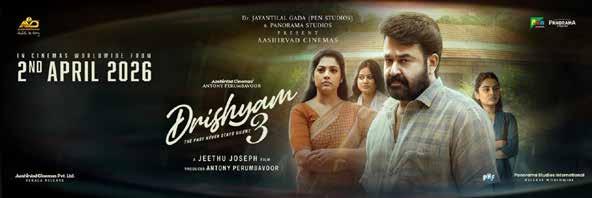

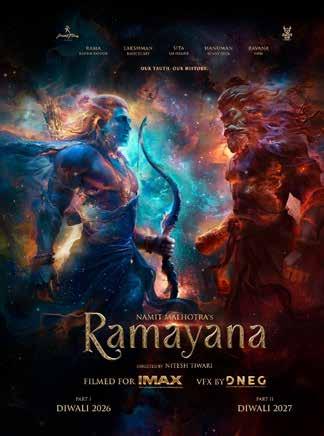



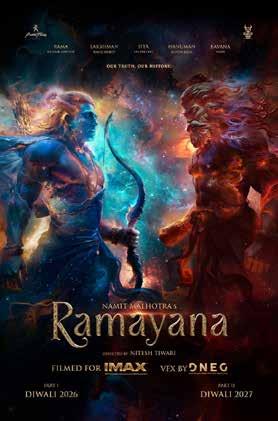
A retelling of the ancient Indian epic that promises to be definitive. Nitesh Tiwari steers this massive vessel, aiming to ground the mythological battles of Lord Ram in world-class visual effects and emotional grandeur.
The Market Hook: This is the Indian equivalent of a Middle-earth saga. With Ranbir Kapoor leading a star-studded ensemble, it’s a cultural event packaged as a visual blockbuster. High value for territories with a diaspora audience or an appetite for mythic fantasy.
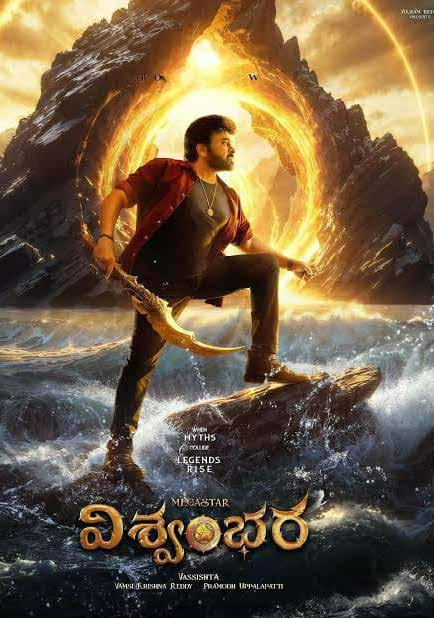
Chiranjeevi steps back into the sociofantasy genre—a space where he delivered some of his career’s biggest hits. Expect celestial realms, highfantasy lore, and a hero who straddles the human and the divine.
The Market Hook: A legacy superstar in a VFX-driven fantasy vehicle. It targets the same demographic that turned Baahubali and RRR into global phenomena, banking on spectacle and scale.
HIgH-concePt, VFX-HeaVy, anD BuIlt For tHe BIggeSt ScreenS PoSSIBle.
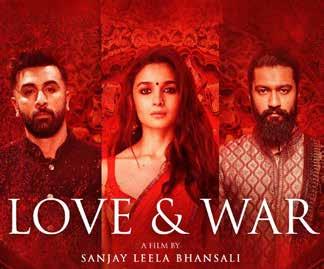
Sanjay Leela Bhansali, the master of operatic cinema, orchestrates a violent love story set against a backdrop of conflict.
The Market Hook: Bhansali’s films are visual luxury goods. With a dream trio cast (Ranbir Kapoor, Alia Bhatt, Vicky Kaushal), this is premium, festival-grade commercial cinema that sells on sheer production value and director pedigree.


A war drama centered on the 2020 India-China skirmish, with Salman Khan anchoring the narrative as an army officer.
The Market Hook: War films with national sentiment are proven boxoffice drivers. Combining real-world geopolitical tension with Salman Khan’s action branding creates a potent commercial mix.
A collision of two cinematic giants. Director Prashanth Neel (KGF, Salaar) teams up with Jr NTR (RRR) for a historical action saga steeped in blood and folklore. The narrative promises a “massacre” of epic proportions, featuring Neel’s signature high-contrast visual style and a protagonist built on rage and vengeance.
The Market Hook:The “Dynamic Duo” of Indian mass cinema. This is the project trade analysts have been waiting for—combining the visionary world-building of Neel with the raw, emotive power of Jr NTR.
Star VeHIcleS PoWereD By aDrenalIne, reVenge, anD FrancHISe equIty.
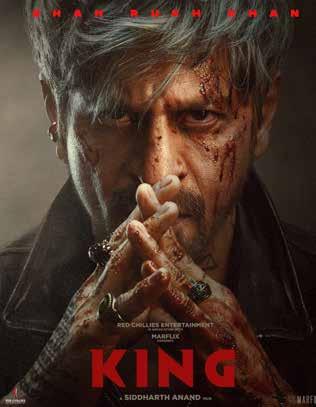
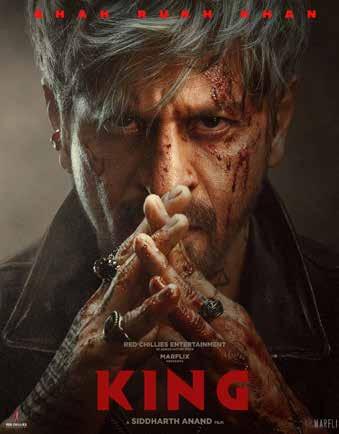
Shah Rukh Khan returns to the gritty underworld, this time sharing the screen with his daughter, Suhana Khan. Under the direction of Siddharth Anand (Pathaan), it promises slick, high-octane set pieces.
The Market Hook: SRK is a global brand. A mentor-protégé dynamic in an action-thriller format makes this a four-quadrant hit for international markets familiar with his recent action resurgence.

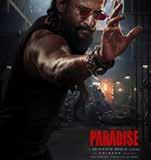
A “fairy tale for grown-ups” set in the drug mafia. This is a fascinating experiment: Yash (of KGF fame) brings his mass popularity to the table, while director Geetu Mohandas brings her acclaimed indie sensibilities.
The Market Hook: The ultimate crossover. It offers the grit of Narcos with the stylistic flair of Indian mass cinema. A prime pick for buyers looking for action with an artistic edge.
The return of Muthuvel Pandian. Rajinikanth reprises his role as the retired jailer with a dark past, reuniting with director Nelson for more deadpan humor and sudden bursts of violence.
The Market Hook: The first film was a global breakout. Sequels to Rajinikanth hits are rare, ensuring massive prerelease buzz across traditional markets and streaming platforms.

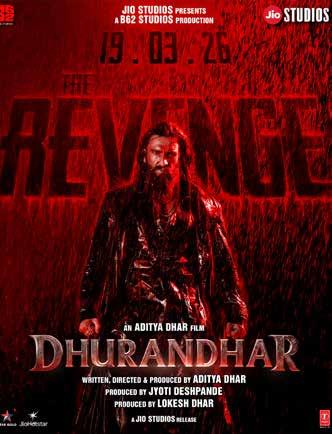
Aditya Dhar expands his spy universe. Ranveer Singh leads a narrative of deep-cover espionage and retribution that crosses borders.
The Market Hook: A fast-paced spy thriller designed for the modern action junkie. It fits perfectly into the slate of buyers looking for the Indian answer to Mission: Impossible or the Bourne series.
Star VeHIcleS PoWereD By aDrenalIne, reVenge, anD FrancHISe equIty.

The YRF Spy Universe expands with its first female-led tentpole. Alia Bhatt and Sharvari Wagh enter the shadows as super-spies in a high-stakes mission.
The Market Hook: Franchise connectivity. As part of India’s biggest cinematic universe (sharing DNA with Pathaan and Tiger), it has a built-in audience and offers a fresh, female-centric spin on the espionage genre.
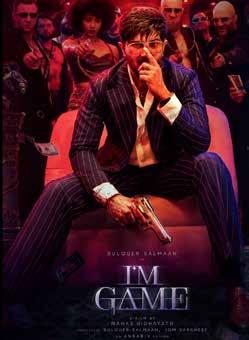
Dulquer Salmaan steps into a gangster action drama directed by Nahas Hidhayath. Expect style, swagger, and kinetic violence.
The Market Hook: Dulquer is a pan-Indian star with a strong youth following. This project pivots him into a “mass hero” space, making it highly sellable to audiences who enjoy stylized crime sagas.
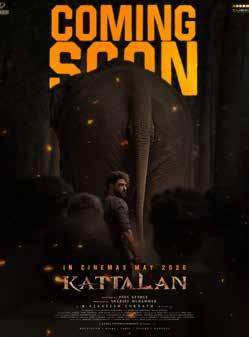
An action-thriller with a wild card—an elephant named Pong plays a central role alongside Antony Varghese.
The Market Hook: The “man vs. wild” or “animal companion” sub-genre has universal appeal. It promises raw, rustic action that travels well due to its unique premise.
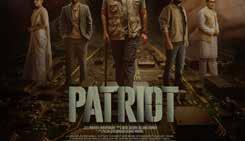
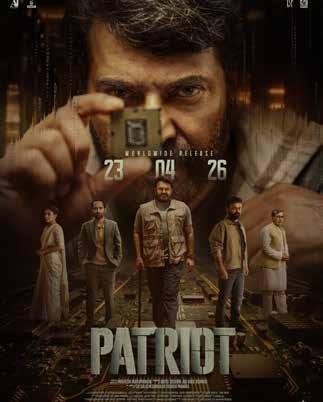
A major casting coup bringing together Malayalam cinema’s titans, Mammootty and Mohanlal. Directed by Mahesh Narayanan, it’s an espionage thriller rooted in political reality.
The Market Hook: Prestige cinema. The reunion of these two legends is a historic event for Indian film history, guaranteeing monumental opening weekends in key territories.
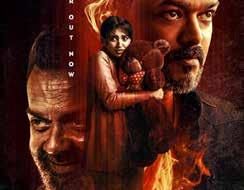

Pa. Ranjith delivers a survival thriller. Known for infusing genre films with sharp social commentary, Ranjith places his characters in a rugged, hostile environment.
The Market Hook: Festival acclaim potential. Ranjith’s work resonates with international critics and audiences looking for substantive, politically aware cinema that doesn’t skimp on tension.
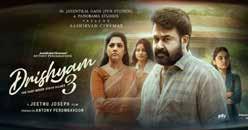
Georgekutty returns. The franchise that taught the world how to hide a body aims to close its loop.
The Market Hook: One of India’s most successful thriller IPs (remade globally). Audiences are already invested in the character; they just need to know how the game ends.
A safe, high-yield bet for distributors.
A politically charged thriller starring Vijay, potentially marking his final bow before a full transition to politics.
The Market Hook: “The Final Chapter” factor. The meta-narrative of Vijay’s career shift adds an unreplicable layer of hype, making this a collector’s item for distribution networks.
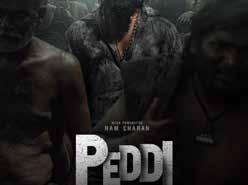
A rustic sports drama featuring Ram Charan. It’s a story of grit, mud, and glory, demanding a massive physical transformation from its lead.
The Market Hook: The “Underdog Sports Movie” is a universal language. Combined with Ram Charan’s post-RRR global visibility, this has strong theatrical potential.
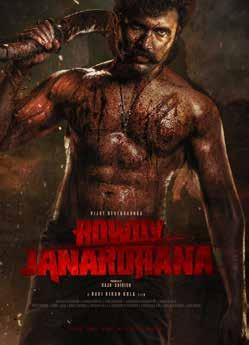
Vijay Deverakonda returns to his “rowdy” roots—a genre of aggressive, high-attitude action drama that defines his screen persona.
The Market Hook: Cult of personality. It plays directly to the star’s core fanbase, promising the kind of swagger and dialogue-heavy scenes that drive social media engagement.
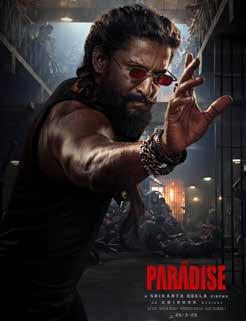
Nani reunites with director Srikanth Odela for a film described as wild and intense. Think Mad Max energy meeting Indian tribal politics.
The Market Hook: Visceral, raw action. The duo’s previous collaboration (Dasara) proved they can deliver slick, gritty cinema that performs well across subtitles.
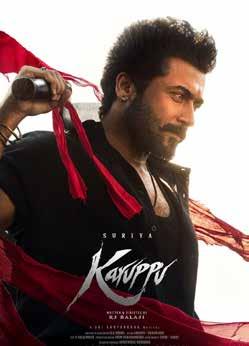
A high-concept genre blend where courtroom drama meets supernatural fantasy. Suriya stars in a story involving legal battles and divine possession.
The Market Hook: Unique genre mashup. Suriya is known for experimental commercial films, and this premise offers a fresh hook for buyers tired of standard action templates
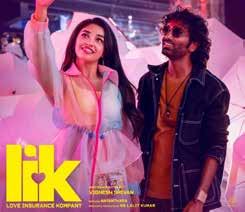
lik (Love insurance Kompany)
A sci-fi romantic comedy asking: “What if you could insure your love story?” A quirky, futuristic take on relationships.
The Market Hook: High-concept comedy. The futuristic premise gives it a fresh marketing angle, distinguishing it from standard rom-coms.

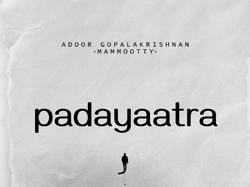
Adoor Gopalakrishnan, a legend of the arthouse world, directs Mammootty.
The Market Hook: Pure festival gold. This is for the connoisseurs, film societies, and curated streaming collections focusing on world cinema excellence.

A sensitive romance adapted from the Thai hit One Day. Produced by Aamir Khan, it features Sai Pallavi and Junaid Khan in a story about memory, love, and fleeting moments.
The Market Hook: A remake of a proven Asian hit. It offers a softer, emotional counter-programming option to the year’s heavy action slate.
From the director of the survival hit Manjummel Boys. This is a grounded, character-driven drama likely rooted in real events or intense personal journeys.
The Market Hook: The “Creator Economy.” Audiences are buying into the director’s brand of authentic, quality storytelling over pure star power.

A lyrical, intense drama about love spanning “seven seas and seven mountains.”
The Market Hook: Emotional depth. For buyers seeking poetic, hard-hitting narratives that prioritize storytelling craft over commercial gimmicks.
a t the c II Big Picture Summit 2025, the conversation around artificial intelligence did not sound like a tech keynote. It sounded like a reckoning
Across packed halls, panel rooms, and plenary stages at the Big Picture Summit 2025, the industry’s most influential voices returned to the same tension again and again: AI is transforming how stories are made, scaled, monetised, and distributed—but creativity, culture, and conscience cannot be outsourced to machines.
As Gaurav Banerjee, Chair, CII National Council on M&E and MD & CEO, Sony Pictures Networks India, set the tone in his opening remarks, the room was reminded that this is not just another tech cycle. This is an inflection point. “This summit is setting the tone for the AI decade, a decade full of promise and also full of uncertainty,” he said.
Gaurav Banerjee acknowledged the transformative potential of AI—its ability to enhance efficiency, bring scale, and accelerate processes—but cautioned against letting machines define creativity itself. “AI should not define creativity,” he asserted. “Human imagination alone should do that. India’s natural strength lies in its people, not just in tools.”
It was a call echoed by many: that AI, for all its power, must remain a partner, not a master. The consensus was not about resisting technology but about shaping its trajectory with responsibility, ethics, and a clear-eyed embrace of India’s unique strengths.
Sanjay Jaju, Secretary, Ministry of Information and Broadcasting, Government of India, offered a stirring reflection. “If we are going to be the third largest economy, we have to have equal soft power across the world. Our stories have to be heard and seen.”
AI, he argued, is not just a tool for efficiency or profit, but a lever for cultural influence—a way for India to project its narratives, values, and ingenuity to the world. But seizing this opportunity requires more than technical prowess; it demands a commitment to creative excellence, ethical stewardship, and cultural authenticity.
Few phrases captured the mood of the summit better than Co-Chair of CII National Council on M&E and MD & CEO of JetSynthesysRajanNavani’s description of AI as a “tireless creative partner.” In a moment of clarity that cut through much of the noise around automation panic, he argued that AI is unlikely to replace creativity in any meaningful way in the near future. Instead, it will amplify what humans already do—helping creators work faster, access expertise more easily, and expand their imaginative reach.
“There is nothing that limits you when it comes to using AI,” Navani said.
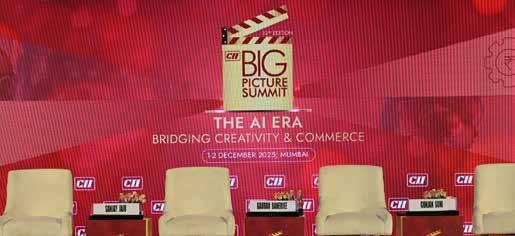
“Expertise that took years to build can now be accessed instantly.”
The real differentiator, Navani suggested, will be how effectively leaders and organisations learn to use AI as part of their daily creative and commercial workflows.
The future, Navani insisted, would belong to those who could fuse technology with human vision—“a very important point in history.”
The summit’s technical deep-dive came courtesy of Ravi Rajmani, Managing Director, Global Head of AI Blackbelts, Google California, United States, who offered a glimpse behind the curtain of cutting-edge AI models. He introduced attendees to Gemini 3.0, Google’s latest, most advanced multimodal AI—capable of processing text, audio, video, and image inputs, and generating outputs across these formats.
Rajmani drew a compelling analogy: “Think about how a child learns. We see, we visualize, we talk, we hear, we touch. AI models are learning the same way.”
India, he argued, is uniquely placed to lead the AI revolution. Three ingredients are necessary: compute (the raw processing power to run large models), data (the fuel that trains them), and talent (the human capital to innovate).
With a $15 billion commitment to data centers in India, Google is betting big on the country’s role as a future AI powerhouse. “India has lots and lots of
data—22 official languages and countless dialects. Diversity is our strength,” Rajmani emphasized.
But he was quick to point out that technological leaps bring new responsibilities. “Security and data privacy have to be numerouno,” he cautioned. “It is about what you are going to pick as your foundation model to invest on, and then you’re going to build the skill sets, then you’re going to build use cases on top.”
If there was a single thread running through the summit, it was the democratization of creativity. Gunjan Soni, Co-Chair, CII National Council on M&E and Country Managing Director, youTube India, said, “With the power of AI, which makes creativity so much easier and accessible, this is going to quadruple and multiply as we go ahead.”
The possibilities are staggering. Feature-length films generated with AI tools, dubbed instantly into dozens of languages. Musicians composing soundtracks on the fly with AI collaborators. Writers experimenting with storylines and dialogue, using AI as a sounding board or an idea generator. yet, this new ease brings with it a new set of challenges—especially for an industry defined by its talent and craft. Soni reflected the ambivalence felt by many leaders: “As much as AI helps us unleash creativity, we know there are two sides to the coin. It will be up to this industry to act responsibly and make sure the benefits reach the general consumer and the creator, not just amplify the downsides.”
One of the less glamorous, but most crucial, conversations at the summit revolved around metadata—the data about data that underpins AI’s power to organize, analyze, and retrieve content. As one speaker put it, “Metadata matters.”
In the era of AI, the value of India’s vast content archives—25,000 hours or more—lies not just in the films, shows, and songs themselves, but in the ability to search, tag, and analyze them at a granular level. LTI Mindtree showcased a project using AI to extract scene- and shot-level data from massive libraries, enabling everything from advanced search (“Which movie features three friends in college?”) to contextual recommendations and dynamic content generation.
This shift is not just technical but strategic. The ability to truly leverage AI begins with organizing and understanding one’s digital assets—a transformation journey that starts with tagging and structuring content for maximum reuse and creativity.
While film and television dominated much of the summit, the gaming industry provided some of the most compelling examples of AI-driven reinvention. A plenary titled “AI - New Driver of Reinvention: Changing the Face of the Gaming Industry” highlighted the nuanced role AI is already playing.
Speakers emphasized that in gaming, as in other creative industries, AI is an accelerator—not a replacement. “If AI is the paintbrush, human emotion is the artist,” one panelist declared. Automation, they argued, doesn’t mean the end of creativity; rather, it can amplify it, handling routine tasks and freeing humans to focus on storytelling, world-building, and player engagement.
AI’s uses in gaming are already broad: procedural content generation, dynamic storytelling, intelligent NPCs, playerbehavior analytics, and game balance. Indian studios, while still catching up to
giants in China and Korea in terms of adoption, are beginning to experiment with AI for everything from QA testing to real-time personalization. yet, the risks are real. “If you use AI only to cut costs, you’re probably in a very bad place,” warned one speaker. “you’re not serving your company and you’re not serving your users.” Overautomation, panelists agreed, can lead to experiences that feel too perfect, too polished—losing the human quirks and serendipity that make games joyful and memorable.
One of the most impassioned debates at the Big Picture Summit centered on cultural relevance. As Indian creators embrace global AI tools, how can they ensure that their stories and images remain rooted in local realities?
Geetanjali Sehgal, Co-Founder, GenVR Research AI, shared her experience building multilingual AI models trained specifically on Indian datasets. “Every idea comes in your native language first,” she said. “We created an image model completely built on Indian datasets, so it created culturally relevant images. The cultural and emotional relevance can be preserved if we build things according to our cultures.”
This was not just a matter of pride, but of creative survival. As National Award-Winning &Emmy-Nominated Filmmaker Ram Madhvani, warned, “The indoctrination of stories, the way stories should be told, is something that we have to rebel against. We have to embrace and use AI in a way that prevents us from being culturally eroded.” The danger, he argued, was not just technical colonization but a subtle loss of narrative agency.
There was broad agreement that India’s AI future must be built in its own image—drawing on the country’s languages, customs, histories, and emotional vocabularies.
Perhaps the most practical guidance came from those at the creative coalface. Sudhir Mishra and AnandNeelkantan, both acclaimed storytellers, described
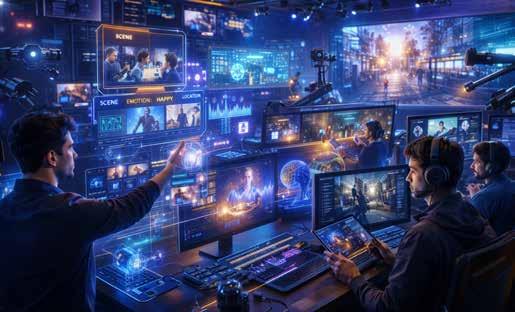
how they use AI as a tool, not a substitute.
Neelkantan recounted how he gives AI a scene and asks it to generate multiple versions—not to use them directly, but to break creative blocks and spark new ideas. “I ensure that I use none of them. It is giving the answers which 90-95% of the people would love. So how will I make my writing unique? I use my scenes, so I ensure that not a single thing is done [by AI]. But I am now producing much more, faster and better books.”
The summit did not shy away from the ethical dilemmas that AI brings. Who owns content generated by machines? How should creators be compensated if their work is used to train AI models? How transparent should companies be with audiences about their use of AI?
SunitaUchil, Founder & CEO, Karman Unlimited, summed up the prevailing mood: “The important part about AI is the transparency. If we are transparent about what we are using AI for, if all the stakeholders are aligned in the honesty of the subject that we are trying to produce, we can have a sweet spot where AI efficiencies marry into the best of creative risks.”
There was consensus that the industry must move together, establishing norms and principles for responsible AI use. Only by being proactive—rather than reactive—can Indian media and technology companies ensure that AI is a force for good, not exploitation.
In the AI era, India stands on the threshold of a new creative golden age. The tools are more powerful and accessible than ever. The risks are real, but so is the promise.
As Uday Shankar, Vice-Chairman, JioStar, rightly said, “Ibelieve deeply in the power of disruption—not disruption for its own sake, but disruption driven by curiosity and courage. Progress comes from challenging status quo, not preserving it. The only real risk is standing still.
“The future of media will belong to those who choose to swim with change, not cling to familiar ground. And for me, that future has never looked more exciting,” he added.
As the Big Picture Summit 2025 made clear, the next decade will be defined not by the machines we build, but by the wisdom, imagination, and integrity with which we wield them.
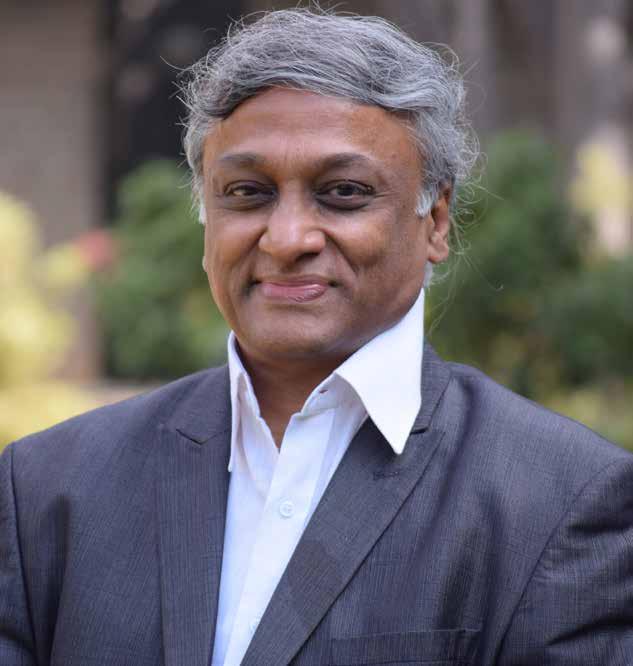
dr S. Raghunath Professor of
Authentic Indian storytelling, rooted in cultural depth and crafted with global standards, is key to scaling the M&E industry. By nurturing talent, production, and export strategies, India can transform local narratives into global cinematic powerhouses.
By dr S. Raghunath
Film theory increasingly recognizes a paradox that is about how the more culturally grounded a story is, the more emotionally universal it becomes. I would like to allude to the work of anthropologist Clifford Geertz’s concept of “thick description,” which suggests that detailed cultural context invites empathy rather than alienation. Audiences decode meaning through recognizable human experiences such as longing, ambition, injustice, and love, even when expressed in unfamiliar settings.
Platforms report that subtitled, culturally dense series often retain high completion rates because emotional stakes override linguistic barriers. The success of Indian regional dramas such as Heeramandi, The Family Man, Dabba Cartel, Gullak, Patal Lok, Delhi Crime, and Maamla Legal Hai on global streaming charts illustrates how subtitles have transformed language barriers into a cultureinforming bridge for international audiences.
Contrary to early fears of cultural flattening, streaming platforms increasingly reward distinctive storytelling. Recommendation systems favor content that generates high engagement and word-of-mouth, traits often linked to novelty and specificity. Indian content that performs globally tends to exhibit strong narrative identity, clear cultural texture, and emotional stakes that encourage sharing.
A Tamil or Malayalam crime thriller with regional authenticity, such as Officer on Duty, Kishkindha Kaandam, Psycho, or Anjaam Pathira, becomes algorithmically visible precisely because it differs from dominant western templates. Distinctiveness turns into discoverability. Indian storytelling offers social complexity, moral ambiguity, and a hybrid of the modern-traditional worlds. These elements align with global audience curiosity about rapidly changing societies.
International co-productions increasingly value cultural authenticity as creative currency. For example, an Indo-European co-production retains an Indian narrative perspective while accessing international financing, post-production resources, and festival circuits. The result is a film that travels without cultural censor. This reflects cultural theorist Homi Bhabha’s idea of the “third space” representing creative hybridity where local identity engages global frameworks without losing integrity.
What is the way forward with scaling? Authentic storytelling requires creators who are culturally fluent and institutionally supported. Talent incubators, script
labs, and festival mentorship programs build what scholars call narrative confidence, the ability to tell culturally specific stories without external validation.
Writers’ rooms trained to prioritize lived experience over imitation produce stories that deeply resonate. This authenticity fuels both domestic loyalty and international intrigue. The strategic implication is that authenticity should not be treated as a niche segment but as a core export philosophy. Coordinated investment in talent incubation, festival pipelines, co-production frameworks, platform partnerships, and data-informed commissioning can transform episodic international success into sustained cultural presence. India’s opportunity is not merely to export films but to cultivate global narrative ecosystems where Indian creators consistently contribute to world cinema discourse.
Global scale emerges when a creative ecosystem deliberately builds authentic talent that drives culturally confident production through strategically designed export pathways. This is not accidental success. It is a carefully crafted pipeline. We can structure the global scaling playbook in three integrated layers, each feeding the next.
The objective of this layer is to develop creators who trust their cultural voice and possess the craft to make it intelligible globally. This layer determines whether identity becomes an asset or source of insecurity. Most talent programs teach craft. Few teach cultural authorship. The intent should be to develop “Writers’ Rooms Focused on Lived Reality.” Train writers to mine regional social experience in family structures, labor realities, moral dilemmas, and urban/rural transitions. Encourage multilingual storytelling, and promote the view that dialect is texture, not a barrier.
Regional OTT hits emerged from writers deeply embedded in local contexts rather than imported templates. Develop “Cultural Story Labs,” which offer fellowship programs pairing creators with historians and sociologists with linguists.
Build “thick description” capacity that is storytelling grounded in social reality. The outcome will be narratives that travel because they feel lived-in, not fabricated. Offer showrunner & creative leadership training. Teach narrative architecture, pacing, and platform literacy. Focus on how to make local stories globally understood without dilution. The talent incentive must be designed to reward originality, not imitation. Offer development grants for regionally anchored scripts. Offer festival lab scholarships and mentorship pipelines with internationally exposed creators.
The objective is to transform culturally grounded scripts into globally competitive productions. This is where identity meets craft infrastructure. The production design philosophy is for global audiences to accept unfamiliar worlds. Invest in cinematography, sound design, and editing parity with global benchmarks. Authentic storytelling does not mean license to nurture low technical ambition. Focus on cultural production design. location authenticity, costume realism, language integrity, and socio-spatial accuracy. These increase immersion and emotional credibility.
Use co-production architecture and use it to scale. Maintain narrative authority in Indian hands. Utilize partners for financing post-production distribution access and festival strategy. Identity must remain local as scale becomes global. Treat platforms as ecosystem partners. Create joint development pipelines for culturally rich narratives. Platforms amplify stories that show strong engagement signals. Track production metrics such as completion rates, cross-market performance, critical reception, festival circulation, and social discourse intensity. This data can inform future commissioning.
the third layer iS the eXPort layer. deSiGninG GloBal reaCh With the oBjeCtive to enhanCe diSCoveraBility and leGitimaCy PathWayS
Identity does not scale automatically; it must be curated into global circuits. The festival strategy offers market entry. Festivals are cultural translators. Dedicated festival campaign units, international PR narratives, and critic engagement are significant steps. A festival premiere reframes Indian storytelling within global discourse.
We must recognize that diaspora and curiosity markets are two separate audience engines. Diaspora consists of early adopters and amplifiers. Curiosity audiences seek distinctive global narratives. Design marketing to bridge both. Improve subtitling & localization excellence by supporting culturally intelligent subtitling, tone preservation, and rhythm-sensitive dialogue adaptation. We must be aware that poor localization might undermine emotional impact.
When the ecosystem deliberately builds talent confidence, production excellence, and export intelligence, authenticity becomes not a niche aesthetic but a scalable industry engine. That is how fascination turbocharges global presence.
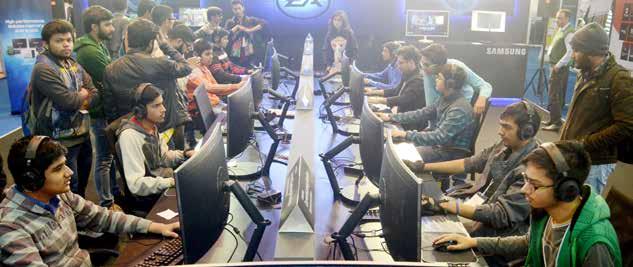
This year’s Rs 250 crore budget allocation will enable creative labs in 15,000 secondary schools and 500 colleges, laying the groundwork for a robust AVGC-XR talent pipeline that aligns education with industry needs across India.
By ashish SK
Ashish SK is Founder-DIRECTOR IICT & FOUNDER -PUNNARYUG ARTVISION PVT LTD
The recent announcement in the Union Budget, allocating Rs 250 crore for the development of creative labs in schools and colleges, marks a transformative milestone for India’s education and creative industries. As someone deeply involved with
the Indian Institute of Creative Technology (IICT), I see this not just as a financial investment, but as a decisive step towards realizing the National Education Policy (NEP) 2020’s vision for a multidisciplinary, futureready India.
NEP 2020 has already given Indian schools the mandate to adopt new, dynamic curricula. Now, with the government’s support, we at IICT have the responsibility—and privilege— of making this change tangible in classrooms across the country. Our mission goes beyond building infrastructure. We are curating a creative ecosystem that spans from secondary school to university, providing continuity and depth in creative education.
IICT is actively working with state boards and educational institutions nationwide. Our approach ensures that creative labs are not mere showcases of technology, but living classrooms where students can explore animation, VFX, gaming, comics, and extended reality (AVGC-XR). Through handson learning and industry-aligned modules, we are nurturing both imagination and employability.
ii C t i S more than an edu C ational in S titution; it i S a laun C h Pad F or S tartu PS and innovation. We have already in C u B ated over 20 media and entertainment S tartu PS and are a C tively F o S terin G re S ear C h, develo P ment, and intelle C tual P ro P erty C reation in the av GC-X r SPa C e
One of the persistent challenges in Indian education has been the gap between school and higher education. IICT is addressing this by designing a curriculum that evolves from foundational creative arts and digital storytelling in secondary school to advanced, specialized learning at the university level. This structured approach means that a student who first discovers their passion in a school lab can continue their journey seamlessly into higher education and, eventually, the creative industry.
Our efforts are not restricted to metropolitan centers. By making creative labs accessible in 15,000 schools and 500 colleges—including those in semi-urban and rural areas—we are empowering young minds everywhere, ensuring that creativity knows no boundaries. Collaboration for global Standards
The scale of this initiative demands robust partnerships. IICT has forged collaborations with technology giants such as NVIDIA, Google, Microsoft, Meta, Adobe, and Apple. These alliances enable us to keep our curriculum current, practical, and globally relevant. Students benefit from exposure to real-world tools, internships, and mentorship directly from industry leaders. Furthermore, academic partnerships with institutions like the University of york and support from industry bodies such as FICCI and CII ensure that our programs meet international standards while remaining rooted in Indian realities.
IICT is more than an educational institution; it is a launchpad for startups and innovation. We have already incubated over 20 media
and entertainment startups and are actively fostering research, development, and intellectual property creation in the AVGC-XR space.
Our forthcoming permanent campus at Film City, Mumbai, will stand as a beacon of creativity and innovation—a place where tradition meets technology, and ideas can flourish.
IICT’s upcoming School of Emerging Intelligence embeds ethical storytelling, emotional intelligence, and responsibility into its programs—preparing students to wield AI and immersive technologies with responsibility, ethics, and emotional intelligence. Storytelling is at the heart of the AVGC-XR industry, and it is our duty to ensure that the next generation of creators wields technology with empathy and integrity.
The Union Budget’s allocation is more than a financial boost; it is an affirmation of India’s creative potential. Through the establishment of creative labs and the advancement of AVGCXR education, we are laying the foundation for a new generation of innovators, artists, and entrepreneurs—individuals who will tell India’s stories to the world.
As we embark on this journey, I am confident that with continued government support, industry partnerships, and a steadfast commitment to excellence, India will soon be recognized as a global leader in creative technology and storytelling.
(Ashish Sk - Founding Director Iict & Founder - Punnaryug Artvision Pvt Ltd).
“When a nation learns to export its imagination, it stops competing on cost—and starts leading on culture, technology, and ideas.”
By Biren ghose
India’s media and entertainment economy today stands at roughly ₹2.5–3 lakh crore (uS$30–35 billion) and is growing at nearly 10% annually. yet when compared to the scale of India’s overall economy—now among the world’s largest—there is enormous headroom for the creative sector to expand. The Union Budget 2026–27 may well be remembered as the year India’s “orange economy”—including its prominent vertical animation, visual effects, gaming, and comics
(AVGC)—finally stepped into the national spotlight. For years, creative technology has quietly powered India’s digital and entertainment rise growing about 20x in revenues over the past 18+ years. Now, with explicit recognition in the budget, the sector is being positioned as a driver of jobs, innovation, and global influence.
Creativity Isn’t Just art—It’s Industry
For most of my career, I’ve seen India’s creative industries celebrated for their artistry but rarely recognized for their economic muscle. this year signals a shift. When the Finance Minister singled out AVGC, creator labs, and the need for a new workforce, she sent a clear message: creativity is not just cultural soft power— it is a hard economic engine deserving national investment.
This recognition tells every parent, student, studio, and policymaker that the creative economy is not a niche or a luxury. It is central to India’s growth story—ready to scale and built for global export.
the two Million talent Mission
One of the most striking announcements in the budget was the projection that India’s AVGC sector will need two million skilled professionals by 2030. That is not just a big number—it is a national mandate.
To get there, India must reimagine education for the creative century: modern curricula, deep industry linkages, world-
class infrastructure, and a relentless focus on quality. Studios, classrooms, and labs must start speaking the same language.
two million creators is not a workforce target—it is the foundation of India’s next cultural and economic revolution.
early access: the Creator Labs Initiative
Perhaps the most visionary step in the budget is the plan to launch avgC creator labs in 15,000 schools and 500 colleges, led by IICT Mumbai.
Creator labs change the equation entirely. Instead of discovering creative careers late, students will encounter them early—inside their core curriculum.
These labs could blend: 1. Storytelling through scripts and comics. 2. Mathematics and physics through animation and simulation. 3. Art and design through characters and environments.
4. Coding and AI through interactive media. In this model, creativity becomes a core literacy, not an extracurricular activity.
the Indian Institute of Creative technologies [IICt]: More than an Institute
as a part of the national task force, IICt our strategic venture, demonstrates our approach across four pillars: academics, incubation (startup support), policy advocacy, and research. Each addresses a key gap in the AVGC value chain. Academics create skilled professionals; incubation supports founders; policy ensures long-term growth; research drives innovation. IICT is a flagship nerve center of India’s Orange Economy—where academics, industry, research, startups, and policy converge into one living ecosystem.
Creative industries don’t grow from classrooms alone. They grow from collisions between artists, technologists, entrepreneurs, and investors. The sector needs more than skilled workers; it needs a pipeline of founders and global storytellers.
IICt is not just an institute—it’s a launchpad where education meets enterprise, and talent becomes industry.
Through international partnerships, faculty exchanges, and industry-aligned curricula, IICT is building an education model that
prepares students for the world’s most demanding creative environments. This means skill development in areas such as: 1. Real-time engines and AI-assisted pipelines. 2. Global production workflows. 3. Crosscultural storytelling. 4. Immersive media, games, and virtual worlds. We cannot train Indian talent for yesterday’s industry—we must train them for the world they are about to create.
Building the ecosystem: Four Pillars; Skills create workers. ecosystems create industries
India’s creative future rests on four interconnected pillars: 1. academics to build skilled professionals. 2. Incubation to support startups and founders. 3. Policy advocacy to ensure long-term growth. 4. Research to drive innovation.
a growth engine for the Broader economy
AVGC is not just an entertainment sector. It powers: 1. Streaming and digital content. 2. Tourism and cultural branding. 3, Immersive experiences and smart cities. 4. Gaming and interactive education. Investments here multiply across the entire digital economy.
Policy Is the Signal—execution Is the Strategy
The budget provides the blueprint. Execution will decide the outcome. If we get this right, India will not just create jobs. We will create global influence—exporting both technology and imagination.
Create in India Isn’t Just a Slogan
this budget recognizes India’s greatest strengths: technology and imagination. “India’s next great economic leap will not come only from what we manufacture, but from the stories, worlds, and experiences we create for the planet.”
Biren Ghose is the Founder & CEO of Astra Studios – focussed on Creative Solutions for Content design and Delivery through Ideation, Visualisation, VFX, Generative AI Solutions. HeisaGoverningCouncilMemberandformer interim CEO of the IICT. And has served as Chair for CII AVGC & XR
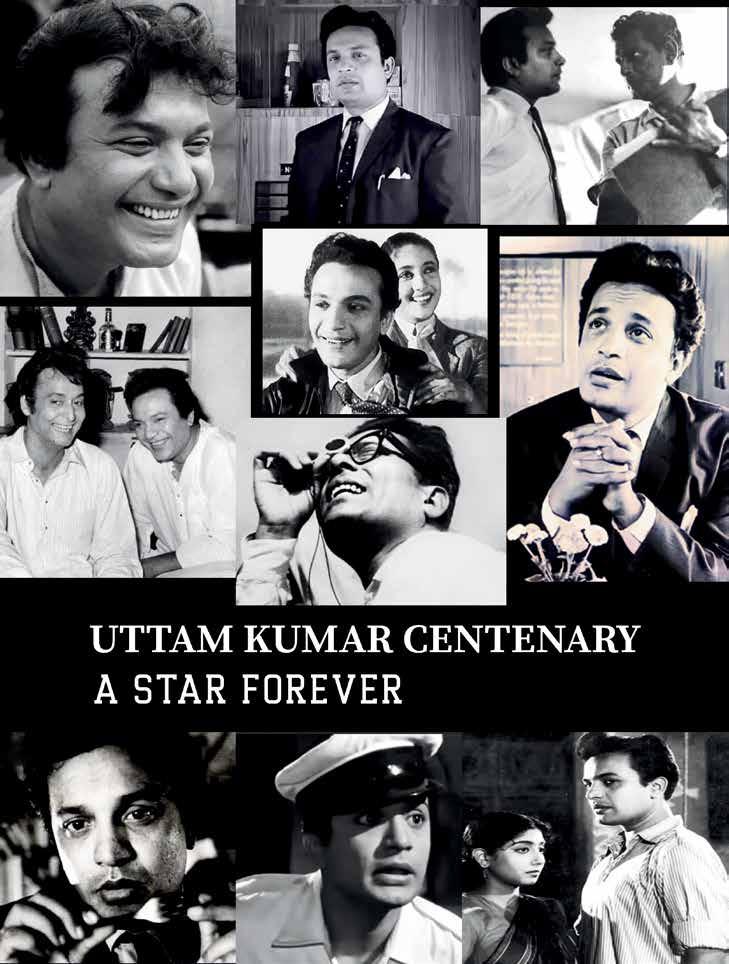
Kumar’s timeless charm and unparalleled versatility continue to inspire Bengali cinema, his legacy shining brightly decades after his final curtain call, reminding us that true stardom never fades
By
Saibal chatterjee
Imagine a movie star who combines shades of Cary Grant, Spencer Tracy and Errol Flynn – and then some: chances are that the visage that will float into your mind’s eye is that of Uttam Kumar. No matter who you choose to compare him to, the iconic superstar who defined Bengali cinema for an entire generation had an acting style entirely his own.
The inimitable leading man was the sturdy fulcrum around which Bengali cinema’s equivalent of Hollywood’s Golden Age unfolded in the 1950s and 1960s. He brought class, natural flair and exceptional depth to bear upon his craft – and upon the movies that he propelled with his magnetic presence.
“Mahanayak” (Great Hero), as he was called by his fans, would have turned 100 on September 23, 2026. As his centenary rolls in, this is as good a time as any to assess Uttam Kumar’s abiding legacy in Bengal and the city of his birth, Kolkata (formerly Calcutta).
Uttam Kumar did not rise like a meteor. He debuted in his early 20s in a supporting role in Dhristidaan (1948). He was a clerk at Calcutta Port Trust, a job he held until Agni Pariksha (Trial by Fire, 1954) rescued him from flop actor status and set him on the path to superstardom.
He had already appeared in two films, Basu Paribar (1952) and Sharey Chuattor (Seventy-Four and a Half), that had earned him some recognition, with the latter casting him
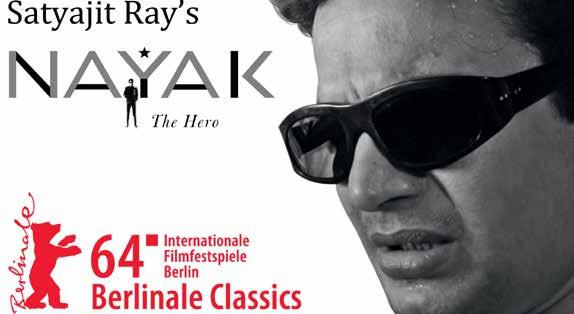
opposite Suchitra Sen, with whom he was to form a legendary screen pairing that yielded countless classics like Harano Sur (Lost Melody, 1957), Indrani (1958), Saptapadi (Seven Steps, 1961) and Agni Pariksha.
Uttam Kumar did not enjoy the kind of global fame that his great contemporary and Satyajit Ray’s alter ego, Soumitra Chatterjee, did. Chatterjee and Ray made 14 films together, and almost all of them travelled to and earned accolades at major international festivals. But at home, at the box office, Uttam Kumar was second to none.
Uttam Kumar collaborated with Ray on two films – Nayak (The Hero, 1966) and Chiriyakhana (The Menagerie, 1967). Over a decade earlier, the actor also appeared in Raat Bhore (Dawn), the debut film of Mrinal Sen, who was to go on and win a Special Jury Prize in Berlin for Aakaler Sandhane (In Search of Famine) in 1981.
Uttam Kumar played stellar roles in more than 200 films in a career that lasted three decades and a bit. His highwattage smile could charm a bird off its perch, but there was much more to Uttam Kumar than the gentle, enigmatic demeanour of a romantic hero.
In addition to being the mainstay of many a blockbuster, he was a producer who also directed three films – Sudhu Ekti Bochor (Just One year, 1966), Bon Palashir Padabali (The Ballads of Bon Palashi, which he co-wrote, 1973) and Kalankini Kankabati (Tainted Kankabati, released posthumously).
During his long reign as the most admired Bengali screen actor, Uttam Kumar delivered dozens of megahits (including several co-starring Satyajit Ray heroines Madhabi Mukherjee and Sharmila Tagore) that remain unmatched in the impact that they had on the collective consciousness of the region.
Uttam Kumar, as a romantic hero of popular cinema, personified the urbane Bengali man to perfection, although he never lost an opportunity to play characters that went against the grain of his established screen persona and demonstrated his phenomenal versatility.
For two roles that he essayed in 1967 – in Anthony Firingee, a biopic of the 19thcentury Portuguese-Bengali folk poet Hensman Anthony, and Chiriyakhana, a whodunnit directed by Satyajit Ray –he won India’s National Award for the Best Actor. It was the year that the acting category was introduced at the National Awards.
Apart from a suave, genteel lover in a string of films co-starring Suchitra Sen and intense and conflicted men in social dramas, he notably played the selfeffacing retainer of a wealthy family in Khokababur Pratyabartan (The Return of the Little Master, 1960), a swashbuckling action star in the Ruritanian adventure Jhinder Bondi (The Prisoner of Jhind, 1961), inspired by The Prisoner of Zenda, and an antihero in Kuhak (1960), the closest Bengali cinema came to film noir in that era.
Towards the end of his career, he even played a wheelchair-using serial killer
Satyajit r ay’ S n ayak ( t he h ero, 1966),
S tarrin G u ttam k umar, P remiered at the Berlinale. t he F ilm, a B out a matinee idol W ho travel S B y train to d elhi to re C eive an aWard and, durin G the journey, S hare S hi S S tory W ith a journali S t, Wa S W ritten W ith the S tar in mind. i n 1967, u ttam k umar Wa S a G ue S t o F the Berlin Film Fe S tival
in a Hindi film, Plot No. 5, which hit the screen after his demise. At the other end of the spectrum, he portrayed a police investigator in the psychological thriller Thana Theke Aschi (1960). He was equally successful at comedy, with films like Bhranti Bilas (1963), an adaptation of Comedy of Errors produced by Uttam Kumar himself, and Chaddobeshi (Disguised, 1971), which was remade in Hindi (Hrishikesh Mukherjee’s Chupke Chupke) four years later, standing the test of time.
Satyajit Ray’s Nayak (The Hero, 1966), starring Uttam Kumar, premiered at the Berlinale. The film, about a matinee idol who travels by train to Delhi to receive an award and, during the journey, shares his story with a journalist, was written with the star in mind. In 1967, Uttam Kumar was a guest of the Berlin Film Festival.
Ray, Berlin Golden Bear winner (for Ashani Sanket, 1973) and Silver Bear recipient for Best Director (Mahanagar, 1963 and Charulata, 1964), cast
Uttam Kumar in 1967 in Chiriyakhana, a Byomkesh Bakshi detective story. At the time of its release, the film was regarded as Ray’s weakest but has, over the years, gained cult status.
Uttam Kumar left the world with greasepaint on 46 years ago. He was rushed to Kolkata’s Belle Vue Clinic from the set of his last film (Ogo Bodhu Sundari, a Bengali adaptation of George Bernard Shaw’s Pygmalion) after a heart attack on July 23, 1980. He was five weeks shy of 54.
The path that he paved still guides every actor and every professional who ventures into Bengali film. Shilpi Sansad, the organisation Uttam Kumar founded in 1968 to support needy workers of the film industry, still functions and hosts a festival of films featuring the actor in lead roles.
The building that houses Shilpi Sansad is crumbling and is in need of urgent renovation, but the aura of Uttam Kumar remains as bright as ever.

After rehab, a woman returns to her family’s Cape Cod house, where sobriety forces her to confront buried trauma and the terrifying question of who she is without her career that once justified her self-destruction.
director: Kornél Mundruczó
Book: Kata Wéber
Producers: alexander Rodnyansky,aaron Ryder,andrew Swett,Stuart Manashil,Kornél Mundruczó,alex Lebovici
Co-producers: Rachel Rubin,Michael Learner
Casting: Jessica Kelly,Rebecca dealy
Country: uSa, Hungary 2026 | Color | english | Subtitles: german
World sales: mk2 Films intlsales@mk2.com
Lilia returns to Tunisia for her uncle’s funeral and reunites with a family that knows nothing about her life in Paris, especially her love life.
Determined to confront her family’s secrets, Lilia sets out to unravel the mystery of her uncle’s sudden death.
director: Leyla Bouzid
arabic | Subtitles: german, english
Producer: Caroline nataf
Casting: eya Bouteraa (Lilia), Hiam abbass (Wahida), Marion Barbeau (alice), Feriel Chamari (Hayet)
Country: France, tunisia 2026 | Color | French, World Sales: Playtime info@playtime.group At the seA CoMpetition

“Who are you and what defines you?”, Lea is asked by the production crew of a reality talent show. She does not know. And with this question, her search for an identity within and beyond her family’s hotel in the forests of the former East Germany begins.
director: eva trobisch
Book: eva trobisch
Producers: trini götzedavid armati Lechner
Co-producers: Janine Jackowski,Jonas dornbach,Maren ade,Ingo Fliess
Casting: Susanne Ritter,Jacqueline Rietz
Country: germany 2026 | Color | german |
Subtitles: english
World sales: the Match Factory info@ matchfactory.de

My Wife Cries CoMpetition

an ordinary workday on a building site. Fortyyear-old crane operator thomas receives a call from his wife: he has to pick her up from the hospital. once there, he finds her sitting alone on a park bench, crying.
director: angela Schanelec
Book: angela Schanelec
Producer: Kirill Krasovski
Co-producers: Saïd Ben Saïd,Kevin Cheneiweiss,Paul Hasel
Casting: ulrike Müller
Country: germany, France 2026 | Color | german
World sales: SBS International contact@sbs-productions.fr
In a Spanish villa, American siblings Jack, Ed, Anna and Robert wallow in isolation and their inherited fortune. When Jack wants to move in with his girlfriend and Ed uncovers the truth about their mother’s death, the fabric of the family begins to unravel.
director: Karim aïnouz
Book: efthimis Filippou
Producers: Michael Weber,viola Fügen,Simone gattoni,annamaria Morelli,andreas
Wentz,vladimir Zemtsov
Co-producers: Juan Cano “nono”,Rachel dargavel
Casting: nina gold
Country: Italy, germany, Spain, united Kingdom
2026 | Color | english | Subtitles: german
World sales: the Match Factory info@matchfactory.de

CoMpetition
rosebush pruning

Seventeen-year-old Kellou has been gifted with supernatural powers she does not understand. Her disquiet and uncertainty only change when she meets Aya. It is an encounter with destiny that forges a mystical world where the visible and invisible converge.
director: Mahamat-Saleh Haroun
Book: Mahamat-Saleh Haroun,Laurent gaudé
Producer: Florence Stern
Co-producer: Mahamat-Saleh Haroun
Casting: Maïmouna Miawama (Kellou), Ériq ebouaney (garba), achouackh abakar
Souleymane (aya)
Country: France, Chad 2026 | Color | French, Chadian arabic | Subtitles: german, english
World sales:
Films Boutique contact@filmsboutique.com
1930s Australia, the colonial frontier. Two swaggering outlaws roll into a mining town and unleash a wave of cruelty, leading three kids to break free from their white masters and set o across the “sweet country” of central Australia in search of a safe home.
director: Warwick thornton
Producers: greer Simpkin, david Jowsey
Co-Producers: david tranter, drew Bailey
Casting: anousha Zarkesh
Country: australia 2025 | Colour | english, Mandarin, arrernte | Subtitles: german, english
World Sales:
Paradise City Sales sales@paradisecity-films.com souMsouM, the night of the stArs

a life-altering event forces 21-year-old Junyang and his girlfriend to face reality. at the same time, while Junyang’s father is struggling to hold their modest life together, a woman enters his life and both generations are forced to redefine family.
director: anthony Chen
Book: anthony Chen
Producer: anthony Chen
Co-producers: teoh Yi Peng,Huang Wenhong
Casting: Khoo Chia Meng,Maximilian Liang
Country: Singapore 2026 | Color | Mandarin, english | Subtitles: german, english
World sales:
Paradise City Sales sales@paradisecity-films.com
Sámi reindeer herder Maia fights to protect her ancestral lands from a looming mining project. Amid the growing protests, she is also confronted with deeply buried family traumas. Maia is forced to make a decision.
director: elle Sofa Sara
Book: Johan Fasting,elle Sofa Sara
Producer: elisa Fernanda Pirir
Co-producers: Mimmi Spång,Jani Pösö,elle Sofe Sara,Cathrine Persson,Julia andersen,Jim Stark,Jamal Zeinal-Zade,dan Wechsler,andreas Roald
Casting: Sara Marielle gaup Beaska (Maia), Simon Issat Marainen (dánel), ayla gáren nutti (Áilin), Mikkel gaup (Lemme)
Country: norway, Sweden, Finland 2026 | Color | northern Sami
World sales: the Yellow affair contact@yellowaffair.com

berlinAle speCiAl gAlA
the blood Countess

The Blood Countess and her maid embark on a quest for the red elixir of life and a book that threatens the vampire realm. Hot on their heels are a police inspector, two vampirologists, a vegetarian nephew and his therapist.
director: ulrike ottinger
Producers: alexander dumreicher-Ivanceanu, Bady Minck, Bettina Brokemper
Casting: eva Roth
Country: austria, Luxembourg, germany 2026 |
Colour | german, French World Sales: MagnIFY akennedy@magpictures.com
She has just finished the shoot of an independent film and now has to give three interviews about it. Afterwards, in her acting class, her teacher asks her to reenact the interviews. But for some reason, she is unable to remember them.
director: Hong Sangsoo
Producer: Hong Sangsoo
Casting: Song Sunmi (Bae Jeongsu), Cho Yunhee (Kim Young), Park Miso (Park Junhee)
Country: South Korea 2026 | Black/White | Korean | Subtitles: english World Sales: Finecut sales@finecut.co.kr


Naru, the only camerawoman at Kabul TV, is convinced there are no good men in Afghanistan. But when a reporter takes her on an assignment just before the Taliban’s return, sparks y between them – and she begins to question this belief.
director: Shahrbanoo Sadat
Producers: Katja adomeit, Shahrbanoo Sadat, Jeppe Wowk, Marina Perales Marhuenda, Xavier Rocher, Ingvil Sæther Berger, Balthasar Busmann, Maxi Haslberger
Casting: Shahrbanoo Sadat, Moshtari Hilal
Country: germany, France, norway, denmark, afghanistan 2026 | Colour | dari, Pashto World Sales: Lucky number hello@luckynumber.fr
the Indigenous Bunong live with their ancestors, spirits, skills. Modernity upsets the balance, they lose the forest – of whose ownership they have no conception. Lesson in globalisation. Rice grain essence. now/then. Split screen.
director: Rithy Panh
Producer: Catherine dussart
Casting: Pa Kreb, Mak Kreb, Yeay Kreb, Mak Lisa, Pouk Choeut
Country: Cambodia, France 2025 | Colour | Central Mnong | Subtitles: english World Sales: Playtime info@playtime.group


Suzanne and Osmane meet in crisis-ridden Beirut. Osmane is a young Sudanese man without papers, searching for a better future; Suzanne is a widow with Palestinian roots more than twice his age. Against all odds, they fall in love.
director: danielle arbid
Producers: omar el Kadi, nadia turincev, georges Schoucair
Co-Producers: amanda turnbull, Ziad Srouji, antoine Khalife
Casting: Mona Khaouli
Country: France, Lebanon, Qatar 2026 | Colour | arabic
World Sales: Fandango sales@fandango.it
The extraordinary true legend of Ann Lee, founder of the Shakers, who preached gender and social equality. Revered by her followers, her rapturous quest to build a utopia comes to life through song and movement.
director: Mona Fastvold
Producers: andrew Morrison, Joshua Horsfield, viktória Petrányi, Mona Fastvold, Brady Corbet, gregory Jankilevitsch, Klaudia ŚmiejaRostworowska, Lillian LaSalle, Mark Lampert
Casting: Isabella odoffin
Country: uSa, united Kingdom 2025 | Colour | english
World Sales: Searchlight Pictures https://www.searchlightpictures.com

berlinAle speCiAl gAlA
the only liVing piCKpoCKet in neW yorK

Harry is an ageing pickpocket struggling in a changed New york City. When he unwittingly steals a valuable USB stick, he nds himself in a race against time to return the loot or face the rage of a vengeful crime family.
director: noah Segan
Producers: Leopold Hughes, Katie Mcneill
Casting: Christine Kromer uSa 88’ english
After eight-year-old Josephine accidentally witnesses a crime in Golden Gate Park, she begins to act out violently to protect herself. This emotional trauma leads to conflicts between her parents as they search for justice, and a way for the family to feel safe again.
director: Beth de araújo
Producers: david Kaplan, Beth de araújo, Marina Stabile, Josh Peters, Mark H. Rapaport, Crystine Zhang
Casting: Channing tatum (damien), gemma Chan (Claire), Mason Reeves (Josephine) World Sales: filmsalesinfo@wmeagency.com

At Bengaluru gaFX 2026 (27 Feb- 1 March) , the pulse of India’s Orange Economy quickens as creators and industry leaders converge to chart the future of the nation’s creative and tech landscape. A Chat with Biren ghose, President, ABAI
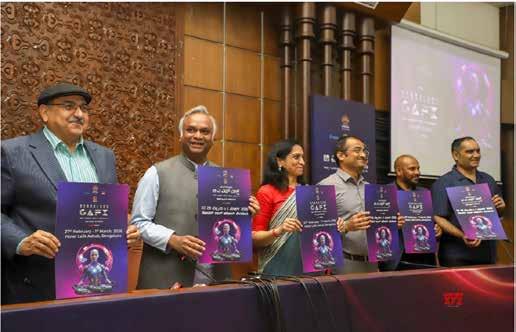
as President of aBaI, what is the significance of Bengaluru gaFX in 2026?
Bengaluru GAFX has evolved far beyond an annual industry event—it’s a true celebration of India’s creative confidence and a testament to Karnataka’s pioneering leadership in the AVGC sector. GAFX is where India’s creative future steps into the public eye, acting as a marker for how far we’ve come. Over the years, imagination has shifted from being seen as a ‘soft’ skill to being recognized as a powerful, strategic national asset. The creative technology sector has moved from the periphery to the mainstream—it’s now considered essential for economic growth, talent development, and building global influence. In my view, creative work is no longer a side story—it is India’s growth story.”
You’ve mentioned that avgC started out
as a ‘namkaran.’ Can you elaborate on what that means for the industry?
When we first started engaging with the government in 2008-2009, AVGC was just an acronym, a ‘namkaran,’ or naming ceremony. Back then, its value had to be explained repeatedly—what it meant, why it was important, how it could create value. It was an infant idea, requiring nurturing, belief, policy, and broad participation. Fast forward to today, and AVGC is being referenced by the country’s top leaders—both the Prime Minister and the Finance Minister—who mention it as a key strategy for projecting India’s stories to the world. The numbers tell a remarkable story: what was once about 1% of the Media & Entertainment industry revenues has now grown to over 20% by 2025. This isn’t just a trend; it’s a transformation. AVGC isn’t just growing—it has arrived and
Award-winning creative sessions – Global award winners from last year will showcase their work through “how it was done” sessions
Buyer-seller marketplace – A proven platform that has previously facilitated two IPs for global deals
Talent discovery contest – An ongoing competition unearthing talent across multiple skillsets
Networking and tech expo –Community engagement with tech companies demoing their latest tools and releases
Industry roundtables – Discussions with international and national stakeholders, including government representatives
become a movement shaping jobs, exports, international partnerships, and India’s global creative identity.
How has gaFX itself changed over the years, and what does it represent today?
GAFX had humble beginnings, initially focusing on showcasing India’s contribution to Oscar-winning films, Cannes winners, and globally acclaimed productions. Over the years, our scope broadened. Animation expanded into VFX, game art, experience centers, and extended reality. Today, GAFX represents the entire spectrum of creative technology—storytelling, immersive entertainment, simulation, real-time design, and experiential futures. It’s no longer just a showcase of what’s been accomplished; it’s a platform for ideas that are about to be born. Our B2B and Waves bazaar segments specifically foster collaboration and innovation. GAFX is where the industry comes together, not just to celebrate creativity, but to align on capability, competitiveness, and the demands of tomorrow. It’s no longer a mirror of the past—it’s a blueprint of the future.
You have a “scribble” philosophy. Why is this important for the industry?
Everything great begins as a scribble—a doodle, a rough sketch, a first imperfect idea. That’s the essence of creativity. A scribble becomes a plan, the plan grows into
production, and that production can shape entire industries. In today’s world obsessed with automation and speed, it’s vital to remember that technology may scale things, but it is human imagination that starts things. Artists don’t just create images; they create pipelines, platforms, intellectual property, and new markets. Every billiondollar industry starts as a pencil line. That’s a message we want every young creator to take to heart.
What tangible outcomes can the industry expect from gaFX 2026?
GAFX is designed for outcomes, not just applause. We are committed to strengthening Karnataka’s leadership in AVGC innovation, scaling up excellence and talent, and reimagining imagery, simulation, and design in the era of AI. We’re also focused on enabling talent from Tier 2 and Tier 3 cities, rewarding fresh creators and startups, and forecasting the future with greater certainty. GAFX is a platform where talent meets opportunity, and opportunity meets strategic planning. This is where creativity meets strategy, and strategy meets scale.
























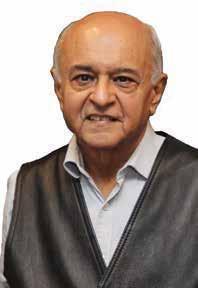


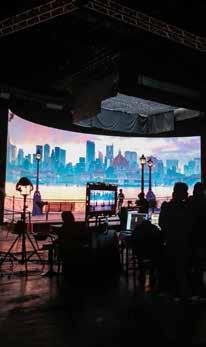
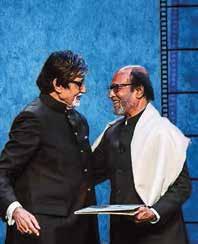











Pickle reaches out to audio visual companies in over 50 countries; Targets global buyers and distributors; Film Festivals and markets; Animation production companies; Global companies looking at offshoring from India; Co-production seekers and location service providers. Pickle business guide tracks the entertainment business in India.
Congratulations to Annecy Festival and its team for being a torch-bearer of animation industry for over six decades
Email : pickle@pickle.co.in Web: www.pickle.co.in