
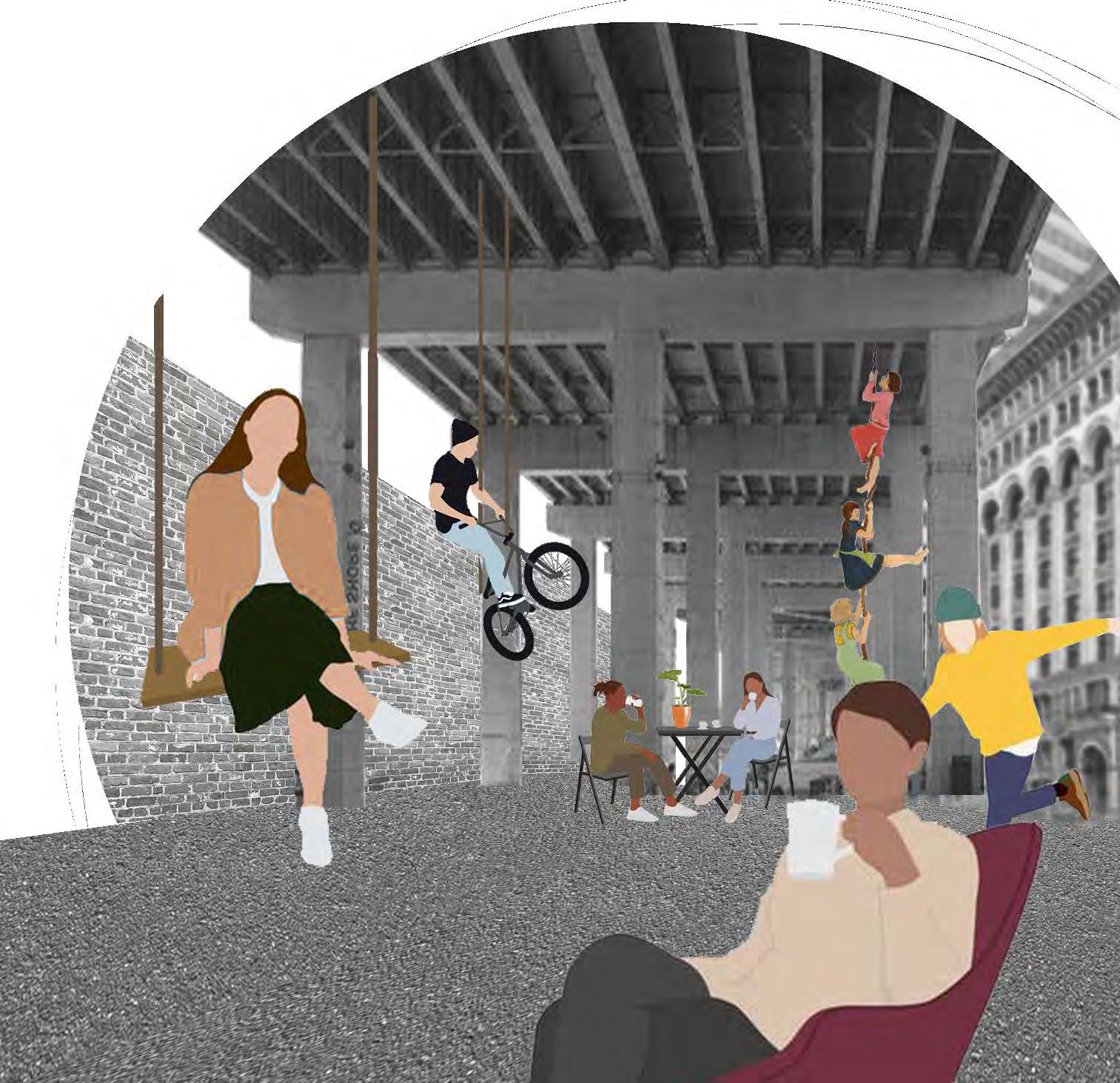
In the background of covid -19, outdoor dining is changing from a place to a space. The interior can transcend the architecture that it is within or can exist without architecture altogether.
The city streets are a shared community resource and will explore temporal and shifted occupation of shelter inhabitations. There are plenty of leftover spaces in the city that could turn into an opportunity to bene t communities.
The project function as an outdoor dining space with expanded activities -- exercises. Through the exploration of and control of space, place, light, climatic consideration, materiality, and textural identi cation design interventions will need to be modular, recon gurable in additive and subtractive manners, transportable and relocatable.
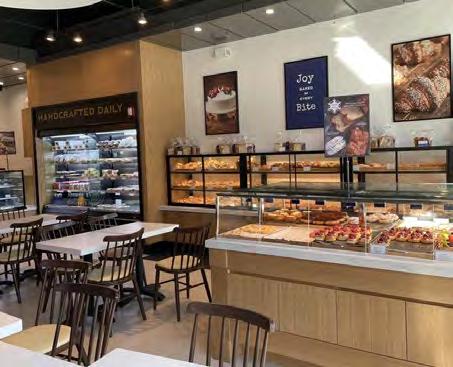
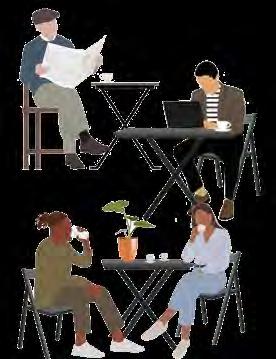
A café is not only a gathering place for people to grab a quick meal, but everyone in the community also knows it as a place where people can socialize, work or relax and take a break from the stressful hours of the day.
Since Long Island City (LIC) has become the fastest-growing residential and cultural district in New York City. In the last decade alone, nearly 10,000 apartments have been built, and more than 20,000 are planned or under construction. LIC is also a thriving arts community, with large institutions such as MoMA PS1 and dozens of smaller galleries and artist spaces.
The café is located 1816 Dutch Kills St. Long Island City, NY. There are lots of residenial building and o ces nearby. The café serves people living within a 5miles radius of the neighborhood, while the area contains the main LIC residents and employees. While the café seats around 20 people and o ers a wide range of baked breads, pastries, salads, and sandwiches in limited space.
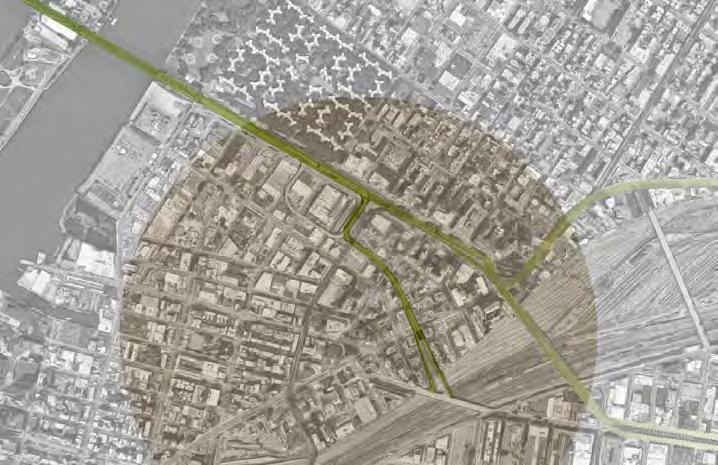
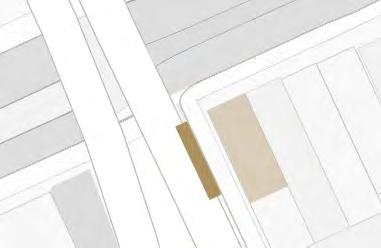
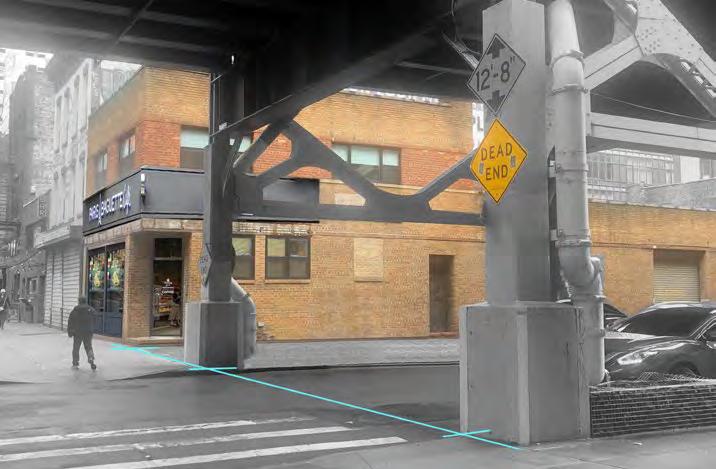
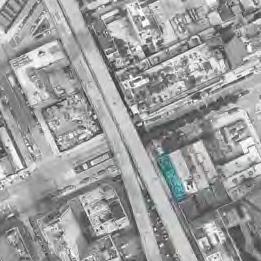
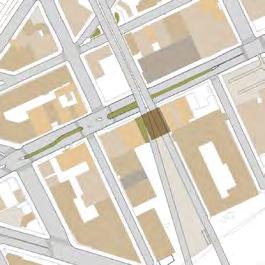
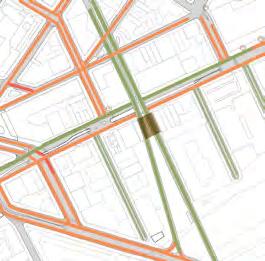
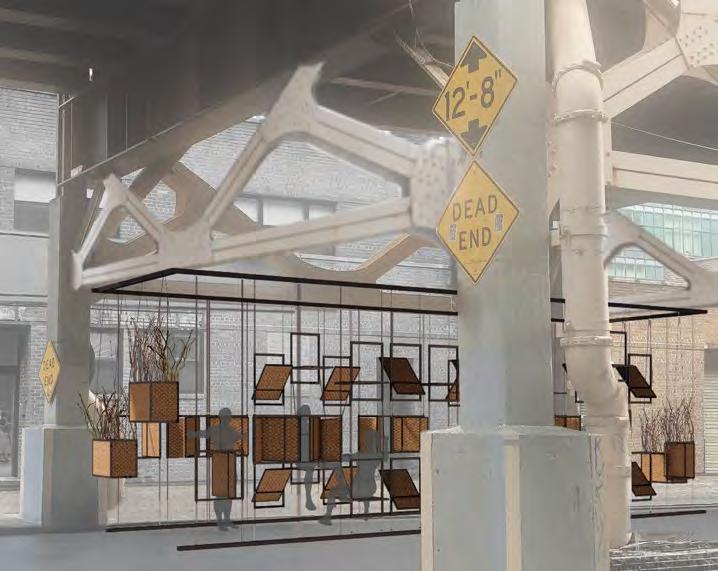
The venue is located under a bridge, a leftover space. The road ends at a dead end, and cars are parked randomly on both sides of it. The road where the site is located has almost no tra c compared to other roads near it.
There are numerous residential buildings nearby, along with a few o ces and restaurants. There aren’t many outdoor recreation available nearby.
In the past decade, LIC residential growth increased more than ve times the rate of NYC. LIC has become the fastest-growing residential and cultural district in New York City.
The residents has lead to a boom in new restaurants and bars. And the MOMA’s satellite center PS1 is also located in LIC, o ering great cultural experiences.
The Queensboro Bridge and Queens-Midtown Tunnel give LIC direct access to Manhattan by car. The streets are much busier than they once were, particularly during rush hour times.
Due to the location’s mix of residential and commercial structures, including outdoor dining and sports, residents’ activities are considered.
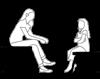
To better ful ll the needs of the local population and various circumstances. While designing a table and chair system for outdoor dining, it is crucial to consider the various heights of each individual and the number of people in each group.
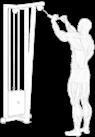
Also, taking into account the desire for exercise, mechanical tness equipment is simpli ed and relocated to an outside area along with eating.




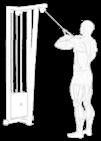
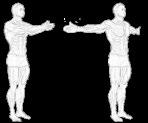


Based on the observation of people’s activities on the streets, it was aggregated into two itineraries, weekdays and weekend.
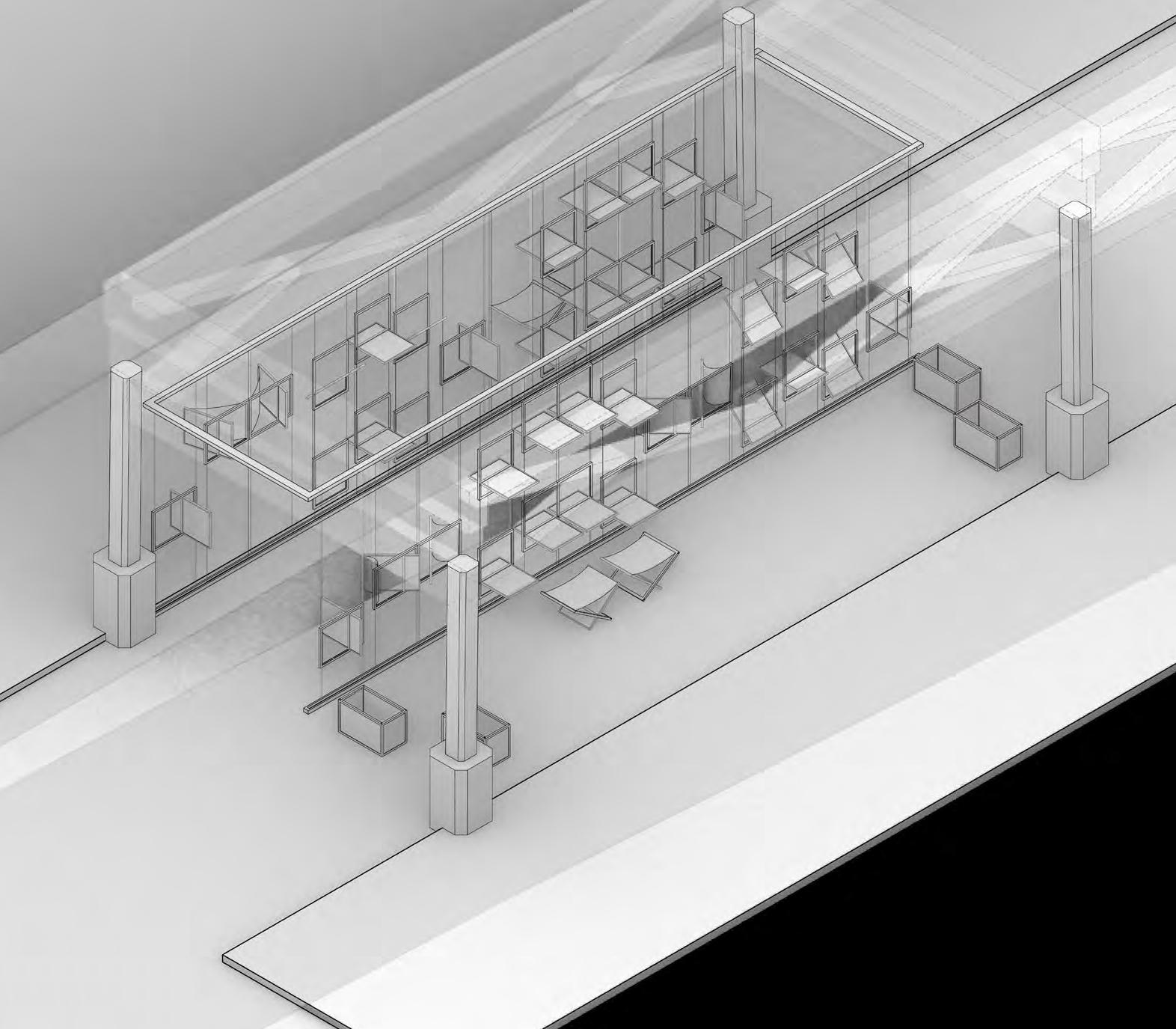
Based on the site condition, the structure of the bridge gives an opportunity to hang the apparatus.
Since the site is under the bridge, the lighting condition is not well. And based on the sun path analysis, there is only natural light directly illuminating the sidewalk.
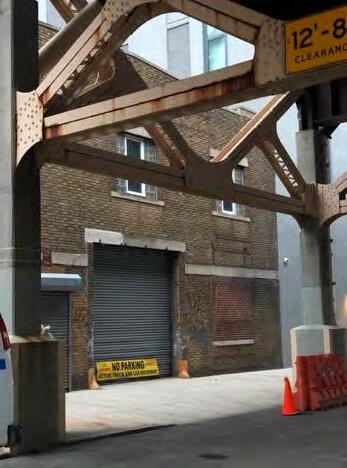
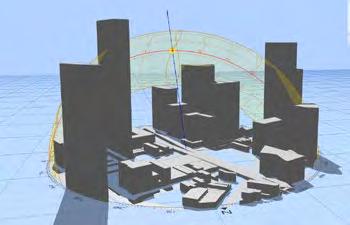
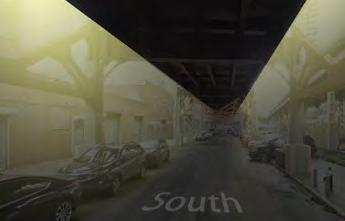
Based on the schedules of people in the neighborhood, apparatus can be designed to respond to di erent time demands. The existing structure of the site is fully utilized. The beams through the bridge body are suspension equipment instead of installed on the ground.
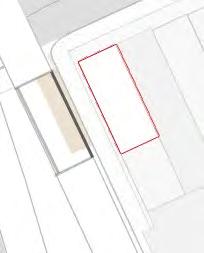
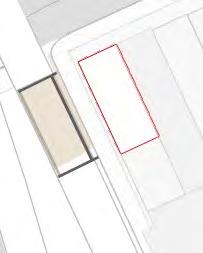
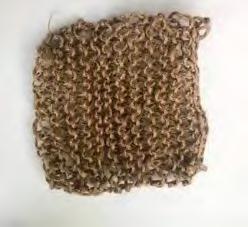
There are plenty of abandoned jute bags in the cafe shop. Jute is wonderfully soft, but they're also durable.
By studying di erent knitting stitches, comparing and nding the most resilient stitches.


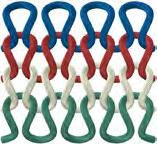
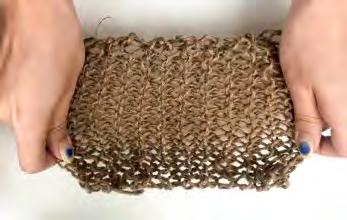

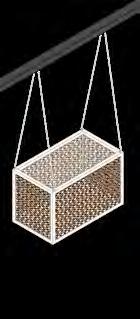
pulley movable hooks


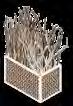
Vegetation arrangements vary in seasons.
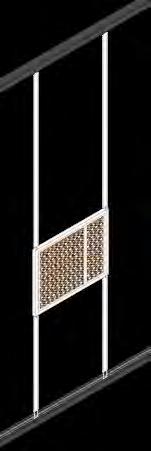
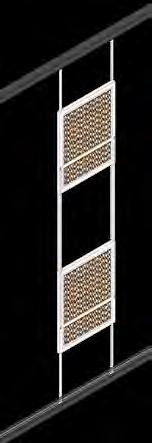
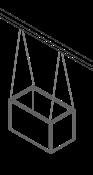
Utilizing as a road blocker
Durning the weekend, the boxes could take down and put on the other side of the street to rede ne the boundary of the system. And also, the plants inside the boxes bring vitality to the street.


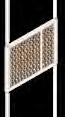
take it o

Utilizing as a stool
When the panel takes down from the hanging rope, it could be rotated through the pivot and become a stool.
Utilizing as a stretch machine
When two same modules come together, the panels could be rotated at the same time, the stretch fabric provides exibility.


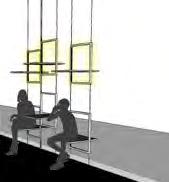
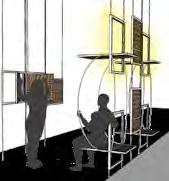
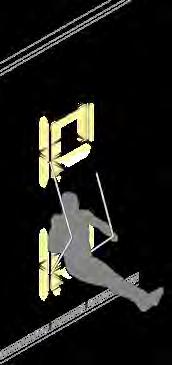
Utilizing as a cable machine
When people sit on part B and pull the green ropes. And then part B will move up and the red ropes will scroll up. While part A keeps the original height. And there are sensors inside.When part B is rotated along with the pivot, part A will be rotated at the same time.
Utilizing as a street lantern
The luminaries are installed inside the panel. Through rotation, the lighting could illuminate the space.
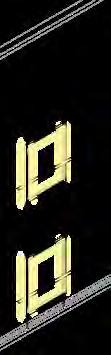
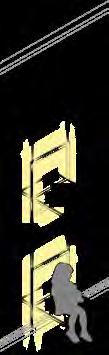
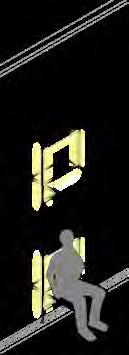
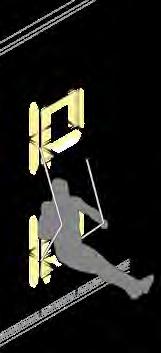
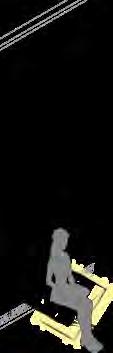
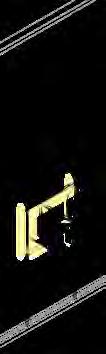
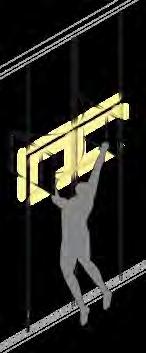
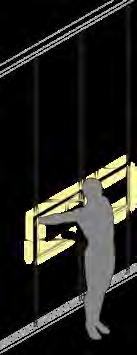
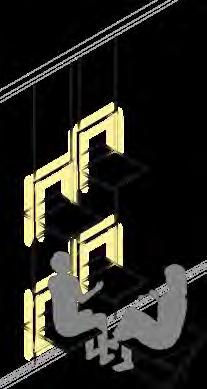
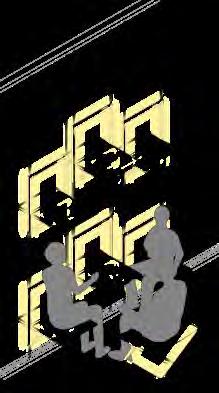
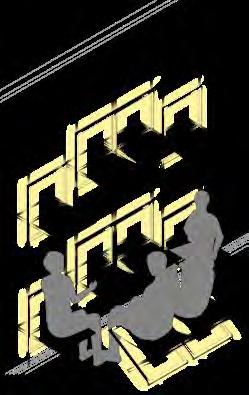
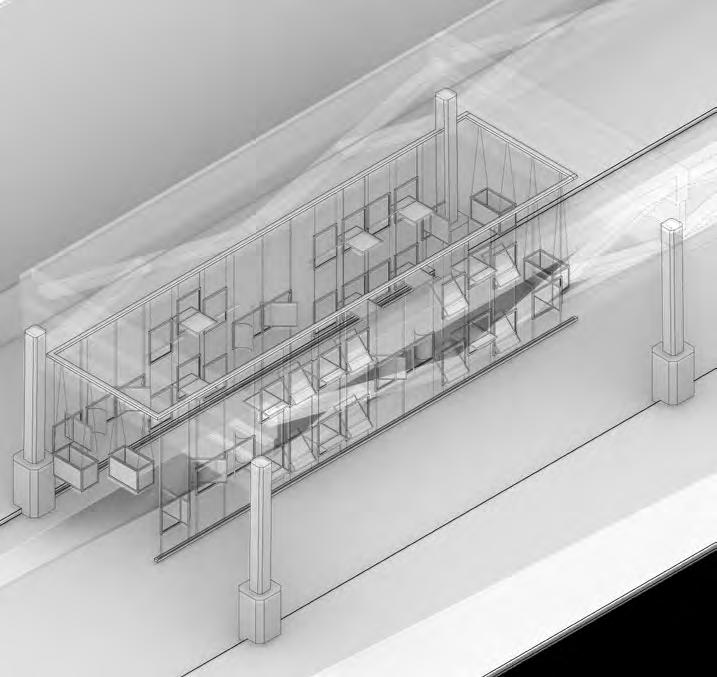
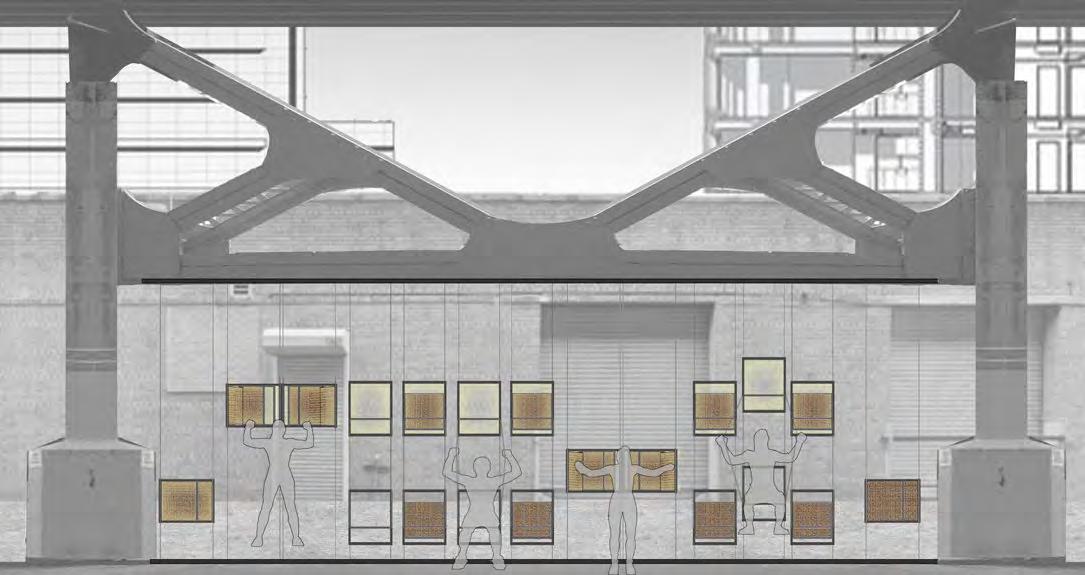
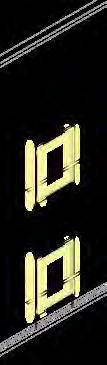
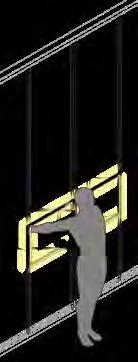
Workout model on Weekdays
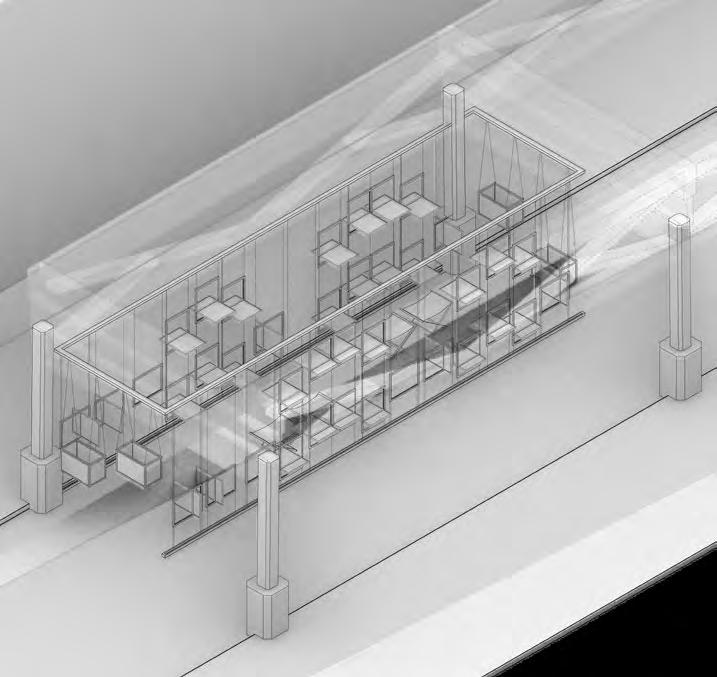
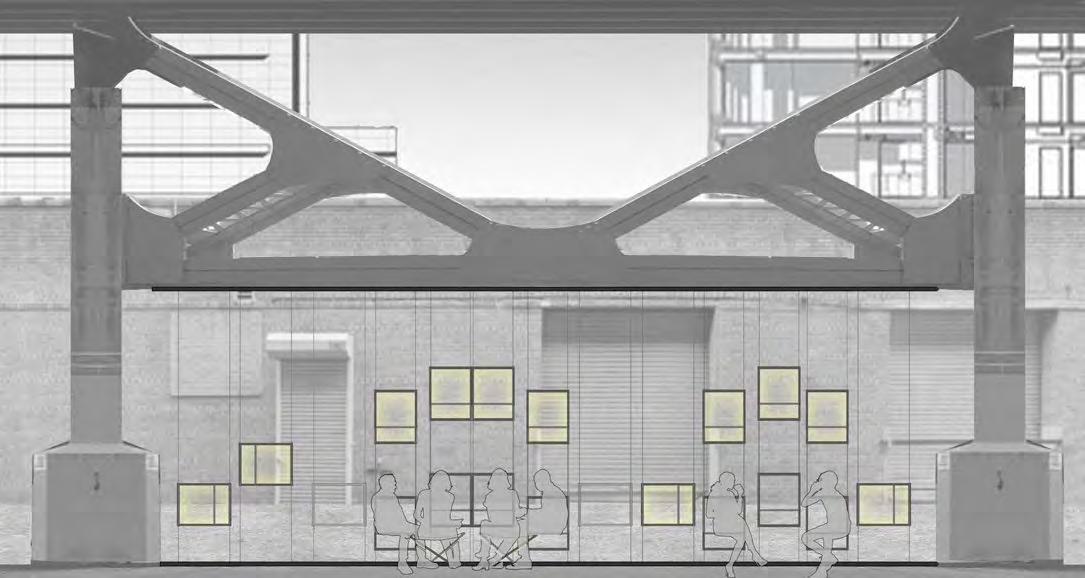
Dining model on Weekdays
On the winter weekdays morning, people come here to do some exercise to start a refreshing day.
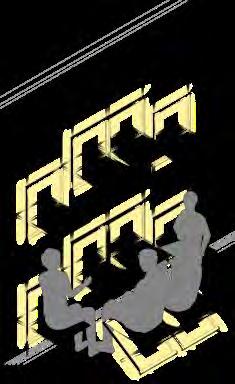

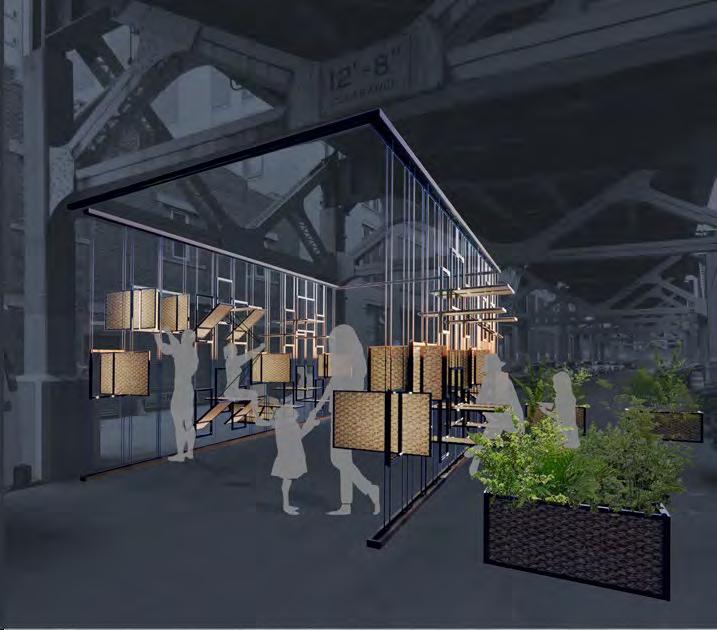
During the late-night on weekends, people gather there. They could chat with friends here and have a bite. Parents might teach their children to do exercise. Some people may work out to relax.
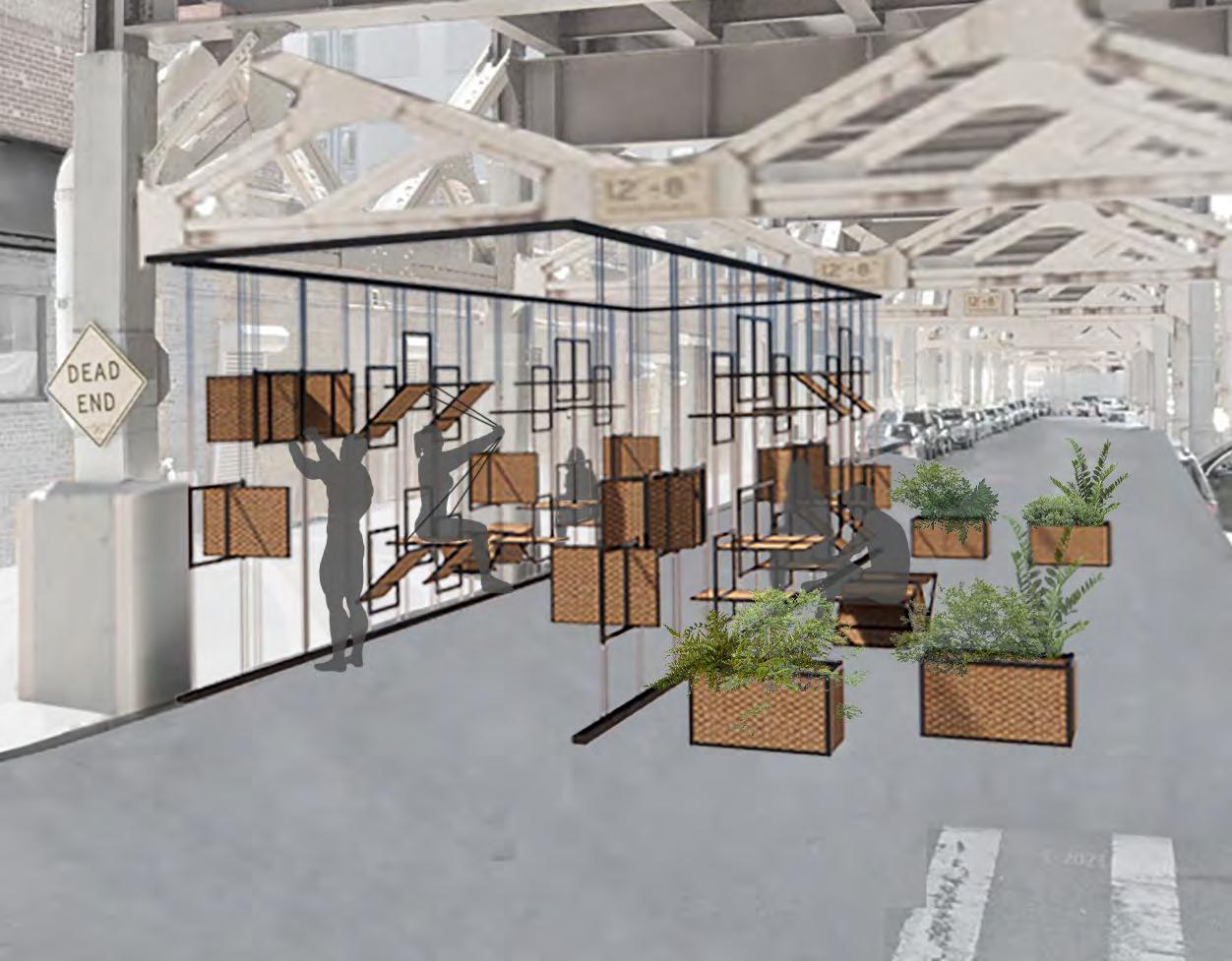
On the weekend, some people come here to do some workouts. Some of them with friends to enjoy brunch. They might sightly exercise before or after eating to have a well-being lifestyle.
This project is named unboundary house since it broke boundaries in crucial aspects.
The boundary between the interior and exterior was broken. The interior oor material continues to the exterior yard. The ooutdoor plants extension to the interior.
In this project, the boundary of social complexities was broken. There is a beautiful combination of two families, an African American family with two children and an LGBQ family with a child. So
various lifestyles are going on in this building. The layout of the space is able to serve people’s preferences. Thus, the interaction between the two families could run smoothly in the space.
Furthermore, the boundary between private and public was rede ned in this project. Two families living in the same building are more like a community. The limited footprint and the sharedhouse idea brought two families together under the same roof.
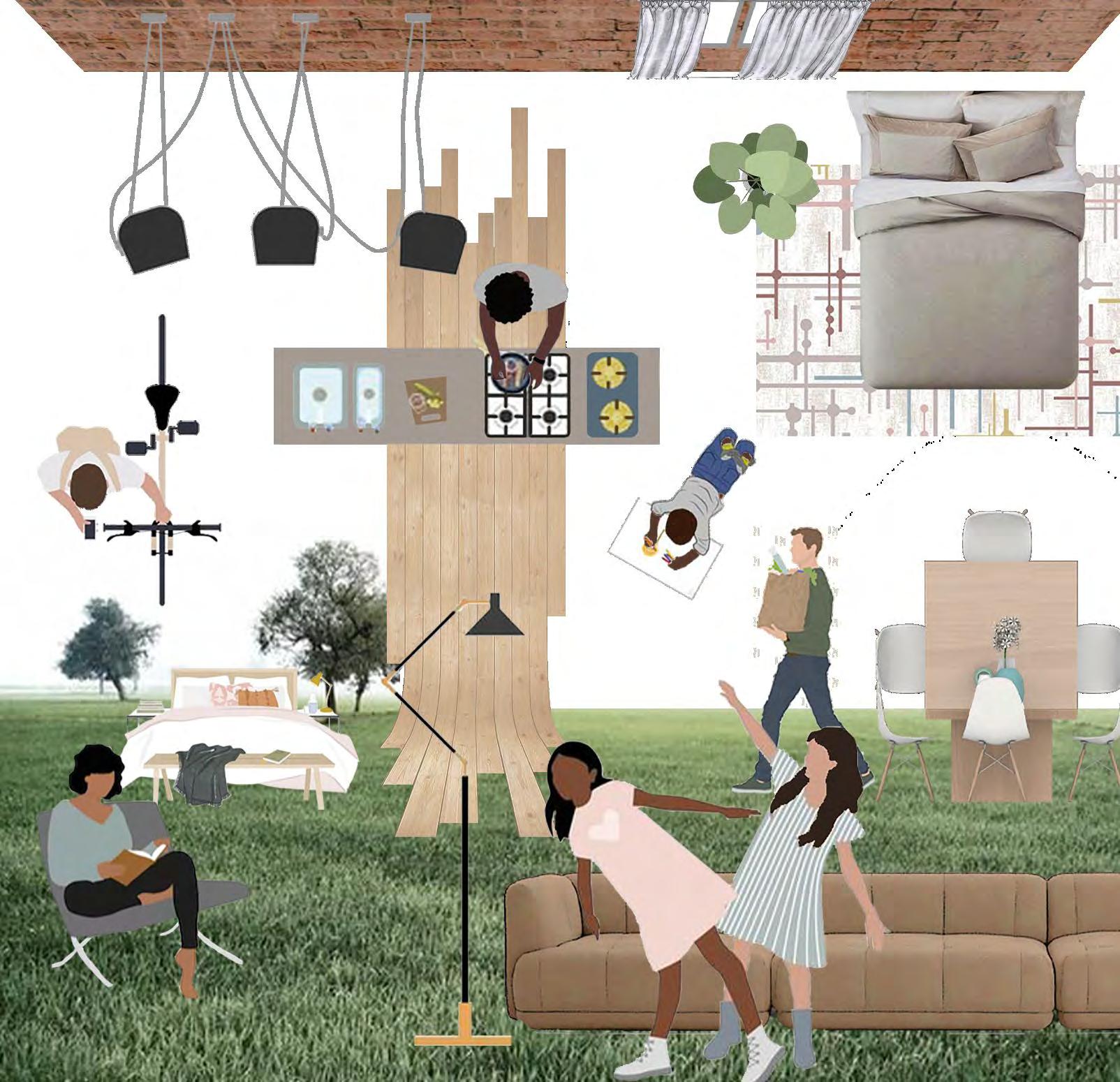
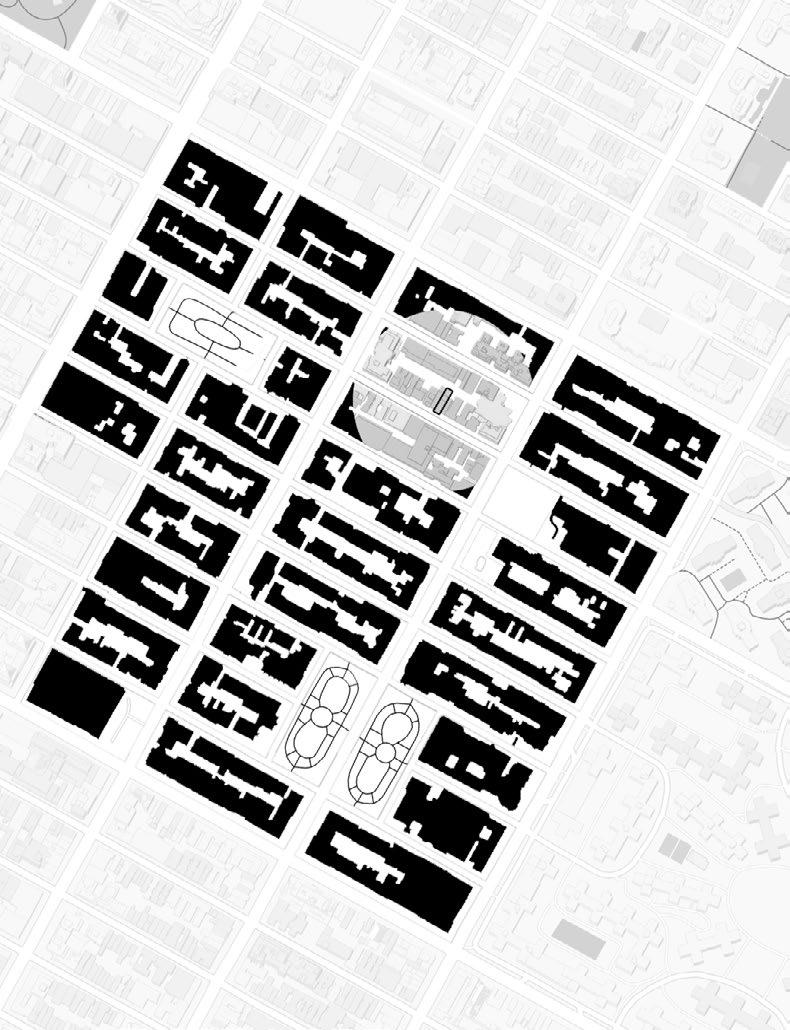
The site is located at ( 225 East 21st Street) is located in the Gramercy Park neighborhood in Manhattan, NY.
Gramercy is a secluded, private neighborhood even though it’s located in central Manhattan. The neighborhood is reminiscent of a sprawling, well-groomed park with its clean streets and carefully cultivated greenery.
Large and spacious brownstones are known as being some of the prettiest in the city. Most of the buildings in the Gramercy neighborhood were built in brownstone.
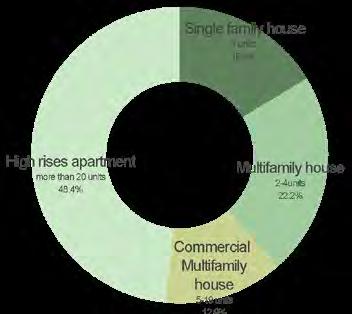
According to data, around 40% of adult renters in NYC had roommates in 2017, which is higher than the national average of 30%. This is not a new trend as the amount of adult living with roommates have increased every year in all age brackets. More people are sharing space for budgetary reasons, especially as the rise in rent continues to outpace the rise in income.
Home ownership & Long term Long-term permanence at one location
Renting & non-ownership provide exibility
Living in several locations & seeking community experience
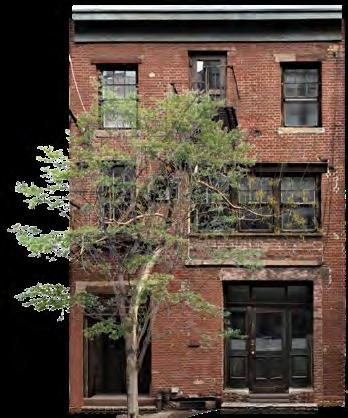
225 East 21st Street was built in 1920 and has 3 stories and 2 units.
There is a nearby park with a playground and a separate dog run.
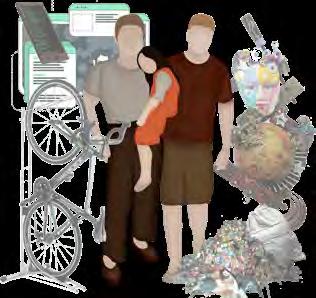
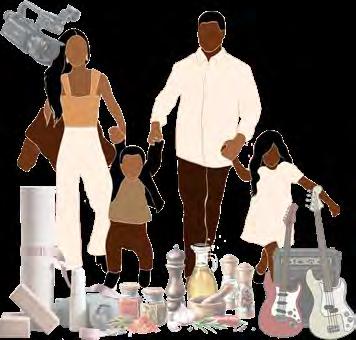

Trevor, Michael + Rosaria
Trevor is a business consultant and an avid cyclist and runner involved in internet security and occasional app development.
Michael is an art teacher at Stuyvesant High School. His career as an artist transformed from largescale landscapes to small detailed sculptures he makes at home.
They have an adopted daughter Rosaria, age 6.
Mavis, Robert + Kisha & Jaden
Mavis is a documentary lm maker who works often for public television. She meditates daily and does yoga.
Robert is a chef a with his own restaurant on the Lower Eastside of Manhattan. He is also a very good electric bass guitar player.
They have two children a girl 8 (Kisha) and a boy 5 (Jaden). They are an African American family. They will share some room since the home belonged to two families. In comparison to communal living and apartment-style living arrangements, they will share a portion of the basic living quarters while maintaining personal privacy.
The grownups have identi able personalities. They enjoy a variety of interests and hobbies. So, it will require a certain amount of room for their occupation, interests, and hobbies. Some of these places may also be useful for other members of the household.
Accessibility demonstrated by bar length
The two front doors of the house will separate the two families’ access. To accommodate each family’s requirement for privacy, the two families each take up one side of the house.
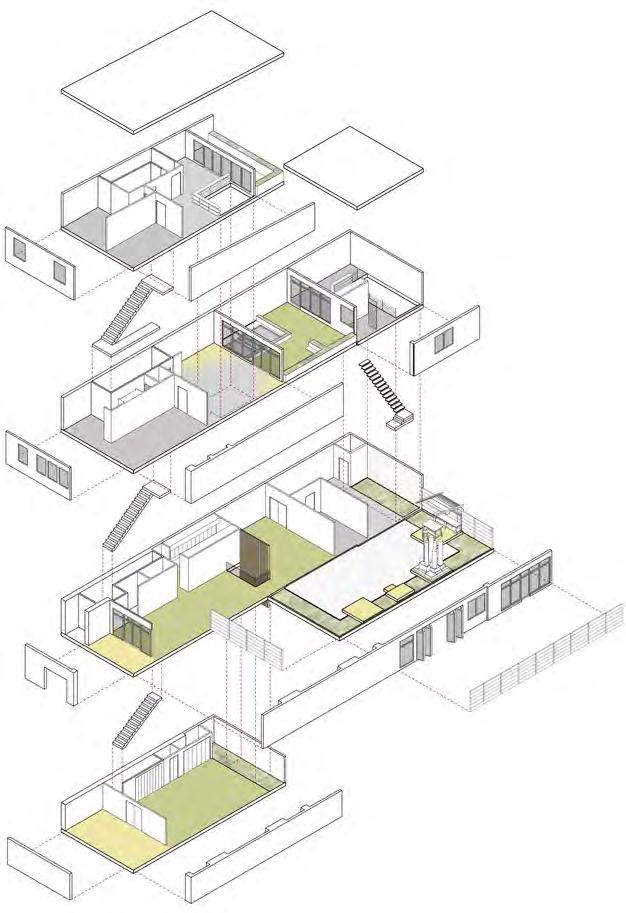
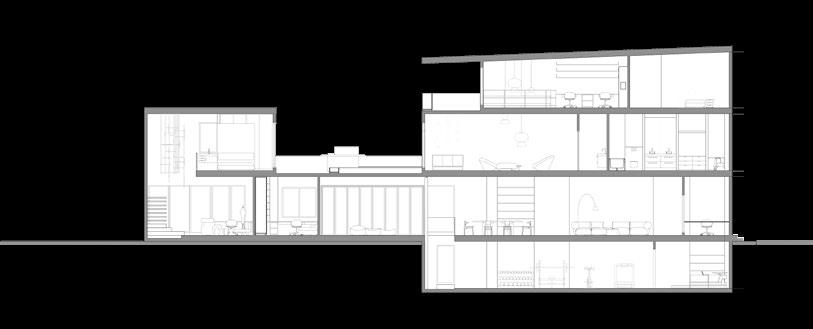
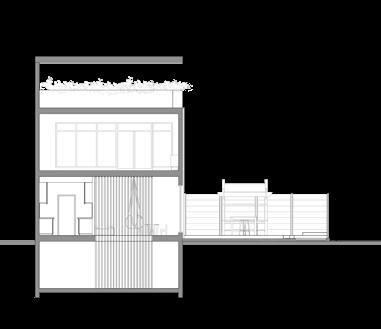
The cut-o oor, which joins the upper and lower level, maintains the continuity of the individual family spaces. The basement is given natural light thanks to the rst level’s cut-o ooring. There is plenty of opportunity for creativity and presentation by situating Michael’s sculpting studio outside. The ooring and plants serve as visual representations of the connections between the inside and outside.
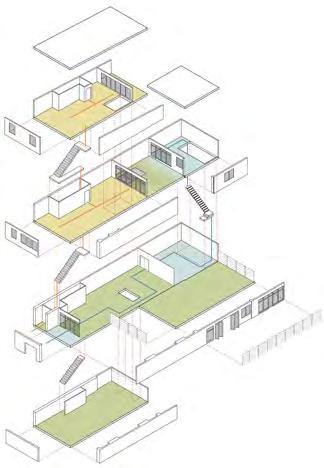
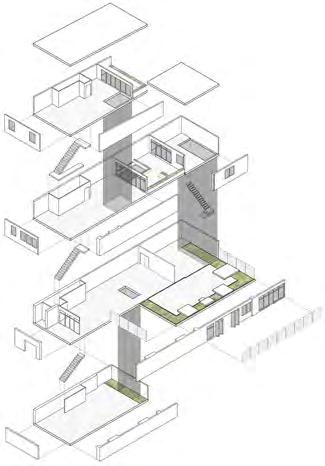
The home will be shared by two families, and the communal areas are designed to accommodate diverse needs. To make it easier for everyone to use the shared space, personal spaces are located all around it. In the house, private and communal spaces can coexist in harmony.
Shared V.S. Personal spaces
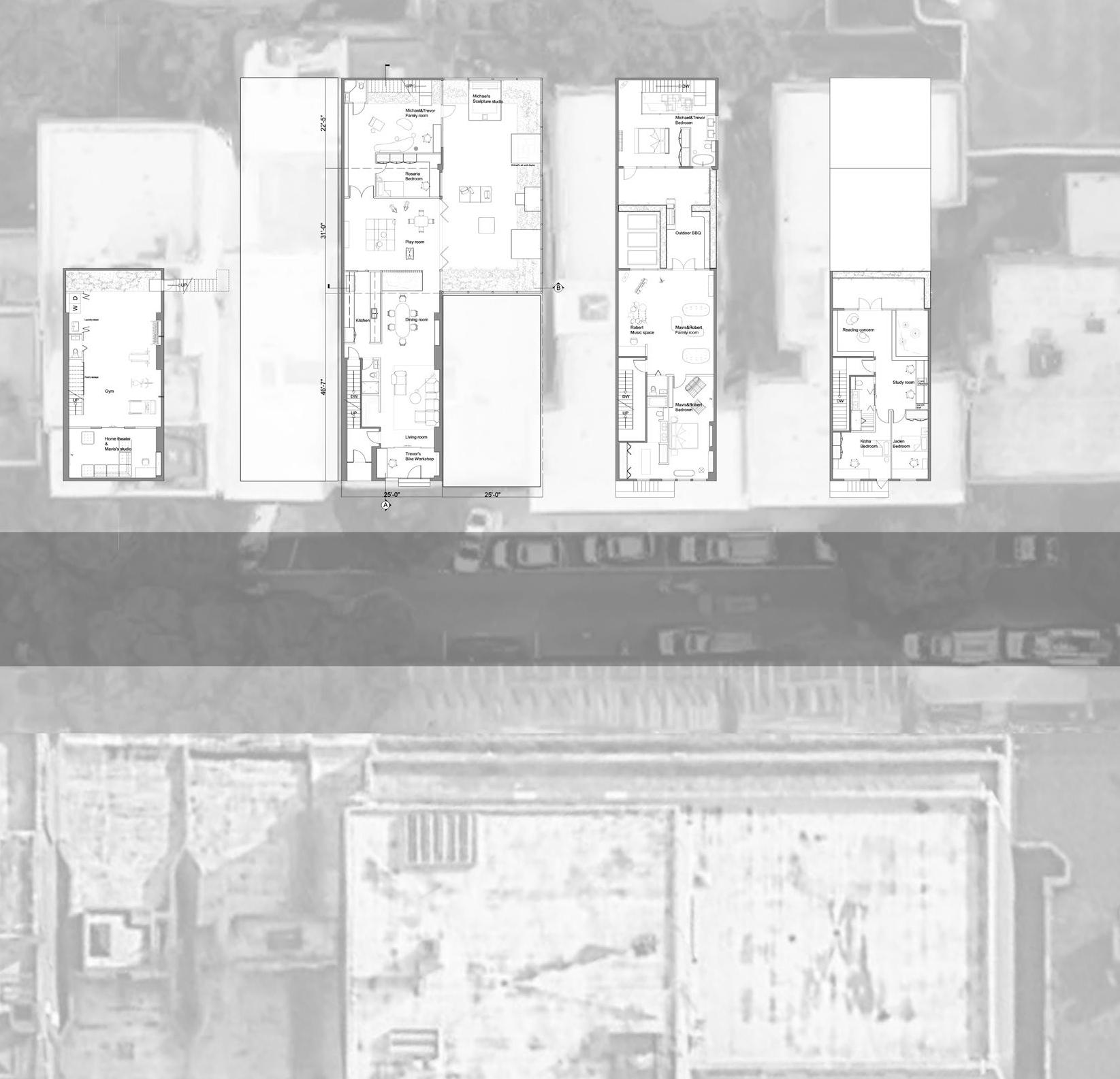
Basement Floor Plan
Ground Floor Plan
The original structure’s length and width made it challenging for light to penetrate the center. The home includes a sizable outdoor area, which presents a fantastic chance to improve natural lighting and ventilation. An excellent link between inside and outside will be created by pivot doors in place of the existing thick walls, boosting ventilation and lighting.
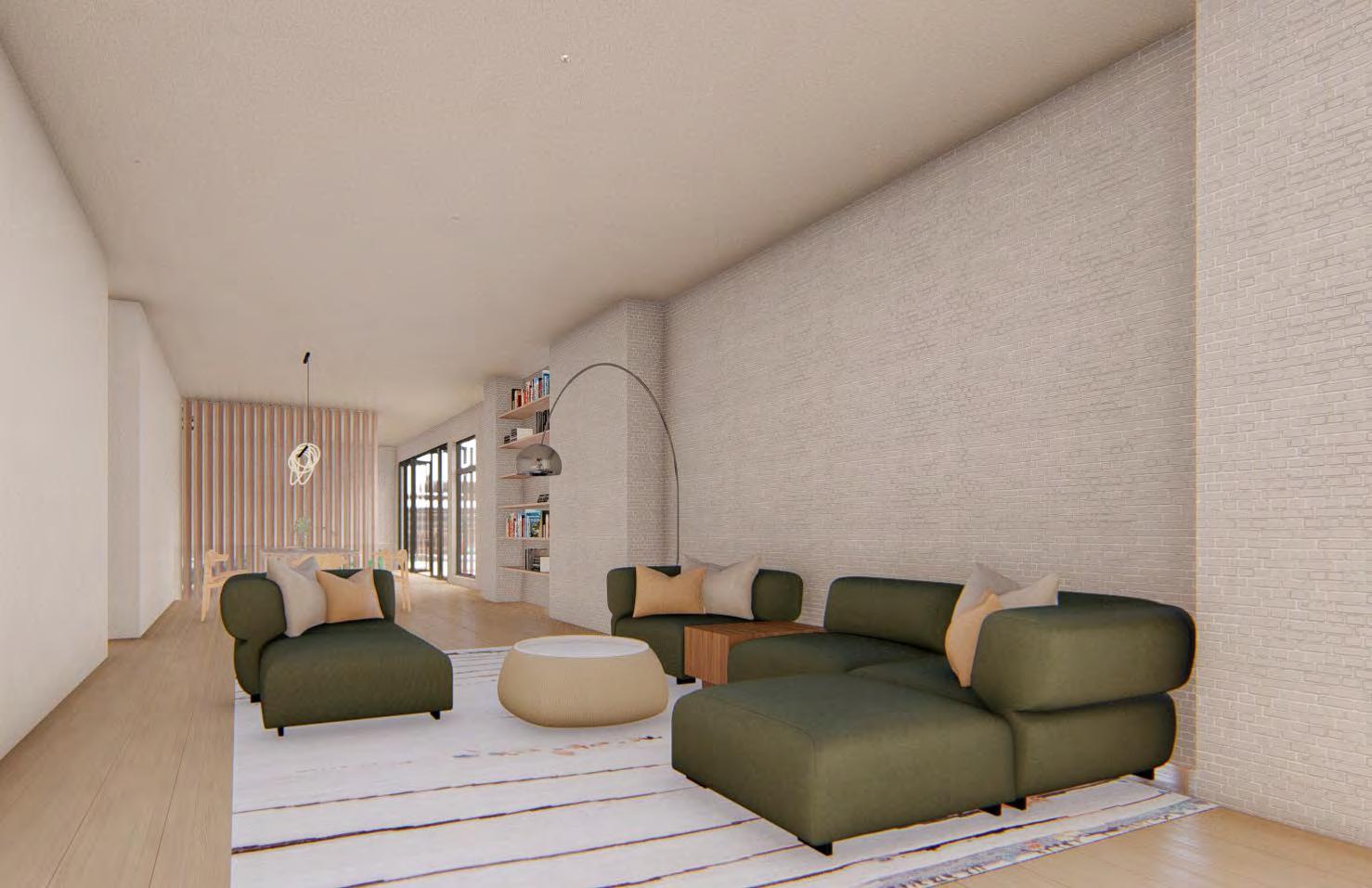
As the gathering place for two families, the living room is made to feel comfortable, warm, and welcome. Instead of sticking to muted or neutral tones, the lighter, earth-pastel-tone colors liven up the space to make it more enjoyable for both kids and adults. The furniture lacks sharp edges or pointed handles because there are children living there. Completely upholstered, the sofa chose the outdoor sofa, which brings the outdoor fabric quality and the comfort that has characterized indoor seating.
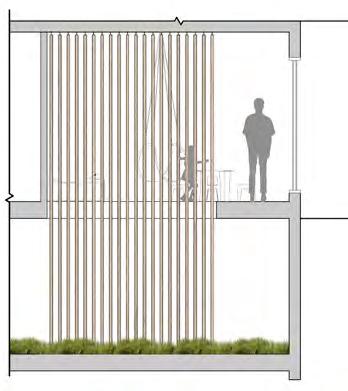
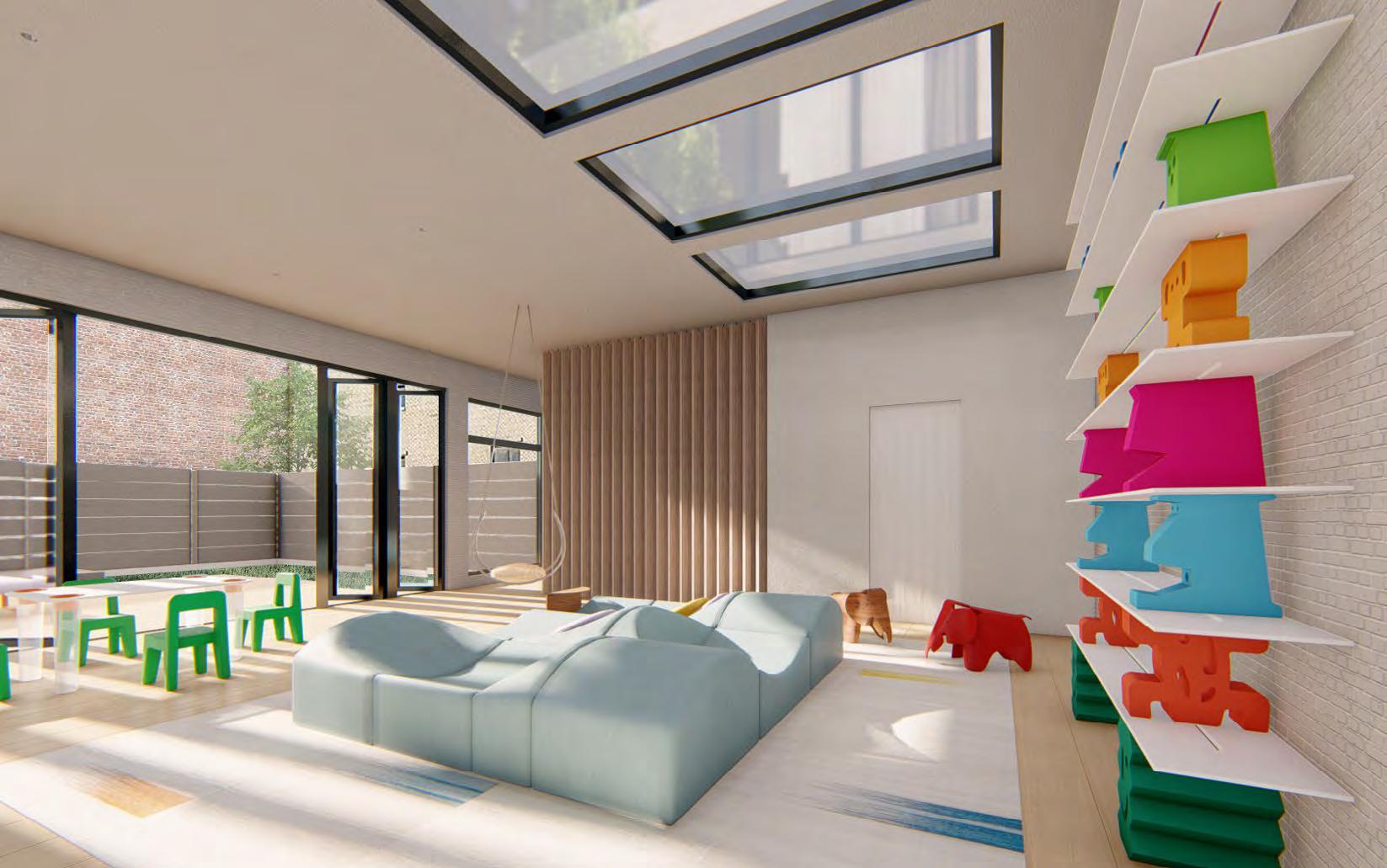
The playroom is most clearly visible when the angle is 90 degrees.
The screen wall, which connects the rst oor and the basement, is made of thin stripes and pivot joints. The underground area is illuminated naturally by the cutout oor. Children’s safety is carefully considered when designing the panel’s dimensions, as they could potentially fall through the opening. The screen displays diverse perspective views of the kids’ playroom as the rotation pivots.
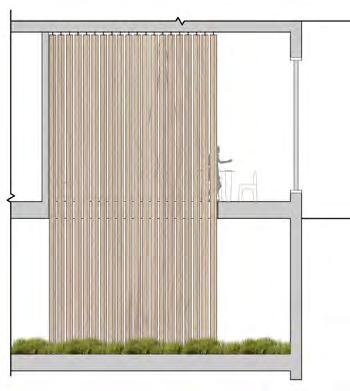
The panel might be rotated to allow the parents in the living room to see the kids while they are engaged in other activities.
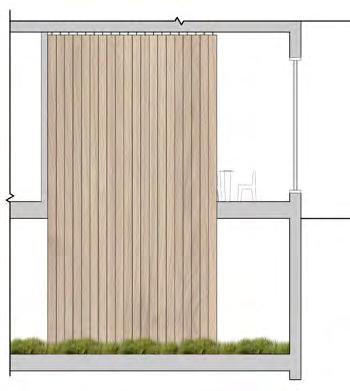
The kids’ playroom is hidden when the panel falls at the same line, hiding the cluttered toys and blocking the view from the living room when there are guests and parents have limited time for housekeeping.
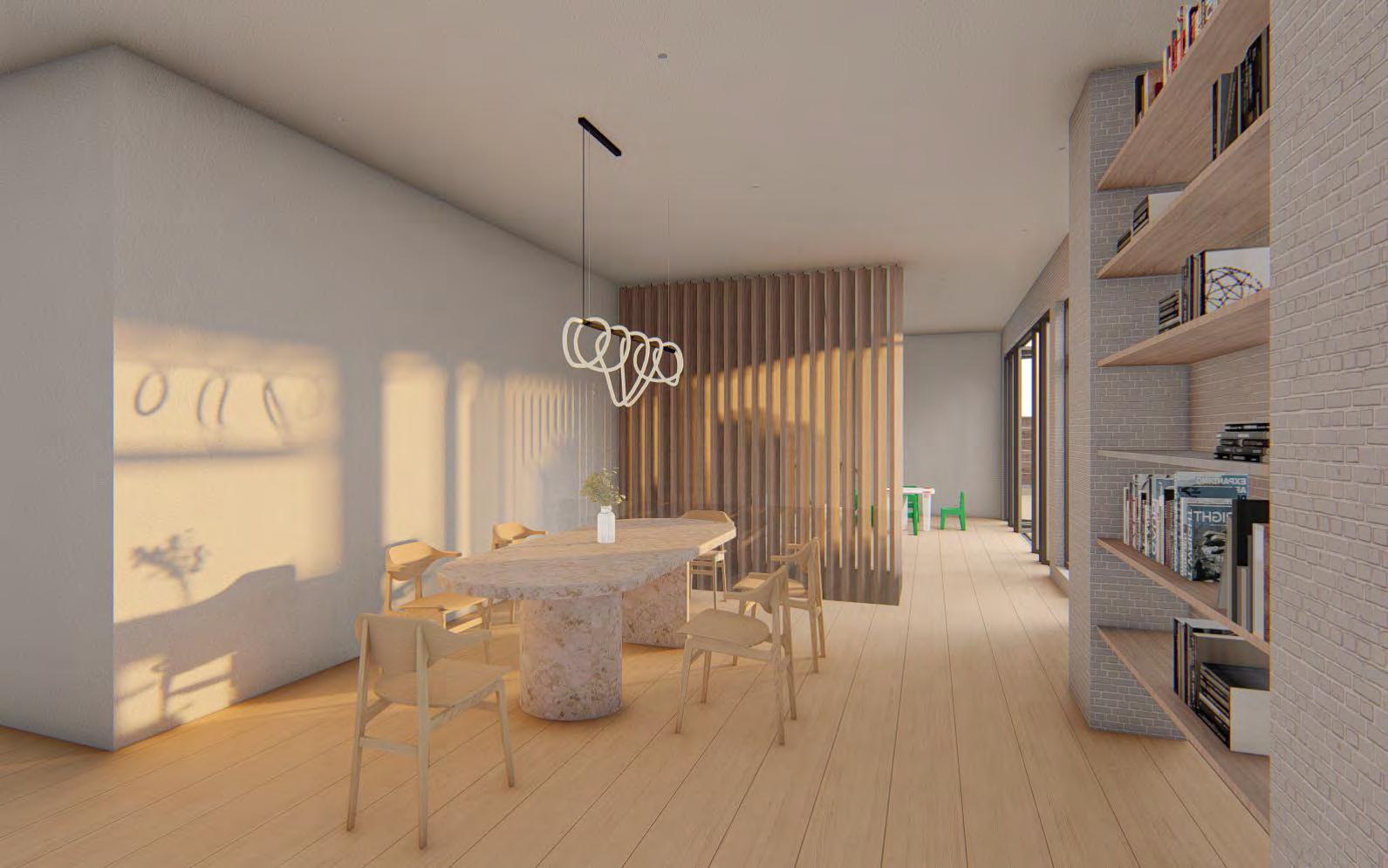
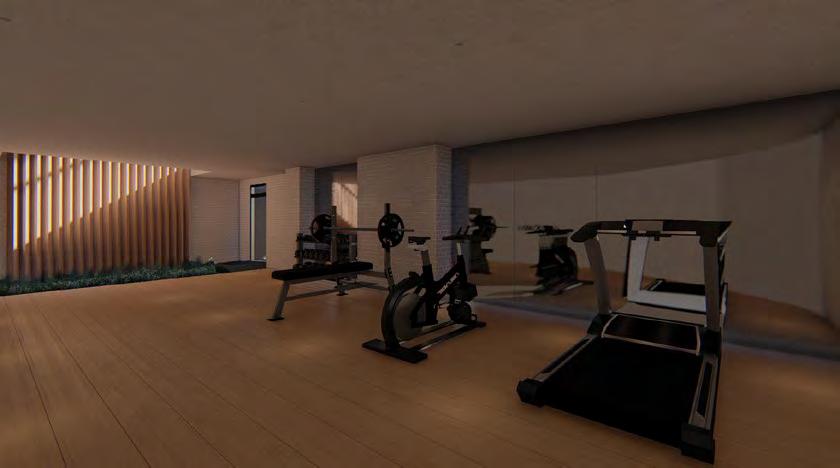
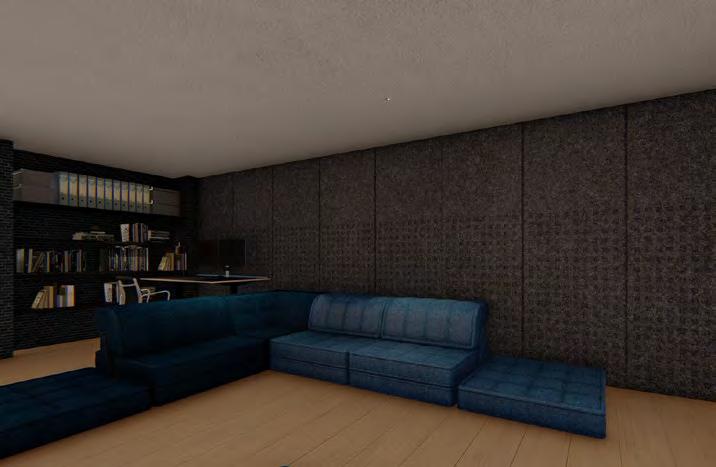
The cut-o oor, which joins the upper and lower level, maintains the continuity of the individual family spaces. The basement is given natural light thanks to the rst level’s cut-o ooring.
The home will be shared by two families, and the communal areas are designed to accommodate diverse needs. To make it easier for everyone to use the shared space, personal spaces are located all around it. Both families’ requirements for privacy can be satis ed at the same time. In the house, private and communal spaces can coexist in harmony.
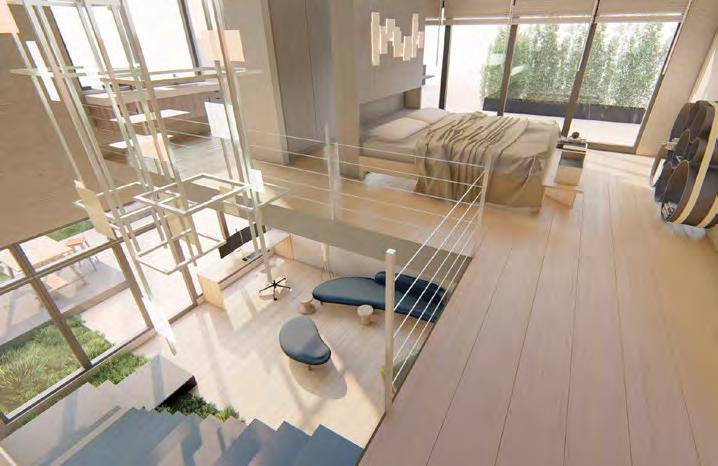
The family room designed for Trevor & Michael is simple and neutral overall décor with bold touches of color and with interesting shapes. The oor-toceiling windows make the space lled with natural light, and also open to an outdoor sculpture studio. The high ceiling and that oating staircase also give character to the space. The plants continue from the outdoor courtyard to the interior.
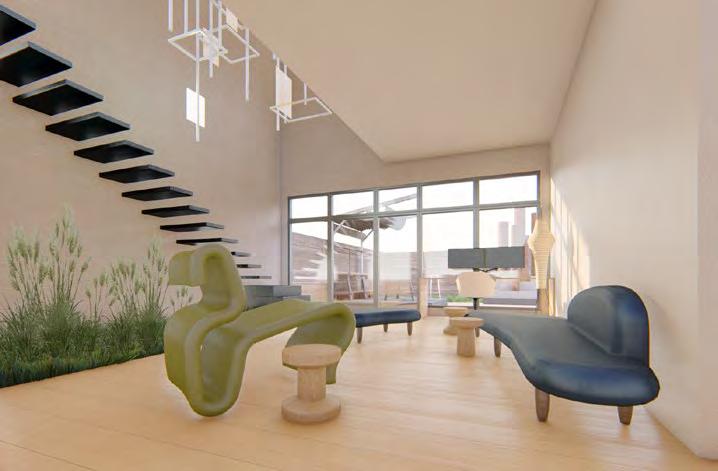
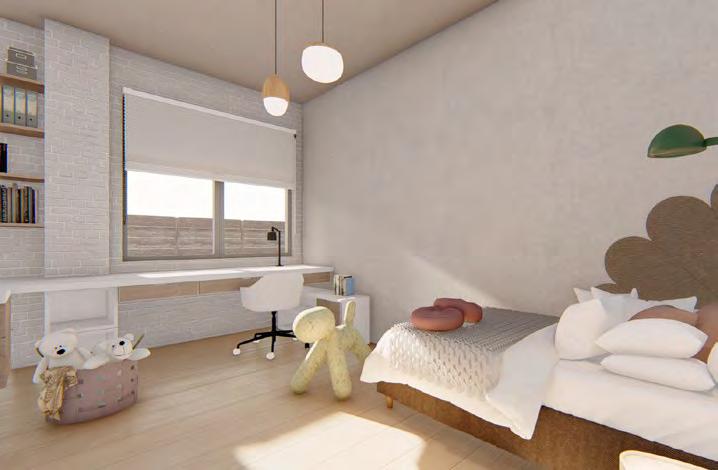
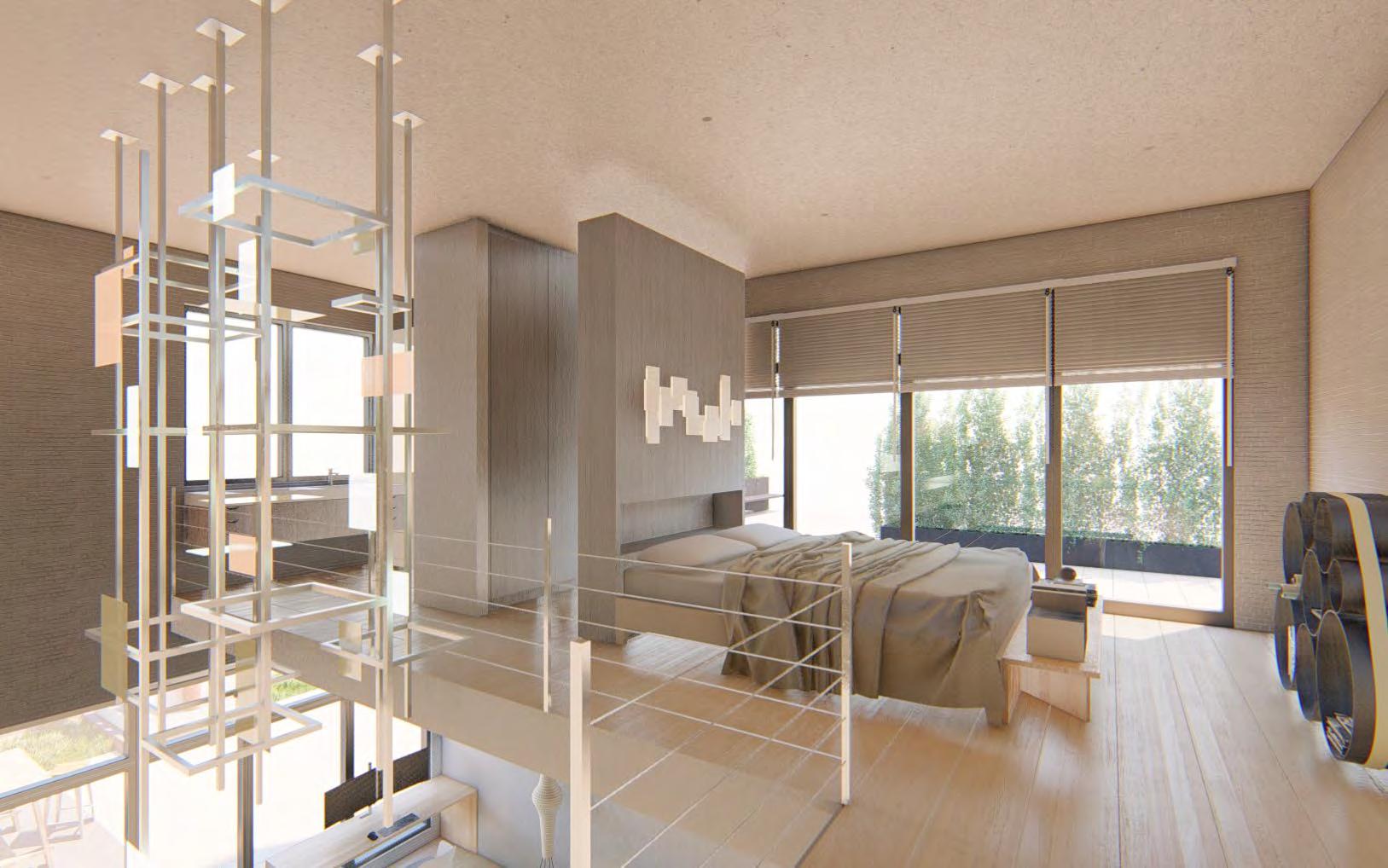
There are relatively few interior walls and an open oor plan in the Trevor and Michael space. The pendant lighting xture in the opening gives a harmonious ambiance.
Due to the small bedroom, use the back of the closet as the bed’s headboard and the open area as a nightstand in place of the nightstand on the side of the bed.
The storage unit in the space’s wheel shape adds playful aspects and breaks up the rigid linear
setting. The organic shapes of the furniture on the rst oor are reminiscent of the curvilinear shape.
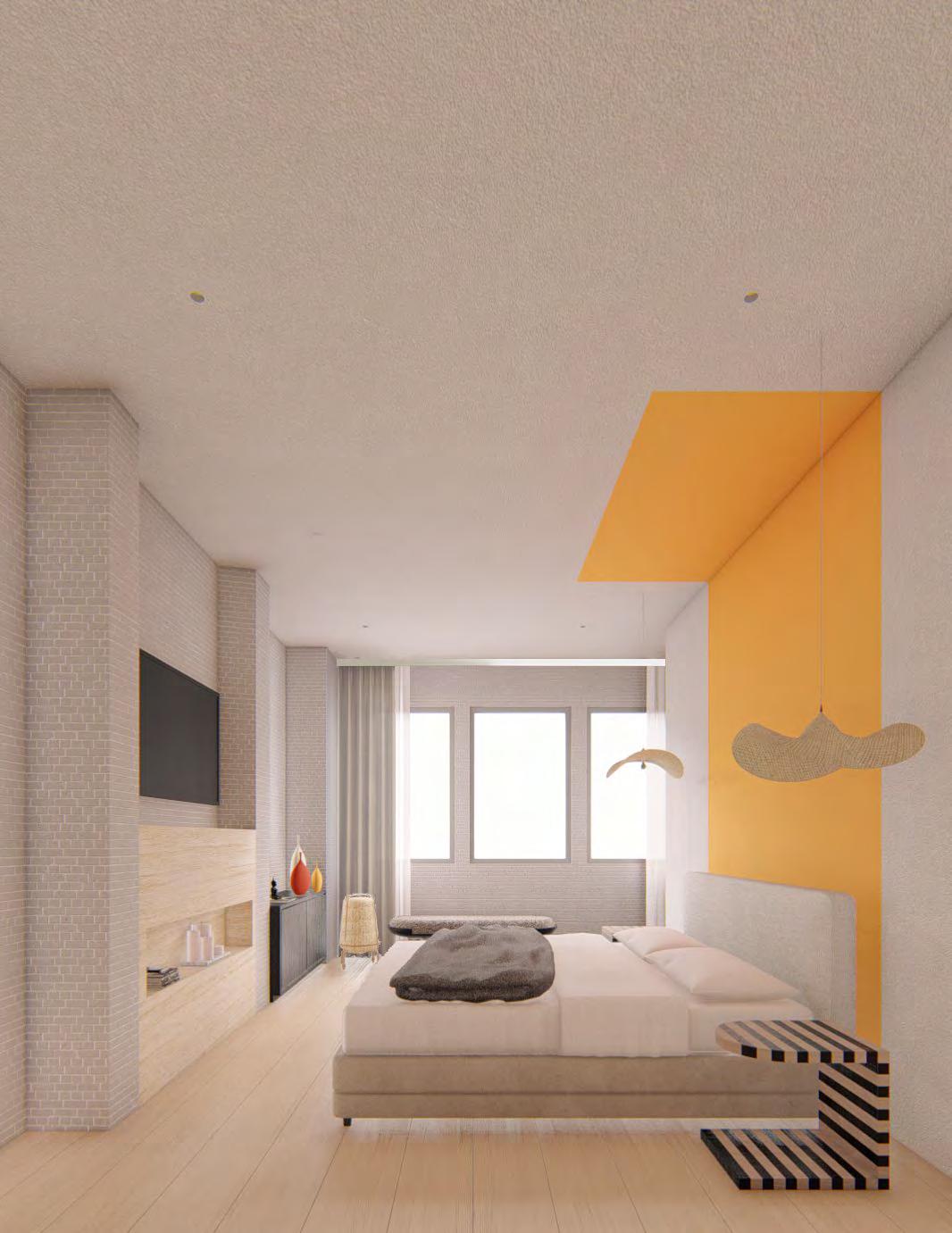
The accent wall’s orange color de nes a comfortable bed space. The room feels bigger and has more white space when the drapes are drawn all the way up to the ceiling. This rusty orange produces a warm and simple space that is soothing to the eyes when combined with delicate and sharp whites. Consider using a variety of lines and materials while designing. The stone credenza, the nightstands with the stripe pattern, and the hat-shaped lamps draw the eye. These merged materials brighten the area and give it a more vibrant, artistic feel.
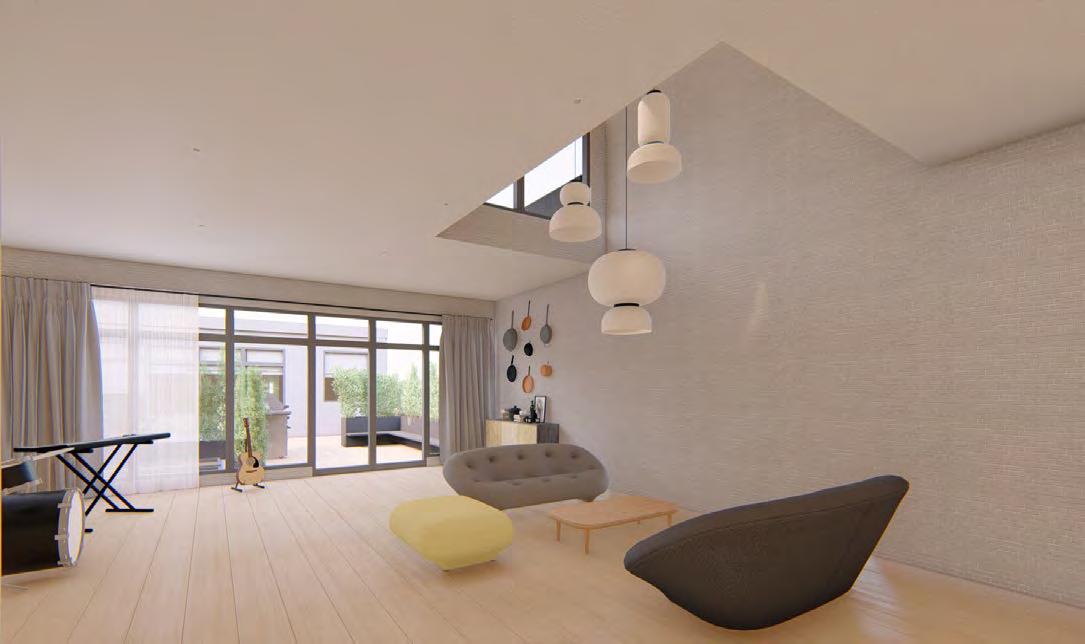
In the family area, personal items belonging to Mavis and Robert are on display. These items convey a lot about their characters. The wall-mounted cookware is included in the design to create a single arrangement that makes a character statement. The upper level is connected by the cut-o ooring, so the parents could see the youngsters without much di culty.
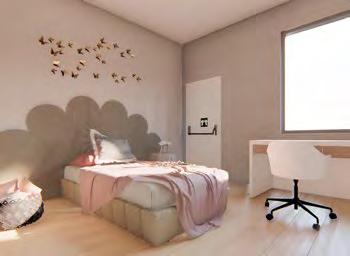
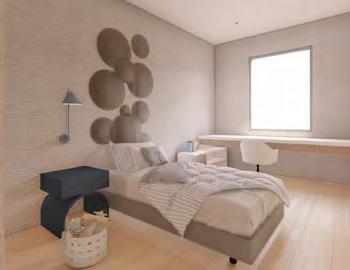
and Jaden have their own room. They might feel comfortable in their own space. At the same time, it shows respect for their privacy.
Oce for non-pro t organization
RETI center is a non-pro t organization that o ers a solution in the face of rising sea levels, extreme weather events, and climate change.
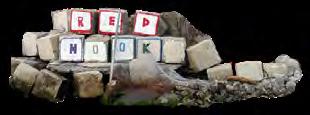
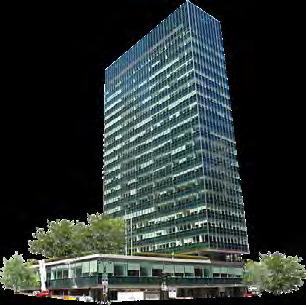
Their new o ce is located on the 8th and 9th oor in the iconic building lever house. The venue lease lasts for two years. RETI center will move back to the red hook area in Brooklyn. The site will house RETI full-time sta as well as rotating project teams working on projects.
In a post-COVID-19 environment, the workplace again shifts to
consider employees will be working in a more ‘hybrid’ manner, with time in the workplace split with time at home, or in a ‘neutral’ space that a ords innovation and collaboration.
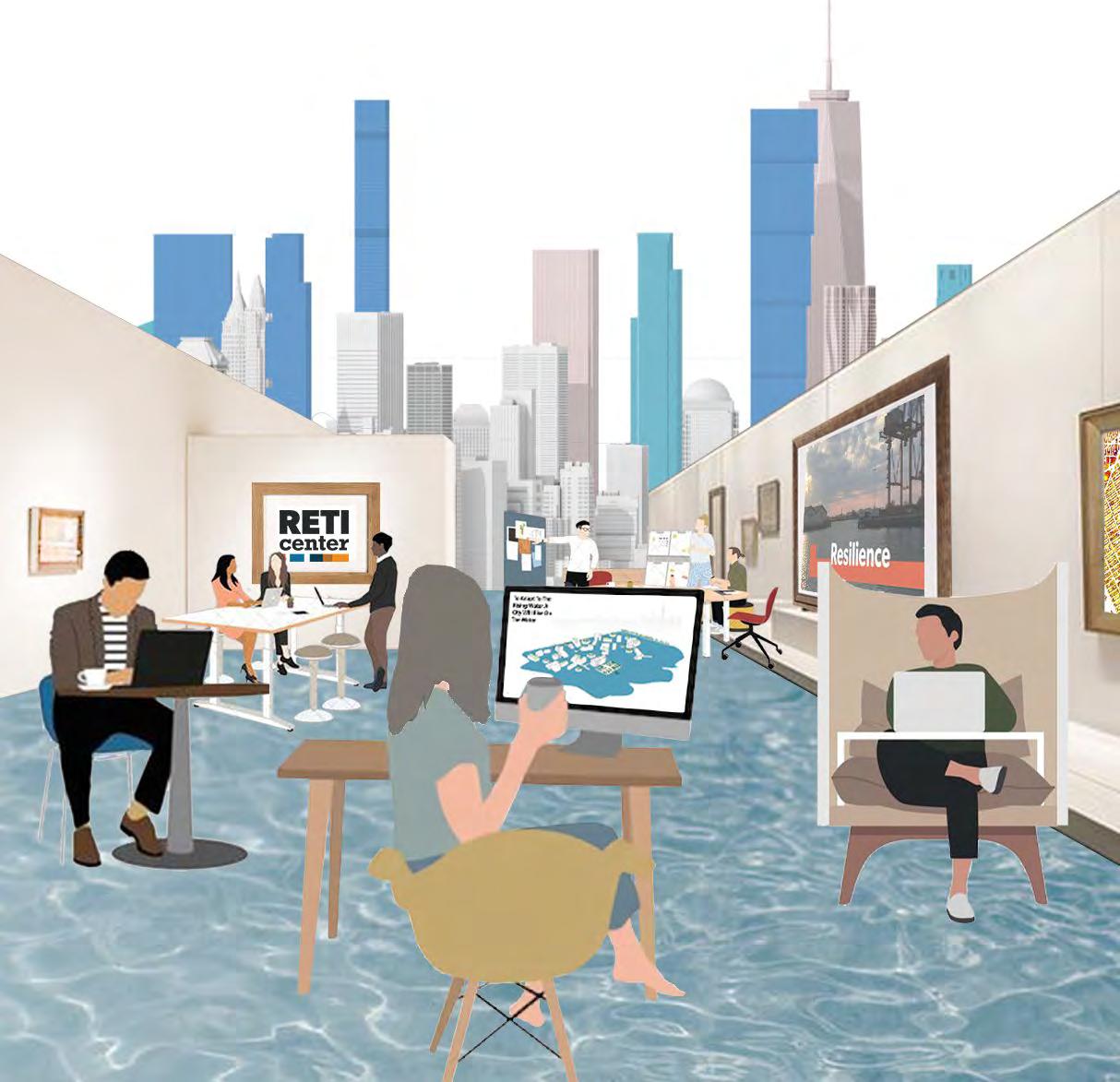
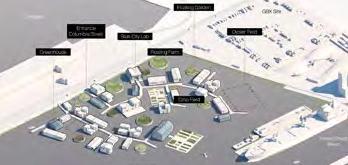
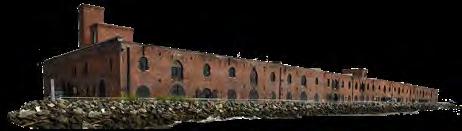
Based on a donated piece of privately-owned waterfront property in Southwest Brooklyn, RETI Center is establishing a physical space and community support structure.
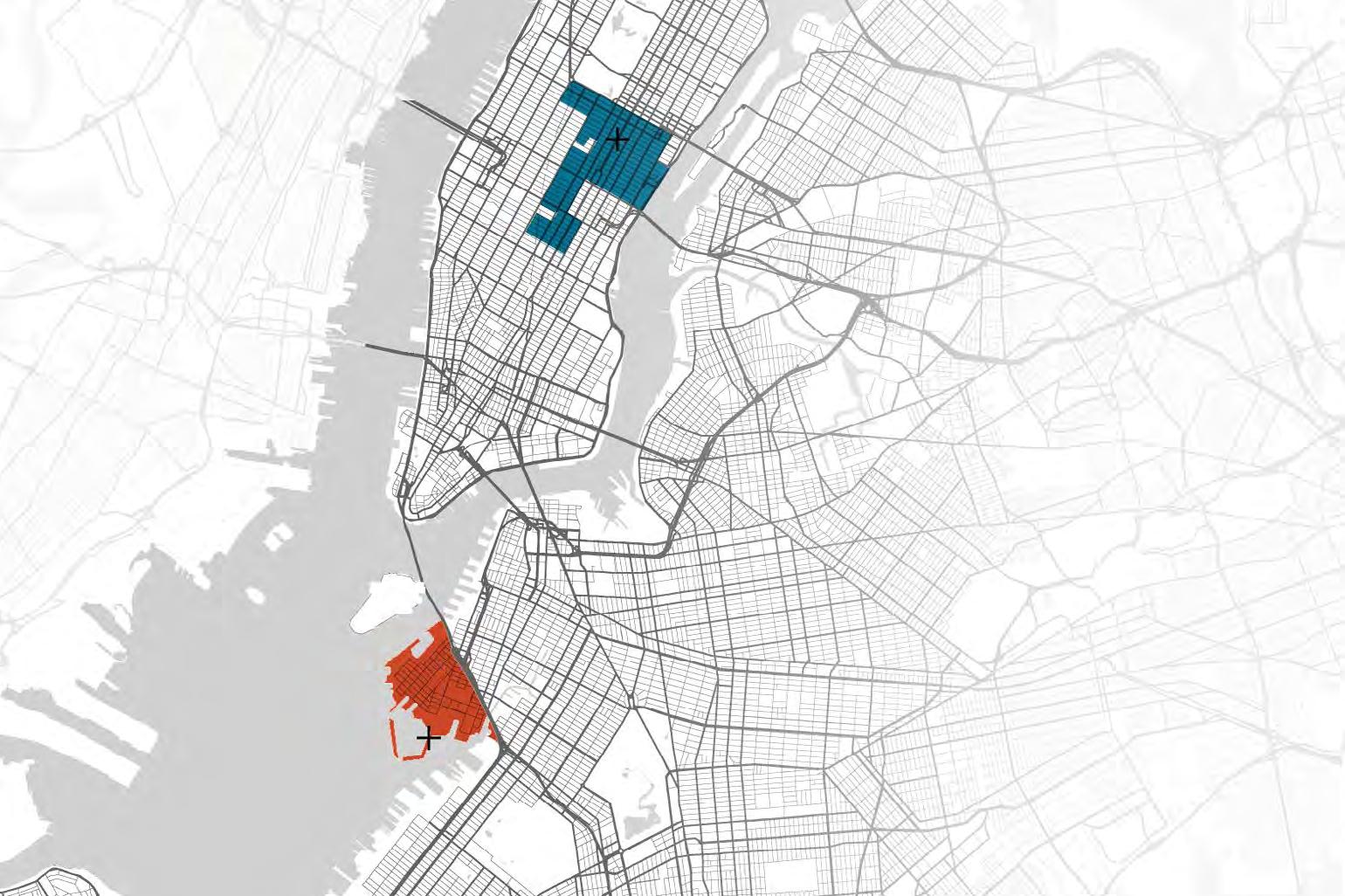
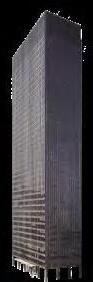
The midcentury iconic groundbreaking modern o ce tower, the Lever House on Park Avenue in Midtown Manhattan will be the new space for The RETI Center.
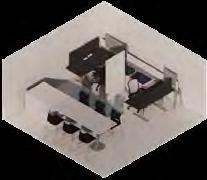
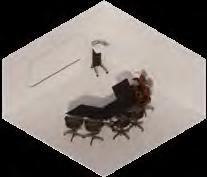
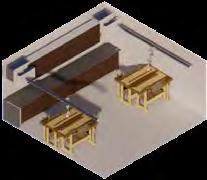
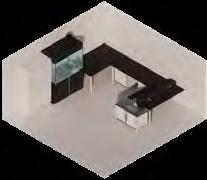
Faced by the greatest pressures of climate change, the coast can become the focal point and model for innovation in industry, infrastructure, and social justice.
RETI center is to build, train and teach the practices that will help restore our built and natural environment.
The primary focus of the o ce will be as a center for sustainable strategies, research, and design solutions.
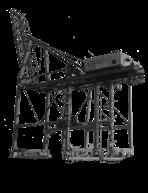
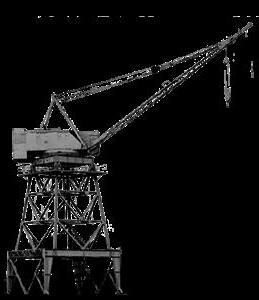

Human interaction & engagement
Freedom of movement Privacy
Focus on pro tability
Pandemic +


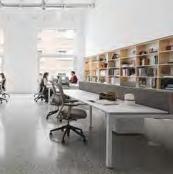
O ce layouts were inspired by the factory or production line, with rows of desks crammed tightly together.
The design style placed far more importance on meeting the needs of the workforce with a more uid design and layout.
This model provided sta the choice and exibility to work in a position suitable for the task. And also, de ned their individual space, which they had the autonomy to personalize.
The cubicle became seen as not only an escape from surveillance, but also as a symbol of equality.
The workplace was on a trajectory toward diversifying experience to match the dynamic nature of work.
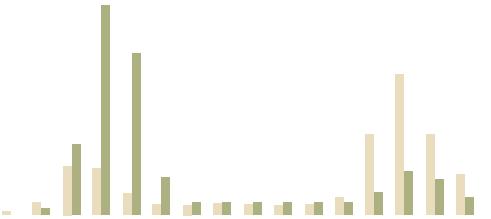
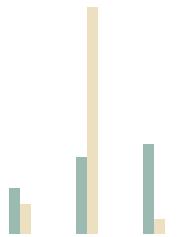
There are eight di erent “vibes” for U.S. o ce workers to map their ideal workplace experiences.
As technology developed, more exible ways of working became increasingly popular. Sta could work anywhere and were no longer wed to their desk.
Sta picked an available space to work from. PostCOVID-19, the matter of working from home or working from the o ce is not binary. O ces shift in the purpose that they serve.
Team work Individual work

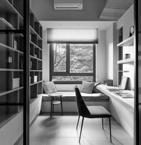

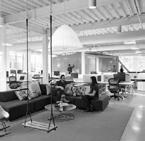



Post-COVID-19
Technical innovation
Multiple factors +
Collaboration Hub

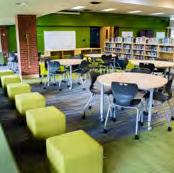
Schoolhouse


Social Anchor
The o ce plays a central role in the company culture for informal learning and socialization.
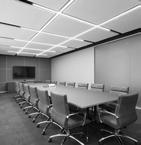
Meeting with cooperators


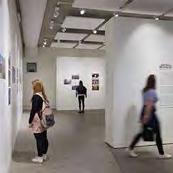
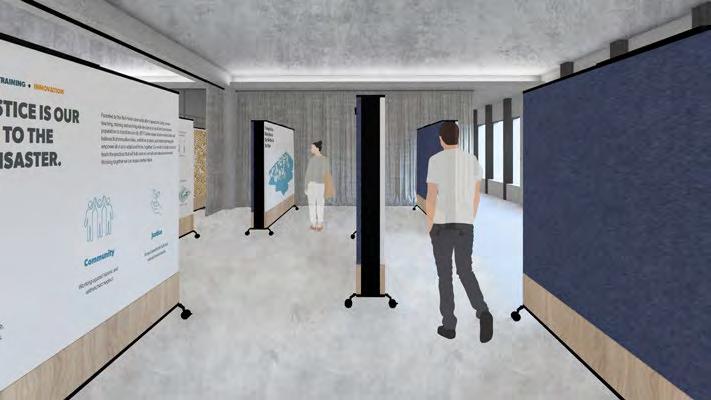
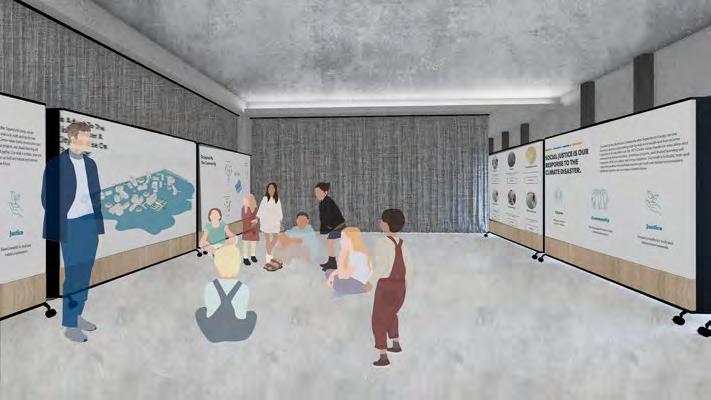
Organizing exhibitions



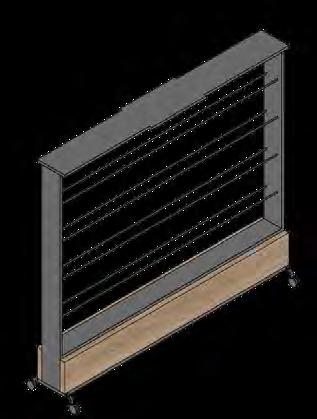
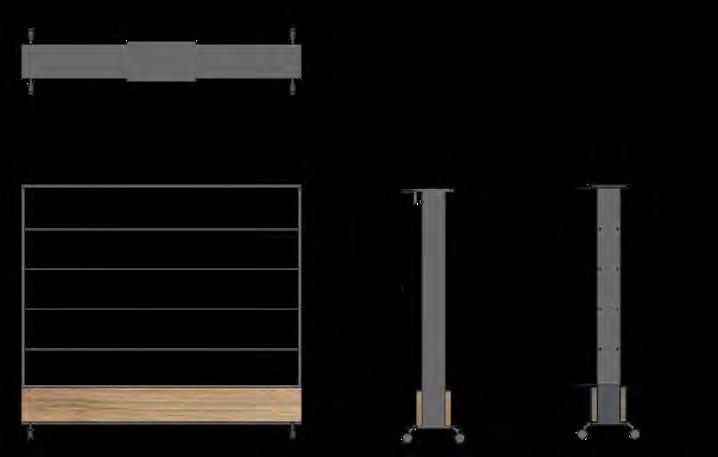
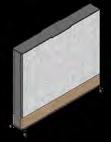
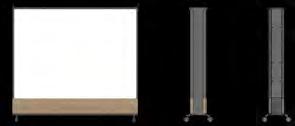
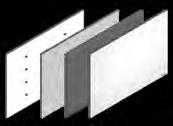
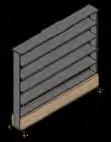
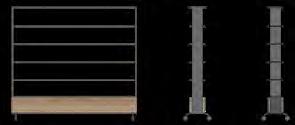

It is possible to create a screen or storage shelf using the same basic module and other accessories to accommodate various space requirements.
Moveable screens are utilized as partitions based on the RETI organization's need for display and educational space. The usage of several layouts enables exible response to event arrangements. In the basic module's support, screens can be hanged. The screen can be a whiteboard for writing and drawing or an digital screen for display. There are also screens with acoustic panels ability to solve noise issues in open layouts.
A large amount of storage space is essential in the workplace. A mobile storage shelf can be made out of the basic module's support and a xed horizontal plate. Mobile storage shelves can be used for storage, and by moving the storage shelves, employees can modify the space's con guration to suit a variety of work requirements.
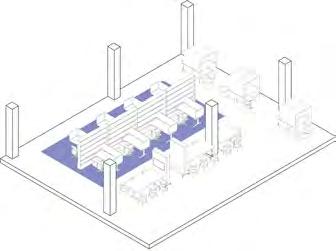
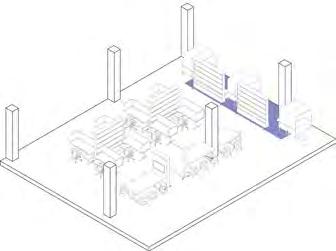
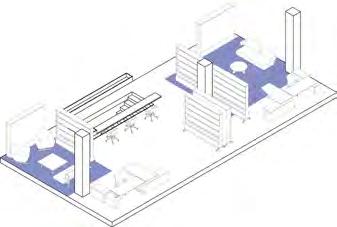
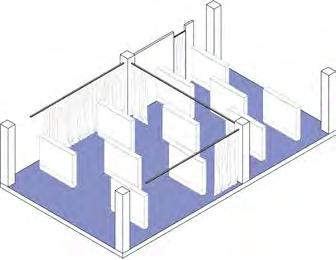
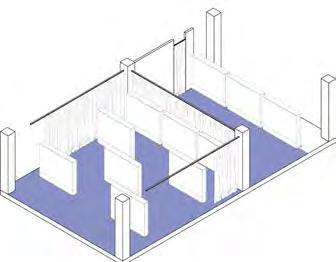
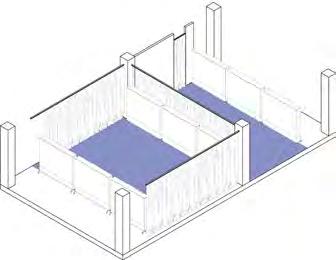
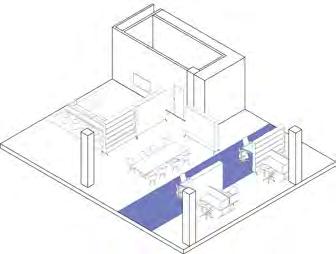
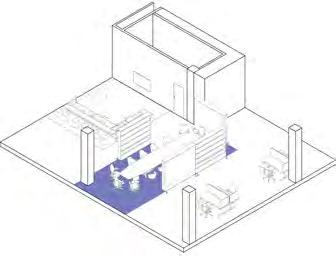
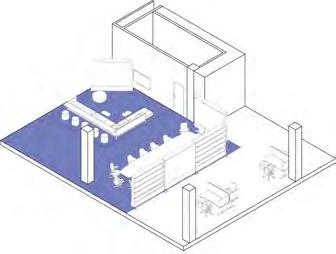
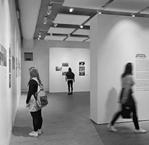
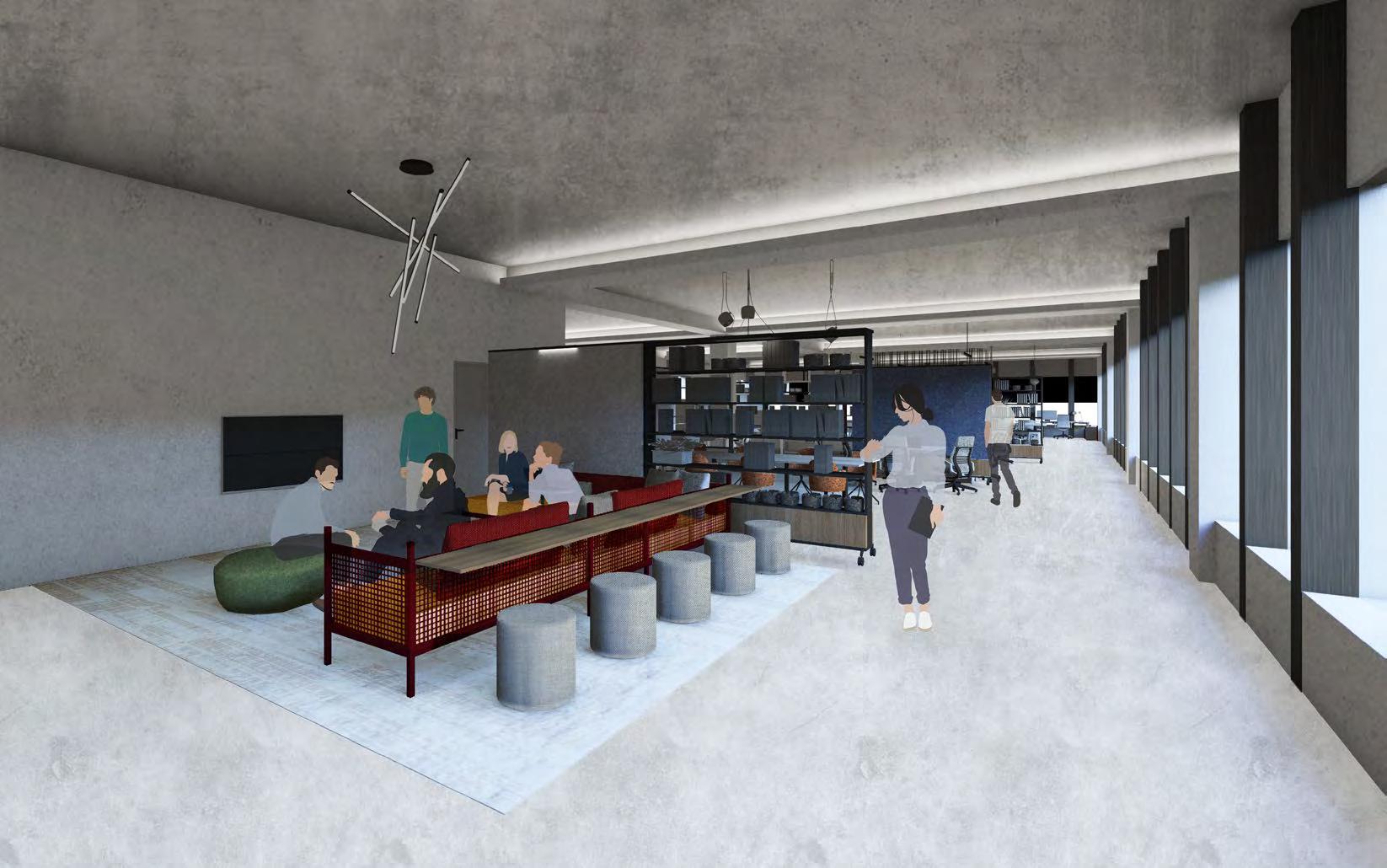
The eighth and ninth oors of the Lever House are where the RETI center's new o ces are situated. The two levels of space meet the privacy requirements of various initiatives while being well-separated from the company's numerous activities.
The organization's various activities are gathered on the eighth level, which is accessible to the public and also serves to promote the organization. The organization's internal workforce primarily uses the ninth oor.
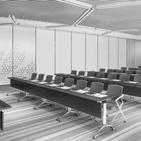
Given the limited budget and usage period, not many internal walls were constructed for the RETI center, which will be relocated back to Red Hook in two years. Moving furniture is used to create divisions within the room to maintain its adaptability.
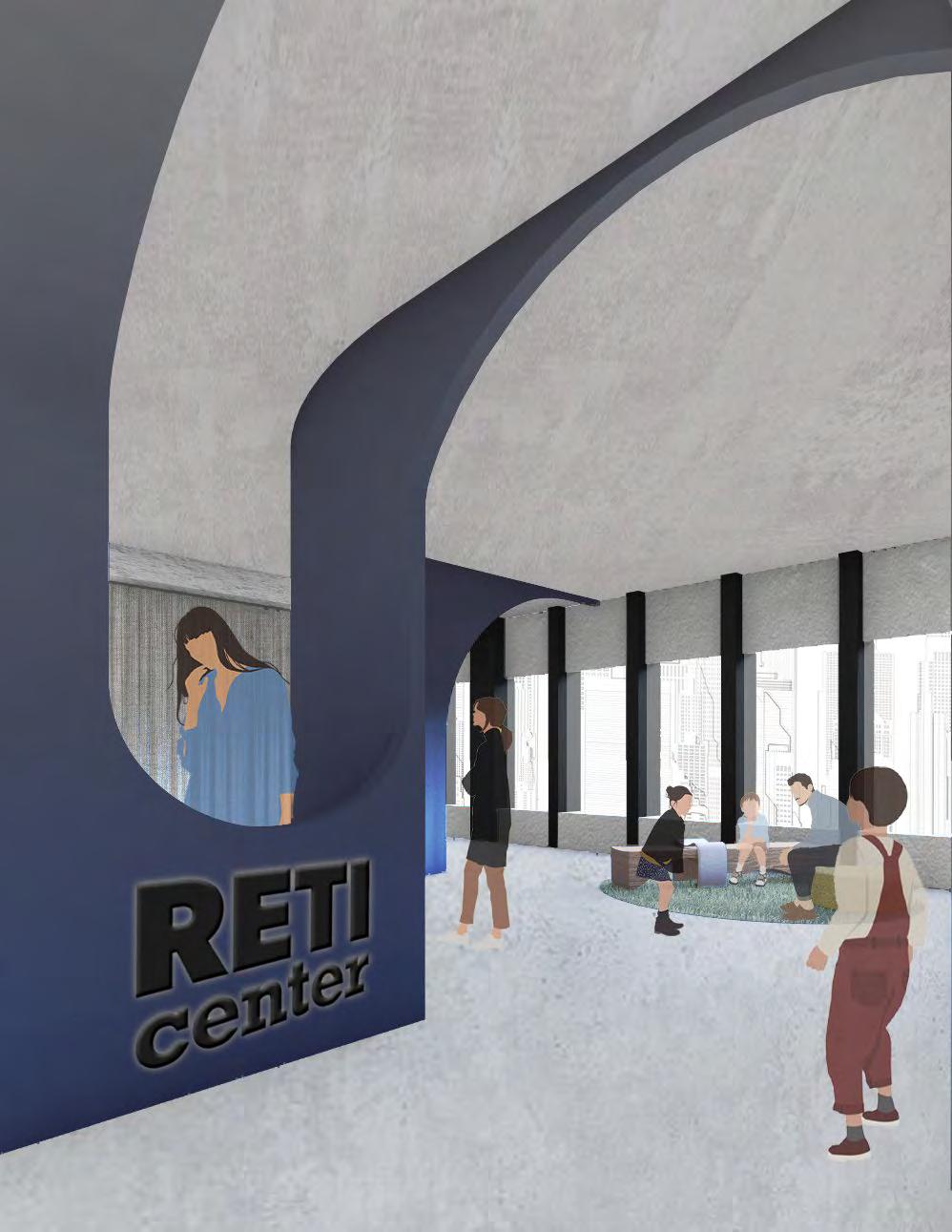
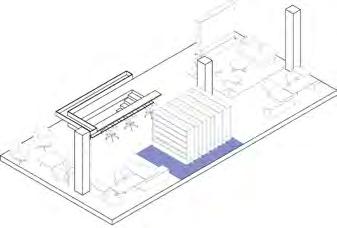
A variety of streamlined forms are used to envelop the space, which serves as the RETI center’s primary reception area, to re ect the sensation of waves. With a wooden bench resting on top, the tiny green carpet resembles an island in the ocean.
To adapt to the privacy requirements of various areas, curtains act as a backdrop for the front desk. When closed, the curtains provide a space for education and o er good acoustic and privacy. When the backspace is being utilized as an exhibition, the curtains are opened, allowing visitors to the space to instantly comprehend the work of reti center.
The sofas and stools can be used as a welcoming, informal reception space in addition to serving as an entrance space on the upper level. In this area, the same employees can relax and stretch. This area can be transformed into a conference room using mobile storage shelves. The meeting could be a part of a range of layouts, depending on the number of participants.
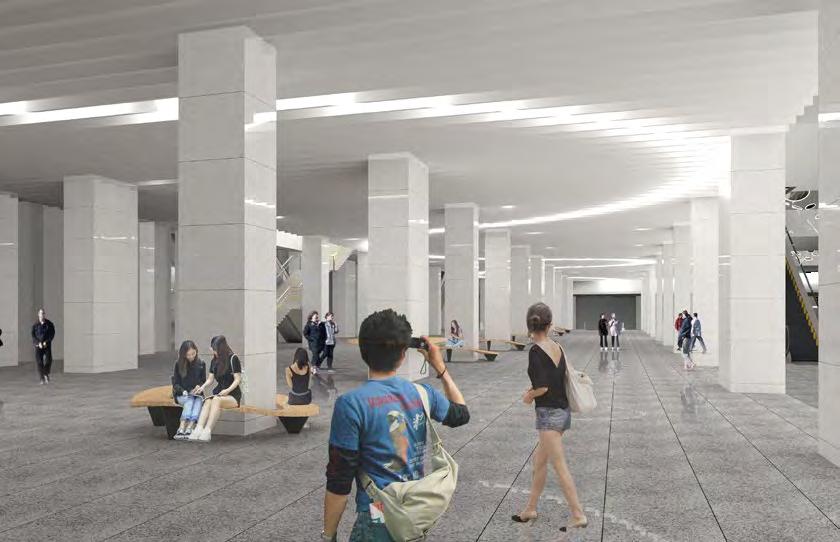
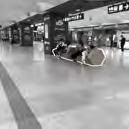
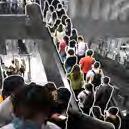
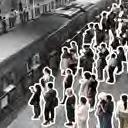
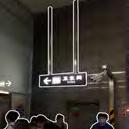
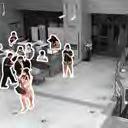
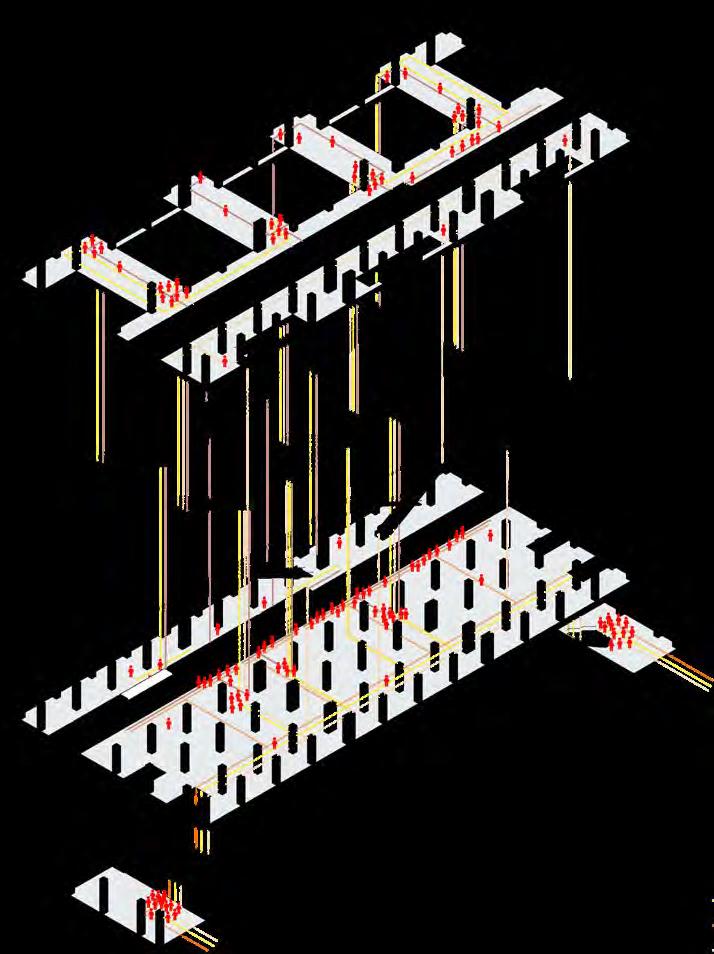
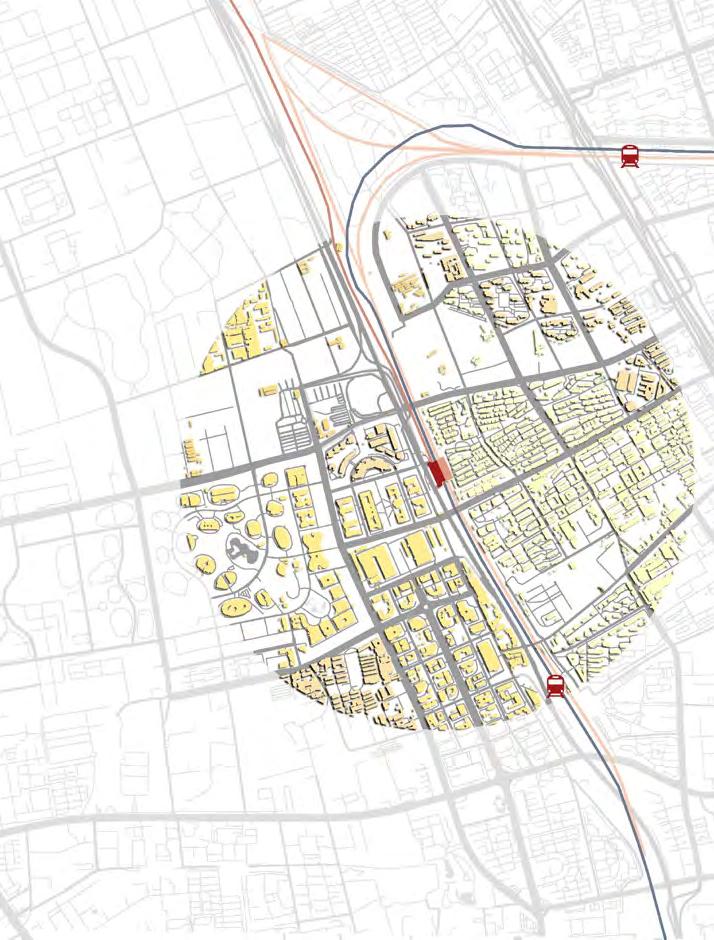
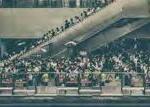
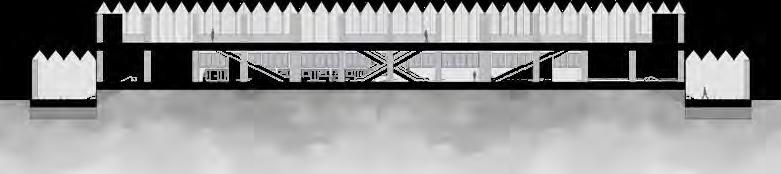
Xi’erqi metro station is the most crowded in Beijing, surrounded by new-tech companies. The chaotic space layout here is prone to commuters’ circulation con icts.
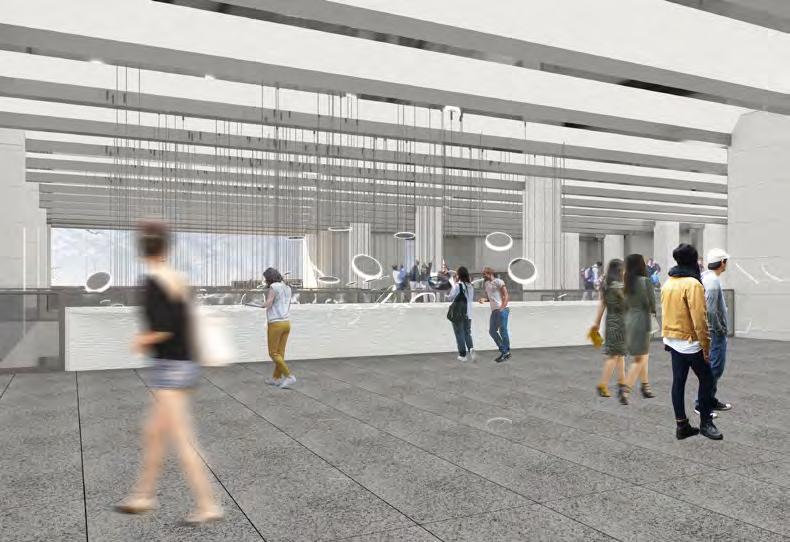
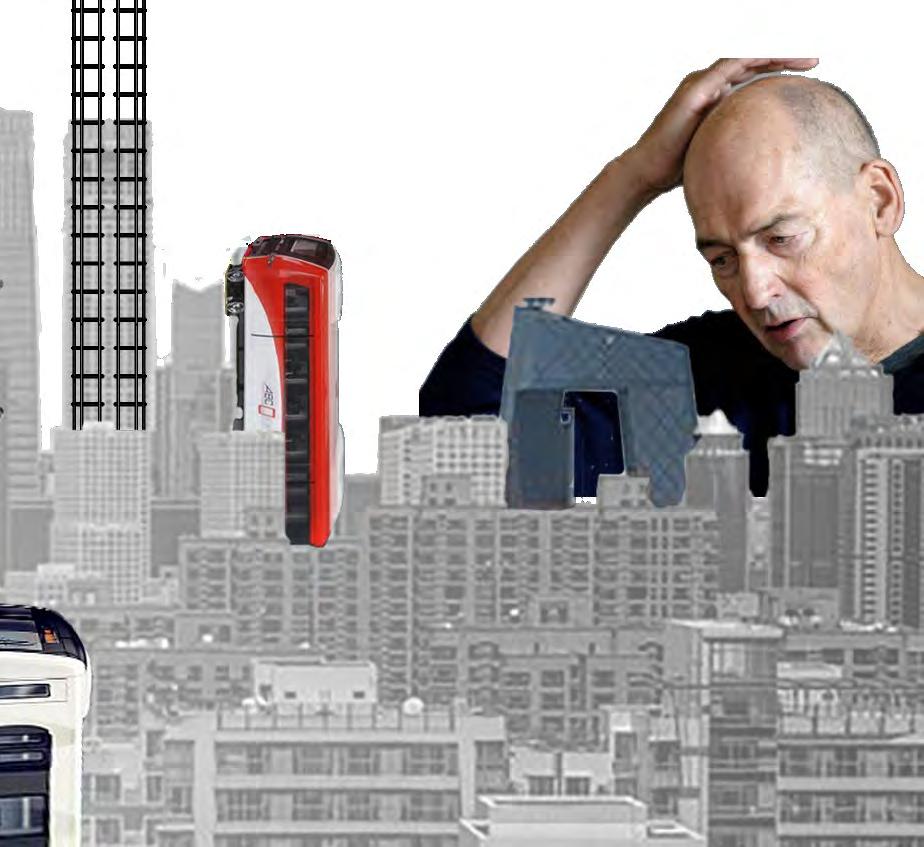
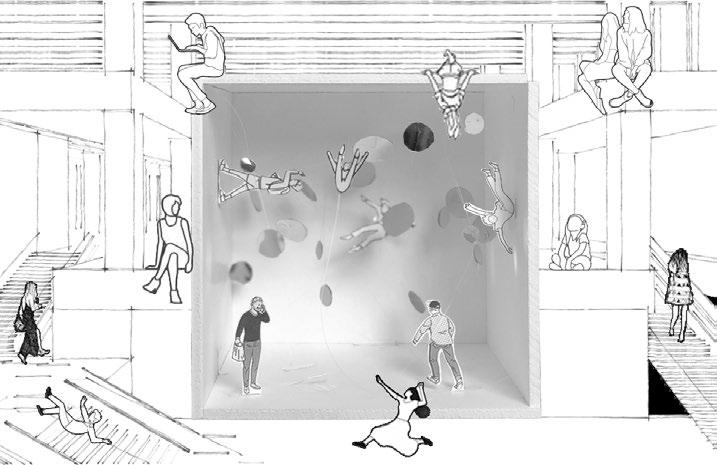
Junk Space is an interpretation of architectural space, and Xi’erqi station could be an indoor junk space. It does not give full play to its potentiality of space design and possible meaning construction.
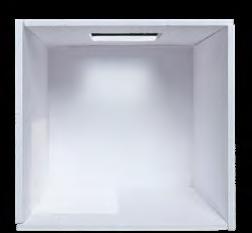
Through design change the public’s stereotype of the metro station. And the installation design draws
upon Rem Koolhaas’ theory about disorientation to present an individual’s social location. For social advancement, everyone is essential.
Line 13 to Dongzhimem
Line 13 to Xizhimen

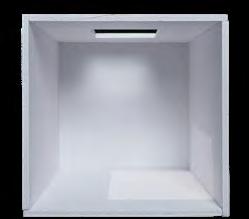
As the sun moves in the sky, the light and shadow inside the metro station will change, which can serve as time prompts for passengers.

Social perspective
Individual perspective
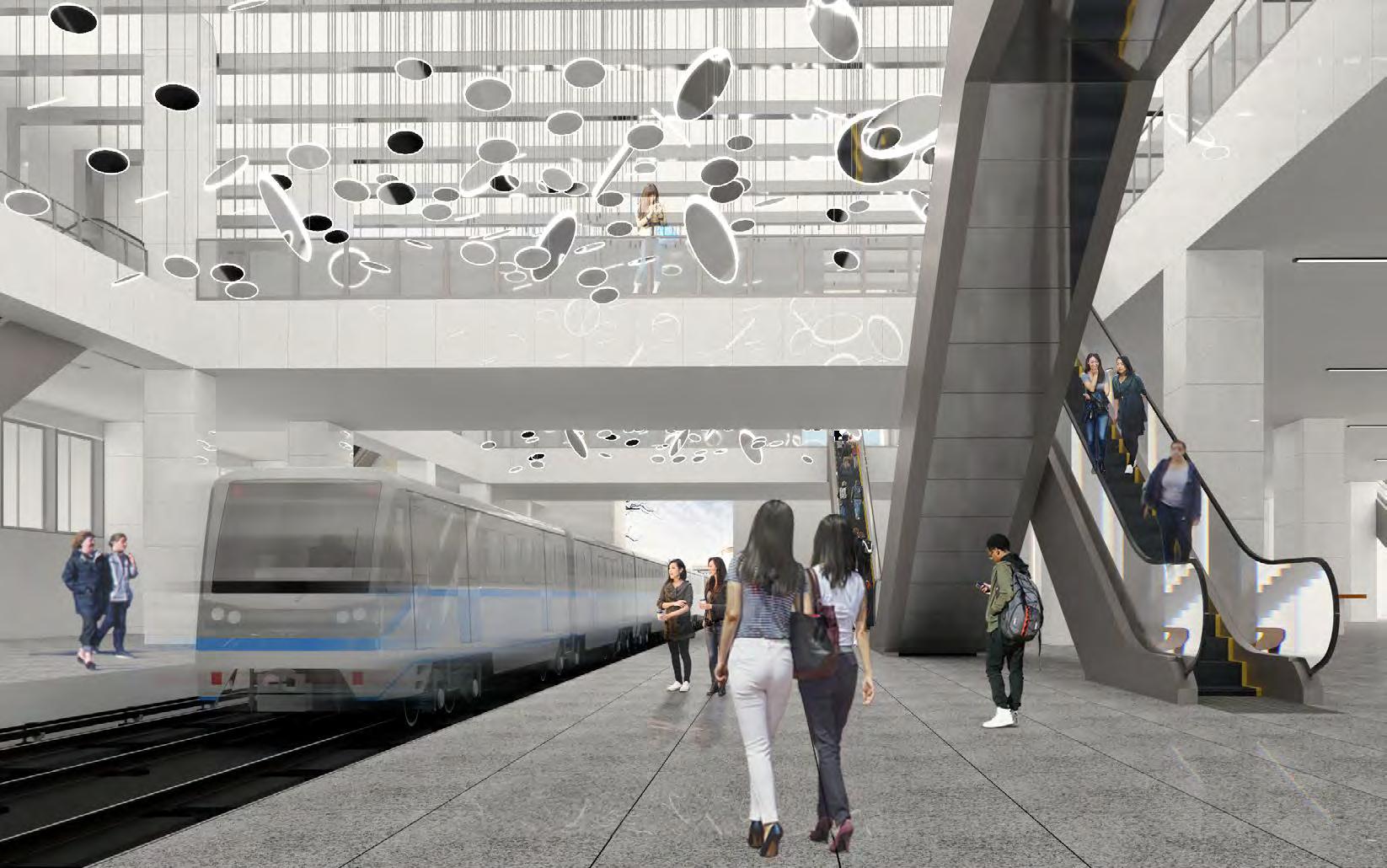
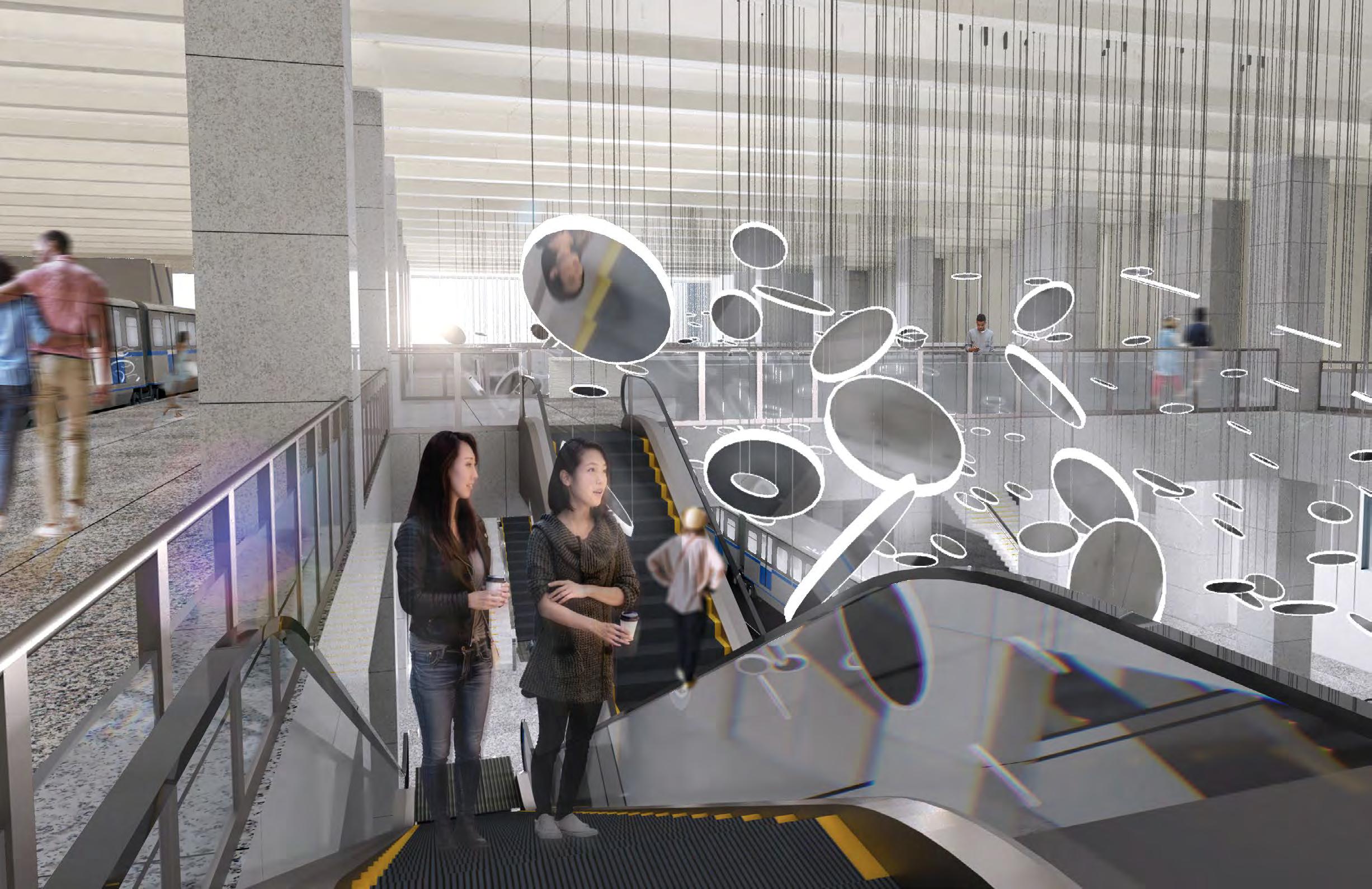
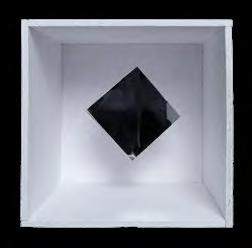
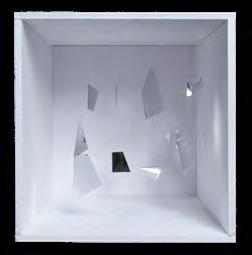
With mirror arrangements to re ect sunlight, the interior metro space will be even more enriched. Through light and shadow, people in it will see the space from various angles. By a change of light and shadow, the mirror re ection will lend more interaction between the interior metro space and the external world.
Re ection
Multiple mirrors in lieu of only one mirror can present a more intriguing visual e ect of light and shadow.
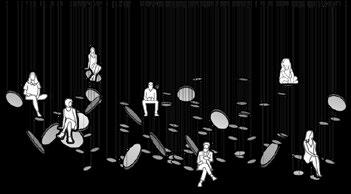
The device's outline is like a wavecurved line, formed by connected dots that represent individuals. It is through individuals' strength that the streamline of a whole shape is made.
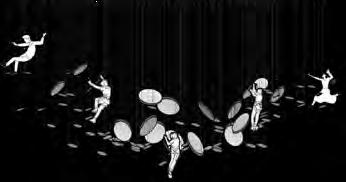
The device looks now high and now low from the side, meaning that everyone is unique with their thoughts and social location.
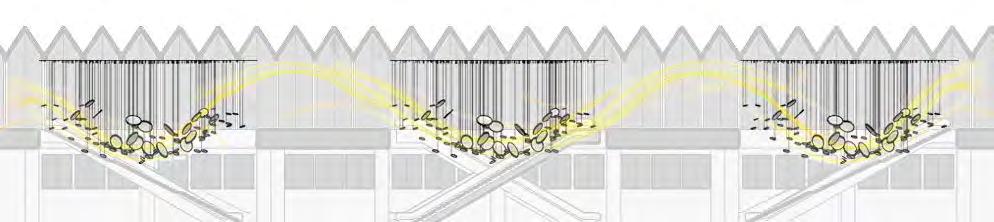
Redesigned Passenger Circulation in the Station
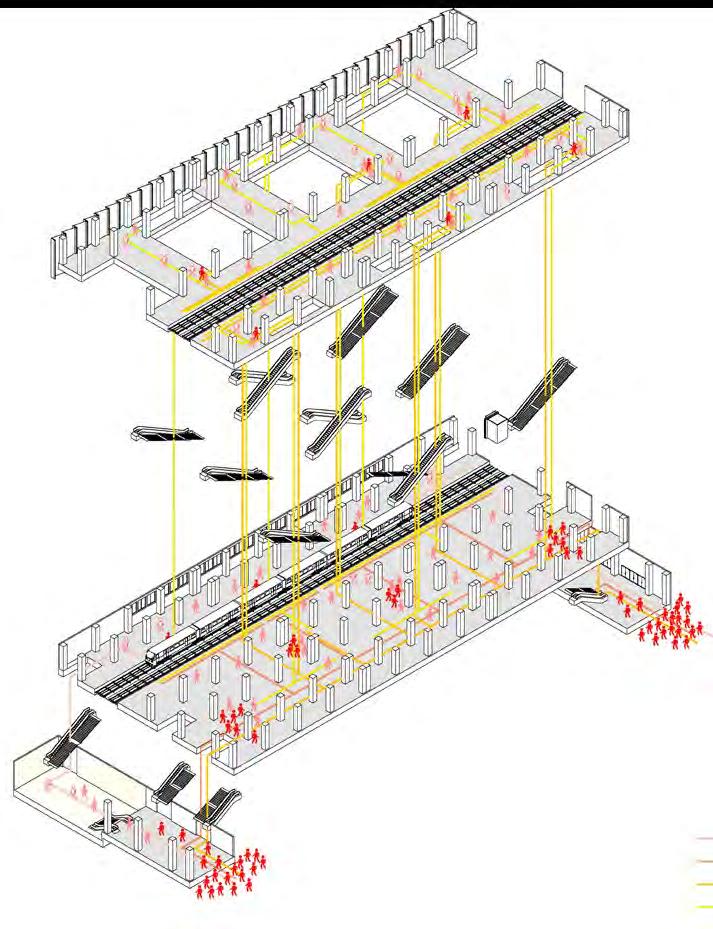
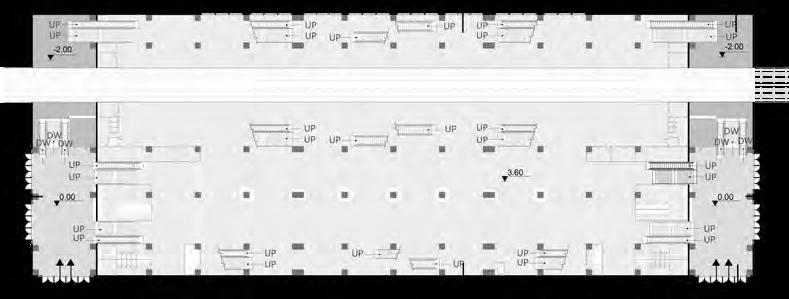
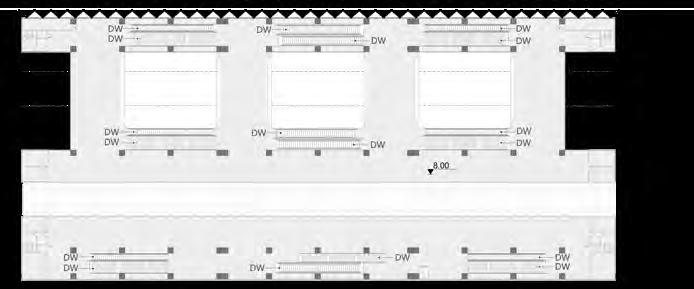
Line 13 to Dongzhimen
Line 13 to Xizhimen
Line 3 To changping Transfer
Rum qui dolor aut maio bea ditibusBeatecae volent, cum facero volupta tiosant hicabor erspeliquate sitat et il ipsam eatum est lab inimolor aliciusdam hictate quatur?Aped quat ulparch ictota excessi dem quassento escil inullis escia sandebis siti delluptasit qui omni quia plis doluptatiam et

Rum qui dolor aut maio bea ditibusBeatecae volent, cum facero volupta tiosant hicabor erspeliquate sitat et il ipsam eatum est lab inimolor aliciusdam hictate quatur?Aped quat ulparch ictota excessi dem quassento escil inullis escia sandebis siti delluptasit qui omni quia plis doluptatiam etUga. Rumqui utet qui ute dolo tem cum que plat et res quos ipsam dolupta veliquo odis reped que nihillaborem simusam quatam veratia volut et dolupta veribus maione conseque dolorem aut velignimpos ero