Social Economy Insider

SOCIAL INCLUSION & DIVERSITY: AGENTS OF CHANGE IN THE SOCIAL ECONOMY
SOCIAL INCLUSION & DIVERSITY: AGENTS OF CHANGE IN THE SOCIAL ECONOMY
Welcome to our magazine - your essential guide for staying abreast of the ongoing trends in the social economy sector.
In this edition, we explore initiatives from the real agents of the Social Economy, people and organisations that implement projects boosting diversity and inclusion into the ecosystem. Here you can find tools, articles, resources, research and much more related to the latest SE trends.
We are thrilled to present the sixth edition of Social Economy Insider – dive in to discover insights into social economy trends, policy updates, research, and much more.
EU Social Economy Action Plan: Mid-Term Review
Dorotea Daniele, Diesis Network
INSPIRE Project: Smart Village Labs From Principle to Action Disability Inclusion SEQ Elevate: Co-designing Skills with NEET Youth
Christina Galani, SYNTHESIS Center
C Bettker Vasconcelos, A Sanchez-Zeziaga, K Henning, Y van der Meer
Run Your Own Gender Parity & Equality Workshops Food, Resistance & Community A Conversation with Irina Aguiari Learning Beyond Limits Kiron Campus Mapping Diversity: Explore Your City
Slovenian Government Measures to Strengthen the Social Economy
Karolina Babič and Marina Letonja
Joe Kingdom Tells Us Why He Loves His Job Joe Kingdom, Administrative Assistant at Enable / EASPD, Employment
On March 30, 2026 the Commission has published the Mid Term report of its Action Plan for the Social Economy, reviewing its progress since 2021 and setting out further actions to strengthen the social economy across Europe.
The implementation of the Action Plan is well underway. Most of the 63 actions set out in the 2021 action plan have either been completed or are ongoing.
At national level, in the last five years, 21 Member States have adopted or are preparing national or regional social economy strategies and 12 have reformed their social economy laws.
Over €1.62 billion in EU funding and €1.2 billion in InvestEU guarantees have been allocated to support the EU social economy in 2021-2027.
It is an important message in a world in rapid change: the social economy is not a side player it’s central to Europe’s future.
It continues to prove its value as:
A driver of prosperity and competitiveness
A pillar of resilience
A key contributor to preparedness and strategic autonomy.
Looking ahead, the report proposes key priorities to make the social economy more competitive, robust and widely recognised. They focus on five pillars: Strengthening multilevel governance and implementation on the ground, making rules and frameworks work, reinforcing the social investment ecosystem, scaling up skills training and entrepreneurship, building the social economy evidence base.
Investing in skills development, business support and incubation for social economy organisations, while promoting social and inclusive entrepreneurship and its potential to empower underserved communities remain at the core of the EU strategy and should be widely promoted by EU member states national and regional actions.
Social economy actors recognise that major progresses have been done in the last years, such as the launch of the Youth Entrepreneurship Policy Academy and the Large Scale Partnership for the Proximity and Social Economy Ecosystem in the Pact for Skills.
They also underline that it is crucial to continue to strengthen skills, capacity and business support for social economy through recognised competence frameworks, social and inclusive incubation and tailored advisory and innovation services Twin transition skills remain a key priority for competitiveness and social economy entities already active in circular economy and care sectors can provide sector-specific upskilling.
Check here the Mid-term review of the action plan for the social economy SEAP midterm review
See the progress on the implementation of the SEAP actions with this developed tracker
SOCIAL ECONOMY INSIDER
From housing to new technologies, from employment to rural areas inclusion, these practices show what meaningful inclusion looks like in action, across sectors and borders.
Source: Canva

The INSPIRE project offers unique insights into social inclusion dynamics across seven rural regions in Europe: Greece (Konitsa and Kythera), Ireland (Moate), Slovakia (Košice), Poland (Parczew), France (Auxerre), and Romania (four communes in Suceava and Maramureș counties).
Research teams spent approximately two weeks in each location between late March and early April 2025, engaging directly with local environments and documenting physical conditions, community interactions, public services, and institutional practices.
Beyond the coping mechanisms specific to each pilot community, the research identified common responses shared across rural areas: relying on informal networks, volunteer engagement, religious institutions, and spatial separation.
Common rural support mechanisms identified include: Informal networks as a primary community support system, Volunteer engagement filling gaps left by formal services, Religious institutions providing social and material support, Spatial separation emerging as a response to exclusion dynamics
INSPIRE promotes wellbeing and inclusion for people living in European rural areas through research, policy solutions and pilot interventions. Read the full "Typology on social wellbeing, resilience and exclusion of European rural areas" to learn more
Spatial Allocation of the Pilot Areas, INSPIRE project D1.2.
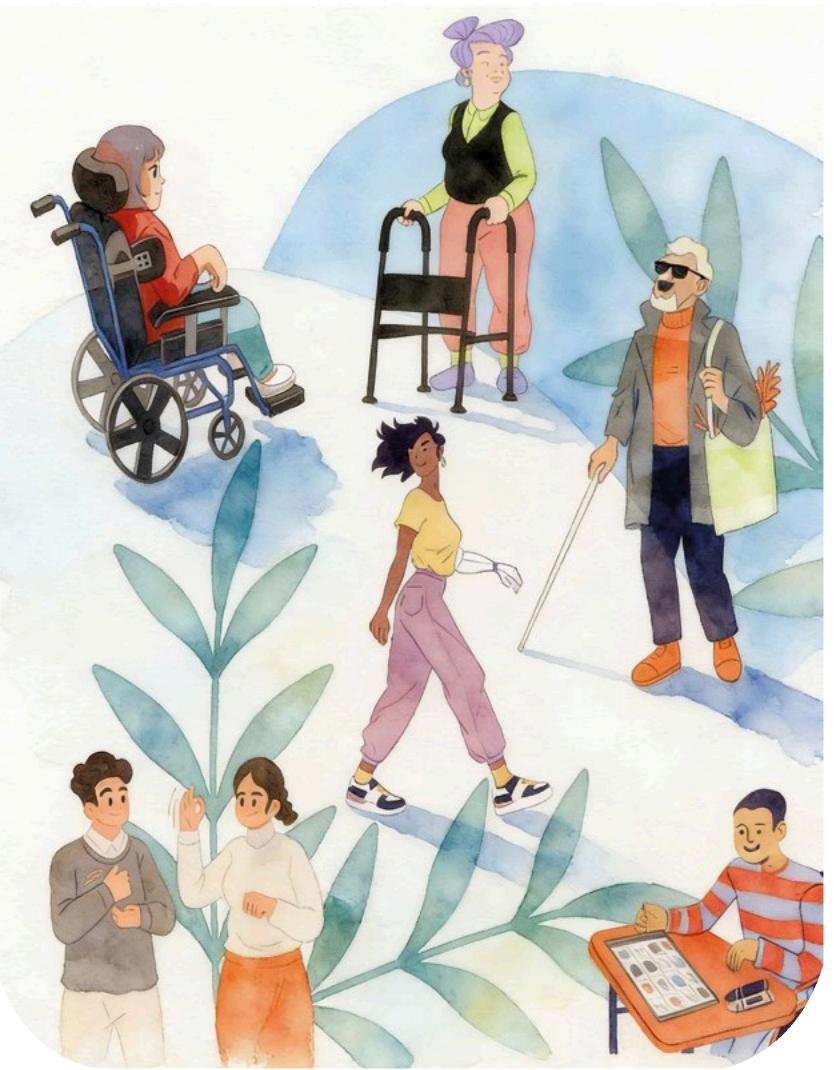
A new publication from the SEE working group on disability, led by Fundación ONCE, showcases 11 initiatives from seven countries demonstrating how the social economy drives meaningful inclusion across key sectors. Each practice offers practical insights and transferable solutions, documented through a common structure covering project name, social economy family, location, initiative summary, EU policy alignment, objectives, model used, stakeholders involved, and results.
The initiatives span seven thematic areas: (1) Humanitarian Emergencies, (2) New Technologies, (3) Environment, (4) Housing, (5) Employment, (6) Accessible Health, (7) Care, and Mobility and Personal Autonomy
This publication was released by the SEE working group on disability, led by Fundación ONCE. Read the full document at this link.

The initiative offers modern, accessible apartments where older people, including those with disabilities, live independently while accessing a wide range of optional services, from healthcare and physiotherapy to meals, cleaning, and leisure activities Unlike traditional care residences, this is a community-based model designed around autonomy, choice, and dignity Employment within the complex prioritises people with disabilities, reflecting the social enterprise values of ILUNION.

Christina Galani, SYNTHESIS Center for Research and Education
SEQ Elevate aims to support young people to re-engage in learning and employment, by strengthening their social and emotional skills through active participation and codesign
The research covered four countries (Greece, Cyprus, Germany, Belgium) and included 69 NEET youth and 36 stakeholders (employers, trainers, social economy actors) through online surveys, 16 participants in 3 national focus groups and 9 EU-level experts in 1 EUlevel focus group, and National virtual collaboration forums. These consulting activities developed the SEQ Learning Model Framework, grounded in the needs and challenges of NEET youth on the one hand, and in the perspectives of social economy employers on the other.
SEQ Elevate aims to develop 24 micro-learning units included in a gamified digital learning application, and the introduction of digital badges and micro-credentials for skills validation
The SEQ Learning model follows a practice-oriented learning pathway, moving progressively from Understanding → Practice → Real Performance, where skill development is primarily driven through action, participation and applied experience, as opposed to extensive theoretical instruction. The model deliberately prioritises learning-by-doing as the central pedagogical approach.
Building on these foundations, the SEQ Elevate consortium is moving to the next phase: developing micro-learning units on social and emotional skills for the gamified digital app This tool will support flexible, engaging learning and enable skill validation through digital badges and micro-credentials.
The first outputs, the Transnational Research Report and the SEQ Learning Model Framework (still under refinement), will soon be available on the project website.

Extended Reality (XR) technologies can enable immersive, adaptable and practice-oriented learning, while accessibility tools such as speech-totext have become more accurate thanks to advances in AI and cloud computing However, the use of AI raises risks related to data privacy, bias, socio-emotional well-being and skill development, many of which also apply to the wider learner population.
Several tools are already available to support neurodivergent learners and their teachers:
Read&Write designed for students with literacy challenges
EyeJustRead a reading tool providing personalised insights
Dragon Speech Recognition allows learners to express ideas verbally instead of typing
Goblin Tools & Tiimo support planning and time management
Ayoa generates images and mind maps from free text prompts
Organisations often launch sustainability initiatives hoping to create positive impact and engage their employees. But employees' reactions are not static they evolve, sometimes shifting from enthusiasm to skepticism depending on how these initiatives unfold. This study examines why this shift happens and how organizations can sustain engagement rather than unintentionally undermine it. Drawing on interviews, survey data, and causal loop diagrams, a tool from systems thinking, the research finds that simple or symbolic sustainability actions can boost motivation at first by showing visible intent and creating early momentum.
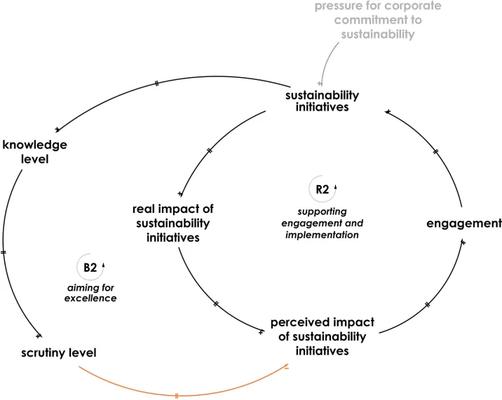
Over time, however, employees develop deeper knowledge and stronger critical thinking about sustainability. As their expectations rise, they seek real, tangible impact rather than symbolic gestures. When perceived impact fails to meet those expectations, a "vulnerability period" emerges, a phase in which frustration, doubt, and disengagement can grow If left unmanaged, this can become a self-reinforcing cycle that weakens support for sustainability efforts and increases pressure on the organization
The key message is that symbolic initiatives are not necessarily harmful, especially at the beginning of a sustainability journey. Yet to maintain long-term engagement, organizations must "walk the talk" through consistent, substantial actions whose impact can withstand increasing employee scrutiny

Front. Sustain., 21 November 2025
Sec. Sustainable Consumption Volume 6 - 2025
Read the full article here
Would you like to engage your organisation's decision-makers on issues of gender parity and equality?
Free, self-paced online courses to support people in building skills and entering the labour market.
Kiron Campus offers cohort-based programs with a stronger focus on practical, careeroriented learning, including coaching, mentoring, and employer connections Kiron works to ensure that underserved communities are not left behind.


Sources:
Ministry of the Economy, Tourism and Sport of the Republic of Slovenia (18 3 2026); Program of measures for the implementation of the Social Economy Development Strategy for the period 2026–30
EASPD, Employment - Joe Kingdom, Administrative Assistant at Enable
Joe Kingdom is a successful Administrative Assistant at Enable. Joe has a learning disability; this means he requires learning support to understand things at his own pace. So, he decided to join the Breaking Barriers Programme, an initiative that supports people with disabilities to find jobs in the UK. Through the programme, the enroled students attend a Business School and receive an accredited qualification upon completion of the programme.
Joe: It is very important for me It gives me a reason to get out of my bed in the morning. When you are young, and you don’t have too many opportunities, it is important to hang on to what you like to do. For example, I did not like university, so doing a job was clearly the path for me It has been liberating for me
I also really like going to the office I am more focussed and don’t have too many distractions. I like an office environment.
In my role, I also have opportunities to grow For example, I am currently enroled in a paralegal course that I am doing at work to improve my skills and knowledge. I keep learning new things and never really get bored at my job
Read more about the initiative and Joe’s full interview here
Enterprising for Tomorrow 2026
When: 19 May / Iași, Romania
Find more information and register here
Leading Change in Disability Services - Strengthening capacity for person-centred support
When: 14-15 May 2026 / Porto, Portugal
Registration here
REVES Days 2026: Social Economy - an indispensable partner for strategic public policies fostering resilience throughout Europe
When: 27-29 May / Östersund - Sweden
Agenda and registration
Strengthening Skills for the Social Economy: from Blueprint to Action
When: 9 July 2026 / Brussels (hybrid format for participants)
Registration here
The information and opinions expressed in this magazine are solely those of the authors and do not necessarily represent the views or endorsement of the publication, its editors nor the European Commission All content, including articles, reports, media and images, is provided for informational purposes only Readers are encouraged to verify any information and consult with the mentioned authors, where applicable, before making decisions based on the content of this magazine.
This magazine is a product of the baSE project, co-funded by the European Commission For more information about the baSE project, please visit www socialeconomyskills eu The collection of materials for this magazine has been led by Diesis Network, with Giulia Georg and Davide Durante serving as the main editors and providing support in gathering materials and content from all the baSE partnership organisations
For inquiries, please contact: Social Economy Insider www.socialeconomyskills.eu https://www linkedin com/showcase/base-project/ baseproject4skills@gmail com
The images in this magazine are from the websites of the authors and organisations mentioned Credits and links to the original sources are always present in the images In addition, some images come from Canva Stock, and are used in accordance with the Creative Commons Zero (CC0) licence, which allows for free use of these images for personal and commercial purposes, with no attribution required While we've thoughtfully selected these images to enhance our content, their inclusion doesn't imply any endorsement or association with the magazine authors
The draft template for this magazine was crafted using Canva (www canva com) We're grateful for the user-friendly design tools provided by Canva, which facilitated the creation of the initial layout.
If you believe that your copyrighted work has been used improperly, please contact us, and we will address the matter promptly Thank you for your understanding and for enjoying our meticulously curated visual content, supported by Pexels and the initial template assistance from Canva