Remodelling existing bathroom for a changing family
Quarry
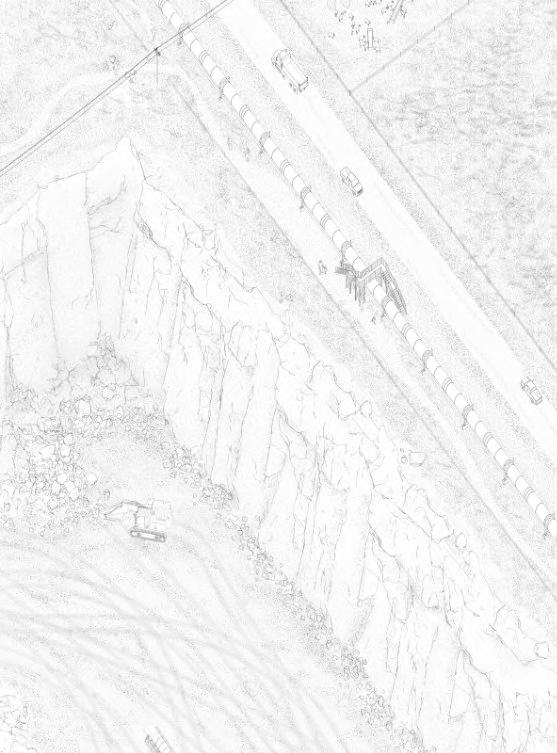
Exploring quarries as sites for new interactions
Weavy, Weavy, Weavy
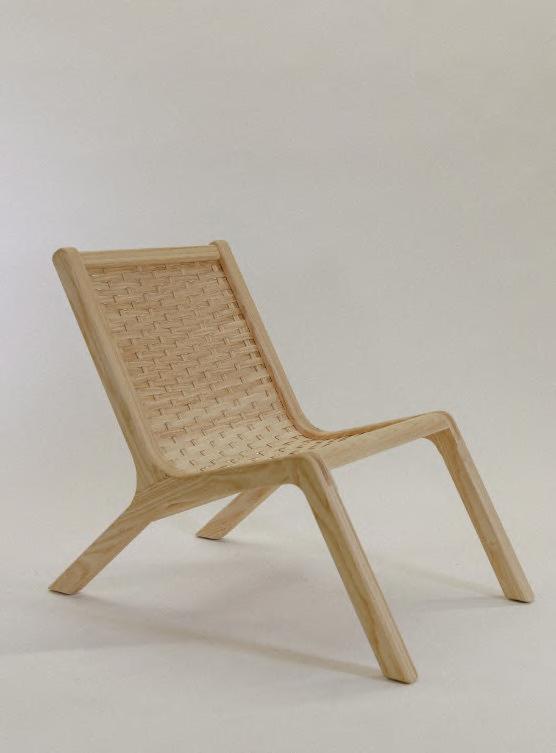
Exploring the interaction between chair, body, material and process
Borders and Boun-daries
Exploring the interaction between ephemeral and stagnant boundaries
Exploring the political tension in the Mexican-Guatemalan border through a radio station
DIDIER IRIARTE FATTEL
Graduate of Architecture @dids_designs
BACKGROUND
I moved from Mexico to Australia when I was 11, and growing up between two cultures made me start thinking— maybe without even realising it at the time—about what makes a place feel like home. I’m still figuring out what that means, both personally and in my approach to architecture, but I know I’m interested in how people relate to the spaces around them, and how design can support that relationship.
What draws me in most right now is the act of making. I’ve always enjoyed working with my hands—woodworking, building, testing things out. There’s something satisfying about the physical process of putting things together, and it’s helped me understand materials and construction in a more intuitive way. I think that’s where I learn the most—by doing, experimenting, making mistakes and adjusting.
Art and music have always been part of my life too. I grew up with everything from Air Supply to Mozart, and drawing has always been a way for me to process ideas when words don’t quite work. Architecture, to me, feels like an extension of that creative process—it’s just on a much bigger scale, and I’m still exploring what that means for me as a designer.
SOFTWARE
AWARDS
Enscape
Rhino Photoshop Vray InDesign
Unreal Engine Grasshopper AutoCAD Illustrator
Blender
Revit
Affinity Publisher
Affinity Photo
MSDx Showcase, 2019 Summer
MSDx Showcase, 2020 Winter
MSDx Showcase, 2020 Summer
MSDx Showcase, 2021 Winter
MSDx Showcase, 2021 Summer
MSDx Showcase, 2022 Winter
MSDx Best overall exhibit, 2022 Summer
MSDx Showcase, 2023 Summer
MSDx Showcase, 2024 Winter
Nell Norris Scholarship 2022
This scholarship is awarded to the best student in each year of the architecture course, based on all-round merit.
Dean’s Honours List 2024
The Dean’s Honours Awards celebrate students whose dedication, drive and ability has placed them in the top 3% of their cohort in 2024
MSDx
This exhibition is set up by The University of Melbourne to display students’ best work and projects.
12/09/2023 – CURRENT GRADUATE OF ARCHITECTURE, MODUS FORMA EXPERIENCE
- Producing tender ready documents for builder and client, ensuring drawings are free from mistakes, convey design intent and are coordinated with other disciplines.
- Designing bridges, retaining walls, fascia panels, RSS walls and ensuring they are sensitive to the local character and culture.
- Producing tender ready renders for large public projects ensuring they are ready for public release.
- Establishing and optimising workflows between design programs, ensuring a more streamlined approach to our design process.
- Producing construction documents for builder and client and ensuring drawings were free from mistakes.
- Designing guttering system for residential project ensuring correct construction strategy and desired architectural expression.
- Designing a design proposal for a potential new client by ensuring that brief was met and exceeded.
28/02/2018 – 08/03/2025
TEAM MEMBER, BUNNINGS WAREHOUSE
- Providing excellent customer service for d.i.y and tradesmen alike meaning customers can find the right product for the job.
- Restocking shelves and managing merchandise to avoid empty shelves and out of stock products.
- Working as a team to ensure the safety of customers around forklifts and other hazards.
- Communicating efficiently with team members to ensure that all pending jobs get addressed at the right time.
26/10/15 – 30/10/15
CLERK ASSISTANT, RINGWOOD MAGISTRATES’ COURT
- Filed important and sensitive case records and documents for easy retrieval and safe storage
- Retrieved sensitive documents from the police and courts to hand to the judges and clerks.
- Ensuring the distribution of Magistrate’s Court official letters went to the right addresses
- In charge of internal mail delivery. Ensuring team could communicate efficiently.
- Communicated with victims and perpetrators
- Effectively communicated with Judges, Clerks and Police Officers on a daily basis using their own lingo. This enabled quick and clear communication.
9/04/14 – 31/10/14
HEAD COACH, HEATHMONT HORNETS BASKETBALL CLUB
- Coached and mentored young aspiring basketball players to become their personal best.
- Scheduled and organised training ensuring all players could improve their game and their fitness.
- Liaised with referees with both concerns and queries from both myself, the players and the parents.
- Implemented different strategies and tactics to win by using my players’ key strengths and analysing the opposition.
- Inspired and helped young players achieve their best by creating a fun and safe environment for them.
SKILLS
- Articulate communicator with an appreciation for the different communication styles required when working with other team members and customers.
- Independent worker with the capacity to manage tasks effectively and promptly
- Good team player with the understanding that everyone has strengths, and therefore should tailor tasks to suit these strengths as best as possible.
- Hardworking individual with the interest to learn and take on new opportunities.
- Friendly with the ability to foster old relationships and embark in new ones.
- Honest and Reliable individual with the ability to take on tasks with a degree of responsibility due to strong morals and ethics ensuring integrity and trust worthiness.
BATHROOM #1
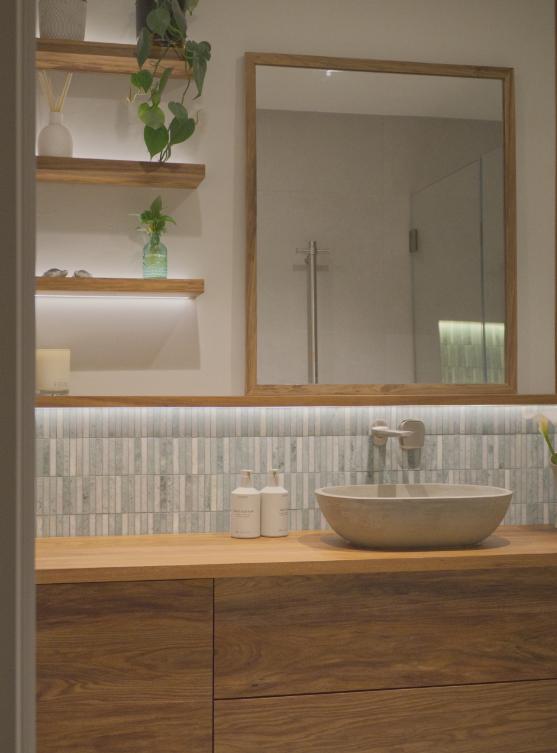
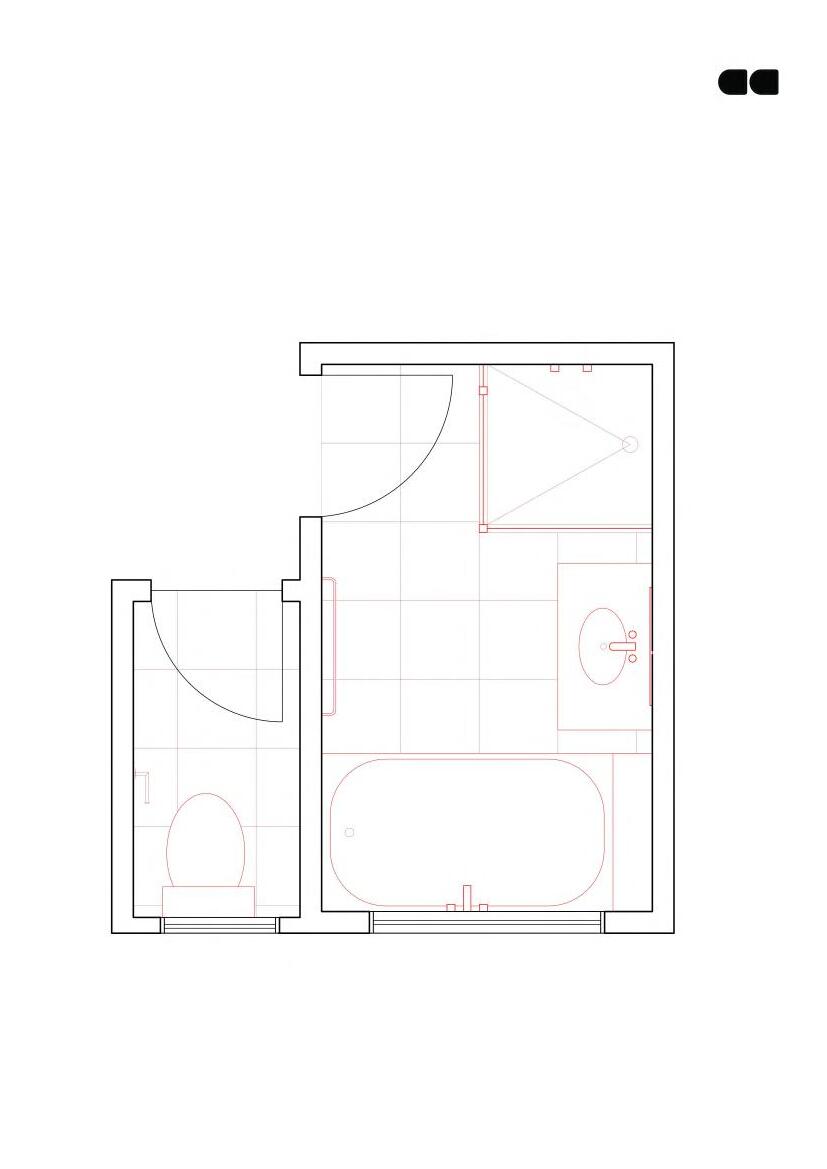
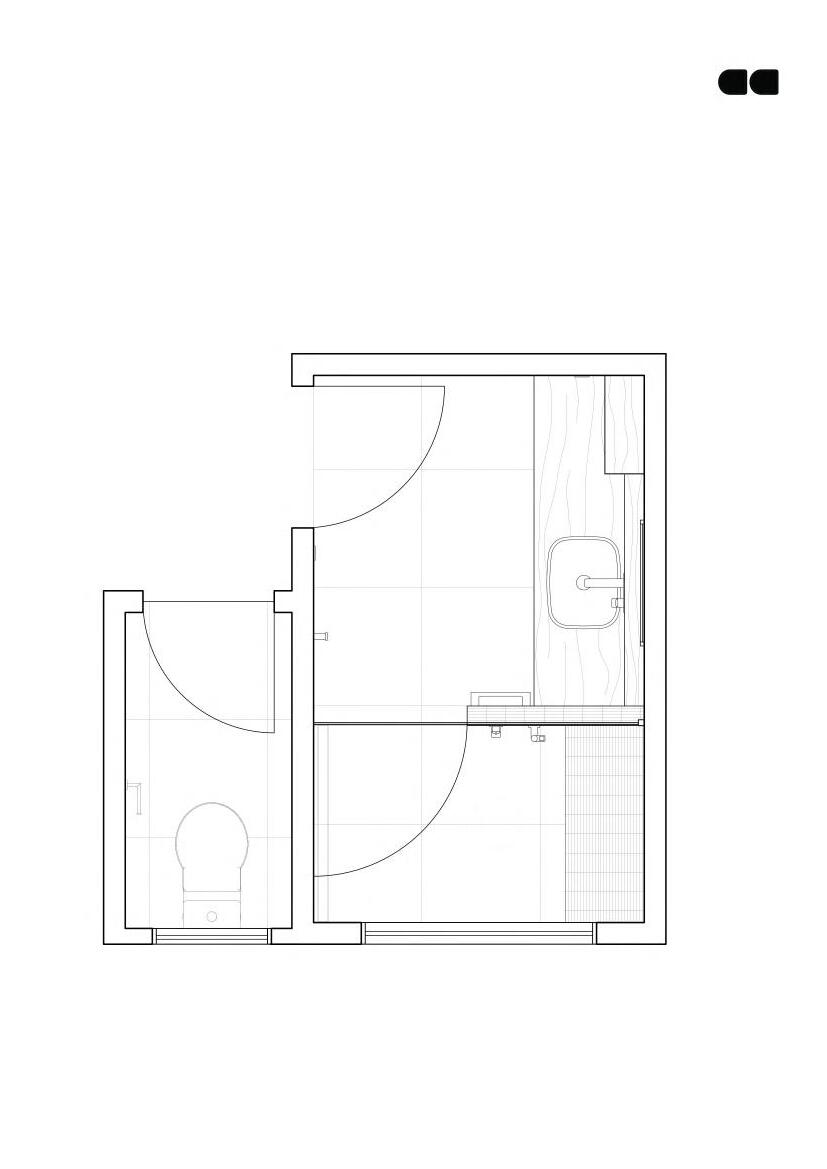
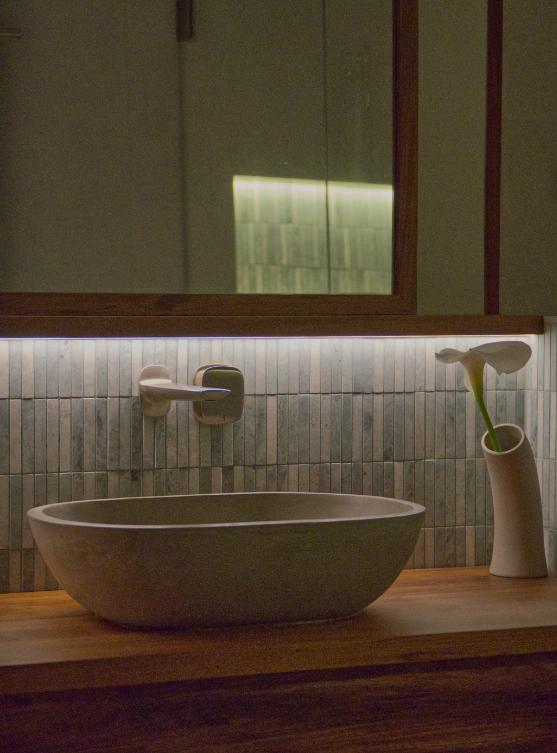
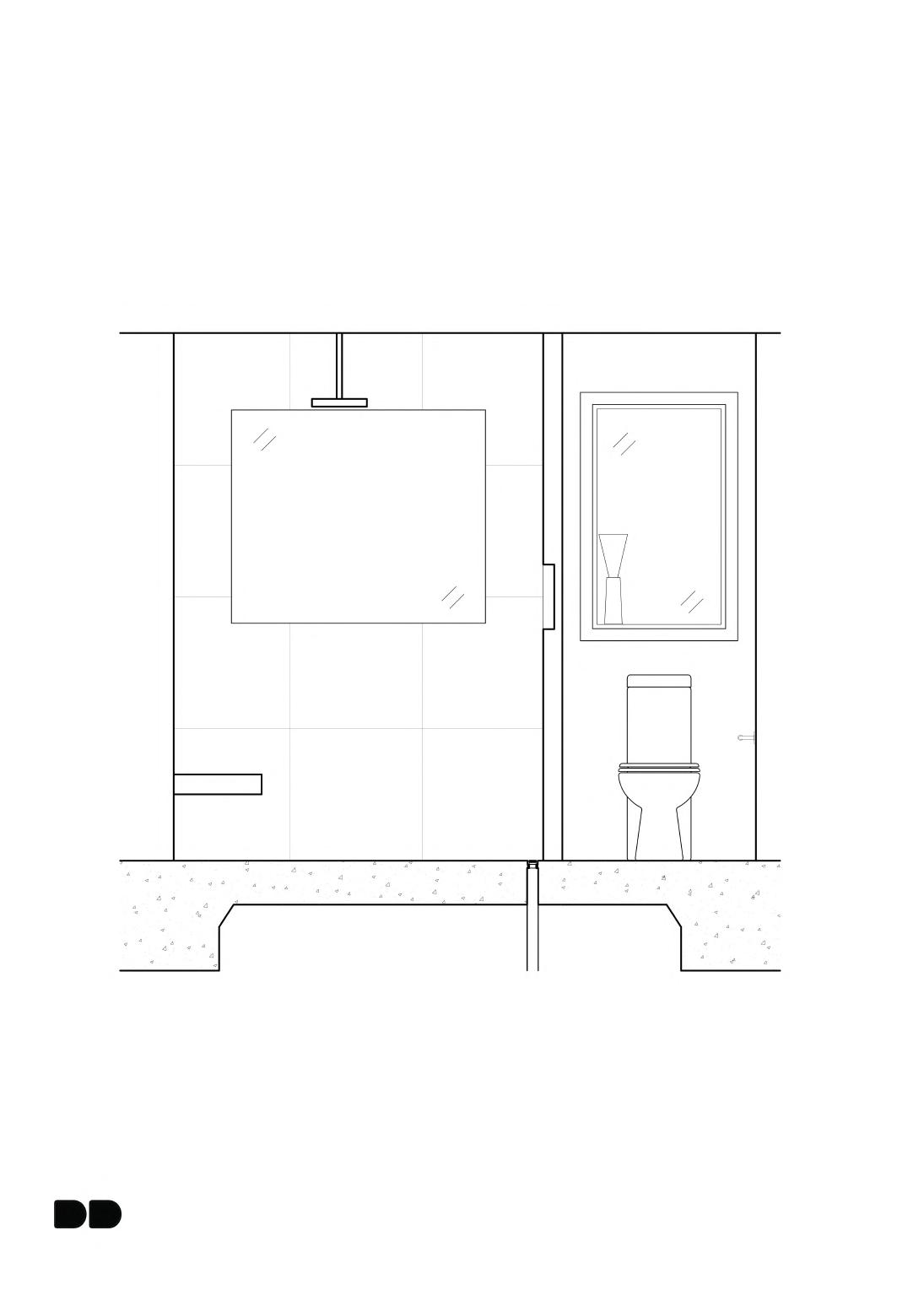
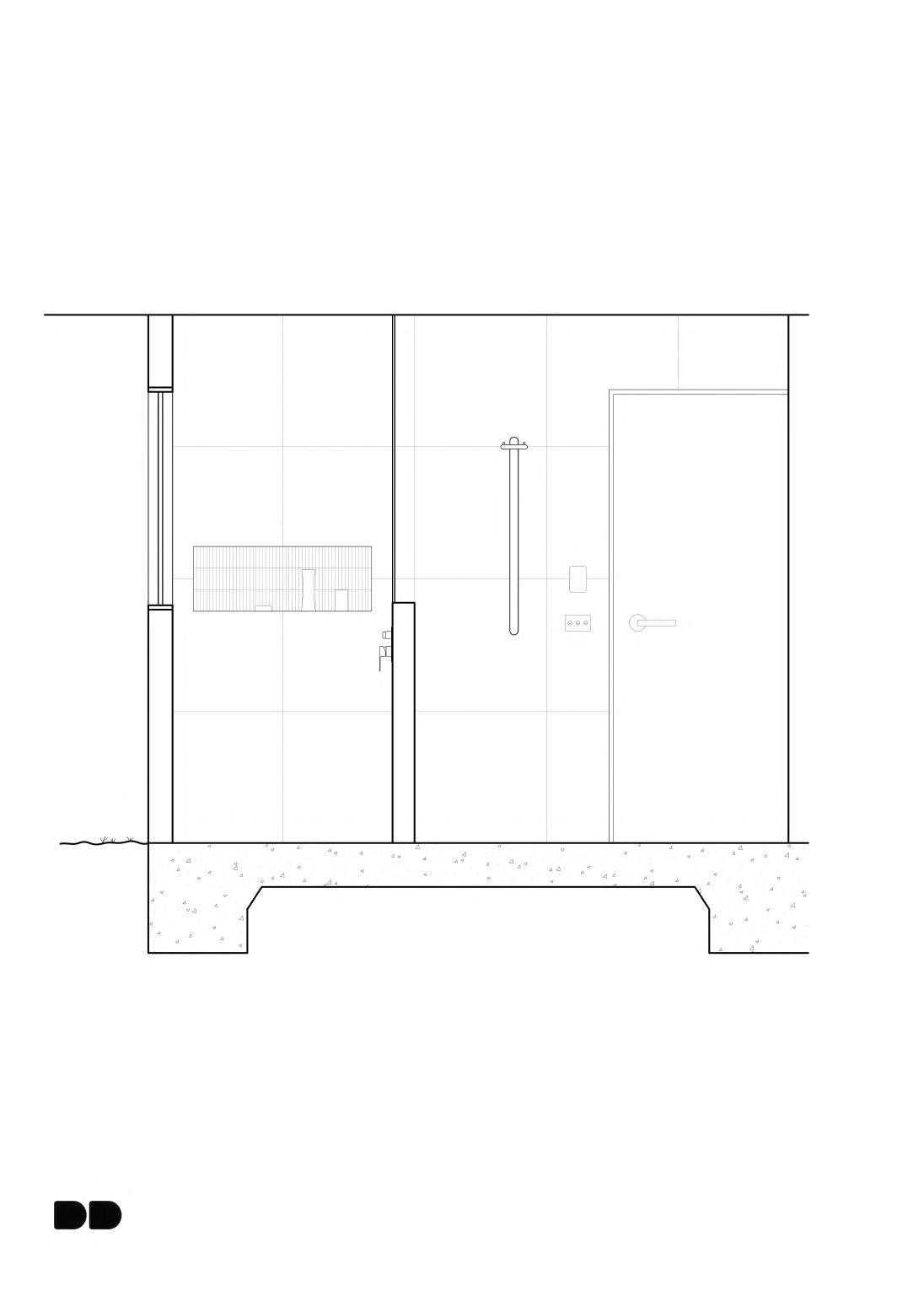
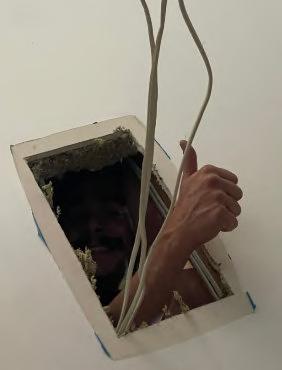
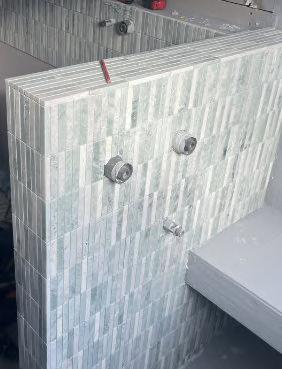
This bathroom renovation reimagines and updates a space for a family of four. The original house, built in the 1990s, no longer met the evolving needs of its occupants. The comprehensive renovation transformed the bathroom, replacing the bathtub with a more spacious shower and vanity area, and considered their possible future needs such as a seat for showering.
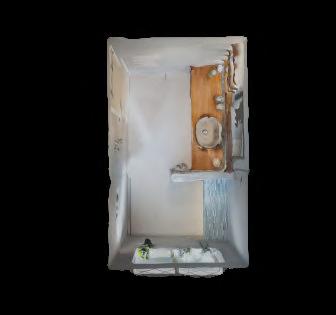
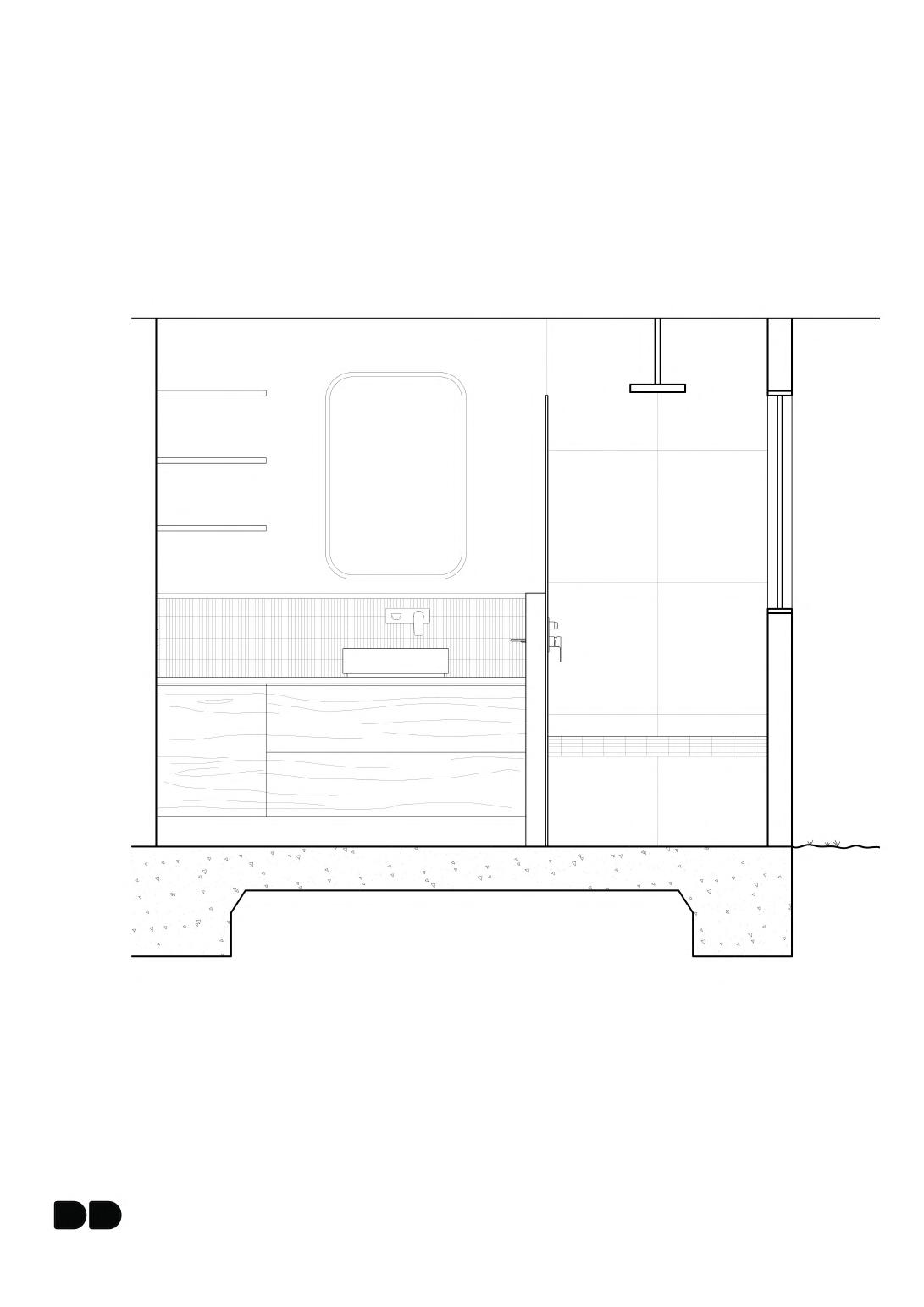
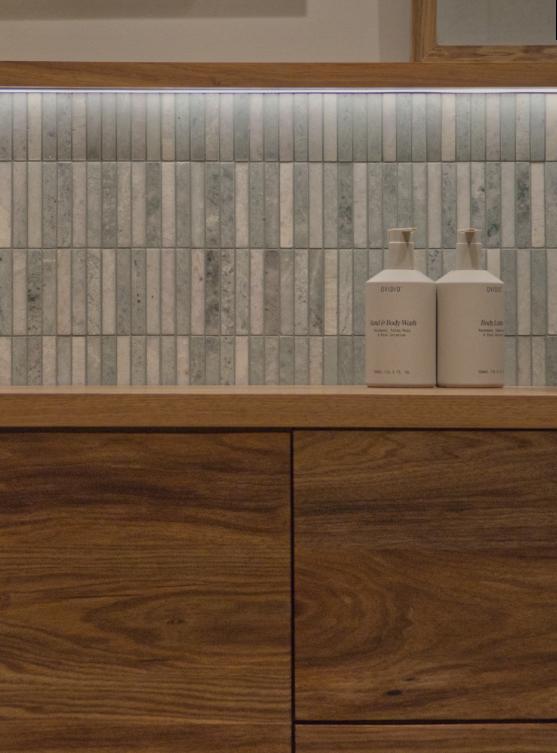
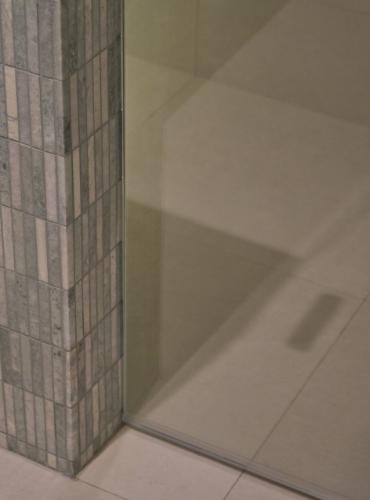
Natural stone green finger tiles wrap around the shallow wall and seat, creating a sense of separation while emphasising both horizontal and vertical dimensions, making the space feel larger. Custom Australian Blackwood joinery, with its rich and warm brown tones, contrasts beautifully with the tiles, seamlessly tying all elements together.
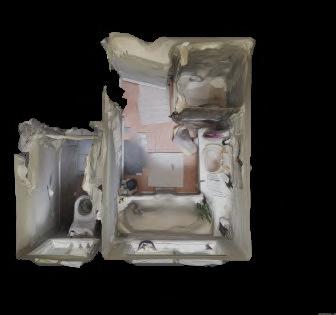
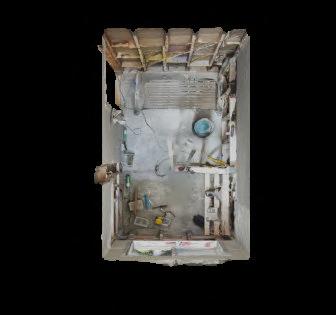
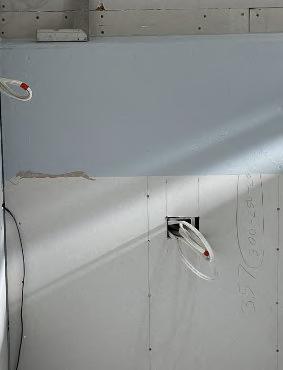
That which cannot be captured through linework drawings– the quality, materiality and spatial qualities– have been collected through point clouds and its associated digital uses. Allowing the Point cloud suite to be used as a tool for design, digitisation, preserving the before, and cataloguing and documenting the process for the inevitable future reference of studs, electrical lines and assemblage of parts.
Vanity space has been divided in three distinct sections. The top long sliding drawer is internally divided for two users. Ensuring that they have enough space for their bathroom necessities including internal power for shavers and electric toothbrushes. The long bottom drawer stores additional towels and bathroom accessories. The left drawer stores objects that enable the cleaning and the organisation of the bathroom including rubbish bins and cleaning equipment.
The idea of the bathroom being described as a wet area falls into an often mistaken perspective that all the bathroom can be wet. This naïve view can lead to practicality and safety issues regarding the slippery nature of tiles when presented with water, resulting in a design that does not take into consideration the bathroom’s constantly ageing users. Therefore, the bathroom’s design philosophy was grounded on the idea that reducing water spillage from shower onto adjacent areas would create a more comfortable and safe experience of showering.
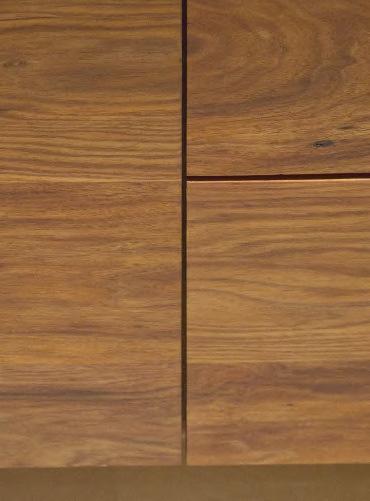
Attention to the detail elevated the outcome of the project. The timber grain wrap and continuation reveals that the design is not haphazardly put together, but rather has been a multitude of decisions towards the goal of functional and aesthetic. Even the thickness of the saw blade was factored into the decision process.
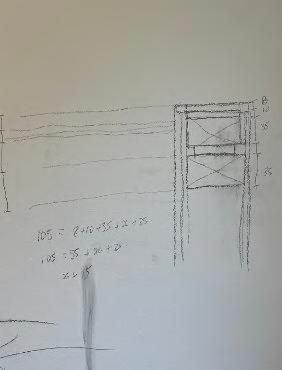
Onsite design changes and detailing for communication and affirmation is inevitable. The walls serve as the canvas, no stress, they will get covered. Leaving the process of design within the design itself.
These sketches can reveal opportunities that could not be necessarily imagined through the drawings and models, but the opportunity for trades-persons to co-design, therefore resulting in a better outcome. Communication comes in many ways but this is one of the realities of renovations.
QUARRY
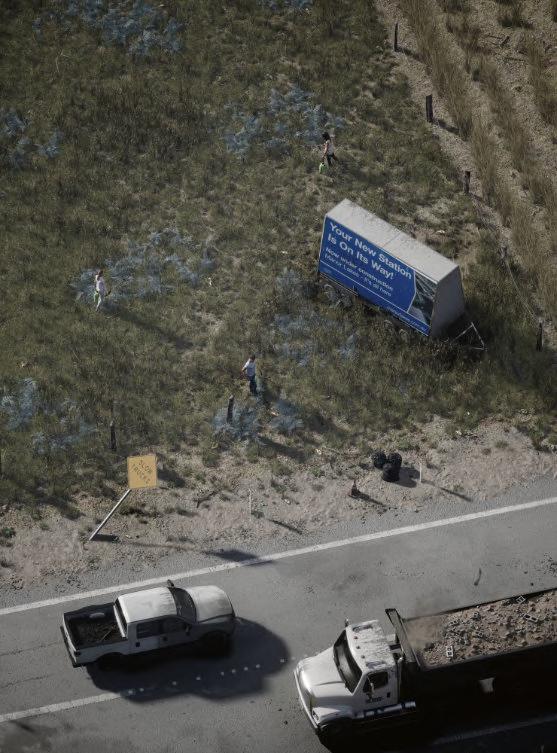
A woman and two men stare into the boot of a parked white car. Through perfect Euclidean eyes hovering overhead, they observe a Dennis Family development with houses at every stage of completion: erected with an AstroTurf front yard, an empty shell, a timber frame, a concrete slab, a pile of dark soil framed by kerbs, a fresh timber fence, open fields of grass.
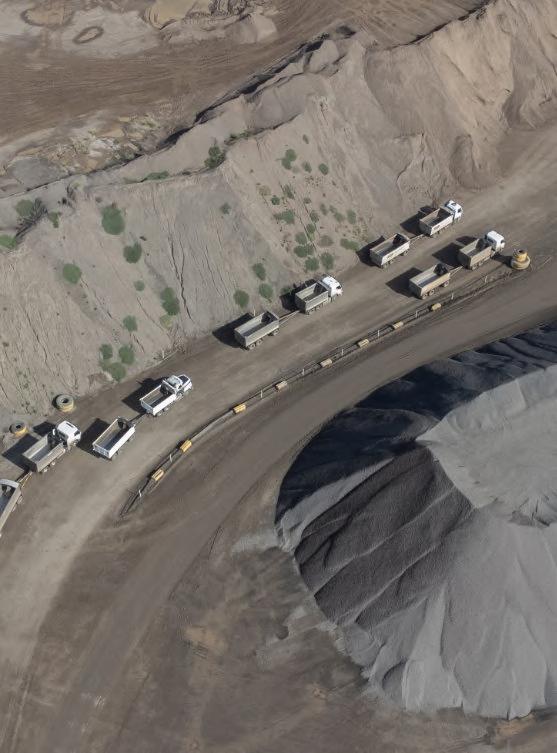
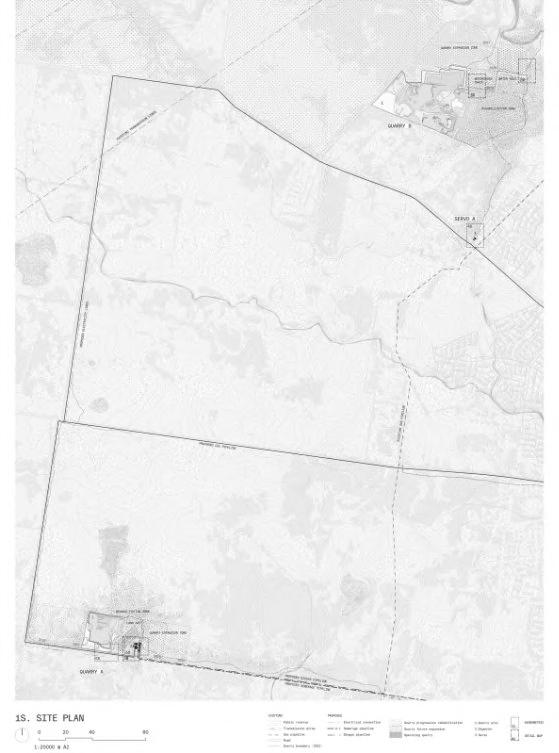
From here they trespass into Mountain View Quarry. They observe a barren landscape, with earth sliced like cake. A crablike machine claws the earth, basalt and all, and dumps it in variegated piles, the epitome of entropy. The process of extraction creates a volcano in the negative – inverse architecture.
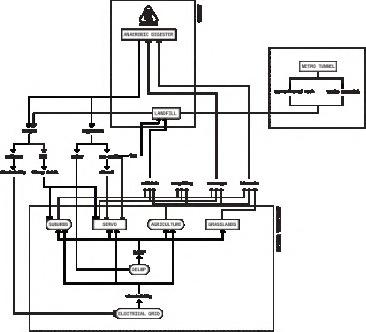
Materials flow over the site across time: 5 million years ago it was lava, now it’s contaminated earth and rock from the Metro tunnel developments dumped back into the pit. Predatory extraction is offset by capitalist environmentalism in the waste-to-fuel model of the anaerobic digester. The greedy hand harvesting from our ruins; a colonial frontier cannibalised.
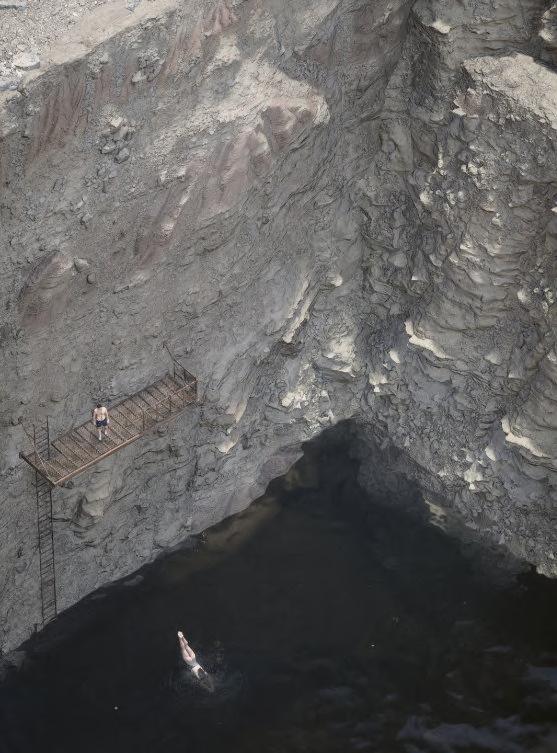
Children’s laughter and screams fill the air. The group sees water splashing as people dive into the quarry watering hole. Endangered Wollert Growling Grass Frogs thrive at the water’s edge among the new planting, rocks and discarded GEOJUICE cans. Landfill sculpted into rolling waves of grass are exemplars of ecological art and restoration. Nearby, sculpted mounds are scored by the tires of motorbikes, a parallel exemplar of land for human pleasure.
Night falls. Driving through the darkness with nothing but road ahead of them, these weary travellers, tired and hungry, spy the distant neon logo of an international conglomerate. This monument to consumption signals an oasis, a sense of familiarity for the people of Western Melbourne and the world, transcending age, politics, and class.
The group pulls into the servo. They walk to the 7-Eleven, passing a man shovelling eco-coal into the back of his ute while another purchases GEOJUICE from a vending machine. Both are products of the quarry digester’s divine alchemy: not water to wine but sewerage to energy drink, bio-waste to biogas, landfill to power.
Returning to Melbourne, the group looks back in the direction of the fields, already flattened to a horizon, a theoretical place of pure possibility, ready for reproduction and renewal.
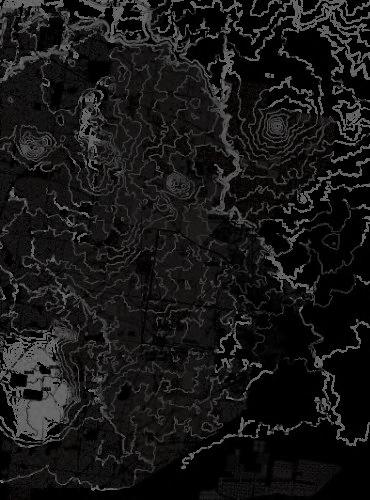
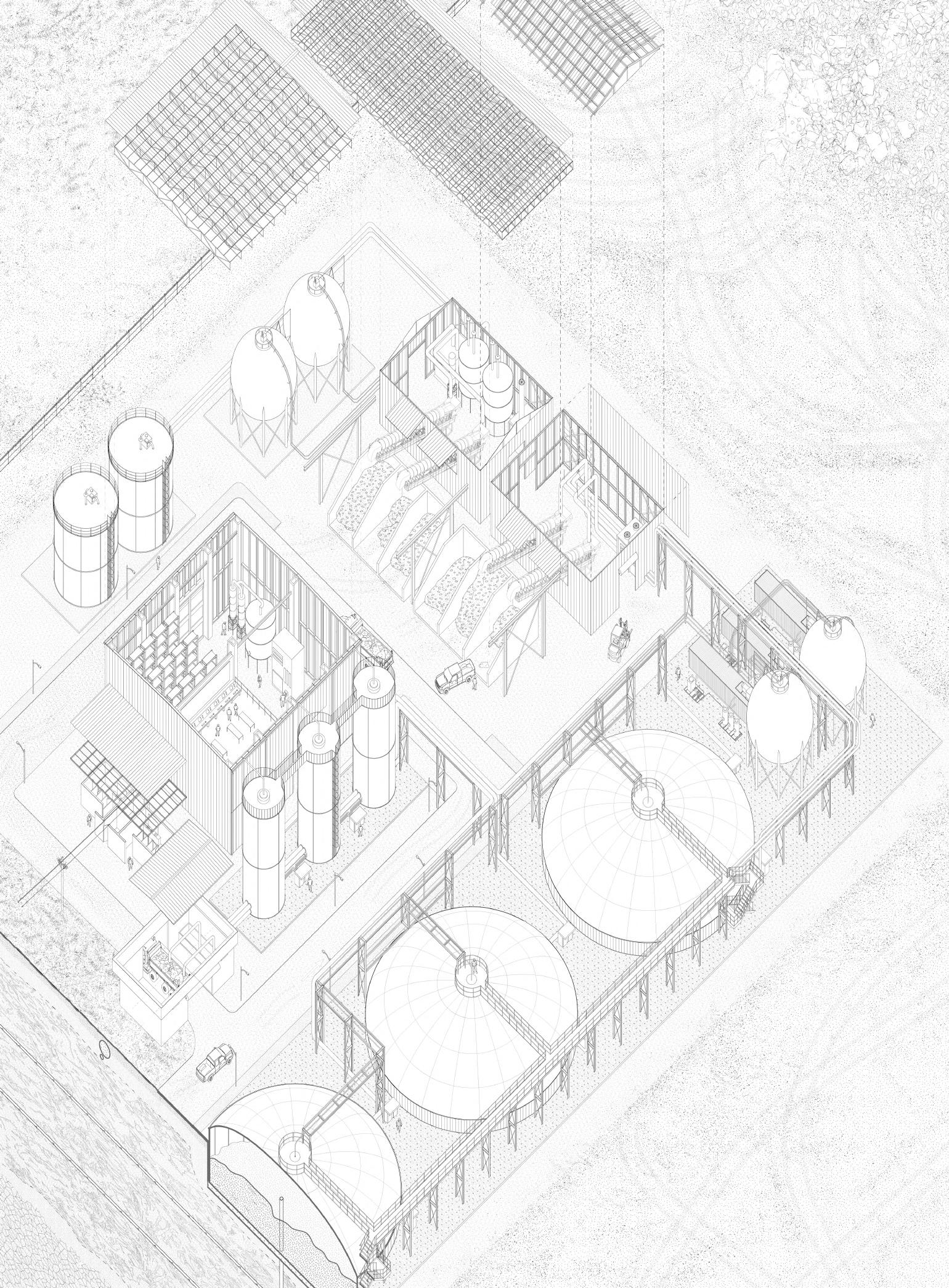
The quarry if the site for our grasslands rehabilitation methodology, comprising an anaerobic digester, a servo, and the connecting infrastructure between and beyond.
Mining and material extraction is part of the national story we tell about Australia’s abundant resources and wealth. In this story the environment is a commodity, something to be tamed or domesticated and made ‘useful’. But the extraction process and the construction these materials fuel produces waste and ecological destruction on an unsustainable scale if left unchecked.
How can we enable grasslands management while engaging in the realities of our geopolitical landscape?
Another point of human pleasure mixed with rehabilitation is the intervention of a quarry swimming hole. A well understood practice of quarry rehabilitation is to fill them with water as this avoids any toxic material resurfacing. The architectural intervention becomes subtle through the jumping platform and the informal gravel paths that lead to it.
The Anaerobic Digester facility is at the centre of the project to help mediate the land and environment with society’s waste by extracting the most energy out of this waste and producing other sustainable energy sources. The digester is able to create methane, diesel, eco-coal and fertiliser. Whilst these energy sources are commonly associated with unsustainable practices, the anaerobic digester provides a sustainable production of these energy resources ensuring that the methane doesn’t go into the atmosphere as a greenhouse gas.
The road becomes a way of experiencing the field and enables the transport, logistics and movement of resources from other areas to the and within the field.
Humans have touched the earth on every scale. There is no longer a boundary between the human and ‘natural’. Across our imagery and drawings, we wanted to capture the tension between the health of grasslands and non-humans with the messiness of human life, including both capitalism and the mundanity of the ways people engage with their surroundings.
WEAVY WEAVY WEAVY
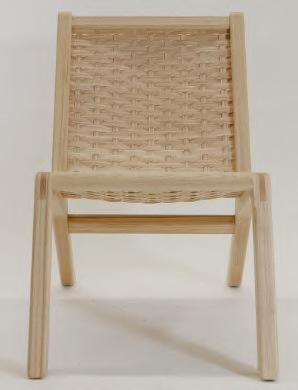
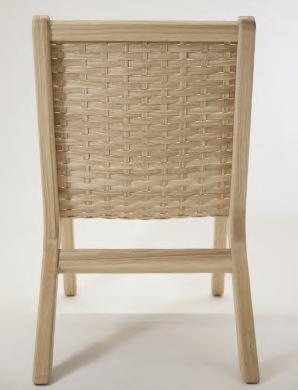
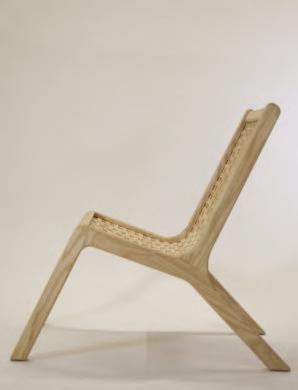
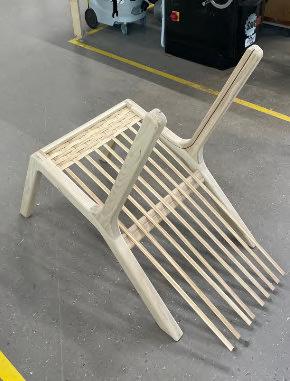
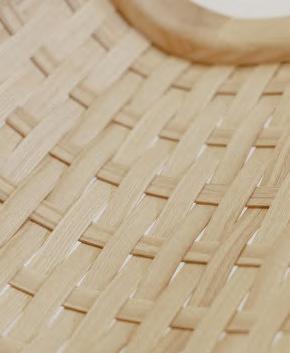
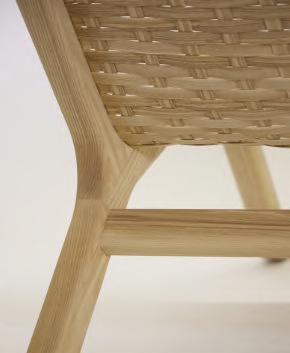
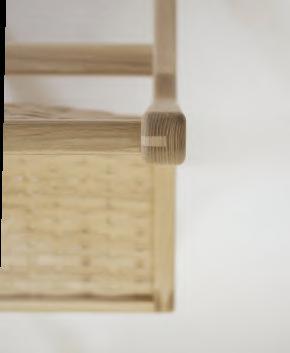
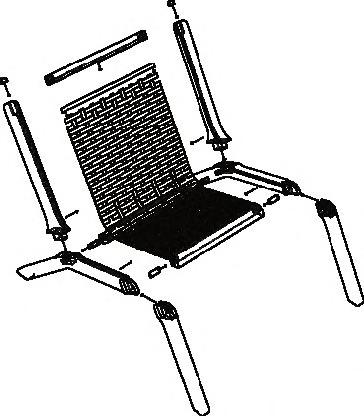
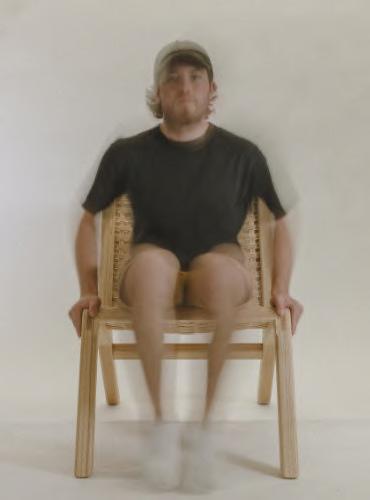
The Weavy Weavy Weavy lounge chair was born out from the exploration of the strengths and limitations of the bandsaw as a machine. 3mm thin strips of American Ash veneer woven tightly leverages the natural tensile strength of American Ash and the effective transfer of loads from the weaving construction. Extensive research into the grain direction, veneer thickness, and strip width was conducted to optimise strength and flexibility while maintaining an ergonomic profile. The result is a comfortable chair with a unique detail that seamlessly conceals the way the strips are fixed to the frame.
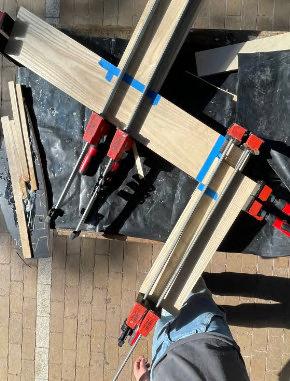
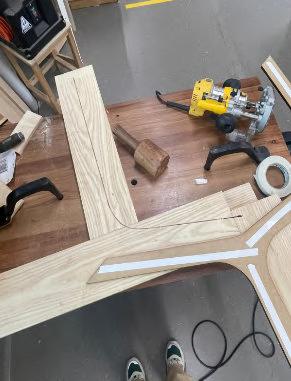
The chair’s frame has been divided into two sides, one side of the chair’s joinery has been made with traditional woodworking tools and techniques and the other side with modern powered machinery. This duality of the chair’s process allowed me to explore ideas of manufacturing through different lenses, one that is viewed as artistic whilst the other as industrial. However, it quickly came apparent that both come with their benefits and both require some understanding to achieve the design intent, at times pushing the design further.
BORDERS & BOUNDAR-
IES
Borders and boundaries are seen to be a fixed state and they often present problematic when there is a disagreement on its desired end state. Border disputes have seen the evolution of killing machinery in wars like World War 2, cultural division and violence such as in Palestine and Israel, and create further divide between us and others across the border. This constant debate or borders and territory has continued for a long time with no end in sight. Whilst I won’t explain or attempt to explain why borders become such a sensitive issue to many, ideas including permanence and temporality that arise from borders both physically and contextually and their involvement with architecture are explored in this project.
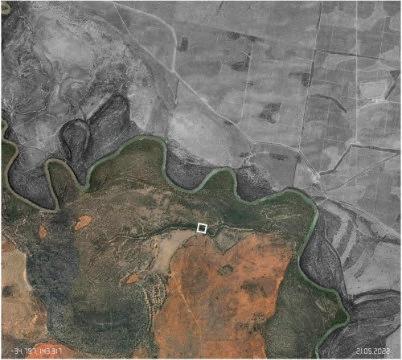
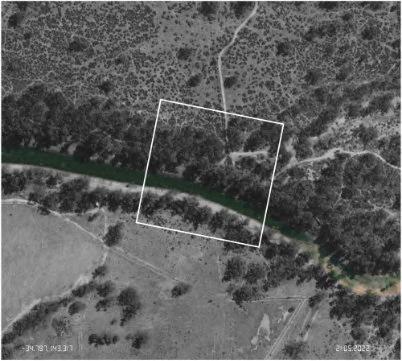
The project is situated in the border between Victoria and NSW where the Murray river fluctuates and changes the perceived boundary. This outpost for the Trust for Nature adopts mobility as its driver to deal with boundaries that are both physical and believed.
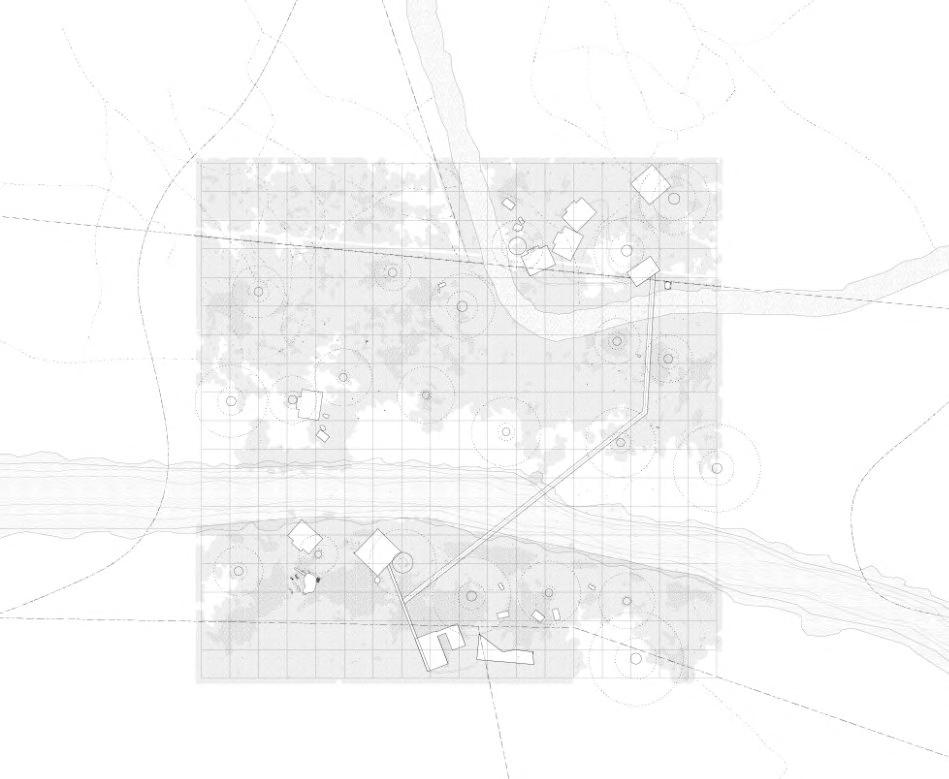
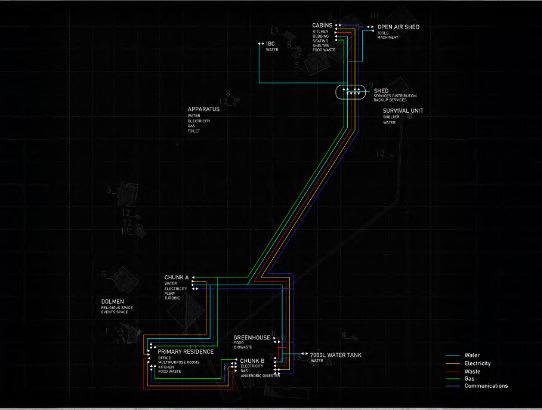
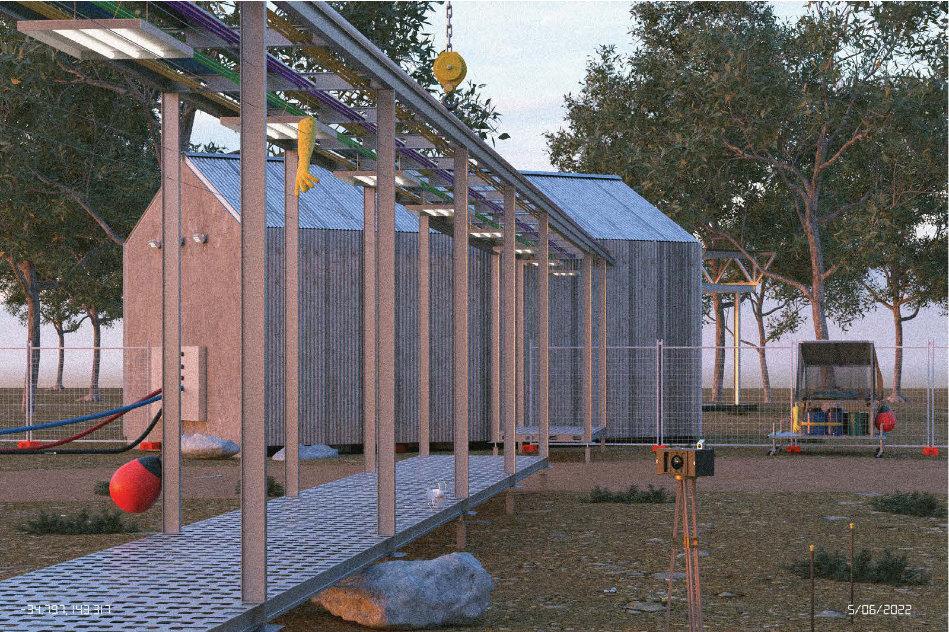
The self-sustaining camp comprises of living huts and the facilities that enable self sustenance such as electricity generation and sewerage treatment.
-34.797,143.317
1_dolmen
2_survivalunit
3_chunk(a)
4_chunk(b)
5_cabin
6_primaryresidence
7_watertank
8_ibc
9_gardener’sshed
10_open-airshed
11_greenhouse
12_rock
13_apparatus
MaligundidjCountry
The Weavy Weavy Weavy lounge chair was born out from the exploration of the strengths and limitations of the bandsaw as a machine. 3mm thin strips of American Ash veneer woven tightly leverages the natural tensile strength of American Ash and the effective transfer of loads from the weaving construction. Extensive research into the grain direction, veneer thickness, and strip width was conducted to optimise strength and flexibility while maintaining an ergonomic profile. The result is a comfortable chair with a unique detail that seamlessly conceals the way the strips are fixed in place.
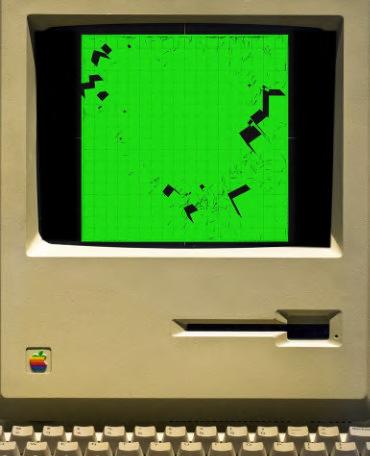
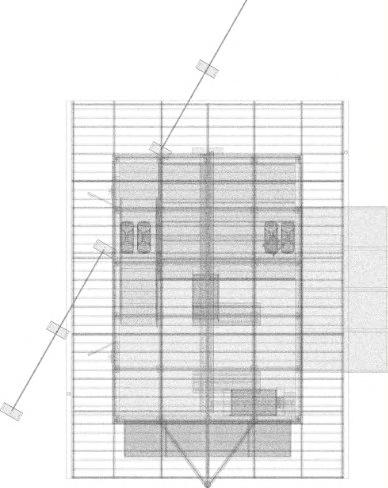
Computational simulations were used in order to explore a wide array of possibilities and opportunities for the arrangement of the camp. This simulations were made in Blender through forces of different strengths dispersed through out the field. Whilst some unpredictable arrangements and “randomness” were desired, it was unavoidable to create scenarios where no bias was added to the parameters and conditions of the field itself, thus the simulation is conceived as a tool for exploration and not necessarily a randomiser.
SystemsDiagram
Point cloud renders have been used to reveal hard boundaries as soft and almost transparent. All the objects contained become more visually related with each other, and thus presents visually how it would work more than just its physical aesthetics.
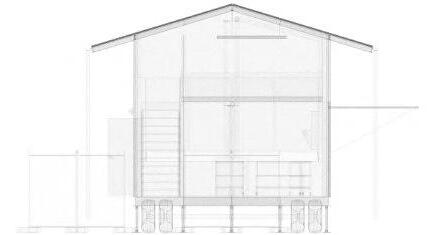
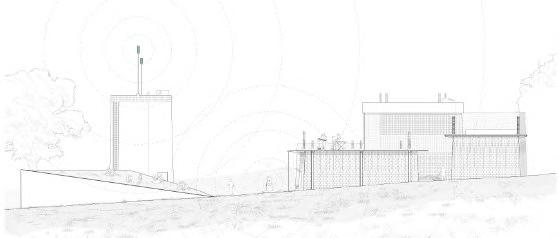
The shed is the main hub for systems to be managed. The Australian typology of sheds is explored through its form, materials and relationship with the landscape offering a more introspective approach.
MaligundidjCountry
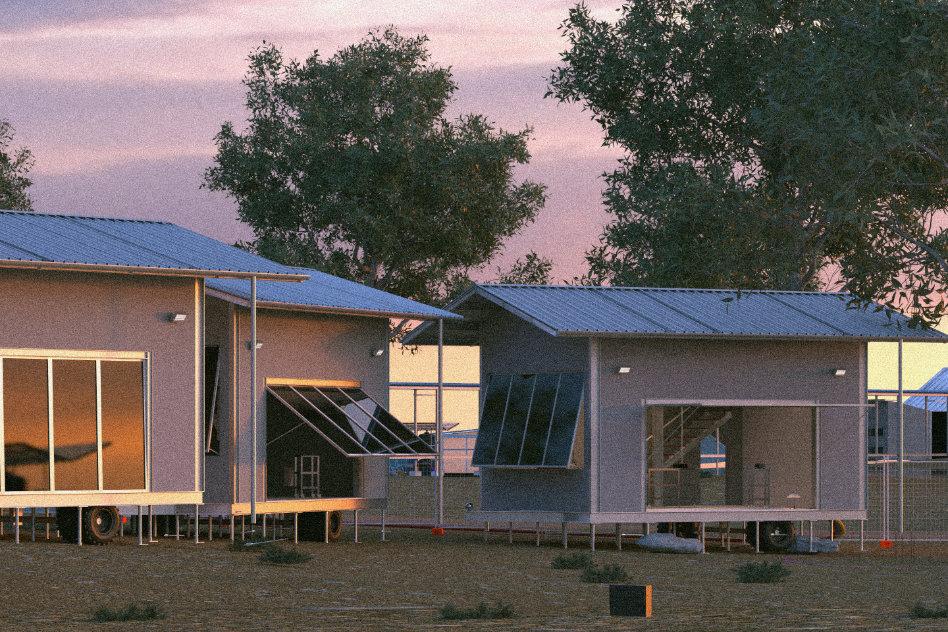
The cabins are allowed to be opened to adapt to the weather conditions of country Victoria. They rely heavily in natural ventilation and operable windows that can extend the inside space into the outside.
-34.797,143.317
5/06/2022
THE OTHER BORDER
Governments seeking to fortify their borders frequently resort to hostile architecture to impede individuals seeking refuge from inhumane conditions, political persecution, and economic hardship. Cross-border communities are similarly affected by the border’s physical and psychological impact.
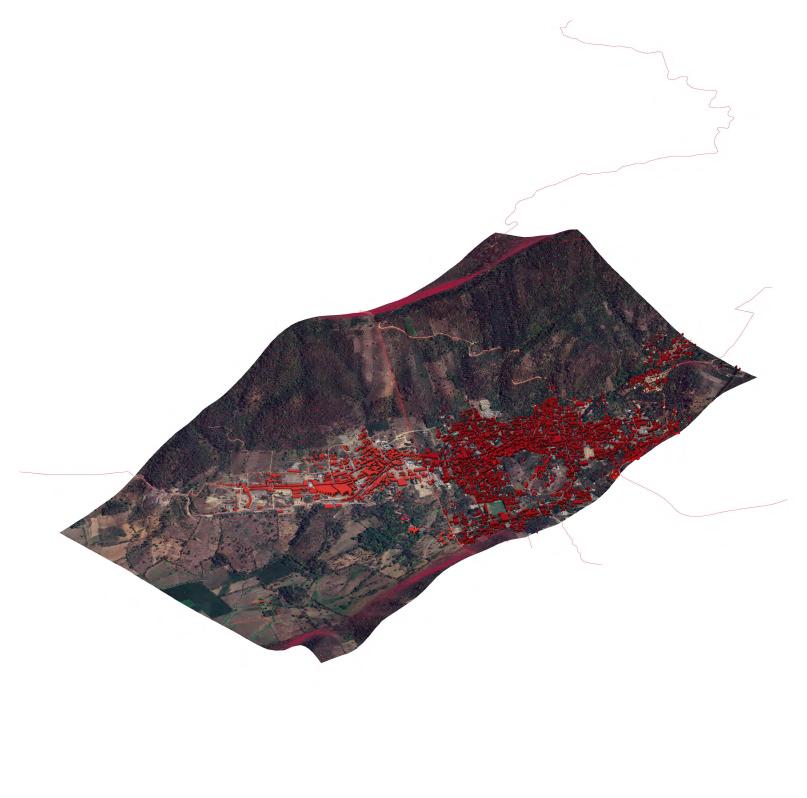
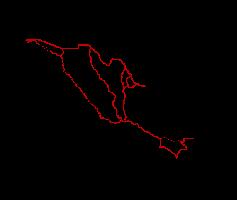
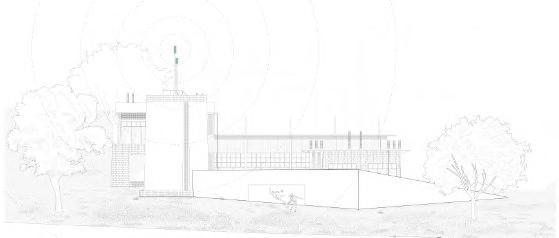
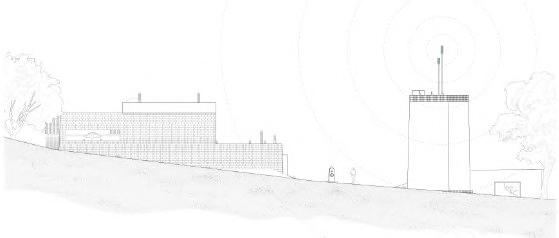
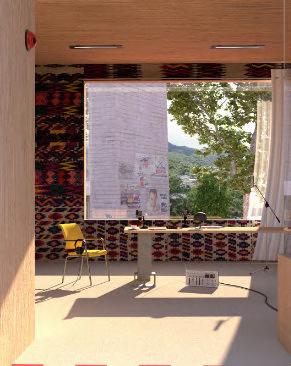
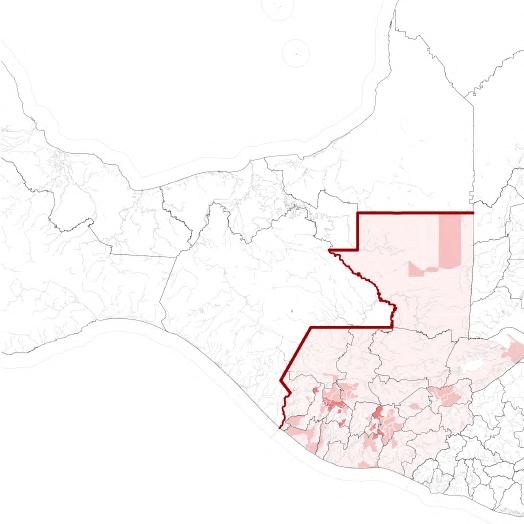
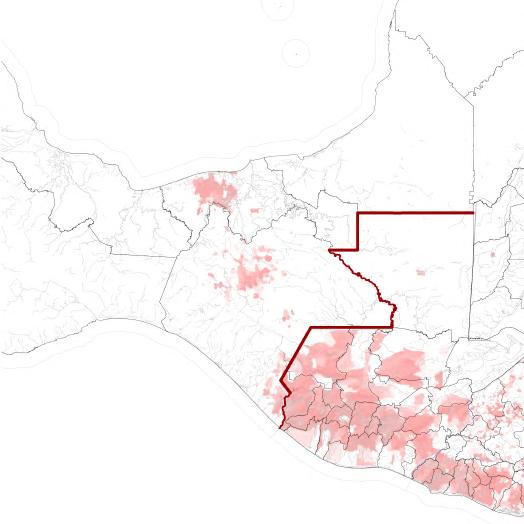
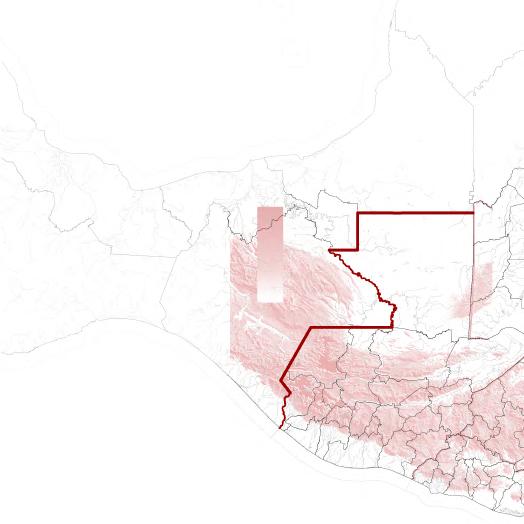
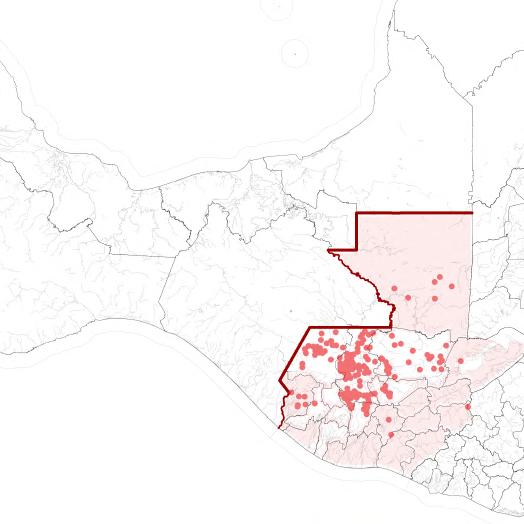
Commencing from the immigrant’s journey traversing Mexico en route to the USA, this thesis pivots towards the architectural exploration of a Radio station nestled along Mexico’s other border with Guatemala. Unveiling the complexity and tension of this often overlooked and relatively obscure boundary, the thesis explores the impact on local communities, advocating a design that fosters cross-cultural interactions, economic resilience, and social sustainability. The envisioned studio aspires to stimulate dialogue and foster mutual understanding among neighbouring nations and their people.
“How can architecture foster community practices that empower people to retaliate against such measures of division and reestablish a connection with land and culture beyond the border? “
Border management programs like the Merida Initiative have heightened political action and policy. Under this agreement US provides military equipment, expertise, and personnel to intercept migrants before they reach the US-Mexico border. Whilst Mexico would provide more resources and award military contracts to US companies. However, the approach differs from that of the northern border, where security measures create a more selective filtration process, increasing the likelihood of apprehending migrants as they traverse the country. This variance contributes to the perception of a relatively porous border condition, wherein migrants must contend with the vigilance of immigration authorities and the influence of cartels at every stage of their journey.
Guatemala, particularly its indigenous population, has been deeply impacted by US intervention, notably during the 1950s when a CIA-backed militia group orchestrated the overthrow of the democratically elected President Juan Jose Arevalo, under the pretext of anti-communism during the Cold War era. This intervention was spurred in part by the interests of the United Fruit Company, a significant landowner in Guatemala, which opposed Arevalo's land redistribution policies favouring the local populace.
The aftermath of this coup ushered in a period of military dictatorship, culminating in the brutal regime of Efrain Rios Montt in 1982-83, during which a genocide targeting the Maya peoples unfolded. The atrocities committed during this period resulted in the deaths or disappearances of approximately 200,000 individuals, with over 1.5 million forcibly displaced, many seeking refuge in the remote highlands beyond the reach of military forces.
RADIO STATION
LANGUAGE
Protecting Culture Celebrating Culture PUBLIC DEBATES
CULTURAL FESTIVITIES
POLITICS
MUSIC LIVE BAND PERFORMANCES
LAS CHAMPAS
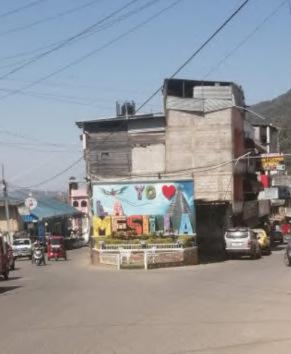
LA MESILLA PROPOSED
Indigenous artists promoted TheBorder
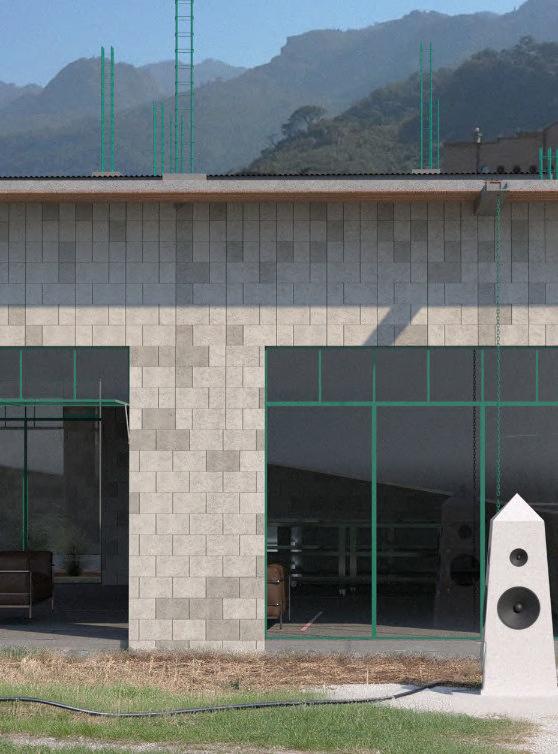
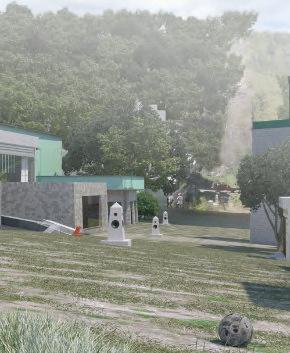
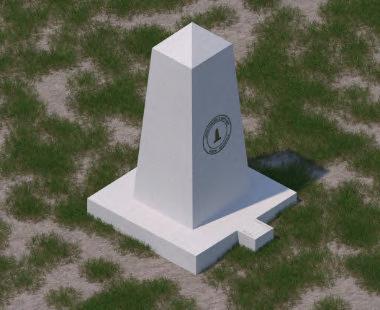
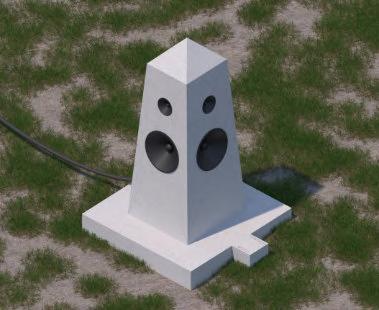
Camouflaging within the already established border limit markers, the speakers seek to disrupt the border’s presence through its sonic radius- naturally breaking the linearity of the border. Furthermore, it changes the use of the limit markers from a top down authoritarian approach to a communal one, allowing people dealing with the border to come together through music and radio.
Border limit marker
1821- Guatemalan Independence
Coffee becomes main crop, resulting in indigenous Guatemalans to lose more of their land and pushed into hard-to-farm highland plots
1951- Jacobo Arbenz is first democratically elected president
1954- Democratically elected Arbenz Government Overthrown by CIA- backed mercenaries
Coup organised by CIA and commanded by Colonel Carlos Castillo Armas
1960- Rebellion of Young Army Officers Against Dictatorship. Guatemalan Civil Starts
1966- Bombing of Zacapa and Izabal
1970- Colonel Carlos Arana is elected president
1977- ‘The Glorious March of the Miners of Iztahuacán’ arrives to Guatemala City
1978- The Secret Anticommunist Army is created
1978- The Secret Anticommunist Army is created
1982- General Efraín Ríos Montt is named President of the military junta
1992- Rigoberta Menchu received the Nobel Peace Price
1992- President Álvaro Arzú signs peace accord
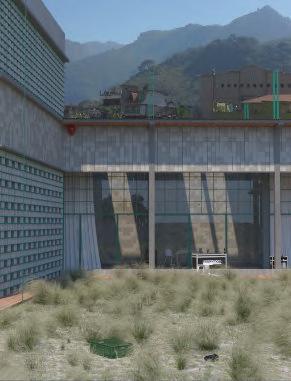
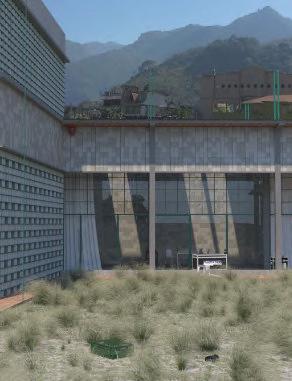
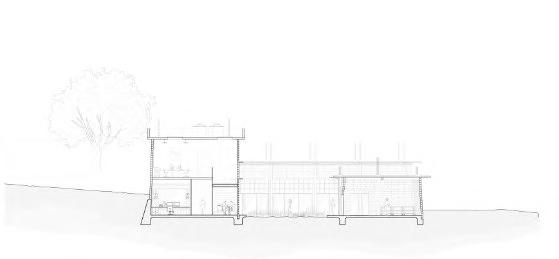
"Varillas al cielo," or "rods to the sky," are the rebar deliberately left exposed to ensure the potential for the building's expansion and growth. Serving as a symbol of ongoing development, they signify that the structure remains a work in progress, awaiting the return of economic means for completion. This shared aspiration for continual advancement and economic prosperity is emblematic of both nations, reflecting the challenges faced by those with limited financial resources. In this context, the exposed rebar is intentionally accentuated and coated with paint to blend seamlessly into the urban surroundings while also providing protection against rust.
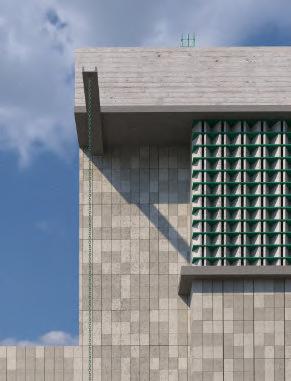
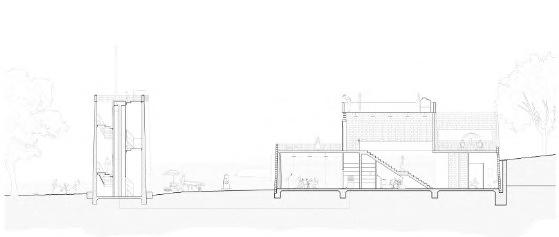
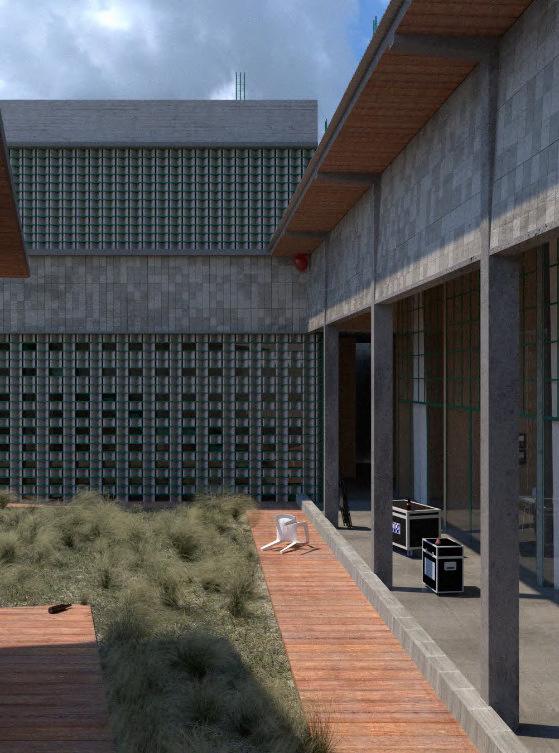
Textiles play a significant role in the cultural identity of the region, with their patterns imbued with deep symbolism. Reflecting this tradition, a unique pattern has been integrated into the blockwork of the buildings. Furthermore, a specialised brise-block style wall not only provides textural richness but also aids in cooling the structures, aligning with their orientation. Textiles are also utilised to insulate the recording and podcast studios, serving both symbolic and practical purposes in maintaining optimal recording conditions.
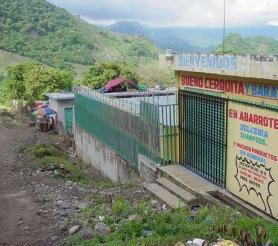
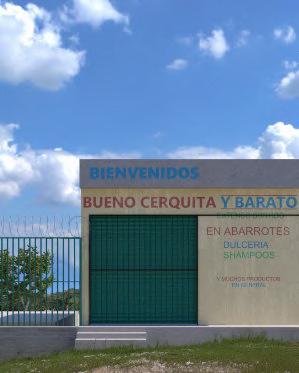
“Tienditadelaesquina”
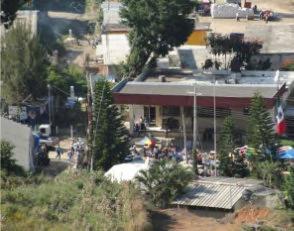
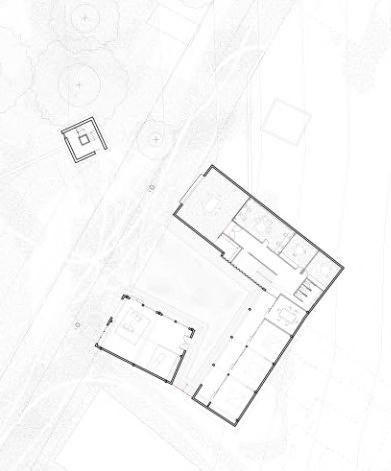
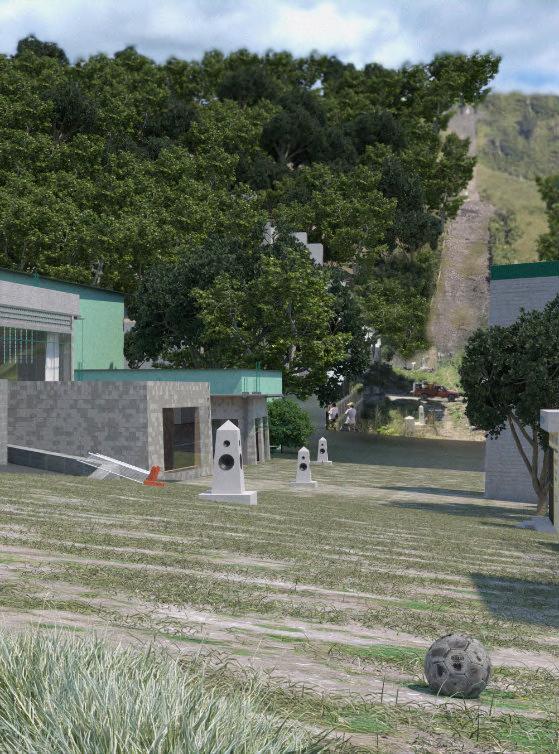
The radio station proposal is strategically located in an area where the traces of people's movements and responses to border control and policies are already evident but not enforced.
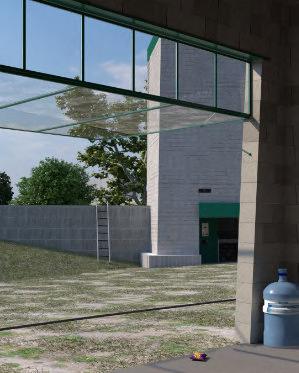
To challenge the physical and symbolic barriers of the border, the project employs subtle tactics to disrupt and reduce its perceived width. This includes incorporating design elements such as glass box windows, operable windows swinging towards the border, and gutters that redirect water from one country towards the border's centre.