BETWEEN PRIVATE AND PUBLIC
TRANSFORMATION OF THE NOTION OF COMMON SPACES IN THE CITY OF CALI
Student:DianaVanessaRosero
Tutor:DanielaCiaffi
ExternalTutor:GustavoArteaga
1 2 3 4 5 6
CASE STUDY: CALI

RESEARCH
CONTEXTUALIZATION
OBJECTIVES
METHODOLOGY
BACKGROUND
OPERATIONAL STAGE
CONCLUSIONS AND RECOMENDATIONS
7
CASE STUDY: CALI
1
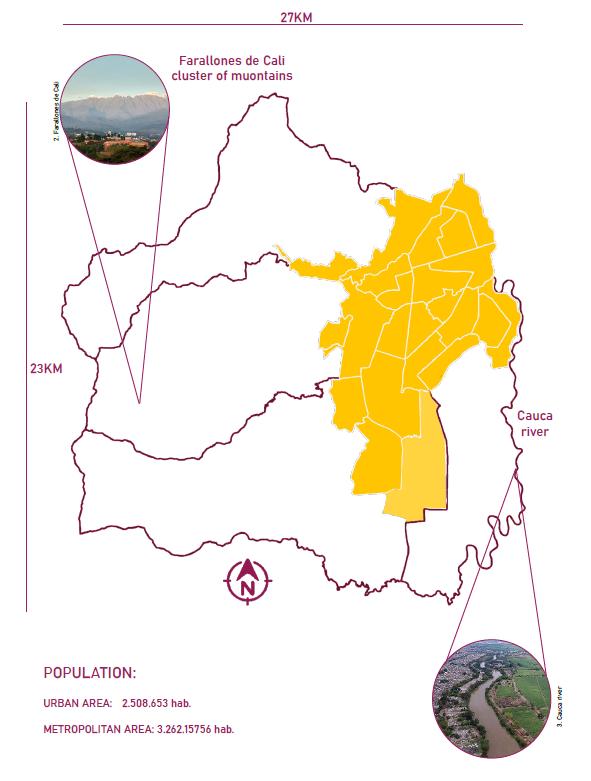
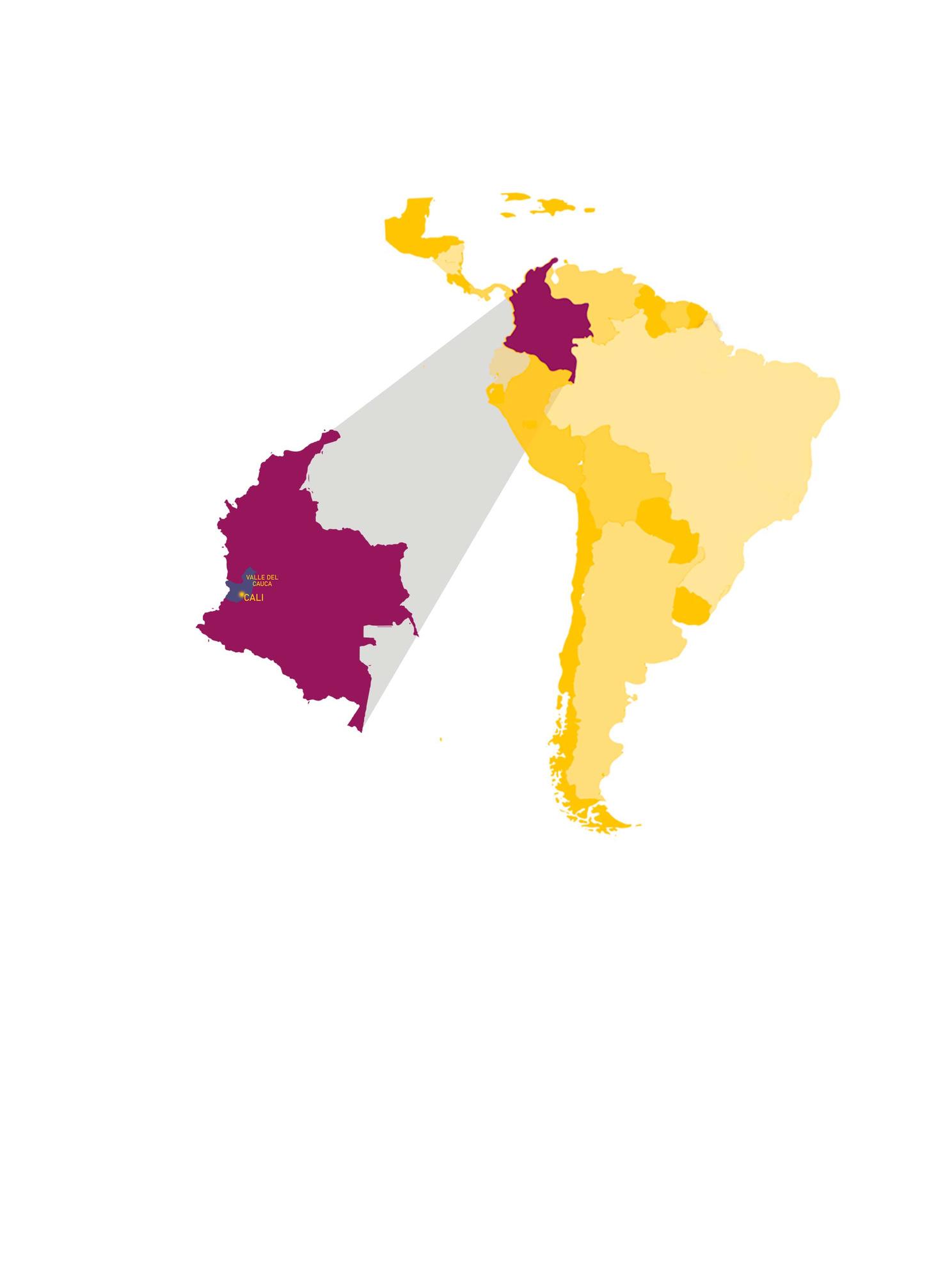
COLOMBIA SOUTH AMERICA
2 RESEARCH CONTEXTUALIZATION
Research Contextualization.
Cali has functioned between the public and private spheres, which have been even more accentuated since the arrival of laws and regulations that modify their scope.
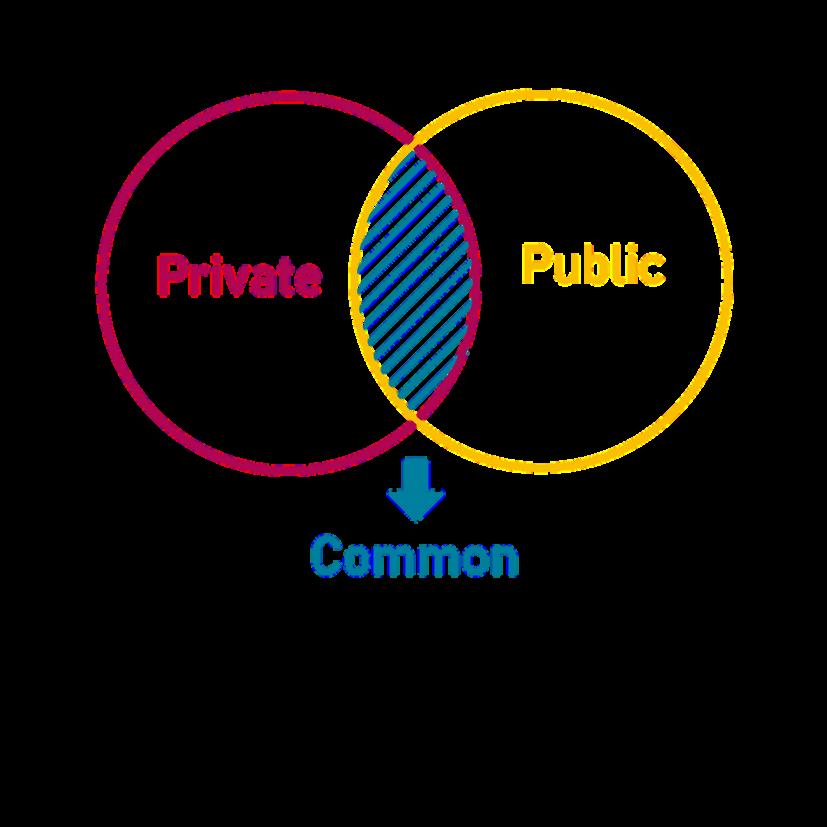
In recent years in other parts of the world, a new sphere has emerged in a way that goes beyond the established difference between the private and the public: THE COMMON
Is the common sphere visible between the public and private spaces defined by the current Cali's regulations?
3 OBJECTIVES
Objetives
Objective 1
-Identify spaces of common character in two urban contexts of the city of Cali.
Objective 2
-Identify and compare the physical and social conditions that can guide to find spaces based on the common character.
Objective 3
Provide a different perspective of what is currently conceived as common spaces in the city of Cali-Colombia.
4 METHODOLOGY
Methodology
It is a case study where comparison and observation methodology are used.
Physical-spatial analysis
TOOLS:
Morphological comparison matrix.
Interviews
Urban fabric 1 Urban fabric 2
Socio-spatial analysis
Acceses, Edges and paths
analysis
12 quality criteria
5
BACKGROUND
ownership
 Aldo Ross
3
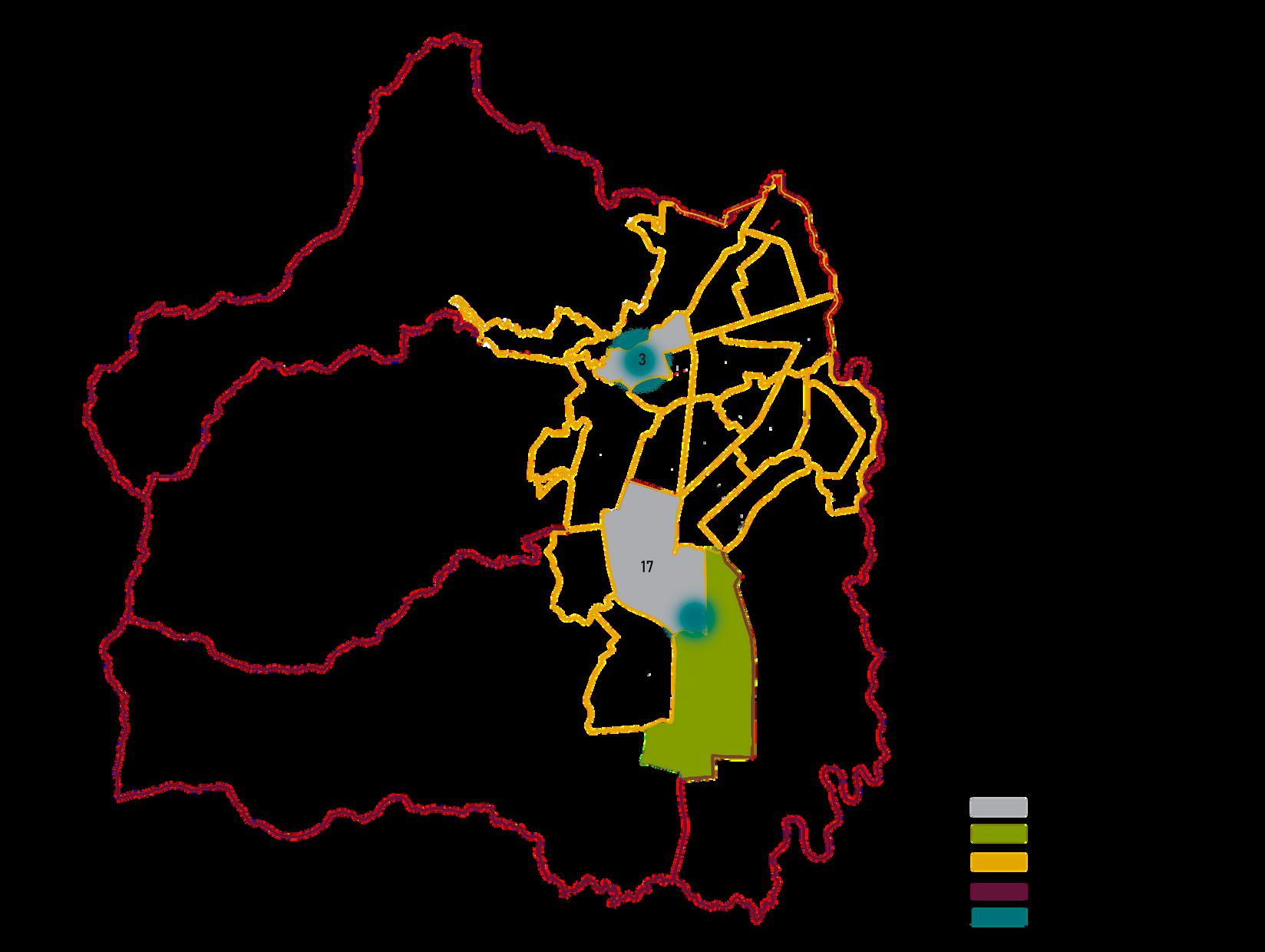
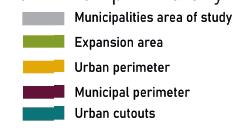
Studyareascommunes Commune
17
"Cali vie o" 1895
Commune
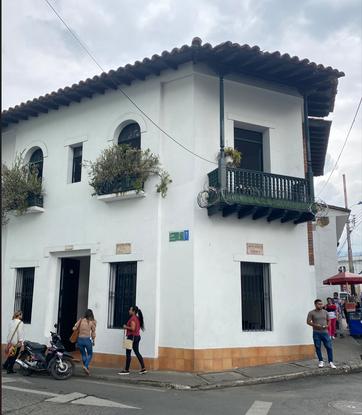
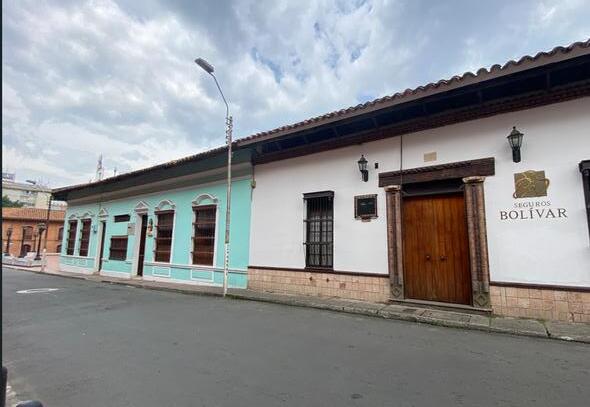
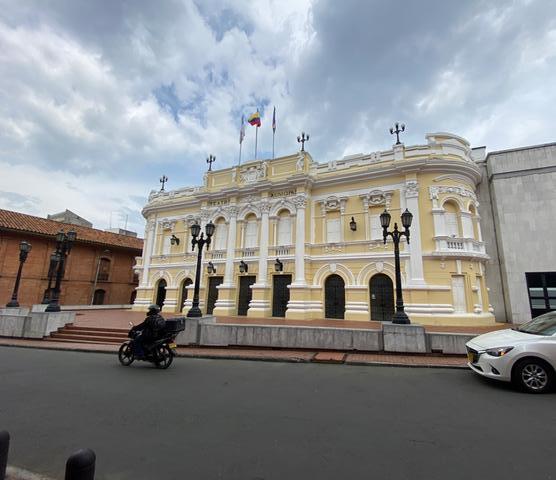
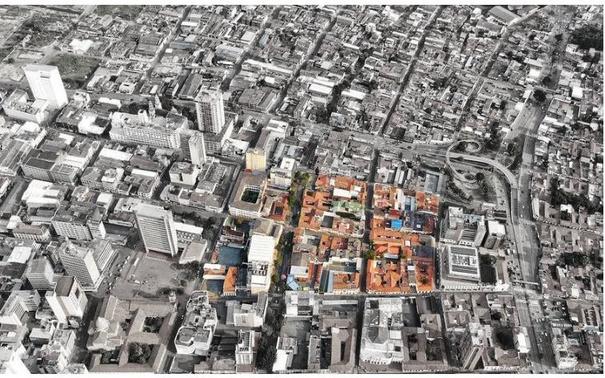
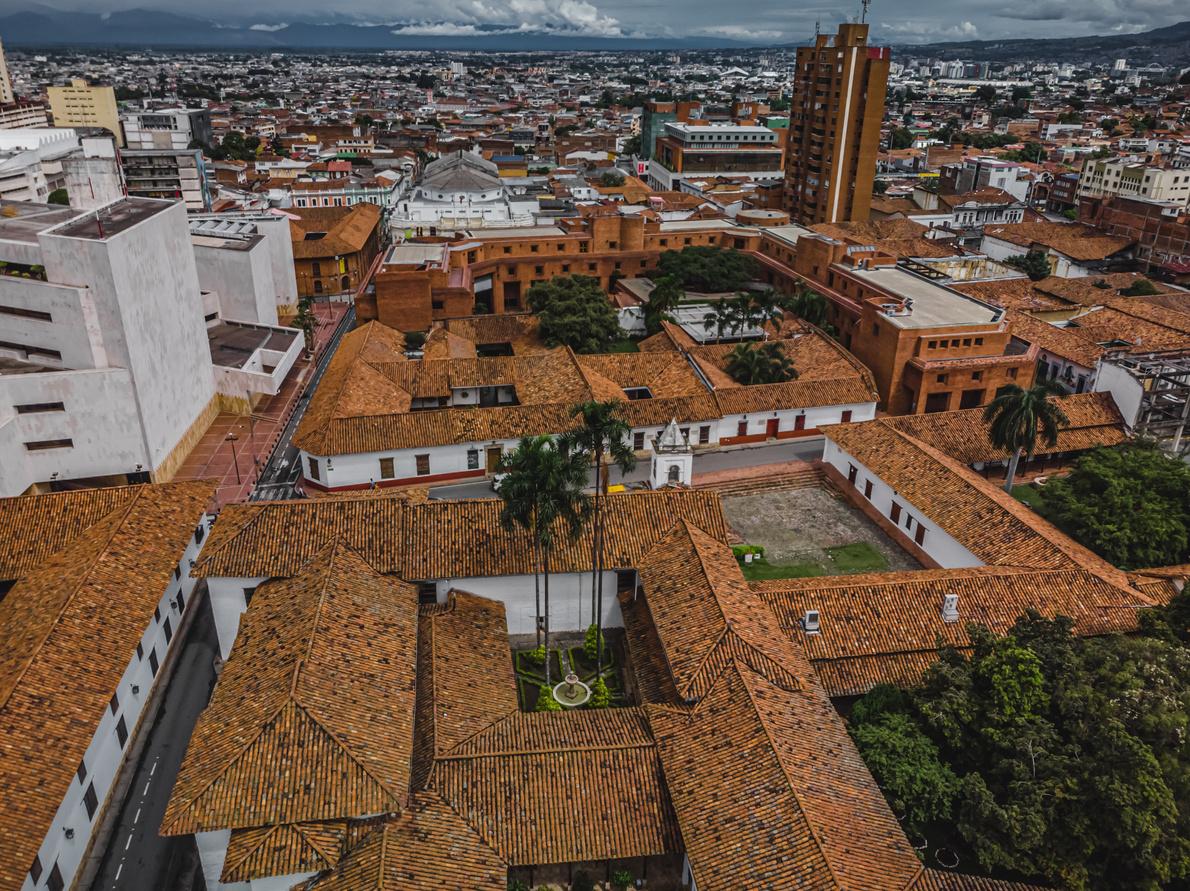
urban fragment of analysis
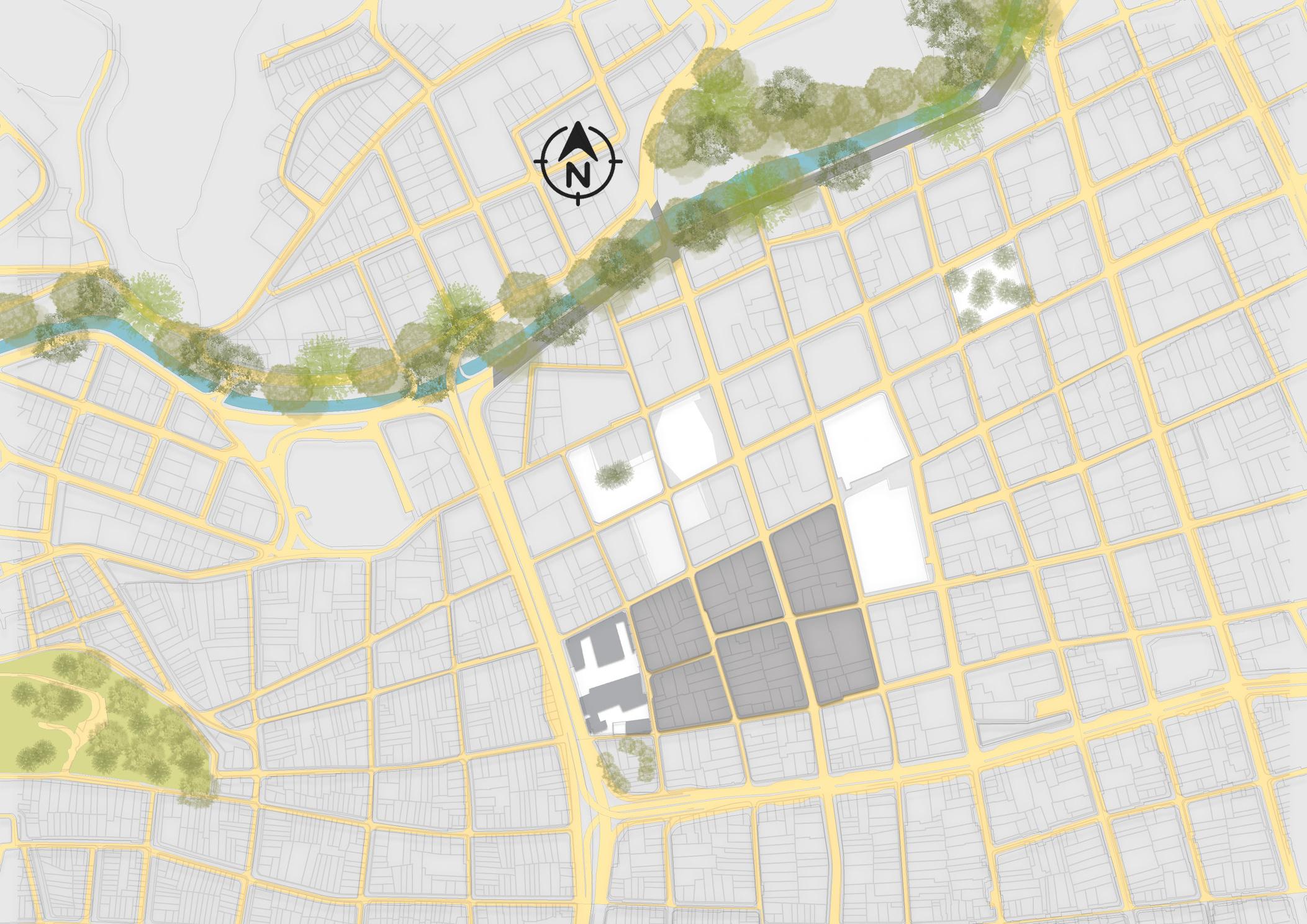
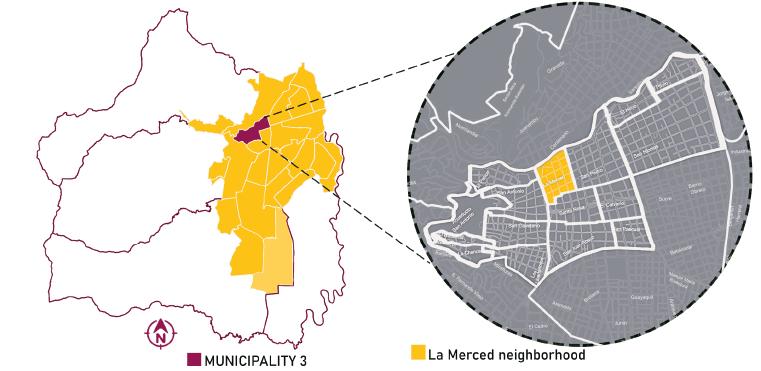
Commune 3 La Merced neighborhood
La Merced neighborhood
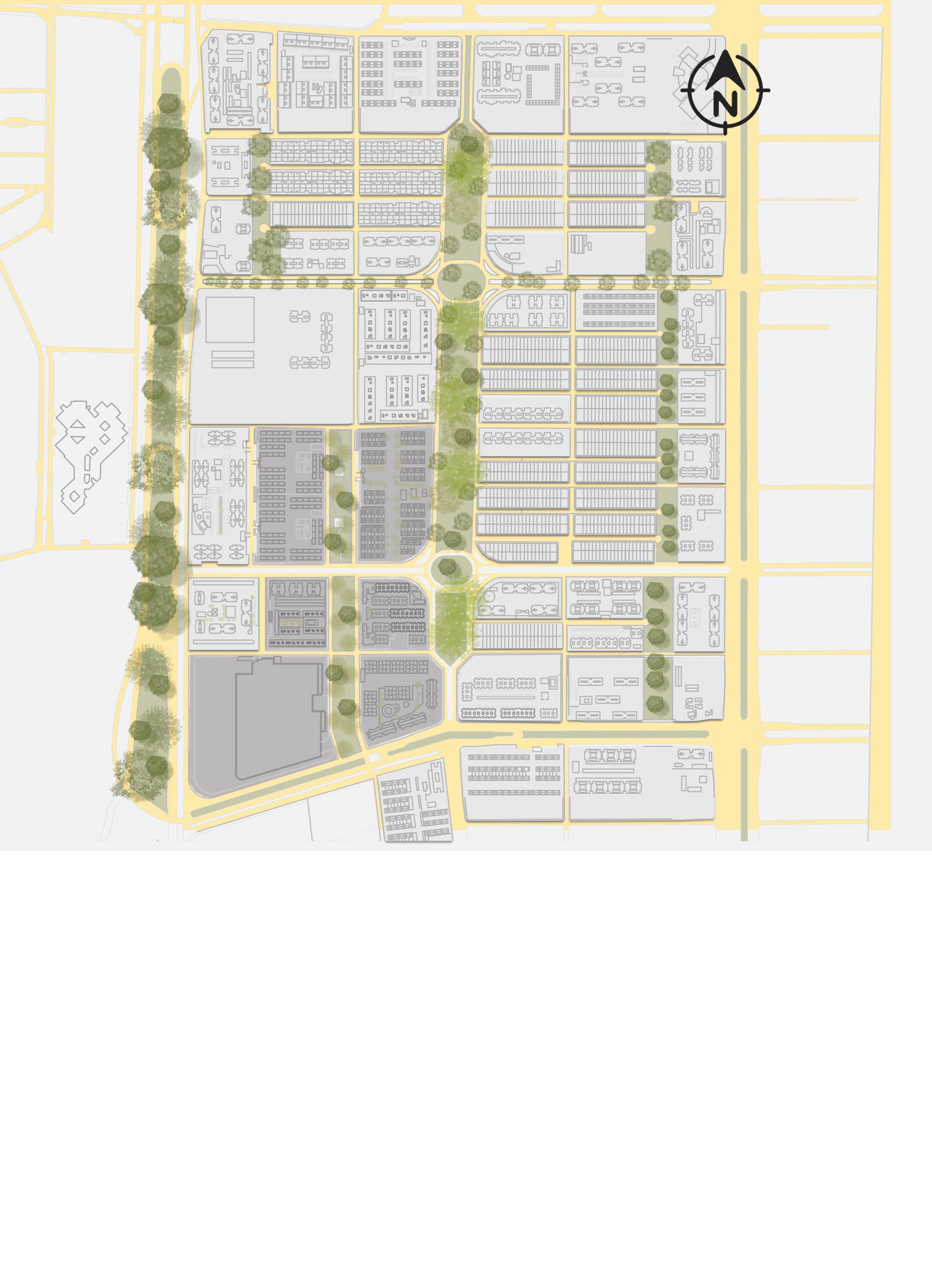
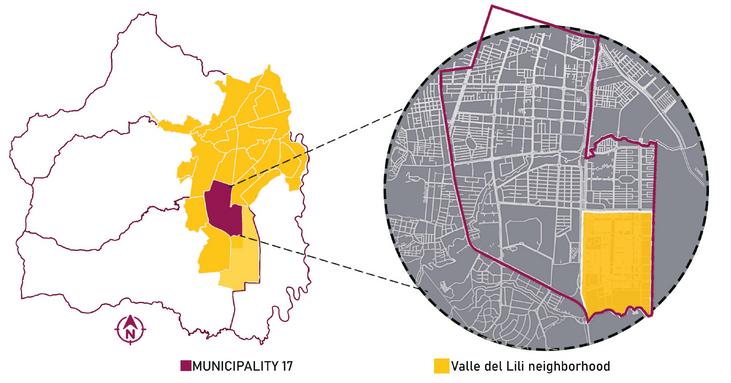
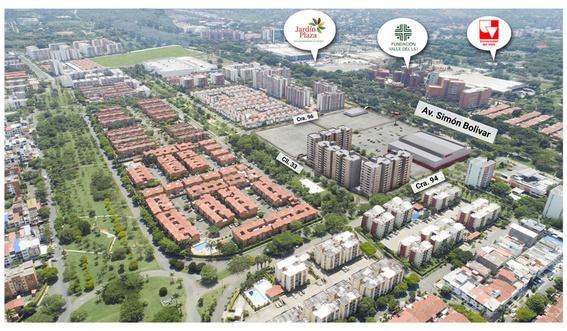
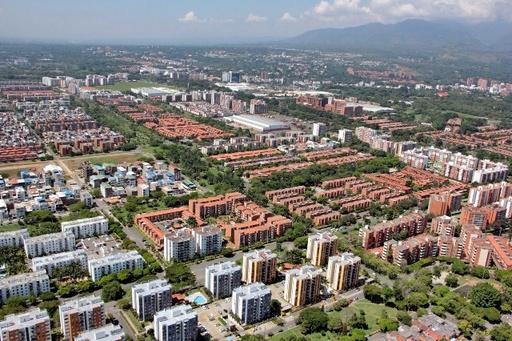
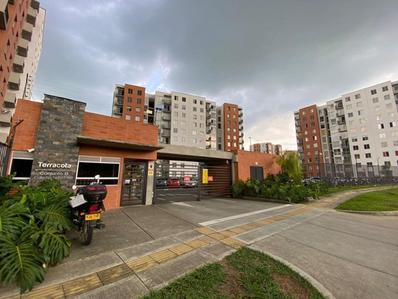
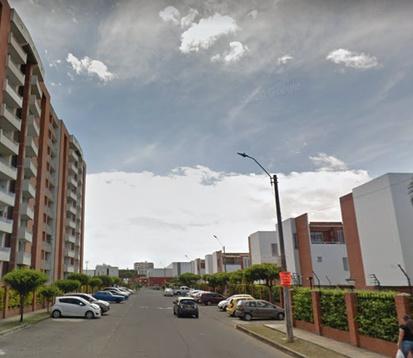
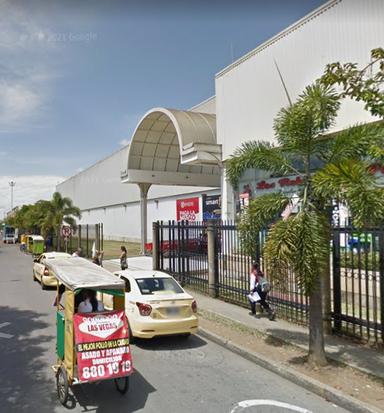
Commune 17 Val e de Lil neighborhood Valle del Lili neighborhood urban fragment of analysis
OPERATIONAL STAGE
6
Morphologicalspatial analysis
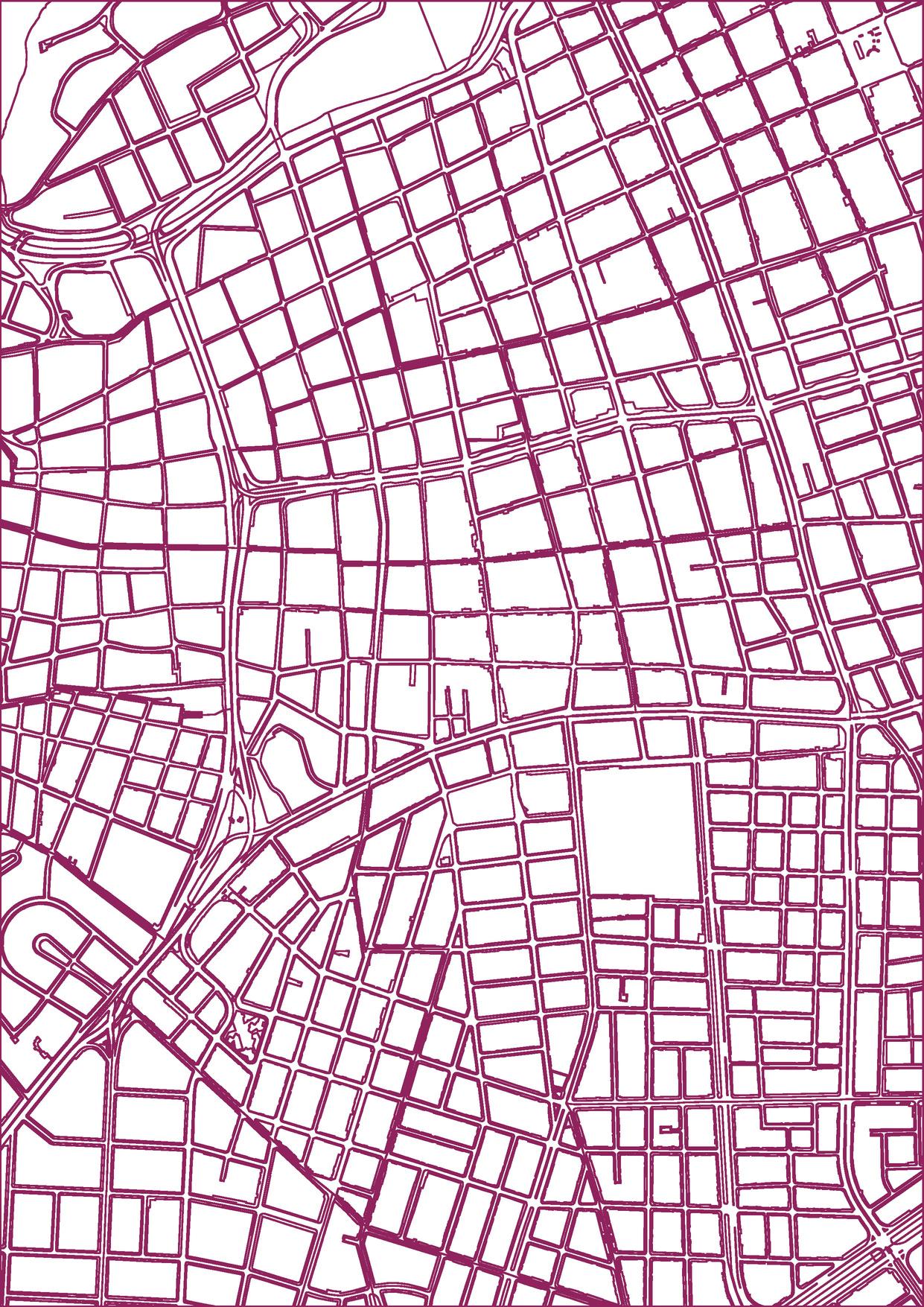
Morphological matrix Blocks
Analytical method created by astrophysicist Fritz Zwiky in the mid-1940s.
It is a combinatorial technique of creative ideation consisting of breaking down a concept or problem into its essential elements or basic structures.
Parameters

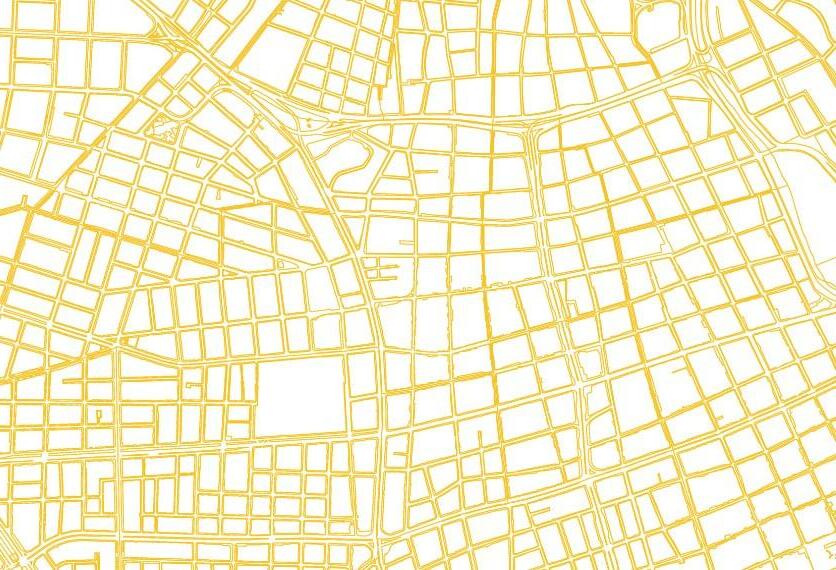
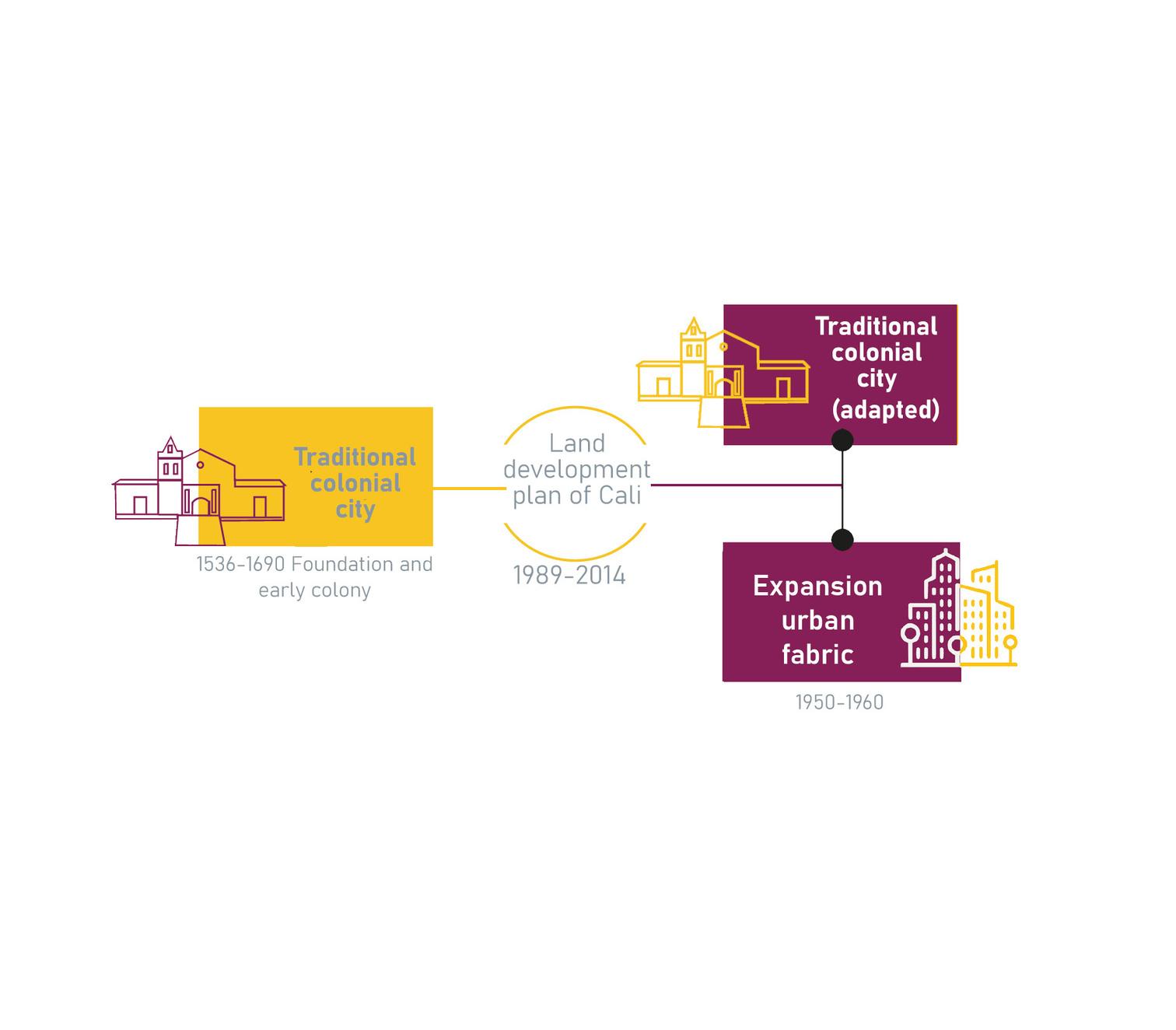
Urban fabric 1 (Historical center)
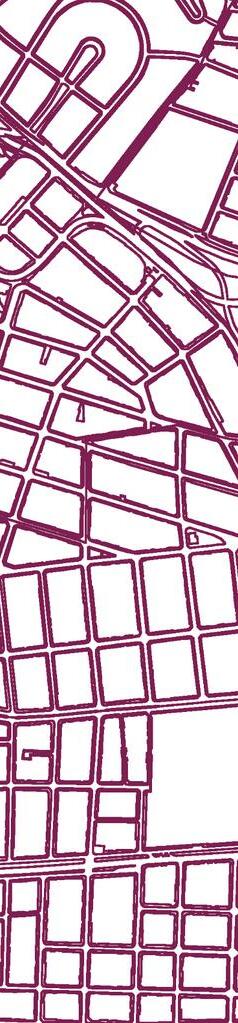
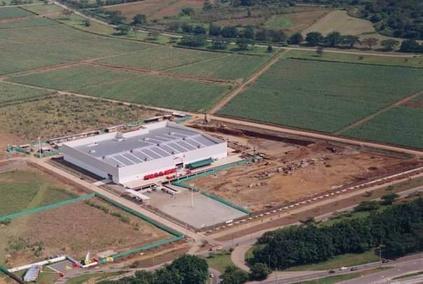
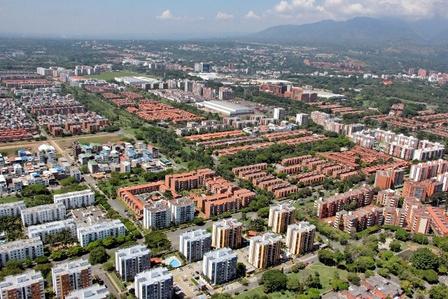
Urban fabric 2 (Expansion zone)
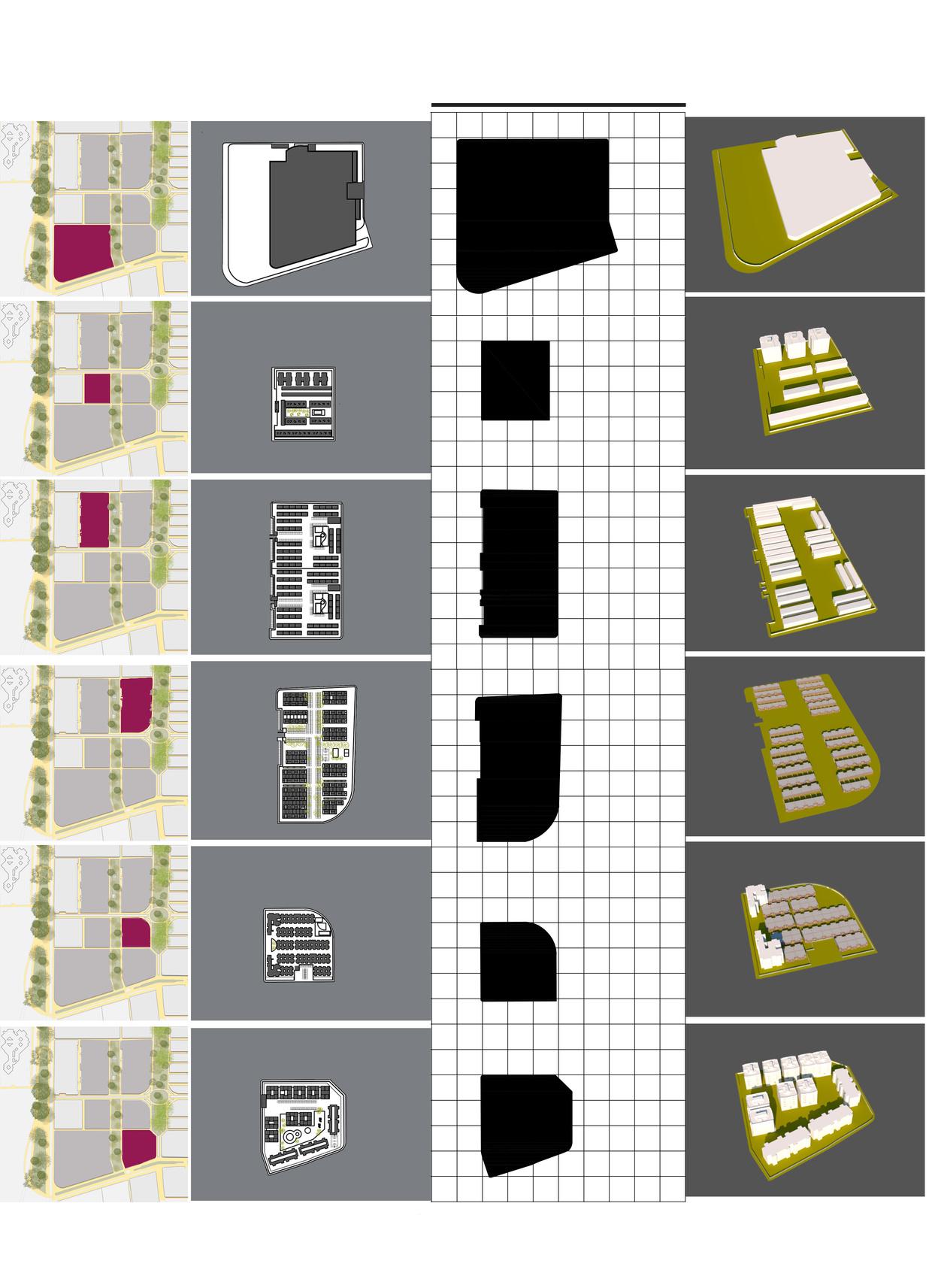
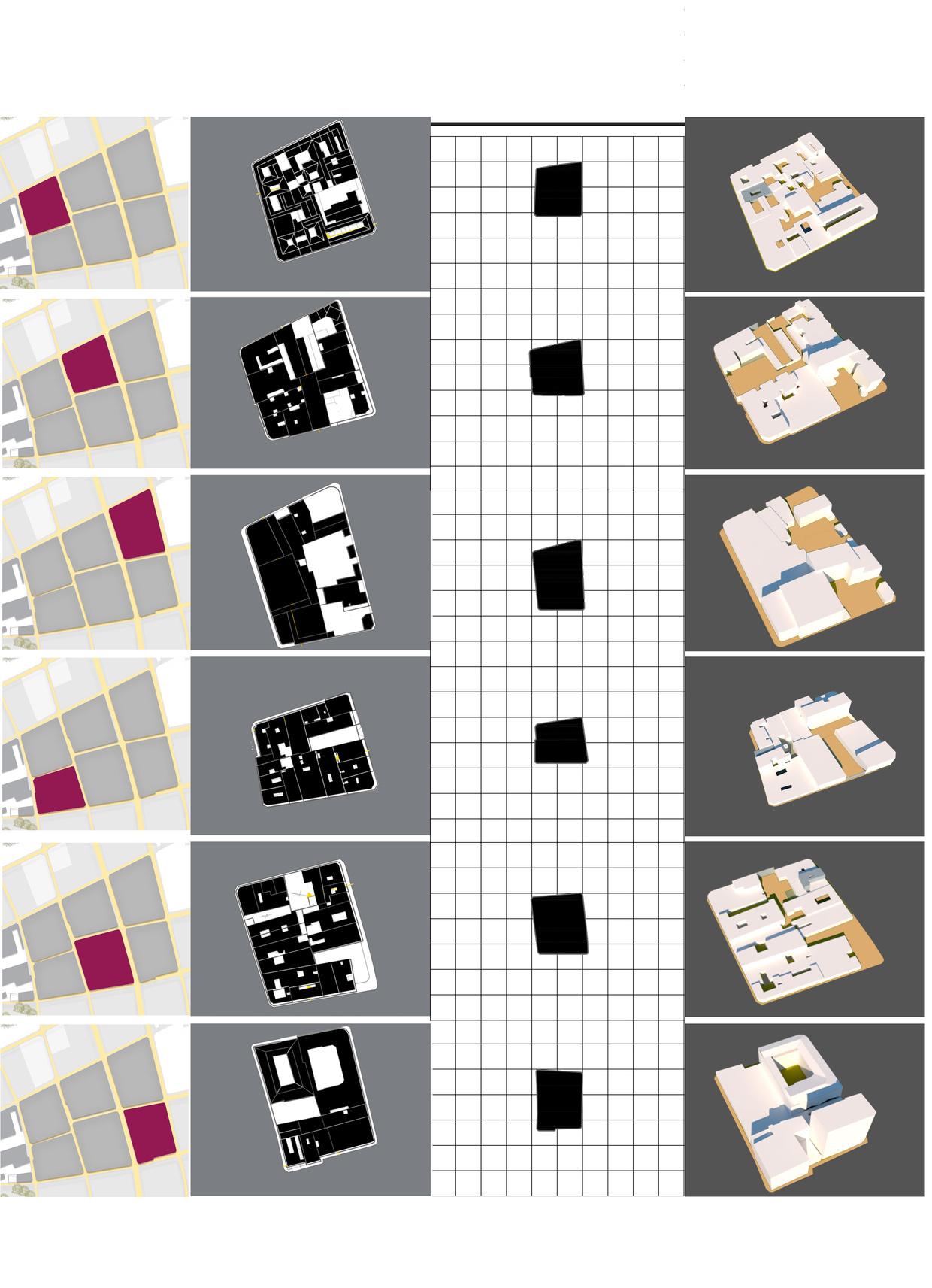 BLOCKS GRID 3D
BLOCKS GRID 3D
BLOCKS GRID 3D
M o r p h o l o g i c a l m a t r i x G e n e r a l d i m e n s i o n s 200m 200m
M o r p h o l o g i c a l m a t r i x U r b a n f a b r i c 1 ( H i s t o r i c a l c e n t e r )
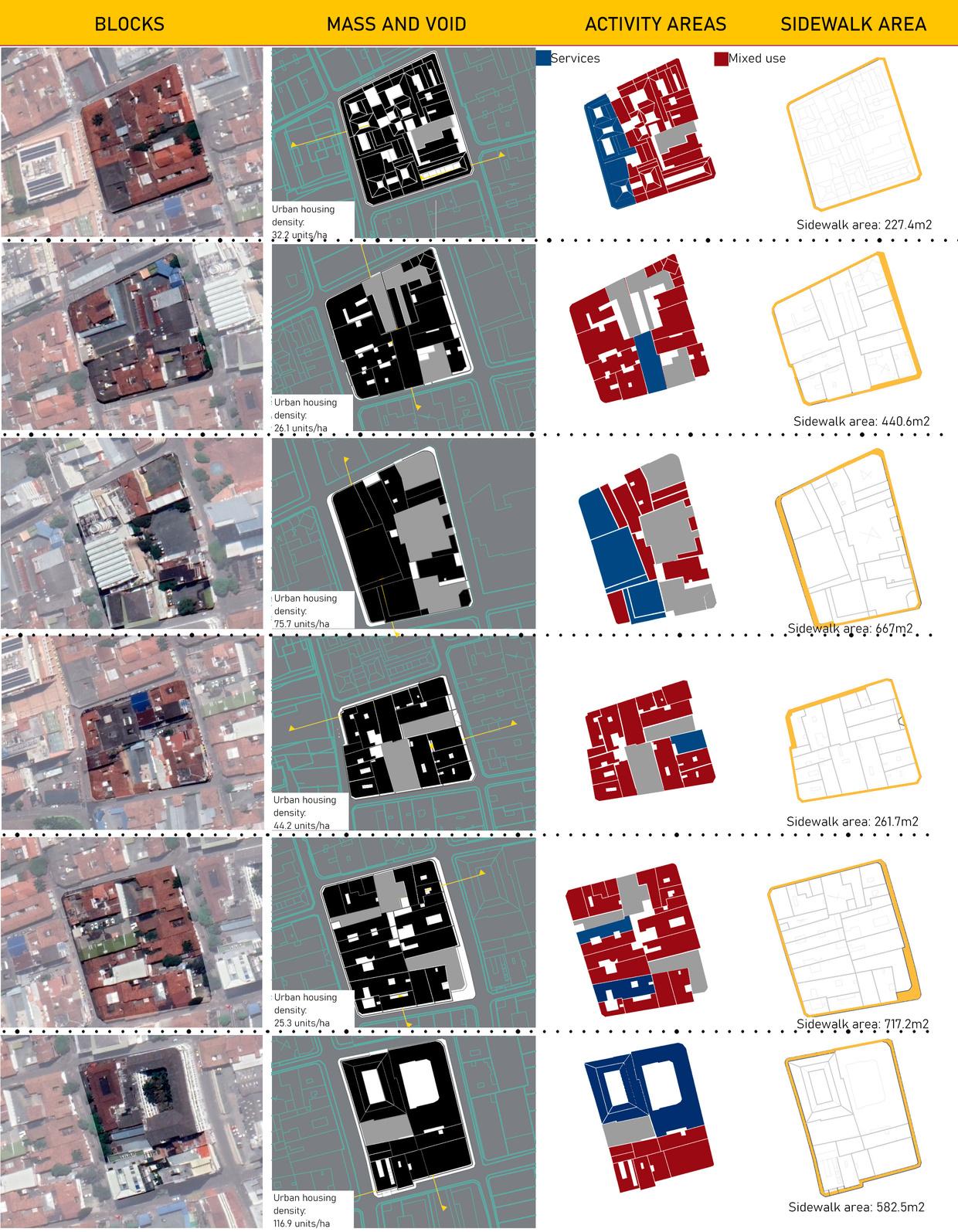
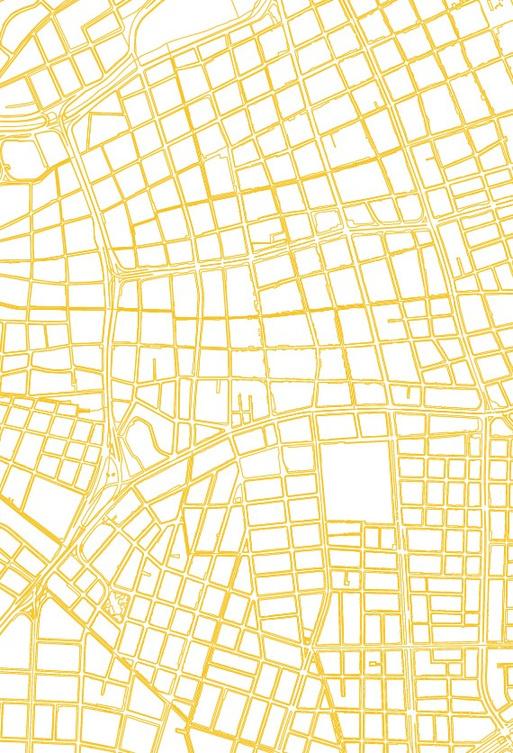
Sidewalk-street system
The dimensions of the width of sidewalks, range between 0.75cm
and 3.00m
Its area doesn't exceeds 800m2
The streets are 5.40-12m wide.
Private and public relation
Direct relation between Mixed use/housing--sidewalk
Inst. service--sidewalk//porticos--
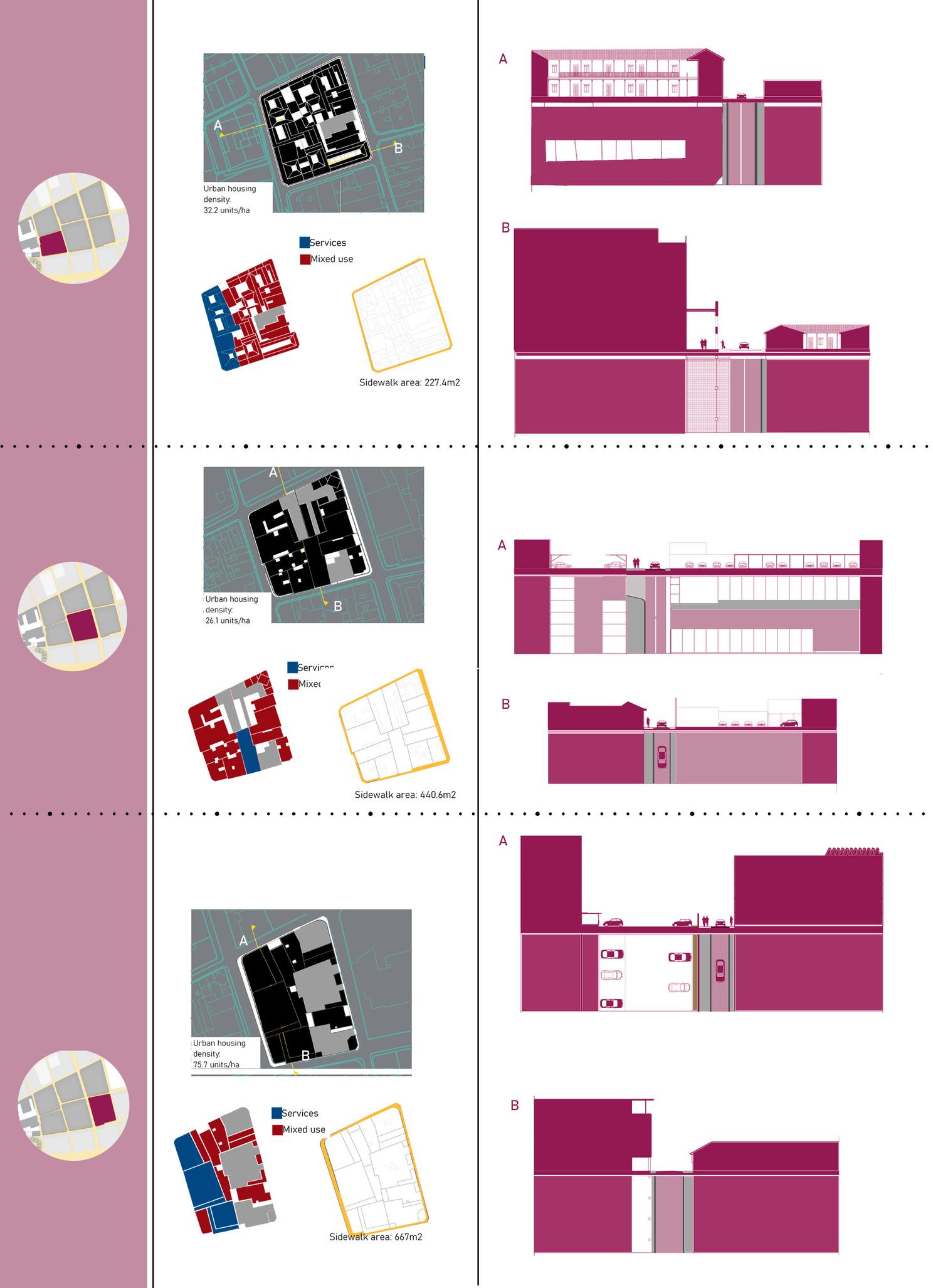
street--sidewalk--commerce
Typology and scale
One floor houses, maximum 2.
The highest scales are found in some of the buildings with an institutional character, or new housing buildings.
Inst. service--Sidewalk//portico-street--Sidewalk--Service
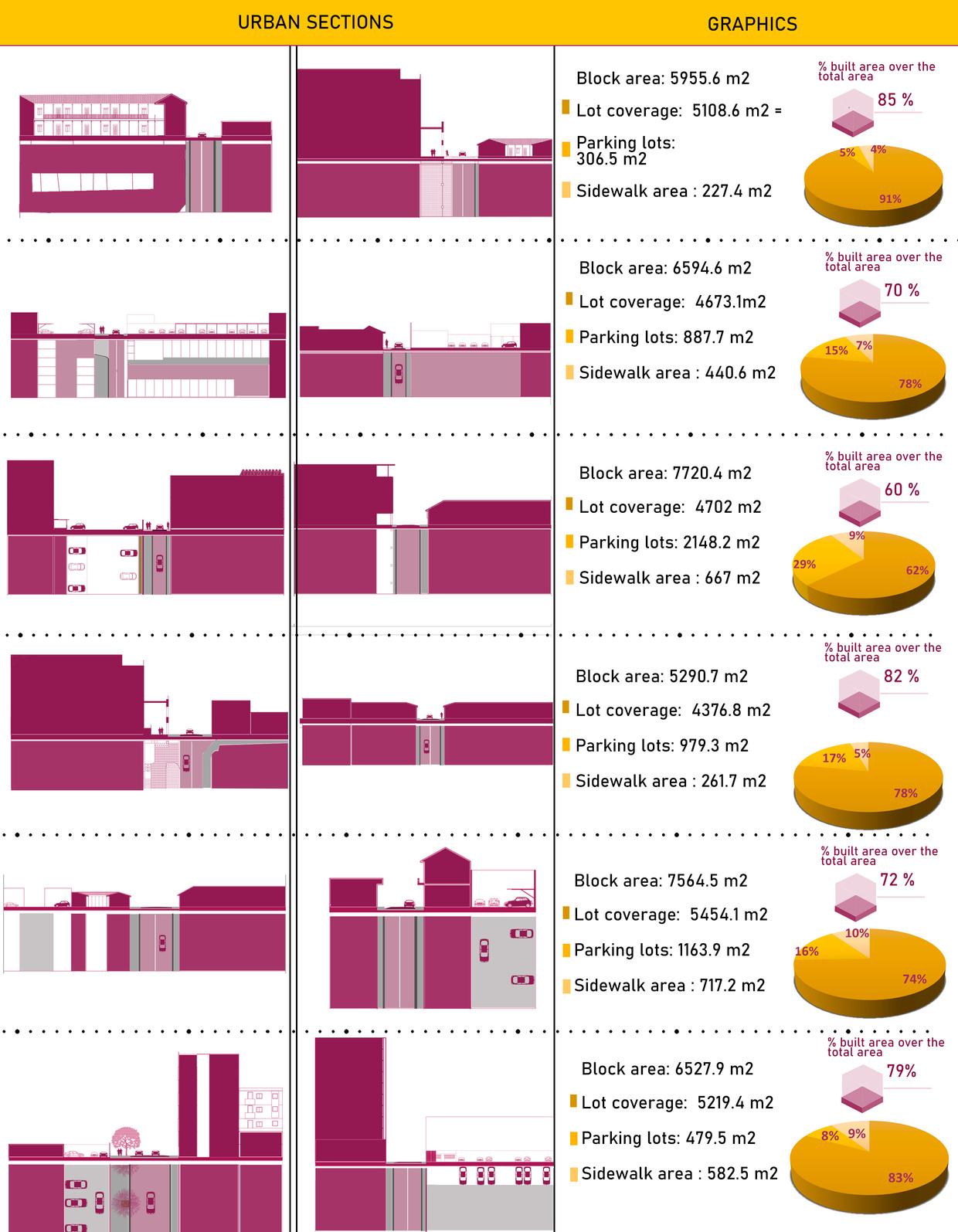
Lot coverage
What is built on the area of the blocks, ranges between 60% and 85%
Between mass and void, the void refers to lots for parking
Commerce/service--sidewalk--street--
sidewalk--commerce
M o r p h o l o g i c a l m a t r i x U r b a n f a b r i c 2 ( E x p a n s i o n z o n e )
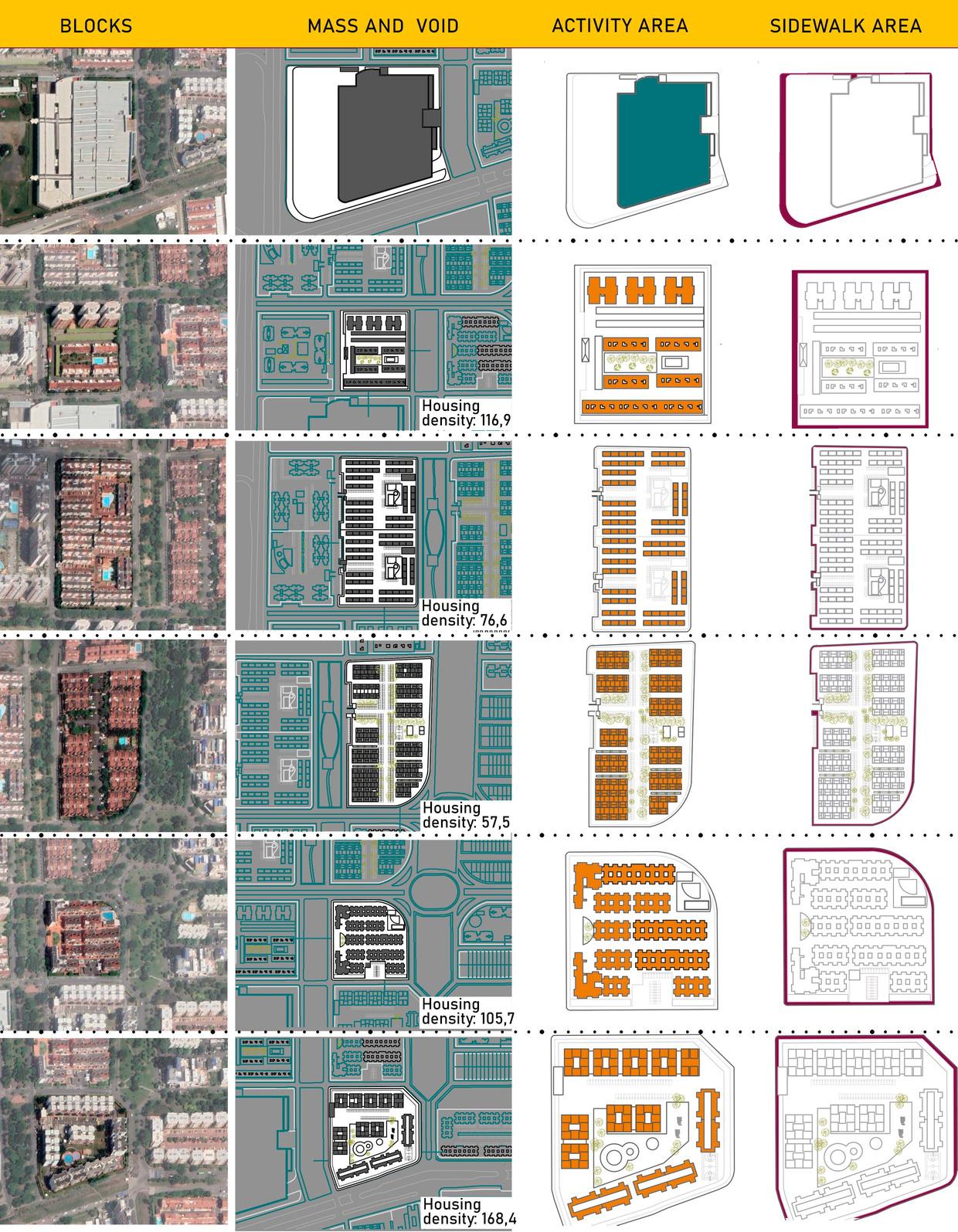
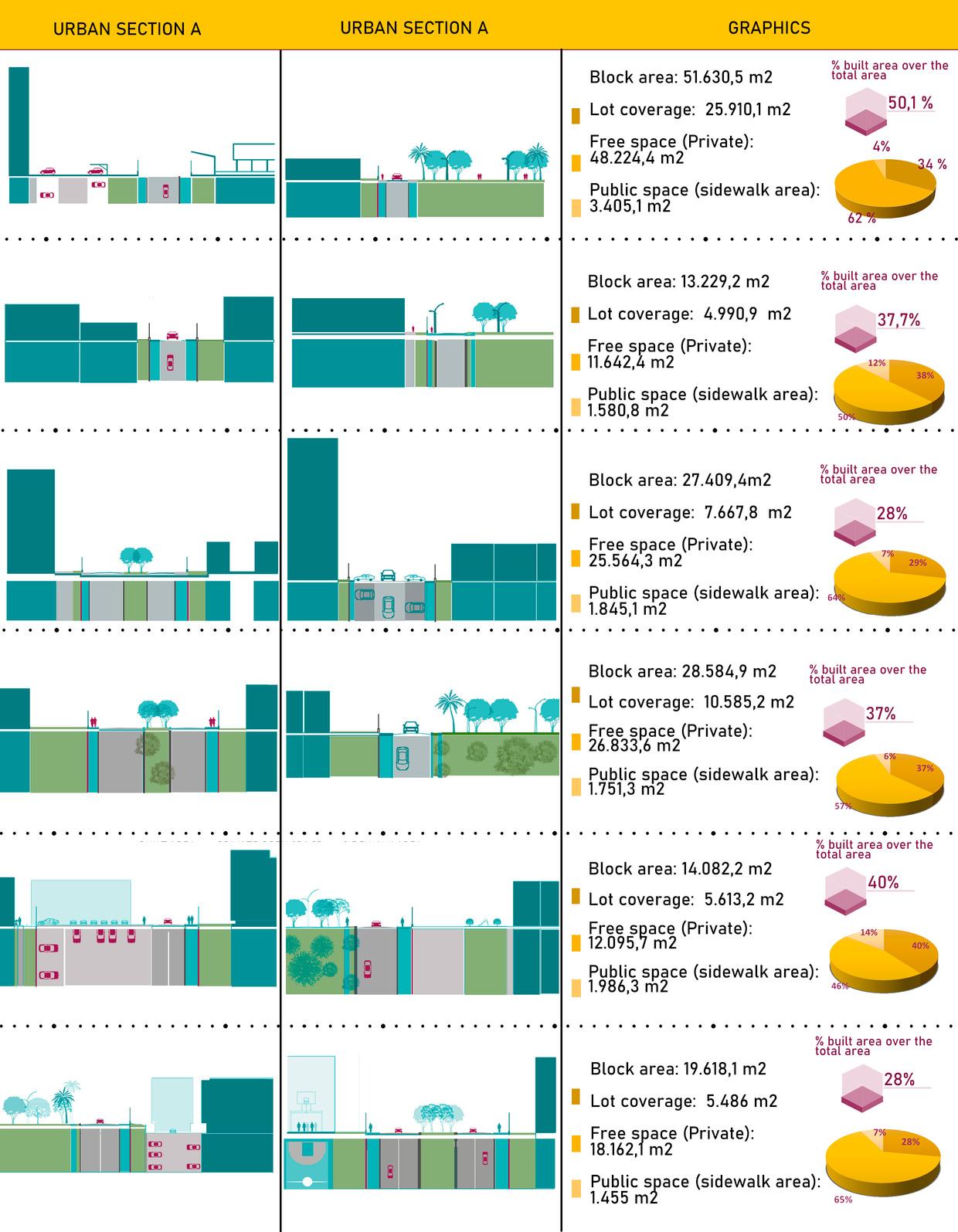
Sidewalk-street system
The dimensions of the width of sidewalks range between 3.50m
and 2.40m
Its area exceeds 1,200m2
The streets are 7.50m wide.
Private and public relation
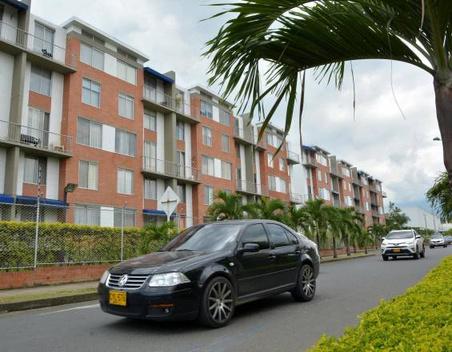
Fragmented relation: appearance of the fence as element that encloses gated communities.
Common area-Fence-Sidewalk--street
Typology and scale
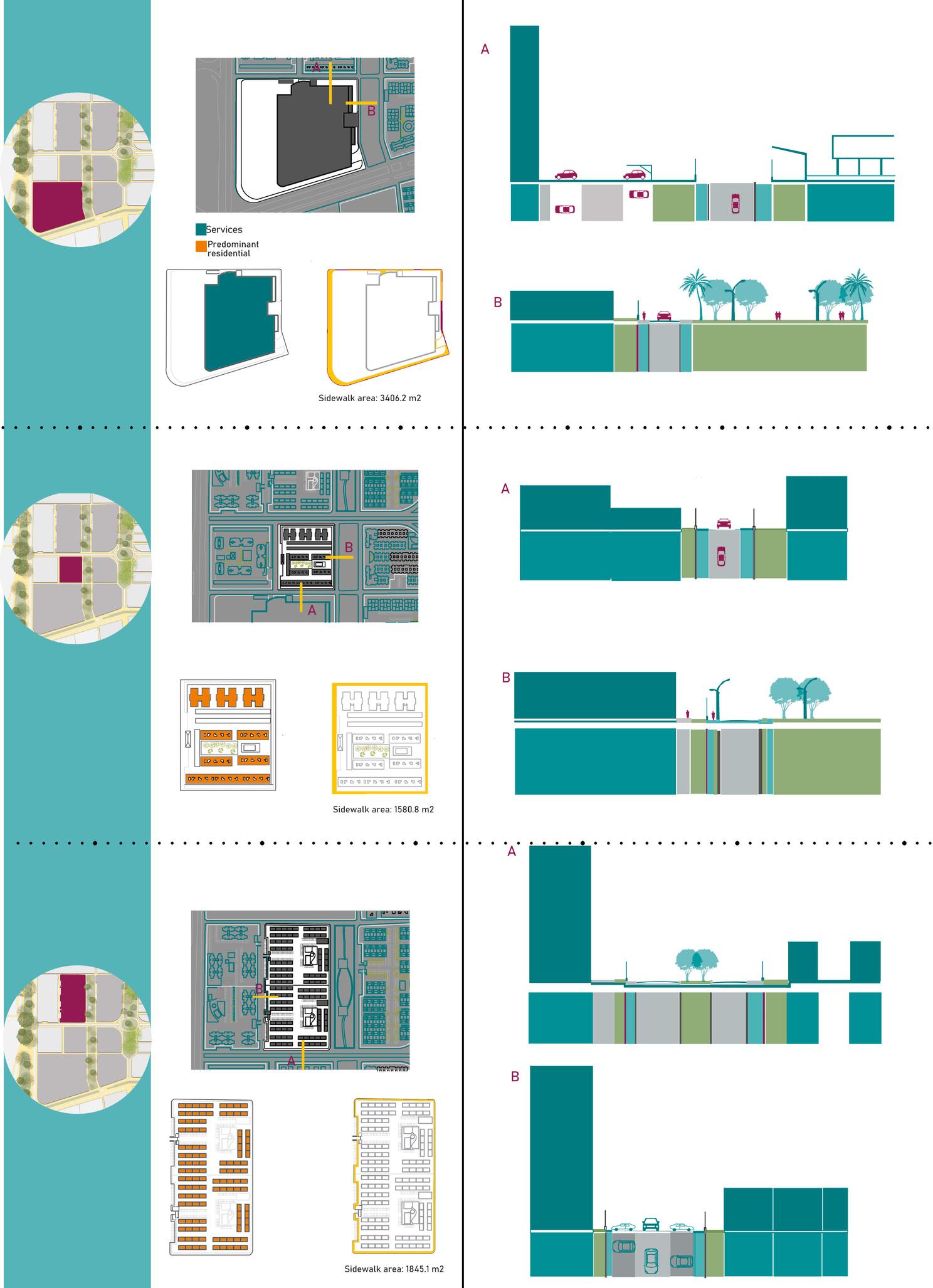
Apartment buildings, ranging from 5 or 11 floors with 4 apartments
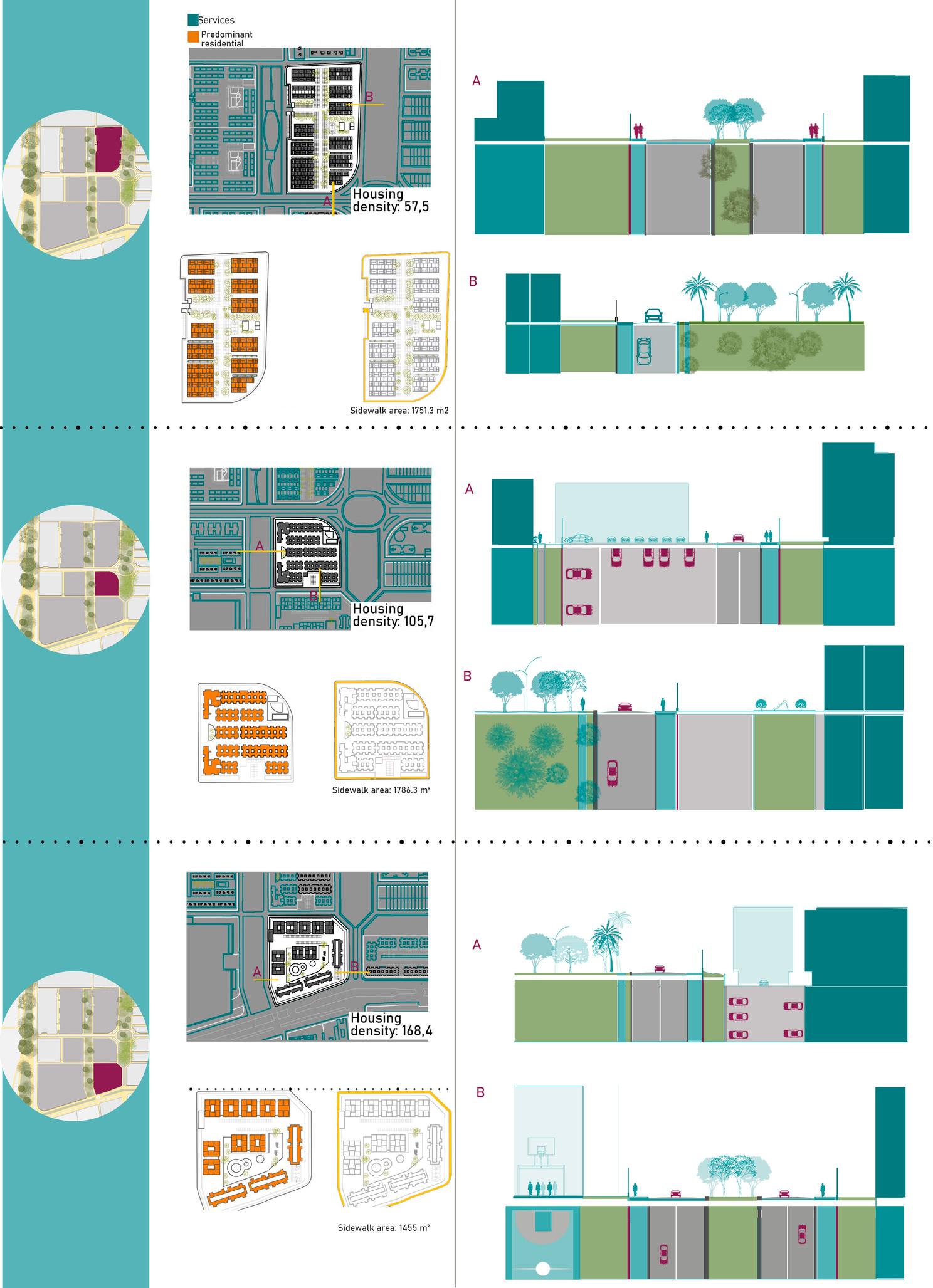
3 floors Houses per floor.
Lot coverage
What is built on the area of the blocks, does not exceed 50%
Between mass and void, the void refers to common areas
Green area/park--Sidewalk--street-Sidewalk--Fence-Common area-housing
Housing--Common area--FenceSidewalk--street
Socio-spatial analysis
Interfaces
The interface as a technical language, is the zone of communication of action of one system on another
The way of inhabiting the spaces: interviews
Accesses, paths, and edges:
The city at quality
The interviews with the inhabitants of the two urban tissues are key tools that allow us to visualize the real radiography of the socio-spatial structure of the interfaces
The ways of walking the city and the visual experience are opportunities of the improvement of quality of a city about the achievement of more vital cities,
The quality o invite people important activ interfaces ba interest and b identity with th
1. THE WAY OF INHABITING THE SPACES: INTERVIEWS
URBAN FABRIC 1
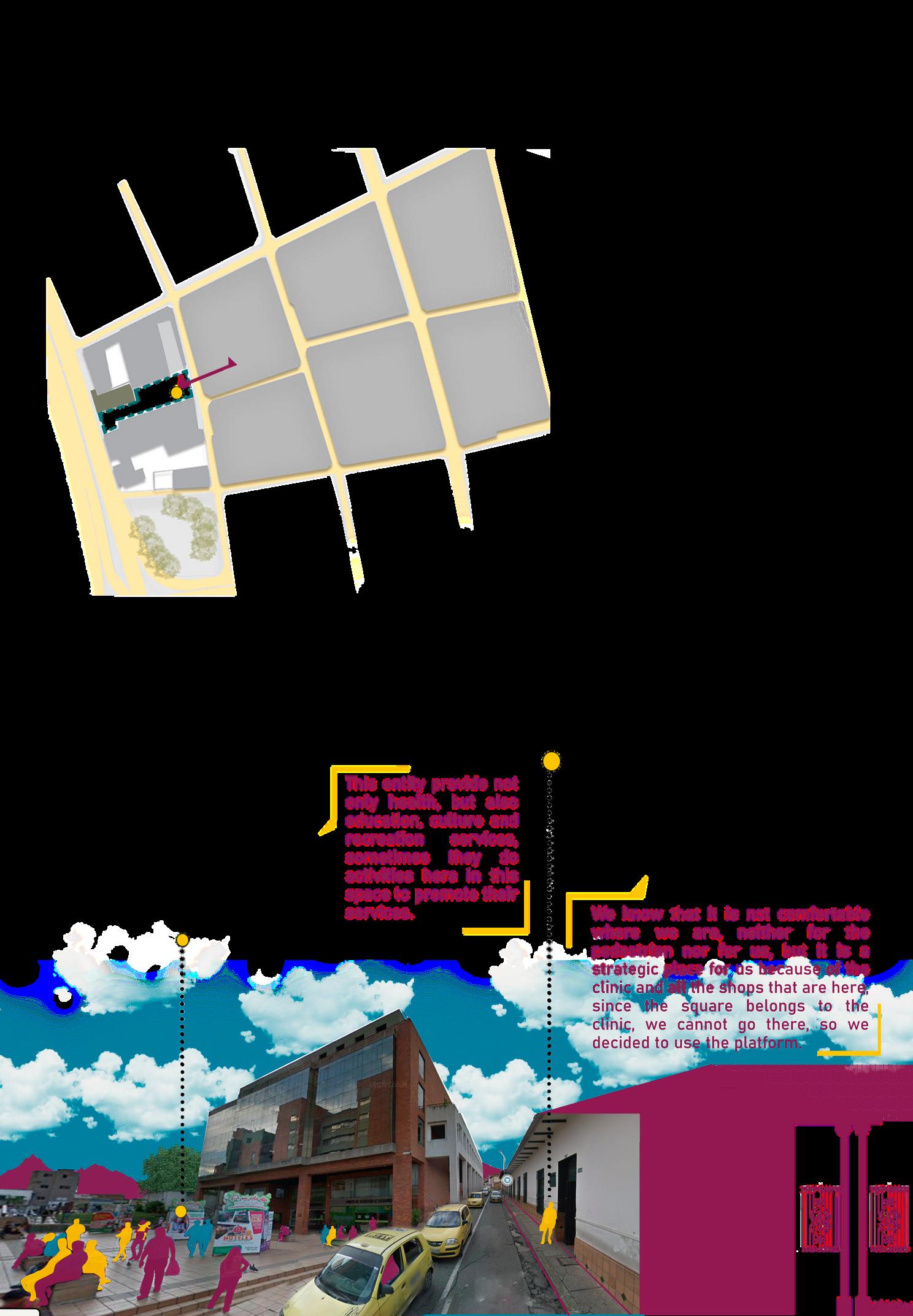
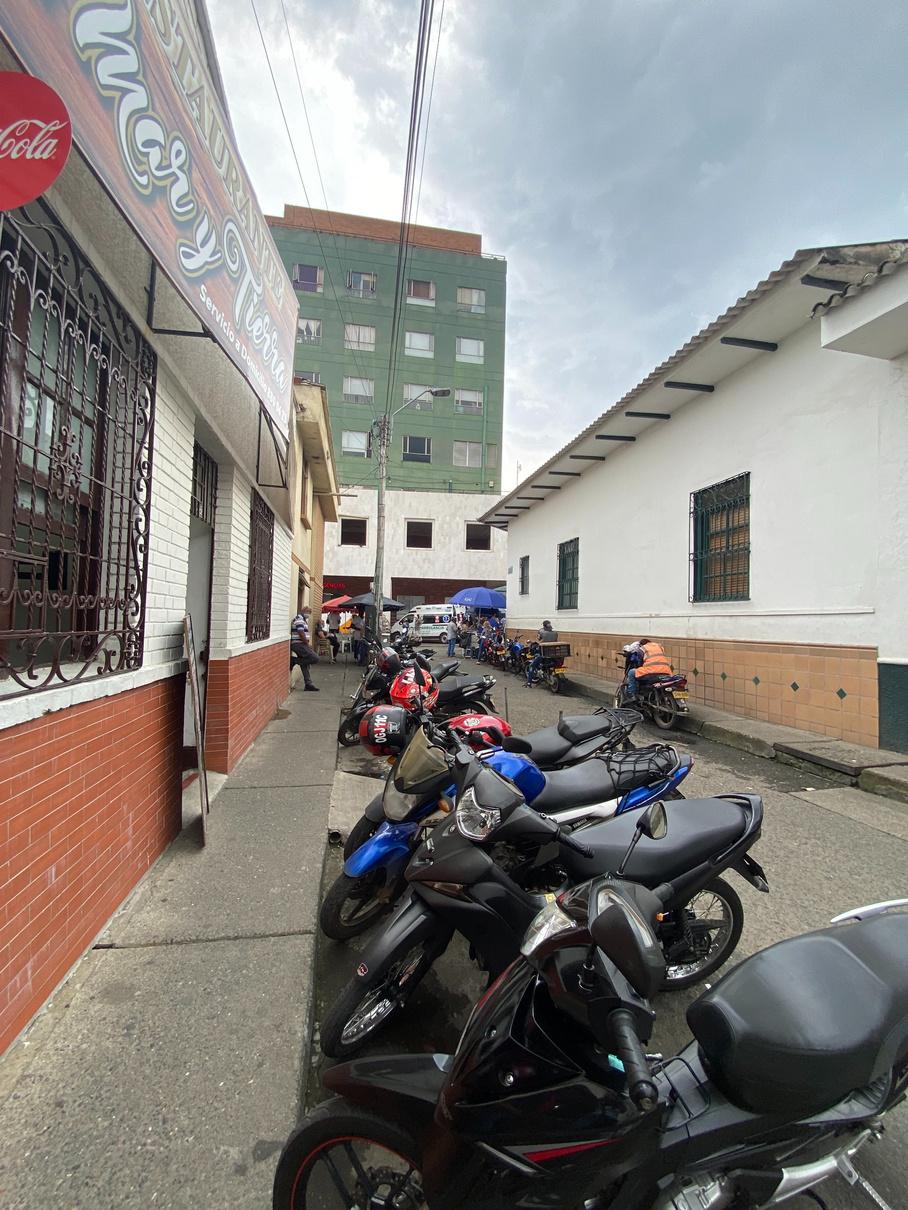
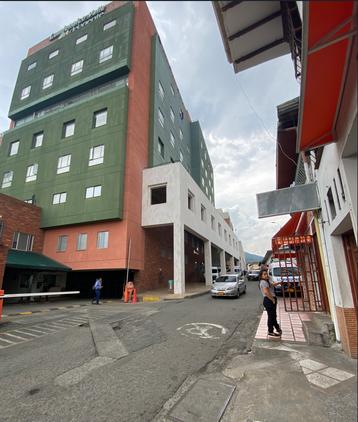
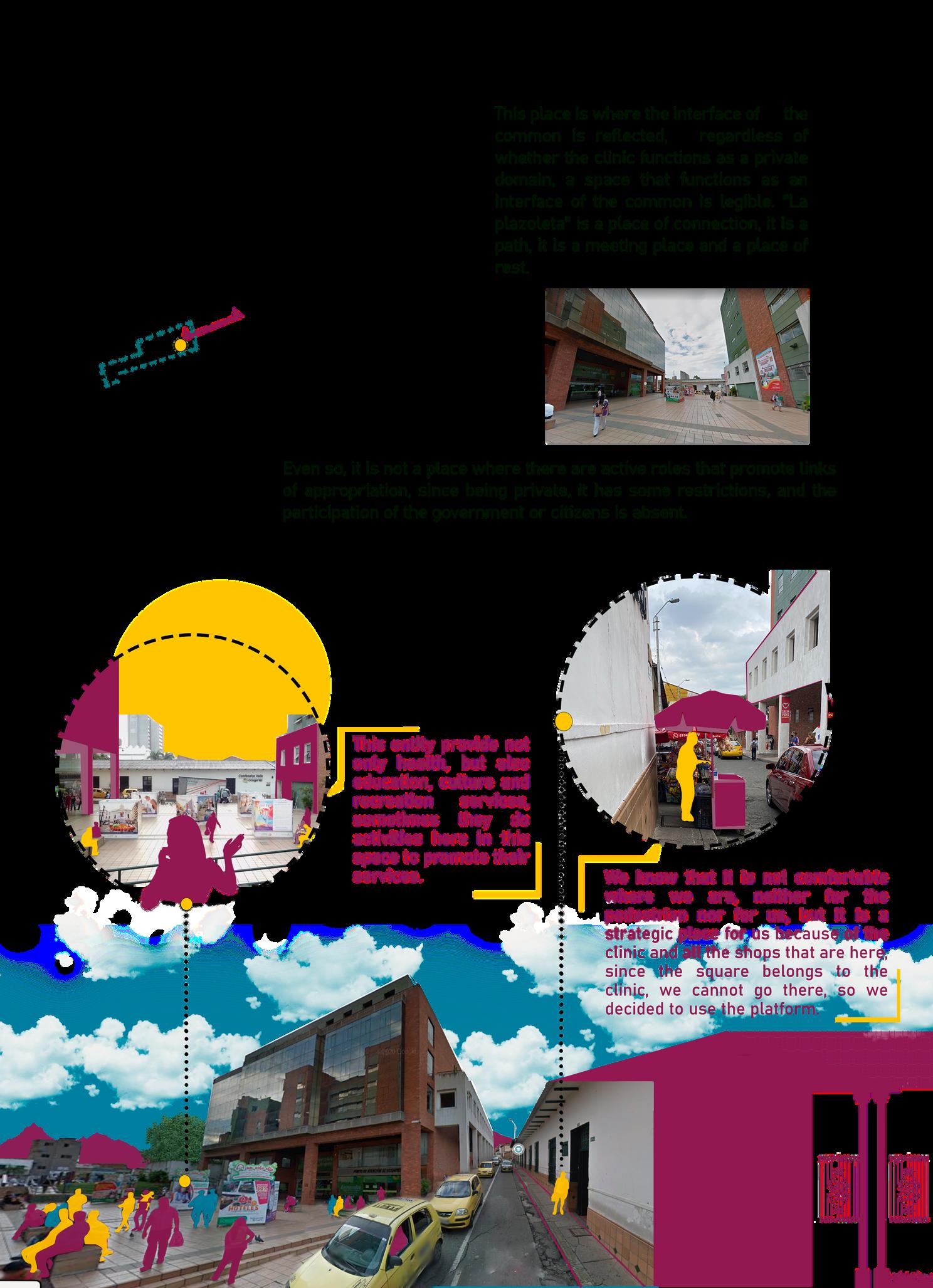
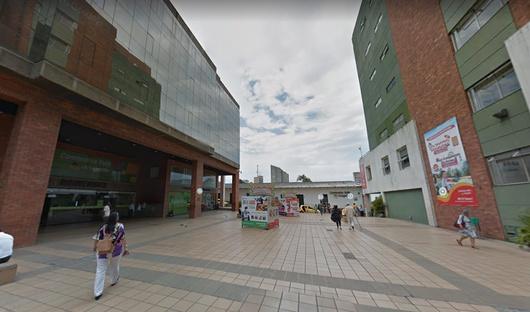
This place is where the interface of the common is reflected, regardless of whether the clinic functions as a private domain, a space that functions as an interface of the common is legible.
1. THE WAY OF INHABITING THE SPACES: INTERVIEWS
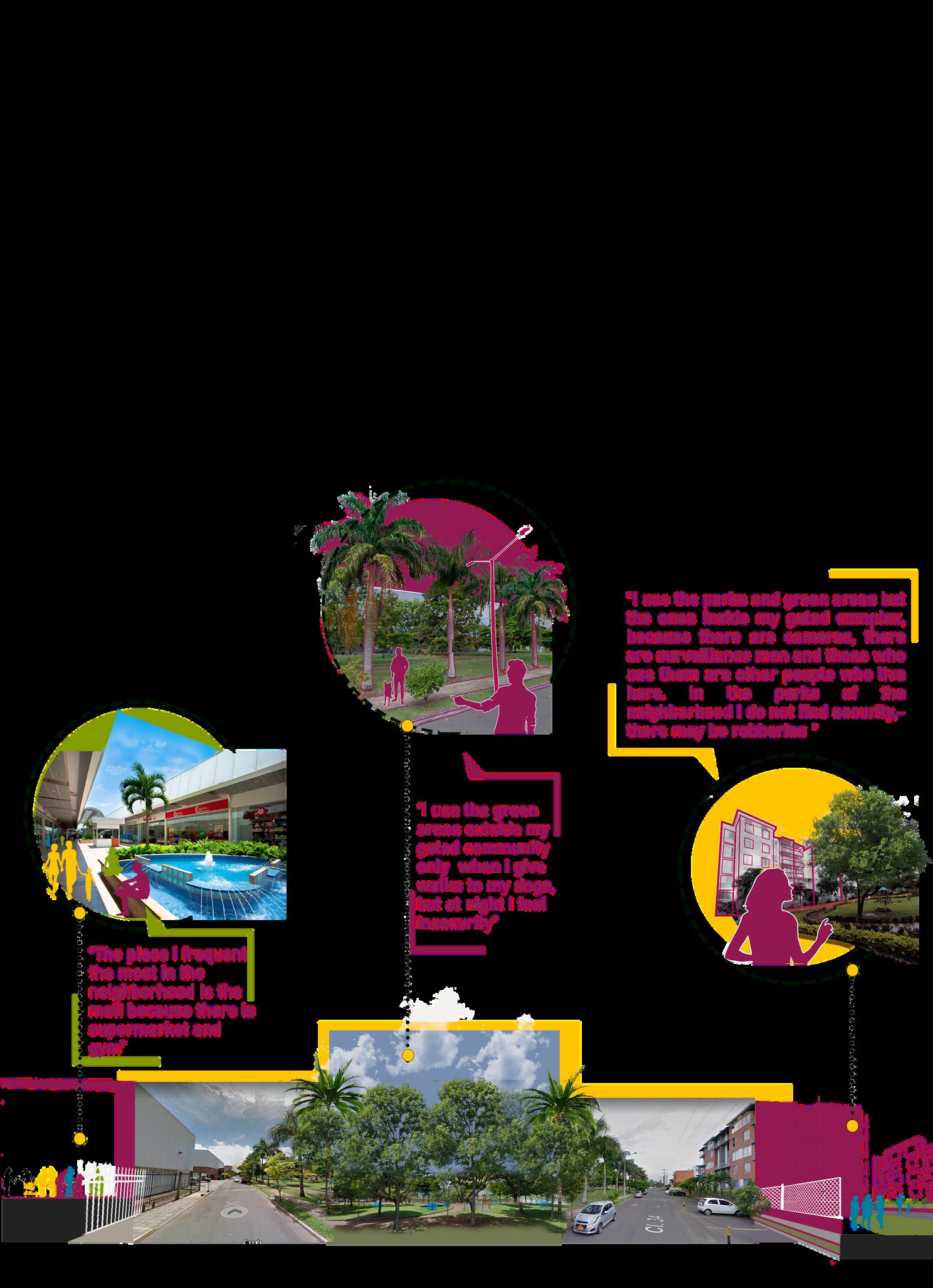
URBAN FABRIC 2
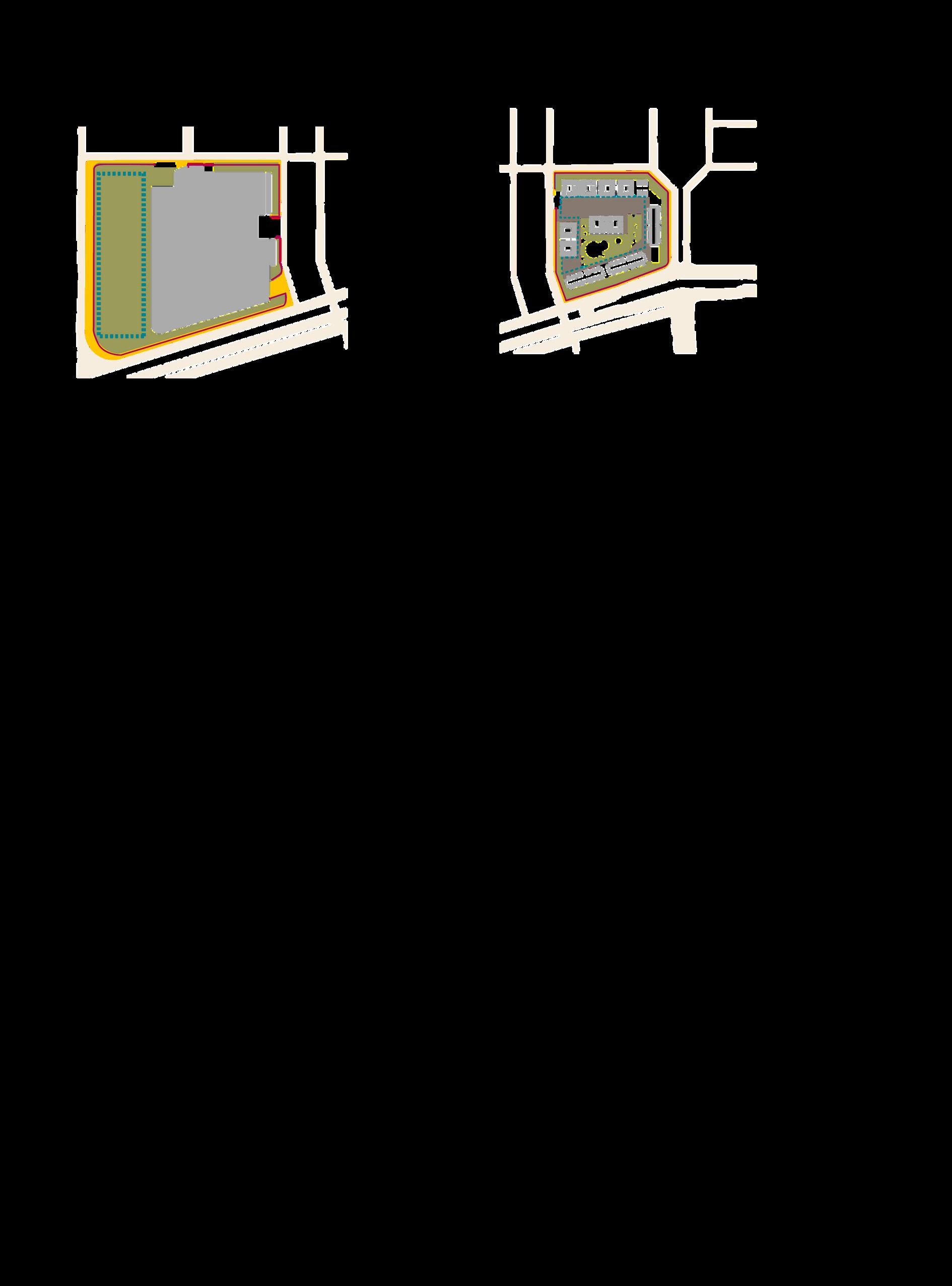
FENCES
Sebastian Inhabitant Personal trainer Age:27
Jorge Inhabitant Entrepreneur Age 33 Gabriela Business administrator
Age:25 Inhabitant
Access, paths, and
edges:
( K. Lynch, J. Gehl):
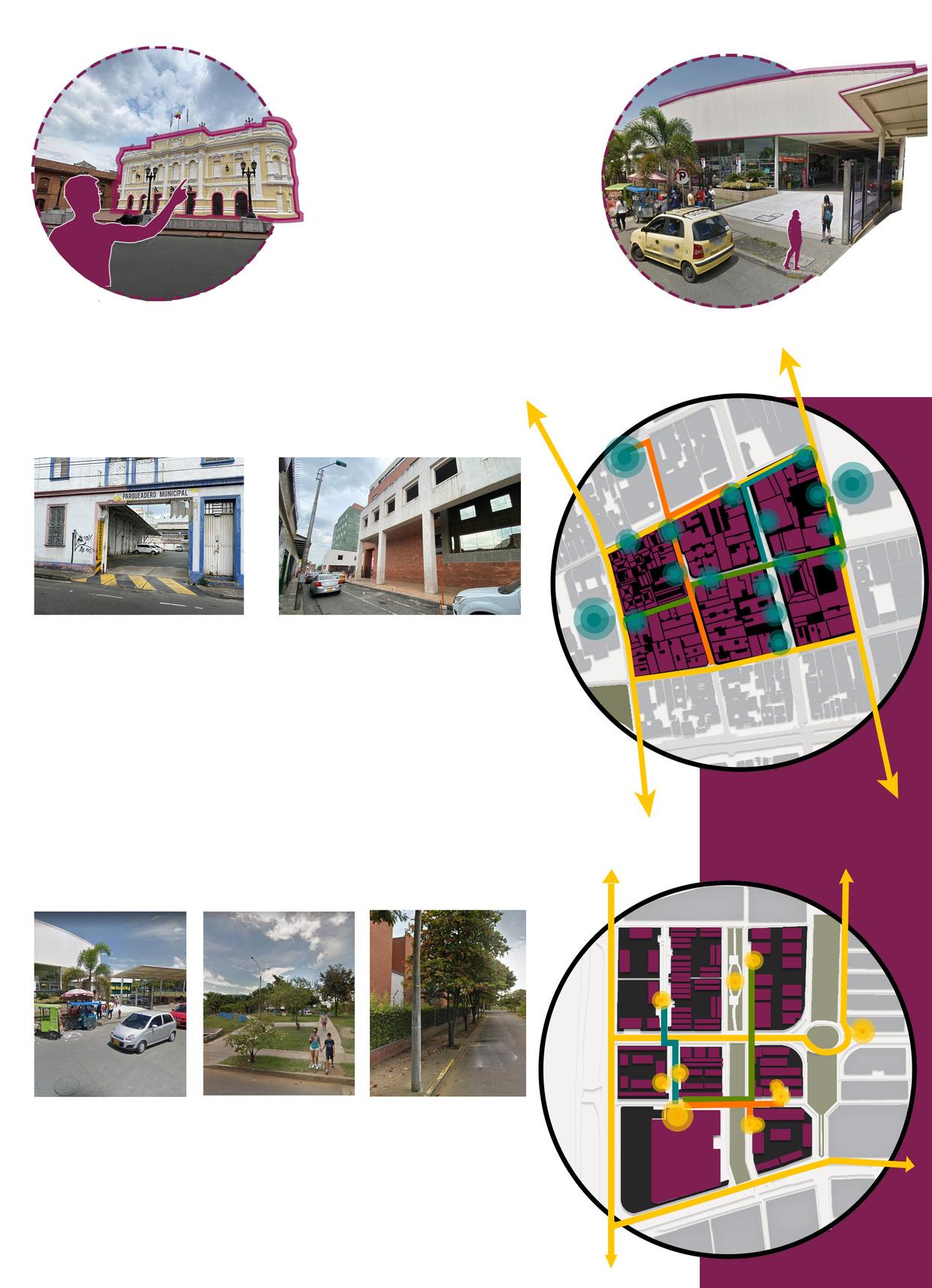
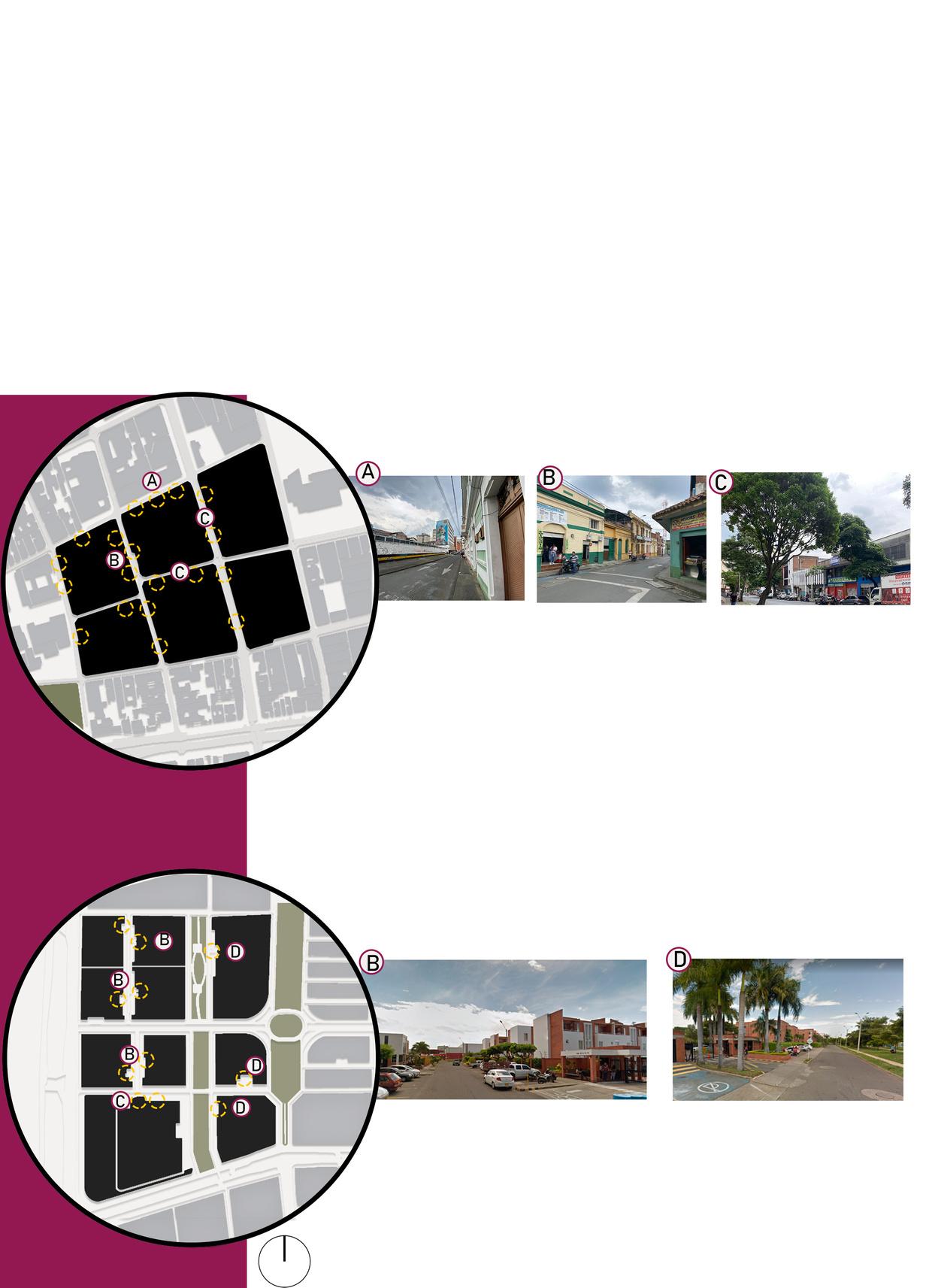
Accesess
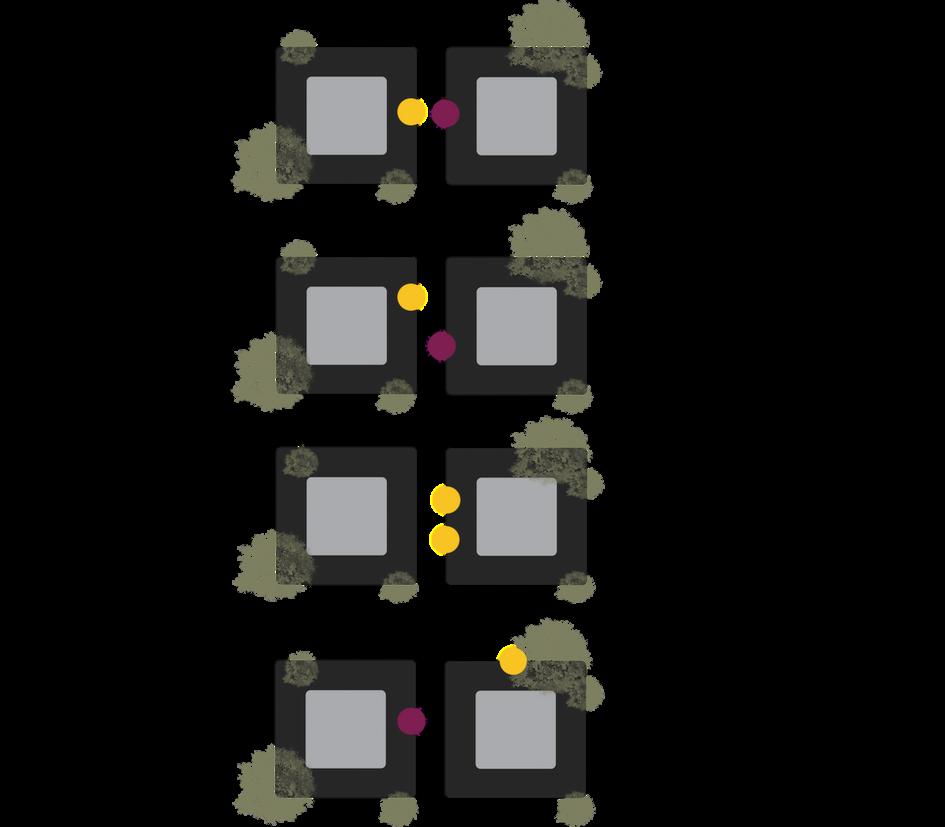
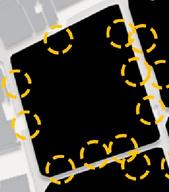
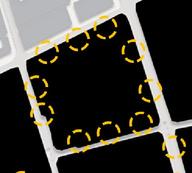
The number of accesses in the perimeter is a key factor in understanding the level of softness or hardness of the interfaces.
Categorization of ways to access:
A) Faced (accesses located on the same street)
Paths
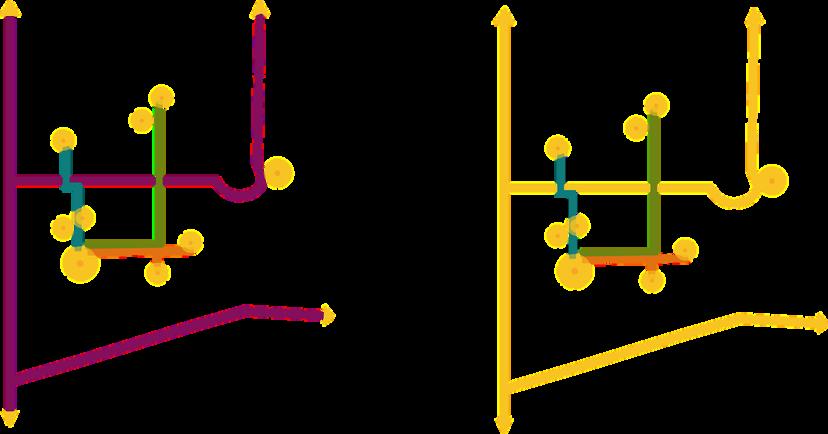
They reflect the movement of pedestrians through space, they are the flows that connect different points of the city, and which in turn are in relation to the accesses and borders along these.
B) Displaced (access in the same street, but not faced)
C) In pairs: access next to each other.
D) Isolated: a single-street access
URBAN FABRIC 1
-The center has variety in the types of accesses,in general, it has accesses every 6 meters, which allows a diverse dynamic in the routes of the city center.
URBAN FABRIC 2
The paths made by pedestrians in the center correspond to the flows between the parking lots to the banks, commerce or to the Health, education and recreation center
URBAN FABRIC 2
The existing accesses correspond mostly to the entrances of the gated communities.
"Actually I don’t usually go to the center, when I do its because there is a presentation at the municipal theater that I like or because I have to go to a bank"
Andres Student
Age:20
Pedestrian
The paths correspond to the accesses of the gated communities, and a low flow towards the parks or green areas.
Natalia House wife
Age:44
Inhabitant
"I almost always see many people near the mall, only there, is a large flow of people in the neighborhood."
Pa Acesses:
Parking lots access Comfenalco Health, education and recreation center
FABRIC 1
URBAN
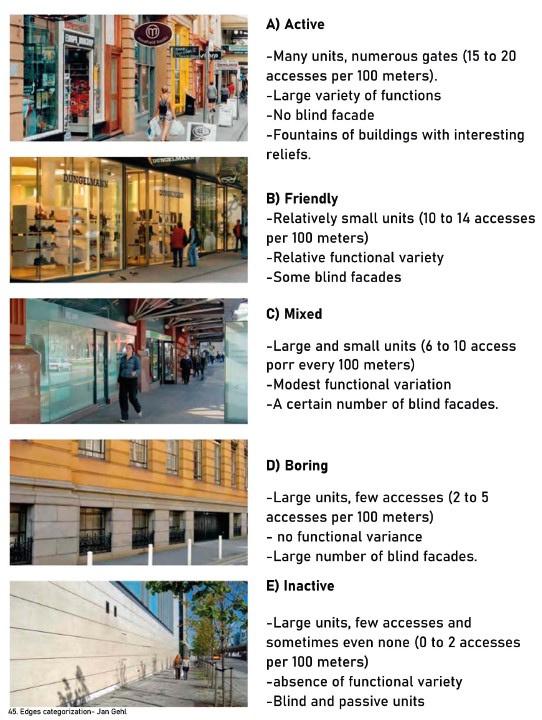
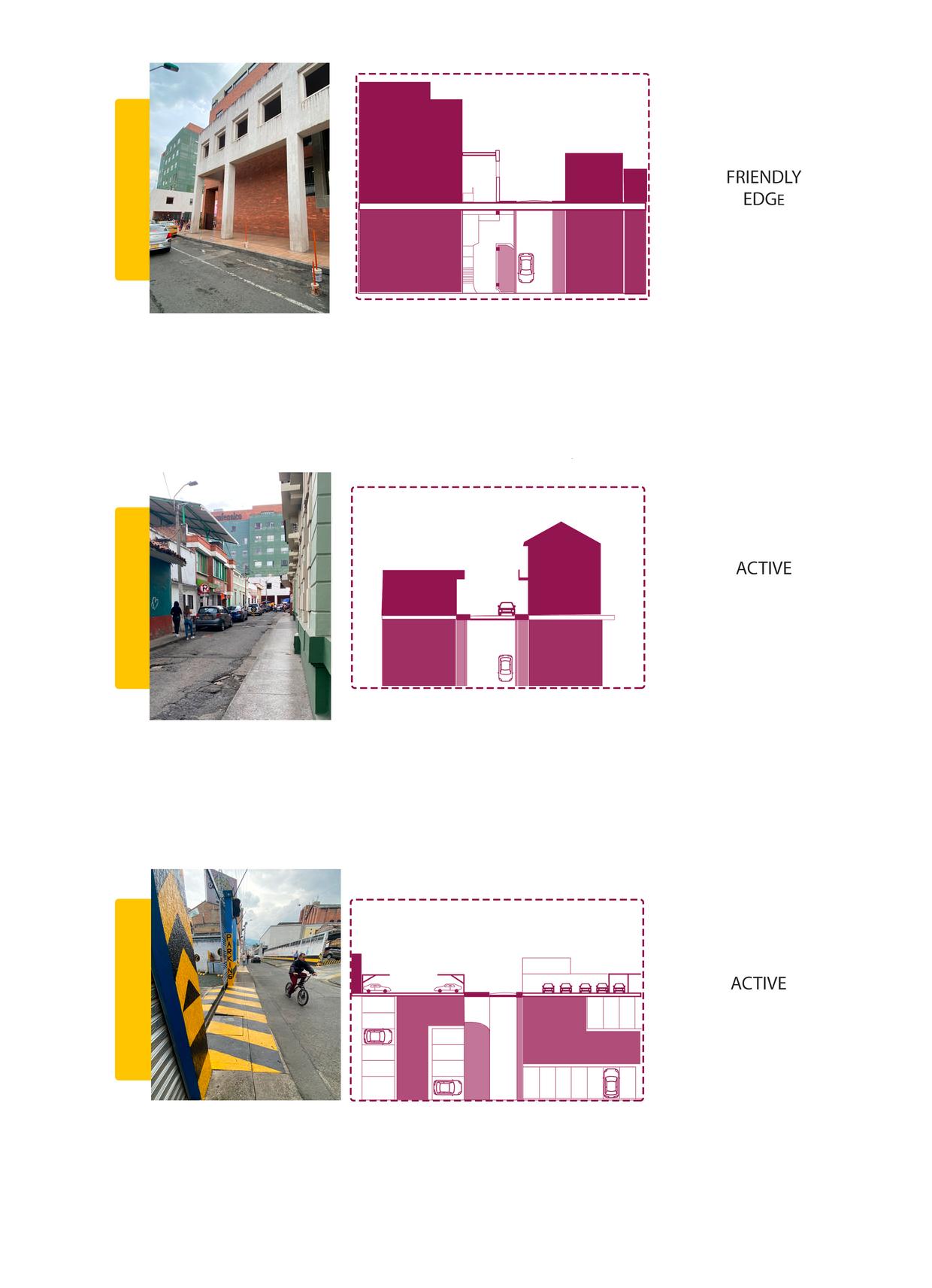
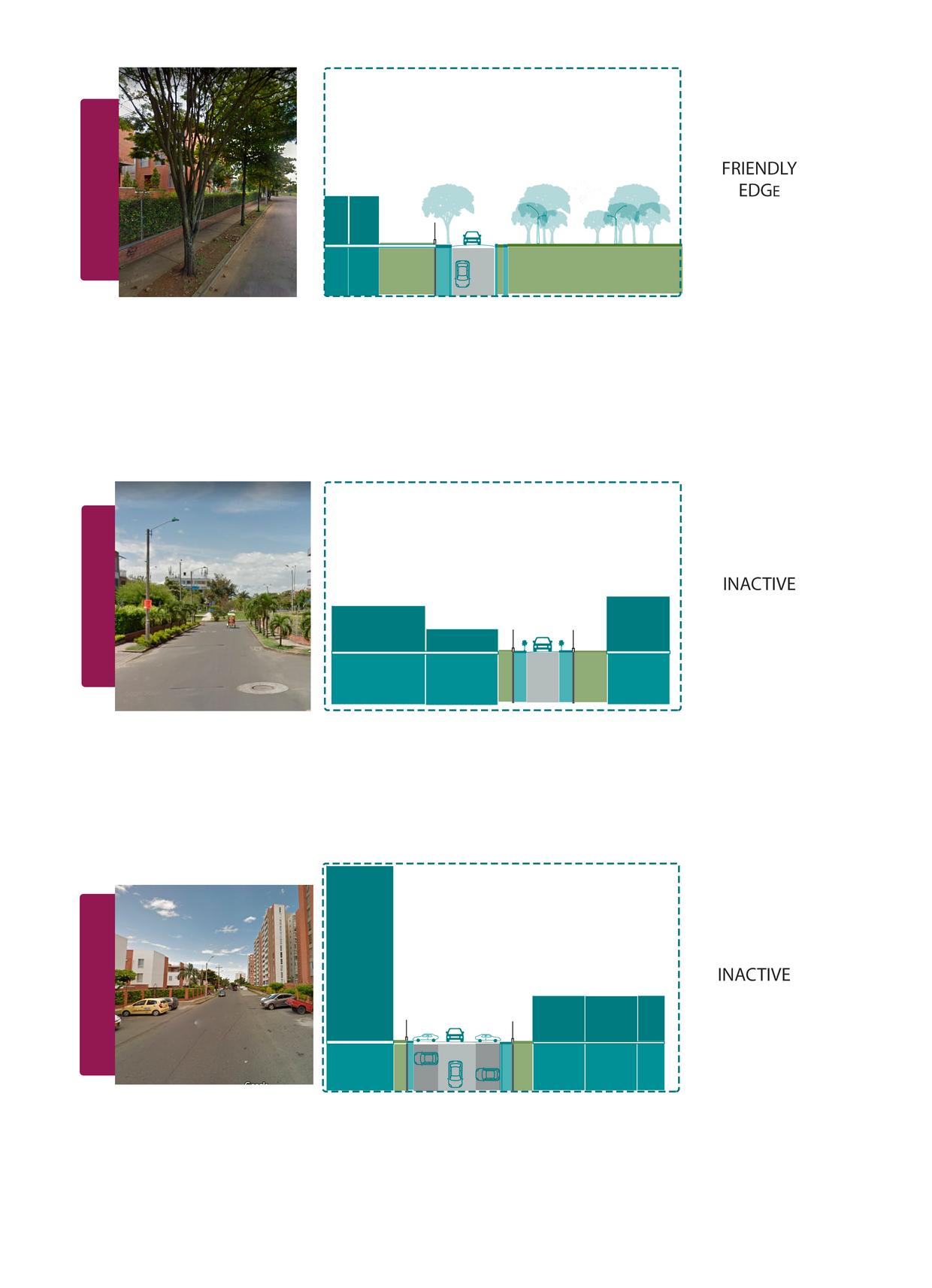
Edges
The edges, are that meeting between the interfaces, it is the exchange between the building and the city, (Gehl et al., 2006).
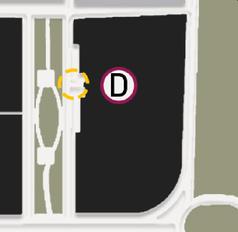
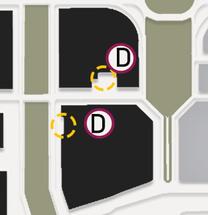
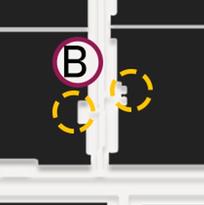
URBAN FABRIC 1 URBAN FABRIC 2
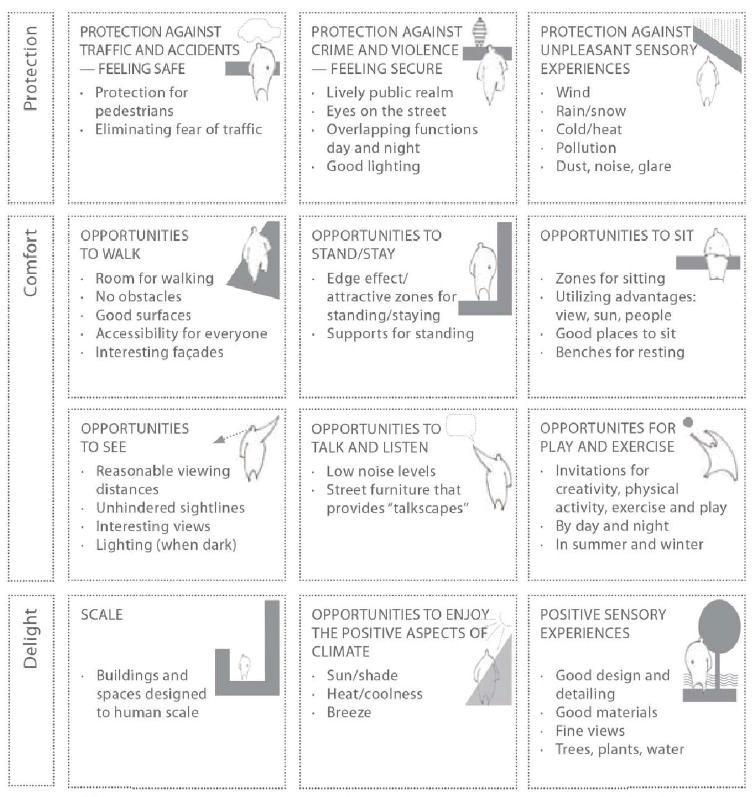
The city at eye level: 12 quality criteria
In Gehl’s text, he exposes 12 vital criteria divided into three groups (protection, delight and comfort) for the urban spaces of the city and also as a systematic overview of the most important quality criteria. (Gehl et al., 2006).
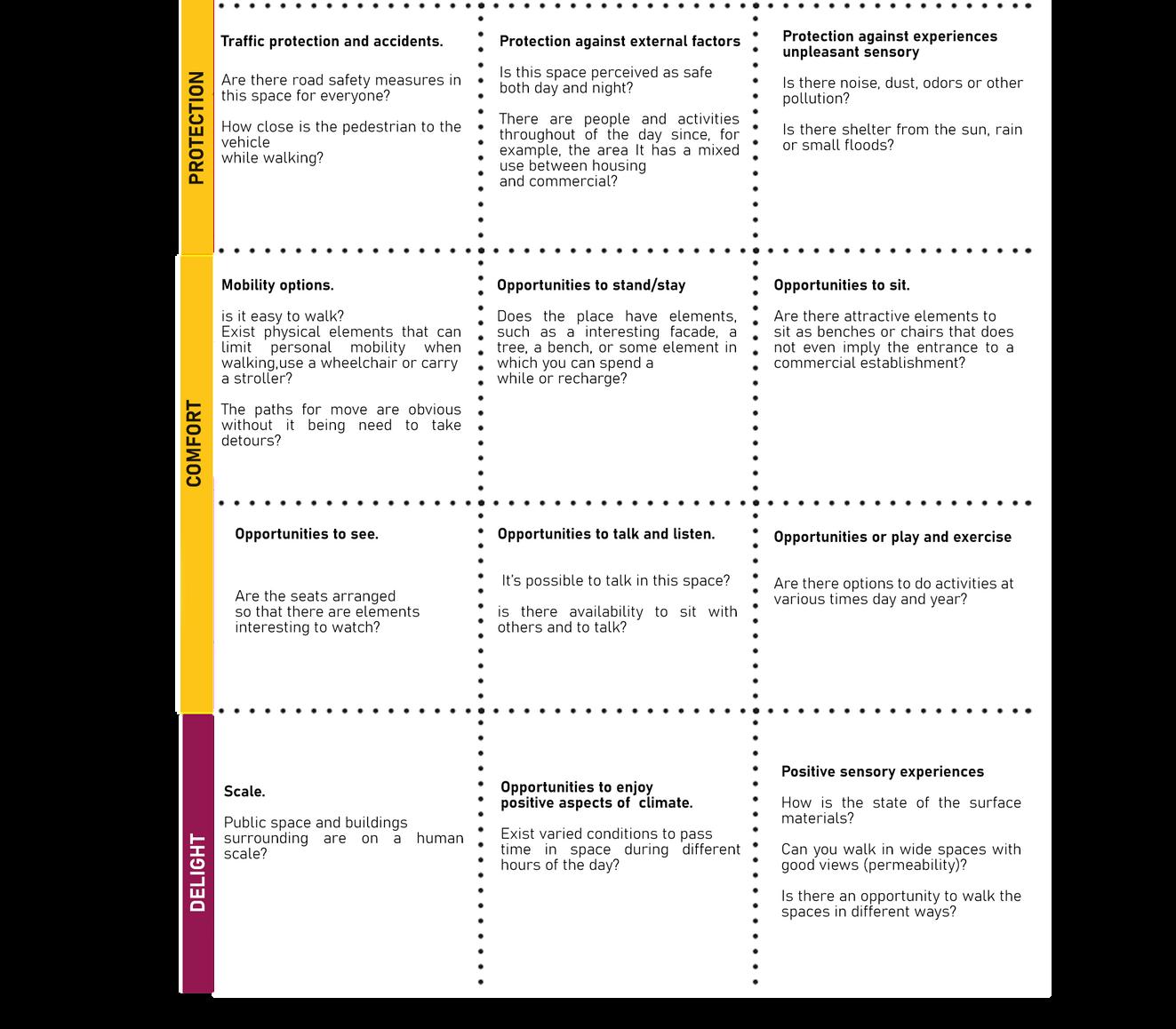
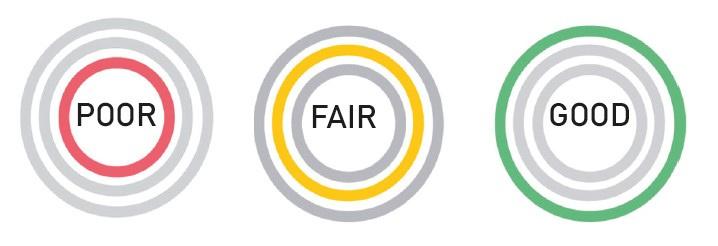
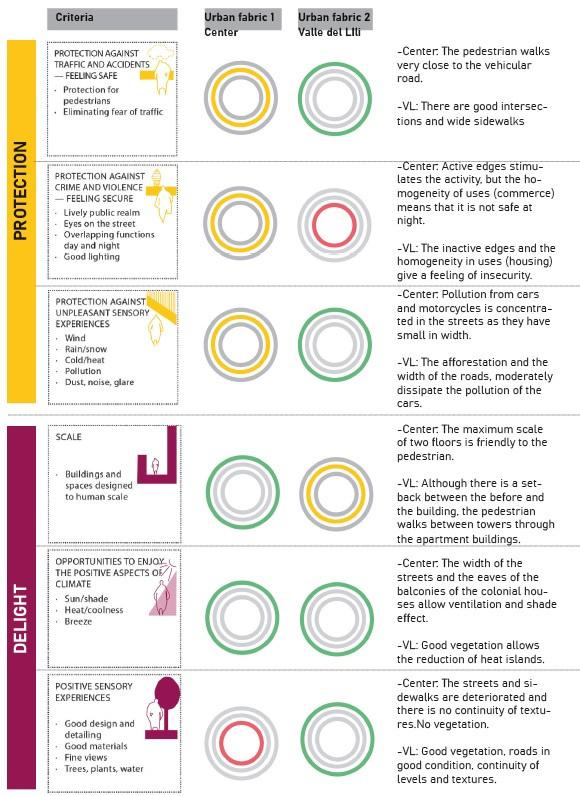
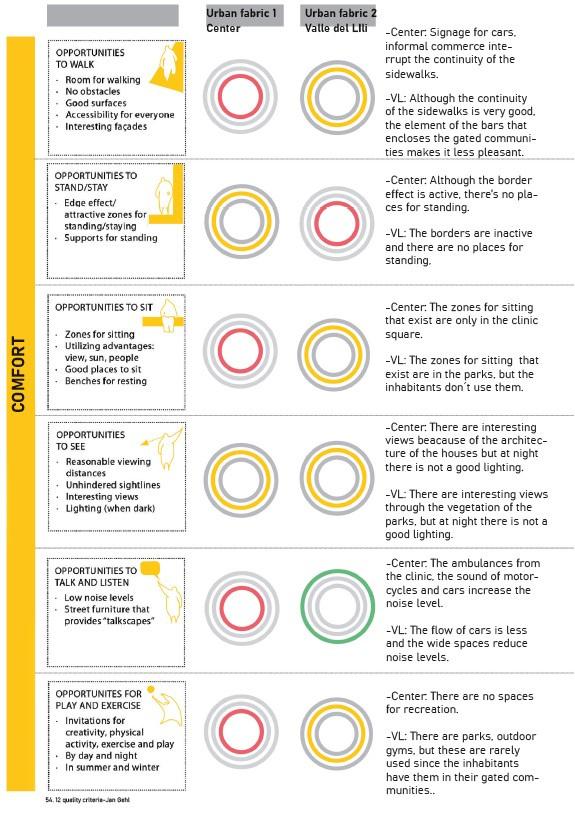
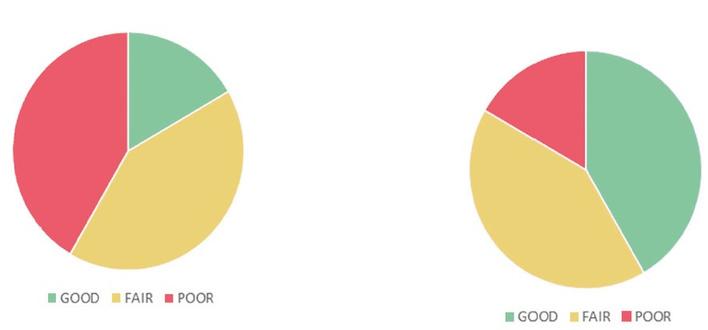
General considerations Urban fabric 1 Urban fabric 2 Criteria General considerations Urban fabric 1 Urban fabric 2 GOOD FAIR POOR URBAN FABRIC 1 URBAN FABRIC 2 42% 17% 41% 42% 17% 41%
PROTECTION COMFORT DELIGHT
Danger
UF1
Discomfort
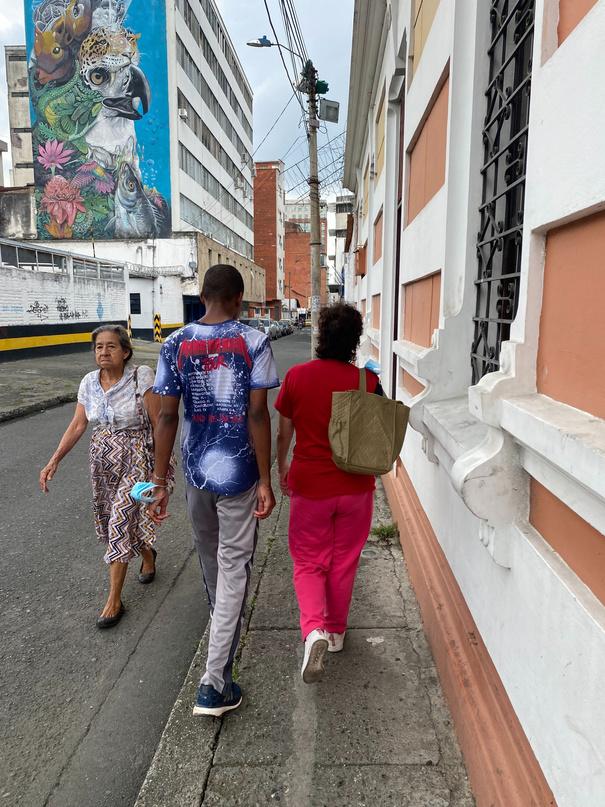
Security perception only during the day



UF2
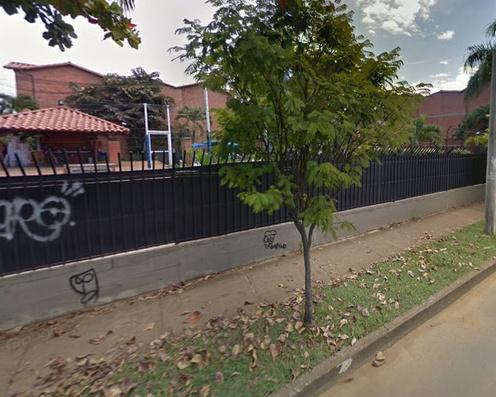
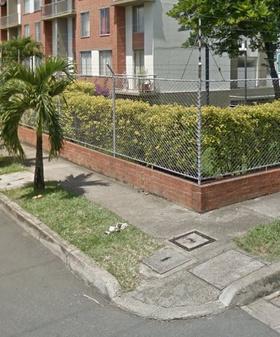
Sidewalks that generate Safety. Security perception only during the day
UF1 UF2
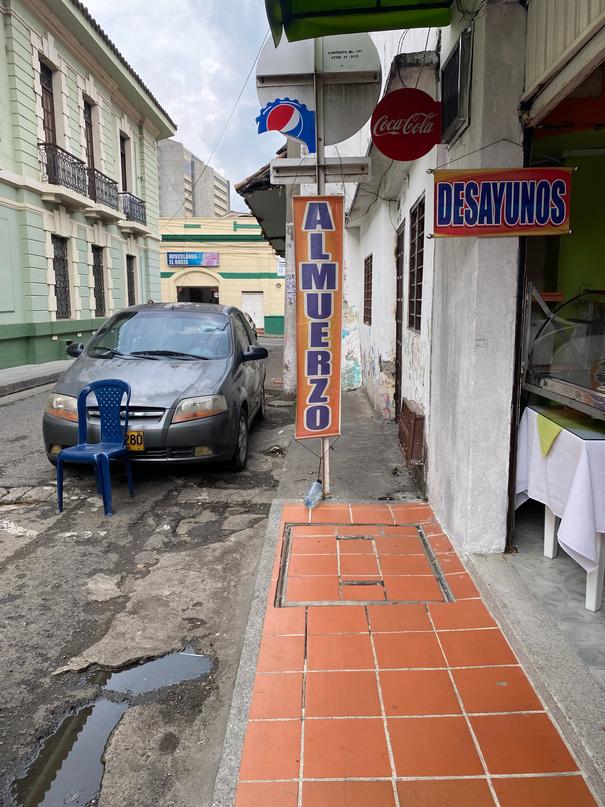
Imbalance between spaces for pedestrians and cars. obstacles
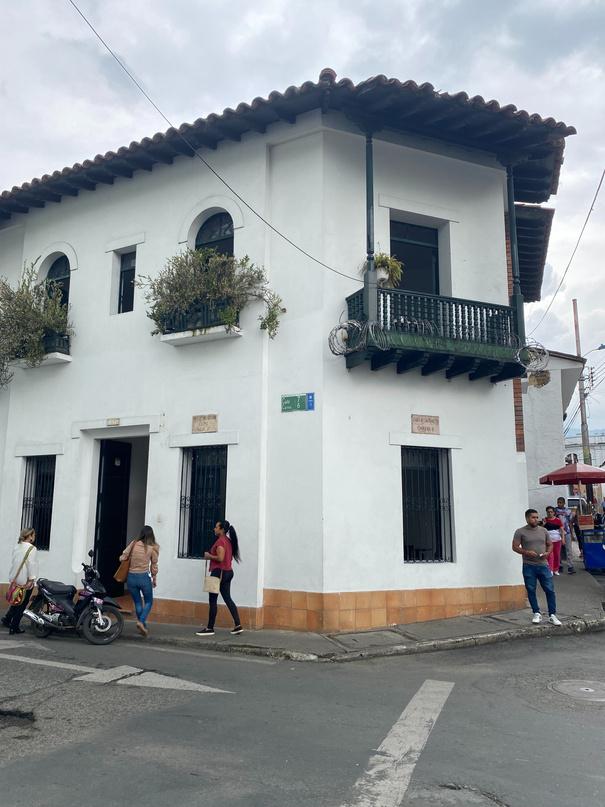
Deterioration
UF1
According to human scale
Architectural elements that provide shade There are no green areas
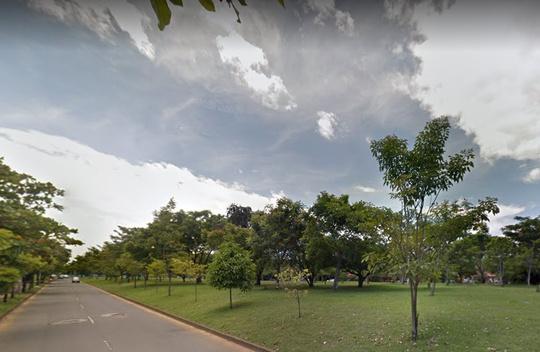
Good amount of parks and green areas. Balance between spaces for pedestrians and cars. Long distances walking behind bars. (low permeability)
UF2
According to human scale
Natural elements that provide shade
It has good environmental infrastructure
UF1 UF2 UF1 UF2 UF1 UF2
CONCLUSIONS AND RECOMENDATIONS
7
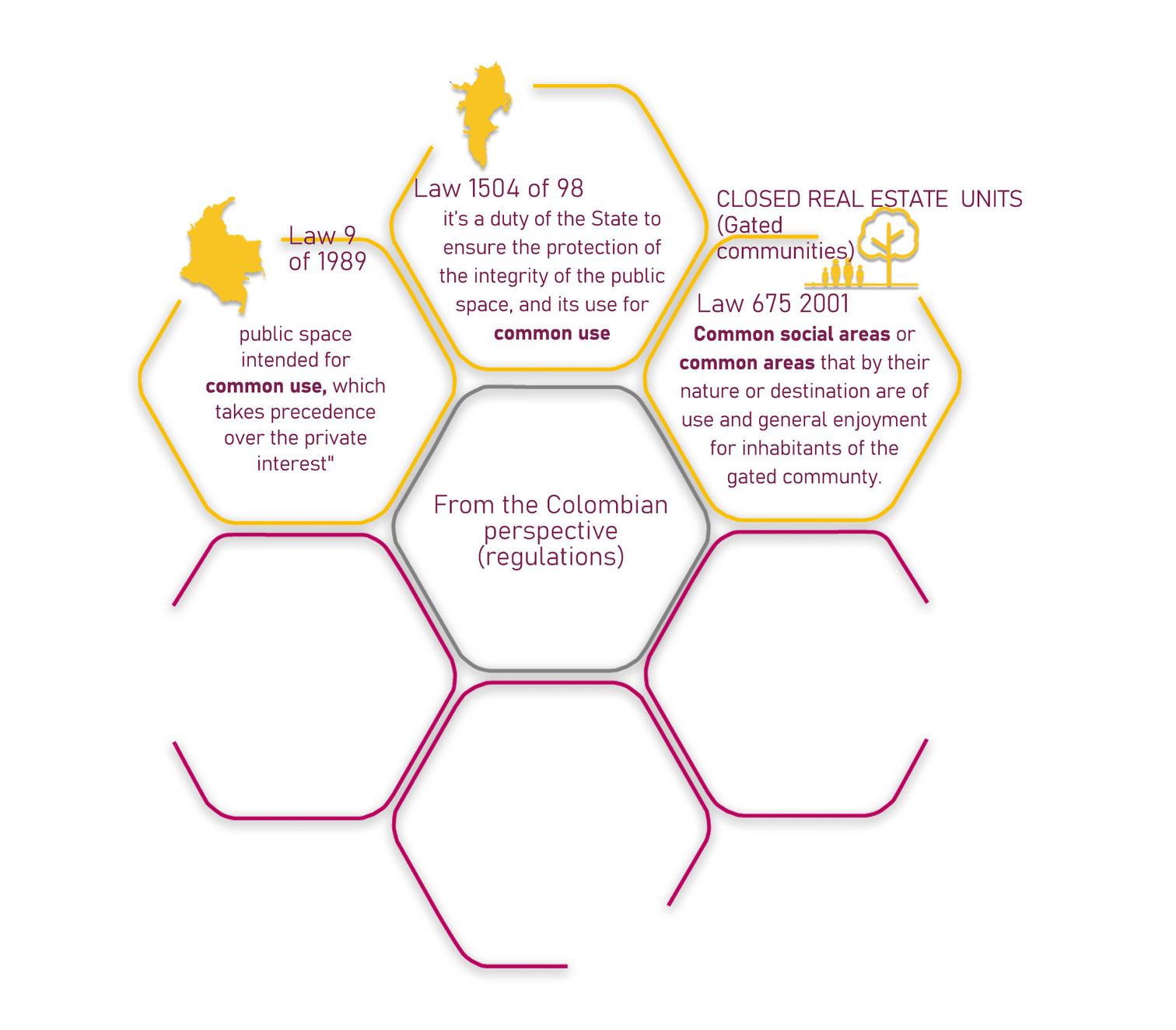
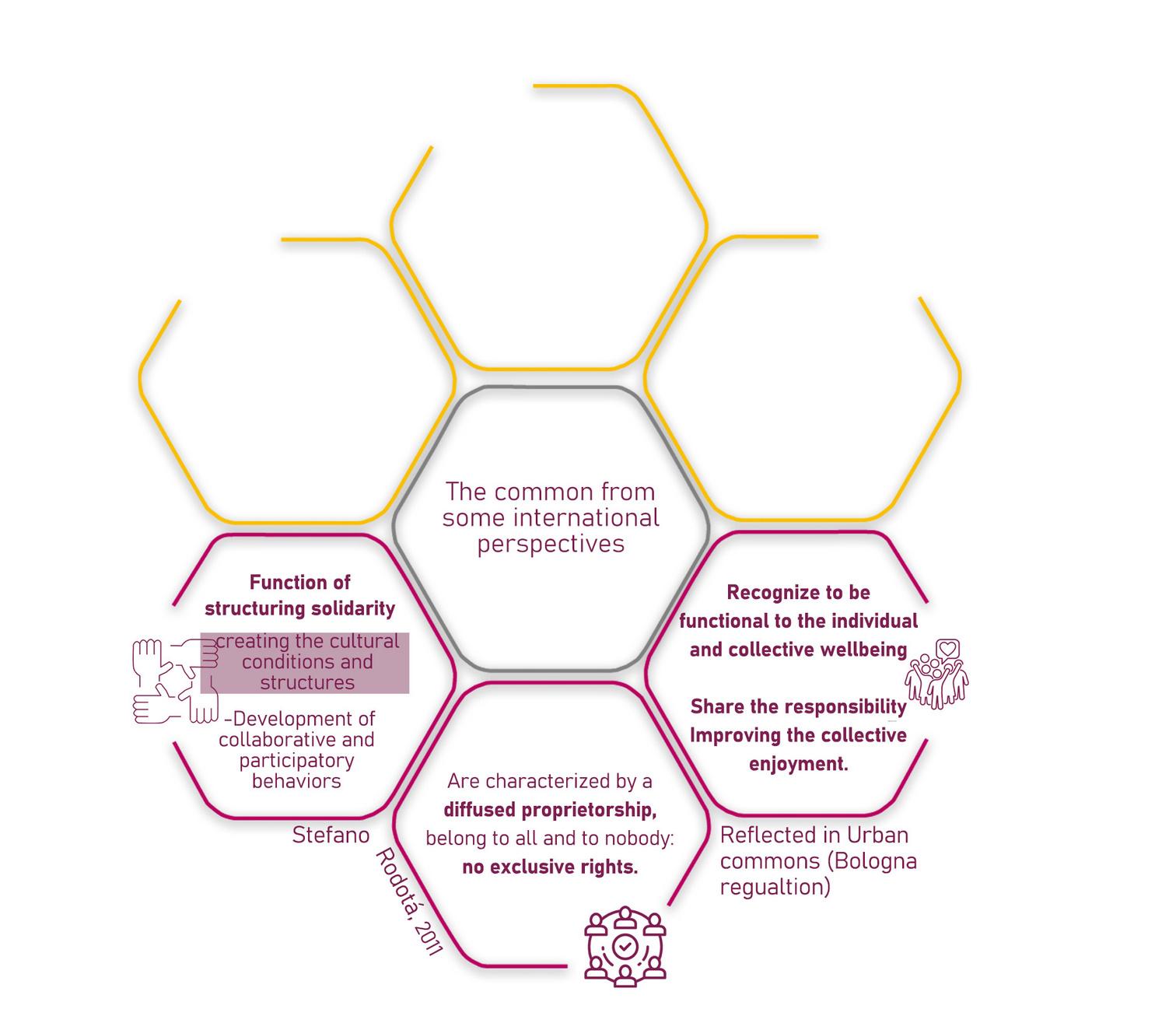
The definition and use of the concept of the common in Colombia is different from the definitions of the international perspective, since it is not yet perceived as a third sphere that goes beyond the public and the private and ownership of goods.
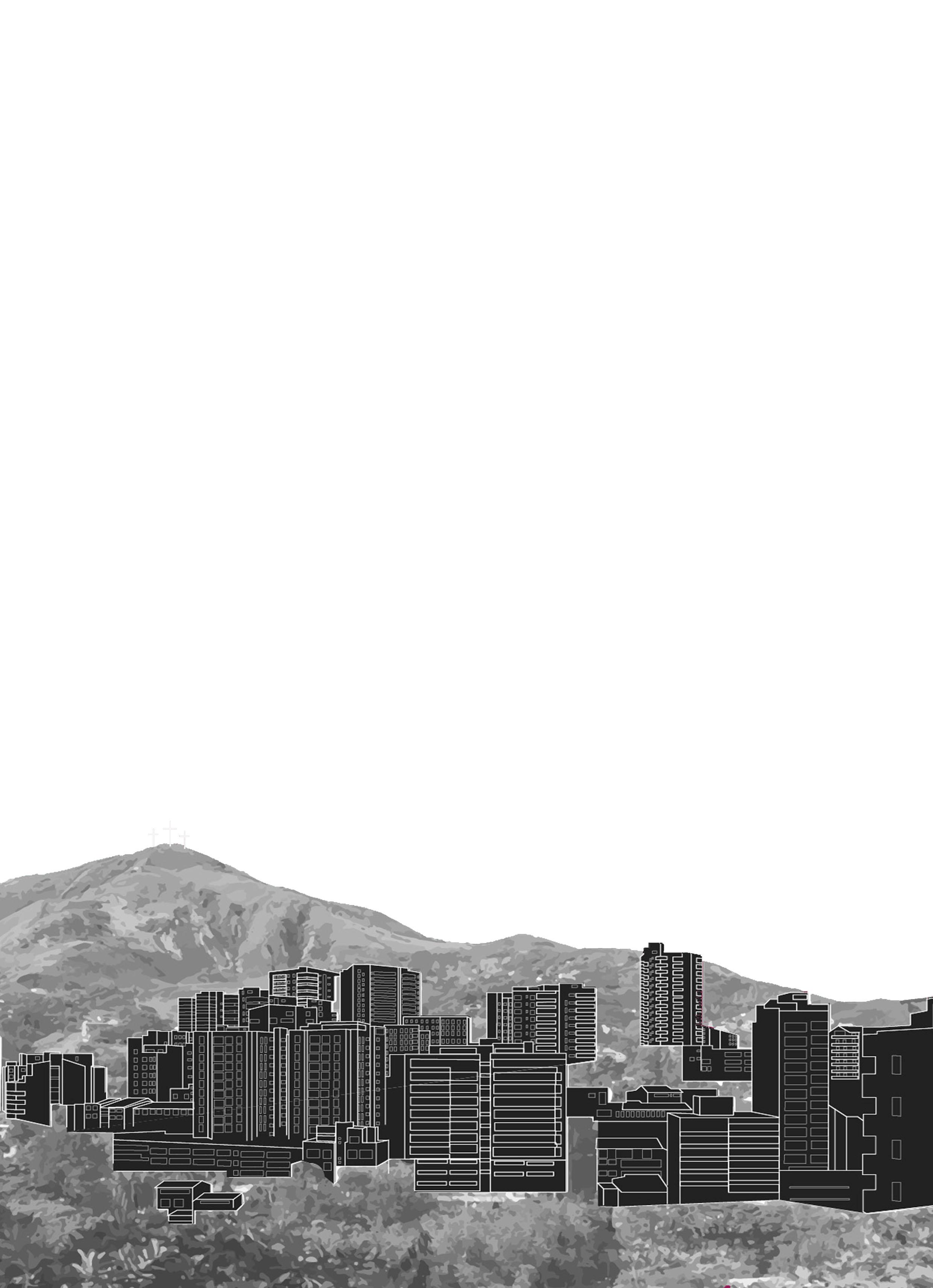
It is difficult to make a reading of common spaces in the two urban fabrics, what is closest to the common is still restricted under the private or the public.
From the morphological and social analysis it was found that public space is a good element to discover why the line between the public and private is so marked, it also has the potential to be the channel to start the construction of citizen practices based on the common.
01 02 03 common
The qualitative analysis allows to understand that quality must be deeper in terms of the dynamics of each context and its historical temporal characteristics. The historic city cannot be a product of modern ways of planning a city.
The quantity over the quality of urban spaces produces a disconnection between the citizen and the city, further distancing the idea of the emergence of an interface of the common
04 05
Responding to the third objective of Provide a different perspective of what is currently conceived as common spaces in the city of CaliColombia:
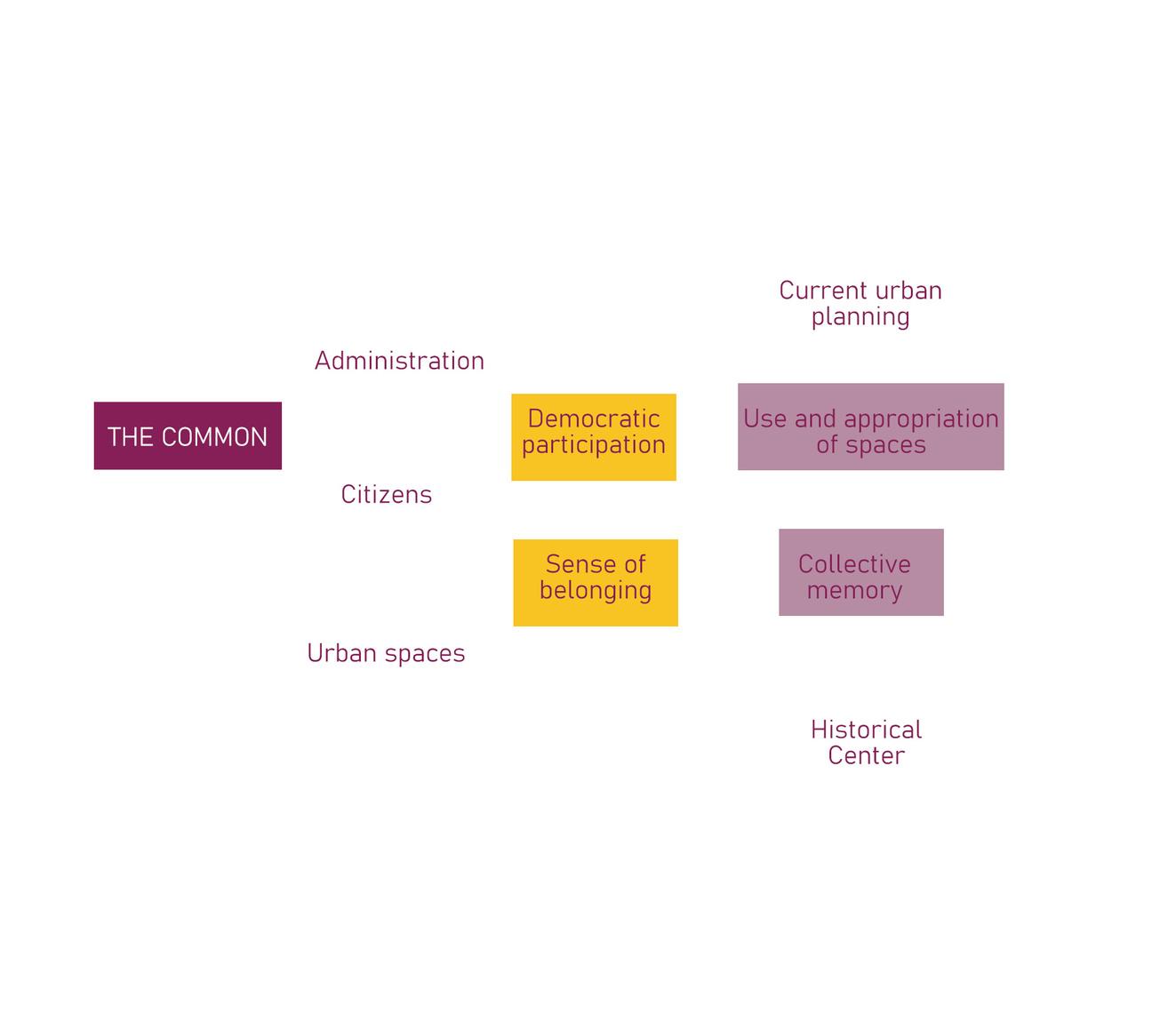
"Both the private and the public should be seen as urban spaces projected based on the common good, in favor of the satisfaction of collective urban needs so that the collective interest be manifested, establishing links with citizens and therefore contribute to the construction of a collective identity based on democratic practices increasing the sense of belonging, likewise, assimilating the spacetime condition, improving the encounter of the citizen with history, as a support for the consolidation of a collective memory"
Finally, for all this to work, it is necessary to formulate two major situations:
The basic idea is that the management of civic and collective urban use it must be a shared management.
Reformulate city planning models: It is important to regulate in a better way the project decisions of those who are in charge of building in the city.
. 1 2
Thank you!