Assisted lower-classmen with finding mentors and resources.
AIAS FBD Fundraiser, Auburn Chapter (2019)
Assisted with fundraising efforts for the Freedom by Design Chapter.
Honors
Resume
Dean’s List (2018—present)
CADC Book Award (Spring 2022)
DBIA Team Competition (Fall 2022)
Tau Sigma Delta (2021—present)
Honor Society in Architecture and Allied Arts
Team Members:
Reagan Eiland - Team Leader
Drew Haley Smith - FBD Fundraiser
Benjamin Wilcockson -
Team Members:
Drew Haley Smith
James Foo
Anna Graben
Kirby Spraggins
Team Responsibilities:
Our team was challenged to create a cohesive design by combining all four of our very different, individual designs.
Design-Build
By Design (2021)
Team Members:
Naomi Toni-Alabi - Team Leader
Drew Haley Smith
Alexis Warner
Samuel Grover
Lainey Bouiver
Team Responsibilities:
Our team created a masterplan for an abandoned rural site in Alabama.
Rural Faculty:
Emily McGlohn
Chelsea Elcott
Interiors Team:
Drew Haley Smith
Sadie McIntyre
Austin Black
Exteriors Team:
Ashley Wilson
Juyeon Han
Logan Lee
MEP Team:
James Foo
Kirby Spraggins
Wendy Webb
Rural Faculty:
Steve Long
Chelsea Elcott
Design and Book Team:
Steve Long (Faculty Advisor)
Drew Haley Smith (Coordinator)
James Foo (Producer)
Kirby Spraggins (Producer)
Assembly Team:
Drew Haley Smith
Austin Black
Sadie McIntyre
Logan Lee
Ashley Wilson
Juyeon Han
Wendy Webb
Team Members:
Drew Haley Smith - Architect
Natalie Nash - Project Executive
Justin Jolley - Project Manager
Grace Herazy - Assistant Project Manager
Owen Pifer - Senior Superintendent
Calvin Nowell - Preconstruction Manager
Team Responsibilities:
Our design-build team was challenged to design an Avacado Storage Facility in Laredo, Texas for a regional DBIA competition.
Team Members:
Drew Haley Smith
Meagan Mitchell
Ambar Ashraf
Julie Dideo
Naomi Toni-Alabi
Team Responsibilities:
Our team prepared lecture material for a class discussion based on a controversial reading written by several philosophers and architects.
To Scale 01
Diminishing Architecture to a Child’s Level
Project: Elementary School
Type: New Construction
Semester: Spring 2022
Location: Montgomery, Alabama
Size: 91,618 Square Feet
Faculty: David Hinson
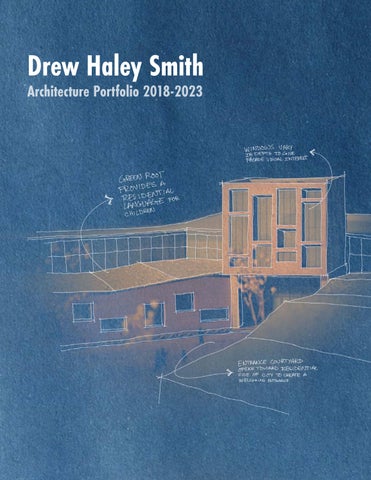
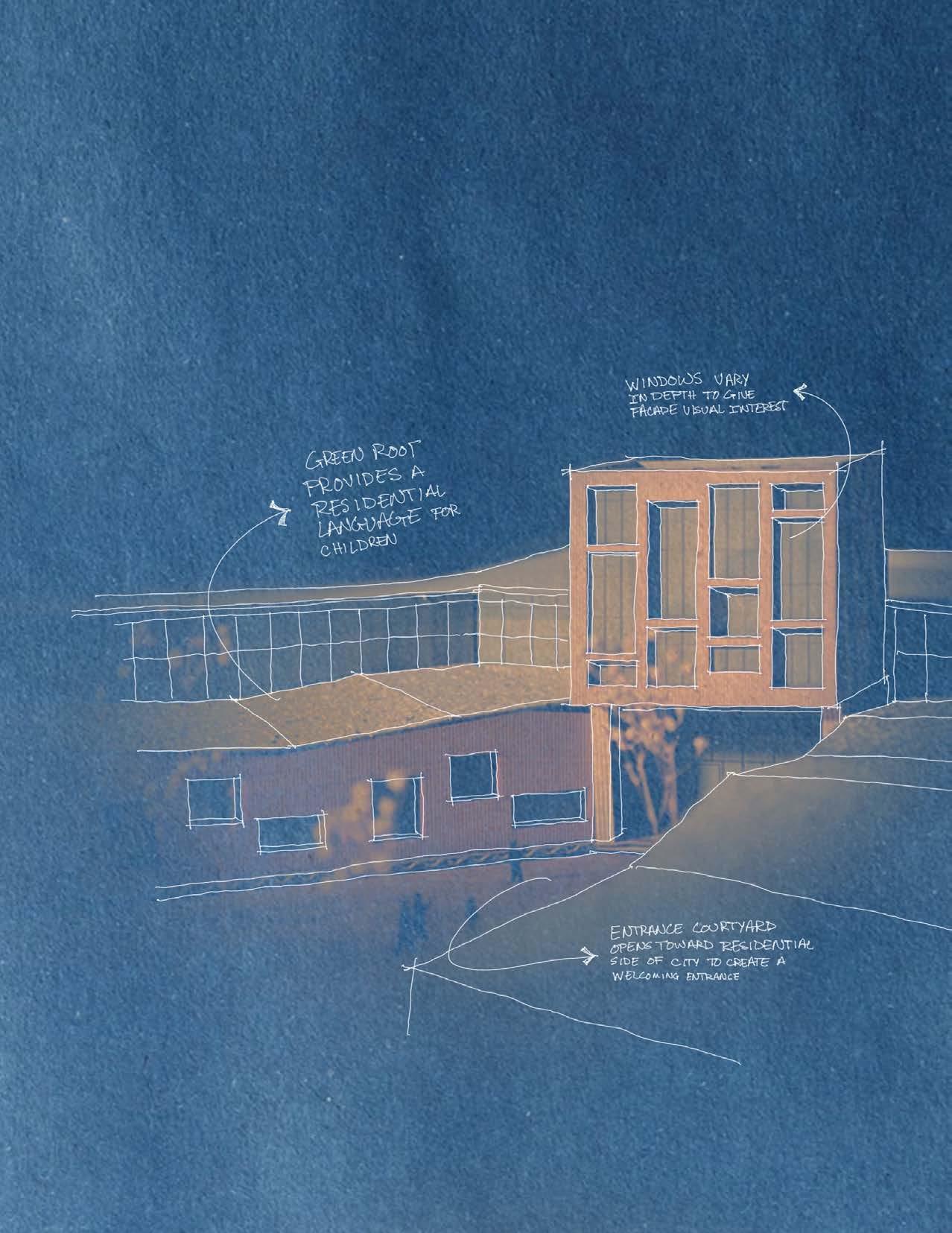
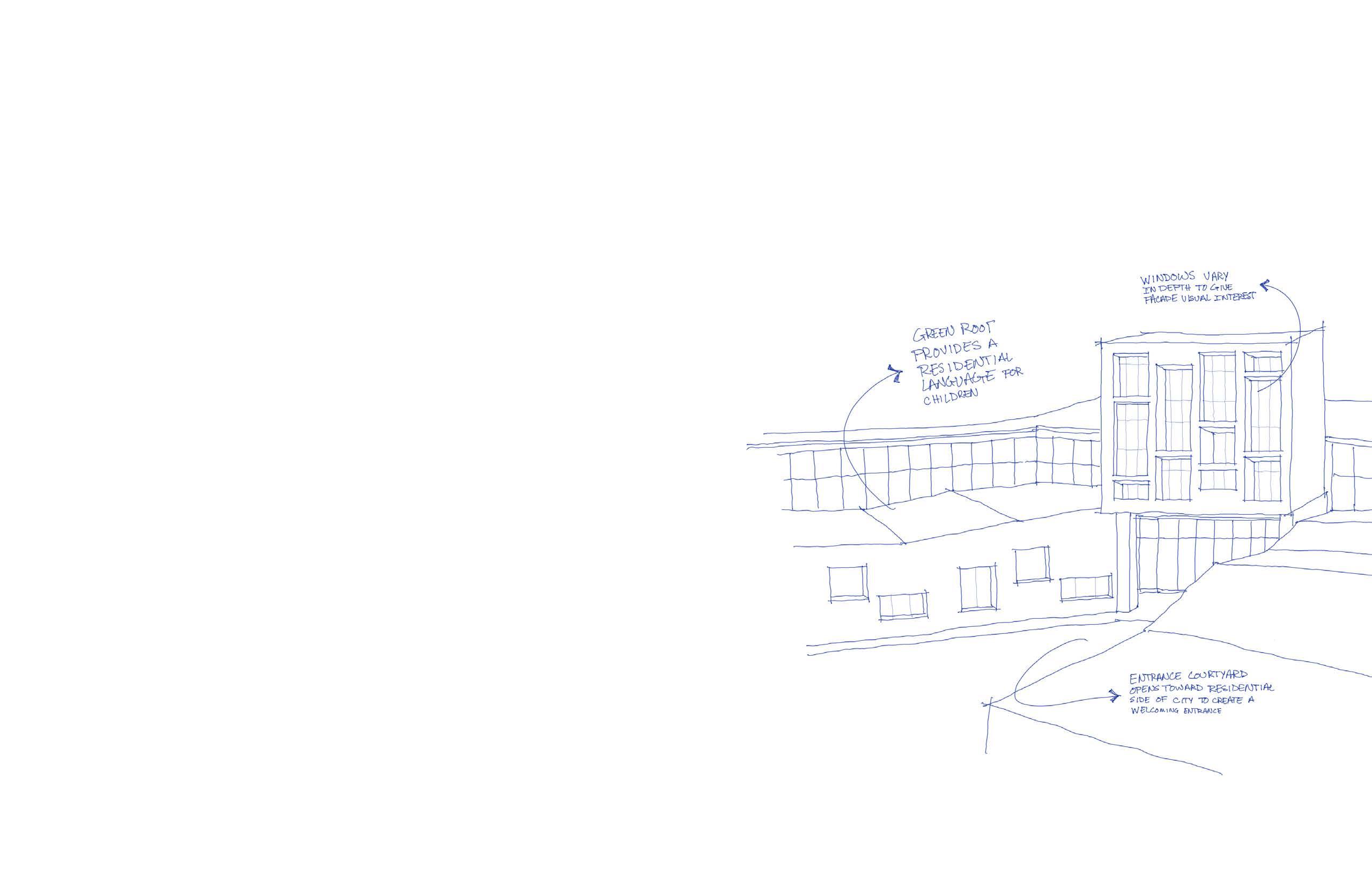
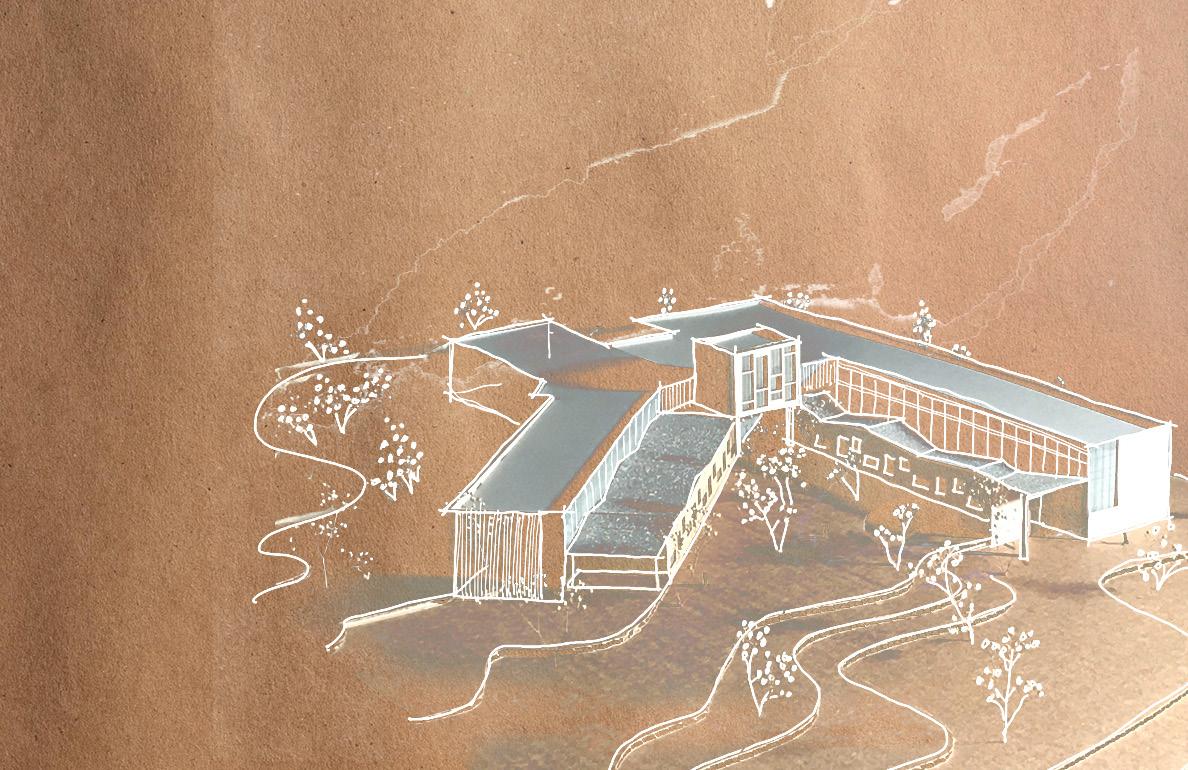
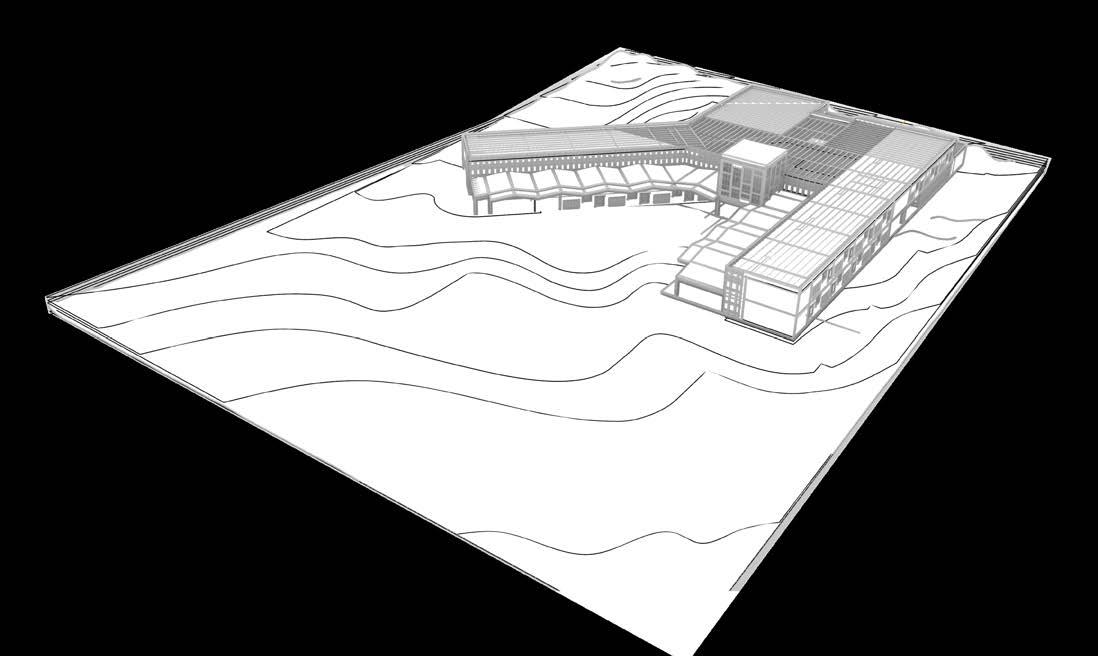
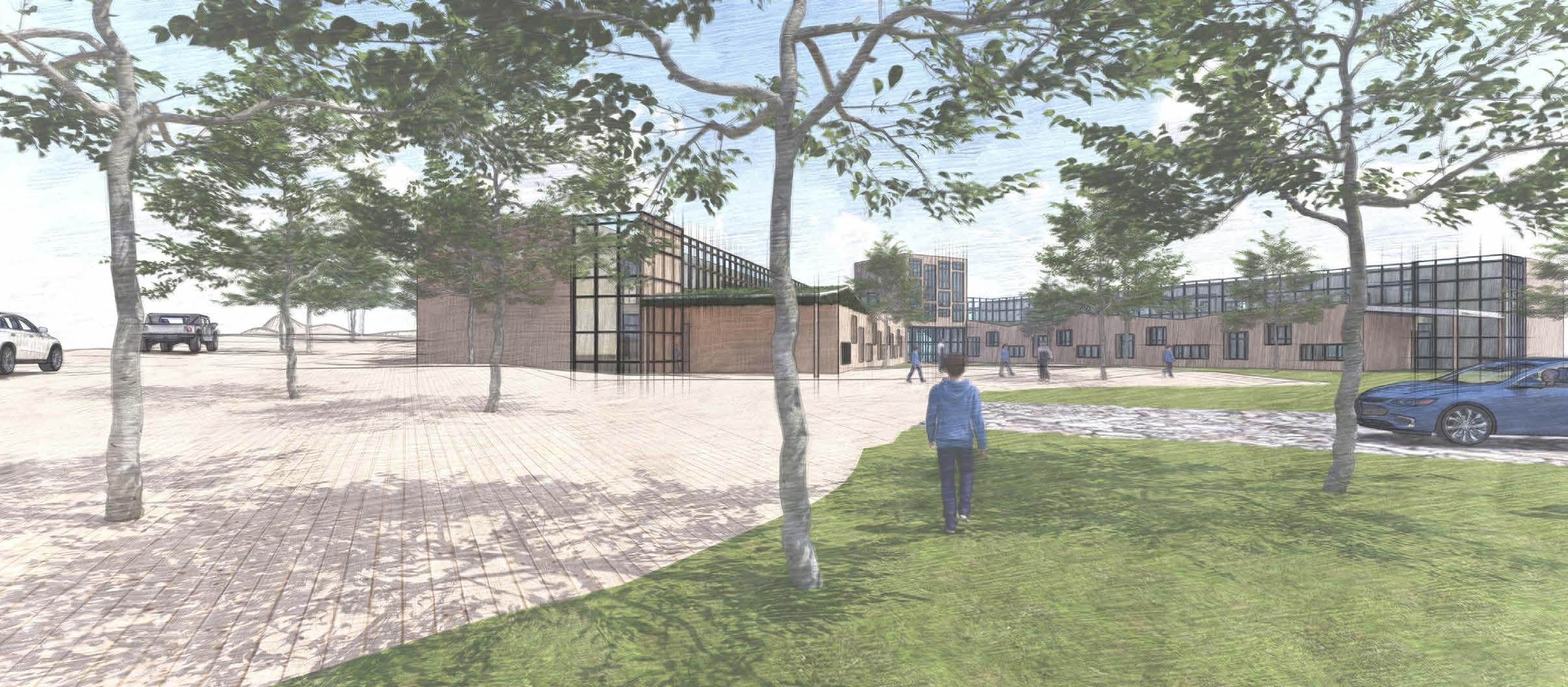
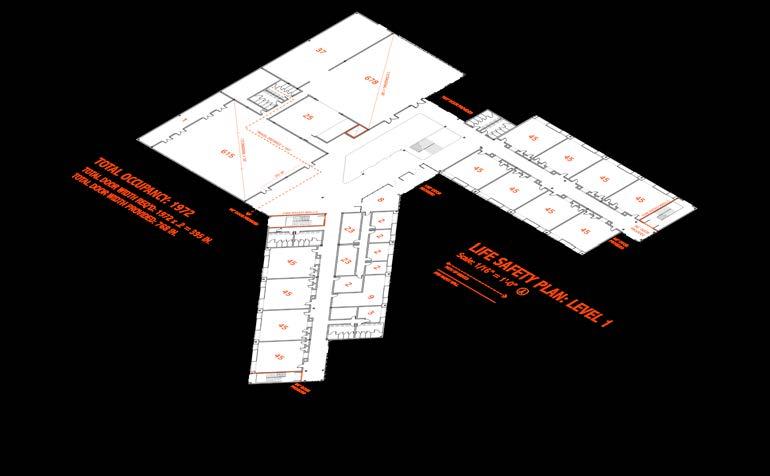
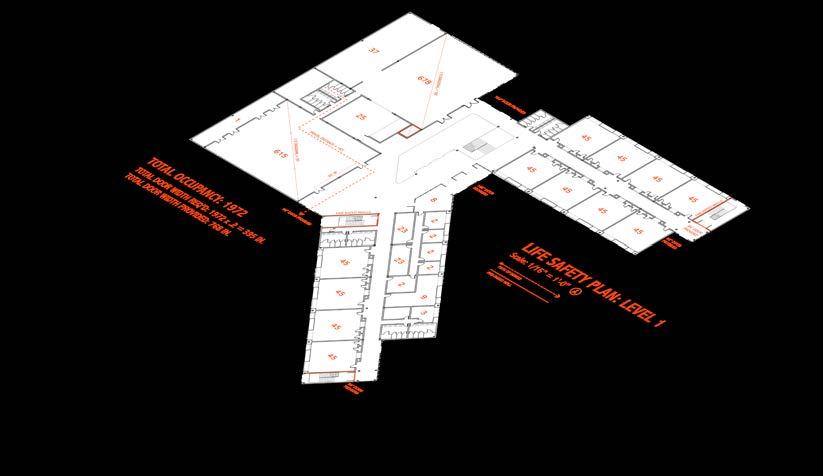
This project explores how a building can be designed to adapt to the scale of a child and be sustainably built and maintained. Various site strategies were employed to emsure this and to create a welcoming and unintimidating entrance for young children. Challenges included addressing a steep topographic slope, traffic circulation and analysis, and efficiently incorporating mechanical and structural systems.
Drew Haley Smith
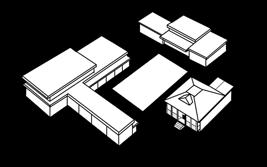
Building holds street edge to provide protected exterior play areas. Southern wing opens toward residential side of city for welcoming entrance.
Car circulation does not interfere with pedestrian or bus circulation. All students share the same entrance.
Cottage Hill
Clasroom wings open like outstretched arms towards residential side of the city to creating a welcoming entrance for students.
Orientation
Landmark
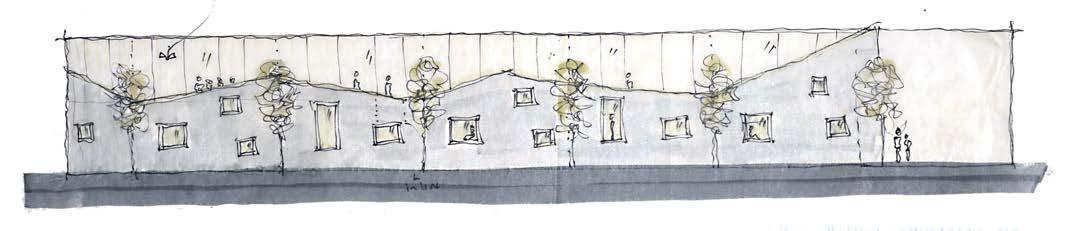
Longitudinal section showing how scale is diminished on the exterior.
Latitudinal section showing how scale is diminished on the interior.
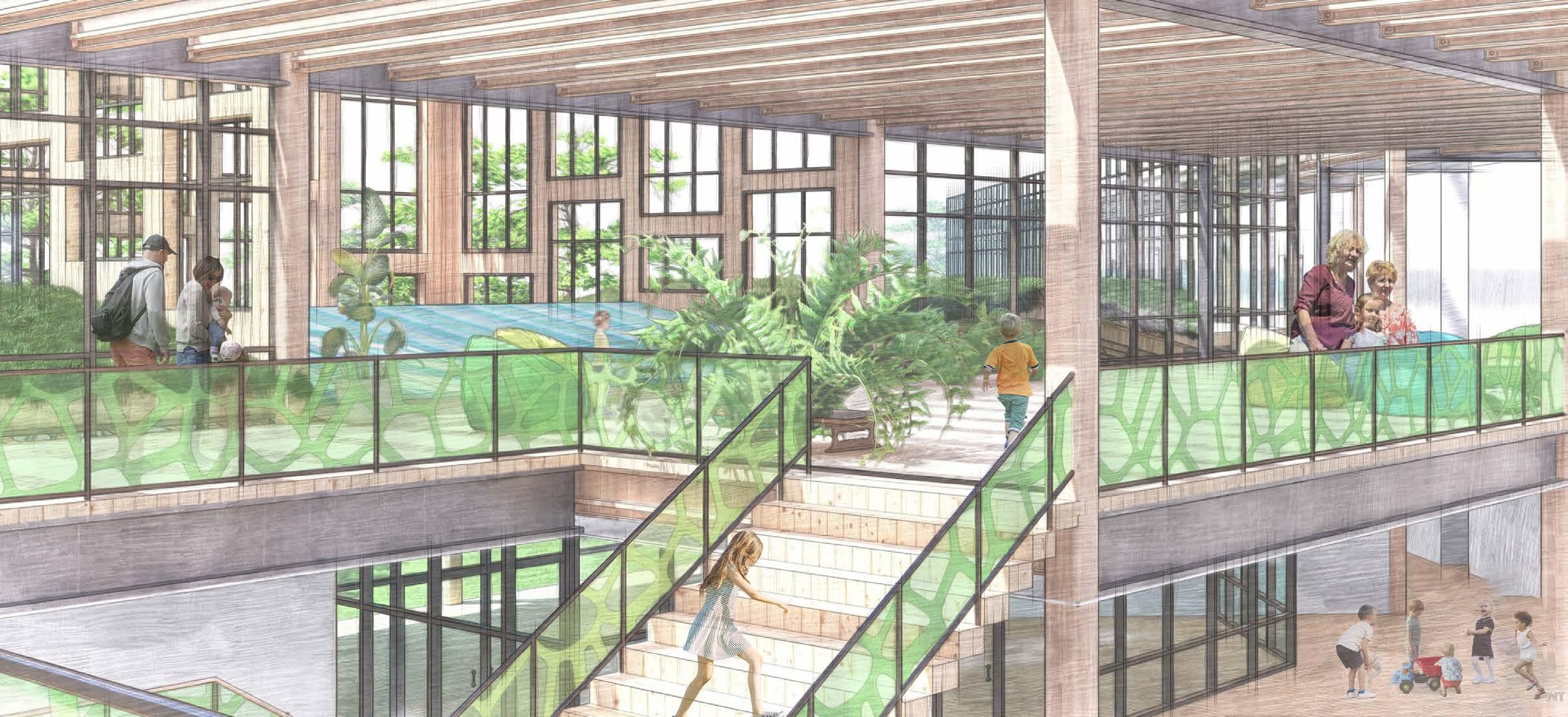
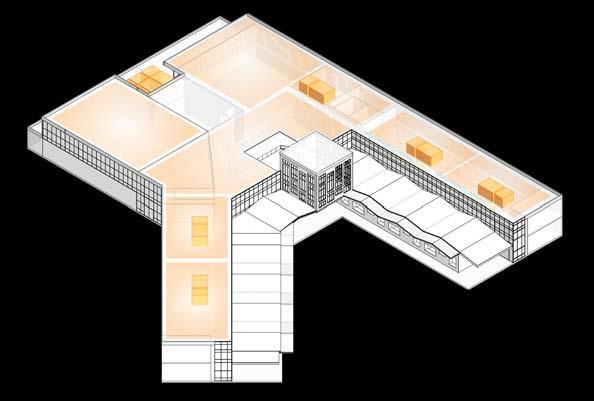
Undulating green roof creates residential language at ground level for young children. It also creates a pleasant circulation experience for students in the upstairs classrooms.
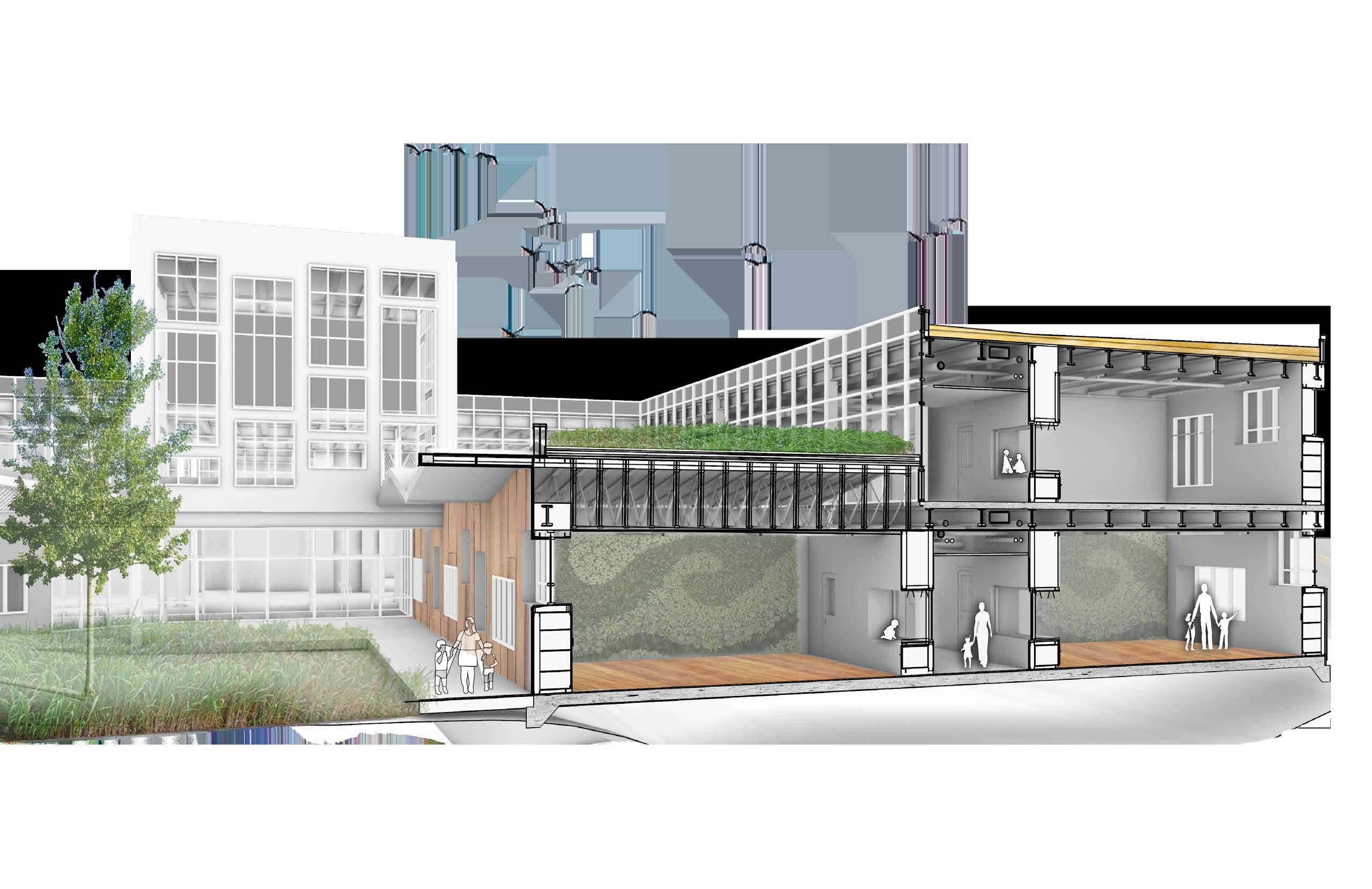
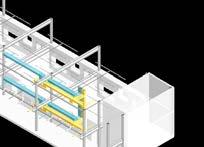
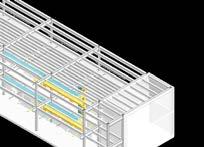
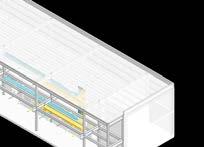
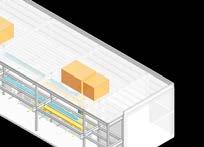
Detail section perspective showing classroom spaces, mechanical, and structural systems.
Glass facade provides hallway with ample light and an opportunity to experience undulating green roof.
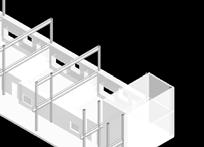
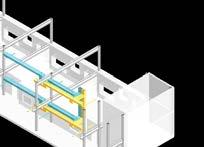
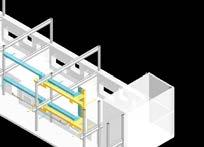
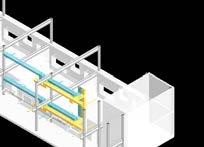
Mechanical systems run through the hallway to give classrooms maximum ceiling height.
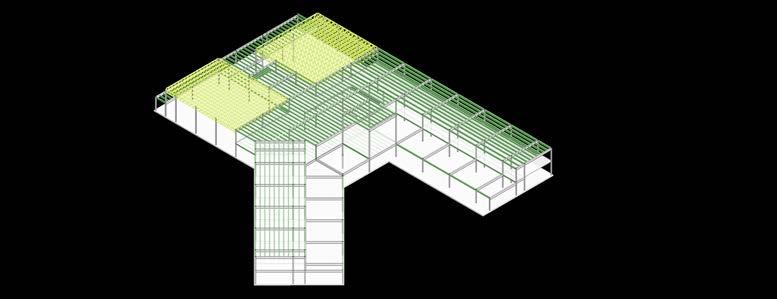
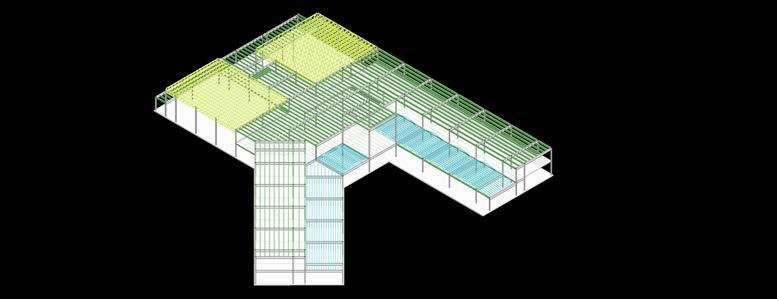
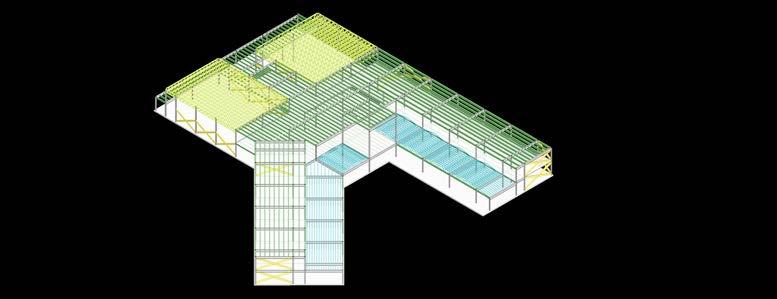
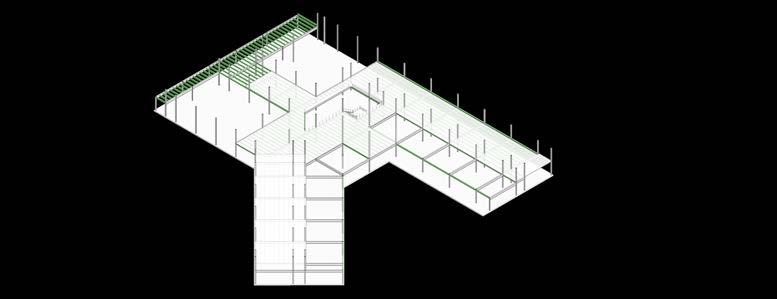
Green roof supported by open-web steel joists below.
Depth of window placement in wall is varied to create visual interest on the facade.
Thick walls provide thermal mass and additional insulation.
Three-foot walls create nooks for children and additional storage.
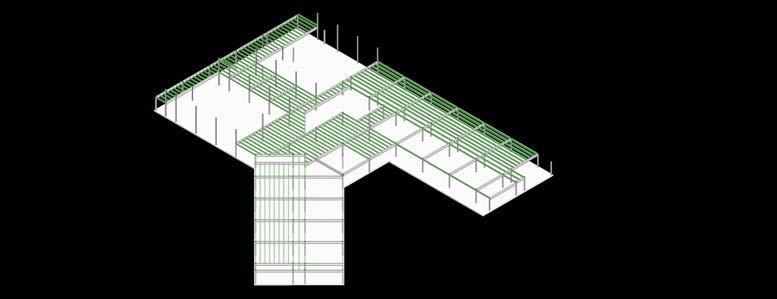
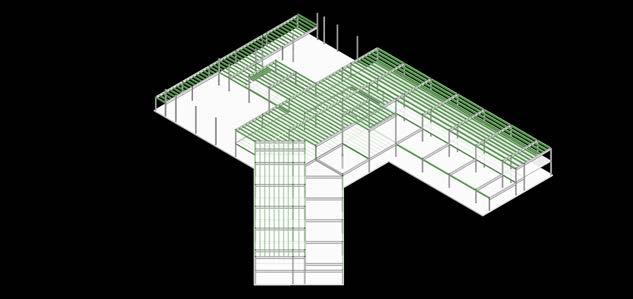
Open Web Steel Joists
Cold-form Steel Trusses
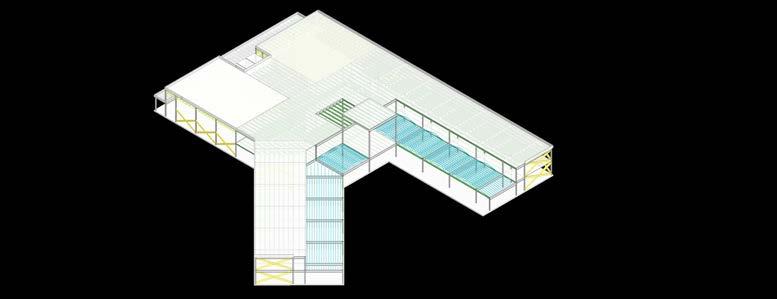
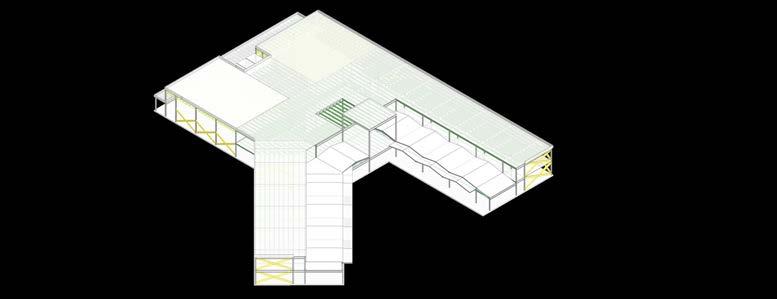
Cross-Bracing
Main Roof System
Green Roof System
W8 14’ Columns
Beams and Girders
To Introduce 02
Acknowledging
Historical Context
Project: Olli Center Campus
Type: Historic Preservation
Semester: Spring 2020
Location: Auburn, Alabama
Size: 15,000 Square Feet
Faculty: Deborah Ku
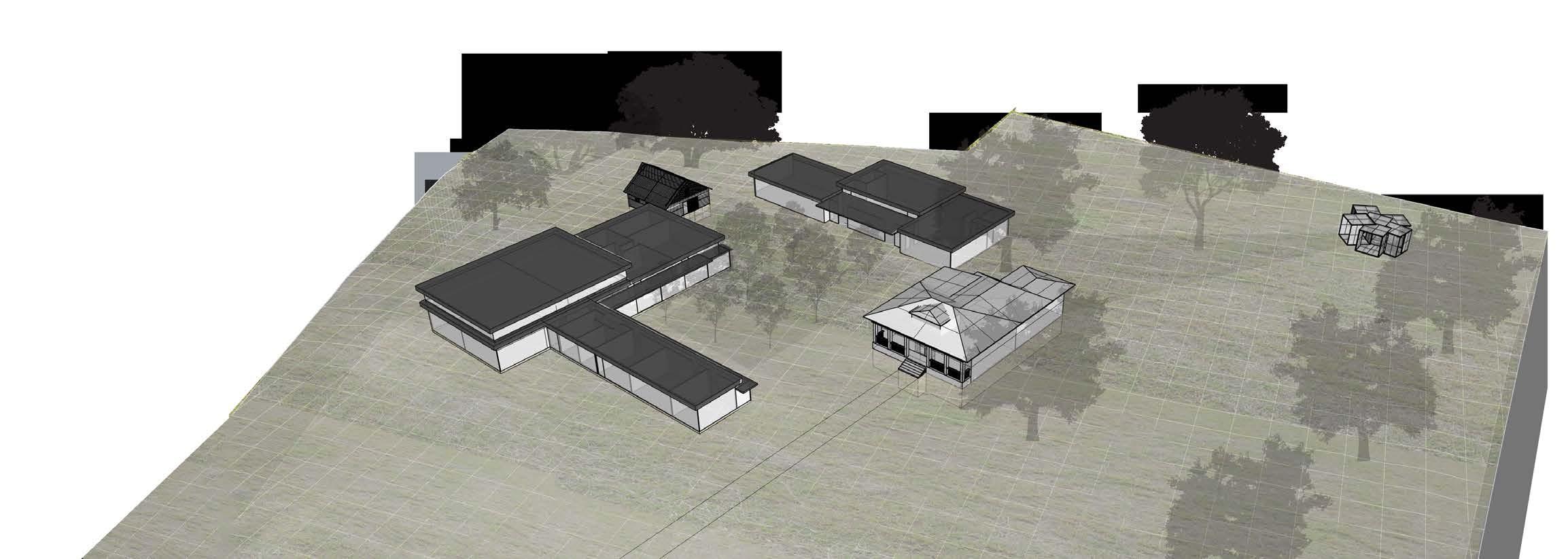
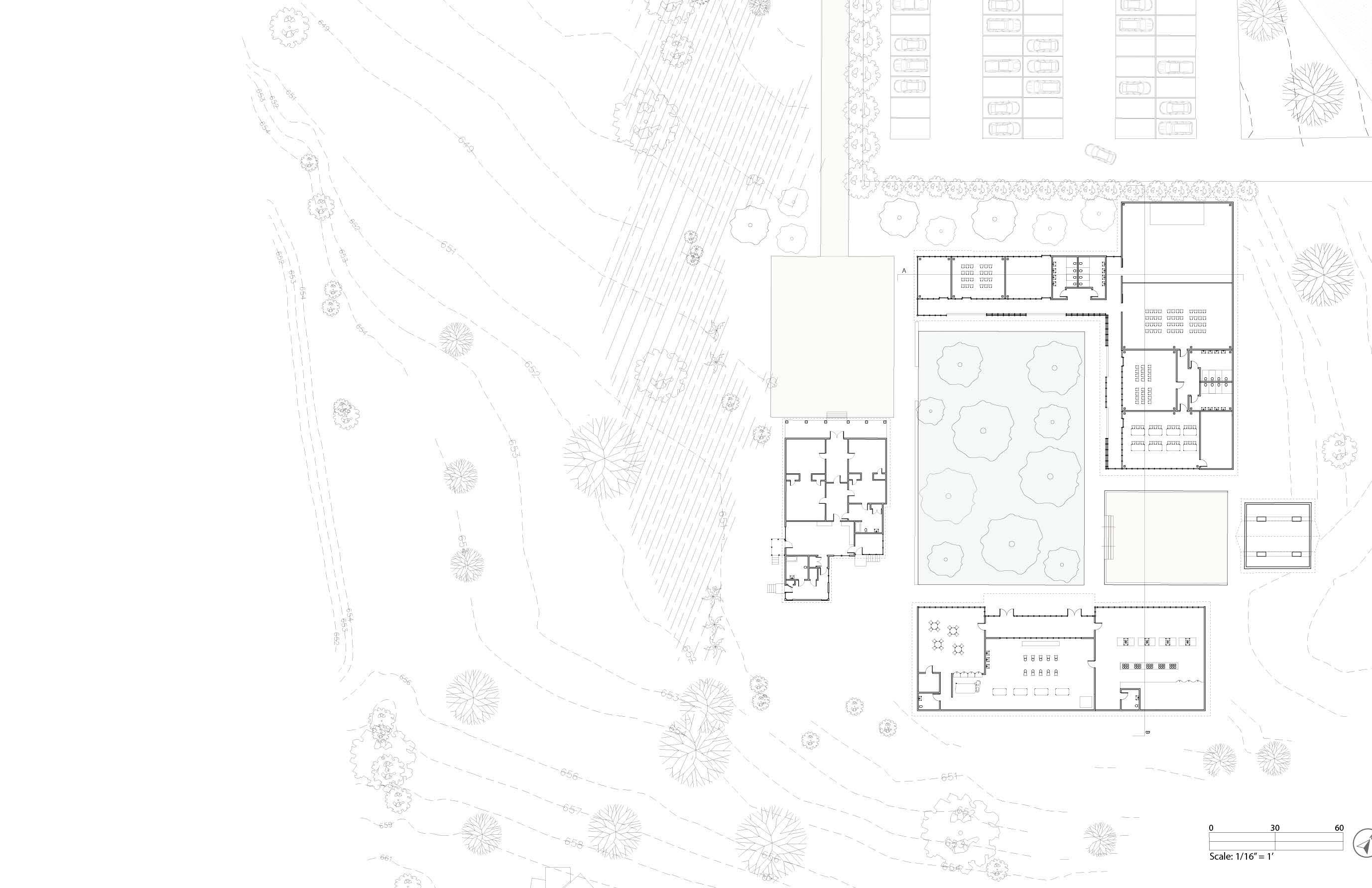
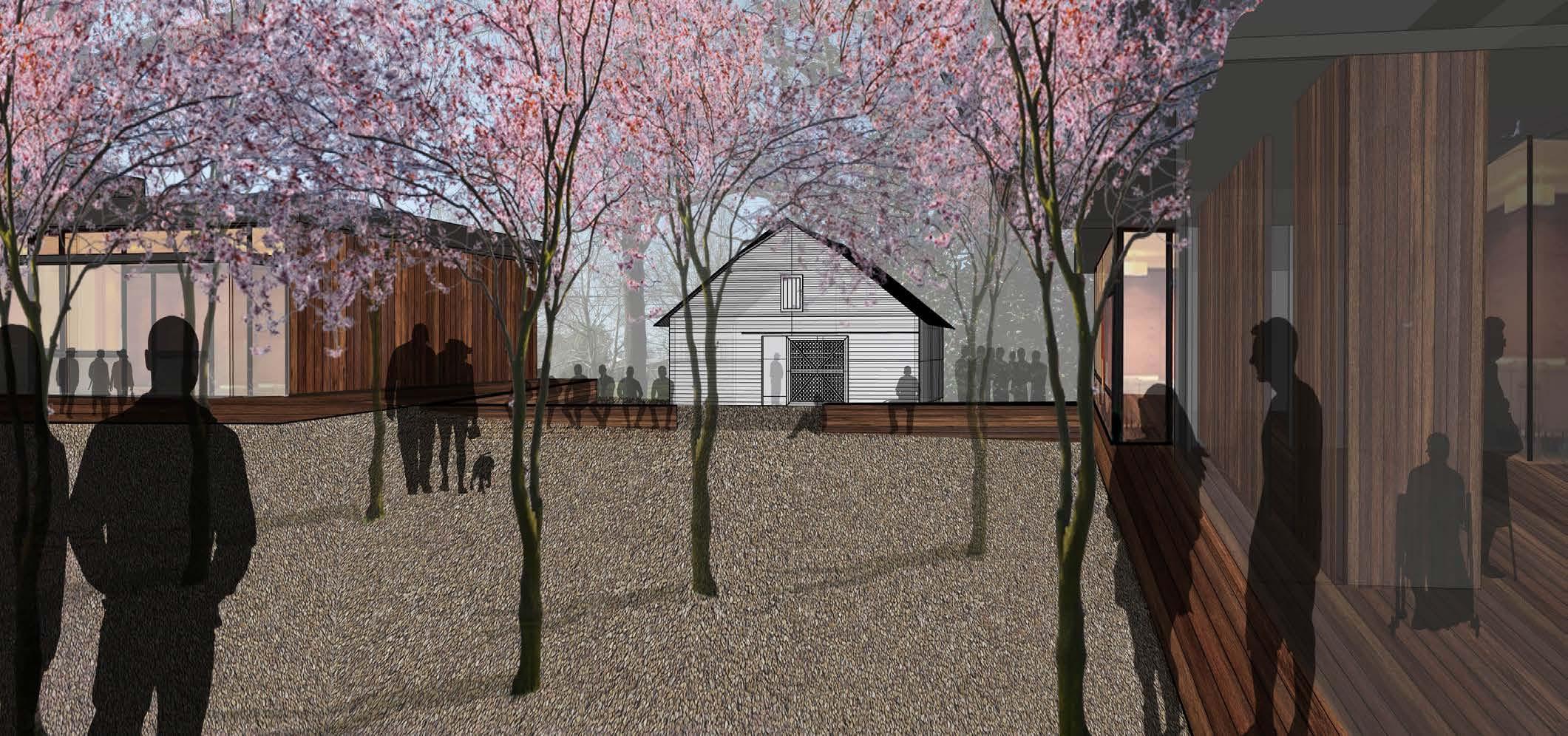
This historic preservation project explores how to properly introduce 15,000 square feet of program on a site with two historic structures.
Drew Haley Smith
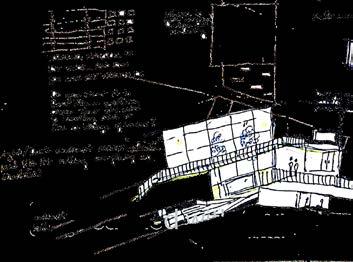
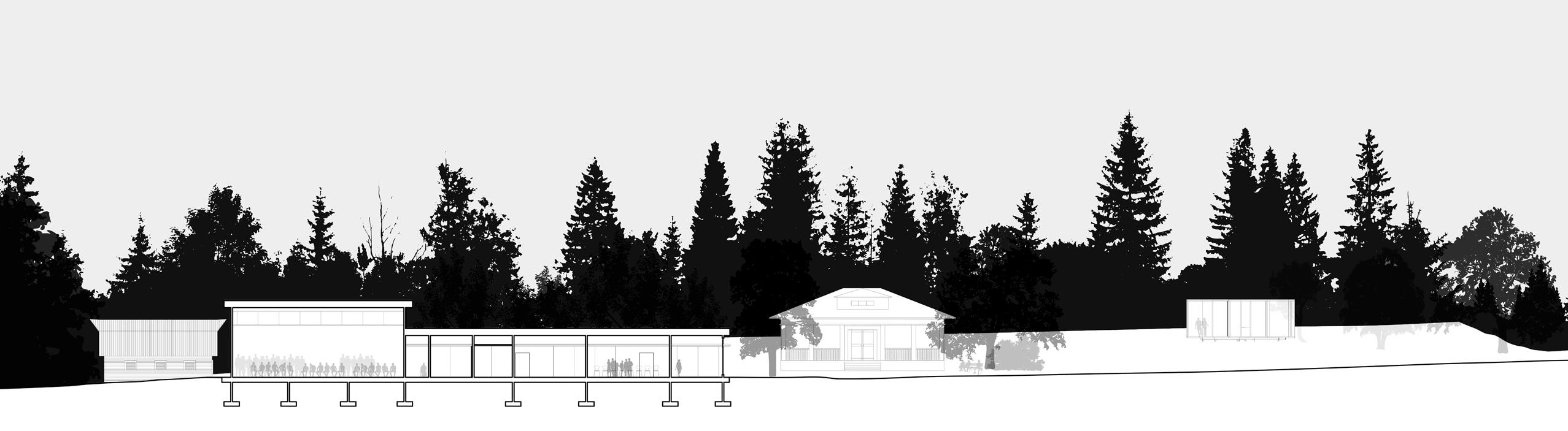
Section showing how the site’s natural topography was used to determine the location of larger programmatic elements such as the auditorium.
The goal of this project was to prevent the new program from overpowering the scale or visual appeal of the existing historic structures. Therefore, preserving the line of sight from the street to Sunny Slope was prioritized.
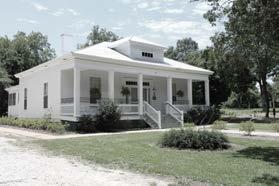
Image of Sunny Slope built c. 1857
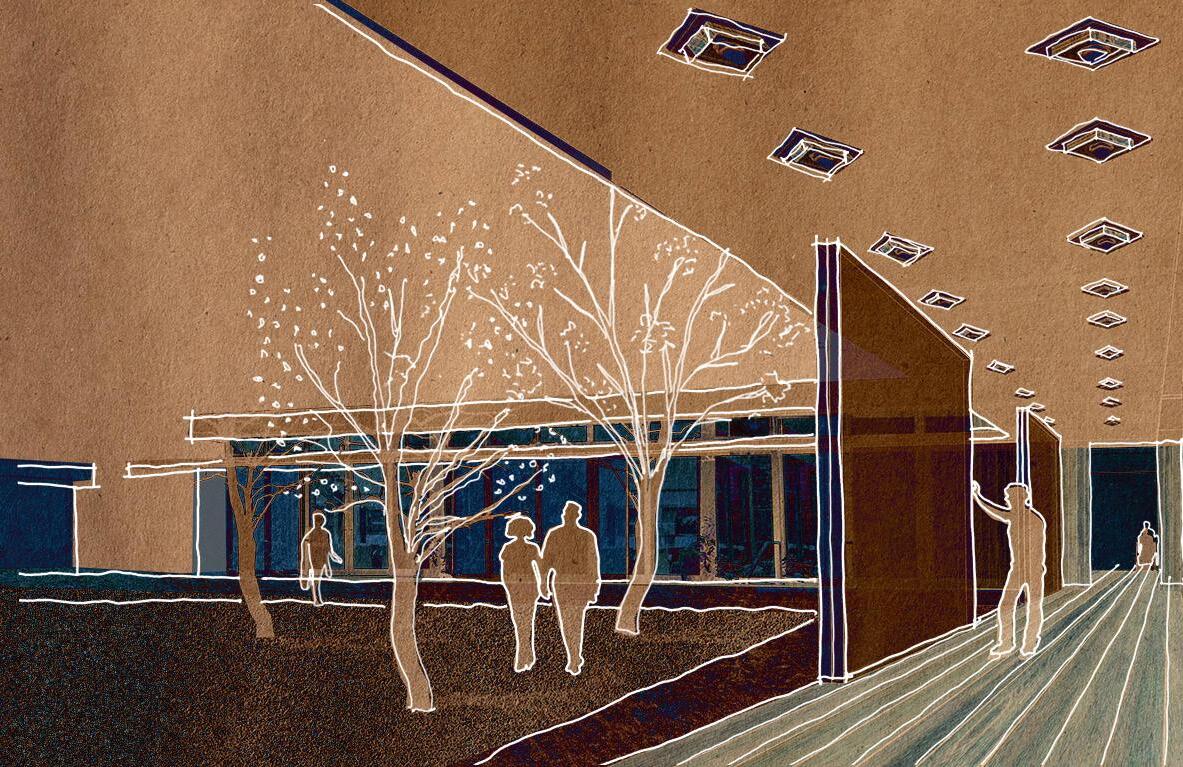
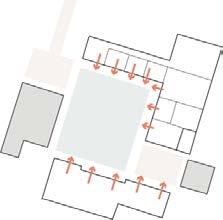
Each classroom has both visual and physical access to the courtyards (see diagram above). This access is provided by a doublesided glass hallway which wraps the perimeter of the buildings (see left). This hallway also provides an additional barrier between the classrooms and the outdoor elements by shading the classrooms from harsh western and southern light. On pleasant days, the glass doors can be slid completely open for fresh air and seamless access to courtyards.
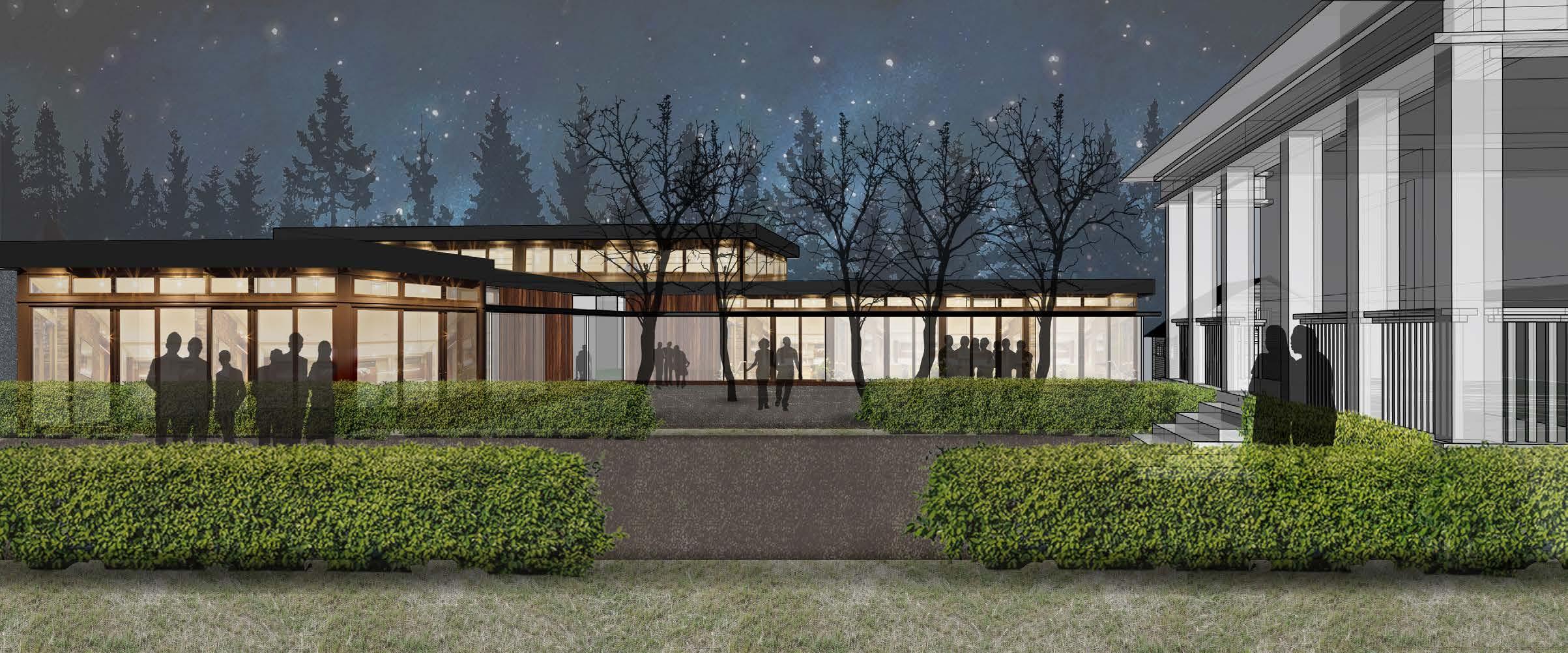
Nighttime image showing new building’s complimentary relationship to Sunny Slope.
To Build 03
Harmonizing the Practical with the Ideal
Project: Ophelia’s Home, Rural Studio
Type: Design-Build
Semester: Spring 2021
Location: Newbern, Alabama
Size: 588 Square Feet
Faculty: Emily McGlohn, Steve Long
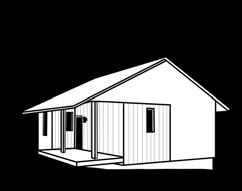
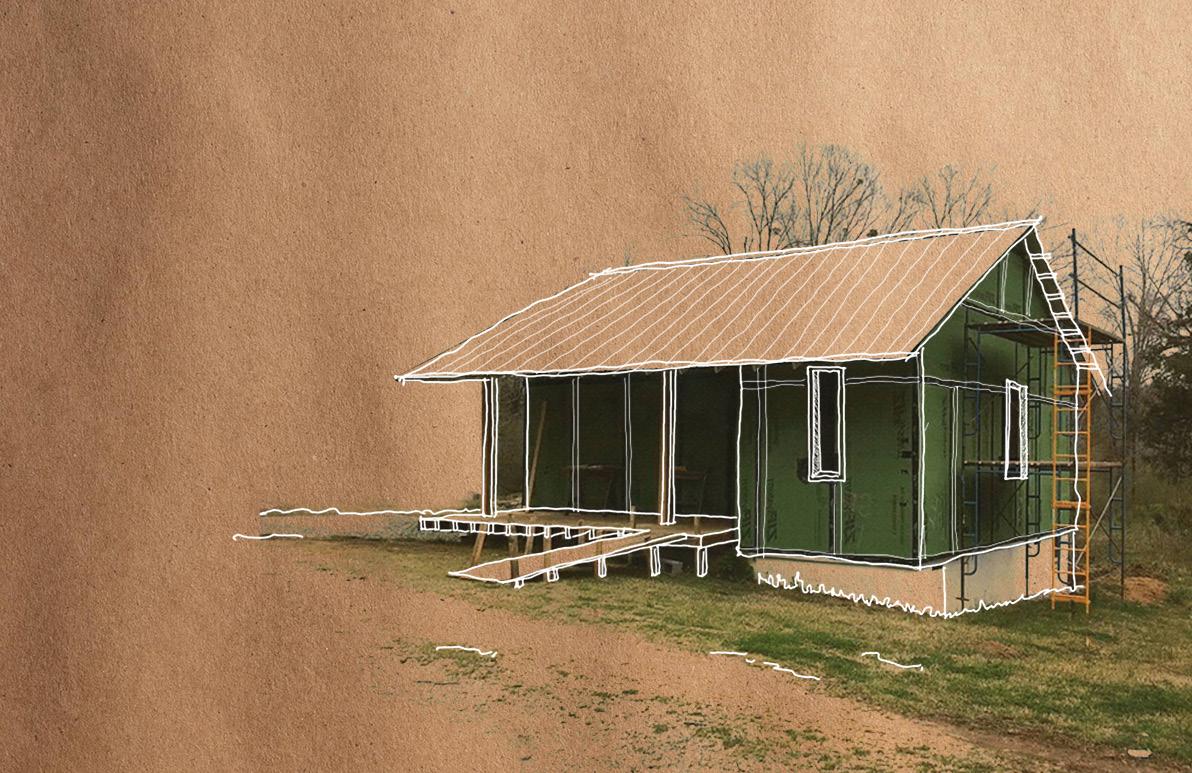
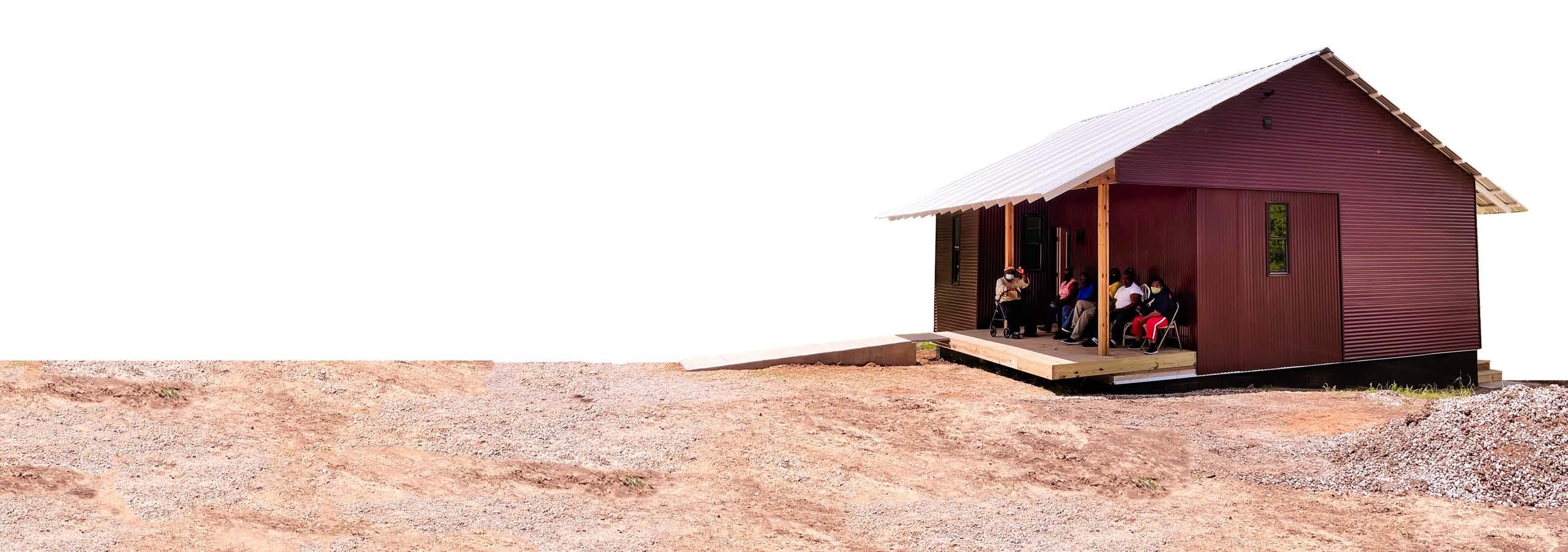
This design-build project was deigned to meet the specific needs of our client without sacrificing the proportions or aesthetics of the exterior. The eye is tricked into reestablishing proportions by the use of color, details, and “dazzle camoflauge” design explorations.
Joanne’s Floor Plan
Scale: 3/32” = 1’-0”
Ophelia’s Floor Plan
Scale: 3/32” = 1’-0” Ideal Proportions
Joanne’s Side Elevation
Problem Ophelia’s Old Elevation
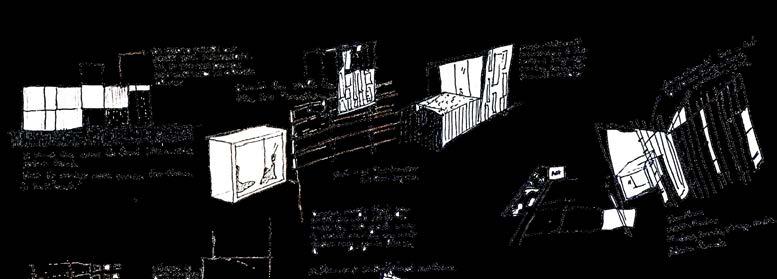
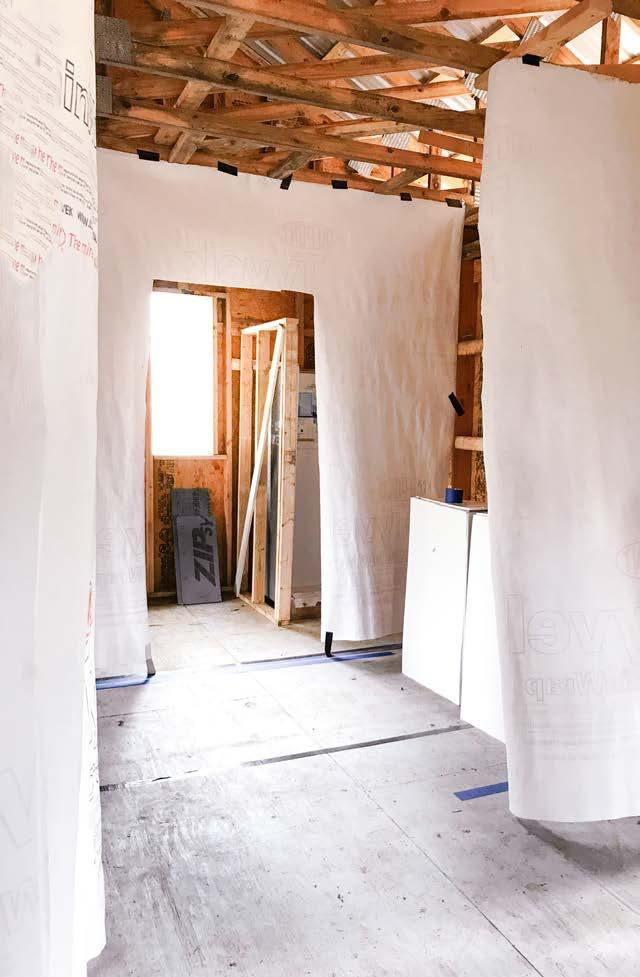
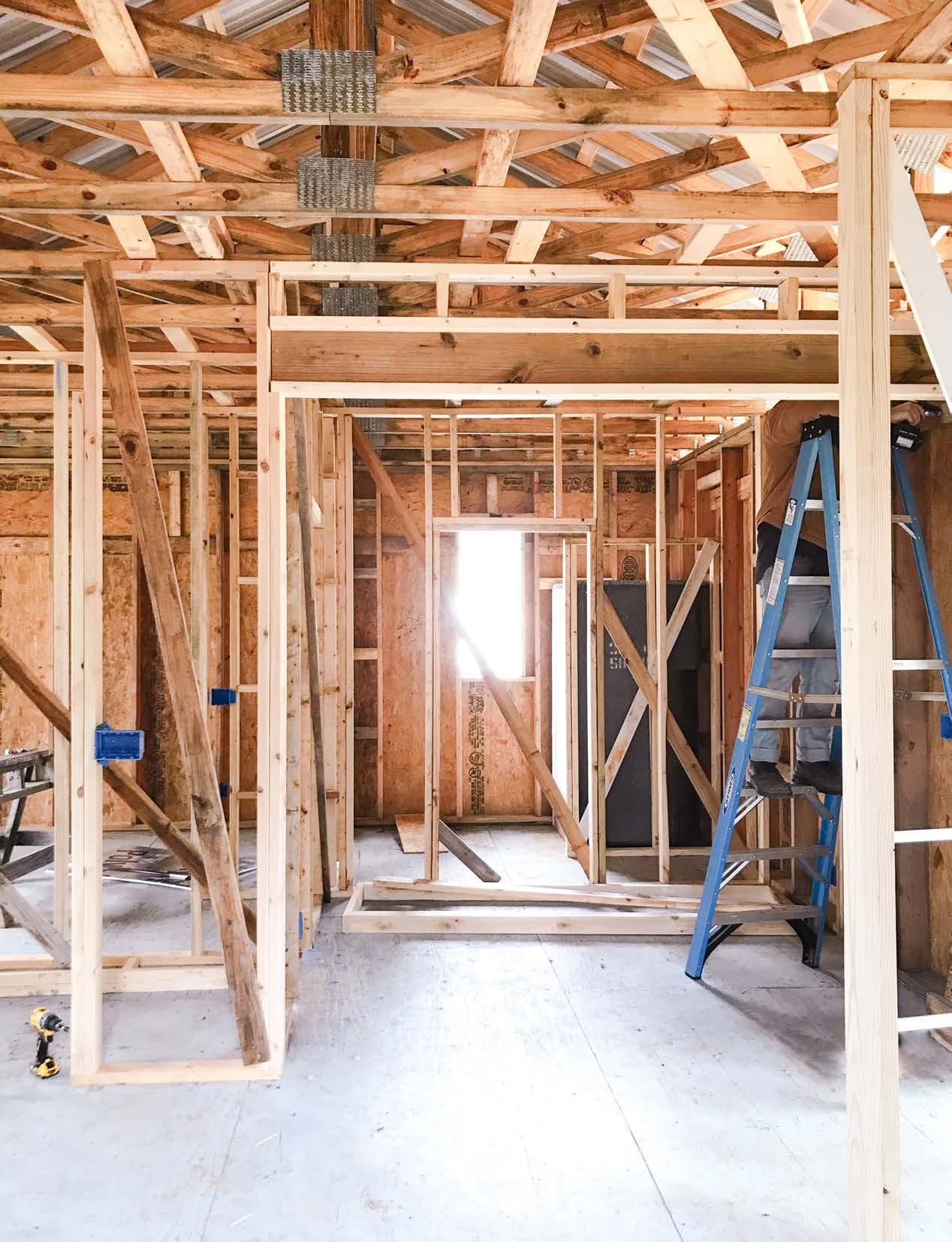
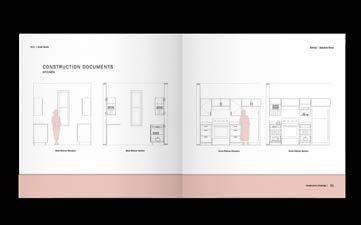
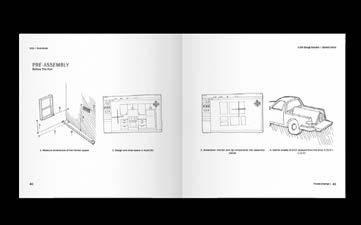
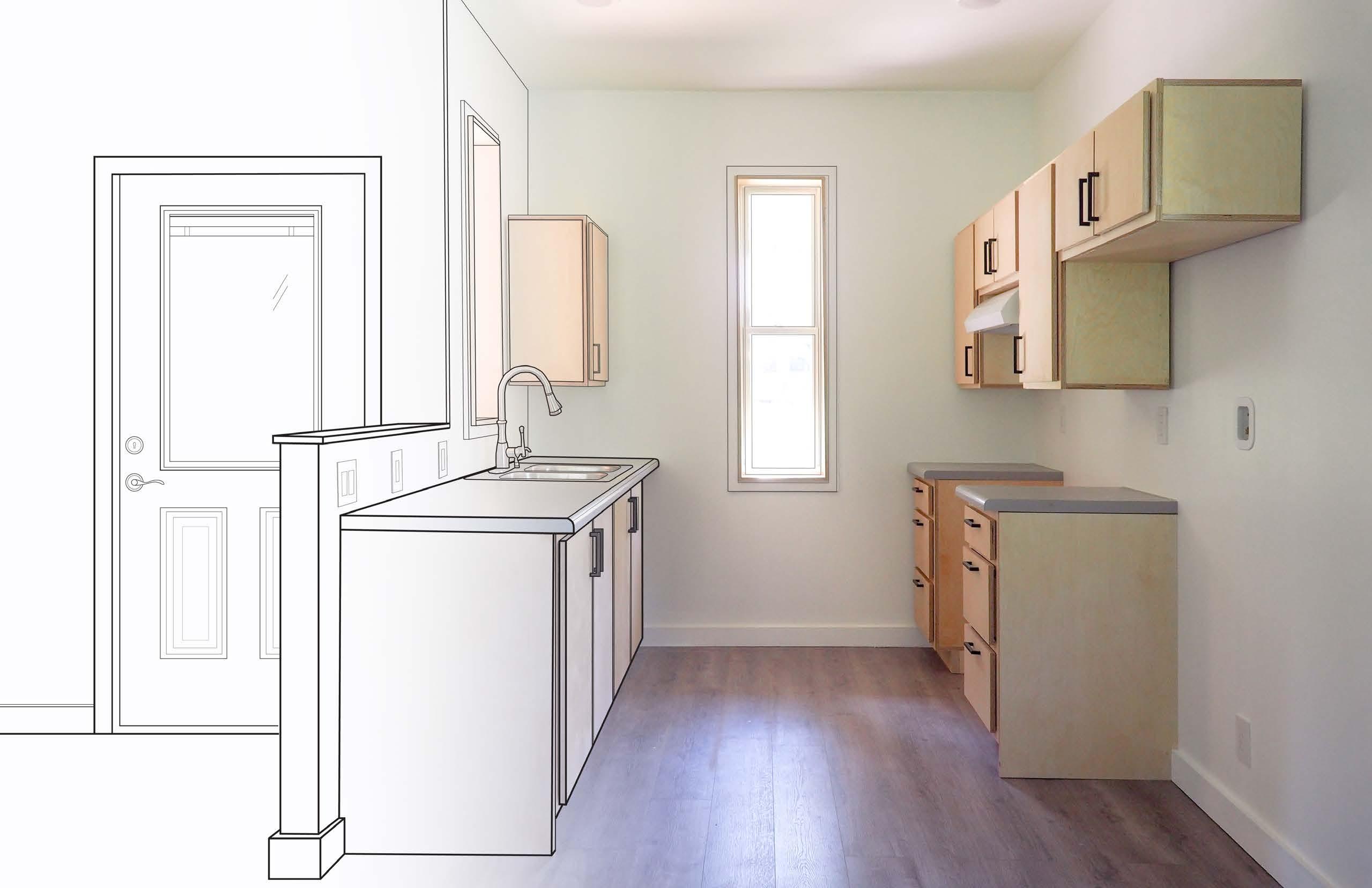
The first set of tasks completed by the Interiors team included framing and erecting interior walls, installing blocking, installing insulation, and making on-site design improvements. The second set of tasks included painting, floor installation, cabinet installation, and budgeting.
Several modifications were made on site. For example, a casing was built over the nook to provide a more formal separation of the spaces (right). The nook’s fin wall was also extended to provide more storage space and privacy for the utility room. These decisions were made by creating full-scale mockups to analyze the space in full scale (left).
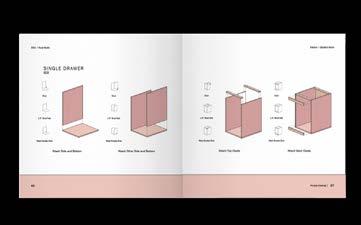
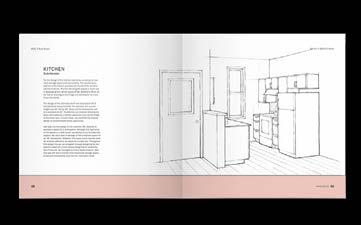
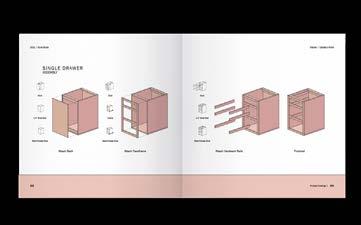
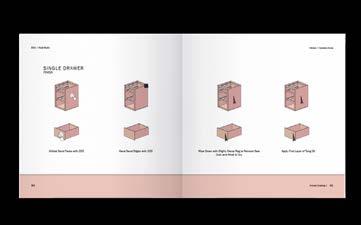
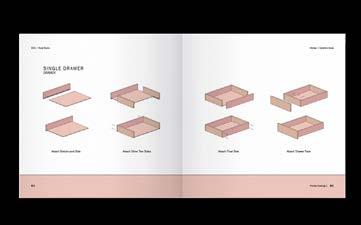
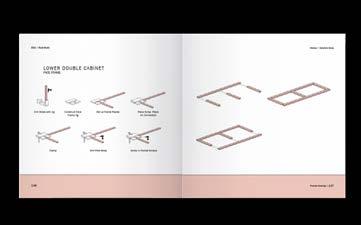
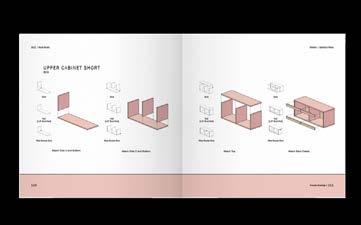
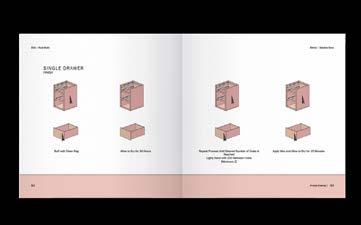
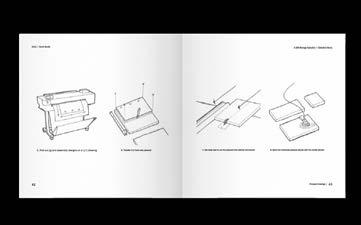
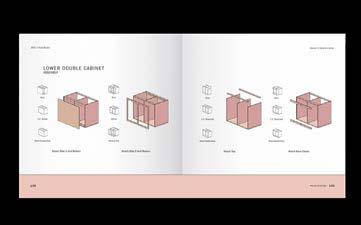
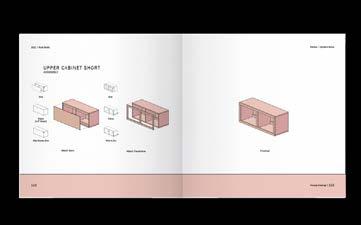
Our team designed, built, and installed a standardized set of high-quality cabinets for the entire home.
To Swing 04
Flexible Spaces and Soft Thresholds
Project: Hotel/Apartment
Type: Adaptive Reuse
Semester: Summer 2022
Location: Montgomery, Alabama
Size: 17,735 Square Feet
Faculty: Kevin Moore, Rebecca O’Neal
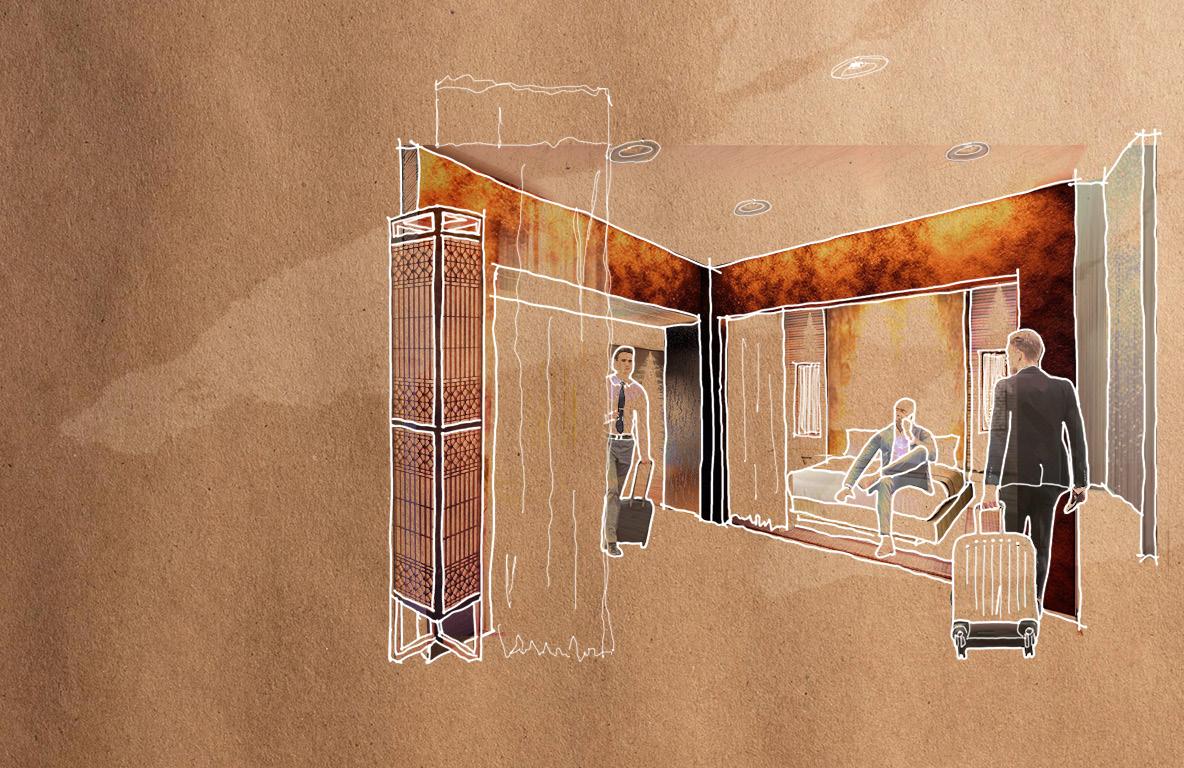
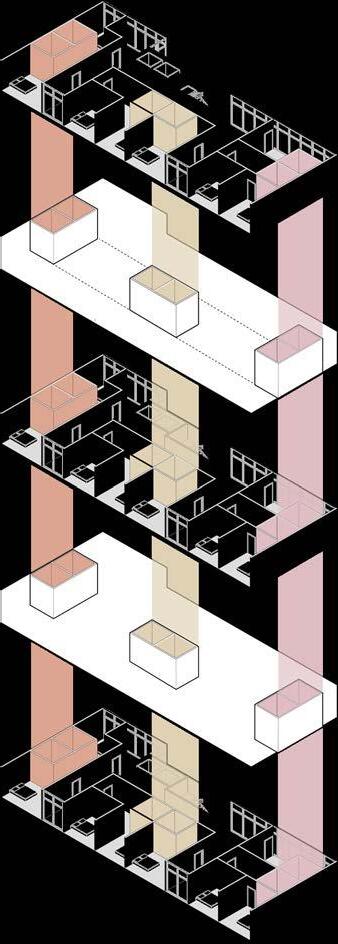
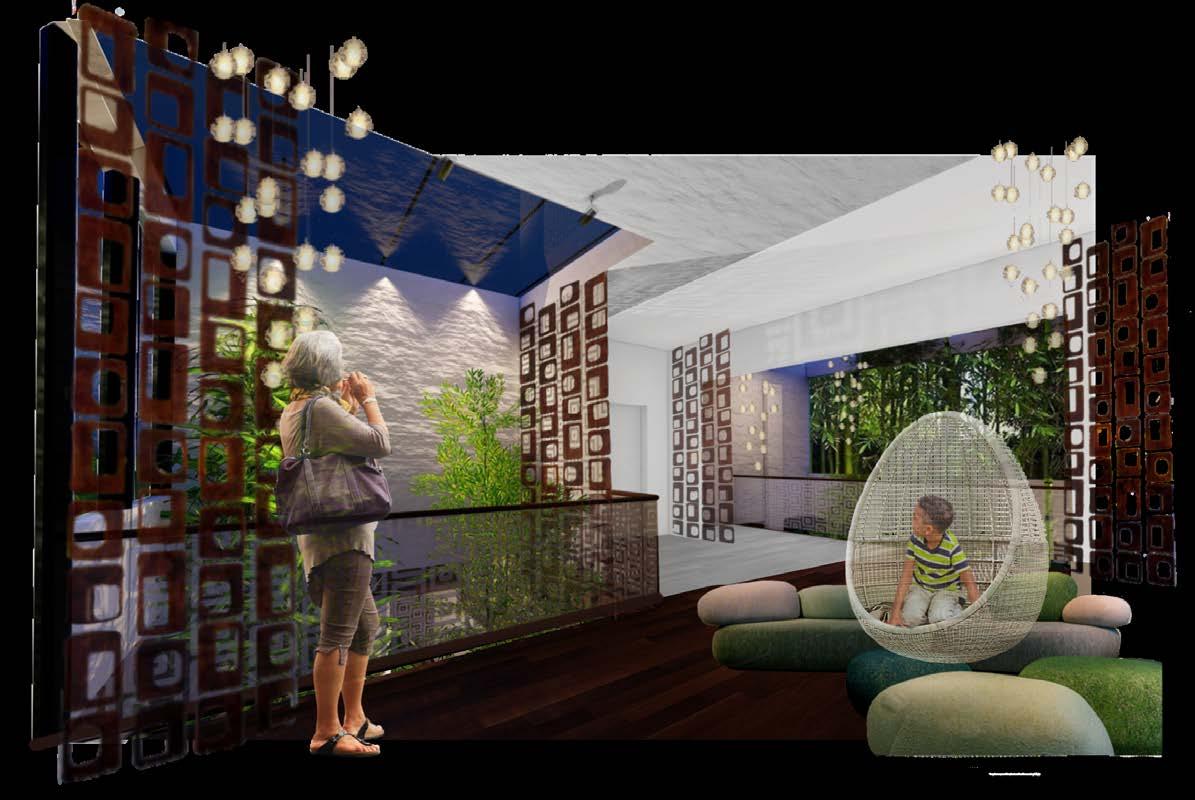
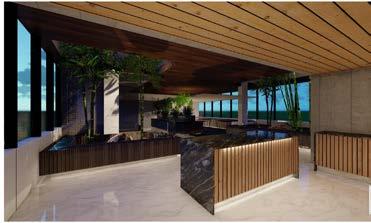
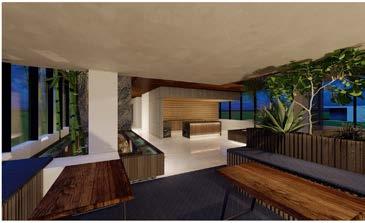
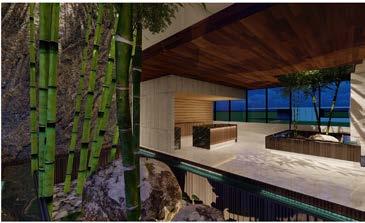
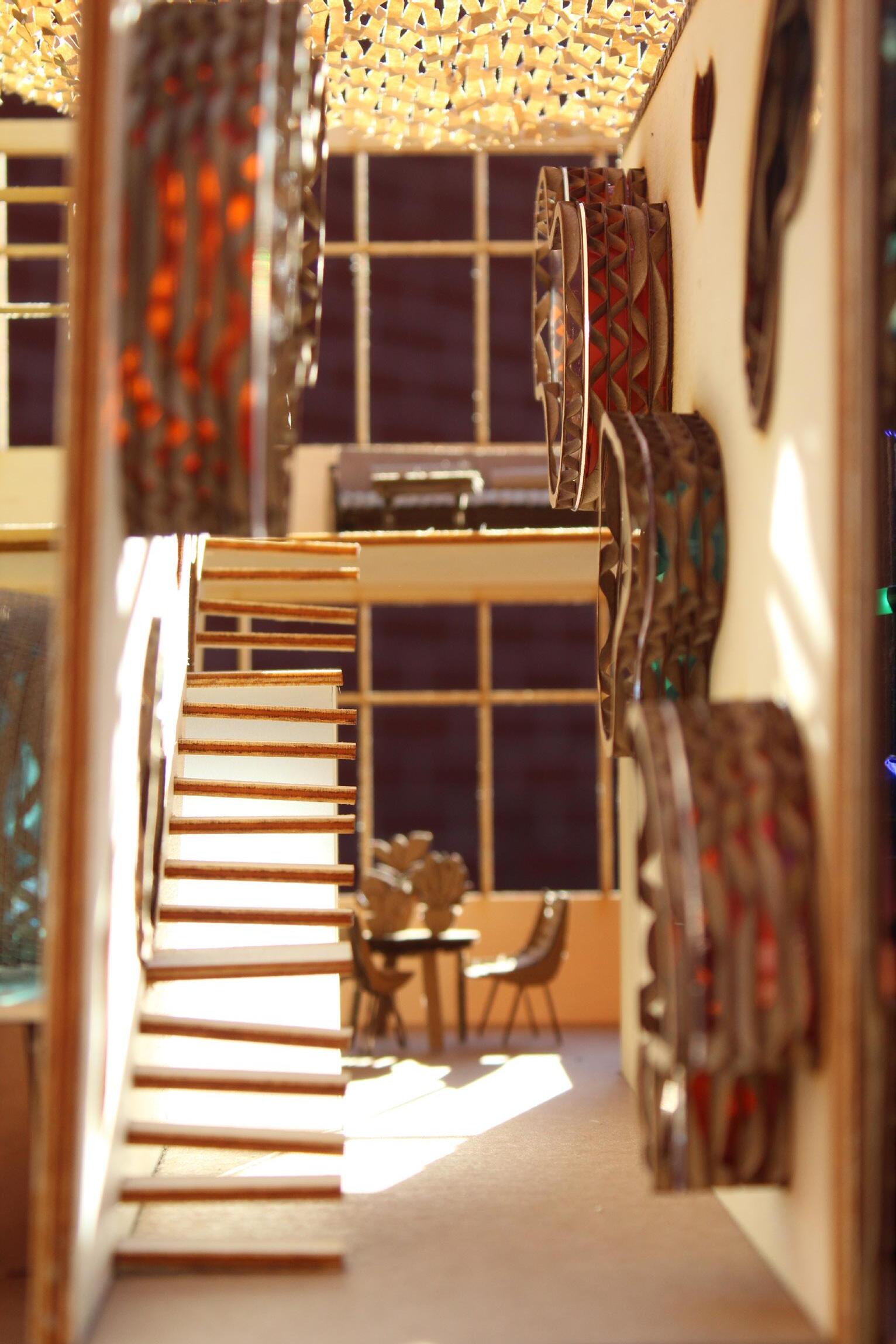
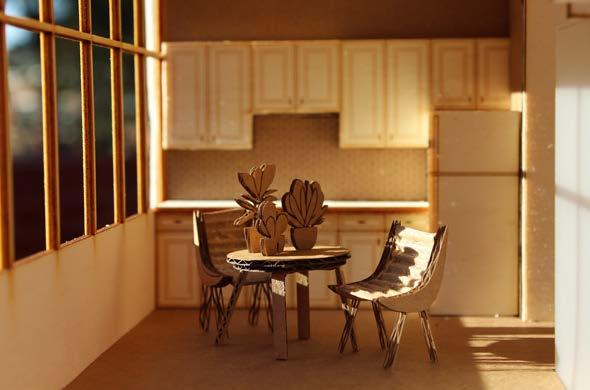
This adaptive reuse project explores how a hotel can easily be transformed into an apartment by simply converting one of the hotel bathrooms into a kitchen. This project also explores the possibility of creating “soft thresholds” between the outside world and the most private spaces.
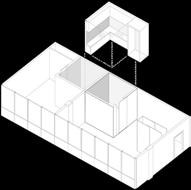
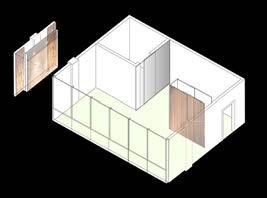
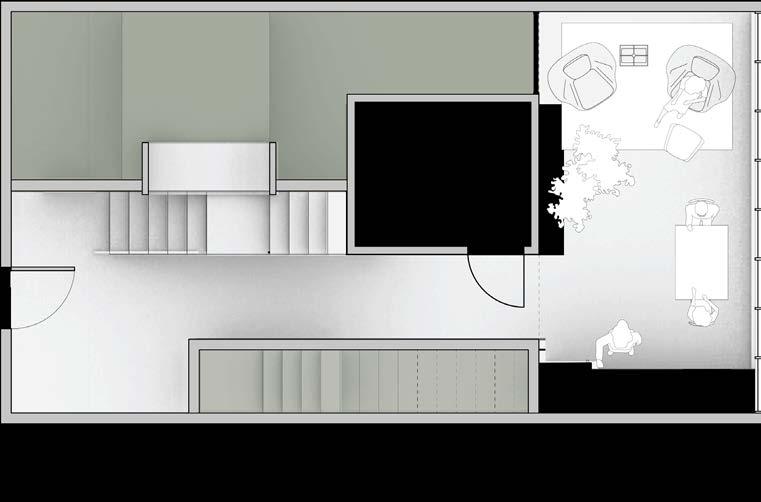
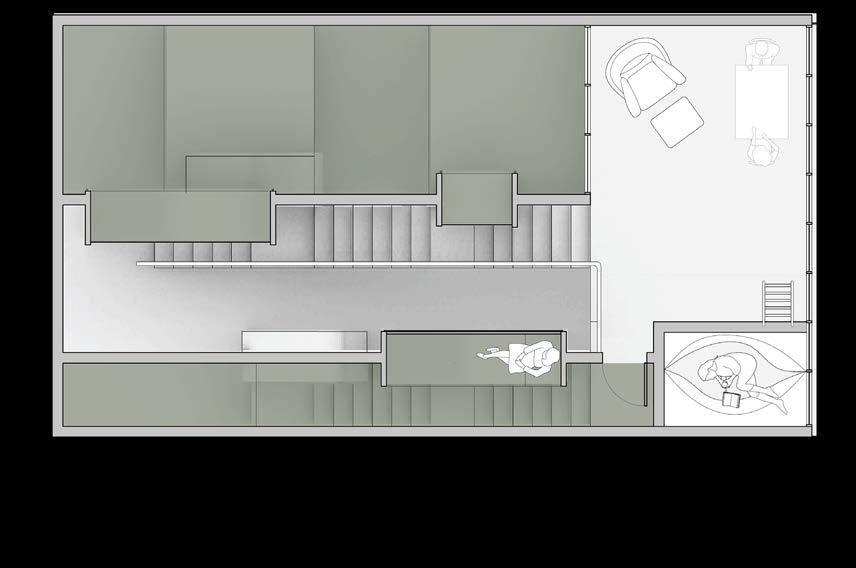
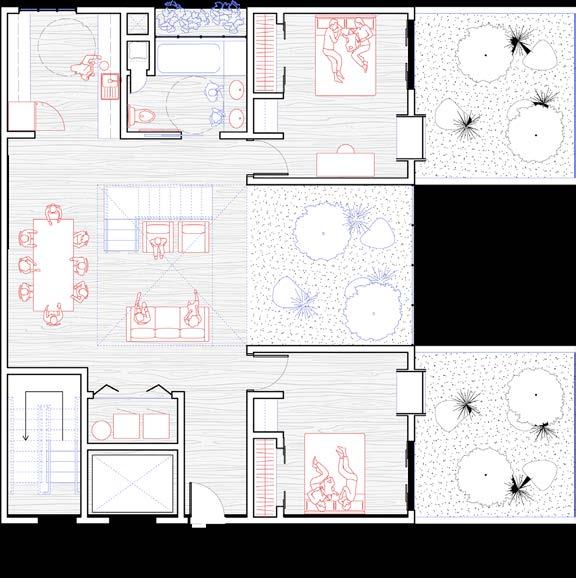
In order to swing from a hotel into an apartment, one only needs to transform one of the hotel bathrooms into a kitchen.
Aligned plumbing infrastructure allows for easy transition between hotel and apartment.
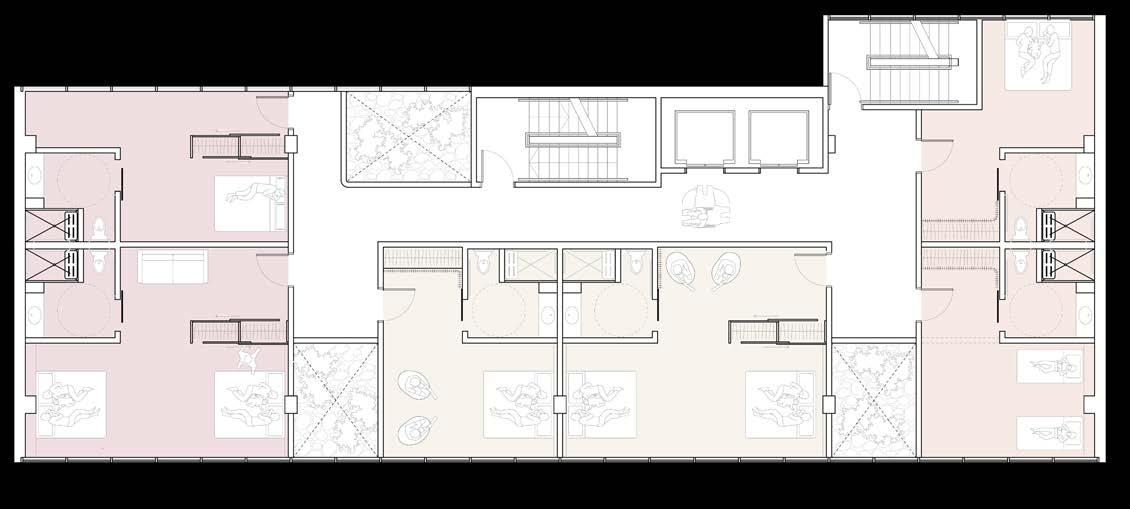
Hotel Floor Plan
Scale: 1/16” = 1’-0”
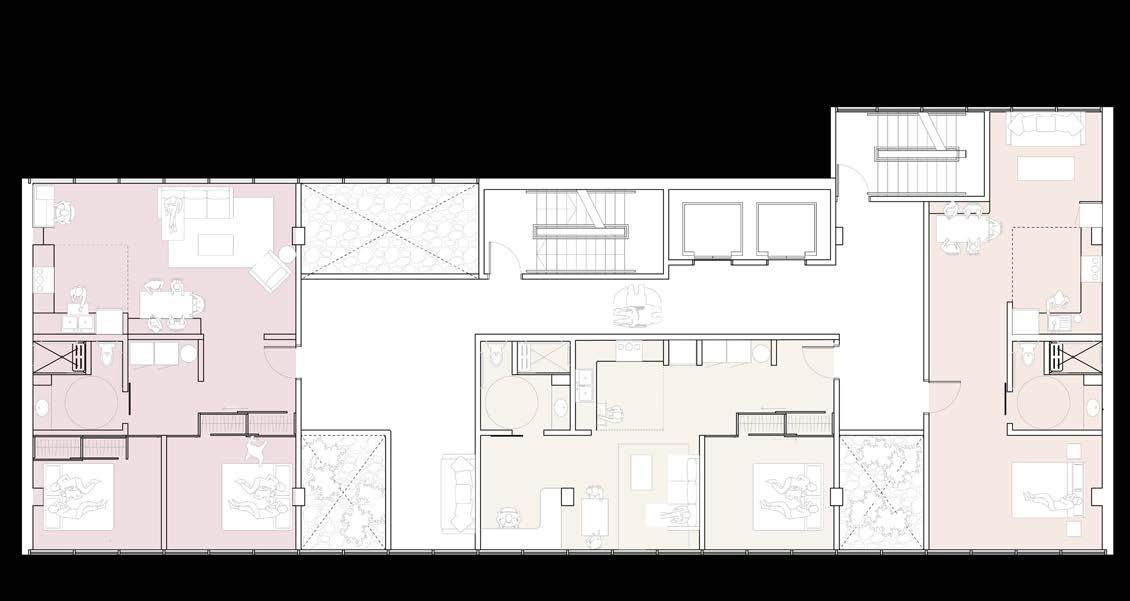
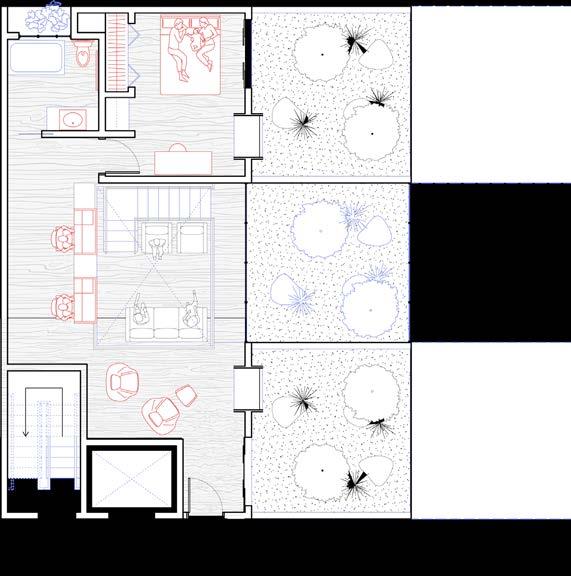
Apartment Floor Plan
Scale: 1/16” = 1’-0”
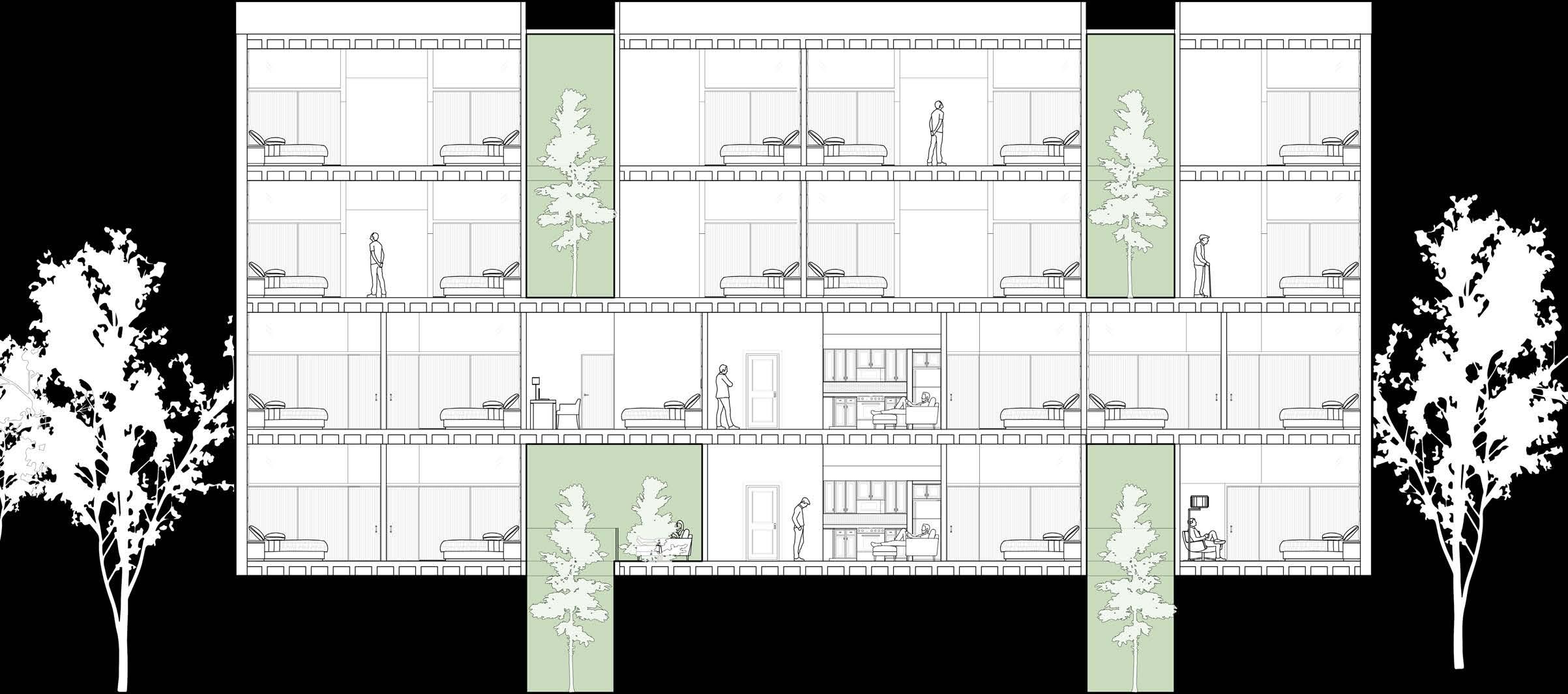
Each floor can swing from six hotel rooms to three apartments.
Columns were covered by a wall system that enlargens the space by implying wall depth. Mirrors also helped expand the space.
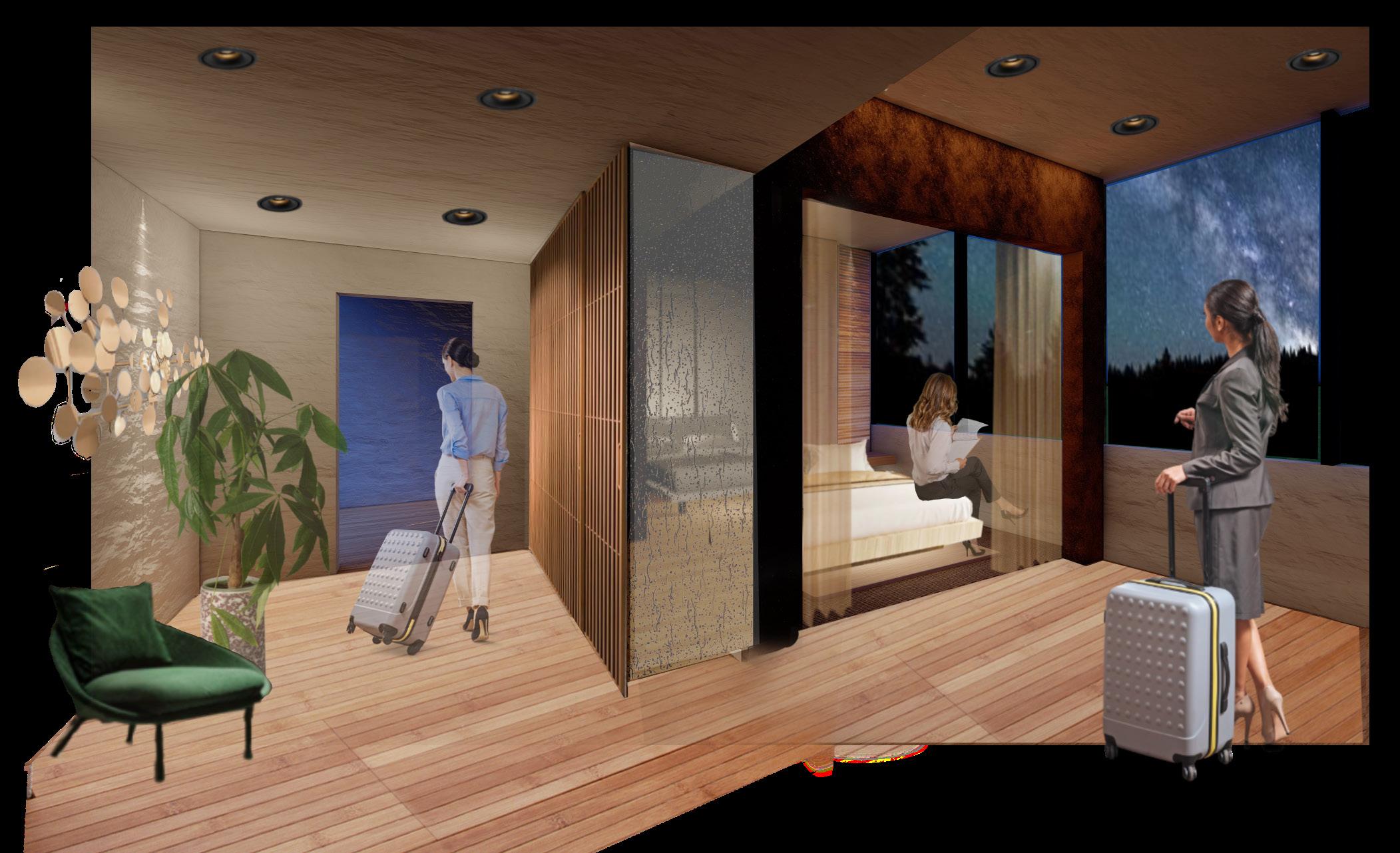
In a typical hotel or apartment, the transition between the outside world and the domestic realm is extremely abrupt (usually just a door separates the two). This project attempts to soften this threshold by creating a space to “sluff off” the outside world before turning to see the rest of the space revealed.
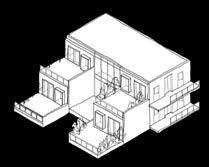
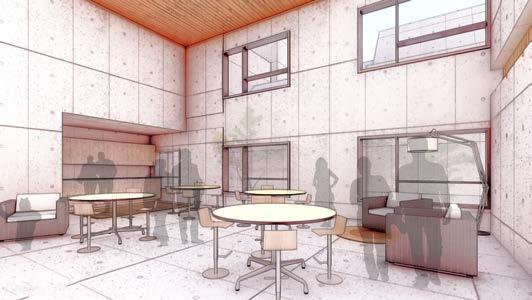
When the project swings from hotel to housing, two of the gardens become a community social space.
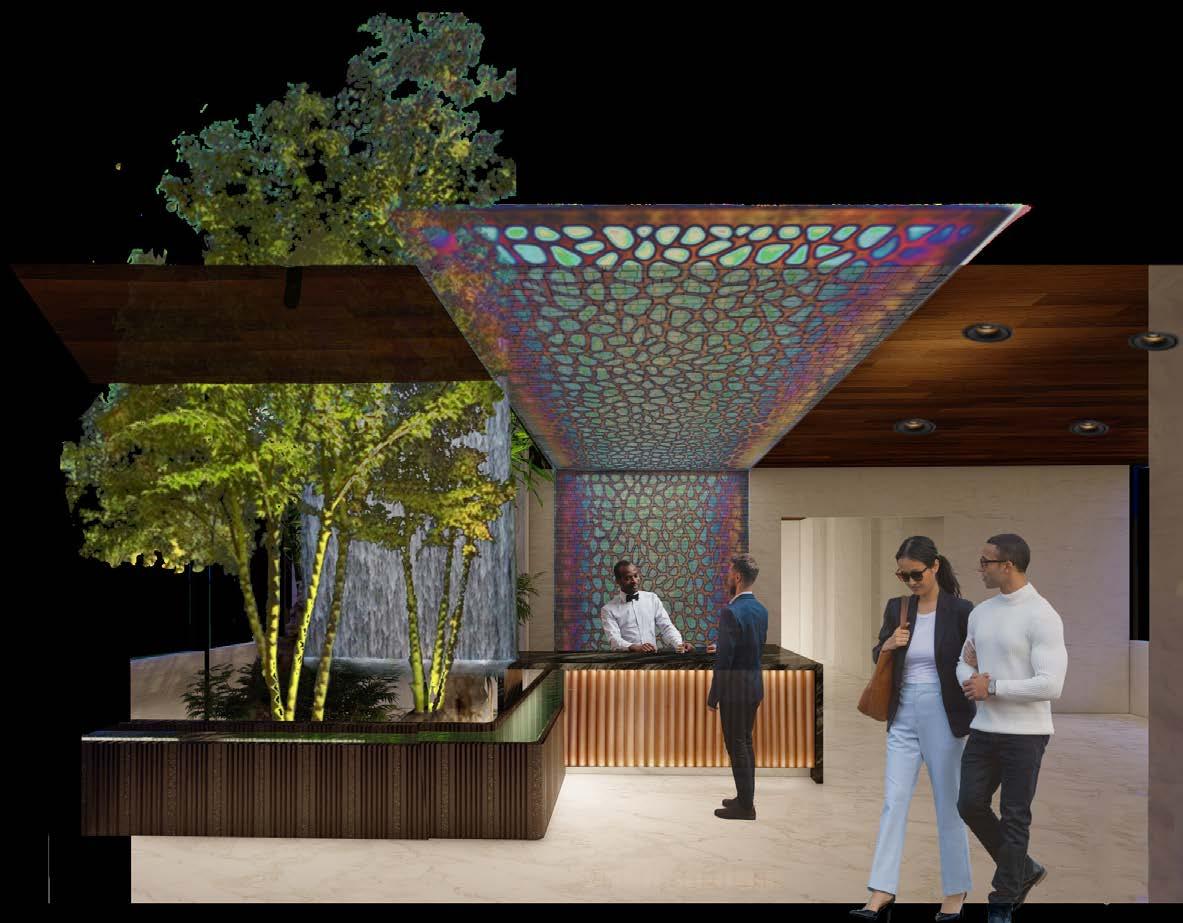
Entrance perspective showing interior gardens.
View showing floating furniture in lobby. View of community eating area. Additional view of sectional gardens.
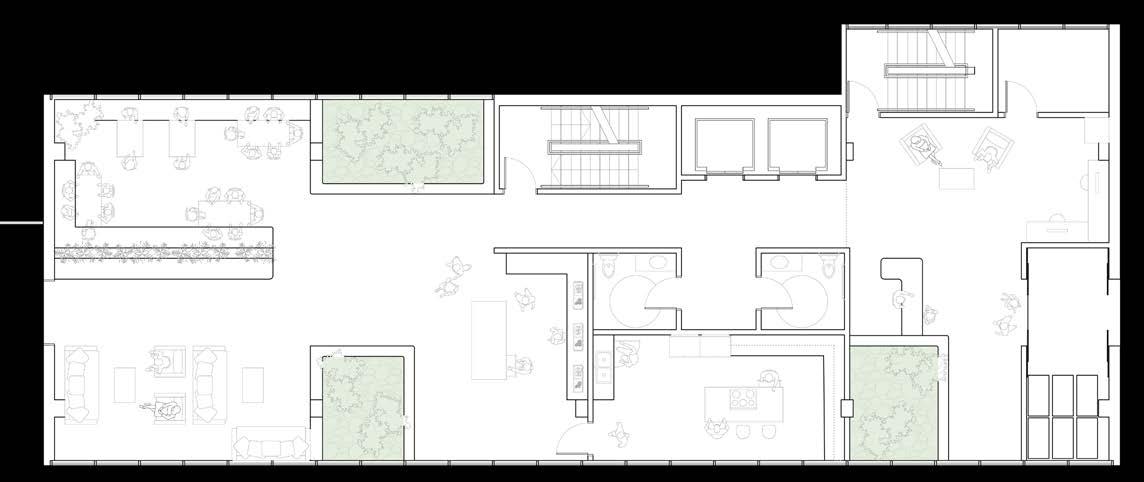
Ground Floor Plan
Scale: 1/16” = 1’-0”
The indoor gardens provide an acoustic barrier between apartments and a sectional relationship between floors. No two apartments share a wall.
Section Showing Interior Gardens
To Wander 05
Evoking Emotion and Designing Randomness
Project: Japanese Teahouse
Type: Adaptive Reuse Semester: Fall 2021
Location: Atlanta, Georgia
Size: 18,000 Square Feet
Faculty: Jennifer Pindyck
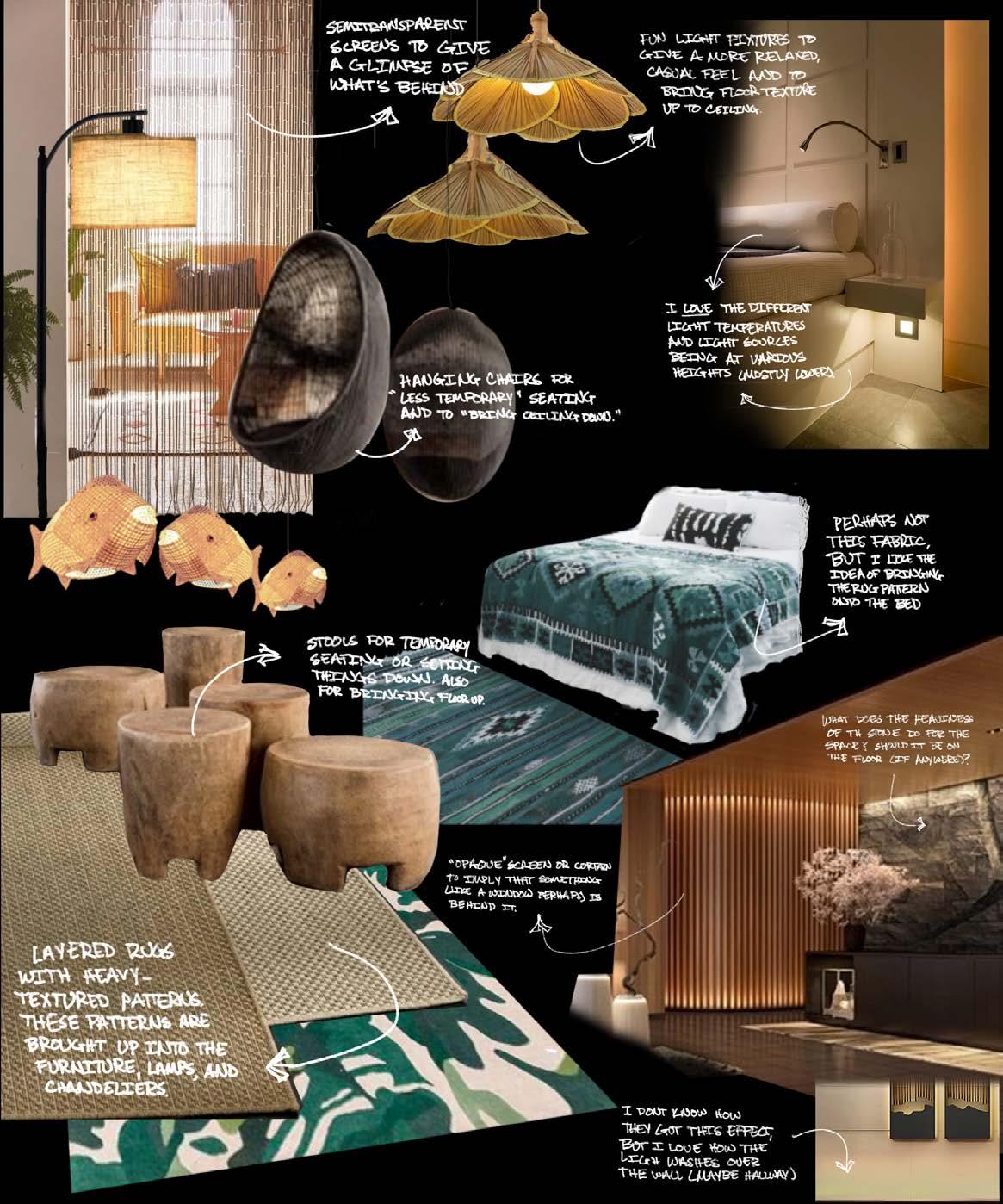
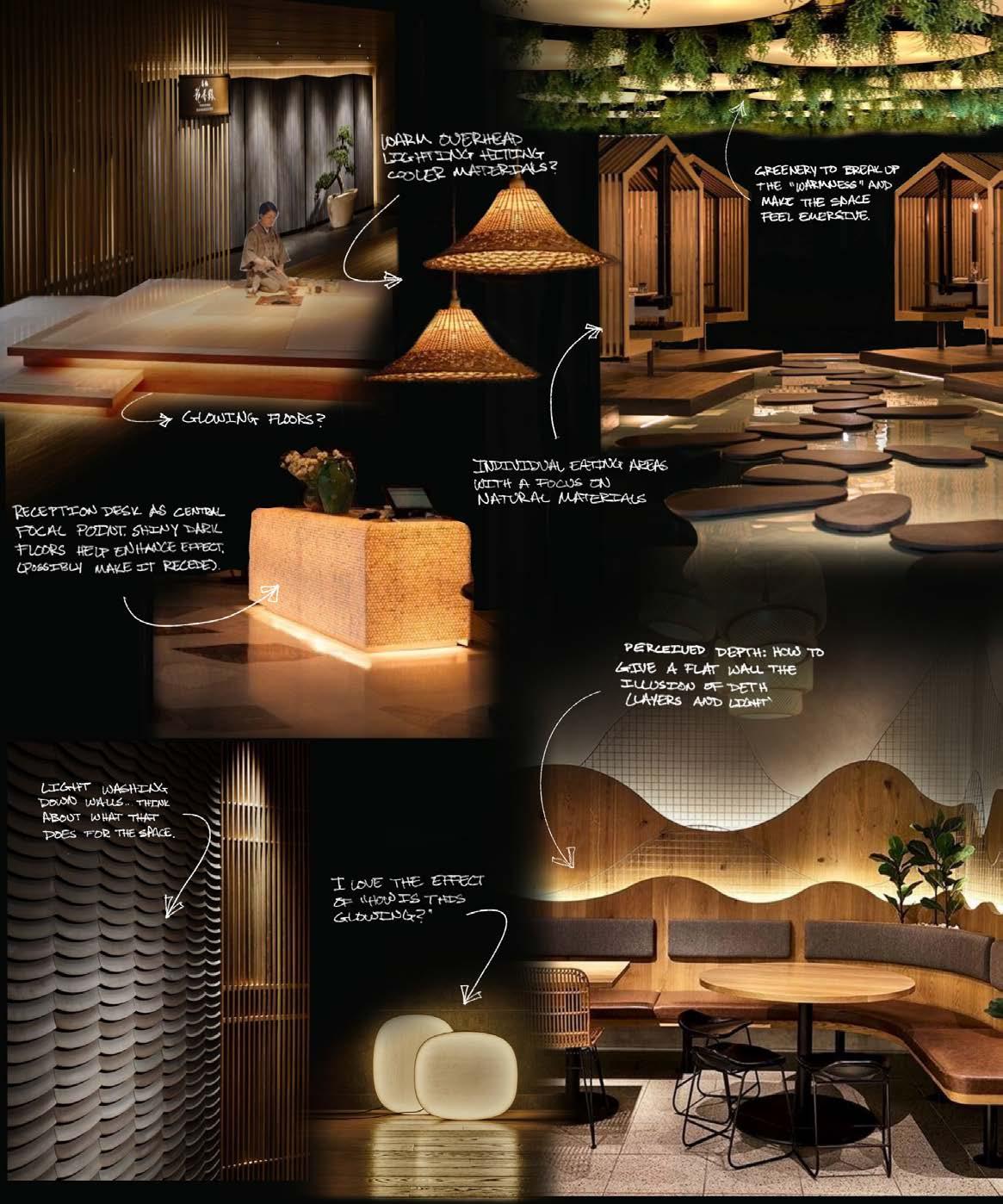
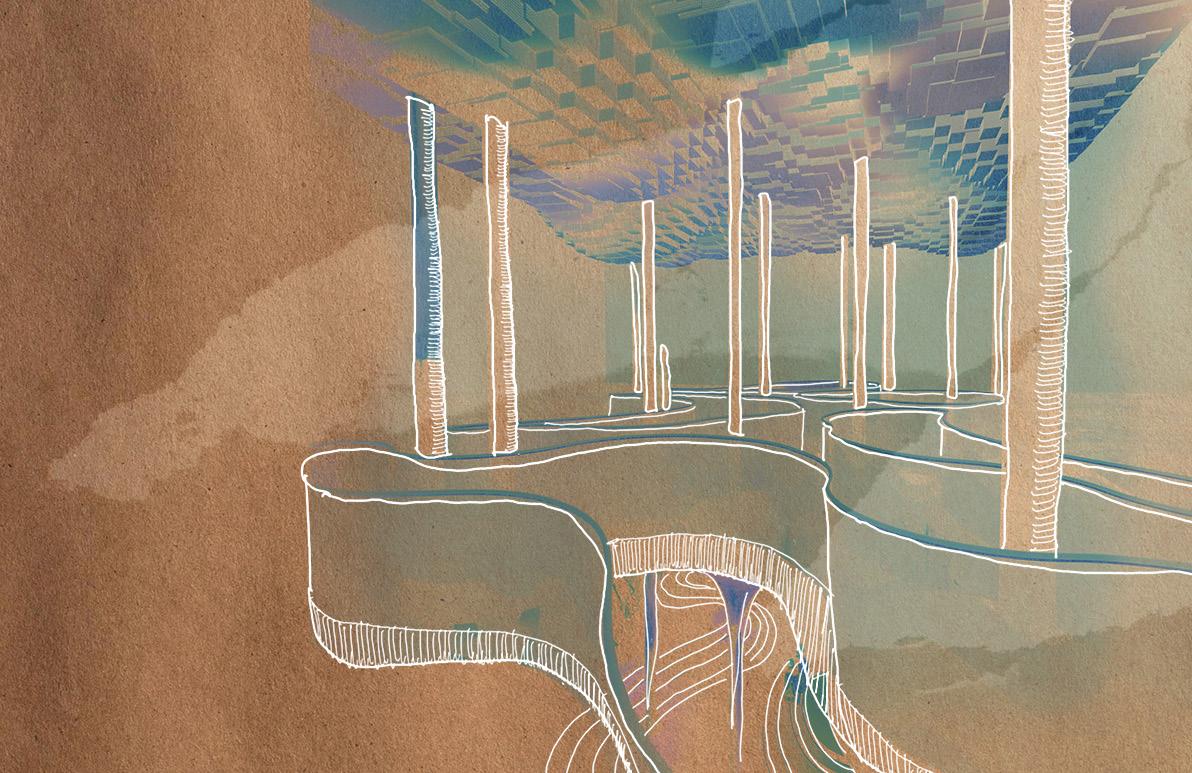
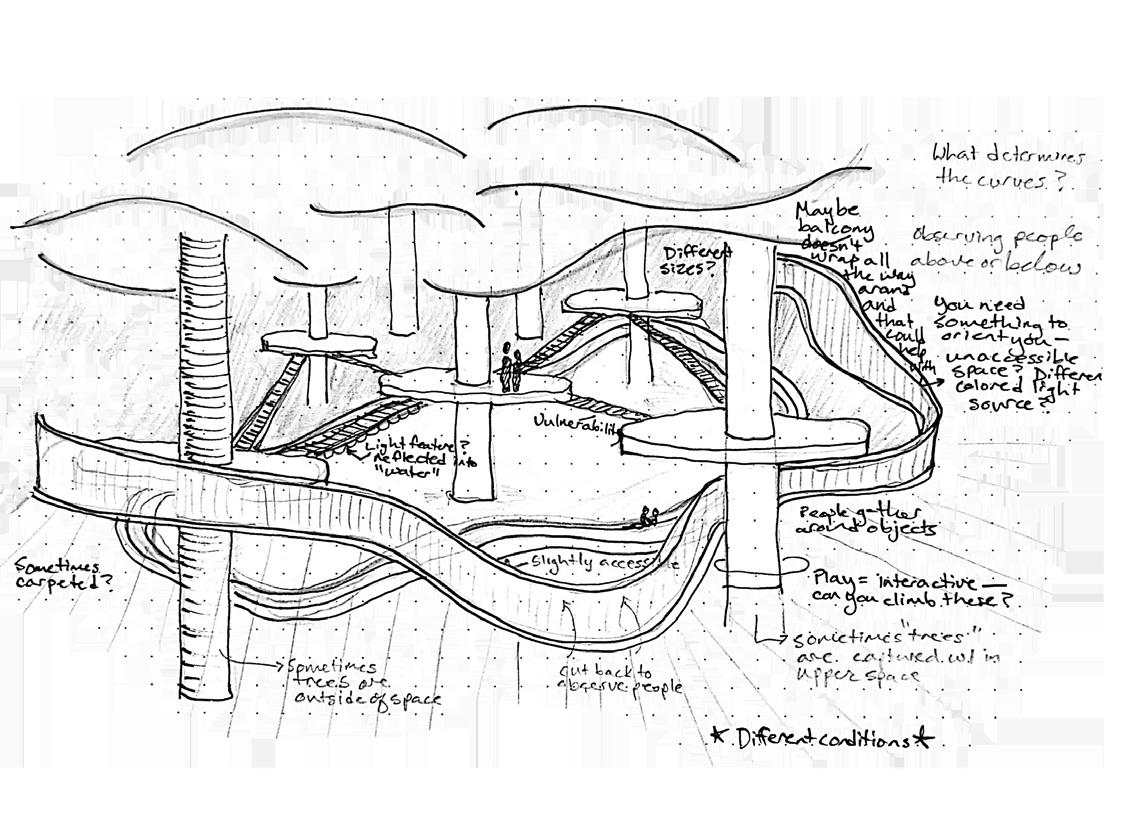
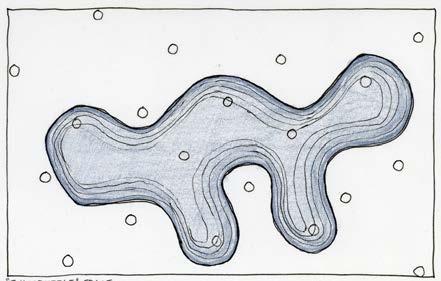
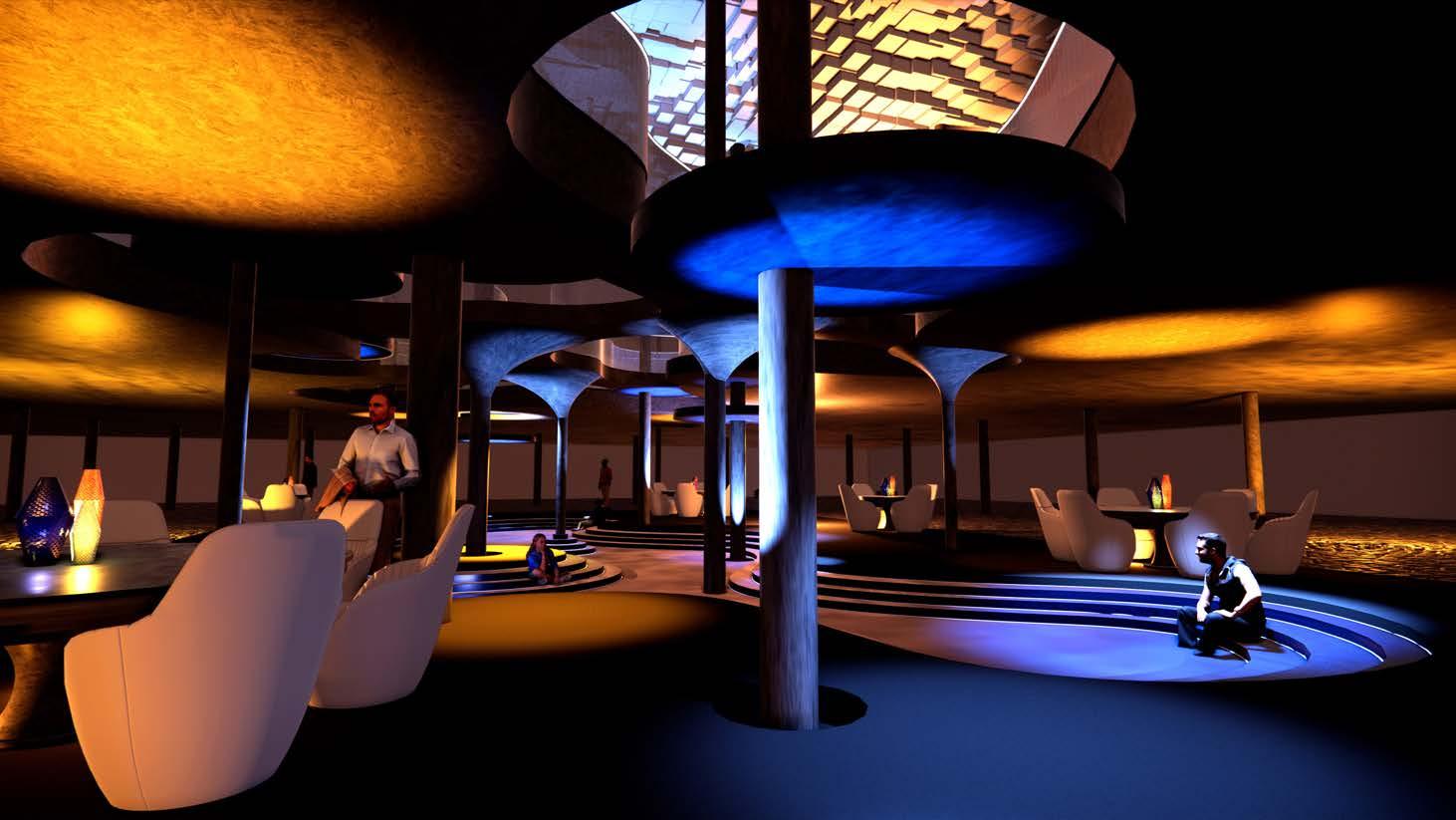
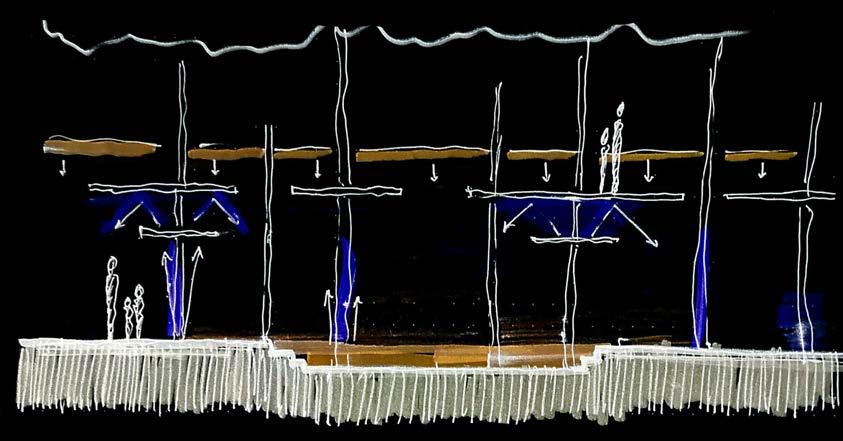
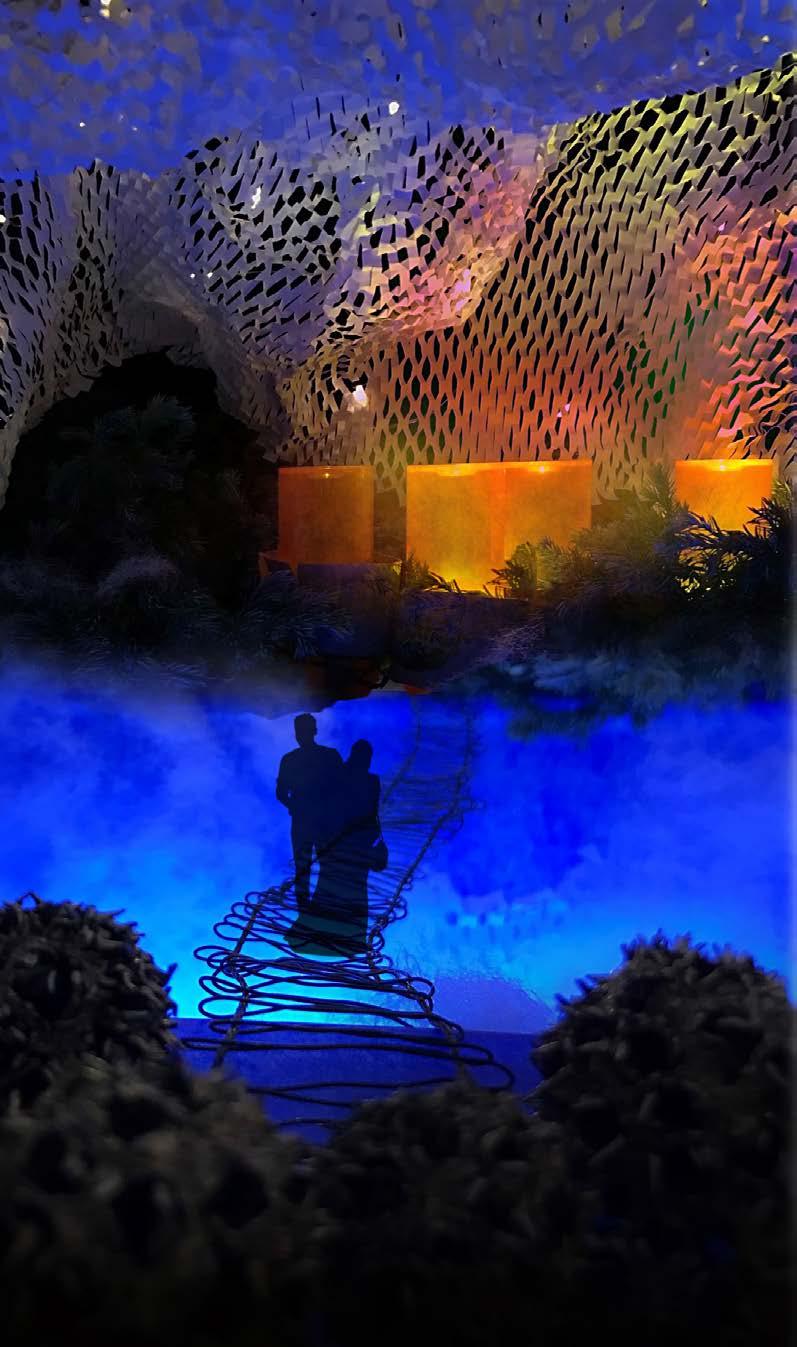
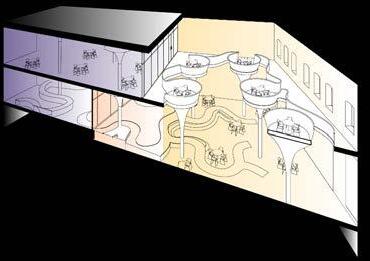
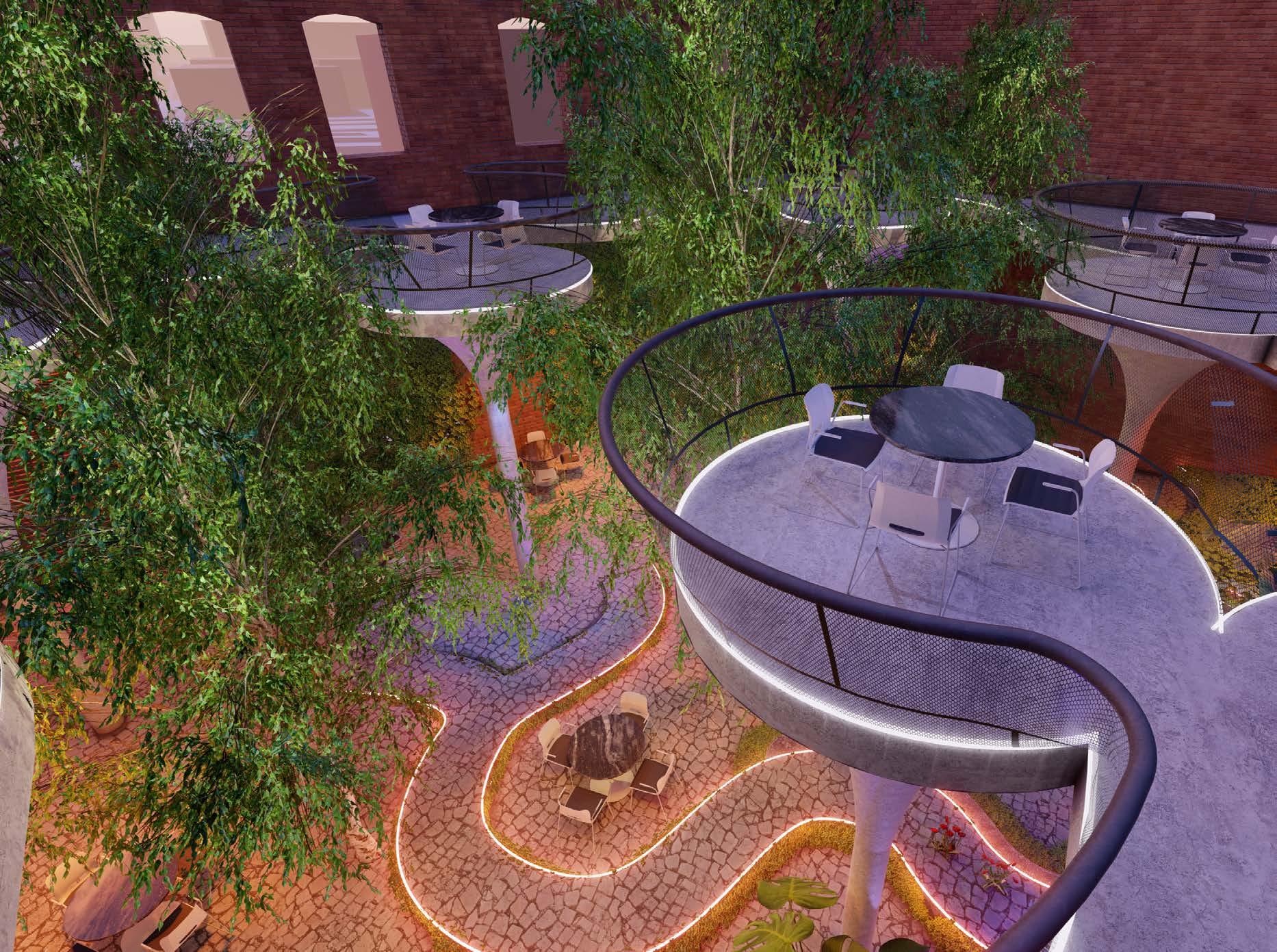
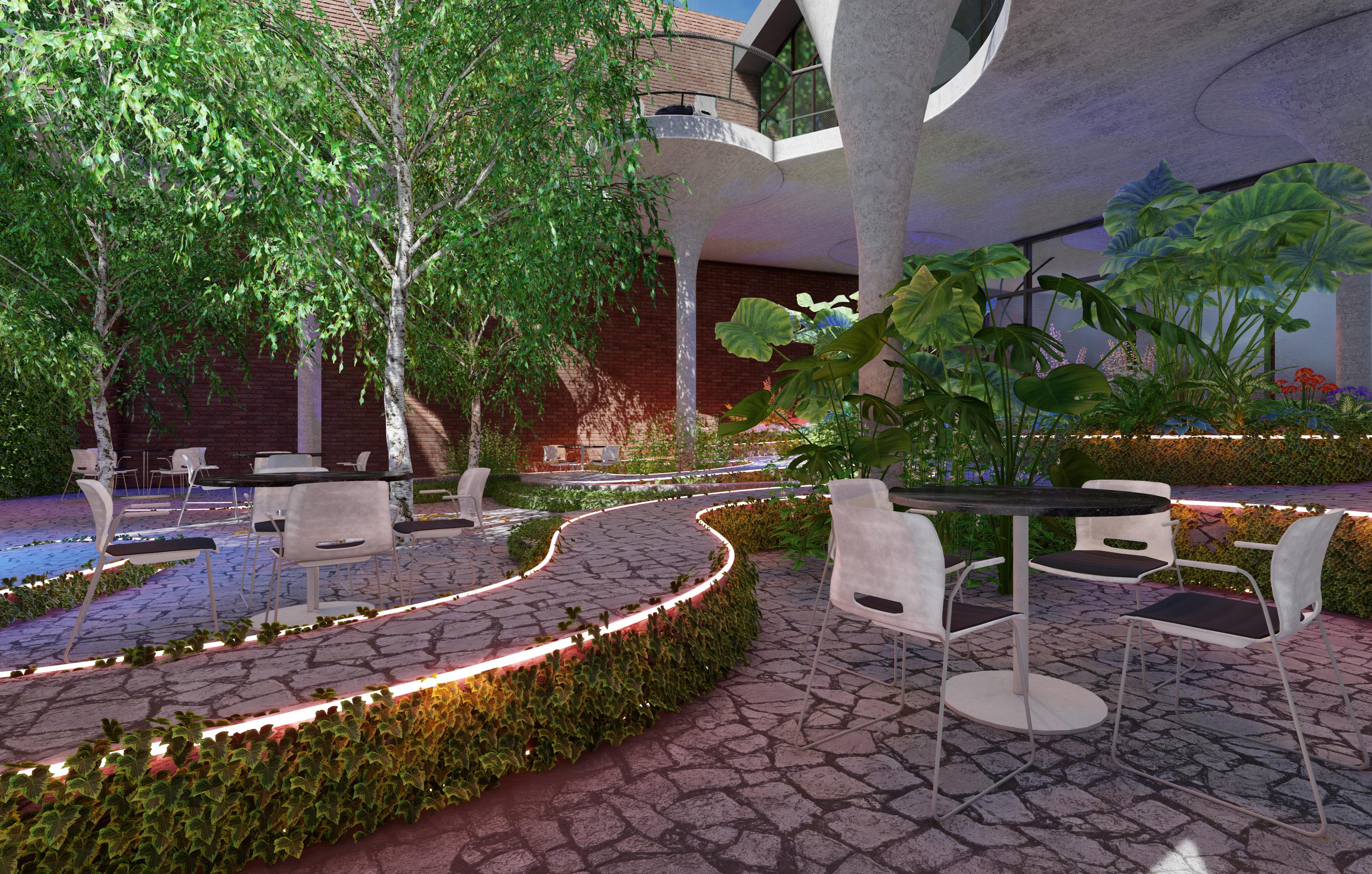
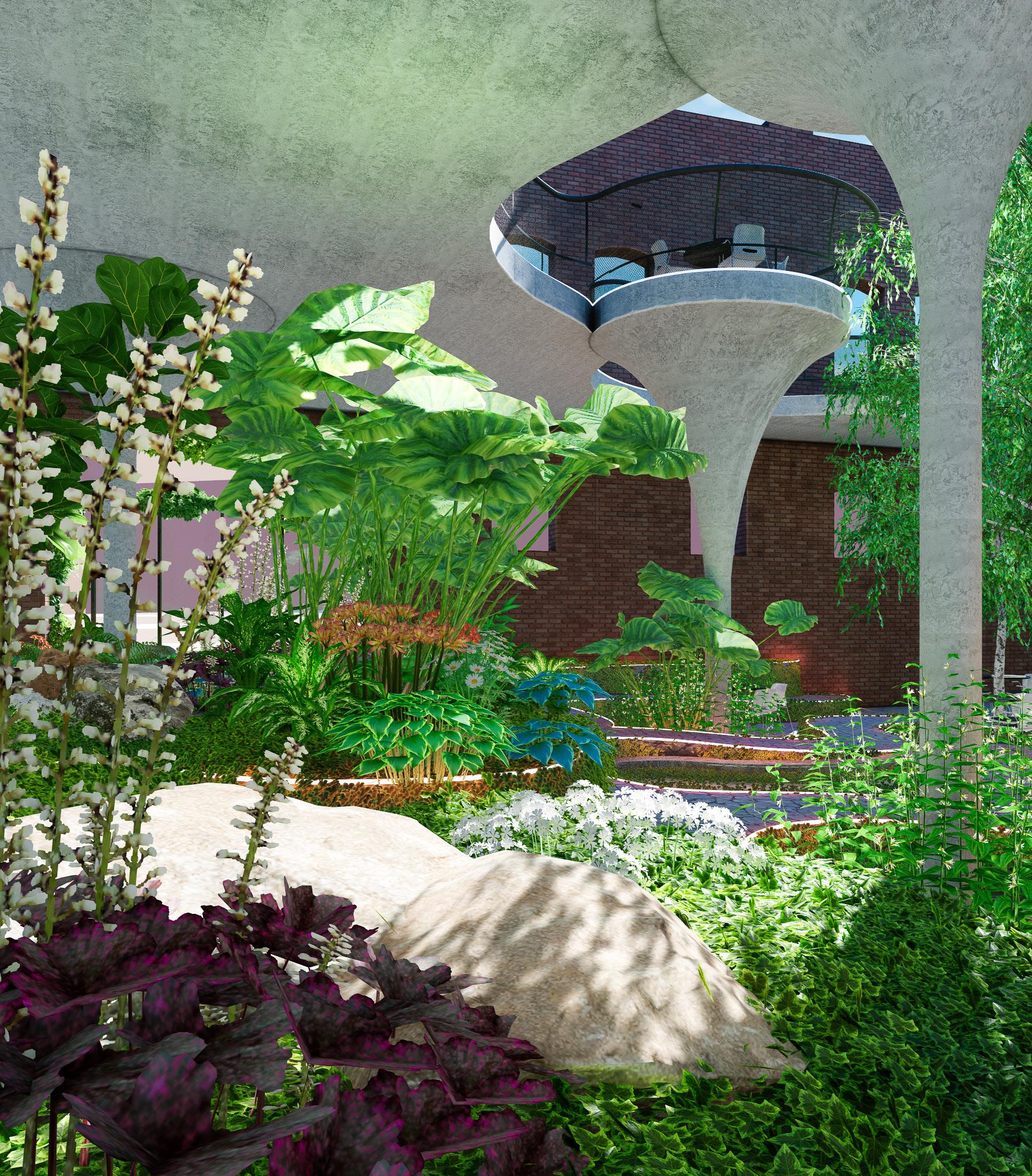
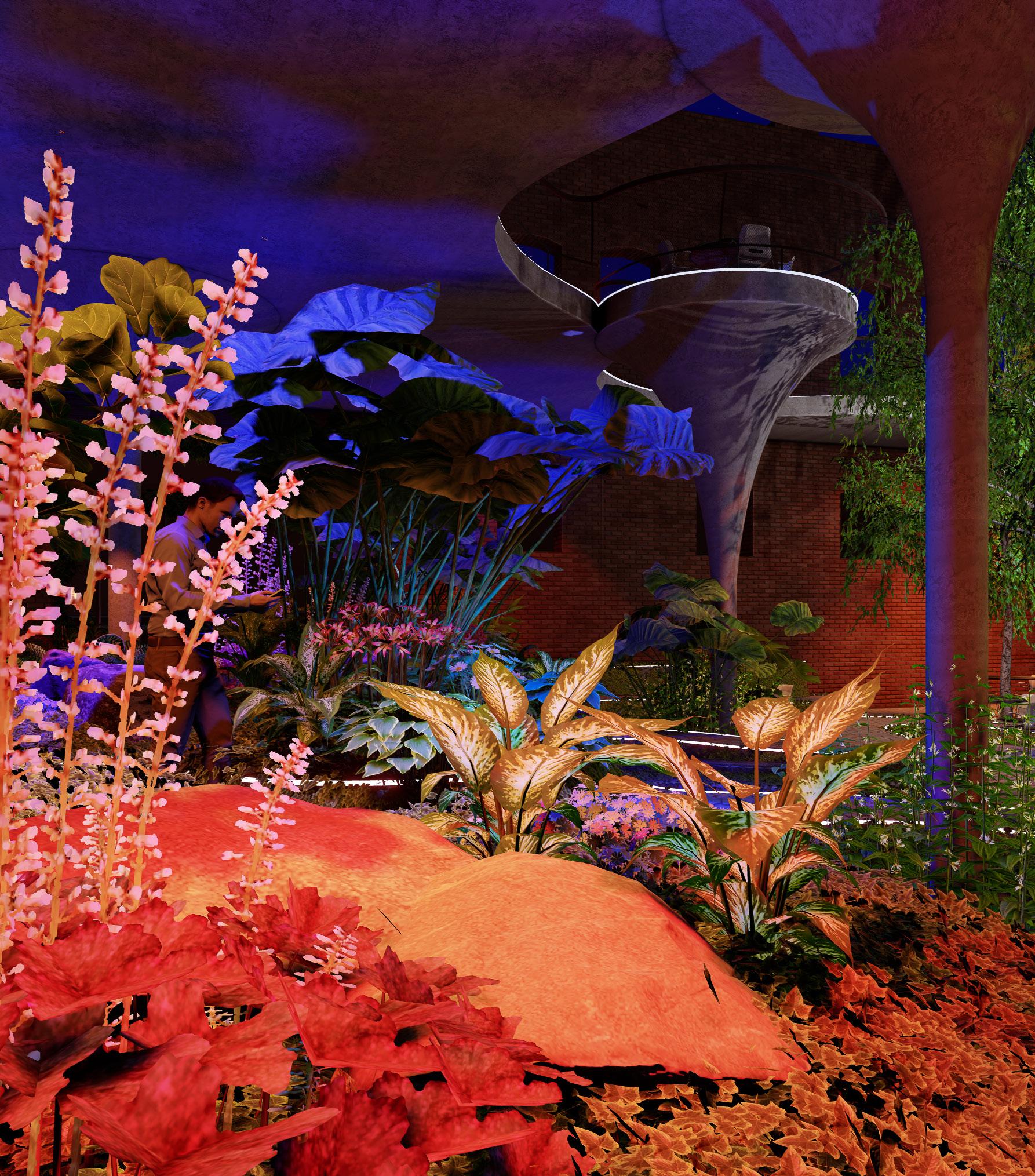
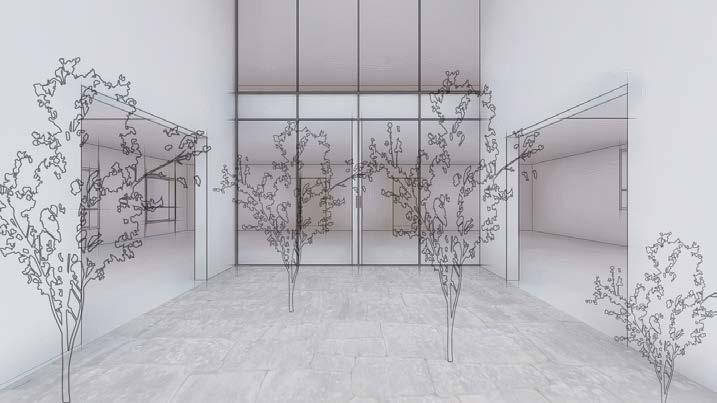
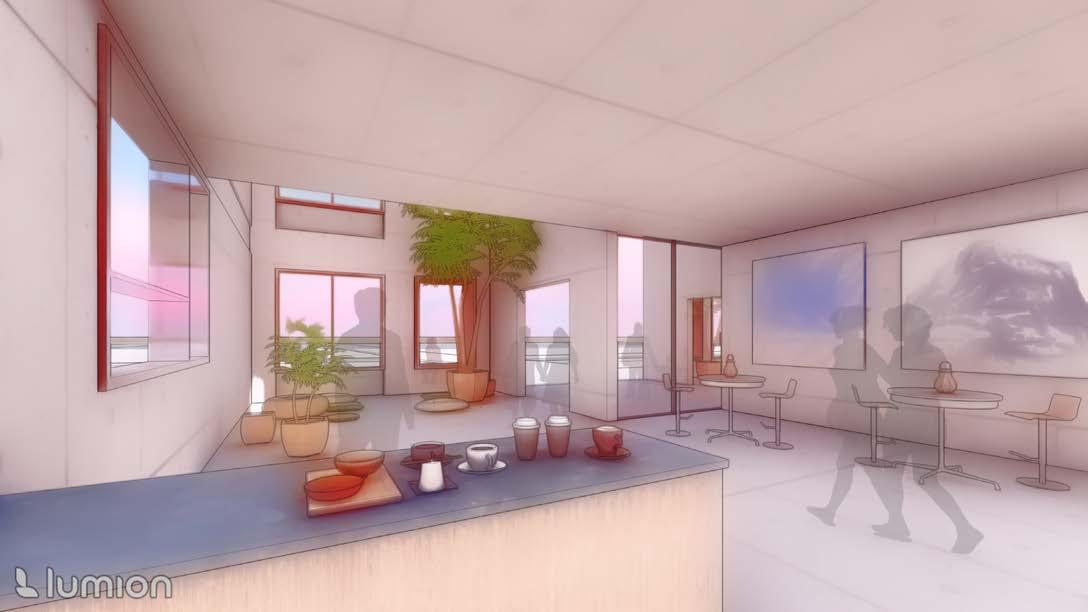
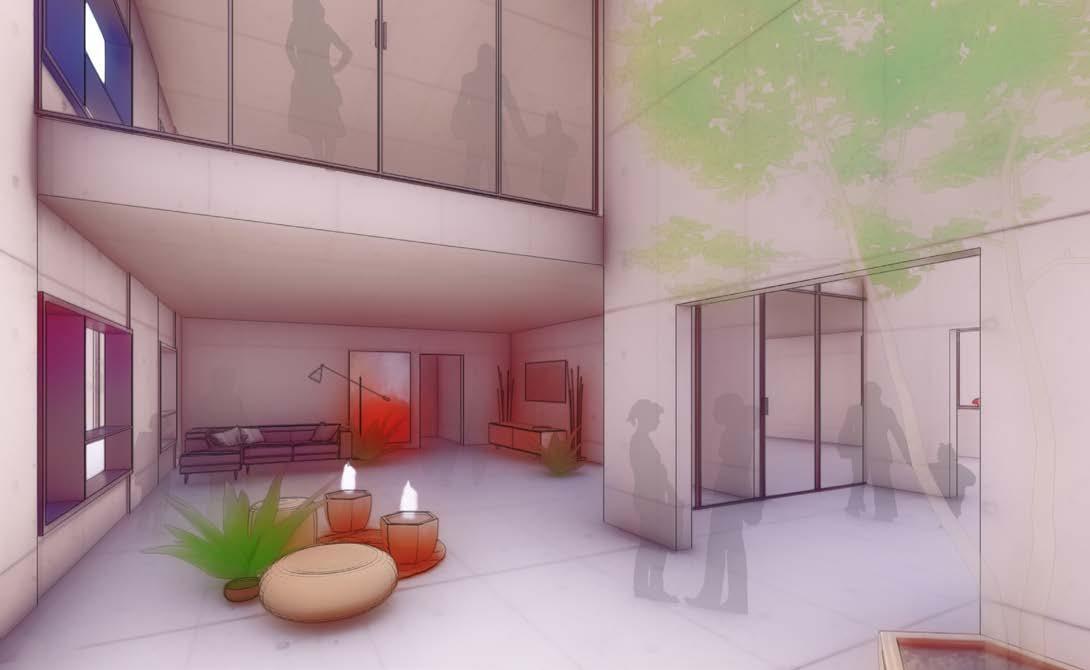
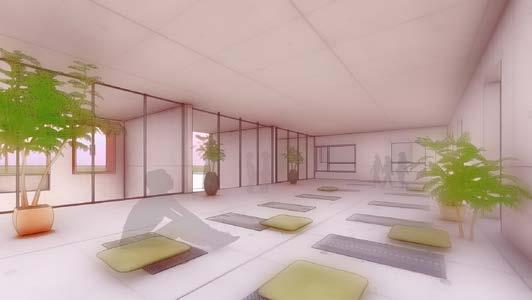
This adaptive reuse project explores how various architectural techniques can be used to create a sense of wonder in a place designed to be an escape from the chaos of the outside world.
Drew Haley Smith
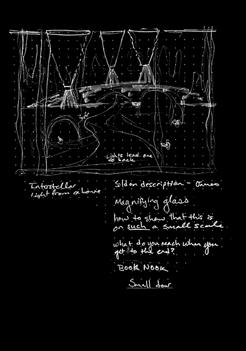
Sketch exploring the idea of vastness, randomness, and the sense of wandering.
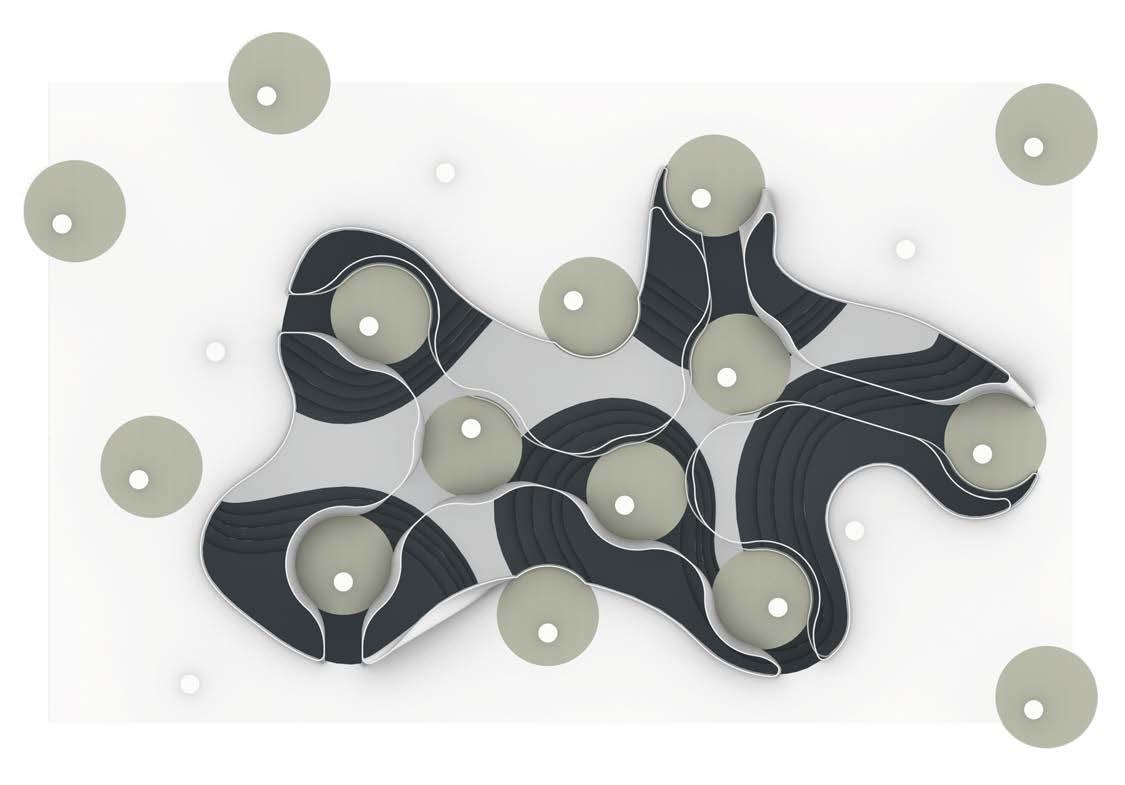
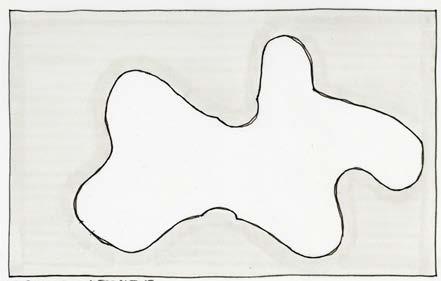
Plan showing layers undulating in and out of each other. Scale: 1/8” = 1’-0”
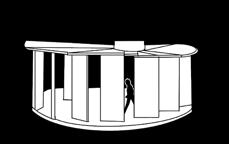
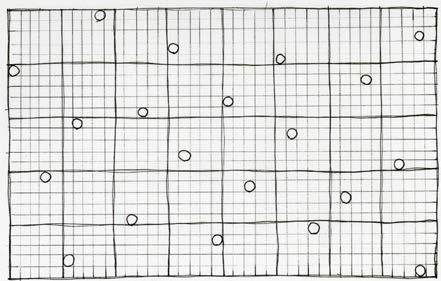
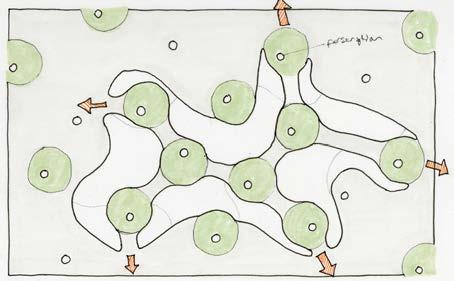
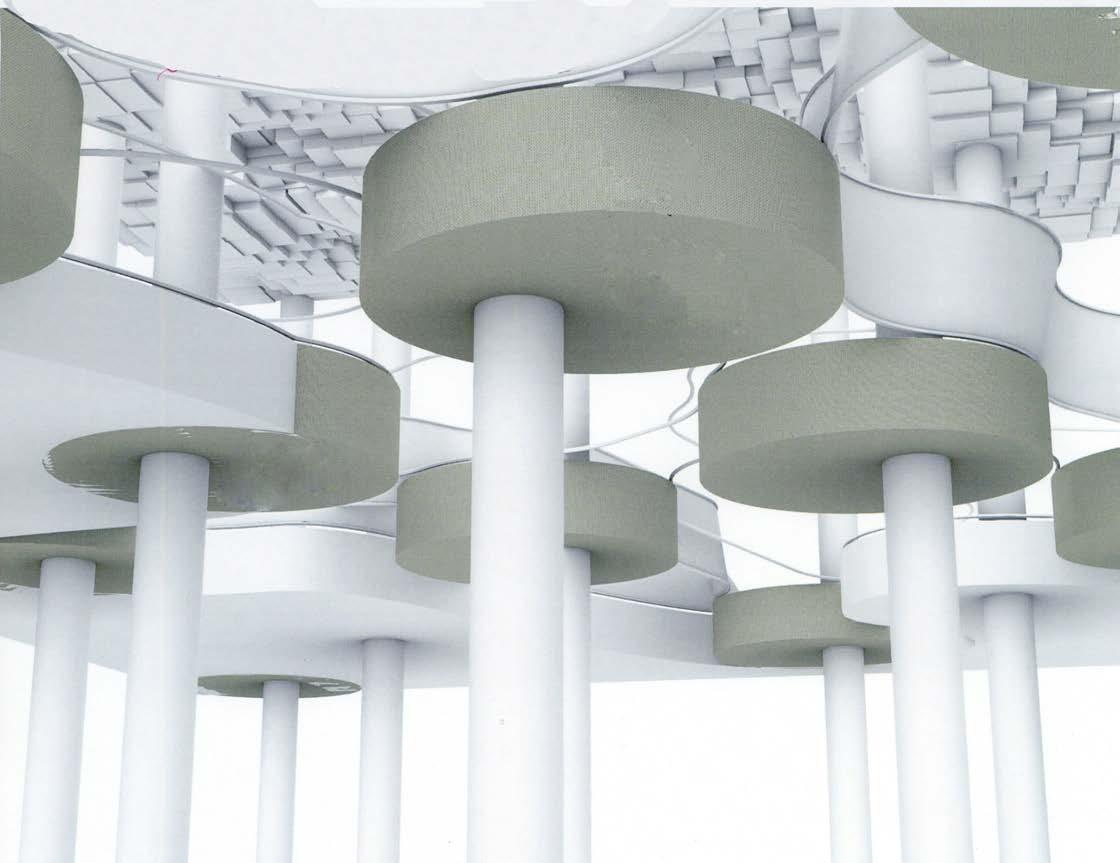
Seemingly-random columns evoke the feeling of having entered an expansive, endless forest.
Overlapping layers evoke a sense of movement and encourages wandering.
This is a place to observe without feeling observed yourself.
Drew
Daytime rendering showing vegetation.
Nighttime rendering showing vegetation.
To Interact 06
Balancing Interactions and Boundaries
Project: Bug Apartment
Type: Theoretical Experiment
Semester: Fall 2022
Location: N/A
Size: 1,145 Square Feet
Faculty: Il Kim
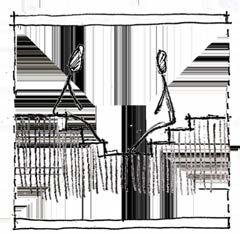
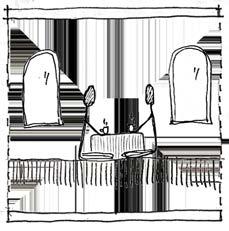
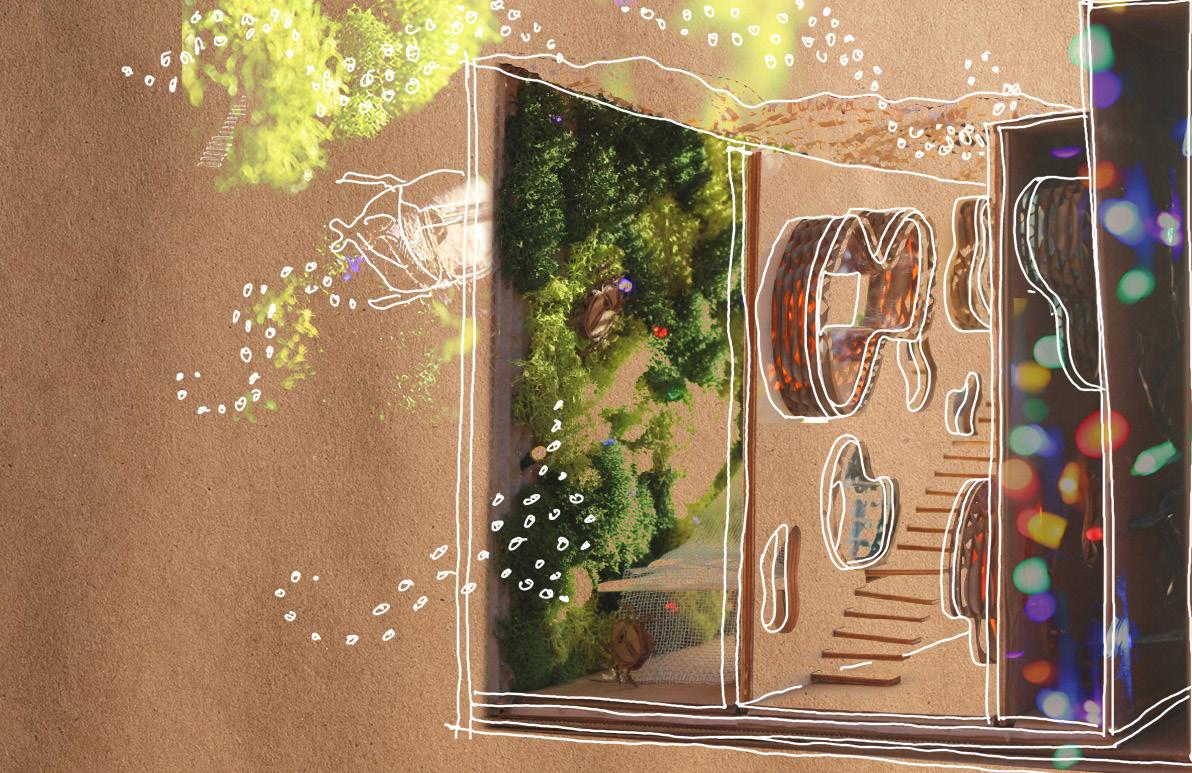
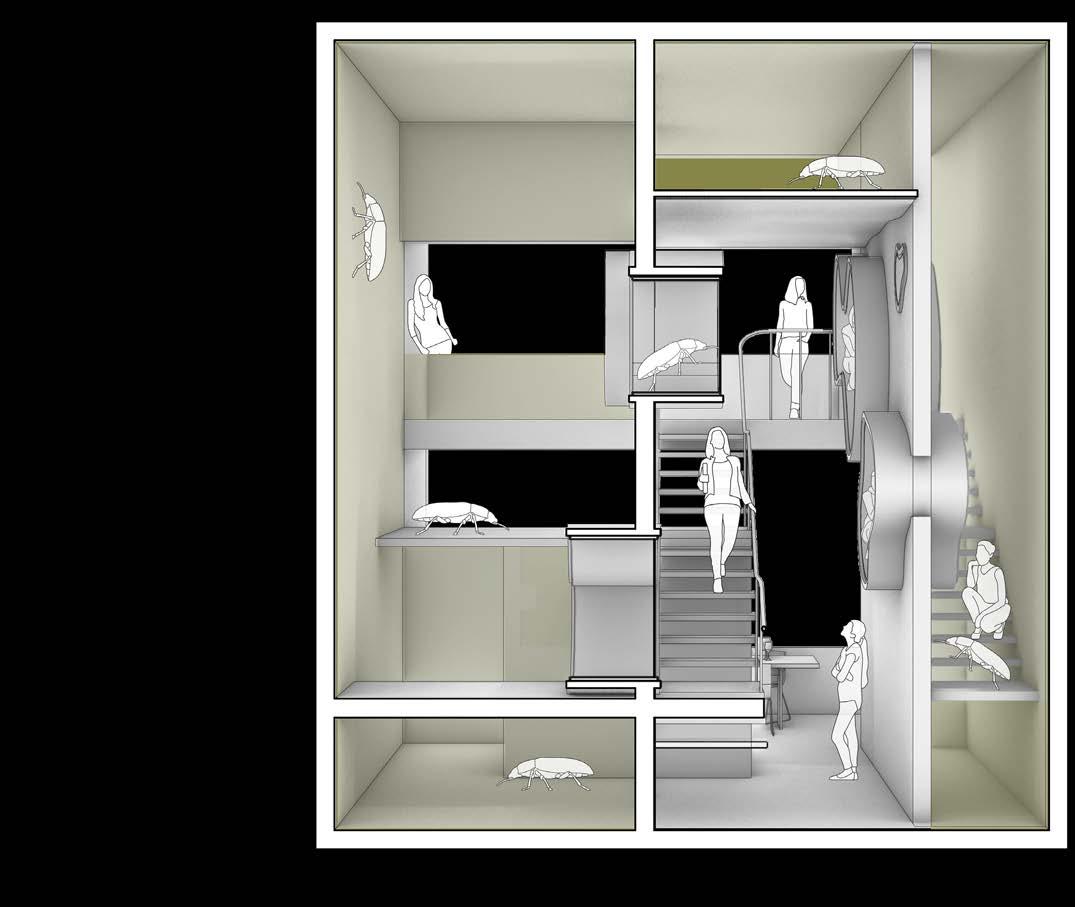
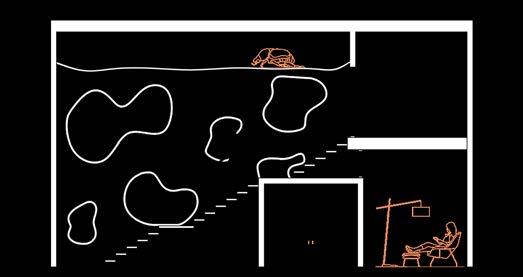
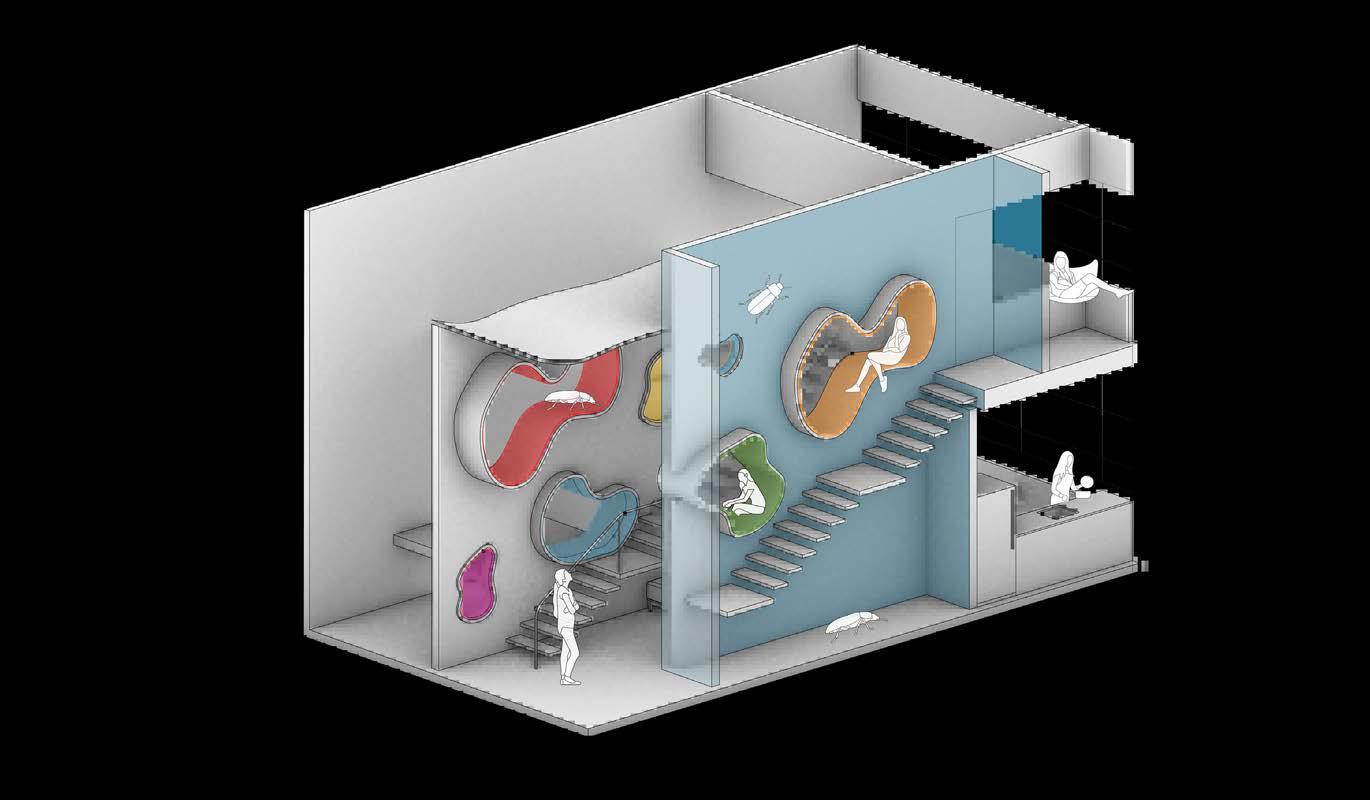
This project, based on the fictional book Metamorphosis, attempts to reconstruct the relationship between two completely different creatures--a girl and a bug. This could only be done by creating a healthy balance between interactions and boundaries.
Drew Haley Smith
The Fear of Change
Drew Haley Smith
I thought it was a normal day With normal things to do, Until I saw that I was wrong And didn’t have a clue.
Somehow, I’d changed into a thing I didn’t recognize But even still my way of life I would not leave behind.
I questioned not why things were so Though life was rather strange, Although I did not cry or blame, I still refused to change.
No sympathy from friend or kin, No understanding eye, Was this what fate had stored for me Until the day I’d die?
If only they could understand That this was not ideal, Perhaps they’d make arrangements That would give me time to heal!
But seeing things the way they were, I could not hope for that. Instead, I knew that I must find A brand-new habitat.
Yes, the past is precious, But the future could be too, So why stay stuck in bitterness When there’s so much you could do?
Metamorphosis is a book written in 1915 about a salesman named Gregor who wakes up one day to find that he has been transformed into a human-sized beetle.
He struggles to adapt to his new life; but the only person who really seems to understand him is his sister, Greta.
She loves him because he is her brother, but she is scared of him because he is a bug.
Eventually, Gregor decides to move away, but his new home must accommodate his current condition and the frequent visits from his sister.
In other words, this new home must somehow help maintain a healthy relationship between the two creatures.
When Greta comes to visit, she can lead a normal life with as much or as little interaction with Gregor as she chooses.
Bug sleeping area (Gretor prefers to sleep hanging from the ceiling).
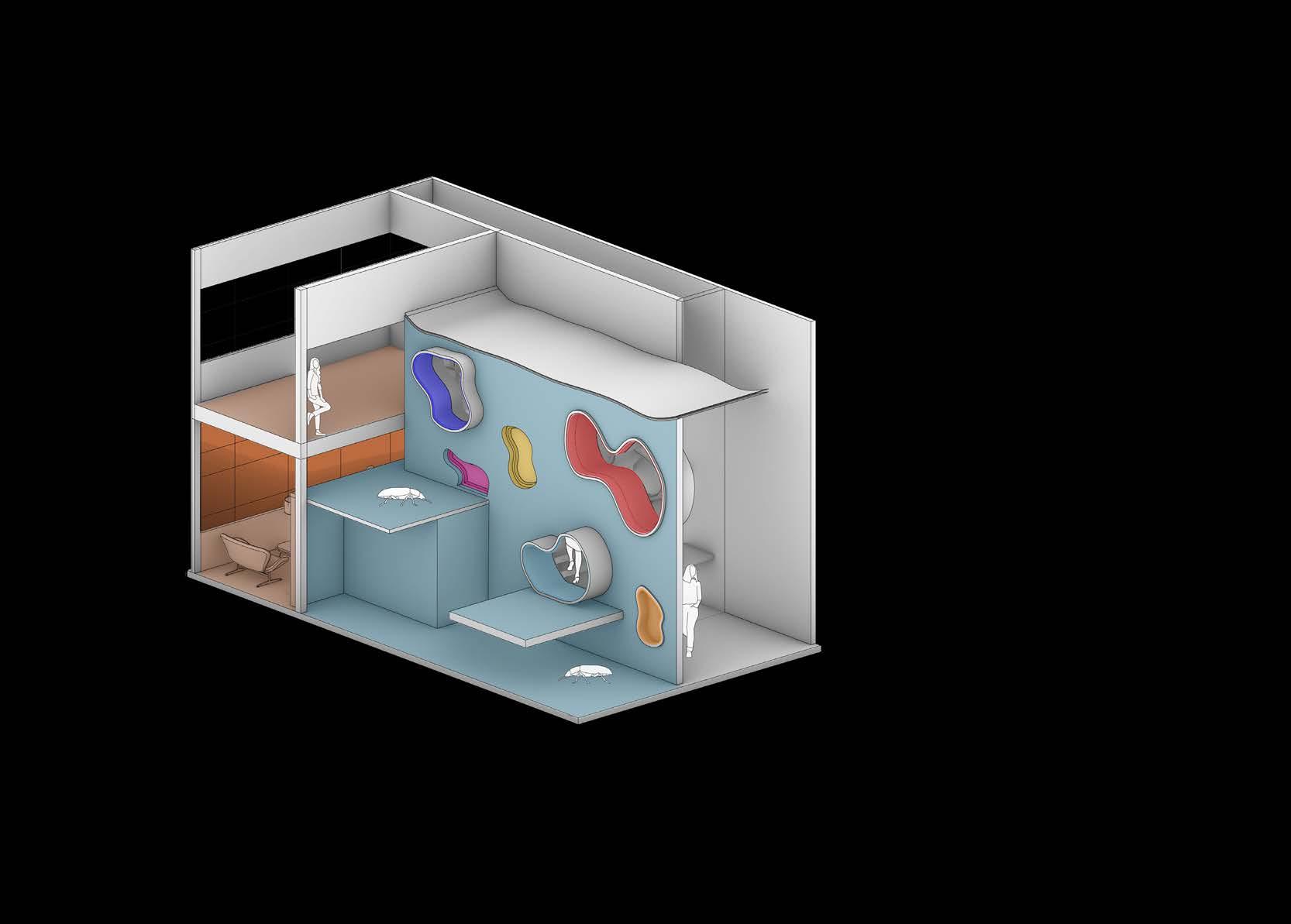
Bubble windows allow Gregor and Greta to interact closely but safely.
Gregor’s walls are climbable.
Greta’s area of retreat extends into bug living area.
Gregor’s living area looks into Greta’s living area.
Bug platform extends into human world to become a step.
Gregor has a safe place where he can go when he prefers privacy.
Section perspective showing how each world is completely separate, but still pushes into the other world.
Each world looks into the other’s world. However, each world has its own places to hide.
Bubble windows vary in size and depth based occupant.
Each person has visual access into the other’s world. However, within each world, there are places to hide.
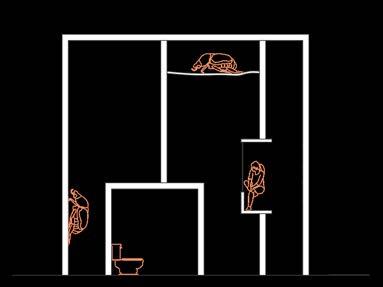
B: Section showing climbable walls.
Section C:
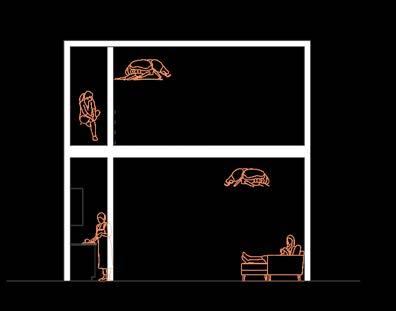
Section showing living and sleeping areas.
Section D:
As one ascends the project, the level of interaction decreases. Each person has control of his own level of privacy.
Gregor and Greta safely interact through the glass.
This space provides an opportunity for close interaction when desired.
Section A:
Section
To Live With 07
Providing Privacy and Flexibility
Project: Multigenerational Housing Complex
Type: Thesis Project
Semester: Spring 2023
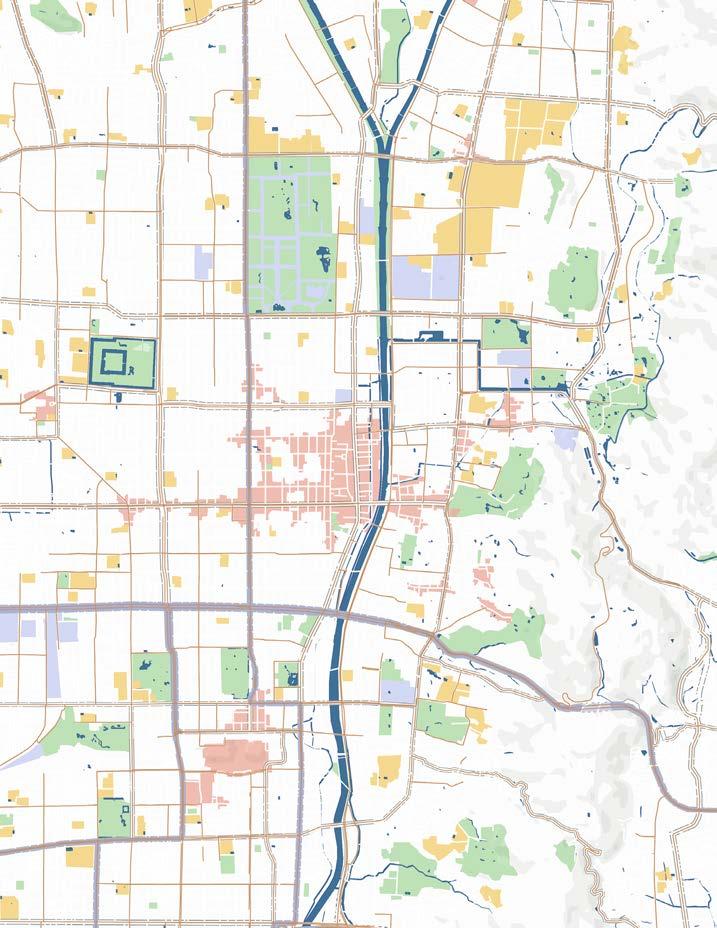
Location: Kyoto, Japan
Size: 86,900 Square Feet
Faculty: Il Kim
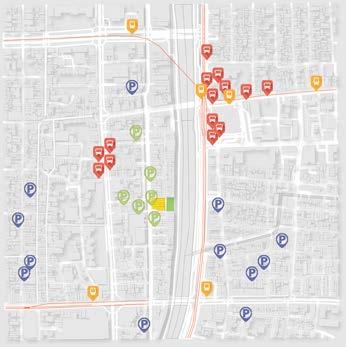
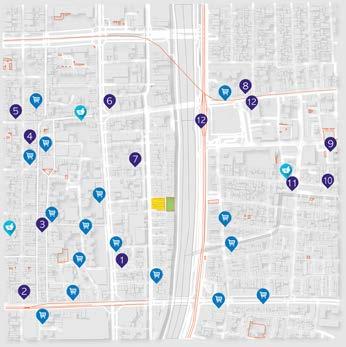
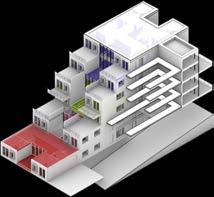
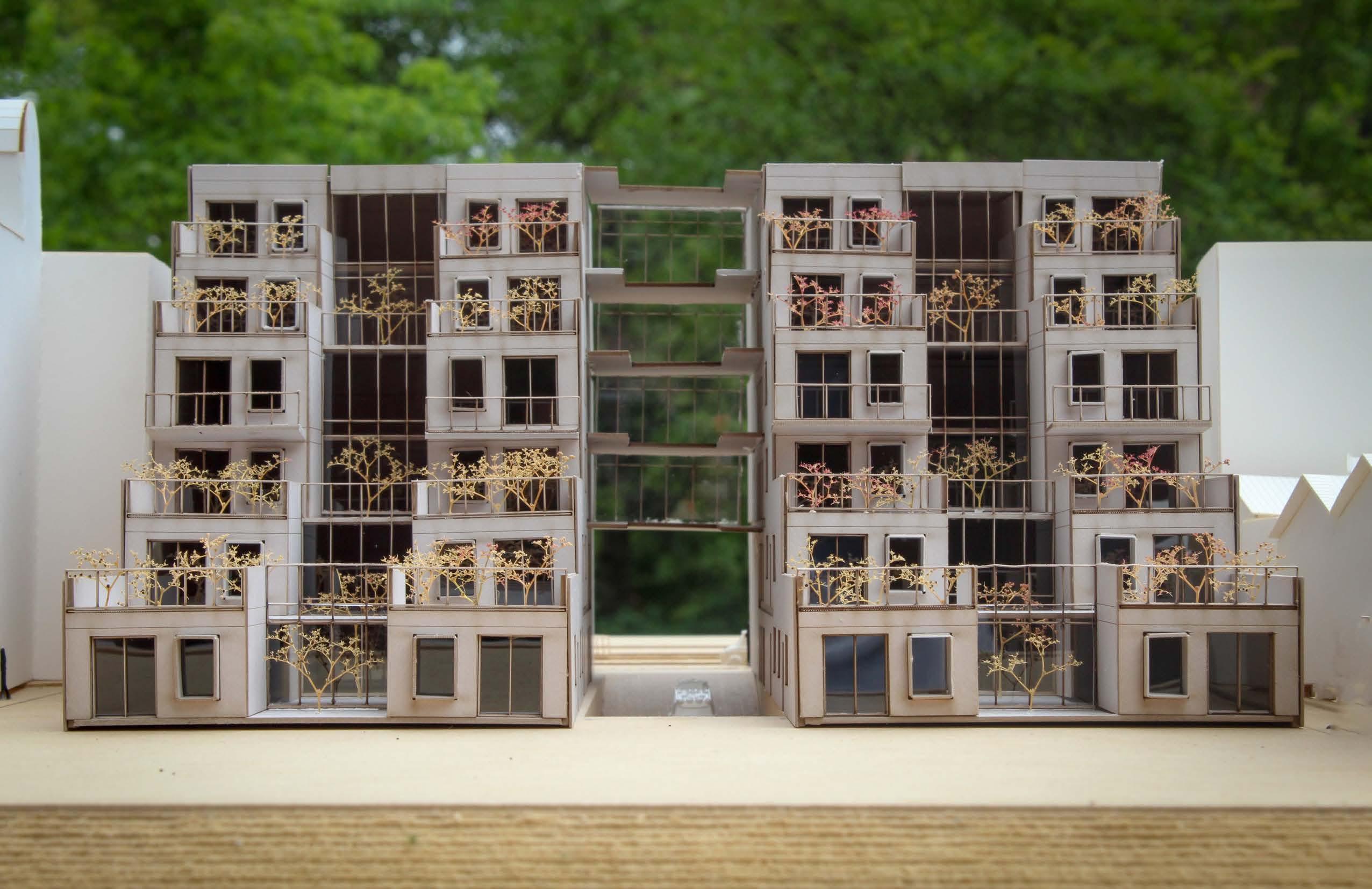
This thesis examines the rise of multigenerational living in the United States and how this lifestyle can positively impact families.
This project explores how a home’s design can enhance or hinder this lifestyle. Particular attention was given to providing a housing complex that prioritizes privacy and flexibility.
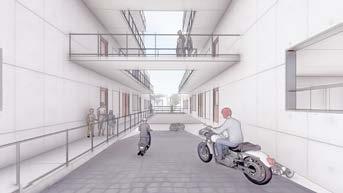
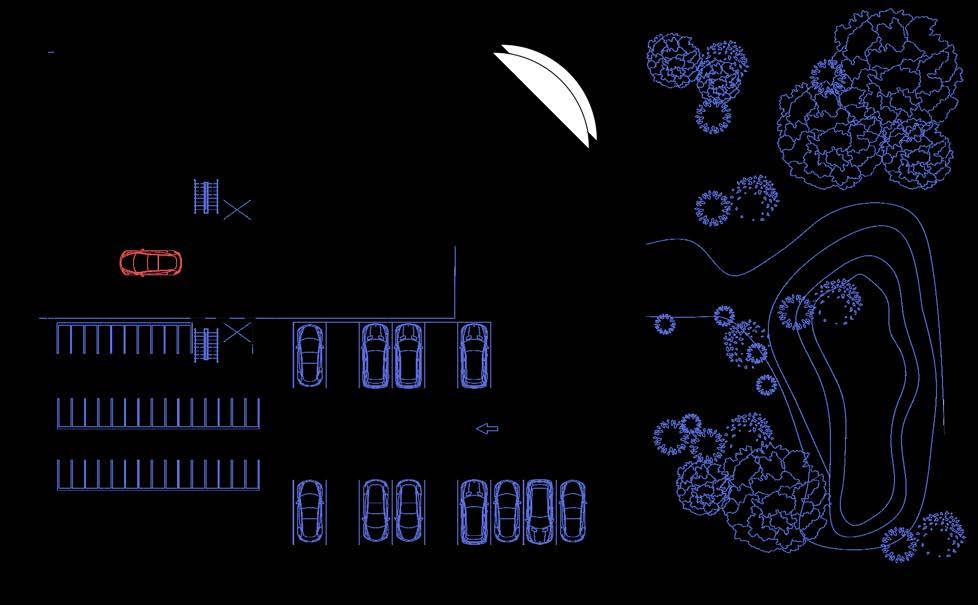
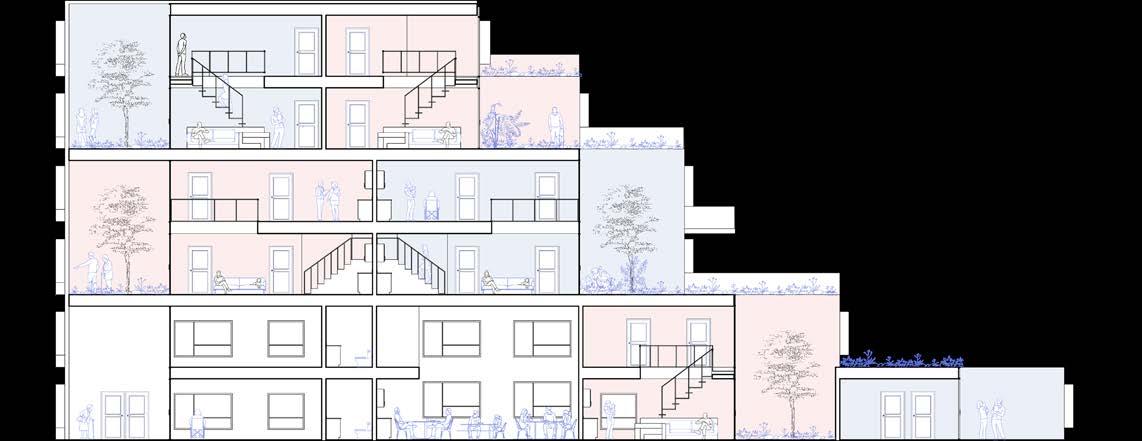
Section Showing Ramp Parking area below receives adequate natural light.
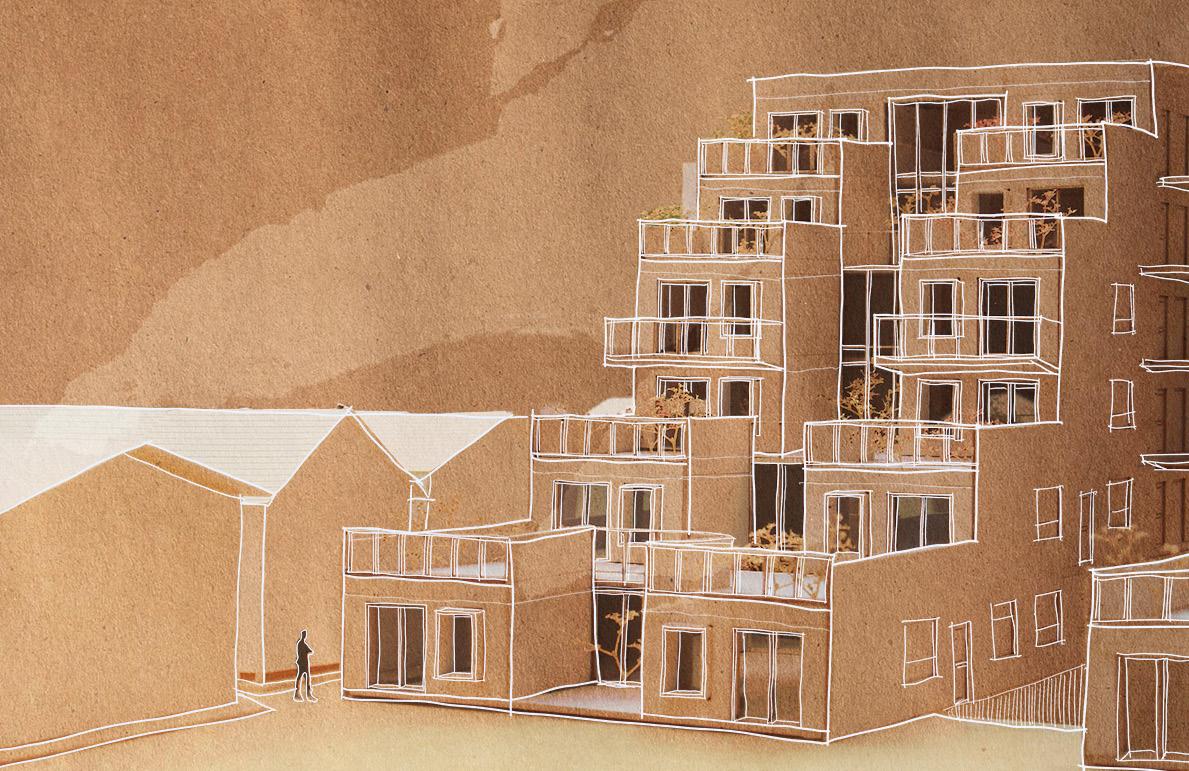
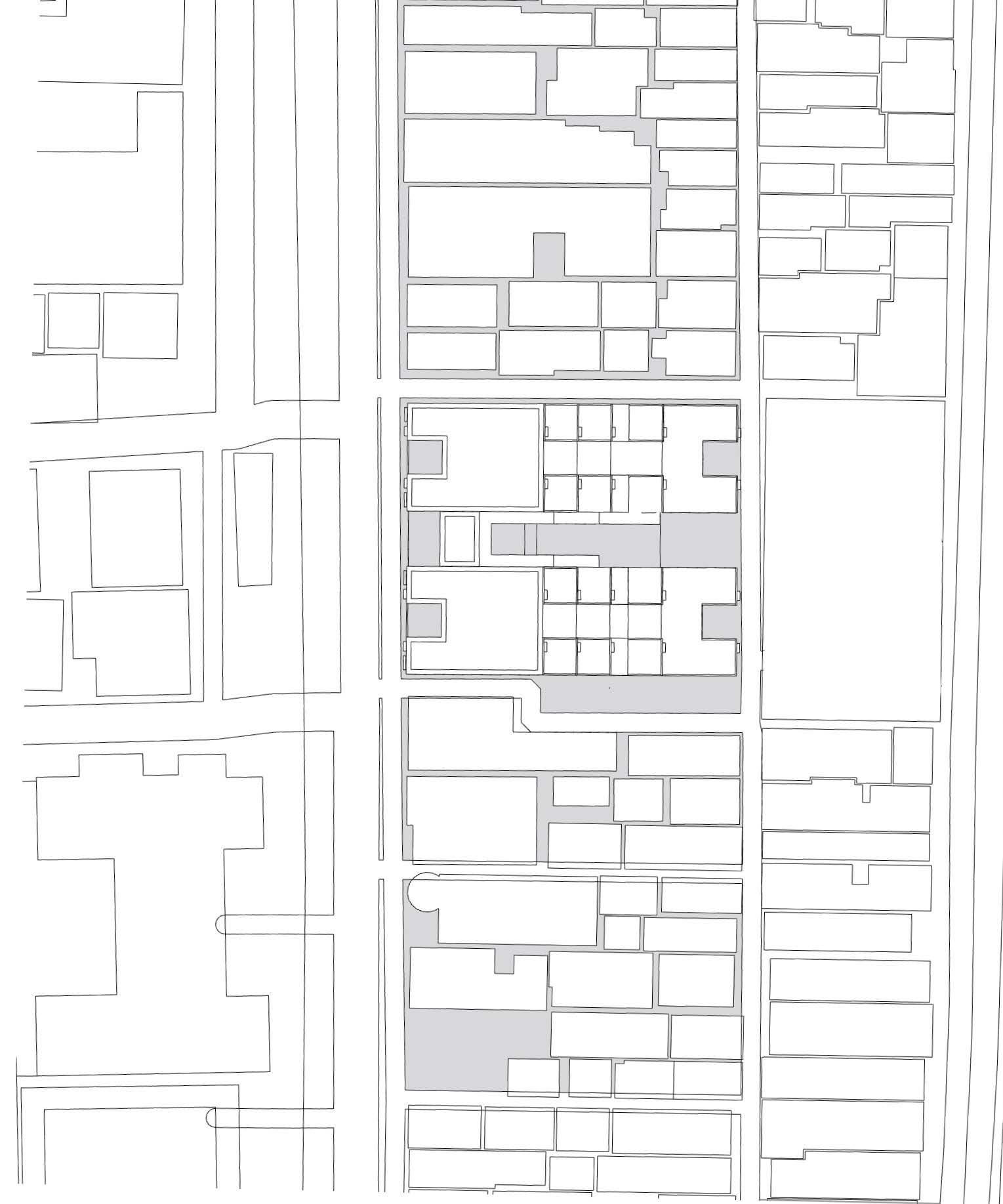
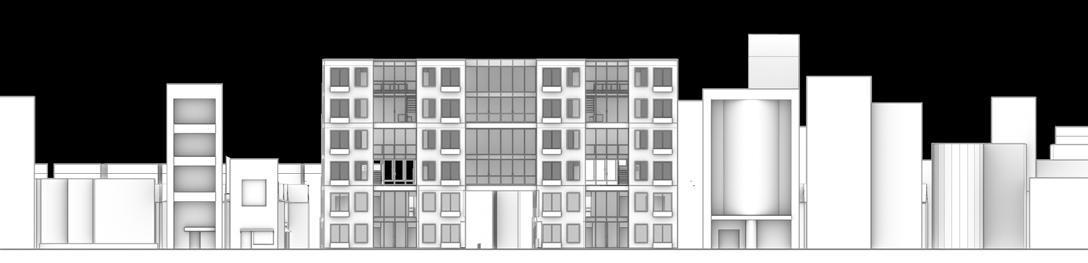
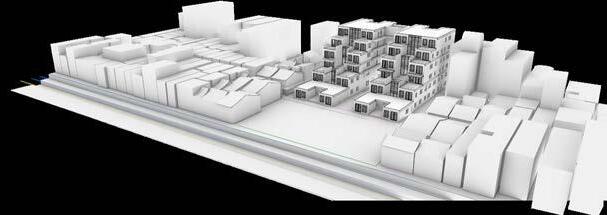
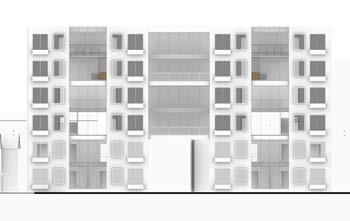
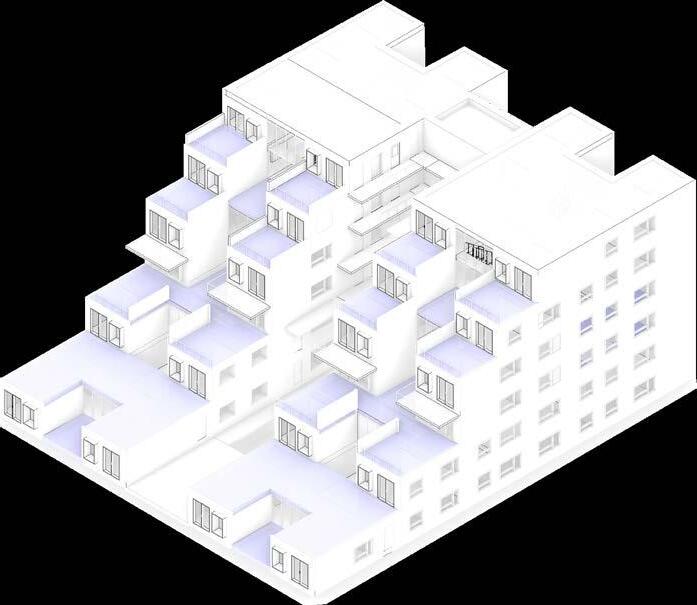
Existing buildings along street edge average six stories. New design blends into this context seamlessly.
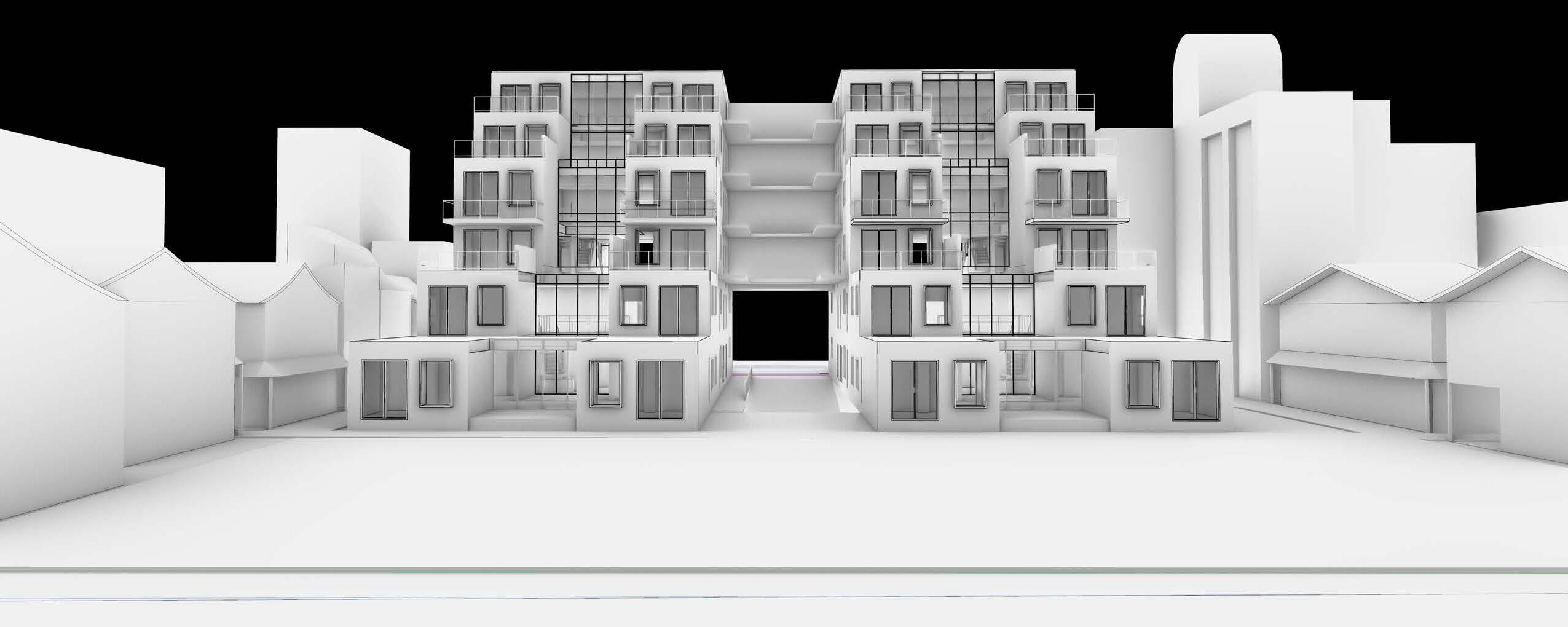
Back Perspective
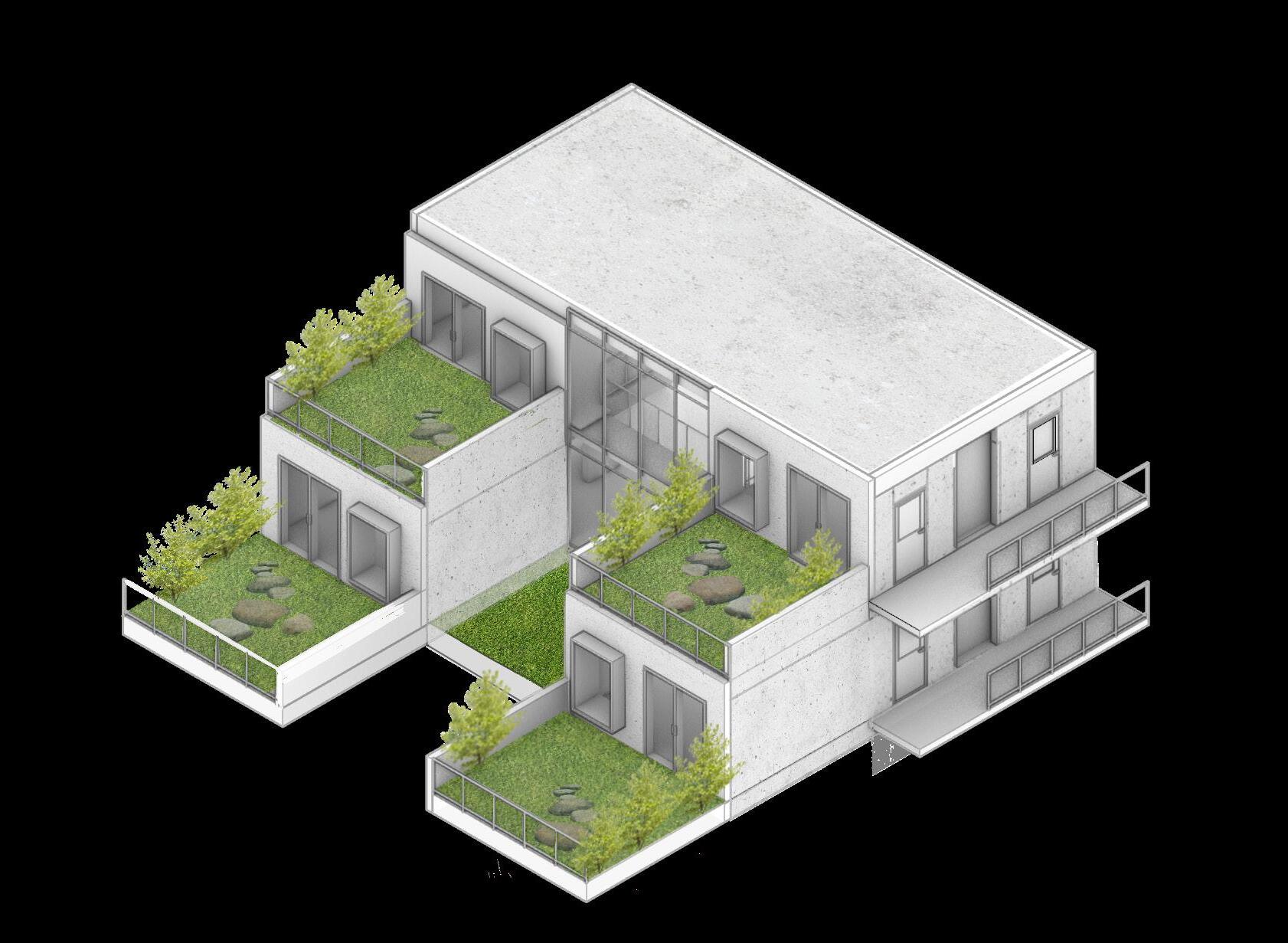
Cascading facades help building blend seamlessly with context.
Front Elevation
Courtyards break up facade width
View to Pontocho Park Retail on first floor
View of Pontocho Park
One can see and access Pontocho Park from street.
Community Spaces
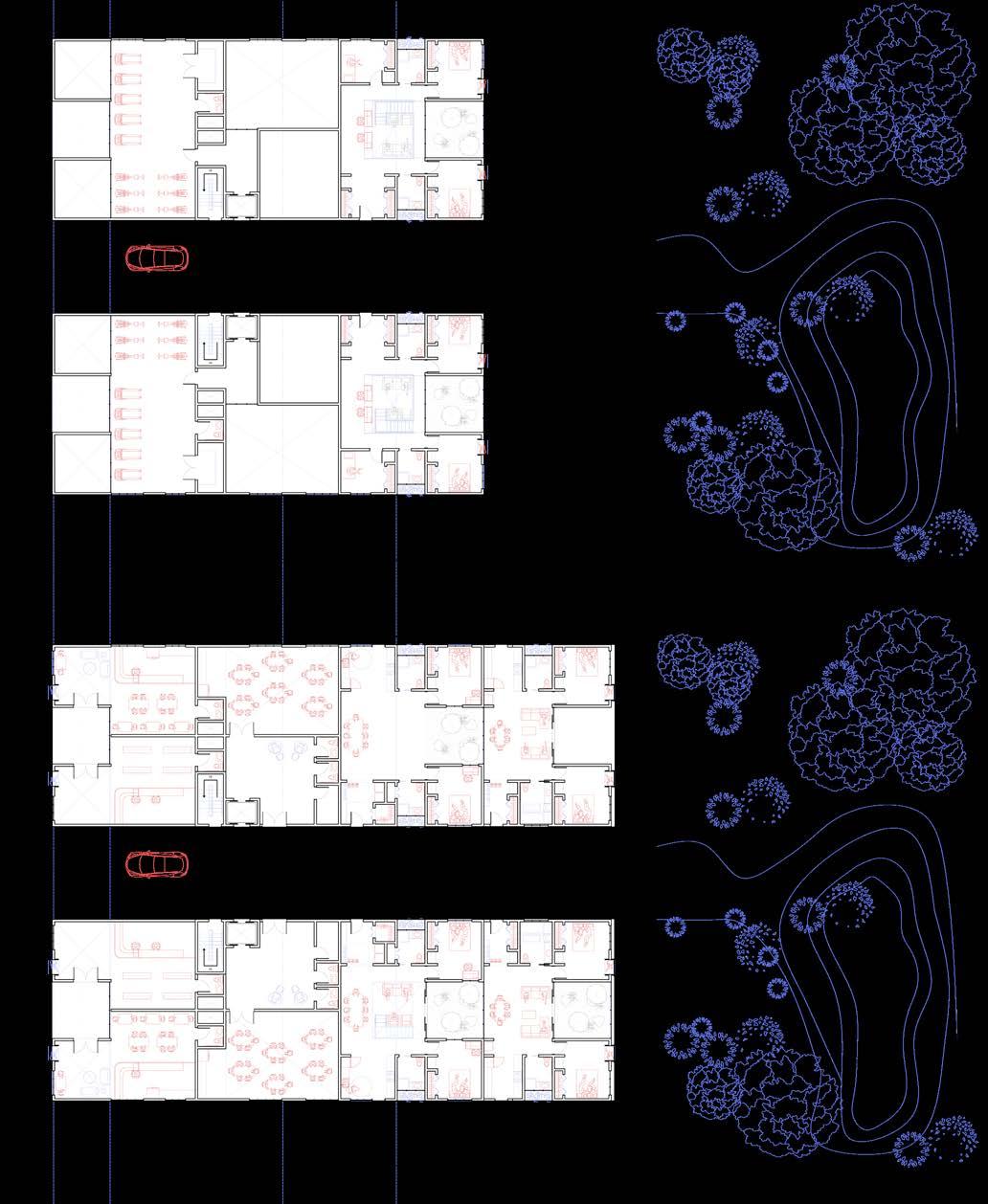
Community engagement is extremely important, especially for the oldest generation. The first two floors facing the street have been reserved for both internal and external community activities.
This first floor contains three retail spaces, two community kitchens, and a primary and secondary lobby. The second floor contains two community classrooms for residents.
Entrance Courtyard
The entrance courtyard provides separation between retail areas and the busy street.
Retail Space
The bottom floor contains three retail areas, which are only accessible from the street.
Main Lobby Entrance
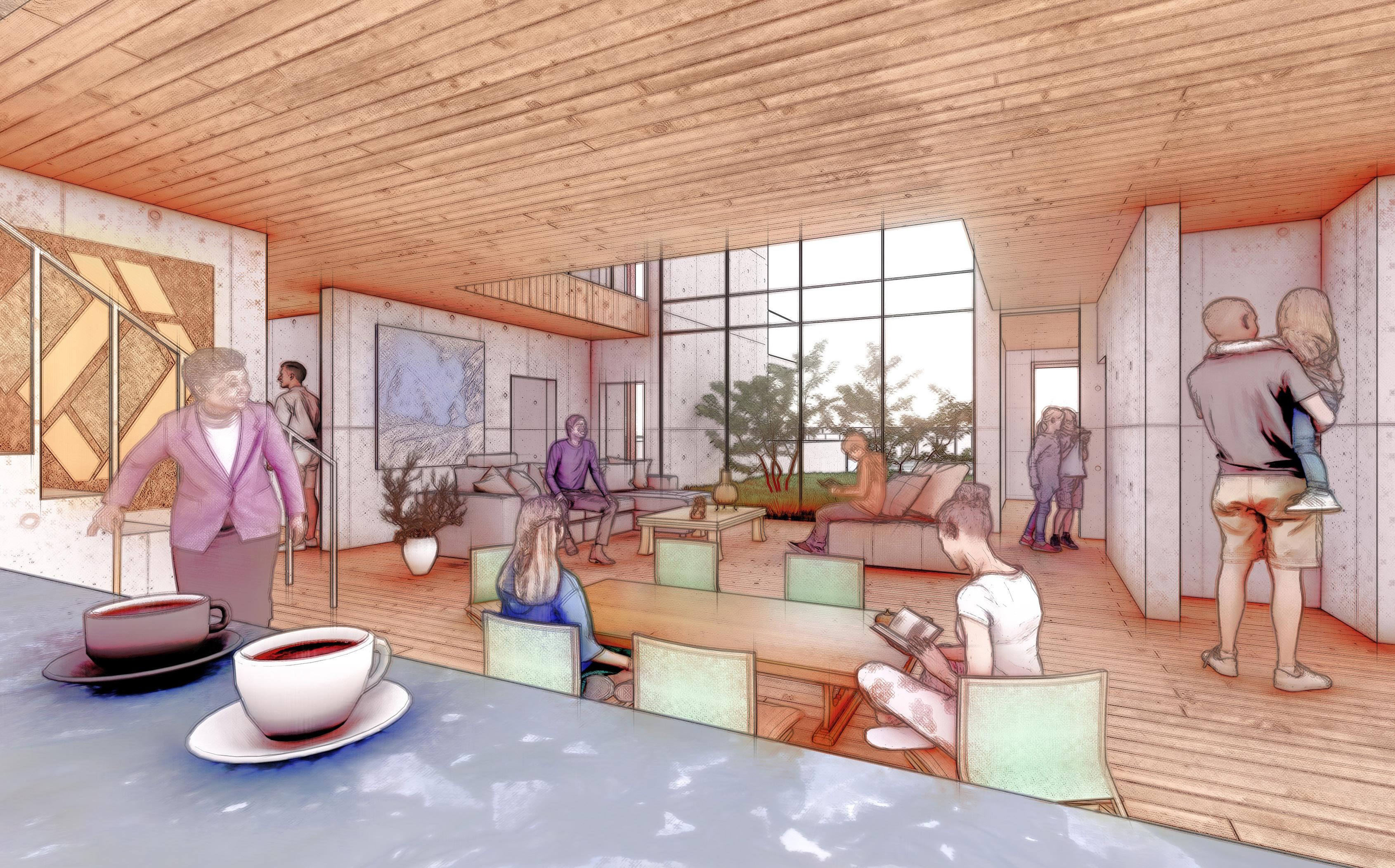
Lobby entrance is large enough for socialization and features a double-height space.
Community Classroom (1 of
These 913 square-foot rooms are reserved for residents only and overlooks the lobby, retail areas, and street. It can be used for senior activities, children’s classes, yoga classes, etc.
Kitchen
These 688 square-foot rooms are reserved for residents and can be used for cooking classes, common meal, birthday parties, or any large gathering.
2)
Community
(1 of 2)
Living Space Courtyard
Showing how courtyard is an extension of living space.
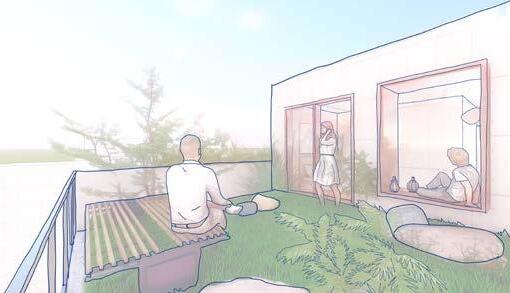
Private balconies with Japanese garden.
Communal courtyard designed as an extension of living area.
Four-foot vegetation wall for privacy between courtyards.
Courtyards provide separation between bedrooms for acoustic and privacy purposes.
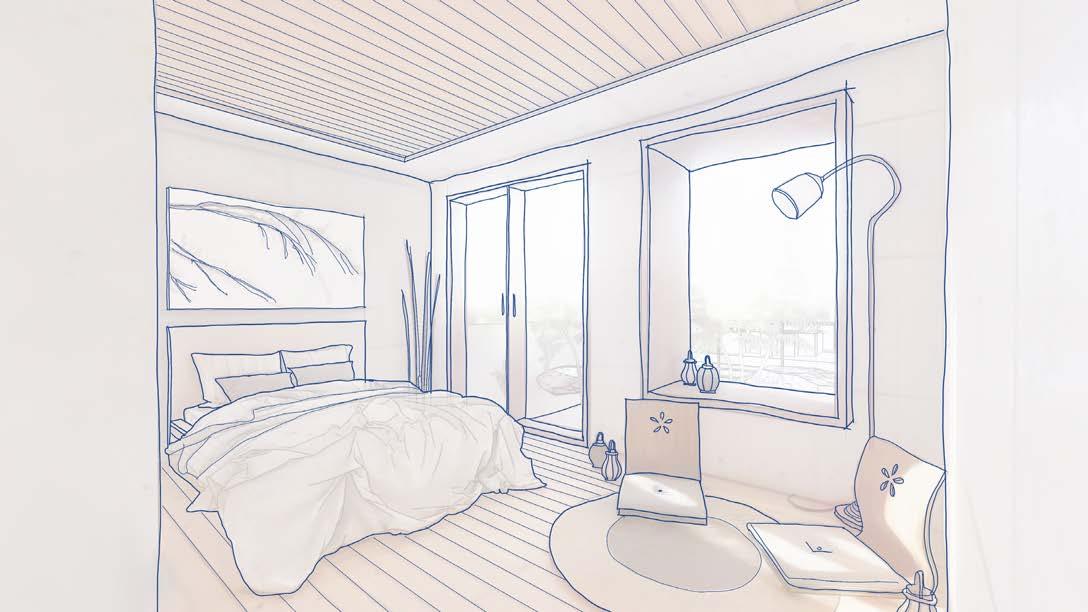
View of Private Balcony Each bedroom has private balcony and garden.
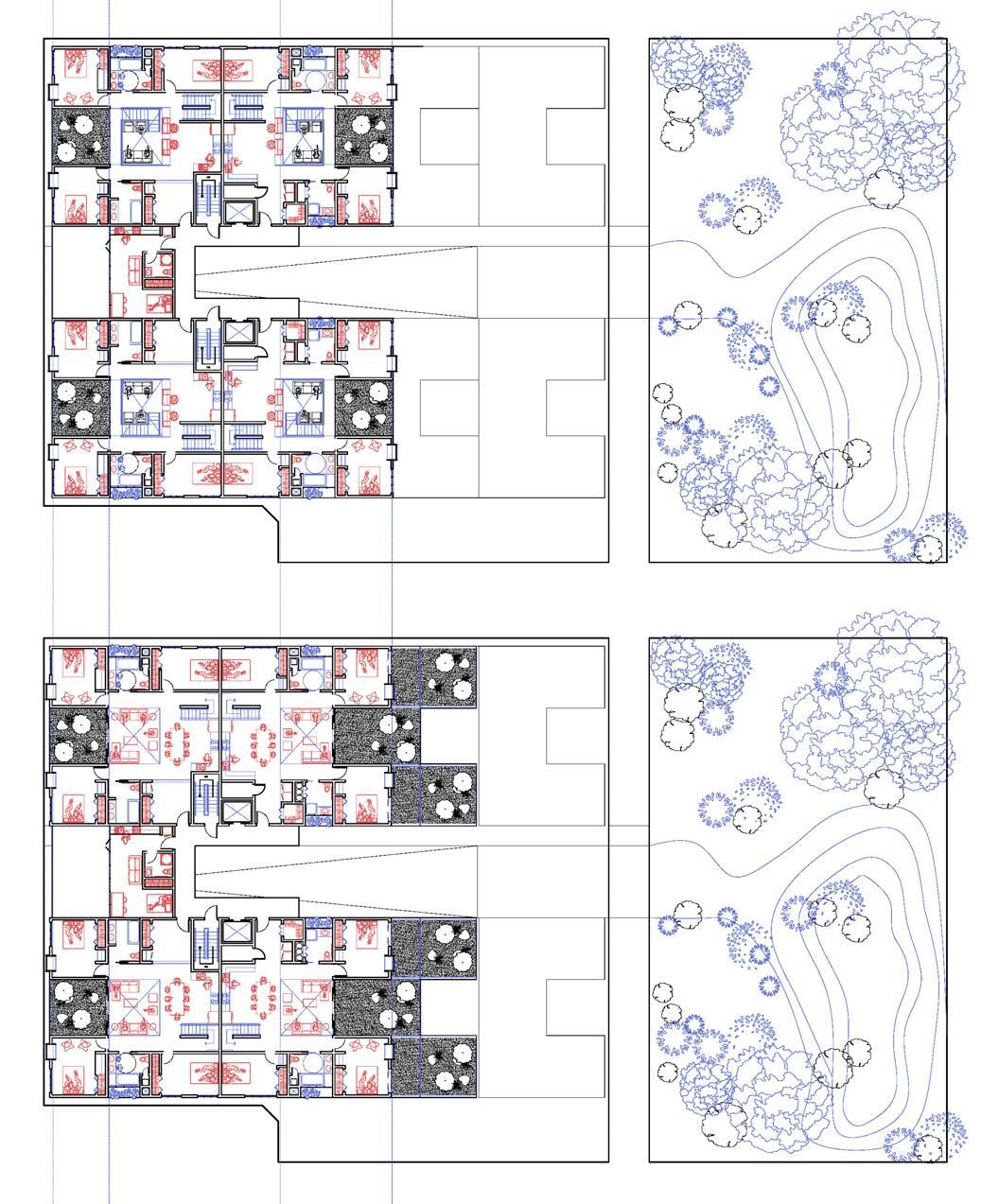
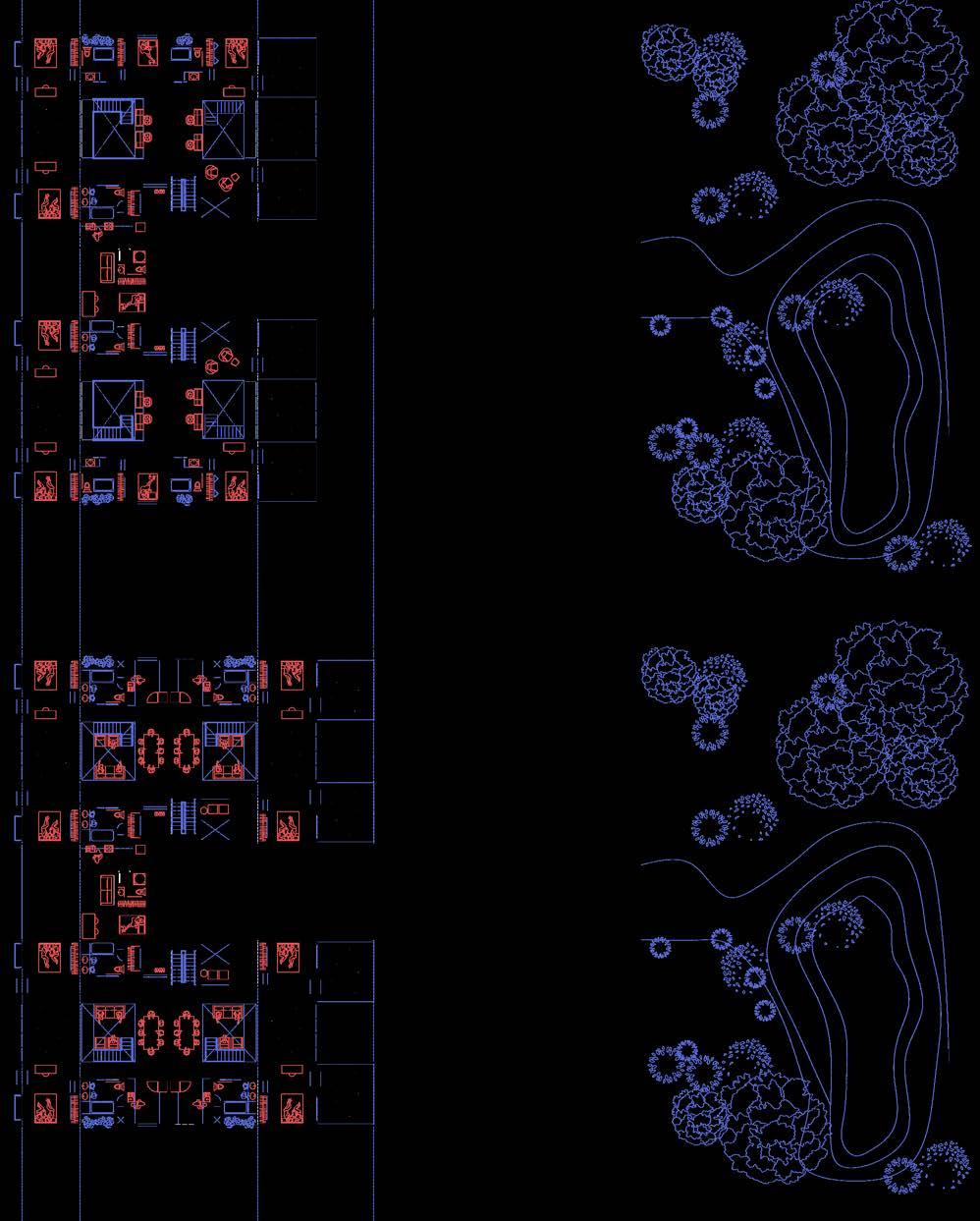
Fifth Floor Unit Downstairs Scale: 1/16” = 1’-0”
Third Floor Unit Upstairs Scale: 1/16” = 1’-0”
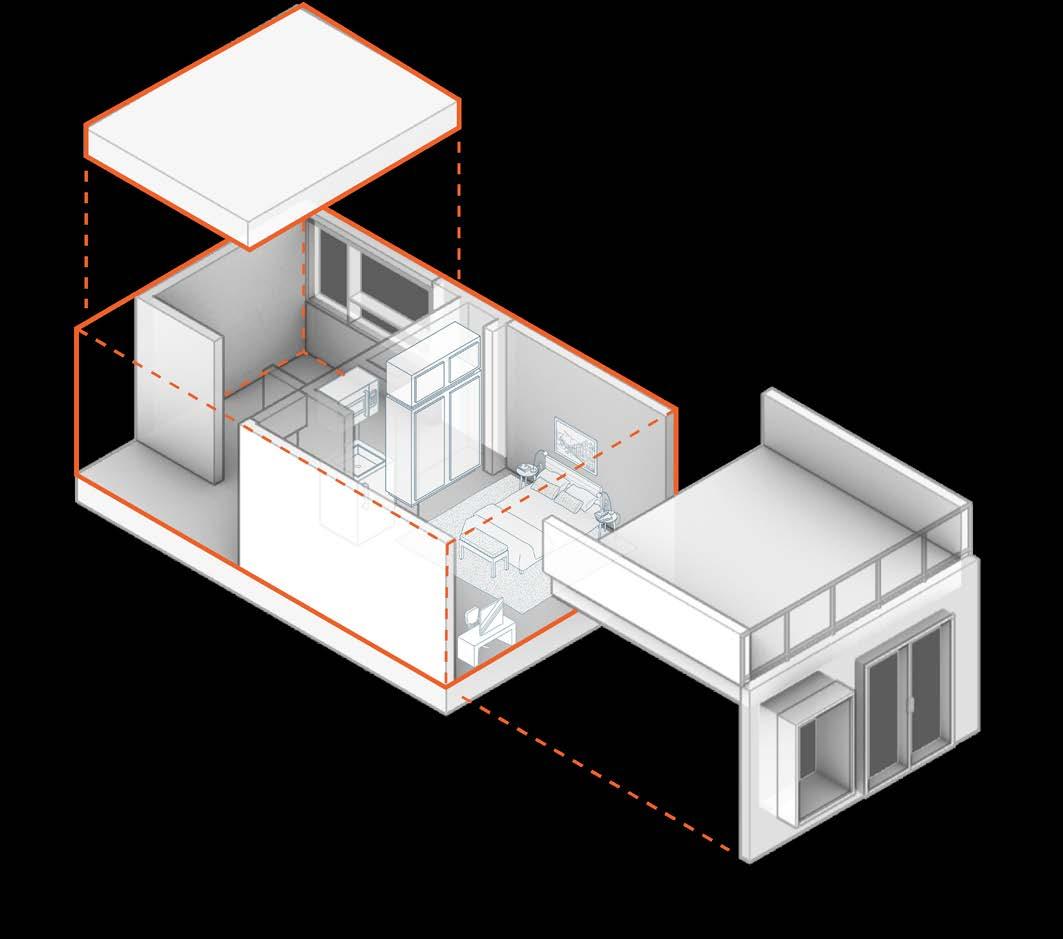
Acoustic Barriers Bathrooms and closets provide acoustic barriers.
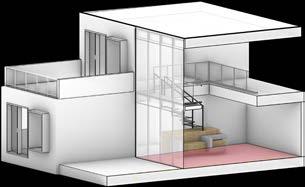
Unit Section Showing how double-height space brings light deep into home.
“Apartment in a House”
Multigenerational
are
Voluntary Living Area
Because the bedrooms can function completely independently, the living areas are completely voluntary.
Basement Plan
Showing how basement receives adequate light.
Section Through Units
The structural system is load-bearing concrete walls. All units have at least one private balcony and access to ample natural light.
Color indicates separate units. (Note: color has no purpose other than distinguishing boundaries. See following pages for specific variations.
Second Floor Plan Contains the two community classrooms
First Floor Plan Contains lobby, retail areas, and community kitchen classrooms.