AYODHYA NAGAR VIZHA
Cities for Play
Ayodhya Nagar, Chennai, India
EVENT DAY REPORT
Community Advocacy and Stewardship Meeting to Unveil Cities for Play initiative.
February 13, 2021
Ayodhya Nagar, Chennai, India
Community Advocacy and Stewardship Meeting to Unveil Cities for Play initiative.
February 13, 2021

Tamil Nadu Slum Clearance Board
In collaboration with
In cooperation with Project Initiated by
Greater Chennai Corporation Urbaser Sumeet
Supported by

Mr. Sasikumar Panchayat head
Elango International sports Referee
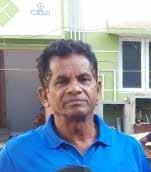
Muthukumaran Carpenter
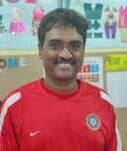
Rajni Sports and Play Advocate
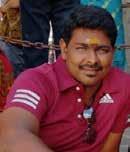
Sangeetha Tuition Teacher Don Bosco
And most importantly, the families and children of Ayodhya Nagar
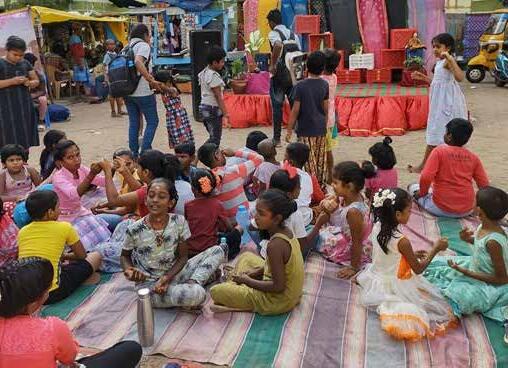
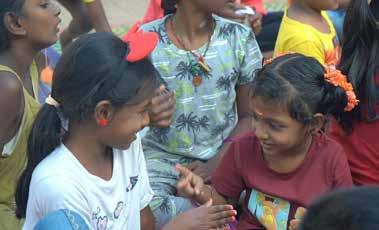
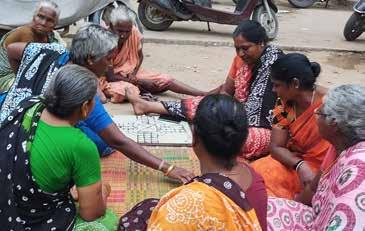
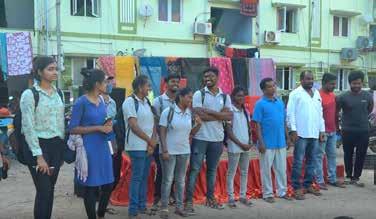
Location: Ayodhya Nagar, Chennai India
Date: Feb 13th, 2021
In collaboration with Urban Design Collective (UDC), PLUS has been involved in a community engagement process in Ayodhya Kuppam Tsunami Resettlement area as part of Cities for Play initiative. The initiative was started by UDC with support from TNSCB in early 2020. The event on February 13th was a culmination of 5 months community engagement/community building process (Phase 1).
Play is a vital aspect of Children’s cognitive development, and learning however, the spatial constraints of resettlement sites like Ayodhya Nagar limit access to children’s mobility and creative learning through play, particularly for girls. We adopted an Asset Based Community Development process, long-term stewardship models and spatial improvements that benefit the overall safety and usability of the neighborhood for all.
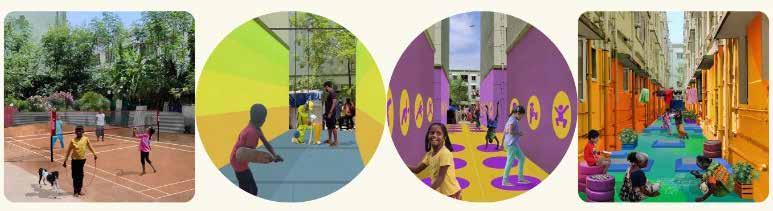
Image Source: UDC
TIMELINE OF PARTICIPATORY DESIGN PROCESS
Focus Group Discussions and intro to community leader.
Prototyping design elements with children and surveys conducted with One All
Ayodhya Nagar Vizha marks the end of phase 1
Initiated by UDC
Toy/Book crowdsource drive.
• Partnered with One All to integrate lifeskill education through sport.
Met with Urbaser Sumeet to help with cleaning, and future waste disposal programs within the neighborhood.
The primary goal of this Vizha was to bring the community together, get more adults to learn about Cities for Play, and get them involved in our visioning, design and implementation processes (Phase 2) going forward.
Another objective was to demonstrate ways in which simple yet lasting design elements can be created by children and local resources. This was part of the community capacity building/ engagement (Phase 1) process. By teaching children as young as 9 to help with building, painting, and creating, we were able to invest more on both individual skill and community assets.
The event and workshops made it possible to test in real time and demonstrate simple and effective ways to transform spaces into welcoming learning and play areas, using everyday objects. The vizha marks the end of phase 1 participatory design process from October 2020 to February 2021.
• Activated 3 alleys and the courtyard space. Use creative art making and sports to reclaim neglected public spaces.
• Cleaned up 6 areas in the neighborhood with help from Urbaser Sumeet
• 150 - 200 people visited the event spaces from the community during the event
• UDC conducted visioning exercise and walking tour with the community.
• The map and ideas for designing safe and nurturing urban environments for children prepared by UDC was presented to the community.
• The event also showcased temporary and small-scale spatial improvements made by the community, including seating, storage and painting..
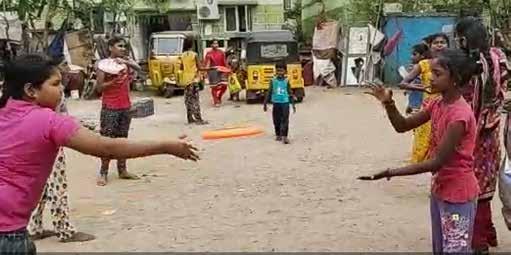
• One All did a demo of a Frisbee game along with girls from the community currently training with One All.
Pre-Event Activities
• Cleanup and Debris Removal
• Prototyping as a Community Capacity Building Tool
• Creative Art as a Placemaking Tool
Event Day Activities
As part of the event, we cleaned and activated 4 areas for the event.
Central Courtyard
• Community Event
• Introduction of the Cities for Play Initiatives.
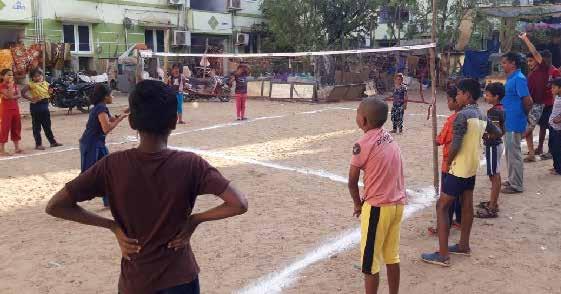
• Badminton Match Finals for Boys
• One All Frisbee Demo
Alley 1: Creative Placemaking and Play Zone
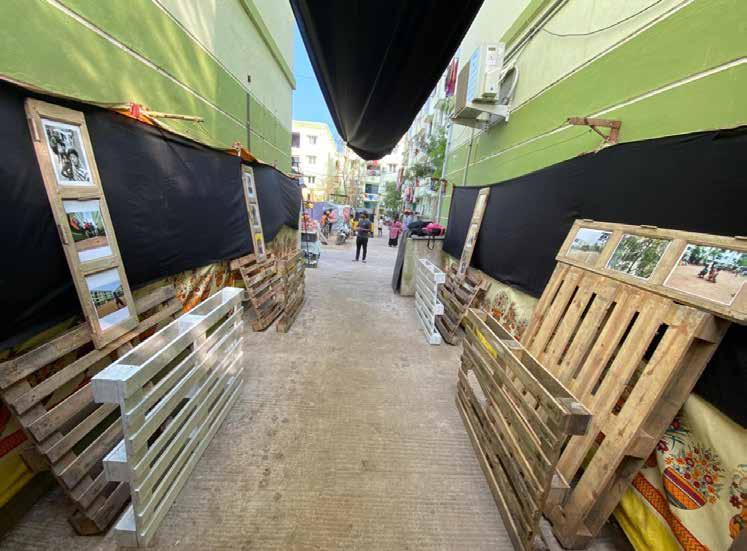
Alley 2: Photovoice Exhibit
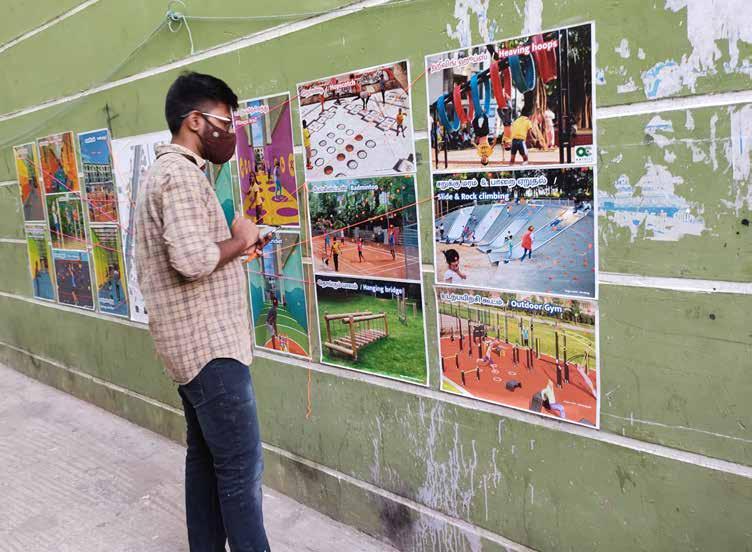
Alley 3: Walking Tour and Community Visioning
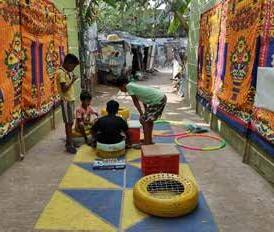
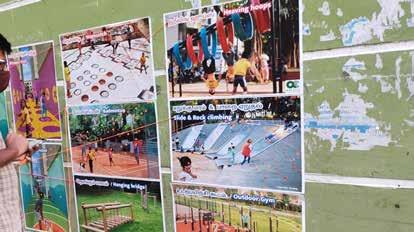
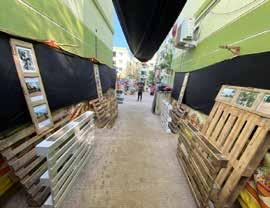
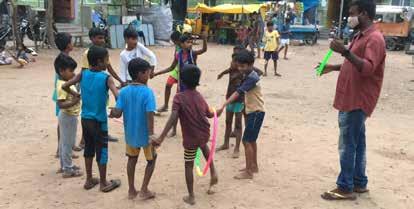
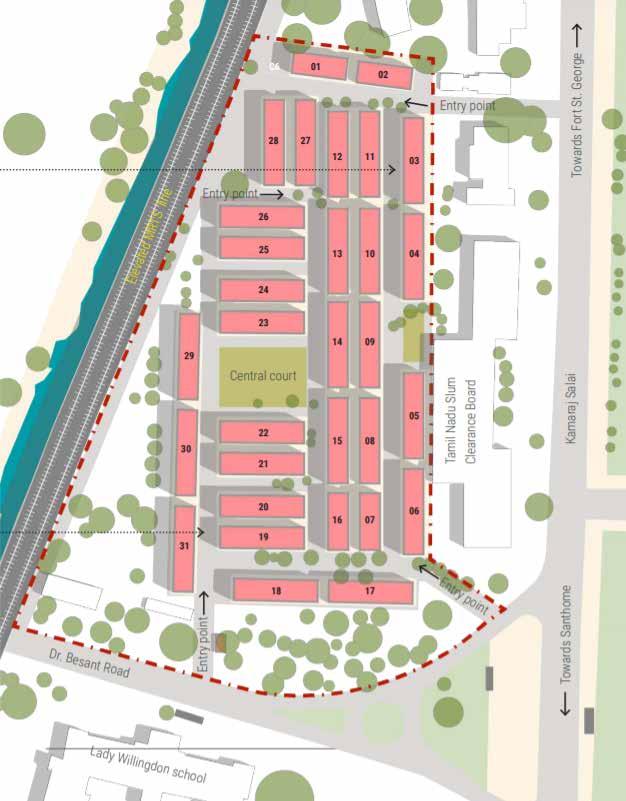
Image Source: UDC Main event Space
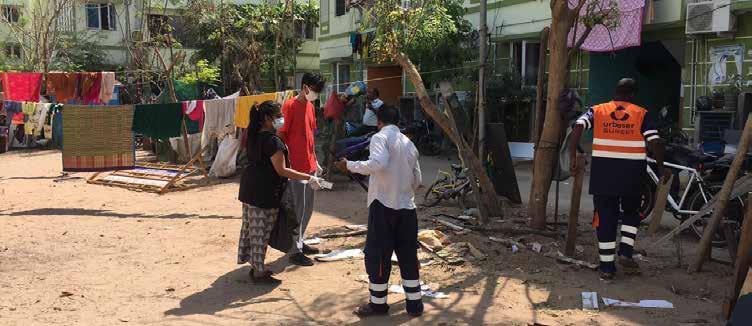
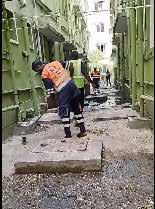
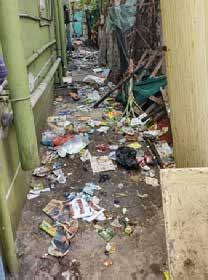
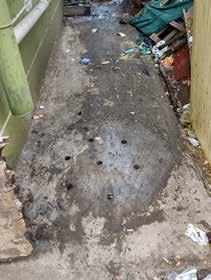
Being the largest and most multi-functional open space in Ayodhya Nagar, we intended to make better use of this space in the corners and central areas by cleaning and setting up reading spaces. Urbaser Sumeet Zone 9 crew and staff assisted us with the clean up and removal of debris, closing holes, clearing glass pieces etc, with the help of young volunteers from the community. Urbaser Sumeet Zone 9 Assistant Manager Mr. Siva was present at all our clean-ups and vouched to help us with our ongoing and future efforts. Community engagement programs by Urbaser will be conducted going forward, and potentially recruiting stewards from within the neighbourhood.
Prototyping is an approach to developing, testing, and improving ideas at an early stage before large-scale resources are committed to implementation. It is a community building exercise It which allows us to experiment, evaluate, learn, refine and adapt.
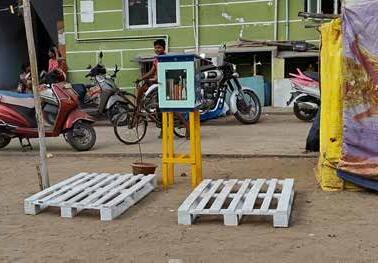
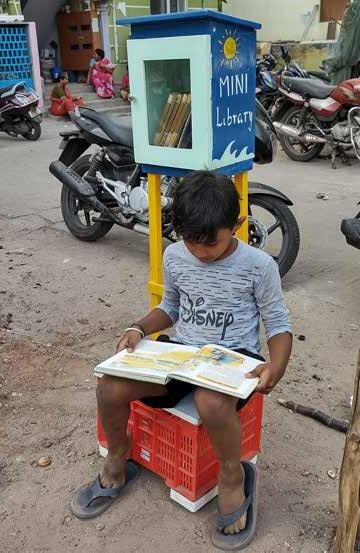
Created with the help of a local carpenter and painted with children. As a pilot intervention, we built, and installed a mobile mini library with the help of a local carpenter. The seating area was also made of re-purposed materials like crates and tyres and pallets. In November, we crowd-sourced toys and books during Children’s day week to set up the community toy and book library. We also created furniture for outdoor and indoor use using locally available tyres and crates.
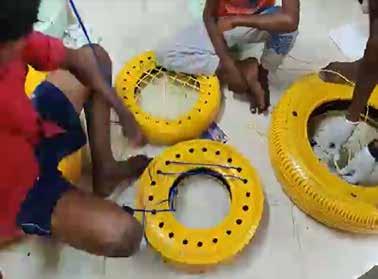
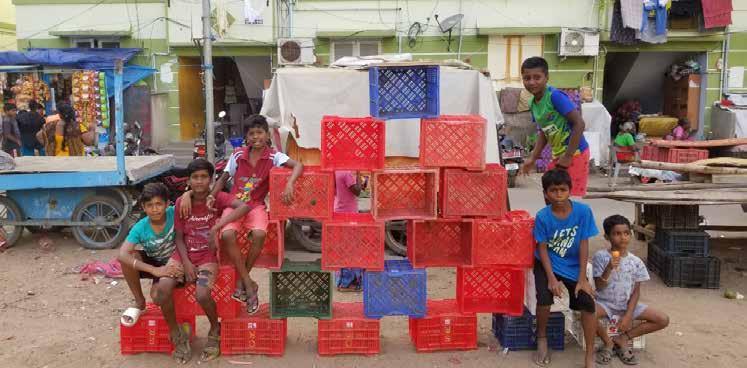
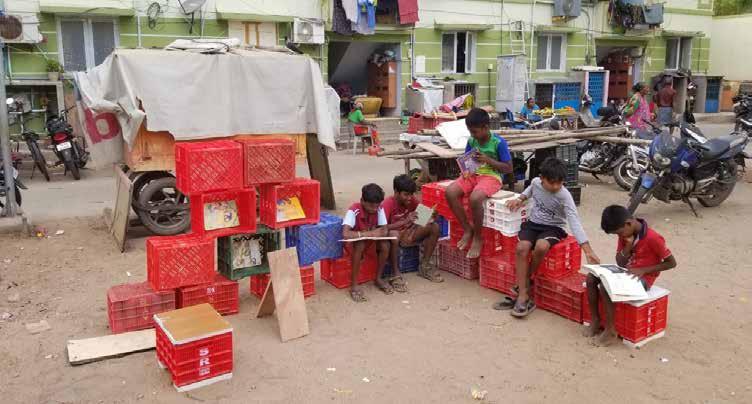
Using simple objects like plastic crates as a module we co-created backdrops and seating spaces a week before the event. These objects gave room for children to creatively adapt them into structures, build together, problem solve and negotiate their ideas.
Public art is a powerful collaborative tool. It is a simple way for the community to reclaim a neglected public space, and quickly transform it into a visible change. After deciding on a basic pattern, we let children make the decision about which colour goes where. With very little investment and team work, children took turns to paint and teach other kids how to do it. We also got an opportunity to interact with adults who were curious to know why and what we were doing. Many of them helped set up lights, clean-up the alley and ensured that no one stepped on it.
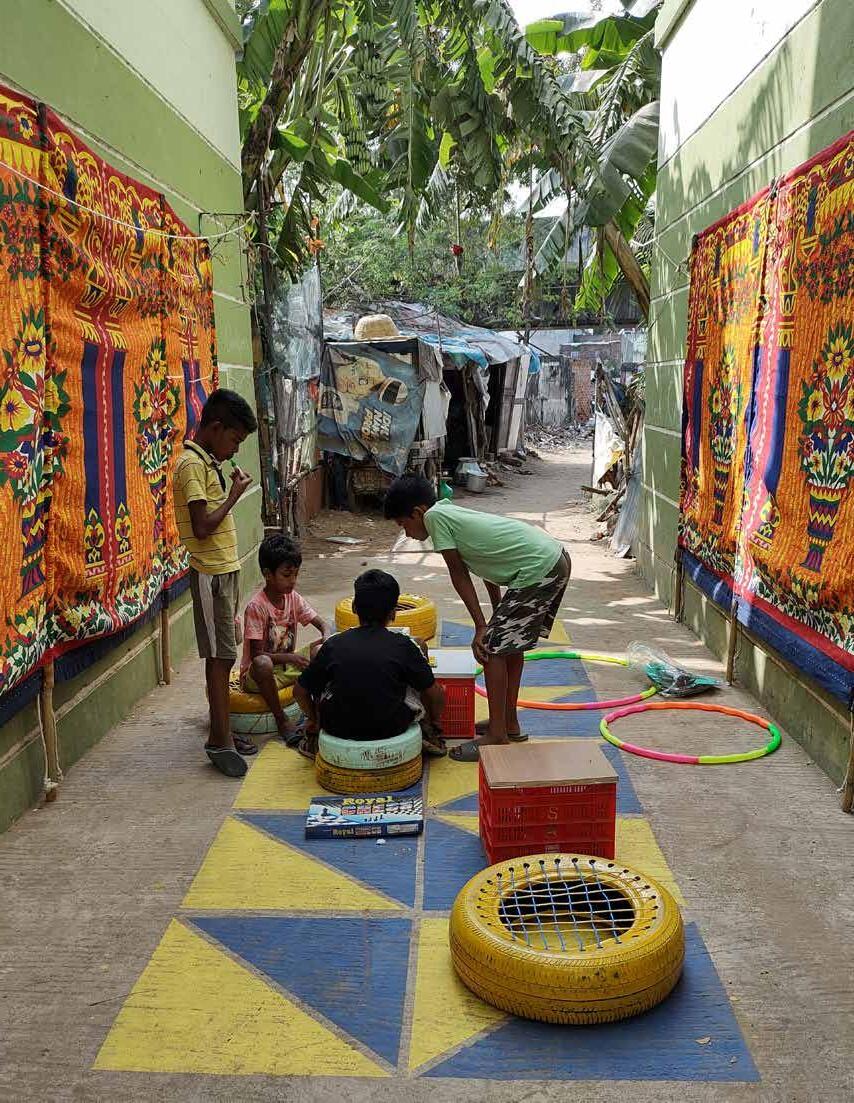
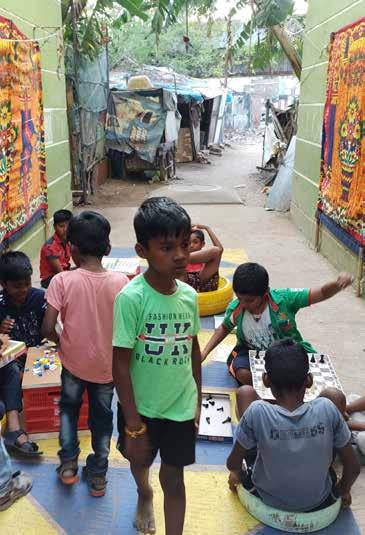
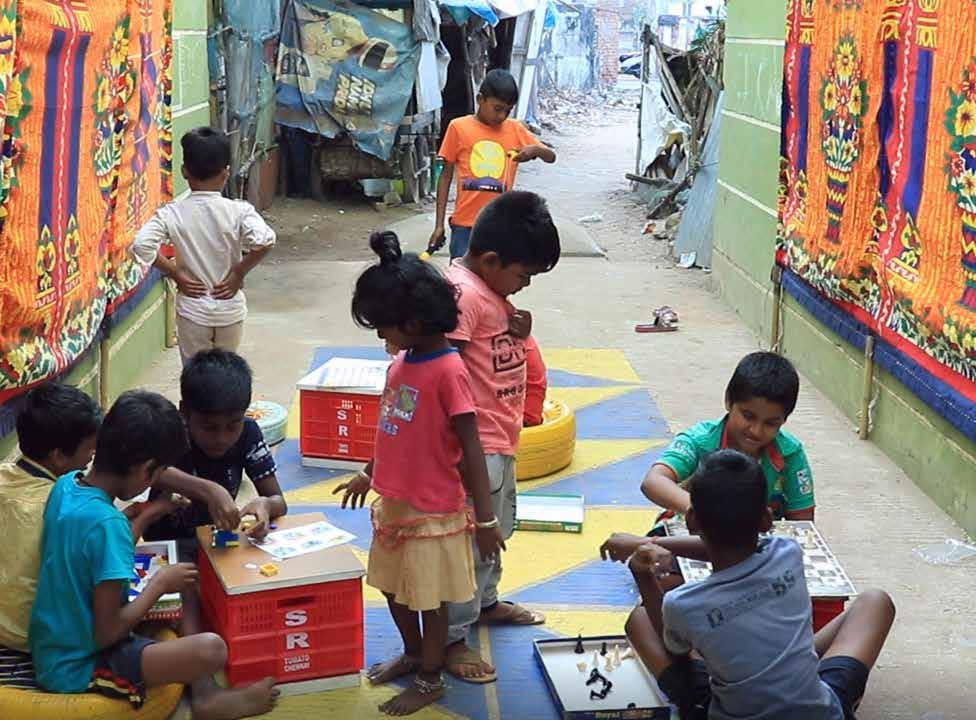
The most commonly used alley (Alley 1) for play by both adults and children was the one closest to the Panchayat Office. Using simple triangular patterns we painted this alley to signify its playfulness and give room for creative use. For the event, we set up board games and toys including, skipping ropes and hula hoops for play.
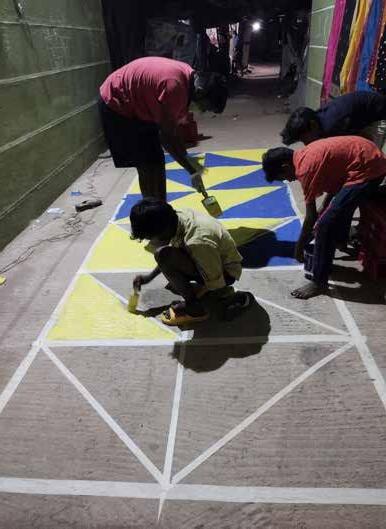
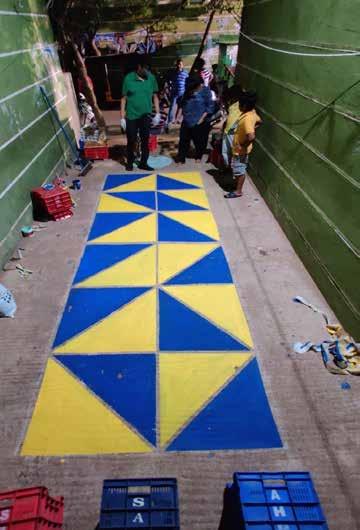
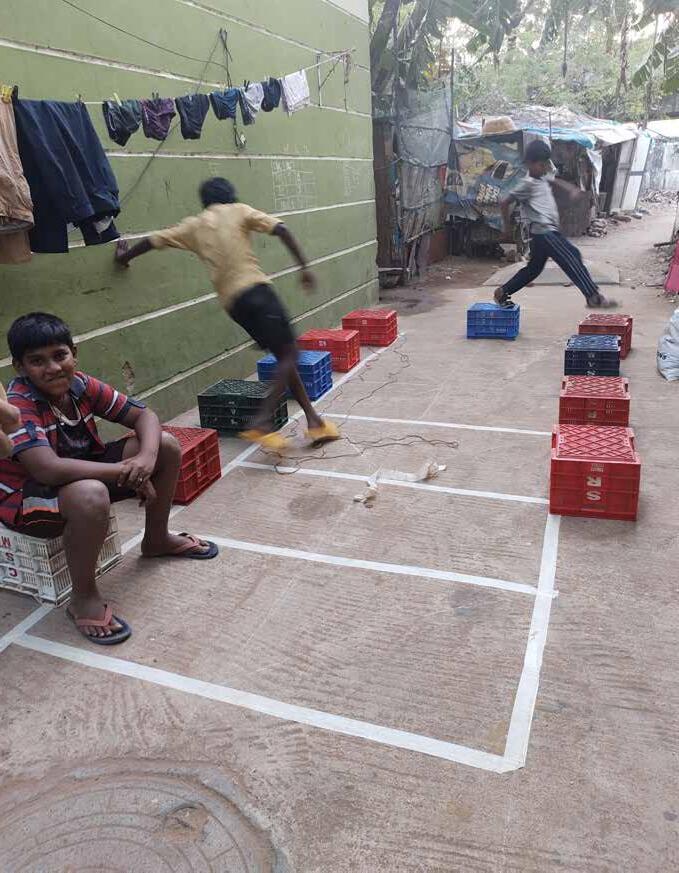
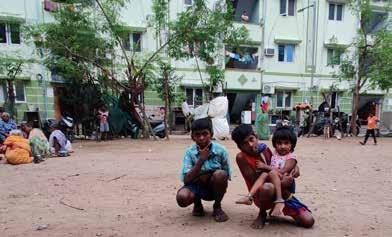
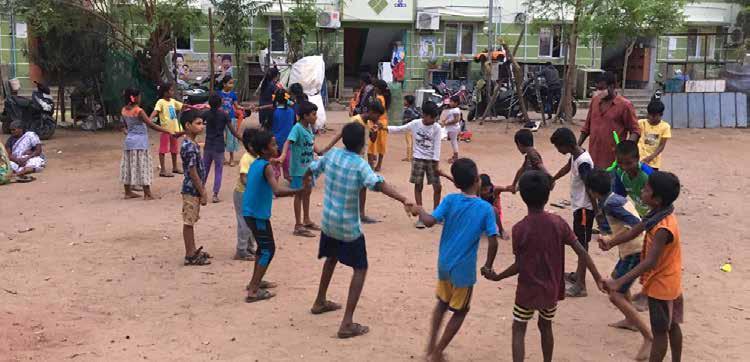
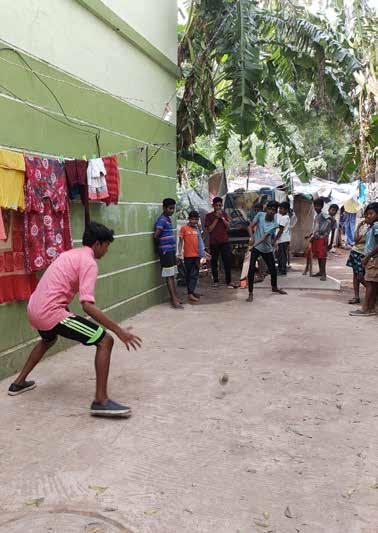
Children playing a spontaneous 6-feet apart game before starting our painting work, inspired by social distancing rules. Image Source: PLUS
AYODHYA NAGAR CITIES FOR PLAY INITIATIVE PLUS
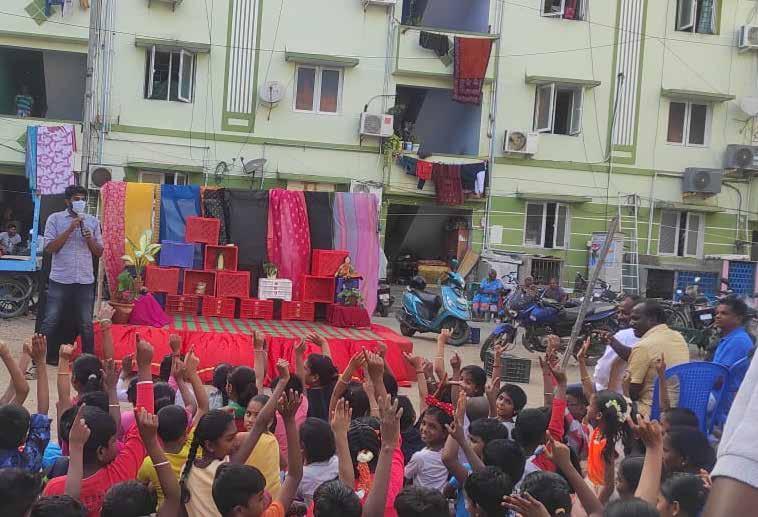
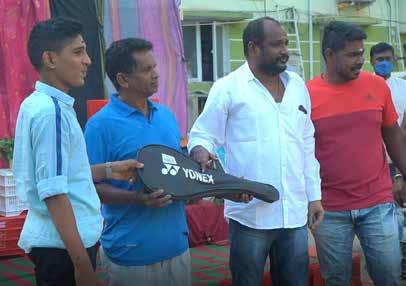
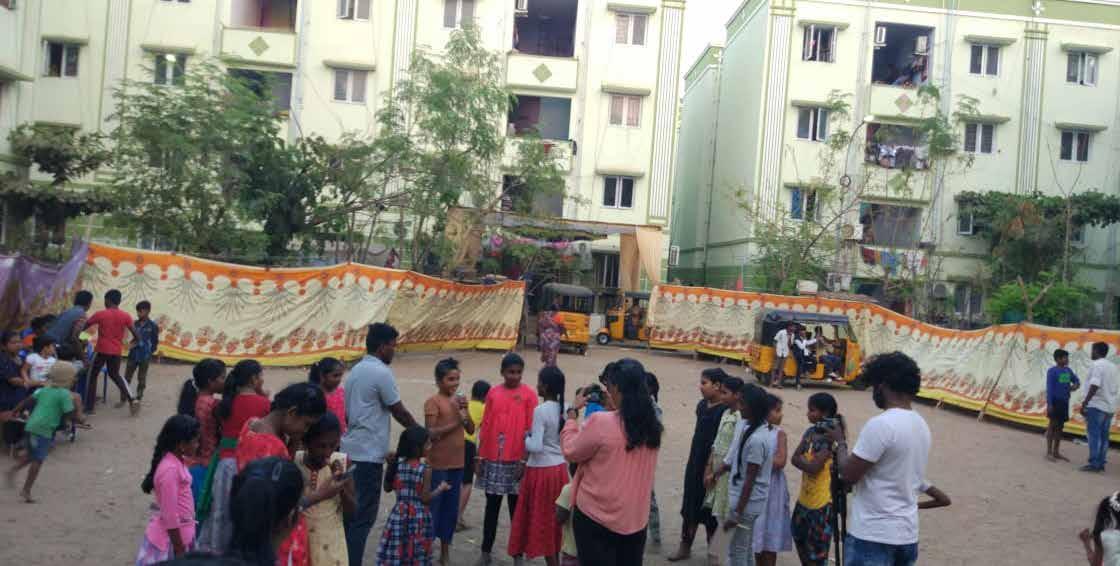
We began the event by introducing ourselves, and our partners, the event goals and also the longterm vision of this process. Prizes were distributed for the winners of the badminton tournament, and acknowledged residents’ and children who helped us throughout the months leading up the event, and whose continued support is key to the implementation phase.
Attendees include the TNSCB Assistant Engineer, Village Head, Sasikumar, residents including our community leaders Rajni, Rajan, Elango, Muthukumaran and Sangeetha Teacher. A few interested college volunteers and public were also among the attendees, some helped with set up and removal of event areas.
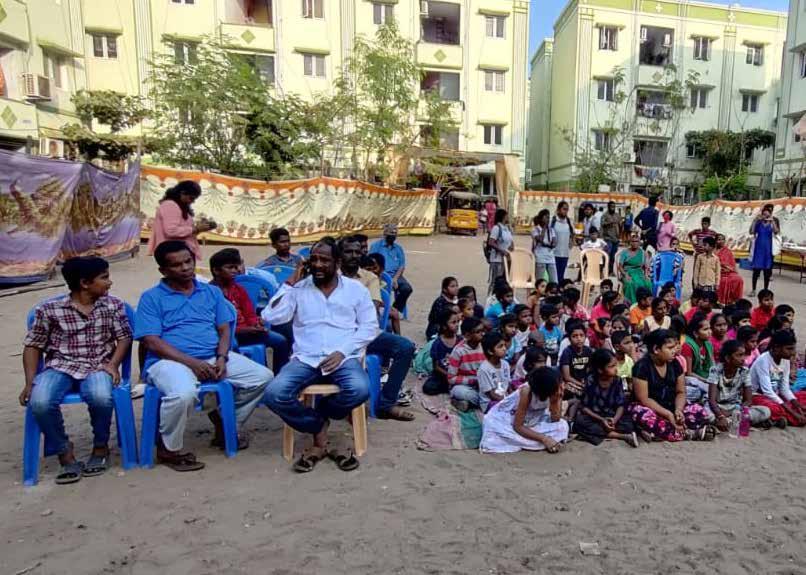
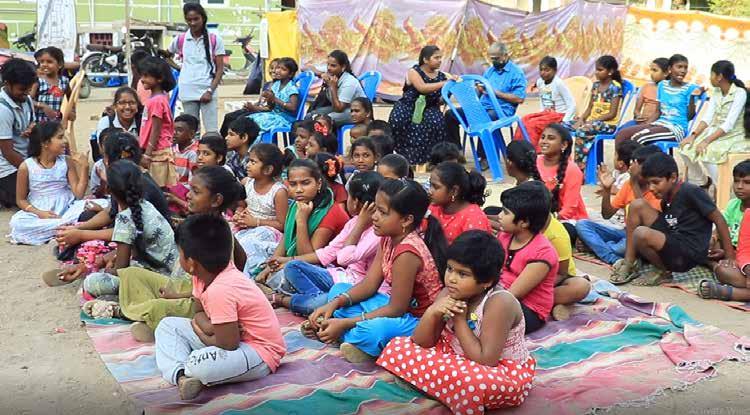
Children and adults gathered in the central courtyard. Image Source: Aruna
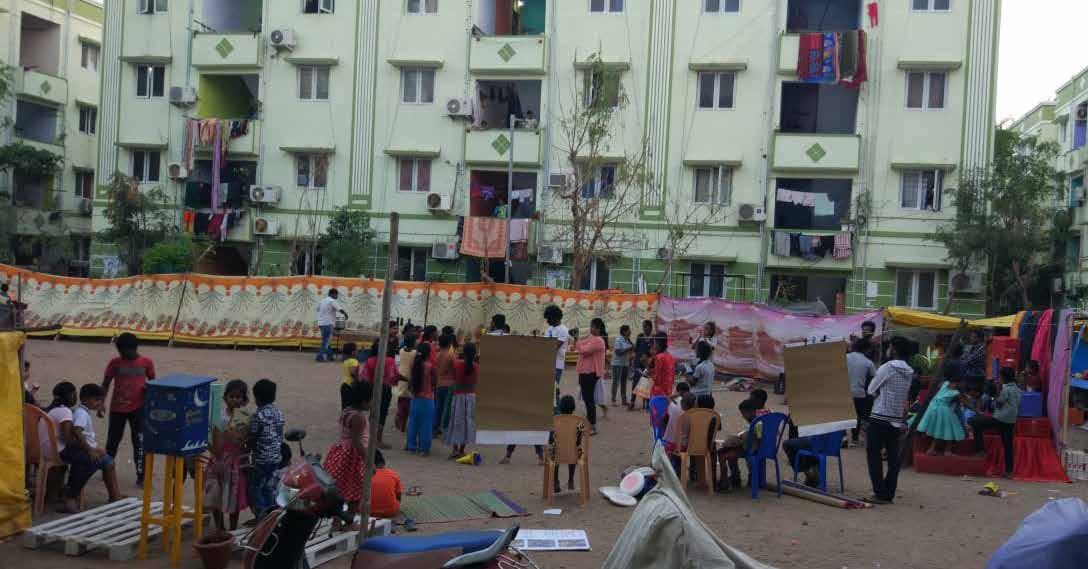
Corners and edges were cleaned up before the event. Image Source: One All
AYODHYA NAGAR CITIES FOR PLAY INITIATIVE
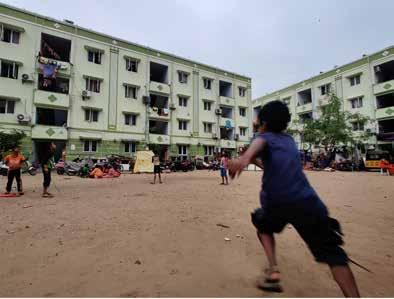
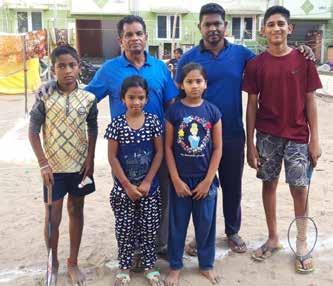
The badminton match finals were hosted the day before the event. This was the most popular sport for both boys and girls in the locality. Around 40 children (10 girls and 30 boys) signed up for the qualifiers. This was coordinated and refereed by community fitness trainers and residents including setting up poles on the cleaned up space.
The winners and runners up, for both girls and boys category received prizes from Elango, Sasikumar and Rajni on the event day.
One All is a non-profit organization that focuses on forming life skills development and value systems amongst youth, through Ultimate Frisbee. A game Demo with running commentary explaining the game rules. Then a few girls were asked to share their experiences with the residents about what they learnt from these training sessions with One All.
One 11 year old said, “We learnt how to respect the loss and victory and not bully the losing team. We always give hi-fives to our opponent team before and after to encourage them.” Another girl spoke about how she felt about aggressive play and how to respect boundaries during play.
With our repurposed seating and storage furniture the alley was transformed into a designated play space that caught everyone’s attention while passing by. Most of the spaces and objects we created were made with children as young as 9 years old.
These ideas were tested in real time, giving us room for imagination while demonstrating how easily we can create safer, welcoming areas with simple objects and tools. After evaluating changes, capital investment would be provided for successful prototypes to be replicated in other areas of the neighborhood.

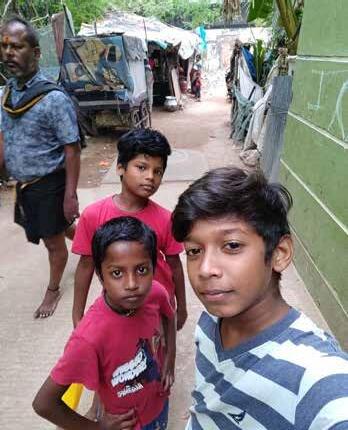
In December we engaged children between ages 10-15 to take photos of their community, as a medium of communicating the values attached to their spaces. This exercise, called Photovoice, was crucial to see the child’s perspective of attachment, identity and value of their home. These photos were exhibited during our event on Alley 2 and received a lot of love from the residents. For the exhibit space we used repurposed pallets and reclaimed teak windows,
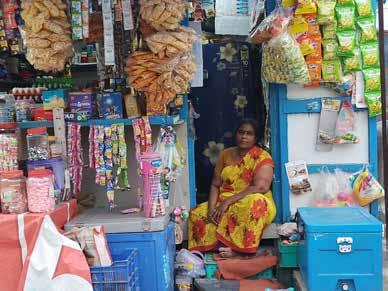
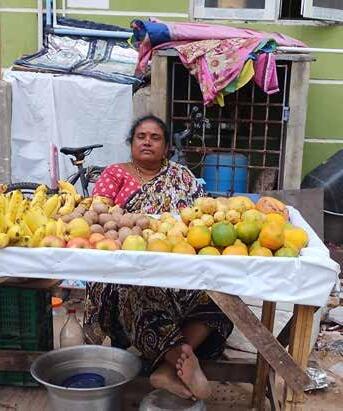
Using smartphones, children captured images based on the prompt “What is your favourite thing, place or person in the community?” We learnt many interesting facts about the neighbourhood such as the first shop in the area, their favourite spaces to play, a tree they like and their grandmother’s fruit shop (See Appendix).
The event kicked off with the walking tour coordinated by UDC around open areas and alleys in the neighborhood. This was also a way to understand which spaces needed priority for immediate improvements. Votes were counted in boxes drawn next to these spaces based on inputs.
Ideas and precedent images were stuck next to the master plane with strings demarcating which play idea corresponds to the map location for residents to suggest, identify areas of priority for physical improvements in existing spaces. This area will remain as such even after the event for more residents to see it.
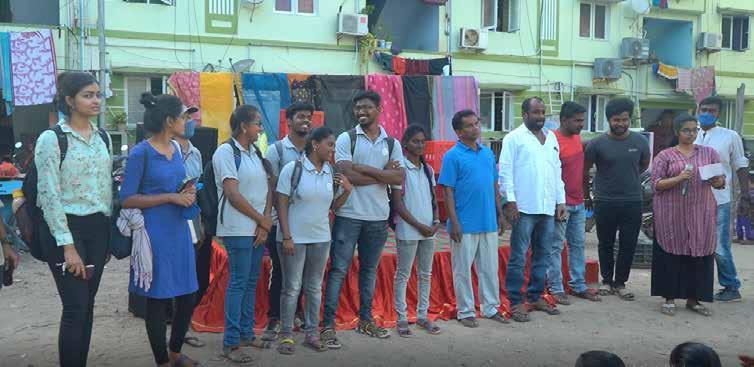
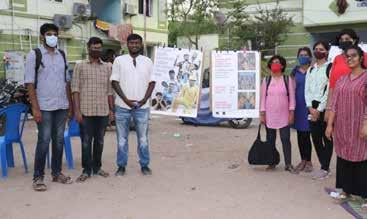
Project collaborators including community members who helped us along this journey.. Source:
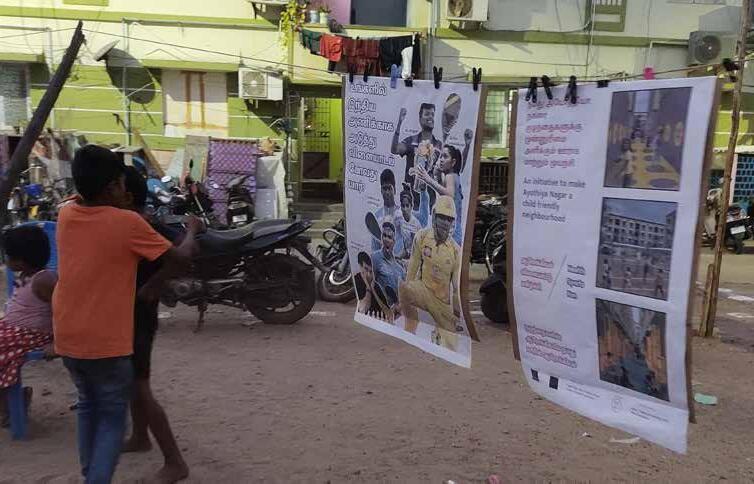
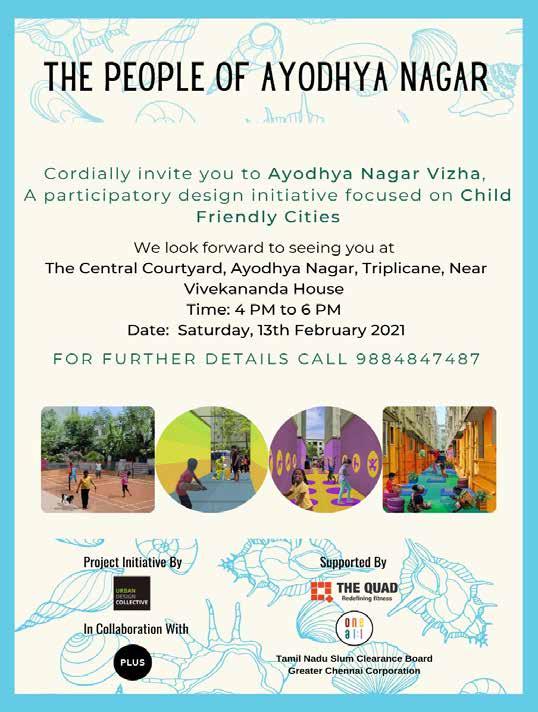
Posters highlighting popular sporting personalities and event details. Source: PLUS
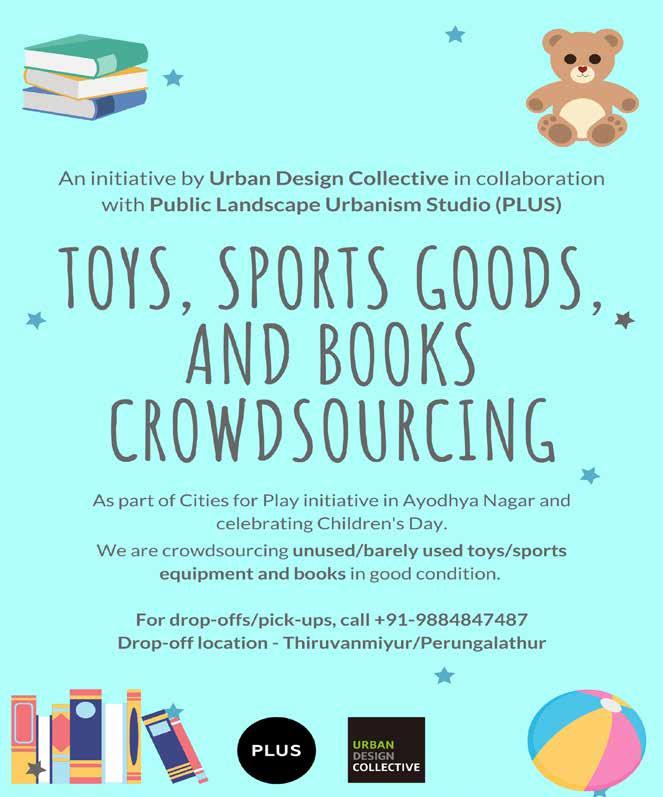
Crowd sourcing books and Toys for the community library and children’s use.
The residents use an announcement tool called ‘Thandola’ with loudspeaker and percussion instrument to briefly summarise the event details to the residents and invite them to participate. Bi-lingual posters and fliers were also shared with children and parents via Whatsapp.
A few sample images of children’s photographs based on the prompt. “What do you like most about Ayodhya Nagar?”