
Signatures
Scan wih Spotify for a playlist through your decade.

Presents
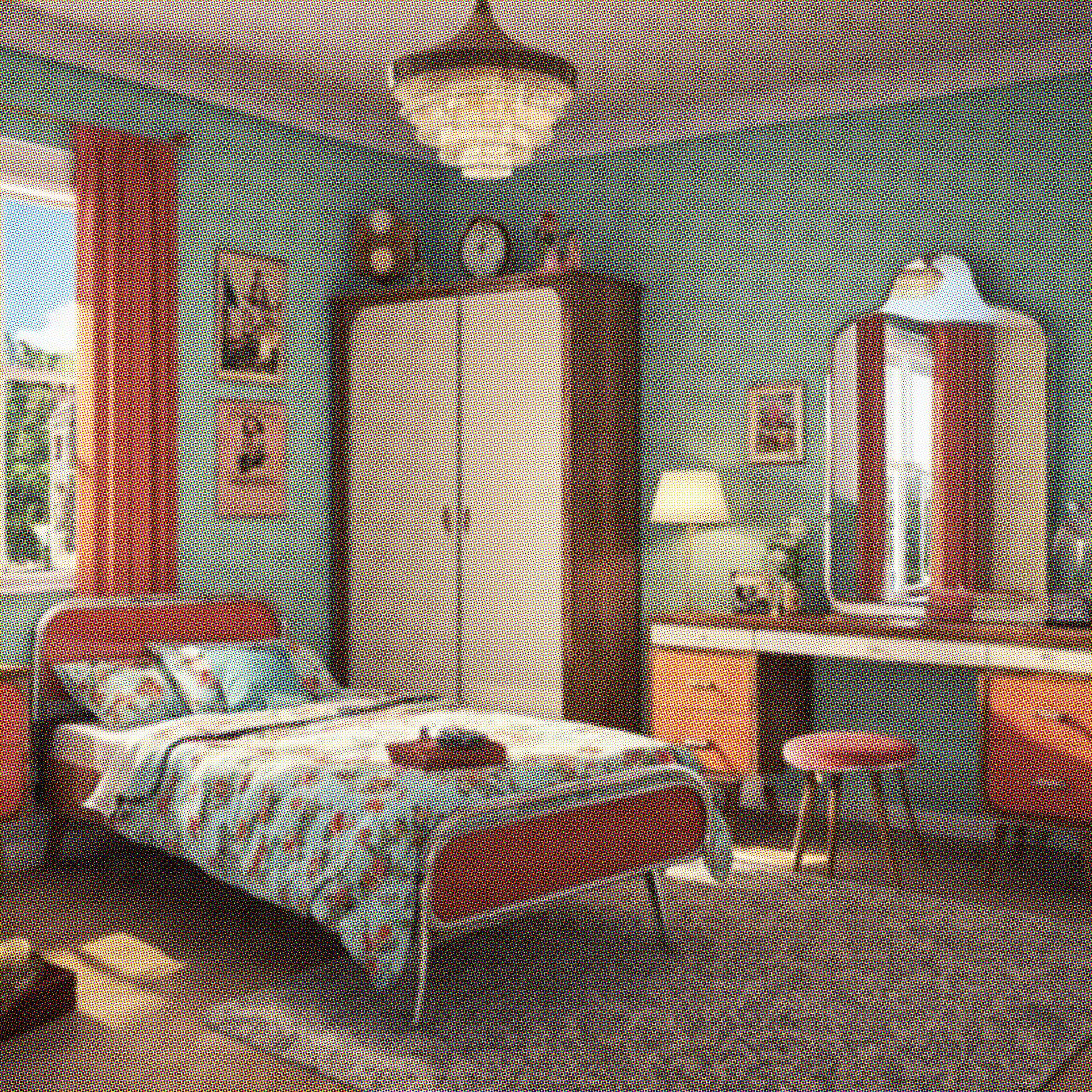
This is your bedroom...
The 1950s significantly departed from wartime scarcity to post-war prosperity, influencing home interiors with bold and luxurious elements. Plush fabrics and gilded wallpapers became prominent, reflecting newfound affluence. Bedrooms epitomized this era with glamorous features like crystal-drop chandeliers and intricately designed headboards, creating a boudoir-style allure. Natural materials such as wooden panels and cane furniture were favored, complemented by quirky touches like rattan sleigh beds and pastel-colored bedding, epitomizing the era's playful spirit.
Despite smaller living spaces, homeowners crafted personalized sanctuaries. Decorative choices included botanical prints on soft furnishings and warm tones that dominated the interiors of prefab Lustron houses, a symbol of practical yet stylish post-war living. The furniture scale was notably smaller, tailored to the era's average smaller stature and fewer possessions. Yet, each piece was crafted with meticulous attention to fit and function within these cozy spaces.
"The 1950s shaped American values of conformity, consumerism, and the nuclear family ideal, which persisted into subsequent decades."
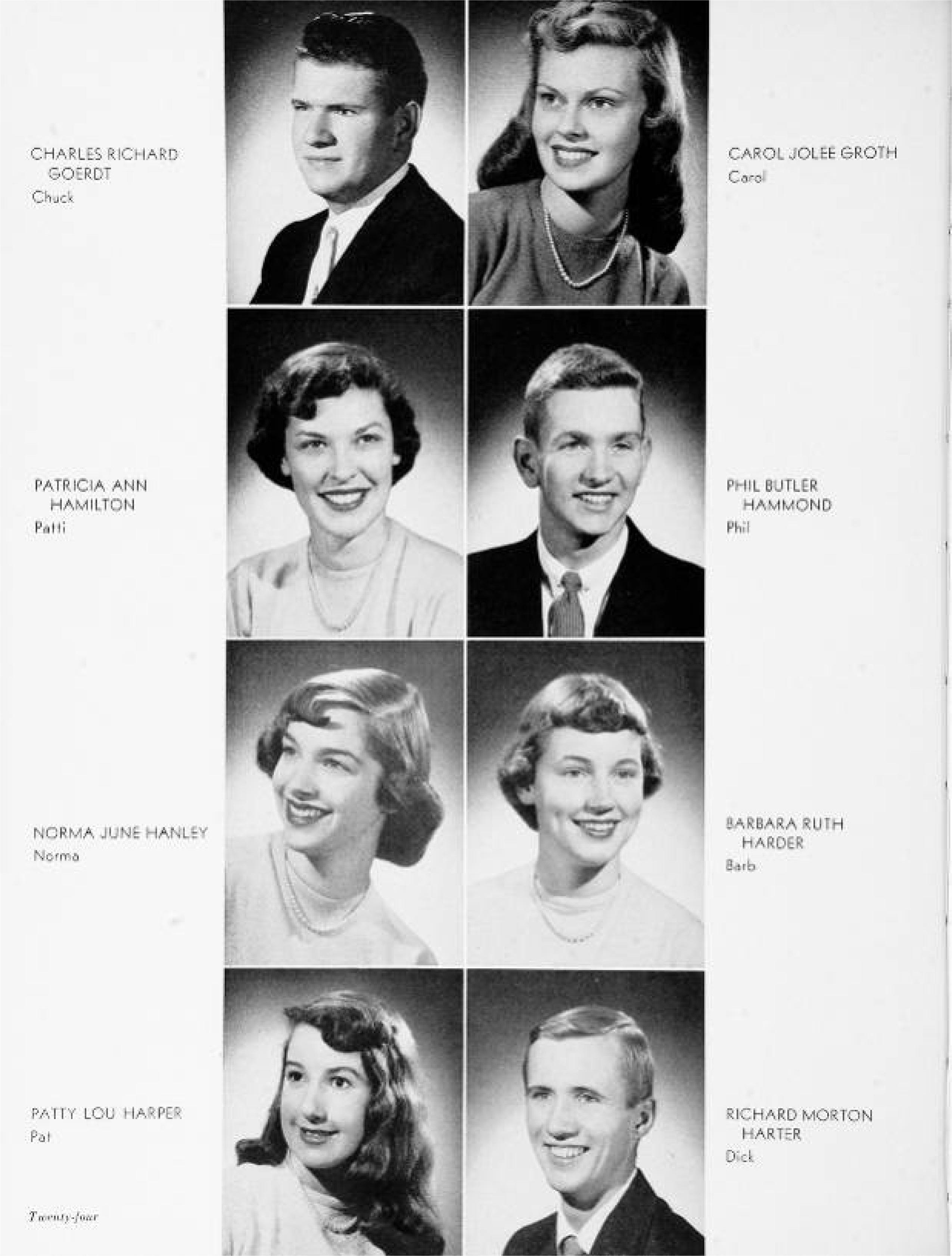
"Gender roles were strictly defined, with women expected to manage household duties and childcare while men were the primary eadwinners."
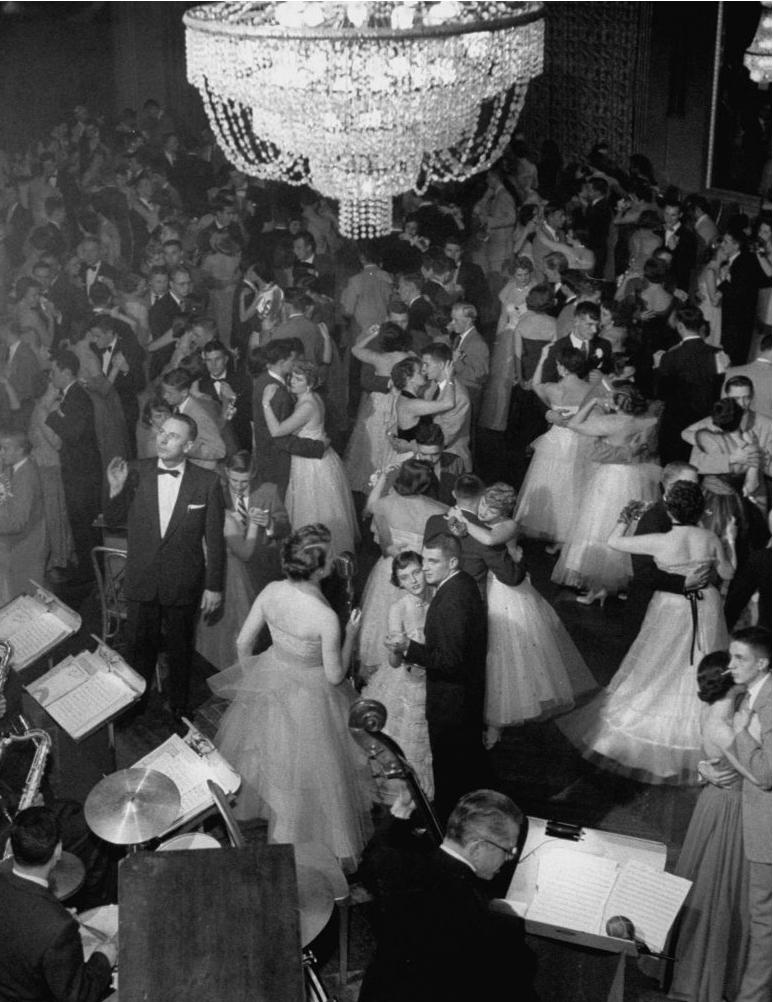
“Social interactions were primarily face-to-face, with neighbors and community events playing a central role in daily life.”
Social Impact:
Community and Social Structure:
- Social interactions were primarily face-to-face, with neighbors and community events playing a central role in daily life.
- Churches and civic organizations were central to social life.
Family Dynamics:
- Families were large, with extended members often nearby.
- Gender roles were strictly defined,with women expected to manage household duties and childcare while men were the primary breadwinners.
- Parenting was often authoritarian, emphasizing respect for authority and discipline.
Racial and Ethnic Relations:
- Racial segregation was prevalent, especially in the South and Midwest.
- Minorities faced significant discrimination in education, employment, and public facilities.
Popular Culture:
Television and Radio:
- Television was emerging with popular shows like "I Love Lucy" and "The Honeymooners."
- Radio remained popular for news and music but was shifting towards music formats by the late 1950s.
Movies:
- Going to the movies was a major entertainment form, especially in small towns.
- Films were family-friendly due to the Motion Picture Production Code, though some subtly challenged social norms.
Music and Dance:
- Rock and roll became dominant, influencing youth culture with artists like Elvis Presley and Chuck Berry.
- Dance styles like the twist became popular.
Literature and Print Media:
- Newspapers and magazines were essential for news and shaping public opinion.
- Books addressed themes of conformity, suburbanization, and post-war challenges.
Sports and Leisure:
- Baseball was very popular, with stars like Mickey Mantle capturing the public's imagination.
- Outdoor activities like fishing and camping were common, reflecting a rural tradition.
Cultural Influence and Legacy:
Impact on Values and Identity:
- The 1950s shaped American values of conformity, consumerism, and the nuclear family ideal.
- Cultural icons like Marilyn Monroe and James Dean represented both glamour and societal anxieties.
Technological and Social Change:
- Advancements like television and suburbanization transformed lifestyles.
- Social movements of the 1960s, such as civil rights and feminist activism, were partly reactions to 1950s constraints.
Nostalgia and Cultural Memory:
- Nostalgia for the 1950s persists, often viewed as a simpler, more innocent time.
- The era continues to inspire works that explore its impact on society and its lasting legacy.
Summary
The 1950s in America were marked by close-knit communities, traditional family values, and the rise of mass media. This period influenced popular culture and societal norms, with lasting impacts on American identity and cultural memory.