85 Years!

85 Years!
The joys of summer! The warm weather and longer days make it the perfect time of year to spend more time with our horses and enjoy the many horserelated events in our area.
Some of SMCHA’s summer events have included a Polo Luncheon held at the Menlo Circus Club. Those who attended enjoyed a delicious lunch while watching and learning about the fast-paced equestrian sport. On July 17-21, we also held our annual 5-day Jack Brook Horse Camping trip. Some people brought their horses, camped, and enjoyed daily trail rides. Others camped and hiked the scenic trails, while many just came on Saturday night to enjoy the popular barbecue dinner and drawing.
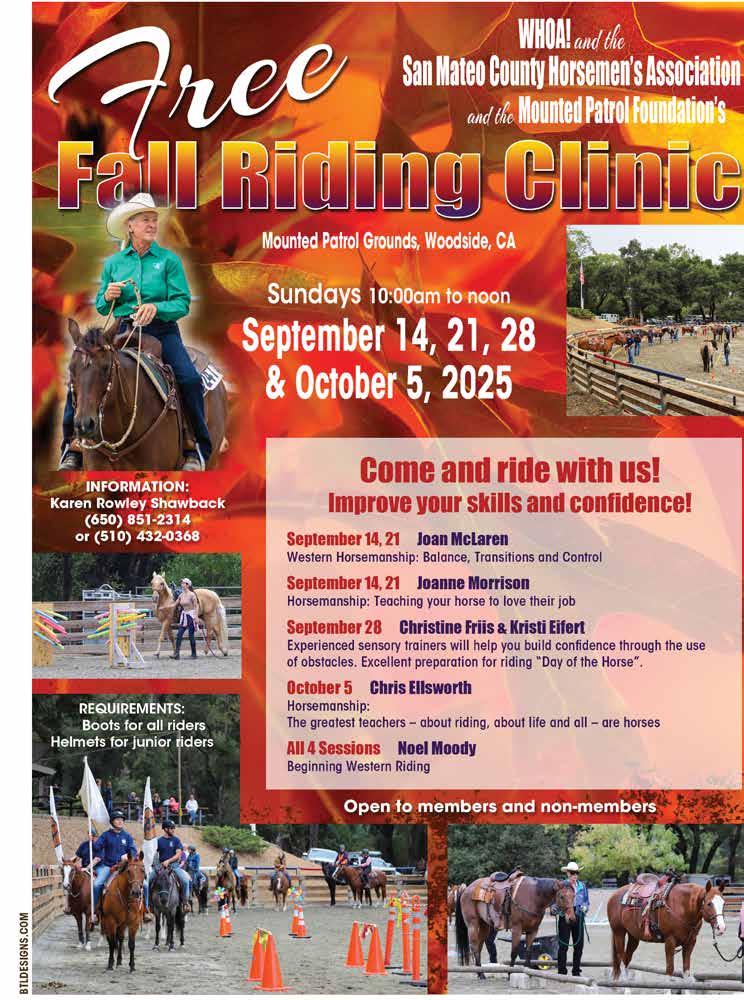
SMCHA has many more events planned for this year, including our monthly Dine and Donate Fundraiser at local restaurants, the Free Fall Riding Clinic starting on September 14, and Coastal Ride on November 1.
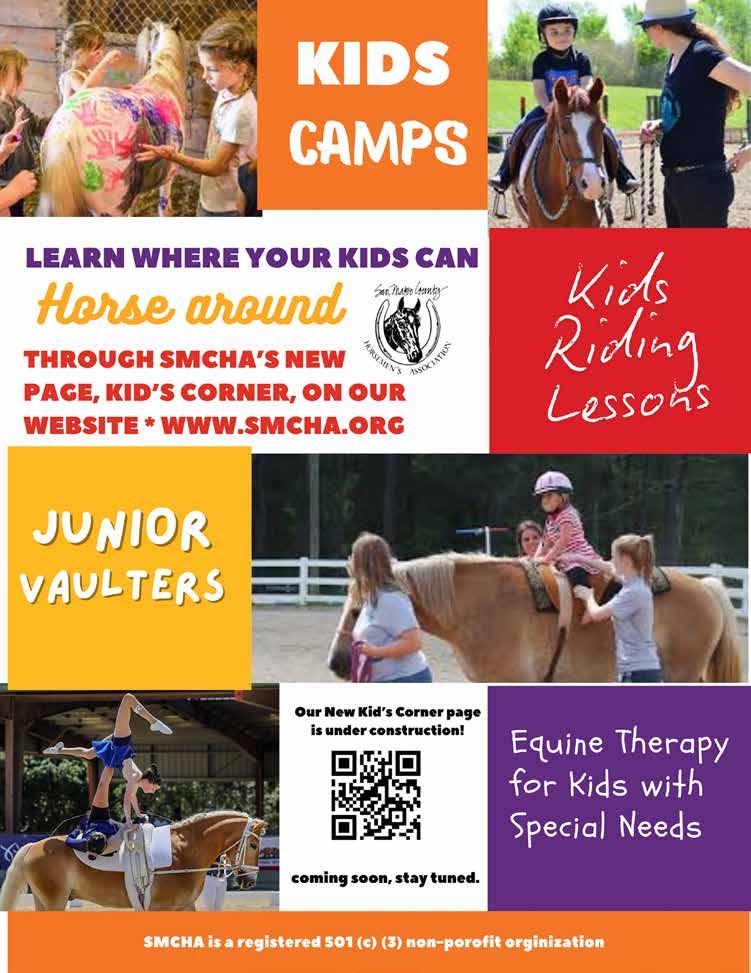
If you are looking for horse-related activities, educational opportunities, or supportive resources in the horse community, visit our website SMCHA.org. It is here that you can view our calendar, find a list of upcoming events, an Overcoming Fear and Building Trust clinic on November 2 and the Coastal Ride on October 26. and view our new addition, Kids’ Corner. This new forum is an excellent resource for parents seeking to engage their children in horse-related activities. It provides information on lesson barns, therapy programs, and riding clubs for kids.
We strive to make a difference in San Mateo County by providing events, horsemanship education, and resources that support a thriving equine community.
We encourage you, our members, to participate in or volunteer for our fun events. We’re always anxious to hear from you with ideas and feedback. Don’t hesitate to contact us at smcha@smcha.org
Looking forward to seeing you all come out and play with SMCHA!
Mariangela Sonstegard and Gabriela Marquez SMCHA Co-Presidents - 2025
SAN MATEO COUNTY HORSEMEN’S ASSOCIATION 2025 OFFICERS
PRESIDENTS
Gabriela Marquez and Mariangela Sonstegard
1st VICE PRESIDENT
Cary Oberti
SECRETARY
Ceci Ellis
TREASURER
Cheryl Basin
COMPLIANCE OFFICER
Maria Fonseca
2025 BOARD OF DIRECTORS
Cheryl Basin
Bonnie Bertetta
Sharon Butler
Colleen Daley
Don DeFranco
Ceci Ellis
Maria Fonseca
Adeline Forrest
Christine Friis
Susan Jakubowski
Jenny Mize
Lucia Mokres
Carey Lee Oberti
Elizabeth Ouellette
Marcy Rosenberg
Karen Rowley-Shawback
Tasha Summers
Deborah Vasquez
Carin Zeller
Honorary Board Member
Noel Moody
P O Box 620092
Woodside, CA 94062-0092
Visit our website at www smcha org
By Amy Young
UC Davis Center for Equine Health | July 22, 2024
“Colic” is an unwelcome word in the equine world. The majority of equestrians have at least one colic story, with outcomes ranging from good to gut-wrenching. Since colic is common and can have serious implications, it is an often-discussed topic, complete with plenty of anecdotal evidence, myths, and unscientific advice. We teamed up with Julie Dechant, DVM, MS, DACVS, DACVECC, professor of equine surgery and assistant director of the UC Davis veterinary hospital’s Large Animal Clinic to provide some clarity on equine colic.
1. Colic is a common cause of equine mortality. It is the most common cause of death in horses that are 1 to 20 years of age and the second most common cause for horses older than 20 years of age (USDA APHIS NAHMS 2015). Colic is also one of the most common emergency veterinary calls for both ambulatory practices and referral hospitals (Gillen and Archer 2023).
2. The severity of clinical signs does not necessarily correlate to the severity of the colic. Older horses, in particular, may be stoic, making it difficult to evaluate pain levels. Medications, whether routine or administered to treat the clinical signs, can also mask pain responses.
3. It is okay to walk a horse when it is colicking. Walking does promote intestinal motility, so it can be helpful. However, do not walk a horse to exhaustion. If the horse is not walking comfortably, do not continue. Also, note that a horse that is already uncomfortable due to lay up or rehabilitation (and hence is at a higher risk for colic) might not be able to walk due to the injury or condition. Be sure to consider your safety, as well as the safety of the horse, when deciding whether to walk a horse or not.
4. It is okay to let a colicking horse lay down, if they are quiet. This will vary by situation, as it is important that the horse does not thrash around and potentially injure itself. Rolling will not cause twisting of the horse’s intestines, as is commonly believed. As with walking, do your best to ensure that the situation is safe for you and the horse.
5. It may not be possible to determine the cause of a colic and not all causes are preventable. This is especially true for recurrent colics. Despite exhaustive diagnostics, answers may remain elusive. Employing appropriate management practices is encouraged to reduce the risk of colic, but even known causes of colic are not always preventable.
6. Transport to a referral hospital does not always mean that your horse must have colic surgery. At the UC Davis veterinary hospital, approximately 25% of cases brought in for colic end up having surgery. It is important to note that this is likely a high number relative to other clinics since the Large Animal Clinic often receives the more complicated colic cases. Globally, the average is less than 10% (Proudman 1992).
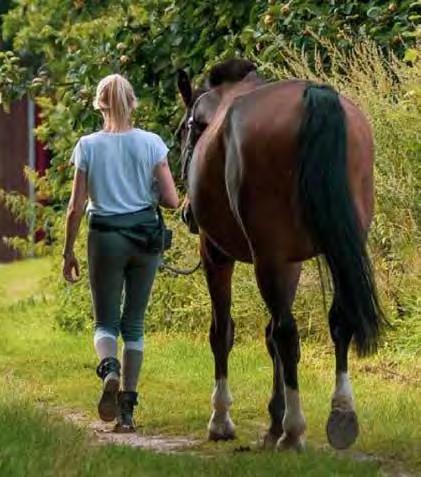
7. Geriatric horses are able to recover from colic surgery as well as non-geriatric horses. Although horses that are 20 years of age and older have a higher incidence of strangulating lesions and are often euthanized without a surgical option, those that do go to surgery survive and recover as well as younger horses with similar lesions. Age should not be the sole determinant in declining surgical intervention.
8. Advances in surgery and anesthesia have contributed to successful colic surgery outcomes. Facilities such as the UC Davis veterinary hospital have board-certified anesthesiologists that are available to provide dedicated expertise during colic surgeries. Advances in methods of assisted recovery and anesthetic techniques are also available to help horses recover safely from surgery.
9. Turnout is known to reduce the risk of colic. Horses confined to stalls are at a higher risk for colic. Even if your horses get turnout at home, this is important to remember when you are traveling and competing. Take your horse(s) for walks during horse shows, especially if you only have a few classes, so they do not spend too much time standing in the stall. If your horse is on stall rest for an injury or illness, talk with your veterinarian about the possibility of hand walking (with sedation if needed) to reduce the risk of colic.
10. Although cases of colic appear to increase when the weather changes, research studies to date have not identified an association. Anecdotally, horses appear to be at an increased risk for colic when the temperature changes from hot to cold. This may be because horses do not drink as much water when it is cold, which can affect gut motility. In these situations, avoid unnecessary stress on your horse such as trailering. Bran mashes may be offered in moderation. Increase your horse’s time in turnout, if possible, and consider adding some salt to their grain to encourage them to drink more.
We offer color advertising. See below for pricing chart and ad sizing. Please submit a camera-ready ad in either a PDF or .jpg format in RGB mode at 300 dpi. Interested? Email us at SMCHA@smcha.org.
x
Ad size (in inches) without bleed (.5 inch margins)
3.5 x 4.75
3.5 x 2.125
Ad size (in inches) with bleed (no margins)
One Full Page 8.75 x 11.25 (inches) Two-page spread17.5 in. wide x 11.25 inch
San Mateo County Horseman Magazine welcomes article submissions from the community. All submitted articles are subject to modification and editing by Magazine Staff for content, style, length, accuracy, and clarity to fit our publication standards and to maintain consistency with our editorial voice. All articles must include proper citations (if applicable), author identification, and meet publication deadlines
Due date for the Fall issue is October 25, 2025
The San Mateo County Horseman Magazine SUMMER 2025
The official publication of the San Mateo County Horsemen’s Association Published Quarterly
• March (Winter)
• June (Spring)
• September (Summer)
• December (Fall)
Magazine Content & Editing
Cherie Hammer
650 219 7917 chammer1248@gmail com
Elizabeth Ouellette
650 248 3409 elizabetho@outlook com
Marcy Rosenberg 408 560 8074 marcy@clickarm com
Advertising
Sharon Butler missshaa61@yahoo com
650-720-0513
Design
Colleen Combes
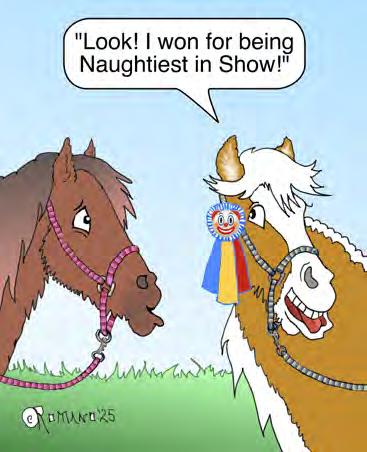
Cartoons
Chris Romano-Pucket
No paid political or religious advertisements will be accepted; all articles submitted are subject to editing; all articles or items reprinted from another source must be cited as to source and permission to reprint; items or articles submitted for publication that are not printed will not be returned to the author or persons submitting them
By Judy Mihalyi Edman
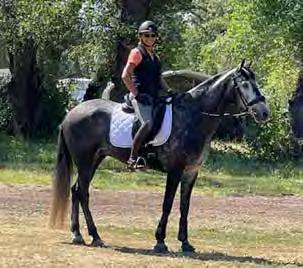
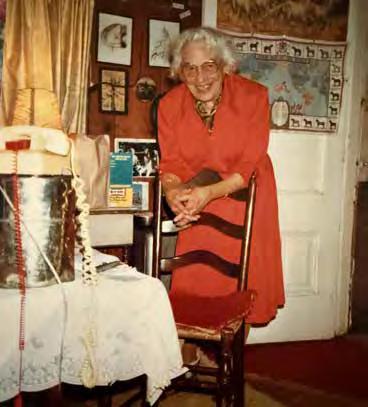
Editor’s Note: Judy Edman’s grandmother was Elisabeth Mihalyi, who created the SMCHA Logo. Judy currently lives in Winters, CA. I was born horse crazy. As a child, it was all I ever thought about! I inherited this obsession from my wonderful paternal grandmother, Elisabeth Mihalyi, who was a refugee from Hungary. Elisabeth made her living as a very talented artist, her favorite subject being the noble horse. When she moved to Woodside in 1955, she made quite a few close friends, a few being Dick and Jeanne Mesak and Clementine Carroll (Clem), both living on Canada Rd. She painted several portraits for the Mesaks, as well as Clem’s favorite horse, Juba. Clem was a long-time member of SMCHA and wrote Clem’s Corner in the newsletter. My grandmother designed the original SMCHA logo, and I believe that Clem had something to do with it, as both Clem and my grandmother were quite the characters, and the two spent a lot of time together.
My grandmother was also instrumental in importing one of the most influential pedigrees of the Hungarian Vizsla dog into the United States from her own Vizsla breeding program. After fleeing Hungary due to the Communist invasion, Elisabeth fled to Austria and finally to Omaha, Nebraska. Panni XV was the first Hungarian Vizsla accepted by the American Kennel Club in 1960. My grandmother and my uncle wrote the specifications for this breed, and history was made. Along with her love of horses was her love of the Hungarian Vizsla, and I’ve been lucky to inherit both. To this day, one of my favorite smells is turpentine mixed with oil paint! It brings back wonderful memories of visiting my grandmother in her art studio on Edgewood Road and playing with her Vizslas.
Being horse crazy as a child and desperately wanting to pet, smell, clean, or ride any horse, my grandmother paid for my lessons with Herman Koopman in Portola Valley. This was my introduction to dressage, jumping, and eventing. That eventually led me to Jr. Riders on Tripp Road. At 12 years old, I was up at the crack of dawn to make my lunch and ride my 1-speed bike 50 minutes to and from Jr. Riders to do just that. I knew where to dodge the running dogs that would try to bite my tires, the streets where I could peddle furiously to gain speed to arrive quicker, and the shortest route
possible to get to those horses! Within a year, I worked my way up to the first line-up, then helped others with their horses, cleaned the paddocks, untacked horses, cleaned tack, and anything else I could do to just be around these amazing animals. I got there at 7:30 AM and arrived back home around 1 PM with a dirty face and a big smile. I was truly dedicated for years to Jr. Riders and received the Perpetual Trophy for Sportsmanship three times over the four years I rode there.
Through Jr. Riders, I was able to lease a horse for the fall through spring. Leasing a horse was followed by joining the Woodside Pony Club to learn even more. The one problem was that it would take me almost an hour to ride to my Pony Club lesson… and riding a horse was a lot slower than riding my bike! This opened a new landscape of trails for me to discover from Canada Rd. to Mountain Home Rd. and ending up at Roberta Dr. every Saturday for lessons. By the time my lease ended and summer came around, Jr. Riders had a very fit horse for their program!
After three years of leasing a couple of different horses, I was given a horse…and not just any horse. J.J. (Jumping Jack) was a 12-yearold chestnut gelding Thoroughbred off the jumper circuit, and he was sound! He had jumped 6’ 3” (yes, that’s right) and won a lot of money on the A circuit from California to Madison Square Garden. This was truly an unbelievable dream come true for a 16-year-old horse crazy teenager. His 18-year-old rider had eloped and run off! J.J.’s owners, the elopee’s parents, just wanted to find the right home for him. J.J. was my first heart horse and best friend for 14 years. Although he loved trail riding as much as I did, we also competed in 3-day eventing and other team sports through Pony Club. I discovered so many amazing trails with J.J., from riding to the Pulgas Water Temple, Huddart Park, the Mounted Patrol Grounds, Wunderlich Park, and Guernsey Field (aka The Horse Park), to name a few. These memories are my favorite, and I realize how fortunate I was to be able to explore and experience these trails with my best friend, J.J. Someday soon, I truly would love to trailer my current horse, Noble (my second heart horse), to my old stomping grounds and ride these trails again!
-INTO THE WILD
SATURDAY, OCTOBER 11, 2025
Register online by August 15
Early Bird Discount - $70
Registration includes Lunch

*Group Challenge*
Bring your barn buddies. The groups with the most riders win big!
**prizes valued upto $500!
WWW.WHOA94062.ORG/TRAIL-RIDE
The Mounted Patrol Foundation and The Woodside-area Horse Owners Association Present the
EQUESTRIAN MERIT SCHOLARSHIP 2025 RECIPIENT
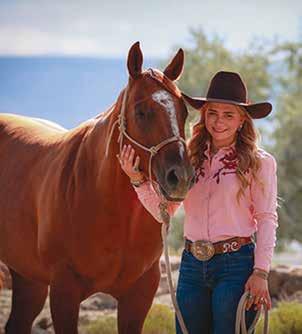
CONGRATULATIONS!
Presley Jean Cooper
HIGH SCHOOL
Livermore High
FURTHER EDUCATION
California State University
Fresno - Jordan School
Agricultural Business
THE
An active member of 4-H, Future Farmers of America, and the California High School Rodeo Association, as well as a varsity lacrosse player, Presley was still able to earn Cum Laude grades in high school. She displayed an impressive understanding of the budgeting it will take to succeed in school while competing on the rodeo team, and she teared up with gratitude when she found out she would be able to add this $10,000 scholarship to the sensible, detailed budget she has already created for her university years. She thanked WHOA!, “not only for awarding me this generous scholarship, but for helping give me the opportunity to attend seven years of school to achieve my goals. Defending agricultural land and water rights has always been a dream of mine!”
"Twin Peaks Equine. “5 Questions to Know the Answer to (When You Call the Vet).” Twin Peaks Equine Blog. Accessed June 23, 2025. www.twinpeaksequine.com/blog/5-questions-to-know."
Every so often it happens – your horse just doesn’t seem right and you need to call the vet. When you do, it’s important to have as much information as possible so your vet can get a good picture of what’s going on. Here are five of the most common questions we ask horse owners— know these, and you’re one step ahead of the game!
How long has it been going on?
When was the last time your horse was normal? Depending on what is going on, duration can have a significant effect on outcome. Problems that have been going on for some time may be easier to diagnose, however prognosis can often decrease if a situation persists for too long. The sooner we can begin treatment, the better chance we have of a return to normal.
How is his/her attitude and appetite?
You know your horse best, so it’s important to express how you believe he’s feeling. Is he normally whinnying and running to the gate for his dinner, but now he’s standing in the corner with his head low? This could be a sign of illness. Horses also love to eat, and when they stop eating, this is often a cause for concern. Decreased appetite or a quieter than normal attitude can be a sign of many things, but this sign may be an important piece of the puzzle.
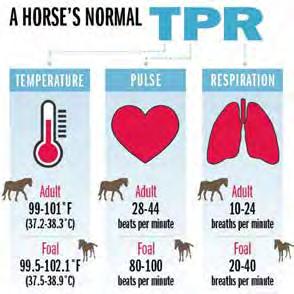
The normal heart rate of a horse is 28-42 beats per minute (bpm). This can vary a little bit, and excited horses may get up to 60 bpm. An elevated heart rate can mean several things, but we usually think of dehydration, anemia or pain. Dehydration leads to a decrease in blood volume, causing the heart to beat faster to compensate. Similarly, in anemia, a decrease in red blood cells causes the heart to pump faster. Pain can lead to rates of 60-100 bpm. When we begin to see heart rates approaching 80-100, this can indicate severe pain or vascular compromise. This can change the urgency of a situation. A lot of information can be gleaned from the heart rate, so be sure to have that number ready when you call. If you’re not sure how to take a heart rate, ask your vet the next time he or she is out! Or you can check out this article from The Horse for more information.
The normal temperature range of a horse is 99° F to 101° F, but some horses may run a little cooler (such as 98°). An elevated temperature may not necessarily be a fever – a horse that has just worked or been trailered may increase their temperature a small amount. Given this leeway, we generally say a fever is anything above 102° F. Fevers are tricky because they can point in many different directions. Twenty percent of fevers in horses go undiagnosed. The ones we do diagnose are usually caused by infectious disease (like anaplasmosis) or inflammation (such as enteritis). Keep in mind, as well, that various treatments can lower a fever, so it’s best to talk to your vet before initiating any type of treatment.
Have there been any changes in routine or management?
Did you just move to a new barn? New load of hay or other change in feed? It’s possible that this sudden change is contributing to
your problem. While we may not notice any problems with the hay or grain, horses can be picky eaters, sometimes for good reason. Sudden changes in feed or environment can wreak havoc on the horse’s internal systems, often by upsetting the normal gastrointestinal bacterial population. An alteration of routine (new barn, new feeding schedule) can cause stress, which can lead to ulcers or behavioral problems.
As veterinarians, we need to accumulate as much information as possible to paint a clear picture of the problem. Animals do talk to us, but in a different language. All of these questions give us tools to help decipher that language and figure out what is going on, and lead us to a resolution.
Reprinted with Permission from Twin Peaks Equine
By Michele Deluna
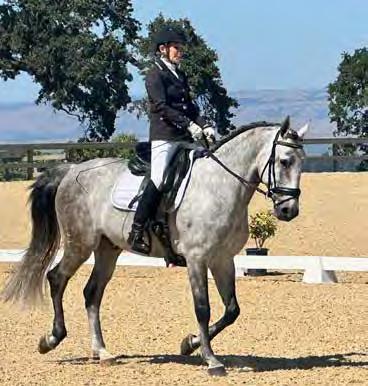
Over the last weekend of June, The Woodside Horse Park (WHP) hosted the revitalized Woodside Dressage Show, the Picnic In The Park. The show weekend hosted eighty-one riders and ninety-three Dressage horses with two full days of two show rings running from 8 am to 6 pm.
The perfect weather and many updates to the Horse Park, including their new stabling, allowed for competitors to comfortably make this show their home away from home for the weekend. The show was judged by FEI 4* judge, Kristi Wysocki, of Colorado, and her colleague, “S” Cindy Canace, of New Jersey. This show’s atmosphere and newly renovated facility allowed for much community engagement, including a “Munchies & Mocktails” ringside party with over 100 people in attendance. This Friday evening event allowed spectators, competitors, and friends of the Woodside Horse Park to enjoy a plethora of Musical Freestyles as well as Pas de Deux rides in the pavilion next to the newly updated Four Winds Farms Bay Arena.
Attendees enjoyed food provided by Woodside Bistro and were able to partake in the Woodside Raffle, where an array of prizes was given out. Competitors were
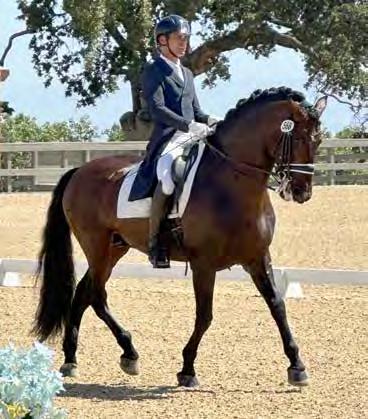
awarded with their High Point Achievements after the first day of competition. The atmosphere and competitive environment created by the show managers, volunteers, and WHP staff was a prelude to all things horse sport that is to come for this facility’s community!
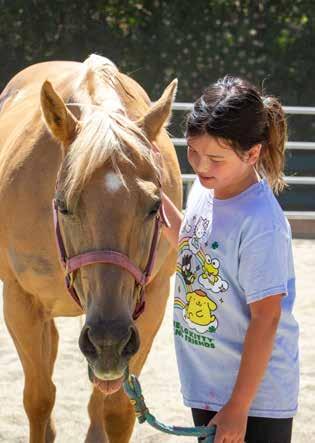
For over 54 years, NCEFT’s (National Center for Equine Therapy) programs have harnessed the unique bond between humans and horses to provide hope and healing for children and adults facing physical, cognitive, and mental health challenges. NCEFT is a non-profit pioneer of equine-assisted therapies, offering hippotherapy, adaptive riding, mental health and resilience programs, and specialized services for veterans and first responders – all on a serene 12-acre property off Runnymede Road.
NCEFT’s mission is to empower clients to thrive through equine-assisted interventions, addressing conditions such as cerebral palsy, autism, PTSD, anxiety, depression, and more. A horse’s multi-dimensional walking gait mimics the motion of human walking, offering clients with disabilities therapeutic benefits such as improved strength, balance, and coordination, while mental health programs foster emotional resilience and confidence.
Monika, who couldn’t walk after suffering a debilitating injury, now walks and rides thanks to NCEFT’s therapy horse, Woody, and the highly skilled NCEFT staff. “Thank you NCEFT for what you’ve given me and many others,” she shares.
“I am living a life that has quality now. I can never repay or thank NCEFT enough for what they’ve done for me”, says Effy, a mental health and resilience client.
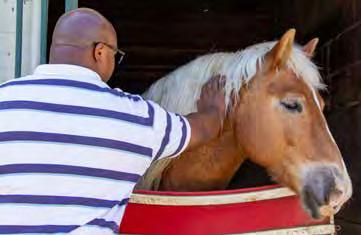
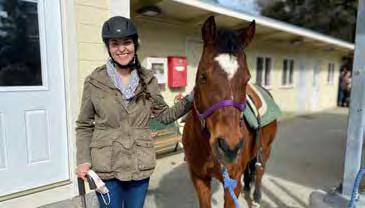
A veteran receiving mental health and resilience services adds, “The horses allowed me to learn to love and trust again. It completely changed my life.”
“The horses allowed me to learn to love and trust again. It completely changed my life.”
NCEFT’s programs for at-risk youth are making a profound impact. "I feel like I'm free here at NCEFT, and not only am I taking a little bit of this place in my heart, I'm also leaving a little bit of me here."
NCEFT’s programs are provided by a dedicated team of licensed and certified therapists, equine specialists, and volunteers, ensuring safety and personalized care. Services are offered free of charge to veterans and first responders, and financial assistance is available as needed for other clients.
Visit nceft.org or call (650) 851-2271 to donate, volunteer, or learn more about our organization. NCEFT relies on donations and grants to sustain its programming. Discover the healing power of horses at NCEFT today, and please consider a donation to support our clients, programs, and horses!

Did you know that San Mateo County has a dedicated team focused on rescuing large animals during emergencies? Under the umbrella of Animal Control & Licensing, the San Mateo County Large Animal Evacuation Group is a non-profit organization made up of trained volunteers. During the CZU Lightning Complex Fire, they safely evacuated over 1,500 large/farm animals - including horses, pigs, cows, turkeys, goats, and even a camel. This committed team of volunteers trains year-round to sharpen their skills and strengthen their coordination, so they're always ready to respond when called upon by the County.
On April 5 and 6, the LAEG team completed two days of intensive training in technical large animal rescue. This hands-on training prepared the team to safely rescue animals involved in trailer accidents or trapped in hazardous situations, such as falling into ravines or creek beds. Working alongside firefighters, officers from the Peninsula Humane Society and other county teams, the volunteers practiced using specialized equipment, including glides, slip sheets, ropes, nylon straps, and lifts to move animals weighing up to a ton. Imagine a horse that has fallen down a steep hillside and is unable to get up on its own, or a truck and trailer accident on Highway 92 that left horses trapped in the trailer! This team is now trained and ready to be deployed to these scenes to safely rescue animals in distress.
Thanks to Measure K funding and other generous donations from SMCHA, WHOA, San Mateo County Mounted Patrol Foundation, Woodside Horse Park, 100 Plus Women, Coastside Gives, and other private donors, the San Mateo County Large Animal Evacuation Group will be purchasing essential rescue equipment to enhance its rescue capabilities. These tools will help them respond more effectively to emergencies involving large/farm animals, further supporting the residents and animal owners of San Mateo County.
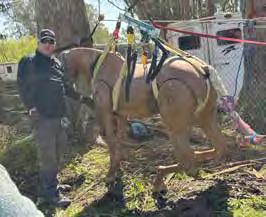
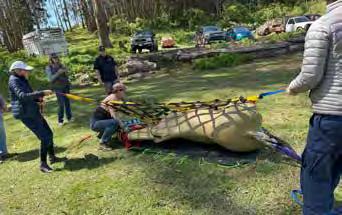
The photo at left shows the team practicing a "large animal lift" using a horse mannequin. The lift must be applied correctly to avoid injuring the horse. As seen in this image, ropes and a pulley system are anchored to trees for

leverage to safely lift the animal. This type of rescue requires significant skill, teamwork, and coordination from multiple trained individuals.
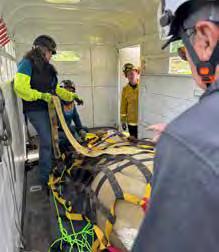
In the photo above, the team is using a cargo net to "package" the animal for safe transport to a veterinarian. Once secured, the animal can be placed onto a glide and carefully moved. Notice that no one is standing in the danger zone— the area near the animal's legs and hooves—where a sudden kick could cause serious injury.
Left, once the horse is safely "packaged", it can be slid onto a hard plastic glide and loaded into a horse trailer and transported to a veterinary hospital for treatment. This method is used for horses or other large animals that are unable to stand or walk but still require urgent medical attention. The combination of the supportive cargo netting and sturdy glide ensures the animal remains secure and safe during transport.
The next photo shows a trailer that slid off the side of a road in upper Woodside. The San Mateo County Large Animal Evacuation
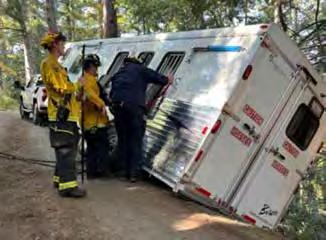
Group was called to the scene to assist in rescuing the two horses trapped inside. This rescue operation took four hours and, thanks to the skill and teamwork of everyone involved, both horses were rescued safely. A true example of teamwork in action!
Below, inside the trailer, one horse is lying on its side while the other horse was on its back. The team was actively preparing all the necessary tools and equipment to safely remove both animals. A firefighter stood by as the rescue team positioned a glide underneath the animal, ready to assist with a safe and controlled extraction when the time came. Every step was carefully planned to protect both the horses and the responders.
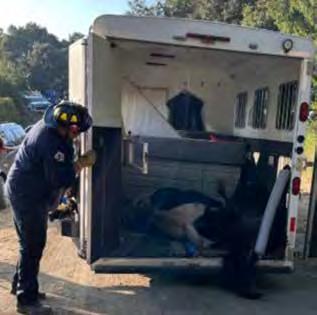
Both horses, shown below, survived this accident thanks to the dedication and training of the rescue team. It's the commitment of skilled volunteers and their continuous preparation that makes life-saving outcomes like this possible.
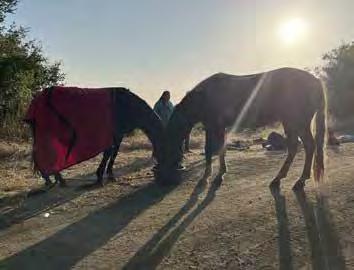
If you are interested in becoming a member, donating, or would like more information on how to be prepared to evacuate your horse or large animal in an emergency, please visit our website smclaeg.org
By Dean Eby
Reprinted with permission from PangoVet.
Noma horses are tiny in height at just 11 hands on average. However, they are rather sturdy animals, especially considering their compact size. They are also known for their agility. Traditionally, they were used mainly as pack animals since they can carry quite a bit of weight but do not require too much food due to their small size. But today, they are essentially just a tourist attraction, though they do occasionally see use as therapy horses for kids.
This breed hails from Shikoku Island. They are originally from a specific district on the island that used to be called Noma, hence the breed’s name. Larger members of the breed were used by the military, while smaller horses were given to farmers, who mostly used them as pack animals.
Although the breed once flourished, their numbers began falling drastically when the breeding of small Japanese breeds was forbidden in an attempt to increase their size by cross-breeding them with larger Western breeds. In 1978, there were only six individual Noma horses left on the planet. The Japanese government funded a reserve for the breed in 1989 to increase their numbers. It worked, and in 2008, there were a total of 84 Noma horses.
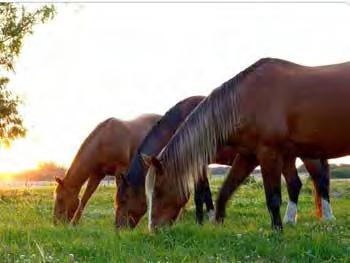
The Tokara breed was originally known as Kogashima because the breed hails from the Kogashima region of the Tokara Islands. They were first found in 1952, and their discovery was so important that they were immediately labeled as a National Monument of Kagoshima. When discovered, only 43 Tokara horses existed. Unfortunately, due to mechanization, their numbers started to decline right away. By 1974, only a single Tokara horse remained on the island. Thankfully, that’s not the end of the breed’s story. That sole Tokara horse was transported to Nakanoshima, where a few Tokara horses existed that had been previously removed from the Tokara Islands. Thanks to concentrated breeding efforts, their numbers multiplied, and today, there are more than 100 Tokara horses.
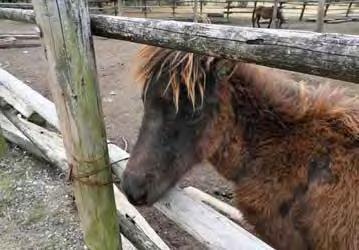
Tokara horses are sturdy, strong, and hardworking. But there is little demand for these types of horses in Japan, so they are rarely used for riding, work, or anything else, which was a major reason for the decline of the breed in the first place.
This breed is rare and extremely ancient. It’s believed that the breed dates back to the 700s. They are from Tsushima Island, located in the Korea Strait. Since 1979, the breed has been protected, and efforts have been ongoing to increase its numbers. Exact numbers of remaining Taishu horses are unknown, however, so it’s hard to gauge how those efforts are going.
Standing between 12 and 14 hands, Taishu horses are large for a Japanese breed, though still small by Western standards. Traditionally, they were found useful in many ways, including riding, draft work, and as pack animals.
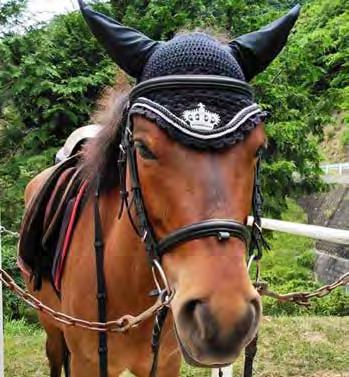
Book Review by Marcy Rosenberg
The Giver of Stars by Jojo Moyes is a historical fiction novel published in 2019. It’s set in Depression-era Kentucky and inspired by the true story of the Pack Horse Library Project —an initiative that brought books to isolated rural communities using horseback librarians.
Summary:
The novel follows Alice Wright, a young Englishwoman who marries an American man to escape her stifling life in England. She soon finds herself trapped in a different kind of confinement in small-town Kentucky, where expectations for women are rigid and suffocating. When she joins a team of women delivering books on horseback, led by the independent and fiercely principled Margery O’Hare, Alice discovers friendship, freedom, and a new sense of purpose.
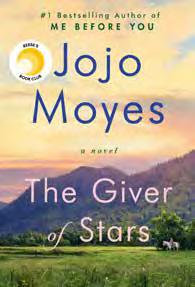
The story centers on the bonds between the women in the library group and explores themes of female empowerment, literacy, love, and justice.
In The Giver of Stars, horses play an important symbolic and practical role. They’re not just modes of transportation — they are companions and essential partners in the women's mission to deliver books across the rugged terrain of rural Kentucky. Here’s a closer look at how horses are portrayed and their significance in the novel:
1. Practical Importance:
• The horseback librarians must traverse treacherous mountain paths and remote homesteads that are inaccessible by other means.
• Each horse is suited to its rider and terrain. For example:
Alice’s horse, Butter, is a gentle but steady companion, symbolizing Alice’s growing confidence and bond with nature.
Margery’s mule, Charley, is tough, reliable, and sure-footed—much like Margery herself.
2. Symbolism:
• Horses represent freedom and empowerment, particularly for the women riders who defy societal norms by taking on dangerous, physically demanding work.
• They also symbolize the connection between the women and the land, reinforcing the idea that knowledge—like the trails they ride—must be earned and delivered with care.
3. Emotional Bond:
• The women form deep attachments to their horses. These relationships reflect trust, resilience, and mutual dependence, paralleling the camaraderie between the librarians themselves.
• Horses serve as silent witnesses to the women’s joys, fears, and transformations.
4. Challenges and Conflict:
• The dangers of riding — from bad weather to hostile men — make the horses both lifelines and liabilities. They increase the tension in several scenes, such as when Alice is injured or when terrain becomes treacherous.
The horses in The Giver of Stars are more than background detail; they are integral to the plot, the setting, and the characters’ development. Jojo Moyes clearly researched the real-life Packhorse Librarians and conveys the importance of their four-legged partners with warmth and realism.
The Giver of Stars is an uplifting, emotionally resonant novel that celebrates the strength of women and the importance of access to books. While it may not break new ground in terms of plot, its heart, and historical inspiration make it a compelling and enjoyable read for fans of character-driven historical fiction.
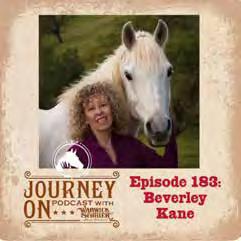
On June 20, 2025, Beverley Kane, MD appeared as the guest on The Journey On Podcast hosted by Warwick Schiller (https://tinyurl.com/yb7fxaew). In this ~120 minute episode, she shared her multidisciplinary work at Stanford Medicine—as an Adjunct Clinical Assistant Professor and Program Director of Medical Tai Chi—and her innovative integration of Western medical research, Daoism, quantum-inspired tai chi, and equine-guided psycho-spiritual development.
A practitioner since 2002, she works with a large herd at a Northern California ranch, teaching equine-assisted learning programs that blend communication, leadership, selfcare, stress reduction, and emotional regulation for medical students, Stanford employees, and the wider community.
In addition, Warwick Schiller has invited Dr. Kane to be a presenter at the upcoming Journey On Podcast Summit, held at Journey On Ranch in Central California from September 18–21, 2025. In past summits, podcast guests deliver “TIC Talks” (Teach, Inspire, Connect) and participate in panel discussions and Q&A sessions—offering immersive, transformative experiences. As a presenter, Beverley Kane will bring her rich expertise in equine-assisted modalities, mind–body practices, and integrative medicine into this retreat-style event.
By Pam Daly
The idea of Shoestring Farm began many decades ago with mentor Nancy van Zwol and her focus on horsemanship with a desire to understand, communicate, and care for horses. She sought to teach and train with compassion and humility. Shoestring Farm equestrian skills involve hunter jumper competitions, eventing, quiet and sedate trail rides, lower-level dressage, and beginnings for many horse lovers. Shoestring Farm Summer Riding Camps offer great starts for beginners and future riders.
The Shoestring Farm Summer Riding Camps are generally the biggest financial boon to the riding school. For many children, it is a first opportunity to encounter horses. Working with horses helps boost self-esteem, teaches valuable lessons about boundaries, and develops leadership skills. It also allows students to be aware of their feelings and tensions. Studies have shown that children who work with horses have less inhibition. Most of the children, within a week, learn that you can muck a stall, groom and curry, put on tack, and basic ride steps. Each child is an individual, as are their horses. Animals thrive from good grooming, great food, and work. Advanced riders learn to walk, trot, canter, and move on to more challenges like jumping. Horses teach companionship, love, and best of all, fun.
Shoestring Farm offers lease opportunities to riders within the school to expand their experience. Similar to owning a horse, students who lease get to help care for a horse and ride and learn. Many adults find leasing the most rewarding because the equestrian care and permanent expense of ownership can be time-consuming.
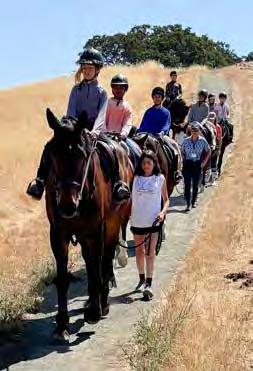
Those who crave being around a quiet, sane, safe horse will find it at Shoestring Farm. Horses and ponies at the school are mature and require some assistance or medical maintenance to maintain their good health. Overall, they manage well, even twenty and thirty-year-old horses.
Riders who move on—whether to pursue college, careers, family life, or other riding experiences, both within and beyond the equestrian world—often carry lasting memories of Shoestring Farm. They fondly remember their time there, the joy it brought, and the special bond with their favorite horses. Shoestring Farm leaves an indelible mark on those who pass through its gates, and it is remembered with affection by many former riders.
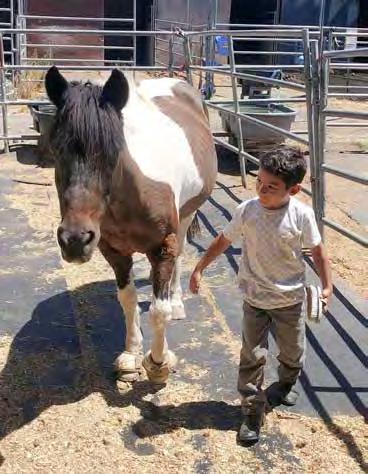
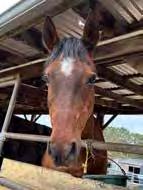
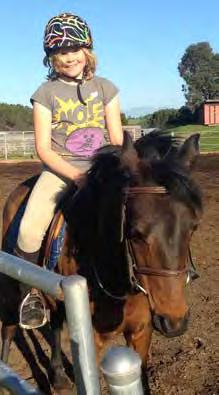
One rider, Sophie, who is off to college now, was granted a sponsorship from SMCHA for part of her lesson program. For more infomation on Shoestring Farm, please visit shoestringfarms.com
By Jenny Mize
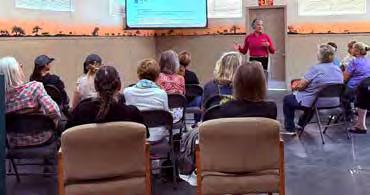
In June, SMCHA and Steinbeck Peninsula Equine Clinics teamed up to host a fun evening of learning and socializing. Dinner and drinks were provided by SMCHA, and everyone was able to enjoy a bite to eat while socializing with the other attendees before the real fun began. Dr. Zoe Davidson, DVM started the evening with a talk about equine first aid and what to do in the event of an emergency. The major take-home message from this talk was knowing how to take basic vitals for your horse and doing so in both normal, non-stressful events and during an emergency, so you can compare what might be abnormal. This information can be very important when talking with your veterinarian on the phone in order to come up with the best course of action.
Dr. Jennifer Williams, DVM wrapped up the evening with a talk about the most common equine contagious diseases and what symptoms to look for when you think your horse might be feeling under the weather. Make sure to have a thermometer handy in the tack room because this is often the first question you will get asked: “Does your horse have a fever?”
Equine biosecurity is vital anytime your horse is travelling outside of its home or showing (and beyond), and keeping our equine companions as healthy as possible is the number one priority. Did
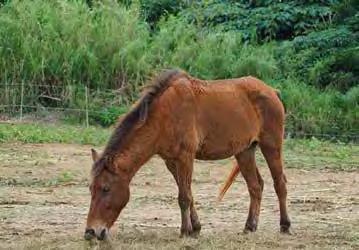
Yonaguni horses largely escaped the Edo mandate that caused the end of many other pure Japanese horse breeds. As such, they are one of the purest and most ancient of all remaining Japanese breeds. They stand just 11 to 12 hands in height, having never been crossed with larger Western horses. These horses are shown to be similar genetically to Miyako and Tokara horses. Today, they are considered to be critically endangered with only a few remaining specimens, though exact numbers are unknown.
you know some viruses can live on water for days or weeks? Dr. Williams highly recommended always using your own water bucket, even on local trail rides or riding areas.
Thank you to the wonderful veterinarians of Steinbeck Peninsula Equine Clinics for helping educate our equestrian community and make sure to be on the lookout for many more fun educational opportunities in the future!
West. Japan needed large horses for draft work, and this appeared to be the solution.
To that end, pure stallions of Japanese breeds were ordered to be gelded, also known as castration. This order was known as the Edo mandate. Japanese mares, the female horses, were crossed with Western breeds to create these new, larger horses. While this did have the intended effect, there was a massive consequence of the process. By the end of the Meiji era, many of the pure Japanese horse breeds had died out completely, never to be seen again. Luckily, not every Japanese breed was abolished in this manner. A few select breeds in certain regions of the country managed to escape this fate, mainly the breeds located exclusively in the southern and northern islands and capes.
Every horse breed is unique and has characteristics that are exclusively theirs, but all the Japanese breeds share a few traits that set them apart from the breeds that are traditionally in the West. For instance, despite efforts during the Meiji period, Japanese horses are still generally much smaller than Western breeds. Often, they are even classified as ponies.
Another major difference is that Japanese breeds have incredibly hard hooves. In the West, horses wear shoes made of metal to protect their feet. But horses in Japan are rarely shod because their hooves are so hard that they simply don’t require horseshoes. In the coldest areas, some of these horses are provided with boots made of straw, but that’s a far cry from the hard metal shoes that are used in the West.
Horses have been in Japan for well over a millennium. However, during the Meiji period, which spanned from 1868 to 1912, efforts were undertaken to increase the size of the relatively small Japanese horses by cross-breeding them with much larger breeds from the
Probably the biggest difference between Japanese horses and Western breeds is prevalence. There just aren’t many Japanese horses left. Most are endangered and facing the real possibility of extinction. To protect them, many of these breeds have been labeled as prefectural treasures, but their numbers are still dwindling.
By Tanya Rebarchik
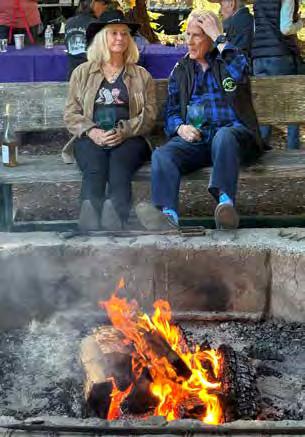
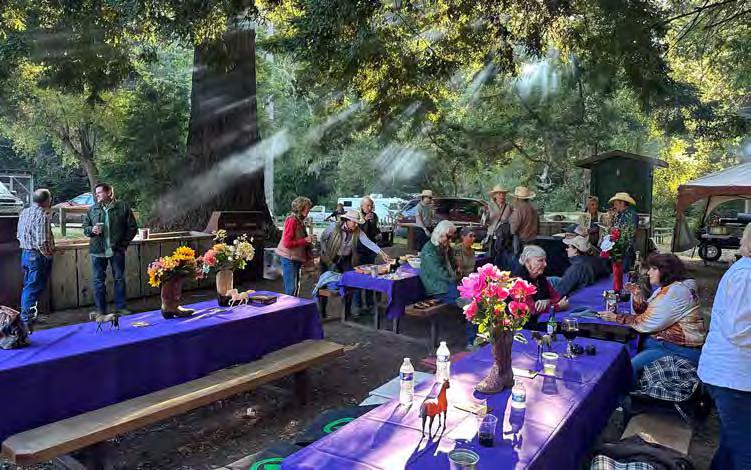
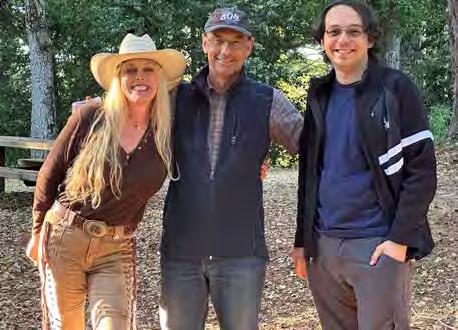
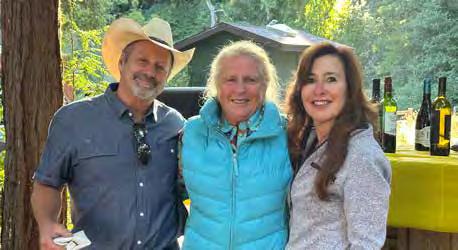
July 18-21 was the weekend of our annual SMCHA campout and ride at Jack Brook Horse Camp in Pescadero Creek/Sam McDonald Park. 18 campers plus a few more day-riders enjoyed the great facilities and beautiful trails of California’s best Horse Camp. We had perfect weather and fabulous catered meals. Saturday night’s dinner, featuring our annual drawing and silent auction, was well attended, with a total of 60 people enjoying great food and camaraderie. And of course, we got to enjoy Larry’s famous S'mores by a roaring campfire.
This event is truly a highlight of the season—for those who have never camped with their horse, you really should plan to join us next year! Jack Brook is the perfect place to get started, with all the amenities, including corrals, bathrooms, showers, and even a wash rack for the horses, plus plenty of room to park trailers and some RV hookups.
Save the dates for 2026: July 17-20!
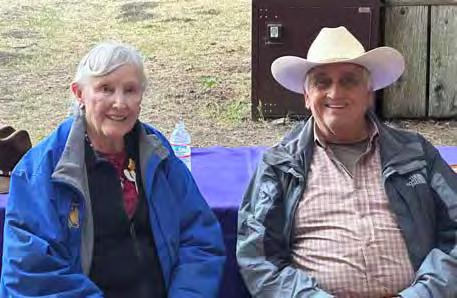
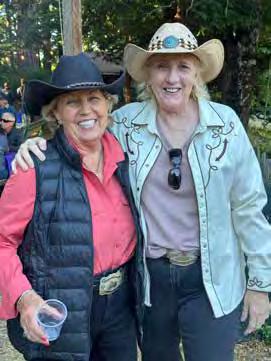
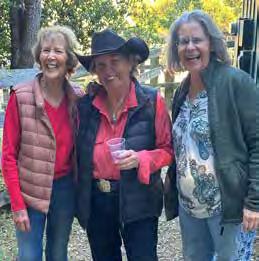
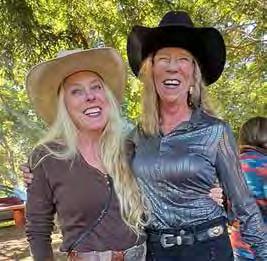
(From the SMCHA Magazine, 1975)
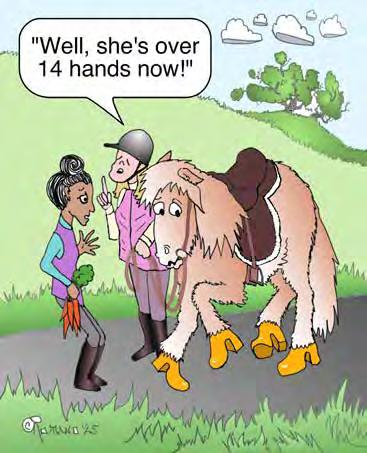
Swarms of diminutive equines invaded the Mounted Patrol grounds in July for the seventh annual All-Pony show. Along with the ponies came their small owners, of course, plus some young riders who were not so small, but had a promising small horse (under 14.2 hands) to show.
This show is the one chance in the year in Woodside for the little ones to have their day. Their petite size, their youth, and the intent but eager little faces just about blow everybody away. More than once, the judges were heard to exclaim, “Oh, I can’t stand it! They’re all so adorable, how can I ever choose?”

In one jumping class, with the fences at a height at which many a big horse has been known to put on the brakes with horror on its face, little fat ponies flew at the obstacles with their tiny feet tucked up to touch their bellies in super Thellwellian style. Little hard-hatted riders with pigtails flying displayed a fearlessness and faith in their steeds that many an older and wiser rider wistfully wished were his own. All in all, a day of fun for the Small Set, and joy for the onlookers.
Riding through history with Woodside’s Bill Holmes (from the SMCHA magazine 1990 about a ride that occurred in 1965.)
By Libby Armanino
As the San Mateo County Horsemen's Association starts to celebrate its 50-year anniversary, one has the chance to look back through history and salute its long-time members who are still active members of the community. Bill Holmes of WIKA Ranch is one such person.
Mr. Holmes has been a member of the horsemen's association for 35 years and earned the distinguished Horsemen's Award in 1965. This award is given to a member who has made a valuable contribution to the organization.
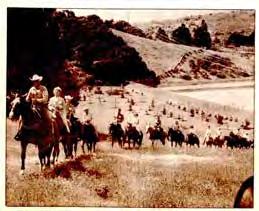
Having been raised in South Dakota, it's no secret that Bill preferred the mild climate of the Bay Area to the harsh winters of the Dakotas. Shortly after World War II, Bill married a local San Francisco girl and settled in Woodside. Not only did Bill decide not to go back to his horses in South Dakota, but his wife, Kay, was led
to believe he'd stay in the area for her!
Even though Mr. Holmes had been around horses all his life, he did not have any here right away. Instead, he began a successful real estate career in Redwood City in 1946. He remembers well his first real estate office. It was located at 660 Woodside Road and was originally an old barn used for changing stage horses. When the contractor came to bulldoze down the old place, Bill tried to tell him he'd find all kinds of old straw and hay in the walls, but he didn't believe him. Sure enough, as the bulldozer hit, all four walls were heavily insulated with years of straw and hay.
Eventually, the world of horses drew him back, and in 1958, he purchased property on Jefferson Road and opened WIKA Ranch. Bill and his wife Kay still live on the property, and it is the only house that boasts a swimming pool in the shape of a horse's head. No easy task for the contractor who was hired to do the job.
WIKA Ranch has been in operation for 32 years and offers its boarders local access to trails, a lighted arena, riding lessons, and training facilities. Many of his boarders are members of the horsemen's association, as Bill is active in recruiting for the club.
The fact that some of his boarders have been there for 15 to 20 years speaks highly of a facility such as this one and the owner who keeps a watchful eye out for everyone and every horse.
Marilyn McCormick transferred her horses over to WIKA from the coast more than 20 years ago. It was there that she began a successful horse show career. Bill is still quick to keep her posted on upcoming clinics and events that might interest her. It is this caring and concern that most of his boarders feel is the biggest asset of WIKA Ranch as well as the proximity to Edgewood Park and other local trails.
Some of the horsemen’s association events that stand out in Bill's mind are the Fourth of July rodeos that were held each year, and in which he participated as a pick-up man. He was active in the club's color guard, a four-unit team on horseback displaying the State of California flag, two United States flags, and the San Mateo County Horsemen’s flag. The color guard represented the club in parades and shows throughout the area.
He was trail boss and led the club rides for many years. He remembers the Edgewood Park Spring Ride in 1965, which boasted 102 riders. What an incredible sight to see them strung out over the trail.
In 1964, Bill and other members of the San Mateo County Horsemen's Association participated in the opening of the Wells Fargo Bank in Woodside. They staged a fake hold-up of an authentic stagecoach at the corner of Woodside Road and Canada. Bill was riding a 3-year-old gelding called ''Poco Cinco" at the time.
Bill spends most of his days maintaining the ranch these days, and it seems there's always something to fix, mend, or maintain, but he seems to enjoy it and has no complaints. Kay is also active in helping out at the ranch and finds the daily chores therapeutic.
Not surprisingly, Bill managed to get Kay started riding shortly after they were married, and Bill brags that she has never been thrown or bucked off a horse yet! She may have started riding to humor him, but soon grew to love it.
As development slowly creeps up to its back door, it is a welcome sight to see WIKA Ranch still operating successfully as a horse facility.
Editor’s Note: From member Rob Krensky, Bill and Kaye Holmes had a nice ranch house, typical of the time, with a pool in the shape of a horse head. They had several little barns and riding rings. It was sort of the equestrian center of the neighborhood. The Wika ranch property was sold, and executive houses were built on the land in 2022/2023.
(more love please)
By Elizabeth Ouellette
As any horse owner knows, maintaining a clean, healthy environment for your horse is essential for their well-being. But sometimes, unexpected problems can be caused by hidden pests, one of which is the Pyemotes tritici, commonly known as the grain itch mite or straw itch mite. While it may not directly affect your horse, this tiny pest can pose risks to both humans and stable environments. Here’s what you need to know to keep your barn and your family safe.
Pyemotes tritici is a species of mite typically found in straw, hay, and stored grain. It is a cosmopolitan species, meaning it can be found in various parts of the world, particularly in areas where grain and hay are stored.
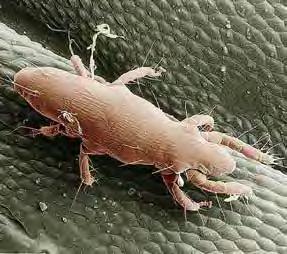
While the grain itch mite is generally harmless to horses, it thrives in environments where hay and straw are present. These mites feed on small arthropods like grain moth larvae, which infest stored grain. However, they are not picky eaters and will also target other insect pests found in stored grain or bedding. Unfortunately for us, when these mites come into contact with human skin, they can cause intense itching and even blister-like rashes.
While horses are not the primary target for these mites, the bedding materials used in stables, such as hay and straw, are often their habitat. Here's why horse owners should take note:
1. Potential Irritation for Humans
Pyemotes tritici causes intense itching and rash when it comes into contact with human skin. Symptoms may appear 8 to 24 hours after exposure and include:
• Itchy, blister-like lesions
• Redness and swelling in affected areas
• Headaches, fever, and even joint pain in severe cases Grooms, stable hands, and riders are especially at risk, particularly when handling infested hay or straw.
2. Restlessness in Horses
While horses aren’t affected by the mites directly, they can be exposed to the irritation if their bedding is infested. This may lead to:
• Scratching or rubbing on walls or fences
• Restlessness or discomfort during rest periods
• These signs might be mistaken for a different issue, like skin allergies, so it’s important to monitor the condition of bedding closely.
Fortunately, preventing and controlling Pyemotes tritici in your barn is possible with a few simple steps. Here’s what you can do:
1. Store Feed and Bedding Properly
• Ensure that hay and straw are stored in dry, well-ventilated areas. Damp, poorly-ventilated conditions are perfect
breeding grounds for mites and insects.
• Use sealed containers or tightly-covered bales for storing hay and grain to prevent exposure to pests.
• Regularly inspect stored feed for signs of insect infestation (like the presence of grain moths), as these pests often attract mites.
2. Use Protective Gear
• When handling hay or straw, consider wearing long sleeves, gloves, and dust masks to protect your skin and lungs from mite exposure.
• If you are particularly sensitive to rashes or allergic reactions, opt for protective clothing that covers your arms and neck when feeding or bedding your horse.
3. Inspect Bedding Regularly
• Regularly rotate bedding materials and monitor your horses for signs of restlessness or scratching.
• If you notice increased itching or changes in behavior, it could be a sign that mites or other pests have infested the bedding.
4. Dispose of Infested Materials
• If you discover hay, straw, or bedding that is heavily infested with mites, it’s best to dispose of it immediately. Infested material should be carefully bagged and discarded far away from the stable to prevent spreading.
5. Consider Mite-Control Products
• For heavy infestations, some products are available to help reduce mite populations in stored hay or bedding. Consult with a veterinarian or pest control expert to find safe and effective options.
Interestingly, Pyemotes tritici is being studied as a biological control agent for stored product pests. These mites are natural predators of insect pests like grain moths and beetles, which commonly infest stored grain. Because of their ability to reproduce quickly and effectively control pest populations, there’s potential for Pyemotes tritici to help reduce the reliance on chemical pesticides in agricultural settings, including feed storage areas. This could be beneficial for both farmers and horse owners seeking environmentally friendly solutions.
While Pyemotes tritici may seem like a minor concern for horse owners, it can cause significant irritation for humans and may lead to discomfort for horses if left unchecked. By following proper storage techniques, protecting yourself during handling, and monitoring for signs of infestation, you can keep your stable a safe, healthy environment for both your horse and your family. Remember: If you suspect an infestation in your stable, don’t hesitate to contact a pest control professional or a veterinarian to ensure your barn remains mite-free.
(Generated with assistance from ChatGPT, OpenAI, 2025)
By Bob Garcia
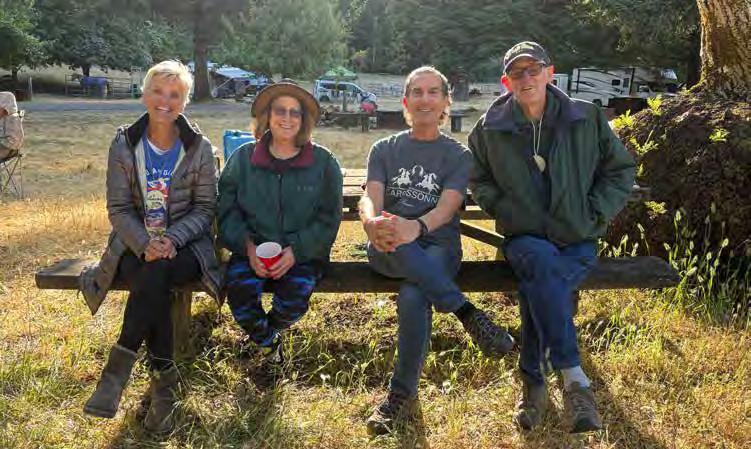
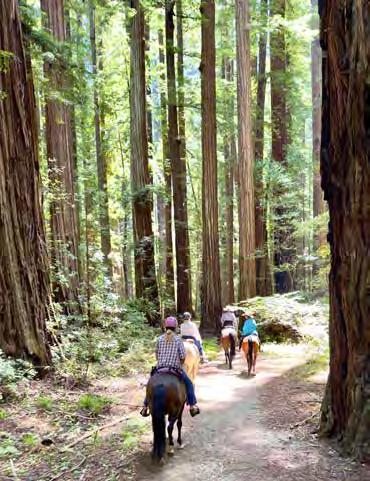
This year’s Four Day Ride at Humboldt Redwoods State Park was a magical experience. Five hours north of the Bay Area off Highway 101, the road leading to Cuneo Creek Equestrian campground parallels the Eel River and winds through the old-growth redwood forest. Just outside the campground entrance, we passed by a tiny old cemetery decorated with flags and flowers. The campground is nestled in an open meadow surrounded by oak, madrone, and bay laurel woodland. The grassy campground is dotted with gnarled apple and pear trees that give evidence of the old homestead that once occupied the valley. The dining and campfire areas are adjacent to an ancient bay laurel and an enormous American chestnut tree, a rare specimen that did not succumb to the turn-of-the-century blight.
To extend the experience, some LV Folks arrived a day or two early. Early or not, no one was disappointed by the campsites and facilities. Having spent the previous week catering to the folks from Monterey Bay Equestrians, Mike Garman, AKA “ FIXINs” was able to accommodate those arriving early. The official ride started on Thursday. Those arriving spent the afternoon setting up camp while Tanya Rebarchik, the ride chair, and club President, Diane Garcia, greeted the new arrivals and distributed welcome packets. A few of us found time to saddle up for a short afternoon ride. Dinner was followed by a campfire and good conversation. Friday started with an early breakfast, followed by the all-important LV pre-ride safety meeting. Ride groups were formed and routes were planned before we saddled up and headed out to some of the most stunning trails on this planet, no exaggeration. Riding through an ancient forest of thousand-year-old, three-hundred-foot-tall redwoods takes your breath away.
The ride theme this year was “Take me out to the ball game.” On Friday, after returning from the morning ride, we all gathered for a
Continued on Page 31
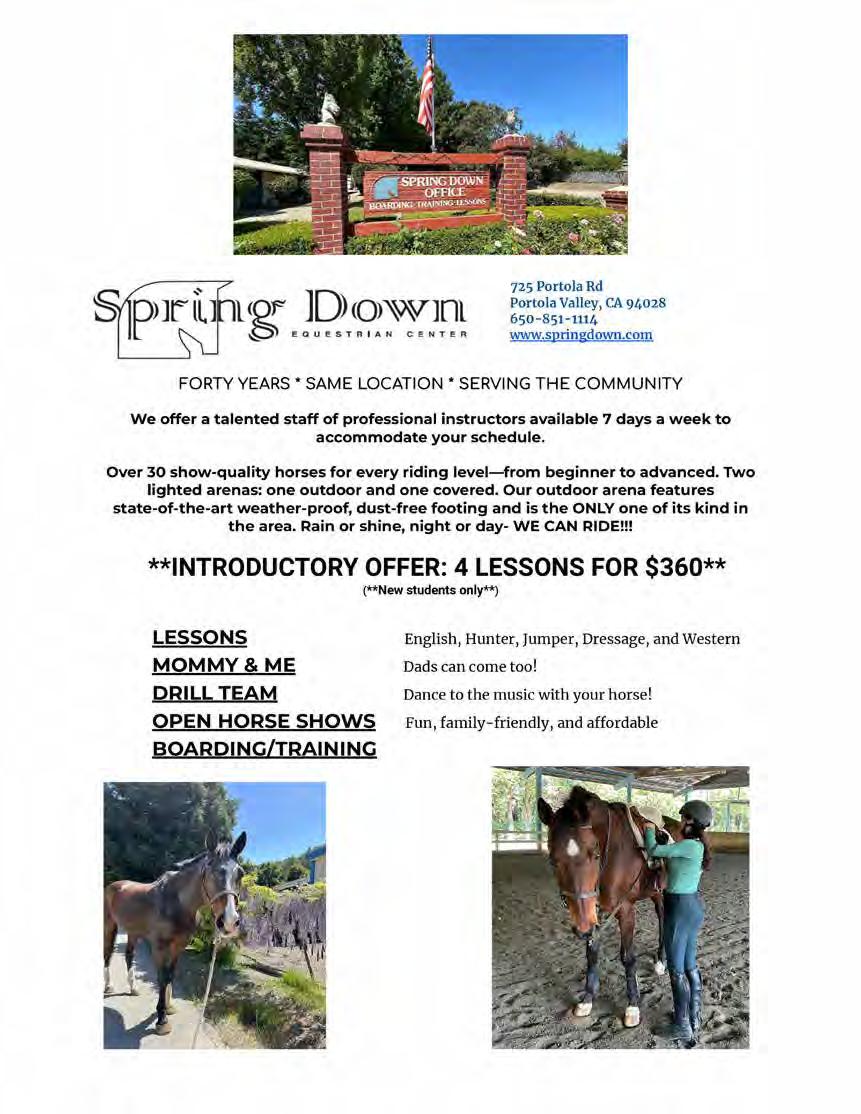
Hope you are enjoying The Water Trough (a rider’s version of the Water Cooler!). Let us know what’s new and exciting in your lives. Let’s bring our community together by sharing news, fun facts and information! Got something to share? Send your info to me, Elizabeth Ouellette @ elizabetho@outlook.com
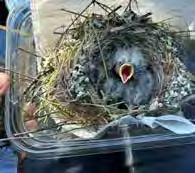
While setting up camp in Pt. Reyes, Marcy Rosenberg discovered a bird nest—with four hungry baby birds—in her trailer. The nest had unknowingly traveled from Portola Valley over two days. Veterinarian Faye Brophy quickly fed them sugar water and contacted WildCare in San Rafael, where the birds were later identified as house finches. Thanks to quick action, all four babies survived, thrived, and were eventually moved to an aviary for release.
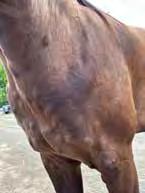
At Webb Ranch, Marcy Rosenberg’s horse, Bodie, was tied to a hitching post when he suddenly panicked—he’d disturbed a yellowjacket nest hidden inside the post. In his struggle, his lead rope became tangled, trapping him. Several people were stung trying to help. Marcy finally cut the rope with scissors, freeing Bodie, who had at least 25 stings. Thankfully, he showed no allergic reaction and recovered quickly with Zyrtec.
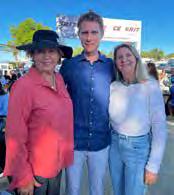
Cheryl and Sharon had the pleasure of meeting and chatting with Karl Cook, silver medalist at the 2024 Paris Olympics and a proud member of the U.S. Equestrian Jumping Team. This special moment took place during a wonderful community event at the Horse Park, hosted by the Split Rock Charity Jump Tour.
Welcome to SMCHA! We're thrilled to have you join our community of horse lovers dedicated to riding, learning, preserving trails, and celebrating the equestrian lifestyle.
Rose Diluzio
Margaret & Bill Herndon
Lora, Steve & Ava Quinlan
David Tom
Nessa Cossentine & Nick Lize
Kathy Francissen & Van Jepson
Revecca Lynn & Family
Evelyn Cherie Campbell
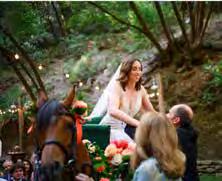
It’s not every day you see a horse carrying a bride down the aisle, but after many months of practice and preparation, that’s exactly what happened. Cantaro calmly carried Caroline Mameesh to her wedding ceremony, creating a moment guests will never forget. More to come in next issue……
By Chris Romano
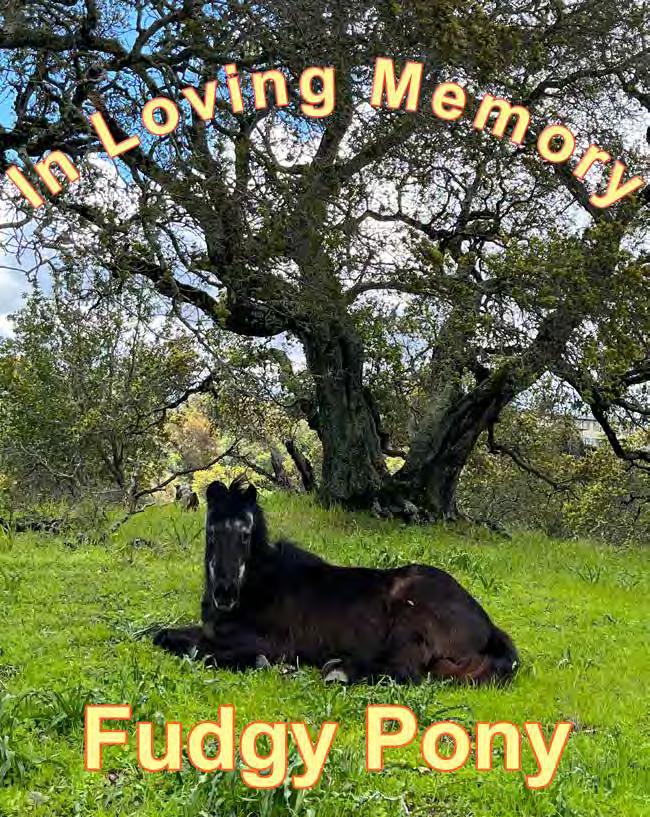
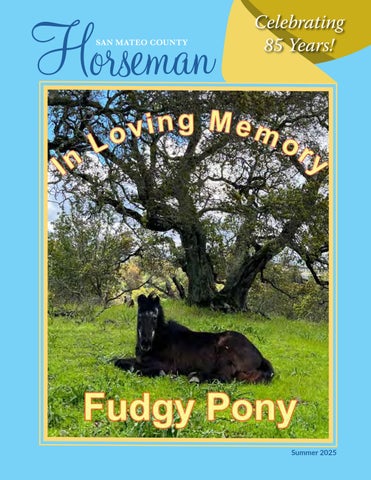
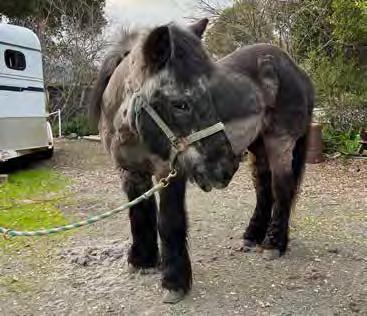
Fudgy, AKA Stigandi (ascending in English), was born in Solvang, California, in 1988. He was 16 years old when I brought him home. He was a little powerhouse, stoic, careful, kind, and fuzzy. It wasn’t long before he inspired me to draw gag cartoons, and then San Mateo County Horseman magazine Editor, Tanya Rebarchek, started putting them in our SMCHA quarterly magazine. Fudgy took me on many SMCHA-sponsored rides, Jack Brook campouts, and Volunteer Horse Patrol patrols. We were able to venture further: to Wilder St. Park, Grant Ranch, Pacheco St. Park, and did pack trips into Henry Coe St. Park and the Sierras. But Fudgy’s favorite ride was to town, where I’d get him special treats from the market or the bakery.
As we both aged, I decided to follow his agenda rather than mine. I began hand-walking him around the neighborhood, and he really enjoyed the attention. He knew all the dogs and their walkers. I’d bring along microwaved carrots, as well as fresh grapes, apple slices, and biscuits for the dogs. Fudgy loved babies and children. With help from parents, I could put any kid on him for a first pony ride. Several neighbors let him graze their ‘organic’ lawns. In 2022, when the Edgewood fire hit our property, neighbors were very worried about Fudgy.
Up to the end, Fudgy seemed to really enjoy life. He’d wait at the gate, ears pricked forward, waiting for his fans to visit or to go for his neighborhood walks. He never wanted to go back to his big paddock, always wanting to walk more. He knew where the street plum trees were and would stop by them, waiting, immovable, for me to pick and pit them for him.
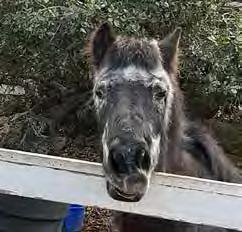
When the harvest ended, he’d still stop, so I continued to give him treats at those spots.
At home, Fudgy never seemed to miss being with other horses. He was friendly with the local deer, their babies coming up to him and sometimes trying to nurse on his sheath. He was a patient guy! Being a backyard horse, when he began to be ribby, I was able to give him an extra bucket of soaked low-starch pellets around midnight, and blanket him, too. He truly looked forward to that extra meal.
The vets said Fudgy had nine lives. They helped him survive a rattlesnake bite on his nose, then a bean the size of a walnut that blocked him from peeing. They helped hydrate him when, on one hot day, he slipped in the neighbor’s pasture, and I found him down. I was able to get him up, but I immediately called the vet. The vets also had to pull many of his teeth, and more and more, he depended on soaked pellets. The vets also tried to help with his high blood sugar (yes, probably too many treats!) and Cushing’s disease. The vets also saved him from colic on several occasions. This year, at 38, I knew Fudgy’s days were numbered, but we made the most of them.
One morning, he was down, and Starwood’s vets came quickly. His ASA levels and temperature were high, and he wouldn’t eat. When this happened last year, antibiotics brought him back. But the next morning, laminitis had set in. He was stoic, but I knew it was time. Neighbor Carey Oberti was with me when the vets came, which was a blessing for the vets and me. We were all crying; Fudgy had that effect on people. When the truck came to pick up his body, I had to decide whether to cremate him or not.
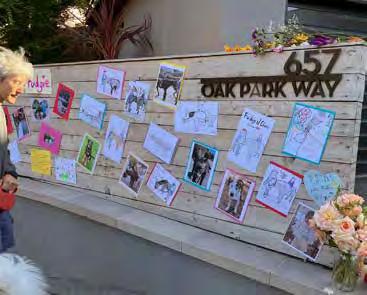
In the past, we had the option to recycle our horses into pet food, but now remains are taken to the livestock disposal area of the Santa Cruz dump or are cremated. I decided to save the carbon dioxide emissions for the living, and chose the dump. The Wilder St. Park horse camp he loved is next to the dump, so it seemed a good choice. The men who came for his body were kind and respectful. Soon vases of flowers began to be placed by his paddock gate, with condolence cards and kids’ drawings of Fudgy. Then the neighborhood surprised me with a celebration of Fudgy’s life. On a nearby retaining wall, they’d taped up about 50 photos and more kids’ drawings of Fudgy. This outpouring of neighborhood love for Fudgy Pony is as close to a miracle as I’ll ever experience. There can be so much beauty and love in old age. I told some of them, “Let’s imagine that Fudgy’s spirit has brought all the other dump horses’ spirits back to his pasture hill, to this loving neighborhood and to Woodside.” Maybe you can imagine them too, when you’re out for a ride :)
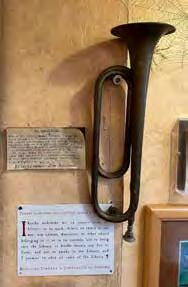
Can you find this object at Buck’s Restaurant in Woodside?
This bugle, carried by First Lieutenant Thomas J. Kastle, holds a proud place in American military history. Used to sound reveille, retreat, and other vital calls, it was an essential tool in the daily life of soldiers stationed on the western frontier. Kastle carried the instrument as he moved westward with the U.S. Army Corps of Engineers, contributing to the infrastructure and expansion that helped shape the nation.
The bugle dates back to Fort Crook, commissioned by the War Department in 1890 and constructed between 1894 and 1896. Located approximately ten miles south of Omaha and two miles west of the Missouri River, the fort was named after Major General George Crook, a respected veteran of the Civil War and Indian Wars. Fort Crook would later evolve into Offutt Air Force Base, becoming home to the Strategic Air Command (SAC) and playing a critical role in U.S. defense during the Cold War.
The Kastle family is honored to contribute this instrument to the Jamis MacNiven Home at Bucks Woodside, with the hope that it enriches the collection and preserves the legacy of those who served during a formative era of American expansion.
Los Viajeros, continued from Page 27
game of wiffle baseball, which was more than hilarious. After three intense innings, the game was declared a draw.
Baseball was followed by a competitive pitching game, with prizes going to the top three winners. Mike Garman’s dinner was, as always, spectacular.
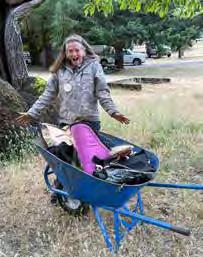
The annual raffle and silent auction fundraiser took place during appetizers and the dinner hour on Saturday evening. It is always interesting to see who will go home with what treasures. Everyone got something special. To add to the interest of the venue, we had nightly visits by the local black bear. As the day drew to a close, we were serenaded by Tanya’s good friend and musician, Bob Harman. Bob played some great favorite sing-along cowboy songs and other ballads.
On Sunday morning, we gathered around the breakfast table for a game of Horse/Baseball Trivia with prizes awarded. Yes, there is such a thing! Some groups took to the trails, and some went on a docent-led nature walk. The daily fiesta at Tanya and Don’s “Margaritaville Cantina” filled the gap before yet another fantastic feast for dinner.
Monday was packing-up day, and hugs and goodbyes were given as the rigs pulled out. Maybe we will see you at the next Los Viajeros riding event?
Los Viajeros Riding Club is a group that focuses on horse camping adventures in beautiful places. Most rides are catered, and many venues have pipe corrals for the horses, so we are not exactly roughing it. The goal is to enjoy the camaraderie of other horse
lovers in natural settings. A highlight of each year’s riding schedule is what we call “The Four Day Ride,” which consists of 4 overnights and 5 days of camping. There is usually a theme associated with the event, and there is an evening of games, dressing to the theme, an annual auction and raffle fundraiser one night and of course, many enjoyable trail rides. If you are interested in joining Los Viajeros or attending as a guest, please visit our website at www. losviajeros.org.


Thanks to your support, WHOA! and the Mounted Patrol Foundation have awarded the $10,000 Equestrian Merit Scholarship to Presley Cooper of Livermore. Presley’s dedication to horsemanship and her community truly embodies the spirit of this award.
Two outstanding rodeo competitors were recognized for their academic excellence, community involvement, and equestrian talent. Presley Cooper of Livermore was awarded a $2,000 scholarship, and Jess Wilder, also from Livermore, was awarded a $1,000 scholarship.

Through our Horses for Heroes program, military veterans referred by the Palo Alto VA enjoy trail rides and lessons at Jasper Ridge Farm. These rides provide a meaningful way for veterans to connect with nature and experience the therapeutic benefits of working with horses. Your support can make a real impact.

We’re honored to host horse riding activities for youth from the Sheriff’s Activity League. For many participants, it’s their first time ever on a horse—an unforgettable experience! Visit our website to see their photos and read their stories.

The Greer Road Bridge serves as a crucial connection for equestrians, linking the Kings Mountain Trail to Huddart Park. Unfortunately, erosion caused by creek flow over the past two years has severely compromised the bridge’s footings. We raised funds from the community to fund construction of a new 45-foot bridge with reinforced footings. Construction began on June 16 and was completed in July.
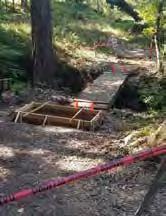
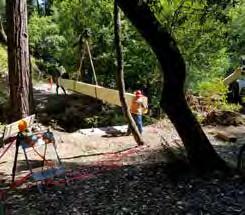
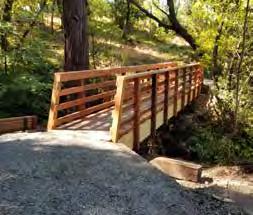
You can donate for either of these projects at: www.mountedpatrolfoundation.org/DonateNow.htm
By Brian S. Burks, DVM, Fox Run Equine Center Diplomate, ABVP, Board-Certified
Equine Specialist Blog post reprinted with permission of the author
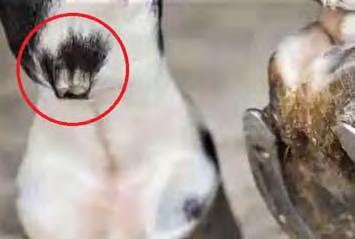
Ergot comes from the French word for spur, argot, and possibly from Gaulish arg for pointed thing. It refers to the rooster’s spur. On horses, an ergot is a small callosity on the underside of the fetlock. They can sometimes be found on all four fetlocks, but not all horses have detectable ergots. They may vary from pea sized to 1.5 inches in diameter. Horses with feathers tend to have the largest ergots.
The ergot is thought to be a vestigial sole pad of ancestral multitoed Equidae from 50 million years ago and extant members of Perissodactyla, such as the tapir and rhinoceros.
Ergots are of no consequence unless they become very large and catch on fences or other implements. Large ergots can be trimmed with hoof nippers or other trimmers, taking care not to cut the skin. They will grow back after being trimmed. Primarily they are only cosmetic in nature.
The ergot serves as an anchoring point to the associated ergot ligament, attaching to the lower pastern. It is also considered that the ergot serves to guide water away from the heel, similar to the function of the feathers.
River Basin in Wyoming, and Europe. Earlier ancestors of the horse were thought to have five toes.
As horses adapted to the environment, the limbs and feet became longer and more streamlined, allowing the horse to avoid predation more easily; thus, the middle digit became the weight bearing one, while the others lost function. The second and fourth toes became the splint bones. The chestnuts and ergots are the vestigial remains of the first and fifth toes.
The first horse, called the Hyracotherium, or Eohippus (dawn horse), was 10 to 17 ¾ inches tall at the shoulder. Their front legs had four toes, and the hind legs had three toes. Fossils of the dawn horse have been found in the Wasatch Range in Utah, the Wind
Ergots are not harmful, but if they become too large, they can be trimmed short, taking care not to go too deep, which will result in skin damage, pain, and hemorrhage.
Fox Run Equine, Apollo, PA, www.foxrunequine.com
By Cassidy Glass
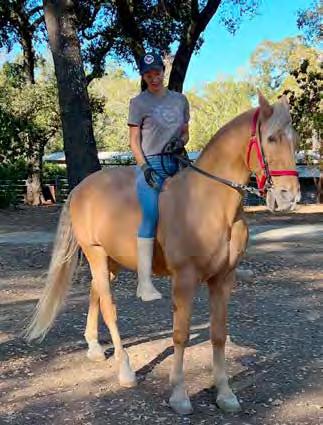
Hank was more than a horse—he was a Woodside legend.
For over a decade, he carried the heart of our family and the spirit of this community. With his golden coat, wise eyes, steady presence, and a walk that could stop traffic, Hank was our trusted parade partner and trail boss—steadfast, soulful, and always camera-ready.
We called him Hank the Tank—not just for his size and strength, but for the way he moved through the world with quiet power. He gave first-time riders the thrill of sitting atop a big, majestic horse and the peace of knowing they were safe. He made people feel brave. He made them feel seen.
Hank was not just beautiful—he
was soulful. He had presence. He moved like he remembered another lifetime, with grace in his step and kindness in his bones. Whether he was leading a Fourth of July parade or weaving through sun-drenched hills, he did it all with dignity and heart.
He passed peacefully at 32, surrounded by love, memories, and the golden light he always seemed to carry with him.
He did not leave behind ribbons or trophies—although he did win Day of the Horse last year—he left behind something more rare: a legacy of connection. Of trust built slowly. Of joy shared quietly. Of trails made sacred by presence.
He was our teacher, our partner, our golden boy.
Hank—forever in our hearts, forever on the trail.


By Antonia Boscacci
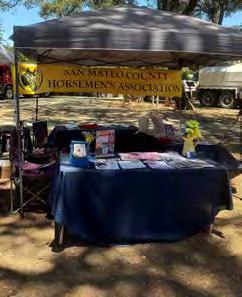
This past 4th of July, the San Mateo County Horsemen’s Association (SMCHA) brought warmth, joy, and sweet treats to the Junior Rodeo at the historic Mounted Patrol grounds. The event proved to be a heartwarming celebration of community, country living, and the shared love of horses.
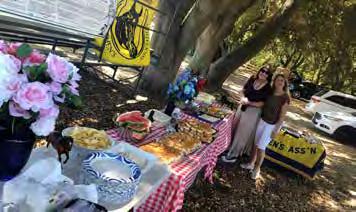
Families with young children enjoyed a wholesome day out, filled with homemade goodies, pony rides, and friendly faces. SMCHA’s bake sale offered an irresistible array of freshly baked cookies, rice crispy treats, brownies, cupcakes, and other delights, all lovingly prepared by members and volunteers. The delicious barbecue food added to the festive atmosphere, giving attendees a full taste of ranch life.
Children giggled with delight during pony rides, often experiencing their first connection with a horse. It was a beautiful moment of discovery, helping spark a lifelong appreciation for animals and the outdoors.
For SMCHA, the event was a successful opportunity to promote the club’s mission and spirit. We were thrilled to meet so many new people who share our passion for horses and rural traditions. Many visitors expressed interest in joining the club or attending future events.
Above all, this special day reminded us how fortunate we are—to care for these majestic animals and to live in a country that values open spaces, family traditions, and community. Thank you to everyone who came out and supported SMCHA. We look forward to welcoming you again soon!
By Sharon Butler
For those of us who stayed local over the 4th of July holiday, there was no shortage of exciting events and festivities!
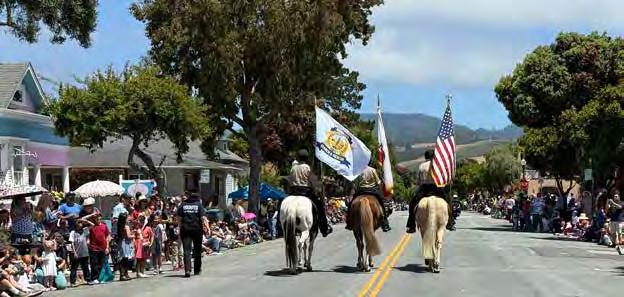
Friday kicked off with the always-anticipated Redwood City Parade, featuring a number of impressive horse groups that delighted the crowd. From there, many headed straight over to the Mounted Patrol for their annual junior Rodeo, a true celebration of horsemanship and Western tradition.
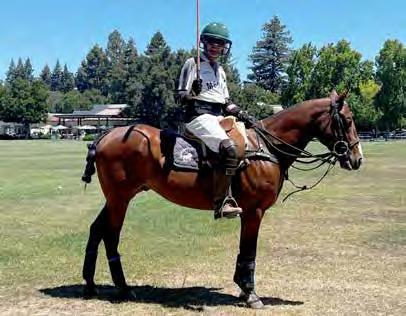
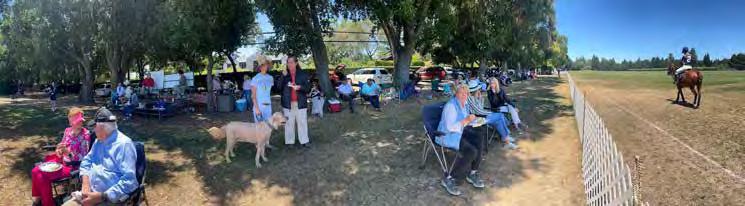
One of the standout events of the weekend was the special Polo Day at the beautiful Menlo Circus Club, sponsored once again by our gracious friends Don Pugh and Lyn Cobb. SMCHA was honored to be invited back, and this year did not disappoint. With perfect weather and over 60 guests in attendance, it was a spectacular day filled with fun, learning, and camaraderie.
Guests lined up their chairs along the sidelines to watch four chukkers of fast-paced, thrilling Polo, cheering on their favorite players and horses. Don Pugh generously took the time to explain the rules of the game and shared how he discovered his passion for Polo. With Lyn Cobb announcing the action, attendees gained
even more insight into the sport and its traditions.
We extend our heartfelt thanks to Don and Lyn for welcoming SMCHA again this year—we’re already looking forward to Polo 2026!
A huge thank you to the amazing team who helped make this event such a success. Guests enjoyed a delicious spread, including sliders, sandwiches, creamy potato and macaroni salads, appetizers, fresh fruit, and truly decadent desserts. The atmosphere was festive, the company outstanding, and the memories unforgettable.
"We ride so that others may live."
By Anne Gadd, SMC SO MSAR Unit Leader
San Mateo County Sheriff’s Mounted Search and Rescue Unit or “MSAR” is comprised of civilian horse and rider teams trained in multiple skill areas who volunteer their time, horses, and horsemanship to aid in protecting the lives of the citizens in our county, to assist with search and rescue operations, and to support our Sheriff’s Office. Certified in emergency response, these men and women are proud to be one of the few mounted units that is specially trained and called upon to respond to emergencies in San Mateo County, and throughout the state of California for mutual aid. They coordinate closely with the Sheriff's Office and other specialized teams to ensure the best possible outcome.
What does an MSAR team do?
A mounted search team coordinates with search and rescue operations. Riders on horses have an excellent visual vantage point, and the ability to travel quietly, which gives their horse, with its highly developed senses of hearing, sight and smell, the ability to locate a victim even before the rider or human search personnel are able to do so. Horses have hundreds more scent receptors than dogs due to being a prey animal, and riders are trained to “read” their horse for scent detection.
Who joins a Mounted Search & Rescue team?
Our MSAR Unit is made up of civilian volunteers who supply their own horses, equipment, and transportation. A great deal of personal time is also contributed toward horse conditioning. Our Unit provides continuous training for search and rescue operations. We are always recruiting new members!
When is the MSAR Unit called out?
When a sheriff's office is contacted about a missing person or is in the middle of a disaster situation, the sheriff or Office of Emergency Services (OES) will determine if circumstances warrant the help of mounted SAR. The MSAR team is prepared to be called out at a moment’s notice, in all kinds of weather and at any time of day or night.
Where does the San Mateo County MSAR Unit operate?
Though San Mateo County is our main staging area, SMC SO
MSAR operations are not limited to just our county. The Mounted Search & Rescue team has been requested to help other county emergency groups as far away as the Sierra Nevada mountains, Fresno, and San Benito Counties.
What supplies do Mounted SAR members carry?
MSAR members are required to have comprehensive equipment and trailer supplies, as well as first aid supplies for themselves, their horse, and subjects.
What types of training do MSAR members receive?
Our training encompasses safety, discipline, emergency preparedness, versatility, and confidence. MSAR team members and their horses are trained in many aspects of search and rescue. Riders are also taught law enforcement procedures associated with disaster response and search and rescue operations, advanced first aid & CPR, GPS and CalTopo, radio use, and other relevant skills. Horses are trained to remain calm and alert, and are schooled in various emergency situations, including helicopter traffic, flares, sirens, and nighttime riding.
What is a Qualified Horse?
A search and rescue mount may be a horse or mule, must be sound, and kept in good condition. An MSAR horse should be mature—not younger than 7 years, and able to walk a minimum of 10 miles. A horse with a calm, alert disposition is preferable. An annual certification opportunity is provided by the Western States Mounted Officers Association (WSMOA) each October. This 4-day clinic offered by Mounted Officers covers most of the necessary horse certification and skills.
Do MSAR groups do anything other than search and rescue?
In addition to search and rescue operations, MSAR may also be called out in disaster situations. The Unit also represents the Sheriff's Office in parades and other public functions and participates in charity events. Outside of search and rescue missions, you may see this dedicated group patrolling on horseback, at community events, parks, riding in parades or assisting with kids’ educational programs.
Free rein means to grant someone or something the freedom to act without restriction or constraint, often in a figurative sense. The idiom originated in horseback riding, where "giving a horse free rein" meant loosening the reins and allowing the horse to move freely. Figuratively, it implies granting someone freedom of choice, action, or movement.
Origin:
The phrase "free rein" comes from the practice of horseback riding, where reins are used to control a horse's movements.
Literal Meaning:
In the literal sense, "free rein" means to loosen the reins of a horse, allowing it to move freely without the rider's direct guidance.
Figurative Meaning:
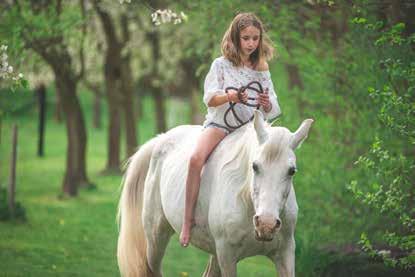
The phrase evolved to describe granting someone or something the freedom to act, choose, or move as they wish, without limitations or restrictions.
Examples:
• "The company gave its employees free rein to develop innovative projects."
• "The government has decided to give free rein to private companies in this sector."
Answers on page 42
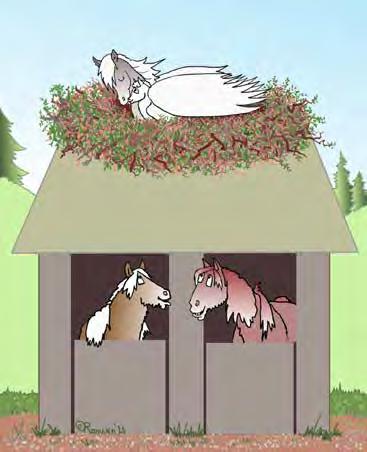
the
SMCHA is excited to unveil a brand-new section of our website: Kids Corner!
This fun and informative space is designed especially for parents and guardians of horse-loving kids—whether they’re brand-new to riding or already dreaming of the show ring. In Kids Corner, you’ll find:
• Local riding schools, therapeutic riding centers, and equestrian groups
• Tack shops, feed stores, and clothing retailers for helmets, boots, and more
• Tips and resources to help young (and young-at-heart) riders get started safely and comfortably
The page is still under construction, so be sure to check back often as we continue to add new content, links, and helpful guides for your equestrian journey.
“KIDS CORNER”

Knock Knock.
Who's there?
P cough O cough
N. cough Y cough.
Do you Mean Pony?
Yes I'm a little "Hoarse"
Knock-Knock
Who's there?
I'm a pony named Mayo. Why do they call you Mayo?
Because Mayo neighs.
Knock Knock.
Who's there?
Interrupting Pony
Interruptin— Neigh!!
Knock Knock. Who's there?
Ponies go
Ponies go who?
No silly, ponies go neigh!
The difference between male and female horses can be determined by the number of teeth.
Mature male horses (stallions and geldings) typically have 40-42 teeth, while mature female horses (mares) usually have 36-40 teeth. The difference is primarily due to the presence of canine teeth, also known as "tushes," in males, which are less common in females.
“I
like to keep my money where I can see it: running around in the pasture or hanging up in the tack room.”


Check our website for updates: www.smcha.org
SEPTEMBER
11 - Board Meeting
14, 21, 28 -Fall Riding Clinic
19-21 - September Woodside Schooling Show
25 – Dine and Donate - Crouching Tiger, Redwood City
OCTOBER
5 – Fall Riding Clinic
9 - Board Meeting
10-11 – Day of the Horse (WHOA)
26 – Coastal Ride
24-26 – Woodside Schooling Show Fall Finale, Horse Park
NOVEMBER
2 – Clinic
13 – Board Meeting
DECEMBER
7 – Los Viajeros Holiday Party
13 – SMCHA Holiday Party, Horse Park
Backcountry Horsemen of California: bchcalifornia.org
Bay Area Equestrian Network: bayequest.com
Bay Area Horse Archers: bayareahorsearchers.com
Bay Area Lyme Foundation: bayarealyme.org
Bay Area Players: facebook.com/BayAreaSavvyPlayers
BLM Wild Horses & Burros, California: blm/gov/whb
California Dressage Society: california-dressage.org
California State Horsemen’s Association (CSHA): californiastatehorsemen.org
Caring Cowgirl: caringcowgirl.org
Community Horse Advocacy Program (CHAPS): facebook.com/chapsmc
Disabled Equestrians: disabledequestrians.org
Equestrian Legacy: equestrianlegacy.com/home
Equestrian Trail Riders' Action Committee (ETRAC): etrac-equestrian.com
Horse Park at Woodside: horsepark.org
Horsensei: horsensei.com
Jasper Ridge Farm: jasperridgefarm.org
Los Altos Hills Horsemen’s Association: lahha.org
Los Viajeros Riding Club: losviajeros.org
Monterey Bay Equestrians: montereybayequestrians.org
Mounted Patrol Foundation: mountedpatrolfoundation.org
Mounted Patrol of San Mateo County: mpsmc.org
National Center for Equine Facilitated Therapy (NCEFT): nceft.org
Portola Valley Pony Club: portolavalley.ponyclub.org
San Martin’s Horsemen’s Association: smhorse.org
San Mateo County Horsemen's Association: smcha.org
San Mateo County Large Animal Evacuation: smclaeg.org
San Mateo County Parks Volunteer Horse Patrol: smcvhp.org
San Mateo County Sheriff’s Mounted Search & Rescue: smcmsar.org
San Ramon Valley Horsemen’s Association: srvha.weebly.com
Santa Clara County Horsemen’s Association: horsemens.org
Santa Cruz County Horsemen’s Association: sccha.wildapricot.org
Summit Riders Horseman’s Association: summit-riders.com
The BOK Ranch: bokranch.org
The Square Peg Foundation: squarepegfoundation.org
Woodside-area Horse Owners’ Association (WHOA!): whoa94062.org
Woodside Pony Club: woodside.ponyclub.org

Would you like to meet new people who share your passion for horses? Do you have a unique talent or an idea for an activity/ride to share? Maybe you’ve always wanted to put on your own event but needed the support of an equestrian committee Now is the time to bring your ideas to the forefront The SMCHA wants to hear from you! If you’d like to join our team, have fun and make your dreams come true, send us an email so we can bring your vision to life!
Email: SMCHA@smcha org
Advertise your business to a broad array of readers in our popular magazine, The San Mateo County Horseman Advertising with SMCHA is a great way to reach potential customers four times a year! We’ll not only print your ad, but also make mention of our business on our website — smcha org
Email: SMCHA@smcha org
GENERAL MEETINGS
Mariangela Sonstegard @ 650 868 4702
RIDES
Carey Oberti @ 650 380 1574
SOCIAL MEDIA AND MARKETING
Jenny Mize @ 650 380 1574
HISTORIAN
Don DeFranco @ 415 722 7259
FUNDRAISING
Elizabeth Ouellette @ 650 248 3409
Sharon Butler @ 650 720 0513
Mariangela Sonstegard @ 650 868 4702
FALL RIDING CLINIC
Karen Rowley Shawback @ 510 432 0368
Elizabeth Ouellette @ 650 248 3409
Jenny Mize @ 650 380 1574
TRAILS
Adeline Forrest @ 650 743 1665
FINANCE
Cheryl Basin @ 650 722 0606
THE SAN MATEO HORSEMAN MAGAZINE
Elizabeth Ouellette @ 650 248 3409
Marcy Rosenberg @ 408 560 8074
Cherie Hammer @ 650 219 7917
MEMBERSHIP
Cherie Hammer @ 650 219 7917
MAILINGS
Cheryl Basin @ 650 722 0606

If your horse were a cartoon character, who would he or she be—and why?
This is all about fun, imagination, and celebrating the personalities of the horses we love. Horses, like people, have quirks, moods, and unique traits that make them unforgettable. Maybe yours is mischievous like Bart Simpson, regal like Elsa, goofy like Goofy, or wise like Yoda (yes, we’re counting animated versions!).
1. Think of the cartoon character that best represents your horse.
2. Write a short explanation (500 words or less) why you chose that character.
3. Share a picture of your horse to go with your entry—we’d love to see their faces!
• It’s a chance to celebrate your horse’s oneof-a-kind personality.
• You’ll get to connect with the community in a lighthearted, creative way.
• Entries will be shared so we can all laugh, smile, and admire the amazing equine “characters” among us.
We’ll highlight some of the most creative, funny, or spot-on entries in our community newsletter and social media. Bragging rights are guaranteed!

Please send entries to: Elizabeth Ouellette – elizabetho@outlook.com Deadline Oct 15, 2025 Please send a photo which is 1MB or higher (with iphone, send Original Size).
THE SAN MATEO HORSEMAN
P.O. BOX 620092
WOODSIDE, CA 94062
www.smcha.org
ADDRESS SERVICE REQUESTED
PUBLISHED BY SAN MATEO COUNTY HORSEMEN’S ASSOCIATION
Founded in 1940
A Registered Non-Profit 501 (c) (3) Organization
Tax Id # 23-7076143
Presidents: Mariangela Sonstegard & Gabriela Marquez