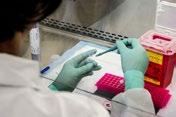
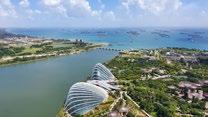
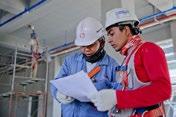
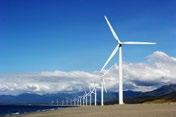
Newly opened integrated industrial systems facility to train professionals and students SPECIAL
Celebrating UNESCO’s World Engineering Day for Sustainable Development 2026
Upskill with industry‑relevant, hands‑on courses by SIT Energy Efficiency Technology Centre
COURSES AT A GLANCE
Up to 90% SkillsFuture
Subsidy on Course Fee
PEB, SCEM, MOM Professional Development Units
e s i g n o f E l e c t r i c a l I n s t a l l a t i o n s
D e s i g n a n d P e r f o r m a n c e A s s e s s m e n t o f L o w
C a r b o n B u i l d i n g s
E n e r g y S u s t a i n a b i l i t y a n d E n e r g y
M a n a g e m e n t S y s t e m s
O C T - D E C 2 0 2 6
D i s t r i c t C o o l i n g S y s t e m s : T e c h n o l o g i e s ,
C o m p o n e n t s , a n d S u s t a i n a b l e E n g i n e e r i n g
S u s t a i n a b l e a n d R e s i l i e n t D a t a C e n t r e s
G r i d - C o n n e c t e d S o l a r P h o t o v o l t a i c S y s t e m s i m a
and biological methods.
Your Trusted Environmental Specialist in Toxic Industrial Waste Management
Website: www.nsloilchem.com.sg
Address: 23 Tanjong kling Road, Singapore 628049
Contact: (65) 6351 9700 I (65) 6351 9718
Email: enquiry@nsloilchem.com.sg I sales@nsloilchem.com.sg
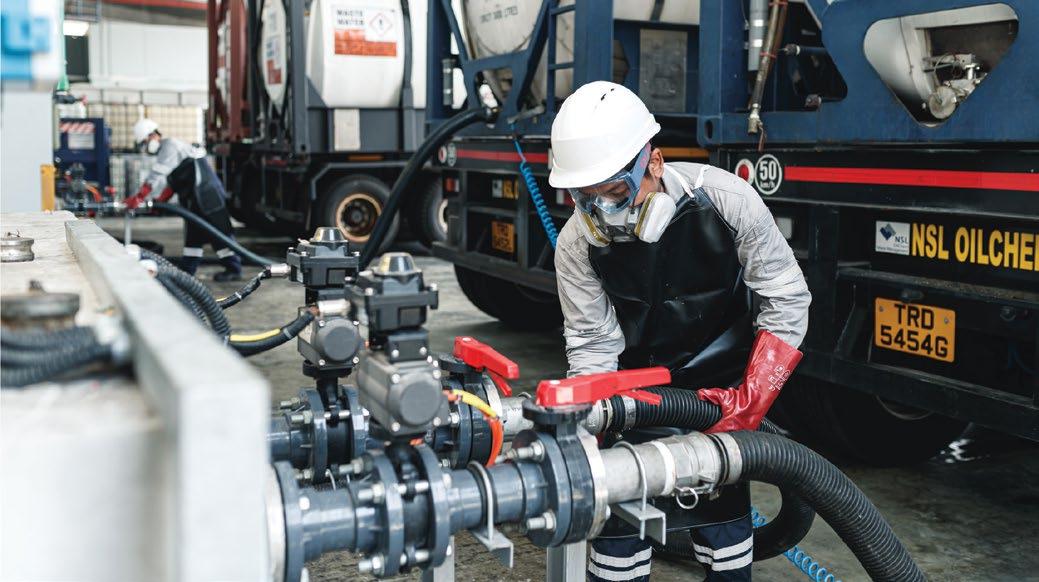
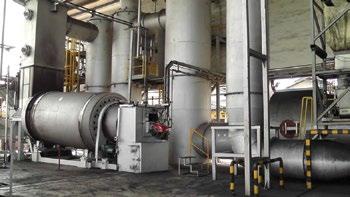
NSL OilChem Waste Management (NSL OilChem) is Singapore’s leading integrated toxic industrial waste management partner - offering both land and marine waste management solutions with prompt response, reliable services, scale, and technical expertise.
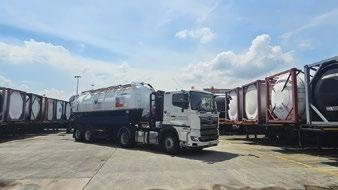
Backed by nearly 30 years of experience, with a comprehensive and large toxic waste transportation fleet, and a multiple award-winning safety record, we deliver dependable, round-the-clock environmental services, including industrial solid waste management, wastewater treatment, slop, sludge and contaminated soil remediation, as well as emergency response for hazardous waste.
A subsidiary of NSL Ltd and a member of YTL Cement Group, NSL OilChem advances sustainable waste management through innovation, supporting industries to always meet compliance, operational and Environmental, Safety, and Health (ESH) requirements.
We specialize in hazardous waste management for: Industrial wastewater
Acids and alkalis
• Solvent and sludge waste
• Used oil, contaminated fuels, other oily waste, and de-slopping services for marine slop
• Incineration of confidential documents and materials
• Consultation services to optimize your wastewater treatment plant processes
10 Message From The President of The Institution of Engineers, Singapore
12 Message From The President of The World Federation of Engineering Organizations
IES UPDATE
14 Driving the next chapter of the Built Environment Standards
15 Stronger together: a heartfelt thanks to our 200+ standards partners
NEWS & EVENTS
16 COP30 embeds information integrity in climate governance for the first time
17 New regional hub to strengthen climate action and reporting
18 Advancing purpose-driven partnerships for climate action
20 Global utilities set out USD 1 trillion investment plans at COP30
21 Developing a framework for Cross-Border Renewable Energy Certificates
22 Stronger support and partnerships to bring urban innovations to the market
Dr Chandra Segaran
Dr Ang Keng Been
Mr Jaime Vega Bautista Jr
24 Newly opened integrated industrial systems facility to train professionals and students
SUSTAINABILITY
26 Built Environment Decarbonisation Technology Roadmap launched CONSULTANCY SERVICES
30 How AI is strengthening carbon markets and climate resilience
32 Driving efficiency for a low-carbon built environment
34 Building ESG directly into engineering systems
GREEN INFRASTRUCTURE
36 Engineering a mission-critical infrastructure towards carbon neutrality
For engineers, Environmental, Social, and Governance (ESG) isn’t a slogan. It’s a set of constraints you must satisfy: Build systems that
How CLA Global TS Sustainability & Climate Change Advisors can help?
Operational architecture: Map data flows from sensor to statement; design control points and evidence trails.
Data models: Unify asset, process, and product data to enable emissions, energy, and safety analytics.
Control frameworks: Automate checks and support audit-ready change control, embedding ESG into long-term engineering strategy.
Lifecycle integration: Turn sustainability reporting into a natural output of well-engineered systems.
Results
Cleaner designs, higher e ciency, and more resilient operations — making reporting an outcome of meaningful sustainability progress.
GREEN BUILDINGS
38 An innate desire to dream big
40 Towards sustainable and future-ready buildings
ENERGY ENGINEERING
44 Designing energy systems for the long term
46 Minimising energy consumption
48 Saving energy and costs with the use of heat pumps
50 Authentic Industrial Systems: The New Frontier for Competency Development in Energy Efficiency
MEP ENGINEERING
52 Understanding EPDs for HVAC
BUILDING & CONSTRUCTION MATERIALS
54 How material innovation is transforming low-carbon building in Singapore
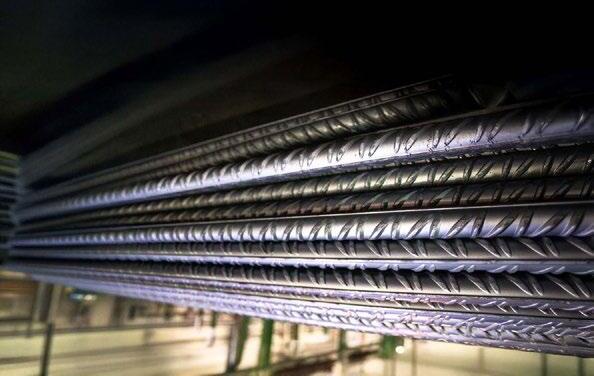
56 What is Sustainable Constructional Steel certification?
www.ies.org.sg
MATERIALS TECHNOLOGY
60 Transitioning fixed foam systems to fluorine-free agents
68 Decarbonising the built environment from the ground up
EDUCATION & RESEARCH
69 Sustainability is the key to our future
70 Engineers must repair the planet
72 World university rankings on sustainability released
The Singapore Engineer is published monthly by The Institution of Engineers, Singapore (IES). The publication is distributed free-of-charge to IES members and affiliates. Views expressed in this publication do not necessarily reflect those of the Editor or IES. All rights reserved. No part of this magazine shall be reproduced, mechanically or electronically, without the prior consent of IES. Whilst every care is taken to ensure accuracy of the content at press time, IES will not be liable for any discrepancies. Unsolicited contributions are welcome but their inclusion in the magazine is at the discretion of the Editor.
Our success is built on sustainability
At GEA, sustainability is the foundation of our corporate strategy, guiding us in creating lasting value for customers and the planet. Through energy-efficient, environmentally friendly process solutions, we help customers reduce emissions, save energy and resources, and achieve their sustainability goals while upholding high environmental and social standards across our operations and supply chain.
Please contact us to learn more about our process solutions for environmental, beverage, food, or pharmaceutical applications.
Message from Er. Chan Ewe Jin, President, The Institution of Engineers, Singapore
World Engineering Day (WED) highlights the growing responsibility engineers carry in shaping how societies develop, adapt and endure. This year’s theme, ‘Smart engineering for a sustainable future through innovation and digitalisation’, reflects a defining shift in how engineering solutions are conceived and delivered.
Emerging technologies such as artificial intelligence, robotics and digital engineering platforms are rapidly changing the way projects are planned, executed and maintained. These technologies are moving engineering beyond incremental improvement, enabling smarter decision-making, safer operations and more efficient use of resources across sectors including infrastructure, manufacturing, transport and energy.
Singapore’s progress offers a clear illustration of this transformation. The digital economy now contributes more than 18% of GDP, and AI-driven systems and automation are becoming increasingly embedded in engineering-led industries.
In construction, ongoing productivity improvements have been supported by the increasing use of digital tools, automation
and integrated delivery methods, reinforcing the role of innovation in strengthening engineering outcomes.
For engineers, this evolution reinforces the importance of continual skills development. Technical foundations remain critical, but future-ready engineers must also be fluent in digital tools, data-driven approaches and sustainability considerations.
IES is committed to enabling our members to deepen their expertise and remain relevant as the profession continues to evolve.
Engineering organisations likewise play a decisive role. Companies that invest in innovation and digitalisation are better positioned to raise productivity, strengthen
resilience and deliver solutions that meet rising expectations for sustainability and performance. Adopting emerging technologies is not simply about efficiency. It is about building systems that can support long-term economic and environmental goals.
As part of our WED commemorations, the Charles Rudd Distinguished Global Lectures on 10 March will continue to provide an important platform for global exchange. Through insights shared by distinguished engineering leaders, the event will reinforce the value of knowledgesharing, collaboration and thought leadership in addressing complex challenges.
As we observe WED, I encourage engineers and engineering organisations to approach innovation with purpose, embrace digital transformation thoughtfully and remain committed to creating solutions that benefit both society and future generations.
Through smart engineering and continuous learning, we can shape a more sustainable and resilient future.
Er. Chan Ewe Jin 30th President
The Institution of Engineers, Singapore
Smart engineering for a sustainable future through innovation and
digitalisation
IES CHARTERED ENGINEERING BOARD
The Chartered Engineering Registry aims to provide professional recognition to qualified Engineers, Technologists and Technicians across all sectors.
Being registered as a Chartered Engineering Professional will be an external validation of your experience, expertise and practising competence; and is a quality mark to differentiate your professional standing in the following sectors of engineering:
Message from Er. Dr Tan Seng Chuan, President, World Federation of Engineering Organizations (WFEO)
Dear Distinguished Colleagues,
It is a pleasure to address the Institution of Engineers, Singapore (IES) and the wider engineering community of Singapore, on the occasion of the 2026 World Engineering Day for Sustainable Development (WED), commemorated globally on 4 March.
As you know, World Engineering Day (WED), proclaimed by UNESCO and co-led by the World Federation of Engineering Organizations (WFEO), is an annual moment of collective reflection and action. It highlights the indispensable role of engineers in addressing the most pressing global challenges of our time. This year marks the seventh (7th) WED celebration, with the main event taking place in Jakarta, Indonesia.
The theme of WED 2026, ‘SMART Engineering for a Sustainable Future through Innovation and Digitalization’, underscores a fundamental reality: sustainability
in the 21st century depends on how effectively engineering integrates innovation, digital technologies and responsible governance, to deliver resilient and inclusive solutions.
Across the world, engineers are shaping smarter infrastructure. Yet progress towards the United Nations Sustainable Development Goals (SDGs) remains uneven. This gap reinforces the responsibility of the engineering profession to move
beyond technical excellence alone and engage more actively in policy dialogue, education and capacitybuilding. As echoed last year by WFEO Past President Eng. Mustafa B. Shehu, we must collectively support our youth through strong engineering education, professional training and ethical practice.
As WFEO President, I reaffirm our commitment to working with national and regional engineering institutions to elevate the voice of engineering worldwide, promote ethical and inclusive practice, and support the next generation of engineers who will inherit these complex global challenges.
I extend my warmest wishes to IES and its members for a meaningful World Engineering Day, and I look forward to continued collaboration in advancing engineering as a driving force for a sustainable future.
Er. Dr Tan Seng Chuan, President. WFEO
Smart engineering for a sustainable future through innovation and digitalisation
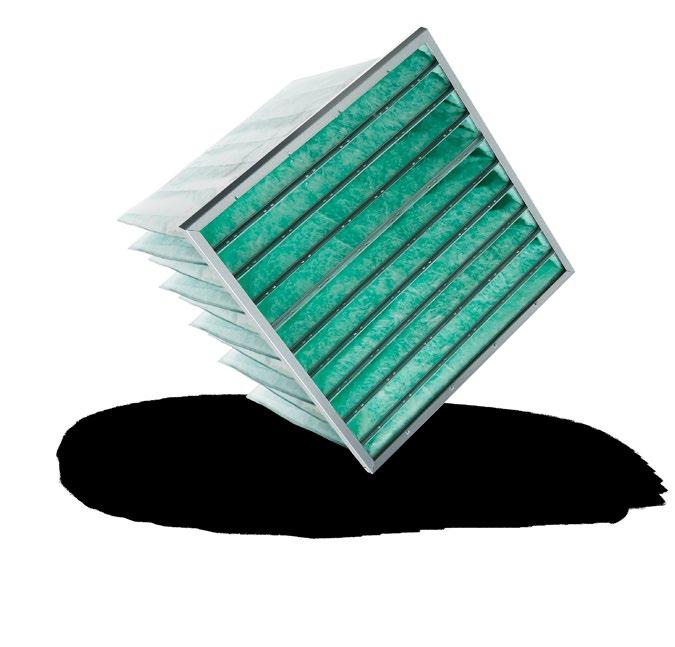
Hi-Flo NEXT GENERATION BAG FILTERS
DESIGNED TO WORK WITHOUT A PREFILTER
The Hi-Flo Next Generation bag filters have been developed with performance and sustainability in mind. Performance means long service life, low energy consumption and stable filtration efficiency throughout its lifetime.
ADVANTAGES
Extended operating life with the best Total Cost of Ownership (TCO)
Lowest energy consumption and initial pressure drop
Reduced energy consumption
12% vs old Hi-Flo generation 30% vs industry average
Superior indoor air quality
Particle efficiency meets requirements according to the European Standard EN779 and ISO16890 for indoor air quality (IAQ)
Reduced labour cost
25-50% Longer filter lifetime, compared to synthetic bag filters
Improved air flow
Conical and tapered pocket shape allows better airflow through the filter
Optimised design for high performance Fully incinerable with the plastic frame
BIG SAVINGS WITH CLEAN AIR
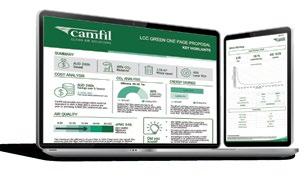
Using Camfil Life Cycle Cost (LCC) Analysis software, our experts conduct a comparative analysis of different air filters to provide you with a comprehensive report on potential savings.
Camfil offers a complimentary Life Cycle Cost analysis and supports you in selecting the right air filter solution.
SCAN THE QR CODE to complete the survey. Accuracy is subject to information provided.
Driving the next chapter of the Built Environment Standards
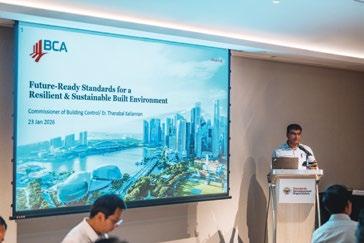
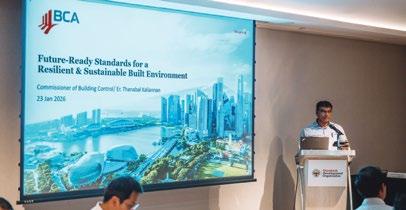
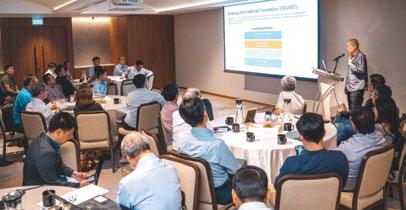
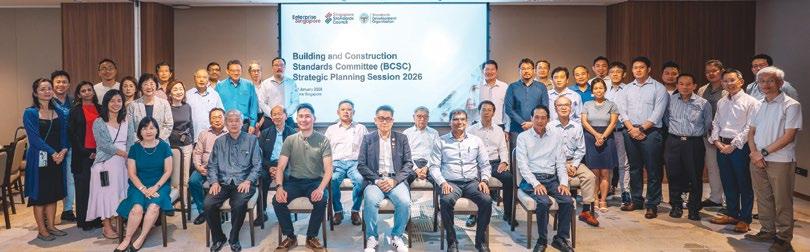
The Building and Construction Standards Committee (BCSC) Strategic Planning Session 2026 was held on 23 January, at Amara Singapore.
Organised under the Singapore Standards Council, supported by Enterprise Singapore and facilitated by IES-Standards Development Organisation (IES-SDO), the session brought together 50 BCSC members and stakeholders, enabling them to take a step back and look ahead, in order to
identify gaps, emerging needs and priority areas, for standardisation across digitalisation & artificial intelligence (AI), sustainability and internationalisation.
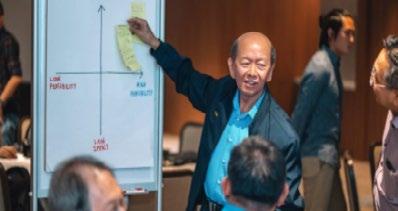
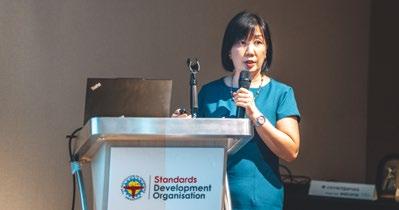
We were privileged to hear valuable perspectives from our speakers, on future-ready standards, green building developments and the responsible deployment of AI in the built environment. These insights helped ground our breakout discussions, where participants worked through
ideas, using an impact-feasibility lens to shape potential new work items for the coming years.
The outcomes from this session will support BCSC and Singapore Standards Council’s broader efforts to ensure our standards remain relevant, forward-looking and responsive to industry needs.
Thank you to our Chair, Deputy Chair, speakers, facilitators and all members, for the thoughtful discussions and strong engagement.
A productive afternoon at the Building and Construction Standards Committee (BCSC) Strategic Planning Session 2026.
Stronger together: a heartfelt thanks to our 200+ standards partners
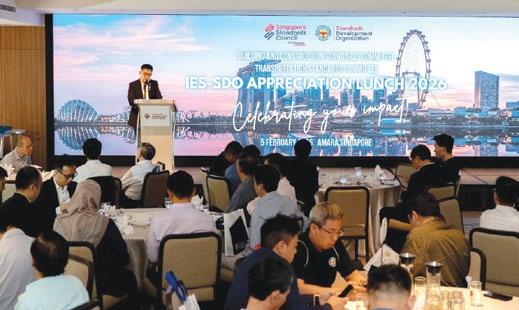
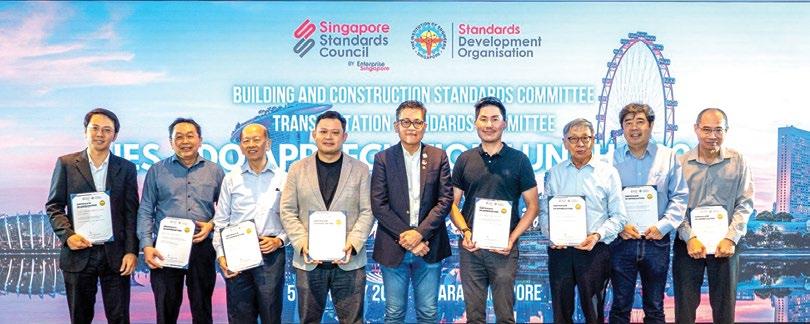
The IES-Standards Development Organisation hosted its annual IESSDO Appreciation Lunch 2026 on 5 February, bringing together 200 standard partners from the public and private sectors, across the built environment and transportation sectors, to celebrate their collective impact on Singapore’s standards ecosystem.
In FY 2024, their collective efforts resulted in the publication of 42 standards, supported by 25 working groups, impacting more than 2,100 organisations. Behind each standard are countless hours of discussion, debate and consensus-building, and this event was about recognising that shared commitment and the real-world impact it has created for industry and society. It also reflected the strong spirit of collaboration across committees and sectors and the important role standards continue to play in supporting safety, innovation and sustainability.
A special note of thanks to the Chairs of both committees, Ar. Lim Choon Keang, Chair of the Building and Construction Standards Committee, and Dr Richard Kwok, Chair of the Transportation
Standards Committee, for their leadership and guidance throughout the year.
On behalf of the IES-Standards Development Organisation, the
Singapore Standards Council and Enterprise Singapore, thank you to everyone who joined us and continues to support Singapore’s standards development journey.
The IES-Standards Development Organisation hosted its annual IES-SDO Appreciation Lunch 2026 on 5 February, bringing together 200 standard partners from the public and private sectors, across the built environment and transportation sectors.
COP30 embeds information integrity in climate governance for the first time
The 2025 United Nations Climate Change Conference (COP30) was held in Belém, Brazil, from 10 to 21 November 2025.
In a watershed moment, countries at COP30 in Belém included ‘information integrity’ in the final Mutirão Decision, recognising that information integrity is essential for effective climate action. This marks the first time that information integrity has been formally embedded in international climate governance.
The achievement follows the 2024 launch of the Global Initiative for Information Integrity on Climate Change, initiated by Brazil, the UN and UNESCO, a coalition of 14 countries, along with other international organisations, civil society and academia working to strengthen research, strategic communications and policy responses to climate disinformation.
The Mutirão Decision signals a major step forward in addressing escalating risks in information spaces – from disinformation to the harassment of scientists – and in ensuring that evidence-based information is available to all. This formal recognition establishes a foundation for coordinated international action on information integrity.
Countries launch the Belém Declaration
At COP30, the Global Initiative also launched the Belém Declaration on Information Integrity on Climate Change, with 17 founding signatory nations. Since Belém, three additional countries have signed the declaration, bringing total signatories to 20.
The declaration calls on governments, the private sector, civil society, academia and funders, to take concrete action to counter the growing impact of
disinformation, misinformation, denialism and deliberate attacks on environmental journalists, defenders, scientists and researchers, that undermine climate action and threaten societal stability.
The declaration emphasises that mobilising all actors in society requires access to consistent, reliable, accurate and evidencebased information on climate change, which is indispensable for raising awareness, fostering public participation, enabling accountability and building public trust in urgent climate policies and actions.
Key commitments
Under the declaration, signatories commit to:
• Promote the integrity of information related to climate change, in line with international human rights law, including freedom of expression standards.
• Support the sustainability of a diverse and resilient media ecosystem to ensure accurate and reliable coverage on climate and environmental issues.
• Support the inclusion of information integrity commitments into the Action for Climate Empowerment agenda under the UNFCCC.
• Promote informed and inclusive climate action by advancing equitable access to accurate, evidence-based, understandable information for all.
• Foster cooperation and capacitybuilding to address threats to information integrity, safeguarding those reporting on and researching climate issues.
With resources falling short of needs globally, the declaration calls on governments to ensure funds to research climate information
integrity, especially in developing countries. It also urges the private sector to commit to information integrity in their business practices and ensure transparent, humanrights responsible advertising practices that bolster information integrity and support reliable journalism.
The declaration was included as an outcome under the COP30 Global Climate Action Agenda and remains open for endorsement. By enshrining information integrity in the COP30 outcomes, the international community has established a new benchmark for addressing one of the most pressing challenges facing climate action today.
EU sets new NDC standard In the lead-up to Belém, the European Union became the first party to include information integrity actions in its Nationally Determined Contribution (NDC) under the Paris Agreement.
Global fund supports first projects Since its launch in June 2025, the initiative’s Global Fund for Information Integrity on Climate Change has received 447 proposals from nearly 100 countries. With initial funding of USD 1 million from the Government of Brazil, the fund has begun supporting its first wave of projects across multiple continents, with nearly two-thirds of eligible proposals originating from the Global South.
The declaration recognises the central role of the Global Initiative in strengthening global cooperation to uphold the integrity of information related to climate change and calls on funders to donate to the Global Fund and support projects that promote information integrity locally, nationally and internationally.
New regional hub to strengthen climate action and reporting
The United Nations Framework Convention on Climate Change and the International Centre for Integrated Mountain Development (ICIMOD) have launched the Hindu Kush Himalaya Regional Climate Action Transparency Hub (HKHRCATH).
The launch builds on a three-year Memorandum of Understanding, establishing a dedicated platform for ICIMOD’s eight Regional Member Countries (RMCs) –Afghanistan, Bangladesh, Bhutan, China, India, Nepal, Myanmar and
Pakistan. The hub aims to provide sustained capacity building and promote data- and experiencesharing across the region.
The HKHRCATH was launched during a Regional Stakeholders
Consultation Workshop in Paro, Bhutan, which brought together country representatives to define priority actions for implementing the Paris Agreement’s Enhanced Transparency Framework (ETF) across the region.
The hub is designed to enable participating countries to better
support national decision-makers, investors and stakeholders, in accelerating mitigation and adaptation action, and in implementing the ETF, thereby building mutual trust and confidence.
The outcomes of the regional consultation will define the hub’s activities as a platform for accessing resources and as a technical centre.
The Hindu Kush Himalaya (HKH) region, experiences faster warming than the global average, and increased and more extreme weather events.
Advancing purpose-driven partnerships for climate action
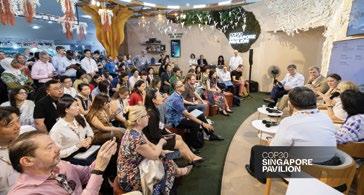
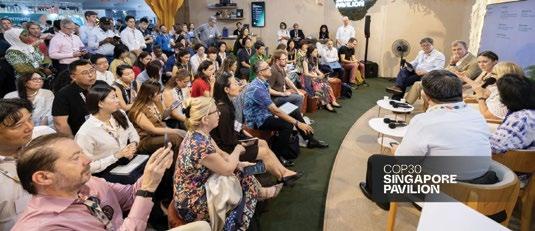
Over the fortnight at COP30, the Singapore Pavilion served as a convening space for collaboration and dialogue, hosting programmes with more than 60 partner organisations, and welcomed over 8,000 visitors, including foreign dignitaries, senior business leaders, non-governmental organisations, academia and climate youth leaders. The programmes ranged from dynamic panel discussions, fireside chats, networking events and closed-door roundtables and workshops. These programmes created a rich tapestry of exchanges and deepened cooperation across borders, sectors and communities. Beyond the physical space, the pavilion attracted a digital audience of over 30,000.
Advancing climate financing solutions
Building on the Singapore Pavilion’s role as a convening platform, several announcements were made during COP30. The Monetary Authority of Singapore (MAS) mobilised capital for climate outcomes through the Financing Asia’s Transition Partnership (FAST-P), a blended finance initiative launched at COP28.
FAST-P comprises three programmes, with Singapore pledging USD 500 million in concessional capital to be matched by other sources. The Green Investment Partnership recently achieved its first close with USD 510 million, bringing together global commercial and concessional investors to fund renewable energy, electric vehicles and water management projects, across Asia.
To accelerate the early retirement of coal-fired power plants, the MAS has released the full report of the Transition Credits Coalition (TRACTION) and published a Statement of Support for Energy Transition Credits, attracting
backing from 21 organisations, including financial institutions, corporates, and the governments of the Philippines and Singapore. These initiatives aim to advance the development and application of energy transition credits as a credible financing mechanism to accelerate the ‘coal to clean’ transition in Asia.
Building trusted and robust carbon markets
Singapore showcased concrete strides that were made on the carbon markets front, including on both Article 6 and voluntary carbon markets. The Singapore Government contracted approximately 2 million tonnes of high-quality Article 6 compliant nature-based carbon credits from Ghana, Paraguay and Peru, in September 2025, demonstrating its commitment to high-quality carbon markets.
On the sidelines of COP30, Singapore launched a call for carbon credit projects under its Implementation Agreement with Bhutan, with applications opening on 1 December 2025. It also released the eligibility list for the Singapore-Thailand Implementation Agreement and signed a cooperation memorandum with Malawi on carbon credits aligned to Article 6 of the Paris Agreement.
These partnerships create concrete project pipelines for
carbon credit development. Additionally, Singapore published the final Article 6.2 Crediting Protocol, giving countries guidance on using existing carbon crediting infrastructure to implement a standardised Article 6 approach.
On the voluntary carbon markets front, 11 governments have endorsed the Shared Principles for the Corporate Use of Carbon Credits, developed by the Coalition to Grow Carbon Markets to promote transparency and responsible use of carbon credits to complement decarbonisation efforts.
The Coalition to Grow Carbon Markets is a government-led initiative to strengthen high-integrity corporate demand for carbon credits. It is co-chaired by the governments of Kenya, Singapore and the United Kingdom.
Strengthening climate resilience
In parallel, Singapore also contributed to broader efforts to strengthen climate resilience at COP30. Singapore participated in Beat the Heat, an initiative led by the United Nations Environment Programme and the COP30 Presidency to strengthen responses to extreme heat.
At the Global Cooling Pledge Ministerial Roundtable, Minister for Sustainability and the Environment Grace Fu outlined Singapore’s heat
The Singapore Pavilion at COP30 served as a convening space for collaboration and dialogue.
resilience efforts and highlighted opportunities to collaborate on capacity building efforts to advance shared cooling and heat resilience goals.
Across its broader programming, the pavilion hosted sessions that explored themes shaping global climate discussions, including urban sustainability, regional cooperation and communitybased initiatives. These are aligned with the COP30 Presidency’s focus on facilitating exchanges on actionable approaches and the operationalisation of climate cooperation.
Empowering youth climate action
Youth participation remained an important component of the pavilion’s programme. Ten youth delegates from the Climate Youth Development Programme (CYDP) organised two sessions focusing on developing climate leadership pathways and strengthening
community-driven climate action.
Through exchanges with youth representatives from other countries, they also explored how policy, partnerships and communication can support youth, to contribute meaningfully to the global climate agenda.
Collectively, the announcements and exchanges at the pavilion demonstrated Singapore's multifaceted approach to climate action and underscored the importance of clear rules, strengthened capabilities and close international collaboration, in advancing effective global climate solutions.
From establishing robust frameworks for carbon markets and mobilising climate finance to building climate resilience and empowering youth leadership, the diverse programming reflected the interconnected nature of climate challenges and the need for coordinated global responses.
These initiatives highlighted how practical partnerships, credible market mechanisms, and capacitybuilding efforts can work together to drive meaningful progress towards global climate goals.
Singapore will continue its commitment to deepening collaboration with like-minded partners and advancing practical, credible climate solutions that contribute to a more sustainable and resilient future.
Singapore and Thailand publish eligibility list
Singapore and Thailand announced, on the sidelines of COP30, the publication of an eligibility list which sets out the eligible carbon crediting programmes and methodologies, under the Singapore-Thailand Implementation Agreement.
Global utilities set out USD 1 trillion investment plans at COP30
Global utilities have announced upgraded annual investment plans that will see their energy transition spend rise to USD 148 billion per year, up from previously stated ambitions of USD 117 billion.
The plans revealed by members of the Utilities for Net Zero Alliance (UNEZA), at COP30, will see a group of the world’s leading utilities mobilise more than USD 1 trillion in energy transition investments to 2030, since their establishment at COP28.
The investment commitments include a significant shift towards power grids and networks, with the world’s leading utilities set to spend around USD 1.24 on grids and storage for every dollar spent on renewable generation.
The group will deliver tens of thousands of kilometres of new and upgraded grid infrastructure and battery storage, while more than tripling its combined renewable energy capacity by 2030, compared with 2023 levels. Members will invest USD 66 billion per year in renewables and USD 82 billion in grids and storage.
The announcement was made at a high-level ministerial meeting on grids in Belem, where governments and multilateral development banks (MDBs) also backed new grid financing principles endorsed by the COP30 Presidency, and presented by the Green Grids Initiative and supported by UNEZA. Developed through consultation with leading banks, the principles are designed to increase the pool of capital available to grids in emerging economies, from climate and development finance institutions.
The governments, institutions and banks that have confirmed their backing for the Climate Finance Principles for Green Grids, include African Development Bank, British International Investment, East African Development Bank, Inter-American Development
Bank, Climate Bonds Initiative, Institutional Investors Group for Climate Change, Asia Investor Group on Climate Change, German Agency for International Cooperation (GIZ), Global Renewables Alliance, Grid Works, Climate High-Level Champions and the UK Government.
In a letter to the heads of MDBs earlier in the week, the COP30 CEO, Ana Toni, said: “Delivering on global goals for tripling renewable energy and doubling energy efficiency by 2030 will only be possible if grids keep pace. Through the principles and the UNEZA partnership, we [COP30] are turning global commitments into practical delivery, linking finance, policy and implementation, to build the resilient power systems that will enable a clean-energy future.”
UNEZA was established under the UAE’s COP28 Presidency to address bottlenecks in power system transformation. The Alliance is co-chaired by founding member TAQA, headquartered in Abu Dhabi, and the UK’s SSE, and operates under the guidance of the International Renewable Energy Agency (IRENA) and the Climate High-Level Champions. According to IRENA, around USD 670 billion of investment is needed per year to build out and strengthen electricity grids, between now and 2030, to meet system transformation needs.
Jasim Husain Thabet, Group Chief Executive Officer of TAQA, Founder and Co-chair of UNEZA, said, “UNEZA was established at COP28 as a platform for cooperation and decisive energy transition action from the global utilities community. This announcement reflects the fact that we deliver against our promises and underscores the magnitude of our intent. Utilities worldwide are mobilising with investments that are tangible, substantial and aligned with the need for a more resilient and
sustainable energy system.”
Martin Pibworth, Chief Executive of SSE and co-chair of UNEZA, said, “The world is long on commitments and short on implementation, and we therefore welcome the Brazilian Presidency’s focus on closing this gap at COP30.”
“Last year, UNEZA members built enough new grids to stretch from Belem to New Zealand, and enough new renewables capacity to meet half the peak demand of India. This is real, meaningful progress in the energy transition that is so critical to the future of our planet, and we now look forward to delivering this next step change in delivery,” he added.
Francesco La Camera, IRENA Director General, said, “Grids are now the biggest roadblock to the energy transition, especially in emerging and developing countries, where resilient infrastructure underpins climate action, sustainable growth and energy security. To make COP30 in Belém a turning point, we must go beyond just building more wires. We need a systemic rethink, creating secure, affordable and reliable power systems fit for the future.”
At the ministerial meeting, UNEZA also announced a series of initiatives, known as ‘delivery mechanisms’ to further accelerate investment in grid modernisation. Together, these mechanisms address system bottlenecks that limit the pace of energy transition including supply chain challenges and capital flows.
Delivering on global goals for tripling renewable energy and doubling energy efficiency by 2030 will only be possible if grids keep pace, – Ana Toni, CEO, COP30
Developing a framework for Cross-Border Renewable Energy Certificates
The Ministry of Trade and Industry (MTI), the Energy Market Authority (EMA) and International Tracking Standard Foundation (I-TRACK Foundation) will develop a framework for Cross-Border Renewable Energy Certificates (RECs) that is relevant for Southeast Asia. Today, the use of RECs to track renewable energy and their environmental attributes across borders is complex, due to differences in government regulations in Southeast Asia. The framework aims to help countries to standardise their approaches for the tracking and accounting of cross-border RECs across three areas:
• How they track the physical flow of electricity and the corresponding RECs
• Which REC registries and
instruments are permitted for crossborder electricity trading transactions
• The approach for calculating the residual mix
This framework will give companies that purchase crossborder RECs greater confidence to make exclusive claims for their sustainability reporting, without concerns that the same unit of renewable electricity is being claimed by some other entity. The framework can also serve as a pathfinder project to complement ongoing efforts by the ASEAN Centre of Energy to develop an ASEAN regional REC framework by 2027. When completed, the framework will provide a template for user countries to account for the RECs associated with cross-border electricity trading. In addition,
countries can use the framework to align with relevant internationally accepted standards for crossborder RECs and show how global best practices are implemented in their energy markets.
One example is the International Cross-Border Electricity Trading Standards and Best Practices being developed by the I-TRACK Foundation, which will set out detailed implementation requirements for the tracking and accounting of cross-border RECs.
MTI and EMA have commenced industry consultation on the draft framework, with support from the Climate Group’s RE100 initiative, the ASEAN Centre of Energy, the Asia Clean Energy Coalition, and the global microelectronics industry association, SEMI.
Stronger support and partnerships to bring urban innovations to the market
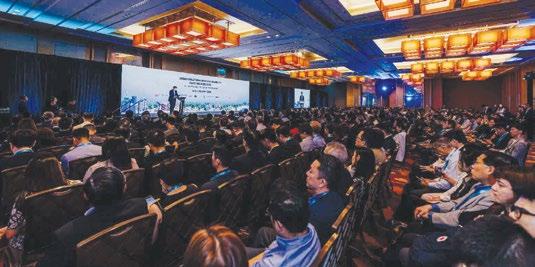
The theme for this year’s Urban Solutions and Sustainability (USS) Research & Innovation Congress, ‘Re-inventing Cities of Tomorrow’, reflects the importance of harnessing technology and innovation to reimagine and reshape the future of Singapore’s urban environment. The congress brought together participants across government agencies, academia and industry to exchange ideas and explore innovative solutions on urban sustainability.
Organised by Ministry of National Development (MND) and Ministry of Sustainability and the Environment (MSE), the event was held on 5 and 6 February 2026, at the Sands Expo and Convention Centre, Marina Bay Sands, Singapore.
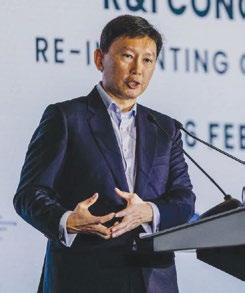
In his opening speech, Minister for National Development, Mr Chee Hong Tat, highlighted the importance of research and innovation to maintain Singapore’s competitive edge and ensure a high-quality living environment for Singaporeans. He announced the following key initiatives to accelerate the translation of research and innovation into meaningful, real-world outcomes:
Urban Solutions & Sustainability Translation Fund
The Urban Solutions & Sustainability (USS) Translation Fund is a new SGD 40 million funding programme by the Ministry of National Development (MND) and Ministry of Sustainability and the Environment (MSE) to support local companies develop, pilot and commercialise promising urban and sustainability solutions.
Administered by the USS Innovation & Enterprise Office (USS IEO), a national platform hosted by A*STAR, the fund helps companies translate high-potential USS research into cost-effective marketready products. By supporting the commercialisation of innovative
solutions, the fund creates potential business opportunities across key USS sectors including the built environment, water, environmental services and agri-food industries.
Streamlined procurement of research innovations and technology
MND will launch a new green lane procurement programme, Streamlined Procurement of Research Innovations & Technology (SPRINT), to streamline procurement and expedite government adoption of innovative research products. SPRINT will be administered by Housing & Development Board (HDB) and Building and Construction
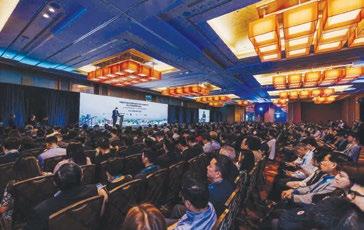
The event brought together participants across government agencies, academia and industry.
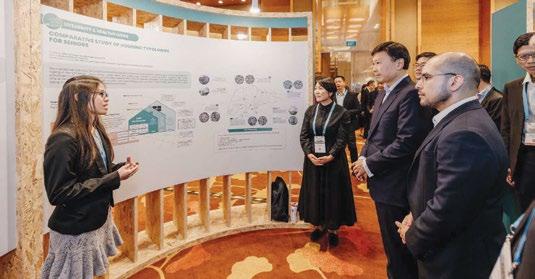
An exhibition on research and innovation projects was held alongside the congress.
Mr Chee Hong Tat, Minister for National Development, delivered the opening address at the congress.
Authority (BCA), and piloted by MND Family agencies. During the pilot phase, companies that meet SPRINT’s requirements will become qualified vendors, enabling direct procurement by MND Family agencies.
This streamlined process is expected to halve procurement timelines. SPRINT will also help companies strengthen their credentials as part of the panel of qualified government suppliers, widen their market access, and build their industry track records.
AI centre of excellence for the built environment MND, in partnership with the Singapore University of
Technology and Design (SUTD), is launching a new SGD 30 million Built Environment AI Centre of Excellence (BE AI CoE). This centre will foster collaboration between government agencies, academia and industry, to develop AIdriven solutions that address key challenges in the BE sector, such as manpower shortages in the labourintensive construction and facilities management sectors, and climate change impacts.
The CoE aims to transform work processes to enhance productivity, sustainability and liveability, whilst nurturing ‘AI bilinguals’ – professionals with both technical AI expertise and practical understanding of BE
Towards a sustainable Grid
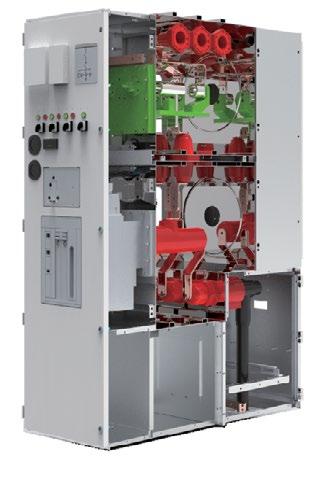
ECO-FRIENDLY SF6-FREE SWITCHGEAR
The QCX E-24 series (E-GIS) is the main switch unit applied in the distribution network and is now widely used in places such as state grid, high-speed railways, subways and new energy.
The environmental-friendly gas (C4F7N,CO2) will greatly reduce the greenhouse effect as compared to SF6 while maintaining the same excellent insulation capacity as SF6 gas.
The switchgear design is also able to be kept at a smaller size for easier switchgear replacement for existing building structures.
**RMU / SWG / GIS customisable to customer requirements.
Company Name: TGM GLOBAL PTE LTD
Address: 50 Ubi Crescent, #01-04, Singapore 408568
Website: www.global-tgm.com
Tel: +65 6848 2146
Email: sales@global-tgm.com
Company Name: Beijing Qingchang Power Technology Co.,Ltd.
Address: Room11 building C, Shangdi No.3 street #9, Haidian District, Beijing, China
Website: www.qch365global.com
Tel: 010-82893776
Email: qc_marketing@qch365.com
sector challenges.
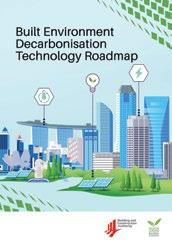
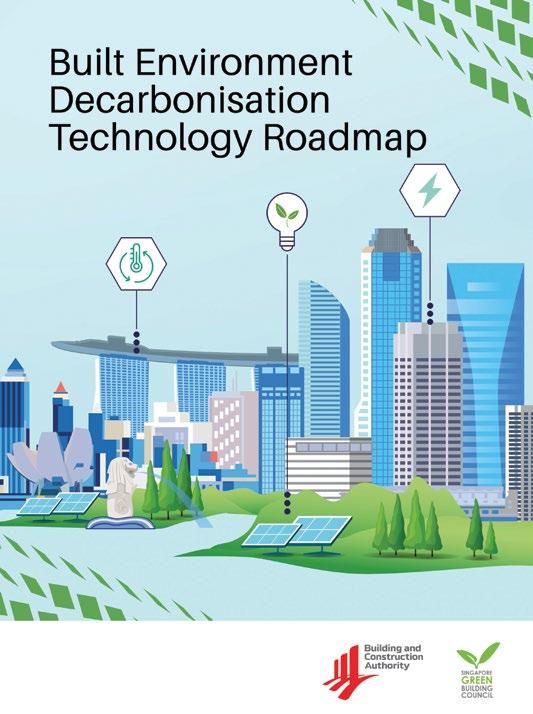
Built Environment Decarbonisation Technology Roadmap
BCA launched a decarbonisation technology roadmap at the Heat Resilience Breakout session on 6 February 2026.
The roadmap, which was jointly developed by BCA and Singapore Green Building Council (SGBC), with support from A*STAR, identifies close to 70 key technologies and strategies. It will guide research and innovation efforts towards achieving the Singapore Green Building Masterplan’s (SGBMP) ‘8080-80’ targets by 2030 and working towards the longer-term target of net-zero emissions by 2050.
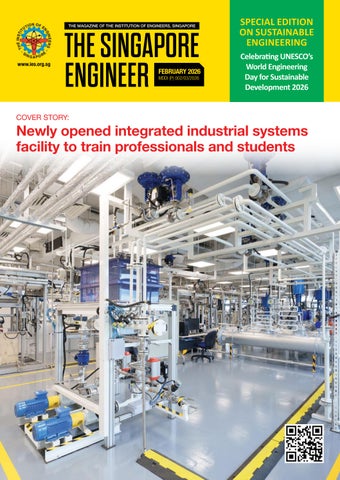
Newly opened integrated industrial systems facility to train professionals and students
Boosting Singapore’s energy efficiency and decarbonation capabilities.
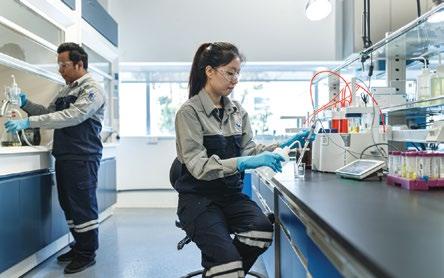
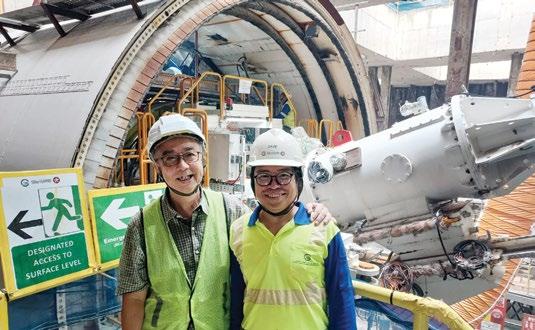
The Energy Efficiency Technology Centre (EETC), a collaboration between the National Environment Agency (NEA) and Singapore Institute of Technology (SIT), recently opened its new Energy Efficiency Training Facility (EETF) at SIT Punggol Campus.
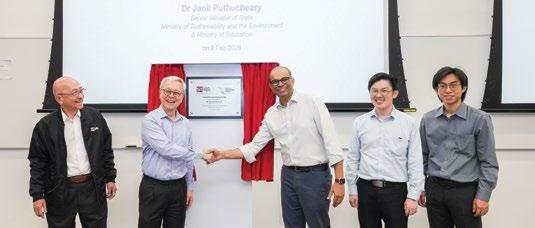
Launched by Senior Minister of State, Ministry of Sustainability and the Environment and Ministry of Education, Dr Janil Puthucheary, the new 430 m2 facility features Singapore's first integrated suite of industrial systems, that provides practical training, simulating realworld manufacturing conditions in Small and Medium-sized Enterprises (SMEs).
Training within a real-world setting
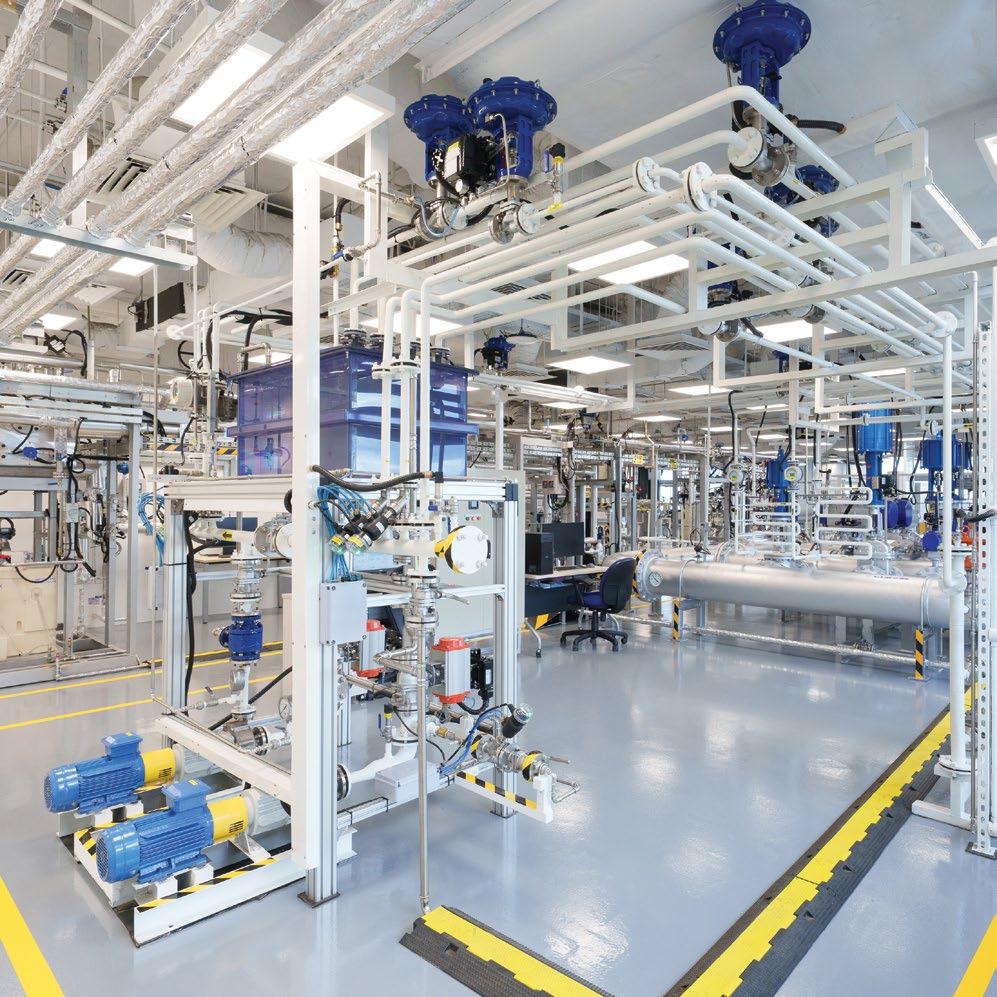
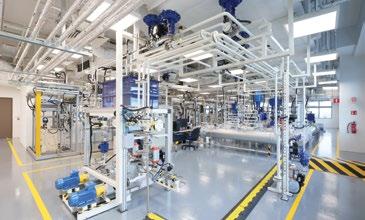
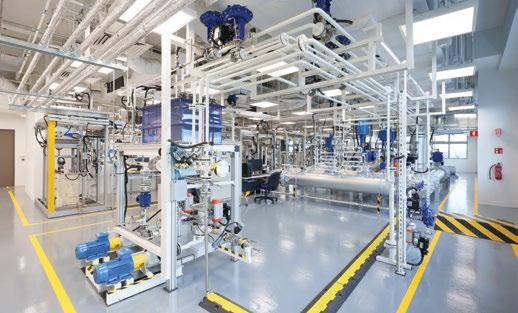
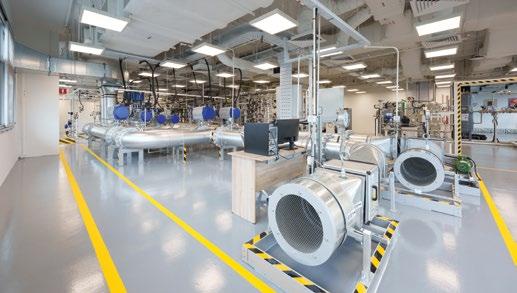
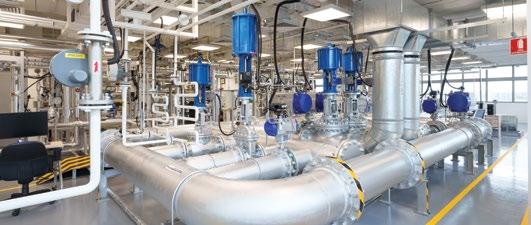
The facility, a first-of-its-kind in Singapore, houses comprehensive industrial systems including pumps, compressed air systems, lighting, fans, electric motors, air-conditioning and mechanical ventilation, heat pumps, boilers and steam traps.
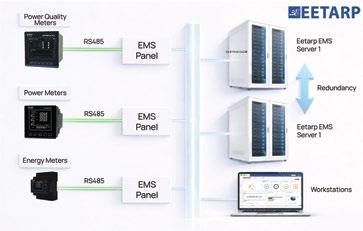
It also features an Energy Management System with simulation as well as real-time data collection, analysis and monitoring capabilities. With the facility, participants can carry out energy efficiency assessments in a safe and controlled environment, without disrupting actual operations or incurring costly downtime.
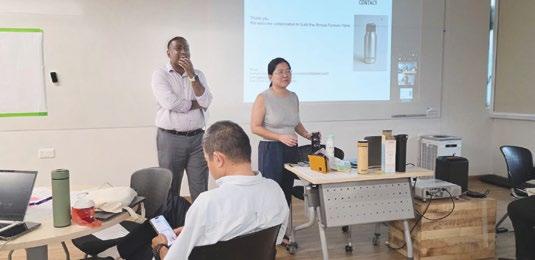
SIT students undergoing their Integrated Work Study Programme (IWSP) will also be able to work alongside EETC professionals at the facility, to acquire practical energy audit skills.
The EETF also serves as a platform for applied research and digital innovation. SIT has entered into a Research Collaboration Agreement with Willowglen
Services Pte Ltd to develop a Sustainability Reporting System for the new training facility.
Leveraging operational data from industrial systems, the project enables real-time monitoring and analytics of energy consumption, carbon emissions and system performance, enhancing training and research outcomes. SIT students may also be involved, as part of their coursework, reinforcing the integration of education, research and industry collaboration.
SIT President Professor Chua Kee Chaing said, “This training facility underscores SIT’s commitment to applied learning and industry-
relevant education. As the firstof-its-kind facility in Singapore’s tertiary landscape, it enables engineers, managers, technologists and engineering students involved in energy efficiency, decarbonisation and sustainability domains, to gain authentic, hands-on experience using industrial systems typically found in the manufacturing sector.”
“By bringing industry-grade systems in-house, learners will be able to benefit from more structured, scalable and immersive training, strengthening workforce readiness and supporting Singapore’s energy efficiency and decarbonisation efforts,” he added.
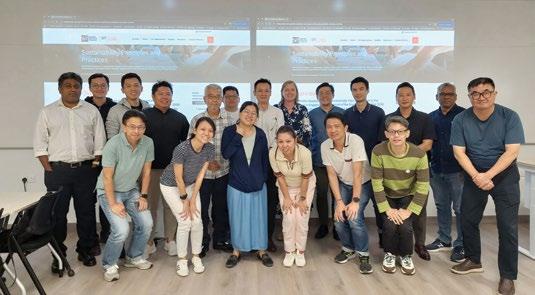
The Guest-of-Honour, Dr Janil Puthucheary (third from right), Senior Minister of State, Ministry of Sustainability and the Environment and Ministry of Education, shaking hands with Professor Chua Kee Chaing, SIT President, at the opening of the Energy Efficiency Training Facility at SIT Punggol Campus.
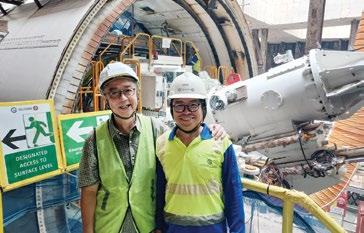
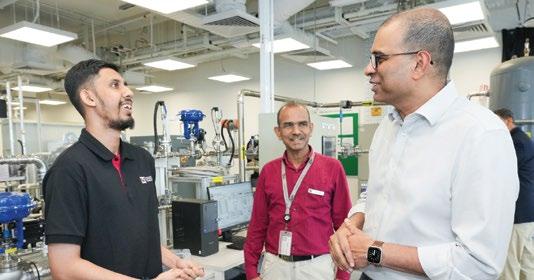
During a tour of the facility by the Guest-of-Honour.
Support to build local industrial energy efficiency capabilities
With the new Energy Efficiency Training Facility, the EETC is expected to deliver an estimated 1,500 hours of practical and handson training annually, benefitting around 400 participants each year, across its various programmes and outreach activities, including the Energy Efficiency Upskilling Programme (EEUP) and the Singapore Certified Energy Manager (SCEM) programme.
Since the EETC’s inception in 2020, it has supported more than 50 companies with over 250 industrial systems assessed and has trained 100 students, whilst upskilling more than 500 professionals through the EEUP.
Energy Efficiency Technology Centre
The Energy Efficiency Technology
Centre (EETC) is a collaboration between the National Environment Agency (NEA) and the Singapore Institute of Technology (SIT). It was established in 2020 to support Singapore’s energy efficiency ecosystem, through three key outcomes:
• Catalysing energy efficiency improvements at SMEs through consultancy services.
• Training engineering undergraduates in industrial energy efficiency.
• Upskilling existing engineers and practitioners through practical training courses.
By combining SIT's technical expertise and strong industry ties with NEA’s support, the EETC helps companies, particularly SMEs, discover and implement energy efficiency improvement measures, whilst building local
industrial energy efficiency capabilities.
National Environment Agency
The National Environment Agency (NEA) is the leading public organisation responsible for ensuring a clean and sustainable environment for Singapore. Its key roles are to improve and sustain a clean environment, promote sustainability and resource efficiency, maintain high public health standards, provide timely and reliable meteorological information, and encourage a vibrant hawker culture.
NEA works closely with its partners and the community to develop and spearhead environmental and public health initiatives and programmes. It is committed to motivating every individual to care for the environment as a way of life, in order to build a liveable and sustainable Singapore for present and future generations.
Singapore Institute of Technology
As the university for industry and Singapore’s first university of applied learning, the Singapore Institute of Technology (SIT) offers industry-relevant degree programmes that prepare its graduates to be work- and futureready professionals. Its mission is to maximise the potential of its learners and to innovate with industry, through an integrated applied learning and research approach, so as to contribute to the economy and society.
The university’s unique pedagogy integrates work and study, embracing authentic learning in a real-world environment, through collaborations with key strategic partners. Its focus on applied research with business impact is aimed at helping industry innovate and grow.
SIT’s new centralised campus within the larger Punggol Digital District features a vibrant learning environment where academia and industry are tightly integrated with the community.
The EETF houses comprehensive industrial systems including pumps (top) and fans (below).
Built Environment Decarbonisation Technology Roadmap launched
Guiding research and innovation efforts towards achieving the ‘80-80-80’ target by 2030 and working towards the target of net-zero emissions by 2050.
The Building and Construction Authority (BCA) officially launched the Built Environment Decarbonisation Technology Roadmap at the Urban Solutions & Sustainability (USS) Research & Innovation (R&I) Congress 2026.
Organised by Ministry of National Development (MND) and Ministry of Sustainability and the Environment (MSE), the event was held on 5 and 6 February 2026, at the Sands Expo and Convention Centre.
Day 2 of the congress featured a presentation by Mr Chen Zhimin, Deputy Director, Green Building Policy and Technology Department, BCA, on ‘Climate-Friendly Cooling Technologies’, that provided attendees with more information on the roadmap.
Singapore is committed to reducing its greenhouse gas emissions to about 45 to 50 million tonnes (MtCO2e) by 2035, from the projected 60 MtCO2e target in 2030. Technology plays a key role in the transition to encourage the switch to low-carbon alternatives and drive transformational change.
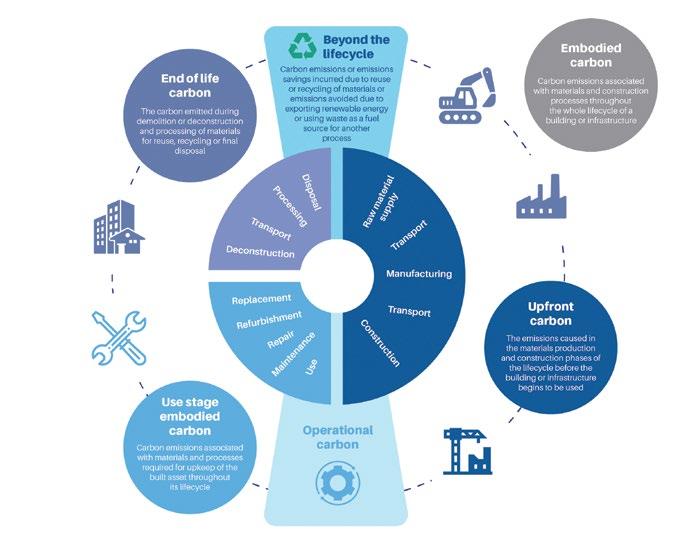
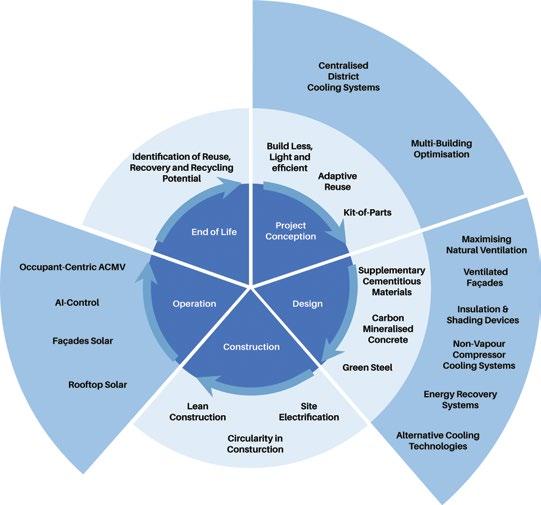
To this end, BCA and the Singapore Green Building Council (SGBC), with support from A*STAR, have refreshed the 2018 Super Low Energy Building Technology Roadmap. Renamed the Built Environment Decarbonisation Technology Roadmap, it identifies close to 70 key technologies and strategies, and adopts the ‘wholelife carbon’ approach, addressing both operational and embodied carbon emissions.
Since January 2025, BCA and SGBC have engaged about 100 built environment stakeholders, including building owners, consultants, Institutes of Higher Learning (IHLs), material suppliers and technology solution providers,
to co-create the roadmap.
The technology roadmap serves two primary purposes. Firstly, it encourages stakeholders to leverage market-ready solutions to reduce whole-life carbon emissions in their building projects. Secondly, it provides the research community with a clear directive on emerging technology priorities, to support
Singapore’s Research, Innovation, and Enterprise (RIE) 2030 plan. More details can be found in the public report which can be accessed via https://go.gov.sg/ decarbroadmap.
All images by Building and Construction Authority
Infographic explaining the whole life carbon approach. Source: World Green Building Council.
Infographic showing the embodied and operational carbon strategies throughout the building lifecycle.
How AI is strengthening carbon markets and climate resilience
Facilitating credible carbon and climate data analysis.
Carbon markets are rapidly becoming a mainstream instrument for managing emissions. For engineers shaping Singapore’s buildings, infrastructure and urban systems, carbon has become a defining design and financial constraint. With rising carbon taxes and the push towards BCA Super Low Energy standards, the built environment – responsible for 40% of global emissions – faces unprecedented scrutiny.
Engineers must now navigate a dual challenge – delivering credible carbon performance while enhancing climate resilience across assets and projects. Artificial Intelligence (AI) is emerging as the critical engine that connects highlevel sustainability ambitions with the practical realities of site-level engineering and decision-making.
AI for credible carbon data and climate resilience analysis
AI, embedded in many digital engineering and sustainability tools, is becoming a key enabler of trusted carbon measurement, reporting and verification (MRV). Platforms like Honeywell Forge integrate data from meters and IoT devices to detect anomalies or unusual patterns, reducing errors and strengthening audit readiness.
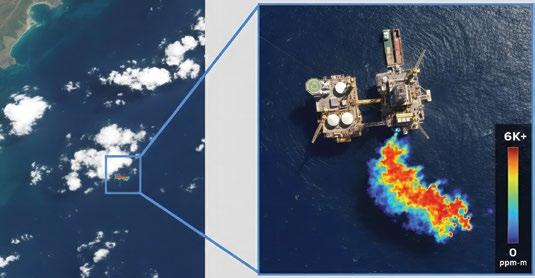
At the site level, AI combined with satellite imagery supports carbon footprint verification and climate resilience assessment. High-resolution imagery from providers like Planet Labs feeds AI analytics to monitor land-use changes and environmental impacts with high temporal frequency.
Engineers can validate green-space commitments and simulate climate risks, such as localised flooding or heat stress, without rebuilding complex models from scratch.
AI in operations
In building and infrastructure operations, AI and machine learning enable continuous optimisation of equipment performance. A landmark example is Google’s data centres, where AI models adjust cooling plant operations in real time, reducing energy used for cooling by 40%.
Similar approaches are now applied in commercial buildings and hospitals in Singapore. Advanced building management systems allow engineers to optimise chillers and air-handling units, lowering operational emissions and improving resilience during heatwaves and peak demand periods.
AI in supply chains
Embodied carbon is becoming a decisive factor in project approvals and tenders. AI-driven analytics now support ‘cradle-to-site’ traceability, helping teams validate environmental product declarations (EPDs) at scale.
Contractors like Skanska use digital platforms to aggregate supplier data for concrete and steel to compare carbon intensity across design options. Machinelearning models help flag outliers
in supply chain logs, enabling engineers to select lower-carbon materials and verify claims more efficiently. Emerging ‘material passport’ approaches further enhance long-term transparency by linking carbon data directly to digital building records such as the Building Information Model (BIM).
The future of resilient infrastructure Looking ahead, AI and digital tools will grow in importance as platforms evolve alongside the Singapore Green Plan 2030. While not a standalone solution, AI acts as a force multiplier, streamlining climate analytics and revealing insights from complex data.
For engineers, this means converting design and operational data into credible carbon baselines and high-quality carbon credits. Strategic use of AI is key to creating a built environment that is both low-carbon and future-ready.
TEMBUSU Asia
Enabling organisations to meet carbon performance goals and achieve climate resilience in projects, is TEMBUSU Asia, one of the leading sustainability consulting companies in Asia.
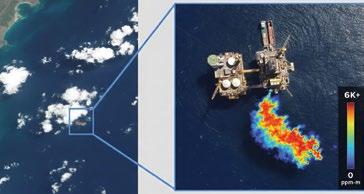
Using satellite-derived data, AI can detect and quantify emissions.
Driving efficiency for a low-carbon built environment
Engaging designers and suppliers early to meet low-carbon goals.
Singapore’s industrial and logistics sectors prioritise sustainable design and operation. With energy-intensive processes, rising utility costs, and stringent climate targets, there is a pressing need for innovative facility planning, construction, and management practices.
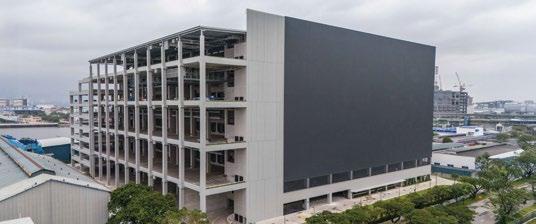
The new warehouse development at 36 Tuas Road stands as a benchmark project - Singapore’s first logistics warehouse and the first building in the industrial real estate sector to achieve both the Green Mark Platinum Super Low Energy (SLE) and all five badges (Intelligence, Health & Wellbeing, Resilience, Maintainability, and Whole Life Carbon). This outstanding achievement was further recognised when 36 Tuas Road was named BCA’s Project of the Year 2025 (under the Industrial category).
This project demonstrates how Building System and Diagnostics (BSD), along with its subsidiary Climate Asia, offers advisory services and leverages their Green Mark Certification expertise. This approach aims to convert these challenges into enhanced building performance throughout the facility’s lifecycle.
Planning for Super Low Energy performance
The client engaged BSD as an Environmental Sustainability Design (ESD) consultant from the start and was actively involved in initial feasibility and concept meetings. This early involvement allowed BSD to effectively communicate the sustainability framework to all key stakeholders. By setting clear performance targets, the team pushed boundaries to meet Green Mark 2021 Platinum Super Low Energy standards.
Advocating for optimal energy performance and a forward-looking
approach towards performancebased outcomes is central to this work. Following a life cycle cost analysis, the variable refrigerant flow system was chosen due to its high part-load efficiency and its compliance with the Green Mark 2021 energy benchmarks.
BSD also explored hybrid cooling and thermal comfort strategies, assessed mechanical ventilation designs and reviewed equipment selection, to ensure that each major system effectively contributed to reducing energy consumption while maintaining reliable industrial operations.
Collaborating for Green Mark success
BSD coordinated the design and project teams through regular workshops and reviews to keep everyone aligned with the SLE goal. The Green Mark 2021 workshops deepened the team’s understanding of badge requirements, highlighted scoring opportunities and clarified documentation responsibilities, reducing surprises during assessment. BSD also reviews and consolidates performance data and evidence to ensure accuracy, timeliness and audit readiness.
Climate Asia broadened the building’s lifecycle perspective by
emphasising carbon and resilience. To secure the Whole Life Carbon Badge, a construction-stage carbon assessment was carried out, covering emissions from materials, transport and site activities, in line with Green Mark 2021 technical guidance.
The team developed a guide for monitoring, tracking and reporting carbon, and conducted onboarding sessions with the operations team to ensure a smooth transition from design to operations. This was supported by Carbon Compaz, an in-house digital platform for tracking Scope 1 and Scope 2 emissions for ongoing carbon reporting.
Extending impact across existing assets
The same expertise is now being applied to existing industrial buildings. The Green Mark 2021 framework mandates that owners continuously monitor and enhance performance through audits, benchmarking and system optimisation, rather than merely stopping at project completion. BSD offers diagnostics and commissioning services to identify outdated ACMV equipment, optimise controls and upgrade essential systems. Additionally, Climate Asia's carbontracking capabilities provide substantiated evidence for credible decarbonisation pathways.
The new warehouse development at 36 Tuas Road.
DELIVERING INNOVATIVE, PRACTICAL SOLUTIONS FOR SUSTAINABLE BUILDING
With over 20 years of proven experience across 1,000+ projects in Asia, we deliver expert consultancy and practical solutions for sustainable building transformation.
Green Building Certifications (BCA Green Mark, LEED, WELL, etc.)
Sustainable Design and Green Building Advisory
Energy Audits and RetroCommissioning
Applied Research, Innovation and Continuous Education
ESG & Carbon Management Training Climate Targets & Disclosure
Building ESG directly into engineering systems
Teams can then design cleaner, more efficient, and more resilient products.
CLA Global TS works with organisations to help build sustainability into how they plan, design and run their engineering work. The company helps teams put the right structures, data and processes in place so ESG becomes part of everyday decision-making, not an extra task. By using clear information, simple controls and joined-up ways of working across the full lifecycle, sustainability reporting becomes a natural result of well-run operations – giving teams greater clarity, efficiency and confidence.
From design to operations: making sustainability actionable CLA Global TS helps the organisation incorporate sustainability into:
• Design – low carbon options, LCA-backed material choices.
• Construction & operations – site energy monitoring, waste reduction digital controls.
Sustainability reporting is a map on the journey for every company, with the aim to improve performance in non-financial areas. Research has also shown that companies that disclose their sustainability reports increase investors’ confidence and help build long-term value.
Sustainability reporting services enable organisations to be transparent about the risks faced and opportunities created, on top of the economic, environmental and social impacts caused by their daily activities.
Why sustainability reporting matters in Singapore’s economy
As Singapore evolves into a global hub for innovation and sustainability, businesses must embrace practices that reflect their commitment to ESG principles. Sustainability reporting plays a vital role in this transformation by promoting transparency and longterm value creation.
Here is why sustainability reporting is essential in Singapore’s economy:
• Enhancing Investor Confidence: Transparent reporting attracts responsible investments by showcasing a company’s ESG efforts and reducing risk perceptions.
• Regulatory Compliance: With increasing government mandates, sustainability reporting helps businesses meet local and global requirements.
• Strengthening Stakeholder Relationships: Demonstrating accountability fosters trust with customers, employees and the community.
• Driving Innovation: Focusing on sustainability encourages companies to explore resourceefficient and eco-friendly solutions.
• Ensuring Good Corporate Governance: This includes giving stakeholders a well-rounded report by tracking and disclosing issues relevant to the environment and social performance of a listed company. It is made possible through thorough and accurate sustainability reporting.
• Improving Stakeholder Communications: This is achieved by providing a broad-based, non-financial perspective on the organisation.
• Identification and management of key risks and opportunities: These are additional benefits. By adopting sustainability reporting in Singapore, organisations can align with national goals, such as the Green Plan 2030.
Top reporting challenges
Sustainability reporting, just like other aspects that pillar the stability of a company, is constantly faced with challenges that make professional services valuable. Companies find themselves in the spotlight, as the desire for transparency increases. Even so, with the release of non-financial reports on sustainability, many companies still face reporting challenges such as:
• Is the company’s sustainability reporting compliant with the international sustainability report framework?
• Is it externally verified?
• Does it meet local regulatory transparency requirements?
Assistance in reporting
CLA Global TS helps organisations in the following ways:
• Facilitating workshops for issuers / companies / business owners to better understand the sustainability reporting project.
• Conducting evaluations by sustainability reporting experts of the suitability of issuers’ identified international sustainability report framework and ESG factors (quantitative and qualitative).
• Drafting / reviewing management’s sustainability report, based on the international framework identified and SGX Listing Rules. The sustainability reporting services offered by CLA Global TS will make things easier for organisations, from researching to report generation.
CLA Global TS
Established in 1993, CLA Global TS is a trusted public accounting and Asia-focused business advisor. For more information, please email mariateo@sg.cla-ts.com
Engineering a mission-critical infrastructure towards carbon neutrality
Airport Group's initiatives and efforts for a greener future airport.
INTRODUCTION
Airports are amongst the most energy intensive infrastructure –vast, complex and operating roundthe-clock. As airport operators today grapple with the dual mandate of growing air traffic and cutting carbon emissions, Changi Airport Group (CAG) is demonstrating how a busy international air hub can grow sustainably.
RAISING ENERGY EFFICIENCY OF AIRPORT ENGINEERING ASSETS
CAG’s carbon reduction strategy starts with a simple engineering principle: Get it right, right from the start. This principle drives how CAG transforms its design, procurement and management of high energyconsuming airport systems.
AIR-CONDITIONING:
TACKLING
THE LARGEST ENERGY GUZZLER
Pre-COVID, air-conditioning accounted for close to 60% of CAG’s energy footprint. Since then, CAG has progressively but holistically revamped the air-conditioning systems in the passenger terminals, covering:
Upstream systems for chilled water generation
• Consolidated smaller chiller plants into centralised ones for synergy.
• Straightened chilled water piping to minimise friction losses/pressure drops.
• Replaced conventional centrifugal chillers with magnetic ones with friction-less drive shafts.
• Employed electromagnetic flux cleansing mechanisms to scrub the interior of chiller condenser tubes to improve heat transfer.
• Deployed higher efficiency fan motors and adjusted chemical
treatment in cooling towers to achieve higher cycles of concentration to conserve water.
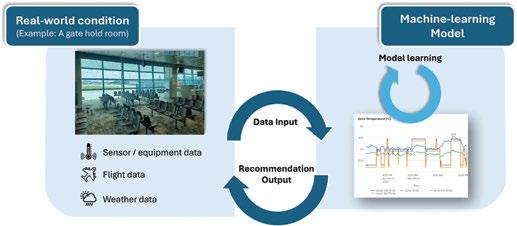
• Applied AI models using demand prediction and machine learning that squeezed out 10% to 15% more energy savings, even for relatively new plants.
Downstream systems for cooled air handling
• Switched to higher efficiency, electronically-commutated (EC) and axial fans to distribute cooled air.
• Deployed high filtration efficiency (MERV-14) and low pressure drop filters to clean recirculated air.
• Upsized cooling coils to reduce energy use through lower fan speed.
• Installed UV lights to keep the cooling coils clean for better energy transfer.
Such holistic re-engineering saved 25 GWh of electricity consumption annually – equivalent to powering 5,800 HDB 4-room flats.
The adoption of BCA-advocated Energy Performance Contracting and evaluation of tenders using Total Cost of Ownership, covering life-cycle capital, maintenance and energy costs, guarantees that such savings would be realised with high confidence.
LIGHTING: EMBRACING PASSIVE AND ACTIVE MEASURES
Similarly, optimisation of lighting energy use starts with good design. Admitting ‘cool’ natural lighting has long been part of CAG’s architecture DNA. Having roof skylights with low-e glass, sheltered glass façades and bespoke reflective louvres to channel daylight into terminal spaces in a soft, diffused manner creates a vibrant and energising ambience. Across the airport, wide-scale deployment of energy-efficient and maintenance-friendly LED paired with occupancy sensing and daylight-responsive controls further cut energy use by 20 GWh annually.
EXPERIMENTING AND INNOVATING WITH NEW TECHNOLOGY
Beyond physical retrofits, CAG is pursuing an innovation pipeline to further reduce the airport’s energy use – digital twins for real-time performance optimisation, smart senors-enabled predictive analytics for targeted and leaner maintenance practices, and machine learning-guided cooling strategies that respond to weather forecast and learn occupancy patterns
Changi
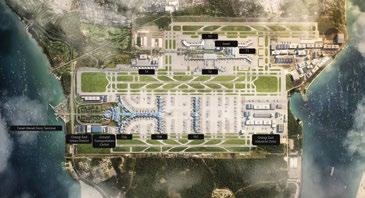
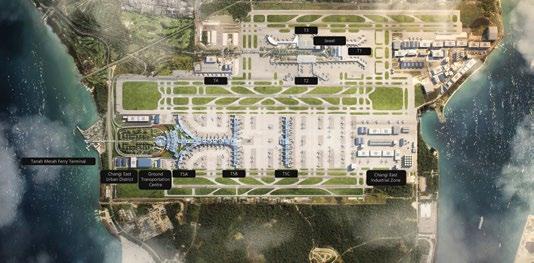
Aerial view of Changi Airport, the size of 2,800 soccer fields.
dynamically. These forward-looking capabilities ensure the airport remains technically agile, resourceefficient and future-focused.
MAXIMISING SOLAR POWER IN A LAND-CONSTRAINED ENVIRONMENT
CAG has operationalised Singapore’s largest single-site, rooftop solar installation, with a peak generation capacity of 40 MW, offsetting about 10% of its annual energy needs. To reach for longerterm net zero aspirations, CAG needs to explore and exploit more renewable energy sources. The limitation is not ambition but more due to land constraints. CAG is therefore examining unconventional deployment options, such as deploying solar PV systems in the airfield zone and on water bodies. These require rigorous aeronautical safety assessment and innovative engineering to address multi-fold considerations in a high-intensity traffic and risk-critical environment. Along this line, opportunities for tapping solar power may not always be limited to large scale installations. CAG is already running over 30 autonomous solar-powered grass-cutting robots, reducing manpower needs and improving airfield safety.
ENGINEERING FOR CLIMATE RESILIENCE
Sustainability extends beyond managing carbon emissions. Climate resilience is equally vital to ensure Changi Airport remains
safe and can support uninterrupted operations amidst increasingly frequent and severe adverse weather conditions.
CAG’s flood-risk management includes constructing a detention tank that buffers intense rainfall events by storing storm water and coordinating its discharge to external drains through smart sensing of rainfall and tidal conditions. At the main outlet drains, IoT sensors and CCTVs are installed to monitor and chart water levels in real-time, to preemptively detect anomalies which warrant immediate action.
RUNWAY PAVEMENT RESILIENCE: DESIGNING FOR HEAT ENDURANCE AND EARLY WARNING
Runways are mission-critical assets. Over the years, CAG has implemented several forward-looking measures to enhance its resilience under extreme weather:
• Trapezoidal runway grooves for improved surface water drainage and easier removal of tyre rubber deposits.
• Automated real-time reporting of runway water levels to pilots, using precision laser sensors measuring surface water, up to submillimetre accuracy.
• Polymer-modified asphalt mix in the pavement capable of tolerating temperatures close to 80° C.
• Embedded temperature sensors for structural monitoring of aircraft pavement under prolonged heat stress.
• Laser-based crack and elevation measurement system for better mapping and prediction of potential runway surface failures.
CIRCULARITY AND OTHER SUSTAINABILITY INITIATIVES
Up to 50% of old concrete aggregates from the aircraft parking apron rehabilitation projects are recycled and reused in the refreshed concrete mix. This arrangement is cheaper and more environmentally friendly than shipping new stone aggregates from overseas quarries.
In the passenger terminals, food waste is digested and processed onsite to reduce disposal to incineration plants.
To support wide-scale electrification of airport vehicles, CAG is working towards a smart power grid to avoid over-burdening the existing power supply and network infrastructure at peak periods. Trials are ongoing to use lower-carbon renewable diesel in large machinery or vehicles lacking viable electric variants.
CAG is also committed to supporting its airline partners’ transition towards the use of sustainable aviation fuel (SAF). CAG has facilitated SAF uplift trials and established a seamless SAF supply chain at Changi Airport. Such initiatives demonstrated the operational readiness for SAF adoption in Singapore, which has a national target of 1% SAF blend on all flights departing Singapore from October 2026.
CONCLUSION
Changi Airport’s sustainability journey is not defined by singular projects, but an eco-system-wide endeavour, involving integrated multi-disciplinary engineering and continuous innovation, to put Singapore and Changi Airport as a forefront showcase for sustainable infrastructure.
Learn more at https://www. changiairport.com
Use of AI and Machine Learning models for optimised use of air-conditioning systems.
An innate desire to dream big
by Associate Professor Stephen Tay, Department of the Built Environment, College of Design and Engineering, National University of Singapore
Making the impossible possible.
In the early 1900s, a man had a big dream and asked, “If birds can glide for long periods of time, then… why can’t I?” Subsequently, Orville Wright, together with his brother Wilbur Wright, demonstrated the first sustained flight on 17th December 1903 [1].
This paved the way for subsequent engineering milestones in our history, such as the first flight of an airline, from St Petersburg to Tampa, in Florida, in 1914 [2], and the first space shuttle mission, in 1981.
Similarly, in today’s built environment, engineering feats have demonstrated how sustainability breakthroughs are possible. The SDE4 building at the National University of Singapore (NUS) was awarded the Building and Construction Authority (BCA) Green Mark (GM) 2021 In-Operation (Non-Residential) Platinum Positive Energy Award in 2022 [3].
A decade ago, it was unfathomable how a building could generate more energy than it consumes, especially when we consider the large amount of electricity required for airconditioning in buildings within the tropics. Nevertheless, through the engineering efforts of various key stakeholders, SDE4 showed that what was impossible is now possible.
On green and sustainable buildings, the incorporation of solar photovoltaics (PV) for energy generation has been adopted for cities. However, conversations on sustainability should not exclude greenery.
For example, the SG Green Plan, spearheaded by five ministries to drive a whole-of-nation effort towards a sustainable Singapore, has included the addition of green spaces and increased solar energy deployment.
Considering the limited space in Singapore, the PV panels for generation of solar energy and greenery could be located either 1) adjacent to each other, on separate spaces or 2) within the same space. Therein lies the dream – is it possible to have solar PV panels and greenery co-exist on the same square metre of space even though both need direct line of sight to the sun for solar energy generation and photosynthesis to occur? The dream appeared to be challenging and may appear to be as ambitious as demonstrating sustained flight, back in the 1900s.
Nevertheless, when engineers dream big and work with relevant stakeholders, the impossible becomes possible – a theme that runs across milestones in history.
In 2025, a group of engineers and researchers from the Department of the Built Environment (DBE) in NUS, along with the National Parks Board (NParks) and BCA, demonstrated that it is possible to co-locate solar panels and greenery for sustainable roofs. The study, which was published in Applied Energy [4], revealed three benefits for buildings: 1) improved solar electricity generation, 2) improved greenery growth and biodiversity and 3) reduced thermal impact on
the building.
Furthermore, the team developed a new metric, the roof equivalent ratio (RER), to describe the ‘productivity’ of roof spaces. This achievement has since been reported [5] and a YouTube video was released by NParks [6].
As cities adopt ‘impossible’ ideas for possible adoption, a pipeline of skilled graduates is essential for sustainable development.
Hence, the B.Eng. Infrastructure and Project Management (IPM) undergraduate programme in DBE integrates engineering, management, finance and law, to provide graduates with unique skills to deliver sustainable cities.
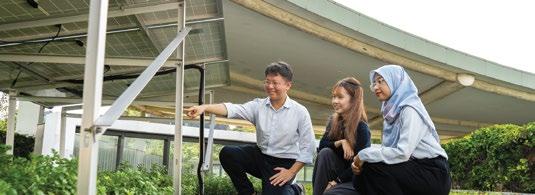
Associate Professor Stephen Tay with colleagues Joyce Lim and Faizatuzzahrah Rahmaniah on a roof with co-location of solar panels and greenery.
Towards sustainable and future-ready buildings
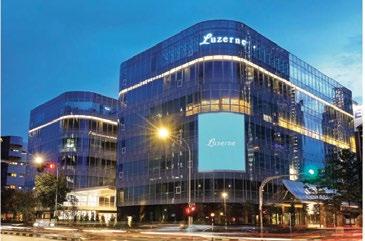
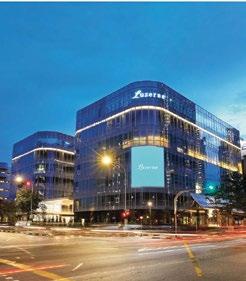
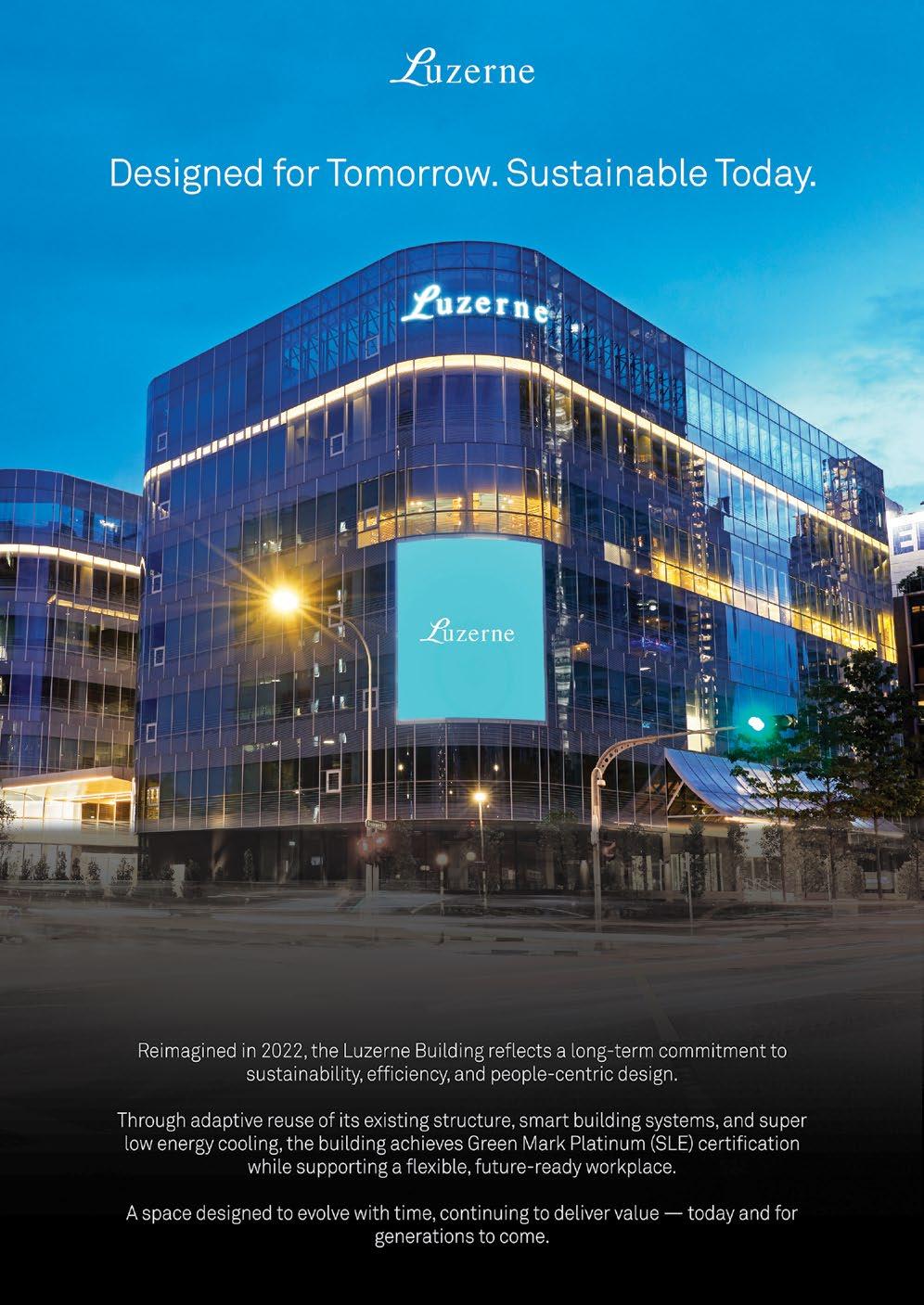
Luzerne Building, the headquarters of Hiap Huat Holdings Pte Ltd, is a landmark reimagined in 2022, reflecting a long-term commitment to sustainability, efficiency and people-centric design.
We speak with the project team behind the transformation, to understand how the building was designed for tomorrow – sustainably, today.
Q: Singapore has set strong sustainability targets. How does the Luzerne Building contribute to this national agenda?
A: Singapore's push towards sustainability and energy efficiency has reshaped how buildings are designed and operated. For the Luzerne Building, the focus was not on starting from scratch, but on reimagining what already existed. By reusing the original building structure and retrofitting it with modern, energy-efficient systems, we significantly reduced the carbon footprint associated with new construction. This adaptive reuse approach aligns closely with Singapore’s sustainability goals and demonstrates how existing buildings can be transformed to meet future demands.
Q: What were the key sustainability considerations during the retrofit?
A: Energy efficiency was a central priority. During the major Addition and Alteration (A&A) works, the building was equipped with a smart, centralised chilled-water airconditioning system operating to Super Low Energy (SLE) efficiency standards.
In addition, smart lighting systems with sensors were integrated throughout the building to optimise energy usage. Green landscaping was also introduced at lift lobbies and washrooms to help reduce ambient temperatures and improve overall comfort. Together, these measures contribute to substantial energy savings while enhancing the user experience.
Q: The Luzerne Building has achieved Green Mark Platinum (SLE). What does this recognition represent?
A: Achieving BCA Green Mark Platinum (Super Low Energy) certification recently is a significant milestone, particularly for an existing building. It reflects not only strong technical performance but also close collaboration between the building owner, consultants and contractors,
throughout the retrofit process.
Despite the challenges faced during the COVID period, the project team worked closely and persistently to deliver a building that meets best-in-class sustainability standards. This recognition affirms the long-term vision behind the transformation and validates the effectiveness of the solutions implemented.
Q: Beyond environmental performance, how does the building support people and businesses?
A: Sustainability extends beyond energy efficiency – it is also about people. The Luzerne Building was designed to support well-being, productivity and flexibility.
Biophilic design elements were incorporated to create calming, nature-inspired spaces. Flexible floor plates, high-ceiling showrooms, shared amenities and wellness facilities support a diverse mix of tenants-from creative thinkers and engineers to innovators and researchers.
The building is designed to evolve with its occupants, supporting both present needs and future growth.
Q: What does the Luzerne Building represent, moving forward?
A: The Luzerne Building reflects how thoughtful design and sustainability come together in a vibrant, future-ready workspace. Reimagined for today and tomorrow, it remains a place where businesses grow, collaborate and thrive, through responsible design and long-term thinking.
Luzerne Building – at the heart of Singapore’s business landscape.
by Akihiro Ondo, Managing Director and CEO, Mitsubishi Power Asia Pacific
Optimising existing power plants with bridging solutions and developing new technologies.
We are starting this year at a time of unusual volatility. Geopolitical disruptions continue to influence energy markets. Electricity demand is soaring at a pace few anticipated just a few years ago, driven in part by AI adoption and the rapid build-out of data centres. All this is unfolding as net-zero timelines are drawing closer.
In our many conversations, I am asked whether we are still on track. But the truth is, the transition is shaped by many moving parts –policy, technology, infrastructure and economy – and no single organisation or country controls all of them. What is clear, however, is that progress will only come if we move forward steadily, together.
At Mitsubishi Power, our approach is shaped by a Japanese mindset known as ‘Kaizen’ – a culture of continuous improvement. Rather than waiting for perfect conditions or breakthrough moments, we focus on making consistent, practical improvements that, over time, add up to meaningful gains.
This perspective is important because electricity is the backbone of daily life. It keeps hospitals operating, factories producing, transport systems moving and homes powered. Reliability is nonnegotiable.
Singapore illustrates this clearly. With limited land, no domestic energy resources, and a power system where around 95% of electricity is generated from natural gas, the transition must be phased and carefully engineered.
Energy systems that adapt and evolve
Across much of Asia, natural gas plays an important bridging role. It enables the move away from
higher-emissions fuels such as coal, while providing the reliability and scale needed to meet rising electricity demand. Gas is also a natural partner for renewables, by providing dispatchable power that helps balance variability from wind and solar energy.
When deployed in advanced gas turbine combined cycle configurations, such as our J-Series Air-Cooled (JAC) gas turbines, natural gas can achieve a combined cycle efficiency of more than 64%. This translates to around 65% lower CO₂ emissions per unit of electricity generated, compared to conventional coal-fired power plants. These high-efficiency gas turbines help power systems in the region maximise the value of natural gas, delivering reliable electricity while
lowering emissions through more efficient fuel use. In Singapore, we are supplying gas turbines to projects developed by key partners including Meranti Power, Sembcorp, Keppel and PacificLight Power.
In neighbouring Malaysia, we are collaborating with PETROS on a project in Miri, Sarawak, as well as with Malakoff, on two JAC gas turbine units in Peninsular Malaysia. In Thailand, 10 JAC gas turbine units are powering major plants in Chonburi, Rayong and Ratchaburi, supplying reliable electricity to key industrial corridors.
At the same time, we are actively developing solutions with the next phase of the transition in mind. This includes hydrogen- and ammoniaready co-firing solutions, alongside complementary technologies such as carbon capture and utilisation systems. Today, our advanced gas turbines are capable of co-firing up to 30% hydrogen from the outset, helping to future-proof new and existing assets.
In parallel, higher hydrogen co-firing ratios are being validated under full operating conditions. In 2025, we demonstrated 50% hydrogen co-firing on an advancedclass gas turbine at Georgia Power’s McDonough-Atkinson plant in
Takasago Hydrogen Park
Mr Akihiro Ondo, Managing Director and CEO, Mitsubishi Power Asia Pacific
the United States, achieving an additional emissions reduction of around 22% compared to natural gas operation. Building on this progress, we continue to work to validate higher hydrogen firing levels at Takasago Hydrogen Park – our dedicated, integrated facility for hydrogen-related technologies.
Alongside hydrogen, we are advancing research and partnerships on other low carbon solutions in the region. Our recently extended collaboration with Indonesia’s Institut Teknologi Bandung (ITB) deepens research into ammoniabased fuel applications, while our work with PETROS in Malaysia supports the development of the Kuching Low Carbon Energy Hub and the broader low-carbon energy ecosystem.
Even amidst economic and supply-chain uncertainty, this work continues. Research and development cannot pause. Our focus is to ensure that when conditions align – in terms of fuel supply, infrastructure and cost –our technologies are ready.
Optimising performance over time Another key and practical aspect of the transition is ensuring that existing assets continue to perform and improve.
Power plants are long-lived assets, typically operating for 25 to 30 years. Transitioning away from legacy infrastructure takes decades.
That means that power plants must not be treated as fixed assets once they enter operation.
Across markets, we see the importance of continuously improving efficiency and delivering emissions benefits through upgrades, regardless of where a plant sits, in its transition journey.
In Vietnam, we recently supplied essential equipment for a boiler upgrade at O Mon 1, as part of a broader initiative to convert the facility from oil to natural gas.
In Singapore, gas turbine upgrades at two combined cycle power plants operated by Senoko Energy have improved overall efficiency and reduced carbon emissions by around 15,000 tonnes annually – equivalent to taking more than 4,500 cars off the road each year. Today, as renewables like wind and solar grow their share of electricity generation, gas power plants are also increasingly required to operate more dynamically – with greater turndown, faster start-up, and quicker load ramping, adjusting to the grid.
Similarly, we recently completed an air-cooled combustor conversion on two M501G gas turbines at the McDonough-Atkinson plant. The upgrade was implemented to enhance operational flexibility, allowing the plant to respond more effectively to fluctuating demand while maintaining reliability and emissions performance.
These upgrades reflect our enduring approach to technology and partnership, working with customers over the lifecycle of their assets, to support ongoing improvements in performance, reliability and emissions.
Moving forward, step-by-step
The energy transition will require collective effort, clear planning and consistent action to move forward in a way that is both ambitious and realistic.
As concerns around energy security and affordability continue to rise, there is growing recognition around high-efficiency natural gas technologies as a practical solution. But it is also against this backdrop that we cannot afford to lose momentum on emerging pathways such as carbon capture, hydrogen and ammonia. When progress on these technologies is paused entirely, we risk losing not only time, but also capability – and rebuilding know-how later is far harder than sustaining steady advancement today, even if the pace must adjust with market conditions.
This is why our approach remains long term – advancing new solutions while optimising existing ones, day by day, and doing both in close partnership with governments, utilities, investors and industrial stakeholders, who share this conviction and commitment.
O Mon 1 Thermal Power Plant in Vietnam
Representatives of Mitsubishi Heavy Industries and Institut Teknologi Bandung at the signing ceremony to mark the agreement on joint research and development.
Minimising energy consumption
Accurate measurement, digital solutions and integrated management are key.
Sustainability has become a core priority for both corporations and governments. Environmental objectives such as net zero emissions are no longer viewed as abstract ambitions, but as measurable outcomes closely linked to how energy is produced, managed and consumed. In this context, energy represents both a challenge and a solution, with modern measurement, analytics, and management technologies playing a critical role in enabling progress.
Energy consumption is a primary contributor to greenhouse gas emissions. In Singapore, the national climate strategy targets net zero emissions by 2050 and employs policy instruments such as a progressive carbon tax to guide industry towards lower carbon intensity. Introduced at SGD 5 per tonne of CO₂ equivalent in 2019, the carbon tax has been gradually increased to encourage efficiency improvements and innovation. This pricing mechanism sends a clear signal to businesses to optimise energy use, improve transparency and minimise waste.
Accurate measurement is fundamental to achieving meaningful energy optimisation. Without reliable data, managing consumption, identifying inefficiencies and validating savings become speculative. Power meters therefore serve as a critical foundation.
Eetarp’s portfolio of power quality, power and energy meters is designed to deliver high accuracy and dependable performance across a wide range of applications. High accuracy is especially important in sustainability initiatives, as even minor measurement errors can distort reported energy use and associated emissions. Reliable metering ensures that energy reduction
Network topology showing high accuracy power meters feeding trusted data into EMS for actionable insights.
strategies are driven by factual data rather than assumptions.
However, measurement alone is insufficient. To transform data into action, organisations increasingly deploy Energy Management Systems (EMS) supported by advanced software platforms. This is where digital solutions such as the Eetarp Graphene system play a key role.
By aggregating verified data from power meters and electrical monitoring devices, Eetarp Graphene provides a unified layer for data visualisation, analytics and system intelligence. It enables stakeholders to move beyond raw data towards actionable insights, supporting informed operational and sustainability decisions.
Through integrated dashboards, analytics and open protocol connectivity, Eetarp Graphene allows energy data to be correlated across systems, facilities and time periods. When combined with Energy Management Systems, organisations gain visibility into consumption trends, operational inefficiencies and optimisation opportunities.
In Singapore’s commercial
building sector, approximately 55% of buildings have adopted EMS, representing around 37% of total electricity consumption. Studies consistently show that organisations implementing structured energy management practices can achieve sustained double digit energy savings, through improved forecasting, data driven control strategies and analytics supported maintenance.
When high accuracy metering is combined with intelligent software platforms and EMS, organisations create a continuous improvement loop where measurement informs management, and management delivers ongoing performance gains. At a national level, these technologies support sustainability reporting, carbon tax compliance and alignment with Singapore’s Green Plan 2030.
As energy systems become more complex, accurate measurement, intelligent software and integrated management will remain central to achieving credible and long-term sustainability outcomes.
More information can be obtained at www.eetarp.com
Saving energy and costs with the use of heat pumps
The benefits of a heat recovery system.
Novus Technik has brought heat pumps into the market. These products have industrial and commercial applications. The installation of heat pumps eliminates the need for boilers.
Boilers have been the preferred heat generation systems, worldwide, for many decades but they have a lot of downsides:
• Boilers emit polluting gases.
• Boilers need great amounts of maintenance.
• Boilers are a safety hazard.
• Boilers require regular inspections and certifications.
A heat pump is a single machine that performs heating and cooling, at the same time. It is a specially built refrigeration system that will generate heat, on one side, and provide cooling, on the other.
For example, in an industrial application, if you need hot water at 65°C for the industrial process and also cooling for the offices in the same facility, this is possible through the production of hot water, on one side, for the process application, and cold water, on the other side, for the airconditioning.
The hot water is produced for the industrial application, on one side, without a boiler and on the other side, airconditioning is obtained, at no additional cost. This means the use of heat pumps results in huge power savings.
Heat pumps are useful in industrial processes, manufacturing plants, pharmaceutical industries, food and packaging industries, semiconductor industries, hotels, commercial buildings etc.
This technology has been available for space heating, in Europe, for more than 50 years, and for industrial applications, for more than 40 years.
Huge power savings possible with heat pumps
An aircooled chiller with a capacity of 250 TR (Tons of Refrigeration), operating at 12°C inlet water temperature and 7°C outlet water temperature, and at an ambient temperature of 35°C, will need 1.08 KW/TR of power, which means that the needed motor power is 270 KW for 250 TR , or 270 x 365 x 24 = 2,365,200 units of power per annum. In comparison, a heat pump will need 0.82 KW/TR of power (the overall efficiency is due to the generation of hot water and cold water, at the same time), or 1,795,800 units of power per annum. The savings will be 569,400 units of power per annum. This calculation is valid when hot water and cold water are used simultaneously. It also depends on various other operating factors, based on customer requirements.
Novus Technik
Novus Technik has brought to the Singapore and Malaysian markets,
high quality and reliable heat pumps at very reasonable price levels. The machines are built in Italy with top European branded components.
Novus Technik has a large installation base in Singapore as well as in-house service support facilities. One of the largest projects undertaken by the company was the installation of heat pumps with a total capacity of about 8500 KW in a semiconductor plant.
The company’s product range includes chillers, heat pumps, compressed air systems, filtration systems, refrigeration systems etc. More information may be obtained from comm@novus.com.sg and from www.novus.com.sg
A heat pump from Novus Technik.
Heat flow in a heat pump.
Authentic Industrial Systems: The New Frontier for Competency Development in Energy Efficiency
by Prof Lock Kai Sang and Dr Deepak L Waikar, Energy Efficiency Technology Centre, Singapore Institute of Technology
There is a need to connect theory and practical application.
The challenge of sustaining growth while vigorously reducing carbon emissions is at a critical juncture. High-level decarbonisation policies are in place, but their success hinges on a workforce of engineers, managers and technical specialists, capable of translating ambitious climate commitments into measurable results. These include operational, optimised outcomes and a redesign of the entire process of production, transportation, distribution and utilisation of goods and services globally.
At the United Nations Climate Conference (COP 28) in Dubai, UAE, in November 2023, the global community pledged to double the rate of energy efficiency improvements – from 2% to more than 4% annually, by 2030. For advanced manufacturing countries, the quality of technical proficiency determines competitiveness in a low-carbon global market.
Industrial energy systems covering thermal, mechanical and electrical processes are intricate, interdependent networks where a minor inefficiency in a compressed air flow or a mismatched motor drive can cascade into significant systemic losses. To effectively address these challenges, organisations must prioritise capability development at all levels.
For bridging the ‘proficiency gap’ between theoretical knowledge and real-world execution, the Singapore Institute of Technology (SIT), in partnership with the National Environment Agency (NEA), has recently established the Energy Efficiency Training Facility (EETF).
The first-of-its-kind facility in tertiary education, in Singapore
features authentic, fully operational, comprehensive industrial systems, consisting of industrial pumps, fans, motor-driven systems, compressed air, lighting, ACMV systems, heat pumps, boilers and steam traps. Such set-ups allow engineers and technologists to interact with industrial-grade machinery and realtime Energy Management Systems (EnMS).
The approach to energy efficiency should be beyond the ‘one-off project’ mindset, as it is a dynamic cycle and regular renewal is strongly advocated. For Small and Medium Enterprises (SMEs), energy constitutes a substantial proportion of operating expenses. A well-trained engineering, technical and managerial workforce is the most valuable asset an organisation possesses, to unlock energy savings. By treating efficiency as a continuous improvement process, firms can mitigate the risks of energy price volatility and strengthen their supply chain resilience.
The Energy Efficiency Technology Centre (EETC) of SIT has begun to move the needle, upskilling over 500 industry professionals
and mentoring more than 100 undergraduates through authentic learning environments, since its inception in 2020. However, a collective commitment from the broader engineering ecosystem is required for its sustainability.
To further build a future-ready regional capability and talent pool, we should consider elevating measurement and technology-driven optimisation, reframing energy efficiency as a strategic investment and expanding access to authentic competency development.
To meet the COP 28 ambition of doubling efficiency rates, there is a need to expand standardised certification and accreditation frameworks by integrating authentic training platforms, datadriven insights and system-level engineering competencies.
Ultimately, energy efficiency is also a human capability challenge. By empowering engineers, managers and technologists with authentic experience and advanced analytical tools, there is a scope for strengthening sustainability, consolidating competitiveness and marching towards net-zero goals.
SIT’s recently established Energy Efficiency Training Facility (EETF) features authentic, fully operational industrial systems. Image: SIT & Keng Photography.
Understanding EPDs for HVAC
by Yeo Wei Liam, Managing Director, Systemair and Hannah Jouy, Marketing Consultant, Systemair
They are important in advancing sustainable construction practices.
Today’s sustainability in the built environment has evolved beyond energy efficiency to encompass over 20 environmental factors, including material efficiency, CO₂ emissions and the Global Warming Potential (GWP). These complexities are evaluated through lifecycle assessments (LCAs) and verified via Environmental Product Declarations (EPDs). As sustainability reporting laws worldwide grow stricter, the demand for EPDs is surging, raising the question, “What are EPDs, and how should they be interpreted?” At its core, LCAs comprehensively assess a product’s environmental impacts throughout its lifecycle. At the same time, EPDs certify these evaluations, offering vital environmental information about materials and components used in construction. While EPDs for traditional materials have been available for years, their scope has expanded to encompass technical equipment and HVAC products. This shift is crucial, as ventilation systems influence indoor air quality (IAQ) and energy consumption.
EPDs are gaining global traction, as national building codes increasingly mandate LCAs for new buildings. Organisations like the Singapore Green Building Council are highlighting their importance and EPDs also contribute valuable credits to green building certifications such as BREEAM and LEED.
Breaking it down
All LCAs in the construction sector adhere to the same structure, whether for individual products or entire buildings, as defined by the most globally recognised standard, EN 15804 (Sustainability of construction works – Environmental Product Declarations). EPDs communicate ‘verifiable, accurate,
non-misleading environmental information’, through the following lifecycle stages:
• Production: Raw materials, transport, and manufacturing.
• Construction: Transport and installation processes.
• Use: Maintenance, repair, replacement, refurbishment, and resource consumption.
• End-of-Life: Deconstruction, demolition, waste processing, and disposal.
• After-Life Benefits: Potential for reuse, recovery or recycling.
These stages are categorised into three types of EPDs:
• Cradle-to-Gate: Covers production and end-of-life stages.
• Cradle-to-Gate Plus Options: Includes additional construction and use stages.
• Cradle-to-Grave: Encompasses all five stages.
Systemair adheres to globally recognised standards to ensure accurate and transparent EPDs. The company’s EPDs typically follow a Cradle-to-Gate model, reflecting what is generally applicable across all projects. As operational energy use varies significantly, depending on project-specific factors such as airflow, pressure, climatic conditions and local energy sources, these variations make it impractical to generalise energy use within EPDs.
Product selection tools and lifecycle cost calculators address this variability, enabling project-specific energy performance assessments. This helps stakeholders make informed decisions that align with their sustainability goals.
As LCAs become mandatory in building projects, EPDs play a pivotal role in ensuring accurate environmental assessments and are critical in choosing the right solution for a project. For example, Systemair EPDs, compliant with EN 15804, ISO 14025 and ISO 14040/14044 standards, are published on the company’s website and verified by the Norwegian EPD Foundation, which is a member of the ECO Platform, making our EPDs globally recognisable.
In total, these EPDs cover tens of thousands of item numbers. Examples include the MUB EC fans and air curtain series like Pamir and Arden. These certifications support sustainable construction globally, reinforcing the importance of integrating EPDs into every building lifecycle phase.
As the demand for sustainable practices continues to rise, EPDs play a pivotal role in driving compliance, fostering innovation and ensuring quality ventilation. Together, these efforts pave the way for a more sustainable future in the built environment.
Where energy-efficient ventilation meets EPD transparency.
Air curtains designed to blend in and stand out
Your perfect climate solutions, tailored by Systemair and Frico
Pamir Series
Super Energy-Efficient: Designed for ultimate comfort and energy savings.
Stylish Design: Perfectly complements modern interiors.
Greenmark Demand
Equipped with EC motors for maximum efficiency
Arden Series (Recessed air curtains)
High Efficiency: Save up to 50 % energy with advanced EC motors.
Intelligent Control: Configure settings for maximum indoor comfort.
Ready to meet your EPD requirements
✓ Less energy use, resulting in lower energy costs and lower CO₂ emissions
✓ Easy to control and adjust ventilation rate to actual need
✓ Low sound level
✓ All control and protection electronics are integrated in the motor
At Systemair, we adhere to globally recognised standards to ensure accurate and transparent Environmental Product Declarations (EPDs). Systemair EPDs, compliant with EN 15804, ISO 14025, and ISO 14040/14044 standards, are published via the ECO Platform and the Norwegian EPD Foundation.
Contact Us Today
Systemair Singapore
33 Tannery Lane #01-01
347789 Singapore Singapore
Scan the code to learn more about our EPDs!
BUILDING & CONSTRUCTION MATERIALS
How material innovation is transforming low-carbon building in Singapore
Designing with responsibility.
Singapore’s built environment is undergoing a decisive shift as the industry places stronger emphasis on low-carbon design, material transparency and longterm environmental responsibility. This transition is reshaping how architects and specifiers evaluate the materials that go into walls, partitions and building systems. Insulation, often considered a background component, has become an important contributor to reducing embodied carbon while supporting healthier indoor environments.
Sustainable materials
Glasswool insulation is increasingly recognised for its alignment with these priorities. Manufactured through processes that incorporate up to 80% recycled glass, glasswool made by Knauf Insulation, using ECOSE® Technology, offers a pathway to lower upfront embodied carbon – an area that is receiving growing attention as a result of whole-life carbon assessments and sustainable procurement frameworks in Singapore.
This use of recycled content reduces reliance on virgin raw materials, while supporting circularity objectives within the construction sector.
Indoor Air Quality
Material health is also becoming central to design considerations, especially in Singapore’s highly conditioned indoor environments. Glasswool manufactured with ECOSE® Technology, which involves a plant-based binder made without added formaldehyde, artificial colours or dyes, contributes to low VOC emissions that support Green Mark
requirements for healthier indoor spaces.
This is increasingly relevant, in light of Singapore’s ban on interior paints containing formaldehyde, announced amidst growing publichealth concerns. For specifiers who want to design healthy buildings, the industry does not have to wait for regulation, as glasswool manufactured with ECOSE® already offers a clear, low-emission alternative with no compromise on performance.
Easy to handle and transport
Another factor influencing insulation selection is buildability. Glasswool’s naturally lightweight composition offers advantages for high-rise and refurbishment projects, where structural efficiency and safe handling directly affect installation processes. Lighter partition and wall systems not only ease on-site work but also support broader initiatives to improve productivity within Singapore’s construction industry.
Transport efficiency is an additional area where material choice makes a difference.
Knauf Insulation glasswool can be compressed by up to 10:1, allowing significantly more material to be delivered per truck. In a dense urban context, where site access and storage are often constrained, this compression capability reduces the number of deliveries required and helps lower transport-related carbon emissions.
Environmental transparency Transparency remains essential as material decisions become more data-driven. Knauf Insulation glasswool has independently verified EPDs (EN 15804+A2, ISO 14025), reporting full life-cycle impacts (cradle to grave), that support Green Mark 2021 wholelife carbon assessments.
“Sustainability is no longer a feature – it is a design responsibility. The shift toward low-carbon, low-emission and transparently verified materials reflects the direction of Singapore’s built environment and the expectations placed on those who shape it,” said Steve Smith, Technical Director of Knauf Insulation APAC.
As Singapore progresses towards a greener and more resilient built environment, the increasing adoption of lowcarbon materials demonstrates how thoughtful specification can support both performance and environmental stewardship. This evolving awareness is guiding the industry towards solutions that are not only technically capable but also aligned with the long-term sustainability ambitions of the nation.
Full height, folded batt internal partition insulation from Knauf Insulation.
HIGH-PERFORMANCE GLASSWOOL WITH A LOW-CARBON FOOTPRINT.
Manufactured with ECOSE® Technology, a plant-based binder with no added formaldehyde, supporting building designers who want lower carbon and reliable performance.
Up to 80% recycled glass
Supports whole-life carbon assessment
No added formaldehyde Lightweight for lower transport emissions
What is Sustainable Constructional Steel certification?
by Lee Brankley, Ayhan Tugrul, Ladin Camci, Chin Seng Yap and David Knight at CARES Certification Pte Ltd
The aim is to improve the manufacturing and processing of steel and the performance of steel products.
The CARES Sustainable Constructional Steels (SCS) scheme is an accredited, independent and impartial certification scheme, with the objective of improving the environmental, social and economic management of steel manufacturers and processors, as well as improving the performance of products.
Launched in 2009, as part of our commitment to constantly seek ways to improve the steel industry, we released its 9th version, in 2020, to help deliver more sustainable construction and infrastructure across the entire global supply chain. These products include reinforcing carbon steel, reinforcing stainless steel, feedstock steel for further processing, structural steels, hot rolled flat steel, steel rail, PC wire, PC strand and other steels used in construction and infrastructure. The scheme applies to primary manufacturers of steel and fabricators who process steel into building products used in construction projects.
Informed by stakeholder input, the goal of the scheme is to provide a robust and transparent mechanism which clearly, and simply, communicates the overall sustainability performance of constructional steel products to designers, specifiers and clients. Minimum mandatory requirements provide the baseline with credit requirements incentivising and recognising better performance.
The CARES Guide to Sustainability
Certification for Constructional Steels can be found in the CARES website.
Value of the scheme
Constructional steel forms a significant part of any major
construction project. The supply chain for constructional steel, involving raw materials, production, distribution, processing and delivery to a construction site, is complex. At each stage in the supply chain, steel is transferred from one company to another. Confidence within purchasing and effective local management of the supply chain are essential to ensure construction projects are delivered on time, on budget and to specification.
Constructional steel manufacturers and processors are coming under increasing pressure to take proactive steps which reflect the environmental, social, ethical and economic impacts of their operations and products.
Buyers’ purchasing decisions are increasingly driven by efforts to ensure positive impacts and reduce
any negative social, environmental and economic impacts.
The CARES approach relies on responsible sourcing of raw materials, full product traceability, life cycle assessment of the product and a digital record, providing a ‘chain of custody,’ across the entire process from manufacturer to the end-user. It provides clients’ procurement teams, specifiers and construction consultants, with the confidence that the certification process has verified a broad range of requirements, without them having to repeat any part of the process. Certified performance data is available to them to inform decision-making.
The scheme includes a rating system – the CARES Rosette Rating System – enabling producers to differentiate their performance against their peers and buyers, to benchmark their suppliers.
Transitioning fixed foam systems to fluorine-free agents
by Kenny Lee, CFPS, Director, Archer (S) Pte Ltd
Design challenges and engineering considerations for existing fire protection infrastructure.
Environmental regulations targeting per- and polyfluoroalkyl substances (PFAS) are accelerating the transition from traditional Aqueous Film-Forming Foam (AFFF) to Synthetic Fluorine-Free Foam (SFFF), across many industrial sectors. While the regulatory drivers are clear, transitioning from existing fixed foam systems is rarely a simple replacement of foam concentrate. In practice, the change often introduces engineering challenges related to hydraulic capacity, equipment compatibility and system contamination.
Differences in fire suppression mechanisms
AFFF suppresses hydrocarbon fires, partly through the formation of an aqueous film across the fuel surface. This film helps seal vapours and enables rapid extinguishing at relatively moderate application densities.
Fluorine-free foams do not form this film layer. Instead, they rely on the physical stability of the foam blanket to separate fuel from oxygen and suppress vapours. As a result, fire control becomes more dependent on maintaining a robust and continuous foam layer across the hazard.
This difference can influence the required discharge density, foam distribution method and hydraulic system performance.
Hydraulic capacity of existing systems
In several industrial transition studies, the required discharge densities increased by approximately 40% to 70%, when switching from AFFF to fluorinefree foam. In some cases, this
increase exceeded the available pump capacity of the existing installation.
Common constraints identified during system assessments include:
• Excessive pressure losses within ageing pipe networks
• Insufficient number or capacity of discharge devices
Hydraulic verification is therefore a critical first step in evaluating the feasibility of any foam transition project.
Compatibility of foam discharge devices
Existing discharge devices may also present challenges. Foam chambers, pourers, foam makers and sprinkler devices are often tested and certified with specific foam types.
Changes in foam expansion, drainage characteristics and bubble stability can affect how effectively fluorine-free foam spreads across the hazard surface. In certain systems, discharge hardware designed for AFFF may produce foam that breaks down more rapidly, when used with SFFF.
For storage tank protection systems, in particular, reliable foam distribution across the fuel
surface is essential. Where existing devices cannot maintain adequate foam quality, modifications or replacement may be required.
Performance verification and fire testing
Another emerging practice in foam transition projects is the use of performance validation testing. Because fluorine-free foam behaviour can vary, depending on fuel type, discharge method and system configuration, some operators are choosing to conduct fire performance testing to verify that transitioned systems meet operational expectations.
These tests may be carried out under controlled conditions designed to simulate representative hazards. While not required in every project, such testing can provide valuable assurance that the selected foam concentrate and discharge system will perform effectively under real fire scenarios.
Evolving best practices
The transition away from PFASbased foam represents a significant shift in firefighting system design. For consulting engineers advising industrial operators, careful system assessment, hydraulic verification and compatibility review are essential before implementing any conversion.
In many projects, consultants are increasingly working alongside specialist fire protection practitioners to conduct system audits, hydraulic modelling and performance verification studies. As more facilities complete these transitions, industry experience will continue to refine best practices for fluorine-free fire protection systems.
Foam system manifold.
CONSTRUCTION EQUIPMENT
From scrap to sustainability
Kim Hock’s green evolution with Volvo CE.
In 2003, Kim Hock Corporation Pte Ltd (Kim Hock) was reshaped around a clear purpose – recycling and repurposing materials that would otherwise become waste. More than 20 years later, that mission still guides the company’s work. In land-scarce Singapore, where sustainability and circularity are increasingly essential, Kim Hock plays a vital role in reducing landfill use and preserving resources.
Today, the company recycles scrap metal, wood and horticultural waste, thereby helping to extend the life cycle of raw materials. This aligns directly with the Singapore Green Plan’s drive to cut waste sent to Semakau Landfill and strengthen the nation’s circular economy. The Green Plan targets a 30% per-capita reduction in waste-to-landfill by 2030 and aims to lift non-domestic recycling rates to 80% – goals that require strong participation from industrial partners.
Volvo CE has been central to Kim Hock’s ability to scale sustainably. Since acquiring its first Volvo excavator in 2009, the company has steadily grown its fleet. A major milestone came in 2020, when Kim Hock purchased two EC480E dualpowered excavators.
These machines enabled the company to process more than 200,000 tons of scrap metal annually across its five plants, strengthening both efficiency and environmental outcomes. For Mr Lim Teck Siang of Kim Hock, their reliability, combined with Volvo CE’s support, reinforced his confidence in the long-term partnership.
Another turning point came in 2023, when Kim Hock became the first company in Singapore to receive Volvo CE’s new L25 Electric compact wheel loaders. For Mr Lim, the transition to electric machinery represents both innovation and responsibility.
“We are proud and excited to be
the first company in Singapore with access to these electric machines. Throughout our history, we have used technology to help us work more effectively and in a greener way,” he said.
Electric construction machines offer clear advantages – zero exhaust emissions, significantly lower noise and vibration, and reduced environmental impact. These benefits help companies like Kim Hock align with Singapore’s broader decarbonisation agenda and its ambition to develop cleaner, quieter and more sustainable industrial operations.
Mr Joseph Low, Senior Manager, Sustainable Solutions at Volvo CE, underscores the importance of this shift.
“With our electric construction machines, the ways of working are transformed. As governments and communities increasingly demand quiet and emissions-free machinery on their local projects, we are taking the lead in making these demands a reality,” he said.
Kim Hock’s decision to place a new order for additional sustainable machines signals its ongoing commitment to green operations and marks the beginning
of the company’s next sustainability chapter. The upcoming additions to its fleet will boost productivity while deepening alignment with national environmental priorities.
As Singapore advances towards 2030 and beyond, driven by goals around waste reduction, circularity, clean energy and industrial decarbonisation, companies like Kim Hock, supported by partners like Volvo CE, are essential enablers. Their actions demonstrate how the private sector can reduce environmental impact and contribute to responsible, forward-looking economic growth.
In 2023, Kim Hock became the first company in Singapore to receive Volvo CE’s new L25 Electric compact wheel loaders.
Charging a L25 Electric compact wheel loader.
Providing integrated facility services
Sustainability is at the heart of CTM’s journey.
Leading the way for a cleaner and greener Singapore, Chye Thiam Maintenance (CTM) has made sustainability central to its operations and growth. Founded in the 1970s with just 30 team members providing environmental services, CTM has grown into a leading Integrated Facility Services provider with over 3,200 team members and a fleet of more than 300 vehicles.
Today, the company manages over 60 million square feet of commercial space, including iconic locations such as Jewel and Resorts World Sentosa, and has worked with more than 1,000 partners across commercial, government, aviation and public sectors, as well as major events like F1. Sustainability is more than a goal for CTM. It is a guiding principle in every aspect of its work.
This commitment is led by Dr Adrian Ang, Director of Group Sustainability & New Business at CTM, and a Council Member, Chartered Engineering Board Member, and Sustainability Cluster Chairman at The Institution of Engineers, Singapore (IES).
As a LEED Accredited Professional and Chartered Engineer (Sustainability), with a strong engineering background, he combines technical expertise with practical on-the-ground insights, helping to integrate sustainable technologies into CTM’s operations and embed environmental considerations into the company’s long-term strategy.
“Singapore is our shared home, and it is on all of us to create a sustainable living space for generations to come,” said Dr Ang.
A key focus for CTM has been reducing carbon emissions. On the roads, the company is gradually converting its fleet to fully electric vehicles, cutting fuel use and emissions while supporting
Dr Adrian Ang
Singapore’s shift toward cleaner mobility.
Within its existing and new facilities, CTM has implemented energy management measures, including optimising usage, adopting LED lighting, converting appliances to energy-saving models and expanding solar panel coverage. These initiatives collectively reduce CTM’s carbon footprint while demonstrating the company’s commitment to operational efficiency and sustainability.
CTM’s impact extends beyond its own facilities. The company has become a trusted partner to clients seeking to reduce their environmental footprint. Through a suite of green services, CTM helps organisations minimise waste, improve recycling and operate more efficiently.
By supporting clients in segregating waste at source,
CTM ensures recyclables are properly sorted and processed, making recycling more effective. Eco-friendly cleaning equipment and data-driven workflows further enable clients to achieve sustainability without compromising efficiency. Each solution shows that going green can also mean working smarter.
CTM also sees sustainability as an opportunity to shape mindsets. At its Material Recovery Facility (MRF), students, corporate groups and the public experience, firsthand, how recyclables are sorted, processed and given a second life. These educational journeys foster appreciation for recycling and highlight the role everyone plays in reducing waste. Visitors leave with a renewed sense of responsibility and a clearer understanding of how small actions can create a large impact.
The story of CTM continues to evolve, driven by innovation, responsibility and action. With every electric vehicle on the road, every sustainability milestone achieved with its partners, and every student inspired through its MRF tours, CTM is shaping a culture of sustainability that will, hopefully, leave a lasting legacy for generations to come.
The company is gradually converting its fleet to fully electric vehicles.
Redefining Singapore’s sustainability landscape
Closing the loop through renewable energy generation and resource recovery.
From transforming wood waste into renewable energy to pioneering dual-stream food waste valorisation, ecoWise demonstrates how the circular economy turns environmental challenges into value-generating opportunities.
For over four decades, ecoWise Holdings Limited has transformed from a traditional waste disposal company into a vertically integrated, technologically driven powerhouse in Renewable Energy, Resource Recovery and Total Environmental Management Solution.
As Singapore accelerates its Green Plan 2030, ecoWise provides a blueprint for various industries to reduce carbon footprints while maximising resource utilisation for sustainable development.
Turning waste into energy security
The core of ecoWise’s strategy is a robust ‘Waste-to-Renewable Energy’ ecosystem. The company collects massive volumes of horticultural and industrial wood waste from across Singapore, processing it at Sungei Kadut into high quality biomass fuel.
This fuel creates bio-energy security for ecoWise’s valueadded Design Build Own (DBO) business model and operations, at its Biomass Tri-Generation Power
Plant at Gardens by the Bay (GBB). Since 2012, this facility has served as a key renewable energy source for GBB in their decarbonisation efforts.
The ecoWise plant in GBB is generating 0.93 MW of electricity, 5.4 MW of thermal heat for desiccant regeneration and chilled water production to cool the iconic Flower Dome and Cloud Forest. The plant also generates chilled water with a cooling capacity of 675 kW, via an absorption chiller powered by exhaust steam from the steam turbine. This chilled water is used to regulate the ambient temperature of the ecoWise trigeneration plant.
This single facility reduces carbon emissions by approximately 13,280 tons annually.
Dual-stream food waste innovation ecoWise maximises value from food waste through two distinct processing streams:
• Homogeneous waste (high value): Through subsidiary Bee Joo Industries, ecoWise processes 4,500 tons per month of spent grains and orange peels from partners like Nestlé and IJOOZ. Using renewable heat and electricity from its own biomass co-generation plant in Sungei
Kadut, ecoWise dries this waste to produce nutrient-rich ingredients for animal feed – a true closed-loop industrial symbiosis.
• Mixed food waste (energy recovery): For complex waste streams, ecoWise has the capacity to collect 50 tons per day of mixed food waste from customers such as SATS, Country foods, Sheng Siong and Holiday Inn. This is processed into a slurry and supplied to Anaerobic Digestion (AD) operators as feedstock for bio-methane generation, ensuring even heterogeneous waste can contribute to clean energy.
Sustainable Aviation Fuel intermediates
Addressing liquid waste, ecoWise partners with PUB to treat 1,500 m3 of concentrated greasy waste monthly.
Utilising thermal heat produced from its co-generation biomass power plant in Sungei Kadut, the company recovers valuable bio-oils from the grease. These oils serve as critical intermediates for Sustainable Aviation Fuel (SAF) production, thereby directly linking Singapore’s wastewater management to the Net-Zero Carbon emission initiatives for the aviation sector.
The ecoWise Renewable Energy Centre at Gardens by the Bay.
Decarbonising the built environment from the ground up
By Dr Wang Yinjie, Chief Operating Officer, NSL OilChem Waste Management
Embedding advanced environmental engineering in the construction value chain.
As Singapore advances towards the Green Plan 2030, sustainability in the built environment has largely focused on what rises above ground – super-low energy buildings, green façades and smart cooling systems. However, true decarbonisation requires us to look beneath the surface. The management of contaminated land and industrial by-products remains a critical, yet often underappreciated, aspect of the engineering landscape.
At NSL OilChem Waste Management, we are re-thinking the conventional linear model of ‘excavate and dispose’, by embedding advanced environmental engineering directly into the construction value chain.
Two immediate opportunities stand out – biological soil remediation and the circular valorisation of industrial filter cakes.
Reimagining remediation
Preparing brownfield sites for redevelopment typically carries a heavy carbon burden. The standard excavation, truck transport and hightemperature incineration methods are efficient but carbon-intensive.
We are advancing an alternative –enzyme-based biological treatment conducted in-situ. By injecting bio-catalysts into the soil and using controlled aeration, hydrocarbon contaminants can be degraded onsite without excavation.
From an engineering perspective, the energy differential is substantial. Eliminating diesel combustion from transport logistics and the thermal energy required for incineration enables over 80% reduction in emissions compared to traditional methods. Although biological remediation may require a longer treatment period, it offers
developers a meaningful and measurable reduction in Scope 3 emissions – an increasingly important benchmark for futureready, low-carbon projects.
From industrial waste to infrastructure resource
The second frontier lies in ‘closing the loop’ on high-volume industrial residuals, particularly contaminated filter cakes. Singapore generates over 20,000 tonnes of this material annually.
Rather than relying on landfilling, which consumes limited space designated for strategic development, we view this material as a resource.
Our process emphasises recovery, firstly, extracting residual oil for reuse, followed by thermal treatment to transform the remaining solids into sterile, mineral-rich earth. This recovered earth has direct applications in the built environment.
It is well-suited for use as engineered fill, road sub-base or as a raw material for non-structural precast concrete products such as pavers, drain channels and other secondary elements. By converting waste into functional construction inputs, we reduce the need for landfilling while contributing to circular, lower-carbon material flows.
The way forward
Building a resilient, net-zero city necessitates engineering solutions that integrate waste management with construction. By adopting insitu remediation technologies and embracing circular materials, we move beyond merely cleaning the environment. We actively construct with it.
The future of the built environment will be shaped not only by what stands above the ground but by the sustainable engineering that occurs beneath our feet.
Program to enable professionals to address environmental challenges. Ms Claudia Tan
In today’s world, sustainability is no longer a buzzword – it is a necessity, as people, organisations and governments grapple with the environmental and social challenges of our time. That is where environmental and social consultants come in – bridging the gap between good intentions and responsible impact.
Changing the world, one project at a time
Claudia Tan, an Environmental and Social Consultant at Mott MacDonald Singapore and a postgraduate student in the Master of Environmental Management and Sustainability program at Newcastle Australia Institute of Higher Education, is one such professional contributing to this shift. She helps businesses and banks navigate the complex frameworks that guide sustainable development – including the Equator Principles 4 (EP4).
Most days, Claudia is deep in reports and technical documents – assessing compliance, offering expert recommendations and supporting project teams. Some days take her out of the office, when she conducts on-site visits,
checks on progress and provides hands-on technical guidance.
Bit by bit, project by project, Claudia’s work contributes to a future where sustainable development is not just viable –but responsible and inclusive.
A journey fuelled by passion and purpose
Claudia’s interest in sustainability began early, sparked by nature documentaries and science books that nurtured her appreciation for the environment. This passion deepened during her time in New Zealand, where close exposure to natural landscapes reinforced her desire to protect the environment. These formative experiences ultimately guided her career choice and decision to pursue advanced studies in sustainability.
The Master of Environmental Management and Sustainability has strengthened Claudia’s understanding of environmental management, policy frameworks and sustainability strategies.
“The course modules are very relevant to what I do on a daily basis,” she shares.
Even with passion as her
compass, the role came with challenges. Claudia recalls a particularly tough assignment early in her career, that tested her ability to anticipate client needs and adapt in real time.
“It was a steep learning curve. But those early experiences shaped my confidence and equipped me with skills I still utilise, up till today,” she says.
For those looking to follow in her footsteps, Claudia recommends building a strong foundation with a degree in environmental science. Environmental scientists interested in blending their skills with business management can opt for flexible programs like Master of Environmental Management and Sustainability.
But more than qualifications, she believes what matters most is passion.
“Most of the people I have met in the environmental and social sector are very welcoming. If you care deeply and want to make a difference, there is always a place for you,” she says.
For more information, contact our Future Students team at singaporeenquiry@newcastle.edu.au.
Master of Environmental Management and Sustainability Program
The Master of Environmental Management and Sustainability (MEMS) Program is designed for professionals seeking to lead the charge in addressing the world’s most pressing environmental challenges. This forward-thinking programme offers a balanced blend of key disciplines in Environmental and Business Management, providing students with a deep understanding of sustainability principles, environmental
management techniques and policy frameworks, necessary for creating sustainable solutions across industries. This programme features key content on the UN Sustainable Development Goals.
With a Master of Environmental Management and Sustainability (MEMS) degree, professionals will be equipped to make an immediate impact.
Graduates from the programme will be prepared to tackle complex
environmental challenges and manage sustainability projects professionally. They will possess the technical and strategic skills required for roles in corporate sustainability, environmental policy, climate change adaptation, resource management, conservation and more. The expertise acquired will empower the graduates to drive positive change across industries and contribute to global sustainability goals.
Engineers must repair the planet
Learners from SIT’s inaugural run of its Graduate Certificate in Sustainability Principles and Practices course share how it has empowered them to make greener choices at work.
Ramesh Subramaniam was on vacation with his family in Sri Lanka, when Cyclone Ditwah struck. Determined to make the best out of his holiday, they braved days of torrential rain, only staying indoors when absolutely necessary. When his sister-in-law’s van stalled during a flood, Ramesh got out of his vehicle to push the van through the water.
Although the family made it out relatively unscathed, the unexpected experience reinforced his belief in the importance of sustainability.
“It is the only Earth we have got. We are not going to get on a spaceship and fly to Mars,” said the 44-year-old project manager at engineering consultancy Jacobs International Consultants.
The situation is dire [1]. Seven of the nine planetary boundaries that regulate the stability of Earth’s system have already been breached, with climate change being one of them.
Beyond growing environmental consciousness, legal requirements are further underscoring the urgency of sustainability. To achieve Singapore’s goal of ensuring that 80% of buildings are green, by 2030, mandatory environmental sustainability standards have been raised [2]. These include higher minimum energy performance requirements for new and existing buildings that undergo major retrofitting, as well as a higher Green Mark standard for all Government Land Sales sites.
For Ramesh, signing up for the Graduate Certificate in Sustainability Principles and Practices course at the Singapore Institute of Technology (SIT) was a no-brainer. With the essential sustainability skills and practices he is gaining from the
ongoing programme, he hopes to eventually apply for the Institution of Engineers, Singapore’s (IES) Chartered Engineer in Sustainability certification.
“Engineers are the backbone of everything. If you can capture sustainability in that basic building block, then it will trickle down to the rest of society,” he said.
Establishing solid foundations
Sustainability is more than a corporate buzzword in SIT’s Graduate Certificate programme. Its rigorous curriculum covers everything from specific handson skills like carbon accounting to higher-level topics, including sustainability legislation and the carbon market.
A distinctive strength of the Graduate Certificate is its roster of industry practitioners who codevelop and teach the modules. Learners gain firsthand insights into real-world sustainability implementation – from compliance requirements to technological innovations and sector-specific challenges. This practitioner-led approach ensures that graduates emerge not only with academic
knowledge but with work-ready competencies that employers increasingly demand.
“Sustainability is actually very technical,” said Gan Cheng Chian, 60-year-old technical manager at Belgian steel wire transformation and coatings company Bekaert.
“People often think of it as a broad ideal or a corporate initiative but, on the ground, it comes down to hard engineering decisions, precise calculations and an understanding of how materials behave throughout their entire lifecycle. Without that technical foundation, it is impossible to make meaningful change,” he added.
Having been in the construction industry for over 30 years, he noted that the cement industry accounts for 8% of the world’s total carbon emissions, with cement being the second most consumed material in the world, after water.
While Cheng Chian belongs to a generation of engineers for whom sustainability was not part of their formal training, he has made it a priority to equip himself with these critical skills.
“If we have no clue on how to replace certain materials to
The class from the Graduate Certificate in Sustainability Principles and Practices course. Image: Mark Teo.
be greener or how to calculate greenhouse gas emissions numbers, we are in trouble,” he said.
Through the course, Cheng Chian was introduced to and acquired useful frameworks to calculate carbon emissions and conduct life cycle analyses. These came in useful for his low-cement concrete mix project at work, which aims to cut carbon emissions by 70% by using slag, a byproduct of steel production.
Similarly, Ramesh has put sustainability into practice by working with his supplier to minimise fibreglass waste generated from repairing water and sewage pipes by potentially reusing it as strengthening material for concrete.
“Having the ability to zoom in and out of one’s scope of work is essential for addressing sustainability challenges that are complex and multi-faceted. The uniqueness of the Graduate Certificate lies in its practical orientation, giving learners the knowledge and skillset to start working,” said Associate Professor Ethan Chong, one of the course’s trainers.
Shifting gears
For Edna Seah, 38, who works at a German engineering company and is concurrently pursuing a Master of Science in Electrical and Electronic Engineering at SIT, the course provided an entirely new framework for thinking. In particular, the module on circular economies opened her eyes to a different approach to resource use and design.
“The circular economy is more than recycling. In fact, recycling is the last resort because it is an energy-intensive process. That was very eye-opening for me,” she said, explaining that recycling reduces a product’s value to zero, while repairing it preserves most of that value.
In a group project with classmates Cheng Chian and Ramesh, Edna investigated how to extend the
lifespan of a thermal bottle. They found that it would be far less wasteful to replace a mouldy rubber gasket with a new one than to replace the entire bottle itself – a practice that some companies are already adopting, by offering spare parts or repair services.
The course goes beyond shifting its learners’ mindsets, enabling them to influence others towards a common goal at their workplace.
Edna said, “What is usually lacking is alignment between all the different stakeholders. With sustainability knowledge, engineers are better able to advise on ways to achieve sustainability outcomes.”
Ramesh added, “I want to use these credentials to get people to think about sustainability in their
projects. Some mega projects are worth billions, so sustainability at such a big scale would definitely have substantial effects.”
The second run of the Graduate Certificate in Sustainability Principles and Practices course will commence in March 2026. Visit https://www.singaporetech.edu. sg/sitlearn/modular-certificationpathways/sustainability-principlespractices.
Gan Cheng Chian (left) with his co-worker, at work. Image: Gan Cheng Chian.
Learners Ramesh Subramaniam (left) and Edna Seah giving a presentation during a class at the Graduate Certificate in Sustainability Principles and Practices course. Image: Ramesh Subramaniam.
World university rankings on sustainability released
A Swedish university crowned world’s best, Asia ascends and UK shines, as US drops.
QS Quacquarelli Symonds, a global higher education expert, has released the 2026 edition of the QS World University Rankings: Sustainability.
Lund University in Sweden has taken the top spot for the first time. University of Toronto drops to second place, followed by UCL up to third.
This year, 2000+ universities are featured across 106 higher education systems. The US is most represented (240 universities), followed by China (163), the UK (109), India (103) and France (76).
Overview
• University of California, Berkeley (11th), remains top in the US. NYU joins the top 20.
• The UK has the most institutions in the top 10, top 50 and top 200.
ADVERTISERS’ INDEX
• Canada has the world’s highest concentration of top10 universities (7%).
• UNSW Sydney re-enters the top 10 (7th). Four Australian universities are in the top 20.
• Université Paris-Saclay (45th) is the only French university among the top 50.
• Germany boasts 65 ranked universities, led by Universität Hamburg (46th).
• Delft University of Technology (35th) is the Dutch leader.
• 58 Spanish universities are featured in this edition, led by Universitat Autònoma de Barcelona (83rd).
• Seoul National University (37th) becomes Asia’s top-performer, overtaking The University of Tokyo (48th).
Archer (S) Pte Ltd –––––––––––––––––––––––––––––– Page 61
Benkel International Pte Ltd –––––––––––––––– Pages 28 and 29
Building System and Diagnostics Pte Ltd ––––––––––––– Page 33
• China adds more institutions than any other country – 49 new entries, which is nearly double its closest competitor, India (+26). Fudan University is the highest ranked (140th).
• IIT Delhi remains India’s best performing institution (205th).
• National University of Singapore (69th) and Nanyang Technological University (99th) are tied in first for Environmental Research.
• *Universidade de São Paulo is the only Latin American university in the top 200 (90th).
• South Africa boasts all four of Africa’s top-ranked universities. University of Cape Town (59th) leads.
• American University of Beirut retains highest rank in the Arab Region (176th).
Mapei Far East Pte Ltd –––––––––––––––––––––––––– Page 57
Mitsubishi Power Asia Pacific Pte Ltd –––––––– Pages 44 and 45
Newcastle Australia Institute of Higher Education ––––– Page 07
Novus Technik Pte Ltd ––––––––––––––––––––––––––– Page 49