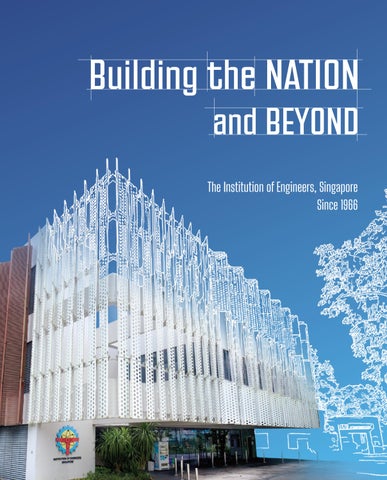

Building the NATION and BEYOND
The Institution of Engineers, Singapore
Since 1966
Building the NATION and BEYOND
The Institution of Engineers, Singapore
Since 1966

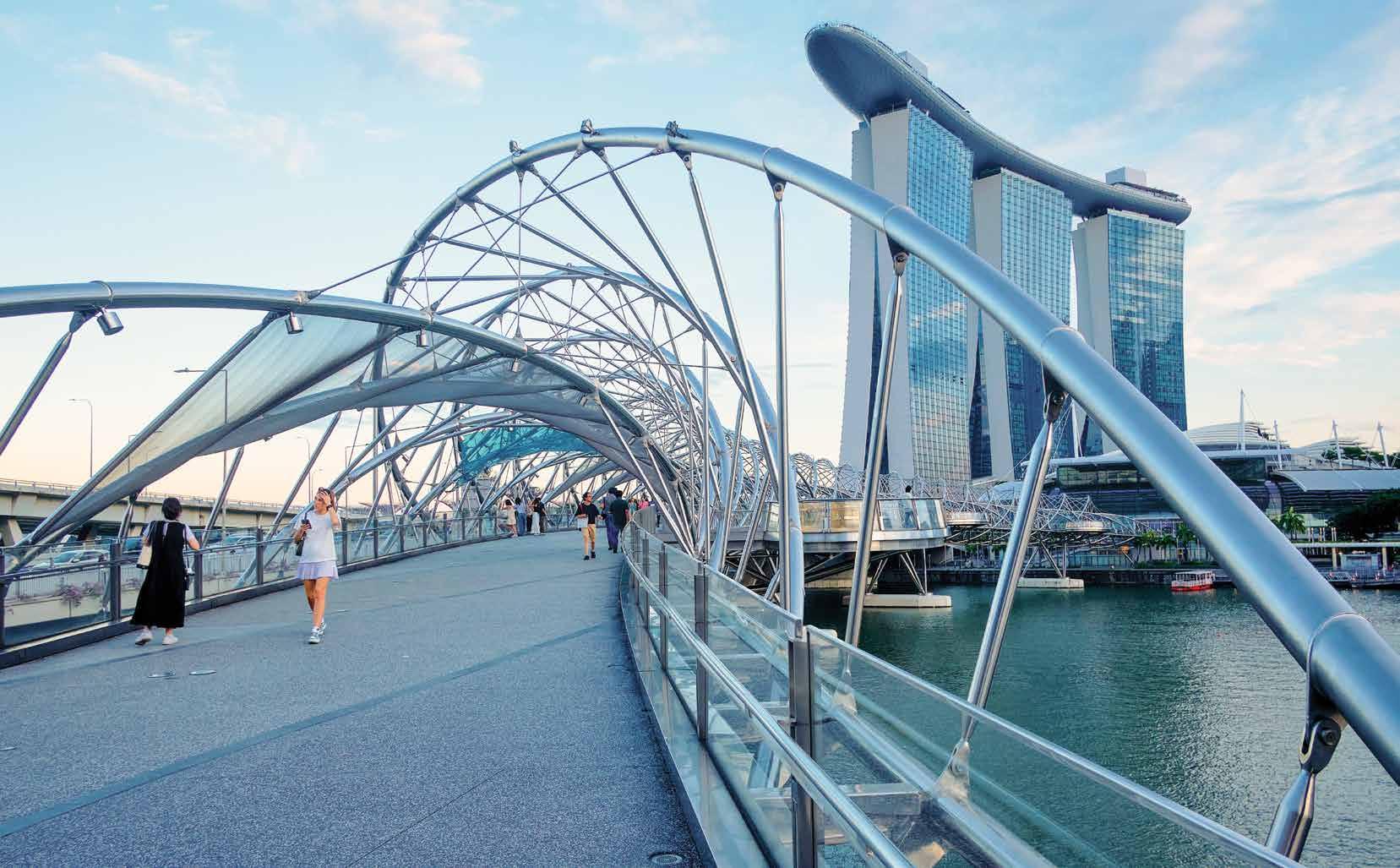
Engineers have played a significant role since 1965 in Singapore’s transformation from a Third to First World Nation — Helix Bridge at Marina Bay.
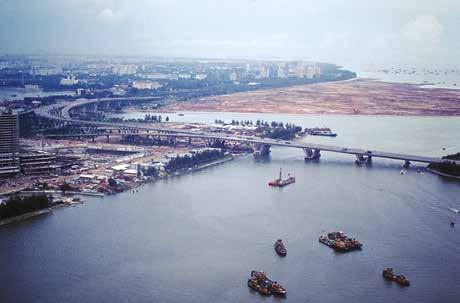
Marina Bay 1984.
(J E Gabain Collection, courtesy of National Archives of Singapore).
PART 1 GROWING WITH THE NATION 8
GENESIS: OUT OF EMPIRE, AND MALAYA
Engineers recognised in law
IES’ buildings and secretariat
IES’ challenges and aspirations
Lifelong learning and certification
Building Singapore – literally
A friend of water, and the environment
Laying the foundations
The Vision Zero movement
Technopreneurship: “Creating more Creatives”
IES’ other contributions to building Singapore
Alternative dispute resolution
PART 2 ENGINEERS OF THE WORLD 108
REACHING OUT INTO ASEAN, AND BEYOND
International accreditation: First, the EAB
And on to the Washington Accord Across into the Asia Pacific
further with WFEO
the world to Singapore
PART 3 ENGINEERING THE FUTURE 148 SUSTAINABILITY: THE FUTURE OF SINGAPORE, AND OF IES
First, narrow the mindset gap
New ideas for sustainability
Sustaining sustainability: Nurturing engineering minds
Towards a more inclusive engineering ecosystem
Working on the talent pipeline
Engineering “brain drain”, or not really?
Women in engineering: A long-running concern?
Towards the future
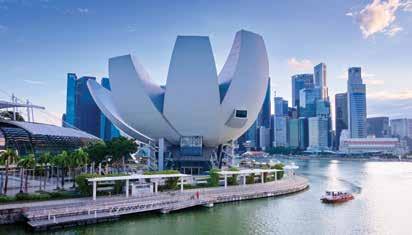
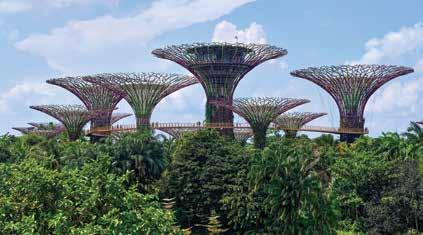
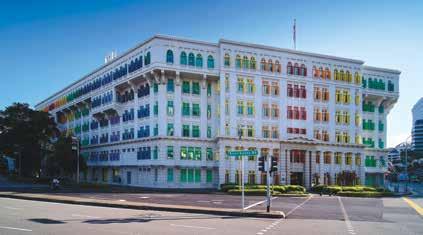
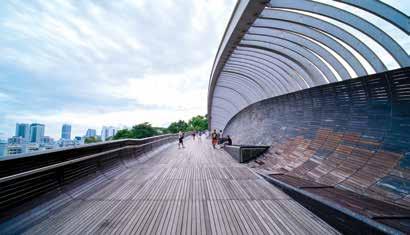
Engineers have played a major role in the design of these landmarks in Singapore. From left: ArtsScience Museum; Supertree Grove, Gardens by the Bay; Hill Street Building; and Henderson Waves.
Foreword
AS YOU TURN THE PAGES of this book, you will find a chronicle of the remarkable milestones of the Institution of Engineers, Singapore (IES) over the past 58 years. It has been an illustrious journey of flourishing shoulder to shoulder with our nation, empowering its transformation through several decades.
On 27 May 1966, IES was legally registered with 166 members and on 1 July 1966, the inaugural meeting was held. Under the stewardship of its first President, Er Kenneth Gin, our pioneering members laid the foundation for an institution that would become the heart, voice and home of Singapore’s engineers.
Our history is one that teems with profound contributions from engineers including establishing the Professional Engineers Act, setting up of the Professional Engineers Board, achieving full signatory status of the Washington Accord, setting up of the IES Academy and many more. Because each of them stepped forth to answer the call of their time, engineers could help Singapore address emerging challenges with success.
The IES narrative is not confined within the borders of Singapore. IES has always strived to work in synergy with the international community of engineers for the
betterment of mankind. This has been exemplified through our participation in the ASEAN Federation of Engineering Organisations, the Federation of Engineering Institutions in Asia and the Pacific and the World Federation of Engineering Organisations.
As we reflect on our storied past, we also cast our eyes on the horizon, envisioning a future where sustainability and technological advancement converge. The future of Singapore is intertwined with our engineers’ strategic foresight and creative ingenuity. In this spirit, IES commits to nurturing a talent pipeline that is robust, diverse and skilled to navigate the complexities of tomorrow’s challenges.
The book owes much to the initiative of our Immediate Past President, Mr Dalson Chung, whose leadership and drive motivated the Editorial Committee to, over the past one and a half years, tirelessly collect, sift through and review all historical records of IES. The book would also not have been possible without the invaluable contributions of Er Seow Kang Seng, Chairperson of the IES History Book Committee.
I invite you to join us as we write new chapters in our history.
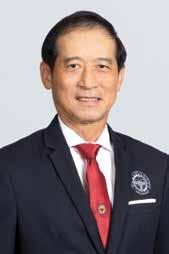
Er Chan Ewe Jin 30th President
The Institution of Engineers, Singapore
GROWING WITH THE NATION PART 1
GENESIS: OUT OF EMPIRE, AND MALAYA
TO BE THE HEART , voice and home of Singapore’s engineers is the vision of the Institution of Engineers, Singapore. IES’ stated mission is “to advance and to promote the science, art and profession of engineering for the well-being of mankind and national development of Singapore”.
The story of how it came to embrace, and embody, these enduring aspirations begins in the 1950s.
Most facets of Singapore – from parts of the public service to entities in the private sector – are usually either built up from scratch, or, evolved from colonial legacy. At some point, there is usually also a process of disengaging from Malaya. The origins of the preeminent professional body representing engineers were no different.
In 1957, when Malaya gained independence from the British, as part of a global shift towards decolonisation, new entities in Singapore also began to be formed for various groupings in the workplace and in society.
For example, before that time, the Public Works Department (PWD) under the colonial administration hired only British nationals as full-fledged engineers. Engineers in Singapore had been looking to see how to enhance the status of professional engineers since even before World War II.
In September 1957, the Malayan Society of Engineers was formed in Singapore with a founding group of 20 members. Mr PC Lim, head of the water department in the City Council, became Chairman of the Pro Tem Committee.
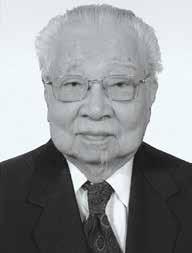
Er Dr Hiew Siew Nam, a senior engineer in PWD, was the Secretary.
For these pioneering engineers, a top priority then was to establish the professional status of all engineers. Until then, professional engineers were registered by the Architects Board under the Architects Ordinance. But this was becoming an untenable situation, as the number of
engineers was increasing rapidly with burgeoning industrialisation.
In 1957, the Malayan Society of Engineers had drafted a proposed ordinance, that was presented to the Singapore Government, asking the authorities to enact a separate ordinance for engineers, but this did not yield results.
Across the Causeway, the Institution of Engineers, Malaya (IEM) had started to be formed, officially coming into being later, in 1959.
In Singapore, while the Malayan Society of Engineers was still resolving its status with the colonial government, its members were allowed to join the activities of the IEM’s Johor Bahru branch.
In 1959, when Singapore attained selfgovernment, locals started to be appointed to take over the running of public departments from their former colonial superiors. For example, the City Council’s city engineers department was merged with the Public Works Department. But local engineers still could not practise in their own right.
The late Er Dr Hiew Siew Nam, IES’s First Honorary Secretary (1966–1968) who later became President (1968–1970).
In 1963, Singapore merged with Malaya to form Malaysia, and IEM became the Institution of Engineers, Malaysia. The Singapore society launched talks about their future with the IEM team in Kuala Lumpur, eventually leading to the merger of IEM and the Malayan Society of Engineers in Singapore in 1965, to form the IEM Singapore Branch.
All this while, the momentum towards forming just one national independent engineering body was being sustained, as the existing Joint Overseas Group – a body previously representing mostly British engineers – was of the view that it should be dissolved as soon as a national institution for Singapore was formed.
Finally, on 27 May 1966, the Institution of Engineers, Singapore (IES) was legally registered,
council members at the Public Works Department premises, High Street.
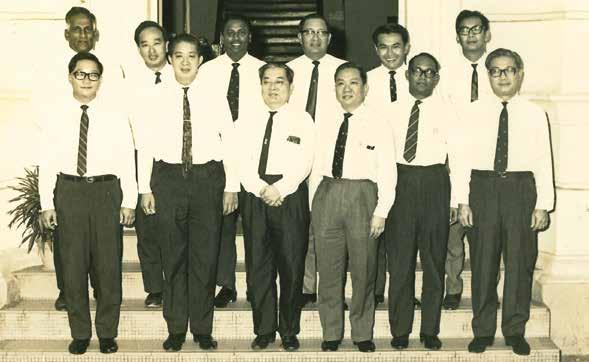
with 166 members. Four days later, 12 engineers gathered after office hours in the PWD Director’s office on High Street for the first Pro Tem Committee Meeting, with Mr Kenneth Gin, a civil engineer who was then Acting Director of the Public Works Department, as Chairman.
On 1 July 1966, IES held its inaugural meeting at the PWD Sports Club at Kallang, with 116 members attending. Engineers in Singapore finally had a voice.
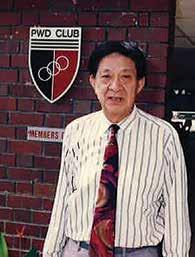
The late Er Kenneth Gin standing outside the PWD Club where IES held its inaugural annual general meeting.
The first IES Council was elected, with Er Gin as President, who served until 1968. Er Dr Hiew was the founding Honorary Secretary, and later became IES President from 1968 to 1970.
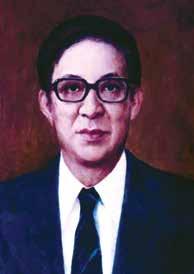
As IES’ founding President, Er Gin, who subsequently served as the General Manager of the Public Utilities Board from 1966 to 1970, initiated the setting up of various committees to look into the key tasks that would define IES’ future roles. “I feel very lucky to be able to contribute to Singapore’s nation-building journey,” he said. “It is a pleasure to have played a small role in helping Singapore transform from a backwater colony to a country with excellent infrastructure.”
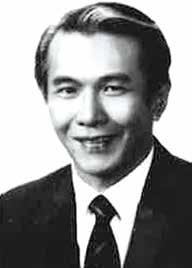
Er Kenneth Gin, IES President (1966–1968).
IES’ MISSION AND OBJECTIVES
The Institution of Engineers, Singapore – as the national society of engineers for the advancement of engineering – set forth its mission to:
“ ” Advance and promote the science, art and profession of engineering for the wellbeing of mankind.
To fulfil this mission, IES laid out the objectives it had to meet:
1. To enhance the character and status, and advance the interest, of the profession of engineering and those engaged therein.
2. To promote honourable practice and mutual respect, and to decide all questions of engineering practice and etiquette affecting members of the Institution.
3. To provide quality service to its members and the nation.
4. To provide opportunity for continuing professional development and promote fellowship amongst members.
The paths that IES charted to attain these objectives were to:
1. Hold meetings, exhibitions, seminars, conferences, courses and visits, and such other activities as the Institution may deem incidental or conducive to the promotion or attainment of the above objectives; and to
2. Communicate to members information on all matters affecting the profession of engineering, and to print, publish, issue and circulate such publications as may seem conducive to any of the objectives of the Institution.
IES aimed to reach out to as many qualified engineers as possible in all sectors of the Singapore economy, to conduct activities that will draw them to want to be part of this IES family, and to establish strategic links with specialised international institutions. This would facilitate IES’ involvement in the global network of technological advances.
Ultimately, IES would function more effectively as the premier engineering institution in Singapore.
THE IES CREST
The Institution’s crest was designed in 1971 by Er Tay Sin Yan (IES President 1978-80), and first appeared in the June 1971 issue of the IES Journal.
The primary colours – red, blue and yellow – represent the three main engineering disciplines: Civil, Mechanical and Electrical. The crest was first used on a letterhead in August 1971 for a Notice of Council Meeting sent to Council Members.
Er Tay, who participated in a competition open to all IES members to design the IES Crest, explains the genesis of the design: “I was lucky in that the engineering profession was relatively simple in those early days. There were three main branches, namely Civil, Mechanical and Electrical. I chose a reinforced concrete beam to represent civil engineering, and a gear wheel to represent mechanical engineering. For electrical engineering, I had a bit of a problem. The traditional association with electricity in those day was a bolt of lightning. I could not use that as it has been used as a symbol of powerful political actions.”
“Also, in light of the emerging electronic industry, I decided to use the symbol of an electron to represent electrical and electronic engineering. The IES Crest, as I designed it, has stood the test of time for more than 50 years, and survived a recent move to replace it with a modern version.”
Er Tay Sin Yan, IES President (1978–1980).
ENGINEERS RECOGNISED IN LAW
Into the 1970s, as Singapore’s industrialisation went full steam ahead, membership of IES grew rapidly. From the founding 166 members, IES had 1,464 registered by 1975.
With IES formed in 1966, the Architects Board ceased having responsibility for engineers. And with IES now recognised as a national body, a law to protect professional engineering practice was needed, but this was to take a bit more time.
During the first IES Annual General Meeting in June 1967, Er Dr Hiew, then Director General of the Public Works Department, informed members that the Government was not yet ready to enact an Ordinance for Engineers.
As a result, a committee was formed and tasked with drafting an Engineers Ordinance by the end of 1967.
The initial draft was completed and submitted to the Ministry of National Development in February 1968. However, in the following month, IES received a letter from the Permanent Secretary for Law and National Development, inquiring about IES’ opinion on a combined Engineers and Quantity Surveyors Bill. This proposition was not well-received by the Council Members, who preferred to seek recognition for engineers as a group on their own.
“
“ On 1 July 1966, engineers in Singapore finally had a voice.
At the second Annual General Meeting in May 1968, Er Dr Hiew was elected President. With the Malaysian Engineers Registration Act having recently been passed by the Malaysian Parliament, there was optimism that the Singapore Government would follow suit. This optimism seemed justified when a letter from the Ministry of Law and National Development indicated that the Government was reconsidering the matter, and planning a meeting to discuss a Draft Bill.
But then, the process appeared to slow down once again, until a building collapse in Malaysia in November underscored the urgency of the situation. The Council promptly reiterated its call to the Government to expedite the ordinance’s enactment,
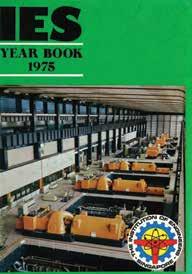
Cover of IES Year Book 1975.
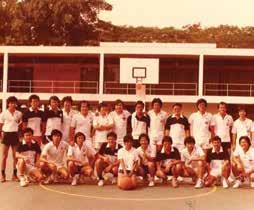
The IES and IEM had a close relationship and members met annually for games such as basketball.
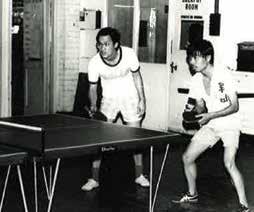
Table tennis tournament organised by the Games & Sports Committee, 1960s.
highlighting the ongoing amendments to update the Architects’ Ordinance of 1948.
One of these amendments proposed that a representative from the forthcoming Engineers Board be included on the Architects Board. This proposal was accepted, with the agreement that an Architect from the Architects Board would also sit on the Engineers Board. In March 1969, news arrived that the Attorney-General’s Chambers were actively reviewing the draft Engineers Ordinance.
It was Mr Low Sue-Leong (later IES President 1970–1972) who mentioned, in a chance conversation, the problem of lack of legal recognition for professional engineers to Dr Toh Chin Chye, Minister for Science and Technology and Chairman of the Singapore Polytechnic’s Board of Governors.
Dr Toh was very supportive and offered to table an Engineers’ Bill at the next Parliament sitting in about a month’s time, provided that IES could prepare a draft in time. A committee was swiftly formed, led by Er Dr Hiew and Mr Low, to prepare the draft.
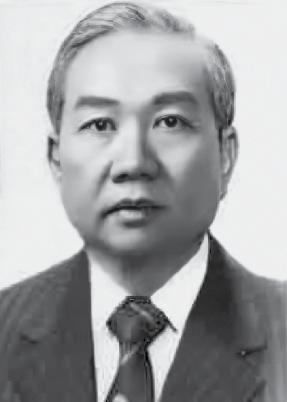
The late Er Low Sue-Leong, IES President (1970–1972).
On 2 January 1971, the Professional Engineers Act (1970) became law. “ “
Meanwhile, with official recognition of engineers’ professional status on the horizon, the IES Council formally requested that the Public Service Commission, statutory boards, tertiary institutes, and private companies recognise IES membership as a professional qualification when appointing engineers. This request was well-received.
In December 1969, thanks to Dr Toh, Parliament sent the Professional Engineers’ Bill to a Parliamentary Select Committee. On 2 January 1971, the Professional Engineers Act (1970) became law.
A key aspect of the Act was the establishment of the Professional Engineers Board, responsible for registering professional engineers and reviewing applications. Board members, appointed by the Minister for National Development, were to include three engineers from IES, an architect nominated by the Board of Architects, and a
MEMBERS OF THE FIRST PROFESSIONAL ENGINEER BOARD 1971
Hiew Siew Nam (President)
ER Estrop
George Ang
Malcolm Macleod
Loh Peng Yuen
Tay Sin Yan
A Vijiaratnam
Albert Wong Peng Choon
Dr Chin Kee Kean
Rex Koh Kim Chuan (Board of Architects Representative)
Goh Joon Yap (Registrar)
registrar to manage administrative duties.
Er Dr Hiew, after having completed his two-year term then as President of IES, became head of the Professional Engineers Board.
Under the Professional Engineers Act, only registered professional engineers are allowed to engage in any professional engineering work in Singapore, or draw or prepare any plan, sketch, drawing, design, specification of other document
relating to any professional engineering work in Singapore. And only registered professional engineers shall be addressed with the word “engineer” or the abbreviation “Er”, or “Engr” as a title before their names.
Prior to 1 July 1978, IES members were allowed direct registration into the Professional Engineers Board (PEB) without having to undergo a separate qualifying examination. It was gazetted with effect from this stated date that this privilege of direct admission into PEB for IES members would be revoked. Hence, IES lost that distinctive appeal and advantage over other institutions with regard to the value-added services it provided its members. IES could no longer include this privilege to prospective IES applicants in its overall service package.
In 1991, the Professional Engineers Act was amended to broaden the role of Professional Engineers Board to include the licensing of engineering firms, and for the promotion of continuing education.
In recognition of Dr Toh’s support, he was later elected as IES’ first Honorary Fellow.
IES’ BUILDINGS AND SECRETARIAT
The IES Secretariat had its humble beginnings in 1966 at the office of the Honorary Secretary. In 1971, the Institution rented an office of 9.5 square meters at the Singapore Professional Centre in Outram Park. This was located together with other professional bodies, and supported by the Commonwealth Foundation.
The IES Secretariat essentially supported all the administrative matters of the Institution. It started with two clerical staff. At that time, the secretariat was housed in the PWD Headquarters. The staff keyed in the data of new members, typed Council Meeting minutes, issued bi-weekly circulars to members, and was an important call centre for IES.
The area increased threefold in 1973 with the move to a rented 221 sq m office in International Plaza on Anson Road, to meet the growing demand for storage and working space. Despite the increased office space, the common-user space and facilities were limited, and many general meetings and functions of the Institution had to be held elsewhere.
The late IES President Er Francis Mak (1976–1978) declared open the IES premises at International Plaza on 30 May 1978.
The decision for IES to purchase these premises at International Plaza was made in 1977, and the newly-owned office was officially opened in May 1978. But by the early 1980s, the increase in membership and projected activities had caused even the larger space at International Plaza to become inadequate for the growing needs.
As IES membership grew, the secretariat staff also increased to cope with the increased workload. In August 1983, the Institution leased 6,800 sq m of land at 70 Bukit Tinggi Road from the Swiss Club for the purpose of constructing the IES Building to house the secretariat and for IES meetings.
With donations from members and the business community, the building was completed in 1986.
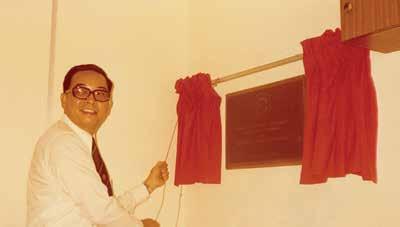
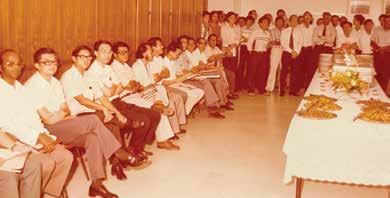
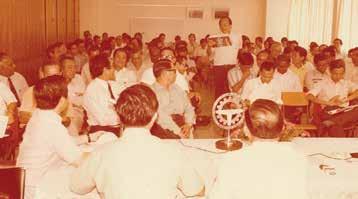
The IES Secretariat moved in with six staff, and the first IES Building was declared open in 1987 by the then Minister for National Development, Mr S Dhanabalan.
In 1993, Phase 2 of the building was underway, and a basement level was added. As IES expanded its activities, the secretariat staff also increased to encompass the various divisions of engineering, later called clusters.
As IES increased its courses for continuing professional development, more staff were recruited, and these efforts became a key source of income for IES. IES also took on the secretariat role of standards development, and also the running of professional registries for some government agencies.
In the mid-1990s, IES was reorganised into different divisions of engineering, and staff were assigned to support the expansion of IES. The IES Council believed in raising the competency of staff to serve IES better, and more engineering graduates were recruited. Staff were also sent for training to improve their info-tech and communication skills.
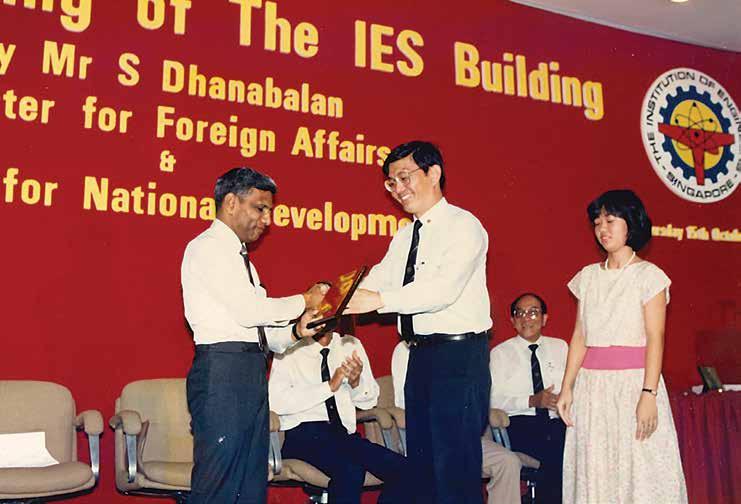
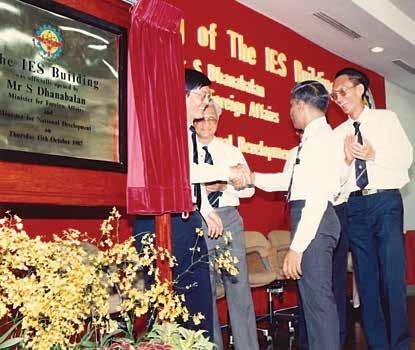
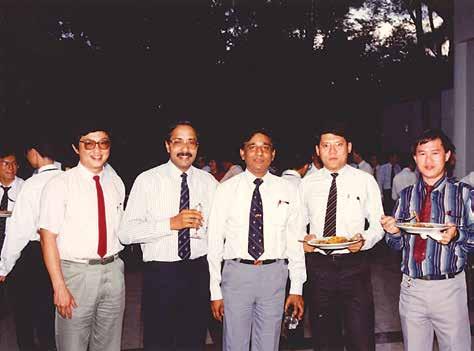
Mr S Dhanabalan, then Minister for National Development, was the guest-of-honour at the official opening of the IES Building in 1987.
In 2005, IES’ Continuing Professional Development Committee was restructured as IES Academy and moved to a town office on Peck Seah Street, so as to provide training in a more central location. In 2016, this office moved to the Employment and Employability Institute in Jurong East, and the Academy’s secretariat staff of 10 also moved there.
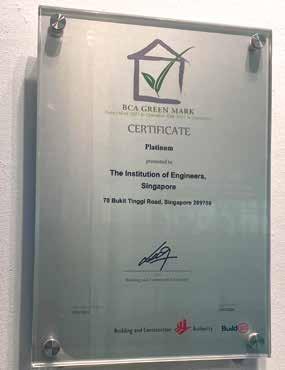
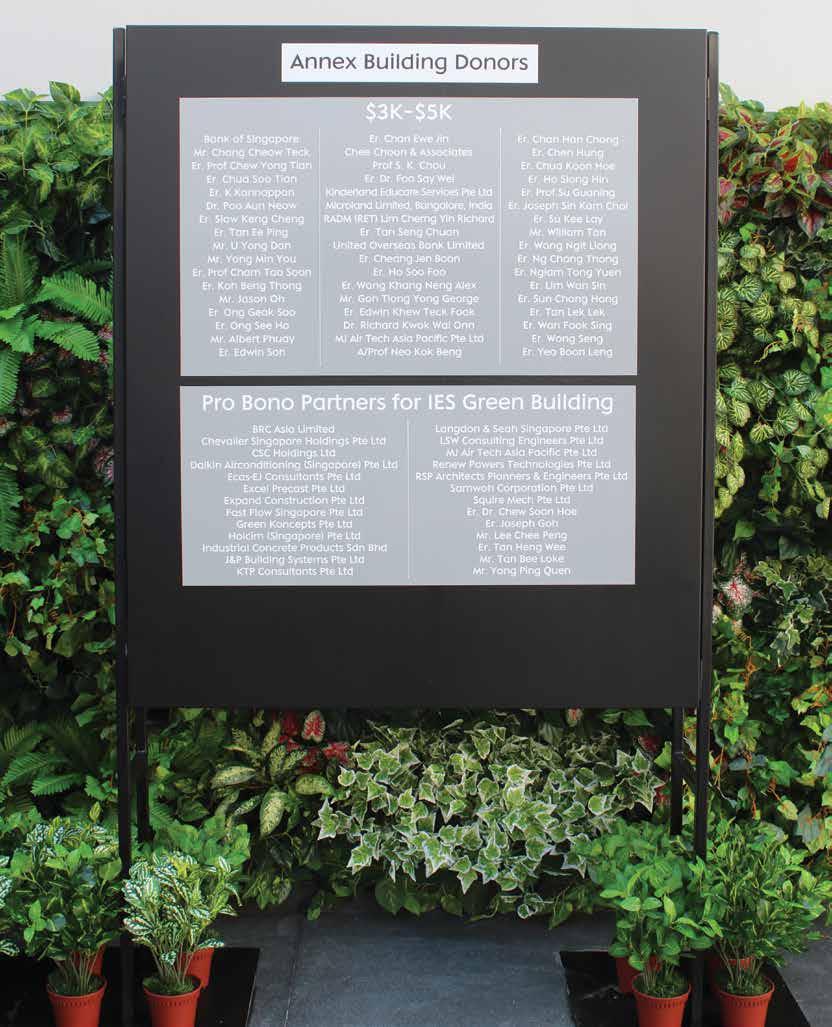
To create additional space for the increased activities at IES, and also to provide a more conducive work environment for secretariat staff, construction of a second building started in 2012, and an extension to the original IES Building – IES Green Building @ Bukit Tinggi – was officially opened by then Deputy Prime Minister Teo Chee Hean in February 2016. For the design and construction of the project, many consultants and contractors offered pro-bono services.
The chairman of the project management committee, Er Chong Kee Sen (IES President 2014–2016) noted that the Platinum Green Mark building extension uses sustainable construction processes such as jack-in piles and self-compacting concrete to reduce noise level during construction. It also has high-energy efficiency, optimal water
use, and many other green features, which makes the building suitable for use as a test-bed for sustainability solutions that showcase green and sustainable features, and for learning journeys for students and visitors.
For the IES Green Building, IES clinched the first runner-up position in the ASEAN Energy Awards 2018 under the ‘Green Building – Small and Medium Green Buildings’ category. This award recognised achievements in energy efficiency, usage of renewable energy and energy management.
To serve members with broader support, and to support the broadened services of IES for engineering community and the nation, IES’ secretariat was subsequently expanded into various groups in September 2023, comprising Professional Development / IES Academy, IES-Incubator and Accelerator (IES-INCA), Professional Accreditation & Membership (supporting Professional Registries and Engineering Accreditations Board), Engineering Excellence (supporting IES-Standards Development Organisation and technical committee clusters), External Relations, Professional Engagement, Corporate Communications and Corporate Services.

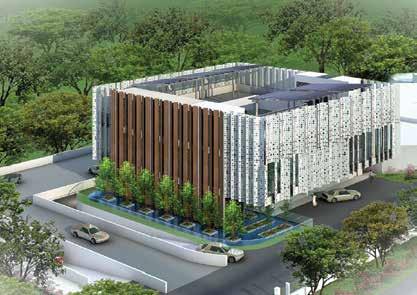
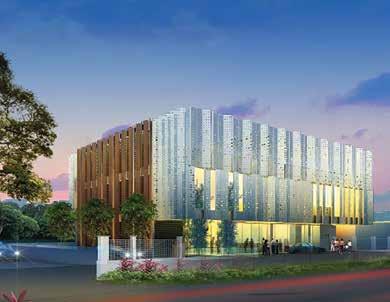
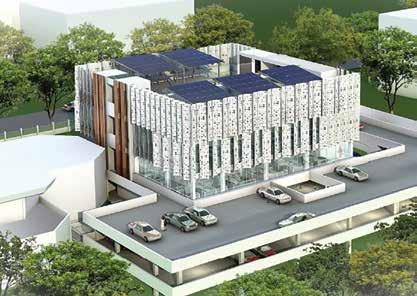
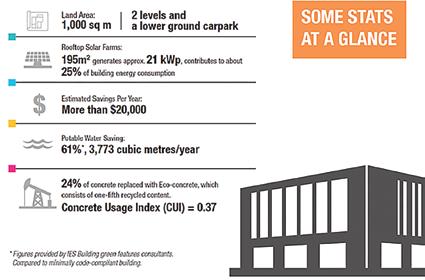
Artist’s impression of the IES Green Building @ Bukit Tinggi.
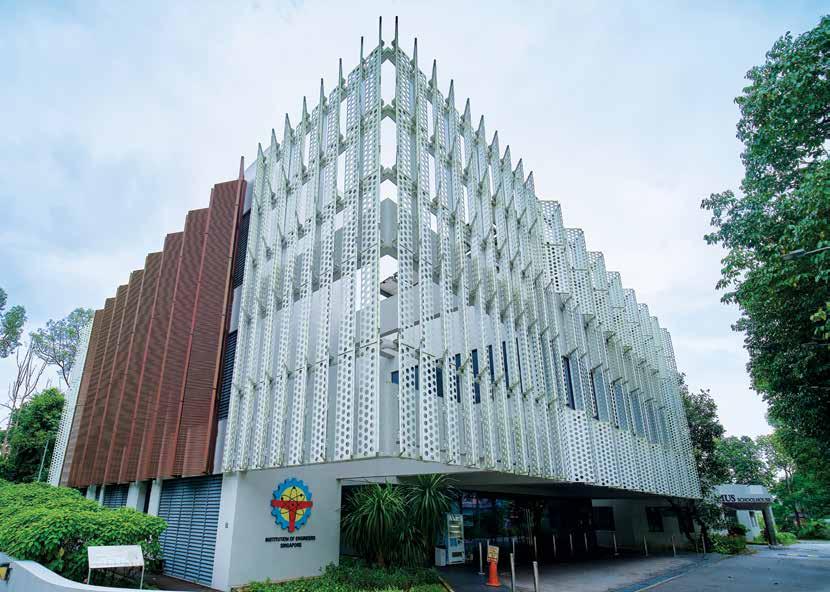
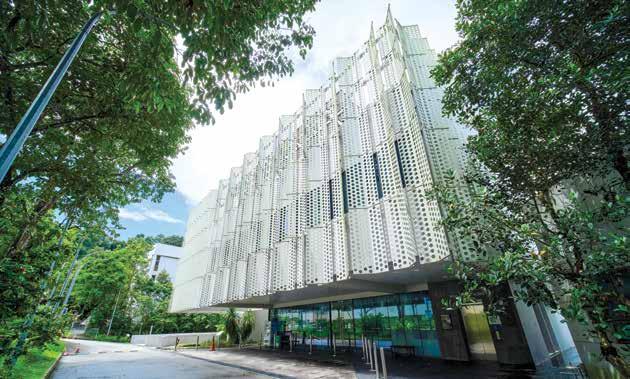
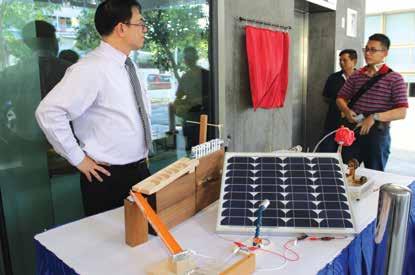
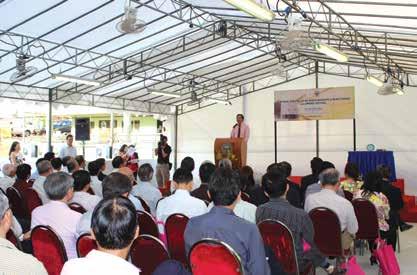
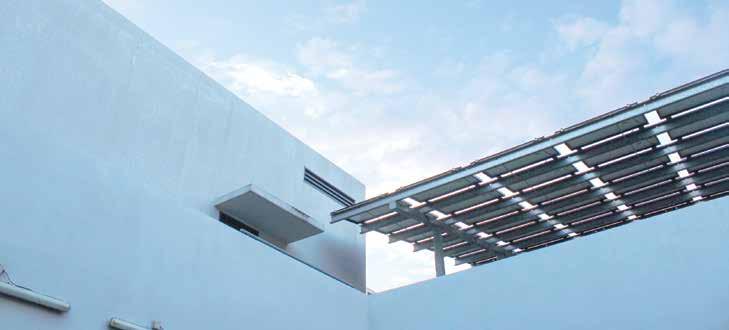
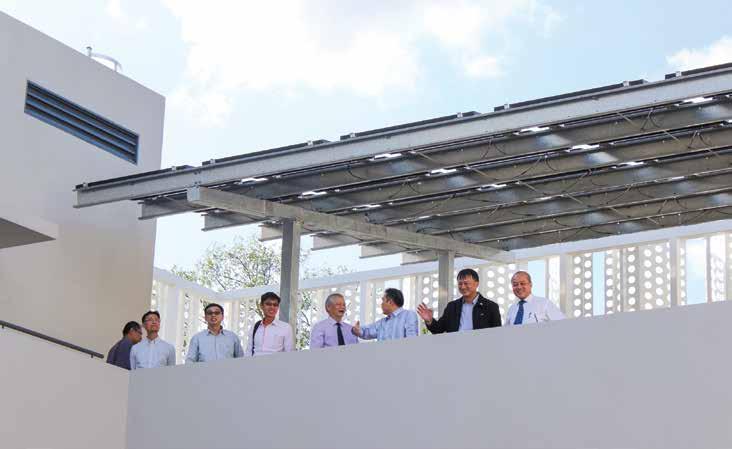
IES Green Building @ Bukit Tinggi.
IES’ CHALLENGES AND ASPIRATIONS
Of all the committees in IES, the Qualification and Membership Committee had the most onerous task. Initially, it had to gradually overcome the entrenched British colonial prejudice against any qualifications other than those from the UK – it was held that only graduates from UK universities or members of their engineering institutions were good enough to be considered qualified engineers.
The Committee had to work very hard in thoroughly vetting membership applicants who had graduated from non-UK universities. This was done by rigorous personal interviews, during which the applicants’ course of study and training were reviewed in great detail to the satisfaction of the Committee. In this way, the number of accredited universities was gradually increased with less risk to the quality of membership.
From the 1970s into the 1980s, IES uncovered a “gross under-representation” of Singapore engineers in IES. According to the 1980 Singapore Population Census, there were 7,068 engineers in Singapore, whereas the total number of IES members that year was only 1,844, or only about a quarter of all engineers in Singapore.
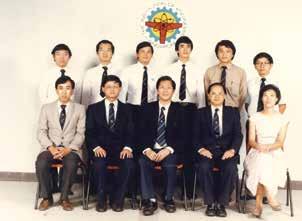
One reason could be that, in the early years, IES’ representation of the various disciplines was skewed towards the “Big 3”, namely Civil, Electrical and Electronic, and Mechanical Engineering, whereas disciplines such as Industrial and Chemical Engineering were inadequately represented. There were also other emergent specialised engineering disciplines not well-covered by IES, including microelectronics and process control.
This gap was addressed in 1986, when IES incorporated new Technical Committees to look into the needs of professionals in other fields, starting with the clusters of Manufacturing, Defence, and Chemical Engineering.
Over the years, development in membership schemes further enhanced IES’ capacity to represent all engineers in Singapore.
Another key role of IES is to boost the development of younger engineers. Here, mentorship has been crucial. For example, in 1980, the Mentor Scheme was introduced as a means of facilitating Graduate Members to achieve Corporate Membership. A Graduate member could select a mentor of his choice (senior IES Corporate Member of same technical discipline) or be assigned one.
IES Graduates & Students (G&S) Committee, 1980s.
The
first IES Organisation Structure (1985-1986) at left vs the Structure today (2024) below.
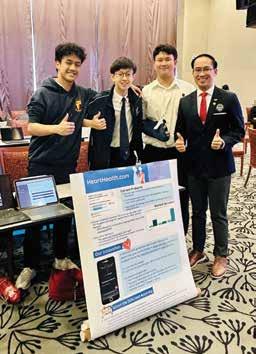
IES Associate Representative in Council, Mr Jaime Vega Bautista Jr (right), Mentor of Engineering Innovation Challenge Category 1 Merit Winners during National Engineers Day 2024.
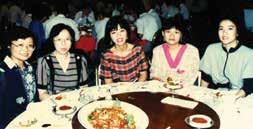
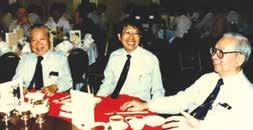
Delegates attending a dinner organised as part of the 2nd IES Public Lecture.
The Mentors would be responsible for the training and guidance of the Graduate Members under their wings in the ways of attaining Corporate Membership. Graduate Members participating in this scheme would be favourably considered in their applications for IES Corporate Memberships. This scheme proved relatively popular.
Acting on behalf of the entire body of professional engineers, IES’ ambitions to exercise thought leadership were apparent from the earliest days. For example, the first official IES Lecture was in May 1986, at the 20th IES Annual General Meeting held in Westin Plaza Hotel, titled “The Singapore Vision – an Information Society – What Role can Engineers Play?” The choices made for this occasion were deliberate, including the venue – at that time the world’s tallest hotel (together with the adjoining Westin Stamford) and the topic – directly addressing the national vision of preparing for the upcoming revolutionary changes brought by information technology.
The mid-1980s was one of those times when IES brought to bear the professional expertise of engineers in Singapore for the benefit of the nation. For example, on 7 May 1986, IES made a presentation to the Commission of Inquiry on
the Collapse of Hotel New World on the ways and means to ensure the structural safety of buildings and structures in Singapore. Engineers from IES were called to give evidence on 9 and 10 October 1986. Subsequently, a shortlist of IES members was compiled and made publicly available to those who needed a professional engineer who would be able and willing to undertake Building Inspection as recommended by the Development & Building Control Division.
IES also formed a joint committee with the Association of Consulting Engineers (ACES) to address the issue of the responsibility of professional engineers for visual checks for defects in existing buildings. A joint submission was made to the Development & Building Control Division on the proposed wordings which would appear on the certification by professional engineers on structural checks of existing buildings. In connection with this major issue, IES organised a seminar on the Appraisal of Existing Structures in 1987.
In the years to follow, IES was to go on and build on its thought leadership not only at home, but also up to the highest levels on the world stage.
LIFELONG LEARNING AND CERTIFICATION
One central value-add of IES is providing lifelong training for engineers, and validating their credentials for advancement in the profession.
In the early years, this was crucial as Singapore grew and diversified its economy, but always with

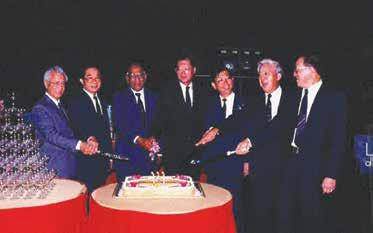
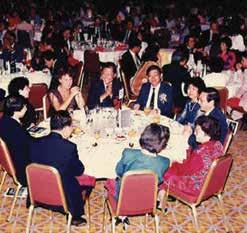
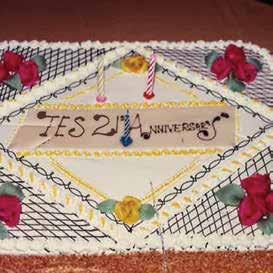
The 21st Annual IES Dinner and Dance was held on 15 December 1987 at the Raffles Ballroom at the Westin Plaza.
manufacturing as the backbone of industry, and never far from the cutting-edge of technological change.
In more recent years, learning new skills and gaining more credentials became even more important, as the Government supported a shift in the workplace and in society away from traditional notions of career progression, and towards nurturing many pathways to success.
Through all these changes, lES has always been a go-to place for skills upgrading, from its earliest days, through to when it established the Continuing Education Centre in 1990 for the professional development of its members and the public, to the setting up of the IES Academy in 2006 to take over the expanding roles of the Continuing Education Centre.
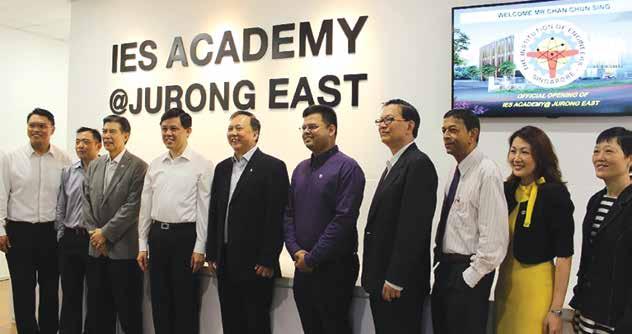
In April 2016, the IES Academy was officially opened at the Employment and Employability Institute (e2i) in Jurong East. With its enhanced premises, accessibility and strategic location, this move marked a new era for the IES Academy, in which it could better address the growing demand for continuing education, professional upgrading and career advancement amongst engineers.
Today, the IES Academy trains some 8,000 participants annually to gain professional competencies and continuous development, improved career mobility, and engineering leadership progression.
The IES Academy also collaborates with the National Trades Union Congress to co-organise the Engineers Leadership Programme (ELP), that equips potential engineering leaders with the latest leadership and management skills taught by industry experts, and facilitates networking with industry leaders. The ELP includes experiential learning, and learning journeys to stimulate reflection and conceptualisation.
The opening of the IES Academy at Jurong East.
The IES Academy has continued to make more significant strides forward, towards its mission of becoming the leading provider of quality training for engineers. IES also obtained funding from the Skills Programme for Upgrading and Resilience (SPUR), enabling its members to access quality courses at affordable fees.
Key milestones include IES joining the list of Risk Management Assistance Fund (RMAF) agents in 2008, up until the cessation of the relationship sometime in 2014; its appointment as the first training provider approved by the Workforce Development Agency to provide industry-recognised courses for the construction, real estate management and engineering services sectors; and the recertification of its International Organization for Standardization (ISO) status.
Aside from classroom training, informal education opportunities are aplenty, including dialogue sessions organised by IES to facilitate members’ engagement with policymakers.
All the training that IES provides and facilitates leads up to the enhanced qualifications enabled by IES. For example, IES introduces new registries
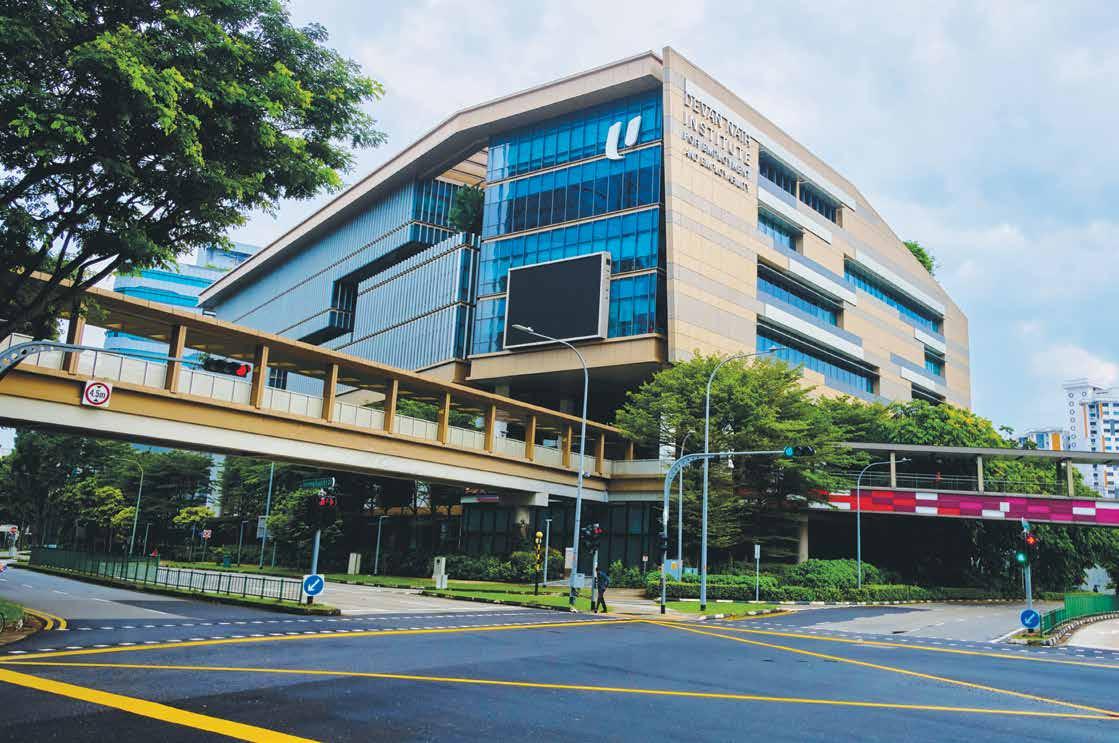
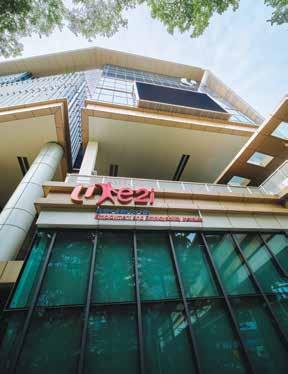
IES Academy is located on the 4th floor of Employment and Employability Institute at Jurong East.
to meet the needs of specific engineering sectors, such as the Resident Engineer (RE) / Resident Technical Officer (RTO) Registries, Certified Systems Engineering Professional (CSEP) Registry, Certified Project Manager (CPM) Registry, and the Singapore Certified Energy Manager (SCEM) Registry.
These registries are the outcome of years of collaboration and consultation between IES and agencies such as BCA. For example, as IES’ Civil and Structural Engineering TC Chairman from 2006 to 2008, and an active IES council member since 2000, Er Chan Ewe Jin contributed towards IES signing an MOU on 13 April 2007 with the Association of Consulting Engineers Singapore (ACES) on the Professional Membership Register.
This MOU included the formation of the IESACES Joint Accreditation Committee (JAC) and Joint Registries’ Monitoring Committee (JRMC) in 2009, which initially oversaw four registries:
A. Civil & Structural Resident Engineer (RE) / Resident Technical Officer (RTO) Registries
B. Mechanical & Electrical Resident Engineer (RE) / Resident Technical Officer (RTO) Registries
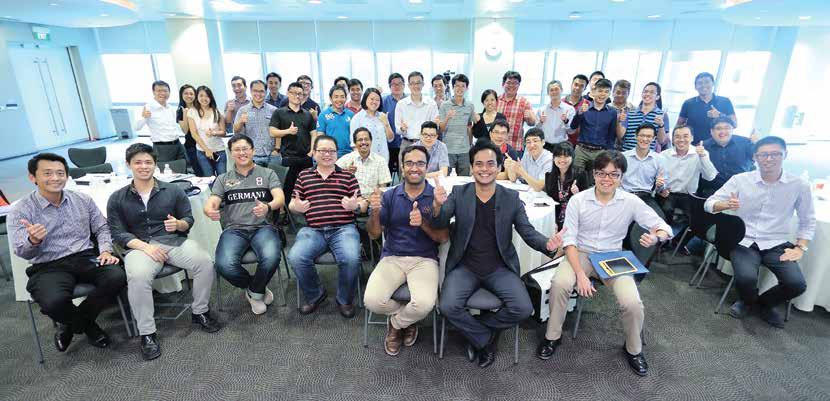
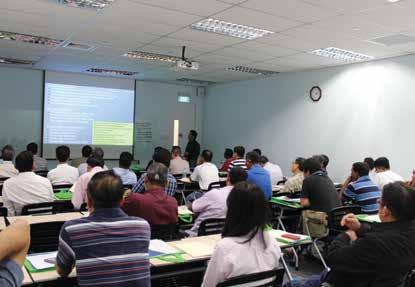
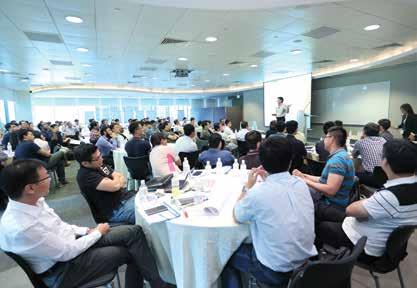
Courses organised by IES Academy.
C. Qualified Electrical Contractor (QEC) Registry
D. Qualified Erosion Control Professional (QECP) Registry
On 15 February 2009, the Building Control Act was amended, making it mandatory for all qualified site supervisors to be accredited with the IES-ACES JAC as Civil & Structural (C&S) REs or RTOs. Only C&S REs or RTOs who remain accredited by the JAC can continue as qualified site supervisors to supervise structural aspects of all construction works. Registration is accorded to suitably qualified applicants with a diploma or degree in the Civil or Structural discipline.
The QEC Monitoring Committee was jointly set up by IES and ACES, with the support of the Energy Market Authority (EMA), SP PowerGrid, Housing & Development Board (HDB), Jurong Town Corporation (JTC), SPRING Singapore, Singapore Contractors Association Limited (SCAL), Real Estate Developers’ Association of Singapore (REDAS), and Singapore Institute of Surveyors and Valuers (SISV). This committee maintains a list of Qualified Electrical Contractors (QEC) for the use of members in the Electrical
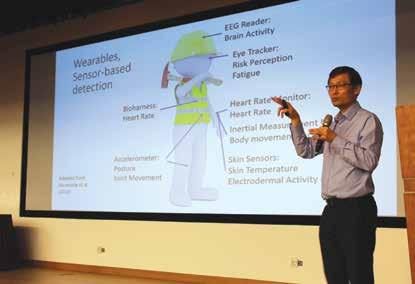
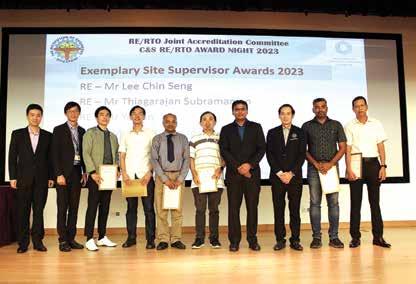
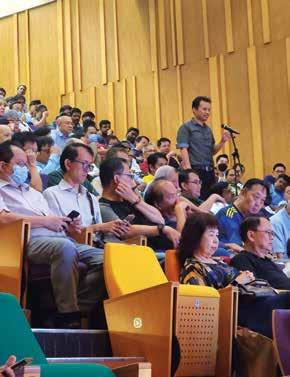
Top left: Prof Goh Yang Miang, Director of the Centre for Project and Facilities Management, NUS Department of Built Environment (DBE) giving a talk on “AI-Enabled Technologies for Improving Site and Safety Management”, during the RE&RTO Joint Accreditation Committee’s C&S RE/RTO Night 2023.
Top right: Award recipients of the Exemplary Site Supervisor 2023 pictured with guest-of-honour Er Thannabal Kaliannan and then IES Deputy President Er Chan Ewe Jin.
Engineering practice, to help achieve higher quality and standards in electrical installations.
One objective of the IES/ACES Qualified Erosion Control Professional (QECP) Registry is to enable the construction industry to recognise the quality design work carried out by professionals who have undergone the accredited training, and who also have the necessary experience in erosion and sediment control for construction sites in Singapore.
QECPs are professional engineers engaged by owners/contractors of a development to design and supervise the implementation of Earth Control Measures (ECM) at construction sites.
To promote awareness, PUB, together with IES, ACES, SCAL and other public agencies, jointly holds seminars and sharing sessions on erosion and sediment control.
“ “
IES has always been a go-to place for skills upgrading, from its earliest days.
Another example of certification that is much in demand is the Singapore Certified Energy Manager (SCEM) Training Programme, launched in 2008 and jointly administered by the National Environment Agency and IES under a SCEM Monitoring Committee. Now developed by the Energy Sustainability Unit of National University of Singapore (NUS) under the sponsorship of the Economic Development Board’s Locallybased Enterprise Advancement Program (LEAP), the programme offers a formal training and certification system in energy management.
With effect from 22 April 2013, energy-intensive companies in the industry are required under the Energy Conservation Act to register with the NEA within six months of qualifying as a registrable corporation, and to implement mandatory energy management practices. Once registered, corporations will be required to implement energy management practices including the appointment of an energy manager for reporting
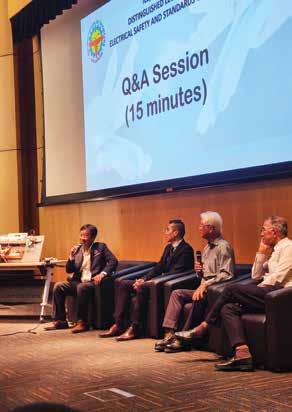
The Q&A session enabled participants to pose questions to the panellists and moderator to have a more insightful discussion.
of energy use, and submission of energy efficiency improvement plans for large energy-users. The SCEM programme is designed for engineering professionals who intend to build their career as energy managers.
In March 2017, the NEA announced that under the planned enhancements to the Energy Conservation Act, energy-intensive industrial facilities with an annual energy consumption of more than 54 terajoules will be required to conduct energy assessments at regular intervals to evaluate the energy performance of their facilities, and identify energy-saving opportunities. The energy efficiency opportunities (EEO) assessments will have to be conducted across major energy-consuming systems within each facility. NEA and IES therefore jointly launched a new scheme to certify engineers for their technical expertise and experience in improving the energy performance of industrial processes, systems and equipment, and to qualify them to conduct Energy Efficiency Opportunities Assessments (EEOAs) for energy-intensive industrial facilities. These energy efficiency opportunities (EEO) assessments have to be conducted across major energy-consuming systems within each facility.
NEA and IES therefore jointly launched a new scheme to certify engineers for their technical expertise and experience in improving the energy performance of industrial processes, systems and equipment, and to qualify them to conduct EEO Assessments (EEOAs) for energy-intensive industrial facilities.
As EEO Assessors are qualified professionals who have deep expertise in their fields, NEA worked with the Chartered Engineering Board (CEB) of IES to recognise the expertise of EEO Assessors to be Chartered Engineers (Singapore) under the energy sector. Applicants may apply for both the EEO Assessor and Chartered Engineer schemes concurrently.
Having well-trained and competent energy management professionals working in manufacturing businesses to act as change agents in the workplace would enable companies to realise gains from energy efficiency even more effectively, and so, benefit the national move towards greater sustainability. Previously, building maintenance personnel built up their skills through on-the-job training and a variety of courses and seminars, without formal certification.
IES has also moved to broaden the definition of engineering, to embrace other engineering fields beyond the traditional ones. From this, one concrete initiative is the lES Chartered Engineer Programme, that was officially launched by the then Deputy Prime Minister Teo Chee Hean during World Engineers Summit 2013, with the strong endorsement of leading engineering corporations.
The Chartered Engineers (Singapore) would need to pass a rigorous assessment process that examines their experience and skills in managing complex engineering systems, as well as their commitment to developing the skills of others in the engineering profession.
To further enhance the status of engineers in Singapore, this programme enables engineers to gain a globally recognised certification of their professionalism beyond the traditional mainstays in the built environment space.
Following the launch of the Aerospace, Chemical & Process, Environmental & Water, Marine & Offshore, and Systems Engineering registers in 2013, IES, LTA, Singapore Workforce
Development Agency (WDA), SBS Transit Ltd and SMRT Trains Ltd signed an MoU on 29 May 2015 to establish the Chartered Engineer Programme for Singapore’s railway and transport professionals.
In 2018, for the maritime industry, IES partnered PSA Corporation to launch the Chartered Engineer (Singapore) certification programme for engineers in the port and marine sector.
IES also collaborated with PSA Corporation to identify relevant skills development programmes for engineers to enhance their capabilities to meet the needs of an intelligent port of the future.
In an effort to create a more inclusive engineering community, the National Engineering Career Progression Pathway for Chartered Technologists and Technicians was introduced in 2019. This initiation by IES aims to provide a rigorous skilland competency-based professional development, recognition and employment mobility pathway for engineering technologists and technicians.
The goals of this pathway are to enhance the career progression for Institute of Technical
Education and polytechnic graduates, and build an engineering ecosystem to support the realisation of Singapore’s Industry Transformation Maps. The objectives of the national Industry Transformation Maps are to achieve broader sector-focused strategies for greater sustainable growth and competency to support Singapore’s industries.
Witnessed by Minister for Education Ong Ye Kung, 21 stakeholders from institutes of higher learning, and the public and private sectors, signed an MoU to collaborate on this initiative during National Engineers Day on 20 July 2019.
Below left: Minister of State Gan Siow Huang (centre) with the inaugural batch of Chartered Technologists and Technicians.
Below right: MOU Signing Ceremony of the National Engineering Career Progression Pathway for Technologists and Technicians on 20 July 2019.
With the development of the competency-based career progression pathway, the initiative prioritised five pilot sectors – Aerospace, Built Environment, Land Transport, Precision Engineering, and Water & Environmental. IES unveiled the Chartered Engineering Technologist and Technician Certification Scheme with the formation of the
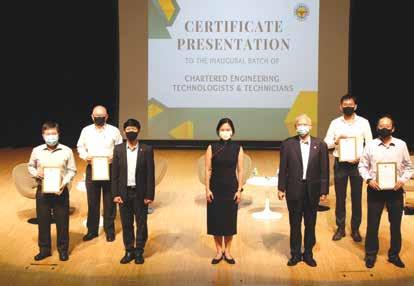
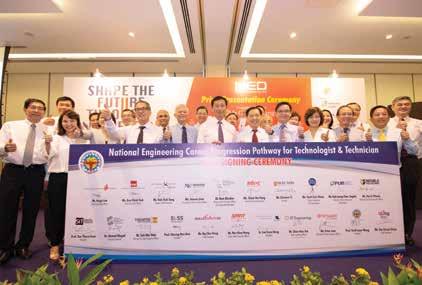
accreditation board and presented certifications to the first batch of Chartered Engineering Technologists and Technicians in January 2021, witnessed by Ms Gan Siow Huang, Minister of State for Education, and for Manpower.
The Chartered Engineering Technologist and Technician Certification Scheme is one of the key pillars of IES in building an inclusive engineering community, in which a practising engineering technologist or technician can aspire to become a Chartered Engineer (Singapore), progressing through the academic and/or non-academic pathway, and continuously upskill and reskill themselves to take on growing opportunities.
All these initiatives are in line with the national SkillsFuture effort to build a sustainable pool of highly-skilled and proficient engineers, engineering technologies and technicians. SkillsFuture is a national movement to provide Singaporeans of all ages with opportunities to develop their potential throughout life, regardless of their starting points. Guided by the Future Economy Council, it brings together employers, unions, and education and training providers to provide skills training for a wide range of areas of work.
By the end of 2023, IES had developed 10 Chartered Engineering Programmes for Aerospace, Built Environment, Chemical and Energy, Renewable Energy, Engineering Project Management, Environmental and Water, Infrastructure, Railway and Transportation, Sustainability, and Systems Engineering.
As Singapore fosters more of a national culture of lifelong learning, the roles that IES can play in this process can only become even more extensive and important.
BUILDING SINGAPORE – LITERALLY
Today, all around, there are visible, concrete examples of how engineers, including members of IES, have helped build Singapore (figuratively, and also quite literally) to what it is – a thriving, modern city.
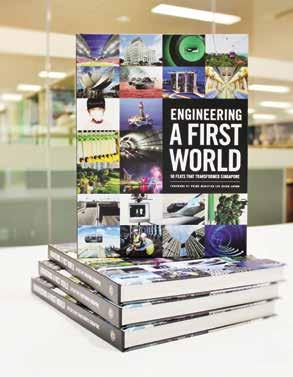
The best highlights of how engineers have made such vital contributions are best captured in the book Engineering a First World – 50 Feats that Transformed Singapore, launched in April 2018. This coffee table book recounts first-person stories of engineers behind Singapore’s 50 greatest engineering feats.
This public engagement came through the Engineering Feats @ IES-SG50 competition, part of IES’ activities to mark Singapore’s 50th anniversary of independence in 2015. The 50 engineering feats were voted by the public on those projects that have made the greatest economic, infrastructural or societal impact on Singapore from 1965 to 2015.
The book’s featured engineering feats include these three examples:
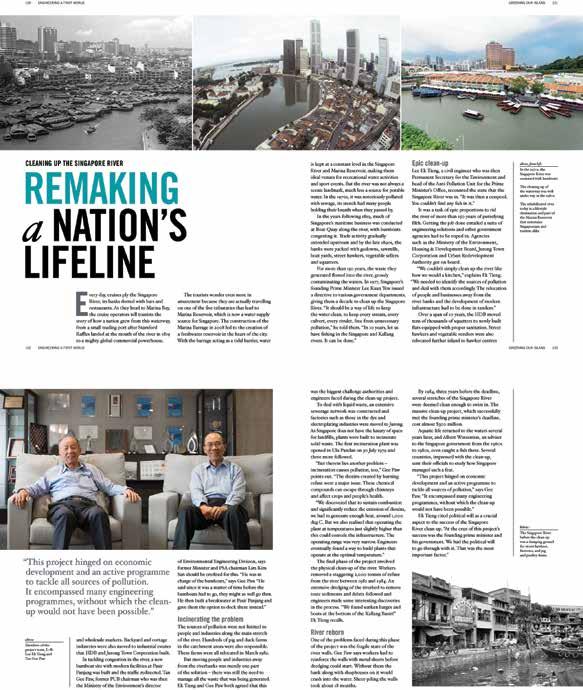
(1) Cleaning up pollution and creating a reservoir for recreation on the Singapore River within 10 years by 1987;
(2) Winning the war against the SARS (severe acute respiratory syndrome) pandemic
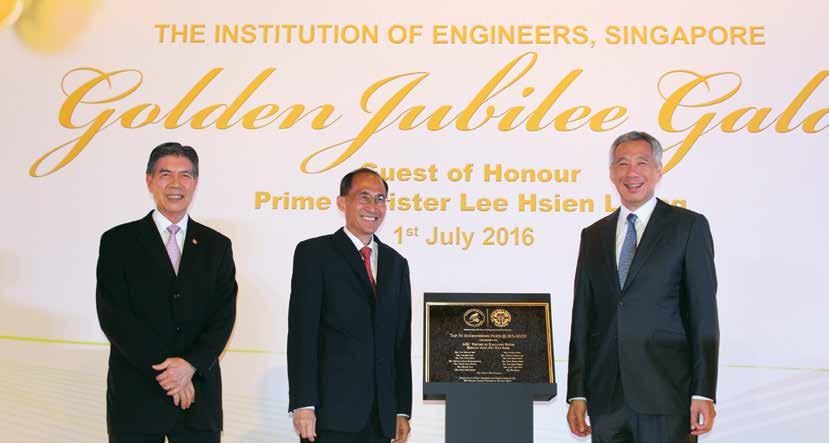
Then Prime Minister Lee Hsien Loong (right) presented an award to one of the winners of the Top 50 Engineering Feats @ IESSG50, at IES Golden Jubilee Gala Dinner on 1 July 2016.
in 2003 with a prototype infrared fever screening system; and
(3) Ensuring that giant air-conditioning chillers can function at the world’s largest underground district cooling network at Marina Bay.
“We need good engineers to maintain and upgrade our infrastructure to meet the changing needs of our ageing population, and to keep on developing innovative solutions to our resource constraints,” said Prime Minister Lee Hsien Loong in the book’s foreword.
“We hope that the legacies of the past generation of engineers will spur future generations in building engineering legacies of their own,” said Er Edwin Khew (IES President 2016–2018).
In the book, Er Khew also made the important observation that engineering was continuously evolving, and was now seeing the integration of traditional skill sets, and the emergence of multidisciplinary engineering functions in fields such as biomedical, environmental, infrastructure and data analysis.
“This requires a new type of engineer – one who is schooled in traditional engineering disciplines,
“
“ We need good engineers to maintain and upgrade our infrastructure to meet the changing needs of our ageing population, and to keep on developing innovative solutions to our resource constraints.
THEN PRIME MINISTER LEE HSIEN LOONG, foreword to the IES-SG50 book EngineeringaFirstWorld –50FeatsthatTransformedSingapore
and able to perform multifunctional roles, while appreciating the need for lifelong learning,” he said. “IES will play its role in creating this new community of engineers who will rise to the new realities to ensure Singapore stays relevant and competitive.”
For IES’ contributions to Singapore’s built environment, one key factor has always been its close partnerships with various government agencies.
For example, Er Dr Lee Bee Wah (IES President 2008–2010), as a Member of Parliament, was especially active in setting up dialogue sessions with government agencies such as the Building and Construction Authority, National Environment Agency, and Singapore Civil Defence Force. These are agencies that engineers regularly have to engage with, in the normal course of their work, including for approvals for projects.
One core aim of these meetings was to foster better mutual understanding, especially about IES members’ capabilities. This is something that could bear fruit later, such as when IES members are sought for expert opinions on engineering matters.
The coffee table book Engineering a First World –50 Engineering Feats that Transformed Singapore .
Another outcome from these meetings was when the government agencies provide lecturers to conduct some courses at IES.
On an ongoing basis, IES advocates for policies and initiatives that support the engineering profession, and promote the use of engineering solutions to address societal challenges. As Er Ho Siong Hin (IES President 2010–2012) points out, IES works with government agencies through such advocacy efforts, which often happen behindthe-scenes – in direct personal engagement with government officials and policymakers. This adds on to how IES can influence policymaking in more visible ways, including public statements and media appearances.
Overall, the importance of IES staying active in cooperation with government agencies lies in its ability to represent the voice of engineers in Singapore. By leveraging the expertise and knowledge of its members, IES can help to ensure that government policies and decisions are wellinformed and effective. This, in turn, can help to promote the use of engineering solutions to address societal challenges, and ensure the continued success of the engineering profession in Singapore.
A FRIEND OF WATER, AND THE ENVIRONMENT
Over the years, lES has received recognition for its expert contributions to key facets of Singapore’s built environment. One of these was being named a “Friend of Water” by PUB, the national water agency, in September 2006, for IES’ efforts towards helping to sustain the country’s water supply.
Speaking at PUB’s event in 2006, Dr Yaacob Ibrahim, the then Minister for the Environment and Water Resources, said: “IES is well-positioned to meet these needs, as an authoritative platform for engineers from the entire spectrum of engineering disciplines to come together, to share their expertise and deliberate on creative, interdisciplinary solutions and initiatives.”
He added: “Singapore’s quest to sustain our quality of life depends a lot on such work, which involves finding sustainable solutions to meet our environmental challenges such as managing the increasing demand for energy resources and mitigating the effects of climate change.”
Dr Yaacob noted how Singapore’s drive to find alternative sources of water supply had led to the
adoption of the Deep Tunnel Sewerage System (DTSS) as a long-term solution for conveying used water from all sources to be treated at water reclamation plants, and that the DTSS had been awarded IES’ Prestigious Engineering Achievement Award.
The DTSS is like a “superhighway” for used water management, that uses deep tunnel sewers to convey used water entirely by gravity to centralised water reclamation plants at the coastal areas. The used water is then treated, and further purified into ultra-clean, high-grade reclaimed water called NEWater, with the excess treated effluent discharged to the sea.
In turn, IES has worked with PUB to make significant contributions in the environmental arena. For example, IES had formed the Erosion Control Interest Group, to promote awareness on erosion control measures in the construction industry. To develop expertise in this area, IES had also worked with the Association of Consulting Engineers (Singapore), to accredit professional engineers as Qualified Erosion Control Professionals.
Guest-of-honour
Dr Amy Khor with award recipients on stage during the Seminar on: ABC Waters – Towards Resilience, Liveability and Sustainability in Design, 11 July 2018.
One of the 50 Feats in the book, the Singapore River clean-up is the most extensive river clean-up effort in Singapore’s history. It was an engineering challenge posed by our then Prime Minister Mr Lee Kuan Yew to the former Ministry of the Environment. The large-scale project took 10 years to complete. Accomplishing this feat required a systemic and holistic solution that included the stemming of the various sources of pollution along the river, and an engineering solution to clean up the river from existing polluting matters.

As Singapore’s catchment capacity expanded significantly with newly-redeveloped water sources such as the Marina, Punggol and Serangoon reservoirs, contributions by accredited professionals became all the more valuable in preventing soil discharge into the waterways.
Today, PUB continues to engage IES’ Erosion Control Interest Group on a regular basis in dialogue and research, working together for cleaner waterways. The collaborations draw on expertise in traditional disciplines including civil and mechanical engineering, as well as newer ones such as bioengineering, on top of an even wider range of expertise, such as in research and development, consulting, and regulatory knowledge.
PUB has an Active, Beautiful, and Clean Waters (ABC Waters) Programme, launched in 2006, that aims to transform waterways and reservoirs in Singapore beyond their drainage and water storage functions, to create clean and beautiful rivers and lakes, while allowing these spaces to be used for community bonding and recreation. Under this ABC Waters Programme, there is a need to ensure that suitably qualified engineers, architects or landscape architects are on board to undertake the designs of such water features.
“ “ IES is well-positioned to meet these needs, as an authoritative platform for engineers from the entire spectrum of engineering disciplines to come together, to share their expertise and deliberate on creative, inter-disciplinary solutions and initiatives.
DR YAACOB IBRAHIM
Then Minister for the Environment and Water Resources, at PUB’s “Friend of Water” event, 2006
This is where IES plays key roles in collaborating with PUB and other agencies to run the ABC Waters Professional Programme, which builds expertise in the design, implementation and maintenance of ABC Waters design features.
All the resulting aesthetic and recreational features of these redeveloped waterways become so attractive, and even enticing, that most people do not realise the extent of the “hidden”, more fundamental aspects of the works involved – such as flood control and water flow management, where IES engineers’ expertise is instrumental.
This, in a nutshell, is a microcosm of how IES’ contributions have always been an integral, if less obvious, element of Singapore’s much-admired infrastructure.
LAYING THE FOUNDATIONS
As IES contributed in vital ways to constructing, enhancing and maintaining Singapore’s built environment, the most basic foundations for everything else in this sector also had to be looked after. These included setting up and preserving common standards of practice, and in ensuring that workers are all safe and well when they are at work.
IES had always been a close partner in the development of standards, recalls Er Ho Siong Hin (IES President 2010–2012), who worked with the Ministry of Manpower in the Occupational Safety and Health Department, and was its Commissioner for many years.
In building up standards for the industry, an important partnership of IES was with the Singapore Institute of Standards and Industrial Research (SISIR). SISIR started writing Singapore standards from 1966, and became the Productivity and Standards Board (PSB) in 1996. The SISIR Act of 1973 enabled the institution to establish a Standards Council. Er Chang Meng Teng (IES President 1990–1992) was IES’ representative on SISIR’s Board for the term 1977–1979.
In 1970, IES invited its members to act as consultants for SISIR to draft specifications on a variety of subjects. Priority was given to subjects including red clay bricks, and valves and fittings.
IES had always worked with organisations and agencies such as the Ministry of Manpower and the Building and Construction Authority to develop the requirements for these standards. Er Ho observed that IES had, over the years, been
recognised by partner government agencies as an organisation representing engineers, and the expertise of its members in many fields was always well-regarded.
For instance, IES members have been appointed to investigation committees for major accidents. In one of its roles, IES participates in site investigations according to the Inspection Body Technical Committees of the Singapore Accreditation Council (SAC).
One of the most prominent examples of such major accidents is the building collapse of Hotel New World in March 1986. Some people were trapped inside the collapsed structure, and, of these, 17 were rescued and 33 died.
The Government set up a Commission of Inquiry headed by a High Court Judge, Justice Thean Lip Ping, to determine the causes, and to make recommendations to prevent a recurrence. IES’ Civil and Structural Technical Committee, led by
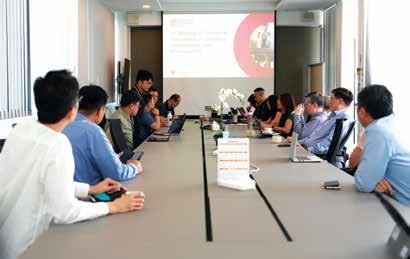
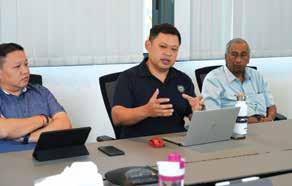
Chairman of the Building Maintenance and Management Technical Committee (part of Building Construction Standards Committee), Er Joseph Goh, speaking with committee members.
Members of the Building Maintenance and Management Technical Committee included representatives from Singapore Green Building Council, PUB (Singapore’s National Water Agency), Singapore Civil Defence Force, JTC Corporation, National Environment Agency, and Building Construction Authority.
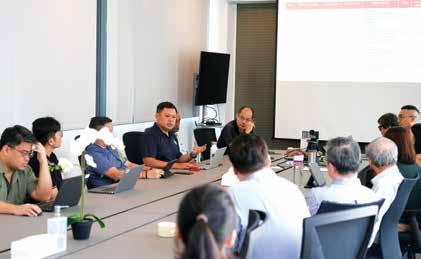
Er Teh Hee Seang, played a prominent role in the work of this Committee.
Arising from the Commission’s findings and recommendations, the Building Control Act was enacted in 1989. A major provision of this Act is the appointment for each project, and for periodic inspections of buildings for structural soundness, a Qualified Person who must be a professional engineer who acts as a “second pair of eyes” before a building design can be approved.
Similarly, on a day-to-day basis, this is where standards come in to ensure that everything is done to meet safety requirements. As Er Ho said, “it’s all about the safety of the workers. If they (the management) comply with the standards and provide all the necessary safety equipment mentioned in the standards and the proper training, then the workplace will be safe to work in, that’s how standardisation helped in nation-building.”
His own experience included working on the layout of factories to ensure the safety and health of the workers, and developing standards for items such as gondolas of the suspended scaffold type, that are used to access the exterior of high-rise
buildings for maintenance works. Later, he was Chairman of the Quality and Safety Standards Committee under the Singapore Standards Council, overseeing all standards for safety and quality.
Another senior IES member, past IES VicePresident Er Lee Chuan Seng, was active in the 1990s on various technical committees, predominantly in the electrical domain. While Er Ho’s contributions were more in the “hardware” dimensions of building and construction, Er Lee’s part was more in the software facets.
From the late 1990s to early 2000s, Er Lee cochaired the Construction Industry IT Technical Committee (CITC). This committee was integral in the development of standards that helped in the adoption of Computer Aided Design and Drafting (CAD) software.
These standards played a crucial role in establishing uniformity in CAD information, and enhancing interoperability and productivity. Such innovative approaches caught the attention of other countries, including Sweden, Finland, Norway, and the UK, that were keen to learn from Singapore.
In 2013, SPRING Singapore, under the guidance of the International Organization for Standardization (ISO), conducted a study to evaluate the economic impact of standards in Singapore. The standards applied to CAD software were highlighted as a notable example, with the study revealing an estimated savings of $320 million in the construction industry over a decade, attributed to productivity gains from data interoperability.
These achievements laid the groundwork for further advancements in standardisation, paving the way for the development of 3D design software and object-oriented CAD, which eventually evolved into the Building Information Modelling (BIM) software, now used for the planning, design, construction, and management of building and infrastructure projects.
In the 2000s and 2010s, Er Lee continued to play a leading role, chairing the BCA Industry Steering Committee for BIM, and later, the Integrated Digital Delivery (IDD) Steering Committee. His efforts were instrumental in setting standards for BIM and IDD, further advancing Singapore’s position in the standardisation landscape. His commitment to the cause was further
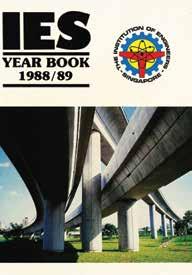
Cover, IES Year Book 1988/89.
demonstrated through his tenure as Deputy Chairman of the Singapore Standards Council from 2011 to 2020.
Reflecting on the role of standardisation in nation-building, Er Lee highlighted the Singapore Standards Council’s (SSC) pivotal role in establishing Singapore as a hub of standardisation, recognised by the International Organization for Standardization (ISO) and affiliated with the United Nations (UN). He emphasised the diversity of the SSC, comprising representatives from various sectors, including industry, trade, professional, government, and academic organisations.
IES was among these organisations, actively participating in the development of engineering standards. The collaboration between SSC and IES was crucial, especially in the early stages of Singapore’s development, when adapting international standards to local conditions was imperative. As Singapore progressed, the focus shifted to developing home-grown standards, with IES then playing a central role in engineering standards across civil, structural, mechanical, electrical, and infotech domains.
In 2015, Enterprise Singapore, as the national standards body, decided to outsource standards development. ESG formed seven Standards Development Organisations (SDOs) to develop standards in relevant areas, and to encourage the use of both Singaporean and international standards.
IES, appointed as the Standards Development Organisation (SDO) in January 2015 by Enterprise Singapore (ESG), the national standards authority, has been at the helm of standardisation endeavours within Singapore’s building, construction, and railway sectors. It has been giving secretariat support to the Building and Construction Standards Committee (BCSC) since January 2015, and to the Technical Committee on Railway Systems (TCRS) from March 2020.
The SDO under IES became responsible for the Building and Construction Standards Committee (BCSC), dedicated to enhancing quality, safety, and efficiency in Singapore’s building and construction industry, while also venturing into emerging domains such as smart infrastructure, and green buildings.
In April 2021, IES’ SDO was assigned the Transportation Standards Committee (TPSC), which includes the Technical Committee Railway Systems (TCRS), focusing on the operations, maintenance, and overall enhancement of railway systems in Singapore.
IES established the Railway and Transportation Technical Committee (RTTC) in 2016. This committee contributed much to Singapore’s railway engineering competencies, and raised the standing of practising railway engineers.
Er Dr Richard Kwok (IES President 2000–2022), then Assistant Chief Executive at SMRT Trains, was the leader in this work. He was appointed as the Chairman of the Chartered Engineer Programme (Railway & Transport) in 2015, and Chairman of the IES RTTC in 2016.
In developing the Singapore Railway Standards, IES worked closely with LTA as the regulator, and the public transport operators, SMRT Trains & SBS Transit, with support from ESG. The drafting of the standards provided rail engineers and Working Groups set up under the Technical Committee on Railway Systems with the opportunity to develop expertise in railway operating systems.

Building & Construction Standards Committee

Technical Committees
• Architectural Works
• Building Maintenance and Management
• Building Structures and Substructures
• Civil and Geotechnical works
• Construction Management
The Singapore Railway Standards (SRS) is a good example of the collaborative effort involving stakeholders and experts that is required to establish best practices in railway operations and maintenance. These standards serve to enhance the competency, productivity, efficiency, and long-term sustainability of the railway ecosystem. This is facilitated by a shared language for better understanding and communication between partners.
Technical Committees
• Railway Systems
• Automative
• Intelligent Transport Systems Transportation Standards Committee
Configuration of Standards Development Organisation.
Dr Richard Kwok (IES President 2020-2022) (centre, in white mask) presenting a copy of The Learning Journey of the Singapore Railway Standards handbook to Minister for Transport Mr Ong Ye Kang in 2021.
In 2017, IES, in collaboration with LTA, SMRT Trains, and SBS Transit, organised the first Singapore Railway Technology Conference (SRTC). Attendees included rail operators and industry professionals from Asia and Europe. It was revealed at this conference that Singapore’s long-term aim was to make public transport the choice of 75 per cent of peak-hour commuters.
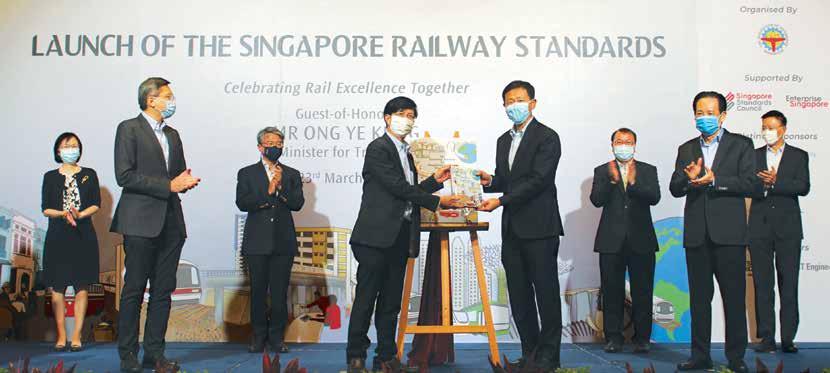
In 2018, the Design & Build for Operation and Maintenance (DBfOM) framework was initiated. It aimed to create harmonisation, standardisation, and digital progression among rail operators and regulators. Spearheading this initiative was the Joint Readiness Inspection (READI) team under the leadership of IES’ Er Dr Richard Kwok (IES President 2020–2022), and representatives from both LTA and SMRT. Their aim was to amalgamate work instructions into a manual that could be included in the Singapore Railway Standards.
IES members are also involved in Technical Committees and Working Groups formed by other SDOs. For example, the SDO under the Singapore Manufacturing Federation (SMF) has IES representatives in its Quality and Safety Committees. This is also the case with the SDOs under the Energy Research Institute at Nanyang Technological University, and the Singapore Chemical Industry Council.
All these contributions from IES have added to establish, and maintain, a permanent gain for Singapore, helping to keep, as it were, everything else in the economy and society “on track”.
THE VISION ZERO MOVEMENT
Away from high-profile landmark projects, IES’ contributions to Singapore’s built environment includes close attention to some fundamental aspects of building, such as the Vision Zero movement. This movement originated in Sweden in 1997, with a focus on reducing fatalities and serious injuries on the roads to zero. The concept was brought to Singapore in 2015 as part of the national Workplace Safety and Health Campaign. This initiative is led by the Ministry of Manpower (MOM), the Workplace Safety and Health Council (WSHC), and industry stakeholders.
The Vision Zero Movement calls for the commitment of all stakeholders – employers, workers, unions, and the government – to embrace a mindset that all injuries and ill-health at work are preventable, and a belief that zero harm is possible in all workplaces.
IES became the first professional body in Singapore to support this movement, and has worked with relevant partners to encourage the fostering of strong workplace safety and health
culture amongst engineering professionals and organisations, so that everyone can work, and then go home, safe and healthy.
IES expressed its support to the MOM’s Action Plan with the following pledge:
• Engineers can contribute to Workplace Safety and Health
– We are responsible for both the design and construction of structures and buildings
– As engineers, we play a key role in keeping construction workers safe
• Driving greater action towards Vision Zero
– IES pledges to proactively create a safe and healthy work environment for everyone
“Vision Zero is about a mindset shift that every accident in the workplace is preventable,” says Er Ho Siong Hin (IES President 2010–2012), who was the Manpower Ministry’s Commissioner for Workplace Safety and Health from 2006 to 2019.
He served as President (from 2021) and Secretary General (2014–2021) to the International Association of Labour Inspection, and was a member of the International Organising Committee for the World Congress on Safety and Health at Work. “I find that the job (of looking after
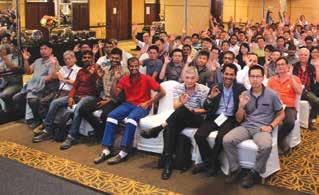
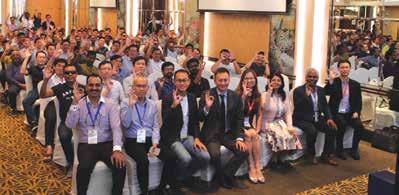


Participants and Speakers at the Vision Zero Seminar: A Holistic Approcach to Workplace Safety and Health, held on 1 November 2019.
workplace safety) is very meaningful,” he adds. “It’s something I can connect with emotionally.”
One of the main ways that IES has contributed to Vision Zero is through its participation in various committees and working groups at the national and industry levels. These groups are often tasked with developing policies and regulations related to workplace safety and health, and IES has been actively involved in providing input and feedback based on the expertise of its members. As a professional organisation that represents engineers in Singapore, IES has a wealth of expertise and knowledge that can be leveraged to improve the wellbeing of workers and the workplace.
In addition, IES organises conferences and workshops on workplace safety and health issues, that bring together experts from different sectors to share their experiences and insights, and to develop effective strategies and approaches.
IES has also developed guidelines and toolkits to support the implementation of workplace safety and health initiatives. These resources are designed to help engineers and other professionals to identify hazards and risks in the workplace,
and to take appropriate measures to eliminate or control these hazards.
In November 2008, the “Guidelines on Design for Safety in Buildings and Structures” were codeveloped by the WSH Council in collaboration with the Ministry of Manpower. A year later, in 2009, two IES representatives (the late Mr Tan Kai Hong and Mr Jason Oh) attended and passed the “Project Safety & Health Coordinator TrainThe-Trainer” course (equivalent to the Design for Safety coordinator/professional training course). By 2010, IES was one of the four approved training providers for the Design for Safety training course.
As this initiative gained momentum, IES played a pivotal role in rallying industry support for the practice of designing for safety. IES, HSE TC has initiated to organise the “Construction Safety Summit 2012” and invited the Construction Industry Joint Committee to sign the DfS pledge at the CIB W099 International Conference on “Modelling and Building Health and Safety” co-organised in September 2012 by the National University of Singapore and the International Council for Research and Innovation in Building
and Construction (CIB). This signing ceremony was supported by NUS, MOM and WSH Council.
Along with IES, the CIJC’s other members are the Association of Consulting Engineers Singapore, Real Estate Developers’ Association of Singapore, Singapore Contractors Association, Singapore Green Building Council, Singapore Institute of Architects, Singapore Institute of Building, Singapore Institute of Surveyors and Valuers and the Society of Project Managers Singapore. The CIJC acts as a think-tank, and works with the government, to serve the industry.
Building upon this groundwork, IES, along with WSHC, MOM, and other key stakeholders, launched the Project Safety and Health Coordinator (PSHC) Course. This initiative was aimed at addressing the growing industry demand for DfS proficiency, and integrating DfS concepts into professional and tertiary-level courses starting with the Architecture and Civil Engineering Departments at the National University of Singapore.
In 2013, a series of initiatives were launched to enhance competencies and capabilities for crane safety in Singapore. The primary focus was on
ensuring that personnel in the industry were adequately trained with the essential skills and knowledge to operate cranes safely.
In May 2013, as part of a capability-building initiative for Appointed Persons (AP), a significant training course was introduced, as a programme for the safe installation, dismantling, and use, of tower cranes.
In earlier years, the code of practice for safe use of tower cranes stated a requirement to appoint such a competent Appointed Person to have overall control of the planning of lifting operations involving cranes, but such a training course did not exist in Singapore.
“ “ It’s all about the safety of the workers… that’s how standardisation helped in nation-building.
ER HO SIONG HIN IES President (2010–2012)
IES’ representative on the DfS Taskforce, Mr Jason Oh Boon Chye, had recommended to Er Ho Siong Hin (WSH Commissioner) and Mr Chan Yew Kwong (OSH Director) that a training course for Appointed Persons should be started, and that the industry should be prepared for such training.
The Approved Codes of Practice recommended the inclusion of an Appointed Person to have overall control of the planning of lifting operations involving cranes, but such a training course did not exist in Singapore for complex lifting operations.
Addressing this need, the HSE TC, “Heavy machinery and Equipment” Committee (Er Teng Chin Seng) in collaboration with MOM, WSH Council, the UK’s Lifting Equipment Engineers Association (LEEA), IES Academy and BCA Academy launched a pilot five-day Appointed Person training course. In December 2013, another significant step was taken. The International Powered Access Federation (IPAF) launched Singapore’s first industry-led safety campaign for Mobile Elevating Work Platforms (MEWPs). This launch saw attendees signing the pledge for the initiation of the “Clunk Clunk”
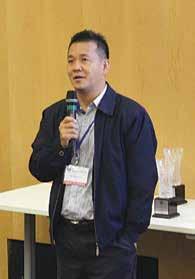
Mr Jason Oh Boon Chye, speaker at the Design for Safety Seminar held at Lifelong Learning Institute, organised by IES Health and Safety Engineering Technical Committee, 19 January 2016.
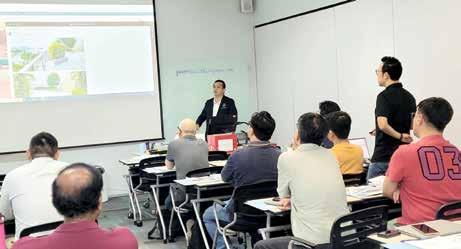
One of the trainers of the ‘Perform Design for Safety Professional Duties’ course, Mr Jason Oh, during its 9th Run from 1–2 August 2024 held at IES Academy. The course aimed to equip professionals with the skills and knowledge to function as a Design for Safety Professional (DfSP).
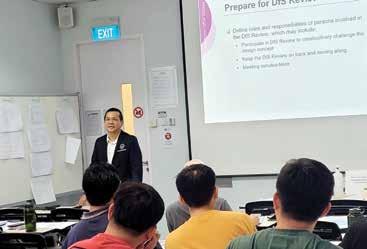
Campaign in Singapore, marking a commitment to raise safety standards in the industry.
By this time, it was felt that DfS should have mandatory force. Thus, between May 2014 and July 2015, IES was a member of MOM’s Taskforce to develop and implement a mandatory framework and legislation for DfS. This effort culminated in the passing of the DfS Regulations in July 2015.
IES was invited by MOM to provide written submissions in response to the fatal explosion at 32E Tuas Avenue 11 on 24 February 2021, in particular to Part (b) of the Terms of Reference provided by MOM, on recommendations to prevent the recurrence of such an accident at workplaces.
To prepare this submission, Er Chong Kee Sen gathered 11 expert consultations, discussions and verifications within the engineering faculty to ensure the accuracy and comprehensiveness of IES’ feedback, and to professionally assess and review the subject matter. The recommendations take into consideration the impact on the industry in terms of safety, the practicality in terms of implementation, as well as the operational and business impact to the industry, especially for small and medium enterprises.
In May 2023, IES launched the SS 667:2020 Code of practice for handling, storage and processing of combustible dust training course (Level 1: Combustible dust hazard awareness course, and Level 2: Combustible dust hazard competent person course) with the support from MOM and WSH Council.
Mr Jason Oh, Er Joseph Goh, the late Er Au Kow Liong and Er Chong Kee Sen providing their expert opinions to the Ministry of Manpower Inquiry Committee.
In September 2023, IES’ Manufacturing Cluster & Chemical & Process Engineering Technical Committee organised the Combustible Dust Explosion Symposium focused on addressing the critical issue of combustible dust explosions. Experts from various industry sectors gathered to share insights and strategies aimed at preventing and mitigating these potentially devastating incidents.
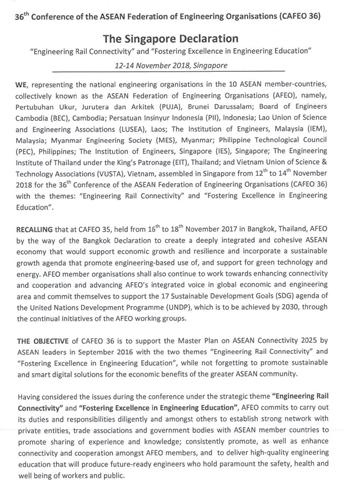
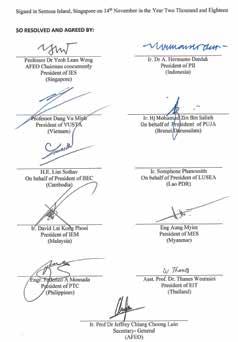
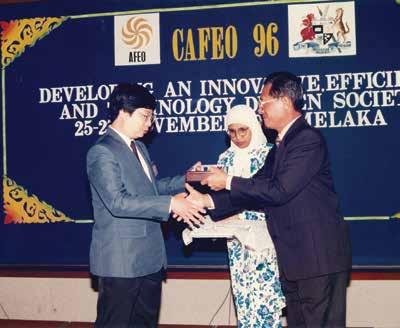
Advances were also achieved in the international dimension, including at the 36th Conference of the ASEAN Federation of Engineering Organisations (CAFEO 36), held in Singapore in November 2018. Here, IES led the engineering organisations of the 10 ASEAN member-countries in signing The Singapore Declaration.
This declaration focused on “Engineering Rail Connectivity” and “Fostering Excellence in Engineering Education”. It resolved to actively promote a mindset among engineers that all workplace injuries and ill-health are preventable. This involved applying the “Design for Safety” concept at the planning and design stages of engineering projects to address potential risks.
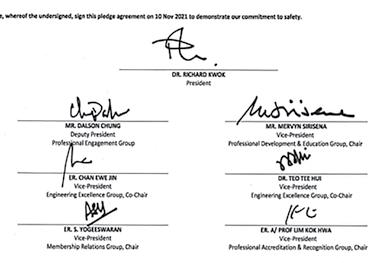
In 2021, IES played a pivotal role at the World Engineers Summit in November, with the theme “Engineering towards a Post-Pandemic Sustainable World”. It was here that IES became the first society in Singapore to sign the Vision Zero pledge. Witnessed by Deputy Prime Minister Heng Swee Keat, the signing saw the IES President, Deputy President, and Vice-Presidents from various industry groups, affirming their commitment to the Vision Zero Movement. Mr John Ng, Chairman of the WSH Council, lauded IES’s leading role in this endeavour towards Vision Zero.
As part of IES’ commitment to the Vision Zero movement, it participated in the 13th Occupational Safety + Health Asia (OS+H Asia)
Conference in September 2022. The aim was to connect with engineers and safety practitioners, and to emphasise the significance of workplace safety and health. During this event, IES organised the “Design for Safety Towards Vision Zero” forum. IES President Dalson Chung shared a fivestep action plan to Vision Zero with the forum participants.
Ensuring safety is the first requirement of any building project. It is an ongoing duty, and effort. IES’ continuing support is one essential pillar for national development in all its aspects.
TECHNOPRENEURSHIP:
“CREATING MORE CREATIVES”
At IES, most members are practitioners in the private sector, but mostly in the built environment space, such as in construction-related businesses. This is, in a manner of speaking, the “mainstream” – figuratively, and literally, building, and sustaining, the foundation of Singapore. Supporting entrepreneurship – innovating and pursuing new ventures – had not always been a top priority.
The 36th Conference of the ASEAN Federation of Engineering Organisations (CAFEO 36), held in Singapore in November 2018.
In the late 1990s, Singapore embarked on a national effort to promote technology-driven entrepreneurship, marked by the official embrace of the term “technopreneurship”, meaning entrepreneurship specialising in information technology. “Technopreneurship” became a popular term then, as more people began to tap the power of the Internet to boost their business models.
In July 1999, IES established the Technopreneurship Development Committee to inculcate a technopreneurial culture, and to facilitate venture creation among engineers to maximise their potential and contribute to the advancement of Singapore through innovation and technology.
Technopreneurship was given particular focus at IES, with more concerted implementation, under the leadership of Er Edwin Khew (IES President 2016-18). Er Khew is a successful entrepreneur himself since the 1980s, in areas such as cleantech and renewable energy. Encouraging young engineers to be more enterprising was one of the two “softer aspects” of engineering he would focus on at the start of his IES presidency in 2016, along with promoting greater
social and environmental responsibility amongst IES members. Typically, becoming more enterprising was described as a “soft aspect” in the media, but for Er Khew at IES, this was always centred on a very “hard” facet: Aligning with the Government’s long-term target of keeping manufacturing’s share of contribution to the Gross Domestic Product (GDP) at about 20 to 25 per cent.
Indeed, nothing can be “harder” than maintaining this proportion as part of the “backbone” of the economy – a national focus since the Singapore’s economy’s earlier decades. An awareness of such national priorities was sharpened also from Er Khew’s time as a Nominated Member of Parliament (2007–2009). “I wanted to push for technopreneurship because it would encourage our engineers to be more innovative in deep tech ventures,” he says. “That was very important for the survival of Singapore, looking forward.”
He believes this manufacturing “backbone” of Singapore’s economy is what helped the Republic get through the Covid-19 pandemic from 2020 to 2023 in better shape than some other economies
that were more dependent on the services sector, and so, shrank more during the periods of lockdown, and took longer to recover.
Fostering enterprise to build up manufacturing is a key priority also for IES, as the representative of all engineers in Singapore, and this is best summed up as Er Khew says: “We need to create more ‘Creatives’ in Singapore”.
He was referring to the Singaporean multinational technology company Creative Technology and Creative Labs. Founded in 1981 by Sim Wong Hoo and his partners, Creative expanded and set up offices in Shanghai, Tokyo, Silicon Valley and Dublin, and remains probably the bestknown example of Singaporean enterprise in the technology sector.
Responding to the Government’s Research, Innovation and Enterprise 2020 initiative, he worked with Adjunct Associate Professor Foo Kim Peng and Mr Andy Wee to set up IES’ deep tech incubator, IES-Incubator and Accelerator (IES-INCA). The aim is to help engineers in new technology business ventures to be successful in commercialising their innovations. IES-INCA was
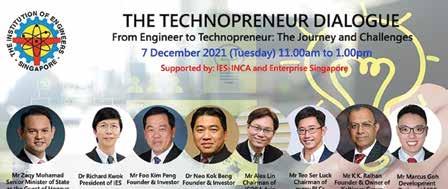
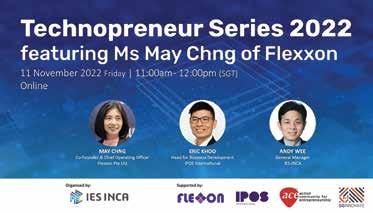

Promo banners of the Technopreneur Dialogue organised in 2021, 2022 & 2023.
“ “ We need to create more ‘Creatives’ in Singapore.
ER
EDWIN KHEW IES President (2016-2018)
partially supported by Enterprise Singapore, the government agency that champions enterprise development, helps companies to go global, and builds Singapore as a hub for global trading and startups.
At that time, Singapore’s enterprise system was already producing a number of startups, with some winners; but these were mostly in the software space. There were very few in deep tech, where startups differentiate themselves by building solutions based on scientific discovery or meaningful engineering innovation.
Perseverance and technical expertise were required, Er Khew says, to find financing from angel investors, come up with prototypes, apply for patents, and get the marketing right. “You have to be pretty patient; the whole journey takes time. The burn rate is quite high.”
IES-INCA plugs a needed gap, as a platform “by engineers for engineers”. Here, mentorship is available from some 100 veteran engineers from the IES College of Fellows (headed by Er Chong Kee Sen, IES President 2014–2016) and senior members with many years of business experience, who serve as mentors for engineers in entrepreneurship.
The IES College of Fellows was officially launched in October 2011. The main aim is to harness and direct the collective knowledge base and expertise of IES Fellows towards educating the future “master” engineer, who is skilled, versatile and entrepreneurial, and contributing to the making of a vibrant, technologically-rich engineering community in a sustainable Singapore.
These mentors guide and advise on technical and business developments needed for products and services to be successfully commercialised. A partnership with the Institute of Chartered Accountants also helped to rope-in mentors to advise on financial aspects, as part of building up the whole engineering ecosystem.
IES-INCA also supports fund-raising efforts, to pursue opportunities in Singapore and international
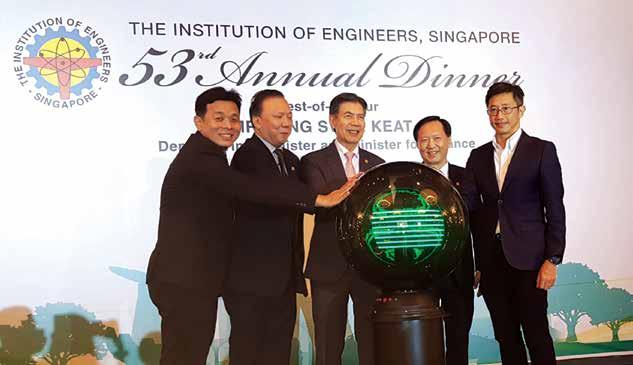
markets. The main industry sectors and fields are infrastructure, Internet of Things, robotics, automation, cleantech and sustainable technologies.
Through IES’ links with bodies such as the ASEAN Federation of Engineering Organisations (AFEO), IES can also help deep-tech startups scale up into the regional market.
The IES-INCA initiative officially embarked on its mission in December 2018, with the signing of a letter of intent with its first incubatee, Phaos Technology Pte Ltd.
Phaos Technology is an advanced optics technology startup founded by Professor Hong Ming Hui
Official Launch of IESINCA at the IES Annual Dinner on 10th October 2019 at Shangri-La Hotel.
and his research team from the Department of Electrical and Computer Engineering at NUS. The company specialises in the research and development of advanced optical nanoscopes, which can show objects smaller than 200 nanometres in size, for use in thin wafer processing and tissue engineering.
IES-INCA held its inaugural networking night in November 2019, and continues to work on supporting incubatee startups in various deep tech sectors.
In 2020, IES-INCA was appointed by Enterprise Singapore (ESG) as an Accredited Mentor Partner (AMPs) to support its Startup SG Founder scheme for grooming local startups. The Startup SG Founder programme aims to provide mentorship and startup capital grants to first-time entrepreneurs.
AMPs identify eligible startups based on their business concepts, business model feasibility, strength of their management teams, and potential market value. Successful applicants receive advice, learning programmes and contacts from AMPs. IES-INCA was selected based on the quality of its
programmes, strength of its management teams and its operational sustainability.
One example of an IES-INCA incubate that went on to secure funding is Pi-xcels, a Singapore-based startup specialising in digital receipt issuance, which in 2023 secured US$1.7 million in seed funding for its global business development efforts, with a specific focus on strengthening its presence in Europe, and advancing projects in Japan and Southeast Asia.
Pi-xcels also received the Tokyo Metropolitan Government Green Finance Subsidy Grant and was accepted into the Visa Accelerator
MOU signing ceremony between IES-INCA and Institute of Singapore Chartered Accountants (ISCA) on 10 October
2023.
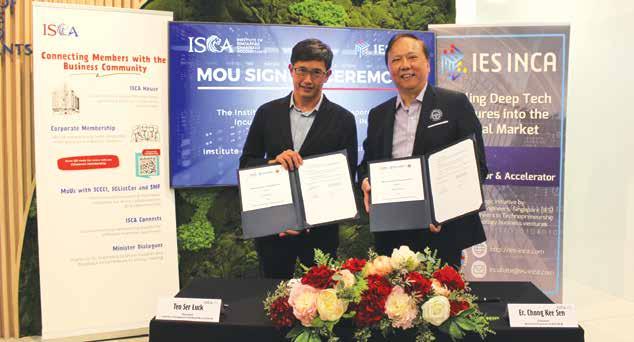
programme. Founded in 2019, Pi-xcels offers digital receipts as an eco-friendly alternative for various establishments using Near Field Communication technology. This system allows offline retailers to issue interactive e-receipts with a single tap of a shopper’s smartphone.
Most tech accelerators in Singapore focus on business aspects, and are driven mainly by margins and time-to-market factors. IES-INCA’s key differentiator is that, unlike most business accelerators, there is more pointed emphasis on quality engineering, rather than mostly on business aspects. This will remain its vital value-add.
IES’ OTHER CONTRIBUTIONS TO BUILDING SINGAPORE
Playing key roles behind the scenes is a general characteristic of engineering, to the point of engineers being often left among the “unsung heroes” in important areas of life and work.
For example, IES has always been the backbone of the electrical and electronic standards committee as well as its working groups, who could not have achieved the development of such standards
without the involvement of IES and its engineer members.
This area is important, because IES’ role is important for industry, and also for everyone at home. Electrical standards concern consumer safety in not only every office, but also every household, covering ceiling fans, power adaptors, hairdryers, and Christmas tree lights. These are items that many take for granted. IES’ contributions are in the hidden infrastructure work behind these ordinary household items that are used every day.
Being the unsung heroes is also true of IES’ extensive involvement in the movement to promote alternative dispute resolution (ADR) and mediation, that most people are not aware of. IES was there from the beginning, lending professional expertise and thought leadership.
ALTERNATIVE DISPUTE RESOLUTION
Alternative dispute resolution (ADR) is a term that refers to various methods of resolving disputes without going to court, such as negotiation, mediation, arbitration, neutral
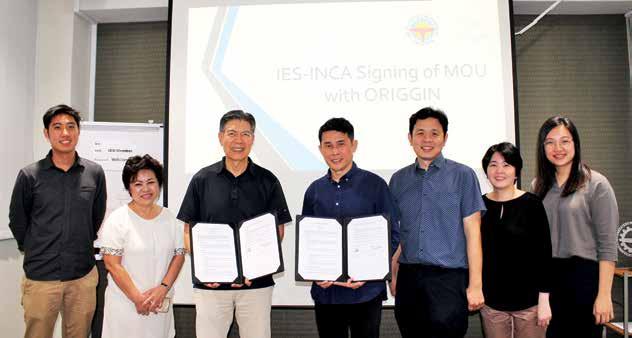
evaluation, and neutral determination. ADR can offer benefits such as saving time and costs, preserving relationships, maintaining confidentiality, and giving parties more control over the process and outcome.
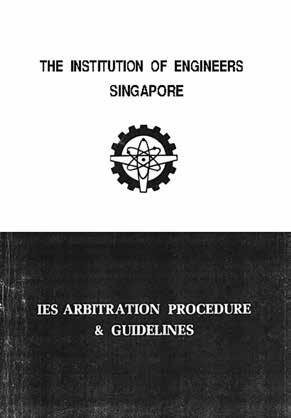
A copy of the Arbitration Procedures and Guidelines, published in June 1980.
IES was an early supporter of ADR in Singapore. It published its Arbitration Procedures and Guidelines as early as June 1980, and maintains a list of Accredited Arbitrators.
Prior to ADR being widely used in Singapore, the Judiciary had initiated Pre-Trial Conferences (PTCs) for civil cases in the Supreme and State Courts as early as January 1992. These PTCs, led by a registrar, served to evaluate the case for an optimal and efficient handling of cases, and encouraged the parties to settle their dispute via negotiation on a ‘without prejudice’ basis.
MoU signing ceremony with Er Edwin Khew representing IES-INCA and Mr Clarence Tan representing Origgin on 5 April 2019.
Mediation took off in the late 1990s because, by the late 1980s and early 1990s, the Courts had a massive backlog of cases waiting to be settled. At the beginning of 1990, there were 2,050 outstanding civil cases in the High Court. About 44 per cent of cases took between five and 10 years from commencement to disposal, and appeals required another two to three years to be heard. This became the catalyst for the growth of the Alternative Dispute Resolution movement in Singapore.
In 1996, a cross-profession Committee on Alternative Dispute Resolution was formed to study how mediation could be promoted further in Singapore, and to implement mediation beyond the courts. This Committee made two main recommendations, dividing the private mediation movement into commercial and community mediation.
The Committee recommended the creation of the Singapore Mediation Centre (SMC) under the Singapore Academy of Law. This centre, launched in August 1997, is a non-profit organisation guaranteed by law.
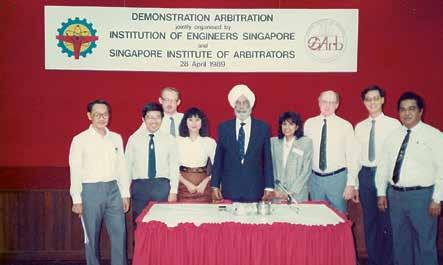
Training on arbitration organised by the IES and the Singapore Institute of Arbitrators.
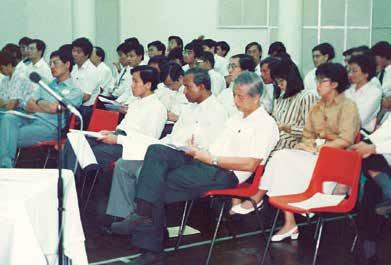
The Community Mediation Centre was established in 1998. IES members participated in this, notably Er Chang Meng Teng (IES President 1990–1992) and Er Tan Ee Ping (IES President 1992–1994).
Arising from the recommendations of the Committee on Alternative Dispute Resolution, a new panel called the Advisory Committee on Construction Mediation (ACCOM) was appointed. This committee had representatives from across the construction industry and Er Tan Ee Ping (IES President 1992–1994) was its first Vice-Chairman. The committee’s main objectives were to train mediators and to promote mediation within the construction industry.
Soon after the establishment of the Singapore Mediation Centre (SMC), it conducted its first training course in February 1997. IES was well-represented in this first mediation training
course, with a few senior IES members attending, including IES’ Honorary Legal Advisor, Mr Lee Kwok Weng
From that time on, mediators from IES have been involved in mediation cases in Singapore, and have also been deployed to the Small Claims Tribunal, and the Tribunal for the Maintenance of Parents.
For mediator training, some of these mediators, including Er Ngiam Tong Yuen, were also deployed as coaches to train other mediators.
IES’ expertise has been sought in this area especially because of the scale and complexity of disputes in the construction industry. For example, IES members have participated in the Adjudicator Accreditation Committee (CAAC). This was formed by the Singapore Mediation Centre (SMC) to advise on suitable persons who may serve as adjudicators under the Building and Construction Industry Security of Payments Act (Cap 30B). The CAAC consists of established and recognised leaders in Singapore’s construction industry, such as senior IES members Er Chua Koon Hoe, Er Lee Chuan Seng, and others.
“ “ Being involved with mediation and alternative dispute resolution is perhaps just another way that IES’ engineers have been unsung heroes for quite some time.
Another example is Er Ong Ser Huan (IES President 1998–2000) who was a member of the working group that drafted the Security of Payments Act (2004) to provide a fast and efficient low-cost adjudication process for payment disputes in the construction industry.
Thus, IES was involved in mediation from the beginning, and has been active in advancing it ever since. This is perhaps just another way that IES’ engineers have been unsung heroes for quite some time.
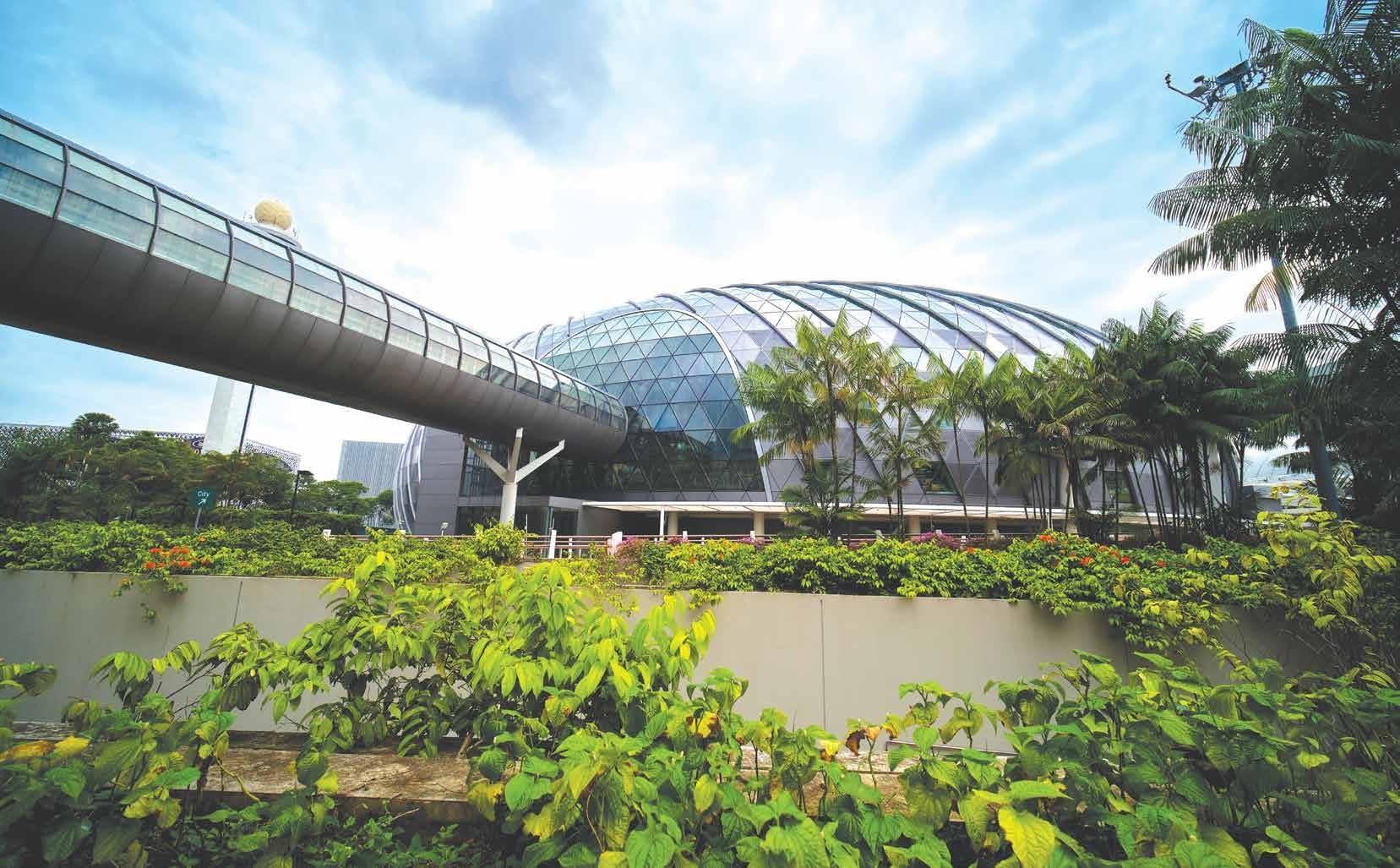
ENGINEERS OF THE WORLD PART 2
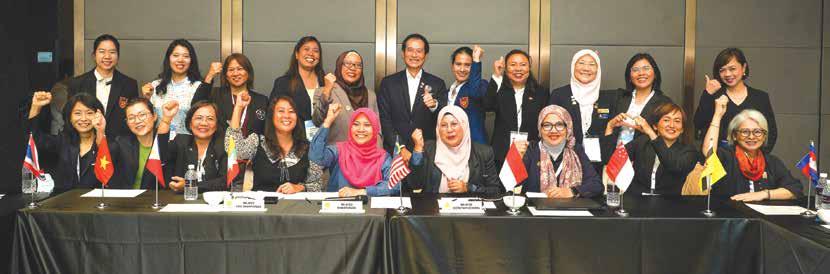
REACHING OUT INTO ASEAN, AND BEYOND
ENGINEERS IN SINGAPORE have always seen themselves as being “engineers of the world”, that is, part of an international community of professionals whose work is for the betterment of mankind. Hence, their desire to reach out to connect with their counterparts in other countries, and to contribute where they can.
Like the Institution of Engineers, Singapore itself as an organisation, its international linkages started in the earliest days of Singapore emerging from being a part of a newlyindependent Malaysia.
Members of the IES-YEC (Young Engineers Committee) with members of the 23rd AFEO MidTerms delegation, 12 July 2024.
Facing page: IES-WiSER (Women in Science, Engineering and Research) and WE-AFEO (Women Engineers of the national engineering organizations under the umbrella of the Asean Federation of Engineering Organization [AFEO]) collaborated to focus on Women Engineers (WE), leading the circular economy initiative in the ASEAN region during the 23rd AFEO Mid-Terms held in Singapore, 11-13 July 2024.
After Singapore and Malaysia parted ways in 1965, despite the political Separation, IES and its Malaysian counterpart IEM saw continued collaboration as the only way forward for these two once closely-connected professional institutions.
They decided to carry on promoting interaction and rapport among their members through a joint IES/ IEM Engineering Convention. There was, after all, clear business reasons to do so, with many ongoing, and potential, cross-border projects.
The first IES/IEM Engineering Convention was held in November 1973 in Singapore with the theme “The Role of Engineers in National Development”, the second the following year in Kuala Lumpur, and the third in Singapore in 1977.
The thematic reference in 1973 to “national development” signalled a shared impetus for both countries to find common ground to contribute to each nation being able to stand on its own, and for each country to seek and find its own place in the sun.
This was only natural and understandable, in the wake of the departure of the last vestiges of the former British colonial administration. “There was
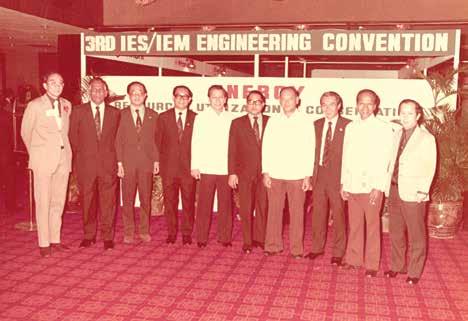
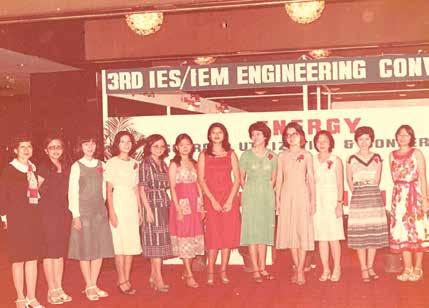
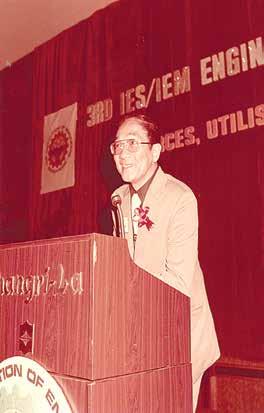
The story of how it came to embrace, and embody, these enduring aspirations begins in the 1950s.
Third Engineering Convention co-organised by the IES and the Institute of Engineers, Malaysia (IEM) at the Shangri-La Hotel, Singapore, in 1973.
“
“ There was a strong and compelling need to find indigenous solutions to solve indigenous engineering problems.
ER TAY SIN YAN IES President (1978–1980)
a strong and compelling need to find indigenous solutions to solve indigenous engineering problems,” wrote Er Tay Sin Yan (IES President 1978–1980) in a paper published in the IES Year Book 1980.
By the time of the third IES/IEM Convention in Singapore in 1977, fellow professionals from engineering institutions in other Southeast Asian nations were invited too. The foundational nature of this fragment of ASEAN solidarity was appreciated by those who attended – so much so that the heads of delegations agreed to establish a Council of Engineering Institutions of South-East Asian Nations (CEISEAN), and also, henceforth, for a convention to be held yearly in a regional capital, in turn.
At the second CEISEAN meeting in Manila, the Philippines, in 1980, the proposal was accepted to set up an ASEAN Federation of Engineering Organisations (AFEO) to replace CEISEAN. The AFEO secretariat was to be in Singapore.
Er Tay Sin Yan (IES President 1978–1980), as IES President, was appointed as AFEO’s first interim chairman. He recalls that the enthusiasm at the Manila meeting for this new entity was so high, that the constitution of the new body was finalised there and then, at the convention venue near the Taal volcanic lake.
Since then, AFEO has held a convention every year, hosted by member organisations in turn. AFEO was recognised as a non-government organisation of ASEAN in 1982.
AFEO grew from five members in 1980 comprising Singapore, Indonesia, Malaysia,
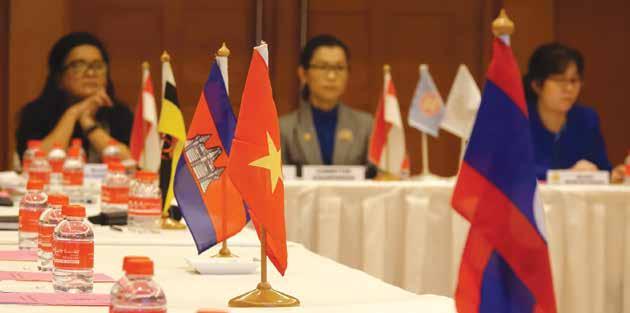
Delegates at the AFEO Convention.
the Philippines and Thailand, to nine by 2001, with the inclusion of Brunei in 1984, Vietnam in 1998, Myanmar in 2000 and Cambodia in 2001. The full membership of 10 was achieved when Laos was admitted in September 2002.
Starting in 1998, AFEO embarked on a very important mission with the aim to spearhead and to facilitate the mobility of engineers within the ASEAN Free Trade Area (AFTA), with the formation of the ASEAN Engineers Register. This is in line with the AFTA’s liberalisation of professional services within ASEAN to prepare for globalisation under the World Trade Organisation (WTO) initiative.


The ASEAN Federation of Engineering Organisations (AFEO) comprises 10 member nations and seeks to allow engineers the ability to work freely within ASEAN countries.

The 10 members of AFEO are: Board of Engineers Cambodia (BEC); Federation of Myanmar Engineering Societies (Fed.MES); Institute of Engineers Singapore (IES); Lao Union of Science and Engineering Associations (LUSEA); Persatuan Insinyur Indonesia (PII); Pertubuhan Ukur Jurutera & Arkitek (PUJA); The Engineering Institute of Thailand (EIT); The Institution of Engineers, Malaysia (IEM); The Philippine Technological Council; and Vietnam Union of Science and Technology Associations (VUSTA).
Today, ASEAN remains an important regional hinterland for IES. Every so often, opportunities arise for expertise and experience from members of IES to be shared with fellow institutions in neighbouring countries.
Under the invitation of the Board of Engineers Cambodia, IES has sent experts to share experience with engineers in Cambodia, Laos, Myanmar and Vietnam on areas concerning engineering mobility and engineering education in ASEAN, and continuing professional development strategies.
Individually, members of IES who are professional experts also contribute beyond Singapore’s borders to elevate the international status and influence of IES. For example, Professor Chew Yong Tian (IES President 2000–2002) has reviewed
organisations
IEM/IES Engineering Convention Convention of Engineering Institutions of Southeast Asian Nations 1st CEISEAN
3rd IEM/IES Engineering Convention Decision to invite other engineering organisations in the region To promote collaboration
3rd CEISEAN
4th CEISEAN was renamed CAFEO 1 with 5 members: IEM, IES, PTC, PII, EIT AFEO Established
1980 Agreement was reached to form AFEO 1981 Guiding Principles for the Conference of AFEO (CAFEO) established
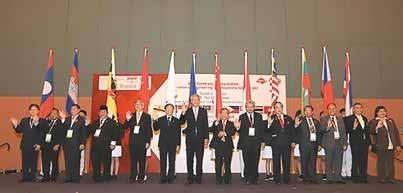
the accreditation system of the Philippines Technological Council and Myanmar Engineering Society to ascertain the substantial equivalence of their recognised degrees with those of other member economies of the Federation of Engineering Institutions in Asia and Pacific (FEIAP).
In 2016, Er Tan Seng Chuan (IES President 2006–2008) participated as a speaker in an international forum in Peru, entitled “Accreditation and Professional Licensing of Engineers and Technicians in Latin America and the Caribbean”.
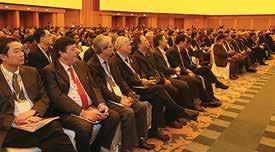
The 36th Conference of the ASEAN Federation of Engineering Organisations (CAFEO 36) took place from 12–14 November 2018 at the Resorts World Sentosa Singapore, with DPM Teo Chee Hean in attendance as guest-of-honour.
The key themes of CAFEO 36 were ‘Engineering Rail Connectivity’ and ‘Fostering Excellence in Engineering Education’. These were delivered through the Singapore Rail Technology Conference (SRTC) and ASEAN Engineering Deans Summit (AEDS) respectively.
Over 1,000 engineering professionals from 30 countries gathered to exchange ideas, best practices and solutions to drive economic growth in ASEAN and its individual countries.
The event, organised by the Sistema Nacional de Evaluación, Acreditación y Certificación de la Calidad Educativa, aimed to benchmark globally the quality standards of engineering in Latin America and the Caribbean.
The key to addressing the most serious global challenges is “collaborative innovation,” in the words of Er Dr Lee Bee Wah (IES President 2008–2010), speaking at the 27th Conference of the ASEAN Federation of Engineering Organisations (CAFEO 27) in 2009. Only if cities and countries collaborate to share the best practices, and come up with workable innovations, can the world tackle urban management and environmental sustainability.
To build IES’ international networks, aside from annual meetings of international groupings, additional trips are made from time to time to ASEAN countries. Er Dr Lee has led a number of such IES visits, including one she recalls to Thailand.
During this trip, the international airport became inaccessible because of political unrest, so she and her delegation had to fly home from an airbase.
The flight home might have been uncertain, but the intent of IES leading such trips was very clear to her. “I come from the private sector,” she says. “The purpose for me to do all this networking is hopefully to create business opportunities for our members.”
These and other initiatives all work towards the common good of the whole region.
INTERNATIONAL ACCREDITATION:
FIRST, THE EAB
Fundamental to the core mission of IES is to enhance the international recognition of engineers in Singapore. To elevate this to global status is the ultimate aspiration.
This journey of IES started during the IES Presidency of Er Prof Lock Kai Sang from 2002 to 2004. With his academic background, Er Prof Lock – who is Professor (Engineering) and Head, Energy Efficiency Technology Centre at the Singapore Institute of Technology, and former Adjunct Professor at Singapore University of Technology and Design – was well-placed to lead the process for IES to enhance its international standing as an accreditation body.
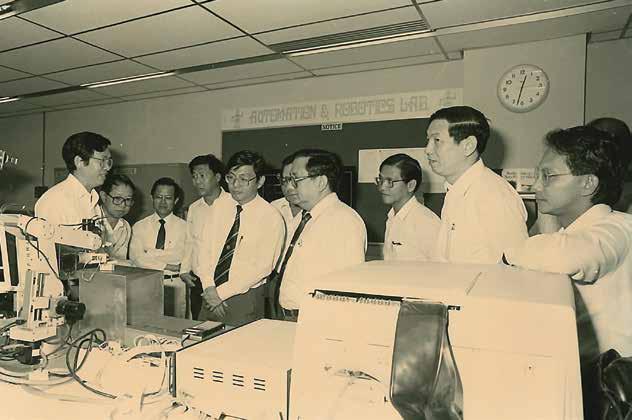
IES has forged longstanding partnerships with tertiary institutions. Here, IES council members visit the (then) Nanyang Technological Institute.
The first step was to establish the Engineering Accreditation Board (EAB), set up under IES in May 2002. This came about in collaboration with the Professional Engineers Board, a statutory board in the Ministry of National Development that maintains the professional standards of engineers, especially those working in the built environment sectors.
Er Prof Lock represented IES at the International Engineering Alliance’s meeting in Rotorua, New Zealand. With the application accepted, the process is then for applicant countries to become provisional members of the Accord until they are accessed to be suitable to be full members.
In Singapore, as it was elsewhere, the broader impetus to move towards globally recognised benchmark standards for engineering qualifications came from the desire to facilitate international and bilateral negotiations of trade and services, including professional engineering services. This arose from the World Trade Organisation process, that had started in 1995 to reduce the barriers to freer movement of goods, and also services, including engineering services.
IES, as a non-government organisation, would have more flexibility in taking on this role of overseeing accreditation across international borders, which includes signing agreements with foreign institutions.
In Singapore, there was an increasing need and demand for accreditation of engineering educational programmes, due to the growing number of students seeking assurance on the standards of programmes being offered by educational institutions both in Singapore and overseas, as well as the emergence of more educational institutions providing education in engineering.
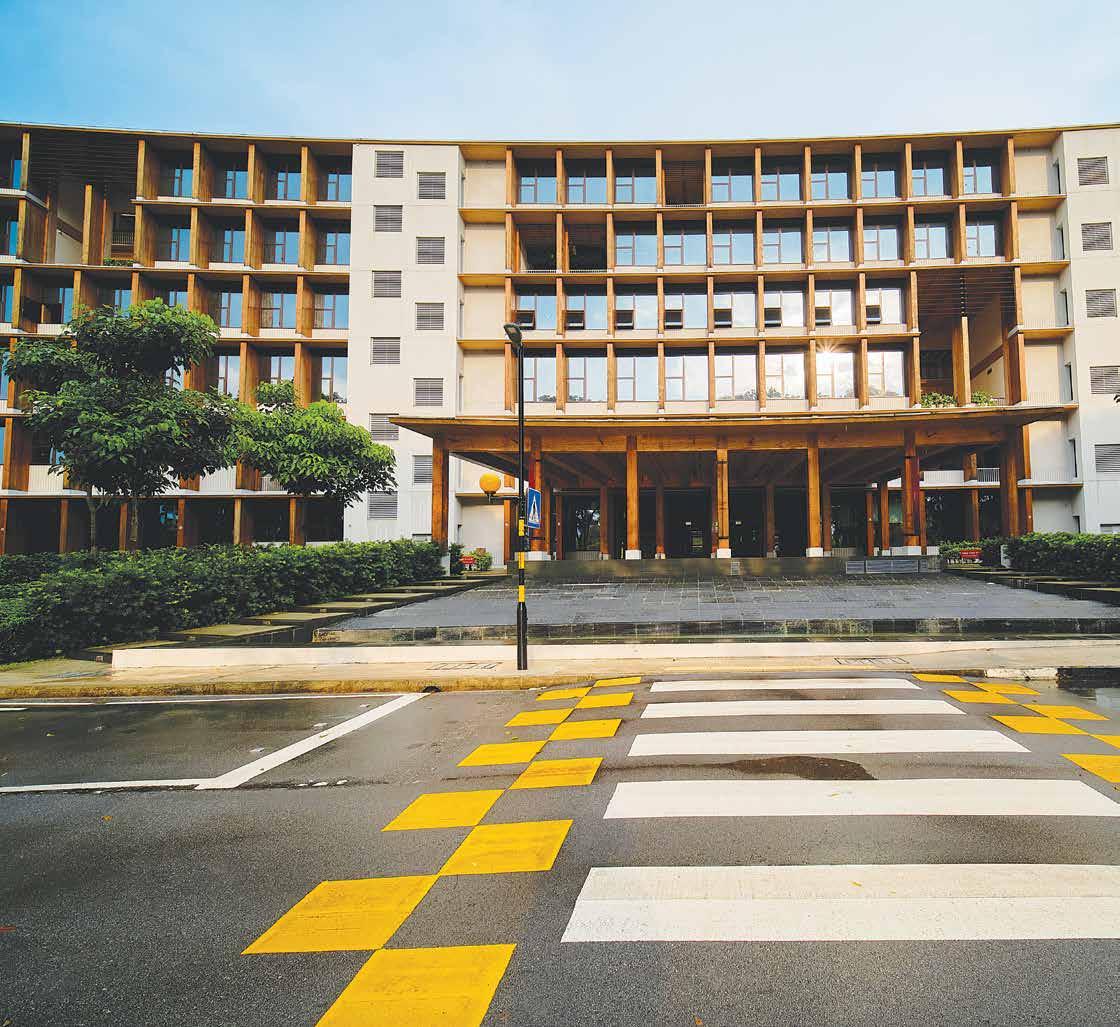
EAB set out to work closely with all stakeholders to ensure that tertiary educational programmes serve to equip graduates with a sound knowledge of the fundamentals of the discipline, and to develop in them acceptable levels of professional competence that would meet the needs of the profession in Singapore, and also be adequate for the responsible fulfilment of engineering assignments globally.
For the universities, the main objectives in accreditation were to have international professional recognition of their programmes, as well as their curricula and teaching.
With IES setting up EAB, and becoming a full signatory of the Washington Accord in June 2006, universities in Singapore no longer needed to get accreditation from foreign institutions. This was a shift in the process that is similar to the accreditation of doctors, which used to depend on accreditation by institutions overseas, especially those in the UK.
In this transition, one challenge faced by IES was to gain buy-in from the universities in Singapore. In particular, the initial hurdle was for the universities to forego previously established
accreditation from overseas accrediting bodies such as the Engineering Council United Kingdom (ECUK) in the United Kingdom, and the United States-based Accreditation Board for Engineering and Technology (ABET).
The EAB gives accreditation to all engineering degree programmes at five universities in Singapore – the National University of Singapore, Nanyang Technological University, Singapore University of Technology and Design, Singapore Institute of Technology, and Singapore University of Social Sciences. The disciplines covered extend beyond the traditional three main branches of engineering, and also include fields such as environmental, biomedical, and information engineering.
Experts who are mostly from civil, electrical and power, mechanical and chemical engineering fields review all aspects of these degree programmes to give assurance of the quality of engineering education. The experts include those from overseas universities such as the University of New South Wales in Australia, University College London in the UK, and the University of Hong Kong. The assessments involve interviewing staff, students and stakeholders, examining documents, and so on.
Among other things, the accreditation exercises provide feedback to educational institutions for improving and developing educational engineering programmes that can better meet the needs of industry.
For three years from 2003, EAB established itself with PEB’s support. Study trips were made to places including the US, to study what being a full signatory of the Accord entailed. “So, in that sense, EAB was a baby that grew up under PEB,” recalls Er Prof Lock. When IES obtained full signatory status in the Washington Accord in June 2006, Singapore became the first country within the ASEAN region to do so. This granted IES the authority to vet education systems under the Accord’s mutual recognition framework.
“
What’s important is that we must all have the same benchmark standards.
ER PROF LOCK KAI SANG IES President (2002–2004), Chairman of the Executive Committee, Washington Accord “
Mr Tharman Shanmugaratnam, then Minister for Education and Second Minister for Finance was the guest-of-honour at the Engineering Accreditation Board Washington Accord dinner in 2007.
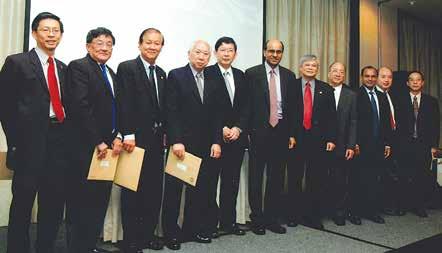
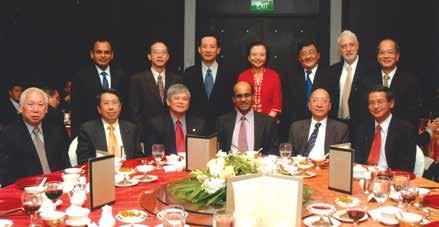
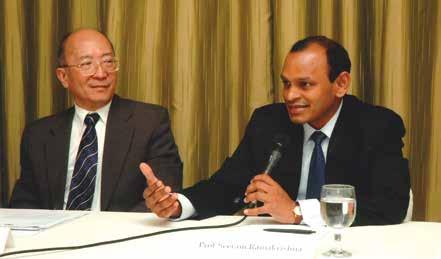
AND ON TO THE WASHINGTON ACCORD
With the EAB set up in 2002, IES applied a year later in 2003 to join the Washington Accord. Signed in 1989, the Washington Accord is a multilateral agreement between bodies responsible for accreditation and recognition of tertiary-level engineering qualifications within their jurisdictions. These organisations have chosen to work collectively to set, and to uphold, common benchmark standards, so as to assist the mobility of professional engineers to work in different countries.
Signatories of the Washington Accord agree to grant (or, to recommend to the relevant national registration body, if different) graduates of each other’s accredited programmes the same recognition, rights and privileges as they grant to graduates of their own accredited programmes.
In June 2005, Singapore applied to the Washington Accord for transfer from provisional to full signatory status. The Washington Accord assigned a Review Team to carry out a review of EAB’s accreditation system.
The Review Team, comprising members from Hong Kong, Canada and Australia, visited
Singapore twice, in January and February 2006, and submitted its report to Washington Accord signatory members in April 2006. A transfer from provisional status to full signatory status requires the unanimous approval of all existing signatories.
The milestone in June 2006 of IES becoming a full signatory of the Washington Accord was marked at a dinner ceremony held in early 2007. The event’s guest-of-honour was Mr Tharman Shanmugaratnam, then Minister for Education and Second Minister for Finance, who was later elected as the President of Singapore in 2023.
In his speech at IES’ event in 2007, he said: “This is a significant achievement, and is a strong statement of the quality of engineering education offered by our universities. It also reinforces Singapore’s reputation as a global education hub offering a range of first-class programmes that prepare both its own citizens and other young people to thrive in the emerging knowledge-based economy.”
Also speaking at this 2007 event, IES President Er Tan Seng Chuan said that having accreditation given in Singapore has the added advantage of making the country’s engineers more “in sync” with the needs and expectations of employers
based here, thus further enhancing the professional status of Singapore-based engineers.
Membership of the Washington Accord has enhanced IES’ international standing as IES was frequently asked, over the years, to provide institutional mentorship to other members, including India’s National Board for Accreditation, the Pakistan Engineering Council, and the Institution of Engineers, Bangladesh.
In June 2023, Er Prof Lock became Chairman of the Executive Committee of the Washington Accord, in Taichung, Taiwan. He was elected to this position at the general meeting of the international umbrella body, the International Engineering Alliance. He had served as Deputy Chair for the previous four years.
As at 2023, the Accord had 23 full members (including five G8 and 11 G20 nations), with another seven provisional members, in what is a “globally connected workplace” for all qualified engineers. “What’s important is that we must all have the same benchmark standards,” says Er Prof Lock.
Looking to the future, Er Prof Lock emphasises that staying on the world stage requires ongoing hard
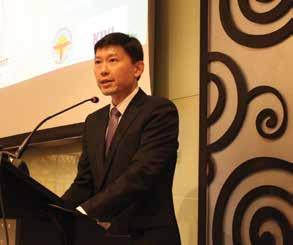
Then Senior Minister of State (Trade and Industry) Mr Chee Hong Tat delivering his keynote address during the IES–KIVI (The Royal Netherlands Society of Engineers) Joint Forum On Professional Development & Mobility For Engineers on 20 July 2018.
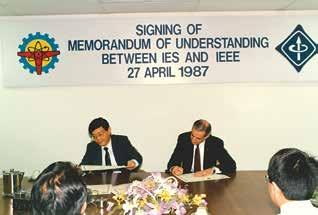
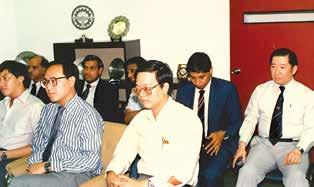
IES signed a Memorandum of Understanding with the IEEE (Institute of Electrical and Electronics Engineers) on 27 April 1987.
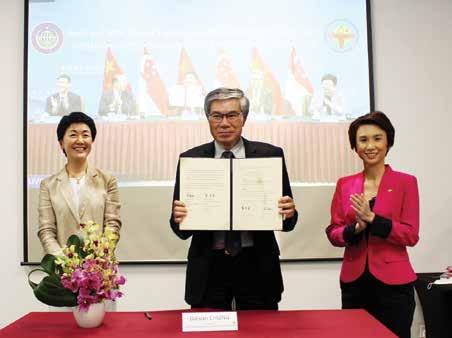
Ambassador
Minister of
witnessing the signing of a memorandum of understanding by IES President Mr Dalson Chung (centre) and China Association of Science and Technology (CAST) Vice-President Zhang Yuzhuo on 30 June 2022.
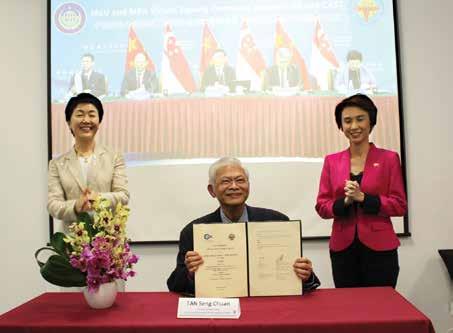
From left: Chinese Ambassador to Singapore Sun Haiyan, IES International Outreach Committee Chairman Er Tan Seng Chuan and Minister of State for Trade and Industry Low Yen Ling at the signing of a Memorandum of Mutual Recognition (MRA) between IES and CAST to reduce the barrier of cross-border work by engineers from China and Singapore by on 30 June 2022.
Er Prof Lock Kai Sang, IES President (2002–2004).
Chinese
to Singapore Ms Sun Haiyan (left) and
State for Trade and Industry Ms Low Yen Ling (right)
work. For example, IES’ full membership of the Washington Accord comes under review every six years. Representatives from three other full member nations would visit to verify if Singapore deserves to keep its spot on this international body.
Unstinting diligence is constantly needed, also because internationally accepted engineering benchmarks are always being updated and upgraded. For instance, universities need to demonstrate the extent to which they are meeting current standards in integrating with materials and resources from newer areas such as sustainability into their curricula, pedagogy and other educational aspects.
There is also an international element to the ongoing challenge of continuing to increase the membership of IES itself, with membership being the foundation of this body in representing all engineers in Singapore.
During Er Prof Lock’s presidency, one of the ways to boost IES membership was to partner overseas institutions, for example, the Institute of Electrical and Electronics Engineers (IEEE) based in the US. Reciprocal member benefits were offered to engineers in Singapore if they were to join both
IES (which is multidisciplinary in representing all engineering fields) and the overseas institution of their choice, which is usually specific to one branch of engineering.
Earning recognition on the highest world stage is an outstanding achievement of the IES. Now, growing from there will be the key challenge for the future.
ACROSS INTO THE ASIA PACIFIC
From ASEAN, IES spread its influence into the Asia Pacific region.
Er Tan Seng Chuan (IES President 2006-08) led IES on this journey, when he served as President of the Federation of Engineering Institutions of Asia and the Pacific (FEIAP) from 2007 to 2011. FEIAP was founded in July 1978, led by the Engineering Institute of Thailand, with the support of UNESCO. The membership of FEIAP increased from 14 to 21 economies.
It was Er Tan who spearheaded the revival of the former Federation of Engineering Institutions of the Southeast Asia and the Pacific (FEISEAP) in 2007, renaming FEIAP to extend
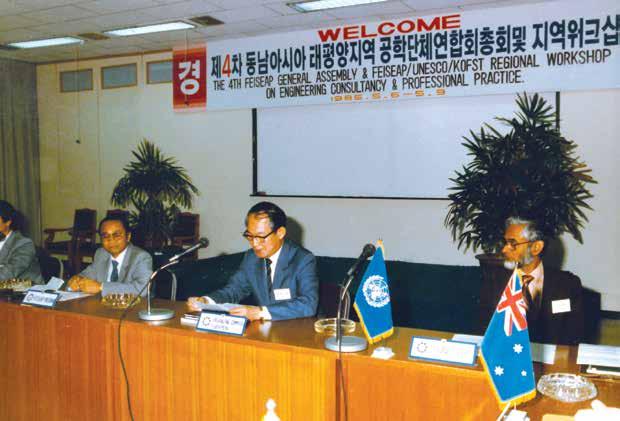
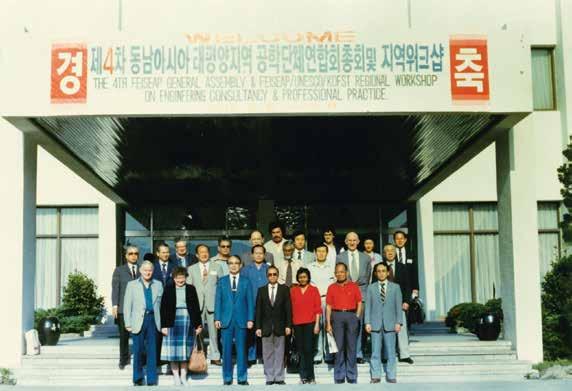

its membership to the Asia Pacific region. He was instrumental in bringing the FEIAP members closer together by organising the inaugural FEIAP Convention in 2011 in Singapore. For these and other contributions, he was conferred the FEIAP Engineer of The Year Award 2017.
FEIAP played a key role in sustaining the frameworks that allowed for equivalence in competency to be determined across national borders, so as to facilitate the mobility of engineers to work in other countries. This is an ongoing international issue of some priority, as the demand for expertise and innovation from qualified engineers rises across the globe.
The IES has actively participated in the organisation and management of FEIAP and its predecessor, FEISEAP.
FEIAP 24th General Assembly hosted by Engineers Australia, July 2016.
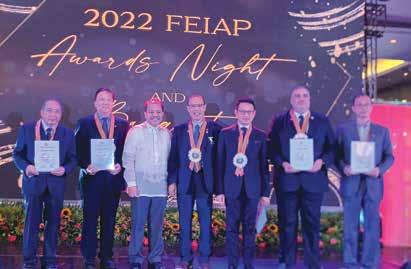
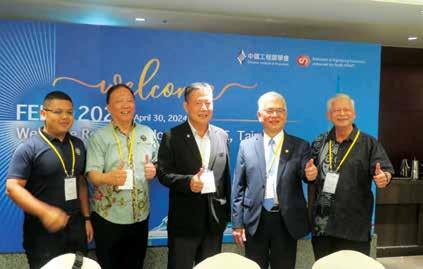
The ultimate goal was to have systems of internationally-recognised accredited qualifications that all nations would accept. Then, as Er Tan, as FEIAP President, said at the FEIAP Convention in 2011, “this will be the day when the concept of an engineer belonging to any sole country is challenged, and may even be considered obsolete, when the engineering community can truly become one family.”
Er Chong Kee Sen (IES President 2014–2016) was conferred the FEIAP Engineer of the Year award in 2021. As he points out, at the international platforms that it has joined, IES has always sought to exercise leadership. For example, at the FEIAP, IES has chaired the Environmental Engineering Standing Committee, now renamed as Environmental Sustainability Standing Committee.
Other than sharing best practices in environmental sustainability with other FEIAP
Er Chong Kee Sen and Er Tan Seng Chuan were actively involved in the FEIAP conferences in the Philippines (2022) and Taiwan (2024).
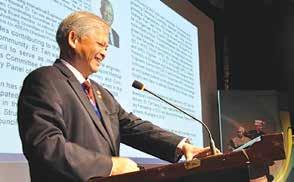
For his outstanding leadership and services to IES and FEIAP, and his exemplary contribution to the profession of engineering and society, Er Tan Seng Chuan, (IES President 2006– 2008) was conferred FEIAP Engineer of the Year in 2017.
This will be the day when the concept of an engineer belonging to any sole country is challenged, and may even be considered obsolete, when the engineering community can truly become one family.
“ “ “
ER
IES
TAN SENG CHUAN
President (2006–2008), President-Elect (2023–2025), Federation of World Engineering Globalisation
member economies, IES helped put together two guidebooks on Green Building Design Guidelines, and on Infrastructure Sustainability.
“Each member country has a different culture and perspectives, and we have to be mindful of such,” Er Chong says. “It is always about looking for common ground, and to work first on low-hanging fruit, at times, one fruit at a time, and be patient and not rush things.”
REACHING FURTHER WITH WFEO
Just like IES’ progress with the Washington Accord, IES’ journey with the World Federation of Engineering Organisations (WFEO) also started in 2003. WFEO, working under the auspices of UNESCO (the United Nations Educational, Scientific and Cultural Organisation), brings together engineering institutions from some 100 nations, and represents more than 30 million engineers worldwide.
“
“ Because WFEO was holding a side event, Er Tan Seng Chuan (IES President 2006–2008) had the chance to participate in the 2015 UN Climate Change Conference near Paris, France, where the international accord on climate change, the Paris Agreement, was negotiated.
In 2004, IES applied for membership of WFEO, after settling internal debates on the pros and cons of IES becoming a part of an international body like the WFEO, with the resulting requirements and demands. Er Prof Lock Kai Sang (IES President 2002–2004) attended the WFEO meeting that year, and IES applied to join.
Formed in 1968, WFEO – an NGO under UNESCO – is the internationally recognised leader of the engineering profession.
It cooperates with national and other international professional institutions in being the lead profession in developing and applying engineering, to constructively resolve international and national issues for the benefit of humanity.
WFEO was established under the auspices of UNESCO, based in Paris, France. The landmark UNESCO Engineering Report – the first global report on engineering – was produced in conjunction with WFEO in 2010. Ten years later, WFEO worked closely with UNESCO to celebrate the inaugural World Engineering Day 2020.
Er Tan Seng Chuan (IES President 2006–2008) attended the WFEO Committee Meetings in October 2018 in London, UK. This was followed by the Global Engineering Congress (GEC) that aimed to address the role, challenges and opportunities of engineering in advancing the UN Sustainable Development Goals; building sustainable economies and resilient communities; engineering societal impact and the influence of technology and issues in driving change, investment, education and governance.
At GEC, Er Tan presented on “Strengthening Mobility: Promoting Small & Medium Enterprise
for Sustainable Development in Asia Pacific Region”; and chaired a panel discussion on “Governance for Sustainable Development”.
IES, through its participation as a member of WFEO’s United Nations Relations Committee, continues to play an active role to promote programmes and measures on sustainable development, climate change, environmental issues and disaster risk reduction globally.
Essentially, it is a government-to-government process at meetings such as the United Nations Climate Change Conference or Conference of the Parties of the UNFCCC, more commonly referred to as COP28, like COP 28 in Dubai, in the United Arab Emirates.
The value of IES being represented at such international events is immense. Because WFEO was holding a side event, Er Tan had the chance to participate in the 2015 UN Climate Change Conference near Paris, France, where the international accord on climate change, the Paris Agreement, was negotiated by 196 parties, for countries to set targets on climate change mitigation and adaptation.
To all his roles in these international organisations, Er Tan brings with him an outlook and experience drawn from his earlier career, when he worked with Japanese, American and Danish multinational engineering companies, including in regional executive roles.
While Singapore has a strong track record in “hardware” engineering facets such as those in and around the built environment space, he notes that there is some gap with Europe, the US and Australia when it comes to areas related to sustainability. “On the ‘softer’ aspects, we are sometimes lagging behind,” he says, “because we can’t have the same standards because we don’t have the market or the supporting population.”
Most of the Western nations are many years ahead in adjusting their engineering practices and adopting standards to take into account aspects of sustainability.
There is scope for Singapore to build up expertise in areas such as carbon trading and developing as a carbon hub. To gain this knowhow means working with others. “If we want to achieve leadership roles in ASEAN and Asia, then we first have to acquire the needed knowledge and skill sets,” he says.
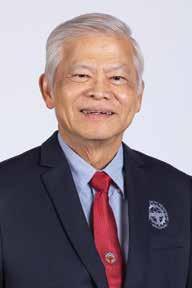
Er Tan Seng Chuan IES President (2006–2008) who has been elected as President-Elect (2023–2025) of the World Federation of Engineering Organisations (WFEO).
Another global recognition came to IES in October 2023, when Er Tan Seng Chuan (IES President 2006–2008) was elected President-Elect (2023–2025) of the World Federation of Engineering Organisations (WFEO) at its general assembly meeting in Prague, Czech Republic. He was WFEO’s Vice President 2021-2023. His Presidency of the WFEO Executive Council is from 2025 to 2027, starting from the 2025 plenary meeting in Shanghai, China.
BRINGING THE WORLD TO SINGAPORE
Back home, IES has continued to expand its international influence through activities such as the hosting of the World Engineers Summit (WES) once every two years, during which engineers from around the world gather to exchange ideas on best practices.
The inaugural World Engineers Summit was held in 2013 at the Marina Bay Sands with the theme, “Innovative and Sustainable Solutions to Climate Change”. It was officially opened by DPM Teo Chee Hean with more than 800 international and local delegates attending various conference tracks, to share ideas and insights on climate change.
The week-long summit was held in conjunction with the WFEO General Assembly 2013, alongside other events including the WFEO Young Engineers Day, World Engineering Expo exhibition, Engineers Australia Day and WES Photography Competition.
lES hosted the Second World Engineers Summit on Climate Change in 2015 to gather engineers and climate change experts to drive sustainable urban development for global climate resilience. The guest-of-honour, DPM Teo Chee Hean, witnessed the official unveiling of Singapore’s first batch of Chartered Engineers and the launch of Engineering Feats @ lES-SG50 at the opening ceremony.
Since then, WES has been focusing on discussions related to major concerns such as climate change and sustainability, as well as digitalisation and Industry 4.0.
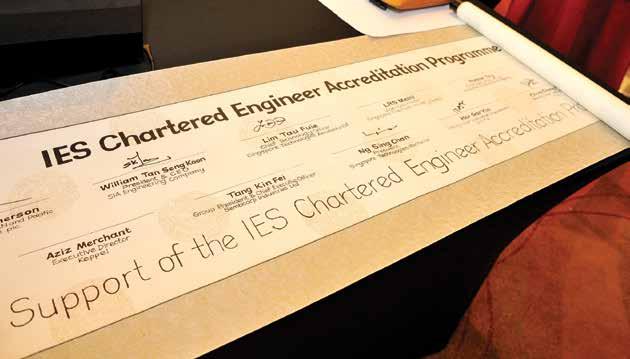
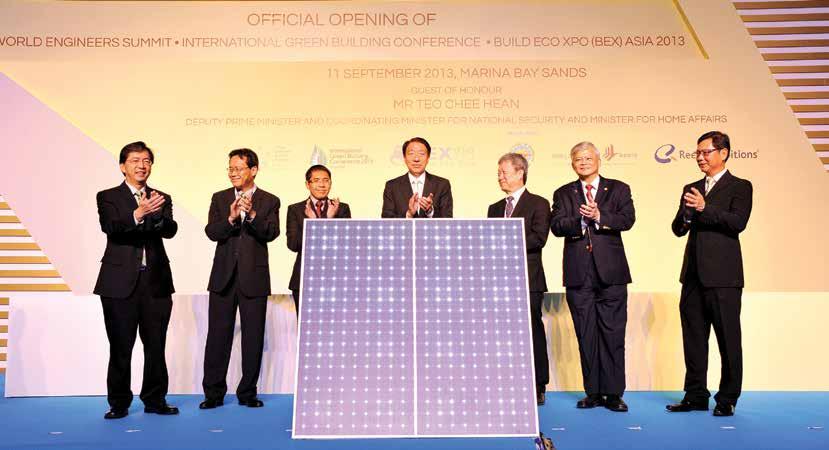
WES also serves as a platform for collaboration with overseas partners. For example, IES worked with the Institution of Professional Engineers Japan on a conference track on building smart energy and sustainable cities in Asia.
The Covid-19 pandemic, which disrupted most events and activities from late 2019 until early 2023, did not stop IES from building on its international standing, linkages and networks.
For example, in 2021, the EAB, together with Tianjin University, China, co-hosted the International Conference on Engineering Education, organised by the China Engineering
Guest-of-honour Mr Teo Chee Hean, then Deputy Prime Minister, launched the Inaugural World Engineers Summit 2013 on 9 September 2013.
Whether stretching into further expanses of the globe, or bringing the world to Singapore, IES continues to fly the national flag high, even as it opens up new territory for IES members to build their knowledge, advance their professional status, and grow their businesses.
“ “
Education Accreditation Association. The online conference in December 2021 had the theme “Engineering Education and Accreditation for Future Sustainable Society”. It was attended by about 200 delegates from 36 countries, while many more scholars and university representatives in engineering education watched the live broadcast.
Through its strong cooperation with international engineering organisations, the IES International Outreach Committee has continued to make itself relevant by playing an active role in studying and
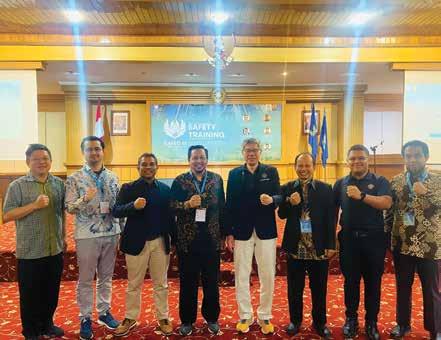
Mr Dalson Chung, IES President (2022–2024), gave a speech on Safety Training to ASEAN Engineering Students at the 41st CAFEO held in Bali, Indonesia, 21 August 2023.
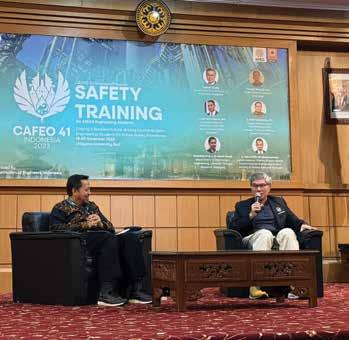
addressing issues concerning the engineering community in education and mobility, and in raising the profile of IES at the regional and international levels.
Significant work has also been done to facilitate the mobility of APEC Engineers. IES, through its leading role as the Chair of the APEC Engineer Coordinating Committee in 2005, and in cooperation with Singapore’s Ministry of Trade and Industry, Ministry of Manpower and Ministry of Education, has worked with governments in Australia, Japan, Chinese Taipei, Hong Kong, Canada, Indonesia, Thailand, New Zealand and Russia to set up a centralised databank, which
will serve as an information-sharing platform and thereby facilitate the promotion of the mobility of professional engineers.
Concrete outcomes from IES’ international initiatives include the signing of Mutual Recognition Agreements with engineering organisations such as Engineers Australia and China Association for Science and Technology (CAST). These agreements are part of the growing globalisation of mutual recognition of engineering qualifications, that have the twoway benefits of expanding the international mobility of Singapore-based engineers, while also strengthening the cosmopolitan pool of engineering expertise available in Singapore.
Whether stretching into further expanses of the globe, or bringing the world to Singapore, IES continues to fly the national flag high, even as it opens up new territory for IES members to build their knowledge, advance their professional status, and grow their businesses.
IES hosted the Guangxi branch of China Association of Science and Technology (CAST) on 28 September 2023 to sign a MOU & MRA. Both parties sought to further strengthen the partnership and collaborations between the parties in three key areas:
1. Facilitate student and young engineers exchanges including structured trainings or internships,
2. Build the MRA framework for CAST Guangxi certified engineers equivalent to IES Chartered Engineers' recognition in other jurisdictions, and
3. Provide mutual support in major engineering events and conferences such as World Engineers Summit, World Engineering Day and National Engineers Day.
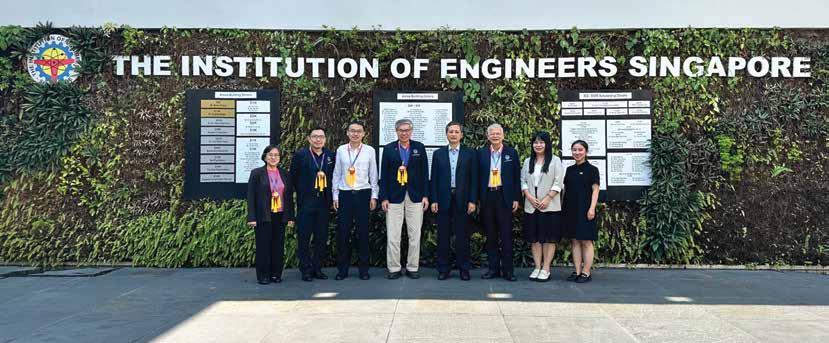
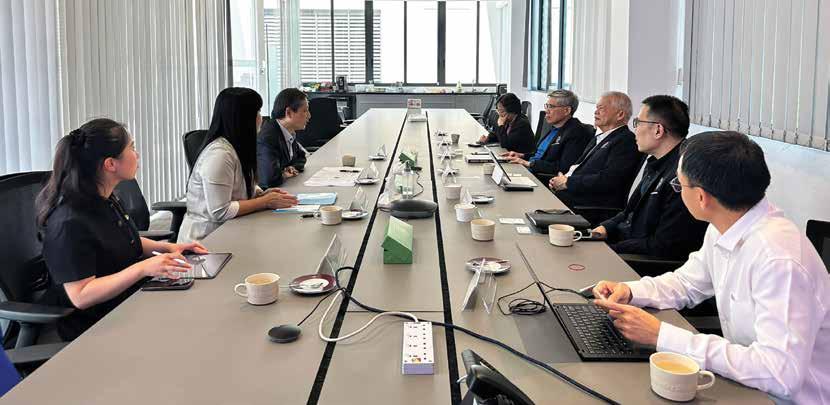
ENGINEERING THE FUTURE PART 3
SUSTAINABILITY: THE FUTURE OF SINGAPORE, AND OF IES
OVER THE DECADES , different topics have arrested the full attention of the Institution of Engineers, Singapore.
In the early years, a paramount objective was simply to establish IES itself as a viable, recognised organisation. Then came questions of how to contribute to national development, as Singapore worked hard to cement its sovereignty and self-determination, and to set its economy on firm footing. From then on, it was to adapt and adjust to change brought by technological disruption and other global forces.
Now, at this time, for the future of the world, there can be no larger challenge than embracing
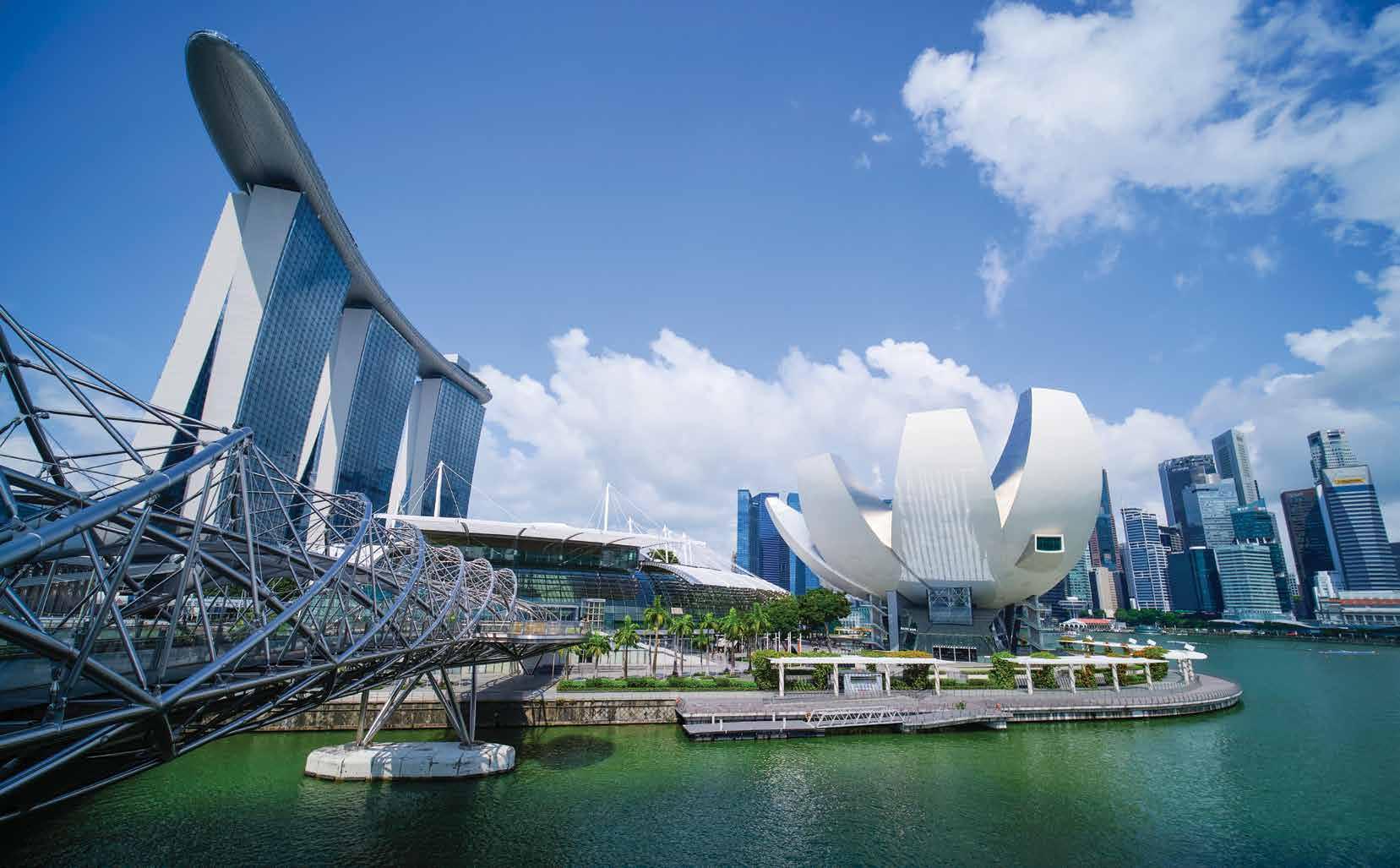
sustainability. The growing impact of climate change is considered by most people as planet Earth’s most pressing and pervasive concern.
Thus, it is only natural that sustainability is also a top priority for IES. It tops the agenda of the presidency of Mr Dalson Chung (IES President 2022–2024). Sustainability is, in a manner of speaking, in his blood, having worked at the Ministry of Sustainability and the Environment, and at the National Environment Agency (NEA), since 1984, and having set up NEA’s sustainability office in 2010.
This subject is also perfectly aligned with the current national green vision, and with his own expertise and instincts as an engineer. “As engineers, we can contribute to the goals set in the Singapore Green Plan with our engineering expertise, innovations and creative solutions,” Mr Chung says.
For him, over and above all the other well-known sustainability goals, there are also a few very Singaporean considerations. These factors speak of the pragmatism of a migrant people who had eked out a living from earlier, leaner post-colonial times, marked by an acute awareness of the scarcity of natural resources.
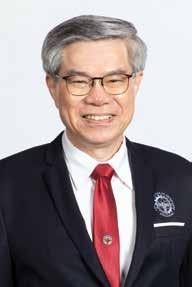
Spearheaded by Mr Dalson Chung, IES President (2022–2024), the IES Green Plan 2023 bore fruit to many sustainable initiatives during his term from 2022 to 2024.
“Saving the Earth might seem a bit remote to some people, but having a sustainability mindset will also help to save costs,” says Mr Chung. “Even as we now have a higher quality of life, we shouldn’t be throwing away the good habits that our forefathers had taught us.”
The age-old instinct not to be wasteful aligns well with the recent mantra to “reduce, reuse, recycle”. And being more conscious of cutting wastage can be applied to implementing sustainable practices that can also bring about more effective processes and increased efficiency – what engineers are essentially trained for.
Putting together IES’ own Green Plan involved much reflection, consultation and consensusbuilding. IES conducted a Repositioning Study in 2021, with some 3,200 IES members, engineering

The IES Green Plan 2030 is an intitiative aimed to provide national-level institutional support to advance Singapore's sustainable development imperative.
The plan lays out concrete engineering-centric action plans from 2023 to 2030 to support the Singapore Green Plan.
To read more, scan the QR code below.

stakeholders, students, and parents surveyed regarding their opinions of IES’ imperatives for change.
Stakeholder engagement also included focus group meetings involving the IES Women in Science, Engineering & Research (WiSER) Committee and Young Engineers Committee, as well as visits to government agencies, educational institutions, and fellow trade associations and professional bodies.
IES’ Green Plan 2030 was launched in January 2023 at IES’ 56th Annual Dinner. At the launch, Ms Grace Fu, Minister for Sustainability and the Environment, commended IES for this forward-looking initiative to coordinate national-level institutional support to help achieve the ambitious goals under the Singapore Green Plan 2030, which had been launched in 2021.
“Tackling climate change is a complex engineering problem,” she said. “It requires innovation in products, productions, and systems… our investments in research and development in urban solutions and sustainability – in food security, in coastal and inland flood protection, in circularity, in urban heat, in built environment – offer many opportunities for engineers to contribute and create impact.”
“
“ Saving the Earth might seem a bit remote to some people, but having a sustainability mindset will also help to save costs. Even as we now have a higher quality of life, we shouldn’t be throwing away the good habits that our forefathers had taught us.
MR DALSON CHUNG IES President (2022–2024)
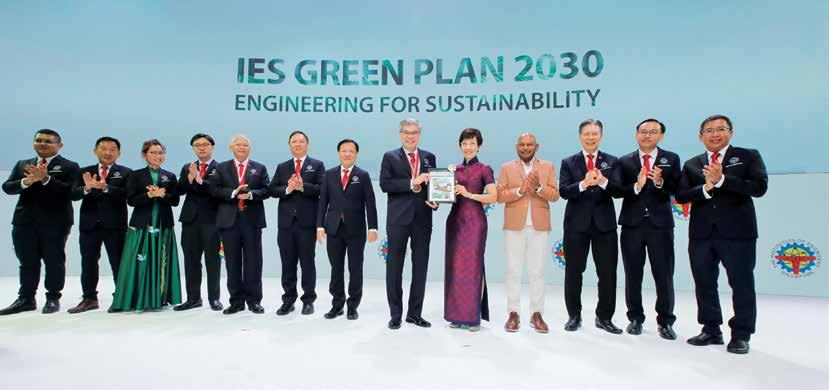
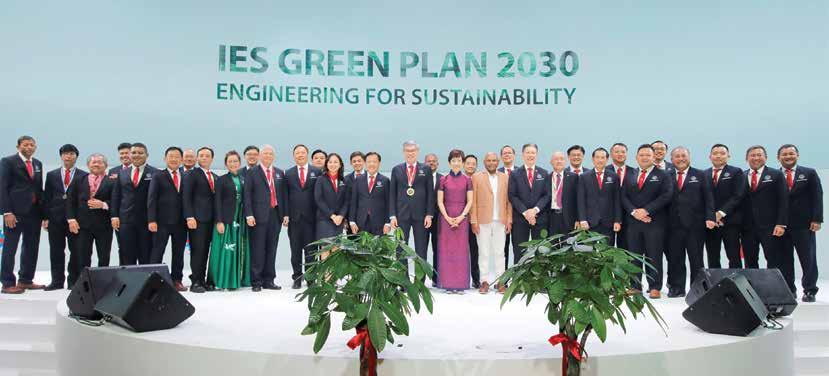
In these and other ways, for engineers to contribute vitally to Singapore’s sustainability efforts for the future would be to sustain a role played by engineers throughout the Republic’s history over the years, especially in the areas of water and energy infrastructure, housing, and transport systems.
For the future, examples of how engineering ingenuity could be a game-changer include:
(1) Helping to develop agri-tech farming solutions for Singapore’s “30 by 30” goal of producing 30 per cent of the country’s nutritional needs by 2030;
(2) Coastal protection engineering innovations for seawalls to have nature elements or recreational amenities; and
(3) Harnessing synergies at facilities such as Tuas Nexus by integrating water reclamation and waste management.
FIRST, NARROW THE MINDSET GAP
The place to start is to work on boosting the sustainability mindset among engineers. This is something that Mr Chung observes is, at present, still not totally pervasive throughout the industry.
Mr Dalson Chung presented Ms Grace Fu, Minister for Sustainability and the Environment, with a copy of the IES Green Plan 2030 to mark IES’S commitment to the eight-year plan.
Ms Grace Fu and Mr Dalson Chung, together with IES Council Members and Presidents Emeriti, on stage commemorating the launch of the IES Green Plan.
For example, he sees that there is still a lack of awareness of what are “Scope 1, 2 and 3 emissions”, the framework devised by the World Resources Institute to help measure progress in achieving the goals of the Paris Agreement on climate change, to try to limit global temperature rises in this century to below 2 degrees Celsius.
Scope 1 emissions are “direct”, such as from driving a company’s own cars; Scope 2 emissions are “indirect”, such as buying electricity instead of installing solar panels; while Scope 3 emissions are even more “indirect”, produced by a company’s customers using its products, or suppliers making products that the company uses. Some surveys put Scope 3 emissions at around 70 per cent of a typical company’s carbon footprint.
To narrow this mindset gap, IES offers professional development through training and upskilling in various aspects of sustainability. For example, in January 2023, IES partnered with SkillsFuture Singapore (the government agency promoting lifelong skills upgrading) to produce the Jobs Skills Insights publication, “Skills for Engineers and Technicians in the Green Economy”, which highlights sought after
This issue of Jobs-Skills Quarterly Insights looks at how the job content of engineering roles is changing, the new skills that are required, and skillsbased pathways to help practicing engineers and technicians upskill.
cross-sector and cross-functional green skills by employers, such as energy management and audit, environmental sustainability management, and sustainable engineering.
IES Academy is also broadening its range of
Sustainability courses, introducing new offerings including Carbon Footprint Management, and Operation & Maintenance of Silty Water Treatment Plants. These courses are designed to elevate the expertise of engineering professionals.
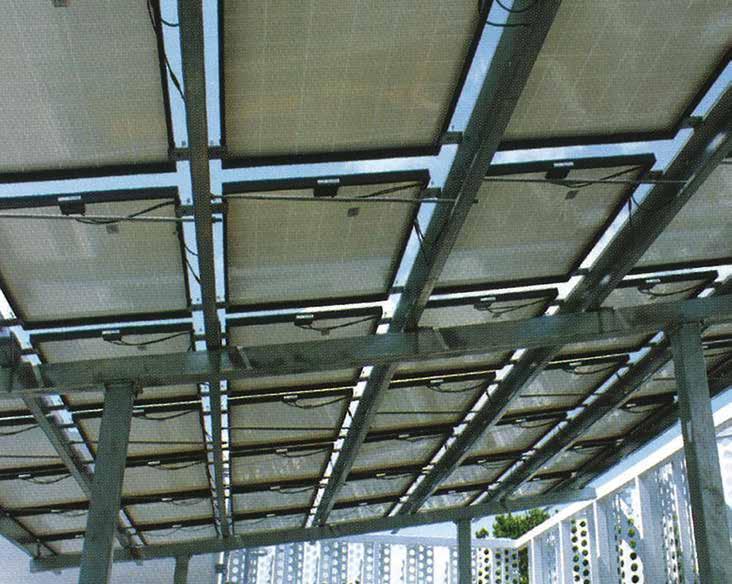
Solar panels located on the roof of the IES Green Building at 70 Bukit Tinggi Road.
The IES Engineering Chartership Certification Scheme in Sustainability framework under IES’ Chartered Engineering Programme was launched in August 2023 to promote and recognise competencies across sub-sectors of Sustainability. Engineers applying to be certified are required to complete core course modules and selected electives, followed by a panel interview. This chartership will promote engineers’ competencies in Sustainability, allowing them to navigate the expanding green sector with confidence.
IES also advises on, and helps to provide, training in those emerging green skills that a greater focus on sustainability has opened, such as solar photovoltaics, clean technologies, and big data analytics.
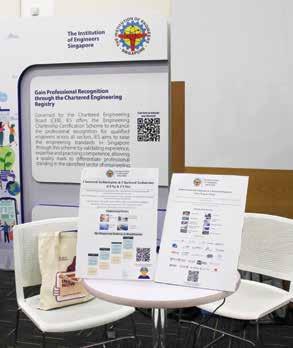
The IES-Skills Development Partner booth at the SkillsFuture Festival 2023. The Engineering Chartership Certification Scheme, offered by IES, aims to raise the engineering standards through this scheme, to enhance the professional recognitions for qualified engineers across all sectors.
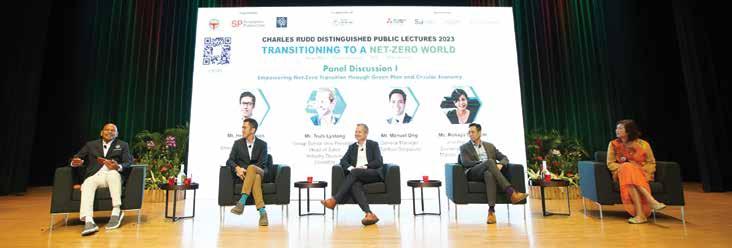
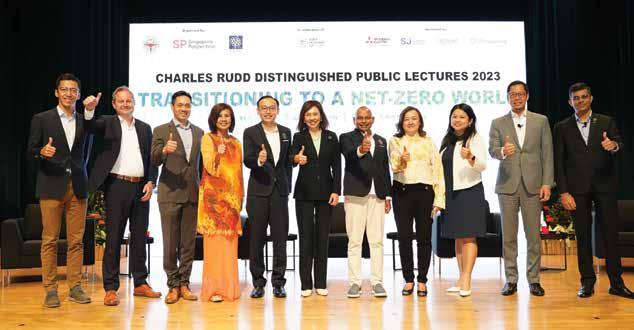
Panellists and the moderator at the Charles Rudd Distinguished Public Lectures 2023 which had the theme ‘Transition to a Net- Zero World’. It was organised jointly with the World Federation of Engineering Organisations (WFEO) and the Singapore Polytechnic (SP) on 25 May 2023.
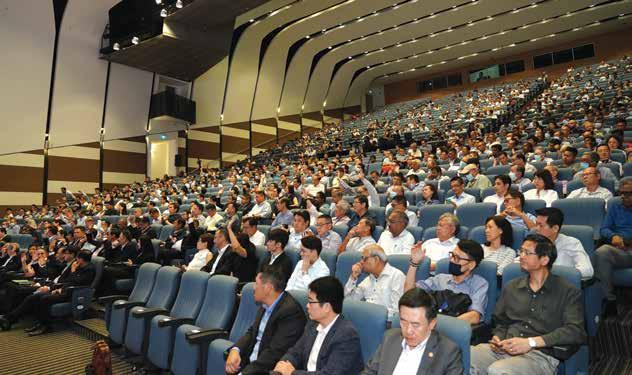
Panellists from the first discussion panel. From left: Moderator Prof Seeram Ramakrishna, Chairman for Circular Economy Taskforce (NUS); Mr Henry Woon, Director of Atelier Ten Asia; Mr Truls Lystang, Group VP of Grundfos; Mr Manuel Ong, GM of Danfoss Singapore; and Ms Rohaya Saharom, VP, Sustainable Solutions at Mandai Wildlife Group.
Around 1,200 participants attended the Charles Rudd Distinguished Public Lecture 2023 in-person and virtually throughout the three-hour long hybrid format event. Photo
Some of IES’ initiatives are in the space of public education, including IES’ Charles Rudd Distinguished Public Lectures, which was launched in 2008, named after Er Charles G V Rudd (1908–1994), an honoured IES member and Fellow of IES. The lectures feature thought leaders speaking on topics such as transitioning to a net-zero world at the 2023 event.
Er Rudd, a founding member of lES from 1966, served in the IES Council and various committees, motivating many younger members with his persistent quest for knowledge. He was a reputed and esteemed Rotarian and Professional Mechanical and Electrical Engineer in Singapore and Malaysia, and also dedicated his professional expertise and time in China, Hong Kong and Taiwan to promote educational and technological development in the region.
Another example is the IES Green Festival 2023, held for the first time at the Science Centre Singapore in March 2023. The festival included talks, exhibitions and an opportunity for visitors to take the Green Nation Pledge towards a resource-efficient and climate-resilient Singapore.
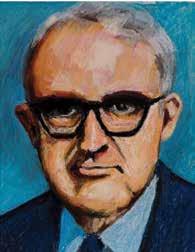
late Er Charles Rudd was a Founder Member and Fellow of the Institution of Engineers, Singapore, who bequeathed $1.23 million to IES. A registered Professional Engineer in both Singapore and Malaysia, he was a stalwart supporter and a staunch friend of the Institution until he suffered a stroke in 1990. He had served in the IES Council and represented IES in several SISIR technical committees. He was also President of the Rotary Club in 1974/75.
Charles is remembered as a very active participant at seminars and workshops.
The Charles Rudd Distinguished Lectures series is named after him to emulate his spirit of continuous professional development and active learning.
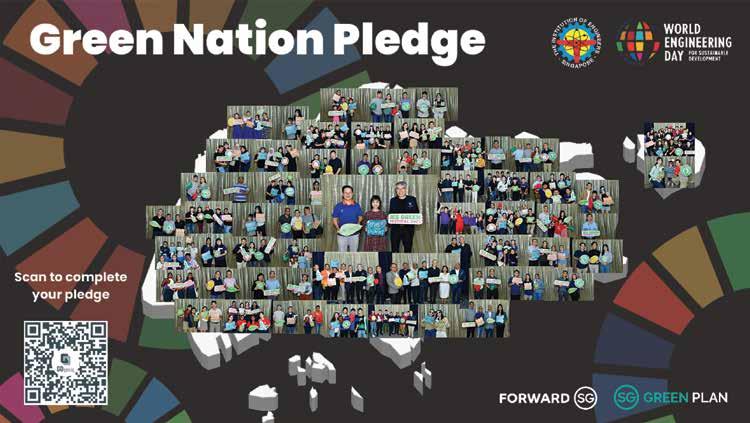
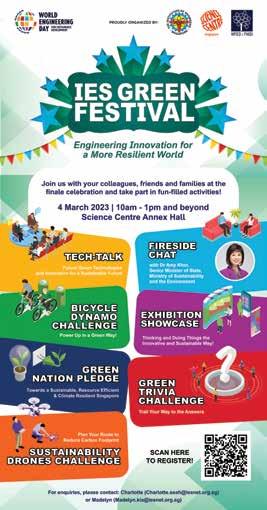
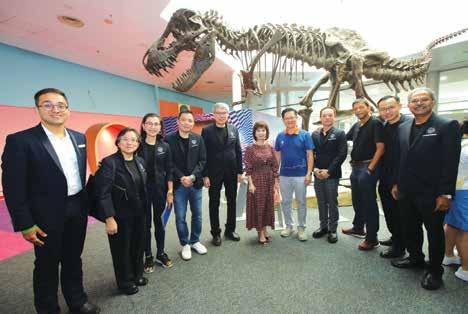
IES celebrated World Engineering Day (WED) on 4 March 2023 with the theme Sustainable Development at the hugely successful IES Green Festival 2023 at Science Centre Singapore.
The inaugural edition of this event attracted some 500 students and members of the public, where they learnt and explored engineering possibilities for a more sustainable future, picking the brains of thought leaders along the way.
The
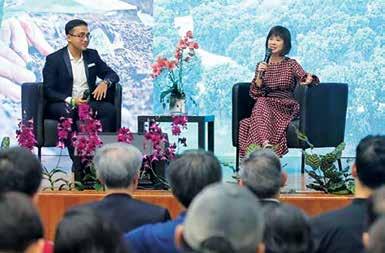

This was Singapore’s anchor activity – as one of two satellite locations, and the only one in Asia –for the global celebrations of World Engineering Day, a day proclaimed in 2019 by the United Nations Educational, Scientific and Cultural Organisation (UNESCO) every 4th of March to celebrate the contributions of the world’s engineers to a more sustainable world.
To boost sustainability awareness among industry players, in 2023 IES launched the IES Sustainability Awards for companies, to recognise and reward best practices, entrepreneurship and innovation, in three categories: Completed Engineering Projects, Innovative Solutions for Sustainability, and Promising Start-ups for Sustainability.
Top left: Dr Amy Khor, Senior Minister of State for Sustainability and the Environment, graced the IES Green Festival as guest-ofhonour, where she engaged attendees on sustainability in the Singapore context in a fireside chat.
Top right: As part of the global community, IES participated as one of the live hubs and streamed a series of videos showcasing Singapore’s efforts and achievements, our work in nurturing the next generation, and the nation’s commitment to a greener and more sustainable world. The above image shows the World Engineering Day 2022 24-hour Live viewership statistics.
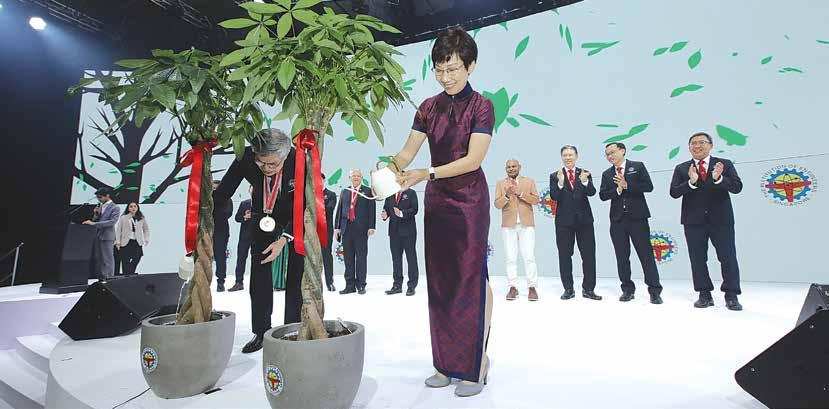
“
Our investments in research and development in urban solutions and sustainability – in food security, in coastal and inland flood protection, in circularity, in urban heat, in built environment – offer many opportunities for engineers to contribute and create impact.
“
MS GRACE FU
Minister for Sustainability and the Environment, at the launch of IES’ Green Plan 2030, at IES’ 56th Annual Dinner, 2023
IES also participates in national initiatives such as the OneMillionTrees nationwide effort to plant a million trees across Singapore by 2030, to bring the total number of trees island wide to more than 8 million. This movement is a key part of the “City in Nature” vision (to integrate nature into Singapore’s urban development), which is a key pillar of the Singapore Green Plan 2030.
In October 2023, IES held a Mass Tree Planting event, with Mr Heng Swee Keat, Deputy Prime Minister and Coordinating Minister for Economic Policies and IES Distinguished Honorary Patron, as guest-of-honour. This event, under the IES Green Plan 2030, was championed by the IESYoung Engineers Committee, in partnership with the National Parks Board. It brought together more than 100 engineers and guests to plant 50 trees at Tampines Eco Green, an ecological park for nature recreation.
On top of all the external initiatives, internally at IES, there is a clear sense of the need to walk the talk. This is especially since external expectations would naturally be that IES has a responsibility to lead by example in advancing sustainability.
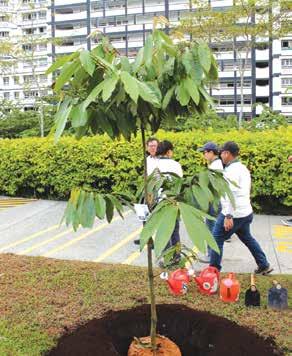
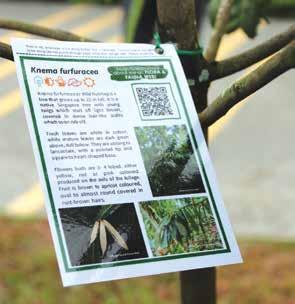
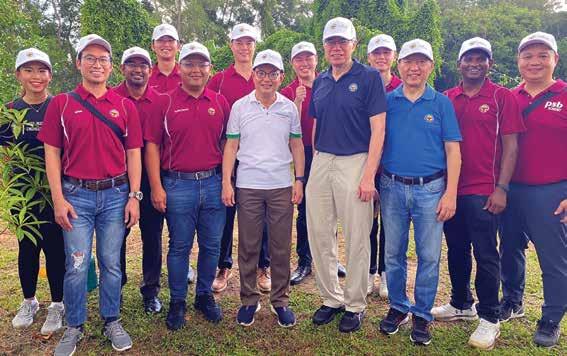
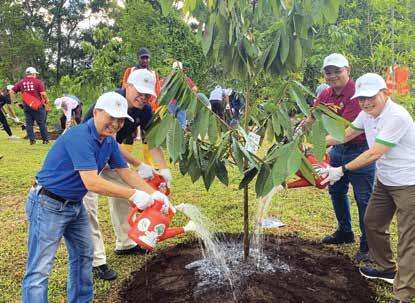
From left: IES Emeritus Distinguished Honorary Patron DPM Heng Swee Keat, IES President (2022–2024) Mr Dalson Chung and IES Emeritus President Prof Yeoh Lean Weng (2018–2020) with members of IES Young Engineers Committee in attendance during the tree planting in October 2023.
IES Distinguished Honorary Patron DPM Heng Swee Keat, IES President (2022–2024) Mr Dalson Chung and IES Emeritus President Prof Yeoh Lean Weng (2018–2020) with members of IES Young Engineers Committee in attendance during the tree planting event in October 2023.
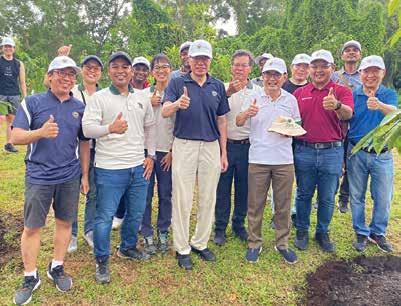
Thanks to the partnership with NParks team, IES is moving toward a greener Singapore.
The chosen ceremonial tree was the Knema Furfuracea, also known as the Wild Nutmeg.
While the “software” challenges of mindset shifts will take time, in terms of hardware, IES has done well. the Building and Construction Authority has given the IES Building a Platinum rating certification for Non-Residential Buildings Green Mark version 4.0 – the highest standard in environmental impact and performance.
In future, to go even further, IES is implementing additional measures, such as installing motion sensors to reduce electricity use in rooms and other areas of the building.
For the industry, IES is extending the inclusivity of its amenities, such as making the IES Building a “living lab” for companies to test-bed new green technologies.
And for youth and the public, IES hosts educational tours of its building, as a live showcase of unique green engineering features, also as part of its efforts to inspire the younger generations to take up engineering as a career.
The IES Green Plan 2030 has served as a key platform to engage government, industry, academia and the general public. Mr Chung personally attended meetings with the heads of
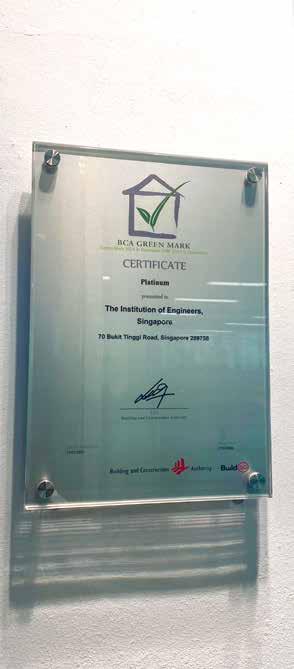
The IES Building
70
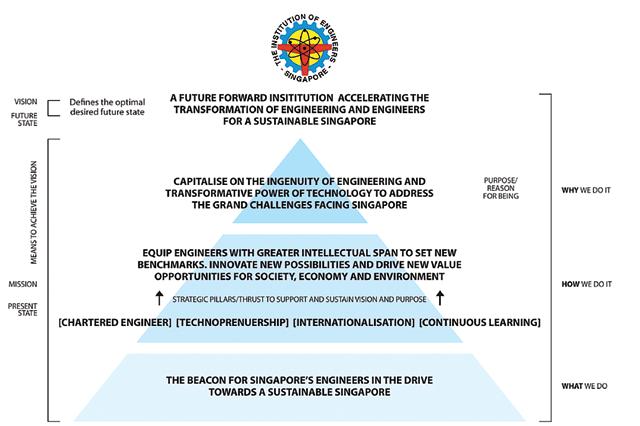
The Mission and Vision of the IES Green Plan 2030. more than 30 organisations including government agencies and academic institutions. He also drew on his personal civil service networks to enhance IES’ engagement with government agencies, which has been always an ongoing priority of IES.
Engagement with government agencies is producing outcomes that some might not immediately think of, as these areas are not directly part of concrete activities within the spheres of the built environment. For example, IES is collaborating with Enterprise Singapore to engage Singapore-based companies in aspects such as carbon accounting and reduction of carbon
at
Bukit Tinggi won a Platinum certificate at the 2021 BCA Green Mark Awards.
footprints, in line with the Green Economy pillar of the Singapore Green Plan. This is realised through skills training and standards development.
Mr Chung sees IES acting as a “middleman”, for example, in helping institutions of higher learning to engage the younger generations to inspire them to become engineers, with initiatives such as visiting the back-end areas of familiar places, for example, Universal Studios, to see how engineering makes the rides, and other parts of the theme park, work.
This is an important aspect, as another of Mr Chung’s overall priorities as IES President is to get more young people to take up engineering as a choice of study, and as a career.
Amidst the recent shifts in the global economy, engineers are needed everywhere, he notes, from maintaining lifts to implementing decarbonisation, and also in new technology areas such as artificial intelligence and robotics, and even biomedical engineering.
“Building homes is part of our lifeline, manufacturing is a key part of our economy,” he says. “In the future, we will need more engineering solutions, and therefore engineers.”
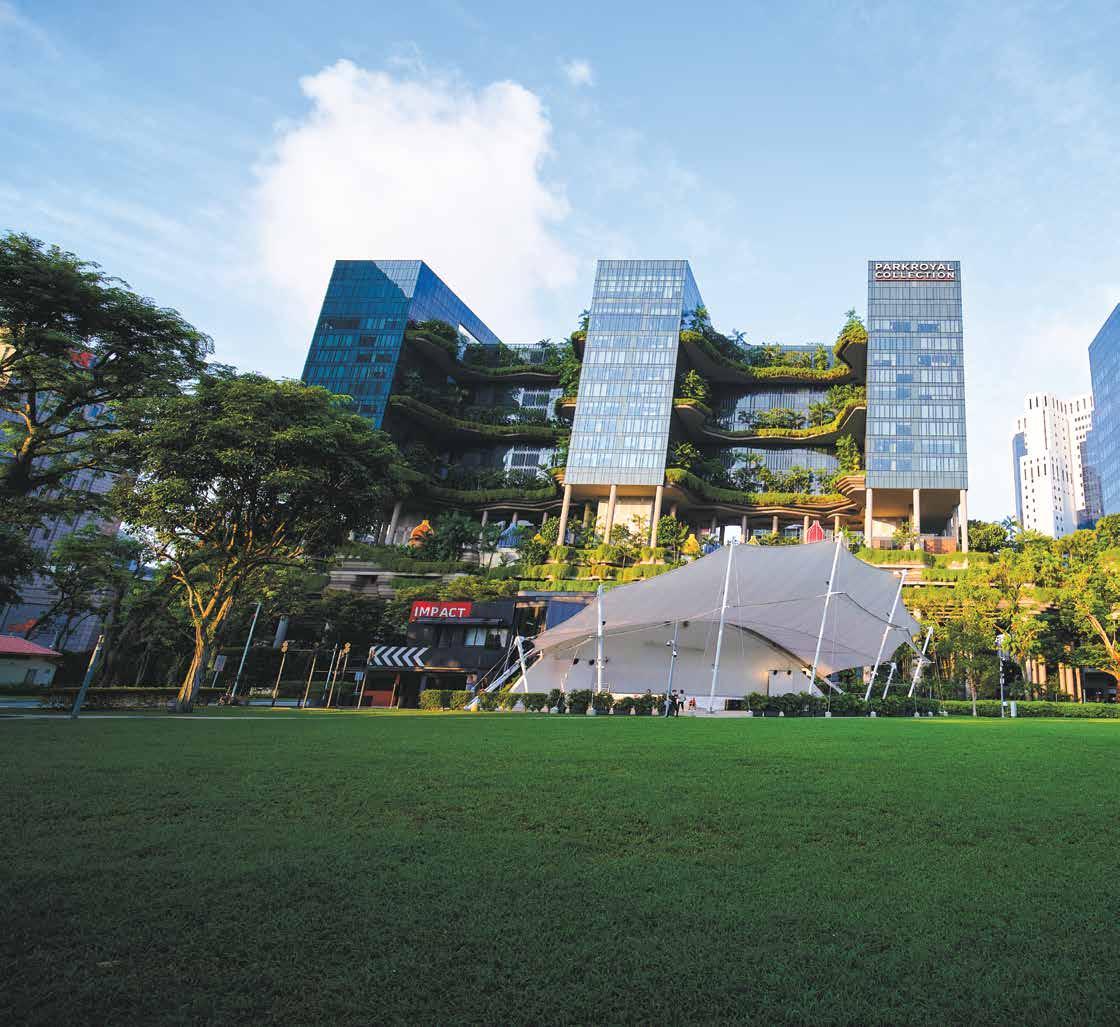
NEW IDEAS FOR SUSTAINABILITY
The scope for future contributions from engineers to sustainability causes will be massive, following from the announcement by Prime Minister Lee Hsien Loong in 2019 of the Singapore Government’s commitment to a budget of $100 billion over 100 years to protect Singapore from rising sea levels due to climate change.
One example of a response to this “call of duty” to engineers is from Er David Ng, IES’ Honorary Secretary from 2022 and Chairman of IES Civil & Structural Technical Committee. He was invited by the Building and Construction Authority to serve on the technical committee on geotechnical design. The co-founder of an engineering consultancy firm, he is also an Adjunct Lecturer at the IES Academy on deep excavation and tunnelling design.
In an article in IES’ monthly magazine The Singapore Engineer in July 2022 (co-written with architect Leong Tatt Man), Er Ng proposes a technically viable planning and engineering design solution that would protect Singapore’s coastline, and also create a sustainable source of water, food and energy.
Er David Ng, Honorary Secretary (2022–2024)
The scope for future contributions from engineers to sustainability causes will be massive, following from the announcement by Prime Minister Lee Hsien Loong in 2019 of the Singapore Government’s commitment to a budget of $100 billion over 100 years to protect Singapore from rising sea levels due to climate change.
“
Cover of The Singapore Engineer, July 2022 Issue.
The article’s focus is on the East Coast Park coastline, the most valuable, yet vulnerable, coastline in Singapore, with a proposed planning strategy to be implemented along a stretch of shore from Marina Barrage eastwards to Tanah Merah Ferry Terminal.
The conventional planning strategy for intercepting rising sea levels is building seawalls, followed by landfilling. However, this requires a lot of construction materials, energy and manpower, which could lead to more mining and carbon emissions, thus accelerating the rate of environmental deterioration and global warming, and ironically, further worsening the rising sea level issue.
To address these issues, instead of landfilling, the rising sea levels can be intercepted by creating a space barrier that houses chicken and fish farms, and by creating a reservoir that not only provides drinking water, but also acts as a flood control measure, and hence, reduces reliance on underground water chambers and minimum platform levels, as these methods cause inconvenience to existing developments.
Poster for IES-WiSER Webinar organised by the IES Women in Science, Engineering and Research committee. The theme was “Creating Locally Critical Technologies & Solutions in Fighting COVID-19”. The speaker was Dr Yan Ma Becton Dickinson’s Director of Strategic Access (Greater Asia). She discussed the science and engineering behind accurate vaccine delivery, why the company's antigen rapid testing solution was beyond a test kit, and how the company was providing COVID-19 testing with efficiency and scalability.
This development consists of vegetable farms, fish farms and chicken farms that, through a process that promotes the nitrogen cycle as well as organic farming, can become a Mega Agriport, a green beacon that positions Singapore as a world leader in managing sea level rise, through a unique circular economy approach.
Leveraging its mega scale and design integration, this development can also meet Singapore’s national consumption of vegetables, fish, and chicken, to boost national resilience in food, water and energy security.
Ideas such as these are examples of an aspect of how IES has sought to be acknowledged as a main thought leader on engineering topics.
A simpler example would be in 2013, when flash floods caused two rivers, Sungei Pandan Kechil and Sungei Ulu Pandan, to overflow, the walls of the culvert below the Ayer Rajah Expressway had to be widened to improve water flow. Er Chong Kee Sen (IES President 2014–2016), then IES’ Vice-President, was quoted in the media saying that the works would take time, and recommended that the authorities should also relook at other measures.
The sustainability challenges of the future will present many more questions that IES’ engineers will step forward to help the nation address.
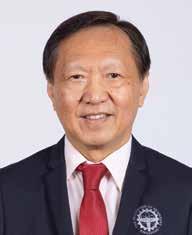
SUSTAINING SUSTAINABILITY: NURTURING ENGINEERING MINDS
Connecting IES’ role in boosting the competencies of engineers, so as to align better with national and global priorities, comes together naturally for Prof Yeoh Lean Weng (IES President 2018–2020).
As Director of Urban Solutions and Sustainability at the National Research Foundation, his day job is to oversee the development of Singapore’s research and development strategy and national urban solutions programmes to meet Singapore’s longterm energy, water and environmental challenges.
For these plans to become reality, at the deployment stage, a strong pool of engineers is required to translate the R&D outcomes into actual systems and products that create value. And, as systems become more complex and multidisciplinary, a systemic approach is needed to define the overall architecture. This is to ensure coherent systems that are more people-centric and maintainable throughout their cost-effective life cycles.
IES helps to realise these goals with initiatives such as developing competency in systems engineering,
Prof Yeoh Lean Weng IES President (2018-2020)
which would help engineers develop what Prof Yeoh calls an “engineering mind”, a way of always looking at things from a big picture perspective, so that large-scale systems can be designed with capabilities greater than the sum of their individual parts.
In particular, he played a key role in promoting systems engineering as a branch of engineering that cuts across the traditional branches of engineering, becoming Chairman of IES’ Systems Engineering Technical Committee. “I am a strong advocate of systems engineering because it is a logical way of thinking, a holistic approach to dealing with large and complex engineering projects,” he says.
Elaborating on systems engineering at a talk in 2019 to the IES-Young Engineers Committee, Prof Yeoh explained that engineers think in systems, using a systemic and systematic approach of analysing diverse elements of a complex problem as integrated components of a coherent system. Thus, the analysis of relationships among the modules of a system would be more accurate when done as a whole, as opposed to just examining its constituent parts.
“ I am a strong advocate of systems engineering because it is a logical way of thinking, a holistic approach to dealing with large and complex engineering projects.
“
PROF YEOH LEAN WENG IES President (2018–2020) on nurturing an “engineering mind”
With an analytical engineering mind that possesses system-based problem-solving skills, an engineer would not only excel in engineering, but also in other fields. For example, when it comes to business transformation, there are many decisions to be made, and being able to see the strategic picture, and to assess the various factors would help one formulate more effective action plans.
Systems engineering applies the kind of holistic thinking that can also spot unintended consequences – for example, how implementing greater digitalisation can lead to problems such as online scams – and then, figuring out how to go about tackling such unforeseen issues.
Singapore’s world-class living standards are founded on critical systems and infrastructure such as the container ports, Changi Airport, the Mass Rapid Transit system, water and power supply and distribution, and defence and security capabilities. These are all built by harnessing a multitude of branches of engineering knowledge, skills and experience.
Systems engineering has come a long way since the signing of a Memorandum of Understanding in 2008 between IES and the Defence Science & Technology Agency for the Certified Systems Engineering Professional certification programme. One example of successful systems engineering application is in the building of the Kallang-Paya Lebar Expressway, which brought additional challenges given the unusual length of its underground tunnelling.
TOWARDS A MORE INCLUSIVE ENGINEERING ECOSYSTEM
The holistic outlook from applying systems engineering on what engineers can contribute is also what prompted Prof Yeoh to steer IES towards becoming a more inclusive institution
that enriches the engineering ecosystem – one that recognises more fully the contributions of graduates from the polytechnics and the Institute of Technical Education. “IES will be the institution that helps engineers, technicians and master craftsmen navigate towards the future economy,” he says.
For those already in the workforce, IES’ initiatives including the IES Academy and its 16 Technical Committees. IES’ Chartered Engineering Programme provides a non-academic pathway for technicians to progress to technologists, and then to engineers, across various sectors.
Memorandum of Understanding (MOU) signing ceremony for the National Engineering Career Progression Pathway for Technologists and Technicians on 20 July 2019.
IES also helps to boost engineering excellence in practice by leveraging partnerships such as the one with SkillsFuture Singapore (SSG), with IES appointed the Skills Development Partner for the engineering sector in 2022. IES works with SSG on skills development and recognition of mastery
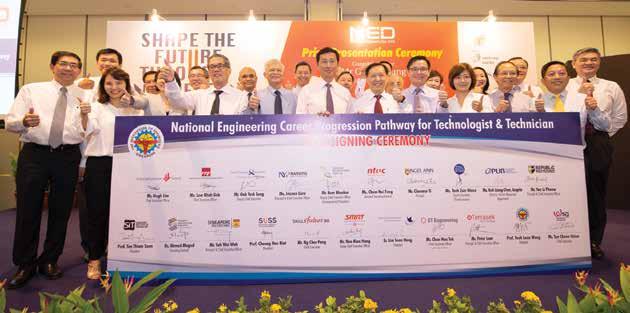
in acquired skills to meet industry demands and curate training programmes, which will then determine possible career paths, in emerging sub-sectors of the green economy such as electric vehicles and renewable energy.
WORKING ON THE TALENT PIPELINE
For the future, to build a steady “pipeline” of talent in the profession, IES engages students and encourages them to study Science, Technology, Engineering and Mathematics (STEM) subjects, so as to increase the pool of engineering talents.
IES also organises student outreach programmes involving IES members, so that practising
Ms Gan Siow Huang, Minister of State, Ministry of Education and Ministry of Manpower, graced the ceremony on the conferment of the inaugural batch of Chartered Technologists and Chartered Technicians on 22 January 2021.
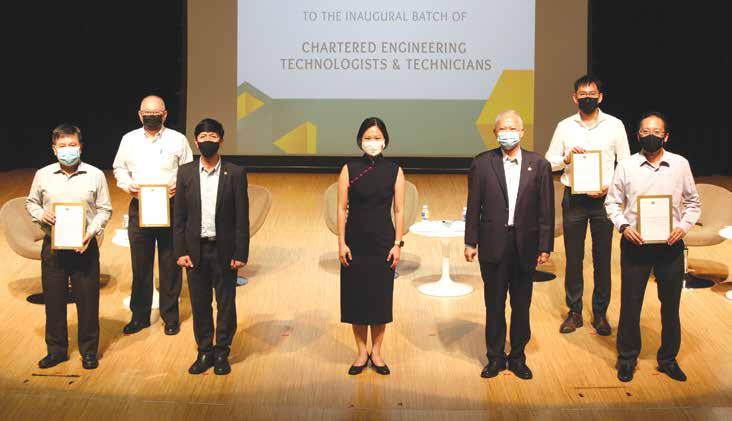
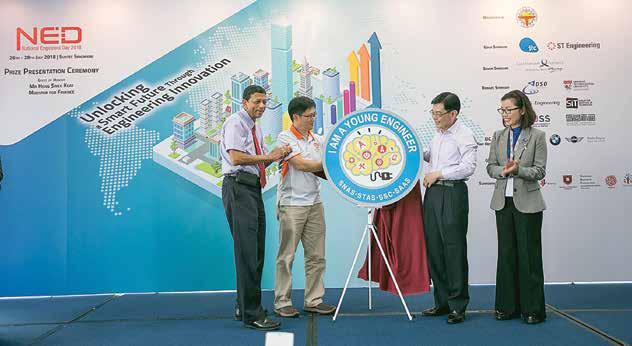
The Young Engineer Badge was officially launched during National Engineers Day on 28 July 2018 by then Minister for Finance Mr Heng Swee Keat.
engineers can share their experience, and enthuse students to pursue the study of STEM subjects. To this end, IES has partnered with the Science Centre Singapore to reach out to students through initiatives such as the “I am a Young Engineer” badge programme and the “Science and Engineering Workshop”.
The ”Science and Engineering Workshop” is jointly organised by IES’ Young Engineers Committee and Student Chapters at the universities. It includes hands-on activities such as station games for groups to use design and programming methods to solve problems. This encourages creative learning and exploration, essential in facing real-life engineering challenges.
Singapore’s young engineers have much to look forward to, given the great opportunities ahead of
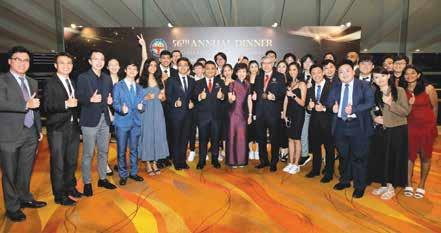
Grace Fu met with members of the student chapters, the future engineers-to-be at
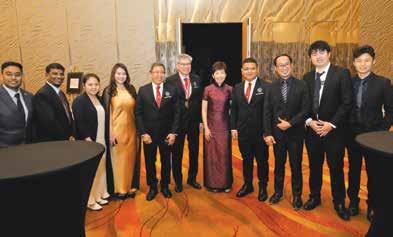
Ms Fu also spoke to EXCO members of the IES-Young Engineers Committee to understand their outreach and engagement plans.
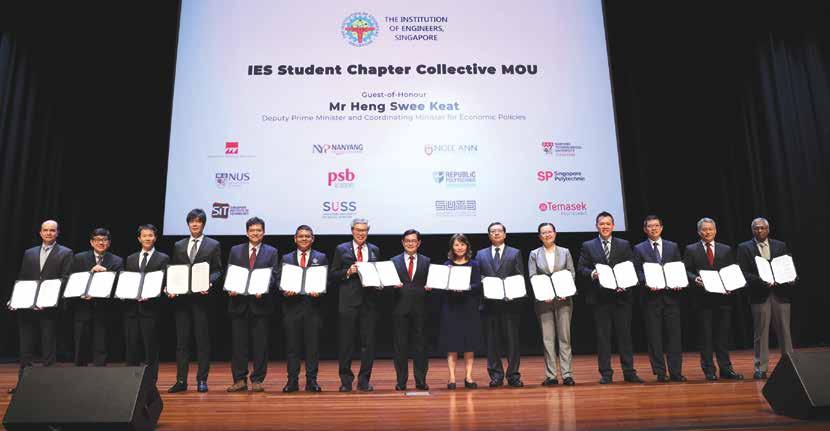
The signing of the Collective Memorandum of Understanding (MoU) between The Institution of Engineers, Singapore (IES) and 11 Institutes of Higher Learnings (IHLs), witnessed by Deputy Prime Minister Heng Swee Keat. The Collective MoU signed during National Engineers Day 2023 aimed at strengthening collaborations to nurture future-ready engineering professionals to lead Singapore’s future growth. IES also launched its 12th student chapter with the Institute of Technical Education (ITE) that day.
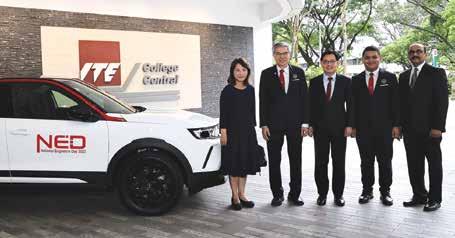
Ms Low Khah Gek, CEO of the Institute of Technical Education (most left) and Mr Heng Swee Keat, Deputy PM of Singapore (centre) with NED 2023 Chairman Mr Syafiq Shahul, and NED 2023 Deputy Chairman, Dr Chandra Segaran.
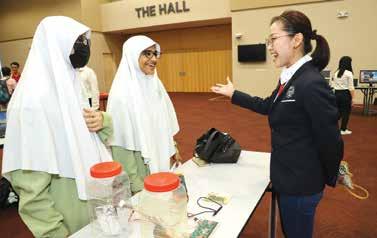
Jasmine Foo, VP and Chair of Professional Engagement, talking to the participating teams of the Engineering Innovation Challenge (EIC) during their showcase at NED 2023.
them in expanding areas such as civil infrastructure, in the air, sea and land transport sectors, with projects including Tuas Megaport in the west and Changi Airport Terminal 5 in the east. This was the view of Mr Tan Sim Chuan, past Deputy Chairman, IES Young Engineers Committee. “IES plays a crucial role in maintaining the community spirit of engineers in Singapore,” he said. “It is a place where engineers can gather and share ideas on a neutral and equal platform, and with respect for each other as engineers.”
The IES Young Engineers Committee was set up to promote, engage and develop young engineers. The Committee is supported by five sub-committees: Professional Networking, Engineering Projects in Community Service, Professional Development, IES-YEC Interest Group, and Publications.
Ms
the IES 56th Annual Dinner.
Ms
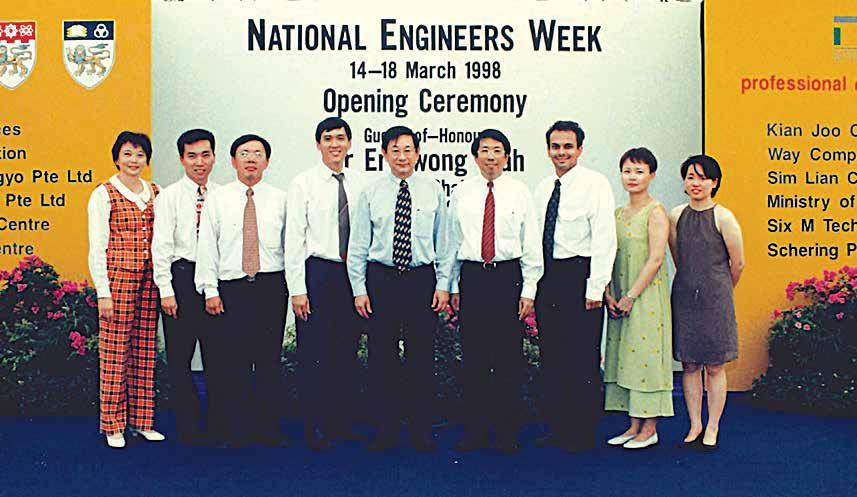
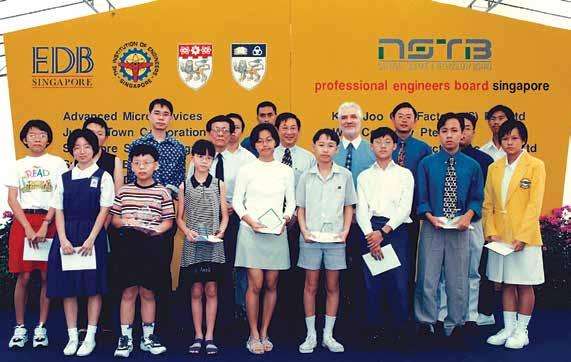
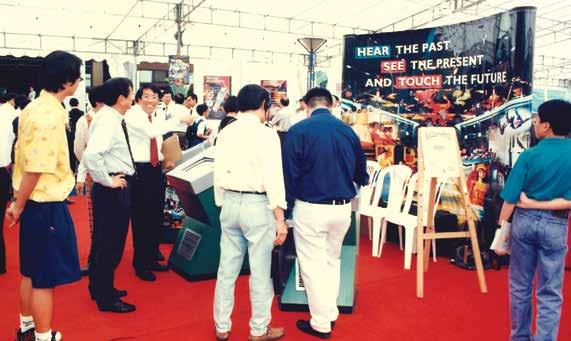
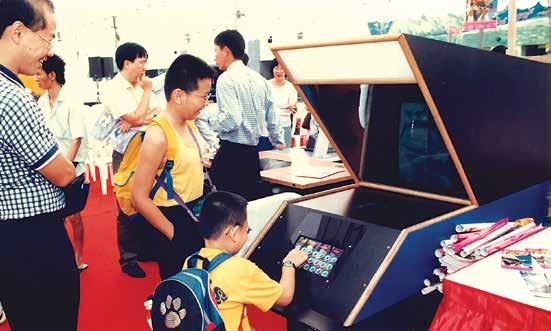
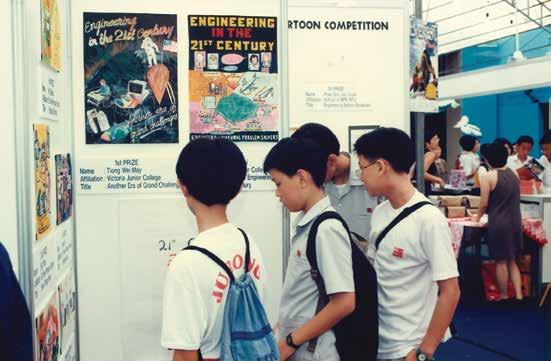
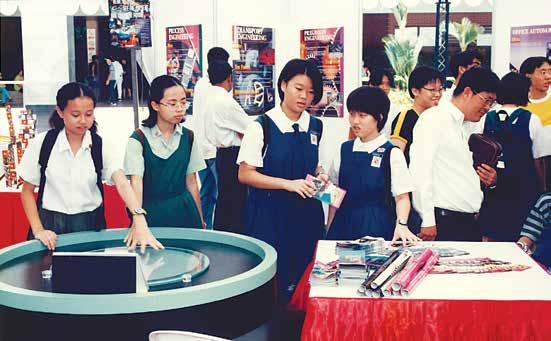
One highlight was in 2018, when Singapore hosted the 36th Conference of the ASEAN Federation of Engineering Organisations (CAFEO36). The Young Engineers Committee was tasked to organise activities for the group Young Engineers of the ASEAN Federation of Engineering Organisations (YEAFEO), which was held along the sidelines of CAFEO.
YEAFEO brought together young engineer counterparts from across the ASEAN member states, created new friendships and renewed old ones. It provided a sharing platform for young engineer organisations to showcase their ideas and best practices, and to discuss common problems affecting young engineers and society.
The Start-up Challenge, one of the activities organised, introduced elements of youth entrepreneurship, which complemented the young engineers’ existing technical competence. This activity also highlighted Singapore as a focal point for young engineers who are seeking resources to pursue their entrepreneurial dream.
Open house and exhibition held in March 1998 during National Engineers Week, jointly organised by Economic Development Board, IES, National University of Singapore, Nanyang Technological University and National Science and Technology Board.
To reach out to potential engineers still at university, the IES Student Chapters were set up with the objectives to advance and promote the art, science and profession of engineering, and also to provide a platform for engineering students to network.
There are thousands of IES Student Members are at the five universities (Nanyang Technological University, National University of Singapore, Singapore Institute of Technology, Singapore University of Technology and Design, and Singapore University of Social Sciences), as well as at the five Polytechnics (Singapore, Ngee Ann, Republic, Temasek and Nanyang Polytechnics).
As for the 11 Institutes of Technical Education, IES’ commitment is to reach out to all, no matter the background and discipline, to bring fresh perspectives to the student engineer community.
As part of the aim of creating a more inclusive engineering community in Singapore, the first IES student chapter with private institution, PSB Academy, was set up in September 2018, followed soon after, by Management Development Institute of Singapore (MDIS) in April 2019.
During the National Engineers Day 2024, guestof-honour Mr Chee Hong Tat, Minister for Transport and Second Minister for Finance, launched the IES Scholarship Fund to support deserving engineering students. He was accompanied by Mr Syafiq Shahul, Chairman, NED 2024 & IES Executive Director; Er Simon Lee, Honorary Secretary, IES; Er Chong Kee Sen, Chairman, IESF Scholarship Committee; Er Chan Ewe Jin, IES President and Ms Low Khah Gek, CEO, ITE. The fund aimed to raise $210,000, providing $38,000 annually to scholarship recipients from ITEs, polytechnics, and universities.
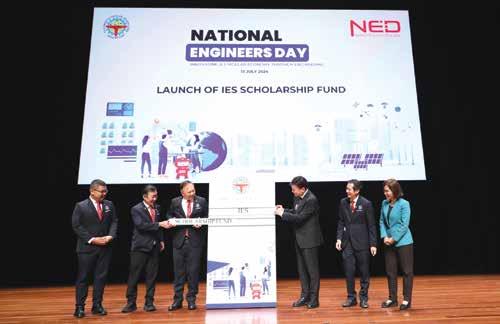
Typically, the events organised involve the IES Young Engineers Committee working with a Student Chapter at an institute of higher learning to jointly organise engineering programmes at venues such as the Science Centre Singapore, for secondary school students during the school holidays. The programmes, including hands-on activities, aim to enthuse the young towards STEM subjects and the various fields of engineering.
To engage even younger students, IES’ initiatives include organising the “I am a Young Engineer” Badge for primary three to six students. This was launched at the National Engineers Day 2018.
This badge programme is a collaborative effort by IES and Science Centre Singapore to encourage students to discover the fun of engineering
and instil interest in engineering from a young age. To earn the badge, students have to apply introductory engineering skills and knowledge through self-directed engineering-related tasks, to qualify for the badge.
A strong advocate of engineering education, Er Dr Lee Bee Wah led the initiation of National Engineers Day in 2010, with the support of thenDeputy Prime Minister Teo Chee Hean, to nurture interest in engineering amongst the young. Today, NED is a big engineering festival organised annually by IES with the Engineering Innovation Challenge as a key highlight.
The precursor to National Engineers Day is National Engineers Week, which was first held in March 1998, with a week of exhibitions and activities at Bishan Junction 8 mall. The event was organised together with the Economic Development Board, Nanyang Technological University, National University of Singapore, National Science and Technology Board, and Professional Engineers Board.
National Engineers Day includes activities such as the Engineering Innovation Challenge, which
was rebranded to encompass all engineering fields in 2019, an expansion from the previous Energy Innovation Challenge that was focused on topics with energy. The contest is organised in collaboration with the Science Centre Singapore, Ministry of Education, and National Research Foundation. Usually, participating teams have to attend workshops and other activities, with the guidance of mentors, over five months to build prototypes to meet an engineering challenge.
Along with this, IES also hosts the Innovation Challenge for the Community by the Community Service Committee (CSC) where such engineering innovations are put together to benefit the elderly, the disabled and the community at large.
As part of efforts to engage the youth, there is also an element of social responsibility. In 2019, IES set up the IES Fund Ltd, a charity to provide financial assistance to students pursuing engineering education, as well as help those in need to pursue a career in engineering. The fund also helps to support charity programmes in Singapore. The scholarships and bursaries help to ensure that talented students are not prevented
from pursuing a career in engineering due to financial constraints.
The first generous contribution of $1 million to the fund was by the 2021 Lifetime Engineering Achievement Award recipient, Mr Wong Yui Cheong. The IES-Wong Yui Cheong Research in Construction Project Management Fund was then set up to provide scholarships in support of postgraduate research projects focusing on improving and integrating the skills and knowledge of construction project managers.
In addition, the IES Fund Ltd supports charity programmes with financial assistance to
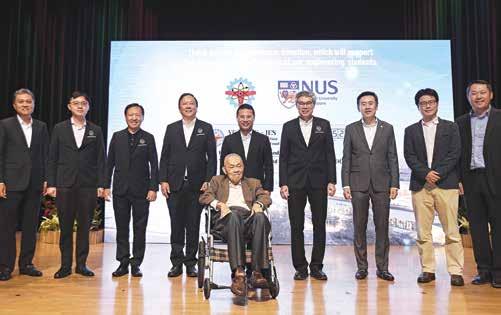
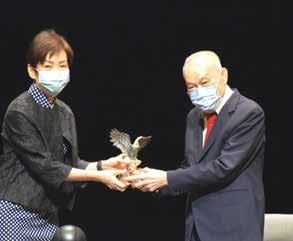
Ms Grace Fu, Minister for Sustainability and the Environment, presenting the Prestigious IES Lifetime Engineering Achievement Award 2021 to Er Wong Yui Cheong.
Er Wong Yui Cheong (pictured in front) donated $1 million to establish the YC Wong-IES Research in Construction Project Management Fund.
Minister for National Development & Ministerin-charge of Social Services Integration Desmond Lee presented the NUS College of Design and Engineering with $300,000 to fund advanced research in construction project management.
organisations that work to improve the lives of disadvantaged individuals and communities in Singapore, through initiatives to support education, healthcare, and social welfare. In 2023, IES held the yearly Christmas celebration with children and beneficiaries of the Cerebral Palsy Alliance Singapore at Tanglin Club, in partnership with SIA Engineering, Malaysia-Singapore Vintage Cars Register (MSVCR) and aerospace partners.
The IES CSC and Corporate Social Responsibility Committee (CSR) also organised a Mooncake Festival celebration for the residents of The Moral Home for the Aged Sick in October led by CSR Chairman Er Simon Lee and CSC Chairman, Mr Au Yeong Hoh Wai.
Earlier projects undertaken by the CSC included a blood donation campaign, voluntary care to Singapore Anti-Narcotics Association (SANA) former drug addicts, and involvement in the activities of the community centres of the People’s Association.
Subsequently, activities extended to caring for the aged, raising funds to sponsor needy schoolchildren, and organising outings or
IES members organised an outing to Sentosa for the Thye Hwa Kwan Children’s Home.
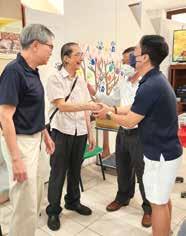
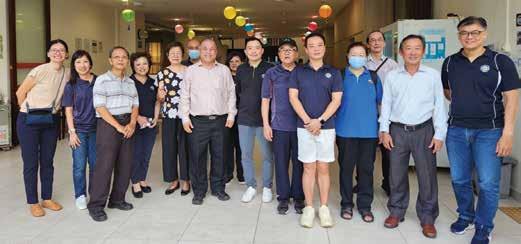
On 26 September 2023, the IES Community Service Committee (CSC) and Corporate Social Responsibility Committee (CSR) organised a Mooncake Festival Celebration for the residents of The Moral Home for the Aged Sick, led by CSR Chairman Er. Simon Lee and CSC Chairman, Mr Au Yeong Hoh Wai. Residents of the Home were given mooncakes and mixed soft fruits.
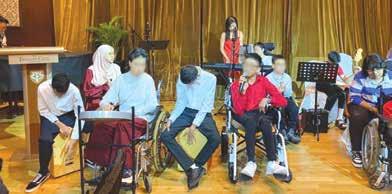
IES partnered with SIA Engineering, MalaysiaSingapore Vintage Cars Register (MSVCR) and aerospace partners to bring Christmas cheer to 60 children and beneficiaries of Cerebral Palsy Alliance Singapore (CPAS) at Tanglin Club on 21 November 2023. IES Council Members sponsored the door gifts and jointly sponsored the dinner.
The CPAS children performed Christmas songs at the event. IES Deputy President, Er Chan Ewe Jin, distributed presents to the children.
After dinner, the children were treated to a vintage car ride along Orchard Road to view the Christmas decorations.
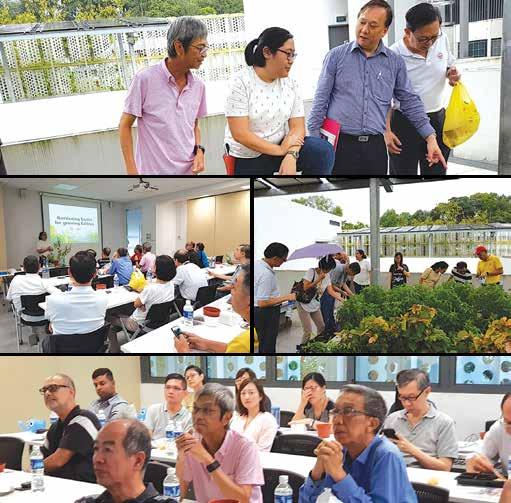
of community events organised by the IES Community Service Committee (CSC) and Corporate Social Responsibility Committee (CSR) over the years.
Photos
Outing (left) and luncheon (right) organised by the IES Community Service Committee (CSC) and Corporate Social Responsibility Committee (CSR).
barbeque for Boys’ Homes such as the Salvation Army Children’s Home and Perak Home. The Chin Woo Old Folks Home was ‘adopted’ for monthly visits by Committee members.
IES’ corporate social responsibility contributions reflect an important core value of the institution: Always seeking to be of service to the community and larger society. This spirit is captured in a message from Er Dr Hiew Siew Nam in the IES Year Book 1988/89:
“It has been said that professional status involves an implied contract of service to the community over and beyond all specific duty to client or employer, in consideration of the privilege and protection extended to the professional by the community.
The possession and practice of special skill does not, in itself, make a man respectable in the eyes of the public. It is more his involvement and sense of duty and obligation to society which distinguish him from the rest and earn him the respect and status of a true professional.”
Er Prof Cham Tao Soon, IES President (1980–1982), speaking at the Second IES Lecture held at The Oriental Hotel.
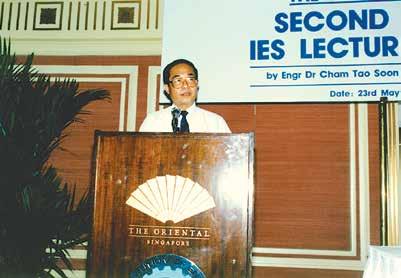
ENGINEERING “BRAIN DRAIN”, OR NOT REALLY?
One ongoing concern for IES at the institution level is the perception that engineering is not as attractive a course of study as other sought-after fields such as medicine or law – in effect, a “brain drain” away from engineering.
Another perception is that, in general, the remuneration of engineers at the start of employment is not as attractive compared to other professions. “The challenge of getting students to study engineering as a course of choice, and the high attrition of engineers into other professions is of great concern,” says Er Chong Kee Sen (IES President 2014–2016).
Another troublesome perception is the lack of awareness of the true impact, purpose and value of engineering to society. “The public, in general, did not really understand the contribution of engineers in improving their quality of life,” he adds.
However, Prof Yeoh challenges these perceptions about a drop-off in students taking up engineering. He cites how the Nanyang Technological University’s (NTU) Renaissance Engineering Programme has been consistently oversubscribed by several times since its launch in 2011. To cater to the growing number of high-quality applicants, NTU has doubled the number of placements, from 33 students in 2011 to more than 60 by 2018.
Similarly, he notes, the Global Engineering Programme launched by the National University of Singapore (NUS) in 2009 also typically receives applications from top A-level students, mostly from the top one per cent in academic standing. “The perception that engineering is not interesting is changing – these two engineering programmes show that a well-designed engineering curriculum still attracts top students,” he says.
Through the years, a number of engineering graduates from each cohort typically move on to
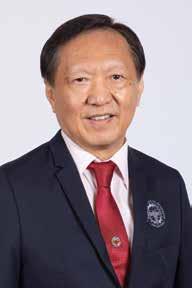
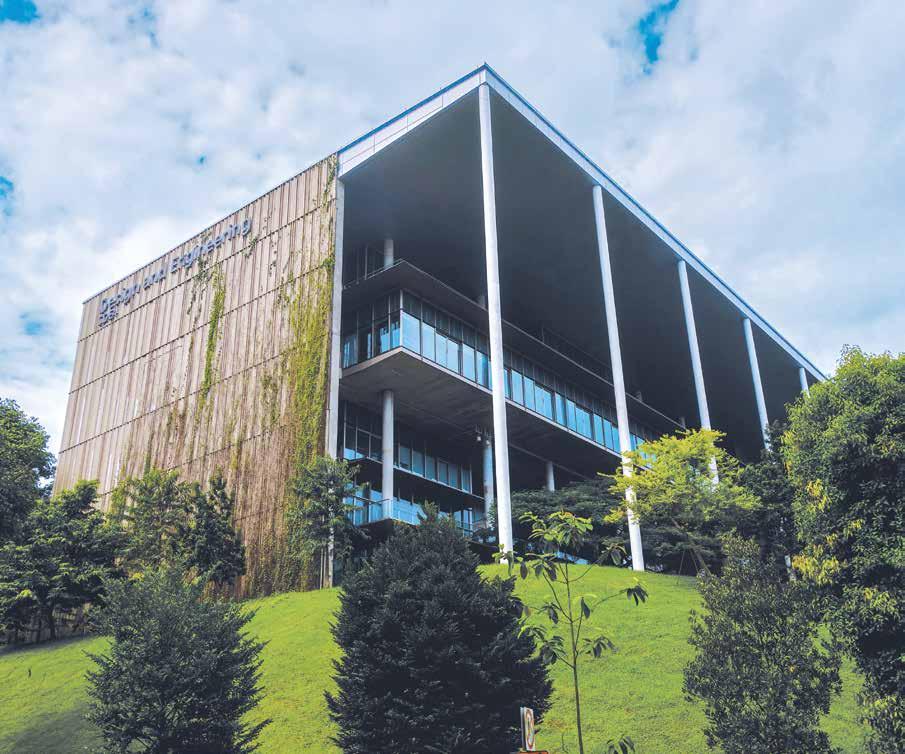
SDE 4 Building, Department of Architecture, National University of Singapore.
Prof Yeoh Lean Weng, IES President (2018–2020).
other occupations, such as business or finance. But Prof Yeoh, unlike other observers of this trend, is not so concerned about this “leakage” of engineering talent into other fields.
He believes the success of engineers who have moved into other occupations should be attributed to the practice of an engineering mind – which he sees as being uniquely analytical, acquired through engineering training. “We should not worry about engineers moving out of engineering, and succeeding in other sectors – they, too, contribute to our economy in other ways,” he says. “We should also look into how we can redesign the engineering curriculum to make it attractive to the young.”
For example, he mentions how Singapore’s universities have realised the need to incorporate arts and humanities modules as part of the engineering curriculum. These soft skills enhance engineers’ competencies to build systems that are more user-friendly.
As Er Chong observes, IES has an additional area of focus to engage engineers in general, so that more of them remain within the engineering industry. In 2014, IES, in partnership with National
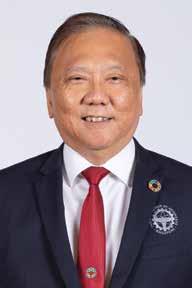
Trade Union Congress (NTUC), put together the Engineers Leadership Programme, which came to include the Young Engineers Leadership Programme, the Advanced Engineers Leadership Programme for mid-management engineers, and the Global Leadership Programme for C-suite engineers.
These programmes focus on sharpening the leadership, technology management, negotiation, communications and project management skills of engineers. They cover classroom-based knowledge-sharing, dialogue sessions with C-Suite practitioners and policymakers, including learning journeys to visit companies of different sectors.
“ “ The challenge of getting students to study engineering as a course of choice… is of great concern.
ER CHONG KEE SEN IES President (2014–2016)
Er Chong Kee Sen IES President (2014–2016).
As part of the broader efforts to “retain talent” within the profession, IES continues to raise awareness, and increase appreciation, of the work of engineers with initiatives such as the IES Lifetime Engineering Achievement Award. This recognition has been given to leading pioneer engineers such as defence scientist Er Prof Lui Pao Chuen, Er Tan Gee Paw who played key roles in managing Singapore’s water resources, and Er Prof Cham Tao Soon, founding President of NTU.
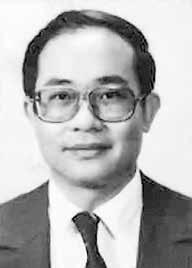
WOMEN IN ENGINEERING:
A LONG-RUNNING CONCERN?
At IES, one of the issues that continues to be relevant is how to attract more women to take up the profession.
Being one of the few female engineers, and a prominent one at that, Er Dr Lee Bee Wah (IES President 2008–2010) has a pragmatic, realistic take on this concern to find ways to overcome the lack of female representation.
When she became the first female President of IES in 2008, she hoped to be a role model for women in the profession. Among her professional honours, she was conferred an honorary doctorate
by the University of Liverpool in the United Kingdom in 2011, and is the first Singaporean to be named Honorary Fellow of the Institution of Structural Engineers, UK.
She recognises the reality, and worldwide phenomenon, that engineering has traditionally been a profession with many more men than women, for various social and other reasons. For instance, she cites public perceptions that engineering degree courses are demanding, when other careers are seen as more rewarding.
Nevertheless, redressing the gender imbalance is useful, she believes, for reasons such as that women offer innate abilities and instincts that are distinctly different from what men typically bring to the table. Thus, having more women engineers would make the profession more complete. For
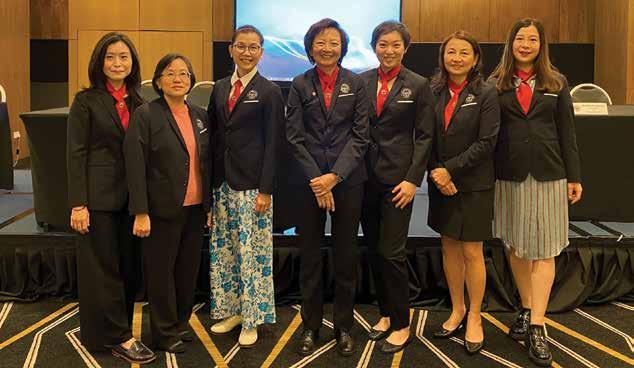
Er Prof Cham Tao Soon IES President (1980–1982).
Er Dr Lee Bee Wah (centre) with women council members at the 57th Annual General Meeting.
example, she has been told that women engineers are, in general, more meticulous than men.
Whatever the case, in the main, she believes the key is competence regardless of gender. “Engineering is not about gender. It is about one’s aptitude for the profession, the ability to identify problems as well as one’s analytical, communication, decisionmaking and leadership skills.”
To address the issue, to begin with, no-one is laying any blame at the door of systemic or institutional issues. At Nanyang Technological University where she was in the first batch of engineering graduates, she recalls that only about five per cent of her cohort were women. But she herself has not experienced discrimination in studying or practising engineering as a woman in a maledominated profession.
Over the years, she observes that the situation with gender imbalance in the universities has improved, to some extent. For example, she notes that female enrolment in engineering degree courses had increased from around 5 per cent during her university days to about 20 per cent in the 2020s.
IES-WiSER supported the biennial WiEST Symposium held on 5 March 2021, celebrating successful female role models in Science, Technology, Engineering, and Mathematics (STEM). The aim was to connect students with ecosystem peers in the industry, and provide a platform for young women to learn more about STEM careers.
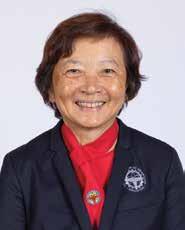
“ “ Engineering is not about gender. It is about one’s aptitude for the profession, the ability to identify problems as well as one’s analytical, communication, decisionmaking and leadership skills.
ER DR LEE BEE WAH IES President (2008–2010)
Engineering is a discipline, she says, that trains one to be “rigorous in considering all aspects of a problem, and to have the creativity to innovate solutions for the betterment of people.”
As an engineer with her own practice that she set up in the 1990s, she brought her engineering expertise and instincts to apply to her political work, as a Member of Parliament from 2006 to 2020, to improve infrastructure and amenities in her constituency. As an MP, she also served as Chairman of the Government Parliamentary Committee for National Development, as well as for the Environment and Water Resources.
Her engineering knowledge and background enabled her to help raise in Parliament issues such as the need to boost in-house engineering-related knowhow and skills within government agencies, when these had declined over the years with the rise of outsourcing of government work to the private sector.
At IES, to advance the place of women in engineering, the group Women in Science, Engineering and Research (WiSER) was formed in 2013. WiSER was set up with the purpose of
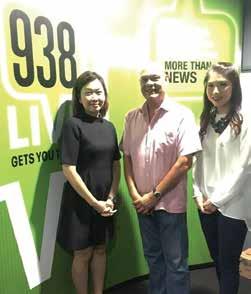
Er Jee Yi Ying and Er Emily Tan represented IES and WiSER respectively at a 938 Live radio interview with DJ Keith De Souza on International Women’s Day in 2017.
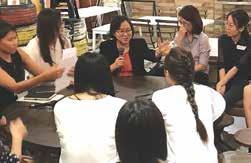
On 26 Jan 2018, WiSER’s Committee Member and IES Council Member, Ms Wan Siew Ping spoke at a focus group for female engineers to discuss engineering as a career of choice, organised by NTUC’s U Associates. Ms Wan shared her struggles starting out in the 1980s, as female engineers in the precision engineering field were unheard of at that time.
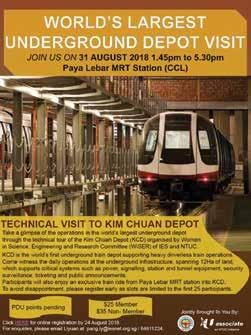
In collaboration with SMRT and supported by U Associates, WiSER organised a technical tour of the Kim Chuan Depot on 31 Aug 2018. Participants were given a rare opportunity to take an MRT train ride from Paya Lebar Station to the depot and to observe the operations of the world’s largest underground depot.
WiSER Chair Ms Jasmine Foo addressing the audience at an event on National Engineers Day, 2017.
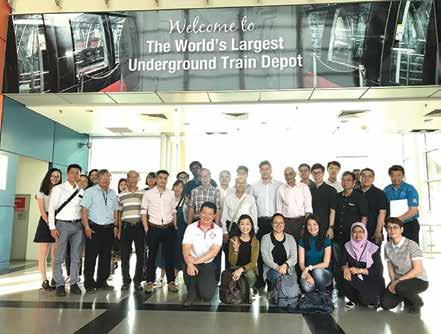
empowering and promoting women leadership in industry and professional fields, and creating greater awareness amongst women in these male-dominated disciplines.
One sub-committee under WiSER engages women leaders in engineering (CEOs, Chief Technology Officers, company founders/entrepreneurs and academics). Activities include high-level networking sessions, conducting the Corporate Leaders Seminar, and grooming young engineers through mentorship.
Another sub-committee works with schools and universities to support events such as National Engineers Day and the World Engineers Summit to feature more women in engineering.
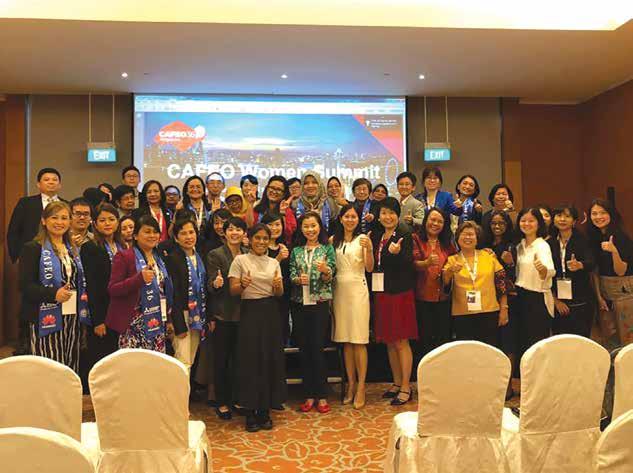
At the first WiSER Summit in October 2015, speakers and participants engaged in discussions about gender-related issues, as well as dialogues to inspire young female engineers-to-be.
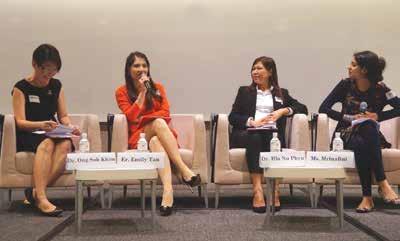
Ms Jasmine Foo, IES VP (Professional Engagement) and Chair of WiSER (2018) at the CAFEO Women Summit 2018. The summit provided a platform to encourage women to take up engineering as a career and celebrated the achievements of females in the engineering sectors.
Er Emily Tan, then Chairperson of WiSER Committee represented IES at the U Women’s Network Progression Forum: Qualities and Smart Strategies for Women (to thrive in) Science & Engineering held on 25 April 2017.
TOWARDS THE FUTURE
Since 1965, Singapore has built, and maintains, a global city with first-class infrastructure; high-rise density living with the highest standards of facilities and amenities. The Institution of Engineers, Singapore has enabled the community of engineers here to attain outstanding achievements in many areas, including reaching more than one summit of international recognition. But there is still room for advancement.
For example, when Prime Minister Lee Hsien Loong spoke at IES’ Golden Jubilee Gala Dinner in 2016, he paid tribute to the key contributions of engineers to building Singapore, but also cited examples of excellence that Singapore can look up to, such as deep expertise in precision and industrial engineering in Germany, and technology entrepreneurship in Silicon Valley in the US.
“We have made much progress with engineering but we still have a long way to go,” he said. “In many other fields of engineering, even where we have developed competence, we are not at the cutting-edge.”
One challenge that will always be faced by IES is the need to keep up with the rapid pace of technological change. As existing technologies evolve, and new technologies emerge, engineers need to constantly
update their skills and knowledge to stay relevant. As Er Ho Siong Hin says, “IES plays an important role in providing training and professional development opportunities for engineers, but keeping up with the latest developments can be a daunting task.”
In terms of hardware, the needs are clear. Aside from how the traditional branches of engineering will be crucial for urban development that makes for a liveable country, newer disciplines such as environmental engineering will become more important in the future, given the growing importance of sustainability concerns, in the face of climate change as the world’s most serious and urgent global challenge.
More engineers will be needed to work on areas such as adaptation and mitigation measures to address the challenges of rising sea levels. IES will continue to help firms harness their potential in newer fields including Building Information Modelling, Virtual Design and Construction, Design for Manufacture and Assembly, 3D printing and advanced robotics.
When it comes to the “softer” aspects, in an increasingly multi-disciplinary world, another
future role for IES that will become even more vital is how to enable what are called “T-shaped’, or cross-functional, skills, those that are an “overlay” across traditional skill sets, such as leadership or managing human resources.

In 2010, IES and Human Capital Singapore launched the People Management Programme for Engineers and Technical Professionals. The programme is part of a national effort for IES, together with other Continuing Education Centres, to such broader skills for engineers, as more of them take on management responsibilities in Singapore, and regionally. Such soft skills will come to the fore much more in the years ahead.
Looking to the future, Er Chan Ewe Jin (IES President 2024–2026) has a clear focus for IES.
At the big-picture level, IES will concentrate on the further rollout of the many initiatives and follow-up ideas in IES’ Green Plan 2030.
As for advancing the professional development of IES members, Er Chan, who heads his own engineering consultancy, would put the spotlight on drawing more from IES’ strong points.
“For chartered engineers, we can leverage IES’
IES President Er Chan Ewe Jin (2024–2026).
strengths to elevate their recognition,” he says, citing one example. Here, the applicable strengths of IES include the 16 Technical Committees, and direct access to government agencies to help shape important policies.
Drawing even more from the skills and talents of Singapore’s engineers to help address the paramount global challenge of sustainability would, once again, demonstrate IES’ key value-add since 1966: Marshalling knowledge, skill and innovation to make a better future for Singapore and the world.
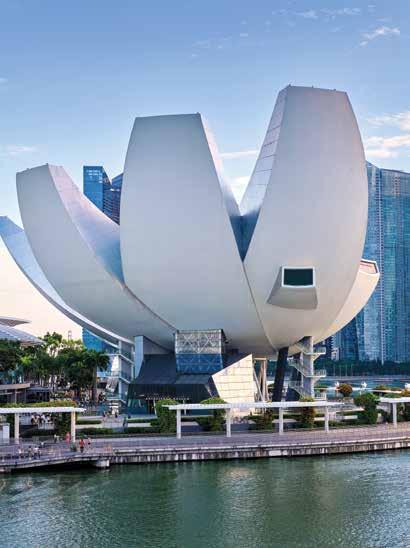
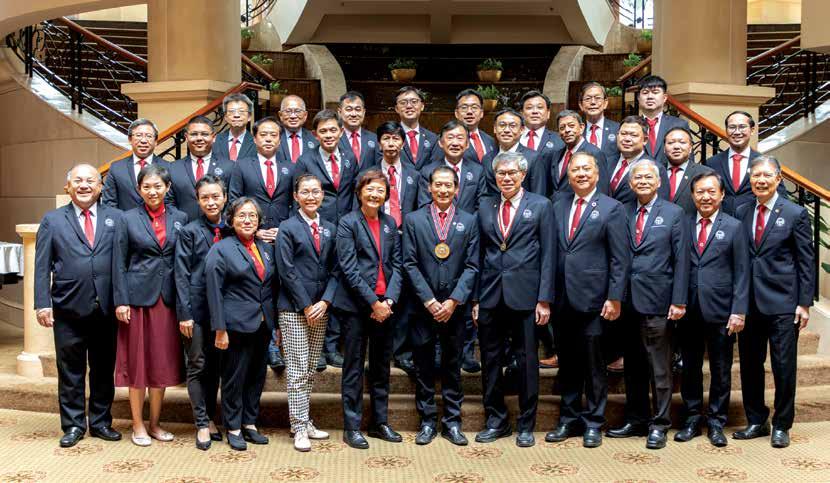
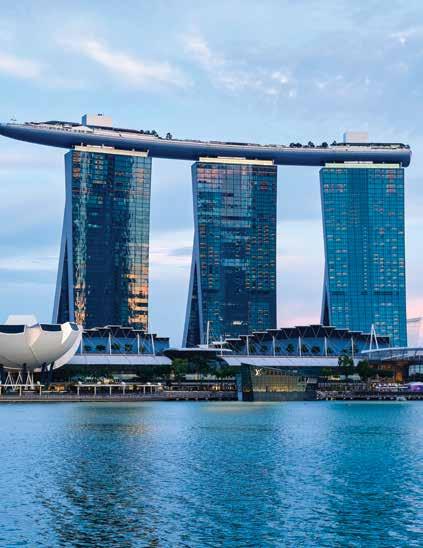
“
“ We have made much progress with engineering but we still have a long way to go.
THEN PRIME MINISTER LEE HSIEN LOONG
2016
IES’ Golden Jubilee Gala Dinner,
IES Council Members for the term 2024 to 2025, at the 58th Annual General Meeting held at Raffles Town Club on 25 May 2024.
Marina Bay Sands
Notable Milestones
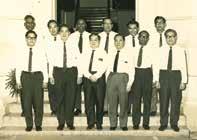
1966
1 July
IES is founded
Inaugural General Meeting held at PWD Sports Club at Kallang; first IES Council elected
1967
June
First IES Annual General Meeting
1969
15 October
First Parliament Reading of Professional Engineers Bill
15 October
IES succeeds in lobbying for a legislation recognising professional engineers
1971
2 January
Professional Engineers Act becomes law
IES opens an office at Singapore Professional Centre, Outram Park
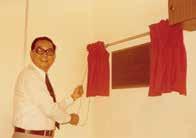
1973
IES office moves to International Plaza, Anson Road

1999
20 July
IES establishes Technopreneurship
1989
IES publishes procedure and guidelines for Alternative Dispute Resolution
1986
7 May
November First IES/IE Malaysia Engineering Convention held in Singapore, with the theme “The Role of Engineers in National Development” 1980
First IES Lecture, 20th IES
AGM at Westin Plaza Hotel: “The Singapore Vision: An Information Society – What Role can Engineers Play?”
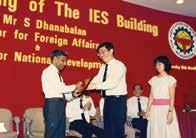
1987
IES Building at Bukit Tinggi Road officially opened
The Building Control Act becomes law
1990
lES establishes Continuing Education Centre for professional development of engineers
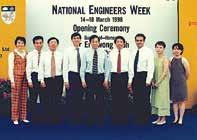
1998
March
lES initiates “Engineers’ Week” to recognise contributions of engineers
Development Committee to inculcate technopreneurial culture and facilitate venture creation among engineers
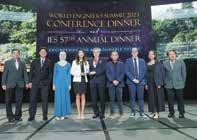
2000
June
lES presents inaugural “lES Prestigious Engineering Achievement Awards” to five recipients
2002
May
lES sets up Engineering Accreditation Board to accredit engineering programmes awarded in Singapore
2003
June
IES gains entry into Washington Accord as provisional member
2004
IES joins World Federation of Engineers Organisations and Federation of Engineering Institutions of South East Asia and the Pacific
2005
June
lES spearheads “Engineering Year 2005/ 2006”, a year-long campaign to promote engineering as a career of choice for tertiary students
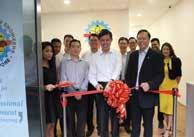
2006
1 April
IES formally sets up IES Academy to take over expanding roles of Continuing Education Centre
June
lES gains full signatory status in Washington Accord September lES recognised as a “Friend of Water” by PUB
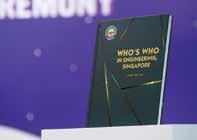
2007
6 July
IES signs MoU with NTUC; launches IES-NTUC Associate Membership programme
3 August lES signs MoU with SIM University; launches UniSIM-IES Executive Graduate Diploma in Technology Entrepreneurs and Executive Master of Technology Entrepreneurship
26 October lES launches “Who’s Who In Engineering, Singapore” publication at 41st Annual Dinner & Dance
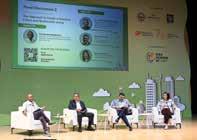
2008
19 March
lES signs MoU with Defence Science & Technology Agency; launches Certified Systems Engineering Professional certification
16 September lES holds inaugural Charles Rudd Distinguished Lectures, in memory of Er Charles Rudd
2009
30 July
IES signs MoU with HP Singapore, IBM Singapore, Oracle Corp and Sun Microsystems to promote Systems Engineering
30 November–
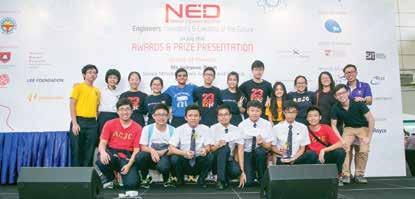
2010
2 December lES hosts 27th Conference of ASEAN Federation of Engineering Organisations, themed “Engineering for Sustainable Environment” the construction industry address environmental issues
IES establishes Technopreneurship Development Committee to inculcate technopreneurial culture and facilitate venture creation among engineers January lES Academy appointed by National Environment Agency as an authorised Training Centre for Singapore Certified Energy Manager courses
IES and Human Capital
Singapore launch the People Management Programme for Engineers and Technical Professionals
IES signs MoU with PUB to collaborate in the Active, Beautiful and Clean (ABC) Waters Programme, to help
4 September lES launches National Engineers Day to generate interest in engineering for students
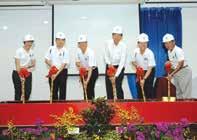
2012
21–24 February
IES hosts 14th Asia Pacific Confederation of Chemical Engineers Congress
12 December
IES new building’s groundbreaking
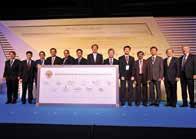
2013
9–15 September IES holds inaugural World Engineers Summit
9 September lES launches Chartered Engineer programme during World Engineers Summit 2013
15 September
Er Prof Lee Seng Lip conferred inaugural IES Lifetime Engineering Achievement Award during World Engineers Summit Gala
27 November
Second Edition of IES’s “Who’s Who in Engineering Singapore” launched at 47th lES Annual Dinner
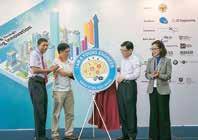
2014
18 - 19 July
National Engineers’ Day held in conjunction with Singapore Science Centre’s Mini Maker Faire for the first time
18 August
IES launches Young Engineers Leadership Programme with NTUC
10 October Prof Lui Pao Chuen conferred second IES Lifetime Engineering Achievement Award
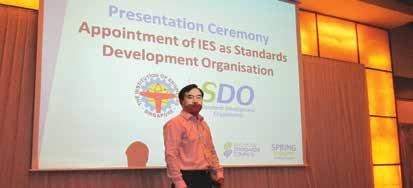
2015 January
IES appointed by SPRING Singapore as Standards Development Organisation for the Building and Construction Standards Committee
28 January IES unveils lES-SG50 campaign, commemorating Singapore’s 50th birthday in 2015 and lES’ 50th anniversary in 2016 highlighting engineers’ nation-building contributions
29 March
IES launches Chartered Engineer programme for railway and transportation engineers, together with Land Transport Authority, Singapore Workforce Development Agency, SBS Transit and SMRT Corporation
21–24 July
IES hosts World Engineers’ Summit on Climate Change 2015; presents Singapore’s first batch of Chartered Engineers; launches Engineering Feats @ lESSG50
23 July
Er Tan Gee Paw conferred third IES Lifetime Engineering Achievement Award
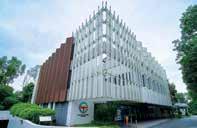
2016
16 February
IES Green Building @ Bukit Tinggi officially opened
25 April
Inaugural run of Advanced Engineering Leadership Programme
Official opening of the IES Academy which was relocated to Employment and Employability Institute, Jurong East IES launches Singapore Rail Standards Initiative, supported by LTA, SMRT, SBS Transit and Enterprise Singapore 1 July
IES Golden Jubilee Gala Dinner; awards presented for Top 50 Engineering Feats for the past 50 years
IES-SG50 Golden Jubilee Scholarships launched for engineering students from universities and polytechnics
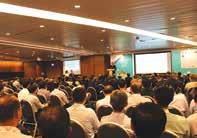
2017
18–21 July
IES hosts World Engineers’ Summit – Applied Energy
Symposium & Forum: Low Carbon Cities & Urban Energy Joint Conference
24 October
IES’ book 50 Years of Engineering in Singapore launched at IES Annual Dinner
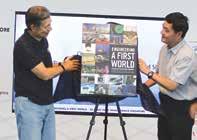
2018
10 January
IES signs MoU with SUTD Academy on training programmes aligned to Industrial Transformation Programme
7 April
IES’ coffee table book Engineering A First World –50 Feats that Transformed Singapore launched
12–14 November
IES hosts 36th Conference of ASEAN Federation of Engineering Organisations; IES led the signing of the Singapore Declaration on promoting workplace safety with the “Design for Safety” concept
2019 July
IES launches National Engineering Career Progression Pathway for Technologist and Technician; signs MoU with 20 industry partners
27–30 August
IES hosts World Engineers’ Summit 2019, themed “Engineering Future Cities –Harnessing and Managing Technologies to Improve Quality of Life”
10 October
IES-INCA Pte Ltd launched as incubator/accelerator focusing on engineers, engineering and deep tech commercialisation; IES-INCA and Institute of Singapore Chartered Accountants sign MoU Singapore Rail Standards Initiative launched with support from LTA, SMRT, SBS Transit and Enterprise Singapore; spearheaded by a Technical Committee under Singapore Standards Council, overseen by ESG
05–11 October
Inaugural run of Global Engineering Leadership Programme
2020
17 March
IES sets up Institution of Engineers (Singapore) Fund Ltd, to support engineering education and raise the standing of engineers
21 November
IES hosts signing of three MoUs between AI Singapore and IES; AISG and SMRT; and AI Professionals Association and IES, to galvanise engineering advancements in artificial intelligence
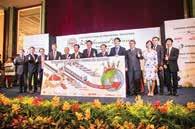
2021 January
IES unveils Chartered Engineering Technologist and Technician Certification
23 March
IES launches inaugural Singapore Railway Standards
Er Chong Kee Sen named FEIAP Engineer of the Year
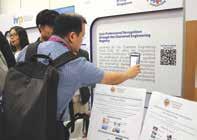
2022
IES appointed Skills Development Partner for the engineering sector by SkillsFuture Singapore
Emeritus President Er Prof Lock Kai Sang awarded the prestigious WFEO Medal for Excellence in Engineering Education
Signed MoU and Mutual Recognition Agreement with the China Association of Science and Technology (CAST) to promote exchanges on the professional front between Singapore and China and to allow engineers from Singapore and China to practise in both countries and expand beyond their current borders
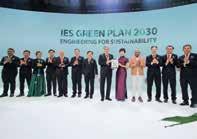
2023
17 January
IES launches IES Green Plan 2030 in support of Singapore Green Plan 2030 at IES’ 56th Annual Dinner
June
Er Prof Lock Kai Sang becomes Chairman, Executive Committee, Washington Accord October Er Tan Seng Chuan elected President-Elect (2023-2025) of World Federation of Engineering Organisations (WFEO)
Key Contributors to IES
THE LATE ER KENNETH GIN
IES founding President 1966–1968, IES Honorary Fellow
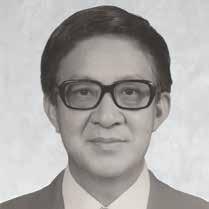
The late Er Kenneth Ying Doon Gin had an illustrious engineering career in Singapore, including being General Manager of Singapore’s Public Utilities Board. His contributions to Singapore as a civil engineer started in 1956 when he was the project engineer for the Merdeka Bridge over the Kallang River, then Singapore’s longest bridge. Appointed Deputy Director of Public Works in 1959, he worked on landmark projects including Paya Lebar Airport and the initial phases of the Pan lsland Expressway and Mass Rapid Transit system. His desire to help engineers gain a voice, and his commitment to creating a home for the engineering community led to the formation of IES in 1966, and laid the foundations for IES’ growth ever since.
The rapid and successful development of Singapore over the last few decades is due in no small part to the contribution of engineers. The modern buildings, the new roads and highways, the port and airport developments, and the mass rapid transit system are typical examples. Engineers can take pride that they have made very valuable contributions to Singapore economic developments.
Moving ahead, there remains in Singapore and the world around us, a huge reservoir of work for engineers, not restricted as in the historic past, to engineering alone. Today, we have different opportunities, which requires changes in our thinking. With imagination, initiative and resourcefulness, such opportunities are well within the ambit of engineers’ capabilities.
“
THE LATE ER DR HIEW SIEW NAM
IES’ first Honorary Secretary, Second IES President 1968–1970, IES Honorary Fellow, first President of Professional Engineers Board 1970–1974, donor of $300,000 to IES Building Fund
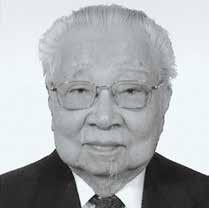
The late Er Dr Hiew worked on many major engineering projects at the Public Works Department, from 1952 until his last position as Director (1969-1974). He also served on statutory boards including the Valuation Appeal Board, Land Acquisition Appeals Board, and the Land Transport Authority’s Board of Compensation. His contributions to advancing the professional status of engineers includes initiating the move for legislation of the Professional Engineers Act, and liaising with the Attorney-General’s office in drafting the Act that gives engineers the legal status to secure projects on their own, without having to work with an architect.
ER DR LEE BEE WAH
IES’ first female Council Member, IES President 2008–2010, IES
Honorary Fellow
Er Dr Lee joined IES as a graduate member in 1986, and made history when she agreed to run for a seat on the IES Council for the 1996 session, at a time when women made up only 10 per cent of IES’ membership. From the first batch of engineering graduates from Nanyang Technological University (known as Nanyang Technological Institute then), she made her mark in the industry before setting up her own firm. A mother of two, and a Member of Parliament from 2006 to 2020, she continues to inspire women to take up engineering as a career.
More women are becoming engineers. I hope women will overcome stereotypes and become the equal of men in the engineering field. Engineering is not about gender. lt’s about your aptitude for the profession; your ability to identify problems; as well as your analytical, communication, decision-making and leadership skills.
THE LATE ER CHARLES G V RUDD
IES founding member, donor of $1.22 million to IES
Er Rudd served ardently on the IES Council and various committees and contributed valuable perspectives that helped shape IES into what it is today. He was an esteemed Rotarian and Professional Mechanical and Electrical Engineer in Singapore and Malaysia. He also dedicated his professional expertise and time in China, Hong Kong and Taiwan to bring about educational and technological development in the region. As a commitment to her late husband’s ideals, Mrs. EIeanor Phyllis Rudd bequeathed a generous sum of $1.22 million to IES in 2004. The fund formed an essential base for the lES redevelopment project. In memory of his unwavering dedication to IES, IES launched the Charles Rudd Distinguished Lectures in 2007. Since then, the series has provided a platform for reputable and successful engineers to share their experiences or the latest developments in science and technology with members and the engineering fraternity.

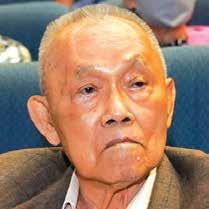
ER WONG YUI CHEONG
2021 IES Lifetime Engineering Achievement Award recipient, IES Vice President 1980-1983, donor of $1 million to the IES-Wong Yui Cheong Research in Construction Project Management Fund
After an illustrious career spanning more than 40 years in civil and structural engineering, including in his own consulting firm, Er Wong has continued to give back to the engineering community. He has served in the highest decision-making bodies of organisations such as the Professional Engineers Board, where he was a council member. The IES-Y C Wong Project Management Scholarship is open to graduates from all institutes of higher learning, especially at Nanyang Technological University, where Mr Wong lectured from 1999 to 2011.
MR BRIAN CHANG
IES Honorary Fellow, ASEAN Federation of Engineering Organisations Honorary Fellow, donor of $2 million to IES Building Fund
Mr Chang has worked in the oil and gas industry for more than 40 years, designing and engineering more than 600 projects including on offshore structures, vessels, mooring system, terminals and power plants, as far as Africa and South America.
IES’ Green Building, with its expanded and advanced facilities, will provide the ideal environment for engineers to gather, interact and advance their careers. ln addition, as a building that is conceptualised, designed, funded and built by engineers, it will also act as an icon of pride and inspiration to motivate engineers to pursue greater excellence in their jobs. I think it will open the eyes (of the next generation of engineers) to the incredible achievements that engineers can make. lts state-of-theart features will instil a sense of wonder in engineering in their hearts, and inculcate a desire to become engineers in their minds.
ER LIM SOON HOCK
IES Life Member, IES-IEEE (Institute of Electrical and Electronics Engineers, Inc.) Joint Medal of Excellence Award recipient 2010, donor of $202,000 to IES Building Fund
Er Lim has more than 30 years of experience as a board member, CEO, technopreneur, and private investor, across various highly competitive industries in a global environment. He has also been involved in taking companies public, mergers and acquisitions; as well as consulting for several global multinational companies and promising small and medium enterprises.
IES has critical roles to transform Singapore from a “value-add” to a “value-create” economy to compete more effectively globally, and to tackle national challenges such as water recycling, as well as global challenges relating to environmental sustainability. IES’ Green Building must be the epicentre for the confluence of ideas, knowledge and expertise for learning, up-skilling and upgrading. Young engineers can learn from fellows in classical engineering, and vice versa in the new digital and social media era. With good succession planning, the next generation of engineers can take over the reins, and the rich institutionalised legacy of engineering will continue for as long as possible. The new campus is ideal for the incubation of startups, offering pleasant surroundings and access to expertise and experience. lt will urge more engineers to be entrepreneurial to contribute to the wealth creation of Singapore.
“
REFERENCES
1. “Tribute to Er Kenneth Gin, IES Founding President”, IES Golden Jubilee Commemorative Magazine
2. “IES Founder President Er Kenneth Gin”, pages 1 & 3 IES Newsletter Vol. 9 No. 3 March 1996
3. “An Exclusive Interview with Er Hiew Siew Nam (Dr.)”, pages 1 & 16 The Singapore Engineer Vol. 10 No. 4 April 1997
4. “IES’ First Lady Council Member Er Lee Bee Wah”, page 1 The Singapore Engineer Vol. 9 No.7 July 1996
5. “Interview with Er Dr Lee Bee Wah, first woman President of IES” IES Golden Jubilee Commemorative Magazine
6. “Tribute to the Late Charles G V Rudd and Eleanor Phyllis Rudd” by Er N P Karthigayan, pages 11 - 13 The Singapore Engineer September 2006
7. “Fond Memories of Er Charles Rudd” by IES Fellow Members and Friends, pages 14 - 15 The Singapore Engineer September 2006
8. “Special Tribute to the late Er Charles Rudd & Mrs Eleanor Phyllis Rudd - Dedicated lES Founding Member and Benefactor” IES Golden Jubilee Commemorative Magazine
9. A write-up on Er Wong Yui Cheong who had donated S$1 million to IES for the setting up of the IES-Wong Yui Cheong Research in Construction Project Management Fund
10. Advocates of Engineering Mr Brian Chang, Page 14, Magazine commemorating Official Opening of IES Green Building at Bukit Tinggi on 16.02.2016
11. Advocates of Engineering Er Lim Soon Hock, Page 15, Magazine commemorating Official Opening of IES Green Building at Bukit Tinggi on 16.02.2016
Major Donors to IES Building Fund
1st Building Major Donors List
List of Members who Donated:
$10,000
Wong Yui Cheong
$1,000 and above
Adhityan Appan
Ang Thian Hin
Boh Boon Swang
Bong Tet Yin
Leslie S Calder
Paul Chain
Chan Cher Lai
Chan Thai Chwee
Chan Weng Thye
Chan Yang Pun
Chan Yen Phui
Chang Kin Koon
Chan Keng Yam
Chen Charng Ning
Chen Hao
Chen Hung
Chen Ching Tang
Cheong Boo Hong
Chew Hsiu Chuang
Chew Khek Han
Chew Seong Yean
Chiang Shih Fang
Chin Hin Pok
Chin Jeck Swee
Chin Kee Kean
Chua Keng Chay
Chua Soo Tian
Donald P Distant
Eng Kwee Chew
Michael Y O Fam
Fang Swee Peng
Fok Tai Loy
George Fong Wah
Foo Chee Tan
Foo Kong Deen
Foo Moo Pao
Fung Lok Hung
K Y D Gin
Goh Kok Guan
Goh Song How
Hang Chang Chieh
Hiew Siew Nam
Ho Hweng Sheng
Ho Pak Mew
Ho Shao Meng
Ho Sou Weng
Peter Holmes
Hoo Chang Long
Hui Beng Hong
P Jeyapal S/O David
Kam Sing Kuan
N Karthigayan
Khoo Kay Chai
Khong Kit Soon
Khor Teck Hean
Kok Joo Sen
Kok King Min
V Krishna
Kwok Chee Hong
Kwok Kwee Kuan
Lam Heu Kong
Lau Chung Sing
List of Firms who have Contributed:
Lau Pway Kian
Lee Bay Tseng
Brian C L Lee
Lee Chiaw Meng
Lee Ek Tieng
Lee Keh Sai
Lee Koon Fong
Lee Li Chuan
Lee Mow Woo
Lee Tuh Fuh
Leong Shui Hung
Leong Siem Chong
Leong Wah San
Leung Shiu Kee
Lie Ie Hoei
Li Shing
Lim Chin Tian
Lim Eng Seong
Lim Heng Toh
Lim Hong Hock
Lim Jew Beng
Lim Kok Eng
Lim Sak Lan
Lim Sim Eng
Loh Ah Chin
Loh Kok Onn
Loh Peng Sum
Loo Soo Hock
Low Siow Whatt
Francis K T Mak
A P G Menon
Moh Hark Serh
Ng Fook Wah
Ng Heng Liat
Ng Tong Leng
Ng Yew Kok
Ong Chin Lock
Ong Ser Huan
Ooi Yan Tin
H S Parmar
Phan Kah Foh
F B Fickles
F R Pitcher
Poon Tien Sheu
A S Ranjendra
S D Ramaswamy
Charles Rudd
R Sabapathy
Seh Chong Peng
Song Wee Ngee
P Sripathy
Su Guaning
Su Kee Lay
G N Sukumaran
George T S Sze
Tan Beng Watt
Tan Chong Yong
Tan Chwee Seng
Tan Ee Ping
Tan Kok Kay
Tan Kok Swee
Tan Swan Beng
Tan Wan Chye
Tan Yong Keh
Tay Sin Yan
Teh Hee Seang
Teo Choo Kiat
Teo Khoon Geok
Teo Lai Seng
Tham Tuck Yen
Tong Kok Chai
Tsao Hsien Hwa
U Yong Dang
A Vijiaratnam
Bailey Wang
Wang Cheung Wah
H G F Wendroth
Wong Kwong Yuen
Wong Sai Wai
Wong Yew Koey
Wong Ying
Woo Ewe Wee
Woh Yoh Yeung
Yeo Boon Leng
Yeo Cher Kern
Yeo Tai Heon
Yim Lok Peng
Yin Chiang Teck
Yoon Wing Yew
Tam Chan Tim
Yung Tee Fa
Yuk Wai Sun
Yap Neng Chew
Lee Seng Lip
Jimmy W Y Chen
K Kannappan
Ng Thin Teng
Yien Yew Sin
Loh Weng Whye
IES Building Fund (Phase II) Donors (1993-1996)
$69,000
Fung Lok Hung
$50,000
Lee Foundation
$10,000
Bored Piling Group
Chang Meng Teng
K Y D Gin
Tan Ee Ping
$5,000 and above
Chen Hao
Foo Kong Dean
Hong Cheng Kee, Bill Teh Hee Seang
$2,000 and above
C K Murthy
Guan Seng Construction
Pte Ltd
Hiew Siew Nam
Ong Ser Huan
Low Sue-Leong
Siow Keng Cheng
Tan Sek Yam, John
$1,000 and above
Cham Tao Soon
Chin Chun Ping, John Chua Kok Cheong, Larry Chua Soon Tian
F B Fickles
Ho Nai Choon
Hui Beng Hong Kok King Min Lee Keh Sai
Li Yuan-Lu Liew Ah Choy
Mak Kai Tye, Francis Ngiam Tong Yuen Pok Yang Ming
Poo Aun Neow
Sai Kim Siah @ Chai Kim Seah
B Senanayake
Su Guaning Tan Swan Beng
A Vijiaratnam
IES Green Building @ 70 Bukit Tinggi
Major Donors
$1,376,376
$1,200,000 Chang Brian
$250,000 Keppel Corporation
$202,000 Er. Lim Soon Hock
$200,000 Sembcorp Industries Ltd
$100,000
Expand Construction Pte Ltd
Far East Organization Lee Foundation
$70,000 Ho Ching
$31,129
Old Building Fund In Bank
$30,000
ABV Engineering Pte Ltd
$20,000
Anonymous Donor A
$15,000
LSW Consulting Engineers Pte Ltd
$11,000
Tan Wan Chye
$10,000
Albert Loh
Chang Meng Teng
Engineers 9000 Pte Ltd
Engineers 9000 Pte Ltd
($5,500)
Keesen Enterprise ($3,000)
Hwang & Hwang Consulting
Engineers ($1,500)
Foo Siew King
IStructE Committee
Li Yuan-Lu
Lim Hwee Hua
Ow Chun Ming, Victor (Clydesbuilt Capital Pte Ltd) Teo Chor Kok
$8,650
Anonymous Donor C (Donated Honorarium through IESA)
$8,000
Lee Bee Wah (LBW Consultants LLP)
Ong Ser Huan Teo Lai Seng
$5,000
Anonymous Donor B Chan Ewe Jin
Chang Cheow Teck
Chen Hung
Chew Yong Tian
Chou Siaw Kiang
Chua Soo Tian
Ho Siong Hin
Joseph Sin Kam Choi
Kannappa Kannappan
Lim Cherng Yih, Richard
Poo Aun Neow
Siow Keng Cheng
Su Guaning
Su Kee Lay
Tan Ee Ping
(TEP Consultants Pte Ltd)
Tan Seng Chuan
Tan Seng Koon, William
U Yong Dan
Wong Liang Feng
Wong Ngit Liong
Wong Yui Cheong
Yong Min You
$4,800
Cheang Jen Boon
$4,276
Ng Chong Thong
$4,000
Alex Wang Khang Neng
Cham Tao Soon
Ho Soo Foo
Ngiam Tong Yuen
IES Green Building @ 70 Bukit Tinggi (continued)
$3,000
Chua Koon Hoe
Edwin Khew Teck Fook
Koh Beng Thong
Kwok Wai Onn
Leong Cheng Wee
Lim Wan Sin
Oh Boon Chye, Jason
Ong Geok Soo
Ong See Ho
Soh Eng Teong, Edwin
Sun Chong Hong
Tan Lek Lek
Wan Fook Sing
Wong Seng
Yeo Boon Leng
$2,500
John Wilson
(Arian Corporation Pte Ltd)
Lim Tsun Chiet
(TNJ Consultants LLP)
Mandi Umesh Shankerappa
Seah Moon Ming
Seow Tiang Keng
$2,200
Chua Khim Seng
Tan Jake Yong
$2,000
Au Kow Liong
(K L Au & Associates)
Bobby Ho
(Executive Decisions Inc LLP)
Cheong Hee Kiat
Foo Say Wei
Gan Boon Jin
Goh Song How
Ho Kwong Meng
Jurong International
Holdings Pte Ltd
Lee On Nam
Liew Ah Choy
Liew Vui Lee (TJ Consultants)
Lim Theng
Lin Cheng Ton
Lock Kai Sang
Loke Yee Weng
Lui Pao Chuen
Lum Chong Chuen
Ng Chew Wai, William
Phang Chu Mau
Sigl Oskar
(Geoconsult Asia S’pore Pte Ltd)
Sung Hsien Chih
Teh Tee Tee
Teo Song Seng
(Pacific International
Lines Pte Ltd)
Wang Khang Neng Yeo Khim Teck
$1,800
Chung Choon Heong
Fang Swee Peng, Bob
$1,600
Ho Hweng Sheng
$1,500
Chandra Welly Widjaja
Chang Hwai Cheh (SMM Engineers)
Jim Tuck Seng
Lau Kheng Hee
Manivel S/O Rudrapathi
Song Pang Lim
Song Wee Ngee
Tan Sai Chiong
Tong Swei Yeh, Marcus
Wong Wai Yin
$1,200
Chew Hew Keow
Er Kiah Choon
Eu Pui Leong
Kong Chow Fook
Leong Suarn Kie, Edric
Lui Hung Chek
Quek Tee Dhye
Wong Fee Miin, Alfred Wong Wai Choong, Lawrence
$1,000
Babu T K M
Bhupendra Singh Baliyan
Boh Jaw Woei
Chee Keng Yam
Chen Charng Ning
Cheng Wee Sik
Chew Seong Yean
Chia Lam Heng
Chia Ngiang Hong
Chong Chong Choo
Chong Quek Kwong
Chong Yit Wah
Choo Chiau Beng
Chu Chiang Yong
Damit Awangku Ismail Bin
Pengiran
Desai Praful Jayantilal
Er Kwong Wah
Er Meng Hwa
Foo Kong Deen
Goh Chee Ming, David
(DLE M&E Pte Ltd)
Goh Chin Eng, Gabriel
Goh Kok Hwa
Goh Yong Cheng
(Y C Goh Consultants)
Hiew Siew Nam
Ho Chin Whay
Huang Adrian (JHA Partnership)
Huang Yu
James Ng Kok Wah
Jee Yi Yng
Kang Choon Seng
Kang Swee Ann
Karthigayan S/O
Nadarajah Pillai
Kee Kam Oon
Kesavan Yoo Weng
Khaw Wai Meng
Khong Kit Soon
Ko Luan Bock
Koh Nghee Kwang
Kok Peng Koon
Kok Peng Wai
Krishnamurthy Natarajan
Kwok Hae Fun
Kwok Wah Fong
Lau Gar Ning
Lau Gek Sing
(PCA Consulting Engineers)
Lee Ee Tuan
Lee Ek Tieng
Lee Fook Hou
Lee Keh Sai
Lee Kim Tak
Lee Seng Lip
Leong Meng Sun
Liang Foo Jee
Liew Jat Yuen, Richard Lim Bok Ngam
Lim Chee Eng
Lim Chin Pau
(C P Lim & Partners LLP)
Lim Choon Wah, Chris
Lim Chung Min
Lim Kong Puay
Loh Weng Whye
Loo Lip Giam
Low Fong Hon
Low Wong Fook
Lucas Ng Hong Kiang
Lui Yuen Leung, Leon Lye Yew Thong
Mak Kai Tye, Francis Moh Za -Chieh
Neam Kiat How
Neo Tiong Tian, Nicholas
Ng Chuan Lim, Robert
Ng Say Cheong
Ng Seng Buan
(S B Ng & Associates C E)
Ng Tong Hai
(
HS Engineering Consultants)
Oei Tjhing Bo, Robert
Ong Beng Lee
Ong Chong Ping
Ong Choo Eng
Ong Eng Liong
Ong Min Sing
Pang Tong Teck
Periasami K S
Quek Bak Song
(Five United LLP)
Quek Tong Boon
Robin Chia Kay Hua
S Yogeeswaran (Casy Consultancy Services)
Sanjeet Singh Sandhu
Seow Kang Seng
Shek Kam Chew
Siew Chak Hung
Sin Yew Tek
So Man Fung, David
Tan Ah Chye (Zentar Marine Pte Ltd)
Tan Bian Tiong
Tan Kai Hong
Tan Kok Swee
Tan Ser Kwang, Sherman (Innovators Pte Ltd)
Tan Teng Wee (PSC Freyssinet (S) Pte Ltd)
Tay Hock Jin, Alvin
Tay Keng Yeow
Tay Kwong Kiat
Tay Siew Choon
Teo Khoon Geok
Teo Li Lin
Timothy Chin
Ting Sa Tee
Toh Beng Guan
Toledo Maria Fe Valencia
Tong Swan Hua
Tsang Kwok Leung
Vashdev A Khialani
(C & V Engineering Pte Ltd)
Wan Siew Ping
Wong Siik Khai
Wong Su Leong
Wong Yok Siong (RX Engineers)
Wu Ruixin
Xu Hui Yi
Yap Christopher Robert
Yap Gim Chui
Yee Alfred Alphonse (Precast Design
Consultants Pte Ltd)
Yee Kwok Leung
Yeo Kwee Ming (Wistec Engineers & Associates)
Yeo Yong-Boon, George
Yeoh Jin Hwa
Yong Seow Kin

1966
ANG, GEORGE
ASHBROOK, C P
BAILEY, J P
THE INSTITUTION OF ENGINEERS SINGAPORE
IES FOUNDING MEMBERS

BARKER, ROLAND IVAN
BUXTON, LAWRENCE ALAN
CHAN CHER LAI
CHAN HOON HAN
CHAN KUI CHUAN
CHENG CHING TANG
CHENG KAI SHUI
CHEOK TIAN SANG
CHEONG SIEW KEONG
CHING HAK LEONG
CHONG TOH GOO, CHARLES
CRAWFORD, J P
CUMMING, JAMES
DANIELS, EDWARD
D’ROZARIO, BASIL
FAM YUE ONN, MICHAEL
FUNG LOK HUNG
GABRIEL, ALFRED JOSEPH
GOH JOON YAP
GOH KENG CHEW
GUAN MENG KUAN
GUDGEON, ROGER WAYTH
HART, F K
HIEW SIEW NAM
HONG GEOK WHATT, JOHN
HOU KEE HUAT
IAU TSUNG KYA
JONES, J H M
KHONG KIT SOON
KHOR TEIK HEAN, MICHAEL
KO CHEW KAI
KOK JOO SEN
KWA SOEN HWIE
LAU YU DONG
LAWTON, JAMES WILLIAM
LAW KIM TENG, MATTHEW
LEE EK TIENG
LEE, MICHAEL B P
LEE TET HIEN, CHARLES
LEE TOH FUH
LEE YONG SIANG
LIM BENG TIAT
LIM ENG LENG,VICTOR
LIM KONG ENG
LIM LOO CHEONG
LIU HUA AN
LOH AH CHIN
LOW, S L
LYE THIM FATT
MACLEOD, M
MAK AH CHAN
MAK KAI TYE, FRANCIS
MOK TUCK YEE
NADARAJAH, VELUPPILAI
NEO POH CHOON
NEYSADURAI, A
NG PENG KHOON
OH SIONG HUAT, JIMMY PANG, BUTNO
PHUA KIA TONG
PICKLES, F B
POH KIM PEW
POH SHEUNG FOO, PAUL
POH SOO JIN
QUEK PECK CHENG
RADHAKRISHNAN, A
RAJASINGAM, R G
RAJENDRAN, A
RUDD, C G V
SAVAGE, J D
SIE CHU HUA
SIEW NGAI HOON
SUKUMARAN G N
SYN WAI HIN
TAN KHAY HOON RONALD
TAN KIM CHEW
TAN KOK SWEE
TAN SEBASTIAN
TAO SHIH CHING
TAW CHENG HOCK
TAY SIN YAN
THIO GIM HOCK
TING CHENG YEE, MICHAEL
TSAO HSIEN HWA
VIJIARATNAM, ARUMUGAM
VITHILINGAM, T
WONG KEE KOON
WONG L K
WONG PENG CHOON ALBERT
WONG SIK KHUI
WONG YUI CHEONG
YAP NENG CHEW
YEH SHOW KUN
YEO CHER KERN, ROBERT
YEO, SEBASTIAN
YEOW MENG KHIANG
YIN CHIANG TECK
GIN YING DOON, KENNETH
YING YUK HANG
Emeritus Presidents & Honorary Secretaries
Session: 1966/1967
President: The late Kenneth Gin Ying Doon
Honorary Secretary: The late Hiew Siew Nam
Session: 1967/1968
President: The late Kenneth Gin Ying Doon
Honorary Secretary: The late Hiew Siew Nam
Session: 1968/1969
President: The late Hiew Siew Nam
Honorary Secretary: Yap Neng Chew
Session: 1969/1970
President: The late Hiew Siew Nam
Honorary Secretary: Chan Chee Wah
Session: 1970/1971
President: The late Low Sue-Leong
Honorary Secretary: Chan Chee Wah
Session: 1971/1972
President: The late Low Sue-Leong
Honorary Secretary: Khoo Kay Chai
Session: 1972/1973
President: The late A Vijiaratnam
Honorary Secretary: Chin Kee Kean
Session: 1973/1974
President: The late A Vijiaratnam
Honorary Secretary: The late Tan Swan Beng
Session: 1974/1975
President: Michael Lee Boon Peng
Honorary Secretary: Chang Meng Teng
Session: 1975/1976
President: Michael Lee Boon Peng
Honorary Secretary: Cham Tao Soon
Session: 1976/1977
President: The late Francis Mak Kai Tye
Honorary Secretary: Cham Tao Soon
Session: 1977/1978
President: The late Francis Mak Kai Tye
Honorary Secretary: Cham Tao Soon
Session: 1978/1979
President: Tay Sin Yan
Honorary Secretary: Bob S P Fang
Session: 1979/1980
President: Tay Sin Yan
Honorary Secretary: Ho Shao Meng
Session: 1980/1981
President: Cham Tao Soon
Honorary Secretary: Ho Shao Meng
Session: 1981/1982
President: Cham Tao Soon
Honorary Secretary: Saw Choo Ban
Session: 1982/1983
President: The late George Fong
Honorary Secretary: Saw Choo Ban
Session: 1983/1984
President: The late George Fong
Honorary Secretary: Loh Kok Onn
Session: 1984/1985
President: Chen Hung
Honorary Secretary: Donald P Distant
Session: 1985/1986
President: Chen Hung
Honorary Secretary: Donald P Distant
Session: 1986/1987
President: Chua Soo Tian
Honorary Secretary: Su Guaning
Session: 1987/1988
President: Chua Soo Tian
Honorary Secretary: Su Guaning
Session: 1988/1989
President: The late Tan Swan Beng
Honorary Secretary: George T S Sze
Session: 1989/1990
President: The late Tan Swan Beng
Honorary Secretary: George T S Sze
Session: 1990/1991
President: Chang Meng Teng
Honorary Secretary: Ong Kai Seong
Session: 1991/1992
President: Chang Meng Teng
Honorary Secretary: Siow Keng Cheng
Session: 1992/1993
President: The late Tan Ee Ping
Honorary Secretary: Siow Keng Cheng
Session: 1993/1994
President: The late Tan Ee Ping
Honorary Secretary: J B Senanayake
Session: 1994/1995
President: Su Guaning
Honorary Secretary: J B Senanayake
Session: 1995/1996
President: Su Guaning
Honorary Secretary: Tan Soo Kee
Session: 1996/1997
President: Poo Aun Neow
Honorary Secretary: Tan Soo Kee
Session: 1997/1998
President: Poo Aun Neow
Honorary Secretary: Tan Soo Kee
Session: 1998/1999
President: Ong Ser Huan
Honorary Secretary: Foo Say Wei
Session: 1999/2000
President: Ong Ser Huan
Honorary Secretary: Foo Say Wei
Session: 2000/2001
President: Chew Yong Tian
Honorary Secretary: T K M Babu
Session: 2001/2002
President: Chew Yong Tian
Honorary Secretary: T K M Babu
Session: 2002/2003
President: Lock Kai Sang
Honorary Secretary: Tham Kwok Leong
Session: 2003/2004
President: Lock Kai Sang
Honorary Secretary: Tham Kwok Leong
Session: 2004/2005
President: Foo Say Wei
Honorary Secretary: Tan Kiang Hwee
Session: 2005/2006
President: Foo Say Wei
Honorary Secretary: Tan Kiang Hwee
Session: 2006/2007
President: Tan Seng Chuan
Honorary Secretary: Chong Kee Sen
Session: 2007/2008
President: Tan Seng Chuan
Honorary Secretary: Chong Kee Sen
Session: 2008/2009
President: Lee Bee Wah
Honorary Secretary: Chong Kee Sen
Session: 2009/2010
President: Lee Bee Wah
Honorary Secretary: Chong Kee Sen
Session: 2010/2011
President: Ho Siong Hin
Honorary Secretary: Ng Say Cheong
Session: 2011/2012
President: Ho Siong Hin
Honorary Secretary: Ng Say Cheong
Session: 2012/2013
President: Chou Siaw Kiang
Honorary Secretary: Boh Jaw Woei
Session: 2013/2014
President: Chou Siaw Kiang
Honorary Secretary: Boh Jaw Woei
Session: 2014/2015
President: Chong Kee Sen
Honorary Secretary: Boh Jaw Woei
Session: 2015/2016
President: Chong Kee Sen
Honorary Secretary: Boh Jaw Woei
Session: 2016/2017
President: Edwin Khew
Honorary Secretary: Boh Jaw Woei
Session: 2017/2018
President: Edwin Khew
Honorary Secretary: Joseph Goh
Session: 2018/2019
President: Yeoh Lean Weng
Honorary Secretary: Joseph Goh
Session: 2019/2020
President: Yeoh Lean Weng
Honorary Secretary: Ong Eng Teck
Session: 2020/2021
President: Richard Kwok
Honorary Secretary: Danny Lee
Session: 2021/2022
President: Richard Kwok
Honorary Secretary: Danny Lee
Session: 2022/2023
President: Dalson Chung
Honorary Secretary: David Ng
Session: 2023/2024
President: Dalson Chung
Honorary Secretary: David Ng
Session: 2024/2025
President: Chan Ewe Jin
Honorary Secretary: Simon Lee
Acknowledgements
The IES History Book Committee chaired by Er Seow Kang Seng would like to thank the following Advisor and members for their support and contributions in the completion of this book:
Advisor/Emeritus President
Er Chong Kee Sen
Committee Member
Mr Chua Yi Bin Mr Jason Oh Boon Chye Er Ngiam Tong Yuen
Dr Chandra Segaran Mr Syafiq Shahul Dr Aaron Sham
Dr Victor Sim Er Siow Keng Cheng
Er S. Yogeeswaran
IES President
Er Chan Ewe Jin
Immediate Past President (2022-2024)
Mr Dalson Chung
Emeritus President
Ms Wan Siew Ping
About the Author
KOH BUCK SONG is the author and editor of more than 40 books, including Brand Singapore (third edition, 2021). His books on Singapore’s built environment include Engineers As Urban Systems Innovators for the Professional Engineers Board (2019), and Making Cities Liveable” for the Centre for Liveable Cities, Ministry of National Development (2018).
Er Edwin Khew Er Ho Siong Hin Er Dr Lee Bee Wah
Er Prof Lock Kai Sang Er Tan Seng Chuan Er Tay Sin Yan
Prof Yeoh Lean Weng
Immediate Past Honorary Secretary (2022-2024)
Er David Ng
IES Secretariat
Ms Emily Tan Mr Desmond Teo Ms Nuraini Binte Ahmad
Building the Nation and Beyond is published by The Institution of Engineers, Singapore (IES). Views expressed in this book do not necessarily reflect those of IES. All rights reserved. No part of this book shall be reproduced, mechanically or electronically, without the prior consent of IES.
Produced for the IES by Marshall Cavendish International (Asia) Pte Ltd
©The Institution of Engineers, Singapore, 2024
Index
A Vijiaratnam 12, 22
ABC Waters Programme 62, 63, 64, 66 alternative dispute resolution (ADR) 100-105
Ang, George 12, 22
Arbitration Procedures and Guidelines 101
Architects Board 10, 18, 20, 21
Architects Ordinance 10
ASEAN 109, 112, 113, 114, 115, 117, 124, 131, 140, 145, 187
ASEAN Energy Awards 30
ASEAN Federation of Engineering Organisations (AFEO) 7, 96, 113, 114, 116
Association of Consulting Engineers Singapore (ACES) 38, 45, 46, 47, 62
Au Kow Liong (Er) 87
Au Yeong Hoh Wai 193, 194
Bautista, Jaime Vega Jr 37
BCA Academy 84
Board of Engineers Cambodia (BEC) 114
Building and Construction Authority (BCA) 45, 59, 67, 68, 172
Building and Construction Standards Committee (BCSC) 73
Building Control Act 46, 69
Building Information Modelling (BIM) 71
Cham Tao Soon (Er Prof) 197, 202
Chan Ewe Jin (Er) 6, 7, 45, 47, 189, 195, 211
Chan Yew Kwong 84
Chang Meng Teng (Er) 67, 103
Charles G V Rudd 162
Charles Rudd Distinguished Public Lectures 161, 162
Chartered Engineering Board (CEB) 50
Chartered Engineering Technologist and Technician Certification Scheme 53, 54
Chee Hong Tat 128, 189 Cheong, SK 12
Chew Yong Tian (Prof) 115
Chin Kee Kean (Dr) 22
China Association for Science and Technology (CAST) 146, 147
Chong Kee Sen (Er) 29, 87, 95, 134, 136, 176, 189, 197, 200, 201
Chua Koon Hoe (Er) 104
Chung, Dalson 7, 89, 129, 145, 52, 153, 155, 156, 157, 158, 167, 168, 170 Computer Aided Design and Drafting (CAD) 70, 71
Conference of the ASEAN Federation of Engineering Organisations (CAFEO) 86, 87, 88, 115, 116, 117, 145, 187, 208
Construction Industry IT Technical Committee (CITC) 70
Continuing Education Centre 40 Council of Engineering Institutions of SouthEast Asian Nations (CEISEAN) 112, 113 Covid-19 91, 143, 175 Crawford, JP 12
De Souza, Keith 206
Deep Tunnel Sewerage System 62
Development & Building Control Division 38
Economic Development Board (EDB) 48, 187, 190
Employment and Employability Institute (e2i) 29, 40, 43
Energy Conservation Act 48, 49 Energy Market Authority (EMA) 46 Engineering a First World (book) 55, 58, 59 Engineering Accreditation Board (EAB) 118, 119, 122, 123, 124, 126, 127, 143 Engineering Feats @ IES-SG50 56, 142 Engineers Australia 146 Engineers Leadership Programme (ELP) 41 Engineers Ordinance 18, 20 Enterprise Singapore 73, 94, 97, 169 Estrop, ER 22
Fam, Michael 12
Federation of Engineering Institutions of Asia and the Pacific (FEIAP) 7, 131, 132, 133, 134
Federation of Engineering Institutions of the Southeast Asia and the Pacific (FEISEAP) 131, 132, 133
Federation of Myanmar Engineering Societies (Fed.MES) 114
Foo Kim Peng (Adj Assoc Prof) 92
Foo, Jasmine 185, 207, 208
Fu, Grace 154, 156, 165, 184, 192 Future Economy Council 54
Gabriel, AJ 12
Gan Siow Huang 53, 54, 182
Gin, Kenneth (Er) 6, 12, 13
Global Engineering Congress (GEC) 138
Goh Joon Yap 22
Goh, Joseph (Er) 68, 87
Goh Yang Miang (Prof) 47
Heng Swee Keat 88, 166, 167, 183, 184
Hiew Siew Nam (Er Dr) 10, 12, 13, 18, 19, 20, 22, 196
Ho Siong Hin (Er) 60, 67, 69, 78, 83, 84, 210
Hong Ming Hui (Prof) 96
Housing & Development Board (HDB) 46
IES Academy 6, 29, 30, 40, 41, 42, 43, 44, 84, 85, 159, 172, 181
IES Building 25, 26, 27, 29, 168
IES Civil & Structural Technical Committee 68, 172
IES College of Fellows 95
IES Community Service Committee (CSC) 193, 194, 195
IES Continuing Professional Development Committee 29
IES Corporate Social Responsibility Committee (CSR) 193, 194, 195
IES Crest 16-17
IES Fund Ltd 192
IES Golden Jubilee Gala Dinner 56, 207, 209, 213
IES Green Building @ Bukit Tinggi 29, 30, 31, 32, 33, 159
IES Green Festival 162
IES Green Plan 152, 153, 154, 156, 165, 166, 168, 169, 211
IES Journal 17
IES Mentor Scheme 35
IES Mission Statement 14-15
IES Organisation Structure 36
IES Public Lecture 37
IES Qualification and Membership Committee 34
IES Railway and Transportation Technical Committee (RTTC) 74
IES Secretariat 24, 25, 26
IES Systems Engineering Technical Committee 178
IES Technical Committees 35
IES Women in Science, Engineering & Research (WiSER) 108, 154, 175, 204, 206, 207, 208
IES-Incubator and Accelerator (IES-INCA) 92, 94, 97, 98, 99
IES-YEC (Young Engineers Committee) 109, 185
IES/IEM Engineering Convention 110
Institute of Electrical and Electronics Engineers (IEEE) 129, 130
Institution of Engineers, Malaya (IEM) 11
Institution of Engineers, Malaysia (IEM) 12, 19, 110, 111, 114
International Organization for Standardization (ISO) 42
International Plaza 24, 25
Jobs Skills Insights 158
Jurong Town Corporation (JTC) 46, 68
Khew, Edwin (Er) 57, 90, 91, 92, 94, 101
Khong Kit Soon 12
Khor, Amy (Dr) 63, 164
Koh Kim Chuan, Rex 22
Land Transport Authority (LTA) 51, 74, 75, 76
Lao Union of Science and Engineering Associations (LUSEA) 114
Lawton, JW 12
Lee Bee Wah (Er Dr) 59, 117, 190, 202, 203, 204, 205, 206
Lee Chuan Seng (Er) 70, 71, 72, 104
Lee Hsien Loong 56, 57, 58, 173, 207, 212
Lee Kwok Weng 104
Lee, Desmond 192
Lee, Simon (Er) 189, 193, 194
Leong Tatt Man 172
Lim, PC 10
Lock Kai Sang (Er Prof) 118, 119, 124, 128, 130, 137
Loh Peng Yuen 22
Low Khah Gek 185, 189
Low Sue-Leong 20
Low Yen Ling 120
Low, SL 12
Lui Pao Chuen (Er Prof) 202
Lystang, Truls 160
Macleod, Malcolm 22
Mak, Francis (Er) 25
Malayan Society of Engineers 10, 11
Management Development Institute of Singapore 188
Ministry of Law and National Development 19
Ministry of Manpower (MOM) 67, 77, 78, 81, 82, 84, 85, 86, 145, 182
Ministry of Sustainability and the Environment 152
Nanyang Polytechnic 188
Nanyang Technological University (NTU) 76, 123, 187, 188, 190, 198, 202, 204, 206
National Engineering Career Progression Pathway for Chartered Technologists and Technicians 52
National Engineers Day 37, 53, 146, 183, 184, 189, 190, 207
National Engineers Week 186, 187, 190
National Environment Agency (NEA) 48, 49, 50, 59, 68, 152
National Trades Union Congress (NTUC) 36, 41, 201
National University of Singapore (NUS) 47, 48, 82, 97, 160, 192, 198
Ng, David (Er) 172
Ng, John 88
Ngee Ann Polytechnic 188
Ngiam Tong Yuen (Er) 104
Oh Boon Chye, Jason 81, 84, 87
Ong Ser Huan (Er) 105
Ong Ye Kung 53, 75
Ong, Manuel 160
People’s Association 193
Persatuan Insinyur Indonesia (PII) 114
Pertubuhan Ukur Jurutera & Arkitek (PUJA) 114
Pickles, FB 12
Platinum Green Mark 29
Poh Soo Jin 12
Professional Engineers Act 6, 21, 22, 23
Professional Engineers Board 6, 20, 21, 22, 23, 119, 190
PSA Corporation 52
Public Utilities Board (PUB) 13, 47, 61, 62, 63, 66, 68
Public Works Department (PWD) 10, 11, 12, 13, 18, 24
Real Estate Developers’ Association of Singapore (REDAS) 46
Republic Polytechnic 188
Richard Kwok (Er Dr) 74, 75, 76
Risk Management Assistance Fund (RMAF) 42 Rohaya Saharom 160
S Dhanabalan 26, 27
SBS Transit Ltd 52, 74, 75
Science Centre Singapore 162, 163, 183, 189, 191
Seeram Ramakrishna (Prof) 160
Seow Kang Seng (Er) 7
Sim Wong Hoo 92
Singapore Accreditation Council (SAC) 68
Singapore Anti-Narcotics Association (SANA) 193
Singapore Certified Energy Manager (SCEM)
Training Programme 48, 49
Singapore Civil Defence Force 59, 68
Singapore Contractors Association Limited (SCAL) 46, 47
Singapore Green Building Council 68
Singapore Green Plan 152, 154, 166, 170
Singapore Institute of Standards and Industrial Research (SISIR) 67
Singapore Institute of Surveyors and Valuers (SISV) 46
Singapore Institute of Technology 118, 123, 188
Singapore Mediation Centre (SMC) 102, 103, 104
Singapore Polytechnic 161, 188
Singapore Professional Centre 24
Singapore Railway Standards (SRS) 75
Singapore Railway Technology Conference (SRTC) 75
Singapore University of Social Sciences (SUSS) 123, 188
Singapore University of Technology and Design (SUTD) 118, 123, 188
Skills Programme for Upgrading and Resilience (SPUR) 42
SkillsFuture 54, 158, 160, 181
SMRT Trains Ltd 52, 74, 75, 76
SP PowerGrid 46
SPRING Singapore 46, 71
Standards Development Organisation (SDO) 73, 74, 76
Sun Haiyan 129
Syafiq Shahul 189
Tan Ee Ping (Er) 103
Tan Gee Paw (Er) 202
Tan Kai Hong 81
Tan Seng Chuan (Er) 116, 127, 129, 131, 134, 135, 138, 140, 141
Tan Sim Chuan 185
Tan, Emily (Er) 206, 208
Tan, Clarence 101
Tay Sin Yan (Er) 17, 22, 112, 113
Technical Committee on Railway Systems (TCRS) 73, 74
Teh Hee Seang (Er) 68
Temasek Polytechnic 188
Teng Chin Seng (Er) 84
Teo Chee Hean 29, 51, 116, 141, 142, 143 Thannabal Kaliannan (Er) 47
Tharman Shanmugaratnam 125, 127
The Engineering Institute of Thailand (EIT) 114
The Philippine Technological Council 114
Thean Lip Ping (Justice) 68
Toh Chin Chye (Dr) 20, 21, 23
Top 50 Engineering Feats @ IESSG50 55, 56
UNESCO 131, 136, 137, 138, 164
Vietnam Union of Science and Technology Associations (VUSTA) 114
Vision Zero Movement 77-89
Wan Siew Ping 206
Washington Accord 6, 122, 124, 125, 126, 127, 128, 130, 136
WE-AFEO (Women Engineers of the national engineering organizations under the umbrella of the Asean Federation) 108 Wee, Andy 92
Wong Peng Choon, Albert 22 Wong Yui Cheong 192
Woon, Henry 160
Workforce Development Agency (WDA) 42, 52
Workplace Safety and Health Council (WSHC) 77, 78, 79, 80, 82
World Engineering Day 138, 146, 163, 164
World Engineers Summit 36, 51, 88, 141, 142, 143,146, 207
World Federation of Engineering Organisations (WFEO) 7, 136, 137, 138, 139, 140, 141, 142, 161
Yaacob Ibrahim (Dr) 61, 65 Yeoh Lean Weng (Prof) 167, 177, 178, 179, 180, 181, 198, 200
Ying, Jee Yi (Er) 206
Young Engineers of the ASEAN Federation of Engineering Organisations (YEAFEO) 187
Zhang Yuzhuo 129
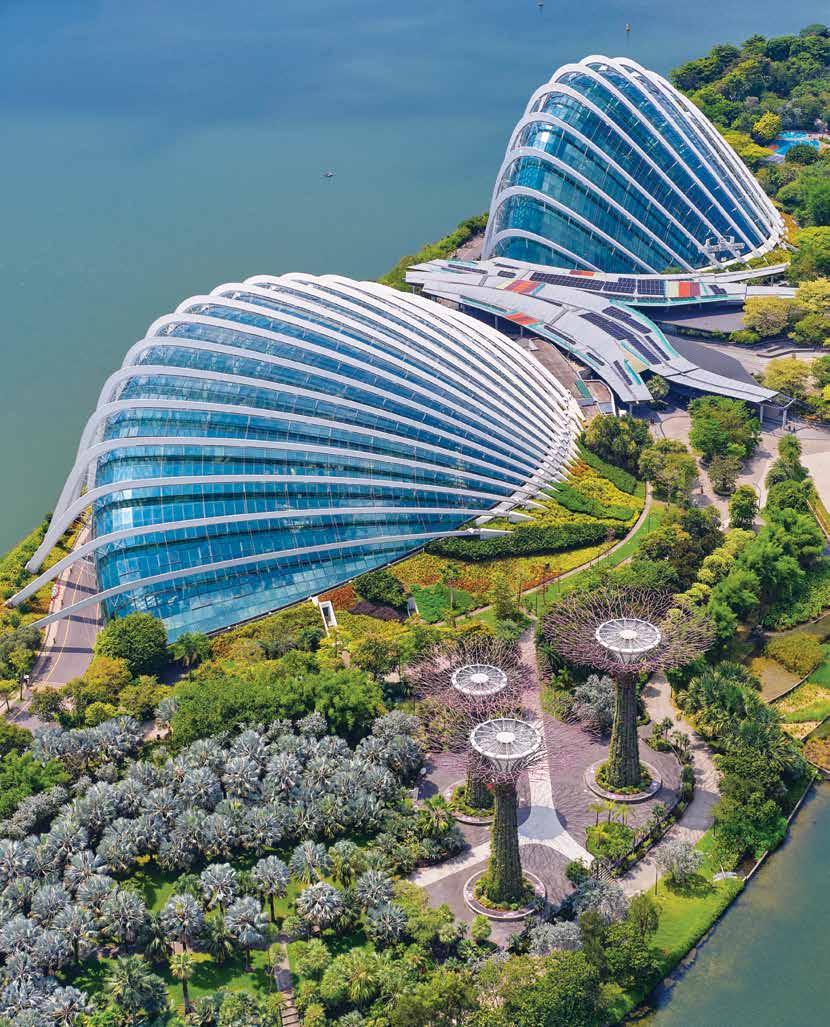
In 1966, the legal establishment of the Institution of Engineers, Singapore gave engineers a professional voice. Today, the IES has made itself