TEMPE PUBLIC ART PLAN

In partnership with City of Tempe
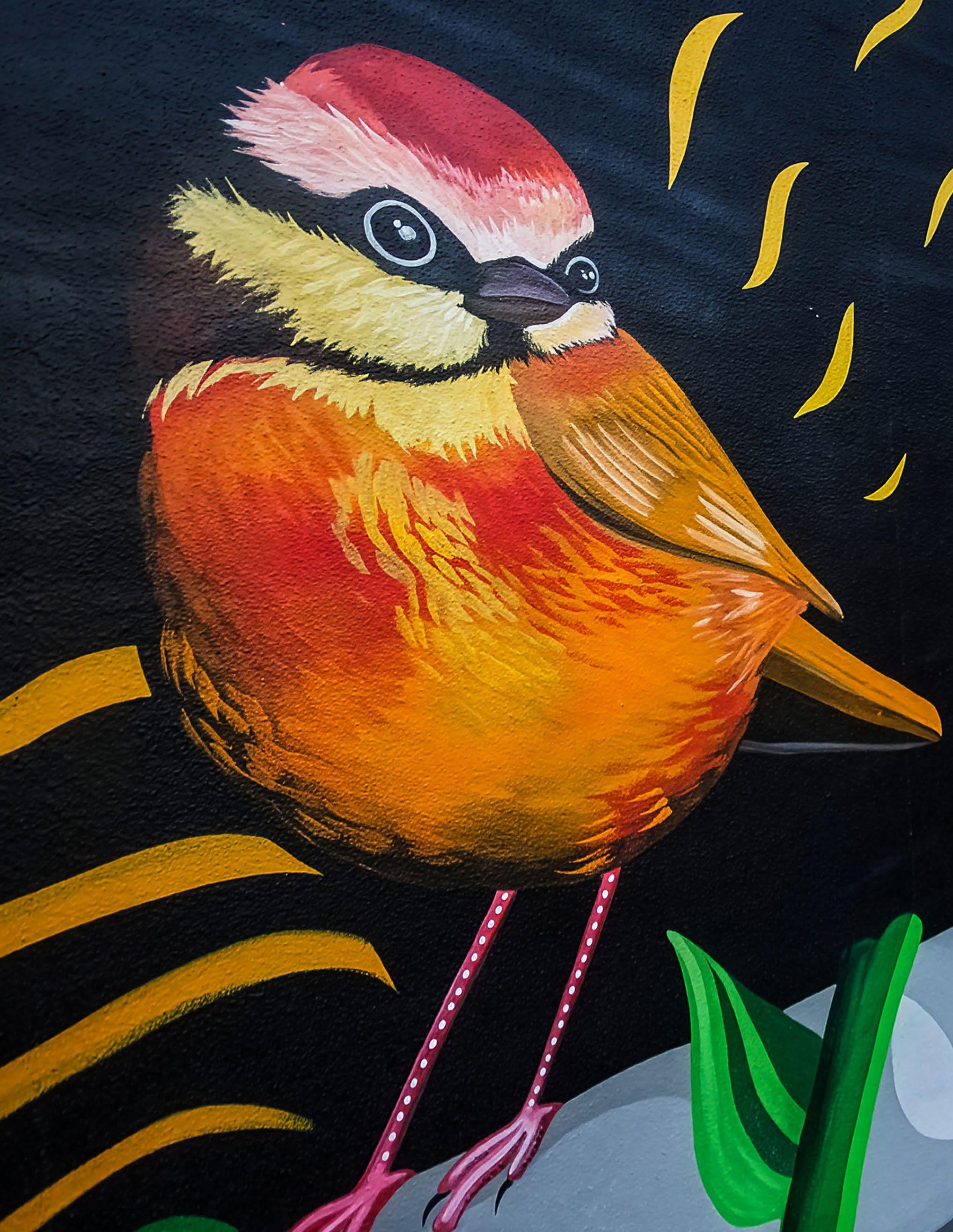
Cover Photo: Joe Tyler | E. 8th Street | Photo By Billy Hardiman
01 INTRODUCTION 02 EXISTING CONDITIONS 03 VISION FOR THE FUTURE 04 STRATEGIES FOR THE FUTURE
01 INTRODUCTION 02 EXISTING CONDITIONS 03 VISION FOR THE FUTURE 04 STRATEGIES FOR THE FUTURE
We acknowledge that Tempe lies in the ancestral land of the Native peoples who have lived here since time immemorial. The ancestral land of the O’odham and Piipaash stretches far beyond the boundaries of our city. The landscape is sacred to them, embodying cultural values that are integral to their identity and way of life. The O’odham and Piipaash continue to maintain a deep spiritual connection to this land. We embrace the responsibility of caring for these places and vow to uphold this commitment in all our actions.
MAYOR & CITY COUNCIL
Corey D. Woods, Mayor
Doreen Garlid, Vice Mayor
Jennifer Adams, Councilmember
Nikki Amberg, Councilmember
Arlene Chin, Councilmember
Berdetta Hodge, Councilmember
Randy Keating, Councilmember
TEMPE ARTS AND CULTURE COMMISSIONERS
Matthew Ellsworth
Lisa Roach
Jennifer Song
Kevin Godfrey-Chevalier
Andrea Hanley
Haylee Mills
Jacqueline Swan
Bryan Esparza
Teresa Robinette
Angela Russell
Kendra Sollars
ALL OF THE COMMUNITY MEMBERS WHO SHARED THEIR THOUGHTS DURING THE ENGAGEMENT PHASE
PUBLIC ART PLAN PROJECT TEAM
Rebecca Blume Rothman, Public Art Manager
Shauna Warner, Neighborhood Services Manager
Jacob Payne, Principal Planner
TEMPE PUBLIC ART STAFF
Christine Garner-Beatty, Public Art Coordinator
Sharah Nieto, Public Art Coordinator
Cat Beaudoin, Public Art Specialist
Charvel Nez, Public Art Assistant
CONSULTANT TEAM
Josh Lapp, Principal, Designing Local
Gabrielle Smith, Planner, Designing Local
Andrew Eble, Planner, Designing Local
Todd Bressi, Consultant, Artful Places
Credit for all photos used has been given, where possible.
Tempe Public Art boasts a rich history and has recently expanded, thanks to a significant era of growth and development within the city and the region at large. During this time, there has been renewed public interest in the intersection of public art and urban design, and a desire from the community to ensure that public art is part of everyone’s daily experience in Tempe. The increase in growth has led to an increase in available funding, a renewed interest in the arts as part of the city’s urban design, and a desire from the community to ensure that art is part of the daily experience in Tempe. City of Tempe has subsequently been able to increase public art funding and expand its professional public art staff. This momentum means that Tempe is now poised to articulate a new, forwardlooking vision for Tempe Public Art.
The public art planning process was undertaken to achieve several key goals:
• Conduct extensive public engagement to ensure Tempe Public Art aligns with the needs and desires of the Tempe community
• Create an aspirational vision for the future of the program
• Develop a framework to guide decision making on project development and prioritization
• Formalize existing policies, procedures, and governance processes
Public engagement was a fundamental aspect of the entire planning process. Commitment to community involvement was demonstrated through the deployment of more than 30 distinct engagement opportunities designed to reach a broad and diverse cross-section of the Tempe community. As a result, over 1000 individual community members actively participated, contributing invaluable guidance and feedback. These contributions were gathered through a blend of both virtual and in-person channels, ensuring accessibility and inclusivity throughout the planning process. The insights gleaned from this extensive public participation shaped the direction and ultimate outcomes of the Public Art Plan.
Stakeholder 1-on-1s: 20 conversations
1-on-1 conversations were held to discuss opportunities and challenges surrounding public art in Tempe. Participants included artists and art professionals, business owners, teachers, former commissioners, and dedicated community members who have worked with public art in their communities.
Focus Groups & Team Meetings: 6 events, engaged 30+ individuals
A series of focus groups and team meetings were undertaken that included the Tempe Arts and Culture Commission (TACC); Key City Staff, including Department Directors, Deputy Directors and City Leadership; Hekiu Indigenous Continuum; Public Artists; Public Art Administrators and Advocates; and Business and Tourism Leaders including downtown Tempe Alliance, Tempe Tourism, Chamber of Commerce, and other local businesses.
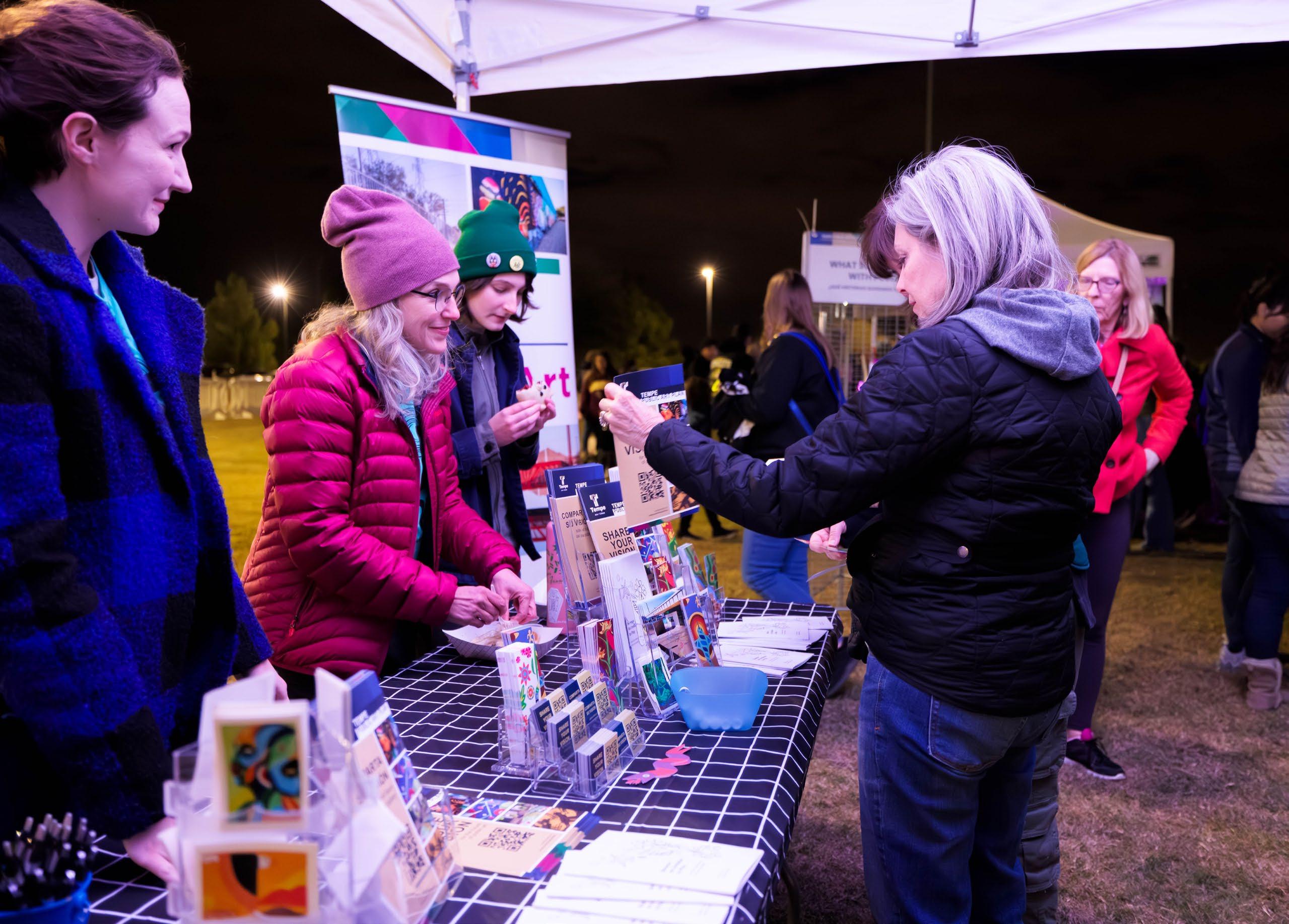
Event Tabling: 7 events, 2 popups, engaged 1000+ individuals
Tabling:
• Arts in Parks – Estrada Park
• Arts in Parks – Meyer Park
• Tempe Jam – Tempe Sports Complex
• Tempe Leadership Arts + Culture Day
• Envision Center Opening Celebration
• Tempe Youth Leadership Arts + Culture Day
• Unity Walk
• Brick Road Coffee
• Escalante Community Center
Presentations:
• Arts and Culture Commission: 2
• Transportation Commission
• Sustainability and Resilience Commission
• Historic Preservation Commission
• Human Relations Commission
• Development Review Commission
• Neighborhood Advisory Commission
• Mayor’s Youth Advisory Commission
• Arts and Culture Commission
• Council Work Study Session: 2
Public Meetings: engaged 150+ individuals
• Public Art Event and Meeting at Eisendrath House
• Public Open House at Tempe History Museum
• Public Open House at Tempe Center for the Arts
• Virtual Public Meetings: 2
Community Survey:
• Initial survey open 4 months: engaged 500+ individuals
• Survey to collect feedback on the draft plan: engaged 60+ individuals
Stakeholder One-on-One
These are personalized meetings with key individuals who have a vested interest or high influence over a project. These private conversations allow for deep exploration of complex issues, build trust, and ensure that specific, often nuanced concerns from influential parties are heard and addressed confidentially.
Focus Groups
Focus groups are structured discussions involving a small, diverse sample of participants guided by a moderator. This format is designed to elicit qualitative data, capture collective opinions, and observe the dynamic interaction and reasoning behind shared attitudes toward a specific topic or proposal.
Tabling
Tabling refers to setting up a temporary, branded station or booth in a high-traffic public location, such as a community event or museum. The goal is to maximize casual interactions, quickly disseminate information, and gather immediate, low-barrier feedback or survey responses from the general public.
Presentations
These are formal, one-way information-sharing sessions given by a project team to an audience. Presentations are used to clearly communicate complex plans, progress updates, or final recommendations, often followed by a structured question-and-answer period.
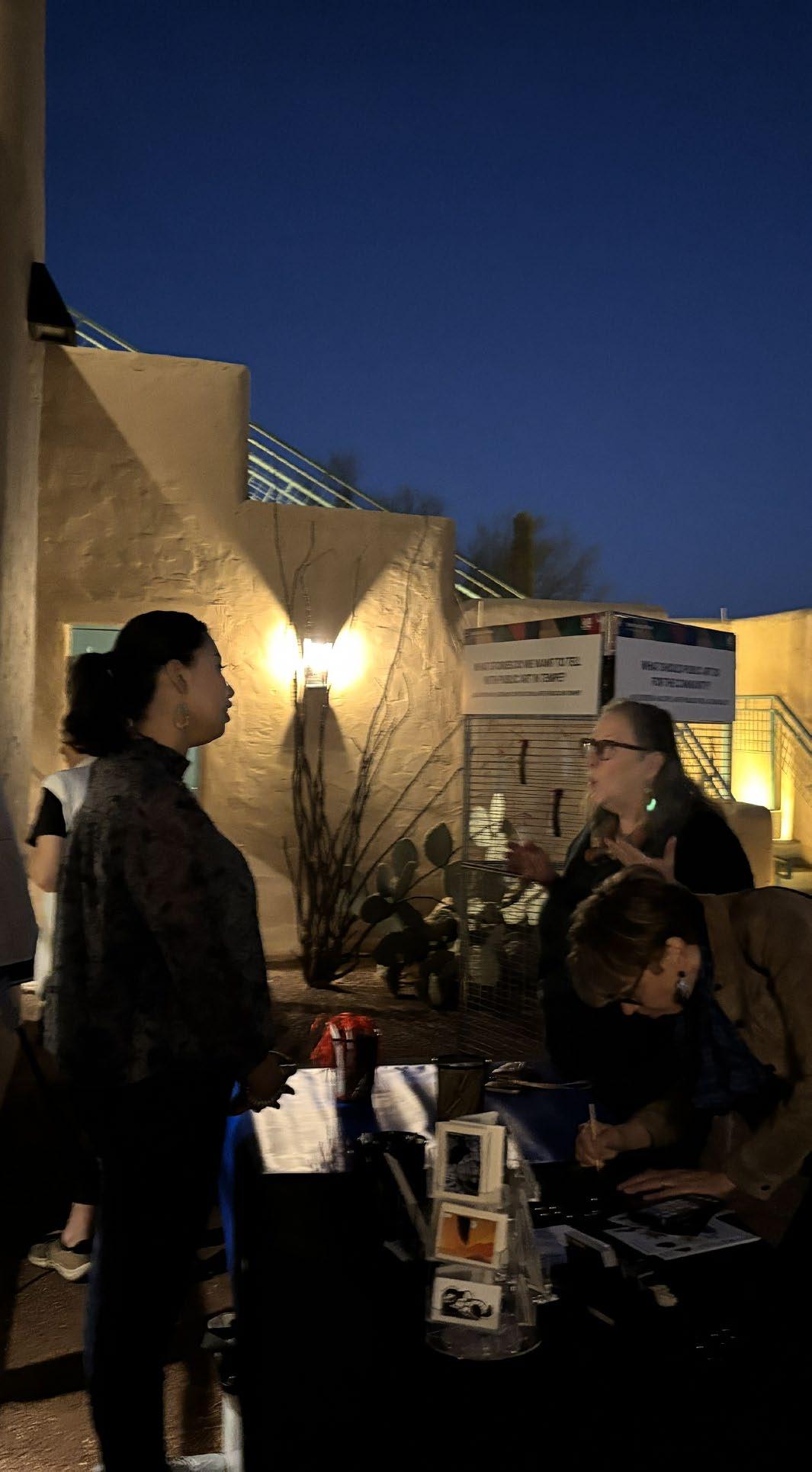
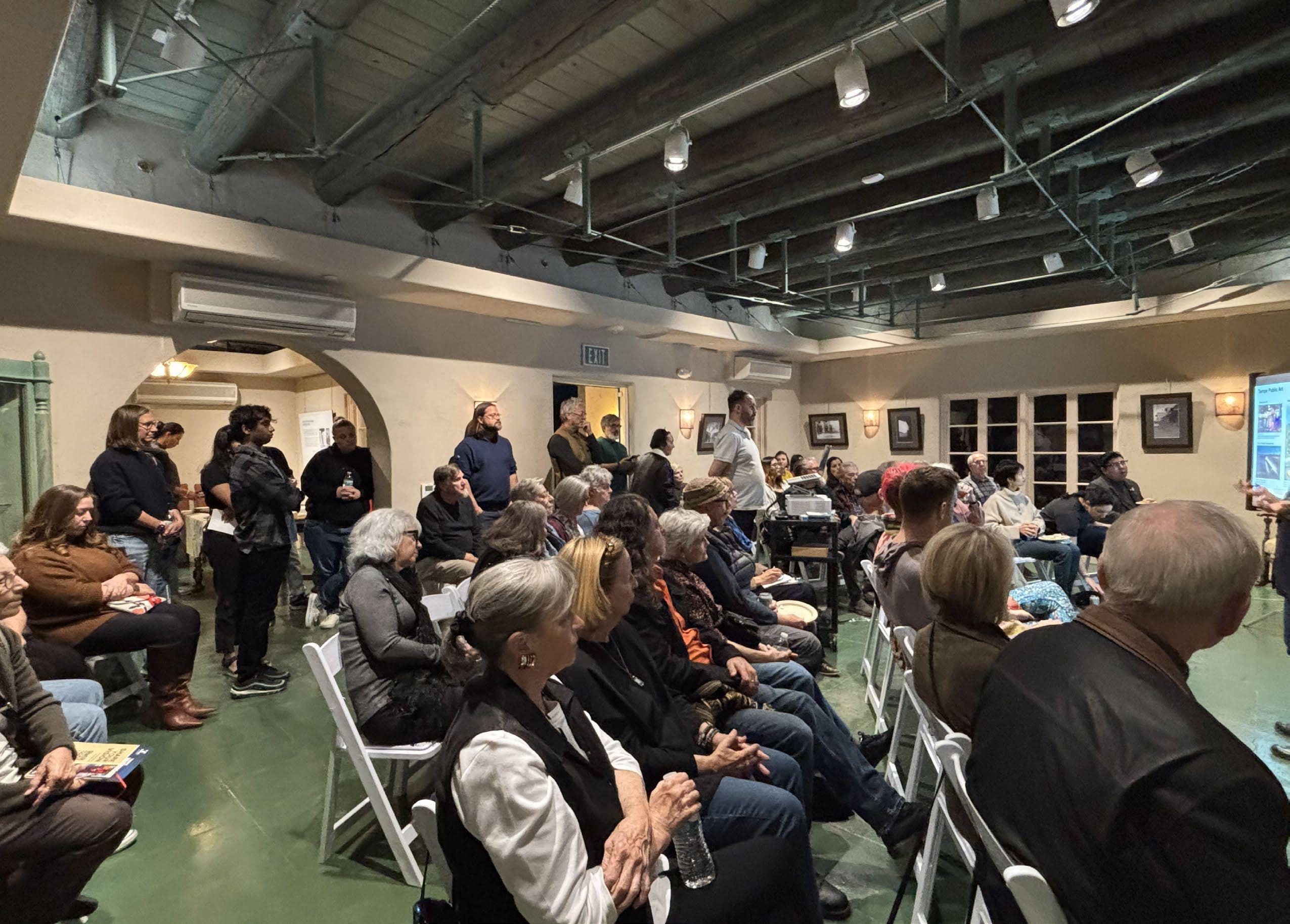
An engaging public meeting brought together the past, present and future of public art in Tempe at the Eisendrath House on December 5, 2024. This historic site is currently home to the Tempe Public Art staff, but in the recent past the house was occupied by public artist Jeff Zischke. Zischke gave a lecture focused on his work and experience living in the Eisendrath House, giving attendees a look at the history of public art in Tempe and sharing his thoughts on what the future may hold. Following the lecture attendees were invited to answer questions about public art in Tempe. The “Past, Present, Future” event was held from 5:30-8 p.m. and attended by 80+ people.
At the “Past, Present, Future” event- as well as tabling and pop-up events- the project team and staff facilitated an activity where participants used ribbons to communicate their desired experiences, locations, impact, and themes of public art they would like to see in Tempe. 250+ ribbons were received, including 120+ written responses and 130+ illustrated responses.
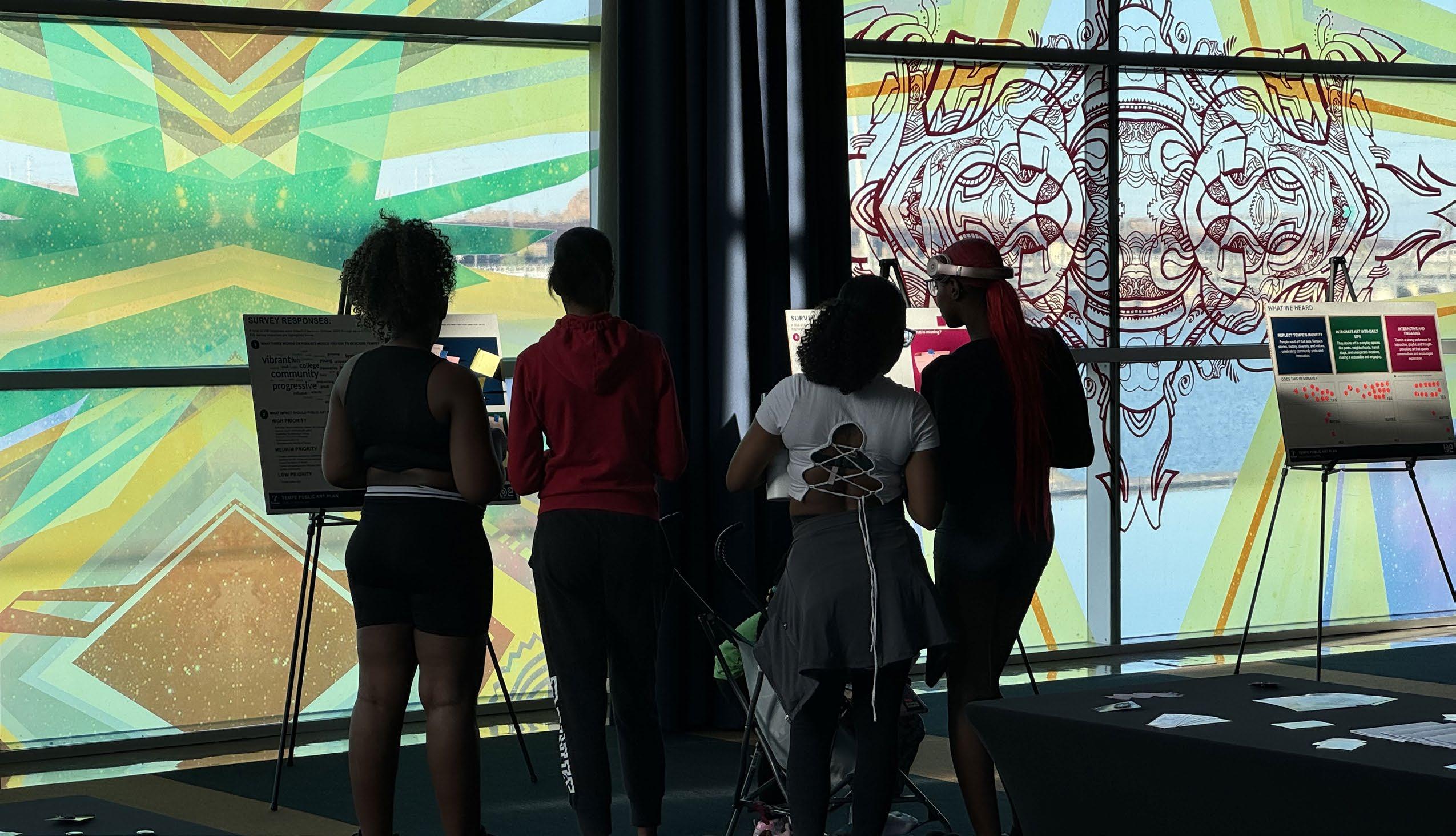
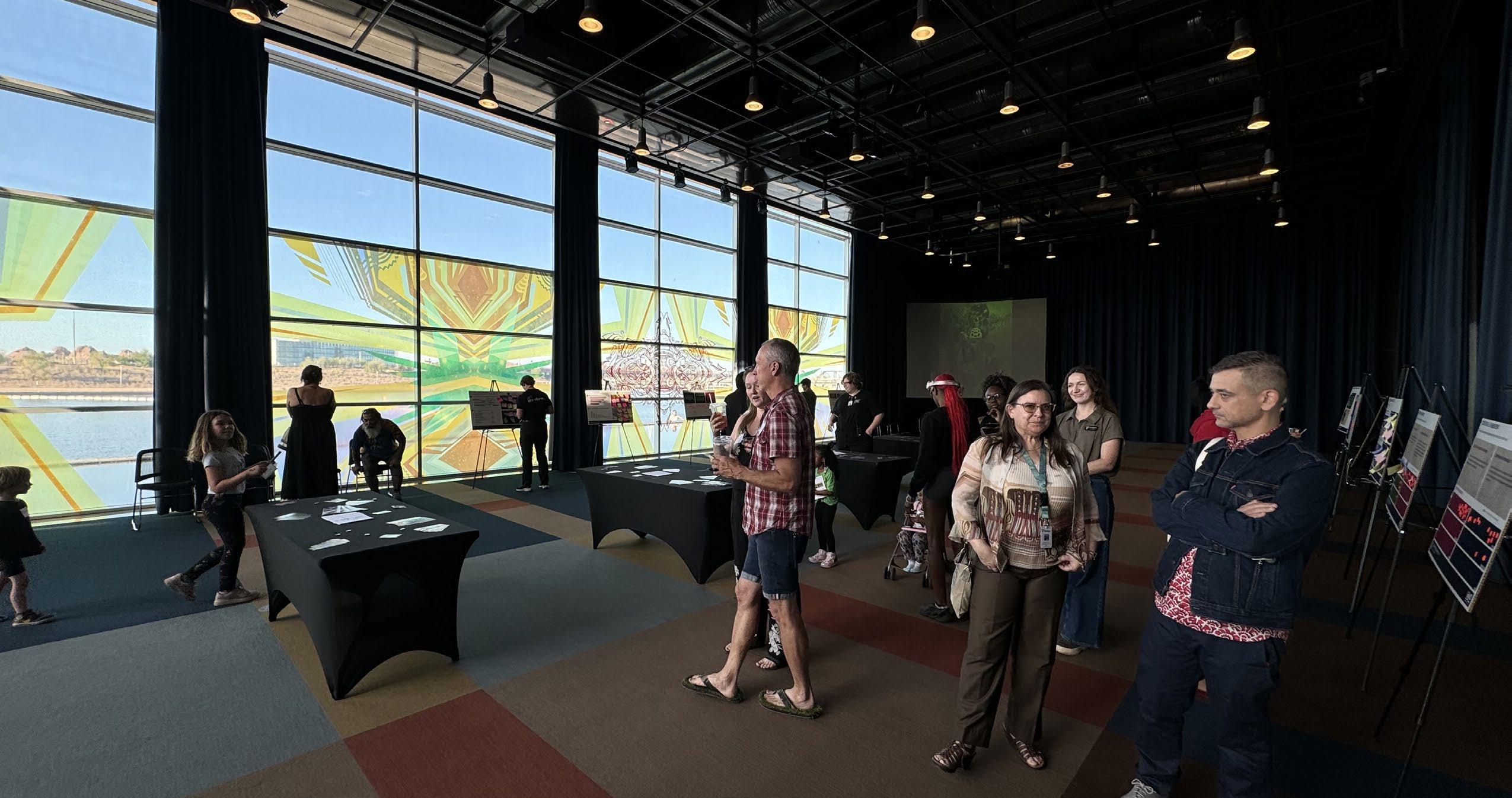
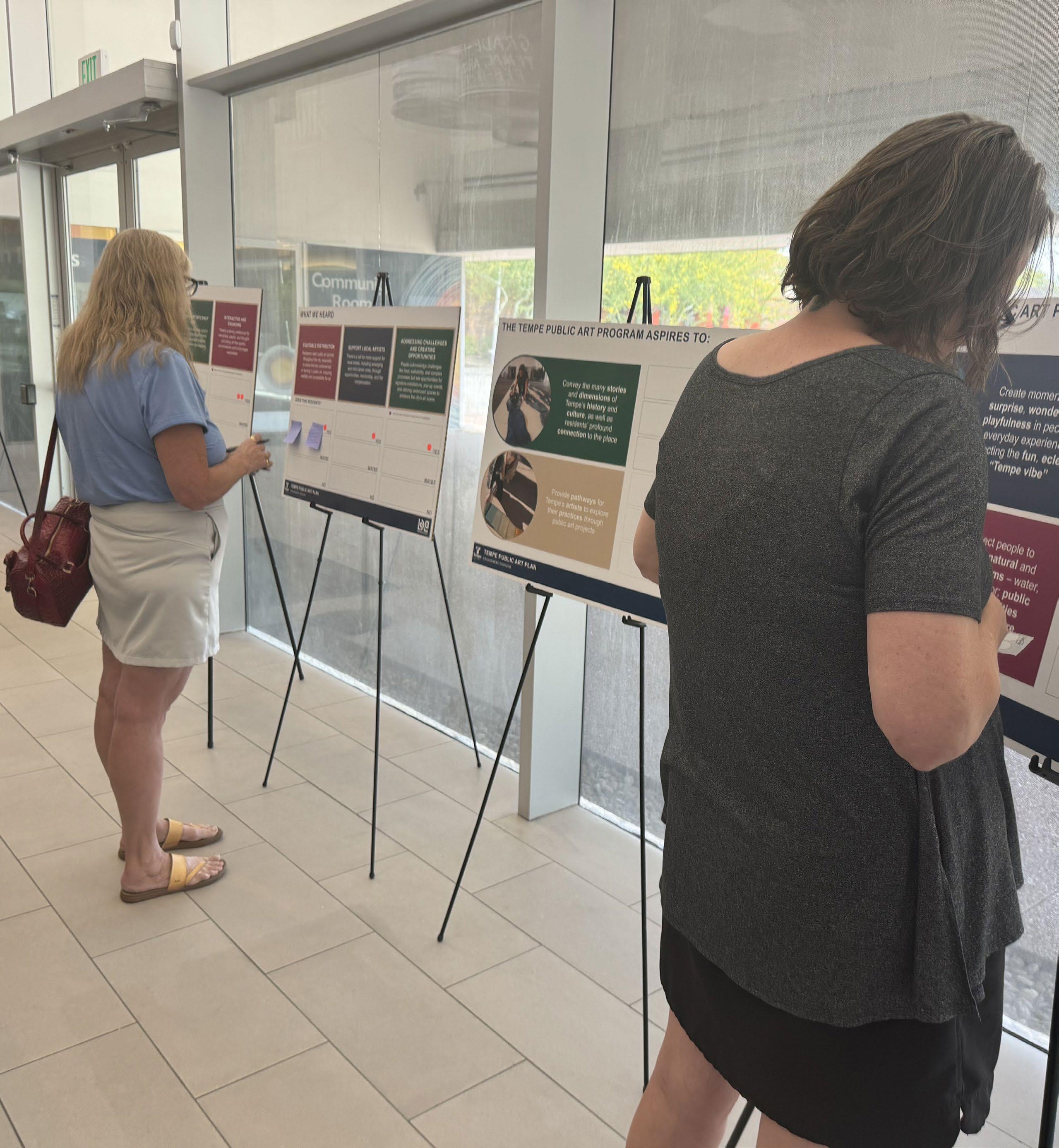
On April 24, 2025, an open house event was held at the Tempe Center for the Arts from 5:307:30 p.m. Local musician Haley Green entertained 40+ participants alongside interactive activities that fostered reactions to findings from engagement earlier in the process.
Activities included opportunities to react to:
• Survey results;
• Engagement takeaways;
• Current and future public art locations;
• Program aspirations; and
• A public art curatorial framework.
A community survey was open for public feedback on City of Tempe’s website, encouraging the public to think about the future of public art. The survey was open from Oct. 28, 2024 through Jan. 31, 2025 and was taken by 500+ members of the community.
Overall, respondents expressed positive feelings toward public art in Tempe, with a desire for increasing the presence of public art, especially in neighborhoods, parks, and in the downtown area. Respondents expressed an interest in public art that reflects Tempe’s unique character and history while beautifying the built landscape, and anchors people in places where they gather. Participants also expressed a desire for Tempe Public Art to support and empower local artists to create more public artworks in Tempe.
A second survey to collect comments on draft plan content was open from April 21 – May 8, 2025 and was taken by 60+ members of the community.
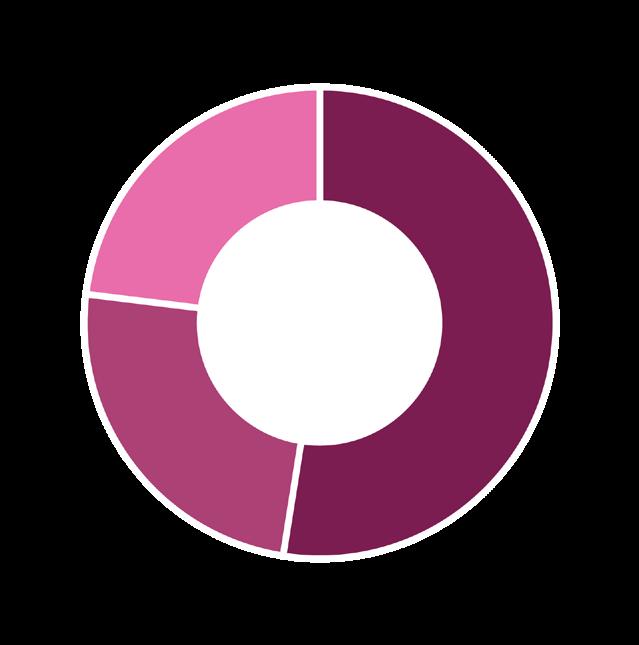
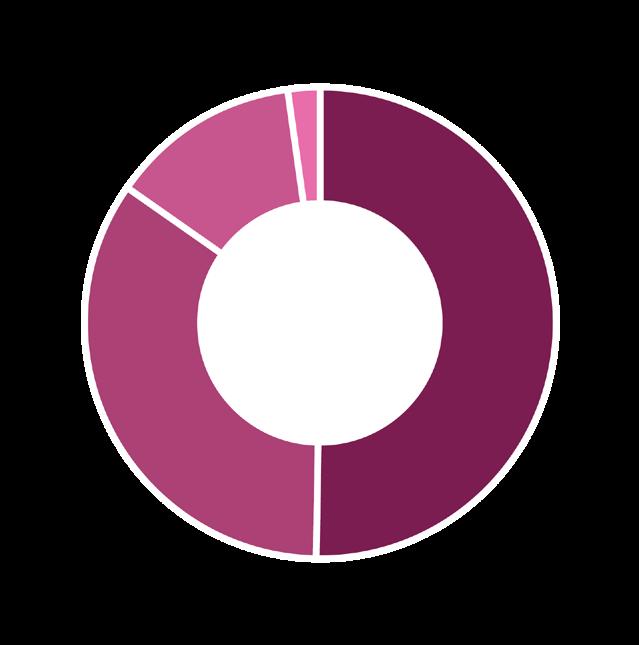
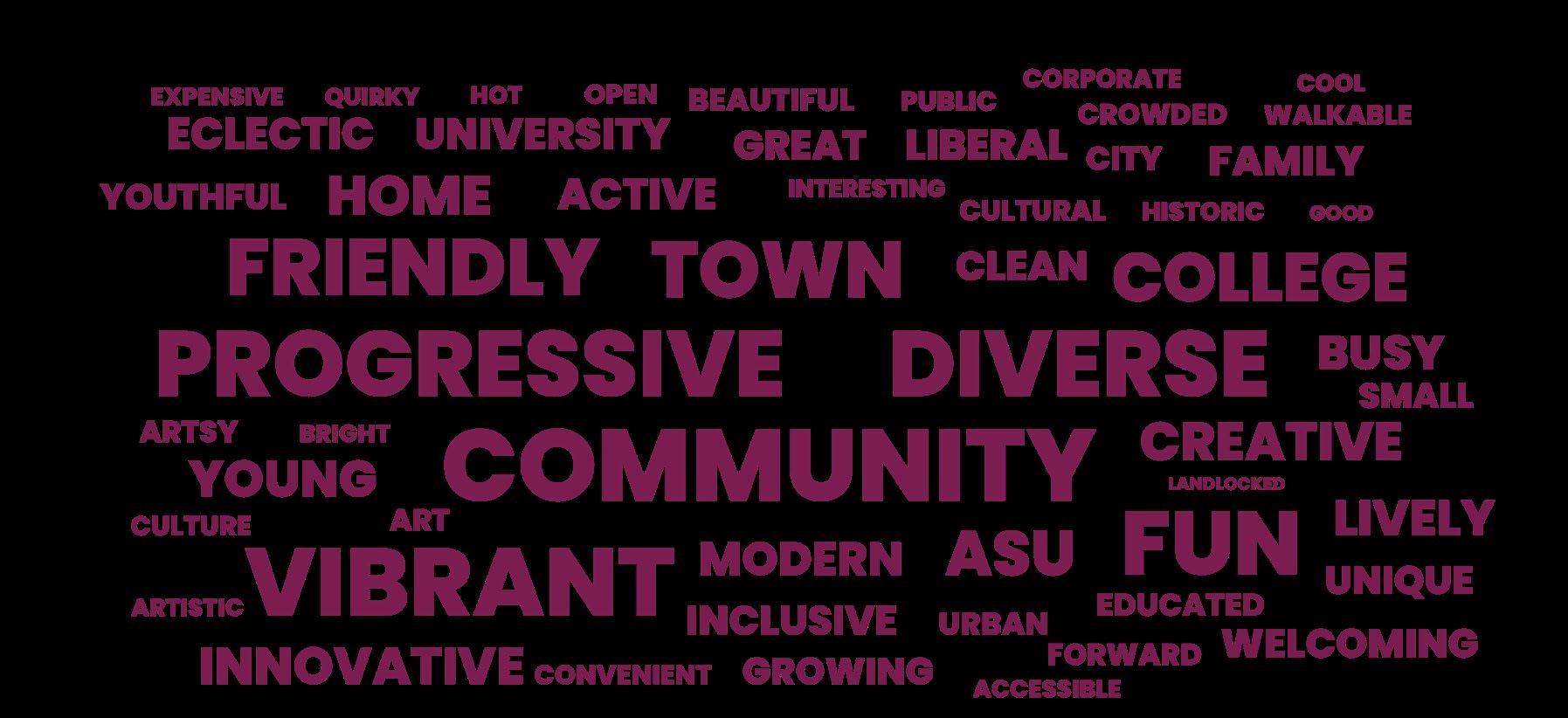
RESPONSES
LOW PRIORITY
MEDIUM LOW PRIORITY
MEDIUM PRIORITY
MEDIUM HIGH PRIORITY
HIGH PRIORITY
RESPONSES LOW PRIORITY
RESPONSES
LOW PRIORITY
MEDIUM LOW PRIORITY
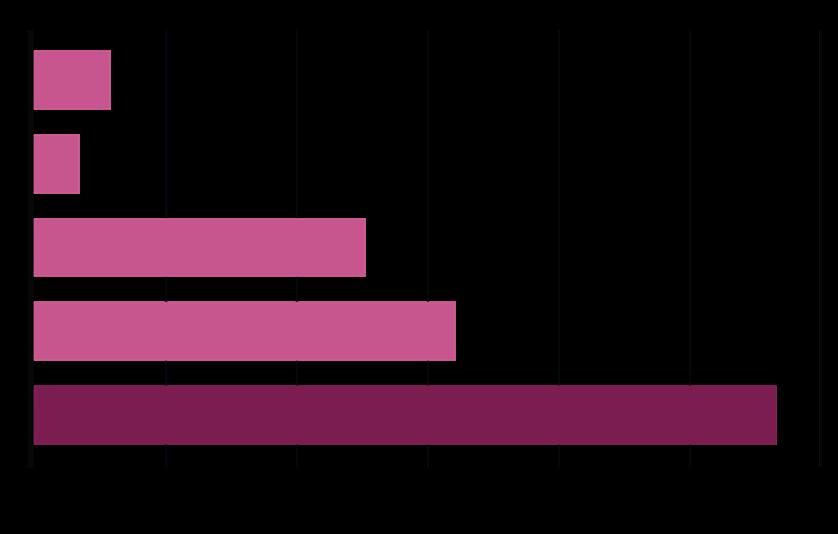
LOW PRIORITY
MEDIUM LOW PRIORITY MEDIUM PRIORITY
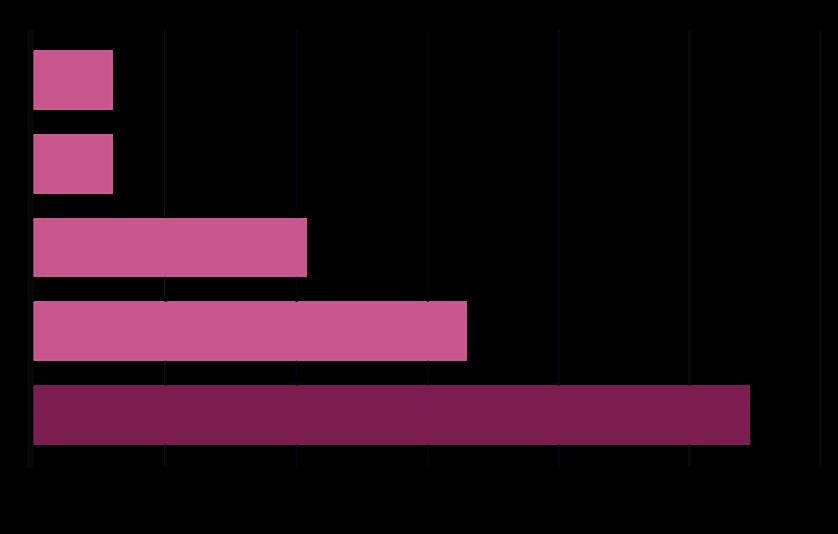
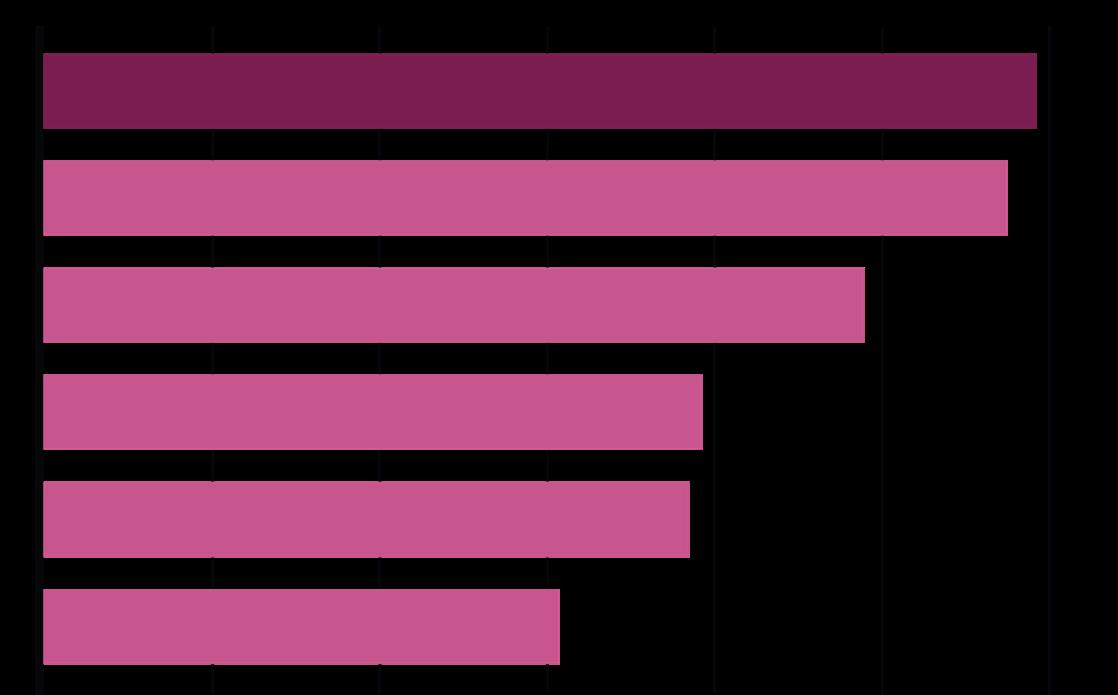
84% OF RESPONDENTS SUPPORT INTEGRATING PUBLIC ART INTO EVERYDAY LIFE
FEEDBACK ON INTEGRATING PUBLIC ART IN EVERYDAY LIFE
• Respondents strongly stated they want art integrated into parks, transit stops, and walkable areas.
• Respondents say should serve a purpose (skate plazas, shade structures) or educate the public about the art (educational installations).
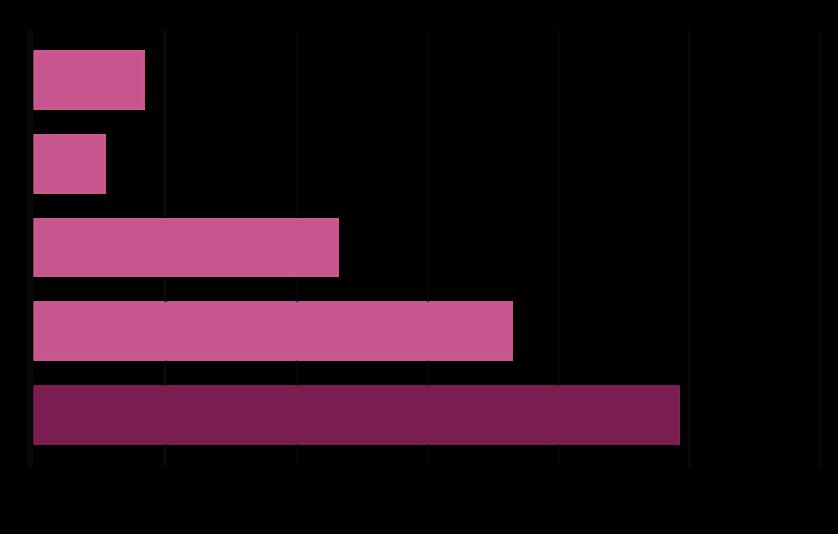
79%
FEEDBACK ON SUPPORTING LOCAL ARTISTS
• Strong feedback suggesting mentorship programs where professional artists guide younger ones, solidifying local talent.
• There was an expressed desire to for more multi-disciplinary art. Beyond statues, there is a desire for sonic art, music, poetry, and performance art- specifically from local artists.
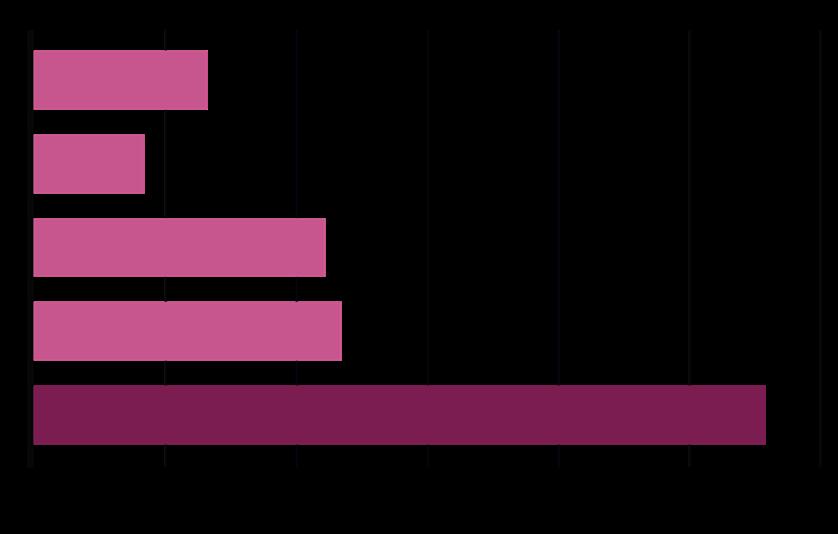
SUPPORT LOCAL ARTISTS
The city needs to “call louder” to reach local artists and perhaps use a team approach to development.
A recurring specific request is to bring more art to South Tempe, including grant projects for specific parks (Meyer Park, Selleh Park).
Residents enjoy finding art in unexpected places, not just in major plazas.
Art should be used as a backdrop for themed celebrations (Latino, Black, and Indigenous events) and group gatherings, and further support artists from diverse backgrounds.
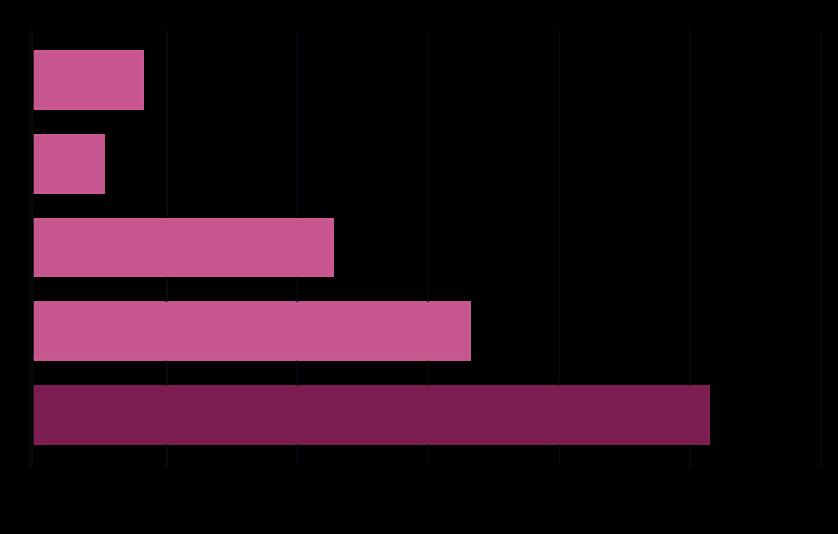
After completing the initial engagement series, the project team identified key takeaways. These takeaways condense hundreds of comments, survey responses, and conversations collected during the engagement process, distilling public feedback into easily understandable summaries.
People want art that tells Tempe’s stories, history, diversity, and values, celebrating community pride and innovation.
3.
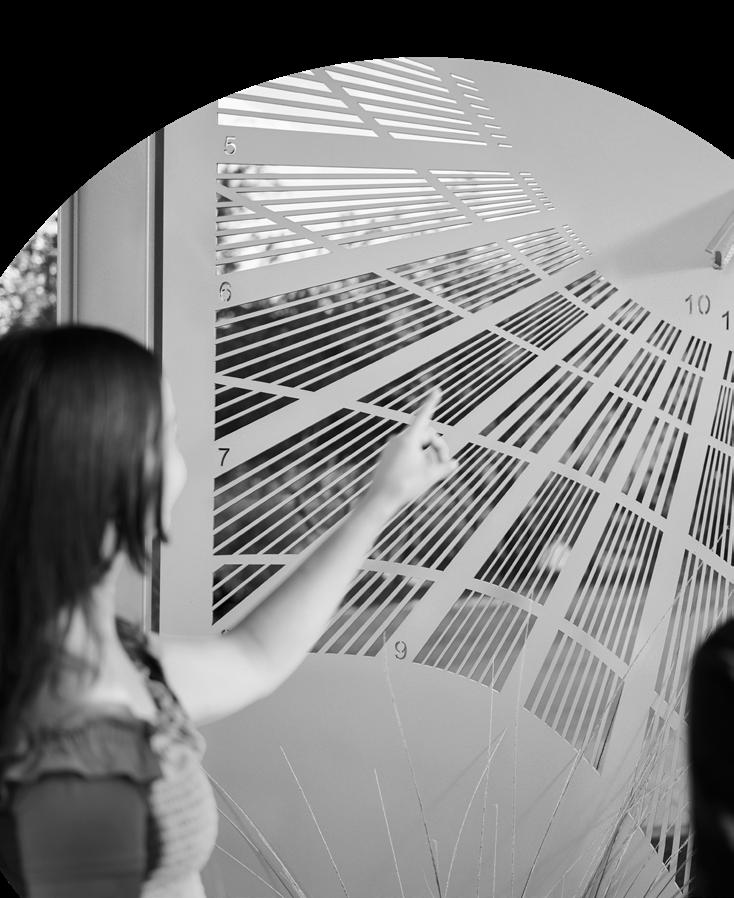
People desire art in everyday spaces, like parks, neighborhoods, and transit stops, as well as unexpected locations, making it accessible and engaging.
There’s a strong preference for interactive, playful, and thought-provoking art that sparks conversations and encourages exploration.
4.
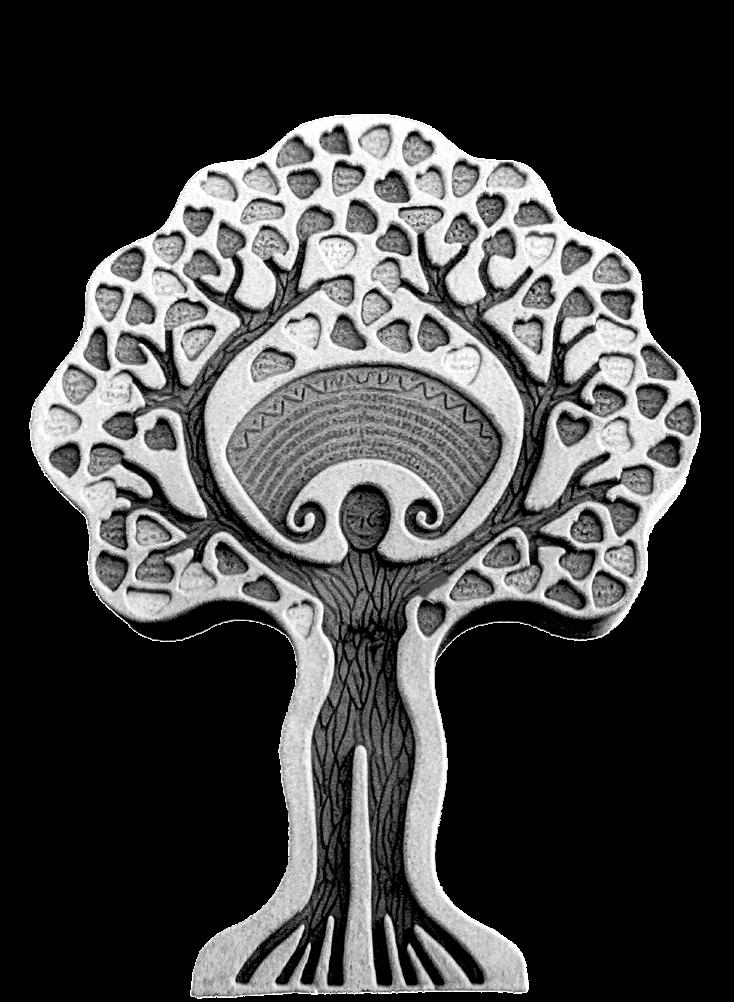
People want to see the public art collection spread throughout the city, especially in areas that are underserved or lacking in public art, ensuring visibility and accessibility for all.
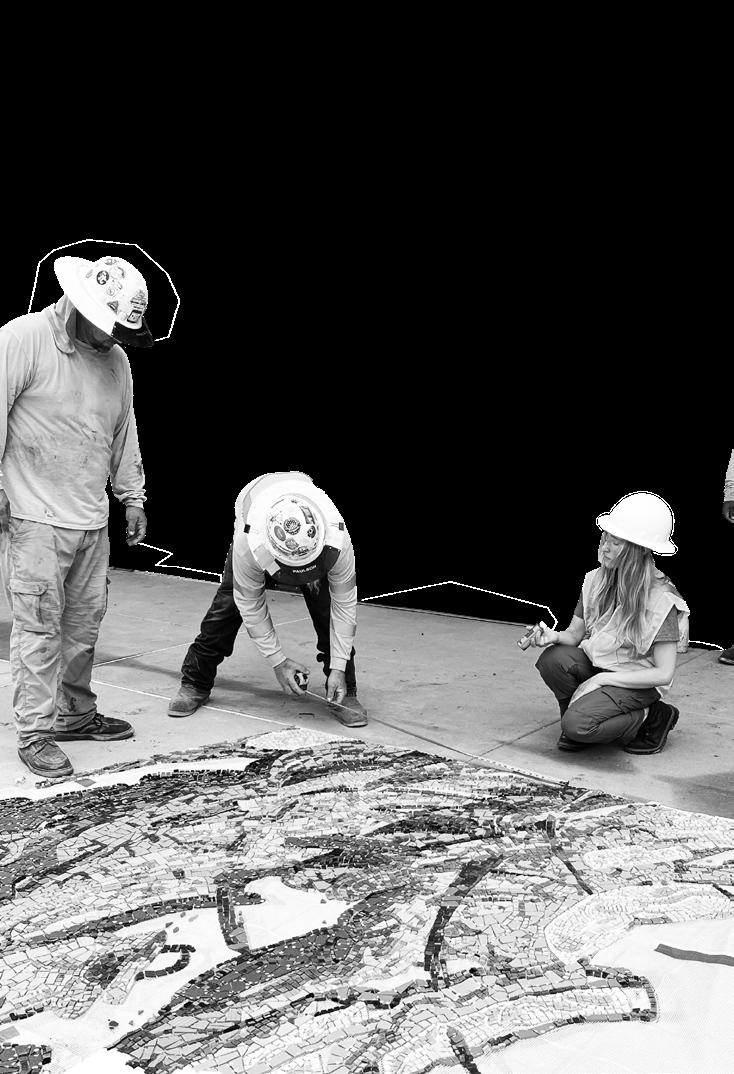
There’s a call for more support for local artists, including emerging and mid-career artists, through opportunities, mentorship, and fair compensation.
6.
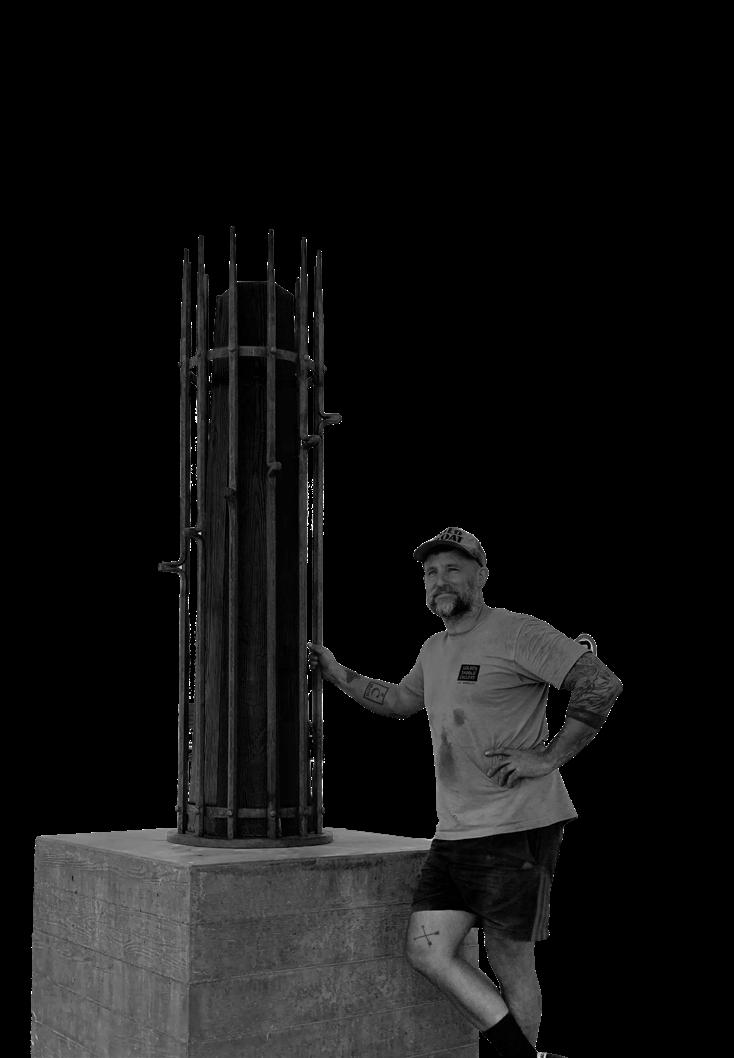
People acknowledge challenges like heat, walkability, and complex processes but see opportunities for signature installations, pop-up events, and utilizing underused spaces to enhance the city’s art scene.
Tempe Public Art in a mature program that has evolved over almost four decades. This chapter describes how the program has arrived at its current state and explores the geographical distribution of public artworks in its collections.
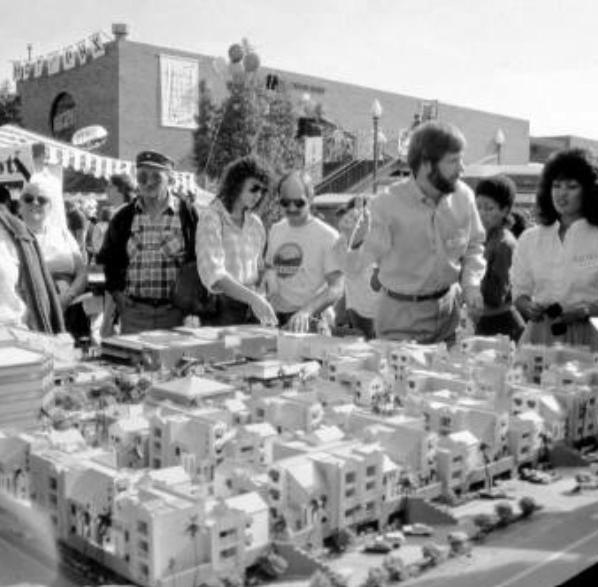
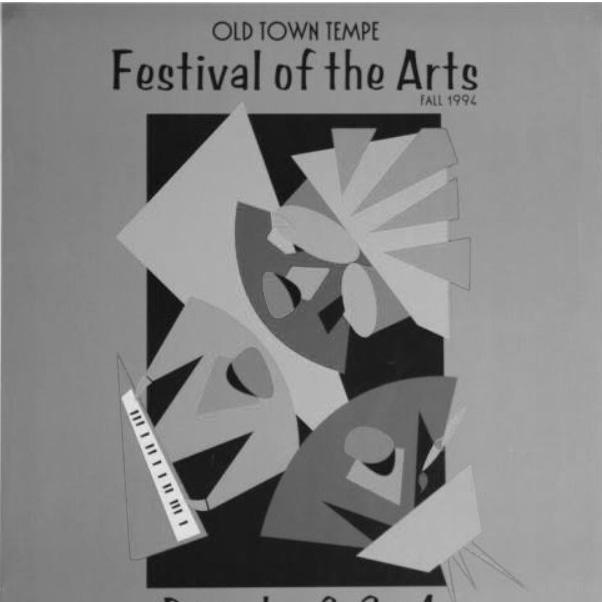
City of Tempe has maintained a long-standing commitment to arts and culture and public art in particular. The public art program that is now know as Tempe Public Art began in 1987 when the first percent-for-art requirement was instituted. The program consists of works that have been commissioned through the percent-for-art budget as well as private development and neighborhood grant funds. Tempe has been committed to hiring arts professionals to run this program since its inception, leading to a higher level of expertise overall.
This combination of efforts established Tempe as a national leader in municipal public art for decades. Many advocates in other communities are currently working towards putting in place what Tempe has had for an entire generation.
Barbara Schaffer Bacon and Craig Dreezen of the University of Massachusetts completed a study that recommended the creation of the Municipal Arts Commission.
1990
Art in Private Development Ordinance adopted to require artwork or funds in-lieuof in large industrial and commercial developments.
SEPTEMBER
1987
Ordinance adopted to formally enact Municipal Arts Commission, 0.5% for Public Art in CIP Budget.
MARCH 1987
Resolution Passed to create the Municipal Arts Commission, adopt 0.5 percent-for-art in Capital Improvement (CIP) Budget dedicated to Public Art.
JULY
1995
Resolution Passed to create increase Percent-for-art in CIP Budget to 1% and dedicate it to “Art in All Forms.”
MARCH 2017
Municipal Arts Commission replaced with Tempe Arts and Culture Commission.
2018
Tempe voters permanently renewed the 0.1% sales tax to fund arts and culture activities following the completion of payments for the TCA bonds.
20 year 0.1% sales tax passed by voters to fund the continuation of Tempe Center for the Arts (TCA).
JANUARY 2021
Renewed 0.1% sales tax comes into effect freeing up a greater share of money from the Municipal Arts Fund to focus primarily on public art.
Tempe’s geographical areas are commonly understood as North and South. North Tempe is urban, home to the Tempe Town Lake and several historic properties, and centered around Arizona State University (ASU). South Tempe is characterized by a more suburban, less dense environment with numerous planned communities. Both are home to civic assets, with arts and culture and governmental facilities in North Tempe, and the library and museums in South Tempe. Much of the larger commercial and industrial development is centered along major highways, particularly the 10 and the 101.
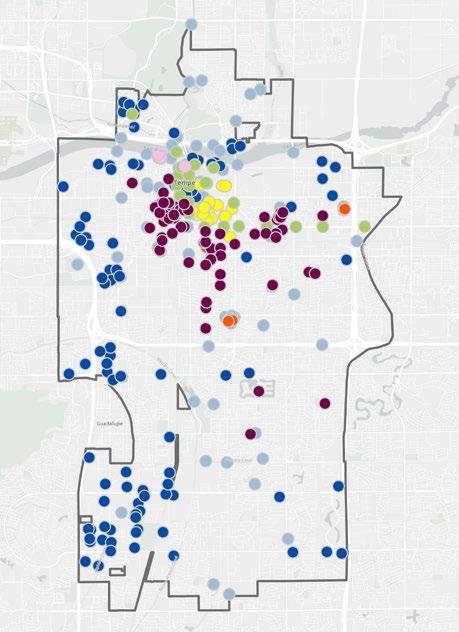
The development pattern of Tempe greatly impacts the public art landscape of the community. This is reflected in the existing public art map (maps 2.1-2.2). Capital improvement Project (CIP) artworks are spread throughout the community, with a distinct concentration in and around the downtown area because of the large number of City of Tempe facilities that have been constructed in that area. Much of the Art in Private Development (AIPD) generated artworks are in the periphery within industrial and commercial development areas. Neighborhood grant generated artwork is concentrated in North Tempe’s denser historic neighborhoods represented by neighborhood associations. Adjacent to the downtown area is a large collection owned by ASU. Valley Metro invested in its own percent-for-art program which generated art at stations throughout the Valley Metro Rail and Tempe Streetcar system.
The following collections are owned by City of Tempe and administered by Tempe Public Art. These collections constitute all artwork that is part of Tempe Public Art.
Tempe Public Art partners with other City departments (as well as external agencies) to infuse art into the built environment. It accomplishes this by focusing on developing artworks in conjunction with capital projects and seeking opportunities to add art where people gather.
City of Tempe Art in Private Development Ordinance, passed in 1991, is applicable to commercial developments of more than 50,000 square-feet anywhere in the city. Developers must commission artwork on their site or contribute to the Municipal Art Fund according to a per square foot rate that is adjusted each year. The AIPD ordinance was instrumental in adding more than 95 privately owned artworks to the city.
The Maryanne Corder Neighborhood Grant program was created in 1994 to invest in community-initiated projects designed to enhance the quality of life for all. The grants are offered to Neighborhood Associations and Homeowners Associations (HOAs) to fund a variety of projects including public art.
The Portable Works collection consists of over 200 framed and small-scale artworks that travel between city facilities on display.
Tempe Public Art often undertakes temporary art initiatives that encourage emerging and seasoned artists to create innovative pieces in the city.
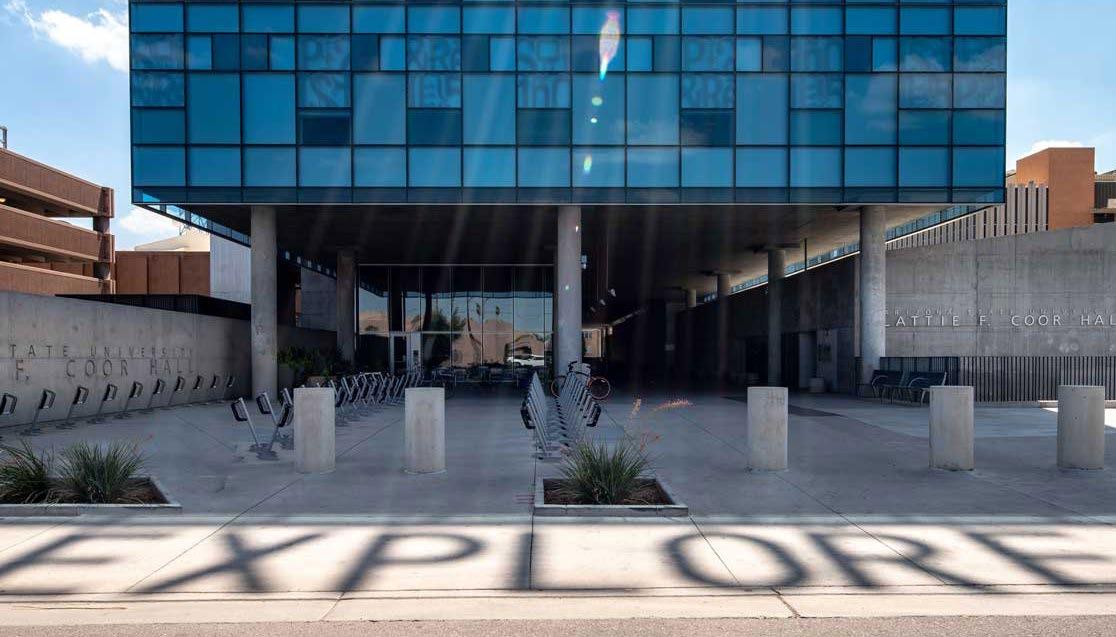
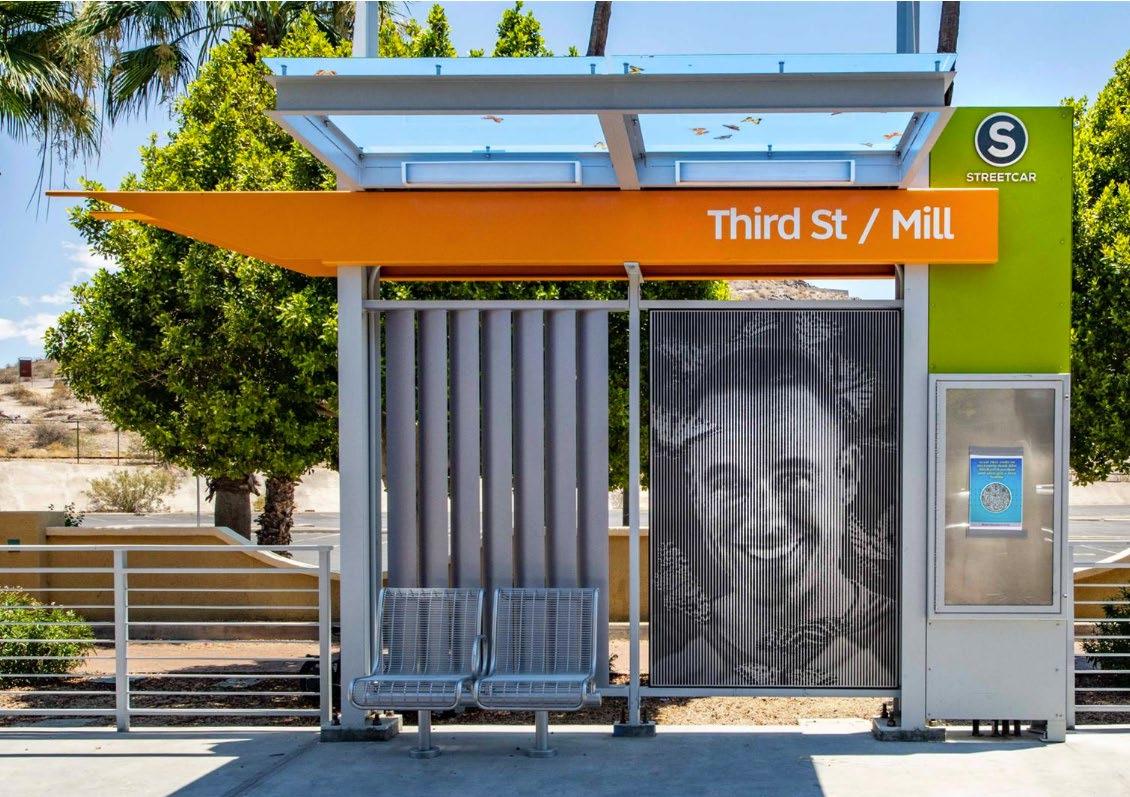
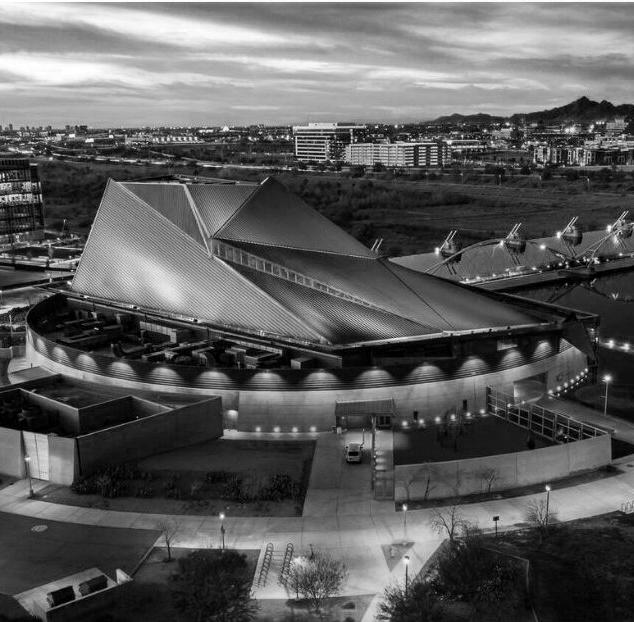
These collections are not owned or managed by City of Tempe but are geographically located within the city. The collections are administered by each respective agency.
Valley Metro Art
Valley Metro, through its internal percent-forart program, creates public art in conjunction with capital projects. In Tempe this has generated public art at stations throughout the Valley Metro Rail and Tempe Streetcar system.
Arizona State University Art
ASU owns a large collection of public artworks that are placed throughout the University’s campus and are accessible by the public.
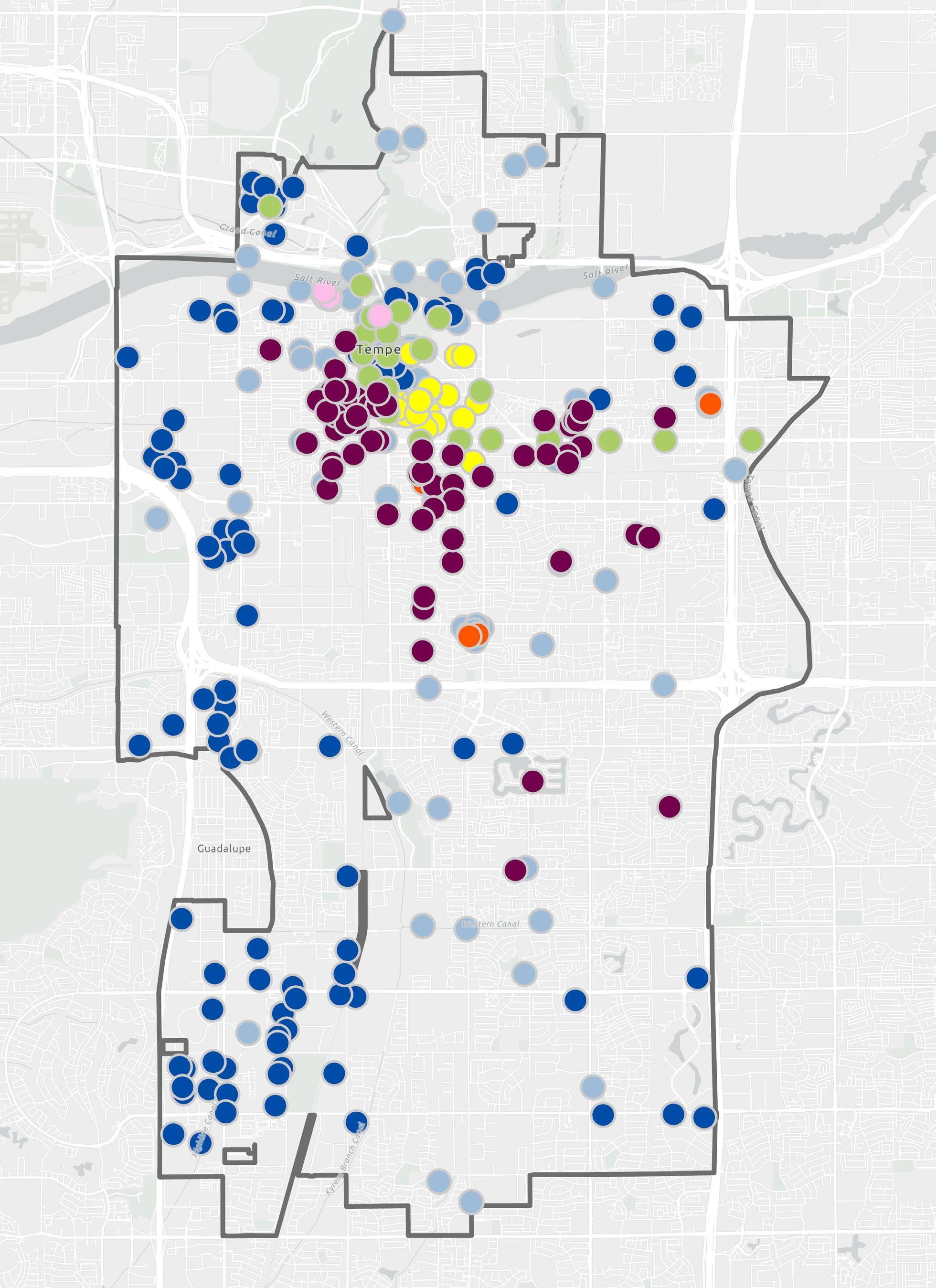
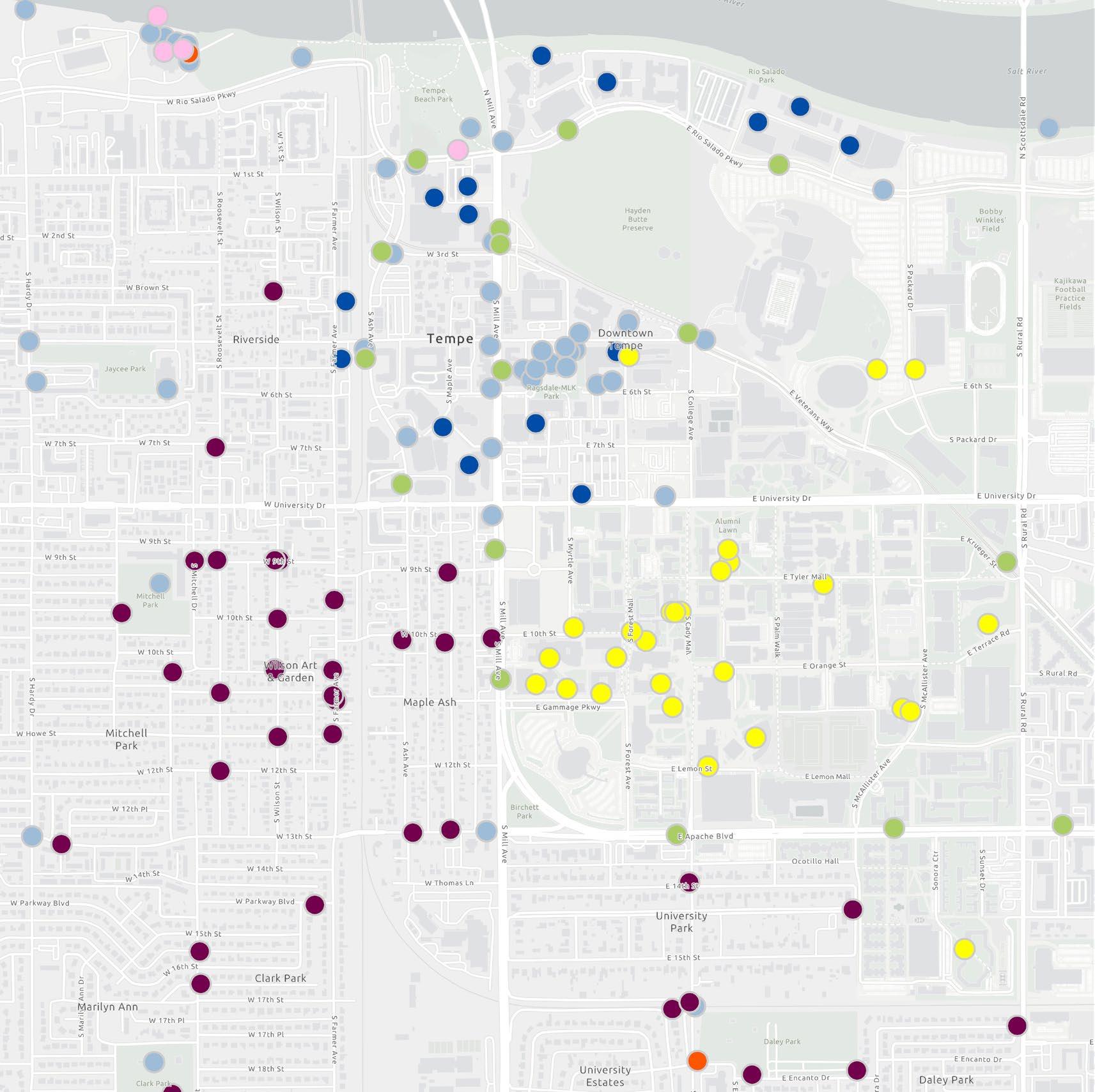
As Tempe Public Art moves into a new era of maturity, this vision for the future seeks to capture all that makes the existing program remarkable while designing an inspirational path forward. This vision is based on input from community members, stakeholders and staff.
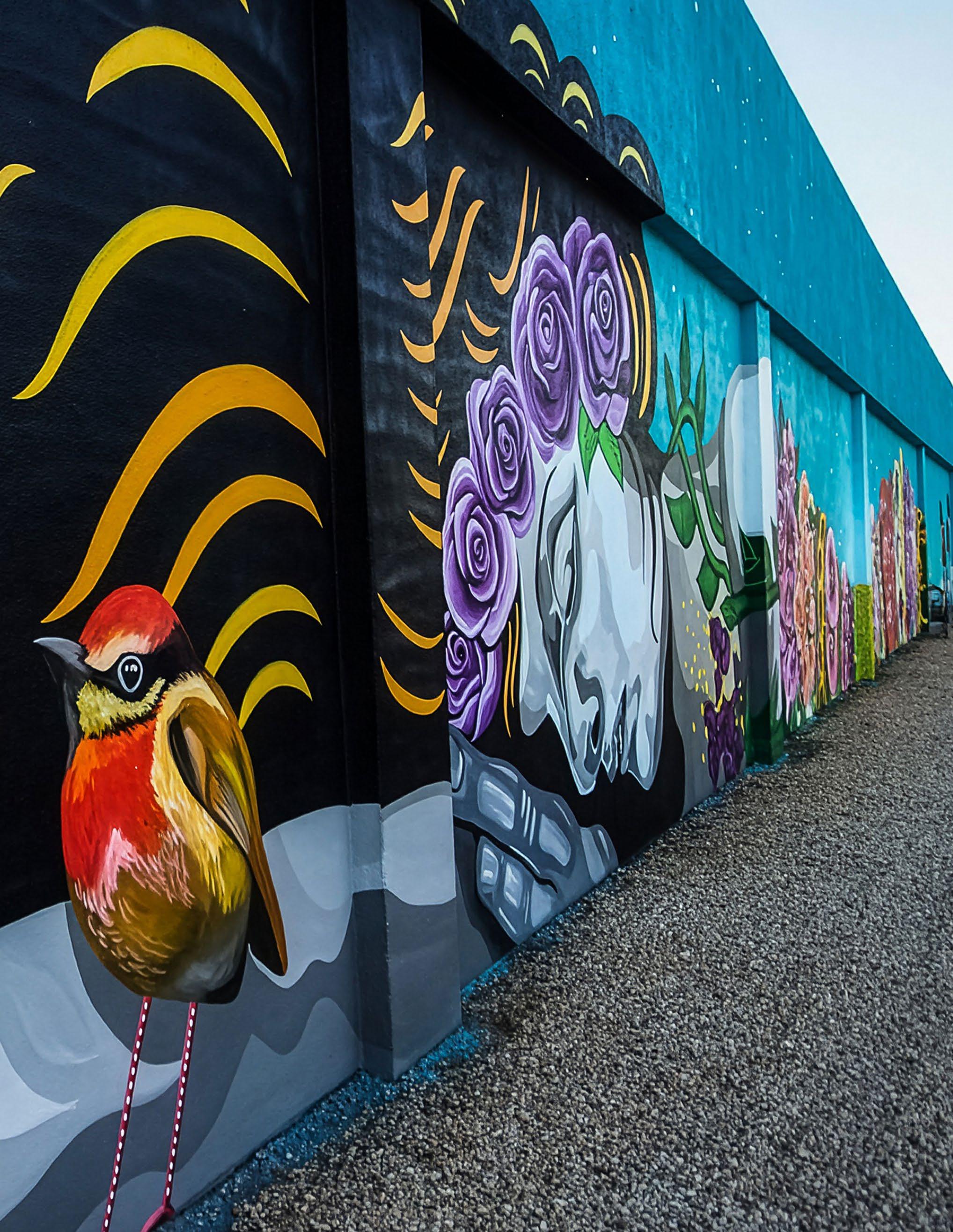
With more than 330 pieces in the community, Tempe Public Art has made a strong impact since its establishment in 1987. As an innovative, forward-looking community, Tempe maintains a growth mindset. The following therefore is a visionary look at how Tempe Public Art seeks to impact the city, its people, and its built environment.
Tempe Public Art aspires to:
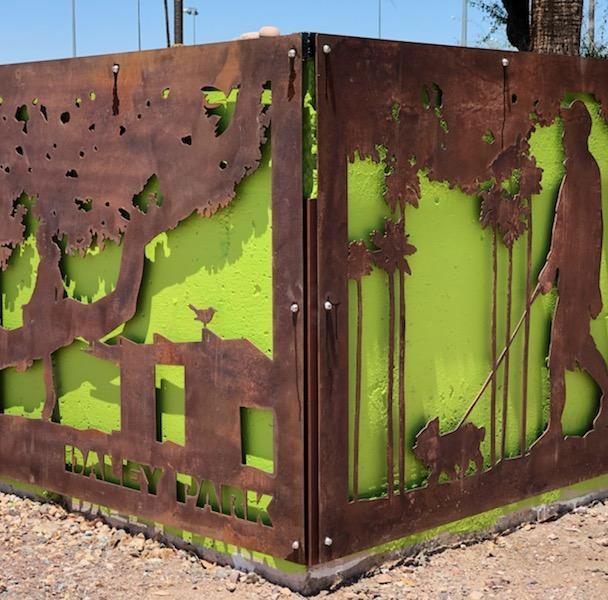
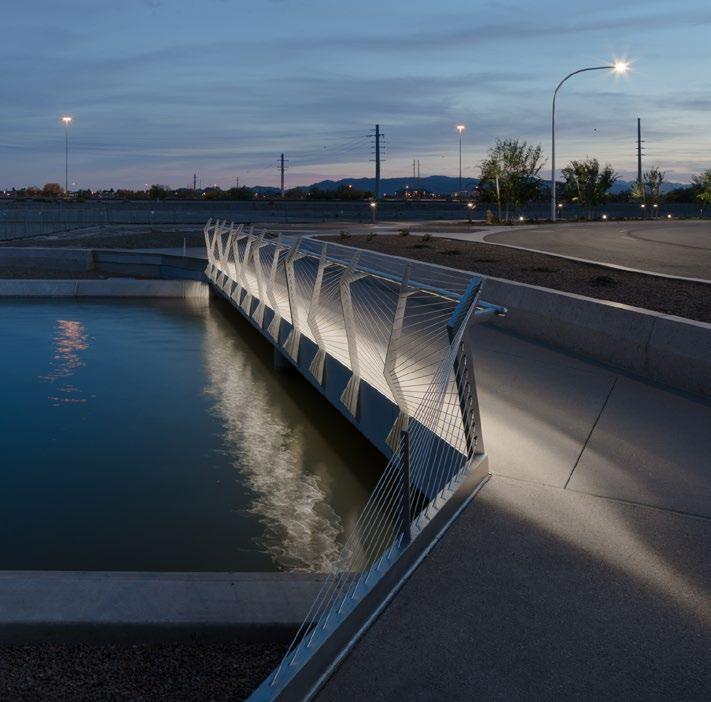
CONNECT PEOPLE TO TEMPE’S NATURAL AND URBAN SYSTEMS – WATER, LIGHT AND COLOR; PUBLIC SPACES, FACILITIES AND INFRASTRUCTURE, TRANSPORTATION
CONVEY THE MANY STORIES AND DIMENSIONS OF TEMPE’S HISTORY AND CULTURE, AS WELL AS PEOPLE’S PROFOUND CONNECTION TO THE PLACE
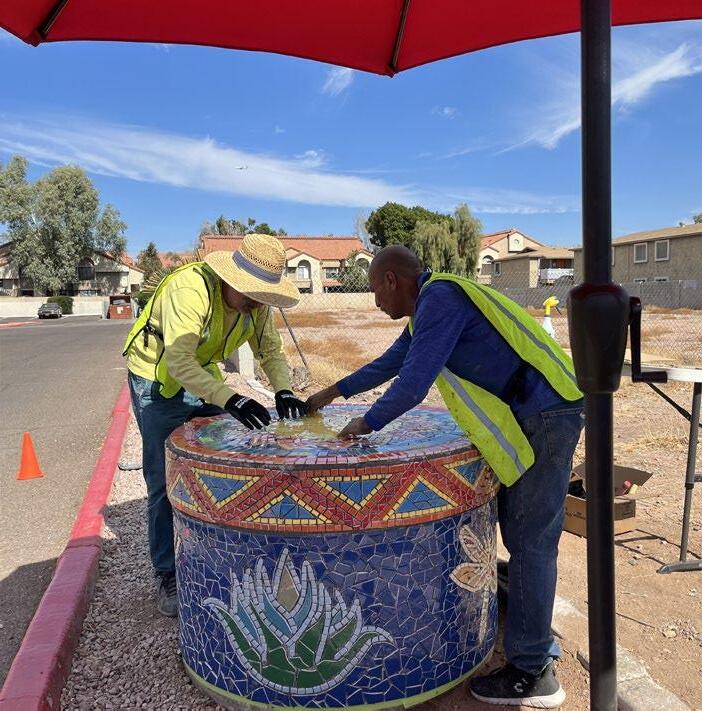
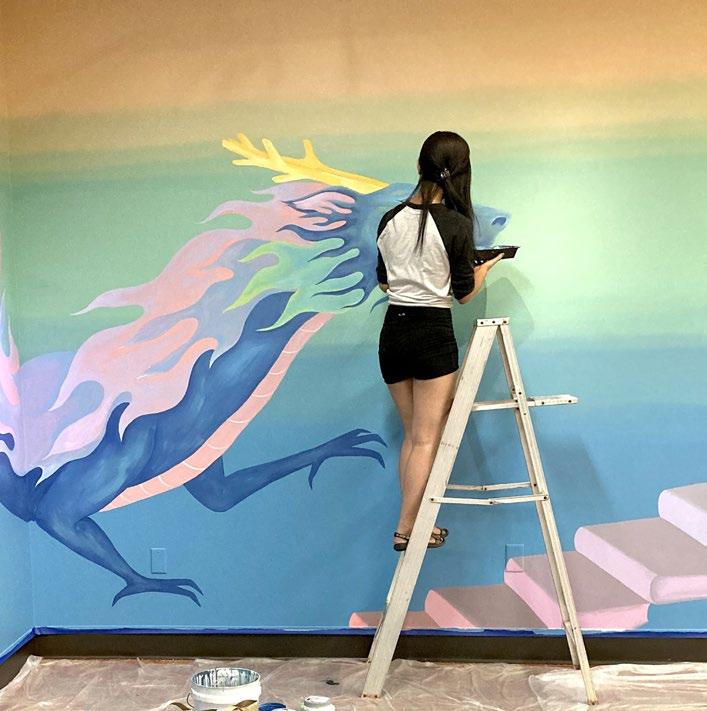
PROVIDE PATHWAYS FOR TEMPE’S ARTISTS TO EXPLORE THEIR PRACTICES THROUGH PUBLIC ART PROJECTS
To support operations during this period of growth, Tempe Public Art has established specific intentions. These principles frame and align the team’s overall efforts.
With Council support and strong professional leadership, Tempe Public Art revitalized itself in the last decade.
The program’s internal procedures, collaborative processes with other city stakeholders, and governance framework would benefit from being updated and documented to ensure the program builds on its current operational foundation.
Tempe Public Art is a program many cities would aspire to — with consistent long-term funding, strong infrastructure and networks in city government, the pervasiveness of artworks throughout the city and the public’s understanding of how public art is part of the city’s identity.
The program’s leadership, collaborators, artists, and the general public seek to build on successes to enhance the program’s innovation and impact.
The Tempe Public Art team has a wealth of knowledge related to public art and artist development, and can pro-actively identify sites, curate projects, and support artists’ development.
This plan will explore ways to ensure art is developed at a high quality throughout the city, both through policies and goal setting.
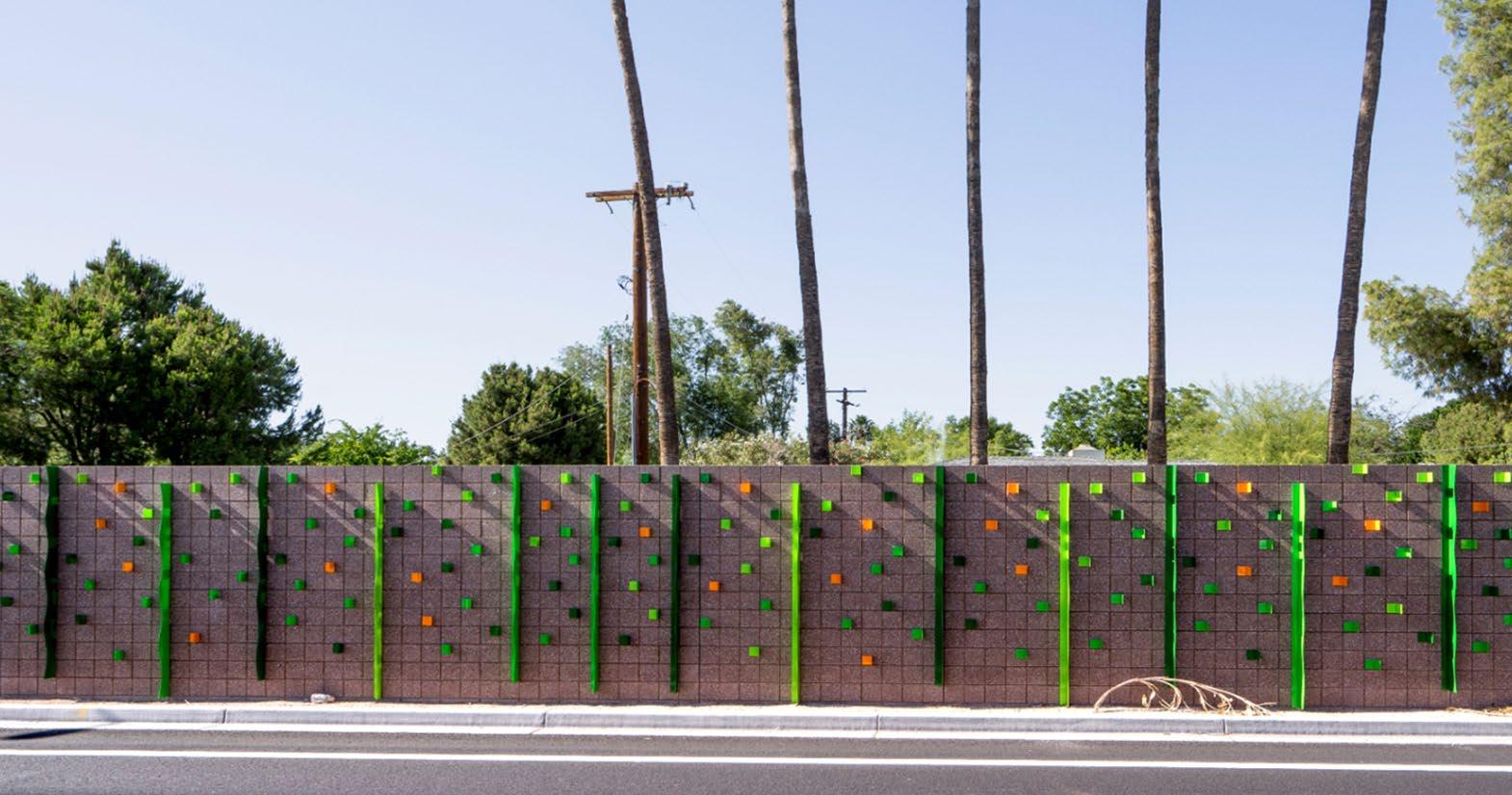
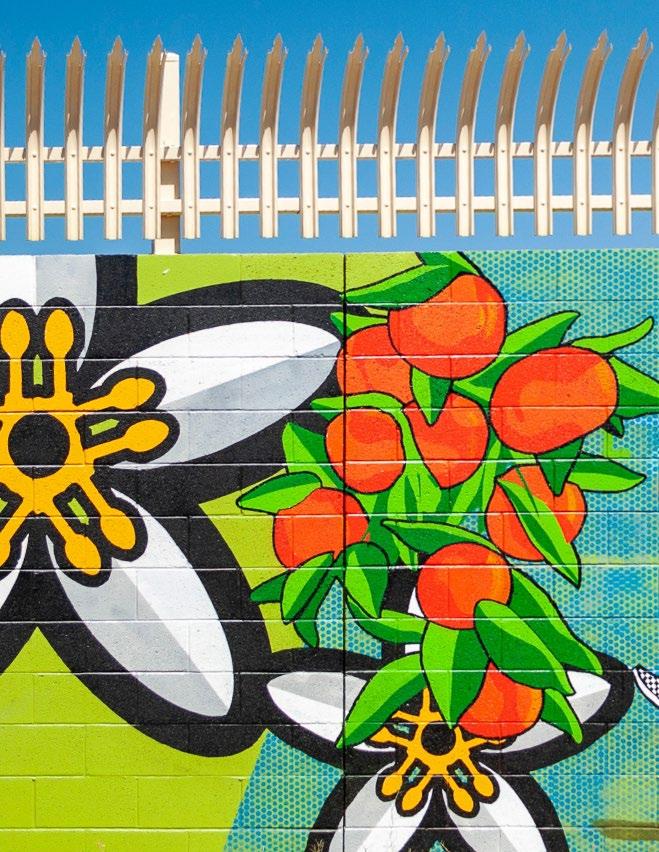
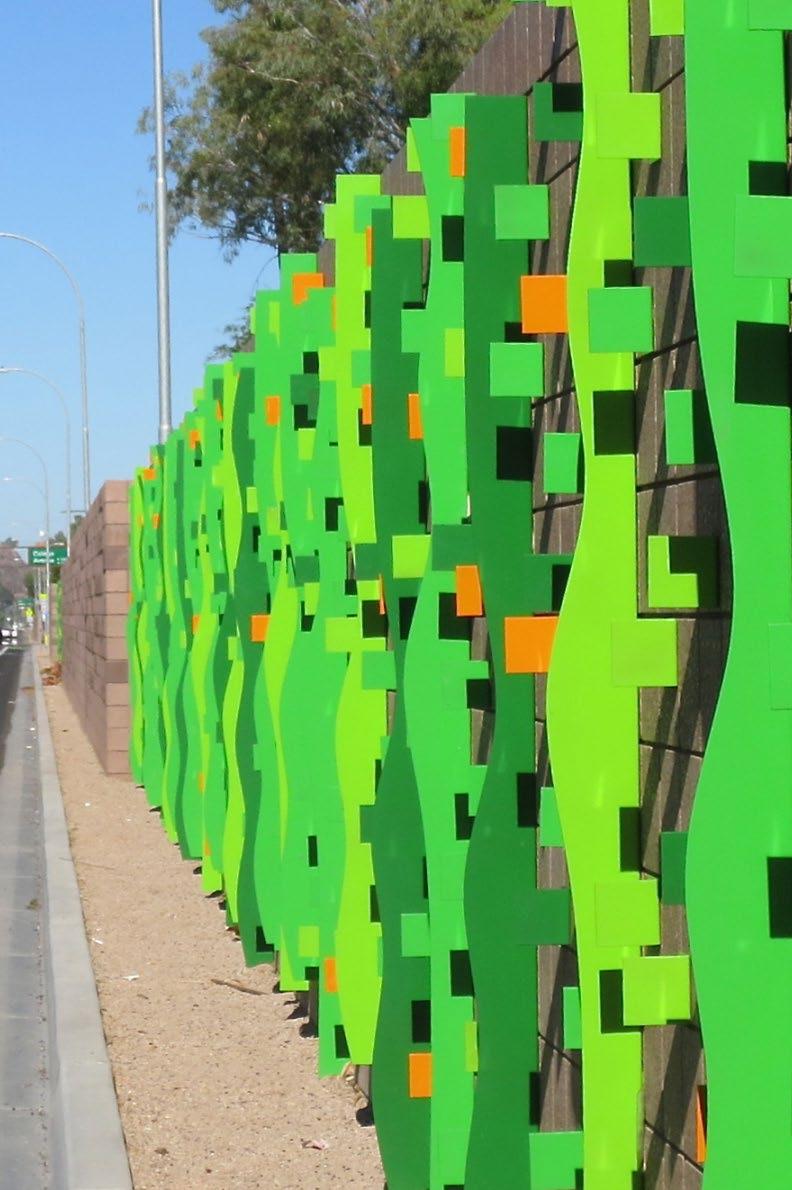
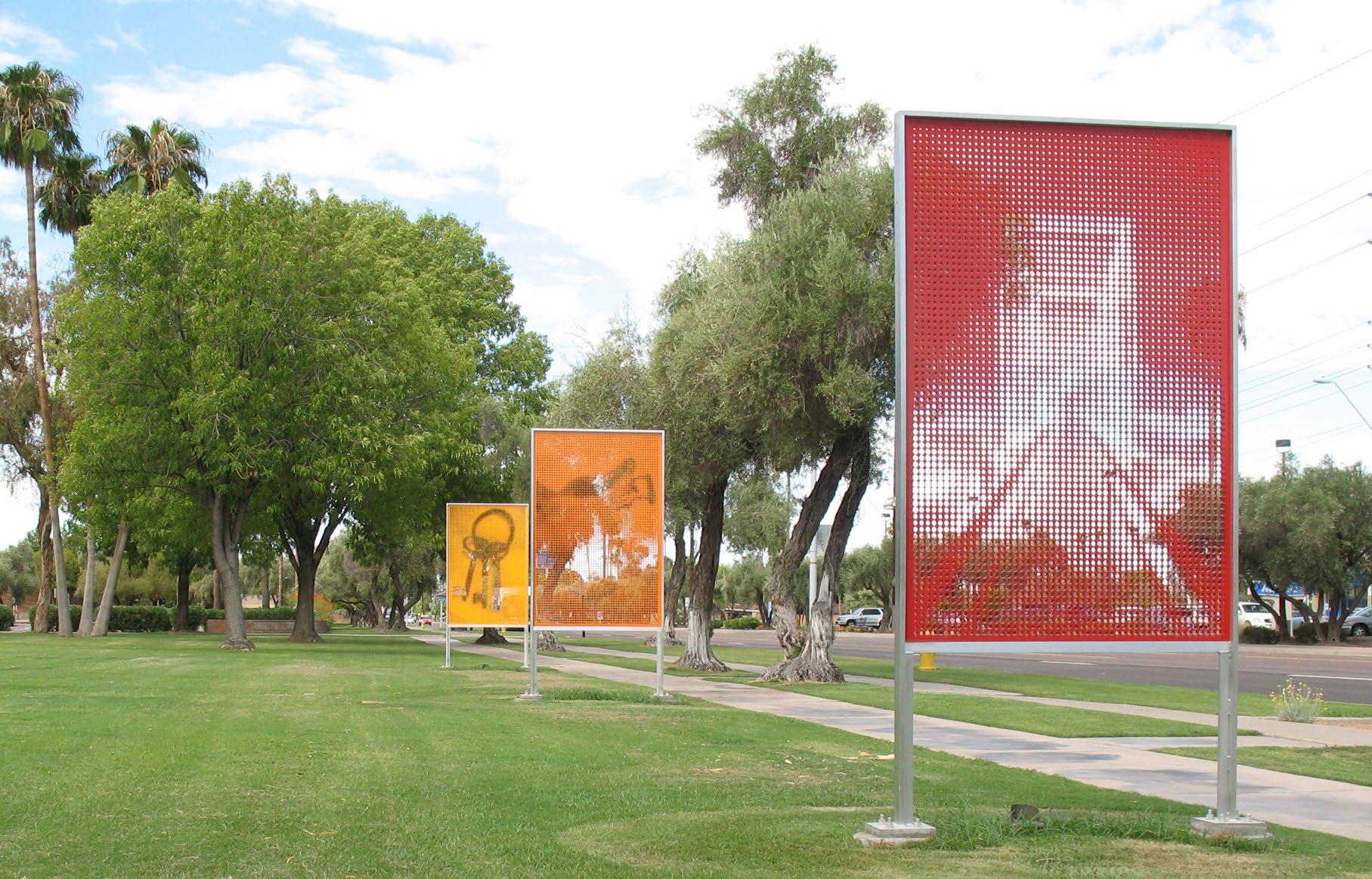
The Broadway Road Streetscape public art, “Hedgerow” pays homage to the hedge of sour orange trees that once lined the north side of the Broadway between Mill Avenue and Rural Road. The privacy wall that has taken their place has been cleverly enhanced to create the sense of a hedge of orange trees. Within the privacy wall setbacks are 123 steel “tree profiles” and 1,250 square “pixels” in various hues of green and orange, recalling the orange trees that had previously served as a natural divider. Continuing the orange tree motif, Morse Code patterns spell out “orange trees” and “blossoms” in repeated sections.
Laurie Lundquist is a public artist with a deep interest in natural systems and geography. She aspires to design places or circumstances that will trigger a sense of connection to our surroundings. Lundquist received a Master of Fine Arts in Sculpture from Arizona State University. Rebecca Ross has received numerous awards for her photography including a Visual Arts Fellowship and Artist Project Grant from the Arizona Commission on the Arts and public art commissions for the cities of Phoenix, Tempe, and Scottsdale.
ARTISTS: Rebecca Ross & Laurie Lundquist
LOCATION: Broadway Road between Mill Avenue and Rural Road
Tempe Public Art operates within the framework of municipal government, yet it is tasked with a unique challenge: integrating the spirit of Tempe into the built environment through one-of-a-kind works of art. Translating the intangible into a physical presence is the program’s daily work.
To assist Tempe Public Art in communicating these essential community elements to artists, the following curatorial framework was developed. This guide is intended to inspire artists while informing stakeholders and the project team throughout the creative process.
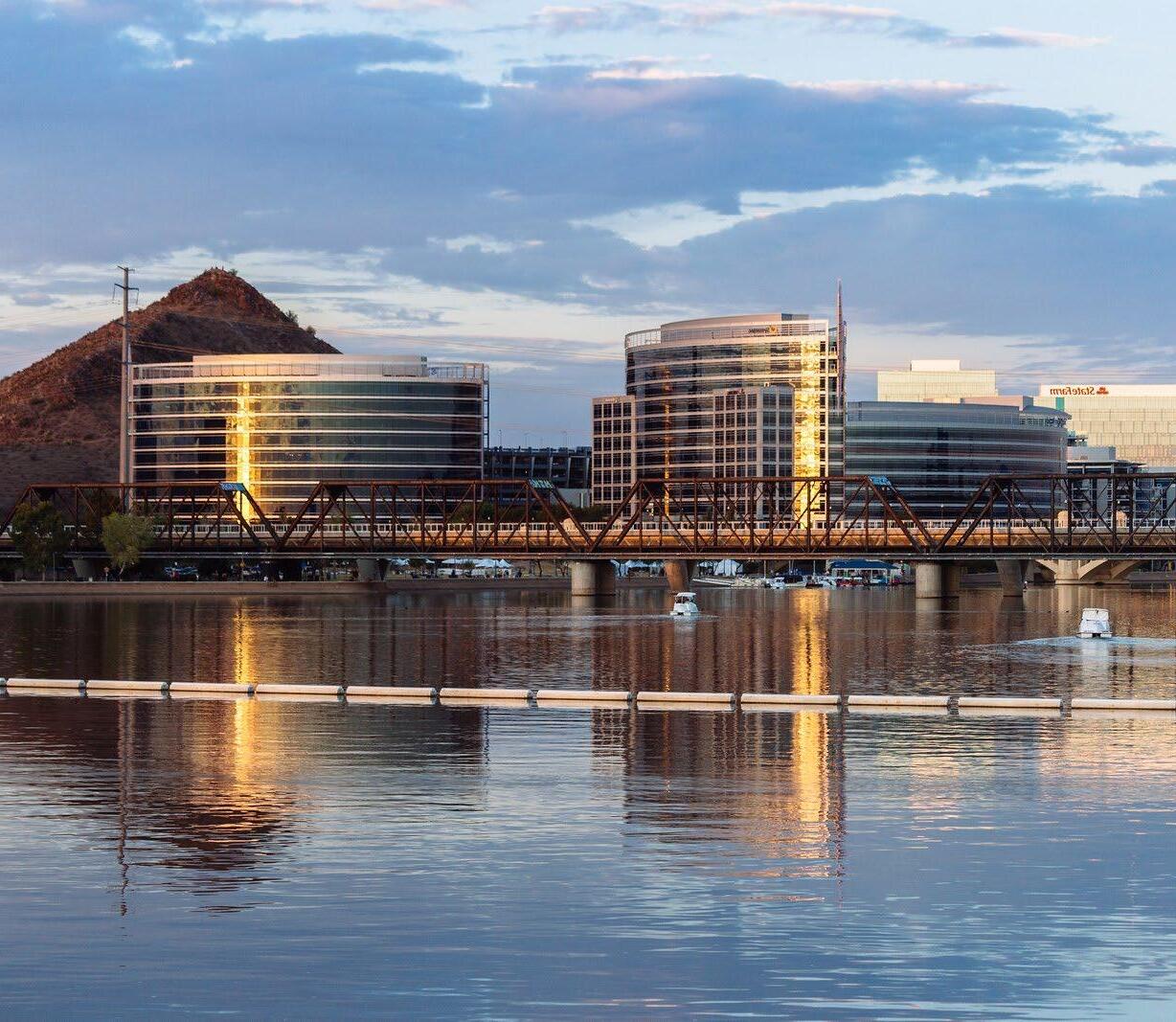
Tempe is a center for innovation in the Valley. The City’s public art has the opportunity to reflect this innovation and set the standard for what is possible, while providing exciting experiences for community members and visitors alike.
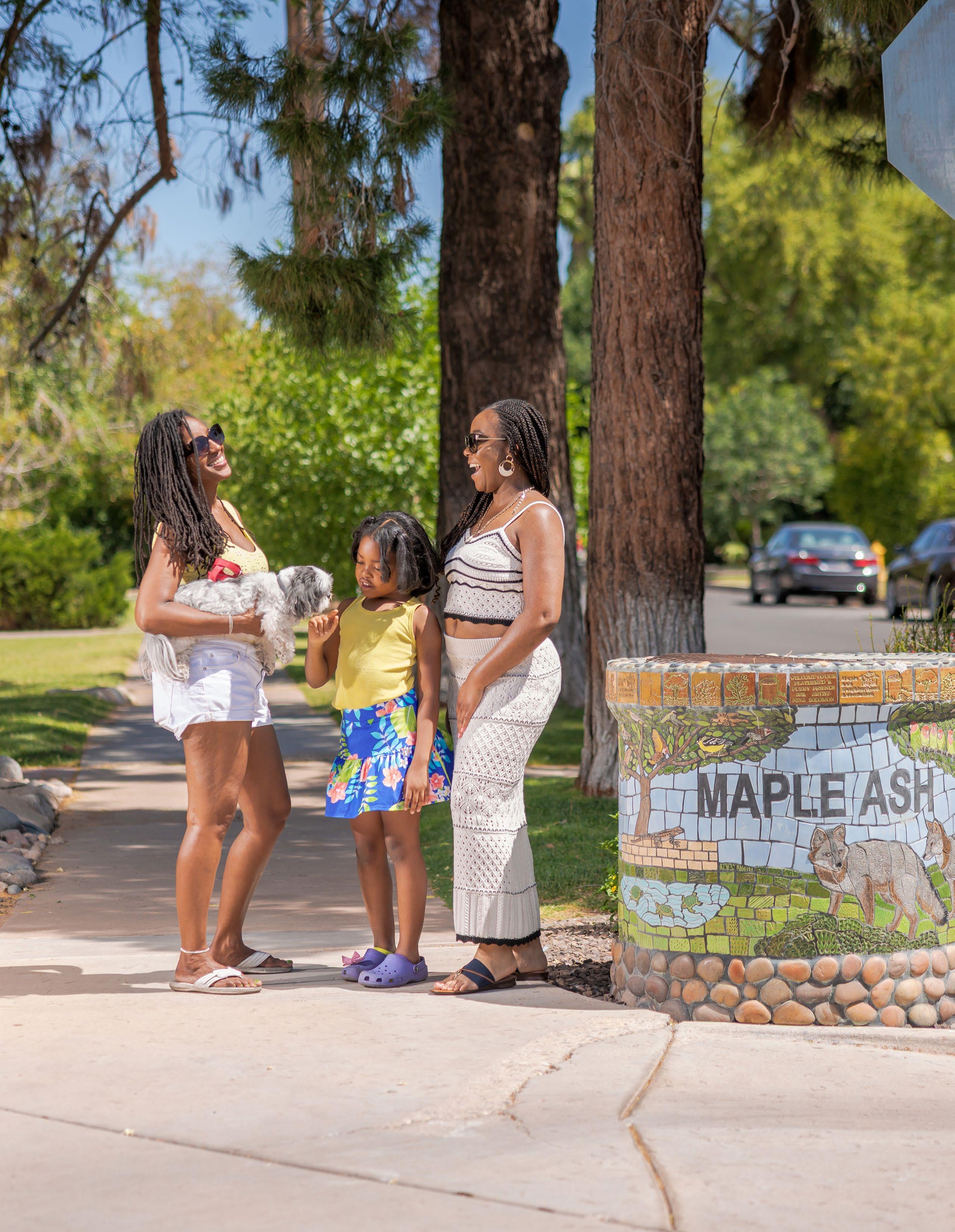
When developing a direction for public art in Tempe, the physical landscape of the city and environmental considerations are crucial elements in the creation of an installation. This includes sunlight, shade, the Sonoran desert climate and colors, the preciousness of water, and the native landscape. Utilizing these elements, art can develop a more cohesive feel and iconic landscape for the city.
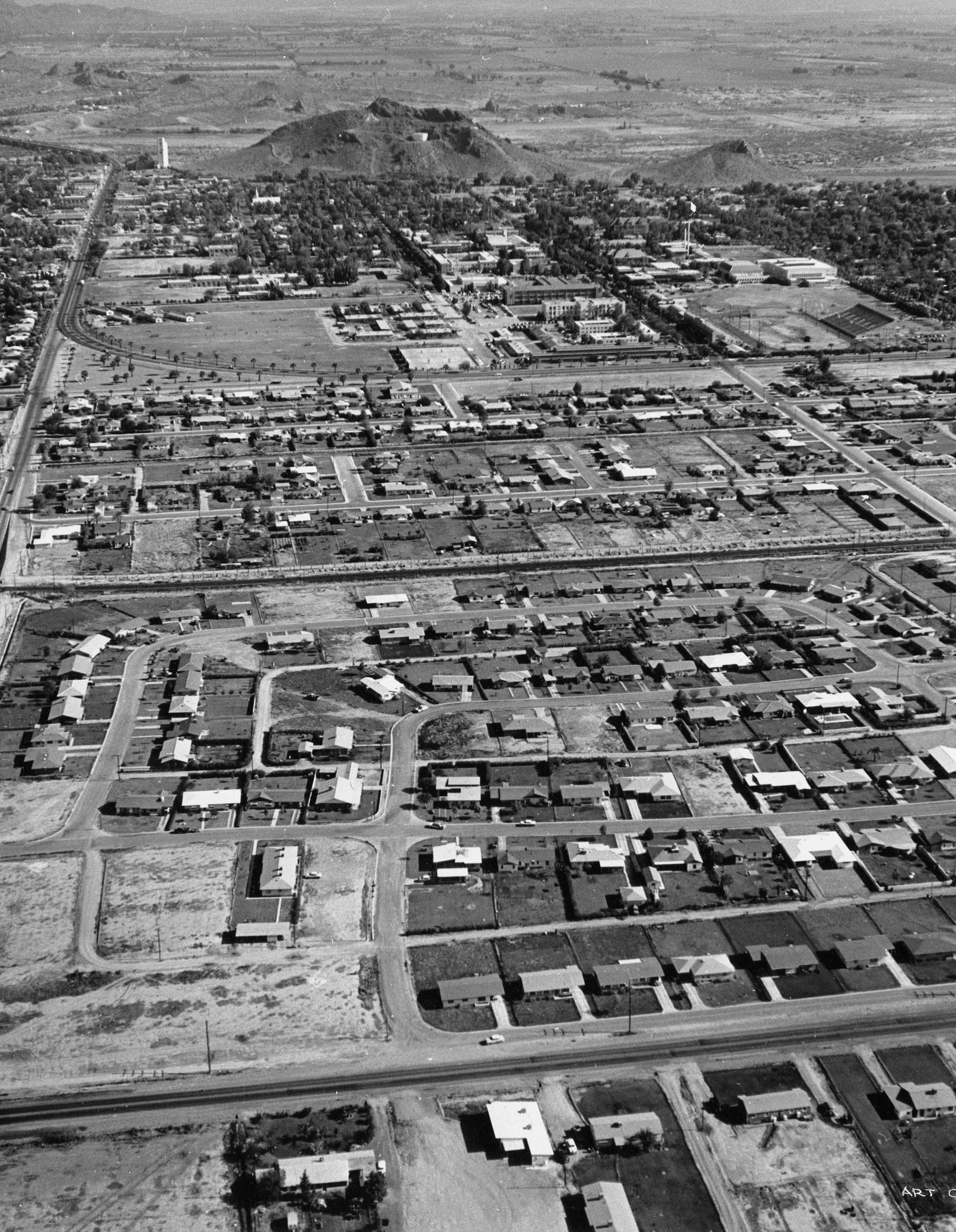
There is a rich and diverse range of cultures settled in Tempe. The city is home to an influx of people who have created a home in Tempe after arriving for work or educational opportunities, many bringing a diverse and rich mix of stories. Additionally, a long history of homesteading and pioneer culture in the area created an impact on the infrastructure and culture. This should be reflected in the art throughout the city, highlighting regional cultures and uplifting local stories.
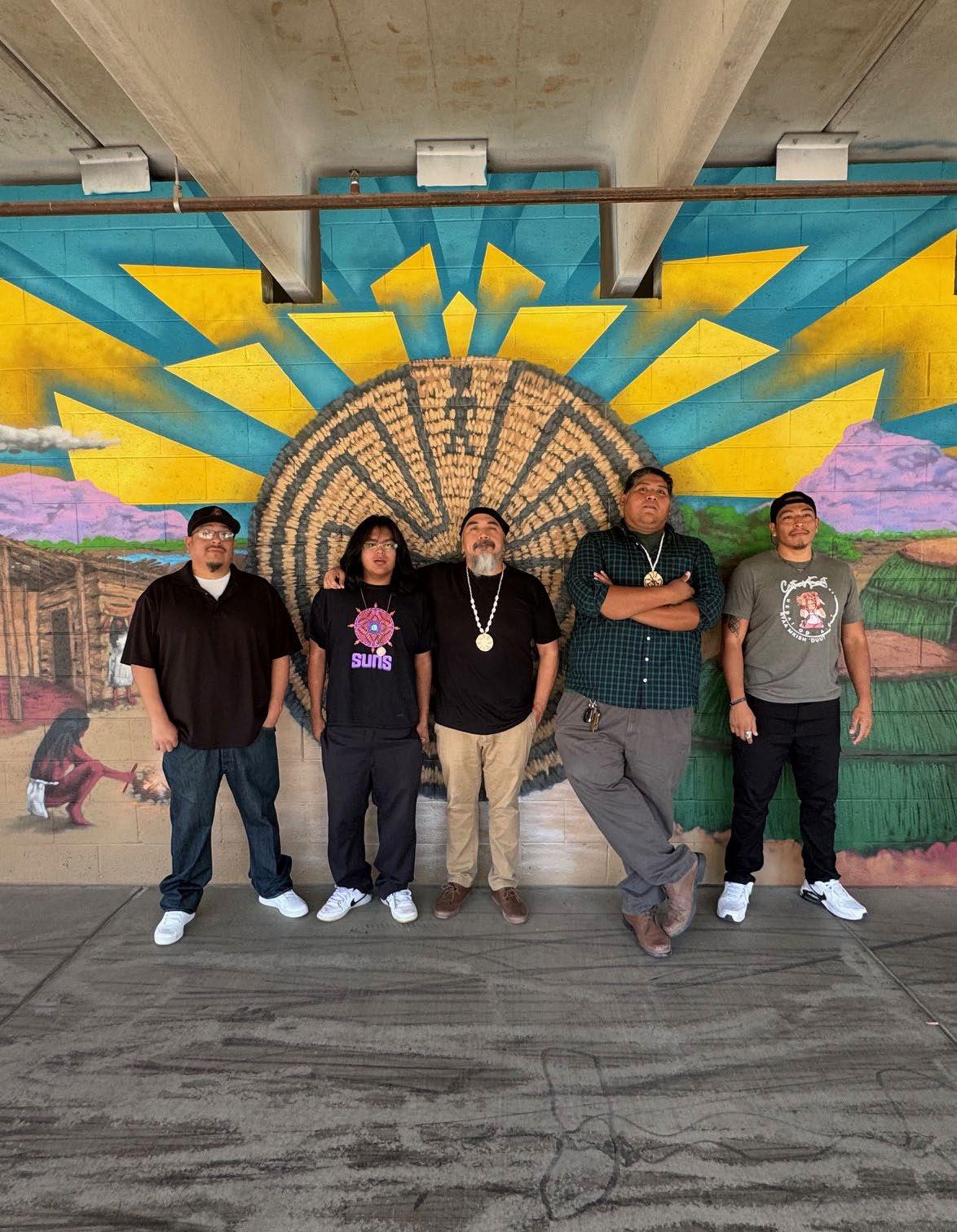
Tempe has a strong network of O’odham, Piipaash, and Yoeme artists and creatives whose traditions, stories, and presence in the region are a rich aspect of life. Public art is an ideal medium to convey Indigenous knowledge and artistic expression, as well as amplify opportunities for cultural exchange with the O’odham, Piipaash, and Yoeme.
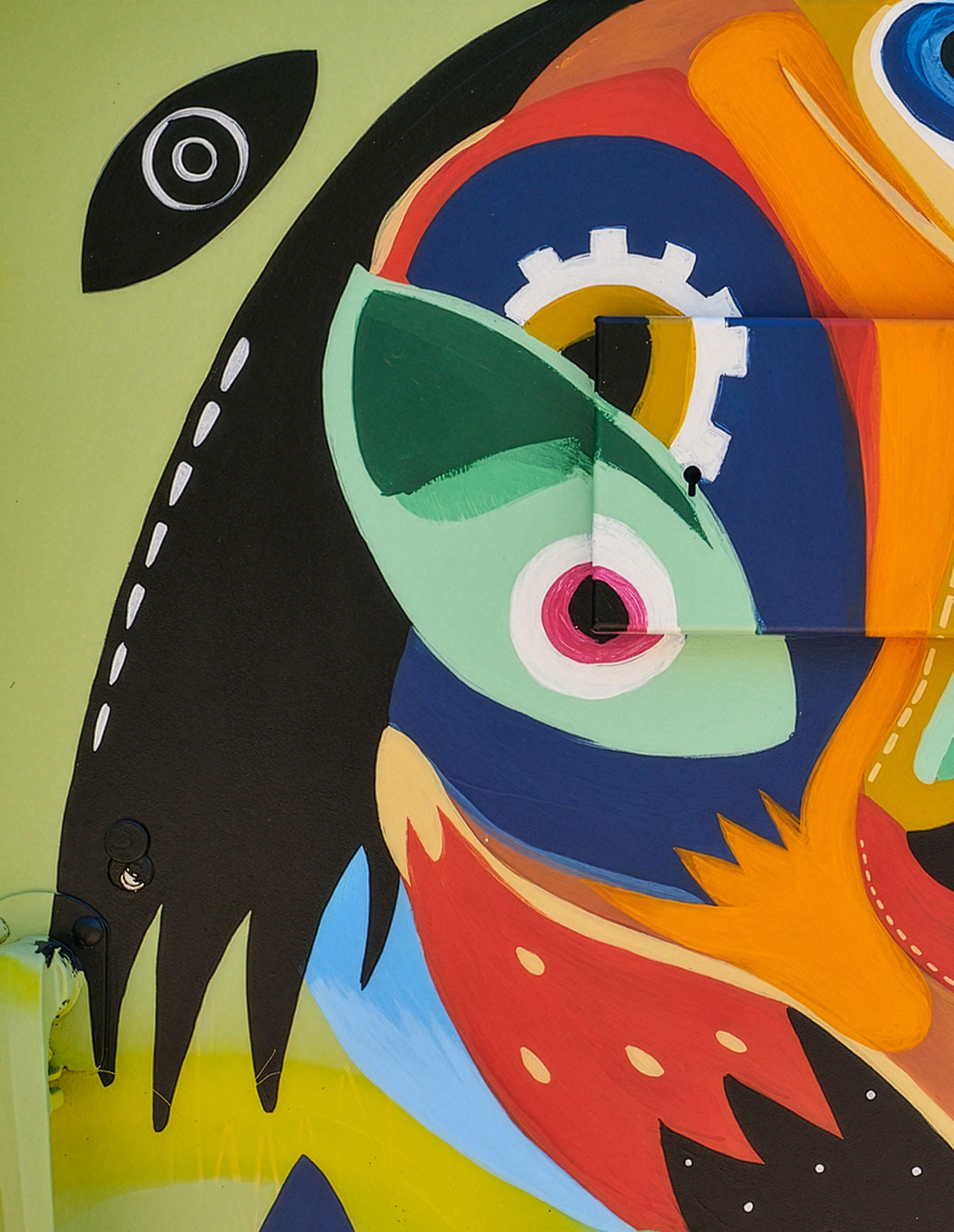
OBJECTIVE 1: STRENGTHEN TEMPE’S SENSE OF PLACE AND CONNECTIVITY USING PUBLIC ART
OBJECTIVE 2: ENSURE THAT PUBLIC ART IS GEOGRAPHICALLY WIDESPREAD THROUGHOUT TEMPE
OBJECTIVE 3: FOSTER AN INNOVATIVE PROGRAM THAT IS A NATIONAL LEADER IN PUBLIC ART
OBJECTIVE 4: DOCUMENT, REFINE, AND FORMALIZE EXISTING PROCEDURES
OBJECTIVE 5: ENHANCE THE EXISTING AIPD PROGRAM
OBJECTIVE 6: STRENGTHEN COLLECTION MANAGEMENT TO ENSURE A WELL MAINTAINED AND LONGLASTING PUBLIC ART COLLECTION
As Tempe Public Art moves into the future, there are specific considerations that can have an impact on how the program is implemented. The following chapter is organized by a series of high level objectives for Tempe Public Art followed by strategies for them to achieve these objectives.
1
To maximize the impact of future public art projects in Tempe, it’s essential to consider how public art integrates with the city’s structure as well as the overall experience public artwork offers. Prioritization of future projects can use the strategies and curatorial framework within this document to consider the impact that the project has to enhance engagement with the built environment and foster a strong sense of identity. The following location strategies give a typology of locations for future artwork in Tempe along with key goals for the artwork at these locations.
LOCATION STRATEGY 1.1 CIVIC SPACES AND CITY FACILITIES
Civic spaces and city facilities in Tempe encompass a variety of public buildings and gathering areas that serve as the heart of community life and government operations. Public art can be integrated into these civic spaces and facilities in numerous ways to enhance their aesthetic appeal, reflect community values, and foster a sense of place.
Project Goals for Civic Spaces and City
Facilities:
• Inspire connection to the civic life of Tempe
• Celebrate local talent
• Elevate the profile of public art in Tempe and ensure a dynamic exchange of national talent
• Reinforce public art as a way to connect people with the city’s unique character
Location Examples:
• Tempe City Hall
• Tempe Center for the Arts (TCA)
• Tempe Public Library
• Tempe History Museum
• Recreation Centers
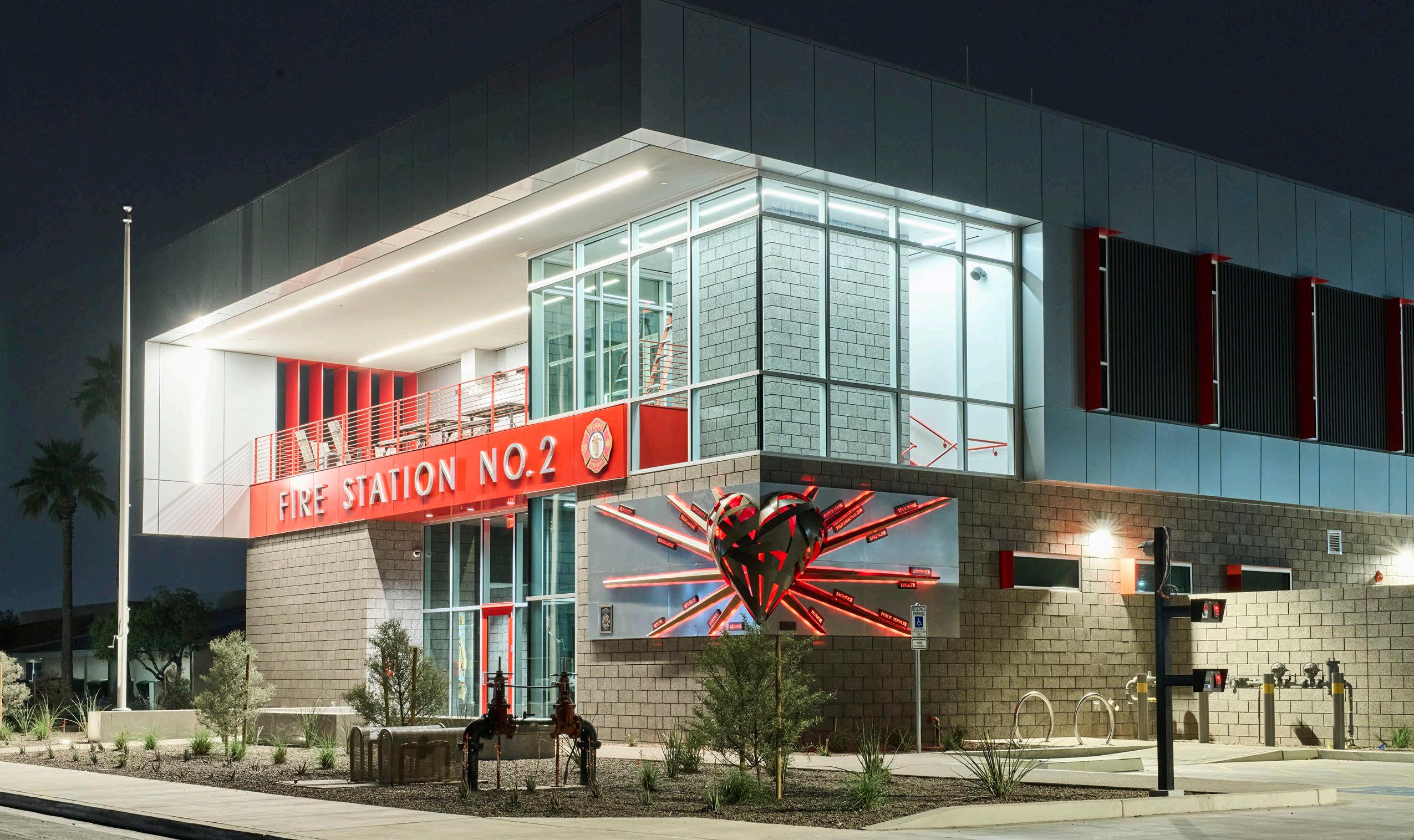
• Fire and Police Stations
• Downtown Tempe
• Edna Vihel Art Center
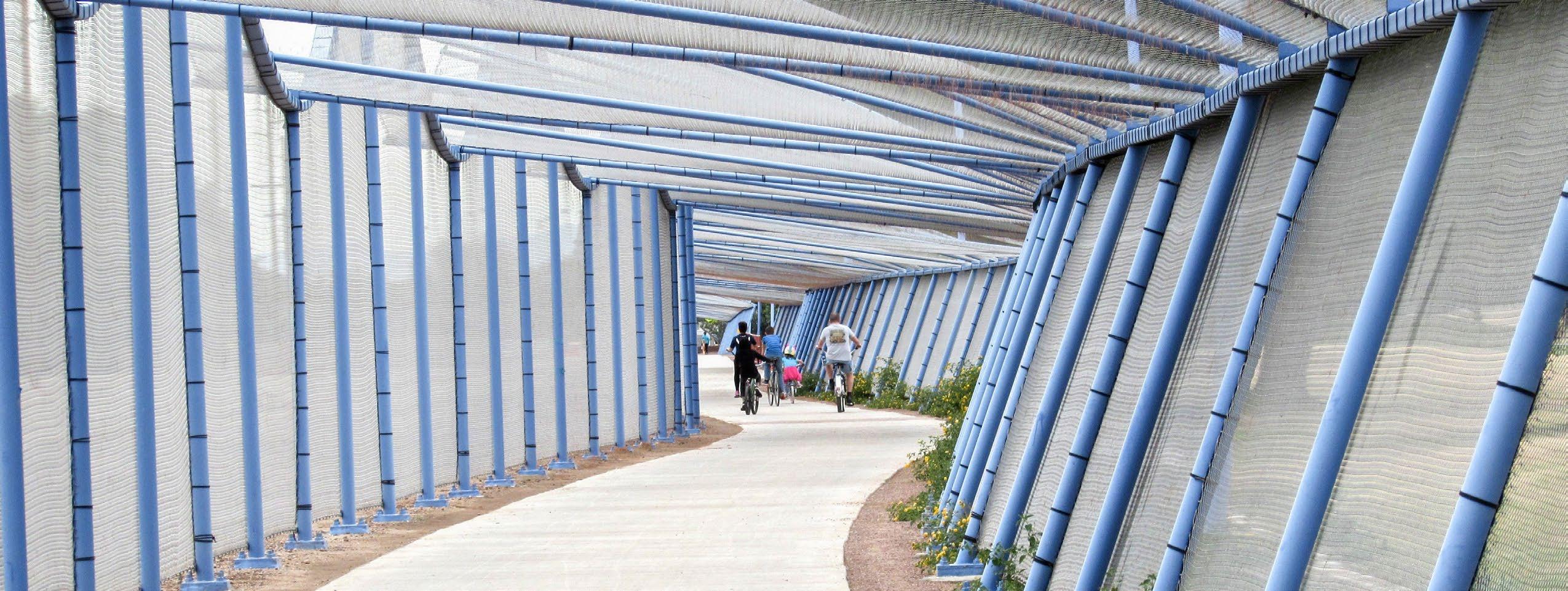
Tempe has an extensive and growing network of trails and greenways that are well used by community members and visitors alike. Public art installations in these locations could extend throughout the entire community rather than being focused on just one central area. These sites provide a valuable opportunity for connecting people through shared gathering spaces.
Project Goals for Trails and Greenways:
• Encourage the interconnection of art and physical activity
• Connect with and educate about the natural environment
• Bring joy and whimsy to daily activities
• Find commonalities to aesthetically and culturally connect communities
Location Examples:
• Rio Salado Pathway
• Indian Bend Wash Greenbelt
• Crosscut Canal Path
• Western Canal Path
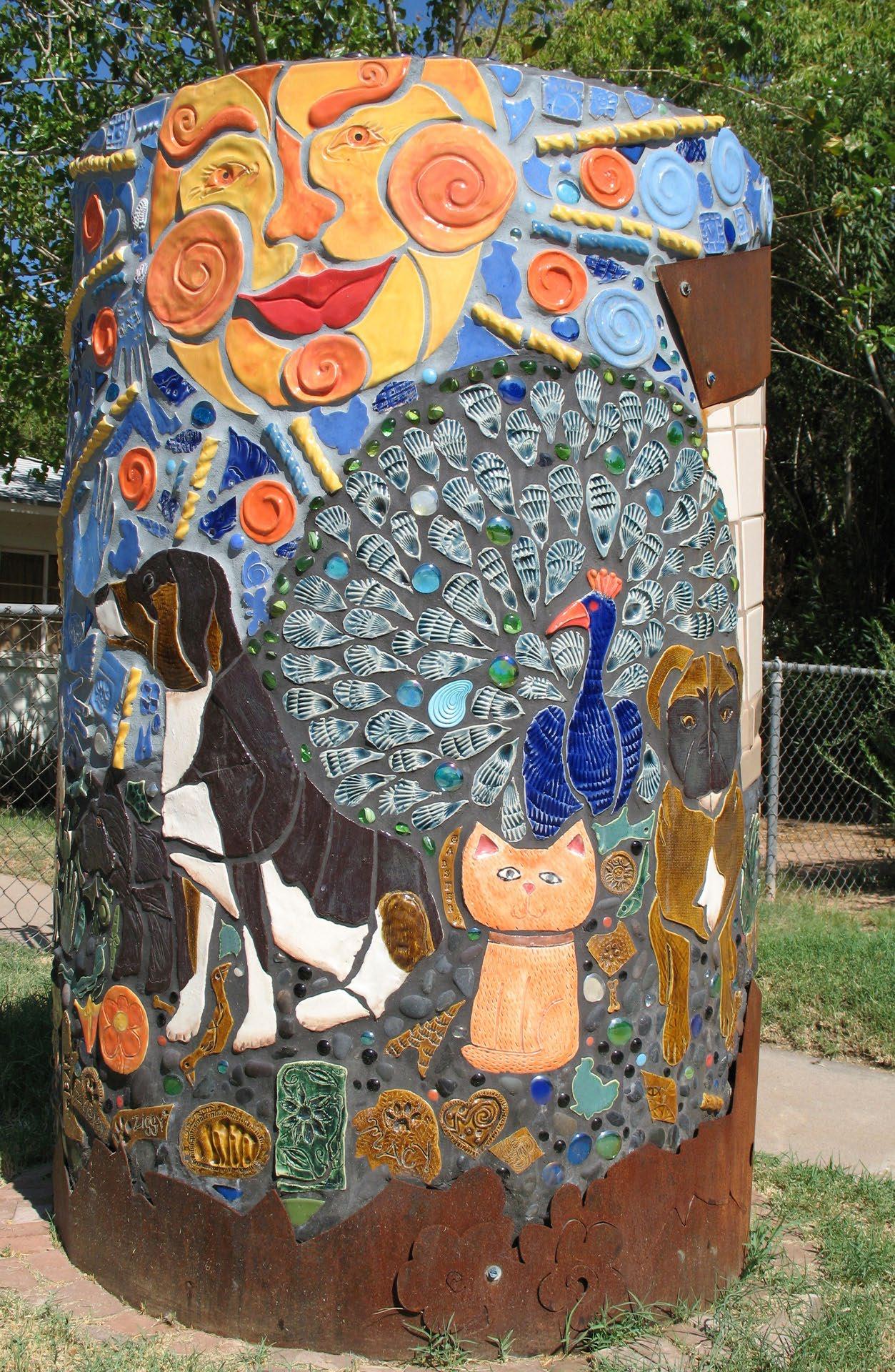
Parks in Tempe serve a variety of purposes, with some larger regional parks serving as destinations for recreation and sports while neighborhood parks serve community members on a day-to-day basis. Considering the multitude of uses that occur at parks on a daily basis, there are opportunities abound to impact community members and visitors with public art.
Project Goals for Neighborhood and Regional Parks:
• Create arts experiences for all ages
• Encourage the interconnection of art and physical activity
• Connect with the natural environment and create inspiring experiences through artwork
Location Examples:
• Kiwanis Park
• Tempe Town Lake / Tempe Beach Park
• Papago Park
• Clark Park
• Daley Park
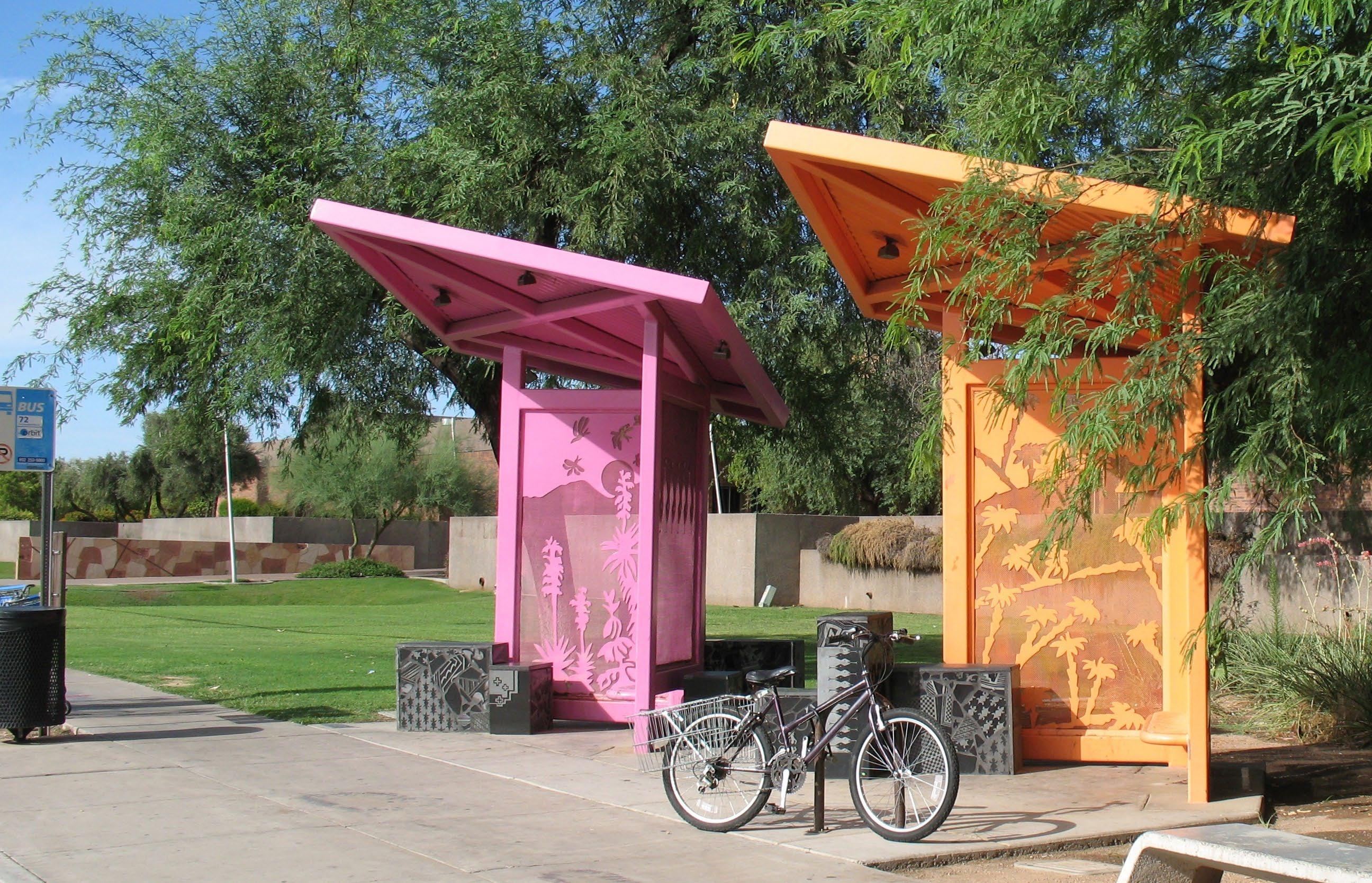
LOCATION STRATEGY 1.4 TRANSPORTATION AND CITY INFRASTRUCTURE
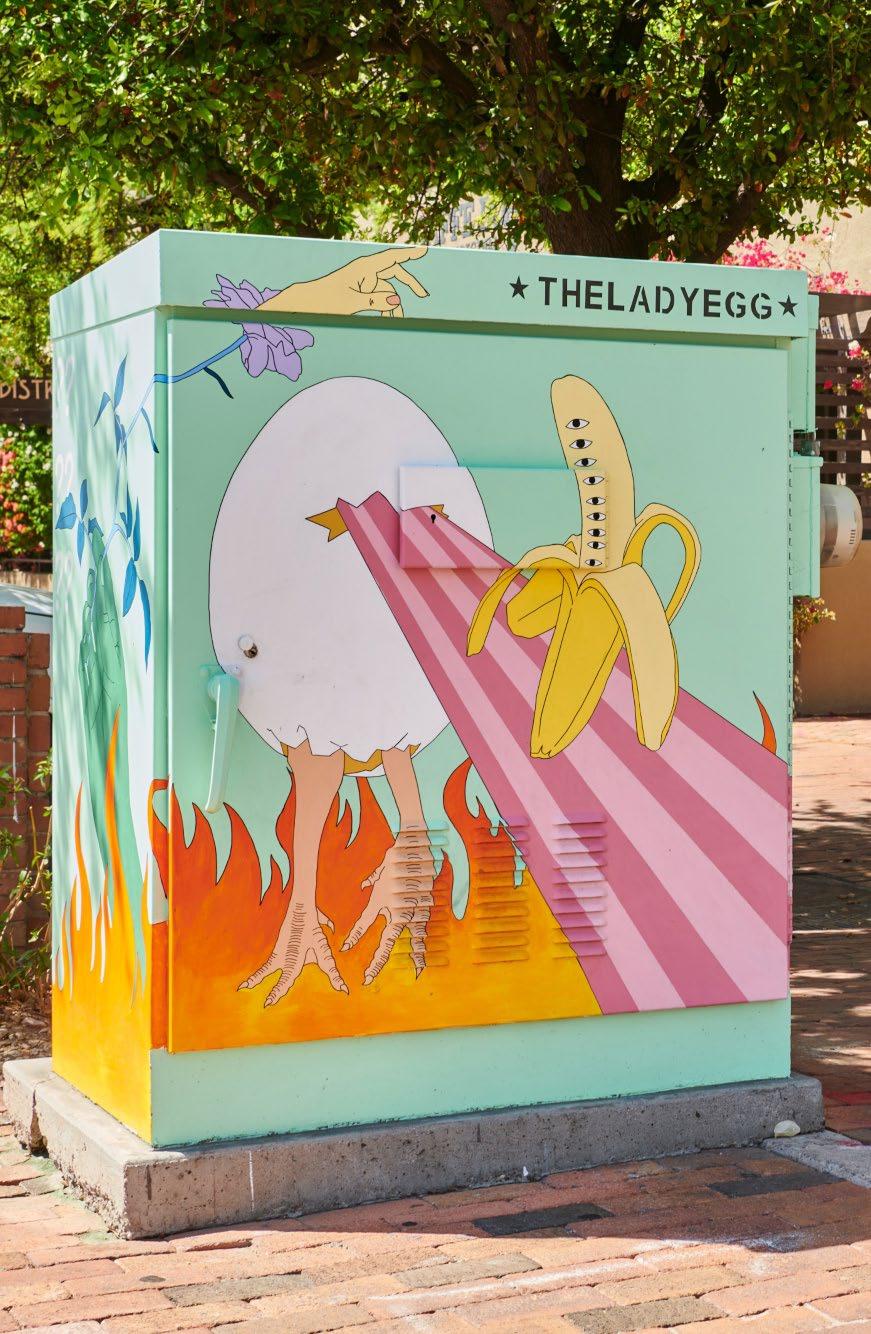
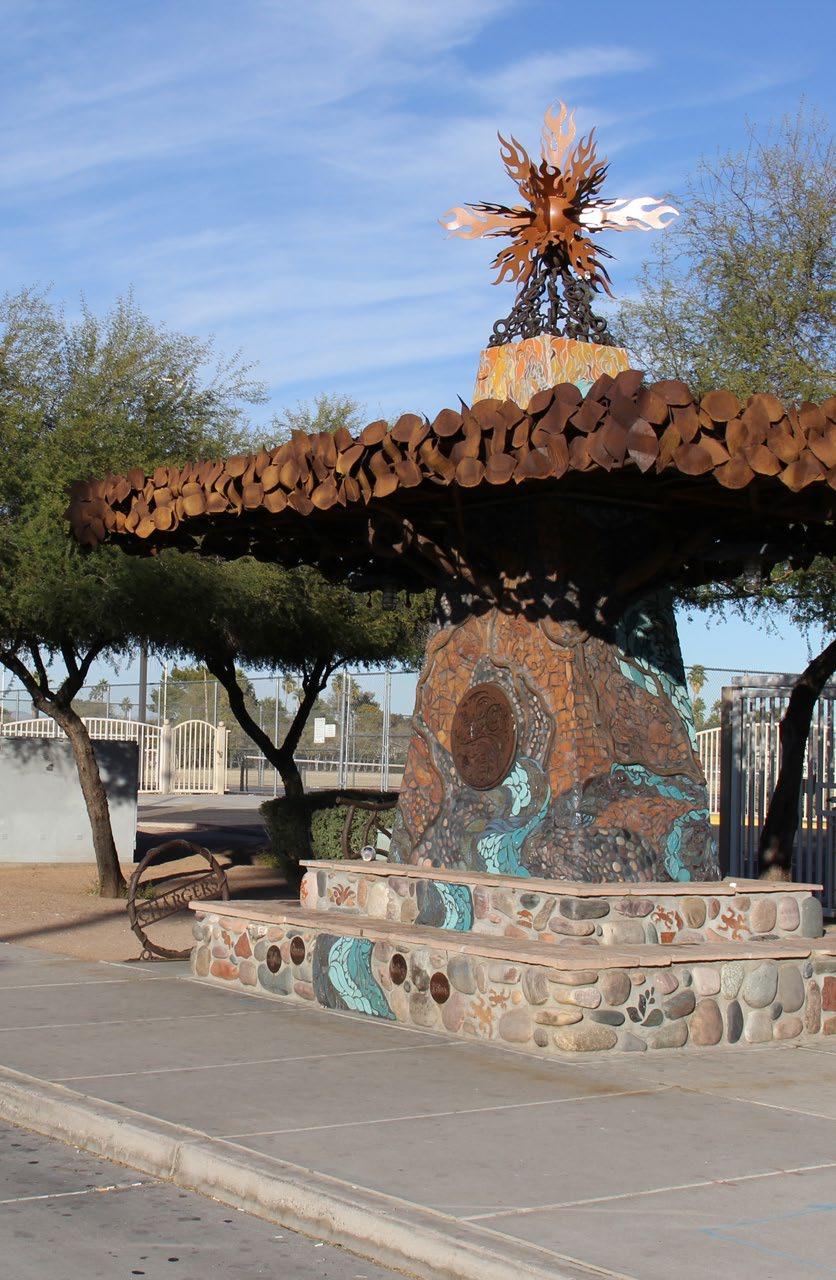
This area is perhaps the most easily taken for granted of the urban infrastructure within Tempe, but it is also the most critical to the everyday functionality of the city. Introducing public art to transportation and other physical infrastructure allows for the possibility of bringing art into everyday life in unique and interesting ways. This strategy allows for public art to act as a connection between areas of the city, creating landmarks for people as they move between locations.
Project Goals for Transportation and City Infrastructure:
• Bring joy and whimsy to daily activities
• Integrate with the built environment
• Enhance utilitarian infrastructure
• Create visual connections along travel routes
Location Examples:
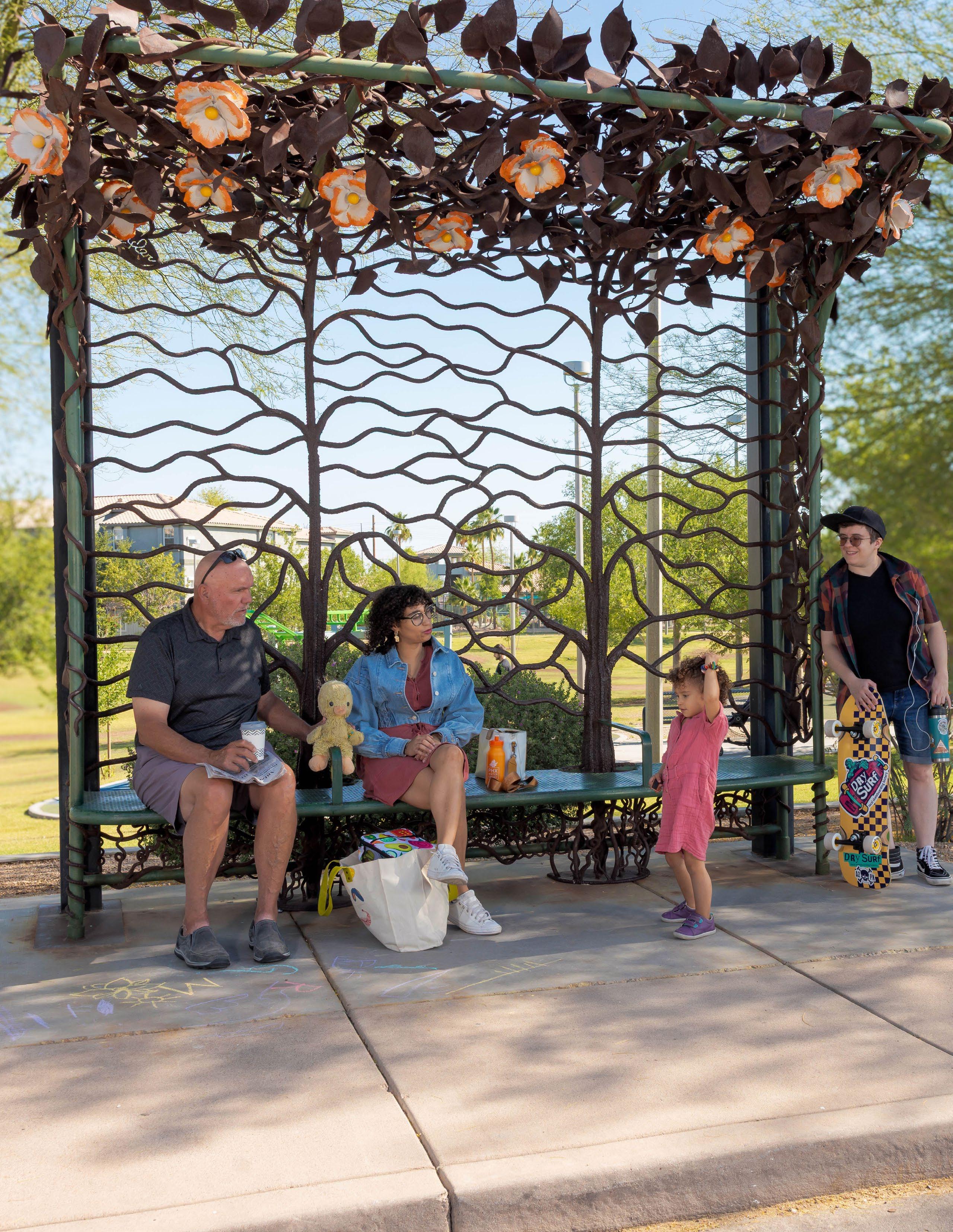
• Bus Shelters
• Corridor Beautification
• Water and Utility Delivery Systems
• Under/Overpasses
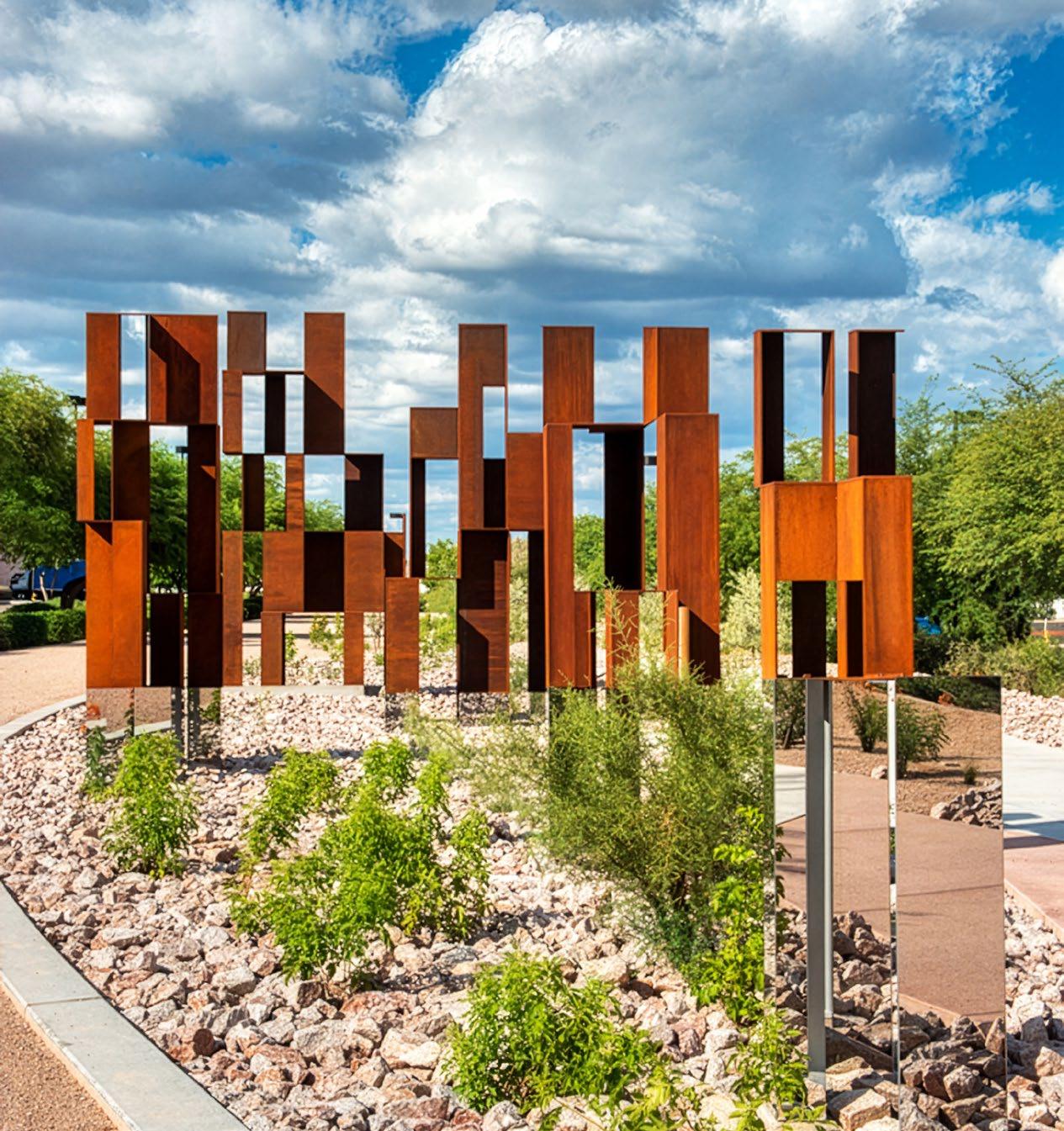
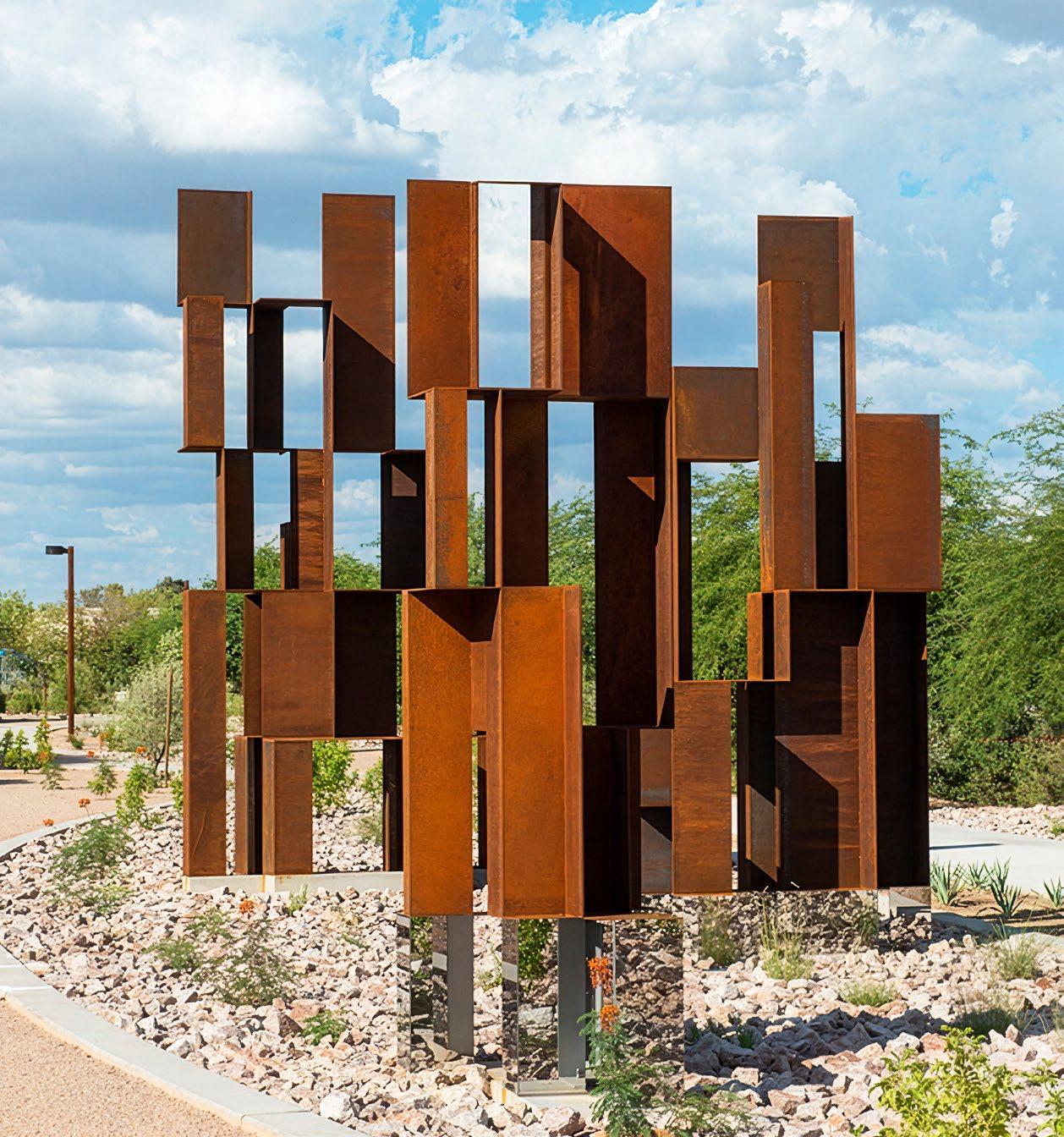
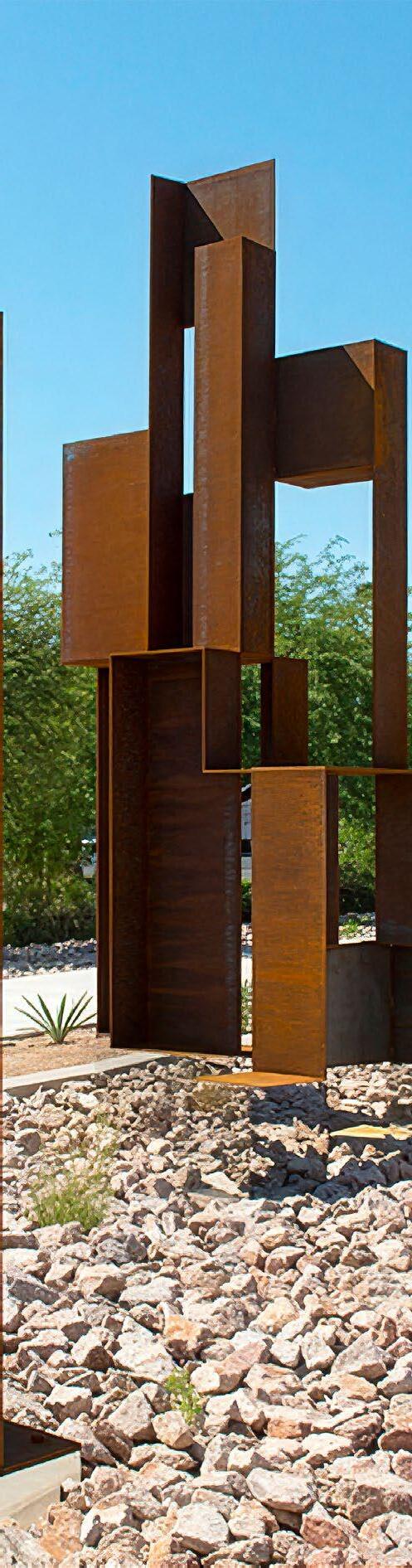
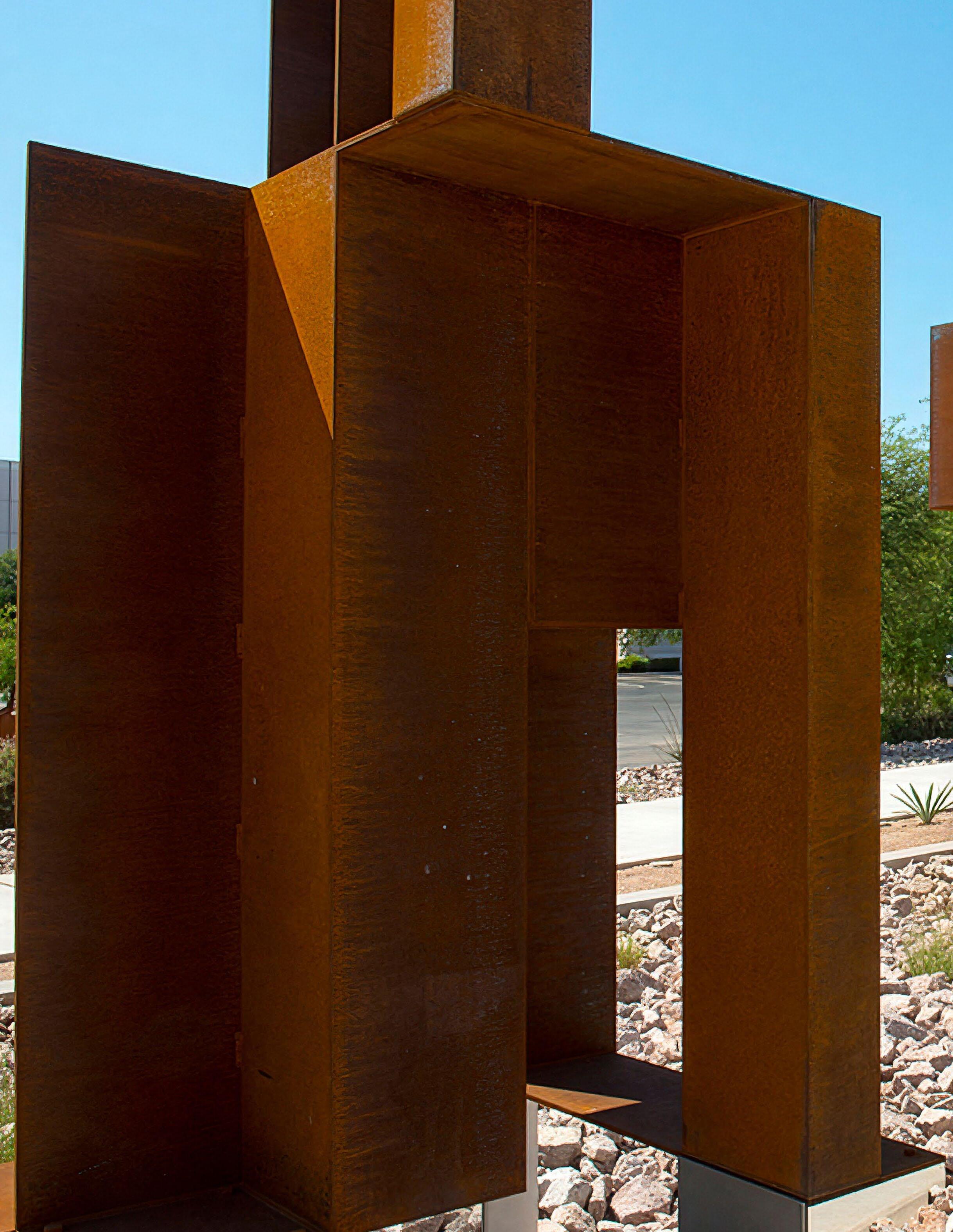
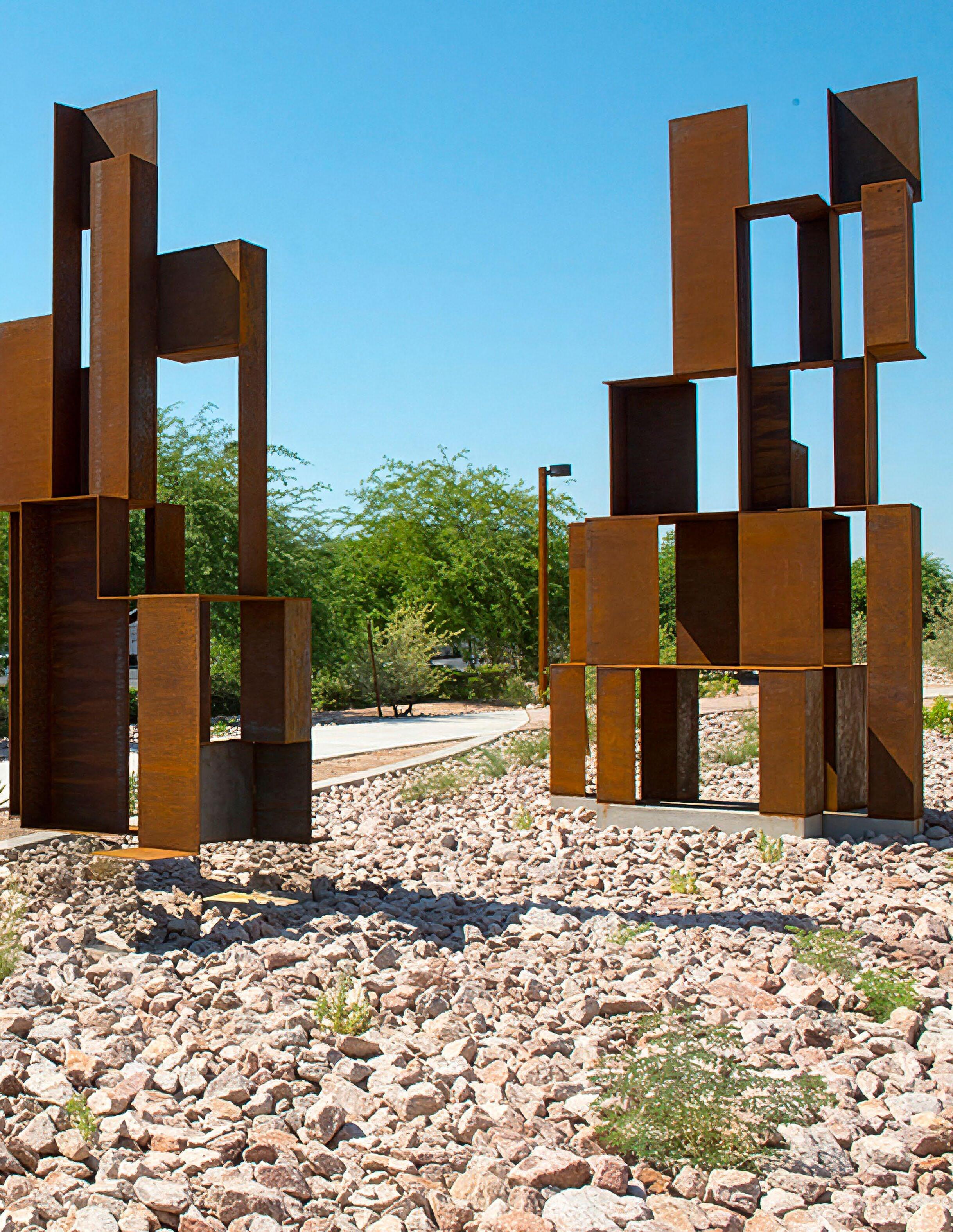
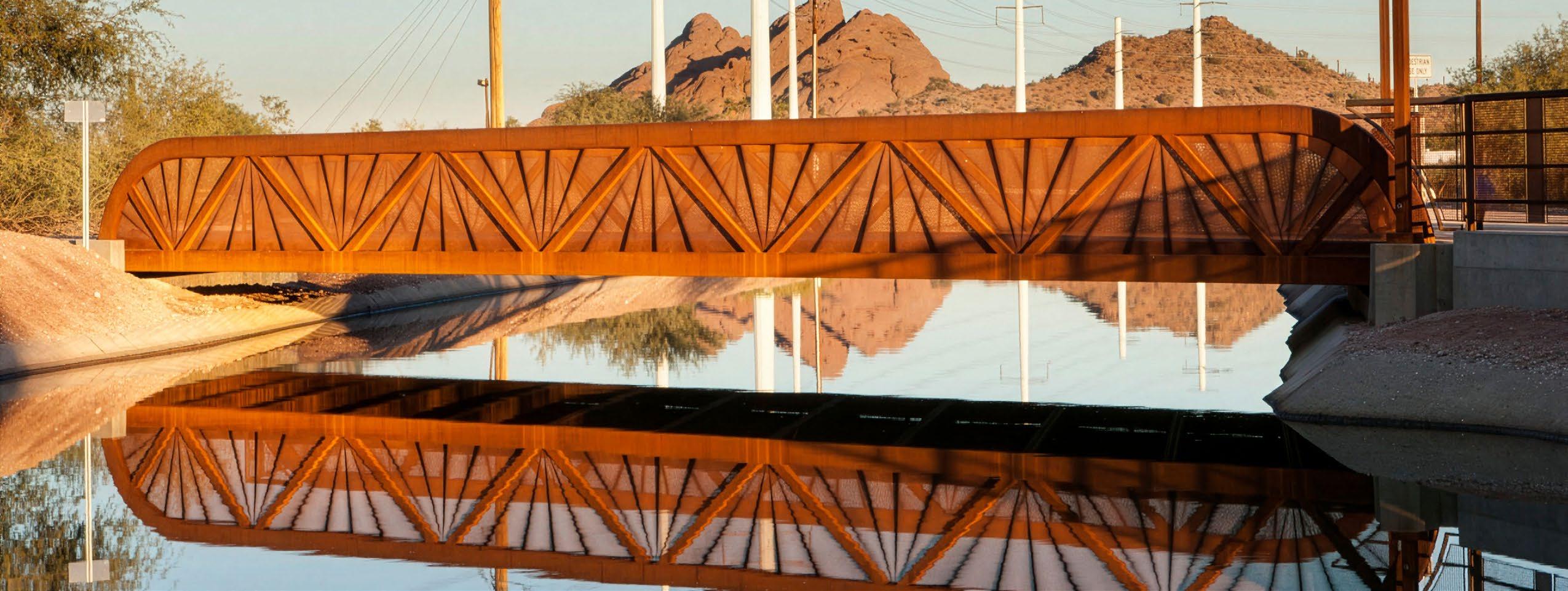
For centuries artists have been inspired by the desert’s ability to create illusions. The distance of scale combined with shifting light provides for surprises as one moves through the landscape. Artist John Fleming created a similar effect within the city to heighten these perceptual experiences. Traveling from north to south one can clearly see five rust-red pinnacles. From the other side, these five pinnacles join to create the illusion of one blocky rectangle. Clad with a mirrored steel on the bottom, each pinnacle appears to float above the desert floor.
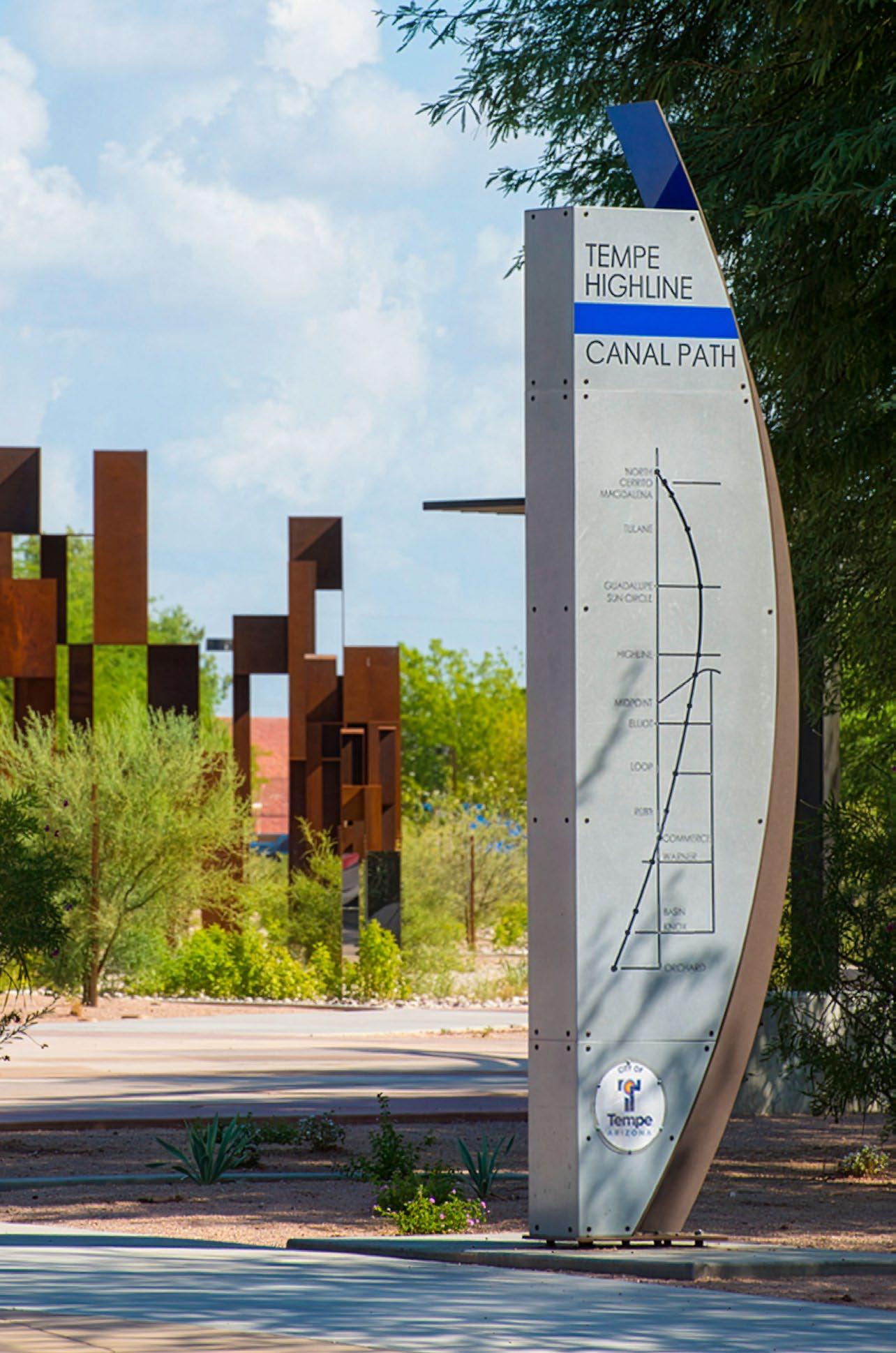
The Highline Canal Multiuse Path connects the cities of Phoenix, Guadalupe, Tempe, and Chandler along the SRP canal. Pinnacles was designed to enhance the area of the Tempe trail where the canal goes underground within the Auto Loop Link section.
John Fleming has spent 30 years developing a broad portfolio of art, architecture, and conceptual/ environmental projects. Much of his work blurs the boundaries between all three. Studying architecture at the University of New Mexico lead him to India to teach design and ceramics at the School of Architecture in Ahmedabad. India, New Mexico, and the Northwest have profoundly influenced his work. His work follows the environmental principles of respecting the natural world and highlights the natural characteristics of the materials used in each of his projects.
ARTIST: John Fleming
LOCATION: Highline Canal Multiuse Path
PHOTOS BY: Craig Smith
Strategy 2.1 Regularly update walkshed maps to help inform site identification and project prioritization
The Tempe Public Art team could consider working with other City Staff to regularly update this walkshed analysis as the collection grows and changes. This could be done as part of the annual work plan process. The maps can then be used to help assist with project identification and prioritization.
When evaluating potential projects as part of the work plan process the walkshed mapping gap analysis can be used as part of a matrix to evaluate which projects to prioritize. How projects are prioritized will evolve over time as the collection grows and changes:
• In the short term prioritize project placement where gaps have been identified using the 20 minute walkshed map. (map 4.1)
• In the long term, begin to prioritize gaps in the 10-minute walkshed map. (map 4.2)
Strategy 2.2 Undertake mapping of CIP infrastructure projects to help priortize new project in areas lacking public art access
Tempe Public Art can benefit from working with the Planning and GIS teams to layer current and future CIP infrastructure projects within the walkshed analysis map each year as part of the annual work plan process. This would allow the team to easily identify which projects would be a priority for adding or integrating a new work of public art.
Though most of South Tempe has access to public art, most areas do not have the concentration of artwork that exists in downtown Tempe in near downtown neighborhoods. A challenge for placing public art in South Tempe stems from the prevalence of Homeowners Associations (HOAs) in most neighborhoods. Historically, the neighborhood grant program has received significantly more applications from Neighborhood Associations than from HOAs.
Tempe Public Art and Neighborhood Services can create additional efforts to encourage HOAs to apply for neighborhood grants through outreach, workshops, and other educational opportunities. This work can encourage more public art project applications by HOAs through focusing on their specific needs and values. This will increase the amount of artwork and access to public art for people in south Tempe, where the maps show less artwork access within the neighborhoods.
WALKSHED ANALYSIS OF PUBLIC ART IN TEMPE
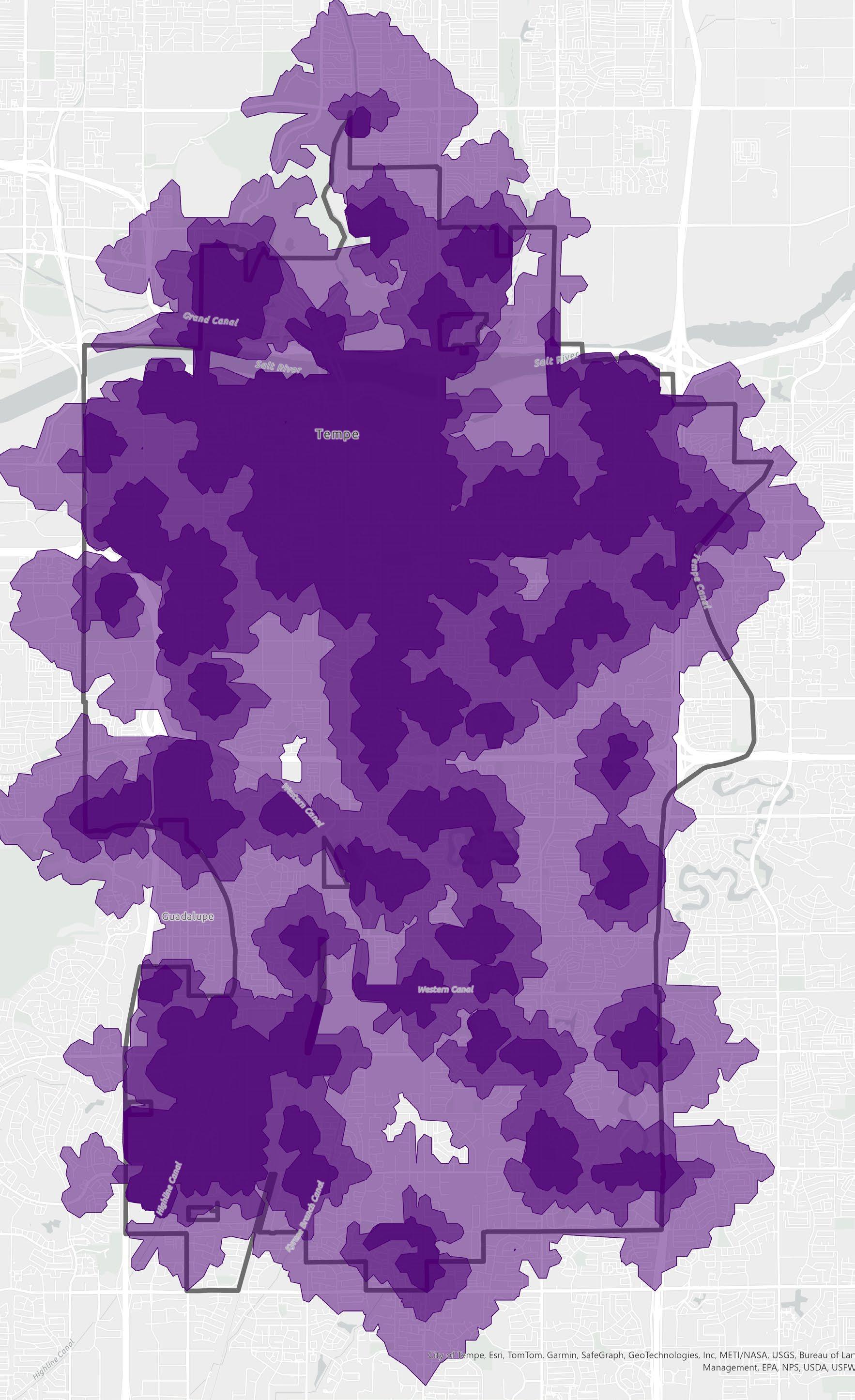
In order to better understand the geographic distribution of public art in Tempe, as well as the accessibility of public art for residents of Tempe, the project team undertook a mapping analysis of public art access in Tempe. Access to public art for residents by walkshed in 20 minute, 10 minute, and 5 minute increments were mapped using the existing GIS database of the Tempe Public Art collection as well as the collections of partners at ASU and Valley Metro. The result are shown in maps 4.1 and 4.2.
20 MINUTES
20 MINUTES
98.4% of Tempe Residents live within a <20 min walk from a piece of public art
98.4% of Tempe Residents live within a <20 min walk from a piece of public art
183,587 / 186,573 people
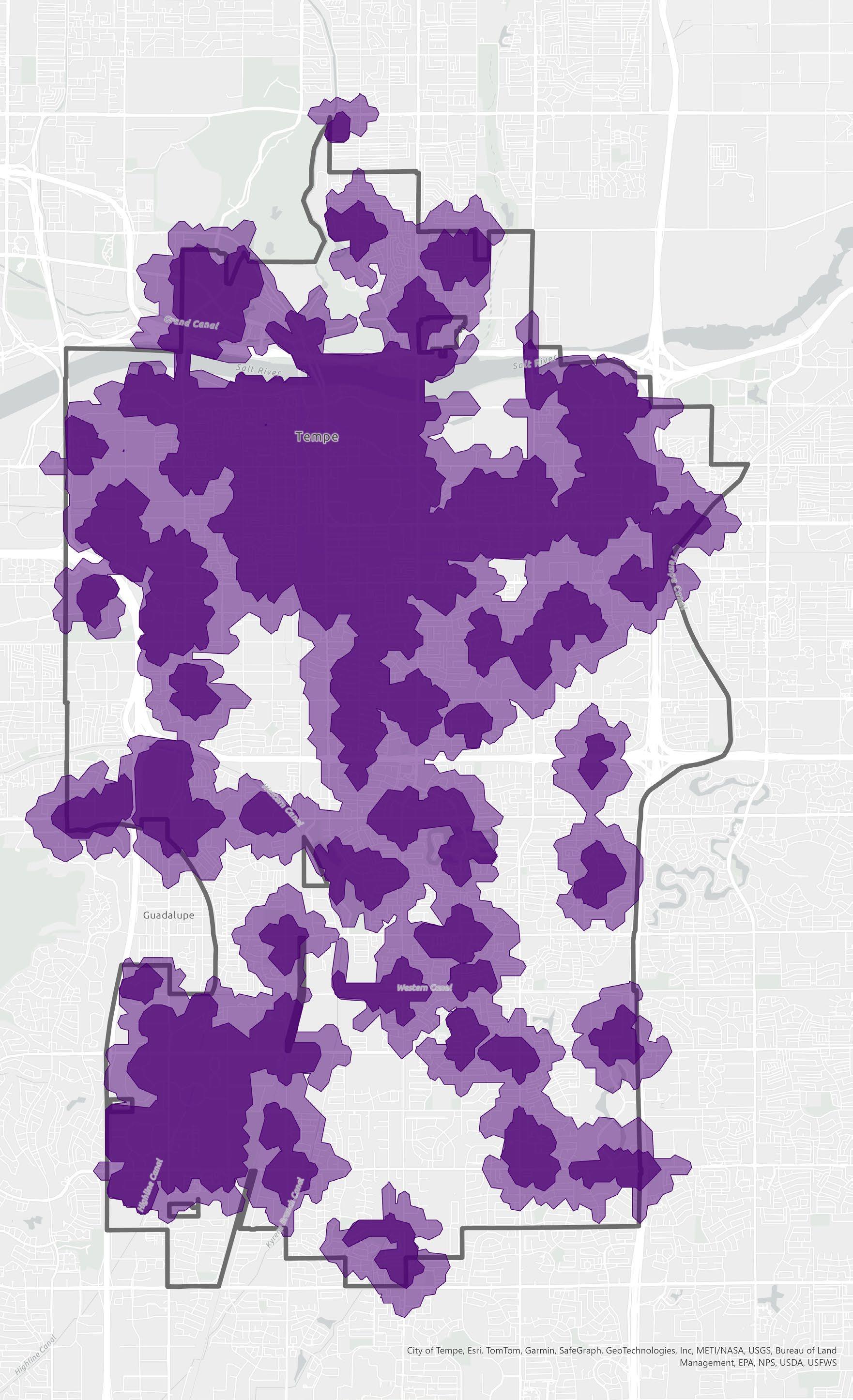
The mapping has revealed that public art is well distributed throughout Tempe, largely due to the existing mix of programs. While the artwork is spread across the community, there is a notable concentration in the downtown area, which is not unusual for municipal public art programs.
MINUTES
of Tempe Residents live within a <5 min walk from a piece of public art 82,752 / 186,573 people
20 MINUTES 98.4% of Tempe Residents live within a <20 min walk from a piece of public art
To elevate Tempe Public Art, the following strategies will guide the creation of impactful and innovative projects and approaches. By building upon the program’s history, Tempe will be able to solidify its national leadership in public art. These strategies also optimize the utilization of Tempe Public Art staff’s expertise.
Signature public art projects often shape public perception and are a consistent topic of discussion in Tempe. The intent of a signature artwork is to create a work of public art that becomes a point of pride for the community as well as drawing an audience from outside of the city. Notably, many cities have created an identity that is related to or identified by a work of art or art related event. The development of one or more such iconic projects was recommended in the 2015 Arts and Culture Plan and continues to be a point of conversation however the exact formation of what it means to create a signature project has changed since that time. As shown during public engagement, people want public art that celebrates community pride and innovation. Public artwork can also be thoughtprovoking and inspires conversation as well as exploration.
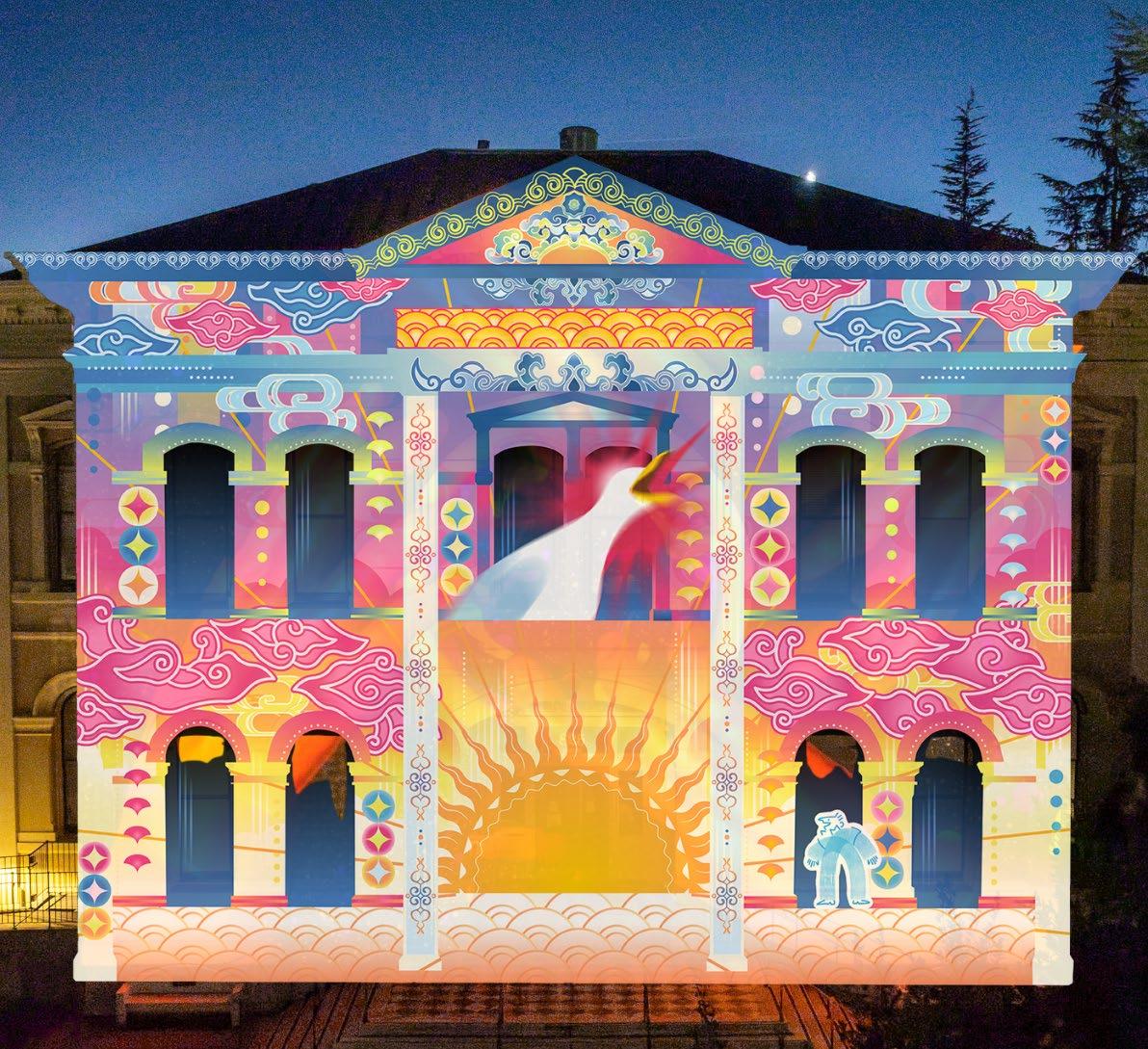
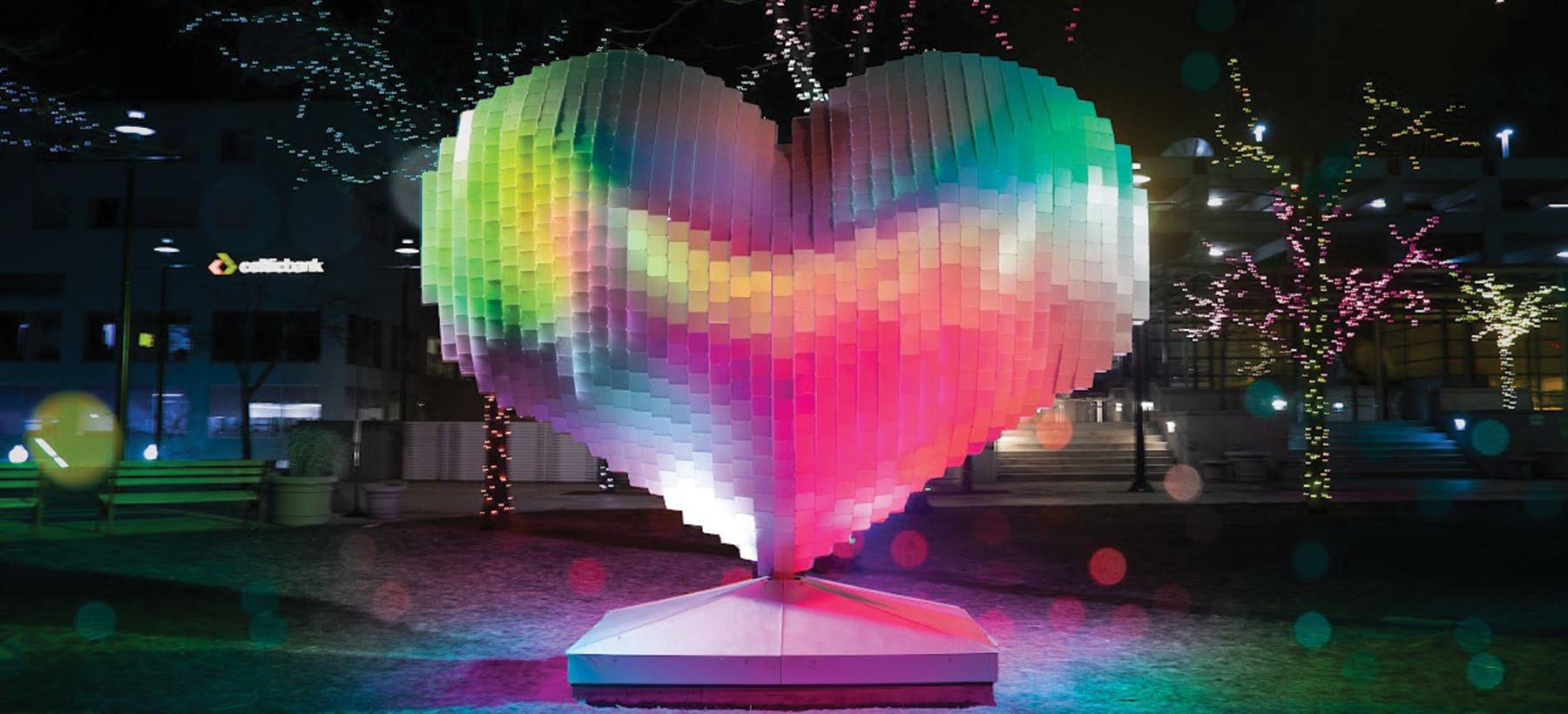
Often, when people imagine signature public art, they envision large-scale sculptures in prominent public spaces. However, temporary or recurring public art installations can be equally impactful, as demonstrated by events like Napa’s Lighted Art Festival or Scottsdale’s annual Canal Convergence, both of which showcase temporary public art alongside other programming. In this form, signature artworks take on the role of an event where public art plays a key role. Tempe has many events and festivals, which provides an opportunity to present a significant work of temporary art as part of an already existing festival or event.
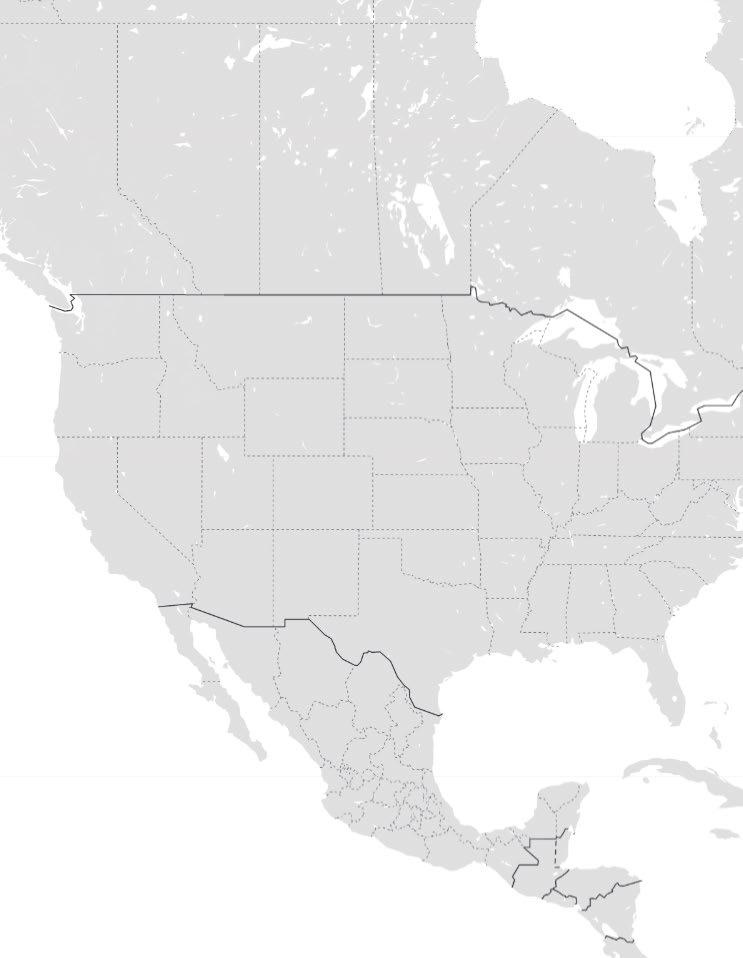
On the following pages are a series of case studies that highlight how other communities advance signature projects that can be used as inspiration for future projects in Tempe.
Map 4.3 Case Studies
URBAN DREAMS ART EXPERIENCE
NAPA , CA TEMPE
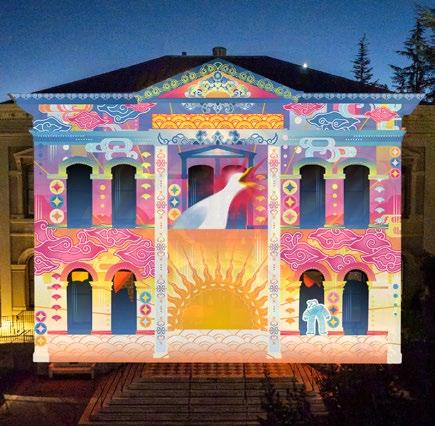
NAPA LIGHTED ART FESTIVAL
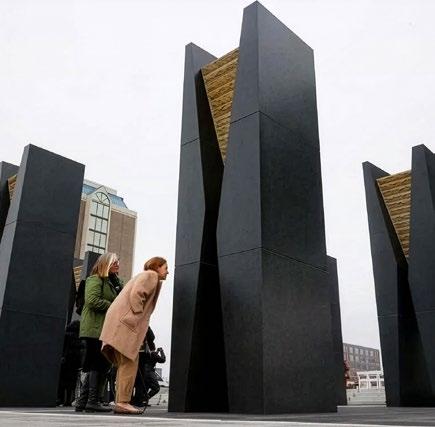
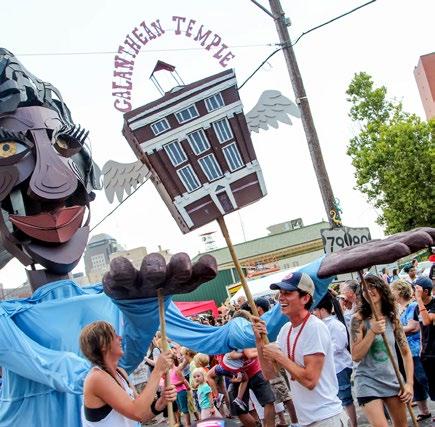
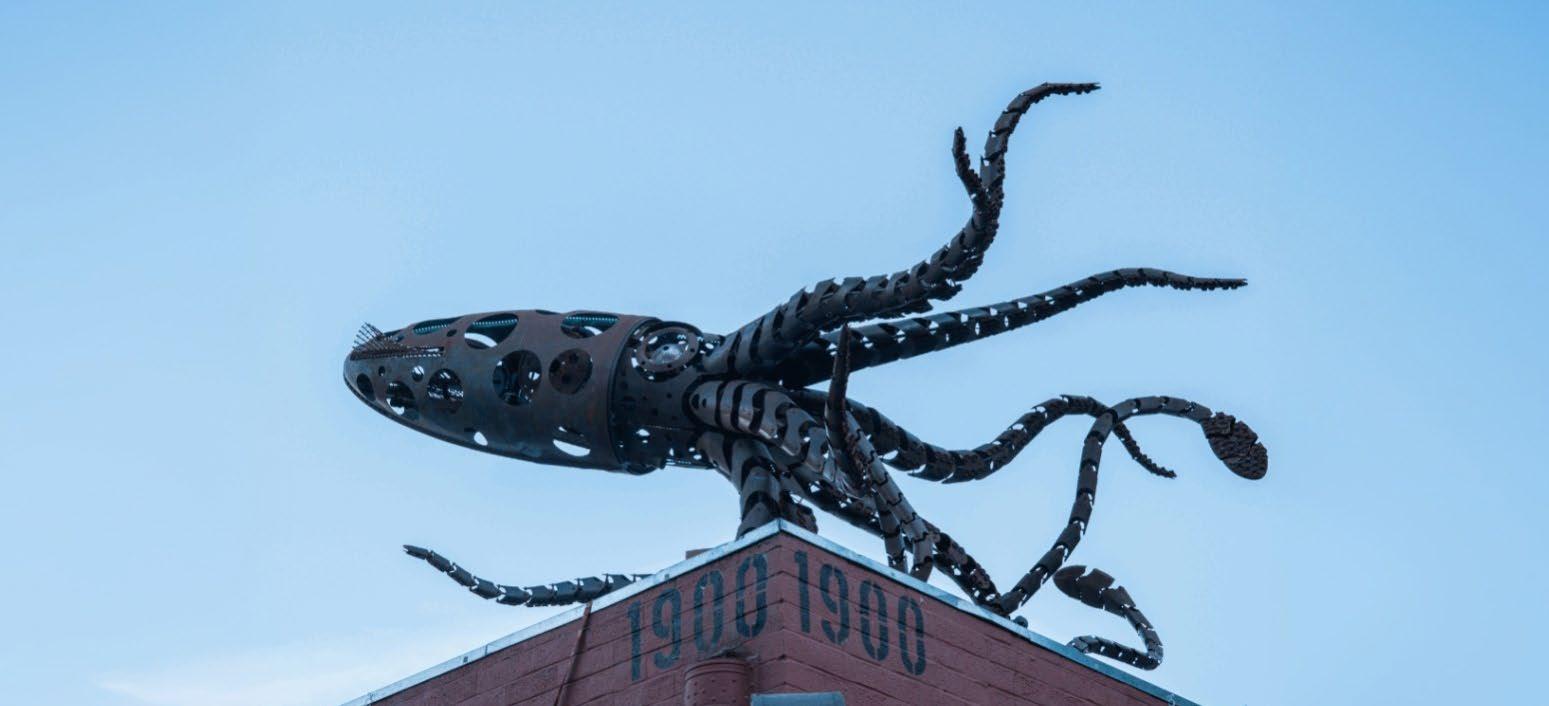
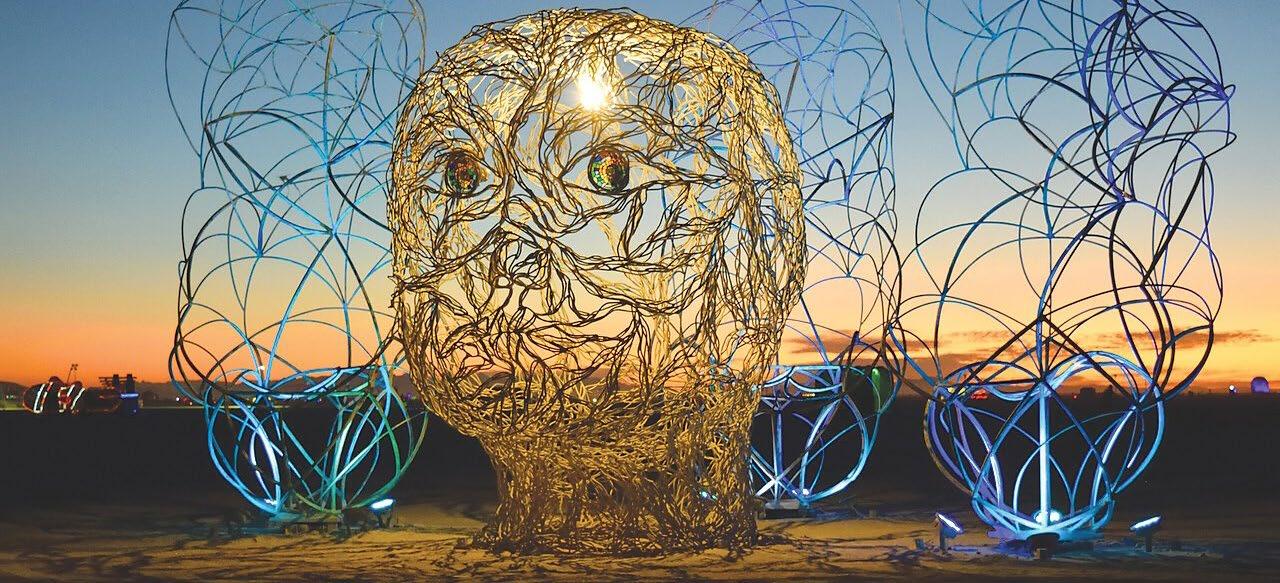
During a month-long experience, Midtown Sacramento is transformed into an open-air gallery of wonder with 16 large-scale, immersive art installations. Through a regional call to artists, an artist selection committee selected work from 13 artists based on their artistic merit, creativity, community engagement, and social impact, with a preference given to artwork that reflects Sacramento’s diverse communities. In conjunction with Sutter Health’s Midtown Second Saturday, the Urban Dreams Art Experience is presented by the offices of Mayor Kevin McCarty and Supervisor Phil Serna and is a collaboration between Midtown Association, Visit Sacramento and Sacramento Valley Spark.
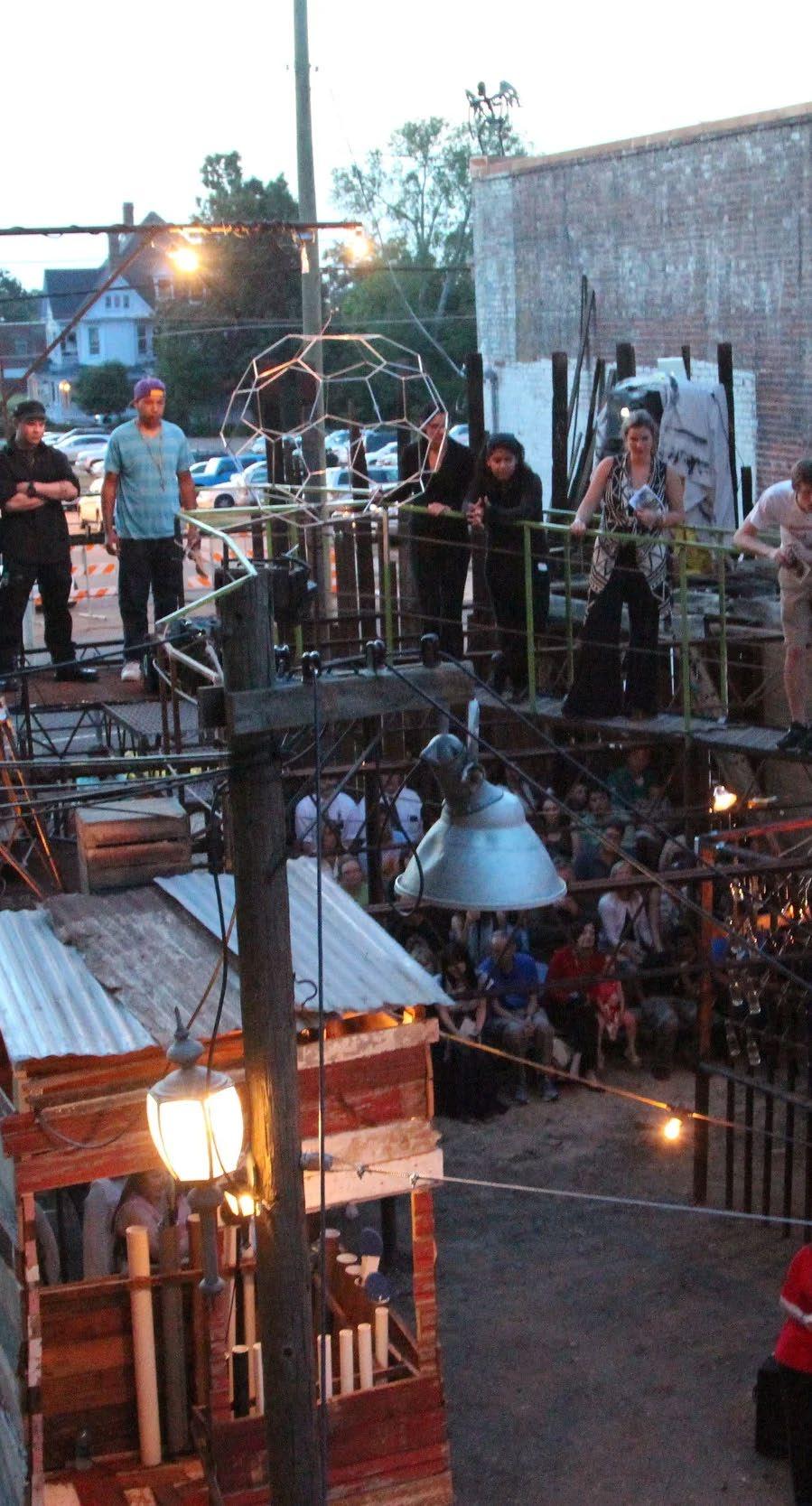
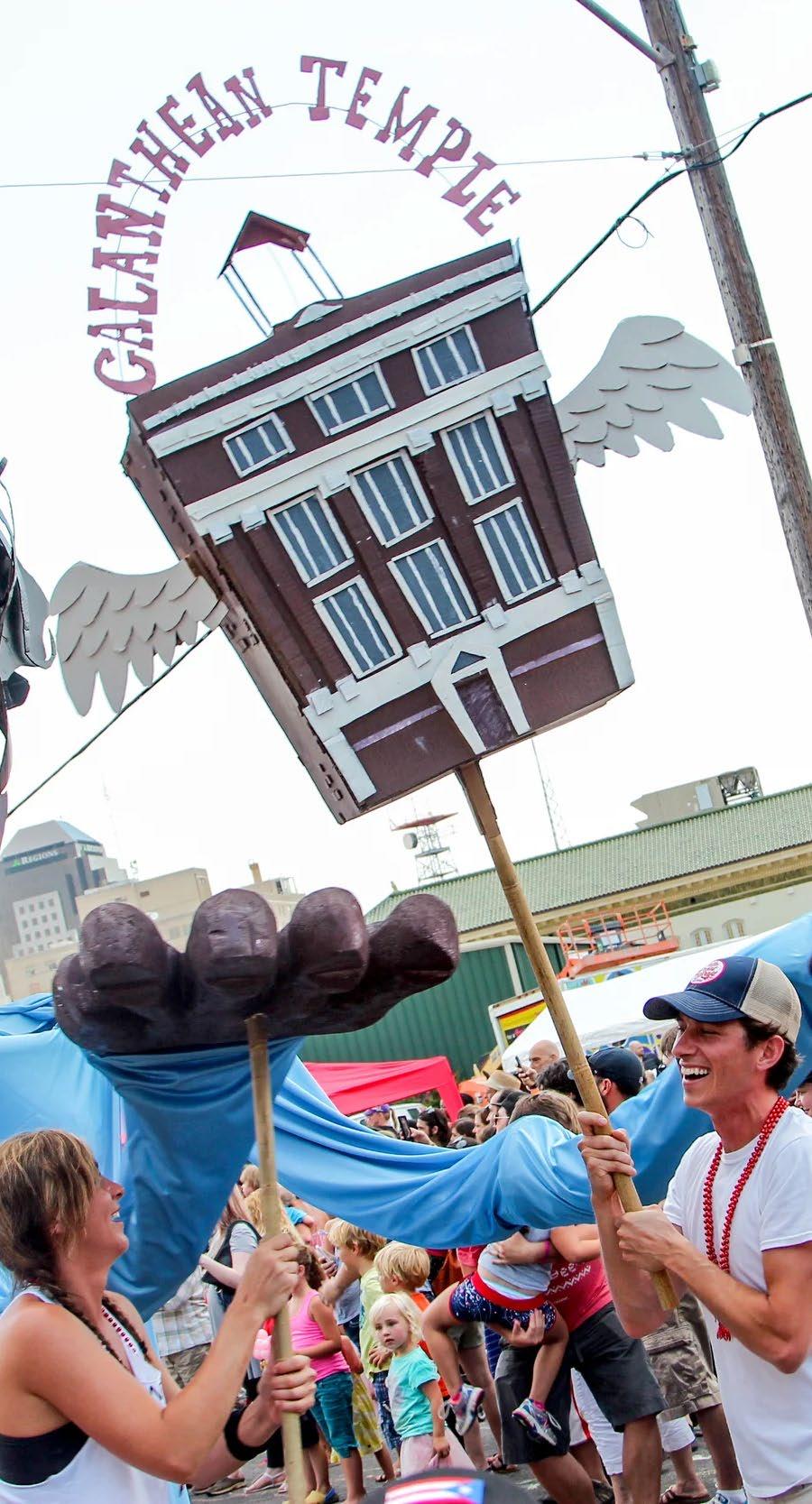
Shreveport Common is a nine-block, historically blighted area on the eastern edge of Ledbetter Heights and the western edge of downtown Shreveport, Louisiana. UNSCENE! monthly events showcase the potential of Shreveport Common, permanently advancing the vision for a creative community. National, regional, and local artists create innovative art and programming that attracts diverse audiences to experience the cultural district. UNSCENE! is a Shreveport Regional Arts Council project, managed by a multi-disciplined Artists’ Management Team, with support from ARTPLACE AMERICA, the Community Foundation of North Louisiana, BHP Billiton, the City of Shreveport, and local sponsors.
Case Study
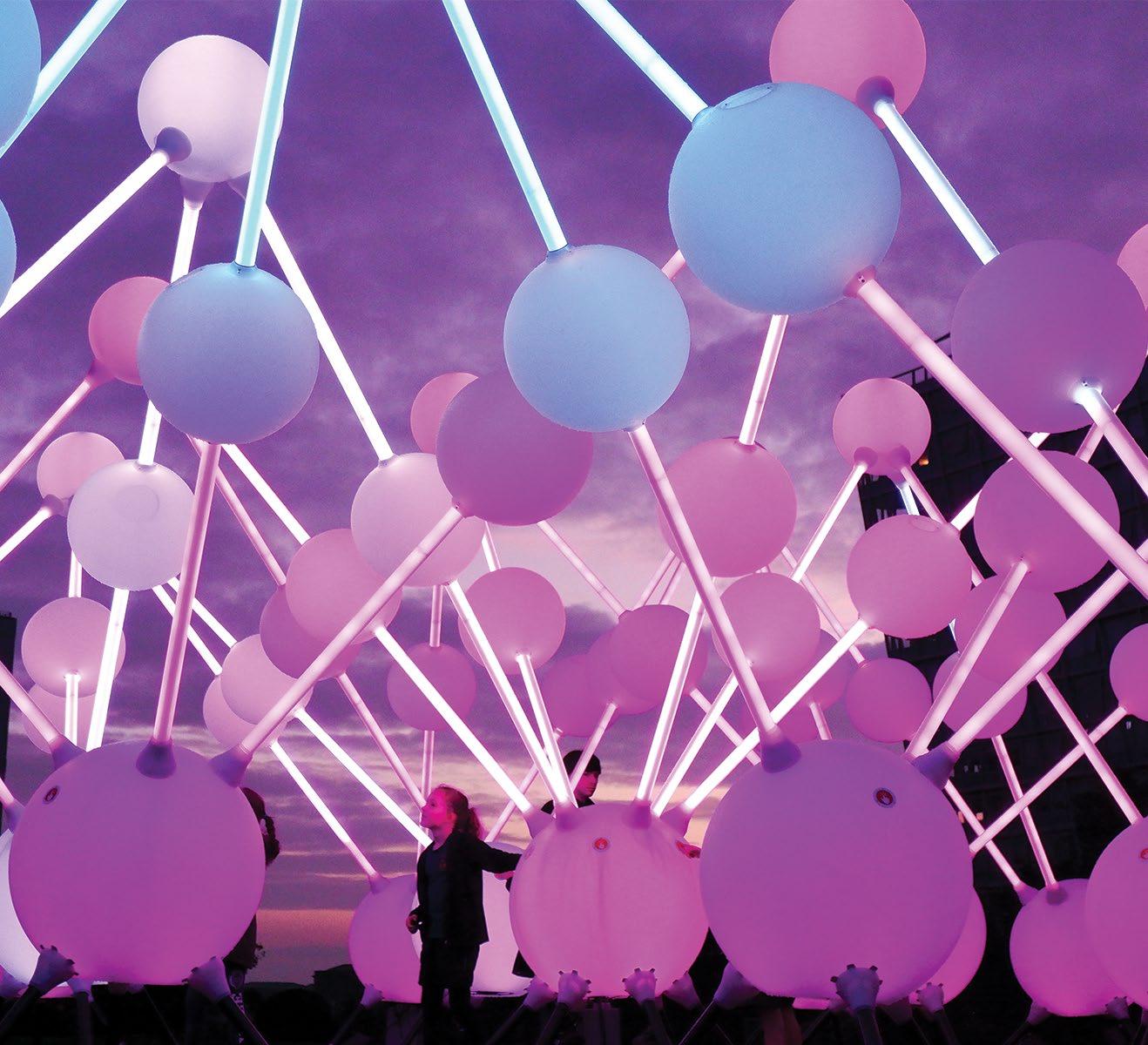
The Napa Lighted Art Festival is a free, walkable midwinter outdoor experience in downtown Napa that celebrates creative arts, technology, and light. It supports the innovative use of light and light technologies as a growing art medium. For five weeks, the festival features 15 lighted art installations. Additionally, projection artwork is displayed on three iconic downtown buildings during the first nine nights of the event. The festival is presented by City of Napa Hotels and Inns.
Case Study
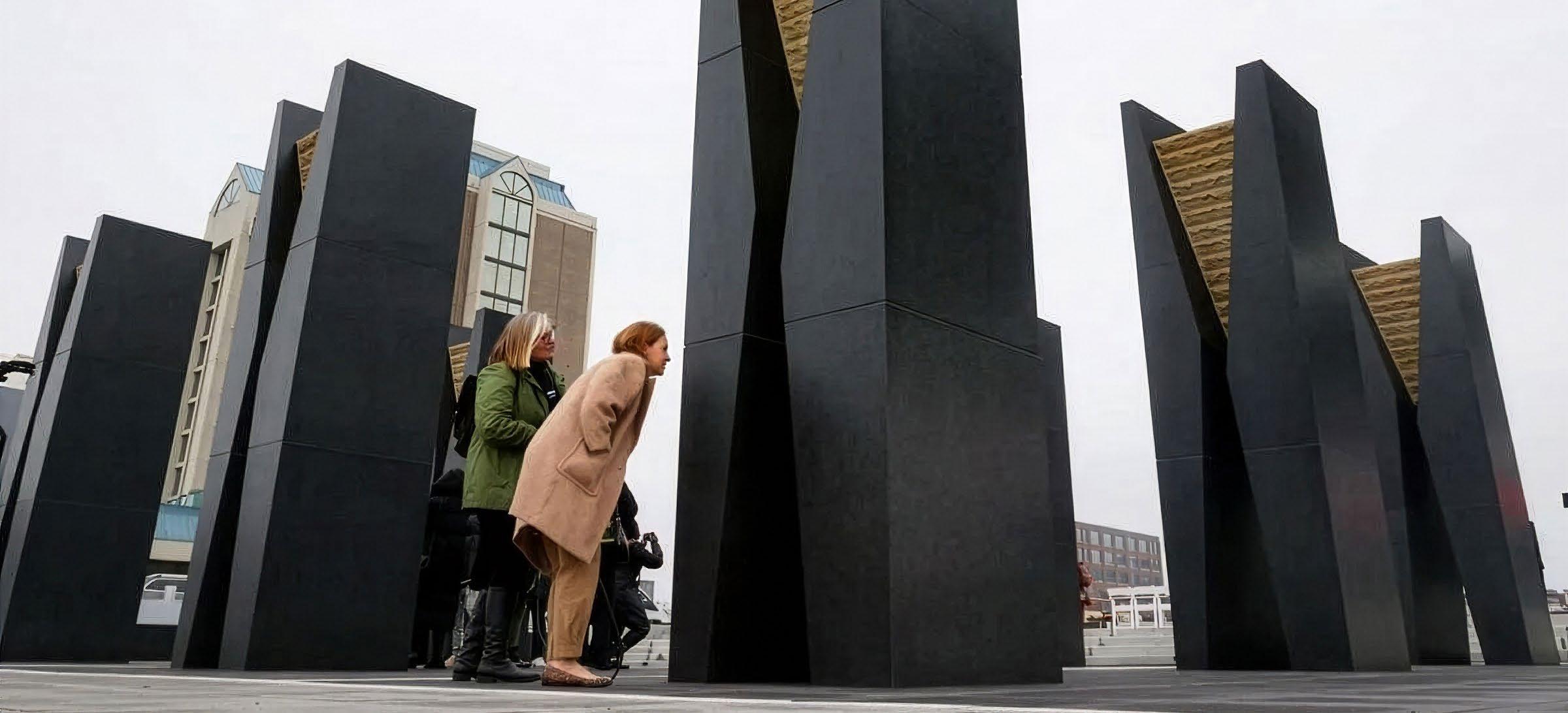
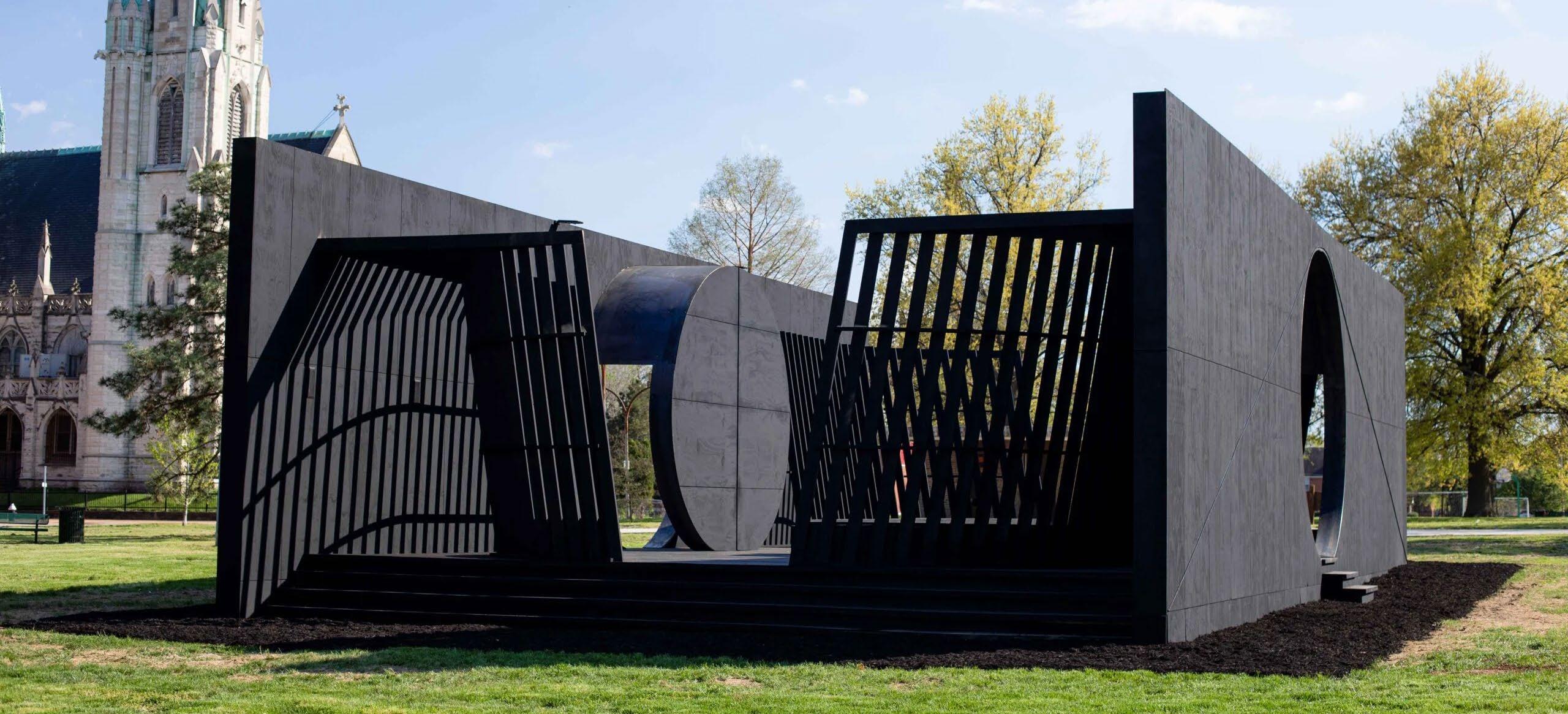
Counterpublic is a St. Louis-based triennial exhibition and 501c3 nonprofit, founded in 2021, that reimagines public art to address regional challenges. As one of the nation’s largest public art exhibitions, it celebrates the St. Louis region through new commissions, programs, and civic initiatives, culminating in a three-month, citywide show. Working in public, cultural, and historic spaces, Counterpublic commissions artists, leaders, and civic stakeholders to create art that engages history and imagines new futures, also seeding civic initiatives for generational change. The name “Counterpublic” is a sociology term for communities uniting to reclaim representation in public space. The 2023 exhibition focused on temporal entanglements along Jefferson Avenue. Its offices are in a historic Grand Center Arts District home.
Signature artworks may also take the form of site-specific artwork that transforms a space that was once familiar in a different context. Older, historic sites can be reframed by an artist to create a new experience for visitors and community members alike when taken into a contemporary context. Even ordinary sites like older gas stations or empty store fronts can be recontextualized as a signature work of art
As Tempe Public Art progresses, signature projects can be considered when opportunities arise. These projects could encompass both large-scale permanent works and temporary installations and take a variety of forms.
There are many approaches to creating a signature project and each has incentives and challenges that the staff would need to consider. For the types of projects mentioned here, the following points should be considered:
Throughout the public art planning process, there was considerable discussion regarding the desire for iconic or signature public art. A desire exists for more high-impact, highly visible signature artworks. However, the substantial expenses associated with large- scale installations—such as Anish Kapoor’s “Cloud Gate” (widely known as The Bean) in Chicago, or Janet Echelman’s “Her Secret is Patience” in downtown Phoenix—are likely to exceed the regular budget of Tempe Public Art. It should also be noted that large scale permanent artworks require significant space, therefore in order for this approach to be considered, City of Tempe will need to determine a location that is appropriate as well as of a significant scale.
As the city grows and changes are considered to areas where City of Tempe owns older properties, Tempe Public Art could identify spaces that would become a new site of interest through an artist’s vision. This could be in the form of an empty store front or the entire building if available. Works like Matthew Mazzotta’s Store Front Theater show what might be possible with partnerships in place to foster support for this sort of artwork. To create this type of a project, partnership with a private land owner may be required.
Should these types of work be pursued, the following considerations are recommended:
• The artwork placement ought to provide a prominent, frequently visited location, seamlessly integrated into a high-quality public space.
• Tempe may wish to investigate potential collaborative partnerships with public or private entities to facilitate the development of a large-scale project.
• An invitational process might be a consideration for work at this scale to engage artists who would not typically participate in standard public art selection procedures.
Temporary public art installations are a growing trend across the country, creating engaging and iconic experiences. These ephemeral works often achieve a greater impact than permanent installations precisely because of their temporary nature, encouraging both community members and visitors to experience them during their limited lifespan, driving more engagement and visits. The substantial expense and complexity of logistics for a light-based event necessitates partnership with others in the Arts and Culture division, and potentially those outside the city, to ensure it’s overall success. There are already several festivals and event-based programs within Tempe where a large scale temporary artwork could be incorporated into the current programming.
Should this type of work be pursued, the following considerations are recommended:
• A yearly or bi-yearly series or event would allow people to anticipate future installations and build excitement within the community.
• This type of project could be done in conjunction with a mentorship, artist development, or artist in resident program
• Artwork could be placed in collaboration with an existing festival or other event in Tempe or in collaboration with partners to ensure feasibility.
Strategy 3.2 Undertake a curatorial approach to integrating public art into infrastructure
Large infrastructure projects in Tempe offer significant opportunities for integrating public art into the built environment. These complex projects require early identification and careful planning for public art; otherwise, these opportunities may be missed or become infeasible if not incorporated into the initial design and engineering processes.
Tempe Public Art should partner with major infrastructure teams throughout the planning, design, and construction phases to ensure the seamless integration of artwork. While art planning should be embedded in the overall process, the artistic vision must be led by artists, curators, or art administrators rather than technical design teams. This curatorial work generally takes the following forms:
• Tempe Public Art staff could undertake an assessment of the corridor and develop a public art approach and plan alongside other Tempe staff.
• Tempe Public Art could hire a curator or curatorial team to develop a plan for the infrastructure project. This team would be separated from the artist that is hired to develop the work.
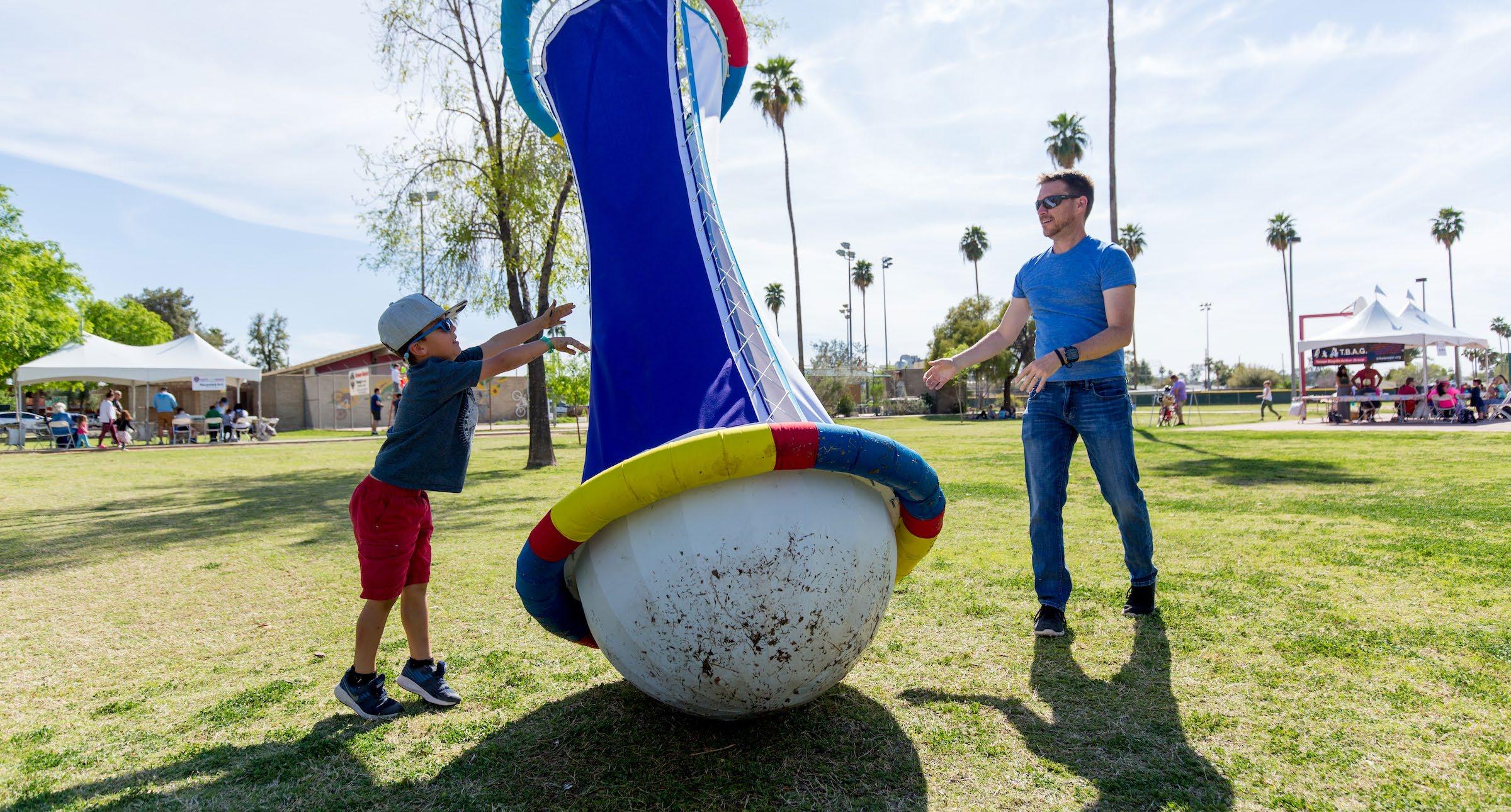
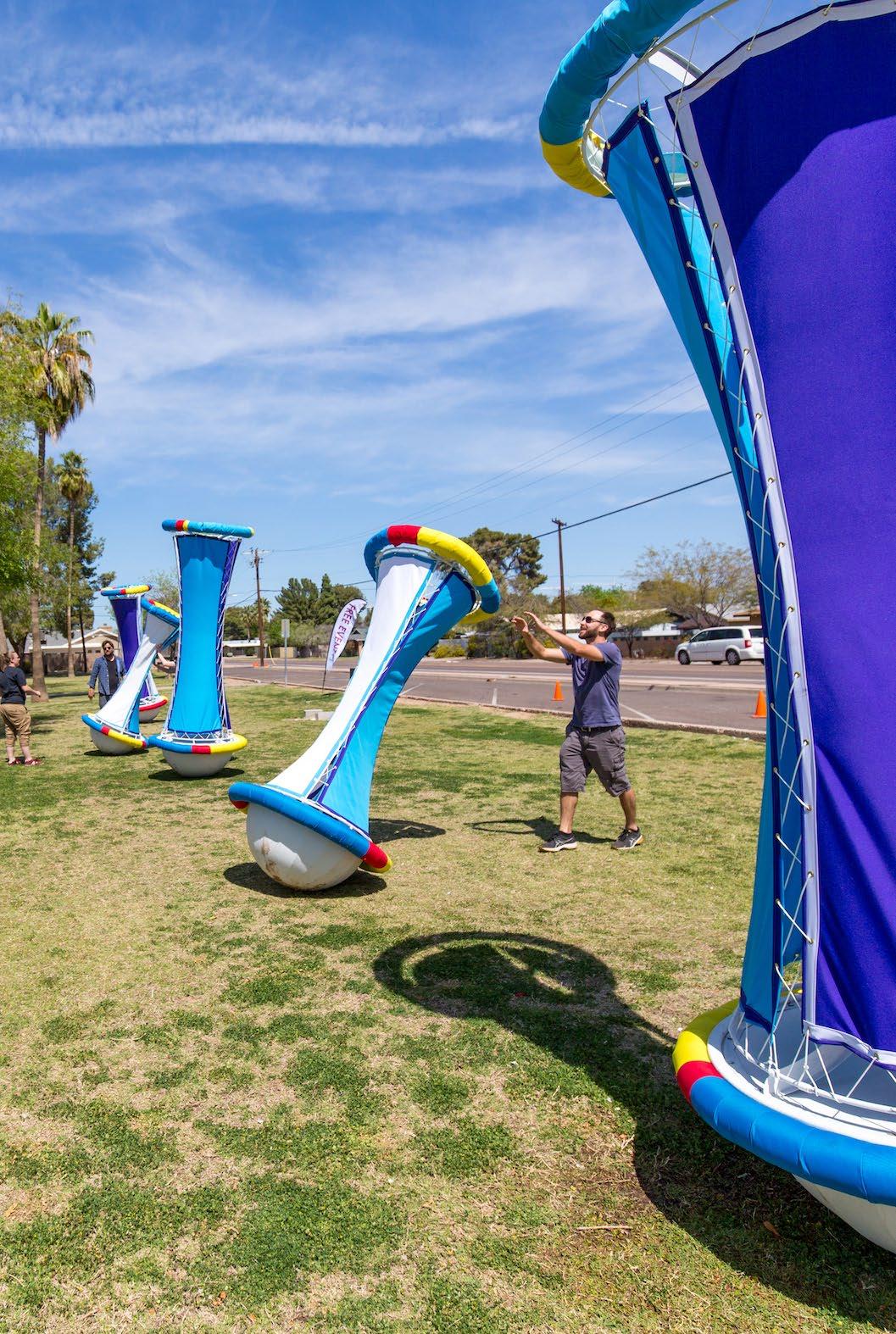
Visually, Thwimp Thwomp is a large, colorful game about physical movement and spatial awareness. Physically, Thwimp Thwomp is a set of five giant weeble wobbles, each standing 8 to 10 feet tall. The project provides an unfamiliar environment, one where architecture is in constant movement, a place where the walls move and the sky is falling.
Each sculpture is a stretched fabric skin, over a lightweight skeleton, situated on a hemispherical base, the geometry of the lower bumper will make it impossible to tip over the sculptures. Being a large, colorfultactile installation, Thwimp Thwomp will undoubtedly draw the attention of anyone who sees it; taking on the role of an architectural intervention, and conceptually connecting ‘high art’, architecture, playgrounds and participatory installations.
Bobby Zokaites is a sculptor who engages his imagination through the creation of largescale, colorful, interactive objects and spaces. Bobby is a Tempe-based artist skilled in a variety of materials with a wealth of experience producing large-scale works for private and public spaces.
ARTIST: Bobby Zokaites
LOCATION: Clark Park
PHOTOS BY: Tim Seally
As noted by several artists during the outreach portion of this planning process, breaking into the public art field presents significant challenges. Educational institutions offer limited programs focused on the business aspects of being a public artist. The current economic climate, marked by high real estate and material costs, makes experimentation more difficult. Consequently, municipal art programs frequently commission established artists who possess the necessary skills to collaborate with engineers, fabricators, and design teams on larger projects, while emerging artists often lack this specific training.
In line with Tempe’s reputation as an innovative, forward-thinking community, Tempe Public Art is well-positioned to be a launch point for the careers of future renowned public artists. Tempe has a unique opportunity to help artists experiment, gain experience, and eventually take on larger projects elsewhere. This could result in a formal public art mentorship program.
An artist mentorship program would create the following benefits:
• Give artists the opportunity to gain experience in the public realm
• Educate artists to help diversify and grow the local artist pool
• Deliver new and innovative works for the community to experience in Tempe
• Grow the national profile of Tempe as a public art destination
• Create opportunities for staff to give curatorial input and for artists to understand the complexities of municipal public art
• Increase the strength of applications/proposals to City of Tempe through strategic workforce development
• Highlight local fabricators to inspire collaboration
• Stimulate the local creative economy
• Demonstrate a commitment to artists in the area to retain local talent
• Capitalize on the creativity, cultures, and histories specific to this region
• Drive creative community development and network building through the arts
• Inspire lifelong learning to increase artistic innovation in public spaces
A mentorship program could be structured as an artist cohort program, accepting a specific number of artists to participate in a structured, educational program with a focus on required skills in the public art field. A mentorship program could also be designed similarly to an artist-in-resident program where artists are able to work closely with staff and a site as they develop the skills needed to create a project.
Tempe Public Art can use its innovative programming to become a launchpad for early-career and mid-career artists. This strategy, and key program goal, would foster a reputation earned through dedicated support and opportunities for emerging talent. To achieve this, Tempe will need to focus on developing an environment that actively cultivates and promotes these artists. This could include:
• Create specific opportunities that are experimental or otherwise targeted at earlycareer and mid-career artists
• Provide artist mentorship and workshops
• Develop the program’s standing as a resource for local artists through strategic marketing, engagement at conferences, presentations, and hosting relevant events.
For those within the development and residential community who are not used to working with artists, there is often a disconnect. Typical best practices in the arts are not well understood outside of the field. As a result it’s not uncommon to see neighborhood groups or developers ask artists to develop a proposal for free or to lack understanding of artists rights under the Visual Artist Rights Act (VARA). As a significant portion of Tempe’s artwork is produced through the AIPD and Neighborhood Grant programs, it is crucial for Tempe Public Art to ensure fair artist treatment and the creation of the highest quality public art through these initiatives.
Significant progress has been made through initiatives to help educate neighborhood associations, HOAs and developers about the best approaches to hiring artists. This includes the process of request for qualifications (RFQ), importance of compensating artists for their proposals, and other contracting issues.
To ensure Tempe Public Art maintains its leadership role in local artist relations, consider the following:
• Continue ongoing education initiatives for neighborhood groups, HOAs, and developers.
• Consider providing neighborhood groups, developers, and others who are looking to hire an artist for their site, a model contract or resource list to address typical contract issues, such as artist scope of work, design fees and intellectual property.
• Explore other opportunities for leadership in the area such as developing materials that explain the artist selection and contracting process and creating online or video guides.
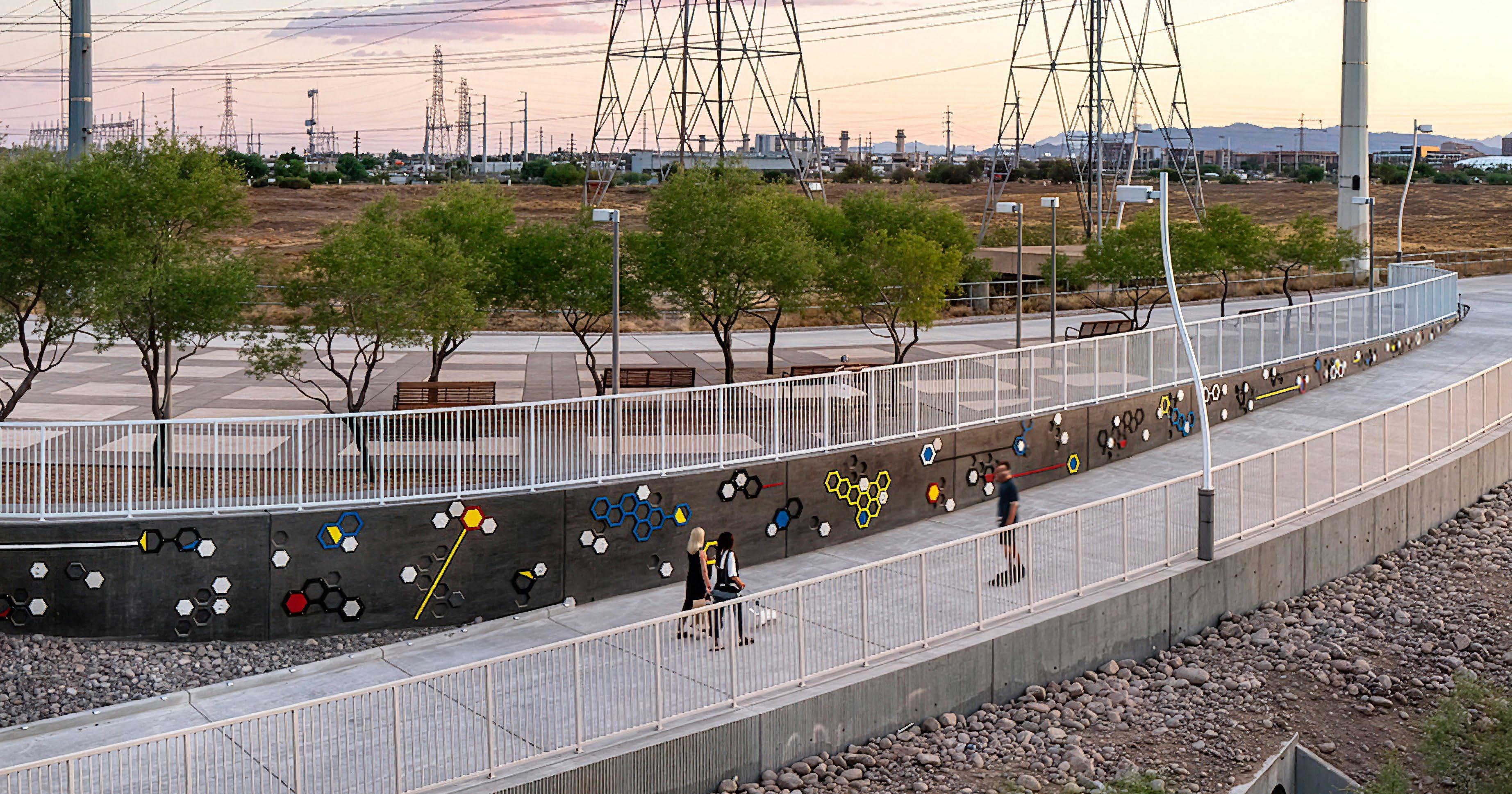
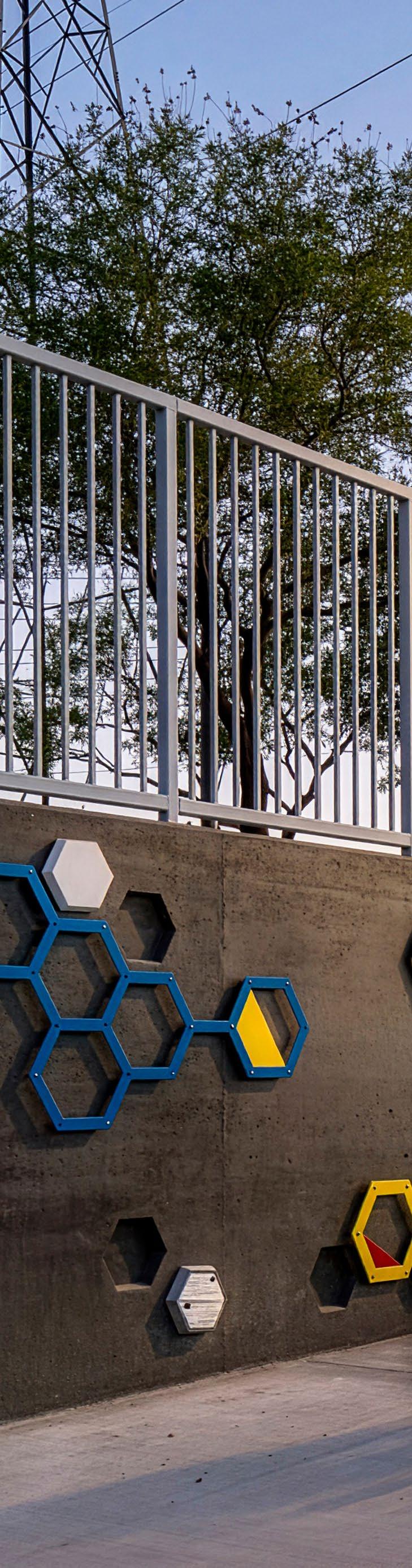
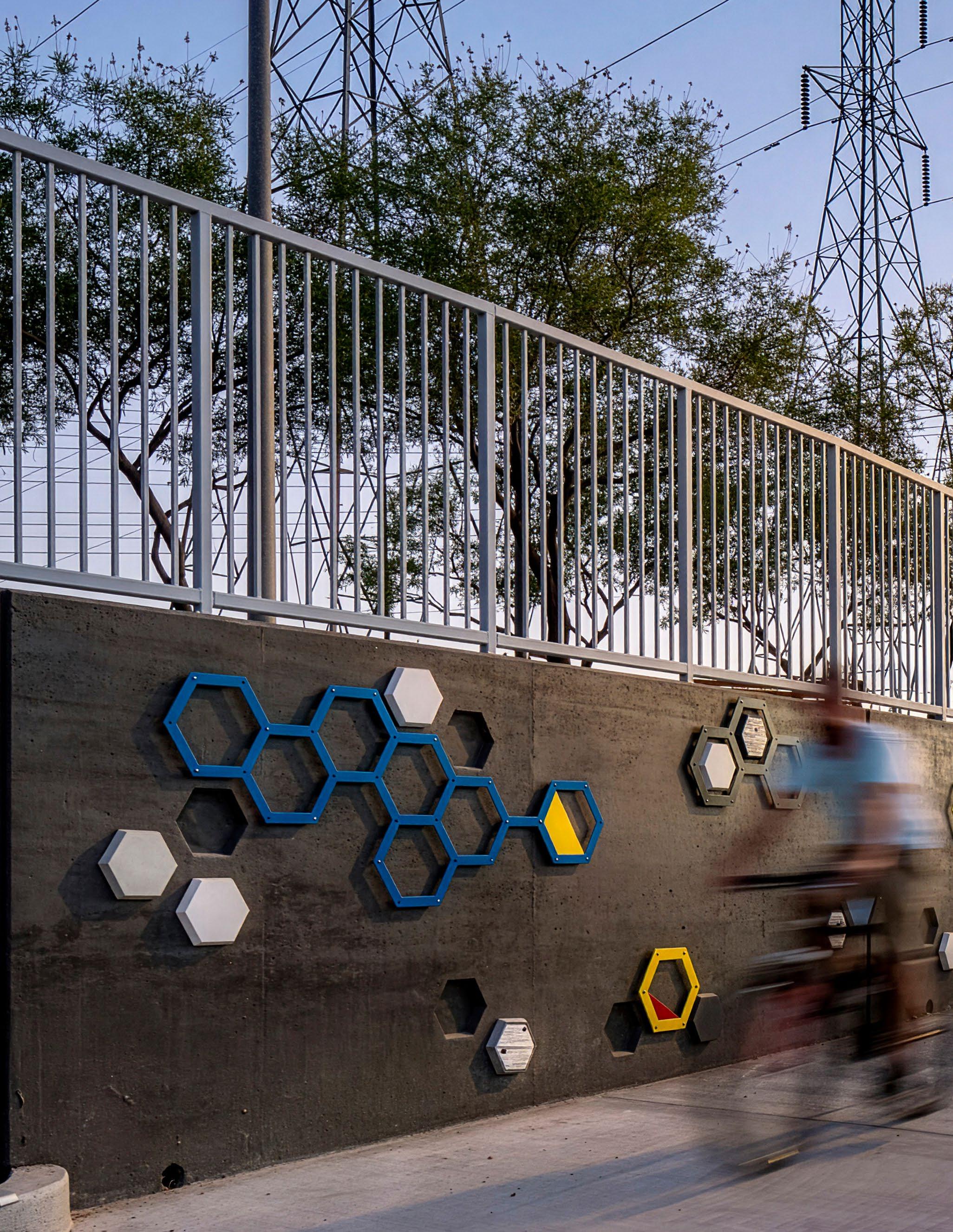
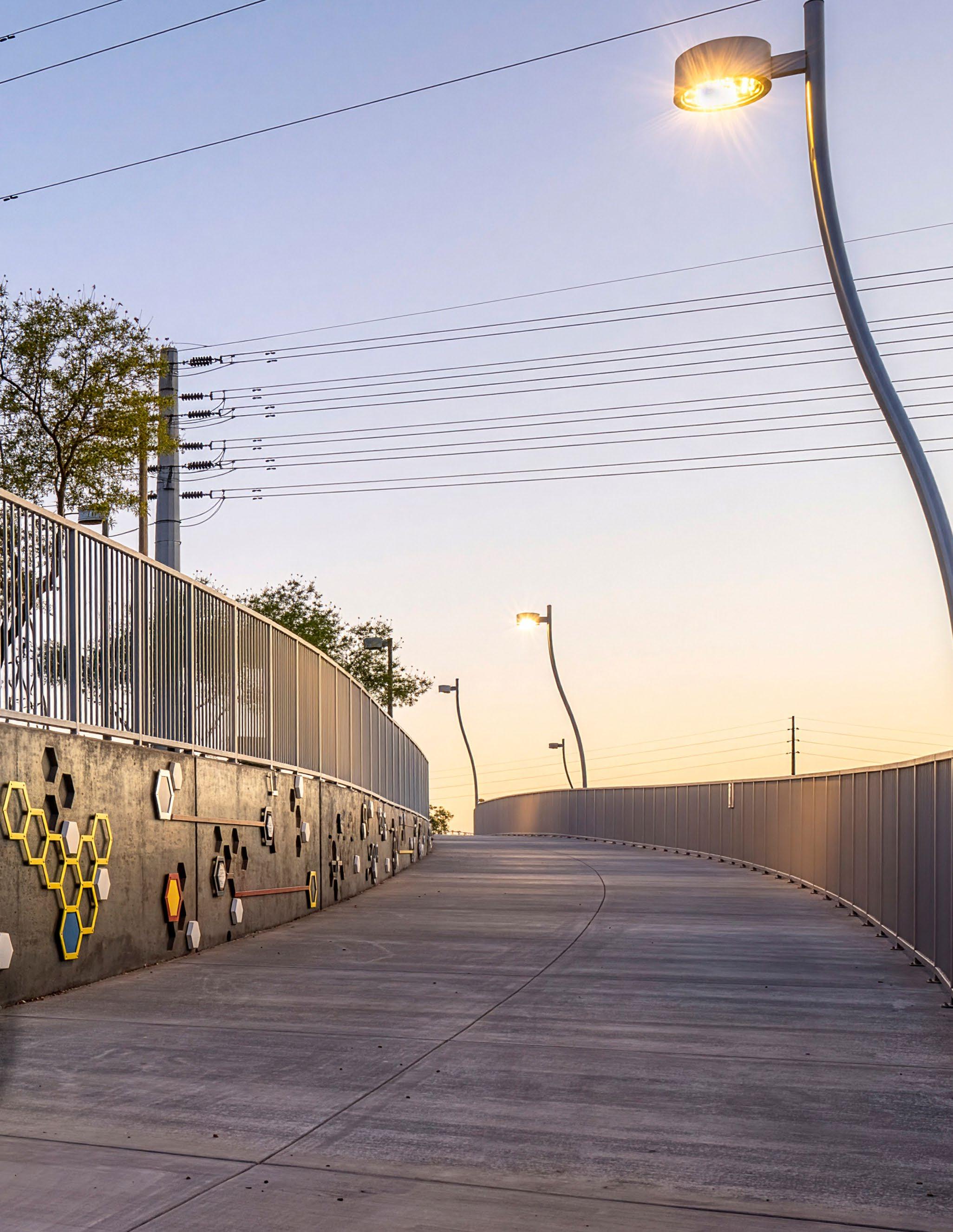
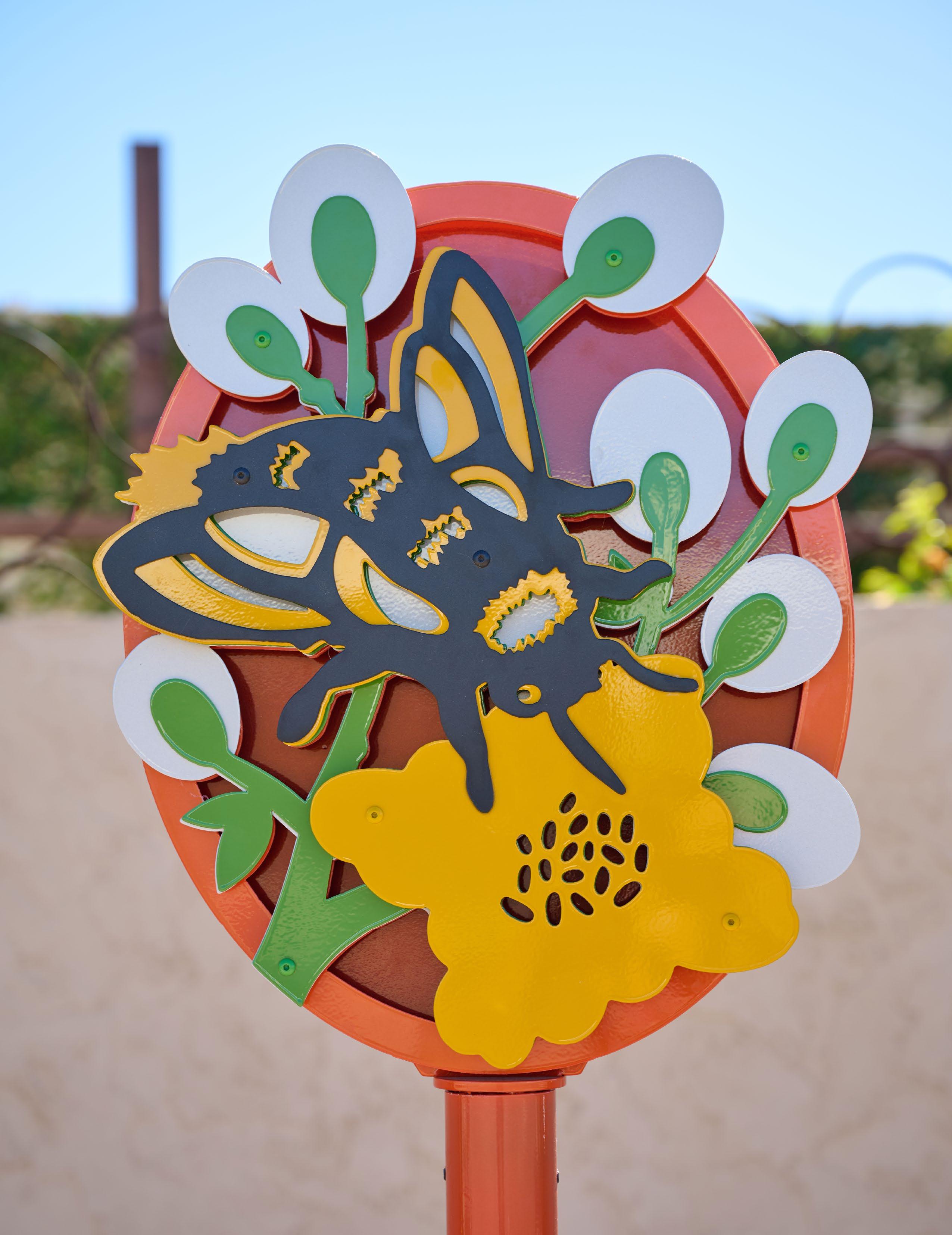
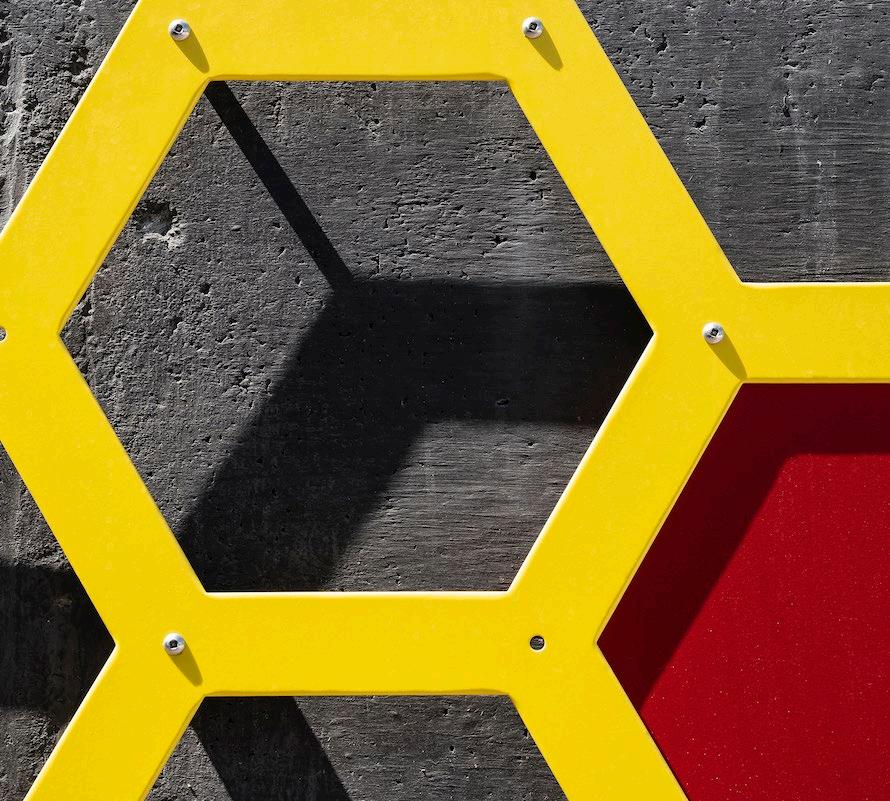
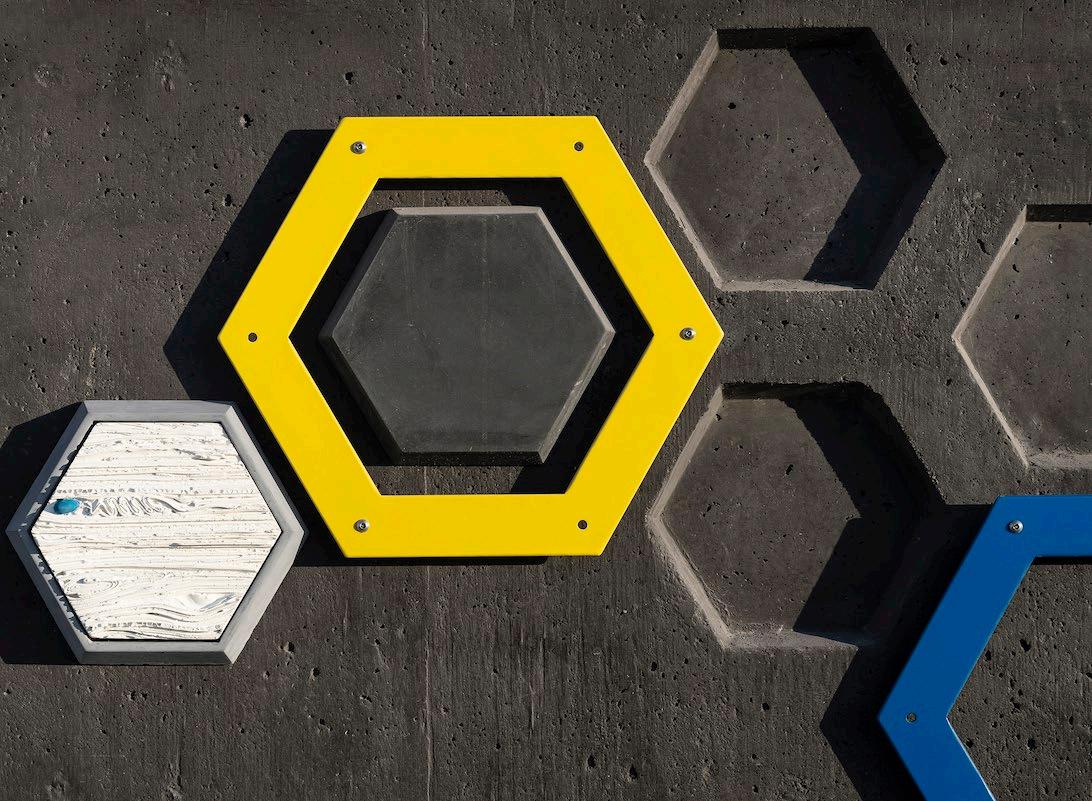
Affectionately titled “Local Honey”, the idea for this 200-foot long modular composition can be attributed to a colony of honeybees found on the side of Valent’s studio a few summers back. The interconnected groupings of concrete tiles and brightly colored steel components compose an abstract interpretation of the coexistence between man and nature. Inspired by the brightly colored façade of signs at Tempe Marketplace that can be seen reflecting in the waters of the nearby oasis wetlands, “Local Honey” asks us to examine more closely, what is considered to be a community. People often think of community as friends and neighbors; parks, schools, and places of worship; and centers for goods and services. They associate communal space with human interaction but forget that the spaces inhabited are also home to an abundance of other creatures. Moving forward, if people choose to build cities and communities to include wildlife and support a sustainable future then maybe they need not go far for a breath of fresh air or a taste local honey.
Zach Valent is a Phoenix Valley Metro based visual artist whose work focuses on the unique characteristics that form a relationship between man and nature. Through investigation and a playfully creative process, he seeks to capture homogenous motifs of natural wonders that express the allure of time. Working primarily with concrete, many of his art forms take on the appearance of geologically altered modern technologies and products of man.
ARTIST: Zach Valent
LOCATION: Rio Salado Pathway
PHOTOS BY: William LeGoullon
Tempe Public Art follows a systematic approach to documenting and refining operations, including but not limited to the design of the annual work plan process. The following strategies are meant to formalize this process and allow for an annual review as part of each fiscal year’s project planning.
The work plan development process is one of the most important pieces of ensuring that Tempe Public Art operates on an efficient streamlined basis. The work plan allows for a documented understanding of what Tempe Public Art seeks to achieve in any given year, and helps to ensure that the program stays on track and that those outside of the program understand what the program aims to achieve and how it’s prioritizing projects.
As it currently operates, Tempe Public Art undertakes a yearly development of a work plan as part of the regular budgeting process. The following outlines a proposed, formalized process that builds off existing practices and expands them where needed. This formalized system aims to capture potential project ideas, develop them further, and ultimately prioritize relevant projects for inclusion in an annual work plan for implementation.

1 TEMPE PUBLIC ART STAFF
Lead the planning process

2 DEPARTMENTAL & CITY LEADERSHIP
Contribute ideas, endorse the Work Plan
4
STAKEHOLDERS
Contribute input and feedback
4 3
INTERNAL PARTNERS
Contribute ideas, Support the staff
On a regular basis, Tempe Public Art conducts research on potential projects. This could become more robust to include potential locations, subject, matter, media or other opportunities. By continuing to assess opportunities, Tempe Public Art will be able to maintain a list of potential projects on a regular basis.
The opportunity list can be examined and added to during the yearly work plan development process. Projects identified as short-term projects for implementation would be added to the work plan, while other projects can be maintained on the opportunity list for potential future inclusion in the work plan.
While Tempe Public Art staff maintains the opportunity list, regular input would be sought from internal partners, the Tempe Arts and Culture Commission (TACC), and city administration to ensure that the opportunities are meeting community expectations.
The opportunity list may include:
• Locations for potential projects
• Subject matter ideas
• Artwork media ideas
• Potential examples or case studies
Project
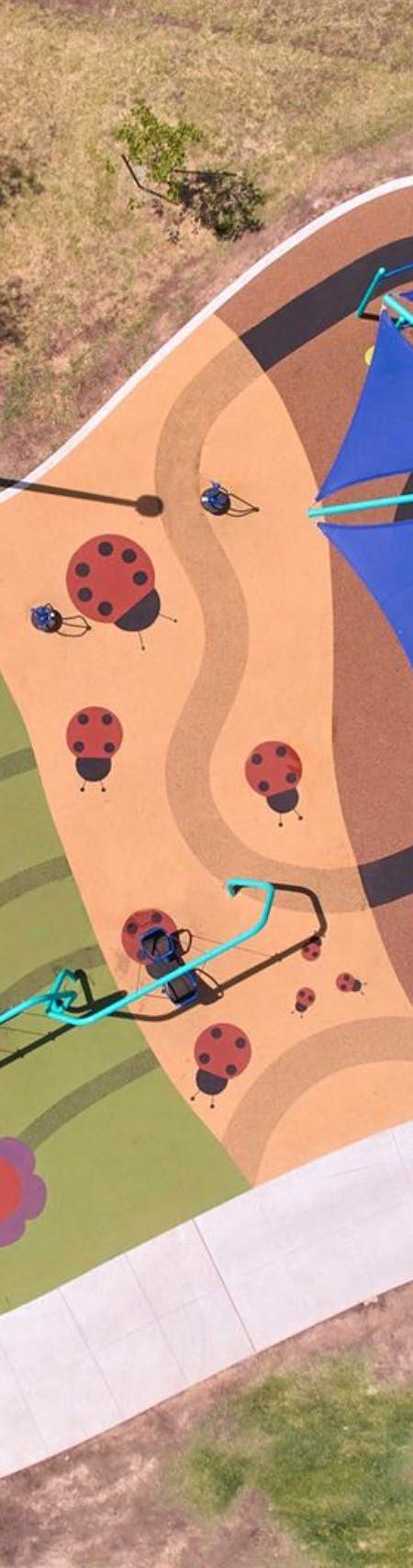
Project ideas would generally come from the opportunity list. These ideas can be developed into conceptual projects. These projects may be fully established (for example: a proposed artist –designed, rubber playground surface at a specific park) or conceptual and open to interpretation by an artist (for example a proposed RFQ for an artist to do a work located in a specific neighborhood that currently lacks a piece of public art).
Project Ideation May Include (but not be limited to) the following elements:
• Location
• Subject matter
• Media
• Artist selection process
• Placement strategies
• Project duration
To feed into the Public Art Work Plan, potential projects would be prioritized after their development. This can be achieved through a flexible set of metrics, regularly adjusted to ensure the program’s continued innovation, expanded impact, and reflection of current needs. Potential metrics for prioritization are detailed in Strategy 4.2.
The previous phases can help define a welldeveloped list of potential projects that are prioritized for implementation. By examining potential projects alongside the available budget for the year, the priority list can then be translated into a proposed annual work plan. As with other components of the yearly planning process, partners and stakeholders would be engaged in the process.
Following the final review of the work plan would then be reviewed internally by City Staff as needed. The finalized work plan would then be presented to TACC.
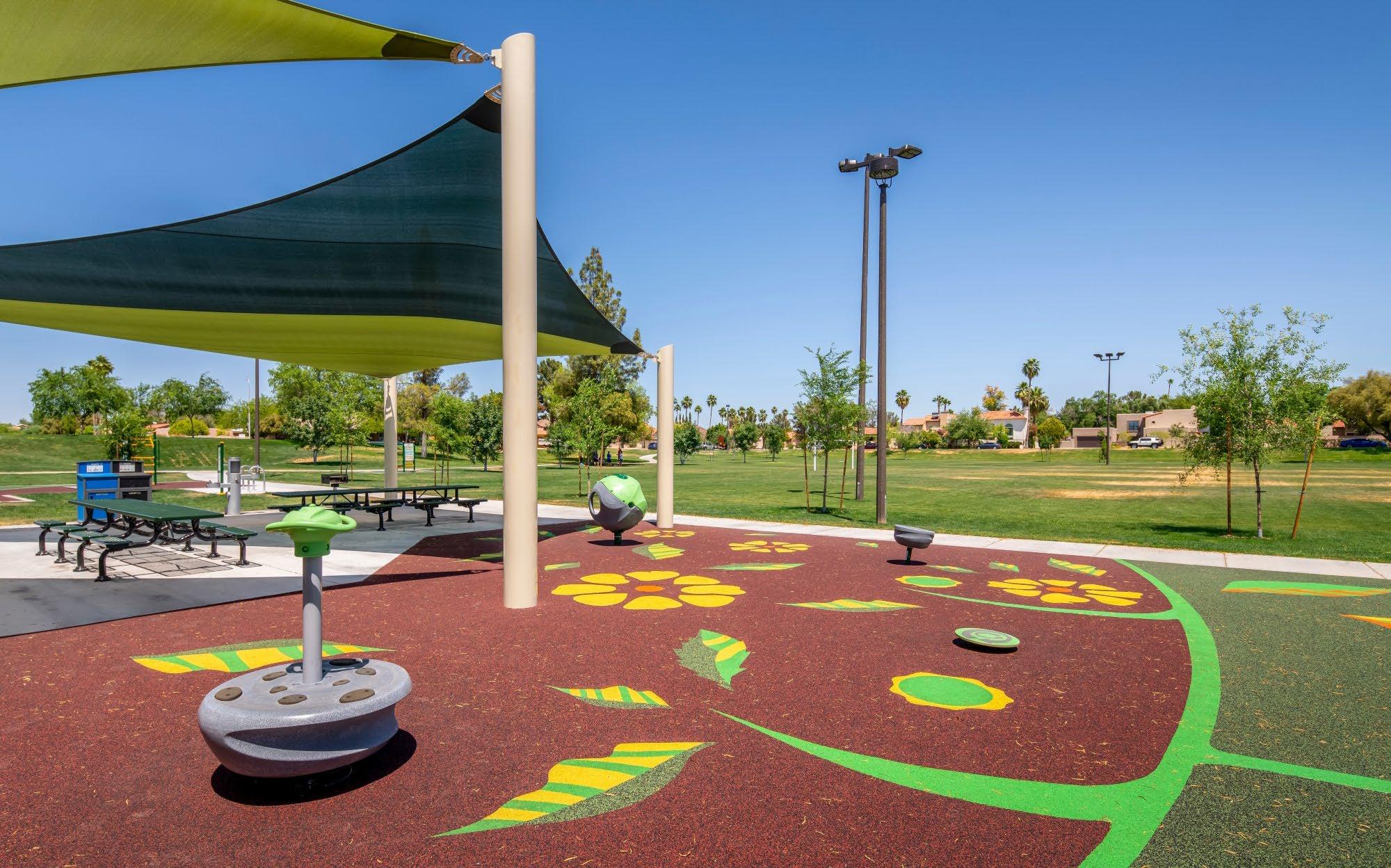
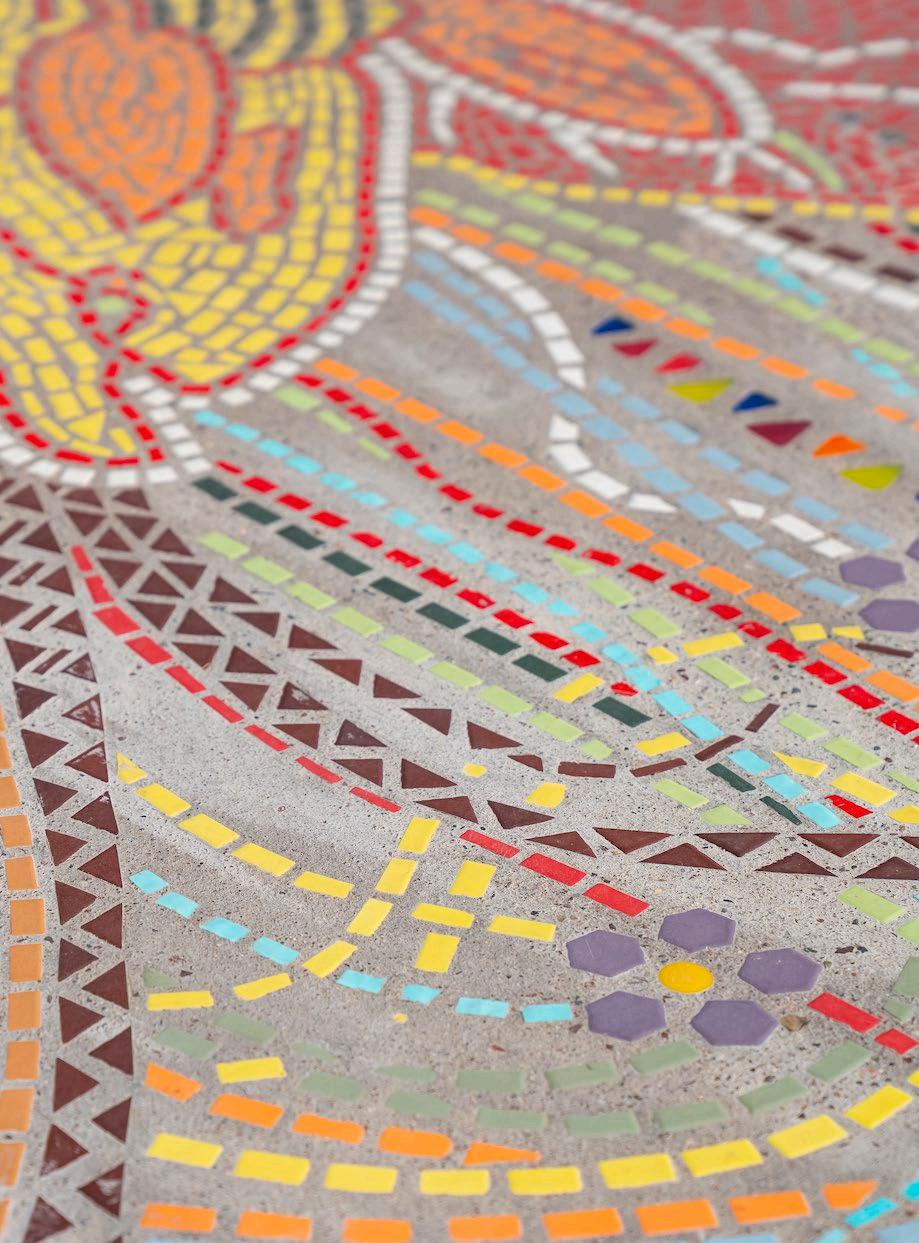
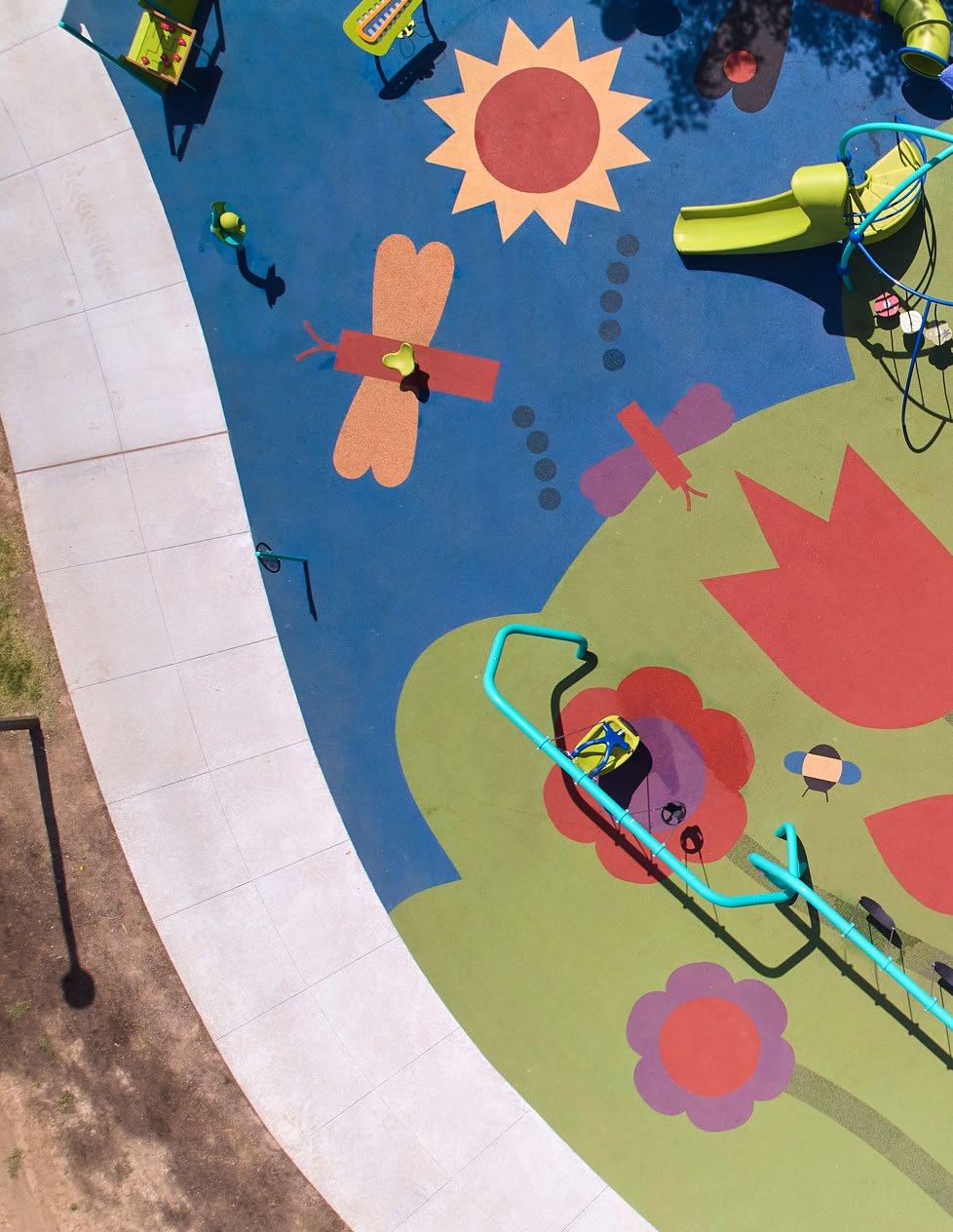
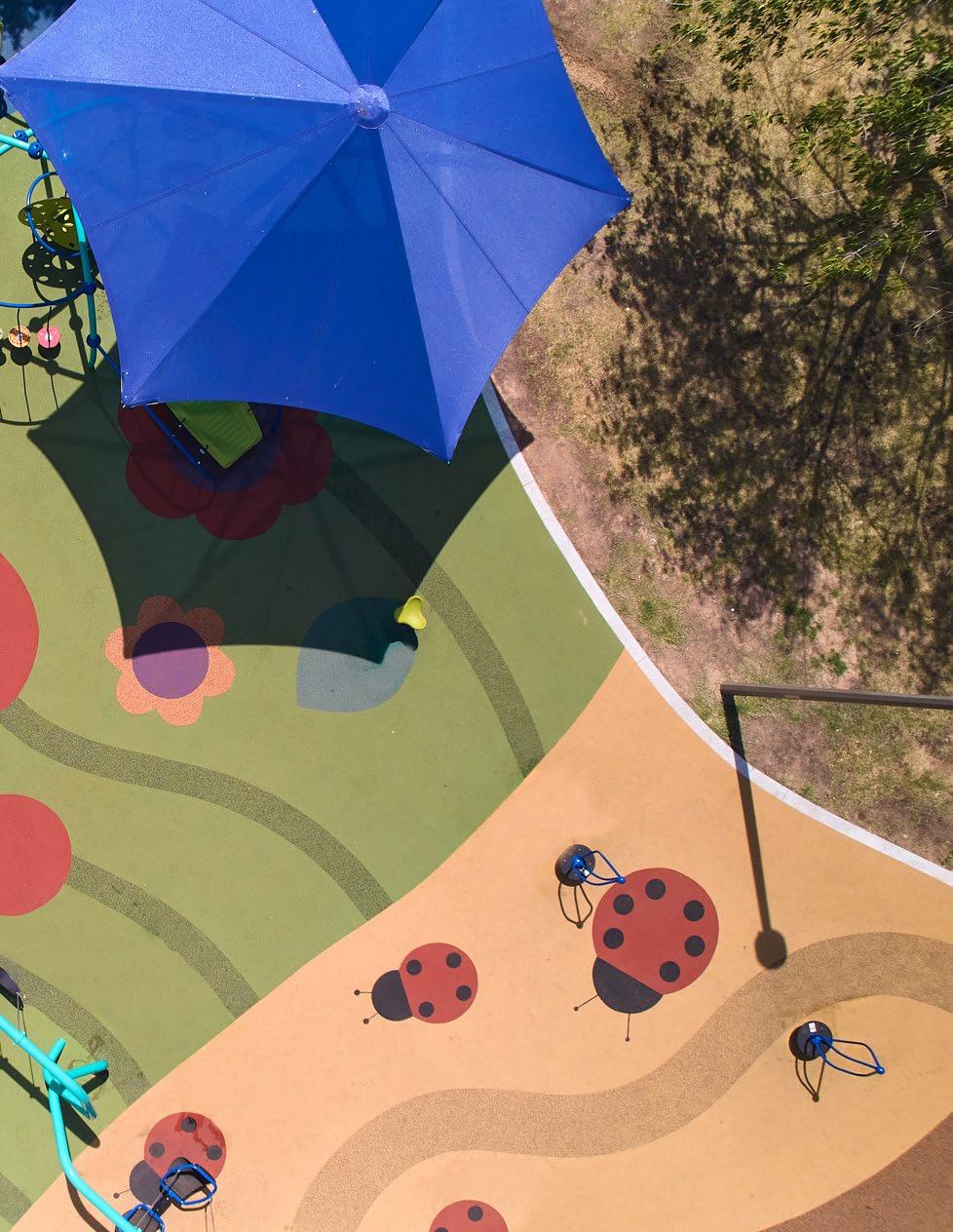
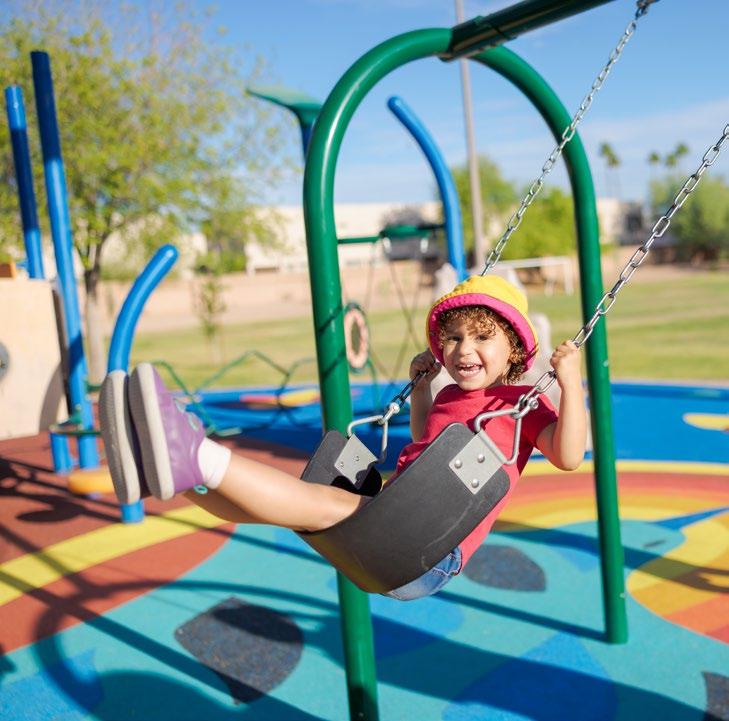
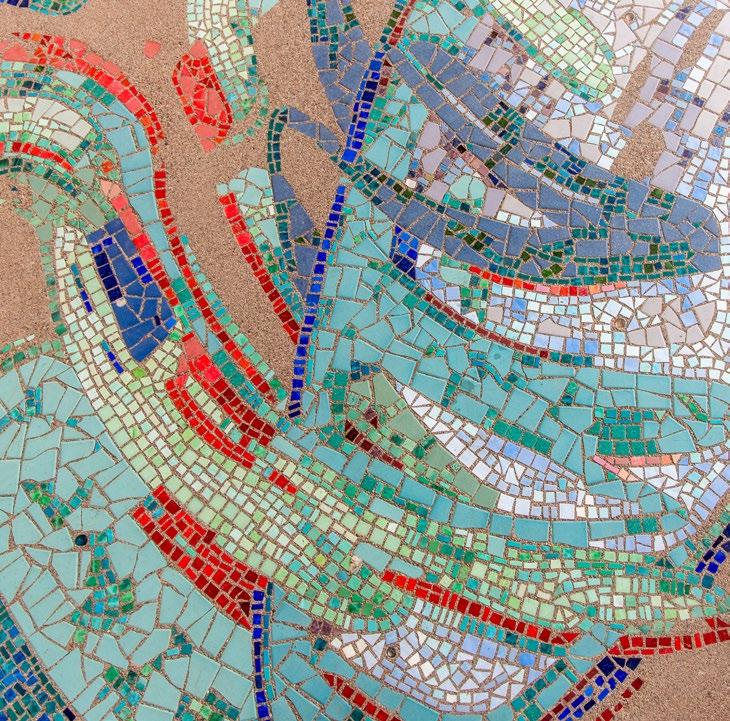
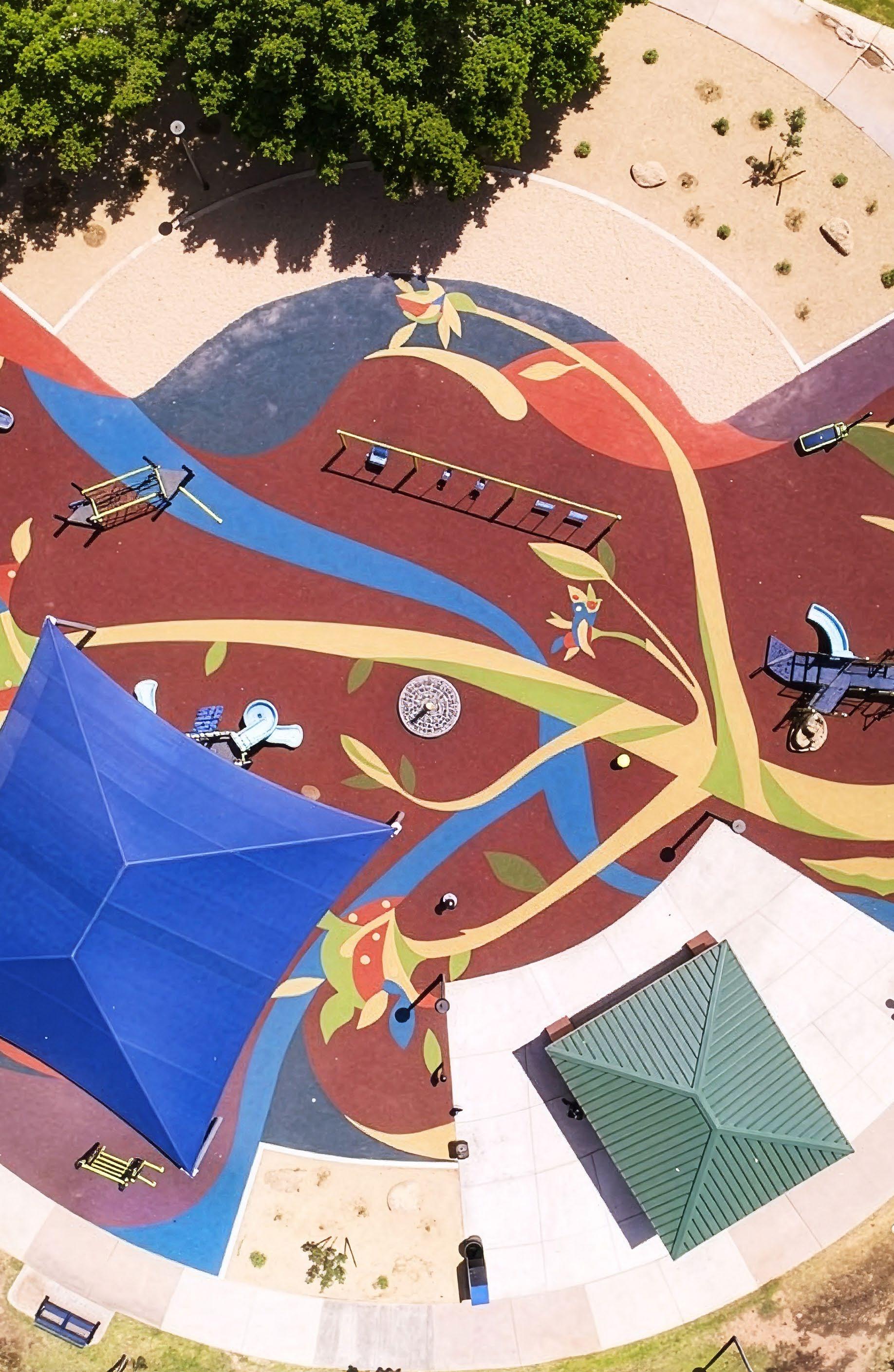
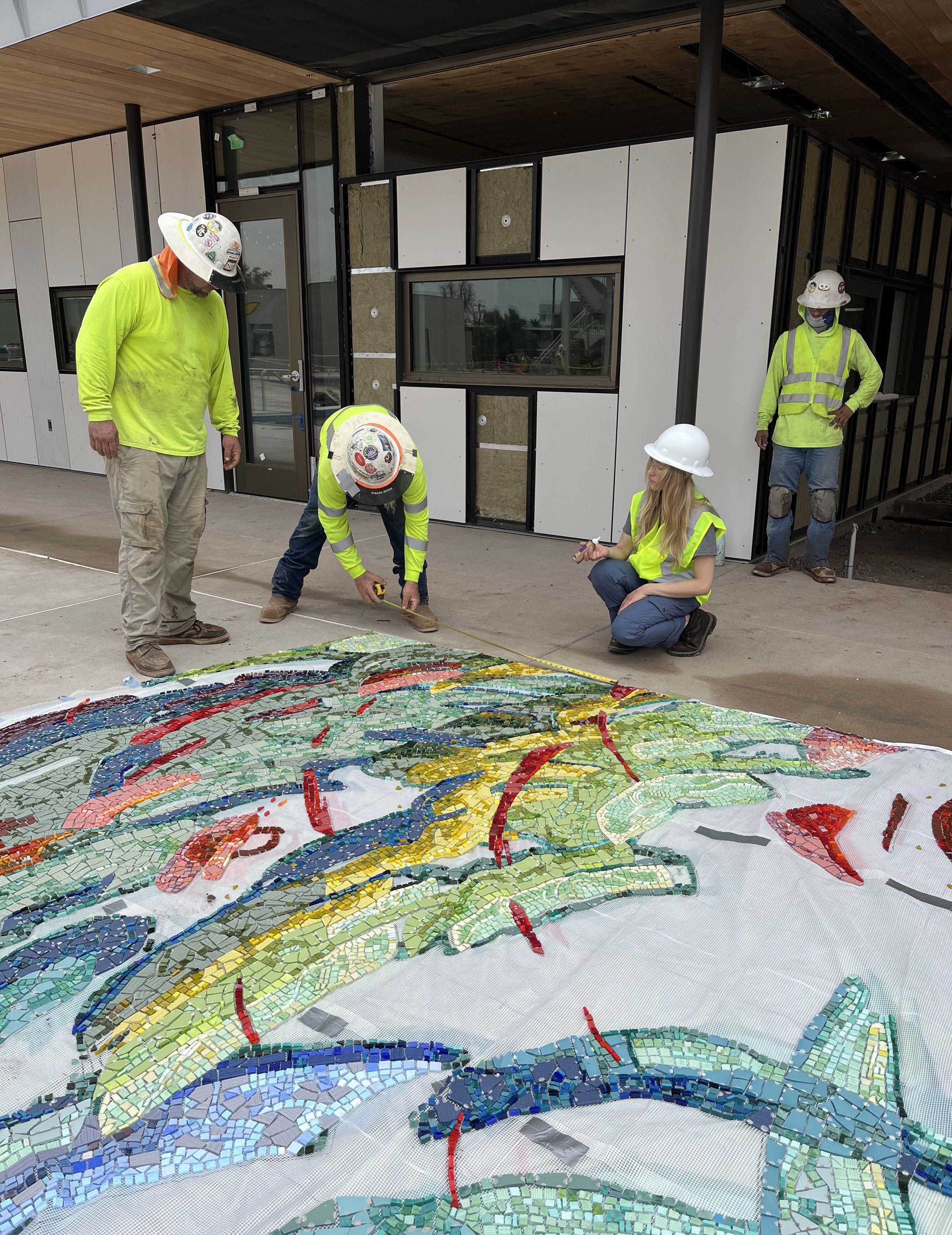
“Walk in the Park” is a fully integrated artwork that creates a connection between the landscape of Estrada Park and the surrounding neighborhood. Artist Mary Shindell was inspired by the plants in the neighborhood to create patterns in the fitness path and play areas. Mosaics in the pathway at the entrances were created to provide color and detail for all entering the park. Several mosaics were placed along the fitness path to coincide with the location of actual plants. On the playground and in the workout areas, these botanicals became large shapes of color connected by a vine throughout the park. Walk in the Park was created to provide interest for visitors of all ages.
ARTIST: Mary Shindell
LOCATION: Estrada Park
PHOTOS BY: William LeGoullon
A key component of the work plan development process are metrics to help Tempe Public Art staff and committee members to prioritize projects. These metrics are also important to the project development process as they will influence how Tempe Public Art staff and others envision potential projects.
These metrics are intended as examples. Metrics should be regularly reviewed to ensure that the program is working through ongoing challenges. The Public Art Plan would also be regularly reviewed for potential new or changed metrics.
• Does the project expand the geography of Public Art in Tempe?
• Does the project help to achieve a specific strategy laid out in the public art plan, such as artist development?
• Does the project align with one or more components of the curatorial framework?
• Is the project in a highly visited or visible location?
• Does the project align with one or more of Tempe Public Art aspirations?
• Does the project increase access or equity related to public art experiences?
• Does the project help ensure a balance among short-term and long-term projects so that new projects are continually being delivered?
Other technical considerations should be considered in addition to the metrics for prioritization. These would be looked at comprehensively when coming up with a final list of projects.
• Projects would adequately reflect the relationship between the public art and the site – its cultural context as well as its integration into the architecture, landscape architecture, infrastructure, and other site conditions – can be carefully considered.
• Each prioritized project should have an adequate budget for all costs – artist fees, project costs, community outreach process, and other project components.
• When medium specific projects are being considered, ongoing maintenance and operational considerations would be reviewed within the budget analysis.
• Projects would allow adequate time for proper implementation of the public art process, including project definition, artist selection, community engagement, fabrication, and installation.
Tempe Public Art has an existing internal series of procedures that help to govern how the program operates. A key component of the planning process was to formalize existing procedures and refine them where needed.
The following public art guidelines and procedures were developed using existing guidelines and procedures as well as feedback from the planning process. The following summarizes individual components.
The full text of the guidelines has been provided to Tempe Public Art as an appendix to the Public Art Plan.
This component guides approaches to public art acquisition for both commissioned and existing artworks. The method for selecting an artwork for acquisition may vary in response to project budget, scope, and timeline.
This establishes the management practices of artworks acquired through the solicitation and donation processes. These pieces are considered part of Tempe Public Art’s Permanent Collection and must be cared for in accordance with the Maintenance Procedure and the Collection Management Guidelines. These guidelines also lay out the process for assessing artwork for deaccession.
This establishes the procedure for maintenance of the public art collection. It includes direction for surveying the collection, working with future artists to establish a maintenance plan for any commissioned work. Inspection guidelines are included.
This policy establishes the donation process for artworks not commissioned directly or indirectly by Tempe Public Art. Each proposed donation comes with a plan to fund and deliver ongoing maintenance, or the resolution accepting the public art identifies how maintenance of the donated public art will be funded. Donation requirements, responsibilities of the donating party, and the process for donating a piece of public art are outlined in this policy.
The Art in Private Development (AIPD) program is one of the pillars of Tempe Public Art. As the city continues to grow and change the AIPD program must evolve as well. The following strategies are focused on ensuring that the existing AIPD program is as efficient and effective as possible.
Tracking AIPD projects has historically presented challenges. However, significant efforts have been made in recent years to address these issues. Currently, Tempe is poised to implement improved tracking and record-keeping procedures for AIPD projects. Integrating these projects into City of Tempe’s comprehensive database for development will resolve some of the previous difficulties in monitoring the program’s projects. This step would:
• Ensure public art contributions and commissions are recorded on the approved final plans for developments, so that they can be referenced when the plans are being revisited.
• Ensure public art contributions and commissions are recorded in any relevant online databases.
• Ensure public art commissions are recorded on the deeds as a real property improvement, so that future owners are aware that public art is part of their portfolio.
• Explore how Tempe Public Art can automatically be notified when a property with an AIPD project is sold, so that Tempe Public Art can notify owners of their obligations and provide maintenance information.
When the AIPD program was first envisioned Tempe was still rapidly growing outward. More than 35 years later, the development patterns in Tempe have drastically changed. Tempe is experiencing increasingly dense, mixed-use, upward growth, rather than outward expansion. This makes it imperative for Tempe to investigate methods to ensure that the AIPD program keeps pace with the changing city.
The existing Art In Private Development Ordinance should be amended to be inclusive of mixed-used developments. This would update the ordinance to meet the current city initiatives surrounding planning, development and multimodal transportation. By extending public art requirements to mixed-use developments, new installations can be encouraged in highly accessible areas. This strategy ensures art is created in closer proximity to where people reside and work.
Many developers incorporate public art into their projects to meet their AIPD requirements. Tempe Public Art often lacks control over the implementation of these projects. To ensure successful outcomes for the public art made accessible through private developer projects, Tempe Public Art can consider establishing clear expectations and effective tools for guiding AIPD public art initiatives using the suggestions listed here.
• Develop recommendations for public art within future areas or public infrastructure plans. These recommendations can help developers by being specific about City of Tempe’s vision for public art and how it can be achieved in areas with public infrastructure where AIPD projects are anticipated.
• Create a developer’s guide providing clear examples of projects and commissioning processes reflecting City of Tempe’s vision for public art.
• Create a roster of public art consultants for developers to use and strongly encourage the use of art consultants for large projects more than $100,000.
• Strengthen the public art team’s role in reviewing artist selections and design concepts by providing curatorial advice and assistance.
• Consider excluding murals as acceptable art forms, as they are relatively short-lived compared to other types of installation.
• Strengthen mechanisms for managing public art in phased developments.
• Ensure that developers provide a conceptual public art strategy for the entire master planned development at the time the master plan is submitted for approval.
• Provide a mechanism for developers to pay AIPD fees into a restricted fund, such as an escrow account, that would fulfill the requirement of making phase by phase art contributions but would allow the funds to be saved for a larger project associated with a later phase of the project.
While artworks created by developers to fulfill the AIPD requirement are privately owned, proper tracking and maintenance is a public concern. The following strategies can help to ensure that the collection of AIPD projects is maintained over the long term.
• Ensure the developer submits an artist statement and biography, as well as photography of the completed artwork.
• Ensure developers provide a copy of all maintenance documentation for Tempe Public Art safekeeping.
• Ensure developers who commission public art enter into a maintenance agreement with City of Tempe. The agreement’s intent is to confirm the developer’s perpetual responsibility for maintaining and conserving the artwork.
• Establish a protocol for working with Code Compliance to assist in seeking repairs of the artwork. This could include having Tempe Public Art staff or consultants selected to assess artwork for code compliance.
To encourage developers with AIPD projects to contribute to the Municipal Arts Fund instead of installing artwork at their developments, Tempe Public Art could implement several incentive-based strategies. These strategies could also help ensure developers who do place artwork on site are committed to the process
Consider making the AIPD commissioning process more intentional:
• Create artist agreements that include standard provisions for artist design fees and intellectual property.
• Ensure developers provide a copy of all maintenance documentation for Tempe Public Art safekeeping.
• Ensure that developers who commission public art enter into a maintenance agreement with City of Tempe.
Consider incentives for contributions to the Municipal Art Fund:
• Following national examples Tempe could provide a discount from the AIPD requirement for cash payments to the Municipal Art Fund. Many communities incentivize payments by giving a discount to direct payments rather than artwork placement.
Each property owner constructing a new development, redevelopment or renovating an existing building, that falls under the Public Art Program of Coral Springs, has a significant decision regarding compliance with the public art ordinance.
Choice #1 - Purchase and maintain public art on the property
Choice #2 - Make a contribution to the Public Art Fund
Either choice satisfies the public art requirements, and the Public Art Ordinance and Public Art Guidelines offer several incentives to contribute to the Public Art Fund.
Contribution to the Public Art Fund is only 80% of the required expenditure when purchasing public art for the property. The property owner is relieved of any responsibility to purchase the public art and to maintain the public art into the future.
New building construction or redevelopment:
A. Public Art Fund contribution, per square foot of gross area: $0.60 per sq. ft
B. On site artwork, per square foot of gross floor area: $0.80 per sq. ft
Remodeling or converting:
A. Public Art Fund contribution, per sq. ft of gross floor area being remodeled: $0.27/sq. ft
B. On site artwork, per square foot of gross floor are being remodeled: $0.39/sq. ft
Tempe Public Art’s collection is a long-standing public asset that has shaped the city’s cultural landscape for decades. No matter the age of the artworks in the collection, a strong collection management framework will support the ongoing stewardship of each artwork’s care over time. The following strategies are designed to ensure the collection’s proper upkeep.
Following the Tempe History Museum’s model, a yearly deaccession committee could be established to help review existing components of the Portable Works Collection and determine if any of these Works would be further explored for deaccession.
The committee, comprising TACC members, curators, artists, and other arts professionals, would review recommendations. These recommendations would be initially made/ evaluated by Tempe Public Art staff and/ or a conservator before being presented to the committee. Any recommendations for deaccession of artworks can then be added to the yearly work plan that is presented to TACC towards the end of each fiscal year.
Tempe Public Art may adopt internal guidelines for how it budgets each year for conservation and maintenance. Such guidelines could include:
• Reserve funds for a baseline collection assessment;
• Following the assessment, provide budget estimates for highest priority conservation and maintenance projects;
• Budget each year based on these estimates, or dedicate a percentage of Municipal Art Fund contributions from the CIP and developers to a maintenance reserve account.
The Tempe Public Art collection is large and aging with some pieces having been in place for 30+ years. To begin a proactive collection maintenance practice, a public art collection assessment is crucial to longevity of the collection. This assessment could focus on a single collection per year to minimize costs.
Artworks that are the responsibility of City of Tempe ought to be prioritized as the first area of condition assessment, including the CIP Collection and Neighborhood Artworks. Though City of Tempe is not responsible for the maintenance of Art in Private Development, it is important this collection is also assessed and monitored regularly.
By proactively assessing all existing public artworks every 3-5 years in annual budget cycles the program will be better equipped to establish budgets for ongoing maintenance in its annual work plan. Repairs and restorations can then be made as needed. A Tempe Public Art staff member devoted to collection management could help to regularly assess pieces and depending on their expertise may be able to assist with repairs or other maintenance needs.
A collection management role would require someone with an understanding of materials and national best practices in the care of artworks. To achieve the best results, this role would require an educational background in museum studies, art history, or studio art practice. The role could be fulfilled through an outside contract with a public art conservator on a multi-year basis.