PEARSON LLOYD
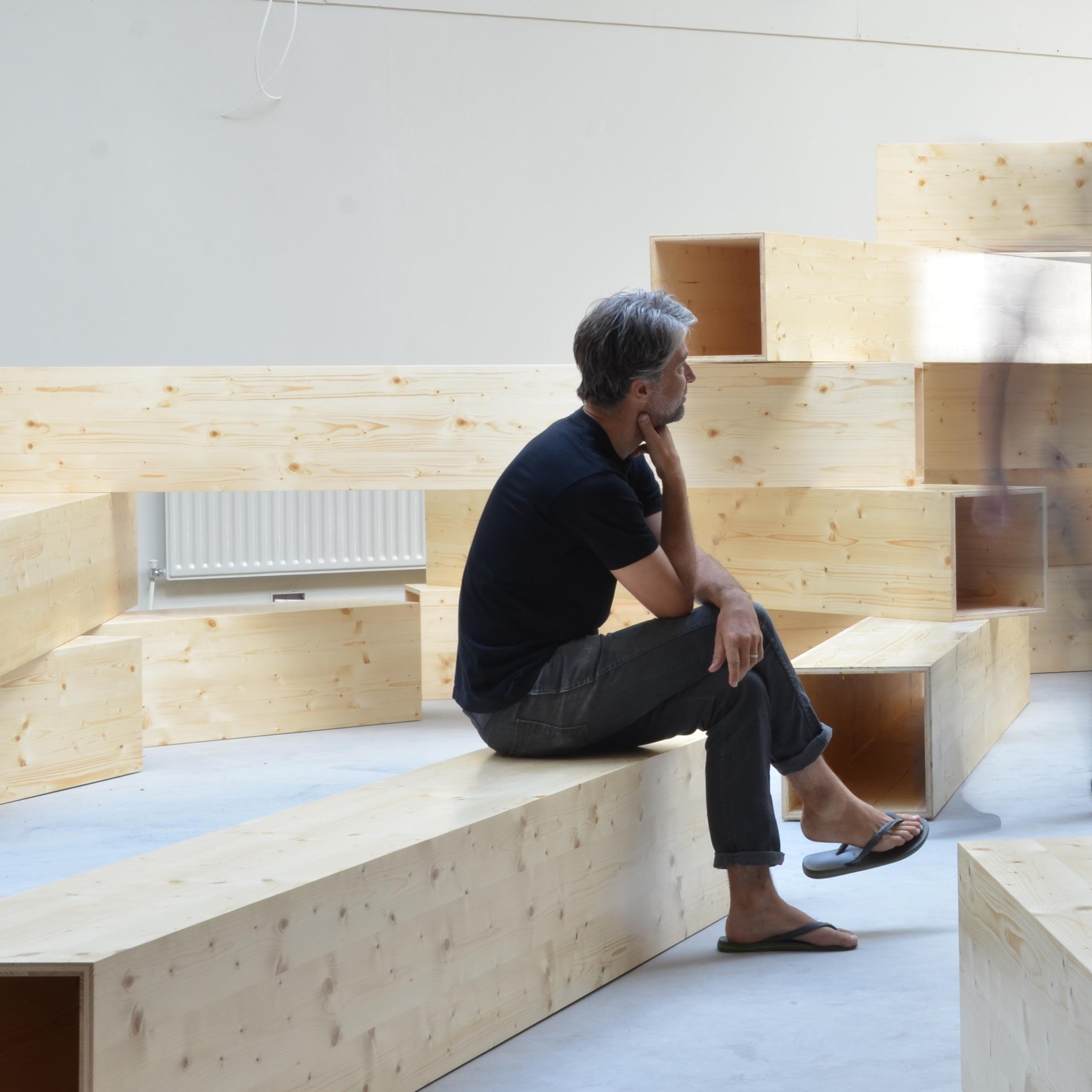
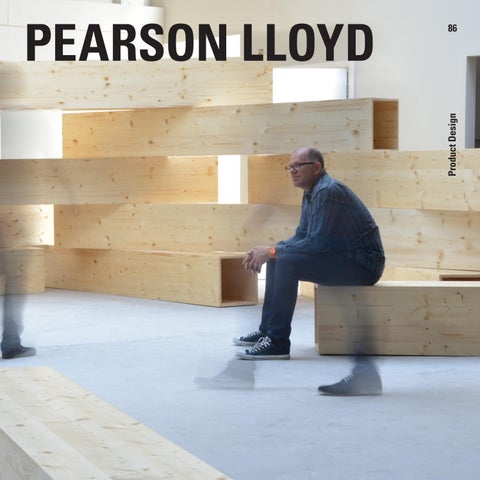
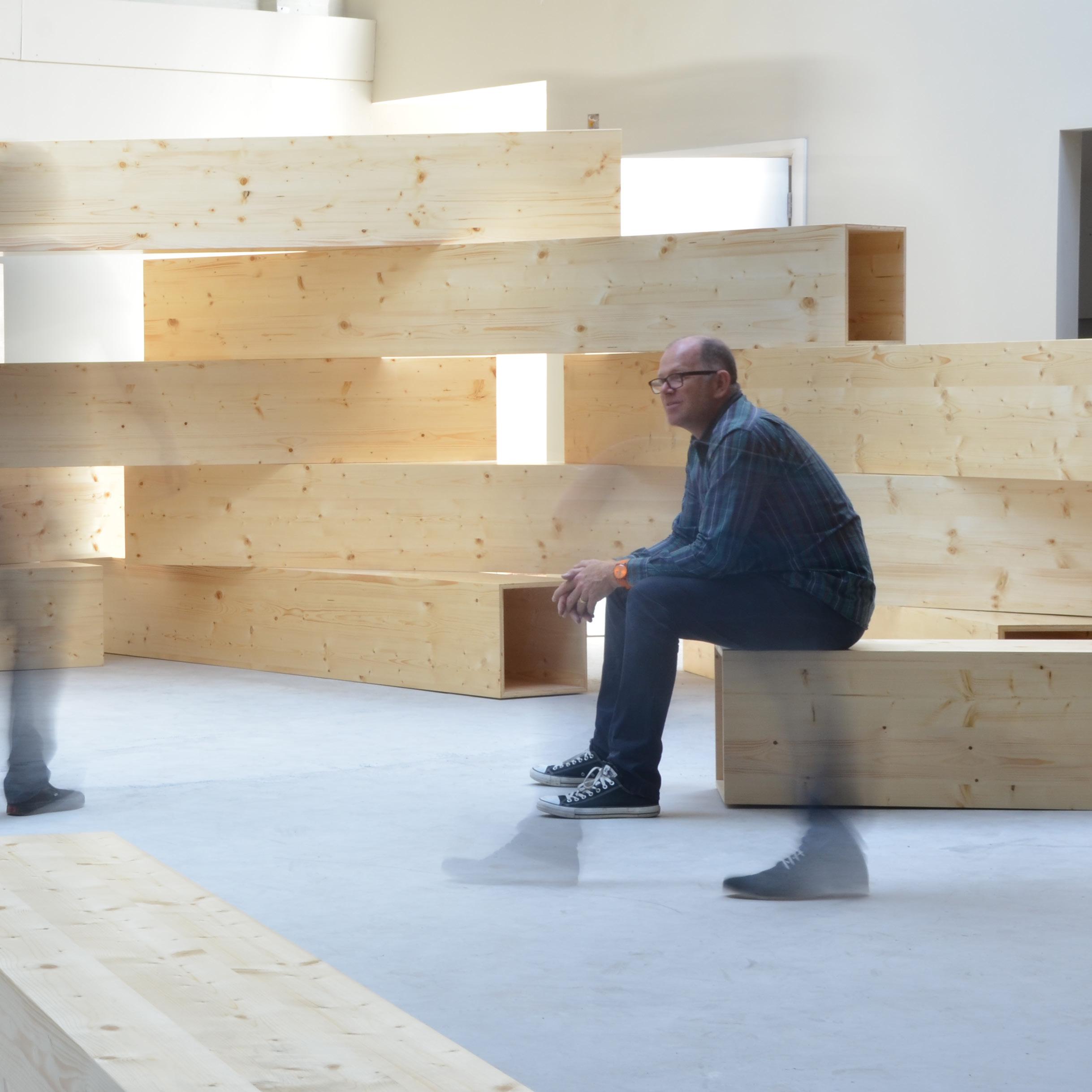
[Cover and Back cover] Great Western Street Studios 1:1, 2015
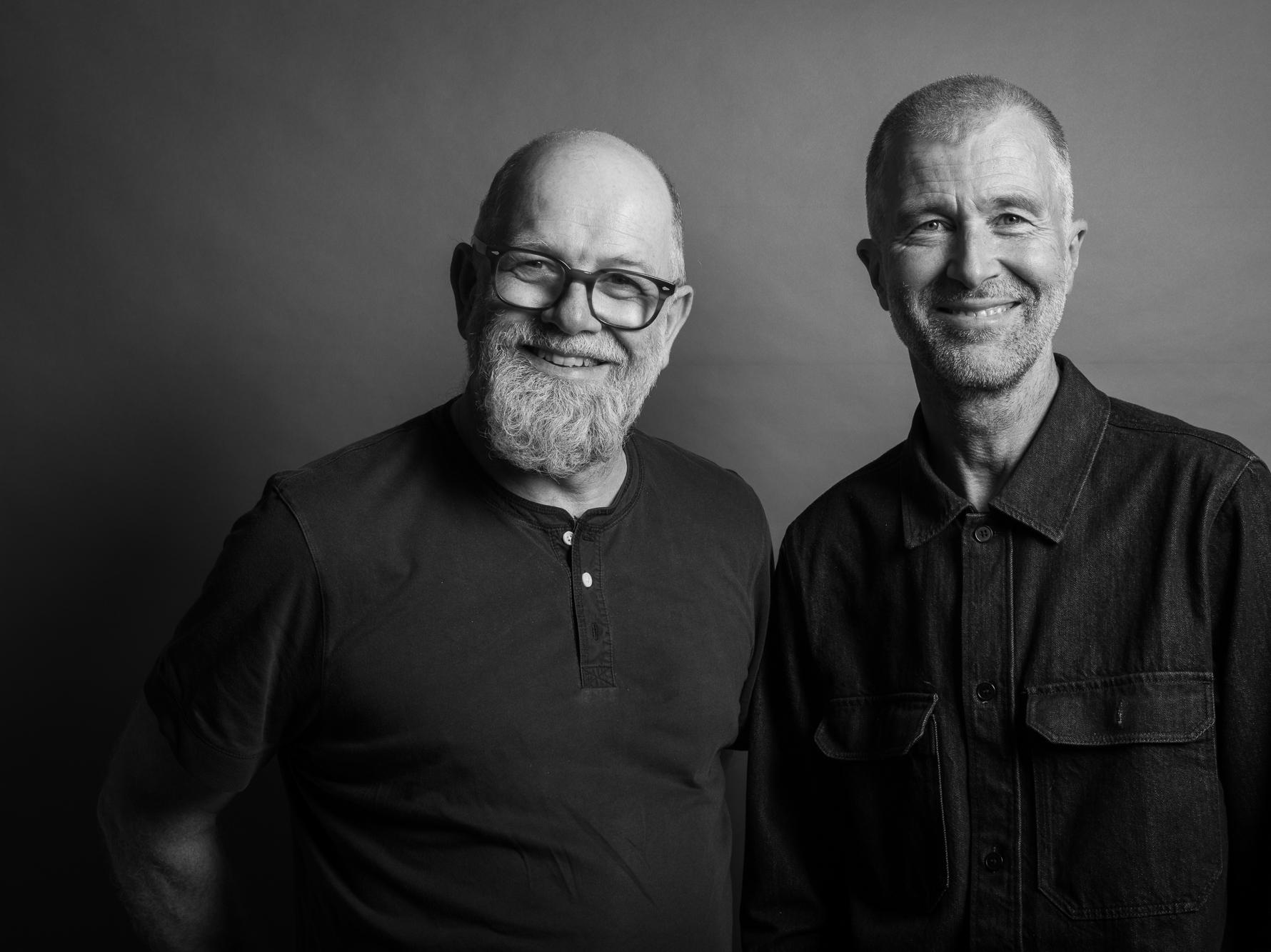
[Portrait] Tom Lloyd & Luke Pearson, 2023
PEARSON LLOYD
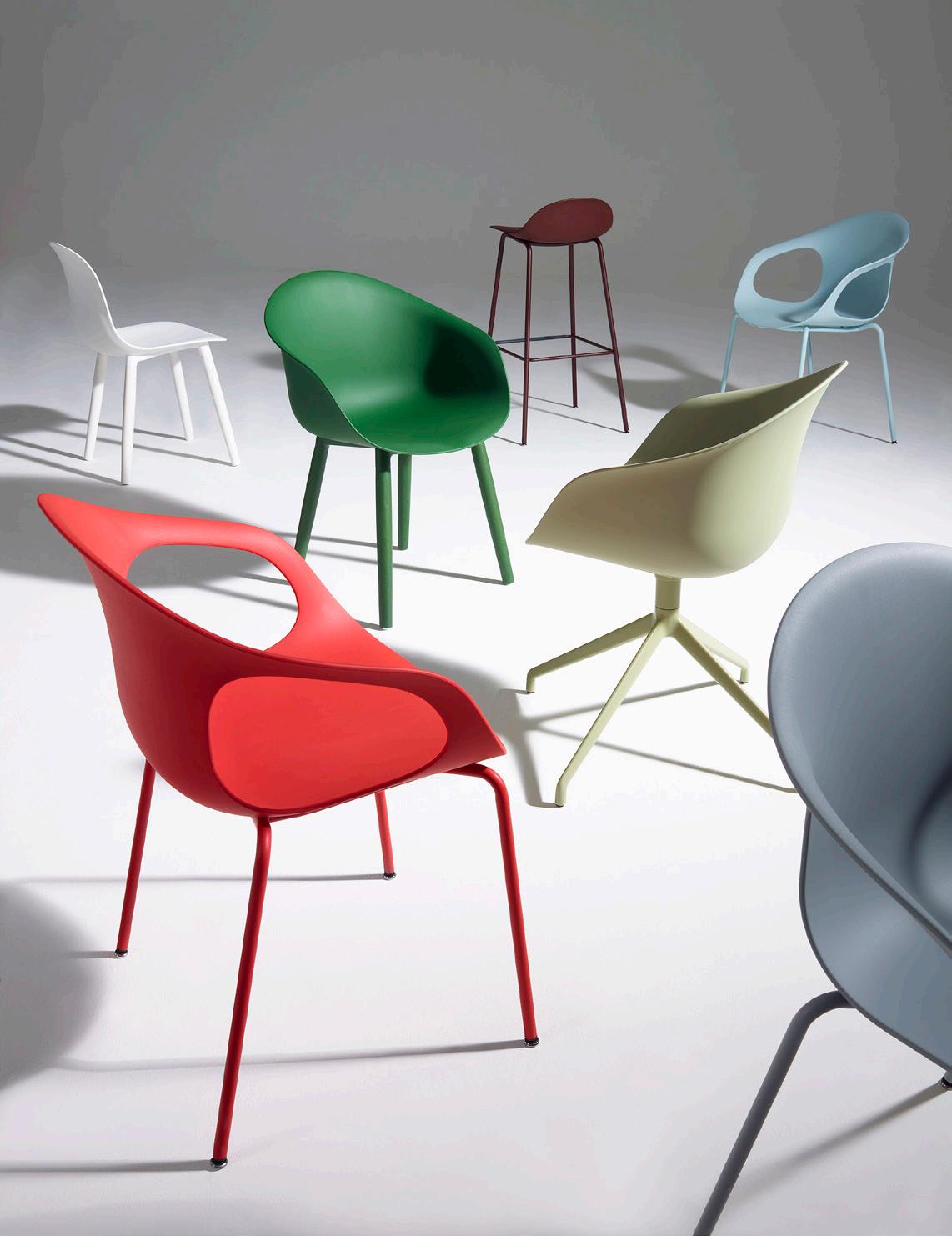
Creating spaces where
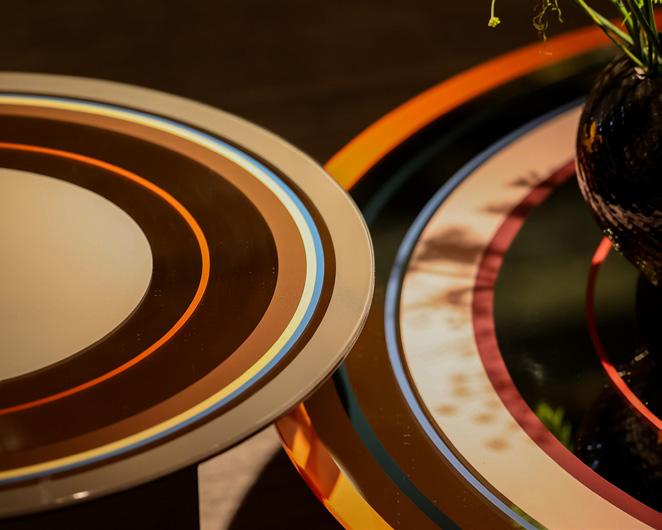
1. Allermuir Kin, 2019
2. HC28 maison IRIS, 2025
Ergonomics is a word we hear a lot, but what does it mean to you as furniture designers?
TOM: If you go back to the original definition, ergonomics is a scientific approach to understanding the impact of the physical environment on the body. It was closely linked to biomechanics. Over time, we’ve broadened that thinking into what we call behavioural ergonomics and spatial ergonomics. Behavioural ergonomics expands the idea beyond individual, quasi-scientific measures of comfort to consider how design shapes collective experience. Spatial ergonomics can be seen as a macro version of the original idea, operating at the scale of environments rather than objects.
There’s a phrase we’re fond of in the studio, often attributed to Peter Opsvik: ‘the best posture is the next posture.’ The body moves all the time, and the best way to stay comfortable is to keep moving. You might sit in a chair for twenty minutes, then get up, wander around, or move to a sofa. These adjustments happen instinctively.
You’re adding the dimension of time to what was originally a static calculation?
TOM: Exactly. In the workplace, we’re much less interested in traditional ergonomics because people no longer own a single workstation. It’s very difficult to set something up perfectly for one individual.
Of course, there are still people who sit for long periods and need a chair that genuinely supports them. But contemporary workplaces are far more mobile, both within a building and between different locations.
Ever since the Aeron chair appeared, there’s been a kind of fetishisation of that type of industrial design. It’s held the design world in a sort of trance, where everyone felt they had to compete with it.
We’re more interested in the human side of helping people thrive. It’s not mechanical design that excites us. It’s the way a space supports people in whatever they’re trying to do.
people can thrive
The return to work after COVID seems like an opportunity to rethink how office space works. Is that happening out there?
TOM: Organisations began to realise that offices should be places of culture. Places where you onboard people, bring them together and help them grow. There was a big shift towards thinking of offices as places of learning rather than pure productivity, because learning happens through being with others.
It’s become a bit of a cliché, but the idea that ‘you don’t commute to compute’ still rings true. Why travel just to sit at a computer? What really matters are the social interactions, even the small, informal conversations that happen throughout the day. We have all realised how valuable those are.
LUKE: For me, the city is still central, because people don’t want long commutes. What’s really missing online are the moments before and after meetings.
There are microscopic physical cues that we’re tuned into after millennia of human interaction. You don’t get those when all you see is someone’s head and shoulders on a screen. Sometimes someone’s legs will tell you they want to speak.
The idea of ‘don’t commute to compute’ also depends on home life. Many people have very compressed domestic environments or share with others. For them, going somewhere else to work can be genuinely beneficial.
IT’S THE WAY A SPACE SUPPORTS PEOPLE
WHATEVER THEY’RE TRYING TO DO.
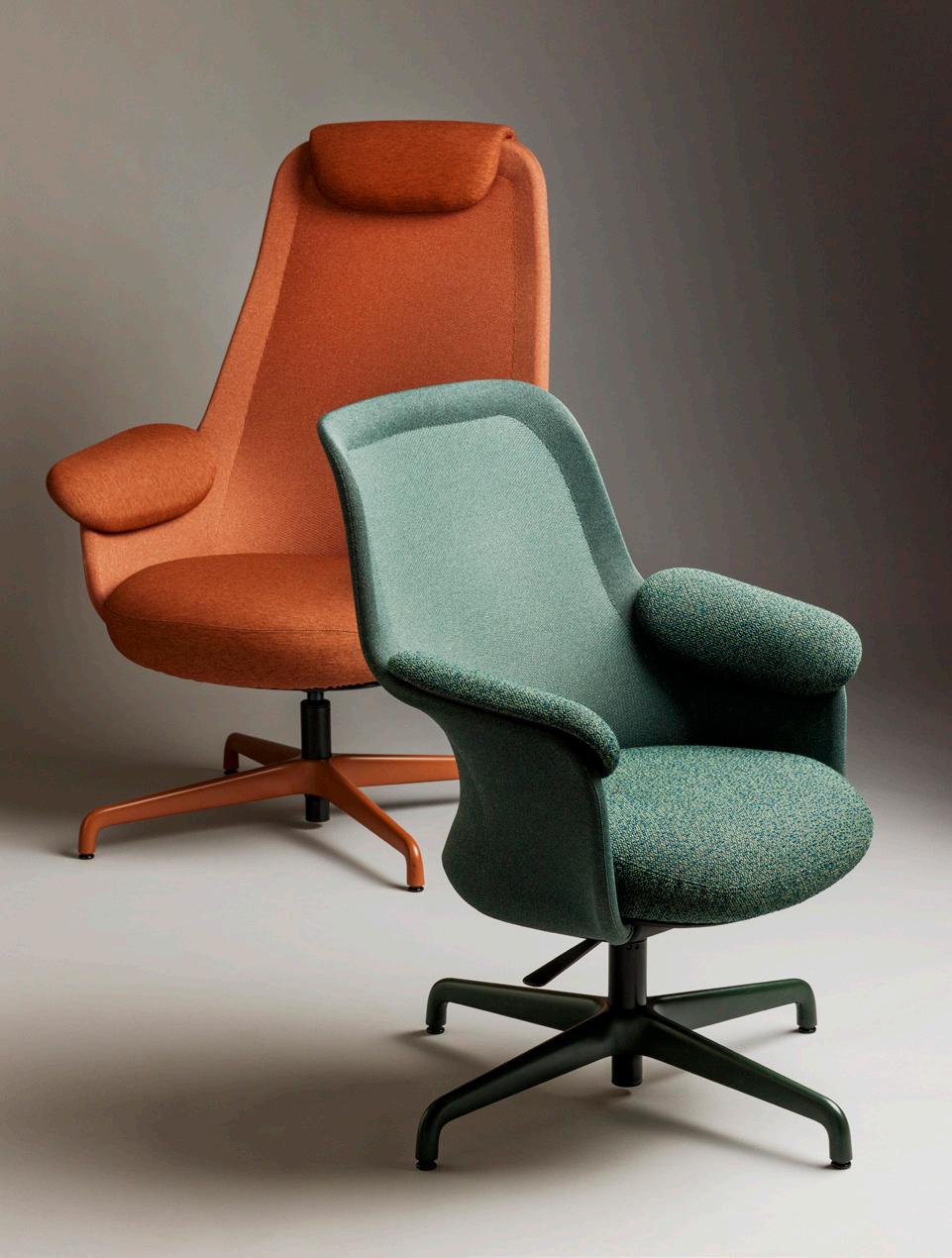
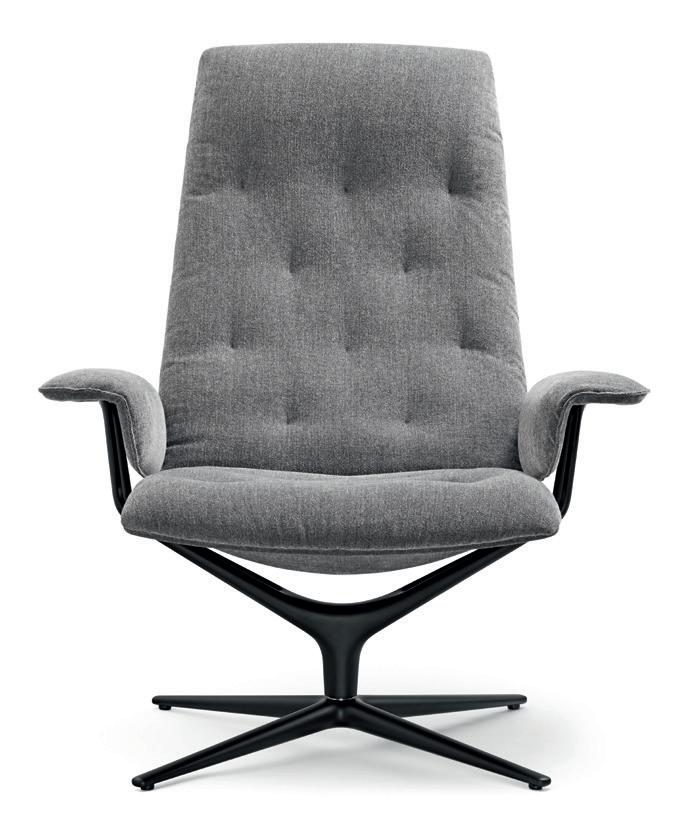
1. Walter Knoll Healey Soft, 2014
2. Teknion Aarea, 2025
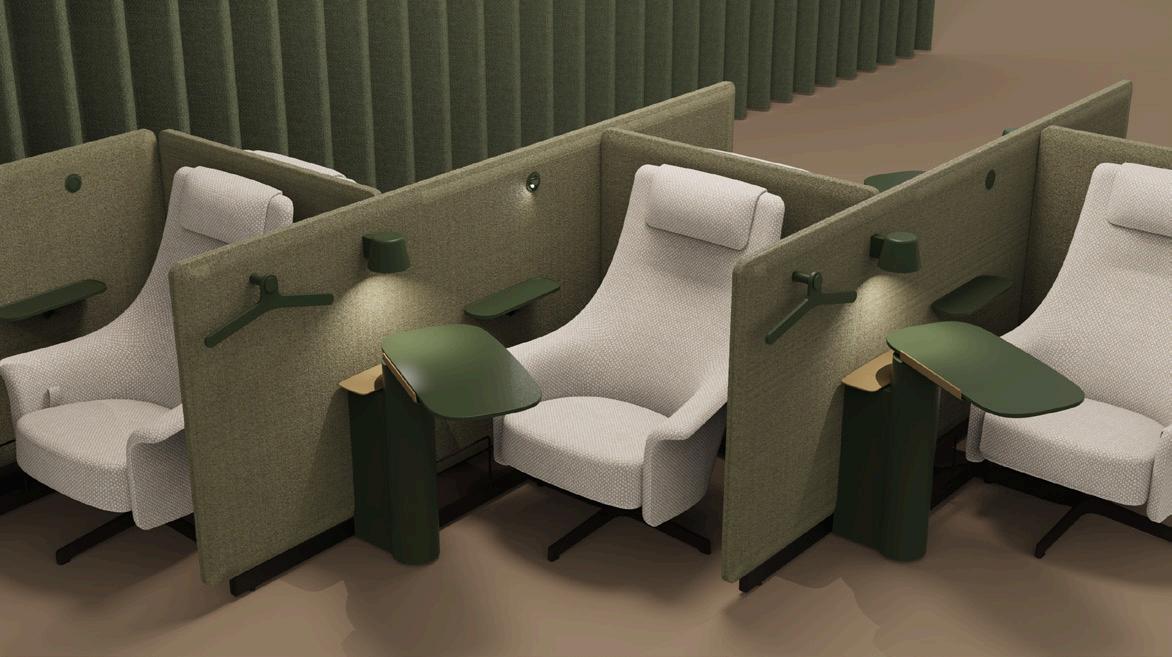
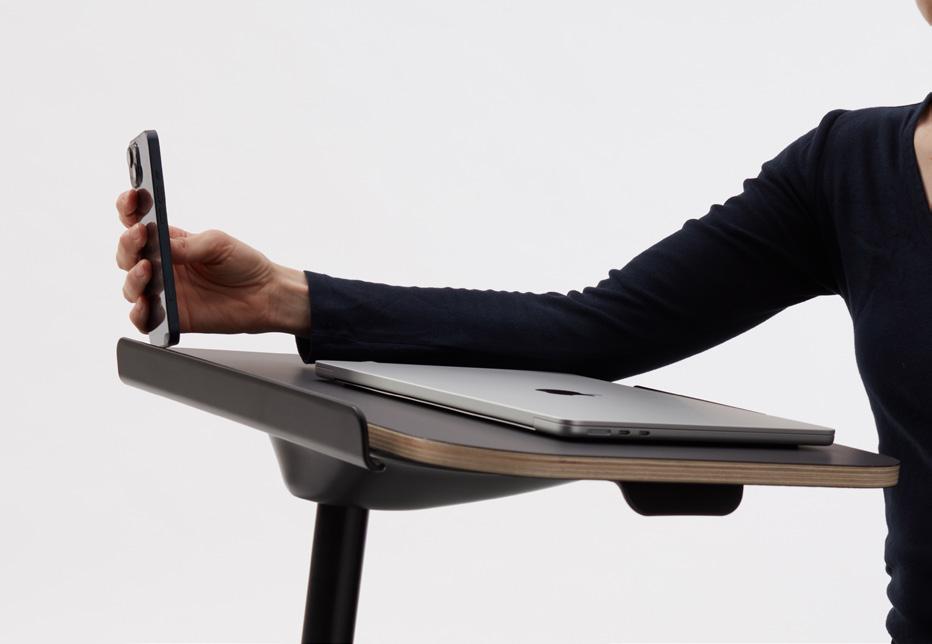
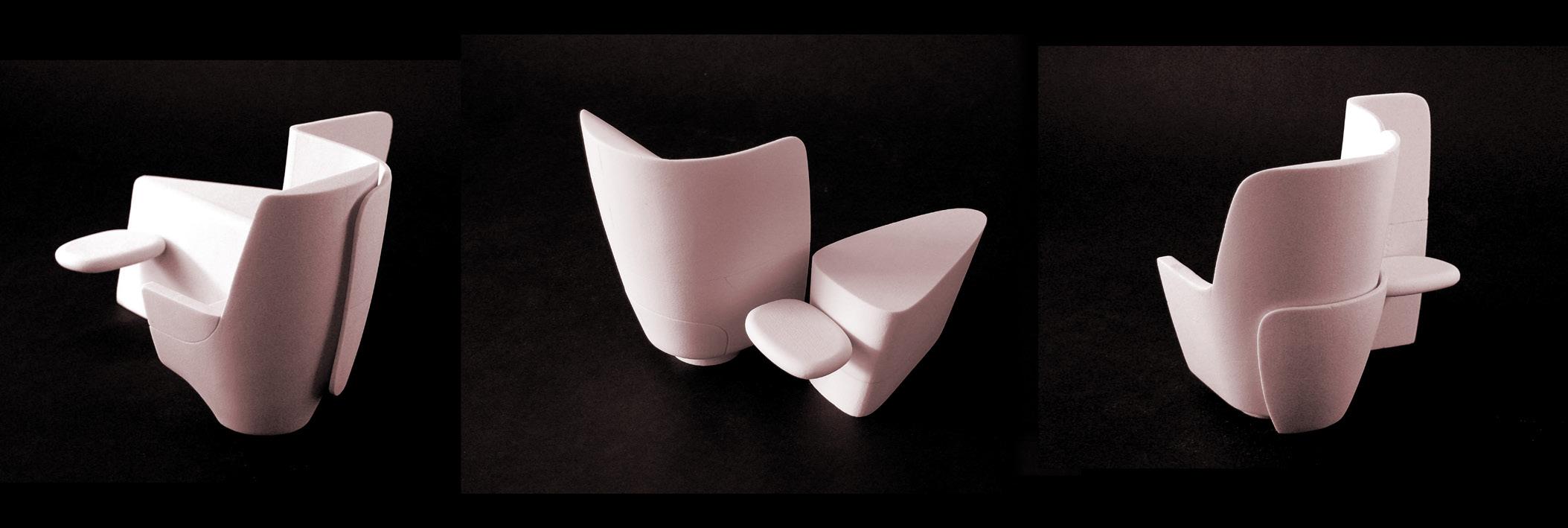
1. Lufthansa Group AiO, 2025
2. Teknion Cosi, 2024
3. Virgin Atlantic Airways Upper Class Seat, 2003
Are these the kind of discussions that you have among yourselves, as input to the things that you’re designing?
LUKE: Absolutely. We discuss them internally and with our clients. In the workplace sector especially, we’re constantly trying to articulate what a new type of work environment should be.
Everyone is speculating about where things are heading. Work is no longer defined by a single location or a predictable process, and cultures are diverging rather than converging. That uncertainty makes it harder for organisations to decide where to invest, and increases the need for environments that are adaptable rather than fixed.
There are so many variables involved in creating a successful piece of furniture. How do you juggle them all?
LUKE: Some of the variables are surprisingly fixed. I trained as an industrial designer in the 1980s, when fast-moving consumer goods were the focus. Before then, if you designed an iron, it might last fifteen years until the filament wore out, and then you’d take it to a local electrician to have it repaired.
Industrial designers were fascinated by the pace of technological change. You’d buy a clock radio, then a better one would appear with five more buttons, and then another one with even more. Eventually someone designed one with no buttons at all. It was like being a kid in a sweet shop.
Furniture was the antidote for me. I moved into furniture design because I wanted to work with something more stable. Humans don’t really change. We still sit upright, look forward, and gather around tables. Technology evolves, but our bodies remain remarkably consistent.
That consistency gives me a solid foundation to return to. Materials change, processes change, but the human body is a constant.
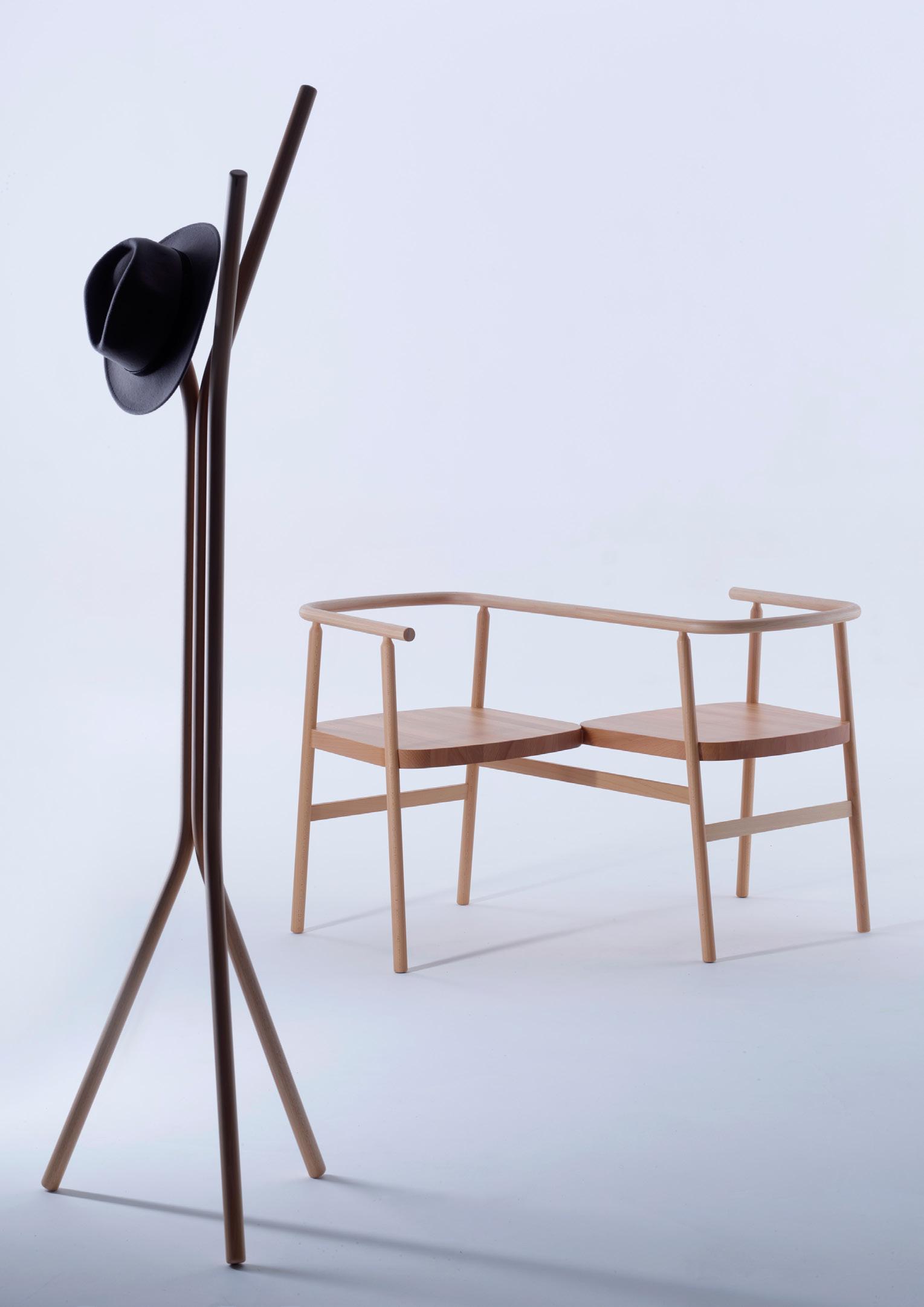
So you are looking at innovation as refinement, rather than total newness all the time?
TOM: Yes, and often it’s about subtle reinterpretation.
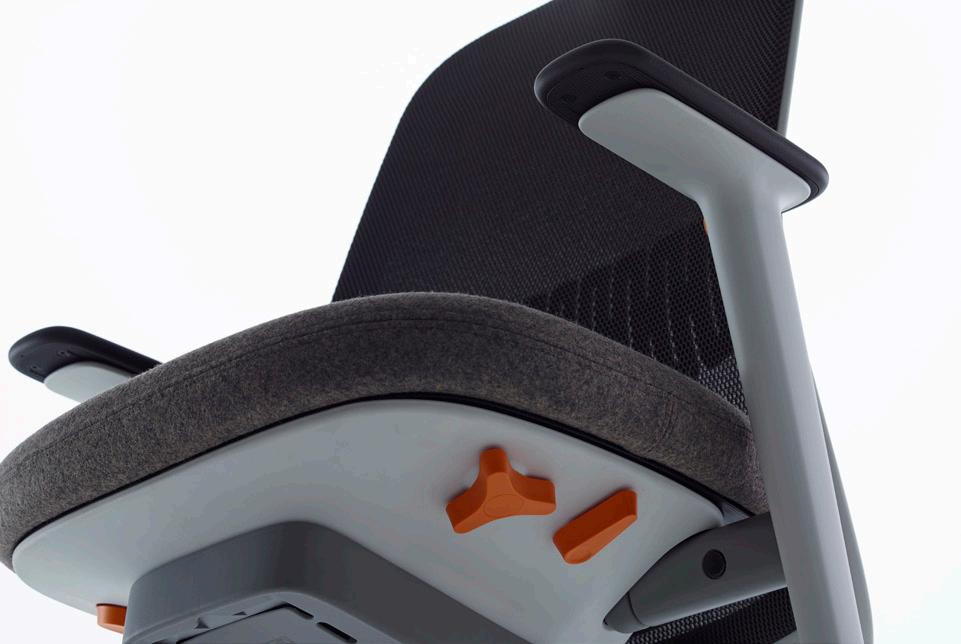
When we designed PARCS for Bene in 2009, every individual element already existed. What was missing was a coherent collection where all those elements worked together and didn’t compete visually.
The insight was simple: people were struggling to curate disparate products. What they really wanted was a congruent system. We were still designing sofas, benches and screens, but now they belonged together.
Have you grown with these problems and evolved as designers over the years?
LUKE: When we started, our experience was fairly rudimentary. We received briefs and worked towards solutions in a linear way. Now we’re far more interested in understanding our clients’ ambitions and how those ambitions relate to the wider world.
From there, we enjoy building smart briefs that respond to real situations. Even when a client comes with a tactical request, we try to break it down and see whether there’s an opportunity to refine or expand the thinking.
Teknion 2015 Collection, 2015
How did Pearson Lloyd get started?
TOM: I studied furniture design at Trent Polytechnic in Nottingham, then went to the Royal College of Art (RCA) in 1991. My family were architects, and I was always interested in how furniture helps define the use of space.
Architects often focus on light and plan, sometimes overlooking what actually happens within a space. We’re interested in how furniture curates activity and function.
Luke studied product design at the Central School of Art, then completed a furniture MA at the RCA. When we met, we were both questioning product design. It felt very market-led. Furniture, on the other hand, was often locked into a craft paradigm.
We wanted to understand how furniture could operate at scale, beyond the individual maker. After working in other studios, we decided to start Pearson Lloyd in January 1997.
One of our founding aims was to bridge industrial design, mass production and the culture of furniture. That idea still underpins everything we do.
Beyond the individual craftsperson?
TOM: A lot of furniture design studios are still essentially a singular vision, where everything revolves around the identity of the designer. It’s an authorship model. I’ve always been slightly uneasy about the idea that individual authors somehow possess a special kind of wisdom.
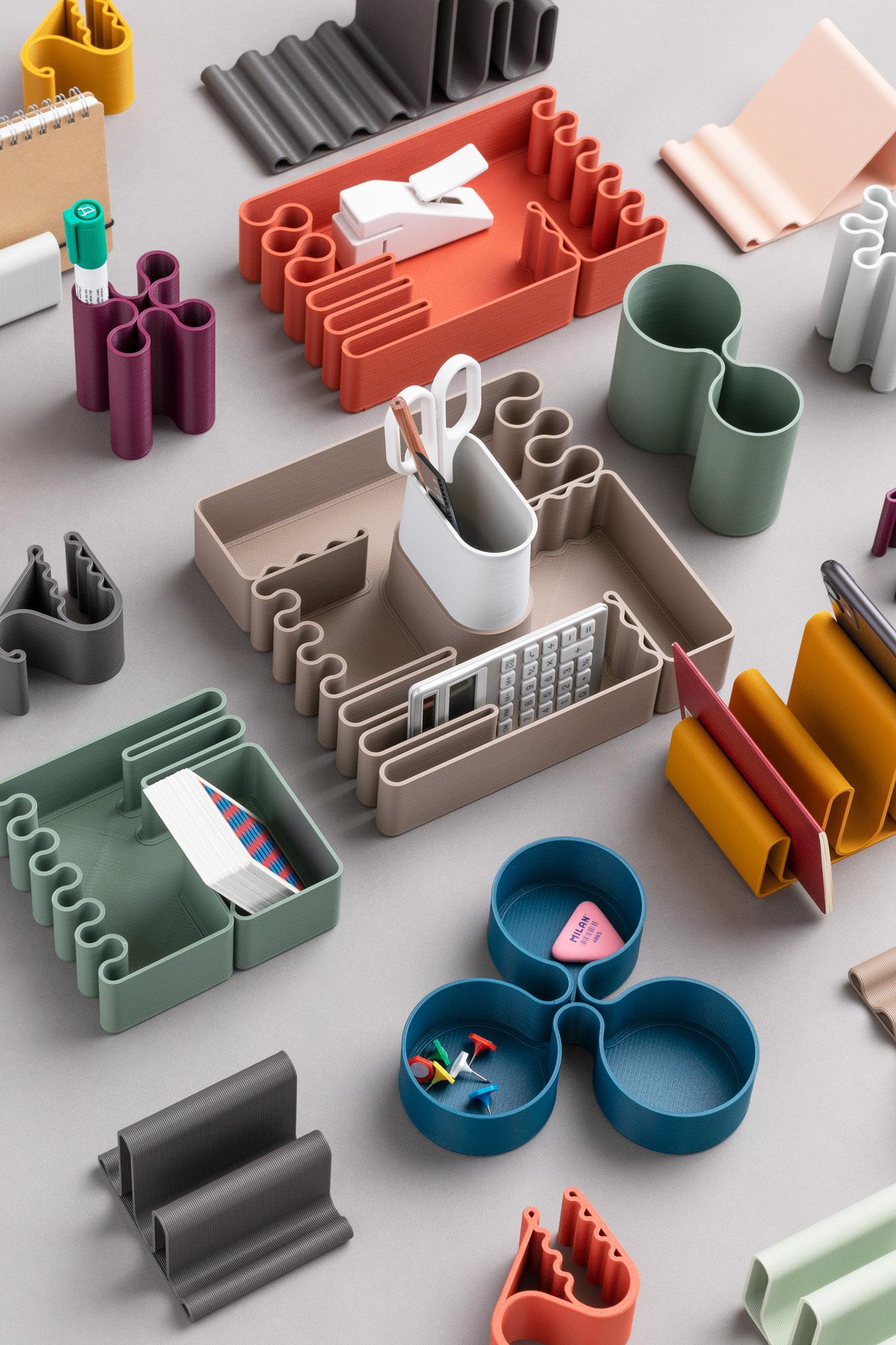
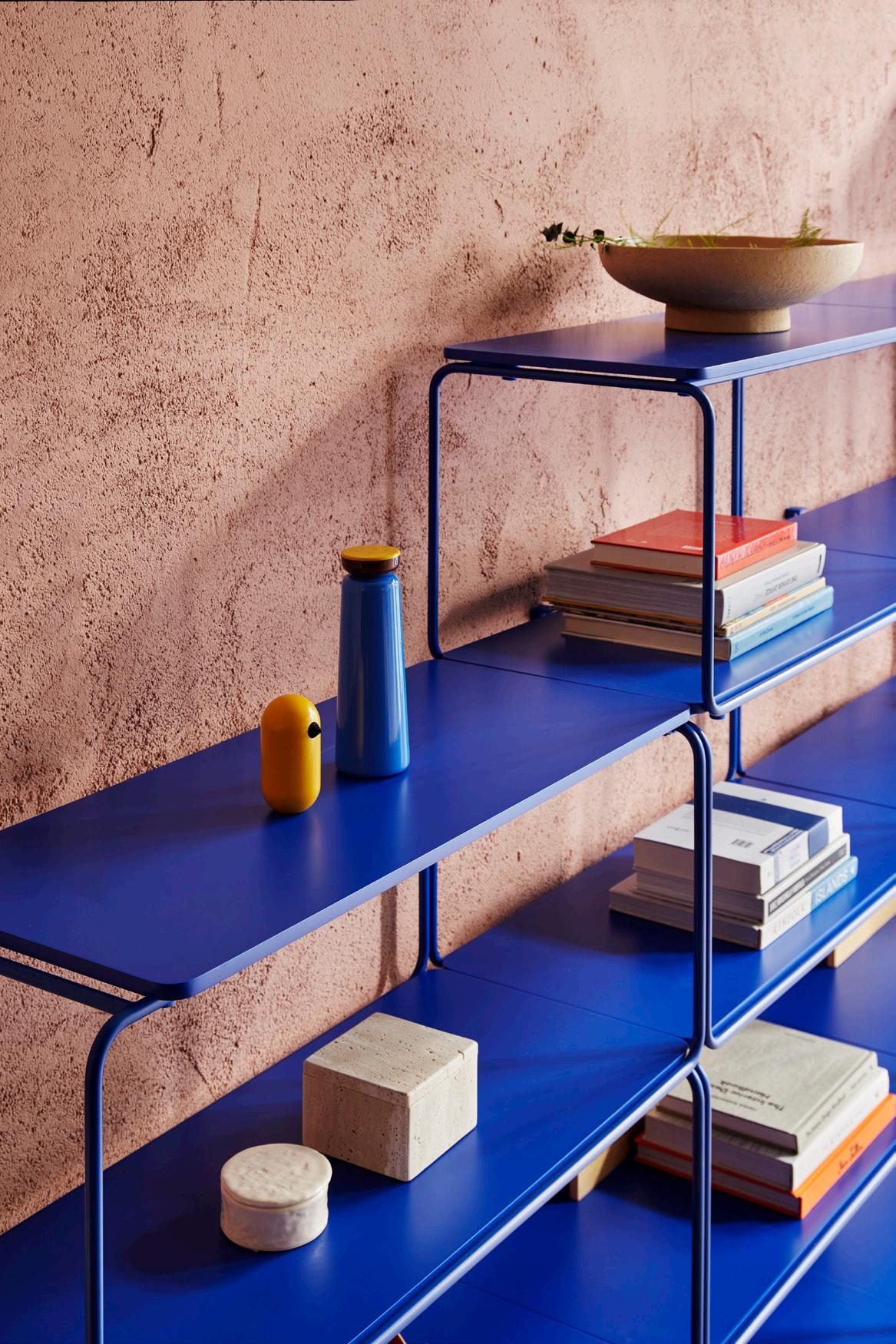
PROCESS OF MAKING HAS BEEN
esPattio Libro, 2023
The relationship between craft, design and mass production is really interesting
TOM: It is. In the UK, for example, we were in a post-industrial phase in the mid-1990s, but we hadn’t yet reached full globalisation. There was very little production left, but the idea of outsourcing hadn’t really established itself either.
Even now, most of the furniture sector in Europe sits below €100 million turnover, and many of those businesses are still family owned. That means you often know the person who is going to make the product. You’re very close to the process. You can see the machinery being used, and you design into those machines and skill sets.
As we moved into globalisation, companies like Modus began to appear. A small British furniture manufacturer, they started without any production of their own and outsourced everything. They represented an early shift towards the idea that you could be a brand without also being the maker.
That now feels completely normal. Outsourcing is something we all understand. China became the default place to manufacture for a long time, but that too has shifted. We’re now recalibrating globalisation again, through the lens of re-shoring and resilience.
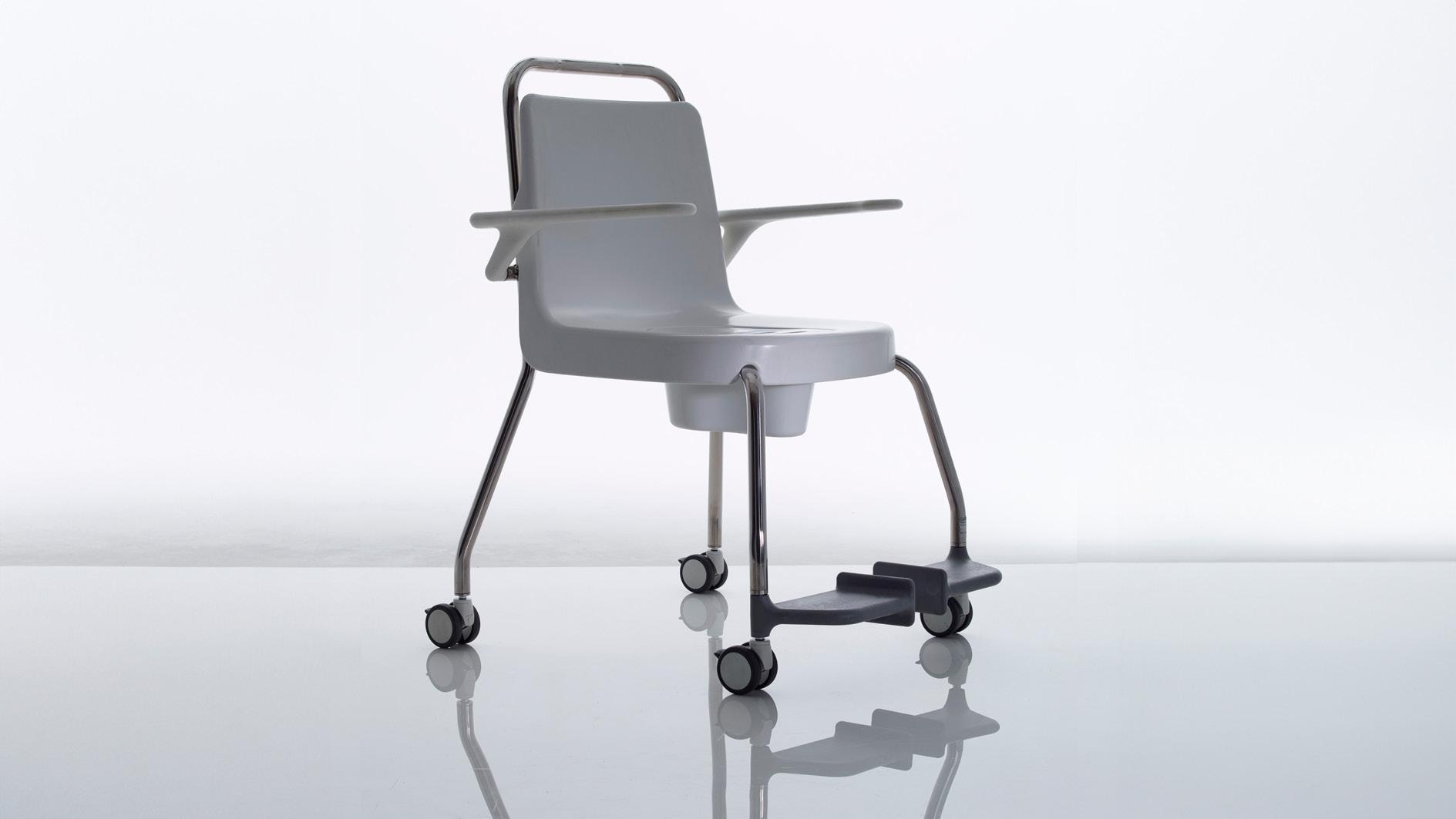
1. Department of Health Commode, 2010
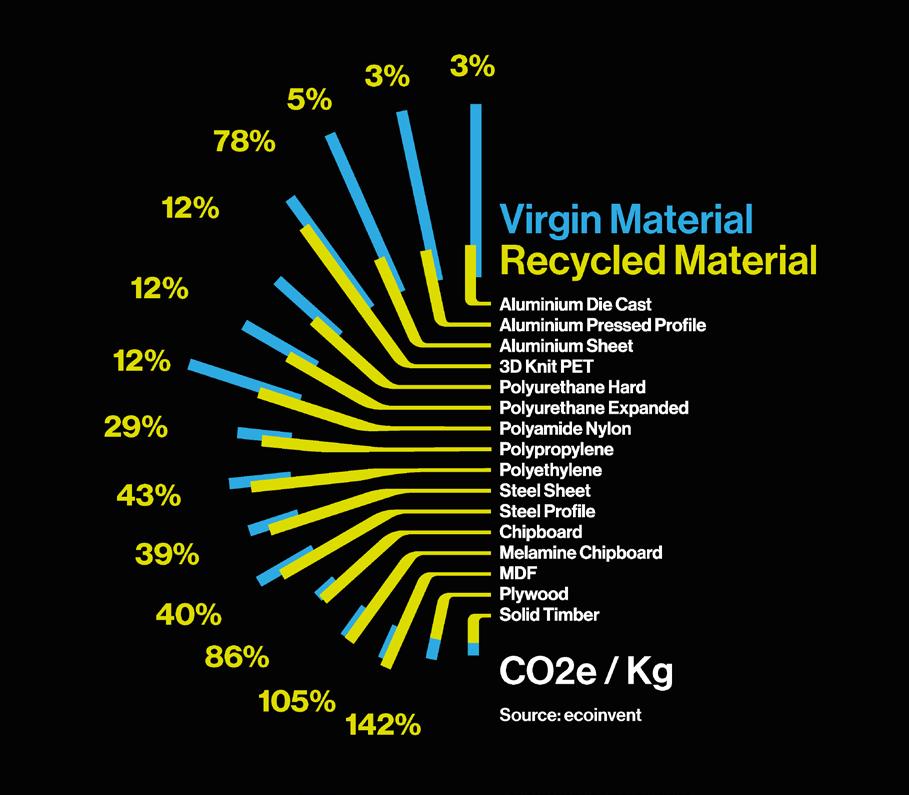
2. Material Carbon Footprint diagram by Pearson Lloyd
THE PROBLEM IS THAT
EVERY SINGLE USER
IS UTTERLY DIFFERENT.
How do you know when a project is ready to go into mass production?
TOM: Clients are crucial. Every organisation has an elastic limit for innovation. Some want to break all the rules. Others can only absorb small changes.
You have to find the balance. Stretch an organisation too far and it fails. Don’t stretch it enough and nothing progresses. There’s always a sweet spot.
What’s the lifespan like for some of your products?
LUKE: You’re not always in control of that. We designed market-leading waste bins for Joseph Joseph, but they were quickly copied, which is often the fate of genuinely innovative and useful ideas. The original product has continued to be made, sold and enjoyed, retaining a level of quality that cheaper imitations struggle to match.
We do have products that are nearly thirty years old, but they’re rare. Development cycles are faster now, production is cheaper, and social media creates a constant pressure for newness.
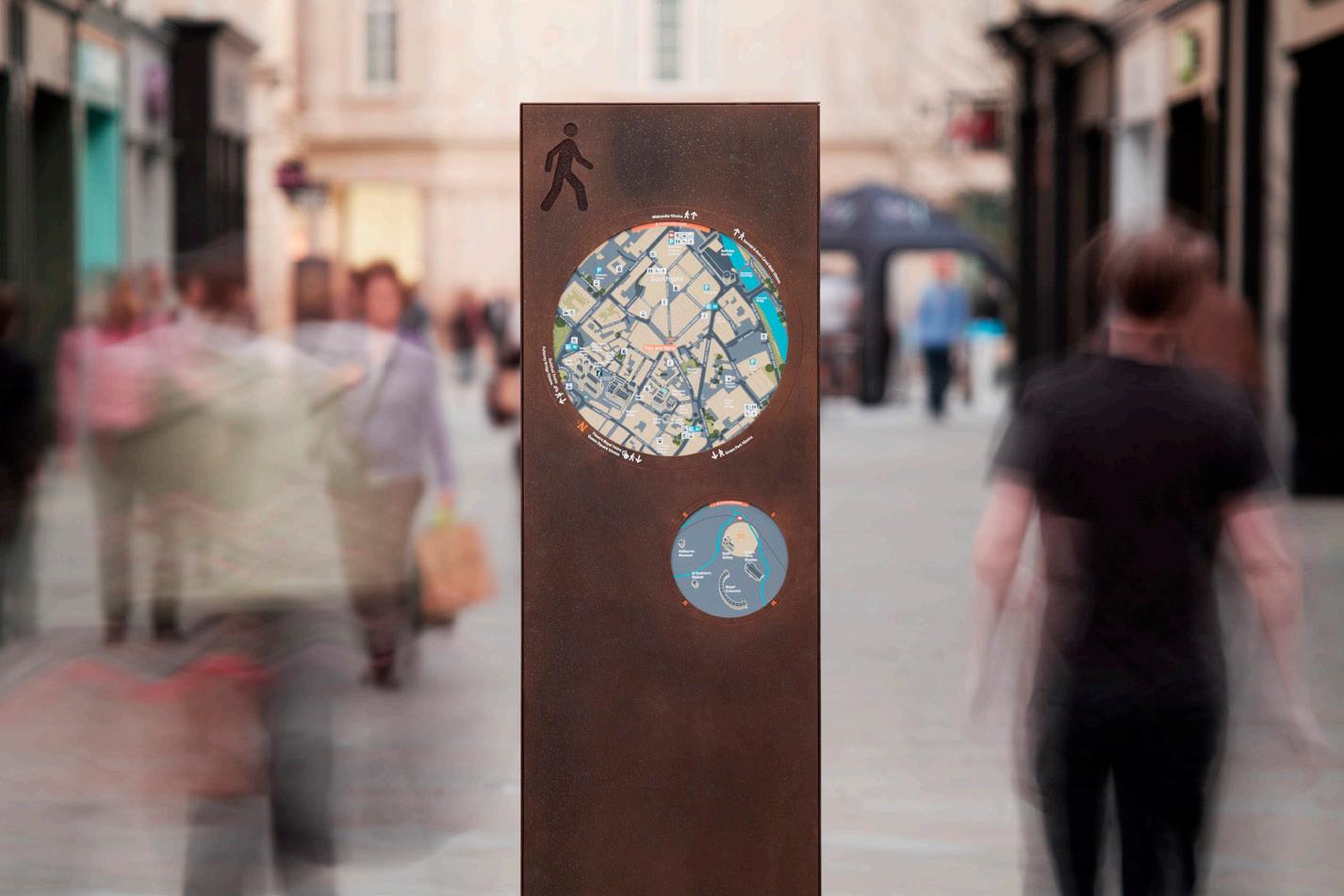
1. City of Bath Wayfinding and Street Furniture, 2016
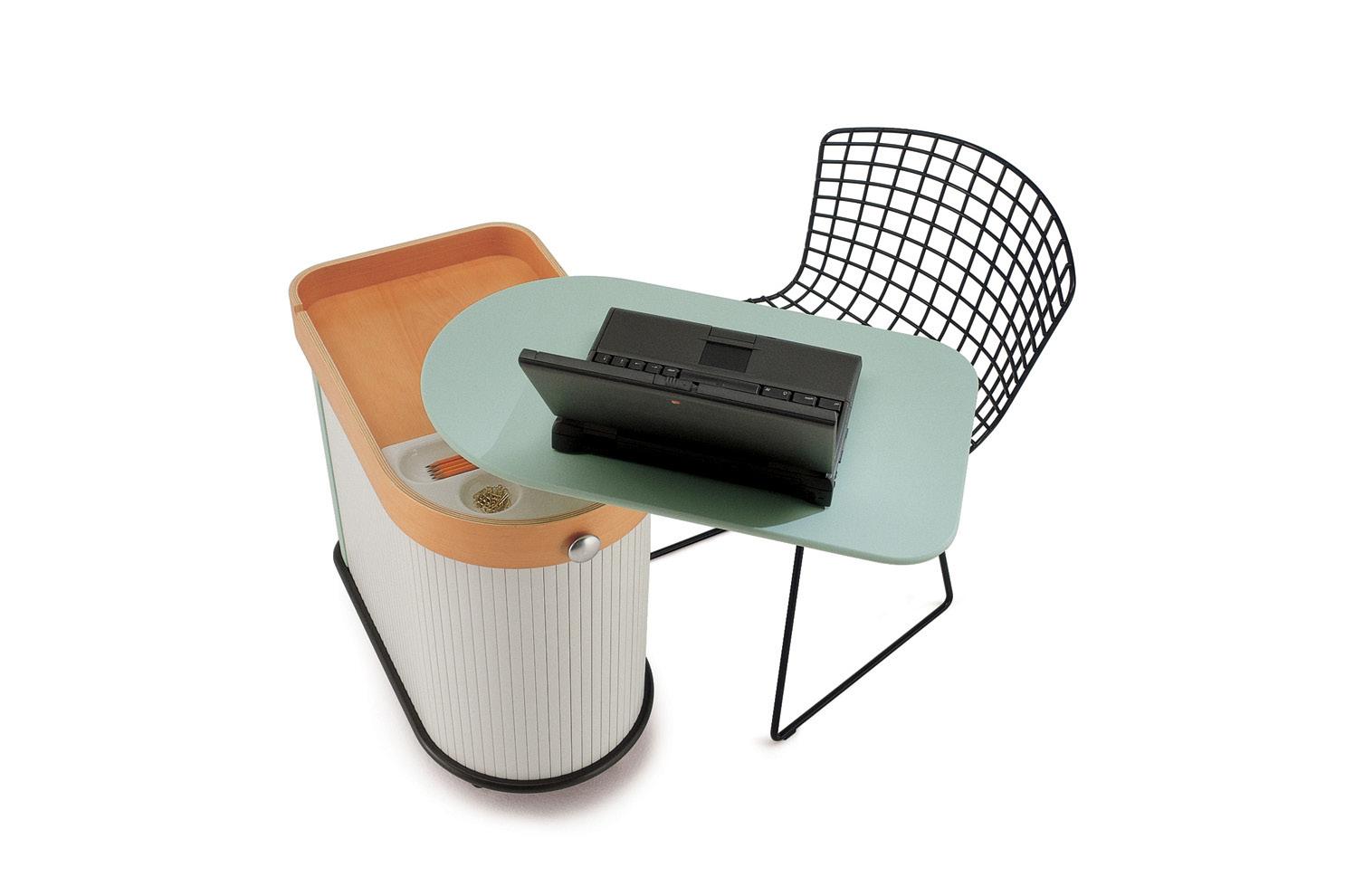
Knoll Homer, 1997
THAT BRIDGING POINT
Profim Revo, 2022
BETWEEN PRODUCTIVITY AND COMFORT.
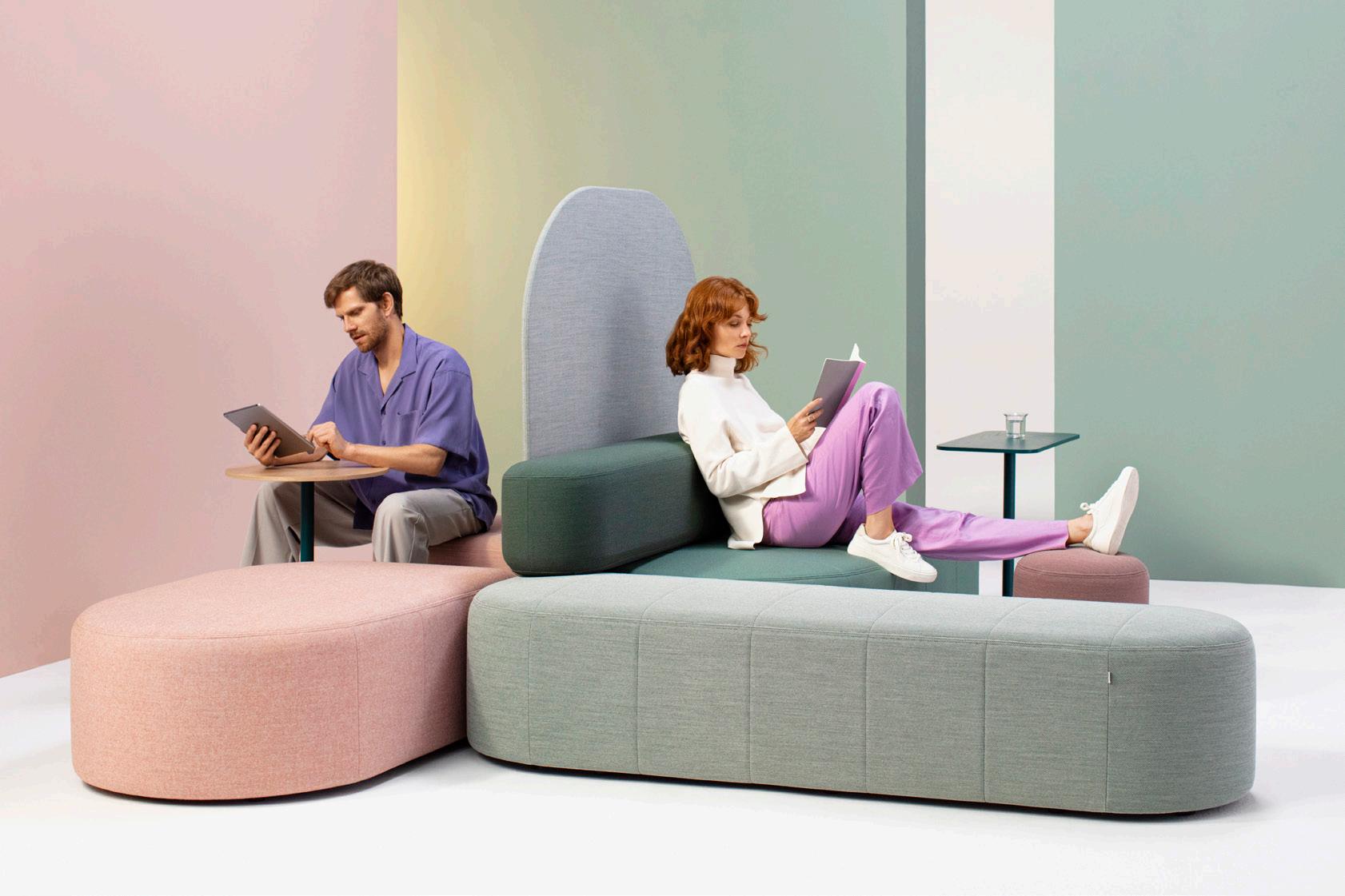
When a client comes to you with a new project, what’s your process like?
TOM: It’s changed a lot over the last decade because of climate change, and we’re spending much more time thinking about, and designing for, the planet. We used to focus primarily on the user and the market: designing something people would like, that hit the right price point and performed as expected. After that, procurement teams would work with manufacturers to find the best way of making it.
Now, when you add carbon and circularity into the equation, you start to realise that many of those choices are no longer available. We can’t use certain levels of carbon. We can’t rely on composite materials. You can’t glue one material to another unless you can take it apart again.
The actual process of making has been fundamentally modified.
Are you able to measure the impact that you’ve had on your own production?
TOM: We have pretty good systems in place. We track carbon at a product level and benchmark progress.
Circularity is harder to quantify because systems aren’t fully in place yet. At the moment, the most circular options are often very classical materials like steel and aluminium.
How do you square that with the need to make something that feels luxurious?
TOM: It’s difficult. Everyone is trying to reduce material cost, and in sectors like aviation, weight too. Because it directly affects fuel consumption.
Your business class seat and cabin for Lufthansa looks pretty comfortable though!
LUKE: We developed three personas to map the experience: the young entrepreneur, the workaholic and the high achiever travelling for pleasure.
Lufthansa also has a significant honeymoon market. For many German couples, flying Lufthansa Business Class on their honeymoon carries a particular sense of status and occasion.
The problem is that every single user is utterly different. Some people are completely at ease, others are stressed, worried or under pressure to work. Our job is to allow people to work, rest or relax at different moments within the same environment. We’re always looking for that sweet spot, that bridging point between productivity and comfort.
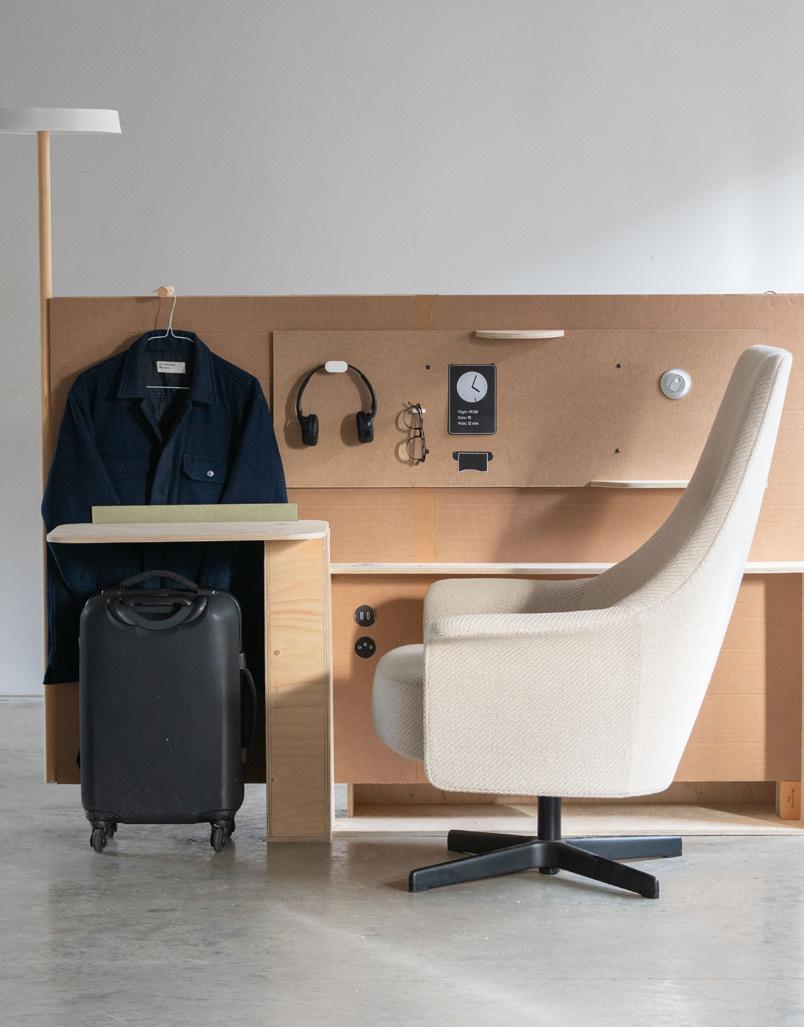
How did you get into aviation. Is it a large portion of your work?
TOM: It’s about a third of our studio capacity. Our first aviation client was Virgin Atlantic in 2001. They wanted a furniture designer to rethink aircraft seating.
We won the project and spent several years working on Upper Class, Premium Economy and Economy cabins. We were complete novices, but that experience shaped a significant part of our practice.
Today, our core areas are furniture, aviation and strategy. We also help clients plan the future of their collections.
Lufthansa Group AiO, 2025
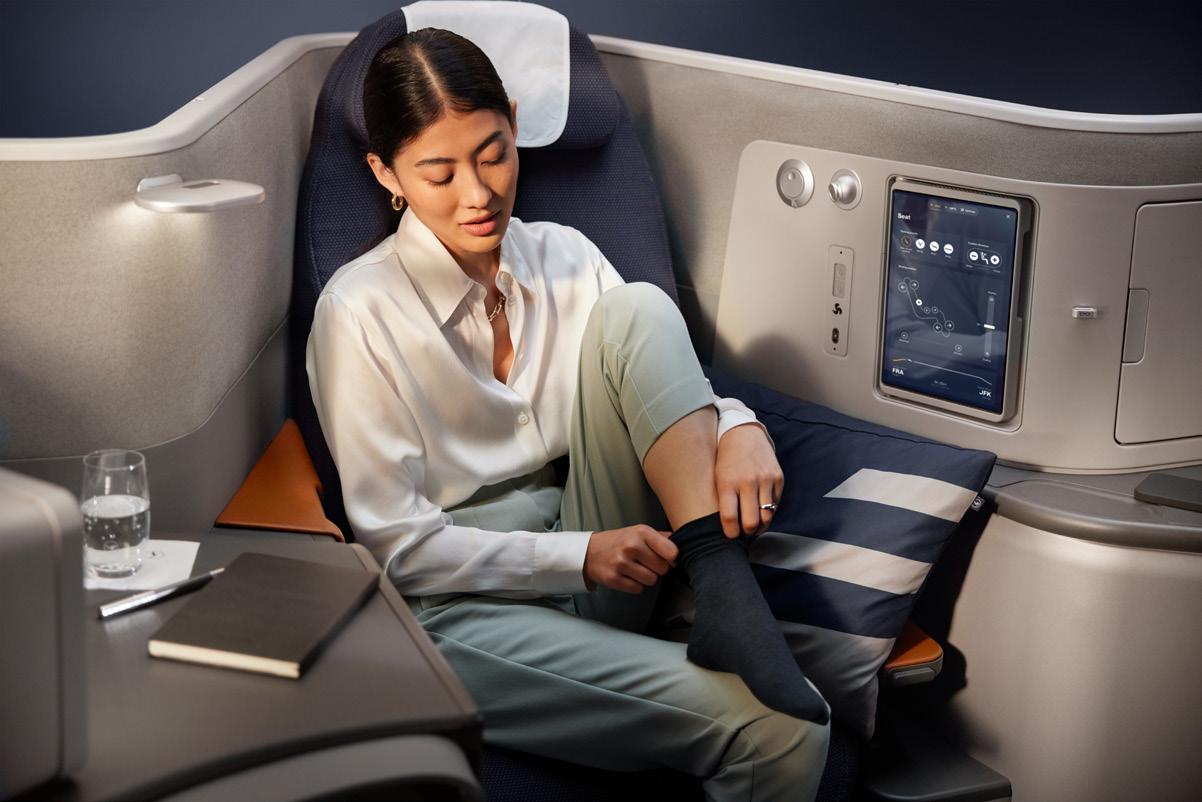
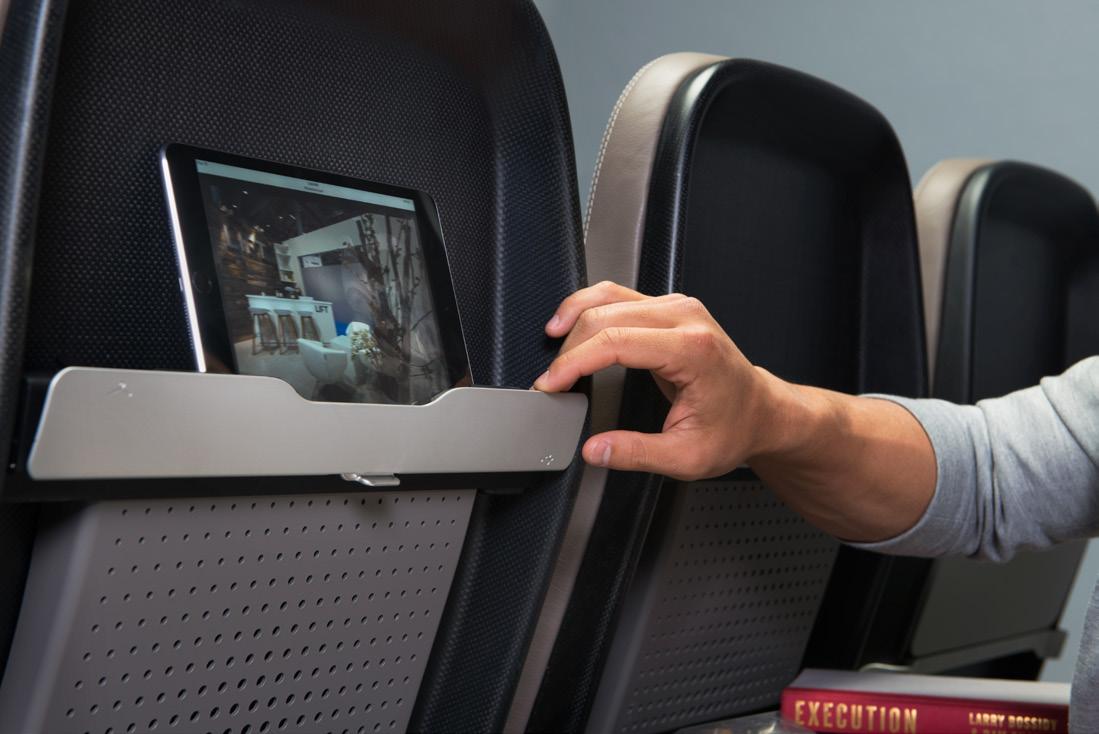
1. Lufthansa Allegris Business Class, 2023
Encore Lift, 2015
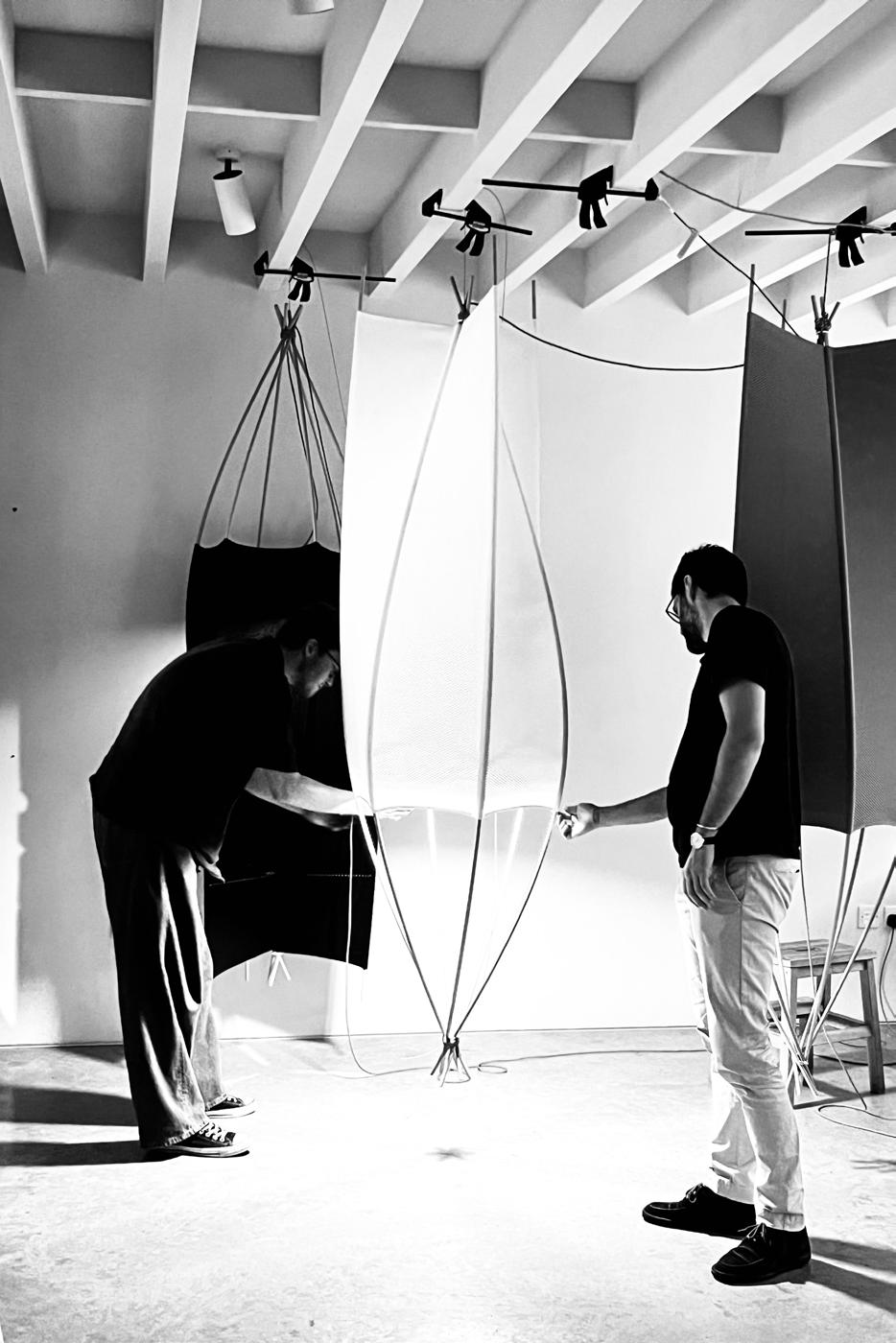
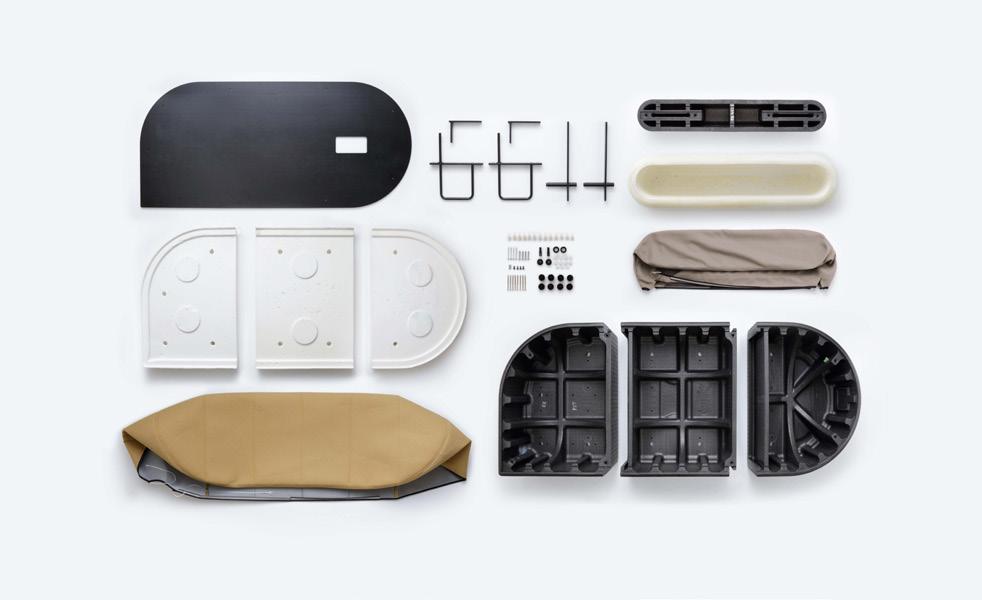
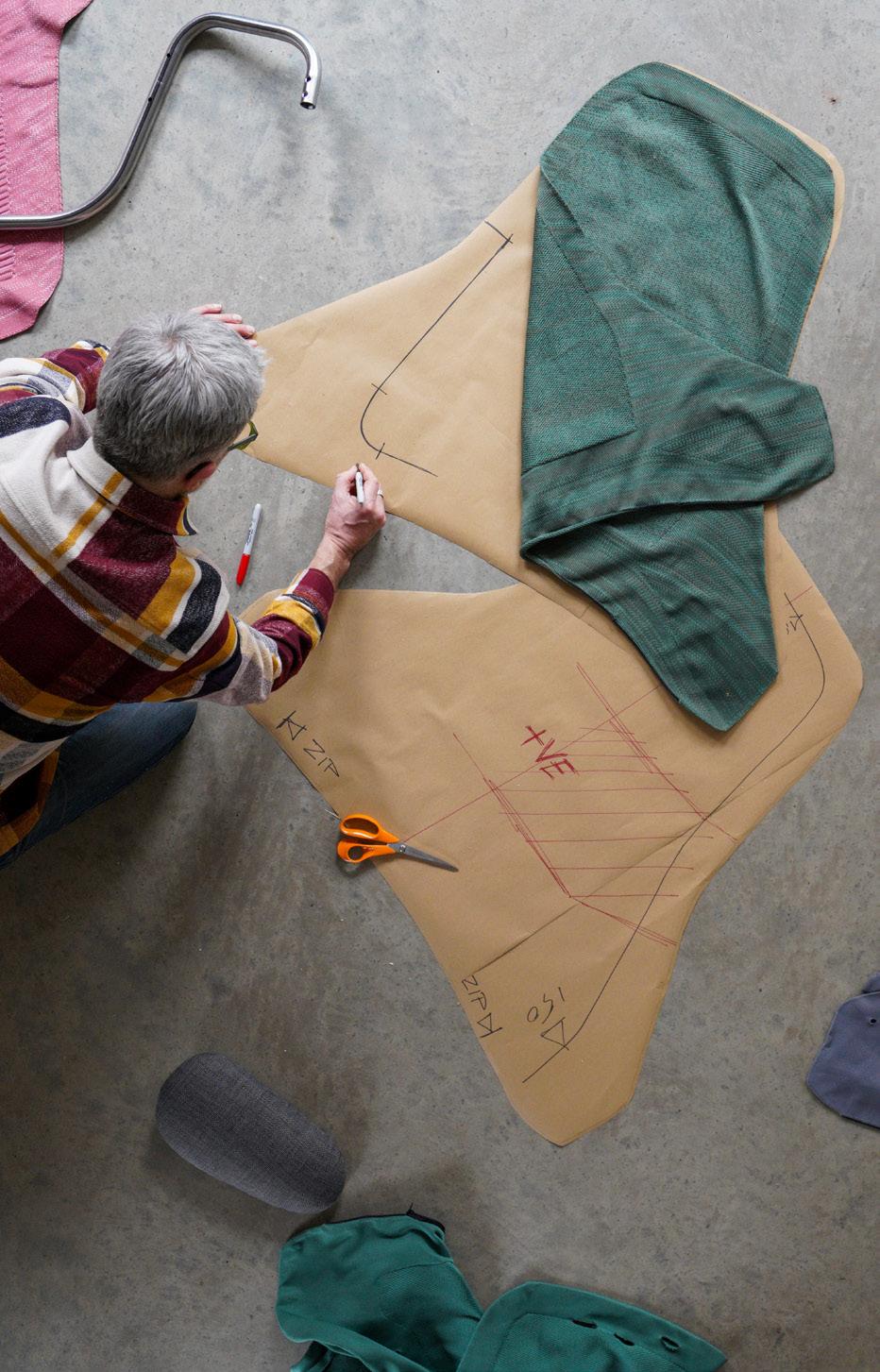
1. R&D Pupa, 2023
2. Profim Revo, 2022
3. Teknion Aarea, 2025
WE ARE SPENDING A LOT MORE TIME THINKING ABOUT, AND DESIGNING FOR, THE PLANET.
What does a typical day look like in your studio?
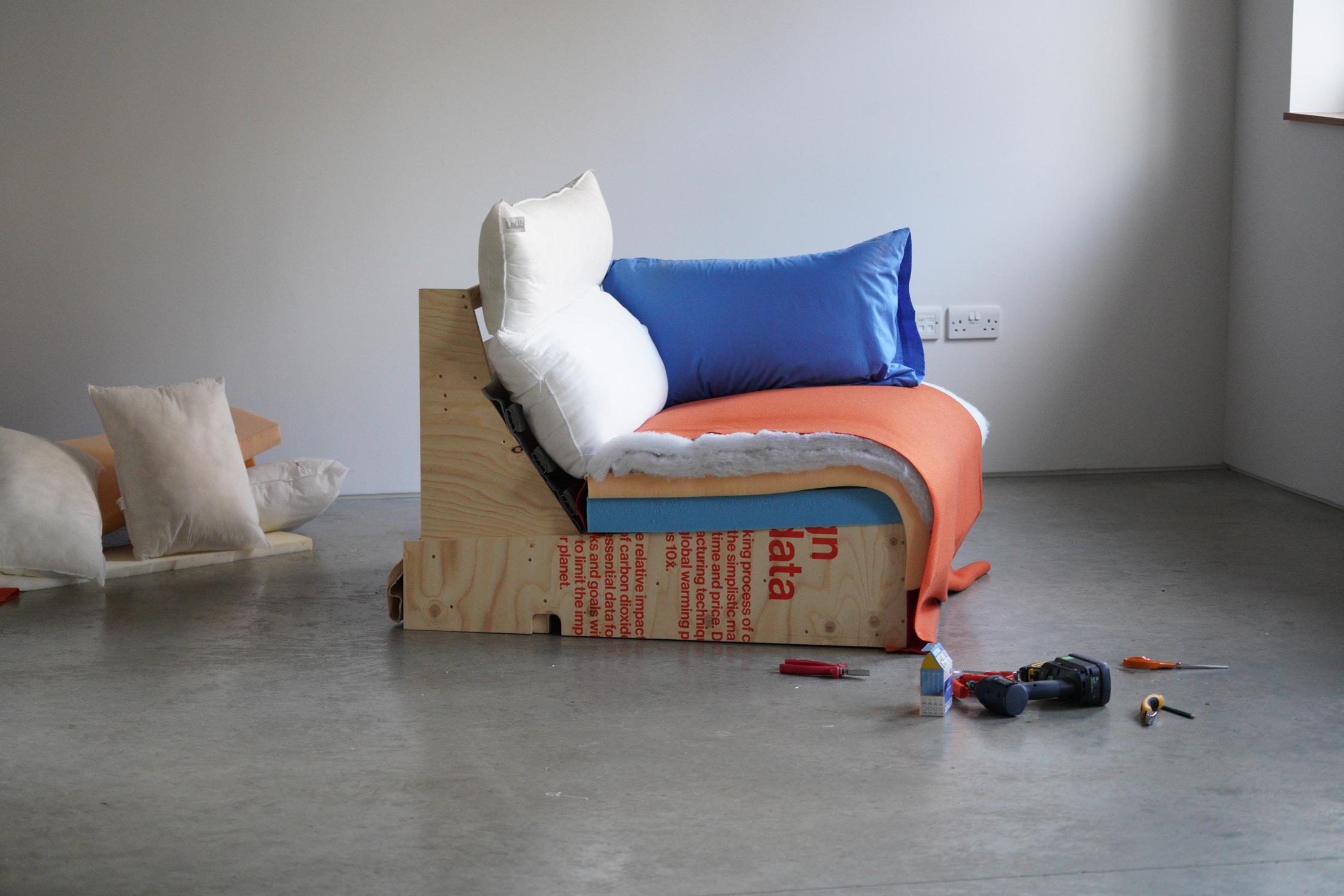
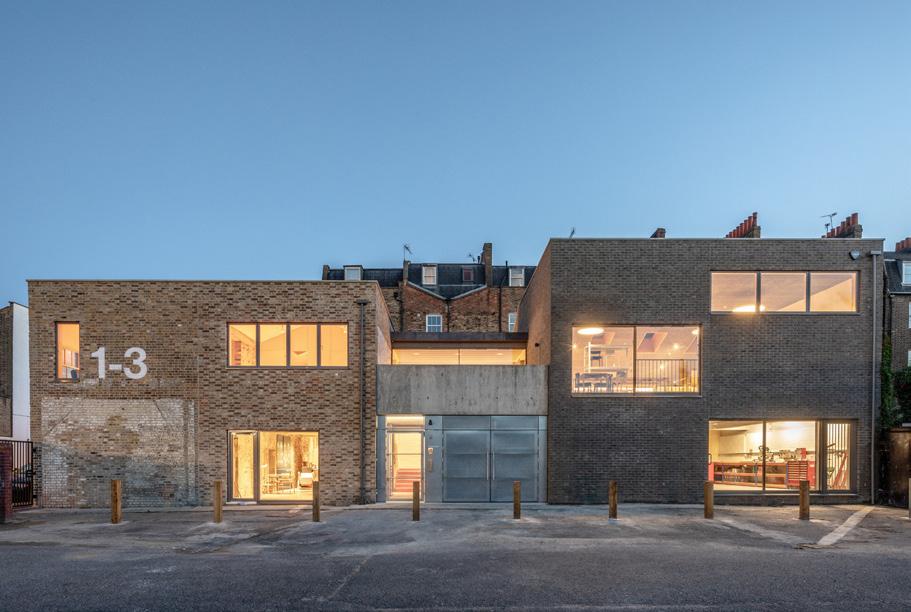
TOM: Our building is a beautiful space. It’s quite big, nearly 600 square metres, and we have a workshop downstairs. We start with making as much as we possibly can. Furniture is a very physical thing, so we often begin by crafting objects almost immediately, sometimes even before we would describe what we’re doing as ‘design’.
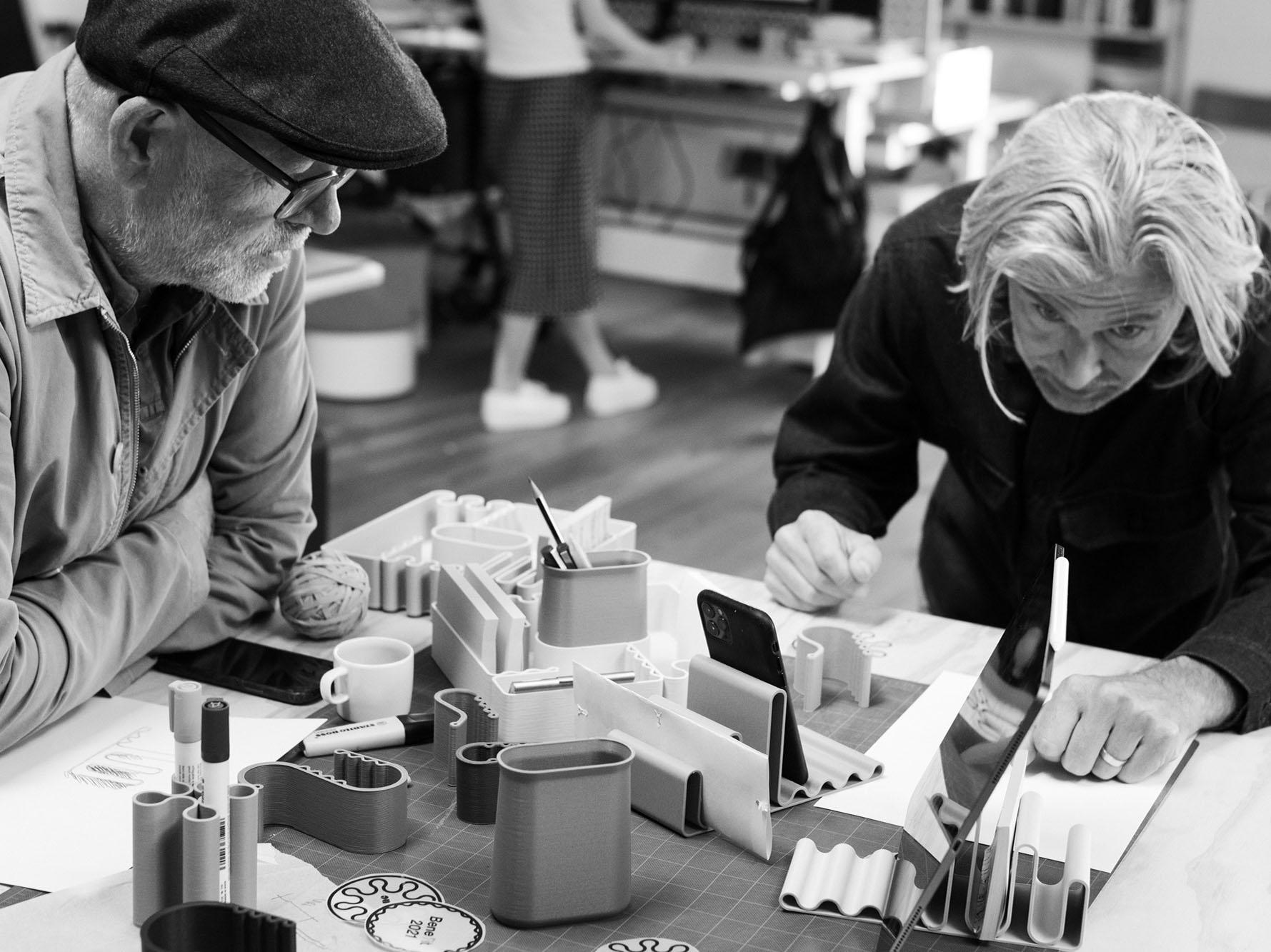
Take the HUG project for Cozmo. On our website you can see the range of model-making processes we went through. We were exploring how foam and fabric can be manipulated to create comfort, and we built a whole series of prototypes. The first presentation to the client was simply one of these prototypes that everyone sat in.
Making remains a really important part of what we do. At the same time, our projects are long. It can often take two or three years to develop a piece of furniture. The work usually starts with developing a brief and understanding why you’re heading in a particular direction. A client might say, ‘We want a stacking chair.’ Our first response is always, ‘Why do you want a stacking chair?’
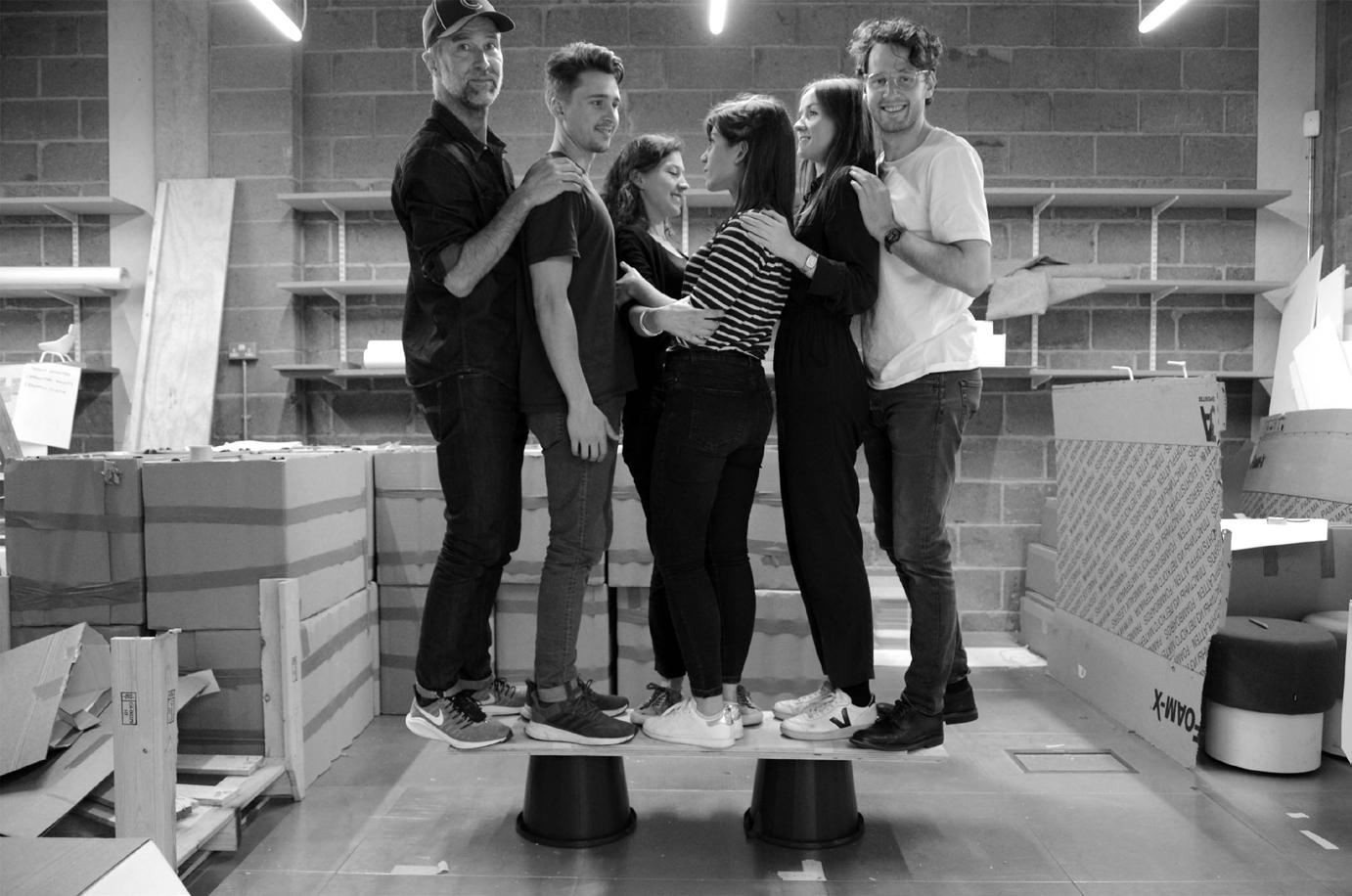
We have twelve people in the studio, working on projects at different stages. Two focus on strategy, brand and colour research, helping to contextualise the work before it starts. Others are developing 3D models, and alongside that we have the workshop and the gallery downstairs.
1. Pearson Lloyd studio in East London, Yorkton Workshops, 2020
2. Teknion Routes process, 2021
How did the gallery come about?
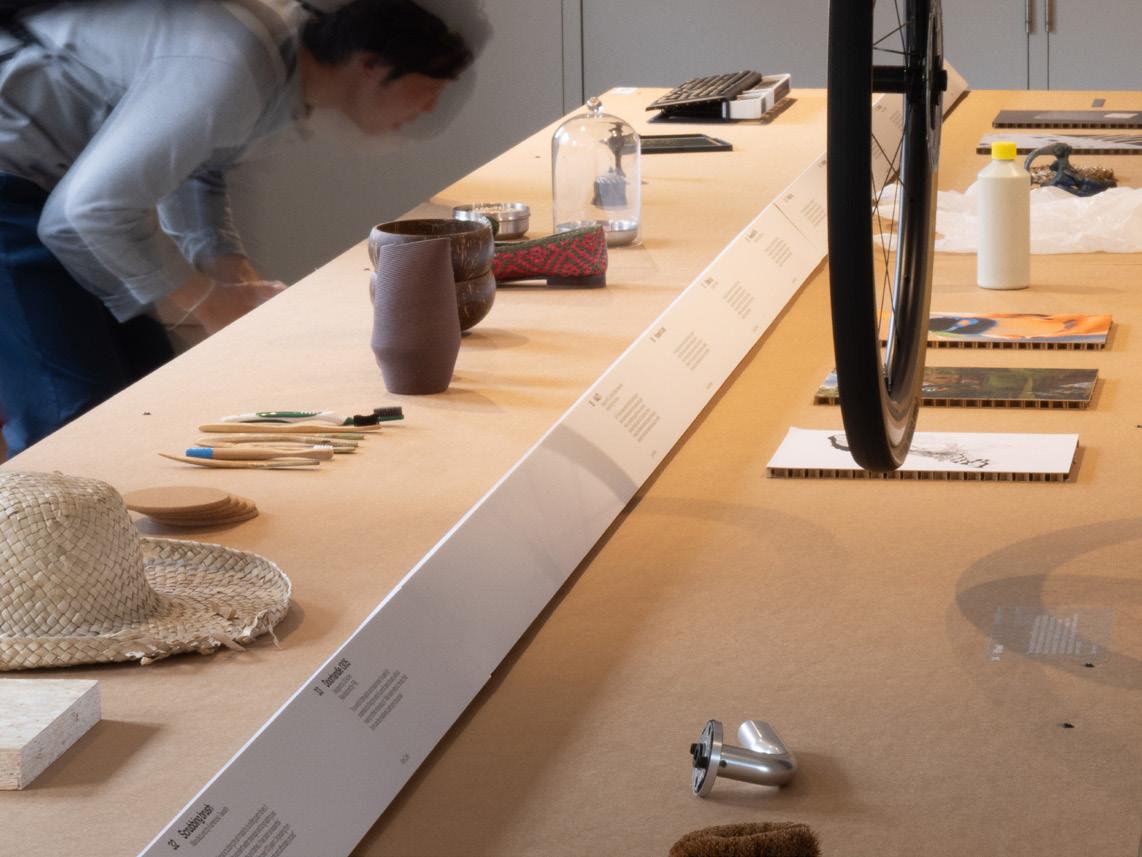
LUKE: When we built the studio, we ended up with around 100 square metres of extra space. Rather than letting it out, we decided to create a gallery. We’re not gallerists, and we’re not curators in any formal sense, sbut we’ve created a space that lots of people now use.
Over the last five years we’ve hosted fine artists, designers, people working with food, music and fashion. It’s become a really enjoyable way of being part of the wider cultural world.
Design can be quite introverted and insular. We do our work and we talk to our clients. Curating our own shows has helped to open that up. The gallery allows us to talk to the world in a different way.
THE GALLERY ALLOWS US TO TALK TO THE WORLD
IN A DIFFERENT
WAY.
Graphic Design 2017
38 TIM JOHN & MARTIN SCHMITZ Scenography Design 2017
39 BROSMIND Illustration Design 2017
40 ARMANDO MILANI Graphic Design 2017
41 LAURA STRAßER Product Design 2017
42 PHOENIX DESIGN Industrial Design 2018
43 UWE R. BRÜCKNER Scenography Design 2018
44 BROUSSE & RUDDIGKEIT Design Code 2018
45 ISABELLE CHAPUIS Photography Design 2018
46 PATRICIA URQUIOLA Product Design 2018
47 SARAH-GRACE MANKARIOUS Art Direction 2018
48 STUDIO FEIXEN Visual Concepts 2019
49 FRANK RAUSCH Interface Design 2019
50 DENNIS LÜCK Designing Creativity 2019
51 IAN ANDERSON Graphic Design 2019
52 FOLCH STUDIO
Narrative Design 2019
53 MARC TAMSCHICK Spatial Media Design 2020
54 TYPEJOCKEYS Type Design 2020
55 MOTH Animation Design 2021
56 JONAS LINDSTRÖM Photography 2021
57 VERONICA FUERTE Graphic Design 2021
58 CHRISTOPHE DE LA FONTAINE Product Design 2021
59 DAVID KAMP Sound Design 2021
60 THOMAS KURPPA Brand Design 2021 61 NEW TENDENCY Product Design 2022
62 MARTHA VON MAYDELL
Design 2022 63 STUDIO KLARENBEEK & DROS
Research 2022 64 JOUPIN GHAMSARI Photography Design 2022 65 LOTTERMANN AND FUENTES Photography Design 2022
66 SUPER TERRAIN Graphic Design 2022
67 EIKE KÖNIG Art Design 2023
68 CHRISTOPHER NOELLE Light Design 2023
69 DENNIS HINZE Sport Fashion Design 2023
70 KLASIEN VAN DE ZANDSCHULP Interactive Design 2023
71 VALENTIN VODEV Industrial Design 2023
72 GERMANS ERMICS Sculptural Design 2023
73 MADE BY JAMES Type & Logo Design 2024
74 SNASK Branding & Video 2024
75 CRAFTING PLASTICS! STUDIO Design Research 2024
76 STUDIO BRUCH Graphic Design 2024
77 GEMMA O'BRIEN Graphics & Lettering 2024
78 MARLOTA Fashion Design 2024
79 RONAN BOUROULLEC Product Design 2025
80 FRANCESCO FRANCHI Editorial & Information Design 2025
81 FIELD.IO Experiential Design 2025
82 SUPERFLEX Art Design 2025
83 MIKE MEIRÉ Design as Cultural Editing 2025
84 EVA CREMERS Digital Design 2025
85 EIKO OJALA Illustration Design 2026
Support Design Friends, become a member. More information on www.designfriends.lu Design Friends would like to thank all their members and partners for their support.

COLOPHON
PUBLISHER Design Friends
COORDINATION Heike Fries
LAYOUT Isabelle Mattern
INTERVIEW Mark Penfold
PRINT Imprimerie Schlimé
PRINT RUN 250 (Limited edition)
ISBN 978-2-919829-15-6
PRICE 5 €
DESIGN FRIENDS Association sans but lucratif (Luxembourg)
BOARDMEMBERS
Anabel Witry (President)
Guido Kröger (Treasurer)
Heike Fries (Secretary)
Hyunggyu Kim (Member)
COUNSELORS
Vera Heliodoro, Hyder Razvi, Olga Silva, Silvano Vidale WWW.DESIGNFRIENDS.LU
This catalogue is published for the lecture of Pearson Lloyd "Embracing uncertainty" at Rotondes on March 25th, 2026 organised by Design Friends.
Design Friends is financially supported by
In collaboration with Partners Service Partners