Derrick Pickering: Practical Approaches to Trauma-Informed
Women’s Care for Compassionate Support

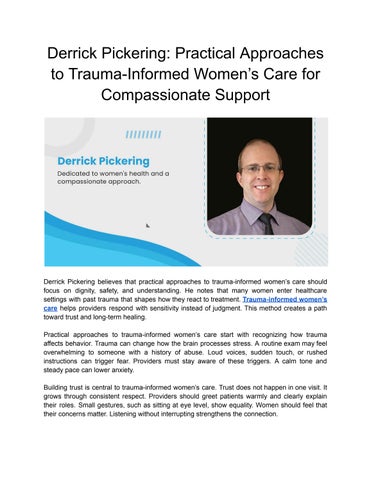
Derrick Pickering believes that practical approaches to trauma-informed women’s care should focus on dignity, safety, and understanding He notes that many women enter healthcare settings with past trauma that shapes how they react to treatment. Trauma-informed women’s care helps providers respond with sensitivity instead of judgment This method creates a path toward trust and long-term healing.
Practical approaches to trauma-informed women’s care start with recognizing how trauma affects behavior. Trauma can change how the brain processes stress. A routine exam may feel overwhelming to someone with a history of abuse Loud voices, sudden touch, or rushed instructions can trigger fear Providers must stay aware of these triggers A calm tone and steady pace can lower anxiety.
Building trust is central to trauma-informed women’s care Trust does not happen in one visit It grows through consistent respect. Providers should greet patients warmly and clearly explain their roles Small gestures, such as sitting at eye level, show equality Women should feel that their concerns matter. Listening without interrupting strengthens the connection.
Another important step in trauma-informed women’s care is offering choice Trauma often involves a loss of control. Giving control back supports recovery. Providers can ask simple questions like, “Would you like the door open or closed?” or “Do you prefer a female provider?” These options may seem small, but they give patients power back.
Privacy is also essential in trauma-informed women’s care Conversations should happen in secure spaces. Personal details must stay confidential. When women know their information is protected, they are more willing to share Transparency about how records are used builds confidence in the system
Education plays a key role in practical approaches to trauma-informed women’s care Healthcare teams need training on trauma awareness They should understand common signs of trauma, such as withdrawal, anger, or fear. These reactions are coping strategies, not personality flaws Training helps staff respond with patience instead of frustration
Language matters in trauma-informed women’s care Words should be supportive and clear Avoid blame or shame Replace phrases like “You need to calm down” with “I am here to help ” Positive language reduces stress and strengthens rapport. Simple communication builds understanding
Support services also improve trauma-informed women’s care. Referrals to counseling, social support, or community programs extend care beyond the clinic Women benefit when emotional and physical health are treated together A coordinated approach leads to better health outcomes.
Self-awareness among providers strengthens trauma-informed women’s care. Healthcare workers must manage their own stress Burnout can reduce empathy Regular breaks, peer support, and stress management tools protect both staff and patients Healthy providers deliver better care.
Derrick Pickering highlights that practical approaches to trauma-informed women’s care create safer healthcare experiences. When women feel respected and heard, they are more likely to return for follow-up visits They build stronger relationships with providers Trauma-informed women’s care is a commitment to compassion. It ensures that healing happens in an environment built on trust, choice, and understanding.