Denver Urban Spectrum is a monthly publication dedicated to spreading the news about people of color. Contents of Denver Urban Spectrum are copyright 2026 by Bizzy Bee Enterprise. No portion may be reproduced without written permission of the publisher.
Denver Urban Spectrum circulates 7,500 copies throughout Colorado. Denver Urban Spectrum welcomes all letters, but reserves the right to edit for space, libelous material, grammar, and length. All letters must include name, address, and phone number. We will withhold author's name on request. Unsolicited articles are accepted without guarantee of publication or payment.
Write to Denver Urban Spectrum at P.O. Box 31001, Aurora, CO 80041. For advertising, subscriptions, or other information, call 303-292-6446, email publisher@urbanspectrum or visit the Website at www. denverurbanspectrum.com.
MESSAGE
From The Publisher
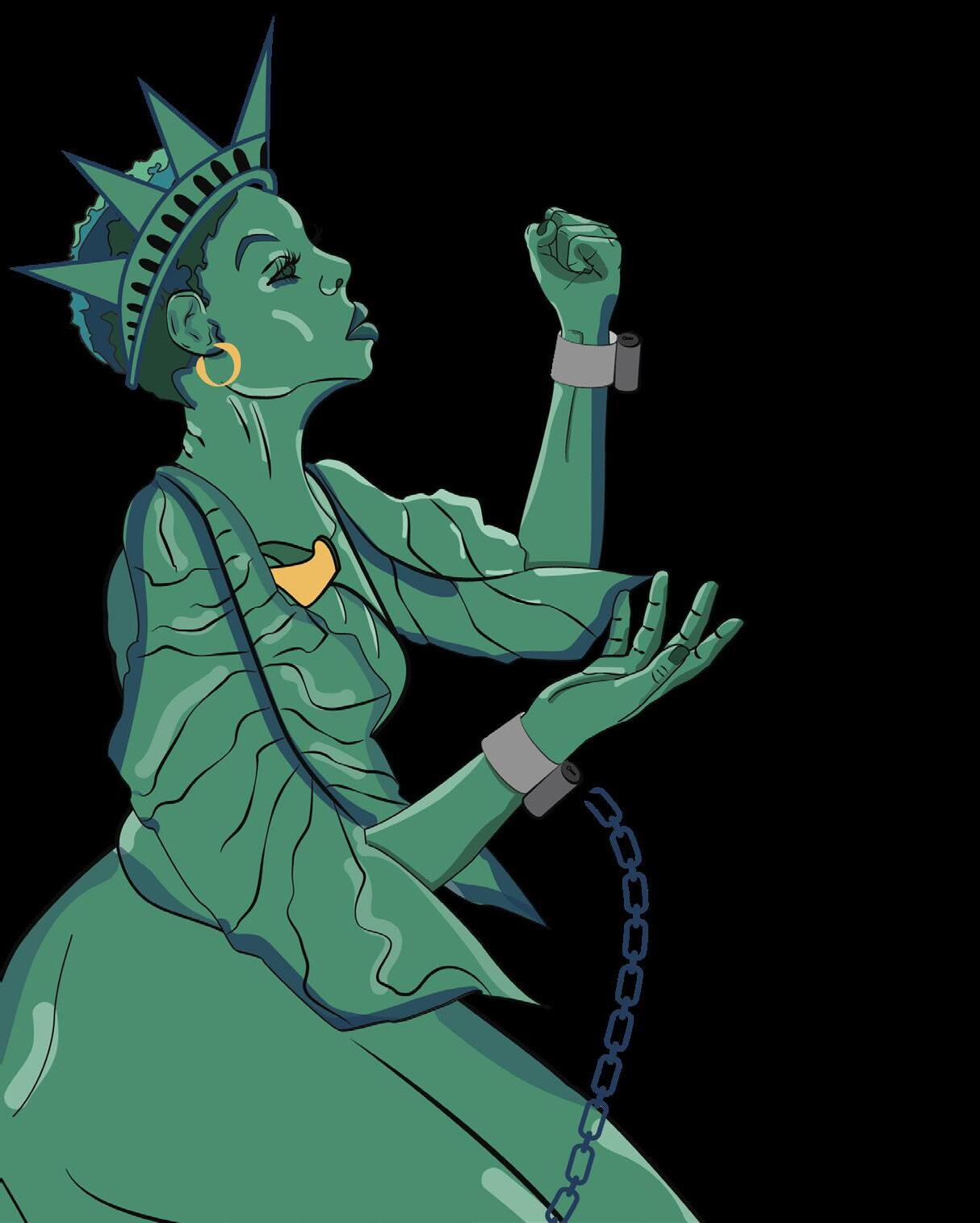
“Hold fast to dreams, for if dreams die, life is a broken-winged bird that cannot fly.”
This month, we celebrate dreams— and the dedication required to protect them, nurture them, and pass them forward.
In 2026, Black History Month marks a profound milestone: the 100th anniversary of the formal celebration of Black history in the United States. The Association for the Study of African American Life and History has designated this year’s theme, “A Century of Black History Commemorations,” honoring the centennial of the first Negro History Week, established in 1926 by historian Dr. Carter G. Woodson.
This year’s observance invites us to reflect on how a century of public remembrance has shaped our national identity, advanced the pursuit of equity, and helped ensure that Black history is taught truthfully, fully, and with intention. Across the country, institutions and communities will gather to commemorate this legacy—and here in Denver, we are proud to be part of that collective reflection.
At Denver Urban Spectrum, we continue our longstanding commitment to honoring excellence, resilience, and service through our
The Webb Report
Former Denver Mayor and Water Expert form New Firm
Former Denver Mayor Wellington Webb and Dale Hunter, a water expert and the founder of The Hunter Group, a full service government relations consulting firm, have formed a new partnership called Webb-Hunter H20.
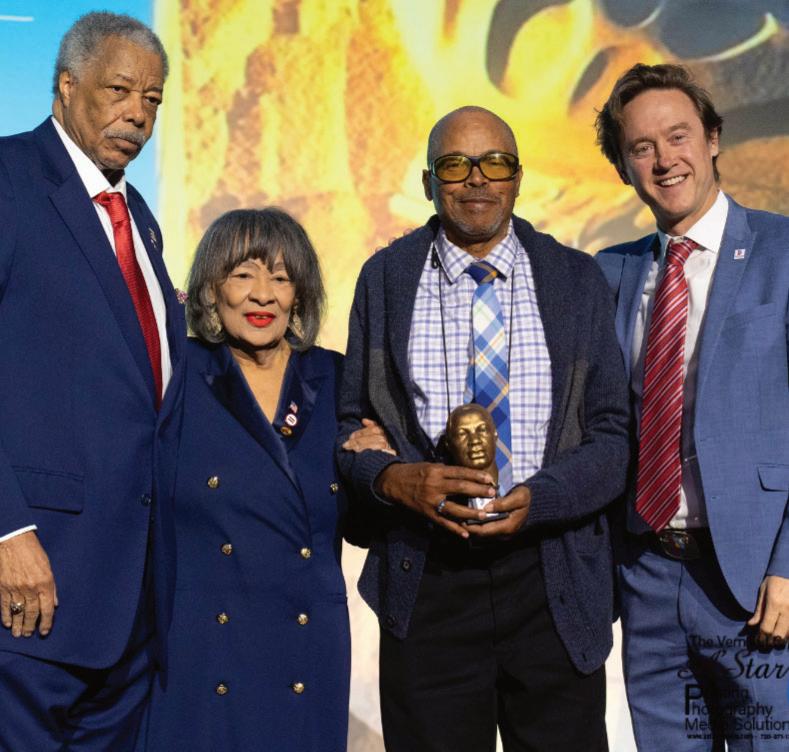
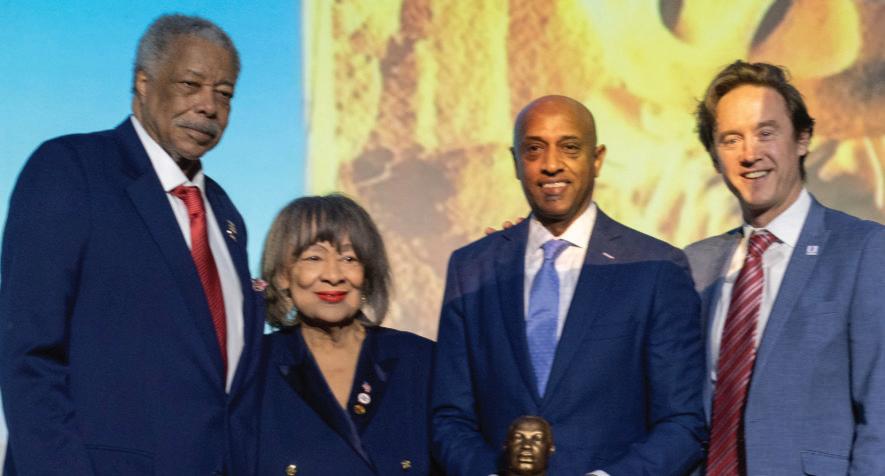
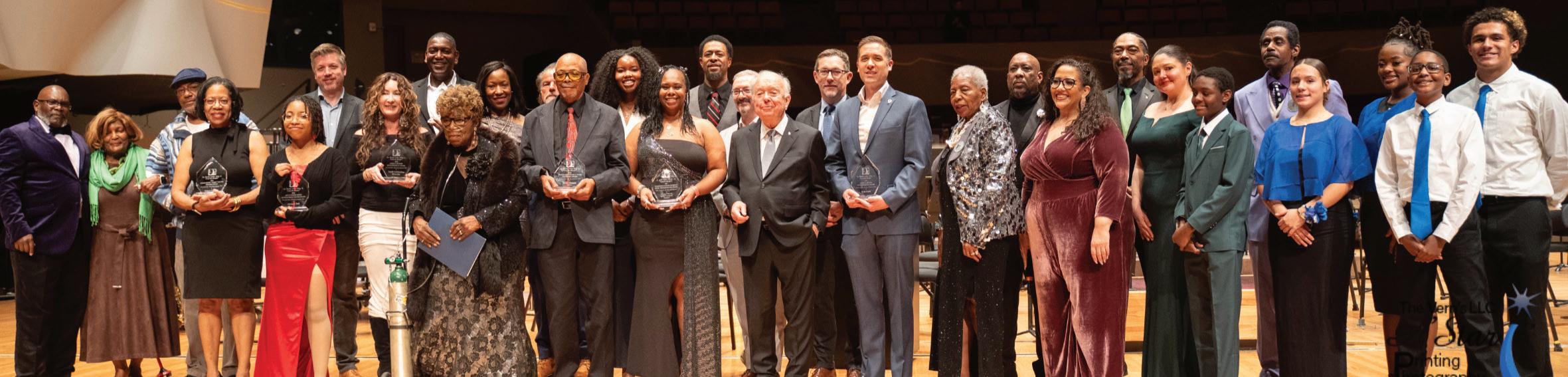
African Americans Who Make A Difference celebration. This year, we recognize 17 remarkable individuals, each nominated by their community, whose lives reflect a deep commitment to service, leadership, and positive change. Their stories remind us that history is not only something we study—it is something we live and shape every day.
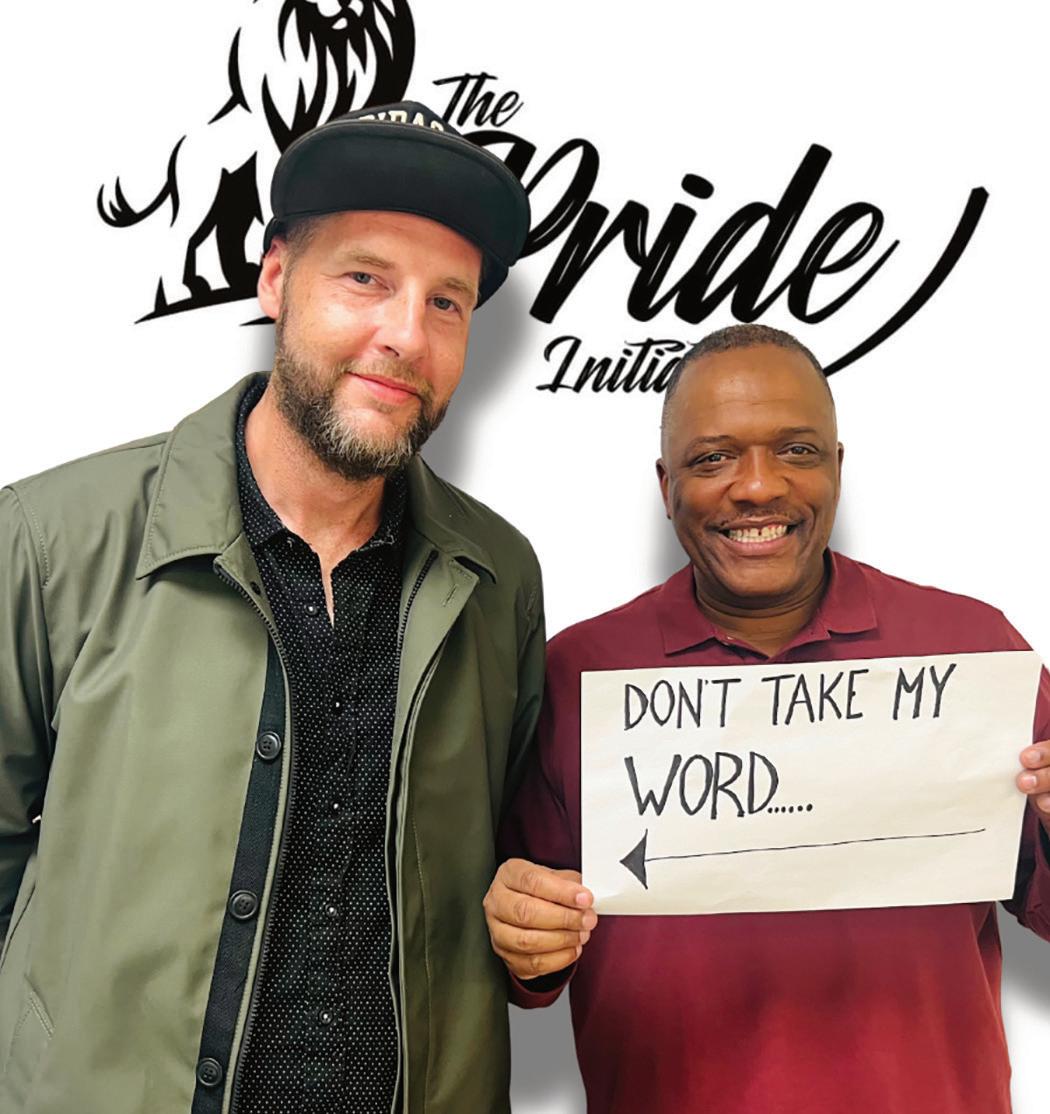
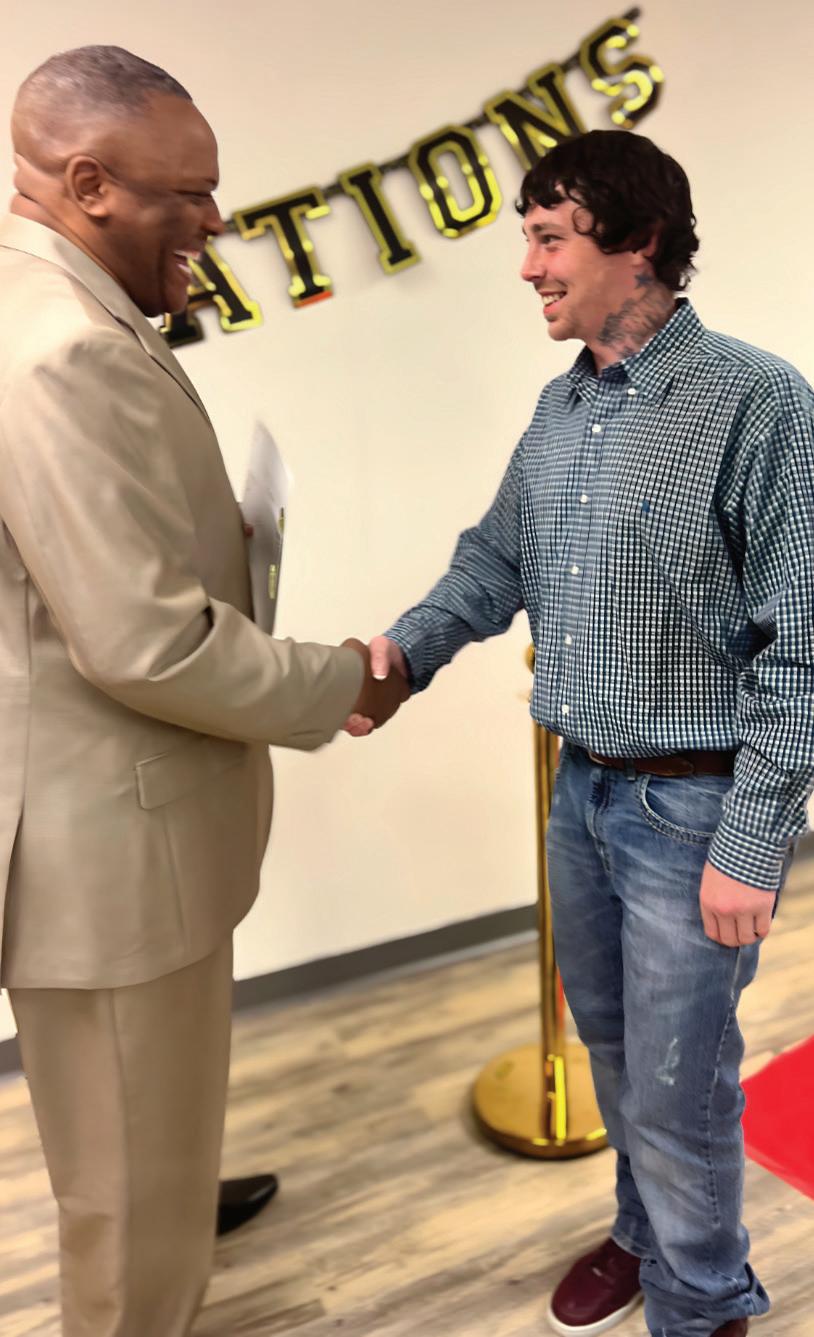
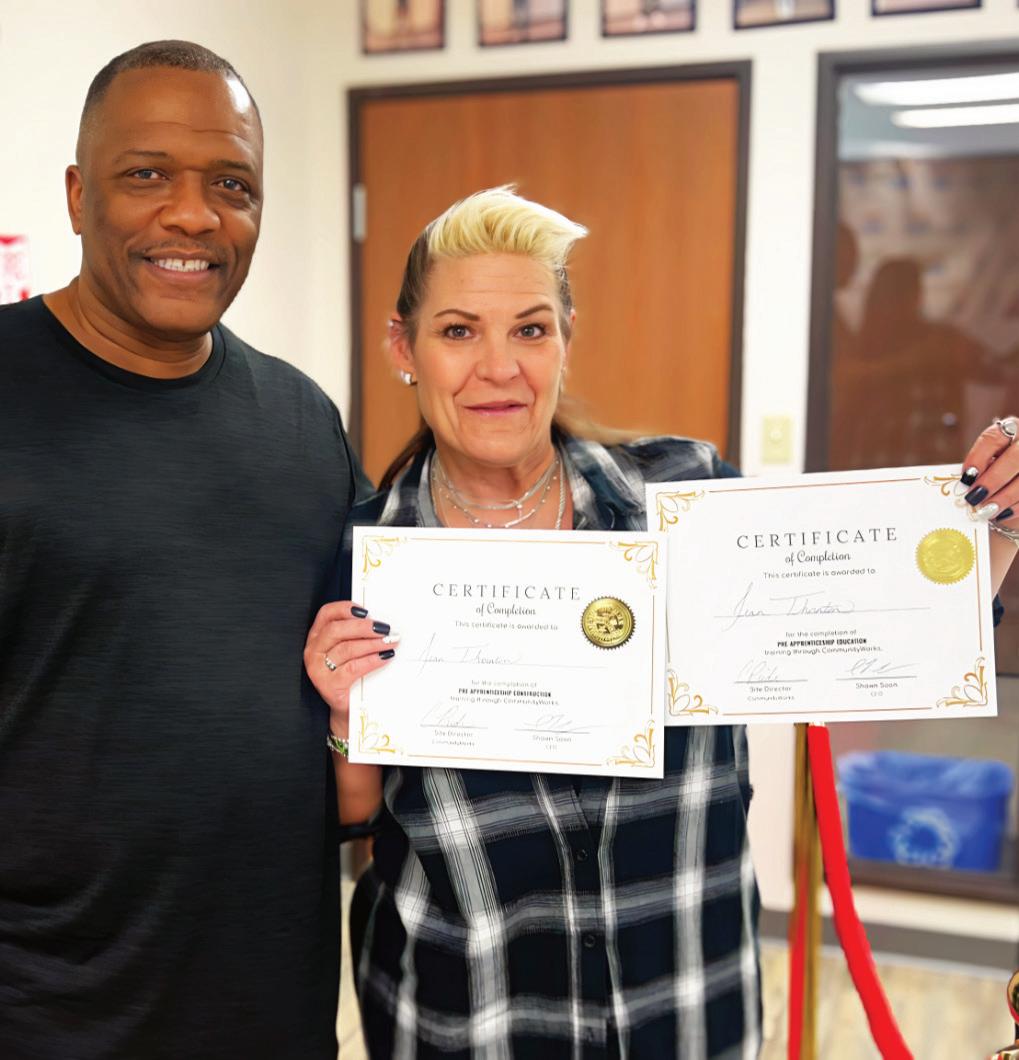
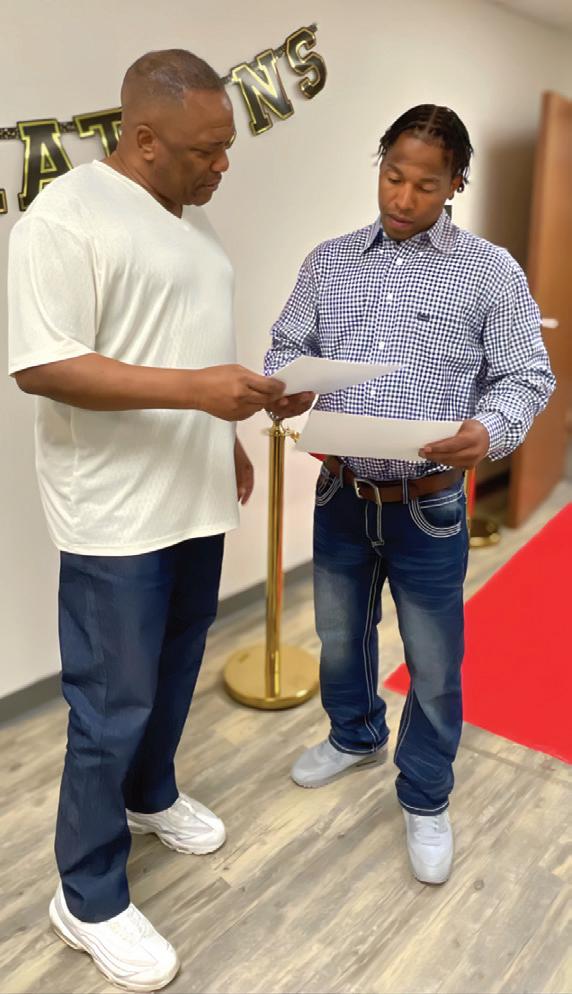
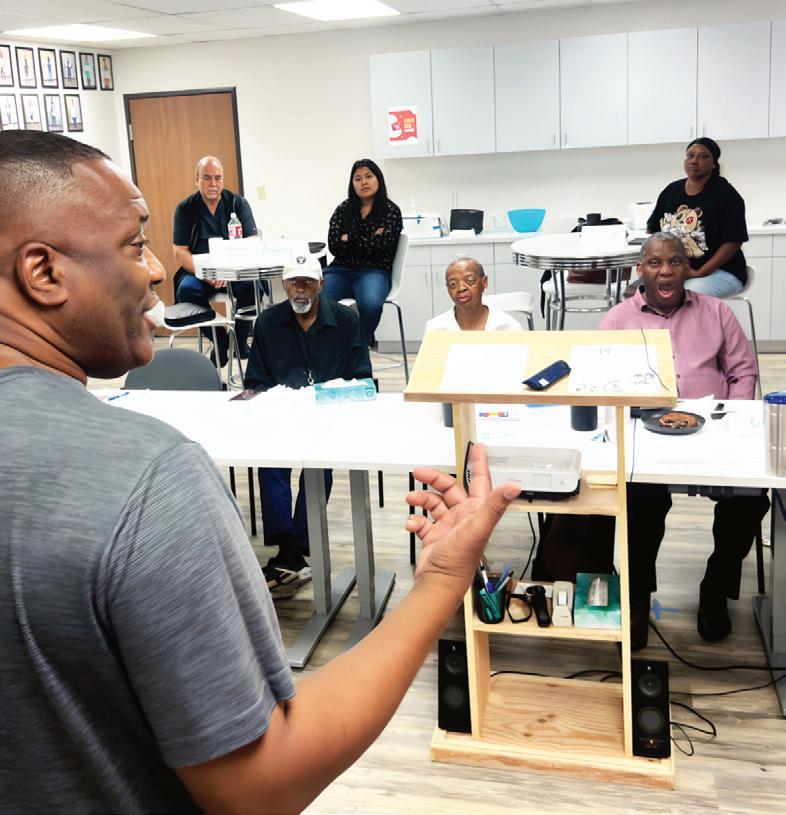
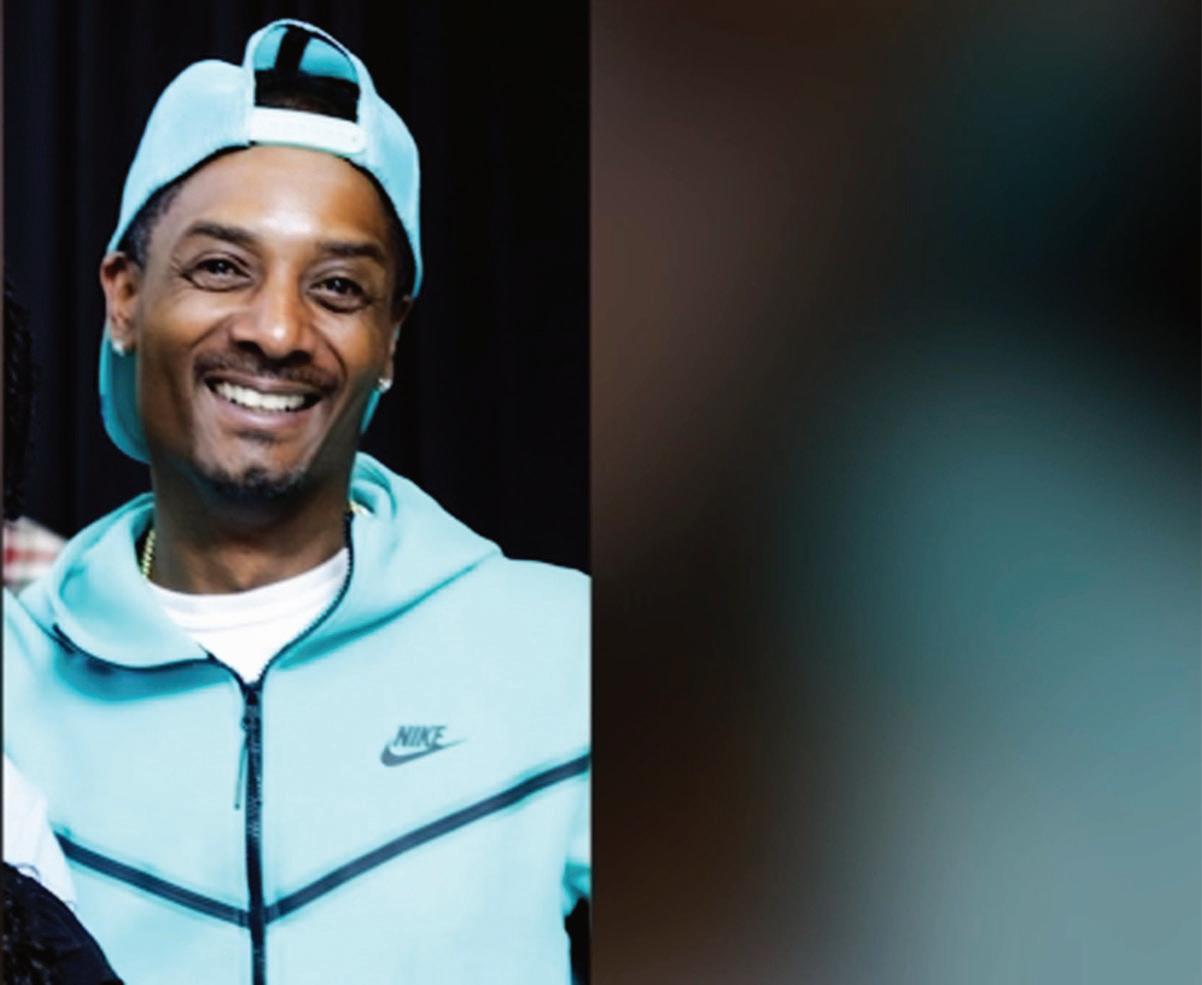
History is also being written in the Mile High City. In our cover story, Gabrielle West introduces readers to The Pride Initiative and its founder, Cedric Pride. Guided by faith and rooted in service and compassion, The Pride Initiative is transforming lives across the Greater Denver Metro area by providing skills training and career development opportunities that foster personal growth and sustainable economic mobility. It is a powerful example of what happens when vision meets action.
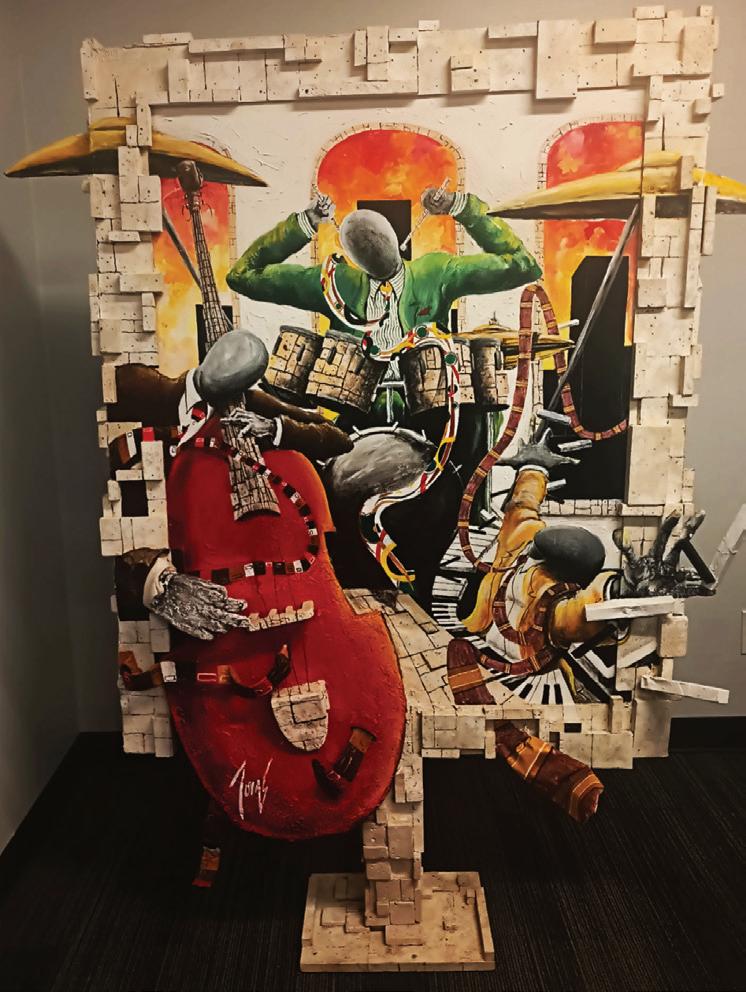
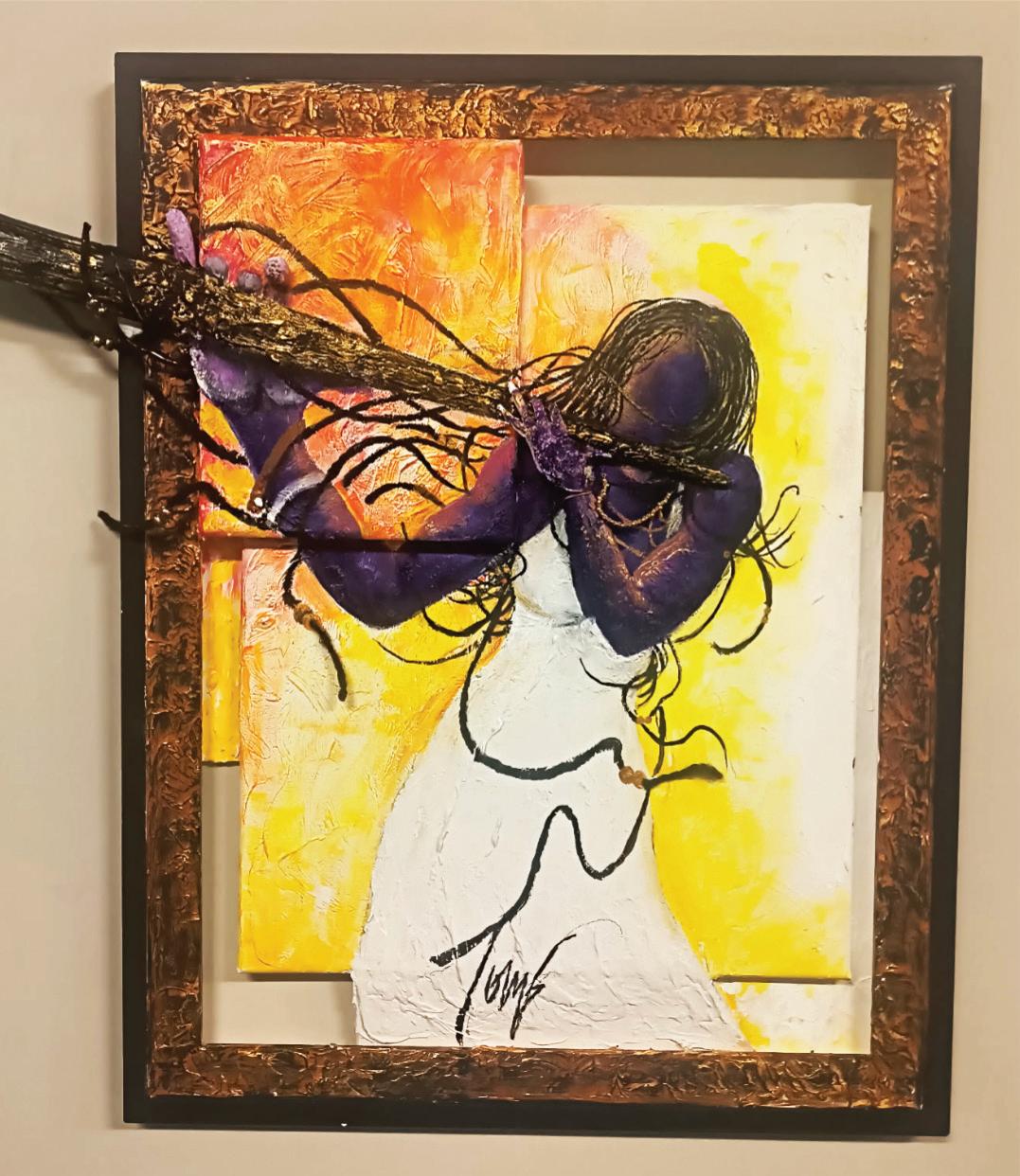
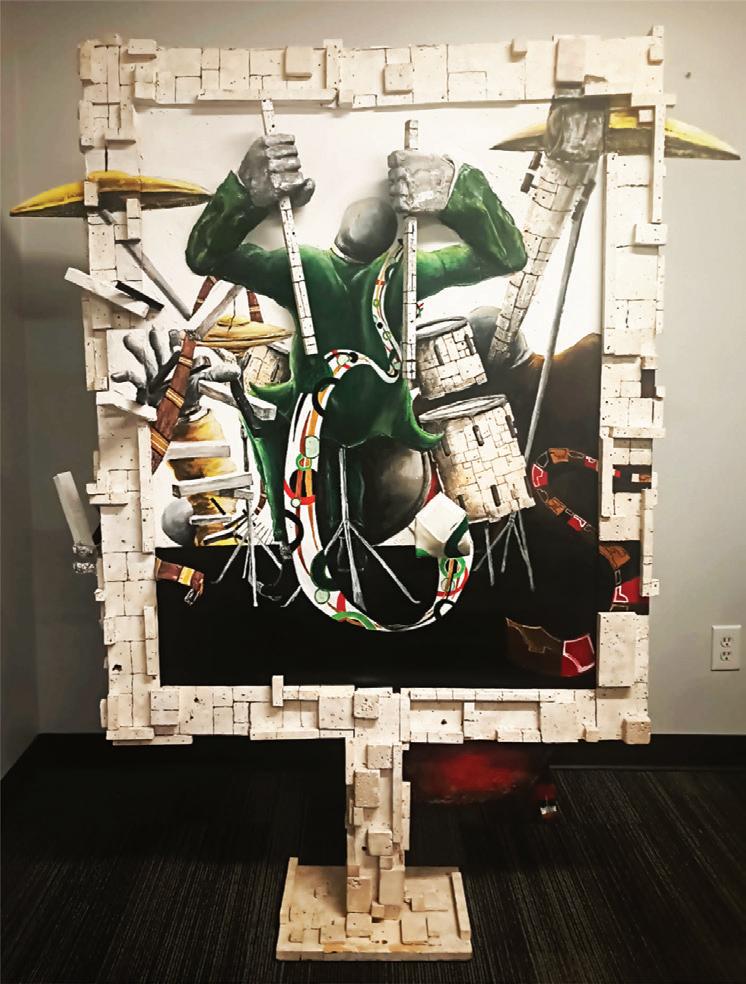
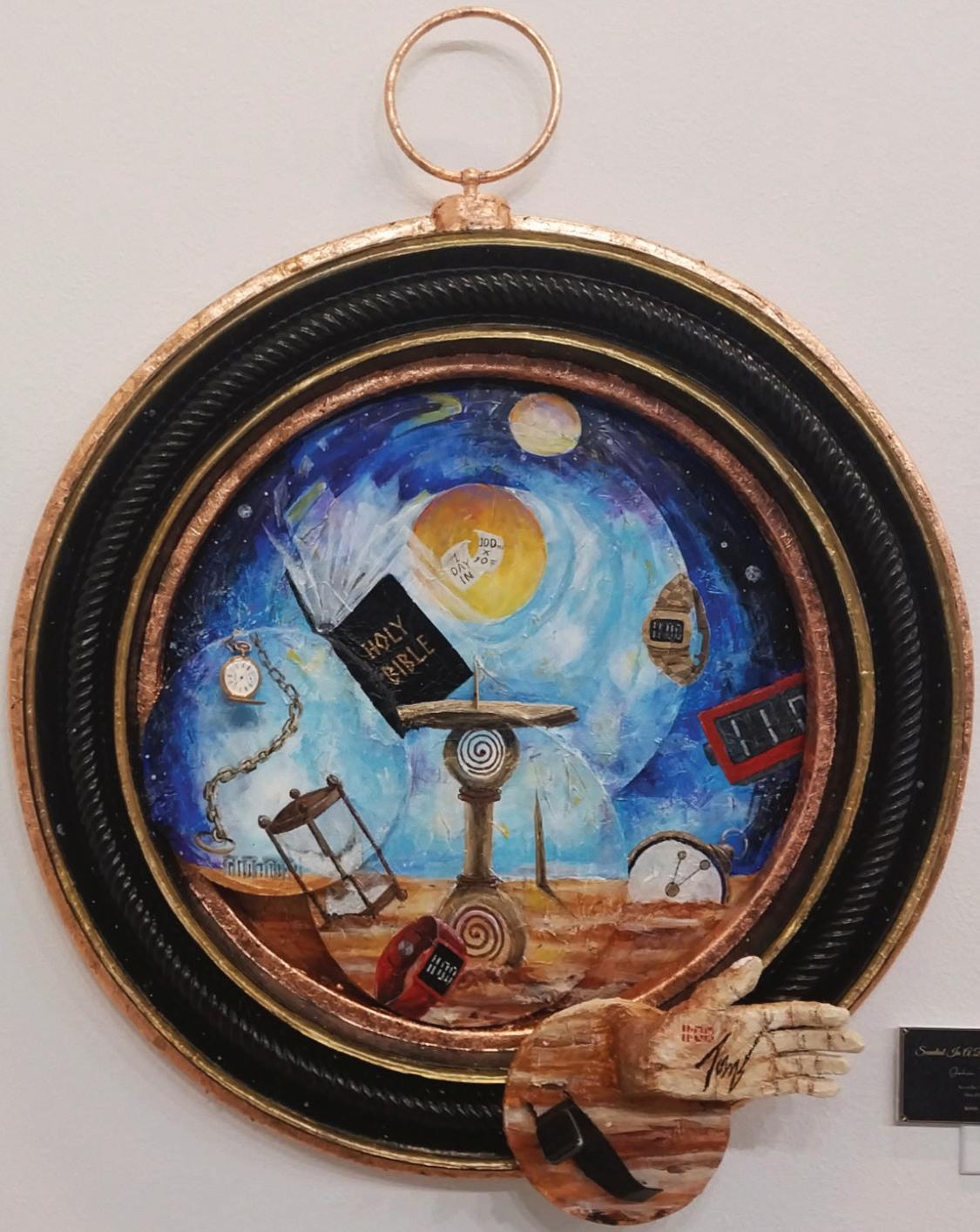
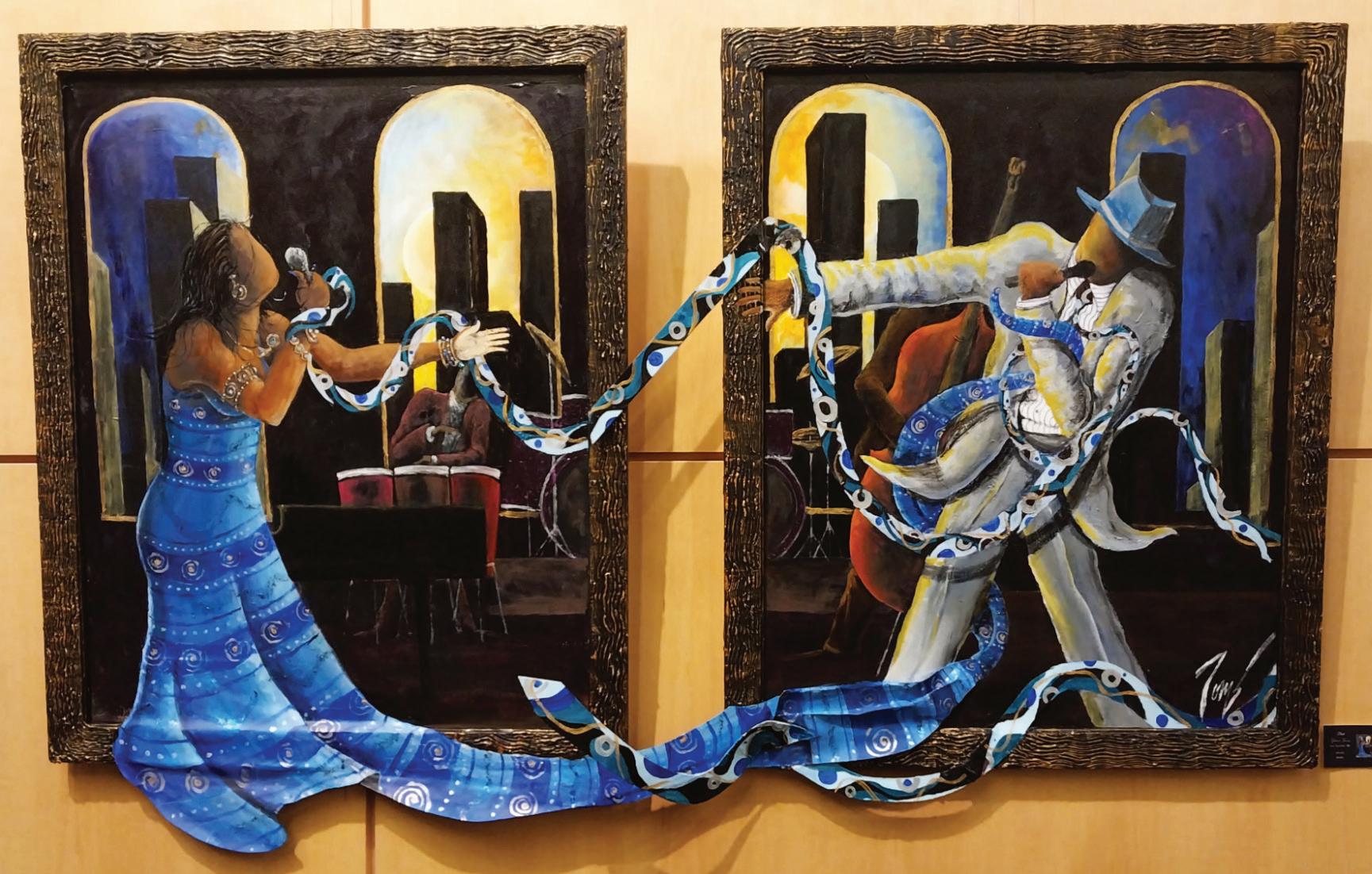
In this issue, Wayne Trujillo highlights the work of local artist John Toms, whose distinctive three-dimensional artwork brings historical perspectives to life in bold and imaginative ways. Gabrielle West also explores the Colorado Black Equity Study and offers readers a
Webb-Hunter H20 will focus on working with governments and other agencies in the areas of water and utilities.During his 12 years as mayor, Webb worked closely with the independent agency, Denver Water. He also dealt with water issues when serving in the Colorado State Legislature.
“With Dale’s water experience and my political experience, we see this as great merging of two minds to use our extensive backgrounds to support water issues, and oppose water policies that are harmful to the Denver metro area and Colorado statewide,” said Webb. “We expect significant pushback due to the historical players in the legacy of water in the West who may not want new players.”
– Langston Hughes
timely preview of the work of the Colorado Black Legislative Caucus, underscoring the ongoing efforts to build a more equitable future.
We invite you to take your time with these stories—and the many others in this issue—each one a testament to the enduring power of Black history, creativity, and community.
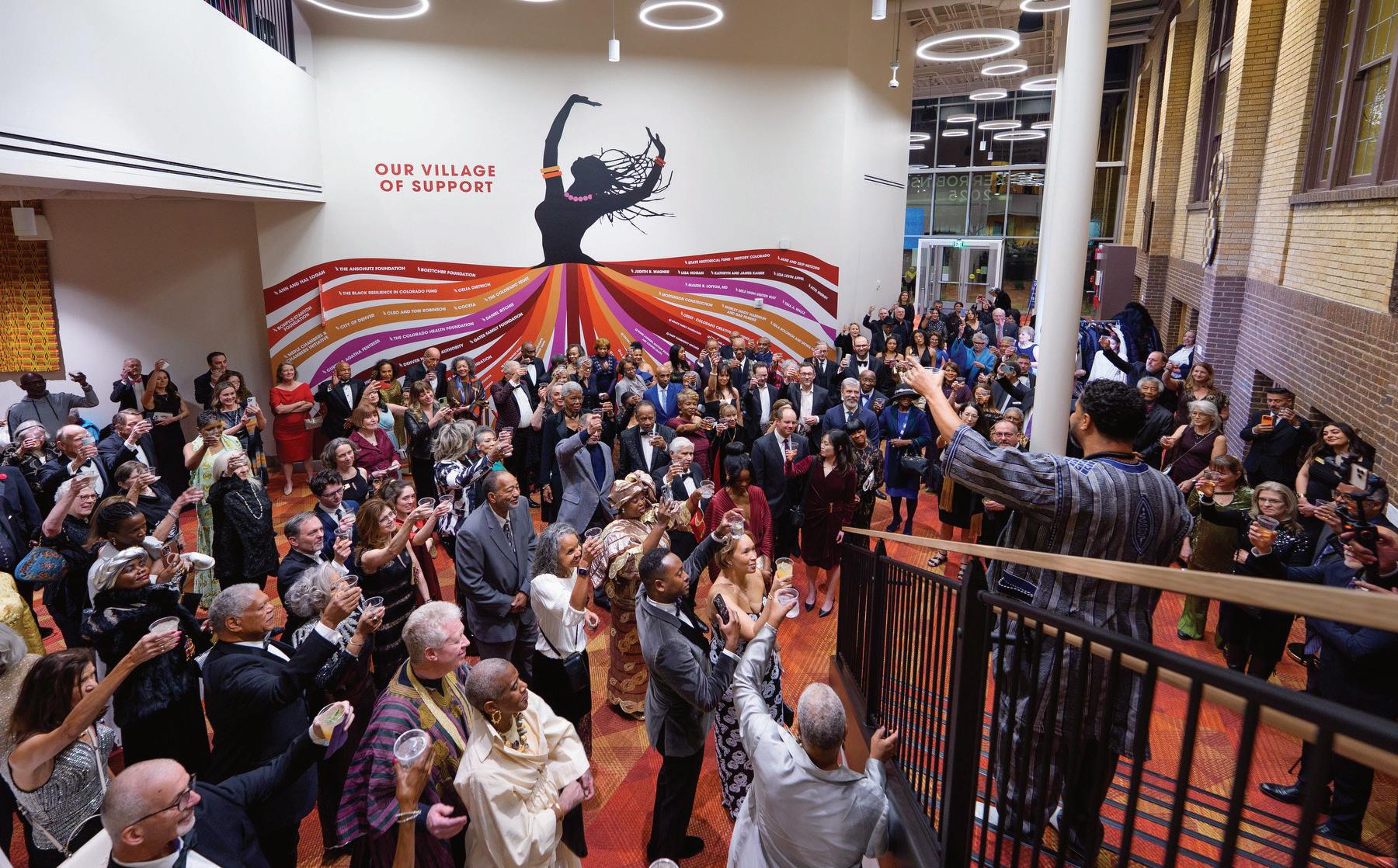
And finally, we hope you will join us on February 26 at The Love Center, as we gather to honor this year’s African Americans Who Make A Difference. Their lives embody the words of Dr. Martin Luther King Jr., who asked us, “Life’s most persistent and urgent question is, ‘What are you doing for others?’”
We promise an evening that is joyful, meaningful, and memorable—a celebration rooted in history, love, and collective purpose.
Enjoy…with gratitude and pride,
Rosalind “Bee” Harris DUS Publisher
Hunter, a University of Northern Colorado graduate, has extensive background in water, including working for the Metropolitan Water District of Southern California, the largest water agency in the West.
“In Colorado, water is the lifeblood of our great state,” Hunter said. “Climate change, decreasing water supply, increasing demand, water quality and affordability are major issues that will shape our future. Unfortunately, the future is already here. What happens next to manage, preserve and protect this precious resource depends on what we do today”.
When self-proclaimed “country boy” Cedric Pride arrived in Denver during his 20s, he didn’t have a roadmap, but was equipped with absolute faith, a deep willingness to learn, and an entrepreneurial spirit. That mindset would later become the foundation of the Pride Initiative, the faith-based nonprofit he founded to support the Black community toward economic freedom and generational wealth. Today, the organization operates out of a 10,000-square-foot office space.
As a child, he was fascinated by brands like Sears, Wells Fargo, and Ferrari—early influences that sparked his entrepreneurial spirit. He began studying very successful families, and he says he “learned very quickly that it was one person that made the difference.”
Pride, who was raised by his grandparents, grew up in Huntsville, Alabama and has fond memories of his hometown. He reminisces about family and the vibrancy of Black culture—the food, sports scene, prevalence of HBCUs, Southern hospitality, and a sense of togetherness unique to the Deep South. He still speaks of his hometown with great fondness. While he still misses many of those things that made his home, he also remembers a reality that was fraught
with lack of opportunity and the invisibility of Black people in positions of power.
After his mother moved to Colorado when he was 4 years old, he visited her and was exposed to a refreshing level of diversity in Park Hill and Montbello that he hadn’t experienced back home. In the Mile High City, he developed new relationships and bore witness to three men of color who led the city as mayors. Seeing Federico Peña, Wellington Webb, and Michael B. Hancock, elected in a city with a Black population that hovers around 6% to 10%, energized Pride to pursue success at higher levels than he’d seen modeled back in Alabama.
After the death of his grandparents, he moved to Denver at age 27 and stayed with his mother for about 90 days to get his footing. He worked two jobs, earning about $10 per hour. A fulltime single dad, he knew he needed to put some effort into getting access to health and wellness benefits. He landed an interview at a local, family-owned sheet metal company, where a question was asked that seemingly shifted the trajectory of his life.
When asked, “Do you know how to read a tape measure?” Pride responded, “No, but it’s not because I’m stupid; it’s because I’ve never been taught.”
He went on to sell his ability to outwork his competition, got the job, and rose in the company during his three-decade career there.
Starting at the bottom of the company making $6.28 an hour, he
became a supervisor after two years, then a journeyman, and ultimately led the company’s manufacturing arm for his remaining 15 years as a production manager. He was one of the first Black union delegates for sheet metal workers in Colorado, representing almost a thousand workers. His team earned great livings, producing heating and cooling systems for residential and commercial use. They also secured top-tier health benefits and lifetime pensions that would make most college graduates question their career choices.
Pride’s prosperous journey into the trades is contemporary proof of the value of skilled labor at a time when the nation debates the necessity of soaring college debt while workforce shortages are hitting critical industries. According to industry data, many trades offer starting wages that exceed entry-level, white-collar salaried positions, along with benefits, pensions, and union protections that are increasingly rare in today’s economy. For Pride, the appeal was never just financial–it was about access.
Before heading to work most days, he would make a 6 a.m. stop by McDonald’s for breakfast, where he’d meet different young people working behind the counter. Seeing himself in many of them and knowing the potential they have to earn more money and build something lasting for themselves, he would hand out his business cards and invite them to shift their focus to working in a trade. He recalls that before he knew it, he had helped more than 200 young
people enter the trades. He was later appointed to the Denver Workforce Board by Mayor Hancock, and began working with major organizations including Big Brothers and Big Sisters, along with various school districts across the state, creating a pipeline to working in trades.
While climbing the ladder in blue-collar America, he also fell into the entertainment space, which he considers completely unintentional. If you’ve been in Denver long enough, you likely recognize the Cedric Pride Entertainment. The brand is best known for hosting Denver’s Derby Day that brings stars including Malik Yoba (New York Undercover, Cool Runnings), Morris Chestnut (Rosewood, The Best Man), and Leon (The Temptations, Five Heart Beats).
Pride considers large-scale events like Derby Day and his annual New Year’s Eve Extravaganza as a means to an end–a way to leverage “a funding mechanism to bring underserved people into trades.”
He credits Moses Brewer, a fellow Alabamian who Pride considers a surrogate uncle, for motivating him to launch the Pride Initiative. Brewer, a former longtime director of community commerce and partnerships for MillerCoors, invited Pride out for lunch where he asked why Pride hadn’t started his nonprofit yet and strongly encouraged him to take it seriously. This conversation energized him to build the nonprofit, working with government organizations, workforce centers, sober living facilities, youth
serving organizations, and other partners.
In 2025, the Pride Initiative trained more than 500 people across industries. The nonprofit was designed with accessibility at its core. With classes available for as little as one week and up to 30 days, training is structured to remove common barriers that keep Black and Brown people from entering skilled fields including cost, time, and lack of exposure. Participants receive industryrecognized certifications in fields such as healthcare, HVAC, construction,
artificial intelligence, and coding, all without incurring student loan debt.
Trainees also leave the program with $1,000 to $2,000 worth of high-end clothing to help them walk into their new careers with confidence and in style, thanks to donations from a community of supporters.
Beyond technical training, the organization places equal emphasis on financial literacy. Participants learn how to navigate retirement plans, understand benefits packages, and manage money in ways that support long-term stability for generations to come.
“I feel that without a doubt, trades are America’s best-kept secret,” said Pride.
What started for him decades ago as an eagerness to outwork the next person has grown into a life mission to ensure others don’t have to rely on luck or proximity to opportunity, especially those in need of a second chance. This isn’t just talk. His programs are reaching people often forgotten or dismissed by larger society, including SNAP recipients who can take their class offerings at no cost.
Today, the career field options have expanded. Trainees will soon have opportunities to enroll in courses that prepare them to become certified nursing assistants (CNAs) and licensed home or commercial childcare workers.
Pride considers this a “ministry assignment to bring underserved, especially in Black and Brown communities, into trades.” It all comes down to encouragement–he wants the people who come through his programs to know that they are not without hope. ♦
GODSPEED: A Western
Reprinted courtesy of the Denver Center for the Performing Arts
By Lisa Kennedy
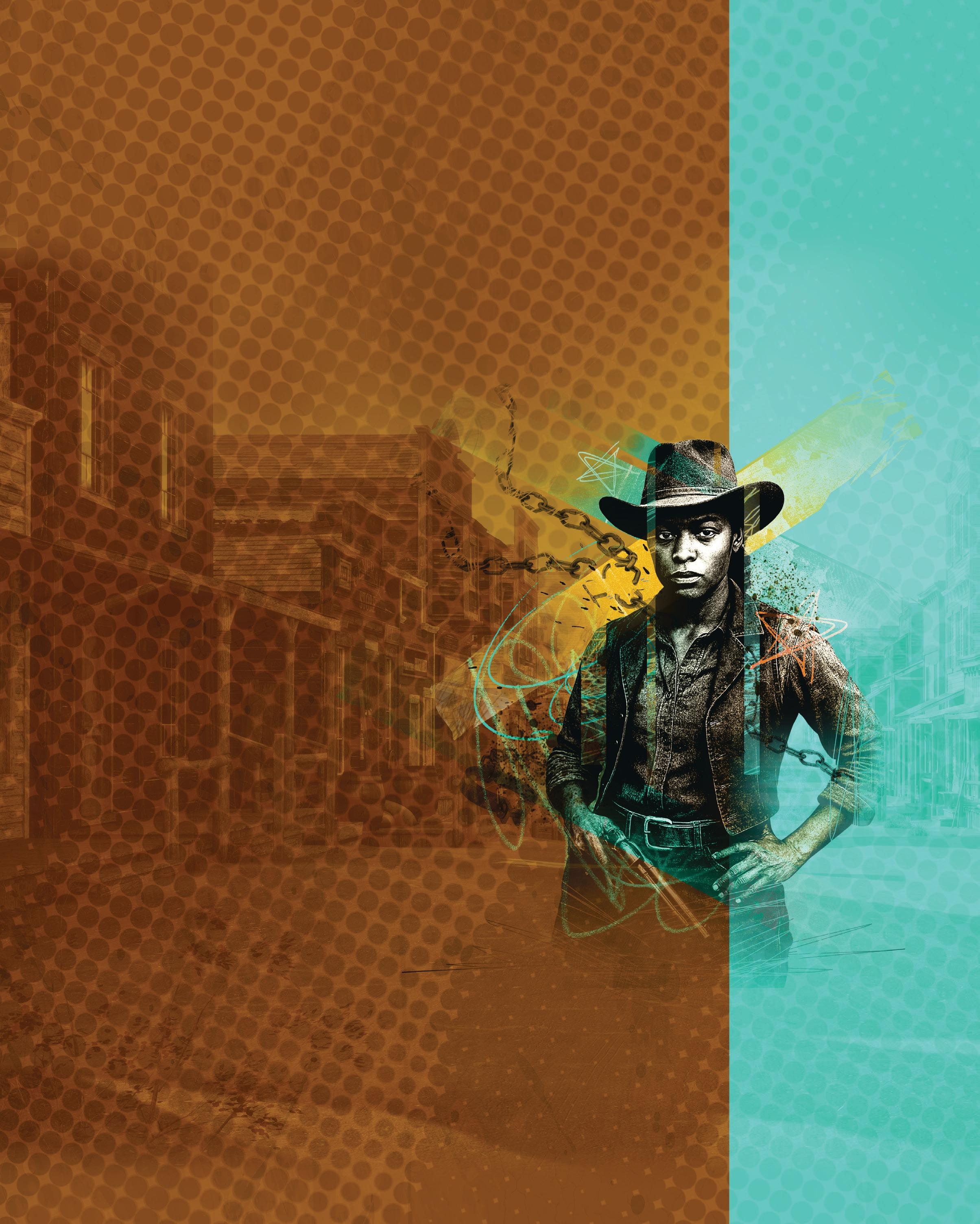
“Ialways loved westerns as a kid — the showdowns, the gunfights, all that,” playwright Terence Anthony said during a video conversation. His own contribution to the genre, Godspeed — a rousing saga about a formerly enslaved woman on a mission in post-Civil War Texas — is having its world premiere at the Denver Center Theatre Company.
In the popular imagination, the Western has made a home in the theater. The movie theater, that is.
After all, film captures the big sky we westerners dwell beneath. It depicts a vastness that humbles the heart but has also fueled ravenous ambitions. Cinema spent much of its first 100 years making manifest onscreen the designs of Manifest Destiny. Yet, in more recent decades it’s offered up revisions of those earlier stories — for good reason.
This is something the playwright gleaned over time. “At a certain point, I realized, ‘Oh wait a minute, why are all the Indians the bad guys all the time? What’s going on?’” He began paying a different sort of attention.
Anthony reels off a few of his favorite westerns, including two that fall under the revisionist rubric and feature black actors with storylines: 1985’s Silverado with Danny Glover and Lynn Whitfield as siblings and homesteaders, and John Ford’s 1960 drama Sergeant Rutledge, about the eponymous army man (portrayed by Woody Strode) being tried for the sexual assault and murder of a white woman.
“The genre of the Western is just such an amazing vehicle for talking about all the things American. All the things that led to where we’re at today,” Anthony said, joined by the play’s director, Delicia Turner Sonnenberg. “You can really trace back to how the west was ‘won,’ and the histories that were covered up. That a quarter or more cowboys were black, but we never saw that in books or films.”
The black quasi-cowboy protagonist of Anthony’s creation is actually a formerly enslaved woman named Anna who rechristened herself Godspeed. The play is set in Texas, shortly after the Civil War’s end. But it is no Juneteenth celebration. Texas is roiling. The once enslaved are unsure of where to go, how to begin negotiating their new lives: Is there a way to reset economically their relationship to their enslavers?
As for Godspeed, she has retribution in mind. For that dark if righteous payback, she totes a gun with one bullet.
Godspeed is one of the two plays getting its world premiere having had a well-received staged reading during the 2024 Colorado New Play Summit. (The other, Cowboys and East Indians, also wrestles with the ethos of the West.) Its settling in the Kilstrom is cause for applause but also curiosity. How does a genre so doggedly cinematic yield to the intimacy of the theater? Indeed, the script seems to call for cinematic gestures, like intertitles and maps charting
Godspeed’s journey from Mexico up through Texas toward a reckoning. It’s easy to imagine the creative team defaulting to visual projections to nudge the storytelling. Cue Sonnenberg.
“Some of the vocabulary of the western — or just the West — is land and sky,” the director said. “I’ve been thinking a lot about that. Because we’re in the round instead of a proscenium. All of our theatricality is old school theatricality because it’s just a floor and an audience all around. So, the things that are strong in the play have to be strong in the production, and that is the relationships between the people.”
Sonnenberg is the founder and former artistic director of MOXIE Theatre, a San Diego-based company focused on presenting works by Women+ creatives. “Delicia has told me she usually doesn’t do ‘boy plays,’ so I was very honored that she was interested,” Anthony recalled, smiling.
But then how many plays have a protagonist as ferocious and mysterious as Godspeed? “A person shows up, then we find out it’s a woman, then we find out that she’s changed her name from Anna to Godspeed, and she’s on a journey,” said Sonnenberg. “It grabbed me from the very first scene. And then there’s the dream sequence, right? And then we get a two-person scene and half of it’s in Spanish!” Sonnenberg said that last bit with a hint of marvel.
Because Anthony has paired his thorny
hero with — well, in a different era, Peklai Cobos, might have been called “sidekick.” The play’s not having any of that. A Mexican woman of Coahuiltecan descent, she often gives Godspeed as good as she gets — answering, arguing, advising, always in untranslated Spanish. It’s a gesture that will please some and fluster others.
“I think theater is at its best when it’s subversive,” Sonnenberg said about the playwright’s choices. Not just his refusal to translate Peklai’s dialog but his interest in a period of American history in which post-Civil War opportunity was met with the rise of Jim Crow suppression and violence.
In navigating the facts and context of the era, the duo found a partner in dramaturg Arminda Thomas. “I am drawn to stories about Reconstruction, and this one is a Reconstruction story in an underexplored setting (South Texas), and with a larger scope than most of those stories, that looks back to the Middle Passage, the annexation of Texas, the Spanish conquest...there’s a lot to dig into!” she wrote in an email.
“Part of what drew me to the play is the ballsiness,” Sonnenberg says. “I like swagger and it has it. There’s real muscularity in the writing.
Like, ‘I’m gonna tell you a story and it’s gonna be good, and here we go!’”
Or, to borrow a phrase, “Giddy up!” ♦
JOHN TOMS’ THREE-DIMENSIONAL ARTISTRY:
Faith, Gratitude, and Spirituality
By Wayne Trujillo
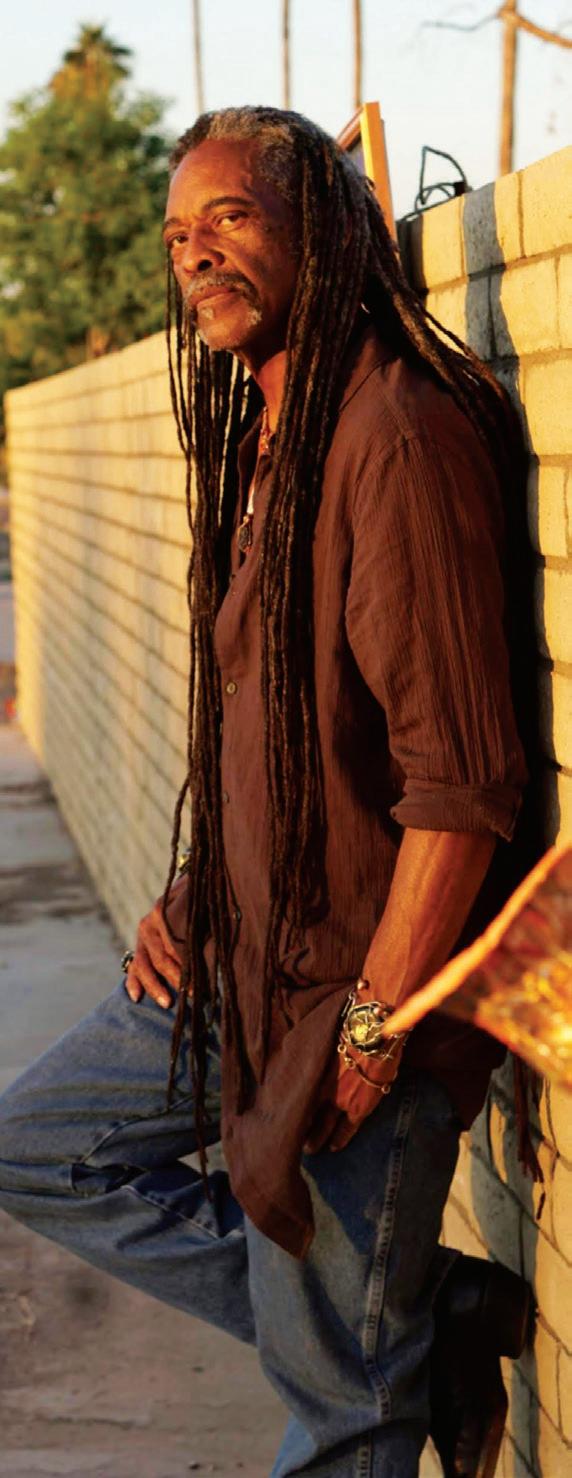
It’s a distance from Denver’s Five Points to Paris and Pisa. It’s an even further stretch to imagine a boy stumbling on his future forte by traveling the distance from his haunts in the hood to Europe’s great art meccas. As a youth, John Toms had scarcely a clue, let alone an inspiration, to predict that trek across a couple of continents and an ocean would ultimately lead him back to Denver and his present position as an artist with widespread recognition and acclaim. While the youthful Toms had few designs – let alone Black role models – connected to artistic endeavors, fate and his mother’s encouragement upended early expectations.
While at first blush the journey seems unlikely, closer examination (and hindsight) suggests the outcome isn’t so surprising. Over a decade ago, writer James Ainsworth profiled Toms for the Island of Spice blog. Titled, “John Toms on Art, the Projects, Paris and Liberation,” the piece showcased an artistic spirit whose background in Denver’s projects foretold, rather than foreclosed, a successful artistic career.
Speaking with Toms via telephone, it’s apparent that his upbringing made the trip to Europe and back with him. Alongside the hues and hints of faith, gratitude, and spirituality, empathy
and ambiguity also became central characteristics of Toms’ works. It could be argued that the youthful relationships experienced and lessons learned significantly shaped the future artist’s style.
Toms resurrects memories of his elementary education, perhaps an unlikely initiation to world-class artistry. He speaks fondly of Crawford Elementary School, allowing, “I don’t know what got into me [to become an artist].” But even then he says that he realized “a real connection to art.”
Aside from that connection, his early years imbued the future artist with an appreciation for community and camaraderie. Compassion and empathy appear in his artistry over a half century later.
He credits one local example, legendary artist Ed Dwight, as a primary influence. “He’s the king!” Toms enthuses. “The only person my mother took me to.”
Toms wasn’t exposed to many national Black artists. He recalls J.J. Walker’s artistic character on the television show, “Good Times.” Toms observes that he later showed his work with Ernie Brown, the artist who created the majority of the artistry featured on “Good Times.”
Other than lifestyle influences around the neighborhood, Toms encountered few artistic role models.
Toms relays that his mother pushed him to enlist in the service or attend college. He declined both, and set his sights on the Colorado Institute of Art. The curriculum leaned heavily on design and commercial art, which didn’t much excite the young student.
Only three Black students enrolled in the school. Toms told Ainsworth that he felt like a minority even in that minority: “The other two students, they weren’t really Black; they weren’t comprehending my experience from the hood.”
However, when a school program offered the opportunity to spend three and a half months in Europe, Toms jumped at the chance to expand his experiences beyond the hood into foreign – even otherworldly – terrain that he’d never imagined. “That changed my whole world!” exclaims Toms.
Not only did he discover that color was irrelevant (a lesson he carries to this day, observing that Broncos fans “don’t care what color you are. If you have orange and blue, you’re family”), he discovered his passion. He celebrated his 18th birthday in Florence, and toured London and Paris. The cities’ vibrancy impressed the youth, but the artistry galvanized him. Salvador Dali’s work, particularly “Autumn Cannibalism,” ignited Toms’ imagination. To listen to him tell it, it did even more. Dali’s artistry seized his soul. “I never got in depth in what he did,” Toms explains. Instead, he likens it to “absorbing energy” and “vibe,” feeling the brilliance rather than attempting to comprehend or decipher it. It’s a lesson he passes on today. Rather than emulate or replicate another artist’s style, he advises aspiring artists to appreciate that energy and vibe, let it serve as motivation, but create something uniquely their own.
He returned to Denver a changed man. He quit school a quarter shy of graduation. “It didn’t fit my mindset,” he explains. Never enamored of the design and commercial art focus of his studies, he explored other options. According
to his website, he “didn’t pick up a paint brush until after his return from Europe,” and began showing his art in 1979. He discovered that this artistry came from passion rather than a textbook. As his style evolved so did his mentors. Aside from Dwight and Dali, Toms positions Chicago artist Annie Lee as a prominent influence, whom he salutes as the “Queen of Folk Art.” Her work “totally blew my mind,” particularly the faceless subjects that enable endless interpretation and imagination.
Other than commissioned pieces, Toms says that he favors faceless protagonists in his artistic scenes. “It’s much easier to see yourself in it without that face,” he says. Viewers can interpret and engage in those works, allowing an immersive experience, even encouraging their own creativity as the work becomes something subjective and unique to each individual.
“I’m a vessel to turn thoughts and feelings into a visual,” Toms explains. It’s interesting to hear a successful artist describe himself as a mere vessel rather than a master. But, self-regard bespeaks his modesty. “I don’t drink my own Kool Aid,” he says. “I’m really not all that.”
DIMENJOHN is Toms’ signature style, 3-D pieces that Ainsworth described as “highly original 3-D combinations of blended sculptures and paintings.” Toms says that despite signs advising people not to touch the 3-D pieces, onlookers invariably ignore the warning and grasp anyway. “People love to touch it and grab it,” he relays with a laugh. While others may be perturbed, even outraged at people’s compulsion, he not only laughs it off, he excuses the potential patrons’ temerity even though it can damage the art. “If I created it I can fix it,” he calmly observes.
It’s obvious that Toms is more than just an incredible artist. His attitude, actions, and activities share a connection to his artistry in that all rest upon and reside within a strong spirituality. He is quick to credit both mentors and organizations that have supported him through the years. He’s keen on giving kudos to the Museum of Boulder for showing his work for an incredible two-and-a-half-year span. He’s especially focused on God and faith. “If you don’t dig it, it’ll be okay when the swelling goes down,” is his mantra for navigating trials and tribulations.
Toms passes it along, nurturing young talent and a stranger on the street with encouragement as much as advice. “We all have something in common,” he explains. “Passion, energy and faith within yourself. That triggers to the next person you meet… I don’t need to know you to give a damn.”
He has reason to express gratitude for his talent and life. His work appears in galleries, shows, and museums across the country. He counts George Duke, Queen Latifah, Dianne Reeves, Wayne Vaden, and a slew of other notables as fans and patrons. The self-proclaimed “rabble rouser” and “maverick” from the hood has come a long way even though he still lives and works within miles of where he began.
He remembers a time when he started showing his work in other cities. People would show surprise when he told them he lived in the Mile High City. “They have Black folks in Denver?” people would ask. “Yes, and they have creative Black folks in Denver,” he responded, mentioning Earth, Wind and Fire as an example. Toms is another obvious and exemplary example, but he leaves his name out. Modesty aside, he doesn’t need to include himself. His artistry speaks for him. ♦
COLORADO Racial Equity Study
By Gabrielle West
WCalls for Personal Stories and Data
hen you think of Colorado’s history, slavery, lynchings, and Ku Klux Klan marches through downtown Denver likely do not come to mind.
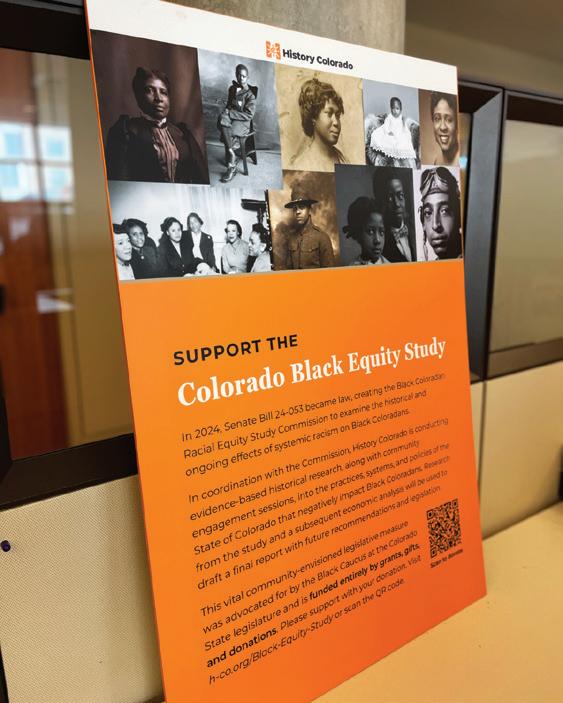
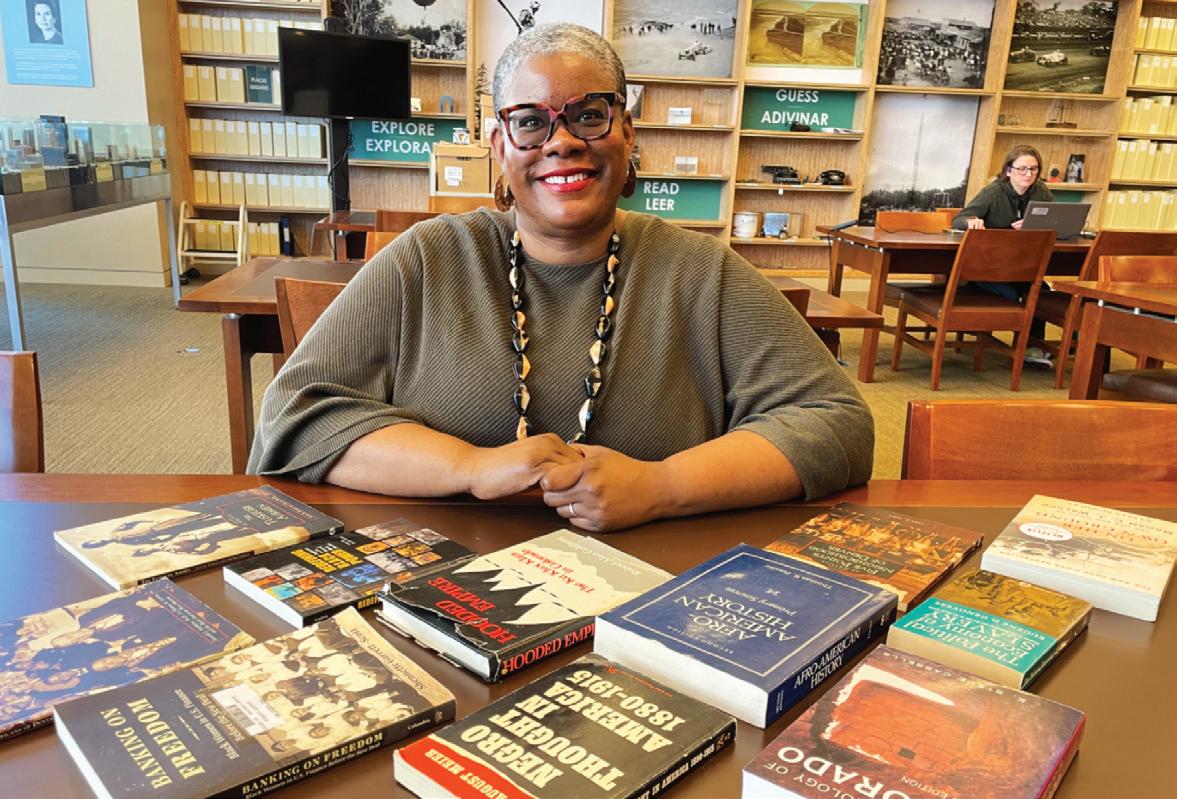
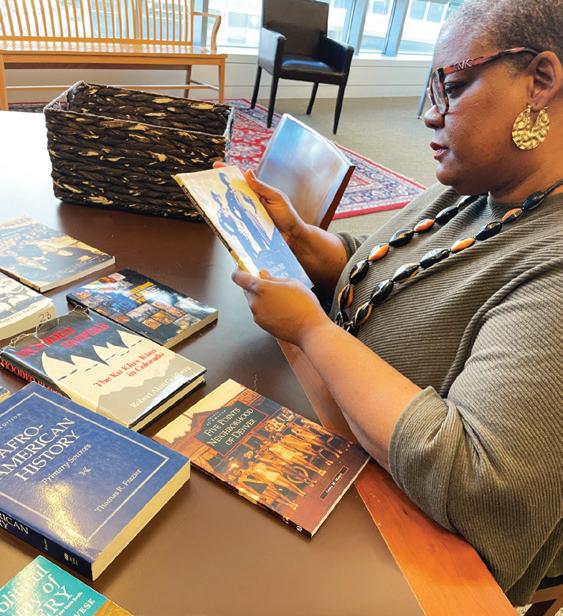
The team behind the Colorado Black Equity Study is working to unearth real-life accounts of these and other occurrences and their harmful impact on Black Coloradans. As required by state Senate Bill 24-053, which was passed into law in 2024 and signed by Governor Jared Polis, the community-funded study centers on evidence-based historical research into discriminatory practices, systems, and policies and is being conducted through History Colorado.
At the helm of the research is historian, curator, and artist Chloe Duplessis, Colorado Black History research program manager at History Colorado. From Denver to Pueblo and communities in between, Duplessis is leading a team of diverse, thoughtful researchers tasked with community engagement and collecting data and Coloradans personal stories about the harms caused by systemic racism in the areas of wealth, health, education, and justice. This team has been given two years to carry out this task.
In March 2027, the study’s findings including data and 100 personal narratives will be submitted to the Black Coloradans Racial Equity Study Commission, which will examine the information and go on to make policy recommendations that could benefit Coloradans in the future. The commission is made up of community advocates and state legislators
committed to advancing equity for Black residents.
Racial Equity Study Commissioner and Justice for Black Coloradans strategist Javon Brame has been working behind the scenes on the effort and credits the vision for the study to Sade Cooper, CEO and co-founder of the Colorado Collaborative Healing Initiative Within Communities (CHIC). The Equity Study was born from earlier policy work by CHIC and Sisterhood of Philanthropists Impacting Needs (SPIN), which explored the cost of making free lifetime education accessible for Black Coloradans as a form of repair.
That effort revealed a critical barrier: under Colorado’s anti-discrimination laws and the federal Civil Rights Act, public dollars cannot be allocated to race-based initiatives without documented proof of harm, making this study essential. With support from state Senate President James Coleman and state Representatives Leslie Herod and Naquetta Ricks, along with community funding and strategic policy expertise, SB 24-053 passed and the study was approved to move forward.
Early findings have uncovered evidence of harmful practices toward Black Coloradans, ranging from elected leaders benefiting from the labor of enslaved people right here in the Centennial state to redlining practices that continue to shape access to everyday necessities in present day.
“You’re thinking early 1900s and what you’re really seeing is the
foundational systems that provide support under this umbrella of what is required to have quality of life are being led by persons who believe very deeply in this ideology that Black people are not fully human,” said Duplessis. “It has been documented that you have the KKK managing the banks. People are coming through to work in the Denver Police Department and were being handed paperwork, a badge, and would essentially also be given an application for the KKK.”
That proven history is precisely why advocates say the work must extend beyond research and into action.
Individuals looking to get involved can support Justice for Black Coloradans, the formalized nonprofit that is working to ensure this work is carried through. Volunteers, partnerships, presentation opportunities, and donations can help further the efforts.
Duplessis also encourages Black Coloradans to share their lived
Continued from Page 3
New Political Fund to Support Colorado Candidates
Former Denver Mayor Wellington Webb is setting up political action committee (PAC) to work with candidates on both sides of the aisle in state and local races.
The Charles Wayne Williams Fund, named after Webb’s lifelong friend “Chuck” who is deceased, will be operational for the 2026 races.
Williams, who passed away in 2015, worked for the Colorado Association of Public Employees for 30 years.
Webbs Endorse Griswold for Attorney General
Former State Representative and First Lady Wilma Webb and her husband, former Denver Mayor Wellington Webb have endorsed Jena Griswold for the 2026 Colorado Attorney General race.
Griswold is Colorado’s 39th Secretary of State first elected in 2018 as the youngest elected Secretary of State in the United States.
“Jena Griswold is a fighter for truth and has demonstrated the ability to stand up to Donald Trump on election issues,” the couple said. ♦
Editor’s note: Wellington E. Webb is an American politician. He served as a Democratic member in the Colorado House of Representatives and was the first African American mayor of Denver, Colorado, serving from 1991 to 2003.For more information, contact Wellington Webb at 303-884-7800
experiences with the study. “Sharing our stories is the highest calling and offering that we can give that has nothing to do with financial capacity,” she said.
As a Black Colorado native, many of the accounts shared during the reporting of this story were deeply jarring to me. It was especially meaningful to learn that the History Colorado research team is providing mental health support to participants who offer their personal accounts.
Editor’s note: For more information or to get involved, visit www. historycolorado.org/co-black-equitystudy. ♦
2026 COLORADO LEGISLATIVE PREVIEW A Conversation with Senate President James Coleman
By Gabrielle West
Nationally, inflation is steadying with no signs of lowering, while funding for essential services, including healthcare and childcare, continues to be stripped away. Prices are rising faster than wages, and social unrest resulting from the inhumane treatment of immigrants from various countries has shaken communities across the nation, including here in Colorado.
Our state faces an $850 million budget gap, requiring legislators to meet the moment by making creative policy decisions to protect the state and improve the lives of their constituents, all while navigating much-needed funding cuts.
I recently spoke with Colorado Senate President James Coleman, who chairs the Black Democratic Legislative Caucus of Colorado, about the policy priorities he plans to tackle during
the 2026 Legislative Session, which convened on January 14. Coleman highlighted several key policy areas that House and Senate Democrats will focus on this session to ensure, as he put it, “everyone has what they need.”
Focus areas this session include continuing to protect and fund Colorado’s K-12 education system, healthcare access, and the rising cost of everyday necessities such as groceries and housing.
Among Coleman’s legislative priorities is continued investment in the Colorado Childcare Tax Credit, which is up for renewal this year. The tax credit incentivizes donations to afterschool childcare programs, including organizations like the Boys & Girls Club of Metro Denver, that are increasingly critical as budget constraints force cuts to other safety net provisions.
Criminal justice policy is also top of mind. Coleman noted concerns raised
by community members in Aurora who have lost loved ones due to police brutality and have called on the Black Legislative Caucus for support and accountability.
Additionally, he emphasized the importance of continued investment in K-12 education based on student and community needs, rather than relying primarily on property taxes and the
affluence of specific neighborhoods, as has traditionally been the case.
For those feeling overwhelmed or disengaged from politics, he offered empathy and encouragement. “Be encouraged, but also be involved,” he said. “Recognize your power and that you voted for us to get elected, and that doesn’t change your level of engagement once we’re in office. If nothing else, it increases.” ♦
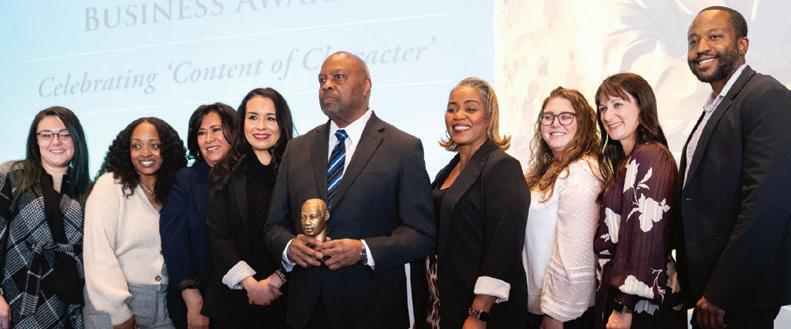
Each year, Denver Urban Spectrum recognizes individuals who are making a difference within Colorado communities and in the lives of others. After being nominated by their peers, a group of remarkable change makers undergoes a rigorous selection process based on service impact and achievement. This year, 17 men and women were selected from a group of 36 noteworthy
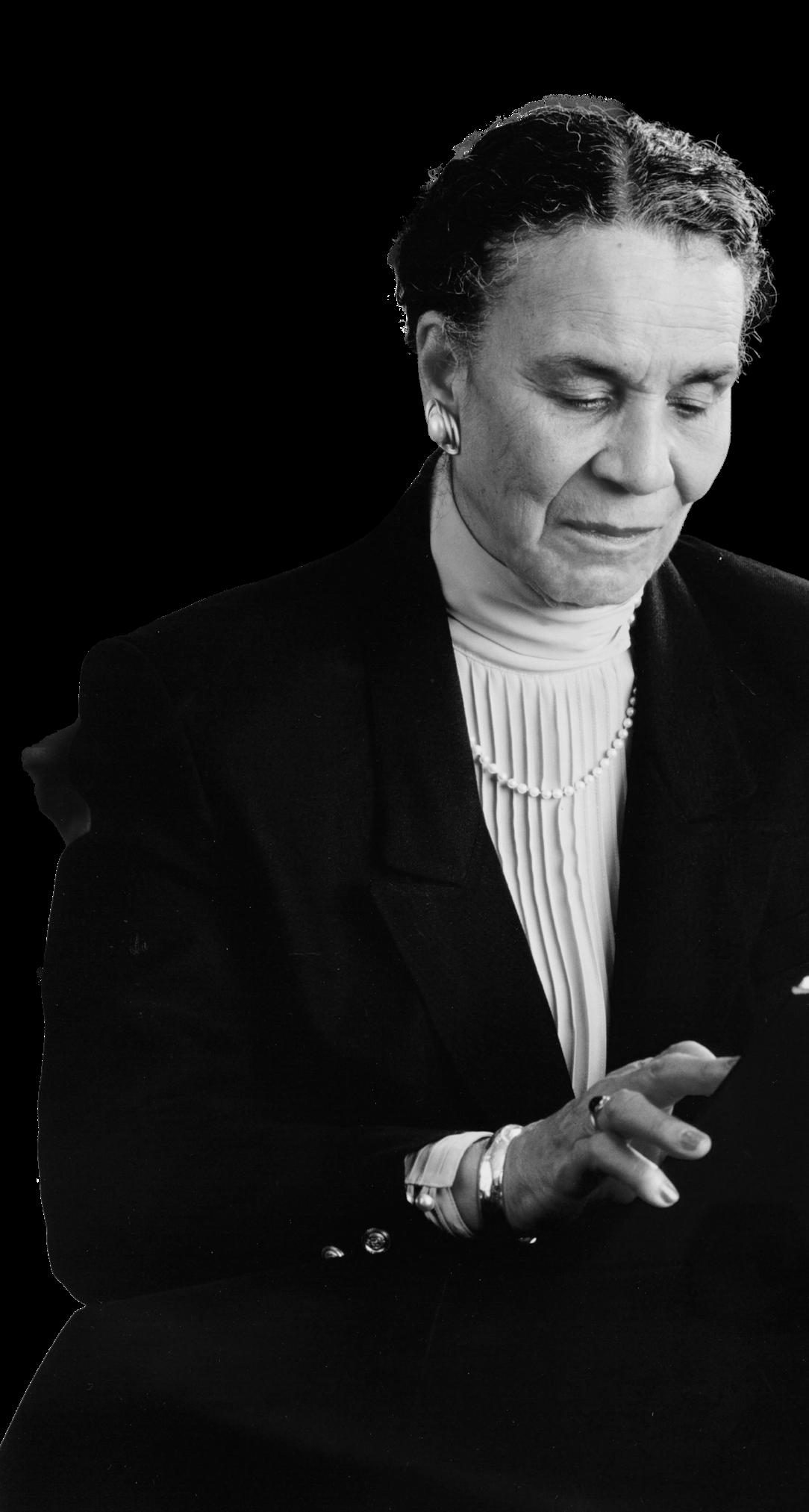
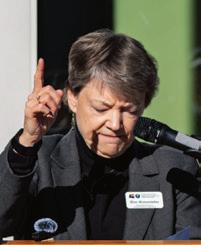
Antoinette “Toi” Massey is a visionary leader whose life’s work centers on inspiring brilliance and expanding opportunity through education. In 2012, she launched a Black woman-led STEM organization that grew into the JEKL Institute for Global STEAM Equity and Access, bringing transformative programming to underserved communities across metro Denver and beyond. Her approach is intentionally twogenerational—nurturing young scholars while building workforce pathways for parents and caregivers.
In 2025 alone, JEKL engaged more than 400 scholars from preschool through 12th grade, and introduced digital literacy to 25 justice-involved adults, placing laptops directly into participants’ hands to support real, tangible progress. Nationally, JEKL’s STEAM Genius Workshops have reached nearly 60,000 K–12 students across six school districts. Scholars report remarkable outcomes, including high honor-roll achievement, improved academic performance, strong math and science proficiency, and ACT (American College Testing) scores in the 80th percentile.
A former C-suite executive with a master’s degree in nuclear engineering, Massey understands firsthand the isolation that comes with underrepresentation in STEM. That experience fuels her mission to awaken genius where it is too often overlooked. She believes education is the most powerful tool for dismantling inequity— “deployed to us, by us, for us.”
Guided by her mother’s words—that what ultimately matters is what you do for someone else—Massey hopes to be remembered as the woman who first called young people “doctor,” “scientist,” and “engineer” long before the world did.
Ashleè Wedgeworth Director
Colorado Black Democratic Legislative
Caucus
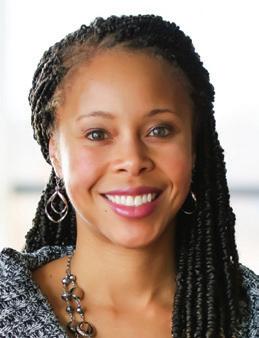
Ashleè Wedgeworth is a tireless advocate whose leadership is grounded in service, equity, and love for community. Driven by a deep commitment to political advocacy and civic engagement, she works to ensure that Black voices are heard, protected, and empowered across Colorado’s political landscape. Her work is defined by compassion, determination, and an unwavering belief that leadership must be rooted in action.
As director of the Colorado Black Democratic Legislative Caucus, Wedgeworth supports the state’s Black legislators while advancing policies that promote equity and justice. Her influence also extends through her role as co-chair of the Social Action Committee of Delta Sigma Theta Sorority, Inc., where she helps lead voter registration efforts, candidate forums, ballot education initiatives, and voter protection campaigns. She was also instrumental in organizing the Power of Black Women Summit, a space dedicated to collective strategy and empowerment.
Wedgeworth served four years as president of the Urban League Young Professionals of Metro Denver, where she led initiatives focused on civic engagement, professional development,
nominees. In addition to their enormous efforts to affect positive change within their communities, they explained the motivation behind their civic and social engagement, provided suggestions for how to best address challenges facing the Black community and shared how they would like to be remembered.
and youth leadership. Among her most rewarding efforts was mentoring young people and helping shape the next generation of leaders.
Wedgeworth believes the challenges facing the African American community— economic inequity, educational disparities, healthcare access, and criminal justice reform—require collaboration across government, private sectors, and grassroots organizations.
Looking ahead, she aspires to create programs supporting young mothers on pathways to self-sufficiency, and hopes to run for public office. She wishes to be remembered as a compassionate leader, devoted mother, and advocate whose legacy is defined by service, resilience, and love.
Brittany Joyce Vice President of Business Strategy Office of Colorado Senate President James Coleman
Brittany Joyce is a dynamic leader whose work centers on visibility, affirmation, and opportunity for Black youth. In partnership with Colorado Senate President James Coleman, she launched the Black Student Excellence Award Ceremony to honor high-achieving Black high school students across the Denver metro area. Since 2024, the initiative has celebrated 185 students and awarded more than $20,000, offering public recognition to young people who too often go unseen.
For Joyce, the program is deeply personal. As a student, she excelled academically and in community leadership but rarely received the recognition afforded to her white peers.
Creating a space where Black students are celebrated by name, applauded for their accomplishments, and encouraged to pursue their dreams has become one of the most meaningful achievements of her career.
Born and raised in Denver, Joyce believes passivity is not an option. She lives with intention, guided by the belief that injustice persists when people wait instead of act. Her advocacy is rooted in faith, courage, and a commitment to showing up fully for her community.
Joyce identifies access to affordable housing, competitive wages, and quality education as key challenges facing African Americans today. She believes solutions must include innovative housing strategies, job training, and strong schoolto-career pathways.
She hopes to launch a program that encourages community stewardship and pride. Joyce wishes to be remembered as someone who loved deeply, worked tirelessly, and created spaces where people felt seen, celebrated, and encouraged to thrive.
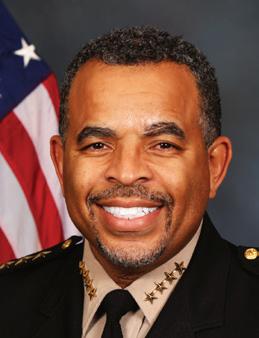
Elias A. Diggins Sheriff City and County of Denver
Elias A. Diggins is a lifelong public servant whose leadership reflects deep roots, steadfast values, and an unwavering commitment to community. Born in Denver and raised in Montbello, Diggins has dedicated more than 32 years to service through the Denver Sheriff Department, guided by the belief that leadership is most meaningful when it gives back to the people who shaped you.
As Denver sheriff, Diggins has prioritized diversity, equity, and inclusion within the department, leading it to become the law enforcement agency with the highest percentage of African American officers in the state and region. He believes representation matters— especially in institutions entrusted with public safety—and has worked intentionally to ensure the department reflects and serves the community with dignity and fairness.
Beyond his official role, he has been actively involved in protecting cultural and historical institutions. Over the past year, he partnered with former Mayor Wellington Webb, former First Lady Wilma Webb, and community advocates to preserve the integrity of the Blair-Caldwell African American Research Library, standing against changes that threatened its role as a vital community resource.
Diggins credits his inspiration to witnessing leaders like the Webbs, Norm Early, Happy Haynes, and Cleo Parker Robinson model service and accountability. He believes today’s challenges—including national efforts to roll back progress on equity—must be addressed through education, civic engagement, and preparing young people to lead with courage.
Diggins hopes to continue mentoring young people of color interested in law enforcement, encouraging them to serve as protectors and advocates within their communities. He wishes to be remembered as a kid from Montbello who never forgot where he came from—and who led with faith, humility, and love.
Dr. Jamal Bowen
President & Founder
Empowering Community Entrepreneurs
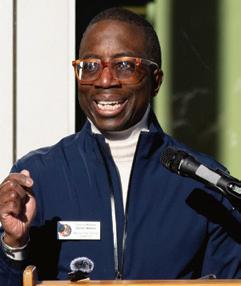
Dr. Jamal Bowen is a bridgebuilder whose work transforms possibility into access for communities historically excluded from opportunity. Growing up in Montbello shaped his understanding of both resilience and systemic barriers, fueling a career devoted to equity-driven pathways in education, workforce development, and entrepreneurship.
As president and founder of Empowering Community Entrepreneurs, Bowen brings together partners to remove barriers and create practical, outcomesfocused pathways for BIPOC individuals and underserved communities. Over the past year, he expanded mentoring, coaching, credential access, and pitch opportunities that connect aspiring
entrepreneurs to real networks, capital, and sustainable growth.
Bowen’s leadership extends into higher education, where he previously served as professor, chair, and dean at Community College of Denver, and as entrepreneur center manager at Red Rocks Community College. In these roles, he co-designed programs that improved student engagement, expanded certifications, and strengthened workforce readiness. He also co-led a community-driven business accelerator feasibility study with the Montbello Organizing Committee, centering on sustainability and long-term impact.
He takes an active role because he has witnessed both the barriers facing his community and its extraordinary capacity to thrive when given access. Bowen believes solutions to challenges like the racial wealth gap, inequitable pipelines, and limited access to capital must be community-led, accountable, and measured by lasting outcomes.
Looking ahead, Bowen aims to build a mobile-friendly ecosystem of entrepreneurial and workforce centers across Denver and beyond. He hopes to be remembered as a leader who elevated community voice, strengthened systems, and created enduring pathways for future generations.
Jason Wilson Coach, Educator & Dean of Culture
Jason Wilson is a mentor, coach, and educator whose work centers on believing in young people—especially those who have been counted out. Born and raised in Denver, Wilson has dedicated his career to helping youth recognize their potential and develop the confidence, discipline, and skills needed to rewrite their life stories.
Through his Drivers Academy, Wilson has expanded pathways to independence and safety for young people, while his work at Montbello High School has strengthened African American student leadership and cultural pride. As a visible and consistent presence, he models humility, accountability, and resilience, understanding that how adults show up matters just as much as what they say.
Wilson takes an active role because he believes his voice and actions shape outcomes. He refuses to be a bystander, choosing instead to stand up for what is right and contribute to a stronger school and community environment. His advocacy is rooted in the belief that
young people thrive when they are seen, challenged, and supported with intention.
He identifies systemic inequality— across education, wealth, health, and justice—as one of the greatest challenges facing the African American community. Wilson believes addressing these interconnected issues requires honesty, unity, investment, and empowering the next generation to lead with confidence and pride.
Wilson aspires to become an NFL head coach or serve as an athletic director at an HBCU. Above all, he hopes to be remembered as someone who believed in young people before they believed in themselves—and helped them go further than they ever imagined.
Dr. Jasper B. Armstrong III
Director of Youth Leadership Cherry Creek School District
Dr. Jasper B. Armstrong III is a dedicated leader whose work centers on helping young people discover their strengths, find their voices, and lead with purpose. His approach to youth development is rooted in intentional leadership cultivation, character formation, and personal growth—preparing students to thrive academically, socially, and civically.
Throughout his career, Armstrong has designed and expanded leadership academies that intentionally center Black youth, creating affirming spaces where students build confidence, develop selfawareness, and strengthen leadership skills. These programs acknowledge the realities students face while equipping them with tools to navigate systems that have historically underserved them.
Over the past five years, Armstrong has served in senior leadership roles across the Cherry Creek School District, elevating Black student voices and securing more than $7 million in grant funding to support expelled, at-risk, and marginalized youth. His work has helped establish restorative pathways that emphasize accountability, opportunity, and dignity rather than punishment alone.
Armstrong believes representation is essential. He is committed to walking alongside Black youth—listening, affirming, challenging, and advocating— while pushing systems to respond with equity and respect. He identifies the erosion of interconnected family and community structures as a key challenge facing the African American community and believes restoration requires
collective responsibility, mentorship, cultural grounding, and shared accountability.
Armstrong envisions creating a holistic youth leadership hub that nurtures mind, body, and spirit. He hopes to be remembered as a servant-leader who elevated unheard voices, restored confidence and belonging, and helped young people recognize the greatness already within them.
Johnathan Underwood is a creative force whose work bridges artistry, leadership, and community impact. Active in Denver’s theater community for nearly a decade, he began as a stage actor and expanded into artistic leadership, board service, and cultural advocacy. Today, he serves on the boards of Firehouse Theatre and Vintage Theatre and is the founder of Theatre Three Twelve, a Black-led production company launched in 2025.
After relocating from Tennessee, Underwood found a welcoming creative home in Denver—but also recognized a significant lack of diversity in theater leadership. With fewer than one percent of the city’s theater companies led by Black creatives, he felt compelled to create space, opportunity, and representation through ownership and storytelling.
Underwood’s leadership has helped intentionally center Black narratives and talent. His work on productions such as Blues for an Alabama Sky—featuring an all-Black cast and a Black female director—stands as a powerful example of inclusive, authentic storytelling. Through both board service and production leadership, he continues to challenge systems that limit who gets to lead and whose stories are told.
Underwood believes Black creatives should be seen as innovators and leaders, not confined to narrow roles. His vision for the future includes expanding Theatre Three Twelve into a creative hub offering affordable education, mentorship, and development for artists of color.
He hopes to be remembered as someone who never stopped learning, built meaningful connections, and lived boldly—both on and off the stage.
Kimberly Howard Chief Probation Officer
Colorado Judicial Branch
Kimberly Howard is a trailblazing leader within the Colorado Judicial Branch whose career reflects courage, integrity, and unwavering advocacy for equity. She is the first African American woman to serve in multiple leadership roles across the system, including probation officer in Adams County, probation supervisor in Boulder County, probation manager in Arapahoe/Douglas County, and chief probation officer for Denver Juvenile Probation.
Howard’s leadership is grounded in measurable impact and inclusive practice. She is widely respected as a strong voice for the underrepresented, ensuring equitable treatment, cultivating diverse and culturally competent teams, and intentionally partnering with service providers who reflect the communities they serve. Her work consistently centers on dignity, fairness, and opportunity for youth and families navigating the justice system.
Throughout her career, Howard served on numerous boards, committees, and work groups focused on improving service delivery, expanding partnerships, and closing gaps between access and outcomes. She led collaborative initiatives that bring together courts, agencies, and community stakeholders to remove barriers and improve long-term success.
Howard takes an active role because she views service as both a responsibility and calling. She stands on the shoulders of ancestors and believes in uplifting others through love, faith, and action. She identifies systemic racism and historical inequity as ongoing challenges requiring resilience, balance, and collective care.
She hopes to be remembered as a servant leader whose work spoke for itself—guided by gratitude, faith, hope, generosity, and love.
Micaela Parker Senior Advisor Office of Colorado Senate President James Rashad Coleman
Micaela Parker is a principled leader whose work centers on policy, organizing, and advancing Black representation in political spaces
where decisions are made. As senior advisor to Colorado Senate President James Rashad Coleman and secretary of the Democratic Party of Denver, she plays a critical role in shaping inclusive policy and strengthening political infrastructure.
With encouragement from Coleman, Parker ran for and was elected secretary of the Democratic Party of Denver—an intentional step toward ensuring Black voices, particularly Black women’s voices, are represented in party leadership. She has worked to bring new Black leaders into decision-making spaces, helping shape priorities rooted in lived experience and collective strategy.
Parker has been instrumental in advancing Colorado Senate Bill 24-053, Colorado’s Black Racial Equity Study—the first statewide research effort examining the social and economic impacts of systemic racism on Black Coloradans. The study combines historical research and economic analysis to inform policy solutions and promote racial equity across Colorado.
She takes an active role because organizing and resistance are part of Black people’s legacy. Parker believes Black women have always been central to movements for survival, care, and liberation, and she sees her work as an extension of that lineage.
Parker identifies disorganization— not numbers—as one of the greatest challenges facing the Black community. She emphasizes political education, intergenerational collaboration, and strategic alignment as essential tools for lasting change.
Looking ahead, Parker remains committed to challenging exclusionary systems, expanding Black political power, and holding institutions accountable. She hopes to be remembered as someone who refused neutrality in the face of injustice and lived her values through empathy, solidarity, and action.
MiDian Shofner Chief Executive Officer Epitome of
Black
Excellence and Partnership
MiDian Shofner is a bold truthteller, convener, and bridge-builder whose leadership creates space for Black voices to be seen, heard, and valued— especially when systems have failed them. Through her work with Epitome of Black Excellence and Partnership, she has built platforms for community-centered storytelling,
restorative engagement, and leadership development grounded in dignity and accountability.
Over the past year, Shofner’s most notable contributions have focused on advancing narrative power and exposing harm caused by policing, political leadership, and educational systems. Her work names injustice while centering on healing, ensuring community stories are not erased or distorted.
Long-term, Shofner has focused on building sustainable infrastructure for Black leadership and cross-sector collaboration. She believes meaningful change requires staying present—even when the work is uncomfortable or unpopular. “It is my time to say yes to the calling,” she says, “and to move from ‘up next’ to ‘up now.’”
Shofner identifies systemic inequities across education, public safety, housing, and healthcare—compounded by the persistent devaluation of Black lived experience—as central challenges facing the African American community. She believes solutions must be communityled, rooted in truth-telling, and supported by sustained investment and accountability.
Looking ahead, Shofner aims to expand the reach and impact of her organization locally and beyond Colorado. She hopes to be remembered as a leader who showed up fully and consistently, listened with intention, spoke truth with care, and created space for others to be seen, heard, and honored.
Monique N. Johnson Senior Program Officer Colorado Health Foundation
Monique N. Johnson is a trusted philanthropic leader whose work ensures resources reach Black-led and Black-serving organizations across Colorado. Grounded in integrity and relationship-building, she is known for providing authentic guidance to community leaders while advocating for equitable investment and systemic change.
Earlier in her career, Johnson led a youth athletic organization— an experience that deepened her commitment to service and communitycentered leadership. Today, her work focuses on partnering with Black leaders and nonprofit staff through strategic coaching, listening, and capacitybuilding, particularly in response to shifting political and funding landscapes.
Johnson has helped institutionalize practices that prioritize directing resources to grassroots organizations led by people of color. Through strategic advocacy and resource mobilization, she has supported the movement of more than $15 million into Black communities, advancing health equity and racial justice statewide.
She takes an active role because service is ancestral and generational. As a mother of three Black boys, Johnson and her family model community engagement rooted in love, responsibility, and collective care. She believes strongly in the power of the village and the importance of being one.
Johnson aspires to help move $100 million into African American communities and potentially expand her impact nationally. She also hopes to launch an organization supporting single mothers of athletes. She wishes to be remembered as a Black woman who lived authentically and courageously—guided by truth, humor, resilience, and deep connection.
Ousman Ba
Program Director African Leadership Group
Ousman Ba is a community advocate and connector whose work brings people together across cultures, generations, and lived experiences.
As program director of the African Leadership Group, Ba focuses on empowering youth, strengthening immigrant communities, and building bridges between African immigrant and African American communities through leadership development, dialogue, and civic engagement.
One of Ba’s most meaningful contributions has been convening leaders from both African immigrant and African American organizations to engage in intentional conversations focused on unity and collaboration. These gatherings created space to listen, share strategies, and identify collective solutions—reinforcing Ba’s belief that progress is rooted in the power of “we” rather than “me.”
Through his leadership, the African Leadership Group has built sustainable pathways for youth leadership, mentorship, and higher education access. The organization has supported more than 40 African American youth with college scholarships while expanding opportunities for long-term
success. Ba has also been an active civic advocate, including testifying at the Colorado State Capitol on legislation impacting Black communities.
Ba takes an active role because he believes leadership is a responsibility grounded in service before self. He is guided by a commitment to uplift others, advocate for equity, and create opportunities that extend beyond the present generation.
He identifies inequitable access to education, economic opportunity, and representation in decision-making spaces as key challenges facing the African American community. Ba believes these issues must be addressed through youth investment, crosscommunity collaboration, and sustained accountability.
Ba hopes to expand leadership development initiatives, strengthen unity across Black communities, and contribute to policy and institutional change. He wishes to be remembered as a bridge-builder who served with integrity and left the community stronger and more connected than he found it.
Pearl Bilson
Senior Legislative Aide Office of Colorado Senate President James Rashad Coleman
Pearl Bilson is a dedicated public servant whose work bridges community voice and legislative action. With experience in policy analysis, legislative research, and community engagement, she is known for ensuring that the lived experiences of Black communities are reflected within the halls of the Colorado State Capitol.
Over the past year, Bilson played a key role in stakeholder engagement for Colorado House Bills 25-1013 and 25-1149—legislation that enshrined visitation as a human right for a person confined in a correctional facility, and incorporated Black history into Colorado’s K–12 standards. These efforts prioritized restorative family connections and affirmed the importance of representation in education.
Bilson’s broader work includes coordinating the Black Student Excellence Awards, supporting Black Pride Colorado, participating in NAACP advocacy days, and consistently organizing to elevate Black voices through civic engagement. As a firstgeneration child of Ghanaian immigrants, she understands the transformative power of representation and chooses
to participate so that systems of power reflect the communities they serve.
Bilson believes systemic inequities require explicit, community-informed policy solutions and long-term investment. She is particularly passionate about creating intentional pipelines for young people of color to engage in public service, ensuring leadership is inclusive, prepared, and accountable.
Bilson hopes to continue shaping equitable public policy while mentoring emerging leaders and strengthening representation for African American and immigrant communities across Colorado. She wishes to be remembered as someone who lifted as she climbed and helped expand space for compassionate, just, and inclusive leadership.
Shalelia Dillard is a passionate advocate whose work centers on access, equity, and the belief that information and opportunity should never be gate kept. Her leadership focuses on empowering Black communities, particularly by ensuring gifted and talented Black students are identified, supported, and celebrated rather than overlooked.
Through the SCD Enrichment Program, Dillard has expanded access to advanced educational opportunities for BIPOC students, recently extending services to Green Valley Ranch and East Denver. Her work addresses longstanding inequities in gifted identification and placement, creating pathways for students whose brilliance has too often gone unrecognized.
One of Dillard’s most notable contributions is the development of the Multicultural Gifted Rater Scale—a culturally responsive assessment tool designed to identify gifted Black and Brown students overlooked by traditional measures. Once validated, the tool is intended for national use. In 2023, she presented this work at the National Association for Gifted Children, highlighting strategies to increase BIPOC participation in STEM and advanced coursework.
Dillard’s advocacy is deeply personal, shaped by her own experiences navigating gifted programs with limited representation and by witnessing similar
inequities during her 11 years as an educator. She takes an active role to ensure future generations experience affirmation rather than exclusion.
Dillard hopes to continue paving the way for misidentified and underappreciated students. She wishes to be remembered as a dedicated advocate who empowered communities and inspired lasting, equitable change.
Shawnette Gillespie
Senior Community Relations Consultant Colorado Access Medicaid Program
Shawnette
Gillespie is a trusted community connector whose work ensures that Black and African American communities have access to vital resources, accurate information, and sustainable partnerships. Through her role with the Colorado Access Medicaid Program, she aligns community-centered programming with organizational mission while responding directly to the needs of those served.
Over the past year, Gillespie has played a key role in supporting Medicaid education and navigation for Black and African American community members, helping remove barriers to healthcare access. She has also partnered with Montbello Career and Technical High School to support youth programming and career exposure, while actively championing Black maternal health through education, advocacy, and promotion of culturally responsive care.
A Colorado native, Gillespie views service as both an honor and a responsibility. She is deeply committed to ensuring her community has the tools and knowledge needed to thrive, particularly in healthcare and education. Her approach is grounded in integrity, compassion, and intentional relationshipbuilding.
Gillespie identifies one of the greatest challenges facing the African American community as fully recognizing and activating collective power through collaboration and unity. She emphasizes the importance of creating and sustaining spaces where Black leadership, vision, and voice are centered—and where the next generation is intentionally taught their worth and potential.
Gillespie hopes to expand partnerships with Black- and African American–led organizations and continue growing as a trusted consultant who strengthens sustainable
programming and organizational infrastructure. She wishes to be remembered for her integrity, care, and unwavering love for community—and for leaving behind a legacy rooted in connection, empowerment, and service.
Stephanie Laing
Deputy Sheriff Captain, Denver Sheriff Department Director of Community Empowerment, City and County of Denver
Stephanie Laing is a respected leader known for designing and leading inclusive, citywide community engagement strategies rooted in equity, accountability, and lived experience. In her dual roles with the City and County of Denver, she creates meaningful pathways for African American residents to influence policy, access resources, and partner directly with city leadership.
Over the past year, Laing has led collaborative engagement efforts that connected African American communities with critical resources and decision-makers. Through initiatives such as Faith & Blue events, community resource fairs, and commission-led partnerships, she helped foster honest dialogue, improve access to services, and strengthen trust between residents and institutions.
During the last five years, Laing has played a key role in reshaping how Denver engages with African American communities across public safety, civil rights, and community partnerships. Her work has elevated community voice, informed policy decisions, and strengthened institutional accountability.
Laing takes an active role because she believes representation without action does not create change. As an African American woman in leadership, she feels a responsibility to advocate for fairness and transparency while opening doors for community members to co-create solutions that impact their lives. She identifies persistent disparities in housing, education, economic opportunity, health outcomes, and civic trust as ongoing challenges.
Looking ahead, Laing aims to institutionalize equity-driven engagement across the city so communities are not just consulted— but empowered. She hopes to be remembered as a servant leader who showed up, challenged inequity, and helped create a city where dignity and opportunity are the standard. ♦
A FOND FAREWELL
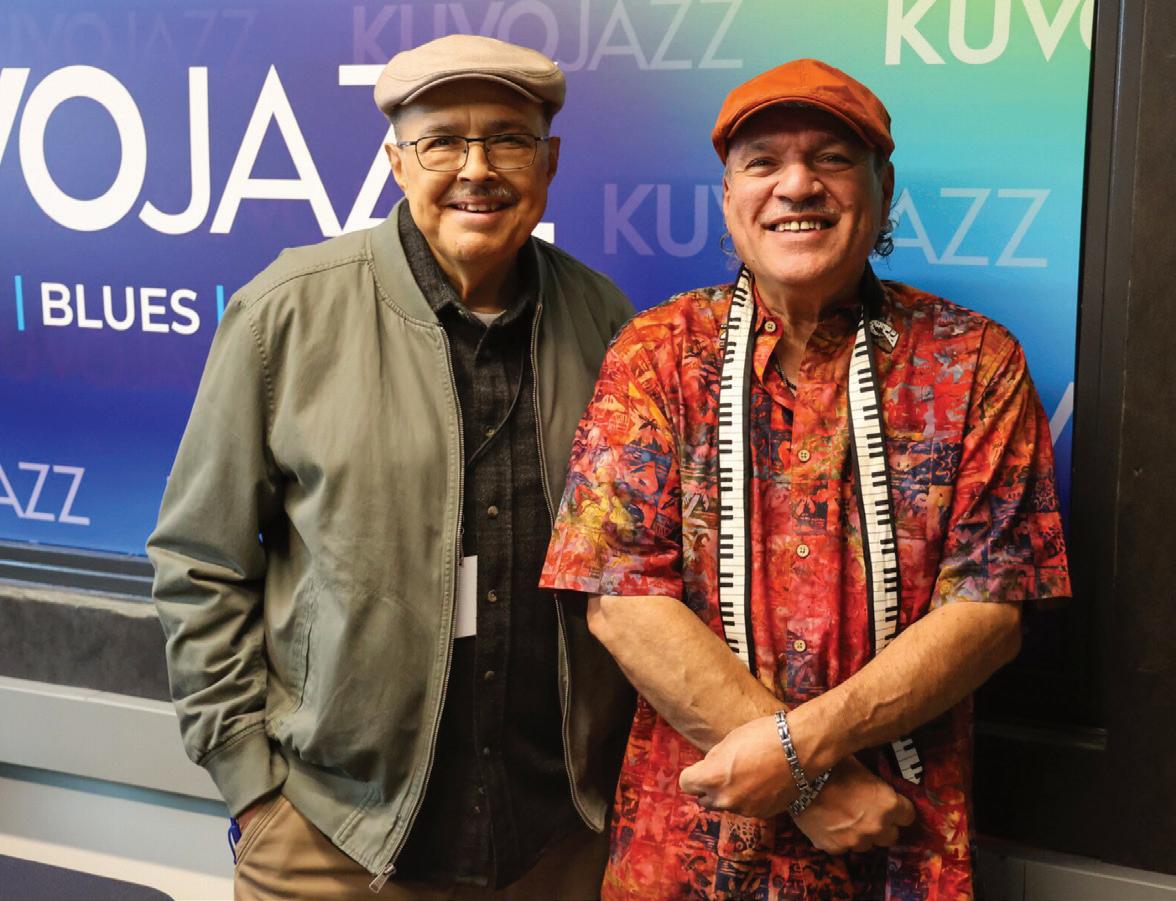
To Two Cornerstones of KUVO JAZZ
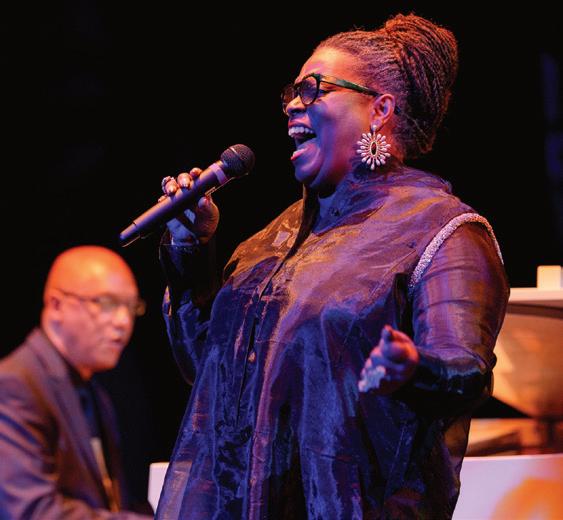
For nearly four decades, Denver Urban Spectrum has shared a deep and meaningful relationship with KUVO JAZZ—a partnership rooted in mutual respect, shared values, and a commitment to uplifting community voices through music, culture, and storytelling. Since 1987, that relationship has been strengthened by the leadership, vision, and humanity of two extraordinary individuals: Carlos Lando and Arturo Gómez.
For 39 years, Carlos Lando has helped define the sound, soul, and purpose of KUVO JAZZ. His deep knowledge of jazz, blues, funk, soul, and especially Latin Jazz expanded not only playlists, but perspectives. Under
his guidance, KUVO became a place where music was not just played, but explored—through thoughtful musical storytelling, meaningful conversations, and an unwavering commitment to live performance. Carlos reminded us that jazz is a living art form, evolving in real time, and that staying present with the music—and the musicians—keeps a station, and a community, culturally alive.
Arturo Gómez, who has served KUVO for 23 years, has been one of the station’s most visible and beloved ambassadors. Whether emceeing festivals, supporting musicians in clubs, or engaging listeners with his encyclopedic knowledge of artists and
the stories behind the songs, Arturo has embodied the spirit of KUVO JAZZ wherever he went. His infectious enthusiasm for the music and his genuine connection to artists made him a trusted bridge between the station and the broader Front Range jazz community.
Together, Carlos and Arturo helped shape KUVO JAZZ into an internationally respected, locally rooted institution. Their leadership reinforced the station’s mission to center live music, elevate musicians, and reflect the cultural richness of the community. That mission has long aligned with the work of Denver Urban Spectrum, and our collaboration over the years— alongside the steady leadership of former General Manager Florence Hernandez Ramos—has been one of pride, purpose, and shared impact.
As Carlos and Arturo step into a well-earned retirement, we celebrate not just their careers, but their legacy. We will miss their voices, their presence, and their guidance—but we are grateful for the indelible mark they have left on KUVO, on Denver, and on the music community as a whole. While their roles may change, their influence will continue to resonate wherever jazz is played, heard, and loved.
Denver Urban Spectrum thanks Carlos Lando and Arturo Gómez for decades of excellence, partnership, and cultural stewardship. We wish them joy, rest, and new rhythms in this next chapter—and we look forward to cheering them on, just as they have done for so many artists over the years. ♦
MORTGAGE RATES ARE EASING: What the Shift Signals—and How to Think About the Path Forward
By Barry Overton
Mortgage rates in the United States have declined to their lowest levels in more than three years, settling into the low-6% range after spending much of the past two years significantly higher. While this shift has understandably drawn attention, its importance lies less in immediate market reaction and more in what it signals about the broader housing and lending environment.
The decline did not occur in isolation. It was influenced, in part, by policy actions that increased liquidity in the mortgage market, including expanded purchases of mortgagebacked securities by governmentsponsored enterprises such as Fannie Mae and Freddie Mac. When demand for these securities increases, yields tend to fall—and mortgage rates often follow. The result has been a modest but meaningful reduction in borrowing costs for consumers.
From a purely mathematical standpoint, lower interest rates improve affordability at the margin. Monthly mortgage payments decrease as rates fall, even when home prices remain unchanged. This dynamic helps explain the uptick in refinancing activity and why some buyers who had paused their searches are beginning to re-engage. Still, these improvements must be understood in context.
Housing affordability in the U.S. remains constrained by structural factors that lower rates alone cannot resolve. In many markets, home prices are still elevated relative to household incomes, and housing supply remains limited. At the same time, a large share of existing homeowners hold mortgages with rates well below today’s levels, reducing incentives to sell and further tightening inventory. These conditions limit the extent to which easing rates can translate into broadbased affordability gains.
As a result, the current rate environment is best viewed not as a turning point that immediately reshapes the housing market, but as a shift in the decision-making landscape. Over the past several years, elevated rates pushed many consumers into a reactive posture—rushing decisions when rates briefly dipped or stepping back entirely when they rose. A more stable, moderately lower rate environment allows for rational assessment rather than urgency.
One of the most important implications of easing rates is the opportunity to re-evaluate affordability beyond headline home prices. Monthly payment dynamics, loan structures, and long-term cost considerations often matter more than purchase price alone. Lower rates can meaningfully change these calculations in ways that are not always obvious without careful analysis.
Another key implication is the value of accurate information and thoughtful interpretation. Interest rates are only one variable in a complex
system that includes employment trends, income growth, housing supply, and broader economic conditions. A single rate decline does not establish a lasting trend, and short-term volatility can obscure more meaningful shifts. Consumers who take time to understand how these forces interact are better positioned to make decisions aligned with their long-term financial goals.
The current environment also underscores the importance of preparation over urgency. Preparation does not necessarily mean acting immediately. It may involve reviewing credit profiles, understanding available mortgage products, evaluating personal cash-flow scenarios, or simply monitoring the market more closely. Preparation creates flexibility and allows individuals to respond thoughtfully when conditions align with their objectives.
From a market perspective, many analysts have described the recent rate decline as cautiously constructive. It supports incremental increases in activity without introducing the excesses that often accompany rapid or dramatic shifts. Stability—arguably more than lower rates themselves— tends to foster confidence among buyers, sellers, and lenders alike.
It is also important to recognize what this environment does not represent. It is not a return to the ultralow rates of the early 2020s, nor does it erase the affordability challenges that have accumulated over time. Structural supply shortages, zoning constraints, and long-term demographic pressures
remain unresolved and will continue to shape housing outcomes regardless of modest changes in borrowing costs.
In this context, the most prudent approach is one grounded in observation and analysis rather than prediction. Markets move in cycles, but individual outcomes depend far more on timing, preparation, and alignment with personal or household goals than on attempts to anticipate short-term movements.
Lower mortgage rates can provide a helpful tailwind—but they are not a strategy in themselves. The real strategic advantage lies in understanding what has changed, what has not, and how those realities intersect with individual circumstances.
Ultimately, the current rate environment represents a period of recalibration. It offers breathing room for informed evaluation and longterm planning, rather than pressure to act quickly. For those paying close attention, the value of this moment lies not in immediate action, but in clarity.
As housing markets continue to evolve, informed decisions—rooted in data, context, and preparation—remain the most reliable path forward. ♦
Editor’s Note: Barry Overton is a Denverbased real estate advisor, veteran, and mentor. He helps investors, homeowners, and agents identify wealth-building opportunities nationwide. Follow him for insights on market trends, AI in real estate, and personal development for entrepreneurs. He can be reached at 303-668-5433.
ALL THINGS BOYS
By Dr. Dedrick Sims, CEO, Sims Fayola Foundation
Every week I meet boys who are misjudged. Sometimes it happens in subtle ways, like how their body language is interpreted, or how quickly their silence is seen as disrespect. Other times it is more blatant. A boy is sent home before anyone has asked what he is carrying or what might be happening beneath the surface. The impact is the same. These moments send a message that they are not safe to be fully themselves.
For boys of color, especially those growing up in systems not designed with their success in mind, these misreadings have long-term consequences. It does not take much for discouragement to take root. When a boy feels like he has to defend his presence every day, that defense eventually becomes detachment.
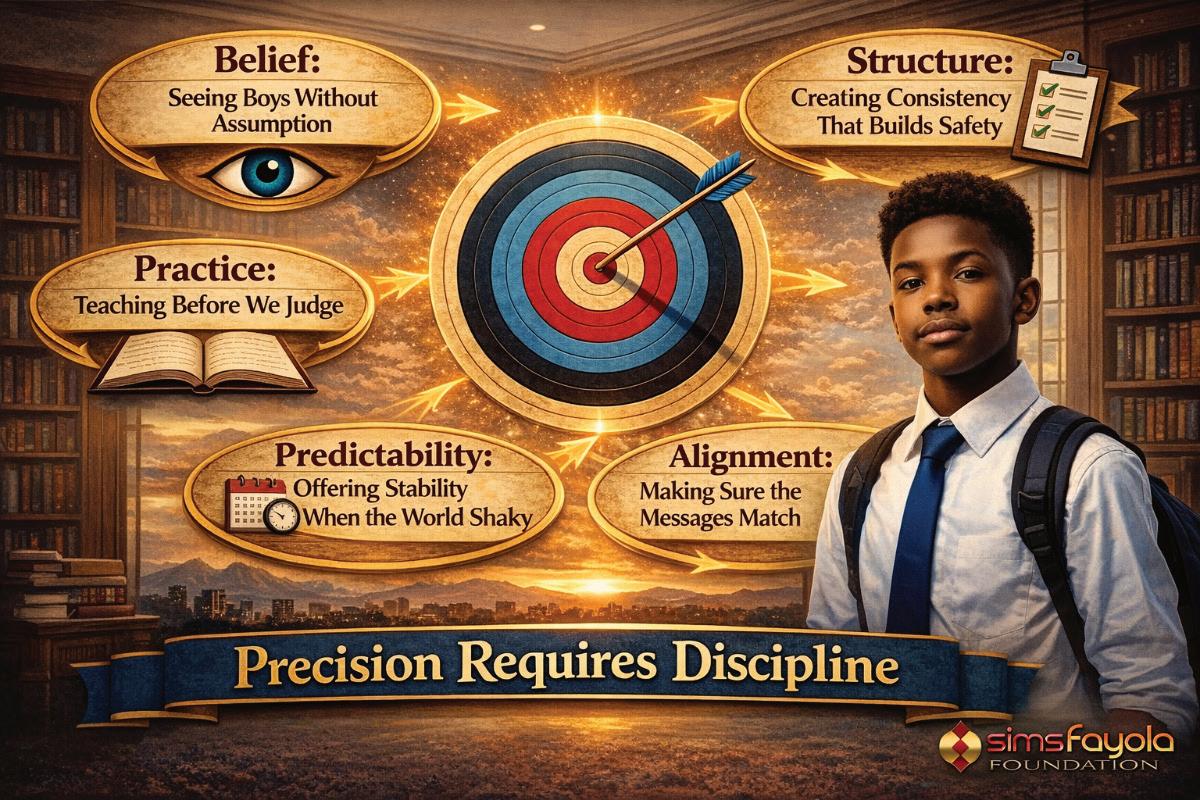
This is why precision matters. It matters how we see boys, how we structure environments around them, how we model accountability, and how we support them through growth. Precision is not about perfection. It is about discipline. It is about knowing what we are doing, why we are doing it, and who we are doing it for.
Belief: Seeing Boys Without Assumption
The Sims Framework begins with belief, because everything we build flows from what we believe about boys. If we believe they are problems to be fixed, then our systems will be built around control. If we believe they are capable of leadership, then our systems will be built around opportunity.
Our My Brother’s Keeper Denver work and our direct youth programming at the Sims Fayola Foundation is designed to shift adult mindsets so that boys are not filtered through stereotypes or assumptions. Belief must be grounded in dignity and high expectation.
Structure: Creating Consistency That Builds Safety
Structure should support boys, not restrict them. This includes clear expectations, emotional safety, and consistent adult presence. What often gets called structure in schools is actually control. Rules that change depending on who is in the room. Consequences that reflect adult mood rather than student growth.
True structure gives boys stability. It allows them to take healthy risks because they trust the boundaries around them. When structure is grounded in consistency and fairness, it becomes an act of care.
Practice: Teaching Before We Judge
Practice is where boys turn learning into action. This is where many systems fall short. We assume boys should already know how to manage their emotions, resolve conflict, or advocate for themselves. But many have not been taught. Others have been punished so often for trying that they no longer feel safe enough to keep trying.
Mentors and educators must create space for repetition, coaching, and honest feedback. Accountability without instruction becomes punishment. Practice requires patience, presence, and a belief in the power of do-overs.
Alignment: Making Sure the Messages Match
Boys of color often receive mixed messages. We say we want them to lead, but we silence them when they speak up. We say we value their culture, but then ask them to tone it down in professional settings.
Misalignment creates distrust and confusion. When our systems, expectations, and language all send the same message, boys begin to trust the process. When they trust the process, they begin to invest in it. Alignment creates coherence.
Predictability: Offering Stability
When the World Feels Shaky
Inconsistency erodes trust. If a boy does not know how an adult is going to respond, or if the environment feels
Precision as Protection
unstable, he will begin to guard himself. This is especially true for boys who have experienced trauma or instability in other areas of life. Predictability builds emotional safety. It signals that someone will show up, that rules will be fair, and that consequences will not change based on mood or personality. It helps boys let their guard down and focus on connection and growth.
Precision Requires Discipline
All five elements of the Sims Framework work together to form a system of belonging. When we approach them with precision, we create conditions where boys of color can thrive. When we are careless or inconsistent, we create harm.
At Sims Fayola, we take that seriously. Our commitment to boys shows up in how we train staff, how we design programs, and how we build systems that turn intention into impact.
That same commitment drives our leadership of My Brother’s Keeper Denver, where we focus on building environments, policies, and practices that sustain outcomes over time.
This work is not about fixing boys. It is about improving the systems and adults around them. It is about taking the time to get it right.
There are no shortcuts. But there is a clear way forward for those willing to walk it with discipline, care, and clarity. ♦
Editor’s Note: The Sims Fayola Foundation is a Denver based nonprofit dedicated to improving the life outcomes of young men of color through direct programming and systems change. We envision a world where every boy is affirmed, challenged, and equipped to fulfill his potential. For more information, visit www.sffoundation. org or call 720-557-8443 or email dedrick@sffoundation.org.
CPRD GALA Celebrates Those Who Made a Dream Come True
Published with permission from The Denver Gazette
By Joanne Davidson – Special to Colorado Politics
Who knows if the lyrics from “Somewhere Over the Rainbow” ever swirled around Cleo Parker Robinson’s mind back in 1970 when she founded a grassroots dance troupe bearing her name. Perhaps they did because on Jan. 15 it was obvious that dreams she dared to dream really did come true.
That was the night that donors and others who made the $25 million Cleo Parker Robinson Center for the Healing Arts a reality were celebrated at a gala that included riveting dance performances and a set by Denver’s Grammy-winning jazz vocalist, Dianne Reeves.
“This was a long time in the making, admitted Malik Robinson, Cleo Parker Robinson’s son and the president/CEO of Cleo Parker Robinson Dance. “But we made it and we are opening debt free.” He also noted that the handsome structure represents “The synergy of our past and our future,” with room to expand its mission of giving dancers of all ages and abilities the opportunity to learn, create and grow.
His mother thanked everyone for “Allowing us to share our soul work ... and to celebrate that we are doing it not in Chicago, not in New York but right here in Denver.”
Denver businessman and retired pastor King Harris, whose daughter, Winifred Harris, is the company’s associate artistic director, reminisced about his longtime friendship with the Robinson family. “I look back to Model
Cities, where Cleo Parker Robinson Dance had its start, to former locations like the Colorado Women’s College and remember how blessed I am to have walked with Cleo since she was a teen to where we are today. And I know the blessings will continue.”
The gala, along with other opening weekend events, was chaired by a committee headed by Chad Hollingsworth, president/CEO of Liberty Live Holdings; Floyd and Stephanie Rance, founders of the Color of Conversation Film Festival and the Oscar-accredited Martha’s Vineyard African American Film Festival; Kim Bimestefer, executive director of health care policy and financing for the state of Colorado; Marisa Hollingsworth, executive director of Presenting Denver; and Xcel Colorado President Robert Kenney.
Reggie Van Lee, a C-suite executive with such companies as AlixPartners and Carlyle and chairman of the (Washington) DC Arts Commission, was the honorary chairman.
“On this day, at this critical time in our history, this beautiful building sends an important message to the community and the world,” Van Lee said. “That we are defiant, not defeated.”
Funding for the project was coordinated by a host of civic leaders that included Gwen and retired Coors Brewing executive Moses Brewer (she chairs the dance company’s board; Dr. Dwinita Mosby Tyler; board member Lisa Hogan; US Bank senior vice president Chris Ross; Hal Logan, founder and director of Basic Materials and Services; Jane and attorney
Skip Netzorg, after whom the Dance Academy lobby on Level 2 is named; Twelve Three Media’s Kelly Hawthorne Smith; Dr. Maude Lofton and the late University of Denver Chancellor Dan Ritchie.
The center’s Marceline “Marcy” Freeman Studio was funded by philanthropist Merle Chambers, who gives generously to the arts and causes elevating the status of women; the grand staircase bears the names of corporate board member James Kaiser and his wife, Kathryn; the center’s board room is named for donor Tina Walls, while Lisa Hogan’s contributions made possible Cleo Parker Robinson’s thirdfloor office. The Boettcher Foundation Cafe was named in honor of Gregory Moore, former editor-in-chief of The Denver Post and a leader in Denver philanthropic circles.
Gary Steuer, who that day had completed his final day as president/ CEO of the Bonfils-Stanton Foundation, gave his stamp of approval to the center’s atrium, whose funding came from the arts-focused foundation.
Others taking part in the sold-out gala included former Denver Mayor Michael Hancock; Northglenn Mayor Meredith Leighty; former state Sen. Janet Buckner; civil rights leader Carlotta LaNier; Dr. Renee Cousins King; Denver Museum of Nature & Science chief George Sparks and his wife, Dr. Shandra Wilson; Karen McNeil Miller, president/CEO of the Colorado Health Foundation; Marcie Gantz, director of the State Historical Fund at History Colorado; Nita Gonzales, principal of Nuevo Amanecer and former president/ CEO of Escuela Tlatelolco; Colorado State University President Amy Parsons; Daniel Wachter, president/CEO of the Colorado Symphony; Amy Harmon; Toni and Abasi Baruti (he’s chief operating officer at Solutions FBIA; she is chief information and technology officer at the AllHealth Network); and Schyleen Qualls Brown, co-founder of Cleo Parker Robinson Dance.
About the organization:
Cleo Parker Robinson Dance had its start in 1970 and in the ensuing
Photos by Steve Peterson
55 years it has expanded from a grassroots Model Cities project to an international performing arts and educational institution. It is now housed in the $25 million, 25,000-square-foot Cleo Parker Robinson Center for the Healing Arts, located next to its prior headquarters at the historic Shorter AME Church, 119 Park Ave. West, in Denver’s Five Points neighborhood. This state-of-the-art building was designed by Fentress Studios, A Populous Company and built by Mortenson. Curt Fentress was the architect of record and Kahyun Lee was the project architect. For more information, visit cleoparkerdance.org ♦
Editor’s note: Have news or announcements for the Nonprofit Register? Email nonprofits@coloradopolitics.com and include a contact name and number if more information is needed.
Slavery Is Not “Ancient” History: I lived with the son of slaves.
My Great-Grandfather, Edward Small, with his Daughter (Aunt) Edna
By Thomas Holt Russell, III
The word “ancestors” conveys distant relatives from eons ago.
But the history of slavery is much closer than most of us (even African Americans) realize. Edward Small was my great-grandfather on my mother’s side. His daughter, my grandmother, was Harriet Small, and her daughter was my mother, Roberta. Edward Small was born in New Orleans in 1878, and both of his parents were slaves. I have known him my whole young life. When my family moved from The Bronx to Detroit, I lived with him and my Aunt Edna, his other daughter. I went to church with him and spent a lot of time with him. My great-grandfather was a picture of starched white dress shirts, bow ties,
and a box of cigars. If someone bought a white shirt and a box of cigars for him, they had a friend for life.
He would sit in his room all day and sing to himself while smiling and whittling small pieces of wood. He seemed like the most contented person on earth. My mother and I would even make fun of him sometimes because he appeared to be in his own little world. He rarely talked about his life, but I knew he was a Pullman Porter. Before he died, he gave me the pocket watch that he used on his job, and a small glass tube filled with some unknown plant that he would use as a nasal decongestant that never ran out of potency.
He told me stories of his childhood in the South, where he used to break in horses as a young man. I laughed when he told me he scared White people
literally a handful, and I never bothered to count them.
In church, he sat in the front row and would always shout, “Sure as yah born!” when the preacher hit the right note for him. As a teenager, I thought that was hilarious. He was the subject of my earliest comedic impersonations. My great-grandfather fell on a Sunday afternoon while exiting the church services and broke his shoulder. His health declined; it was one ailment/ illness after another, and he died. I was 17 at the time.
As a teenager, I was neither smart enough nor interested enough to delve into his life. I lived with him, ate with him, hugged him, shook his hand, and I would sit in his room listening to his stories. In my woodshop class, I made a stool for him, and I was so happy to give it to him. He added some padding to it because he said the wood was hard on his feet. But when we talked, he would take that stool and prop his feet on it, and that really made me proud because I gave him something he liked. His name was Edward Small; he was the son of an enslaved couple from Louisiana, Samuel Small and Luisa Jenkins. He was the son of American slaves, and we lived together. Ancient history?
because his eyes were always blood red (due to allergies), and they were afraid to look into his eyes. After he died, I read a couple of his letters that were sent to him. One was from an old friend of his, a woman who owned a resort in Wildwood, New Jersey. She was very close to him and could not wait to meet me because he talked about me so much. His dream was to take me to Wildwood and meet his old friends. He always talked about taking me to Wildwood with him, but unfortunately, he died before we could take that trip.
I remember he sent me to the store to get him “a handful of cigars”. I was confused because I had no idea what a handful of cigars was. But when I went to the local store around the corner and asked for a handful of cigars, the lady gave me a huge smile and said, “You must be Deacon Small’s great-grandson”. She handed me the cigars, and it was
Although Americans occupy the same space as White people, our experiences in that same space differ. That is why I look at the 4th of July as just a day off or a time to relax from whatever you would normally do on that day. There are no thoughts of me hanging a flag, attending a parade, or outwardly displaying my love for the country. It’s a day off. The 4th of July is only a free day (no pun intended) for me and carries no historical connection to the founding of this nation at all. I do not carry enough vitriol and hate in me to waste my valuable time protesting the 4th by going to work that day. That’s stupid. I am not interested in introducing laws or bills to abolish the 4th of July because of its absurdity regarding freedom. If people do not want to celebrate MLK Day, they should go to work rather than take the day off. It’s that simple. Still, there are some people who may say I do not love my country because I do not give a shit about July 4th. But some of those same people do not get criticized for not celebrating MLK Day.
When people say “America today is not the country I know”, that is a White person’s perspective. When they say make America great again,
they often cite the 1950s, when my parents were not able to vote without putting themselves in danger, and lynchings were still a threat. They want African Americans to visualize America through their White eyes and ignore our personal umwelt. Is voting suppression ancient history?
Wallowing in Black misery also sucks. As a Black man, even going to the museum is a mixed bag of joy, interest, foulness, and atrocities, one piled upon the next, and I wrote about it before. I am constantly reminded of what happened to African Americans, and I am sick of it! We should be knowledgeable of the past, and I will teach my grandchildren (and if I am lucky to live long enough, my great-grandchildren) about our history. My version of American history has been labeled “woke” because my version, though fact-based, makes them feel bad. And remember, the argument is not whether America has had a hand in unsavory actions; the problem is that they do not want us to mention it. Strangely, the facts of slavery and its associated atrocities have never been disputed. That is not the problem. Instead, they have a problem with the way we think about having an attitude about being a race that was chosen to be enslaved.
When I teach my grandchildren our family history, I insist they think about the future and look toward what will make life better. History can help them build a pathway to traverse the future. There are roadblocks and all, but we are here, and we are living, and I don’t want to adopt a ‘woe is me’ and ‘look what you’ve done to me’ attitude. I don’t want to hear about the legacy of slavery being the source of our woes. We have the power to make positive changes.
When Trump called NFL players “sons of bitches” because they took a knee to protest police brutality, all of those tough Black NFL players did not say a word. With the number of Black NFL players, the multibilliondollar football league could have been brought to its knees. But there was not even a whimper. The same can be said about rappers, who act tough or display a quasi-pro-Black stance but stay away from anything politically controversial, like roaches dodging the light. Those guys aren’t gonna give up any money for making a moral stand. This inactivity has nothing to do with trauma passed down, or epigenetics, or unregulated nervous systems, or cortisol flooding our systems, or epigenetic scars passed from womb to
womb, or….I will stop there. I blame it on the evils of capitalism. Few people are willing to give up millions to make a moral stance. African Americans have the economic power to make significant changes, but no one is willing to give up money or the opportunity to keep making it. Like Michael Jordan noted years ago, “White people buy my shoes too.”
Black men voted for Trump in huge numbers. At least they voted. I respect them more than those who did not vote, even though I think Black Trump supporters are Uncle Toms. A considerable number of Black men do not even vote. Black women have been carrying African Americans, politically and morally, in the face of a racist President who is admired in
some quarters of the Black culture and feared by everyone else. Black Women are supplying the backbone during this difficult time.
“There is no such thing as time” and, bla, bla, blah. We have all heard that bullshit philosophical sentence about time before. However, the only thing
Continued on Page 26
we are measuring is decay. The decay of a tree, a rock, or a dog only differs in rate. The time between when you are reading this and the time of slavery is not long ago. Problems did not end after the official abolition of slavery. We are still working through a process that began hundreds of years ago. Racism has not decayed yet. I would think its rate of decay is as sluggish as a block of marble compared to a season of a tulip.
My great-grandfather was closer to slavery than anyone living today. He was not broken or diseased, and he did not pass his trauma (whatever it could have been) to me, my siblings, children, or grandchildren. I admired him. If by chance he was traumatized by his or his parents’ experience, I cannot say for sure. But I can attest that he did not wallow in self-pity or apathy. He moved on to build his life and family legacy. Through him, I am still going through the process of retarding the legacy of slavery. This is not ancient history, or recent history; we are in the “now” exclusively.
For those who believe slavery is so distant it should not matter today or connect to our current political climate, consider this: a deep wound can be treated quickly, but healing takes a lifetime. We are healing from the political and social toll of slavery, and even as we endure real trauma, we have the power to shape our future. The process is ours to continue. We can build, grow, and move forward — if we choose not to turn on each other.♦
Editor’s note: Thomas Holt Russel is the founder and director of SEMtech, an educator, photographer, modernday Luddite, Existentialist, and Secular Humanist. For more information, visit http://thomasholtrussell.zenfolio.com/
PUBLIC ACCESS
By Alex Edwards aka 300Barz
As a radio/TV program host and creator for nearly two decades, Yero Rasheed Craig aka DJ Woogie Fresh has built a substantial independent music catalog. Through his show, “Soundsthatpound,” on the Denver Open Media public access station, he produced a series of soundtrack mixtapes to support his radio, television, and internet platforms. These releases laid the foundation for his evolution as a recording artist and curator, eventually leading him to focus on his own original music. Through work with independent recording studios across Colorado, DJ Woogie Fresh began releasing a series of singles that marked the start of his personal artistic journey.
His first major collaborative project, the soundtrack mixtape RockThaMic, united Denver’s street grinders, buskers, and underground performers. The project is rooted in what New York artists define as Conscious Music— authentic East Coast–influenced hip hop centered on purpose, awareness, and lyrical integrity. The release features the standout single “Microphone Checka,” written and performed by DJ Woogie Fresh, which reflects on recognizing one’s talent, honoring time on earth, and living with intention—“properly checking the mic.”
RockThaMic was a pivotal learning experience, marking DJ Woogie Fresh’s first hands-on education in music recording and large-scale collaboration. It also established a blueprint for empowering local artists and illuminating Denver’s underground music economy. Since 2012, the collective behind the project has distributed more than 700,000
Radio/TV producer DJ Woogie Fresh prepares for debut solo album release
CDs throughout Denver via meet-andgreets, local tours, and grassroots performances.
He worked in parallel with trailblazing Colorado artists such as The Flobots, who helped bring openmic culture into record stores and mainstream retail spaces. Inspired by this momentum, DJ Woogie Fresh released his second major single, “Woogie Swang,” now carried by Angelo’s CDs, Tapes & Records. Blending reggae and hip hop, the track has become his signature song—an anthem of resilience, survival, and relentless pursuit of dreams.
Reflecting on the release, he states, “This was a special moment for me. It told my mind it was time to fully commit to my own music—exploring my talent, working with more producers, and pushing toward a solo album.”
He adds, “I want to show independent artists that once you find your sound, you can get radio play, perform consistently, and build a living as an underground artist.”
For more than 15 years, DJ Woogie Fresh has toured throughout Colorado’s Front Range—including Fort Collins, Boulder, Denver, Colorado Springs, Pueblo, and the Arkansas Valley— performing in art districts, cafés, clubs, churches, radio stations, and record stores. His tours combine open-mic showcases, DJ turntablism sets, live studio recordings, food-drive benefit shows, and vaudeville-style radio/ TV performances. These efforts have translated directly into mechanical sales, merchandising revenue, and long-term music publishing strategies through BMI and ASCAP.
DJ Woogie Fresh is active with his Youth In Action Tour in partnership with Innervision, a Denver nonprofit for disabled and grassroots musicians. Youth In Action is a youth-at-risk outreach initiative, performing at churches, cafés, record stores, and radio stations while maintaining a consistent CD-merchandising presence.
As he prepares to release his debut solo album, “Fresh Out Tha Water,” DJ Woogie Fresh continues to collaborate with a diverse network of producers, DJs, and creatives, including Lu-Chi Lou, TERUS (Raw-YaL Fam Studios), 303Clipse with Coffee First Podcast, DJ Cool Style, 300Barz, and Johnnie Johnson of Innervision Records. Together, they focus on blending traditional publishing, live touring, and modern digital platforms to maximize both physical sales and online engagement.
Looking ahead, DJ Woogie Fresh is forming his management collective, G Flow T.R.I.B.E. and a live jam-band/house ensemble, The BoogieDown All-Stars Crew, while preparing to take his catalog fully online. With a strategy that balances “right-now” internet monetization and long-term publishing royalties, he continues to demonstrate how independent artists can turn grassroots momentum into sustainable careers. ♦
Editor’s note: You can hear DJ Woogie Fresh perform at the Open Mic Performance sponsored by Justina Valentine and Trap Door Entertainment on Friday, Feb. 20 at City Records, 1331 E. Colfax Ave #101, Denver, CO 80218. Also, check him out on his Facebook pages: @SweatShopStudios and @GFlowRecords.
Jazz by Y Yaz
By Earl Ofari Hutchinson
THE MURDER of Keith Porter
It is illegal. It is at times dangerous. But it is a tradition that is as American as Apple Pie. That is celebrating the end of the old year and start of a new year on New Year’s Eve with a few celebratory pot shots in the air. Countless numbers of Americans yearly adhere to this longstanding rite. However, it has never cost anyone their life.
That horrifically changed on New Year’s Eve 2025 in Northridge. Keith Porter as was customary with thousands of others celebrated the start of the new year 2026 by firing a few rounds in the air. That should have been the end of it. Except for one thing. An off-duty unidentified ICE agent claiming that he or she believed Porter was an “active shooter” gunned down Porter. There was no report by anyone else in the apartment complex where Porter lived of an active shooter. There was no report that Porter’s action endangered anyone in the complex. There was no call for the LAPD to surveil the complex. In short, it was solely the ICE agent’s call that Porter was a threat.
The agent has two powerful shields. One is Homeland Security, under which ICE operates. Within moments of the slaying, Homeland Security issued a statement backing the agent and repeating the uncorroborated and totally fictitious lie that Porter was an active shooter. The shooter in effect was fully exonerated.
The second is Trump. His stone silence on the Porter shooting was tantamount to an exoneration.
Neither Trump nor Homeland Security bothered to ask these questions. One, if there was no report that Porter was a threat, let alone an active shooter, why did the ICE agent take it upon his or herself to be judge, jury and executioner of Porter? Two, if the agent felt Porter was a threat why not make a simple call to the LAPD to investigate and act? Three, why is an off-duty ICE agent resorting to gunplay without any authorization? Four, why did the agency feel that it had to swiftly and immediately issue a statement fully backing the agent without waiting to get all the details of what actually happened? Five, why if the agency was totally confident its agent acted lawfully and responsibly, it refused all calls to publicly identify its shooter?
This last point is especially galling given that the identity — complete with full blown photos of the agent who gunned down Renee Good in Minneapolis — was quickly made public.
The identification of the agent that killed Porter was crucial. Homeland Security is a public government agency. Transparency and accountability are absolute requisites for public agencies. When there is any hint of wrongdoing by the agency or its operatives, it has a duty and obligation to make full public disclosure of who is involved and what action it is taking to punish the offenders. That was not the case with the porter slaying.
The slaying of Porter by an ICE agent again was deadly proof that ICE with Trump’s fervent blessing has become a dangerous, out of control, lawless, and now murderous agency. That was shown in its various takeovers of cities under the guise of a crime crackdown. That was shown in countless instances of harassment, illegal arrests, and raids, and endless incidents of abuse it has committed, and continue to commit. It
was on hideous display in the killing of Good and Porter. But they were hardly the first victims of ICE violence. There have been reports of other shootings.
A private research firm, Trace, which tracks ICE gunplay during its sweeps and raids has identified sixteen incidents where ICE agents discharged weapons. In addition, it found fifteen other incidents where agents held an individual at gunpoint. Five others, like Good, were shot while driving away from traffic stops or evading an enforcement action. In every case, ICE and Homeland Security defended the gunplay. ICE Director Tom Homan recycled the standard rationale when he claimed the ICE agent that killed Good “feared for his life.”
There is absolutely no chance that a Trump appointed U.S. attorney will bring charges against the ICE agent that slew Porter. However, that does not mean that the call for their arrest and prosecution should not be made. That call alone represents the closest thing to accountability and transparency that ICE and Homeland Security will even remotely recognize. That gives it some value. It shows that many who along with this writer have made the call for their arrest and prosecution still believe in accountability and the rule of law.
That’s why I call, and will continue to call, for the arrest and prosecution of the ICE agents that slew Porter.
Earl Ofari Hutchinson is an author and political analyst. His latest book The ICE Shooting Scorecard (Amazon ebook and Middle Passage Press PB) He hosts the weekly news and issues commentary radio show The Hutchinson Report Wednesdays 6 PM PST 9 PM EST at ktymgospel.net. and Facebook Livestreamed at https://www.facebook. com/earl.o.hutchinson ♦
Photos by Steve Peterson and Amanda Bierman
Photos by Alyson McClaran
Dr. Martin Luther King Jr.
Marade
Photos by A Stars Printing Photography Media Solutions