

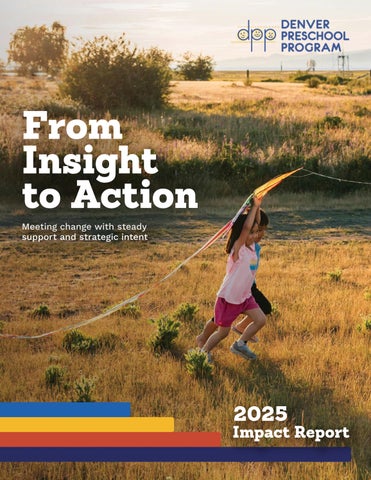
Meeting change with steady support and strategic intent
Meeting change with steady support and strategic intent

Denver Preschool Program (DPP) awarded approximately $23 million in tuition credits to 4,864 young Denver learners in the 2024–2025 program year.
Community Outreach efforts reached over 1.2 million people across 68 local events.
We invested $3.6 million in quality improvement initiatives across 264 providers.
We reinforced our role as a national leader in early childhood education and program implementation through national collaboration efforts.


This year presented a new challenge: to stand strong while the ground shifted beneath our feet.
That steadiness was essential as we supported Denver families navigating rising home costs and unpredictable policy shifts that affect their everyday lives. We engaged with early childhood educators experiencing new levels of stress inside the classroom as well as to increased pressures at home. We stood alongside community partners to champion values and policies at the heart of our mission.
And yet, as Denver Preschool Program (DPP) has done for nearly 20 years, we remained steady in our vision of helping Denver’s youngest learners succeed. This year, more than ever, we leaned into listening and understanding the needs of families, preschool teachers and providers and the broader early childhood education ecosystem. We went both broad and deep in our approach to gaining valuable insights that help ensure our programming more clearly aligns with the lived experiences of everyone we serve.
After identifying the challenges that stand in the way of success, we began to craft a roadmap for the future. We strengthened our community outreach efforts, our workforce supports, our infrastructure, and our vision for the next chapter of early childhood education in Denver.
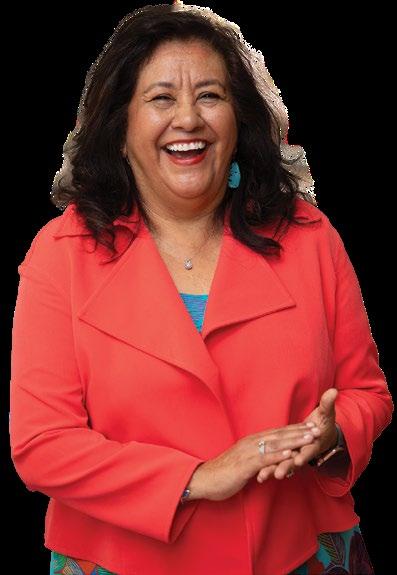

I am both proud and humbled by the way this organization has met change with intentionality and purpose. We chose clarity over confusion; we collaborated and connected. We gave equal weight to the small moments of joy we see in the classroom and to the large, transformational shifts necessary for the future. We are poised and ready for what’s ahead, with the needs of our families and early childhood educators laying the groundwork for the future.
Thank you for your steady support and your shared belief in the power of quality early childhood education. While the world shifts around us, we remain steadfast in our vision to ensure every child in Denver has equitable access to a strong foundation for kindergarten and beyond.
With gratitude and excitement,
Elsa Holguín, President & CEO

DPP VISION
Every Denver child has access to a strong foundation to thrive in kindergarten and beyond.
Denver Preschool Program makes quality preschool possible for all Denver families with 4-year-olds and qualifying 3-year-olds.
We are committed to strengthening and funding the early childhood experience, advocating for policies and programs that equitably advance early childhood education, and leading quality initiatives and support for providers.
Our approach is multi-faceted , grounded in community connection, and responsive to the changing needs of both Denver families and preschool providers.
DPP MISSION
To transform the futures of young children and their families by strengthening and funding the early childhood experience.
Denver Preschool Program is funded by a dedicated sales tax first approved by voters in 2006, renewed and expanded in 2014, and permanently reauthorized in 2023.
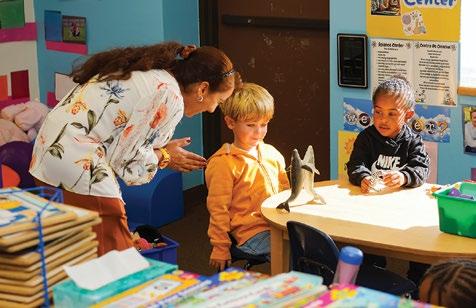
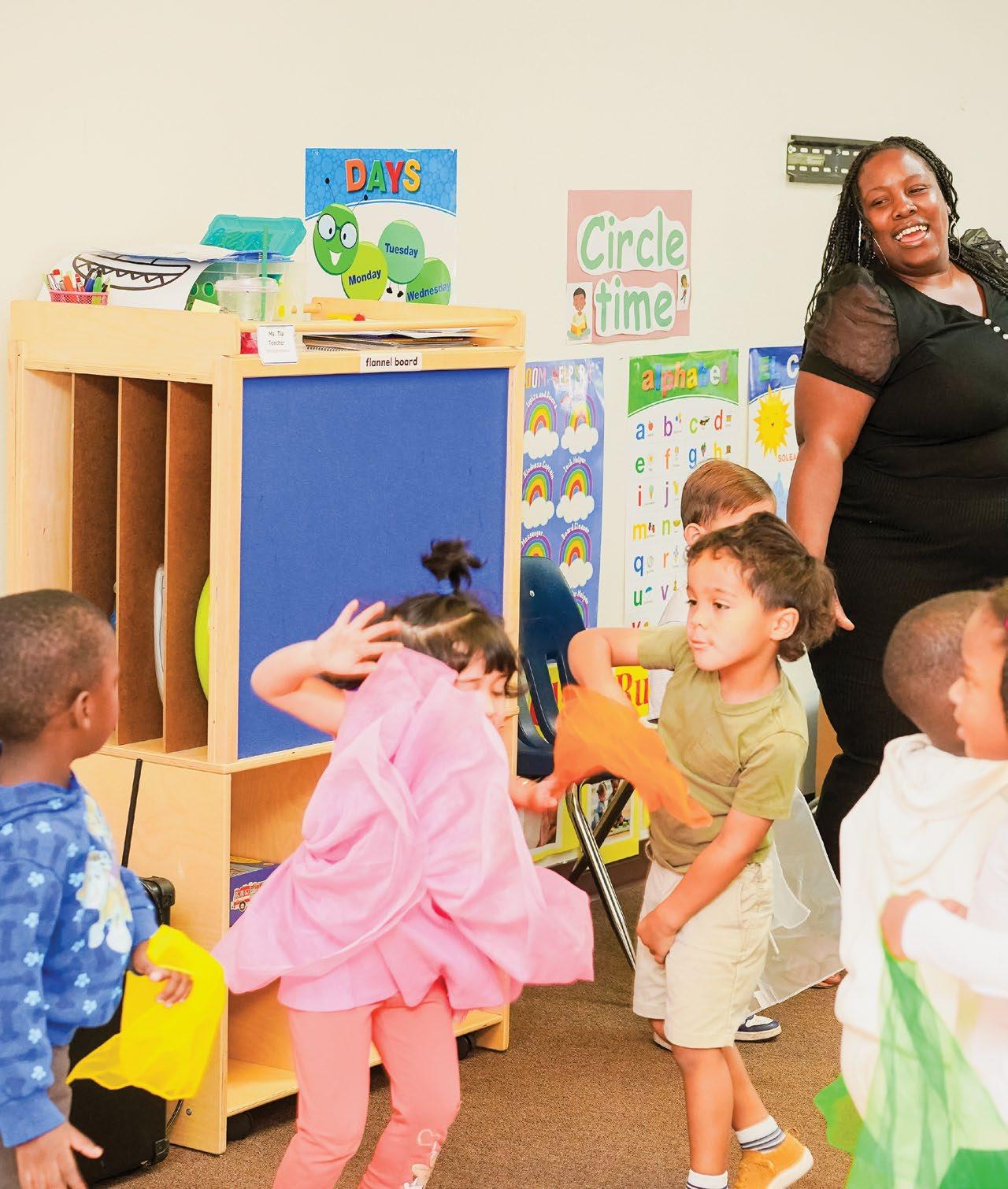
DPP’s core programming focuses on tuition credits for every Denver family with 4-year-olds and many families with qualifying 3-year-olds, helping cover the cost of preschool. This helps to make high-quality early learning more affordable and accessible.
This core programming is at the heart of our mission, and we must also adapt as the early education landscape changes. Every year, we strategically allocate funds to maximize impact for families and educators, especially those most marginalized. This past year, we grew our support across all of our programs to meet the needs of families and providers.
True to our approach for nearly 20 years, we will continue to thoughtfully engage families, our community, and early care and education providers and teachers to address change and proactively and strategically meet their needs. We will also continue to advocate on their behalf at the city, state, and federal levels.

We make preschool more accessible and affordable for all Denver families by offering tuition credits, paid directly to the school of the family’s choice.
This financial support is available to Denver families who enroll in any licensed, participating early childhood education program, including Denver Public Schools early childhood education, community-based providers, and family-operated child care home providers.
Thanks to Colorado Universal Preschool (Colorado UPK), DPP’s local funding went further in 2024–25. By pairing state and local support, families saved more on preschool costs, and the added investment strengthened the overall funding available to Denver’s early childhood system. By layering tuition credits with more than $30 million in Colorado UPK support , we were able to serve more families at a deeper level and expand our support for three-year-olds. BY THE NUMBERS $23,279,406
4,864
In its fourth year, Preschool for 3s has given 3-year-olds enrolled in a community-based preschool program an early start on the path to kindergarten.
Colorado Universal Preschool (UPK), a state-funded program, has allowed the Denver Preschool Program to make its largest investment yet and expand services to more Denver three-year-olds. The program continues to grow, but at this stage, Preschool for 3’s still has limited reach. Tuition credits are awarded based on household income, with families facing the greatest financial barriers receiving the most support. This transformational program is an essential first step as we continue to more meaningfully bridge the costly early care and education gap between birth and kindergarten.
BY THE NUMBERS
TOTAL PRESCHOOL FOR 3S TUITION CREDITS
$3,997,936
TOTAL RECIPIENTS
531
$1,001 AVERAGE MONTHLY TUITION CREDIT
139
BY THE NUMBERS
TOTAL DPP SCHOLARSHIP FUNDS
$2,609,047
SCHOLARSHIP RECIPIENTS
403
The DPP Scholarship helps more children access high-quality preschool by providing additional financial support to eligible families. Families receiving the DPP Scholarship pay no preschool tuition , freeing up funds they might otherwise have spent on preschool to cover other basic needs.
The DPP scholarship plays a critical role in Denver’s early education landscape by making high-quality preschool more accessible to the members of our community who are the most marginalized. We are proud to continue to increase the number of DPP Scholarship recipients every with an increase of $478,246 in funding in the this past program year.
THE MARSHALL FAMILY
Danielle and Roddrick Marshall moved to Denver from Georgia with their five children a few years ago.
They knew quality early care and education were important, as Danielle is a former licensed special education and early childhood education teacher. But they weren’t certain how they would pay for preschool. That is until they learned about Denver Preschool Program through the Sewall Child Development Center, a DPP community provider, where their youngest children are currently enrolled.
“The Denver Preschool Program has truly been a hero for me and my twins by providing financial assistance that made quality early education possible,” Danielle said. “Not only has this support reduced the financial burden on my family, but it has also ensured my twins have access to a strong educational foundation and social growth opportunities.”
With support from DPP, Danielle and her husband Rodderick are both able to work full-time, and their sons are flourishing in preschool. Four of Danielle and Rodderick’s five children have completed or are currently enrolled in preschool. Their oldest did not attend preschool as they were still living in Georgia at the time.
“Preschool makes such a difference for foundational skills of awareness, how to read, how to interact with peers, for social skills and how to communicate effectively,” she said.

Even with both Danielle and Roddrick working full-time, they would not be able to afford quality preschool for their children without support from DPP.
Danielle is a literacy interventionist with DSST Public Schools and is pursuing her Doctor of Philosophy (Ph.D.) in Education—Educational Law. Roddrick is a mentor for Denver Public Schools in their Career and College Success Program and works full-time as a public speaker and mentor for FreshStart of Denver Consultant Group, a youth-centered mentoring program that Danielle and Roddrick recently launched.
“Education is one of the best gifts you can give your children and yourself. DPP is helping our family make this vision a reality for us all.”
— DANIELLE MARSHALL
Through extensive research to better understand the needs of our early learning workforce, we know that many educators feel called to the early care and education profession and have a desire to make an impact on the lives of young people.
That’s why DPP’s Quality Improvement initiatives (QI) are educatorcentered and go beyond surface-level training. Through targeted professional development and direct financial support , we help educators build confidence, strengthen their skillset and support themselves as individuals in this demanding work. By understanding educators both inside and outside the classroom, we can create stronger pathways for their success, leading to better classroom environments and stronger student outcomes.
Workforce Qualifications & Professional Development
Family Partnerships
Leadership, Management & Administration
Learning Environment
Child Health & Safety
Our quality initiatives include the following:
COACHING
PROFESSIONAL DEVELOPMENT & TRAININGS
EDUCATOR SCHOLARSHIPS
WORKFORCE STIPEND GRANTS to raise educator pay
ACHIEVEMENT AWARDS to acknowledge commitment to quality improvement activities
FLEXIBLE STRENGTHENING GRANTS that programs can use for a wide range of needed resources
We are incredibly proud of the progress our providers make when they lean into these resources and training opportunities. To track each provider’s progress, we use the Colorado Shines Quality Rating & Improvement System (QRIS). The Colorado Shines rating system assesses licensed child care and early education providers in five areas .
In early childhood education, quality matters. It’s vital that Denver families know that enrolling their child in a DPP partner preschool means that the education and care at that school will be high-quality and that educators there are investing in creating the best possible environment for every student. DPP providers consistently rate higher on the Colorado Shines Rating scale than providers state-wide. We believe our commitment to supporting providers helps make this achievement possible year after year. We couldn’t be prouder of our partnership with passionate, dedicated providers who prioritize quality.
“DPP’s
*Based on all child care and preschool settings in Colorado. Includes DPP providers.
COLORADO SHINES RATING (2025)
% of providers by rating score
The 2024-2025 program year was our third year offering Workforce Stipend Grants , a direct response to workforce needs. This past year, we expanded Strengthening Grants by simplifying access to funding for mental health support and substitute coverage, helping programs pay for qualified staff to cover when teachers are absent. These funds are now included directly in the grants , eliminating the need for a separate reimbursement process and making them easier to access and use.
“Thank you so much for the Workforce Stipend Grant. Our staff were overjoyed when they received their checks. We hope this support will continue in the years to come as this recognition truly motivates and encourages staff to give their best every day. We sincerely appreciate this grant and the difference it makes.”
— DPP PROVIDER
COLORADO SHINES RATING (2025)
% of providers by rating score
ongoing support directly
strengthens
our classrooms, our teachers, and the experiences
we’re
able to offer children and families. We are truly grateful for the impact you make here every single day. Thank you for believing in our work and partnering with us so generously.”
— DPP PROVIDER
Chris Miller, DPP’s Vice President of Programs, along with other education leaders across the state, is a member of the Early Childhood Leadership Commission’s (ECLC) Compensation and Benefits Working Group. The group aims to provide recommendations on implementation and strategies to achieve sustained, long-term increases in the salaries and benefits of early childhood professionals. DPP is committed to continued support of these efforts with the hopes of being a leader in advocacy and implementation in the future.
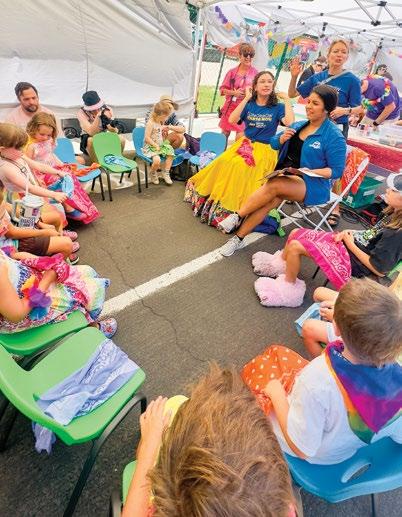
COMMUNITY EVENTS
Building relationships with families in trusted community spaces , particularly those who face barriers to preschool such as language access, systemic inequities, or financial challenges.
This past year, communities throughout Denver faced new challenges and threats to connection. We believe it is in the toughest seasons when supporting and trusting each other is most important. This is why our community outreach efforts felt even more essential.
Through the efforts of internal DPP staff, trusted partners and 12 Community Connectors who speak 14 languages collectively, we created touchpoints in all corners of the city. Furthermore, our Preschool Navigator, Briana Gonzales, met with families one-on-one to help them navigate the enrollment process and access community resources. Our success and impact are rooted in trust and insight gained from conversations and connections. We are deeply grateful for the people and partners who dedicate their time to learning, listening, and building trust and connection.
585,060 TOTAL EVENT ATTENDANCE
5,893 TOTAL ATTENDANCE AT DPP BOOTHS

80% OF COMMUNITY OUTREACH CONNECTIONS were families from historically underrepresented communities
40 COMMUNITY EVENTS IN NEIGHBORHOODS where families face the greatest barriers to accessing preschool
CINCO DE MAYO in Westwood
SAFE SUMMER KICKOFF in Garfield Lake Park
SOUTHWEST DENVER COALITION’S Back-to-School Giveaway & Resource Fair
MOVIE IN THE PARK hosted by City Council District 1
REACH FOR PEACE PICNIC hosted by Struggle of Love
LIBRARY SUMMER BLOCK PARTY by Denver Public Library’s Valdez-Perry Branch
MONTBELLO ALIVE! with DPP Preschool Showcase, featuring five providers
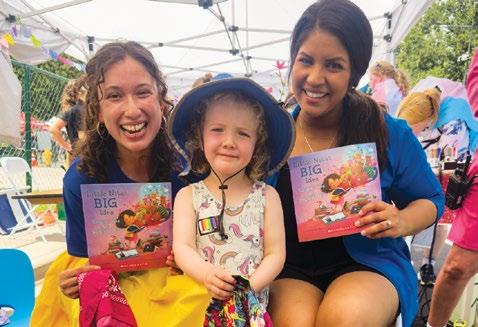
DPP hosted three bilingual preschool book readings :
DÍA DEL NIÑO CELEBRATION at the Denver Art Museum
DENVER PRIDEFEST
DÍA DE LOS MUERTOS CELEBRATION at CSU Spur
We connect with mission-driven organizations, non-profits, faith organizations and service organizations in the Denver area that have deep roots in the community and trusted relationships with families .
PARTNER GATHERINGS including 61 meetings and 19 presentations










Denver Preschool Program has partnered with DAM for years on the Día del Niño celebration , supporting the event with a celebrity bilingual preschool book reading . We also distribute complimentary copies of the featured books to families and have had a table at the DAM’s Friendship Powwow in recent years.

Equity remains central to our mission: ensuring that all Denver families—regardless of income, neighborhood, language, or background—can access high-quality preschool, and that early childhood educators are supported, respected, and able to thrive in their profession. Understanding the lived experiences of our provider community is an essential part of that commitment.
This year, we invested considerable time and resources to better understand the heart and soul of early childhood education—the educators .
Through extensive research, we were able to develop a deep understanding of the educators and their career paths, working conditions and overall well-being. Additionally, we explored salary tiers, satisfaction with compensation, financial stability and professional development, all in the hope of improving the overall experience for educators and, in turn, students. Furthermore, we evaluated current professional development opportunities to better meet today’s classroom needs. The findings illuminate what is working and what needs improvement. Insights will serve as a roadmap for future programming and advocacy efforts.
The following findings were compiled through three key research studies:
DPP’s Workforce Report surveyed spring of 2025
Community Input on Denver’s ECE Needs & DPP surveyed summer of 2025
DPP Workforce
Financial Obstacles & Use of Supports surveyed fall of 2025
FINDINGS
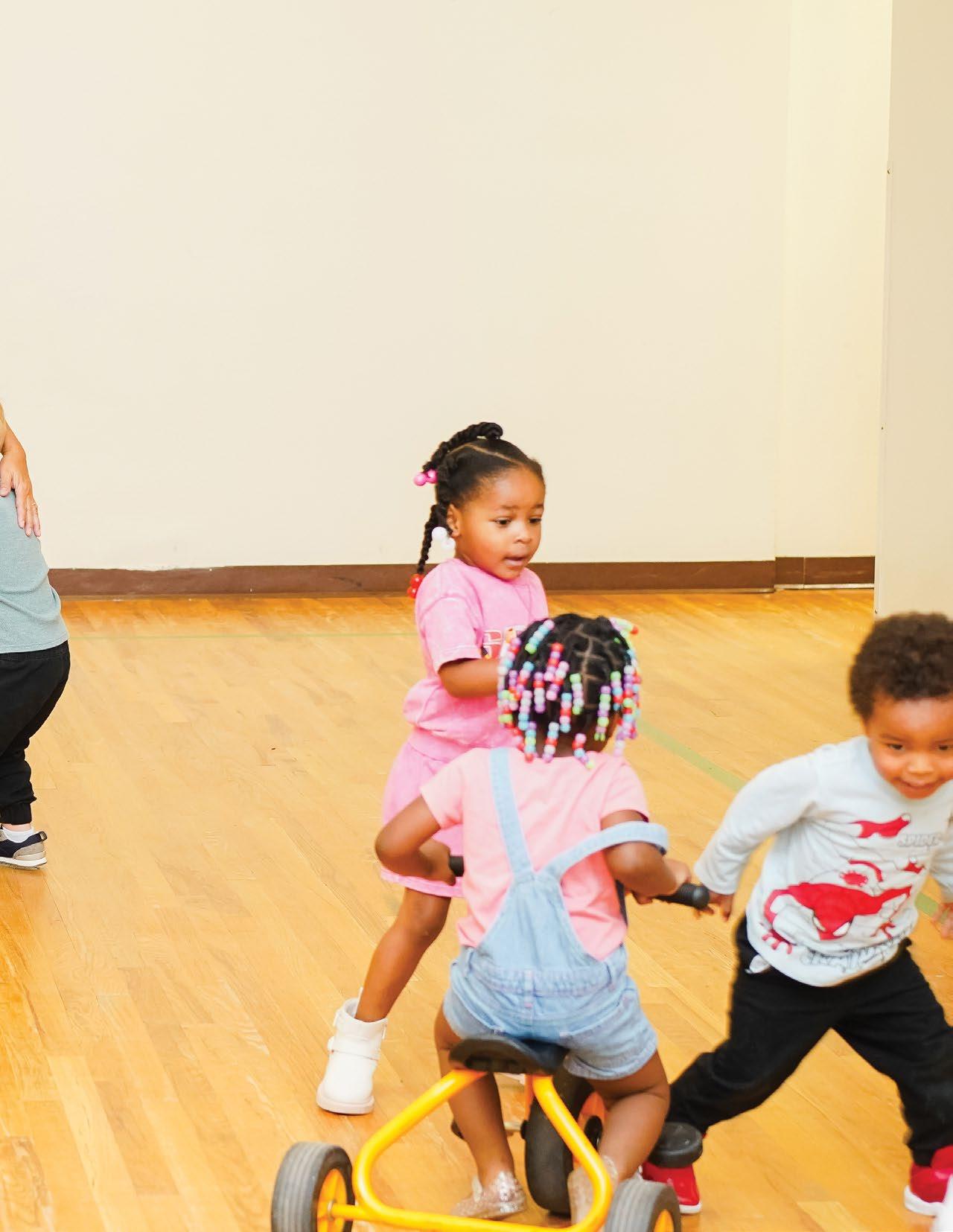
The early childhood education workforce is notably diverse with a significant population being racially, ethnically and linguistically diverse (RELD).
38% who identified as Hispanic, Latino or Spanish origin
38% who identified as White or European American 10% who identified as two or more races/ethnicities
7% who identified as African, African American or Black
Nearly half of educators (48%) are linguistically diverse, with 77% of this group speaking Spanish. This diversity is a major benefit as it fosters connection between educators, children and families in multiple languages.
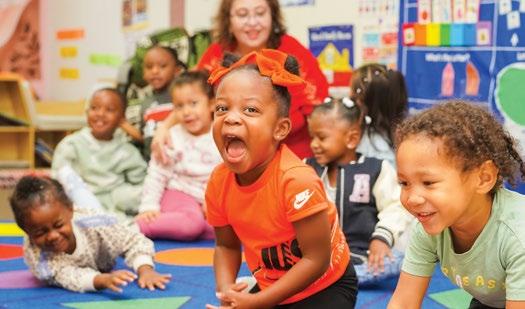
Educators are drawn to early care and education through a variety of personal and heartfelt motivations. Key themes included a deep passion for working with children, the influence of family members who are also educators, personal experiences with childcare (like babysitting or becoming a parent) and a desire to create more inclusive and equitable learning environments .
Educators tend to stay in the field for seven years , on average. Half of the surveyed educators had 10 or more years of experience in the field. Most (64%) view their current position as their chosen occupation , and most are satisfied with their career choice.
Overall, educators reported being satisfied with their jobs and workplace environments. They rated their job roles, relationships with coworkers and professional development opportunities the highest.
Educators reported more children are entering preschool with trauma-related behaviors and difficulty self-regulating, requiring deeper teacher support and wraparound services. As a result of this increase, educators reported higher levels of burnout.
One of the most essential elements of a healthy, sustainable early childhood education field is the ability for educators to earn a fair wage , a systemic issue that DPP has championed for years. This study further confirmed the daily struggles of educators to afford basic needs.
Among all job satisfaction factors, educators rated their satisfaction with pay and benefits lowest . There is a significant pay gap among roles and between program types, with community-based educators often earning less than their public-school counterparts. This financial strain is evidenced by the fact that nearly three-fourths of educators reported difficulty paying bills, and more than a quarter (27%) of educators work an additional job(s) to make ends meet.
Educators, particularly those in communitybased programs, are frustrated by the significant pay disparity between their salaries and those of public-school teachers They suggested a “unified pay scale” as a way to increase equity and retain staff and address the mass exodus of preschool teachers leaving early care and education for K-12 because of better pay and benefits.
While most educators have employersponsored health insurance, many cannot afford it and, as a result, rely on public assistance such as Medicaid.
Many educators fear that a pay increase would make them ineligible for public benefits, like Medicaid, while not being enough of an increase to help them afford private insurance.
28% of surveyed educators reported utilizing at least one form of public assistance. Among educators receiving public assistance, the most common benefits they received were Medicaid or Medicare for themselves (62%), Medicaid or subsidized health insurance for their children (34%), free or reduced lunches for their children (30%) and food stamps (SNAP; 25%).
In a separate study, in partnership with Butler University, 12% of educators surveyed expressed not having enough money to provide adequate shelter for their family. In that same study, 81% of educators reported having some sort of stress around paying bills.
Respondents expressed a clear need for expanded Friends, Family and Neighbor (FFN) supports and recognition—these caregivers are closing the gap for families with nontraditional work hours or those without access to quality care based on location or affordability.
The survey included an optional section of survey questions about workplace racism and discrimination that educators had witnessed or experienced and the impact it had on them. 218 (91%) of educators chose to participate.
Generally, educators reported low levels of race-related stress at work ( M = 2.85 , on a scale from 0=not stressed at all to 10=very stressed).
62% of these educators reported experiencing racism, witnessing racial discrimination, or both at their current program. Educators’ experiences of workplace racism varied from overt racism to microaggressions, tokenism, biases, and favoritism.
Almost all diverse educators surveyed reported having psychological symptoms as a result or experiencing or witnessing racism. Those symptoms include disappointment, frustration, irritability or agitation.
Responses regarding comfort level in reporting racism in their program were mixed. (32%=Very comfortable reporting, 28%=slightly comfortable, 26%=slightly uncomfortable and 14%=very uncomfortable.)
In response to these findings, DPP partnered with Resilient Futures to offer programming. Offerings included an Educator of Color Webinar series , and a half-day Centering Rest Retreat and Reflective Consultation . Both programs focused on practical tools for self-care and regulation strategies for stress at work, and wellbeing inside and outside the workplace. The feedback was strongly positive with participants noting that the programs were transformative, deeply impactful and the inspiration and support they needed to stay in this career path.
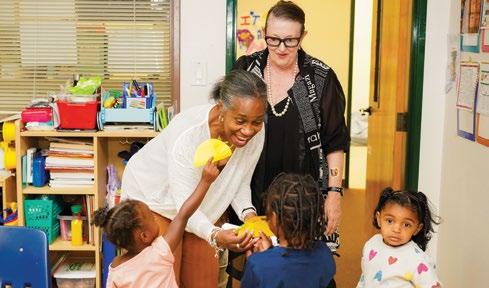
Educators expressed immense appreciation for DPP and the opportunities that have resulted from our support. They noted how our support has helped them and the families in their programs. One director described DPP as “the magic wand of the community” and “a lifesaver.” Others view DPP as an “exceptional partner” due to our flexibility and responsiveness.
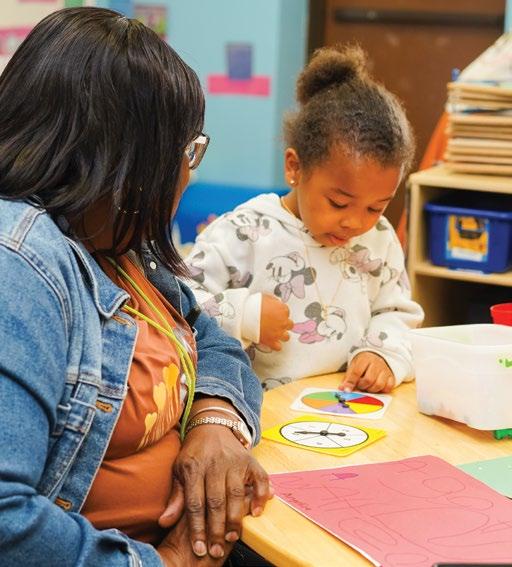
The study results showed that DPP tuition credits are essential. Many providers cited that most of their students would not be there without tuition credits.
Feedback showed that workforce stipends were appreciated and effective.
Educators praised DPP professional development events and grants.
Grounded in extensive community engagement, the plan outlined five key goals:
Our 2023–2025 Strategic Plan served as a living, breathing roadmap during a period of unprecedented change for early childhood education in Colorado. Designed in the wake of the launch of Colorado Universal Preschool (UPK), the plan centered on equity, access and growth , ensuring we not only adapted to a shifting early childhood education landscape but lead within it.
Increase enrollment , with a commitment to reaching more children of color and families facing systemic barriers—and setting an ambitious target of serving 70% of Denver’s 4-year-olds by 2027.
Activate policies and programs outside of licensed care, including exploration of support for Family, Friend and Neighbor (FFN) caregivers to expand the range of highquality options available to families.
Strengthen the early childhood workforce, with an emphasis on retention, professional development, and advocating for pay parity with the K–12 sector.
Address unmet needs in the system , including navigating DPP’s growing role as Denver’s Local Coordinating Organization for UPK and securing indefinite reauthorization from voters—successfully achieved in 2023.
Build the internal infrastructure, staffing and governance needed for long-term sustainability as DPP’s responsibilities expand.
Over the past year, these goals translated into tangible progress and early wins . We invested more than $670,000 in workforce stipend grants during the 2024-2025 school year, helping reduce turnover and strengthening classroom quality across the city.
Targeted outreach efforts preserved enrollment among priority groups and deepened relationships through bilingual events and culturally responsive engagement.
Providers accessed Quality Improvement grants to enhance learning environments, and we advanced several research initiatives— including exploring FFN pathways and evaluating projects to better understand program impact.
Partnerships also deepened. Collaboration with Denver’s Early Childhood Council strengthened connections between early learning, health and family well-being, while improvements to governance, community representation and data systems increased transparency and supported more equitable resource distribution.

$670,000 IN WORKFORCE STIPEND GRANTS
Through it all, we continued to deliver on our core mission: providing tuition support, expanding access and choice and helping ensure that every Denver child can benefit from high-quality early learning.
As we close this chapter of the 2023–2025 Strategic Plan, we enter the next stage of work with renewed clarity, fortified systems, and a stronger early childhood ecosystem. The progress achieved over the past two years lays a powerful foundation for what comes next—and reaffirms our commitment to leading with care, purpose, and equity for Denver’s youngest learners and their families.
In the past few years, we began the necessary work to lay the foundation for the next evolution of early childhood education in Denver and beyond.
From internal infrastructure to advocacy, and from programmatic changes to deep community engagement, our efforts have been extensive.
As we approach our 20th year, we are poised to continue to meet change with steady support and strategic intent to better serve the Denver community. Stay tuned as we continue to evolve our approach to create the change Denver families and early care and education providers need.
Stay updated as we celebrate our 20th Anniversary and announce exciting changes in the coming year. We invite you to follow along as we share content tailored specifically to our audiences, including news in early childhood education, organizational updates and events near you. Also, we would appreciate your help in sharing our work with your friends, family and community.
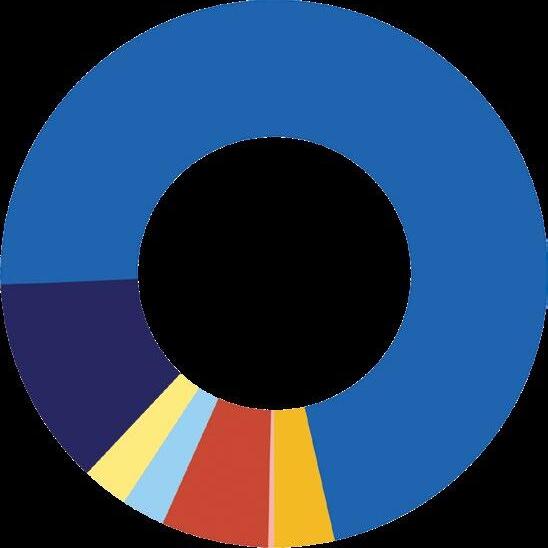
EXPENSES $33,029,128
These data were sourced from our recent audit report of financial statements. Consistent with the last impact report, these are calendar year figures.
Elsa Holguín
President & CEO
Irene Bonham
Vice President of Communications
Cristal Cisneros, Ed.D.
Vice President of Evaluation & Learning
Chris Miller
Vice President of Programs
Matt Jordan
Chief Finance Officer & Chief Operating Officer
Nayely Avila
Program Manager
Diana Herrera
Colorado Universal Preschool
Senior Program Manager
Iris Miceli
Communication Specialist
Eden Knapp
Operations Manager
Geoff Murphy
Accountant
Maria Villegas
UPK Program Specialist
Alexis Walker
Executive Assistant
Erin Brown, Chair Chief Impact Officer, The Colorado Health Foundation
Andrea Albo, Vice Chair
President & CEO, Scientific & Cultural Facilities District (SCFD)
Chris Daues, Treasurer Partner, RubinBrown LLP
Zaki Robbins, Secretary Director, Fennemore Craig, P.C. Law Firm
Anne Rowe
Co-Owner & Principal, La Vie and Company
Lydia Prado
Executive Director, Lifespan Local
Nathaniel Cradle
Co-Founder, Venture for Success Preparatory Learning Center
Keshia Allen Horner Founder and Principal, Mariposa Analytics
Councilwoman Shontel Lewis Denver City Council, District 8
Chyrise Harris
Vice President, Communications & External Affairs, Gary Community Ventures
Adeeb Khan
Executive Director, Denver Economic Development & Opportunity, City and County of Denver
Jennifer Luke
Executive Director, Early Excellence Program of Denver
Anna Jo Haynes, Board Emeritus
President Emeritus, Mile High Early Learning Centers