
Alex Mills (b. 1985) Chamber Music
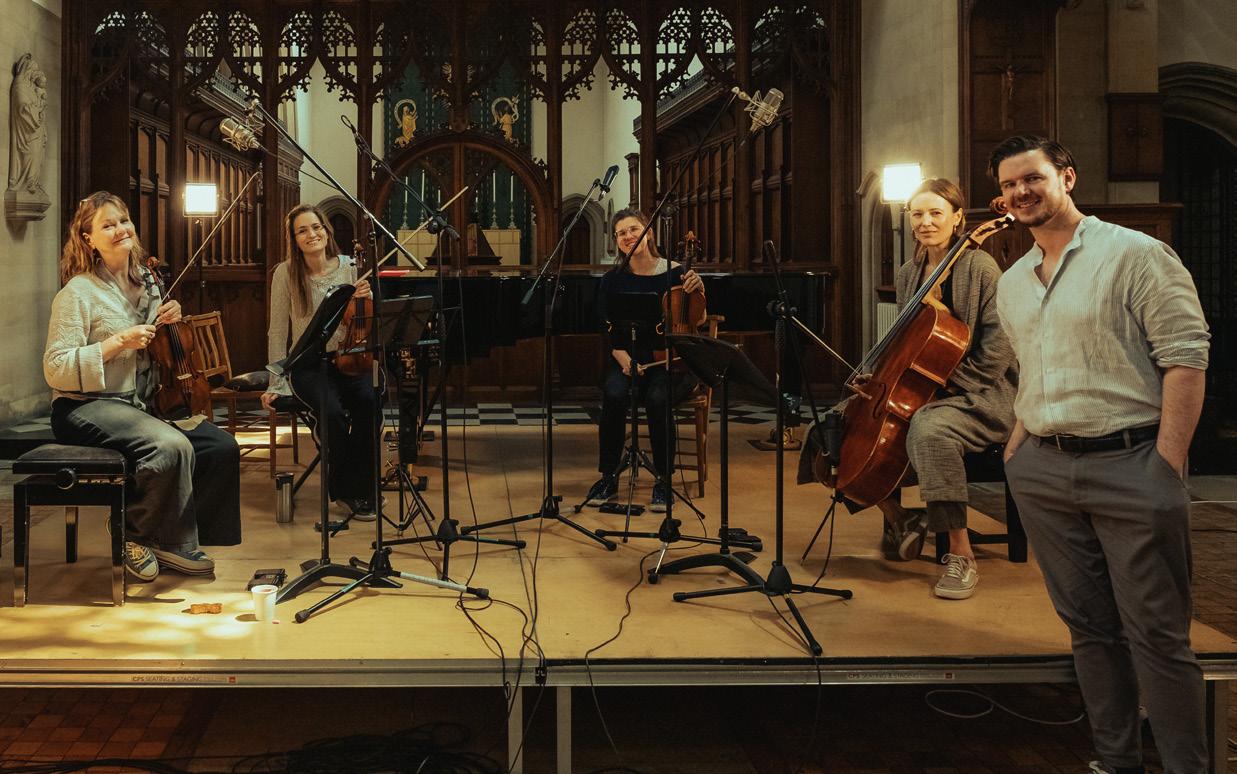
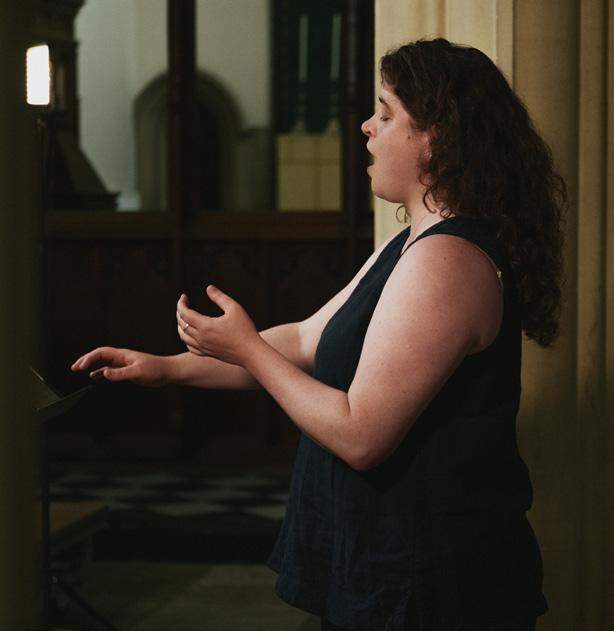
CHROMA Jess Dandy contralto
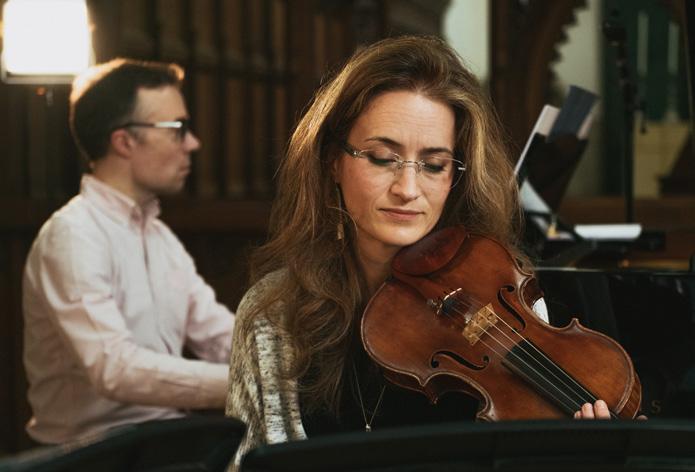
Caroline Balding violin
Natalie Klouda violin
Kay Stephen viola
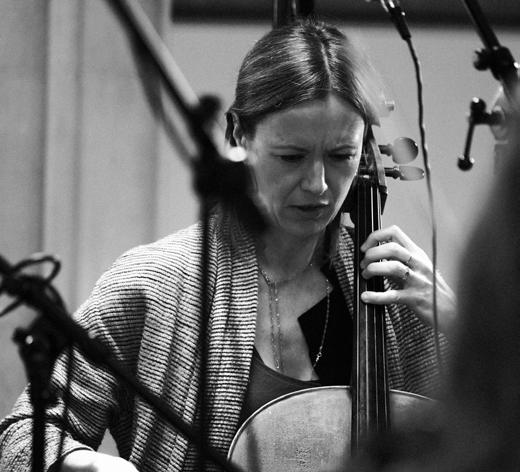
Clare O’Connell cello
Roderick Chadwick piano
Steve Gibson percussion
Rob Farrer percussion
Claire Shovelton producer for CHROMA
This album was made possible through the generous support of PRS Foundation, Marchus Trust, Vaughan Williams Foundation, Hinrichsen Foundation, Malcolm Herring, Les Azuriales and The Nicholas Boas Charitable Trust. I am deeply grateful for their belief in this project and for helping to bring my vision to life. — Alex Mills
Recorded on 3-5 June 2025 at SJE Arts, Oxford
Producer/Engineer: Paul Baxter
24-bit digital editing: Jack Davis
24-bit digital mastering: Paul Baxter
Design: Drew Padrutt
Booklet editor: Henry Howard
Cover artwork: Dawn Ng
Cover design: Alex Lam
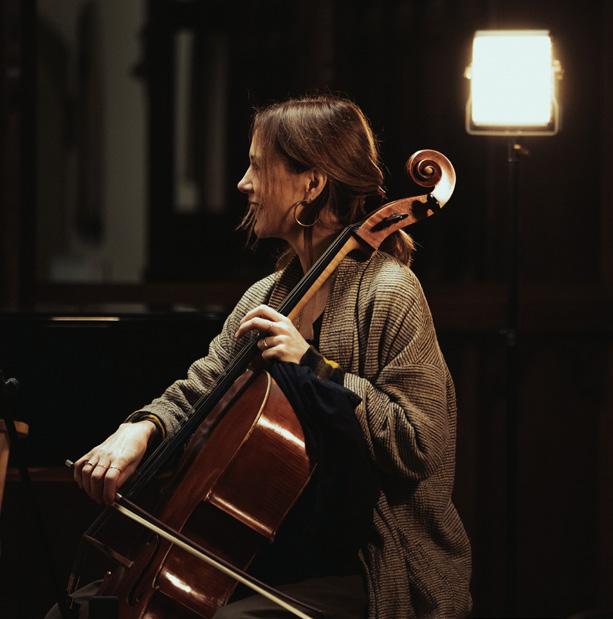
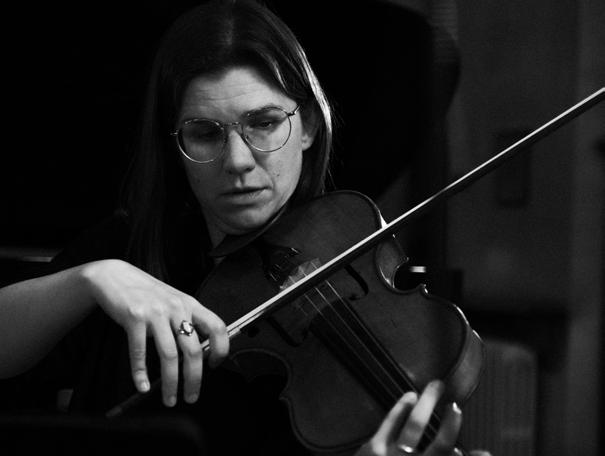
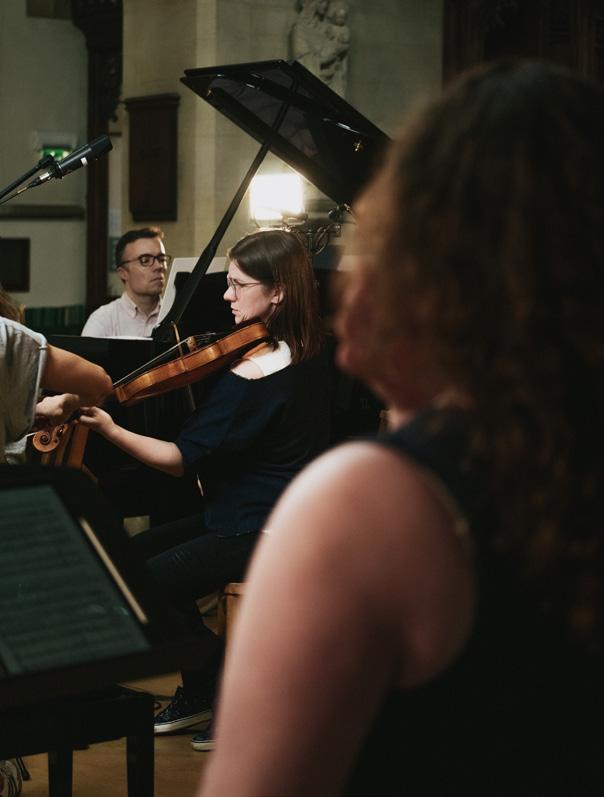
Session photography: Ben Reason www.delphianrecords.com www.delphianrecords.com
This album of Alex Mills’s music feels like both a series of diary entries and a kind of musical self-examination, as well as being an expressive archive of a decade of composing. I’ve known Alex and his work for ages, but hearing all this music as a single collection has given me a better understanding of his craft, and a clearer idea of the overall emotional project. On the surface, many of the pieces seem austere bordering on the severe, but they are, in fact, all quite heartfelt and slyly revealing. Oftentimes, the ear perceives a kind of invisible process, a formality, which is then cleverly offset by a harmonic expansion or sudden suppleness of line. Take, for instance, the gentle arpeggios at the start of Look how brightly the universe shines!, which sets up a certain expectation of pattern-building –but then the entrance of the piano heralds an entirely different rhythmic sensibility, entering a grace note behind the beat and shading the string figurations with a surprising recontexualisation.
Sometimes, different forms of beautiful severity compete, as is the case with the evershifting unisons and canons in One is Fun.
It’s fascinatingly hard to get purchase on the itinerary of this duet, which goes in and out of unison – a preoccupation of Alex’s made very clear in this album.
Even though the tracklist suggests an interest in exploring life’s darker moments, there are uncountable expressions of unadulterated beauty. The first few gestures of I love you, my darkness are as harmonically generous as it comes. Here, contralto Jess Dandy expertly deploys and controls her vibrato to create a line which floats within the piano’s sound and then finds a way to hover above it.
There are many more moments which evince the cunning nuances of this body of work. To listen to it as a whole shows Alex to be a composer compelled by an emotional itinerary expressed through a sense of taut control. It is out of the tension and release of the interplay between stasis, pattern-weaving and the subtlety of gesture and line that each listener is invited to derive their own meanings.
© 2026 Nico Muhly
Ten pieces by Alex Mills, from the first decade of his composing career, form an arresting panorama populated by powerful ideas and music that speaks to the heart. Each bears witness to his quest for answers to life’s big questions, those concerning existence. His art, often austere, always free from excess, is rooted in music’s near-universal role in ritual. Patterns of repetition, fragmentation and reintegration run through the works on this album, used not to construct the clear-cut formal structures of classical composition but to lead the listener into deep meditations in sound. Just as in silent meditation, the unfolding breath, so responsive to changing emotional states, serves as a shaping force. ‘I’m not interested in writing music that is meditative,’ declares Mills. ‘I’m interested in writing music that is a meditation.’
The Atlantic coast and cliffs of Pembrokeshire, the rural county in Wales where Alex Mills was raised, have left their mark on his aesthetics, in works that address something infinitely bigger than the small self, the ego that demands full attention. His formative years included childhood piano lessons (with an early love for the music of Debussy) and the cultivation of his sense of curiosity, fed by his local library’s stock of esoterica and books about diverse approaches to spirituality. World religions, sundry cultural traditions and different ways of viewing the world caught Mills’ imagination. ‘I was very curious about
these things as a child, always asking about where we come from, why we’re here.’
Improvisation and personal expression at the piano became sacrosanct to Mills.
Concerned that formal training in music would stifle his creativity, he chose to study journalism at the London School of Fashion. However, as he wrote about the creative achievements of others, he realised how much music mattered to him, so much so that he quit his magazine job at the age of twenty-six to study music at the University of Cambridge. The undergraduate course, ‘a baptism by fire’, confirmed that an academic music degree was not for him. Instead, he returned to London to study privately with Raymond Yiu, whose own career as a composer had been preceded by engineering studies. Mills began developing his individual voice under Yiu’s guidance and used it to craft a catalogue of pieces that opened the door to a master’s course in composition at the Guildhall School of Music & Drama. The Guildhall’s receptive attitude to creative individuality and open-minded curiosity lit the young composer’s touchpaper. ‘I’m less interested in traditional Western ideas of harmony and harmonic transition in my music; it’s just not something that’s ever spoken to me,’ he notes. ‘I’m much more interested in the transformative potential of harmonic stasis, repetition, unison and stillness.’
Look how brightly the universe shines! takes its title from a line in Richard Dehmel’s Verklärte Nacht (‘Transfigured Night’), the poem behind Arnold Schoenberg’s eponymous string sextet. Dehmel probes the emotions of a couple walking through ‘a bare, cold wood’ on a moonlit night, and conveys the unconditional love shown by the man to the woman after she tells him that she is carrying another man’s child. While Mary Whittall’s elegant translation of the text supplied Mills with his work’s frame, its surging energy arose as a counterblast to the torpor induced by Covid-19 lockdowns. ‘Dehmel’s poem is about how human connection can change our perception of the world,’ he observes. ‘It encapsulates a moment of primal energy, a bursting force. By saying, “Look how brightly the universe shines”, he invites the couple to see beyond themselves, beyond this knot they’re in, to discover something bigger.’
Repetition, embedded in the work’s opening cantilena for solo cello and reinforced by the largely unison duo with violin that follows, plays a central role in Look how brightly the universe shines! The intrusion of bell-like piano chimes, also repetitive, adds a shimmering quality to the instrumental texture, before cello and piano begin a dialogue in the form of a canon. A keening, high-pitched cello entry unites with tolling octaves in the piano’s left hand while canonic figures continue between its right hand and the violin. Changes of register
and texture and shifts from homophony to heterophony – an aural metaphor for the tension between Dehmel’s couple – add variety to the work as it progresses towards an ultimate unity of expression.
The tension between homophony and heterophony is likewise present throughout Strings Attached. Mills set out to write a piece in which violin and piano remain almost entirely in unison. That qualifying adverb ‘almost’ accounts for the work’s inherent tension, which is magnified by its technical challenges. Fragments of a Welsh folksong, filleted from a field recording, supply what the composer calls ‘a thread that unravels in different ways’. The piece grows within the context of an unfolding ritual, in which moments of stasis and silence are interspersed with insistent grace-note figures that feel like exhalations. Strings Attached remains respectful of the sonata tradition, not least by using melody to build a formal structure, while adding its composer’s personal voice to the canon of works for violin and piano.
BARDO draws its name from the transitional or intermediate state between death and rebirth, as described in the Bardo Thödol, ‘The Tibetan Book of the Dead’. While the bardo state may in rare cases lead to nirvana, the extinction of suffering, it usually precedes the deceased’s rebirth into the revolving cycle of samsara Beyond the philosophical complexities of
Mahayana Buddhism, Alex Mills was struck by the profoundly humane guidance imparted by the Bardo Thödol to the dead, the dying and the living. He was also inspired by his discovery of tamuke (‘hands folded together in prayer’), the repertoire of Japanese melodies played on the shakuhachi to express eulogies for the dead. BARDO unites aspects of the gentle ritual of tamuke with Sanskrit words related to the six realms of existence, the different states of being described in Buddhist cosmology: the heavenly realm; the realm of the titans or demi-gods; the human realm; the animal realm; the realm of the pretas or hungry ghosts; and the realm of hell, each subject to the workings of samsara. The composition’s second part employs the words of a chant from the Bardo Thödol to the hundred peaceful and wrathful deities encountered after death, starting with the sacred sound Om.
Sustained string harmonics and chiming piano chords, which cycle throughout the work’s first part, evoke the intense concentration of tamuke in the instrumental introduction. The opening melody, shared by the piano quintet, is distilled into the contralto’s line, a lament for the dead and an invocation for release from the soul’s rebirth. Canon and quasi-canon, often imperceptible at a glacial pace, and repetition that recurs on multiple levels support Mills’ desire ‘to create stasis and liminality in a temporal artform’. Having alluded to the cycle of death and rebirth, the piano abandons its
repeated chords to take the solo lead in the work’s second section. Its improvisatory music grows from a drone grounded on the tonal centre of D. When voice and strings enter, they do so with what the composer calls a ‘breath chorale’, the length of its mantra-like lines determined by the rhythm of the performers’ breathing; their meditation, akin to the Buddhist practice of anapanasati, the mindfulness of breathing, is focused on a single point derived from the first section’s piano chords.
Among Mills’ collaborations with performers, that with Jess Dandy has proved particularly fruitful. The contralto’s interest in spirituality and the fragile nature of self, allied to the expressive richness of her voice, sealed their creative partnership. Release me and I love you, my darkness, both to their composer’s aphoristic texts, concern themes of acceptance and surrender. These succinct songs, the first marked by a contralto cantus firmus embedded within the piano’s reverberant textures, the second underpinned by a repetitive keyboard countermelody to the soloist’s yearning line, explore coexistent states of constancy and change. ‘It’s about an existential rawness,’ says Mills, ‘a deep emotional vulnerability, at the heart of the matter: why are we here? The songs involve confronting ourselves and learning to live with what we discover.’
Scapegoat emerges from the heavy beat of a kick drum, at first shocking, then entrancing.
The piece, freshly created for this album, was preceded by false starts and discarded drafts. It finally flowed from Mills’ recollection of his early years in London and carefree evenings spent at Fabric, the capital’s go-to electronic music venue, and the ecstatic energy generated on the dancefloor of DTPM, its Sunday evening LGBT+ club night. Scapegoat charts a journey from fracture and fragmentation towards reintegration, congruent with the practice, outlined in the Book of Leviticus, of sending a kid goat into the wilderness as a sacrifice to atone for the sins of the people. The sacred ritual of sacrificing an animal for the common good has become blurred with the unholy ritual of ejecting an individual or group from society, a sacrifice all too easily made when the majority turns on a minority. Scapegoat, with its surging music for string quartet and relentless rhythmic drive, constructs a ritual that seems to promise catharsis but delivers no comforting conclusion.
Psychology has much to say about severe trauma and the fragmentation or dissociation of self that can follow a catastrophic experience. Fragment projects a metaphor for the mind’s survival mechanism, by which thoughts of traumatic events become disconnected, ‘like a lizard shedding its tail to escape a predator’, as Mills puts it, and the painstaking process of reintegrating the shattered self. It begins with a drone on G, the solidity of which fragments
as the quartet’s individual parts split from their starting ground. The music’s fragmentary character, unsettling, restless, is transformed as the players coalesce to express repeated motifs that form a coherent pattern. ‘It’s about gathering these pieces into some kind of harmony,’ the composer comments. ‘But the harmony isn’t neat; it’s a sort of manageable coexistence. Finding a way to exist in harmony with all the pieces [of the psyche], not necessarily in a kind of blissful, harmonious state, but in a way that makes it possible to carry on living.’
The Dirges for the Living deal with how lambent traces of the dead inhabit the minds of those closest to them. The pieces are infused with the spirit of Romanian bocete, cathartic laments marked by sighing gestures and repetition, where unresolved regrets surface – to use Sigmund Freud’s term – like an ‘unlaid ghost’ and are put to rest. Recurring themes of trauma and disintegration in Mills’ music are congruent with his lifelong contemplation of human mortality and what, if anything, happens to souls beyond death. The Dirges – two of whose three movements are heard here – offer what he calls ‘reflections on the loss we have in our everyday lives and may carry with us’. The work, written in 2015, marked the start of his life as a professional composer. Following its premiere, an audience member expressed her thanks before pausing, then sharing the reason why she had been
so moved by the piece. ‘A year ago, my husband tragically died in a road accident,’ she recalled. ‘Tonight, your music expressed the emotions I have been feeling ever since but … have been unable to articulate myself.’ The encounter reminded Mills of St John Henry Newman’s motto, Cor ad cor loquitur, ‘Heart speaks to heart’: ‘the belief that truth can be found in intimacy and personal connection,’ he observes, ‘rather than in intellectual reflection, and that music – my music, even – has the power to reach out and touch the deepest parts of ourselves.’
The title of One is Fun, not without irony for its two players, comes from a cookbook owned by the composer’s mother, a volume for singleton diners. The work, which shares common ground with its partner piece, Strings Attached, as well as Fragment, reflects Mills’ overarching interest in the breakdown and reintegration of a unison as a metaphor for the complex relationships we have with ourselves and loved ones. ‘We’re in a constant state of transition, moving in concentric circles. We have the model of the universe and the solar system to tell us that. It’s in a constant state of movement, but it somehow stays together.’ One is Fun pulls apart from the unison material of its opening, shared between two violins to sound as if played by one. The work’s wistful central section, while marked by dissonant harmonies, provides an episode of shared reflection that disintegrates when the opening
motifs return, now violent in their repetition, and leads to a final uneasy reconciliation between the players.
The Body Keeps the Score, conceived as a dance piece, was inspired by Bessel van der Kolk’s The Body Keeps the Score: Mind, Brain and Body in the Transformation of Trauma. The Dutch psychiatrist’s book describes how memories of trauma may be stored in the body. Mills employs fragments of a field recording of a Gaelic caoineadh, the traditional keening lament woven into ancient Irish and Scottish funeral practices, to evoke van der Kolk’s thesis that trauma is imprinted in psyche and soma, mind and body. Its sounds, deliberately distorted, invade the tense exchanges between motoric percussion rhythms and an agitated, repetition-rich viola line. ‘The abstracted recording creates imprints
of imprints of imprints,’ says Mills. The viola’s repeated figure interlocks with and is then silenced by the otherworldly caoineadh before the dialogue between percussion and viola resumes. Impelled by the crisp energy of a woodblock riff, the viola abandons expressivity for a return to mechanical repetition, marking the work’s ritualistic progress as the caoineadh makes its disquieting final return.
© 2026 Andrew Stewart
Andrew Stewart is a freelance writer and classical music journalist. He is also coauthor of the Boutiques trilogy and Suzanne Cooper: Paintings Under the Spare-Room Bed (Mainstone Press).
See the composer’s website for his own detailed notes about the works on this album: https://www.alexmills.info/blog
BARDO
3 I.
Deva, Asura, Manuṣya, Tiryagyoni-loka, Preta, Naraka
The Sanskrit names of the six realms of rebirth and existence according to Buddhist cosmology: gods, demi-gods, humans, animals, hungry ghosts and hells.
4 II.
This chant has many layered meanings and is difficult to translate but it includes asking for assistance with purification, enlightenment, transcendence, transformation and wisdom.
5 Release me
Come, Come to me, release me, at the end of my life.
Come to me and let me go, at the end of my life. Release me from everything.
Come to me, Come to me now and hold me, unravel me, melt me, break me. Come, come to me now and release me. Come to me now, unravel me and hold me.
Come and break me. Come and hold me now.
Alex Mills
6 I love you, my darkness
You, darkness. I love you. My darkness. I love you, my darkness.
Alex Mills
Founded by Artistic Director Stuart King in 1997, CHROMA is a flexible chamber ensemble of freelance musicians engaged in new music and revisiting classic repertoire in fresh and exciting contexts, mentoring the next generation of composers, and involving people in compelling, inspirational experiences, both as audiences and creators.
CHROMA performs chamber concerts throughout the UK, from tip to toe – Cornwall to the Shetland Islands – championing the imaginative and sympathetic programming of contemporary works.
The ensemble has collaborated with the Royal Ballet and Opera on ten world premiere runs and six revivals (including 4.48 Psychosis, The Wind in the Willows – also in award-winning West End runs – and The Firework-Maker’s Daughter), and the hyper-reality opera experience Current, Rising with a score by Samantha Fernando.
Other collaborations include long associations with contemporary opera specialists Tête à Tête; Bampton Classical Opera, which breathes new life into little-known late eighteenth-century works, and Polly Graham’s Loud Crowd and Longborough Festival Opera.
CHROMA believes in offering closeup, meaningful encounters with music, making new music experiences accessible, enjoyable and stimulating. The ensemble mentors/coaches young musicians, creates community-based programmes and runs composition workshops for all ages, from four-year-olds all the way through to PhD level – including long-standing relationships with communities and schools in Shetland; the Royal Academy of Music; Oxford University and Royal Holloway University of London.
CHROMA’s culture underscores everything the ensemble does. From its beginnings it has held a safe space for creativity, with the values of inclusivity, warmth, generosity, curiosity, appreciation, encouragement, nurture, democracy and authenticity.
chromaensemble.co.uk
Jess Dandy is widely regarded as the leading British contralto of her generation, praised for her velvety, plangent tone and expressive immediacy. She studied Modern and Medieval Languages at Trinity College, Cambridge, and trained at the Guildhall School of Music & Drama, where she is now a Fellow.
Mozart’s Requiem with Aalborg Symphony, Handel’s Messiah with Tampere Philharmonic, Berlioz's Romeo and Juliet with Bergen Philharmonic and Mahler's Symphony No. 3 with the BBC Philharmonic.
In the 2025/26 season, Dandy makes her house debuts at the Bayerische Staatsoper as Lady Toodle Die englische Katze and at the Salzburg Easter Festival as Floßhilde Rheingold. On the recital stage, Jess performs Dream of Gerontius with the City of Birmingham Symphony Orchestra, Sea Pictures with the Royal Philharmonic Orchestra and Messiah with the Irish Baroque Orchestra and the Tampere Philharmonic Orchestra.
Recent highlights include Stravinsky’s Requiem Canticles at the BBC Proms,
Dandy has appeared with leading ensembles including the Amsterdam Concertgebouw, BBC Symphony Orchestra, Boston Symphony Orchestra, English Concert and Les Arts Florissants. Jess is also a passionate recitalist and a regular guest at Wigmore Hall and the Oxford International Song Festival.
Shortlisted for the Royal Philharmonic Society’s Young Artist Award in 2021, she is also a co-founder of SongPath, a mental health initiative combining music and nature, and the Music & Being Collective, exploring the intersection of music, psychology and identity.
Listen. It is here: song cycles by Edward Picton-Turbervill
Harriet Burns, Helen Charlston, Alexander Chance, Elgan Llŷr Thomas; Edward Picton-Turbervill piano
DCD34345
Listen. It is here is a bold declaration of intent from a compelling new voice in British song. Edward Picton-Turbervill’s music – fresh, distinctive and unapologetically approachable – draws together themes of love and mysticism in settings of poets as diverse as Hildegard of Bingen, Rilke, Selima
Hill and Harold Pinter. Fruit of a two-year burst of creative energy after the composer’s return to music, the songs balance emotional immediacy with finely crafted writing for voice and piano. Performed by some of the UK’s most exciting singers, this album announces a striking arrival: a composer writing with sincerity, stylistic clarity and a clear belief in song’s enduring power to move, to comfort and to connect.
New in January 2026
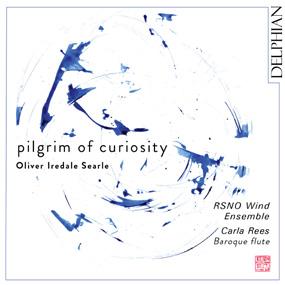
Oliver Iredale Searle: Pilgrim of Curiosity
RSNO Wind Ensemble, Carla Rees Baroque flute
DCD34270
A key presence in Glasgow’s musical life as composer and teacher, Oliver Iredale Searle is revealed in this first album devoted to his work as a poet of place and of sensation. Three works for wind ensembles vividly evoke journeys and their destinations, in a panoply of sights and sounds stretching from Chicago to Italy, the Baltic and South East Asia (and sometimes forging unexpected connections between them). The wind principals of the Royal Scottish National Orchestra provide performances of exceptional calibre, while Carla Rees’s passionate commitment to building a contemporary repertoire for Baroque flute shines through in a solo piece that she commissioned and premiered.
‘unfailingly accessible postmodern music ... recorded with a vividness that adds greatly to the atmospheric effect’ — Gramophone, December 2021
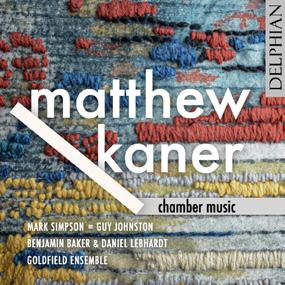




Matthew Kaner: chamber music
Mark Simpson basset clarinet; Guy Johnston cello; Benjamin Baker violin, Mathias Balzat cello, Daniel Lebhardt piano; Goldfield Ensemble
DCD34231
Storytelling and making – craft and narrative, and the ways in which they are both enabled and complicated by the presence of music – lie at the heart of Matthew Kaner’s compositional world, as revealed on this debut album devoted to his work. Extended solo works for basset clarinet and for cello are presented by stellar soloists Mark Simpson and Guy Johnson respectively. Violin-and-piano duo Benjamin Baker and Daniel Lebhardt, fresh from their triumphant Delphian debut ‘1942’: Prokofiev – Copland –Poulenc, are joined by cellist Matthias Balzat in Kaner’s evocative and playful Piano Trio, while clarinettist Kate Romano leads the Goldfield Ensemble in a nocturnal diptych for clarinet quintet.
‘a composer deftly able to draw the listener into his far-reaching imaginative world ... It’s precisely his ability to look through others’ eyes that renders his music eloquent’ — BBC Music Magazine, February 2023, five stars
TREE
The Hermes Experiment
DCD34358
The Hermes Experiment’s third Delphian album is a meditation on nature, memory and change. Commissioned works and vivid reimaginings are complemented by new compositions by the ensemble’s members, exploring the human instinct to find emotional meaning in the natural world – in birdsong, trees, storms, stars … With its distinctive line-up of clarinet, harp, voice and double bass, the ensemble creates a soundscape by turns intimate, luminous and strange. Joy and grief, fragility and resilience sit side by side in a programme that feels both personal and elemental.
‘a liberating force in contemporary music’ — Guardian, October 2025
Stuart McRae: Earth, thy cold is keen
Lotte Betts-Dean mezzo-soprano, Sequoia
DCD34297
Entranced by his first encounter with the voice of Lotte Betts-Dean in 2021, Stuart MacRae was inspired to write no fewer than eight vocal works in the space of two years. Sometimes entirely alone, sometimes joined by the composer himself on harmonium or electronics or by the violin-and-cello duo Sequoia (who also contribute two instrumental items), Betts-Dean’s compelling presence is at the very centre of this haunting album, which reveals the extent to which MacRae’s recent music has expanded to embrace folk-like simplicity alongside the modernist techniques of his earlier work.
‘conjures an aural landscape steeped in folk music and medieval lyric, but the result is entirely distinctive and modern … This is music for slow, close listening, beautifully performed’ — The Guardian, August 2023
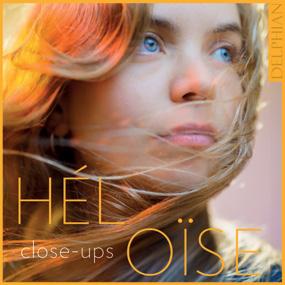

Héloïse Werner: close-ups
Héloïse Werner, Colin Alexander, Julian Azkoul, Max Baillie, Kit Downes, Ruth Gibson, Marianne Schofield DCD34312
Héloïse Werner’s first album, Phrases, was received ecstatically. For her second, she wanted to create a programme with a cohesive narrative arc –a journey, but one that the listener can take in their own time and their own way. For it, she has assembled a group of musicians who both share in her concept but also bring to the project their own varied musical personalities to complement Héloïse’s own distinctive voice. Rightly described by Héloïse as ‘amazing people’, her collaborators – Colin Alexander, Julian Azkoul, Max Baillie, Kit Downes, Ruth Gibson and Marianne Schofield – stitch their individual contributions into close-ups in colours just as vibrant as Héloïse’s own.
‘jaw-dropping technical agility combined with an innate, instinctive musicality and boundless, breathless creativity’ — Gramophone, August 2024
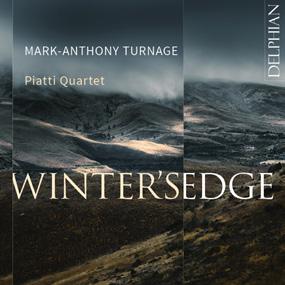
Mark-Anthony Turnage: Winter’s Edge
Piatti Quartet
DCD34254
Even at its biggest and boldest, Mark-Anthony Turnage’s music has always contained a thread of dark lyricism. Intimacy and tenderness of expression are never absent for long in Turnage’s music, and are essential to his large output of works for chamber ensemble – his mature string quartets in particular. The Piatti Quartet have collaborated regularly with the composer since 2015, and here present two works composed in his late fifties. Drawing on the ability of the quartet genre to absorb and reimagine both elevated and vernacular musical idioms, they are deeply personal statements – at times shockingly so in their intensity and insights into a world of private emotions.
‘it is unmistakably Turnage that grieves, rages, dances and tenderly salutes through these substantial and impressively crafted works’ — BBC Music Magazine, May 2023, five stars
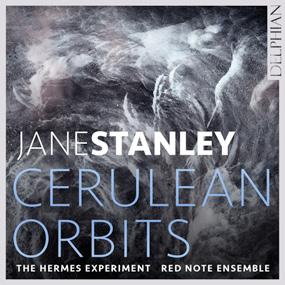
Jane Stanley: Cerulean Orbits
The Hermes Experiment, Red Note Ensemble DCD34281
This first portrait album dedicated to the music of the Australian-born, Glasgow-based composer Jane Stanley showcases pieces composed between 2013 and 2023 for different chamber combinations. In addition to some of her favourites among her existing works, Stanley took the opportunity to develop two new pieces: one for each of the two ensembles involved. A song cycle for The Hermes Experiment moves Stanley’s music intriguingly towards the tonal, lyrical sound-world of that group’s two acclaimed recent Delphian releases, while sharing with the purely instrumental music of the rest of the album – performed by Red Note Ensemble, also acclaimed Delphian regulars – an audible concern with intricately ornamented melody and intertwining woven textures.
‘Atmosphere and texture are at the heart of this recording … Captivating performances’ — BBC Music Magazine, November 2024