A F EW
REFLECT THE HEART
Seán Morgan-Rooney
Seán Morgan-Rooney
Tracks 2–3, 5–7, 9 & 11–15 recorded on 12-14 July 2022 in Studio 1, Muziekcentrum van de Omroep, Hilversum, the Netherlands
Produced, engineered, edited and mastered by Guido Tichelman
Assistant engineer: Pim van der Lee
Tracks 1, 4, 8, 10 & 16 use piano material recorded on 16 September 2022 at Leiter Studio, Saal 3, Funkhaus, Berlin, Germany (recording engineers: Maarten Vos & Antonio Pulli); these tracks were electronically produced and mixed by Maarten Vos and mastered by Zino Mikorey, then mastered for the album by Guido Tichelman
Piano: Steinway D (Hilversum), Yamaha CF6 (Berlin)
Piano technician (Hilversum): Charles Rademaker
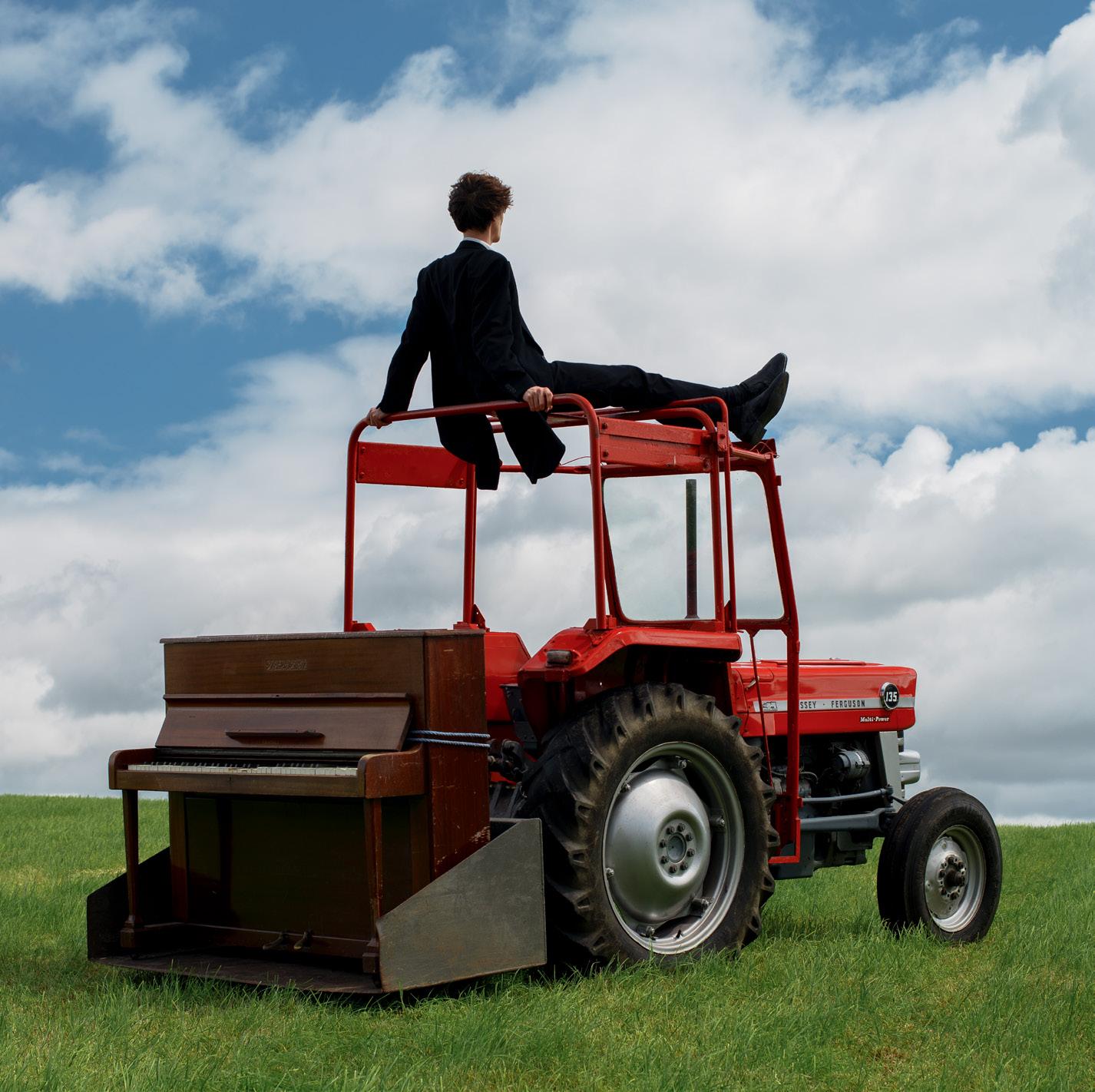
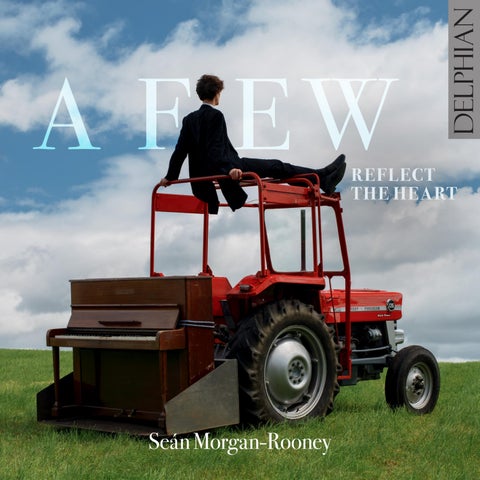
Cover photograph: Boris Peters
Session photography: Maarten Vos
Design: Eliot Garcia Booklet editor: John Fallas
Seán Morgan-Rooney (b. 1993) Overture [6:35]
Maurice Ravel (1875–1937) Miroirs – I. Noctuelles [5:02]
Maurice Ravel Miroirs – II. Oiseaux tristes [4:32]
Seán Morgan-Rooney Pneumaplume [3:00]
Luciano Berio (1925–2003) Wasserklavier [2:17]
Maurice Ravel
– III. Une barque sur l’océan [8:07]
Luciano Berio Wasserklavier (reprise) [3:52]
Seán Morgan-Rooney Wavephile [3:33]
Maurice Ravel Miroirs – IV. Alborada del gracioso [7:05]
Seán Morgan-Rooney Ignis beat [2:35]
Igor Stravinsky (1882–1971) arr. Guido Agosti Three Movements from ‘The Firebird’ I. Infernal Dance of King Kashchei II. Lullaby
Péter Eötvös (1944–2024) Erdenklavier – Himmelklavier [2:46]
Maurice Ravel
– V. La vallée des cloches [6:00] Seán Morgan-Rooney
The eye sees not itself, but by reflection …’
As Maurice Ravel cited these words from Shakespeare’s Julius Caesar as the inspiration for the title of his solo piano suite Miroirs, so too may they offer me the best starting point for encapsulating what I have set out to explore in this album, where the French composer’s work constitutes the thematic core around which diverse elements converge. The quote alludes to the idea that we cannot perceive ourselves directly, but rather that we learn about ourselves through external sources: through the perspectives of other people and the (figurative) reflections of what we observe. In the case of Miroirs, nature is the principal source of selfknowledge for Ravel, each piece alluding to some image of the outside world.
I found the composer’s reference to this theory of self-knowledge and perception such a fundamental and compelling way of relating to music that I came to consider how it would be to create a subsequent plane of reflection between myself and Ravel. I thought about what I would ‘see’ if I were to regard his music as an external source for self-perception, and how my own parallel experience of nature and the way it reflected my own humanity would resonate or contrast with Ravel’s experience. Thus through my
own compositions I am venturing beyond my usual classical-musician role in which the process of creation pertains solely to the interpretation of the existing work. I have written four companion pieces to Miroirs that aim to integrate my own experience of self-perception through nature with that of Ravel’s, to both reflect and contrast the two realms, and to postulate a kind of dreamedup meta-mirror between the two of us.
Through its themes drawn from nature, Miroirs reveals to me an inherent four-part structure corresponding to the four natural elements: air, water, fire and earth. The album in its entirety is designed to follow this imagined structure.
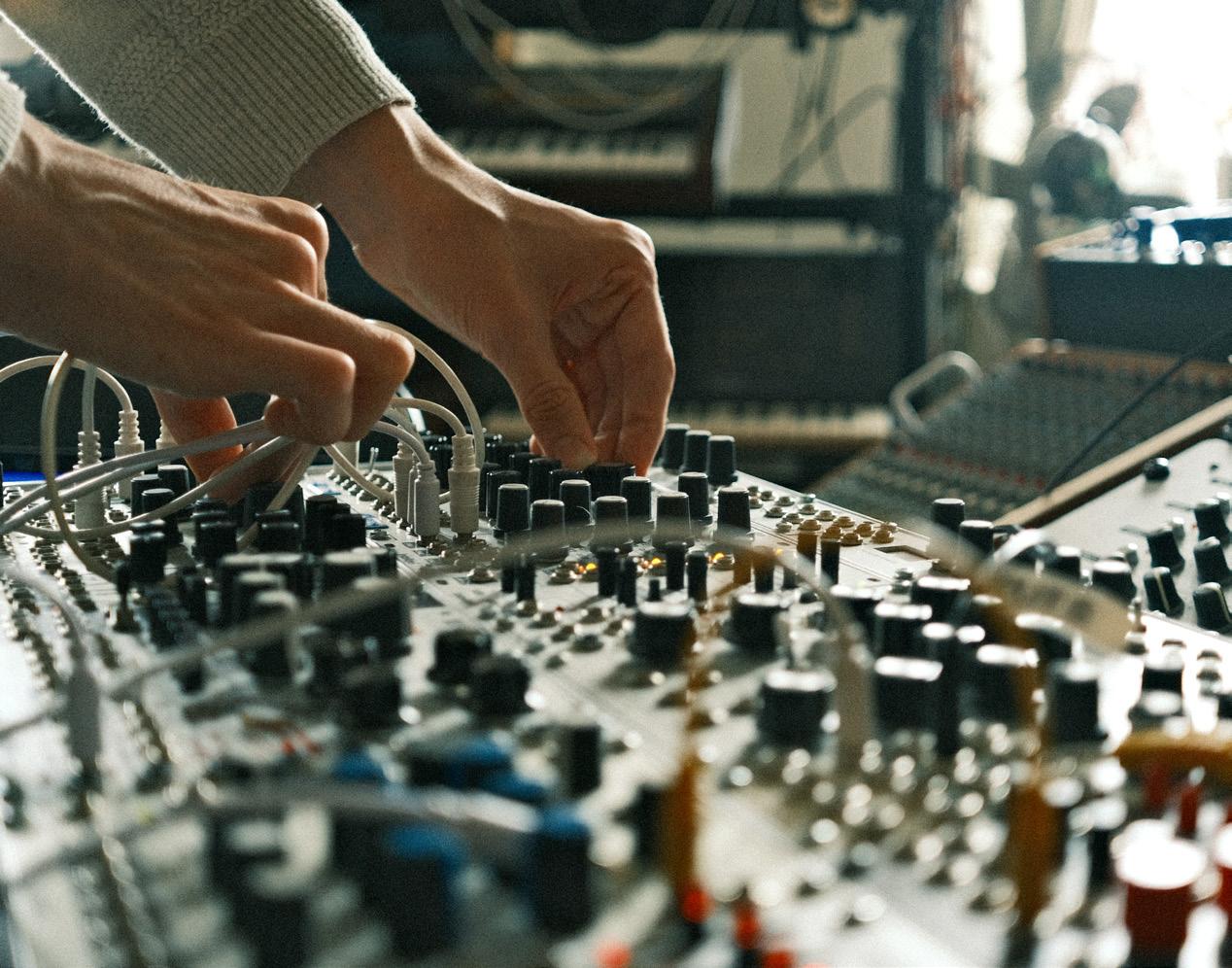
The Overture supports the integration of this design, offering as one might expect an overview of the thematic material to come, but also acting as a kind of exposition that reconciles the contrasting sound-worlds of acoustic and electronic music alternating throughout the album. The first section of the overture previews the electronic pieces, while the remainder is a patchwork of samples from my recording of Miroirs The opening words, spoken by my mother, are the opening lines of Patrick Kavanagh’s poem ‘Mirrors’. These words share a striking resemblance with the aforementioned
Shakespeare quote, alluding to selfperception through reflections from the external. The fact of Kavanagh being an Irish poet who comes from the same place as my mother’s family is another reason for the quote’s inclusion here, establishing from the outset an autobiographical parallel to Ravel’s inspiration.
The first two movements of Miroirs appear in succession, constituting together the element of air. Both pieces evoke winged creatures of very different forms and expressive implications. Noctuelles (‘noctuids’: for Ravel a typically obscure choice of word for moths) immediately captures the mysterious and capricious motion of its titular creatures through jarring phrase lengths, syncopated accompaniment and dense chromaticism. Its musical obscurity conjures a remarkably vivid evocation of these elusive nocturnal creatures, suggesting not just the moths themselves but also their chiaroscuro dwelling.
The call of the titular creatures of the second piece, Oiseaux tristes (‘Sad Birds’), ostensibly has its origins in the forest of Fontainebleau, where Ravel was said to have been inspired by the melancholy whistle of a blackbird. This birdcall is the thematic
centrepiece in a work that contrasts with other composers’ musical depictions of birds hitherto. Its deep melancholy harkens to what Ravel described as ‘the oppressiveness of a very dark forest during the hottest hours of summer’. The projection of melancholy and loneliness onto this avian archetype is a touching and perhaps telling reflection of Ravel’s subjectivity.
Pneumaplume is the first of the ‘element’ pieces that explores a subjectivity closer to home. It suggests a more optimistic take on the element of air and the depiction of the airborne. Here birds are represented both literally and figuratively: the first half elaborates on a phrase built from processed birdcall recordings, while the flightier second half integrates Ravel’s blackbird motif into the chirpy electronic layer.
The musical affect takes a decided turn as the album dips into the water realm. Two different versions of Luciano Berio’s Wasserklavier demarcate music that buoys and music that deluges. Wasserklavier is one of four ‘Encores’ by the Italian composer which explore the contrasting characters of the four natural elements. In the original form of the piece, I hear the glistening surface of a calm body of water reflected in the buoyant, upward grace notes and sporadic,
tintinnabulating high pitches that glimmer in the water’s surface. I pair this with the third movement of Miroirs, Une barque sur l’océan. Mediterranean waters swell and shimmer dreamily in this highly evocative piece. The right hand bobs up and down on the waves, while the left ripples across with an erratic temperament that morphs from placid to turbulent.
Wasserklavier (reprise) imagines a ‘Wasserklavier unter Wasser’. It is the same recording as before, but slowed down to the extreme, allowing the listener to revel in every harmony and to wallow in the subaqueous timbre of the distorted keyboard. The ruminative pace of this reprise invokes a forlorn Geist of its predecessor. This introspective spectre mirrors the thoughtful and empathetic qualities I associate with the water element.
My own take on the water element continues in the same vein as the seachanged Wasserklavier: Wavephile is the second original element piece and is perhaps closer in mood to the grey Irish seashore than to the French riviera. The synth component embodies the brooding water, while the piano moves above and below its surface. Halfway through, the piano breaks free from the electronics and swirls around in temporal freedom. Reminiscences of ‘Une barque
sur l’océan’ can be heard in the descant flourishes. The inconclusive ending is cadenced by a final hollow water drop.
Miroirs’ Alborada del gracioso heralds the beginning of a more musically extroverted fire section. While ‘fiery’ may be a fair descriptor of the music’s character, I had more in mind the literal connection between the third natural element and the titular reference to the sunrise, alborada, generally translated as aubade or ‘morning song’. This ‘Morning Song of the Jester’ or ‘Jester’s Aubade’ is a uniquely playful and exuberant component of Miroirs, demonstrating Ravel’s masterful flair for rhythm and dance. Impulsive, unpredictable, humorous – the ever-present harmonic beauty and melodic lyricism of Ravel’s writing coalesce here with fiery castañuelas and blazing climaxes to create this colourful, life-affirming piece.
My Ignis beat delivers a direct response to Ravel in this dialogue of fire, opening with ‘Alborada del gracioso’’s last chord played in reverse. The DNA of this element piece contains strands of the castañuela rhythm from ‘Alborada’, precursory references to Stravinsky’s The Firebird, an orchestral sample from Manuel de Falla’s Ritual Fire Dance and a transgressive dub beat that epitomises the more unruly nature of this section.
The closing chord of Ignis beat ignites ‘Danse infernale’ (Infernal Dance of King Kashchei), the first of three sections from Stravinsky’s The Firebird arranged for piano by Guido Agosti. This first movement portrays the frenzied dance of the malevolent King Kashchei’s subjects who have been placed under a spell by the titular Firebird. Agosti does a remarkable job with his piano transcription in capturing the extremes of the orchestral version, its syncopated rhythms, dense harmonies and maniacal textures. The ‘Berceuse’ (Lullaby), as its title suggests, depicts King Kashchei’s sleeping assailants. It is equally sophisticated in its layering, creating a vast sonic perspective across many octaves of the keyboard. The suite concludes with the enthralling ‘Finale’, the wedding celebration of the protagonist Prince Ivan and his princess bride. A burgeoning tremolo builds gradually as it swirls around the theme, a folk melody of Russian origin. The climax seems to expend a last burst of energy in concluding this vigorous chapter of the album.
Eötvös’s Erdenklavier –Himmelklavier possesses a certain stoic quality which compelled me to include it at this point in the album. After the frenzy that has come before, it feels epilogic, evoking the ash of the immolated phoenix. Eötvös
wrote this work as a musical epitaph for Luciano Berio, whose work Erdenklavier (another of the aforementioned elemental encores) he had played often as a child. In his own words, Erdenklavier – Himmelklavier conjures a ‘dialogue between heaven and earth’, depicting a spirit that rises higher and higher until it floats away. In support of this imagery, I explored formant manipulation as the piece approaches its end, creating the impression of sound dissolving into the atmosphere. The piece is published in two versions: a first, written the day after Berio’s death in 2003, and a later ‘concert version’, elaborated in 2007, which is the version I have recorded here.
Following this, the tolling bell of Ravel’s La vallée des cloches seems to signal the beyond. Octaves chime at irregular intervals and varying dynamic levels: bells dotted around a vast space. The outer sections are built on shorter musical gestures – the atmosphere is created in the space in between these – while the middle section reveals a particularly beautiful, languorous melody accompanied by the ever-present knell.
The final resonance from Ravel’s ‘valley of bells’ is carried over into the album’s concluding chapter, Earth – tether – ether. This work contrasts earth against sky. The
tectonic movement of low parallel fifths transforms into ethereal descending bells. This epilogic earth piece contemplates the unification of everything that has come before. Berio, Eötvös, Ravel, Stravinsky: each of these composers has returned to the earth. This final element represents for me a kind of benevolent stoicism, transcending the affectations of its predecessors and expressing something more essential and unifying. It concludes my dialogue with Ravel and nature – we part on good terms.
the elements unravel in the mirror of the art; air, fire, earth, water: a few reflect the heart
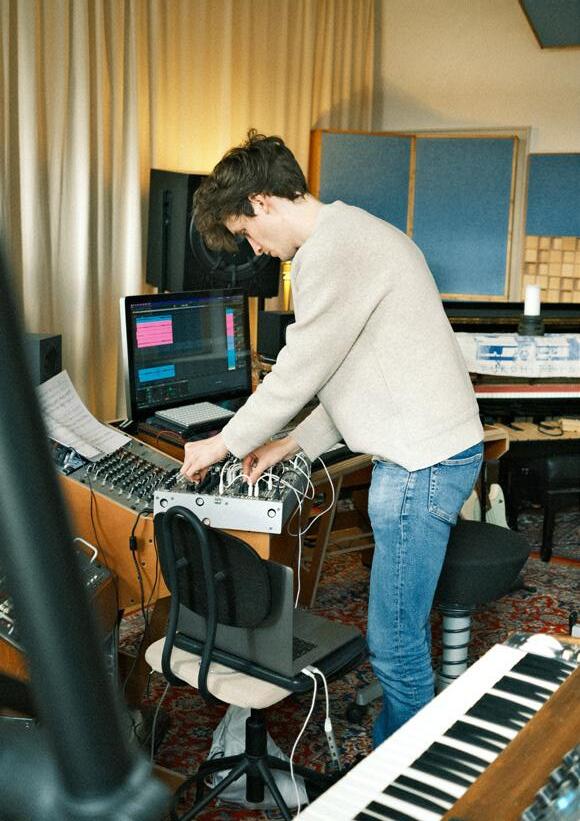
Seán Morgan-Rooney is an Irish pianist and composer. His artistic practice spans a wide array of activity, including solo performance, chamber music, composition, arrangement and multimedia projects. Originally from the village of Mayobridge in County Down, Seán first began to take piano lessons at the age of five with local teacher Colm Murphy. He went on to study at the Royal Academy of Music in London and at the Conservatorium van Amsterdam.
works by Irish and British composers, as well as performing modern masterpieces by the likes of Boulez, Xenakis, Reich and Murail. He has also performed with Iceland’s Caput Ensemble at the Dark Music Days in Reykjavík, premiering new work by Irish composer Simon Mawhinney. During his time at the Royal Academy of Music, Seán was the winner of the Else Cross prize for contemporary piano music.
In 2015, Seán won the Charles J. Brennan Prize at the Dublin International Piano Competition for the highest-placed Irish competitor. He has appeared as a concerto soloist with the National Symphony Orchestra of Ireland, the Ulster Orchestra and Camerata Ireland. In 2019, he made his solo debut at Het Concertgebouw Amsterdam, performing Liszt’s Sonata in B minor. He has since given recitals in all of the Netherlands’ major concert halls, including Muziekgebouw aan ’t IJ in Amsterdam, De Doelen in Rotterdam and TivoliVredenburg in Utrecht. His performances have also taken him further afield to the USA, Canada and Japan.
Seán is a past member of the Hard Rain SoloistEnsemble, one of the UK’s leading contemporary music groups. During his time with the ensemble, he premiered countless
From the age of eleven, Seán studied with John O’Conor at the Royal Irish Academy of Music in Dublin, studying concurrently first with Colma Brioscu and later with Peter Tuite. He went on to complete his bachelor’s degree with Professor Christopher Elton at the Royal Academy of Music in London, graduating with first class honours. He completed his master’s degree and Artist Certificate with David Kuyken at the Conservatorium van Amsterdam. He also studied privately with Yossi Reshef in Berlin. Seán has participated in masterclasses at the International Musicians Seminar Prussia Cove, the Banff Centre for Arts and Creativity in Canada and the Aspen Music Festival and School in the USA.
At home in Amsterdam, Seán practises on a 1975 Viennese Bösendorfer, generously on loan to him from Het Muziekinstrumentenfonds of the Netherlands.
Simon Smith
DCD34131 (2 discs)
In 2002 Simon Smith made his recording debut on Delphian with a disc of James MacMillan’s complete piano music, paired with Stuart MacRae’s Piano Sonata. Recordings of music by Hafliði Hallgrímsson and Thomas Wilson have followed. In this new, substantial outing Smith turns from music-making in Scotland to another of his lifelong loves. This two-disc set comprises Alfred Schnittke’s entire published output for solo piano (including one piece for piano duet and another for six hands at one keyboard). The Russian composer’s music often makes gargantuan demands of the player. Smith’s astonishing dynamic palette and heartfelt musicality make him its ideal exponent.
‘a vast expressive range captured by Simon Smith with extraordinary sensitivity, detail and emotional commitment’ — The Independent, February 2014

Stuart MacRae: Earth, thy cold is keen
Lotte Betts-Dean, Sequoia, Stuart MacRae harmonium & electronics DCD34297
In 2021, entranced by his first encounter with the voice of mezzosoprano Lotte Betts-Dean, Stuart MacRae embarked on an extraordinary flurry of compositional activity, completing no fewer than eight vocal works in the space of two years. Sometimes entirely alone, sometimes joined by the composer himself on harmonium or electronics or by the violin-and-cello duo Sequoia (who also contribute two instrumental items), Betts-Dean’s compelling presence is at the very centre of this haunting album.
‘conjures an aural landscape steeped in folk music and medieval lyric, but the result is entirely distinctive and modern … This is music for slow, close listening, beautifully performed’ — The Guardian, August 2023
Dallapiccola: a portrait
David Wilde piano, Susan Hamilton soprano, Nicola Stonehouse mezzo-soprano, Robert Irvine cello
DCD34020
Luigi Dallapiccola is one of the most celebrated Italian composers of the twentieth century. This disc features chamber music and songs alongside his complete works for solo piano, performed by the legendary pianist David Wilde. Whether drawing on the music of the past to nourish the contrapuntal organisation of his own, or concentrating on the opportunities for gentle lyricism afforded by bell-like vocal and instrumental sonorities, Dallapiccola’s commitment to traditional expressive nuance has been seen by critics as a powerful aspect of his Italian insistence upon cantabilità – songfulness.
‘a marriage of discipline and imagination of which Wilde is fully aware … [Stonehouse] is eloquence itself in the Goethe-Lieder’ — Gramophone, April 2007

Oxana Shevchenko: winner of the 2010 Scottish International Piano Competition
DCD34061
On 19 September 2010, a rapt audience in Glasgow’s City Halls witnessed the 23-year-old Kazakhstani pianist emerge decisively on the international stage. She had already won the Music Critics’ Prize at the 2009 Ferruccio Busoni International Piano Competition, and now carried away first prize with unanimous approval from a distinguished international jury. This recital, recorded just three days after her triumph in the concerto final, reveals her extraordinary command of structure, rhythmic dynamism and sheer pianistic exuberance. Includes music by Ravel, Shostakovich, Liszt, Mozart, and a specially commissioned competition piece by Thea Musgrave.
‘The most exciting debut disc to come my way for some time’ — Gramophone, April 2011