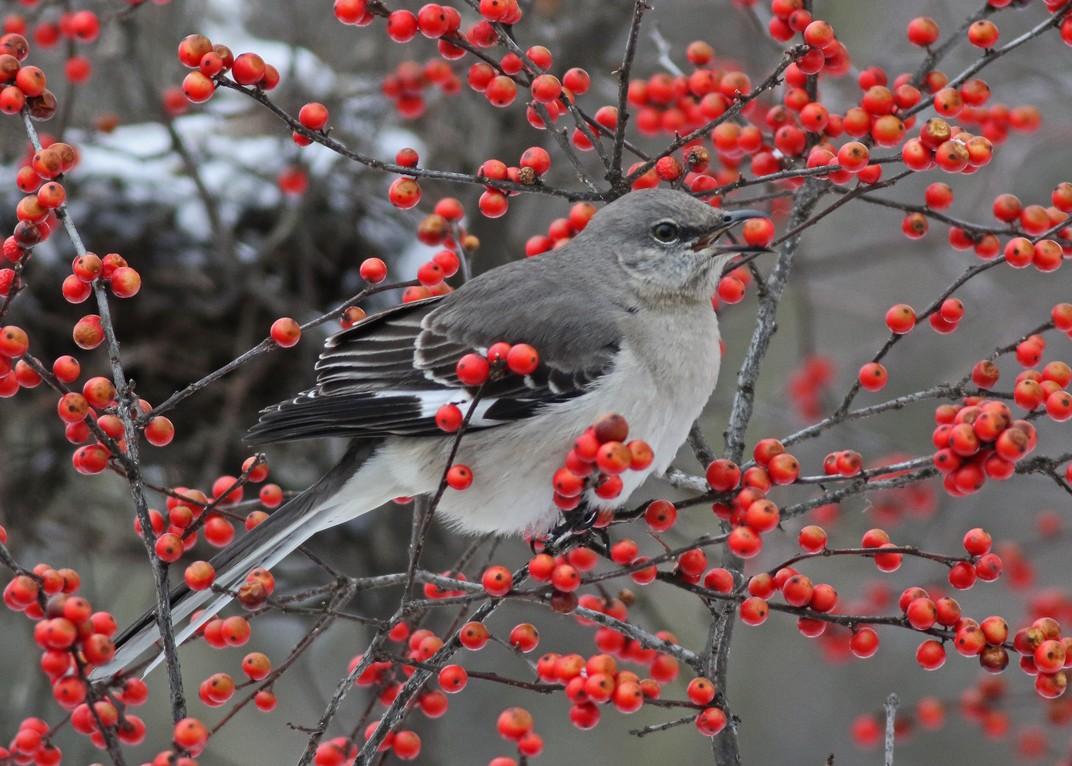
Mockingbird with winterberry (Ilex verticillata) Photo by Will Stuart (Flickr)
Winter Seeds, Happy Beaks: Plant a Cold-Season Bird Buffet
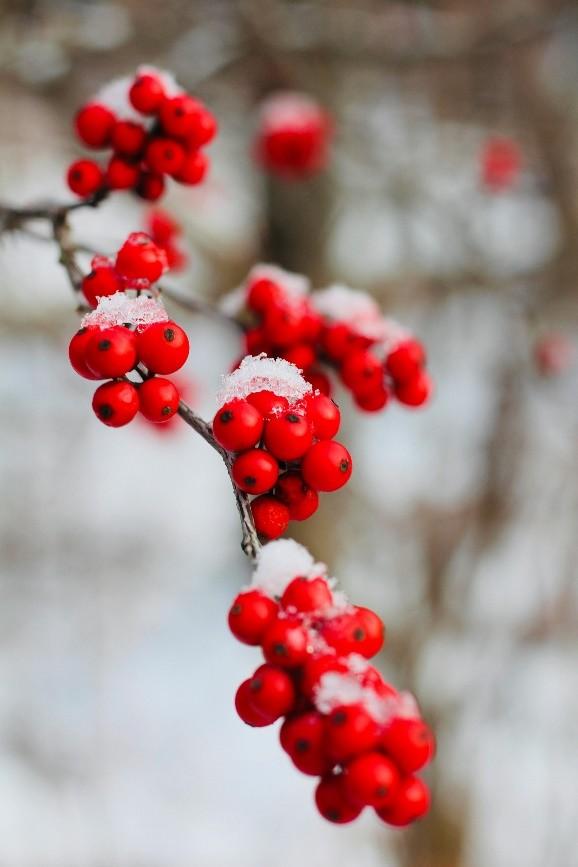
Winterberry (Ilex verticillata) is a fan-favorite that will turn your yard into a bird bistro. As seasons shift, the winterberry stands out by producing stunning red berries that remain on stems long after fall leaves are gone. These berries provide a critical food source for more than 48 species of birds along with small mammals, according to the USDA. Winterberry grows best in medium-to wet- soils, which makes it a good option for gardens and rain gardens. Winterberry has male and female flowers on separate plants. So, it’s best to either plant both nearby or make sure there’s a neighbor with a male plant, so that you will get those showy berries on the female plants.
These stunning standouts are the perfect replacement for non-native, invasive bushes like heavenly bamboo and Japanese barberry that also have red berries in winter. While birds may sometimes eat their berries, it’s like eating fast food. Invasive berries don’t provide the same nutritional value as their native counterparts. Not to mention, the consumed invasive seeds are transported wherever the bird travels. Remember to go native!
Important: While winterberry fruit provides food for some wildlife, it can be toxic to pets and people - avoid ingestion!
Winterberry at a Glance: Deciduous shrub
Height: 3 to 15 feet
Width: 3 to 15 feet
Hardiness zones: 3 to 9
Full sun to part shade
For more information on native plants, check out our Native Plant Guide! Curious about the health of plants and animals in the Delaware Estuary and the challenges they face? Dive into our latest State of the Estuary report to explore featured species and learn how climate, habitat changes, and human impacts are shaping their future.