Boundless | 2025 Sustainability Report

Page 1


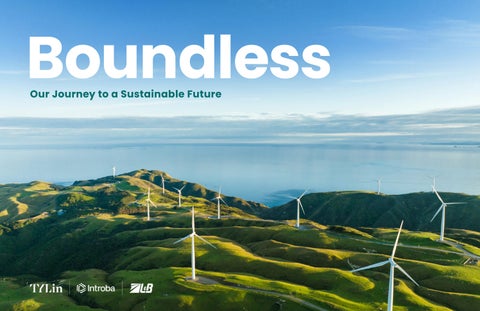
Boundless

Our Journey to a Sustainable Future

Message from our CEO & Sustainability Council Chair

Over the past five years, TYLin, Introba, and Landrum & Brown have shared an extraordinary journey. As the leading infrastructure brands within Sidara, we have grown across new markets, expanded our services, and deepened our global reach. Along the way, we have stood beside our clients and communities as they navigate some of the greatest challenges of our time, including a global pandemic, rapid digital transformation, and the urgent realities of a changing climate.

These experiences have reinforced a trust at the heart of our purpose: the built and natural environments are connected, and the future depends on how well we integrate them. Around the world, we have witnessed a shared determination to design and operate in ways that strengthen resilience, reduce environmental impact, and improve quality of life.

In 2024, we released our 2030 Strategic Plan, which strengthened this commitment by creating our cross-brand Sustainability Council. The council unites the knowledge and dedication of our people across regions and specialties to ensure sustainability is part of how we work every day. We also joined the World Green Building Council’s Net Zero Carbon Buildings Commitment, affirming our role in reducing carbon emissions across our operations and inspiring others to do the same.

Also in support of our vision, we focused on weaving a generous mindset into our everyday – into the way our teams work together, partner with our clients, and care for our communities. We developed programs that built a culture to nurture this mindset, with initiatives built on people-first values that promote inclusion, innovation, and achievement.

Together, we are demonstrating that collaboration at scale can drive lasting, positive change. This year, we build on that foundation by publishing our inaugural Sustainability Report for TYLin, Introba, and Landrum & Brown, showing how our collective vision translates into measurable progress. As you read this report, it is our hope that you become more familiar with who we are as a business; our approach to attracting, developing, and retaining the best people, and our commitment to environmental stewardship.

This report reflects both our progress and our resolve. It shares the steps we are taking to track and reduce our operational footprint, our approach to empowering our people, and the ways we are helping clients and communities around the world prepare for the challenges and opportunities ahead. While the journey is ongoing, our direction is clear. We will continue to work with courage, creativity, and collaboration to deliver a healthier, more sustainable future.

Thank you for taking the time to read our report and trusting us with this critical work. Our success depends on the power of us, the belief that together, we can create a lasting impact for our people, clients, communities, and planet. Above all, we connect you to possibilities by opening pathways to improve lives, strengthen communities, and protect our shared future. This is the spirit of Boundless. A commitment to push beyond limits, imagine without constraints, and work together where people and the planet thrive as one.

About Us

TYLin

As a global engineering and advisory firm, TYLin plans and designs infrastructure solutions that connect and elevate communities. That means enhancing conventional designs with smarter, more equitable, more resilient systems. Connecting gridlocked populations with better means of mobility. Stewarding precious resources with more sustainable solutions. And solving our clients’ unique challenges with innovative and technically advanced approaches.

Introba

Introba is one of the world’s largest building engineering and consulting firms with more than 1,000 employees in offices across the United States, Canada, the United Kingdom, Ireland, Serbia, Australia, and Singapore. Committed to reshaping the world, our problem solvers combine cutting-edge digital solutions with emerging innovations and industry-leading sustainability strategies to transform the built environment. We collaborate with our clients to create living systems that are smart, secure, resilient, and connected – spaces that uplift communities, protect the health of the planet, and adapt to meet the demands of the future.

Landrum & Brown

Landrum & Brown (L&B) is a global aviation consulting firm with airports at the core of our DNA. We bring passion and creativity to solve the most complex global aviation challenges with the potential to enhance the world. Serving airports and other aviation clients for more than 70 years across all seven continents, our aviation consulting practice includes both planning and development services that span activation planning, airfield and airspace, business and finance, commercial development, environmental, ground transportation, master planning and strategy, and terminal planning and design.

5,000+ OFFICE LOCATIONS 140+ 20 COUNTRIES

Empowering People & Communities

We believe our people are our greatest strength, and that the strength of the connections between us is directly related to the impact of our work. Guided by purpose, connection, impact, and growth, we design employee-driven programs that prioritize health and safety, inspire community service and volunteering, and foster continuous professional development. These programs support individual growth and create meaningful connections across teams and communities. Together, we’re building a workplace culture where every employee feels valued, empowered, and inspired to contribute to a shared mission that extends beyond the workplace.

Inclusion & Belonging Creating a Culture of Belonging

As we navigate the bold challenges in an industry where many have not always felt represented or supported, leading with intention becomes more important than ever.

We are building a culture of care and inclusion that unlocks the full potential of our teams, drives better solutions for clients, and creates environments that reflect and support the people who live in them.

We believe that fostering a culture of inclusion is both a moral imperative and a business one. When people feel included, they speak up with bold ideas. When people feel respected, they show up fully. When they feel they matter, they stay - and they grow. They take risks. They innovate. They lead.”

This is a culture where:

People feel a sense of psychological safety and trust in project teams and meetings, and across every level of leadership

Our offices are welcoming environments for all identities and lived experiences

Career development is accessible and fair, regardless of background or role

Our teams are reflective of the world we are designing for

We continually create new opportunities for our people to give back to their communities

Creating this is intentional and ongoing.

Our Metrics

GENDER BREAKDOWN BY EMPLOYEE LEVEL

WOMEN’S EMPOWERMENT PRINCIPLES

We’re proud to stand behind global efforts that move the industry forward.

Our companies, as part of the broader Sidara Collaborative, are committed to representation and empowerment. Together, we have signed onto the UN Women’s Empowerment Principles (WEP), aligning our collective actions with a global call to advance gender equality in leadership, pay, and opportunity across our companies. By signing onto the WEPs, we reinforce our commitment to fostering a workplace where everyone can grow, lead, and contribute, and accelerate action to create environments where every voice is valued, every potential barrier is recognized, and every opportunity is open to all.

Reconciliation in Action

Our Reconciliation Initiative continues to advance in Canada and Australia through active collaboration with Indigenous-led organizations in developing Reconciliation Action Plans. These efforts reflect our commitment to fostering positive and progressive Indigenous relations, strengthening representation within our industry, and supporting meaningful reconciliation.

We recognize the significance of Indigenous Peoples’ history, cultures, and contributions, and we are dedicated to promoting a just and inclusive society built on mutual respect and understanding. Through open dialogue, learning, and partnership, we aim to cultivate relationships founded on trust, transparency, accountability, and shared values.

By working alongside Indigenous communities, we strive to create lasting opportunities that support selfdetermination, economic independence, and cultural inclusivity. Our goal is to provide equitable employment, build mutually beneficial partnerships, and embrace the unique perspectives and aspirations that Indigenous communities bring to a sustainable and inclusive future.

The goal of our scholarship initiative is to support Indigenous students pursuing engineering careers by offering a CAD 5,000 scholarship paired with a fouror eight-month paid job placement in our Alberta or British Columbia offices, providing real-world experience in disciplines such as mechanical and electrical engineering, sustainability consulting, and more. Through this program, we also aim to increase Indigenous representation in the engineering field, offer hands-on exposure in high-performance consulting environments, and contribute to Call to Action 92 from the Truth and Reconciliation Commission of Canada.

Introba’s Indigenous Engineering Student Scholarship and Work Placement

Meet Doug Winnipeg

Doug, one of our 2024 Indigenous Scholarship recipients, joined the Introba team in Alberta through a four-month internship. He gained practical experience while contributing to a workplace where his cultural identity could show up alongside his career goals.

University of Toronto Scarborough Campus | Indigenous House Scarborough, Ontario, Canada | Introba

I witnessed significant challenges on my reserve, from infrastructure issues to water shortages, and I realized we lacked the expertise to tackle these problems effectively.

I want to be that voice for my community, ensuring our needs are prioritized and that we have qualified professionals who understand our context.”

During his time with us, Doug contributed to real-world projects while bringing a perspective rooted in community and care for the land. His story reflects the heart of what this scholarship is about: supporting Indigenous students both financially, and by creating space for their voices, ideas, and leadership to shape the future of our industry.

Read more about Doug here.

Artist Acknowledgement: Lani Balzan Title: Coming Together

Created for Introba, this artwork reflects shared paths and the commitment to helping close the gap between Aboriginal and Torres Strait Islander people and Non-Indigenous Australians.

©Formline/LGA
Click on project images throughout the report to learn more
We recognize that our commitment to inclusion and belonging extends beyond our internal walls.

It is a shared imperative with our partners. We empower our clients to amplify this impact within their own communities by collaborating on projects that embed diverse perspectives, provide resilient and accessible infrastructure, and foster local engagement. Supporting our clients’ goals ensures that the value we create together contributes to a wider, more equitable, and welcoming world.

Moving Forward

Key steps last year solidified our foundation for global progress. To continue our momentum, we will keep investing in Thrive, our unified employee-driven social impact program designed to bring our brands together, honor our legacy initiatives, and activate a shared mission across the organization. Through investment and in everyday moments that build connection and trust, we’ll move towards our global vision of a culture where trust, belonging, and opportunity thrive.

Moving forward, we will continue to listen locally and adapt with care, allowing us to create strong engagement and meaningful progress, genuinely rooted in the history, culture, and priorities of the communities we serve.

To continue moving toward this vision, we’ve committed to:

Achieving pay equity and increase transparency in our compensation practices

Expanding ERG participation and impact across all brands and regions

Embedding inclusion into our leadership culture through training, accountability, and lived behaviors

Formalizing inclusive leadership training for all people managers

Improving global data visibility on representation and retention across demographic groups

Expanding supplier diversity tracking and partnerships

Algoma University | Mukwa Waakaa’igan Indigenous Centre for Cultural Excellence Saulte Ste. Marie, Ontario, Canada | Introba
Great Water Alliance Program Waukesha, Wisconsin, USA | TYLin
© Moriyama & Teshima Architects with Smoke Architecture
Boca del Cerro Bridge Mexico | TYLin

Employee Retention & Development

Our Approach

Join

Attract the best talent through purpose, flexibility, and a strong early-career pipeline.

Our vision is that from day one, our people should feel like they have room to move, to stretch into new skills, explore different roles, and see a clear path forward.

Grow

Equip our people with the clarity, feedback, and resources they need to thrive.

We believe the best way to retain talent is through growth. We champion our people and believe careers should evolve as boldly as the projects we design.

Lead

Cultivate the next generation of leaders by nurturing innovative people and projects.

We invest in programs that celebrate bold ideas and revolutionary work, creating a clear path for technical experts and change agents to shape the future of our teams and our industry.

Creating Opportunities for Growth

Our ecosystem is built for continuous employee growth, and we are committed to nurturing an environment that supports this all the way from attraction to retention.

Key moves in 2024 to support this included:

A CPO with a new vision for transforming the employee journey

A strong talent attraction strategy with continued focus on growth, development, and cultural fit

A shared commitment to turning potential into progress guides our programs, pathways, and platforms and ensures that all voices have the opportunity to rise.

Building new programs to strengthen professional development and create clear pathways for career advancement

Dedicated support for leaders through our manager and leadership development programs

Competitive benefit packages that take a holistic approach to employee well-being

Management Development Program (MDP)

The MDP is designed to equip our people leaders with practical tools and a shared framework to lead with clarity, purpose, and accountability. Delivered through a flexible mix of online and inperson learning, the program blends real-world case studies with guided practice. Participants strengthen their ability to set expectations, deliver feedback, communicate with confidence, and support their teams through vision-setting and goal alignment.

460

EMPLOYEES ENROLLED IN LESS THAN 12 MONTHS

Leadership Development Program (LDP)

The LDP is designed to equip our current and future leaders with the tools to thrive in a rapidly evolving world. Through coaching, peer learning, and hands-on challenges, participants build the strategic, operational, and relational skills to lead with impact.

136

EMPLOYEES ENROLLED IN THE LAST 18 MONTHS

Jefferson Smith
Boden UK Headquarters | London, UK | Introba

The path forward provides opportunity for reflection, iteration, and continuous action.

Key actions in the coming year:

We will continue to take stock of where we go next, identifying what’s working, surfacing what’s hard, and identifying the opportunities that will help us move from intention to sustained impact.

Expanding access to leadership pathways through MDP & LDP across more regions and levels

Implementing the Personal Board of Directors program for all employees

Launching our Early Career Development Program, complementary to our MDP and LDP tracks

Advancing the Elevation Awards, Spark Labs, and L&B Lab programs, which help attract and retain top talent by celebrating creativity, ideation, and innovation

Health, Safety & Well-Being

Nurturing Total Well-Being

Our commitment to health, safety, and well-being spans brands and job titles. We have set and continue to evolve our safety policies and procedures in a way that considers the experiences of people on the front lines, such that safety is a shared value among our people rather than simply a set of protocols.

Safety and well-being for us isn’t one single thing. It’s part of a broader, more holistic approach to how we support our people.

On the front of physical health and safety, we’ve rolled out a refreshed approach centered on proactive risk mitigation, enhanced training, and strong leadership accountability – including a dedicated health and safety lead. We ensure that teams in highrisk environments follow rigorous protocols, from appropriately recognizing hazards to PPE standards and regular audits.

Simultaneously, we are actively focused on physical and mental well-being by deepening our culture of care, embracing a generous mindset among our people, and actively working to normalize conversations about balance and stress. Early tactical steps have included creating a shared wellness resource library, appointing internal and external wellness champions, and hosting targeted

Some key future actions include:

Ensuring updated safety programs and protocols are rolled out consistently across teams and offices

Enhancing visibility and access to mental health resources, including app-based tools, policy clarity, and shared best practices

Continuing to make decisions informed by what best serves our people, so we can understand what’s working and where to invest in further support

Embedding well-being into our people systems and training, as well as into leadership development and performance

Community Impact & Volunteering

Connected through Purpose and Impact

As engineers, planners, and consultants, our greatest asset is often the knowledge we carry. When we offer it beyond the work we do for our clients, we expand what’s possible.

Our people are finding creative, intentional ways to give their time, skills, and care back to the places where they live and work – and we’re making it easier for our employees to contribute in ways that align with their skills and passion. Whether it’s with students envisioning their dream careers, non-profits or small businesses tackling systemic challenges with limited resources, or local communities navigating complex development decisions, our expertise can help unlock access and possibility to amplify opportunity.

Together We Thrive

Going forward, our flagship volunteer programs will be united as Together Week. Under this banner, hundreds of employees take part in a week-long campaign, volunteering with their energy, time, and compassion to help local communities and inspire change. Putting our purpose into action

Through local engagement, volunteering, and on-theground support

2,250 ml of blood donated

By advocating for inclusion and community voice in our work Sharing Expertise

By applying our technical skills to create access and opportunity

Bridges to Prosperity

Bridges to Prosperity (B2P) is a non-profit partnership that connects engineering expertise with underserved communities to build footbridges in rural areas. These bridges create safe, year-round access to essential services like healthcare, education, and markets, dramatically improving quality of life.

In 2024, volunteers from Introba and TYLin contributed planning and construction support to B2P’s projects in Rwanda. These efforts combined technical skill with onthe-ground collaboration, demonstrating how infrastructure, even on a small scale, can unlock opportunity and mobility for generations to come.

In the rural hills of Rwanda, a team of volunteers helped deliver something simple and transformative: a safe crossing. What was once a dangerous, impassable river became a lifeline connecting families to healthcare, students to school, and farmers to markets. Over the course of two weeks, the team of volunteers erected a 115-meter-long hybrid suspension bridge, connecting more than 2,500 residents across five communities.

Moments from the Field

With less than 10 days to build the bridge, the construction process followed a series of carefully planned, well-executed milestones. Learn more about the process.

Meet the Builders

The 2024 B2P team included volunteers from Introba and TYLin across eight disciplines and three countries. From structural analysis to rebar bending, every task reflected the power of teamwork and the joy of building something that will last for generations.

115 meters spanned by the new bridge

2,500+ residents connected across five communities

10 days from start to finish

8 disciplines represented on the volunteer team

Countless hours of collaboration, learning, and shared laughter

Working with the locals was particularly special toward the end of the build. By then, we had gotten to know everyone and learned how to communicate best. We played music while twisting and tying the fencing into place. Even though it was a difficult and tedious task, it was fun to all be together on the bridge we built, putting the finishing touches on it with one another.”

Looking Ahead

We’re focused on continuing to make community impact a more visible and intentional part of how we design projects and work with our communities. We want to expand access to opportunities, establish new partnerships and strengthen existing ones, and most importantly, make it easier for our employees to contribute in ways that align with their skills and passions.

Beyond our flagship programs, this means creating everyday opportunities for employees to engage and feel more connected to their local communities. As we continue to grow our presence in key markets, we intend to more actively embed ourselves within those communities, partnering with charities and foundations that align with our employees’ skills and goals.

To enable this, some of our key actions will be to:

Scale our volunteering programs across brands and regions, while supporting local variations that reflect community needs and staff capacity

Create more visible pathways for employees to develop or lead communityserving initiatives, including design mentorship, pro bono work, and projectbased contributions

Track our handprint through clearer metrics, including hours volunteered, number of community partners supported, and people reached

Embed community voice earlier in the project lifecycle, especially in feasibility, visioning, and planning phases, to ensure our work reflects the communities it’s meant to serve

As we expand our programs, we recognize that this is not a short-term endeavor. Real, meaningful impact doesn’t come from one-off efforts – it comes from sustained momentum, deeper relationships, and doing more of what works. We’re energized by the progress we’ve seen, and inspired by the change we know we can help bring about.

Hackbridge Primary — London, UK | Introba

Enabling a Regenerative Future

TYLin, Introba, and Landrum & Brown are united by a shared vision to transform the world through the planning and engineering of built environments that elevate the human potential for good. We are committed to reducing energy use and emissions across both our own operations and the projects we deliver.

From designing the airports of the future to envisioning resilient cities and expanding opportunities for connected communities, our brands are aligned in the pursuit of low-carbon, future-ready, and resilient solutions.

Across our brands, our people share a commitment to advancing sustainable design and balancing environmental health with economic vitality. We demonstrate this through our client work, and research, while also holding ourselves accountable by reducing the environmental impact of our own operations.

Energy & Emissions Reduction

Our Footprint

We are committed to occupying office space which exemplifies our commitment to a more sustainable planet. The first step in that journey is quantifying the current environmental impact of our office operations, including the energy used by the staff occupying the office each day and the emissions which result from generating that energy either onsite or at a local power station.

In 2024, we reviewed and verified our emissions data with a third party for the first time to assess alignment with the Global Reporting Initiative (GRI). We also improved data quality, with more than 65% of reported energy use drawn directly from utility bills, up from 41% in 2023.

We also put into place our sustainable operations and procurement policy, which ensures that we are operating our business across brands and geographies in a manner which supports our environmental and social impact-related goals.

Our firms’ commitment to this policy is reflected in several key practices, including prioritizing materials that are local, lowcarbon, and responsibly-sourced. We are actively phasing out products that are ozone-depleting or contribute to high emissions. Furthermore, we are dedicated to reducing waste on our projects through robust reuse and recycling programs, and wherever feasible, we seek to support businesses owned by under-represented or marginalized groups.

In addition to the following key next steps, we intend to release a decarbonization roadmap in 2026 which will lay out a path to reducing Scope 1 and Scope 2 carbon emissions to zero by 2030.

Key next steps related to our footprint data over the next few years include:

Expanding our reporting to include Scope 3 emissions

Showing additional year-on-year trends in our energy use and emissions, beginning with our next sustainability report

Comparing our emissions to industry benchmarks, beginning with the 2026 sustainability report

Building a decarbonization roadmap that leads to netzero Scope 1 and Scope 2 emissions by 2030

Key insights from our data include:

Since 2022, actual building emissions overall were reduced by 27%, and in 2024 we achieved a further 50% reduction through offsets.

Energy Use Intensity (EUI) dropped by ~25% (from 70.4 to 54.1kBTU/sq ft) between 2023 and 2024.

We will continue to improve EUI visibility and performance across our global portfolio, including factoring EUI into new office leasing.

32% of our leased office space is certified under some kind of green Building certification – e.g., LEED, Fitwel, and ENERGY STAR.

Building Greenhouse Gas (GHG) Emissions

Current Progress

We’ve achieved a 50% reduction in emissions since 2023.

2026 Target

Our aim is to reduce emissions by 75% by 2026.

2030 Goal

We are committed to reaching net-zero emissions by 2030.

Decarbonizing our Operations

Our New York City office brings together TYLin, Introba, and Landrum & Brown under one roof — a strategic consolidation designed to reduce emissions, optimize space, and improve collaboration.

As several legacy leases approached expiration, we saw an opportunity to right-size our footprint and colocate teams. This led to the surrender of over 18,500 square feet of underutilized space, reducing both our overhead and our emissions footprint. We capitalized on the opportunity to align our workspace with our sustainability goals.

In the process, we embedded “green clauses” into our new lease, requiring tracking of energy, water, refrigerant, and waste data. That visibility will help us make smarter decisions going forward and hold ourselves and our landlords more accountable to performance. It’s a clear example of how operational choices can drive real impact while creating a more connected, collaborative work environment.

Key Results 60% reduction in emissions vs. 2019 baseline

$165,000 in annual utility and rental savings of underutilized space released ~18,567 ft²

239 to 203

Drop in rentable sq. ft. per employee in the U.S. and Canada from 2022–2024

Our Handprint

As firms whose core mission is to enable a world where infrastructure empowers communities and protects a thriving planet, we are enormously proud of the impact we are able to drive through our client work.

Underpinning sustainable design are a set of rapidly evolving approaches and techniques, and we are committed to embedding these in the work we do. Our work to date has spanned the transportation, buildings, and water markets as well as four continents, and has covered such topics as energy demand & greenhouse gas (GHG) emission reduction, material optimization, enhanced resilience, and regenerative design.

We will continue to evolve the work we do as we discover new ways to make the built environment more resilient, interconnected, and attuned to the natural environment within which it sits.

We focus the bulk of our sustainability work on the following six services: Energy Demand & GHG Emission Reduction

Material Optimization

Resilience Planning

Regenerative Design

Sustainability Certifications

Reducing Ecological Harm

Energy Demand & GHG Emission Reduction

We explore a range of decarbonization strategies to find the best fit for the situation and objectives – examining everything from design and construction options to long-term operations and maintenance, to identify opportunities for better energy efficiency, lowering energy demand, and reducing emissions.

Geelong

Library & Heritage Centre

Geelong, VIC, Wadawurrung Country, Australia | Introba

Known locally as “the dome” because of its cutting-edge design by ARM architects, the Geelong Library & Heritage Centre is a hub for learning and innovation. Introba designed efficient building systems, comfort strategies, and technology integration, which enabled the project to achieve a 5-Star Green Star Public Building v1 Design rating from the Green Building Council of Australia and become the community landmark it is today.

Material Optimization

With a holistic approach to building performance, construction and operations, we focus on selecting and designing with materials that are durable, nature-based, lowmaintenance, and have low embodied carbon, within the context of developing a circular economy and protecting our resources.

Seattle Tunnel

Seattle, Washington, USA | TYLin

TYLin conducted detailed design of the combined sewer overflow main tunnel for the Ship Canal Water Quality Project undertaken by Seattle Public Utilities and King County’s Wastewater Treatment Division. This tunnel, once opened, will keep more than 75 million gallons of polluted stormwater and sewage from flowing into the Late Washington Ship Canal, Salmon Bay, Lake Union, and ultimately Puget Sound each year –protecting vital habitats for wildlife. During construction, the project leveraged advanced boring techniques and made use of pre-fabricated, reinforced concrete to reduce its impact on the surrounding environment.

Resilience Planning

Building a more resilient future means re-thinking our approach to how our infrastructure will need to function in a changing environment and planning how we will adapt our systems, policies, and way of living to withstand new risks.

Financial District/Seaport Resiliency Master Plan

New York, New York, USA | TYLin

During Hurricane Sandy, much of Lower Manhattan – including several key power and transportation infrastructure assets – was inundated with seawater, crippling key services and leading to costly cleanup efforts. In the storm’s aftermath, TYLin helped New York City develop the transportation portion of its climate resilience blueprint, focusing in particular on ferry, transit, pedestrian, and public-space improvements, which would be needed to protect the shoreline from flooding while maintaining critical economic and community functions.

Regenerative Design

Recognizing the interconnectedness within our environment, we take a wholesystems approach to design that is aligned with indigenous knowledge, to actively enhance ecological systems and our natural environment.

Pitzer College | Robert Redford Conservancy

Claremont, California, USA | Introba

The Robert Redford Conservancy serves as Pitzer College’s hub for sustainability, socio-ecological justice, environmental education, community engagement, and interdisciplinary research focused on Southern California. The project was designed to preserve as much as possible of the original building – a historic infirmary – and was intentional about renovating the former infirmary respectfully, bearing in mind the ecological aspects of the site. Introba worked with the architect to incorporate passive design strategies into the project, providing MEP design and sustainability services for the renovation.

Sustainability Certifications

We help our clients measure, define, and demonstrate their progress towards better environmental choice and outputs, by working with them to certify against the leading global standards in their industries.

Sustainability Planning/Sustainable Airport Manual

Chicago, Illinois, USA | L&B

Landrum & Brown led the team that developed the Chicago Department of Aviation’s Sustainable Airport Manual (SAM). SAM is based on LEED principles, and lays out sustainability requirements for all planning, design/construction, and operations/maintenance projects and activities under categories such as green procurement, energy optimization and indoor environmental quality. L&B subsequently updated the manual to provide more detailed sustainability guidance for terminals and occupied spaces and provided implementation support to the Chicago Department of Aviation and its tenants, concessionaires, and stakeholders.

Reducing Ecological Harm

We work to safeguard our water sources, helping communities eliminate sources of pollution, protect water quality and biodiversity, and ensure sustainable water supplies for future generations through conservation and demand management.

Ampolla’s Port Breakwater

Catalonia, Spain | TYLin

In January 2020, Storm Gloria caused significant damage to the Port of L’Ampolla in Catalonia, Spain. TYLin conducted detailed design and site supervision for the repair of the breakwater, quays, and yards at the Port. The work also included reinforcing the dike where greater protection was needed, adding new armor blocks, and extending the crown wall to prevent futur e overtopping of the port.

In the coming years, we intend to continue expanding the breadth and depth of sustainability-related work we do across sectors.

Some examples include:

Leveraging Landrum & Brown’s sustainabilityrelated planning work to help clients design new, state-of-the-art sustainable airport facilities

Formosa 6 Offshore Wind Farm Project

Changhua County, Taiwan | TYLin

Energy and Sustainability Master Plan

Cincinnati/Northern Kentucky International Airport (CVG) | L&B

Expanding the work we do with water utilities, including on-site renewable energy generation and waste-to-energy schemes

Growing our renewable energy design practice to $70M+ USD by 2030

In support of the Taiwanese government's push towards a clean energy transition, TYLin is collaborating with international developers and consultants to provide professional engineering services for the future-related work of wind farm projects. This design contract is the largest wind farm design project we have undertaken in Taiwan to date. TYLin is responsible for the frontend engineering design (FEED) and detailed design of 57 wind turbine foundations and two offshore substation foundations.

Landrum & Brown helped develop an Energy and Sustainability Master Plan, which laid out a path for the airport to reduce its overall energy and water consumption, reduce waste, and lower the carbon intensity of its remaining energy use. Beyond more traditional sustainability levers, the plan helped the airport further its commitment to an enhanced passenger and employee experience.

Lexington Pumping Station

Chicago, Illinois, USA | TYLin

TYLin designed the innovative application of solar technology at the Lexington Pumping Station to advance green technology and sustainability. Constructed at the largest water pumping station in Illinois, the unique project set a benchmark for sustainable design in the industry. Achieving a Gold LEED Certification, the 1-megawatt (MW) direct current photovoltaic (PV) and standby generating systems demonstrate our forward-thinking applications of advanced technologies to collectively achieve Chicago Department of Water Management’s proactive goals.

Our Research in Action

We are committed to advancing the practice of sustainability as it relates to the work we do for our clients.

Finding the next great design innovation is a challenge, which is why we’ve adopted a multi-faceted approach. Internally, we foster cutting-edge thinking among our own staff by funding programs like our Impact Fund. Externally, we forge strong partnerships across sectors. For instance, we collaborate with industry and municipal organizations our work with Development Victoria and the Australian Passivhaus Association recently culminated in the publication of the invaluable Passivhaus Playbook. We also maintain close ties with academic institutions, both through sponsorships and by appointing our experienced practitioners to faculty positions. While we are incredibly proud of these initiatives and believe our partnerships are among the strongest in the industry, our commitment to innovation doesn’t stop here we are always looking ahead.

In the coming years, we will:

Update our Impact Fund award guidelines, such that it is able to continue supporting the latest in sustainability-related work

Leverage internal research teams to build a materials carbon database

Continue expanding our role in industry groups so that we can shape future-ready carbon policies

Brooklyn Navy Yard, Nanotronics Smart Factory

Brooklyn, New York, USA | TYLin

Our commitment to sustainability has led us to explore issues relating to embodied carbon, and to study and implement mass timber in order to reduce the overall carbon footprint of our projects. We have worked closely with architects, product manufacturers, and installers to realize projects ranging from offices and apartment buildings to recreation facilities and museums.

Reshaping How We Live & Move: Realizing 1.5°C Ambitions

To identify the most effective actions to decarbonize new construction globally, this study modeled the whole-life carbon footprint of two housing typologies: an urban tower and a suburban community, each designed for 600 people. Despite aligning with the U.S. National Definition of a Zero Emissions Building, both exceeded 44 million kgCO2e in lifetime emissions. The takeaway: current definitions focused on operational energy alone are not enough to deliver net-zero built environments; materials and mobility must be considered.

L&B LAB

The LAB is L&B’s research and development unit, designed to develop innovative solutions that support our clients and promote industry thought leadership through exploration of topics such as energy transition, automation, terminal design/logistics, and others.

Water & Ecosystem Stewardship

Our Footprint

As with our energy and emissions, we are committed to quantifying the impact of our operations on local ecosystems - both in terms of clean water used and pollutants emitted.

The design of Introba’s Victoria, Canada office embodies the future vision for all our workspaces, serving as a powerful inspiration for our employees to innovate in their client projects. This space is a source of pride for the Victoria team, reflecting the high sustainability values we deliver daily Located in a LEED Platinum-certified office complex across from city hall, our workplace is part of a 285,000 sq. ft. development where we provided comprehensive services, including mechanical engineering consulting, LEED project management, and energy modeling.

Key Features:

Hybrid Air & Ground-Source Heat Pump: Provides heating and chil led water for the radiant ceilings.

CO2-Based Demand-Controlled Ventilation: Supplies fresh air pre cisely when needed, based on occupancy.

Rainwater Harvesting: Captures water for all on-site irrigation

Water Efficiency: Achieves a 45% reduction in potable water use

Heat Recovery: Features a green roof and over 80% air-to-air he at recovery.

Performance Tracking: Utilizes advanced building automation to continually monitor and optimize building performance.

While we are actively working with relevant stakeholders to track our buildings’ water consumption, there is still a significant amount of work to do before we are able to paint a complete picture of our impact. In the coming year, we intend to establish a consistent method for tracking operational water use across our offices, and publish an initial estimate of our consumption.

Our Handprint

We are working to embed waterand nature-smart strategies into the projects that we deliver across sectors. Water, land, and biodiversity are essential to countering the detrimental effects of shifting environmental conditions, yet they too often remain undervalued in infrastructure and buildings projects.

Our commitment to water and ecosystem stewardship manifests not only in new, cutting-edge design projects specifically focused on water, but also in water and ecosystem solutions, which are embedded into the more traditional engineering design work we do in the transportation and buildings spaces.

Some examples include:

Working with water utilities to reduce leakage in drinking water distribution systems

Developing stormwater solutions for roads, highways, and rail lines that support local hydrology

Google | Bay View

Bay View, Silicon Valley, California, United States | Introba

Bay View is the largest LEED BD+C v4 NC Platinum-certified proj ect in the world. Its immediate adjacency to the San Francisco Bay makes water an important focus for the project. Bay View will m eet the Living Building Challenge’s definition of net positive water, and all of the site’s non-potable water demands will be met using recycled water generated on site. Introba also engineered stormwa ter management ponds, where the water can be drawn down, treated, and combined with treated wastewater to create a sustainable, onsite source of nonpotable water.

Creating noise mitigation plans for airports

Water Resources Master Plan

Greenville, South Carolina, United States | TYLin

TYLin collaborated on an adaptable, environmentally, socially, and financially viable water resources master plan to meet increasing water demand while addressing resource scarcity and future regulations.

The plan includes population and water demand projections, safe yield analysis of the reservoirs, and development of an adaptive Greenville Water Resources Management Model (GWRMM) which includes HEC-ResSim for the reservoir operation simulation and Soil and Water Assessment Tool (SWAT) model for the reservoir watersheds to predict reservoir inflows.

Driving Accountability

Governance Overview

Our Teams

TYLin, Introba, and Landrum

& Brown benefit from a multilayered governance structure:

Day-to-day decisions regarding project pursuits and delivery are made by leaders within each of our brands, ensuring that our clients have access to the expertise and uniquely tailored technical solutions they need.

Our executive team is comprised of leaders from across the three brands, with a multitude of backgrounds. Coming together in-person once per quarter, they have responsibility for risk management and resource allocation across the brands.

We also receive high-level guidance from our Board of Directors, which meets twice per year and guides strategy and investment decisions:

Talal Shair (Chair)

Matthew Cummings

Philip English

Philip Harrison

Raymond LaHood

Bashar Rihani

Beshara Wakim

Sidara, our parent, is one of the largest globally diversified and privately held professional services firms in the world. Beyond our three brands, its 19,000 worldwide staff include among their ranks architects, designers, planners, and project managers – and span brands including Perkins & Will, Currie & Brown, Penspen, and Dar.

Commitments and Certifications

Our sustainability commitments across brands inform this report, and help us foster greater industry connectivity while also ensuring our own accountability.

Sustainable Operations and Procurement Policy

In September 2024, we published this policy to ensure appropriate and consistent measures are taken across the company to operate our business in a manner that supports our environmental and social impact goals, minimizes our environmental footprint, and advocates for positive products and services.

The policy sets shared expectations across the brands, guiding us to:

Choose vendors and subconsultants with strong environmental and human rights practices and policies

Support businesses owned by under-represented or marginalized groups

Prioritize local, low-carbon, and responsibly-sourced materials

— Reduce waste through reuse and recycling

Phase out ozone-depleting and high-emission products

Consider life cycle impacts when evaluating goods and services

Collaborate with landlords on renewable energy and electrification strategies for our offices

Prevent pollution and promote healthy, safe environments

NYC Climate Week

Sustainable Cities Summit

As part of NYC’s climate week each autumn, we co-sponsor the annual Sustainable Cities summit, which showcases work from designers, planners, and government agencies related to sustainable urban development.

By signing the World Green Building Council’s Net Zero Carbon Buildings Commitment, we proudly join a movement to redefine the future of our built environment. We pledge to lead by example, inspiring others to embrace and create a healthier planet for generations to come.

Matthew Cummings President and CEO, TYLin | Introba | L&B

World Green Building Council

We were one of the original signatories to the Net Zero Carbon Buildings Commitment and have committed for all of our office buildings to be net-zer o by 2030.

Commit: Commit to occupying operational net zero carbon assets by 2030. All new construction and major renovations of existing assets to be net zero embodied carbon by 2030.

Disclose: Measure and publicly disclose energy consumption, Scope 1 and Scope 2 building emissions and whole life carbon emissions through an annual ESG report under the umbrella of Sidara.

Act: Prioritize decarbonization by implementing energy and refrigerant efficiency upgrades in tenancies, collaborating with landlords on renewable energy and electrification. Maximize and offset residual upfront embodied carbon for new developments and major renovations.

Verify: Confirm annual building energy consumption and whole life carbon emissions data through independent third-party ESG verification process.

Advocate: Advance industry transformation by expanding the company handprint through Whole Life Carbon research on MEP and infrastructure, and reducing the company footprint via landlord retrofit negotiations.

United Nations Sustainable Development Goals

Our core objective of transforming the built environment in a way that benefits people and planet is intrinsically linked to achieving the 17 UN Sustainable Development Goals (SDGs). In line with guidance from the UN Global Compact, this commitment is reflected in all facets of our organization, from client partnerships to daily internal operations. We view the SDGs as a framework for leveraging innovation and cross-company collaboration to address the most pressing societal challenges. By applying our unique knowledge and creative solutions, we strive to build a more sustainable, equitable, and resilient future for all communities.

Our Risk Framework

Our brands released a consolidated risk framework in 2023 with the objective of fostering a stronger culture of early recognition and management of risk. This framework supports smart decisionmaking in the pursuit and delivery of projects, enabling us to generate predictable and sustainable returns while making a positive impact for our clients and minimizing the incidence of claims. Five layers of review and accountability, mirroring our overall governance structure:

and region/brand-specific committees.

Our Legal, Compliance, and Risk Organization, as well as our Project Delivery & Operational Risk Officer (37 years’ experience leading projects as a civil engineer) regularly review our risk policies, as well as specific projects, to ensure we are not taking on undue risk. Moving forward, we are working towards alignment with Sidara’s Enterprise Risk Management (ERM) framework.

Our CEO Councils

The release of our 2030 Strategic Plan last year coincided with the launch of three CEO councils, intended to aid in the development of our most strategic, emerging service areas. These councils contain as members a diverse cross-section of employees from across our brands and regions; and are advancing our thinking related to some of the most pressing issues for our employees, clients, and communities.

All three councils, detailed below, report directly to our CEO:

Our digital council is helping our business more effectively leverage nascent technologies like AI and machine learning, while also enhancing digital delivery and developing world-class digital advisory capabilities.

Our innovation council is developing a culture of creativity and ingenuity by scanning the market for partnerships or acquisitions that can help us advance our thinking; and promoting awareness, focus, recognition, and celebration of the innovations our employees are already driving every single day.

Our sustainability council helps centralize and advance our brands’ sustainability-related offerings, charts a course for reducing the footprint (energy and water consumption) of our own operations, and led the development and publishing of this report.

Appendix

Methodology

We leverage Sidara’s process for collecting and reporting sustainability-related data, ensuring consistency between the figures shown in this report and those shown in Sidara’s annual report. Data is collected and stored in a centralized Sidara portal and leverages a framework, which was recently refreshed following a materiality assessment by EY. This data is utilized in similar reports across Sidara’s brands.

Risk & Materiality Assessment

In 2024, Sidara undertook a double materiality assessment, which identified the nine most material topics from both impact and financial perspectives:

Decarbonization through design

Learning and skills development

Business ethics and anti-corruption

Talent attraction and retention Health, safety and well-being

Socio-economic impacts on communities

Advocacy for sustainability

Sustainable and safe materials Diversity, equity, and inclusion

The outcomes of the double materiality assessment will be included in Sidara’s 2026 Annual Report, although most of the topics align with the 10 Global Reporting Initiative (GRI) metrics against which progress is currently reported.

These indicators include energy, emissions, diversity and inclusion, local community, and economic performance.

Data Collection

The Sidara ESG data collection process bridged across eight central Environmental metrics addressing the topics of energy, emissions, refrigerants, water, waste, business travel, employee commute and supply chain; six Social metrics addressing the topics of diversity, renumeration, turnover, health & wellbeing, training, and community impacts; and six Governance metrics addressing the topics of governing body diversity, policies, structures, economics, commitments, and risk.

The data collected was received in varied time periods across 2024 (annual, quarterly, monthly). To enable comparison, the data collected for the year 2024 is calculated on an annual basis. This method relied on the data available at the time of publication.

Environmental (E) Data

The Environmental data collection efforts for 2024 focused primarily upon energy and associated greenhouse gas (GHG) emissions from Scope 1 and Scope 2 sources. The other E metrics’ data was not available from all Sidara operating companies, and therefore have not yet been detailed in this 2024 report.

For the greenhouse gas emission calculation, the U.S. Department of Energy’s EIA (Energy Information Administration) and AFDC (Alternative Fuels Data Center) GHG emissions factors were used. This enabled the calculation to consider both Scope 1 energy consumption from the grid, as well as diesel and/or natural gas consumption.

However, all Sidara UK offices – including Introba’s UK office – deviate from this approach. Due to legislative requirements, the latest 2024 carbon factors obtained from GOV.UK are used to calculate GHG emissions.

In some instances, where energy consumption data was not available, a “benchmarking” approach was utilized, which accounted for office size, location and predetermined combinations of baseline building parameters (locations, program types, envelope constructions, usage profiles, conditioning systems, etc.) to output projected building energy consumption.

Social (S) Data

GRI

GRI

Energy consumption was reported by each operating company through utility bills and office square footage, to determine each office’s Energy Use Intensity (EUI) and greenhouse gas emissions. (GHG)

The Social data collection efforts for 2024 relied on some confidential information. For this reason, the data portal design was agreed with the Human Resources leads so that what was entered in the portal was sufficiently anonymized. Operating companies’ access to the portal was restricted to their Pillar only. Only the central Sidara ESG team can access data from all Pillars.

Corporate employees, regionally allocated employees, and remote employees were associated with the office which they are geographically assigned to for the purpose of analysis.

Educational training data was collected via the central data portal.

Occupational Health and Safety (OH&S) data was obtained from the Sidara HSE Team, led by Sidara’s Head of OH&S.

Governance (G) Data

The Sidara Governance data exists as a conglomeration of diversity data (specific to governing bodies), and reporting on policies, commitments, economics, risks and governance structures. Additionally, data is collected with regards to anti-bribery and corruption training and education offerings. For the year 2024, this data was not available from all Sidara operating companies and as such limited data performance has been disclosed. ESG policies, including data collection methodologies, are under development.

A third-party has provided feedback on the structure of this report. This report is not assured.

Dimensions

Refrigerants (GHG)

Water Consumption

Operational Waste Generation (GHG)

(tCO2e)

E6 Business Travel (GHG)

E7 Employee Commute (GHG)

E8 Supply Chain (GHG)

(tCO2e)

G1 Diversity of Governing Bodies Percentage of individuals within the organization’s governance bodies (by gender and age)

Policies & Procedures

G3 Governance Structures

G4 Economic Performance Direct economic value generated and distributed: financial implications and other risks and opportunities due to climate change

Defined benefit plan obligations and other retirement plans

Financial assistance received from government

G5 Commitments & Certifications

of employees that are eligible for and signatories of the WorldGBC NZCB Commitment

G6 Risks, Ethics, & Compliance Training

Confirmed incidents of corruption and action taken

Data collection methodologies under development

Data collection methodologies under development

Glossary

Audit: A formal examination of an organization’s or individual’s accounts or financial situation

Baseline: The baseline (or reference) is the state against which change is measured. A baseline period is the period relative to which anomalies are computed.

Carbon Intensity: The quantity of emissions of carbon dioxide (CO2) released per unit of another variable such as Gross Domestic Product (GDP), output energy use or transport

CO2-equivalent (CO2e, CO2eq) emission: The amount of carbon dioxide (CO2) emission that would cause the same integrated radiative forcing, over a given time horizon, as an emitted amount of a greenhouse gas (GHG) or a mixture of GHGs. The CO2-equivalent emission is obtained by multiplying the emission of a GHG by its Global Warming Potential (GWP) for the given time horizon. For a mix of GHGs it is obtained by summing the CO2-equivalent emissions of each gas.

eGRID factors: The Emissions & Generation Resource Integrated Database (eGRID) is a comprehensive source of data on the environmental characteristics of almost all electric power generated in the United States.

Energy Efficiency: A ratio of service provided to energy input (e.g., lumens to watts in the case of light bulbs). Services provided can include buildings-sector end uses such as lighting, refrigeration, and heating; industrial processes;

or vehicle transportation. Unlike conservation, which involves some reduction of service, energy efficiency provides energy reductions without sacrifice of service. May also refer to the use of technology to reduce the energy needed for a given purpose or service.

Energy Use Intensity (EUI): The ratio of energy consumption to floor space, typically expressed in kBtu/SF.

Fugitive emissions: Leaks and other irregular releases of gases or vapors from a pressurized containment – such as appliances, storage tanks, pipelines, refrigerants, wells, or other pieces of equipment – mostly from industrial activities

Gender pay parity: 100% means 1:1 male-to-female pay ratio (achieving gender pay parity)

>100% equates to where male employees are paid more than their female equivalent counterparts

<100% equates to female employees who are paid more than their male counterparts

Green power: Green power refers to energy generation sources that do not produce greenhouse gas emissions during their electricity generation operations and produce the least environmental impact among today’s offerings. Green power is purchased through the local municipality, typically at a premium rate. It should be noted that the actual electrons delivered to an asset (building) do not have a different carbon intensity than buildings which do not purchase

green power. Purchasing green power financially supports more renewable energy being added to the local grid, and thereby helps to reduce the carbon intensity of the entire grid over time.

Residual Emissions: Emissions which still exist despite all feasible sustainability efforts to eliminate emissions.

Scope 1 Emissions: Direct greenhouse (GHG) emissions that occur from sources that are controlled or owned by an organization (e.g., emissions associated with fuel combustion in boilers, furnaces, vehicles).

Scope 2 Emissions: Indirect GHG emissions associated with the purchase of electricity, steam, heat, or cooling. Although Scope 2 emissions physically occur at the facility where they are generated, they are accounted for in an organization’s GHG inventory because they are a result of the organization’s energy use

Scope 3 Emissions: Indirect GHG emissions are the result of activities from assets not owned or controlled by the reporting organization, but the organization indirectly affects in its value chain. Scope 3 emissions include all sources not within an organization’s Scope 1 and 2 boundary. The Scope 3 emissions for one organization are the Scope 1 and 2 emissions of another organization. Scope 3 emissions, also referred to as value chain emissions, often represent the majority of an organization’s total greenhouse gas (GHG) emissions.

Total Recordable Injuries Rate

(TRIR): An internationally recognized OH&S metric, which measures annual injuries defined by the U.S. Occupational Safety and Health Administration (OSHA) as “any work-related injury or illness that results in death, loss of consciousness, days away from work, restricted work activity, transfer to another job, or medical treatment beyond first aid.”

Water Use Intensity (WUI):

The ratio of water consumption to floor space

Water stress: Ratio of total annual water withdrawals to total available annual renewable supply, accounting for upstream consumptive use.

Disclaimer

This Annual Report contains general information about Sidara and its subsidiaries TYLin, Introba, and Landrum & Brown and is intended for informational purposes only. To the maximum extent permitted by applicable laws and regulations, Sidara and its affiliates disclaim all representations, warranties, conditions and guarantees, whether express, implied, statutory or of other kind, nor does it accept any duty to any person, in connection with this Report.

Forward-Looking Statements

This report contains forward-looking statements based on management’s current expectations, estimates, and assumptions. These statements are subject to risks and uncertainties, and actual results may differ materially. We undertake no obligation to update any forward-looking statements, except as required by law.

Third-Party Information

We are not responsible for any third-party content referenced or linked in this report. Any reliance on such external content is solely the reader’s responsibility.

Turn static files into dynamic content formats.
Create a flipbook
Issuu converts static files into: digital portfolios, online yearbooks, online catalogs, digital photo albums and more. Sign up and create your flipbook.