DEEKSHITA VIJU NAIR
ARCHITECTURAL PORTFOLIO I SELECTED WORKS I 2022-2025 MANCHESTER SCHOOL OF ARCHITECTURE I UNDERGRADUATE
ARCHITECTURAL PORTFOLIO I SELECTED WORKS I 2022-2025 MANCHESTER SCHOOL OF ARCHITECTURE I UNDERGRADUATE
“There will be no beer”
Academic I BA3 project I 2022 - 2023

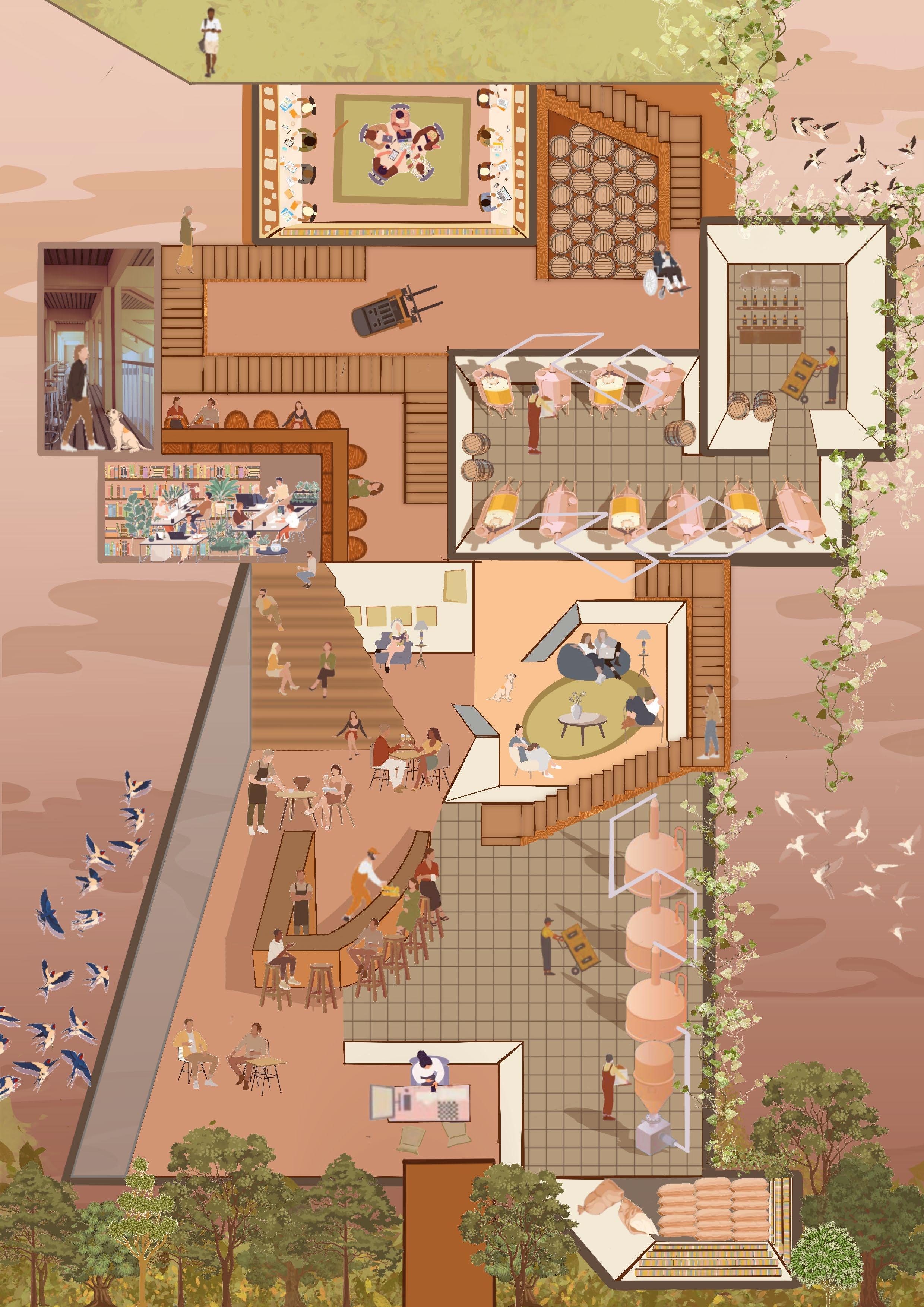
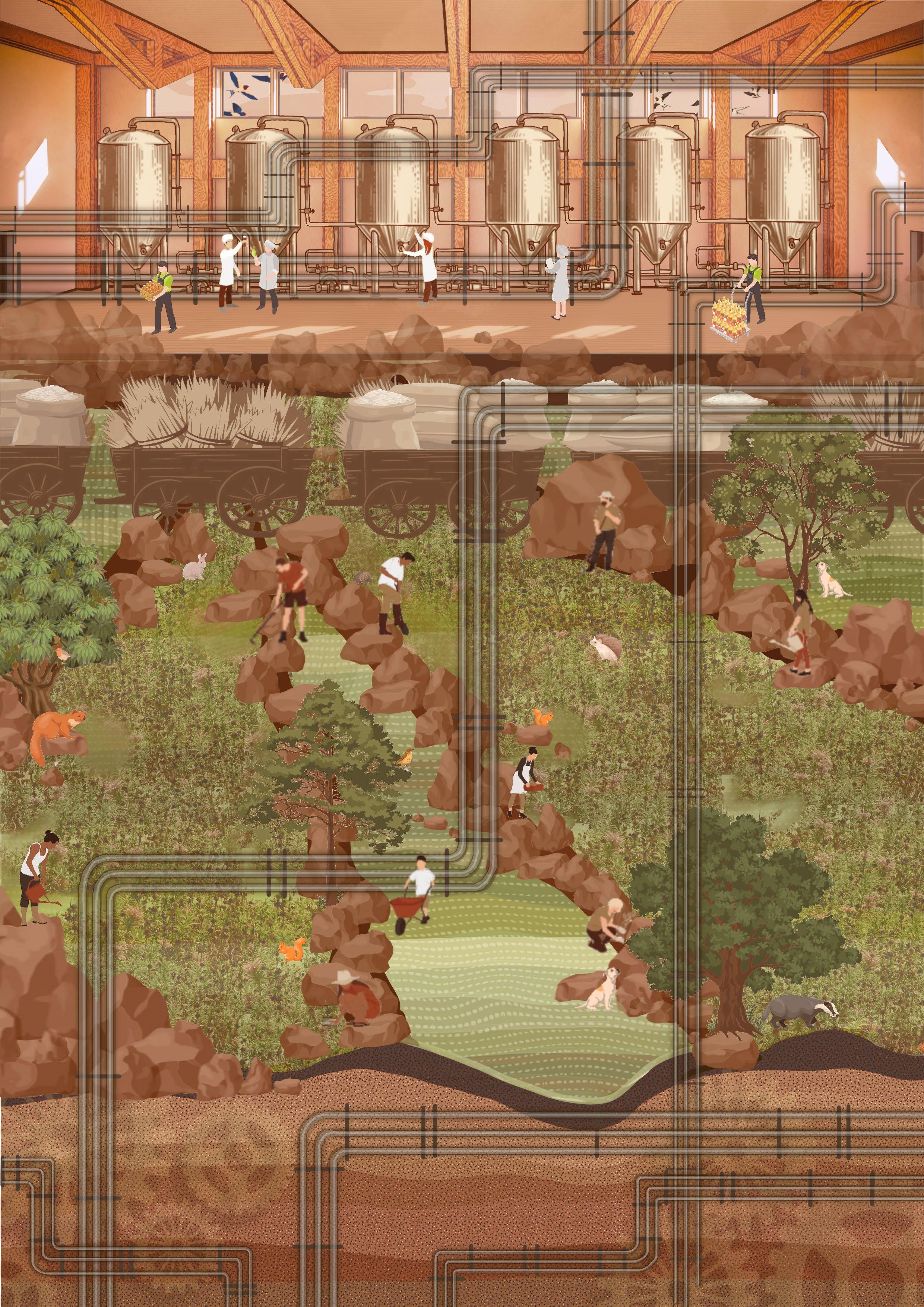
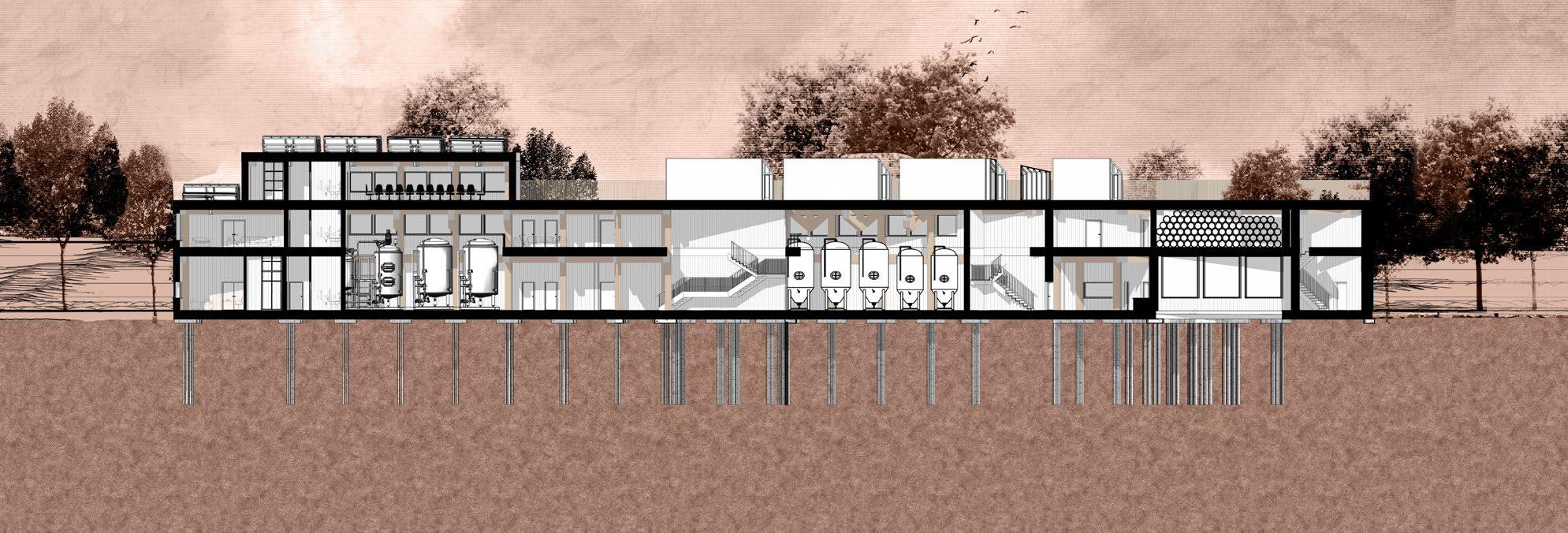
The proposal seeks to reconnect the community’s everyday rituals with the urgent realities of the climate emergency by framing beer - an object of collective value - as a reminder that “there will be no beer if there is no ecosystem.” Centred around a microbrewery, the project uses the brewing process as an educational and experiential tool, revealing how deeply human life is intertwined with non-human systems of growth, fermentation, and decay.
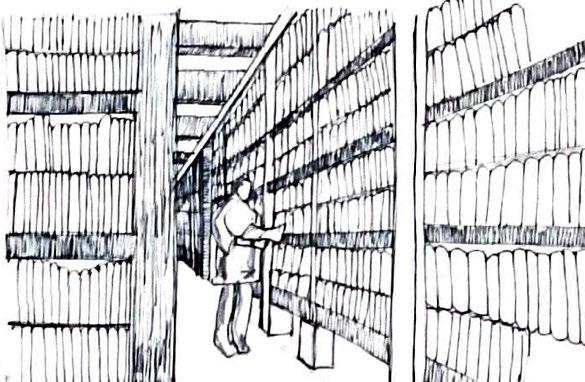
The architecture treats grain as a user, integrating it into both the material and ecological fabric of the building. Energy and water systems are designed to operate through non-human intervention, forming a self-sustaining loop of exchange. Complementary programmes such as a writers’ hub and climate library make the space one of reflection, storytelling, and relearning our relationship with the natural world.
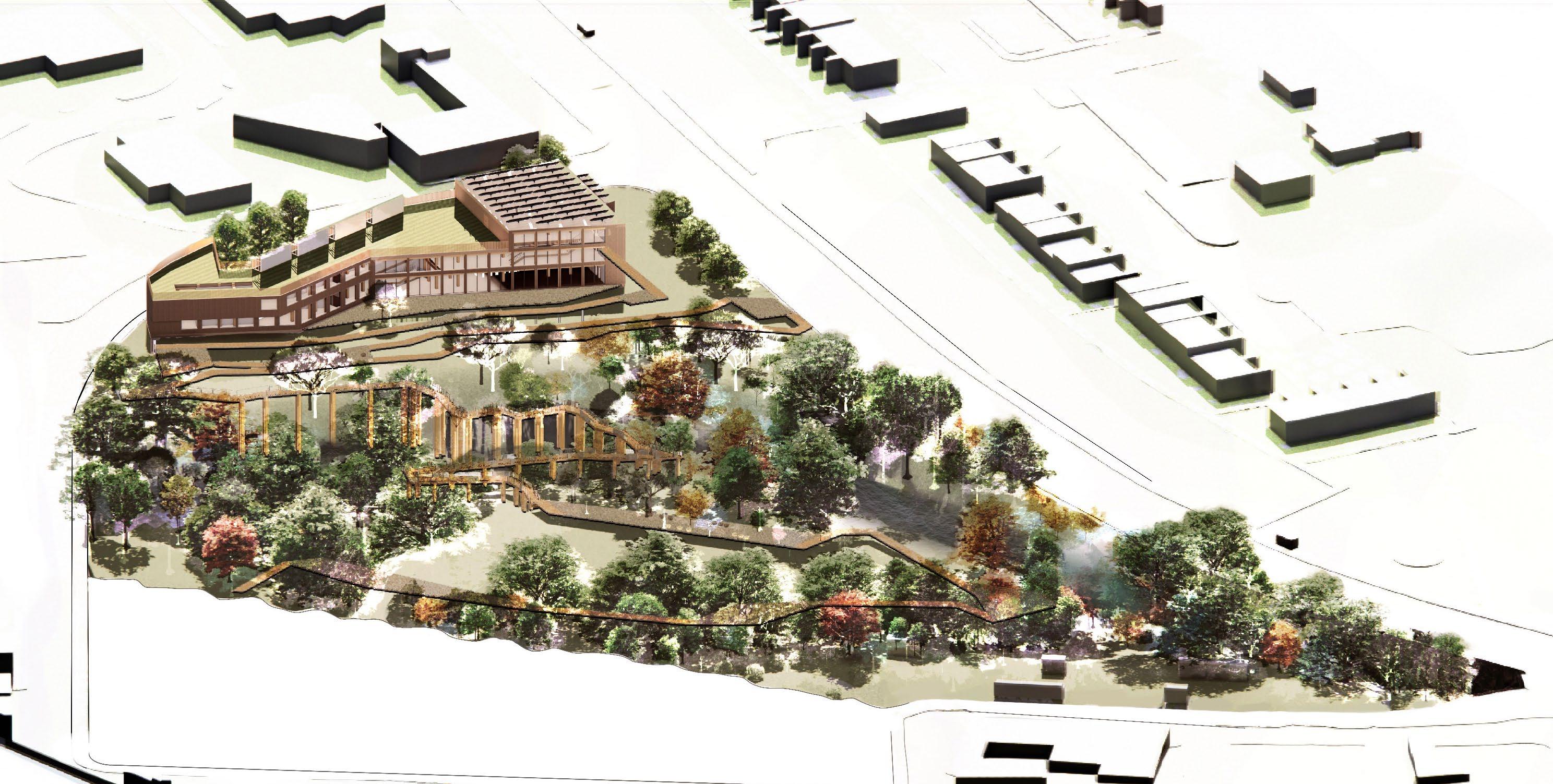
The landscape aims to put to practise the ideas promoted by the brewery. The walkway winds around the existing contours and the topography of the site. This controlled and deliberate circulation creates moments of interaction between human and non human species. Encouraging a slower, more conscious engagement with the terrain and its non-human inhabitants.
Ultimately, this is not a brewery; it is a speculative dwelling for an entangled future, where circulation follows the story of the grain. Humans become one of many users in a Post-Anthropocene ecosystem, guided by yeast, bacteria, and fermentation as spatial narrators.
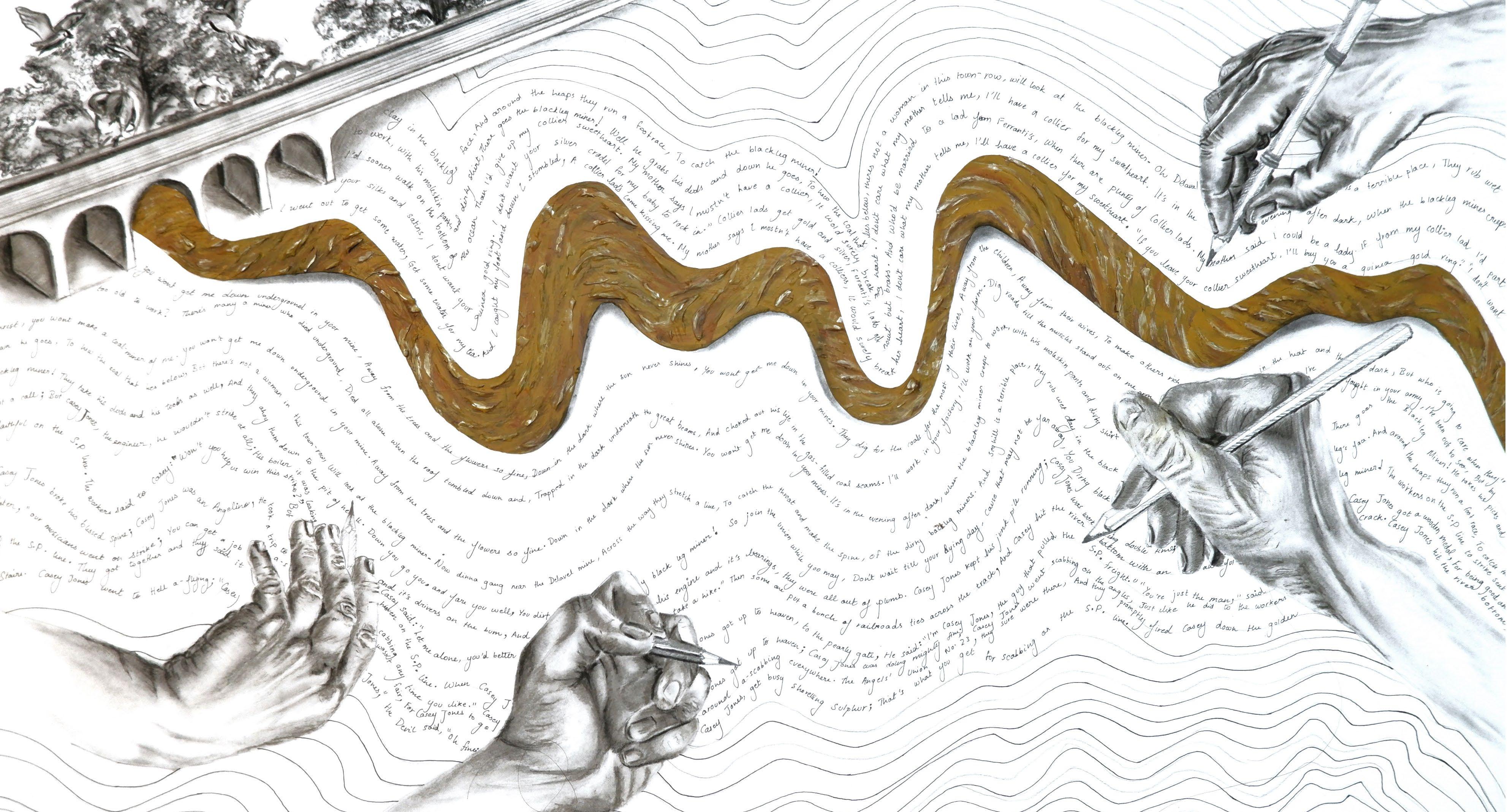
This piece explores the lasting impact of the anthropocene on nature. Within the context and history of the site the timescape narrates the effects of industrialisation in Bradford with particular focus on the coal miners.
As the image is unrolled so are the miners’ songs, each with a different story, sung while working long hours to build a sense of community. The songs themselves convey stories of the miners and their communities, the act of hands engraving the songs into the contour lines of the site mirrors the lasting impact left on the land and ecology by the miners Today this manifests as altered ecosystems, climate change and polluted rivers caused by the industrial period. The river here absorbs the songs in an attempt to show that “water has memory” and acts as an archive for human activity. Within the piece nature and animals have been marginalised and pushed to the back to mirror the place nature took during this period, and to an extent still continues to take. The distorted proportions, especially with regards to the human hands reflect the disproportionate and immense effect humans have had on the land.
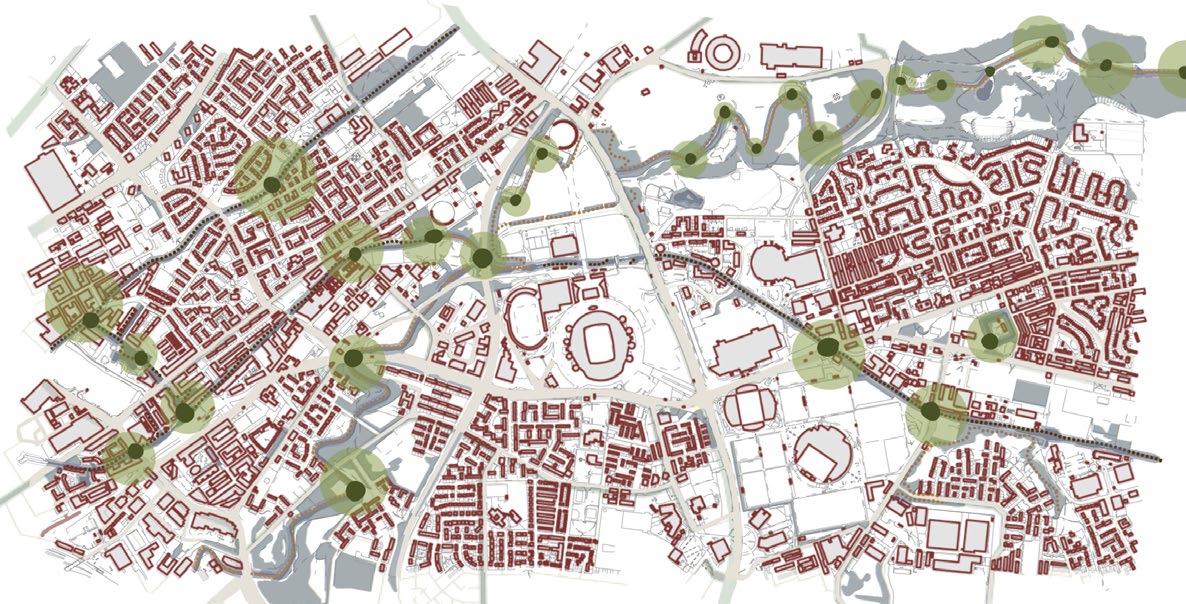
Path - Primary (Micro) Ecosystems THE NON-HUMAN IMAGE
Path - Secondary
Disturbance to landscape
Habitats
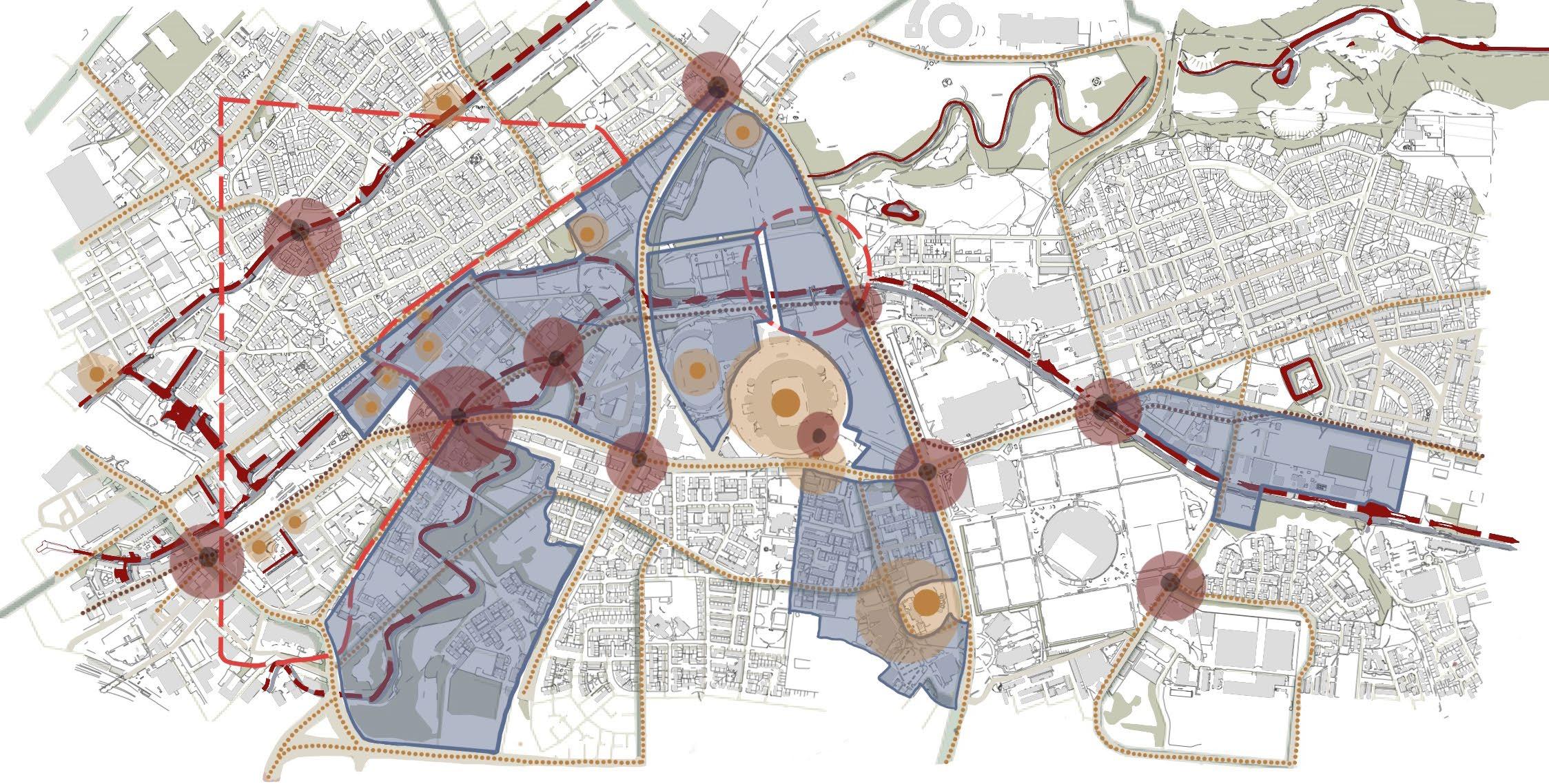
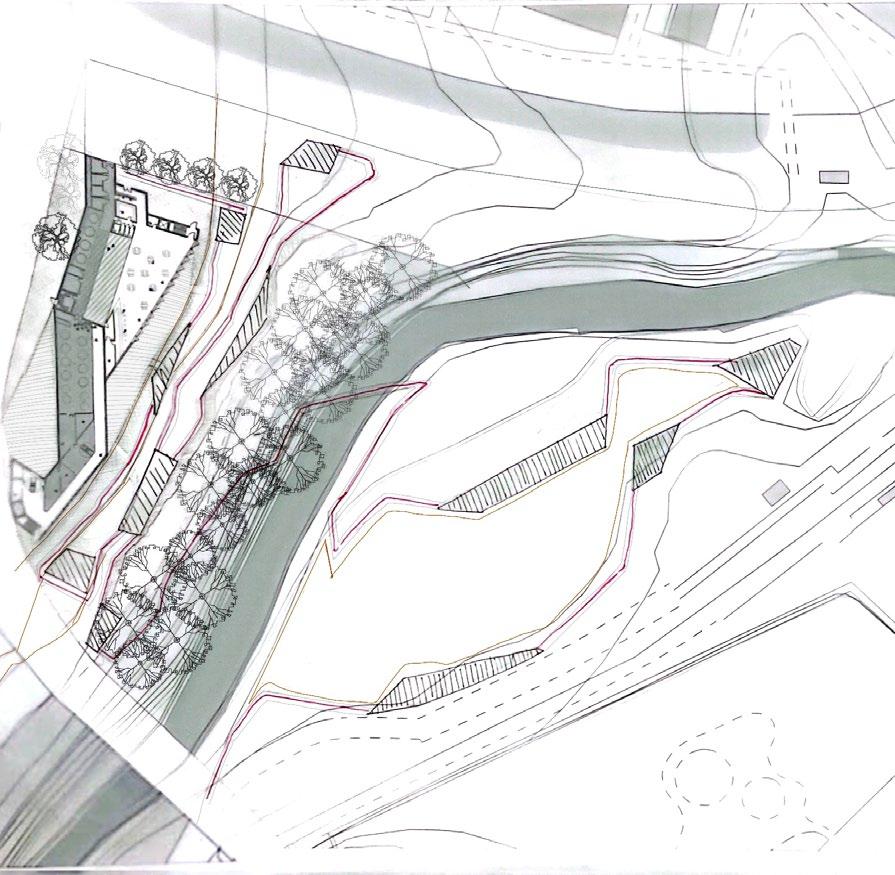
Kevin Lynch’s five elements describe how people form a mental image of the city. In this proposal, the framework is reinterpreted through a non-human lens, where districts become ecosystems, nodes become habitats, and other elements translate into ecological systems and movements.
By constructing a “non-human image of the city,” the design process begins to de-center human experience and instead foreground the multiple agencies that coproduce space. This re-framing allows the site analysis to move beyond anthropocentric mapping and imagine alternate ways of experiencing and inhabiting space.
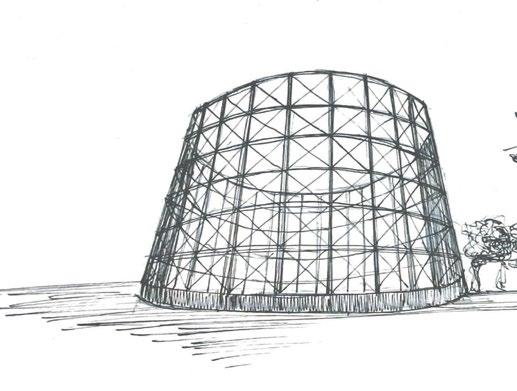
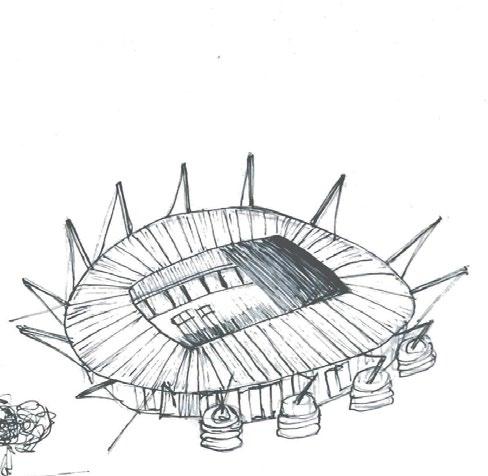
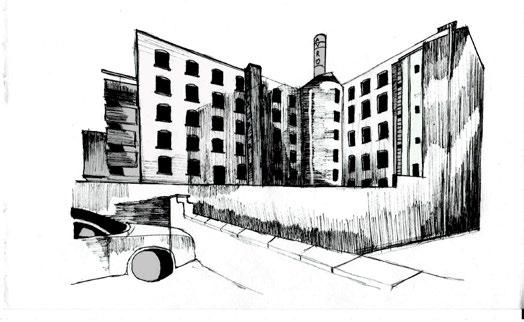
Fungi
Candida
Debaryomyces
Hansenula
Hanseniaspora
Rhodotorula
Sporobolomyces
Trichosporon
Penicillium
Aspergillus
Alternaria
Fusarium
Epicoccum
Cladosporum Botrytis
Saccharomyces Hansenula
Pichia
Hanseniaspora
Torulopsis Schizosaccharomyces
Candida
Edges- Visible
Edges- overhead
Path - Tram Edges- development
Path - road
District
Landmark
Site circulation mapping follows the contour lines
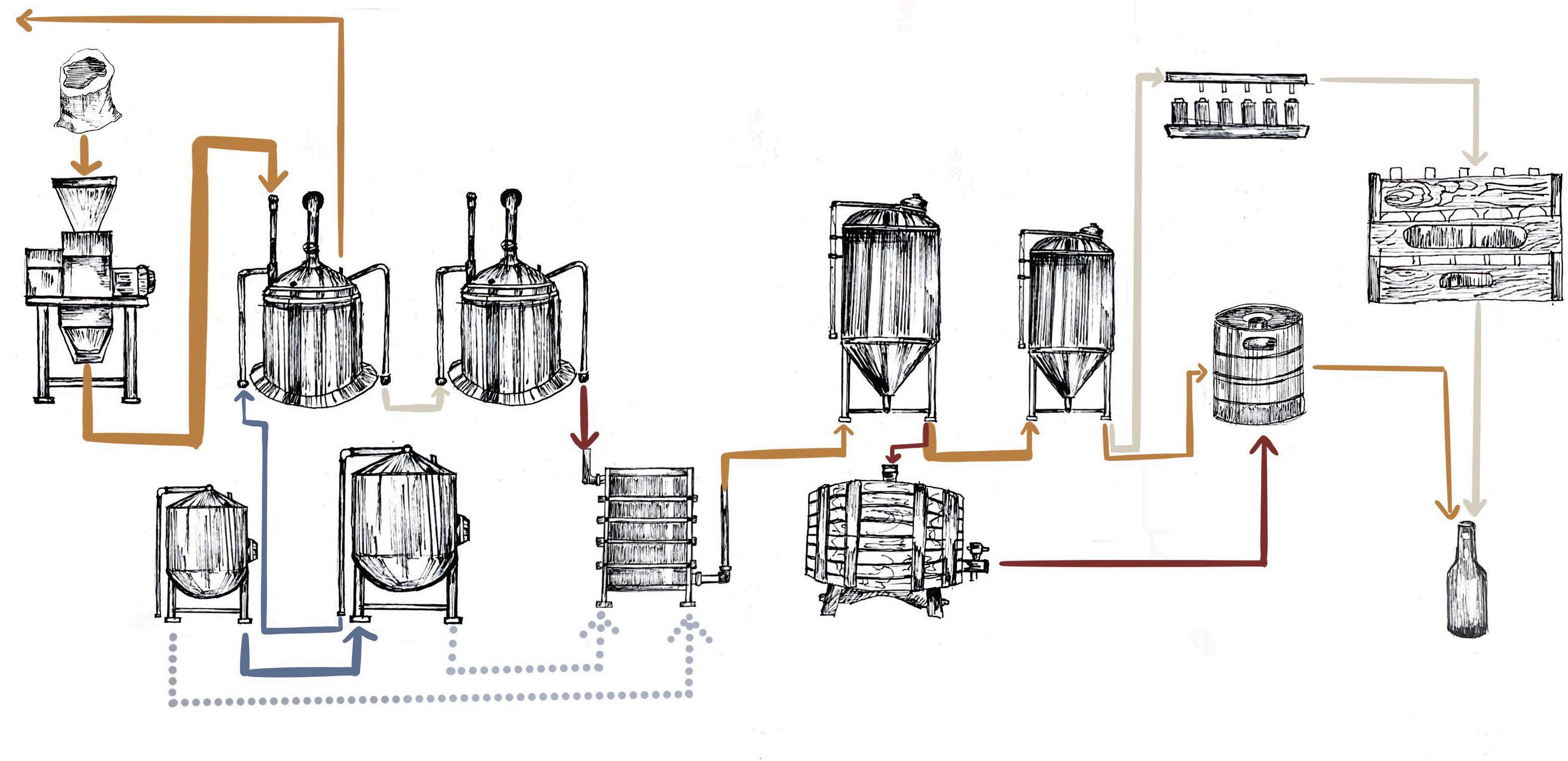
The study of the brewing activity becomes a tool to uncover the microecologies operating throughout the process. By breaking down each stage from malting and mashing to fermentation and conditioning it became clear that brewing is not a human process but a collaboration between multiple non-human agents: yeasts, bacteria, fungi, grains, and water. Each micro-organism’s contributions dictate the character of the final product. This reading of the brewing process as a living ecological network informed the architectural response, encouraging a design that not only acknowledges and supports, but is lead by the actors within the building’s spatial and environmental systems.
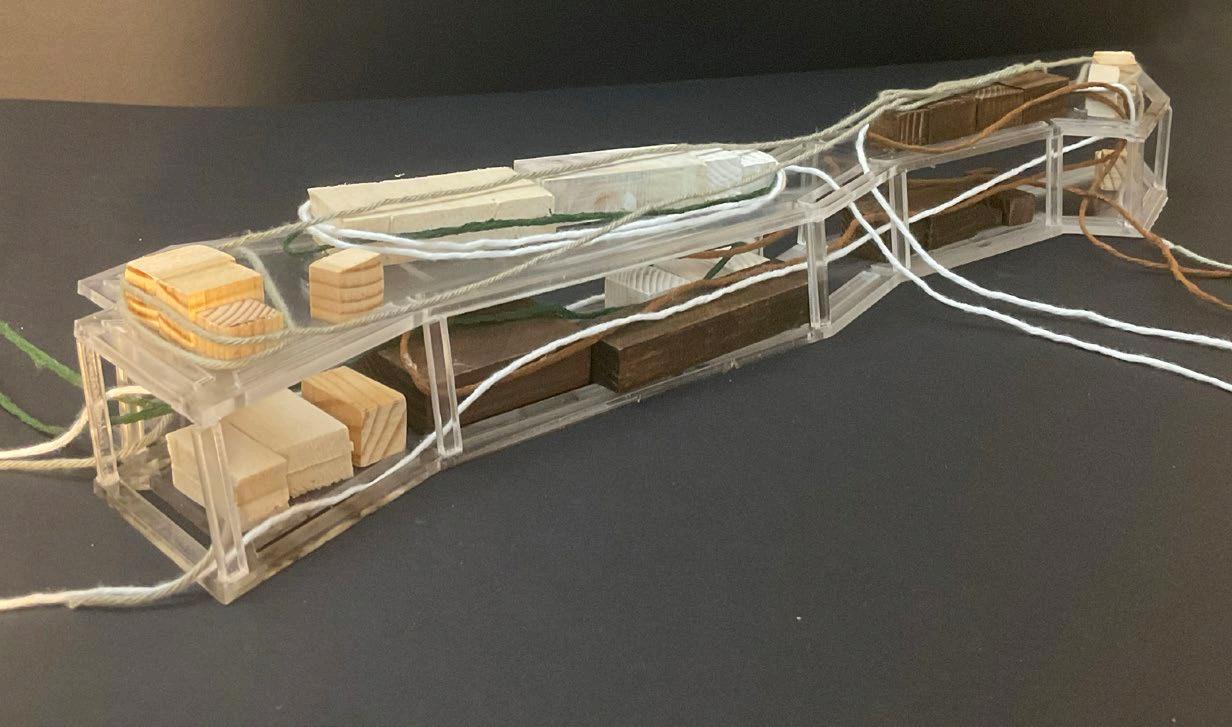
Early iterations revealed issues with escape routes and vertical circulation. To resolve this, detailed circulation models were developed to test movement patterns of different users through various vertical connections.
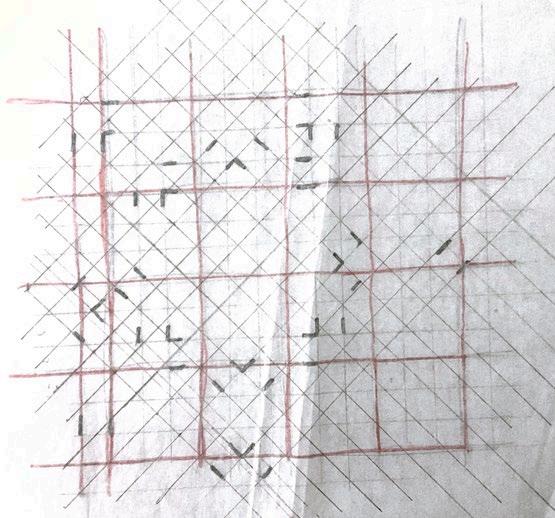
Blocks of equal area to the spatial diagram were used for accuracy - dark wood representing brewing zones and light wood representing social spaces. The circulation strategy positioned human movement in response to nonhuman movement, allowing the design to follow existing ecological flows. Different coloured threads were used to map, layer, and test circulation routes, weaving through the model repeatedly to trace overlaps and divergences until a cohesive and intuitive routes emerged. This process reinforced the intent of creating a building that learns from the ecologies it houses.

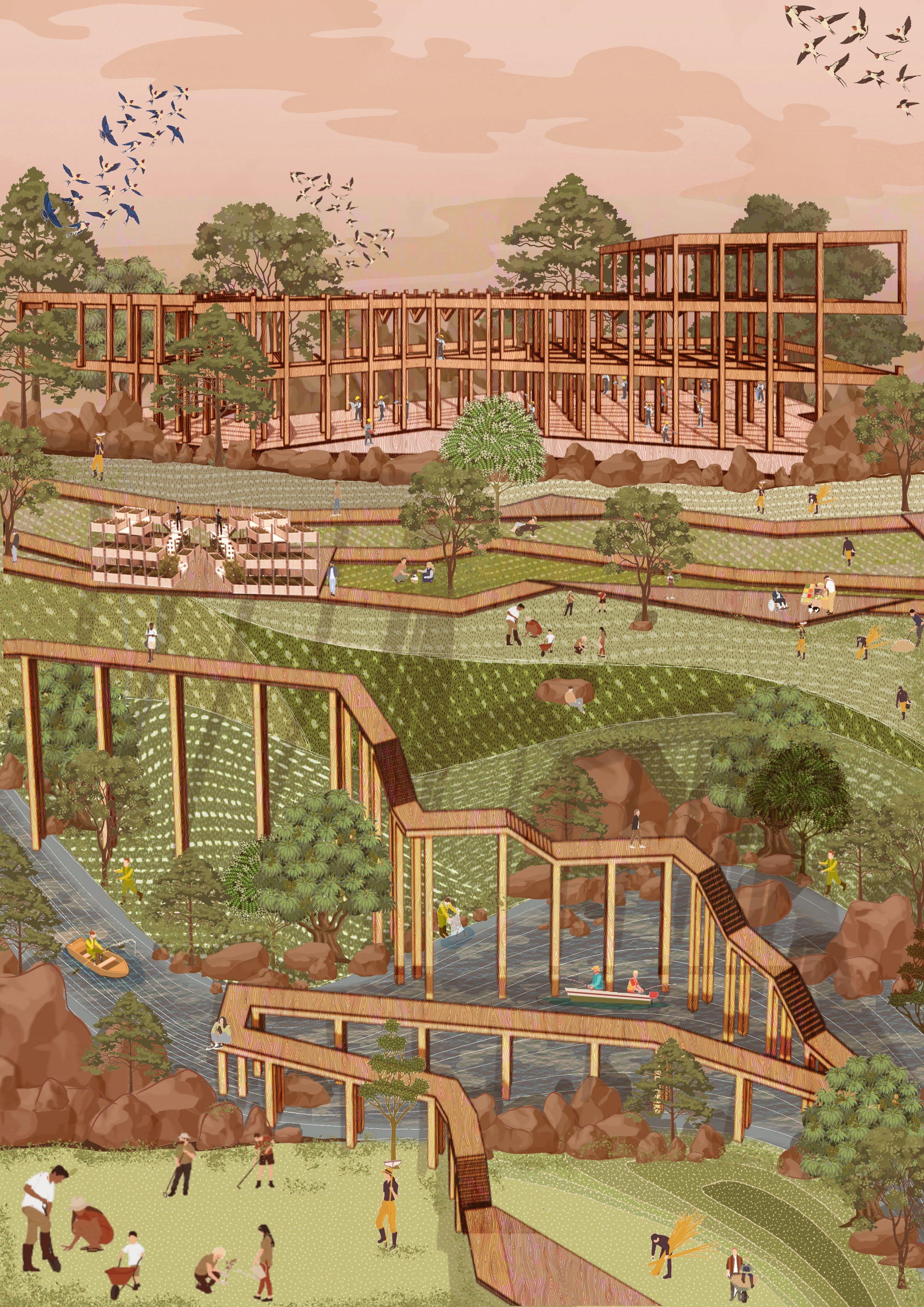
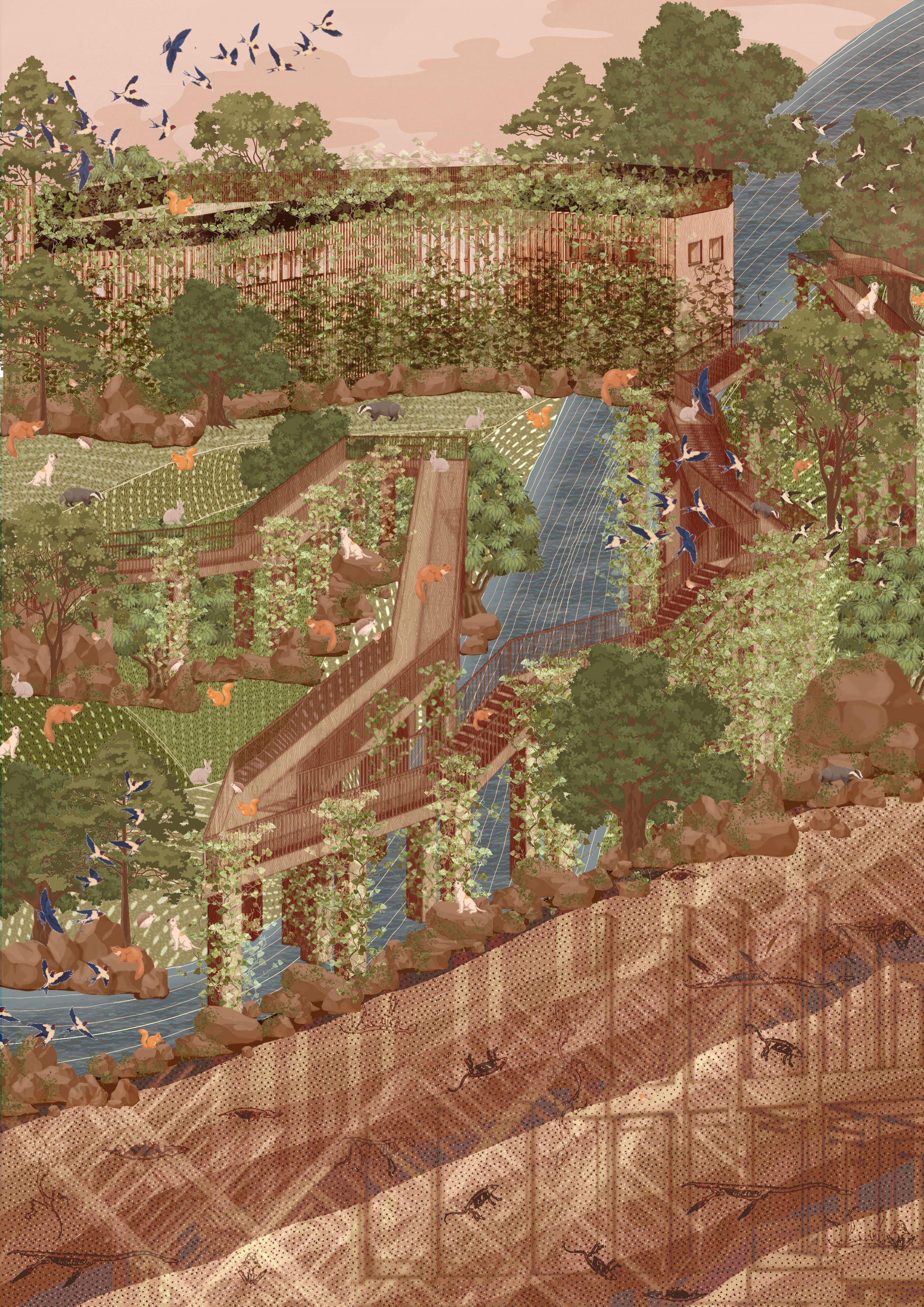
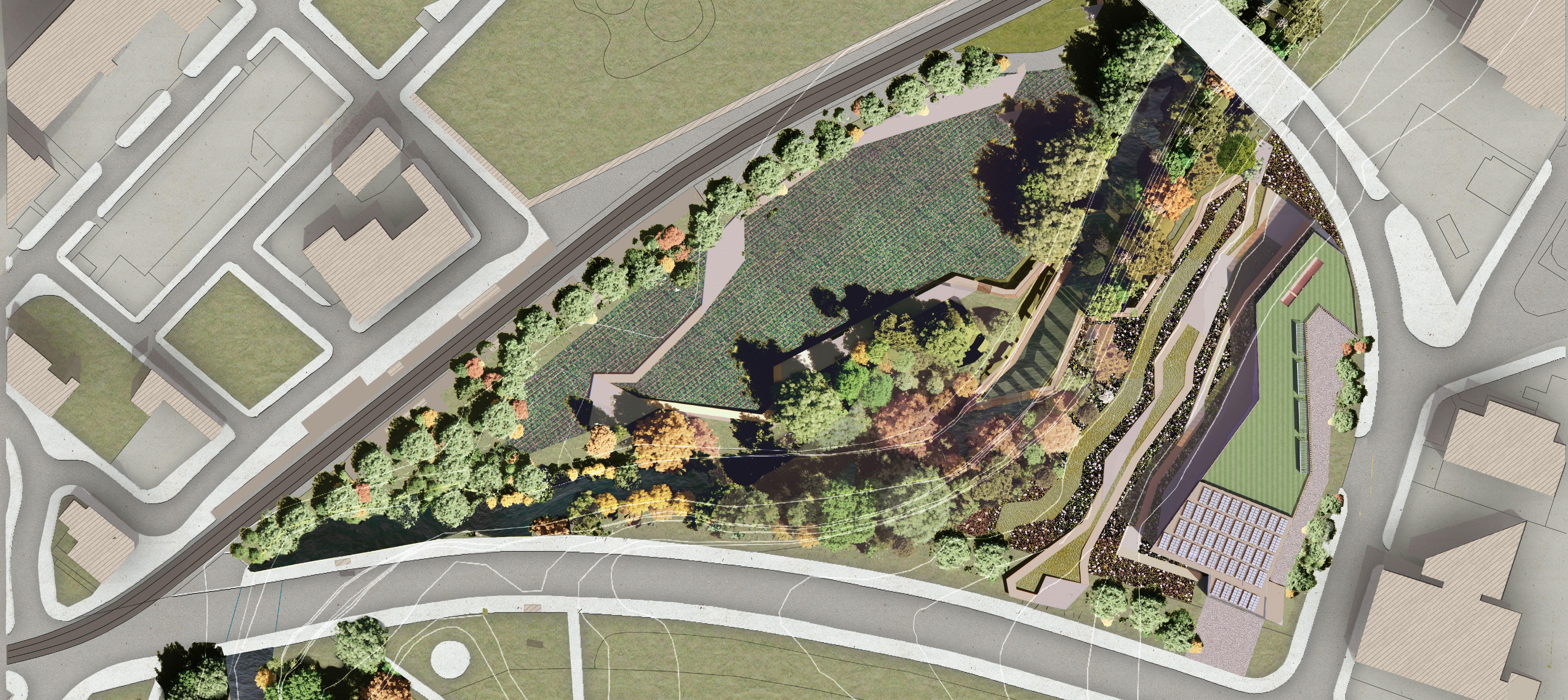

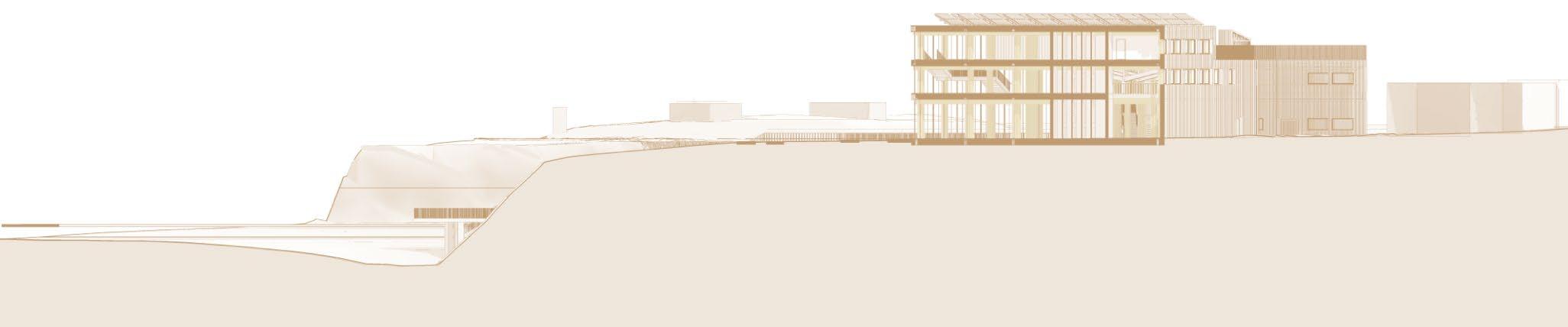


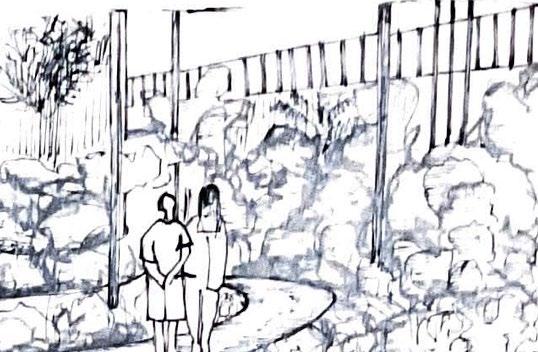






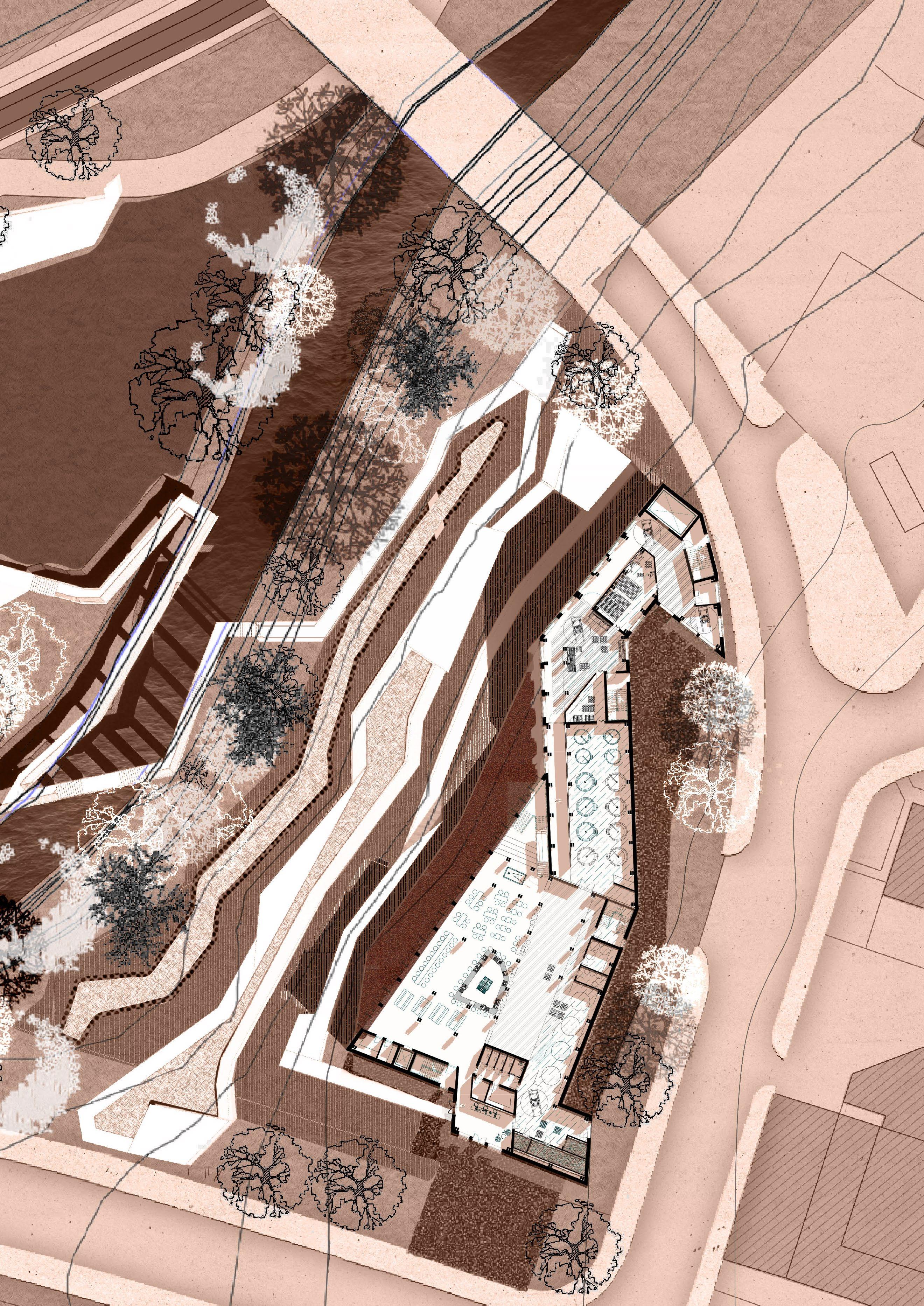
The landscape puts into practice the learnings from the building. A network of walkways weaves through the terrain, designed to follow the natural contour lines of the site rather than impose upon them. The movement to feel intuitive and grounded, creating a subconscious connection between body and landscape. The
exploration and reflection, while symbolically tracing the interdependence between human and
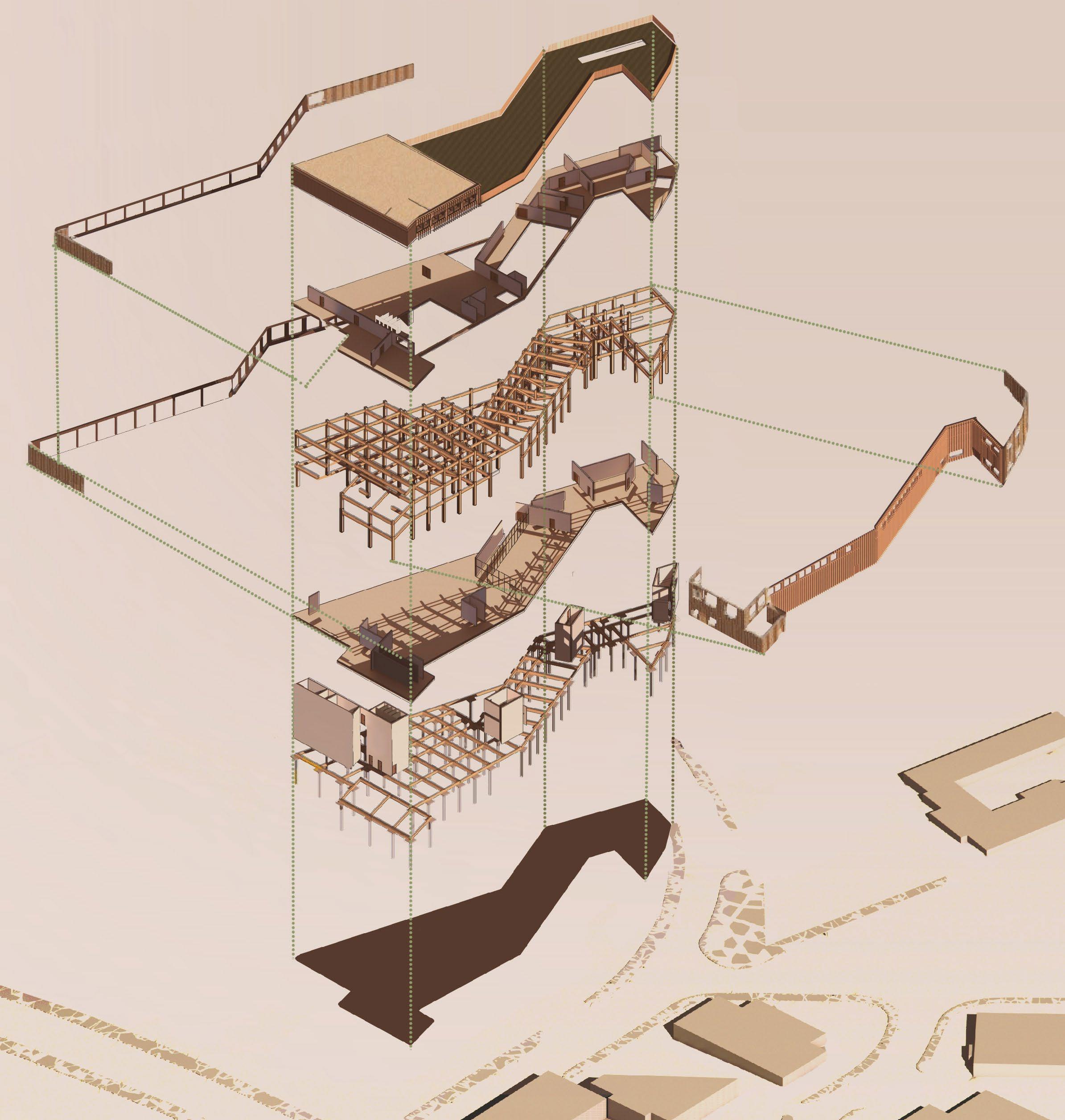
External Wall
Non load bearing/self supporting
Larsen truss structure
Secondary structure
Primary structure
Mass timber frame
CLT cores for lateral bracing
200/600 mm glulam beam
450/200mm glulam column x 2
Timber truss
Bracing
Horizontal ties under beams for Lateral bracing and to keep the Structure tight
Steel bracing modules to connect primary timber frame
Pile foundation
steel pile with geothermal heating system
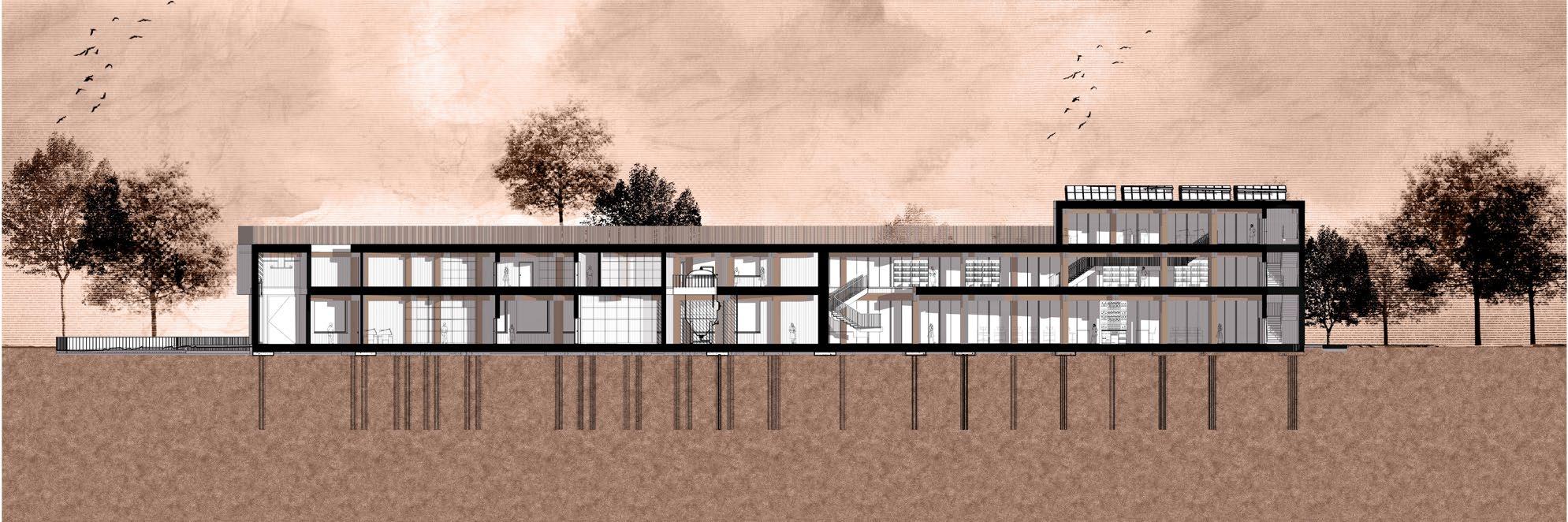
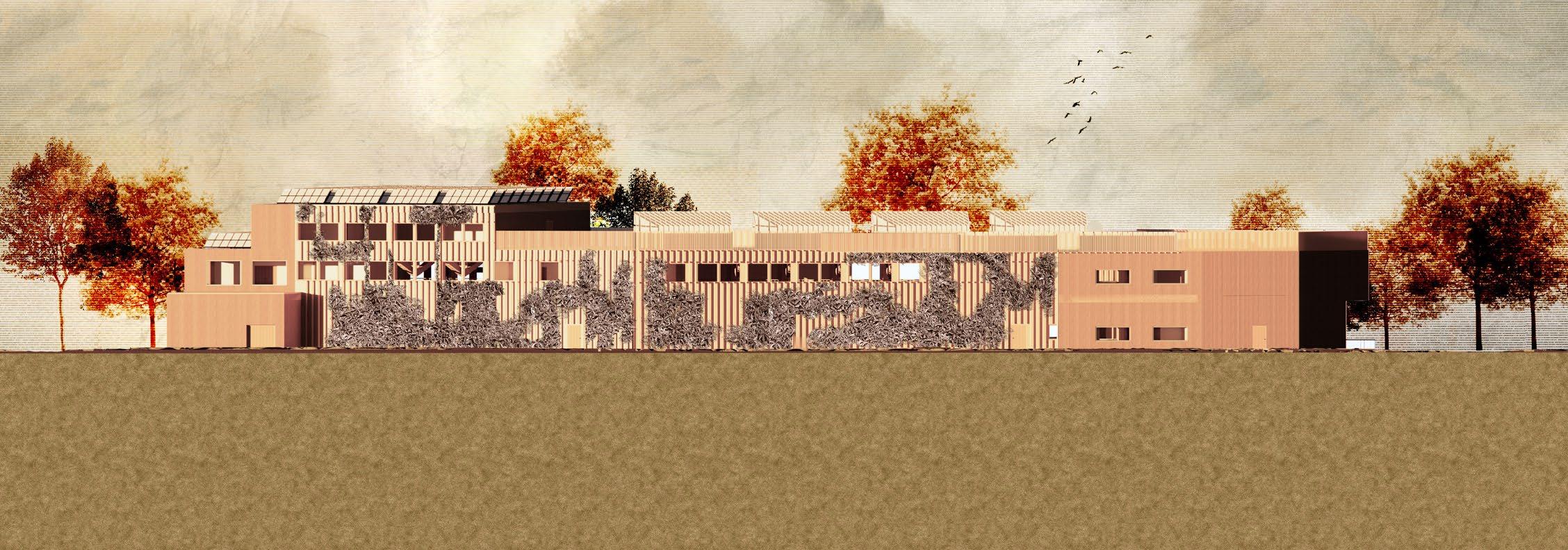
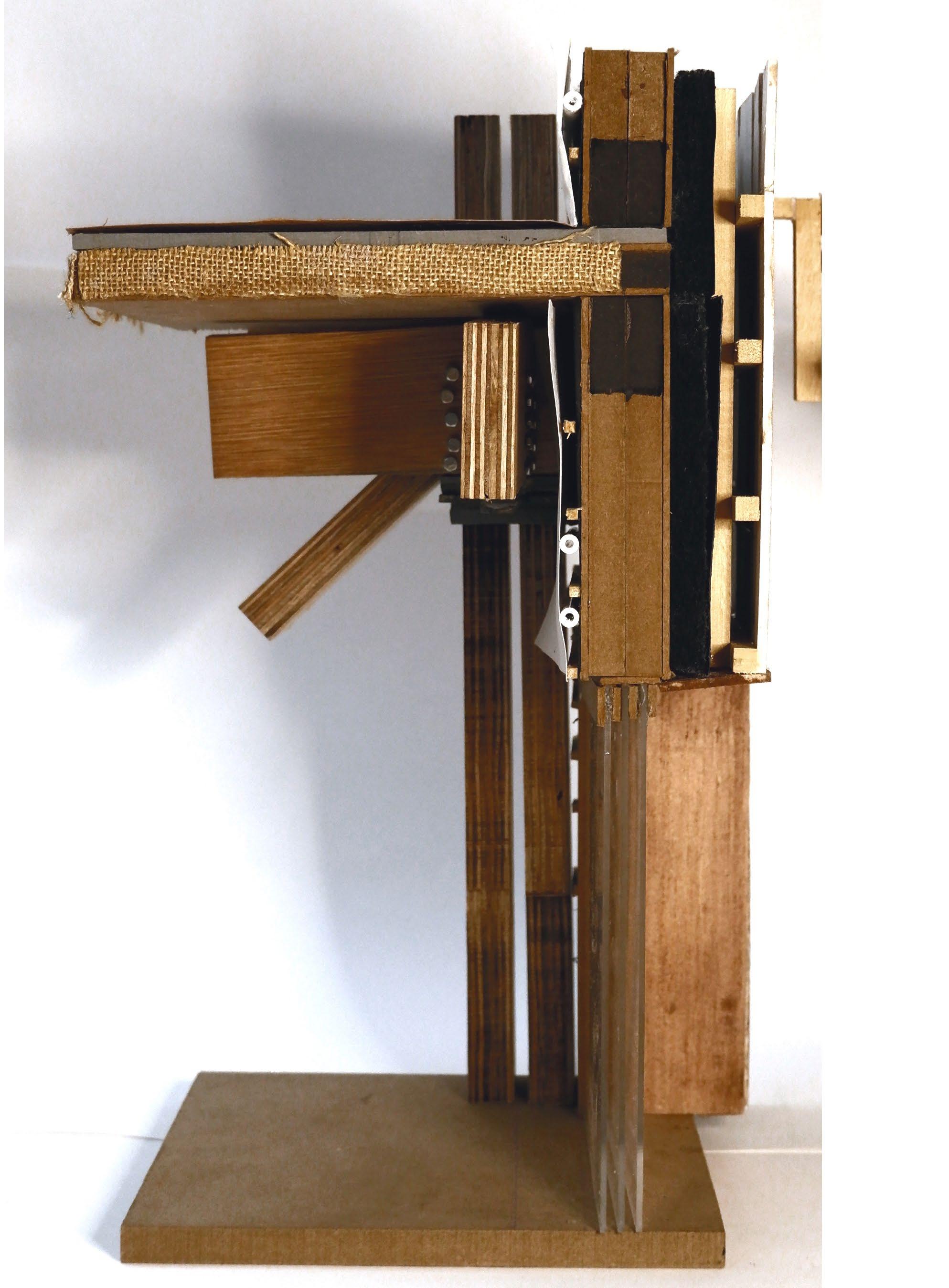
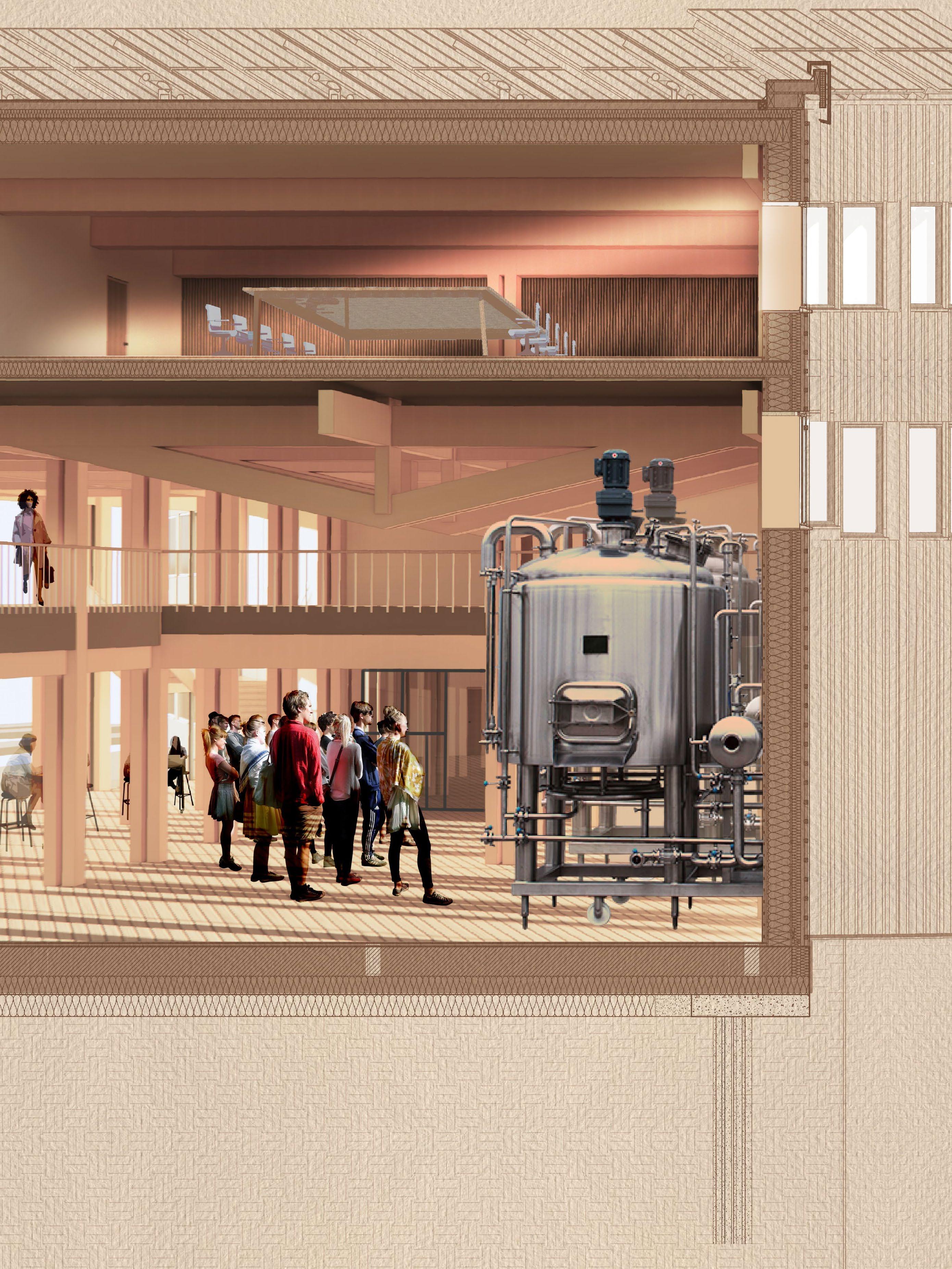
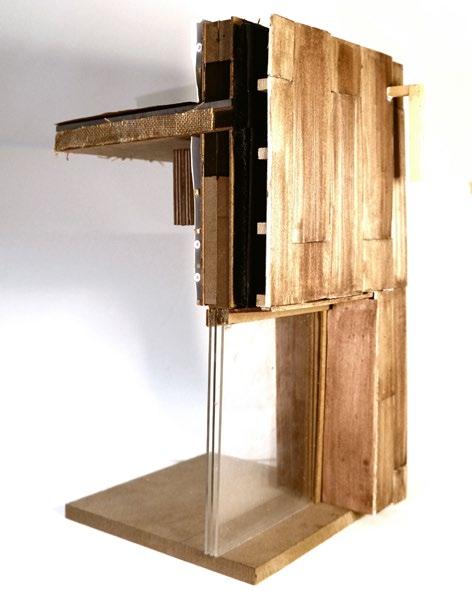
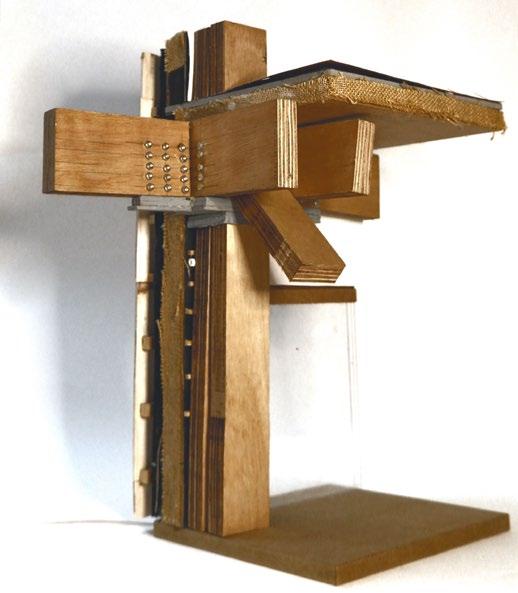
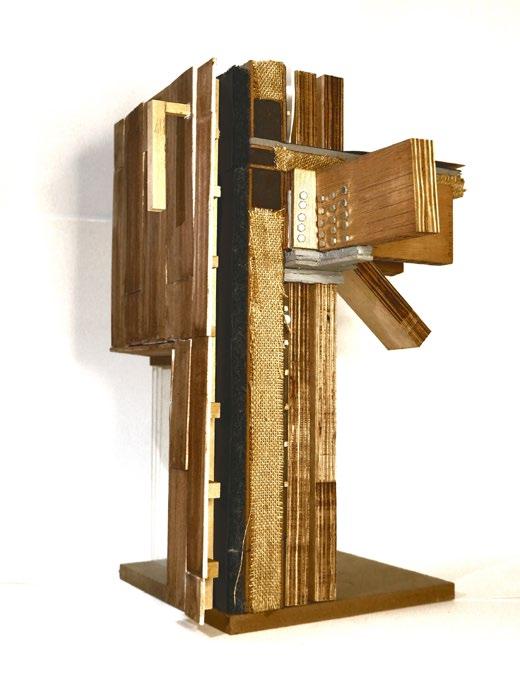
The explored fragment is the wall to floor connection on the south facing facade. This consists of a double height space which houses the brewing equipment for the micro-brewery. A non uniform Glulam structure spans 18m of the double height spaces using a truss system. This study analyses how the truss, column, beam, wall and floor interact together at this pivotal node in the building.
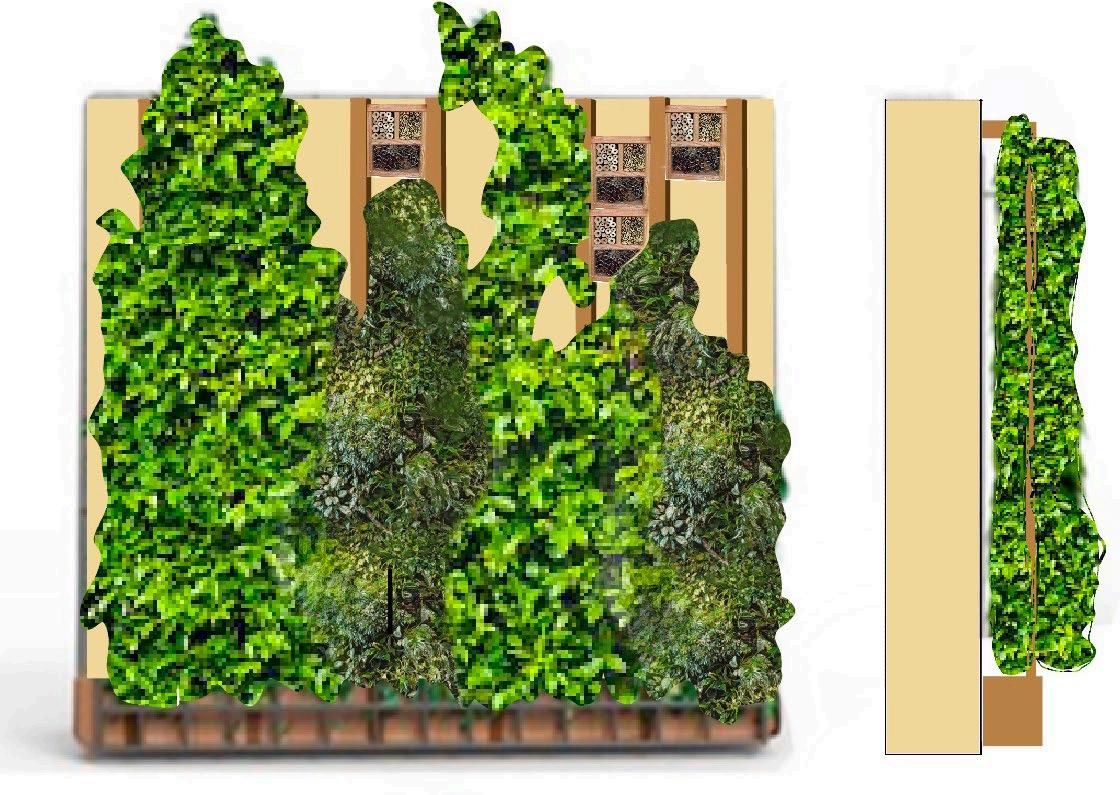
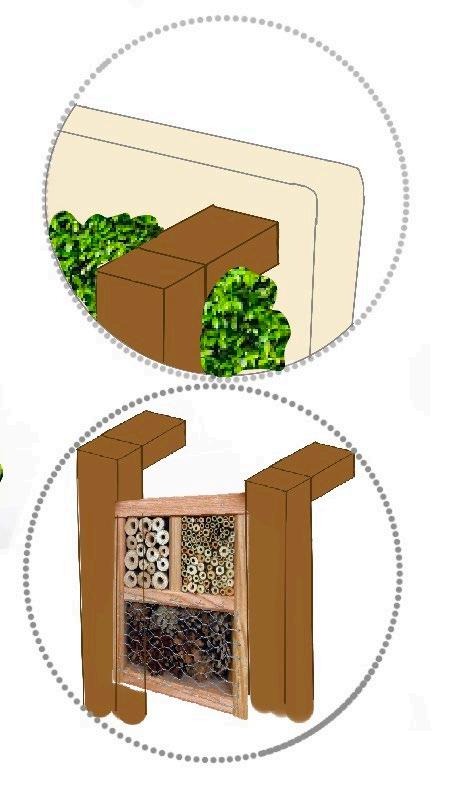
It further explores the wall unit itself and how best to achieve an environmentally responsive facade that meets passive haus standards. The building considers grain as one of its users so the materiality of the building reflects this. Miscanthus grass boards replace standard osb boards. The Strawbale insulation is build up around the Larsen truss system. This allows for thick layers of insulation to be erected while maintaining no thermal breaks .The MGBs act as bracing on either side of the insulation and aid in transportation. All additional battens and counter battens are timber. This is contrasted in the building through the use of steel bracing and fixings. The use of the double timber columns and mass timber structure in general feature the irregular structure grid as the aesthetic language of the building. All materials are locally grown on site creating a site specific identity for the building and recalls the industrial typology of the microbrewery through the exposed structure.
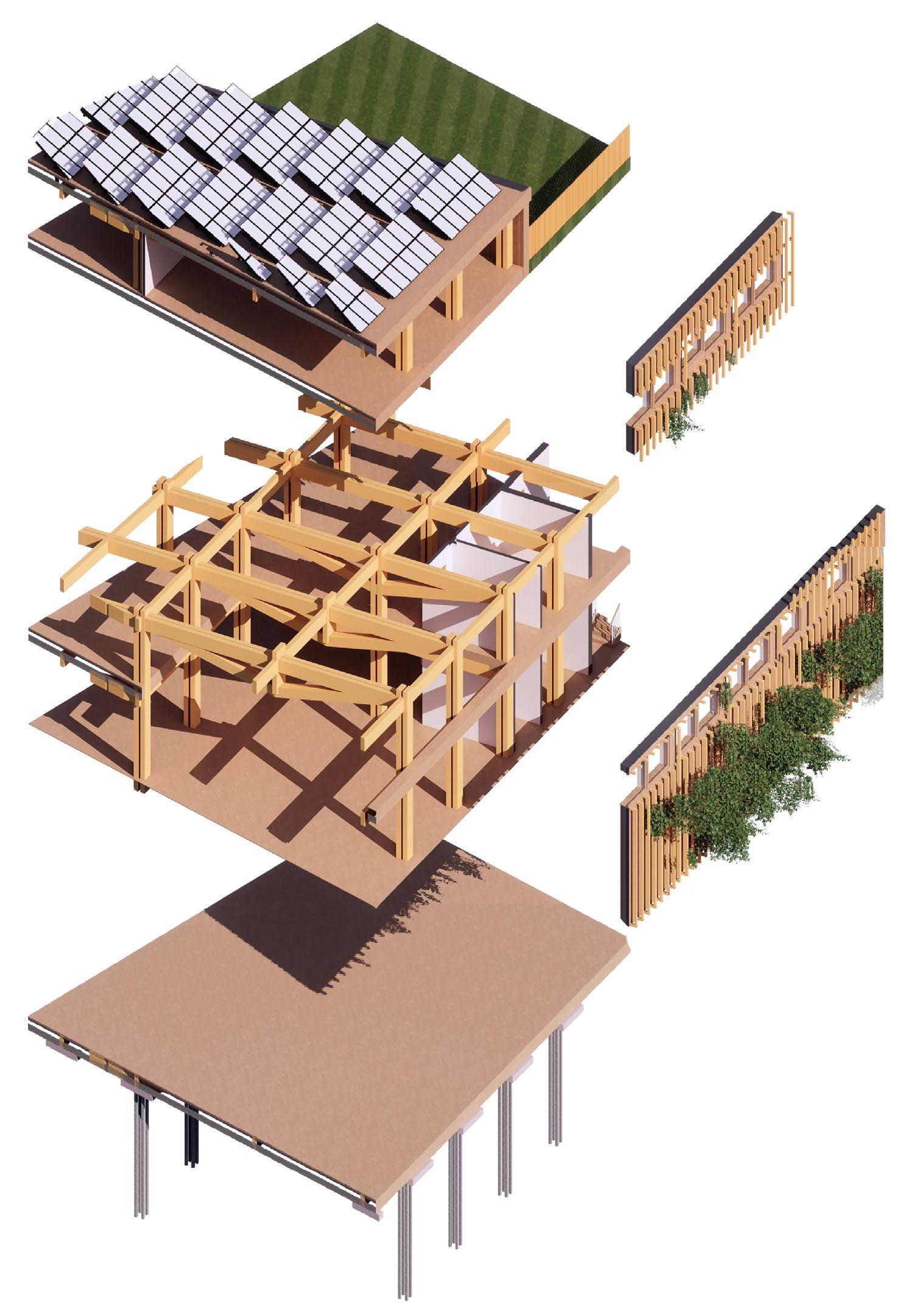
Roof build up
Aluminium flashing / Parapet formed by timber battens / Drainage channel / Elastometeric bitumen roof / 22mm
Spruce plywood / Ventilation gap formed with timber battens / 120mm rockwool
insulation / DPM / 20mm Miscanthus
Grass OSB boards / 300mm Straw bale insulation / 20mm Miscanthus Grass
OSB boards airtight with sealed joints / Vapour control barrier /Ceiling finish / Glulam timber beam / Aluminium service cap for wiring
Wall build up
Wooden Trellis structure / 20mm Rock
Panel Wooden cladding / 50 x 50 battens and counter battens forming ventilated cavity / Kingspan nilvent breathable sanding membrane / 120 mm rockwool insulation / Breathable membrane / 20mm Miscanthus Grass OSB boards / 300mm Straw bale insulation / 20mm Miscanthus Grass OSB boards / Vapour control barrier / 25 x 25 battens forming service void / Plaster boards with blanchon extrawhite wax oil finish
Foundation build up 10mm Oak parapet flooring / 40mm acoustic insulation / waterproof membrane / 400mm engineered mass fill between timber frame / 250mm EPS insulation (Isoquick foundation) / vapour control barrier / steel pile foundation
TECHNICAL
PERSPECTIVE SECTION

“An ascent into nostalgia”
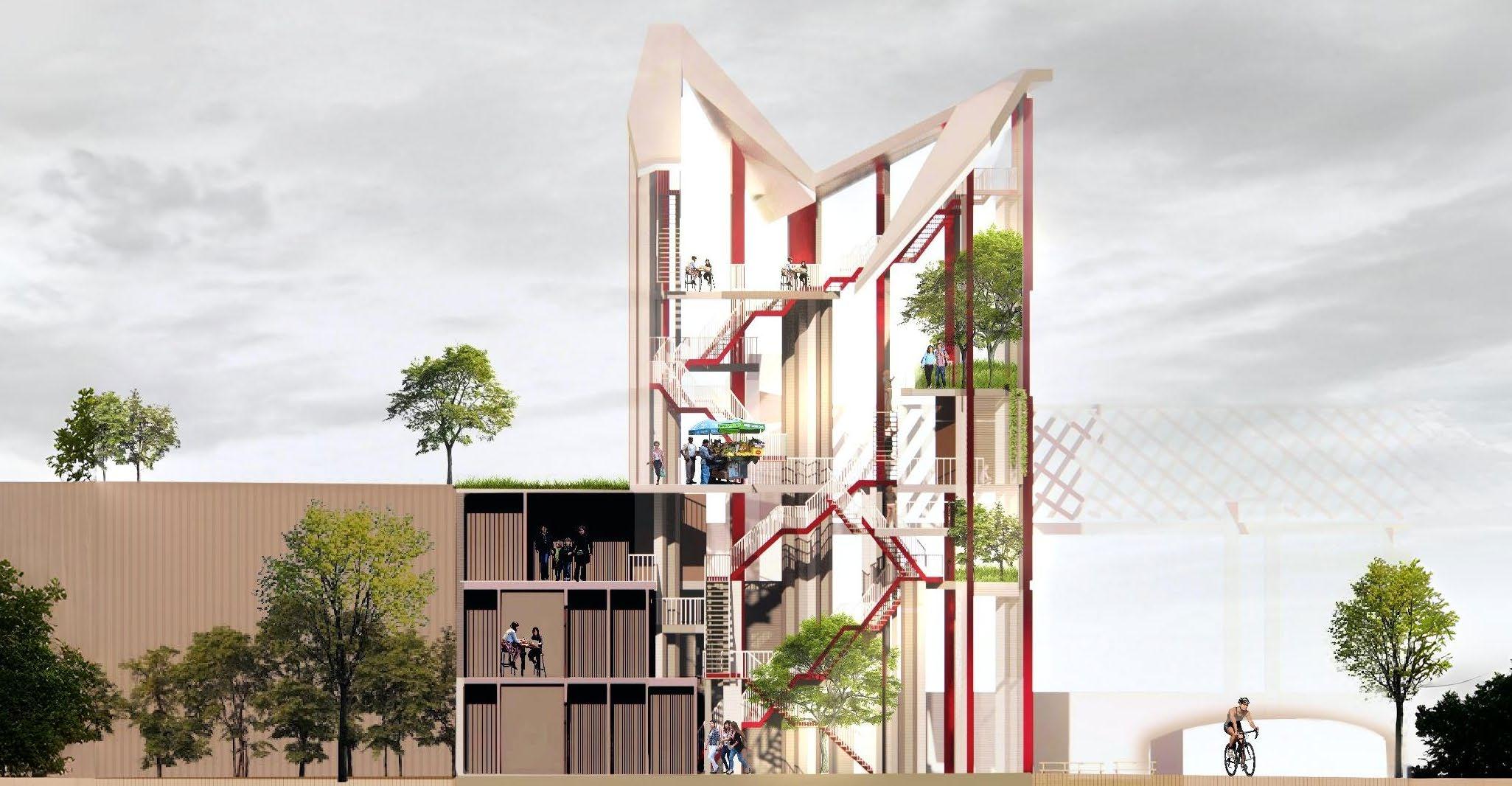
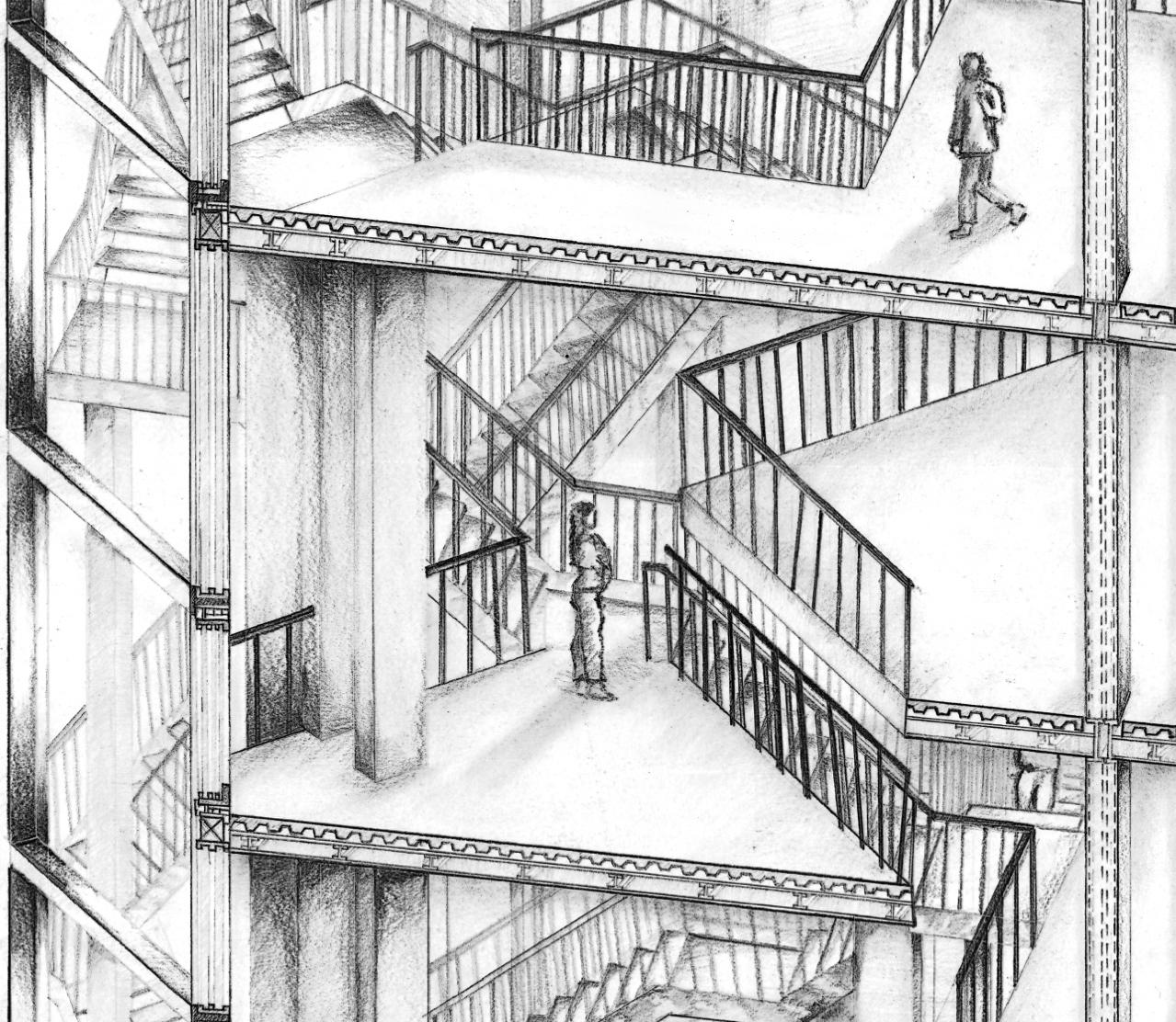
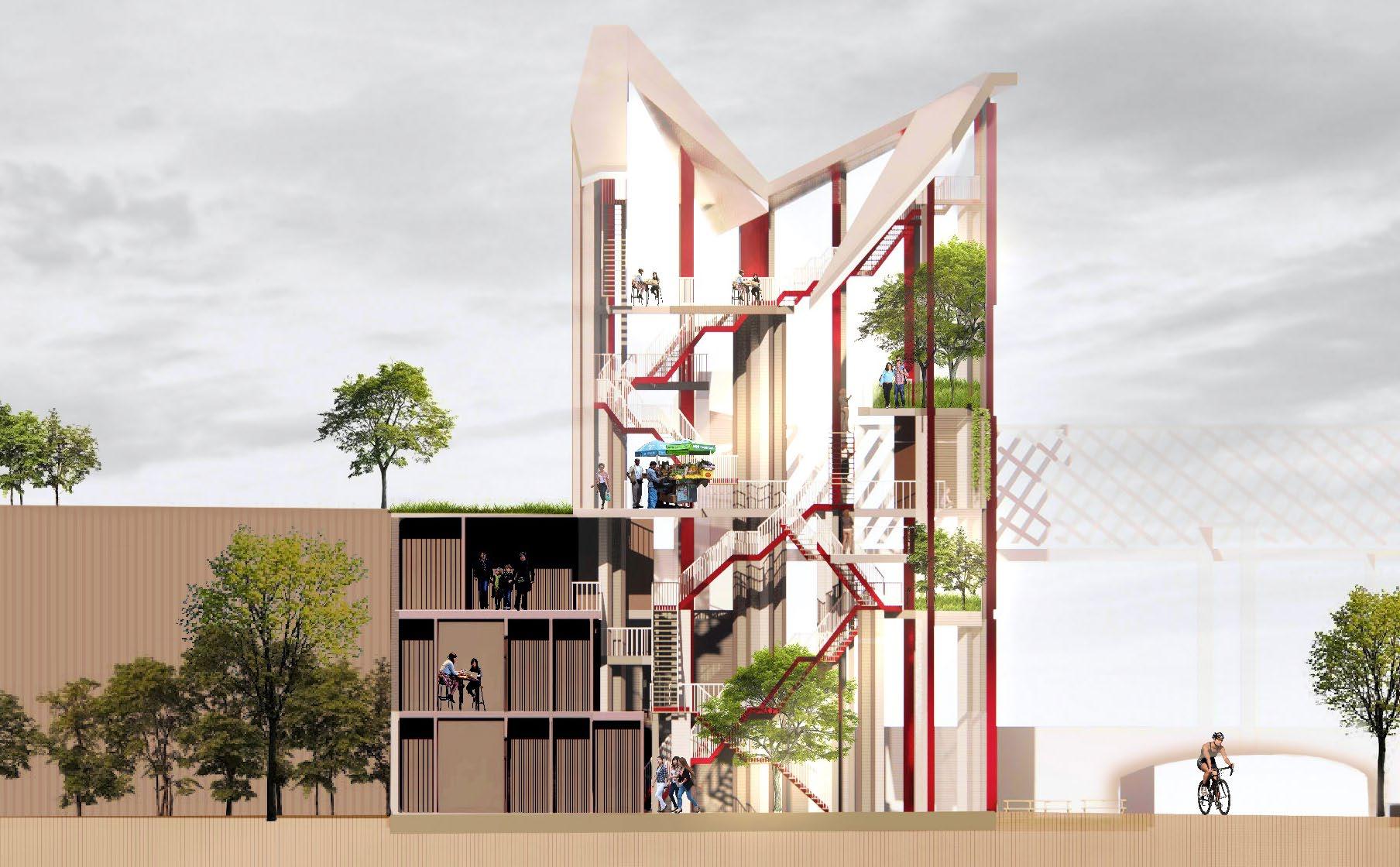
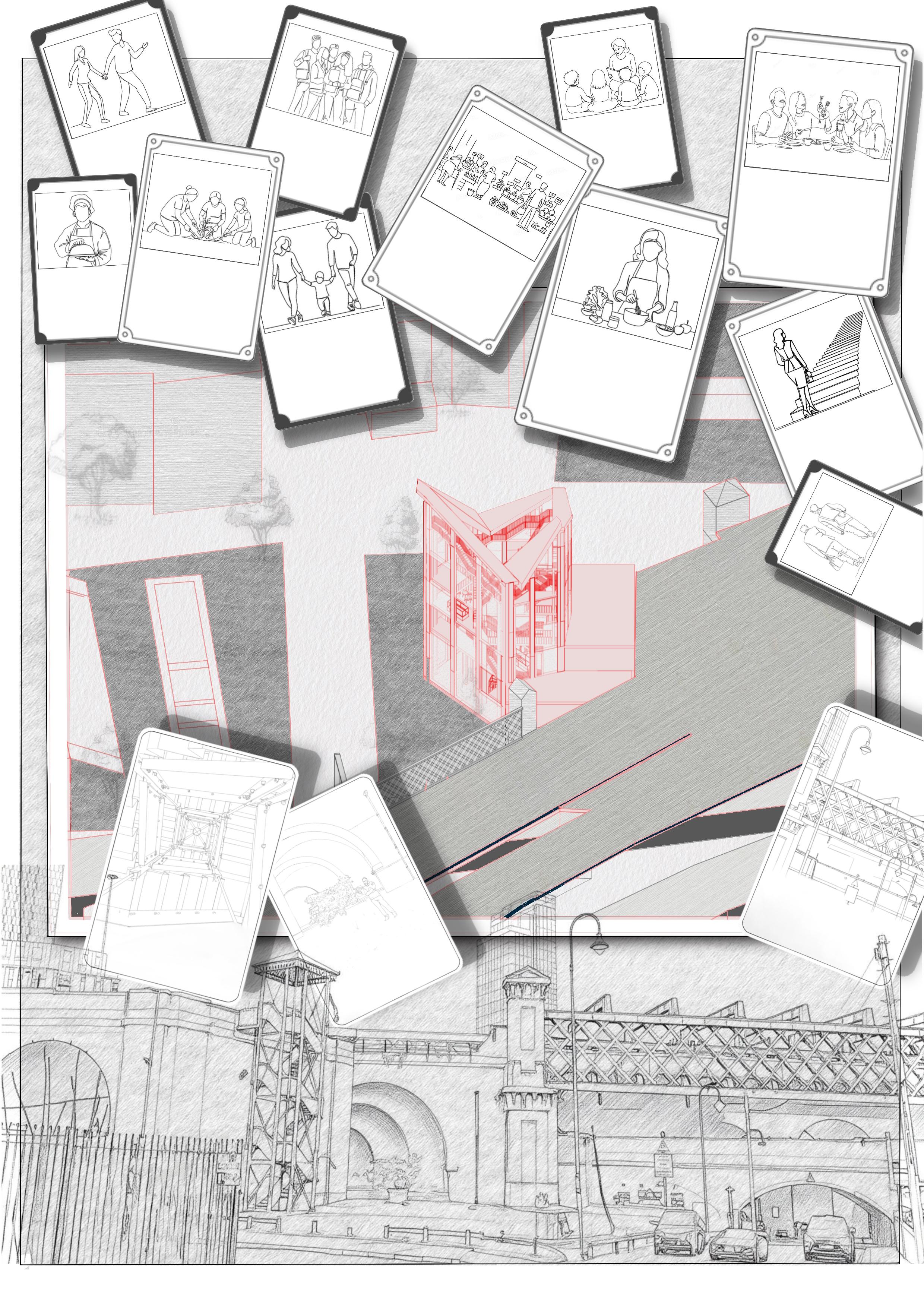
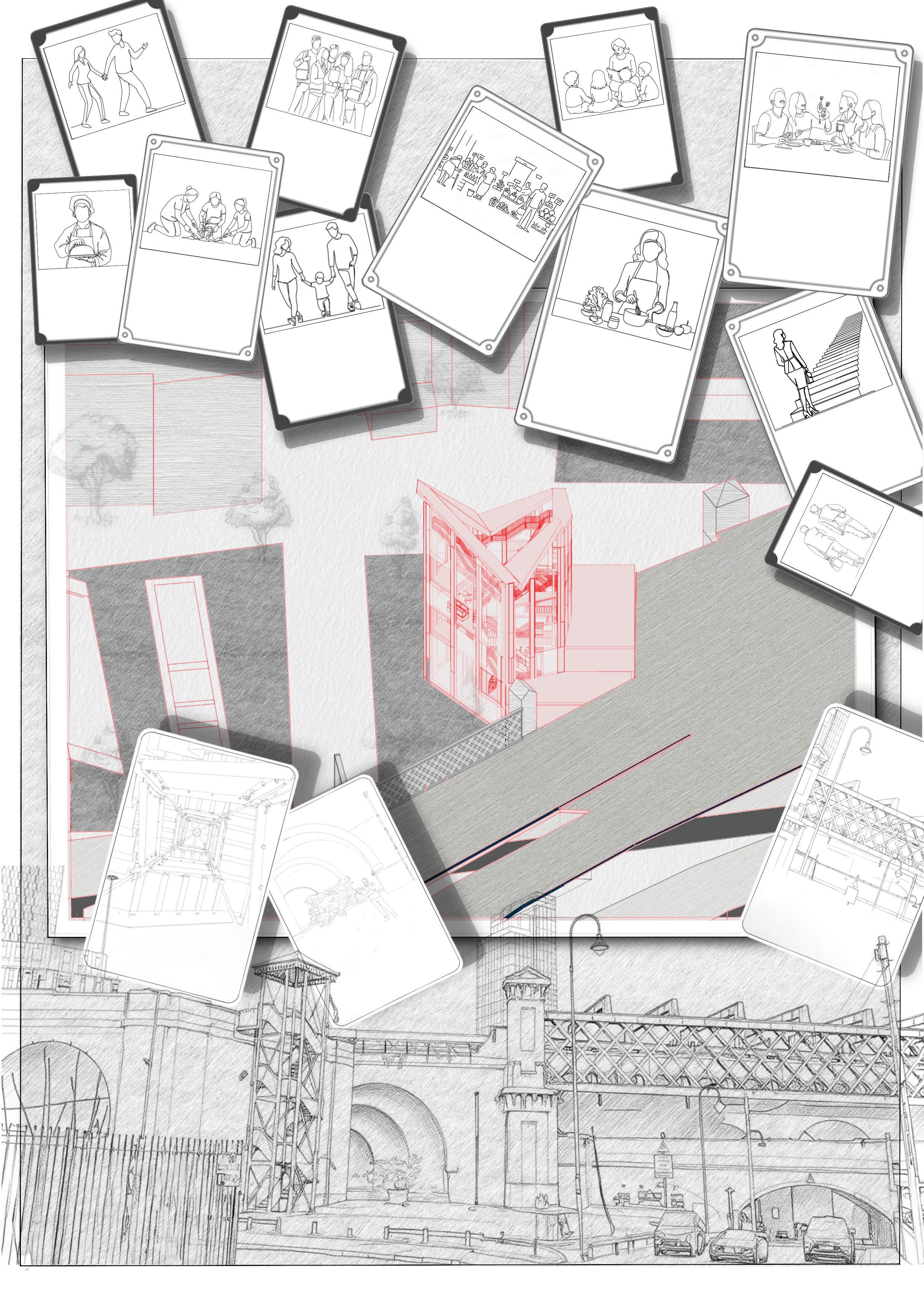
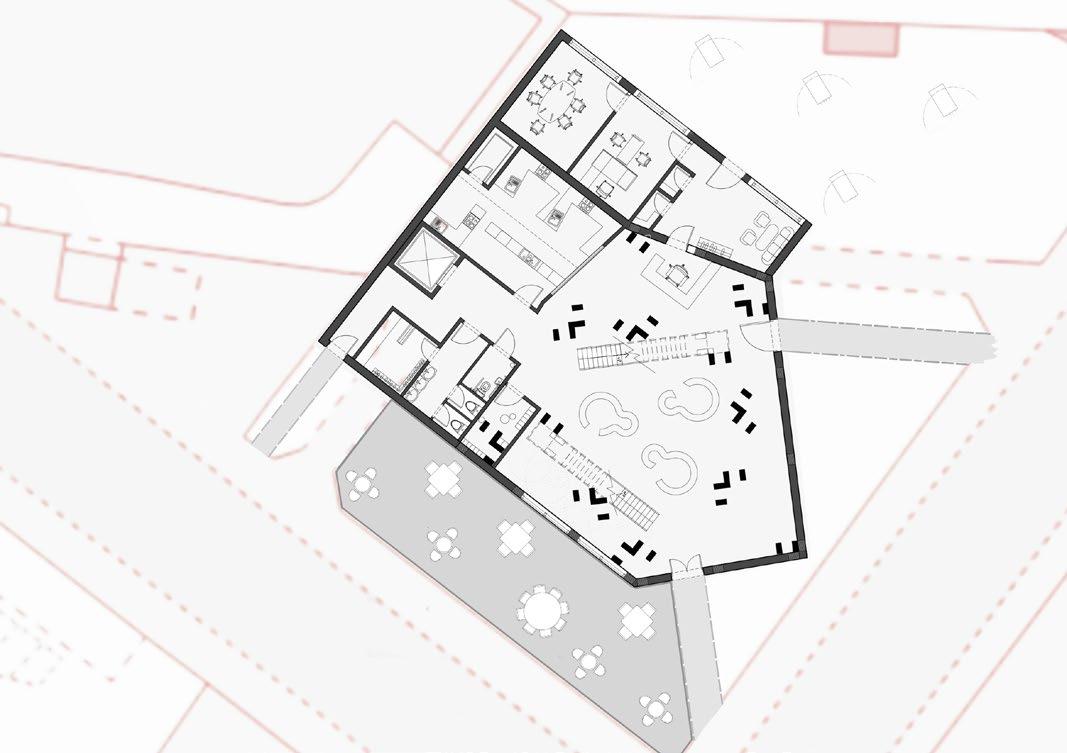
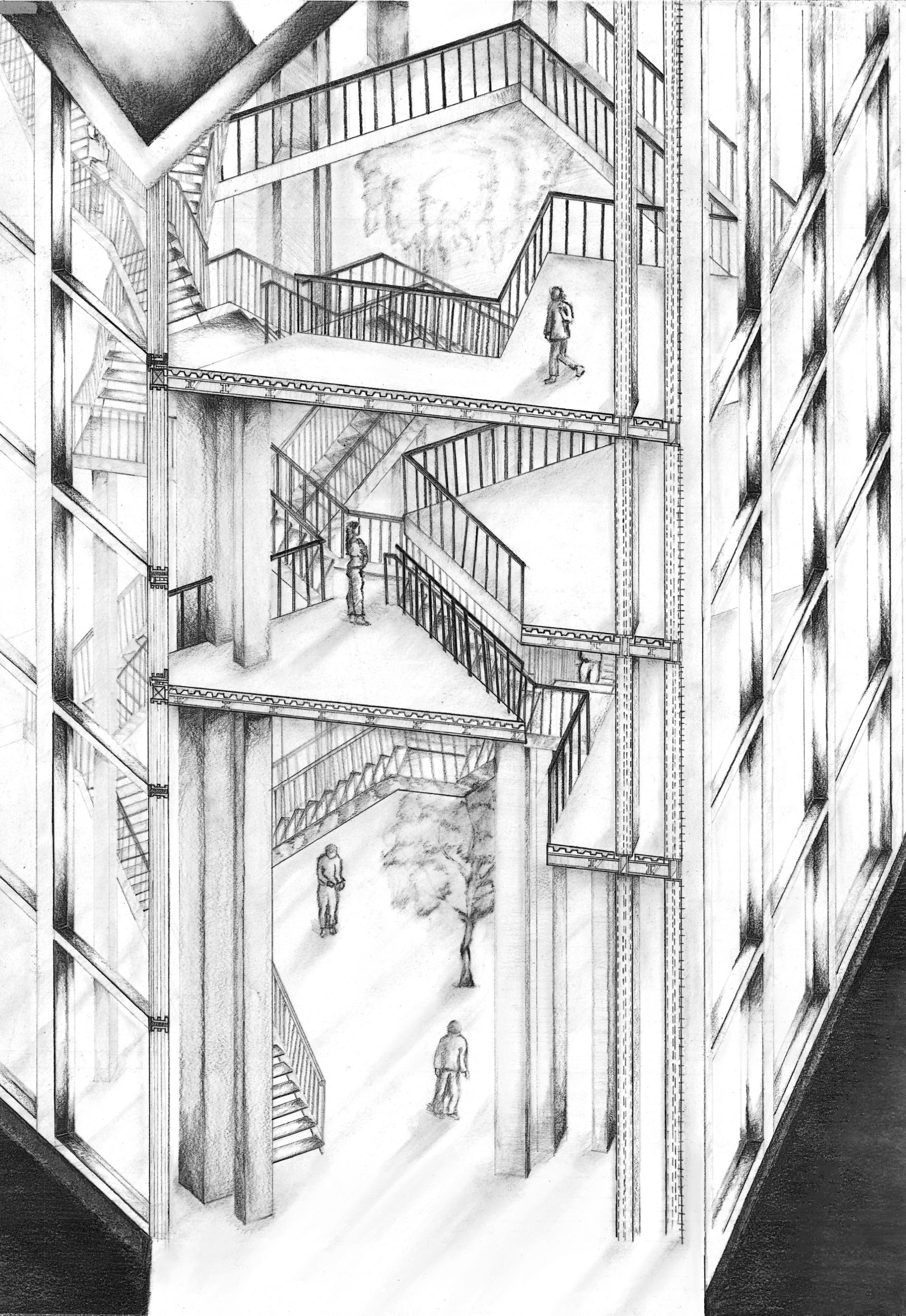
The proposal is situated in a historically charged site in central Manchester, where a well-known red staircase and the surrounding industrial structures form a core part of the area’s identity .These visual cues of the arches, viaducts, and stairs became a mnemonic device to turn the site’s nostalgia into a spatial driver for activating collective memory.
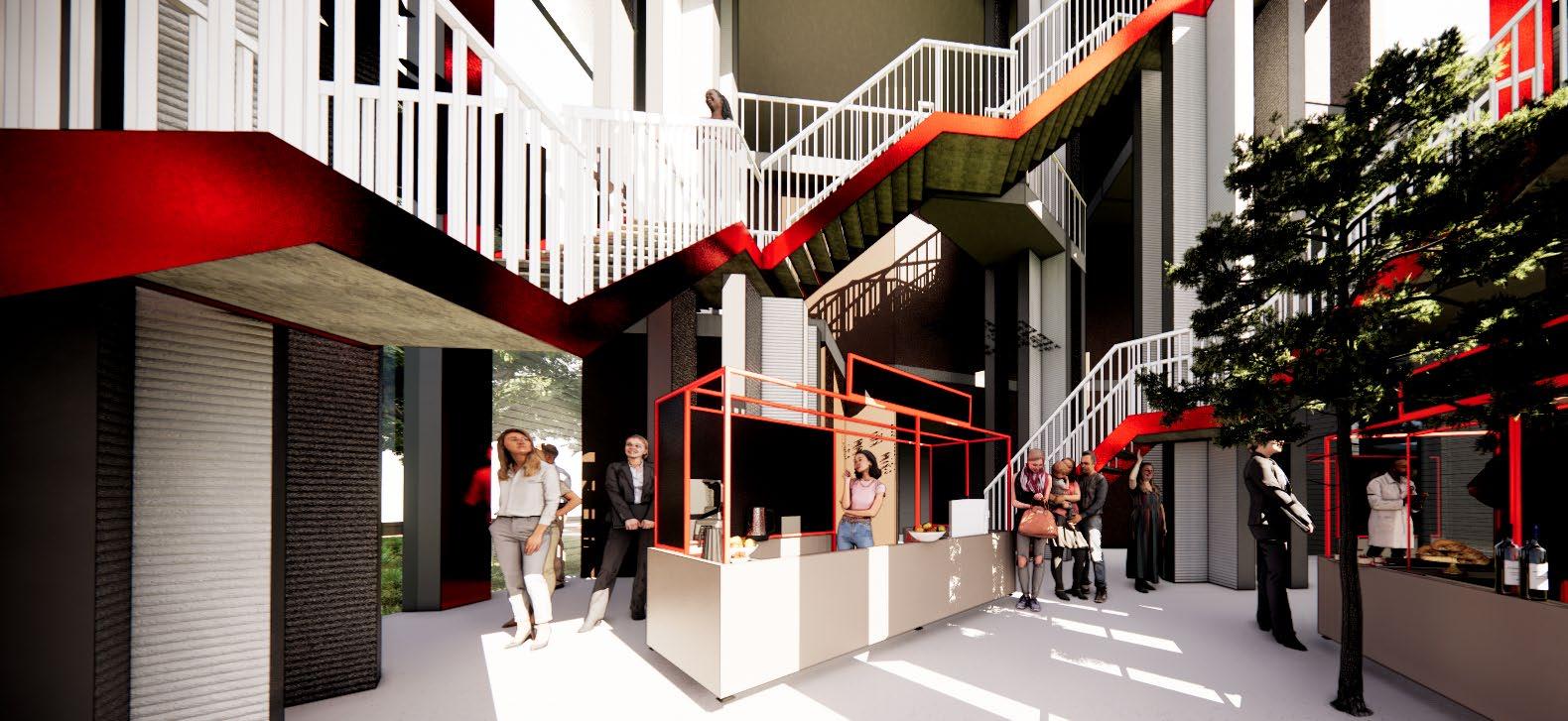
The brief called for a food hall that integrates cooking schools, market spaces, social areas, and zones for growing produce. These programmes are unified through a focus on nostalgia as a connector. The cooking school offers classes that recreate familiar cartoon foods such as dishes from Ratatouille, SpongeBob, or Kim Possible, playing on the site’s nostalgia and positioning food as a shared cultural memory. This intersection of the staircase imagery augmented by cartoon nostalgia imagines the descent into the food hall as a contemporary retelling of “ Alice falling down the rabbit hole”.
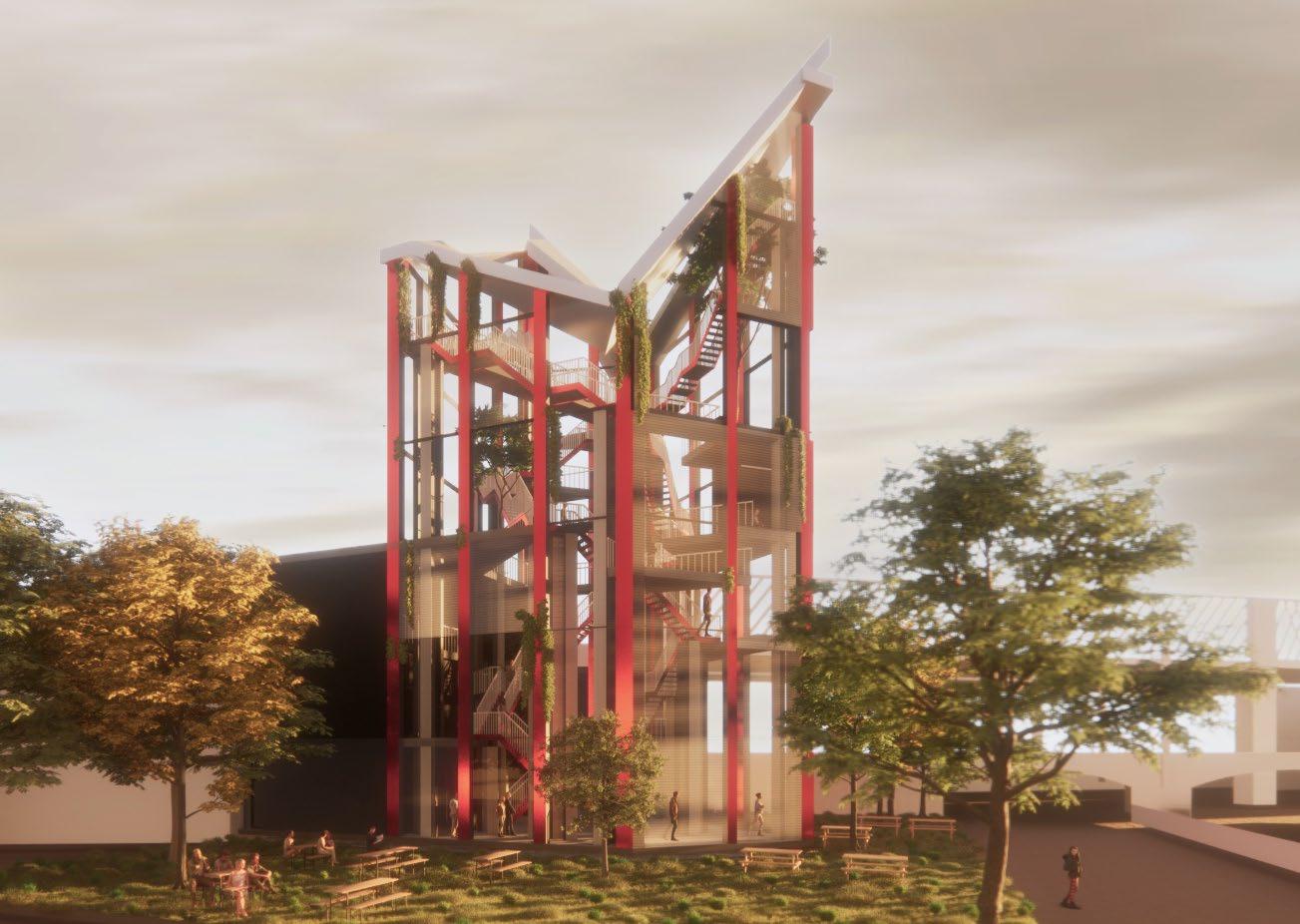
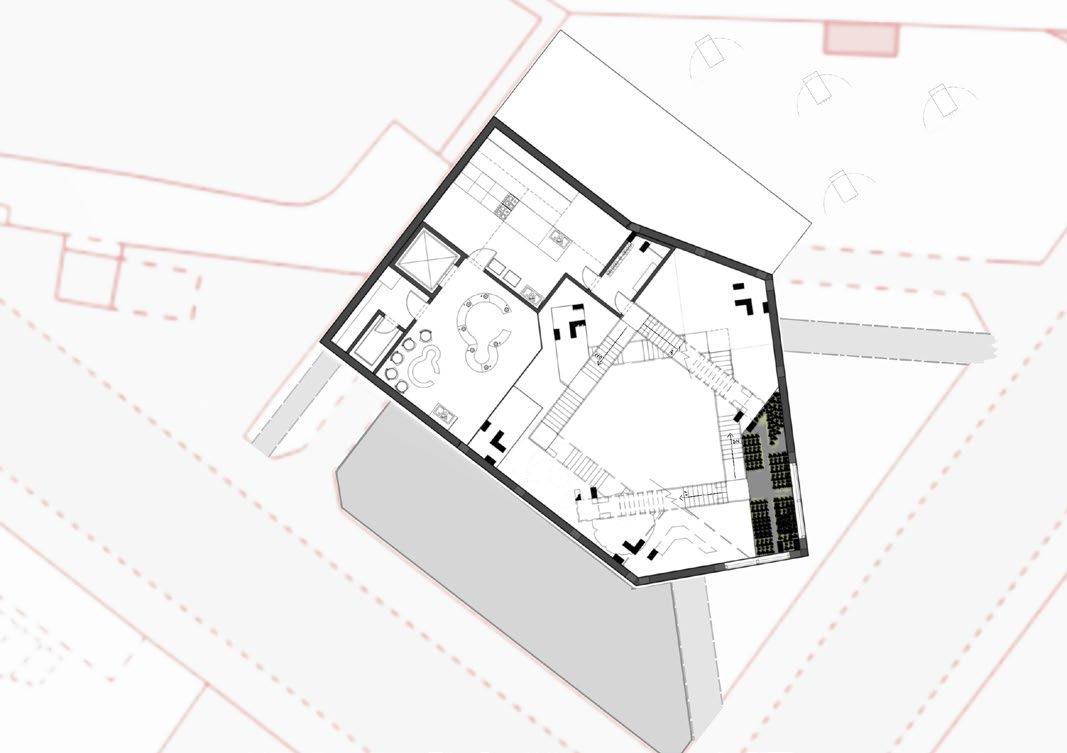
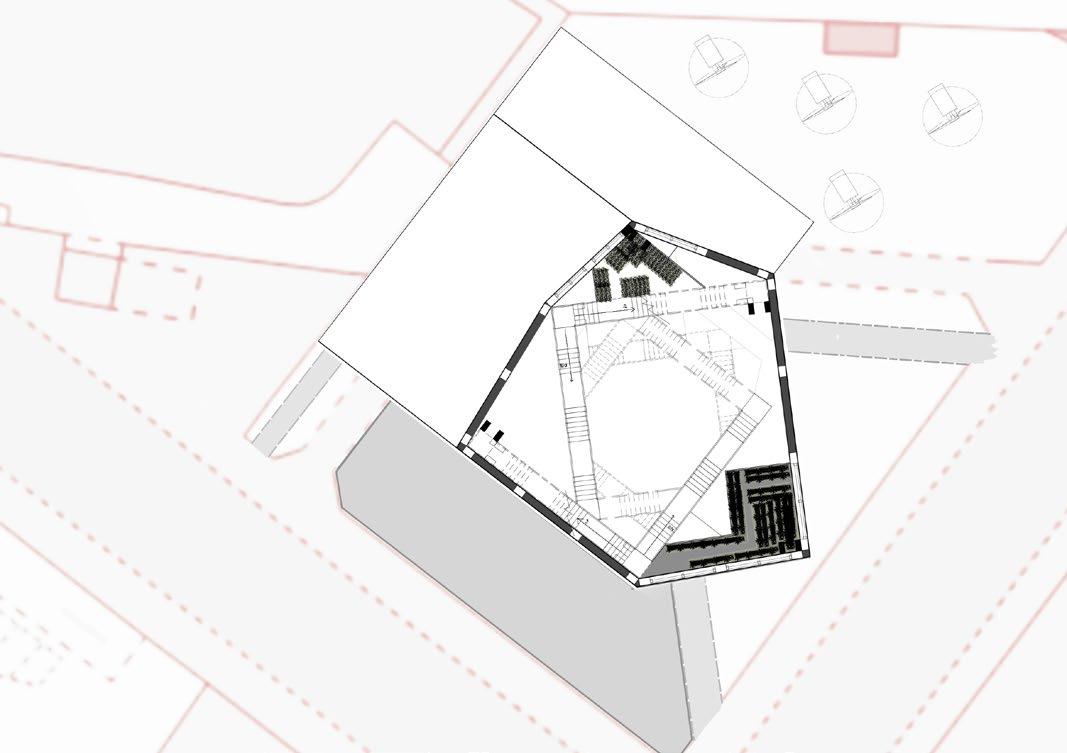
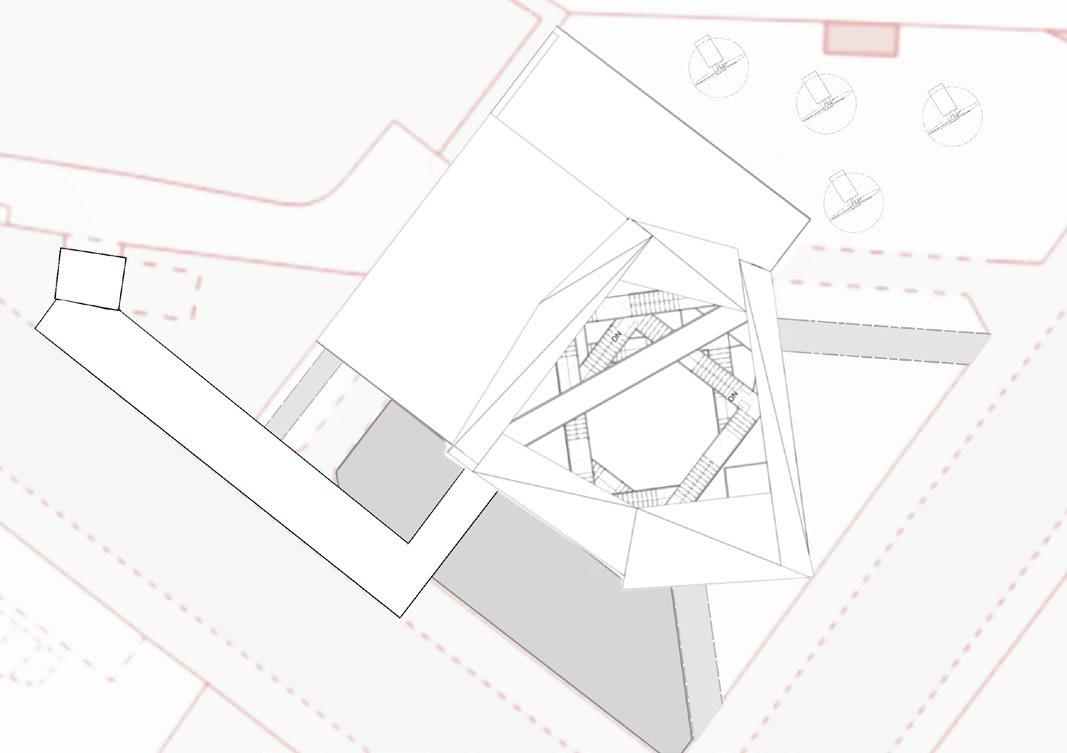
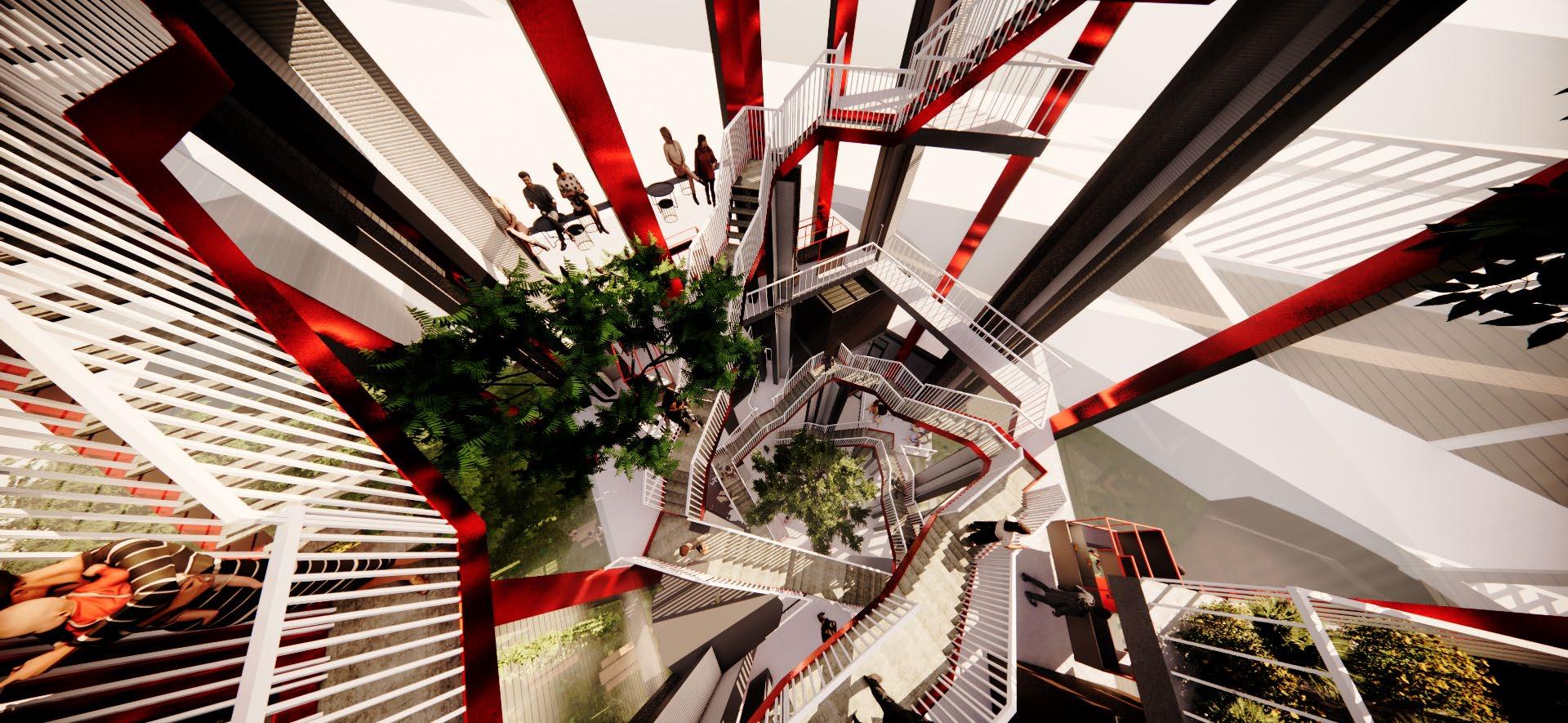
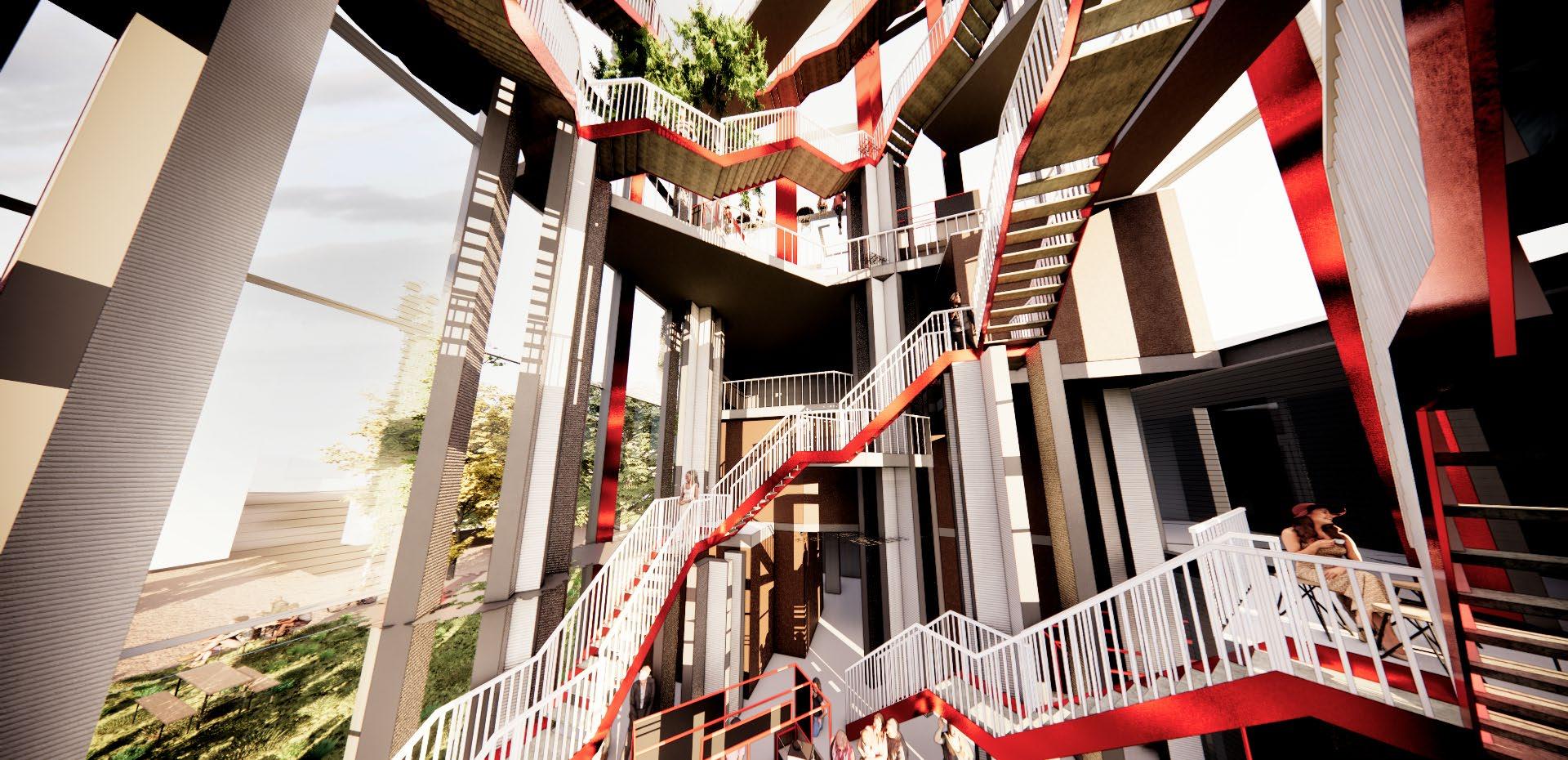
The project reinterprets this cinematic descent into a built experience. The architecture creates an optical illusion of disorientation through intersecting stairs, concentric arched columns, and recursive sight lines. Drawing from the imagery of M.C. Escher to produce a continuous, looping vertical journey. Circulation becomes a narrative device, guiding visitors through a sequence of deliberate sensory thresholds that reconnects users to the act of exploration. Users are confronted with the vibrancy of fresh crops, the aromas from kitchens, and the layered sound-scape of the marketplace. Across the building and landscape, moments of interaction are curated to encourage visitors to pause, participate and support place-making through repeated, shared encounters.
The Food Hall transforms into a facilitator for memory and place making. A place where visitors slowly and playfully, rise and fall, encountering layers of nostalgia through their senses. Each visitor becomes a part of the site’s fairytale with the red staircase acting as the site’s enduring and mischievous narrator.
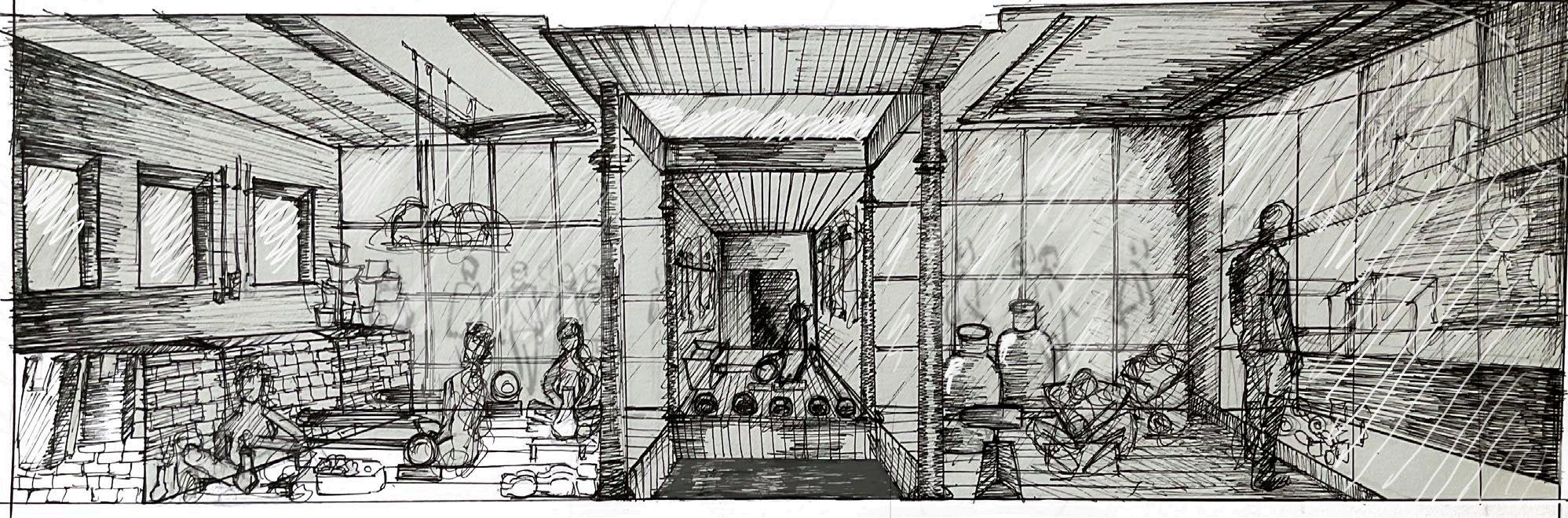
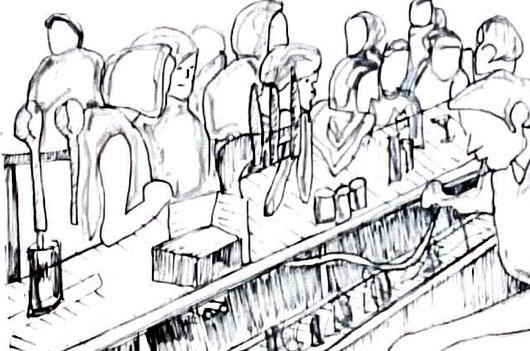
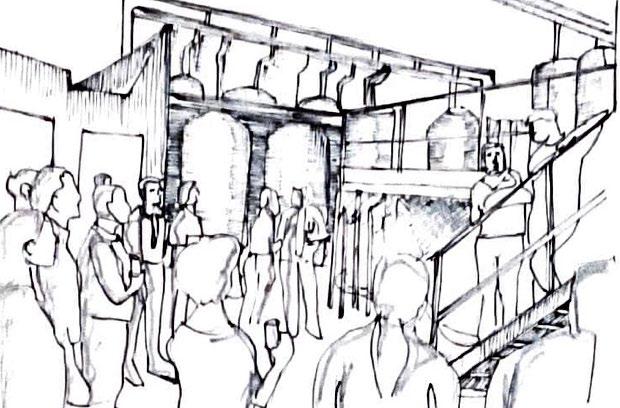
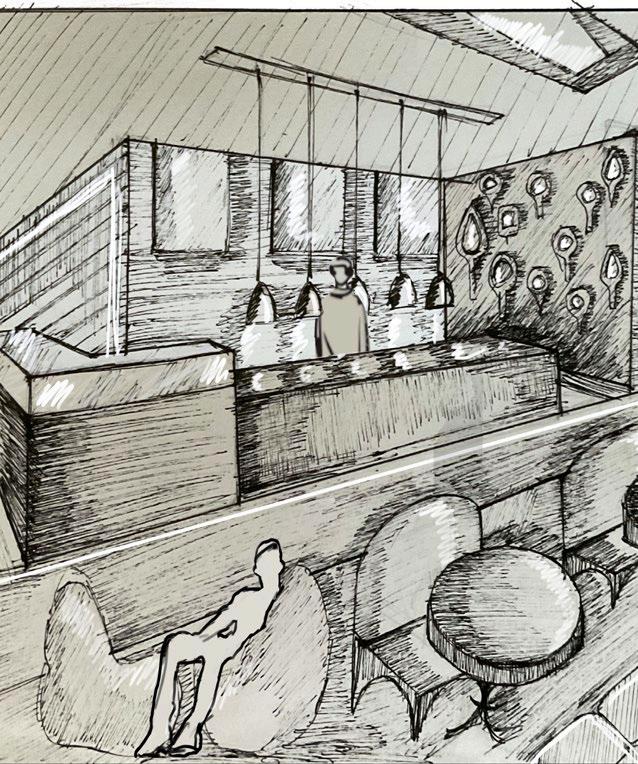
As the project emerged from a desire to craft atmosphere and choreograph experience, the design process began with a series of vignettes that captured the character of its key spaces. Cooking classes were imagined as collaborative environments that could be viewed from galleries. The staircase as an extended journey, punctuated by landings that invite pause and reflection. Market areas cafés and growing zones were fragmented and woven directly into the circulation, creating multiple moments of interaction rather than separate zones marked by function. This aimed to enrich the spatial experience through layers of movement, smell, texture, and activity.
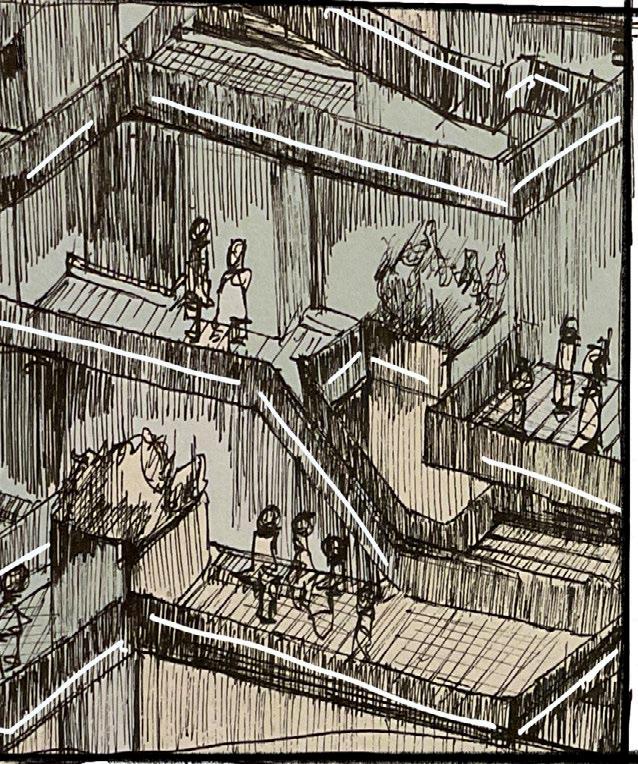
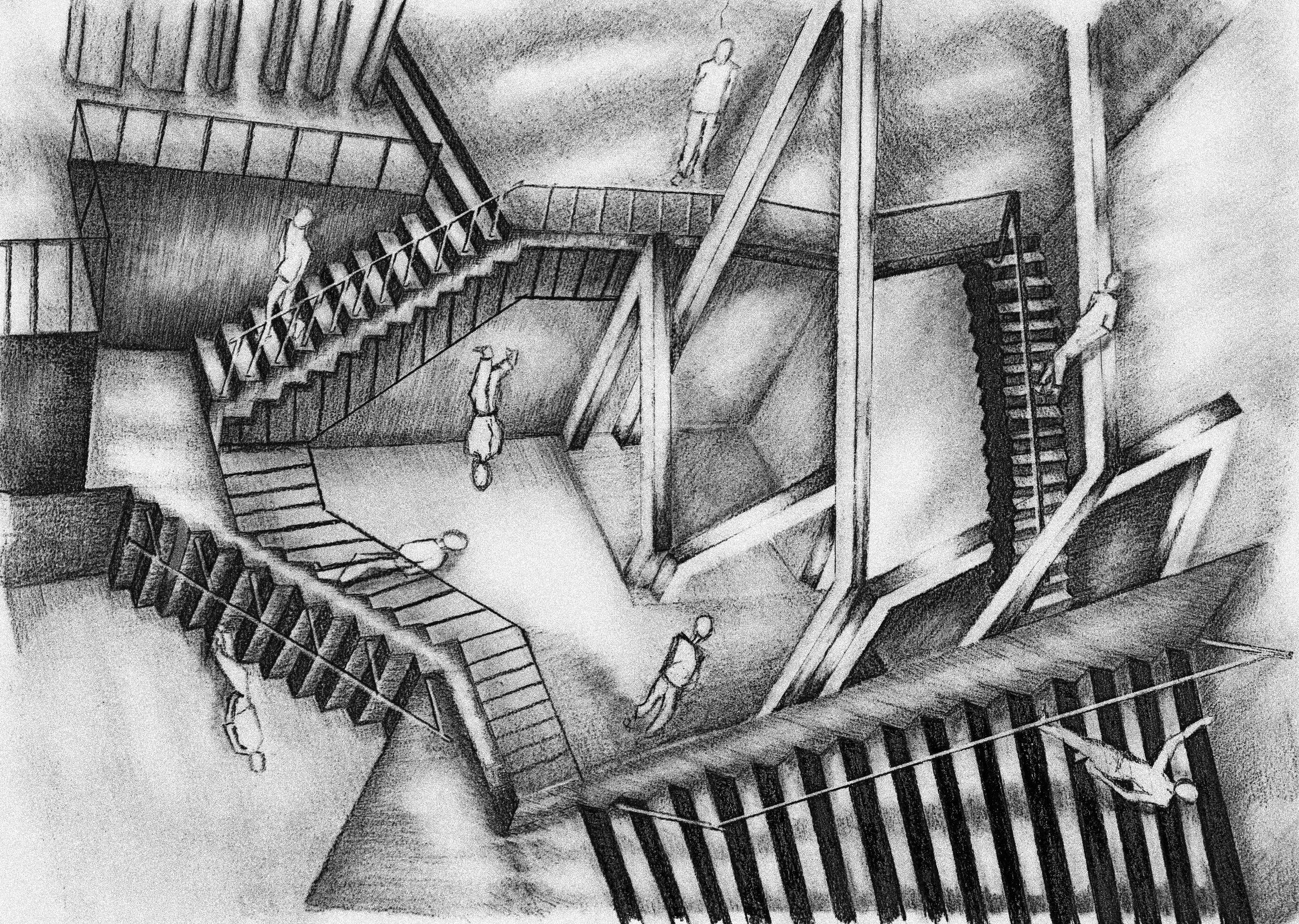
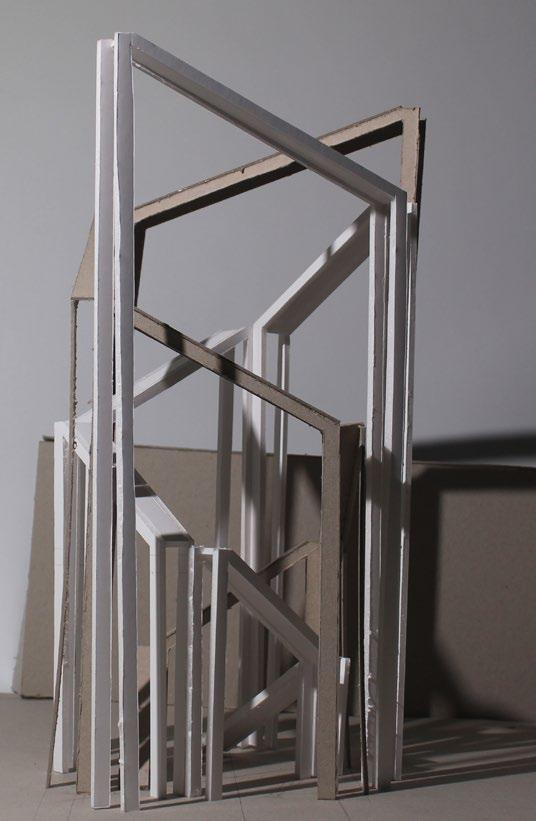
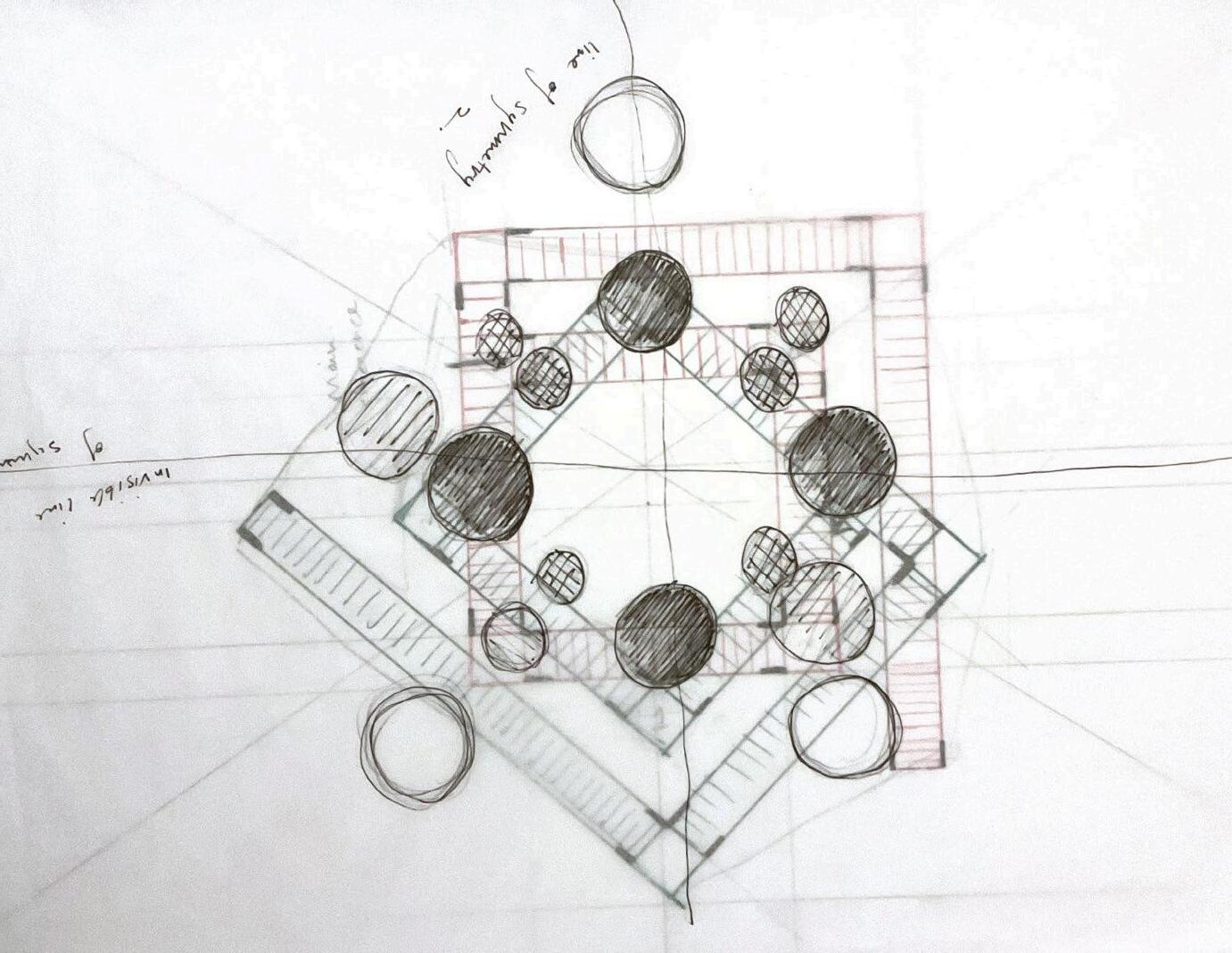
To remain faithful to the central imagery, the entire building was conceived as an extension of the staircase itself. The stairs, together with the columns, establish the structural grid, modernising and reinterpreting the site’s iconic arches. Layered through the building’s height, these elements form a vertical sequence reminiscent of the concentric arches found on site, while in plan they echo the geometry of the falling vortex.
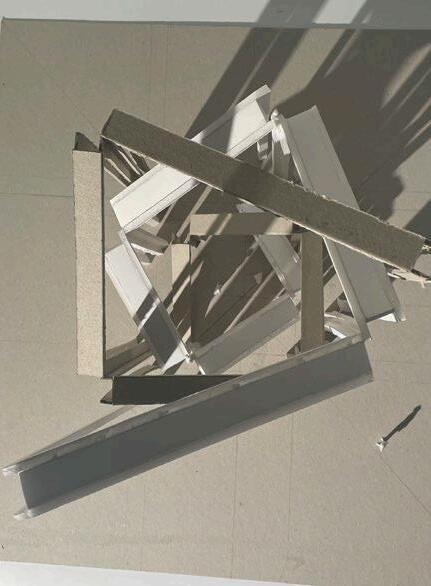
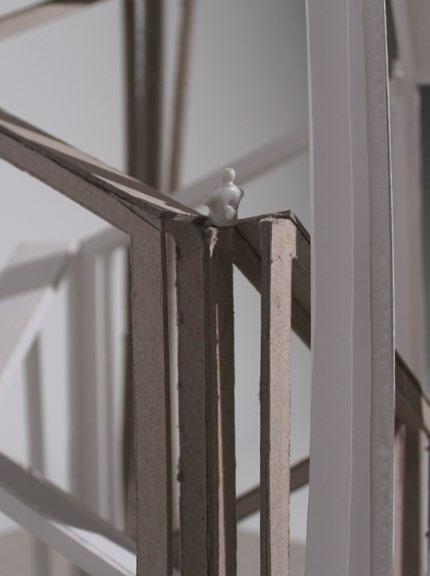
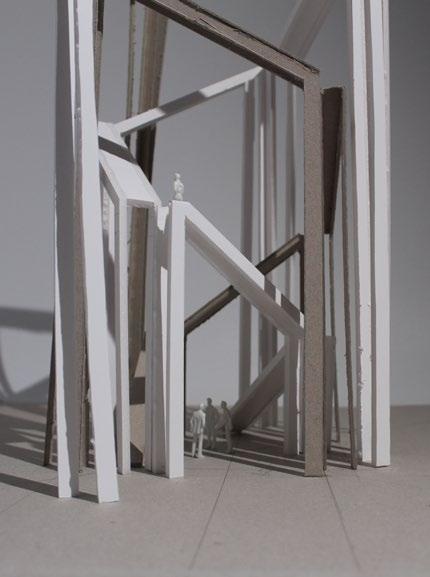
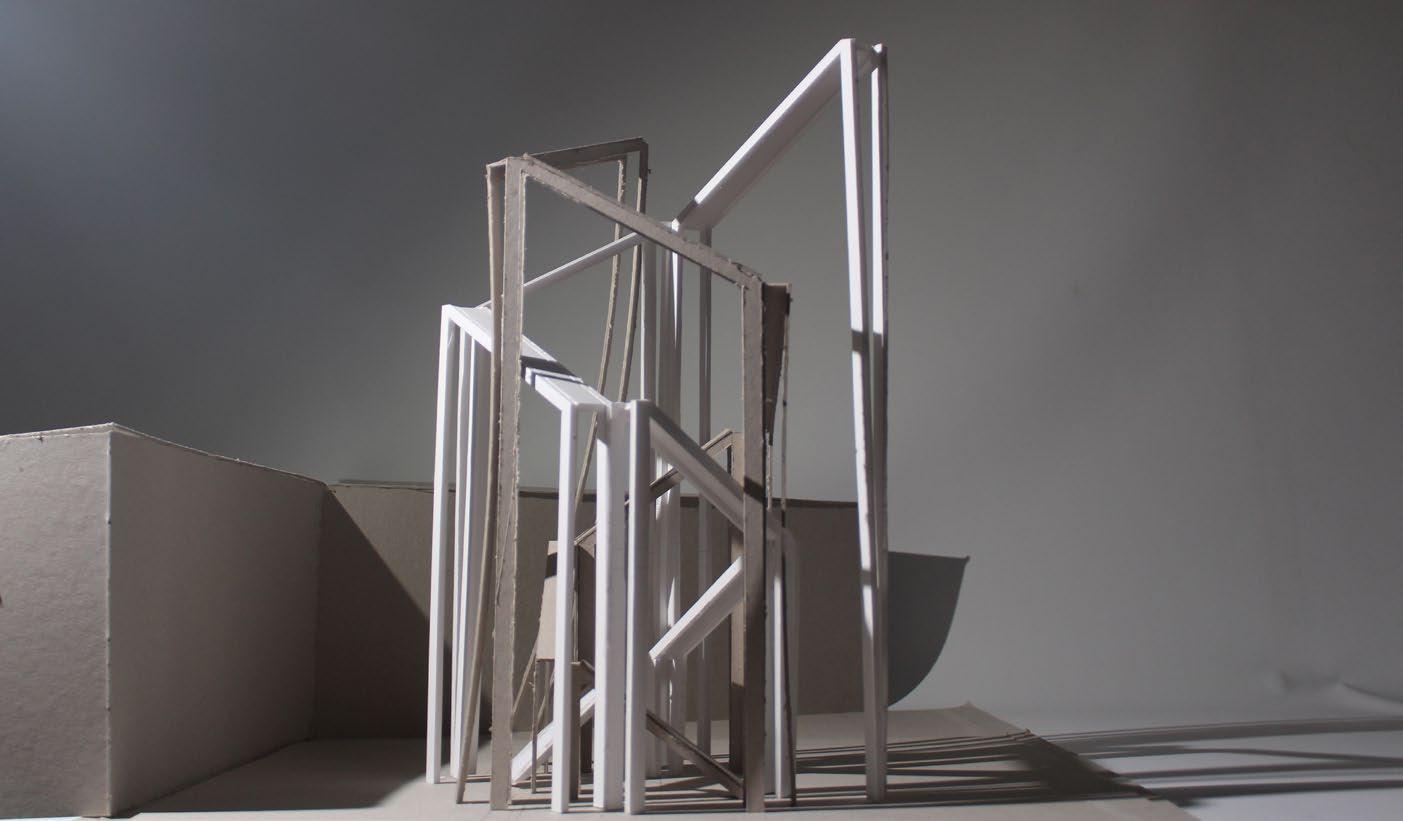
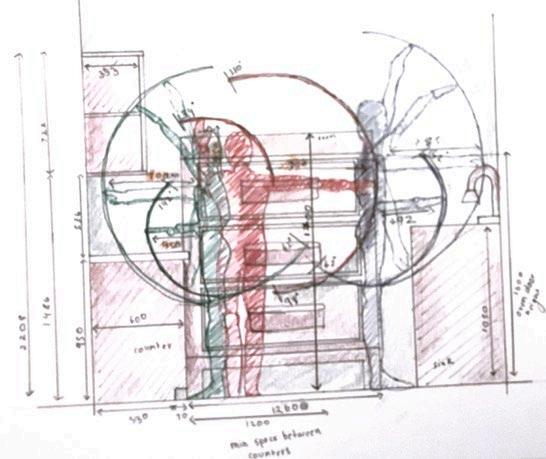
With the structure established, a 1:10 model was constructed and tested to observe how light and shadow moved through the stair assembly, and to identify where the ergonomics of the form could naturally support landings. These observations worked together to inform how each landing would be integrated into the structure, shaping moments of pause in response to both supporting function and user comfort.
Couplestaking acooking classtogether
De-compressing from a week of classes in the cafe. Bonding over their cartoonsfavourite
SMELL The heat of the stove and the textures of ingredients shape the experience through touch. The sounds of voices,animatebargaining,andmovement theenvironment. The distinct scents of herbs and flowers drift through the pathways.
Spends the day at the food hall interacting with all the activities and slowing down to spend time together
The staircase that becomes the basis of the experiential language of thebuilding
SIGHT Along the staircase, shifting sightlines play opticalillusions The industrial language of the viaducts shape the architectural language of the building and get in-cooperatedintotherailings The concentric arches on sitebecomethestructural languageofthebuilding
“Architecture as visibility ”
Personal I social intervention I 2025
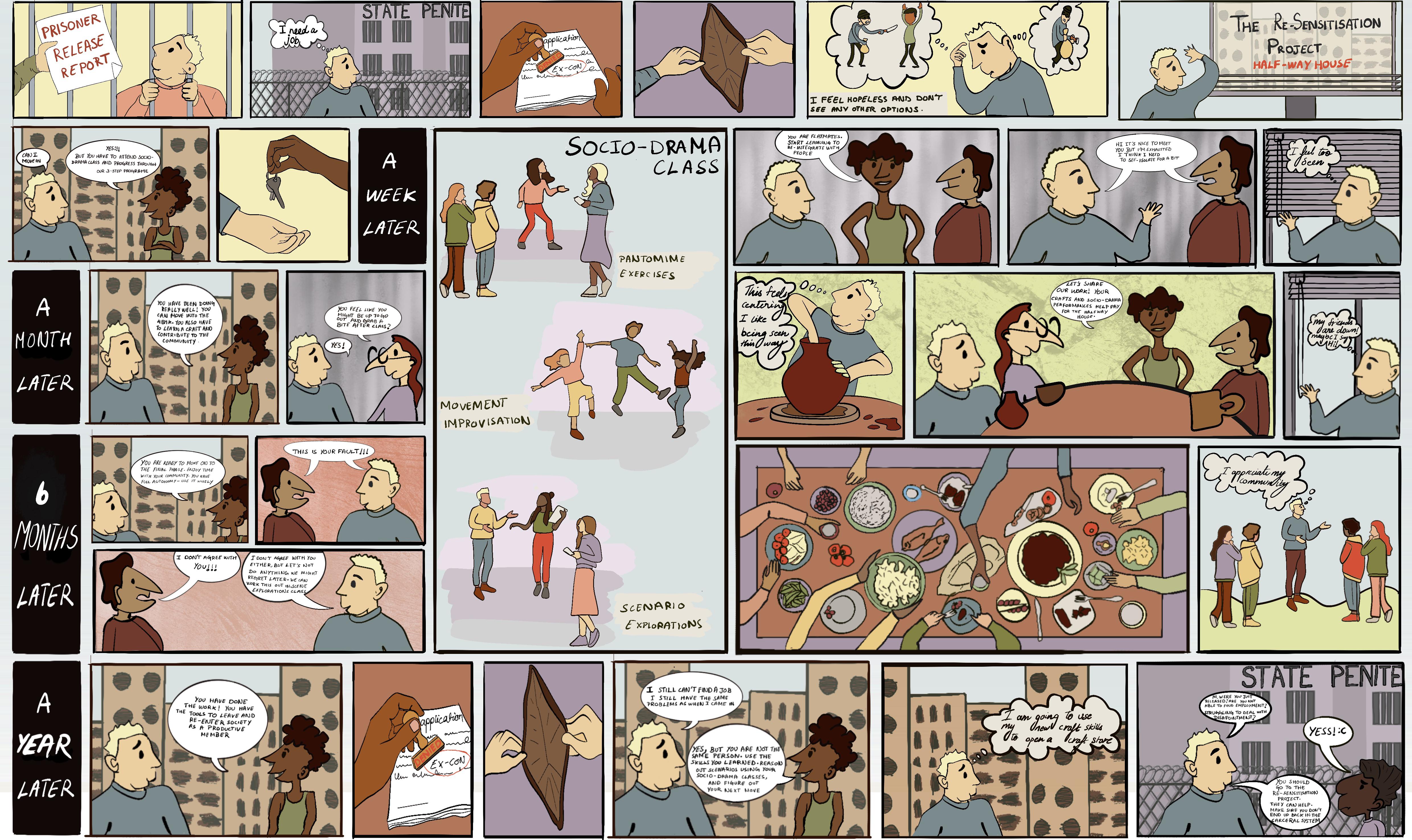
The project proposes a theoretical framework that responds to rising re-incarceration rates by positioning architecture as an agent of behavioural rehabilitation. Drawing on Foucault’s Panopticon and Easterling’s Extrastatecraft, the project re frames architecture as an apparatus that repairs. The concept of architectural visibility explored in the text are translated into behavioural visibility through socio-drama. Residents rehearse new patterns of interaction, transforming visibility from a mechanism of surveillance into mutual recognition. Through socio-drama as a behavioural tool, the design pushes for narrative, and participatory community building as catalysts for reducing re-offending.
The proposal implements a model of trust as reciprocity: that to receive it, one must first extend it. Residential clusters are organised as a gradient of social readiness. Residents transition from intimate two-person dorms to shared six-person homes as they rebuild trust in themselves and others. Circulation, thresholds, and sight lines are choreographed to increase visibility as ethical community engagement builds. Communal kitchens, courtyards, and extended walkways support dialogue, and cohabitation.
The resulting pedagogy enables residents to gradually modulate their own visibility, moving from introspection toward community as the environment shifts from enforcing separation to cultivating belonging. The organisational logics itself participate in rehabilitation, echoing Lefebvre’s belief that space is produced and reproduced through use.
The project inverts the logic of the Panopticon, proposing a model of trust that evolves with its inhabitants. In this system of behavioural repair, residents shape and re-shape their environments. The design shapes a new halfway-house system. This system operates on the principle that true rehabilitation and discipline emerges when one acts not in response to being watched, but in the confidence of being trusted.
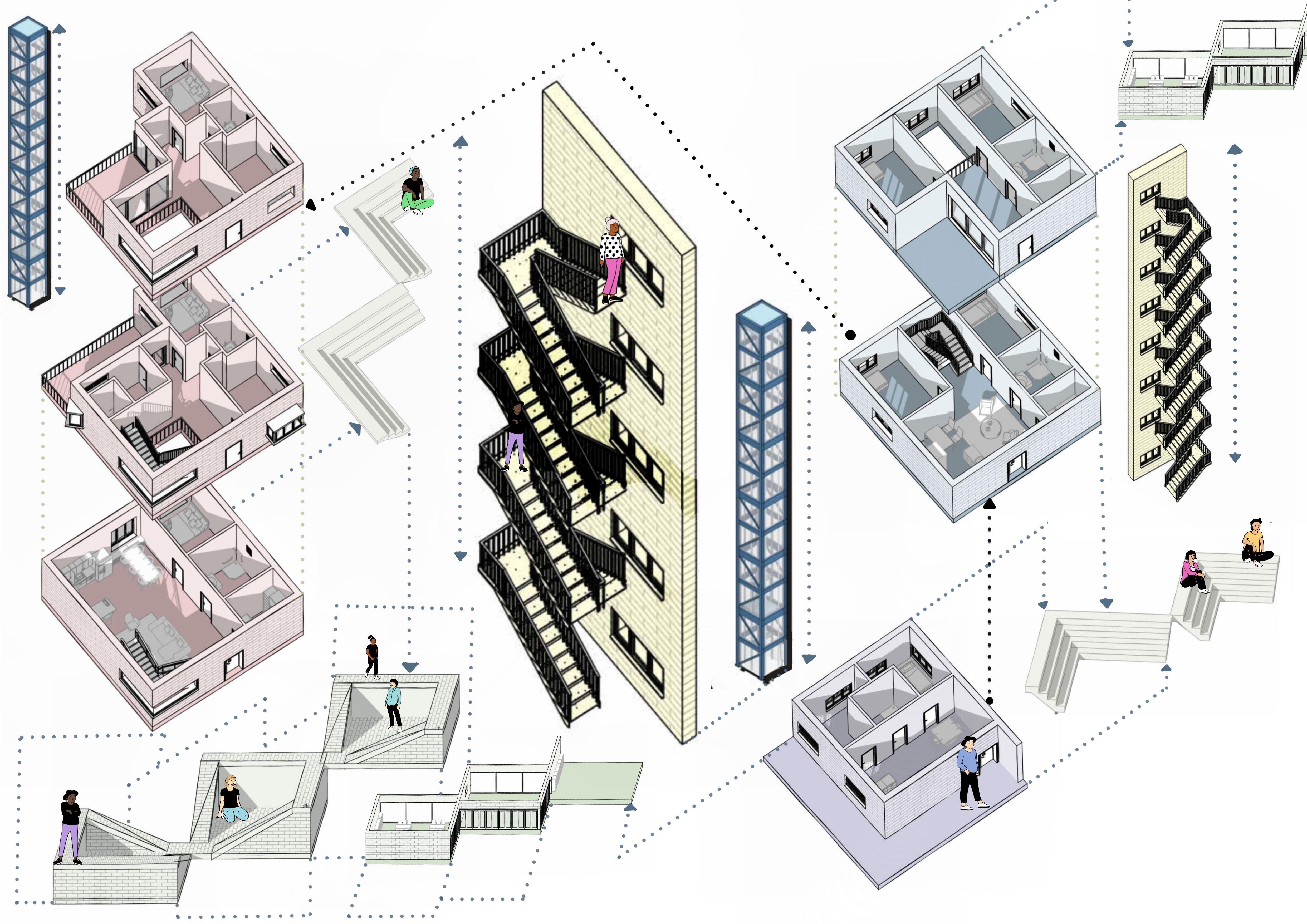
The diagram explores the components that make up the architectures of rehabilitation. It traces how the 2–4–6 bedroom clusters progressively open out into shared community programmes — the amphitheatre, sociodrama rooms, craft workshops, and the terraced social courts. These collective spaces are positioned as thresholds of increasing social exposure, allowing residents to choose their level of participation and gradually build confidence.
“A
polyphonic community ”
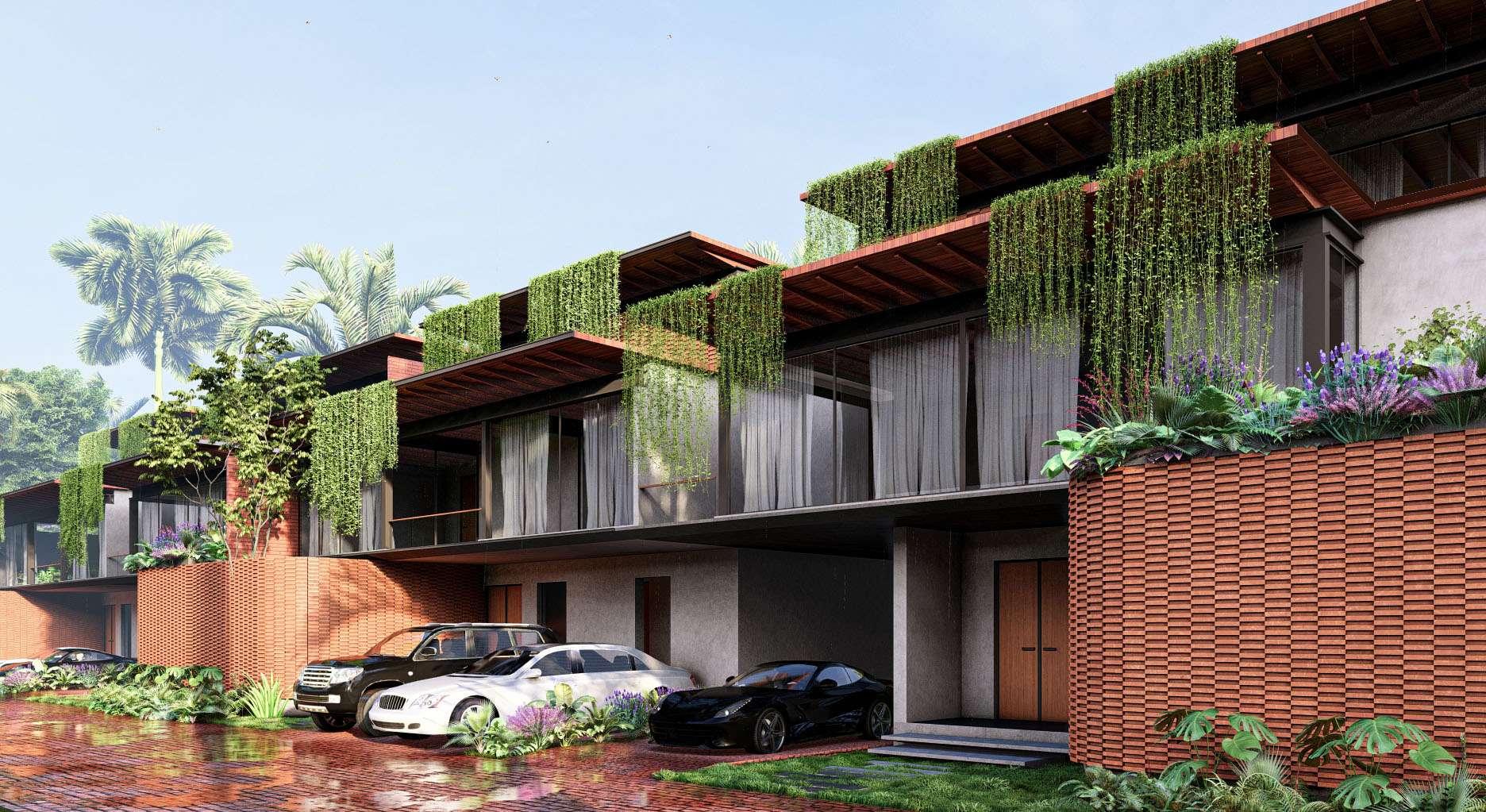
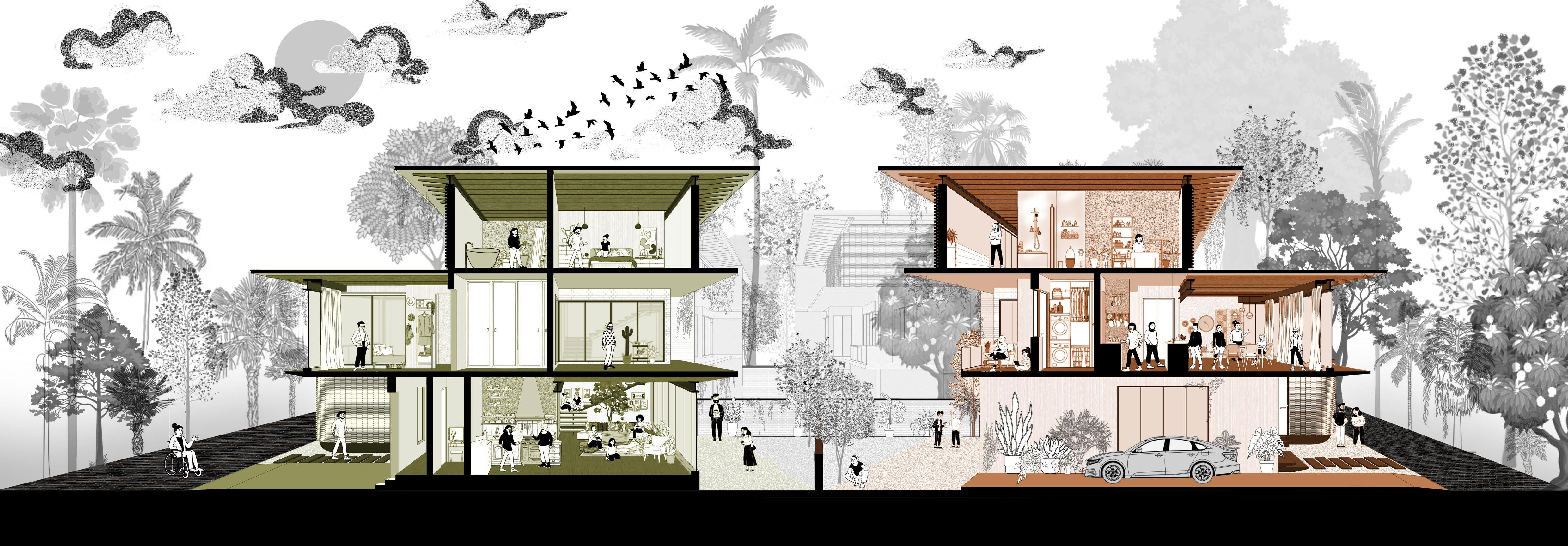
The client brief called for a luxury villa development organised through a row-housing model. The design framework centres on the idea of polyphony—the coexistence of multiple rhythms of living, and ecological patterns. At a masterplan scale, this meant carving out space for diverse species and embedding biophilic systems across the site. At the scale of the home, polyphony translated into an architecture that could hold different family structures, routines, and modes of inhabitation.
Within the studio, I proposed the conceptual framing for polyphony and worked under the guidance of the principal architect, Fahed Majeed, in establishing the architectural language of the villas. In a team of four — Fahed Majeed (Principal Architect), Abhishek Xavier (Senior Architect & Urban Designer), Ar. Solomon Joy, and myself — Mr. Xavier led the master planning and Solomon the South and West villas. I led the iterative design development of the North and East villas, which are the focus of these portfolio spreads, and contributed to shaping the material, spatial, and conceptual identity of the project.
*All Images in the portfolio have been drafted/produced by me.
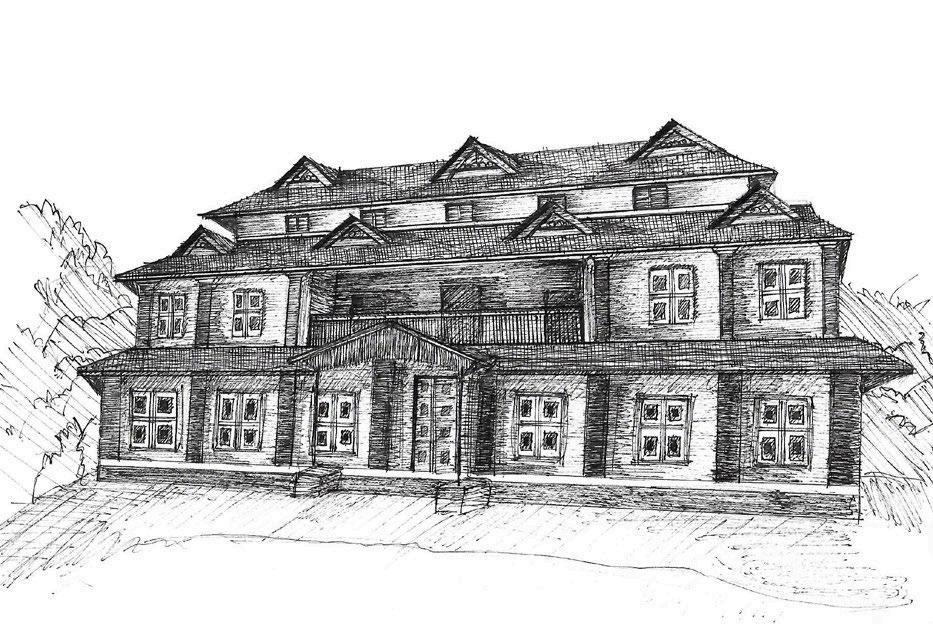
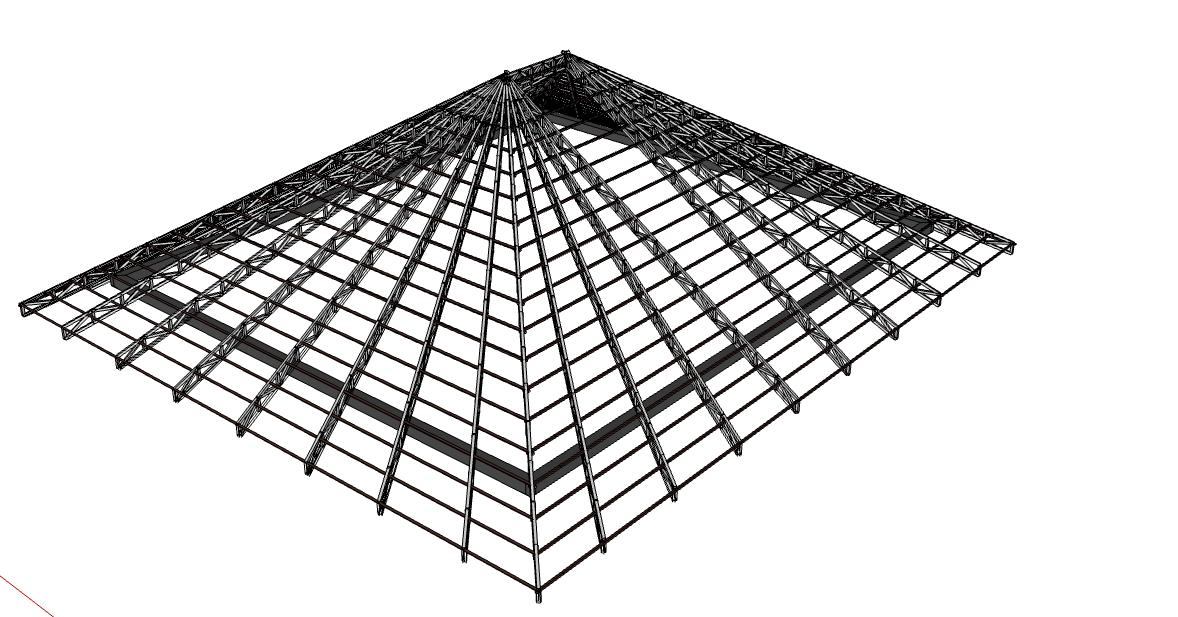
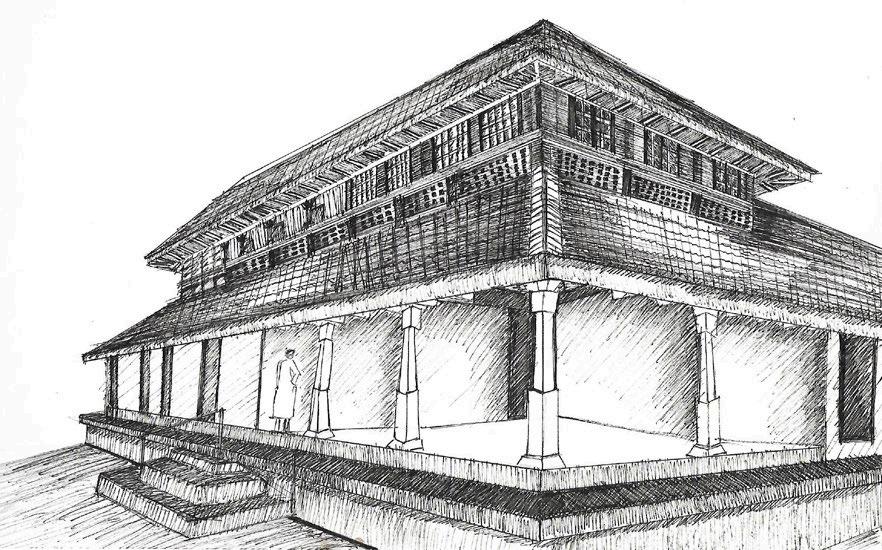
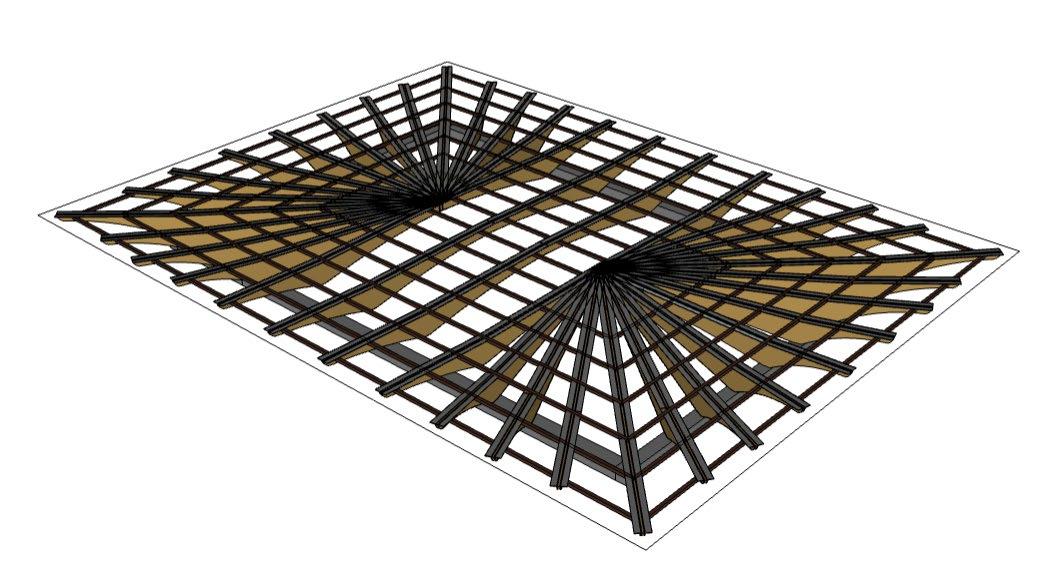
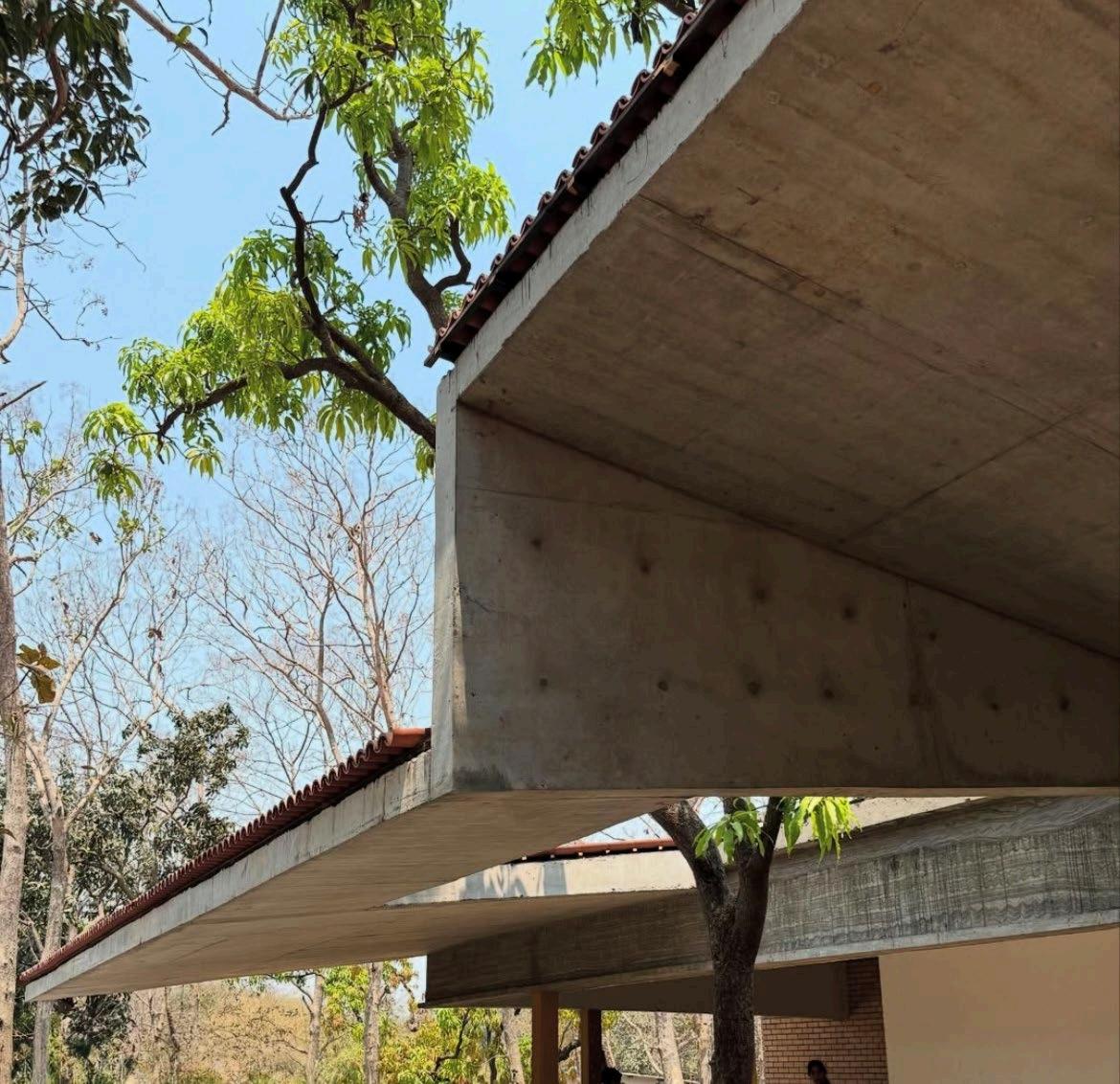
The design reinterprets one of the most recognisable elements of the South Indian house: the pitched roof. Here, it is imagined as if gently pressed downward — a form reshaped by a point of tension. The resulting flattened geometry radiates a fan-like pattern of rafters that pay homage to the original roof while allowing light, ventilation, and spatial porosity to define the interiors. Courtyards and staircases anchor the typology, reinforcing the vernacular lineage while creating intimate microclimates within the homes.
*This framing was refined and developed under Principal Architect Fahed Majeed
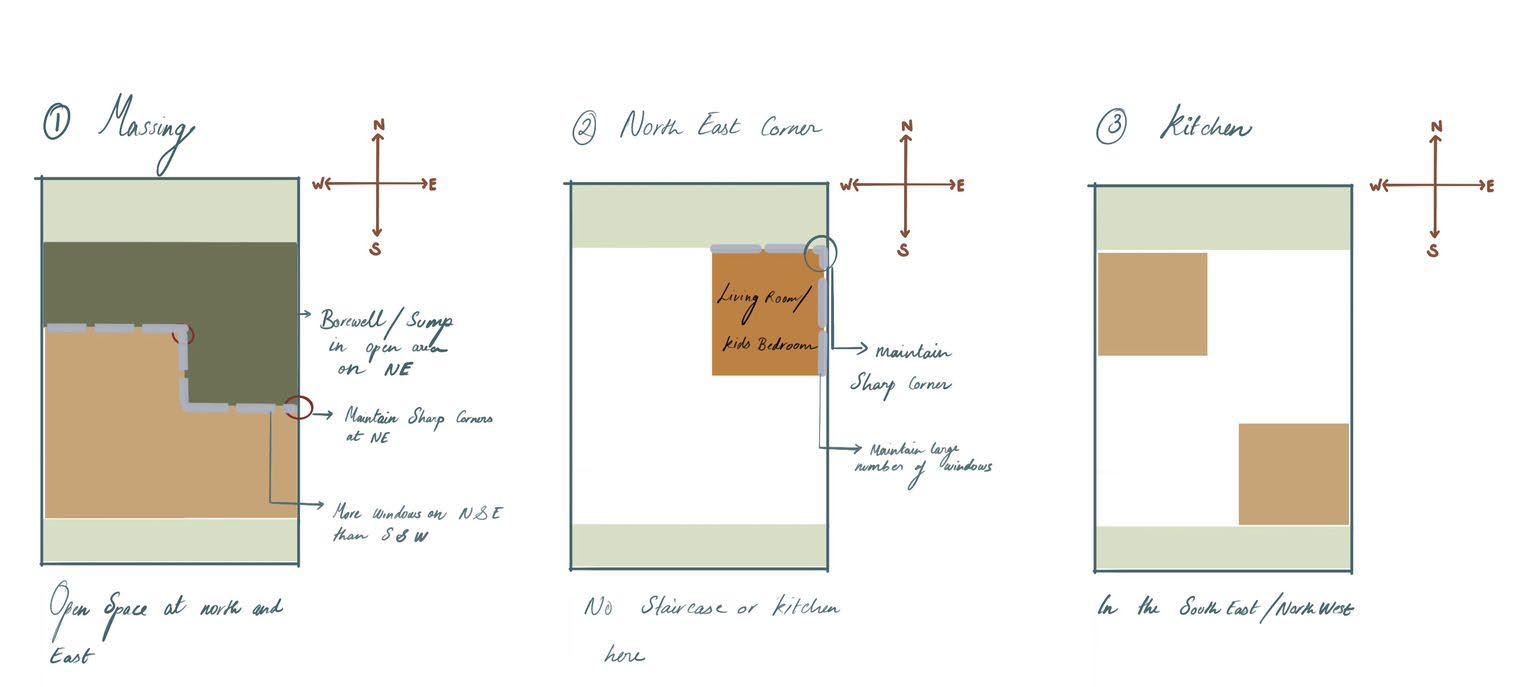
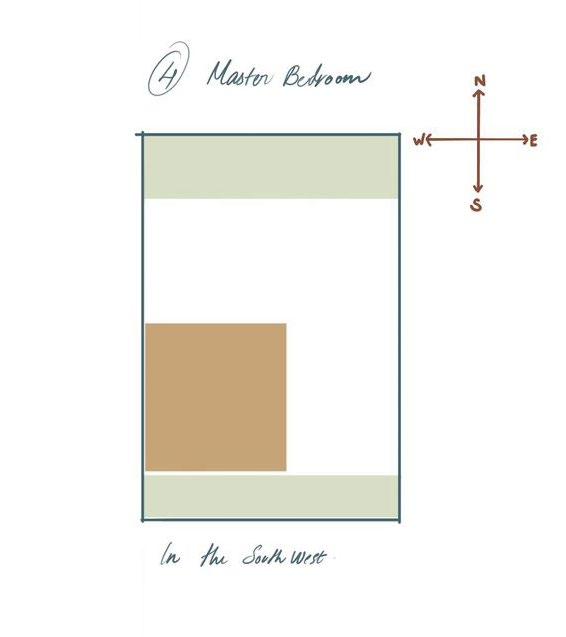
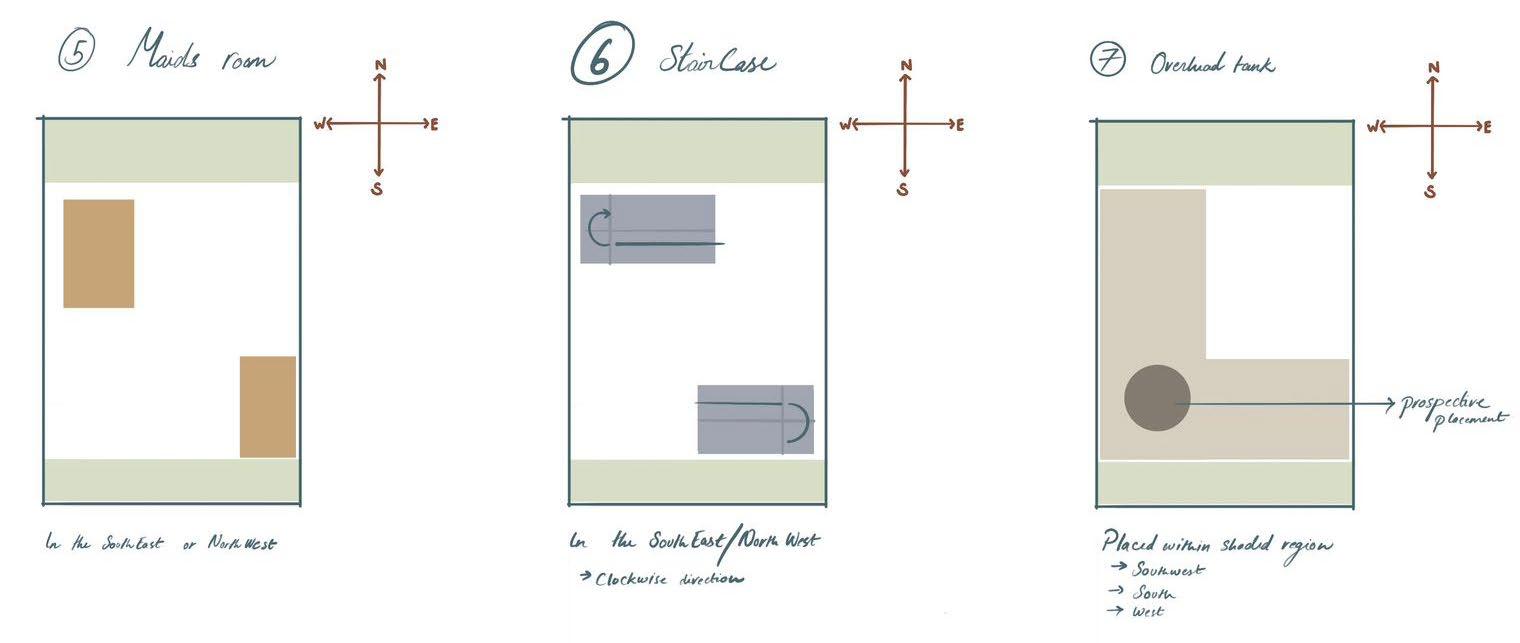
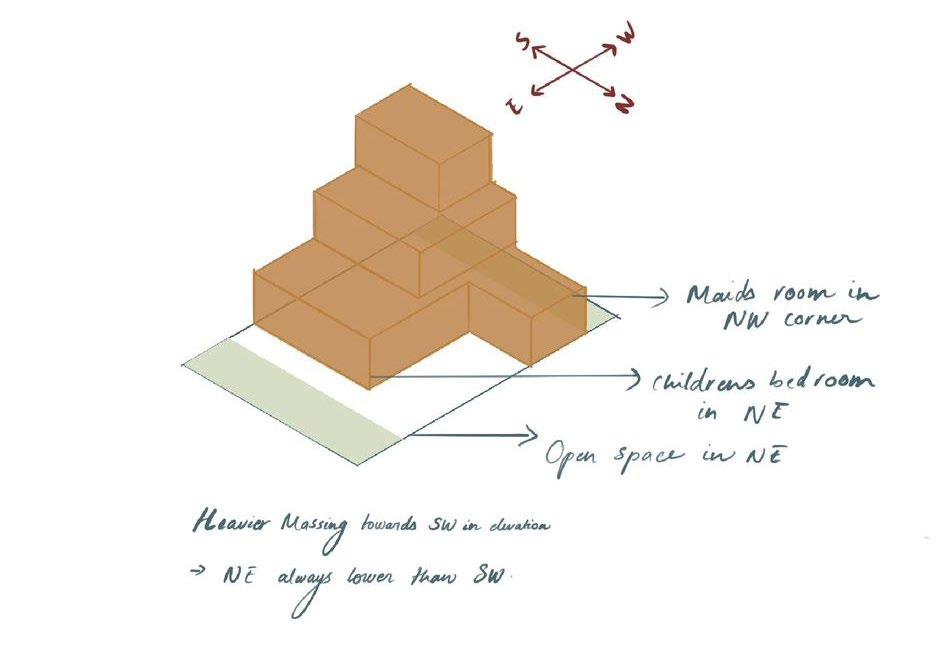
The project is further guided by Vastu principles, which shape zoning, and orientation. The house is planned to allow users to “follow the sun,”. Through the conceptual development process, I identified that north-oriented plans could be mirrored to achieve east-compatible layouts, just as south-facing plans could be mirrored to work in west-facing configurations. This allowed the villa typologies to remain Vastu-compliant across multiple plot conditions while maintaining a cohesive architectural language.
50 MM HEIGHT KERB
100MM THICK RCC SLAB
20MM THICK CEMENT BOARD
ALUMINIUM INSULATION
12MM THICK CEMENT BOARD
6MM THICK FABRICATED PROFILE PLATE
WOODEN SIDE PLANK
*Vastu co-ordination for the project was lead by me DESIGN DEVELOPMENT -
6MM THICK FABRICATED PROFILE PLATE
WOODEN PLANK CLADDING
*All details were developed under Principal Architect Fahed Majeed
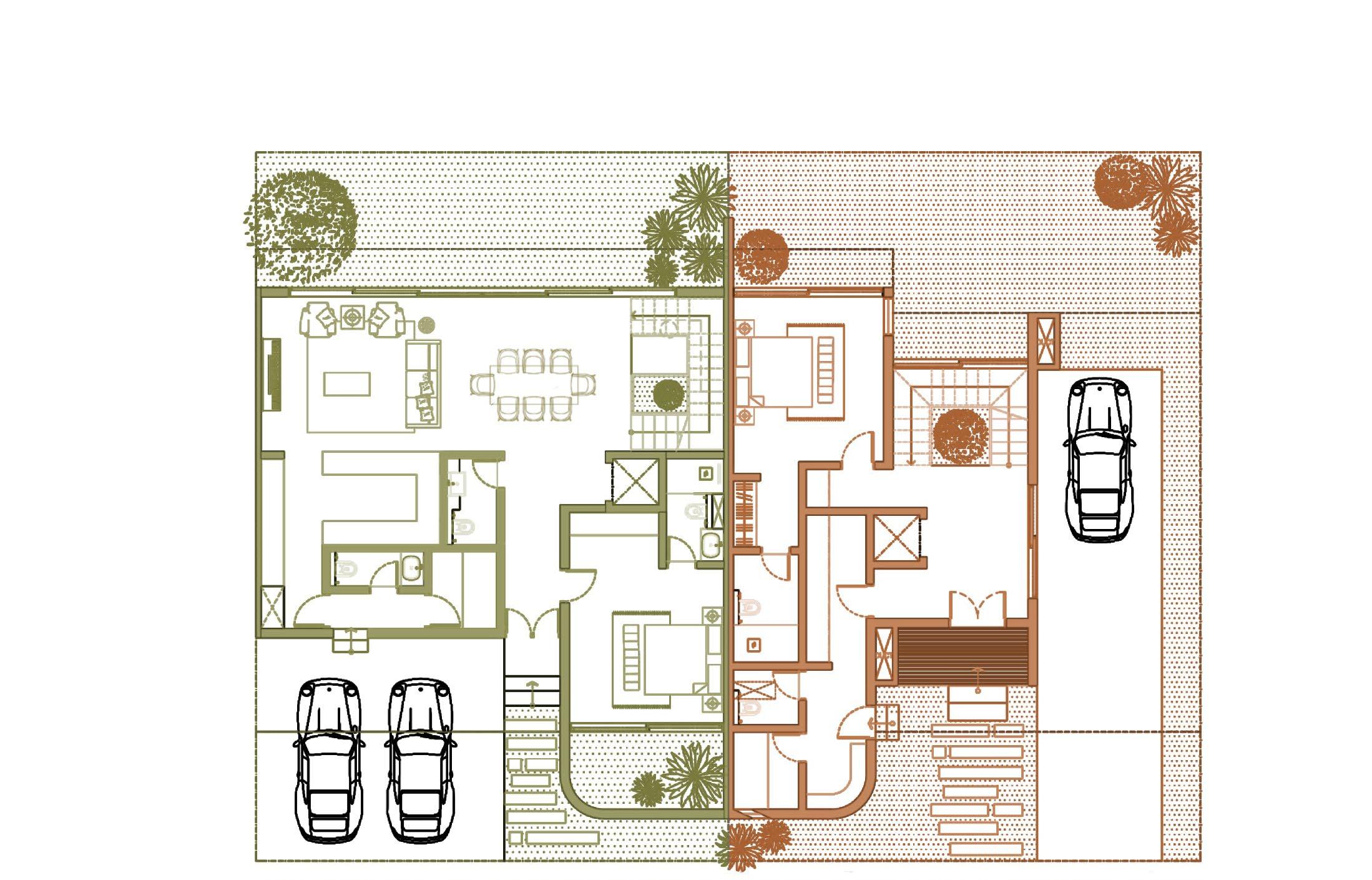
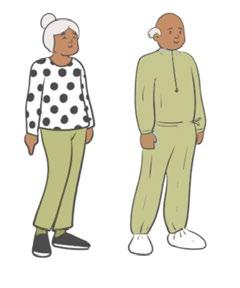
The grandparents inhabit the ground floor, where living spaces open into the backyard and form the home’s primary social area for communal meals, and intergenerational gathering

The ground floor transforms into a studiolike living space for an older child who wants autonomy with proximity, supported by independent access and a small pantry.
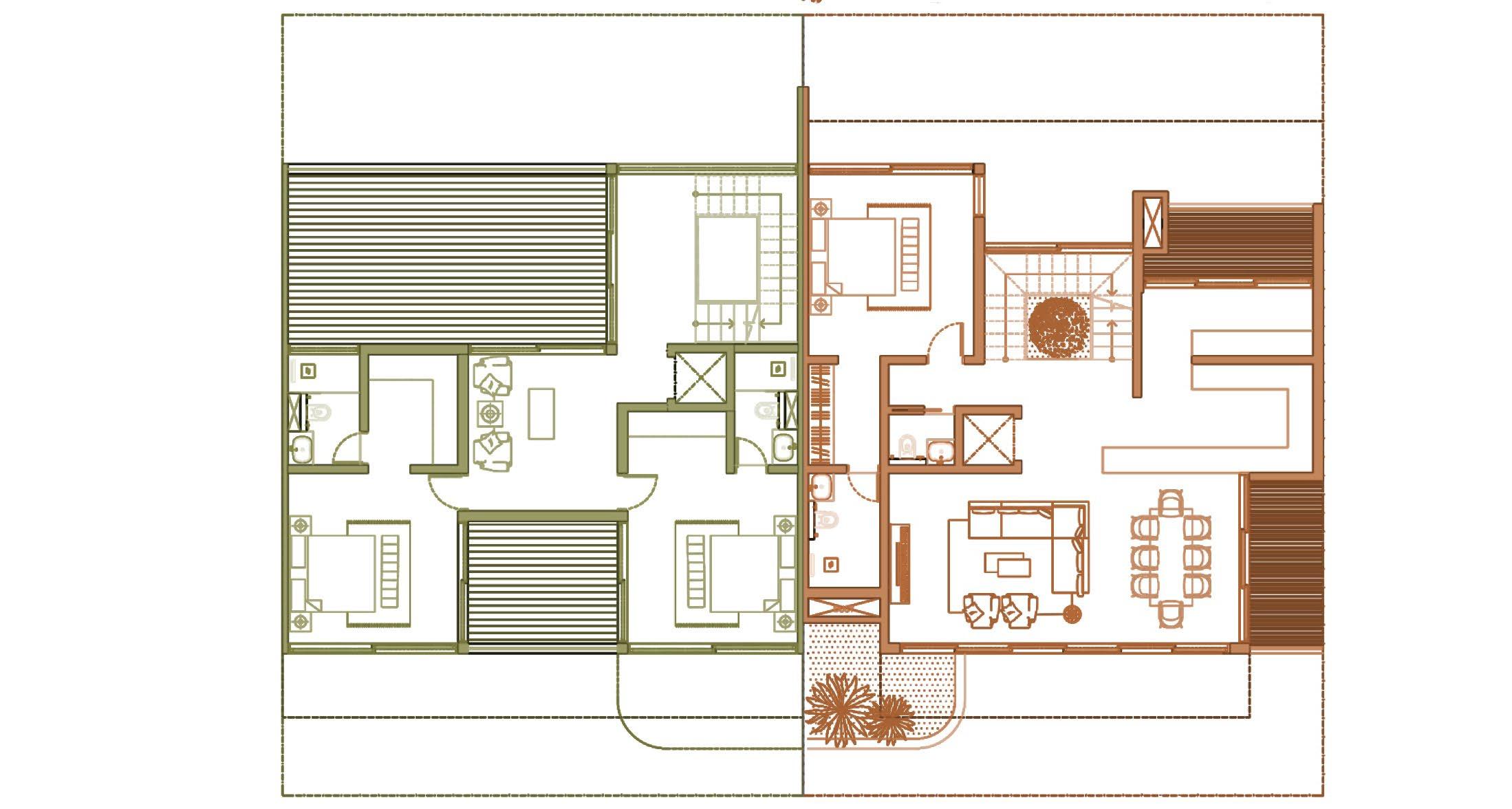
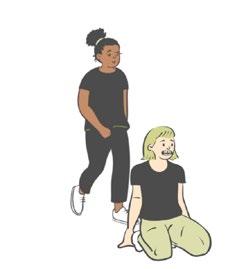
The children occupy the first floor, with a shared lounge that offers them independence while maintaining visual and spatial connection to the family.
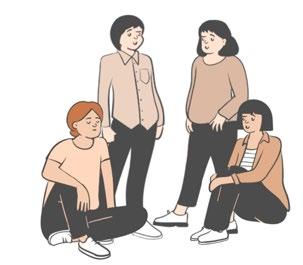
The first floor becomes a flexible social zone with a guest room and shared living areas for hosting, allowing gatherings without disrupting the private spaces above or below.
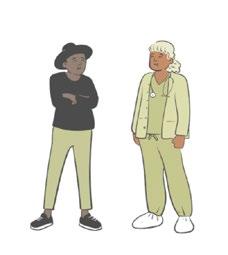
The working couple lives on the top floor, benefiting from privacy and quiet while remaining part of the vertical family structure.
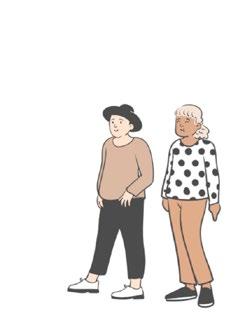
The couple inhabit the top floor, preserving privacy and retreat while aligning with the spatial hierarchy established in the traditional model.
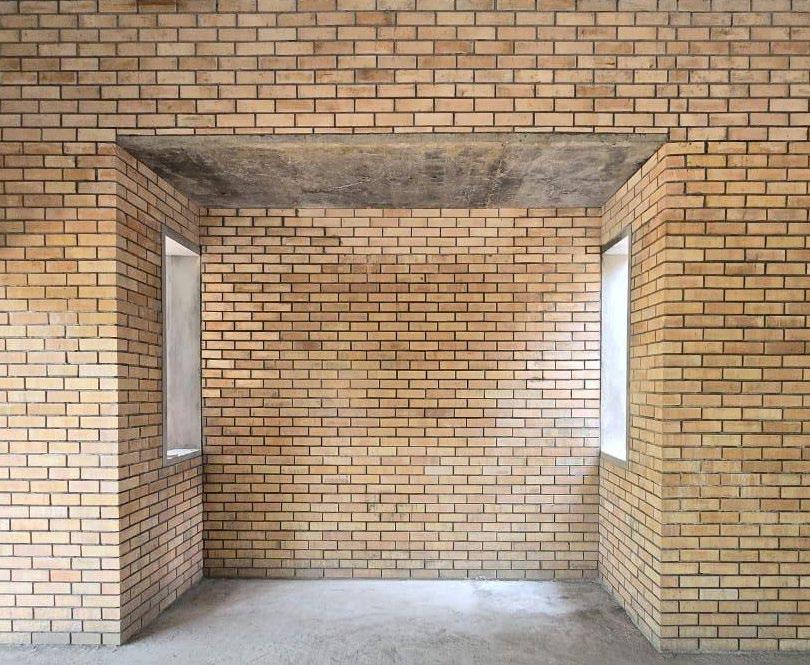
Execution and detail
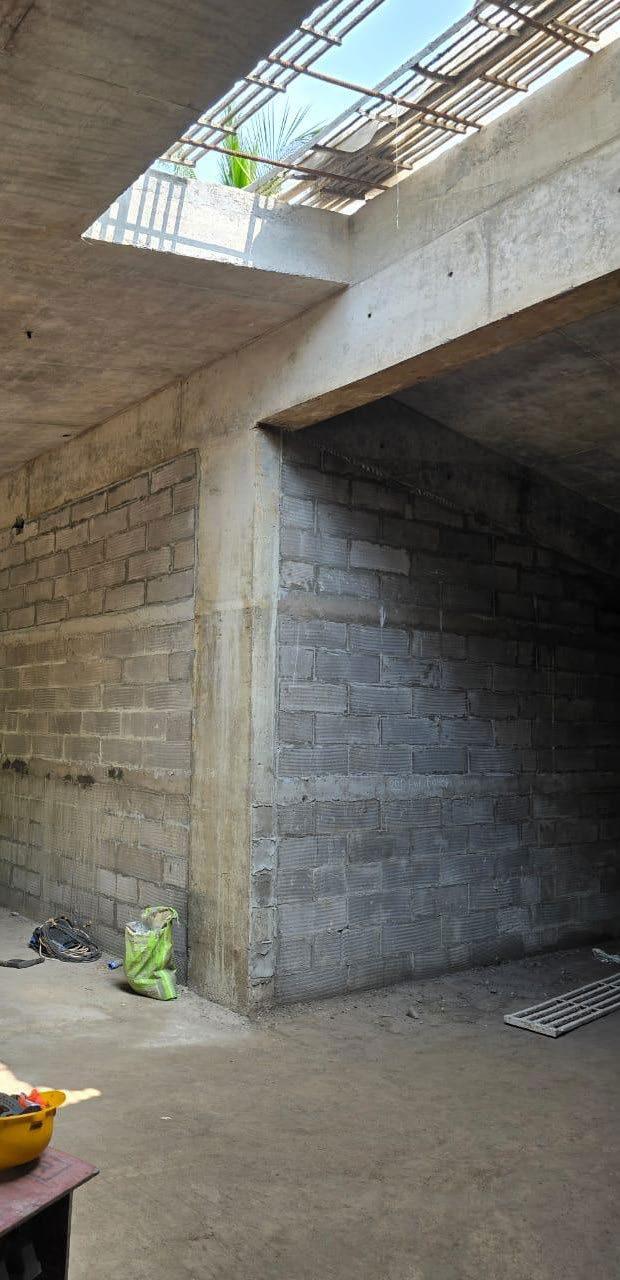
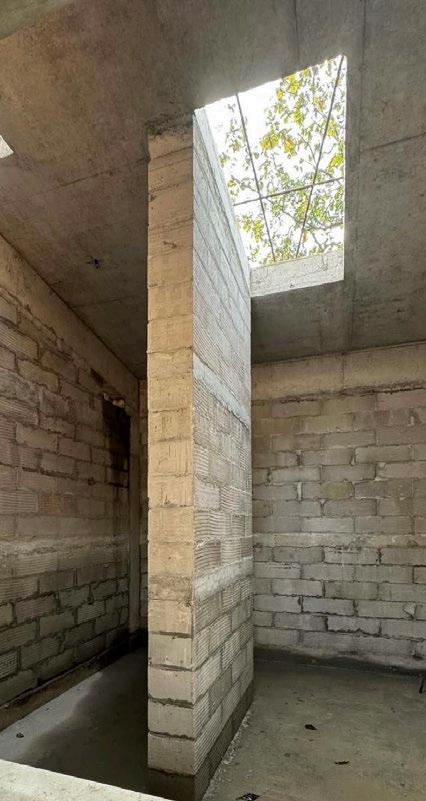
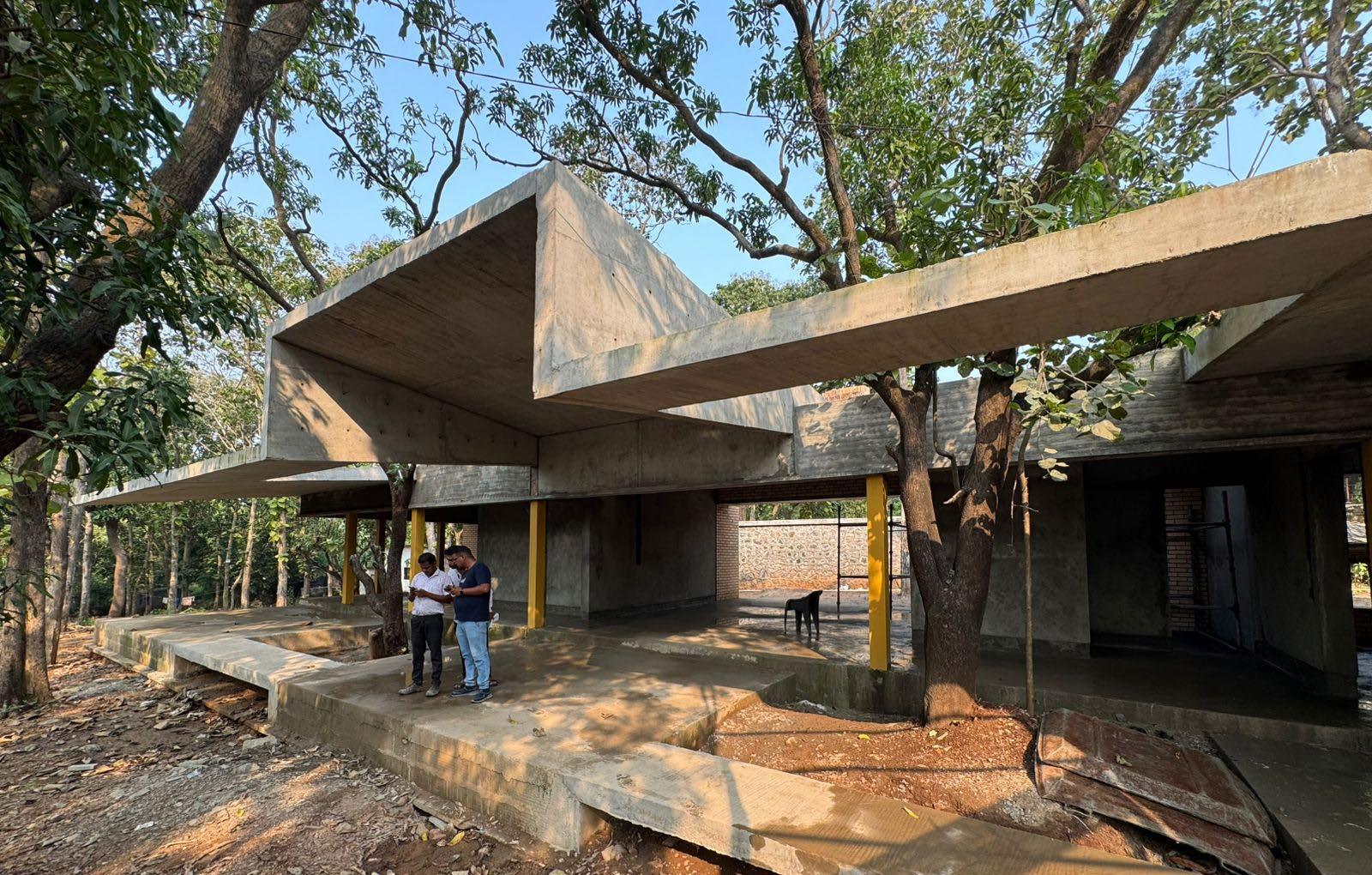
Overseen by associates and partners in the firm I was the sole architect in the firm following handover working on project execution , GFC drawing preparation, Detail resolution, Site management, Consultant coordination, resolution of services and Interior design.
For these details I took part in consultant meetings with contractors, engineers and window fabricators . Following this I drew up details which were then checked by Ar. Sakshi Ghulati and developed through iterative revision and dialogue. All details were resolved and moved into construction on site.
*All Images in the portfolio have been drafted/produced by me.