EDWARD DONG
Washington University in St. Louis
B.S. in Architecture
e: edwarddong.2002@gmail.com
t: 314-912-6992
Washington University in St. Louis
B.S. in Architecture
e: edwarddong.2002@gmail.com
t: 314-912-6992
Academic Term: Arch 411 | Fall 2023 Half Semester
Professor: Stephen Leet
Site: Piazza di Santa Maria Novella, Florence, Italy
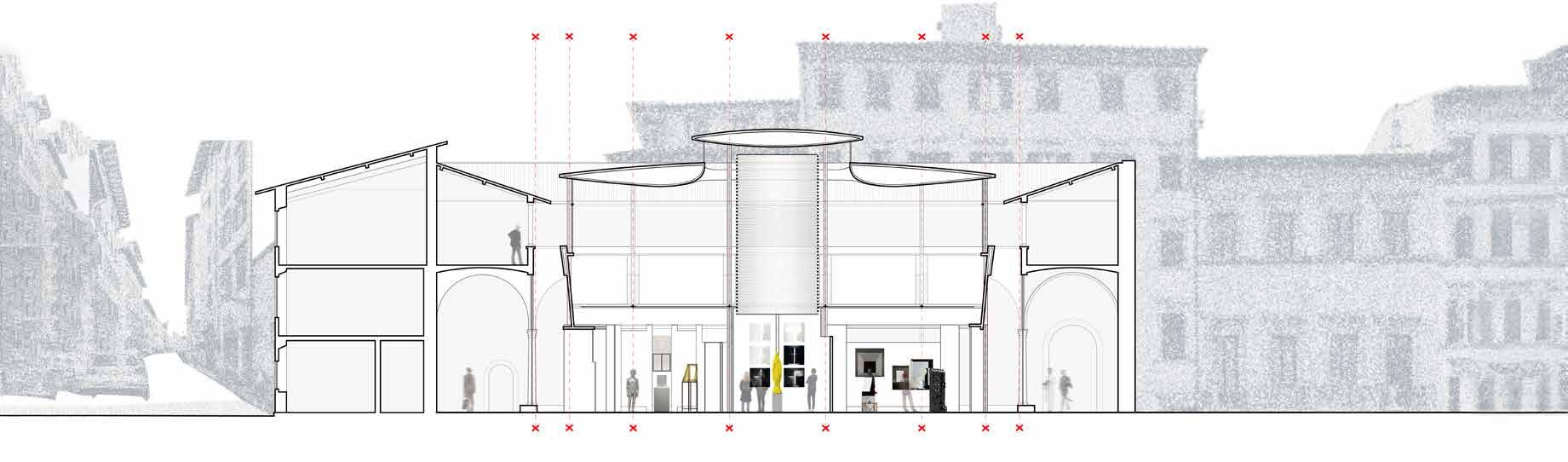
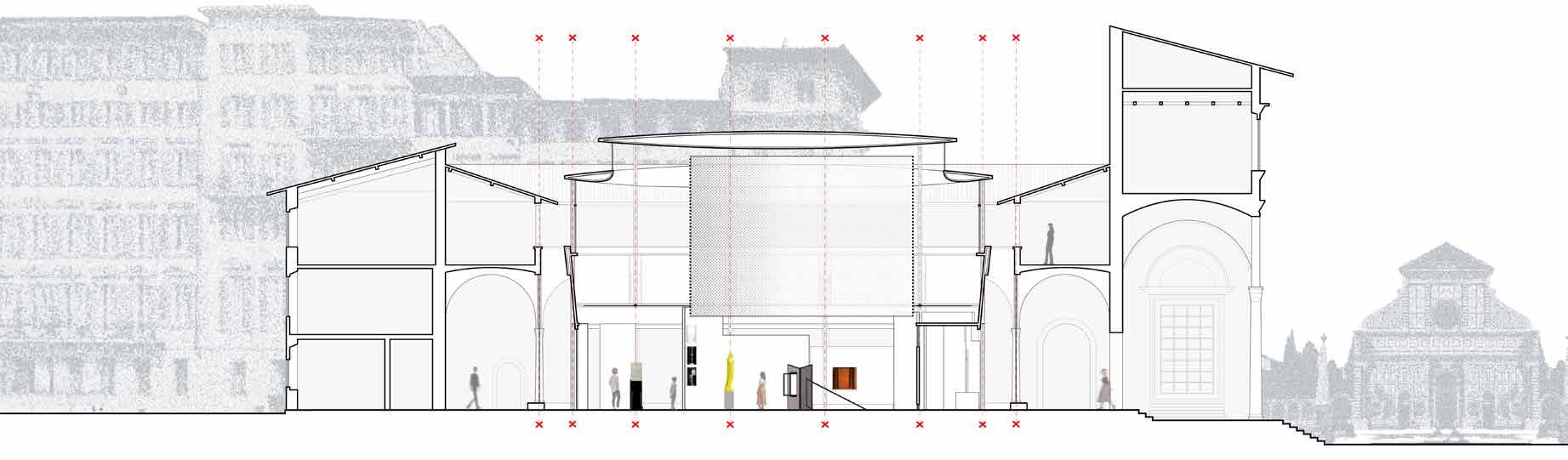
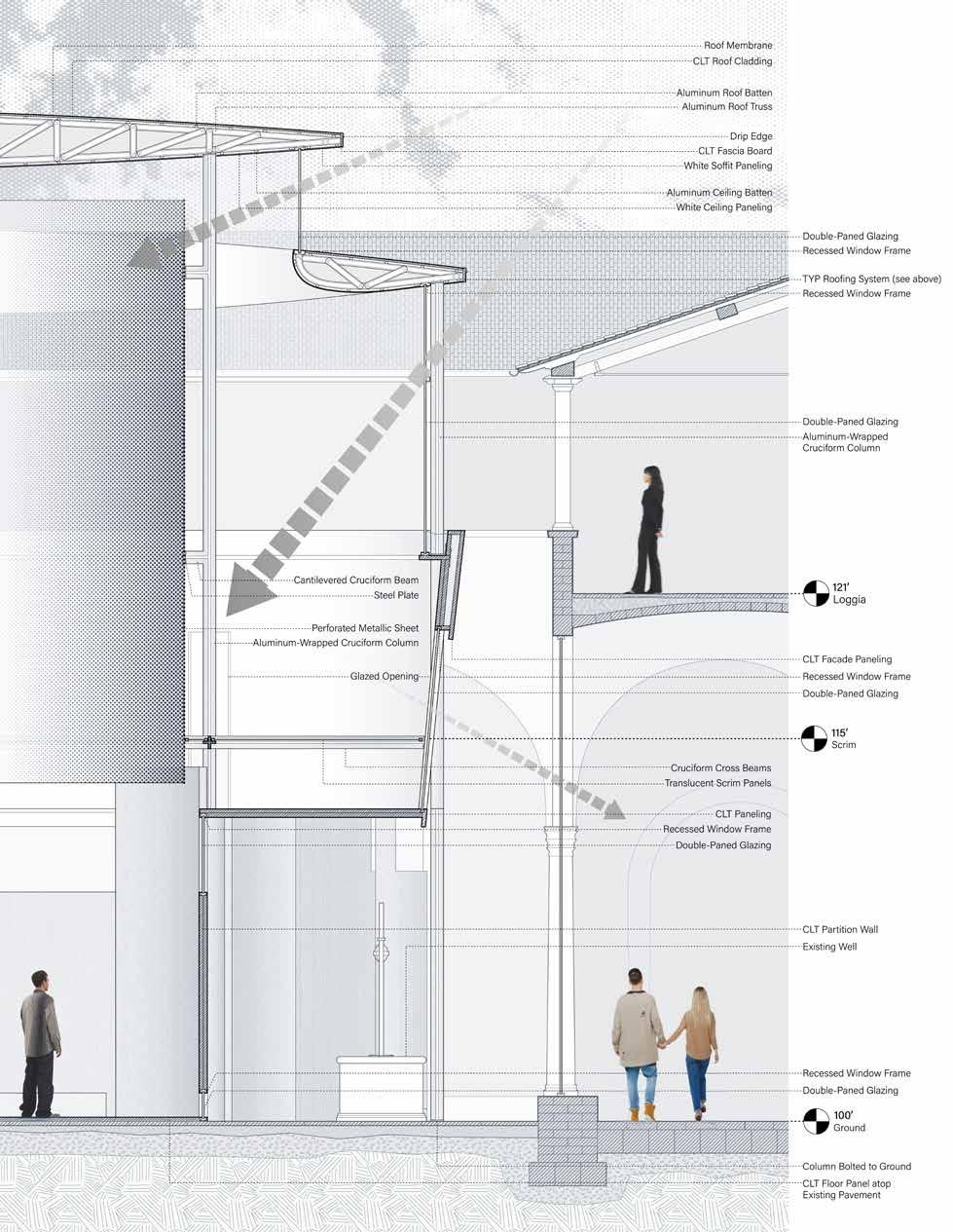
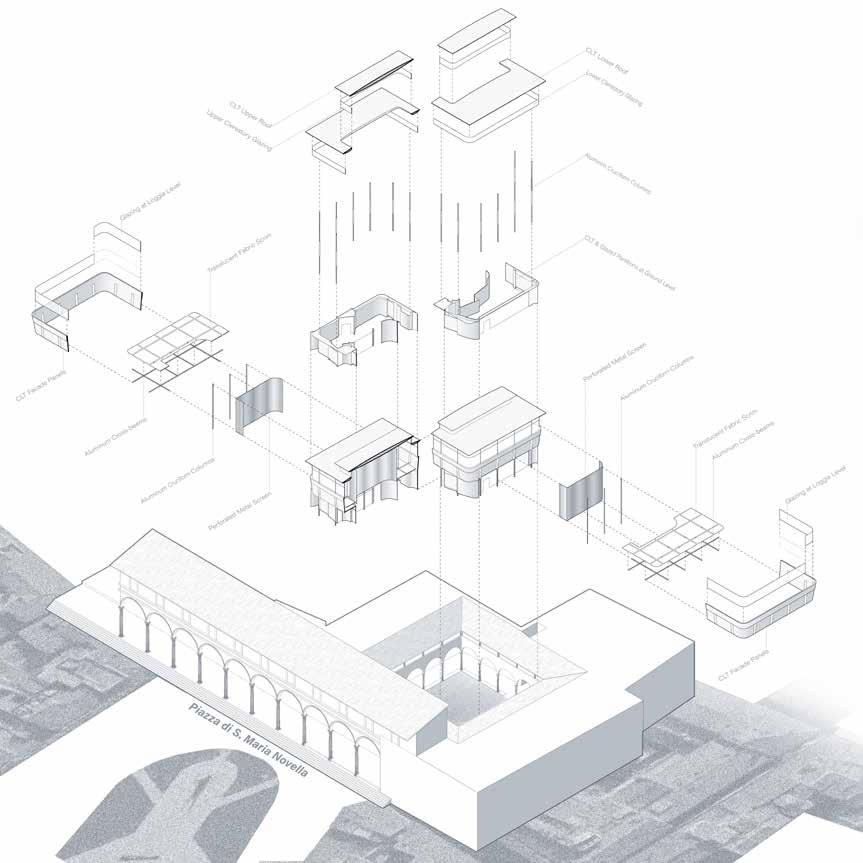
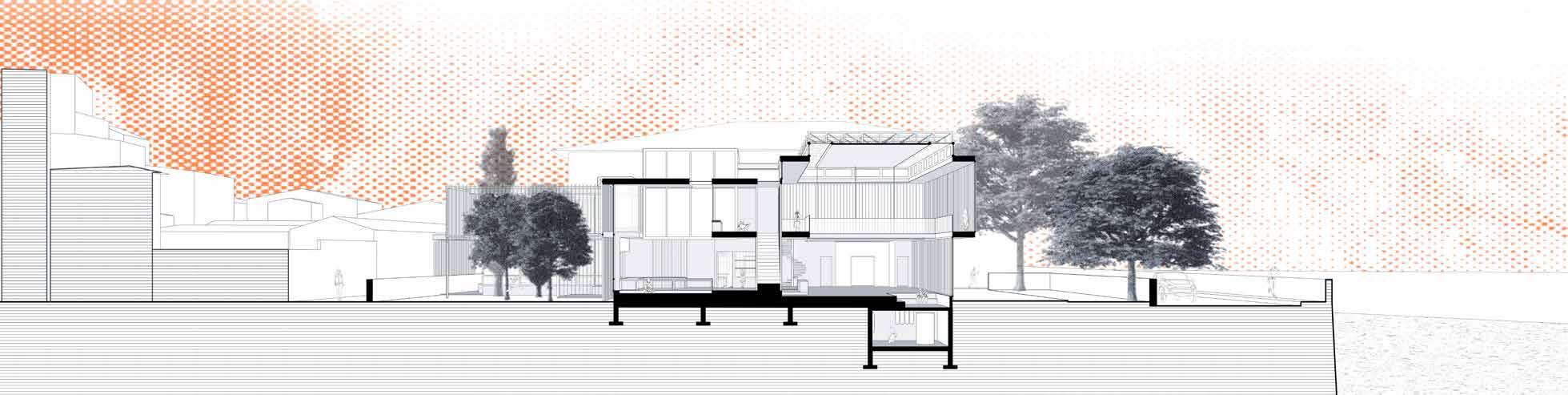
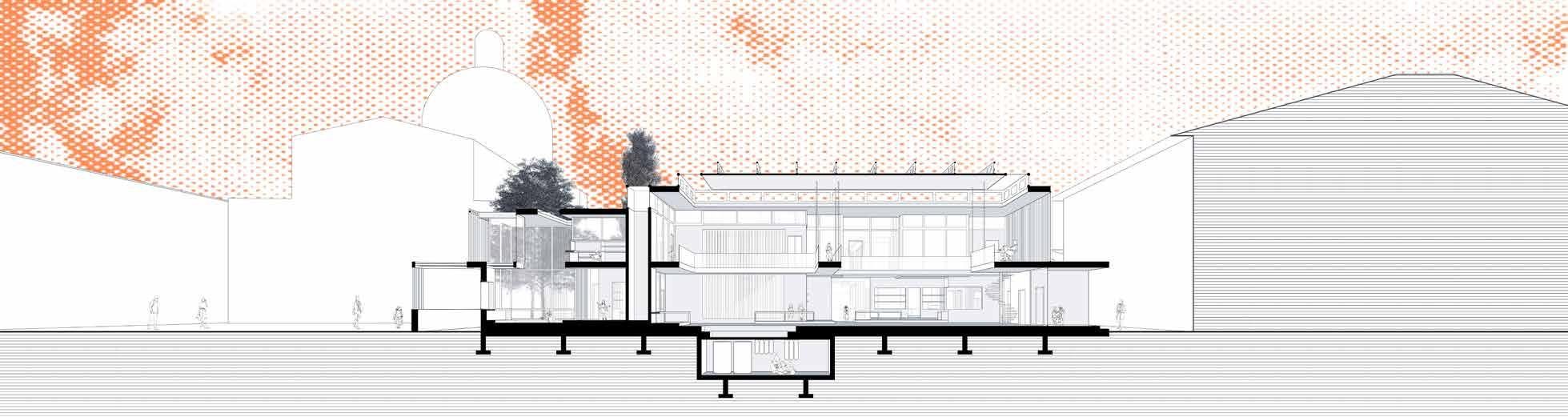
Keeping to the Italian tradition of constructing temporary exhibition pavilions within museum cloisters, the project unfolds at Museo Novecento, situated on Piazza di Santa Maria Novella in Florence, Italy.
Following a pragmatic approach, the design opted for cross-laminated timber (CLT) boards as the primary construction material and relies solely on natural light for illumination, fostering an organic and immersive experience for visitors.
The thirty-seven pieces of curated artworks, spanning various sizes, styles, and periods, encompass sculptures, paintings, prints, and more, all converging under the thematic umbrella of light and shade. To refine our grasp of natural light’s dynamics and its manipulation within a space, the studio initiated its exploration with a fundamental exercise— the creation of light boxes.
We initiated our exploration with the creation of lightboxes, a tool pivotal in visualizing the nuanced interplay of direct and bounce light. Our experimentation revealed that optimal bounce light occurs when a surface aligns parallel to the light source, allowing light to gracefully traverse across it, accentuating its texture.
While diffused light is often favored in museums for its controlled ambiance, it is imperative to recognize that direct light also holds its significance, namely its ability to create mesmerizing forms of light and shade. Therefore, the exploration involved experimenting with both approaches, enabling the flexibility to manipulate light as needed to accommodate diverse curatorial needs.
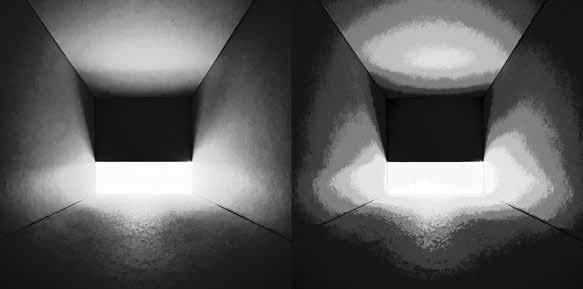
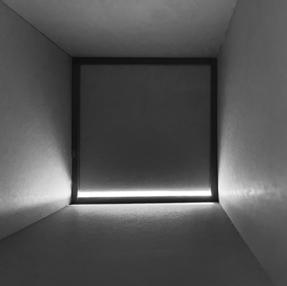
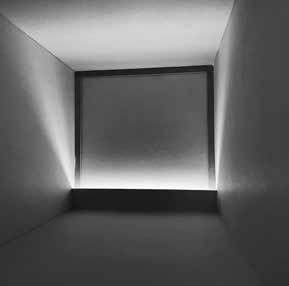
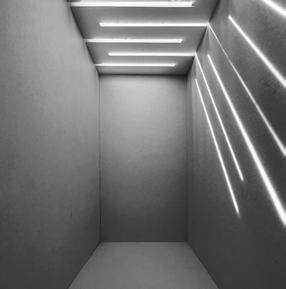
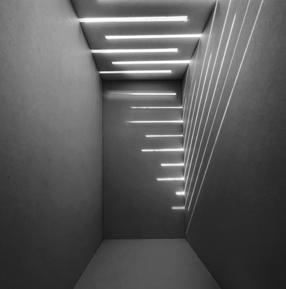
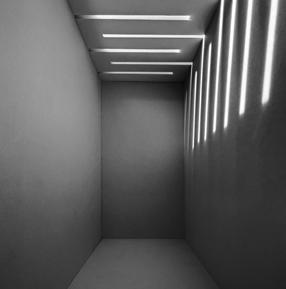
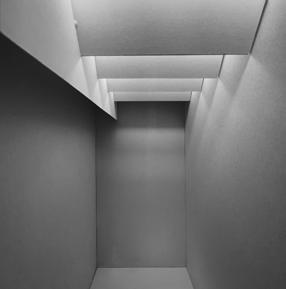
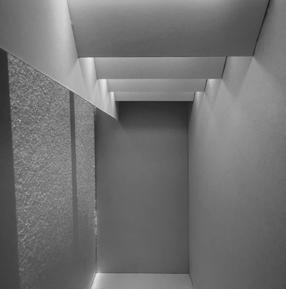
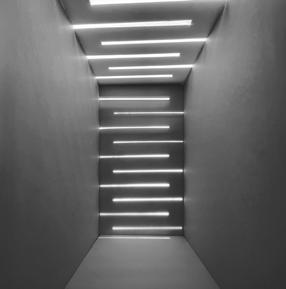
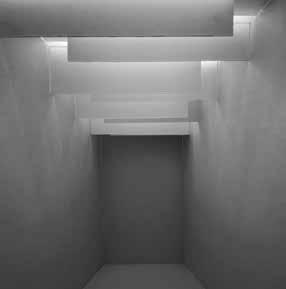
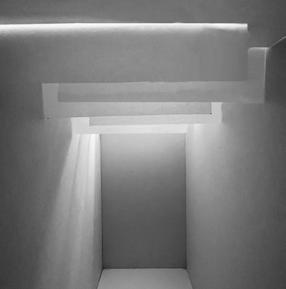
In the effort to create a space that honors its site, I face the challenge of what might be lost. The cloister, a peaceful retreat amid urban chaos, is lost to the pavilion. The natural light that once flowed freely into the cloister’s arcade is now disrupted. I question how to restore what is being lost.
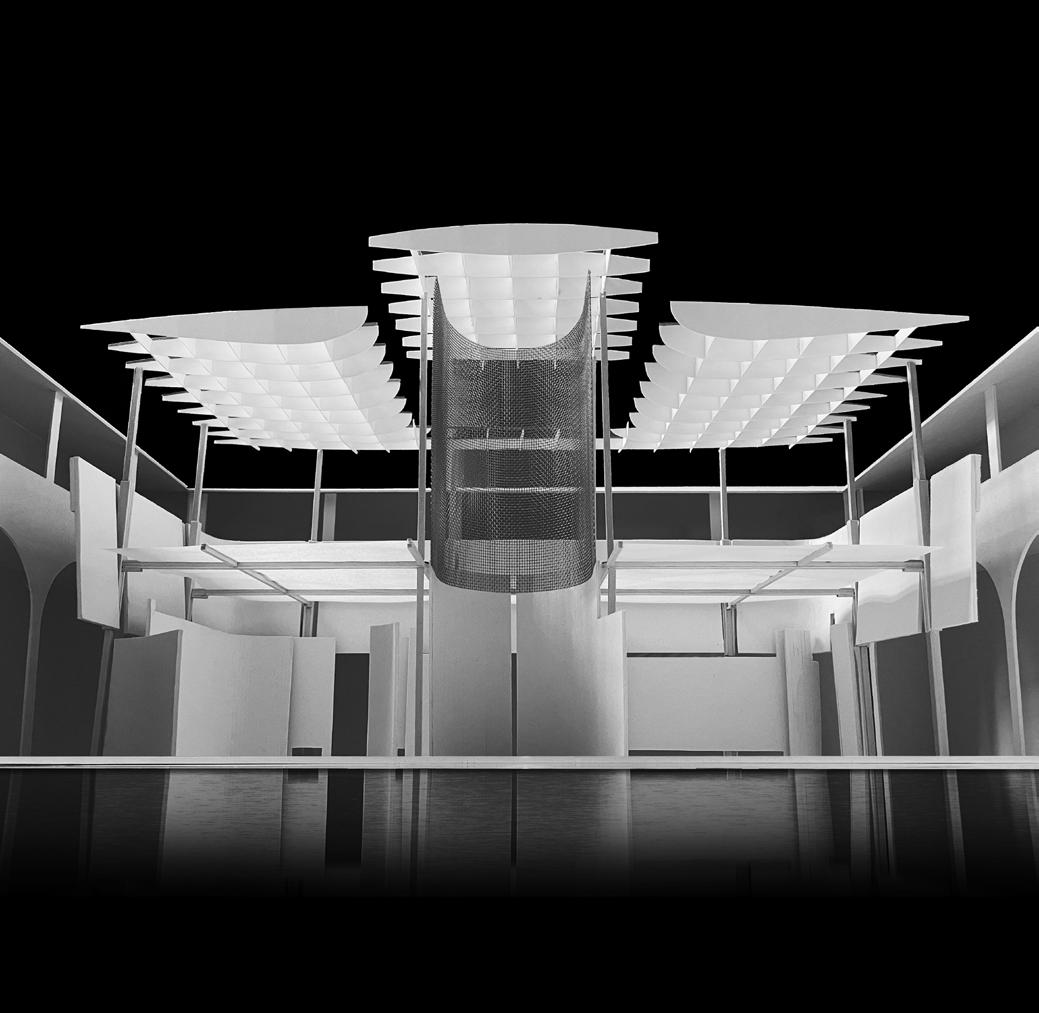
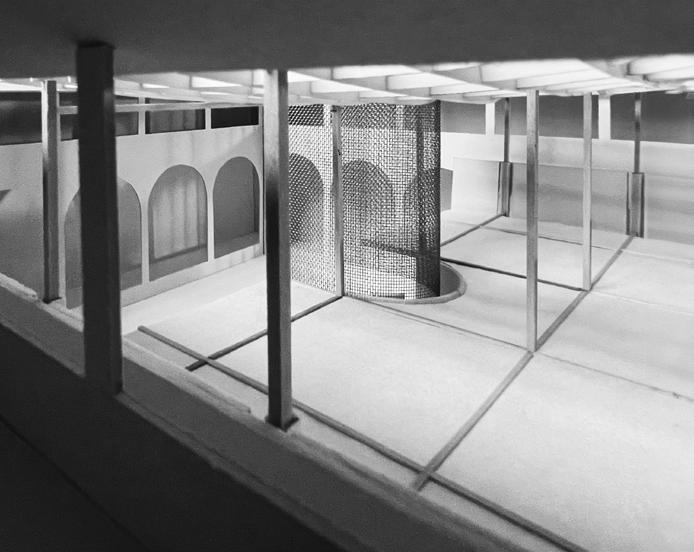
The pavilion, designed as a “cloister within a cloister,” features a triple-height central space wrapped in metallic mesh. This mesh sculpts light into unique patterns, enhancing artworks that thrive in direct light and creating a transcendent, almost celestial atmosphere.
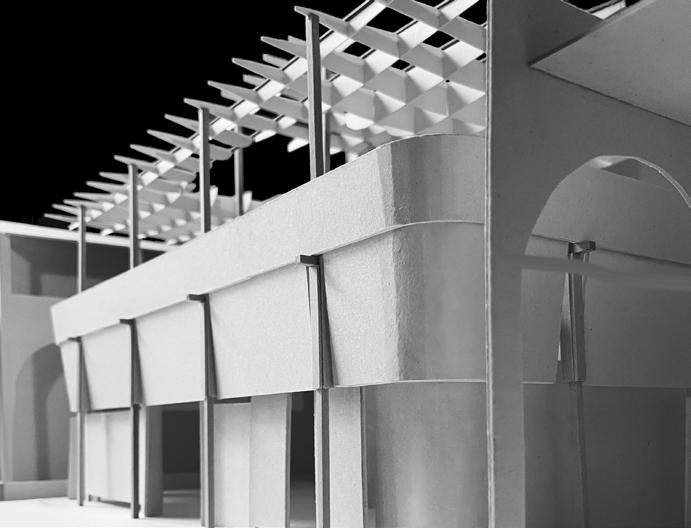
The pavilion’s upper section orchestrates the ethereal by shaping captured light. The lower section, focused on the physical, adapts to curatorial demands.
Slits in the pavilion’s upper shell reintroduce the lost light to the cloister’s arcade. This approach aligns with the lower section’s design, where openings respond to visitors’ movement through the arcade. This interaction either reveals or conceals the pavilion’s interior, fostering an architectural conversation between the two spaces.
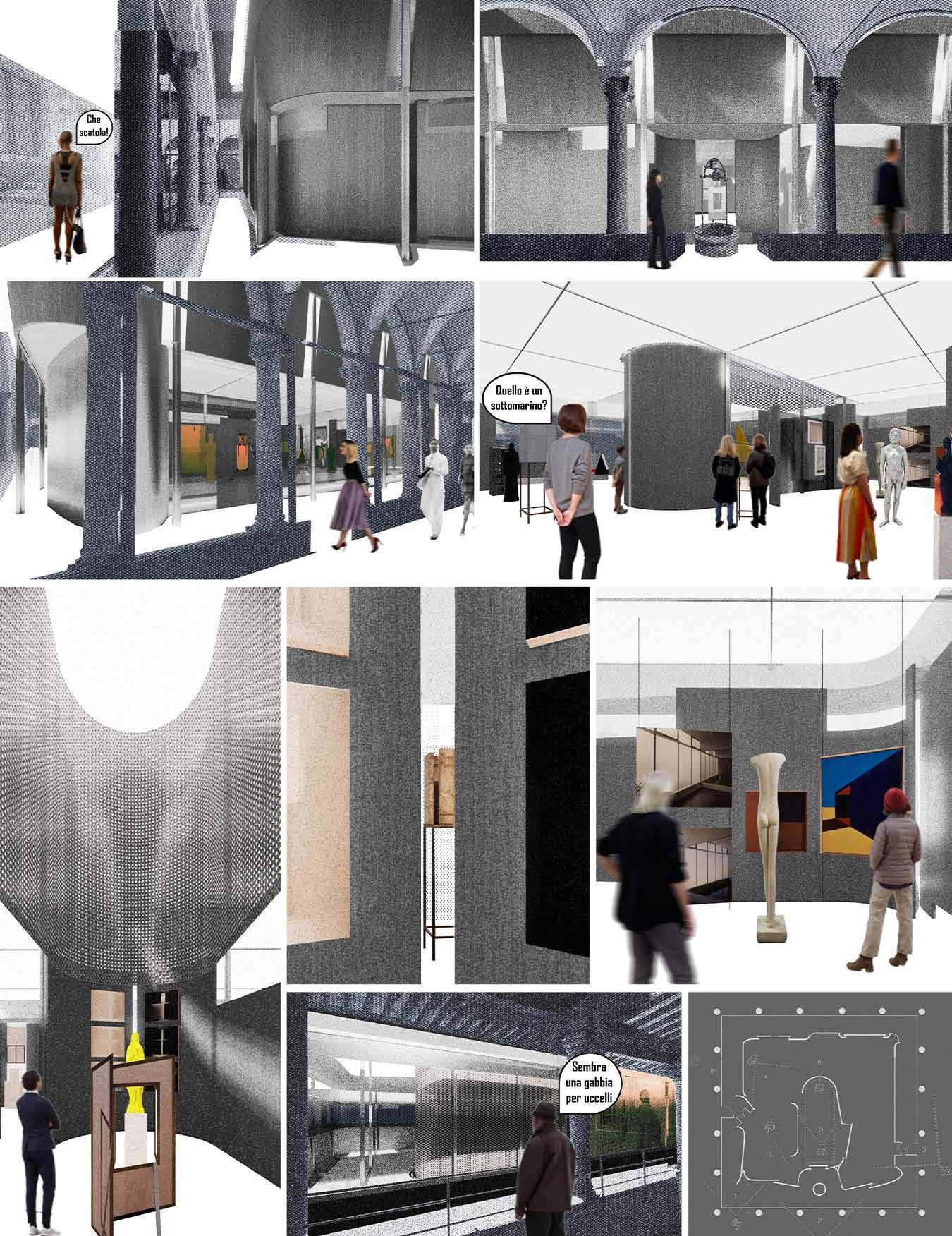
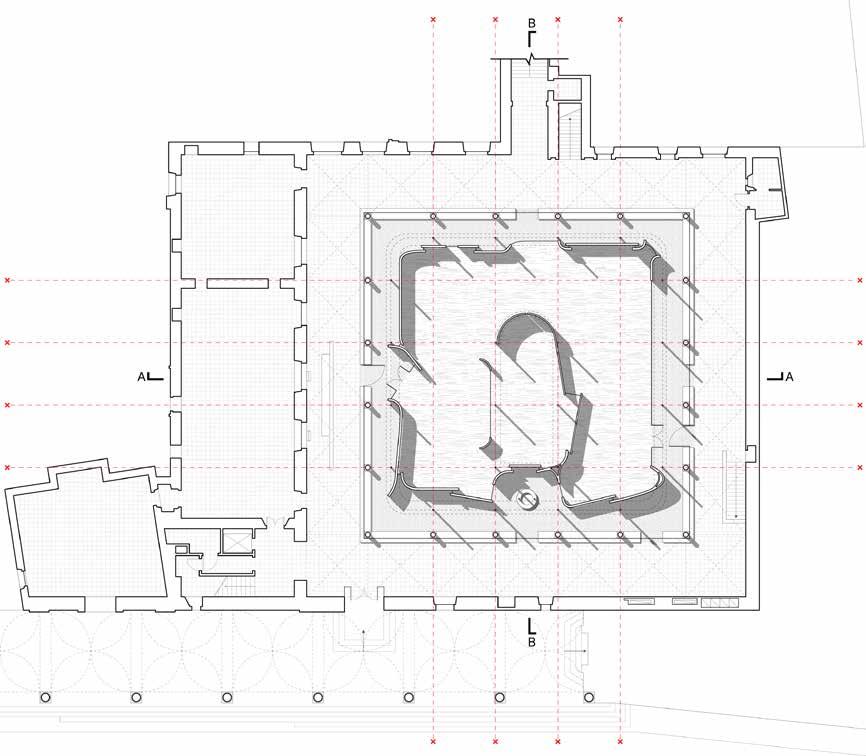
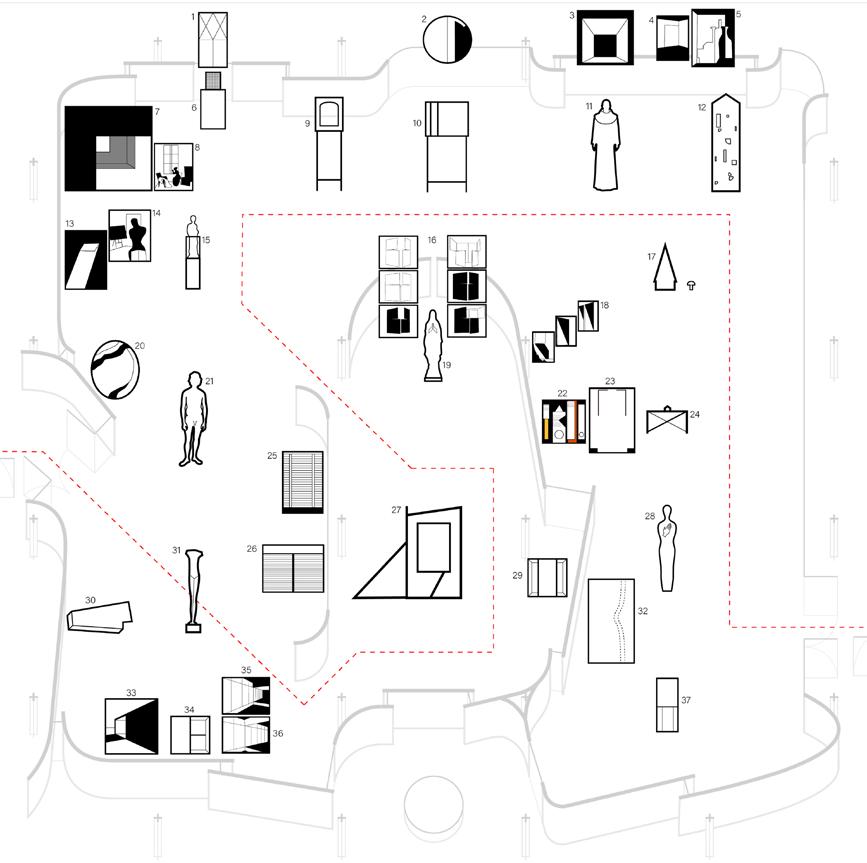
Curation & Circulation Diagram
1. Gianfranco Pardi - Architettura - 1976
2. Roy Lichtenstein - Mirror - 1972
3. Josel Albers Homage to the Square - 1967
4. James Turrell - Fargo 1989-90
5. Amédée Ozenfant - Cup, Glasses and Bottles 1922
6. Josiah McHelheny - Josef Albers White 2000
7. Marco Tirelli untitled 2012
8. Louise Drolling Young Woman Tracing a Flower 1810
9. Isa Genzken Fenster Window - 1992
10. Isa Genzken- Saal (Room) 1989
11. Katharina Fritsch - Monk - 1997-99
12. Louise Nevelson Dream House XXXII - 1972
13. James Turrell - Meeting - 1989-90
14. Giorgio de Chirico - The Poet and the Philosopher - 1915
15. Michelangelo Pistoletto Scultura lignea - 1965-66
16. Luisa Lambri - Barragan House 2005
17. Katharina Fritsch - Witch’s House and Mushroom - 1999
18. Ellsworth Kelly Window St. Martin x3 - 1977/88
19. Katharina Fritsch - Madonna - 1987
20. Roy Lichtenstein Mirror 1 1968
21. Charles Ray - Young Man - 2015
22. Aldo Rossi Fontana a Segrate - 1965
23. Gianfranco Pardi Tempio - 1980
24. Joel Shapiro - House on Field - 1976
25. Roy Lichtenstein - Venetian School 1996
26. Luisa Lambri - Strathmore - 2002
27. Giuseppe Uncini - Window with Shadow - 1968
28. Fausto Melotti Constante Uomo - 1936
29. Donald Judd untitled 1989
30. Giuseppe Uncini - Ombra di due parallelepipedi - 1975
31. Alberto Giacometti - Woman Walking - 1932
32. Michelangelo Pistoletto - Lampadina - 1962-66
33. Alfred Young Man - untitled (Wall with Doorway) 1966
34. Donald Judd untitled - 1987
35. Julius Shulman - Richard Neutra Miller House 1936
36. Luisa Lambri Richard Neutra Miller House - 2002
37. Ellsworth Kelly - Window 1949
Multimodal Transit Hub Focused on Autonomous Vehicles
Academic Term: Arch 412 | Spring 2024 Professor: Constance Vale Site: Los Angeles Autopark 26
This project envisions a transformative transit hub in downtown Los Angeles, a city plagued by congestion and the inefficiencies of privately-owned vehicles. Inspired by Keller Easterling’s essay, “The Switch,” the hub is designed as a pivotal point where long-distance mass transportation systems like trains, subways, and hyperloops seamlessly integrate with autonomous vehicles (AVs) for short-distance travel. This integration facilitates a transition from a ride-based to a share-based model, dramatically enhancing vehicle utilization and reducing the demand for parking infrastructure.
More than just a transfer point, the proposed hub evolves into a vibrant destination itself. It combines practical transit functions with a diverse mix of amenities including restaurants, retail stores, fitness centers, and auditoriums. This dual-function design not only streamlines mobility but also enriches the urban experience, making the hub a central component in reshaping urban travel dynamics.
Part 1: Voyage
Part 2: Machine Vision
Part 3: The Switch
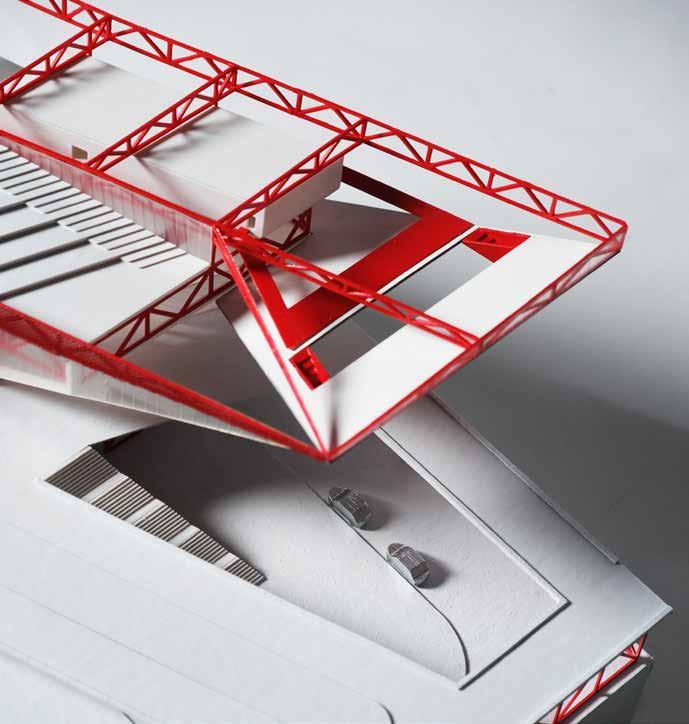
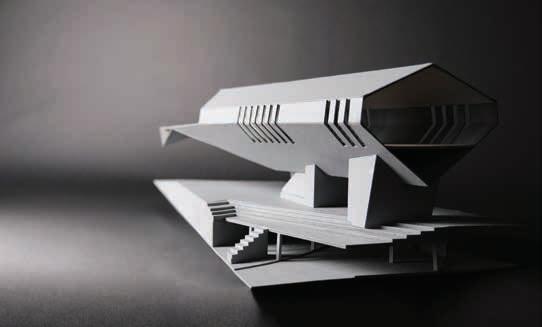
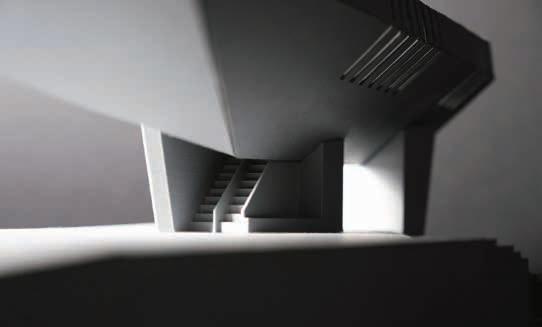
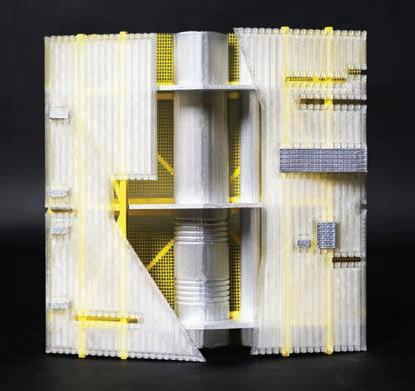
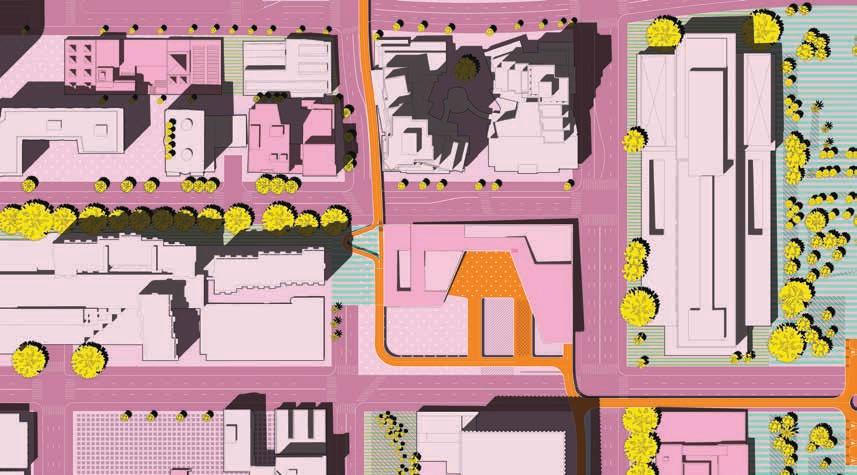
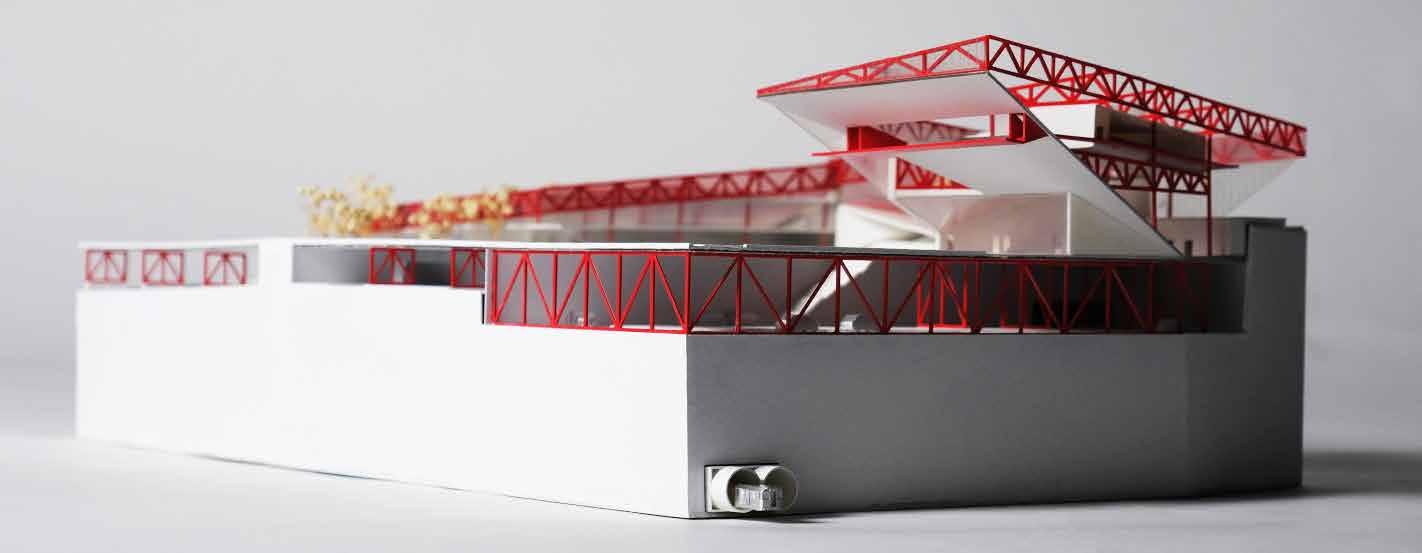
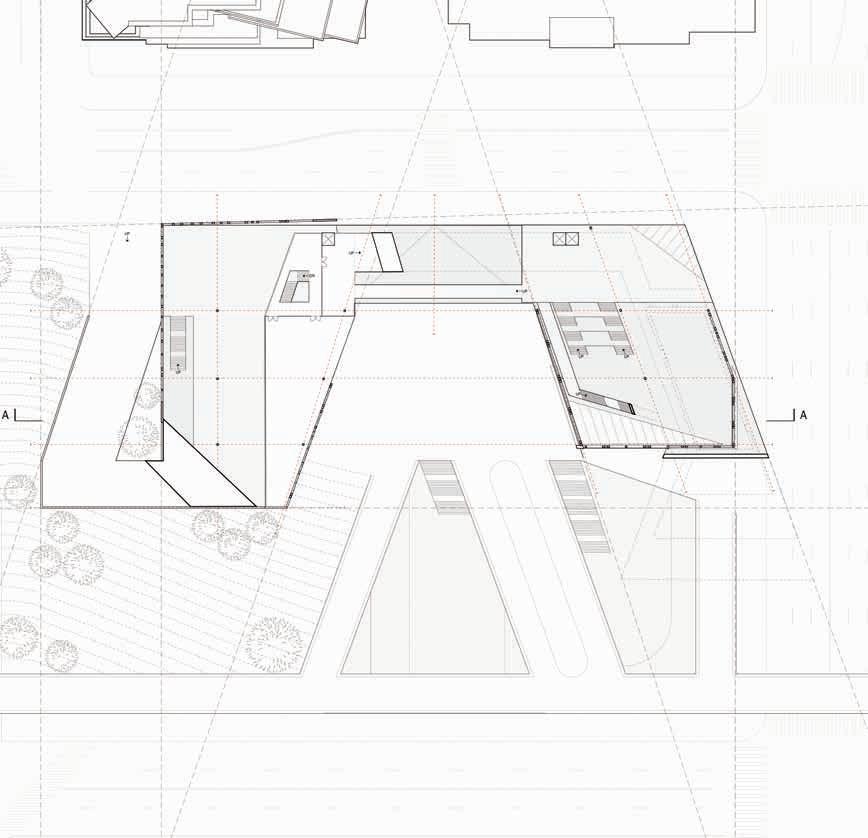
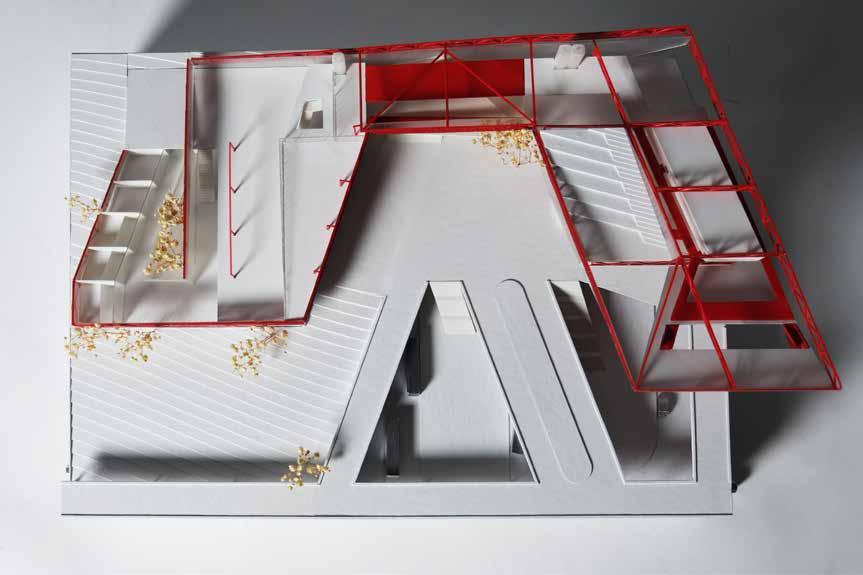
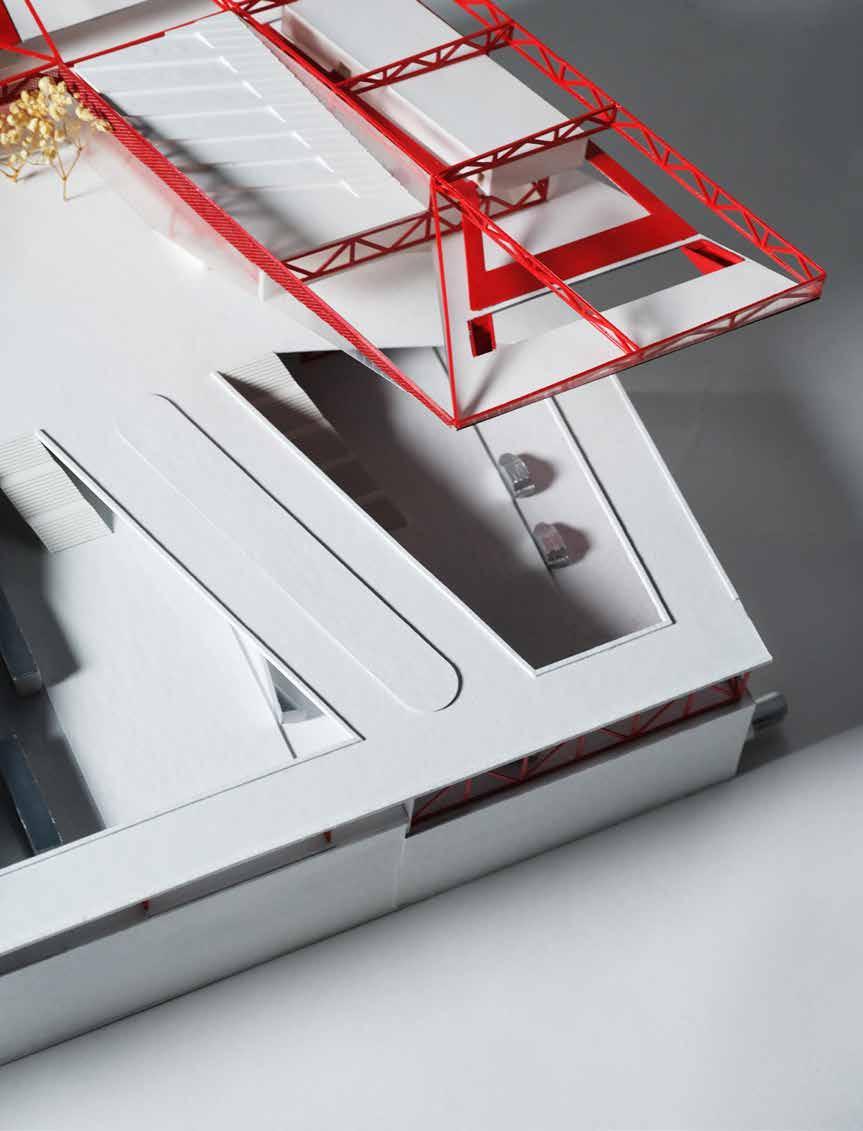
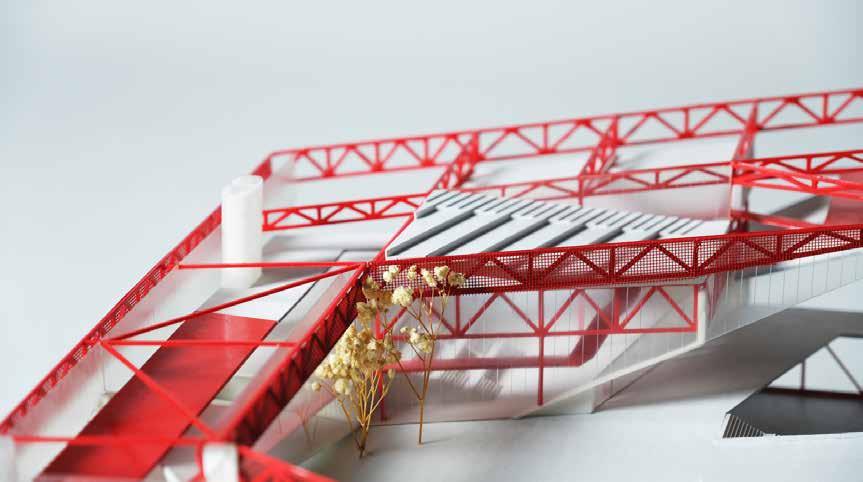
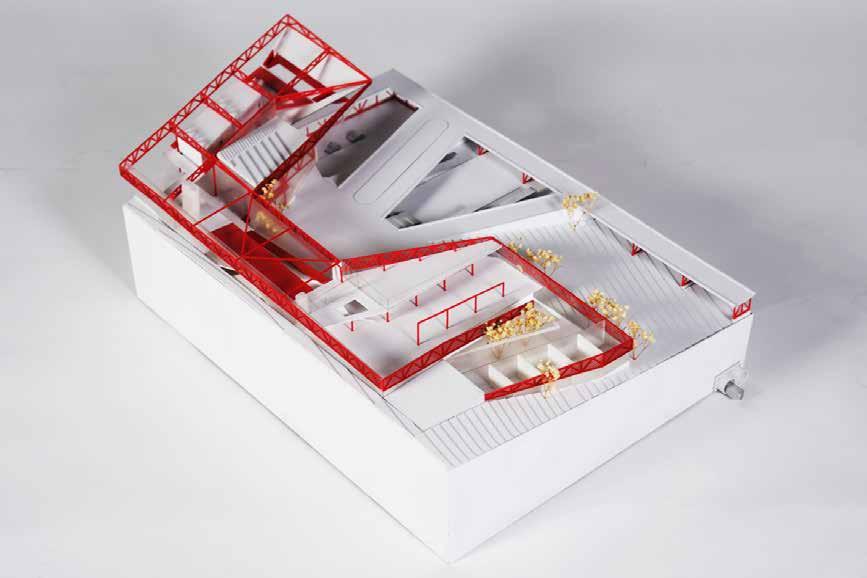
The studio initiated the project by conceptualizing a portal that would serve as the primary access point to the transit hub. During this foundational phase, the core visual language and the architectural parti were developed. This design process involved an in-depth exploration of how to efficiently manage various modes of transportation within the site. By relocating vehicular traffic to an underground setting, the surface was transformed into a pedestrian-only zone, enhancing safety and accessibility. The striking feature of this design is the massive cantilever that marks the entrance, distinctly signifying the presence of the transit hub.
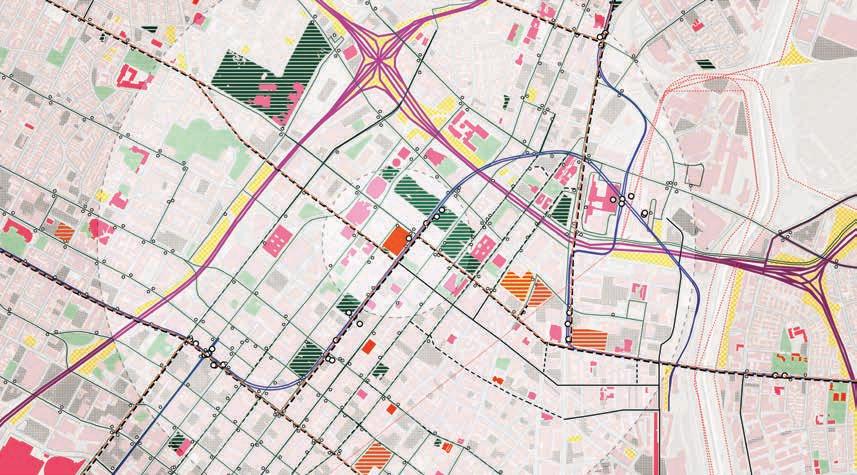
The project seamlessly integrates with the existing metro station, placing it at the heart of the transportation network. Surrounding this central node, the design incorporates a bus loop, areas for autonomous vehicle pickups, and bicycle rental facilities. This arrangement ensures that all transit programs are centered around the metro station, facilitating smooth transitions between different modes of transportation and improving overall user experience.
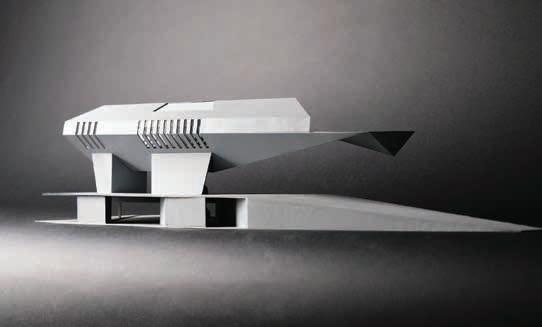
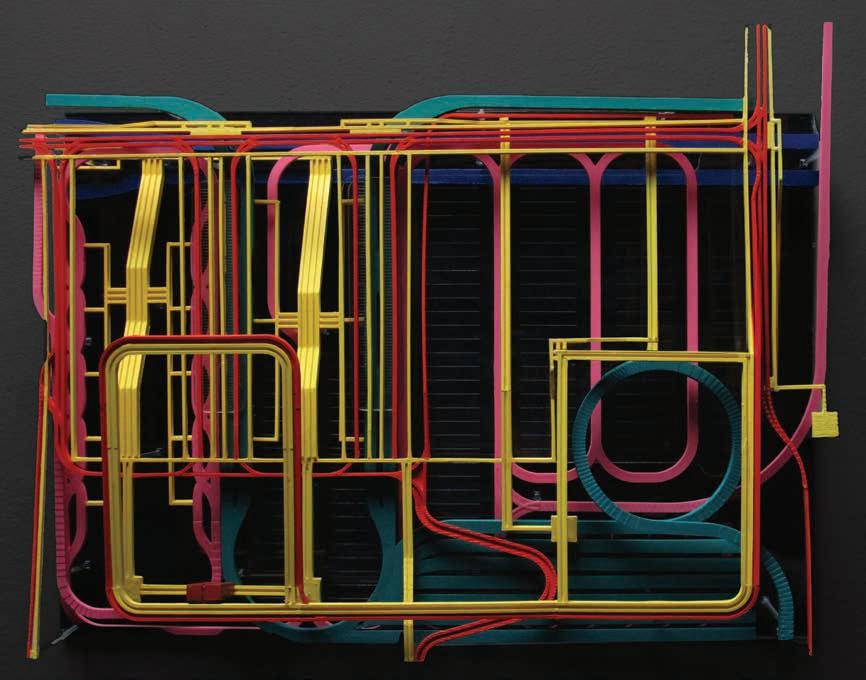
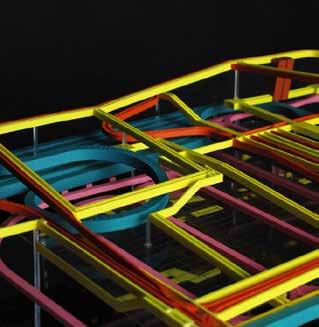
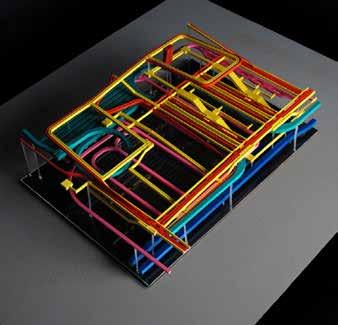
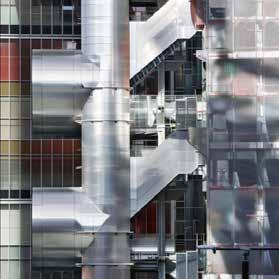
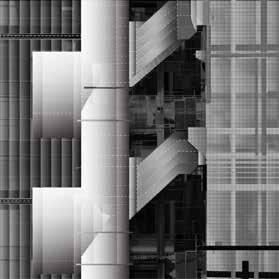
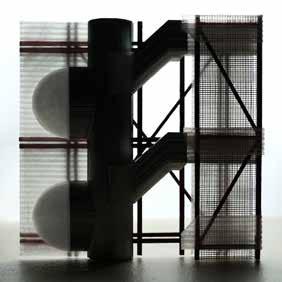
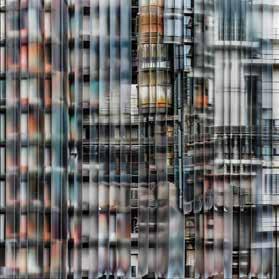
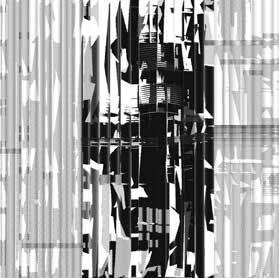
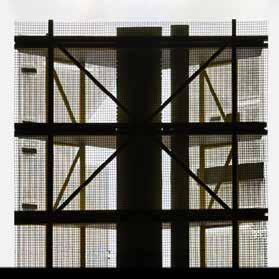
In the pursuit of a visually compelling and functional transit hub, a distinct section of the studio focused on crafting innovative façade systems. This project commenced with the utilization of AI engines to generate initial images, which were then artistically transformed into detailed conceptual drawings. These visuals, deeply influenced by the climatic nuances of Los Angeles, guided the creation of multiple façade studies. These designs not only reflect the visual language of the trajectory model but also feature an exposed structural design that articulately reveals the building’s internal mechanics.
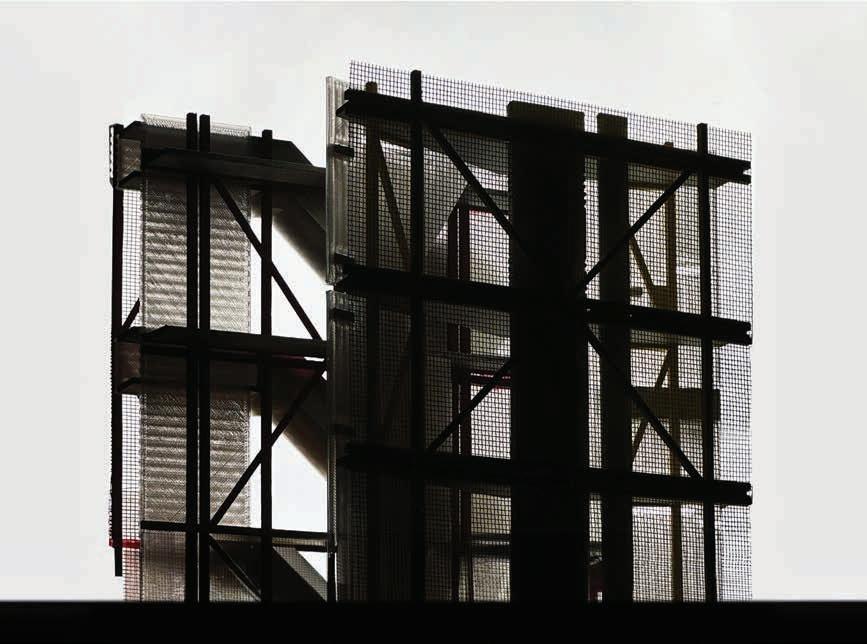
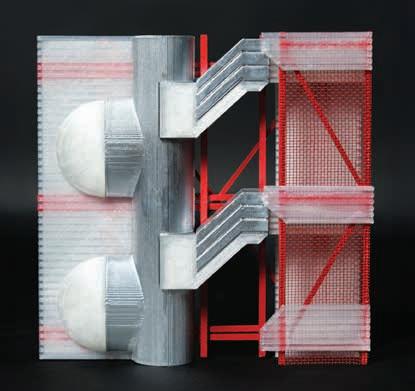
The façade design strategically integrates mesh layering with translucent glazing to achieve optimal levels of transparency and sun shading. This thoughtful arrangement allows for the selective concealment and exposure of the building’s internal activities, tailored to meet specific programmatic requirements. Through this architectural approach, the building dynamically interacts with its environment, providing both aesthetic allure and practical benefits.
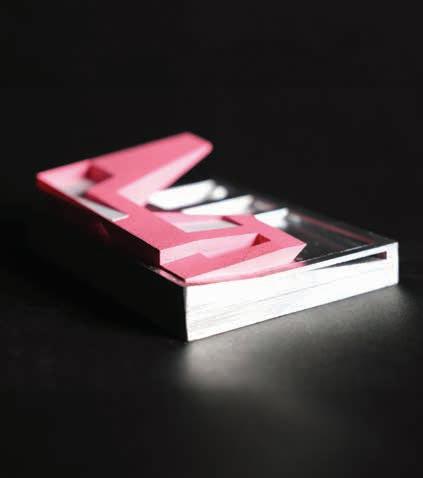
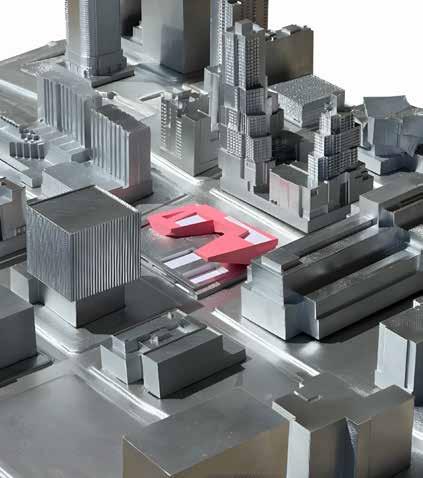
The design of this building transforms a former parking lot at the western corner of the site into a dynamic, multi-functional space with a continuous ramp that begins its ascent, creating an engaging architectural narrative. This ramp loops around itself to form inviting courtyards, enhancing connectivity and openness. As it spirals upwards, it bridges over a crucial access route, linking Frank Gehry’s “The Grand” with the transit hub’s plaza. This architectural journey culminates in a striking cantilever that stretches over the bus loops and autonomous vehicle pickup areas below, directing views towards Los Angeles City Hall.
Encased in translucent glazing interlaced with mesh strips, the entire transit hub exudes a modern, semi-transparent aesthetic that not only reveals the internal dynamics but also emphasizes the ramp’s directional flow, doubling as an effective sunshade. The design integrates amphitheaters, catwalks, atriums, and sunken courtyards throughout, fostering a lively interaction among different circulation modes. This thoughtful integration of elements ensures that the hub remains at the heart of urban transit dialogue, promoting an active and visually connected environment.
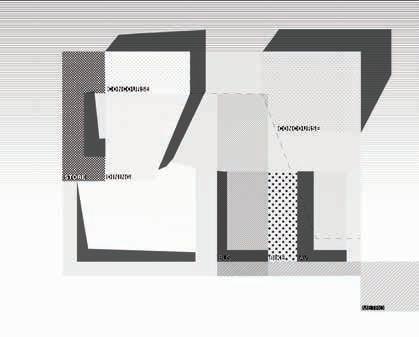
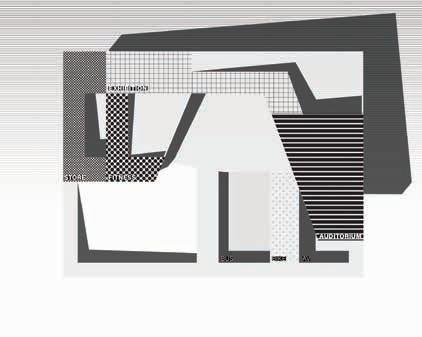
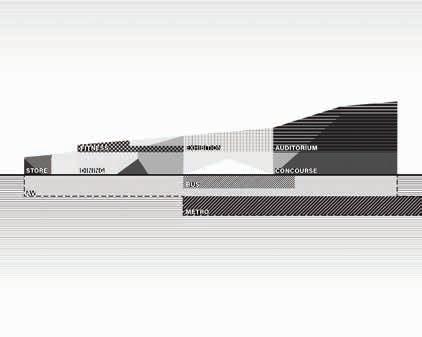
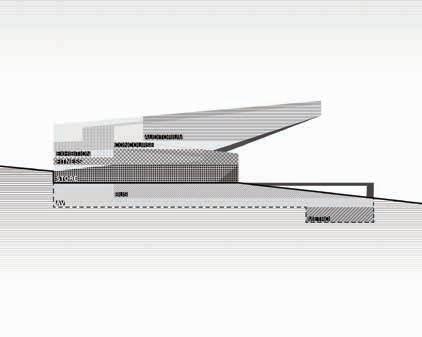
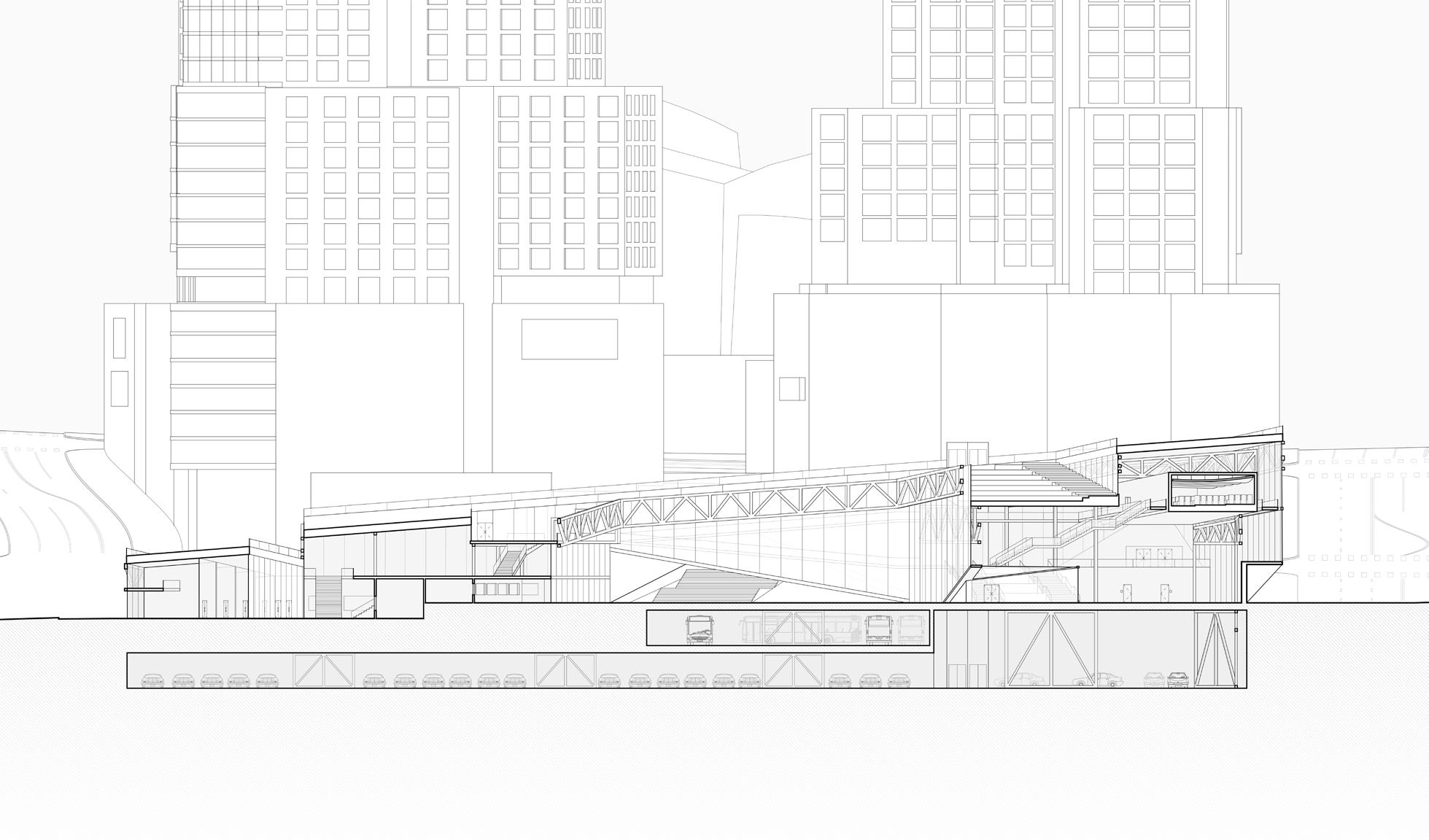
Longitudinal Section
Revitalizing Piazza di Cestello
Academic Term: Arch 411 | Fall 2023 Half Semester
Professor: Robert McCarter
Site: Piazza di Cestello, Florence, Italy
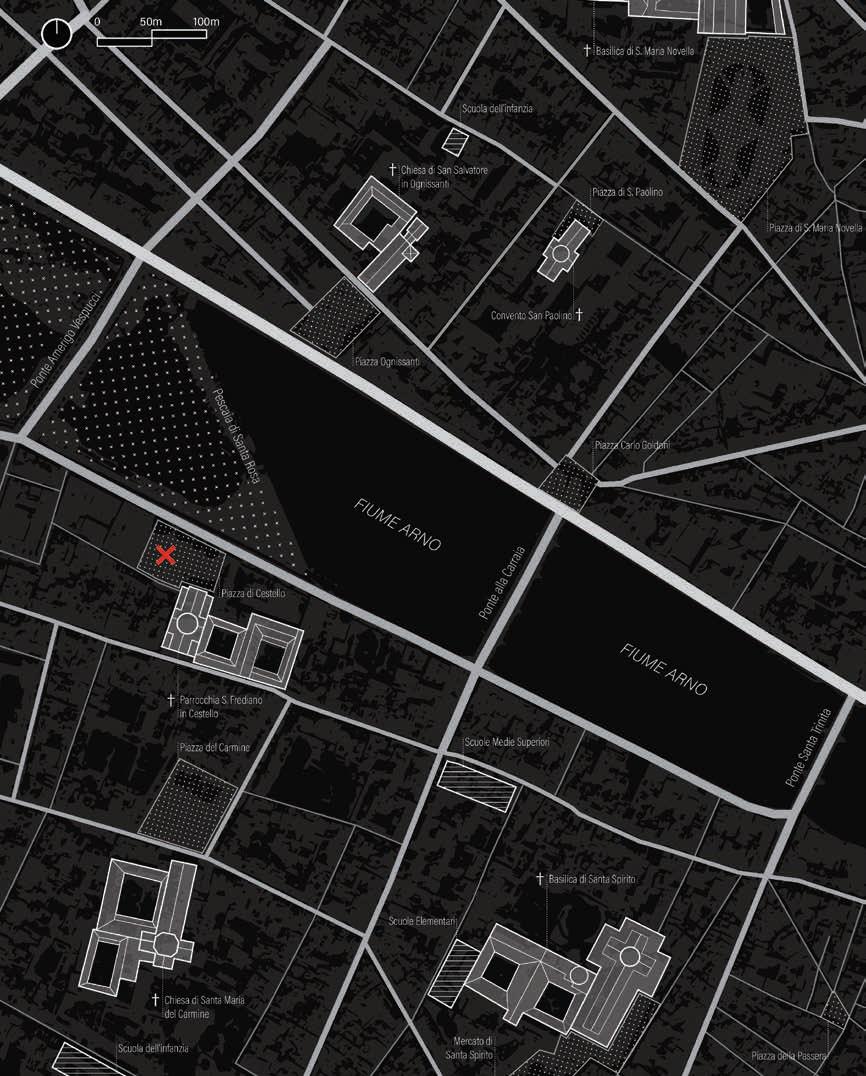
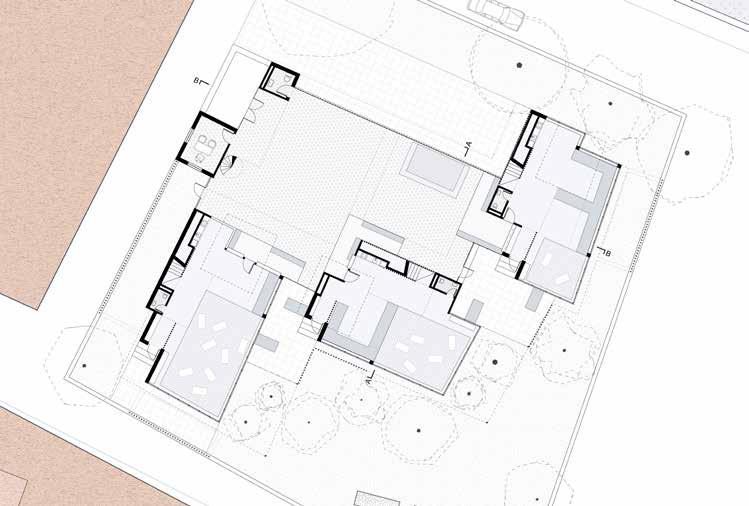
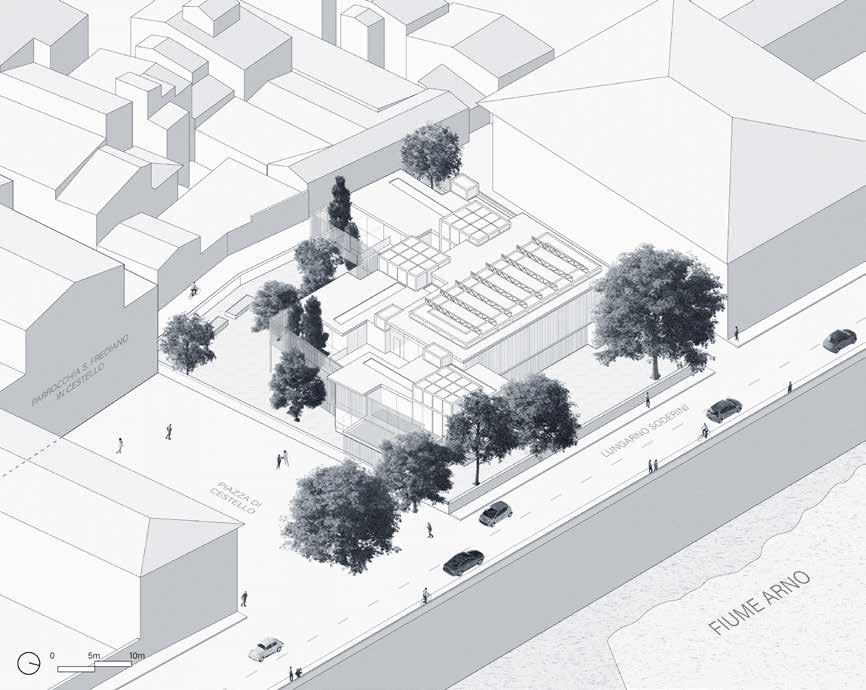
Situated on the edge of the Arno River in Florence, Piazza di Cestello stands in stark contrast to its counterpart, Piazza Ognissanti, across the river. While Piazza Ognissanti is beautifully preserved, Piazza di Cestello serves as one of the few parking lots in the city, an urban blight amidst Florence’s historical center.
In response, a proposed project aims to transform this underutilized space into a Montessori Kindergarten, while preserving the portion of the piazza in front of the historical Parrochia S. Fredino. This project is also in part a nod to Italy’s educational landscape, where parents have the choice of sending their children to conventional or Montessori elementary schools.
The Montessori school system, pioneered in the early 20th century by Dr. Maria Montessori, champions a child-centered learning approach. This method is characterized by self-guided learning and mixed-age classrooms, fostering an environment where younger students learn from their older peers. Embracing this educational philosophy, the architectural design of the kindergarten diverges from traditional school structures, reflecting the unique principles of the Montessori method.
The design process of this project is divided into two stages. The former focused on creating a classroom that embodies the essence of Montessori, while the latter expanded upon the classroom module to a kindergarten comprising three classrooms.
Part 1: Study Models
Part 2: Classroom
Part 3: Kindergarten
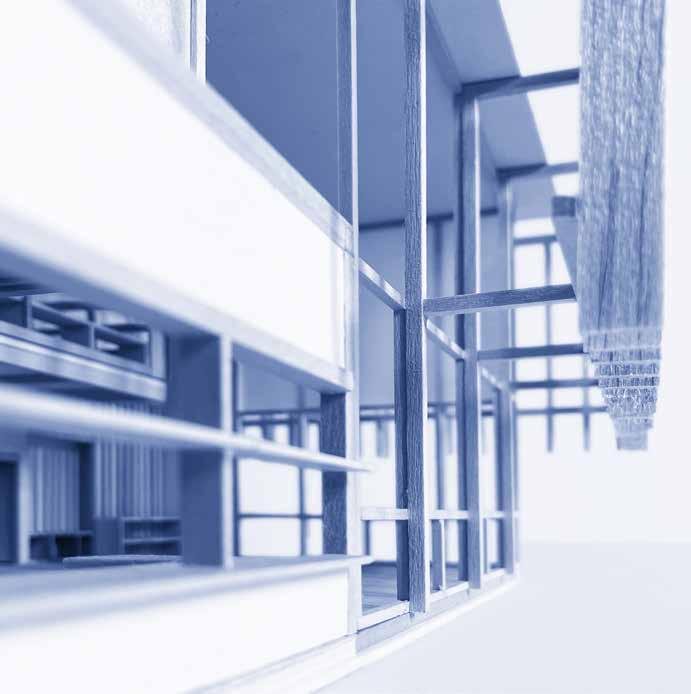
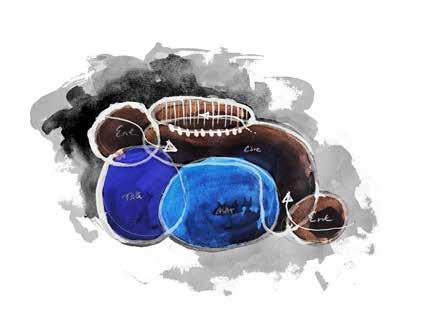
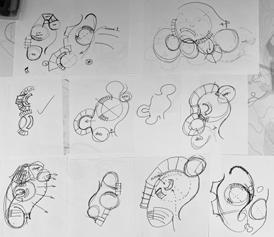
In the initial stage of the project, the focus was on designing the classroom. Employing an iterative, model-making process of exploration, a series of six study models was constructed. Each model represented a step in examining various facets of the design, such as spatial organization, functional layout, and sectional relationships.
Central to the explorative process was the integration of fenestration. This aspect was deliberated with a twofold objective: to fulfill the unique needs of the Montessori program and to enhance the building’s interaction with natural light. Through this process, the design was continuously refined, ensuring that it not only met functional requirements but also resonated with the environmental context.
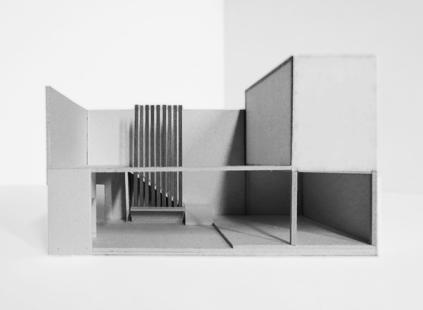
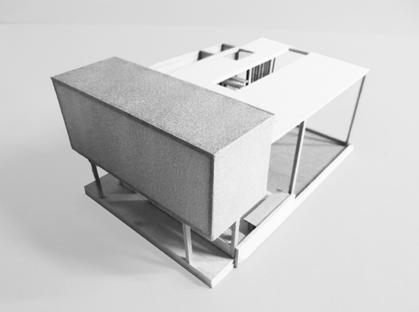
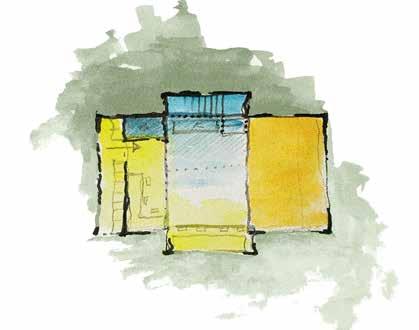
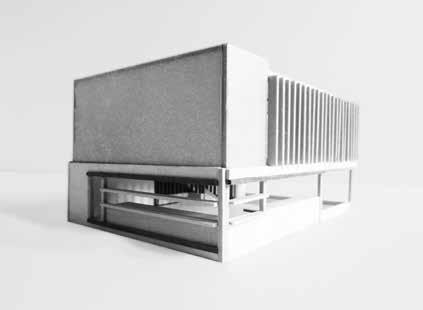
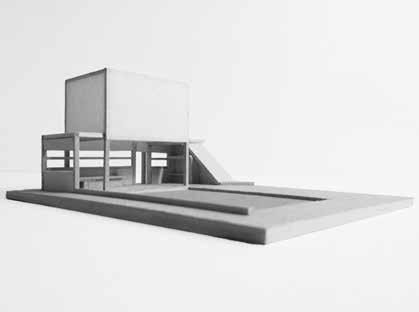
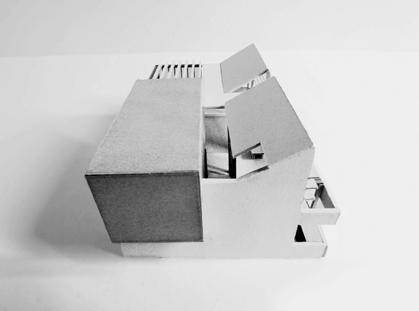
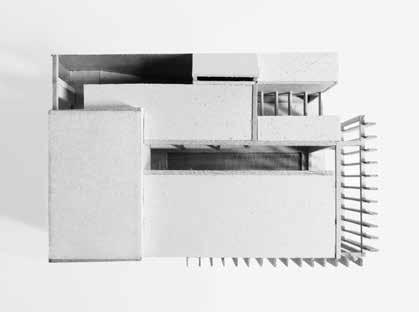
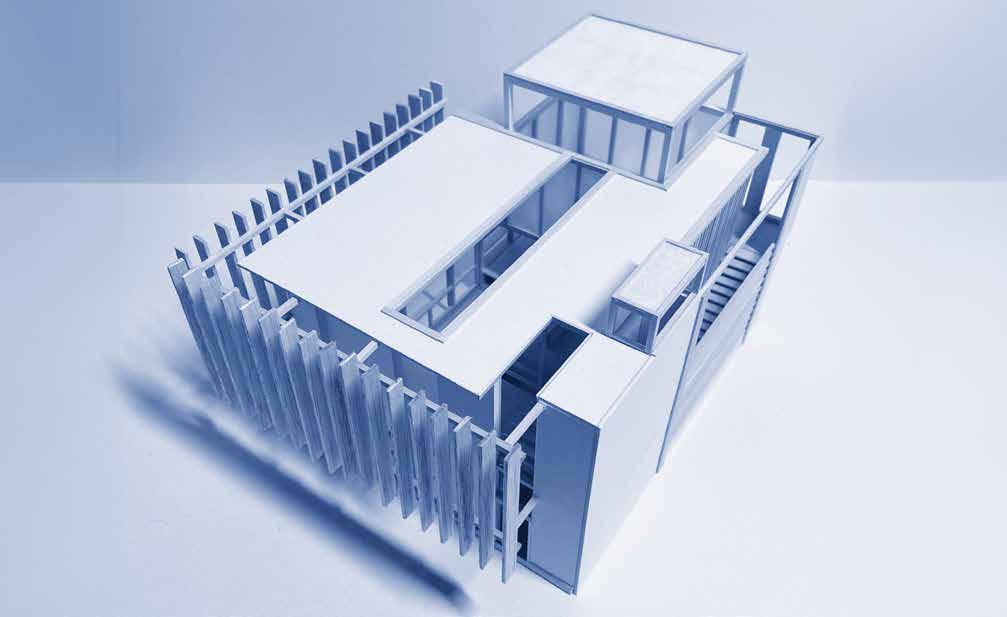
Refined through study models, the design for the classroom was realized through a ¼”=1’ scale model.
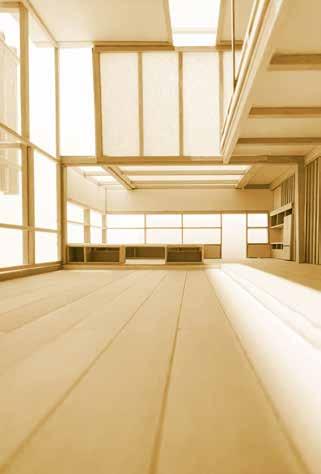
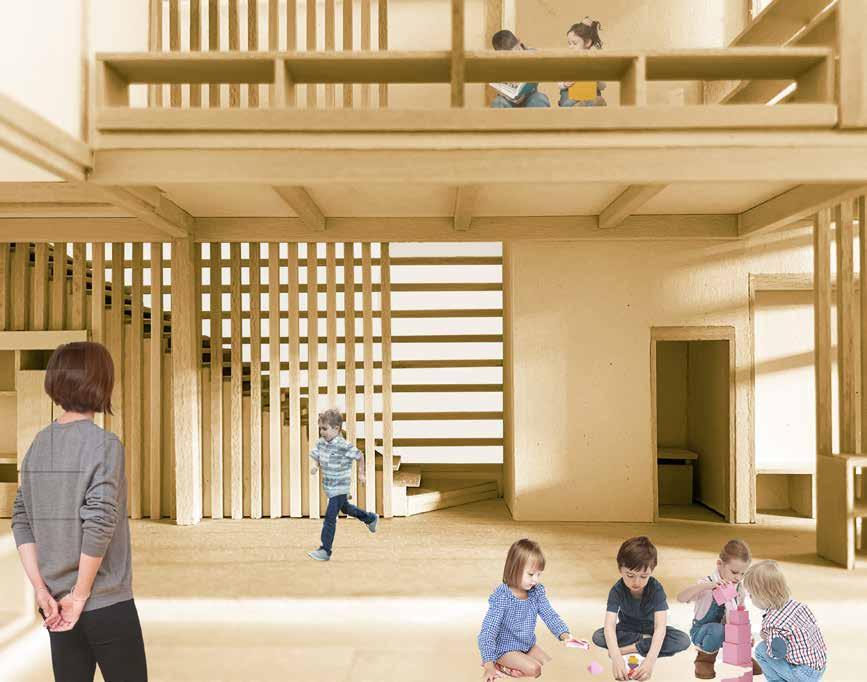
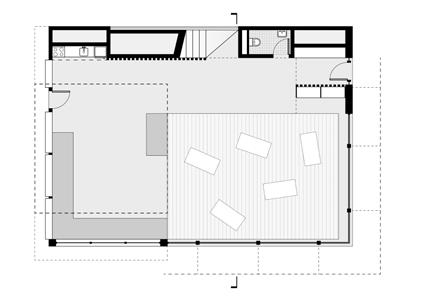
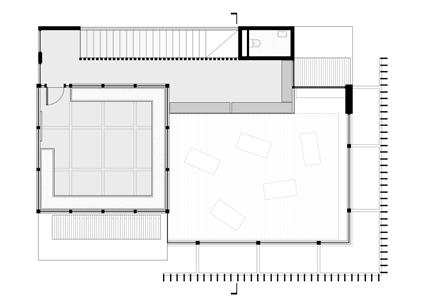
Central to the classroom is a spacious mat area, bathed in sunlight from south and east-facing windows, which highlights its double-height ceiling. This area is complemented by ample table space, accommodating students’ preferences for floor or table work depending on their project needs. Directly above the tables, a distinctive greenhouse feature, integrated into the classroom, allows sunlight to cascade through its glass floor, ensuring the workspace below is well-lit.
Nestled in the mezzanine, a tranquil library space overlooks the mat area, providing a secluded nook for reading. This layout positions the classroom’s primary functional zones to the south, maximizing natural daylight. Meanwhile, supporting elements are placed along the northern side, maximizing spatial efficiency and contributing to a cohesive educational environment.
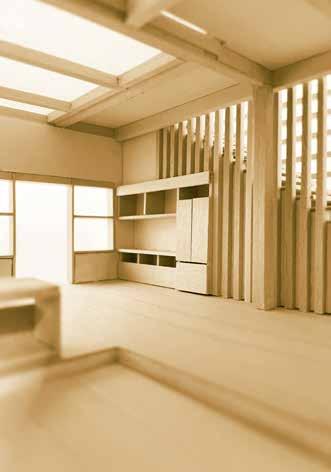
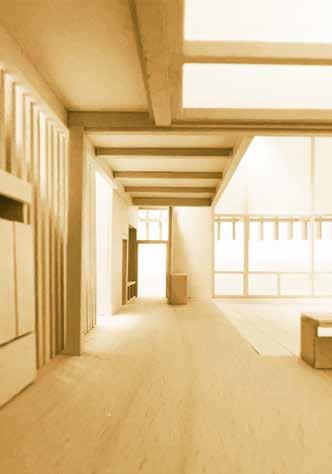
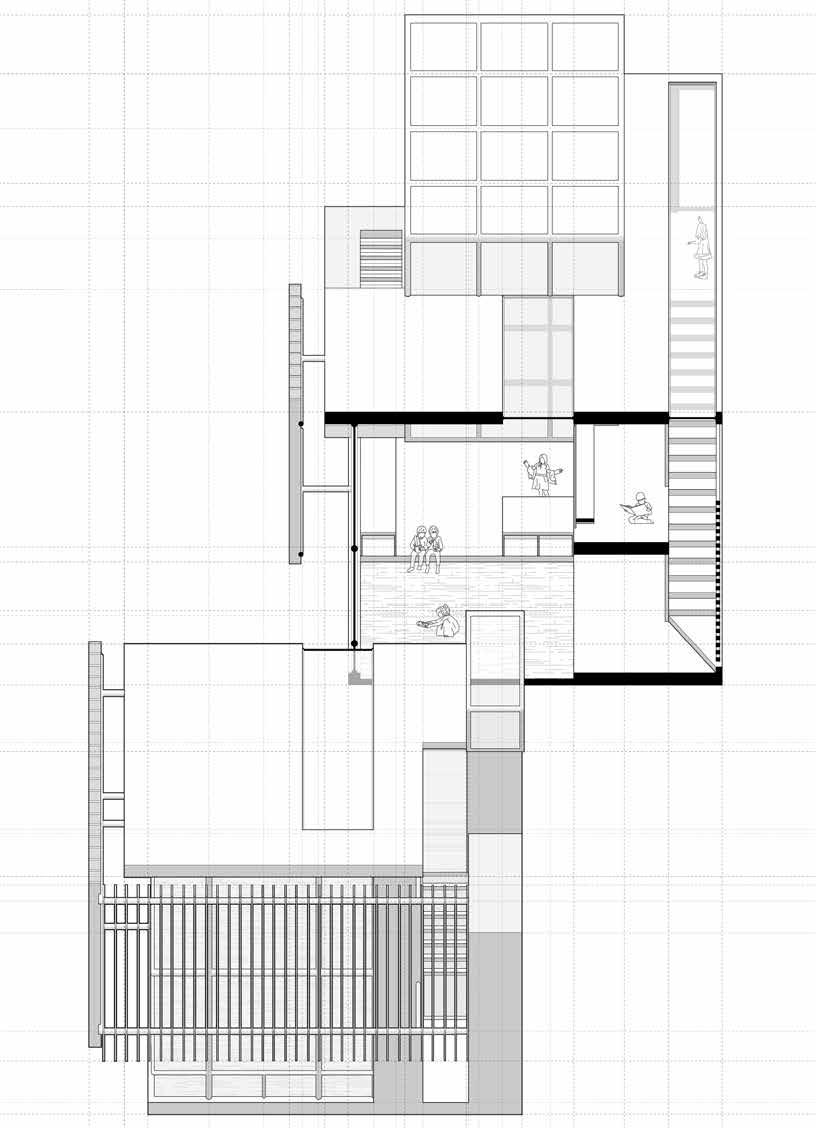
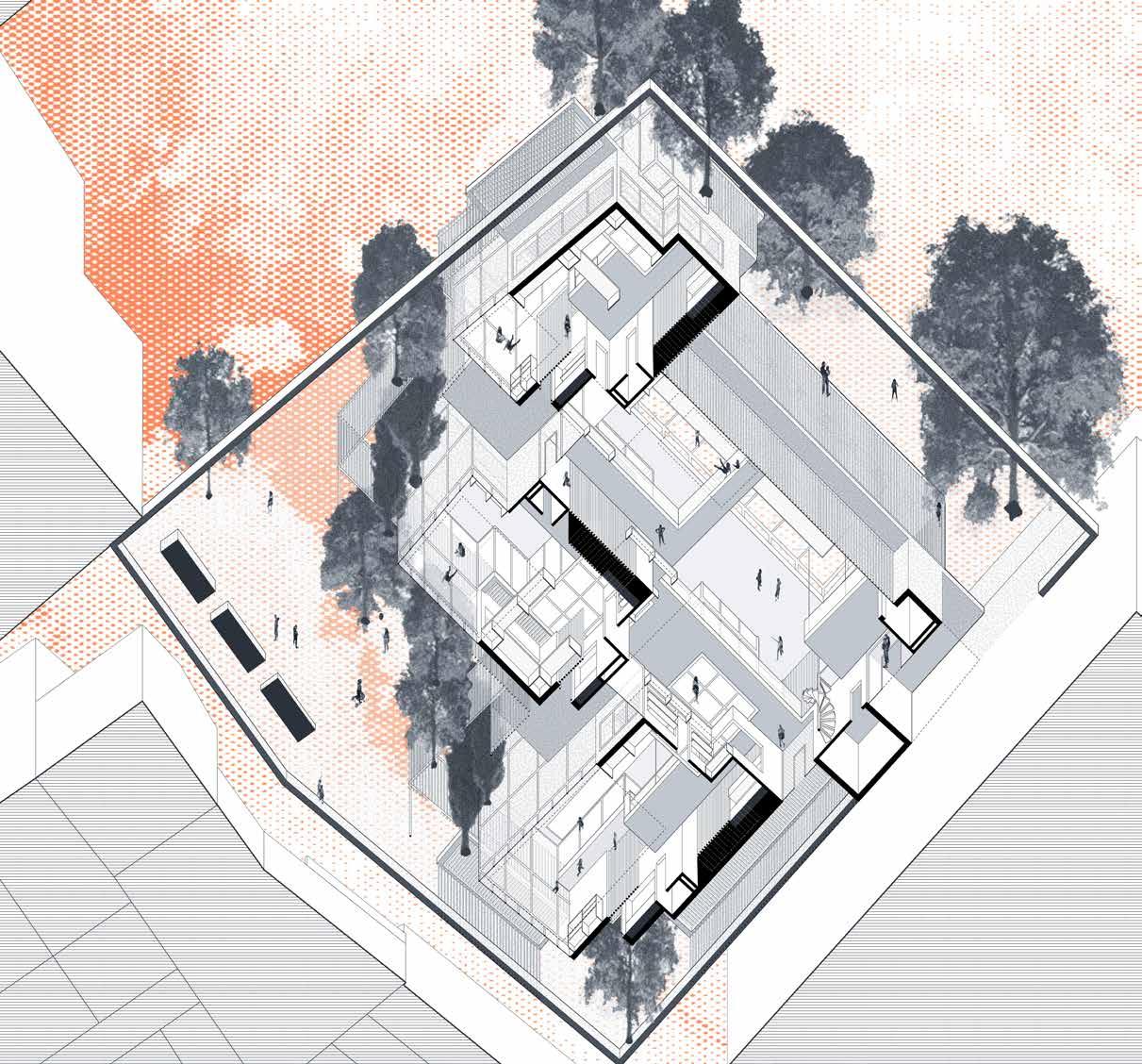
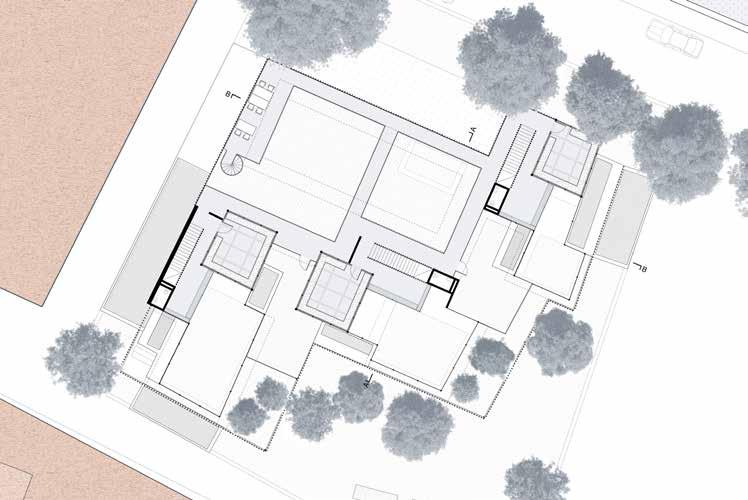
The project continues to expand into a kindergarten. Each of the three classrooms is uniquely tailored to different age groups. The youngest children’s room features an expansive mat area to encourage a playful, exploratory atmosphere. Conversely, the room for older students places more emphasis on table space, conducive to their more structured learning activities.
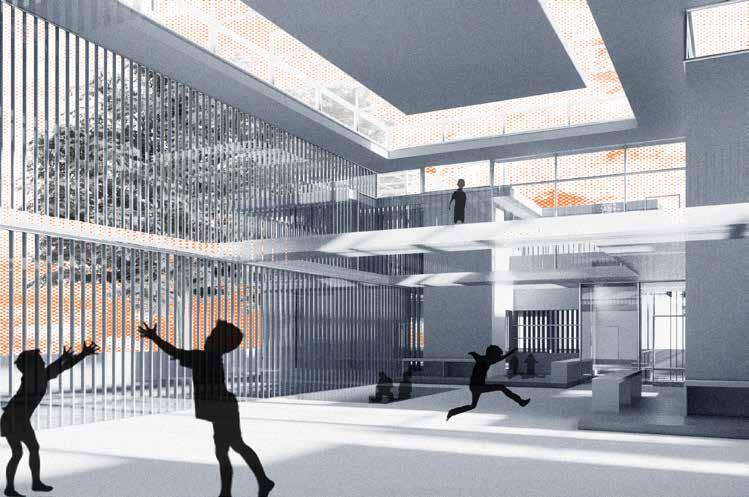
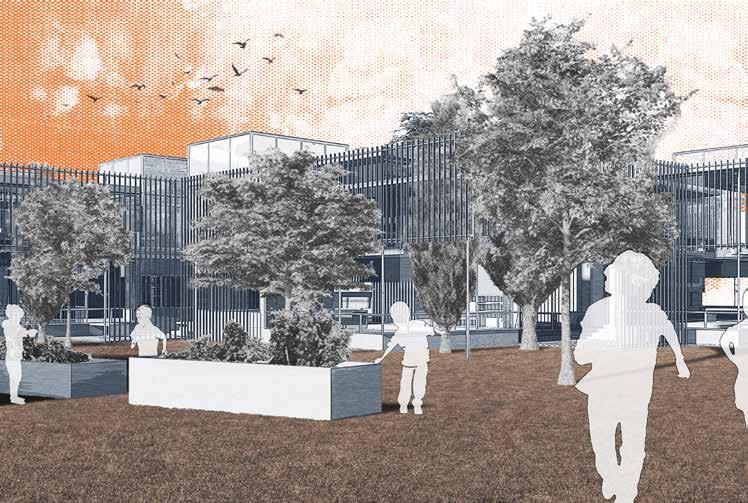
Central to the kindergarten’s architecture is the ‘piazza’, a spacious indoor communal area linking the classrooms. This space is pivotal in encouraging interactions among different age groups, enhancing the educational experience. This is complemented by an expansive back garden and specialized facilities for the teaching staff, together creating a comprehensive educational setting.
A distinctive aspect of the design is the intentional ‘joinery’ connecting each classroom; eight-foot-wide shared areas between the classrooms act as versatile workspaces, allowing the piazza and the back garden to remain in dialogue.
The use of vertical wood slats on the upper level of the kindergarten adds another dimension to the architecture. These slats vary in their application, sometimes blending with the building’s envelope and other times extending beyond it. This not only contributes to the kindergarten’s visual cohesiveness but also creates semi-contained spaces in the garden encircled by the slats above, further blending the transition between interior and exterior.
Academic Term: Arch 312 | Spring 2023
Professor: Georgia Daskalakis
Site: Elephant Rock State Park, Belleview, MO
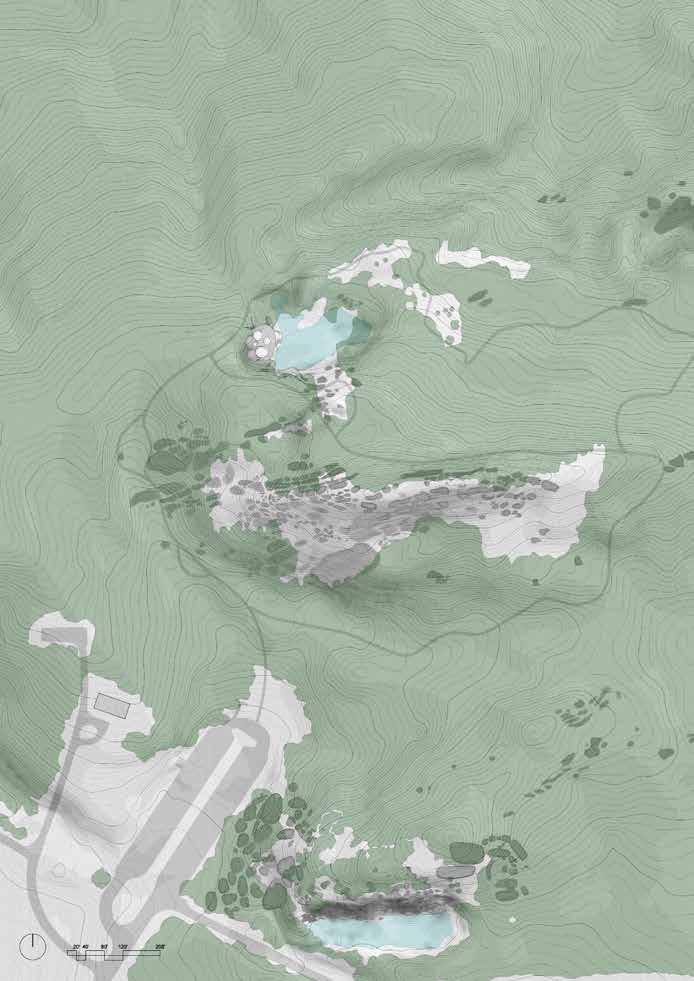
Nestled in southeastern Missouri, Elephant Rocks State Park is celebrated for its distinctive geological marvels – colossal granite boulders shaped by time into massive, rounded forms reminiscent of a herd of elephants. Recently, the park extended its hours for the viewing of astronomical events, providing a canvas for an installation weaving together astronomy and geology. The concept also introduces a park “lounge,” inviting visitors to unwind day and night.
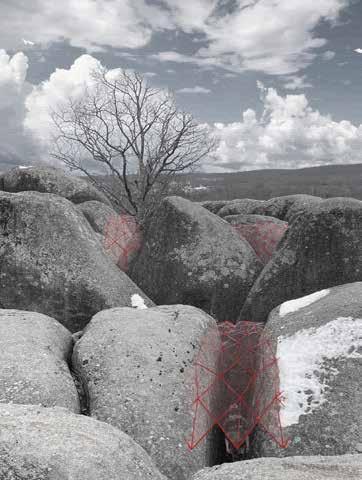
Surveying the site, two locations seized my attention: granite fissures, destined to evolve into individual boulders, and the tranquil embrace of two abandoned quarries. The former sparks playful exploration, enticing both children and adults to navigate the labyrinthine they create, while the latter offers serene seclusion.
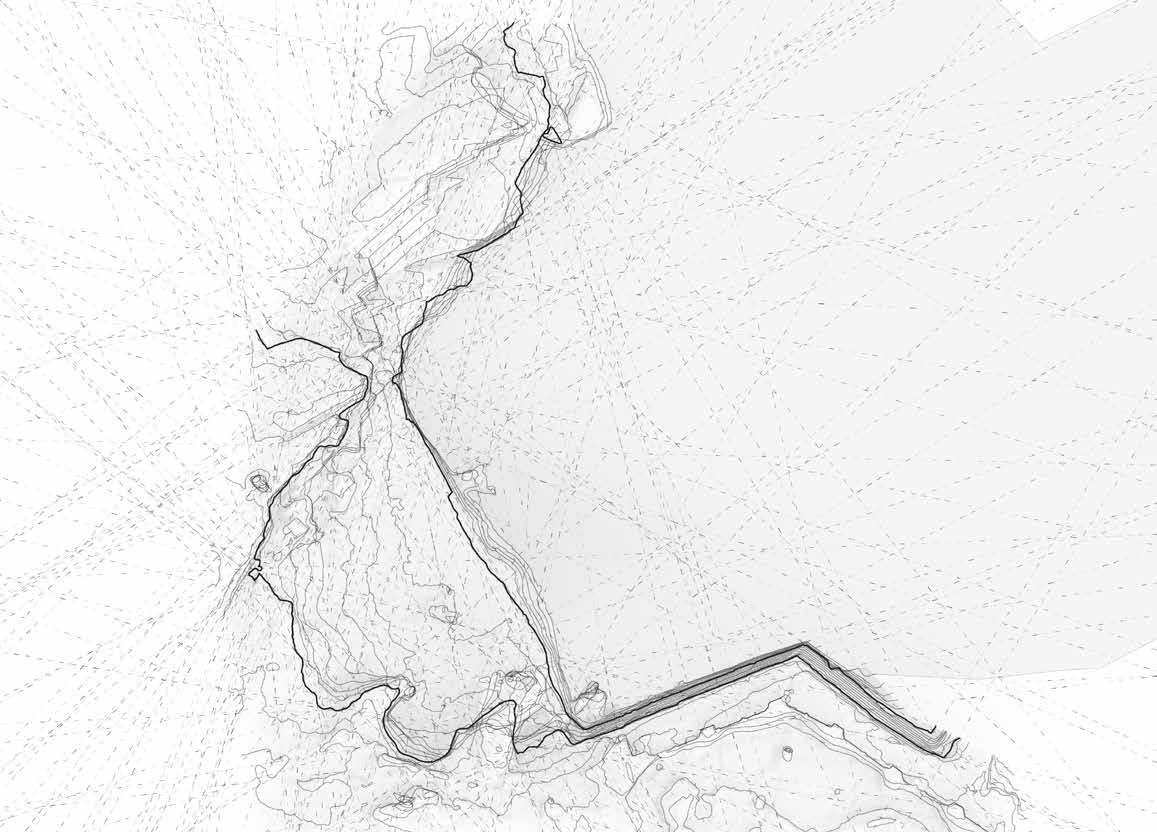
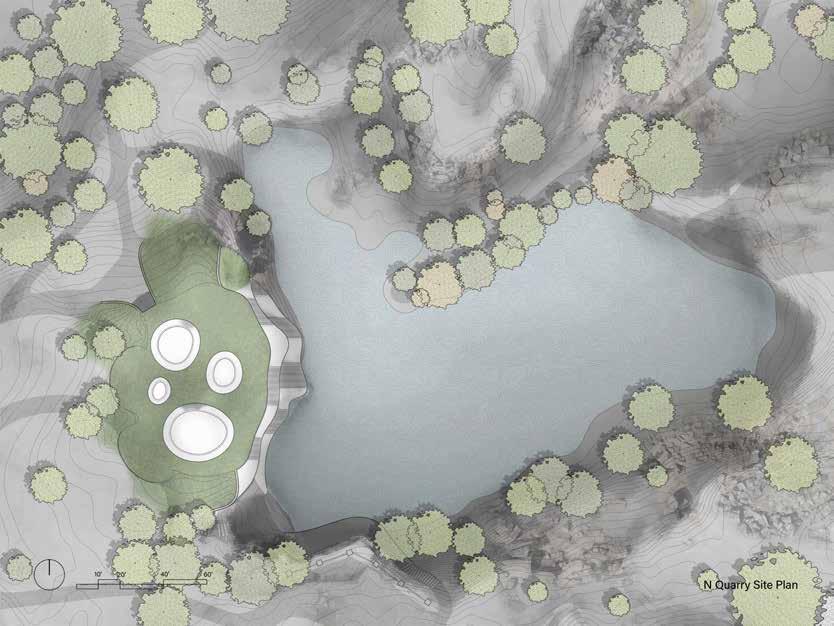
The North quarry, with its quasi-circular footprint, amplifies the immersive experience, providing a tranquil respite after encountering the bustling expanse of Elephant Rocks. Envision the topography dipping as you approach, surrounded by rock walls, trees, water, and sky – an isolated haven within the park. Inspired by this unique duality, the fissures emerge as the canvas for an animated, dynamic, interactive installation, while the North quarry unfolds as the idyllic “lounge” for repose.
Part 1: Refraction: Starlight
Part 2: Lounge: Rock, Quarry & Water
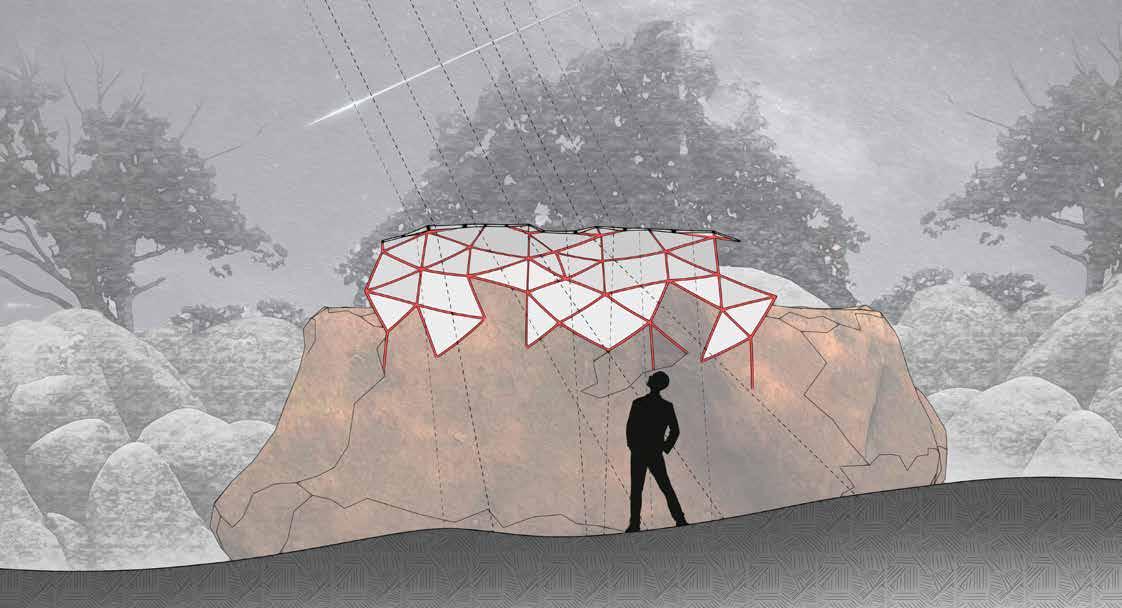
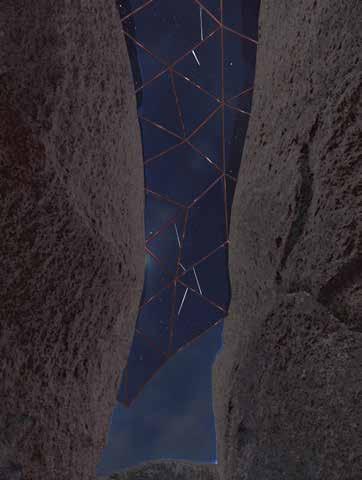
The phrase “meteor shower” suggests a barrage of shooting stars across the night sky. Unfortunately, the reality is much more underwhelming; we would be lucky if more than 10-15 shooting stars are visible every hour. “Refraction: Starlight” confronts the disappointing nature of meteor showers. The installation consists of a series of transparent acrylic panels of uneven thickness framed within a distorted geodesic superstructure. The acrylic panels are shaped in a way that each refracts light in a different direction. The effect is that a shooting star “zig-zags” across the night sky rather than flying in a straight line; at moments, the same shooting star would also be visible in multiple panels simultaneously.
The installation is to be situated among the massive granite boulders in Elephant Rock Park in Eastern Missouri. The park’s ancient geological formations shawl its visitors in an otherworldly atmosphere, and the location’s absence of light pollution makes it an ideal site for viewing astronomical events.
Collaborator: Alex England
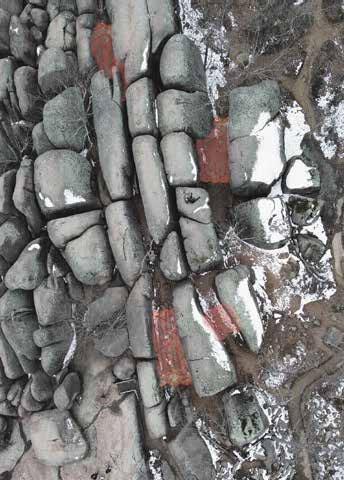
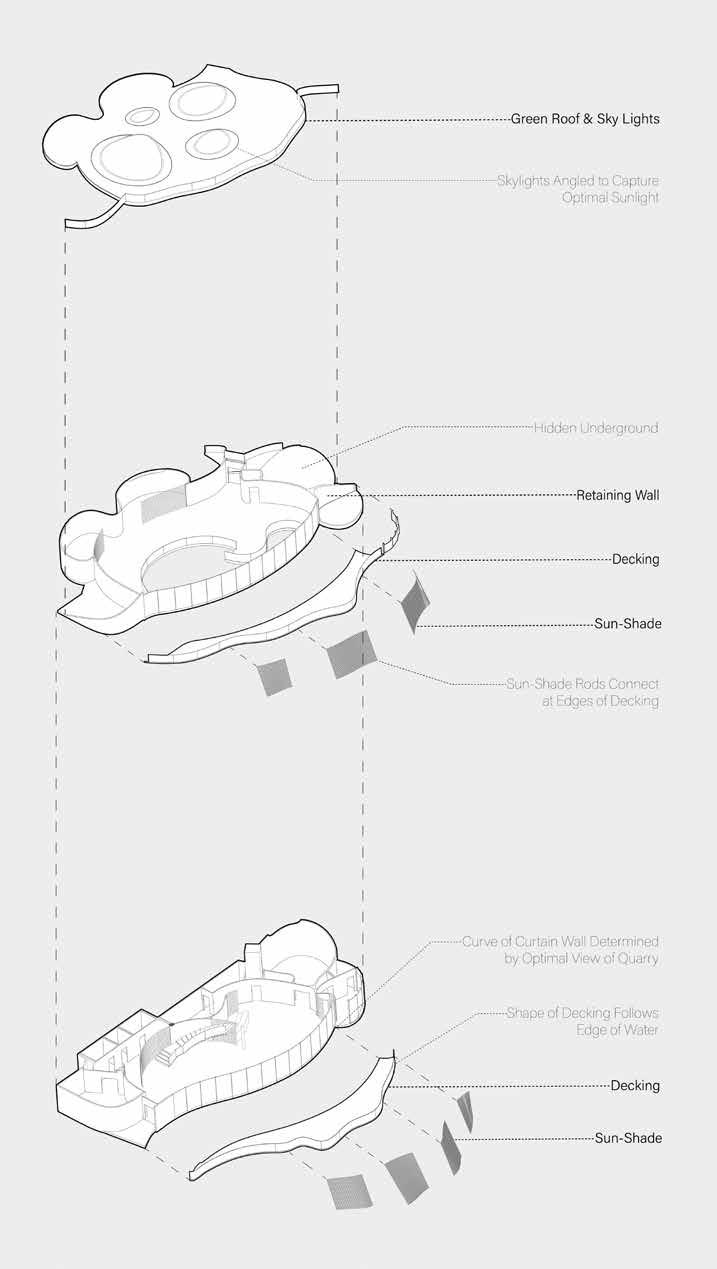
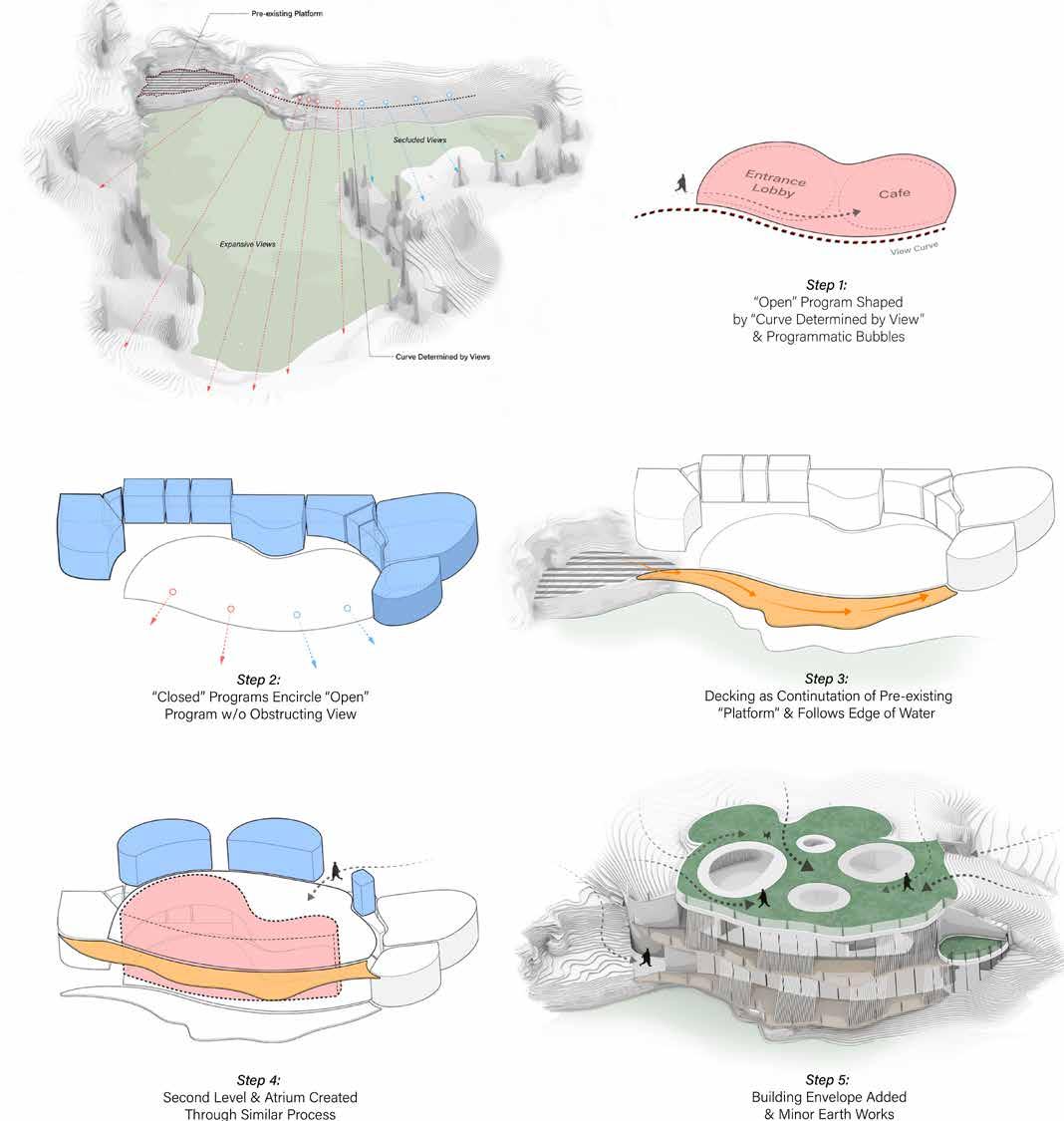
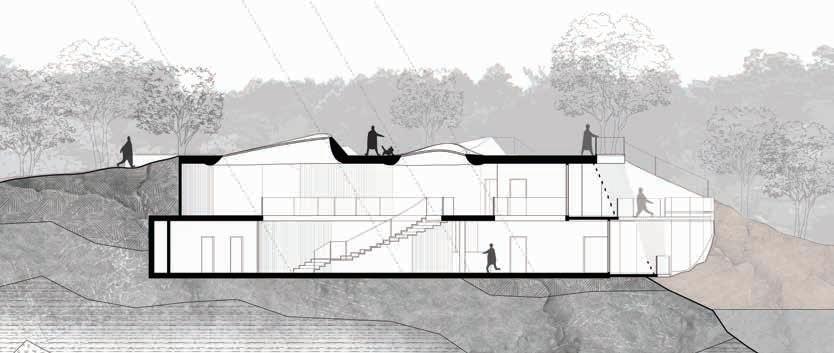
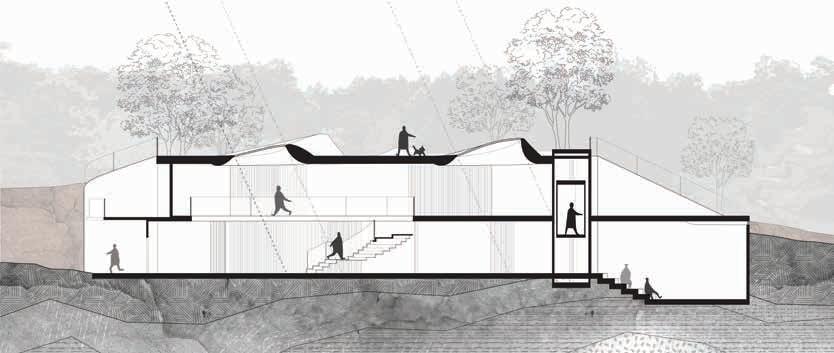
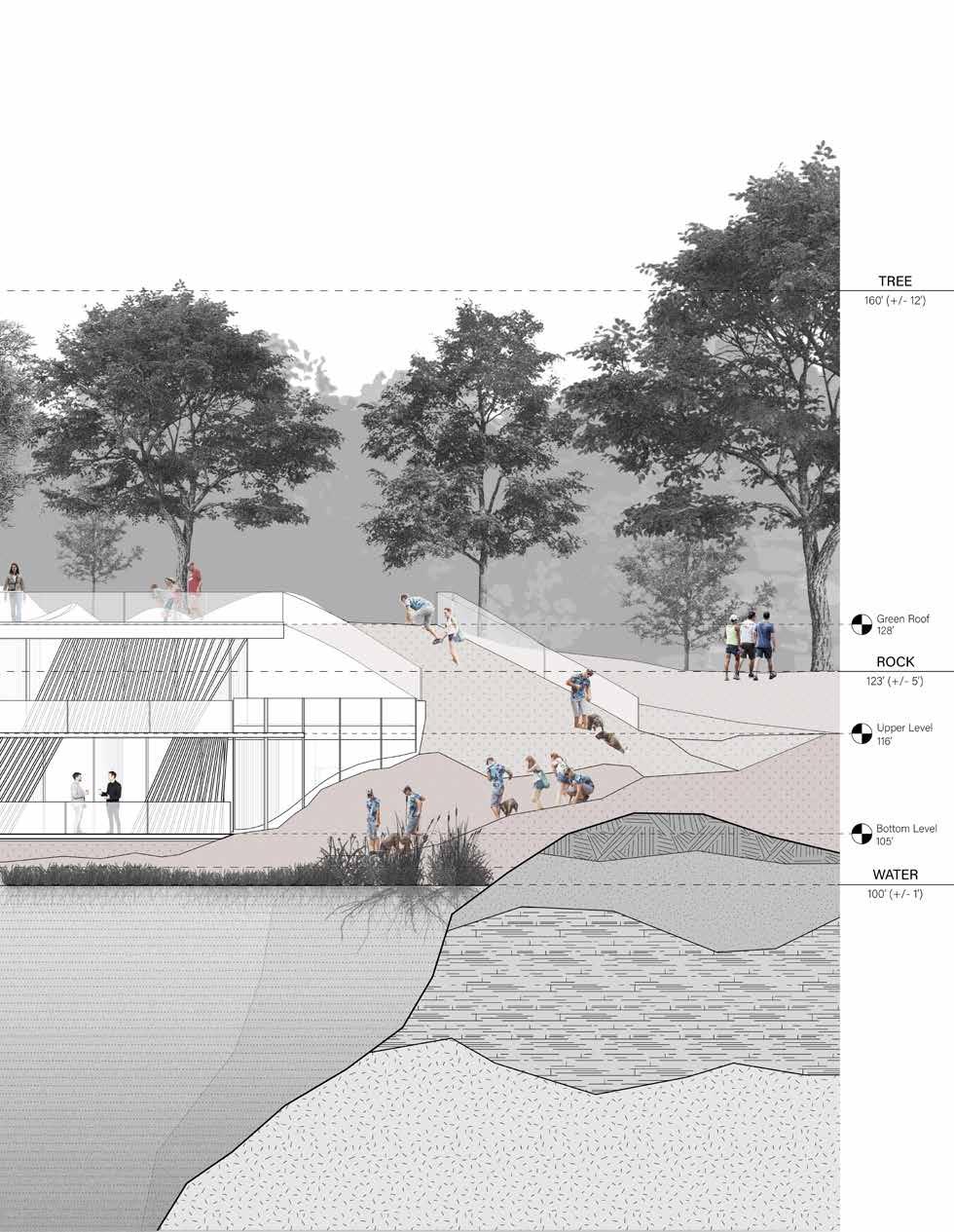
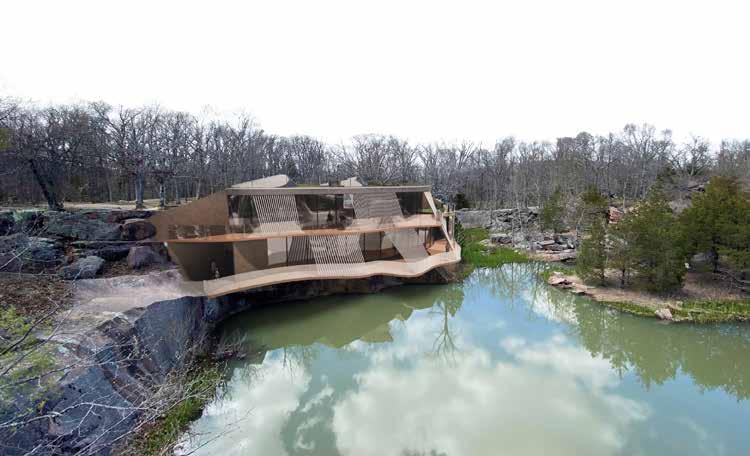
In the captivating landscape of the North Quarry, a specific area drew my attention—the artificially cut rock with particularly unnatural angular geometry. Here, the ring of rock encircling the body of water abruptly descends into a lower platform, providing a unique proximity to the pond, unparalleled elsewhere on the rock wall.
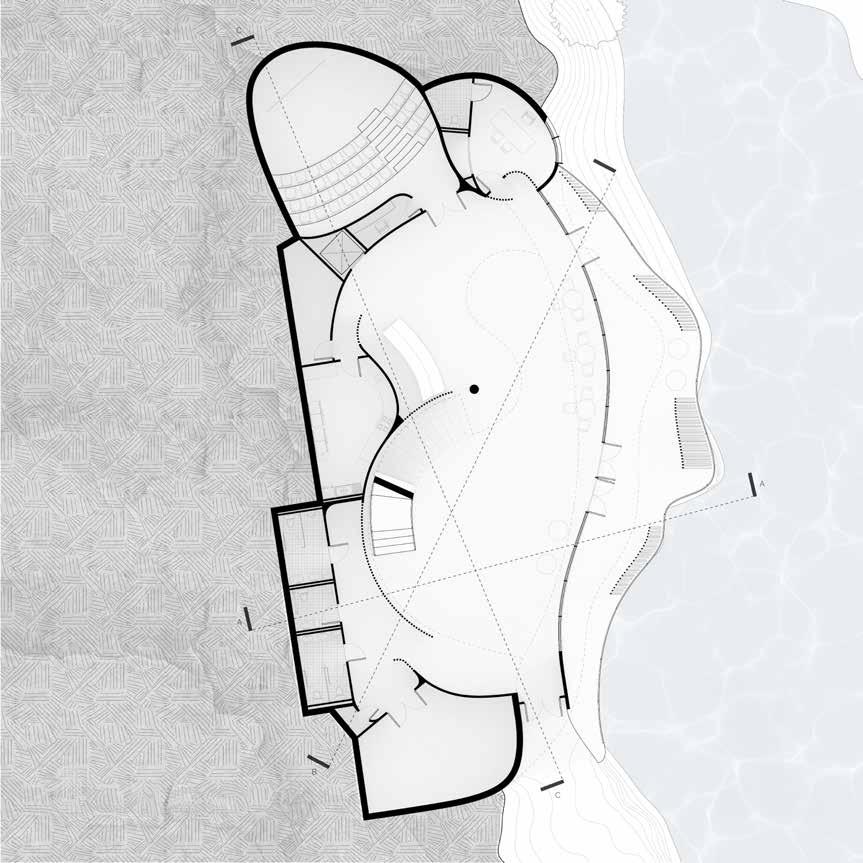
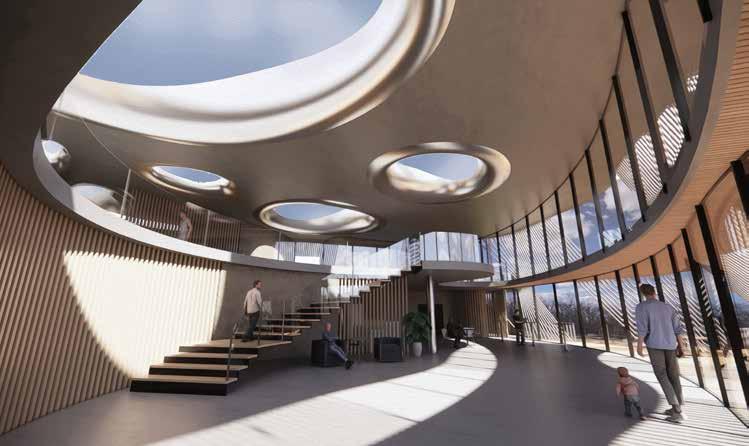
Inexplicably, the quarry prompts in me an instinctive urge to approach the water, and this platform allows me to get one step closer. Naturally, it became the starting point for the lounge. The first level of the lounge seamlessly extends from the platform along the water’s edge, while the back wall of its “open” programs features smooth concave curves, concealing “closed” programs and enveloping the lounge’s occupants. As the second level steps back from the first, the building cascades from the top of the rock wall to the water’s surface, mirroring visitors’ subconscious pull toward the water.
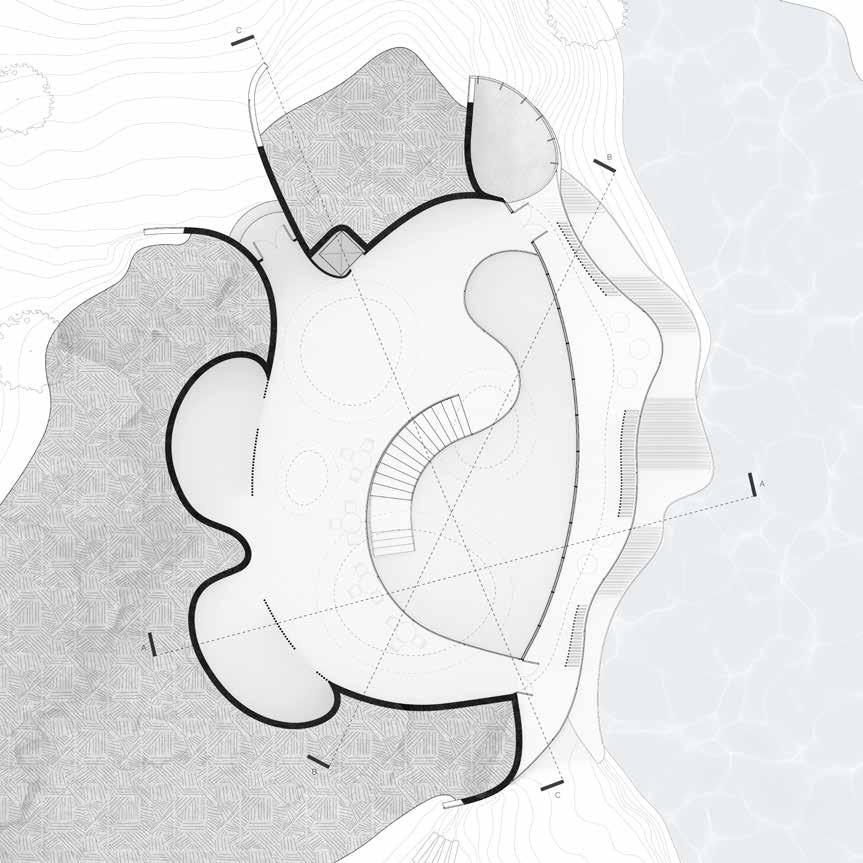
The second level aligns flush with the rock wall’s top, allowing direct access to the green roof. Skylights strategically oriented punctuate the ceiling, whose emergence onto the roof creates a captivating landscape. Some perceive them as resembling earthly geological features, while others see an otherworldly touch—a compelling ambiguity between geology and astronomy.

Academic Term: Arch 407 | Spring 2024
Professor: Chandler Ahrens
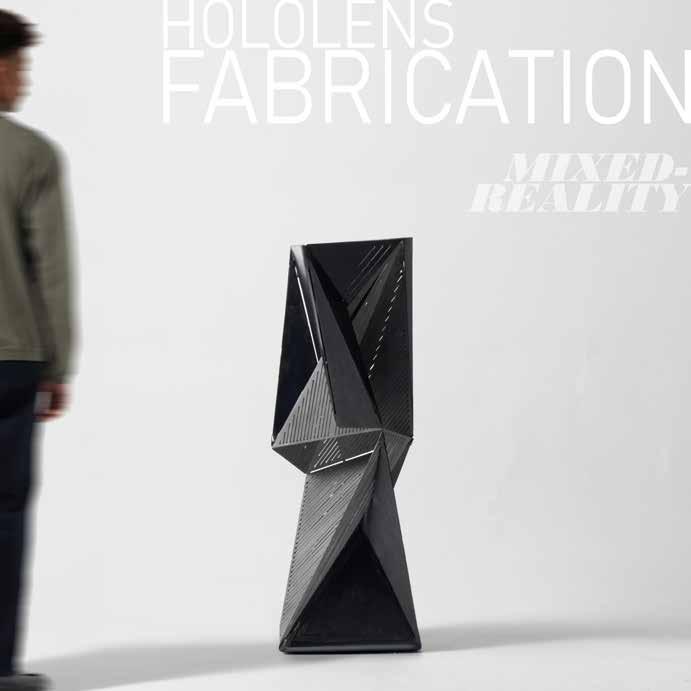
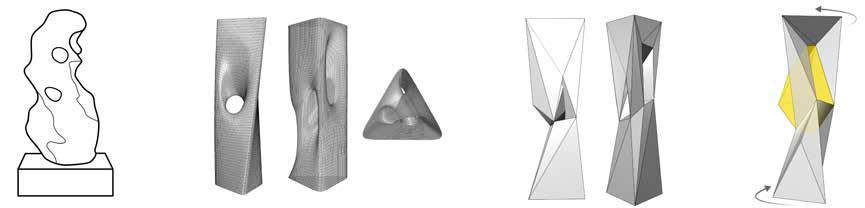
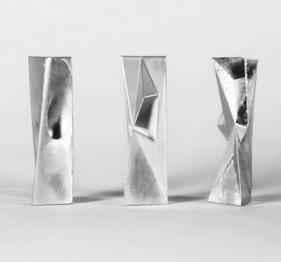
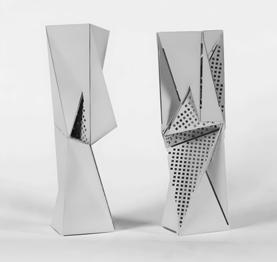
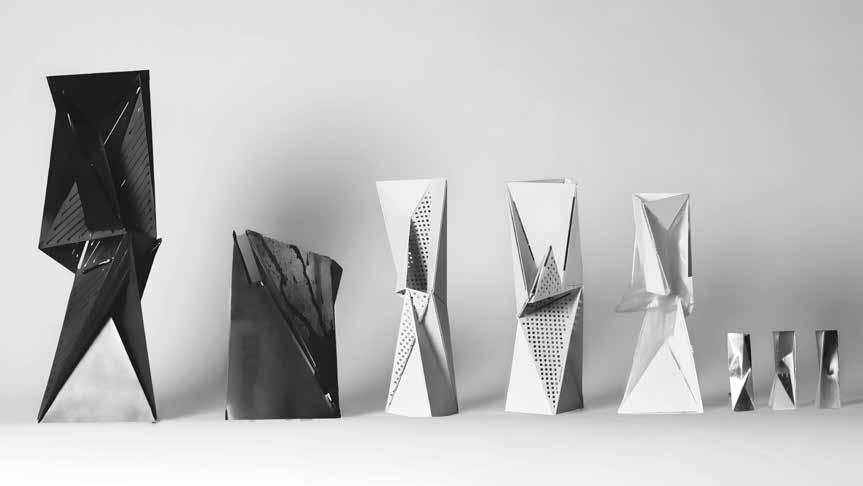
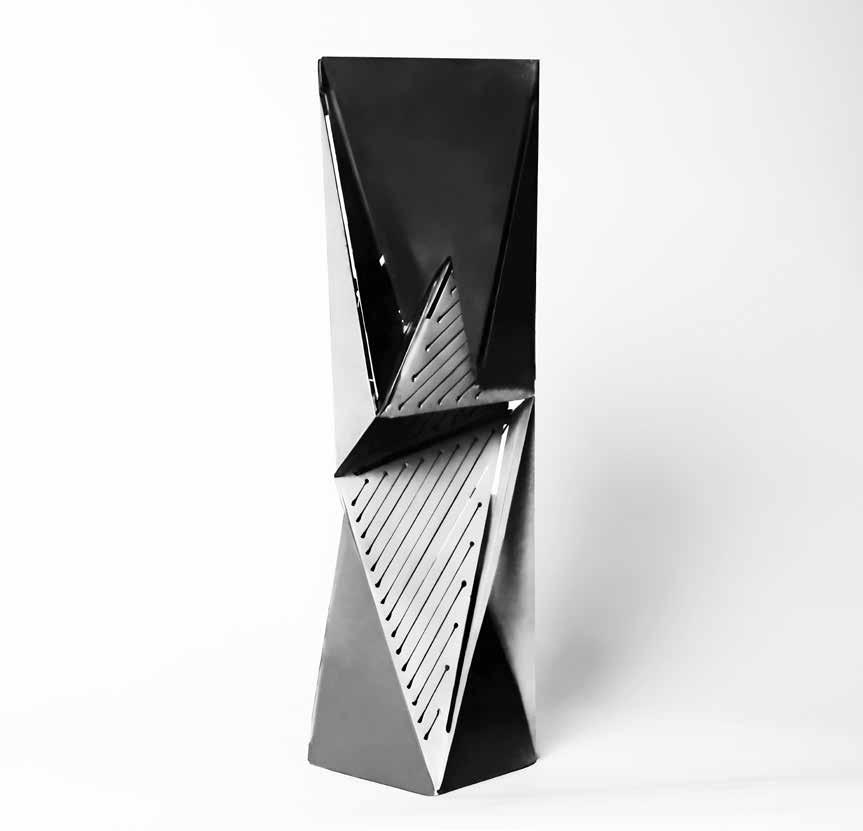
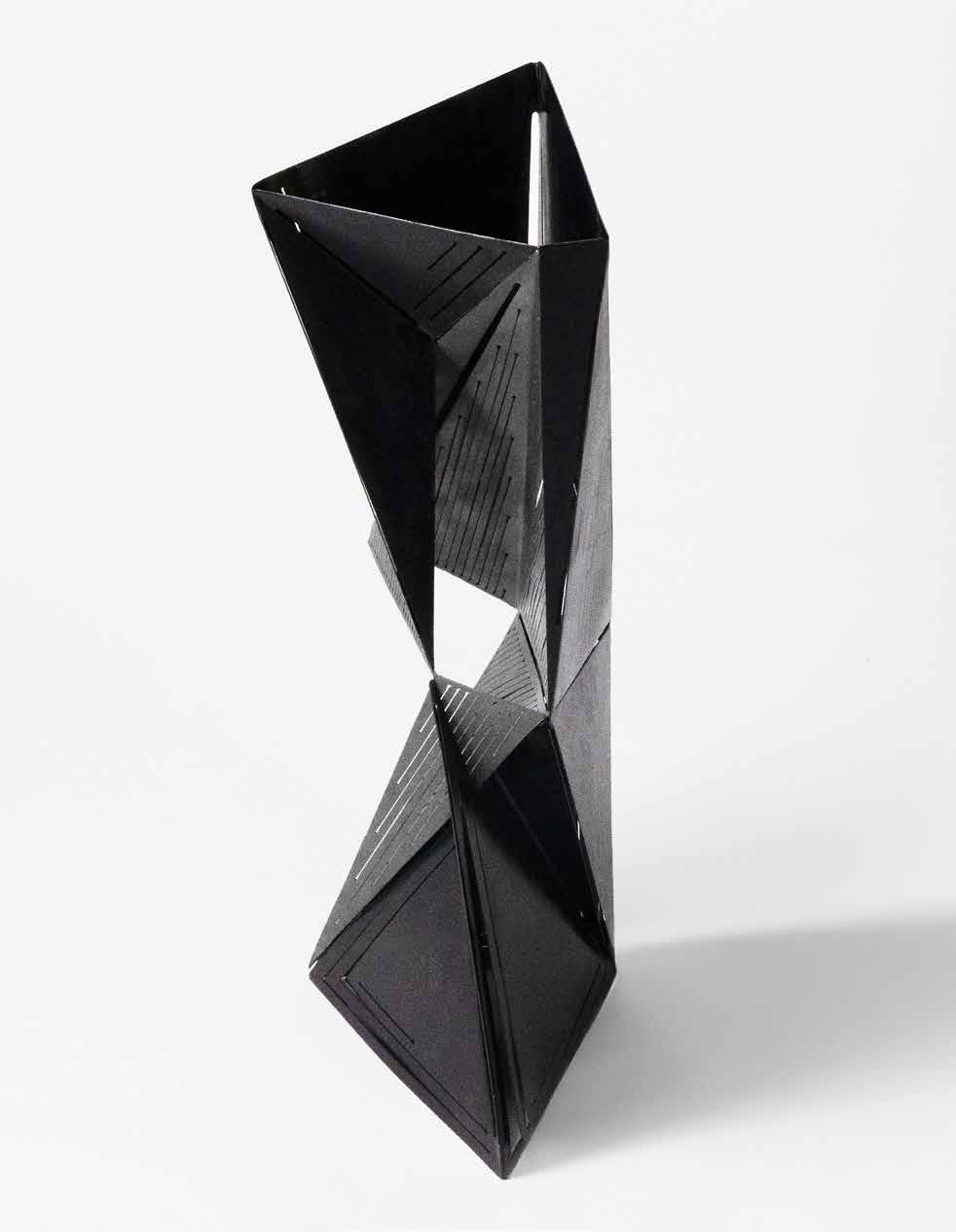
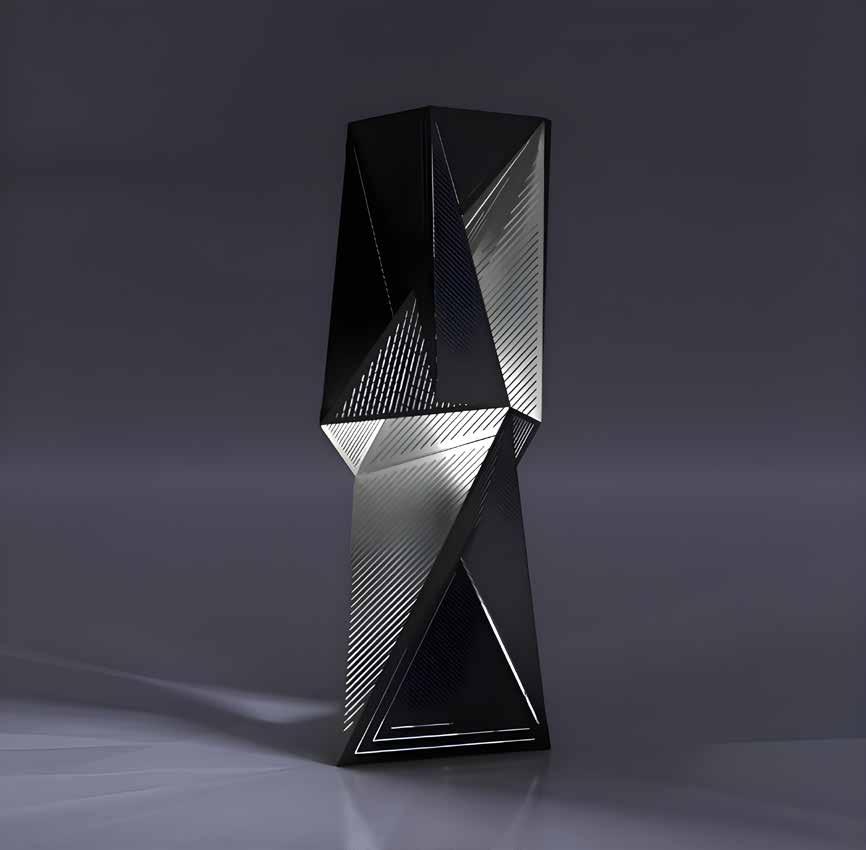
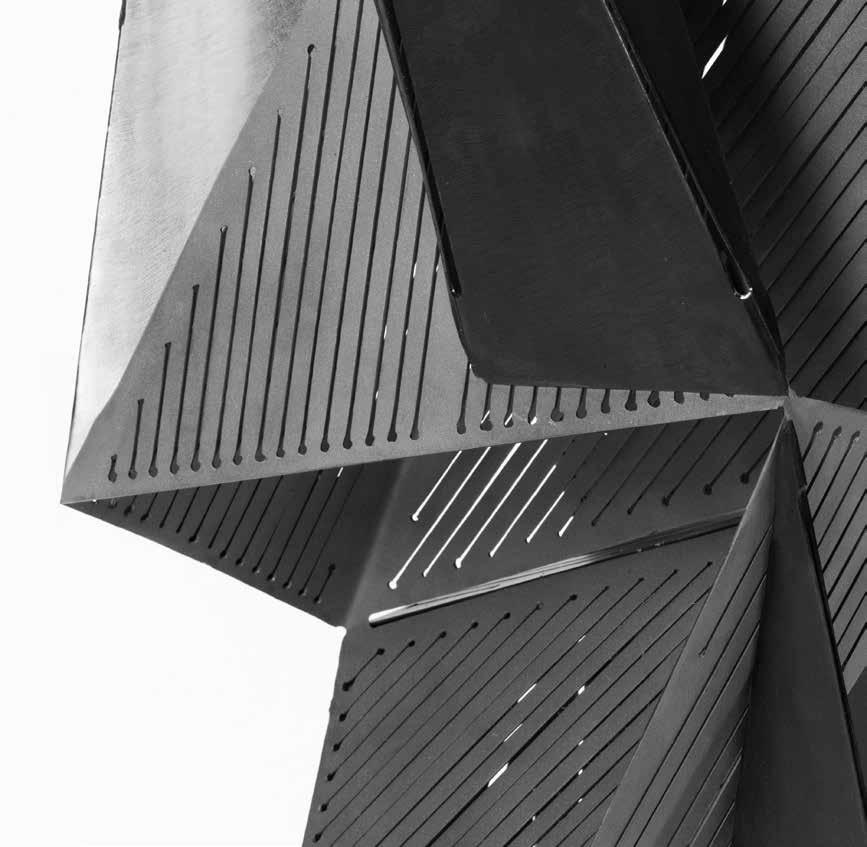
The project introduces a sculptural floor lamp inspired by the naturally porous structure of Taihu stones, often used as the central decorative element in traditional Chinese gardens. The project’s design focuses on the holes that define the geometry of these stones, particularly the internal surfaces that shape the openings.
At its foundation, the design of LA(mp) involves three distinct formal manipulations. Initially, two holes intersect, allowing the internal surfaces of one to merge through the other. Following this, the entire structure is twisted and deformed, letting some of the inner surfaces of the openings extend beyond the outer surfaces, redefining the lamp’s silhouette. The process concludes with a series of geometric reduction, producing an abstracted, low-resolution polygon that nevertheless captures the essence of the original form. Through these manipulations, the original internal surfaces of the openings now form the core of the LA(mp), becoming its primary visual component.
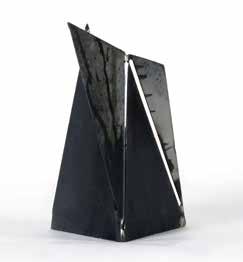
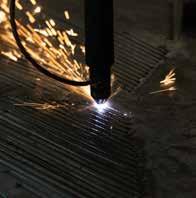
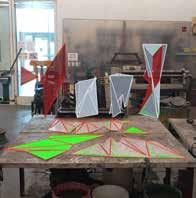
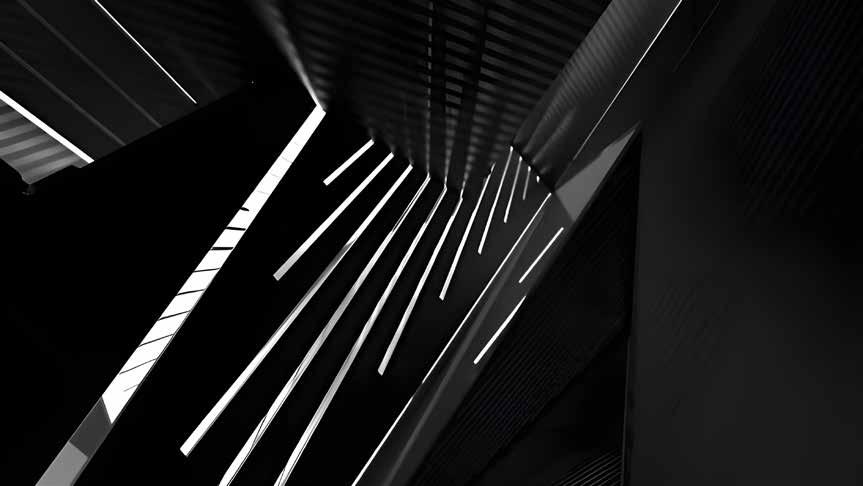
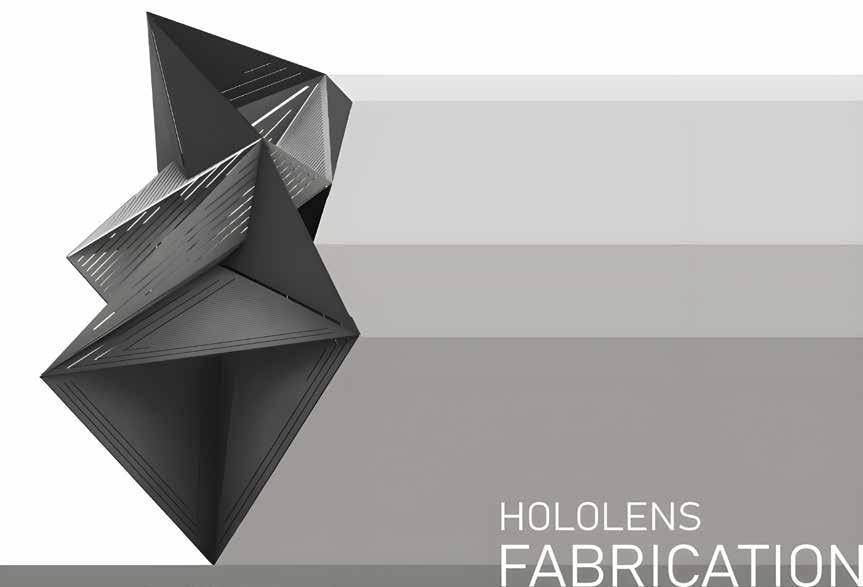
The manufacturing of LA(mp) combines traditional metalworking with advanced digital fabrication techniques. The process begins with plasma CNC-cut mild steel sheets, which are then polished and shaped using a metal brake. Strategic relief cuts along the folds not only facilitate the construction but also allow light to emanate from within the lamp’s solid shell. The core of the LA(mp) features distinct arrays of linear openings that enhance the project’s lighting effects, differentiating it from the exterior surfaces.
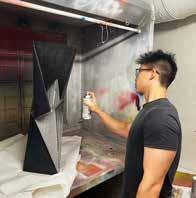
During the assembly phase, the Hololens played a crucial role. It ensures maximum precision by projecting the digital model onto the material, aiding in the accurate folding and placement of each component before welding. The lamp is finished with two distinct treatments: a sand-blasted, matte finish that sparkles under light for the core, and a black patina for the outer surfaces, lending a sophisticated contrast to the design that adopts different characters when subjected to different lighting conditions.

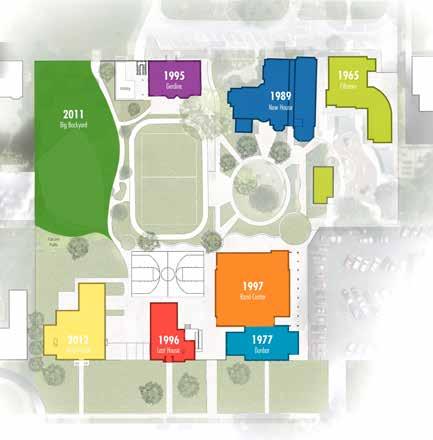
Composite of Two Playscapes
Mackey Mitchell Architects
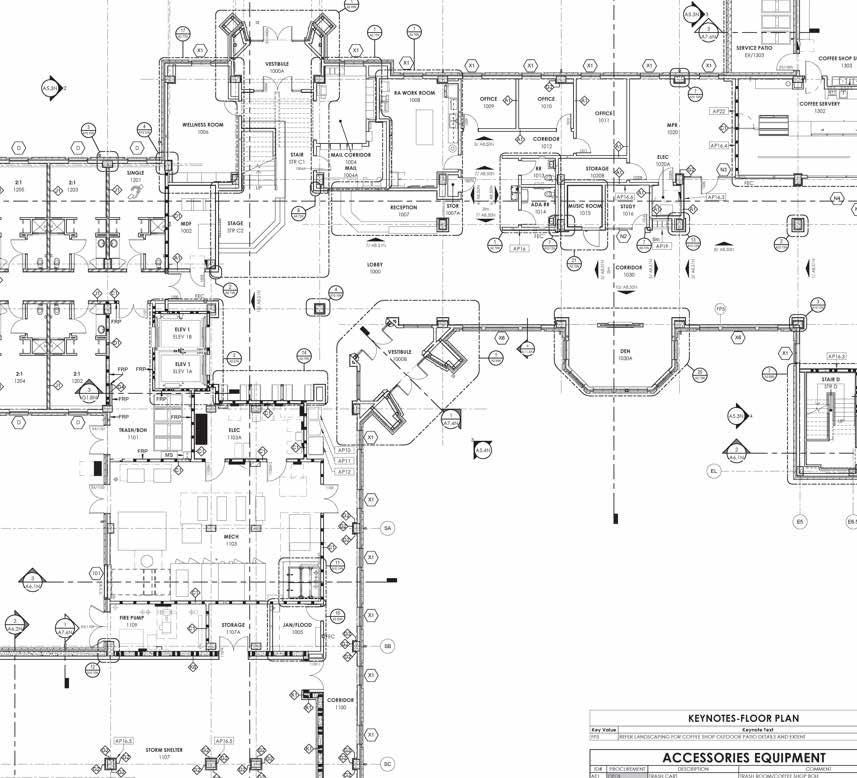
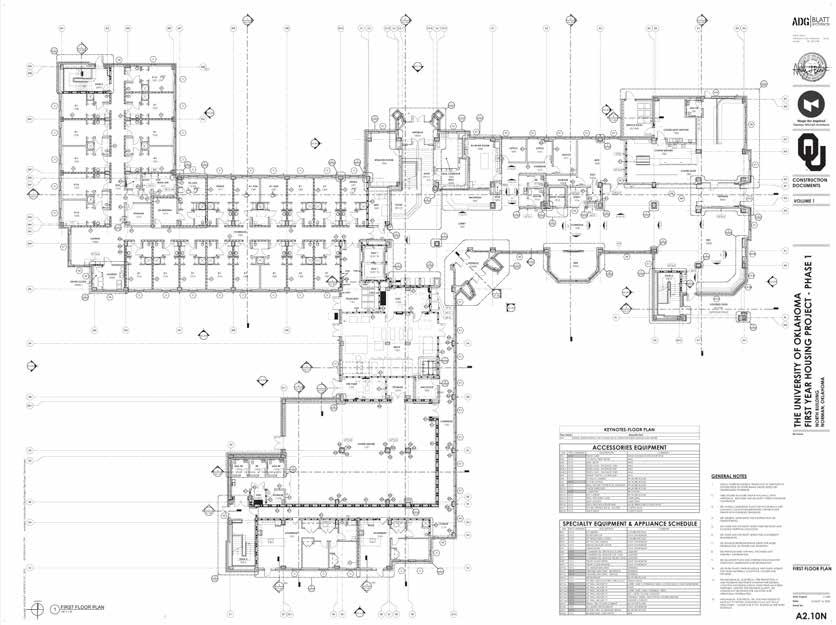
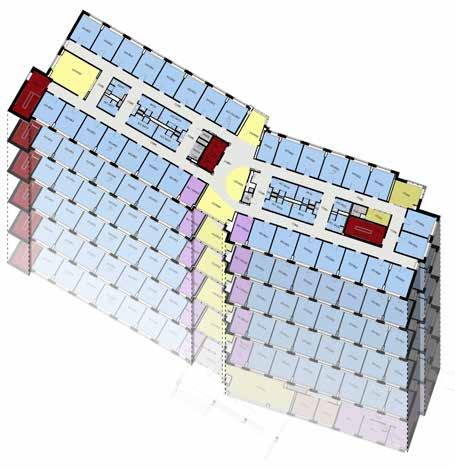
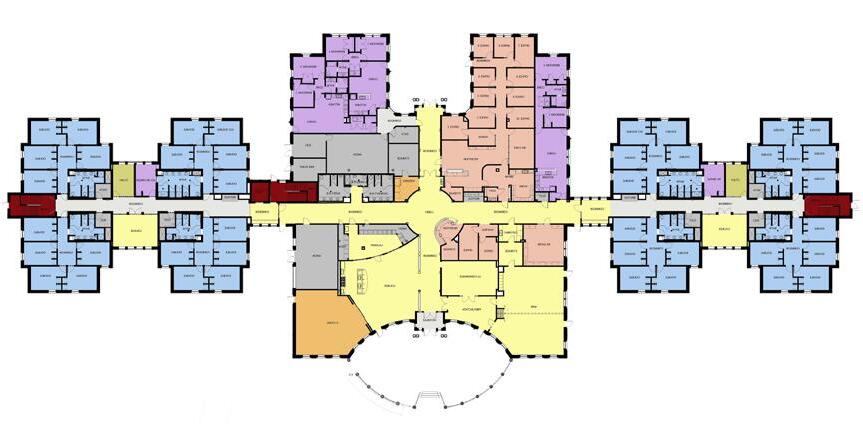
Oklahoma University 1st Year Housing
Forsyth School Masterplan
Programmatic Floor Plans
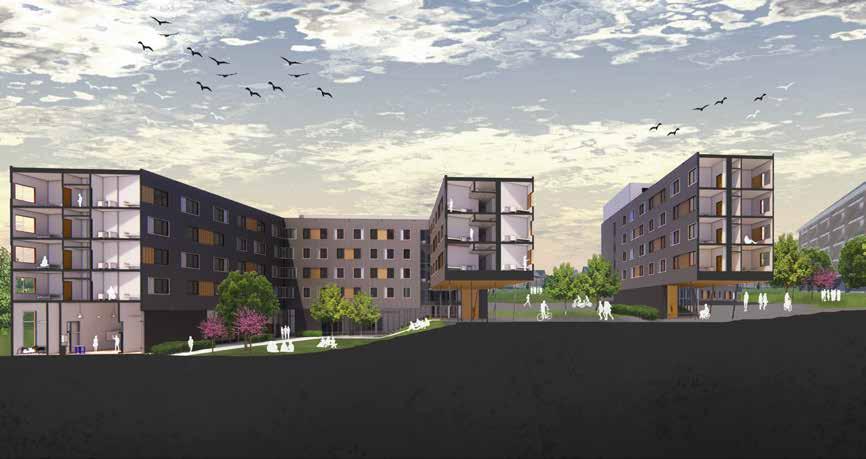
Adohi Hall Perspective Section & AI Presentation
Led the completion of 24 sheets in the 100% CD set, including the majority of floor plans, enlarged floor plans & interior elevations.
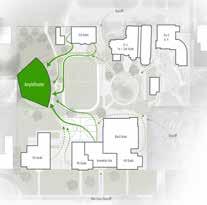
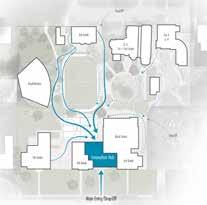
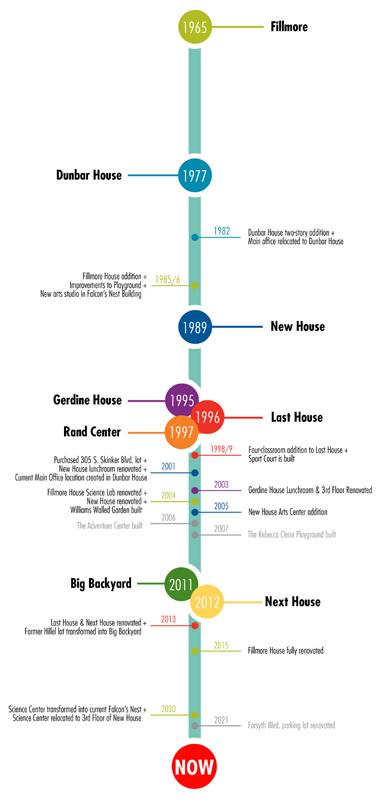
Produced programmatic diagrams for 16 residential halls to showcase the firm’s expertise for client interviews, totaling 100+ individual drawings.
Produced a sectional renderings of Adohi Hall with the aid of AI. Delivered a presentation introducing the tool to the firm.
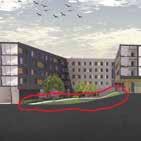
In the original rendering, the layout of the courtyard space was derived from one of the AI-generated iterations. With generative fill, each prompt generates three iterations for the user to select from.
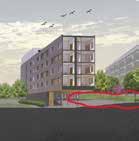
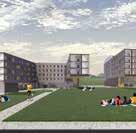
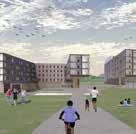
Similarly, the right-most courtyard was also created using generative fill. In fact, in this instance, the process was more streamlined, which can be contributed to the region’s more simplistic silhouette/ landscape.
Once the section-perspective is completed, further experimented with the tool to expand the courtyards beyond the cut plane. The tool intuitively understands the existing image’s perspective & lighting, matching them with its generations.
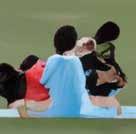
Another iteration of the extended courtyard was created. This time, with more focus on generating scale figures.
With the figures, the tool begins to breakdown. The AI engine seems to lack a grasp of basic human anatomy. Similarly, the tool struggles to generate convincing reflective surfaces. However, with the tool’s rapid development, this issue will be shortly resolved.
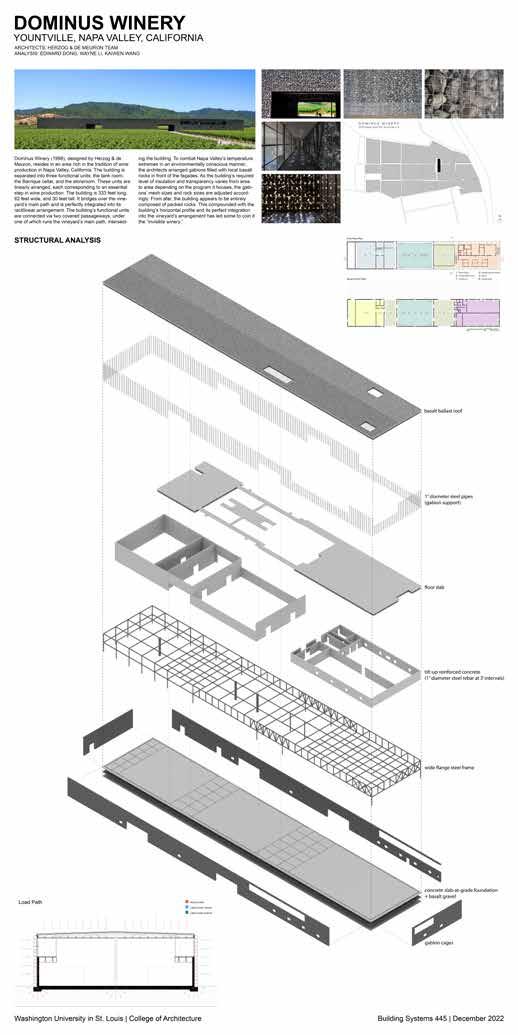
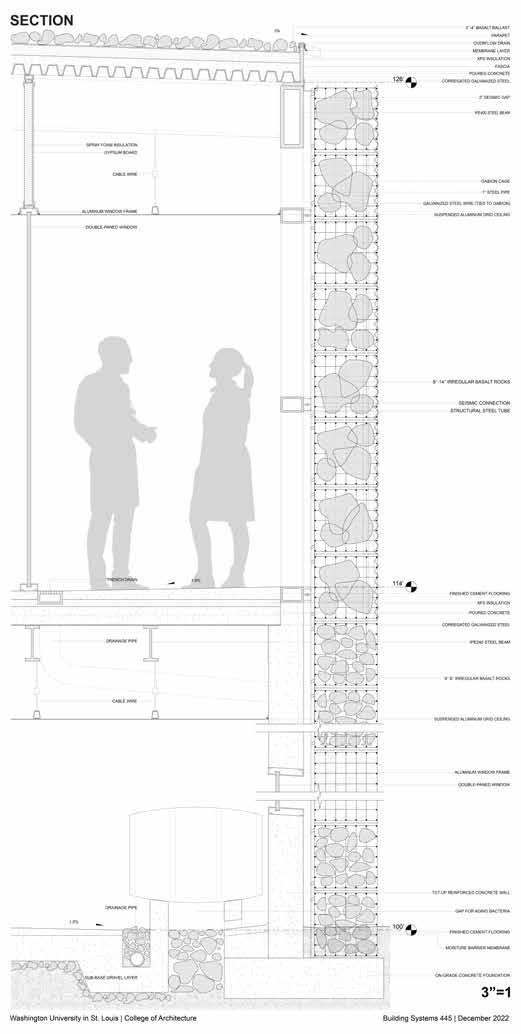
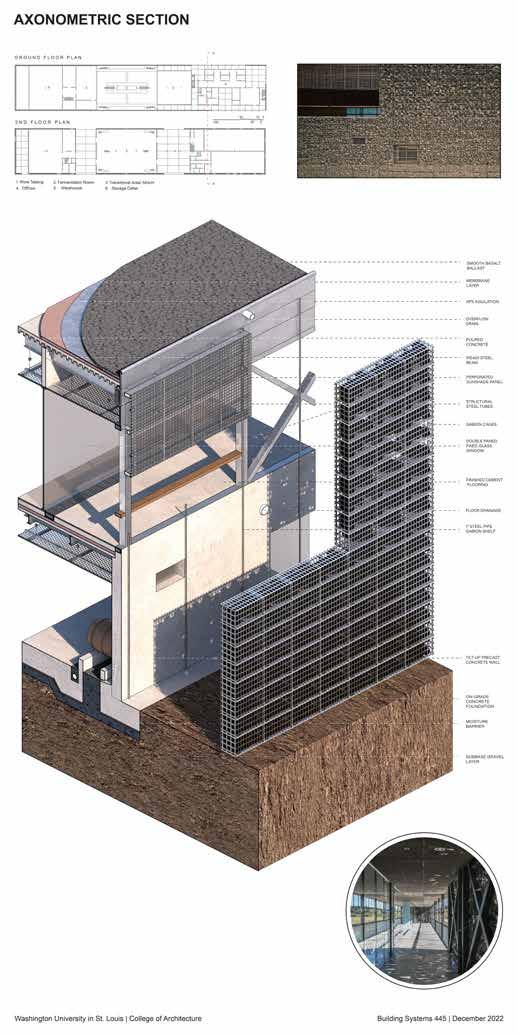
Building Analysis: Dominus Winery
Between Sky & Earth
Conversation with Kendrick Lamar
Relief: Cathedral Basilica of STL
Detailed analysis of Dominus Winery in Napa Valley, California, designed by Herzog & de Meuron, displayed on three 36”x72” boards. The winery’s unique façade system combats Napa Valley’s temperature extremes in an environmentally conscious manner. The architects arranged gabions filled with local basalt rocks as the façades. As the building’s required level of insulation and transparency varies from area to area, the gabions’ mesh sizes and rock sizes were adjusted accordingly.
Li
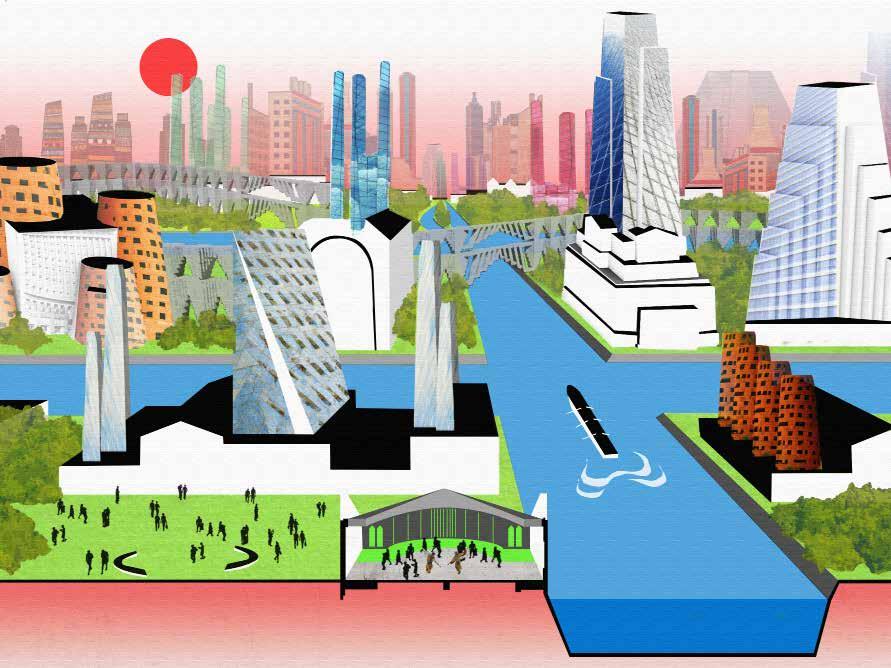
The project follows the native Osage people’s return and reclamation of their sacred lands. Using wealth from oil extraction in Oklahoma, they repurchase St. Louis after being forcibly relocated. The drawing showcase Indigenous Futurism through reimaged architecture that unites land, sky, and water - a concept rooted in Osage religious beliefs. Amongst the towering buildings exist ample green space for public use. The transportation system is water-based, drawing from the Osage’s historic reliance on the three rivers. It is created by directing the Mississippi River to canals.
Following the reclamation of their sacred land, the Osage people chose to acknowledge their displacement and honor their history. Instead of erasing the structures built by western colonizers, they chose to build over them, layering new construction atop the original western architecture. These layered structures stand as a reminder of their tragic past while asserting their right to the land that they call home.
The Osage people have transformed the existing church into a spiritual site that reflects their culture and resilience, representing their spiritual heritage overcoming the oppression of Christianity. The circular space within the building resembles the traditional Osage round house, used for the ceremonial Ilonska Dance and drum-giving ceremonies. The open rooftop symbolically pulls in the sky to meet the earth.
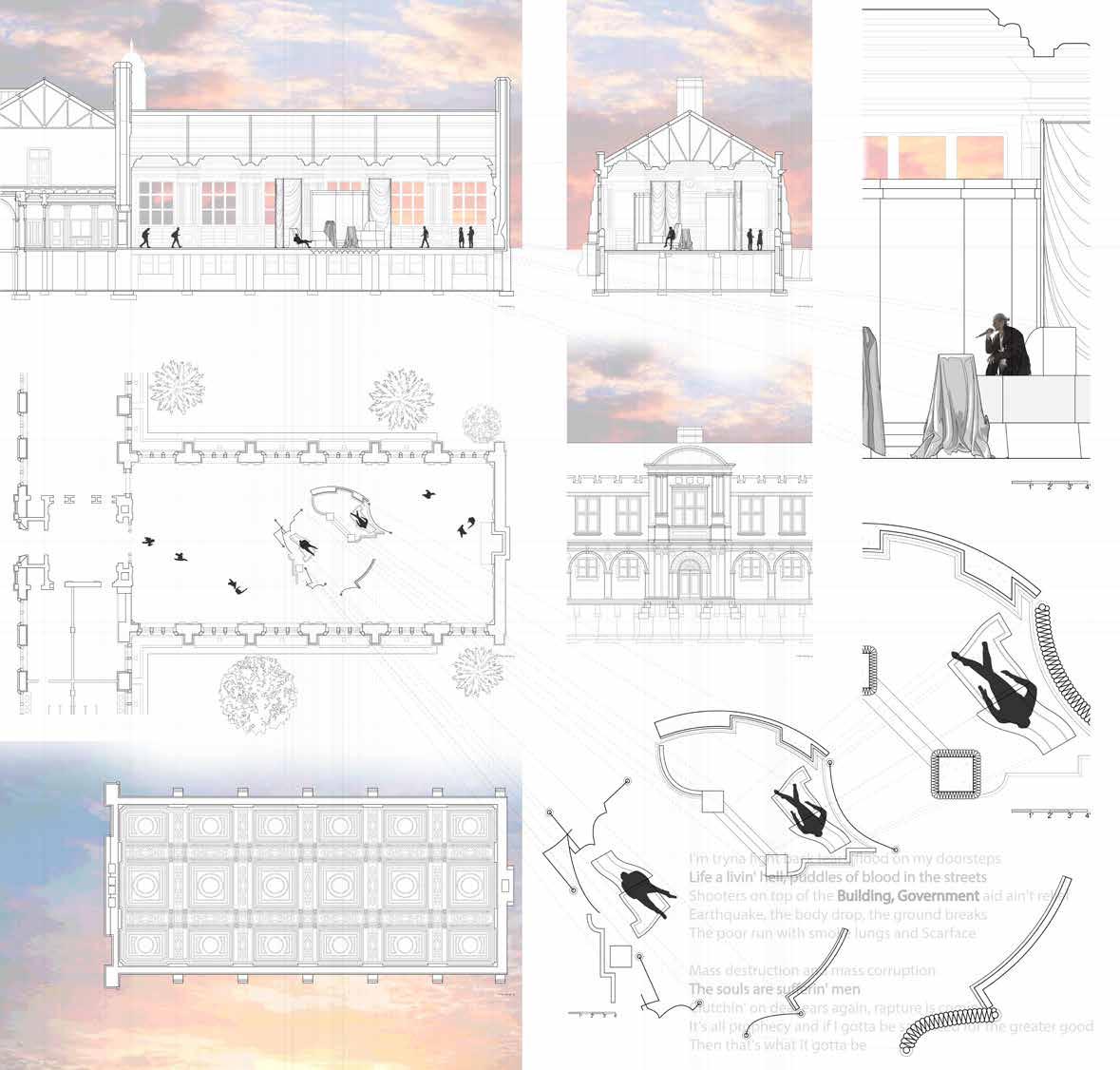
I was posed with the question “given the opportunity to have a conversation with anybody, who would you choose?”
Having spent most of my childhood in China, the concept of racial diversity was foreign to me. Moving to North America and seeing many of my peers being exceptionally vocal in regard to racial and societal injustices ignited my urge to become better educated on these subjects. I turned toward Kendrick Lamar, whose music have grown to love. The rapper pushes for equality for all, and a conversation with him is to be begged for. Through the exchange, wish for him to shed his insight on many of the issues he addressed in his songs, and I would leave the conversation hopefully much more educated, having retained the enlightenment which he imparted to me.
However, describing the interaction as a conversation would be somewhat of a misnomer; rather, I view the exchange as more one-sided, where Kendrick addresses me directly. As aforementioned, I am rather oblivious to topics of racial injustices; therefore, would not have much to contribute. The resulting dynamic of the interaction would be very one-sided, much like a lecture.
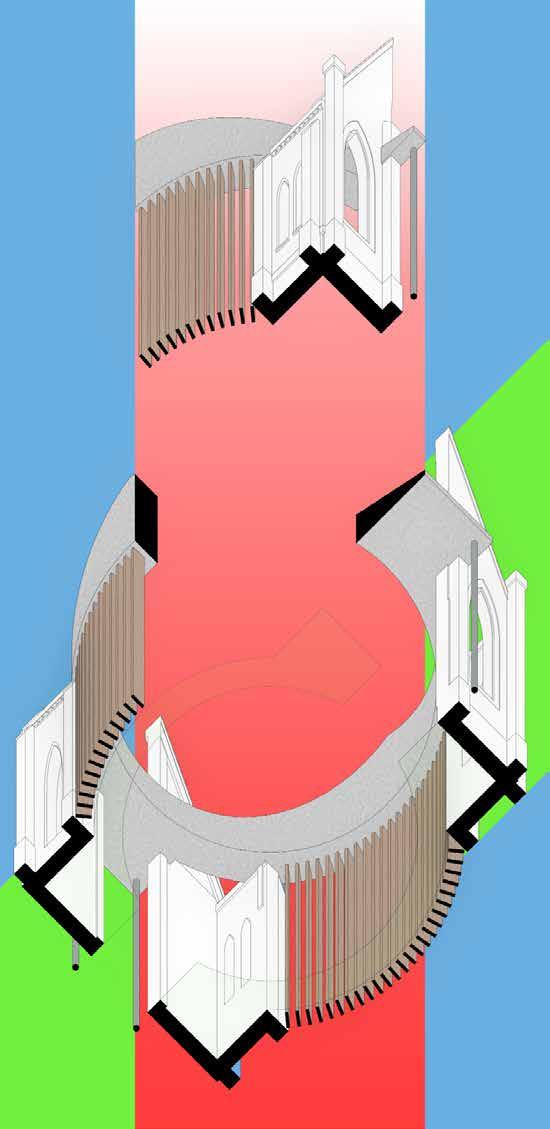
Much of the concept of the space revolves around the one-sided nature of the interaction. The elevated platform raises Kendrick above the others. The reclined lounge chairs securely situate one within the space. The height dynamic created by the platform asserts Kendrick as an authoritative figure, while the lounge chairs’ sense of being almost unescapable makes the participant feel slightly vulnerable while also perceiving the elevated Kendrick as somewhat imposing. This focus is further reinforced through the isolation of the space; the combination of solid walls and acoustic-absorbing drapery frames the space but does not completely enclose it; one could freely circulate between the walls and drapery. The overall layout of the space is inspired from the manipulation of a previous project, which also revolves around the topic of conversation.
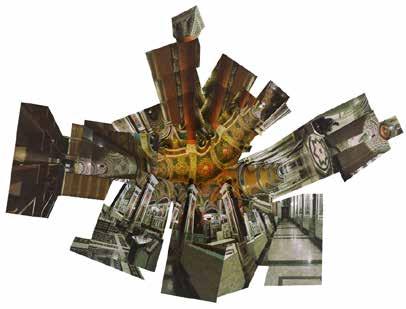
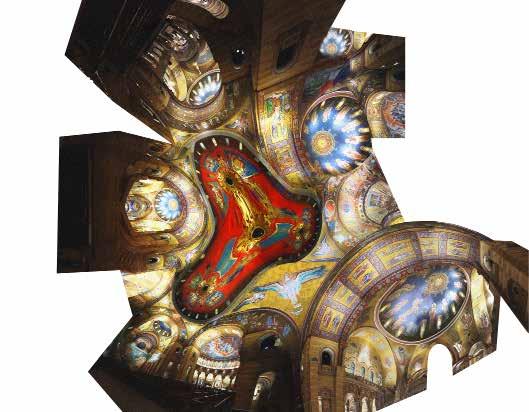
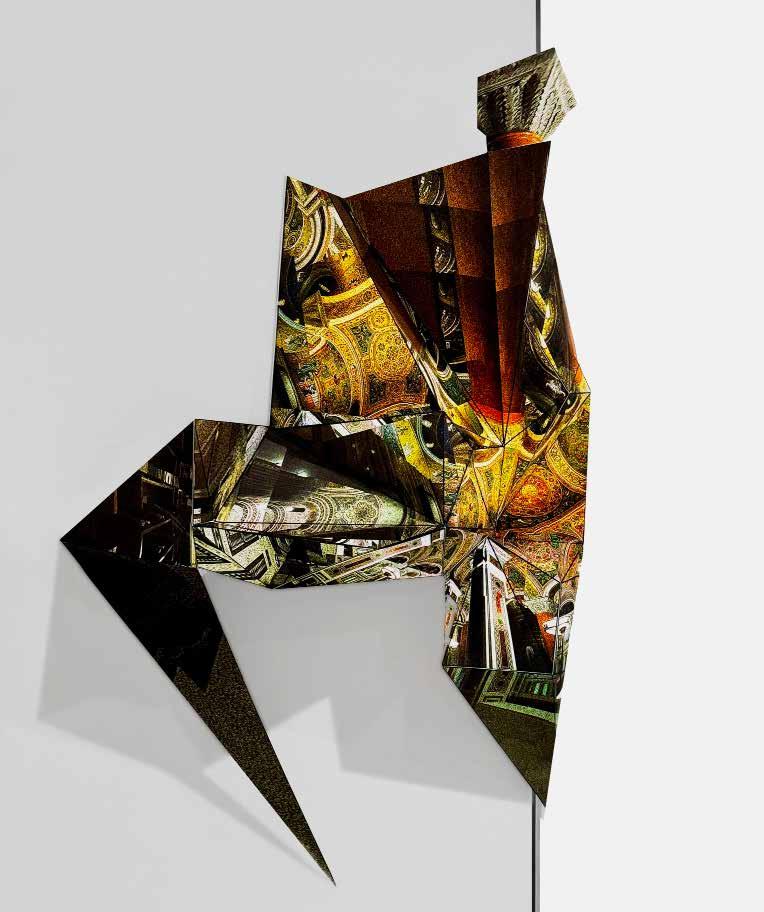
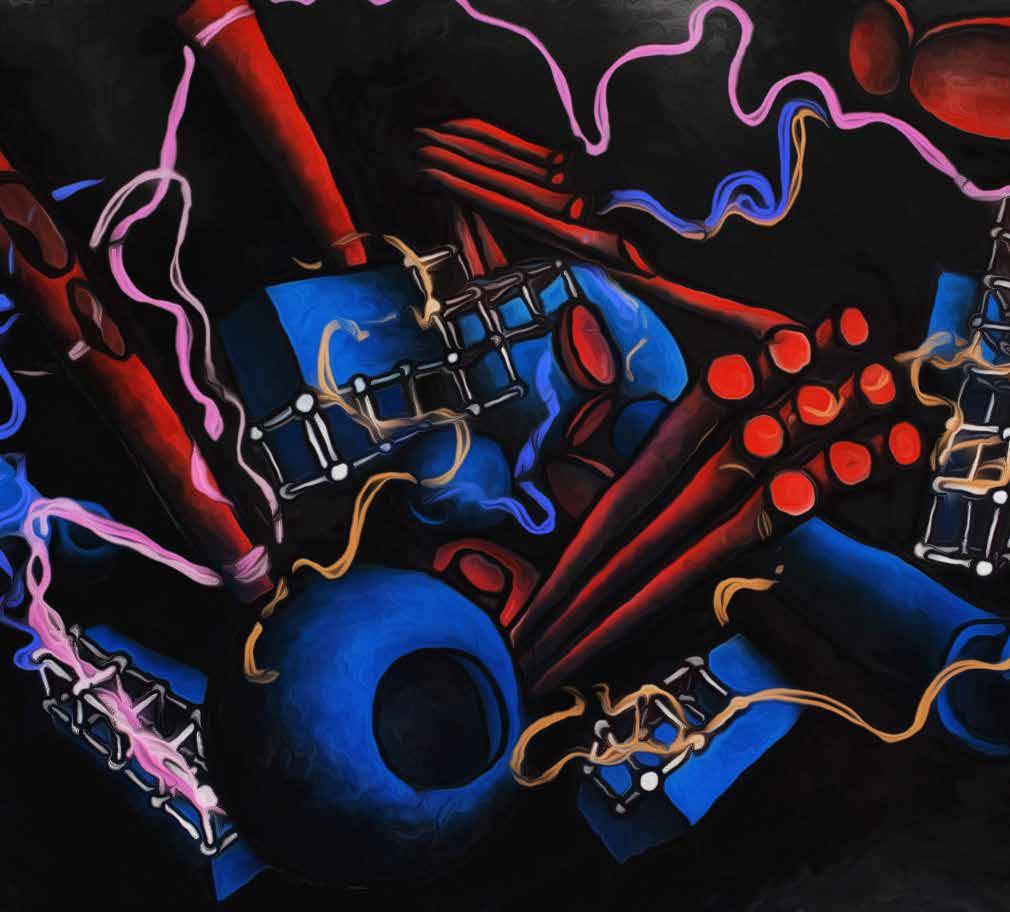
This project was a highlight of the 2024 Fitzgibbon Charette, orchestrated by Freeland Buck, an innovative architectural firm based in Los Angeles. It centered around the artistic manipulation of photographic AI, utilizing techniques of distortion and projection to redefine the visual representation of space. By employing a photo montage created from images of the Cathedral Basilica of St. Louis, the project pushes the boundaries of traditional architectural displays.
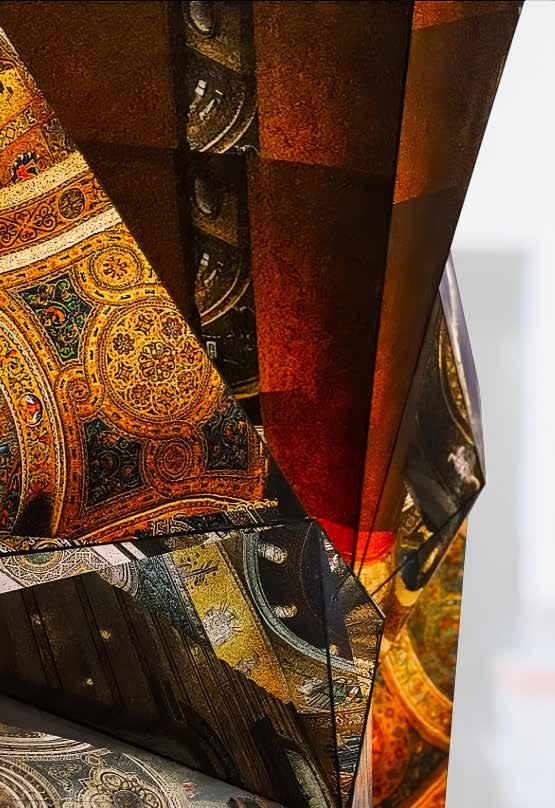
The culmination of this exploration is a 3D relief that adheres to a corner wall, transforming a conventional space into a dynamic area of interaction. This relief not only serves as a canvas for the projected montage but also encourages viewers to circulate around it, engaging directly with the intricately manipulated scenography. The installation invites an immersive experience, allowing the audience to navigate through layers of altered architectural imagery.