

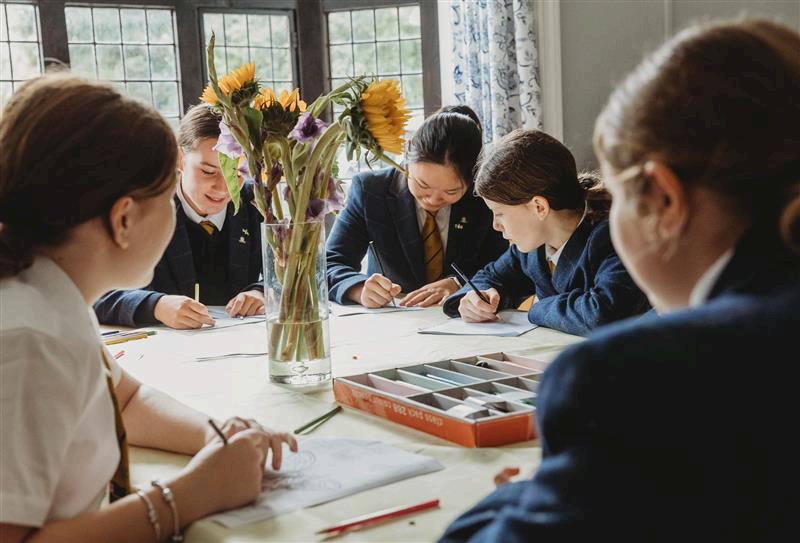

Welcome to Boarding at Durham School. This handbook is designed to tell you about the life of a boarder at Durham School. We are now part of the Durham Cathedral Schools Foundation following our merger with Chorister School.
Included is, how pupils live, practicalities of daily life in a boarding community, and the importance of communication and an open relationship between pupils, parents, Housemasters and Housemistresses, Tutors and Matrons.
Boarding as a teenager brings with it all the hopes and expectations of the pupils growing up to be young adults; along the way, there will naturally be times of anxiety, concerns and difficulty as well as times of celebration, achievement and happiness. Boarders are supported by an experienced team of Housemasters and Housemistresses, Tutors, Matrons, School Nurses and the Chaplain. We aim to offer support, care and personal attention to pupils in every House, so that they may look back on their time at Durham School proudly and fondly, as a time that was instrumental in creating their future success.
We encourage, parents and guardians to engage in an active and regular dialogue with the School to establish a relationship of mutual trust to the benefit of pupils. We are certain that all pupils will thrive in this happy and busy environment.
Within a community shaped by moral integrity and kindness, Durham School aims to cultivate responsibility and ambition to ensure that every Dunelmian can thrive, be happy and make a positive MARK in the world. The School values are Moral Integrity, Ambition, Responsibility and Kindness. A traditional British Boarding School with a modern international community, Durham School encourages pupils to take full advantage of everything a busy co-educational school has to offer and to live life to the full as part of a community in which the individual flourishes.
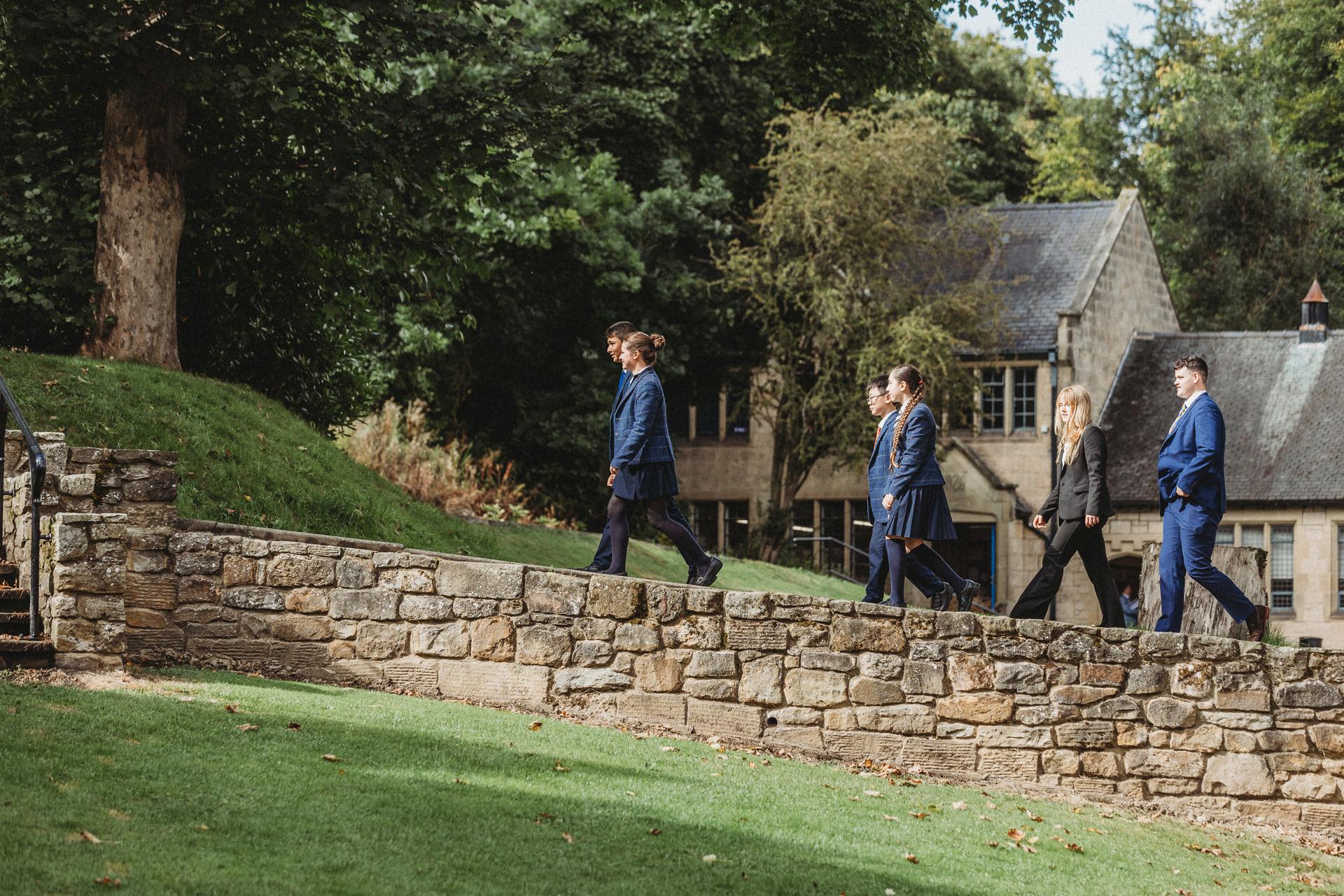
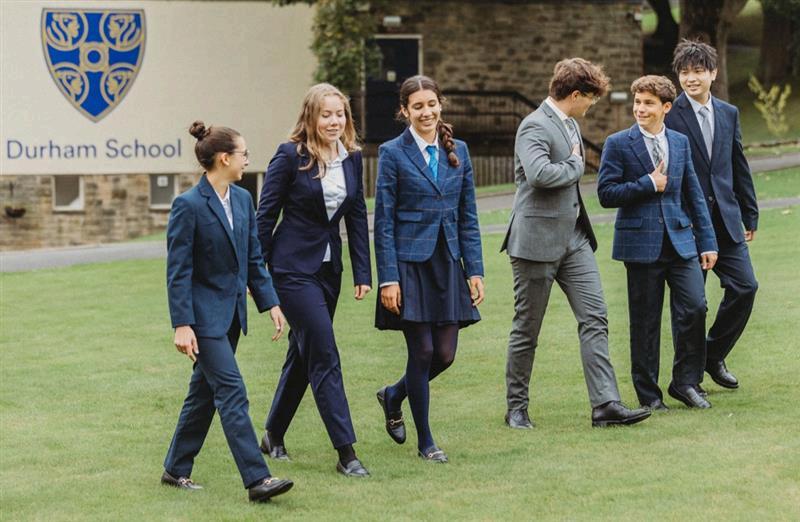
Excellent pastoral care ensures pupils are known as individuals and challenged to develop their talents.
Houses create a sense of belonging that roots pupils to the School.
Faithful to its Cathedral foundation but respectful of the beliefs of others, collective worship and reflection build community. Its location in the city centre enhances pupils’ learning through its wellestablished relationship with Durham University.
A full rounded curriculum encourages pupils to aspire and have the confidence to succeed.
An inclusive ethos provides academic challenge for all abilities.
A full and varied Co-Curricular programme, challenges pupils to develop all aspects of their lives on the sports’ pitch, on stage and elsewhere. Healthy competition both within the School and outside provides opportunities to learn how to fail and how to succeed.
Boarding at Durham School aims to provide a safe, supportive challenging and simulating environment in which boarders can thrive and be happy, Boarding is overseen by the Head of Boarding, Senior Housemasters and Housemistresses, boarding staff, resident tutors and ancillary staff according to the Schools policies and procedures. Boarders and parents and guardians of boarders are encouraged to maintain regular contact with boarding staff and report any concerns promptly and without fear to an appropriate member of staff. Boarders’ views are sought via
An induction timetable is arranged for all new pupils at the start of the Autumn term in September. The timetable, daily and weekend programmes, school layout, medical, spiritual and uniform matters will be covered as well as a trip into Durham.
As part of this programme, all new pupils will be paired with an appropriate ‘mentor’ who will act as a guide to School life through these first days, weeks and months as pupils settle into their new lives as boarders
Inevitably, your child will experience a range of emotions during the initial settling-in period; this is normal and we ask that you allow you child to settle into the new environment by encouraging pupils to make friends and take part in activities.
It is good advice to plan phone or facetime calls to your child during the first few days and weeks so that they do not become a daily event; pupils generally settle quickly into boarding life and the security of a routine.
Alongside the start of term, there will be many events for parents to meet with House staff, and parents are encouraged to take advantage of such opportunities to meet some of the key people in your child’s new life at Durham School.
Durham School is a mixed community of day pupils and boarders; pupils mix in Houses, lessons, activities, games and socially; boarders’ welcome invitations to day pupil friends and their families. Day pupils however, are not allowed into dormitories and must remain in the communal areas of Houses.
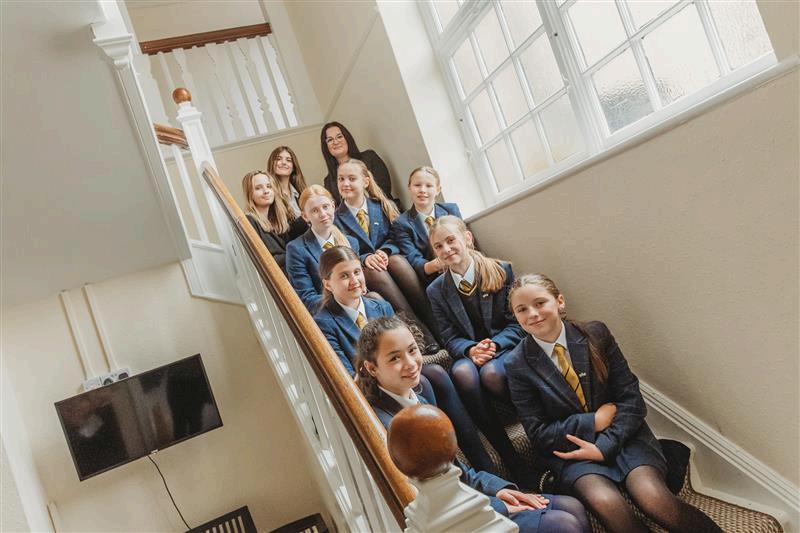
The School aims to develop an effective relationship with pupils and parents; good communication is key. However far from Durham you are, keeping in touch with your child and House staff is important. You are welcome to visit your child but please inform our House staff in advance via e-mail or phone. Parents and Guardians are not allowed into their child’s bedroom or study apart from the start and end of term when they can help carry belongings.
Pupils may contact home by e-mail, Wechat, Facetime, Teams or mobile phone when they wish however mobiles are not to be used in lessons or during prep unless for academic purposes in line with the Bring Your Own Device policy. No phones or other devices to be used after lights out.
It is important that boarders talk to staff about issues; some pupils will talk to teachers or Matron; it does not matter who pupils talk to but they need to know that we care and want to help. Staff are trained to deal with issues, understand confidentiality and the need to refer matters at other times. An independent listener exists to offer impartial advice to pupils.
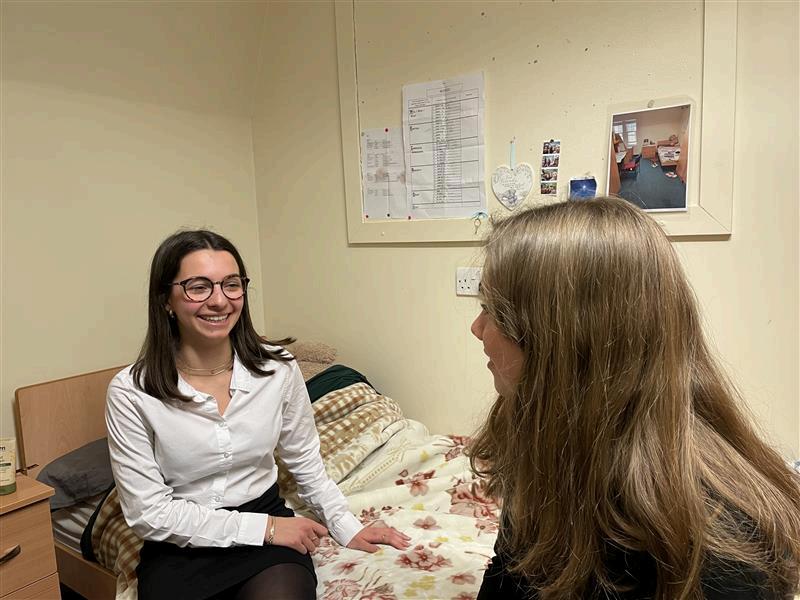
Each House has a duty phone; parents are encouraged to use this number to contact the House. Boarders are required to store this number in their phone so that they can always contact a member of staff. Boarders can use Microsoft Teams to call the member of staff on duty. All boarders must provide staff with a current mobile number and update staff when changed.
Boarders are encouraged to raise concerns they have with staff and we welcome feedback and ideas that can enhance the running of the House. The School has a Complaints Policy for parents and pupils; this can be found on the website. A ‘Whistleblower’ policy exists to support anyone who wishes to raise concerns but is worried about the implications.
Tutors are the first point of contact with the School; you will receive reports throughout the year and we will contact you regarding any specific issues relating to your child’s education. Please contact your child’s tutor with information that might affect their welfare and happiness. Tutors will contact parents in the first term to exchange contact details. Following on, E-mail is our preferred means of communication, and contact details for staff are available at the end of this booklet.
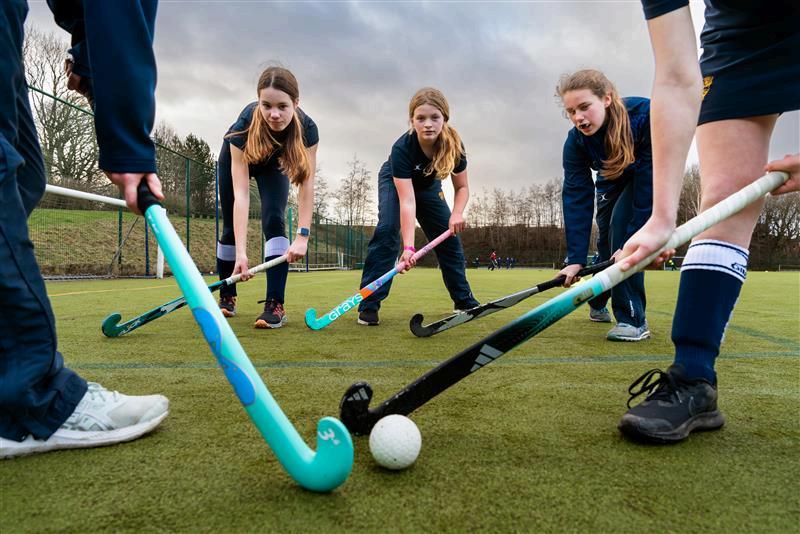
Electronic devices are central to most teenagers lives and at Durham School we appreciate this, however we do not want our boarders to be addicted to them, be using them inappropriately or them having a detrimental effect on a boarder’s health.
We want all boarders to use the good wifi network around School and in the Houses so they do not have to pay for costly data packages. The wifi is turned off at 11pm until 6am so internet access cannot be gained during the night. If a boarder needs to contact home during this time, they should discuss this need with their Housemaster/-mistress. We also have strict firewall setting so access to any inappropriate sites will be flagged with the Deputy Head Pastoral and inappropriate internet use will be investigated. We ask that parents are aware of this and do not give their child unlimited data on 4G/5G for safeguarding purposes.
All boarders need a laptop to take to lessons and complete their prep, which maybe set on Microsoft Teams. Mobile phones are not allowed for study purposes in class or in prep time. We fully understand that boarders need to have good contact with home and a phone with WhatsApp, Wechat, Skype, Facetime and other communication Apps is advised. We do want our boarders to have regular contact with home and we will facilitate this if needed. (Girls seem better at contact with parents than boys!). All boarders need to install Microsoft teams on their phone so when they are off site either, visiting Town or on a trip, they can call their Housemaster/-mistress or teacher in charge, in case of emergency.
Boarders in Years 7 to 10 hand their phones into Matron at bedtime and get them back at roll call in the morning. We consider the research that has been carried out into the effect of having a device in the bedroom very importantly and the detrimental effect on mental health and sleep; the Boarding Schools Association advocate that young people should not have access to their devices during the night. We do allow our senior boarders to have their devices overnight, but if they are falling asleep in lessons or using them inappropriately, they will be collected in overnight. Pupils cannot use their phones during House roll-calls or House Meetings or around the House or School site. We absolutely do not expect any pupil to be on a phone or device whilst eating their meals or in a social situation as this is rude and offensive to others. Boarders in Years 7 to 11 are requested to hand in their phone at roll call, and this is returned at the end of the school day. We have a bring your own device policy in which boarders are expected to have their own laptop to take to lessons with them. Inappropriate use will be sanctioned with a Wednesday detention and 3 behaviour points. Our staff fully appreciate parental support in the appropriate use of mobile and laptop devices and adhering to our school rules.
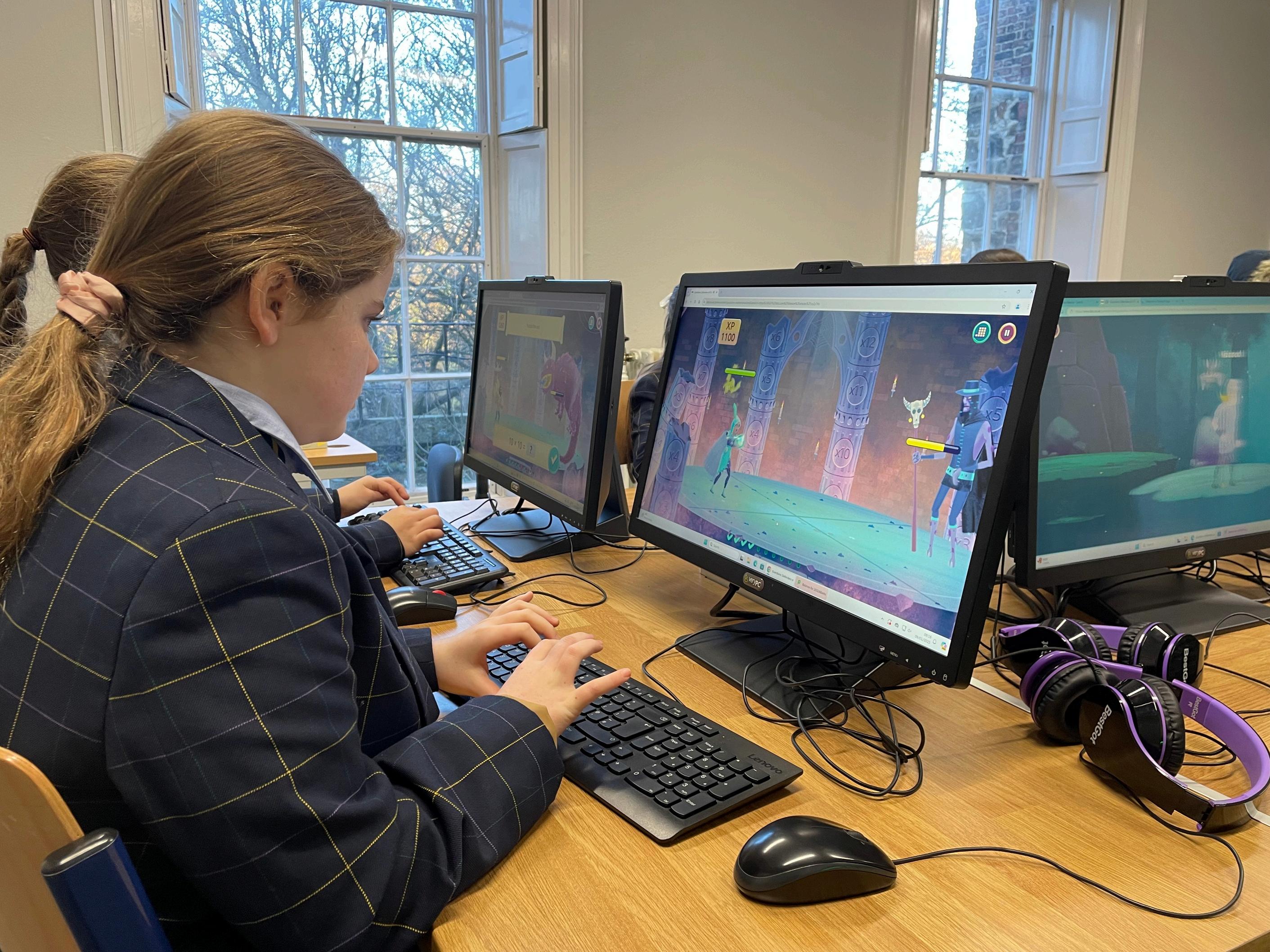
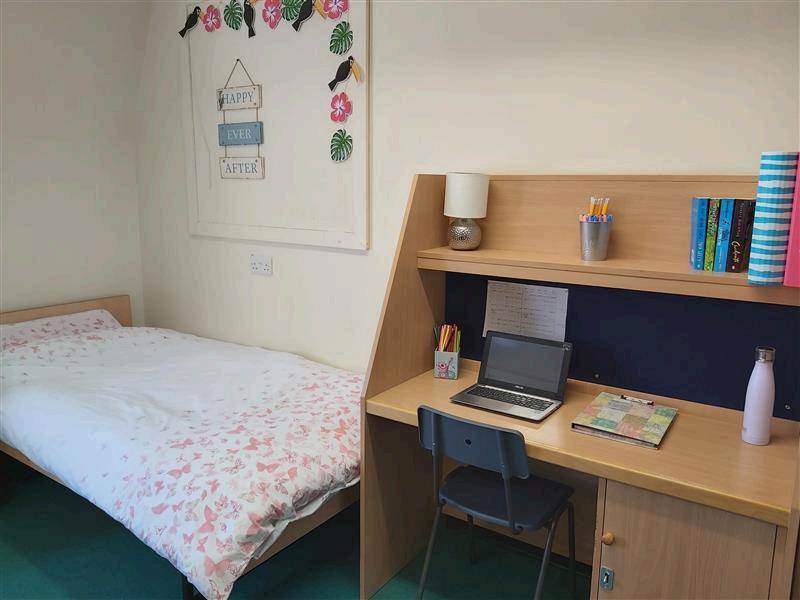
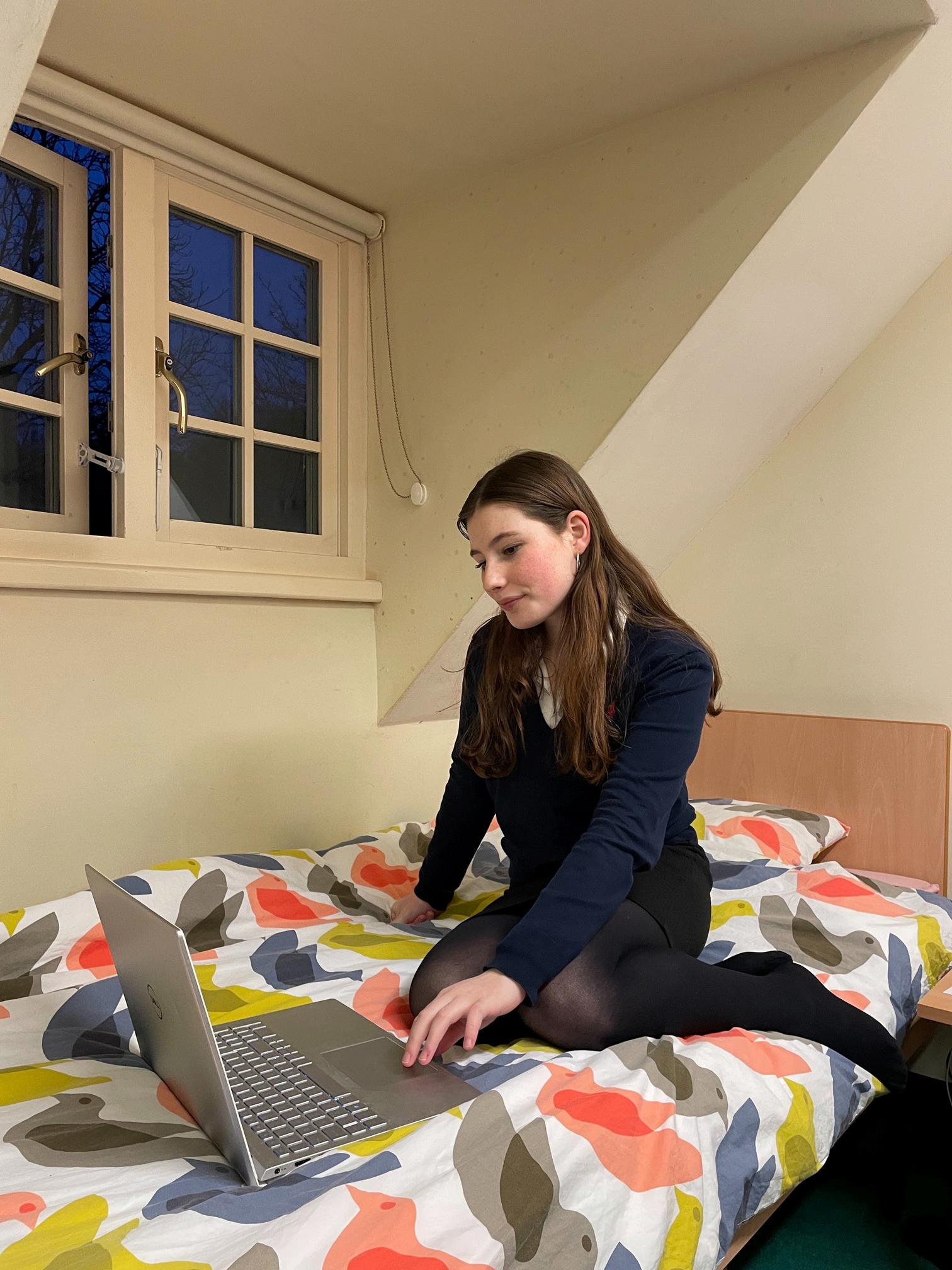
Boarding Houses have a diverse range of accommodation, and the School tries hard to ensure that all pupils are allocated fairly and appropriately. Any concerns should be expressed to the relevant Housemaster or Housemistress. In addition to normal bedroom furniture, boarders have access to a lockable cupboard. All rooms are centrally heated and have full wifi coverage. We expect boarders to keep rooms tidy to help the House cleaners who visit rooms each day; we encourage boarders to personalise rooms and having posters, photographs and other personal items is an ideal way to do this
Parents are asked to complete a Consent Form, allowing boarders to take part in the varied activities’ programme. This must be done at the start of every academic year; please return this in September.
The School funds the majority of the trips and events for boarders; rising costs and the increasing number of such trips, however, require us to charge to cover the costs of the more expensive trips. In most instances the cost will be approximately £10 and no more than £30. Should your child participate in all trips offered during the year the cost would be no greater than £150.
If you do not wish your child to participate in such activities, please indicate this on the Consent Form as we will not seek additional permission. Durham School is located in walking distance to Durham City Centre and boarders find it useful to visit the shops for essential items, visit the bank, visit the cinema, and make the most of the local amenities

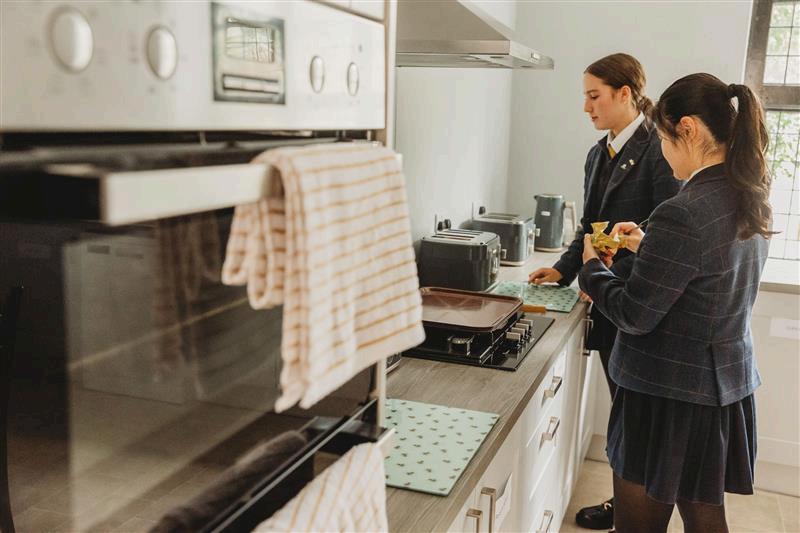
Each House has a kitchen for preparing snacks. No take-aways are permitted between Monday and Thursday nights, and all boarders are expected to take meals in Big School. House kitchens stock bread, butter, jam, tea, coffee, and fruit. Supper is provided following evening prep. Boarders are expected to clean up after supper and any snacks, and House rotas are provided to ensure this happens fairly. No food should be cooked or consumed in bedrooms.
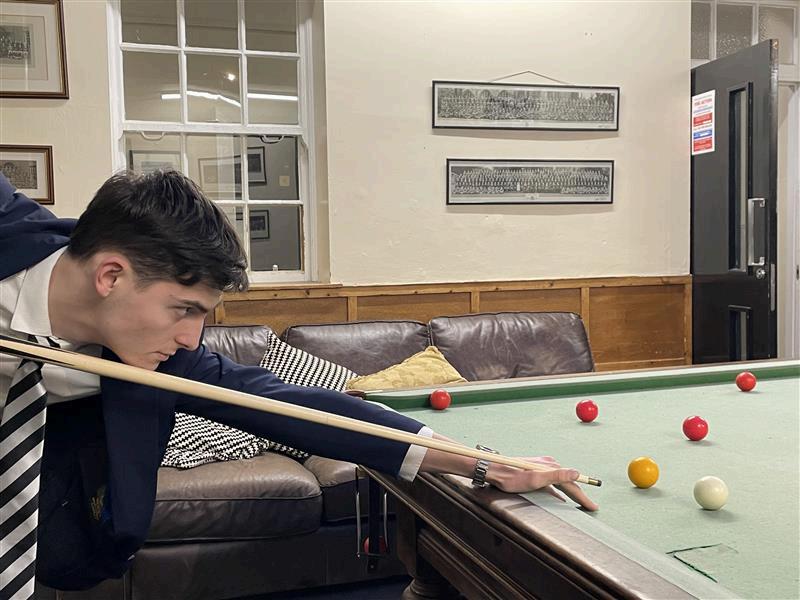
Games rooms comprise a range of activities such as table tennis, pool table and table football. Television rooms have large-screen televisions and facilities for film nights with selections aimed at audiences appropriately. Pupils may have their own Netflix and Amazon Prime accounts however access to these must be age appropriate. Houses provide wireless access to the internet and boarders will be required to sign an ‘IT User Agreement’ and are reminded that use is monitored. Inappropriate or irresponsible use will result in this facility being withdrawn. The use of laptops or other devices after lights-out is not allowed. Houses have sufficient toilets, showers and wash basins for all boarders.
Boarders must take care of their own property and show respect for the property of others and of the school. Please ensure all belongings, including laptops and phones, are named and insured. Personal items are not covered by the Schools’ insurance. We recommend that expensive items such as laptops and mobile phones are separately insured and boarders take responsibility for such items in their possession.
Pupils should not ‘borrow’ items from others without asking. In the rare event of suspected theft, it should be reported promptly and will be investigated. Valuable items, including passports should be handed into House staff for safe keeping. Large quantities of cash may be stored securely in the House safe. Every boarder has a lockable cupboard(s) where they can store important items; several padlocks with keys are needed to secure the cupboard. The Housemaster or Housemistress will keep the spare key should the original be misplaced or lost. Any damage should be reported to the House Matrons so that repairs can be made quickly; if damage is caused deliberately, or through
Bank accounts may be opened with any bank in Durham and if necessary, Housemasters and Housemistresses may provide an introductory letter confirming the status of pupils as boarders of Durham School. International boarders should seek the assistance of their guardians in opening a bank account in the advance of joining Durham School.
Clothing is collected and laundered centrally; clothing should be named in advance of joining with name tapes or indelible ink. Each House has a washing machine and tumble dryer in case items need washing outside of the laundry day and Matron will help boarders with this.
Boarders wear uniform until the end of lessons at 4.20pm when they may change into casual clothing. School uniform must be purchased from the Schoolblazer webshop for Year 7 to 11 boarders and sports kit and equipment must be purchased from our webshop at Grays Teamsports. Uniform and sports kit can be delivered to school. On the Schoolblazer webshop, you need to set up a delivery address with the school address. Sixth Form require school sports kit but are able to purchase their suit from any retailer. Schoolblazer sell business suits for Sixth Form if required.
In addition to School uniform, we suggest boarders have the following:
10 pairs of socks and underwear
2 changes of nightwear
Dressing gown
Slippers / Flip flops / sliders / Crocs
2 bath towels and personal toiletries
Single duvet, blanket, a pillow, 2 duvet covers and 2 pillow covers
Swimming Trunks / swimming costume
Alarm clock
Laundry basket
Bedside lamp
Large towels
Padlocks with 2 keys
Casual clothing for evenings and weekends
Coat and waterproof jacket
Trainers and an old pair for possibly muddy and wet activities
Non School sports kit for evening and weekend activities
We ask that boarders provide their own bedding to help personalise dormitories. The mattress cover and sheet are provided. Please do not send your child with too much extra clothing or excessive amounts of personal items as space is limited in bedrooms; as a guide, each border should be able to fit all luggage in one suitcase and one holdall. If an item will only be used twice a term, it is most likely not necessary to bring it.
Limited storage space for one suitcase is available over the holidays in Houses for boarders who cannot take their belongings home. Parents of new boarders should note that it is not possible to store any luggage in Houses prior to your child’s arrival; if you need to store luggage in advance of boarders starting, please arrange this with guardians.
The School provides a general laundry service for boarding pupils during term time; boarders will have a space to store clean clothing and Matron will place clean laundry here. Bedlinen is changed regularly, and boarders must place used bedlinen in laundry bags by an appointed time in each House. It is the responsibility of boarders to change their beds and organise their laundry. Underwear is placed in net bags. Weekly and occasional boarders are expected to take their laundry home. It is the responsibility of all pupils to check the sustainability of items for the general laundry. For items requiring special cleaning or items considered to be of high expense, laundry facilities are available in each House, where such items can be washed separately. Pupils should speak to House Matrons for guidance. The School is not responsible for the loss or damage to any personal or non-cleanable items left in the clothing or laundry bags such as money, jewellery, or any other personal possessions. The pupils agree not to leave such items in their clothing or laundry bags.
All boarders have a direct contact number to their House telephone and Housemaster or Housemistress telephone. An excellent method of communication is through the School Microsoft Teams, call, video or message function.
Boarding houses are kept secure and security is enhanced in various ways:
Keypad locks are fitted to all doors leading into Houses, and codes are changed regularly. Boarders must not share door codes.
Boarders must sign visitors in and out of the boarding houses and they must ask for permission from the member of staff on duty whenever they go off-site and let them know as soon as they return.
Electric sockets must not be overloaded (e.g. only one four-way extension per socket). All electrical equipment must meet British Standards and foreign adapters must not be used as they are a fire risk.
The electrics are checked regularly.
Windows are fitted with safety restrictors.
Pupils may not climb over walls or gates.
Cooking equipment is only permitted in the House Kitchens and not in bedrooms, studies or other House areas. No hot food should be prepared or eaten in bedrooms or studies.
Boarders may order items online to be delivered to School. Boarders may use their House address or have the parcel delivered to the main school reception using the address Durham School, Quarryheads Lane, Durham, DH1 4SZ.
The Boarding Housemaster or Housemistress has overall responsibility for boarders in their care and is in loco parentis. They are assisted by Tutors, a House Matron, and a team of cleaners. A member of staff is on duty at all times and is assisted by House Monitors (Prefects).
The Head of House and Monitors are appointed from Year 13. Their role is to make the lives of the boarders happy, free from incident, and ensure a positive, fulfilling experience. Monitors responsibilities include assisting in running the boarding house and helping with the support and safeguarding welfare of pupils in Houses. Monitors are expected to use their status an authority in a mature and sensitive manner, and in turn expect the respect of those under their care. They are given training by the Deputy Head (Pastoral), and Housemasters and Housemistresses in how to carry out their duties and in Safeguarding and Child Protect
Each term, a fire drill takes place both in School hours and out of School hours. The procedure for evacuation in case of a fire or other emergency are clearly communicated with boarders and boarders are shown the exits and assembly points. Boarders with EAL will have this information communicated in their first language where possible should they need it. Fire Action signs are located within each House and fire signage and emergency lighting are checked regularly and should be read by boarders so they know what to do and where to go.
To reduce the risk of fire, electrical equipment in boarders’ bedrooms and studies is limited to:
Laptop, tablet, and phone with chargers.
Bedside lamp.
Hairdryer and straighteners, however, these should be unplugged after use.
4 plug adapter per plug in the room.
Electrical equipment must conform to the British Standards and be compatible with the UK electric system. Foreign adapters and equipment often do not have a fuse or an earth cable required and these cause a high fire risk. Any non-compatible electrical equipment will be confiscated and returned to the boarder when they return home. Each House has a kitchen for the preparation of food and a Common Room where food can be consumed. A boarder could have a food blender for smoothies however this must be used in the House kitchen. If a boarder is unsure about their electrical equipment, the House Matron, or Housemaster or Housemistress can offer advice.
Boarding Houses follow the Durham School Behaviour Pathway for rewards and sanctions, although the boarding community also approaches discipline as parents might at home, matching sanctions to inconsiderate behaviour. In addition, boarders’ equipment such as mobile phones and computers may be confiscated for improper use.
The School has a separate anti-bullying policy, and acknowledges that peer relations and friendships are particularly important within a boarding house. Living together can be challenging and requires the development of patience, consideration and diplomacy.
All pupils are encouraged to speak up promptly about ‘bullying’ or any physical or verbal abuse. Attempts are then made to diffuse tensions between pupils and to repair relations before any pupil is tempted to engage in verbal or physical bullying.
Durham School’s policy assumes that adolescents sometimes lack awareness of the impact of their behaviour on other people, which can explain their own behaviour. The Schools first step, therefore, is to discuss the effects of bullying behaviour with the parties involved and encourage self-awareness before reporting to disciplinary measures.
Whole-School policies on drugs and substances, alcohol, vaping, and smoking apply to boarders. Under no circumstances should pupils or any boarders possess or consume any of the above substances on the School site, off the School site or in the House. The consequences are very serious if these rules are broken.
Pupils in Sixth Form may be offered alcoholic drinks at House and School social occasions where food is served and boarders are expected to behave respectfully and responsibly if consuming alcohol. Parents will be informed of any serious incident or disciplinary matter involving their child.
The Medical Centre, the ‘San’, is open 09:30-16.30, Monday to Friday, and the House Matrons are on call outside these hours. Boarders may visit the San to discuss health matters or any other concerns.
The San has a treatment room and two two-bedded rooms. The San is staffed by Registered General Nurses who refer to a local General Practice surgery as required. The School GP Practice is Dunelm Medical Practice, Framwellgate Moor, Durham. The San will also arrange for dental and optician appointments locally if required.
Please ensure School has an updated copy of the Medical Questionnaire and also inform the San of any medical issues affecting your child; the nurses keep all relevant staff informed as appropriate
Referrals from the GP can be made on the NHS; many patients have private health cover and may wish to use this. Parents will be notified of any referrals to consultants. Boarders may be accompanied to appointments by either parents, guardians or a member of School staff.
The School Medical Centre requests that the following policy is followed regarding medication:
Please provide only a small initial supply of essential medication, such as asthma inhalers, Epipens and prescription medication.
All medication must be in a named pharmacy-labelled container in English. The School cannot accept medication which does not have instructions in English.
All subsequent medication will be provided through the School Medical Centre.
On arrival, all medication must be handed to the House Matron before parents leave; this includes all herbal and natural remedies.
Where appropriate, pupils may be authorised to store and administer their own medication, once the Medical Centre has determined their competence to do this. All medication must be secured carefully and locked away.
Sixth-formers may hold a small supply of pain-relieving medication such as Paracetamol and Ibuprofen.
Pupils who require an Epipen must provide a minimum of 2 Epipens on arrival; one is carried at all times while the second is stored in the House.
Matrons and House staff may administer simple pain-relieving medication and throat lozenges.
The San nurses work closely with boarding house Matrons, and they receive training in the administration of medicines. Matrons may treat minor illnesses and can seek advice when needed. Matrons take pupils to hospitals when necessary, and play a key role in liaising between home and the School on medical matters
Consent The Medical Form must be completed and returned prior to any pupil’s admission; the form requires parents to give consent for medical treatment and give immunisations as recommended by the Department of Health. This form requires details of all pupils’ past medical histories and has a record of all allergies, immunisations, and medications. It also requires permissions for some medicines to be administered such as Paracetamol and Ibuprofen. It is important that both physical and mental health information is provided. If given consent on the Medical Form, Housemasters and Housemistresses act in the loco parentis and will, in instances where parents can not be contacted, give consent for emergency treatment, operations, etc
Most medical matters do not need strict confidentiality and it is often best that staff know what is happening. Pupils are encouraged to discuss their medical care with their parents, although a patient’s right to confidentiality must be respected. Any child over the age of 16 may give consent for treatment; if under 16, but considered mature enough, pupils may also give consent. Pupils are entitled to the same level of medical confidentiality. Medical computer record systems are separate and secure within the School system to ensure confidentiality
The nearest hospital, the University Hospital of North Durham, is situated 2 miles from the School and provides both emergency and acute care.
Boarders are expected to access routine dental treatment during the holidays at home. It is very difficult for us to access appointments at the local Dentists as they are very busy and often do not take on new patients. If, however, a boarder needs urgent treatment, we will endeavour to book an appointment. It is not free to visit the Dentist. The boarder will need to pay for treatment at the time of the appointment via bank card. Parents or Guardians may also need to ring the Dentist to authorise treatment or make payment if the boarder is under 16.
If pupils require treatment during the holidays in the UK, they should be registered as temporary patients. If pupils have any operations, accidents, severe illness, or are given vaccinations during the holidays, please notify the San in writing when term opens. If pupils return with medication, the San should be notified as indicated above. In the event of illnesses at the end of term, pupils may not stay at School; parents or guardians must collect children; the same applies for weekly boarders at weekends.
Boarders will attend supervised prep; some senior pupils may be excused a supervised prep session to study independently or attend a school activity. Junior Prep for Year 7 to 10 takes place centrally and is supervised by staff on duty. Prep takes place between 6.40pm – 8.00pm.
After Prep, Boarders will participate in an evening activity either in one of the Houses or the Budworth Sports Centre. Senior Prep for Year 11 to 13 takes place in Houses. Boarders are expected to study independently in their bedrooms or in a quiet area of the House and are supervised by the member of staff on duty in the House.
If any boarder is not working as expected, they will be supervised closely until their work is up to date. Evening activities take place after evening roll call at 8.35pm – 9.30pm
At the weekend, there is a Boarders’ Activity Programme where boarders may participate. An annual programme is published at the start of the year with details of activities and costs. Activities are arranged either on a Friday evening, Saturday or Sunday, depending on the nature of the activity. House-based events on a Friday and Saturday regularly take place and are often impromptu. We encourage pupils to help with the organisation of events and we enjoy celebrating cultural festivals within our boarding community. Importantly, time is given to pupils to structure more freely for relaxation and association. Junior pupils are expected to take part in activities whilst those in the Year 11, 12 and 13 are given greater freedom. There are weekly sports’ fixtures on Saturday to which pupils regularly contribute as well as training sessions and rehearsals. Please encourage your child to make the most of this varied programme and the opportunities available.

Parents register pupils as either full or weekly boarders. Should a change in status be required, parents must contact the Admissions’ Department by email at admissions@dcsf.org.uk.
Weekly boarders may go home on Friday after Chapel (4.30pm) once all school commitments have been fulfilled, and return to the House either by 9pm on a Sunday or Monday morning at 8:25am in time for roll call. Weekly boarders may choose to stay in School on Friday evening and Saturday morning in advance of sports’ fixtures. Parents of weekly boarders must confirm that this is happening otherwise duty of care automatically transfers at 6pm on a Friday.
Full boarders are allowed to visit friends for a day or overnight stay, only with the permission of the Housemistress or Housemaster, Parents or Guardians, and the Parents of the friend being visited. Such visits must be arranged well in advance and boarders will not be allowed to leave the House without all the l t i i i l
Boarders are expected to return to their Houses by 9pm on the evening before the start of term. The school cannot accommodate boarders before the publicised start of term nor can we store belongings for Year 13 once they have left. Parents are asked to inform the Housemaster or Housemistress of any later arrival or early departure that may be different from published dates. At the end of half and full terms, Houses close at 16:30; Houses must be vacated by this time. Houses are not staffed after this time so it is not possible for boarders to remain beyond this time and date, nor are they able to access the Houses at any point during the School holidays. Flights must, therefore be arranged for the afternoon or evening that School ends; if this is not possible to secure a flight on this day, boarders will be required to stay with Guardians until the date of their flight
If a boarder is on a School trip, the boarder must let the Housemaster or Housemistress know well in advance and plans can be made if the above cannot happen. The UK Home Office, expect all boarders with a Child Student visa to provide precise details of movements during weekends away and holidays, including flight details and the address at which they will be staying. We must also have parental permission for travel arrangements and holiday arrangements. It is important for boarders and their parents to let the Head of Boarding and International Pupils know this information well in advance of the journey at k.rochester@dcsf.org.uk. May Bank Holiday Wee
he School does not have any exeat weekends; however, the School assumes that all nonexamination classes will be out of the House for the May Bank Holiday weekend (usually the first weekend in May).
The Housemaster, Housemistress and the House staff have a duty to know the whereabouts, and ensure the safety of boarders at all times during term. The following rules are applied:
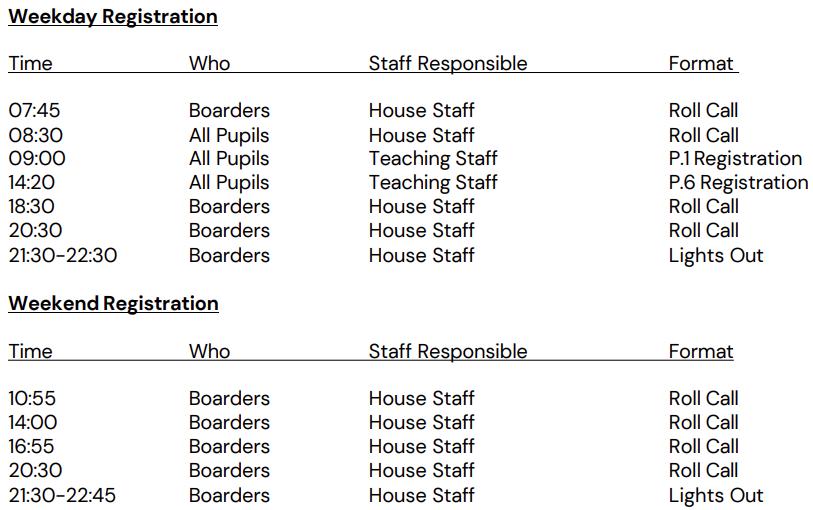
Pupils must ask and receive permission from the Housemaster or Housemistress in person for leave of absence from roll calls and from School for longer periods. If a boarder needs to be absent for a longer period of time, or needs to leave early to return home or return to school later than the start and finish date, permission must be sought from the Principal.
Any boarder wishing to go off-site during the day or in an evening must sign out; pupils must gain permission in person from the duty member of staff or the Housemaster or Housemistress. On returning to Houses pupils must sign in. Only boarders in Year 10 to 13 can sign out from the House with permission between 20:35-21:30. Younger boarders can visit town between 16:30 and 17:45 after School. All younger pupils can only visit town in a group or 2 or 3. Pupils may invite pupils from other Houses as guests but must gain permission from the duty member of staff and sign guests in and out. Guests should be accompanied at all times by the friend who has signed them in; any guests from outside the School will require the Housemaster or Housemistresses permission to come into the House
We recommend that parents contact their child’s guardian to make transport arrangements between the airport and the School. The School does not book taxis on behalf of pupils; this is the responsibility of the parent, the guardian, or the pupil. We do, however know of two local taxi companies that the School has used in the past which only employ DBS checked drivers. These companies are:
Airporttaxis4u
At the beginning of the year, School may offer a collection service from Newcastle and Teesside Airports. This needs to be arranged well in advance and school requiring full travel details and confirmation that the flight is on time.
It is assumed that parents are willing for their children to travel in a minibus or car driven by a member of staff.
Housemasters and Housemistresses appreciate being informed by the parents of arrangements which involve children travelling to School by any means other than the parents driving pupils themselves; this could be for example, public transport or private cars driven by friends.
Boarders may keep bicycles at School and should speak to Housemasters or Housemistresses regarding a location for storage. Boarders may ride bicycles outside the School grounds but must wear a helmet at all times.
Owing to the limited space on the School site, Year 13 boarders may only keep a car at School with the direct permission of the Principal. Use of such cars during the day or evening must only be with the direct permission of the Housemaster or Housemistress respectively. Only the designated driver with the Schools permission may use the car. No other boarder or day pupil are allowed to travel in a friend’s car without prior permission of the Principal.
In order to maintain a stable boarding community, pupils who enter the School as boarders are encouraged to remain so throughout their School career. The Principal may consider transfers in the following circumstances:
Where the School has agreed in advance to keep a day place open
At the end of Lower or Middle School
Or in special circumstances
In all instances, transfer will be at the discretion of the Principal and no automatic right to transfer should be assumed. A full terms notice is required for change of status. Parents of day pupils who wish to transfer into boarding should contact the Admissions Department; transfer will be at the Principal’s discretion. A change of House may be required
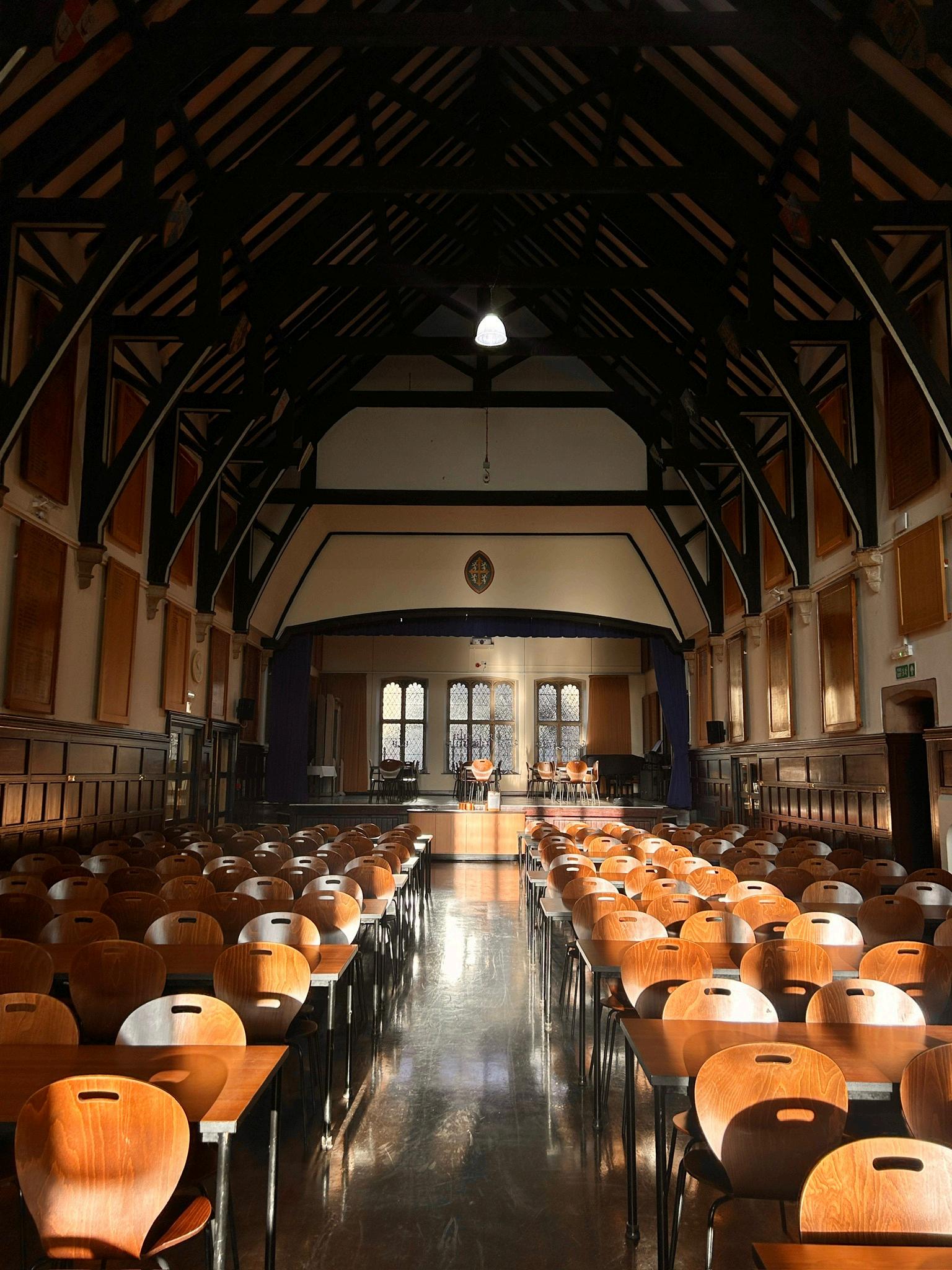
All meals are taken in Big School and pupils are expected to attend. Menus are published and considerable choice of hot and cold dishes are available. Pupils are encouraged to discuss catering issue and concerns politely with House staff or through House Councils. All dietary requirements are catered for, and boarders must let the Housemaster or Housemistress know if they need a special diet. It is compulsory for all Boarders to attend all meals

All International boarders, those with parents living overseas and everyone living more than 2 hours drive from School, requires a local Guardian. The Guardian plays a very important role in the life of the boarder and they need to take an active role in the child’s welfare and education. School must have the accurate contact details of the Guardian and the Guardian must be available at all times during the school term. A Guardian must:
Live within 2 hours drive of school.
Must be over 25 and not living in shared student accommodation. Provide a bedroom with a bed, storage space, wifi, heating and access to a bathroom.
Provide a kitchen, meals and use of a washing machine. Be able to collect the boarder immediately if requested by school. This could be due to illness of the boarder, suspension, behavioural issues or the boarder is not deemed fit to board. An ill boarder cannot travel to a Guardian’s House on the train.
The Guardian can be a family friend who lives locally or they can be sourced via a Guardianship Agency. The School will not recommend a Guardian for a pupil but we will advise you to use a Guardian Agency who is accredited by AEGIS (Association for the Education and Guardianship of International Students) or the Boarding Schools Association list of accredited Guardians. The school must be in receipt of the Guardianship Agreement Form in which the nominated Guardian agrees to the schools terms and conditions for Guardianship. We cannot stress the importance of having a good and supportive Guardian.
The provision of Guardianship is monitored by the Admissions’ Department and the Head of Boarding. In certain circumstances, the School may question the sustainability of a guardian and ask parents to take appropriate action in the interests of the child. The School does not recommend a guardianship on behalf of parents. Responsibility for the welfare of pupils while in the care of guardians, and while travelling to and from School, rests solely with parents and not with the School.
Flights are often booked for the beginnings and ends of terms as many schools operate a similar calendar; early booking is encouraged and term dates are published in advance. We expect pupils to be here on the first day of term and leave on the last day, as any absences will be detrimental to your child’s learning. Late returns or early departures are discouraged and require prior consent. Requests should be made to the Headmaster. In the first instance please note that requests are unlikely to be approved, except in extenuating circumstances. The last day of school is a travel day.
It is essential that the exact half-term and end-of-term travel and accommodation details, including information, are provided to fulfil immigration regulations. The UK made changes to the visa system in 2020 for certain groups of immigrants entering the UK; children who are citizens of countries outside the EEA and are studying, or who wish to study, at the schools in the UK for a period of time more than 6 months (away from parents) need to follow a new points-based system.
Further information may be obtained from the following websites: www.ukvisas.gov.uk www.ukba.homeoffice.gov.uk
All non-EU-boarders should ensure that they have relevant up-to-date documentation with them on arrival at Durham School. We are required by law to take photocopies of passports and visas, and complete and online registration. The Head of Boarding and International Pupils will ensure each Non-EU boarder receives their BRP cards. Boarding Housemasters and Housemistresses are required to maintain accurate records of non-EU boarders’ movements.
The latest ISI inspection report (2018) which includes a report on boarding provision is available online: https://www.dcsf.org.uk/dcsf/about/inspections
Have you ordered uniform?
If you are a new boarder, have you completed all forms and paperwork received from the Admissions’ Department?
Have you nominated and arranged a guardian within two hours of Durham?
Have you planned what you need?
Please don’t bring too many belongings.
We hope that this information is informative, helpful, and reassuring. We understand that in the beginning boarding can result in a mixture of excitement and anxiety; rest assured that your child will be very well looked after at Durham School and all boarders will be a part of a warm and caring community which will help them to develop into confident and independent young adults.
Please remember we are always here to help and answer any questions or concerns; do please contact your child’s Housemaster or Housemistress.
If you have any questions about Boarding at Durham School, please contact our Head of Boarding and International Pupils, Mrs Kath Rochester at k.rochester@dcsf.org.uk
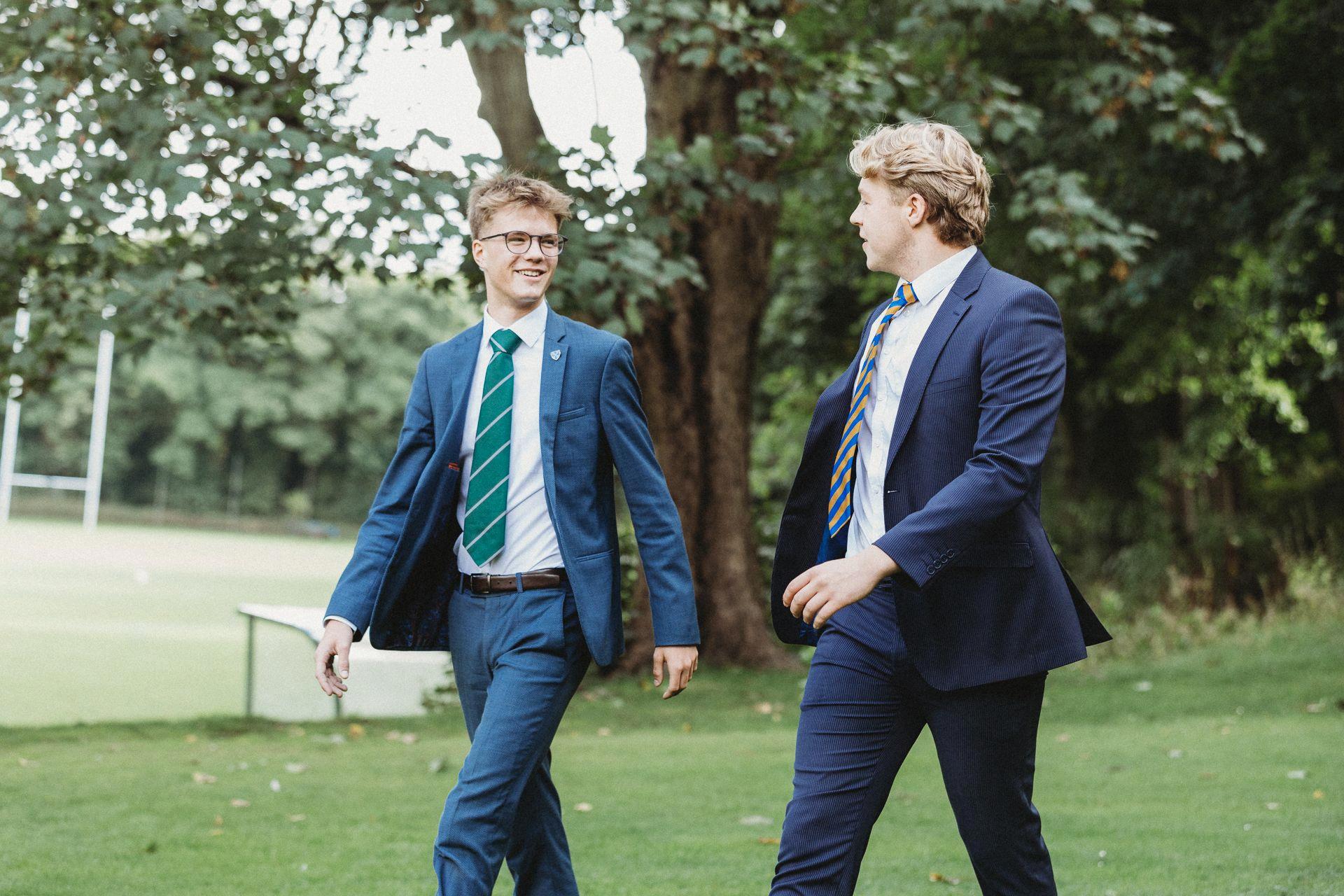
The following members of staff are key people who you will get to know very well whilst you are boarding.
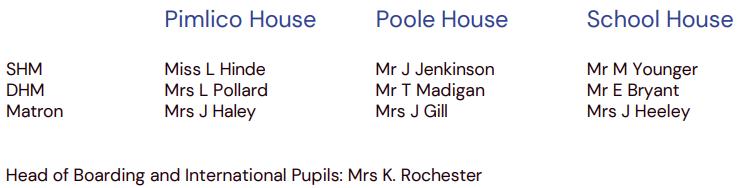
The Boarding Houses all have a Resident Housemaster or Mistress, a Matron, a Deputy Housemaster or Mistress and a Resident Tutor.
Caffinites – Mr A McMillan
Tel: 01917319270
Email: a.mcmillan@dcsf.org.uk
Designated Safeguarding Lead – Ms H Thompson
Tel: 0191 731 9270
Email: h.thompson@dcsf.org.uk
Macleod – Miss L Myers
Tel: 01917319270
Email: l.myers@dcsf.org.uk
Lodge – Mrs B Spence
Tel: 01917319270
Email: b.spence@dcsf.org.uk
Deputy Head (Academic) - Mr A Pearson Tel: 01917319270
Email: a.pearson@dcsf.org.uk
Pimlico – Miss L Hinde Tel: 0191 7319270
Email: l.hinde@dcsf.org.uk
The Chaplain - Rev’d S A Mcmurtary
Tel: 01917319270
Email: s.mcmurtary@dcsf.org.uk
Head of Co-Curricular, Boarding & International pupils – Mrs K Rochester
Tel: 01917319270
Email: k.rochester@dcsf.org.uk
Medical Centre - Mrs C Hodge & Mrs L Taylor
Tel: 01917319270 ext 313999
Email: san@dcsf.org.uk
Senior Mental Health Lead - Mrs P Abbott
Email: p.abbott@dcsf.org.uk
Poole House – Mr J Jenkinson
Tel: 01917319270
Email: j.jenkinson@dcsf.org.uk
Admissions - Mrs D Appleton
Tel: 01917319270
Email: admissions@dcsf.org.uk
International Admissions – Miss A Tiplady
Tel: 01917319270
Email: international-admissions@dcsf.org.uk
School House – Mr M Younger
Tel: 01917319270
Email: m.younger@dcsf.org.uk
Principal – Mr K McLaughlin
Email: k.mclaughlin@dcsf.org.uk