Luke Cornish
Luke Cornish
Deakin University Art Gallery 11 February to 1 May 2026
Luke Cornish: two decades of stencil art
This exhibition features significant works from the career of Luke Cornish, also known as ELK, Australia’s most prominent stencil artist. These works trace the development of his career from the streets of his hometown of Canberra, to galleries across Australia and internationally. Working in the medium for more than two decades, he finds ‘stencil art is a powerful medium for social and political commentary because of its accessibility, speed, and bold visual impact.’1 His work responds to prevalent social issues of the time; personal experiences of travel, friendships and adversity; and specific large-scale social events such as wars, COVID-19 and technological developments. What persists over time is a want, or need, to start conversations. To disrupt de-humanising narratives and replace them with curiosity—provoking questions rather than giving answers.
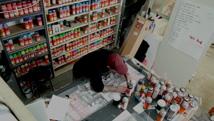
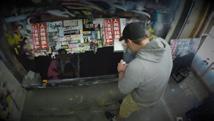
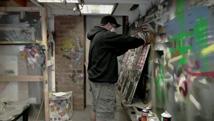
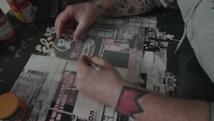
Cornish did not set out to become an artist. He had a variety of day jobs and was studying to become a landscape architect when he took up stencil art in the early 2000s. He did not attend formal art training, instead learning the way many artists do: trial, error and reproduction. Stencilling requires a lot of planning and technical skill. Depending on the intricacy of the image, the process of hand-cutting a stencil can take hours. Then, when printing, each layer must dry before the next is applied. The layers are carefully registered in position and if a single layer is misaligned the whole work is lost and the artist must start again. For this reason, stencil artworks in public spaces are usually comprised of one to three layers, so that they can be quickly sprayed. Cornish’s first completed work, Bill Hicks (2003), is a simple monochrome image printed using three hand-cut paper stencils.
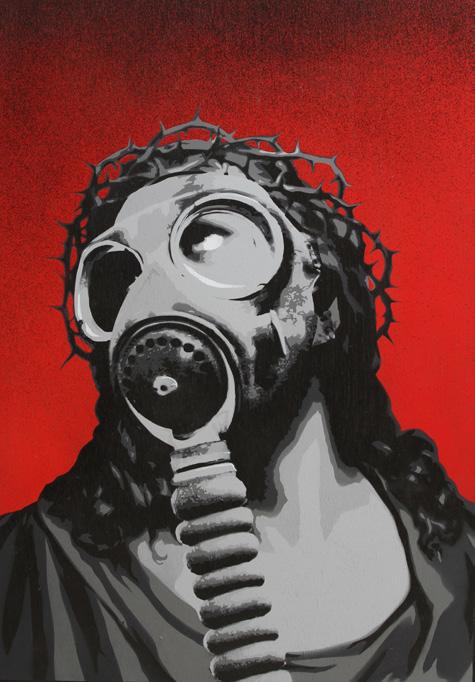
In most of Cornish’s early work he reproduced existing images, primarily recognisable photographs of American or global figures, iconic artworks, or photographs. Such borrowed imagery is prevalent in street art and stencil art. Stencils, and printmaking techniques in general, are conceptually linked to the reproduction and dissemination of information. While familiar images and blunt symbolism is an excellent way to engage audiences passing by, both the appropriation and the creation of art in public space challenge the notion of ownership. Cornish has harnessed the subversive features of these artforms to create referential imagery that is conceptually driven. The work Wake up to the Stink (2009) is an early and iconic example of his integration of religious imagery in a Baroque style. The work features Jesus in a gas mask, which Cornish explains is protecting Jesus from the toxicity seen in religious institutions. This was a commentary on his own limited experience in Catholic school and was part of a broader conversation occurring globally at the time2
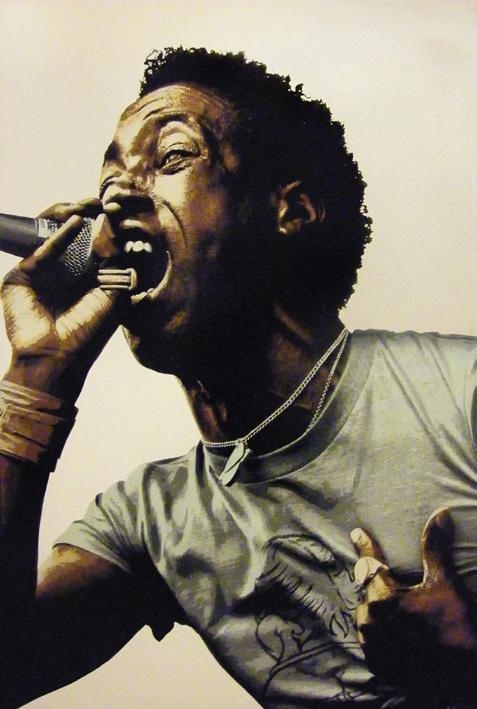
Around 2008 to 2010, Cornish began a concerted effort to push his art practice forward. He became imbedded in the street art community, learning from his peers and gaining opportunities to showcase his work. Stencil art was becoming a more recognised medium and in 2009 the first Australian Stencil Art Prize was held at Oh Really Gallery in Newtown (Sydney). Cornish helped to spread the word in the community and was a finalist with two portraits in the exhibition. He continued to increase the complexity and number of stencils in his work and won the prize the following year with Saul Willams (2009)— a portrait described as ‘a clear tipping point for photorealistic stencil art in Australia3. Like Cornish, Williams uses his artforms of music, writing and film to express messages of personal and social significance. Based on a photograph of Williams by Silas Brown, the framing and contrast choices elevate the raw passion of the performance. After this early
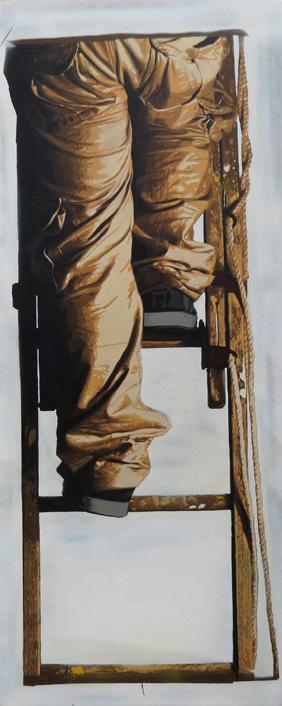
critical success and having been exhibited in over 20 national and international group exhibitions, Cornish held his first solo exhibition at The Front Gallery in Canberra. Amongst that first exhibition were the artworks Wake Up to the Stink, Saul Willams and Climbing (2010). The latter alluded to his decision to step up into the art world, eventually making the transition to work full-time as an artist.
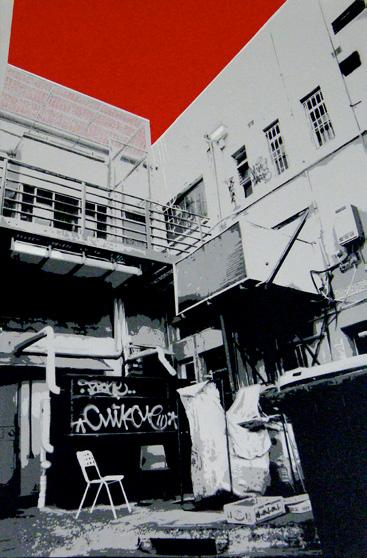
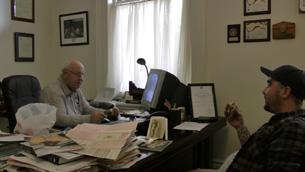
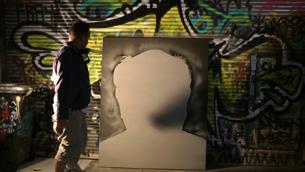
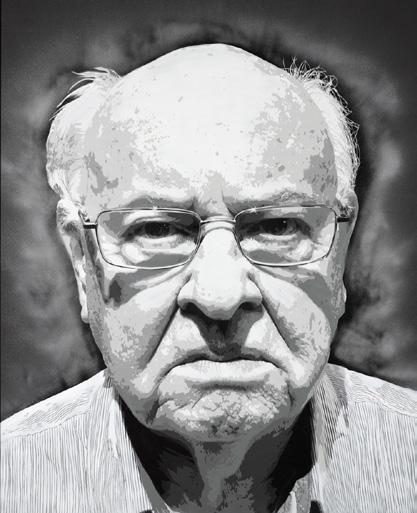
In 2011, he moved to Melbourne, the heartland of the Australian street art scene. He repurposed the imagery of Climbing in the work Untitled, Self Portrait (2011), this time reflecting on climbing out of a world of destructive behaviours 4 . The next year he became the first stencil artist included in the Archibald Prize with a portrait of Father Bob Maguire. Father Bob (2012) is a matter-of-fact depiction of how Cornish viewed the legendary Victorian priest: cranky.5 There is no turning away from Bob’s irritable gaze. To look at the work is to be looked upon. A fitting portrait, as Cornish was quickly thrown into the spotlight of the art world. Unsurprisingly, the inclusion of stencil art in Australia’s most famous art prize stirred some controversy in both the art world and the street art community. Nevertheless, the next year Cornish went on to be a finalist in the adjacent Sulman Prize, and his portrait of former prime minister Bob Hawke was collected by the National Portrait Gallery. That same year he moved to Sydney, and since then, he has been included in the Archibald Prize a further three times.6
Portraiture brought Cornish visibility, but he has always had a deep interest in art that addresses themes of war. In fact, one of the first exhibition visited was George Gittoes: The Realism of Peace, a nationally touring exhibit that Cornish saw while on a high school excursion to the Drill Hall Gallery (Australian National University, Canberra). The works in the exhibition covered a wide range of Gittoes’ experiences in conflict-zones, including those he created while travelling
with the Australian army to Cambodia (1992), Somalia (1993) and Rwanda (1995). Cornish had never imagined that art could be like this, and it was the first time he felt he could be an artist and use his art to tell stories7 Though their styles differ greatly, the concept of witnessing, recording and distributing the stories of those caught in conflict remains an enduring link between their work.
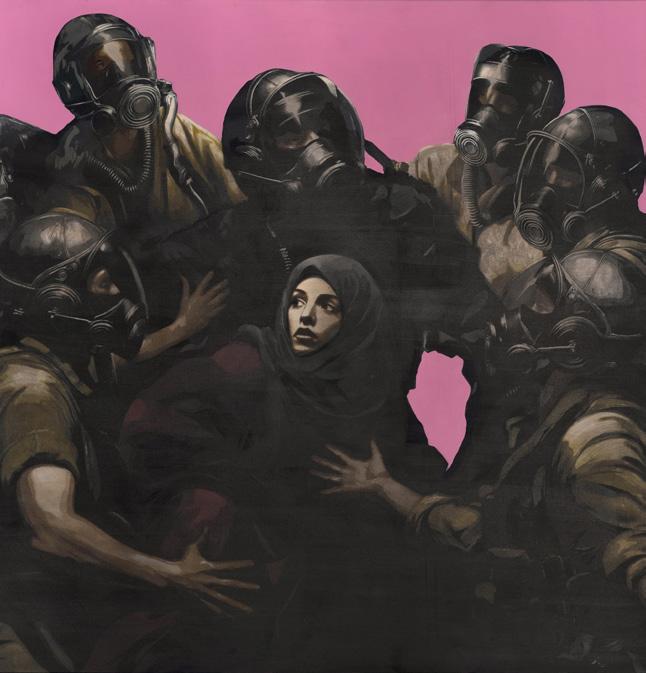
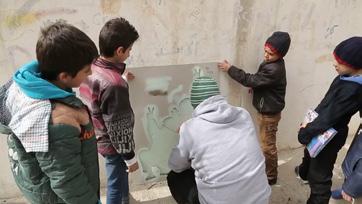
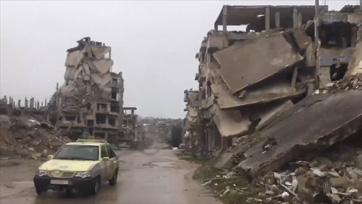
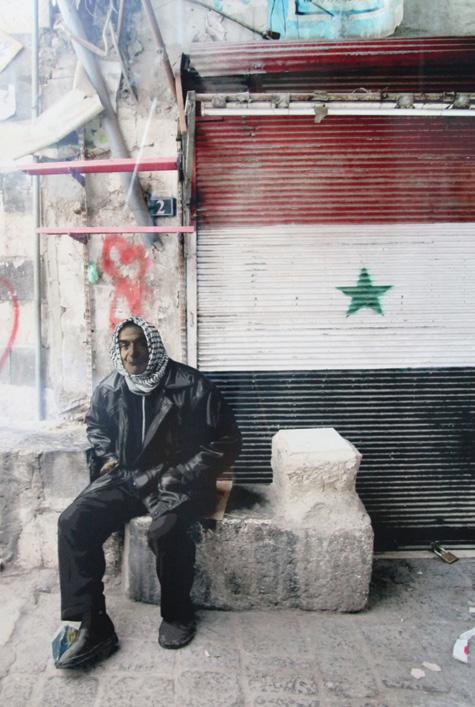
Shatila Camp (2014) is from Cornish’s first trip to a conflict-zone in late 2013. The busy street with market vendors could be many across the world, but the title reminds viewers of the location and the conflicts that created it. The settlement was established in 1949 to house Palestinians displaced by the Arab–Israeli War, and in 2013 it was receiving Syrian refugees escaping a civil war. Though Cornish could not cross the Lebanese border into Syria that first trip, he had a continued interest in the plight of the Syrian people8. He has now made several trips to Syria, each time creating immense bodies of work to ‘put a human face on the effects of this war and raise awareness for the people caught in the middle of this conflict...’9 In Zero to the Right (2017) he literally reinserts humanity by stencilling a figure over a photograph taken on the streets of Damascus; a poignant reminder of those killed or displaced by war. More recently he has returned to the use of dramatic postures found in religious art of the Renaissance and Baroque period, as seen in works Mother (2024) and The Pity of War (2024). He uses these emotive styles as a ‘reminder of the futility of violence and the urgent need for peace, encouraging reflection on the true cost of war and the imperative of compassion and understanding in our world.’10
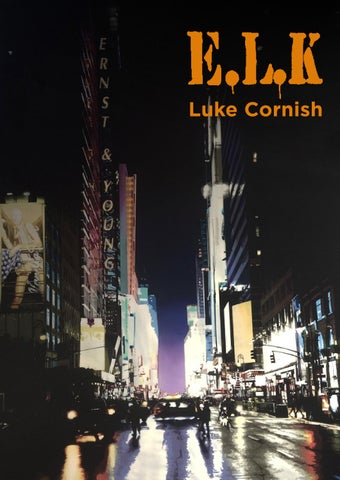
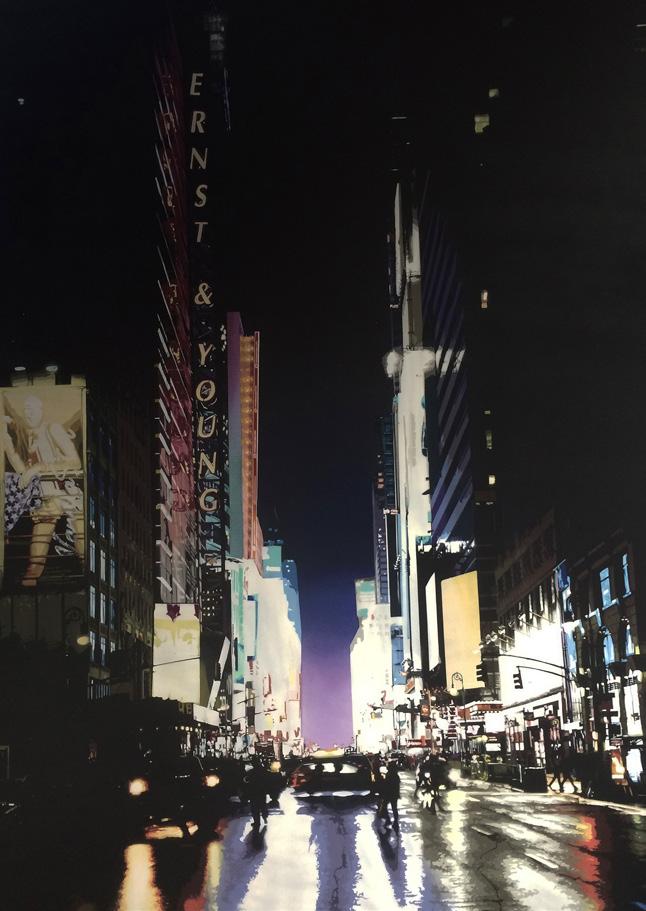
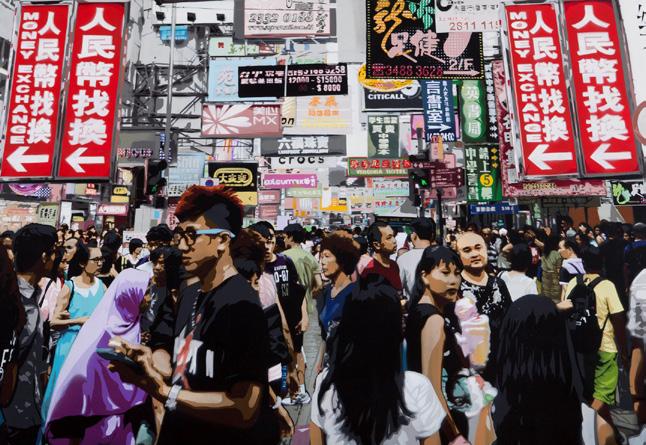
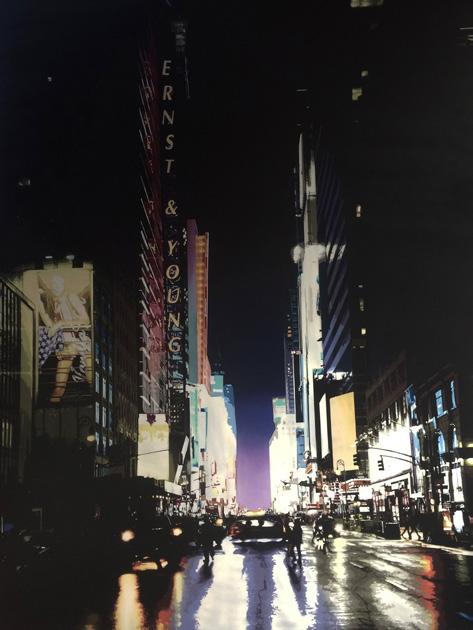
His travels have been a great source of inspiration, and he uses his insightful skills of social observation to comment on a wide variety of global issues. His 2015 works Business Farther Down and Lost in Mongkok place the audience on the streets of business and shopping
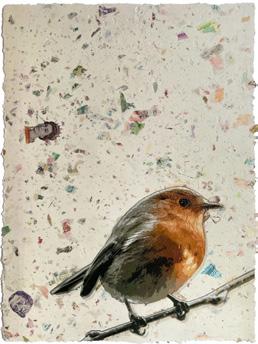
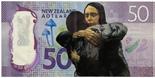
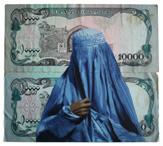
districts across the globe directing their attention to the de-humanising effects of consumerist culture, technology and urban living. When he was unable to travel due to the COVID-19 pandemic, he continued to create work linking financial systems to global issues using banknotes collected while travelling and purchased from eBay. In 2020 he used the notes as the background for stencilled imagery of ‘atrocities and absurdities the individual countries have committed.’11 Then, for the Dissimulation series (2022–23) he created 155 handmade papers, each imbedded with shredded banknotes from a different country. Over this paper he stencilled the national bird of that country, asking audiences to ponder the murky relationship between freedom and money. Posing questions like ‘How do we define power in a world where disparities persist?’ and ‘As we move into a future of digitization decentralized finance and Artificial Intelligence, will the death of fiat currency enhance our freedoms or widen the existing chasm between rich and poor?’12
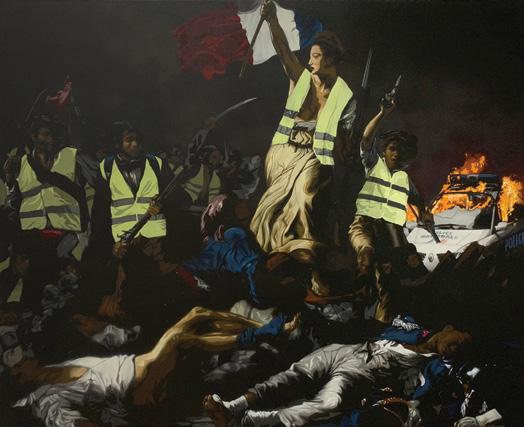
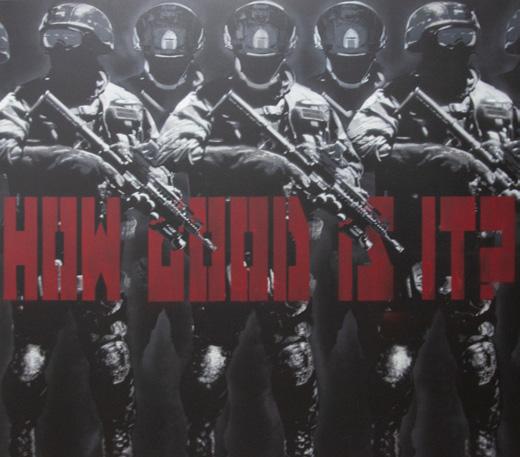
As a self-proclaimed artist/activist, protest can be the subject or purpose of his work, and in 2018 it was both. The imagery of Liberty Leading the People (2018) draws attention to a broader history of violent protest and revolution in France. It appropriates Eugène Delacroix’s painting of the same name from 1830, replacing the July Revolution with the Mouvement des gilets jaunes [Yellow vest protests]. Then, when invited to create a mural on the Bondi Beach Sea Wall he seized the opportunity to publicly protest the treatment of asylum seekers in Australian detention centres. The mural (Not) Welcome to Bondi (2018), depicted 24 armed Australian Border Force (ABF) officers13 with the title text sprayed above. The work was featured in local and international media, and a councillor from the local Waverley Council called for the work to be removed, whilst the mayor defended the work. After much debate, the council voted to keep the mural, but
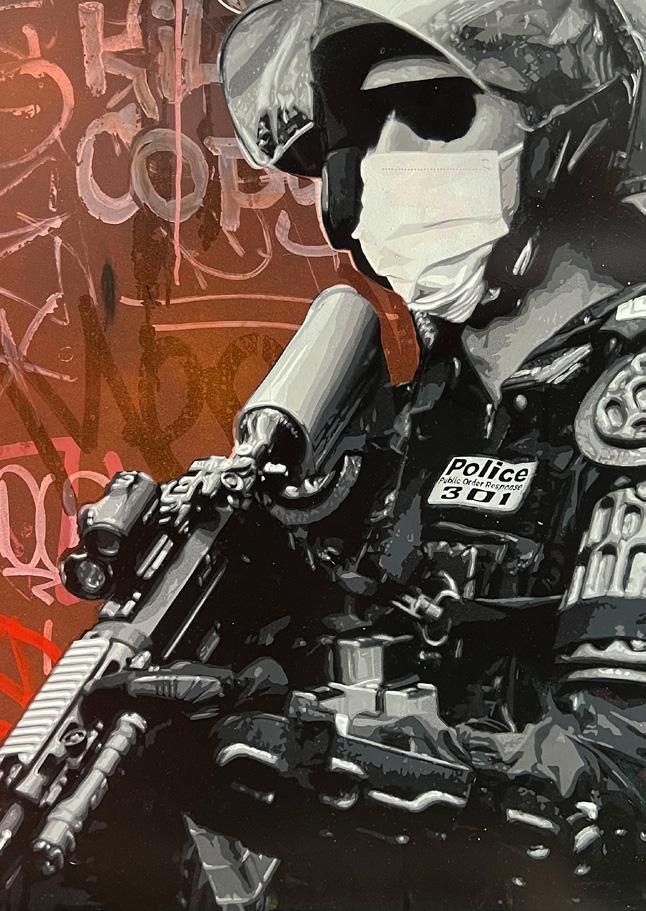
unfortunately it was vandalised hours later. In the end, his attempt to promote compassion proved too controversial, instead provoking a debate about freedom of speech.14 The work How Good Is It? (2019) uses the same stencils of ABF officers now brandished with the oftused slogan of then Australian prime minister, Scott Morrison. Later works like Black Bloc (2020), the ASPI series15 (2021) and Public Disorder Response (2023) continued this examination of social conflict, political unrest, expression of ideas and government authority.
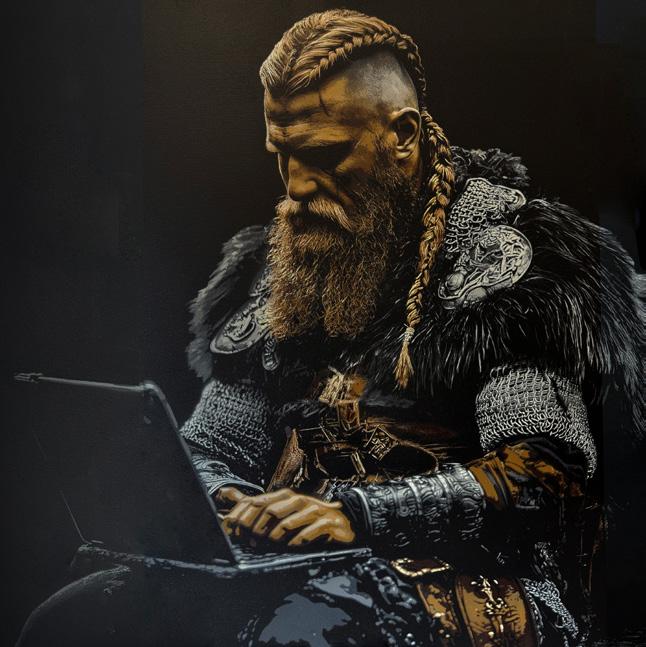
Currently, Cornish is concerned with the impact of relentless news cycles, Artificial Intelligence and the prevalence of internet echo chambers to create increased social division, persistent anxiety and a degradation of empathy. Keyboard Warrior (2025) uses the juxtaposition of a muscular Viking hunched over a small laptop to humorously point out the absurdity of the current state of affairs. He uses a reoccurring motif of astronauts to imagine an escape from this reality. These more light-hearted works like Orbiting Thoughts, Yellow (2025) and Kevin McKenzie (2025), give both the artist and audience a moment respite from the noise of their earthly troubles.16
Kira Godoroja-Prieckaerts
Curator, Art Collection and Galleries
Deakin University
Footnotes
1. L uke Cornish quoted in Ginger Gorman, ‘Five minutes with stencil artist, Luke Cornish’, HerCanberra, 9 July, 2025, accessed: https://hercanberra.com.au/life/ five-minutes-with-stencil-artist-luke-cornish-aka-elk/
2. A llegations of child sexual abuse by church leaders had been building globally in the 1990s and 2000s. In Australia, allegations like these eventually led to the government’s Royal Commission into Institutional Responses to Child Sexual Abuse in 2013.
3 J acinta Fintan, CUT: 10 Years of the Stencil Art Prize (Not Quite Newtown, 2021), 19
4 Ken McGregor, Luke Cornish (ELK): wake up to the stink (Badger Editions: 2025), 67, 70.
5 L uke Cornish, ‘Archibald Prize Archibald 2012 work: Father Bob by Luke Cornish’, Art Gallery of New South Wales, accessed 2026, https://www.artgallery.nsw.gov. au/prizes/archibald/2012/29222/
6 I n 2019 with Cato, Callie and Comet, a portrait of businesswoman, media commentator and art collector, Sue Cato. Then twice with portraits of Yvonne Weldon, a Wiradjuri woman and the first Aboriginal councillor for the City of Sydney: Barrambiyarra ( Awaken), in 2023, and Blood, sweat and tears, in 2025, a collaborative work with Christophe Domergue.
7 Ken McGregor, Luke Cornish (ELK), 47.
8 I n 2017 he co-founded the organisation For Syria’s Children, which works in partnership with non-government organisations on the ground in Syria to support children affected by the conflict.
9 L uke Cornish quoted by Claire Kurzmann, Zero to The Left: works by Luke Cornish, exh. cat. (Metro Gallery, 2017), unnumbered.
10 L uke Cornish, ‘Luke Cornish – The Pity of War *2024 Winner*’, Gallipoli Art Prize, last modified 2026, https://www.gallipoliartprize.org.au/project/luke-cornish-thepity-of-war/
11 Ken McGregor, Luke Cornish (ELK), 217.
12 L uke Cornish, Dissimulation, exh. cat. (Oshi Gallery, 2023)
13 Representing the 24 asylum seekers who had died in detention.
14 C harlotte Lam ,‘Controversial Bondi mural defaced after receiving council support’, SBS News, 7 August 2019, https://www.sbs.com.au/news/article/ controversial-bondi-mural-defaced-after-receiving-council-support/xq77c6hfi
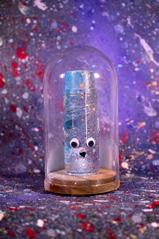
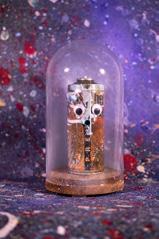
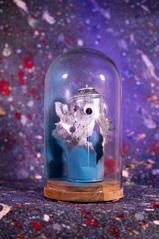
15 T he works Carl, Dan and Satoshi (2021) are featured in this exhibition and catalogue.
16 L uke Cornish, Terminal Lucidity, exh. cat. (artist’s studio, St Peters: 2025), 5.
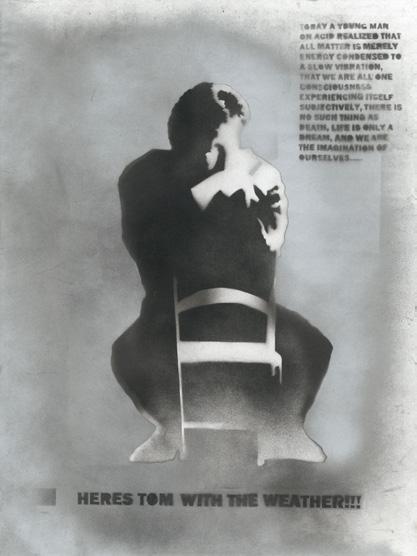
Saul Williams 2009
Untitled, Self Portrait 2011
Father Bob 2012
European Robin 2023
NZD (New Zealand) and AFN (Afghanistan) 2020
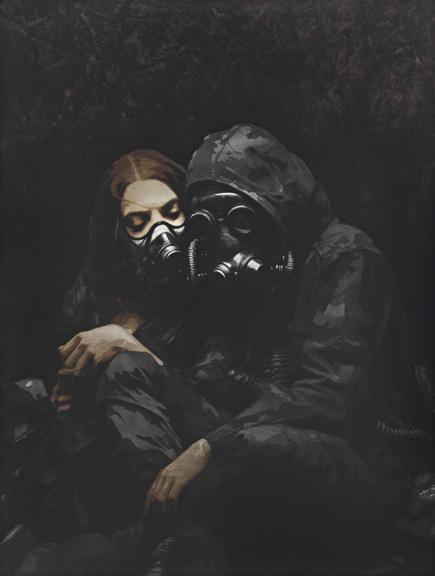
The Pity of War 2024
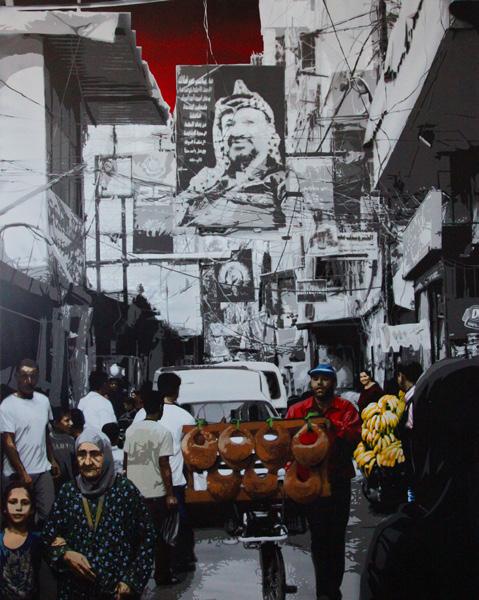
Shatila Camp 2014

Carl, Dan and Satoshi 2021
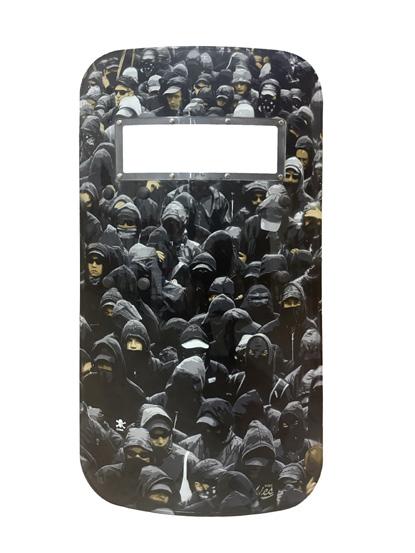
Black Bloc 2020
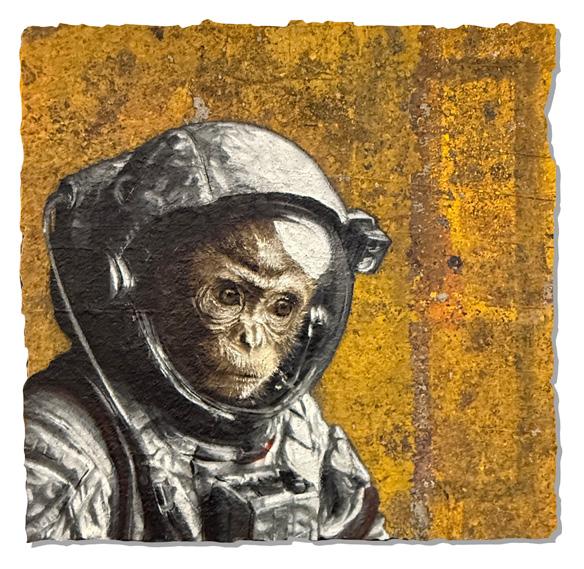
Orbiting Thoughts, Yellow 2025
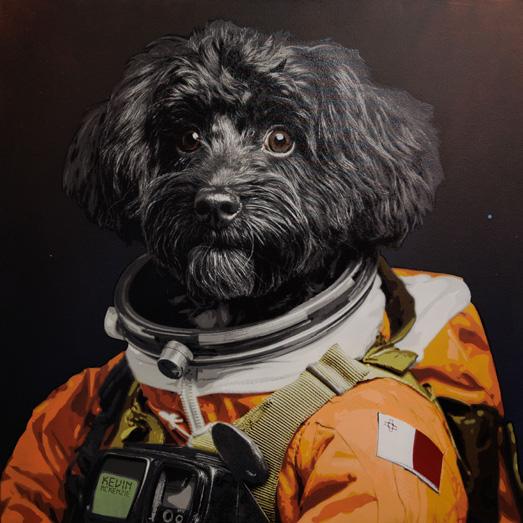
Kevin McKenzie 2025
List of works
Bill Hicks 2003
Can berra
stencil, aerosol paint on paper
80 × 60 cm
Courtesy of the artist
Cash Flow Blues 2008
C anberra stencil, aerosol paint on canvas
90 × 70 cm
Collection of Mel and Niv
TDM33 2008
Can berra
stencil, aerosol paint on canvas
90 × 70 cm
Courtesy of the artist
Wake u p to the Stink 2009
Can berra
stencil, aerosol paint on board
130 × 90 cm
The Sandrew Collection
Saul Williams 2009
Can berra
stencil, aerosol paint on board
120 × 80 cm
The Sandrew Collection
Untitled, Self Portrait 2011
Melbourne
stencil, aerosol paint on board
130 × 54 cm
Private collection
Me–We 2012
Palais Pictures (production company)
Jacob Oberman (director, producer and editor)
Russell Goldsmith (sound and music)
DJ Zeber (music)
Melbourne single channel video
0:06:26
Courtesy of the artist and Jacob Oberman
Father Bob 2012
Melbourne
stencil, aerosol paint on canvas
170 × 140 cm
Bond University Art Collection.
Gift of Barry Fitzgerald under the Australian Government’s Cultural Gifts Program, 2014
Lost in Mongkok 2015
Omar Musa (music)
Sydney single channel video
0:03:15
Courtesy of the artist
Lost in Mongkok 2015
Hong Kong, China and Sydney
stencil, aerosol paint on aluminium
80 × 120 cm
Private collection, Sydney
European Robin 2023
Sydney
stencil, aerosol paint on handmade paper embedded with torn banknotes
70 × 50 cm
Courtesy of the artist
NZD (New Zealand) 2020
Sydney
stencil, aerosol paint on banknote
7.5 × 15 cm
Private collection, Sydney
AFN (Afghanistan) 2020
Sydney
stencil, aerosol paint on banknote
7.6 × 17.1 cm
Collection of Sallie Stone
Business Farther Down 2015
New York City, United States of America and Sydney
stencil, aerosol paint on aluminium
160 × 112 cm
Courtesy of the artist
The Pity of War 2024
Sydney
stencil, aerosol paint on canvas
120 × 80 cm
The Gallipoli Memorial Club
Mother 2024
Sydney
stencil, aerosol paint on canvas
150 × 150 cm
Private collection
Liberty Leading the People 2018
Sydney
stencil, aerosol paint on canvas
135 × 150 cm
Private collection
The Sea 2018
Alex Ryan (editor)
Alyrah (music)
Syria and Sydney single channel video
0:04:27
Courtesy of the artist
Zero to the Right 2017 Damascus, Syria and Sydney stencil, aerosol paint over sublimination print on aluminium 140 × 90 cm
Courtesy of the artist
Shatila Camp 2014
Beirut, Lebanon and Sydney stencil, aerosol paint on aluminium
composite
125 × 100 cm
Courtesy of the artist
Public Disorder Response 2021
Sydney
stencil, aerosol paint on acrylic
67 × 74 cm
Private collection, Sydney
How Good Is It? 2019
Sydney
stencil, aerosol paint on canvas
180 × 200 cm
Courtesy of the artist
Carl, Dan and Satoshi 2021
Sydney repurposed aerosol cans with googly eyes; in acacia bell display jars, glass and wood
28 × 14 each Courtesy of the artist
Black Bloc 2020
Sydney
stencil, aerosol paint on riot shield
100 × 50 cm
Private collection
Keyboard Warrior 2025
Sydney
stencil, aerosol paint on canvas 120 × 120 cm
Courtesy of the artist
Orbiting Thoughts, Yellow 2025
Christophe Domergue (collaborator)
Sydney
stencil, aerosol paint over pigmented resin and urban surface on fibreglass
100 × 106 cm
Deakin University Art Collection Gift of Jenny Zimmer, 2025
Kevin McKenzie 2025
Sydney
stencil, aerosol paint on canvas
120 × 120 cm
Deakin University Art Collection Purchase, 2026
Curriculum vitae
Solo Exhibitions
2026 ELK: Luke Cornish, Deakin University Art Gallery, Melbourne
2025 Terminal Lucidity, artist’s studio, Sydney
2023 Dissimulation, Oshi Gallery, Melbourne
2022 Stamp Duty Blues, BlackBox Artspace, Wollongong, NSW
Edge of Chaos, Barangaroo, Sydney
2021 Don’t Shoot the Messenger, aMBUSH Gallery, Canberra
2019 Have a Go, aMBUSH Gallery, Canberra
The Sea, Bondi Pavilion Gallery, Sydney
2018 The Sea, The Lock-Up, Newcastle, NSW
(in)appropriate, Metro Gallery, Melbourne
2017 No Place Like Home, Tuggeranong Art Centre, Canberra
Zero to the Left, Metro Gallery, Melbourne
Road to Damascus, nanda\hobbs, Sydney
2016 Vanishing Point, nanda\hobbs, Sydney
Concrete Jungle, Metro Gallery, Melbourne
2014 Louder Than Words, StolenSpace Gallery, London, England
Clusterfuck , Metro Gallery, Melbourne
Sex & Death, with Will Coles, Art Equity, Sydney
2013 Before Afghanistan, Art Equity, Sydney
2012 Not with it..., Metro Gallery, Melbourne
2011 Look what you made me do..., Brunswick Street Gallery, Melbourne
This is why we can’t have nice things..., Oh Really Gallery, Sydney
2010 How you like me now bitch? Front Gallery, Canberra
Collections
Australian War Memorial, Ballarat Gallery of Modern Art, Bond University Collection, Corrigan Collection, Deakin University Art Collection, Gallipoli Memorial Club Museum, Home of the Arts, National Gallery of Victoria and National Portrait Gallery.
Awards: exhibitions and prizes
2025 Archibald Prize, Art Gallery of New South Wales, Sydney
2024 Gallipoli Prize, Gallipoli Memorial Club, Sydney (Winner)
2023 Archibald Prize, Art Gallery of New South Wales, Sydney
2023 Gallipoli Art Prize, Gallipoli Memorial Club, Sydney
2021 Salon de Refusés, SH Ervine Gallery, Sydney
2020 Waverley Art Prize, Bondi Pavilion Gallery, Sydney (Winner of Printmakers Prize)
2019 Kennedy Prize, Kennedy Arts Foundation, Adelaide
Archibald Prize, Art Gallery of New South Wales, Sydney
2018 Salon de Refusés, S.H. Ervine Gallery, Sydney
2017 Salon de Refusés, S.H. Ervine Gallery, Sydney (Winner of Holding Redlich People’s Choice Award)
2016 Calleen Art Award, Cowra Regional Gallery, NSW
Deakin Small Sculpture Prize, Deakin University Art Gallery, Melbourne
Moreton Bay Regional Art Award, QLD
Calleen Art Award, Cowra Regional Gallery, NSW
2014 Black Swan Prize for Portraiture, Linton and Kay Galleries, Perth
2013 Churchill Fellowship, Canberra (Awardee)
Sulman Prize, Art Gallery of New South Wales, Sydney
2012 Moran Portrait Prize, Moran Arts Foundation, Sydney
Archibald Prize, Art Gallery of New South Wales, Sydney
Tropfest, Sydney
2011 Metro Art Prize, Metro Gallery, Melbourne
2010 Australian Stencil Art Prize, Oh Really Gallery, Sydney (Winner)
2009 Australian Stencil Art Prize, Oh Really Gallery, Sydney
2008 Melbourne Stencil Festival, Abbotsford, VIC (Winner of People’s Choice Award)
Acknowledgements
To begin, a huge thank you to Luke Cornish for trusting the Deakin University Art Gallery with the presentation of your practice. Survey exhibitions are no small feat, as they require a lot of diving back into decades of an artistic career. Thank you for working with me through the logistics of presenting such an exhibition by searching through memories, files and hard drives. Your sincerity of speech and generosity with time are greatly appreciated.
I wish to sincerely thank the lenders to the exhibition, without whom this exhibition could not have existed. Luke’s work has been widely collected across Australia, and it is incredible to have so many significant pieces from his career together in one exhibition. Thank you to the eight private lenders, Luke Cornish, and our institutional lenders the Gallipoli Memorial Club and Bond University.
I also wish to thank and acknowledge the work of the Art Collection and Galleries team: Leanne Willis, Senior Manager; Claire Muir, Coordinator, Art Collection; Cindy Seeberger, Administrative Officer; and Tabitha Davies, Public Programs and Education Officer. Thank you for being so welcoming these past few months. It is a privilege to be part of such a hardworking team. I value all that you have already done and all that you will do throughout the presentation of this exhibition and its programs.
Thank you to Melbourne Art Services and Inggall Constructions for their work on the exhibition install. Thank you to Outsider Gallery (Surry Hills) and the Gallipoli Memorial Club for providing hi-res images for this catalogue. Finally, a huge thank you to designer Jasmin Tulk for employing your nimble design skills to bring this catalogue together.
ELK: Luke Cornish
Deakin University Art Gallery
11 February – 1 May 2026
Exhibition Curator: Kira Godoroja-Prieckaerts
All works are © copyright and courtesy of the artists
Published by Deakin University
978-0-6459431-5-3
Catalogue Design: Jasmin Tulk
Deakin University Art Gallery
Deakin University
Melbourne Campus at Burwood 221 Burwood Highway Burwood VIC 3125
T +61 3 9244 5344
E artgallery@deakin.edu.au
deakin.be/art-gallery/ Gallery hours Monday – Friday 10 am – 4 pm
Closed on public holidays Free Entry
© 2026 the artists, the authors and publisher. Copyright to the works is retained by the artists and their descendants. No part of this publication may be copied, stored in a retrieval system, transmitted or reproduced in any form or by any means without the prior written permission of the publisher and the individual copyright holder(s).
The views expressed within are those of the author(s) and do not necessarily represent the views held by Deakin University. Unless otherwise indicated all images are reproduced courtesy of the artists.
izi.travel - Deakin Art Collection and sculpture walk guides
Deakin University acknowledges the Wadawurrung and the Wurrunderji people of the Kulin Nation and the Gunditjmara people, who are the Traditional Custodians of the lands on which our campuses are based. We pay our respects to them for their care of the land.
cover image: Luke Cornish (ELK), Business Farther Down, 2015, stencil, aerosol paint on aluminium. Image and © courtesy of the artist.