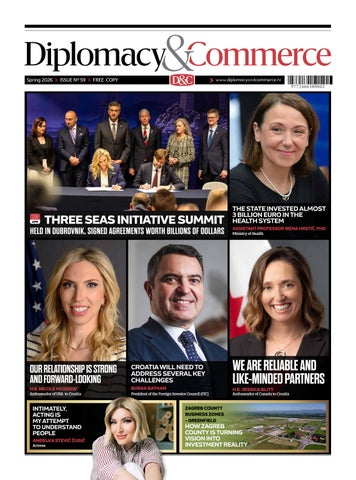
Diplomacy&Commerce #59 HRVATSKA

Page 1


2,20% godišnje kamate uz oročenje na 12 mjeseci.

Akcija traje do 30.6.2026.

WE DON'T CHANGE THE WORLD, BUT WE REFINE IT

Dear readers,

BOBAN SPASOJEVIĆ

Director and Editor-in-Chief

CONTENTS

12

“ZDRAVKO” – AI DIGITAL HEALTH ASSISTANT ASSISTANT PROFESSOR

TOMISLAV BENJAK, MD, PHD Croatian Institute of Public Health

16 FROM INNOVATION TO IMPACT

VIKTORIJA ZADRO HUML

General Manager for Takeda in Croatia, Slovenia, Bosnia and Herzegovina

18 HAIR LOSS – THE NEW “SILENT EPIDEMIC"

PHD ANA LJEVAR

Managing Director at Humed pharma

Years of work and experience show that the right content, good and quality stories always find their place and that our magazine, as a special “niche” and the only one in Croatia that connects politics, business, diplomacy, tourism, culture in one place, in English - not that it survives, but that it seems to have more and more support. The new edition of our Diplomacy&Commerce magazine brings topics you are used to and content that informs, enriches, teaches and hopefully inspires. We try to maintain the quality of the interlocutors, always giving the opportunity to new topics and content that expand the areas of interest. As before, government representatives, relevant representatives of the business community, ambassadors, artists all found their place in the 59th edition. By the way, this May also brings the 70th Eurovision Song Contest in Vienna. In Las Vegas, the Enhanced Games competition begins, where competitors are encouraged to use means to improve sports results. Jazz lovers will celebrate the centenary of the birth of Miles Davis. In June, until our next issue arrives, maybe we can celebrate the birthday of the famous Marilyn Monroe. General elections will be held in Ethiopia. The 2026 World Cup will begin, jointly organized by the USA, Canada and Mexico. The ambassadors of the USA and Canada talk about this, among other things, in this issue. The first match will take place at the iconic Estadio Azteca in Ciudad de Mexico.

In the second half of June, our summer issue will be published, along with the traditional Focus on Travel supplement. Until then, enjoy!

24 FOR US IT IS NOT ONLY ABOUT HOW MUCH WE GROW, BUT HOW WE GROW

DR. HASAN ECESOY, President of the Management Board of KentBank; IVAN BABIĆ AND NIKOLINA CVITANOVIĆ Members of the Management Board of KentBank

34 THE GREEN RING OF ZAGREB COUNTY HOW ZAGREB COUNTY IS TURNING VISION INTO INVESTMENT REALITY

Zagreb County Business Zones

36

CUSTOMER EXPERIENCE IS NOT SEPARATE FROM LEADERSHIP, BUT A DIRECT RESULT OF IT

MAŠA MUTIĆ

Owner and CEO of Navora Consulting d.o.o.

BOBAN SPASOJEVIĆ

Magazine Director Croatia and Editor in Chief boban@diplomacyandcommerce.hr

VLADIMIR DUDAŠ

C e n t r o b i r o Art Director

GORANKA

`MILOŠEVIĆ

Translation

Publisher: ASPEKT obrt za savjetovanje i usluge by licence of Color Media Communications

Ništa neće zagorjeti.

Ništa neće iskipjeti.

Nove Miele KM 8000 indukcijske ploče za kuhanje.

Jednom Miele, uvijek Miele.

The state invested almost 3 billion Euro in the health system

The most valuable indicator of success is indeed the fact that doctors are returning home

ASSISTANT PROFESSOR

HRSTIĆ, PHD

Ministry of Health

Waiting times for healthcare services are the most visible challenge – the one that troubles patients the most – both in Europe and in Croatia, Minister of Health, Assistant Professor Irena Hrstić, PhD, told Diplomacy&Commerce. In addition to the significant investments already made – from hospitals and human resources to innovative medicines – she announces new ones. Minister Hristić adds that Croatia is above the European average in key indicators of citizens’ healthcare protection.

How would you describe the state of Croatia’s healthcare system today, and what are you most proud of since taking the helm of the Ministry?

It is an undeniable fact that we have invested nearly three billion euros in the healthcare system – specifically in hospital reconstruction, the procurement of state-of-the-art equipment, digitalization, and strengthening of human resources. However, for me personally, the most important measure is not financial, it is rather our patients, who truly feel these changes.

The comprehensive reconstruction of Merkur Clinical Hospital has been completed, making it the first fully renovated hospital in earthquake-affected Zagreb. Work has also been completed on two major clinics of KBC Zagreb – the Department of Obstetrics and Gynecology Petrova and the Clinic for Lung Diseases Jordanovac – as well as at KBC Sestre milosrdnice, while the third phase of construction at KBC Zagreb is progressing in parallel.

CROATIA IS ENTERING THE EUROPEAN HEALTH DATA SPACE, WHICH WILL ENSURE CONTINUITY OF CARE FOR PATIENTS EVEN WHEN THEY ARE OUTSIDE THEIR HOME COUNTRY

procured 21 new linear accelerators, with a total value of 85 million euros, distributed across six hospitals throughout Croatia. Currently, 16 new and four existing machines are in operation, and by the end of May, when they are all to be fully operational, Croatia will surpass the European Union average with a total of 25 accelerators, or 6.4 devices per million inhabitants.

I am especially proud of the projects that have permanently improved access to healthcare services for all the citizens: the helicopter emergency medical service, a network of fast boats for islands and coastal areas, as well as mobile clinics and pharmacies for rural regions.

The Croatian Medical Chamber has recorded a continuous rise in this trend since 2023, especially among experienced specialists who have recognized Croatia as a place for further professional development and a better quality of life. That speaks louder than any statistic. After the wave of departures following Croatia’s accession to the European Union, the migration trend of healthcare professionals is gradually changing, thanks to continuous salary growth, investment in infrastructure, and clear career pathways. For example, data from the Croatian Chamber of Nurses for 2025 show that 130 nurses and technicians left to work abroad, while 221 returned – almost double the number compared to 2024. At Rebro, for instance, four left last year, while twelve returned.

Where do you see the biggest issues in the systems, and what are you doing to resolve them?

In the field of oncology, particularly radiotherapy, we have launched the largest investment in medical equipment in the history of Croatian healthcare. Through the National Recovery and Resilience Plan (NPOO), we have

Waiting times for healthcare services are the most visible challenge – the one that troubles patients the most – both in Europe and in Croatia. However, it is important to note that this is a complex issue: a distinction must be made between actual waiting times for initial examinations and the scheduling of appointments and follow-up visits. It is precisely in this area that we are introducing the most changes, which will enable better management of waiting lists. For this reason, in cooperation with the Croatian Medical Chamber and other healthcare professional bodies, we are beginning work on the Regulation on time and staffing standards. When it comes to human resources, we are taking a strategic approach with a clear plan. In December 2025, we adopted the National FiveYear Plan for Specialist Training of Healthcare Professionals for the period 2025–2029, which foresees 3,714 specializations for medical doctors, as well as additional 563 specializations for doctors of dental medicine, pharmacists, and medical biochemists. For 2025 alone, 596 specializations have already been approved, demonstrating that implementation has begun immediately. A new legal framework – the Regulation on Standards and the Method of Admission of Residents, the Regulation on Specialist Training of Medical Doctors, and the Programme of Measures for the Inclusion of Young Medical Doctors – is currently undergoing public consultation. With this, we are finalizing the establishment of a comprehensive legislative framework that will adapt the system of specialist training both to the current situation and to newer generations of doctors. It should also be emphasized that specialist training programmes have been introduced for bachelor-level nurses – currently in the field of emergency medi-

cine – and, together with relevant stakeholders, we are working on expanding the scope of nursing specializations.

The year 2026 was announced as the year of major capital investments. What would you highlight in particular?

One of the most significant projects is the National Children’s Hospital. With a signed contract worth €237.5 million, it is currently in the first phase of construction, with completion planned by the end of 2029. It will be the first carbon-neutral hospital in Croatia and the European Union – a symbol of modern and responsible healthcare. At the same time, implementation activities are underway for the new University Hospital Centre Osijek and the new General Hospital Šibenik. A day hospital model is being developed in Velika Gorica, while nearly €59 million is being invested in equipping and digitalizing primary healthcare centres. Integration of the private sector into CEZIH, with preparations planned throughout this year, represents an additional step toward a transparent system in which each patient can be viewed as a whole. Croatia is also entering the European Health Data Space, which will enable secure information exchange within the EU while simultaneously ensuring strict data protection. In terms of human resources, 2026 is also a year in which legislative efforts are further focused on healthcare professionals (the Act on Healthcare Activities, the Nursing Act, the Physiotherapy Act, the Medicines Act, the Pharmacy Act, etc.), because any modern medical equipment only reaches its full potential when used by skilled professionals.

NATIONAL CHILDREN’S HOSPITAL – THE FIRST CARBON-NEUTRAL HOSPITAL IN CROATIA AND THE EU

payments by citizens are among the lowest in the EU. A solidarity-based financing system that protects citizens from high costs carries particular value. An equally strong asset is digitalization. According to the Digital Decade Index for 2025, Croatia has achieved 86.55% of its targets in access to eHealth records, exceeding the EU average of 82.7%. The area where we see room for improvement is the level of technological equipment, which is precisely what this current cycle of capital investments is addressing.

arose in practice due to descriptive and difficult-to-measure criteria, which led to inconsistent application, which was not fair to doctors or to patients. Instead, the criteria are now clear and measurable, directly linked to waiting times for appointments: where waiting times are shorter, more approvals may be granted; where waiting times are longer, the approval rate is reduced or approval is temporarily not issued. With this measure, we are introducing order, measurability, and accountability, with one priority in focus: the interest of patients, while still respecting professional requirements. The first impact assessments are expected after the end of the first quarter, with full effects by the end of the first half of the year. The integration of private healthcare institutions into CEZIH – expected to be fully implemented as of 1 January 2027 – will also provide an objective time stamp for every medical report, raising the transparency of the entire system to a new level.

ZdrAVKO, a new digital health assistant, was recently presented at the Croatian Institute of Public Health (HZJZ). What makes it special? In its first month, it recorded more than 7,500 users and 128,000 processed queries, with an average of over 1,300 new queries per day, while the user base grew by 27% within the first 25 days. Citizens are not only reaching out to ZdrAVKO – they are also coming back to it. What makes it special is its knowledge base, developed exclusively with expert support from the Croatian Institute of Public Health (HZJZ), as well as its barrier-free availability, 24/7/365, via WhatsApp, without the need for registration. ZdrAVKO does not provide diagnoses; its role is prevention and improving health literacy. Like with any new tool, there is room for improvement, and we are continuously working on it. What matters most to me is that it helps overcome the “white coat syndrome”: a patient who comes to a doctor prepared, with clear questions, achieves better communication and better outcomes for both sides.

Where does Croatia stand as an EU member compared to other countries in terms of healthcare, and how is cooperation among member states reflected?

Croatia is above the European average in key indicators of citizens’ health protection: public healthcare financing accounts for 85% compared to the EU average of 80%, while out-of-pocket

European cooperation shows that Croatia is not merely a recipient of European standards, but an active participant making concrete contributions. For example, the Rijeka University Hospital Centre is a European reference centre for kidney transplants, performing more than 200 procedures annually and having one of the shortest waiting times for transplantation in the EU. The lung transplantation programme at the Zagreb University Hospital Centre has marked 25 years as one of the most successful programmes of this kind in Europe, with patients leading fully active lives after the procedure. Certification of the Zagreb University Hospital Centre within the European network of oncology centres of excellence is planned by September 2028. Croatia also participates in the EU4Health programme, and within the framework of joint health technology assessments for expensive new therapies, we no longer conduct negotiations individually, but as part of the EU bloc. As previously mentioned, Croatia is also entering the European Health Data Space, which will ensure continuity of care for patients even when they are outside their home country.

The topic that has attracted significant attention in recent months is the supplementary work of physicians. The regulation already exists, and you have opted for normative guidelines. How is implementation progressing and what is the situation on the ground?

The 2016 regulation is still in force. The new guideline provides a solution to inequalities that

How would you assess the overall health of Croatians? Data on the consumption of anxiolytics is particularly concerning. On the positive side, the five-year survival rate for all types of cancer has risen to 59% in Croatia, compared to 44% at the beginning of the 2000s. This is a step forward, showing that preventive programmes, oncology infrastructure, and access to new therapies are truly changing treatment outcomes. Participation in preventive programmes is increasing, and life expectancy is also rising. However, longevity alone is not a sufficient measure: the key question is how much of those years are lived in good health.

When we look at the state of mental health, anxiolytics have indeed become the most frequently prescribed group of medicines. This statistic is not an indication of medical failure; it reflects chronic stress, including the legacy of the pandemic, the Zagreb and Petrinja earthquakes, as well as economic pressures. Physicians prescribe them according to medical indication. However, a system that aims to be effective must act even before a person reaches the doctor’s office.

We made key structural advances in this area. We returned the psychologists to primary healthcare centres, where psychological support is provided free of charge and without a referral. So far, around 30,000 services have been delivered, and by the end of 2026 the goal is to cover all primary healthcare centres across Croatia. We are also developing a network of mobile psychiatric teams and community-based mental health outpatient units. To make this support system accessible even to those who are still hesitant to seek help, there is also ZdrAVKO – a tool that helps citizens recognize the right moment to seek professional assistance without fear or stigma. A Croatia that invests in the health of its citizens, builds modern medical infrastructure, and actively participates in European health networks is an attractive partner and a secure destination for long-term investment. And I am convinced that this a language your readers not only understand but also value.

“It’s smart casual, whatever’s comfy.”
The party organizer.
There’s plenty of advice out there. Some is worth more than others.

* Image generated by artificial intelligence.

Bank on the right advice.

“ZdrAVKO” – AI digital health assistant

He does not provide advice on treatment methods, does not interpret laboratory or other test results, and does not comment on users’ therapies

ASSISTANT PROFESSOR

Croatian Institute of Public Health

The Ministry of Health and the Croatian Institute of Public Health have been working intensively for years on improving preventive healthcare. In order to maintain such a strong response and public interest in prevention, we came up with the idea of creating a virtual assistant that would be an expert in the field of prevention – i.e., everything that can be prevented so that treatment is not needed, Assistant Professor Tomislav Benjak, MD, PhD, from the Croatian Institute of Public Health, told Diplomacy&Commerce. The assistant was named ZdrAVKO, with the intention of creating an association with health, but also with a doctor who provides information exclusively – as mentioned – on prevention.

In cooperation between the Croatian Institute of Public Health and the Ministry of Health of the Republic of Croatia, you presented “ZdrAVKO” –an AI digital health assistant, an innovative tool aimed at improving citizens’ health literacy and facilitating access to verified, relevant health information. Where did the idea for this come from, and what is the goal of the project?

We are working intensively on improving preventive healthcare. The most recent such comprehensive national programme is preventive health check-ups, where general practitioners invite their patients over the age of 40 who have not had any check-up with their family doctor in the past two years to come in for one. After one year of implementation, the response has been very good. More than 42,000 people have received the call, and 36,227 have been examined, which represents a response rate of 86%. During its development, ZdrAVKO also observed and learned from

"ZDRAVKO" IS ACCESSED ONLY VIA OFFICIAL HZJZ CHANNELS, BUT ALSO THROUGH PROMOTIONAL MATERIALS AND POSTERS IN HEALTH CENTRES AND PHARMACIES

other virtual assistants currently present in the Croatian AI space, primarily GINA, which is an assistant for women’s health and is under the jurisdiction of professional societies in the field of gynaecology. ZdrAVKO aims to provide users with simple and fast access to evidence-based information across all domains of prevention. For this purpose, a knowledge base was created by the experts from the Croatian Institute of Public Health (HZJZ), which ZdrAVKO exclusively uses when generating answers to user queries. This database contains knowledge from more than 60 areas related to prevention – from information on the importance and methods of population participation in early cancer detection, through the pre-

vention of cardiovascular diseases, to the prevention of workplace injuries, sports injuries, and men’s health. The fact that ZdrAVKO uses only information prepared by HZJZ experts significantly distinguishes it from other artificial intelligences, such as ChatGPT, which relies on the entire internet to generate answers – something that can represent a risk in health-related topics. In this way, the goal is also to improve citizens’ health literacy, which is reflected in ZdrAVKO’s slogan: “Znanjem do zdravije odluke” (Knowledge forhealthierdecisions). ZdrAVKO is not, and does not aim to be, a doctor for curative medicine. It clearly and politely draws the users’ attention to this fact when such questions arise. However, it does not leave us-

ers without relevant information. For all questions it cannot answer, ZdrAVKO directs users to the email address preventivni@hzjz.hr, which is monitored by HZJZ experts who respond directly to users.

How did the creation process of “ZdrAVKO” look, how did the idea originate, which tools and methodology were used in its development, and which experts were consulted and in what way? The idea emerged from a desire to maintain the high response rate to preventive health examinations, while at the same time providing relevant information across all aspects of prevention. In this way, the aim is to continuously raise awareness among the population about the importance of preventive healthcare, improve health literacy, and empower people to make healthier decisions. An important aspect of such a tool is also its name. There were several candidates, but in cooperation with public relations agencies, which are experts in this field, the final decision was made in favour of the name ZdrAVKO. It is a name from the Croatian-speaking area that still clearly evokes health, while the play on letters in the segment “dr” also subtly refers to a doctor. The core of ZdrAVKO is a knowledge base created by HZJZ experts, and user interaction takes place via WhatsApp. This platform was chosen because more than 90% of smartphone users have it, and it is also considered one of the safest communication tools in terms of personal data protection among such platforms. ZdrAVKO is accessed via a QR code available on the HZJZ website, and it was also distributed during campaigns in health centres and pharmacies across Croatia. For the creation of the knowledge base, an expert team from HZJZ was assembled, consisting of public health specialists and epidemiologists, while in regards to the technical development and application of artificial intelligence technology, HZJZ collaborated with an IT company with which a formal cooperation agreement was signed.

IRALTONE

This system is available only through official channels of the Croatian Institute of Public Health, namely the official website and HZJZ social media profiles. What has the response been like, what is the objective in that regard, and what level of reach is considered optimal and planned?

The official start of use was 28 January 2026, and since then ZdrAVKO has been used by 10,980 users who have submitted more than 170,000 queries. Monitoring of the ZdrAVKO usage data shows a continuous increase in both users and queries, which confirms the justification for this project. It is also important to highlight that the World Health Organization recommends the use of such tools to improve prevention and citizens’ health literacy. Regarding further development, HZJZ is exploring funding opportunities through EU projects, which would be directed toward enabling ZdrAVKO to send health-related messages to its users, with a particular focus on reminders about participation in national cancer early detection programmes, as well as alerts in case of heat waves, air pollution, and other factors that may pose a risk to public health. ZdrAVKO is built on a technology that has no limitations in terms of the number of users. However, it is important to note that it is not immune to potential disruptions in global artificial intelligence systems. We were faced with this kind of a situation at the beginning of its operation, but the issue was quickly resolved, and ZdrAVKO resumed functioning, informing its users of this via a message.

HZJZ and UNICEF recently presented guidelines for reporting and public communication aimed at destigmatizing and preventing childhood obesity. What do the research results show, and what guidelines have been adopted in this regard?

Every third child of primary school age in Croatia lives with overweight or obesity, placing Croatia fourth in Europe. Research shows that childhood obesity is influenced by numerous factors, such as genetics, social and economic conditions, lifestyle, changes in the environment where children grow up, and exposure to food marketing. However, in public discourse, obesity is still often discussed in a simplified and stereotypical way – its causes, as well as solutions, are largely reduced to the responsibility of parents and children, sometimes accompanied by blame. Such communication contributes to the stigmatization of children with obesity, where stigma can take the form of stereotypes, prejudice,

THE WAY WE COMMUNICATE PUBLICLY ABOUT CHILDHOOD OBESITY HAS A STRONG INFLUENCE ON PUBLIC OPINION, ATTITUDES, AND BEHAVIOUR

or discrimination. Research shows that stigmatization is not an effective motivator for changing lifestyle habits and does not help families live healthier lives. On the contrary, it can lead to serious consequences for their health and wellbeing. Exposure to stigma can damage self-esteem, increase the risk of depression, anxiety, and eating disorders, lead to withdrawal from physical and social activities, and in the long term contribute to further weight gain and the development of obesity. The way we communicate publicly about childhood obesity has a strong influence on public opinion, attitudes, and behaviour, where balanced, informed, and compassionate communication can help reduce the stigma. The guidelines presented on the occasion of World Obesity Day are intended for journalists, media professionals, experts, and all stakeholders who communicate publicly or report on this topic. Among other things, they provide concrete examples and recommendations related to the use of terminology, language, photographs, illustrations and other audio-visual content, as well as sources of information and examples of media questions that can help us approach the topic of obesity in a comprehensive, informed, and responsible manner. One of the recommendations, for example, is the use of neutral and non-stigmatizing language – that is, person-first language, which places

home addresses, with each person receiving a scheduled appointment. Prevention is the only way to extend life expectancy, because only when a disease is detected in time can it be treated appropriately. In the case of persons with disabilities, special attention is also given to organizing training for healthcare professionals on how to establish appropriate communication and interaction with this particularly vulnerable population. The need for such training is defined by the strategic framework for persons with disabilities and the recommendations of the Ombudsperson for Persons with Disabilities. The training is conducted by a team that includes representatives of all associations of persons with disabilities, as well as staff members of the Croatian Institute of Public Health (HZJZ).

the child before their condition or diagnosis. The guidelines aim to promote public communication that contributes to understanding the complex causes of obesity and the search for solutions, guided primarily by concern for children’s health, wellbeing, and protection. They are available in digital form on the websites of the Croatian Institute of Public Health (HZJZ) and the UNICEF Office for Croatia.

As the head of the Department for Monitoring and Improving the Health of Persons with Disabilities and Croatian Homeland War Veterans, what programmes are being implemented to improve the health of these populations and their status?

Special attention for these two vulnerable populations – persons with disabilities and Croatian Homeland War veterans – is focused on early disease detection. At the national level, preventive health check-ups have been introduced for persons over 40 years of age who have not visited their general practitioner in the past two years, as well as wellness examinations for Croatian Homeland War veterans. Since both groups include persons with disabilities as well as veterans, they are provided with the opportunity for early detection of disease. Both programmes are designed so that calls are sent to individuals’

Bearing in mind all the activities that HZJZ conducts, and which are under their jurisdiction, how would you describe the overall health status of citizens in Croatia, and what areas should be improved in order to enhance the situation? Should public awareness be raised, and if so, in what way? Should the healthcare system, public information, and digitalization be improved? We are among the countries with the highest smoking rates, with more than 30% of the population smoking; with over 60% of physically inactive individuals, and high alcohol consumption. When we add to this that Croatians are among the most overweight in Europe, with over 60% of the population having excess body weight, we reach a conclusion that there are significant predispositions for the development of chronic diseases. Such an “unhealthy” lifestyle results in high morbidity and mortality from cardiovascular and malignant diseases. However, despite everything, we are confident that all preventive activities being implemented to improve the health of our citizens will have a cumulative effect, and that we will improve health indicators, extend life expectancy, and move closer to other EU countries. What we must work on together is the integration of health into all policies, not only the health policy. All ministries should follow WHO recommendations on “One Health.” Health is not, and cannot be, the sole responsibility of the Ministry of Health; it requires broad intersectoral and interdisciplinary cooperation. What certainly needs to be strengthened is raising public awareness about the importance of preserving health and the consequences individuals face if they lose it.

From innovation to impact

Advancing patient care through science, digital transformation, and responsible AI

VIKTORIJA ZADRO HUML

General Manager for Takeda in Croatia, Slovenia, Bosnia&Herzegovina

Our role is to be a trusted partner to the healthcare community—bringing science-based medical innovation and working collaboratively to help patients get timely, appropriate care, for Diplomacy&Commerce says Viktorija ZadroHuml, General Manager for Takeda in Croatia, Slovenia,

AI HAS SIGNIFICANT POTENTIAL—BOTH IN HEALTHCARE BROADLY AND IN HOW ORGANIZATIONS OPERATE

Bosnia & Herzegovina. Mrs. Zadro

Huml explains in detail how important innovations are in the pharmaceutical industry, in what way and how Takeda implements all the necessary transformations from medicines to patients as well as employees.

How would you describe Takeda’s role in Croatia, Slovenia, and Bosnia and Herzegovina today?

Each market has its own structure and priorities, but the shared goal is the same: improving outcomes and supporting resilient healthcare

systems. At Takeda, we focus on patient needs first, and we work with stakeholders—clinicians, institutions, patient organizations, and payers—because lasting progress happens through partnership. We also recognize that trust is built over time through consistency, transparency, and a commitment to doing things the right way.

“Medical innovation” is a widely used phrase. What does it mean in practical terms for patients and healthcare professionals?

For patients, innovation means hope—and very concretely, it can mean earlier diagnosis, better treatment options, improved quality of life, and potentially better long-term outcomes. For healthcare professionals, it means access to strong scientific evidence, ongoing medical education, and tools or approaches that help optimize care pathways. Importantly, innovation is not only about introducing new medicines. It also includes generation of real-world evidence, how we support disease awareness, and how we contribute to better patient journeys. The real test is impact: does it meaningfully improve care and outcomes in the real world?

Access and equity are key topics in the region. How does Takeda contribute to improving patient access?

Access is multi-dimensional. It includes reimbursement and system readiness, but also diagnosis, referral pathways, and awareness. We contribute by engaging constructively with stakeholders, sharing robust scientific data, and supporting dialogue that helps decision-makers evaluate value in a transparent way. We also work to understand where the patient journey breaks down—where delays happen, where information is missing, where pathways are fragmented. When we help address those gaps through collaboration, patients benefit. While no single organization can solve access challenges alone, we can be a reliable partner and bring solutions-oriented thinking.

Digital transformation is reshaping healthcare. Where do you see the greatest opportunities for Croatia, Slovenia, and Bosnia and Herzegovina?

I see strong opportunities in improving how information supports decisions. Healthcare generates enormous amounts of data, but it is often scattered across systems. Digital solutions that improve interoperability, reporting, and insight—while respecting privacy and governance—can help clinicians and institutions plan better and act faster.

Another area is education and engagement. Digital channels can make medical information more accessible and timely, allowing healthcare professionals to engage with scientific content in a way that fits their schedules. When done responsibly and compliantly,

HIGH

ETHICAL AND COMPLIANCE STANDARDS ENABLE SUSTAINABLE, TRUSTED INNOVATION

that improves the quality of scientific exchange and supports continuous learning. And finally, digital tools can reduce administrative load. When processes are streamlined, healthcare professionals can spend more time on what matters most: patient care.

AI is a major global topic. What is Takeda’s perspective on AI in healthcare and in the way you work with stakeholders?

AI has significant potential—both in healthcare broadly and in how organizations operate. For us, the starting point is responsibility. AI must be used in a way that protects privacy, respects regulations, and maintains scientific rigor. Trust is essential in healthcare, and any technology must strengthen trust, not undermine it.

From an operational perspective, AI can help teams manage complexity: synthesizing information, improving consistency and quality, and reducing time spent on repetitive tasks. That frees capacity for higher-value work—like deeper analysis, better planning, and more meaningful collaboration with stakeholders. In healthcare, AI’s broader promise includes supporting research, accelerating insights, and potentially improving parts of the patient journey.

But it must always be evidencebased and implemented with clear governance and human oversight.

How do you balance speed and innovation with compliance and ethics—especially when adopting digital tools and AI? By being clear that high ethical and compliance standards enable sustainable and trusted innovation. We build adoption on strong governance, training, and transparency. We also promote a culture where colleagues ask questions early, escalate uncertainties, and choose the most responsible path.

At Takeda, our values guide this balance. We are driven by Integrity, Fairness, Honesty, and Perseverance, and we prioritize Patients, Trust, Reputation, and Business. Those principles matter even more when technology accelerates the pace of work. Doing the right thing is how we protect patients, partners, and the long-term credibility of science.

Partnership is central to progress. What does “effective partnership” look like in practice in this region?

Effective partnership begins with listening—understanding the realities of clinicians, institutions, and patient communities. It means

being transparent about what we can and cannot do, and focusing on shared goals such as improved outcomes, quality care, and sustainability. It also means bringing substance: high-quality evidence, thoughtful disease area knowledge, and a commitment to long-term collaboration rather than short-term transactions. The most impactful partnerships are those where stakeholders feel respected, where expectations are clear, and where progress is measured by real-world improvements.

What would you like external stakeholders to know about Takeda’s presence and ambition in Croatia, Slovenia, and Bosnia and Herzegovina?

I would like them to know that we are here for the long term. We are committed to bringing medical innovation and working with the healthcare community to help ensure it reaches patients in a timely and responsible way. I would also emphasize that we see digital transformation and responsible AI as enablers of better health outcomes— through better decisions, better collaboration, and more efficient ways of working. Our ambition is not simply to adopt new tools, but to create measurable value for patients and healthcare systems. And finally, I want stakeholders to know that our teams in this region care deeply. They bring expertise, professionalism, and a strong patient focus—because behind every policy decision, pathway, and dataset there are people and families waiting for answers.

HUMED PHARMA

Hair Loss – the New “Silent Epidemic

The Post-COVID Era and a Challenge of GLP-1 Therapy

PHD ANA LJEVAR

I n recent years, we have witnessed a significant rise in hair loss cases, increasingly transcending the boundaries of an aesthetic concern and becoming a relevant medical and public health issue. What was once considered a temporary and largely benign condition now often requires a structured, multidisciplinary approach. Two parallel phenomena stand out in particular: post-COVID syndrome and the widespread use of GLP-1 medications in the treatment of obesity and diabetes. Their combination has positioned hair loss as one of the key topics in modern dermatology and trichology.

POST-COVID AND GLP-1 – A SHARED PATHOPHYSIOLOGICAL MECHANISM

Both post-COVID telogen effluvium and hair loss associated with GLP-1 therapy share a common underlying mechanism – metabolic and inflammatory stress that disrupts the natural hair growth cycle.

A significant number of hair follicles prematurely enter the telogen (resting) phase, leading to diffuse shedding. In the context of GLP-1 therapy, an additional factor is rapid weight loss, often accompanied by deficiencies in key nutrients such as amino acids, iron, and zinc, further compromising follicular function.

TRICOPAT TECHNOLOGY STANDS OUT  AS AN ADVANCED, REGENERATIVE APPROACH TO HAIR LOSS MANAGEMENT, DEVELOPED IN COLLABORATION WITH THE UNIVERSITY  OF BOLOGNA

TRICOPAT – TECHNOLOGY THAT ACTIVATES THE BIOLOGICAL POTENTIAL OF THE SCALP

Within this context, the Tricopat technology stands out as an advanced, regenerative approach to hair loss management, developed in collaboration with the University of Bologna. Tricopat is based on the patented TRICOGENESI™ protocol, which integrates multiple complementary technologies within a single treatment:

• microstimulation and microperforations that trigger natural regenerative processes

• acoustic (radial) waves that enhance microcirculation

• electrostimulation to increase tissue oxygenation

• LED photobiomodulation with anti-inflammatory and regenerative effects

• iontophoresis for deep transdermal delivery of active ingredients

A key advantage of the system is iontophoresis, which uses low electrical currents to enhance the penetration of active molecules directly into the hair follicle, significantly improving their bioavailability without invasive procedures.

During treatment, tailored combinations of active ingredients—such as amino acids, growth factors, and other targeted compounds—are delivered to the scalp, resulting in:

• prolongation of the anagen (growth) phase

• reactivation of dormant follicles

• increased hair density and thickness

Importantly, Tricopat treatments are now available in leading dermatology and aesthetic clinics, where they are performed under professional supervision and adapted to individual patient needs.

IRALTONE – A NEW GENERATION OF ORAL FOLLICLE “BOOSTERS”

While Tricopat works externally, an effective modern approach also requires strong internal support.

The Iraltone line represents a new generation of oral boosters specifically designed to target the underlying causes of hair loss. Their mechanism of action is based on several key pillars:

1. Keratin synthesis support Amino acids and B-complex vitamins provide essential building blocks for hair production.

2. Reduction of oxidative stress

Antioxidants protect the follicle from damage, particularly in postCOVID recovery and rapid weight loss scenarios.

3. Hair cycle regulation

Active ingredients help shift follicles from the telogen phase back into the anagen phase.

4. Nutritional and mineral balance

Zinc, iron, and other micronutrients are essential for maintaining healthy hair and scalp function.

What makes Iraltone a true “booster” is its ability to accelerate follicular recovery under physiological stress conditions, making it especially valuable in

A KEY ADVANTAGE OF THE SYSTEM IS IONTOPHORESIS, WHICH USES LOW ELECTRICAL CURRENTS TO ENHANCE THE PENETRATION OF ACTIVE MOLECULES DIRECTLY INTO THE HAIR FOLLICLE

post-COVID and GLP-1-related hair loss. An additional advantage is accessibility – Iraltone boosters are available in pharmacies, enabling early intervention and easy integration into daily routines.

SYNERGY AS THE NEW THERAPEUTIC STANDARD

The most effective outcomes are achieved through a combined approach:

• Tricopat (local stimulation and scalp regeneration)

• Iraltone (systemic nutritional and metabolic support)

This integrated strategy allows simultaneous action on all major contributing factors: follicular microenvironment, systemic nutritional status, inflammatory and oxidative processes and hair growth cycle regulation. Such synergy represents a new standard in managing complex forms of hair loss. Hair loss in the post-COVID era and during GLP-1 therapy is not a passing trend, but a reflection of deeper physiological and metabolic changes. As such, it requires timely recognition, proper diagnosis, and a targeted, evidence-based therapeutic approach. Technologies such as Tricopat and next-generation nutraceuticals like Iraltone represent a significant advancement—offering efficacy, safety, and accessibility.

Scalp Care Reimagined: The Science and Soul of EASTOK

In an era that increasingly recognizes the bond between inner health and outer beauty, scalp care has risen to become one of wellness’s most compelling new territories

EASTOK was created at exactly this intersection. It grew from clinical expertise in order to bring dermatology, preventive medicine and dermocosmetics together into a single, coherent approach. The science is real. So is the care behind it.

BALANCE AS A GUIDING PRINCIPLE

At the heart of EASTOK lies the concept of balance – between nature and science, care and health, body and mind. Hair, in this framework, is not merely an aesthetic concern. It’s a quiet signal of what’s happening inside the body – stress, hormonal shifts, nutritional gaps all show up, sooner or later, on the scalp. EASTOK takes

this seriously. Its approach, rooted in trichophytotherapy, is about restoring balance.

THE FORMULA BEHIND THE PHILOSOPHY

The EASTOK line comprises four products: a scalp scrub, an oil concentrate, a shampoo and a nourishing emulsion. Each is formulated with carefully selected botanical extracts – Thymus vulgaris, Rosmarinus officinalis, Cedrus atlantica and Lavandula angustifolia – chosen not for their fragrance alone, but because research actually backs them up.

AT THE HEART OF EASTOK LIES THE CONCEPT OF BALANCE –BETWEEN NATURE AND SCIENCE,

Together, these actives stimulate microcirculation, deliver an anti-androgenic effect, and support the reversion of miniaturised follicles to their original, healthy state. Studies in alopecia areata confirmed the approach.

THE RITUAL

Science, however, is only part of the experience. At Dentaderm, EASTOK comes to life in a 60-minute aromatherapy ritual — unhurried and deliberate, where scent fills the air, sound stills the mind, and touch does the rest

The treatment opens with scalp exfoliation using the EASTOK scrub, followed by a deeply relaxing massage with the oil concentrate beneath a warm steam cap. A shampoo massage with gentle steam follows, before the ritual concludes with the nourishing emulsion worked slowly into the scalp. Massage is not a luxury addon here – it is central to how the treatment works, driving circulation and activating the follicles.

BEYOND ROUTINE

EASTOK is available at Dentaderm, with further locations to follow. Only for those who believe that hair health begins beneath the surface — and that true self-care is found in the quiet, meditative ritual of touch Real ingredients. Honest science. And a ritual that’s genuinely worth the time.

DENTADERM

Croatia will need to address several key challenges

That includes ensuring access to skilled labour and attracting strong capital, especially after the end of the EU funding period

To improve the business environment and attract more investors, it is important to simplify and speed up administrative procedures, says Burak Baykan, President of the Foreign Investor Council (FIC), for Diplomacy&Commerce. He also explains the significance of Croatia’s entry into the OECD, but also where he sees our country in a decade, in terms of economic development and potential.

At the end of February, the Foreign Investor Council, which you chair, presented the „White Book“, a traditional publication on the investment climate in Croatia. What are the key conclusions and how would you assess the level of investment in the country?

The Foreign Investors Council presented the White Book, which highlights that Croatia has strong potential for attracting foreign investment, particularly in sectors such as tourism, real estate, energy, and infrastructure. Investment levels in the country have been solid, and in recent years Croatia has shown sustainable growth along with improvements in its credit rating, which further strengthens investor confidence. However, in order to maintain the growth, Croatia will need to address several key challenges, including ensuring access to a skilled workforce and attracting strong capital, especially after the EU funding period comes to an end. At the same time, the White Book points out that there are still structural obstacles, particularly slow and complex administrative procedures, as well as rising investment costs.

THE COUNTRY COULD SIGNIFICANTLY EXPAND ITS HIGH-END TOURISM, REAL ESTATE, AND INFRASTRUCTURE SECTORS

What are the specific recommendations for improving the business environment and how to attract foreign investors?

To improve the business environment and attract more investors, it is important to simplify and speed up administrative procedures. Processes should be clearer and more transparent to avoid unnecessary delays.

Croatia also needs to address the shortage of skilled labor by transforming the education sys-

tem and aligning human resources with the evolving needs of the economy. In addition, attracting investment in a highly competitive global market requires measures to improve Croatia’s overall competitiveness, such as tax reforms and making it easier and more predictable to do business in the country. Also, the country should promote its investment opportunities in a more active way, especially as the EU funding decreases in the future. Improving infrastructure and the quality of services, especially

in tourism, is also important for attracting higher-spending visitors and investors.

How would you rate the cooperation with decisionmakers, the Government, and how attentive they are to the needs of investors? What does the cooperation look like?

Our cooperation with the government is generally positive and has improved significantly in recent years. We have actively participated in numerous working groups focused on optimizing the business environment, including areas such as labor, digitalization, and initiatives related to Croatia’s OECD accession process. The Foreign Investors Council works closely with authorities through consultations, policy recommendations, and advocacy, emphasizing the need for reforms that align with international best practices, including those linked to Croatia’s OECD accession process.

The international cooperation of FIC shows a high level of relations. What are the experiences and some key similarities and differences when we talk about the investment climate in other countries, both EU members and those in the surrounding area? When compared to other countries, Croatia shares some similarities with EU members, such as regulations and access to EU funds. However, it still faces challenges, especially with slower administration and the need to better promote its investment potential. Experiences from other countries show that addressing labor shortages, improving transparency, and attracting high-quality investors are crucial for sustaining longterm economic growth.

Croatia is striving to become a member of the OECD. You met with their representatives when they were in Zagreb. From the investor’s point of view, how much will membership in that organization mean for business and in what specific way? What will be different compared to now?

From an investor’s perspective, membership in the OECD would significantly enhance Croatia’s business climate. It would increase transparency, align regulations with international best practices, and foster greater confidence among foreign investors. Accession would also help make administrative processes faster and more

IT STILL FACES CHALLENGES, ESPECIALLY WITH SLOWER ADMINISTRATION AND THE NEED TO BETTER PROMOTE ITS INVESTMENT POTENTIAL

predictable, which could encourage more long-term and higher-quality capital to enter the country. Additionally, OECD delegations often consult with investors and business representatives, including our members, to ensure that legal reforms are effectively improving the business environment.

Where is Croatia today when we talk about the business climate and level of investment compared to 10 years ago, in terms of conditions, and how do you see it in 10 years? Looking at Croatia’s business climate over the past ten years, conditions have improved considerably. A decade ago, investment opportunities were growing but limited by slow administrative processes and a less developed luxury tourism sector. In recent years, Croatia has managed to sustain growth above the EU average, supported by reforms, EU funds, public investment, and the expansion of tourism. As noted in the White Book, Croatia’s real GDP per capita now approaches 80% of the EU average.

Today, major projects in tourism and infrastructure demonstrate strong investor confidence, although challenges like bureaucracy, labor availability, and overall investment costs persist. Over the next ten years, with ongoing reforms, OECD membership, and strategic investments, Croatia has the potential to become a more efficient and attractive destination for foreign investors. The country could significantly expand its high-end tourism, real estate, and infrastructure sectors, creating a sustainable business environment for years to come.

KENTBANK MANAGEMENT BOARD MEMBERS

For us it is not only about how much we grow, but how we grow
What differentiates us is speed, flexibility, and a personalized approach

KentBank continues to operate successfully, grow and develop its business and, according to official data, is still the fastest growing bank in Croatia. It is part of the Süzer Group from Turkey, and its entry into the Croatian market has proven to be a successful foreign investment. Dr. Hasan Ecesoy, President of the Management Board of KentBank, Ivan Babić and Nikolina Cvitanović, members of the Management Board of KentBank, talk to Diplomacy&Commerce magazine about the bank’s development, projects, expansion and opening of new branches across Croatia.

DR. HASAN

KentBank has confirmed its status as one of the fastest growing banks in Croatia, achieving significant growth in assets and operations for several years in a row. The Bank’s growth has been achieved while maintaining the stability and quality of its portfolio. What do the numbers show us and in which direction are you moving?

I am proud to reflect on 2025 as a year in which KentBank’s transformation moved from vision to measurable reality. In a market where change is accelerating and customer expectations are rising fast, we chose not to follow trends but to set them – with discipline, clarity and a genuine commitment to the people and businesses we serve. Our financial results in 2025 reflect the strength and consistency of our business model. Total assets grew by 13%, reaching €935 million, well above the sector average. Total loans expanded by 11% and deposits by 13%, dem-

KENTCLUB COMBINES BANKING, BUSINESS SPACE, AND NETWORKING

onstrating balanced and healthy growth across our balance sheet. We achieved the highest profit in KentBank’s history, reaching EUR 10 millio, a milestone that underscores our ability to create sustainable value. Even more notably, we significantly outperformed the market in total operating income, achieving a strong 7% increase. However, for us it is not only about how much we grow, but how we grow. Growth must be sustainable, controlled, and based on strong risk management. We also achieved outperformance in dis-

ciplined NPL ratio of 1.8%, which is a clear reflection of our operational efficiency and the relevance of our services in a competitive landscape. Our direction remains the same: to facilitate the financial success of our clients by delivering simple, transparent and easily accessible financial and solutions. We will continue to invest in digital capabilities to shorten the path from a client’s need to a solution, to invest in our people and technology, and to grow in a way that is sustainable, responsible and genuinely valuable to those we serve.

KentBank is part of the Süzer Group from Turkey. Your entry into the Croatian market has proven to be a successful foreign investment. What makes you different from others on the market for potential clients, investors…?

Our advantage lies in the combination of international perspective and local market understanding. Being part of the Süzer Group gives us access to broader experience, international expertise, and a strong network, while at the same time we operate as a bank that understands the Croatian market, local client needs, and the specific business environment. What differentiates us is speed, flexibility, and a personalized approach. We do not offer generic solutions, but

Nikolina Cvitanović, Dr. Hasan Ecesoy and Ivan Babić

aim to understand each client’s specific situation and provide solutions that create real value. This is where a bank of our size has an advantage: we are agile enough to react quickly, yet stable enough to be a long-term partner.

A key part of our development is also digital transformation. With the KentPro application, we have taken a step towards simpler and more transparent digital-first everyday banking, allowing users to have a clearer overview of their finances in one place.

However, for us, digital does not mean distance. Digital is there to make everyday banking easier; people are there for what truly matters. This balance is not a compromise; it is our competitive advantage. We do not aim to be everything to everyone; instead, we focus on building depth and quality in relationships where context truly matters. This is the principle we build on: Digital-First, Always Human.

IVAN BABIĆ

Member of the Management Board of KentBank

Kent bank drew attention with “Festival of Ideas” event. What is the plan for this year, what topics and content can we expect?

The Festival of Ideas has proven to be a strong format over the past editions, as it created space for conversations that were not strictly formal, but open, authentic, and rooted in real experiences. Last year’s edition confirmed that there is strong interest in content that brings together different perspectives and gives visibility to ideas that can have real value. For us, it is particularly important that the Festival is not just an event where ideas are discussed, but a platform that supports people who have initiative. Our focus is on young, ambitious entrepreneurs and individuals who want to turn their ideas into concrete projects. Very often, what they lack is space, visibility, support, and a clearer path to execution. The direction we are taking this year will become clearer soon, but our goal remains the same – to preserve the authenticity of the Festival while further developing it into a platform that creates even greater value for participants, the audience, and the wider community.

What makes you stand out on the market is I KentClub. Remind our readers, what KentClub means and what was the idea when you started with this project?

KentClub was not designed just as a premium add-on, but as a space with a clear purpose. The idea was to create an environment where clients can have meaningful conversations, hold meetings, connect, and develop business opportunities, rather than simply come to the bank for transactions. KentClub combines banking, business space, and networking. It provides additional value by allowing clients to use the Bank’s space for business meetings, presentations,

to change. Our recent expansion into new branches in Osijek and Slavonski Brod has both symbolic and business significance. On one hand, it continues the legacy and deep connection with Slavonia that began with Banka Brod, and on the other, it clearly reflects our belief in this market and in a region defined by strong, hardworking, and longterm oriented entrepreneurs. These are qualities that are very visible in the way our clients grow and manage their businesses. At the same time, we are further strengthening our presence in Istria with the opening of a new branch in Poreč. Istria represents a specific business envi-

WITH THE KENTPRO APPLICATION, WE HAVE TAKEN A STEP TOWARDS SIMPLER AND MORE TRANSPARENT DIGITAL-FIRST EVERYDAY BANKING

promotions, or private gatherings. In that sense, the bank moves beyond being a place for operational interactions and becomes a space where relationships are built, ideas are exchanged, and decisions are made. An important step forward was the opening of KentClub in Osijek. This confirmed that we do not see this concept as limited to Zagreb, but as something we want to develop in other regions where there is a need for such an approach. KentClub in Osijek has further strengthened our presence in Slavonia and reinforced our intention to be closer to our clients—not only through banking products, but through the experience and relationships we build with them.

he bank currently has 17 offices in Croatia. In 2025, the number of employees also increased. You recently opened office in Osijek as the first location in Slavonia. How important is regional distribution, and how do business entities differ primarily by region, what is important to them, and how would you assess business activities across Croatia from the bank’s perspective? Regional distribution is not just about Bank’s presence and accessibility – from a risk management perspective, it also means a deeper understanding of different economic realities and their resilience

Tronment – dynamic, internationally oriented, and strongly connected to tourism and service industries. It is a region with higher liquidity, faster capital turnover, and clients who highly value speed, clarity, and reliability in their day-to-day banking. At the same time, we continue to look at further opportunities in Zagreb as well – but we will have more to share on that in due course. While certain economic pressures and challenges are shared across all regions, differences across Croatia are becoming increasingly pronounced – in terms of economic structure, cost pressures, and labour market dynamics. What remains consistent across all environments is that service quality and speed of decisionmaking are no longer an added value – they are a standard that clients expect. This is why our approach continues to evolve: we are building on our strength of deeply understanding each client’s specific context and supporting their business, while delivering that insight through fast, simple, and recognisable client experiences.

It is precisely this combination of understanding and speed that we see as our key advantage – the ability to turn high-quality assessment into timely decisions across all segments of our business. This approach, which the market has already responded to very positively, can now be further scaled through processes, data, and digital solutions – allowing us to deliver a consistent client experience regardless of region or business complexity.

In the bank, you are responsible, among other things, for the area of risk management and control and prevention of money laundering and terrorist financing. How much have circumstances changed in terms of global uncertainty and how much work do you have in this sector? What are the most common irregularities that you discover?

Geopolitical developments, inflation, rising costs, regulatory expectations, and technological change are all happening simultaneously and reinforcing one another. This environment makes risks less predictable, but also significantly more interconnected.

In this context, the focus of risk management is shifting from individual events to the continuous assessment of resilience – of clients, portfolios, and internal processes. The key question is no longer just how a business performs today, but how resilient it is to change: cost increases, shifts in demand, or disruptions in supply chains. This is why we increasingly work with scenarios – assessing the flexibility of business models, their sensitivity to cost pressures, and their ability to adapt.

When it comes to irregularities, in practice we still most often encounter not sophisticated attempts of misconduct, but gaps – in understanding regulatory requirements or processes. In an environment that is becoming more complex and demanding, this is not surprising.At the same time, digitalisation is introducing a new dimension of risk – from cybersecurity threats to increasingly complex transaction patterns. Although still relatively rare, scenarios in which technological advancements, particularly AI, are used to bypass rules are becoming more sophisticated and represent a serious challenge for the entire system.

Our role is not only to identify risk, but to understand it in context and translate it into better decisions. I strongly believe that risk management should not slow down growth, but guide it – its real value lies in making uncertainty more understandable and decisions more informed.

Organizations that have people and processes capable of quickly understanding, assessing, and taking responsibility have a real competitive advantage. That is where I see the strength of my team and the function I lead.

Our relationship is strong and forward-looking

Economic ties are one of the clearest indicators of how strong our relationship has become and Energy is the central pillar of that cooperation

The United States and Croatia are close NATO allies, and our cooperation is reflected in our partnership in joint training and defense modernization, for Diplomacy&Commerce magazine says H.E. Nicole McGraw USA Ambassador to Croatia. In the year when the USA celebrates the 250th anniversary of America’s independence, Ambassador McGraw especially emphasizes the importance of the agreed projects at the Three Seas Initiative Summit in Dubrovnik. In the first interview for our magazine, she reveals which places in Croatia she fell in love with, and how the USA is preparing for the 2026 FIFA World Cup - North America.

How would you assess USCroatian relations today, given the importance and influence of Washington in Croatia’s independence? Are there any open issues and where do you see room for improvement in cooperation?

Since Croatia’s independence, the United States has been a steadfast partner and supporter. We are proud to have been a part of helping Croatia become a capable ally that contributes meaningfully to NATO, regional stability, and Europe’s energy security. But what excites me most is the future. I see our relationship through a lens of opportunity. For the first time in Croatia’s history, they now have a “A” credit rating. This demonstrates a stable market for American investment. There is enormous potential to deepen our economic ties and expand two-way trade and investments. U.S. companies see Croatia as a promising market, especially in energy, infrastructure, and the tech sector – we want to see that

THE UNITED STATES HAS SUPPORTED OUR FRIENDS AND PARTNERS FOR DECADES, BUT SECURITY IS A SHARED RESPONSIBILITY AND STRONG, CAPABLE EUROPE IS IN ALL OUR INTERESTS

potential fully realized. The Three Seas Initiative is a good example of where this partnership is heading. In Dubrovnik at the end of April, the United States government and American companies signed major deals that will further energy diversification and independence

and strengthen digital infrastructure. These are clear, tangible indicators of the opportunities ahead and of this region’s rising potential to lead in the new AI era.

The two countries are members of NATO, within which they have military-technical cooperation. What is this cooperation specifically reflected in and what would you highlight, especially in light of the international instability we are living?

The United States and Croatia are close NATO allies, and our cooperation is reflected in our partnership in joint training and defense modernization. Croatia understands the importance of maintaining a strong and capable military to preserve peace and stability – as President Trump says, peace through strength. By signing NATO’s Hague Commitment to increase defense spending and invest in both military capabilities and critical infrastructure, Croatia is stepping up to share the responsibilities that keep Europe secure. This kind of burden-sharing is essential to the NATO alliance. Croatia continues to expand its capabilities and modernize its forces. Croatia’s acquisition of American-made Black Hawk helicopters, High Mobility Artillery Rocket Systems (HIMARS), and the recently introduced Bradley Infantry Fighting Vehicles have started a new era of collaboration and defense modernization. I am also excited about the potential I see in Croatia for increased naval cooperation even as Croatia contributes its centuries of seafaring and shipbuilding experience to the NATO Alliance. Similarly, the United States recognizes the importance of Croatia’s expansion of its naval forces. Croatia plans to add two ships to its fleet, and the United States stands ready to partner in that endeavor as well.

That strength includes not only defense capabilities, but also resilience in key sectors like energy. Diversifying energy sources, including through nuclear and other reliable options, helps protect against market volatility and external pressure, which in turn strengthens overall security. This is where broader cooperation, including the Three Seas Initiative, is key. Investments in energy, transport, and digital infrastructure are civilian in nature but strategically critical. Many of the signed agreements at the Summit will help build a more connected, resilient, and secure region – one that is bet-

CROATIA’S

KRK ISLAND HAS BECOME A KEY ENTRY POINT TO EUROPE FOR U.S. LNG

ter prepared to withstand evolving threats.

Economic relations are perhaps the best indicator of the relationship between the two countries. Although disproportionate in size and population, the economy is progressing in both directions. What do the numbers show, which industries dominate, what is interesting for American investors to invest in Croatia?

Economic ties are one of the clearest indicators of how strong our relationship has become. In the last three years, trade between the United States and Croatia has grown steadily and is now very well balanced. That reflects a relationship that is not only expanding, but also mutually beneficial. Energy is the central pillar of that cooperation. Croatia’s Krk Island has become a key entry point to Europe for U.S. liquefied natural gas (LNG). That’s because nearly a decade ago, Croatia made the strategic

decision to invest in this capacity, and today it is central to regional energy security and helping Europe meet its pledge to transition from Russian gas. Building on that strategic vision, I’m working with Croatia and regional partners to enhance energy security through a series of projects under a new initiative, the “Trump Peace Pipelines.”

This is a framework we are using to focus U.S. efforts on strategically important energy deals and projects that not only build our economies but also strengthen regional stability. President Trump is the peace president. Both energy and infrastructure are among our most powerful tools to build peace, including in ways that will ultimately help Ukraine and stabilize the region Finalizing the Southern Interconnection project is part of that vision -- it will further integrate regional markets and extend those benefits into Bosnia and Herzegovina. On every occasion, the United States has proven its reliability as a provider of energy resources, in-

frastructure, and technology. The United States is the global leader in technology and innovation, and Croatia has strong fundamentals for investment: a highly educated workforce, excellent English proficiency, a nd strong technical talent. Most importantly, it has a business environment that is increasingly attractive to U.S. investors. The technology sector is especially promising, as Croatia continues to build its reputation in software development and innovation. The next phase of growth will depend on future-focused investments. Artificial intelligence and emerging technologies will reshape the global economy, and demand for infrastructure and abundant electricity is rising rapidly. I tell my Croatian friends this is the moment to think ahead and invest in the energy infrastructure and digital capacity, like data centers, to lead in the next wave of innovation. As part of that, Croatia is wisely looking at adding nuclear power to its energy mix. We already have a successful foundation of partnership in civilian nuclear energy going back to 1983. The Krško Nuclear Power Plant was built in partnership with the U.S. company Westinghouse and is based on American technology.

The plant has powered Croatian homes and companies successfully for decades. Looking ahead, there is strong potential for cooperation with U.S. companies on both conventional and small modular reactors (SMRs) that deliver affordable clean electricity and support long-term economic growth.

Croatia had a record 21.8 million tourist arrivals in 2025. American tourists are among the most important markets outside Europe, with over 1.1 million overnight stays from the US in 2024. What is it that Americans know most about us and how do they recognize us? What do you suggest your friends who are planning to visit Croatia to visit and try in terms of gastronomy? What have you liked the most so far?

Many Americans first associate Croatia with its stunning Adriatic coastline, Dubrovnik and Split, but that is only the starting point. What leaves a lasting impression is the diversity of the country and its traditions. My husband and I love Zagreb for its lively cultural scene, world class culinary options, hiking, and museums, but we also enjoy the coast and love exploring everything Croatia has to offer. We are seeing strong growth in American tourists choosing Croatia. I see great opportunities for American businesses to help develop premium tourism to the lasting benefit of both our countries.

One promising area that is near and dear to me is golf. Croatia’s stunning landscapes, favorable climate, and rich cultural heritage make it an ideal destination for golf enthusiasts. The United States has demonstrated how investment in world-class courses and resorts can drive economic growth and global sports leadership. In Croatia, I’ve found that few people know how golf development has changed in the last decade. The way courses are built today helps preserve parklike landscapes, green space, and animal habitats, so courses contribute both ecologically and economically. Golf also extends the tourism season and can help draw high-value tourists off the coast and bring investment to new areas. Countries that have invested in world-class golf resorts as part of their tourism strategies have seen outstanding returns . U.S. investors are ready to support Croatia’s goals of developing higher value, sustainable tourism. American investors and partners have proven expertise in develop-

I SEE GREAT OPPORTUNITIES FOR AMERICAN BUSINESSES TO HELP DEVELOP PREMIUM TOURISM TO THE LASTING BENEFIT OF BOTH OUR COUNTRIES

ing, marketing, and implementing high-end tourism projects. I hope to unlock opportunities to elevate Croatia’s tourism and deepen economic ties between our countries.

The United States is co-hosting the 2026 FIFA World Cup – North America, along with the Canada and Mexico, which will take place from June 11 to July 19, 2026. How did the U.S. prepare and what can we expect? What were the biggest challenges in organizing the tournament?

We are incredibly proud to welcome the world to the United States during such a special year, as we celebrate our 250th anniversary. We know how to host, and we’re ready to deliver an unforgettable World Cup experience. We are thrilled that Croatia will be participating and look forward to sharing our country with players, fans, and visitors from around the globe. The scale of this World Cup is unprecedented. Matches will

take place across 16 cities in the U.S., Canada, and Mexico with 11 being in the United States. Our nation will host 78 matches (out of 104) within 39 days, host approximately 50 team base camps, and welcome five to seven million international visitors. It represents a once-in-a lifetime opportunity to showcase the beauty and greatness of America, and we are excited to welcome soccer fans from around the globe. I am confident that both teams and fans will have a wonderful experience and enjoy the warmth of American hospitality wherever they go. Sports diplomacy is a passion of mine. Sports have a unique power to bring people together, and events like the World Cup are a perfect example of sports diplomacy in action.

You have been very busy since your arrival in Zagreb and it seems everyone wants to see you and get to know you. What would you highlight from

the plans that the embassy is working on and some of the programs that are important for the relations between the two countries and the two nations in the coming period?

First and foremost, I was focused on delivering major wins for the U.S.-Croatia relationship at the Three Seas Initiative Summit in Dubrovnik. We announced key agreements and investments at the summit that would build the foundation for accelerating bilateral investment and cooperation. I look forward to advancing those new investments in energy and digital infrastructure and shepherding the double taxation treaty to completion. I am laser focused on bringing tangible outcomes to the relationship. President Trump values action and so do I. Beyond Three Seas, this year I am excited to celebrate the 250th anniversary of America’s independence – our Freedom 250. This is a chance to showcase American excellence and lift up the incredible people-to-people ties we’ve built with Croatia. I plan to celebrate America’s 250 birthday with our Croatian friends through art, sports, and culture and showcase the civilizational values that unite us as free nations.

We are

reliable and like-minded partners

We need to work together ever more closely to tackle the common challenges that we face

elations between Canada and Croatia are constantly progressing, and economic cooperation is best seen through the implementation of the CETA

Ragreement between the EU and Canada. Ambassador of Canada to Croatia, H.E. Jessica Blitt, for Diplomacy&Commerce, reveals where there is room for improving relations, how Croats in Canada contribute to society, and how well Canadians know our country, bear-

ing in mind the constant growth of tourists. Canada is co-hosting the 2026 FIFA World Cup – North America, along with the United States and Mexico, which will take place from June 11 to July 19, this year. Ambassador Blitt reveals how Canada prepares for the big sports event.

The relations between Croatia and Canada are assessed as close and allied, with an emphasis on further strengthening of cooperation. How do these relationships look from your point of view and where is the room for their improvement? Are there any open issues between the two countries?

In 2023, Canada and Croatia celebrated 30 years of diplomatic relations. Over those many years, we have built a close and productive relationship, founded on warm people-to-people ties, growing commercial relations, and common approaches to key regional and global issues, including the need to provide strong military and humanitarian support to Ukraine.   Canada sees Croatia as a reliable and like-minded partner, whose membership in NATO and the EU provides us with many opportunities to collaborate to further both bilateral and multilateral priorities. Our relations are friendly and constructive, with clear potential for further growth.   Croatia was amongst the first EU countries to ratify the Canada-EU Comprehensive Economic and Trade Agreement (CETA) in November 2017 and the Canada-EU Strategic Partnership Agreement

PEOPLE-TO-PEOPLE TIES ARE A KEY PILLAR OF THE CANADA-CROATIA RELATIONSHIP

(SPA) in April 2018. This represents a significant opportunity for both countries – one that is already seeing positive results, but could absolutely be leveraged even further in the years to come.  Peopleto-people ties are also a key pillar of the relationship. The CroatianCanadian community in Canada is a fundamental and treasured part of the multicultural mosaic of Canadian society, playing an important role in every aspect of Canadian life – social, cultural, and economic – while also helping to foster mutual understanding, serving as a strong foundation for future cooperation.   All of this gives us a solid basis upon which to build. Looking ahead, there are opportunities for deeper economic engagement, reinforced trade links, strengthened business partnerships, enhanced tourism and

H.E. JESSICA BLITT
Ambassador of Canada to Croatia

travel connections, and expanded collaboration in science, innovation, and emerging areas such as green transition and digital policy.

Economic relations between Croatia and Canada are progressing, especially after the implementation of CETA (the Comprehensive Economic and Trade Agreement between the EU and Canada). The agreement has facilitated market access and reduced customs duties. What do the numbers show, what is the import-export volume, investments, and which industries dominate mutual cooperation?

Canada and the EU have a strategic partnership rooted in common interests and values, and robust economic ties that have been strengthened since the implementation of CETA. That has had a positive impact by improving access to markets, lowering tariffs, and creating new opportunities— especially for small and mediumsized enterprises. And, as the third EU Member State to ratify Agreement in 2017, Croatia has been a critical part of that success story.  In 2024, bilateral merchandise trade with Croatia was over

KEY SECTORS OF COOPERATION INCLUDE AEROSPACE, PHARMACEUTICALS, MACHINERY, SHIPBUILDING, AND AGRI-FOOD PRODUCTS, WITH EMERGING POTENTIAL IN CLEAN ENERGY, DEFENCE INDUSTRY, AND INFRASTRUCTURE

C$371 million, with Canada’s merchandise exports to Croatia at $145.8 million and Canada’s merchandise imports from Croatia at $225.7 million. Bilateral merchandise trade between Canada and Croatia saw an increase of 379% from 2016 (pre-CETA) to 2024 (postCETA).   In the aerospace sector, for example, it is De Haviland Canada firefighting aircraft (the “Kanader” as they are called here) that patrol the skies over Croatia during forest fire season, while 15 new Airbus A220, built in Montréal, Canada, the heart of Canada’s aerospace sector, will play a central role in Croatia Airlines’ major modernization initiative.   Science and innovation collaboration in the life sciences sector is another area of cooperation – particularly now that Canada is an “associated country” under Pillar 2 of Horizon Europe, which includes the Health

Cluster. This is a huge opportunity for Canadian researchers and scientists and SMEs. But it also brings significant benefit to countries such as Croatia, who now have an enhanced opportunity to partner with Canadian leaders in their fields.

Further strengthening all of these ties – between Canada and the EU, and just as importantly between Canada and individual Member States such as Croatia –is one of the key priorities of the Government of Canada.

As Prime Minister Carney said in his Davos speech, Canada is focused on  “building the coalitions that work, issue by issue, with partners who share  enough common ground to act together... And it is creating a dense web of connections across trade, investment, culture on which we can draw for future challenges and opportunities.”

The greatest potential for cooperation is in tourism (more than 100,000 Canadian tourists visit Croatia annually). How well do Canadians know Croatia and what is their first association with our country?

Canadians’ interest in Croatia has grown significantly over the past decade, particularly with the introduction of Air Transat’s direct seasonal Zagreb–Toronto flights, which have made the country more accessible than ever before. While Croatia is increasingly recognized in Canada as an attractive travel destination, that perception is still somewhat narrow and does not yet reflect the country’s full diversity.

For most Canadians, the primary association remains the coastline, especially destinations such as Dubrovnik, Split and Hvar, known for their historic settings and natural surroundings. This coastal image continues to shape how Croatia is positioned in the Canadian market.  However, there is considerable scope to broaden this understanding. Strengthening awareness on the broad range of travel opportunities in Croatia could create additional opportunities for deeper tourism cooperation between our countries.

As much as you travel around Croatia, is there anything that is particularly interesting to you? What would you recommend to friends to visit if they come, to try of food and drink? And what would you recommend to those of us who are going in the opposite direction?

Where to start? One of the most remarkable things about Croatia is its diversity – coast and mountains and waterfalls and history and food, all exceptional, and all with different vibes depending on the region.

It’s very hard to pick a favourite. The well-known historic towns of Dubrovnik and Split are of course spectacular, but we also enjoy bringing friends and family to some of the less travelled (at least for visitors) places on the coast – Rovinj and Pula or Zadar and Sibenik. And the seafood in all those locations is incredible – personally, I will never say no to a hobotnica salata!

But beyond the coastline, I have to say that I love the fantastic hiking destinations all across Croatia. Starting in Zagreb, with Sljeme right on your doorstep and Samobor not far away, to the trails in Risnjak or Velebit – so many amazing views – and tough hikes!

As for those travelling to Canada – well, we also specialize in diversity! From historic cities like Quebec City and Lunenburg (members of the Organization of World Heritage Cities, alongside Dubrovnik, Split and Trogir) to vibrant multicultural cities like Toronto, Montreal and Vancouver; as well as hiking in national parks; train trips through the mountains; whale watching; polar bears; glacial lakes; festivals; northern lights; friendly people.... the list goes on!

Canada is co-hosting the 2026 FIFA World Cup – North America, along with the United States and Mexico, which will take place from June 11 to July 19, 2026. It is the first tournament to feature 48 teams. Matches in Canada to be played in Vancouver and Toronto. How did Canada prepare and what can we expect? What were the biggest challenges in organizing the tournament?

The FIFA World Cup is groundbreaking for a number of reasons: the first time the tournament will be shared amongst three countries, the first time Canada will host the Men’s World Cup, and the largest World Cup to date, expanding from 32 to 48 qualifying teams and 64 to 104 matches.   Building on our success hosting the Vancouver 2010 Winter Games

CO-HOSTING THE WORLD CUP WILL ALSO PROVIDE THE OPPORTUNITY TO SHOWCASE THE BEAUTY AND DIVERSITY OF CANADA

and the FIFA Women’s World Cup in 2015, Canada is ready to deliver an exceptional event this June alongside our U.S. and Mexican co-hosts. This unprecedented collaboration sends a powerful message of international cooperation and shared experience. It requires seamless coordination across borders, from security arrangements to stadium operations, across three different countries.

Canada is committed to making the tournament a success by upholding the highest standards of human rights, promoting inclusive economic development, advancing sport as a driver of opportunity, and ensuring environmental sustainability throughout the event. These priorities reflect Canadian values and our vision for a tournament that leaves a lasting positive legacy.

The event is anticipated to attract over a million international visitors to the country. We are looking forward to welcoming fans to games in Toronto and Vancouver, two world-class cities offering unforgettable experiences for athletes and supporters

alike: Toronto - the world’s most multicultural city, renowned for its culinary scene, nightlife, extensive green spaces, music, film and cultural festivals, and major sporting events; and Vancouver - a world-class destination where mountains meet ocean meet the pitch, and one of the most linguistically diverse cities in Canada, with over 50% of residents having a first language other than English. We are also certain that many visitors will want to see and explore more of what Canada has to offer, even beyond the host cities.

The World cup also provides an extraordinary opportunity to strengthen cultural, social, and economic ties between countries. Croatia’s excellence on the football pitch is well-recognized, and we know that all Vatreni fans – whether living in Croatia, or Canada, or elsewhere in the world – will welcome the opportunity to see the team excel in Toronto on 23 June.

It will also be exciting to watch Croatian Canadian midfielder Niko Sigur play for the Canadian national team!

How much do international circumstances, instability and crises affect the organization and do you think this will reflect on the course of the championship itself (security, participation of national teams, political instability...)?

In a time of vast geopolitical uncertainty, Canada continues to be a reliable partner and a steady beacon of predictability - a lowrisk, stable place to visit, and to do business.

Canada’s political stability, strong institutions, and experience in hosting global events also make it one of the safest, most predictable venues.

Canada has invested significantly to improve game venues to meet FIFA standards, but has also focused on investments in public transit, airport capacity, crowd management, and fan zones to ensure smooth movement for hundreds of thousands of visitors. Fans can expect a vibrant, multicultural atmosphere with diverse crowds, fan festivals, and cultural events, including strong diaspora engagement.   Croatian fans should ensure that they have applied for and received their tourist electronic travel authorization (eTA) well in advance. And otherwise just be prepared to have an amazing fan experience in Canada!

European age verification app to make children safer online

The European Commission has announced the launch of a new age verification app to protect children online. In a recent statement, Commission President Ursula von der Leyen confirmed that the technology is ready and will soon be available to citizens. The app will allow users to prove their age before accessing online platforms, helping to protect children from harmful or inappropriate content. Children spend more time online than ever before, and their safety is increasingly at risk due to widespread abuse and the addictive design of platforms. To prevent children from being exposed to harmful and illegal content or predators who lure minors online, the Commission is proposing an innovative European solution. The new age verification app is easy to use and requires a passport or ID card to install. This allows users to prove their age when accessing online services. The app is completely anonymous, works on all devices and is fully open source, meaning it can also be used in partner countries worldwide.

Online platforms can rely on the app as a free and simple solution to increase children’s safety online. Some EU countries are already planning to integrate it into their national wallets for digital identity, and the President of the Commission called on other EU countries and the private sector to follow suit.

The EU continues to work hard to increase the safety of children in the digital environment. The introduction of the age verification application is an important measure by which the EU strengthens the protection of children and increases the responsibility of online platforms, while prioritizing the safety of children over commercial interests.

Founding treaty of EU’s predecessor turns 75

On April 18 EU celebrate 75 years since the signing of the Treaty of Paris establishing the European Coal and Steel Community (ECSC), the first Treaty that led to the creation of the European Union. Signed by Belgium, the Federal Republic of Germany, France, Italy, Luxembourg and the Netherlands, it paved the way for deepening European economic integration and the establishment of the European Economic Community with the 1957 Treaty of Rome and the European Union with the 1992 Treaty of Maastricht.

French Minister for Foreign Affairs Robert Schuman put forward the idea of a coal and steel community in his now famous ‘Schuman Declaration’ on 9 May 1950. Following the devastating effects of the second world war, he asserted: “solidarity in production thus established will make it plain that any war between France and Germany becomes not merely unthinkable, but materially impossible”.   A year later the ECSC was launched. The Community’s primary aim was to organise the free movement of coal and steel, free up access to sources of production and ensure price transparency.  At that time, the choice of coal and steel was highly symbolic: in the early 1950s, coal and steel were vital industries. In addition to the economic benefits, the pooling of French and

German resources was intended to mark the end of the rivalry between the two countries. The common coal and steel market was to be an experiment which could gradually be extended to other economic spheres, culminating in a political Europe.  This Treaty also laid the

foundations of many of the EU’s modern-day institutions by setting up an executive known as the ‘High Authority’, the predecessor of today’s European Commission, a Parliamentary Assembly, a Council of Ministers, a Court of Justice and a Consultative Committee.

ZAGREB COUNTY BUSINESS ZONES – GREENFIELD

The Green Ring of Zagreb County: How Zagreb County Is Turning Vision into Investment Reality

Zagreb County is no longer just the “Green Ring” surrounding Croatia’s capital – it is steadily emerging as one of the country’s most compelling investment narratives

With infrastructure, governance, and local initiative already aligned, the region has moved beyond promise and into performance, offering a business environment where investments can be executed with clarity, speed, and long-term perspective. What differentiates Zagreb County is not only its strategic location at the intersection of key European corridors, but its ability to convert that advantage into concrete, investable platforms. This is evident in Jastrebarsko’s Jalševac Business Zone, one of the largest greenfield industrial opportunities in Croatia, designed for largescale manufacturing and logistics operations. At the same time, Ivanić Grad is carving out a distinct identity by combining its energy sector legacy with a growing wellness and health industry, demonstrating how traditional strengths can evolve into new economic drivers. Further reinforcing the county’s position as a regional gateway, logistics-oriented zones such as Sveta Helena in Sveti Ivan Zelina provide direct access to Central European markets, supported by highway connectivity and proximity to Zagreb’s international airport. In paral-

IT IS IMPORTANT FOR INVESTORS TO NAVIGATE A STRUCTURED ECOSYSTEM IN WHICH LOCATION, INFRASTRUCTURE AND DEVELOPMENT STRATEGY ARE ALIGNED

lel, Vrbovec continues to strengthen its role as a modern industrial hub, offering fully equipped infrastructure, competitive conditions, and a local administration attuned to investor needs. Yet the county’s strategy extends beyond its flagship locations. A new generation of smaller, highly adaptable zones, such as those emerging in Brdovec and Rakovec, signals a deliberate shift toward decentralised and sustainable development. These areas are increasingly attractive for investors seeking flexibility: from boutique manufacturing and logistics to green

technologies and specialised, high-value production. This layered approach, combining scale with agility, allows Zagreb County to accommodate a broad spectrum of investment profiles, from multinational industrial systems to innovative SMEs. Crucially, this is not a fragmented landscape, but a coordinated ecosystem. Supported by institutional actors and a clear development vision, the county offers investors both structure and adaptability – an increasingly rare combination in today’s market conditions.

WHERE EXECUTION EXPANDS: BEYOND FLAGSHIP ZONES TO A BROADER INVESTMENT SYSTEM

Zagreb County is increasingly positioning itself as a pragmatic investment destination—less defined by headline projects, more by its ability to deliver across a diversified portfolio of locations. While flagship zones such as Jastrebarsko, Ivanić Grad, and Vrbovec have already established the region’s credibility and were covered in previous editions, the county’s real strength lies in what comes next: a broader network of emerging and strategically positioned zones that extend this model further. This expanded layer includes locations such as Samobor, Zaprešić, Bistra, and Pisarovina, each addressing a different investment logic. Samobor offers precision and cross-border positioning, Zaprešić delivers a multi-zone platform built for scale, Bistra opens space for flexible, phased growth near the capital, while Pisarovina provides rare large-scale capacity for long-term industrial expansion. Taken together, these zones are not alternatives to the established hubs, but extensions of a system designed to accommodate capital at different stages, sizes, and strategic priorities. What emerges is a shift from individual investment sites to a structured ecosystem. Investors are no longer choosing between isolated locations, but entering a coordinated framework where speed, clarity, and adaptability are built into the process. In a market where execution is the ultimate differentiator, Zagreb County’s competitive edge lies precisely here – in its ability to move beyond a handful of flagship zones and offer a scalable, multi-layered investment landscape.

SAMOBOR: PRECISION, PROXIMITY, AND PREMIUM POSITIONING

Set on the western edge of Zagreb County, just minutes from Slovenia and within immediate reach of Zagreb, Samobor offers a strategic position for companies operating across Central European markets. It combines access to a major capital with the flexibility and cost-efficiency typically unavailable in large urban centres. The Bobovica-2 Business Zone reflects this positioning through structure and readiness. Fully equipped infrastructure, clear planning conditions, and efficient internal organisation allow projects to move from concept to execution with minimal delay – delivering what investors increasingly value most: speed and predictability. What sets Samobor apart is control. Companies benefit from Zagreb’s labour market and ecosystem while avoiding its congestion and cost pressures. This makes the zone particularly attractive for high-value manufacturing, logistics, and service-based operations requiring both talent and mobility. Positioned along key corridors linking Western and Southeast Europe, Samobor functions as a natural interface between markets. Within the Green Ring, it does not compete on scale, but on execution – offering a precise, reliable base for regional operations.

ZAPREŠIĆ: WHERE CONNECTIVITY MEETS SCALABLE OPPORTUNITY

Just 17 kilometres from Zagreb, at the intersection of key north–south and east–west corridors, Zaprešić operates less as a single investment location and more as a structured platform. Its advantage is not only proximity to the capital, but the ability to translate that proximity into a network of zones tailored to different stages of business growth. At the centre of this system is the Jablanovec Business Area – one of the most strategically positioned zones in the western part of the county. Located along major transport routes and directly connected to the West Gate commercial hub, Jablanovec offers immediate operational readiness with full infrastructure in place. Its positioning enables efficient distribution across both domestic and Central European markets, making it particularly relevant for logistics, manufacturing, and mixed-use industrial activity. Com-

THIS ECOSYSTEM IS FULLY ACCESSIBLE THROUGH THE SPECIALISED DIGITAL PLATFORM ZAGREB COUNTY BUSINESS ZONES, AVAILABLE AT GREENRING.BIZ

plementing this is the Novi Dvori zone, which introduces a different layer of opportunity. Integrated into an already developed industrial environment and supported by rail and road connectivity, it is positioned for companies looking to scale within a stable, functioning ecosystem rather than build from scratch. This reduces risk and shortens the path to full operational capacity. What distinguishes Zaprešić is how these zones work together. Established areas such as Industrijska and Pojatno provide a proven industrial base, while Jablanovec and Novi Dvori offer expansion and entry points for new investment. The result is a coherent system that allows investors to choose not just a location, but a growth trajectory. In the context of the Green Ring, Zaprešić stands out as a western gateway defined by structure and scalability. It does not rely on a single flagship zone, but on a network that enables capital to enter, expand, and adapt – an increasingly valuable proposition in a market where flexibility and speed define competitiveness.

BISTRA: FLEXIBLE ENTRY POINT WITH LONG-TERM UPSIDE

Positioned on the northwestern edge of Zagreb, at the foothills of Medvednica, Bistra offers something increasingly scarce in proximity to a capital city: available space with room to grow. It combines immediate access to Zagreb’s economic core with the flexibility and costefficiency that urban zones rarely provide. The Bistra Business Zone is defined less by what it is today, and more by what it enables. With available land parcels and infrastructure developing in step with demand, it functions as a scalable platform for investors who prioritise long-term positioning over immediate saturation. This

makes it particularly relevant for light manufacturing, logistics, and service-based operations that require both accessibility and expansion potential. Its key advantage lies in operational simplicity. Companies can draw on Zagreb’s workforce and supply chains while operating in a less constrained environment, reducing costs, administrative friction, and spatial limitations. For businesses entering the market or planning phased growth, this balance becomes a decisive factor. Within the Green Ring, Bistra represents the next wave of development: locations designed for flexibility rather than density. It is not competing with established industrial hubs but complementing them, offering a strategic entry point where investment can start efficiently and scale over time.

PISAROVINA: SCALE WITHOUT CONSTRAINTS

Located southwest of Zagreb, within reach of both the capital and Karlovac, Pisarovina offers what many established zones no longer can: large, contiguous land with room to grow. It is designed for projects that require space, control, and long-term planning, rather than immediate density. The zone’s core advantage is scale. Unlike more saturated locations, Pisarovina enables investors to develop operations with expansion built in from day one. This makes it particularly suited for industrial production, logistics, and processing industries where footprint and flexibility directly impact efficiency. Infrastructure development follows a demand-driven model, allowing projects to be phased and tailored rather than constrained by rigid, pre-defined layouts. For investors, this translates into greater control over both timing and cost structure, an increasingly important factor in capital-intensive industries. Operationally, Pisarovina strikes a balance between accessibility and independence. It remains connected to key transport routes and the wider Zagreb labour market, while offering a simplified administrative environment and more competitive cost conditions. Within the Green Ring, Pisarovina plays a distinct role: it is the zone built for scale. Not a finished product, but a platform – one where larger, longer-term investments can take shape with fewer limitations and greater strategic freedom.

FROM INSIGHT TO EXECUTION: A DIGITAL GATEWAY TO ZAGREB COUNTY’S INVESTMENT ECOSYSTEM

Taken together, Zagreb County’s business zones reveal a shift from isolated investment locations to a coordinated, data-driven platform designed for modern capital. For investors, this means not just choosing a site, but navigating a structured ecosystem where location, infrastructure, and development strategy are aligned. Crucially, this ecosystem is fully accessible through the specialised digital platform Zagreb County Business Zones, available at greenring.biz, which provides a comprehensive, real-time overview of all zones, including available land, infrastructure readiness, and key investment parameters. In a market where transparency, speed, and informed decision-making define competitiveness, Zagreb County is not simply offering space, it is offering a system built to support investment from first insight to full realisation.

Customer experience is not separate from leadership, but a direct result of it

Instead of constantly asking how to get more customers, the more important question becomes how to create more value with the customers you already have

MAŠA MUTIĆ

Owner and CEO of Navora Consulting d.o.o.

In my experience, most companies don’t lose to competition; they lose to their own inability to see where they are no longer relevant”, for Diplomacy&Commerce says Maša Mutić, owner and CEO of Navora Consulting d.o.o. After decades of working in leading positions in an international environment, our interviewee began to think outside the box and ventured into consulting and navigating the development of companies of various sizes. She talks to our magazine about the challenges and ways of working, competition, and the business environment.

You gained long-term experience of almost two decades in sales and development strategies in multinational companies across different markets. What stands out most and what did you learn? If I’m being very direct, most companies don’t lack strategy; they lack the discipline to make it work. What stood out to me over time is how often strong strategies fail, not because they are wrong, but because they are too complex, too

abstract, disconnected from local markets, or never translated into something people can understand and consistently execute. That’s also what I learned. I always knew that people are central to success, but through experience I saw how much they truly determine the

about making the right ones work. Finally, I learned that leadership is not only about setting direction, but about building capability, because the real value is not only in the strategy you define, but in consistent execution and sustainability over time.

WHAT MAKES MY APPROACH DIFFERENT IS THAT IT COMBINES STRONG STRATEGIC THINKING WITH REAL, LONG-TERM EXECUTION IN HIGHLY CONSUMER-DRIVEN ENVIRONMENTS

outcome. You can have the strongest strategy, clear KPIs, and welldefined plans, but results depend on how well they are understood, how aligned teams are, and how consistently they are executed. Working across different markets reinforced that. Strategies may look strong on paper, but their success depends on how deeply you understand the customer, how closely you listen, and how effectively you translate that into action. Operating in performancedriven environments gave me a clear perspective that success is not about having more ideas, but

After years of successful work, you decided to start your own business. How did you make that decision?

It wasn’t a single moment, but a gradual realization. Over the years, I had the opportunity to work in environments where performance, clarity, and consumer understanding were non-negotiable. You see what happens when everything is aligned, when strategy, teams, and execution work together, and results follow. At the same time, I started to notice how many strong businesses operate below their potential. Not because they lack am-

bition or ideas, but because what they aim to do and what actually happens in practice are not fully connected. That contrast became very clear to me. Starting my own business was a deliberate decision to take what I had seen work in practice and apply it more broadly, to help businesses that already have a solid foundation unlock more from what they already have. I saw an opportunity to add value to companies that have strong potential but lack the connection between strategy, execution, and the customer, which is where real growth is created. The decision was less about leaving something and more about stepping into a space where I could create more impact by helping businesses turn clarity into performance.

Strategic consulting and consumer experience development are at the core of your work. What makes your approach different?

What makes my approach different is that it combines strong strategic thinking with real, long-term execution in highly consumerdriven environments. I spent over 20 years in international systems where results were not optional. Every decision had to be grounded

in strategy, validated through consumer behaviour, and delivered through disciplined execution. I led and established multiple crossfunctional projects, which gave me a strong understanding of how to connect all these elements. That experience shaped how I work today. Many companies today don’t lack ideas; they lack the ability and discipline to execute in a way that aligns teams, channels, and ultimately the strategy itself. What I bring is the ability to translate strategy into something tangible, with clear and repeatable ways of working, defined standards, and a customer experience that is not left to interpretation. In practice, that means teams operate with more clarity, decisions are made faster, and execution becomes consistent across locations and

THE MARKET IS CHANGING QUICKLY, ESPECIALLY FROM A CONSUMER PERSPECTIVE

channels, and less dependent solely on leadership. What differentiates me is that I have built and led these systems in practice, not just advised on them. I understand what it takes to make things work in real environments. I don’t advise from the outside; I build from the inside, so it actually works.

Customer experience and strategic leadership are your specialty. What is most important in these areas? The most important thing is understanding that customer experience is not separate from leadership, but a direct result of it. Customer experience is not a concept; it is a system. If it is not clearly defined, structured, and managed, it will depend on individuals, and that will always lead to inconsistency. Strategic leadership is what makes that system work. It defines the direction, sets clear expectations, and ensures that the way the business wants to show up for the customer is delivered across the organization. On that note, a customer is not necessarily only the end consumer. In many cases, internal customers are just as fundamental to success. Without that, execution becomes fragmented, and that is exactly what customers experience.

When that improves, the impact is immediate, with stronger conversion, higher customer retention, and more predictable business performance. One of the biggest gaps I see, particularly in Croatia, is in physical customer experience. While digital has progressed, physical environments like retail and services are still not managed as a strategic function. At the same time, consumer expectations have moved forward. People are returning to physical spaces, but they expect clarity, efficiency, and value in every interaction. Consumers no longer have the time or the luxury to evaluate end-

less options. This is where the gap is, and where the opportunity is noticeable. Companies that treat customers and their experience as a leadership priority, not an operational detail, will outperform—not because they do more, but because they deliver more consistently where it matters most.

What is most often missing when business owners set up and grow their companies?

What I most often see is a strong focus on growth, but not always in the right place. Many businesses naturally focus on acquiring new customers. It feels like progress, it

is visible, and it is often easier to measure. But at the same time, the value of existing customers is significantly underutilized. The biggest opportunity in most businesses is already there, within their current customer base. Customers who already know the brand and have already chosen it once are far more likely to return, spend more, and build long-term loyalty if the experience supports it. However, that requires a shift in thinking. It requires a deliberate decision to manage customer value as a strategic priority, not just a byproduct of operations. This is where many businesses fall short. The experience is not consistent, the value is not clearly communicated, and the relationship is not actively managed. When this is addressed, the result is not only growth, but more efficient growth, higher value per customer, stronger loyalty, and less dependency on constant acquisition. Investing in your current customer base in turn brings new quality acquisition as for today’s consumers advocacy is far more valuable than any campaign you create.

How would you evaluate the business climate in Croatia, and what is missing from both the state and the business community?

Croatia today has a solid foundation, with stable growth, EU integration, and a strong base of small and medium-sized businesses. The potential is clearly there. From a state perspective, the focus needs to remain on efficiency, speed, and predictability. Businesses need an environment that enables faster decision-making and long-term planning. This also includes creating more equal conditions for participation. Despite progress, women are still not given the same level of opportunity in entrepreneurship and leadership, which directly limits the full economic potential of the market. At the same time, what I see in practice is that the bigger gap often lies within the business community itself. Many companies are still led intuitively, heavily dependent on the owner, and shaped by what has worked in the past. At the same time, the market is changing quickly, especially from a consumer perspective. Expectations are higher, physical experiences are becoming more important again, and consistency is no longer optional. Those who recognize this shift and are willing to challenge their own assumptions will move ahead very quickly.

Intimately, acting is my attempt to understand people

Today, this profession is a serious mixture of art and business

Actress

There are few actors in the region who can boast such equal love from audiences wherever they go, and such strong support for what they do. Anđelka Stević Žugić is certainly one of them, and this is best reflected in her roles, projects, and applause in Croatia as well. In an interview for Diplomacy&Commerce magazine, she says she never imagined her life would turn out the way it has, but that it turned out to be more interesting. She talks about her original project “Šta me OPET snađe”, as well as “Svadba”, which brings smiles to audiences from this region all around the world.

What does acting mean to you, and how would you describe the acting profession today? How much of it is art, how much business, and how much something else or a combination of everything?

Acting, for me, is truth under the spotlight. Everything else is decoration. Today, this profession is a serious mix of art and business – but let’s be honest: if there is no sales, there is no stage. And that is fine, as long as it does not start suffocating the content. The problem arises when form becomes more important than substance – when it matters more how “visible” you are than how good you are. Fortunately, the audience is not naïve – you can fool them once, but not forever. That is why I choose to work on things that have a backbone, even if they are less “profitable.” In the long run, that is the only thing that remains. Intimately, Acting is my attempt to understand people – those I love and those I don’t quite understand. It represents constant digging into oneself and others, but without a shovel – only with emotions.

Who is Anđelka today compared to the little girl before your dreams came true, and did you imagine your life would turn out like this? Can you say you are living your dreams, and what did the path to achieving them look like?

Little Anđelka was much braver than I am today, because she didn’t know what she was supposed to be afraid of. Today I have more fears, but also more tools to survive them. I didn’t imagine my life exactly like this – I thought it would be “neater,” but it turned out more inter-

TO ME, ZAGREB IS A CITY THAT DOESN’T SHOUT, YET HAS A LOT TO SAY

esting. And yes, I can say I am living some of my dreams, but along the way I learned that dreams are not a destination, but a process – and that they keep changing. The path to them is often chaotic, sometimes funny, sometimes painful – but always your own.

Your play „Šta me OPET snađe“ is very popular in Croatia, but also in the region. It is a hilarious onewoman monodrama that follows a woman navigating emotional chaos after divorce, dealing with tragicomic situations and unsolicited advice from those around her, with you portraying all the characters. Where did the idea for such a performance come from? Was your own life the inspiration, or did you listen to your surroundings and recognize that audiences likes these topics?

The idea for „Šta me OPET snađe“ came from life itself – but not only from my life, but from all the conversations that women have when the lights go out and only the truth remains. Divorce is just a starting point; in essence, it is about putting oneself back together again. I listened to my surroundings, to my female friends, to women I don’t even know, and even my own inner monologues. And I realized there is so much humor in it, because when we are at our most difficult moments – we are also at our funniest. This play is a kind of therapy, but without a prescription – just laughter and recognition.

The movie „Svadba“ has taken the Balkans – and beyond – by storm and is breaking all records. You play a very memorable secretary to one of the main characters. How necessary are films like this (comedies), and why do you think they are special and stand out from other genres?

Will we see you in the announced sequel as well?

We need comedies like air. People think it is easier to make someone laugh than to make them cry – but it is a serious discipline. A movie like “Svadba” is successful because the audience feels they are not laughing under pressure, but out of recognition. These are situations that are close to all of us, just slightly “amplified.” Comedy has the power to lower your guard, to disarm you, and in the process to subtly “slip in” a certain truth. And as for the sequel – well, you know how it goes… in the Balkans, when a wedding is good, there is usually an encore.

I AM WORKING ON PROJECTS THAT COMBINE HUMOUR AND EMOTION, BECAUSE I BELIEVE THAT IS EXACTLY WHAT AUDIENCES ARE LOOKING FOR TODAY

You are well known for many roles in comedy films, but your body of work is quite broad. Is comedy closer to your heart as a genre, or do you prefer a certain balance that includes roles in other types of stories as well? How important is it to play different roles, and what determines your choice of acting engagements in that sense?

Comedy is close to my heart because life is often a comedy – even when we don’t plan it that way. But it is important to me not to stay in just one register. An actor has to explore, move, has to be surprised. Because the moment you become too comfortable, you also become a bit boring. Different roles are like different lives – each one changes you a little. And engagements depend on many factors, but I always choose with my heart. And sometimes I get it wrong, but that is also part of the job.

What is Anđelka preparing for us in the upcoming period? What are your plans, and can you announce any new projects? In the coming period, I have quite a bit of performing, travelling, and – hopefully – new stories that will take me a bit out of my comfort zone. I am working on projects that combine humour and emotion, because I believe that is exactly what audiences are looking for today. There will also be some surprises, but I don’t like revealing too much in advance – I prefer that we meet in the theatre and react together.

You are often in Croatia. What first comes to mind when you think of Zagreb and Croatia, and what do you enjoy most –gastronomy, travel destinations, what emotions do you experience from this region?

To me, Zagreb is a city that doesn’t shout, yet has a lot to say. I like that sense of balance – nothing is aggressive, yet everything has style. People are witty, but not “off the bat” – you have to earn the joke a little, and I find that refreshing. Generally, Croatia suits me well, which is why it is often our family’s choice for holidays, and not only in the peak season. I already have my favourite places and people there. I never miss the Esplanade, nor good fish or a quality glass of Malvazija. Before that, a nice Teranino and pljukanci with asparagus can be the perfect start. Overall, I feel at home in any place in Croatia.

IINTERNATIONAL BRITISH SCHOOL BRIGHT HORIZONS

Preparing Global Learners Through Cambridge Education and MUN

In a world where education often feels fragmented and overly standardized, International British School Bright Horizons in Zagreb offers a more connected and future-oriented approach

t nurtures curiosity, personal growth, and prepares students for life in an increasingly globalized world.

One of the school’s key strengths is its continuity from primary to secondary education. Students develop within a stable, supportive environment, without the need to constantly adapt to new systems or expectations. This consistency fosters a strong sense of belonging and allows both academic and personal development to progress naturally over time.

The school follows internationally recognized programs, including the International Primary Curriculum (IPC) and the Cambridge pathway. In the primary years, IPC promotes interdisciplinary, thematic learning, helping students understand how different subjects connect through real-world contexts. This approach builds engagement, creativity, and a deeper understanding of knowledge.

Students can join the school not only at the beginning of their education but also during their academic journey. Those who enroll later are fully supported in integrating into the system, including access to ESL (English as a Second Language) support, ensuring they can successfully adapt and thrive in an Englishspeaking academic environment.

As students progress, the focus shifts toward achieving highly valued international qualifications: Cambridge IGCSE and A Levels. These diplomas are recognized by leading universities worldwide and provide students with a strong

LEARNING HERE GOES BEYOND ACADEMIC SUCCESS

academic foundation, as well as the flexibility to pursue diverse future pathways. The curriculum emphasizes analytical thinking, independence, and subject mastery, while maintaining a supportive and student-centered learning environment.

A particularly distinctive aspect of International British School Bright Horizons in Zagreb is its strong emphasis on Model United Nations (MUN). Students actively participate in MUN conferences, where they take on the role of diplomats, represent countries, and debate complex global issues. These experiences go far beyond traditional classroom learning. Students develop advanced public speaking, negotiation, and critical thinking skills, while also learning how to articulate ideas clearly, listen to opposing perspectives, and work collaboratively toward solutions.

Teachers play an essential role as mentors, guiding students through inquiry, discussion, and teamwork. The focus remains on understanding concepts rather than memorization, empowering students to think independently and solve problems with confidence. At the same time, the school places strong emphasis on emotional and social development, encouraging empathy, resilience, and effective communication.

By combining academic excellence, internationally recognized IGCSE and A Level qualifications, meaningful real-world experiences such as MUN, and strong language support through ESL, International British School Bright Horizons in Zagreb prepares students to become confident, responsible, and globally minded individuals. Graduates are well prepared for admission to universities both in Croatia and abroad, opening doors to a wide range of higher education opportunities worldwide.

TELEMACH

Happy Sea: from environmental action to cultural storytelling

In partnership with DIH Innovamare and the Ruđer Bošković Institute, Happy Sea brings together expertise from telecommunications, maritime innovation, and scientific research, creating a multidisciplinary approach to marine protection and environmental awareness

In an era where sustainability is increasingly becoming a shared responsibility across society, the HappySea project stands out as an example of how purpose-driven communication can evolve into measurable environmental and social impact, supported by strong cross-sector collaboration between industry, science, and innovation . The project is implemented with the support of Telemach, leveraging the potential of its advanced 5G network, which has enabled technological development in marine innovation, including the launch and operation of the autonomous vessel Faust V. This dimension of technological enablement brings a new layer to environmental initiatives, demonstrating how connectivity and innovation can actively support sustainability goals.

In partnership with DIH Innovamare and the Ruđer Bošković Institute, HappySea brings together expertise from telecommunications, maritime innovation, and scientific research, creating a multidisciplinary approach to marine protection and environmental awareness.

What began as a focused environmental initiative has developed into a broader platform combining ecological action, education, technology, and cultural engagement. To date, the project has implemented five major underwater and coastal clean-up actions, resulting in the removal of 7 tons of waste from the seabed. These efforts have contributed directly to marine ecosystem preservation while also highlighting the scale of underwater pollution and the importance of continuous, collective action.

Alongside its environmental activities, Happy Sea has placed a strong emphasis on education. Through interactive workshops and community programs, more than 200

children have been educated about marine conservation, responsible waste management, and the importance of protecting natural resources. By engaging younger generations, the project fosters long-term awareness and encourages sustainable habits from an early age.

Building on these foundations, HappySea is now entering a new phase through its expansion into cultural programming. The introduction of a theatre performance for children in continental Croatia marks a significant evolution of the project’s reach and format. By bringing the story inland, away from its natural coastal context, the project reinforces an important message: the responsibility for protecting the sea extends beyond coastal communities and belongs to society. Through storytelling and performance, environmental topics are

translated into an accessible and emotionally engaging format, enabling broader public connection and understanding.

The impact of HappySea has also been recognized by the professional communications community. The project has received the Grand PRix Award for Social Impact and Sustainability from the Croatian Public Relations Association (HUOJ), one of the most respected industry acknowledgements in the region. In addition, it has been nominated for the Global PRWeek Awards in London, positioning it among internationally recognized communication initiatives with strong societal relevance. These recognitions further confirm that communication projects grounded in purpose, consistency, and cross-sector collaboration can deliver both tangible environmental results and meaningful societal impact. From removing waste from the seabed, to educating children, enabling innovation through 5G connectivity and autonomous maritime technology, and now extending its message through theatre, HappySea continues to develop as a platform where environmental responsibility meets science, technology, culture, and communication. Following the removal of 7 tons of waste from the seabed and the education of over 200 children, the project moves forward with the same mission and even greater momentum - to raise awareness, inspire action, and contribute to a more sustainable future.

PRIVREDNA BANKA ZAGREB (PBZ)

PBZ at the „Pride of Croatia“ Awards

Celebrating courage, kindness and humanity

For more than 20 years, Pride of Croatia has been celebrating brave and selfless people who change their communities with their good deeds. It is the most famous humanitarian project in Croatia, which annually highlights individuals whose kindness inspires and makes society better. The humility of the winners is as great as their deeds. The simple sentence that many of them utter — “we only did what was neces-

sary” — contains all the power of their greatness. True kindness does not seek attention and does not expect recognition. That is precisely why it is important for society to recognize and appreciate it.

At the award ceremony, the President of the PBZ Management Board, Dinko Lucić, emphasized: “With their deeds, these people make our society better and more humane. Thank you to them for that, as well as to everyone who makes

it possible for their stories to reach the wider public — stories and deeds that inspire and encourage others to do good every day.”

On that occasion, he presented an award to the twins Luciana and Andro Koren for their exceptional humanitarian work, while PBZ was awarded a certificate of appreciation from the association Ponos Hrvatske. We are proud to be part of this story of courage, kindness and humanity.

In the photos: Luciana Koren, Andro Koren, Goran Gavranović, Marcela Rukavina, Dinko Lucić

Miele KM 8000: A new dimension of luxury in the kitchen

Intelligent technology and sophisticated design for a modern lifestyle

In the modern home, the kitchen has long since outgrown its purely functional role and has become a space for experience, aesthetics and quiet innovation. As living spaces are increasingly shaped as a complete, connected environment, technology is expected to operate intuitively and unobtrusively – almost invisible.

With the new generation of KM 8000 induction hobs, Miele is taking just such an approach, combining top performance with sophisticated design. It is a solution that adapts to the user, simplifying everyday moments while simultaneously elevating them to a higher level.

At the heart of this concept is complete freedom. Thanks to full-surface induction, cookware can be placed anywhere on the hob, without predefined zones. The system automatically recognizes the position of the cookware and precisely adjusts the power, enabling a fluid and uninterrupted cooking experience. Whether it is a quick meal or a dinner for guests, the technology unobtrusively adapts to the user’s rhythm.

An additional level of peace of mind is provided by the M Sense system, designed to make cooking reliable and relaxed. Thanks to communication between the hob and compatible cookware with integrated sensors, the temperature and power are automatically regulated. The result is precise and consistent – without the need for constant supervision.

The visual impression is equally important. The KM 8000 series is characterized by clean lines and carefully selected materials, available in glossy and matt versions that are resistant to scratches and signs of use. Discreet details,

THE

KM 8000 IS NOT JUST A TECHNOLOGICAL SOLUTION

– IT IS A THOUGHTFUL

STEP

TOWARDS A SIMPLER, MORE ELEGANT AND REFINED LIFESTYLE

such as the elegant LightLine line, further emphasize the contemporary character, creating a sophisticated and balanced look.

Interaction is designed to be as intuitive as cooking itself. Clear and responsive controls allow for easy operation, while smart connectivity functions contribute to the harmonious functioning of the entire kitchen space. In connected systems, for example, the hood automatically adapts to cooking activities, creating a more comfortable and tidy environment.

With this generation, Miele continues its long-standing commitment to quality, innovation and timeless design.

The new models will be available on the Croatian market from May this year. More information is available on the website www.miele.hr.

Dubrovnik, Croatia

THREE SEAS INITIATIVE SUMMIT HELD IN DUBROVNIK, SIGNED AGREEMENTS WORTH BILLIONS OF DOLLARS

The two-day summit and economic forum of the Three Seas Initiative, which Croatia chairs this year, brought together numerous politicians, businessmen and as many as 12 heads of state and government in Dubrovnik. The large American delegation was led by US Secretary of Energy Chris Wright. The main topics were transport, energy and digital connectivity, strengthening energy security, developing strategic infrastructure and increasing the resilience and competitiveness of the European Union. 10 important agreements were also signed as part of the summit, with the US backing. They relate, among other things, to cooperation related to the use of nuclear energy for civilian purposes and the southern gas interconnection- connecting Bosnia and Herzegovina to the Croatian gas pipeline and supplying gas via the LNG terminal on Krk instead of depending on supply routes from Russia. “The U.S. Government and American companies are proud to bring real, tangible outcomes to the table. At the Summit, we’re advanc-

ing deals worth billions of dollars that strengthen the United States’ partnership with the Three Seas region while delivering meaningful gains in energy security, digital infrastructure, and connectivity. These investments reflect our long-term commitment to the region,” Ambassador McGraw added.

U.S. Secretary of Energy Chris Wright emphasized that American energy leadership is central to helping Europe diversify away from Russian hydrocarbons while positioning the Three Seas region to compete in the emerging AIdriven economy. “President Trump is unleashing a new era of cooperation for Central and Eastern Europe. These partnerships are rooted in our mutual support for an energy addition agenda, more jobs, more opportunity, and more investment — all of this is evidenced by the billions of dollars of deals that were signed today. The future is extremely bright for the nations that join the United States in pursuing common sense energy policies that deliver prosperity and security for their respective people,” Secretary Wright said.

Photo: US Embassy Zagreb
Deputy Prime Minister of the Republic of Croatia and Minister of Finance Tomislav Ćorić, US Ambassador McGraw and State Secretary of Energy Chris Wright
State Secretary of Energy Chris Wright and prime minister Andrej Plenković

Tivat, Montenegro

ADRIA FUTURE SUMMIT 2026

More than 1,000 participants, 100 accredited media representatives, 70 panels and events.

The region is at a turning point. The questions raised were not just about how to attract capital, but how to turn that capital into tangible partnerships, agreements and projects that bring long-term value to the region, both natural and human. For the fourth consecutive year, the Summit was organized by Sustineri Partners in partnership with the Government of Montenegro and under the patronage of the President of Montenegro. Companies and in-

stitutions active in the region were represented at the highest level, reaffirming the Summit’s importance as a unique platform connecting the European Union with the broader global market. Prime Minister of Montenegro Milojko Spajić and John Jovanović, Chairman and President of the Export-Import Bank of the United States (EXIM), highlighted the strengthening of U.S. presence at a time when Montenegro is leading in the EU accession process and chairing the Berlin Process in 2026. Mohamed Alabbar, Founder and Chairman of Eagle Hills, presented a vision of Montenegro and the Adri-

atic region as key beneficiaries of a new phase of growth and investment driven by artificial intelligence. The Summit’s energy segment successfully connected strategic policy with tangible investment projects. In cooperation with the Ministry of Energy and Mining of Montenegro and the Energy Community Secretariat, and with the support of GIZ, a Ministerial Energy Forum was held alongside the Summit.

This was followed by an Energy Investment Dialogue, bringing together ministers, international investors, and financial institutions to define priority projects and next steps for implementation.

Belgrade, Serbia

10th ANNIVERSARY OF DIPLOMACY&COMMERCE MAGAZINE

IIN SERBIA

n the elegant setting of the Yugoslav Film Archive, the Diplomacy & Commerce magazine celebrated its 10th anniversary in the presence of numerous guests and long-standing friends of the editorial team. As a special segment of the celebration, twentytwo Diplomacy & Commerce Awards for 2026 were presented to individuals, companies, and institutions that have made outstanding contributions to Serbia’s economic, social, and humanitarian development.

TRAVEL2025

NOTALLTHOSEWHO WANDERARELOST

Turn static files into dynamic content formats.

Create a flipbook