Toempowereverystudenttodeveloptheirfullpotentialandachieve personal excellence in all endeavours, enabling them to lead successful,fulfillinglivesandenrichtheworld.
Our DBIS Mission is enacted through our values of Courage, Respect and Integrity.
Our Core Values
Courage
We embrace challenges, persevere and work hard to reach our full potential.Weareresilientandalwaysstrivingtolearnandgrow.
Respect
We value our diverse community, appreciating their unique contributions, needs and rights. We foster positive relationships throughkindnessandempathy,embracingaglobalmindset.
Integrity
We act with honesty and make responsible choices, understanding the impact of our actions on ourselves and others. We are self-aware,compassionateandaccountable.
WELCOME TO KEY STAGE 2
Our Primary School is a unique and special international community school that puts our children at the heart of everything we do. The school’s philosophy is based around the holistic development of our children, ensuring that all students are given every opportunity to pursue their individual strengths and realise their potential. Discovery Bay International School’s Key Stage 2 (KS2) consists of Years 3–6 and is the final of three parts of the children’s learning journey in our Primary School. Our children follow the KS2 National Curriculum of England, which is adapted and personalised to suit our international context and is delivered through a concept- and inquiry-based pedagogy. Our approach to learning is supported through our use of technology, the personalised challenge we offer all students and the support we give them to develop their independent and critical-thinking skills.
As in all sections of our Primary School, in KS2, we view students as having extraordinary potential for learning and the ability to form their own understandings of the world around them. Our focus is upon nurturing creative, resilient and independent learners who are excited and confident to experiment and explore through active learning. We pride ourselves on the excellent pastoral care given to support students throughout their time in the Primary School, maintaining a focus on wellbeing and positivity as they move through KS2 and into Secondary. The DBIS Learner Profile provides the foundations to support the children in becoming lifelong learners and critical thinkers. Supporting the development of different learning dispositions, behaviours and habits continues to be integral to our approach in Key Stage 2.
We continue also to value the role the environment (both physical and emotional) plays in ensuring students feel safe, valued and a sense of belonging in their school as this has a positive impact on their progress and attainment. Our environments are purposefully planned to ensure students are equipped with all the resources they need to learn and to enable them to follow personal lines of inquiry. Student voice and agency continue to play an important part in our KS2 learning environments, and this is reflected in the design of our classrooms and the learning walls that are present within them. We truly value the cultural diversity of our students and ensure the curriculum offers the opportunity to celebrate, understand and reflect upon the importance of
Internationalism. We encourage students to share their cultural backgrounds and information about celebrations and traditions that are important to their family, enabling them all to learn about and appreciate the rich community and diverse world in which they live. In KS2, our timetable moves towards a more subject-specific format; however, it remains flexible enough to allow students the time and space to explore concepts and delve deeper into personal inquiries that emerge from their learning, especially within the Discovery curriculum.
We continue to identify the students’ strengths so that learning can be tailored to meet individual starting points, and we consider the knowledge, skills and understanding the children will need in order to successfully transition between year groups and eventually to Secondary School. Our students are supported to take risks, think critically and develop understandings through open-ended and guided inquiry, as well as through explicit teaching and activities. We passionately believe that learning does not just happen in the classroom, so we continue to offer an outstanding range of quality experiential and outdoor learning opportunities as well as an exciting and even greater range of extracurricular activities (ECAs), giving our students the opportunity to pursue their many and diverse personal interests and talents. Due to the distinct nature of living in Hong Kong, DBIS students are extremely aware of their global footprint. Environmental awareness is interwoven into the ethos of the school, with students continually searching for opportunities to make their community a more sustainable environment.
We place great importance on positive relationships and interactions amongst all members of our Primary School community as these support our holistic and inclusive approach. Throughout our Primary School, we view parents as our children’s first teachers, and by working in partnership, we can ensure that all students continue to value and enjoy their time at DBIS, that they are sufficiently challenged and supported in their learning and that they realise their potential in an inclusive, nurturing environment. I hope the following pages give you an insight into our outstanding learning experience in Key Stage 2.
Hannah Tait Head
WELCOME TO YEAR 5
Dear Parents and Guardians,
We are delighted to welcome you to Year 5, which we know will be an incredibly exciting, engaging and challenging year for all the students. In Year 5, they will experience quality learning opportunities throughout the year and will work independently as well as in groups with others.
Reading, Writing and Mathematics make up the core subjects, complemented by an inquiry-learning approach to Discovery, through which the students will continue to develop skills, knowledge and understanding in Science, Geography, History, Art and Design & Technology. Additionally, the students will receive specialist lessons in Mandarin, Learning Technologies (LT), Music and Physical Education (PE). They will also continue to build on their skills during the many opportunities provided for learning outside the classroom.
We will be beginning the year with a whole-school unit called ‘Creating Our Community – Learning to Learn’, in which the students will be developing their classroom community to best support their learning whilst also learning about how people learn, the role of our brains and the connection between growth mindset, attitude and the ability to learn. There are many exciting learning opportunities to look forward to throughout the year, including class assemblies, our residential camp and our ever-evolving Discovery units that will take the students’ learning to the next level.
It is our priority to ensure that each and every student feels happy, confident and engaged in their learning to reach their full potential both academically and socially. To achieve this, we believe that a strong partnership between the teachers, the parents and the students is integral. We wish the very best for all of our Year 5 students – we want them to want to be the very best that they can possibly be.
Best wishes,
Mr Michael Peacock, Mr Liam Bowden, Ms Ciara Dunne & Ms Helen Kavanagh
The Year 5 Teaching Team
THE KEY STAGE 2 TEACHING TEAM
YEAR 5 TEAM
Y5MP Teacher (Head of Year) Michael Peacock mpeacock@dbis.edu.hk
Y5CD Teacher Ciara Dunne cdunne@dbis.edu.hk
Y5HK Teacher Helen Kavanagh hkavanagh@dbis.edu.hk
Y5LB Teacher Liam Bowden lbowden@dbis.edu.hk
Y5MP/Y5CD Educational Assistant Debbie Barnett
Y5HK/Y5LB Educational Assistant Bethan Davies
YEAR 3 TEAM
Y3GC Teacher (Head of Year) Gina Clothier gclothier@dbis.edu.hk
Y3BW Teacher Bryony Wilson bwilson@dbis.edu.hk
Y3RB Teacher Reah Bruce rbruce@dbis.edu.hk
Y3WS Teacher Will Spence wspence@dbis.edu.hk
Y3GC/Y3RB Educational Assistant Anna Hudak
Y3BW/Y3WS Educational Assistant Torak Pavri
YEAR 4 TEAM
Y4KB Teacher (Head of Year) Kelsey Brown kbrown@dbis.edu.hk
Y4EJ Teacher Emma Jones ejones@dbis.edu.hk
Y4RP Teacher Rob Powell rpowell@dbis.edu.hk
Y4TS Teacher Tom Silver tsilver@dbis.edu.hk
Y4KB/Y4TS Educational Assistant Poonam Malhotra
Y4EJ/Y4RP Educational Assistant Corli Nortje
YEAR 6 TEAM
Y6SM Teacher (Head of Year) Sarah Marshall smarshall@dbis.edu.hk
Deputy Head (EYFS & Primary) Anna Christiansen achristiansen@dbis.edu.hk
Assistant Head (EYFS & Primary) Ruth Brislen-Patel rbrislen-patel@dbis.edu.hk
Assistant Head (EYFS & Primary) Lewis Peck lpeck@dbis.edu.hk
Senior Curriculum Lead Amie Rae arae@dbis.edu.hk
WHOLE-SCHOOL CURRICULUM LEADERS
Chinese & MFL
Learning Enhancement
Myra Mi mmi@dbis.edu.hk
Serena Clark serenaclark@dbis.edu.hk
Learning Technologies Nicholas Ng nng@dbis.edu.hk
Library Melanie Foti mfoti@dbis.edu.hk
Music Christopher Preddy cpreddy@dbis.edu.hk
PE & Sport
James Lugg jlugg@dbis.edu.hk
Director of Sport Emily Hull ehull@dbis.edu.hk
PRIMARY CURRICULUM LEADERS
Head of English Bryony Wilson bwilson@dbis.edu.hk
Head of Mathematics Liam Bowden lbowden@dbis.edu.hk
Head of Discovery Amie Rae arae@dbis.edu.hk
Head of Experiential Learning Chloe Foster cfoster@dbis.edu.hk
SPECIALIST STAFF
Learning Technologies Bernard McNerney bmcnerney@dbis.edu.hk
Mandarin/PE Evelyn Chia echia@dbis.edu.hk
Mandarin Carol Li cli@dbis.edu.hk
Mandarin Morna Shum mshum@dbis.edu.hk
Mandarin Cindy Xin cxin@dbis.edu.hk
Music Claudia Lai clai@dbis.edu.hk
Music Nicole Lau nlau@dbis.edu.hk
Physical Education
Physical Education
PE, Sport & ECA Administrator
PE, Sport & ECA Administrator
ECA Administrator
Sally Cranston
scranston@dbis.edu.hk
Robert Dilworth rdilworth@dbis.edu.hk
Echo Xu yxu@dbis.edu.hk
Fanny Lo flo@dbis.edu.hk
Yikki Lee ylee@dbis.edu.hk
WELLBEING & PASTORAL STAFF
Head of Wellbeing
School Counsellor
MEDICAL STAFF
Jess Hickling jhickling@dbis.edu.hk
Sarah Dunham sdunham@dbis.edu.hk
Health & First Aid Coordinator Kate Yarnall medicalroom@dbis.edu.hk
Health & First Aid Coordinator Hayley Lewis medicalroom@dbis.edu.hk
THE DBIS LEARNER PROFILE
The DBIS Learner Profile is a set of personal learner attributes that are at the heart of our curriculum and the international education we provide for all our students. We actively support our students with their holistic development in order to prepare them for their lives as global citizens. We believe that through the development of these learner attributes and skills, DBIS students will recognise that their time at DBIS has resulted in them being exceptionally well equipped to live successfully in the wider world that awaits them.
FOR DBIS STUDENTS
As DBIS students, you will be supported in actively developing these learner attributes in many ways. They are a guide for your holistic and personal development, and by identifying and acting in ways that develop these attributes, you will become more skilful, empathetic and well-rounded young people. Through considered reflection, you will be genuinely prepared for the wider world that awaits you.
FOR DBIS TEACHERS
The DBIS Learner Profile is a guide to support the holistic development of all learners across all phases of the school. They are common goals that transcend individual curriculum areas and unite us in a shared belief of what all DBIS students can and should become. We embed meaningful learning opportunities throughout the curriculum in order to support this.
FOR DBIS PARENTS
The DBIS Learner Profile demonstrates to you our aspirations for your children. The creation of opportunities to develop these attributes are all around us, and we want to work with you, in partnership, to support your children in the development of these attributes that we truly value.
COMMITTED LEARNERS
Dedicated students who channel their curiosity and develop their intrinsic motivation to learn. As they take risks and learn from mistakes, they grow as resilient, lifelong learners who adapt to their learning environment, establishing mutual respect in pursuit of collective and individual excellence.
MINDFUL LEADERS
Empowered students who build trust to activate and lead others to take action and make a positive difference in the world. They lead with kindness, integrity, honesty and a strong sense of equality and respect for all, nurturing an inclusive and respectful approach to leadership at all levels.
PROBLEM SOLVERS
Adaptive students who think deeply and critically about their learning and apply logic and innovation to identify and solve authentic problems. They set goals, plan and prioritise their approach and keep solution focused as they explore and iterate to discover creative solutions and different strategies.
EFFECTIVE COLLABORATORS
Purposeful students who work together towards a shared goal and promote a collaborative learning culture which is inclusive and celebrates diversity in the perspectives of others. They are confident when working independently but recognise they can be stronger when collaborating together.
BALANCED INDIVIDUALS
Reflective students who value their sense of self and are aware of their emotions and the impact they have on others. They understand the importance of physical, social and emotional balance to achieve personal wellbeing and know when to draw on the support of others.
RESPONSIBLE CITIZENS
Internationally minded students who act proactively to make a positive difference in the lives of others and to the environment. They are courageous change agents who understand the importance of their role and are proud of the positive contribution and impact they have both locally and globally through service.
CREATIVE THINKERS
Inquisitive students who think creatively and imaginatively, asking great questions in order to enquire and make connections to further their understanding and satisfy their curiosity. They investigate their own lines of inquiry and demonstrate their learning in innovative and creative ways.
CONFIDENT COMMUNICATORS
Articulate students who process, organise and coherently express their thoughts and opinions and actively listen and reflect on the views of others. They carefully consider purpose, audience and style when communicating, interpreting and expressing their ideas.
Our focus is on promoting positive choicesandbehaviourssothatevery student feels supported, happy and secure.Werecognisethatpartofour role as practitioners is to work in partnership with parents to support emotional regulation and ensure personal, social and emotional development. By empowering childrenthroughchoicesandusinga sharedandconsistentvocabulary,our childrenunderstandthattheiractions have an impact on themselves and others. We aspire for our children to take responsibility for their actions, make positive choices and have opportunities to reflect and repair when behaviour does not align with ourschoolvaluesandexpectations.
FOR DBIS STUDENTS
DBIS students will be supported in enacting our Learner Profile Attributes as well as our Core Values of Courage, Respect and Integrity.
FOR DBIS STAFF
DBIS staff members are here to guide and support the holistic development of all learners across all phases of the school.
If we witness choices that contravene our school’s character and culture, we address the situation and support students through a restorative approach.
The role of a staff member is to embed and support expected character and culture, using common language and role modelling the values expected of us and our students.
FOR DBIS PARENTS
DBIS endeavours to build a supportive dialogue between home and the school, and we inform parents immediately if we have concerns about their child's choice(s).
If our school has to use reasonable responses, we ask parents to support the actions of the school. If parents have any concerns about the way their child has been treated, they would initially contact the class teacher.
PASTORAL & COMMUNITY
THE DBIS HOUSE SYSTEM
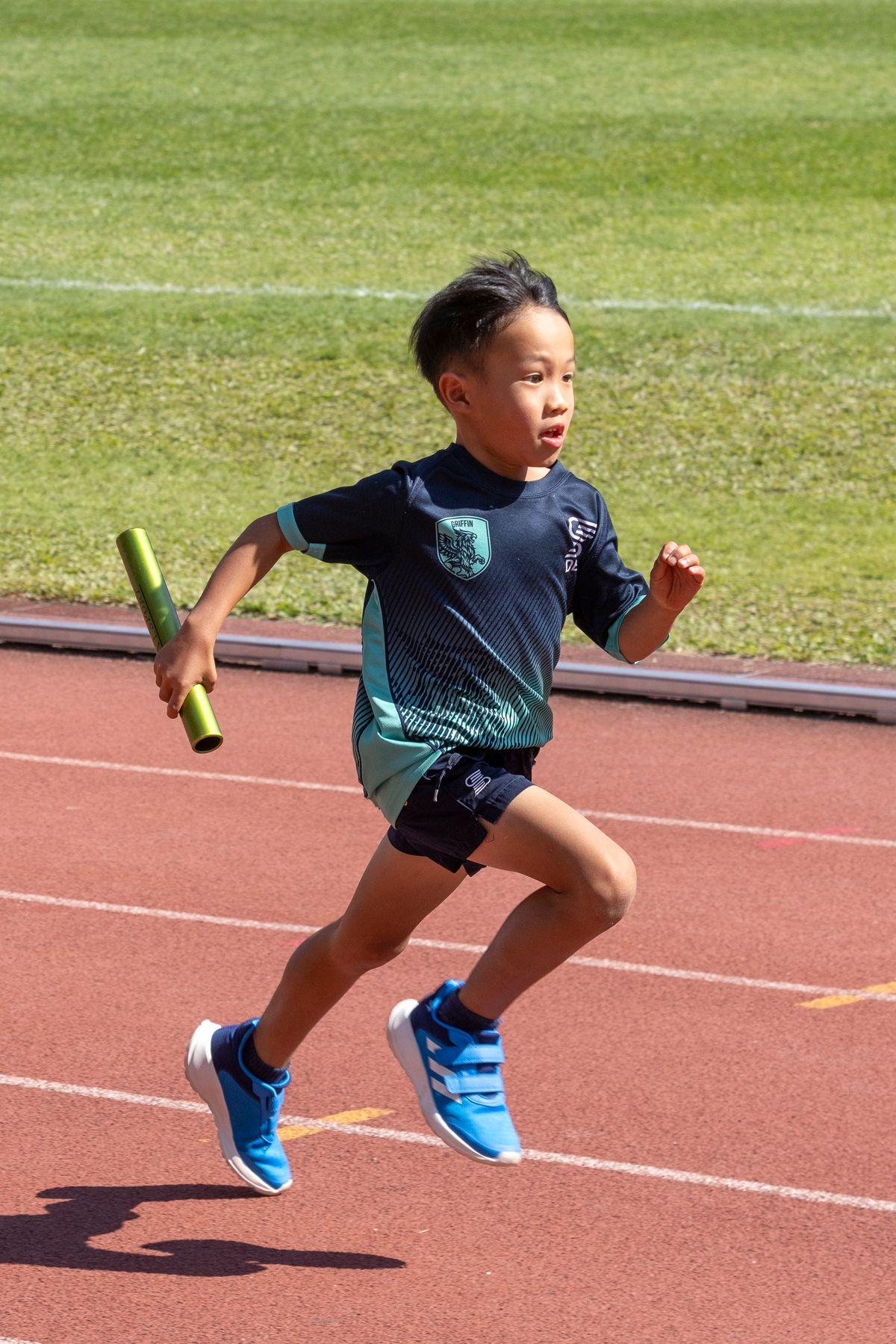
All students in FS-1 to Year 13 are assigned to one of the four whole-school houses: Dragon (blue), Griffin (green), Goldhorn (yellow) or Phoenix (purple). Students are recognised for their achievements with house points, and they also compete in various disciplines to collect house points throughout the year. The awarding of house points links directly with the DBIS Learner Profile, and they are awarded when students demonstrate the different attributes. Each house has two Year 6 House Captains.
STUDENT LEADERSHIP
We are extremely pleased to be able to offer a range of leadership opportunities for students of all ages at DBIS. The key goals are to enable our students to become ambassadors for our school virtues, to encourage and facilitate them into taking an active role in all aspects of the school community and to encourage them to work with others to achieve the best possible outcome. For further information about leadership opportunities, please see our EYFS & Primary Student Leadership Booklet.
STUDENT COUNCIL
The Primary Student Council is made up of representatives from Years 1 to 6 who are voted in at the beginning of the school year by their classes. Student Councillors have the opportunity to represent the wider student body and discuss issues important to them, including charity work and also working on specific projects in conjunction with the EYFS and Secondary Student Councils. The Student Council representatives meet on a regular basis, working on whole-school projects and supporting local and international charities whilst building relationships with other schools here in Hong Kong.
SCHOOL AWARDS
Each year, the school celebrates the achievements of our students through an awards ceremony, which takes place in June. The awards recognise and celebrate students across EYFS and Primary for academic achievement, progress in learning and service to others in the school community.
STUDENT SAFETY & WELLBEING
Student safety is paramount to us here at DBIS, and even within our extremely safe Discovery Bay community, we need to ensure that children are ready to act calmly and appropriately in the event of an emergency. Key DBIS policies can be found HERE.
FIRE DRILLS
Fire drill procedures are carried out each term and involve all staff and students. In the event of a fire, all Primary staff and students are evacuated to the car park in front of the school gates, where class rolls are taken. An email and SMS are sent to all parents following a successful fire drill or evacuation, informing them that all students are safe.
LOCKDOWN PROCEDURES
Lockdown procedures are usually carried out once or twice a year and involve all staff and students. In the unlikely event that the school campus needs to be locked down, all blinds and windows are closed and all staff and students stay silently and safely in a locked area until the all-clear is given over the school tannoy system. Again, parents are informed by email and SMS that all students are safe following any drill.
GUEST VISITORS TO SCHOOL
Any visitor, including ex-students as well as family members or helpers of students attending DBIS, must sign in to school at the security gate or swipe in if they have an access card. All visitors are required to wear a visitor’s pass at all times whilst on school grounds. Visitors are not permitted to attend classes with students. This is to ensure learning is not disrupted as well as for insurance liability reasons.
PERSONAL, SOCIAL & HEALTH EDUCATION
The Personal, Social and Health Education (PSHE) approach at DBIS aims to equip students with the knowledge, skills and understanding they need to lead healthy, safe and fulfilling lives. Relationship and Sex Education (RSE) is embedded within our PSHE curriculum. We aim to create a supportive environment where students can thrive both academically and personally. Our curriculum meets both the recommended and statutory RSE teaching requirements based on the British Department for Education (DfE) and PSHE Association curriculum recommendations and guidelines.
KOMODO
At DBIS, we prioritise the emotional health of our students as highly as their academic progress. To support this, we utilise Komodo, a research-based digital platform that allows us to monitor and enhance student wellbeing in real time.
Komodo is a secure, research-based tool that allows students to 'check in' on their own wellbeing. By using a series of brief, age-appropriate surveys, the platform provides a voice for every student, helping to ensure no one’s needs go unnoticed.
We use Komodo to ensure our pastoral care is proactive and personalised:
● Early Support: The platform helps staff identify subtle shifts in a student’s mood, allowing us to offer a helping hand before small worries escalate.
TECHNOLOGY
DEVICES
We provide each student in Year 5 with a personal Chromebook running on Chrome OS (Android). Although students do not take these devices home, they are individually assigned and the students are responsible for their device throughout the year, fostering a sense of ownership. Additionally, students across all year groups have access to a variety of hardware, including robotics and programmable microcontrollers, as well as subscription-based software such as Times Tables Rockstars and WeVideo. We put great emphasis on ensuring our students are digitally literate and can progress with the necessary skills to access technology in a safe and responsible manner.
SCHOOL GOOGLE ACCOUNT
At DBIS, we utilise Google Education and have access to Google Workspace apps, including Docs, Slides and more. Each student receives their own email account and online storage, facilitating better collaboration and control. Students begin using these accounts from Year 2 onwards. The school assigns all usernames and passwords upon a student's enrolment.
DIGITAL CITIZENSHIP
Through our weekly LT lessons and Digital Citizenship programme, we regularly explore important topics about using technology safely and responsibly. In engaging classroom discussions and activities, students learn about various issues relevant to the technologies available inside and outside the classroom. At DBIS, we are dedicated to helping our students become thoughtful, responsible, and respectful digital citizens, and we believe in partnering with parents to achieve this goal.
DAY-TO-DAY SCHOOL LIFE
SCHOOL HOURS
Your child should be at school by 8.20am to organise their school belongings and self-register by 8.25am in the classroom.
In Year 5, the students participate in learning activities as soon as the school day begins, so it is therefore imperative that they are punctual. If students arrive at school after 8.30am, please ensure that they go to the main office to be registered before joining their class. Please remember that punctuality encourages a positive attitude and really helps our students.
The school day ends at 3.10pm. If the students have an ECA, they will go straight to their club, otherwise they should head home. The campus is closed from 3.20pm to all families unless there is an event or an ECA taking place.
SNACK & LUNCHTIME
At the Main Campus, morning break time is known as snack time. Morning break starts at 10.15am and lasts for 25 minutes. The children enjoy their snack in the classroom with their teacher and classmates before going outside to play.
Lunchtime starts at 12.25pm and lasts for 45 minutes. The children are supervised while eating and playing. There is an option for them to purchase a hot or cold lunch from the cafeteria. Parents can choose from a daily menu through a pre-payment system. The lunchtime schedule is as follows:
Years 1–3 12.25pm – 12.40pm 12.40pm – 1.10pm
Years 4–6 12.55pm – 1.10pm 12.25pm – 12.55pm
Helpful Hints
● Pack a snack separately from lunch, and make sure your child knows which is which.
● Drinks should be in a spill-proof, child-friendly container.
● Snacks should not be too large as time is limited and we also want the children to have plenty of opportunity for playing with friends from across the year group.
● An ice pack or insulated lunch box can help keep lunches cool.
● We encourage all children to be environmentally friendly and bring a lunch with as little packaging as possible.
● Hot lunches or lunches which are delivered must be brought on time by 12pm.
● If delivering lunches to school, please take them to the cafeteria, not to the children’s classrooms.
Please note: the use of mobile phones is not permitted around the school grounds.
CAFETERIA
Our school cafeteria is open before and after school and at morning break and lunchtime. The Boardwalk Cafeteria serves hot meals (including a vegetarian option) as well as snacks and drinks. Students can purchase a swipe card from the cafeteria manager any time, enabling a cashless option when purchasing meals. The cafeteria also accepts Octopus cards. School lunches can be pre-ordered for your children should you wish them to have a hot meal every lunchtime. Lunch enrolment forms and menus are available on the Parent Hub HERE.
STUDENT SUPERVISION BEFORE & AFTER SCHOOL
All students should be collected by an adult, unless they have been given permission to leave independently. Parents of students in Years 3 to 6 who want them to walk home without an adult are required to fill in a permission form in order for us to release their child unaccompanied. The permission form can be found on the Parent Hub HERE.
END OF THE SCHOOL DAY
The school day ends for Year 5 students at 3.10pm. They are dismissed by their teachers at the classroom door.
EXTRACURRICULAR ACTIVITIES (ECAs) & CLUBS
A range of ECAs is available to all children at DBIS. Each term, you will be notified of the ECAs available to your child’s age group and provided with information on how to register an interest in joining, via SchoolsBuddy. Please note some ECAs have a maximum capacity.
The majority of ECAs at DBIS are offered free of charge; however, there may be some paid activities delivered by external providers. Any paid selections will be invoiced to parents directly by the external service provider.
From time to time, ECAs may need to be cancelled. The most common cause of this is inclement weather. In the event of cancellation, parents will be notified via SchoolsBuddy.
If your child does not attend an ECA, an email will be sent to confirm this.
NECESSARY EQUIPMENT
The school provides Year 5 students with pencils, crayons, books and stationery. Parents are asked to provide:
● A named school bag that fits inside their child’s locker
● A reading book folder (large plastic, zipped wallet)
● A library book folder (large plastic, zipped wallet)
Students should be encouraged to be responsible for their own belongings and to pack their own school bag. They must bring their reading folders to school on library days and their student diary every day. School bags should be collected from lockers at home time by the students (not by parents or helpers). Please ensure all personal items are clearly labelled.
VALUABLES & TOYS
Toys must not be brought to school unless requested specifically by the class teacher for a topic. The teacher will then keep the toy safe in the classroom.
BICYCLES, SKATEBOARDS & SCOOTERS
We are very fortunate in Discovery Bay that so many of our children are able to make their way to school via environmentally friendly means. It is our utmost priority that our children, as well as their belongings, remain safe at all times, and we kindly request that parents/caregivers ensure children who cycle, skate or scoot to and from school wear a helmet whilst doing so. Please note that the school is not responsible for any accident or injury arising from students travelling to or from school. The school is also not responsible for damage to, or loss of, bicycles, skateboards, scooters or other personal property.
SMART WATCHES
Children in Years 1 to 6 are not permitted to wear smart watches. We encourage you to purchase an analogue watch, which will support your child in learning to tell the time.
Teachers will ask students to remove smart watches if they are brought into school, and parents will be asked to collect them at the end of the day from the school office.
MOBILE PHONES
We do not permit our Primary children to use mobile phones at any time during the school day and would ask that they are not sent into school. Our children’s bags are kept on pegs or in lockers in the corridors, and we therefore cannot guarantee the safety of any mobile devices if left in their bags.
LOST PROPERTY
All lost and found items are kept in the cupboards in the covered area by the Year 1 and 2 classrooms. We ask that all student clothing is clearly labelled with your child’s name. At specific times throughout the year, we will put all lost and found items on display, and if unclaimed, we will donate these items to one of our school charities.
MEDICAL CARE
If a child becomes unwell whilst at school, they will be taken to the school nurse. The school nurse will evaluate the child’s medical condition and decide if they need to be collected from school. The time of handover to a parent or caregiver is noted, and the classroom teacher is made aware.
If a child has a minor complaint or accident, the school nurse will administer first aid and care in the medical room. In the case of a more serious concern, the school will contact the parents and/or emergency services and will make medical decisions based on doctor’s recommendations. Parents will be systematically informed if the school contacts emergency services, but it may not always be possible to do this in advance of making an emergency call.
The school’s nurse is not authorised to administer mild medications, such as paracetamol, without parental permission. Prescribed medication can be administered on completion of the Prescribed Medicines Permission Form linked HERE. Please note that although the school provides limited medical insurance for all students whilst they are in our care, the insurance may not cover all medical costs. Therefore, parents should make sure that students have sufficient medical coverage in addition to what the school provides.
UNIFORM
DBIS has a compulsory school uniform. Information regarding uniforms can be found on the Parent Hub HERE
Our uniform shop is located on the Main Campus and is open on Tuesdays and Thursdays from 8.15am to 11.30am and on Wednesdays from 1.30pm to 4pm during term time. If possible, we ask you to please bring your own carrier bag with you to take away uniform items.
Some key points to remember:
School Shoes
All children must wear plain black school shoes. High-top or canvas shoes are not acceptable.
Sun Hats
All students must have a school hat for outdoor PE and playtime. We have a ‘no hat –no play’ policy.
Jewellery
Watches and small stud earrings are permitted (but must be covered or removed for PE). No other jewellery items, other than religious or cultural pieces, are permitted to be worn to school.
Physical Education (PE) Uniform
Children in Years 1 to 6 can wear their PE kit all day on PE days. Please refer to the Parent Hub for further information on the PE uniform list.
Sports Shoes
Students should wear appropriate footwear that adequately supports their feet during PE lessons and sports activities. Sports shoes should be free from flashing lights or obvious pictures.
Make-up
Make-up, nail varnish and temporary tattoos are not permitted to be worn to school. Parents will be asked to ensure these are removed if a child arrives at school wearing any of the items listed above.
Hair
Hair longer than shoulder length must be tied back. Hair dye is only allowed if a natural colour. Parents will be asked to wash out unnatural hair products. Coloured hair braids must also be removed for school.
Cold Weather
During colder months, please ensure you purchase items from the cold weather uniform list for your child to wear. Non-uniform items should not be worn.
ATTENDANCE & ABSENCE
Regular attendance at school is essential for students to achieve their full potential, and we appreciate your support in helping us maintain high attendance rates at DBIS. We expect all students to aim for 100% attendance and to make every effort to attend school every day. We closely monitor attendance to ensure that students are attending school regularly.
For your information, please see the statistics below:
● 96% attendance = 7 learning days lost
● 95% attendance = 9 learning days lost
● 90% attendance = 19 learning days lost
● 89% attendance = 21 learning days lost
● 85% attendance = 28 learning days lost
If we notice that a student is missing school frequently or for an extended period of time, we will reach out to their parents to discuss the situation and provide support. We reserve the right to intervene when we feel it is necessary to support a student's attendance and academic progress. This includes situations where a student has been absent for an extended period of time or has repeatedly missed school.
The school office will send an automated email if a child's attendance goes below 90% or 80%.
Notification of Absence
If your child is absent from school, it is important that you let us know why. You can report your child’s absence using our online forms, which can be found on the Parent Hub. There are two forms: one for planned absence and one for unplanned absence.
Late Arrival at School
If your child is late for school and arrives any time after 8.30am, they need to be brought to the main office to be registered and signed in to school. They can then go and join their class. This way, we know your child will be safely registered without interrupting the learning that will already have started in the classrooms.
Early Dismissal
If a student needs to leave school before the end of the day (3.10pm), they are required to inform their class teachers and exit via the main office, where they must sign out before leaving the school premises. The sign-out slip needs to be given to the security guard when exiting the campus. Primary School children will not be allowed to leave school during the school day without an adult.
Parental Absence
We know that our families have commitments all over the world, and this often requires travel. Please notify the school if you are planning to take a trip out of Hong Kong for more than a day. We know that parental absence, even for the shortest of periods, can sometimes unsettle children at school, so letting the school know when you are away from home helps ensure your child is fully supported when in school.
COMMUNICATION
OUR COMMUNICATION SYSTEM
We view our parents as the children’s first teachers; therefore, clear communication between home and school is essential. Our communication system utilises the following platforms to communicate with our parent community:
The Parent Hub
The Parent Hub is our main platform for communication between school and home. All communication to parents regarding upcoming events and information can be found on the Parent Hub. Any calendared event will have a parent bulletin on the Hub approximately two weeks prior to the event taking place. All bulletins are sent to parents in a consolidated email each Saturday so that parents can organise the forthcoming two weeks. The Parent Hub also contains the current DBIS school calendar, which details term dates as well as the dates of upcoming school events.
iSAMS Parent Portal
Parents can access student-specific information via the iSAMS Parent Portal. This platform is used to communicate confidential information about your child, such as school reports and attendance data. The Parent Portal is browser based; however, an app-style shortcut can be added to your mobile phone home screen for ease of access. Please see the guide HERE for information on how to access the Parent Portal and set up a shortcut. You will need your personal iSAMS username and password to log in.
Electronic Learning Journey (Seesaw)
Throughout your child’s time in Year 5, we will record their learning in an electronic learning journey (Seesaw) to celebrate their experiences. Over time, it will tell a story about your child and their learning, their friends and the activities they enjoyed sharing with others. In Year 5, the children use Seesaw independently to document aspects of their learning journey.
The electronic learning journey may include:
● Photographs and videos – these capture moments and sequences of your child’s learning, interests and explorations
● Your child’s creations – these could be photos of models, their role play, writing or artwork – with a comment to explain what your child did or said
Student Diary
Students in Year 5 have a student diary, which includes a reading log and the times/division tables they should learn, and a spelling book, which contains the spellings they are expected to learn by the end of the year. Teachers check the diary, and parents should use it to record a log of their child’s reading.
SchoolsBuddy Platform
All information about your child’s ECAs can be found via the SchoolsBuddy platform. A personal username and password to log in to SchoolsBuddy will be shared with you. Once you are logged in, you will be able to see all of the activities your child in involved with.
School Newsletter
Each Friday, the school’s newsletter is emailed to parents. The newsletter provides a snapshot of the week’s events across all phases of the school.
DBIS Website
The school’s website, linked HERE, is a window into the school, giving parents access to information on all aspects of the school’s operations as well as teaching and learning approaches. The website also provides parents with a link to the Parent Hub.
Parent–Teacher Conferences & Reports
We have an open-door policy at DBIS, and parents are welcome to pass on information at the door each morning and afternoon. For matters that require longer discussion, parents are encouraged to make appointments with the teachers to ensure we can give you the time and space required.
In addition to the ongoing contact with class teachers, we have a number of formal times for parents and teachers to discuss the children’s progress and set targets. We also provide a short report at the end of Term 1 detailing your child’s attainment in each subject as well as a detailed report at the end of each academic year.
Parent–teacher conferences occur three times a year (twice in Term 1 and once in Term 2). In addition, open classrooms and celebrations of learning are held for the children to share their learning with parents. These opportunities enable our children to develop their communication skills by articulating their learning journey throughout the year.
KEEPING SCHOOL INFORMED
Contacting Teachers
If you wish to communicate with your child’s teacher, please email them directly. As teachers are in class with students all day, please allow up to 24 hours for a response to emails. For time-sensitive issues, please email the school office at dbis@dbis.edu.hk, and the message will be conveyed directly to the teacher.
Permission Forms
School trips form an integral part of our school curriculum, and we like to immerse our children in learning outside the classroom wherever we can. We have immediate access to the mountains and beaches here in Discovery Bay, and the children love to learn outside. All parents are asked to sign an annual online permission form, which gives students advance permission to attend all local school trips.
Personal Information
It is very important for the school to have complete, up-to-date information about all of our students and those whom we may need to contact in case of emergency. Please make sure that you inform the school immediately of any changes to contact details, names, telephone numbers or addresses. The Student Contact Details Change Form for this can be found on our Parent Hub HERE
It is also imperative that you let the school know of any allergies, medical conditions or ongoing medication your child has. Student medical profiles can be updated via the form HERE. Medical details must be kept up to date at all times.
WITHDRAWAL OF STUDENTS
To withdraw a student, parents must give notice in writing to the Principal using the form HERE not less than 60 days (excludes July and August) before the student leaves the school. If students are not returning to DBIS after the summer holidays, official notice must be given 60 days before the last day of term. The school will charge school fees in lieu if the above notice period is not adhered to.
HOW PARENTS CAN GET INVOLVED
PARENT PARTNERSHIPS
We actively recognise that parents are a child’s first – and most important – teachers, and we work hard to build strong, positive and supportive relationships between school and home. Working in partnership with parents enables us to provide the best support possible for every child.
CLASS PARENTS
Every year, we are delighted to welcome one or two class parents for each class. These parents are a huge support for us, welcoming new families, helping out with trips and organising parental support for many of the activities undertaken by the students. Class parents are a link between the wider parent group and the school and are invaluable. If you are interested in becoming a class parent, please approach your class teacher at the start of the academic year.
PTSA
We have a very active Parent–Teacher–Student Association (PTSA), who work tirelessly to support our school. More information about the PTSA can be found on the Parent Hub HERE, and they can be contacted at ptsa@dbis.edu.hk
PARENT FOCUS GROUP
There is a Parent Focus Group, which meets with the Head of EYFS & Primary each term to discuss different areas of school life. Do register your interest at the start of each year by emailing Hannah Tait, Head of EYFS & Primary, at htait@dbis.edu.hk if you would like to join this group.
ADVERSE WEATHER
As you will be aware, Hong Kong is subject to extreme weather conditions from time to time. The Education Bureau of the Hong Kong government stipulates that when certain rain warnings and typhoon signals are in place, we are to follow their directives:
● Typhoon Signal Number 1
All phases of the school will operate as normal.
● Typhoon Signal Number 3 or Above
DBIS EYFS Campus will be closed. DBIS Primary and Secondary Schools will operate as normal.
● Typhoon Signal Number 8 or Above
DBIS EYFS, Primary and Secondary Schools will be closed. Static learning activities will be available for the children to access remotely by 10am on the morning of a T8 school closure.
● Amber Rainstorm Warning
DBIS EYFS, Primary and Secondary Schools will operate as normal.
● Red or Black Rainstorm Warning
If a Red or Black Rainstorm Warning is issued before the start of the day, DBIS EYFS, Primary and Secondary Schools will be closed for students. Static learning activities will be available for the children to access remotely by 10am on the morning of a rainstorm school closure.
In the event of a Red or Black Rainstorm Warning being issued during the day, the school will continue until the end of normal hours and children will be retained until conditions are safe for them to return home.
SCHOOL CANCELLATION
Please familiarise yourself with the school’s Severe Weather Policy regarding the closure of school. The school website will display weather warnings and notification of school closure where applicable.
THE YEAR 5 CURRICULUM
The core curriculum areas for Year 5 are outlined below. More specific details regarding learning objectives can be found in the appendix at the end of this booklet.
CORE & FOUNDATION SUBJECTS
ENGLISH
In Year 5, the students increasingly meet a wider range of texts and types of writing and will be encouraged to use their skills in a broader range of contexts.
MATHEMATICS
By the end of Year 5, the students should be fluent in formal written methods for addition and subtraction. Using their developing knowledge of formal methods of multiplication and division, the students investigate and solve problems, including those involving properties of number and place value calculations. They make connections between fractions, decimals and percentages and classify shapes with geometric properties, using the vocabulary needed to describe them. They should also be able to read, spell and pronounce mathematical vocabulary correctly.
DISCOVERY
The Year 5 Discovery units are bespoke, inquiry-based units of learning that we have developed to meet the learning needs of our students. Discovery learning is concept based, which means the learning is not locked in time or place; instead, it is transferable. The Discovery units frame the facts and skills of the subject areas Science, History, Geography, Art and Design & Technology. Through identified subject concepts and conceptual understandings, the students have opportunities to develop deeper conceptual thinking and understanding.
Our Discovery units are underpinned by the KS2 Science curriculum, which provides the foundations for understanding the world through the specific disciplines of Biology, Chemistry and Physics. Our students are taught essential aspects of the knowledge, methods, processes and uses of Science. They build upon their learning in KS1 and continue to develop a sense of excitement and curiosity about natural phenomena. The students are encouraged to understand how Science can be used to explain what is occurring, to predict how things will behave, and to analyse causes.
The units are also underpinned by LT and Internationalism and provide a contextual learning experience for the development of English skills.
TERM 1
UNIT 1: CREATING OUR COMMUNITY – LEARNING TO LEARN
ENGLISH
ENGLISH OUTCOMES
● Class rules and expectations
● Letters of application
● Creative writing
KEY TEXTS
MATHEMATICS
MATHEMATICS UNITS
● Place Value
● Addition and Subtraction
● Multiplication and Division A
DISCOVERY
How will we create our class community? How can we ensure everyone feels welcome, included and safe? What does community mean to us? Are you excited to have access to your own Chromebook? How do you think it will impact your learning? What process will you go through to make the best use of it?
In this unit, the students work together to decide what community means to them and how their classroom will represent this. They start to recognise that learning is a process that is influenced by a variety of factors, including a growth mindset. They explore the connection between growth mindset, attitude and learning, and they study the idea of positive psychology and how this can be embedded at the start of the academic year to have a constructive and optimistic impact for their learning over the rest of the year.
Science, Art, PSHE (Personal, Social, Health & Economic Wellbeing)
UNIT 2: FULL POWER
ENGLISH
ENGLISH OUTCOMES
● Narrative
● Explanation text
KEY TEXTS
MATHEMATICS
MATHEMATICS UNITS
● Place Value
● Addition and Subtraction
● Multiplication and Division A
DISCOVERY
What is energy? How do we use energy? How has it changed over time? Is there enough energy for our future? Do all communities use the same types of energy sources?
In this unit, the students explore different sources of energy, how those sources have changed over time, and the impact of our use of energy sources on the environment and communities. They examine how the energy use of a community can impact other places in the world, and they consider the impact of energy production and how its use has led to the development of alternative energy sources.
Medicine has evolved, adapted and progressed over time as a result of discoveries, innovations and the needs of people. So, what do you know about the history of medicine? What were the causes and consequences of the breakthroughs that have shaped modern healthcare? How have people’s understanding of the human body and diseases changed the way we treat illnesses? What might medicine look like in the future? In this unit, the students explore the fascinating history of medicine. They examine different perspectives across time, analyse historical evidence and pursue their own lines of inquiry to summarise and present their findings. Acting as historians, they investigate clues from the past to uncover how medical innovations have shaped and transformed the world we live in today. Through scientific investigation and historical exploration, they delve into past beliefs and theories about how the human body worked, comparing these with modern understanding. This journey reveals how science, culture, and ideas have evolved to shape medicine as we know it.
What is our place in the universe? What inspires space exploration? How might humans need to adapt to survive living on a new planet?
In this unit, the students explore the concept of space exploration, how curiosity and needs have driven space exploration and how humans might survive in a settlement on a new planet. They explore how adaptation and sustainability, along with technological advances in space exploration over time, have led to new discoveries.
CONCEPTUAL LENS EXPLORATION
KEY CONCEPTS
Gravity, Planetary Bodies, Solar System, Constellations, Technology, Navigation, Curiosity, Space Exploration, Survival, Environment, Adaptation, Sustainability
SUBJECT DRIVERS
Science, History, Art
TERM 3
UNIT
5: WHAT’S THE BIG IDEA?
ENGLISH
ENGLISH OUTCOMES
● Diary entries
● Persuasion
● Narrative
KEY TEXTS
MATHS
MATHS UNITS
● Shape
● Position and Direction
● Decimals B
DISCOVERY
How can we make sure everyone feels included and valued in our school community? What can we do to promote understanding and respect for different cultures and backgrounds? What are some practical steps we can take to create a more inclusive and equitable world? How can we use our voices to create positive change in our own communities and beyond?
In this unit, the students develop an understanding and appreciation of different cultures, religions and backgrounds, as well as an understanding of the impact of discrimination and prejudice on individuals and communities. They develop critical-thinking skills that are essential for navigating a complex and diverse world. Engaged and informed, the students explore ways to contribute positively to our community.
The students also learn all about how we grow and change as we get older. They investigate questions such as 'what changes happen to our bodies as we reach puberty?', 'what emotional changes or social influences might we feel?' and 'what strategies can help us feel confident, informed and healthy?'
Art, Science, History, Drama, RSE (Relationships & Sexual Education), Geography
SPECIALIST TEACHING
In Year 5, Mandarin, PE, Music and LT are all taught by specialist teachers. Year 5 students have Mandarin three times a week and PE twice a week. They also have LT and Music lessons each week. In addition, LT specialist teachers work with class teachers to develop additional opportunities for the transformative use of technology in the students’ classrooms.
MANDARIN
Foreign Language Pathway
In Year 5, our Mandarin curriculum follows a theme-based learning approach. We focus on developing foundational language skills through engaging activities and differentiated groupings and instructions. By the end of the year, the students should be able to follow simple classroom instructions, participate in basic dialogues in a topical context and demonstrate a growing ability to recognise and write fundamental radicals and characters.
Chinese as a Second Language Pathway
This pathway is designed for students who possess a functional foundation in Mandarin or Cantonese. Our curriculum aims to help the students to master more complex tasks, such as reading longer passages and composing short essays, emails and letters. The programme prioritises the mastery of grammatical structures, helping to ensure the students have the formal foundation to communicate effectively and confidently in both social and semi-formal settings.
First Language Pathway
The Chinese programme for Years 4–6 is designed for students who speak Mandarin fluently at home. This pathway helps the students move from casual conversation to formal school-level skills. The students focus on expanding their vocabulary, writing better stories, and learning useful idioms. By practising both handwriting and digital typing, they build a strong foundation for Secondary School. The goal is to prepare the students to use Chinese confidently in both daily life and formal academic settings.
PHYSICAL EDUCATION (PE)
In KS2, the focus in PE shifts to applying fundamental movement skills within broader sporting environments. Our curriculum is designed to help the students understand the ‘bigger picture’ of sport, challenging them to think tactically and make decisions under pressure. By exploring a wide range of activities from invasion games to aquatics, they learn to evaluate their own performance and understand not just how to move, but when and why. This approach helps ensure that every student develops the physical confidence and tactical intelligence to become a versatile, independent athlete.
LEARNING TECHNOLOGIES
In LT, our spiral curriculum covers four key strands: Information and Communications Technology (ICT), Computer Science (CS), Design & Technology (D&T) and Digital Citizenship (DC). Each term, the students are taught key concepts for their year group, which are then built on, year by year, ensuring a thorough understanding of the key learning by the end of Primary.
In ICT, learning focuses on becoming confident software users and creating digital content. In CS, computational thinking skills are developed each year through engaging project work in which the students learn to build programs using code. In addition, there is a focus on learning how to code physical robots and microcontrollers. In D&T, the students become experts at using the engineering design cycle to create objects that are fit for purpose, using a variety of materials. In DC, we equip them with the key skills they need to become intelligent users of our modern digital world.
MUSIC
From Year 3, the students explore more advanced musical elements (timbre, structure, instrumentation), learn to appraise music, and compose. By learning to read treble clef in Year 3, and bass clef in Year 5, the students unlock the ability to access music to a significantly greater extent. This is then consolidated by the opportunity to learn a new instrument each year. In Year 5, the students learn the keyboard, as well as an instrument as part of the Year 5–8 instrumental programme. The units in KS2 enable them to develop their musicianship further as they are able use the instruments they have learnt throughout the years to support their learning in different contexts, and agency grows as they begin to play as soloists and small-group ensembles. Students who take instrument lessons outside of the curriculum also have the opportunity to use their specialised instruments in units to further develop their skills.
TERM 1
MANDARIN
FOREIGN LANGUAGE PATHWAY
● Country Report
● My Best Friend
SECOND LANGUAGE PATHWAY
● 我们搬家了 (House)
● 我的房间 (My Room)
● 一日三餐 (Three Meals a Day)
NATIVE LANGUAGE PATHWAY
● 农夫和蛇印度奇观
● 《小学语文阶梯阅读》(母语组扩展阅读)
● 《小羊上山阶梯阅读》系列(二语组识字+辅助阅读)
PHYSICALEDUCATION
TERM 1.1
● Striking and Fielding – Aim, Strike, Receive
● Swimming – Streamline, Stroke, Breath
TERM 1.2
● Netball/Basketball – Pass, Position, Shoot
● Gymnastics – Balance, Flow, Create
LEARNING TECHNOLOGIES
● Understanding Media (ICT)
● Interpreting Data (ICT)
● Private v Personal Information (DC)
● Copyright (DC)
MUSIC
● Keyboard
TERM 2
MANDARIN
FOREIGN LANGUAGE PATHWAY
● At a Chinese Restaurant
SECOND LANGUAGE PATHWAY
● 我秋天去北京 (Seasons and Weather)
● 《小羊上山阶梯阅读》系列(二语组识字+辅助阅读)(Graded Readers)
FIRST LANGUAGE PATHWAY
● 蝙蝠和雷达
● 《小学语文
PHYSICALEDUCATION
● Athletics – Speed, Distance, Strength
● Invasion Games – Lend, Move, Score
LEARNING TECHNOLOGIES
● Scratch: Animation (CS)
● Physical Programming (CS)
● AI Assistants (DC)
MUSIC
● Form and Structure
TERM 3
MANDARIN
FOREIGN LANGUAGE PATHWAY
● Visiting the Doctor
SECOND LANGUAGE PATHWAY
● 我生病了 (Illness)
● 我的宠物 (Pets)
● 《小羊上山阶梯阅读》系列(二语组识字+辅助阅读)(Graded Readers)
NATIVE LANGUAGE PATHWAY
● 猪八戒吃西瓜
● 《小学语文阶梯阅读》(母语组扩展阅读)
● 《小羊上山阶梯阅读》系列(二语组识字+辅助
PHYSICALEDUCATION
● Net Games – Serve, Set, Slam
● Personal Survival – Float, Breath, Tread
LEARNING TECHNOLOGIES
● Designing Structures (D&T)
● Applying Design Thinking to Program Development (D&T)
● Online Bravery (DC)
MUSIC
● Leitmotifs and Film Music
LEARNING FOR LIFE
We have integrated the Wellio platform into our weekly PSHE exploration during timetabled 'Learning For Life' lessons. The programme provides age-appropriate, interactive modules that empower students with the skills required for the 21st century, including resilience, self-regulation and digital citizenship. By utilising Wellio, we ensure our teaching is not only progressive but also responsive to the specific needs of our cohorts. Our Wellio-backed curriculum is structured around core pillars that build in complexity year after year. These modules are carefully designed to align with children’s developmental needs, covering vital areas such as:
● Mental Wellbeing: Understanding emotions, mindfulness and stress management
● Physical Health: Developing healthy habits, sleep, hygiene and body positivity
● Positive Relationships: Building empathy, resolving conflict and understanding boundaries;
● Relationships and Sex Education (RSE): Developing age- and stage-appropriate understanding of puberty, physical changes, conception and healthy, respectful relationships
● Digital Agency: Navigating the online world safely and with integrity
● Life Skills: Setting goals, fostering resilience and preparing for transitions
● Informed Decision-Making: Encouraging students to make informed choices about their body, health, relationships and lifestyle
● Resilience and Coping Skills: Helping students develop resilience and effective coping strategies for dealing with challenges and changes
● Citizenship and Participation: Fostering a sense of belonging and responsibility within the school and wider community, encouraging active participation and engagement
● Respect and Diversity: Promoting understanding and respect for diverse cultures, beliefs and lifestyles, fostering a positive and inclusive school environment
LIBRARY
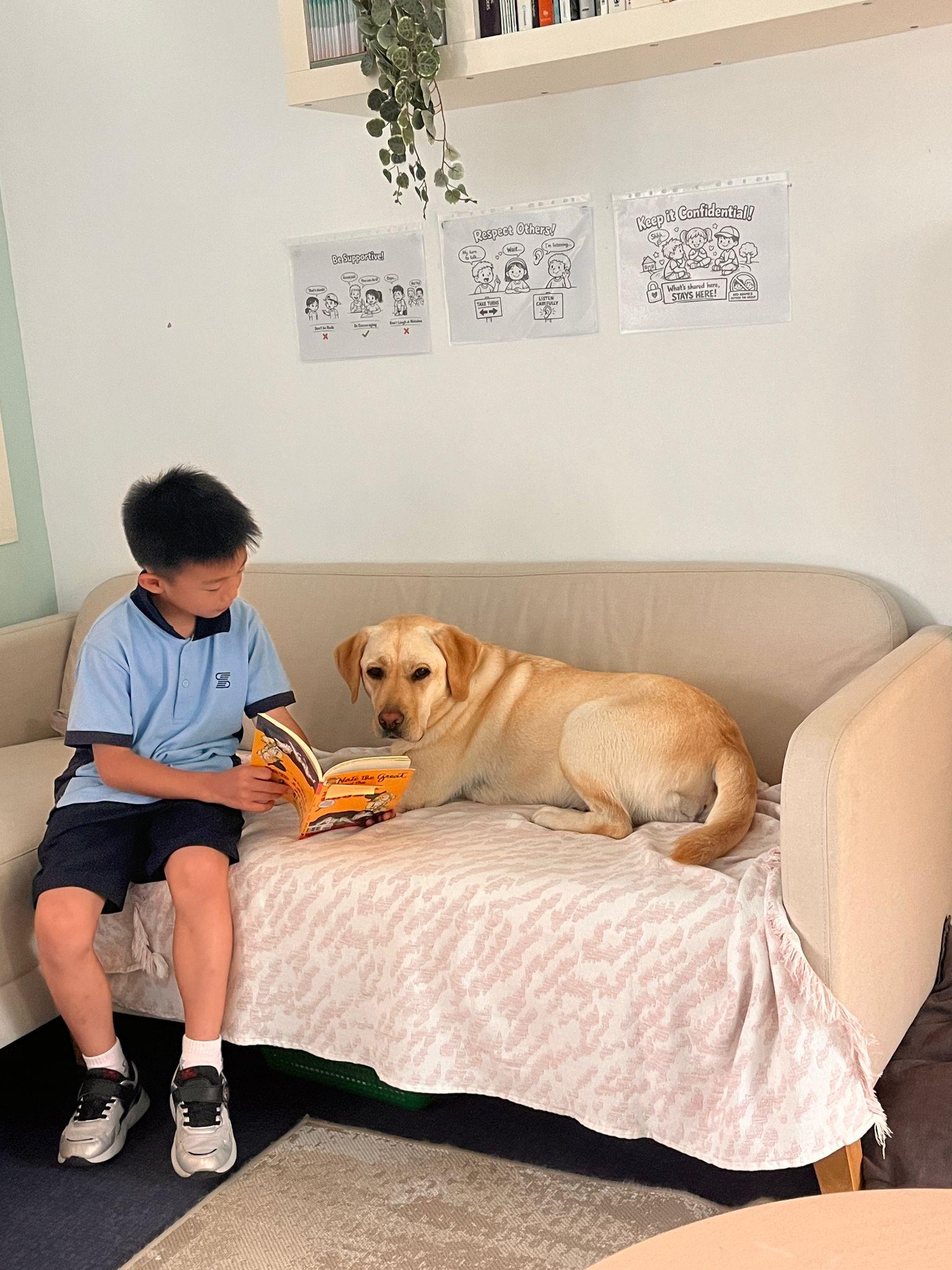
Promoting a love of reading is a mindset we are dedicated to at DBIS, and our library plays an essential role in this. Year 5 students visit the library weekly with their teacher and our school librarian to take out books and develop their library skills. The library is open from 8am until 4pm daily. Students can visit the library with their parents before or after school. The library can also be accessed online HERE
ASSEMBLIES
A Primary School celebration assembly is held once a week, on a Friday afternoon, for all Primary students and their teachers. The students also take part in monthly Learning for Life assemblies.
HOME LEARNING
Consolidating learning at home helps students become more independent and allows them to deepen the understanding of learning they have enjoyed in the classroom. Home learning will be given weekly, with an opportunity for the students to share and celebrate their achievements with their teacher and peers. Alongside this, the students are expected to read for 20 minutes each night and record this in their student diaries. They should check their online learning portfolio on Seesaw once a week as this will highlight current areas of learning and exciting celebrations. We ask that parents celebrate and support their child’s learning by checking Seesaw for photos and activities posted. By discussing the completed Seesaw tasks, parents can help to consolidate and deepen their child’s understanding of in-school activities.
Additionally, the students will have access to Times Tables Rock Stars to practise their times tables and Spelling Shed to practise their spellings for the week. These activities can be completed at a convenient time at least once a week. This provides the students with greater opportunities to explore their own interests, linked to their learning at school, whilst also managing and organising their time accordingly. For more information about home learning in Year 5, please see the Primary Home Learning presentation HERE.
Appendix
THE YEAR 5 CURRICULUM
IN DETAIL
ENGLISH
Speaking & Listening
The Spoken Language objectives are set out for the whole of the Primary School, and our teachers will cover many of them every year as the students’ spoken language skills develop. In Year 5, some focuses may include:
● Maintaining attention and participating actively in collaborative conversations, staying on topic and initiating and responding to comments
● Speaking audibly and fluently using standard English where appropriate
● Gaining, maintaining and monitoring the interest of the listeners
Reading
The students learn to:
● Read a wide range of fiction, non-fiction, poetry, plays and reference books
● Perform plays and poems using tone, volume and intonation to convey meaning
● Use knowledge of spelling patterns and related words to read aloud and understand new words
● Make comparisons between different books or parts of the same book
● Read a range of modern fiction, classic fiction and books from other cultures and traditions
● Demonstrate active reading strategies, like generating questions to refine thinking
● Summarise ideas drawn from more than one paragraph, identifying key details
● Predict future events from details either written in a text or by ‘reading between the lines’
● Identify how language, structure and presentation contribute to meaning
● Infer characters’ feelings, thoughts and motives from their actions, and justify this with evidence
● Make book recommendations, giving reasons for choices
● Participate in discussions about books, building on and challenging ideas
● Explain and discuss understanding of reading
● Participate in formal presentations about reading and respond to resulting questions
● Provide reasoned justifications for views (point, evidence, explanation)
● Scan a text for keywords and phrases to locate key information
● Explore, recognise and use the terms metaphor, simile and imagery
● Read, reread and read ahead to locate clues to support understanding
Writing
The students learn to:
● Write neatly, legibly and accurately in a flowing, joined style
● Adapt handwriting for a range of tasks and purposes, including for effect
● Spell accurately all but the most complex words, such as paraphernalia, and the Standard 5 High Frequency Words
● Spell words with silent letters e.g. knight, solemn
● Recognise and use spellings for homophones and other often-confused words from the Standard 5 list
● Confidently use a dictionary to check spelling and meaning
● Identify the audience and purpose before writing, and adapt genre accordingly
● Select from a wide range of imaginative and ambitious vocabulary
● Develop setting, atmosphere and character, using a wide range of narrative techniques, including dialogue, quotation, formal and informal style
● Use different techniques such as opinion, summary, justification or comment to conclude a piece of writing
● Use advanced organisational and presentational devices, such as bullet points, underlining, parenthesis, providing context, footnotes etc.
● Use grammar accurately except when consciously using dialect or colloquialism for purpose and audience
● Use complex sentence structures appropriately
● Use a thesaurus to find synonyms
● Use punctuation and varied sentence length to create effect and sustain interest
● Group things appropriately before or after a main verb e.g. The books, the pens and the pencils were all ready on the table
● Use punctuation to show division between clauses and to create effect
● Use paragraphs consistently and appropriately
● Interweave implicit and explicit links between sections, using adverbials of time (e.g. later), place (e.g. nearby), number (e.g. secondly) or tense choices
● Use ellipses, commas, brackets and dashes in writing
● Use hyphens to avoid ambiguity
● Use semi-colons, colons and dashes between independent clauses
● Use a colon to introduce a list
● Punctuate bullet points consistently
● Use alliteration, onomatopoeia, figurative language, dialect, metaphor and simile to create effect
● Use informal and formal styles with confidence and use passive voice for variety
● Understand and know how to use the following words: modal verb, relative pronoun, relative clause, parenthesis, bracket, dash, cohesion and ambiguity, when talking about writing
MATHEMATICS
The key objectives for each strand of Mathematics are outlined below:
Number & Place Value
● Recognise and use the place value of digits in numbers up to 1 million (1,000,000)
● Use negative numbers, including in contexts such as temperature
● Add and subtract a mix of whole numbers and decimals with different numbers of decimal places using column methods
● Carry out addition and subtraction with numbers larger than four digits
● Multiply a two-digit number by another two-digit number
● Divide three- and four-digit numbers by a one-digit number
● Use rounding to estimate calculations and check answers are of a reasonable size
● Find factors of multiples of numbers, including finding common factors of two numbers
● Know the prime numbers up to 19 by heart, and find primes up to 100
● Use the formal methods of long multiplication and short division
● Multiply and divide numbers mentally by 10, 100 or 1,000
● Recognise and use square numbers and cube numbers
● Recall quickly all the multiplication and division facts for 12 x 12, and use them confidently in larger calculations
Fractions, Decimals & Percentages
● Put fractions with the same denominator into size order, e.g. recognising that 3/5 is larger than 2/5
● Find equivalents of common fractions
● Convert between improper fractions and mixed numbers, e.g. recognising that 5/4 is equal to 1 1/4
● Add and subtract simple fractions with related denominators, e.g. 2/3 + 1/6 = 5/6
● Convert decimals to fractions, e.g. converting 0.71 to 71/100
● Round and order decimals to two decimal places
● Recognise and understand percentage (%) as a part of 100, and write a percentage as a fraction and a decimal
Measurements
● Convert between metric units, such as centimetres to metres or grams to kilograms
● Use common approximate equivalents for imperial measures, such as 2.5cm ≈ 1 inch
● Calculate the area of rectangles using square centimetres or square metres
● Estimate volume (in cm3) and capacity (in ml)
Shape & Position
● Draw and measure given angles in degrees
● Compare acute, obtuse and reflex angles
● Calculate missing angles on a straight line (180°), at a point (360°) or within a right angle (90°)
● Use reflection and translation to change the position of a shape
● Identify regular and irregular shapes
Graphs & Data
● Read and understand information presented in tables, including timetables