



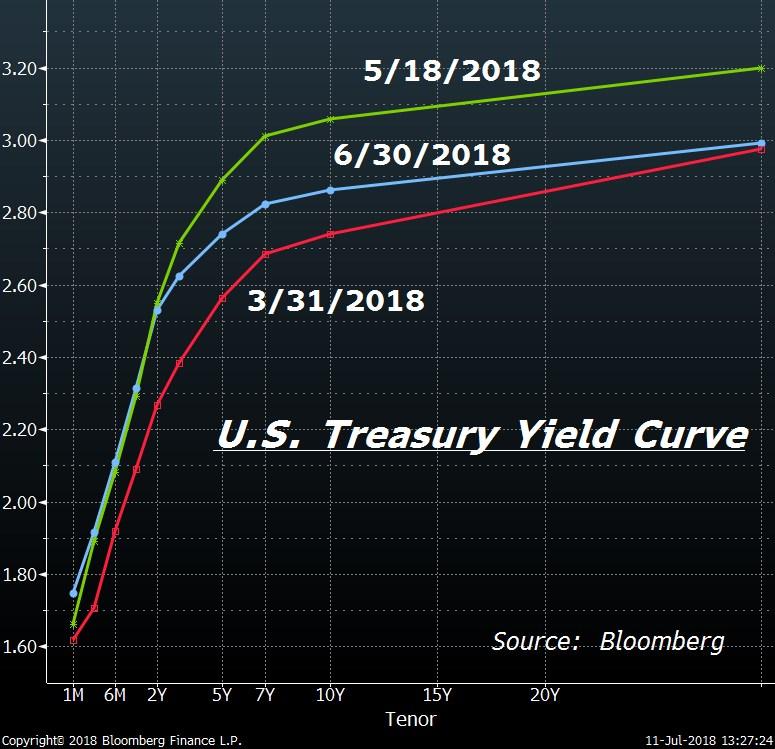
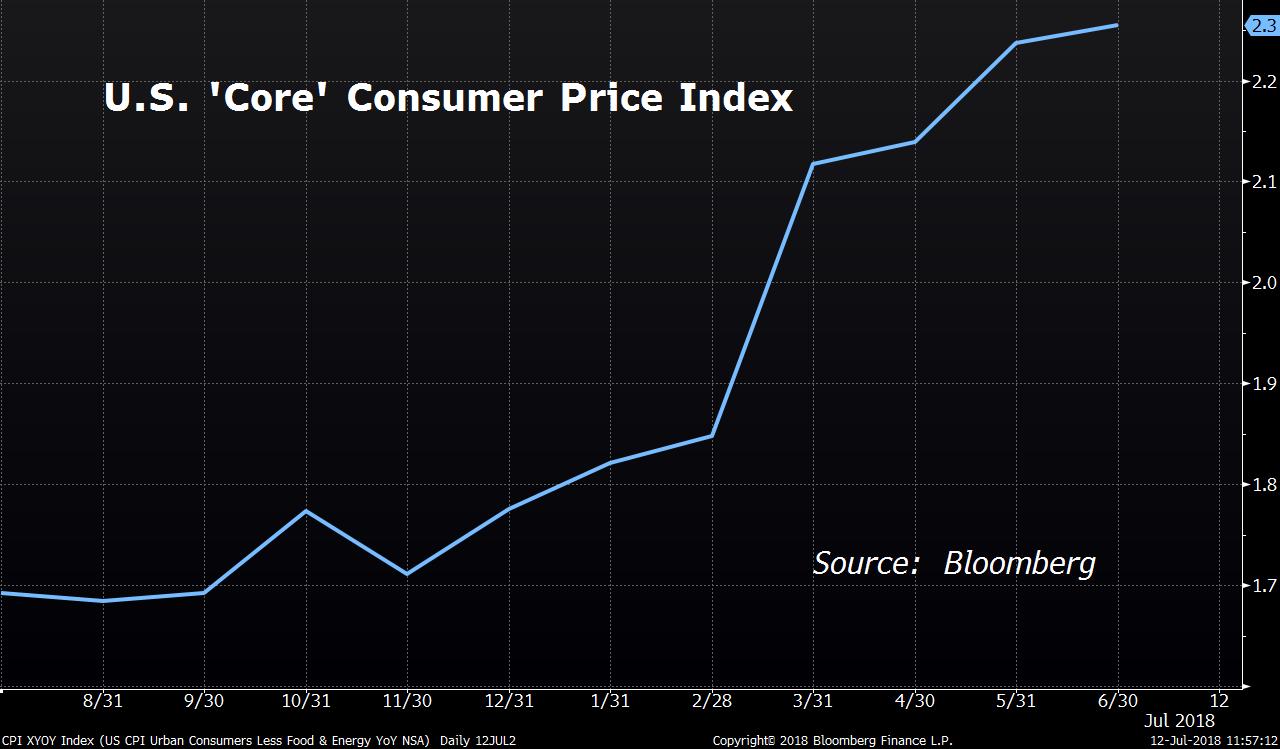
The U.S. Treasury yield curve rose in the second quarter as the Federal Reserve increased the fed funds rate again in June and continued to gradually shrink its $4.3 trillion balance sheet. Core inflation has risen significantly this year (up to 2.3% in the latest reading), and this has given Federal Reserve policymakers the necessary justification to continue the ‘normalization’ of interest rate policy. There was considerable movement of the Treasury yield curve during the quarter, as the 10year yield reached 3.11% in midMay before retreating and finishing June at 2.86%.
Political uncertainty in the European Union reared its head again in late May as a new populist government took power in Italy, and this played a role in pushing down the longer end of the Treasury yield curve. Likely a bigger factor in the yield curve’s flattening, however, is increased worry among investors that a trade war between the United States
and most of its trading partners has arrived. President Trump has not backed down from his promises to enact tariffs, quotas, and other barriers to trade to protect certain economic sectors in the U.S., and deadlines imposed to force negotiations are now upon us. Investors are beginning to price in heightened risk of major trade conflict and the slowdown in economic growth that would very likely
follow. This has done much to keep yields on the longer end of the curve low, in spite of the Fed’s rate hikes and balance sheet unwind.
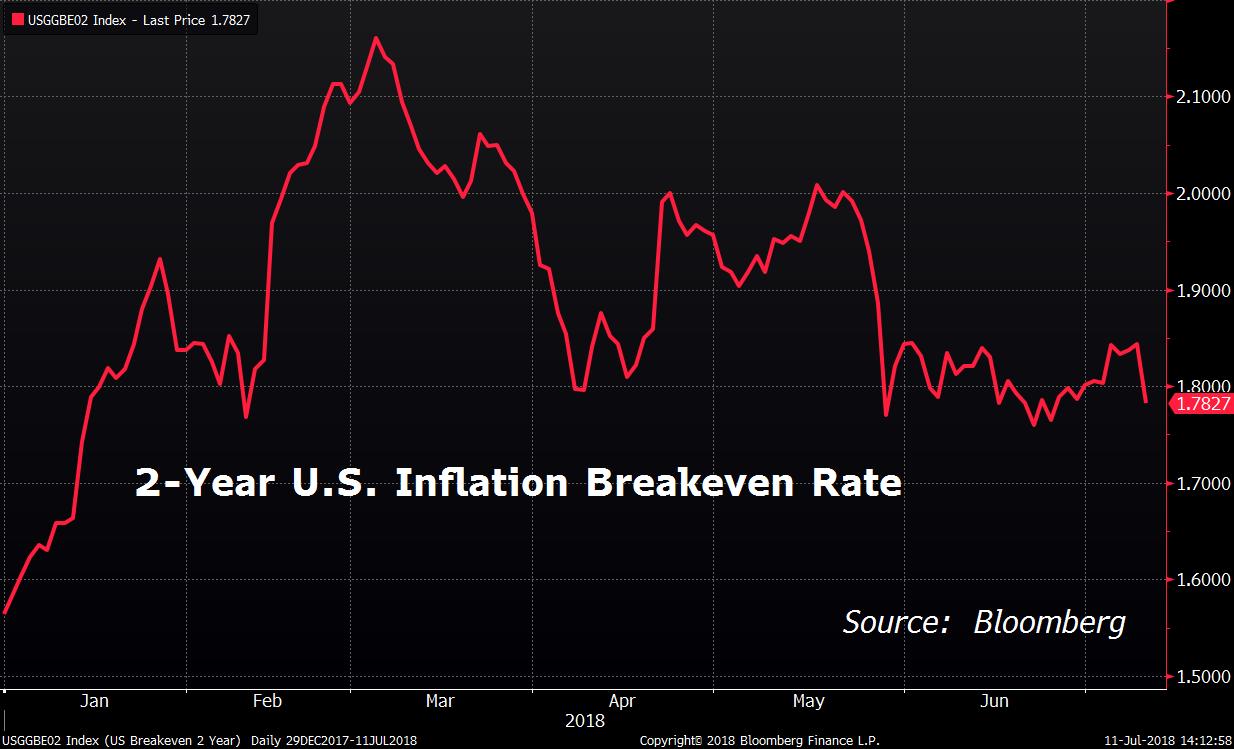
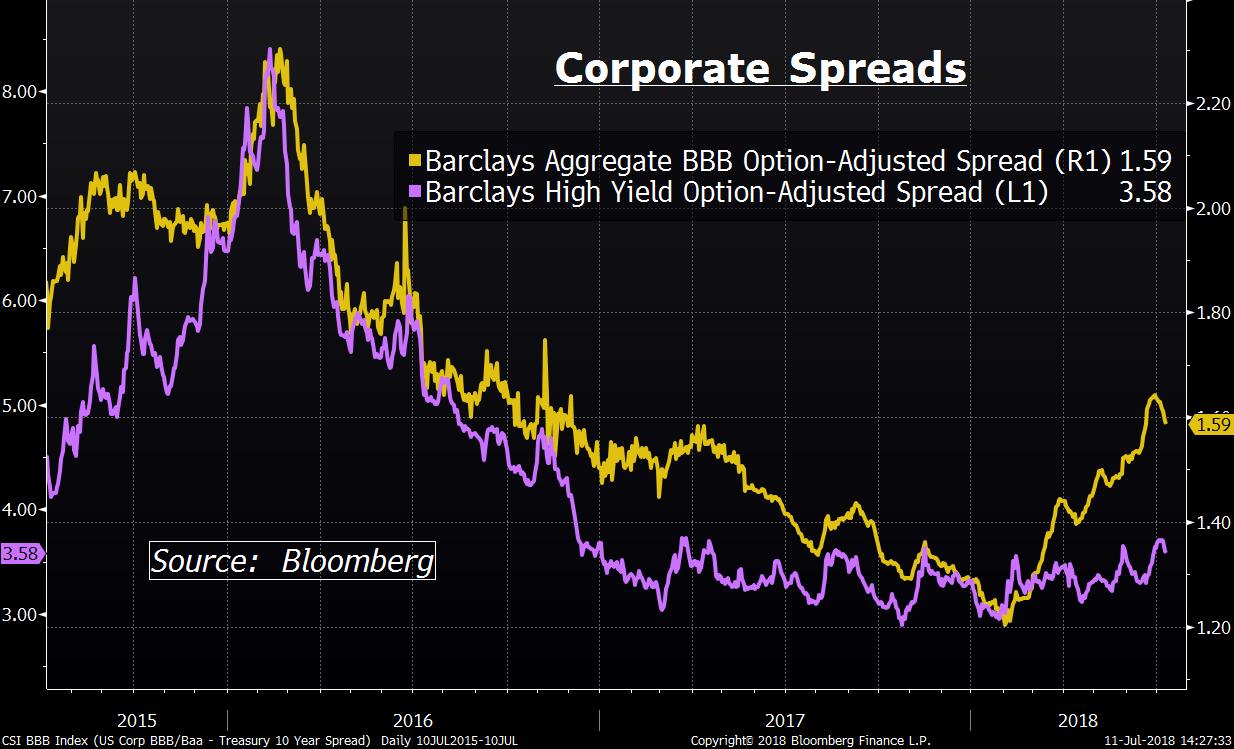
Inflation breakeven rates have fallen since mid-May, consistent with this forecast of slower growth, while investment grade corporate spreads have risen after bottoming out in February. Interestingly, high yield corporate
spreads have held steady and remain fairly tight.
We believe that Federal Reserve policymakers are likely to make a policy error during the next few months, continuing to raise the fed funds rate and holding to the promised pace of balance sheet reduction in spite of signs of increasing tension in the financial markets. They will cite core inflation figures as justification for their policies, but these data are backward-looking.
We are forecasting the Treasury yield curve to flatten further, with the Federal Reserve continuing to push the short end higher with fed funds rate hikes. We believe the longer end of the curve will fall as trade conflict escalates and Fed policy weakens the economy. Consistent with this forecast, our fixed income portfolios have durations somewhat longer than their benchmarks, and our corporate holdings are focused on very high quality names.
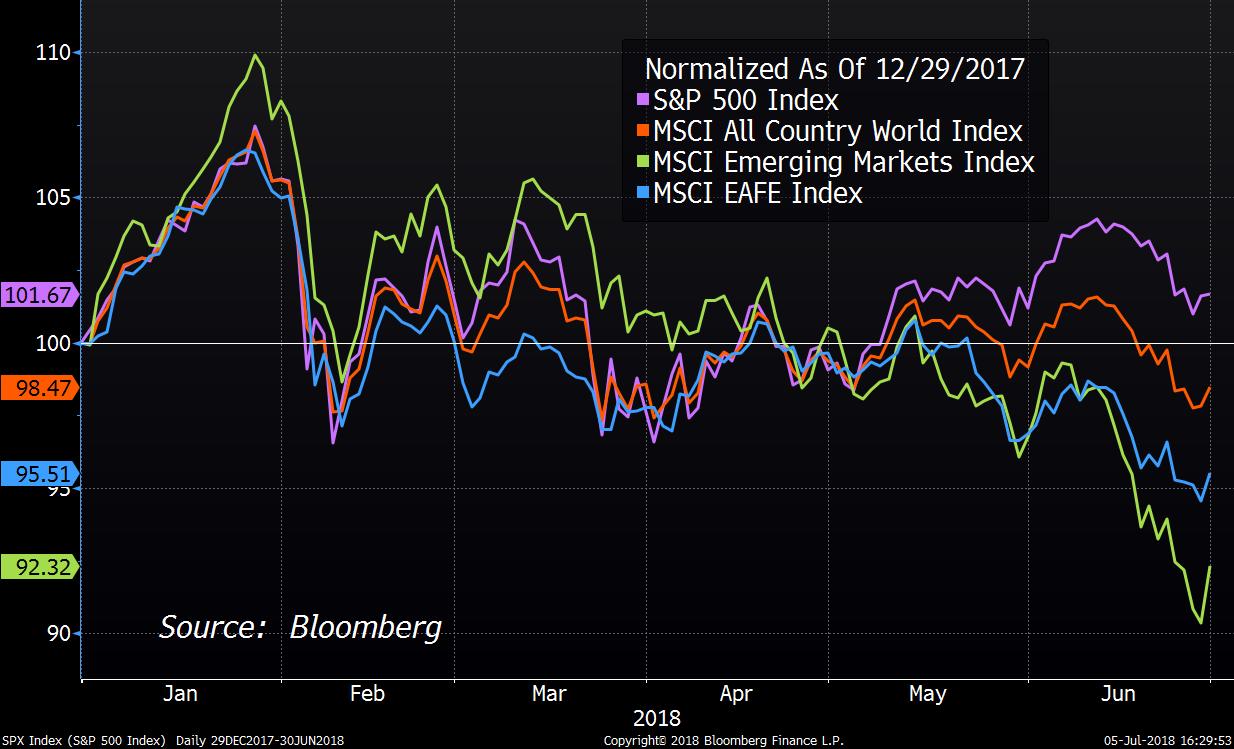
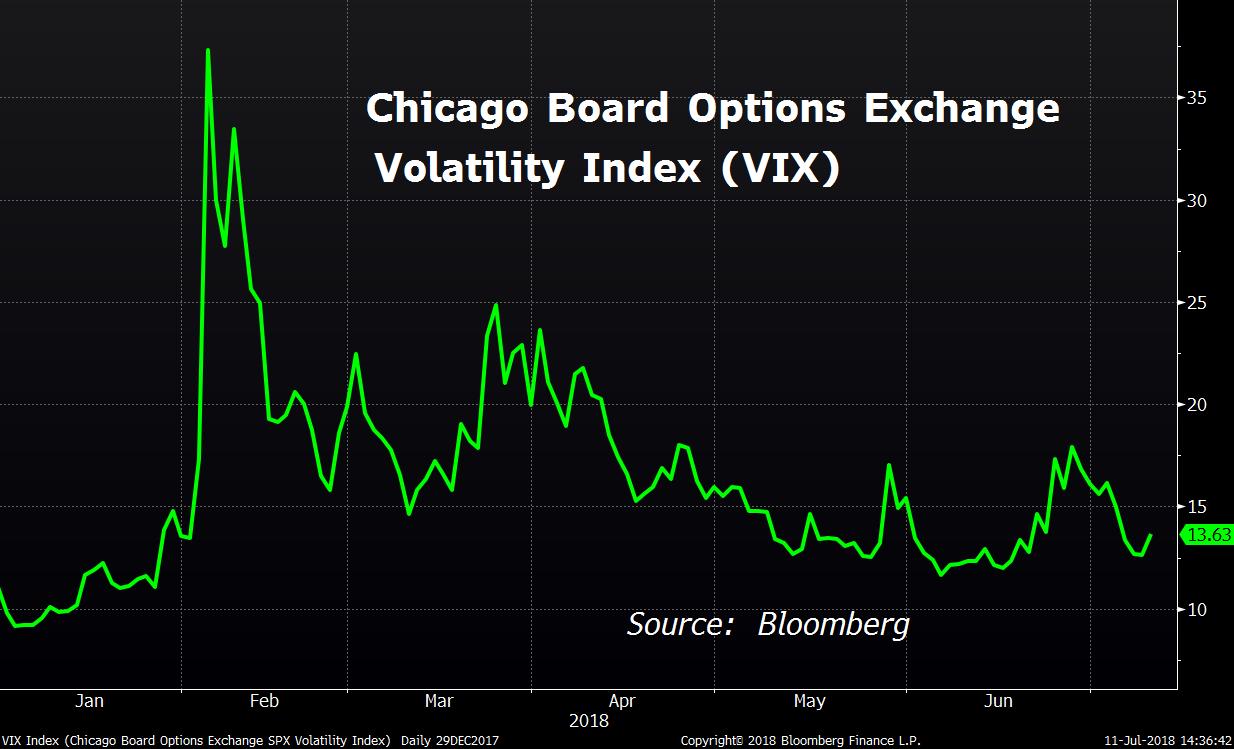
Rising interest rates and increasing trade tensions offer equity investors a lot to think about, but corporate profitability has remained strong this year and this has done much to prevent an equity selloff. In spite of fairly dire headlines in the business press becoming routine, volatility was muted in the second quarter, with the Chicago Board Options Exchange Volatility Index down and the MSCI All Country World Index returning 0.79%. U.S. large cap technology stocks outperformed the broader market during the quarter, while consumer staples and financials underperformed as interest rates rose and the yield curve flattened.
Despite this apparent calm there was a noticeable change in market action during the last two weeks of the quarter, with stocks of companies more reliant on international sales and globalized supply chains falling in spite of relatively cheap valuations. Transportation and industrial stocks are the most notable examples, with some consumer discretionary companies exposed to international trade also struggling. Emerging market stocks also fell in the closing weeks of the second quarter,
as commodity prices were down and the U.S. dollar strengthened.
The obvious explanation for all of this is that investors have begun to take seriously the possibility that a serious trade war (and one with an uncertain outcome) has arrived. The realization appears to have only just begun, however, with many equity investors still contending that deals will be struck with trade little affected. This optimistic outlook will be tested in the coming weeks as the U.S. has begun instituting tariffs on various goods from China, while China has responded in this tit-for-tat game by targeting agricultural products from the U.S.
International sales are extremely significant for many companies based in the United States, and many also have complex supply chains that cross
the globe. The outcome of an escalating trade conflict is hard to predict, but it can be said with confidence that should an escalation occur it will be very painful for many.
With the S&P 500 trading at 17.5x expected 2018 earnings we do not believe the aforementioned risks are adequately reflected in equity prices and think it best to position equity portfolios defensively. Healthcare and consumer staples, for example, are sectors poised to perform well in the coming months. More cyclical companies and those with major international sales may suffer, but there is likely to be a time soon when they become attractive again. Given the equanimity being
demonstrated by most equity investors today, we do not believe we are there yet.
— Brandon Fitzpatrick

THIS PUBLICATION IS FOR INFORMATIONAL PURPOSES ONLY. THIS PUBLICATION IS IN NO WAY A SOLICITATION OR OFFER TO SELL SECURITIES OR INVESTMENT ADVISORY SERVICES, EXCEPT WHERE APPLICABLE, IN STATES WHERE D.B. FITZPATRICK & COMPANY IS REGISTERED OR WHERE AN EXEMPTION OR EXCLUSION FROM SUCH REGISTRATION EXISTS.
INFORMATION THROUGHOUT THIS PUBLICATION, WHETHER STOCK QUOTES, CHARTS, ARTICLES, OR ANY OTHER STATEMENT OR STATEMENTS REGARDING MARKET OR OTHER FINANCIAL INFORMATION, IS OBTAINED FROM SOURCES WHICH WE AND OUR SUPPLIERS BELIEVE RELIABLE, BUT WE DO NOT WARRANT OR GUARANTEE THE TIMELINESS OR ACCURACY OF THIS INFORMATION. NEITHER WE NOR OUR INFORMATION PROVIDERS SHALL BE LIABLE FOR ANY ERRORS OR INACCURACIES, REGARDLESS OF CAUSE, OR THE LACK OF TIMELINESS OF, OR FOR ANY DELAY OR INTERRUPTION IN THE TRANSMISSION THEREOF TO THE USER. THERE ARE NO WARRANTIES, EXPRESSED OR IMPLIED, AS TO ACCURACY, COMPLETENESS, OR RESULTS OBTAINED FROM ANY INFORMATION CONTAINED IN THIS PUBLICATION.
NOTHING IN THIS PUBLICATION SHOULD BE INTERPRETED TO STATE OR IMPLY THAT PAST RESULTS ARE AN INDICATION OF FUTURE PERFORMANCE. ALL RETURNS ARE MODEL RETURNS FROM A COMPOSITE.