April 15
THEFEDISSTILLDRIVINGTHEMARKETS
The first quarter was choppy in the financial markets as investors reacted to the statements of U.S. Federal Reserve policymakers. The Fed, it is safe to say, is still driving the markets. The mood was grim for the first six weeks of the quarter as the equity market reacted negatively to Fed commentary in December that proposed a target of four 25 basis point hikes to the fed funds rate in 2016. Investors believed that the U.S. economy was not strong enough to absorb such a policy, and risky assets suffered most. The MSCI All Country World Index fell 9% through February 11 as the U.S. dollar climbed and inflation expectations dropped.
February marked the bottom of the selloff as Fed leaders, clearly disappointed with moves in the capital markets, began to indicate that a change in strategy might be in order. The hints continued to build in March until a new plan of two 25 basis point hikes (two fewer than before) to the benchmark interest rate was announced. During an interview in late March Fed chair Janet Yellen took more control of the narrative,
emphasizing that slowing global growth and the strong U.S. dollar were important factors for policymakers to consider, and argued against faster increases in interest rates. Investors approved this analysis and stocks continued to rise after Yellen’s comments. By April 15th the MSCI All Country World Index was up 1.9% year-to-date, while the S&P 500 had risen 2.5%.
There is a complicated dynamic in place between the capital markets and Federal Reserve policy. Fed policymakers – pushed by some hawkish members – want to raise interest rates. They believe the economy is strong enough to absorb it, and view a continuation of very low rates as unhealthy and possibly inflationary over the long term. Investors do not share this optimism
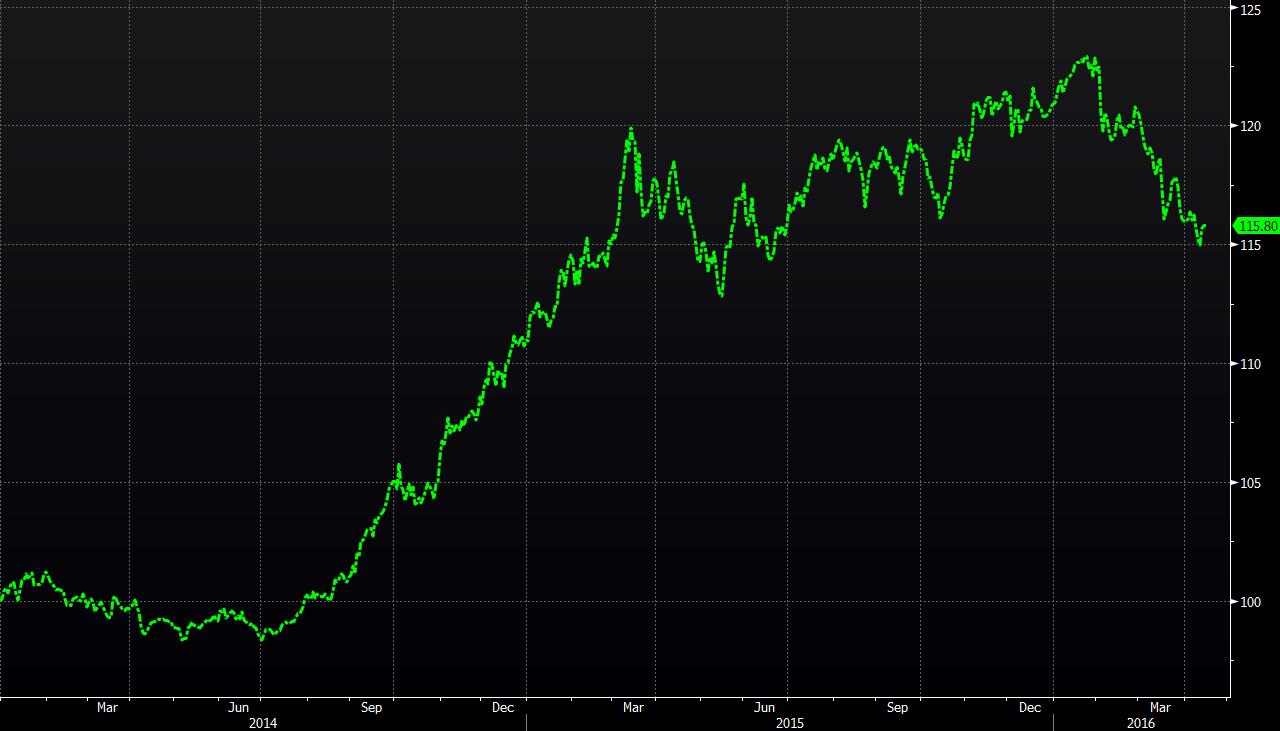
regarding the underlying strength of the economy, and react negatively every time it appears the Fed is planning to raise rates. Fed leaders understand that this dynamic is in place and, though often forced by market moves to backtrack on previously announced plans, continue to push forward when they can. They have had some successes: they were able to raise the fed funds rate one time late last year, and bond investors today see a good chance of an additional rate hike this year, with two hikes also seen as a possibility. This is a small but important victory for the Fed, as for years after the financial crisis of 2008-2009 any hint of a slowdown to monetary stimulus was viewed by the capital markets with virtual panic (the “Taper Tantrum” of 2013 being the best example). The process toward normalization is likely to last longer than Fed leaders would like, however. In the meantime, Fed statements will continue to be a big (and possibly the most important) factor in short term capital market movements.
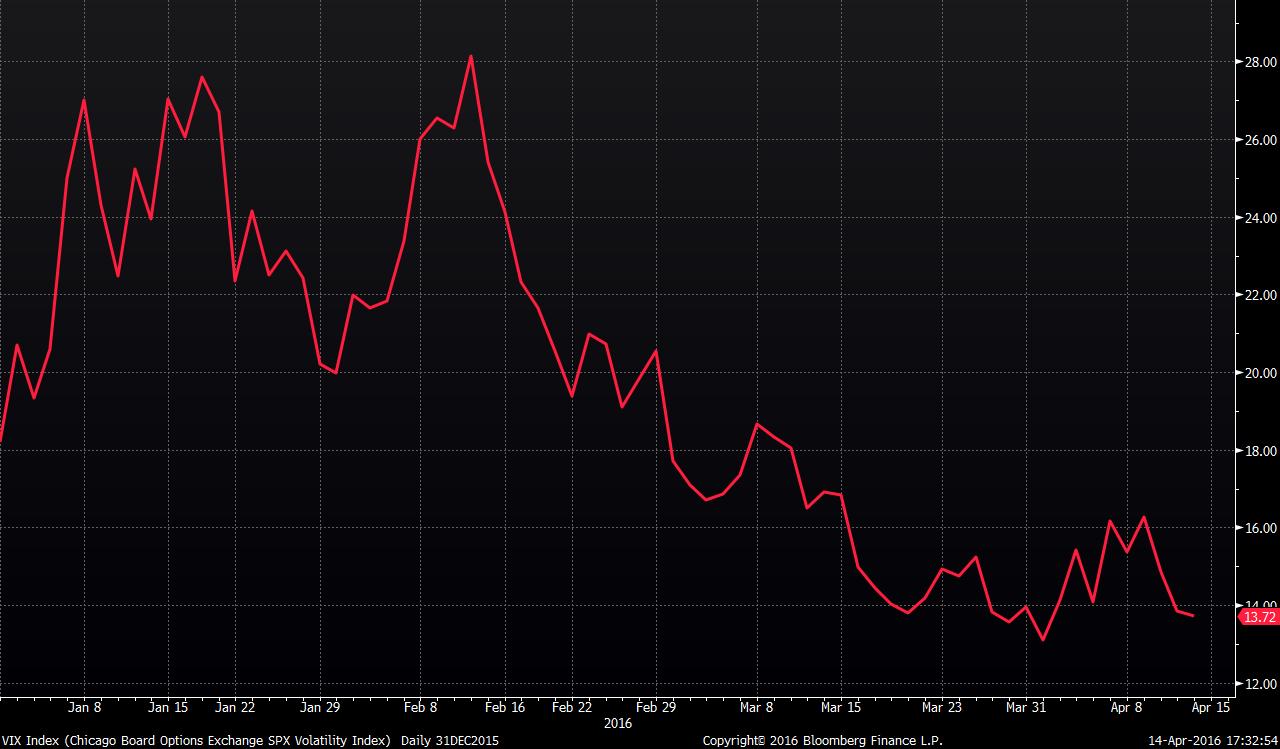
Futures markets today are predicting only a 50% probability that the Fed will raise interest rates this year. Our view is that recent positive economic data, combined with a rally in the equity market, falling U.S. dollar, and increased expectations for inflation during the last two months, are likely to give the Fed more room to raise rates than investors currently anticipate. This argues for more volatility in the markets later this year, and would be bullish for the dollar and bearish for risky assets. There is also the potential for falling inflation expectations, as investors would again fear that the Fed is pushing things too far. A careful balancing act will continue for at least the rest of 2016.
CHINAISAWILDCARD
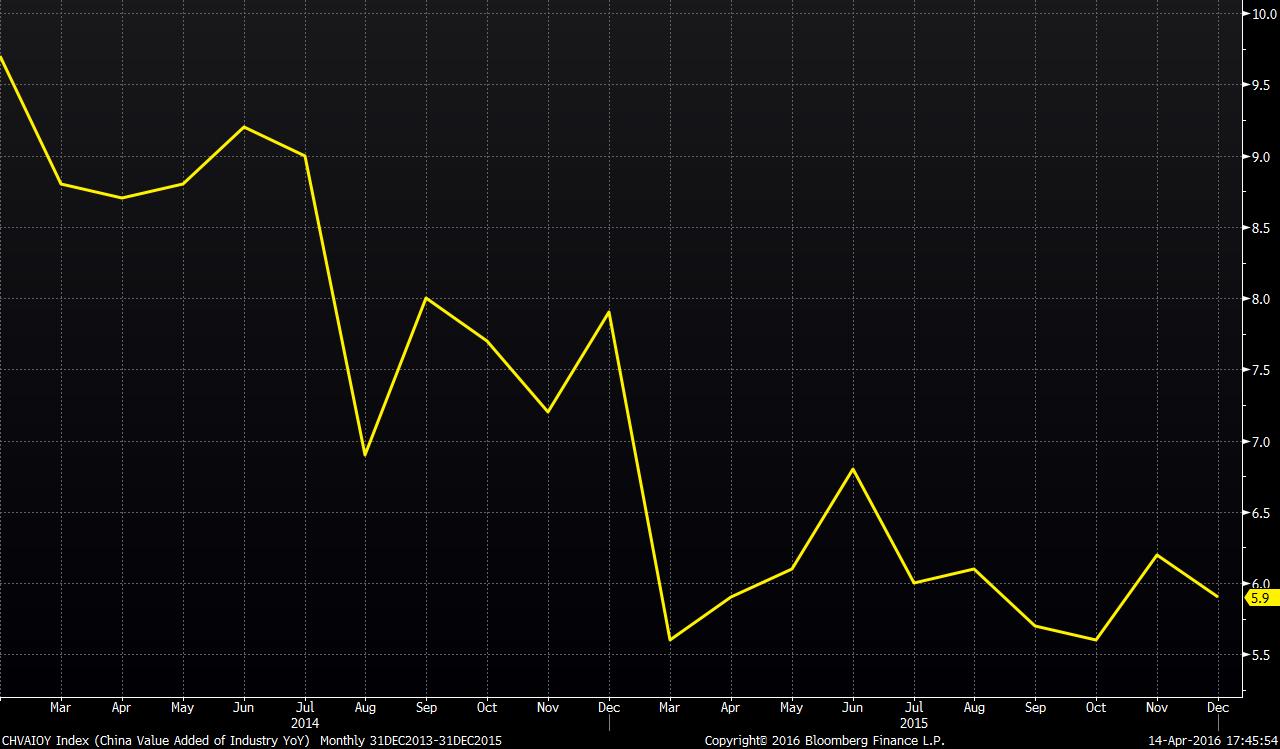
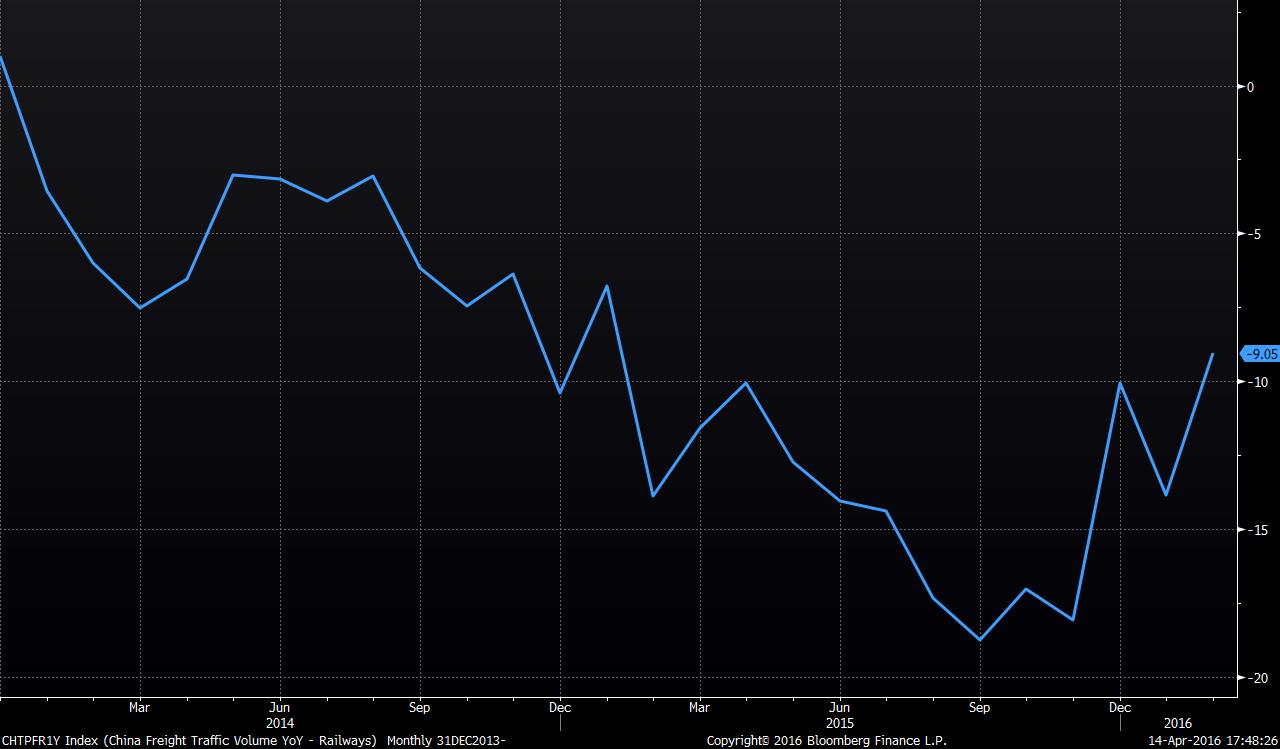
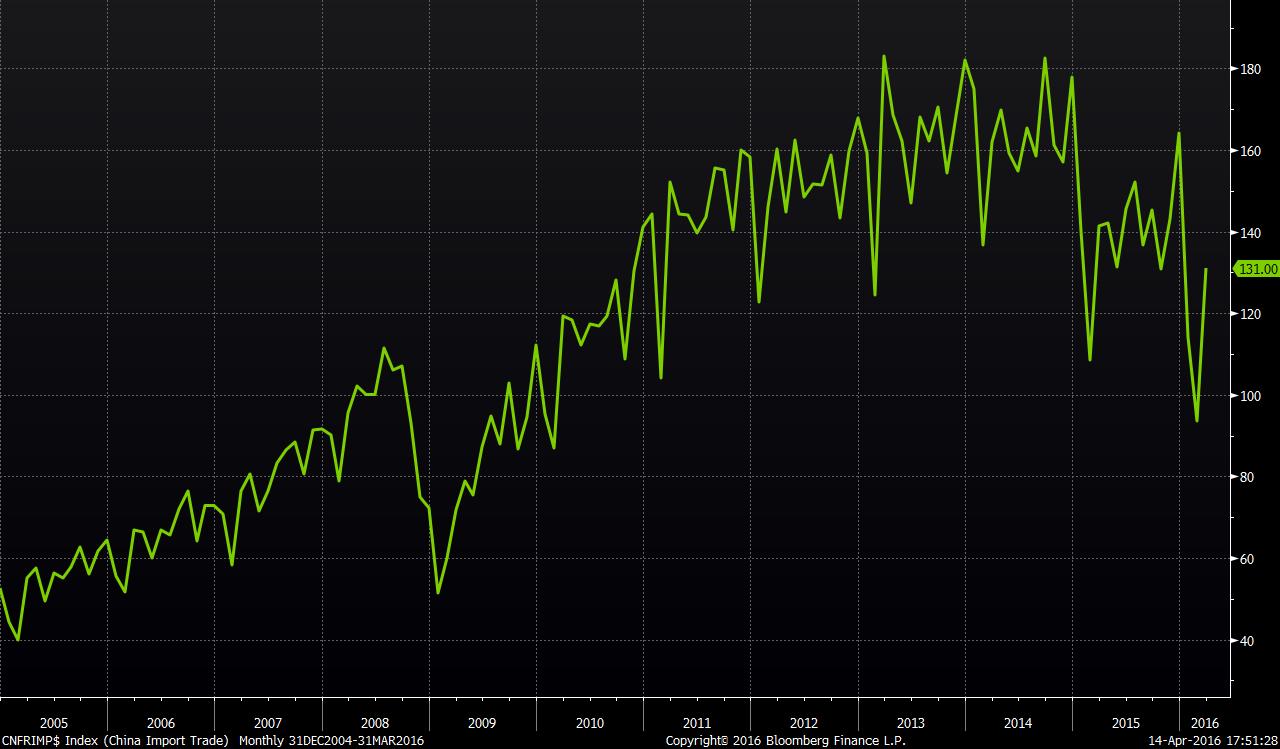
The Chinese economy’s transition toward increased dependence on internal demand continues to be bumpy, and this is the wildcard facing both investors and policymakers. Official government figures say that China’s economy is growing 6.5 – 7.0%, but this is below market expectations and doubts overhang the veracity of the numbers. Other (official) data describing the economy are mixed. Industrial production is growing but the rate of growth has declined. Freight traffic has seen declines during the last two years, while manufacturing growth has been flat since 2012. Retail sales are up but the rate of growth has been down recently, and there are continued fears of a bubble in real estate. In summary, the news is not all bad but the bottom has not yet been reached and more investors are beginning to believe that China’s economic transition could take years. China’s importance to the world economy (and especially to commodity producing countries)
China Industrial Production Growth
China Freight Traffic Growth
has grown dramatically during the last decade, and Chinese imports have risen from $1 trillion in 2009 to almost $2 trillion in 2013. Imports were flat in 2014 and fell in 2015, while the early data from 2016 are not encouraging.
China’s policymakers are trying to encourage growth but are wary that deploying too much
stimulus will result in asset bubbles down the road. Ultimately, economic growth is one of the pillars of the government’s legitimacy, and policymakers are trying to achieve lasting growth with incremental reforms. The efficacy of their actions is one of the biggest uncertainties facing the global economy. The most likely case for the near term is a continuation of the status quo, with somewhat disappointing economic growth numbers. The
China Imports (Monthly)
markets appear to be predicting this, and it is one of the reasons global interest rates are still so low.
EQUITIESBOUNCEBACKONFEDCOMMENTS
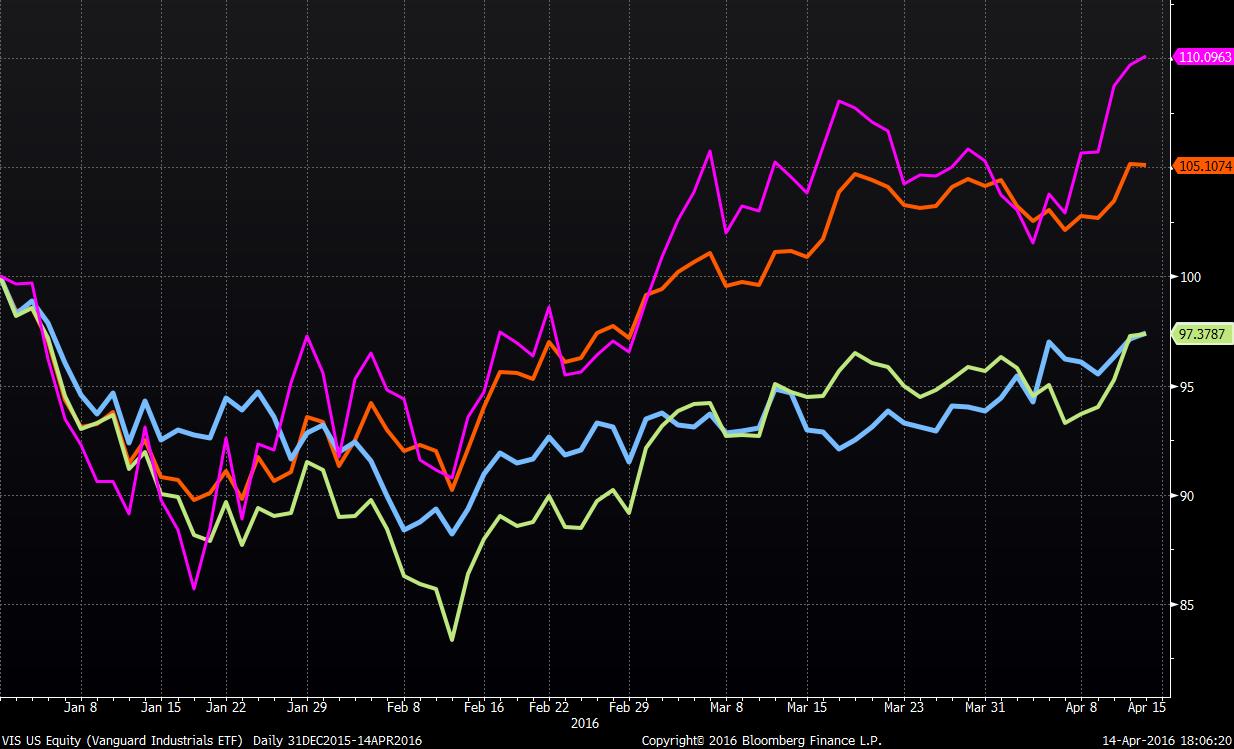
The energy sector has led the equity markets this year, as investor fears regarding oversupply turned to hope that suppliers may agree to cap output. WTI crude is up 9% this year to $40 and the S&P Global Energy Index has risen 9%. The industrial and consumer staple sectors have also outperformed the market, both rising 5% this year. The financial sector has been dragged down by U.S. bank stocks, and the S&P Global
Financials Index was down 5% through mid-April. Investors fear that banks have more exposure to the energy sector than was previously believed, as many small energy producers currently under financial strain are accessing previously awarded lines of credit. Not all banks face the same level of risk, of course, but until more clarity is achieved investors will remain cautious toward the sector. Healthcare has been another
underperforming sector this year, with the S&P Global Healthcare Index down 3%. Within the healthcare sector, pharmaceutical stocks have been especially out of favor as U.S. politicians target the industry.
The stock market is trading at valuations that are somewhat higher than historical averages, with the S&P 500 trading at 17.7x expected 2016 earnings, and the MSCI All Country World Index
trading at 16.2x.
Stocks have continued to climb the “wall of worry” in the first half of April, as the comments of Fed policymakers remain dovish. A change in tone would likely pressure stocks.
FIXEDINCOME: REALRATESAREDOWNASINFLATION EXPECTATIONSPERKUP
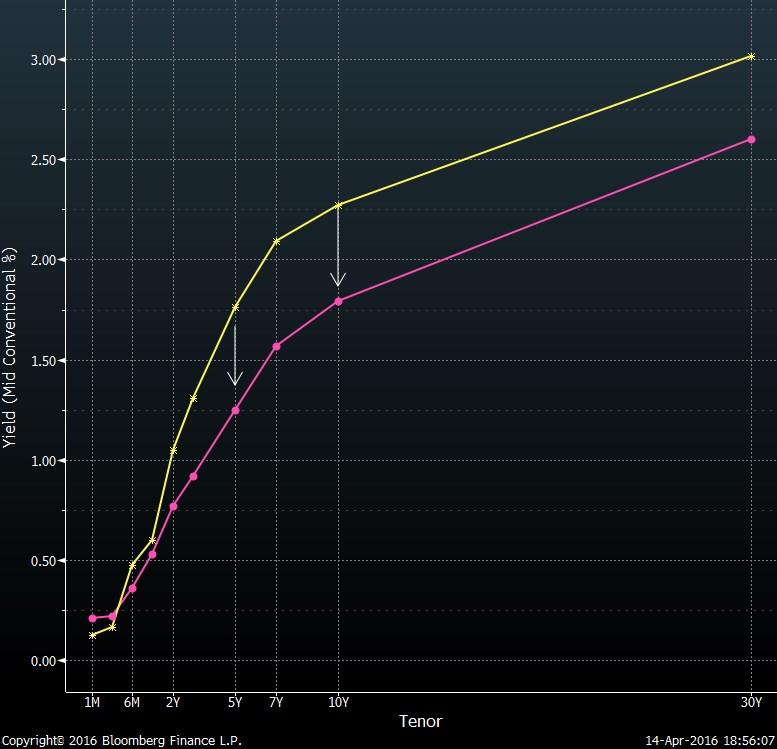
The bond market rallied in the first quarter, as investor concern regarding interest rate hikes turned into relief after Federal Reserve policymakers turned dovish midway through the quarter. The Treasury yield curve flattened, with the yield of the 10-year Treasury bond falling from 2.27% on December 31 to 1.79% on April 14. Yields have fallen across the curve, apart from the shortest tenors. The Barclays U.S. Aggregate Index finished the first quarter with a return of 3.03%, led by the U.S. Treasury Index (+3.20%) and U.S. Investment Grade Corporate Bond Index (+3.97%), as corporate spreads have tightened since mid-February. Agency mortgage
underperformed the Barclays Aggregate Index during the first quarter, with the U.S. MBS Index
U.S. Treasury Yield Curve 12/31/2015 4/14/2016
returning 1.98%.
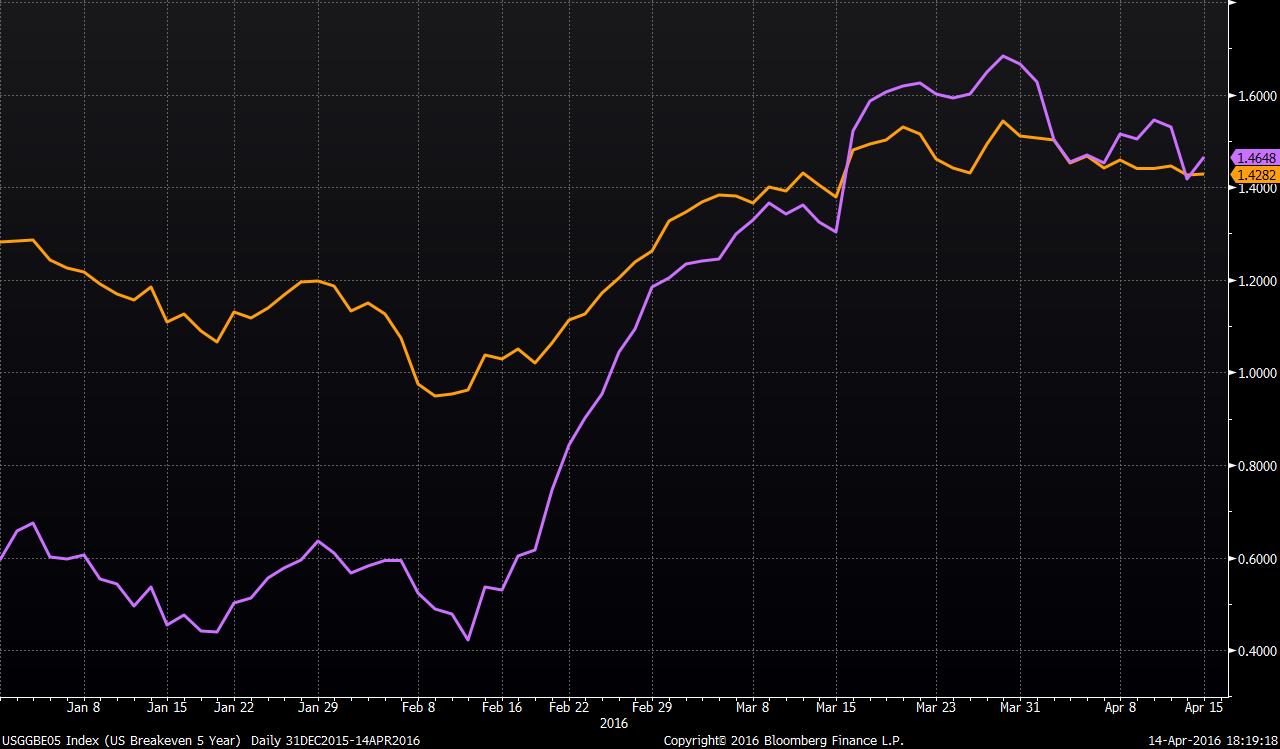
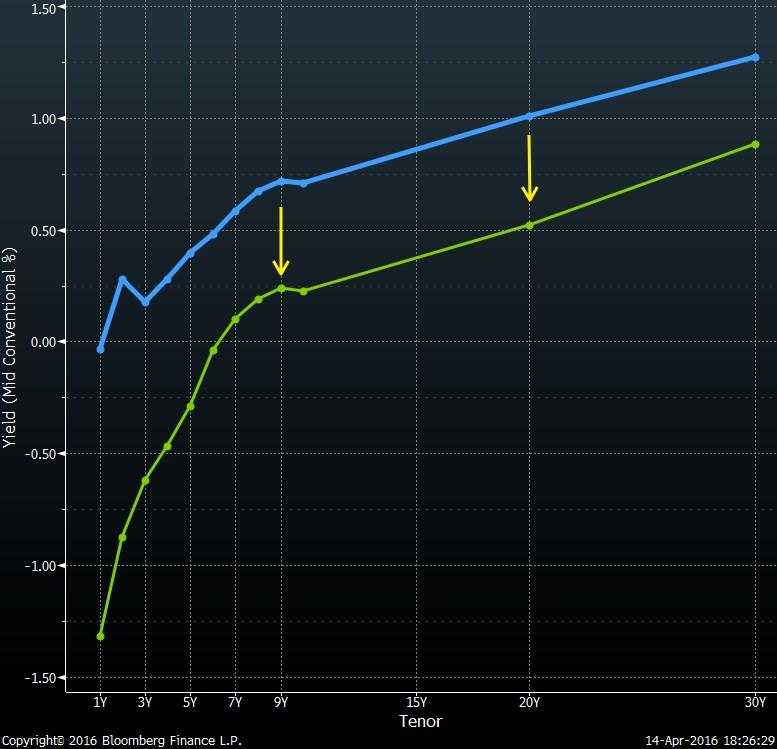
The real rate of interest has fallen since the start of the year, and is now negative on all maturities shorter than seven years. The falling real yield curve seems to be signaling renewed concerns regarding the health of the U.S. and global economies, while at the same time bond investors are predicting that Fed policymakers will respond to an economic slowdown by maintaining interest rates at current levels (or barely above) for the rest of the year. It is this prediction that has led to rising inflation expectations (from very low levels earlier in the year) and to a tightening of corporate spreads.
U.S. Treasury Inflation Indexed Curve
Moves in the bond market were fairly large in the first quarter. There is potential for a reversal of some of these recent trends if the economy begins to show signs of strength. Positive economic data would likely lead to higher interest rates, and could lead to lower inflation expectations if it appears that the Fed will be able to raise interest rates two times this year, as is still policymakers’ stated goal. Data indicating a slowing economy may not have as much impact
on the bond market, as market expectations for the short run are already pessimistic.
Brandon Fitzpatrick
THIS PUBLICATION IS FOR INFORMATIONAL PURPOSES ONLY. THIS PUBLICATION IS IN NO WAY A SOLICITATION OR OFFER TO SELL SECURITIES OR INVESTMENT ADVISORY SERVICES, EXCEPT WHERE APPLICABLE, IN STATES WHERE D.B. FITZPATRICK & COMPANY IS REGISTERED OR WHERE AN EXEMPTION OR EXCLUSION FROM SUCH REGISTRATION EXISTS.
INFORMATION THROUGHOUT THIS PUBLICATION, WHETHER STOCK QUOTES, CHARTS, ARTICLES, OR ANY OTHER STATEMENT OR STATEMENTS REGARDING MARKET OR OTHER FINANCIAL INFORMATION, IS OBTAINED FROM SOURCES WHICH WE AND OUR SUPPLIERS BELIEVE RELIABLE, BUT WE DO NOT WARRANT OR GUARANTEE THE TIMELINESS OR ACCURACY OF THIS INFORMATION. NEITHER WE NOR OUR INFORMATION PROVIDERS SHALL BE LIABLE FOR ANY ERRORS OR INACCURACIES, REGARDLESS OF CAUSE, OR THE LACK OF TIMELINESS OF, OR FOR ANY DELAY OR INTERRUPTION IN THE TRANSMISSION THEREOF TO THE USER. THERE ARE NO WARRANTIES, EXPRESSED OR IMPLIED, AS TO ACCURACY, COMPLETENESS, OR RESULTS OBTAINED FROM ANY INFORMATION CONTAINED IN THIS PUBLICATION.
NOTHING IN THIS PUBLICATION SHOULD BE INTERPRETED TO STATE OR IMPLY THAT PAST RESULTS ARE AN INDICATION OF FUTURE PERFORMANCE. ALL RETURNS ARE MODEL RETURNS FROM A COMPOSITE. ALL RETURNS ARE NET OF FEES AND ANNUALIZED.