THE BOB PROJECT THE BOB PROJECT

 Lisa Davis

The Bob Project investigates the balance between conformity and individuality, specifically focusing on how uniforms and personal belongings affect self-expression. It explores the impact of clothing guidelines, cultural differences in individualism, and real-world examples of celebrating uniqueness within a collective context.
Whilst growing up in south west France my bedroom had, and still has, a view of a field behind our house. Most years there was a crop of potatoes, wheat or corn, but the best years would be those with sunflowers.
When I was 13 years old with help from my dad we uprooted one of the thousands of sunflowers and put it in a vase in my bedroom, it was named Bob. Bob looked like all the other sunflowers, but if you looked close enough, he was different from the rest, Bob was an individual.
Since then, I estimate having 164 different objects named after this plant. From teddy bears, shoes, rubber ducks or cats, Bob became a nickname for my belongings that I liked, just a bit more than the others.
As humans, we are surrounded by objects that we consciously or unconsciously choose, and most of the time we don’t realize we are making decisions or how much of ourselves is reflected in the decisions we make.
However, in a time of extreme consumerism and mass production, it will not be surprising that you would find the same couch, vase or coffee cups at your friend’s house. So to what extent do our belongings reflect ourselves, our habits, and our individuality?
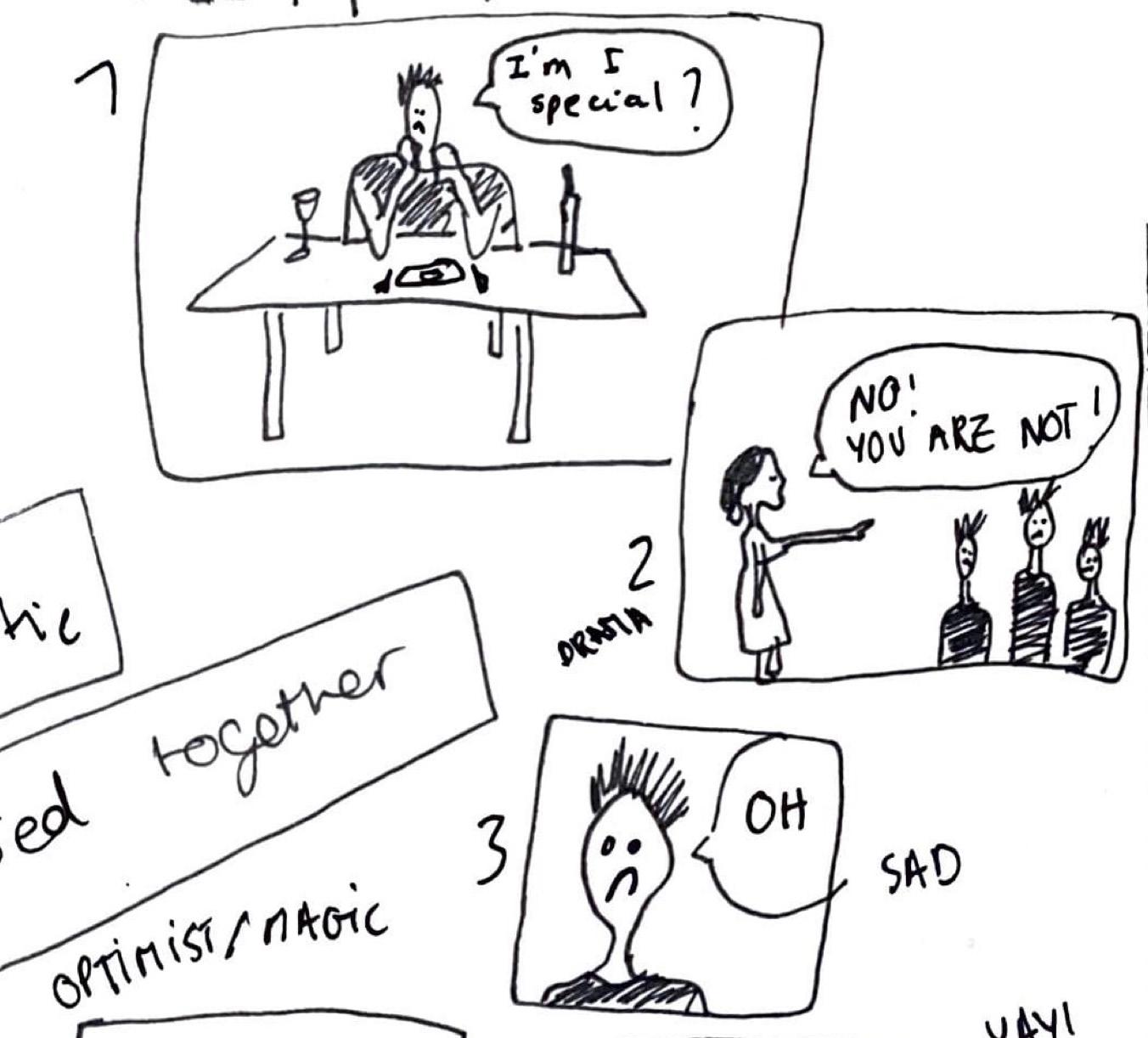
Individuality is defined by the Cambridge dictionary as “the qualities that make a person or thing different from others” A uniform is defined as “a particular set of clothes that has to be worn by members of the same organization or group of people’, in other words uniforms can be used to categorize a group of people for the outside world”
But if we depend on our clothes to express ourselves, what group we are a part of, how do we express who we are with the constraints and the uniformity that a uniform inevitably brings?


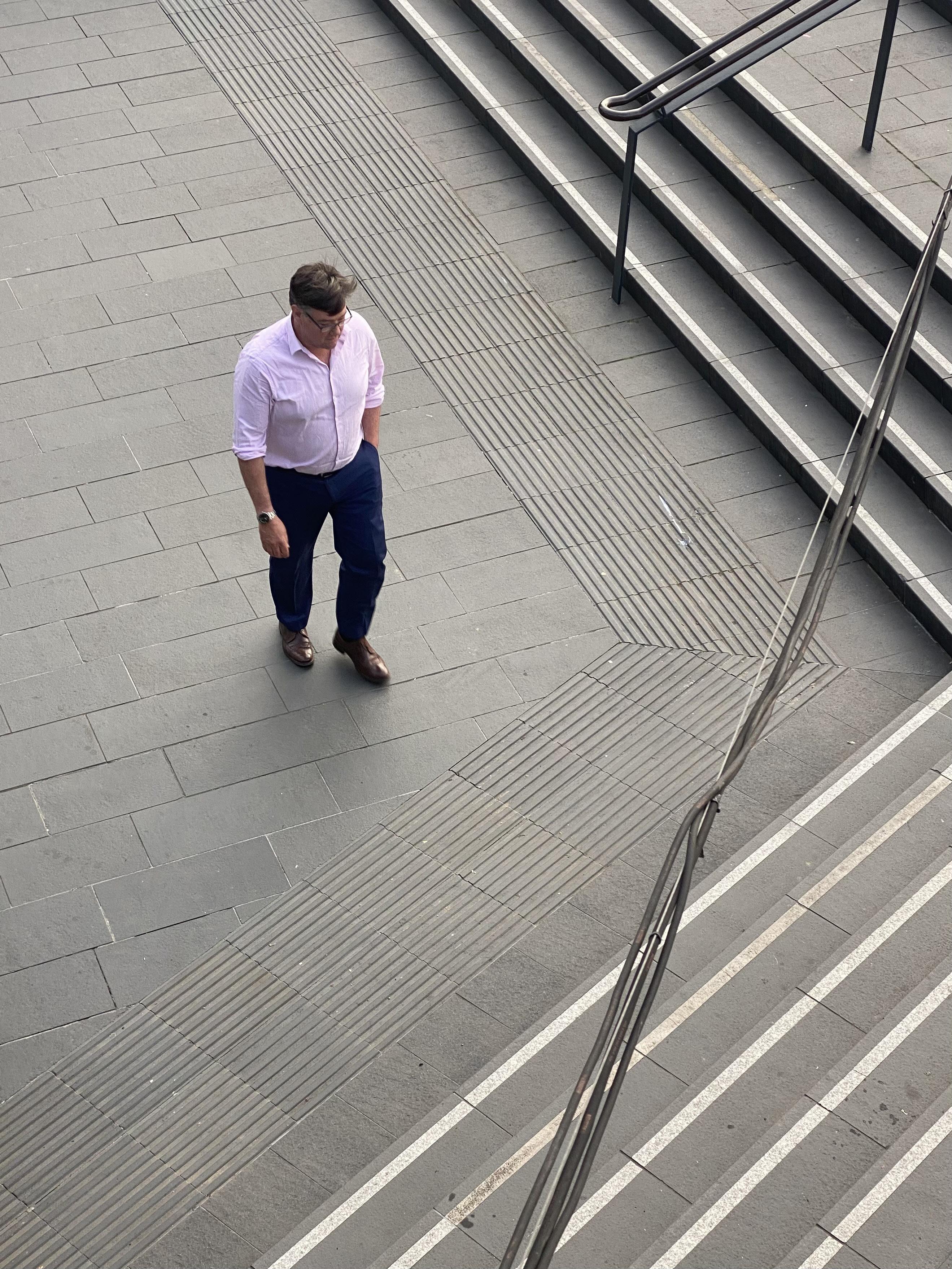
Let’s look at businessmen in central London, as I often pass by them in groups, walking very quickly in the streets or standing in front of a pub with a pint in their hands. They usually dress in all-black or navy suits, white shirts, and leather shoes. If you are lucky, you might spot a pair of pink striped socks appearing as they walk.
London is a jungle, and as I invisibly walk the streets on my own personal safari, I often ask myself if the dark suit is a uniform or camouflage. Concluding that the answer depends on whether the occupants of those dark suits consider themselves the hunter or the hunted.




Whatever the answer, in my mind I see them as a group, not individuals. Part of a category of “men in suits who have a somewhat important job to do”. I find it difficult to imagine what type of furniture they could have at home, what sport or activities they do, or how many plants they own, if any at all. There are just like one single sunflower in a field of sunflowers.
Although the suit is historically associated with projecting elegance, authority, and mastery of a profession, I found that it is an easy way to blend into the conformity required by City of London office jobs. But I wonder if this uniform allows people to feel like themselves? Do their ties or socks say something about them? Is it even important to them?


I was intrigued to discover the existence of guides specifically tailored to help men choose the most suitable color ties, suit designs, and fabrics. One website, RealManRealStyle.com, provides recommendations such as wearing a red tie for work, a yellow tie for celebrations, and a black tie for funerals. These guidelines highlight how color choices can convey different messages or create specific impressions in various contexts.
Another platform called Suitswell.com caught my attention with its assertion that a new counter culture is emerging among men. According to the website, this movement encourages men to dress in a way that reflects their unique character, embracing qualities such as chivalry, class, and modern sophistication. It is a captivating notion that suggests clothing can serve as a powerful means of self-expression.
Reflecting on my own experiences, I couldn’t help but think of my father, who works for a company that encourages a formal dress code. On a typical workday, he dons a light blue or white shirt, dark or pinstripe pants, and leather shoes. For more formal occasions, he adds a blazer and a tie to his ensemble. Observing him on the street, one would likely categorize him as a businessman adhering to the prevailing style. However, those who truly know him understand that he is a charismatic individual with his own rich life and diverse interests, such as aircraft, football, and even car boot sales. Unfortunately, the prescribed outfit offers little space for personal expression.
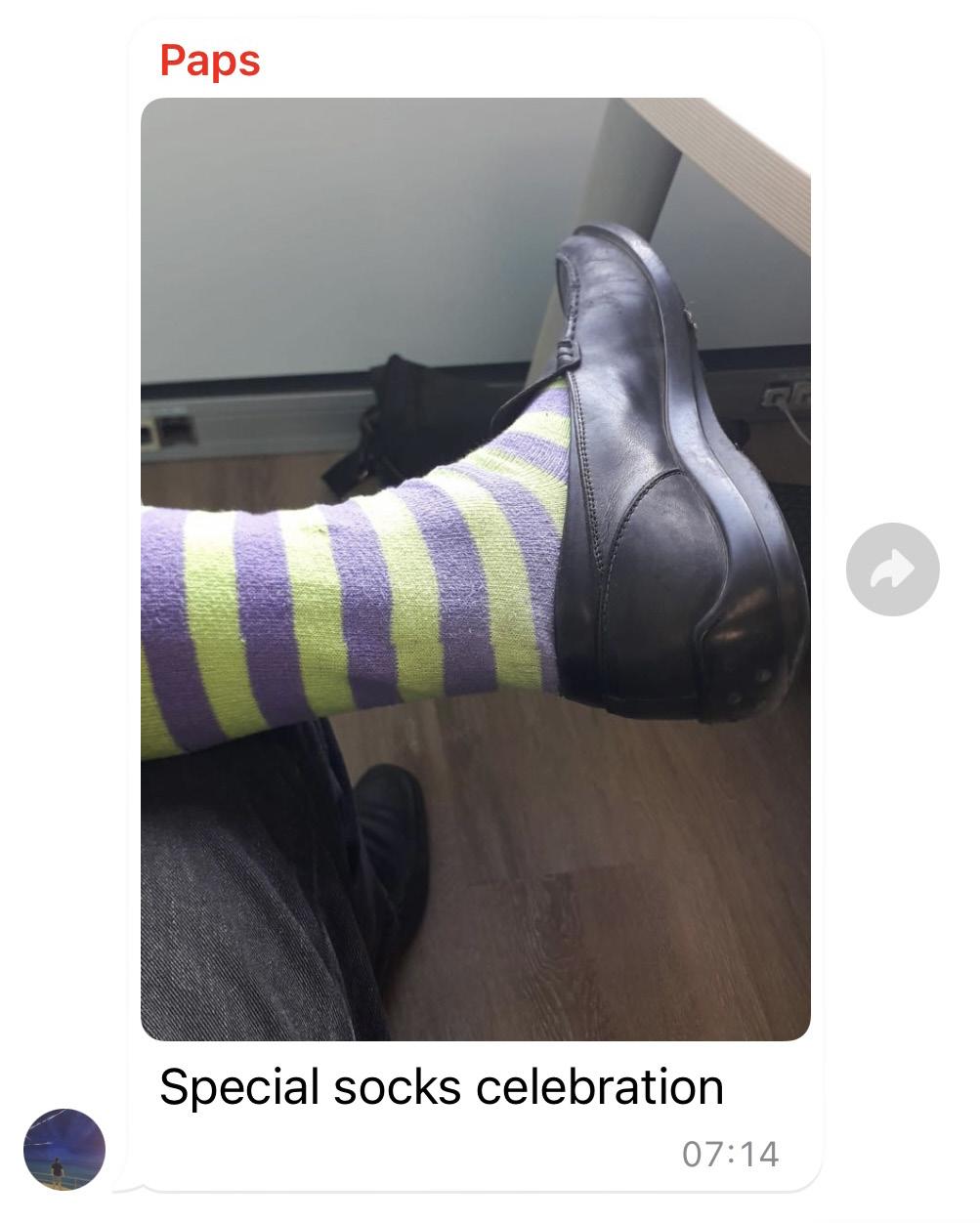
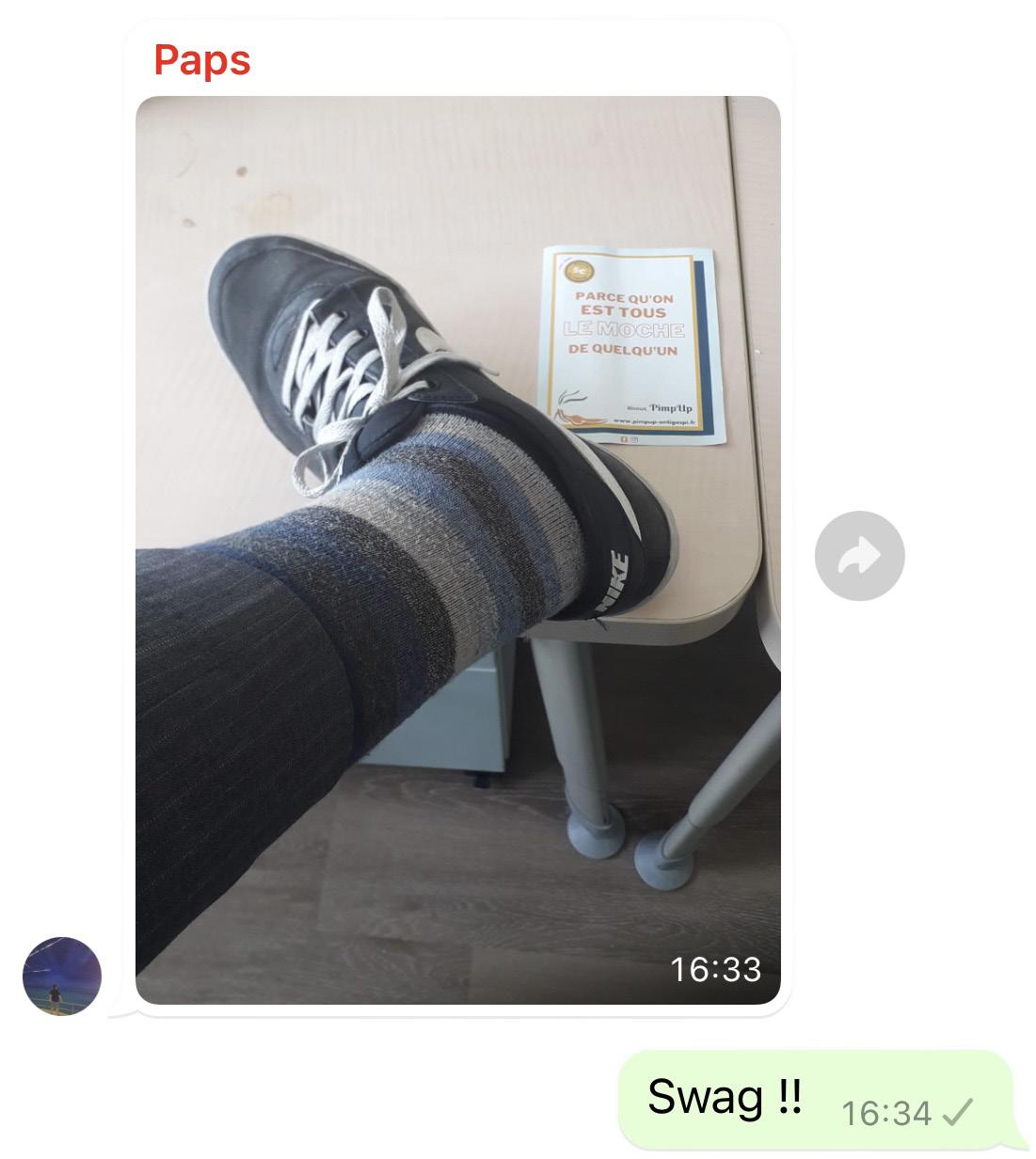
One intriguing aspect of my father's style is his penchant for wearing special socks adorned with vibrant and unconventional colors. During my upbringing, I believed this choice was influenced by his British background.
However, now that I reside in London myself, I realize that it serves as a way for him to inject levity and creativity into his otherwise serious attire. It is a subtle nod to his funny and imaginative personality, allowing him to break free from the rigidity of his standard attire. In this way, he has discovered a small loophole that enables him to feel comfortable and content in his work attire. It is truly remarkable how clothing can serve as a significant avenue for self-expression.
In conclusion, my discovery of these guides for men and reflection on my father's experience have shed light on the intricacies of personal expression within the realm of formal attire. While the prescribed dress code may restrict individuality, my father's choice of unique socks showcases his ability to infuse elements of his personality and humor into his outfit. This exemplifies the profound impact that clothing can have as a form of self-expression, even within the confines of a predetermined dress style.
What exactly is individualism?
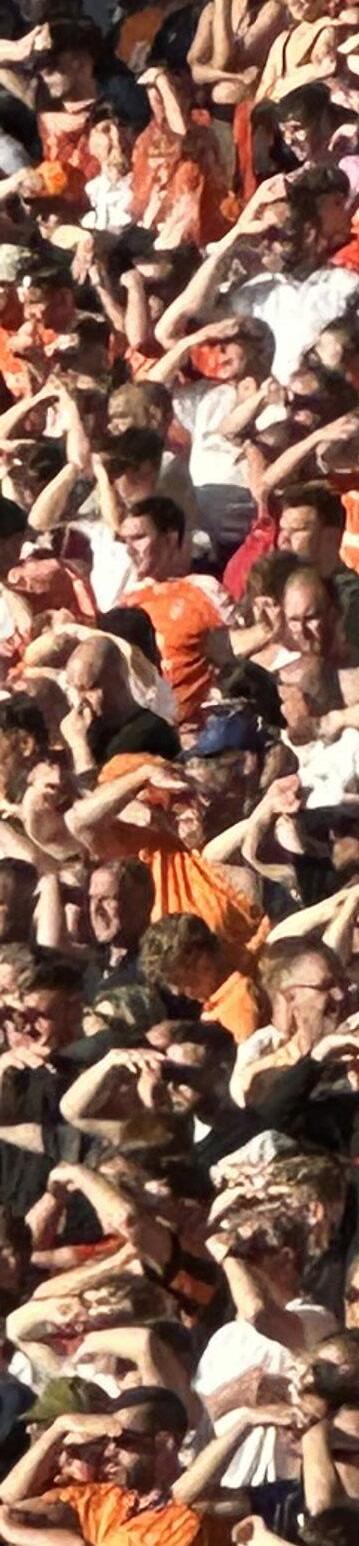
Multiple studies on Asian and Western culture conclude that collectivism stresses the importance of community is dominant in Asia, whilst in the west individualism focuses on the rights and concerns of each person.
Confucianism, based on the teachings of the ancient Chinese philosopher Confucius, places the highest emphasis on social harmony, promoting the greater good of the community. In Confucian influenced societies prevalent in China and Southeast Asia, individual expression whilst present is subordinate to the needs of a group (e.g. family, company or nation), that any individual finds themselves in.
The Confucian philosophy believes that “who you are cannot be separated from the groups you belong to”. This doesn’t mean you lose who you are, you just find your place as a parent, teacher, ruler, with the aim of bringing harmony to a society with all living a peaceful life. “Individual expression is encouraged from an early age and culturally reinforced in Western cultures. In contrast, collectivism is inherent in a Confucian society. In order for Chinese society to operate smoothly, it is necessary to subject one’s own desires to the greater good of the group.”
This philosophy argues that individuality isn’t important in the broader sense for a community, it is the force of people coming together that allows greater outcomes by finding your place and role. At first inspection the philosophy seems similar to western philosophy, an equivalent to Aristotle’s “The whole is greater than the sum of its parts”, or J. R. Hackman’s modern take, “Together everyone achieves more”. Nevertheless in the west the focus is more on synergy and results, not driving for harmony and is far removed from filial piety, respect for authority and adherence to hierarchy and relationships which is at the heart of Confucianism’s collectivist nature.
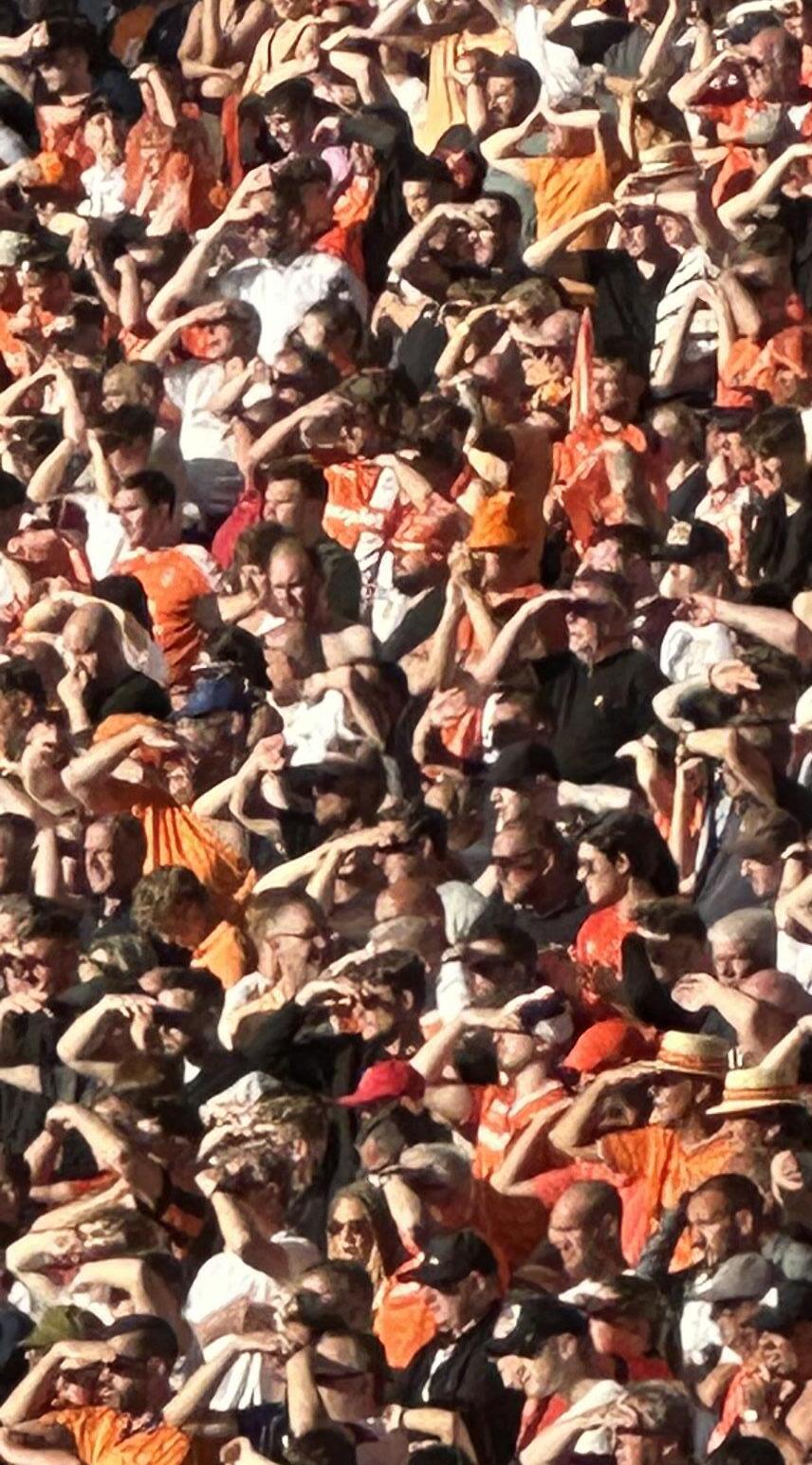
American psychologist Abraham Maslow created a hierarchy of needs. Its simplified version has 5 levels, physiological, safety, belongingness and love, esteem and self actualisation. Maslow focuses on the need of individuals in a society which is more common to western society where individualist culture is prominent.
Coming from parents or schools, the values of community are installed at a very young age. I spoke with a friend about her experience of growing up in Taipei, Taiwan. She said:
“I only realized I was an individual at the York and then London, helped me explore Until then I believed my purpose in life
the age of 20, and that I had and could exercise free will. It was only when moving to New explore and find myself and one of the key elements to that journey was through clothing.. life is to give back to my family and the society that raised me”.
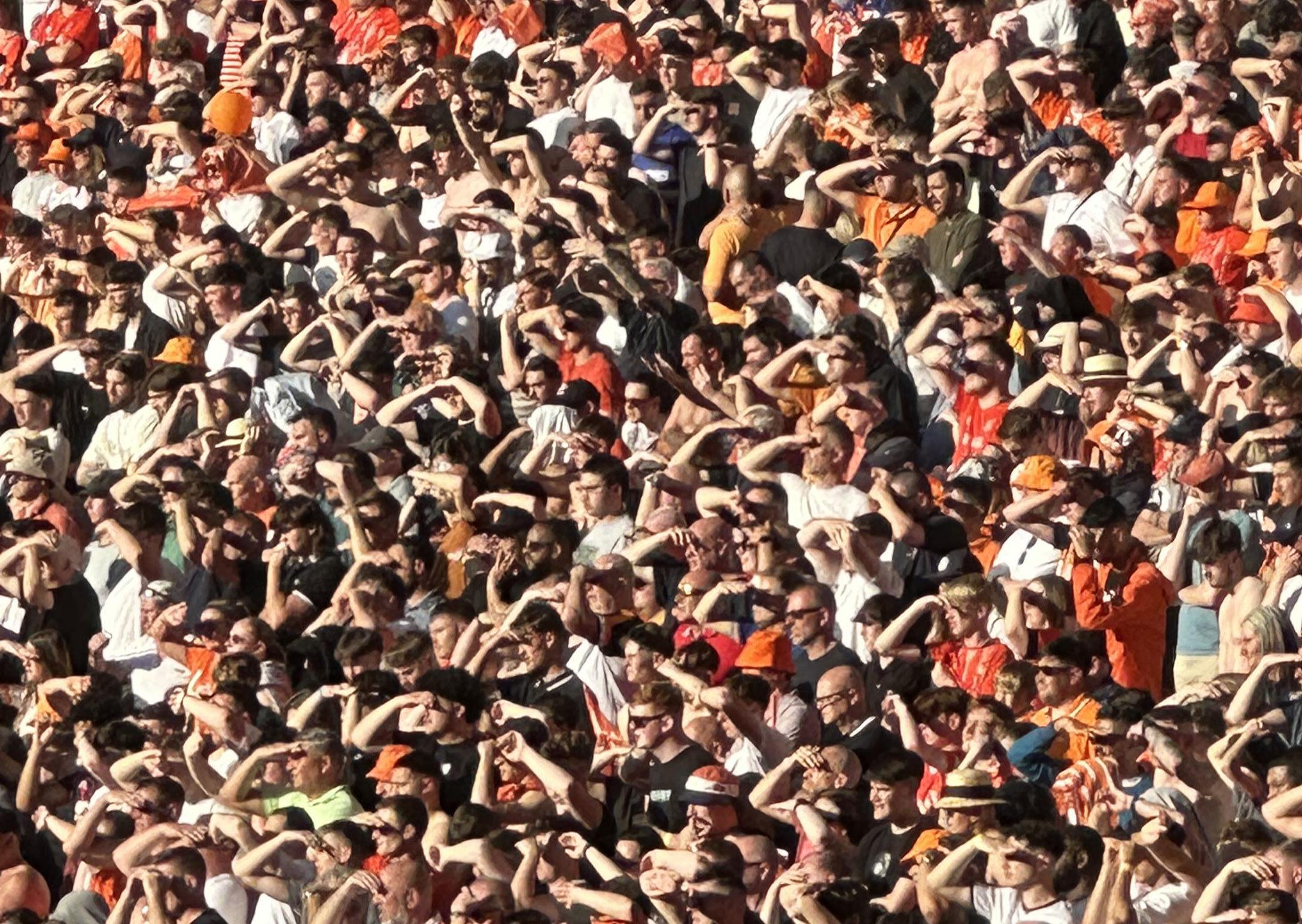
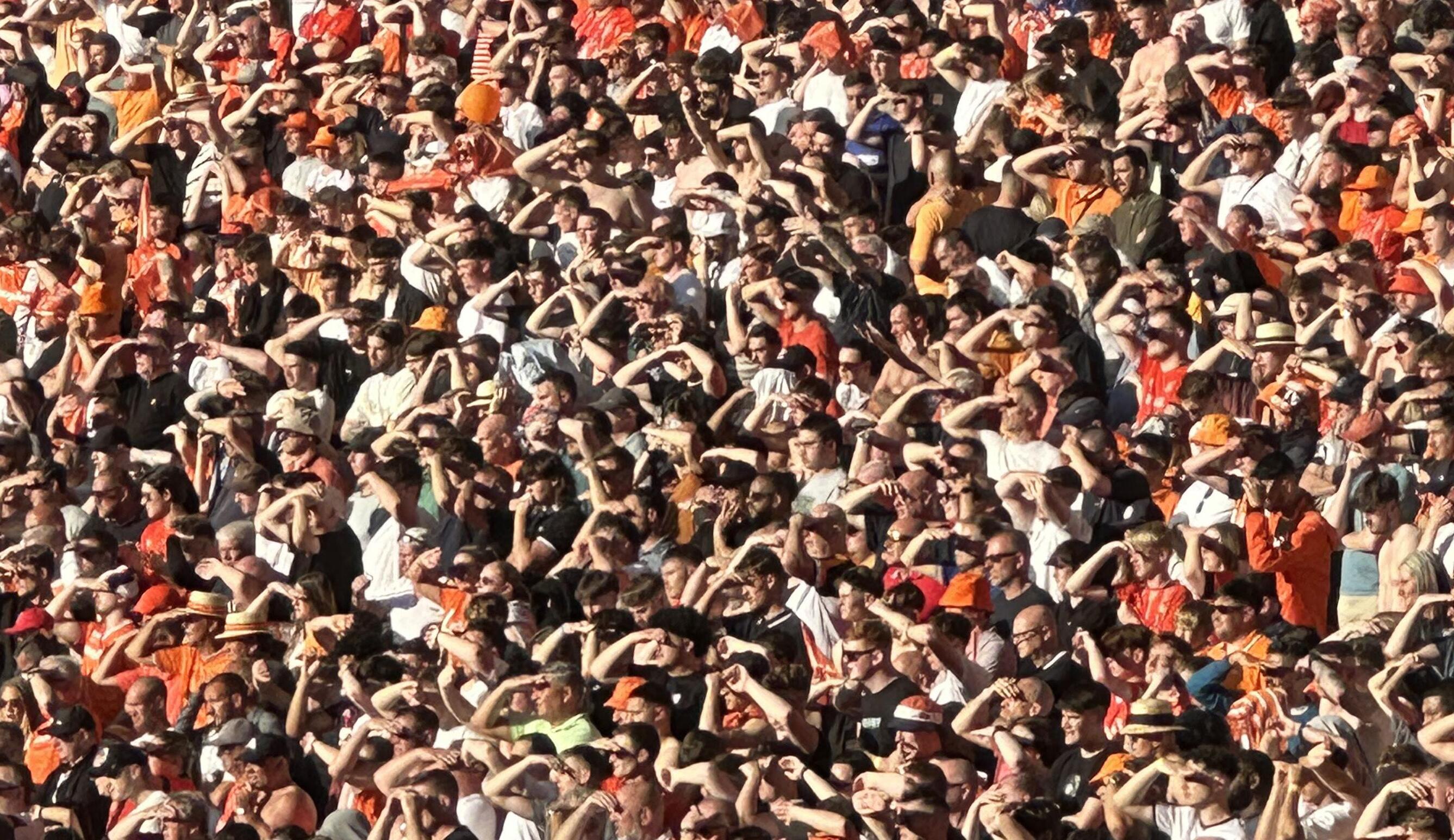
Whilst today I find myself in the same classroom as my Taiwanese friend, our journeys are very different.
In my experience living in France and attending an international school, even with a wide range of communities to identify with, based on culture and nationality, I’ve integrated the importance of giving my voice, interests and opinions. We learn to push and question boundaries, thriving with the idea of being different.
This very personal comparison underlines the differences between eastern and western philosophies. In the West there is a greater emphasis on individualism and personal freedom. Individuality stems from philosophical traditions like existentialism and liberalism. These traditions are founded in our distant past, but have been reinforced through modern entrepreneurship, promoted and exacerbated by the industrial revolution and the associated waves of migration to cities and international movements of huddled masses looking for a golden door, and then aspiring to live the American dream, to go west, or to prepare, prospect and prosper.
Such individualism places the focus on personal sacrifice, autonomy, self-expression, and the pursuit of individual needs and desires. Western societies tend to highly value and celebrate personal achievements, independence and personal rights. This individualistic outlook encourages independent thinking, questioning authority, and asserting unique identities, opinions, and values. The emphasis on individual rights and freedoms can be seen in areas such as politics, economics, and personal relationships in Western societies.
Proven over the centuries is that Confucianism and Western individualism have their own strengths and weaknesses, both can lead to success or failure.
Confucian values encourage individuals to prioritize the needs and interests of the family, community, and society over personal desires, but also pushes individuals to become better humains for themselves based on these core values.
In the west, a strong value is placed on individual rights, achievements, and the pursuit of personal goals and desires. Individualism encourages individuals to think independently, question authority, and assert their unique identities, opinions, and values. However it is generally accepted that society needs to balance extreme individualism with a notion of community.
This is encompassed in one of Europe’s most enduring phrases Liberty, Equality, Fraternity, a motto of the French revolution and Article 1 of the Declaration of the Rights of Man and of the Citizen both the original French version (1789) and adapted for Article 1 in the United Nations’ Universal Declaration of Human rights (1948).
Without the notion of Fraternity, individualism could lead to selfish behaviors such as a competitive mindset of always pushing boundaries for your own gain at the cost to others, whilst also leading to division between people where the idea of a community is distant. The lack of communal values ultimately breaks some social bonds dividing people based on factors such as jobs, social class, ethnic background or even gender. Which is the concept protected by Article 2 in the United Nations’ Universal Declaration of Human rights
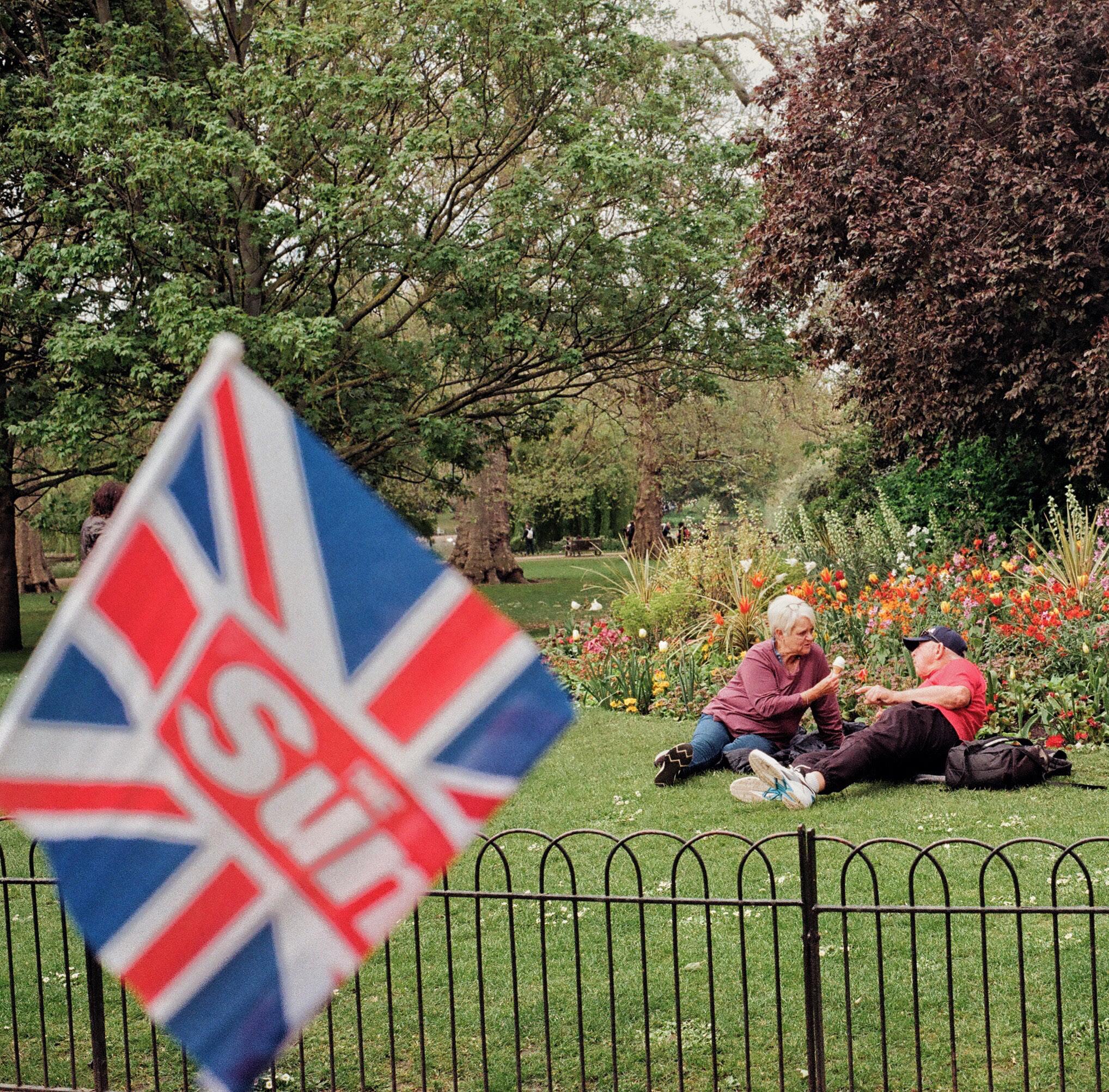
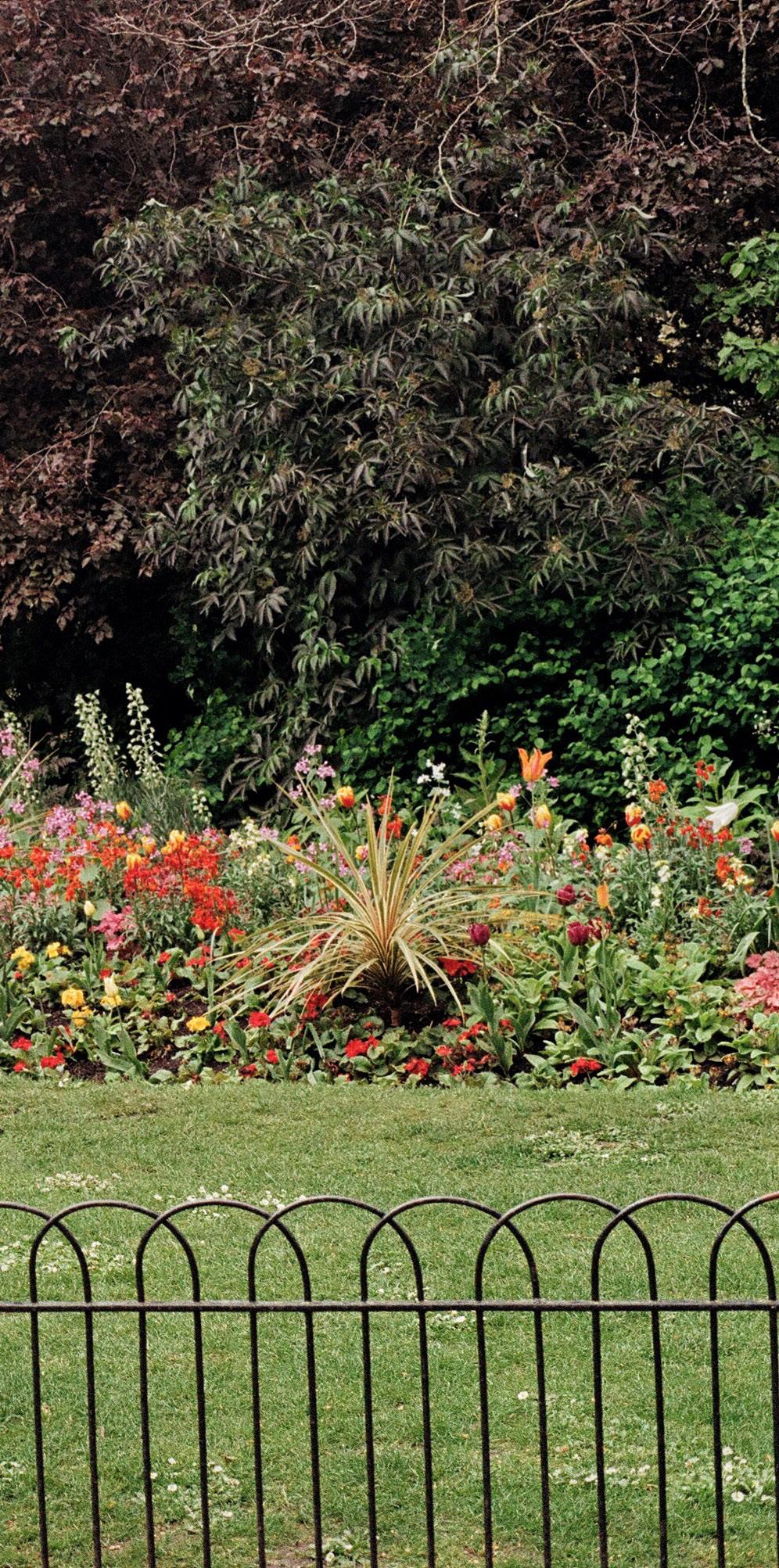
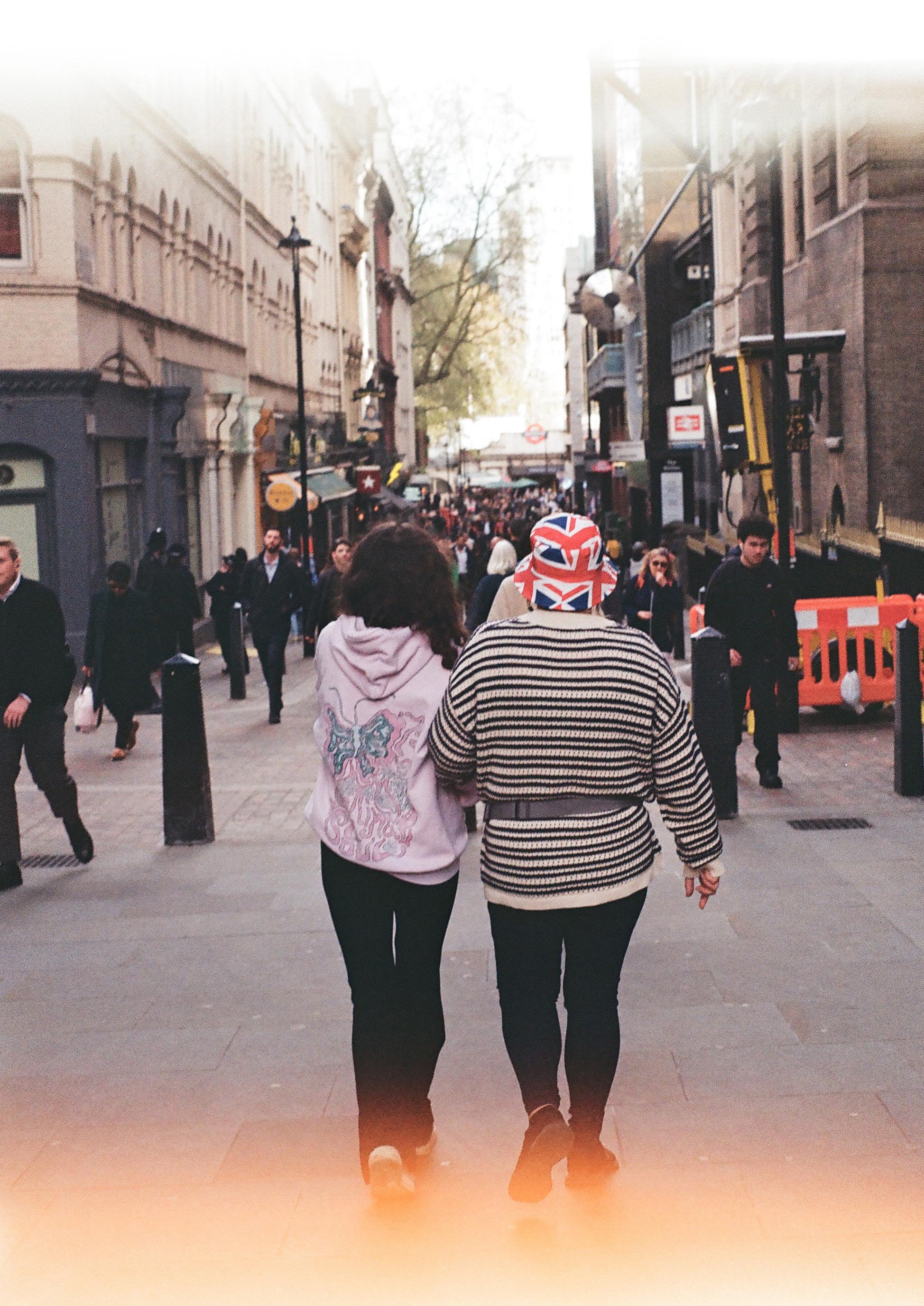
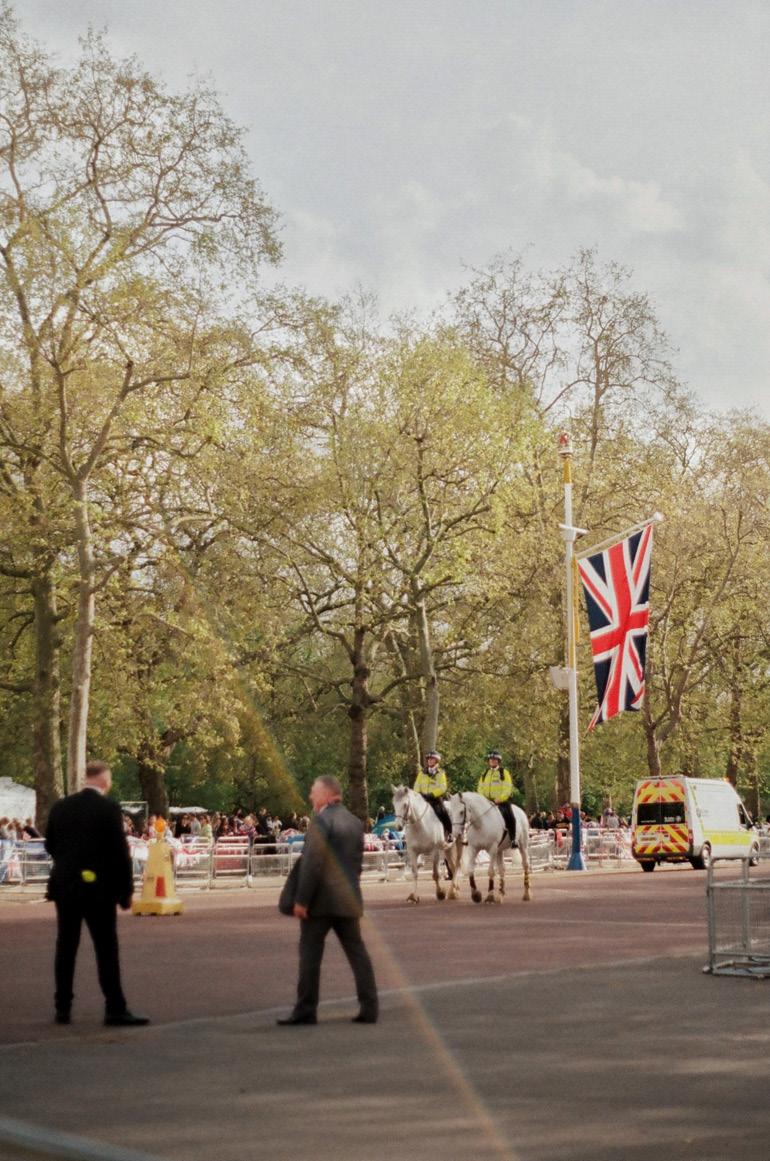
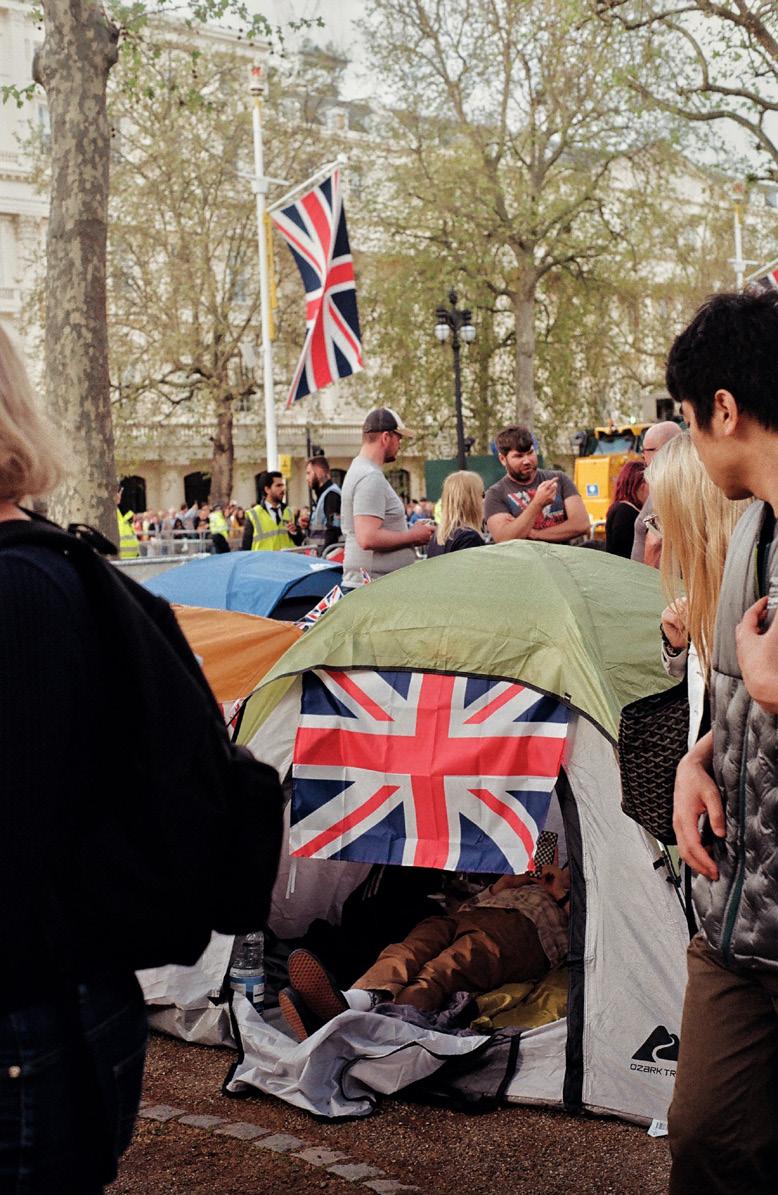
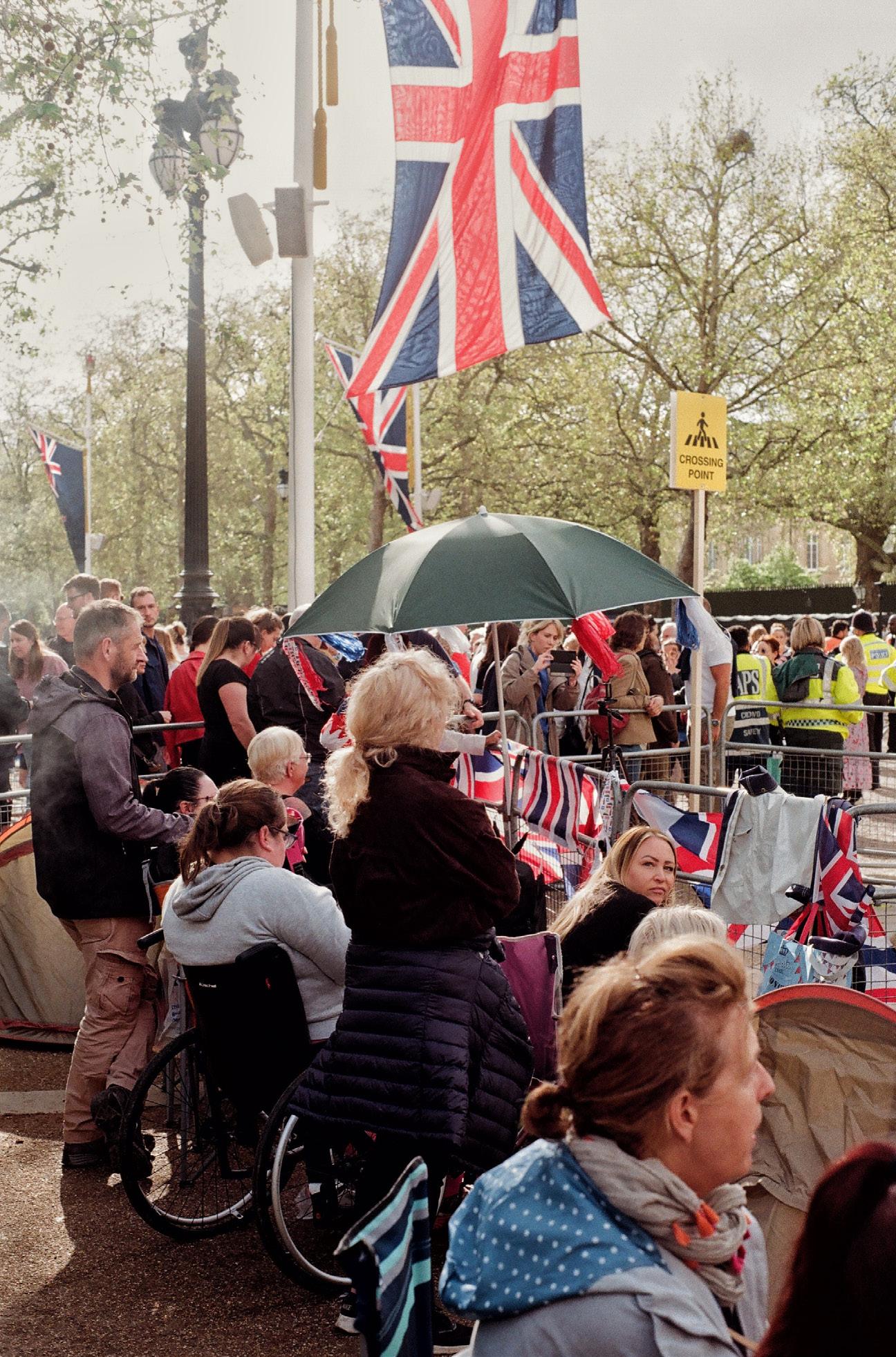
On the Friday prior to King Charles’ Coronation, I made the decision to visit The Mall with my film camera.
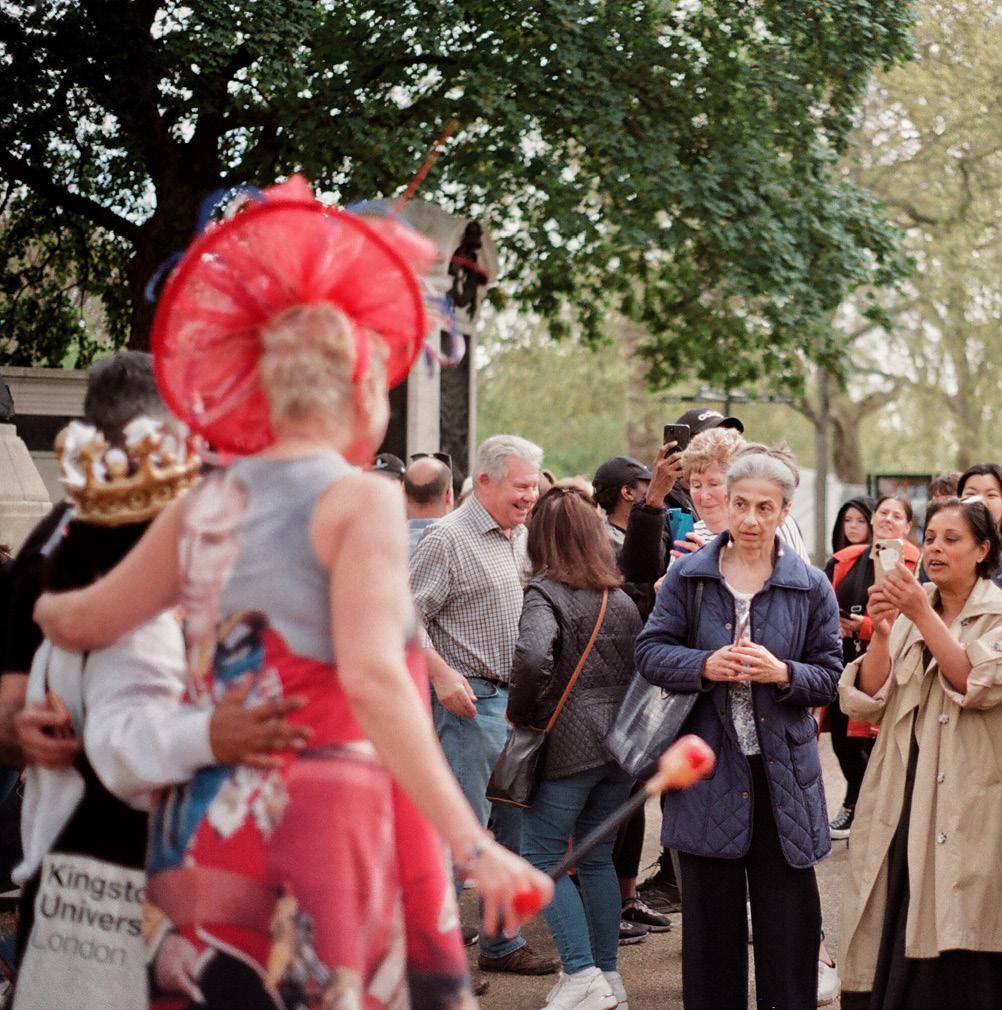
The news reported that spectators had already been camping there for days and I was intrigued by their dedication and effort. As an international student, I found it fascinating to witness such devotion firsthand, and wanted to catch a glimpse of the atmosphere.
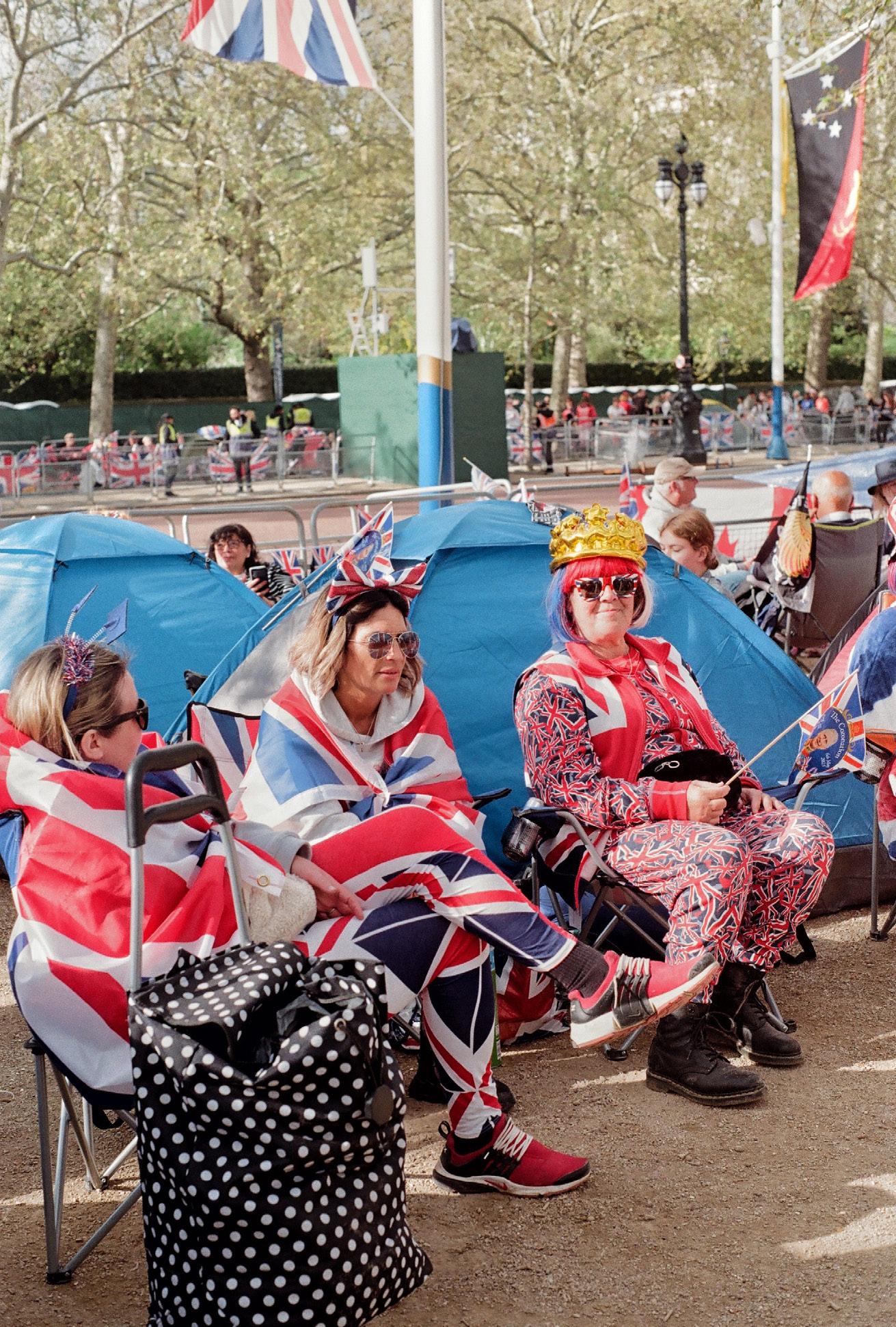
I was welcomed by thousands of people wearing the most British costumes you could imagine, trying their best to secure the best seat for the Coronation parade. It was truly a saturation of British flags and fancy hats floating around together, surrounded by tourists, police and news reporters. This moment made me think of the power of uniformity and how it’s used to bring people with different lives together.
A 54 years old spectator confested to the Daily Mail:
“It is nice being among so many like-minded people. I really do think there is a great affection for Charles and it is going to be spectacular.”
I spotted a couple that were both wearing t-shirts with King Charles’ portrait, the woman was wearing a fabulous red, white and blue hat and the man an inflatable golden crown. I had the opportunity to quickly talk to them about their outfit before a swarm of tourists asked to take pictures with them.
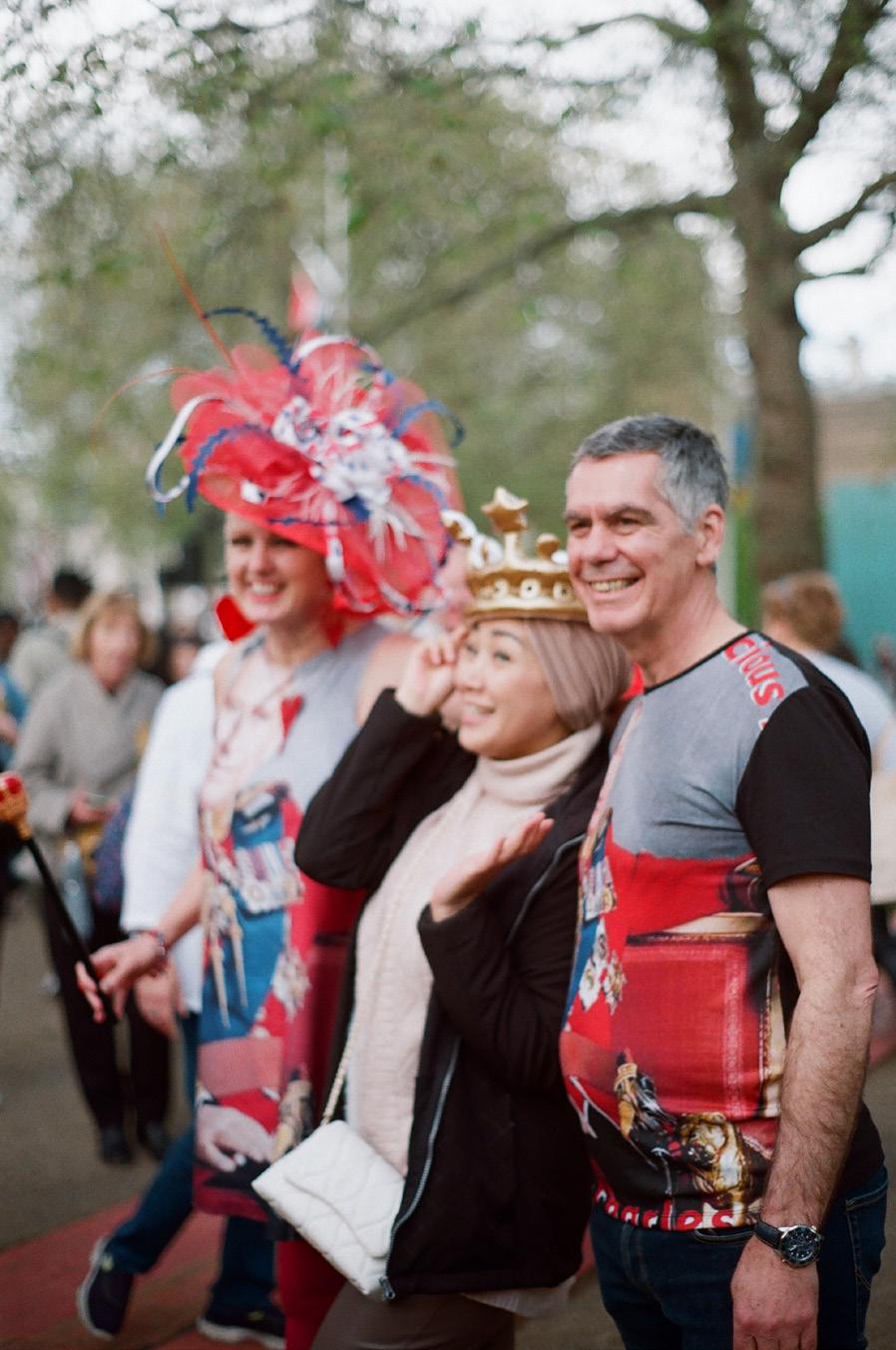
I expressed my admiration for their outfits and they replied that
It was important for us to go big! We wanted to participate and have fun with it”
They confessed ordering their clothes via Amazon weeks in advance.
Another iconic character was an older man wearing a Union Jack suit with a top hat. He was delighted to have cameras focussed on him and the attention his outfit bought. He was standing next to the Duke of York Monument and his tent, his home for the previous 2 nights.
The spectators made the commitment to travel to London from different cities or even countries, to wait in the true British rain for hours or days. Some had put on their best outfit to experience this historic moment. I witnessed different groups of people sharing snacks or drinks, sharing a laugh, fighting for a spot and complimenting each other’s outfits.
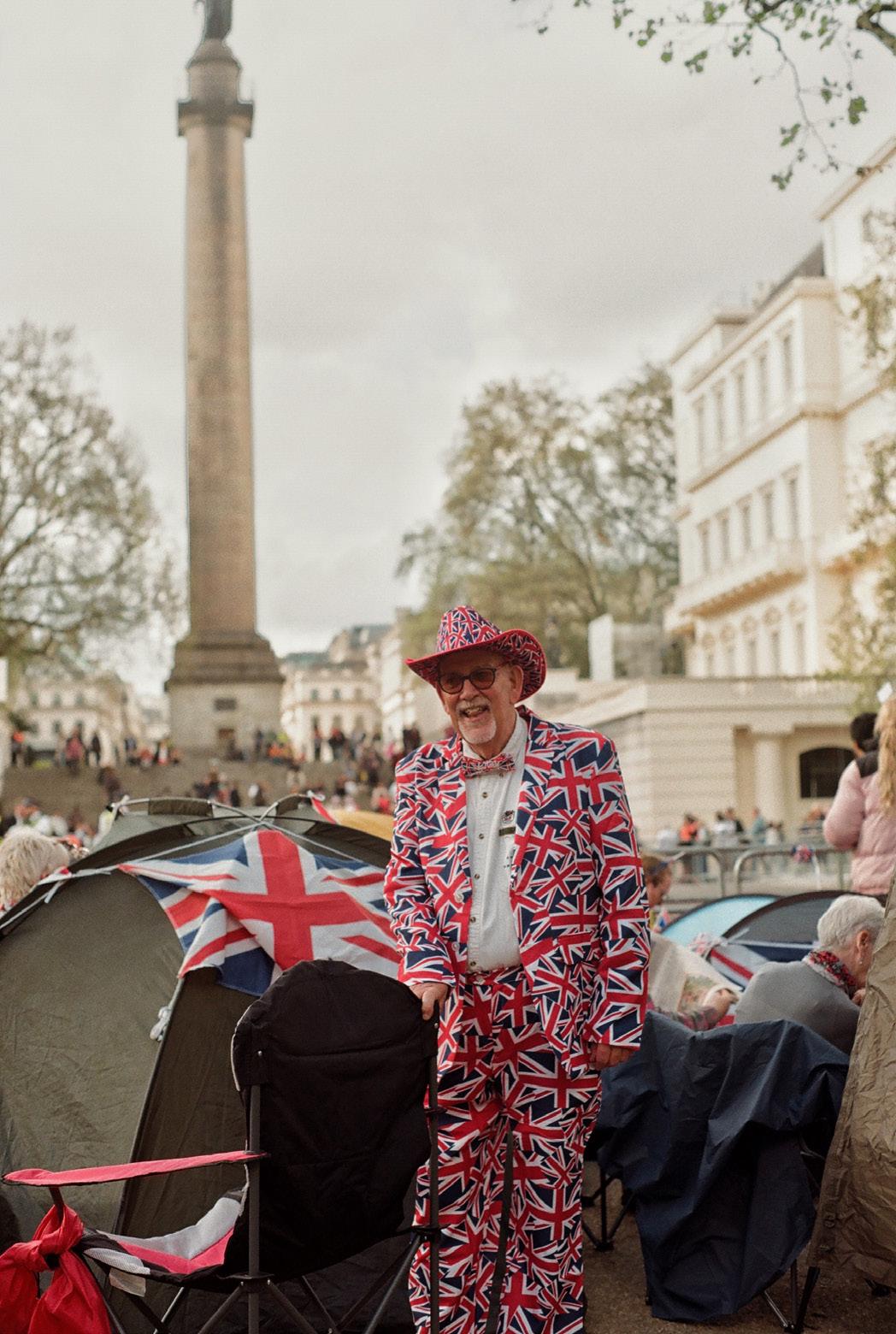
Although they were all there to catch a glimpse of the Royal Family, I believe that it was being surrounded by all the other spectators that completed the experience for many. In this example, clothes were used as a uniform to attract attention, communicate excitement, dedication and also political opinions.
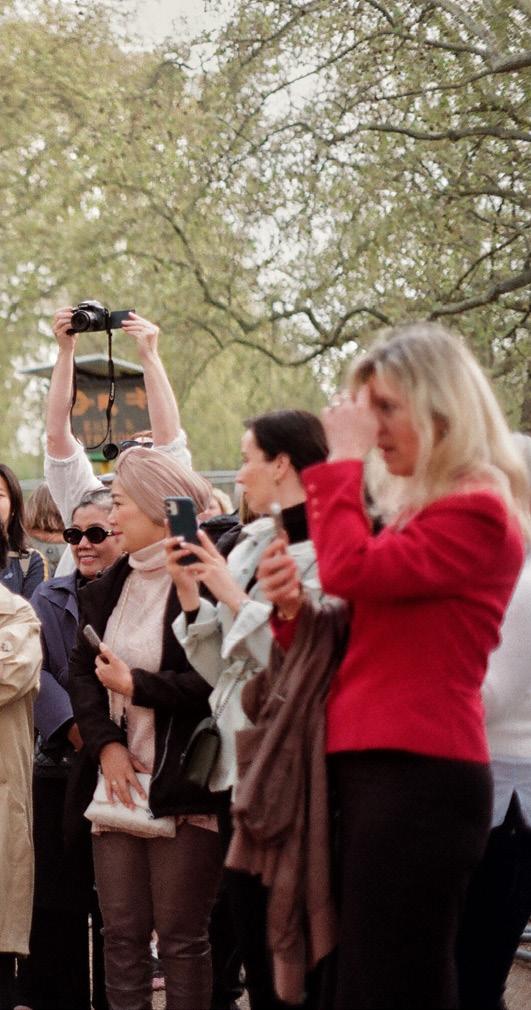
In conclusion, the colors and symbols of the event, particularly the national colors of red, white, and blue and the Union Jack, served as visual representations of “Britishness” and the associated national pride and loyalty. However, within the massive collective display, individuals were keen to to express their individual style, values, and affiliations through the combination of national and other colors and wide ranging unique, often handmade accessories.
The Coronation became a platform for both unity and individuality, where spectators could celebrate as a mass while showcasing their uniqueness.
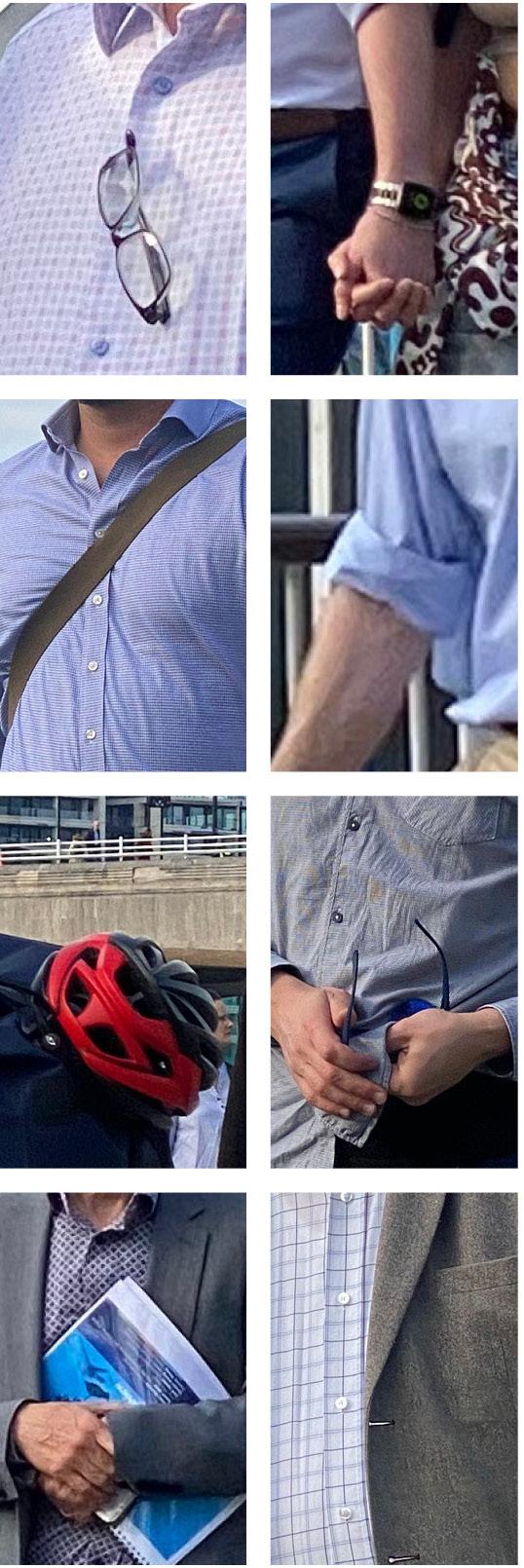
By observing businessmen passing through Southbank and focusing on photographing them individually I realized that individuality is only based on the attention that others give to it. Like my sunflower Bob, everyone is unique in their own way, you see this when you take the time to focus on them. Look at them from a distance, you will categorize them as a group such as “Sunflowers”, “ Businessman” or “Bob”.
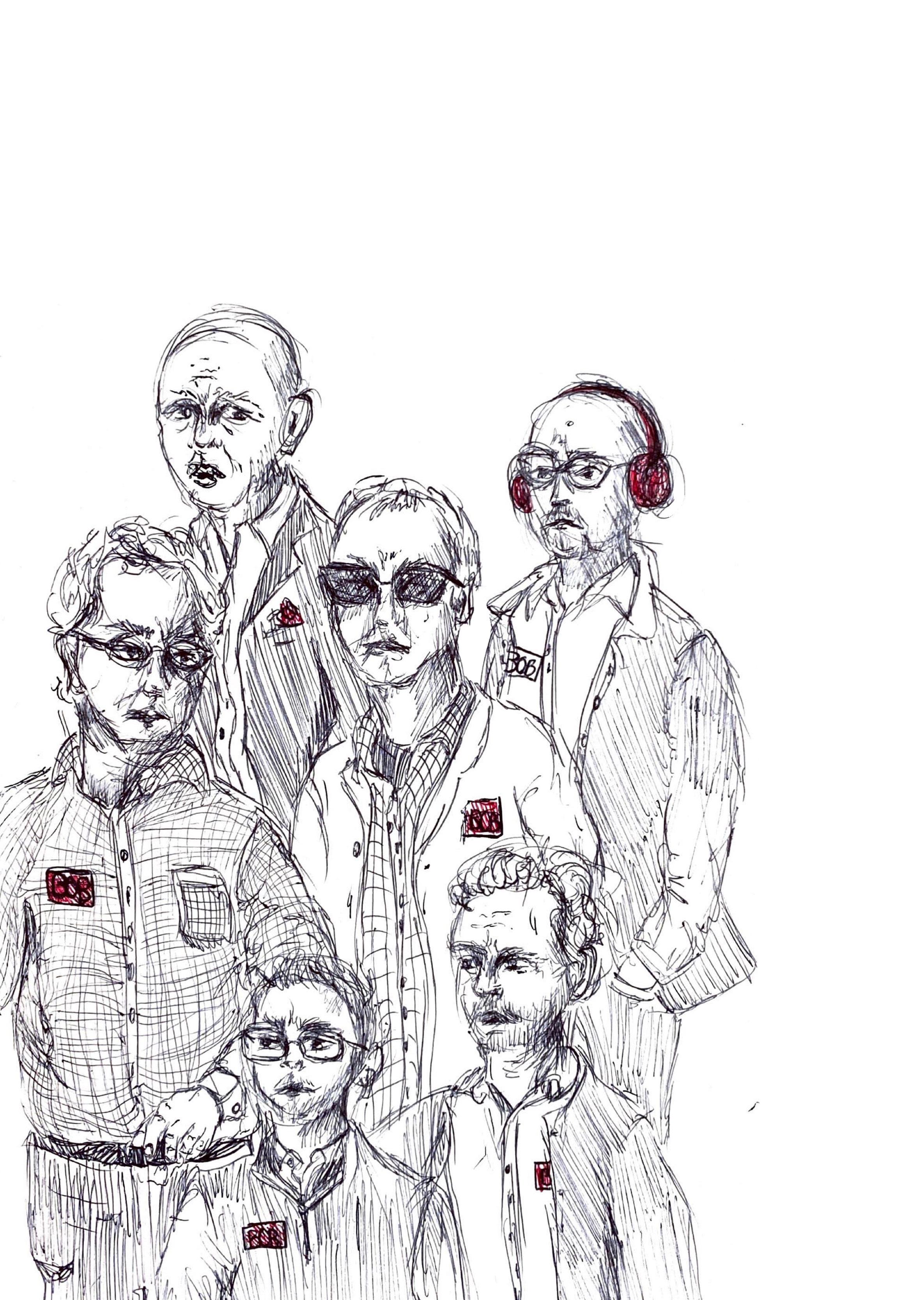
Only when looking close up my Businessmen photographs was I able to see interesting distinguishing details, such as a lapel pin, glasses, a newspaper in someone’s hand or a wedding ring. It is simple actions or objects that allow the others to get a glimpse into who you are. There was a certain joy in uncovering those distinctive elements. These small details captured not only their physical attributes but also gave access to their personality and story.
I explored the opposite case with my animation, looking into scale and playing with the metaphor of businessmen being ants strolling around London. In this case, the message is that we all look and act the same from a distance. Even when wearing bright socks, a bird on high will not be able to differentiate us.
Wherever you are in the world and whatever influences society has on you we all work in the same way whether it is finding your place with your job or materialistic item and we all question at one point or place in the world and our purpose.
Though, my game Guess Bob, inspired by Guess Who, is exploring this concept of scale and mass in an interactive way where the player is forced to take the time and look for details to differentiate them from each other in order to play the game. I created it like a visual metaphor or a tool to explore this vast and complicated idea that is individuality.
Playing with irony, Guess Bob is here to make people laugh but also feel uncomfortable, the characters are only men and for the majority white. This wasn’t a creative choice, but just what I observed during my photography session and I want those playing Guess Bob to recognize a lack of diversity. This links to the COP of information and data that I chose for this project, where I explored different ways to transmit information with creative solutions.
In contrast to countries like France, where the culture of leisurely sitting at a café, either alone or with friends, is deeply ingrained in our daily routines, London presents a different experience. The opportunity to engage in relaxed conversations, work, or simply observe our surroundings while allowing our minds to wander is less prevalent. During a conversation with an Italian friend, she aptly summarized the sentiment by stating,
This captures the essence of the fast-paced nature and constant pursuit that characterizes life in the bustling metropolis.
“Living in London often feels like an endless race, where no matter how fast you run, you always feel one step behind.”

Therefore, my contribution to the field with my physical art pieces was to force the people of London to take a break and observe the people around them and ask questions. Curiosity is a key word in my practice as I believe that living in such a dynamic city as London pushes people to walk fast and focus on themself, forgetting the beauty and ugliness that surrounds us daily
This essay has the purpose to accompany my projects by understanding individualism and questioning, if it’s even important, or how different people and cultures around the world use this term and transform it into something that’s their own. Personally, it allowed me to understand it better and not be so scared about it as I always wondered where my own person fitted in the world. I have no more philosophical approach about it and it allowed me to brush your way, some anxiety that comes with growing up, being a human, living in a city or even an artist.
I got lost at the beginning with the vast and complicated subject that is individuality, being lost enabled me to look at it with different viewpoints and question my own relationship with it. From looking at different cultures, talking with my friend, observing people in the streets or in festivities, feeling unique or feeling unseened, I pushed myself to find an answer to something that didn’t have one and create outcomes that represented my journey into discovering this.
Therefore, I’m hoping that this project is only the beginning of a long life journey of exploring myself and my position in the world, where people could find a piece of themself in all the doubt that surrounds us and feel like they all have a Bob in them.


China-Mike. (2020) “Confucianism: The Way of the Sages - ChinaMike.com.” ChinaMike.com. Available at: https://www.china-mike.com/chinese-culture/ confucius/#:~:text=Individual%20expression%20is%20 encouraged%20from,greater%20good%20of%20 the%20group.
SuitsWell. “Why Wearing the Suit Gives You Power.” SuitsWell. Available at: https://suitswell.co/why-wearingthe-suit-gives-you-power/.
Real Men Real Style. (2023) “The Necktie for Business Purposes.” Real Men Real Style. Available at: https:// www.realmenrealstyle.com/neck-tie-for-businesspurposes/#:~:text=It%20may%20sound%20trite%20 but,wear%20it%20at%20a%20funeral.
Sisyphus 55.(2023) “The Myth of Individualism” YouTube. Available at: https://www.youtube.com/ watch?v=mFLhwHLjesk.
Clive Martin. (2018) “The Seductive Power of Uniforms and Cult Dress.” CNN Style. Available at: https://edition. cnn.com/style/article/seductive-power-of-uniforms-andcult-dress/index.html
Elena Saleva, Paul Thompson and James Fielding. (2023) “Royal fans pour onto the Mall for Coronation procession today.” Daily Mail. Available at: https://www. dailymail.co.uk/news/article-12053457/Royal-fans-pourMall-Coronation-procession-today.html.
United Nations. “Universal Declaration of Human Rights.” United Nations. Available at: https://www.un.org/en/ about-us/universal-declaration-of-human-rights.
The World of the Habsburgs. “Liberté, Égalité, Fraternité - Liberty, Equality, Fraternity.” Habsburg.net. Available at: [https://www.habsburger.net/en/chapter/liberte-egalitefraternite-liberty-equality-fraternity#:~