
UNTOLDSTORIESOFDDS
SPECIAL EDITION: ON TOPICS OF NEURODIVERGENCE
ESSAYS BY:
MORGAN GILLILAND EMBERLYN GILLEY
This special edition of Untold Stories of DDS features two student essays on the topic of neurodivergence, one written by sophomore Morgan Gilliland and one written by freshman Emberlyn Gilley Morgan, a triplet, writes about her two sisters, both of whom have been diagnosed with Autism Spectrum Disorder Emberlyn writes about her brother, who suffers from Cerebral Palsy The lead-off article is an informational piece about neurodivergence written by AP Psychology teacher Jill Cope. Enjoy!
“TBACKGROUND INFORMATION ON NEURODIVERGENCE
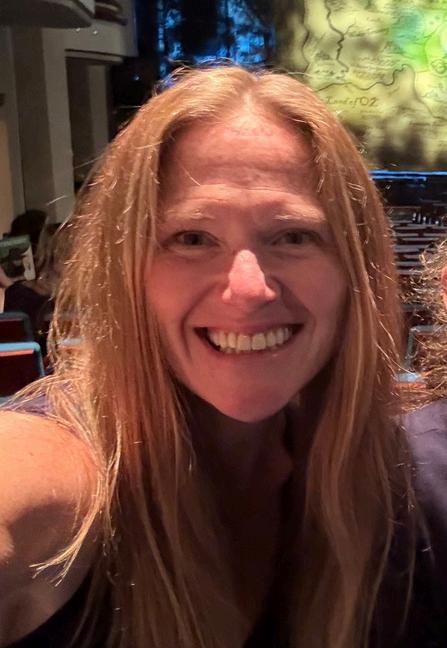
BY JILL COPE
he term “neurodivergence” has made its way into pop culture and a part of the vernacular I see this increase in awareness as a reflection of the advancements in the field of psychology and new information that has come to light about how the human brain works Subsequently, as a culture, we find ourselves curious We are intrigued by the differences we see in the people around us and naturally curious as to where we individually fall on the spectrum of Neural functioning. From my perspective, these are all incredibly positive trends. Curiosity leads to knowledge. The challenge arises when accurate information is not available for us to enhance our understanding of those differences in the human experience. To be “neurodivergent” simply means that a person’s brain (and central nervous system) processes information that is outside what is commonly observed. As a result, those people face additional challenges. Social systems are established based on the needs of the majority.
The first step in understanding “neurodiversity” is understanding what the brain has evolved to accomplish to increase human survival It is paramount to understand that the 21st century human biology has evolved over hundreds of thousands of years, for very specific dynamics Evolution is a slow and deliberate process of natural selection Our technological advancements have changed our environment at a rate that far exceeds our brain/body’s ability to keep pace
Our brain interprets sensations from the world around us. This facet of cognitive function exists so that our body can respond in a way that is protective. If the light is too bright, you squint your eyes to decrease the light. If something is sweet and salty, like a
delicious caramel apple, you want to have more of it. If the temperature drops too low outdoors, you will start to shiver. All of these responses happen on a biological level. Our brains are adapted to take new information/experiences and either interpret it or compare it against previous similar information/experiences. This function of our brain allows us to predict future outcomes and better plan our responding behaviors Information can come in the form of storytelling, reading, observing, trial-and-error, etc Finally, the human brain has adapted to be fully reliant on the interaction with other people for survival From the moment we are born, until the moment we take our last breath, everything about how the human brain takes in the world is in relation to others The brain is sensitive to nuances in facial expressions, body language, tone of voice, physical tenderness, direct and implied language, and power dynamics within a group There are specific regions of the brain responsible for facial recognition and interpreting the intentions of others Being able to respond adaptively to external stimuli, take in new information (transforming it into sustained knowledge) and interact collaboratively with our group (through the appropriate interpretation of social cues) are biologically-based in the human species.
Neurodivergence enters the conversation if one (or more) of those three aspects of the human brain’s tasks is not aligning with the person’s environment, thereby causing them challenges. It is important to recognize that neurodivergence is not a deficit. It is not a handicap. In many cases, a neurodivergent person (someone whose brain processes things in a way outside of the norm) has extraordinary talents in areas that far exceed the “neurotypical” brain A student with neurodivergence can struggle in the classroom; in the standardized classroom environment, students who have neurodivergence in relation to integrating sensations can appear to need more/less stimulation at any moment in time (which can make them “stand out” from the crowd) The neurodivergence that seems to be most identifiable to someone in the neurotypical world would be those whose brains do not interpret the nuances of social cues
While neurodivergence is not, in itself, a deficit, people who have neurodivergence, in a world that doesn’t support their unique needs, suffer immensely. People who are neurodivergent, living in a neurotypical world that is ignorant to the challenges they face, can suffer emotionally, socially, academically and physically. The suffering experienced in those areas, if they persist for too long, lead to lowered self-esteem, diminished self-confidence, loneliness and isolation.
While we need to recognize the complex experience of someone who is neurodivergent, we cannot forget that every person is someone’s son, daughter, brother, sister, cousin, etc People who are neurodivergent have family members who, stemming from great love and empathy, also feel the suffering they observe their loved one experiencing
In my professional experience, having worked with people from all walks of life and who have faced all forms of challenges, it has become clear that the more we learn about the human experience, the more we will recognize that neurodivergence is far more typical than we once believed to be true. Attention Deficit Hyperactivity Disorder (ADHD) is a form of neurodivergence that is well recognized by the greater population. ADHD manifests because of an imbalance in the dopamine network within a person’s nervous system (this regulates motivation and focus). Dyslexia is another commonly recognized form of neurodivergence that can result in a range of struggles with reading and writing. Autism Spectrum Disorder (ASD) is a form of neurodivergence marked by challenges interpreting social cues and a high sensitivity to sensory experiences (ASD has an extraordinary range of functional impairment and consequences ) Cerebral Palsy (CP) is another form of neurodivergence that results in damage to the brain’s motor centers prior to birth The severity of CP varies widely and impacts the degree to which a person needs support for ADLs
It is important to note that while individuals with neurodivergence struggle in a world that is designed for more common ways of processing, they also have unique talents that others do not. That which makes them different, also makes them extraordinary. Innovation comes from those who think outside the box.
MMY EXPERIENCE WITH NEURODIVERGENCE
BY MORGAN GILLILAND, CLASS OF 2028
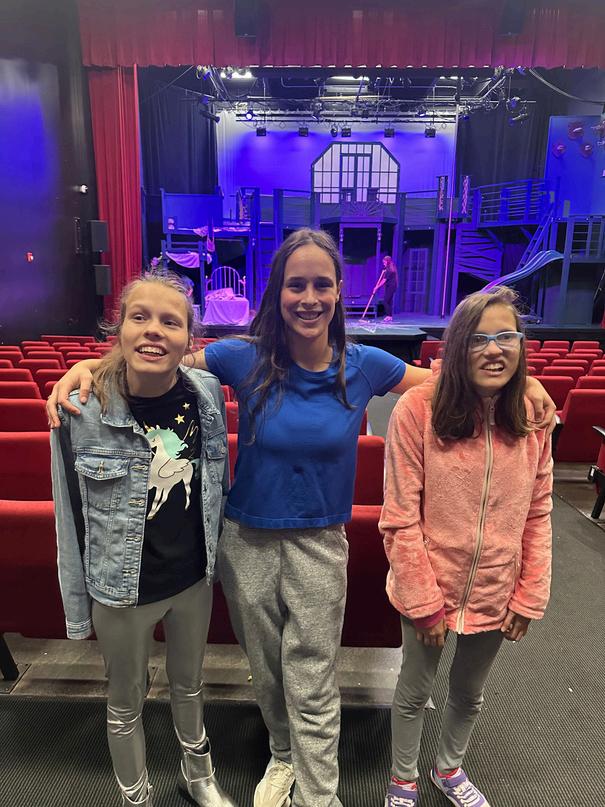
ost people I know have at least one sibling. Some people I know have more than one. A few people I know share their birthday with their sibling. I relate most closely with them. As a triplet, the relationships I have with my siblings are more unique than most They are even more unique than the experiences of other triplets because both of mine have Autism Spectrum Disorder (ASD) As of 2023, 0.07% of children born in the US are triplets, and often, they are born by c-section, as “Preemies” (premature). My sisters and I fall into this section of data. I was born at 26 weeks, at 2 lb 2 oz, and my sisters weighed even less. (The average baby is born at 7 lbs). Because of how tiny we were, my sisters and I were considered “micro-preemies” and spent the first weeks of our lives in the ICU as Baby A, B, and C. Micro-preemies are born before or at 26 weeks and weigh around or less than 1.75 lbs. So we were at a high risk for multiple diseases and health complications. Eventually, my parents were able to take us home and figure out how to raise three girls at once
When we were toddlers, it became apparent that Rachel and Kendall were not intellectually developed for our age, though that couldn’t be attributed to being micro-preemies My parents decided to take the three of us to our doctor to see what the issue was That was when Rachel and Kendall were diagnosed with ASD As the name implies, Autism is a spectrum, affecting individuals in various ways that leave some dependent on their family for support in their day-to-day lives, while others who are considered “highfunctioning” present as neurotypical to most. In regard to where my sisters fall on the spectrum, they struggle with speech and their fine motor skills. When we were younger, we had speech and occupational therapists come to our house to conduct daily sessions with them to help them develop these skills. I remember feeling jealous and wanting to take part in their sessions. I assumed that they got to play with fun toys and play on the iPad. In reality, they were practicing their motor skills by playing with the toys, and were being rewarded with time on the iPad for their efforts While I didn’t realize it then, I would be given more opportunities than my sisters because I was not held back by any mental restrictions I had no idea how many more doors were open to me than to my sisters
A year ago or so, my parents decided to end Rachel and Kendall’s therapy sessions It became obvious that they had grown bored and that their therapists could only do crafts with them according to their curriculum. By this time, Rachel and Kendall had developed their fine motor skills and had learned to form sentences to express themselves, which they continue to do today. (Usually, their sentences are about what they want us to stream to their TV, or what music they want us to play in the car.) As we ’ ve grown older, Rachel and Kendall have both become more independent. They make their beds, dress themselves, make their breakfasts, and take care of their hygiene. Compared to a few years ago, they’ve grown and improved exponentially.
When we first moved to North Carolina from Alexandria, VA, at the age of 10, school was great for my sisters My sisters had teachers they loved and who loved them Then came the COVID pandemic Most people struggled during that time, and my sisters were no exception It was already hard to teach a class of kids with various needs and kinds of neurodivergences, and it was even harder for their teachers when they were forced to go online By the middle of 5th grade, we survived COVID learning and had returned to inperson learning.
Then came middle school. My sisters and I had attended public schools for all of elementary school, and this trend didn’t change until my sisters attended the recommended public middle school, while I enrolled at a private school nearby because I needed to be challenged academically in ways that public school couldn’t offer. To be blunt, their middle school teachers sucked. The school had lots of turnover, and went through multiple teachers within one year, and even one who lasted all of a few weeks My sisters made it
through the slog of 6th grade, and then my parents quickly decided to transfer them to Langtree Charter. While I can’t say much about their traditional programs, their special education program is great. My sisters’ teacher is passionate about all of her students and focuses on teaching them life skills they need to be independent as adults, rather than focusing on teaching her kids advanced math and reading that they won’t be able to use much of anyway
I have memories of being in school and people asking why my sisters were weird I gave no answer because I wasn’t really sure either It’s hard for people to understand what Autism is and how it affects people, and it’s even harder for people that young When I did understand what it was, I often explained it to my classmates this way: “Autism makes it so that a person’s brain is wired differently than ours It just means they learn and see things differently, which can make learning some things hard But they can still do almost anything that we can do.”
One of my elementary schools worked to include the kids from the special needs classes in the “specials” or electives with the normal classes, which gave the kids the opportunity to interact with each other. This was one of the coolest things the school did. I remember one day during recess, a kid commented on my sisters being weird and tried to get others to join him, or at least get a reaction out of them. As their sister, I’m used to being the first one to defend Rachel and Kendall, but another girl, Marietta, beat me to it She and many other kids who knew my sisters from specials defended my sisters and even asked why the kid thought they were weird That shut the kid up quickly, who then moved away from the subject Allowing my sisters and their classmates to spend time with the neurotypical kids created more awareness and acceptance among the kids who considered my sisters to be their friends
For my entire life, I have always done my best to support and protect my sisters. Nowadays, they need less support from me and my parents. While my sisters will always need me and my parents to some extent, it still seems surreal sometimes when I see them do something for themselves that I remember having to help them with a few years ago. I’m sure the same holds true for my parents. When we graduate high school, my family will have moved to South Carolina for my sisters, who will be living in a community for adults with special needs. They’ll still have some help from those working in the community, but my sisters will live independently without me or my parents It’s comforting to know that they’ll always be supported regardless of whether or not I can always be there for them
We started together as micro-preemies who could barely breathe on our own, and now we’re on our way to becoming our own people who can live our own unique lives
MMY NEURODIVERGENCE STORY
BY EMBERLYN GILLEY, CLASS OF 2029
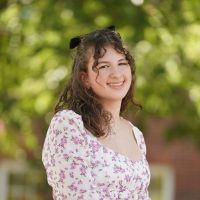
y story starts when my brother was born. My 12-year-old brother Wyatt, born a micro-preemie, was diagnosed with Cerebral Palsy (CP) and epilepsy. When he was born,he had a severe brain bleed that damaged half of his brain. He will never be able to walk on his own or speak in full sentences He can also only use one hand He uses a motorized wheelchair and can only speak very basic words like ‘mama’ and ‘dada ’ Wyatt can't say my full name, so calls me “Eee ” His twin, my sister, sadly passed away after only 11 days of life due to a disease called “Necrotizing Enterocolitis”(NEC) ’ I remember seeing her for the first time Her skin was purple and she was connected to tubes. I remember the moment I was told, “ your sister has grown wings and is now a butterfly.” The symbol for fallen infants or miscarriages is a butterfly, so naturally I found comfort in butterflies. I knew that after my sister passed I had to be the best older sister for my brother that I could be.
My earliest school memories consist of finishing a test early in 2nd-4th grade so I could hang out with my brother in his class and eat lunch in the special EC classroom, where they held lunch dance parties During that time, I was getting bullied by other students because of my brother's disabilities, which led me to frequently seek the school counselor for guidance and direction I couldn't believe that my peers could be so cruel towards my brother just because he had a disability The thing most people don't realize is when people use language like “that was so autistic” or “ your so Sped” or joke about epilepsy, it hurts me too I can't pretend to know what it feels like to be made fun of for having a disability, but I have watched first-hand what it does to my brothers and others like him, and that makes me feel responsible for making sure people are educated and respectful, because these kids were some of my best friends.
From the outside looking in, Wyatt doesn't appear to be capable of many things, but watching him grow and develop through many years of occupational, physical, and speech therapies has made me realize just the opposite to be true. Once I started middle school, I began helping out at a special needs organization that Wyatt was involved with called Wings of Eagles, and I also learned American Sign Language (ASL) Wings of Eagles changed my life I got to work alongside Occupational Therapy students and give disabled kids a full camp experience where everything on campus is accessible for them They can go ziplining, ride horses, do arts and crafts, and make lifelong friends all in one week No matter the disability, the staff at Wings of Eagles tries to find something any kid can do and have fun doing I even got to learn field work and get mentored by an Occupational Therapy professor I think that experience changed me more than I could have imagined One of my favorite memories of camp was signing to the campers throughout the day that they were strong, beautiful, and loved. ASL has been a huge outlet for me. I love learning about the deaf culture from my former ASL teacher who used to work at Gallaudet University. She has interpreted for concerts, assemblies, and even the Obamas! Learning a tiny piece of a new perspective and form of communication inspired me to want to continue to grow in ASL and maybe pursue a future in it.
Being exposed to all of this has inspired me to want to become an occupational therapist in the future Although I can’t fix every problem, I want to make a positive difference in the lives of people who really need these services I want to work in a trustworthy, respectable field so that I can make a positive and life-changing difference in the lives of others My brother inspires me every day and is capable of many things Just because he may look different doesn't make him less kind, so think the next time you make a joke!