





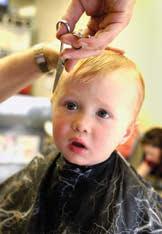
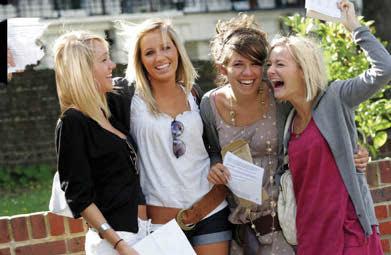
1 Everyone goes through changes, whether by choice or because of something outside their control. Talk about changes that have happened to you or might happen in the future, relating them to these phrases. a change for the better the earliest change you can remember a new location a change of direction in your life a change of heart
Which two phrases above are examples of idioms? Find a third idiom on this page.
At C2 level, you need to understand and use phrases and idioms where the meaning is not transparent. You will probably know the individual words used, but this may not help! Some examples of common idioms are given below. Choose the correct option (a or b) to complete each definition. These idioms are used in the Listening section.
EXAMPLE: If something happens out of the blue, it is a) unexpected b) creative. Answer a)
1 When things fall into place, events happen to a) change the order of a list b) produce the situation you want.
2 If something goes downhill, it a) gradually becomes worse b) picks up speed.
3 If something is on the cards, it is a) likely to fail b) likely to happen.
4 When you are talking about a change in your life and you say the rest is history, you mean that a) it happened a long time ago b) you are sure that people know what happened next.



2 02 1
You will hear five different people talking about a key change in their lives. Tick each speaker’s life-changing moment. There is one extra that you will not need.
life-changing moment12345 being made redundant
gaining media attention meeting ‘Mr Right’ heading the wrong way losing something special stepping in for someone
3 02 1 Listen again to check your answers. Then choose one of the speakers and describe what happened to him or her.
Phrasal verbs are tested in Parts 1, 2 and 4 of Paper 1. Remember that their use is generally informal, so they should be used with care in Paper 2, where the tasks mostly require a more neutral or formal register.
You will already have come across many phrasal verbs, but now you need to add to this knowledge. If there are gaps in your learning, try to fill them in. How many phrasal verbs can you come up with from the recording in 2? Remember that some phrasal verbs contain two particles rather than one (an adverb and a preposition), as in the last example.
4 Match the verbs to the correct particle(s) to form phrasal verbs that were used by Speakers 1–5. Four of them are ‘three-part’ phrasal verbs.
example: break up (3) verbs break catch cheer come cut end get hang help jump pay run settle take track turn particles around at back down in off on out up with
5 Now complete these sentences using a phrasal verb from 4 in a suitable tense. Sometimes the passive form will be needed.
example: The whole family moved to Switzerland last month and their two children are settling in well at school there.
a Their lives changed completely once the loan as it meant they could treat themselves to meals out and weekends away.
b An old school friend me on the Internet and we met up recently to compare our life stories.
c The company offered Maria a post in the New York branch and she the chance.
d During the last recession, local businesses recruitment and no graduate trainees as a result.
e Jeff explained that shortly after they bought the house together, he and his wife and she moved to another town.
f People often manage to advance their careers by the right people and telling them what they want to hear.
g Everything fell into place – she was offered the scholarship at Harvard, the flight was booked and her missing passport just in time!
h My brother has had a change of heart and is willing to me with decorating the flat after all.
Part 1 of Paper 1 is a short text with eight gaps. Don’t panic if you find unfamiliar words in options A–D. Try the other words in the gap first. If you’re sure they don’t fit, choose the word you don’t know.
6 Read the text below, which is from the introduction to a book on feng shui. Decide which answer (A, B, C or D) best fits each gap.



The ancient Chinese philosophers who considered feng (wind or air) and shui (water) to be the (1) of mankind also understood that these were not the only supportive elements flowing through the (2) . They perceived a subtler (3) , calling it chi or ‘cosmic breath’. This life force is well-known to acupuncturists, who have (4) elaborate maps of the ‘meridians’ or channels it uses to flow through the body. Kung Fu masters believe that chi can be concentrated in the human body, allowing someone to (5) almost supernatural feats, such as the breaking of concrete blocks (6) by using the edge of their hand. A real feng shui master is able to (7) the flow of chi in a site, and may advise changes to the environment to (8) health, wealth and good fortune.





1 A sustainers B providers C keepers D promoters
2 A background B location C outlook D landscape
3 A vigour B weight C energy D stimulus
4 A shown up B built up C put up D laid up
5 A perform B play C act D conduct
6 A barely B merely C hardly D slightly
7 A suspect B realise C sense D endure
8 A set about B come about C go about D bring about



1 Read these short texts about alternative ways of approaching city life. The highlighted parts illustrate some of the grammar areas that C2 learners continue to have problems with. What are they?
2 Tick any grammar areas below that you feel you need to work on. Add your main grammar problem if it is not listed.
Modal verbs
Passives
Conditionals
Perfect tenses
Relative clauses
Reported speech
Uncountable nouns
Correct the errors in perfect tenses in these sentences, which were written by exam candidates.
a Three years ago I have been to Germany on a cultural exchange.
b Tourism is a word that is being used for the last 50 years.
c In England last year, I was able to appreciate things I have never seen in my entire life.
d The noise levels have been measured in our suburb the other day and are twice the acceptable level.
e All these years I’m practising basketball, I’m trying to become a better player.
f When you will have bought your train tickets, you should take one each and put it into the machine.
g Supposing they would have got married, wouldn’t the day have come when they got bored with each other?
h Nowadays, almost every disease has a cure and people have been caring more about their health.
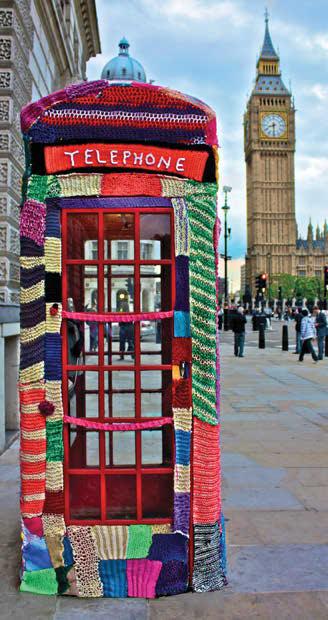
From knitted graffiti to guerrilla crocheting – needle crafts have exploded in ways entirely unforeseen by previous generations. Our grandmothers would no doubt approve of twenty-somethings knitting something similar to a tea cosy (which they used to cover their teapots), even when it is large enough to keep a London phonebox warm! This original item of knitwear has been made by Knit the City, a subversive group of knitters who also operate in other capital cities. In Berlin, for example, a woolly ‘Currywurst’ was created entirely out of yarn recently. For those not in the know, the Currywurst is a popular fast food item – over 800 million of the sausage treats are sold every year!
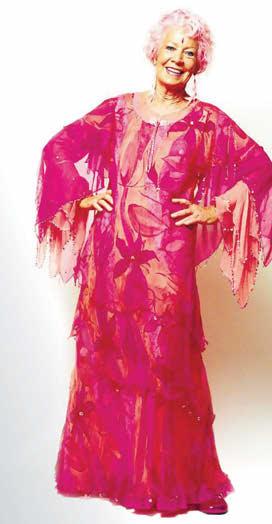
You may have come across the extravagantly dressed Pink Lady Flamingo, whose real name is Maryanne Kerr, busking on the underground in London. She auditioned for an official licence to perform her music, having experimented with many previous careers. “I’ve been busking since I broke a recording contract with a major record company,” said Maryanne, “because I refused to be dictated to.” She added that she became a busker more than forty years ago and announced that she is in her late seventies now and still busking.
3 Explain how tense choice alters the meaning in these sentences. In which two sentences is there no change in meaning?
a Mirek has gone / went to Gdansk on business.
b Our society has been suffering / was suffering from high unemployment for decades.
c We were given / have been given more time to complete the task.
d Top government ministers have been dealing / have dealt with the problem.
e Matt and James have played / have been playing golf all day.
f I’ve thought / been thinking about what you said.
g Is there anything else we could have done / will have done?
h Come October, we will have lived / will have been living here for eleven years.
4 Answer these questions so that they are true for you, using perfect tenses.
a How long have you been learning English?
b What have you never done that you would like to do?
c What change has been made to your town or city recently that you don’t approve of?
d Which single change would most improve your quality of life at home?
e What may have changed in your life by this time next year?

5 Complete the text below, using the words in brackets in such a way that they fit the space grammatically.
Across the centuries, people’s daily lives (1) (continually transform) by innovation. One of the most obvious characteristics of the 20th century was the rapid growth of technology, with individual quality of life (2) (improve) immeasurably as a result. Basic labour-saving appliances such as washing machines, refrigerators and freezers were commonplace in the home by the 1960s and the demand for these and other ‘white goods’ (3) (further stimulate) by the availability of cheap electricity and noticeable increases in personal wealth during that decade.
Personal computers first made their appearance in the home in the 1970s, but surely few people (4) (be able to) imagine then that the home computer could evolve into the super-fast, super-sleek machines of today. Nor could they (5) (even think) that handheld mobile gadgets would (6) (use constantly) by all of us, in our desperation to keep up with everything from office correspondence to world news.
So what lies ahead of us? By 2025, will we (7) (embrace) even more sophisticated technological aids – or will the world’s resources (8) (deplete) by mankind to such an extent that there will be insufficient electricity to support these advances? Only time will tell.

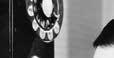
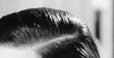
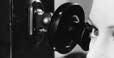
































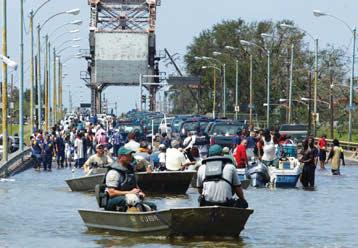

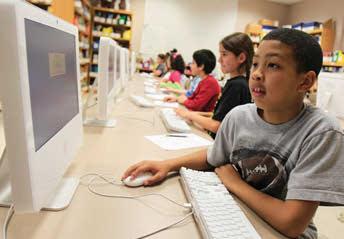
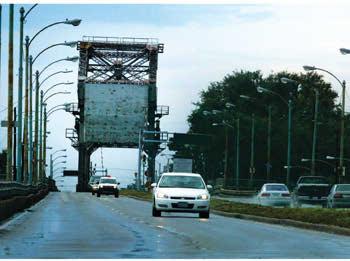
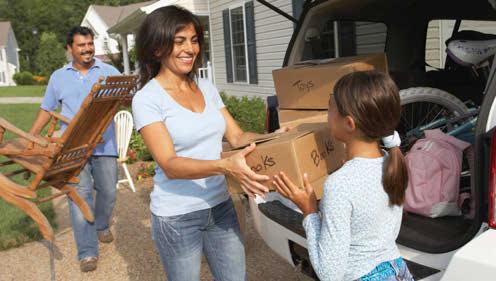
1 What changes do you notice in the world around you? Identify the changes shown in the pictures and categorise them, choosing from the adjectives below. Then suggest other changes that could be classified under these categories.
commercial environmental physical political social technological
Word formation
2 The adjectives above are formed from nouns. Generally, the suffix -al is added to the noun, as in environmental. Explain the formation rules for commercial and technological.
The suffixes -able and -ive frequently combine with verbs to form adjectives, as in favourable and supportive. Explain the formation rules for creative and variable.
The suffix -ous combines with nouns, as in courageous. Give two more examples.
Other common adjectival suffixes added to nouns are -ful and -less, as in meaningful and harmless. Give two more examples of each.
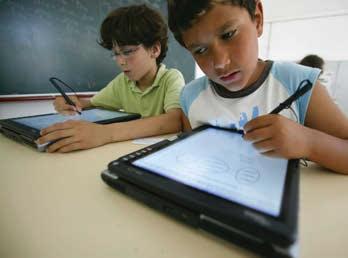
3 For sentences a–j, replace the words in italics with a single adjective formed from one of the verbs or nouns given. What adjectives are formed from the four remaining words?
adventure alternate disaster dispose exhaust experiment flaw hope identify mass notice philosophy predict speech understand
example: I’ve been given this very lengthy and complete list of all the repairs needed in the flat. Exhaustive
a My boss’s response to my plea for changes to my job description was exactly what I was expecting.
b If the weather is unfavourable, do you have any other suggestions to replace our original plans?
c Both sides in the conflict are expressing their optimism that the ceasefire will hold.
d Jeremy seems to have calmly accepted the news about the break-in.
e That play I went to see last night was trying something new in its use of dialect.
f I was incapable of any reply when Ella told me she had quit her job.
g It’s really easy to see how much fitter Liam has become since he started swimming regularly.
h Your last piece of writing was without any mistakes whatsoever.
i Many of today’s products are used only once and then thrown away, which is having an impact on the environment.
j The updating of the university’s computer system has had extremely bad and far-reaching consequences.
In the Paper 2, Part 1 compulsory task, you will read two short texts in order to summarise and evaluate them. You will need to reproduce different ideas concisely, using your own words wherever possible.
4 In extracts 1 and 2, important information has been underlined. Do the same in 3 and 4. Then answer questions 1–3 below the texts.

We pick up on health and social status from facial features, as shown by a recent research project where people were unconsciously attracted to healthy females and wealthy men, even when they only had a picture of a face (without make-up or jewellery) to judge them by.

It was in 1856, while working in his tiny laboratory at home, that William Perkin produced, quite by chance, the colour mauve, which not only revolutionised the dye industry but also led to important innovations in perfume, photography and, most significantly for modern medicine, to the development of aspirin.

Rather than burgers and fries being a product of the social changes seen over the last fifty years in America, the author suggests that fast food brands were to a large extent responsible for these changes, as they profoundly affected both lifestyle and diet.

Tiny holes found in human teeth estimated to be over 8000 years old are now believed to be the earliest evidence of dentistry, for when these holes were examined with an electron microscope, researchers found their sides were too perfectly rounded to be caused by bacteria and have therefore proposed that they were drilled by prehistoric dentists.
1 Which information in text 1 is summarised in the following sentence?
People form opinions of others by looking at their faces. What has been omitted?
2 Which phrase in text 1 could be replaced by the verb assess or evaluate?
3 Which underlined words in text 2 could be replaced by others?
5 Choose from a–f the best summary sentence for text 2, judging it by the inclusion of information, use of alternative words, choice of register and conciseness. Say why the remaining sentences are less successful.
a Mauve not only radically changed the dye industry but also led to new discoveries of anything from perfume to aspirin.
b By cooking up mauve in his lab, Perkin pushed the dye industry forward and set the ball rolling in other industries too, such as perfume and photography and aspirin.
c In accidentally discovering mauve, Perkin transformed dyeing and many other areas, notably medicine.
d Perkin discovered a special pale purple colour and this discovery was revolutionary for the dye industry and also for the pharmaceutical industry, since it led to the innovation of aspirin.
e Aspirin owes its development to Perkin, who found mauve by chance in his laboratory at home.
f Commercially-speaking, Perkin’s chance discovery was very important, as other innovations followed, for example the development of aspirin.
6 Now write summary sentences for texts 3 and 4, referring to the parts you have underlined and using between 12 and 20 words for each. Use your own words wherever possible.
In Part 3 of the Reading and Use of English paper, you will be asked to read a text and complete the eight numbered gaps with a form of the word in capitals at the end of the line. There is an example at the beginning of the text.
There are three main categories of changes that are tested. These are affixation (suffixes and prefixes), compound and grammatical changes. Unlike lower level examinations, at Proficiency level there is no limit to the number of changes which might be required to the root word.
Below are some examples of the changes you might need to make.
Affixes
noun to adjective flaw to flawless noun to negative adverb effect to ineffectively adjective to negative adverb definite to indefinitely verb to noun act to interaction verb to plural noun apply to applicants adjective to verb deep to deepened
1 Do the following for practice. Make sure you check the following: do you need to make the word plural? is a prefix needed? does any prefix need to be negative?
a There are a number of activities now CURRICULUM being offered at the school.
b People have always enjoyed the effects of sea air. BENEFIT
c Tony is a really OPINION person.
d The animal really KING fascinates my young daughter.
e Stefan was a COMPEL collector of gadgets throughout his life.
f It was rapidly becoming that we would have APPEAR to make changes to our plans.
g There have been a number of female in the INNOVATE field of aircraft design.
h There were a number of built into the CONSTRAIN contract.
i The of fast food CONSUME is increasing at a frightening rate.
j seems to suit Ella DOMESTIC – she’s really happy with her home life.
k The side wall of the house had to be . STRONG
l I believe she had the FORTUNE to have been seriously ill as a child.
m The broken vase turned out to be totally . REPLACE
n She showed her deep by slamming the APPROVE door in our faces.
o The police tried to evict the three from the building. OCCUPY
Compounds are often tested at this level. example:
a The of the meeting COME was rather inconclusive. Answer: outcome
b His brother had a second-hand car which was barely . ROAD Answer: roadworthy
2 Match a word from A with one from B to form a compound noun or adjective. The words in B can be used more than once. A B frame worthy up fall out date wind work rain break credit turn down proof
3 Read the Exam advice and then do the task below.
● Read through the text carefully and decide which form of the given word you need to use.
● Be careful as you will need to use a negative prefix or another form of prefix at least once.
● Check to see if a noun needs to be plural.
● All the words must be correctly spelled. American spelling is acceptable.
● Write your answers in CAPITAL LETTERS on your answer sheet.
Use the word given in capitals at the end of some of the lines to form a word that fits in the gap in the same line. There is an example at the beginning (0). Write your answers IN CAPITAL LETTERS
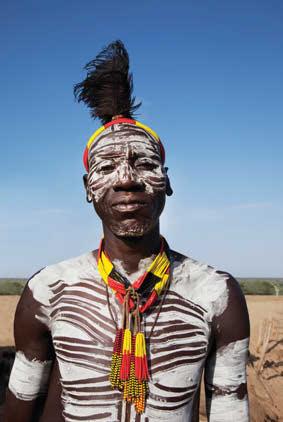
We are the only animal that chooses what it will look like. True, the chameleon changes colour – but not (0) WILFULLY . Unlike us, it doesn’t get up in the morning and ask itself, ‘What shall I look like today?’, but we can and do. Indeed, the (1) of body decoration points to the conclusion that it is a key factor in our development as the (2) life-form on our planet.
By (3) their physical appearance our ancestors distanced themselves from the rest of the animal kingdom. Within each tribe this helped them to mark out differences of role, status, and (4) . Our ancestors (5) developed extraordinary techniques of body decoration for practical reasons. How to show where one tribe ends and another begins? How to (6) in a lasting way the significance of an individual becoming an adult member of society? (7) , without the expressive capabilities of such ‘body language’ we would have been (8) less successful as a species.