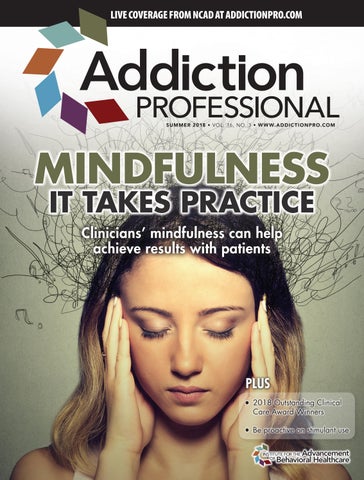
Clinicians’ mindfulness can help achieve results with patients LIVE COVERAGE FROM NCAD AT ADDICTIONPRO.COM MINDFULNESS IT TAKES PRACTICE PLUS 2018 Outstanding Clinical Care Award Winners Be proactive on stimulant use SUMMER 2018 • VOL. 16, NO. 3 • WWW.ADDICTIONPRO.COM












–
Soberlink Client
Why Sierra Tucson?

It
It
NO ONE KNOWS WHAT DESPERATION FEELS LIKE UNLESS YOU’VE BEEN THERE.
Life.
I would not be alive today if it weren’t for Sierra Tucson. I believe that every person who enters those front doors by that beautiful fountain is a blessed miracle, just like me.” —Andrew S., Scottsdale, AZ.
Literally Saved My
“
renders you hopeless.
are suffering from pain that interferes with life, depression, addiction, anxiety, PTSD, or disordered eating, we are here to help you heal.
us to take the next step on your journey of change. 800-842-4487 | SierraTucson.com We work with most insurance. Where Change Begins®
Whether you
Call
GARY A. ENOS
EDITORIAL
Editor in Chief Julie Miller jmiller@iabhc.com
Editor Gary A. Enos genos@iabhc.com
Senior Editor Tom Valentino tvalentino@iabhc.com
Associate Editor, Reader Engagement Megan Combs mcombs@iabhc.com
SALES
All inquiries please contact
Director of the Institute for the Advancement of Behavioral Healthcare
Douglas J. Edwards (216) 373-1201 • dedwards@iabhc.com
Traffic Manager Eric Collander (216) 373-1203 • ecollander@vendomegrp.com
Please send IOs to: adtraffic@vendomegrp.com
All ad materials should be sent electronically to: https://vendome.sendmyad.com/
DESIGN
Creative Director Dave Villafañe
SUBSCRIPTIONS
Call: 1-888-244-5310, email to: VendomeHM@emailpsa.com, or visit: www.iadvancebehavioralhealthcare.com/subscribe
REUSE PERMISSIONS
Copyright Clearance Center info@copyright.com Ph: 978-750-8400
Fax: 978-646-8600
ADMINISTRATION
Chief Executive Officer Jane Butler
Chief Marketing Officer Dan Melore
Vice President, Finance Bill Newberry
Vice President, Custom Media Jennifer Turney
Director, Circulation Rachel Beneventi
Addiction Professional (ISSN: Print 1542-8435, Online 2168-460X) is published 4 times per year by Vendome Group, LLC, 237 West 35th Street, 16th Floor, New York, NY 10001-1905.
©2018 by Vendome Group. Addiction Professional is a trademark of Vendome Group, LLC. All rights reserved. No part of Addiction Professional may be reproduced, distributed, transmitted, displayed, published, or broadcast in any form or in any media without prior written permission of the publisher. To request permission to reuse this content in any form, including distribution in educational, professional, or promotional contexts or to reproduce material in new works, please contact the Copyright Clearance Center at info@copyright.com or (978) 750-8400.
EDITORIAL: Addiction Professional is the addiction treatment and prevention field’s clinical resource that examines what works for individuals with addictive disorders. Articles and opinions published in Addiction Professional do not necessarily reflect the views of Vendome Group or the Editorial Advisory Board.
SUBSCRIPTIONS: For questions about a subscription or to subscribe, please contact us by phone: 888-244-5310, online: http://www.iadvance behavioralhealthcare.com/subscribe or email: VendomeHM@emailpsa.com.

Subscription rate per year: $140 domestic, $169 outside the US. Single copies and back issues: $20 Domestic, $32 outside the US.
POSTMASTER: Send changes of address to: Addiction Professional, PO Box 11404, Newark, NJ 07101-4014.
2 SUMMER 2018 ADDICTION PROFESSIONAL WWW.ADDICTIONPRO.COM CONTENTS | SUMMER 2018 FEATURES 12 It’s time to be proactive on stimulant use BY ALISON KNOPF 18 Stimulant use on the rise in jail population BY
G.
L.
AND KAITLIN A. GUSTON,
22 2018 Outstanding Clinical Care Awards BY GARY A. ENOS 27 Promoting sexual health in the LGBTQ community BY PHILIP MCCABE, CSW, MARK MCMILLAN, LSW, KRISTINA PADILLA, MA, LAADC, AND DAVID FAWCETT, PHD, LCSW DEPARTMENTS 6 Letter From the Editor Addressing stimulants on several fronts BY GARY A. ENOS 34 Process Addictions Adults not immune to issues with video gaming BY
39 Recovery John Koch shows why when it comes to recovery, there is little value in a scorecard mentality BY
NORMAN
HOFFMANN, PHD, ALYSSA
RAGGIO, MS, ALBERT M. KOPAK, PHD,
MS
BENJAMIN KANEAIAKALA
COVER STORY
It takes practice: Clinicians’ mindfulness work can help achieve results with patients BY GARY A. ENOS
Help
Commercially
And
* Terms and Conditions: Only valid for commercially insured patients in the 50 United States and DC through the direct delivery service. Not eligible if prescriptions are paid for in part/full by state or federally funded program(s), like Medicare Part D, Medicaid, Vet. Aff., Dept. of Def., or Tricare, and where prohibited by law. OFFER IS NOT INSURANCE. Offer cannot be sold, purchased, traded, transferred, and cannot be combined with any other offer. Offer may change at any time, without notice. Call (877) 438-9463 for questions regarding eligibility.
EVZIO.com
kaleo, Inc. All rights reserved. PP-EVZ-US-1753.
©2018
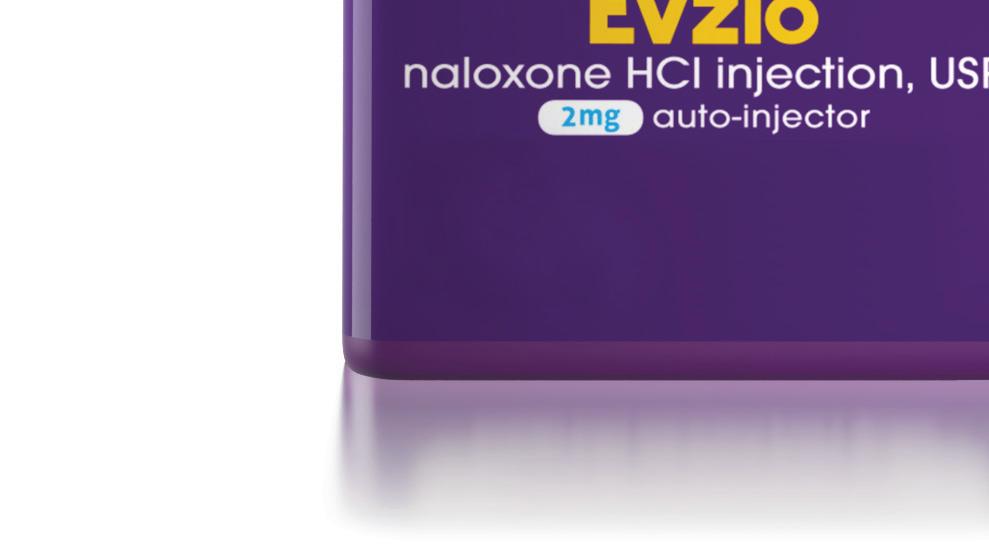
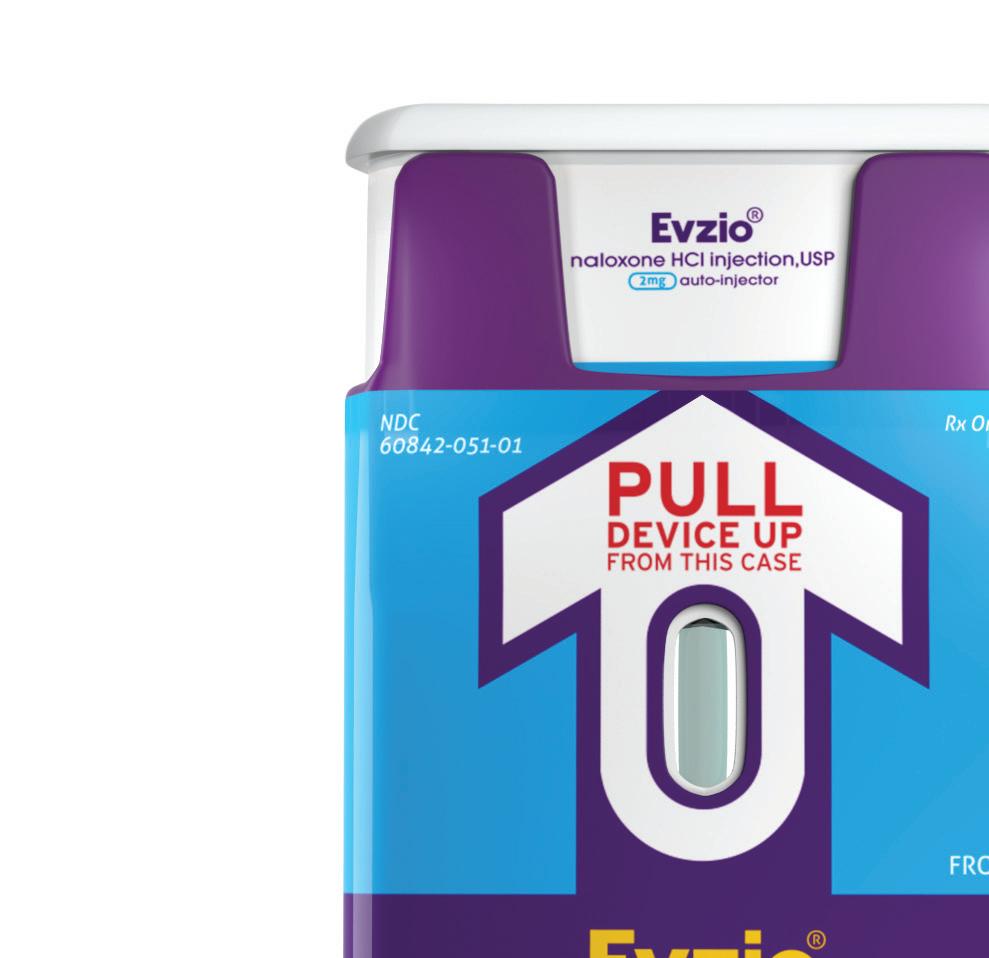
Go to EVZIO.com/PayNothingNow so your patients can be EVZIO-Ready.
insured patients pay absolutely nothing for EVZIO through the direct-delivery service*
there,
a
for
with
and their care partners.
while you are
request
Trainer for EVZIO
your discussions
patients
make sure your patients are EVZIO-Ready
Since 1987, Brown Consulting, Ltd. has assisted hundreds of mental health and addictions treatment organizations in successfully reaching their goals.
We
August 19-22, 2018
National Conference on Alcohol and Addiction Disorders

Anaheim, Calif.
https://vendome.swoogo.com/NCAD-2018
October 18-21, 2018
Summit for Clinical Excellence
Brain Matters: Trauma, Mindfulness and Addictions

Atlanta
https://vendome.swoogo.com/2018-Atlanta-Brain-Matters
November 12-14, 2018
National Cocaine, Meth & Stimulant Summit
Ft. Lauderdale, Fla.
https://vendome.swoogo.com/stimulant-summit
February 20-22, 2019
Summit for Clinical Excellence
Spirit and Science: Clinical Strategies for Addressing Trauma, Mental Illness and Addiction
Scottsdale, Ariz.
https://vendome.swoogo.com/ScienceAndSpiritSummit
March 6-7, 2019
Summit for Clinical Excellence
The Opioid Crisis: Strategies for Treatment and Recovery
Chicago
https://vendome.swoogo.com/2019-Chicago-Opioid-Summit
March 6-9, 2019
Summit for Clinical Excellence




The National Conference on Trauma, Addictions and Mindfulness: Where Freud Meets Buddha
https://vendome.swoogo.com/2019-Chicago
4 SUMMER 2018 ADDICTION PROFESSIONAL WWW.ADDICTIONPRO.COM CALENDAR CALENDAR www.addictionpro.com
WITH ADDICTION PROFESSIONAL » DANBROWNCONSULTING.COM LEARN MORE.
CONNECT
provide
full
of
in Regulatory Compliance.
us a call today! 1-800-495-6786
a
range
consulting services. Specialist
Give
the conversations about mental health and addiction on social media.
us @Addiction_Pro
RESULTS! NOT PROMISES. Join
Follow
Chicago
ADVERTISER INDEX Pages Alkermes CVR 4, 21 Ashley Addiction Treatment............................................ 17 Brown Consulting 4 California Southern University 38, 48 Central Recovery Press 15 Dominion Diagnostics 5, 44 Dreamscape Marketing 38 Eating Recovery Centers 19 Foundations Recovery Network ................... 32, 33, 40, 41 Hazelden Betty Ford 25, 48 IC&RC 23 Institute for the Advancement of Behavioral Health 36 John Volken Academy 7, 45 kaleo 3 The Manor ...................................................................... 13 McLean Hospital 35 Recovery Brands 26 The Retreat at Sheppard Pratt 11, 47 Retreat Premier Addiction Treatment Centers 31 Rogers Behavioral Health CVR 3, 46 Sierra Tucson 1 Soberlink ............................................................ CVR 2, 42 This End Up 29




2018 Title Sponsor National Conference on Addiction Disorders Furthering recovery by engaging clinicians in conversations based on analytics, cutting-edge research, and trust
more about Dominion Diagnostics online at: www.dominiondiagnostics.com
@domdiag
Learn
|
Part of the addiction treatment and recovery community for more than two decades, Dominion Diagnostics delivers the most sophisticated, actionable clinical information to treatment professionals, and supports them with the latest technologies and best education available as they work to improve outcomes.
Addressing stimulants on several fronts
e are beginning to see more evidence that policy, research and treatment leaders want to get out in front of rising illicit stimulant use in anticipation of a simmering drug crisis. Leaders can and should give attention to more than one drug trend nationally, suggest experts quoted in Alison Knopf’s article in this issue. We also include in this issue a report from Norman Hoffmann, PhD, and colleagues, who have documented a growing problem with stimulant use among locally jailed offenders.
So it didn’t necessarily come as a surprise that cocaine addiction treatment even found its way into the discussion in the U.S. Congress on opioid-focused legislation in June. A bill approved by the House on June 20 to allow for broader Medicaid payment for inpatient addiction treatment services included treatment for opioids and cocaine, even though the bill was considered part of a legislative package designed as a broad-based opioid crisis response.
Investigation into stimulants is taking on urgency in the research community as well. The longstanding search for targets for potential cocaine addiction treatments recently took on a new dimension at a Mount Sinai research lab in New York. Researchers led by Eric Nestler, MD, PhD, director of the Friedman Brain Institute at the Icahn School of Medicine at Mount Sinai, examined changes in gene expression associated with cocaine use, but did not limit their analysis to genes already known to be associated with addiction.
Their results, published in Biological Psychiatry, offer hope for eventually identifying targeted treatments that could have an effect on all reward-related regions in the brain. “You could possibly hit one target and affect all of the reward circuitry,” Deena Walker, a postdoctoral fellow in Nestler’s lab, tells Addiction Professional.
Walker explains that the study using mice evaluated changes in gene expression throughout the life cycle of addiction, not at just one stage of exposure. The researchers also looked at a much larger universe of genes than what is typical in these studies.
This led to some noteworthy findings. While some molecular research has tended to identify gene alterations that differ across the brain (perhaps increasing in some areas but decreasing in others), Nestler’s team was able to identify molecules that changed in the same direction across different regions. These molecules could be attractive targets for future medication treatments for cocaine dependence, for which there is still no approved medication. “Our lab is now focusing on manipulating these molecules,” Walker says.
We will share more perspectives from the research, enforcement and treatment communities this November when we present our first National Cocaine, Meth & Stimulant Summit, Nov. 12-14 in Fort Lauderdale, Fla. A wide of range of topics at this timely meeting will include leveraging data to monitor stimulant use trends, examining patterns in stimulant use epidemics, and exploring psychostimulant use disorders in young adults. For more information about the summit, visit: vendome.swoogo.com/stimulant-summit
Editorial Advisory Board
Joseph M. Amico, MDiv, CAS, LISAC
Vice President, NALGAP, The Association for Lesbian, Gay, Bisexual, and Transgender Addiction Professionals and Their Allies
Robert Bruner, CEAP, C-SI
President, Substance Abuse Program Administrators Association
Norman G. Hoffmann, PhD
President, Evince Clinical Assessments

William Cope Moyers
Executive Director, Hazelden Center for Public Advocacy
Lorie Obernauer, PhD
President, LO Group, Recovery Coaching and Consulting
Mark W. Parrino
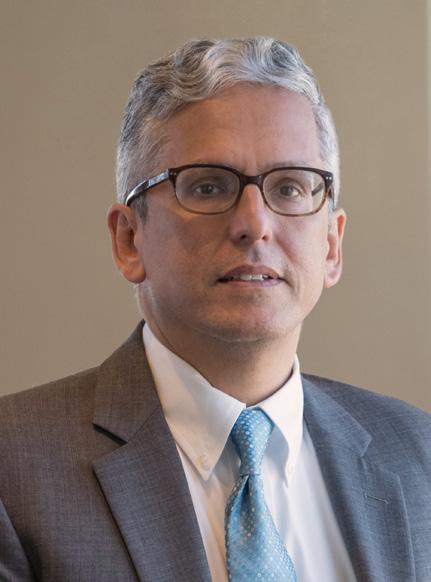
President, American Association for the Treatment of Opioid Dependence
Beth Sanders
Past President and Standards Chair, National Alliance for Recovery Residences
Mary R. Woods
CEO, WestBridge Community Services
LETTER FROM THE EDITOR 6 SUMMER 2018 ADDICTION PROFESSIONAL WWW.ADDICTIONPRO.COM
Apply for a grant from the Institute for the Advancement of Behaviorial Healthcare Fund today! Visit: iadvancebehavioralhealthcare.com American Society of Business Publication Editors 2016 National PR IN T Award Winner Revenue of $3 million or under A | S | B | P | E Fostering B2B editoria excellence American Society of Business Publication Editors 2016 Regional PR IN T Gold Revenue of $3 million or under A | S | B | P | E Fostering B2B editoria excellence
IT TAKES PRACTICE MINDFULNESS
Clinicians’ own mindfulness work can help achieve results with patients
 BY GARY A. ENOS
COVER STORY
8 SUMMER 2018 ADDICTION PROFESSIONAL WWW.ADDICTIONPRO.COM
f there is a term in the therapy world that could qualify as both “hottest trend” and “most misunderstood” at the same time, “mindfulness” makes a strong case.
The practice of mindfulness has landed on national newsmagazine covers, and the program logs of nearly every televised influencer in popular psychology. Still, even among clinical professionals, the term often is miscast as being synonymous with meditation or relaxation, in part because much of the medical community first was introduced to the concept as part of mindfulnessbased stress reduction, a practice founded by Jon Kabat-Zinn, PhD, for stress and illness management.
Mindfulness in and of itself is not a relaxation technique, though it can help achieve that, says Jamie Marich, PhD, an Ohio therapist and trainer with specialties in mindfulness, trauma-informed care and eye movement desensitization and reprocessing (EMDR). Mindfulness more closely means “being able to be with whatever comes,” Marich says, which could even refer to fully experiencing feelings of grief.
Marich and other practitioners interviewed by Addiction
Professional for this article discussed how mindfulness practice can enhance treatment and early recovery for patients with substance use disorders—provided that professionals understand what mindfulness is and isn’t, and also strive to practice what they teach.
“A professional should want at least to have practiced it,” says Ronald D. Siegel, PsyD, assistant clinical professor of psychology at Harvard Medical School. “Otherwise you’re talking about a swim coach who doesn’t know how to swim.”
NOT A QUICK FIX
The origins of the term “mindfulness” trace to a word in Sanskrit that literally means “to come back to awareness.” This can pose a challenge, Siegel suggests, since people are hardwired to an aversion to the experience of physical and/or emotional pain.
“The mindfulness approach is to be aware, with acceptance,” he says. “The goal is to increase our capacity to be in touch with our feelings.”
He illustrates the point by offering the example of the physical
sensation of an itch, or an ache. Rather than fighting these sensations by scratching the itch, or shifting body position, the idea in mindfulness is to be open to sensations that prove to be in a constant state of flux. “When you don’t fight it, it changes by itself,” Siegel says.
That argument extends to the kinds of self-judgmental thoughts that can derail any individual, and particularly one in the early stages of a recovery journey. An ability to gain insight into the presence of negative thoughts and to allow them to come and go will decrease the likelihood that the individual will buy into these thoughts’ content, Siegel says.
Clearly, though, this transformation doesn’t come quickly and easily. “People want mindfulness to be a quick fix,” says Margo Blessing, CADC II, a recovery specialist at Phoenix House Foundation. “It is not a treatment alone.”
Adds Marich, “People in recovery tend to be terrified of feeling feelings.” They worry that the process will overwhelm them, or make them feel defective, or that it is not possible when substance-free. Professionals need to reassure patients that mindfulness practice represents a rewiring of the brain over the long haul, she says. So they shouldn’t jump to conclusions when they’ve meditated for five minutes and don’t feel better.
Among treatment professionals, there is now “more awareness that you can’t throw a bunch of addicts into a room and say, ‘Here, meditate,’ ” Marich says.
Moreover, Siegel says, “Mindfulness doesn’t mean you’re always calm. It means you’re not overwhelmed, not resistant to the moments when we feel powerful emotions.”
ABILITY TO INTEGRATE
Marich believes one of the best aspects of mindfulness practice in addiction treatment and recovery is that it can be incorporated alongside any major treatment modality. “You don’t have to stop everything [else] you do,” she says.
As she has suggested in her writing and lectures, mindfulness can help bring 12-Step based approaches to new life by offering patients actual tools for how to live one day at a time. She wrote in Addiction Professional (March/April 2014 issue), “I’ve generally experienced that when clients and newly recovering people are learning to practice mindfulness on some level, they are better able to do later Step work (Steps 4 to 12) because they have the skills to keep themselves calm and regulated if
WWW.ADDICTIONPRO.COM 9
the work proves too intense or triggering.”
Siegel says that with mindfulness helping individuals become less self-critical over time, it can therefore help people turn outward, establishing a closer connection to something outside oneself. For some, the focus could turn to a closer bond with a 12-Step group, he says, while for others the attention might go to the greater meaning inherent in their everyday work.
Siegel, who maintains a private practice in Massachusetts and serves on the faculty of the Institute for Meditation and Psychotherapy, sees mindfulness practice as helping patients to build a healthy reserve of capacity to bear difficulty.
“We are developing distress tolerance—the ability for people to be with their discomfort,” he says.
PROFESSIONALS’ OWN PRACTICE
Blessing says her self-practice of mindfulness has been important in her own recovery. “I think it is really imperative for the person who preaches mindfulness to practice it oneself,” she says. She also sees it as a useful concept for guiding the work of professionals who are not in recovery. “It is starting to become more of a research-based practice,” she says. “There is also a good tie-in to Eastern philosophy.”
Marich adds, regarding professionals’ approach to incorporating mindfulness techniques, “If you’re just reading from a workbook, you won’t be able to deal with the curveballs that clients throw.” A skilled professional with firsthand experience in the challenges around mindfulness practice will be able to work with client resistance, she says.
Marich suggests that for professionals’ self-practice of mindfulness, they should start with an activity that they can commit to on a daily basis. It could be as simple as practicing one’s daily toothbrushing routine with full attention to that activity. “Five minutes is better than no minute” is a message that can resonate for both professionals and patients, she says.
If that mindful activity can be sustained for a period of about three weeks to a month, it will become a habit, says Marich. She points out that she commits to an annual training for herself amid the teaching on mindfulness that she offers to others.
She adds that it is important when working with patients to convey that the practice of mindfulness can prove as elusive to the professional as it appears to be to the client. “Clients say to me, ‘I can’t sit still.’ I tell them, ‘I’ve practiced this for 10 years, and neither can I,’ ” Marich says.
Siegel adds that professionals’ own practice of mindfulness can’t
RESOURCES ON MINDFULNESS
Herearesometextsthatbothcliniciansand patientscanusetolearnmoreaboutmindfulness practice:
•APathwithHeart:AGuideThrough thePerilsandPromisesofSpiritual Life;JackKornfield(Bantam,1993)
•DancingMindfulness:ACreativePath toHealingandTransformation;Jamie Marich,PhD(SkyLightPaths,2015)
•MindfulnessforBeginners:Reclaiming thePresentMomentandYourLife;Jon Kabat-Zinn,PhD(SoundsTrue,2016)
help but be beneficial because “we hear a lot of painful stories in our work. We have to somehow be present for our clients.”
Professionals seem to agree that the attention that mindfulness has received in the popular media has proven beneficial in normalizing the concept for patients. However, clinicians shouldn’t be surprised that when patients see media depictions of mindfulness in the form of a perfect-looking person in a meditative state among idyllic surroundings, they might be tempted to say, “That’s not me,” Marich says.
Gary A. Enos is Editor of Addiction Professional.
•TheMindfulnessSolution:Everyday PracticesforEverydayProblems;Ronald D.Siegel,PsyD(TheGuilfordPress,2010) Join
The11thannualAtlantaSummitforClinicalExcellencewill exploreimportanttopicsinthetreatmentofmentalhealth issues,particularlyrelatedtotrauma,mindfulnessand addictions.Registernow: vendome.swoogo.com/2018Atlanta-Brain-Matters
10 SUMMER 2018 ADDICTION PROFESSIONAL WWW.ADDICTIONPRO.COM COVER STORY
Us!




When your patients are not responding to treatment, The Retreat at Sheppard Pratt can help. Our residential program offers individualized, compassionate and comprehensive care that empowers residents to manage even the most challenging mental health disorders. The Retreat is part of the Sheppard Pratt Health System, consistently ranked among the nation’s top psychiatric hospitals by U.S. News & World Report For more information, visit our website or contact us. retreat.sheppardpratt.org 410.938.3891
Life-changing steps forward.
It’s time to be proactive on stimulant use
Better surveillance and prevention could head off an epidemic
n increasing number of voices are warning that time might be short in getting policy and program leaders to engage on the potential re-emergence of stimulants as a drug crisis. In many ways, this development would be just as scary as the current opioid epidemic that rightfully continues to dominate the field’s attention.
Not only are stimulants such as methamphetamine and cocaine highly addictive, but there is no gold standard treatment for them, as there is in medication-assisted treatment for opioid use
BY ALISON KNOPF
disorders. In addition, prescription stimulants, used in the treatment of attention-deficit hyperactivity disorder (ADHD), are far easier to obtain than prescription opioids.
“United States national drug control policy is historically reactive, addressing the latest crisis long after it is established,” writes John Carnevale, PhD, who worked for the federal Office of National Drug Control Policy (ONDCP) in three administrations, in a June issue brief. While prevention is the most important policy tool for emerging drug problems, it is only effective if it is implemented “before problems become well-entrenched,” Carnevale writes.
If ignored, an emerging trend of cocaine use could be damaging, with Carnevale noting that “cocaine-involved overdoses have exploded.” ONDCP reports that federal prevention

ADVOCACY 12 SUMMER 2018 ADDICTION PROFESSIONAL WWW.ADDICTIONPRO.COM

resources have declined by 27.9% in nominal dollars and 44% in real dollars from 2004 to 2017, Carnevale adds.
Rising cocaine use by young adults is resulting in more cocaine-involved deaths, often with the drug mixed with opioids. Carnevale first noted the re-emerging cocaine problem in August 2016, in an issue brief showing that coca cultivation was increasing in Colombia and first-time cocaine use was on the rise in the United States. This trend has continued and strengthened, with falling prices contributing to rising street supply.
According to the National Survey on Drug Use and Health (NSDUH), cocaine initiation (first-time use) increased by 70% from 2012-2016, reaching a total of just over 1 million
new users in 2016. These kinds of numbers had not been seen since 2002-2007. It is important to note that new users are likely to become regular users. Anyone who remembers the 1980s knows that this can become a huge problem.
Methamphetamine is raising renewed concerns as well. Around 2005, when Congress made it more difficult to obtain pseudoephedrine, the methamphetamine supply was reduced, but production moved to Mexico. Ed Craft, PhD, senior public health advisor at the Substance Abuse and Mental Health Services Administration (SAMHSA), explains that pseudoephedrine is no longer necessary in making methamphetamine.
“It used to be little shacks with Sudafed and Drano,” Craft says. Now, a new compound—P2P—is being used to make the drug. “As a result of the switch from Sudafed to the P2P as a base chemical, the quality of the product is much higher, it gives a stronger stimulant feeling, it is 95% pure, and it’s more addictive,” he tells Addiction Professional. And because availability is going up, the price is going down.
Former federal anti-drug official John Carnevale, PhD, offers these recommendations for preventing a new drug epidemic:
Enhance local prevention efforts. Local preventionists are most familiar with the specific prevention needs of their community. Enhancing local prevention efforts is the most effective way of ensuring that available resources are targeting key areas of need. Federal and state agencies should expand the availability of funding for local prevention entities, particularly funding for schooland community-based prevention services.
Training, technical assistance and evaluation. More research is needed, but data supports the efficacy of specific prevention strategies in certain situations. Yet many preventionists are unaware of the latest findings or lack the capacity to implement proven strategies. Federal and state governments should expand funding for training and technical assistance programs targeting local preventionists. This should include how to evaluate prevention efforts as part of a feedback loop to improve local responses, and how to disseminate findings to build evidence for the field.
Focus on local data. With most drug control efforts occurring at or focusing on the local level, it is vital that stakeholders have access to plentiful, high-quality local data to assess local trends. Federal and state governments must build the capacity to collect and analyze local data, including training and funding local stakeholders. Reinvest in surveillance. The federal government must reinvest resources for surveillance systems to detect emerging drug trends. In fiscal year 2000, the Office of National Drug Control Policy estimated that a 15-city expansion of the Arrestee Drug Abuse Monitoring (ADAM) system would cost only $4.8 million; adjusted for inflation, this would be approximately $7 million in fiscal 2018. Although the true cost may be higher for logistical reasons, it would be a small price to pay to regain an information system that proved invaluable to consumption estimates, says Carnevale.
Prepare for future emerging trends. Because a long lag time is inherent to the evaluation process, prevention researchers should allocate some resources to issues that are not “hot topics” of the day, strengthening the initial evidence base from which to work if and when issues do arise.
ADVOCACY 14 SUMMER 2018 ADDICTION PROFESSIONAL WWW.ADDICTIONPRO.COM
FIVE
TO PREVENT A NEW EPIDEMIC
WAYS
TRENDS IN PRESCRIPTION STIMULANTS
But methamphetamine use (192,000 new users, according to the 2016 NSDUH) pales in comparison to the number of new cocaine users (1.1 million) and misusers of prescribed stimulants (1.4 million), says Steve Daviss, MD, senior medical advisor at SAMHSA.
Prescriptions for stimulants have been going up for the past 10 to 15 years, and with them, diversion, says Daviss. “Someone gets a prescription for Adderall or Ritalin and shares it with someone else, possibly sells it,” he tells Addiction Professional.
The NSDUH is one the best places to go for data, Daviss says, and the survey shows that the prevalence of new users of prescription stimulants is highest among college-age students— those who reportedly use stimulants to improve academic performance. In the 2016 survey, 1.4 million people started misusing prescription stimulants for the first time in the past year, and 45% of them were ages 18 to 25 (18% were ages 12 to 17 and 37% were ages 26 and up).
Prescription stimulants such as Adderall and Ritalin are among the top three categories of prescription drugs misused by young people, including opioids and benzodiazepines, says Timothy E. Wilens, MD, chief of the Division of Child and Adolescent Psychiatry and co-director of the Center for Addiction Medicine at Massachusetts General Hospital and Harvard Medical School. “The nonmedical misuse of stimulants has been relatively steady over the past decade,” Wilens says.
Are these drugs addictive? The data show that immediate-release prescription stimulants, such as Adderall and Ritalin, have a higher abuse liability, says Wilens. They are more frequently misused than extended-release preparations, such as Concerta, Focaline XR, Adderall XR and Vyvanse.
Of people who take prescription stimulants without a prescription, survey studies and Wilens’ own data indicate that 10 to 15% develop a stimulant use disorder, with almost half having “some subthreshold symptoms of a stimulant use disorder,” he says.
MIXING STIMULANTS AND OPIOIDS
“Now, we’re seeing the double danger of illicit fentanyl, plus either cocaine or methamphetamine,” says Daviss. The question of whether these users are looking for opioids or stimulants, or for the combination known as a speedball, depends on the market, he said.
“If you’re selling cocaine in a market where there’s a lot of cocaine use, and if you have a certain client who wants a speedball, you’re going to deliver that,” Daviss says. But if they’re asking for just cocaine, they might not get it, because the cartels are experimenting by combining different proportions of cocaine and fentanyl. “We don’t know if they’re doing that to increase the addiction rate,” he says.
August 2018
Family and Relationships / Memoir
Paperback: 978-1-942094-71-5
Ebook: 978-1-942094-72-2
208 pages • Trade Paperback
$16.95
Striving for perfection in her life, Dana Bowman has the startling realization that recovery is not only about the alcohol.

“Dana Bowman’s writing is luminous, laugh-out-loud wondrous and makes something profound shift within.”
—Catherine Gray, Author of The Unexpected Joy of Being Sober
ADVOCACY WWW.ADDICTIONPRO.COM 15
CENTRAL RECOVERY PRESS
He adds, “I think the attraction to speedballs, combining opioids and stimulants, a downer and an upper, is that the opioids take some of the agitated edge off of the stimulants, and on the other side of the coin, the stimulant keeps you from falling asleep, and allows you to ride the high for a longer period of time.”
Even methamphetamine on its own has benefits perceived by users, says Craft. “It gives you energy, whether you’re a truck driver or a housewife—and it can be a real enhancer for sex,” he says. However, “People can overdose on stimulants alone,” says Daviss. “Often it will be a cardiac or hypertensive event.”
PRESCRIPTION STIMULANTS AS A GATEWAY?
Unlike in the opioid epidemic, in which prescription opioid abuse has largely been replaced by use of heroin and illicit fentanyl, there does not seem to be an expected migration from prescription stimulant abuse to illicit stimulants, or vice versa, says Wilens.
“It does not appear that in studies of individuals who misuse stimulants, other stimulants such as cocaine or methamphetamine are the preferred drug of choice,” he says. “However, it is notable that almost one-half of those individuals who misuse stimulants nonmedically have a full diagnosable substance use disorder,” with alcohol, marijuana or a combination usually present.
“As far as I know, no prescription medicine is a gateway to methamphetamine,” says Craft. “This might be more likely with cocaine, but I’m not familiar with cases of it.”
“I haven’t seen data on this,” adds Daviss. “If I wanted to ask the question,
I would start with an animal study. It would be very easy to dose animals clinically on something like Adderall or a placebo, and then expose them to methamphetamine, and see what the difference is in their uptake of using it.”
However, Craft does say, based on speculation only, that with the cost of methamphetamine being less than half of what it was 10 years ago, a possible switch from prescription stimulants to methamphetamine might take place if restrictions were placed on the prescriptions. “In the past month, about 1.7 million people admitted to misusing a prescribed stimulant, whether from their own doctor or someone else,” he says.
Ironically, while adolescents and adults who use prescription stimulants for ADHD or attention deficit disorder (ADD) typically do notice an improvement in focus (and presumably, improved performance at school or work), Daviss says the medications appear to have the opposite effect for people who misuse them. They do not improve performance because the user doesn’t actually have the condition they are intended to treat, he says.
The states are telling SAMHSA, which manages the Substance Abuse Prevention and Treatment block grant, that some people are trying to substitute methamphetamine for opioids, because they perceive the risk of overdose as lower, says Craft. With fentanyl so prevalent today, that might be a dangerous assumption.
TREATMENT CONSIDERATIONS
Craft says that with stimulant use, the need for residential treatment is greater than it is for opioid use. The medications buprenorphine, methadone and injectable naltrexone are all approved for the treatment of opioid use disorders, but there are no medications approved for the treatment of stimulant use disorders. Even with a great deal of research going on in this area, approval of a medication for stimulant dependence still could be years away.
The Matrix Model, developed in the 1980s by Richard Rawson, Ph.D., at UCLA, at this point remains the best known treatment method for stimulant use disorders. It is a structured intensive outpatient program that has documented success in combining numerous therapeutic approaches, from cognitive-behavioral therapy and motivational interviewing to 12-Step work.
ADVOCACY 16 SUMMER 2018 ADDICTION PROFESSIONAL WWW.ADDICTIONPRO.COM
is a freelance writer based in
Alison Knopf
New York.
Fi nd f reedom f rom pa i n.











PAIN RECOVERY PROGRAM
Ashley is a leader in pain recovery. Our comprehensive program helps reduce pain and treats co-occurring substance use disorder through evidence-based methods.
Ashley’s Pain Recovery Program offers:

• Individualized care









• Innovative treatment
• Integrated approach
Everything for recovery because recovery is everything.

800.799.HOPE (4673) AshleyTreatment.org
Stimulant use on the rise in jail population
Among inmates with substance use disorders, stimulant use is at least on pace with opioids
BY NORMAN G. HOFFMANN, PHD, ALYSSA L. RAGGIO, MS, ALBERT M. KOPAK, PHD, AND KAITLIN A. GUSTON, MS
irtually everyone is aware of the opioid epidemic in the United States. Indisputably, opioid use and opioid use disorders are much more prevalent now than in the past. What is not realized with the preoccupation with just one substance is that policymakers are overlooking a much larger and complex problem.
Prison populations and recent arrestees in local jails provide an indication of the relative prevalence of a range of substances in high-risk groups. From the 1980s to recent years, the most prevalent substance use disorders in both prison and jail populations involved alcohol, followed by cannabis. During the “cocaine epidemic” a few decades ago, cocaine became a more prevalent substance of concern. Unfortunately, there are few credible studies on the exact prevalence in correctional populations, due to the use of fallible screens instead of systematic diagnostic assessments.
Nonetheless, the relative prevalences that can be imputed from the studies that are available indicate that local jails have higher prevalence rates for substance use than prison populations. This may be due to diversions and other dispositions from jails. Jails act as gateways to the criminal justice system, possessing all arrestees, whereas prison populations are made up of a filtered adjudicated population. With respect to jail populations, a 2008 study in an adjacent North Carolina county to the site of our current study demonstrated that alcohol, cocaine and cannabis were the most prevalent substances among recently arrested individuals. However, jail data collected in 2016 revealed a remarkable difference.1 The most prevalent serious DSM-5 substance use disorder was for stimulants (38%), followed by opioids (28%) and alcohol (24%).
These statistics are for those with a severe use disorder, but based on the diagnostic interview, 85% of recently arrested individuals met criteria for some level of DSM-5 diagnosis. Both jail samples were drawn from jurisdictions covering similar largely rural populations, and both study results are based on the DSM-5 as indicated by the Comprehensive Addictions and Psychological Evaluation-5 (CAAPE-5), a structured diagnostic interview.
STIMULANTS HAVE EMERGED
Despite all the current publicity about opioids and the risks inherent in opioid use, our findings suggest that among recent arrestees, stimulants account for the more prevalent substance use disorders. While one study cannot definitively determine prevalence, other indications are that stimulant use disorders are actually more prevalent than expected and continue to be overshadowed and overlooked.
Some of the increased methamphetamine production and use that is being seen may be associated with the switch in ingredients from pseudoephedrine to phenylacetone, which is still available in Mexico. Centers for Disease Control and Prevention (CDC) data in the National Vital Statistics Report of 2016 show that meth-related overdoses more than doubled between 2010 and 2014. The indications are clear that meth use and stimulant use disorders have shown a dramatic rise in recent years.
Perhaps the most shocking finding from the 2016 jail study was that nearly 40% of recent arrestees reported injecting some substance in the previous 12 months, and one-third were injecting regularly—typically with stimulants and/or opioids. Of the total number of inmates (n=283), 4% reported injecting opioids only; 14% were injecting stimulants only; and 20% were injecting both. Of those with a severe stimulant use disorder, 89% were injecting, compared to 85% of those with a severe opioid use disorder.
COUNSELING 18 SUMMER 2018 ADDICTION PROFESSIONAL WWW.ADDICTIONPRO.COM
When it comes to putting patients first, our medical team is second to none.
See why Eating Recovery Center has more doctors on sta than our top three competitors combined.

We may be the largest network dedicated to the treatment of eating disorders, but to our patients, we never feel too big. In fact, it is the size of our team that gives us the flexibility to treat patients with the personalized care they deserve at any stage of the illness. If you think someone under your care is struggling with anorexia, bulimia or binge eating disorder, our team is ready to help pursue a lasting recovery. Make a treatment referral to Eating Recovery Center today.




For

OCTOBER 18-21, 2018 Atlanta, GA | Hyatt Regency Atlanta The National BRAIN MATTERS Trauma, Mindfulness and Addictions Summit Returns to Atlanta ‘s Get Your Super Saver Pass NOW Very limited quantity What to Expect: • National Industry leader in behavioral and addiction conferences • Nationally Approved Continuing Education Provider • Cutting-Edge content. Field-Leading Experts • Stay at the iconic Hyatt Regency in downtown Atlanta Stefanie Carnes, PhD, LMFT, CSAT-S, Clinical Sexologist, CEO, IITAP Tim Desmond, LMFT Polly Young-Eisendrath, PhD, Diplomate Jungian Analyst Featuring: Earn up to 24 CE Hours
CALIFORNIA • COLORADO • ILLINOIS • OHIO • SOUTH CAROLINA • TEXAS • WASHINGTON
a free confidential assessment by a Masters-level clinician, call 1-877-700-1925 or visit www.eatingrecovery.com.
The bottom line is that based on the total number of cases or the proportion with a severe use disorder, more arrestees were injecting stimulants than opioids. Not only does injecting drug use pose a serious overdose risk, it also creates a public health issue in terms of spreading infectious disease. This would seem to be as significant an issue for stimulants as it is for opioids.
DETAILS OF CURRENT STUDY
The CAAPE-5 interview used in the current study for a master’s thesis by Alyssa L. Raggio, MS, one of this article’s authors, was typically completed in less than 30 minutes. (The study was funded in part by C4 Recovery Solutions.) In addition to substance use disorders, the interview covered common mental health conditions. The most prevalent mental health finding was that 48% of recent arrestees had indications of probable post-traumatic stress disorder (PTSD). The next most common conditions were major depression (35%) and panic attacks (29%). About 35% had indications of antisocial personality disorder. While only 11% had indications of bipolar disorder, this is considerably higher than the general base rate, and this is a condition that typically requires medication for long-term stability.
Thus, indications are that recently arrested adults detained in a local jail manifest a complex clinical profile, where the majority require some types of behavioral health services.
The initial objective of the current research was to assess the possible relationship between behavioral health conditions and criminal recidivism as indicated by repeated bookings in the local jail. About two-thirds of the individuals in the current study had at least one booking in the 12 months prior to the diagnostic interview. The strongest significant associations with recidivism were that those with multiple serious substance use disorders were more likely to have two or more bookings prior to the interview, and also were more likely to have subsequent bookings. Given the high rate of drug injection for stimulants and opioids, injection was also significantly correlated with repeated bookings.
Specifically, of those with multiple serious substance use disorders, 61% had multiple bookings prior to the interview,
compared with 35% of those without multiple conditions. Similarly, 53% of those who had injected drugs had multiple prior bookings, compared with 38% who did not report injection. Recidivism has many adverse consequences for law enforcement resources, as well as for courts and other entities related to processing arrestees.
Bookings translate into days of incarceration, which entail substantial costs. The current research reviewed days of incarceration, if any, over the course of 24 months—12 months prior to the interview, days associated with the booking at the time of the interview, and 12 months after the interview. Of the total sample, 59 individuals were transferred to a state prison, which left 224 individuals eligible to be booked during the entire two-year time frame. These individuals accounted for a total of 13,502 days of incarceration. Since the typical cost for a day of incarceration in the county jail where the study was conducted is about $75, this amounts to a total of just over $1 million in basic costs for a county with a population of around 60,000.
This total does not include the costs for law enforcement officers’ arrests, court costs, attorney’s fees, building maintenance, etc. More than a million dollars accrue simply for housing the inmates during their incarceration.
Of the 224 inmates in the analyses, 51 (23%) had both a moderate to severe stimulant use disorder and a moderate to severe opioid use disorder. These individuals were incarcerated for an average of approximately 82 days per individual during the two-year period, compared with an average of about 54 days per person for the 173 individuals who did not meet criteria for both conditions.
Another way of considering the impact of having a moderate to severe diagnosis for both stimulants and opioids is to consider average per-inmate costs. Those who had no moderate to severe stimulant or opioid use diagnosis had an average incarceration cost of $3,816 per inmate over the two-year period. The cost for inmates with a diagnosis for only one of the substances was $4,382; however, the average cost for those
COUNSELING 20 SUMMER 2018 ADDICTION PROFESSIONAL WWW.ADDICTIONPRO.COM
Based on the total number of cases or the proportion with a severe use disorder, more arrestees were injecting stimulants than opioids.
Join Us!
Epidemic:ImpactonCorrectionalPopulationsandWhatto DoAboutIt”onNov.14attheNationalCocaine,Meth& StimulantSummitinFortLauderdale,Fla.Formoreinformation, visit: vendome.swoogo.com/stimulant-summit
NormanHoffmannwillco-presentasessiontitled“TheMeth
with a moderate to severe diagnosis for both substances was $6,123 per inmate. To the extent that treatment could address substance use disorders and reduce subsequent incarcerations, treatment might provide a reasonable return on investment for the services provided.
Clearly, stimulant use disorders appear to contribute to overdoses, risks for spreading infectious diseases, and public safety issues comparable to or greater than the impacts of opioid use disorders. Also, stimulant use disorders contribute to costs borne by local taxpayers, such as jail costs paid by county funds. Diverting adults from the criminal justice system to addiction treatment and related services coordinated with local law enforcement and jail administrators has the potential for significant cost savings, in addition to the potential human benefits.
Given the complexity of the clinical presentations seen, services must be capable of addressing co-occurring conditions. Screening and assessment tools are currently available for use with jail populations. What is lacking are the initiative and innovation to implement effective services.
Norman G. Hoffmann, PhD, is a clinical psychologist and recognized expert in clinical assessment and the evaluation of behavioral health programs. He has developed assessment instruments used throughout the United States, Canada, Sweden, Norway and the United Kingdom. He can be contacted at evinceassessment@aol.com.

Alyssa L. Raggio, MS, has a master’s degree in clinical psychology from Western Carolina University. Her research focuses on mental health and substance use disorders in relation to recidivism among rural jail populations.

Albert M. Kopak, PhD, is a substance abuse researcher at Western Carolina University’s Department of Criminology and Criminal Justice. He specializes in research related to the assessment and treatment of substance use disorders in criminal justice settings.
Kaitlin A. Guston, MS, received her MS in clinical psychology from Western Carolina University. Her primary research interests revolve around forensic risk assessment, patterns of offending, and the impact that substance use and trauma have on offending.
References
1. Raggio AL, Hoffmann NG, Kopak AM. Results from a comprehensive assessment of behavioral health problems among rural jail inmates. J Offender Rehab 2017; 56:217-35.
COUNSELING WWW.ADDICTIONPRO.COM 21
For more information, visit VIVITROL.com/hcp ALKERMES and VIVITROL are registered trademarks of Alkermes, Inc. ©2017 Alkermes, Inc. All rights reserved. VIV-002837 Printed in the U.S.A. vivitrol.com/hcp
Visit Booth 514
2018 ClinicalOutstanding Care Awards
 BY GARY A. ENOS
he editors of Addiction Professional are pleased to present our third annual tribute to innovative programs that have stepped in to assist some of the highest-need treatment populations. Readers nominated facilities or programs within a facility for achieving results with the underserved.
We feature three programs as the recipients of our Outstanding Clinical Care Awards. We also will recognize these organizations in August at our National Conference on Alcohol and Addiction Disorders (NCAD) in Southern California.
CHESTNUT HEALTH SYSTEMS MARYVILLE ADOLESCENT CAMPUS
• Location: Maryville, Ill.
• Target population: Adolescents with substance use disorders and co-occurring mental health issues
• Quote: “Our move to a uniform approach has improved our ability to train staff effectively.” - Daron Copp, director of youth substance use disorder treatment, Chestnut Health Systems
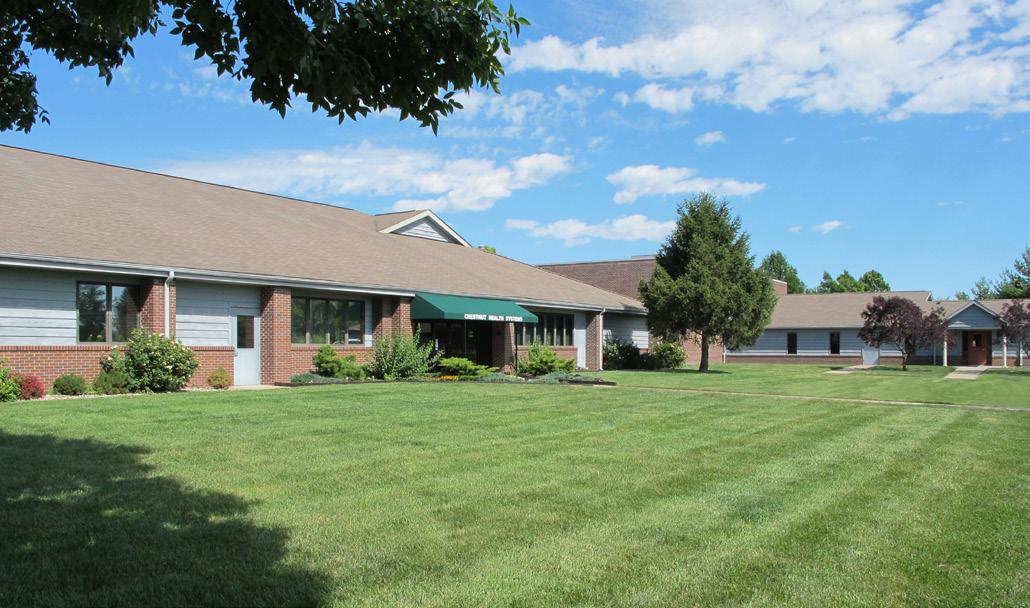
A willingness to treat young people ages 12 to 18 with cooccurring substance use and mental health issues has helped to set Chestnut Health Systems apart in a segment of the field that still lacks viable care options. Only around one-quarter of the Maryville Adolescent Campus’s patients are covered in private insurance arrangements, as many of the families seeking care receive Medicaid or state funding support.
A move at the start of this decade toward a more evidencebased approach to clinical care has enhanced the organization’s ability to reach this population, says Daron Copp, who directs Chestnut Health Systems’ youth substance use treatment operations. The agency began to embrace the Community
Reinforcement Approach (CRA), a strategy that Chestnut’s research arm had thoroughly studied. The CRA seeks to assist patients by eliminating positive reinforcement for substance use and enhancing positive reinforcement for sobriety.
The Seeking Safety curriculum for addressing trauma and addiction also has become a major part of the adolescent program’s approach in groups. Copp says the residential program offers Seeking Safety several times a week in the group setting.
Prior to 2011, clinical treatment at the facility had a “pretty eclectic” feel, says Copp. “What I consistently saw in staff training was a diverse mix of approaches,” he says, with much of it based on what each individual clinician thought good treatment meant. Now that the organization has embraced a more uniform approach, the training and supervision of clinicians can be delivered more consistently.
The adolescent residential campus opened in 1990, with a move to gender-specific programming in 1995. It has a capacity of just over 20 patients each in its male and female units. Lengths of stay generally range from 30 to 60 days, Copp says.
In recent years, the program’s geographic reach has extended across all of Illinois. Most of the target population has a cooccurring mental health diagnosis such as depression, anxiety or bipolar disorder, Copp says.
BUSINESS OPERATIONS 22 SUMMER 2018 ADDICTION PROFESSIONAL WWW.ADDICTIONPRO.COM
CHESTNUT HEALTH SYSTEMS MARYVILLE ADOLESCENT CAMPUS
FOR PREVENTION, SUBSTANCE USE TREATMENT, AND RECOVERY PROFESSION ALS

Family involvement has become an important priority in the program, with each patient’s primary counselor seeking to involve family members on a weekly basis. “We do a lot of telephone-based counseling,” Copp says. The facility also hosts an on-site family education session each week.
The campus’s rural setting creates both minimal outside distractions and ample opportunities for daily recreation, Copp adds. Relaxation activities such as yoga and meditation have assisted patients in managing anger and other barriers to progress, he says.
PROVIDENCE TREATMENT
• Location: Media, Pa.
• Target population: Impaired professionals in fields such as healthcare, aviation and the clergy
• Quote: “We’re seeing higher numbers of younger people— medical students and residents. Medical schools’ legal departments are making sure that residents are being randomly tested.” - William
J. Heran, PhD, CEO, Providence Treatment
Providence Treatment grew out of CEO William J. Heran, PhD’s private-practice speciality in working with professionals such as doctors and members of the clergy. It has gradually expanded its menu of services in response to the needs of professionals who are stepping down from a more intensive level of care and facing ongoing monitoring from licensing bodies.
“At one point, there was a [recovering] doctor who had to suspend his practice because there were no good sober living options for him,” Heran recalls. Providence Treatment responded to this need by opening a sober house in 2014. It also offers partial hospitalization, intensive outpatient and outpatient services, and has become a favored referral destination from residential programs that treat professionals.
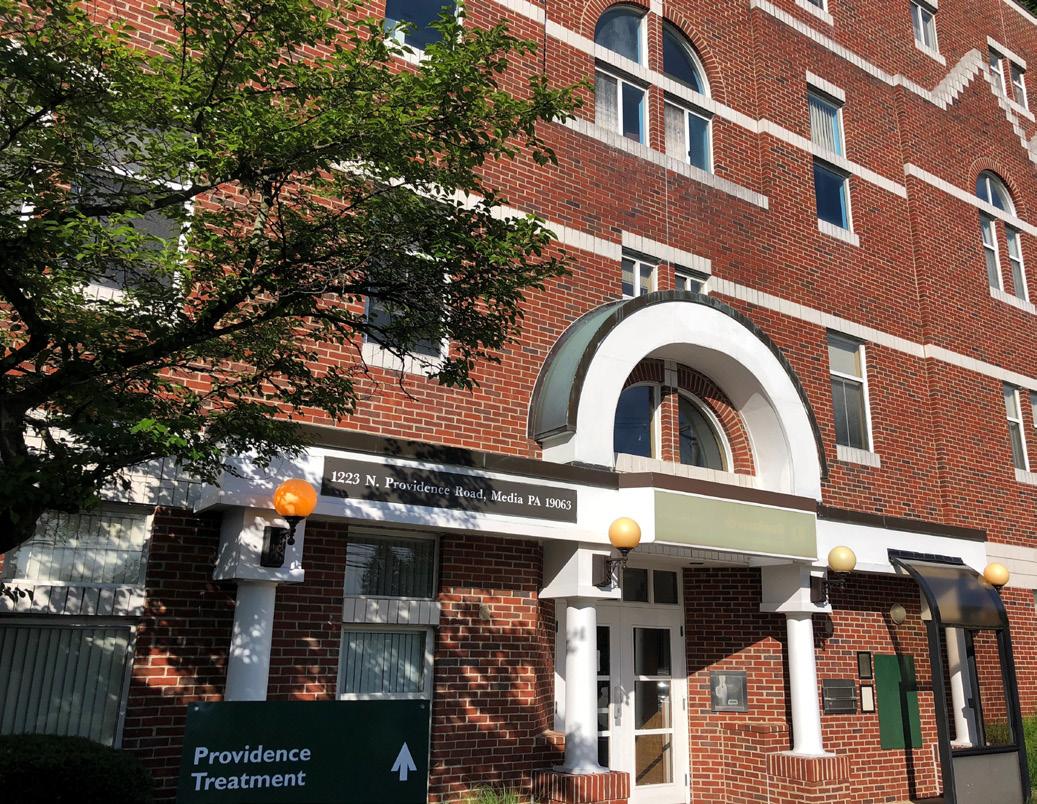
Extended care and strong ties to the authorities that determine clients’ return to their profession are some of the keys to Providence Treatment’s success. Clients generally move through the organization’s various levels of support over a period that extends past a full year, Heran explains.
While different professions might bring their own specific issues to treatment, there are also some commonalities observed when they receive treatment together. “Priests, physicians and pilots do well together in group,” says Heran. “These are individuals who are ‘on’ 24/7. It’s not just a job. You almost lose yourself in it.”
He once noticed in a program where a physician in recovery
had been placed in a general treatment population that the doctor was assuming his customary role of helping everyone else. “He wasn’t getting the help he needed, and he wasn’t getting challenged by other physicians,” Heran says.
Program leaders remain aware of some of the specific issues facing certain professions, such as the threat to a physician’s authority to prescribe drugs, or family dynamics in the many dental practices where dentists hire family members as staff.
Heran explains that the program seeks a deeper dive into the issues affecting professionals’ recovery. For individuals in the medical profession, that might involve the need for empathy development, as research has shown that young doctors in training exhibit a higher level of empathy when they enter medical school than when they leave.
“We eventually want to get them back to the idea of helping the other,” says Heran. “When they are using, they get self-absorbed.”
In general, the patient at Providence Treatment pays directly
BUSINESS OPERATIONS 24 SUMMER 2018 ADDICTION PROFESSIONAL WWW.ADDICTIONPRO.COM
Join Us! Recipientsofthe2018AddictionProfessionalOutstanding ClinicalCareAwardswillberecognizedattheNational ConferenceonAlcohol&AddictionDisorders.Formoreinformationontheconference,whichrunsAug.19-22inAnaheim, Calif.,visit: vendome.swoogo.com/ncad-2018
PROVIDENCE TREATMENT
for the services and support offered. Heran adds, however, that the organization will become a Blue Cross Blue Shield in-network provider this summer.

LIFESPRING HEALTH SYSTEMS
• Location: Headquartered in Jeffersonville, Ind.
• Target population: Patients in largely rural areas of southern Indiana
• Quote: “People are gaining a better understanding that you can’t just address substance use. Trauma has become a priority issue.” - Lauren Perryman, clinical manager, Austin Medical Center
Before 2015, there were no facilities offering care for HIV or hepatitis C in rural Scott County, Ind. That would change shortly after the first of what would be many injection drug users was found by county health officials to have tested positive for HIV. The news made national headlines as a local public health crisis.
LifeSpring Health Systems’ Austin Medical Center was
BUSINESS OPERATIONS WWW.ADDICTIONPRO.COM 25 HazeldenBettyFord.edu 866-959-0118 6362-1 (12/17) © 2017 Hazelden Betty Ford Foundation Earn your master’s degree. Study the science of addiction and mental health counseling online or on campus. Accredited by the Higher Learning Commission Financial Aid Opportunities Available 6362-1_GSAddictionProf_PrintAd_7x4.875_Fx.indd 1 12/14/17 1:36 PM
LIFESPRING HEALTH SYSTEMS
one of the new facilities that grew out of the community partnerships forged in response to the HIV outbreak. As a federally qualified health center (FQHC), “We can accept patients regardless of ability to pay,” says Lauren Perryman, LifeSpring’s clinical manager for the Austin facility.
Perryman emphasizes that the center’s clinical work with patients with substance use disorders is part of a communitywide effort that has grown in Scott County (LifeSpring operates services in a six-county area of southern Indiana). The Austin center shares its building with a needle exchange program, and the opportunity for warm handoffs is significant.
“Even if the individual is not ready [for treatment] right then, our presence together has been beneficial,” says Perryman.



In all, the HIV outbreak in Scott County amounted to more than 200 new cases, and many of these individuals continue to receive services at the Austin center and from other programs in the county. Around 97% of the cases in the Scott County outbreak were traced to injection drug use. It became apparent


early on, says Perryman, that LifeSpring would be maintaining a long-term presence in the community with the FQHC.
She describes the site’s clinical approach to substance use treatment as offering the least restrictive, most person-centered care possible. “What do patients need in the least restrictive way to be successful?” she says. Medication-assisted treatment (buprenorphine and injectable naltrexone), peer support and trauma-informed care all have grown in importance in the organization.
Perryman shows the most enthusiasm over the community partnerships that have been built in the county, involving community coalitions and entities such as schools and the justice system. A communitywide effort remains essential, especially to continue to chip away at persistent stigma. Even with the attention that the Scott County outbreak received, some Indiana communities still significantly restrict education efforts around infectious disease risk reduction.
Testimonial

“As a smaller facility focused on providing quality care, I love the flexibility that ClientReach offers. I can turn my campaign on and off at any point and rest assured that I’m getting great results while having the time to focus on what we do best — help clients succeed in their recovery.”

BUSINESS OPERATIONS 26 SUMMER 2018 ADDICTION PROFESSIONAL WWW.ADDICTIONPRO.COM We've helped 80,000+ people impacted by addiction reach out to 400+ treatment providers using our ClientReach platform. Is your facility ready to make a bigger impact and help the lives of people reaching out for treatment? Contact a member of our team at 1-877-792-9312 or email marketing@recoverybrands.com by
Client
AION Recovery
—
For more follow us on Social Media @RecoveryBrands
Gary A. Enos is Editor of Addiction Professional.
Promoting sexual health in the LGBTQ community
A nonjudgmental, informed approach will create a safe space for productive discussions
BY PHILIP MCCABE, CSW, MARK MCMILLAN, LSW, KRISTINA PADILLA, MA, LAADC, AND DAVID FAWCETT, PHD, LCSW
efore clinicians address the topic of sexual behavior in the lesbian, gay, bisexual, transgender and queer/ questioning (LGBTQ) community, it is always important to clarify terms and labels to make the client feel safer while building trust and rapport.
Biological sex— the gender assigned at birth, usually by a doctor.
Gender identity—one’s sense of self as predicated by societal and cultural norms, in terms of gender expression, and usually matches one’s biological sex.
Transgender—people whose gender identity differs from the societal and cultural norms of the biological sex assigned at birth.
Gender expression—the way one dresses and exerts one’s own personality in an outward fashion, via body language, speech, clothing, etc.
Sexual orientation—which gender one prefers to have sexual or romantic relationships with.
Men who have sex with men (MSM)—a term used in some subcultures to identify men who are having sex with men and not utilizing the labels most often associated with this behavior (e.g., gay, bisexual, experimenting).
It is also important to keep in mind that transgender is not a sexual orientation or behavior, but rather a gender identity. Lastly, problematic sexual behavior is best described as outof-control sexual behavior by the clinician. These terms may seem common, yet such language can be some of the main
sources of trauma and pain, which ultimately fuels most of LGBTQ clients’ out-of-control behavior.
For the LGBTQ client struggling with substance use disorder symptoms and problematic sexual health issues, it is vital for the clinician to use nonjudgmental language to create a safe space for open discussion of the consequences from the out-of-control behavior that are causing the most harm. It is especially true with non-white clients, who may not subscribe to any of the known or current labels around sexual practice or sexual orientation. Using wrong or offensive language not only retraumatizes LGBTQ clients, it might put them at further risk of continuing harmful and dangerous behavior due to not receiving the help they need and deserve.
TRAUMA AND SEXUALITY
In the past 30 years, there has been a profound shift in understanding the impact of trauma on individuals, families and society. Interpersonal violence, as well as intergenerational trauma, has a devastating impact on individuals, families, communities and society as a whole. The
RECOVERY SUPPORT WWW.ADDICTIONPRO.COM 27
LGBTQ community faces violence and trauma every day.
The National Coalition of AntiViolence Programs recorded reports of a record-high 52 hate-related homicides of LGBTQ people in 2017. Twenty–two of these homicides were of transgender women of color. The FBI reported in 2016 that there were 1,076 incidents involving lesbian, gay, bisexual or transgender people; it is important to note that reporting to the FBI is not mandatory, and some victims might have been categorized by race, ethnicity or religion even if they were also LGBTQ. This collective trauma has a cumulative effect on the community.
Perhaps the most common emotional reaction to a trauma is feeling fearful and anxious. For many LGBTQ individuals, this level of anxiety is quite common. Often people self-medicate with substances or other problematic behaviors in an attempt to avoid unpleasant feelings. Sexual assault may more than double the risk of substance abuse for survivors.
Clients, and sometimes counselors, may connect a history of trauma to one’s sexual identity. They might wonder, “Did this happen to me because I am gay?” or “Am I a lesbian because I was molested or a survivor of incest?”. These responses are typical for individuals who blame themselves for the abuse. Many gay men will tell themselves that, absent physical injury, “The abuse wasn’t that bad,” or engage in other rationalizations.
As a person enters into recovery, or stops using substances, intense feelings and memories will often occur. LGBTQ individuals with a history of interpersonal violence need to receive substance use treatment in a safe and supportive environment that is both affirmative and trauma-sensitive. Addiction treatment, as well as some self-help models, can re-create traumatic experiences or trigger emotional reactions if services are not trauma-sensitive.
SEXUAL AND RELATIONSHIP HISTORIES
Many clinicians are concerned about their ability to take an appropriate and thorough sexual history with LGBTQ clients. Some clients can be reluctant to provide details about sexual behaviors. Individuals with multiple partners, married bisexuals or polyamorous persons might limit information out of concern for being judged.
Clinicians must avoid assumptions of heteronormativity or behaviors when conducting a sexual history. Do not assume that you know a patient’s gender identity, sexual orientation, sexual behaviors or number of partners. Instead, create an open and respectful dialogue when conducting a sexual history.
PhilMcCabe,MarkMcMillan,KristinaPadillaandDavid Fawcettwillpresentaworkshop,SexualityandGenderDiversityinRecovery,onAug.19from9a.m.to3:15p.m.atthe NationalConferenceonAlcoholandAddictionDisordersin Anaheim,Calif.Formoreinformation,visit: vendome.swoogo.com/NCAD-2018
Some individuals engage in sexual variations sometimes referred to as “kink.” “BDSM” is a variety of often erotic practices or role playing involving bondage, discipline, dominance and submission, sadomasochism, and other related interpersonal dynamics. While this is not exclusive to sexual minorities, it can raise certain issues in recovery.
Counselors might also be concerned about some activity indicating abuse in a relationship. There is a vast difference between domestic violence/abuse and BDSM. The latter often includes an agreement to maintain safe, sane, consensual and
RECOVERY SUPPORT 28 SUMMER 2018 ADDICTION PROFESSIONAL WWW.ADDICTIONPRO.COM
Join Us!
Clinicians must avoid assumptions of heteronormativity or behaviors when conducting a sexual history. Do not assume that you know a patient’s gender identity, sexual orientation, sexual behaviors or number of partners.
sober sex. Domestic violence, conversely, does not include consent. Sexual abuse is a misuse of power. These issues can occur in any relationship, so addiction professionals need to be able to provide resources should abuse become indicated.


The outcome of a successful sexual history interview will result in an improved clinician-client relationship and a treatment plan so that the client is fully informed and less likely to engage in high-risk behaviors.
The Association of Lesbian, Gay, Bisexual, Transgender Addiction Professionals and Their Allies (NALGAP ) advocates an inclusive integration of human sexuality and sexual health into treatment. Sexual health refers to the ability to embrace and enjoy our sexuality throughout our lives. It is an important part of our physical and emotional health.



Also when discussing relationship status, clinicians should avoid using terms such as “married,” “divorced” or “widowed,” which may not apply to all. Ask more open-ended questions in order to create a dialogue with the client, such as “Are you currently involved with anyone? How about in the past? How do you describe the relationship? Can you tell me more?”
A standard part of any assessment needs to include basic questions asked respectfully of all clients, such as “Are you sexually active? Are you active with men, women or both? Do any of your partners identify as transgender? How about in the past; were you active with men, women or both? Can you tell me more?”

SAME-SEX RELATIONSHIP STYLES
For generations, cultures have based their understanding of gender and relational intimacy on heteronormative interactions and relationships. As we have evolved into a new age of knowledge, acceptance and awareness, the focus has shifted. Research has begun to focus on attachment styles and how they affect same-sex relationships, as well as heterosexual relationships. One’s relationship style, or attachment style, accompanied by a greater understanding of gender and how these roles were previously thought to impact relationships, can have a profound effect.
Different relationship styles correlate with different experiences in love and different characteristics of romantic relationships, with three of the main styles being identified as: secure; anxious/ ambivalent; and avoidant.
Where it was once believed that each gender carried specific behaviors and relationship styles, researchers are now leaning toward the belief that individuals’ roles in relationships are more based on their social setting and early and continuous exposure to attachment.
If a child is raised in an environment in which hugging and intimate acknowledgment is commonplace, one is more likely to reflect an affectionate relational style, regardless of gender. In previous generations, this style would
RECOVERY SUPPORT
thisendup.com (800) 979-4579
be more associated with a feminine role, as women were categorized as the caregivers. Thus, it was thought that it was a natural inclination for women to be more hands-on. Now, through research and an ongoing evolution of knowledge, we can begin to see that this style is influenced by a predisposition to a nurturing environment and reinforced approval of affection.
When observing relationship styles among same-sex couples, the gender-asrelational approach can be easily brought to the forefront as a key component involved in the understanding of relational “roles” and “styles.” In contrast to a dichotomous view of men and women in relationships, a gender-as-relational approach recognizes “gender as dynamic and situational, with attention to differences among women and among men.”
EMBRACING HEALTHY SEXUALITY
Whether to reduce inhibitions or heighten sexual desire, drugs are a common feature in LGBTQ cultural approaches to sex, and many LGBTQ individuals have never had sex without some form of mood-altering drug. Identifying safe, sane behavior is an essential task to maintain sobriety, and it can take various forms along a continuum of recovery.
Persons who are newly sober may choose to abstain from sexual relations for some length of time. In fact, it is
recommended. This approach provides a grace period during which they can focus on their recovery without the complications and risks of sex.
When re-engaging with sex, individuals should identify behaviors that enhance healthy sexuality and avoid others that can threaten their recovery through activations of old rituals, triggers or other patterns. Such recovery plans take various forms depending on the needs of the individual. For example, masturbation but no sexual relations, or dating versus anonymous hookups, might be options to consider.
Beliefs about sex and sobriety will affect recovery. Some might believe, for example, that sobriety leads to a life of boring, vanilla sex, or no sex at all. Others, especially those living with HIV/AIDS, might have used drugs to numb beliefs such as, “I feel like damaged goods,” and might need to work on issues of worthiness and self-compassion before they are able to engage in healthy sex in sobriety. Ultimately, embracing a firm belief that healthy sexuality and sobriety can co-exist is essential.
Developing sober sex and intimacy requires many steps, which vary depending on the individual. Some LGBTQ persons who used alcohol and other drugs to numb internalized homophobia or to disinhibit themselves might find that sex and sobriety are like a “second coming out,” complete with all the uncomfortable feelings and awkward scenarios. Others who used sex for validation will need to examine their issues of worthiness.
Stimulants are particularly damaging to the arousal template—our internal map of who and what we find attractive. Most newly sober individuals, especially those who have engaged in chemsex—combining stimulants, other drugs and sex—will need to grieve any remaining appeal of drug-fueled sexual behavior. Along with counseling and support groups, tools such as mindfulness, relaxation and conscious breathing can be useful in this process.
Managing sex in sobriety is fraught with complications. It is not uncommon to transfer addictions, such as engaging in a process addiction. Determining if and when to masturbate requires careful consideration, as does the use of pornography, which can be a powerful trigger. This is especially true for users of stimulants, which enhance visual sensitivity.
Loneliness is pervasive in the LGBTQ community and is often cited as a driver of addictive behavior, underscoring the importance of establishing a robust network of social connec-
RECOVERY SUPPORT 30 SUMMER 2018 ADDICTION PROFESSIONAL WWW.ADDICTIONPRO.COM
Identifying safe, sane behavior is an essential task to maintain sobriety, and it can take various forms along a continuum of recovery.
tions in recovery. Other issues such as age, stigma and a lack of experience with sober sex and intimacy must be addressed on an individual basis.


Finally, technology in the form of hookup apps, such as Grindr and Scruff, has become common and can be very triggering. Clients should be urged, at least initially, to avoid apps and then work with their providers to reduce risk.
Assisting clients in embracing healthy sexuality requires that providers have strong self-awareness of their own beliefs and biases. Because LGBTQ clients are particularly sensitive to shame, any expressions of judgment, lack of empathy or unfamiliarity with sexual practices toward sexual minorities must be avoided. Issues of transference and countertransference should be consciously managed because they can easily lead to boundary violations. Finally, strong supervision facilitates not only better therapeutic practices but improved client outcomes as well.
Philip McCabe, CSW, is a health educator and LGBT Cultural Competencies instructor at Rutgers University, and serves as president of NALGAP, The Association of Lesbian, Gay, Bisexual, Transgender Addiction Professionals and Their Allies (www.nalgap.org).
Mark McMillan is a behavioral health and certified addiction therapist at the Center for Relationship & Sexual Health in Ferndale, Mich., specializing in chemical and process addictions in the LGBTQ community.
Kristina Padilla, MA, LAADC, is director of education and director of business development at the California Consortium of Addiction Programs and Professionals.

David Fawcett, PhD, LCSW, is a psychotherapist and sex therapist in Fort Lauderdale, Fla., specializing in gay men’s health, especially addictions and HIV.


RECOVERY SUPPORT WWW.ADDICTIONPRO.COM 31
www.RetreatAddictionCenters.com | 855.859.8810 Palm Springs, FL | Ephrata, PA | New Haven, CT
Retreat Premier Addiction Treatment Centers is a network of inpatient and outpatient facilities offering a full continuum of care for individuals struggling with addiction. Our services range from medically monitored detox to outpatient rehabilitation provided by a credentialed and compassionate staff. We work with most major insurance companies, offer 24/7 admissions and complimentary transportation.
Premier Addiction Treatment Centers®
TIME-TESTED TREATMENT in the MIDWEST

SKYWOOD RECOVERY
Under the wide-open Michigan skies, Skywood Recovery’s residential treatment allows you to rediscover your authentic self while providing the space needed to heal. Each meeting, group and activity builds on the others to get to the root causes of addiction and address any cooccurring mental health issues. Patients learn healthy new habits to prepare them for longterm success as they begin their new life in recovery.
PROGRAM HIGHLIGHTS:
• Integrated treatment for addiction and co-occurring depression, anxiety, bipolar disorder, psychological trauma and grief/loss
• Comprehensive addiction assessment and psychiatric evaluation
• Customized care plans focused on the unique needs of each individual
• Medication management directed by collaborating medical experts
• Intervention assistance, sober escort and travel support services
• Delicious, healthy meals prepared by an executive chef
• Equine and adventure therapy, ropes courses, yoga and art therapy
Skywood has a commitment to patient-centered care, a philosophy of treatment that emphasizes the needs, personal goals and long-term success of the individual.

FOR OUTPATIENT TREATMENT CHOOSE FROM... FOUNDATIONS DETROIT

Hope and healing live right around the corner. Located in the heart of the Midwest, Foundations Detroit serves the unique needs of our neighbors in and around this historic city. Our comprehensive outpatient facility is filled with the support and resources needed to lay the foundation for a renewed life in recovery. As patients are equipped with new tools and create healthy habits, they rediscover joy along the way.
FOUNDATIONS CHICAGO
Located in the West Loop, Foundations Chicago provides patients with an ideal setting for healing and renewal. Tucked away from the bustling city life outside, our comprehensive outpatient facility is a space for individuals to find support and encouragement for their personal goals. As patients learn to use new tools and create healthy habits, they lay the foundation for an energized life in recovery.
FoundationsDetroit.com | SkywoodRecovery.com | FoundationsChicago.com 855-317-6248
FOUNDATIONS DETROIT
FOUNDATIONS CHICAGO
Adults not immune to issues with video gaming
Increasing time spent in virtual realms is causing some gamers to neglect responsibilities of their careers and parenthood
BY BENJAMIN KANEAIAKALA
ompulsive gaming isn’t only affecting teens and kids. Plenty of adults get pulled into the excessive video gaming orbit as well. Millennials grew up with Game Boys, Nintendo and Halo, so it isn’t a stretch to see how modern video games might be an attractive pastime for this group. Today’s games and consoles are extremely sophisticated, so repurposing a pastime from childhood into the current milieu of entertainment represents a natural evolution.
The problem that many adult gamers are now facing is the fallout that increasing amounts of time devoted to virtual realms can cause in real life. Many of these adult gamers are spouses and parents, and ensconced in their careers. When huge amounts of their spare time are spent gaming, they are usually neglecting other adult responsibilities, or even their health. Eventually, this video game addiction can cause serious consequences that affect their marriage, physical and mental well-being, career and finances.
There is nothing at all wrong with enjoying some video gaming time on occasion. However, when people find themselves spending ever-increasing hours in front of the computer and begin suffering from the effects of excessive gaming, then it has become a problem. It can be hard to pinpoint the day when casual gaming crossed over into addictive behavior. The wakeup call might occur sooner if the adult gamer is married, mainly because the spouse will begin to express displeasure about being neglected in favor of the game. For someone who lives alone, crossing the threshold can be easily ignored, until health problems begin to crop up.
Many things can drive a video game addiction. Boredom, a desire to escape responsibilities or an unsatisfactory relationship,
and the competitive rush of the game all contribute to spending increasing amounts of time playing the games. As with many enjoyable activities, there can be a brain chemical response that will begin carving out a neural pathway, which can drive compulsive behaviors and lead to addiction.
WHAT THE ADDICTION LOOKS LIKE
Regardless of the age of the player, video gaming is an enjoyable escape for many. The complex stories, the virtual identities, the competitive aspect and the amazing graphics all conspire to be a difficult temptation to resist. Some adults might take up gaming as a fun weekend hobby for a couple of hours here or there. But the games are designed to pull the player in at increasingly deeper engagement levels, and reaching that next level or winning that next battle can become a compulsion.
The signs of video game addiction are very similar to those of other behavioral addictions or substance addictions. As the brain releases dopamine in response to a positive gaming experience, it is cementing a triggering response and reward pattern. Where two hours of game play a week was once sufficient, tolerance builds, and the player begins to need more and more game time immersion to feel satisfied.
Some of the symptoms of video game addiction might include:
• Isolating behaviors
• Obsessed thoughts about the video game, including planning when to play and obsessing over new games
• Avoidance of activities once enjoyed
• Changes in eating and sleeping habits
• Continued play despite mounting consequences
• Neglected responsibilities
• Mood changes
Hours spent playing video games will begin to take a toll. Some of the harmful effects of compulsive gaming include:
PROCESS ADDICTIONS 34 SUMMER 2018 ADDICTION PROFESSIONAL WWW.ADDICTIONPRO.COM
Isolation. Instead of having face-to-face interactions with friends, spouses, children and colleagues, the gamer becomes increasingly isolated in their computerized world.
Sedentary lifestyle. The hours of sitting, and lack of activity and exercise, can begin to affect overall health and well-being.
Poor diet. Along with increased hours on the computer comes more fast food meals and junk food.
Health problems. Compulsive gaming can result in problems that include headaches, eye strain, stress on hands and wrists, and inflammation that causes tendonitis or bursitis.
Financial problems. When gaming bgins to affect work performance, which is especially possible for those who work remotely, loss of a job can result, along with the financial fallout.
Relationship problems. A married adult with children will experience relationship difficulties as a result of excessive gaming. The spouse will become resentful of the time dedicated to gaming, the neglecting of family responsibilities and the person having become increasingly emotionally unavailable.
Psychological problems. Because many of today’s video games are excessively violent and sexualized, there can be a negative impact on the gamer’s emotional health. Spending so much time engaged in virtual battles can bleed over into angry outbursts, anxiety, aggression or violent behavior.
TREATMENT CONSIDERATIONS
Because video game addiction shares many of the same traits and brain chemistry as addiction to substances, treatment for it is similar. At present, the DSM-5 does not include video game addiction as a diagnosable disorder per se (although the World Health Organization now officially recognizes gaming disorder). But as with other behavioral issues, such as gambling addiction and sex addiction, individuals with video gaming addiction find it very difficult to stop on their own, even with the mounting negative impact on one’s life.
For this reason, behavioral therapies are the most effective form of video game
addiction treatment. Outpatient programs offer individual and group therapy sessions that utilize cognitive-behavioral therapy (CBT) for helping adults overcome compulsive gaming behaviors. CBT addresses the connection between thoughts and resulting behaviors and teaches the individual how to create new thought-behavior patterns to let go incrementally of the need to play video games.
CBT helps individuals to identify what the gaming reflex accomplishes for them (avoidance of responsibilities, etc.) and to work through those challenges, replacing the behavioral response of gaming with a constructive activity that solves the problem. Also, family therapy, anger management and stress reduction techniques are useful in treating adult video game addiction.
Benjamin Kaneaiakala has been working in the alcohol and drug addiction industry for more than 27 years. He has opened Phoenix Rising Behavioral Health Care Services, a California program that provides substance use treatment and dual-diagnosis services.
PROCESS ADDICTIONS WWW.ADDICTIONPRO.COM 35
Ranked #1 in the country for psychiatric care. addiction a ects everyone ■ Proven treatments for positive therapeutic outcomes ■ Harvard Medical School-a liated clinicians ■ Luxurious, ultra-private locations 877.850.4550 mcleanhospital.org McLean helps people break the habit. From science teachers to CEOs, McL Hosp Addiction Prof Ad_B.indd 1 3/7/18 4:43 PM
Events
The Institute is a trusted educational resource that helps address daily challenges. Our conferences convene thought leaders that share clinical best practices, discuss how to effectively and ef ciently operate a behavioral healthcare organization, and strategize solutions for addressing the opioid epidemic. Join us at an upcoming event to network with peers and take home valuable tools. Learn more about us and how we can help you at www.iadvancebehavioralhealthcare.com.
National Events

APRIL 22-25, 2019 | ATLANTA, GA
Be part of the discussion at the largest national gathering of stakeholders working together to address the opioid crisis. Prevention, treatment, law enforcement, public health, and many others exchange best practices and hear from state and federal of cials at the annual Rx Summit. www.nationalrxdrugabusesummit.org

AUGUST 19-22, 2018 | DISNEYLAND, CA
Addiction professionals annually convene at NCAD to share what’s working: Clinicians hear from thought leaders on delivering treatment, while executives of behavioral healthcare organizations learn how to run more effective, more ef cient, and ethically minded businesses. www.ncadcon.com
NOVEMBER 12-14, 2018 | FORT LAUDERDALE, FL
The opioid crisis is making headlines, but another category of drugs continues to devastate communities: stimulants. Join other stakeholders to explore how to address and treat stimulant use.
www.stimulantsummit.com

DECEMBER 10-12, 2018 | SCOTTSDALE, AZ
Senior executives of treatment centers, and those investing in these enterprises, discuss growth strategies and market dynamics at this exclusive, three-day educational and networking event.
www.treatmentcenterretreat.com
2019 DATE AND LOCATION COMING SOON
TCEM provides CEOs, CFOs, COOs, directors, senior marketing/business development/ admissions leaders, and other executives with the tools they need to effectively and ethically grow their services in a rapidly changing market. www.executiveandmarketingretreat.com
Interested in attending an event? Contact Ellen Kelley at ekelley@iabhc.com or 216-373-1223.
Photography: Pete Winkel GPA and Chris Williams Zoeica Images
President Barack Obama addressed Institute attendees in 2016.
Matt Bevin, Governor of Kentucky, addressed Institute attendees in 2017.
CME and CE Hours CE Hours CE Hours
President Bill Clinton addressed attendees in 2018.
National-Regional Events
CE Hours
Local Events
The Summits for Clinical Excellence bring together thought leaders on cutting-edge topics in multi-day national and regional conferences. Summits on mindfulness, trauma, process addiction, and shame appeal particularly to private practice behavioral healthcare professionals. Other Summits address the national opioid crisis from a regional perspective and engage a diverse group of stakeholders. Many Summits offer treatment ethics continuing education credits.
• ATLANTA, GA October 18-21, 2018
Brain Matters: Shame, Trauma, and Process Addictions
www.atlantasummitconference.com
• NEW ENGLAND November 8-9, 2018
The Opioid Crisis: Strategies for Treatment and Recovery www.newenglandopioidsummit.com

• PHOENIX, AZ February 20-22, 2019
The Opioid Crisis: The Clinician’s Role and Treatment Practices www.arizonaopioidsummit.com
• CHICAGO, IL March 6-7, 2019
The Opioid Crisis: Strategies for Treatment and Recovery www.chicagoopioidsummit.com
• CHICAGO, IL March 6-9, 2019
The National Conference on Trauma, Addictions, and Mindfulness: Where Freud Meets Buddha www.chicagosummitconference.com
• PITTSBURGH, PA June 3-4, 2019
The Opioid Crisis: The Clinician’s Role and Treatment Practices www.pittsburghopioidsummit.com
The National Conference on Alcohol and Addiction Disorders convenes panel discussions across the country in a lunch & learn format. Clinicians hear about treatment practices, while those on the business side of the field share strategies for managing and marketing behavioral healthcare organizations. www.iabhc.com/local Upcoming events:
Virtual Events
Hear from experts on clinical, managerial, and other topics in our frequent, free-to-attend Webinars. www.iabhc.com/webinars
Interested in attending an event? Contact
Kelley at ekelley@iabhc.com
216-373-1223.
Ellen
or
Baltimore Chicago Columbus, OH Denver Detroit King of Prussia, PA Long Island Memphis Nashville New Orleans Phoenix Pittsburgh Providence Salt Lake City San Diego Washington, DC
CE Hours
CE Hours
YES... IT IS STILL A GOOD TIME TO FIRE THAT SEO GUY & HIRE DREAMSCAPE MARKETING.

855.402.6733
Search Engine Optimization. Content Marketing. Web Design & Development. PPC Advertising.
Resilience defines his recovery
BY GARY A. ENOS
ohn Koch’s recovery journey can serve as a prototype for why no one’s cause should ever be abandoned. It demonstrates why there is little value in a scorecard mentality that counts the number of times an overdose victim has been rescued or a patient has returned to treatment, and then passes judgment on that person.
Koch, 29, has encountered many helpers on his path to recovery, from the parole officer who gave him his initial avenue to medication treatment at age 21 to the residential program that agreed to extend his stay well past the norm after his insurer had moved to discharge him. “I firmly believe in the harm reduction model,” Koch now says.
Koch has been serving as peer support program manager at Community Medical Services’ medication-assisted treatment operations in Arizona, but is transitioning to more of an advocacy and community engagement role in the organization. He had his first taste of advocacy in 2016 when asked to speak before a state Senate panel considering a Good Samaritan bill to allow bystanders to administer naloxone. Reading a letter at that hearing from his father, who offered impassioned support for the intervention that saved his son’s life, Koch helped break through legislator resistance over the bill.
“I want to change the way the world looks at people who are struggling,” he says.
EARLY JUSTICE ENCOUNTERS
No moral dilemma in Koch’s early years led him to substance use. “I come from a great family,” he says. “I noticed I needed attention a lot, and when I found drugs and alcohol, I didn’t need attention anymore.”
By the time he was in the eighth grade, he was spending time in local detention centers. In his teen years, he and a friend were stealing prescriptions for opioids from the friend’s physician father. By 16, Koch was selling drugs, and at 17 he was arrested and charged as an adult in Illinois, he says.
He recalls being willing to do whatever it took to quiet the noise in his head, even when facing an ultimatum from the justice system or his family. The first time he was rescued from an overdose, he was in the basement of his parents’ home and the call was placed by a friend who was with him. A second rescue would happen just two weeks later, and there would be a third.
Receiving methadone treatment at 21 represented the first step in Koch’s turnaround. “Methadone and Suboxone kept me alive,” he says. Another crucial moment occurred when a police officer who had pulled him over, learning that he had gone out to buy drugs, did not arrest him and instead jotted down the name of a treatment center and handed it to him.
Koch says he broke the record for longest stay at the Share program in Hoffman Estates, Ill., partly because he wanted to make sure that a safe and recovery-affirming sober home would be available to him upon discharge. Koch moved to Maricopa County, Ariz., in 2014.
REUNITED WITH FAMILY
“My parents are my best friends now,” Koch says. His support network has helped him meet challenges such as dealing with the aftermath of spinal surgery. He’s getting married in January.
He is proud of the comprehensive services offered at the facility where he works, where all three medications for opioid dependence are available and alliances with other community leaders have been built. “I would not work for a company in the field if I didn’t feel they were doing everything they could,” Koch says.
Koch will be speaking at a Native American convention in New Mexico this summer and has sights on becoming an international speaker. He simply advises the professionals he addresses not to give up on their clients. “No single person wants to wake up every day and hurt themselves and their family,” he said.
Gary A. Enos is Editor of Addiction Professional.
RECOVERY WWW.ADDICTIONPRO.COM 39
John Koch shows there is little value in having a scorecard mentality when it comes to recovery
Foundations Recovery Network’s
COMMUNITY RECOVERY RESOURCES

RECOVERY UNSCRIPTED
PODCAST
FoundationsRecoveryNetwork.com/ recovery-unscripted-podcast
Powered by Foundations Recovery Network, Recovery Unscripted brings you unique perspectives from inside the world of addiction and mental health recovery. This podcast’s mission is to provide both education and inspiration by sharing valuable insights and powerful stories from figures within the recovery community. Listen on Apple Podcasts, Google Play, Soundcloud, Spotify and Stitcher.
HEROES IN RECOVERY & HEROES 6Ks
HeroesinRecovery.com
Heroes In Recovery aims to break the stigma of addiction and mental health disorders through the power of storytelling and by creating a global community of support. This movement thrives on the personal journeys of survivors, who are celebrated at our Heroes 6K races (that extra kilometer represents the extra effort it takes to sustain recovery). You can also join one of our virtual races!

SPONSORED CONTENT
CREATING LIFETIME RELATIONSHIPS FOR LONG-TERM RECOVERY
Foundations Recovery Network, the Addiction Services Division of UHS, operates six residential treatment facilities and 13 outpatient programs in five states. In addition to providing and promoting effective treatment for individuals with co-occurring disorders through clinical services, we also offer programs and resources aimed at education, community building and research.
Visit FoundationsRecoveryNetwork.com for more information or call us at 866-494-7787.

FRN EDUCATIONAL WEBINAR SERIES FoundationsEvents.com/webinars
The aim of our webinar series is to inform behavioral health professionals about a vast spectrum of treatment modalities, best practices concerning various subpopulations and the advantages of utilizing both currently available and newly relevant clinical techniques. Participants can also earn free continuing education credits by participating in these monthly events.

THE LIFE CHALLENGE LCAccepted.com
The Life Challenge, also known as The L+C, is a recovery initiative to support those who have, and will, face challenges. After treatment at Foundations Recovery Network, if you decide to become a member of our program, you are guaranteed connection via phone calls, e-mail, social media and events to keep you plugged in and thriving in your recovery journey. This positive, motivational community is here for you to help break down life’s barriers and celebrate the accomplishments along the way.
SPONSORED CONTENT
Soberlink Case Study
Reinforcing Recovery
How mobile alcohol monitoring and continued care are working together to strengthen the recovery process and help prevent relapse.
Chronic Alcoholism Requires Continuing Care
The Recovery Concierge is changing the way we think about recovery with a unique approach and innovative services for those recovering from substance use disorders and mental health issues. To support patients in recovery, The Recovery Concierge offers 4 main programs: First Response, Recovery Concierge Continuing Care, Alochol Monitoring, and Sober Coaching & Master Mentoring.

These programs and the services offered by The Recovery Concierge were born out of gaps in recovery care. The company creates customized solutions for individuals and families to appropriately fit their needs, including access to innovative tools and technology like Soberlink in their programs.
Soberlink is an FDA 510(k) cleared device that combines a professionalgrade breathalyzer with a cloud-based web portal via a wireless connection. Facial recognition technology confirms the identity of the tester, while tamper resistant sensors ensure the integrity of tests and automation creates a seamless remote monitoring solution for treatment providers.
Treating and caring for the recovering person, wherever they may be on their journey to sobriety, is one of the goals of The Recovery Concierge. Together, The Recovery Concierge and Soberlink have optimized the sobriety monitoring process for recovering people in continuing care.
Challenges
Studies show that patients who do not participate in continuing-care programs are more likely to relapse. Too often, people mistakenly think alcohol use disorders need only be addressed with inpatient treatment programs. While treatment facilities are an extraordinary springboard into sobriety, recovery doesn’t end when the person leaves. Alcoholism is classified as a chronic disease, meaning there is no cure and it requires ongoing care.
The currently accepted system can lead to unfortunate lapses in care. The Recovery Concierge and Soberlink are two companies who work to bridge those gaps in service during recovery.
Among those gaps are the traditional methods of alcohol detection, primarily urine tests. These tests suffer from limitations in accuracy, sensitivity, and convenience that compromise their ability to identify substance abuse problems, discourage alcohol use, and properly document abstinence. In addition, those in recovery often report feeling dehumanized when they have to report for a test at a laboratory.
SPONSORED CONTENT
1James
“Treating Alcoholism As a Chronic Disease,” Alcohol Research & Health
R. McKay, PH.D., and Susanne Hiller-Sturmhöfel, PH.D.,
Other obstacles of alcohol urine testing in a lab often occur with the chain of custody, and discrepancies with lab results. Further, the results often take days to come in, meaning that case managers lose valuable intervention time in the event of a relapse. One of the primary advantages of using Soberlink is the ability to provide a timely intervention thanks to readily available test results.
All of these gaps in service, and many more, are the types of problems that The Recovery Concierge and Soberlink are working together to solve.
Soberlink Solutions at The Recovery Concierge
The Recovery Concierge has implemented Soberlink for its clients recovering from alcohol use disorders whose relapse would mean great risk to their health, possibly even resulting in death.
The automation Soberlink technology offers has eliminated the guessing game. The Recovery Concierge is able to be aware of a client’s situation almost immediately, making communicating and intervening more effective than ever.
Soberlink’s real-time test results allow doctors and case managers to review BAC levels, assess situations, and quickly make decisions to best support the recovering person. Thus filling a major gap in recovery care with The Recovery Concierge’s programs. After all, a timely intervention can prove to be the next big phase in someone’s recovery.
Clients are able to test anywhere, anytime thanks to the convenience of Soberlink. Modern technology combined with The Recovery Concierge’s innovative programs allow clients to immediately rebuild trust while having a tangible measure of accountability to make changes in their behavior. At The Recovery Concierge, clients are unanimously in favor of the Soberlink System compared to visiting a lab for a urine test.
Results
Though Soberlink is used in a variety of situations, the most common scenario that puts The Recovery Concierge on alert is when a client begins to miss their scheduled Soberlink testing. Since it only takes 60 seconds to send a test, missing tests are usually the first indication that the client is struggling with their addiction.
The Recovery Concierge case managers have been able to successfully deescalate situations in which missed Soberlink tests have correctly indicated the beginning of a relapse.
Soberlink not only eliminates the challenges of getting test results, but also gives case managers the opportunity to intervene in a timely manner if a slip or relapse occurs. In addition, data from Soberlink’s breathtesting system can help case managers and loved ones rest assured that the client is on the right track to a successful recovery.
Early intervention, personalized continuing care, and successful recovery are all possible with Soberlink monitoring solutions and the cutting edge programs at The Recovery Concierge.
SPONSORED CONTENT
© 2017 Soberlink















OCTOBER 18-21, 2018 Atlanta, GA | Hyatt Regency Atlanta The National BRAIN MATTERS Trauma, Mindfulness and Addictions Summit Returns to Atlanta What to Expect: • National Industry leader in behavioral and addiction conferences • Nationally Approved Continuing Education Provider • Cutting-Edge content. Field-Leading Experts • Stay at the iconic Hyatt Regency in downtown Atlanta
Clinical
CEO, IITAP
Stefanie Carnes, PhD, LMFT, CSAT-S,
Sexologist,
Featuring: Earn up to 24 CE Hours ‘s Intermediate to Advanced Clinical Training for Mental and Behavioral Health Professionals Register NOW at www.AtlantaSummitConference.com Produced by Co-Host Sponsors Presenter Sponsor Mobile App Sponsor Where Change Begins
Tim Desmond, LMFT Polly Young-Eisendrath, PhD, Diplomate Jungian Analyst
The opioid crisis is making headlines, but another category of drugs continues to devastate communities: stimulants. Cocaine is flooding Southern states as production increases to record levels in South America. Meth remains an omnipresent scourge. And college students across the country continue to misuse prescription drugs to boost academic performance. Together these “twin epidemics” are overwhelming law enforcement and treatment providers. Yet progress is being made, as multiple stakeholders are working together to prevent stimulant use, provide access to treatment, and ensure that stimulants are part of larger societal discussions about addressing drug use.
Be part of the discussion. Be part of the solutions.
Join us for the inaugural National Cocaine, Meth & Stimulant Summit.

NOVEMBER 12-14, 2018 FORT LAUDERDALE, FL Register at www.stimulantsummit.com
Should Attend
Private Practice Therapists
Psychologists
Clinicians, counselors, social workers, interventionists
Law enforcement: Chiefs of police, sheriffs, detectives
Public health and prevention officials
Federal, state, and local officials and lawmakers
Who
•
•
•
•
•
•
Turn a life at risk
Life worth
Evidence-based dual diagnosis treatment expands nationally
Individuals with substance use disorders and co-occurring mental health disorders have new opportunities for dual diagnosis treatment and recovery at Rogers Behavioral Health locations throughout Wisconsin, Chicago, Nashville, and Tampa.

“More than 17.5 million Americans are living with a serious mental illness, and of them, 4 million also have addiction involving alcohol, opioids, and other drugs,” says Dr. Michael Miller, director of addiction program development and training, Rogers Behavioral Health.
“It’s crucial we understand how underlying mental health issues contribute to substance use disorder, how substance use impacts mental health conditions, and that we treat them in an integrated manner.”
Rogers’ dual programs incorporate cognitive behavioral therapy (CBT), twelve step facilitation (TSF) therapy, and motivational enhancement therapy (MET) in specialized outpatient formats—allowing patients to receive necessary treatment while maintaining their everyday lives.
In addition to group and individual therapy, family therapy is a key component of dual programming.
“In conjunction with patients receiving the right treatment, connections between people are an important part of the solution to addiction,” explains Dr. Miller. “Being connected to family members, friends, and others is critical in recovery, and we should never forget that.”
Addiction is a battle that shouldn’t patients have an ally every step
Free screenings are available as a first step in the admissions process at 800767-4411 or rogersbh.org
Rogers also offers treatment for adults, adolescents, and children with depression and mood disorders, OCD and anxiety, eating disorders, PTSD, and mental health disorders in youth on the autism spectrum.
From withdrawal management adults and adolescents receive addiction and co-occurring New dual diagnosis outpatient Tampa, and coming soon Know Help Make
SPONSORED CONTENT
Life-changing steps forward.
When your patients are not responding to treatment, The Retreat at Sheppard Pratt can help. Our residential program offers individualized, compassionate and comprehensive care that empowers residents to manage even the most challenging mental health disorders. The Retreat is part of the Sheppard Pratt Health System, consistently ranked among the nation’s top psychiatric hospitals by U.S. News & World Report For more information, visit our website or contact us.
retreat.sheppardpratt.org
410.938.3891
Returning to Life
By all outward appearances, Dahlia Sherman, M.D.*, was living a charmed life. An accomplished professor, Sherman had an academic post at a renowned health care organization. She had a loving family. She lived in a nice, suburban home. Yet Sherman had another side to her, characterized by destructive behaviors that threatened to unravel her career and her marriage. She had inherited the depression that ran in her family, and had an unhealthy fondness for alcohol. While her drinking didn’t get in the way of work, it came out in social situations, and she had recently begun drinking alone.
Life-changing steps forward.
Sherman researched numerous treatment options and found The Retreat at Sheppard Pratt Health System, in Towson, Md. She discovered an environment designed to help people struggling with mental health and substance use disorders: young adults unable to transition to adulthood; adults having difficulty coping with life changes; and, like her, professionals struggling to manage their personal and professional lives.
Sherman’s stay at The Retreat lasted three weeks. Today, she is at peace. Her career picked up where she left off. She feels more grounded in her daily life. Her relationship with her husband is on the mend, too, helped by one of The Retreat’s family therapists.
She considered getting help for the first time when her illness led to an instance of physical harm.
When your patients are not responding to treatment, The Retreat at Sheppard Pratt can help. Our residential program offers individualized, compassionate and comprehensive care that empowers residents to manage even the most challenging mental health disorders. The Retreat is part of the Sheppard Pratt Health System, consistently ranked among the nation’s top psychiatric hospitals by U.S. News & World Report . For more information, visit our website or contact us.
The Retreat was not solely a rehabilitation center; it offered a multidisciplinary approach guided by medical professionals. Sherman liked that doctors would be involved in analyzing her illness, identifying its causes, and crafting a treatment plan.
“[My husband] didn’t have me for years, and that was tough,” she says. “Now I communicate openly. I had always had alcohol in my system; now, I have this new personality, and we weren’t prepared for that. If it weren’t for The Retreat, we would have had a tough time. We’re healing.”
retreat.sheppardpratt.org
410.938.3891
“It was late,” she recalls. “I was tired from working all day, and I’d had some wine. I wasn’t steady and fell down the stairs. I split my head open, and had a gash on my scalp. I decided to go to bed and get some sleep. When my husband awoke, the bed looked like a crime scene. He said, ‘I’m taking you to the ER.’ That’s when I knew I had a problem.”
Sherman’s treatment team—led by Scott Aaronson, M.D., psychiatrist and director of clinical research— collaborated to diagnose her with bipolar disorder and alcohol abuse.
“We try to understand everything our patients are experiencing to develop a thoughtful, cohesive understanding of the problem. Part of my role is to educate folks about their illnesses. Knowledge fosters greater control over what is usually a chronic illness,” says Dr. Aaronson.
“I go to bed aware of what I’ve done all day. I’m physically and emotionally feeling something… Education was a turning point at The Retreat; I learned about addiction, and you have to learn about it before conquering it. Sobriety is fabulous,” she concludes.
If you are ready to take the next step, please call 410-938-3891, or visit retreat.sheppardpratt.org
SPONSORED CONTENT
with leading experts and practitioners at the nation’s premier alcohol and drug addiction treatment center.
Why
I Chose
the Online Master’s Degree

Program at the Hazelden Betty Ford Graduate School of Addiction Studies …

“More and more substance use disorder patients are presenting with co-occurring mental health disorders, and serving in a clinical capacity requires the ability to treat these issues. The Graduate School’s online Integrated Recovery for Co-Occurring Disorders master’s degree program was an attractive option because I was committed to my employer and didn’t want to relocate. I was able to continue with my clinical internship and work at a job I loved while pursuing my education. Eight months after graduating, I was promoted to a program director position. This promotion would not have been possible without the education I received at the Graduate School.”
Our fully accredited online and on-campus master’s degree programs prepare you for a rewarding career in the the fields of addiction and mental health treatment. Learn more today
Scott Vandenburg, MA, LCDC, CART Program Director, Origins Behavioral HealthCare South Padre Island, Texas

For more information about the Hazelden Betty Ford Graduate School of Addiction Studies, visit HazeldenBettyFord.edu or call 866-959-0118
At the Forefront of the Treatment of Eating Disorders
Although we know much more about feeding and eating disorders today than we did a couple of decades ago, when anorexia was considered a “rich girl’s disorder” and treatment options were limited and rudimentary, the problem is one of epidemic proportions in today’s world, according to Dr. Joanna Bronfman.
Dr. Bronfman is a leader in the treatment of eating disorders and the founder and clinical director of Backcountry Wellness, a Greenwich, CT recovery center for those suffering from eating disorders. She notes the growing number of disorders, some officially classified, some not, including anorexia, bulimia, binge-eating disorder, diabulima (diabetics manipulating diet and insulin intake to lose weight), orthorexia (so-called “clean eating” to an obsessive excess, which sets individuals up for anorexia) and drunk-bulimia (binge drinking, followed by eating and purging).
Dr. Bronfman—a graduate of CalSouthern’s PsyD program—also notes that eating disorders are expanding—quickly—into different populations. Studies indicate that 20 percent of gay men have an eating disorder. Binge-eating disorder is a pernicious problem in the Hispanic community. Adolescents are far from immune; Dr. Bronfman sees clients as young as seven years old.
Dr. Bronfman believes the rise of photo-driven social media is at the center of the problem. “Society now speaks in pictures on Facebook, Instagram and Snapchat. And, of course, people only present the very best, often highly filtered, images of themselves. The visual has become that much more important—that much more charged—and it is a real driving force for this epidemic.”
There are reasons for optimism, though. One of the most significant is the emergence of recovery centers like Backcountry Wellness. Dr. Bronfman has created a model that allows women and girls to undergo a rigorous recovery program while maintaining a job, school and social/familial connections. “The idea is to bridge recovery and real life,” explains Dr. Bronfman. Often, you may send someone to a treatment facility and they do well, but they aren’t ready for the stressors that they’ll inevitably encounter when they return to their lives—and they relapse. We help them recover in their lives, and we find that it greatly reduces recidivism.”
In an interview with California Southern University, Dr. Bronfman shared her thoughts on eating disorders in today’s digital world, her work, its challenges and rewards, as well as the personal and professional characteristics one needs to be an effective practitioner in this field.
Visit the California Southern University website, or scan the QR code
to listen to the full interview. www.calsouthern.edu
below
Joanna Bronfman, PsyD
6362-2 (6/18) ©2018 Hazelden Betty Ford Foundation
Study
SPONSORED CONTENT SPONSORED CONTENT
Turn a life at risk into a
Life worth living.
Addiction is a battle that shouldn’t be fought alone. At Rogers Behavioral Health, patients have an ally every step of the way.
From withdrawal management and stabilization to residential and outpatient programs, adults and adolescents receive a continuum of care from leading clinicians specialized in addiction and co-occurring disorders.

New dual diagnosis outpatient programs now available in Appleton, Chicago, Tampa, and coming soon to Nashville.
Know someone who’s struggling? Help them rediscover life worth living. Make a referral at rogersbh.org/refer or call 800-767-4411.

ALKERMES and VIVITROL are registered trademarks of Alkermes, Inc. ©2016 Alkermes, Inc. All rights reserved. VIV-002648 Printed in the U.S.A. vivitrol.com CONSIDER VIVITROL FOR YOUR PATIENTS Discover VIVITROL at VIVITROL.com