Dartmouth’s Origins
Native American/Indigenous Alumni Network
One of the oldest schools in what became the United States, Dartmouth was founded in 1769 along the banks of the Connecticut River. Unique among the Ivy League, Dartmouth was originally chartered with the principal mission of educating Native American students. The Reverend Samson Occom, an ordained minister and member of the Mohegan Tribe, raised most of the original funding for the fledgling College.
Dartmouth did little to actualize this mission until 1970, when the College recommitted to its chartered mission. For more than 50 years, the Indigenous community has grown and become an important and visible presence at the heart of Dartmouth.
Beginning with Daniel Simon (Narragansett) in 1777, more than 1400 Native/ Indigenous students have graduated from Dartmouth. This dedicated group of alumni continues to actively contribute to the Dartmouth community from around the world.
The Native American Visiting Committee also serves as a direct advisory board to the Dartmouth President on Native and Indigenous issues at the College.
Indigenous
Fly-In (IFI) Program
Each October, Dartmouth brings to campus a group of high school seniors interested in the College’s Indigenous community. Participants stay with current student hosts in the residence halls, attend classes, engage with community resources, and learn about the admissions and financial aid processes. The cost of travel and meals for participants is covered by the College.
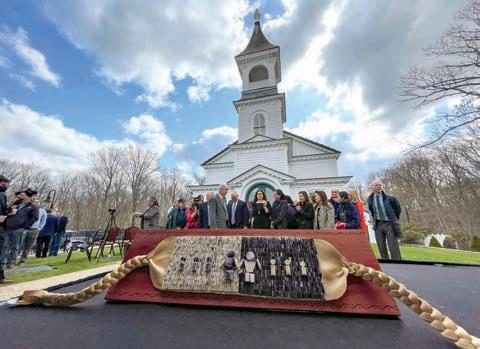
Following the repatriation of Samson Occom’s papers to the Mohegan Tribe, members of the tribe and a delegation from Dartmouth gathered outside the Mohegan Church in Uncasville, Connecticut. In the foreground is the Wampum belt that the Mohegan Tribe presented to Dartmouth as a reaffirmation of their relationship.
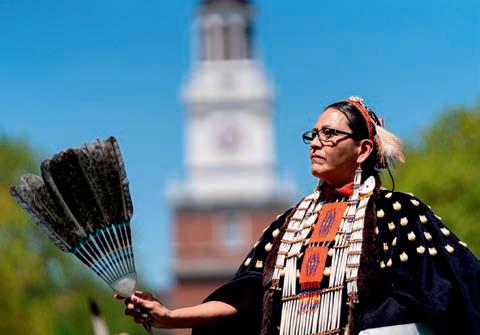
Dezbah Hatathli ’92 (Navajo) returns to dance in the 51st Annual Dartmouth Powwow.
We’re excited to share Dartmouth with you.
Student Blog: dartgo.org/blog
Instagram: @dartmouthadmissions
Facebook: @dartmouthadmissions
YouTube: dartgo.org/admissionsYT
Podcast: dartgo.org/podcast
For more information, please contact: Steven Abbott, Associate Director of Admissions and Coordinator of Indigenous Outreach steven.h.abbott@dartmouth.edu
(603) 646-2875
Dartmouth College is located on traditional, unceded Abenaki homelands
Indigenous Students and Student Organizations
More than 200 Indigenous students are currently enrolled at Dartmouth College, representing more than 70 different tribal nations and Indigenous communities from across North America, the Pacific, and around the world. Indigenous students at Dartmouth engage in all aspects of the College’s curriculum and community and move on to impactful, life-changing opportunities and careers.
An array of opportunities await students wanting to engage the Indigenous community on campus, from Native Americans at Dartmouth (NAD) and Hōkūpa’a, Dartmouth’s umbrella Native/Indigenous and pan-Pacific organizations, to other groups focusing on STEM, languages, agriculture, beading/crafting, and planning the annual Dartmouth Powwow and Lū’au.
Native American Program
The Native American Program (NAP) is an office dedicated to the success and well-being of the Indigenous student community at Dartmouth. The NAP is designed around four core pillars of Indigenous student success: academic support, well-being, community engagement, and personal and leadership development.
The NAP supports Dartmouth’s Indigenous student organizations, hosts key events throughout the year, and helps to provide cultural programming for the entire college community. The NAP and the Office of Admissions also collaborate to host the Native/Indigenous Pre-Orientation program for incoming students each fall.
Native American House
The Native American House (NAH) serves as both a residential facility and a key gathering place for the community. One of Dartmouth’s Living Learning Communities, the NAH is devoted to the expression of Indigenous social, cultural, and spiritual life.
Native American and Indigenous Studies Department
Established in 1972, the Department of Native American and Indigenous Studies (NAIS) develops interdisciplinary teaching and research to increase understanding of the historical experiences, cultural traditions and innovations, and political status of Indigenous peoples in North America and beyond.
The core NAIS faculty consists of scholar-teachers with a broad range of expertise from diverse backgrounds. The department also brings outstanding guests, scholars, mentors, activists, artists, tribal elders, and leaders to the Dartmouth campus, including the Tribal Leadership Academy hosted each summer.
The
Hood Museum
of Art
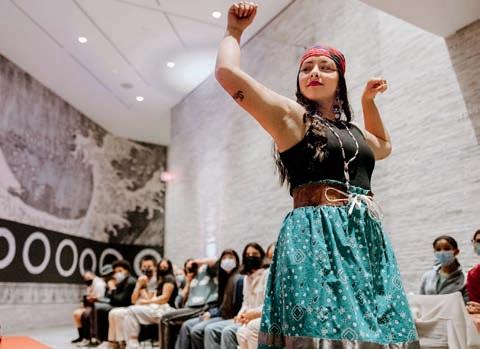
Dartmouth’s Hood Museum of Art houses one of the nation’s premier collections of both contemporary and historic Native art. Staffed by a talented Native curatorial team that includes student interns, the Hood hosts regular events with Indigenous artists and encourages both students and faculty to actively engage the Museum’s collections. Among these events, the Hood Museum hosts the Indigenous Peoples’ Month Fashion Show each year.
Elijah Butler ’26 he/him/his // Pequot
Hometown: North Stonington, CT
Major: Engineering Sciences
Student groups: Native Americans at Dartmouth, American Indian Science and Engineering Society, Powwow Committee
Favorite event or tradition: Midnight Breakfast
“Just as the Native community is strong on campus, have seen that the same is true for Native alumni. On multiple occasions, have spoken with alumni who were eager to hear about the current state of the Indigenous community at Dartmouth and the continuation of various traditions they enjoyed during their time here.”
NAIS offers both a major and a minor, as well as modified major and minor options. The department also partners with the Institute of American Indian Arts to offer a unique off-campus study program in Santa Fe, New Mexico.
Students pursuing NAIS may be eligible for departmental grants to pursue research or internships with Native/Indigenous communities, including a postbaccalaureate year-long fellowship via the Tribal Services and Solutions Projects.
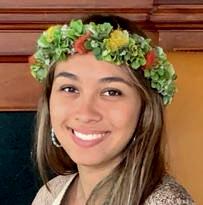
Amedee Conley-Kapoi ’26 she/her/hers // Native Hawaiian
Hometown: Pā'ia Maui, HI
Major: Anthropology; Minor: Astronomy
Student groups: Native American Program Peer Mentor, Hōkūpa'a
Favorite event or tradition: Lū'au and Powwow weekend
“Challenge yourself to think, to feel, to be passionate and never let go of those passions! Most importantly, o kū o kā meaning ‘put one foot in front of the other.’ This is a phrase that my kumu hula (hula teacher) would often say on a long night of hula practice. To o kū o kā means to always persevere, no matter what trials may lie ahead. By remembering this, you will always reach your destination.”
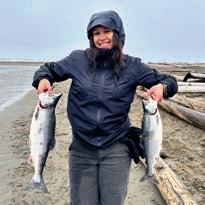
Kellie Miller ’27 she/her/hers // Iñupiaq, Nome Eskimo Community
Hometown: Nome, AK
Major: Native American & Indigenous Studies
Student groups: Native American Program Peer Mentor
Favorite event or tradition: Midnight Breakfast & Indigenous Peoples’ Day
“A highlight of my experience at Dartmouth so far was meeting Secretary of the Interior Deb Haaland during her visit to campus.”
Carolina Splawn ’27 she/her/hers // Choctaw
Hometown: Antlers, OK
Major: Biology modified with Neuroscience
Student groups: Native Americans at Dartmouth, American Indian Science and Engineering Society
Favorite event or tradition: Indigenous Peoples’ Day midnight drum circle and fire
“Believe in yourself first and know that you are capable of much more than you think! Take advantage of all the opportunities that come your way, even if they seem out of reach. You never know the possibilities that await you. I’m rooting for you!”
“One of my favorite
was
and L
u weekend. It was beautiful to see so many people come together, including so many students’ family members.”
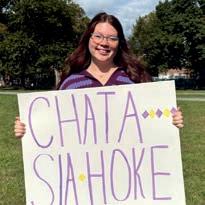
Emma Tsosie ’25 she/they // Picuris Pueblo
Hometown: Santa Fe, NM Major: Native American and Indigenous Studies;
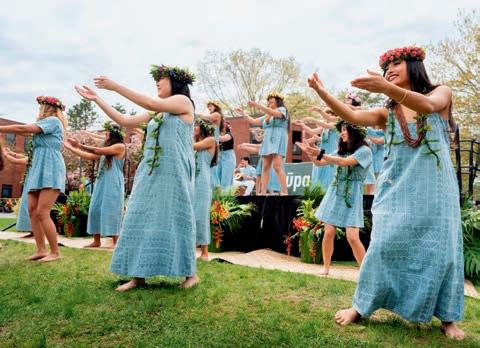
Members of Hō ūpa’a, Dartmouth’s pan-Pacific organization, perform at the annual Dartmouth Lū’au.
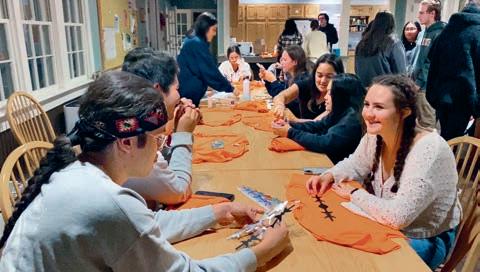
Members of Native Americans at Dartmouth create “Every Child Matters” T-shirts to mark Orange Shirt Day on September 30th.
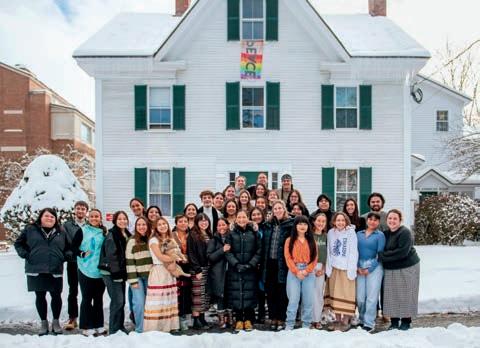
U.S. Secretary of the Interior Deb Haaland (Laguna Pueblo) with students, faculty, and staff outside the Native American House during her visit to campus.
Virginia Snake-Bumann ’24 (Hochunk) at the annual
Indigenous Peoples’ Month Fashion Show at the Hood Museum.