spring 2025 | undergraduate thesis | with emily brandt
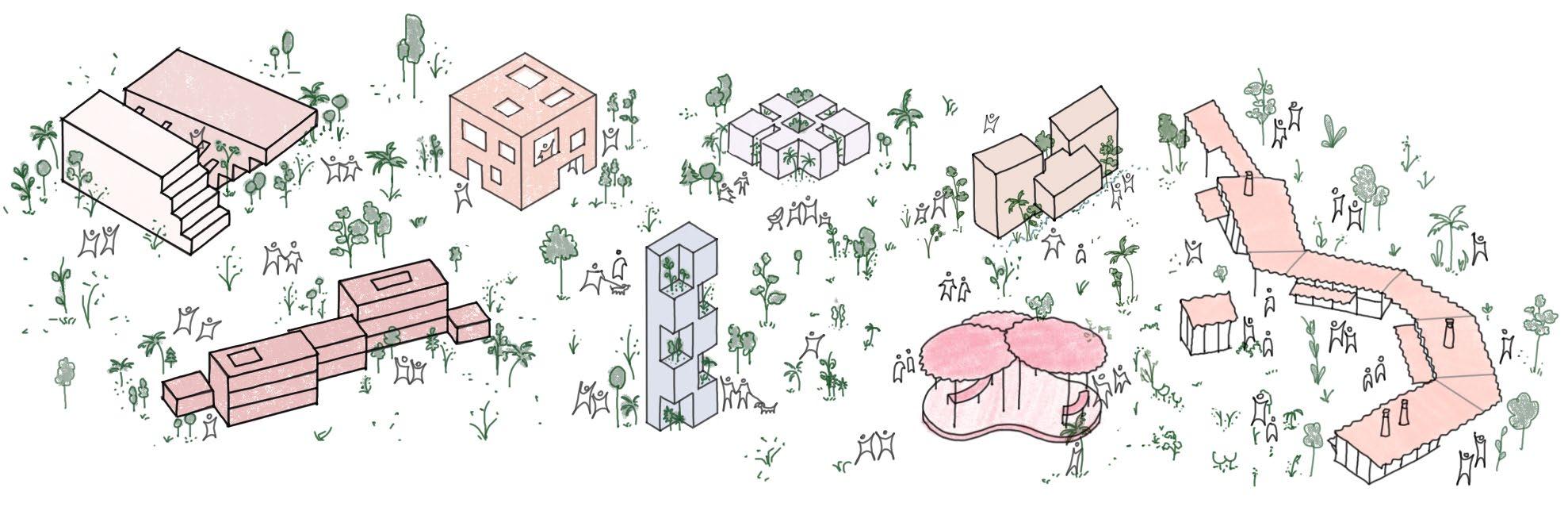
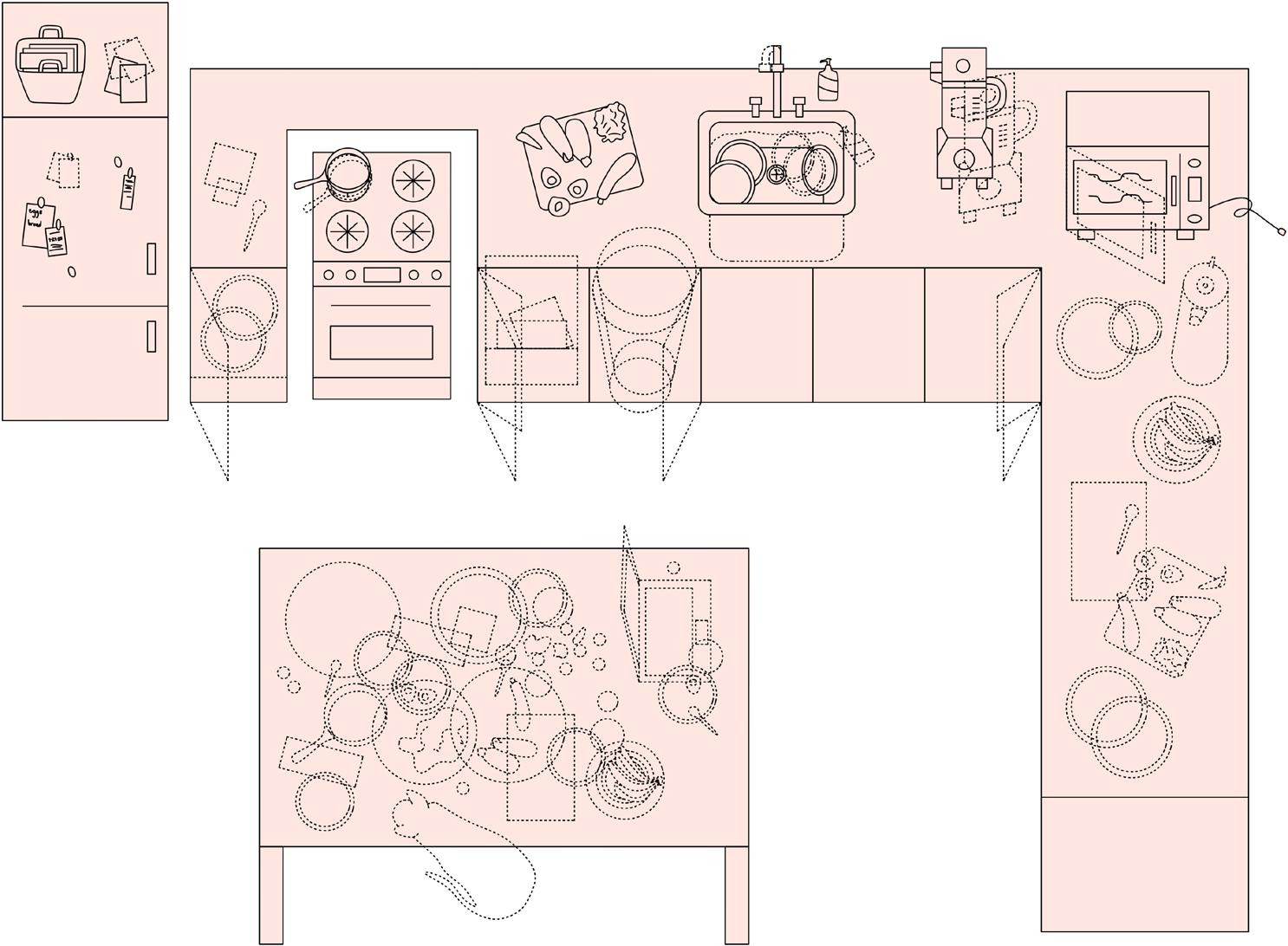
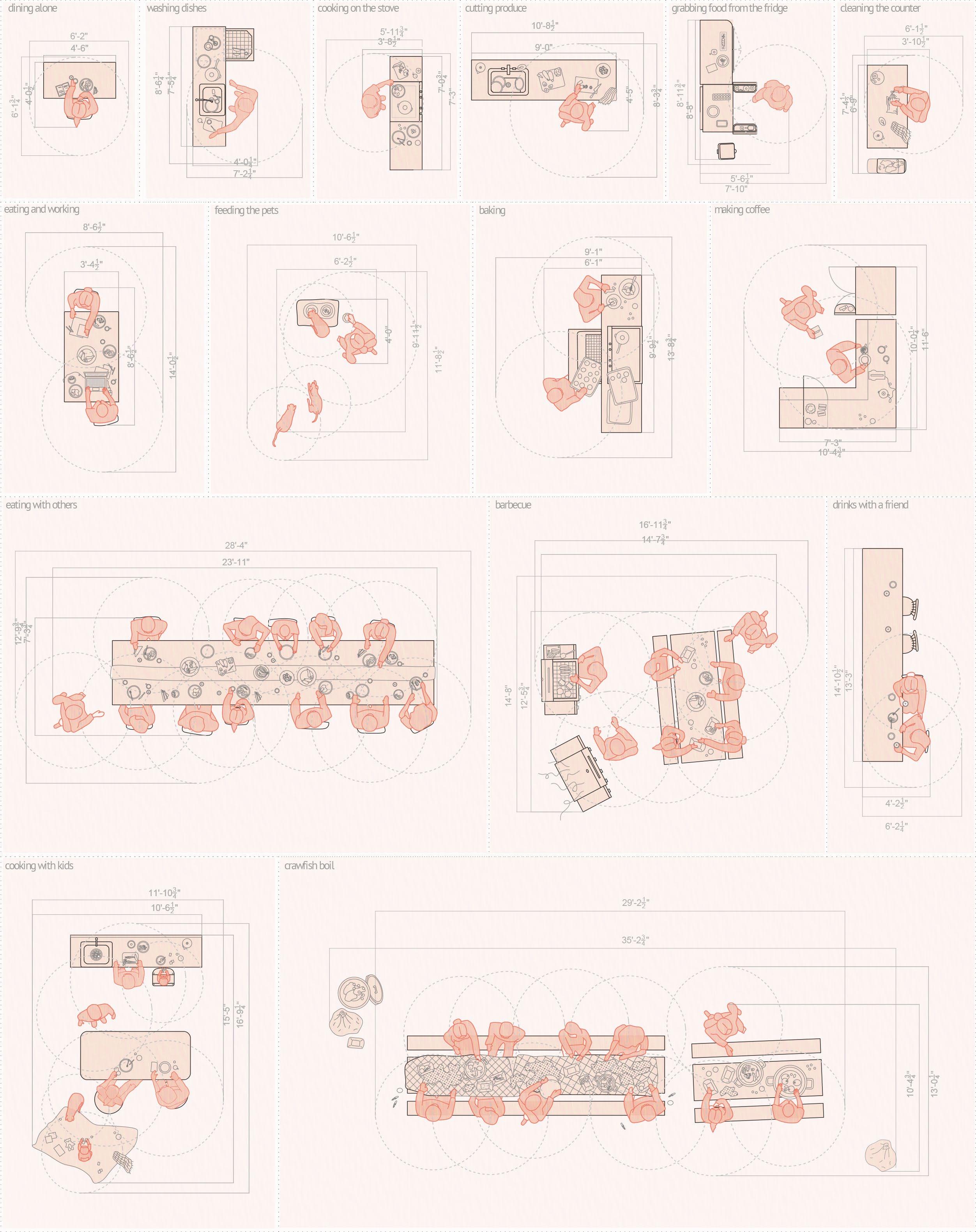
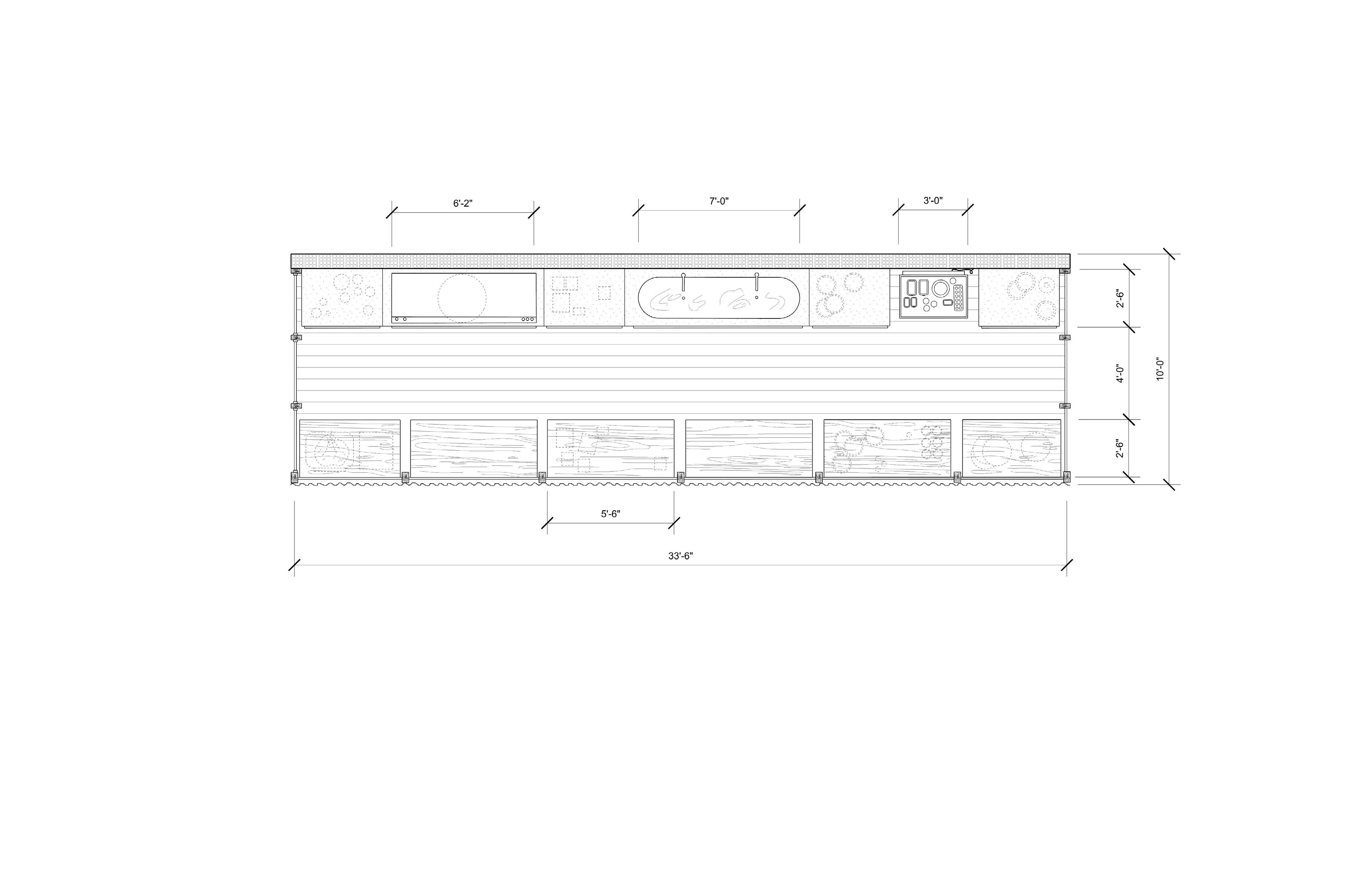
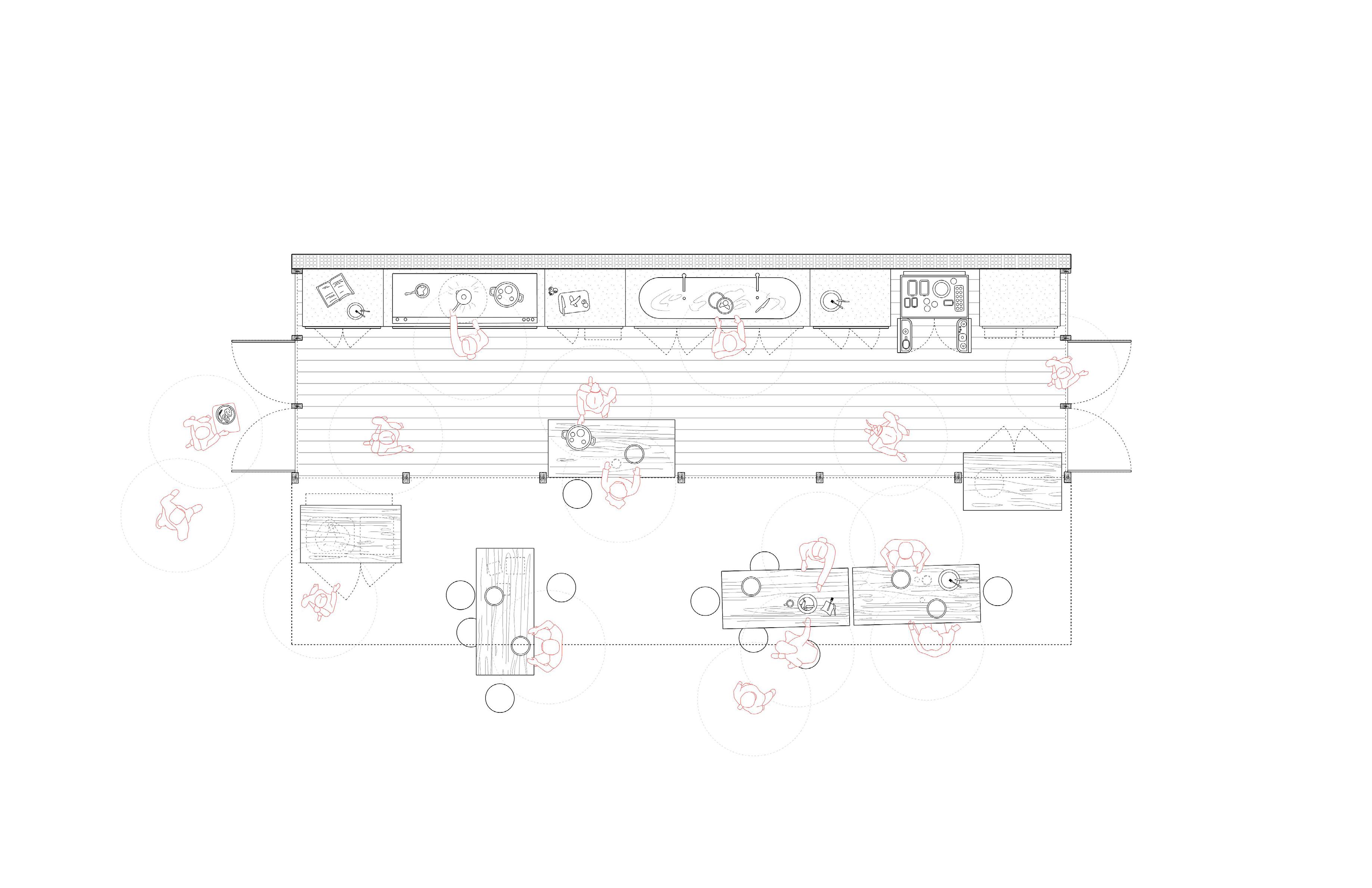
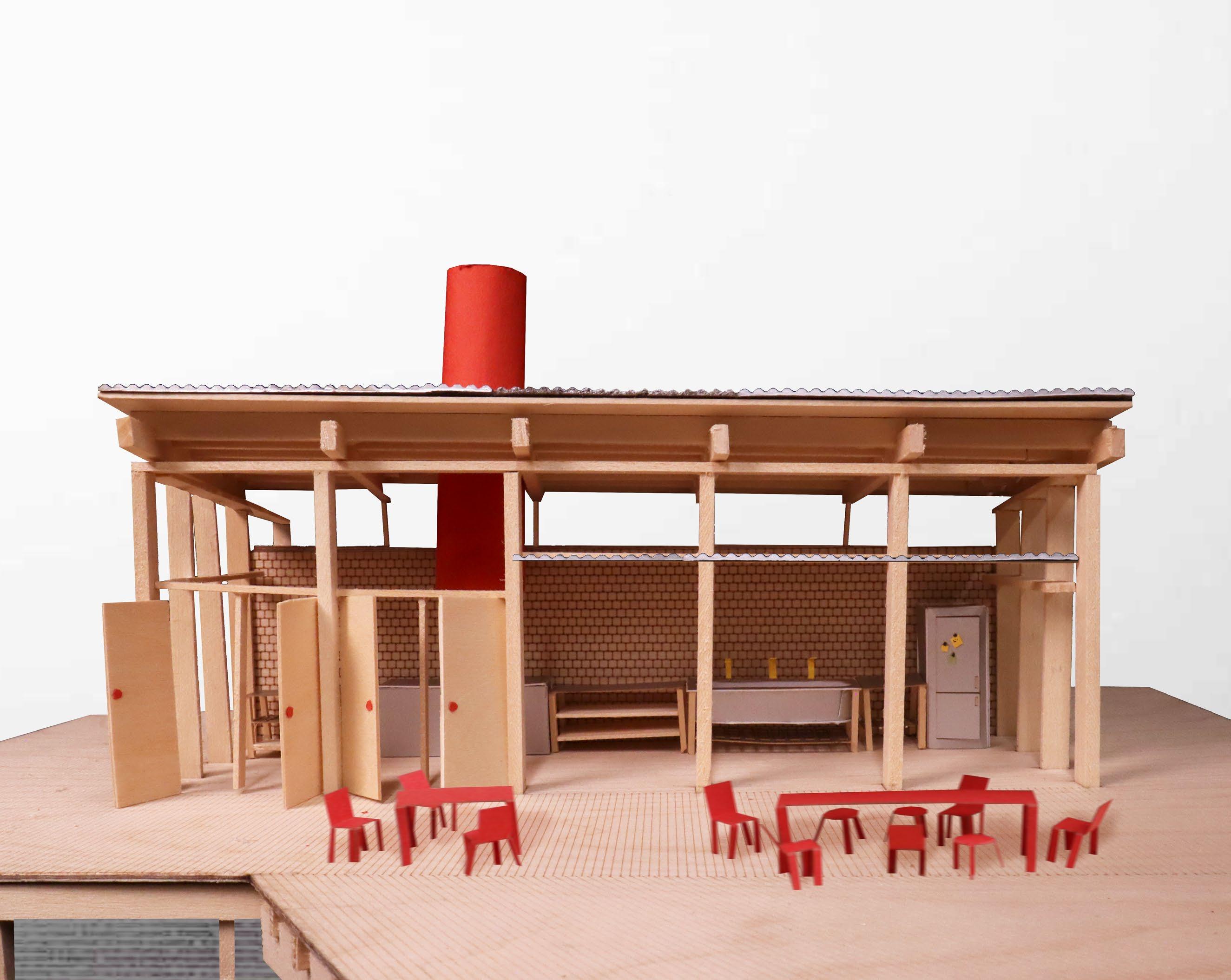
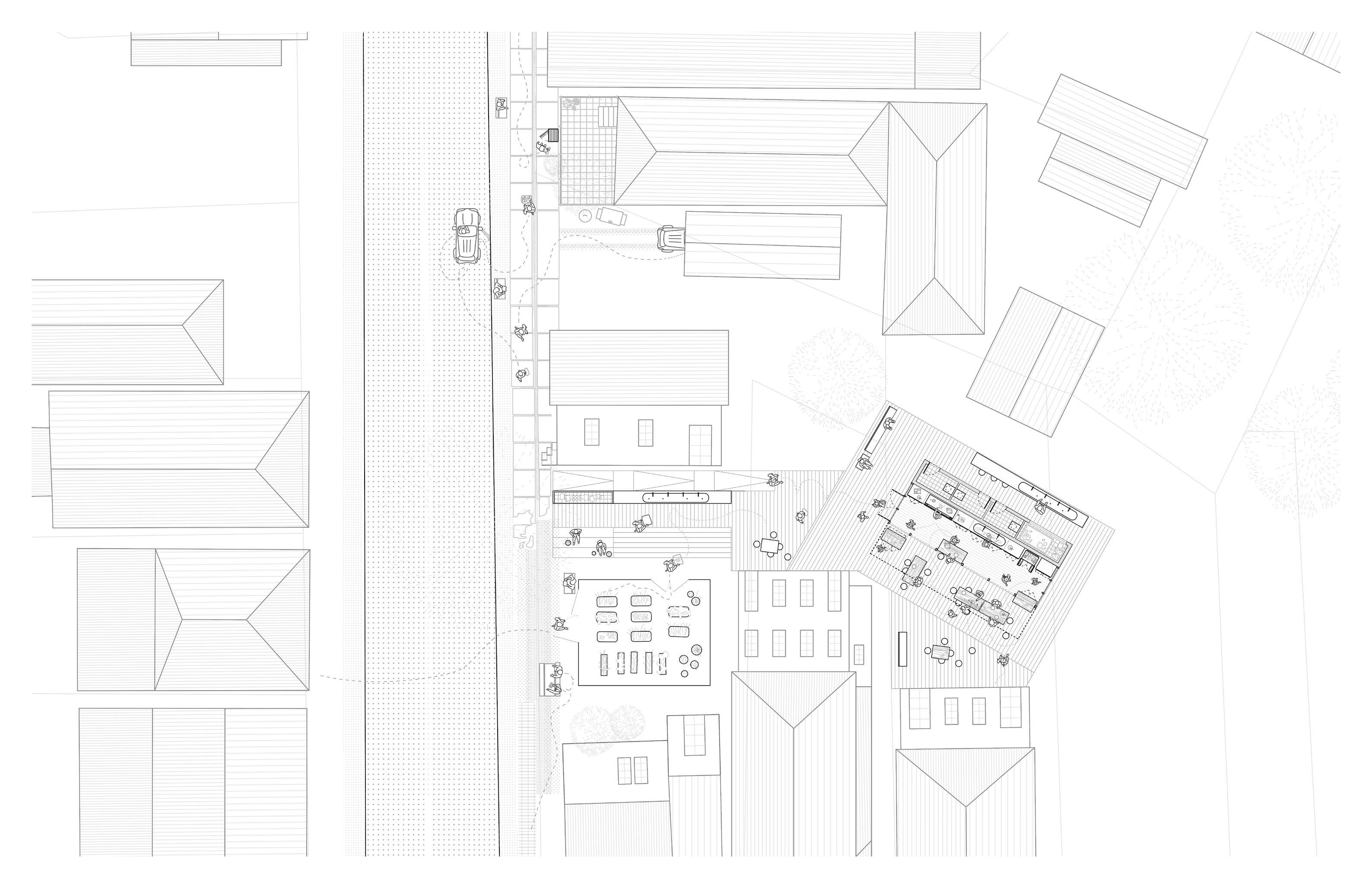
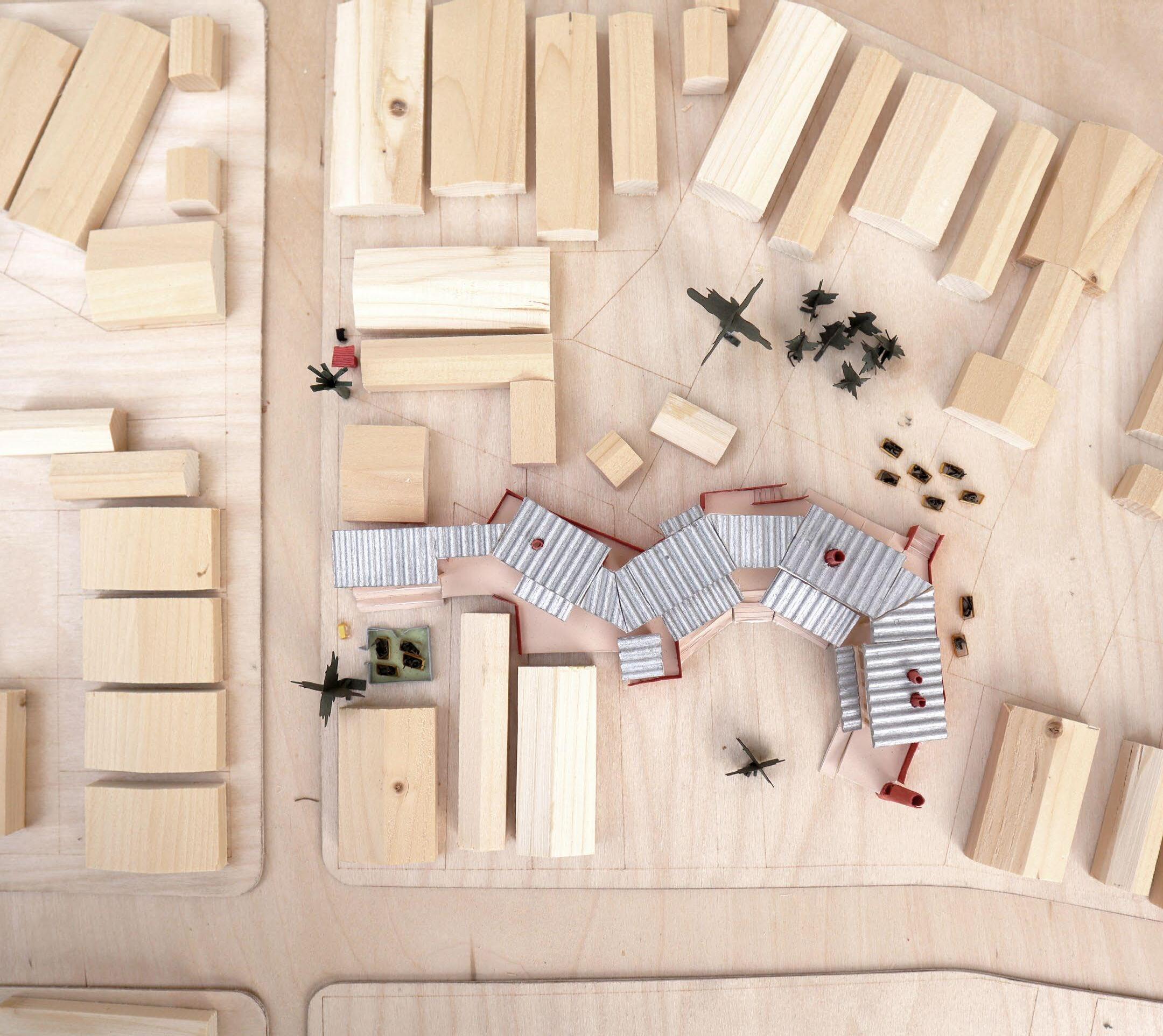
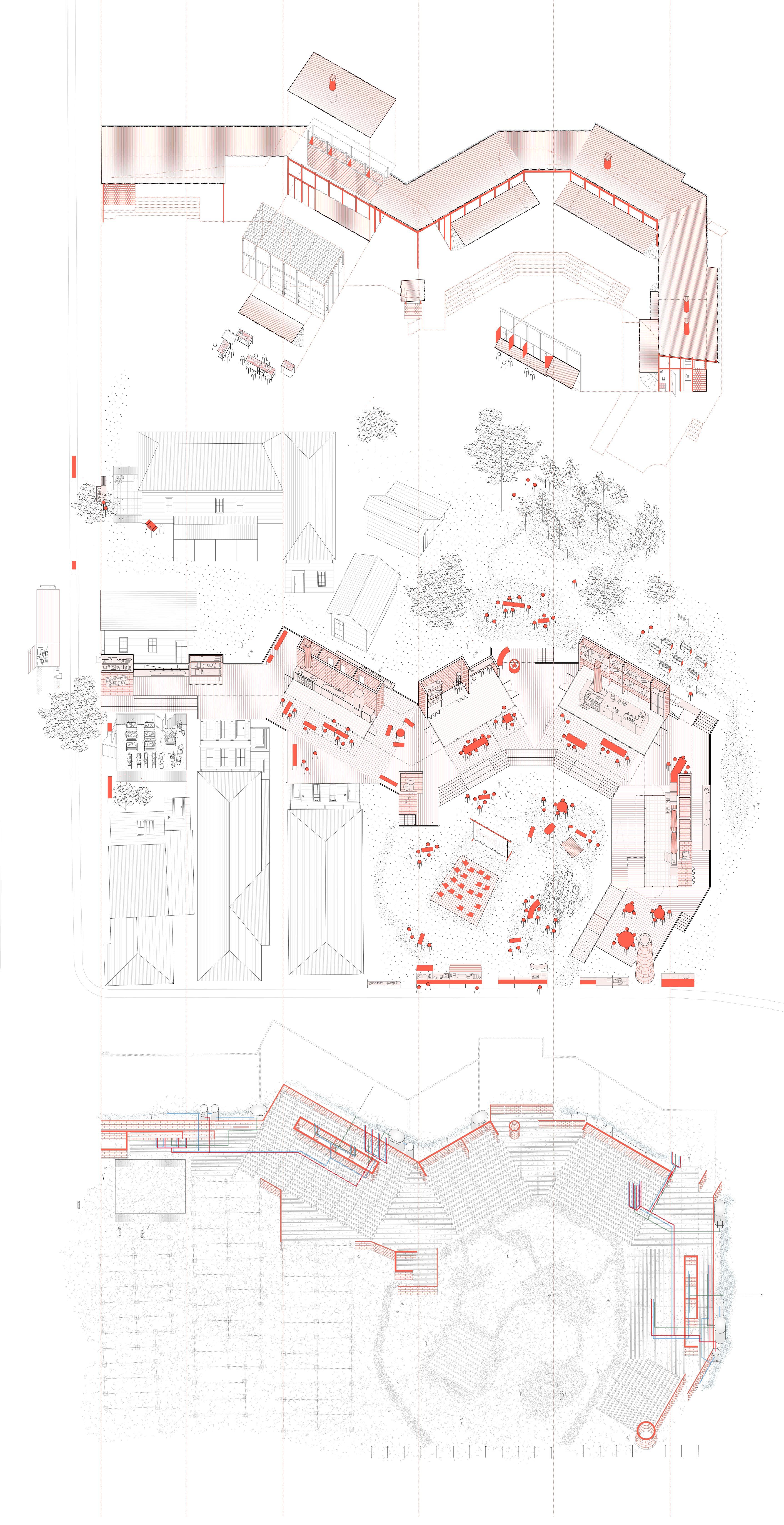
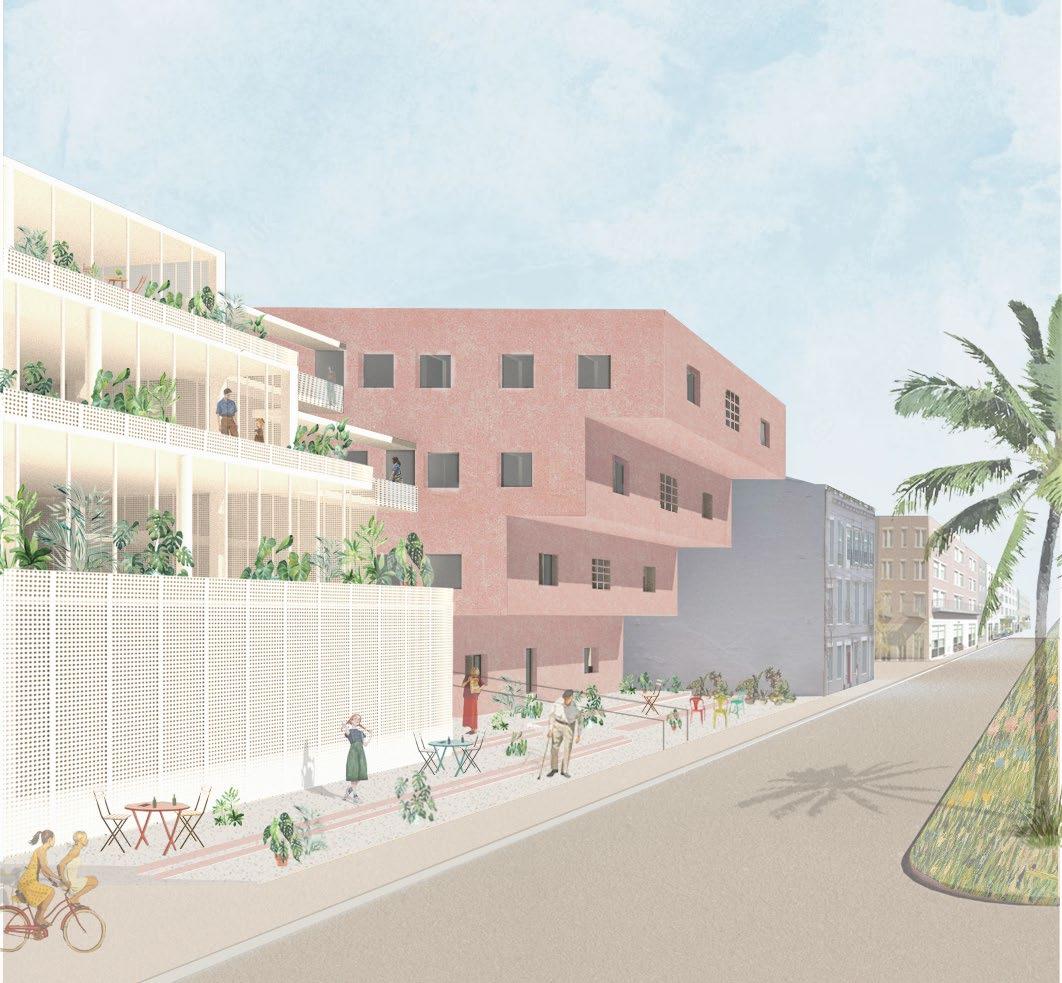
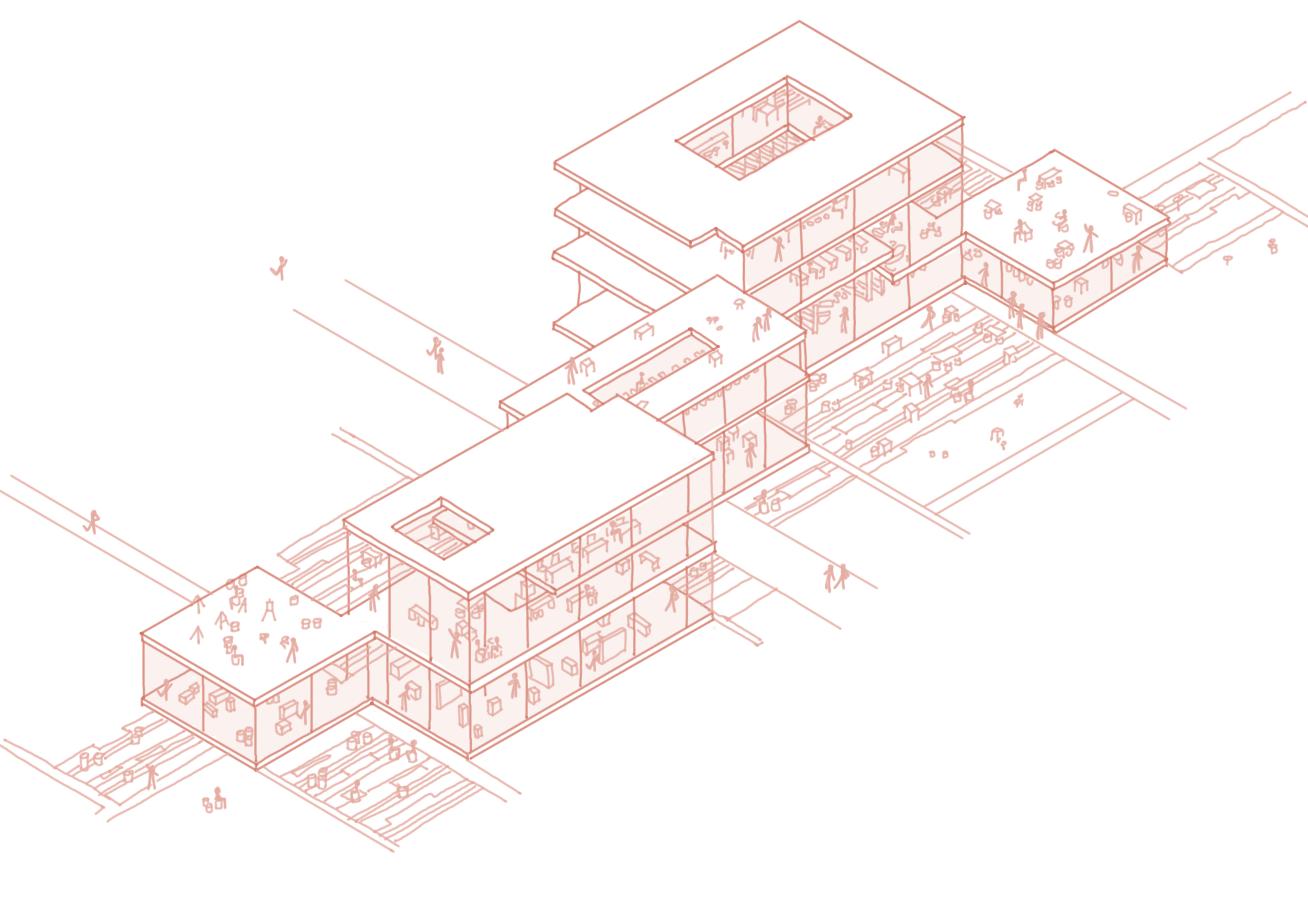
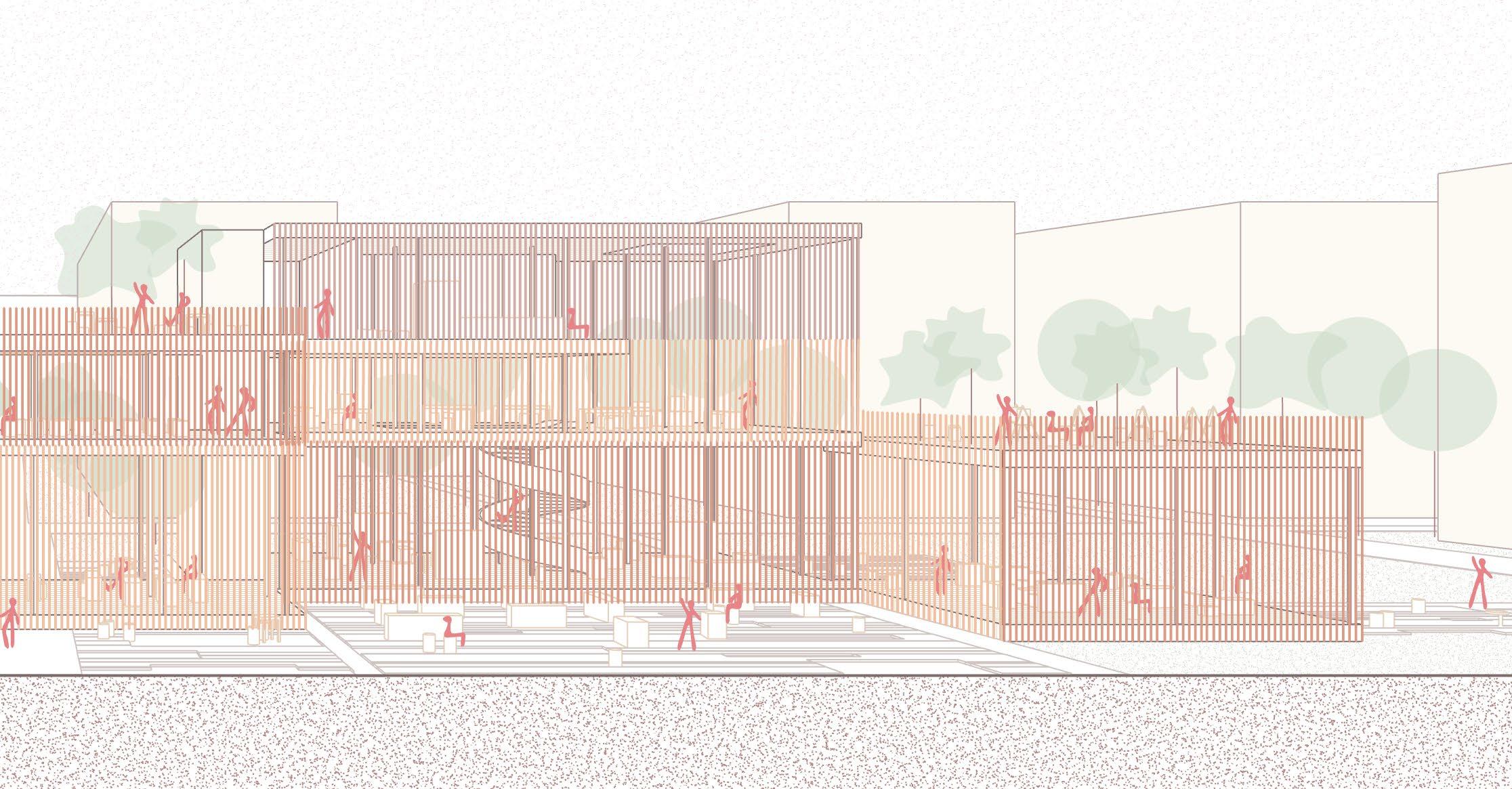
the kitchen—traditionally a symbol of domestic labor and consumption—remains confined to the private realm, despite its capacity to foster social and cultural exchange. as urban life grows more fragmented and resource-strained, issues like food insecurity, waste, and social disconnection call for a rethinking of how and where food is prepared. this thesis proposes to redefine domesticity by imagining the kitchen as an urban, public, and shared space. drawing on new orleans’ network of community fridges, the insertion of a collective kitchen into an underused urban void reclaims spatial and material resources as a site of communal activity—challenging inefficiency and rethinking what we can *and should share.
access to food
ability to cook knowledge + time
engaging in culture + tradition
completing rituals
eating
experimenting gathering
societal elements of the kitchen chatting
cooking with kids
crawfish boil
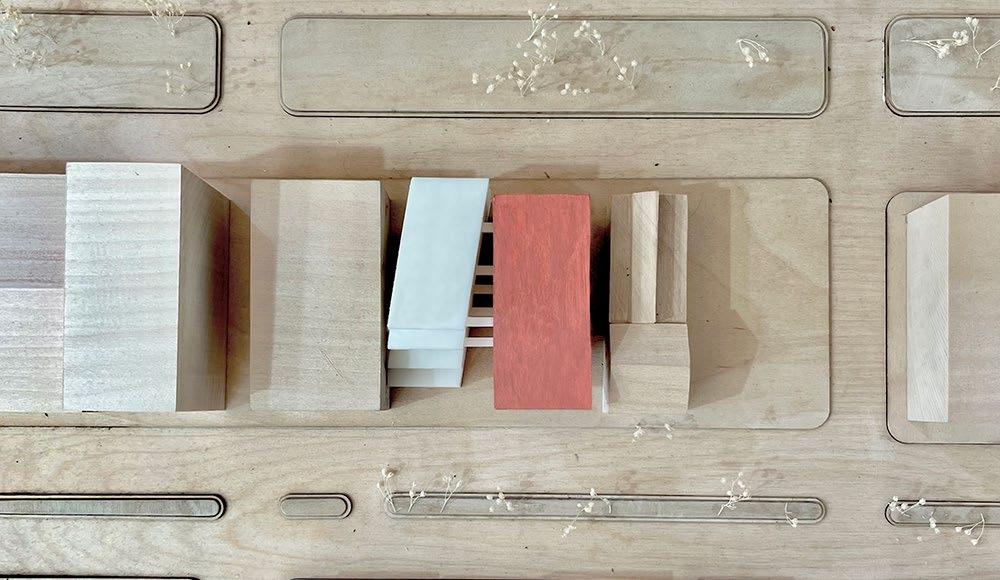
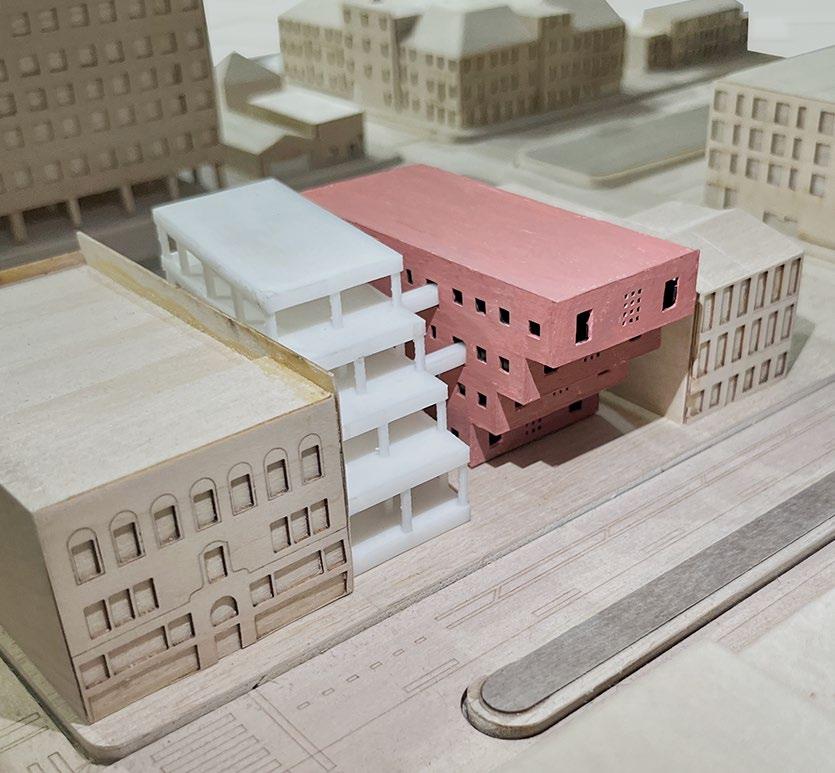
model @ 1/4”
north villere street a phased approach
phase 4: communal kitchen extends into block void space
columbus street
the block scale @ 1/32”
columbus street
north villere street
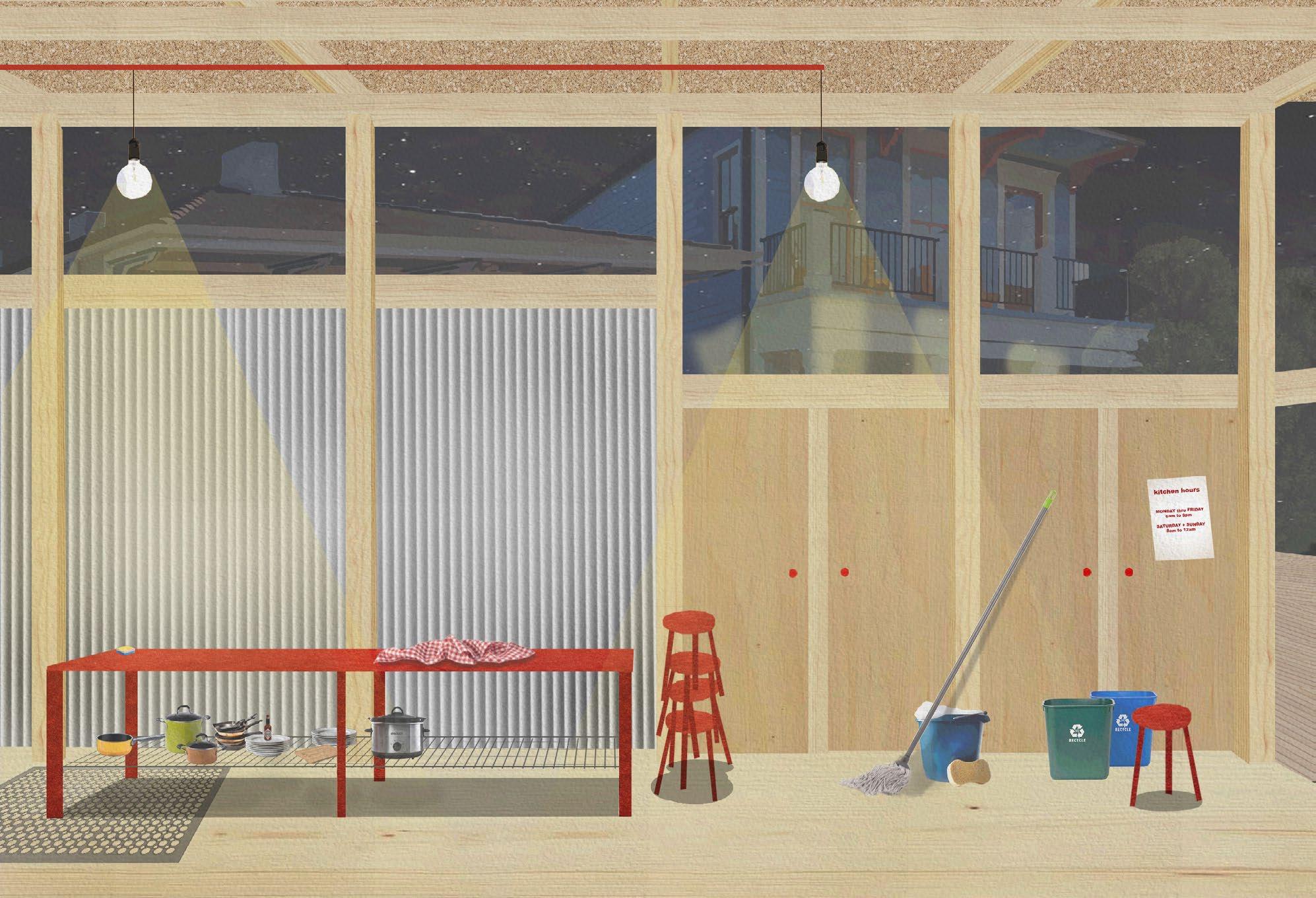
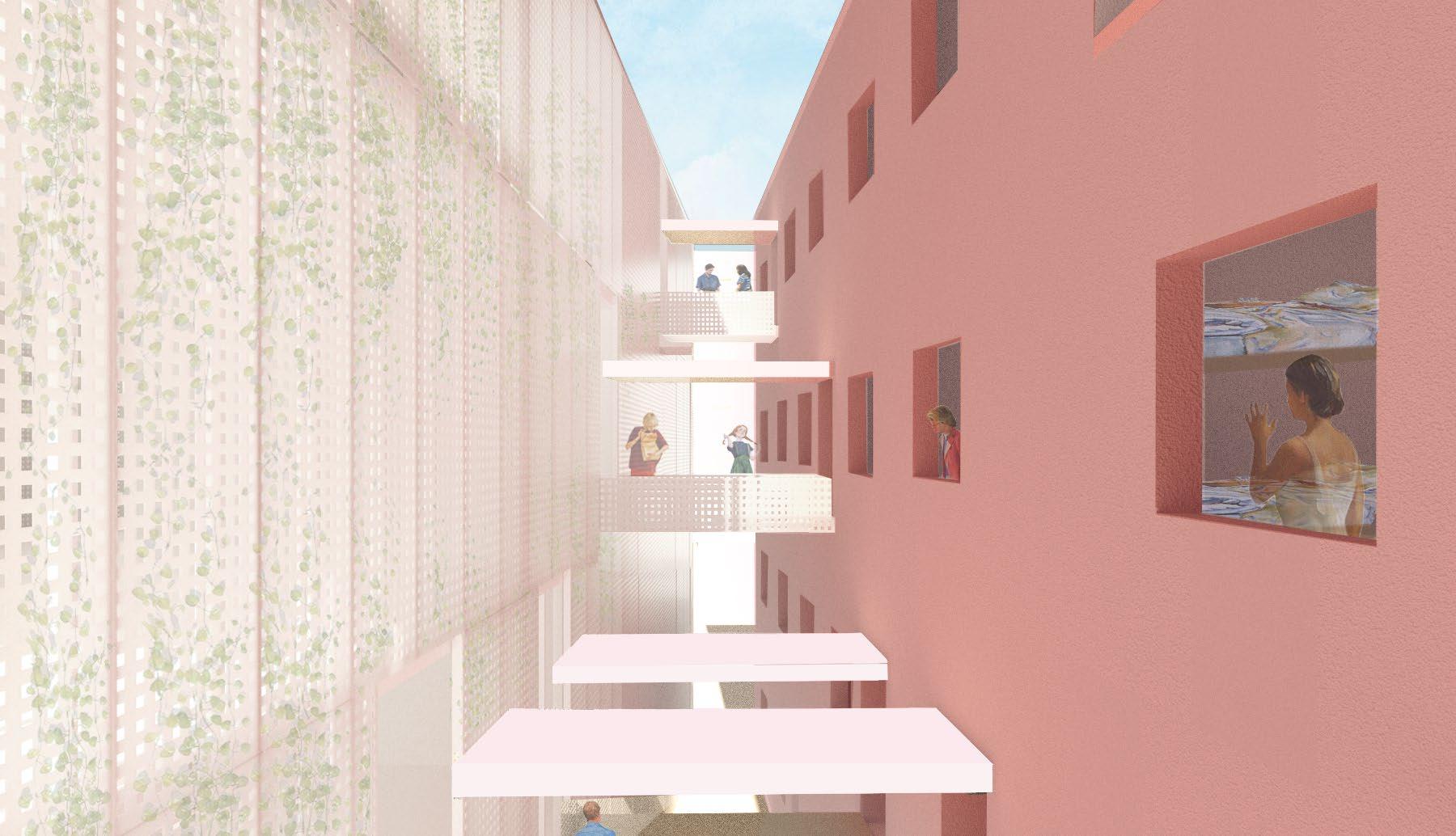
kitchen as static - night
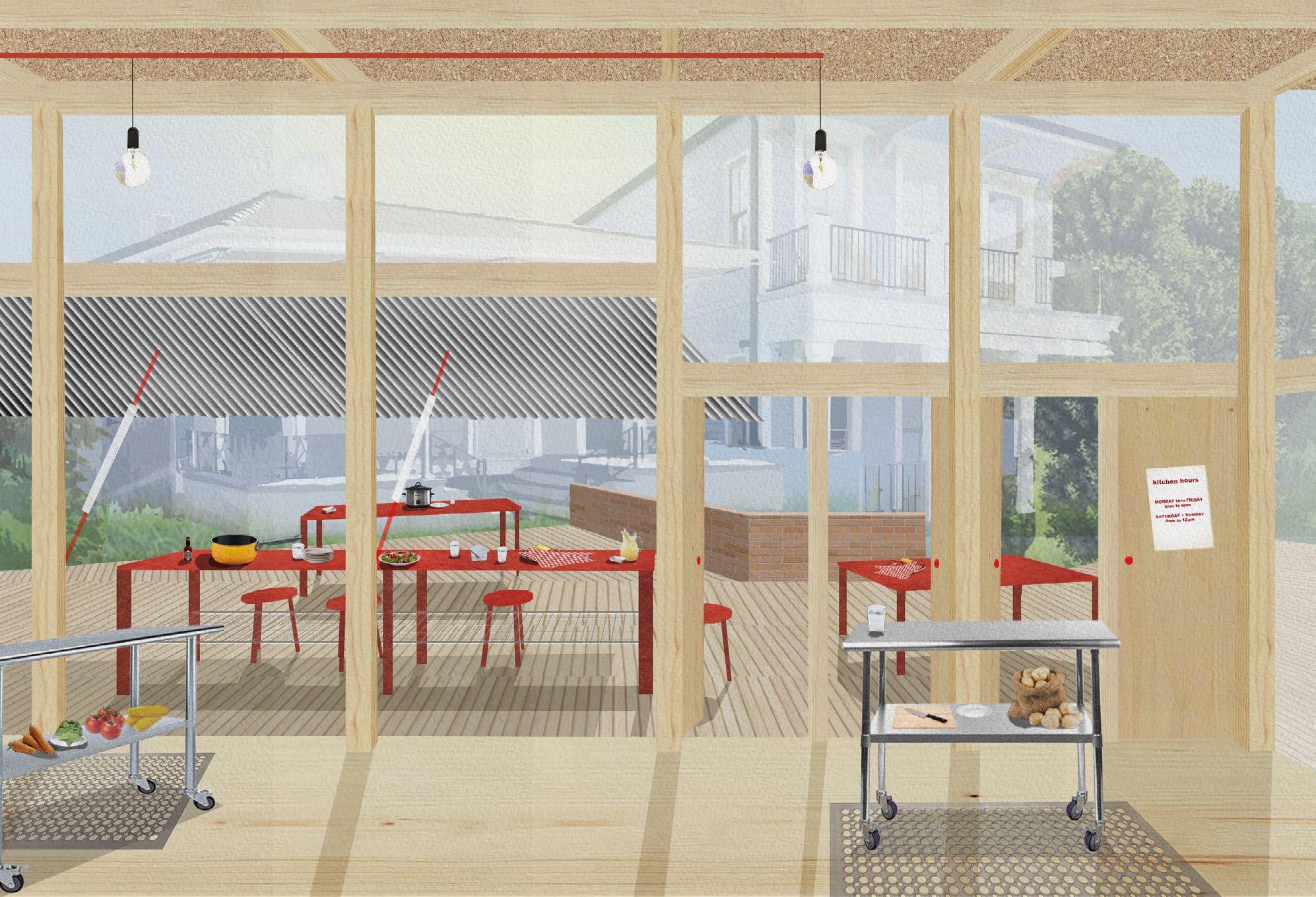
kitchen as dynamic - day
cooktocook
process to cook
cook to recycle
cooktoeat
cooktoteach+learn growtocook
cook to play
COLLECTIVE MEANDER
CERAMIC INFRASTRUCTURE FOR COHABITATION
spring 2024 | multifamily living | with sophia lindahl
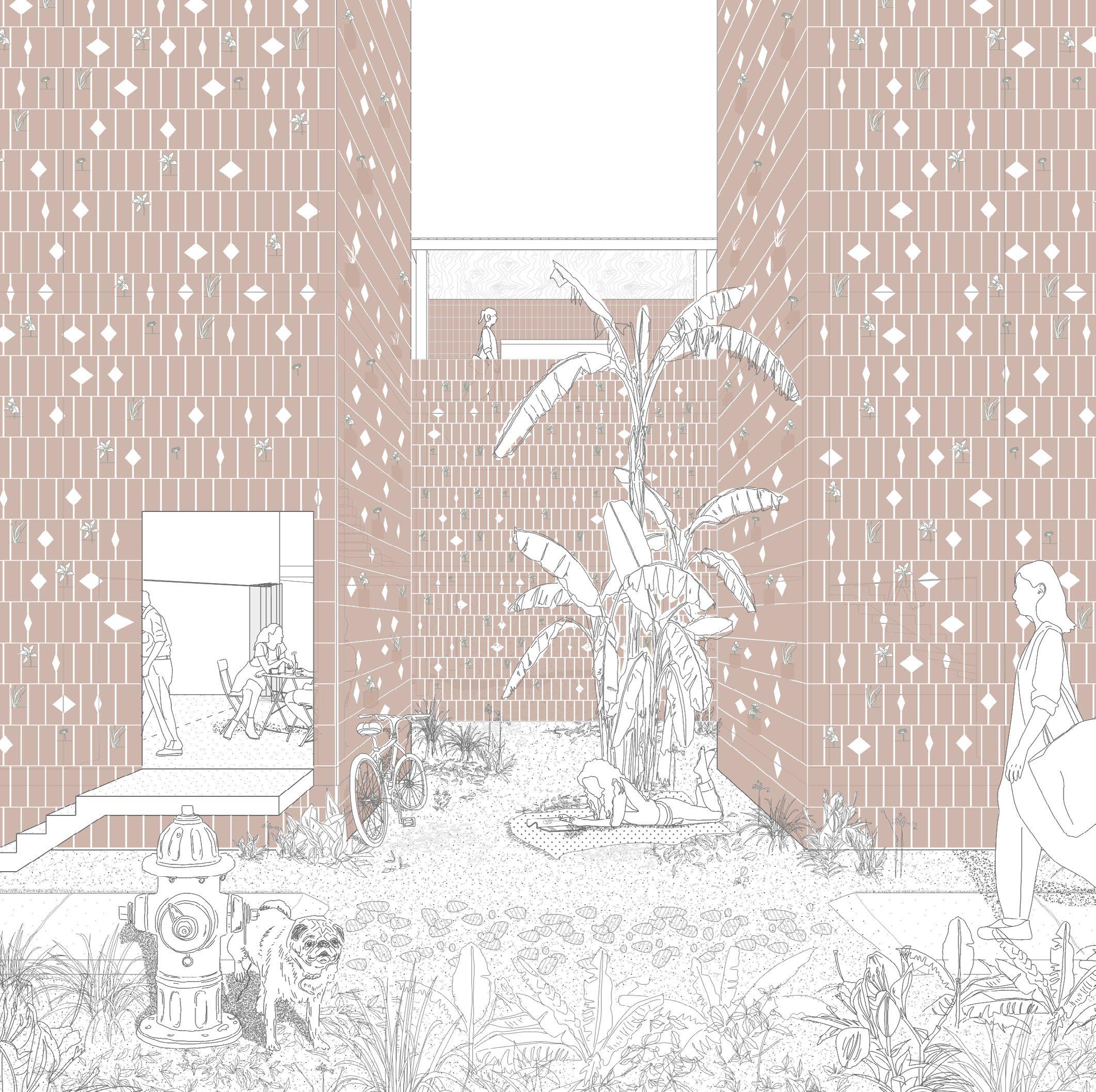
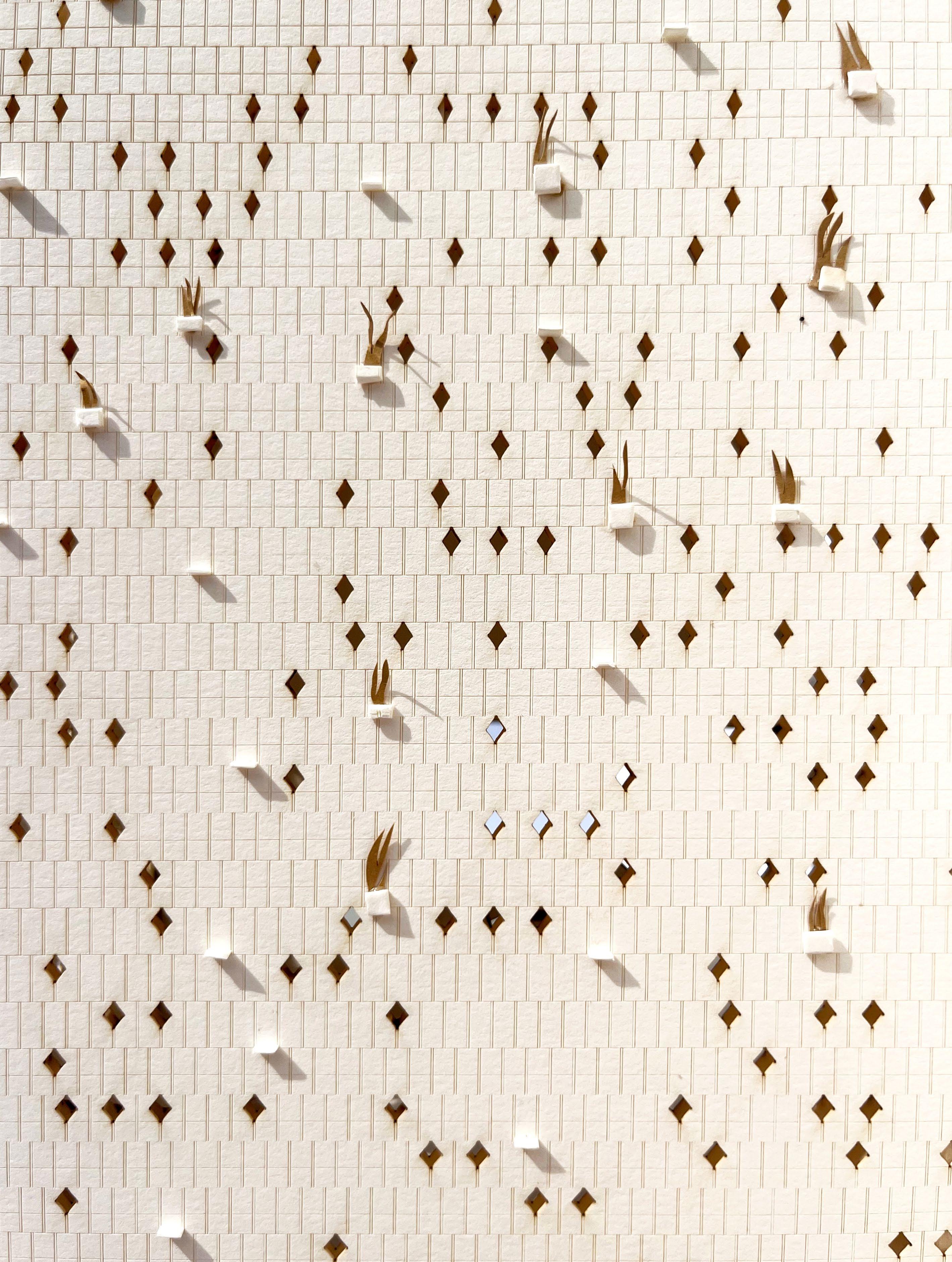
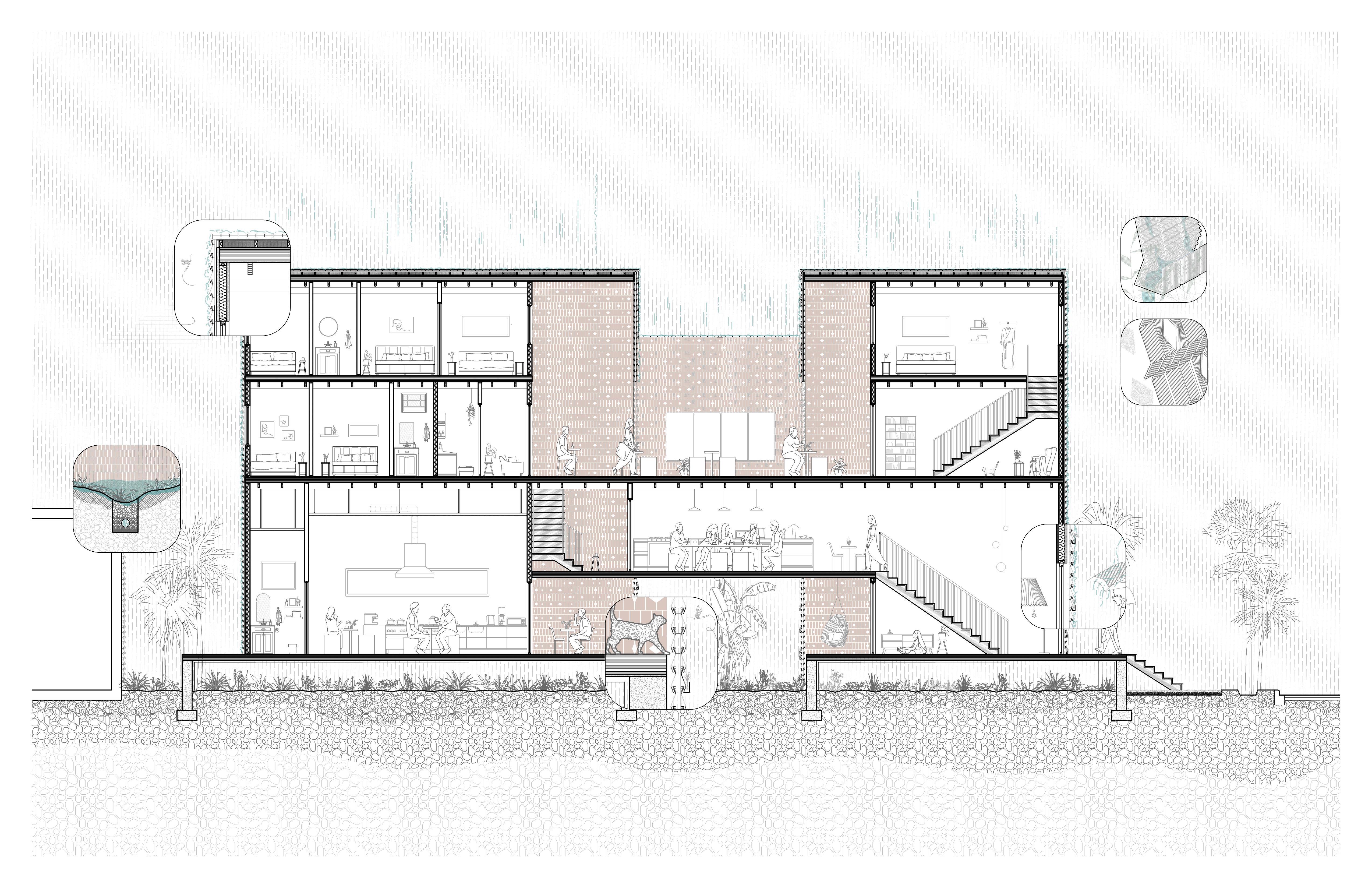
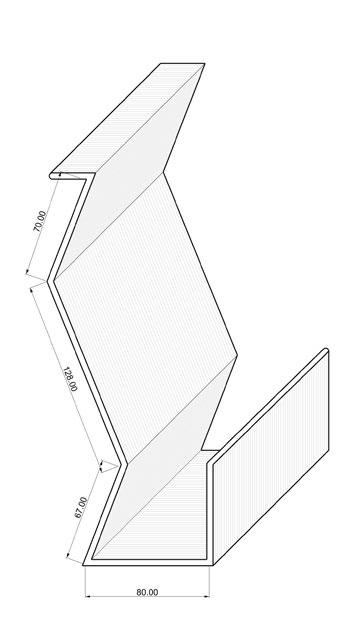
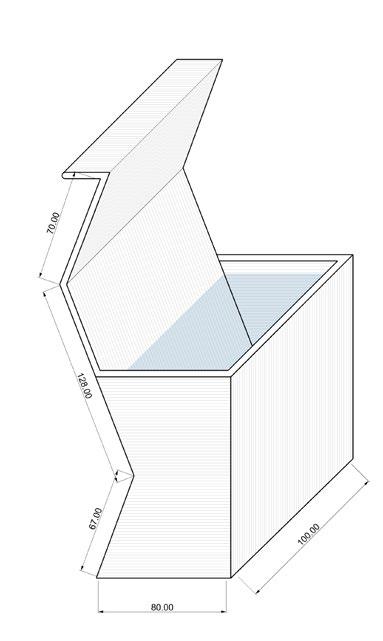
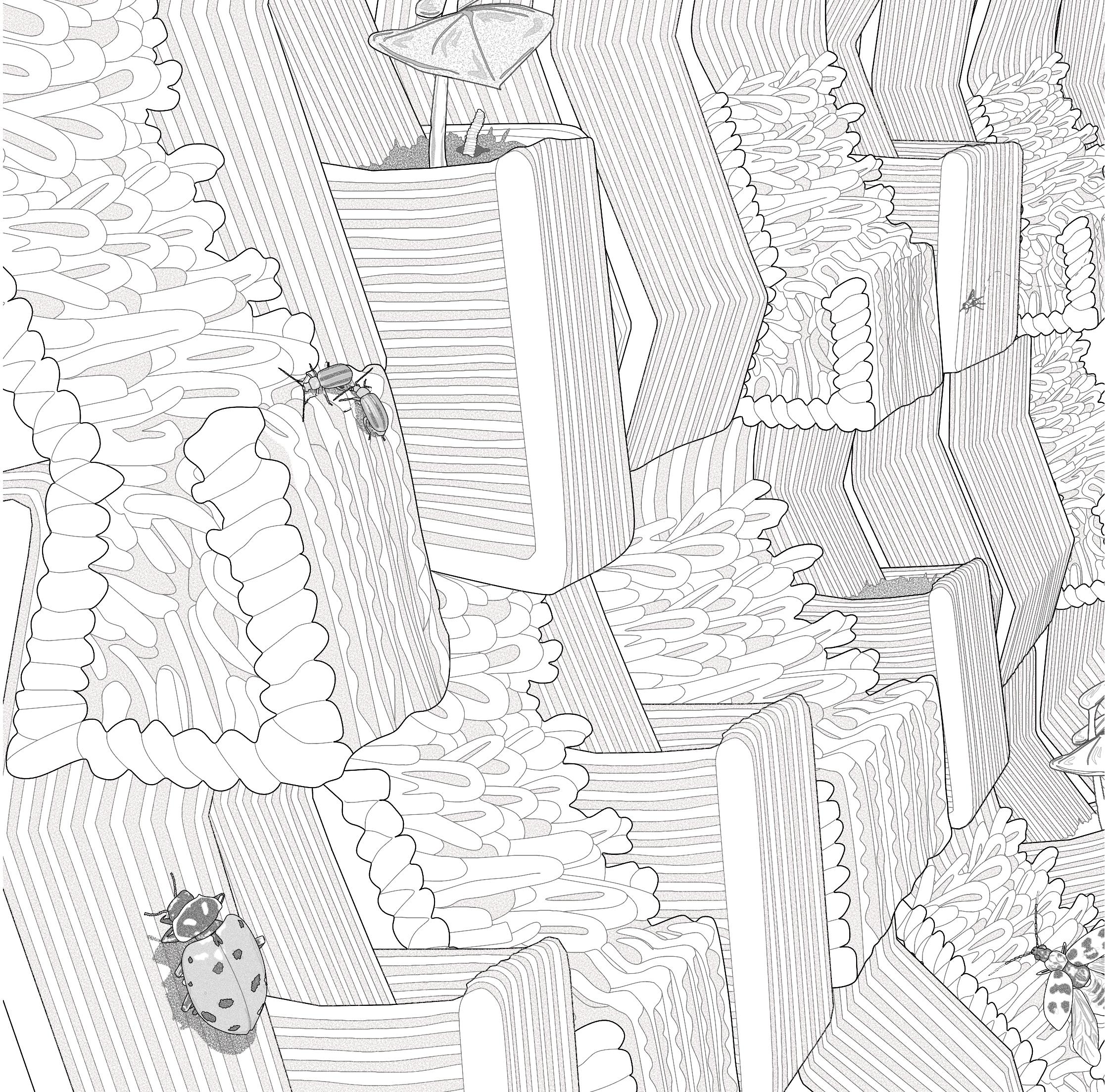
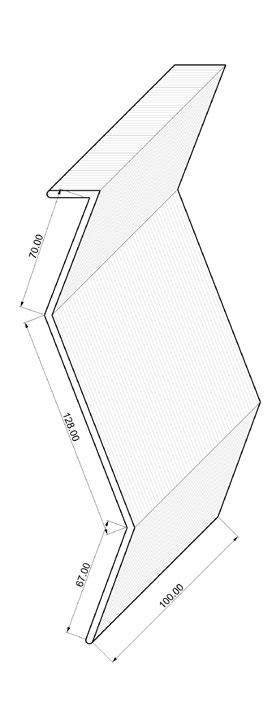
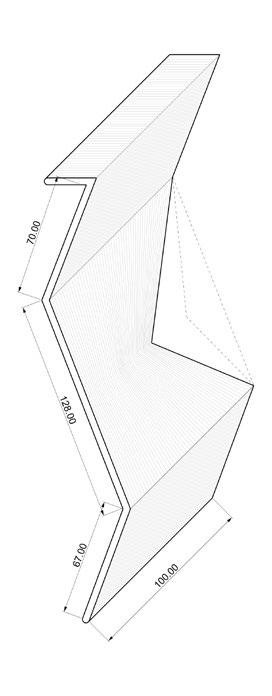
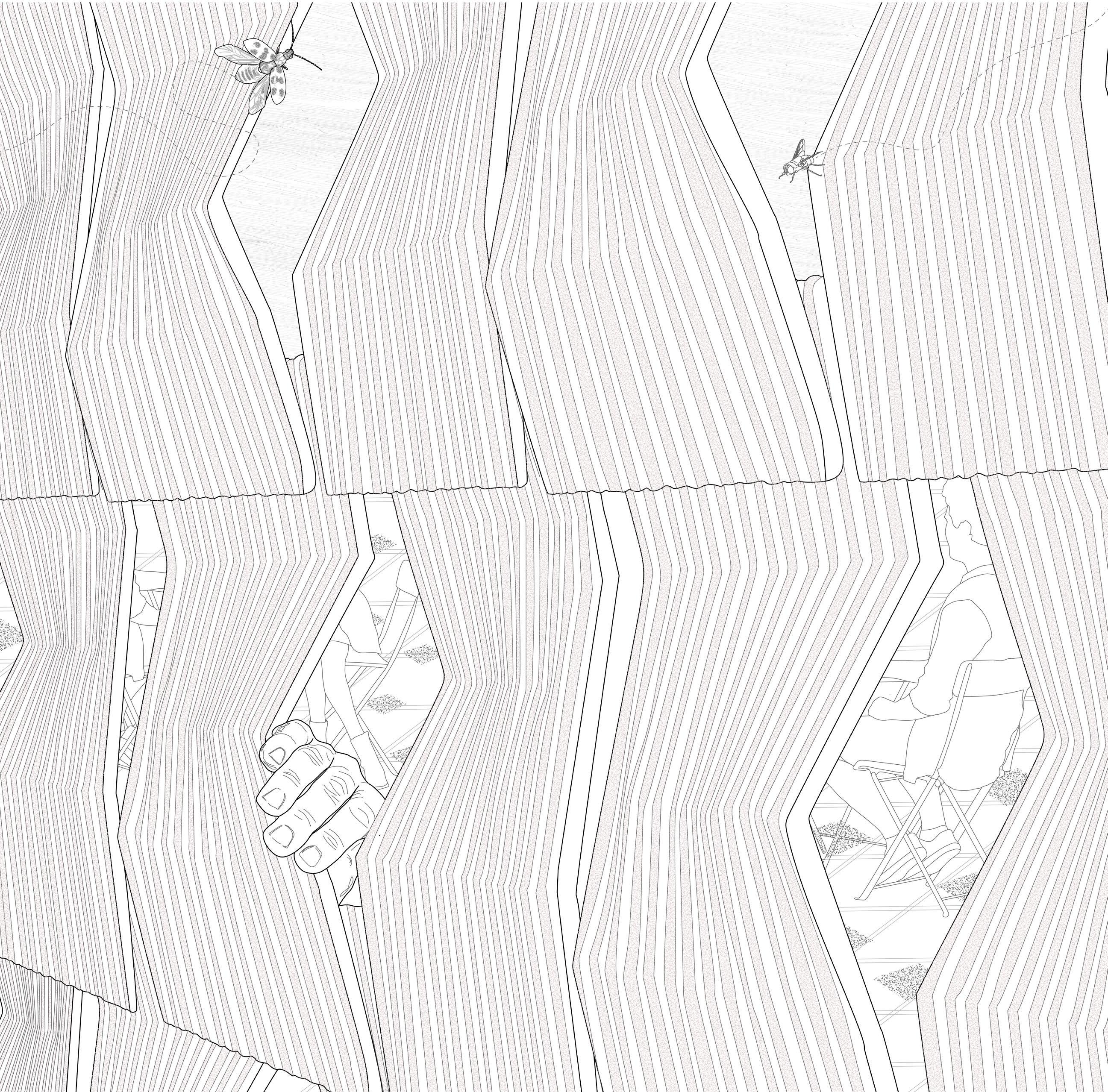
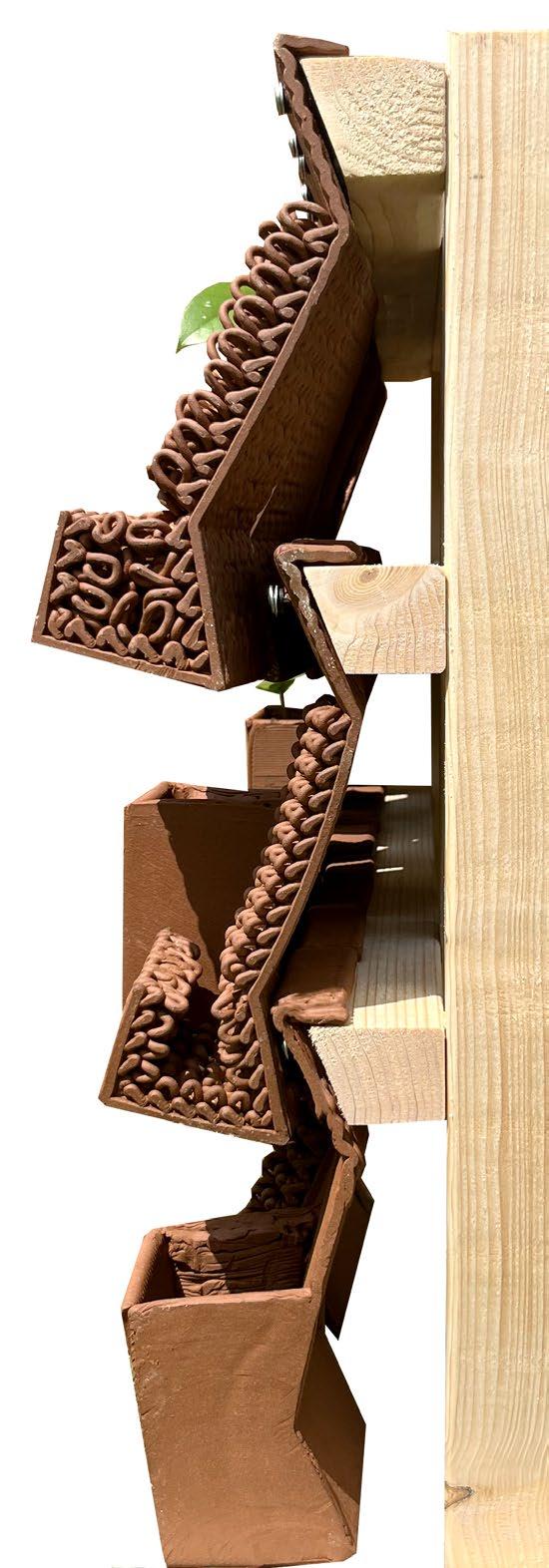
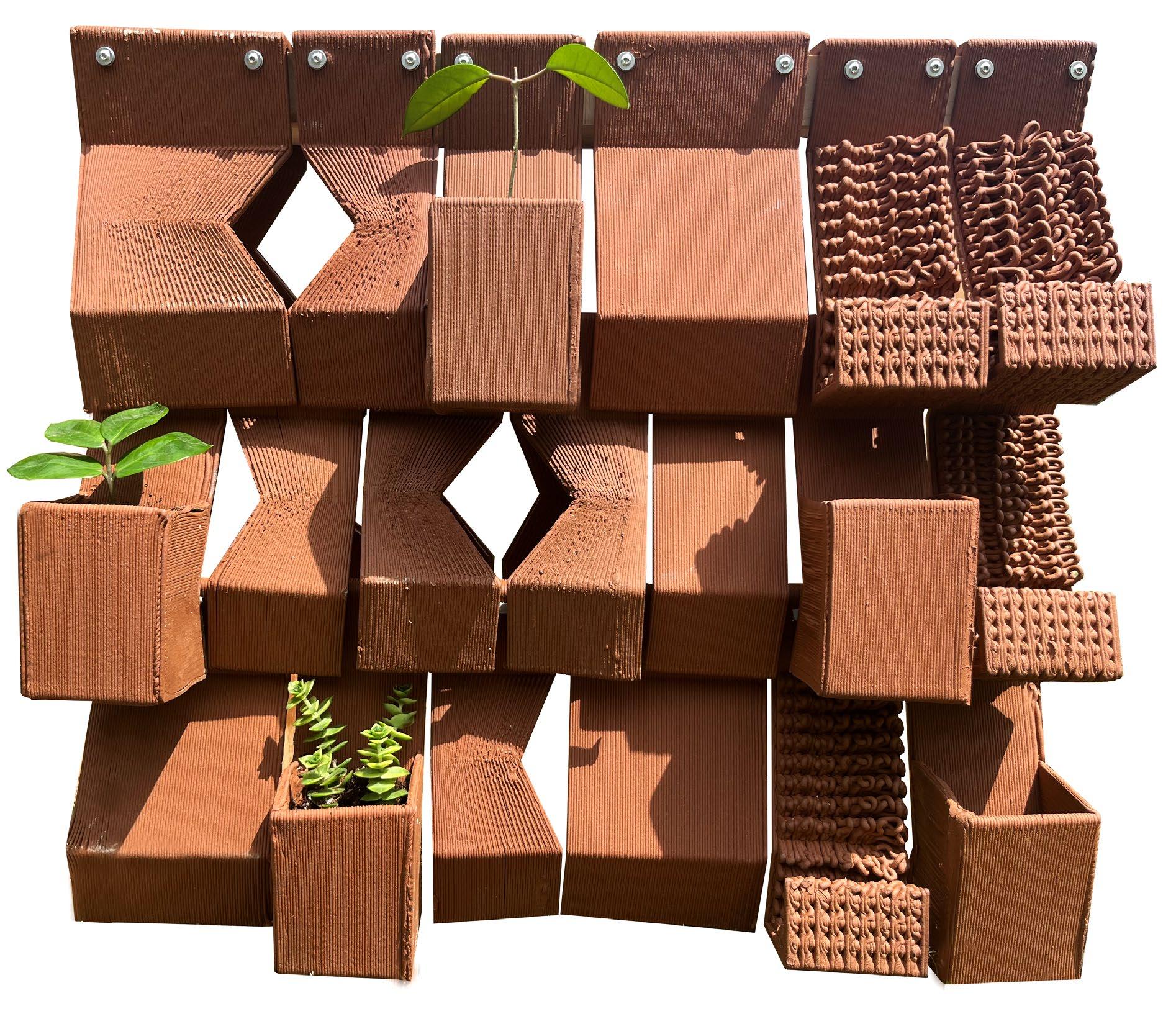
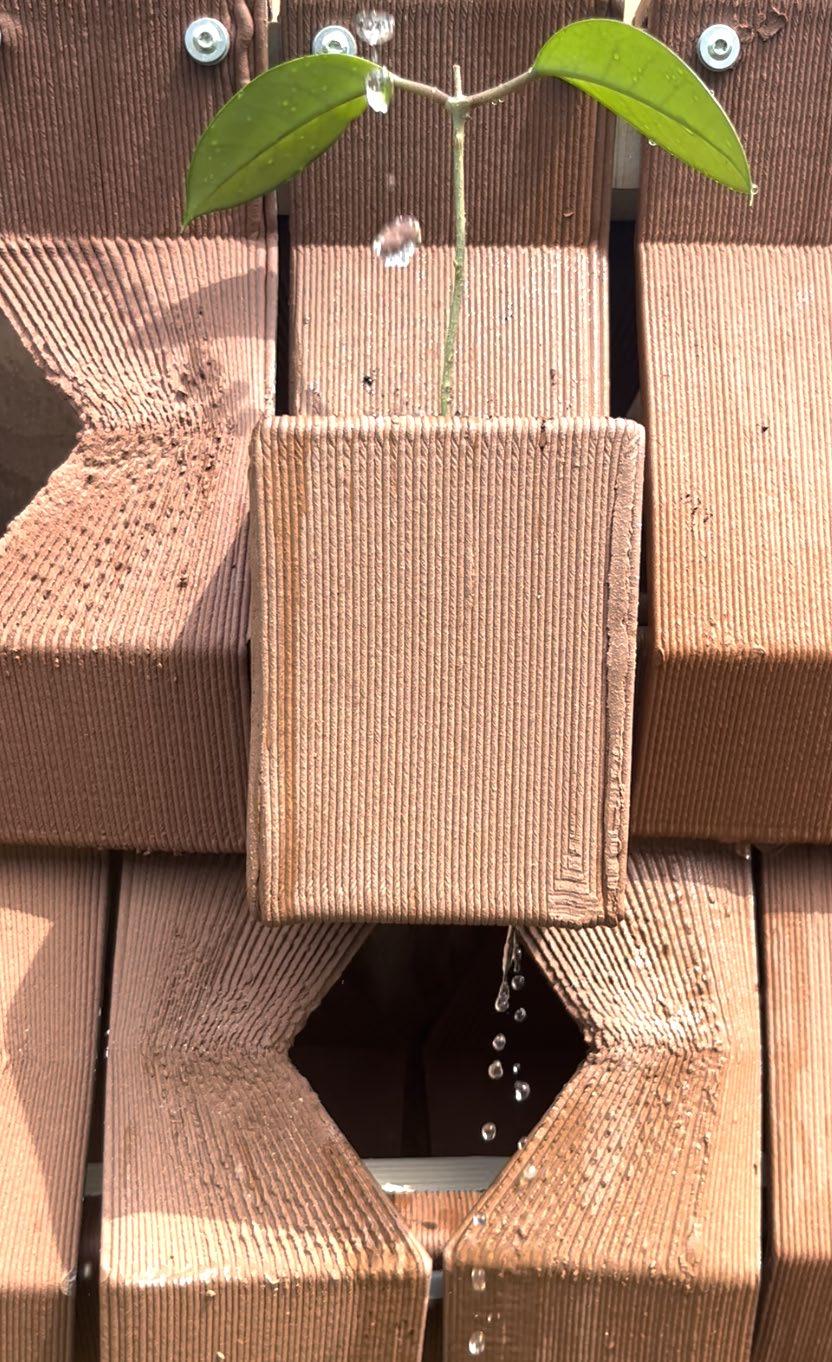
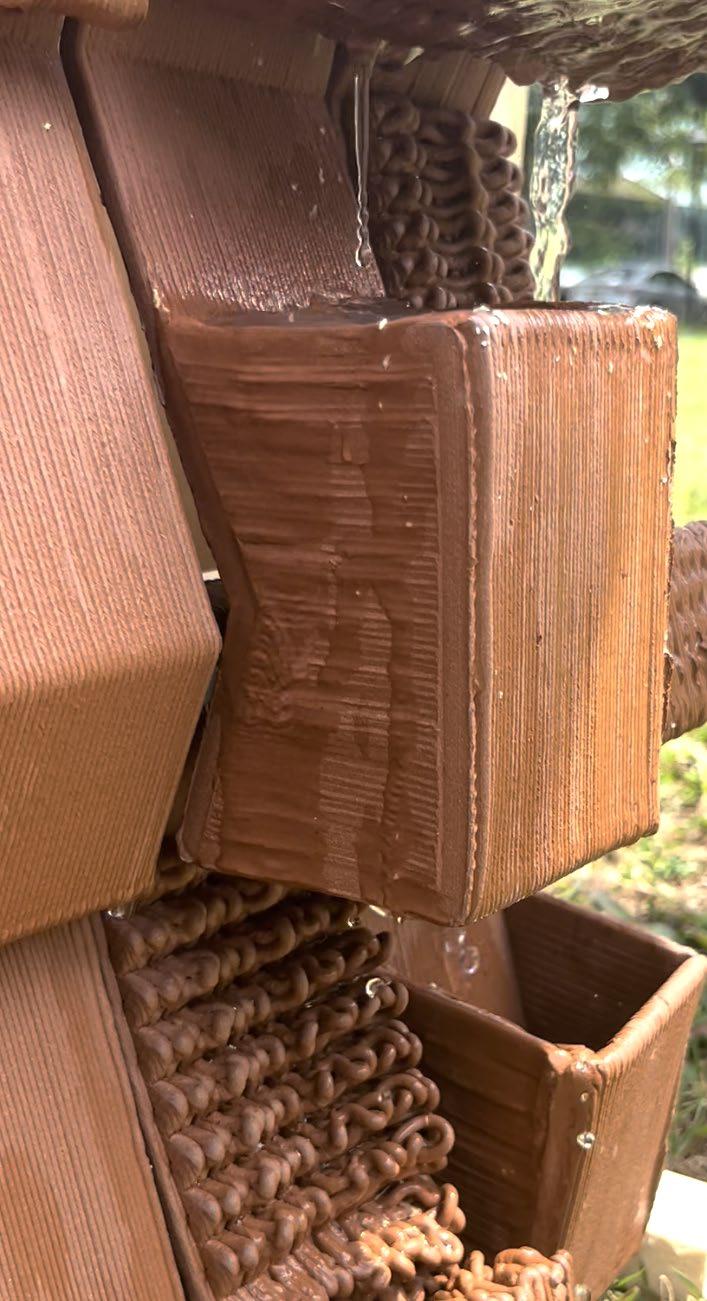
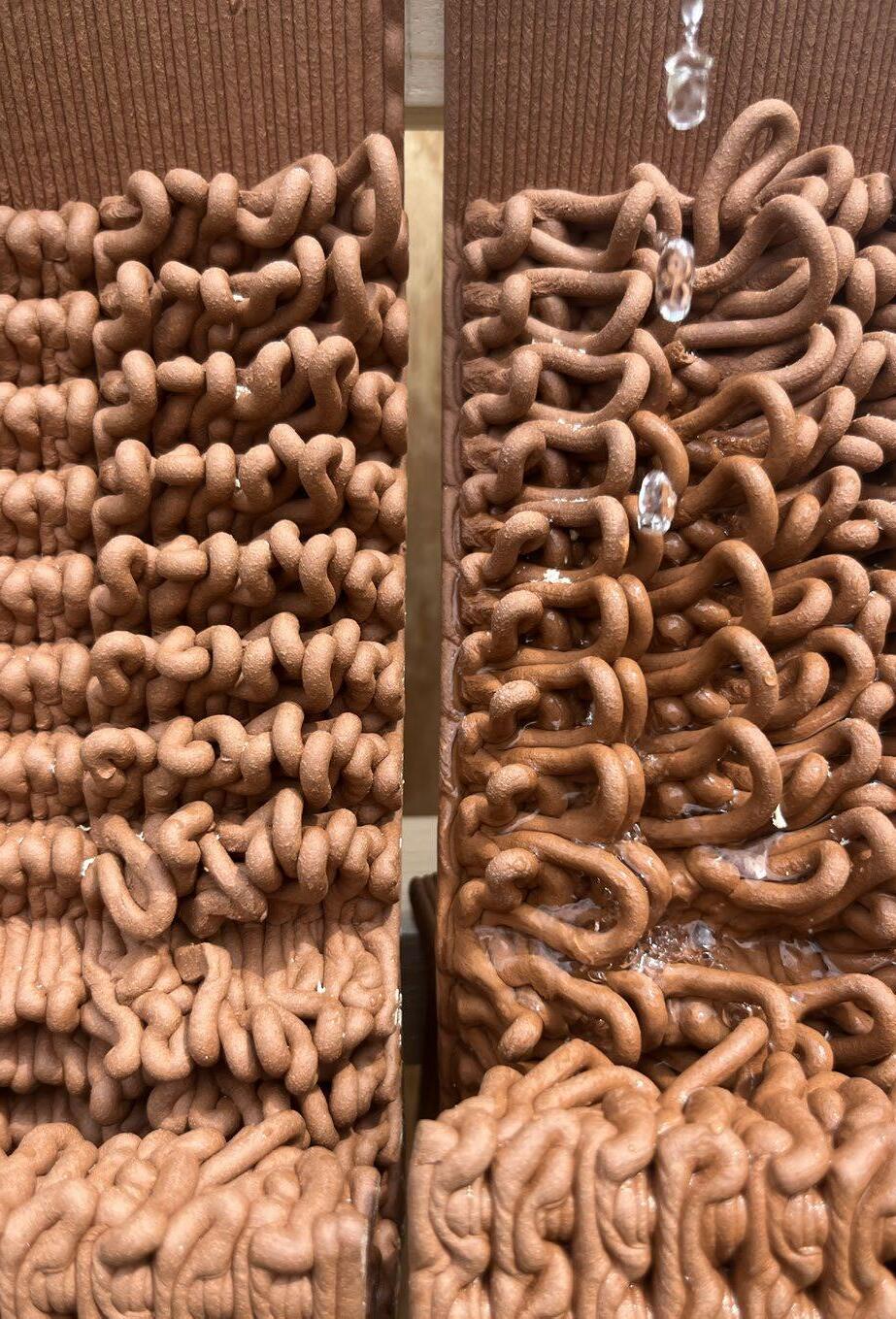
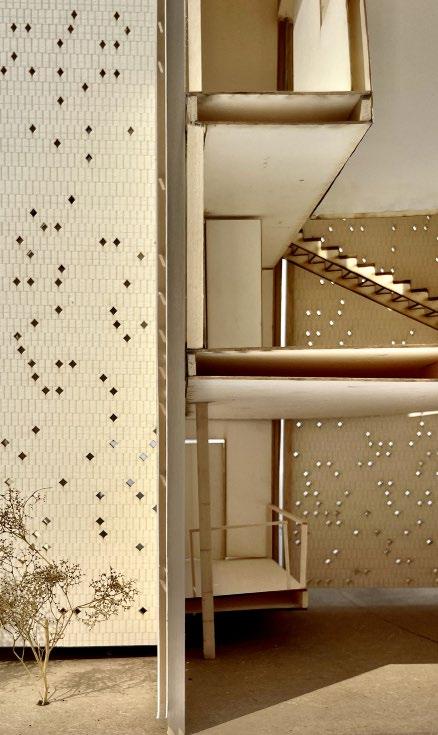
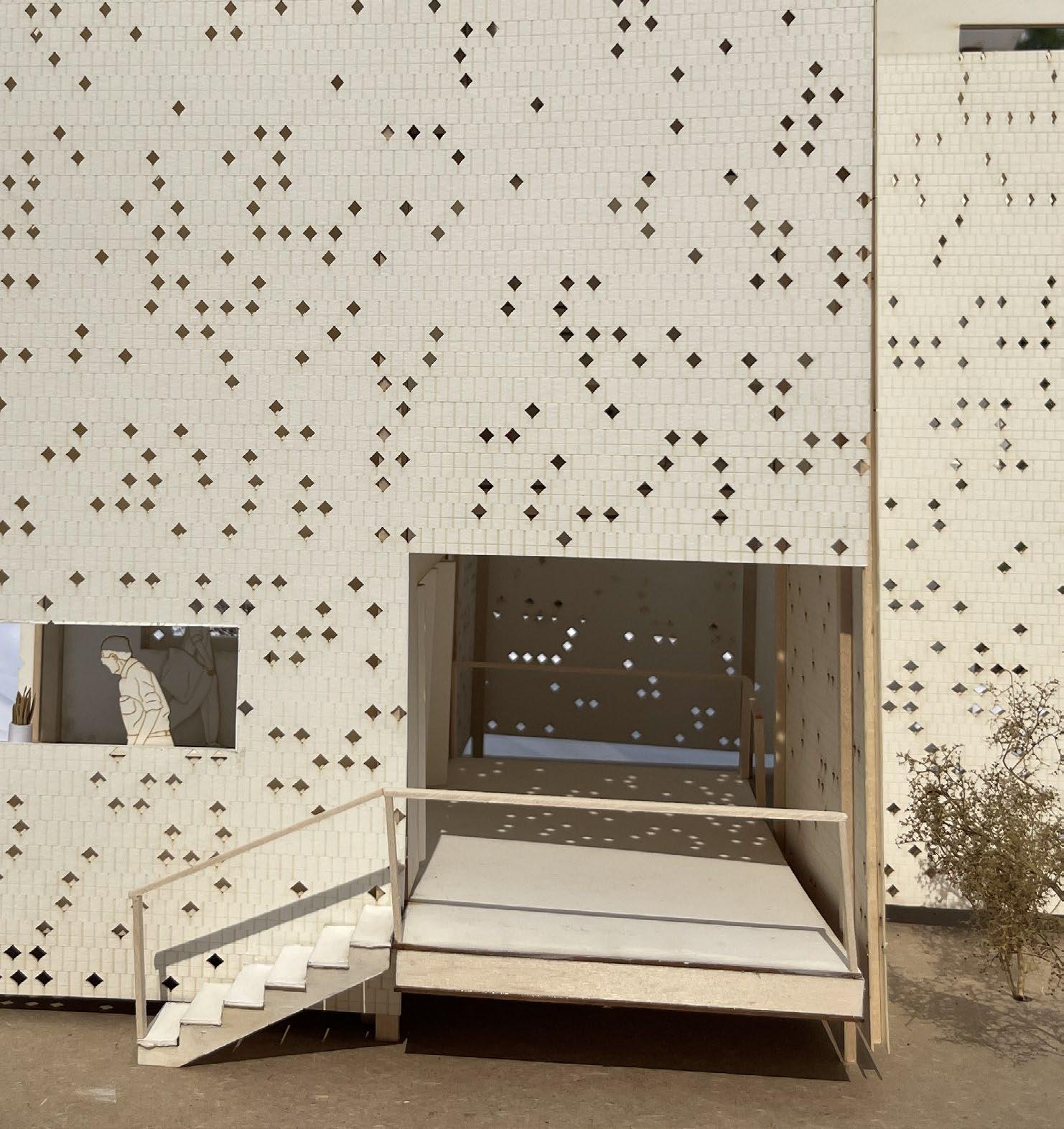
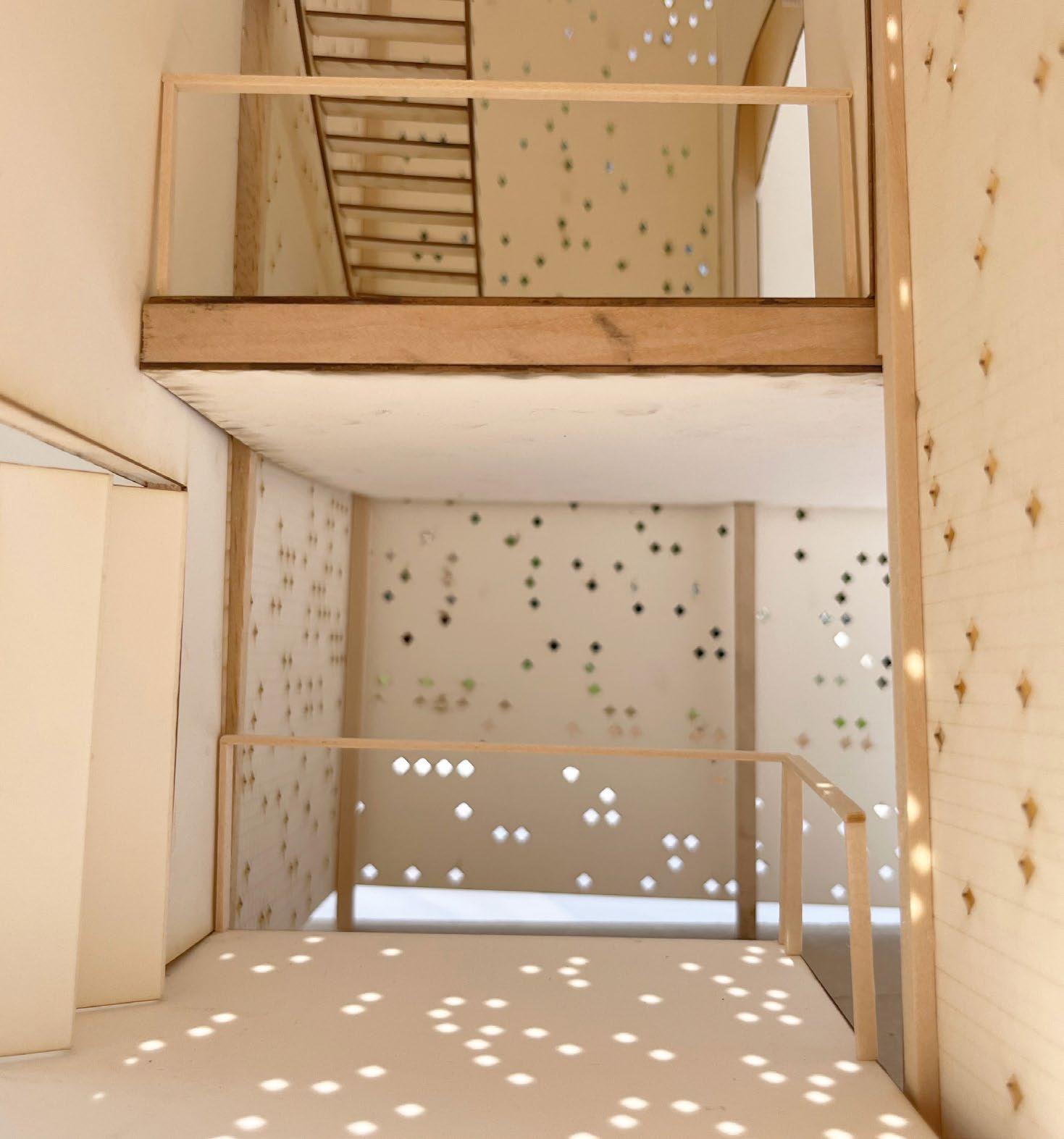
this project engages with the natural environment and explores new means of integrated domesticity through the connection of collective space with both human and nonhuman inhabitants. it speculates how new technologies of design and fabrication might allow us to build greater ecological capacities into conventional building components by re-imagining traditional terracotta products. this variable shingle system integrates water infrastructural elements such as the roof gutter, the cistern and the facade panel. these tectonic parts slow, direct, and store storm water, while also providing an environment for microbes that can engage in bio-remediation. the utilization of 3D printed clay ceramics allows for careful variation of these components through geometry, texture, and aperture, as well as their integration into the domestic space.
above image: experimental view of the interior courtyard space image to the right : 1/2 scale model depicting exterior facade pattern
bioswale
gutter--slowing down water--shingle cladding
pinched aperture shingle screen system
gingle gutter cistingle cistern/planter
the wet wall
bingle base pingle pinched aperture
the light wall
experimental water testing
full scale mockup wall; clay pieces bolted onto both sides of wooden frame
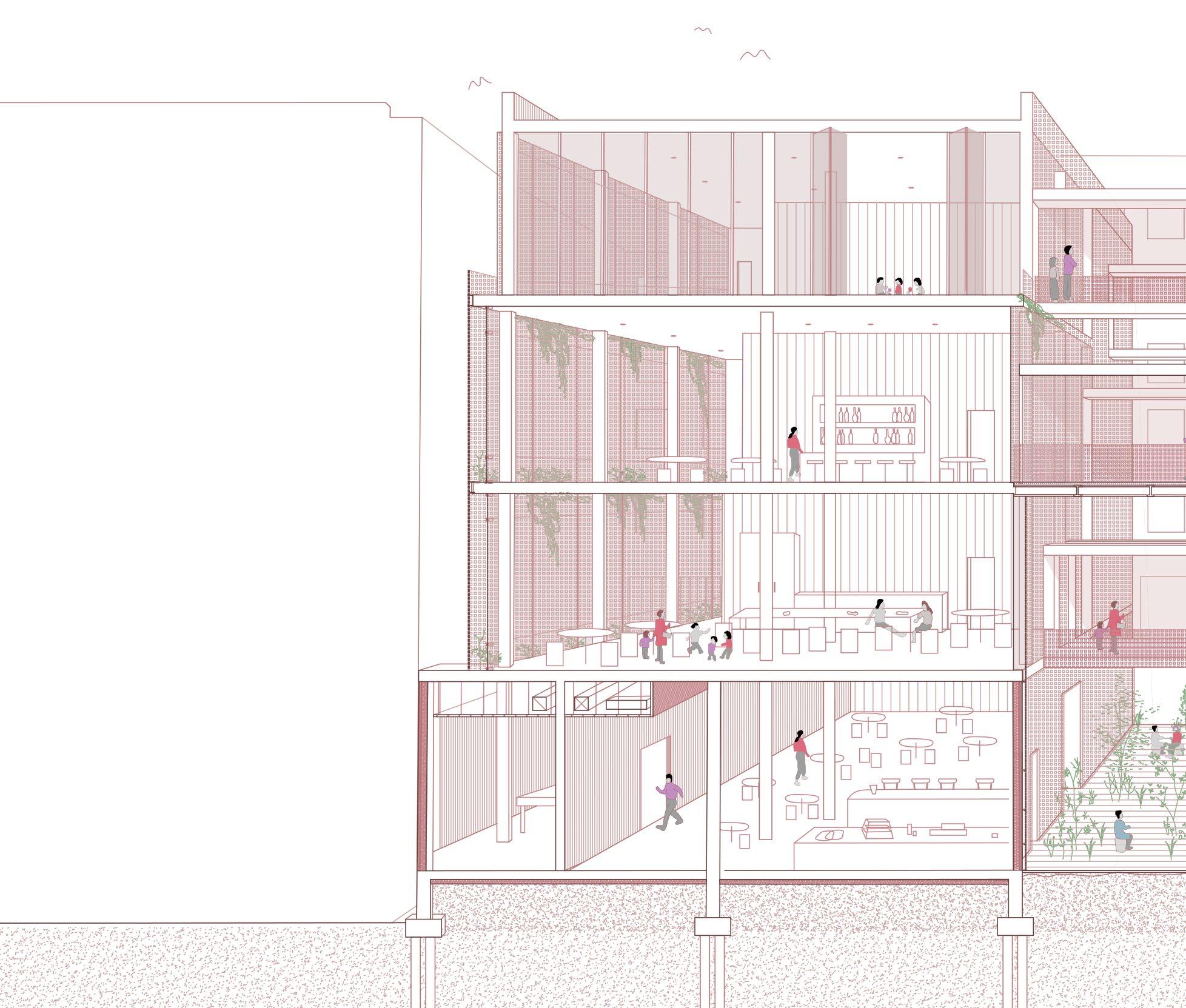
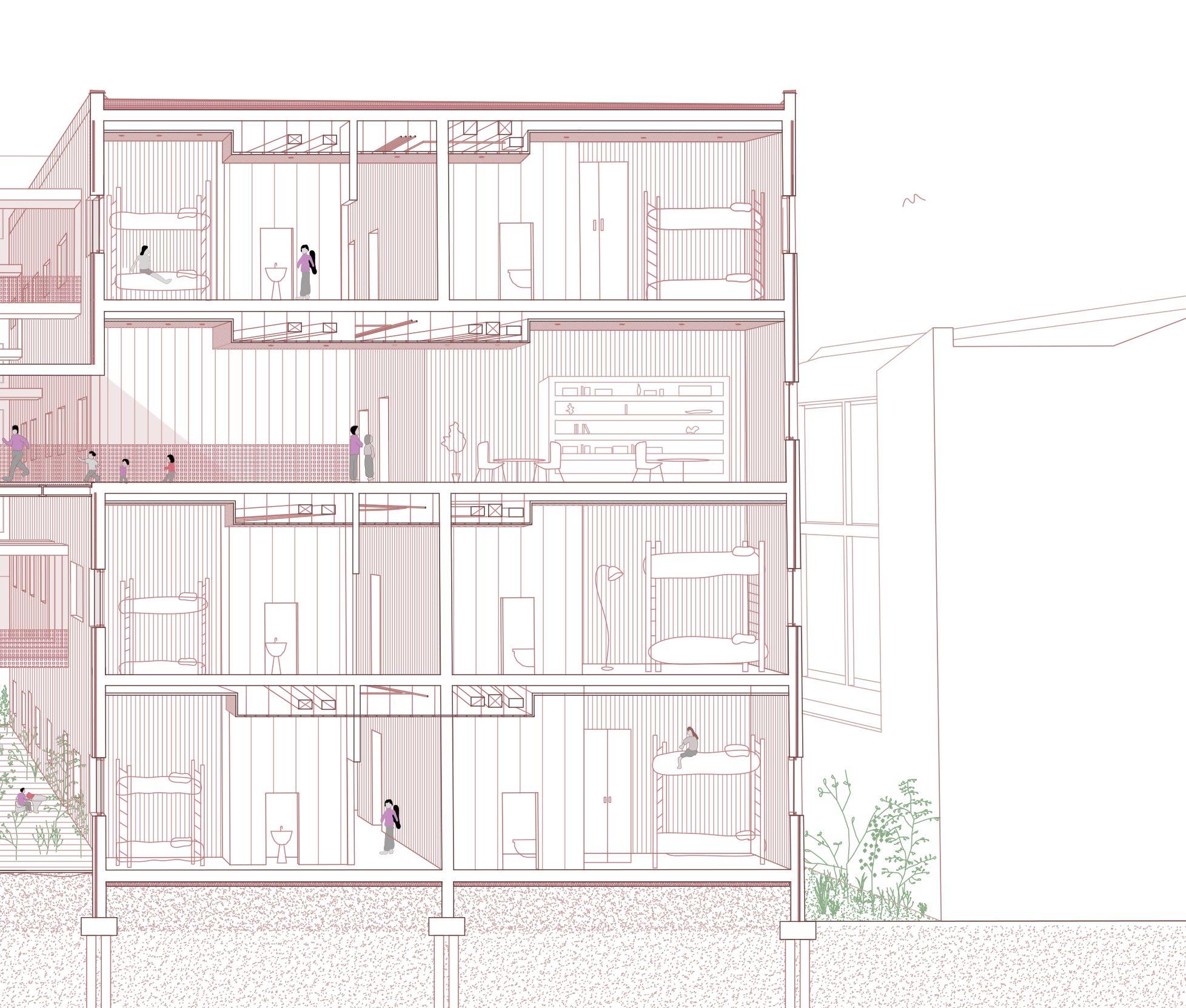
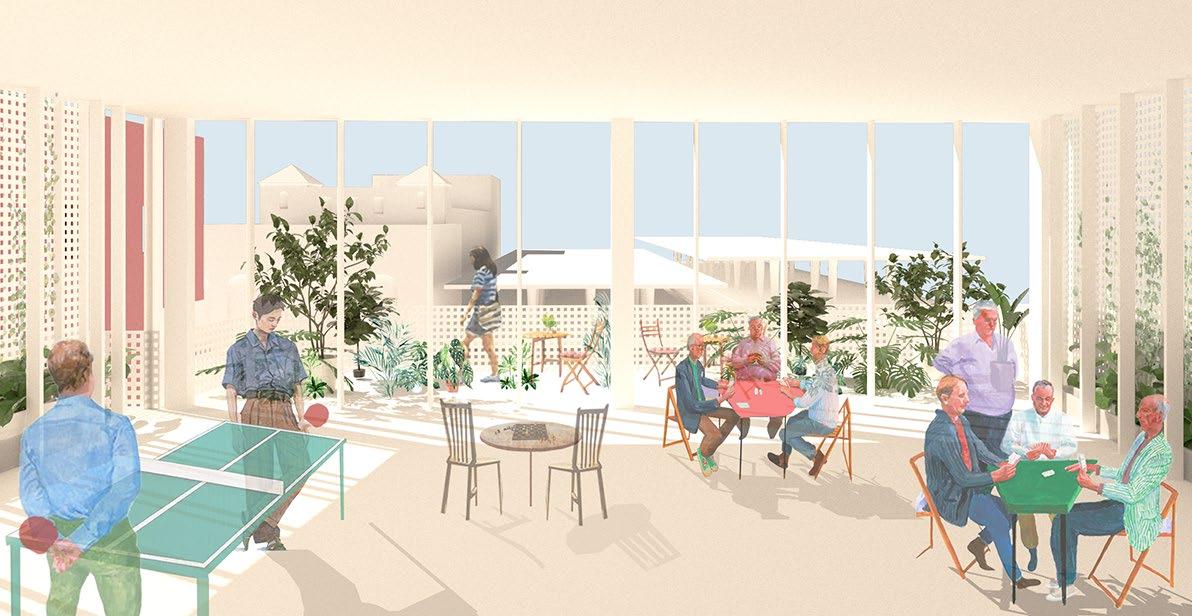
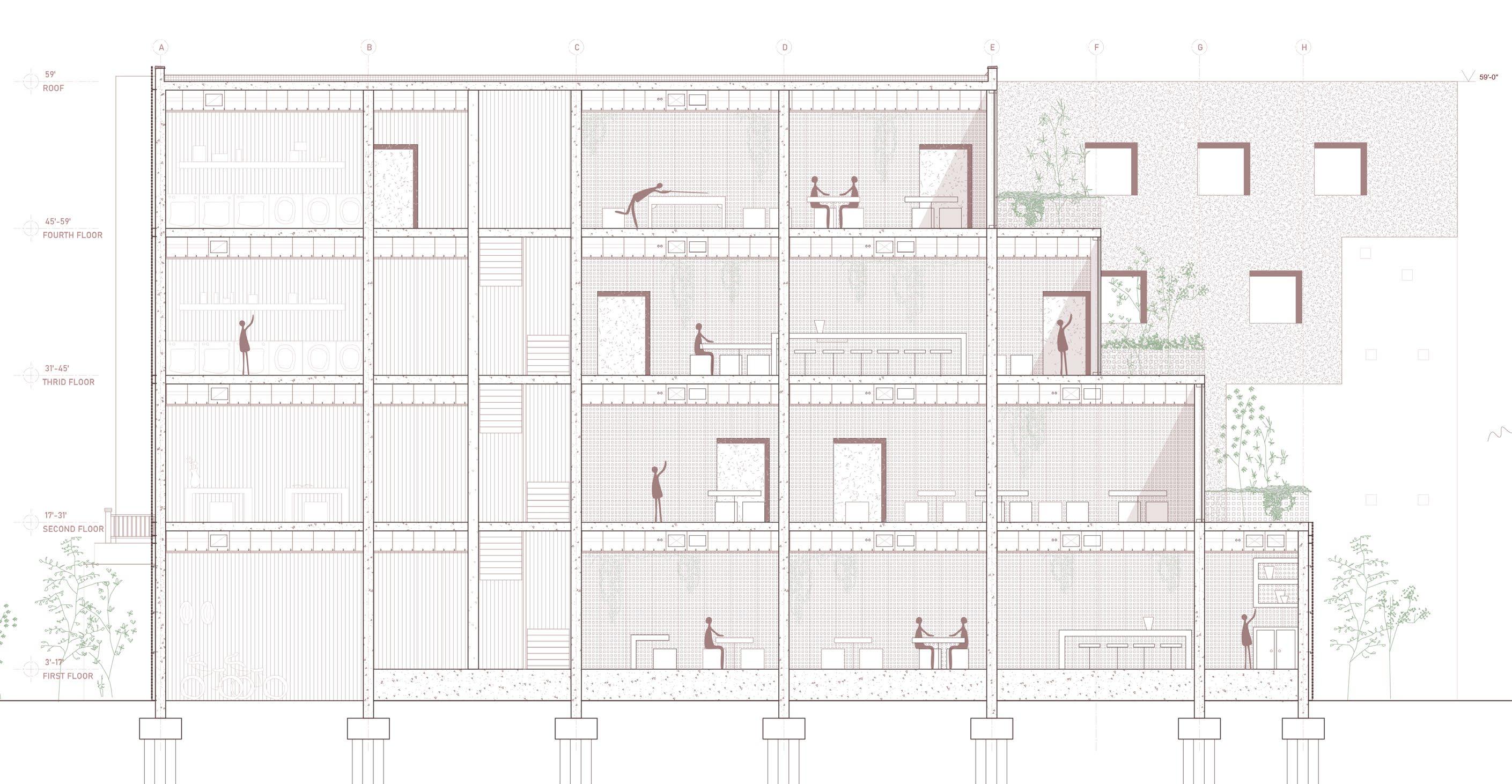
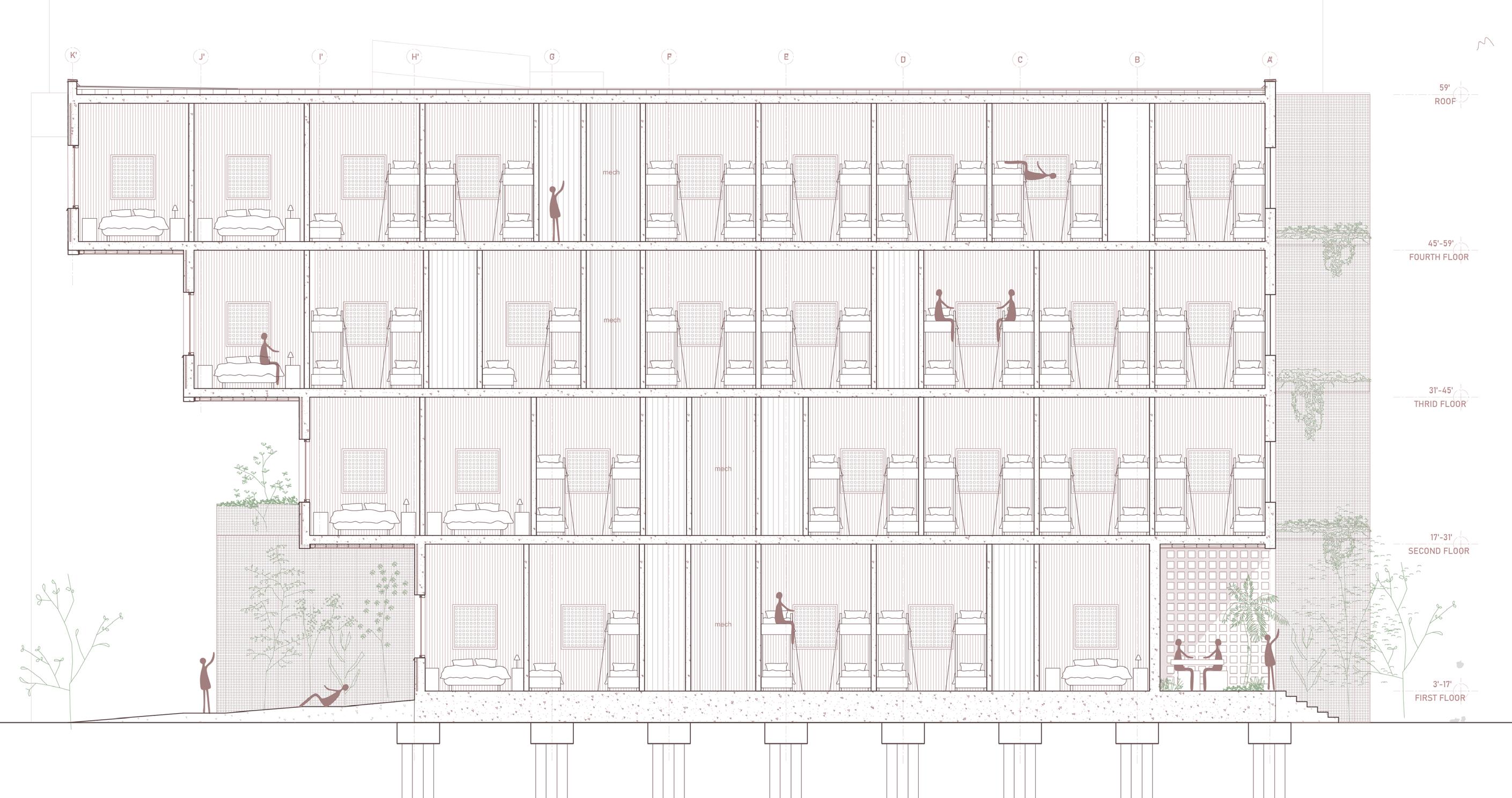
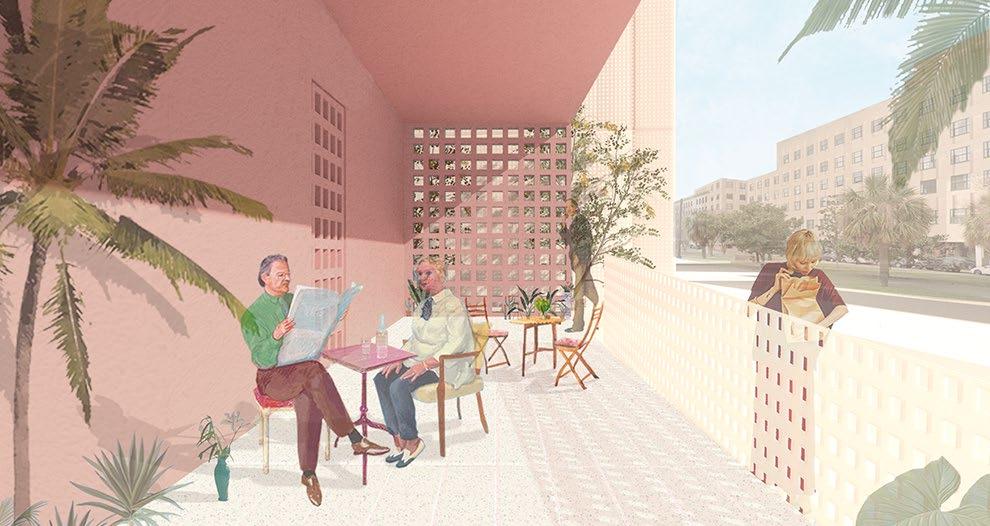
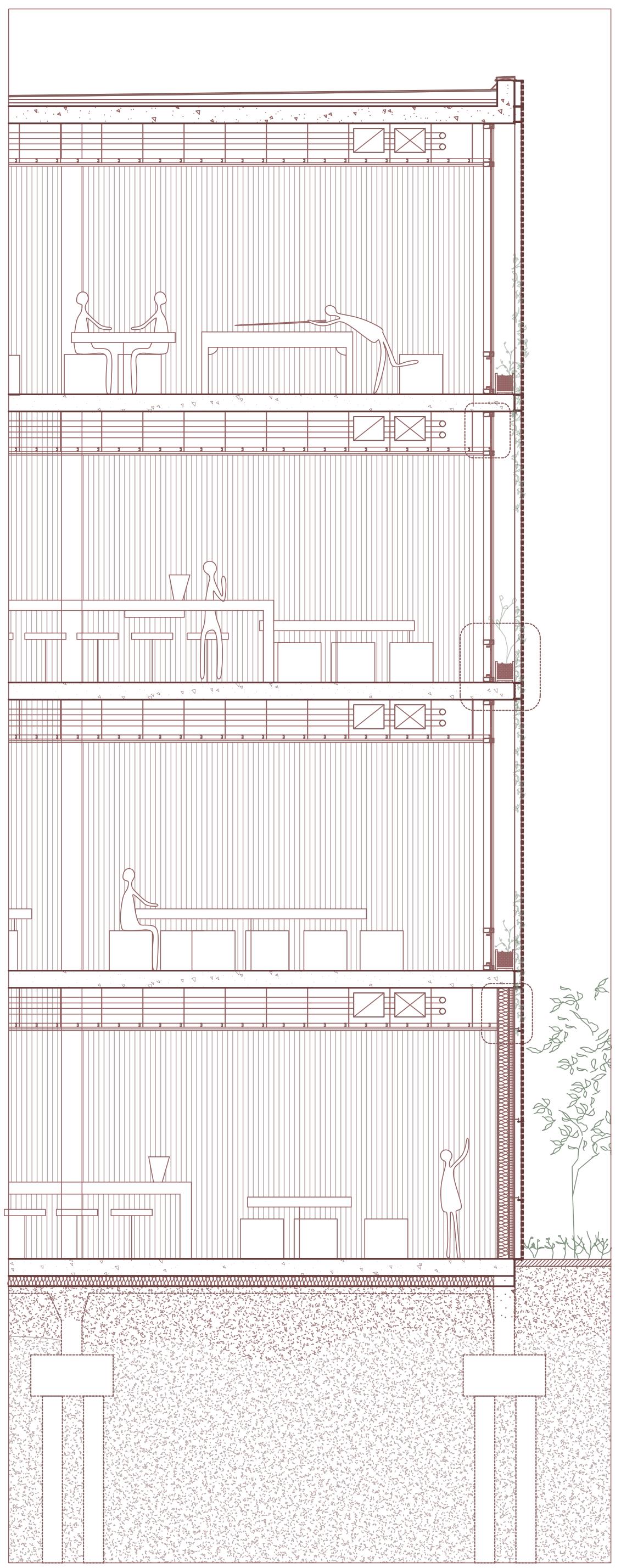
this project aims to adhere to a hostel’s main purpose: a temporary home and a place of interaction between various stayers. the design is comprised of two bars, one public with social amenity spaces and terraces stepping down the front facade to offer views and capture the winter sun. the second bar is private, with double loaded corridors on each floor housing 160 beds of various room typologies. this space steps in the reverse direction to foster connection on the ground floor. two bridges on each floor connect the two bars. a space of “play n’ stay” is created.
public section
fourth floor game room
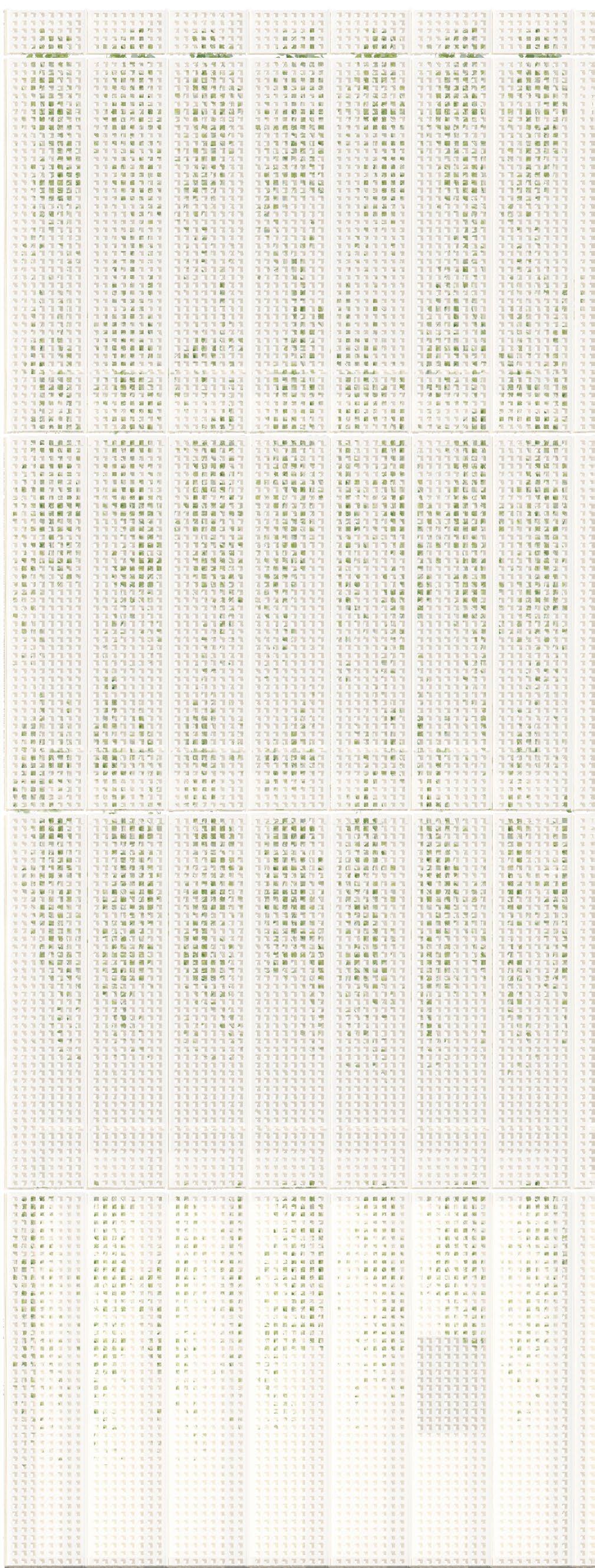
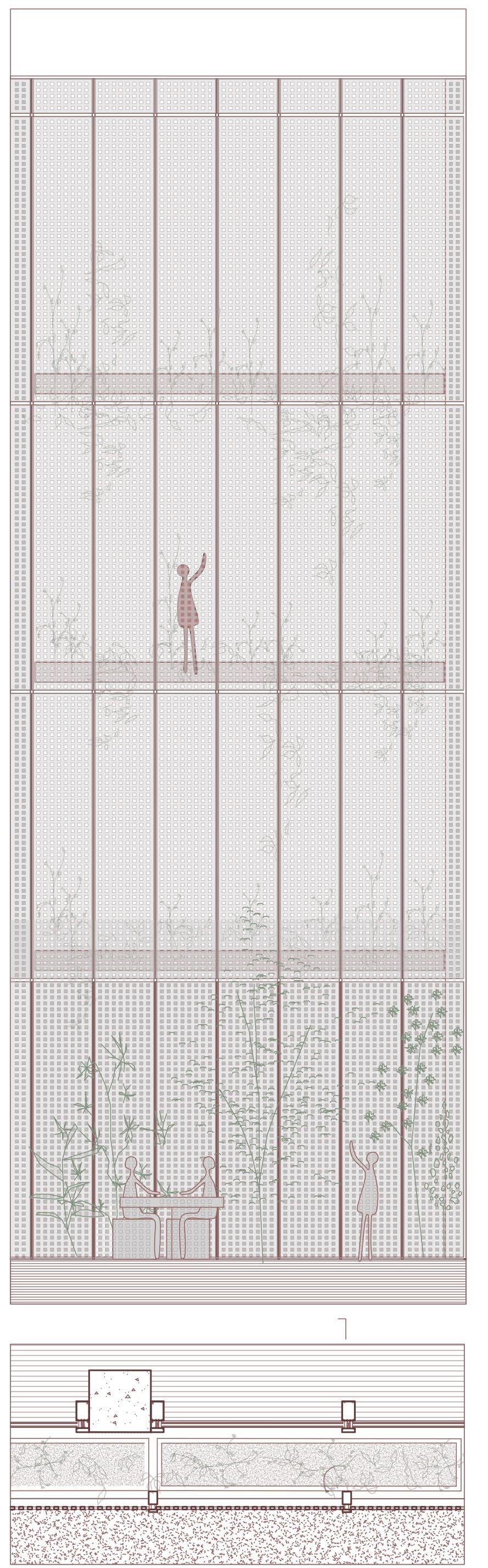
wall section wall elevation + plan segment
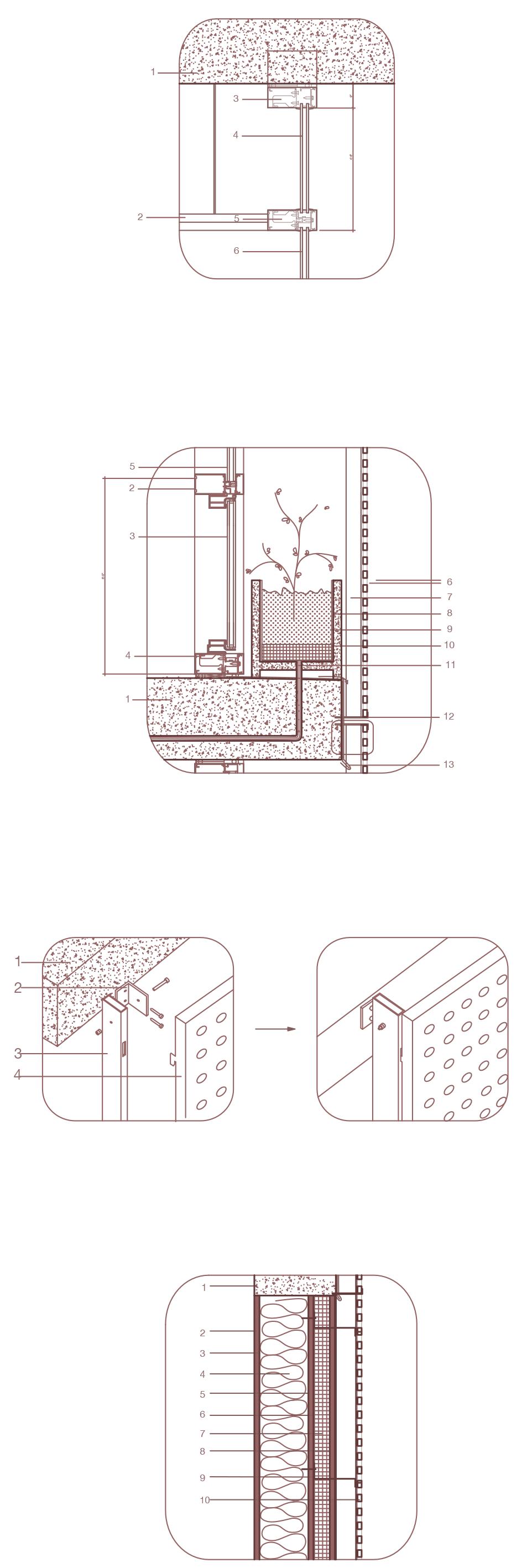
sectional details
1 10" post tensioned concrete slab
2 structure drop ceiling
3 1" head infill - curtain wall window
4 spandral glass
5 1" head/sill infill - curtain wall window
6 3/4" double pane insulated glass
1 10" post tensioned concrete slab
2 outswing head infill 1"
3 3/4" operable double pane insulated glass
4 outswing sill
5 3/4" double pane insulated laminate glass
6 perforated metal panel vertical support
7 concrete plantar box
8 water proofing layer
9 course permeable soil mix
10 filtration media
11 drainage outlet
12 l clip
13 flashing
1 10" post tensioned concrete slab
2 l clip
3 4" vertical support
4 perforated metal panel
1 10" post tensioned concrete slab
2 5/8" gypsum board
3 5/8" stud wall
4 6" insulation
5 5/8" sheathing
6 air weather barrier
7 2" rigid insulation
8 5/8" sheathing
9 z clips
10 perforated metal panel
1/64” wood/chipboard/3d printed - top view
1/64” wood/chipboard/3d printed - axon view
RAMPART ST.
BASIN ST.
the approach on rampart street
“in-between” space; on bridge
HUBS
fall 2022 | community center
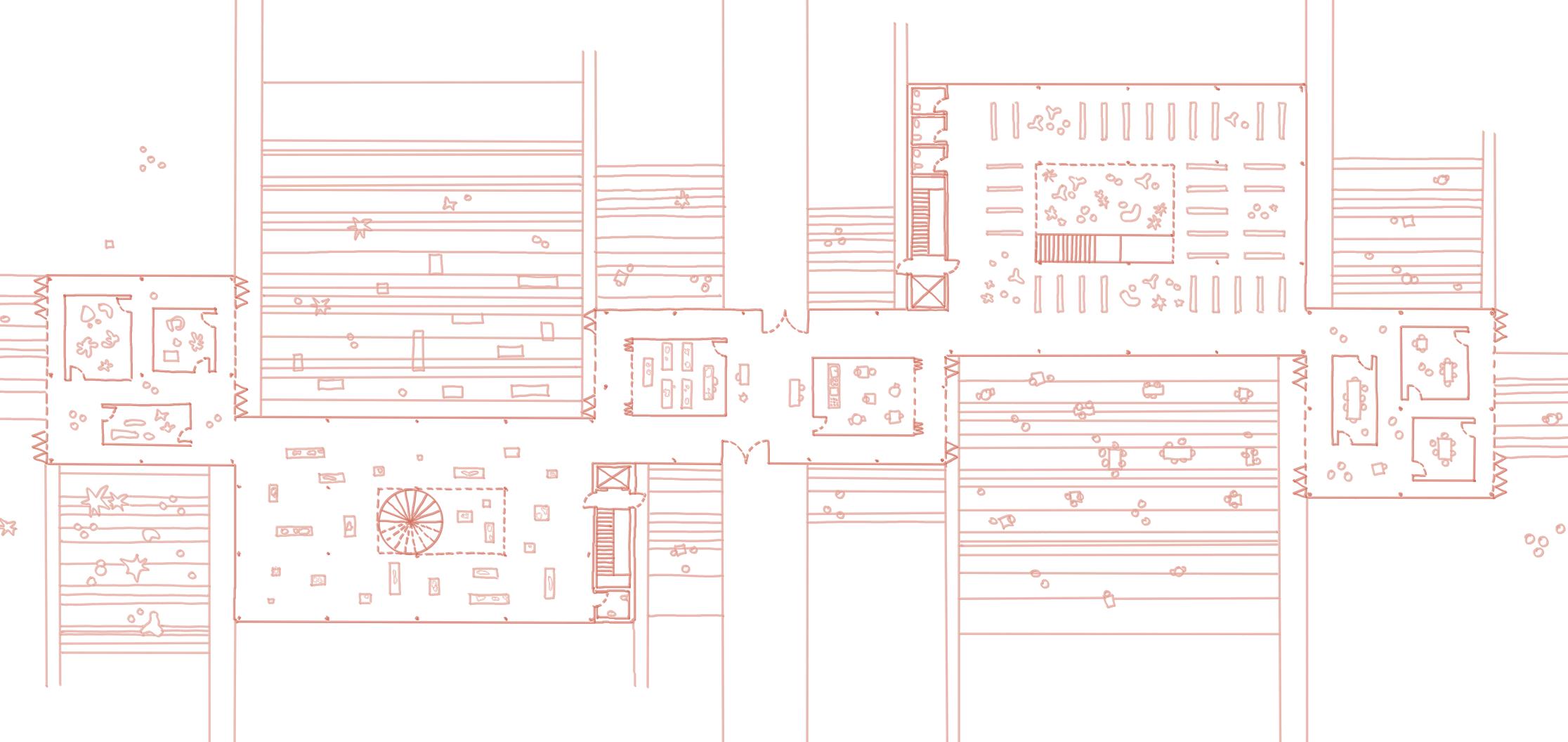
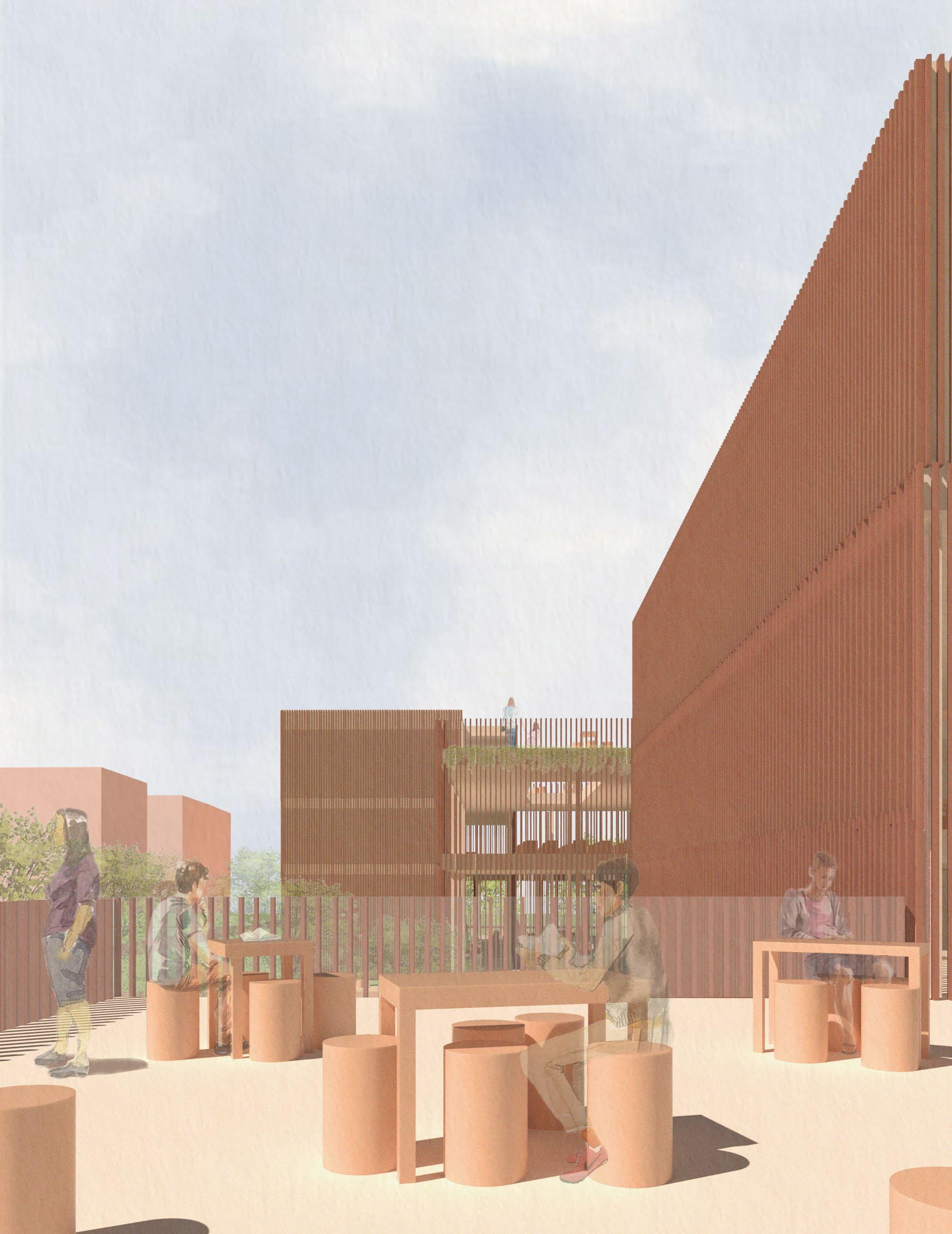
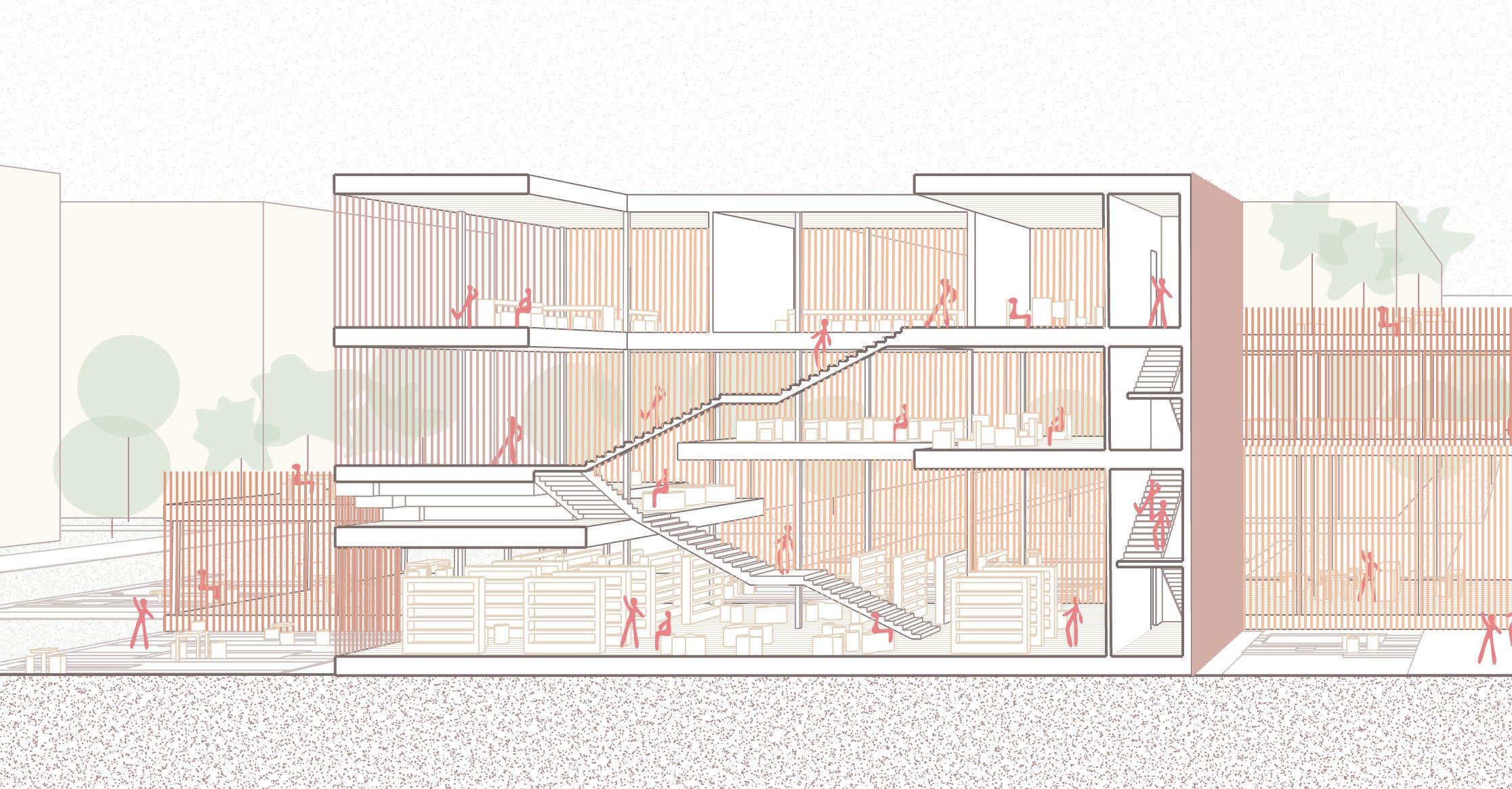
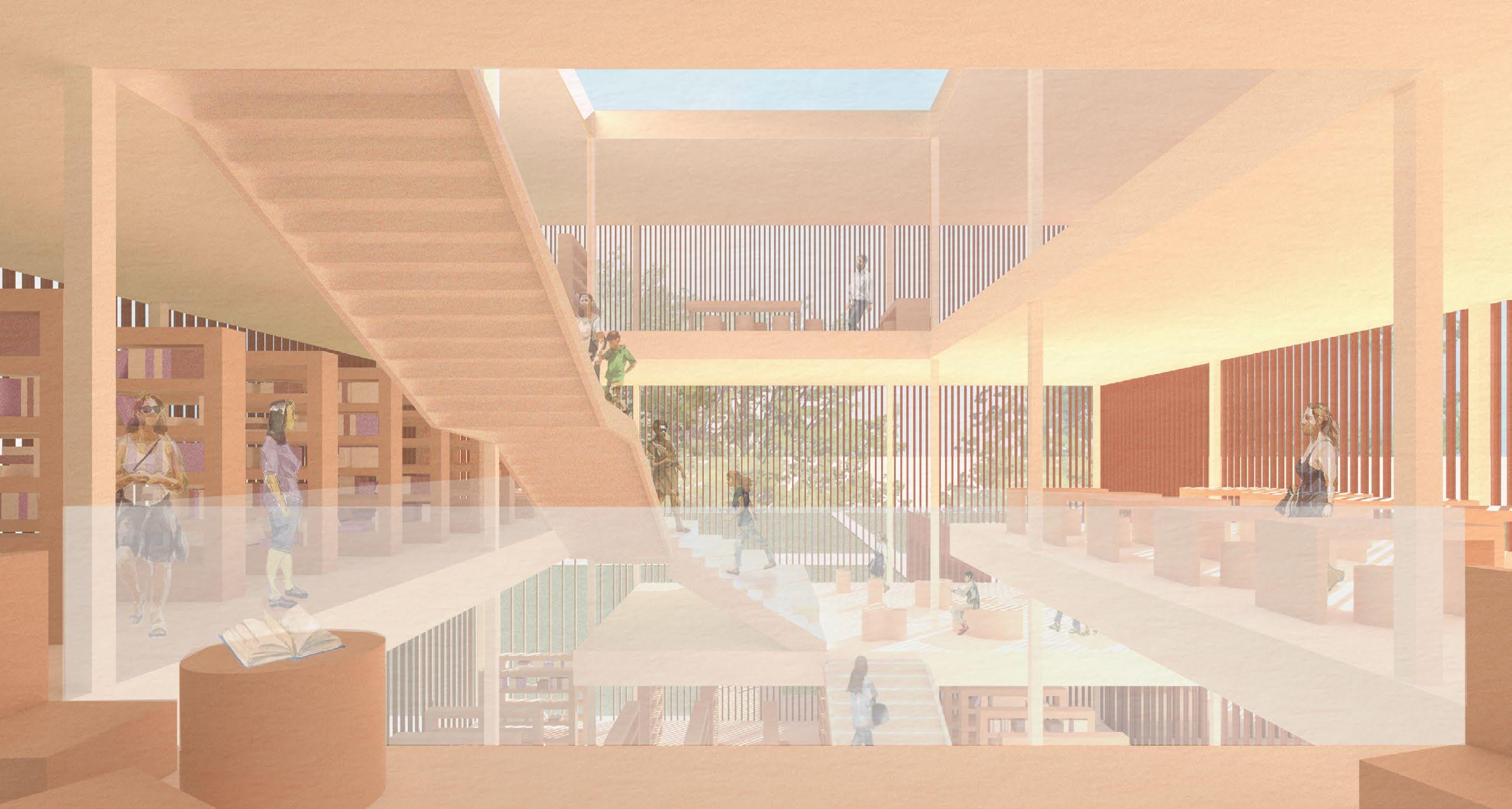
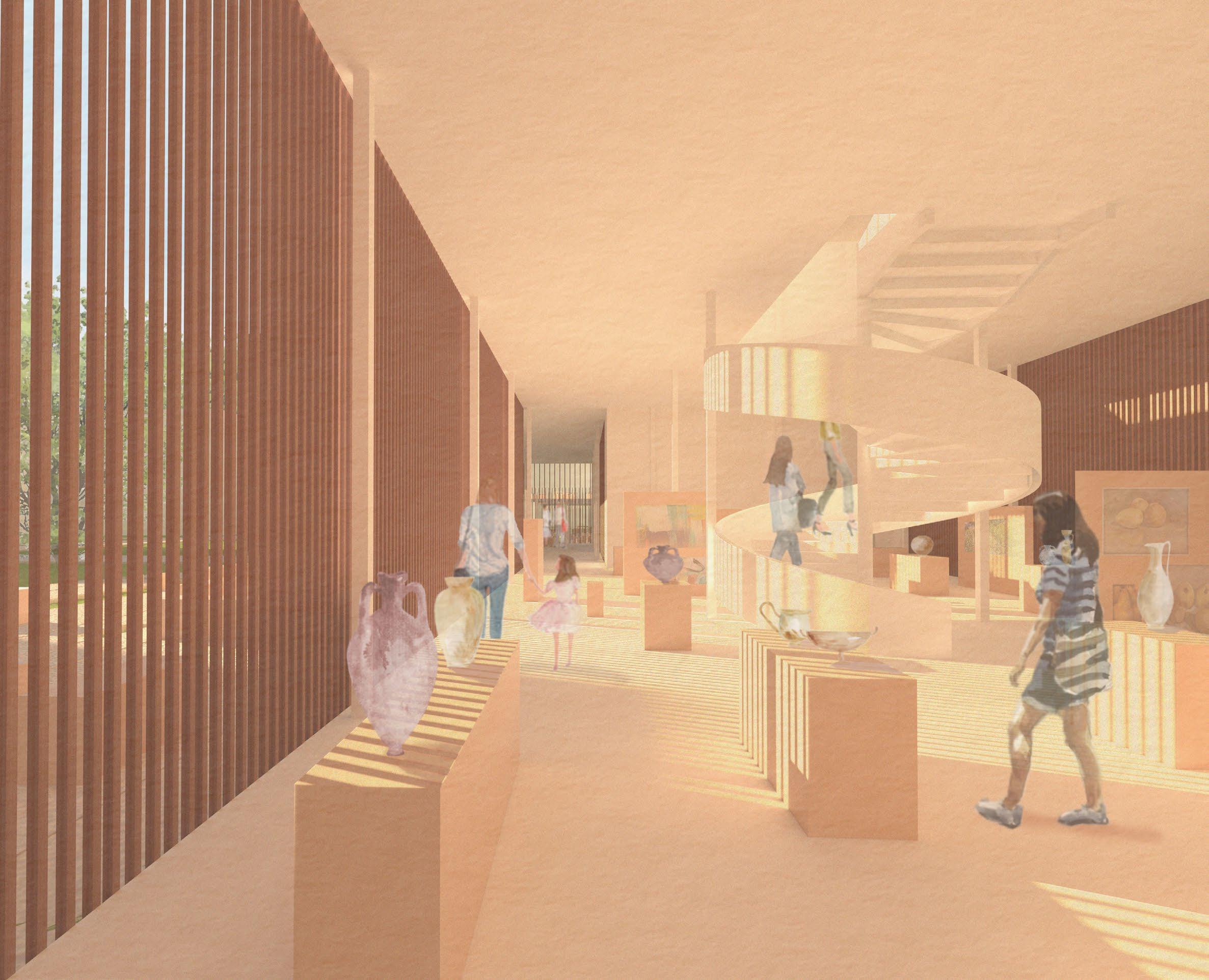
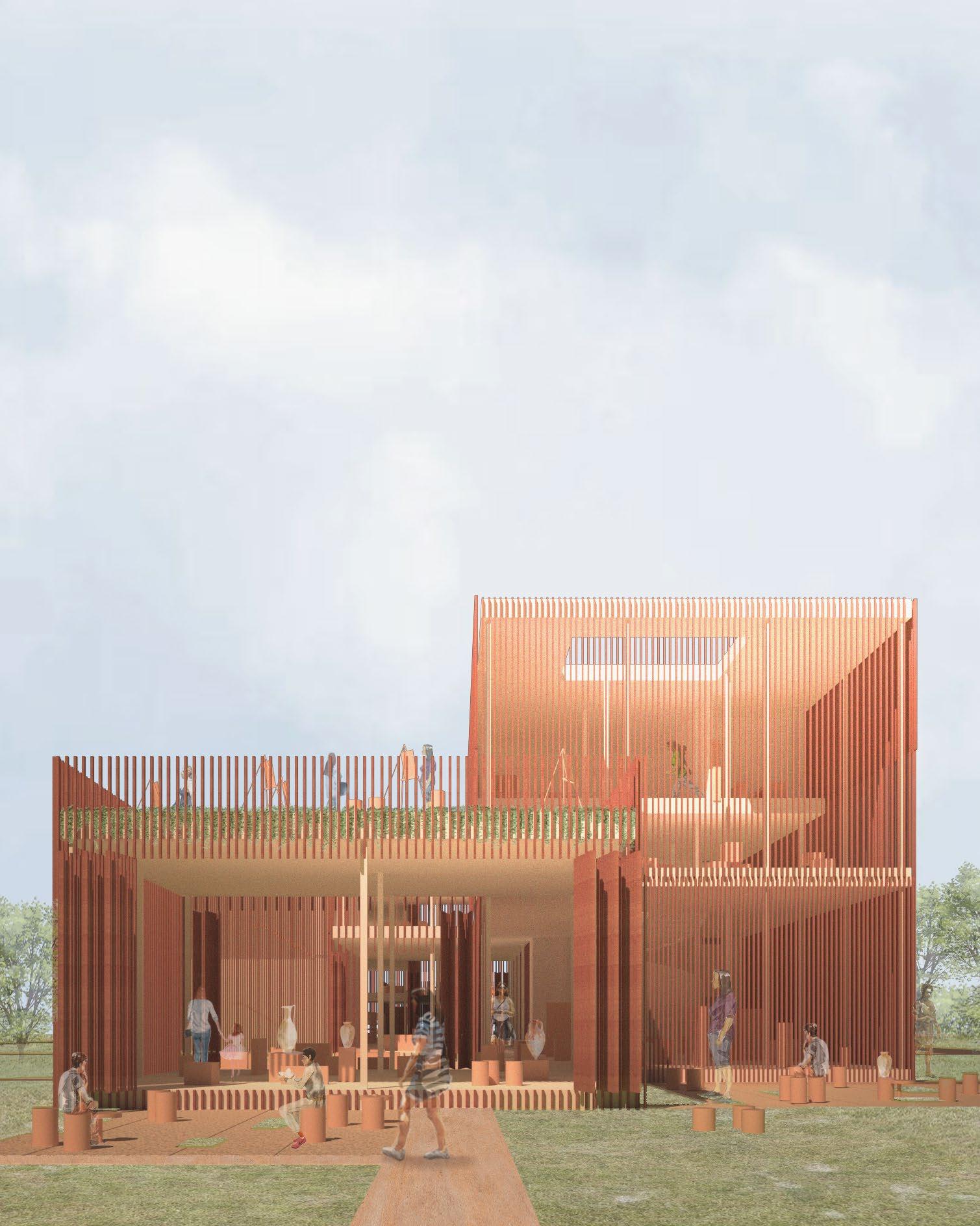
“hubs” takes form as a community center space in the heart of downtown los angeles--epicenter of the interaction between various cultural neighborhoods. hubs takes on the responsibilities of accessibility, adaptability, and variety within the nuanced city of la. two central functions of “look” and “learn” comprise the idea of “hubs”. “look” is composed of a ground floor gallery and above art studio space, and “learn” functions as an education space with a multi-story library and study rooms. these two programmatic hubs take on unique atmospheric qualities through function, varied ceiling heights, terraces, stairs, and light wells.
image to the right: perspective from smaller library/educational terrace
ground floor plan - extending spatial rooms off of a central axis, multiple scales of entry and surrounding landscaping
“LOOK” hub 1st floor gallery
“LEARN” hub 2nd floor library
gallery side entry -- highlighting accordion doors + dynamic facade
THE SPROUT HOUSE
DESIGN-BUILD STUDIO: SHADE STRUCTURE
fall 2024 | albert tina small center | sprout’s expansion onto lafitte greenway
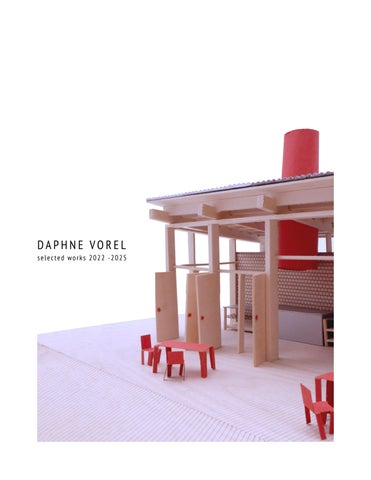
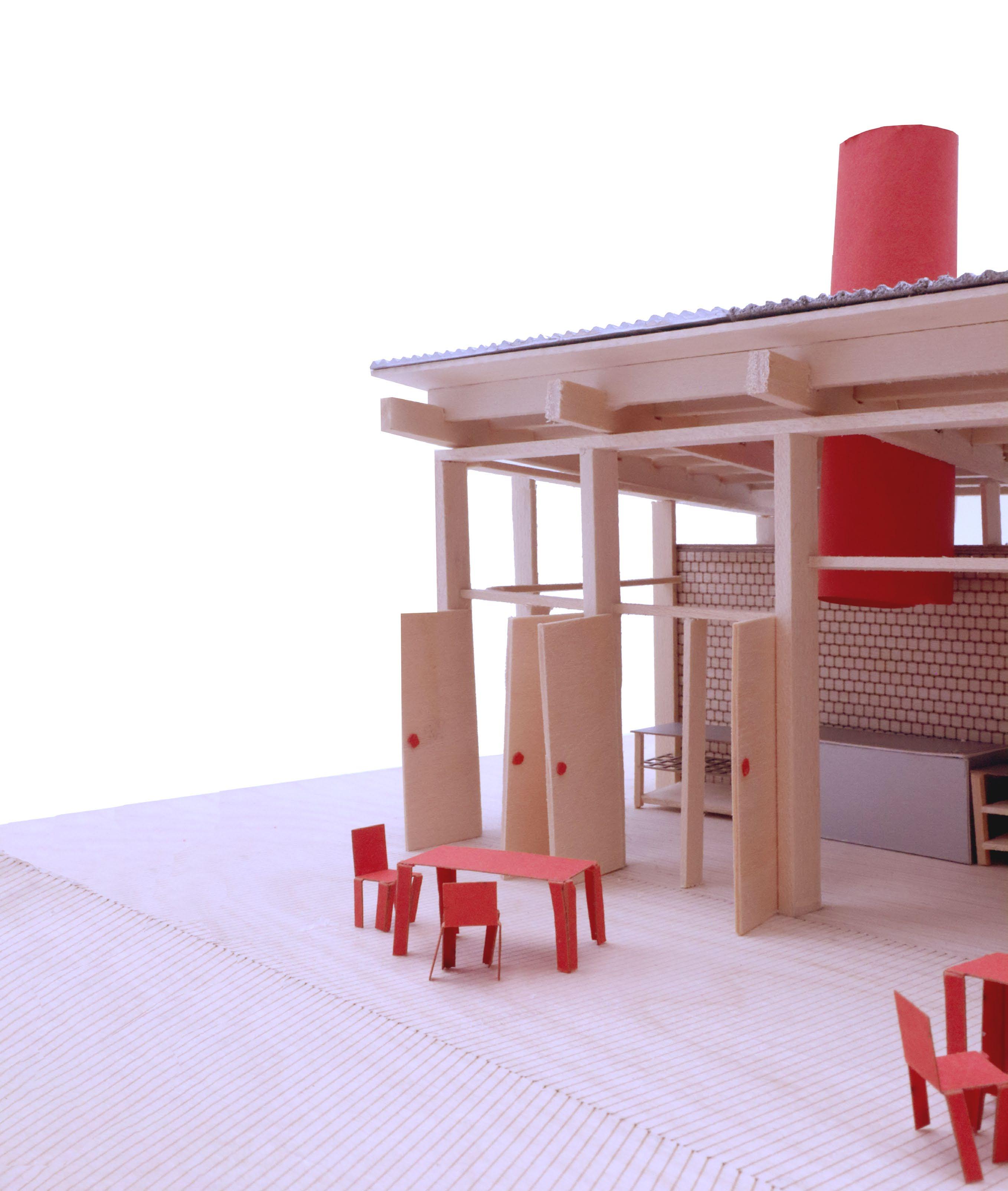
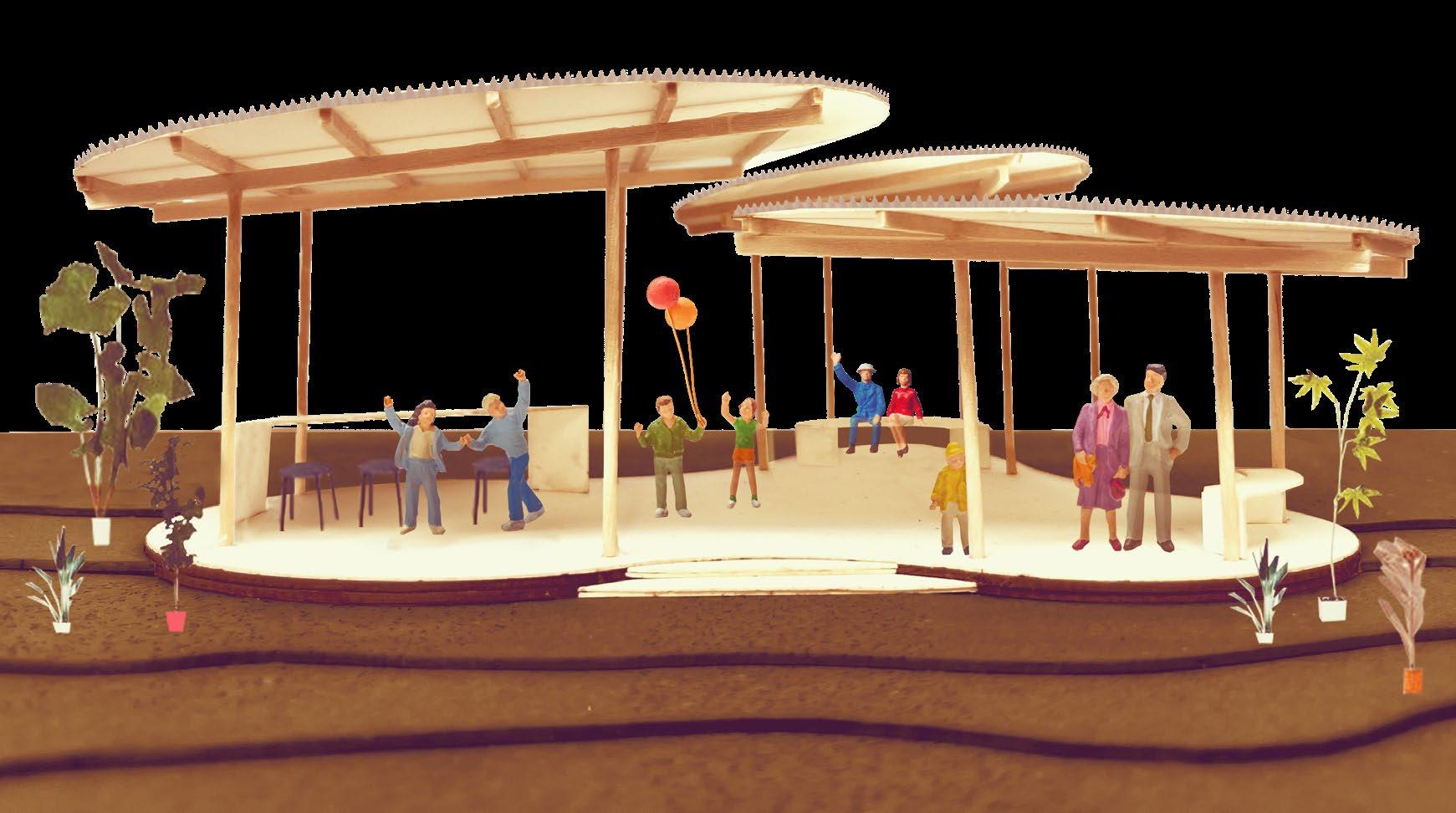
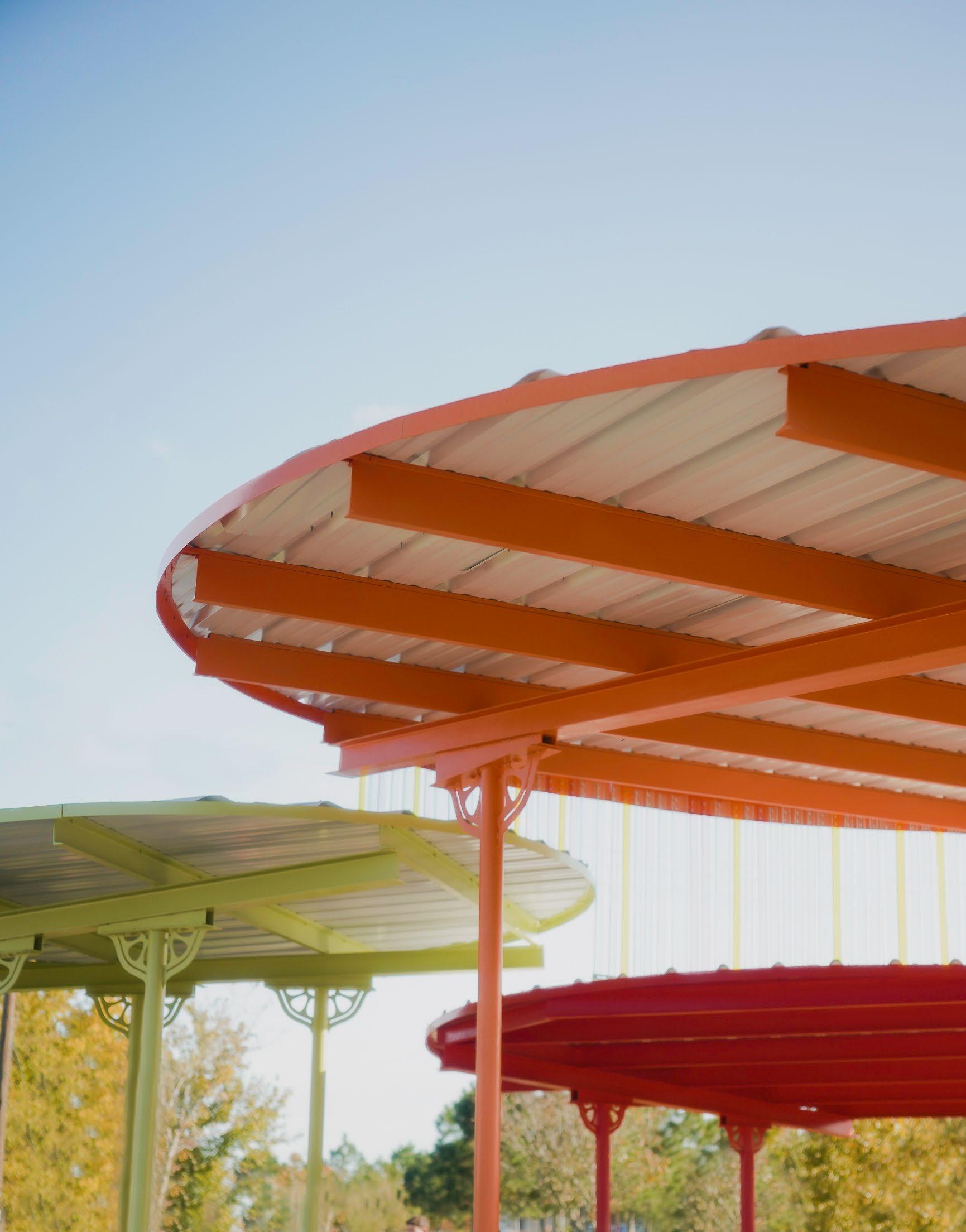
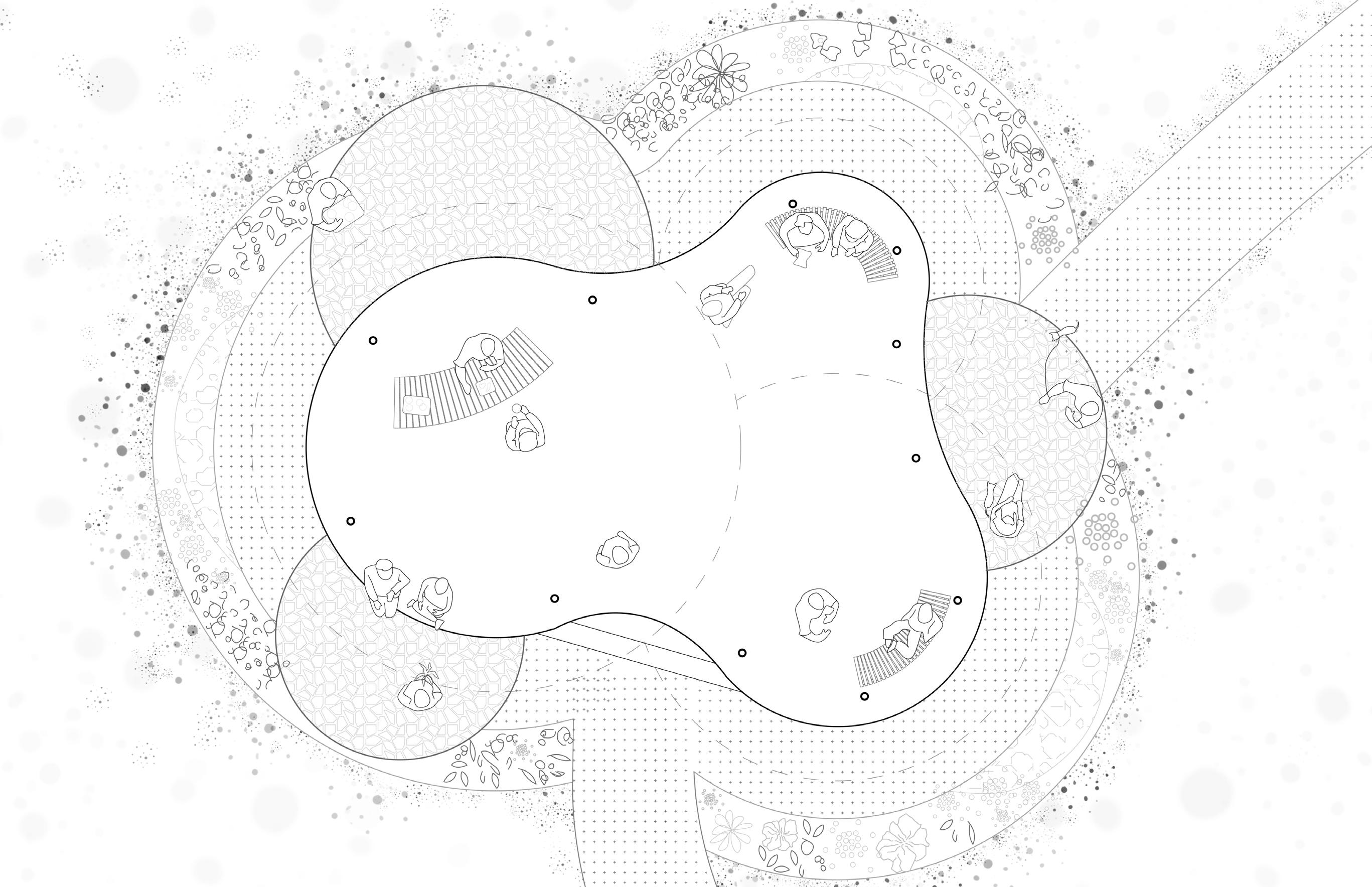
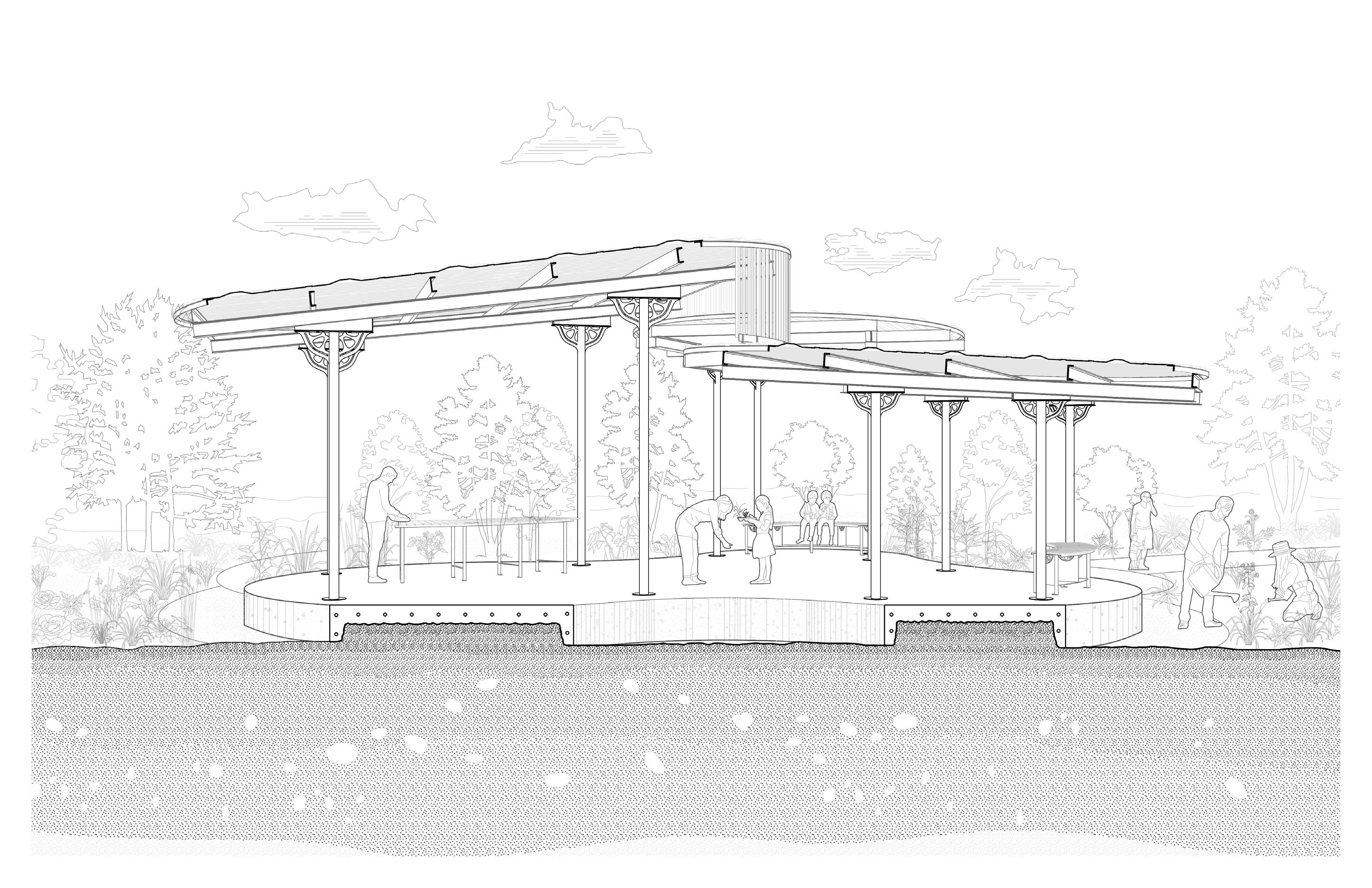
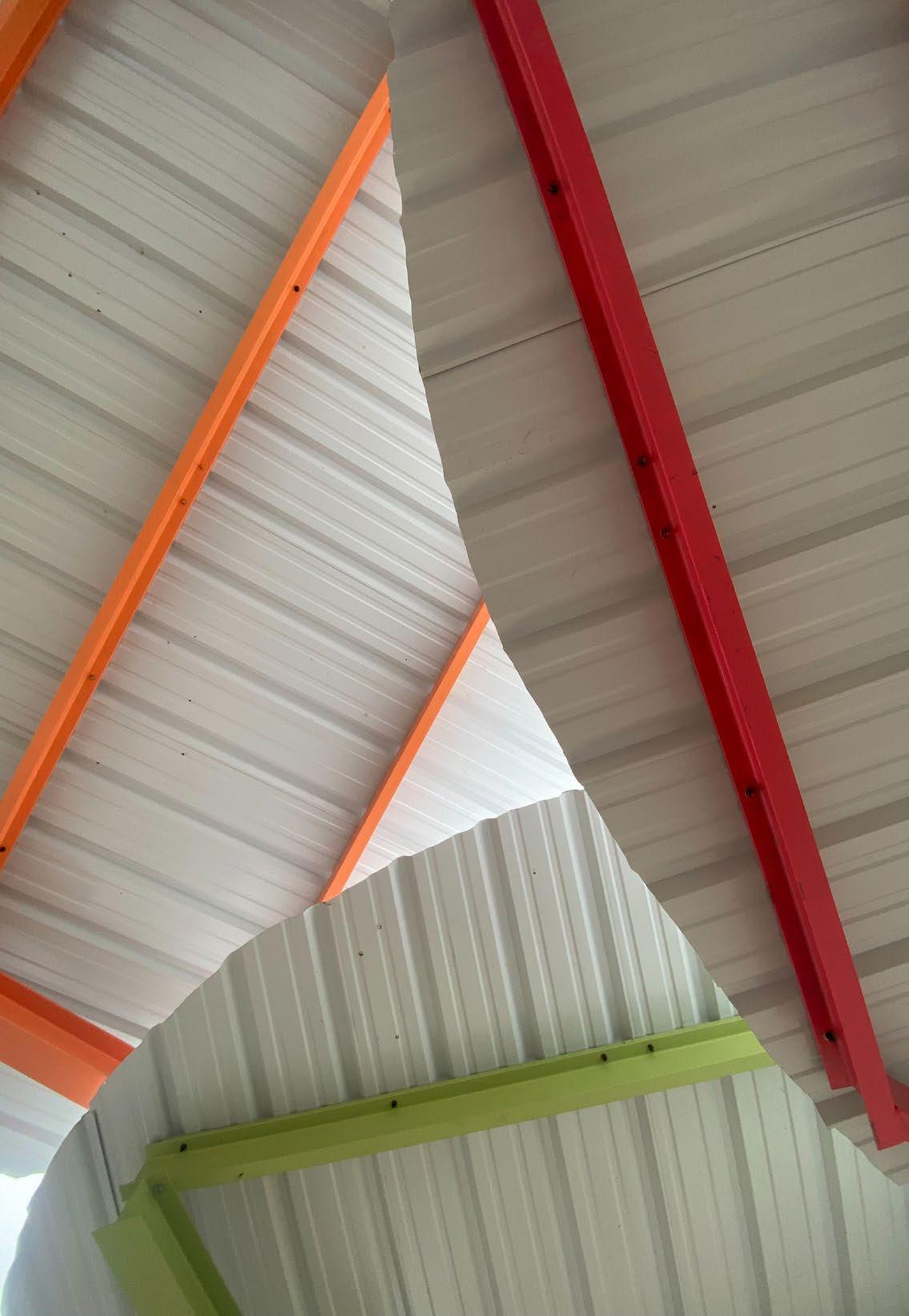
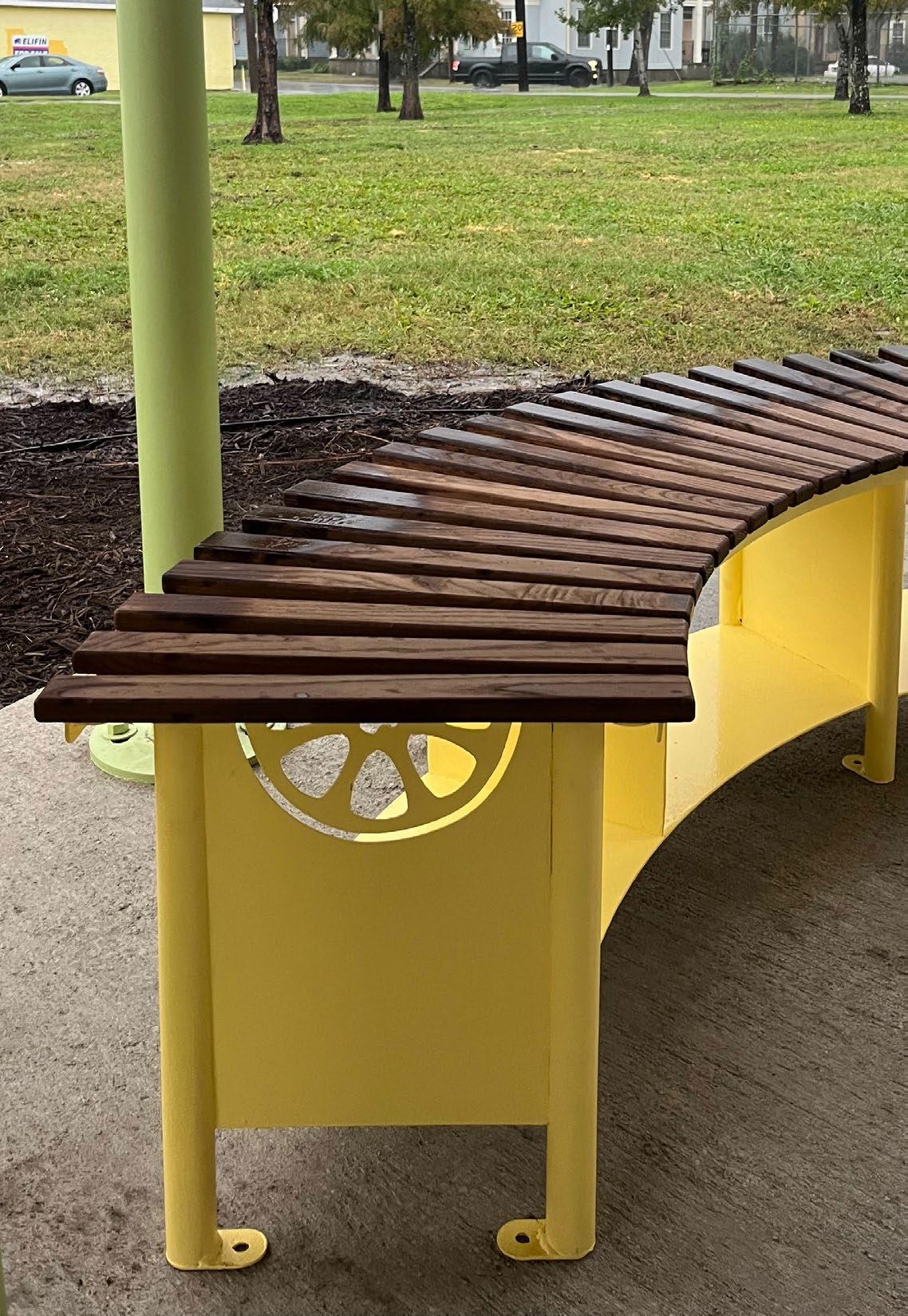
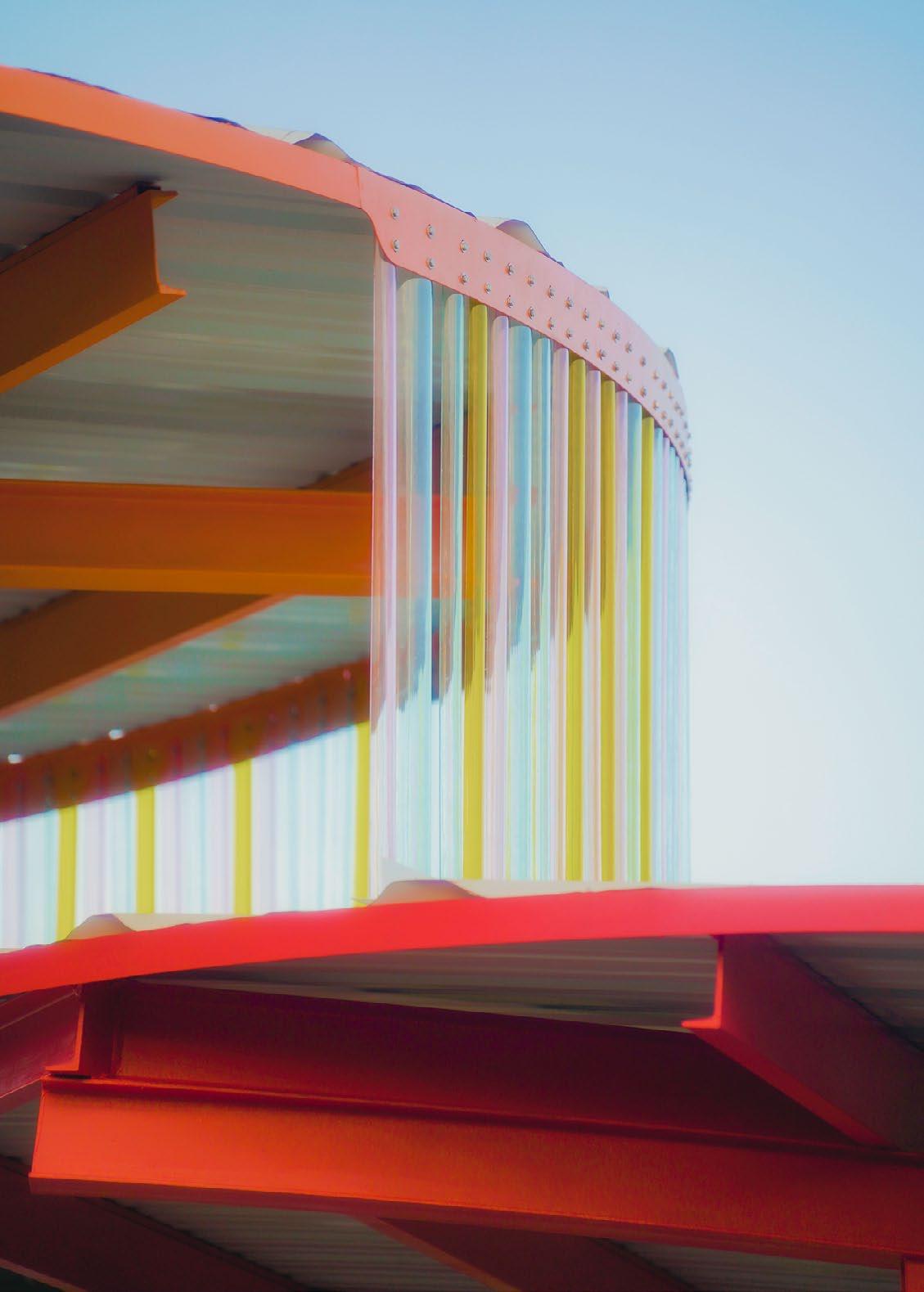
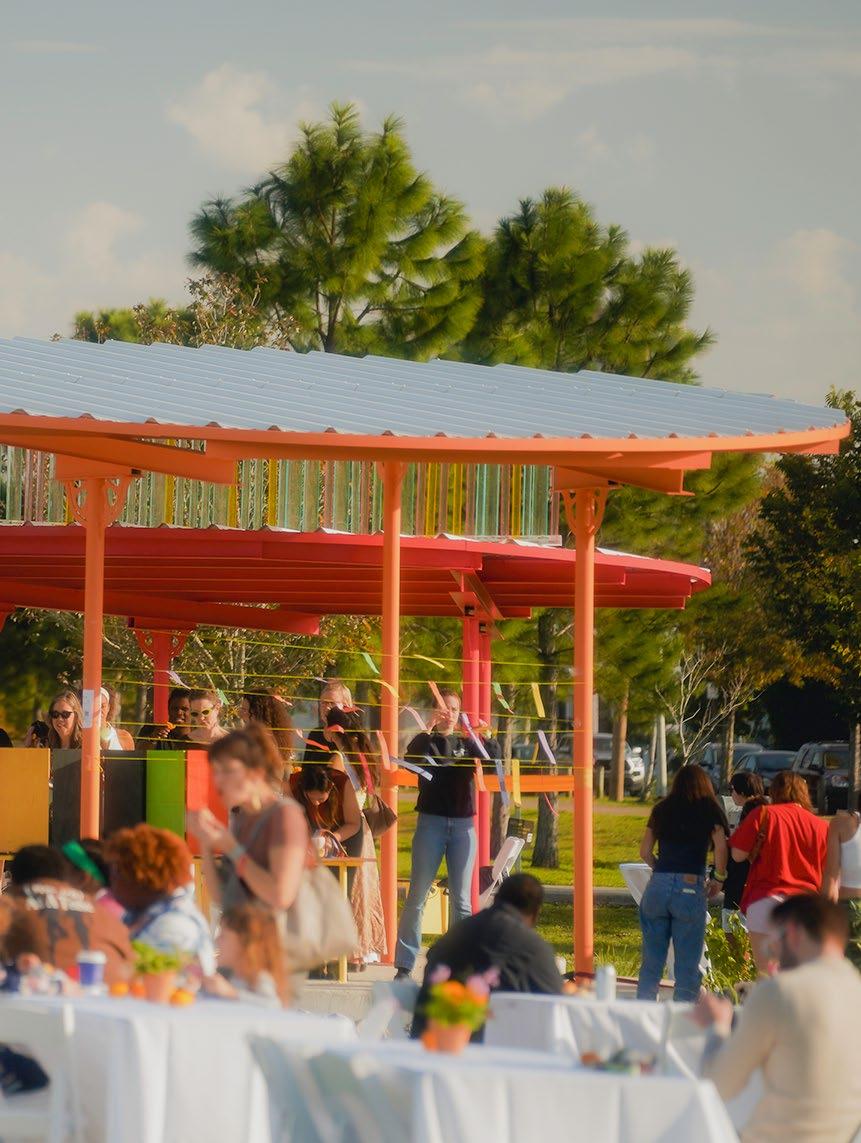
the sprout house is a project imagined by the nonprofit organization sprout and brought to life by the tulane school of architecture’s albert tina small center. we were tasked to design and construct a shade structure as the first step of sprout’s expansion onto the laffite greenway. we participated in multiple rounds of community engagement and upheld Sprout’s needs at each stage of the design and building process, highlighting words such as organic, inviting, and magical. the pavilion mimics a natural landscape showcasing organic forms with curved edges, various sized overlapping planes, and rain gardens relating to the natural movement of water. the colors represent the bright nature of sprout’s mission and highlight the structure amongst an equally colorful neighborhood and natural foliage.
above: 1/16” chipboard model; to the right: photo taken by fernando lopez-sanchez
pavilion plan
section perspective
circular roof overlaps
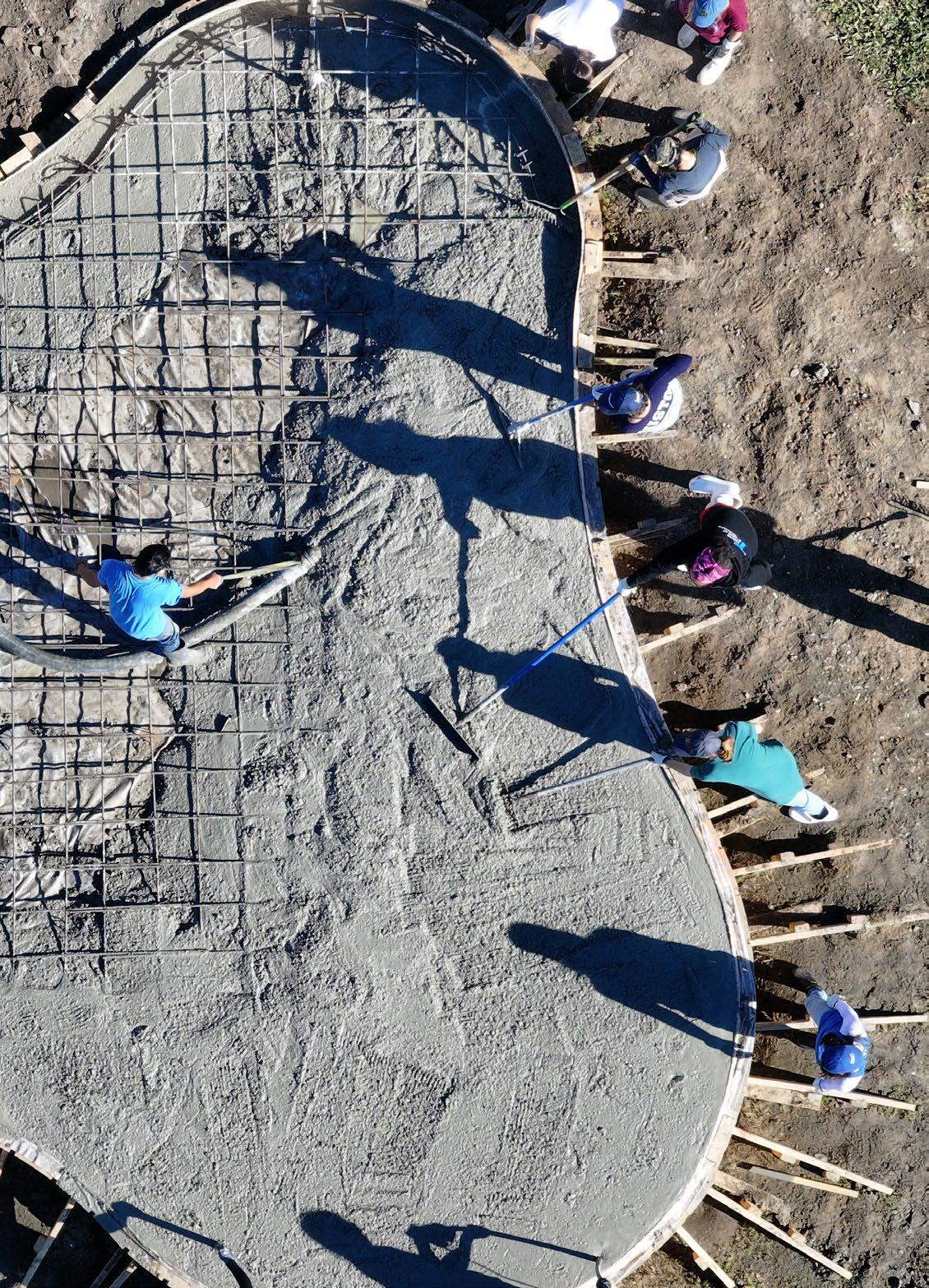
concrete form-work + pour
acrylic rods
custom curved furniture
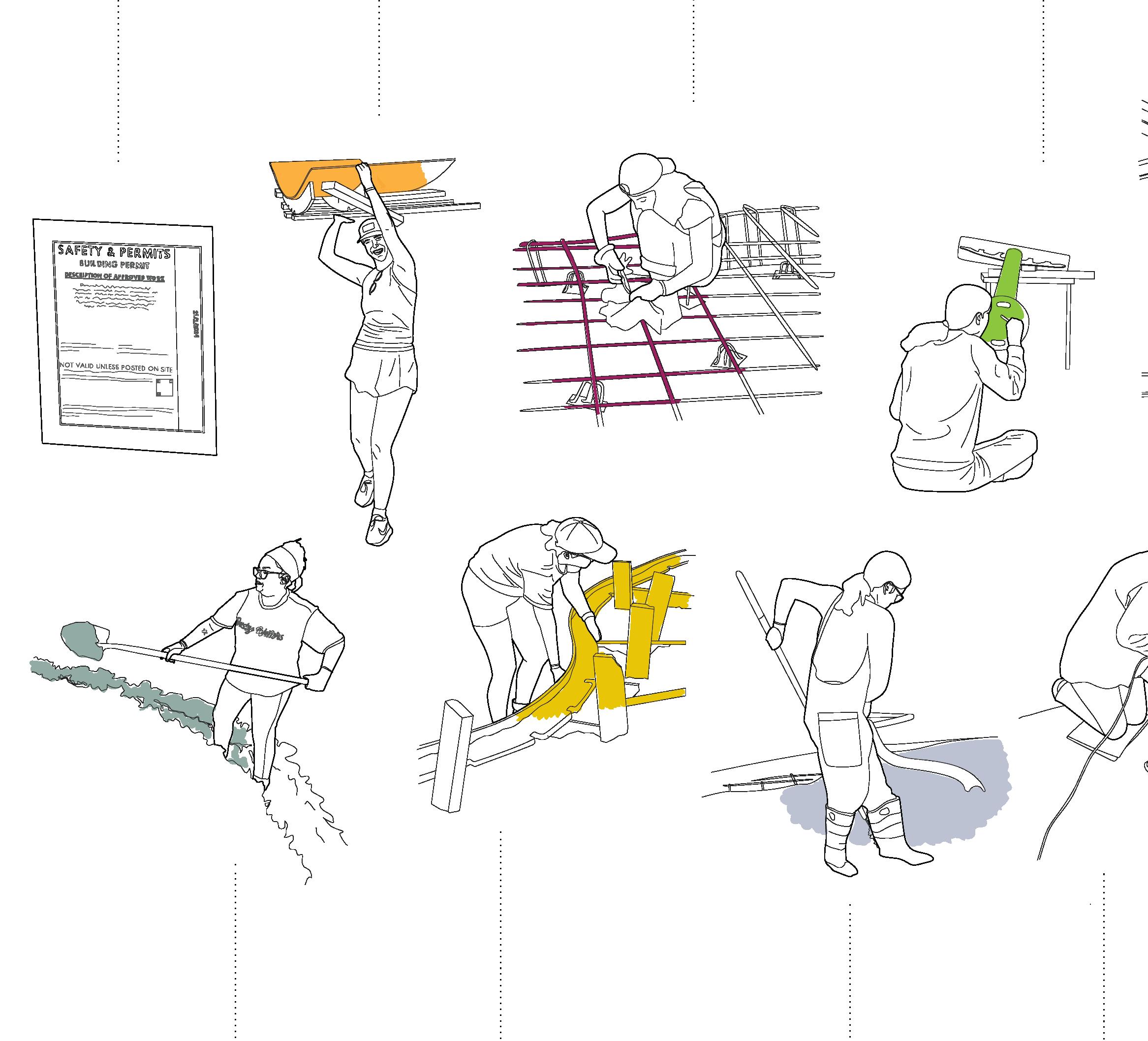
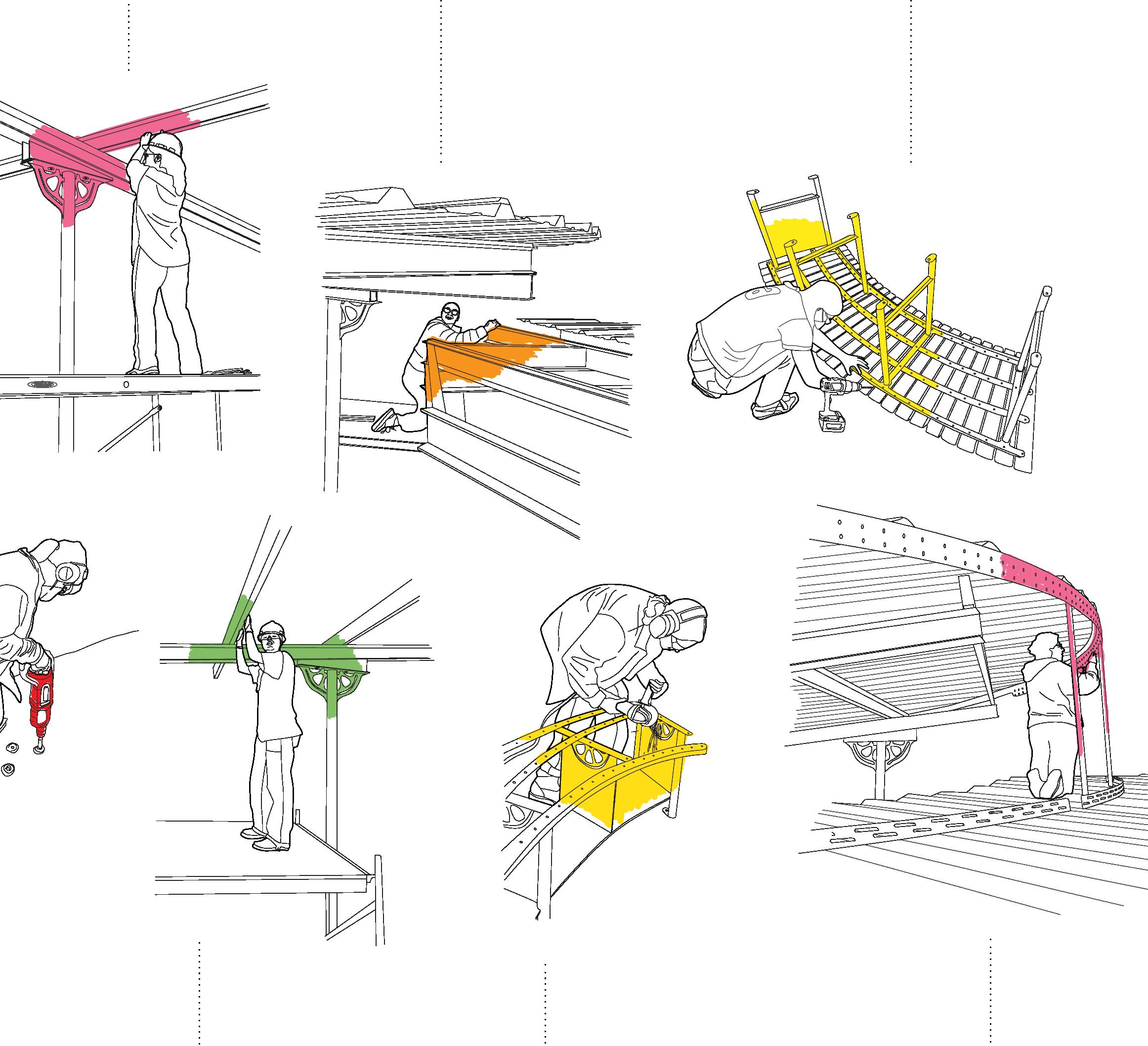
november 1st - december 14th construction process: each step demonstrated by a different team member (13 girls)
permit granted november 1st, 2024
assembling + bringing in unique curved concrete formwork
securing rebar cages + grid with metal ties and chairs welding 12 column units + painting all structural members
analiese
digging trench, ranging from 3ft to over 4ft
aligning + leveling concrete formwork within trench bounds
pouring, spreading, vibrating, floating, and finishing concrete slab
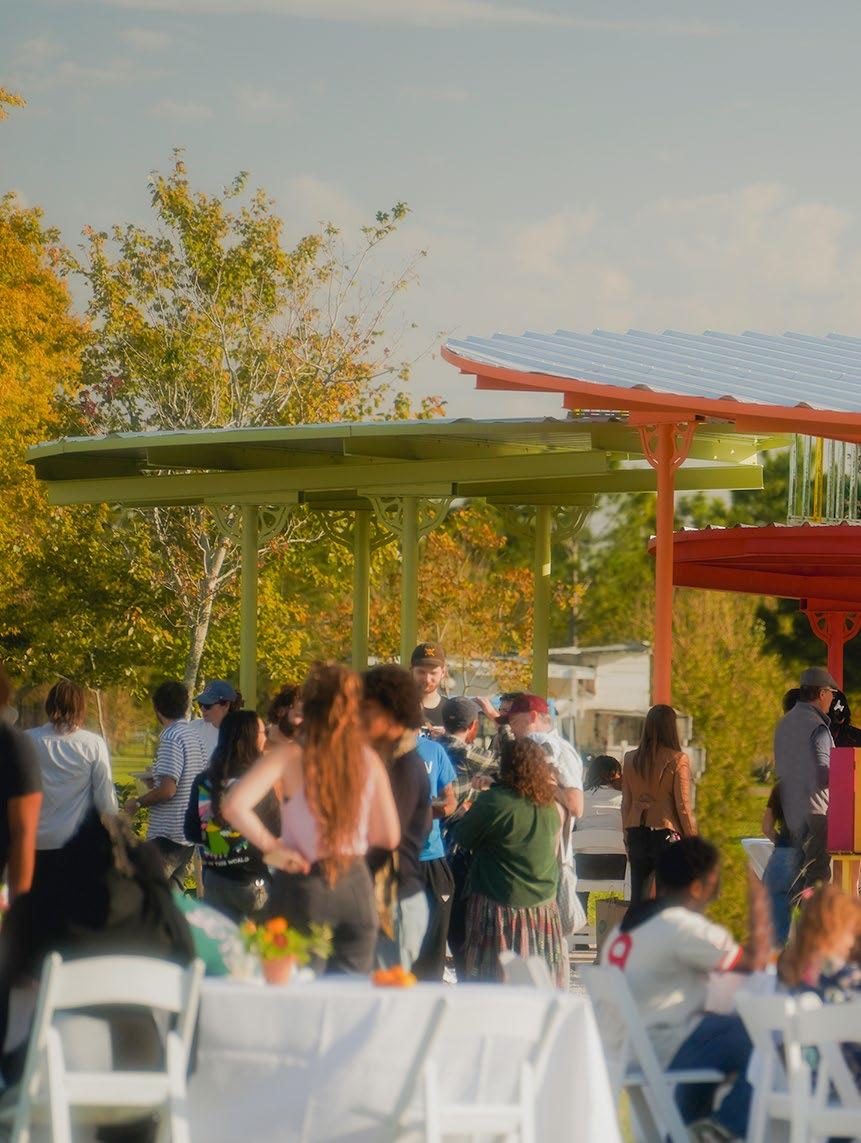
ribbon cutting ceremony taken by fernando lopez-sanchez
DE/RE MATERIALIZATION
OF THE JAPANESE CONTEMPORARY HOME
summer 2024 | john william lawrence travel fellowship research | tokyo, japan
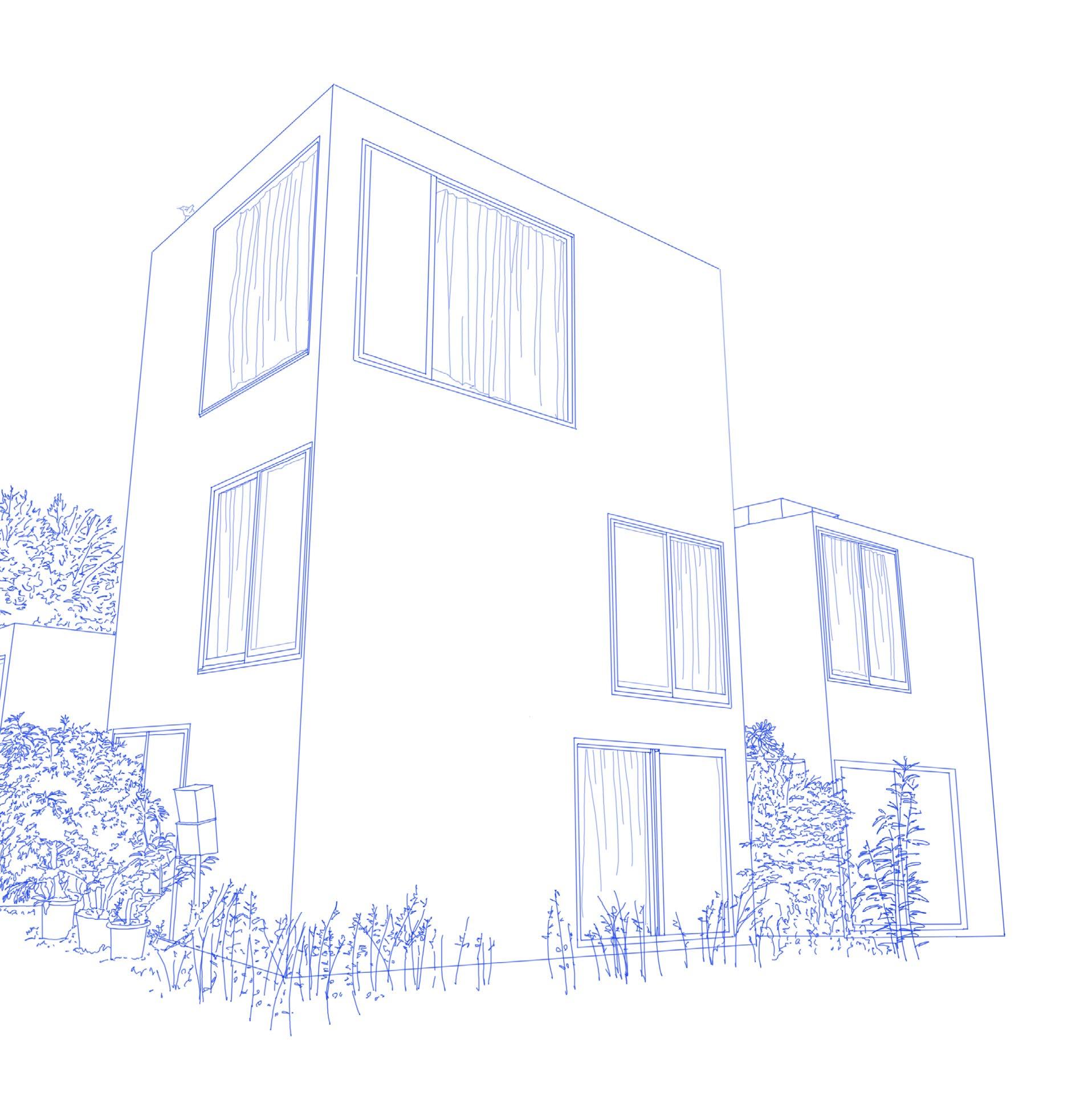
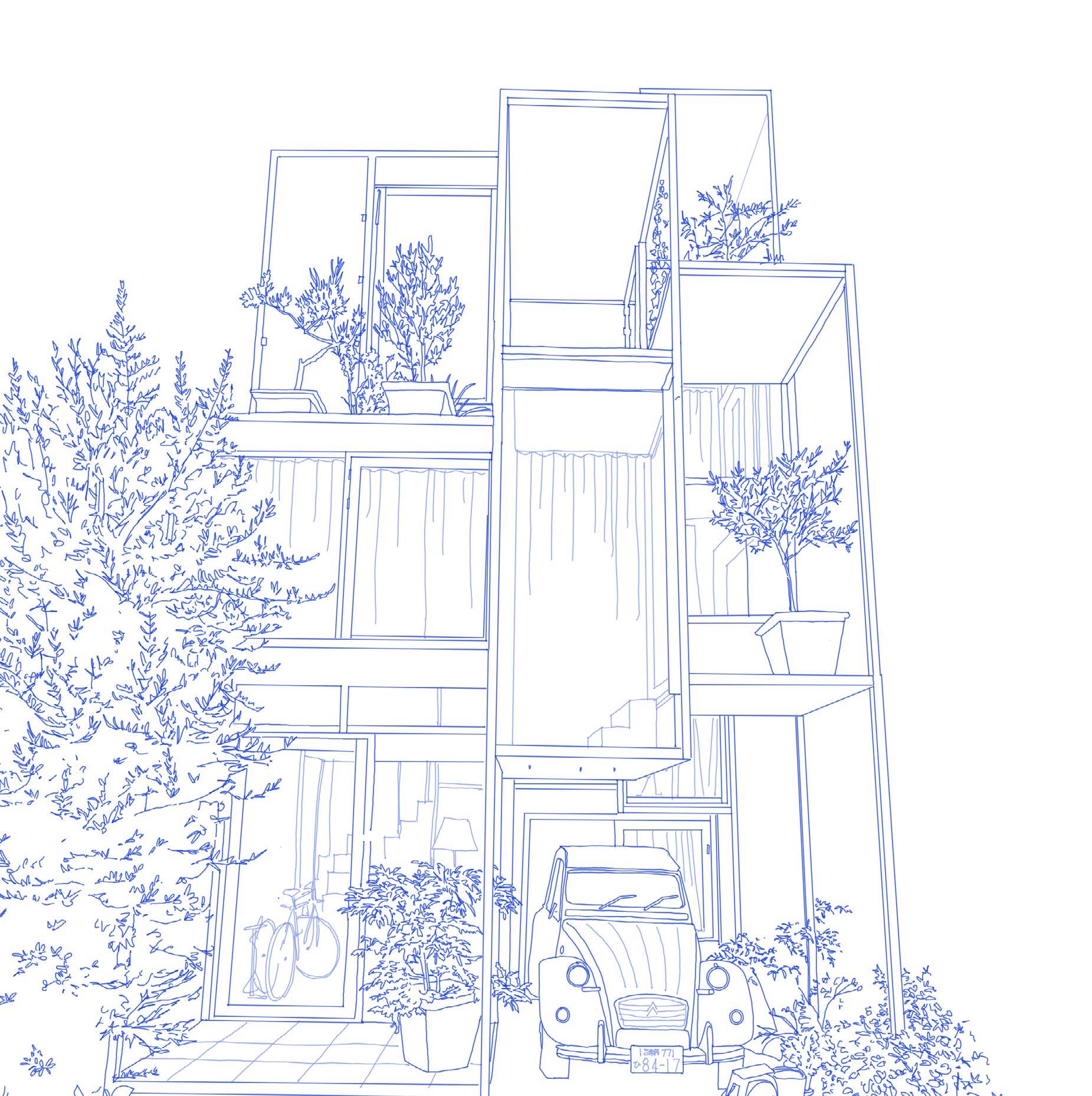
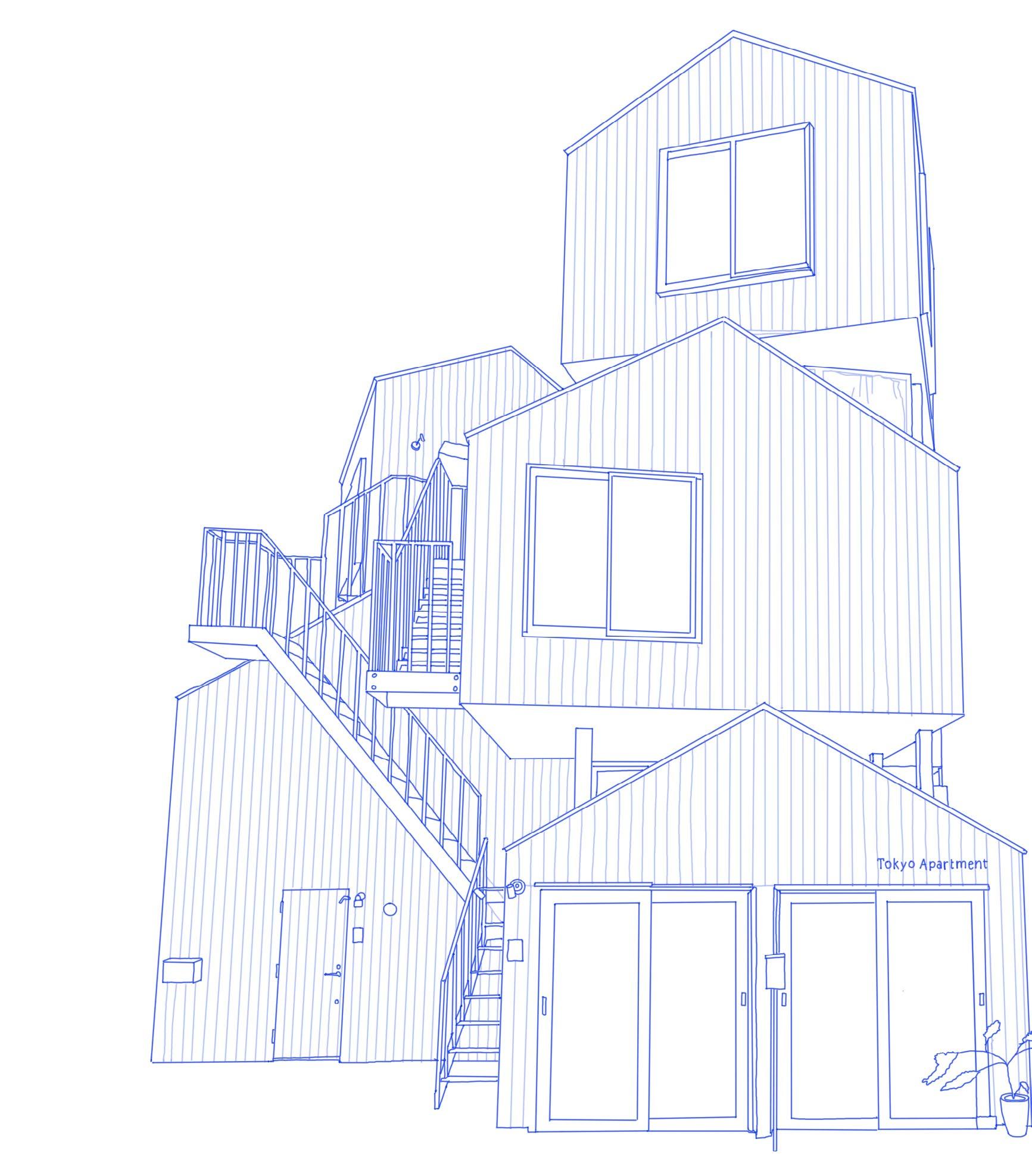
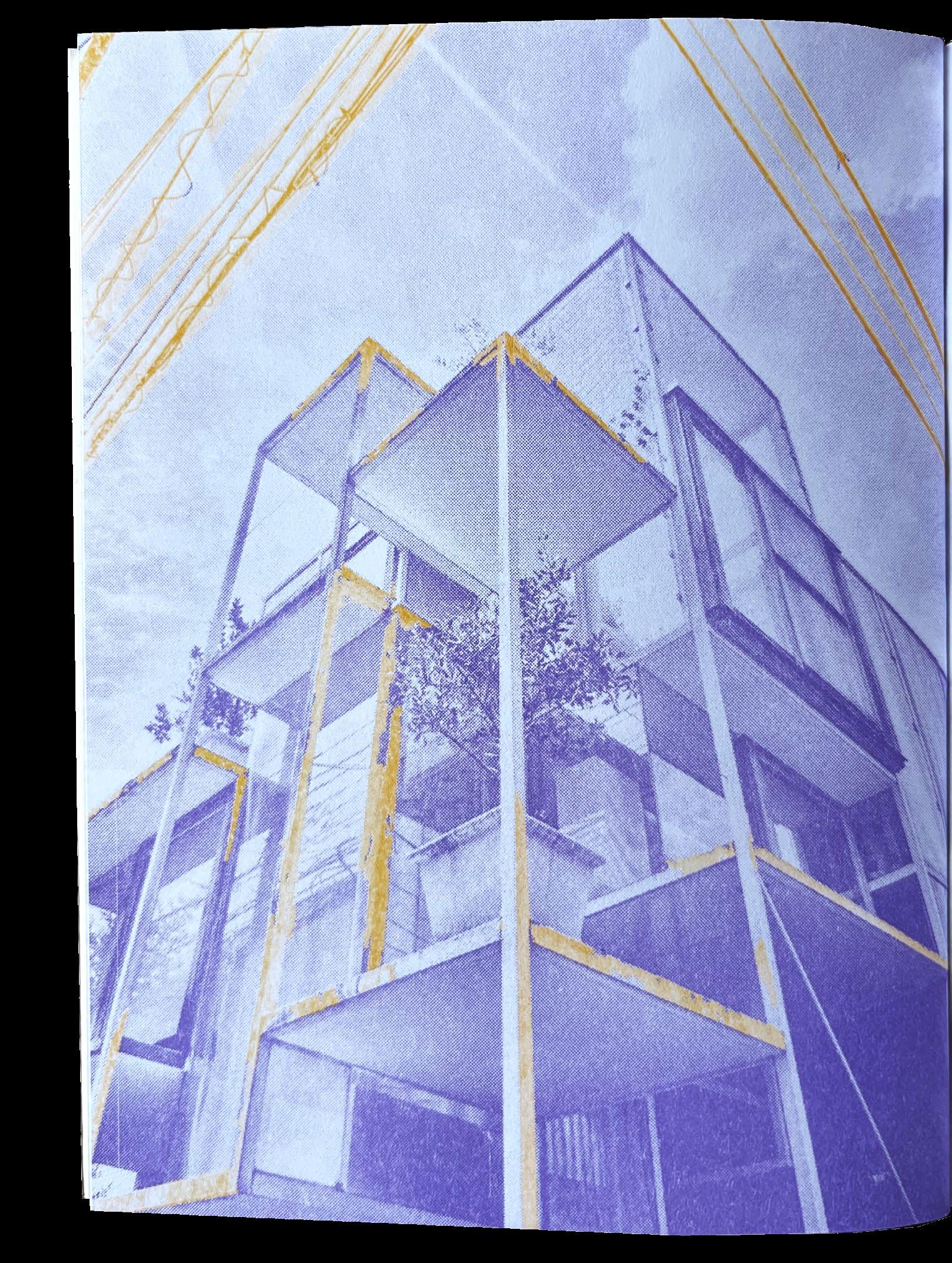
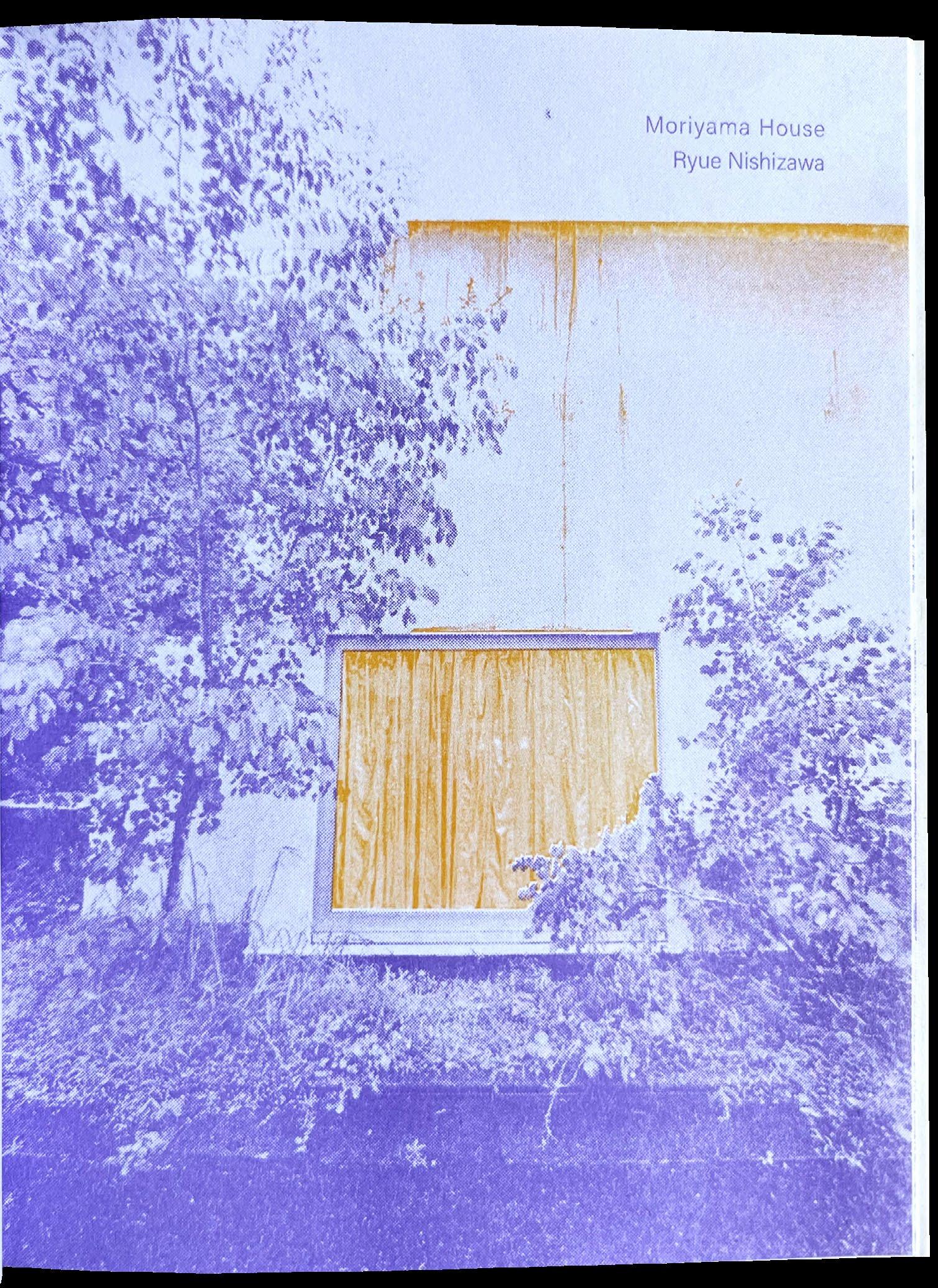
nishisawa’s moriyama house, garden & house + fujimoto’s house na, tokyo apartments
in japan, the average lifespan of a home is only 26 years—an astonishingly short timeframe that reveals a deep cultural and architectural relationship to impermanence. this temporal fragility is not only economic or environmental, but also conceptual. contemporary residential works by architects such as ryue nishisawa and sou fujimoto embrace this ephemerality, reflecting a lineage of “dematerialized” architecture that privileges transparency, lightness, and openness over permanence, enclosure, or monumentality.
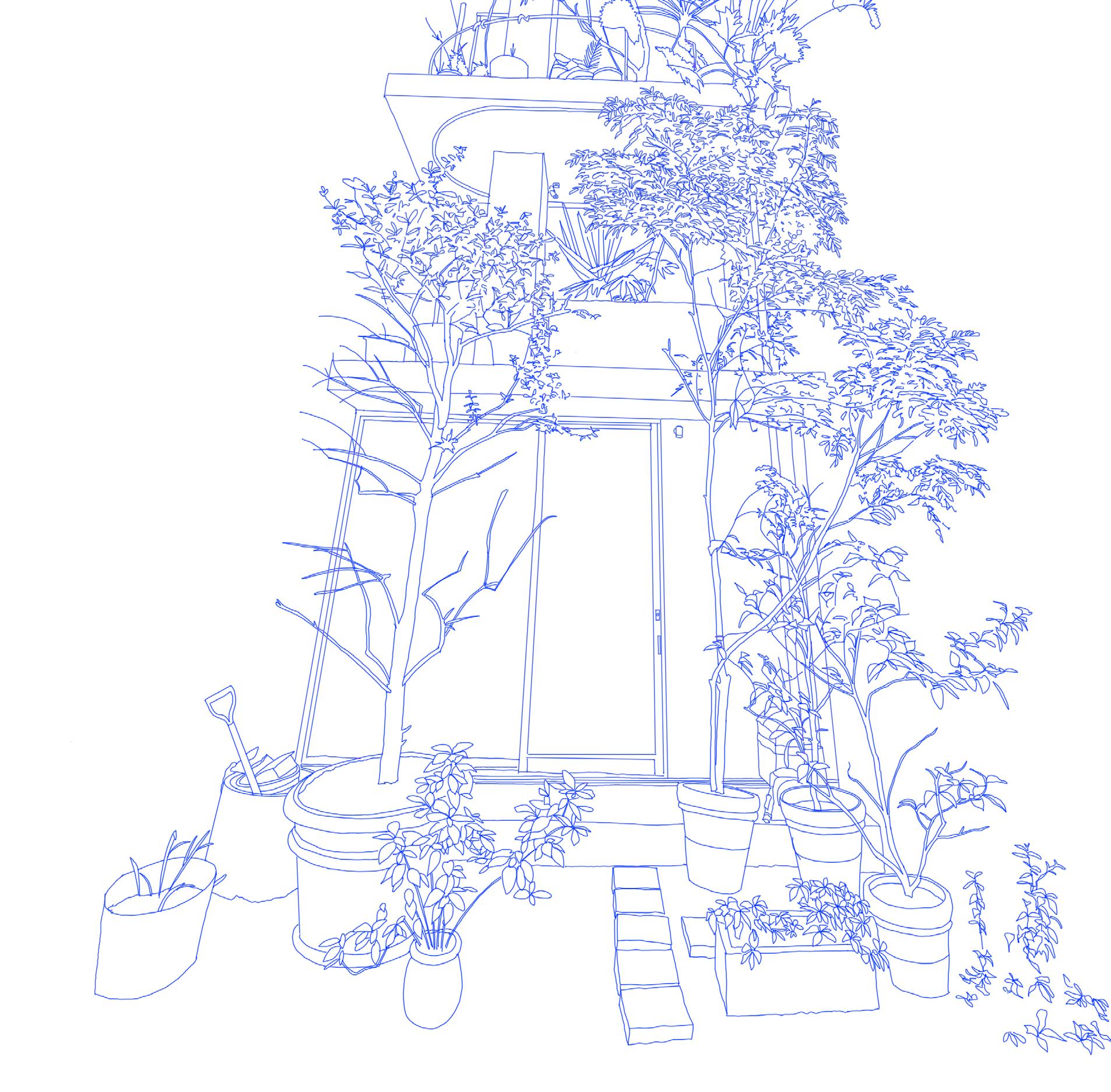
japanese houses—like house na, tokyo apartments, moriyama house, and garden&house—often appear in architectural photography as pristine, almost immaterial objects: fragile, floating, weightless. their materials—glass, thin steel, and white-painted surfaces—lend themselves to this aesthetic of disappearance. in academia, we speak admiringly of this “dematerialization,” a visual and conceptual lightness that challenges the solidity and duration traditionally associated with architecture.
yet, when seen in person, the reality of these structures reasserts itself. over time, these buildings do not disappear, but rather “re-materialize” through the forces of weather, use, and entropy. the blue car beneath house na now rusts into place, the once-open gardens of moriyama house are now overgrown with a “no entry” sign marking the limits of public admiration, thin steel frames patina, white facades become streaked with rain and red rust, and manicured plants become jungle-like bundles.
this contrast between the ideal and the “lived -in” invites new reflection on how we define beauty, authorship, and time in architecture. japan’s housing system—characterized by constant rebuilding and private ownership—suggests an architectural practice that is inherently cyclical and displays a deep tension between whiteness and maintenance.
should we, as architects, design for longevity or for the fleeting present and perfect moments? how do we embrace the building as a living, changing object and reconcile the architectural ideal with the inevitability of decay? in a world where architecture is increasingly linked to media, there is an urgent need to re-ground our thinking in the material and temporal realities of buildings. the japanese house, in all its beauty and impermanence, offers a lens through which to reconsider architecture not as a static object, but as an evolving condition--i am intrigued to see the next generation of japanese homes unfold.
featured in charette architecture student publication 2025 edition written excerpt + edited photographs + sketches
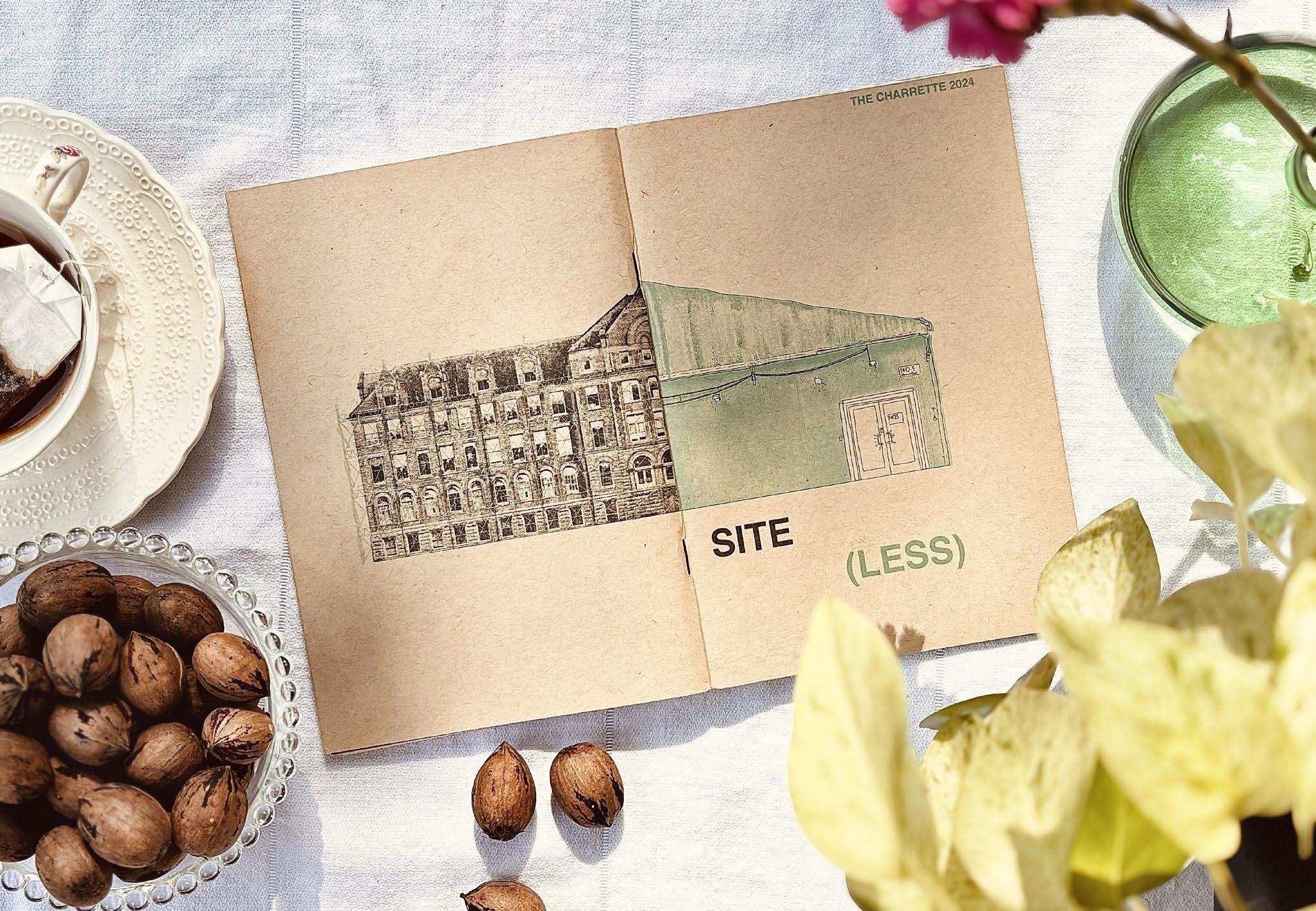
CHARRETTE 2024 EDITION
EDITOR + DESIGN CONTRIBUTOR
with: charlotte kelley, emily brandt, kayleigh macumber, and sofia vladimir
Shortlisted Top 20 in the 2024 Adobe Digital Design Awards
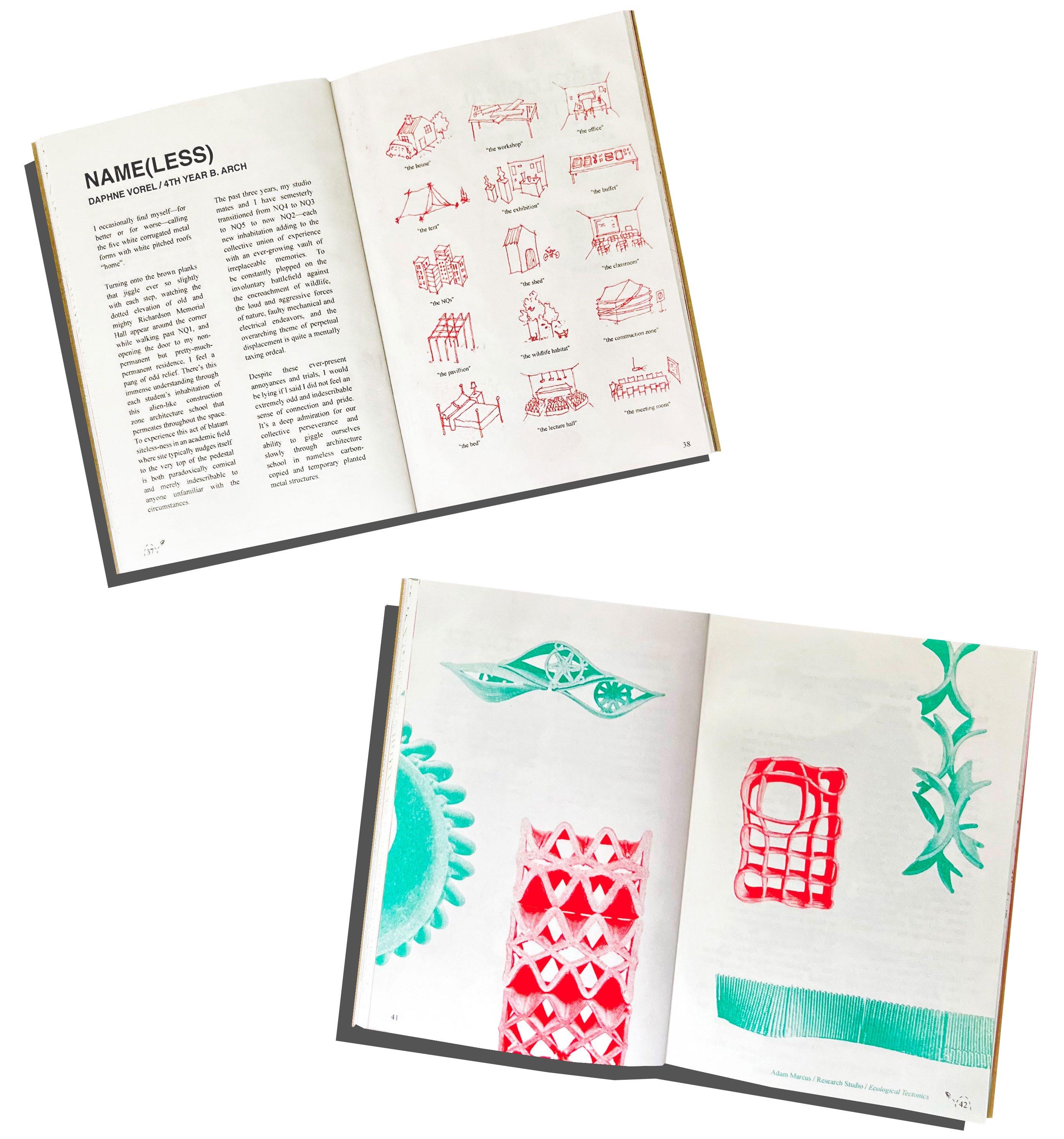
the charrette is a student-run editorial and graphic publication within the tulane school of architecture. each issue seeks to embody the creativity and conversations happening within the school through submitted writing, drawings, and other graphics created by current students and faculty. “site(less)”, the spring 2024 edition, delves into the discussion of the value of “site”—or lack thereof—within the realm of a design project. tulane school of architecture’s home base, richardson memorial hall, has the unique condition of undergoing a renovation for the past 3 years, displacing students into temporary, carbon-copied covid-19 tent structures. engaging as editors of this publication has allowed each of us to take a step back from our studio desks and consider the way in which an architectural education influences our perception of the world beyond architecture school.
personal writing + drawings -- on experiencing architecture school in “name(less)” temporary structures (2021-2024)
collage -- 3d printing clay pieces made by peers in Adam Marcus’ Ecological Tectonics research studio 2024
IN-SITU SKETCHING
spring 2024, arsenal of observation
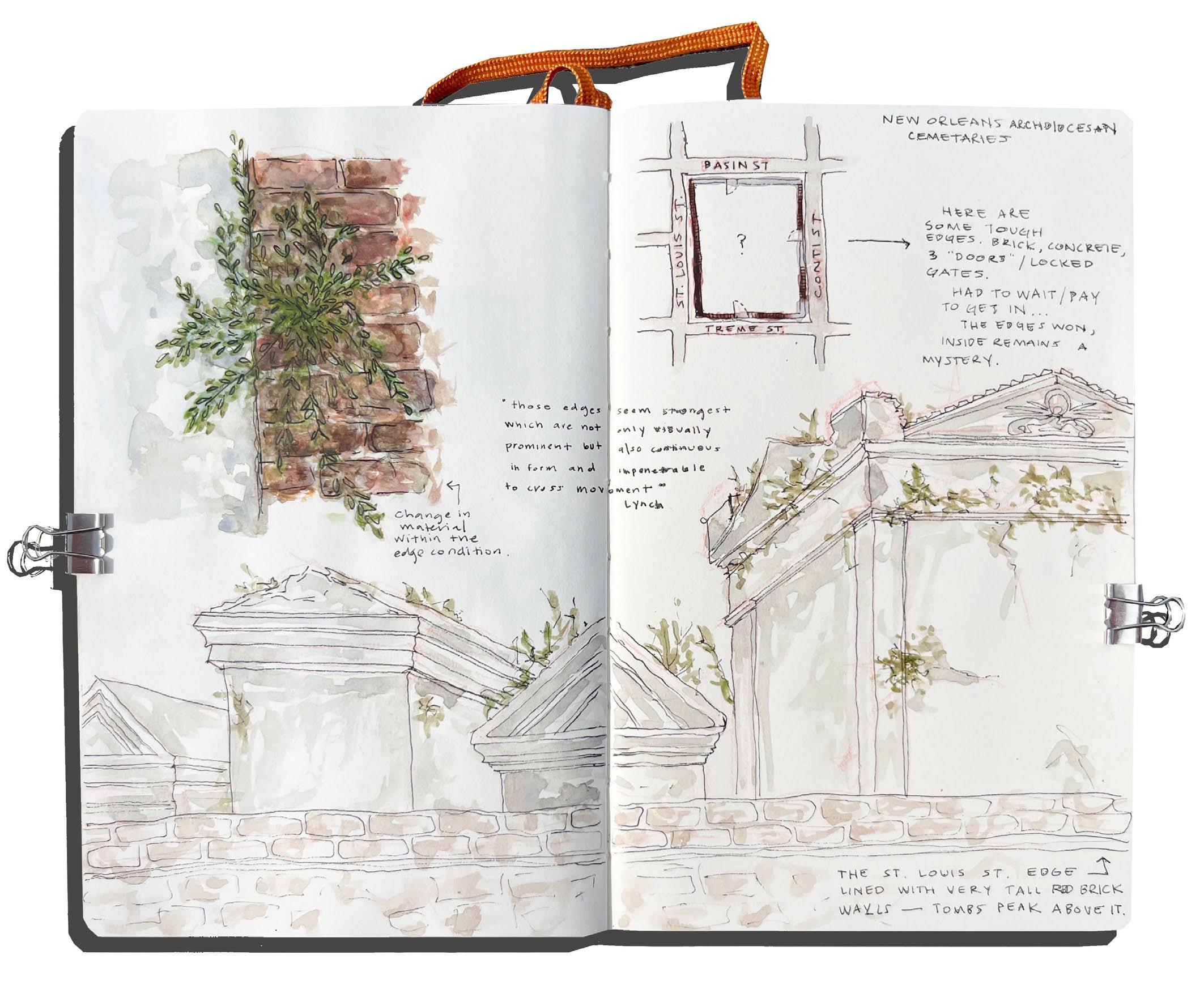
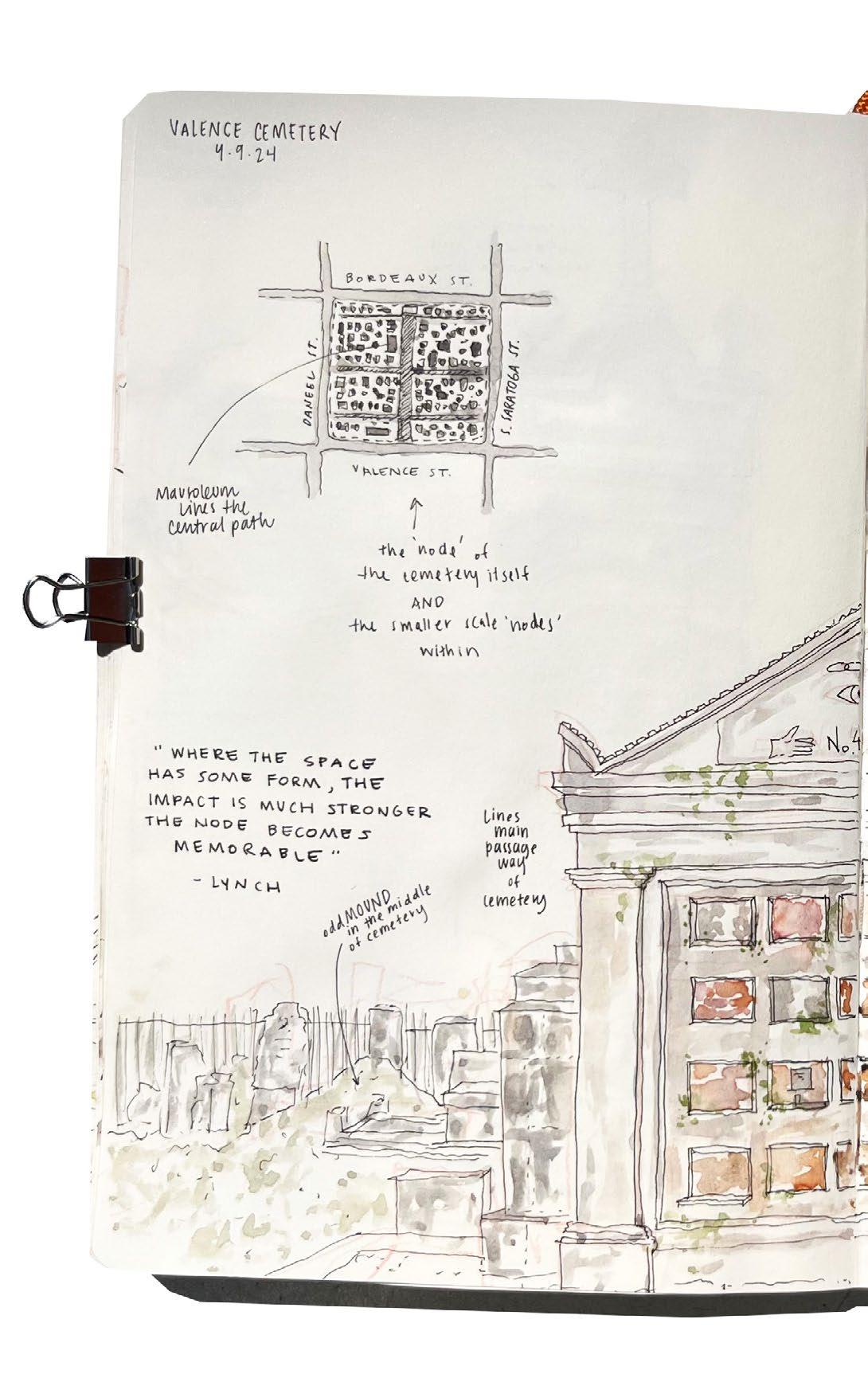
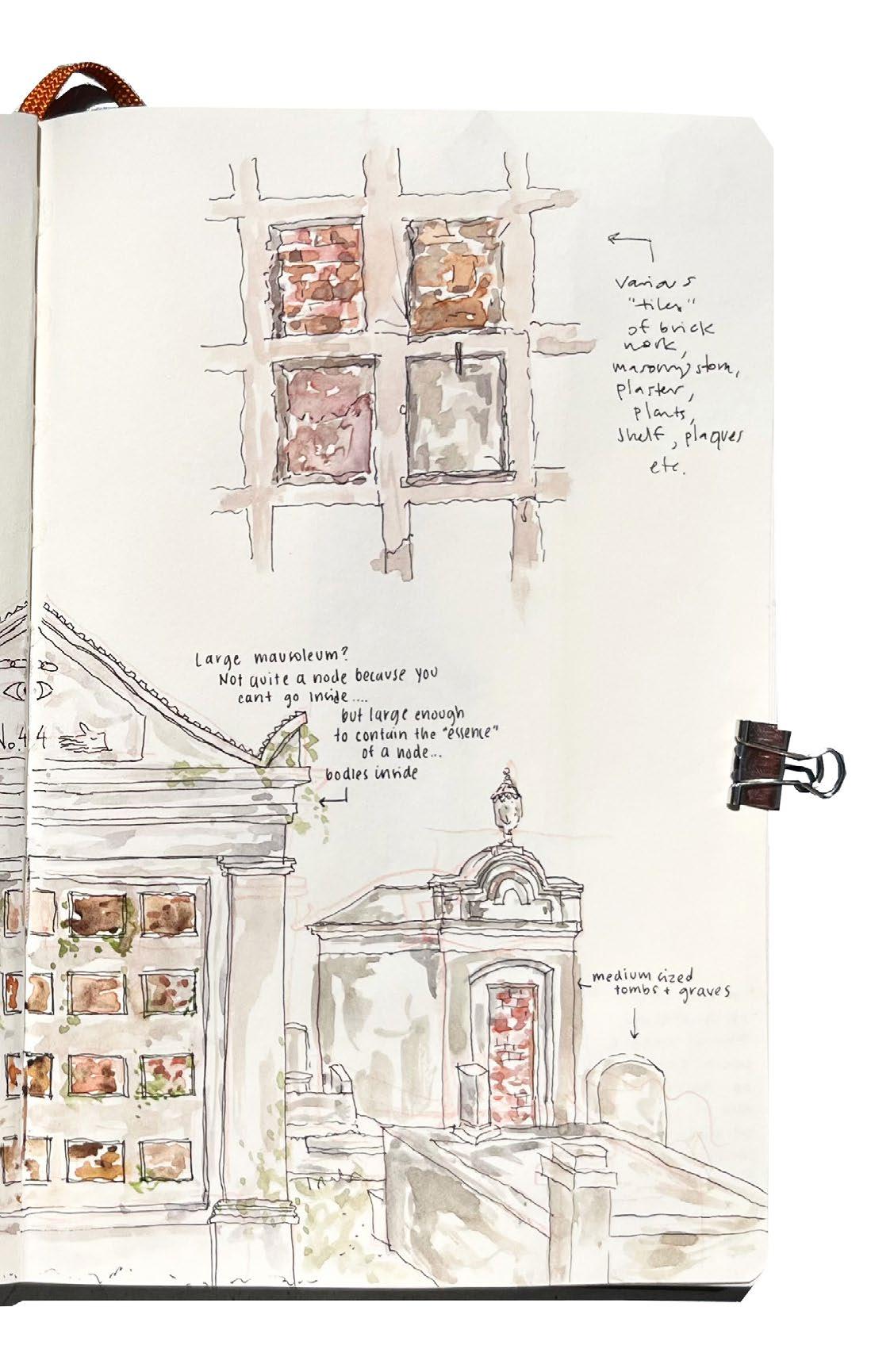
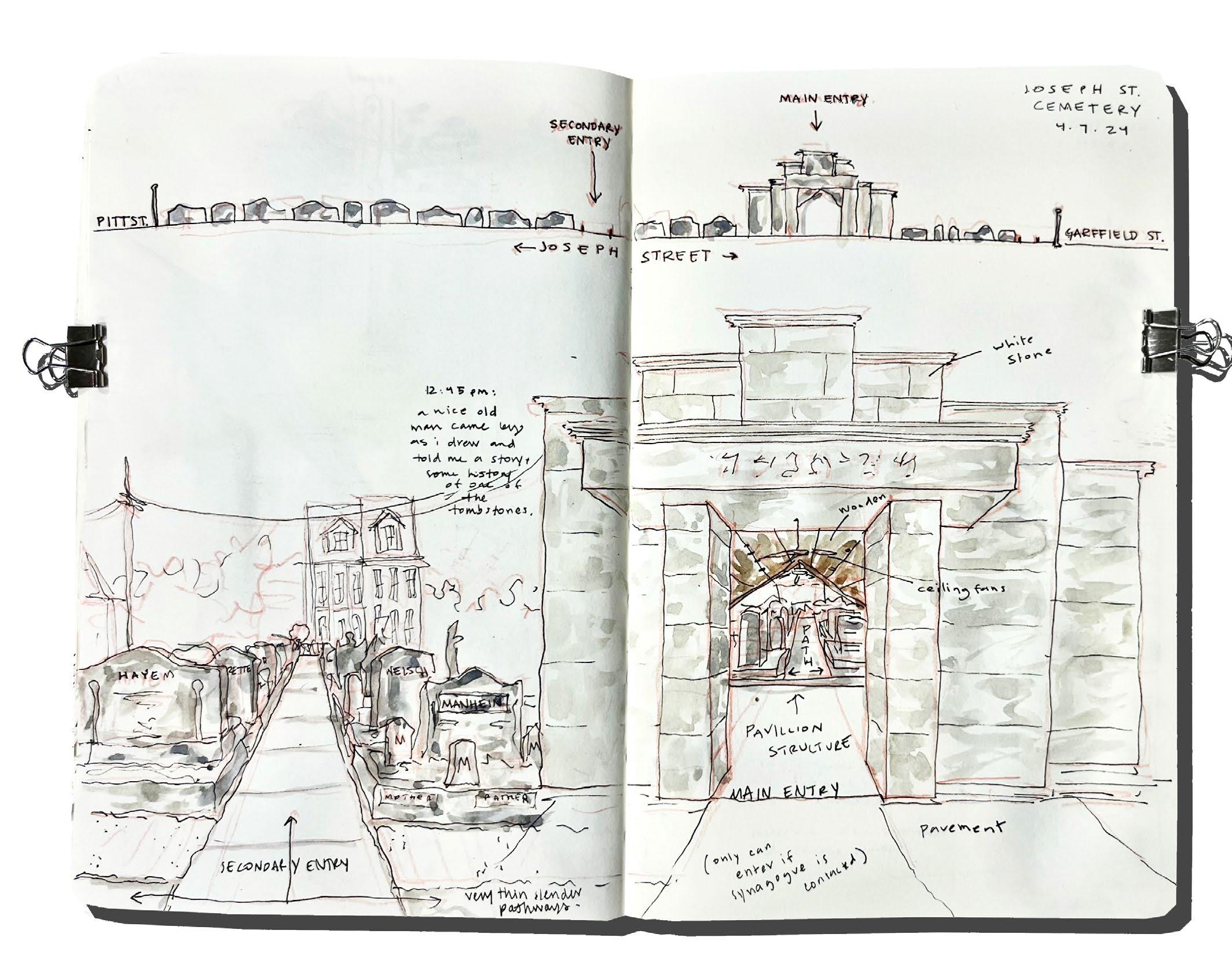
new orleans cemeteries are spaces of above ground design intricacies, otherwise hidden beneath the dirt. utilizing the categories defined by kevin lynch’s “image of the city”, these sketches explore cemeteries at multiple scales, revealing features of human interaction, architectural organization, unique landmarks, materiality, and relationships to surrounding and varying urban context. each sketch is completed on site--colored pencil, pen, and watercolor--probing what it means to truly see a place.