Resource Guide for North Texas FIFA World Cup Organizing Committee Hospitality Certificate Program
1. Overview and Facts of North Texas Cities
2. FIFA Headquarters in Dallas for the 2026 FIFA Matches
3. Welcoming our FIFA World Cup 2026 Visitors
4. Key Venues in North Texas
5. FIFA World Rankings and March 2026 Playoffs
6. FIFA World Cup Match Schedules
a. Schedule for all locations
b. FIFA Group Stage Fixtures
c. Schedule for Dallas Stadium
7. How Confusing Can Our Roads and Highways Be?
8. Maps of North Texas Region Cities and Highlighting Dallas Stadium, Kay Bailey Hutchison Convention Center, Fair Park/Cotton, and Dart Routes
9. Distances and Drive Time in Miles and Kilometers
a. Distance and drive time from North Texas Cities to
b. Dallas Stadium
c. Distance and drive time to Fair Park Fan Festival from Major North Texas Cities
10. Transportation Options in North Texas Cities
a. Public Bus Service
b. DART (Dallas Area Rapid Transit)
c. Trinity Metro
d. Denton County Transportation Authority (DCTA)
e. City and Local Shuttles
f. Will also need Shuttle Information regarding airports, hotels, events, shopping, downtown areas
g. Rail Light Rail
h. Trinity Railway Express (TRE)
i. Tex Rail
j. Denton A-Train
k. Taxis and Ride Sharing
l. Taxis, zTrip, Lyft, and Uber
m. Specialty and Additional Services
n. DFW Airport Shuttle
o. Paratransit (disabilities)
p. Intercity Buses
q. Private drivers
r. Links to transportation information
11. Fan Festival at Fair Park
12. International Broadcast Center (IBC) at Kay Bailey Hutchison Convention Center
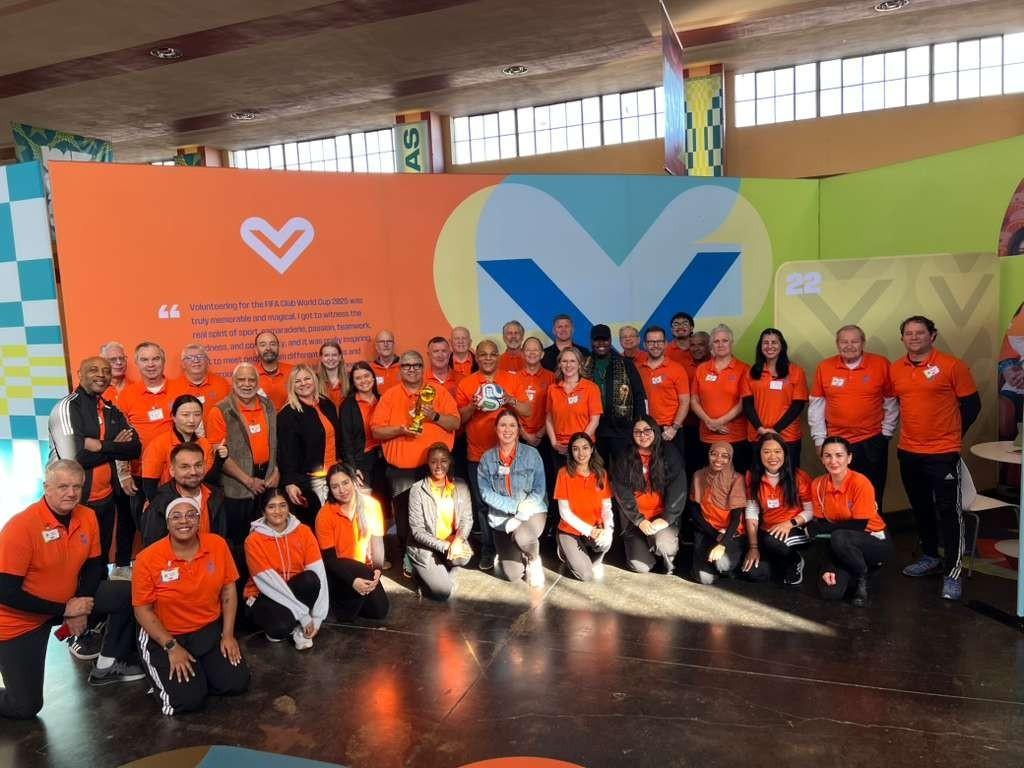
13. FIFA Volunteer Information
14. Twenty (20) Common Words and Phrases for Visiting FIFA Countries and FIFA seven languages with English Translations and Phonetic Pronunciations
a. Arabic*
b. Argentina
c. Austria
d. Catalan
e. English*
f. French*
g. German*
h. Italian
i. Japan
j. Jordan
k. Netherlands (Dutch)
l. Portuguese*
m. Russia*
n. Spanish*
o. *Indicates the seven languages of the FIFA World Cup for communication and information dissemination during the tournament, ensuring that all stakeholders can access relevant materials and communicate effectively.
15. Translation Services: Free and Paid Options
16. Gesture Awareness and Faux Pas to Avoid and Important Facts
17. Free Entertainment
a. Museums and Attractions in North Texas Cities
b. Events Showcasing the Dallas Arts District and City’s Cultural Scene for FIFA World Cup 2026
c. Showcasing North Texas Cities (Additional information under this title) includes: City Leader, Population, Top Attractions, Transportation, Entertainment and Nightlife, Culture, Restaurants, Shopping, Banks, Places of Worship, Fun Facts, Chambers of Commerce, International Chambers, Sister Cities, and Consulates
18. Restaurant Types in North Texas Cities
a. Restaurant Count of Fast Food, Upscale, and Culturally Diverse establishments
b. Listing of all restaurants in North Texas by category
19. Taxes Charged to Visitors in North Texas
20. Key DFW Visitor Economy Highlights
21. Consulates with teams in the FIFA World Cup Dallas 2026, Chambers of Commerce, International Chambers of Commerce, and Sister Cities
22. Flag Stores in Dallas
23. Soccer Terms: A Glossary of Words and Phrases
24. Soccer Teams of North Texas
25. North Texas FIFA World Cup Organizing Committee Logo and Contact Information
26. FIFA Traditions
27. Important Difference Between the U.S. and our Visiting Countries
28. UT Southwestern Medical Centers, Hospitals and Clinics throughout North Texas
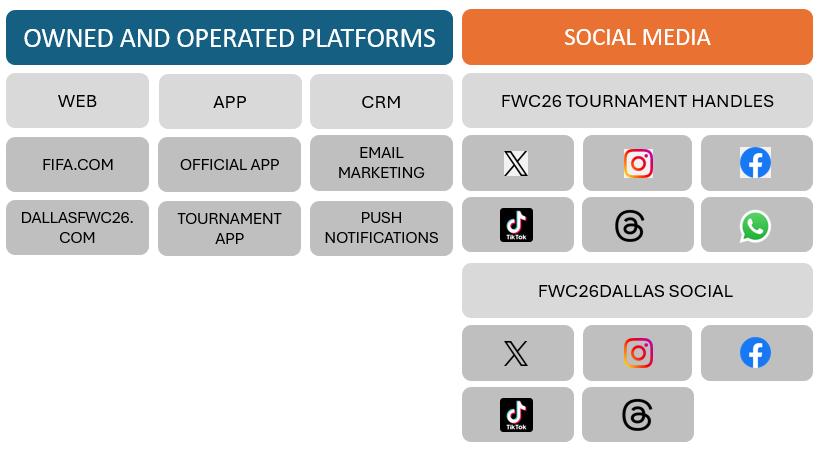
29. Public Messaging & Key Channels
30. International Radio and Television Stations in the North Texas Region
31. ATMs in North Texas Cities
1. Overview and Facts of Texas and the North Texas Region
TEXAS
Texas was originally founded in 1686
Texas was admitted to the United States as a State on 29 December 1845. We were the 28th state.
There are 254 counties in Texas
Texas is the second largest U.S. state, and larger than any country in Europe
Texas has more miles of roads and train lines than any other U.S. state
Total water area: 7,365 square miles
No State income tax
Texas’ nickname is the “Lone Star State”
Texas has the highest maximum speed limit in the U.S. at 85 MPH
Texans have their own version of Mexican Food. Tex-Mex is a fusion of Mexican, Tejano, and American food styles
Dr. Pepper was invented in Texas in 1885
The Texas Longhorn, which is the state’s Large Animal, can reach a weight of 2,500 pounds
1000+ people are moving to Texas every day!
North Texas
Dallas is the ninth-largest city in the U.S.
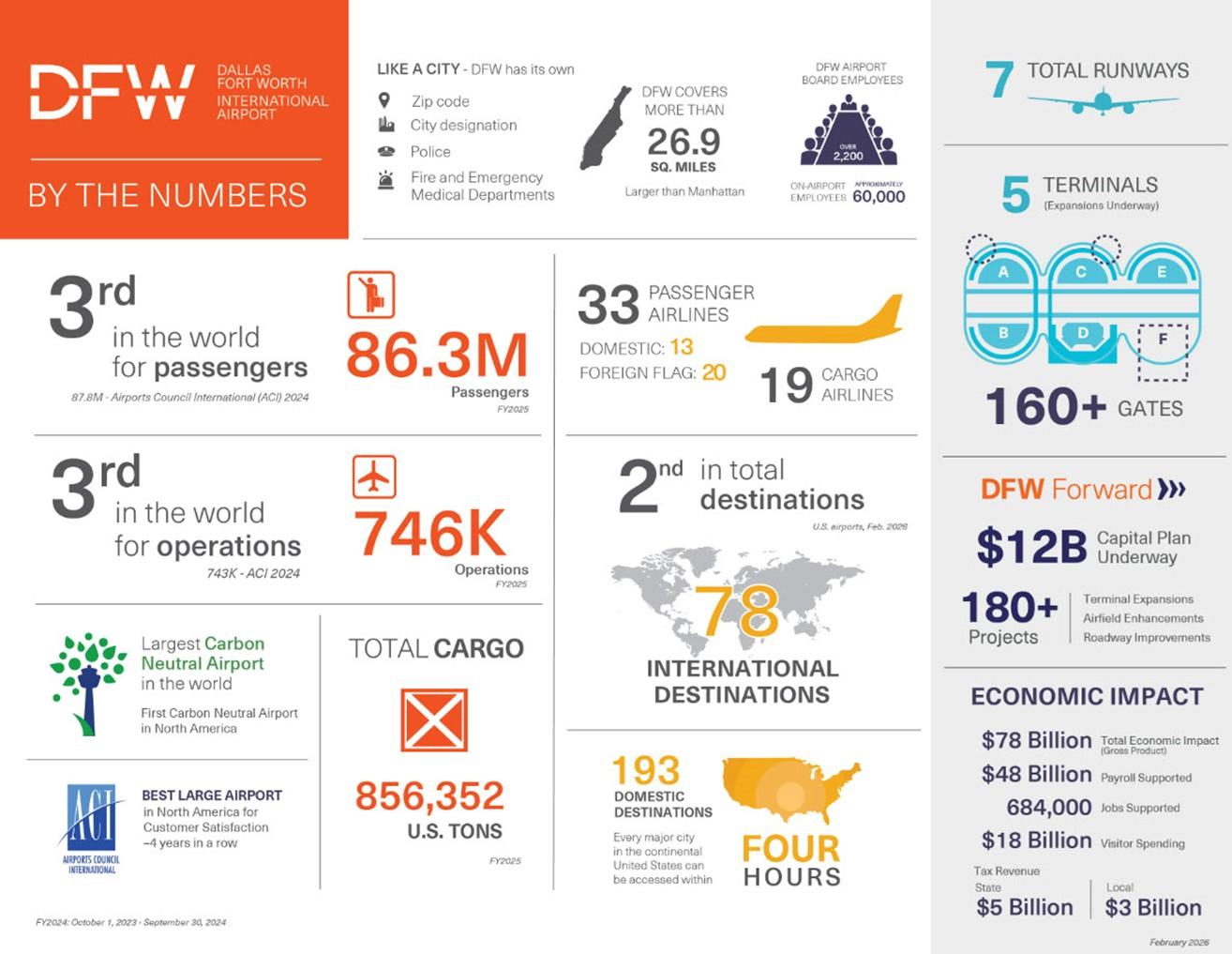
Dallas/Fort Worth International Airport is third in the world rankings for operations (746K), and passengers (86.3M). First in total destinations and serving 79 international destinations. Home to five terminals (A through E), and expansion underway for Terminal F. And First Carbon Neutral Airport in North America, largest in the world.
North Texas is quite diverse but known as a hub for arts and culture, with 120 museums and 6,000 annual events
The Dallas Museum of Art, which is one of the largest in the country with more than 25,000 pieces spanning more than 5,000 years and many continents.
The Dallas Arts District is the largest urban arts district in the United States.
North Texas is home to over 20 Fortunes 500 companies.
The region has major parks and hiking trails, lakes, amusement parks, and shopping. This includes the Highland Park Village which opened in the 1930s as one of the first shopping centers in the country and still one of the best today.
Cannot forget to mention our Tex-Mex and steak restaurants.
Speaking of Tex-Mex, did you know the Margarita machine was invented in Dallas in 1971. There is a fuzzy genesis of the actual Margarita, but creating the machine is documented and in 2005, Smithsonian’s National Museum of American History acquired the world’s first frozen margarita machine invented by Dallas restaurateur Mariano Martinez.
In the heart of Irving’s Las Colinas Urban Center, is a European-style Mandalay Canal Walk at Lake Carolyn. Outdoor enthusiasts are drawn to the area for its picturesque tree-lined spaces and charming cobblestone walkways. Visitors can take advantage of
unique experiences such as gondola rides, offering a relaxing way to enjoy the scenery. For those seeking more active pursuits, stand-up paddle boarding and pedal boat rides are available, providing a fun and engaging way to explore the outdoors.
Texas Instruments (TI) began in Dallas in the 1930s and TI’s Jack Kilby invented the first integrated computer chip (which became the microchip) here in 1958.
The world’s first indoor rodeo was held at the Cowtown Coliseum in Fort Worth. You can experience this fun Rodeo every Friday and Saturday night at the Stockyards Championship Rodeo.
The Dallas Public Library permanently displays one of the original copies of the Declaration of Independence, printed on 4 July 1776, and the First Folio of William Shakespeare’s “Comedies, Histories & Tragedies.”
The Texas Rangers are the oldest law enforcement organization in North America with statewide authority.
The Palace Theater Light Bulb in Fort Worth is the second longest burning bulb in the world at 105 years old.
Belle Starr, also known as the “Bandit Queen” lived in Scyene (between Dallas and Mesquite) in the 1860’s.
John Henry “Doc” Holliday practiced dentistry in Dallas at an office on Elm Street near Dealey Plaza. Also a gambler, and gunfighter, and close friend and associate of lawman Wyatt Earp.
Butch Cassidy and the Sundance Kid and their Wild Bunch would meet up in Fort Worth after robberies. The famous group had their photo taken in 1901 at Swartz’s Photography Studio on Main Street.
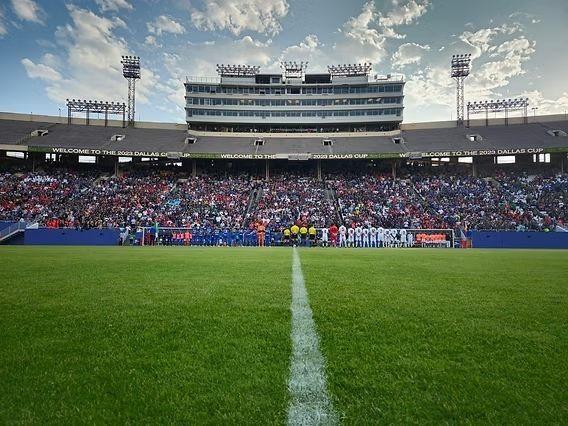
With the roof closed, the entire Statue of Liberty could fit into the AT&T Stadium in Arlington. This is where all the matches will be played for FIFA 2026 and renamed temporarily “Dallas Stadium” for these games.
Irving’s Music Factory, a 500,000-square-foot entertainment district development, is bringing a new song to the area. The city’s first Entertainment District complex is primed with one-stop dining and entertainment.
Home to many famous people including Post Malone, Usher, Demi Lovato, Nick Jonas, Nora Jones, Selena Gomez, Kacey Musgraves, LeAnn Rimes, Miranda Lambert, Stephen Stills, Vanilla Ice, Joe Michael “Dusty” Hill, Lee Ann Womack, Erykah Badu, Meatloaf, Kelly Clarkson, Jenna Bush Hager, Taylor Sheridan, Renee Zellweger, Angie Harmon, Luke Wilson, Owen Wilson, Colleen Hover (author), Jensen Ackles, Robin Wright, Sissy Spacek, Sandy Duncan, Sharon Tate, Morgan Fairchild, Jenna Dewan, Amy Acker, Gina Carano, Aaron Spelling, Dan Haggerty, Rebecca Field, Jerrika Hinton, Stephen Tobolowsky, Peter MacNicol, Chris Harrison, Greg Vaughan, Phil Morris, Jaz Sinclair, Jerrika Hinton, Melissa Rycoft, Scoot McNairy, Bridgette Lundy-Paine, Don Henley, Neal McCoy, Carl Gardner, Sr. (The Coasters), Ray Price, Charley Pride, Stevie Ray Vaughn, Johnny Mathes, Tommy Tune, K.T. Oslin, Blind Lemon Jefferson, Steve Miller, Edie Brickell & New Bohemians, Old 97’s, Phyllis George, Robby Benson, Carroll Shelby (Automative designer and race car driver), Melinda Gates, Johnny Horton, Larry McMurtry (novelist), and many sports stars including Roger Staubach, Troy Aikman, Emmitt Smith, Von Miller, Dirk Nowitzki, Nolan Ryan, Ivan “Pudge” Rodriguez, Chris Bosh, Grant Hill, Clayton
Kershaw, Michael Crabtree, Christian Ponder, Spud Webb, Madison Kocian, Scottie Scheffler, Jordan Spieth, Justin Leonard, Scott Verplank, Lee Trevino, Clayton Kershaw, Doak Walker, Michael Johnson, Ernie Banks, Chris Bosh, Matthew Stafford, Bobby Layne, Tim Brown, Drew Bress, Mark Cuban, Mike Modano, Brian Waters, Kenneth Scott Cooper, Jr., Melissa Suzanne Keeling, Alan Prampin, Omar Alejandro Gonzalez, Kyle Rote, Jr., and many more celebrities.
North Texas only focuses on the northeastern side of Texas with 11 counties.
North Texas’s diverse culture makes it a great tourist destination.
Rich education opportunities, and a young median age.
Discover North Texas and experience all the wonders of our region and state.
2. FIFA Headquarters in Dallas for the 2026 FIFA Matches
An Overview of the Host City's Role in the Upcoming World Cup
Introduction
The FIFA World Cup is one of the most celebrated sporting events worldwide, and the upcoming 2026 edition promises to be historic, with matches hosted across the United States, Canada, and Mexico. Among the U.S. host cities, Dallas stands out as a major hub, not only for matches but also as the host of the International Broadcast Center(IBC) for the tournament.
Why Dallas Was Chosen
Dallas is renowned for its modern infrastructure, central location in the United States, and rich sporting culture. The city is home to world-class facilities, including AT&T Stadium (in nearby Arlington), which will host several high-profile matches during the 2026 FIFA World Cup. Dallas's experience in hosting large-scale international events and its robust transportation network make it an ideal choice for the most matches of any city and the IBC.
Role of the North Texas FWC Organizing Committee
During the 2026 FIFA World Cup, the North Texas FWC Organizing Committee will serve as a central operational center for tournament coordination in the region. This includes coordinating security, managing team accommodation, overseeing media relations, and supporting fan engagement activities. It also functions as a liaison between local organizations and cities and FIFA's global leadership, ensuring that all aspects of the tournament in North Texas run smoothly.
Impact on Dallas
Hosting both the FIFA headquarters and key matches is expected to have a significant economic and cultural impact on Dallas. Millions of visitors, including fans, athletes, officials, and media personnel, will descend upon the city, boosting tourism and creating opportunities for local businesses. The event will also put Dallas in the global spotlight, further enhancing its reputation as a premier destination for international sports.
Legacy and Long-Term Benefits
An important goal of the North Texas FWC Organizing Committee is to ensure that the 2026 World Cup leaves a positive lasting legacy. Investments in infrastructure, community programs, and sports facilities made in preparation for the event will benefit residents long after the tournament concludes. Additionally, the global exposure will help foster a deeper appreciation for soccer in the region, inspiring future generations of athletes and fans.
Conclusion
With its strategic location, outstanding facilities, and vibrant sports culture, Dallas is set to play a pivotal role in the FIFA World Cup 2026. The work of the North Texas FWC Organizing Committee and volunteers across the region underscores the importance of our region as a host and highlights the impact the tournament will have on the local community, economy, and sporting legacy.
3. Welcoming our FIFA World Cup 2026TM Visitors
As a tourist arriving for a big FIFA event, expectations start the moment the plane lands and continue through every touchpoint. Below is a simple step by step of what most visitors would hope for.
At the Airport
1. Clear wayfinding and welcome
Big, obvious signs in multiple languages directing then to immigration, baggage claim, transport, and the FIFA event information desk.
Visible “Welcome FIFA Fans” branding so it feels festive and organized, not confusing or chaotic.
2. Friendly first contact
Immigration and customs staff who are calm, polite, and efficient, even with crowds.
Volunteers/hosts near exits who can answer basics: transport options, safety tips, event venues, hotel directions, and key apps or websites.
Leaving the Airport(s)
3. Easy, safe transportation
Clear options: official taxis, rideshare pickup zones, shuttle buses to fan zones and city centers, and instructions for using trains/metro.
Transparent pricing or posted fare ranges, and staff or volunteers helping fans avoid frauds.
4. Immediate information access
A staffed help desk or kiosk specifically for FIFA tourists (maps, schedules, tickets, emergency contacts).
Recommendations for SIM cards, Wi-Fi spots, official apps for transport and match info.
First Arrival in the City
5. Smooth check-in experience
Hotels or accommodations prepared for fans: fast check in, info in multiple languages, clear house rules and local laws.
Basic orientation: city map, nearest public transport stop, directions to fan zones and stadium, and safety guidance.
6. Clear FIFA touchpoints
Signage or brochures about match days, fan festivals, cultural events, and public viewing areas.
Information on how early to arrive at stadiums, bag rules, prohibited items, and accessibility options.
During the Stay
7. Respectful, welcoming treatment
Staff and locals who are patient with language barriers and cultural differences.
Consistent, fair treatment in prices and services, not taking advantage because someone is a tourist.
8. Safety and support
Visible security presence that feels protective rather than intimidating.
Clear instructions on what to do if lost, sick, harassed, or if something is stolen, including emergency numbers and support services.
At FIFA events and fan areas
9. Organized, enjoyable events
Crowd management that prevents dangerous congestion, with clear entry and exit routes.
Accessible facilities (restrooms, water, medical tents, family areas) and staff trained to manage diverse groups and sensitive situations.
10. Consistent communication
Realtime updates on match changes, transport disruptions, or safety alerts through official channels.
Post event guidance: how to get back safely, late night transport options, and help for vulnerable or distressed fans.
This information needs to be shared with your entire staff to make this overall event successful. Information must be shared including the training and city briefing. staff orientation, and constant updates of changes to schedules or activities provided by FIFA. This “Ten Point Guideline” could be turned into a checklist for your volunteers or frontline staff.
4. Key Venues in North Texas
KEY VENUES IN NORTH TEXAS
MATCH VENUE:DALLAS STADIUM (ARLINGTON)
FIFA FAN FESTIVAL: FAIR PARK(DALLAS)
FAN ACTIVATIONS: TBD
TEAM BASE CAMPS:
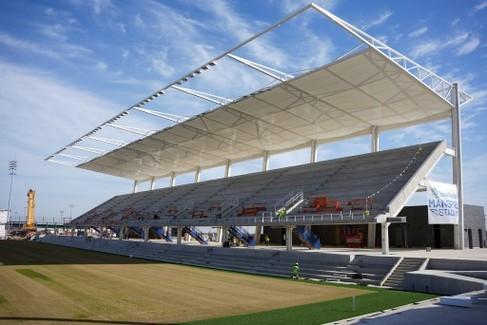
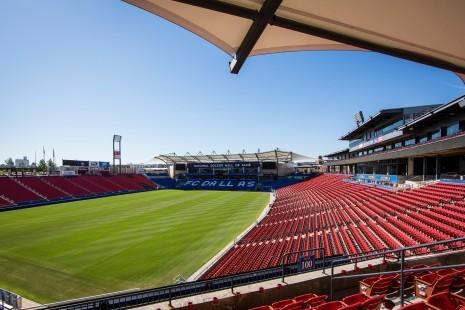
MANSFIELD STADIUM(MANSFIELD) TOYOTA STADIUM & SOCCER COMPLEX(FRISCO)
INTERNATIONAL BROADCAST CENTER:KBHCCD
VENUE SPECIFIC TRAINING SITE VENUES
COTTON BOWL STADIUM(DALLAS) SOUTHERN METHODIST UNIVERSITY (DALLAS ))
5. FIFA World Rankings
The 2026 World Cup presented an opportunity for more teams than ever before to reach the finals.
In North America, 48 nations will take part, up from 32 at Qatar 2022. That number remained the same for seven consecutive tournaments.
As the list below shows, Italy (ranked 12th) were the only country in FIFA's top 20 not to have guaranteed their place prior to the final round of playoffs in March 2026.
At the same time, three countries outside the world's top 80 will be at the finals, ready to make their appearance to football romantics the world over.
FIFA Rankings of Teams in 2026 World Playoffs
Prior to the World Cup draw on 5 December 2025, the identity of 42 of the 48 finalists were known. The other six spots will be settled in March 2026. Four teams will emerge from the 16 who enter the UEFA playoff path, while the inter-confederation playoff will be whittled down from six.
Here are the 22 nations concluding the final round of playoffs in order of their FIFA
6. Group Stage
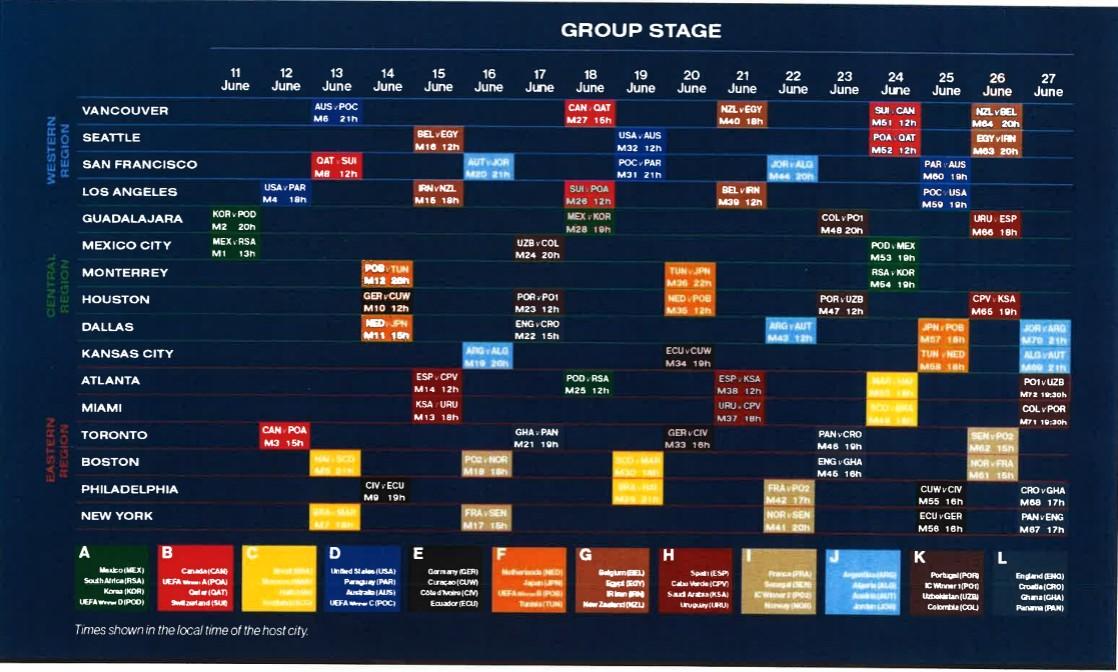
Thursday, 11 June 2026
6. FIFA World Cup 2026 Group Stage Fixtures
Mexico v South Africa – Group A – Mexico City Stadium
Korea Republic v Czechia/Denmark/North Macedonia/Republic of Ireland – Group A –Estadio Guadalajara
Friday, 12 June 2026
Canada v Bosnia and Herzegovina/Italy/Northern Ireland/Wales – Group B – Toronto Stadium
USA v Paraguay – Group D – Los Angeles Stadium
Saturday, 13 June 2026
Haiti v Scotland – Group C – Boston Stadium
Australia v Kosovo/Romania/Slovakia/Türkiye – Group D – BC Place Vancouver
Brazil v Morocco – Group C – New York New Jersey Stadium
Qatar v Switzerland – Group B – San Francisco Bay Area Stadium
Sunday, 14 June 2026
Côte d’Ivoire v Ecuador – Group E – Philadelphia Stadium
Germany v Curaçao – Group E – Houston Stadium
Netherlands v Japan – Group F – Dallas Stadium
Albania/Poland/Sweden/Ukraine v Tunisia – Group F – Estadio Monterrey
Monday, 15 June 2026
Saudi Arabia v Uruguay – Group H – Miami Stadium
Spain v Cabo Verde – Group H – Atlanta Stadium
IR Iran v New Zealand – Group G – Los Angeles Stadium
Belgium v Egypt – Group G – Seattle Stadium
Tuesday, 16 June 2026
France v Senegal – Group I – New York New Jersey Stadium
Bolivia/Iraq/Suriname v Norway – Group I – Boston Stadium
Argentina v Algeria – Group J – Kansas City Stadium
Austria v Jordan – Group J – San Francisco Bay Area Stadium
Wednesday, 17 June 2026
Ghana v Panama – Group L – Toronto Stadium
England v Croatia – Group L – Dallas Stadium
Portugal v Congo DR/Jamaica/New Caledonia – Group K – Houston Stadium
Uzbekistan v Colombia – Group K – Mexico City Stadium
Thursday, 18 June 2026
Czechia/Denmark/North Macedonia/Republic of Ireland v South Africa – Group A –Atlanta Stadium
Switzerland v Bosnia and Herzegovina/Italy/Northern Ireland/Wales – Group B – Los Angeles Stadium
Canada v Qatar – Group B – BC Place Vancouver
Mexico v Korea Republic – Group A – Estadio Guadalajara
Friday, 19 June 2026
Brazil v Haiti – Group C – Philadelphia Stadium
Scotland v Morocco – Group C – Boston Stadium
Kosovo/Romania/Slovakia/Türkiye v Paraguay – Group D – San Francisco Bay Area Stadium
USA v Australia – Group D – Seattle Stadium
Saturday, 20 June 2026
Germany v Côte d’Ivoire – Group E – Toronto Stadium
Ecuador v Curaçao – Group E – Kansas City Stadium
Netherlands v Albania/Poland/Sweden/Ukraine – Group F – Houston Stadium
Tunisia v Japan – Group F – Estadio Monterrey
Sunday, 21 June 2026
Uruguay v Cabo Verde – Group H – Miami Stadium
Spain v Saudi Arabia – Group H – Atlanta Stadium
Belgium v IR Iran – Group G – Los Angeles Stadium
New Zealand v Egypt – Group G – BC Place Vancouver
Monday, 22 June 2026
Norway v Senegal – Group I – New York New Jersey Stadium
France v Bolivia/Iraq/Suriname – Group I – Philadelphia Stadium
Argentina v Austria – Group J – Dallas Stadium
Jordan v Algeria – Group J – San Francisco Bay Area Stadium
Tuesday, 23 June 2026
England v Ghana – Group L – Boston Stadium
Panama v Croatia – Group L – Toronto Stadium
Portugal v Uzbekistan – Group K – Houston Stadium
Colombia v Congo DR/Jamaica/New Caledonia – Group K – Estadio Guadalajara
Wednesday, 24 June 2026
Scotland v Brazil – Group C – Miami Stadium
Morocco v Haiti – Group C – Atlanta Stadium
Switzerland v Canada – Group B – BC Place Vancouver
Bosnia and Herzegovina/Italy/Northern Ireland/Wales v Qatar – Group B – Seattle Stadium
Czechia/Denmark/North Macedonia/Republic of Ireland v Mexico – Group A – Mexico City Stadium
South Africa v Korea Republic – Group A – Estadio Monterrey
Thursday, 25 June 2026
Curaçao v Côte d’Ivoire – Group E – Philadelphia Stadium
Ecuador v Germany – Group E – New York New Jersey Stadium
Japan v Sweden – Group F – Dallas Stadium
Tunisia v Netherlands – Group F – Kansas City Stadium
Kosovo/Romania/Slovakia/Türkiye v USA – Group D – Los Angeles Stadium
Paraguay v Australia – Group D – San Francisco Bay Area Stadium
Friday, 26 June 2026
Norway v France – Group I – Boston Stadium
Senegal v Bolivia/Iraq/Suriname – Group I – Toronto Stadium
Egypt v IR Iran – Group G – Seattle Stadium
New Zealand v Belgium – Group G – BC Place Vancouver
Cabo Verde v Saudi Arabia – Group H – Houston Stadium
Uruguay v Spain – Group H – Estadio Guadalajara
Saturday, 27 June 2026
Panama v England – Group L – New York New Jersey Stadium
Croatia v Ghana – Group L – Philadelphia Stadium
Algeria v Austria – Group J – Kansas City Stadium
Jordan v Argentina – Group J – Dallas Stadium
Colombia v Portugal – Group K – Miami Stadium
Congo DR/Jamaica/New Caledonia v Uzbekistan – Group K – Atlanta Stadium
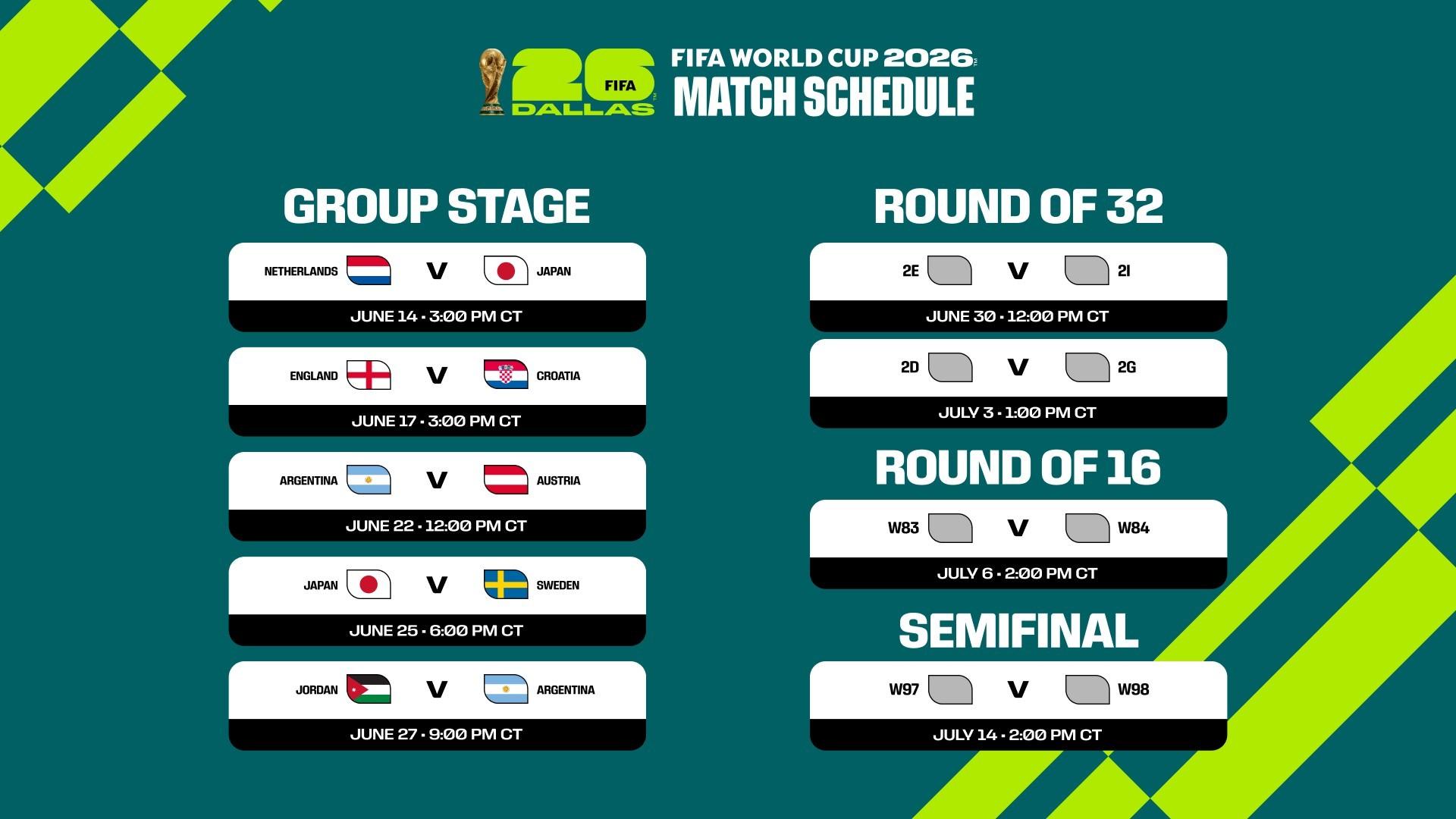
6. Schedule of FIFA World Cup at Dallas Stadium
Round of 32: Matches 30 June and 3 July
Round of 16: Match on 6 July
Semi-finals: Match on 14 July All times are
7. How Confusing Can Our Roads and Highways Be?
The Dallas-Fort Worth area is known for its complex network of highways and tollways, many of which are identified by dual names or abbreviations. These naming conventions, such as "LBJ-635," are commonly used in local navigation and traffic reports, making it more challenging for both residents and visitors to find their way around. Below is a comprehensive overview of the major routes, compiled from official sources and maps.
Tollways Managed by NTTA
Abbreviation Full Name
Primary Route/Description
DNT Dallas North Tollway Runs north-south from downtown Dallas to Prosper
PGBT
President George Bush Turnpike Forms a northern loop around the Dallas suburbs
PGBT-WE PGBT Western Extension Extends from Irving to the Dallas North Tollway (DNT)
PGBT-EE PGBT Eastern Extension Runs from Garland to I-30
SRT Sam Rayburn Tollway Connects Grapevine to McKinney (formerly SH 121)
CTP
Chisholm Trail Parkway Extends from Fort Worth (I-20) to SH 121
360 Tollway SH 360 Tollway Runs through Arlington from I-20 to US 287
AATT
LLTB
Addison Airport Toll Tunnel Underground tunnel located in Addison
Lewisville Lake Toll Bridge Spans Lewisville Lake on SH 121
Freeways and Loops
Abbreviation/Name
LBJ
NTE
Loop 12
I-30
I-35E
US 75
SH 114
I-820
Official/Highway Description
I-635 / parts of I-20
North Tarrant Express
Walton Walker Blvd (west), Buckner Blvd (east), etc.
Tom Landry Freeway / East
R.L. Thornton Freeway / West Freeway
Stemmons Freeway / South
Forms a partial loop around Dallas
Managed lanes on I-820/SH 121/183 through Fort Worth
Completes a full loop around Dallas
Traverses Dallas and Fort Worth
R.L. Thornton Freeway Passes through Dallas
North Central Expressway
Runs north from downtown Dallas
John W. Carpenter Freeway Leads to DFW Airport
Jim Wright Freeway / Northeast Loop / Airport Freeway Circles Fort Worth
In addition to the highways and tollways listed, the area is also known for one-way streets and roads that change names depending on the direction of travel, which can further complicate navigation. Some segments, such as the Mountain Creek Lake Bridge (MCLB), are shorter but add to the overall complexity.
We also have some streets and roads that change names if you cross an intersection. For example: Walnut Hill Lane is west of Plano Road. But once you hit that intersection, it changes to Kingsley Road to the east. Originally, it was all Kingsley Road, but someone decided to extend Walnut Hill Lane. But the best ones are Texas Toll Road North and Texas Toll Road North South.
All these factors contribute to making driving in the Dallas-Fort Worth metroplex especially confusing for many drivers.
8. Map of the North Texas Region
An Overview of North Texas Geography
North Texas Region Map
Below is a general description of the North Texas region and guidance on locating a map:
Geographic Overview
North Texas refers to the area located in the northern part of the state of Texas, typically including major metropolitan areas such as Dallas, Fort Worth, Denton, and surrounding counties. The region is known for its vibrant economy, diverse communities, and distinctive landscapes ranging from prairies to urban centers.
Obtaining a Map of North Texas
To view a detailed map of North Texas, you may use popular online mapping services such as:
Google Maps: North Texas
OpenStreetMap: North Texas
Bing Maps: North Texas These maps provide interactive views, allowing you to zoom in on cities, highways, counties, and natural features within the North Texas region.
Key Cities and Counties in North Texas
Dallas
Fort Worth
Denton
Plano
Irving
Arlington
Collin County
Dallas County
Tarrant County
Denton County
Map Legend
Red Line
Blue Line
Green Line
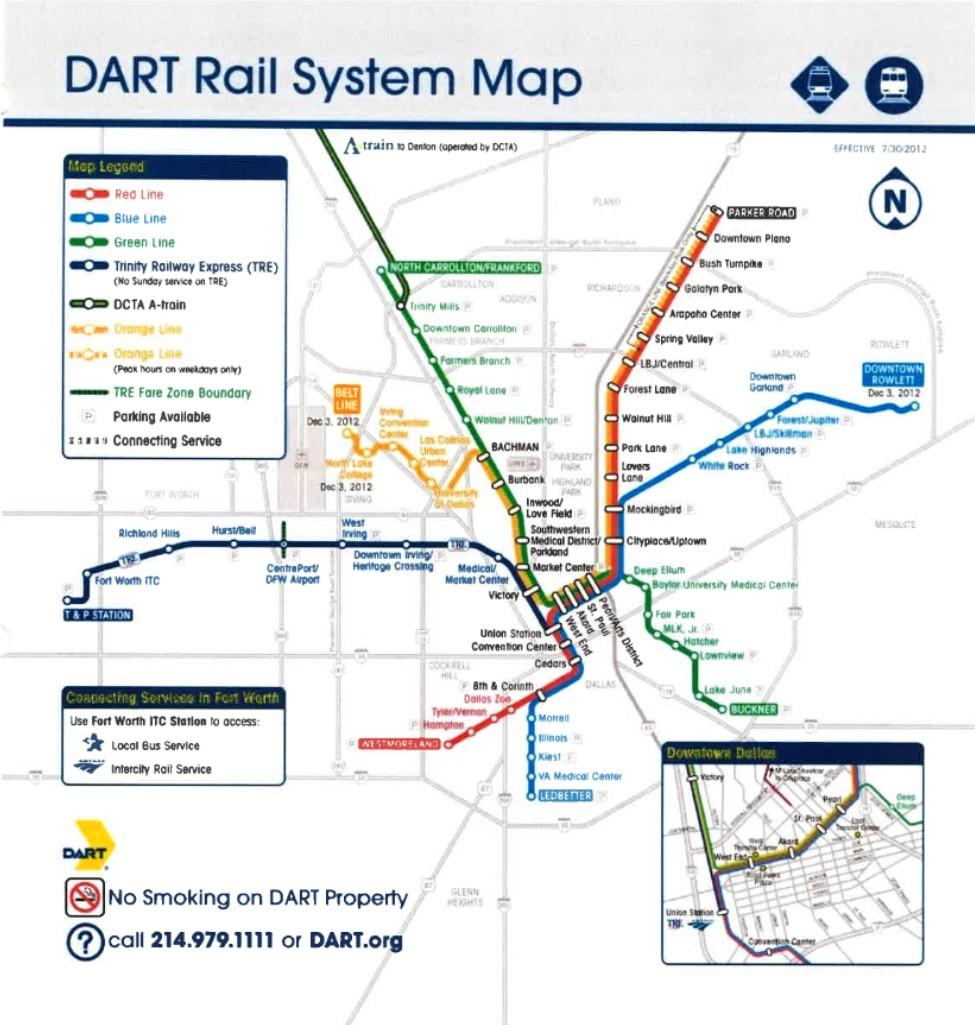
DART Rail System Map
Orange Line (Peak hours on weekdays only)
A-train to Denton (operated by DCTA)
Trinity Railway Express (TRE) (No Sunday service on TRE)
TRE Fare Zone Boundary
Parking Available
Connecting Service
Key Stations by Line:
Red Line:
Parker Road, Downtown Plano, Bush Turnpike, Galatyn Park, Arapaho Center, Spring Valley, LBJ/Central, Forest Lane, Walnut Hill, Park Lane, Lovers Lane, Mockingbird, Cityplace/Uptown, Pearl/Arts District, St. Paul, Akard, West End, Union Station, Convention Center, Cedars, 8th & Corinth, Dallas Zoo, Tyler/Vernon, Hampton, Westmoreland.
Blue Line:
Downtown Rowlett, Downtown Garland, Forest/Jupiter, LBJ/Skillman, Lake Highlands, White Rock, Mockingbird, (shares route to 8th & Corinth), Morrell, Illinois, Kiest, VA Medical Center, Ledbetter.
Green Line:
North Carrollton/Frankford, Trinity Mills, Downtown Carrollton, Farmers Branch, Royal Lane, Walnut Hill/Denton, Bachman, Burbank, Inwood/Love Field, Southwestern Medical District/Parkland, Market Center, Victory… (shares route to Deep Ellum), Baylor University Medical Center, Fair Park, MLK, Jr., Hatcher, Lawnview, Lake June, Buckner.
Orange Line:
Belt Line, North Lake College, Irving Convention Center, Las Colinas Urban Center, University of Dallas, Bachman, (shares route to LBJ/Central).
Trinity Railway Express (TRE) Stations: T&P Station, Fort Worth ITC, Richland Hills, Hurst/Bell, West Irving, CentrePort/DFW Airport, Downtown Irving/Heritage Crossing, Medical/Market Center, Victory, Union Station.
Connecting Services in Fort Worth
Use Fort Worth ITC Station to access:
Local Bus Service
Intercity Rail Service
DART – No Smoking on DART Property Call 214.979.1111 or visit DART.org
Dallas & Surrounding Areas
KEY
DART Rail & Stations (indicated by colored lines and dots)
Tollways (indicated by double lines)
Trinity Railway Express (TRE) (indicated by dashed line)
DISTANCE
Dallas to Fort Worth: 32 miles
Downtown Dallas to DFW: 20 miles
Downtown Dallas to Love Field: 6 miles
Entertainment Districts (in blue)
Map Locations (West to East / North to South)
Lewisville
Flower Mound
Grapevine Lake (SEA LIFE Aquarium Grapevine, LEGOLAND Discovery Center, Grapevine Mills)
Coppell
Southlake
Grapevine
Keller
North Richland Hills
Watauga
Colleyville
Bedford
Euless
Hurst
Haltom City
Fort Worth (Lake Worth, Marine Creek Reservoir, White Settlement, Fort Worth Stockyards, Fort Worth Cultural Arts District (Kimbell Art Museum, Modern Art Museum), Sundance Square, Fort Worth Zoo)
Arlington (Lake Arlington, AT&T Stadium, Six Flags Hurricane Harbor, Globe Life Park, Six Flags Over Texas)
Irving (Dallas/Fort Worth International Airport (DFW), Irving Convention Center, National Scouting Museum, American Airlines C.R. Smith Museum, North Lake College, University of Dallas, Downtown Irving / Heritage Crossing)
Grand Prairie (Lone Star Park, Louis Tussaud’s Palace of Wax & Ripley’s Believe It or Not! The Theatre at Grand Prairie, Mountain Creek Lake)
For a visual representation, you can search for "North Texas region map" in your preferred search engine to view a variety of maps highlighting major highways, cities, and counties. If you need a downloadable or printable map, regional government websites or tourism boards often provide PDF maps of North Texas.
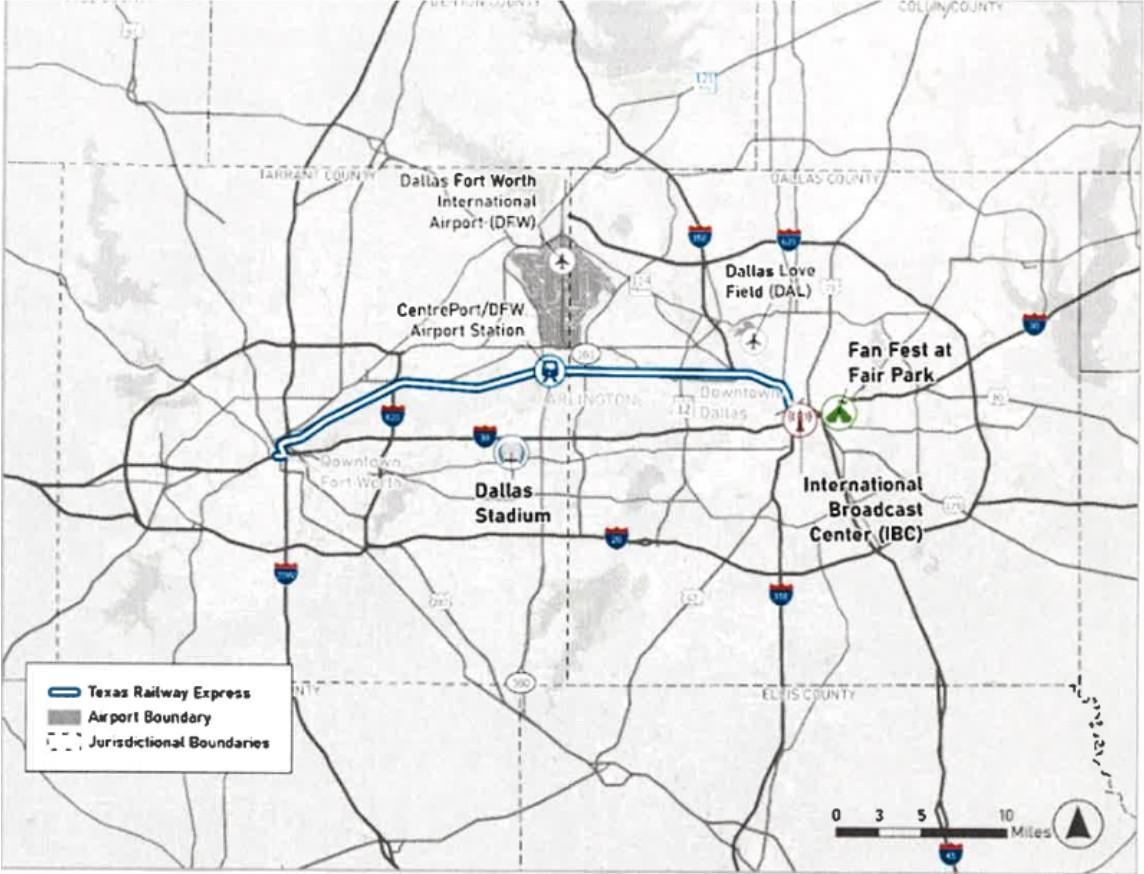
Legend
Texas Railway Express
Airport Boundary
Jurisdictional Boundaries
Key Locations on Map:
Dallas Fort Worth International Airport (DFW)
CentrePort/DFW Airport Station
Downtown Fort Worth
Dallas Stadium
Dallas Love Field (DAL)
Downtown Dallas
Fan Fest at Fair Park
International Broadcast Center (IBC)
Counties Shown:
Wise County
Denton County
Collin County
Tarrant County
Dallas County
Ellis County
*Please see “Showcasing North Texas Cities” for additional information on travel and transportation.”
9. Distances and Drive Times from North Texas Cities to Dallas Stadium, Arlington, TX
Overview
Dallas Stadium, located in Arlington, Texas, is a major destination for sports and entertainment events in North Texas. This section provides an overview of the approximate distances and typical driving times from several surrounding North Texas cities to the stadium. All distances are presented in both miles and kilometers for convenience, and driving times are estimated based on normal traffic conditions.
The estimated driving times shown above are subject to change based on various factors, such as current traffic conditions, the time of day, and weather. Travelers should keep in mind that these variables can influence the overall journey duration.
Distances listed are approximate and are measured from the central point of each city to Dallas Stadium. The actual mileage may differ depending on the specific starting location and the selected route within each city.
For the most accurate and current travel details, it is recommended to use a GPS device or consult a reputable mapping service before leaving. These resources can provide real-time traffic updates and suggest optimal routes.
During major events, parking at Dallas Stadium in Arlington can be limited. Attendees are strongly encouraged to explore alternative transportation options, such as shuttle services or ridesharing, to ensure a more convenient and efficient arrival.
Distance and Drive Time to Fair Park Fan Festival from Major North Texas Cities
Approximate Kilometers and Travel Duration
Introduction
Fair Park is a historic landmark located in Dallas, Texas. For visitors traveling from major North Texas cities, knowing the approximate distance and drive time can help plan their trip effectively. Below are estimated distances and drive times from several prominent North Texas cities to Fair Park, both in miles and kilometers.
Drive times are approximate and can vary depending on traffic and time of day.
Distances are measured from the city center to Fair Park and the Fan Festival.
1 mile ≈ 1.609 kilometers.
On the highways they vary from 70 mph to 75 mph (113 kilometers to 120 kilometers.)
Many roads of Europe, they drive 100 mph – 120 mph.
School zones are 20 mph (32 kilometers).
So, a little reminder to observe the speed limits might be a good suggestion.
Conclusion
Traveling to Fair Park from North Texas cities is convenient, especially if using the DART Rail service. Most locations are less than an hour's drive away, but during the FIFA World Cup 2026, expect slow moving on the highways.
10. Transportation Options in North Texas Cities
A Comprehensive Guide to Buses, Shuttles, Rail, Taxis, Lyft, Uber, and zTrip
Overview
North Texas, including the Dallas–Fort Worth metroplex and surrounding cities, offers a variety of transportation options for residents and visitors. This guide covers public transit systems, shuttle services, rail networks, and private ride-hailing options such as taxis, Lyft, and Uber, highlighting their availability and features across major North Texas cities.
Major North Texas Cities Covered
Dallas
Fort Worth
Arlington
Plano
Irving
Garland
Grand Prairie
Denton
Lewisville
Richardson
Grapevine
Carrollton
Frisco
McKinney
Other surrounding communities
Public Bus Services
DART (Dallas Area Rapid Transit)
DART serves Dallas, Plano, Garland, Richardson, Carrollton, Irving, and several other cities. It offers an extensive bus network, with local, express, and shuttle routes connecting major destinations, neighborhoods, and rail stations. DART buses run from early morning through late evening, with schedules varying by route.
Trinity Metro
Trinity Metro provides bus services in Fort Worth and nearby cities, including express and local routes. The system connects with Trinity Railway Express and other transit options, making it convenient to travel within Fort Worth and to Dallas.
Denton County Transportation Authority (DCTA)
DCTA operates in Denton, Lewisville, Highland Village, and connects with DART in Carrollton. It offers fixed-route buses, on-demand GoZone services, and university shuttles, especially serving the UNT and TWU campuses.
City and Local Shuttles
Arlington Via Rideshare: An on-demand shuttle service that replaced traditional bus routes, serving the city of Arlington.
Grapevine Visitors Shuttle: Connects hotels, attractions, and the DFW Airport TEXRail station in Grapevine.
University Shuttles: Several universities (e.g., UT Dallas, UNT, SMU) operate campus and neighborhood shuttles.
Rail Transit
DART Light Rail
Dallas and several suburbs are served by the DART Light Rail system, including the Red, Blue, Green, and Orange lines. These connect downtown Dallas to Plano, Garland, Carrollton, Irving/DFW Airport, and other suburbs. Trains run at frequent intervals throughout the day.
Trinity Railway Express (TRE)
The TRE is a commuter rail line running between Dallas and Fort Worth, with stops in Irving, DFW Airport, and other cities. It connects the two major downtown areas and provides a convenient alternative to driving. (Not available on Sunday at this time)
TEXRail
TEXRail connects downtown Fort Worth to DFW Airport, with stops in North Richland Hills and Grapevine. The line is especially useful for airport travelers and those commuting to Fort Worth.
Denton A-train
DCTA's A-train is a commuter rail line linking Denton and Carrollton, connecting with DART's Green Line for access to Dallas and other cities.
Taxis and Ride-Hailing Services
Taxis are available throughout North Texas, especially at airports, downtown areas, hotels, and major event venues. You can hail taxis on the street in Dallas and Fort Worth or arrange pick-ups via phone or mobile apps. Major companies include Yellow Cab and Cowboy Cab.
Lyft and Uber
Lyft, Uber, and zTrip operate in all North Texas cities, providing convenient and app-based ride-hailing services. Both offer a range of vehicle options, including standard, premium, and accessible vehicles. They are widely available at DFW and Dallas Love Field airports, as well as in suburban and rural areas.
Specialty and Additional Services
DFW Airport Shuttle: Several shared-ride and private shuttle operators provide service to and from Dallas/Fort Worth International Airport and Dallas Love Field.
Paratransit: Most transit agencies offer paratransit services for riders with disabilities. Advance registration is required.
Intercity Buses: Greyhound, Megabus, and FlixBus connect North Texas cities with other Texas and national destinations.
Key Points and Tips
Mobile Apps: DART, Trinity Metro, and DCTA offer official apps for trip planning and ticketing. Lyft and Uber require their respective apps.
Payment: Public transit typically accepts contactless payment, mobile tickets, or cash. Ride-hailing services require electronic payment via app.
Accessibility: Most public transit, taxis, and ride-hailing providers offer wheelchair-accessible vehicles upon request.
Schedules: Service hours and frequency can vary by city, route, and day of week. Check official agency websites or apps for up-to-date information.
Useful Links
DART (Dallas Area Rapid Transit)
Trinity Metro (Fort Worth)
DCTA (Denton County Transportation Authority)
Trinity Railway Express (TRE)
TEXRail
Lyft
Uber
zTrip
North Texas offers robust and varied transportation options to meet the needs of residents and visitors alike. Whether you prefer public transit, shuttle services, or ride-hailing apps, convenient and accessible transportation is available across all major cities and surrounding communities.
Transportation Possibilities
Share Ride
SuperShuttle
ExecuCar
Trip
zTrip
Iris – A Ride
Yellow Cab Co
DART (Dallas Area Rapid Transit): Offers buses, light rail, commuter rail, and streetcar services throughout Dallas and its suburbs, including direct access to DFW International Airport
TEXRail: Connects Fort Worth to DFW Airport, providing a convenient option for travelers
TRE (Trinity Railway Express): Links Dallas and Fort Worth, making it easy to travel between the two cities
Ridesharing Services: Companies like Uber and Lyft offer ridesharing services for short-distance travel
Electric Scooters and Bikes: Electric rental scooters and bikes are available in Dallas, providing a sustainable option for short trips
Transportation Assistance: Programs are available for disabled individuals, including paratransit services and ridesharing options tailored for mobility needs
Non-Emergency Medical Transportation: Services are available for individuals’ needing transportation for medical appointments
Buses: Direct bus services are available between Dallas and Fort Worth, with departures from major bus stations
Shuttles
*See “Showcasing North Texas Cities” for additional information on transportation.
Mobility Assistance
CVI Medical Home Equipment
Family business has been running for over 20 years and provides a wide range of medical equipment and supplies including powered scoters.
11613 North Central Expressway, Suite 117, Dallas, TX 75243
https://homesmartassistant.com
United Access
United Access is pleased to have served the broader Dallas-metro area since 2011 with three locations in Arlington, Carrollton, and Rowlett.
Wheelchairs, electric and manual – Rental, sales – Scooters – Vehicle lifts
100 West Rosedale Street, Fort Worth, TX 76104
888.776.0556
ftworthcsr@scootermore.com
Lifeway Mobility
Lifeway Mobility is an accessibility solutions company that provides a wide range of wheelchair ramps, stair lifts, wheelchair lifts, transfer aids, home elevators, and bath safety solutions to individuals and businesses.
2000 East Lamar Boulevard, 600, Arlington, TX 76006
972.408.3335
www.lifewaymobility.com/dallas
Mobility City
Whether you are looking for assistance with making a purchase, renting a piece of mobility equipment, repairing, maintenance, or sanitizing a mobility device, Mobility City can help. Regardless of brand or place of purchase.
501 North Industrial Boulevard, Suite 300, Bedford TX
• The IBC will serve as the temporary home for television and radio reporters from around the world during the World Cup and could bring 2,000 to 5,000 broadcasters to Dallas
• Dates: January 2026 to the end of July 2026
• The IBC will also serve as the headquarters of the FIFA’s Host Broadcaster, Media Partners, Content Production Department, and Football Technology and Innovation Department.
• The City of Dallas has approved a $15 million package to fund necessary upgrades for the building to meet FIFA’s regulations.
• IBC will offer a range of services to meet the needs of the large group of experts, specialists, and staff to help to cover the FIFA World Cup to over 200 countries worldwide. They will be provided with amenities such as a 24/7 cafeteria, a lounge, concession stands, a convenience store, a gift shop, express shipping, banking, and dry cleaning.
13.Volunteers
VOLUNTEERS
• 6,000+ volunteersneeded
• 33,000+ applicants(reg . closedOct2025)
• Enhancethe eventexperienceof all visitors, fans, and residentsthroughoutNorthTexas, andhelpmaketheFIFA WorldCup 2026™a safeandseamlesseventforourregion .
• Volunteerroles will cover the NorthTexas region, incl. hotels, transportationhubs, airports,eventsandcompetitionvenues .
Nov ‘25–Jan ‘26 | Volunteer Tryouts
Mar–Apr | Volunteer Training
May– Jun | Uniform and Accreditation Pick-Up
Jun– Jul | Volunteer Headquarters
14. Essential Words and Phrases for
Visiting FIFA Countries to
World Cup Dallas 2026 Argentina Austria Croatia England Japan
Jordan
The Netherlands
Italy *
*Italian is another major language in Argentina with Spanish their main language
*England’s main language is English, along with Welsh, Polish, and Romanian
20 Common Argentina Words and Phrases
With English Translations and Phonetic Pronunciations
Everyday Argentine Essentials
The following table provides a list of essential Argentine Spanish words and phrases commonly used in everyday conversations. These expressions reflect informal language and cultural nuances unique to Argentina.
Argentine Spanish English Translation Phonetic Pronunciation
Che Hey! (informal greeting or to get attention) cheh
¿Cómo andás? How are you?
KOH-moh ahn-DAHS
Re Very / really (intensifier) reh
Bárbaro Great / awesome BAR-bah-roh
Mirá Look! mee-RAH
Fresco Cool (temperature or attitude) FRES-koh
Common Slang & Expressions
Below are commonly used Argentine slang terms and expressions. Depending on tone and context, some words may have different meanings, ranging from friendly to humorous or informal.
Argentine Spanish English Translation Phonetic Pronunciation
Estoy hecho bolsa I am exhausted / I am wiped out es-TOY EH-choh BOL-sah
Useful Phrases
This section includes helpful phrases for basic communication in Argentina. These expressions are useful for asking questions, requesting assistance, or interacting in daily situations.
Argentine Spanish English Translation Phonetic Pronunciation
¿Qué hacés? What are you doing? keh ah-SEHS
¡Ojo! Watch out! / Be careful! OH-hoh
¿Me pasás...? Can you pass me...? meh pah-SAHS
¡Qué macana! What a shame! keh mah-KAH-nah
Pibe/Piba Boy / girl PEE-beh / PEE-bah
¿De dónde sos? Where are you from? deh DON-deh SOHS
20 Common Austrian Words and
Phrases
With English Translation and Phonetic Pronunciation
Austrian German English Translation Phonetic Pronunciation
Grüß Gott
Servus
Baba
Bitte
Danke
Wie geht's?
Guten Morgen
Guten Abend
Gute Nacht
Entschuldigung
Wie heißen Sie?
Ich heiße ...
Woher kommen Sie?
Ich komme aus ...
Können Sie mir helfen?
Wie viel kostet das?
Hello (formal greeting) grooss got
Hi / Bye (informal) zair-voos
Bye (casual) bah-bah
Please / You're welcome bit-tuh
Thank you dank-uh
How are you? vee gates
Good morning goo-ten mor-ghen
Good evening goo-ten ah-bent
Good night goo-teh nacht
Excuse me / Sorry ent-shool-dee-goong
What is your name? (formal) vee high-sen zee
My name is ... ikh high-seh ...
Where are you from? voh-hair kom-men zee
I am from ... ikh kom-meh owss ...
Can you help me? kur-nen zee meer hel-fen
How much does it cost? vee feel kost-et dahs
Ich hätte gern ... I would like ... ikh hat-teh gairn ...
Wo ist die Toilette?
Ich spreche kein Deutsch
Where is the bathroom? voh ist dee toy-let-teh
I do not speak German ikh shprekh-eh kine doytch
Prost! Cheers! prohst
20 Common Croatian Words and Phrases
With English Translation and Phonetic Pronunciations
Common Croatian Greetings and Polite Expressions
Croatian English Translation Phonetic Pronunciation
Hvala Thank you hva-lah
Molim Please / You're welcome moh-leem
Dobro jutro
Good morning doh-broh yoo-troh
Laku noć Good night lah-koo notch
Kako ste?
How are you? kah-koh steh?
Dobro sam I am fine doh-broh sahm
Da Yes dah
Ne No neh
Useful Phrases for Everyday Situations
Croatian English Translation Phonetic Pronunciation
Gdje je WC?
Koliko kosta?
Where is the toilet? gd-yeh yeh veh-tseh
How much does it cost? koh-lee-koh koh-shtah
Dobar dan Good day doh-bahr dahn
Zbogom Goodbye zboh-gohm
Oprostite
Oprosti
Moje ime je…
Govorite li engleski?
Ne razumijem
Možete li mi pomoći?
Dobar trek
Sretan put
Excuse me oh-proh-stee-teh
I am sorry oh-proh-stee
My name is… moh-yeh ee-meh yeh
Do you speak English? goh-voh-ree-teh lee eng-lehskee
I do not understand neh rah-zoo-mee-yehm
Can you help me? moh-zhe-teh lee mee pohmoh-chee
Enjoy your meal doh-bahr them
Have a good trip sreh-than poot
20 Common Italian Words and Phrases
With English Translation and Phonetic Pronunciation
English Italian Phonetics
Hello Ciao chow
Good morning
Buongiorno bwohn-JOHR-noh
Good evening Buonasera bwoh-nah-SEH-rah
Goodbye Arrivederci ah-ree-veh-DEHR-chee
Please Per favore pehr fah-VOH-reh
Thank you Grazie GRAHT-see-eh
Yes Sì see No No noh
Excuse me
Mi scusi mee SKOO-zee
Sorry Mi dispiace mee dee-spyah-cheh
How are you?
What is your name?
Come sta? KOH-meh stah?
Come si chiama? KOH-meh see kee-AH-mah?
My name is... Mi chiamo... mee kee-AH-moh
I do not understand Non capisco non kah-PEE-skoh
Where is...?
How much?
Dov’è...? doh-VEH
Quanto costa? KWAHN-toh KOH-stah?
Help! Aiuto! ah-YOO-toh
Bathroom Bagno BAHN-yoh
Water Acqua AHK-kwah
Food Cibo CHEE-boh
20 Common Japanese Words and Phrases
With English Translation and Phonetic Pronunciation
Greetings & Farewells
挨拶・別れの表現
Japanese 日本語 English 英語 Pronunciation 発音
こんにちは Hello kon-nee-chee-wah
おはようございます Good morning oh-hah-yoh go-zai-mas
こんばんは Good evening kon-ban-wah
さようなら Goodbye sah-yoh-nah-rah
Affirmations, Negations & Thanks 肯定・否定・感謝の表現
Japanese 日本語 English 英語 Pronunciation 発音
はい Yes hi (like “high”)
いいえ No ee-eh-eh
お願いします Please oh-neh-gai-shee-mas
ありがとう Thank you ah-ree-gah-toh
ありがとうございます Thank you (polite) ah-ree-gah-toh go-zaimas
すみません Excuse me / Sorry soo-mee-mah-sen
Questions & Requests 質問・要望の表現
Japanese 日本語 English 英語 Pronunciation 発音
どこですか? Where is it? doh-koh dess kah
いくらですか? How much is it? ee-koo-rah dess kah …
私はがほしいです I want… wah-ta-shee … gah hoshee dess
英語を話せますか? Do you speak English? ay-go oh hah-nah-sehmas kah
あなたの名前は? What is your name? ah-nah-tah no nah-maheh wah
わかりません I do not understand wah-kah-ree-mah-sen
少し A little sko-shee
トイレはどこですか? Where is the bathroom? toy-reh wah doh-koh dess kah
Emergency & Reassurance 緊急時・安心の表現
Japanese 日本語 English 英語 Pronunciation 発音
助けてください Help me, please tah-skeh-teh koo-dah-sai
大丈夫です It is okay / I am fine dye-joh-boo dess
20 Common Jordan (Arabic) Words and Phrases *
With English Translation and Phonetic Pronunciation
Essential Greetings
Jordan (Arabic) English Phonetic
Polite Expressions
Jordan (Arabic) English Phonetic
You’re welcome ‘af-wan
Useful Questions and Responses
Jordan (Arabic) English Phonetic
is…?
How much is it? kam as-si ‘r?
I want… u-reed…
Do you speak English? hal ta-ta-kal-lam al-ing-lee-zi-yah?
What is your name? ma is-muk? / ma is-mik?
I do not understand a-na laa af-ham
Yes, a little na ‘am, qa-lee-lan
Where is the bathroom? ay-na al-ham-mam?
Help me, please sa- ‘id-nee min fad-lik
20+ Common Dutch (Netherlands) Words and Phrases
With English Translation and Phonetic Pronunciation
Dutch English Phonetic
Hallo Hello hah-loh
Hoi Hi hoy
Goedemorgen Good morning khoo-duh-mor-ghen
Goedenavond Good evening khoo-duh-nah-vond
Tot ziens Goodbye tot zeens
Ja Yes yah
Nee No nay
Alstublieft Please al-stu-bleeft
Dank u wel
Thank you (formal) dank oo vel
Dank je Thank you (informal) dank yuh
Graag gedaan You’re welcome khrahkh guh-dahn
Sorry Sorry sol-ree
Waar is…?
Hoeveel kost het?
Ik wil…
Spreekt u Engels?
Hoe heet u?
Ik begrijp het niet
Een beetje
Waar is het toilet?
Where is…? vahr iss…?
How much is it? hoo-fayl kost het
I want… ik vil
Do you speak English? spraykt oo eng-uhls
What is your name? hoo hayt oo
I do not understand ik buh-grayp het neet
A little un bay-chuh
Where is the bathroom? vahr iss het twah-let
Mag ik de rekening? May I have the bill? mak ik duh ray-kuh-ning
Kunt u mij helpen?
Ik ben verdwaald
Ik spreek geen Nederlands
Wat betekent dat?
Can you help me? kunt oo may help-un
I am lost ik ben vehr-dwahld
I do not speak Dutch ik sprayk khayn nay-derlahnds
What does that mean? vat buh-tay-kent daht
FIFA World Cup
For Communication and Information
During the Matches
*No English Information
20+ Common Arabic Words and Phrases *
With English Translation and Phonetic Pronunciation
Essential Greetings
Arabic English Phonetic
Hello mar-ha-ban
Hi / Welcome ah-lan
Good morning sa-bah al-khayr
Good evening ma-sa ’ al-khayr
Polite Expressions
Arabic English Phonetic
Yes na ‘am
No laa
Please min fad-lik
Thank you shuk-ran
You’re welcome ‘af-wan
Sorry a-sef
Useful Questions and Responses
Arabic English Phonetic
Where is…? ay-na…?
How much is it? kam as-si ‘r?
I want… u-reed…
Do you speak English? hal ta-ta-kal-lam al-ing-lee-zi-yah?
What is your name? ma is-muk? / ma is-mik?
I do not understand a-na laa af-ham
Yes, a little na ‘am, qa-lee-lan
Where is the bathroom? ay-na al-ham-mam?
Help me, please sa- ‘id-nee min fad-lik *Also, Jordanian Arabic Words and Phrases
With English Translations and Phonetic Pronunciations Everyday French
Essentials
The following table provides a list of essential French words and phrases that are commonly used in everyday conversations.
French
Bonjour
English Translation Phonetic Pronunciation
Hello / Good morning bon-zhor
Bonsoir Good evening bon-swahr
Salut Hi / Bye sa-loo
Au revoir Goodbye oh ruh-vwar
S’il vous plaît Please seel voo pleh
Merci
Merci Beaucoup
De rien
Useful Phrases
Thank you mehr-see
Thank you very much mehr-see boh-koo
You’re welcome duh ree-ahn
Below are some helpful phrases for basic communication in French. These expressions are useful in a variety of situations, from asking simple questions to expressing understanding or requesting assistance.
French English Translation Phonetic Pronunciation
Oui Yes wee
Non No noh
Excusez-moi Excuse me ex-kew-zay mwah
Je ne comprends pas I do not understand zhuh nuh kom-prah pah
Parlez-vous anglais? Do you speak English? par-lay voo ahn-glay
Comment ça va?
How are you? koh-mahn sah vah
Ça va bien I am good sah vah byan
Getting Around
This section includes practical phrases for getting around and managing common situations while traveling in a French-speaking area. These phrases can help with directions, making purchases, or requesting assistance.
French English Translation Phonetic Pronunciation
Où est…?
Where is…? oo eh
Combien ça coûte? How much does it cost? kom-byen sah koot
With English Translation and Phonetic Pronunciation
English German Phonetic
Hello Hallo HAH-loh
Good morning
Guten Morgen
Good night Gute Nacht
GOO-ten MOR-gen
GOO-teh NAKHT
Thank you Danke DAHN-keh
Yes Ja YAH
No Nein NINE
Please Bitte BIT-teh
Excuse me Entschuldigung Ent-SHOOL-dee-goong
How are you?
I am fine
Wie geht's? VEE gates
Mir geht's gut
Meer gates goot
Goodbye Auf Wiedersehen OwF VEE-der-zey-en
My name is... Ich heiße... Ikh HAI-seh
Where is...? Wo ist...? Voh ist
How much? Wie viel? VEE feel
I do not understand Ich verstehe nicht Ikh fer-SHTAY-eh nikht
Can you help me?
I am sorry
What time is it?
Bathroom
Können Sie mir helfen? KERN-en zee meer HEL-fen
Es tut mir leid
Wie spät ist es?
Toilette
Es toot meer lite
VEE shpayt ist es
Toi-LET-teh
Cheers! (toast) Prost! PROHST
20 Portuguese Words and Phrases
With English Translation and Phonetic Pronunciation
Portuguese
Desculpe
English
Phonetic
Sorry / Excuse me des-KOOL-peh
Sim Yes seem
Não No now (nasal)
Onde fica...? Where is...? ON-jee FEE-kah
Quanto custa? How much is it? KWAN-toh KOOS-tah
Eu quero... I want... eh-o KEH-roo
Você fala inglês?
Do you speak English? voh-SEH FAH-lah ing-LEZ
Como você se chama? What is your name? KOH-mo voh-SEH seh SHAHmah
Eu não entendo
I do not understand eh-o now en-TEN-doo
Ajude-me, por favor Help me, please ah-ZHOO-jee mee por fahVOR
Por favor Please por fah-VOR
Obrigado/a Thank you oh-bree-GAH-doo / oh-breeGAH-dah
De nada
You’re welcome deh NAH-dah
Bom dia Good morning bohm JEE-ah
Boa tarde Good afternoon BOH-ah TAR-jee
Boa noite Good evening / Good night BOH-ah NOY-chee
Tchau Goodbye chow
Com licença
Excuse me / May I kohm lee-SEHN-sa
Onde é o banheiro? Where is the bathroom? ON-jee EH oo bahn-YEH-roo
Estou perdido/a I am lost es-TOH pear-DEE-doo / pearDEE-dah 20+ Russian Words and Phrases
With English Translation and Phonetic Pronunciation
Russian English Phonetic
Здравствуйте Hello ZDRAST-vooy-tye
Привет Hi PREE-vyet
Каквасзовут
?
Менязовут My name is... me-NYA za-VOOT...
What is your name? kak vas za-VOOT? ...
Пожалуйста Please pa-ZHA-lus-ta
Спасибо
Thank you spa-SEE-ba
Извините Excuse me/Sorry eez-vee-NEE-tye
Да Yes da
Нет No nyet
Янепонимаю
Где Where is…? gdyeh…?
I do not understand ya nye pa-nee-MA-yu …?
Гдетуалет
?
Where is the bathroom? gdyeh too-a-LYET?
Сколькостоит How much is it? SKOL-ka STO-it?
?
Яхочу I want… ya ha-CHOO… -
Выговоритепо ?английски
Do you speak English? vwi ga-va-REE-tye pa ANGlees-kee?
Немного A little nyeem-NO-ga ,
Помогитепожалуйста Help me, please pa-ma-GEE-tye pa-ZHA-lus-ta
Хорошо Good / OK ha-ra-SHO
Пока Bye pa-KA
Досвидания Goodbye da svee-DA-nee-ya
Янезнаю I do not know ya nye ZNA-yu
?Можно May I? / Is it possible? MOZH-na?
20 Common Spanish Words and Phrases
With English Translation and Phonetic Pronunciation
Spanish English Phonetic Pronunciation
Hola Hello OH-lah
Adiós Goodbye ah-DEE-ohs
Por favor Please por fah-VOR
Gracias Thank you GRAH-syahs
De nada You’re welcome deh NAH-dah
¿Cómo estás?
How are you? KOH-moh ehs-TAHS
Bien Good / Well byen
Mal Bad mahl
¿Qué tal?
Perdón
Lo siento
¿Dónde está...?
How is it going? keh TAHL
Excuse me / Sorry pehr-DOHN
I am sorry loh SYEN-toh
Where is...? DON-day ehs-TAH
No entiendo I do not understand no ehn-TYEN-doh
¿Cuánto cuesta?
¿Habla inglés?
How much is it? KWAN-toh KWEHS-tah
Do you speak English? AH-blah een-GLES
Un momento One moment oon moh-MEN-toh
¿Qué hora es? What time is it? keh OH-rah ehs
¿Dónde está el baño?
Me llamo...
Where is the bathroom? DON-day ehs-TAH el BAN-yo
My name is... meh YAH-moh
Mucho gusto Nice to meet you MOO-choh GOOS-toh
A Comparison of Free and Transit Translation Services
Free Translation Services
Google Translate – Offers free text and document translation for over 100 languages. Accessible via web and mobile apps.
DeepL Translator – Provides high-quality translations for multiple languages with a free tier for text and documents.
Microsoft Translator – Free translations via web, mobile, and desktop for text, speech, and images.
Yandex Translate – Free online translation for text, websites, and documents, supporting dozens of languages.
iTranslate – Free basic translation features via mobile app; supports text and voice input for many languages.
Reverso – Free translation and contextual examples for several major languages, available online and as a mobile app.
PROMT Online Translator – Free online text translation for multiple European languages.
Free Translation Services
Google Translate – Offers free text and document translation for over 100 languages. Accessible via web and mobile apps.
DeepL Translator – Provides high-quality translations for multiple languages with a free tier for text and documents.
Microsoft Translator – Free translations via web, mobile, and desktop for text, speech, and images.
Yandex Translate – Free online translation for text, websites, and documents, supporting dozens of languages.
iTranslate – Free basic translation features via mobile app; supports text and voice input for many languages.
Reverso – Free translation and contextual examples for several major languages, available online and as a mobile app.
PROMT Online Translator – Free online text translation for multiple European languages.
Linguee – Free bilingual dictionary and translation search engine, useful for finding contextspecific translations.
Papago – Free online translator focusing on Asian languages, available via web and mobile apps.
Paid Translation Services
Transit translation services typically refer to professional translation platforms or agencies where human translators process and deliver translations, often with advanced features and higher accuracy for business, legal, or technical documents.
TransPerfect – Offers professional translation, localization, and interpretation services for a fee.
SDL Trados – A leading provider of translation software and services, with costs based on project scope and subscription.
Lionbridge – Paid language services for business and enterprise, including document and website translation.
Gengo – Crowdsourced human translation with per-word pricing for various languages.
One Hour Translation – Fast, professional translation services with per-word or per-project fees.
TextMaster – Paid platform offering professional translations by vetted translators.
ProZ.com – Marketplace connecting clients with freelance translators for paid projects.
Smartling – Enterprise translation management platform with subscription and service fees.
Day Translations – Provides certified and notarized translations for individuals and businesses, with pricing based on complexity.
The Translation Company Group, Main Street in Frisco
American Translation and Interpreting Services
World Language Schools
Translators USA www.Translatorsusa.com
NLC Translations www.NLCtranslations.com
Teneo Linguistics Company, LLC 3010 West Park Row Drive Pantego, TX 76013
Rosetta Stone – Offers interactive language courses for dozens of languages, including Spanish, French, German, Italian, and Mandarin. Available via subscription on web and mobile.
Duolingo – Free and paid tiers, covering over 40 languages including Spanish, French, Japanese, Korean, Italian, and more. Accessible online and via mobile app.
Babbel – Paid language learning platform focusing on conversational skills for languages like Spanish, French, German, Italian, Portuguese, and Russian.
Busuu – Free and premium language lessons for 14 languages, including Arabic, Chinese, Japanese, and Turkish.
Memrise – Offers free and paid access to vocabulary and conversational practice in multiple languages such as Italian, French, Spanish, and Japanese.
Pimsleur – Audio-based language courses for learning over 50 languages, available for purchase or subscription.
Mango Languages – Subscription-based learning for over 70 languages, including less commonly taught languages.
Mondly – Interactive lessons for over 30 languages, available free with paid upgrades on mobile and web.
Transit translation services typically refer to professional translation platforms or agencies where human translators process and deliver translations, often with advanced features and higher accuracy for business, legal, or technical documents.
TransPerfect – Offers professional translation, localization, and interpretation services for a fee.
SDL Trados – A leading provider of translation software and services, with costs based on project scope and subscription.
Lionbridge – Paid language services for business and enterprise, including document and website translation.
Gengo – Crowdsourced human translation with per-word pricing for various languages.
One Hour Translation – Fast, professional translation services with per-word or perproject fees.
TextMaster – Paid platform offering professional translations by vetted translators.
ProZ.com – Marketplace connecting clients with freelance translators for paid projects.
Smartling – Enterprise translation management platform with subscription and service fees.
Sign Languages and Interpreting
American Language Services (ALS) www.AmericanLanguageService
o Specializing in translations, interpreting, deaf services, and media services.
Lingvano Sign Language www.lingvano.com
International Sign (IS)
o Used at International conferences, events, and larger gatherings
Universal Sign Language varies in every country
o Not as precise as ALS or International Sign
Braille Services Available in North Texas
Hired Hands, Inc.
o 720 West Harwood Road, Hurst, TX 76054
817.236.3323
www.hiredhandsinc.com
Signs2go Interpreting & Support Services, LLC
o 7307 South Hulen Street, Fort Worth, TX 76133
817.294.7446
817.715.8025 (cell)
www.signs2gointerpreting.com
Texas Health and Human Services
o Offers programs for blind and visually impaired individuals, including vocational training and educational services.
Austin Lighthouse
o Provides vocational training, assistive technology instruction, and employment opportunities for individuals who are blind or visually impaired.
ESC-20
o Provides transcription and production of quality Braille materials, ensuring high quality Braille services.
Trustoria
o A directory of Braille transcribers in Texas, helping individuals find professional services.
16. Gesture Awareness and Faux Pas to Avoid and Important Facts
Croatia Japan Jordan
The Netherlands
Gesture Awareness and Faux Pas to Avoid
Understanding the cultural norms and etiquette in various countries and cultures can help visitors avoid social mistakes. Being aware of gestures and behaviors that are considered inappropriate is essential for making a positive impression.
Gesture Awareness and Faux Pas to Avoid and Important Facts
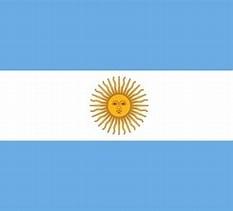
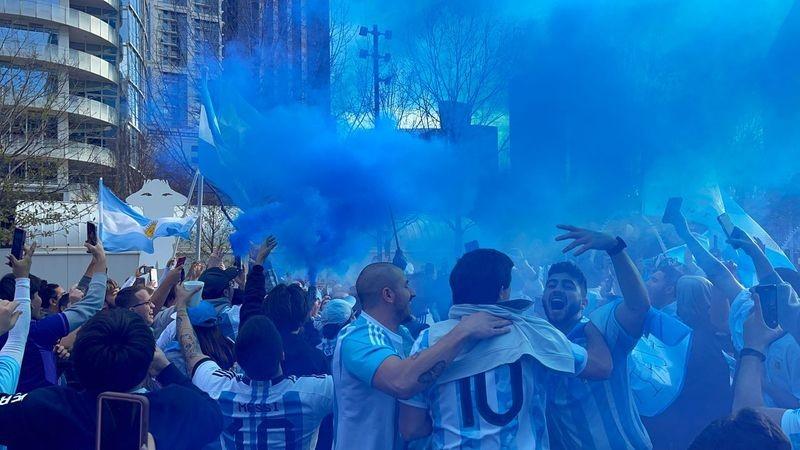
Argentina
Did You Know?
Argentina is the second largest country in South America with 2,780,400 kilometers (1,073,518 miles). Brazil as the first largest has 8,515,767 km (3,287,086 miles).
On 9 July 1816, Argentina declared independence from Spain. This date is now celebrated as Argentina’s Independence Day.
Argentines have the highest consumption of red meat in the world with an average consumption of 39.9 kilograms per person per year or 87.9 pounds per person per year.
The United States is the top beef consumer with 25.3 kg per year or 55.7 pounds/year.
Five Argentines have won Nobel Prizes in categories ranging from chemistry and medicine to peace. The first winner was in 1936, and the last recipient was in 1984. They have had numerous nominees.
Argentina is known for the tango.
Castellan language, often referred to as Castilian Spanish is a romance language and widely used in Latin America.
Argentina uses the 2400 clock format in both civilian and military context. In the U.S., we commonly refer to this as military time.
You are expected to be punctual for your appointments but be prepared to wait 30 minutes or more for your guest to arrive. The more important or higher ranking, the longer they keep you waiting. It is not unusual to request an 8 pm (2000 hours) meeting.
Meals/Toasts: European style with fork in left hand and knife in right hand, and the implements never leave your hands unless you are resting or finished with the meal. Do not put your hands on your lap.
There are many guidelines regarding who should sit first, who offers the food and drink to others, making sure you taste everything served, and never touch the food with your hands (sandwiches, French fries, etc.).
The host will make the first toast, which should be done in their language. Keep the toast short or simply raise your glass, say salud (sah-LOOD), which means health, and sip.
Be prepared to stay many hours for a dinner, drinks, and dessert. Plus, they prefer to eat later than 9 pm (2100 hours) and may begin at 10 pm (2200 hours) or later hours on weekends. Their evening meal is lighter than the lunchtime meal. They have the best potato and beef Empanadas.
Argentines converse at a close distance, sometimes closer than U.S. or Canadians, or that some Europeans and Asians are comfortable with or used to.
Do not back away; they will just come closer and close the gap. They may even hold your elbow or walk arm-in-arm with you down the street.
It is traditional to shake hands and nod. Greetings may last a little longer than you are accustomed to and may be followed by a squeeze of the arm, a hug, putting their hand on your shoulder, or a nod.
Capital is Buenos Aires with a presidential republic and has a population of 46,994,384.
Located at Southern South America, bordering the South Atlantic Ocean, between Chile and Uruguay. Other bordering countries of Bolivia, Brazil, Paraguay, and Uruguay.
Voltage/Frequency: 220 V; 50 Hz
Time Difference: UTC-3 (three hours ahead of Dallas, during CDT)
Gesture Awareness
Avoid using overly demonstrative gestures.
Rotating the forefinger around the ear or temple in the U.S. may denote “crazy.” But in Argentina it means, “You have a telephone call.”
Standing with your hands on your hips suggests anger or challenge.
Slapping the inside of the thighs near the groin is considered an obscene gesture.
Brushing the back of the fingers under the chin, and then outward means, “I do not care” or “I do not know.”
Holding the index and pinky finger up with the middle fingers down can be interpreted as, “Your spouse is cheating on you.” So, please do not give anyone the “Texas Hook ‘em Horns” sign.
To indicate “so-so,” Argentines will extend the hand and fingers and waggle the thumb up and down several times.
The OK sign of making a circle by connecting your index finger to the thumb with our other three fingers extended, is considered very rude in Brazil, so many Argentines will be aware of this gesture, and its meaning in its neighboring country rather than its meaning in the United States.
A pat on the shoulder is a sign of friendship.
Touching your thumb and finger, like holding a pinch of salt, and tapping with the index finger indicates “a lot” or “hurry up.”
Faux Pas
Avoid pouring wine with your left hand or backhanded.
Avoid discussing the Peron years, religion, and the Malvinas War/Falkland Island conflicts. If Argentines speak about them, do not add your comments or opinions.
Remember Argentines are “Americans” also. Refer to “North Americans” and the United States.
It is inappropriate to refer to South Americans as Hispanic.
Do not sit on a table or ledge or prop your feet up on a table, chair, or desk.
They do not eat in the street or on public transportation.
Do not rush Argentines or ask them to meet early.
Gesture Awareness and Faux Pas to Avoid and Important Facts
Austria
Did You Know?
Billy Joel named the song “Vienna” after a visit to Austria. Joel saw an elderly woman sweeping the street and realized that life does not end at 30. The city’s slower pace and sense of purpose at every age inspired the song’s message: slow down…Vienna waits for you.
Austria has Europe’s tallest waterfall, the Krimml Falls, standing at 1,246 feet (380 meters). The waterfall is located in Hohe Tauern National Park, Salzburg (upper Austria).
Austria has the Danube, Europe’s second-longest river, after the Volga in Russia. The river flows through Austria and links to 10 other countries (Germany, Austria, Slovakia, Hungary, Croatia, Serbia, Romania, Bulgaria, Moldova and Ukraine).
The Alps in Austria are a paradise for skiers and climbers. Two-thirds of Austria is covered by these mountains.
The Austrian flag is the second oldest in the world and still in use. It dates back to 1191, and the colors represent peace and harmony.
The Austrian National Library founded in 1726, is located in Vienna’s Hofburg Palace. It contains over 12 million items, including historical documents.
Mozart (and other major composers) are Austrian. Mozart composed the unfinished Requiem in D minor, the opera The Marriage of Figaro, the drama Don Giovanni and The Magic Flute.
Austria’s official language is German and is spoken by 98 percent of the population. Regional dialects exist; the standardized form of German is used in most of the country. Many are multilingual. Forty percent speak English.
Former Hollywood actor and past governor of California from 2003 to 2011, Arnold Schwarzenegger was born in Thal, Austria.
Tiergarten Schonbrunn is the world’s oldest zoo and is located at Schonbrunn Palace in Vienna. It was founded in 1752 and now houses 700 animal species.
Salzburg was the setting for The Sound of Music.
Austria has a legacy of technological and cultural innovations including the Lipizzaner Horse Breed, the first sewing machine (1818), whipped cream, psychoanalysis (Sigmund Freud developed theories on unconscious), snow globe (1900), Kaplan Water Turbine (1913), and the clarinet development laying the groundwork for the clarinet’s design.
As of 2024, Austria has earned 25 Nobel Prize laureates in fields in physics, medicine, literature, and peace.
Austria enjoys a high quality of life including kids attending free world-class schools, clean air, and Austria’s trains. The trains might be slightly late but still reliable and can zip you from a morning ski session to an evening meal and opera.
Austria shares it borders with eight other countries including: Germany, Switzerland, Italy, Slovenia, Hungary, Slovakia, Czeck Republic, and Liechtenstein, placing it at the heart of Central Europe.
Red Bull is an energy drink company based on a Thai energy drink. The formula and brand were refined in Austria, where the company is now headquartered. Red Bull holds events in the Austrian Alps, such as Red Bull Crushed Ice and Red Bull X-Alps
Austria’s population is 9,120,813.
Voltage/Frequency: 230 V; 50 Hz
Time Difference: CET is 7 hours ahead of Dallas CDT
Gesture Awareness
Unlike some cultures, Austrians tend to avoid overly expressive hand gestures during conversations and prefer a more reserved style of interaction. When seated, sit upright and keep your hands on the table rather than on your lap.
Resting your unused hand on the table next to your dish is advised to show good etiquette when eating. You may also use this hand periodically to hold your plate, if needed. Generally speaking, Austrians use both utensils while eating, holding the knife in their right hand and the fork in their left. While resting your elbows on the table is not courteous, resting your wrists or hands is fine.
It is usual in most Austrian families to remove one’s shoes before entering. This custom is popular in most Central European nations, due to a concern on cleanliness and the possible harm that gravel and melting snow from pavements can bring to dwellings during winter. It is advisable to bring a pair of slippers or socks to wear indoors or ask the host if they have any spare ones.
Shake hands and maintain eye contact. Shaking hands and keeping eye contact is expected whether you are greeting someone you know for the first time or not. Respect and an interest in the other person are shown by this. Eye contact avoidance might come out as impolite or dishonest. Shake hands firmly and without pumping them too much. As a welcome, you may also say “Guten Tag” (Good day) or “Grüß Gott” (God bless you).
Faux Pas
When taking public transit in particular, it is crucial to keep your voice down and avoid screaming. It could come across as impolite or combative and annoy other passengers or onlookers.
Greeting someone properly is crucial when you are first meeting them. Stay clear of placing your other hand in your pocket and start by offering a handshake. As you
shake hands, provide a brief introduction of yourself. During the entire exchange, keep good eye contact. Even when shyness is the reason, people usually see it as patronizing or dishonest.
Friends usually give each other two kisses on each cheek as a welcome. But in Vorarlberg, as in Switzerland and Liechtenstein, kissing three times is customary. One may also stage air kisses. Wait until the person you are meeting starts the greeting if you are not sure if the circumstance is appropriate. It is neither romantic nor sexual to express love and friendship in this way.
Drinking alcohol should be done only after toasting (“anstoßen”). Saying “Prost” (Cheers) or “Zum Wohl” (To your health) and keeping eye contact with the other person is expected when toasting. This is a way of showing friendship and friendliness; it is seen as impolite or inauspicious to avoid eye contact.
Even though smoking is prohibited in the majority of public areas, you should only light up if the host provides you with one or you observe others smoking.
It is courteous to inquire of the others seated at your table if they would like additional wine before pouring it for yourself if you have finished all of yours. In doing this, one avoids coming out as conceited or self-centered while nevertheless demonstrating kindness and compassion.
If for any reason you should like to present a gift to an Austrian, a bottle of wine, a box of chocolates, or flowers are great gifts. Avoid presenting red carnations and roses because they are linked to political or amorous connotation. Chrysanthemums are reserved for funerals, so do not present this as a gift or thank you.
o You should unwrap a present in front of the giver and thank them.
o Refusing a present might come across as an insult.
The Austrians, along with other Central European nations, have a strong predisposition towards utilizing honorary titles. Books have been published regarding Austria and its title-obsession. There are almost nine hundred titles accessible, spanning many categories including professional titles, academic degrees, honorary titles, official titles, and more. Individuals who identify as serious or respectable expect to be addressed with their proper title, such as Prof., Dr., Mag. (for those with a master’s degree). This remains particularly true for persons who are older in age. In this sense, youth are often laid back more.
It is usual to address someone by title first, then by surname, as in “Herr Dr. Müller” or “Frau Mag. Schmidt.” Use the generic “Herr” (Mr.) or “Frau” (Mrs.) after the surname, not the first name, if you are not sure of someone’s title. Unauthorized use of the first name is seen as overly casual or impolite, unless you are close friends.
Austrians, as well as many other European countries, want their visitors to respect their exceedingly strict table manners and eating etiquette. Several fundamental principles are:
o When the host extends an invitation to sit down and begin dining, please begin. Until the host extends an invitation, you should not sit down or begin eating. Prior to beginning the dinner, the host will often remark “Mahlzeit” (enjoy your meal) or “Guten Appetit” (Bon Appetit). As you raise your glass and say “Prost” (Cheers) or “Zum Wohl” (To your health), you should also hold off until the host makes the toast proposal. Graciously clinking your
glass, you should glance at the person you are toasting with. Clink with one person at a time and do not cross your arms.
o Hold utensils correctly and use the appropriate ones. Using the utensils supplied for each meal, begin on the outside and work your way in. Always keep your knife in your right hand and your fork in your left. Do not set down or exchange your cutlery on the table. After eating, lay your knife and fork parallel on your plate, handles facing right. You are done and ready for the next meal or the bill, this is your message to the waiter.
o Consume all that is on your plate and give the meal compliments. It is considered wasteful and impolite to the host or chef to leave food on your plate; thus, you should consume everything on it. You ought to thank the host for their kindness and compliment the meal as well. “Das war sehr lecker” (that was really tasty) or “Das hat mir gut geschmeckt” (I really liked it). If you do not want more food, you can say “Danke, ich bin satt” (Thank you, I am full) or “Nein, danke, das reicht” (No, thank you, that is enough) but do not overeat or come across as you were starving.
o Talking loudly, smoking, or drinking too much might be interpreted as impolite or uncultured. Drink sensibly and in moderation. Avoid divisive subjects like politics, religion, or personal issues and speak softly as well. Sports (especially in this case talk about soccer), music, art, and culture are all good, happy subjects to talk about.
Tip generously and appropriately. When you get excellent or adequate service, you should tip as much as you can to express your thanks and appreciation and to motivate the employees to be more polite and attentive going forward. Austrians often tip 10 percent of the bill, rounded to the closest euro. If you are really happy with the service, you may tip more or less if unhappy with your meal. Rather than leaving it on the table or charging it to your credit card, tip in cash and give it to the server. When you tip, say “Danke” (thank you) or “Vielen Dank” (many thanks).
introduction to Cultural Etiquette and Customs in Austria
Gesture
Awareness and Faux Pas to Avoid and Important Facts Croatia
Did You Know?
Croatia is a country in southeastern Europe and borders Bosnia and Herzegovina, Hungary, Montenegro, Serbia, and Slovenia.
It was part of the of the former country of Yugoslavia until June 1991, when it declared independence.
Croatia was involved deeply in a series of wars in the region until 1995 when its traditional borders were confirmed in the Dayton Accord.
Their name comes from the Croats, a Slavic tribe who migrated to the Balkans during the 7th century CE.
1,244 islands dot the Croatian coast, but only 49 are inhabited.
Vinkovci is the oldest continuously inhabited city in Europe — 8,000 years of history.
Hum, with around 20–30 residents, is considered the smallest town in the world.
The island of Biševo has only 13 residents.
The Dalmatian dog breed originates from the Dalmatia region.
Dubrovnik was one of the first medieval European cities to have a sewage system.
Oscar-winning Fiddler on the Roof, Sophie’s Choice, Dr. Who, the Game of Thrones, and Star Wars were all filmed in Croatia. These have all become popular tourist attractions.
The island of Vis plays Greece in the Hollywood firm “Mamma Mia 2.”
The Old City of Dubrovnik, known as the “Pearl of the Adriatic,” has been a particularly important Mediterranean Sea power since the 13th century.
Croatia has the top two servers in tennis history – No.1 Ivo Karlović, No.2 Goran Ivanišević.
There are 41,188 winemakers and vineyards covering 20,885 hectares (51,610 acres) of land in Croatia.
Croatia is ranked 4th in the world for alcohol consumption per capita.
Croatia created the largest box of popcorn ever recorded at 52.59 m³ (1,857 feet) in 2011. It took them 1 hour and 57 minutes to fill the box.
In 1963, rice chocolate was invented at the Zvečevo factory in the western Slavonian city of Požega.
The necktie was created in Croatia around the 17th century and is celebrated on 18 October each year on Cravat Day. The biggest necktie in the world, measuring 808 meters (2,651 feet), was displayed in Croatia. It took five days to complete and was tied around the Pula Arena in 2003.
The world’s first torpedo was developed in Rijeka in 1866.
The Walls of Ston are the longest preserved fortification system in the world after the Great Wall of China.
The country holds the world record for the longest line of strudels. It consisted of 5,874 strudels. The line measured 1,762.45 m (5782.31 feet). This amazing feat was achieved in the city of Sisak in 2019.
Croatia won the most gold medals in Europe (per capita) at the Olympic Games in 2016 in Rio.
The highest mountain in Croatia is the Dinara peak at 1,831 m (6007 feet)
The island of Hvar off the Dalmatian coast is the island with the most hours of sunshine in Europe with more than 2,800 hours a year.
Shakespeare’s comedy Twelfth Night was set in Dalmatia.
There are more Croatians living outside of the country as living in Croatia (4.2 million).
The Maglite flashlight was designed by Croatian Anthony ‘Tony’ Maglica.
There is a total of ten properties inscribed on the UNESCO World Heritage List in Croatia.
Croatia is one of Europe’s most multilingual countries, with 78 percent of their citizens speak at least one foreign language.
Croatia has two Nobel laureates for Chemistry. One was in 1939 and the other in 1975.
Inventor Nikola Tesla was born in Croatia but often described as Serbian. He had many inventions, but Tesla discovered and patented the rotating magnetic field, the principle behind alternating-current machines.
Croatian Slavoljub Penkala was the inventor of the mechanical pencil.
Before Croatia joined the Euro in 2023, its former currency called kuna was named after a rodent. Kuna is the Croation word for marten, which is a valuable pelt that was used for trade in the Middle Ages.
Croatia has one of the highest smoking rates in the world at 37.6 percent. In this case, women smoke slightly more than the men.
The most popular single natural attraction is the Plitvice Lakes National Park. The mineral-rich water has a bright turquoise color along an 8 km (5 miles) series of 16 lakes and waterfalls surrounded by hills and dense forests.
Croatians once had their own alphabet, the Glagolitic script, from the 12th to 20th century.
Zadar has the world’s first pipe organ played by the sea and is also known for its sunset which Alfred Hitchcock said was the most beautiful in the world.
Ludbreg, a small town in Croatia, is famously known for being the “Center of the World,” when the map is laid flat. The town celebrates this special honor on 1 April each year with festivities.
The capital of Croatia is Zagreb
Population: 4.1 million
Voltage/Frequency: 230 V; 50 Hz
Time Difference: CET is 7 hours ahead of Dallas CDT
Gesture Awareness
A firm handshake with direct eye contact is the standard greeting for professional settings. Men should wait for women to extend their hand first.
With close friends or relatives, it is common to exchange hugs or cheek kisses.
Their personal space is an arm’s length. The distance tends to get closer with familiarity or when in a busy public setting.
A tap on the shoulder is common when a relationship has been established. Public displays of affection, like hugging or kissing, are acceptable.
Croatian culture states that good posture is associated with confidence and respect. Slouching or crossing your arms may be interpreted as defensive or just disinteresting.
When talking, people face each other directly, showing sincerity and engagement. Eye contact is valued as a sign of attentiveness, honesty, and engagement. Turning away, being distracted, or frequently checking your phone can be perceived as rude or dismissive.
Croatians might use a slight tilt of their head or a shrug to indicate uncertainty.
Beckoning a person is done with the palm facing down and fingers waving inward, rather than upward as in the U.S. and other countries.
The OK hand sign by forming a circle with your thumb and index finger can be considered offensive.
Pointing directly at people can also be impolite, instead use your whole hand to gesture.
Overly dramatic gestures or excessive physical contact with strangers should be avoided. They may interpret these as disrespectful or intrusive.
Pay attention to tone and facial expressions, not just words, during conversations. Croatians may often use intonation to emphasize a point, express enthusiasm, or show concern. Speaking too loudly can be thought to be impolite, especially in quiet public places, while speaking too softly may be viewed as lacking confidence.
Faux Pas
Be respectful of local customs and traditions.
Avoid making any negative comments about the country or its people.
Dress modestly and be aware of local religious customs.
Considered rude to be late for appointments.
Rude to be overly loud in public.
Be aware of local tipping customs.
Showing a certain three fingers in Croatia is best avoided. Croatians use their thumb, index finger, and middle finger to show three. The gesture of raising your middle three fingers can be seen as offensive.
Cash is still king in Croatia. In smaller towns, many restaurants and local markets may only accept local currency. Come prepared.
Not planning ahead to know the schedules of ferries, trains, and buses. You could encounter long waits or being stranded overnight.
Show goodwill and use some basic Croatian phrases or words. It is a respect for the local culture.
Gesture Awareness and Faux Pas to Avoid and Important Facts
England
Did You Know?
The Magna Carta was signed in 1215, establishing the principle that everyone, even including the king, is subject to the law, laying the groundwork for modern democracy.
Anglo Saxons were the first English settlers.
On 1 May 1707, England created the United Kingdom with a union with Scotland to join forces for a stronger alliance.
On 1 January 1801, Ireland and Wales joined the alliance with England and Scotland.
The first monarch to reside in Buckingham Palace was Queen Victoria, who moved in during 1837.
Before the establishment of the first Divorce Court in 1857, it was customary for men to take their unwanted wives to market and trade them as if they were possessions.
The Romans built the original London Bridge around 60 AD. Since then, there have been at least five different versions. In 1971, an American purchased a recent version of the bridge and transported it piece by piece to Lake Havasu City, Arizona, turning it into a tourist attraction.
Stonehenge is located in Wiltshire and is older (3,000-2,000 BC) than the Pyramids of Egypt and Machu Picchu. It remains one of the world’s most famous landmarks. Still a mystery regarding the original purpose of Stonehenge.
Public lavatories were first introduced at the Great Exhibition held in Hyde Park in 1851. Their popularity at this event led to their installation throughout London.
The British ship Carpathia was the first vessel to come to the aid of the Titanic.
Harrods, established in 1849, is a famous London department store with seven floors and 300 departments. On average, 35,000 customers visit daily, with as many as 300,000 people shopping there on January 1st for the best sales.
James Christie began his first auction in London in 1766. His early sales included chamber pots, sheets, and other everyday items, a stark contrast to the luxurious objects now sold at the renowned Christie’s auction house.
Thomas Parr, the oldest man buried in Westminster Abbey, lived to be 152 years old. His advice for longevity was, “Rise early, go soon to bed, and if you don’t want to grow fat keep your eyes open and your mouth shut.” He died in 1635.
The Grand National, Britain’s largest horse race, is held annually in Liverpool each April. The race began in 1839 and covers a challenging course of about four miles, featuring 30 fences over two laps. It is regarded as the most valuable jump race in Europe and attracts millions of viewers worldwide.
The phrase “Mind your P’s and Q’s” originated from English ale, which was served in pints and quarts. When patrons became unruly, innkeepers would remind them to mind their own pints and quarts and settle down.
Tea is recognized as England’s national drink with a tradition of afternoon tea that dates back to the early 19th century. It was initially sold as a medicinal beverage.
They do have an unusual sport of cheese rolling. The participants from around the world chase a round of cheese down a hill in Gloucester, dating back to the 15th century.
By tradition, reigning monarchs are not permitted to enter the House of Commons. This custom has been in place since the 17th century, after King Charles I’s attempt to storm the Commons, which led to civil war. The rule ensures the separation of powers and the impartiality of the House of Commons.
The British Library located in London was built in 1973 with a total of 14 floors (nine above ground and five below ground). It is the largest library in the world with over 160 million items. At times it is argued that the Library of Congress is the same size, but London is home to one of the largest book collections in the world.
The Tower of London is a historic castle that has served many various roles. It has been a royal palace, a prison, and even a zoo, highlighting its diverse history.
England is immensely proud of its 1,500 castles, ranging from ruins to fully functional residences. It is a wonderful reflection of its rich medieval history.
Neighboring country Wales has the most castles per square miles in Europe.
William Shakespeare (1564–1616) and Charles Dickens (1812–1870) are still celebrated as two of the most influential and popular British writers.
Ben Johson (1573-1637), another famous British writer, is buried upright in Westminster Abbey’s Poet’s Corner. He died in debt and could not afford a proper gravesite.
In the north of England, you will find a garden of plants that only contain the world’s most dangerous and poisonous plants. It is located inside the grounds of Alnwick Castle with approximately 100 killer plants.
Dr. Patrick Steptoe, along with Robert Edwards and Jean Purdy, invented the in vitro fertilization procedure, successfully delivering the first “test-tube” baby, Louise Brown in 1978.
Tim Berners-Lee, an English computer scientist was the creator of the World Wide Web. It was originally designed to keep scientists working at universities connected and able to share their information.
Please do not confuse with the American scientist’s invention of the internet.
There are only 34 kilometers (21 miles) of ocean between England and France.
Voltage/Frequency: 230 V; 50 Hz
Time Difference: GMT, UTC is 6 hours ahead of Dallas CDT
Gesture Awareness
The “V” sign of raising the index and middle fingers with the palm inward is considered vulgar and offensive. Winston Churchill’s version to signify peace or victory was made with the palm facing outward. It is not seen or used as much nowadays.
If you want to indicate the number two with your fingers, then use your thumb and
first finger.
Keep all hand and gestures to a minimum.
When in a bar or pub, do not whistle, tap your coins on the bar, or wave your money in the air to get the attention of the bar staff. Just wait for your turn and they will take care of you.
Thumbs up means approval and thumbs down means disapproval.
Finger snapping is used to signify remembering something or you need to say something.
The OK gesture with the index and thumb forming an “O,” is fine as in the U.S.
Tapping your nose with your index finger covering most of the side of your nose and tapping it three times, means I am not going to tell you something. In other words, “Don’t be nosy,” and “Don’t poke your nose into other people business.”
To receive your bill at a restaurant, put your right hand in the air with your thumb and first two fingers touching as if you are holding a pen, and then move your hand like you are actually signing the check. You are just stating, “May I please have the bill.” British do not like raising their voice to summon a waiter.
The money gesture is remarkably familiar as in Italy with holding out your hand with the palm up and tip of your thumb ouching the tips of you first two fingers. Move the thumb and finger so that they rub against each other, like you are assessing the quality of material. This means money, as in “I’ll need some cash,” or “Where is the cash you owe me.”
Faux Pas
It is considered a faux pas in the UK to put your teabag into the water. The correct way is to put the teabag in first and then add the water.
Wait patiently and do not cut in line. If there is a queue, go to the back. This includes bus stops, concert entrances, post office, markets, everything. This is a major mistake if you just jump in front of people in line.
Smoking is banned in most public areas, so do not light up without checking.
Avoid putting pens or pencils in your shirt or jacket pocket.
Do not get personal too soon. Get to know the person and even at that point, you should not get in their personal life. Take your time.
Privacy is a core value, so they may enjoy you at work, but their time after work may not include you.
Be careful calling everyone English. The UK is made up of four countries including England, Scotland, Wales, and Northern Ireland. The English are people from England; Scots are from Scotland; Welsh from Wales; and Irish are from Ireland. They all have their own history and culture and sometimes their own language and dialect. Be careful not to call an Irish person English. It is incorrect and touches on their heritage and political sensitivities. If you are completely unsure, say British. They may not be that either, but it is technically correct.
Over tipping is considered a faux pas. It is not mandatory but appreciated in moderation. Most restaurants have an automatic service charge of 10 to 12.5 percent that is added to your bill. If not, 10 percent is appropriate for good service. Be careful not to double tip. Fast food, pubs, or cafes are not expecting a tip.
Politeness is more than just manners in the UK. Simple phrases of thank you, please, excuse me, or sorry are used all the time. They are showing respect and kindness. Not showing these simple acts of kindness can be conceived as rude or aggressive.
Avoid being loud in public spaces. Seen as disruptive and attention seeking. Please do not yell to someone across the street or in a store. Match your speaking volume to your environment.
If you are at a pub, place your order at the bar. You go to them instead of them coming to you. Be patient and do not wave your money at the bar. You will be served in order. Also, take turns buying rounds.
Vast cultural differences in England between the north and the south including accents, slang, food preferences, social norms which can be extremely different.
Gesture Awareness, Faux Pas to Avoid and Important Facts
Japan
Did You Know?
Mount Fuji is said to be summited by a monk in 663 but not conquered by an outsider until 1868. It stands at 3,776 meters (12,388 feet) and the highest point in Japan.
Japan is often referred to as the “Land of the Rising Sun.”
They have 28 Nobel Prize winners.
The world’s shortest escalator is in Japan with five steps.
Train stations have staff to shove people into the trains because there are so many passengers.
The shinkansen, which means “new main line," is the electric multiple unit trains/ bullet trains, which can seat 1,000 passengers or more, and derive their power from an overhead wire system. With advancements, the trains can operate up to 200 miles (320 km) per hour.
It is forbidden to speak on mobile phones inside the shinkansen. And voices are kept exceptionally low.
Japanese farmers produce square watermelons for the ease of storage. They are known as Shikaku Suika (四角スイカ, しかくすいか) in Japanese. They are generally harvested too early and not good for consumption, so mainly grown for display that often cost around $200.
Up to 60 percent of animated shows are produced in Japan, making it the leading country.
If you encounter a raised floor in some part of the building, it indicates that you should remove your footwear there.
Tsukiji fish market of Japan is the world’s largest wholesale fish and seafood market.
One of the popular foods in Japan is raw horse meat.
Robotics is the main realm of talent in Japan. They are known for ASIMO, the world’s most advanced humanoid robot.
Sushi, Sashimi, and Tempura are well known Japanese cuisines around the world.
The beverage of choice is o’cha (お茶; green tea), served hot or cold.
But coffee is extremely popular and imported in large numbers from Jamaica.
Rice is their common food, and they even eat it for breakfast.
Japanese chopsticks are pointed and Chinese chopsticks are blunt. They use almost 24 billion chopsticks each year.
A tradition in Japan is to visit KFC on Christmas Eve.
What do Ringo Starr and apples have in common? In Japanese, Ringo means apple.
There are 118 volcanoes in Japan and is home to 10 percent of the active volcanoes.
Japan experiences approximately 1,500 earthquakes every year.
Sumo wrestling is the national sport of Japan.
Baseball is Japan’s most popular spectator sport.
The literacy rate in Japan is 99 percent for the population over 15 years of age.
More than 90,000 people in Japan are at least 100 years of age.
The national anthem in Japan, as well as those of Jordan and San Marino, has only four lines.
The current population is 122,727,071 as of January 2026, making it the twelfth largest country in the world.
Tokyo, the capital of Japan, is the largest city in the world by land area, population, and density.
Different from the U.S., black cats are believed to bring good luck.
Voltage/Frequency: 100 V; 50 Hz in Eastern Japan and 60 Hz in Western Japan
Time Difference: JST is 15 hours ahead of Dallas CDT
Gesture Awareness
Pointing directly at a person or object is aggressive or rude. Instead, use an open hand with your palm facing upwards to indicate direction or items of interest.
Sustained eye contact can be perceived as confrontational or intimidating. It is polite to glance briefly or look slight downward during your conversations, especially with elders or superiors.
Hands in pockets or slouching appear lazy or disrespectful. While good posture shows humility and attentiveness.
Feet are considered unclean. So, avoid using to point, touch objects, or indicate direction.
To “come here” involves extending the hand palm down with gentle curl of the fingers.
Use both hands when presenting a business card or giving or receiving items. Bow appropriately rather than shaking hands if they bow to you. If you do shake hands, stand at a further distance than in the U.S.
Faus Pax
Eating while walking is considered rude in Japan.
It is not acceptable to spit, snort, or sniff in public. It is even considered more impolite to blow your nose in public. If you absolutely need to use a tissue, make sure you throw it away instantly after use. Keeping a used tissue is considered disgusting by Japanese. Turn your head and cover your face when sneezing or coughing.
Do not crowd people or stand too close. Japanese value their space. However, pushing or shoving in crowded train or subway stations is common. A form of “excuse me” is to slightly bow and hold your hand open in front of you and a slight wave as if to gesture please go ahead or that you are clearing the way for them.
Never pour a drink for yourself. Have someone else pour the drink for you.
Do not display money openly. If you must give it from person to person, then place it in an envelope.
When speaking with a person, do not put your hands in your pockets.
Avoid discussing post-war issues and politics.
Avoid standing with your legs crossed. Do not lean against a door or a wall. Do not sit with your ankle over your knee. You can cross your legs at the ankle or knees, but it is better to sit up straight, so you look involved and interested.
It is impolite to have your leg above a table or desk. It denotes relaxation and shows disrespect. Sit on the edge of a chair or sofa to show respect. Sitting back the whole way shows familiarity. Do not put your legs out in front on one another on tatami (mats and traditional Japanese flooring), or on a chair. Do not sit so that you show the soles of your shoes. Very disrespectful.
Be careful with the usual filler “uh” in your conversations. Japanese consider this a rough sound, and it could jeopardize the flow of the conversation.
Remember the traditional concepts of “saving face” and “wa” (peace) of fitting in and remaining modest still exist. The Japanese will avoid embarrassment and avoid hurting another person or themselves.
Although public display of affection is becoming more common with young adults, it is not accepted by some of the elders.
Gesture Awareness, Faux Pas to Avoid and Important Facts
Jordan
Did You Know?
Jordan is the home to the Dead Sea, which has ten times the amount of salt than the actual sea. It is also the lowest point on Earth at 480 meters (1,575 feet) below sea level. The bottom of the lake is 728 meters (2,388 feet) below sea level. Your body is so bouyant, that you could float for days.
Their only real shoreline is the Red Sea, which is only 16 miles long.
In 363 AD, Jordan experienced a huge earthquake. One of the most prominent structures to suffer was Petra, being literally craved into the rock.
In turn, Petra is one of the most famous places to visit in Jordan. It is one of the Seven Wonders of the World. The setting is the perfect filming location for many movies
including Indiana Jones and the Last Crusade.
Jordan has quite a mix of cultue and history including biblical figures, crusading Christians, empires and Kingdoms, and Islamic rulers.
There are over 100,000 archaeoloical and tourist sites in Jordan. Tourism is a huge industry in Jordan, and employs many people.
Jordan is part of the “Holy Land” with Jesus being baptized there by John the Baptist (which is how he received his name).
It is home to Jawa Dam, which is the oldest dam in the world, dating back to the 4th millennium BC.
Amman was founded in 7250 BC and is one of the oldest cities in the world that has been continuously inhabited.
In 2014, a Jordanian movie Theeb was nominated as Best Foreign Langauge Film at the 88th Academy Awards.
Jordan won its first-ever Olympic medal in 2016. Ahmad Abu Ghaush won gold in Taekwondo in the under 67-kilo (148 pounds) weight category. Now this has become a very popular sport in Jordan.
King Abdullah II is the current monarch in Jordan. This same royal family has been in power since 1921. But from 1921 to 1946, Jordan was protected and controlled by Britian. It was officially called the Emirate of Transjordan. Britian had the power to interfere in Jordan’s affairs, including who should be king. So, it is amazing that the same royal family remained during that time.
With the assistance of the Soviet Union and the United States, Jordan and Isreal signed the Israel-Jordan Treaty of Peace on 26 October 1994.
In the 1970s, Jordan made a very progressive move to allow females to train and serve as police officers. That number of women officers is still rising today.
They actually have a place called Montreal in Shoubak. It is a castle that was built in 1115 AD by Baldwin I of Jerusalem.
In a country that does not allow women in many sports, 2016 was a great year while Jordan hosted the FIFA U-17 Women’s World Cup. In 2005, King Abdullah II formed the first women’s national team. The U-17 Jordanian team trained with a British coach.
The national dish of Jordan is Mansaf. It is a lamb dish cooked with fermented, dried yogurt, served with bulgur wheat or rice, and topped with pine nuts. It is served at important events like holidays, wedding, and funerals. The dried, fermented yogurt called jameed, is made from sheep or goat milk. The best place to go for jameed is AlKarak.
Jordan is a very small country and you could actually fit Jordan into Texas about eight times. But their history is amazing.
Unlike the rest of the Arab neighbors, Jordan barely has any oil.
The language is Arabic, however English is spoken widely due to good education and a strong tourist industry.
There are five UNESCO World Heritage Sites, including Petra, the extensive desserts, and the towering rocks of Wadi Rum.
The official name is Hashemite Kingdom on Jordan.
Their tourist high season is March-May and September-November. It is still hot, but not the intense heat between June and early September.
Voltage/Frequency: 230 V; 50 Hz
Time Difference: Jordan (Arabia Standard Time) is 9 hours ahead of Dallas CDT
Gesture Awareness
You might be invited for tea or a meal by shopkeepers and strangers you meet. “Ahlan wa sahlan” (welcome), is the greeting from the locals. They will ask, “Where you are from,” and welcome you to Jordan. It is an amazing country that you will never forget.
People of the same gender greet one another with handshakes, hugs, or multiple air kisses beside each cheek. When meeting someone, just follow their lead.
“Assalamu-‘alaikum” (Peace be upon you) is the best way to greet someone. Stand up and greet them with this phrase with your hands at your side, until they lead the greeting.
Out of respect for their religion and spouse, some Muslims will not touch people of a different gender unless they are related. Just be prepared to learn the local customs and follow their lead. Do not make the first move. They may put their right hand over their heart as a way of accepting you. Feel honored if they do extend their hand as a welcome or lean in for a hug.
Alcohol is legal and can be found in restaurants, bars, and liquor stores. But be prepared because it is heavily taxed.
Alcohol might be at a disadvantage because of the taxes, but smoking is plentiful. You might always want to check for non-smoking rooms, tours, restaurans and transportation. Smoking might be banned in some locations, but generally ignored by the locals.
Since Jordan is mostly Muslims, it is respectful for women to dress appropriately with no low-cut and shoulder-baring tops, short skirts and shorts.
If you enter a place of worship, both men and women must cover their knees and shoulders, and women are expected to cover their hair, chest, and neck. I hightly recommend a large wrap for the head and top part of a women’s body.
The tap water in Jordan is not drinkable. Some higher-end hotels will have water purification systems. Sadly, you will see plenty of plastics and rubbish littering the streets. But they are working on creative ways to inspire locals and visitors with their environmental initiatives. Be kind and use their disposal containers.
Faux Pas
Even with the heat in Jordan, dressing properly is the best sign that you respect their culture. Wearing shorts and tank tops, might fit the weather, but instead try light fabrics that cover your upper arms, shoulders, and knees.
Swimwear is best for hotel beaches and swimming pools but not at the public beaches.
Take off your footwear before entering a home.
In traditional homes, men and women will dine separately. But in many cases, foreign women, if accompanied by a male companion, will dine with the male host and other adult male family members. The women will prepare the meal and also serve and clean up for the males and guests.
Always accept when your host offers you Arabic coffee; it signifies their ability to receive guests. If you want more, hold out your cup, the normal is for three servings. The right way to indicate that you would not like any more is to gently shake your cup from side to side. The process to make the coffee takes a considerable amount of time and it does taste delicious.
If seated at a low table or on the floor, tuck your feet under your body to ensure that the soles of your feet are not pointing to another person.
Meals will start with hot and cold mezze (appetizers) served with bread and only eat with your right hand. If you are eating the mansaf (cooked lamb and yogurt) from a common platter use the first three fingers and thumb of your right hand, gather the rice and lamb into bite-sized balls for each mouthful. Eat slowly because they will replenish as soon as you eat what is in front of you. The coffee or sweet tea usually will follow the meal. Again, use your right hand only.
Be careful about photographing locals, especially women. Ask their permission first and follow their response. It is very disrespectful and intrusive to just start taking pictures of these people.
Homosexuality is legal in Jordan. But please refrain from public display of affection. This even applies to heterosexual couples.
If a women is traveling by themselves particularly in small, rural towns, dress modestly and have a scarf to cover your hair. You may get asked a lot of questions about your
marital status and children. Wearing a wedding band or ring on your finger will help as honorable in the eyes of conservative locals.
If taking a taxi, the women should sit in the back seat behind the driver. Lingering eye contact with a man can indicate interst and availability.
Gesture Awareness, Faux Pas to Avoid and Important Facts
The
Netherlands
Did You Know?
Holland is one of the 12 provinces that make up the country, but do not call the country that name. The country is officially The Netherlands. Even though Amsterdam is the capital, the royal home is located in The Hague.
Amsterdam and Venice each have approximately 400 bridges. Venice’s bridges cross approximately 150 canals, while the bridges in Amsterdam cross only 40 canals.
Two-thirds of Holland was once covered by water. After water was pumped out, the drained areas called, polders, became some of the richest farmlands in the Netherlands. Almost half of the Netherlands lies beneath sea level, with the lowest point in Nieuwerkerk aan den Yssel at minus 6.76 meters (22 feet).
The Dutch fought Spain for 80 years to gain their independence.
The Caribbean part of the Kingdom of the Netherlands comprises the countries of Aruba, Curacao, and Sint Maarten; and the three public bodies of Bonaire, Sint Eustatius, and Saba.
The Netherlands is the sixth happiest country in the world.
They are the healthiest in the world when it comes to their diet.
The Netherlands has the highest population density in Europe.
The Dutch are truly the tallest nation in the world with an average height of 175.62 cm (5.7 feet).
Dutch is the official language, but English is spoken by the majority of the population, which is the highest English proficiency in the world.
One-fifth of the population in the Netherlands is foreign-born.
The Dutch invented the first stock market in the world in 1602.
There are more bicycles in the Netherlands than people.
There are over 1,000 windmills in the Netherlands.
Approximately six million souvenir wooden clogs are sold each year.
Almost 80 percent of the world’s flower bulbs come from the Netherlands. But tulips are not actually native to this country. They were originally imported from Türkiye.
They are the world’s second largest beer exporter.
Gin was invented in the 16th century by the Dutch and introduced to the British.
You notice that their flag is red, white, and blue, but orange is the national color. The reason being is the monarchy is from the House of Orange. They celebrate on Koningsdag (King’s Day), on 27 April and all the Dutch people wear orange. Their sports team also wear orange.
The orange carrots in the Netherlands are a result of selective breeding by Dutch farmers in the 17th Century. Some people believe the myth that they are orange in honor and tribute to William of Orange who led the struggle for Dutch Independence. But the truth is that they were created for improving taste, nutritional benefits, and marketability.
One out of eight babies are born at home in the Netherlands. But it is starting to dwindle a little because women are demanding pain relief, which cannot be administered at home.
By 2030, the Dutch government, due to the national climate agreement, plan to ban new gas and diesel cars.
The Dutch consume more licorice than any other nation in the world.
The Dutch electronics giant Philips invented CDs, DVDs, and Blu-Ray. It started with the creation of the cassette in 1963.
Queen Beatrix abdicated the throne to her son Prince Willem-Alexander in 2013, after 33 years of rule.
A little tidbit…Willem-Alexander had a passion for flying. In addition to his royal duties, he had worked for KLM Royal Dutch Airlines for more than two decades as a co-pilot.
Voltage/Frequency: 230 V; 50 Hz
Time Difference: CET is 7 hours ahead of Dallas CDT
Gestures Awareness
Body language and speaking should be quiet, relaxed, and never extravagant.
To summon a waiter, just make eye contact and nod to get their attention. If neither works, then raise your hand but not in a commanding gesture.
Since the Dutch are more serious, smiling is not required or expected in business or for customer service. Constant smiling is felt to be a sign of insincerity.
If in a smaller space like a theater or in an elevator, it is rude to press past a person with your back facing them. At least apologize, but it is much better to turn around and face them as you pass.
Tapping the center of your forehead with your index finger is a sign for “crazy” and is considered an impolite gesture.
Do not arrive late. Punctuality is a cultural expectation. Being late is considered rude and unprofessional.
The Dutch are friendly, but do not be overly familiar or making physical contact like hugging or patting on the back unless you know them well. Just stay with handshakes and maintain a respectful distance.
Splitting the bill is quite a customary practice and known as “Going Dutch!”
Faux Pas
Avoid yawning, chewing gum, and using toothpicks in public.
Do not have your hands in your pockets while speaking to a person. It is considered very rude.
Do not break promises. The Dutch ae serious about what they say, or they would not make the promise.
Avoid displaying your wealth or accomplishments. Boasting is against their customs.
Do not ask personal questions of the Dutch. Their personal life is kept very separate from their work or new friendships.
Do not interrupt a dinner. The Dutch will not stop for anything during their mealtime, which is from 6-7 pm.
When they answer the phone, it will be, “Hello, this is (their name).” But in Dutch you would say, “Hoi, met (their name).” In return, when you are calling someone, you will announce who you are when they pick up.
Another tradition is to wave goodbye to your guests at your door until they are out of sight.
The Dutch will get straight to the point when talking with you. They do tend to come across as blunt, even though they are not trying to be rude, they just do not want to
waste time. Also, remove your sunglasses when you are speaking to someone. If you keep your eyes covered, it is considered rude.
The Dutch are great about sending cards for all occasions including birthdays, birth of a baby, get well, or possibly just a friend moving to another house. They do not say much other than signing their names, they allow the cards to speak for them.
17. Free Entertainment, Museums, and Attractions in North Texas Cities
A Guide to No-Cost Fun in Dallas, Fort Worth, and Surrounding Areas
Introduction
North Texas is home to a variety of cities offering free entertainment, museums, parks, and cultural experiences. Whether you are a resident or a visitor, there are plenty of options for enjoying the region without spending money. This guide highlights some of the best free activities available in major North Texas cities, including Dallas, Fort Worth, Arlington, Plano, Denton, and others.
Free Museums and Cultural Experiences
Dallas Museum of Art (Dallas): Offers free general admission to its extensive permanent collection, including works from around the world. Special exhibitions may require a ticket, but most galleries are free to explore.
Kimbell Art Museum (Fort Worth): The permanent collection is always free to view, featuring masterpieces from artists such as Michelangelo, Monet, and Picasso.
Amon Carter Museum of American Art (Fort Worth): Focuses on American art and always offers free admission to its permanent collection.
Interurban Railway Museum (Plano): Learn about North Texas transportation history and see a restored rail car; admission is free.
African American Museum (Dallas): Offers free admission and highlights African American art, culture, and history. (Check for hours and special events.)
UNT Art Galleries (Denton): The University of North Texas offers free access to its art galleries, featuring work by students and established artists.
Free Parks and Outdoor Attractions
Klyde Warren Park (Dallas): Built over a freeway, this urban park features free daily activities, live music, fitness classes, and a children's playground.
Fort Worth Water Gardens (Fort Worth): A unique urban oasis with dramatic water features, open daily with no admission fee.
Arbor Hills Nature Preserve (Plano): Offers hiking and biking trails, picnic areas, and beautiful views, all free to the public.
Lake Carolyn Promenade (Irving): Enjoy scenic walking trails around the lake, public art, and open-air events.
Lewisville Lake Environmental Learning Area (LLELA) (Lewisville): Free admission days allow visitors to explore hiking trails, wildlife observation, and educational exhibits.
Free Entertainment and Events
Concerts in the Garden (Various Cities): Many cities, including Grapevine, Frisco, and McKinney, offer free summer concerts in parks and gardens. Check city calendars for schedules.
Movies in the Park (Multiple Locations): Seasonal outdoor movie nights are hosted by several North Texas cities, including Arlington and Denton.
Festivals and Street Fairs: Annual events such as Denton's Arts & Jazz Festival, Dallas's Oak Cliff Mardi Gras Parade, and Fort Worth's Main St. Arts Festival offer free admission and entertainment.
Public Art Walks (Dallas, Fort Worth, Plano): Explore murals and sculptures on selfguided walks through downtown districts.
First Fridays/Third Thursdays (Denton, Dallas, Fort Worth): Monthly events with free gallery openings, live performances, and activities in arts districts.
Free Amusement and Recreation
Playgrounds and Splash Pads: Cities like Allen, Frisco, and Richardson offer modern playgrounds and splash pads, free and open to the public.
Disc Golf Courses: Many North Texas parks, including those in Carrollton and McKinney, have free disc golf courses for all skill levels.
Skate Parks: Open-access skate parks can be found in Arlington, Lewisville, and Plano.
Walking and Biking Trails: The Katy Trail (Dallas), Trinity Trails (Fort Worth), and Oak Point Park (Plano) offer miles of scenic paths for exercise or relaxation.
Tips for Finding More Free Things to Do
Check local city websites and community calendars for up-to-date listings of free events and attractions.
Follow public libraries and recreation centers on social media for announcements about free workshops and family activities.
Look for university and college campus events, which often feature free lectures, concerts, and art exhibitions.
Many museums offer free days or evenings; check their websites for details.
Conclusion
North Texas offers a wealth of free entertainment, museums, parks, and activities for all ages and interests. With a little planning, you can enjoy arts, culture, outdoor fun, and community events at no cost throughout Dallas, Fort Worth, and neighboring cities.
*See “Showcasing North Texas Cities “ for additional information on Free entertainment, museums, parks, and activities.
Events to Showcase Dallas Arts District and City’s Cultural Scene During FIFA World Cup 26™
Signature Events, Cultural Experiences, and a Public Art Installation to Welcome Visitors and North Texas Community
As the global excitement of the FIFA World Cup 26™ arrives in Dallas next summer, the city’s leading cultural organizations today announced a month-long series of arts, culture, and community events taking place June 19-July 11, 2026. Designed to welcome North Texas residents, domestic travelers, and international visitors alike, the lineup will highlight the city’s vibrant hub of activity as the world’s most celebrated sporting event unfolds across the city.
“Dallas is known all over for both its professional sports and its vibrant culture,” said Dallas Mayor Eric L. Johnson. “The 2026 FIFA World Cup’s shining an international spotlight on our city marks the perfect opportunity to invite visitors to enjoy the very best of Dallas’s worldclass museums, iconic parks, thriving arts community, and dynamic cultural attractions.”
Event hosts include the AT&T Performing Arts Center, Broadway Dallas, Crow Museum of Asian Art, Dallas Arts District, Dallas Museum of Art, Dallas Symphony Orchestra, Dallas Zoo, Deep Ellum Association, Halperin Park, Klyde Warren Park, Nasher Sculpture Center, Oak Cliff, Perot Museum of Nature and Science. Additionally, TITAS/DANCE UNBOUND and the City of Dallas Office of Arts & Culture will display the full spectrum of Dallas’ artistic and cultural excellence. From visual arts and performance to science, music, dance, and family programming, the offerings are designed as a dynamic complement to the energy and community spirit of the world’s most popular sport.
DALLAS ARTS DISTRICT FEST
June 19, PRIDE Block Party | Crow Museum of Asian Art, Dallas Arts District, Dallas Museum of Art, Nasher Sculpture Center
o A beloved Arts District event celebrating the diversity and welcoming spirit of Dallas. A music and visual arts block party that starts on the street and invites all into some of the city’s top museums. It attracts thousands of visitors each year.
June 26, Flora Street Live | AT&T Performing Arts Center, Dallas Arts District, Dallas Symphony Orchestra, TITAS/DANCE UNBOUND
o This block party event will include ticketed performances in Strauss Square, Broadway Dallas’ presentation of the musical Clue in the Winspear Opera House,
and the Dallas Symphony Orchestra at the Meyerson Symphony Center. There will also be a free Changing Perspectives festival in Sammons Park and TITAS/DANCE UNBOUND will present a showcase of local arts organizations in Moody Performance Hall.
July 4, Independence Day Celebration (America 250 Celebration) | Klyde Warren Park
o This annual event lands on the 4th of July this year and includes live performances and an exciting fireworks display, welcoming the world to enjoy the nation’s 250th Birthday!
July 9, Thursdays on Tap: Soccer Edition| Perot Museum of Nature and Science
o A special soccer-themed edition of the Perot Museum’s popular Thursdays on Tap program, featuring food, live music, and activities reimagined for all ages for this global moment.
DALLAS ZOO AND HALPERIN PARK
June 21, Nocturnal Animal Walk & Performances | Dallas Zoo, Halperin Park
o The Dallas Zoo will host animal experiences by day and will light up the night with an amazing, illuminated lantern festival, while new neighbor Halperin Park will fill its acres with cultural celebrations and performances on its Pavilion stage. DEEP ELLUM
July 11, Deep Vellum Literary and Music Festival
o A music, art, and literary festival in this historic cultural district including literary readings and spoken word in coffee shops and restaurants, and galleries and empty spaces filled with art, and Crowdus Street will be filled with a local artist market.
June 24, Copa de Cliff Oak Cliff | Multiple Oak Cliff Locations
OAK CLIFF
Oak Cliff’s most famous streets Bishop Avenue, Jefferson Boulevard and Winnetka Avenue will be filled with performances, car clubs, food, markets, performances. each highlighting the diverse history and culture of Oak Cliff.
PUBLIC ART SURPRISE:
Organizations have also joined forces to present an exciting public art installation, to be placed in numerous spaces across Dallas, which will be announced early next year.
More specifics on entertainment and venues will also be announced leading up to the launch of FIFA World Cup 26™ next June.
“The World Cup is one of the most unifying events on the planet, and we’re thrilled to share Dallas’ artistic energy with visitors from around the world,” said Lily Cabatu Weiss, Executive Director of the Dallas Arts District. “This is our opportunity to showcase the creativity, diversity, and spirit that make this community so special, inviting everyone to experience the very best of our museums, performance venues, parks, and public spaces.”
PRESS CONTACT:
Kristina Kirkenaer-Hart
214.418.9229
Kristina.hart@visitdallas.com
*Please see “Showcasing North Texas Cities” for additional information on city leaders, population, websites for each city, Must See & Do Attractions, Transportation, Restaurants, Shopping, Banks, Places of Worship, Fun Facts, Chambers of Commerce, International Chambers, Sister Cities, and Consulates.
18. Restaurant Types in North Texas Cities
This document provides a categorized list of restaurant types found in cities across the North Texas area. The list is organized by cuisine and dining style, including fast food, family-style, upscale, BBQ, Tex-Mex, Asian, Mediterranean, Italian, specialty, and cultural restaurants. The numbers of each type are not specified due to a lack of specific data sources, but the categories are outlined to help guide exploration of the region’s diverse dining scene.
Restaurant Categories
Type
Fast Food
Family Style
Upscale
BBQ
Tex-Mex
Asian
Mediterranean
Italian
Specialty
Description
Quick-service chains and local outlets serve burgers, chicken, pizza, and sandwiches.
Casual dining establishments suitable for groups and families, often with American fare.
Fine dining venues with higher-end menus, décor, and service.
Traditional Texas barbecue joints serving smoked meats and classic sides.
Restaurants featuring Tex/Mex, Mexican fusion cuisine, including fajitas, tacos, and enchiladas.
Includes Chinese, Japanese, Thai, Vietnamese, Korean, and fusion restaurants.
Greek, Turkish, Lebanese, Israeli, and other Mediterranean cuisines.
Classic and modern Italian eateries, from pizza to fine pasta houses.
Restaurants focused on a unique concept, ingredient, or culinary style (e.g., vegan, seafood, dessert bars).
Cultural Authentic international cuisines representing diverse communities (e.g., Indian, Ethiopian, Middle Eastern).
Examples of Cities
Dallas, Fort Worth, Plano, Arlington, Irving, Frisco
McKinney, Garland, Richardson, Denton, Lewisville
Dallas Uptown, Southlake, Addison, Plano Legacy West
Dallas, Fort Worth, Mesquite, Arlington, Grand Prairie
Dallas, Irving, Carrollton, Grapevine, Lewisville
Plano, Richardson, Arlington, Carrollton, Frisco
Dallas, Plano, Addison, Richardson
Dallas, Frisco, Plano, Grapevine
Dallas, Fort Worth, Denton, Richardson
Irving, Plano, Carrollton, Arlington, Euless
Notes
This list is representative and not exhaustive; actual numbers and specific restaurant names will vary by city and overtime.
Major cities like Dallas, Fort Worth, Plano, and Arlington typically have the highest numbers and greatest diversity in all categories.
Smaller cities and suburbs may have fewer options but often feature unique local favorites.
For a detailed and up-to-date count of each restaurant type by city, consult local business directories, city websites, or popular review platforms such as Yelp or Google Maps.
*See “Showcasing North Texas Cities” for additional information on restaurants.
North Texas Restaurant Counts: A Comprehensive Overview
Estimated Numbers and Diversity of Dining Establishments Across Major Cities
Introduction
This report provides a detailed overview of the number and types of restaurants in cities across North Texas. The objective is to inform local researchers, business analysts, and food enthusiasts about the region’s dining landscape, focusing on fast food, upscale, and culturally diverse establishments. The report defines the North Texas region, lists major cities included, categorizes restaurant types, presents estimated counts per city, and discusses the data sources and limitations associated with these estimates.
Defining North Texas
North Texas is a geographically and culturally distinct region, understood to encompass the northern portion of the state of Texas, centered around the Dallas–Fort Worth metropolitan area. For the purposes of this report, North Texas includes the following major cities:
Dallas
Fort Worth
Arlington
Plano
Irving
Garland
Grand Prairie
McKinney
Frisco
Denton
Richardson
Lewisville
Allen
Flower Mound
Grapevine
These cities constitute the core urban and suburban areas commonly referenced in North Texas analyses.
Restaurant Categories
For clarity and consistency, the report divides restaurants into three primary categories:
1. Fast Food: Quick-service chains and independent outlets offering counter service, drivethru, or delivery, typically with limited seating.
2. Upscale: Full-service restaurants featuring higher price points, premium ingredients, and elevated service—often including fine-dining establishments and high-end chains.
3. Culturally Diverse: Restaurants specializing in international or ethnic cuisines, such as Mexican, Chinese, Indian, Mediterranean, and others. This category spans both casual and upscale venues.
The following table presents estimated restaurant counts by category for each major city in North Texas. These figures are compiled from public business directories, local government records, and industry market research as of late 2025.
Data Sources and Methodology
Restaurant estimates are derived from multiple sources, including:
Local government business licensing databases
Online business directories (e.g., Yelp, Google Maps, TripAdvisor)
Industry market research reports
Chamber of Commerce publications
State and municipal health department records
Counts reflect active establishments as of December 2025. Categories are assigned based on primary business description, menu offerings, and price point. Fast food includes both national chains and independent quick-service outlets. Upscale is determined by average check size, ambiance, and service model. Culturally diverse establishments are identified by cuisine type and self-reported categorization in directories.
Limitations
While every effort has been made to provide accurate and up-to-date estimates, several limitations affect these figures:
Dynamic Market: Restaurant openings, closures, and rebranding occur frequently, making real-time counts challenging.
Data Overlap: Some restaurants may fit multiple categories (e.g., upscale international cuisine), leading to potential double-counting or misclassification.
Incomplete Records: Not all establishments are listed in public directories or government databases, especially smaller or newly opened businesses.
Geographic Boundaries: Definitions of city limits and inclusion in the North Texas region may vary between sources.
Estimation Methods: Counts are based on best available information but may not reflect precise totals.
Conclusion
North Texas boasts a vibrant and diverse restaurant scene, with thousands of establishments ranging from fast food to fine dining and an array of culturally diverse options. Dallas leads in overall restaurant numbers, followed by Fort Worth, Arlington, and Plano. The region’s food landscape continues to evolve, offering opportunities for further research and analysis. Accurate restaurant counts remain a moving target due to market dynamics and data limitations, but the estimates presented here provide a comprehensive snapshot for stakeholders interested in the North Texas dining ecosystem.
19. Taxes Charged to Visitors in North Texas
Overview of Hotel, Food, and Other Applicable Taxes
Introduction
Visitors to North Texas encounter several types of taxes on hotels, food, and other services. This document provides a comprehensive overview of the main taxes charged to visitors in the region, focusing on Dallas-Fort Worth and surrounding areas.
Hotel Taxes
When staying at hotels, motels, or short-term rentals in North Texas, visitors pay a combination of state, local, and special district taxes (Taxes vary across North Texas cities):
Texas State Hotel Occupancy Tax: 6% of the room rate.
Local Hotel Occupancy Taxes: Cities and counties add their own hotel taxes. For example, Dallas and Fort Worth typically charge an additional 7% city hotel occupancy tax, plus any special district taxes.
Special Venue or Tourism Taxes: Some areas may have extra taxes (up to 2%) to support convention centers, tourism, or sports facilities.
Total Hotel Taxes: In major North Texas cities, the combined hotel tax rate can range from 13% to 17% of the nightly room rate.
Food and Beverage Taxes
Taxes on food and beverages depend on where and how they are purchased:
Texas State Sales Tax: 6.25% applies to most restaurant meals, prepared food, and nonalcoholic beverages.
Local Sales Taxes: Cities and counties can add sales tax, typically up to 2%. In Dallas and Fort Worth, the total sales tax is usually 8.25%.
Alcohol Taxes: Alcoholic drinks sold at bars and restaurants are subject to mixed beverage gross receipts tax (6.7%) and mixed beverage sales tax (8.25%). These may be included in the price or added separately.
Grocery Purchases: Most unprepared food (groceries) is exempt from sales tax in Texas.
Other Taxes Charged to Visitors
Rental Car Taxes: The state charges a 10% tax on rental cars, plus local fees and surcharges.
Event or Venue Taxes: Tickets for concerts, sports, and other events may include local taxes or facility fees.
Sales Tax on Retail Purchases: Most goods purchased in North Texas are subject to state and local sales tax (typically 8.25%).
Airport Concession Taxes: Food, drinks, and goods sold at airports often include the same sales taxes as elsewhere.
Summary Table: Typical Visitor Taxes in North Texas
Varies by city/county
Includes prepared food and nonalcoholic beverages Alcoholic Beverage
May be included in price or added separately
Car State Rental Car Tax
Conclusion
Plus local fees/surcharges
Most goods, some exemptions
Visitors to North Texas should expect to pay several taxes on hotels, food, beverages, and other services. The exact rates may vary by city and county, but the information above provides a general guideline for planning your trip.
20. Key DFW Visitor Economy Highlights (2024)
79.7 million visitors to the DFW region
o 1.0 million more visitors came to the region compared to 2023, an increase of 1.3 percent. At 79.7 million visitors, volume continued expansion, past the prior peak of 2019.
$18.7 billion in direct visitor spending
o Visitor spending increased 4.4 percent in 2024, reaching $18.7 billion.
o Lodging spending accounted for $6.4 billion, or 34 percent of total spending.
o Food and beverage spending totaled $4.2 billion, 22 percent of the total.
o Retail spending tallied $3.2 billion.
o Visitors spent 15 percent of their budget on transportation and 11 percent on recreation.
$32.7 billion in total economic impact when including indirect and induced effects
o Visitors spent $18.7 billion in the Dallas MSA in 2024.
o These direct impacts generated an additional $14.0 billion through supply chain (indirect) and income (induced).
193,900+ jobs supported by visitor activity across the region
o Visitor activity sustained 140,225 direct jobs in 2024, with an additional 53,698 jobs supported from the indirect and induced impact of visitor activity.
$7.4 billion in personal income generated for DFW workers
o Visitor activity generated $4.2 billion in direct personal income in 2024.
o $4.2B (Direct personal income) + $1.6B (Indirect personal income) + $1.7B (induced personal income) = $7.4B
$1.9 billion in state and local taxes generated
o Visitor activity generated $4.2 billion in government revenues in 2024.
o Visitor-driven state and local taxes topped $1.9 billion in 2024.
Visitor activity offsets the local tax burden by approximately $638 per household
o Each household in the Dallas region would need to be taxed an additional $638 to replace the visitor-generated taxes received by state and local governments in 2024, assuming the level of public services remain the same.
21. Consular Corps
FIFA World Cup Dallas 2026
This is a list of the Consulates that have representation in the Dallas/Fort Worth with teams coming to the FIFA World Cup Dallas 2026.
Japan
The Honorable Hisashi (Sam) Shichijo
Position: Honorary Consul 4724 Sunnybrook Drive, Plano, TX 75093 sshichijo@gmail.com
Jordan
The Honorable Basil Mahafdhah Position: Honorary Consul Jordanconsul@hotmail.com
Netherlands
The Honorable Mabrie Jackson
Position: Honorary Consul 529 Division Street, Plano, TX 75075 Jackson.mabrie@heb.com
A full list of the DFW Consular Corps Directory can be available upon request. Other Consulates can be found in the “Showcasing North Texas Cities.”
22. Flag Stores in North Texas
Retailers Offering American and International Flags
Overview
If you are looking to purchase American or international flags in Dallas, Texas, several specialty stores and retailers offer a wide selection. Below is a curated list of flag stores in Dallas that carry both U.S. and international flags. This list is based on general knowledge, as no specific references were provided.
1. The Flag Store of Dallas
Address: 10530 Plano Rd, Dallas, TX 75238
Description: The Flag Store of Dallas specializes in American flags, Texas flags, and a wide variety of international flags. They also offer custom flag design and flagpole installation services.
2. Flags USA
Address: 10440 Shady Trail #108, Dallas, TX 75220
Description: Flags USA offers a broad selection of flags, including U.S. flags, state flags, country flags, and custom-made flags. Their staff can help with bulk orders for schools, organizations, and events.
Description: Ace Flag & Banner features American flags, international flags, military flags, and custom banners. They provide flagpole sales and installation across the Dallas metro area.
4. National Banner Flag & Display Co.
Address: 11115 Denton Dr, Dallas, TX 75229
Description: This store offers a wide range of flags, including U.S., state, and country flags. They also supply banners, pennants, and flag accessories for businesses and organizations.
5. Online Flag Retailers Serving Dallas
United States Flag Store – National online retailer with fast shipping to Dallas addresses.
Flags Online – Specializes in international flags and offers delivery to Dallas.
6. Symonds Flags and Poles
Address: 250 West Airport Freeway, Irving, TX 75062
Phone: 214.596.1900
Services: National flags, flagpoles, mounting hardware, and custom flags
7. In the Winds
Address: 1610 West Euless Boulevard, Euless
Description: They sell a wide variety of country flags in various sizes.
8. The Flag Store
Address: 2116 North Haskell Avenue, Dallas, TX
Description: A dedicated hobby shop specializing in flags of all kinds.
9. Online World Flags
Looking for a specific international flag or set of multiple countries, these highly-rated options are available for delivery.
The ANLEY Global World Flag is a 3x5 foot polyester flag designed for low-wind areas. It features vivid colors and is fade-proof, making it a budget friendly choice for outdoor display or indoor decoration.
10. Flag Stores
Rally House Frisco
Hobby Lobby
Academy Sports + Outdoors
Tips
for Purchasing Flags
Call ahead to confirm availability of specific international flags.
Many stores offer custom flag design and bulk discounts.
Check store hours and policies, as they may change during holidays.
Conclusion
North Texas has several flag stores where you can find American and international flags for personal, organizational, or event use. Whether you visit a physical location or purchase online, you will find a variety of options to suit your needs.
23. Soccer Terms:
A Glossary of Words and Phrases
Soccer, known as football in most countries, enjoys a passionate fan base that regularly fills stadiums to watch matches. Whether you refer to the sport as soccer or football, understanding its terminology can help you follow the action more closely. This glossary covers player positions, field sections, rules, various kicks, equipment, and even key organizations governing the sport.
Terms for Soccer Fields and Equipment
The soccer field, like fields in other sports, is divided into specific sections that establish boundaries, scoring zones, and penalty areas. Traditional soccer play involves specialized equipment to ensure safety and optimal performance.
Goal: The net where players aim to kick or head the ball to score points.
End Line: The boundary line marking each end of the playing area.
Touchline: The lines running along the long sides of the field that mark its outer edges.
Sideline: Lines marking the sides of the field, perpendicular to the goal lines.
Penalty Area: An area in front of each goal, measuring 44 yards wide and 18 yards deep. If a defending player commits a rule violation within this area, the opposing team is awarded a penalty kick.
Cleats: Shoes with rubber or metal spikes that provide players with better traction on the grass field.
Shin Guards: Protective gear made from stiffened canvas or leather to shield players’ shins from impacts with the ball or other players’ feet.
Terms for Soccer Player Positions
There are six main player positions in soccer, each assigned to different areas of the field. Teams may adjust these positions based on team size, playing level, and strategic considerations.
Goalie/Keeper: The player stationed near the goal to prevent the ball from entering. The goalie is the only player permitted to use their hands during play.
Defender: Positioned near the goal to provide defensive support.
Sweeper: Acts as the last line of defense, playing between the defenders and the goal.
Midfielder/Mid: Located in the center of the field, connecting defense and offense.
Half Back: Positioned behind the forward line to support both defense and attack.
Forward/Striker: Plays closest to the opponent’s goal, focused on scoring.
3-5-2 Formation: Consists of three defenders, five midfielders, and two forwards.
4-4-2 Formation: Includes four defenders, four midfielders, and two forwards.
Players can be assigned to either the left or right side of their position, such as left midfielder or right forward, depending on their placement on the field.
Terms for Soccer Moves
Except for the goalie, soccer players are not allowed to use their hands when playing the ball. However, players utilize various moves and body parts to control the ball and attempt to score goals.
Goal: The act of sending the ball into the opponent’s goal, earning a point.
Shot: An attempt to score by kicking the ball toward the goal.
Pass: When the ball is sent from one player to another.
Assist: A pass that directly leads to a goal.
Chest: Using the chest to redirect the ball to a teammate.
Header: Passing or shooting the ball by striking it with the head.
Save: Stopping the ball from entering the goal, typically by the goalie.
Volley: Kicking the ball while it is still in the air.
Trap: Stopping and controlling the ball with the body, including types like chest trap, thigh trap, foot trap, or step trap.
Slide Tackle: Sliding feet first toward an opponent to take possession of the ball.
Cross: Kicking the ball from the side to the center of the field.
Punt: Dropping and kicking the ball, usually performed by the goalie.
Dribbling: Quickly moving the ball down the field with successive kicks.
Throw In: Overhead throw from the sideline after the ball goes out of bounds.
Free Kick: Awarded to a team after a foul is committed.
Corner Kick: Free kick taken from the corner after a defender sends the ball over the end line.
Goal Kick: Free kick taken by a defensive player when the ball is driven out of bounds over the end line by the opposing team.
Wall: Defenders stand together between the ball and the goal during a free kick to block the shot.
Soccer Rules and Regulations
Soccer’s rules emphasize sportsmanship and skill, focusing on moving the ball across the field. Penalties and regulations are designed to maintain fairness during gameplay.
Match: An official contest between two teams.
Referee: The official responsible for administering the game and enforcing the rules.
League: A group of teams that regularly compete against one another.
Division: A category or class within a league.
Draw: A match that ends with both teams having equal scores.
Leg: One of several matches was used to determine the winner of a competition.
Handball: A violation where a non-goalie player touches the ball with their hands.
Penalty Kick/PK: A free kick taken from 12 yards in front of the goal after a specific violation in the penalty area.
Penalty Shootout: Used to break a tie, with each team taking five penalty kicks to determine the winner.
Yellow Card: Warning shown to a player for a first offense.
Red Card: Shown for a second caution, resulting in the player’s removal from the game.
Caution: A warning indicated by either a yellow or red card for unsportsmanlike behavior.
Dismissal: Ejection from the game after receiving a red card.
Offside: A passing violation when a forward is closer to the opponent’s goal than the ball and the second-to-last opponent.
Soccer Slang Terms
While soccer may not feature as much jargon as some American sports, there are several slang terms commonly used on and off the field.
Backs: Refers to the defenders.
Mark: The opponent a player is assigned to guard.
Hat Trick: Scoring three consecutive points in a single game.
Equalizer: A goal that brings the score to a tie.
Pitch: Another word for the soccer field.
Clean Sheet: When a team prevents any goals against them during a match.
Own Goal: Accidentally scoring in one’s own net.
Flop/Dive: Faking an injury to draw a free kick.
Sent Off: Removal from the game, usually following a dismissal.
Friendly: An informal and relaxed soccer match.
Soccer Confederation Names
Soccer is organized by regional and global governing bodies, each responsible for managing leagues, divisions, and official matches.
CAF: Confederation Africaine de Football, overseeing soccer in Africa.
CONCACAF/The Football Confederation: Governs North American, Central American, and Caribbean soccer teams.
CONMEBOL/CSF: Confederación Sudamericana de Futbol, responsible for South American soccer.
AFC: Asian Football Confederation, overseeing soccer in Asia.
UEFA: Union of European Football Associations, governing soccer in Europe.
MLS/USSF: Major League Soccer and the U.S. Soccer Federation, responsible for soccer in the United States.
USYSA: United States Youth Soccer Association, managing youth soccer in the U.S.
OFC: Oceania Football Confederation, overseeing soccer in Australia, New Zealand, and Pacific islands.
FIFA: Fédération Internationale de Football Association, the global governing body responsible for organizing the World Cup and overseeing soccer worldwide.
Information provided by Freelance Writer, Cali Flaherty
24. Soccer Teams of North Texas
Men’s Professional Teams
FC Dallas – Major League Soccer (MLS) club based in Frisco, Texas; top-tier professional soccer team.
North Texas SC – Professional men’s soccer club competing in MLS Next Pro (reserve/development league affiliated with FC Dallas).
Atletico Dallas – New professional men’s soccer club in the United Soccer League (USL) system, planning matches at the Cotton Bowl and community facilities in Dallas.
Women’s Professional Teams
Dallas Trinity FC – Professional women’s soccer club in the USL Super League (USLS), playing home games at the Cotton Bowl Stadium.
Notes
MLS (Major League Soccer) is the top division of men’s professional soccer in the United States.
MLS Next Pro is a third-division professional league, serving as a bridge between academy and first-team play.
The USL system includes professional leagues such as USL Championship (second division), USL League One (third division), and emerging clubs like Atletico Dallas progressing through the structure.
The USL Super League is a first-division women’s professional league, and Dallas Trinity FC is a founding member.
Semi-Pro and Adult Amateur Teams / Leagues
Semi-Professional / Adult Amateur
Legends FC – Semi-pro/competitive amateur team in the United States Adult Soccer Association (Region III) and NTPSA leagues.
Adult League Organizations
These leagues field many teams across ages and skill levels:
North Texas Soccer Adult Associations (Men’s, Women’s, Co-Ed recreational/competitive)
North Texas Premier Soccer Association (NTPSA) – Adult competitive divisions for multiple age brackets
Fort Worth Adult Soccer Association – Adult soccer league in Fort Worth
Dallas Soccer Alliance – Adult recreational soccer leagues and divisions
City Futsal Adult Leagues – Offers a variety of adult soccer leagues in Dalla/Fort Worth, providing fast-paced games on quality outdoor turf.
Youth & Competitive Club Soccer
High-Performance / Competitive Clubs
Pegasus Futbol – Mission at Pegasus is to have the players enjoy playing futbol. We want them to feel the ball at their feet, play with purpose, and grow through the game. Our mission is to help each player develop a strong foundation of essential skills, not just for soccer, but for life. www.pegasusfutbol.com
Evolution – www.colleyvillesoccer.org/evolution
Dallas Texans Soccer Club – Historic competitive youth club with college recruitment pathways
FC Dallas Youth – Official youth academy and club for FC Dallas with MLS NEXT programs
Sting Soccer Club (Sting SC / Dallas Sting) – Well-established youth club competing in ECNL and topo regional leagues
Solar Soccer Club – Competitive youth development club in North Texas
Dallas Surf Soccer Club – Premier competitive youth soccer club
Texas Lone Stars SC (member club) – Competitive club in North Texas via North Texas Soccer listings
FC Hurst United – Competitive youth club in North Texas area
FC Premier – Competitive youth club in North Texas
Emerging/Community Clubs
Atletico Dallas -- Youth development club offering academy/select teams for ages 2-19
Frisco Fusion Soccer – Youth club focusing on development for under-18 years
Grapevine Southlake Soccer Association (GSSA) – Recreational and academy youth programs
Fort Worth Youth Soccer Association – Youth Soccer programs in the Fort Worth area
Dallas Youth Sports Soccer – Community youth leagues for ages ~3-12+
Recreational & Community Programs
Dallas Parks & Recreation Soccer Programs – Soccer skills, clinics, and leagues for youth and adults in city parks
Soccer Spectrum Leagues & Pickup Games – Indoor/outdoor leagues and tournaments for all ages
Texas Club Soccer League (NPL Division) – Regional club league opportunities for competitive age groups
Notes
There are 200K youth soccer athletes in the Dallas region, from 5 years old to high school.
“Club” teams typically refer to youth organizations (some with competitive travel teams).
Pathway to pro: Many youths’ clubs feed into elite competitions like MLS NEXT and national showcases.
North Texas FIFA World Cup Organizing Committee Contacts
An Overview of the Official Host City Emblem
Introduction
The FIFA World Cup 2026 will be an exciting global event, with Dallas proudly serving as one of the host cities in the United States. With the announcement comes a unique logo that represents the spirit, culture, and vibrant energy of Dallas.
Design Elements of the Dallas 2026 Logo
Bold Typography: The logo prominently features the number "26" to honor the year of the tournament, using a modern, impactful font style that reflects the dynamism of the city.
Iconic Imagery: Integrated into the design is a stylized depiction of a soccer ball, signifying the sport’s centrality to the event and the unity it brings to fans worldwide.
Color Palette: The Dallas logo incorporates colors that are significant to the region— often shades of blue, red, and white, echoing both the Texas state flag and the American flag, symbolizing pride and local identity.
City Representation: Subtle graphic elements may reference the Dallas skyline, architectural landmarks like Reunion Tower, or geometric patterns that evoke the city’s modern urban landscape.
FIFA Branding: The official FIFA World Cup trophy is typically embedded or positioned within the "26" or alongside the city name, creating a cohesive link to the overall tournament branding.
Symbolism and Inspiration
The Dallas 2026 logo is designed to encapsulate the multicultural and innovative spirit of the city. The blend of bold lines, local motifs, and sporting imagery aims to inspire both residents and international visitors, reflecting Dallas’s role as a welcoming and energetic host.
Conclusion
The FIFA World Cup 2026 Dallas logo stands as a vibrant symbol of the city’s commitment to the beautiful game and its readiness to welcome the world. Through its thoughtful design, it celebrates both the global nature of the tournament and the unique character of Dallas, Texas
North Texas FIFA World Cup Organizing Committee Contacts
Follow on social media: @fwc26dallas
Email: info@dallasfwc26.com
Specific Contact: Reach out to “Official North FIFA World Cup Organizing Committee Team”
Additional Information: info@dallasfwc26.com
Website: https://www.dallasfwc26.com
Volunteer Headquarters: Officially opened and headquartered at the Food and Fiber Building at Fair Park
Approximately 6,500+ volunteers, which is the second largest number of volunteers in a city
26. FIFA Traditions
The Tradition of the Scarf in Soccer
The tradition of wearing scarves in soccer has its roots in the early 20th century in the United Kingdom. During this time, dedicated soccer fans would brave the chilly weather to support their favorite teams, often wearing handmade scarves crafted with vibrant bands of color. These scarves, commonly referred to as granny scarves, were initially designed to keep fans warm during cold match days.
As the years passed, scarves became much more than just practical winter accessories. They evolved into meaningful symbols of team support, with fans proudly displaying their club’s colors and emblems. By the mid-20th century, this tradition had spread beyond the UK, reaching Europe and other regions around the world. Supporters began creating bar scarves adorned with a variety of designs, slogans, and even details from memorable matches. These scarves grew to be cherished mementos, commemorating significant soccer events and demonstrating unwavering loyalty to their teams.
Wearing a soccer scarf has become a symbol of allegiance to a team, fostering unity and camaraderie among fans in stadiums worldwide. It is now a ritual and tradition that connects supporters to a legacy that spans generations. Today, the scarf transcends borders, languages, and cultures, uniting soccer fans across the globe.
Paint Parties
Fans transform themselves into canvases, painting their faces and bodies in team colors to create a lively atmosphere at major soccer matches, especially during the World Cup. What began as a spontaneous celebration has evolved into a tradition, with elaborate designs now common. These gatherings display unity and excitement, making the painting party a defining part of fan culture.
Drumming Circles
Drumming circles are a key part of soccer matches, energizing fans and driving team spirit. From Brazil to Ghana, supporters use drums to create powerful rhythms that can influence both the crowd and players. These gatherings keep morale high, especially during tense moments in the game.
Marches
Countries around the world will celebrate FIFA World Cup with exciting marches and public events to cheer on their teams. The fans will organize the parades and gatherings in major cities, and they may include festive floats, marching bands, national flags, and people dressed in team jerseys and face paint. Just make sure they receive a permit from the city for these marches.
The Tifo Display
Tifos are massive, coordinated fan displays at stadiums, forming giant images or messages with colored cards. They highlight unity and creativity, often featuring team emblems or motivational phrases. Creating a tifo takes teamwork and dedication, and participating is unforgettable. These large-scale spectacles are a World Cup highlight worth experiencing.
Superstitious Gear and Good Luck Charms
Sports superstitions are common in soccer, with fans relying on lucky scarves, hats, or snacks for good fortune. Many wear the same socks or bring charms to every game, showing their passion and quirks. That worn-out jersey is not just clothing—it is a symbol of luck.
The Matchday Feasts
Food is integral to the soccer experience, with fans gathering around local dishes from street tacos in Mexico to pies in England. Matchday meals are a chance to share culture and connect with others. Arrive early to enjoy the festive atmosphere and community spirit that make these feasts special.
Displaying of the Country Flags
There are 200 flags in the world giving every country and territory an opportunity to highlight who they are. The world of sports has always had prideful fans and when their country is involved, their commitment is unmatched. Soccer is a prime example of fans showing love for their country. When the World Cup begins, you can see a sea of flags being flown at stadiums. Local cities will be flooded with supporters cheering on their team as well as their country.
27. Important Differences That You Need to Know
About
Other Countries and Our Guests
How to Change Miles to Kilometers:
o In easy terms, the 1.6 kilometer equals one mile
o For an uncomplicated way, just multiply your number of miles by 1.6 to get kilometers
o Example: 50 miles x 1.6 kilometers = 80 kilometers (or km)
o If you want it to be more precise, then use the true one mile which is 1.609347218694. But the basic 1.6 works fine.
How to Change Kilometers to Miles:
o One kilometer is equal to 0.621miles, which is often shortened to .62
o Example: 5 kilometers divided by 1.6 = 3.1 miles
How to Change Fahrenheit (F) to Celsius (C)
o Start with 95 degrees F, subtract 32 (95 – 32 = 63), then divide your answer by 2, 63 / 2 = 31 degrees Celsius
o Example: 32 degree C x 2 = 64 + 32 = 96 degrees F
o You may be a degree or two off the exact temperature, but close enough to know the temperature to expect.
Stop Signs:
o In many countries outside the United States, roundabouts are commonly used in place of stop signs. In these regions, the issue of determining which vehicle proceeds first when approaching an intersection with two or four cars is addressed differently than in the U.S.
o First, always make sure to make a complete stop for the stop signs.
o Drivers must yield to pedestrians and cyclists.
o If two vehicles arrive at the same time at a four-way stop, the vehicle on the right has the right-of-way. If both vehicles are going straight, they can proceed simultaneously.
o The First to Arrive Rule: The first car to arrive will be the first one to depart. Then the rest of the drivers will follow in order of their arrival.
Stop Lights at an Intersection:
o Yellow light: prepare to stop
o Red light: stop
o Green light: go but proceed with caution for people running a green light.
o Flashing yellow light: yield to the oncoming traffic and proceed when all traffic has gone, then able to turn with caution.
School Buses:
o Also in other countries, they are not expected to stop for school buses when they are leaving off children.
o The rule in Texas is to stop for flashing red lights or a stop sign on a school bus regardless of which direction you are headed, EXCEPT if the bus is on the opposite roadway of a divided highway.
o Violations can lead up to $1,250 for the first offense.
o And please observe the speed limits in school zones.
The same goes for police, firefighters, or any emergency vehicles that are coming up behind you or through an intersection. Move to the side of the road so they may pass or completely stop at the intersection.
Alcohol Rules According to Texas Alcohol Beverage Commission (TABC):
o Legal drinking age in Texas is 21 years old. In other countries there is a much more lenient rule, and most designate 18 years of age.
o Please remind our guests to always have some form of identification to show their age.
o At retail stores, beer and wine can be purchased from 7 am to midnight from Monday to Saturday, and varied hours on Sundays.
o Liquor stores are open from 10 am to 9 pm Monday through Saturday and closed on Sunday and major holidays.
o Bars and restaurants can serve alcohol until 2 a.m. on most nights, with extended hours on Sundays starting at 10 am, if food is served, or noon without food service.
o The sale of alcohol to-go is to allow customers to purchase sealed containers of alcohol for off-premises consumption.
o Driving while intoxicated (DWI) is operating a vehicle with a blood alcohol concentration of 0.08 percent or higher.
DWI can result in fines up to $2,000, jail time ranging from three to 180 days, and a driver’s license suspension of up to one year.
Texas has a strict zero-tolerance policy for underage drinking and driving.
Carrying an open container of alcohol in your vehicle, even if you are not impaired, is illegal.
FIFA’s Alcohol Policies at Stadiums:
o Alcohol is allowed within stadium premises but restricted to specific areas such as corporate boxes or designated concessions.
o In soccer, the game is divided into two halves, each lasting 45 minutes with a halftime break of 15 minutes.
o Sales often cease at halftime or the 75th minute to prevent excessive consumption.
o Alcohol is not available in some other countries due to religious beliefs, so each location will vary.
o The legal drinking age aligns with the host country’s laws, typically 18 or 21 years of age.
Restaurant Closures:
o Many of our restaurants vary tremendously compared to other countries with time of closure.
o Many of these countries will have dinner starting at 9 pm or 10 pm. They spend much more time at a meal and then would like to visit a pub or bar afterward.
Our problem is that many of restaurants in North Texas close at 9 pm or 10 pm, right when our guests are ready to begin their meal.
Some restaurants might consider extending their hours for the FIFA time limit.
Plus, bars in other countries are open for many hours past 2 am. We need to advise our guests of the 2 am closing time at our bars.
Postponement of Games:
o United States will delay a game for heavy torrential rains, lighting, and other inclement weather that could be dangerous for the teams and attendees. While in most other countries, they will play under most of these conditions.
o They need to be advised of delays due to these weather conditions.
Rental Cars:
o If our visitors rent cars, there are many challenges for them.
o Toll booths or the HOV lanes can become extremely expensive and may be charged by the rental company.
o We should make our guests aware of our speed limits in North Texas, which may be much lower than their country’s speed limits.
o There are 56 countries worldwide that drive on the left side of the road, which includes Japan and UK that have matches at Dallas Stadium. Plus, other teams coming for elimination matches and the semi-final, might also be one of these 56 countries.
Doctors and Medicine:
o Please try and help navigate our guests regarding emergency rooms, stand-alone emergency facilities, and prescription drugs.
o Hopefully, they will come prepared with all of their prescription drugs, because it may be impossible for them to secure their prescriptions while they are here.
Size and style of bags allowed into the Stadium:
Prohibited Bags: Prohibited items include, but are not limited to:
o All purses, bags, or containers larger than a small clutch bag
o Backpacks
o Binocular case – Binoculars may be worn around the neck
o Briefcases
o Camera bags
o Cinch bags
o Computer bags
o Coolers
o Fanny packs
o Luggage of any kind
o Seat Cushions
Approved Bags
o Clear Tote – plastic, vinyl or PVC and do not exceed 12″x6″x12″
o Plastic Storage Bag – Clear, one (1) gallon, re-sealable
o Small Clutch Purse – The size of a hand with or without a handle or strap. No larger than 4.5″ x 6.5″ with or without a handle or strap. Can be carried separately or within an approved plastic bag.
o An exception will be made for medically necessary items and diaper bags after proper inspection at a gate designated for this purpose. Please limit the number of items you bring to the stadium on event days.
UT Southwestern Medical Center has been named host city support for the FIFA World Cup Dallas 2026. Other locations of UT Southwestern Medical Hospital and Clinics can be found throughout North Texas.
If needed, assist our guests with the call for emergency services: 911
UT Southwestern Medical Centers: Hospitals and Clinics
William P. Clements Jr. University Hospital
o 6201 Harry Hines Blvd.
Dallas, Texas
75390 (Directions) **
o 214-633-4700
Zale Lipshy Pavilion – William P. Clements Jr. University Hospital
o 5151 Harry Hines Blvd. Dallas, Texas
75390 (Directions)
214-633-4700
West Campus Building 3
o 2001 Inwood Road
Dallas, Texas
75390 (Directions)
214-645-8300
Outpatient Building
o 1801 Inwood Road
Dallas, Texas 75390 (Directions)
214-645-8300
James W. Aston Ambulatory Care Center
o 5303 Harry Hines Blvd. Dallas, Texas
75390 (Directions) 214-645-8300
Cancer Care Outpatient Building
o 6202 Harry Hines Blvd. Dallas, Texas
75235 (Directions)
214-645-4673
Professional Office Building 1
o 5959 Harry Hines Blvd. Dallas, Texas
75390 (Directions) 214-645-8300
Professional Office Building 2
o 5939 Harry Hines Blvd. Dallas, Texas
75390 (Directions)
214-645-8300
UT Southwestern Medical Center at RedBird
o 3450 W. Camp Wisdom Road Dallas, Texas 75237 (Directions)
214-645-8300
UT Southwestern Primary Care at Frisco
o 12950 Dallas Parkway, Suite 500 Frisco, Texas 75033 (Directions) (469) 604-9200
UT Southwestern Medical Center at Coppell
o 2999 Olympus Blvd. Coppell, Texas 75019 (Directions) 214-645-8300
UT Southwestern Frisco
o 12500 Dallas Parkway Frisco, Texas 75033 (Directions) 214-645-8300
UT Southwestern Medical Center at Park Cities
o 8611 Hillcrest Road Dallas, Texas 75225 (Directions)
214-645-8300
UT Southwestern Medical Center at Richardson/Plano
o 3030 Waterview Parkway Richardson, Texas 75080 (Directions)
214-645-8300
UT Southwestern Medical Center at Las Colinas
o 6121 N. State Highway 161 Irving, Texas 75038 (Directions)
214-645-8300
UT Southwestern Harold C. Simmons Comprehensive Cancer Center at Moncrief Cancer Institute
o 400 W. Magnolia Avenue Fort Worth, Texas 76104
o (Directions)
o 817-288-9800
Professional 3
o 8230 Walnut Hill Lane Dallas, Texas 75231 (Directions)
214-645-2300
Professional 4
o 8440 Walnut Hill Lane Dallas, Texas 75231Dallas, Texas 75231 (Directions)
214-645-2900
Multispecialty Psychiatry Clinic at UT Southwestern at Empire Plaza 1
o 1430 Empire Central Drive, 1st Floor, Dallas, Texas 75247
UT Southwestern Monty and Tex Moncrief Medical Center at Fort Worth
o 600 South Main Street Fort Worth, Texas 76104 (Directions) 214-645-8300
Charles Cameron Sprague Clinical Science Building
o 5161 Harry Hines Blvd. Dallas, Texas 75390 (Directions) 214-645-2080
UT Southwestern Family Medicine at Texas Health Dallas
o 8194 Walnut Hill Lane, Professional 5, Suite 100 Dallas, Texas 75231 214-891-6400
UT Southwestern at Empire Plaza 2
o 1440 Empire Central Drive Dallas, Texas 75247
o 75247 (Directions) 469-291-2244
214-645-8500 ** Click “CTRl and Click” to open Directions and a map
29. Public Messaging and Key Channels
30a. North Texas Radio Stations – Multilingual Programming
Spanish
KDFT 540 AM – Spanish-language religious talk and community programming
KMNY 1360 AM – Spanish Christian talk and ministry programming
KJON 850 AM – Spanish Catholic talk and religious content
KMVK 107.5 FM – Spanish regional Mexican music (HD subchannels may vary)
KZZA 106.7 FM – Spanish regional Mexican music
South Asian Languages
KTXV 890 AM – Punjabi and South Asian programming (Radio Punjab)
30b. North Texas Television Stations – Multilingual Programming
Spanish-Language Television
KUVN-DT Univision 23 – Spanish-language news, sports, and entertainment
KSTR-DT UniMás 49 – Spanish-language general entertainment
KXTX-TV Telemundo 39 – Spanish-language news and entertainment
KMPX Estrella TV – Spanish-language entertainment programming
30c. Other Languages (Primarily via Subchannels / LowPower Stations)
Vietnamese-language programming (select low-power stations and subchannels)
Religious and international content in Spanish and other languages (availability varies by channel and schedule)
Notes
Language availability may vary by time of day, subchannel, or HD radio stream
For event planning or visitor services, confirm current schedules directly with stations
Streaming platforms often expand access to additional languages not full-time on broadcast
31.
ATM Locations in North Texas Cities
Addison
ATM Locations
Frost Bank
3820 Belt Line Road
Addison, TX 75001
Frost Bank
15301 Dallas Parkway, Ste 100
Addison, TX 75001
Amegy Bank
4650 Belt Line Road
Addison, TX 75001
Chase Bank
14250 Marsh Lane
Addison, TX 75001
Wells Fargo
5080 Spectrum Drive
Addison, TX 75001
Prosperity Bank
4560 Belt Line Road, Ste 100
Addison, TX 75001
Arlington
ATM Locations
Frost Bank – North Arlington 1881 Ballpark Way Arlington, TX 76006
Frost Bank – Lake Arlington 5500 W Arkansas Lane Arlington, TX 76016
Bank of America (Open 24 Hours) 1622 E Abram Street Arlington, TX
Bank of America (Open 24 Hours) 2240 S Collins Street Arlington, TX