






































































Quaker Creative is the creative agency of The Daily Pennsylvanian — focusing on special editions and in-person events throughout the school year. The Quaker Days edition curates information and articles for incoming students visting campus. All of the content in the edition is put together by the DP’s editorial team.

From entertainment to transportation, here are the benefits of a PennCard Dating back centuries, these three Penn clubs are still active today
Here are the new restaurants opening on Penn’s campus Everything you need to know about Penn’s student resource centers
Here are the milestones that will mark your first year at Penn A behind-the-scenes look at how Advance Registration works at Penn
Meet five students from the Class of 2030 who ‘fell in love’ with Penn
the promise of a Penn education Editorial | Dear Class of 2030, here’s what you need to know about Penn Meet four incoming student-athletes ready to don the Red and Blue in the Class of 2030

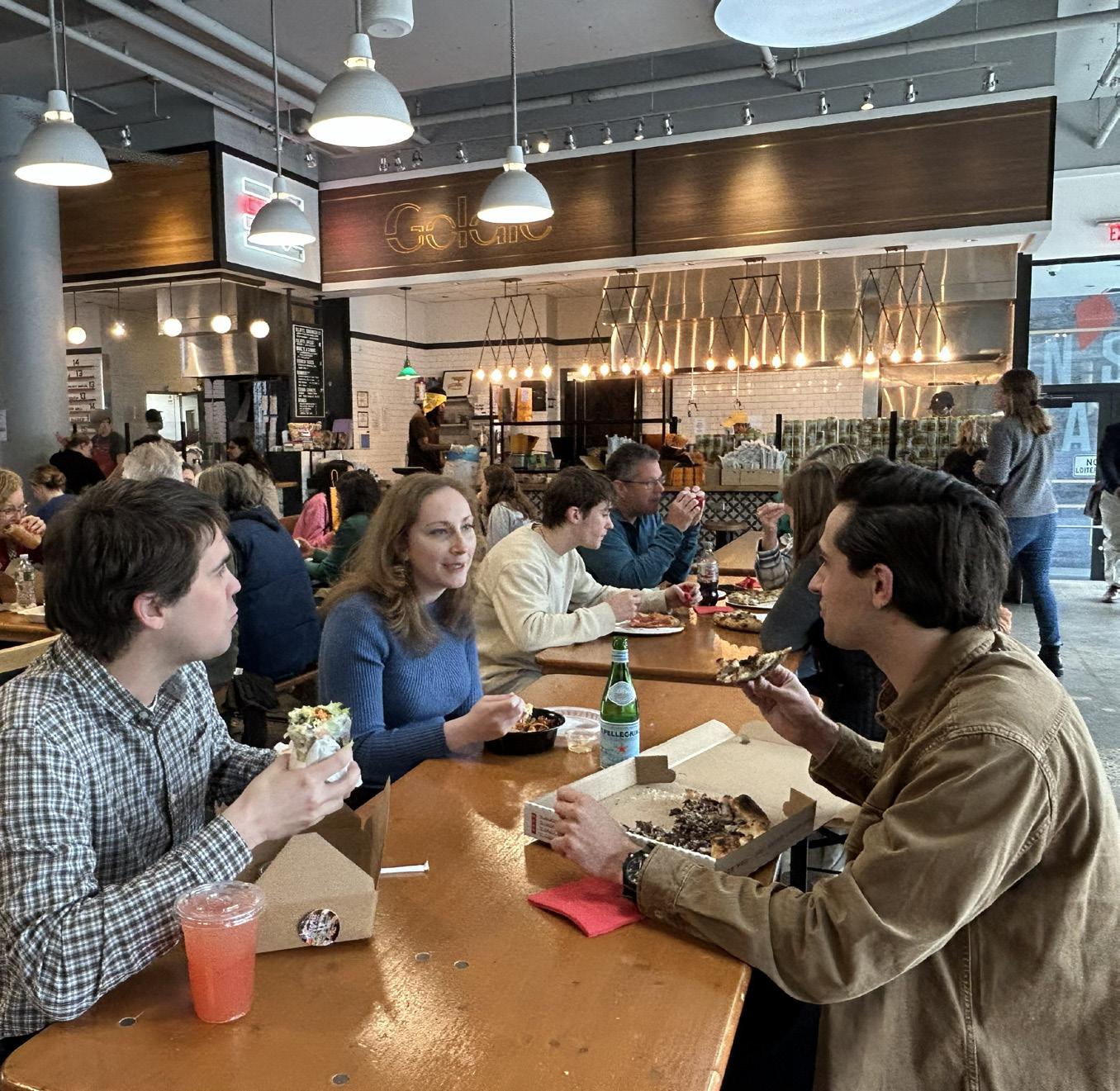
Shop Penn offers 60+ stores, restaurants, and entertainment venues surrounding Penn’s scenic, historic campus. Start your Penn Quakers journey by exploring a wide range of stores, delicious meals, and fun moments at Shop Penn!
Shop Local. Shop Penn.




The Daily Pennsylvanian compiled a list of easy-to-miss benefits that the University community can utilize
YU JIN YI Staff Reporter
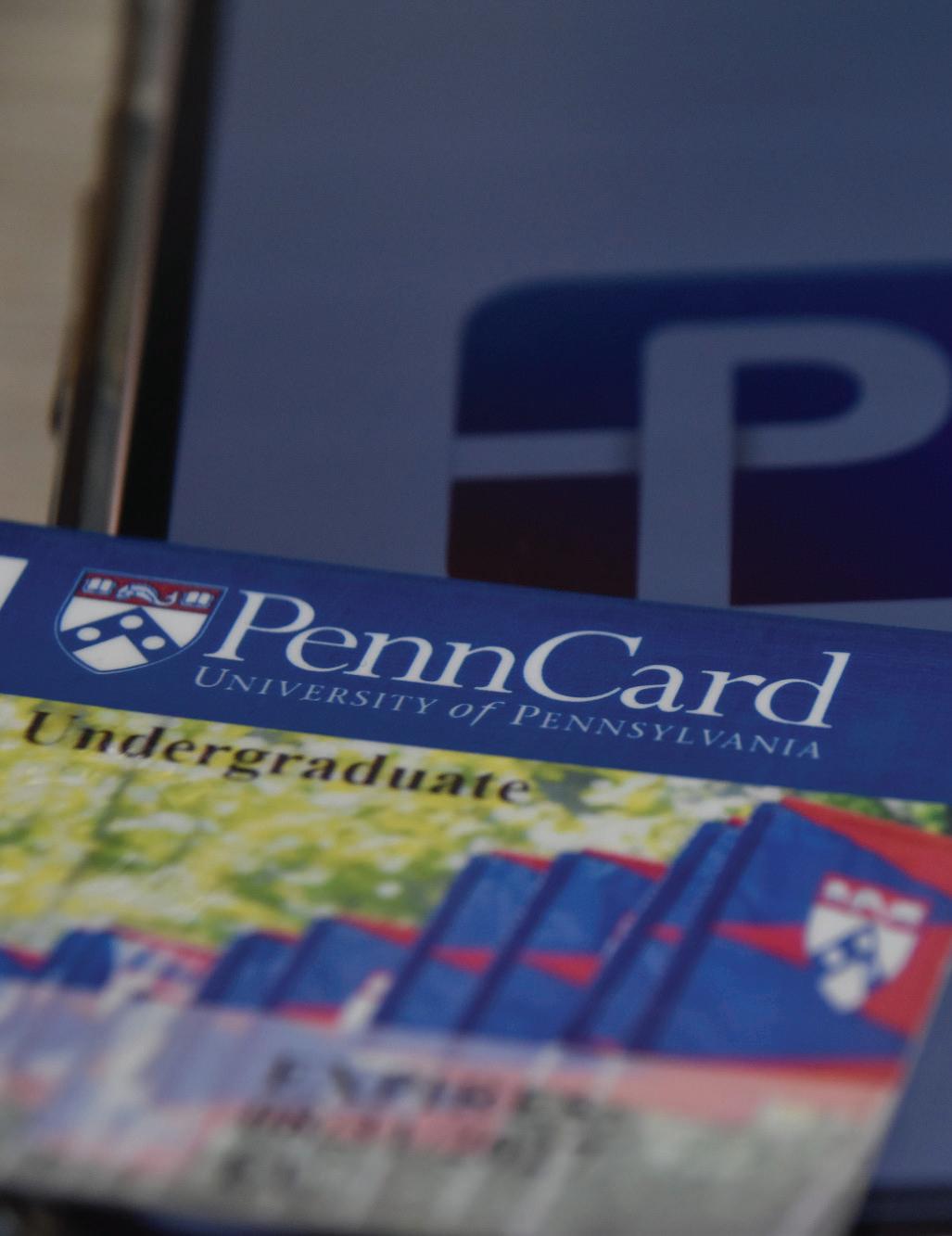
Every PennCard holder has wide access to a range of discounts and free offerings from the University. From cultural experiences to transportation and everyday services, The Daily Pennsylvanian compiled a list of easy-to-miss opportunities available to the University community.
Entertainment
Students can receive discounted or free entry to cultural experiences such as the Penn Museum, the Institute of Contemporary Art, and the Morris Arboretum and Gardens. Penn Live Arts of-
fers discounted tickets for live performances, and there are special deals available for Penn Athletics games — including free seats at five types of sporting events.
Off campus, WXPN’s Free
At Noon concerts hosted by the Department of Music are among several events Penn students can enjoy for free.
Research
The University offers the Penn community free access to several digital resources and media platforms that can be used to complete research and assignments.


Through Penn Libraries, all Penn students may use academic databases and tools like Ancestry.com. The organization also offers access to the libraries’ collection of texts, or books from an interlibrary loan for works that are not currently held in the Penn catalog.
Penn Libraries provides free subscriptions to multiple news publications — including The New York Times, The Washington Post, The Wall Street Journal, Bloomberg, Financial Times, and The Philadelphia Inquirer, while connected to Penn’s Wi-Fi. Most of these subscriptions only require website registration using a PennKey.



Transportation
Penn provides transportation and travel discounts that can help students save money — both on and off campus.
The University offers discounts on SEPTA rail passes and free access to campus transportation options like the Mann Loop through University City bus.
Furthermore, ride-sharing options — including carpool, Emergency Ride Home, and Bike Commuter Reimbursement programs — provide affordable means for Penn students to travel short distances.
Lifestyle
Perks provided to Penn stu-
dents also include a variety of lifestyle and shopping benefits.
Offerings related to fitness, travel reservations, cell phone services, and pet care are offered to the Penn community in several ways. Notably, all PennCard holders are eligible for a 10% discount on YMCA monthly gym membership fees.
On-campus residents can log in to Xfinity with their PennKey and access 291 channels for free — including ESPN, CSPAN, and the Discovery Channel.
Additional discounts and services are available through Penn Human Resources’ YouDecide platform — where students can browse discounts on a range of products and services.

From performing arts groups to academic societies, Penn students have gathered around shared interests for centuries
AMY LIAO Senior Reporter
Penn’s storied history stretches back to 1740 — and so does its tradition of student-led organizations.
From performing arts groups to academic societies, Penn students have gathered around shared interests for centuries. The Daily Pennsylvanian compiled a list of the oldest clubs still operating on campus today.
Founded in 1862 during the Civil War, the Penn Glee Club is the University’s oldest performing arts organization and one of the longest continually running glee clubs in the United States. In addition to its singers, the entirely student-run organization also includes a band and technical section.
In an interview with the DP, College senior and Glee Club President Julia Gauffreau said that some of the group’s long-standing traditions include performing at convocation ceremonies and “[prestigious] gigs,” such as embarking on a tour each year. Glee Club has toured in over 40 countries and territories across five continents, generally alternating between domestic and international trips each year.
“What brings us all together really is this shared value of wanting to have excellent performance, and that carries through a tradition and gives us a brotherhood,” Gauffreau said, adding that Glee Club’s three “pillars” are “performance, brotherhood, and tradition.”
In 2021, the Glee Club voted to merge with its sister group, the Penn Sirens, and remove the group’s gender restriction on singing membership.
“The Glee Club has been a
group that’s been willing to adapt and change as times have changed itself,” Gauffreau stated.
Gauffreau described Glee Club’s songbook as “really central and important” to the organization because it has preserved traditional repertoire while serving as “the opportunity to make our own new traditions.”
The collection includes longstanding arrangements, as well as the University’s alma mater, “The Red and Blue,” and other fight songs.
She added that the songbook took on new significance after the group became coed in 2021, when portions of the repertoire were rearranged to accommodate soprano and alto voices. The club introduced sections “to be inclusive of upper voices” and continually reviews the songbook with input from students and Director Sam Scheibe.
“We’re this musical ambassador, musical hand to the University, and being able to specifically represent Penn in Philadelphia and around the world is what sets us apart from other performing groups,” Gauffreau said.
The Philomathean Society
Founded in 1813, The Philomathean Society is one of the oldest continuously existing collegiate literary societies in the United States.
College junior and Moderator Ashwin Laksumanage told the DP that the society’s mission is to increase “the learning of our members and the prestige of the University.” He added that members “are supposed to be lovers of learning” and that “Philo is what Philo members want it to be.”
“Our main priority is, firstly,
to make sure that our members continue to be the best versions of themselves, to be educated individuals and be intellectuals in the true sense of the word,” he said. “I think University prestige will follow from that almost naturally because when your members have intellectual confidence about them, they’re more willing to put on events for the public and bring that intellectualism to campus.”
Historically centered around debate and discussion, the society also hosts public-facing programming throughout the year, including its Annual Oration, an address to the campus community from a prominent public intellectual. This year’s oration hosted philosopher Angie Hobbs, marking its 200th iteration.
In addition to the oration, the group hosts weekly teas with Penn professors in its College Hall space, where students can speak with faculty about their work and careers.
The society maintains a dedicated top-floor suite in College Hall that includes meeting rooms, a library, an art gallery, and a private members’ office.
Laksumanage said that The Philomathean Society “has always been quite a progressive organization,” acknowledging that “we actually admitted women into Philo before even the women’s college was integrated into the University” in 1974.
Laksumanage explained that the society’s other traditions include “march[ing] up and down Locust” while wearing academic robes and reciting Edgar Allan Poe poems on Halloween night.
“We’re always going to want to serve as a place for continu-
ing to make societal progress, but the way we want to do that is through discourse, and we are committed to the idea that through discussing ideas, and even controversial ideas, is how we will move forward,” he said.
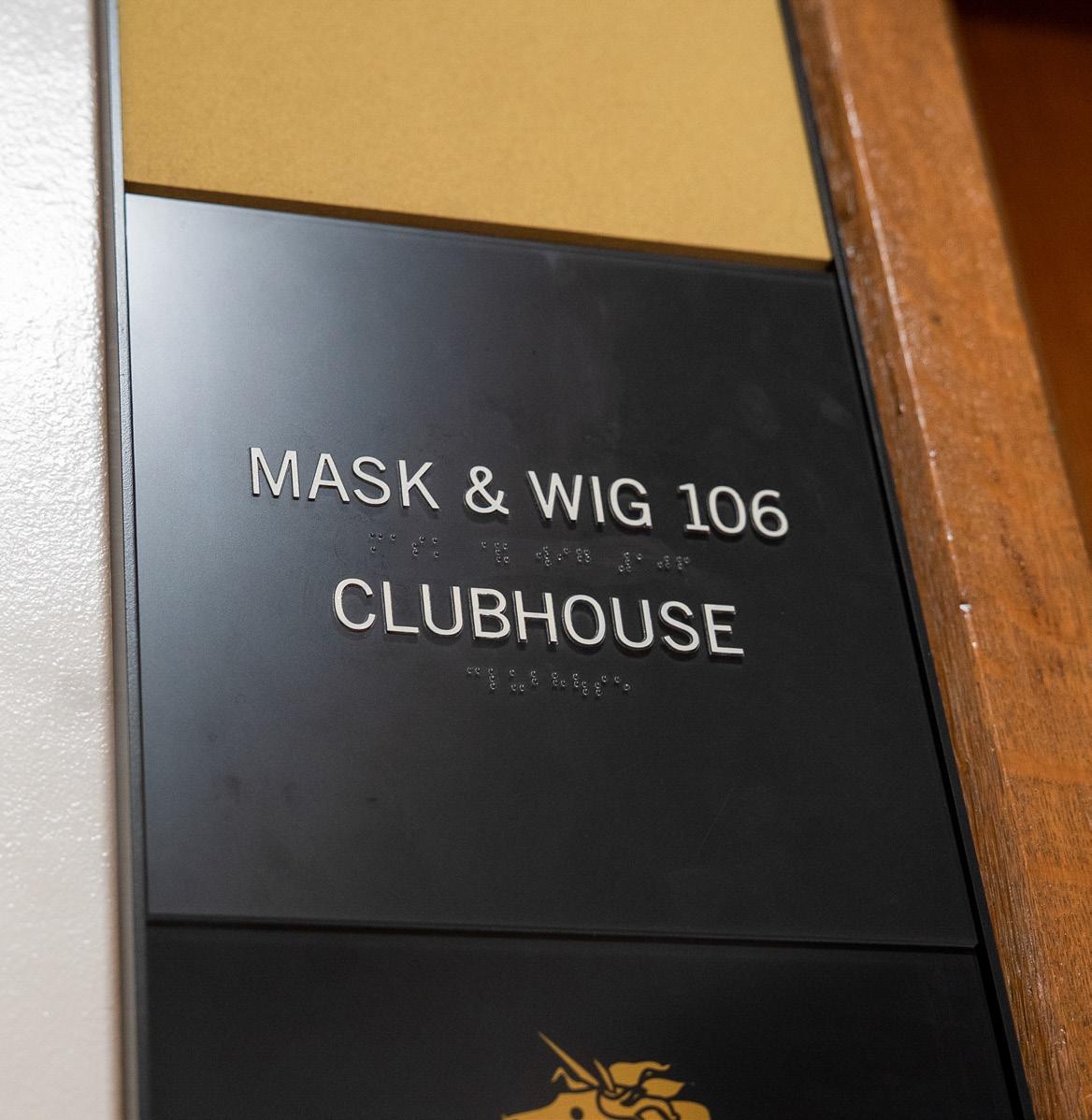
The Mask and Wig Club Founded in 1889, the Mask and Wig Club is a sketch musical comedy group that includes a cast, band, stage crew, and business team. The group performs three shows each academic year and goes on tour across the nation with their annual production in the spring.
College senior and Undergraduate Chair Emilia Bronk said in an interview with the DP that Mask and Wig has had “multiple forms” of shows throughout its history, ranging from “a full satirical review” that embodied more of “a variety show” to “full book musicals” that are a “much more modern take of a comedy show.”
Engineering senior and Secretary-Treasurer Joseph Dattilo also explained that the group has always followed “major theatrical trends throughout all of history,” with their “current age” following an “SNL style.”
Dattilo noted that Mask and Wig traditions include singing songs such as “Only Room for
One” and “The Red and Blue” at the end of every show to “signify credit to the University.”
In 1894, Mask and Wig purchased a property at 310 South Quince St. to serve as a gathering place and rehearsal hall, known as the “Mask and Wig Clubhouse.” The clubhouse is funded primarily by alumni donations and revenue from their annual production and bar.
Bronk emphasized the alumni involvement in Mask and Wig as “something that really keeps this whole organization together,” adding that “members have had a very strong history of giving back to the University that they came from.”
In 2021, Mask and Wig announced it would eliminate gender as a membership requirement, opening participation to all genders for the first time in its history as a male-only group. The change was first implemented for the fall 2022 recruitment cycle.
“Before the age of the television and our phones, seeing live theater was something that a lot of people were doing all the time, so it was easy to have a stronghold in performing arts early on,” Bronk said. “We really strive to put on excellent productions and work our hardest.”
From casual dining to dessert or coffee, 2026 saw the arrival of several new options for off-campus student dining
Several new restaurants opened up — or are set to open soon — across University City this year.
From casual dining to dessert or coffee, 2026 saw the arrival of several new options for off-campus student dining. Among the new locations are Mango Mango Dessert, Taco Bell, Blank Street Coffee, Root & Sprig, and Korea Taqueria.
Mango Mango Dessert opened its third Philadelphia location in University City last month.
The store — located at 36th Street and Lancaster Avenue — will operate from noon to 11 p.m. Sunday through Thursday and from noon to midnight on Friday and Saturday. Originally founded in New York’s Chinatown in 2013, Mango Mango Dessert
is a specialized franchise serving mango-centric desserts at over 50 locations in 15 states across the country.
Jason Hui, storefront operator of Mango Mango Dessert’s University City location, told The Daily Pennsylvanian that he wanted to bring the store to the area because he attended Drexel University and wanted “to bring a little something new to the local community.”
Hui explained that he understands students “all have busy lives,” and he hopes to “bring a little sweet to their life” by providing students with a place to take “a little bit of a break” from school.
“Personally, I am from Hong Kong, that’s the passion of it — to bring my hometown’s so-called style of food into this local community,” Hui said.
“Because we have a mix of cultures here … we are looking forward to seeing what kinds of people we will be serving, and we are very excited to bring our Hong Kong-style dessert.”
In January, Korea Taqueria opened a new location at Franklin’s Table Food Hall.
The stall opened on Jan. 20, marking the opening of the restaurant’s third Philadelphia location in the last four years. Korea Taqueria, which began as a food truck in 2022, features Korean-Mexican cuisine.
Owner Alexander Sherack and head chef Rene Lopez told the DP that they were inspired to open a location near the University after catering events at Penn.
“There was a very specific


lack of Mexican and Korean food,” Sherack said. “Our food didn’t compete with the other vendors in there and filled a nice little gap.”
The restaurant offers burritos, bowls, and tacos that combine Korean and Mexican flavors. The idea, Sherack said, was to “really tap into how much students love Chipotle food.”
“The flavors, with the amount of proteins and sauce combos that you can get with us, has been really popular,” he added.
Last December, Taco Bell opened a new University City location.
The storefront — located at 39th and Chestnut streets — is open daily from 9-12 a.m. and uses a modernized service model. In interviews with the DP, Penn students spoke about their initial experiences at the chain.
Unlike traditional Taco Bell restaurants, customers at this location order exclusively through a kiosk system — allowing employees to focus on cleaning tables and making food.
Last month, Root & Sprig announced that it was set to open its largest restaurant location to date in University City this spring.
The fast-casual dining restaurant will open at 421 Curie Blvd. on the ground floor of the Perelman School of Medicine’s Kelley Research Building. Root & Sprig was developed to provide nutritious meals and comfortable service within health care facilities, and the Penn location will be the brand’s first fully designated dining space.
“We created this concept in 2019 specifically for people in the medical field — students, doctors, physicians, nurses, researchers, administrators,” Root & Sprig co-founder and
Vice President of Finance Maryrose Galvez told the DP. “We saw a need for restful and more joyful environments within hospitals, schools, with service that’s a lot more attentive — something you could get in a full-service dining experience, but in a fast-casual setting.”
Root & Sprig currently operates a location at Penn’s Clifton Center for Medical Breakthroughs. According to Galvez, the University City space was designed as “a place to gather students and administrators.”
“We’re incredibly excited about our partnership and upcoming location at Penn,” Root & Sprig co-founder and CEO Dan Guaricci wrote in a press release.
He added that the new space will allow the company to offer “chef-inspired meals alongside a space designed for rest, conversation, and connection.”
This summer, Blank Street Coffee is set to open its first Philadelphia location at 3603 Walnut St.
The cafe will be located near the Penn Bookstore and the Inn at Penn. At approximately 3,500 square feet, the University City storefront is expected to be one of the brand’s largest cafes in the United States.
“We’re thrilled to have Blank Street join the SHOP PENN retail district, creating a destination for students, faculty, staff, and our surrounding neighbors,” Ed Datz, Penn’s executive director of real estate, wrote in a March press release.
Several of these centers operate under University Life, including six cultural resource centers
DANIYA SIDDIQUI Staff Reporter
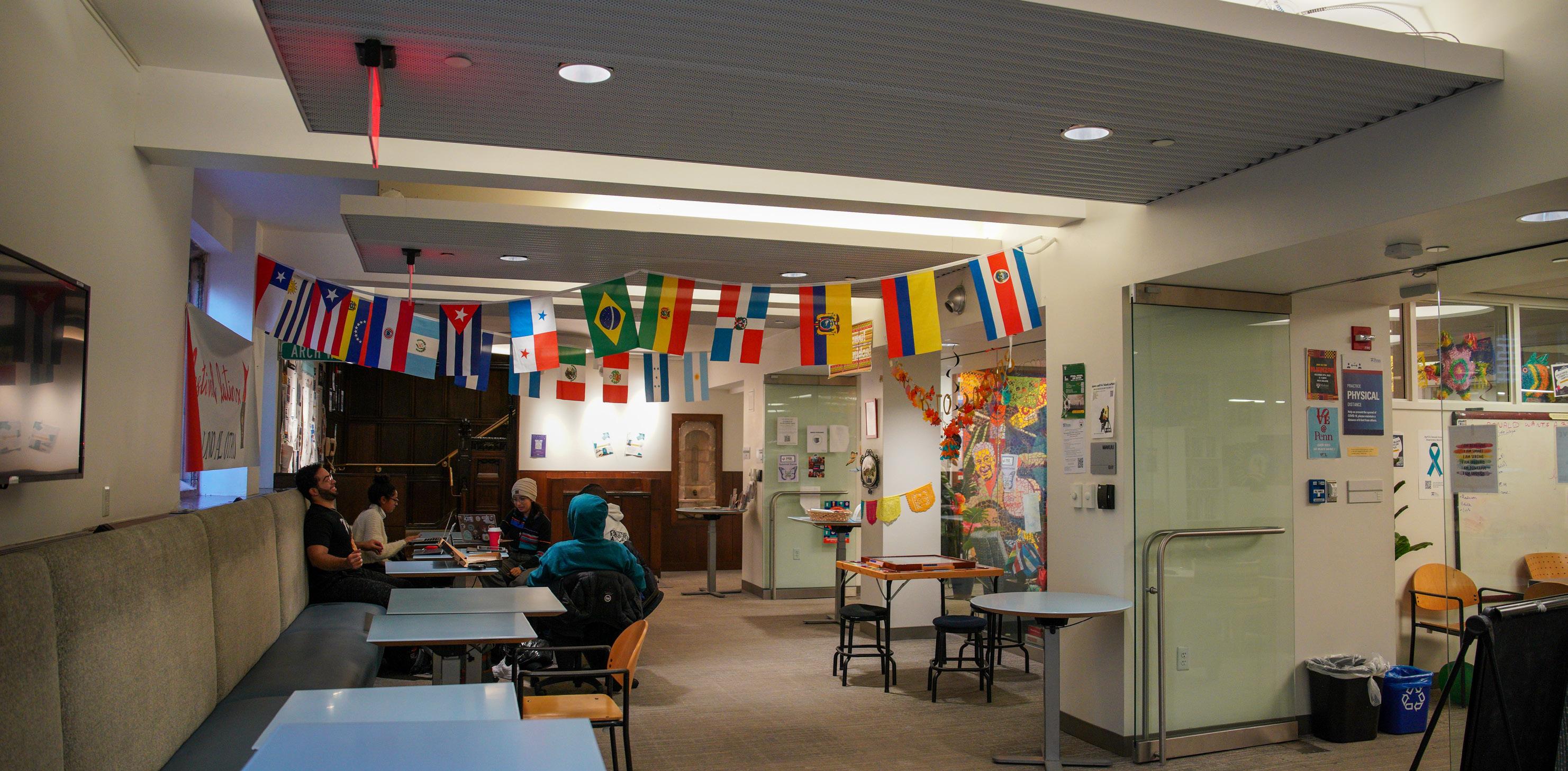
Penn offers several resource centers across campus that provide support for students and host a range of programming.
Several of these centers operate under University Life, including six Cultural Resource Centers. The Daily Pennsylvanian compiled an overview of these spaces and the resources they offer.
The Albert M. Greenfield Intercultural Center serves as a primary space for intercultural engagement at Penn. Established in 1984, the center aims “to build community, create a sense of belonging, and foster intercultural understanding.”
GIC hosts programs such as Powwow at Penn, which highlights Indigenous traditions through performances and educational components.
The center also offers space for students, faculty, and staff to interact in both structured and informal settings.
Casa Latina centers its work on Latinx communities at Penn through events and campus partnerships. Programming includes visits from writers, scholars, and activists, along with workshops that address topics such as identity and advocacy.
The center also runs “Lightning Talks,” which function as open forums where students can ask questions related to academics or navigating campus life. It frequently collaborates with student organizations to support programming throughout the year.
Established in 2000, Makuu: The Black Cultural Center supports Black stu-
dent life through a range of initiatives that address cultural and professional interests. According to its website, the center’s mission is to “expand student access to the University’s resources, enhancing our campus and global communities.”
Makuu also offers resources ranging from structured scholarship programs for students interested in social justice to free swimming lessons. It serves as a gathering space where students can study or meet with peers.
The Pan-Asian American Community House supports Asian and Asian American students through advising and campus programming. Its offerings include AsianTalks, a speaker series that “encourages dialogue, fosters
understanding, and inspires reflection on how personal and collective experiences shape our communities.” The center also works with student organizations to coordinate events and provide space for meetings.
The LGBT Center at Penn provides resources related to sexual orientation and gender identity, aiming to “enrich the experiences, foster the success, celebrate victories, and affirm the existence” of the University’s LGBTQ+ community. The center hosts workshops and discussions that focus on topics such as identity, inclusion, and student experiences, along with social events throughout the academic year. It also offers advising for students seeking guidance.
Beyond Penn’s cultural centers, additional campus resources focus on specific student needs. The Penn Women’s Center hosts programming related to gender equity, including workshops and discussions. It also organizes recurring gatherings, from weekly tea events to the annual Take Back the Night rally.
Penn First Plus supports first-generation and low-income students through mentorship programs and academic guidance, and “promotes the importance of socioeconomic diversity” on campus. The center also provides financial wellness resources and organizes events intended to help students connect with necessary campus services.
Throughout the academic year, Penn’s calendar is filled with events and traditions for first-year students
ANANYA KARTHIK Senior Reporter
One of NSO’s most iconic events is an evening gala at the Philadelphia Museum of Art. The event provides first-year students with access to the museum’s galleries, live performances, and food.
The gala is exclusively for first years and requires both a PennCard and an event wristband for entry — with transportation from the University.
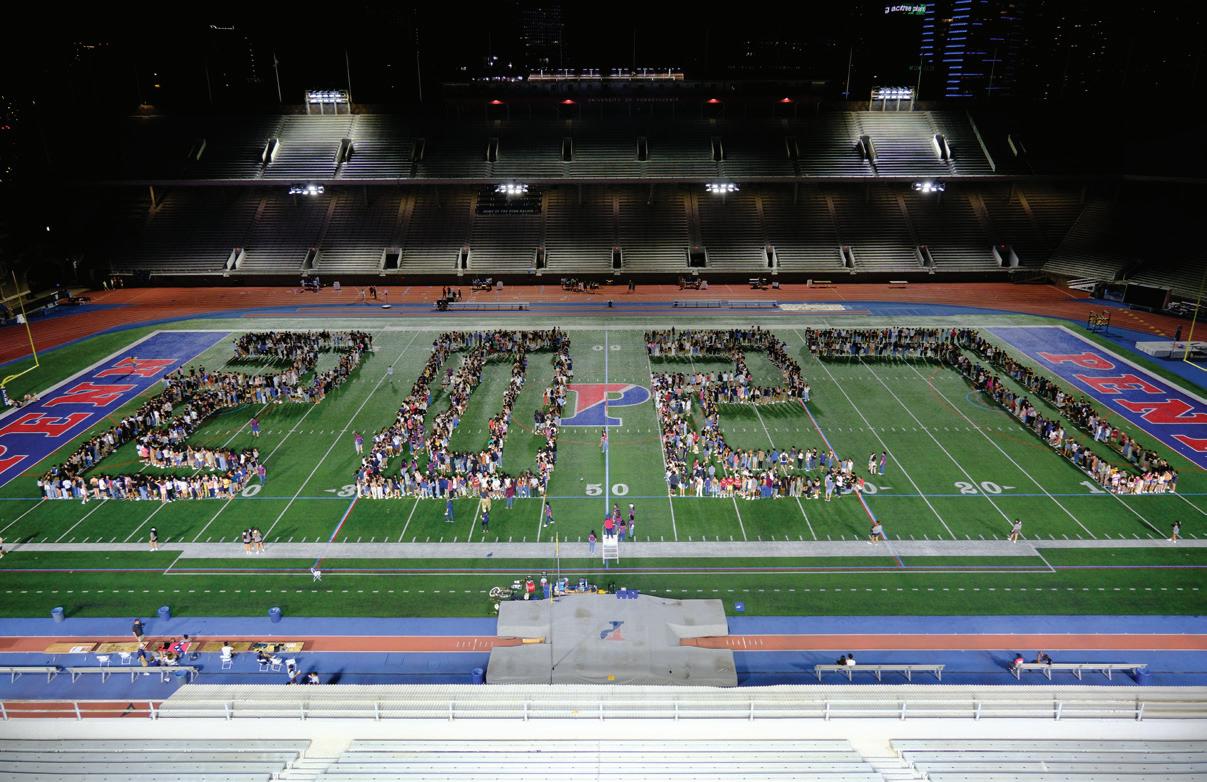
During New Student Orientation, members of the incoming class gather on Franklin Field to participate in the annual class photo. Students wear coordinated class T-shirts and assemble in the shape of their graduation year to be photographed from above.
The event, which takes place early in NSO programming, is one of the first opportunities for the entire class to convene in a single space. Following the photo, students are invited to an event in the Palestra.

Early in the fall semester, Penn where student organizations share bers. Typically held on College brings together over 600 student groups al, political, professional, and recreational Students can interact directly with sign up for mailing lists, and learn cesses. For many students, the activities entry point into extracurricular life




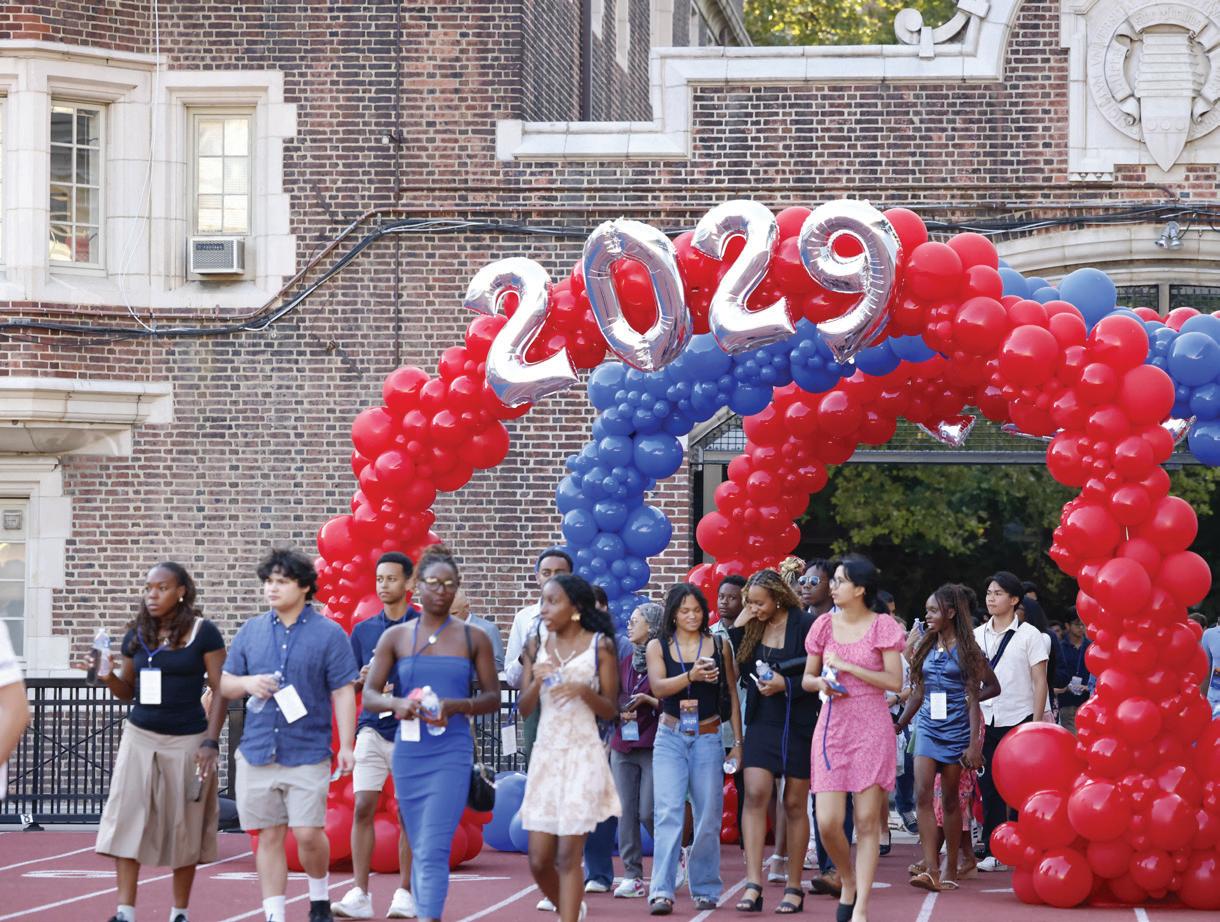
Convocation, held at Franklin Field, serves as the University’s formal welcome ceremony for incoming students. Taking place at the conclusion of NSO, convocation is scheduled shortly before the start of classes and marks the official beginning of the academic year.
The event includes remarks from University leadership, such as the president and provost, and often features musical performances from Penn groups.
Student government leaders also present the incoming class flag during the ceremony, symbolizing the class’s formal entry into the Penn community. First years will also learn “The Red and Blue” chant.

On the night preceding the first gather in a designated area on campus The midnight event — accompanied involves collectively screaming as While Econ Scream is associated nomics course, any first year is encouraged
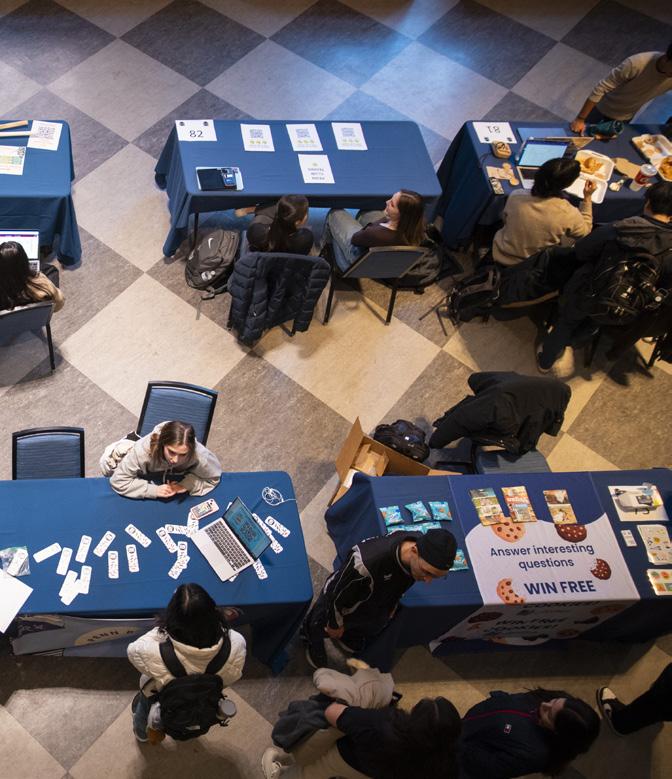
Penn hosts a club and activities fair, share information to recruit new memGreen and Locust Walk, the fair groups spanning academic, culturrecreational interests. with organization representatives, about application or audition proactivities fair can serve as a primary life at Penn.
The weekend of the Homecoming football game at Franklin Field includes a series of events that bring together current students, alumni, and families. Other student organizations also host daytime social events throughout the weekend.
As part of Homecoming traditions, the first-year class selects a tree to be planted on College Green, contributing to long-standing class legacy on campus.
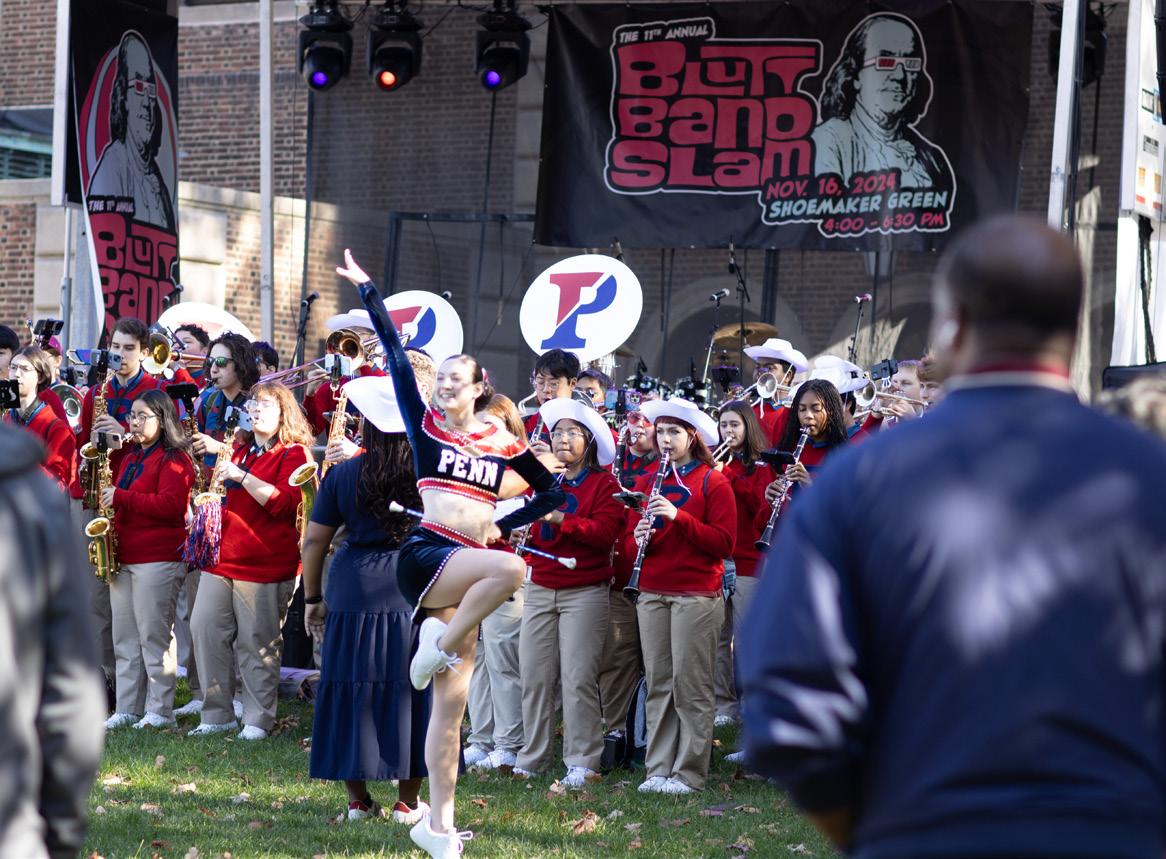
During the football game, students also make a “toast” where, instead of champagne, they throw pieces of bread onto the field following a performance of “Drink a Highball” by the Penn Band. The practice dates back to the 1970s, when alcohol was prohibited at University-sanctioned events.

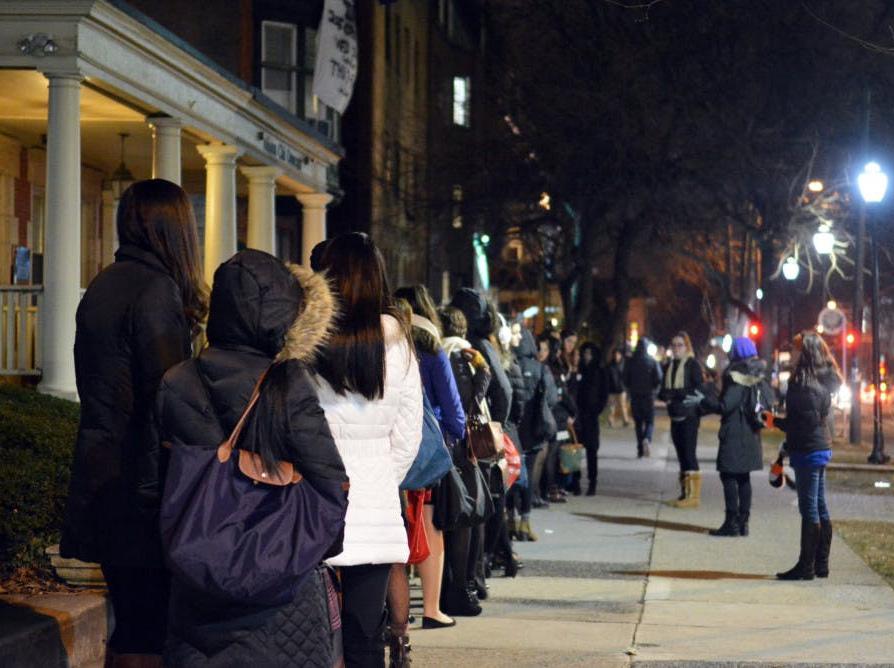
In the beginning of the spring semester, fraternities and sororities recruit new members, coordinated through the Office of Fraternity and Sorority Life. The University’s fraternity and sorority community includes nearly 40 organizations and approximately 3,000 members, offering students a range of social groups across different affiliations.
Recruitment typically consists of a mix of open and invite-only events, where students can learn more about different organizations and interact with current members. Eligibility requirements, including academic standing and course completion, are verified by OFSL.
ECON 0100 midterm, first years campus for the annual “Econ Scream.” accompanied by music and refreshments — a form of stress relief. associated with the introductory microecoencouraged to participate.
Established in 1973, Spring Fling is one of the largest and most widely attended events of the academic year.
Spring Fling is Penn’s annual student-run festival, organized by the Social Planning and Events Committee. The weekend-long event includes a concert on Friday night and a daytime festival on Saturday.
This year, Flo Rida will take the stage on April 17 at Penn Park. Saturday’s Daytime Fling will transform campus into fairgrounds, with food vendors, games, and student performances.

Managed by the Office of the University Registrar, Advance Registration is designed to optimize course selection and ensure students receive as many preferred courses as possible
AMY LIAO Senior Reporter
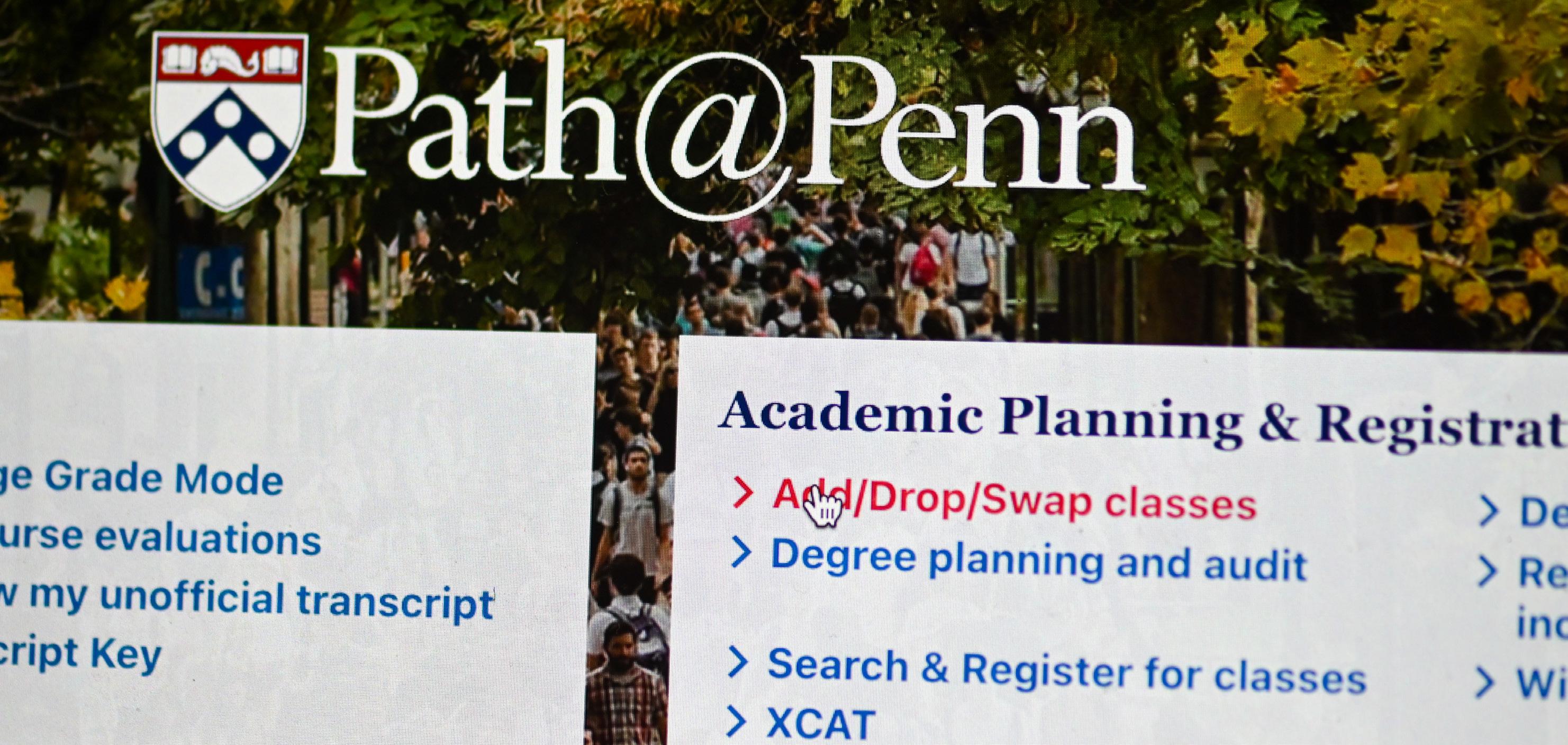
Advance Registration plays an important role in building your academic experience at Penn.
Managed by the Office of the University Registrar, Advance Registration is designed to optimize course selection to ensure students receive as many preferred classes as possible. Here’s everything you need to know.
“This is a relatively new system that we’re using, so there are going to be some hiccups along the way, but we definitely have not lost sight of the way that we want it to be seamless,” Associate Dean and Director of Academic Advising Carolyn Ureña told The Daily Pennsylvanian. “From an advising perspective, we would love for it to continue to be the one-stop shop for how to search for courses, find out
about majors that they want to explore, and think through their academic decision making.”
Director of Course Management and Student Records
Rick Dunn similarly spoke to the complexity of “trying to reach the most optimal kind of state in terms of rostering in an environment that is as distributed and non-centralized as Penn.”
“I think that we do the best that we can,” Dunn said. “I think that our departments do a great job in managing all of those complexities and giving our students opportunities to build a comprehensive schedule.”
According to Dunn, departments undergo a “several-month process” of maintaining and managing course offerings before the Univer-
sity officially publishes them for students and advisors to access. Penn released courses for the upcoming registration cycle on March 5 “for students to start to look at courses and speak with their advisors about their course selection prior to the Advance Registration period opening.”
Dunn characterized Penn’s Advance Registration process as a “throw your name in the hat” system, though he said it is “actually one of the fairest forms of registration” and “a little bit more sophisticated” compared to lottery-style systems used by many other universities.
During the advising period, students meet with advisors to build registration carts with the courses they want to take. Students can rank classes by priority and select alternatives
“so that you can optimize your choices as … the process,” Dunn explained. He added that submitting a cart does not immediately enroll a student in a class but allows students to signal their preferred classes.
Ureña shared that advisors help students build their carts by putting “their primary choices” in the main cart and linking alternatives. Once advance registration closes, she said, “there’s an optimization process that happens.”
Dunn said course requests are processed through a “very complex algorithm” that randomizes student selections while working to “maximize student choice.” The system also accounts for course demand, seat availability, and the total number of offered classes.
After the system finishes running, students’ schedules are published in Path@ Penn — the University’s central resource for registration, financial aid, and academic records.
Students who do not receive all of their desired classes are encouraged to speak to their pre-major advisor, which Ureña described as “the first line” of support. She also said students can continue monitoring closed courses through Penn Course Alert, which notifies users if a seat opens. Ureña explained that some courses have specific “attributes,” meaning certain students are given preference based on their academic status. Classes may be reserved for majors within a department “because those students, who are majors in that par-
ticular program, need that class.” As a result of these limitations, Ureña said advisors encourage students to list backup options.
She added that the advising office focuses on how students will “encounter the registration deadlines or the options that may come up at particular moments in the semester.”
According to Ureña, more students are “getting the choices that they have selected,” whether those are their first-choice classes or alternatives.
The advising office also uses Penn’s Canvas platform to communicate with students throughout the registration cycle. Each class year has its own Compass site, where students receive reminders that Advance Registration is approaching and are encouraged to meet with their advisor.
After schedules are released,



follow-up messages prompt students to review their results and seek advising support if they have questions or need to adjust their plans.
Ureña noted that she was “incredibly impressed” with Penn’s Advance Registration system, “because the chances of getting your class are more equally distributed.”
“There’s a way that those priorities are set up, but overall, I think that this is a great system because it allows for more equitable access to the courses to more students across the class years,” she stated.
While describing the course registration process, College sophomore Amy Tran told the DP that “it’s so exciting just planning my future and looking forward to all the different classes I get to take, especially with the College’s requirements offering me a sophisti-


cated liberal arts education.”
Despite her “love” for the course registration process, Tran said that she hopes the University could consolidate platforms like Penn Course Review, Penn Course Alert, and Path@Penn.
“I feel like I’m screwing around and lollygagging when I just really want to have my primary cart assembled,” Tran said.
Although Tran described selecting alternatives as “a little bit of a hassle,” she called the process “fair,” adding that while she does not always receive all her preferences during Advance Registration, she has been able to stay on track academically.
“Because I didn’t get the specific econ classes I needed, I was like, ‘Let me just focus on my general requirements,’” Tran said. “I got more sectors and foundations done, and
then when I ended up pivoting later, it was nice because I could still apply those, and then I just changed what major classes I was taking.”
College sophomore Helen Liu said previous course registration periods have been both “really fun” and “really stressful,” particularly when she registered for many courses that were “either popular or had application processes.” She emphasized that “it was hard to know whether I would be able to get into those courses before the Advance Registration deadline.”
“I ended up having a lot of chaotic switching of courses at the beginning of the semester, which was really stressful because not only was I trying to find the right courses, I would also have to make up work when I entered those courses, and then sometimes I’d end up switching out of that too,”
Liu said. Liu also stated that academic advisors have generally been “helpful,” and peers and friends have served as a “less formalized source of help.” She said that Penn Course Review “tries to fill in that gap” by making peer feedback more accessible, clarifying that it can be “hard to get an idea of what a course will be like before actually being in the course for half a semester, and that can just be risky as a student.”
Students should “feel welcome to share with their pre-major advisor things that they’re thinking about, their goals, their disappointments,” Ureña said. She stated that “what we really emphasize is holistic advising, which includes understanding that as advisors, we may not have all the answers, but we want to be the connectors for you.”

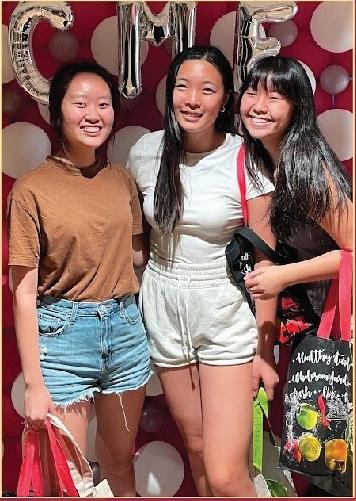
The Daily Pennsylvanian spoke with five students admitted to the Class of 2030 about what drew them to Penn and what they are looking forward to in the coming years
ANANYA KARTHIK AND CANDICE FELDERER
Senior Reporter and Staff Reporter
Penn released regular decision admissions results for the Class of 2030 on March 26, welcoming students from over 87 countries and all 50 states to campus.
On Dec. 18, 2025, Penn also welcomed its early decision applicants for the Class of 2030 — who hailed from 60 countries and 49 states. The Daily Pennsylvanian spoke with five students admitted to the Class of 2030 about what drew them to Penn and what they are looking forward to in the coming years.
During this year’s early and regular decision cycles — the first since Penn reinstated its standardized testing requirement — more than 7,800 and over 61,000 students applied to the University, respectively.
Cortney Buford is from Dallas and was admitted early to the College of Arts and Sciences, where she intends to study health and societies. Buford, who hopes to attend law school after completing her undergraduate degree, is pursuing the major to study the equity of American health care outcomes.
“This major was so interesting to me because it didn’t approach health as a very black and white thing,” Buford said. “It’s not a monolith — it’s built on a lot of exploitation of different communities.”
Buford is also “super excited” about becoming involved with Penn’s cultural centers.
“I follow a lot of them on Instagram, and I always see the cool activities that they’re getting up to and speakers that they have come and talk to them,” Buford said.
Buford visited Penn’s campus the summer before her junior year of high school, which informed her decision to commit to the “binding aspect” of the University’s early decision application.
“I just really fell in love with it,” Buford told the DP.
Rialda Maria Popa is from Bucharest, Romania, and was admitted through the regular decision process to the College. In an interview with the DP, Popa described her strong passion for chemistry and plans to major in biochemistry and neuroscience at Penn.
She explained that she worked with neurodivergent children throughout high school, studying “how we can help them and create a more inclusive environment for them.”
“I really loved Penn’s commitment to interdisciplinary learning, and that aligned perfectly with who I am,” Popa said. She said she is especially interested in the University’s Vagelos Molecular Life Sciences Program, describing it as the “perfect place for me to grow as a researcher and to explore my interests.”
Popa also recalled feeling committed to Penn very early on in the college application process.
“It really resonated with me, and I know it’s my place,” she said.
Despite the University’s “vigorous environment,” she described how she felt the community at Penn was still collaborative. While she has not yet visited Penn’s campus, she said she thinks “college will feel like a movie.”
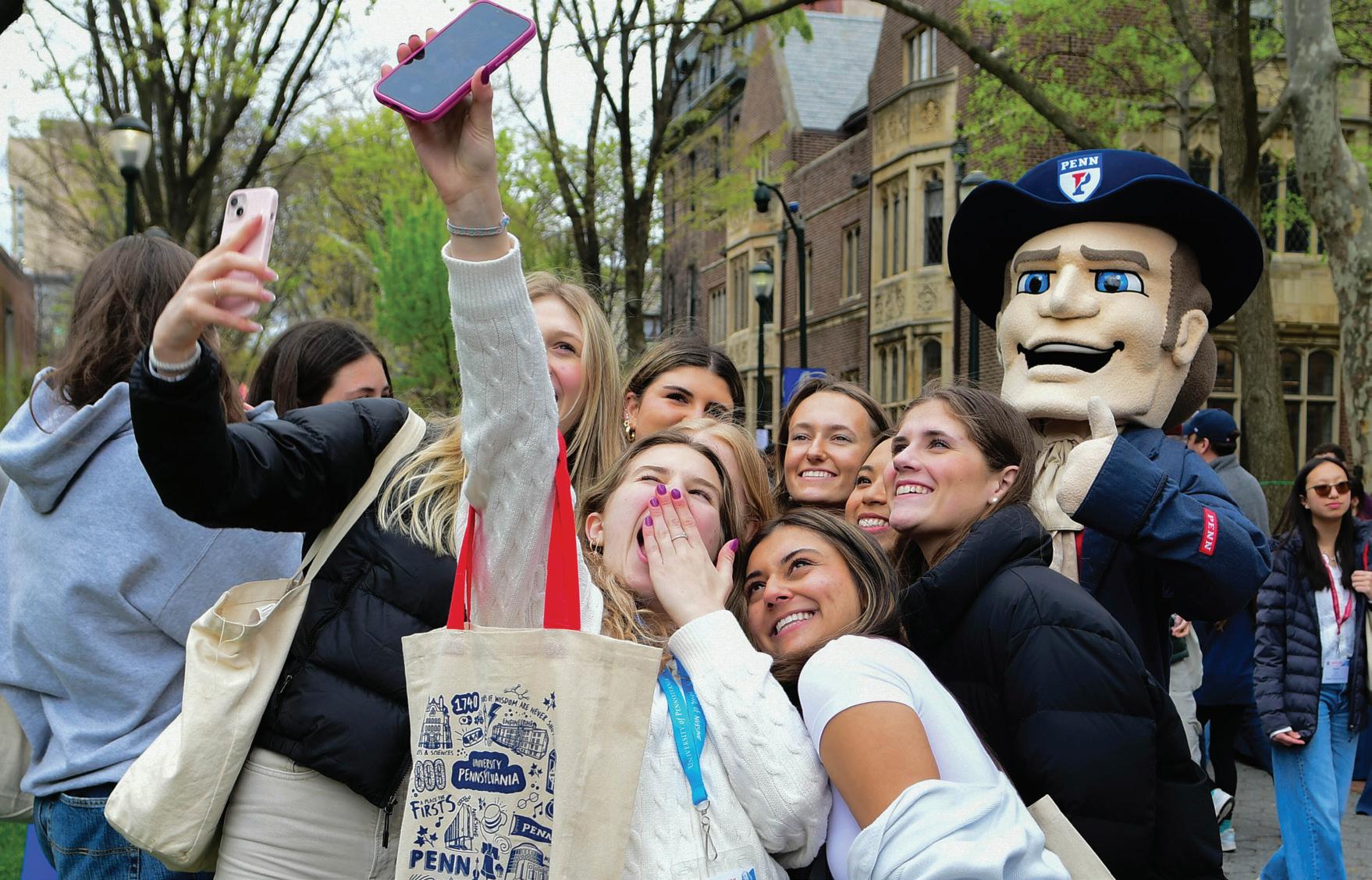
Anya Li, who is from Santa Clara, Calif., was early admitted to the Jerome Fisher Program in Management and Technology and plans to study electrical engineering alongside a concentration in either finance or accounting.
The M&T program is a “great opportunity to explore both sides and truly make a difference,” Li explained. She decided to apply through the early decision process after attending the M&T Summer Institute in 2025, where she met several Penn students and faculty.
Li, who has also practiced synchronized swimming and coached athletes with disabilities, discussed how the M&T program offers an opportunity to pursue her interest in creating assistive technology for swimmers and ultimately help athletes with disabilities compete in the Paralympic Games.
“I liked the energy there,” Li told the DP. “I really want to be able to use STEM to create technology to make it easier for athletes to maneuver in the pool.”
While on campus, Li saw the University’s student clubs — such as Penn Electric Racing — in action. She currently participates in robotics programs at home and found the “larger scale of electric racing cars that these students built” to be
“really cool.”
“We were able to go into their facility and see the motor cars that they created,” Li explained. “I want to be able to be a part of that when I go to Penn.”
Noah Boghosian is from California and was also admitted through the regular decision process to the College, where he intends to major in international relations.
Boghosian told the DP about his research on the politics and civic engagement of Armenian American undergraduate students in Southern California, as well as his lifelong interest in foreign cultures.
“I always loved drawing other countries’ flags or learning about their culture,” he said. He intends to continue to pursue that interest at Penn.
“I went to the East Coast, and I knew that’s where I wanted to be,” Boghosian added, sharing how he “fell in love with the campus,” and “absolutely loved how people were engaging with each other.”
“Everyone seemed really happy at Penn,” he said.
Looking to the future, Boghosian said that he is most excited to meet new people and explore Philadelphia’s food scene.
The DP also spoke with early decision Wharton School admit Akshaya Sreeram, who explained that her choice
to apply early decision was shaped by her proximity to campus and interest in Penn’s extensive network.
“I only live 40 minutes away from Penn, I’ve always loved my family, and I’ve always wanted to stay on the East Coast,” Sreeram said.
Sreeram emphasized the opportunity to make “lifelong connections” at Penn, “whether it be your friends, industry partners, [or] industry connections.”
“It just seemed like a very sociable experience but also a long-term beneficial investment that I would love to put myself in,” Sreeram said.
Sreeram explained that she hopes to pursue her interest in financial consulting and Penn’s business partnerships, along with other Wharton offerings.
“Through the Netter Center’s economic development partnerships, I hope to work with small business owners to understand their operational challenges and limited access to capital, and really work with them to design strategies to address them,” Sreeram told the DP.
These five students will join thousands of others from the 2025-26 application cycle to comprise Penn’s incoming Class of 2030.
here’s what you need to know
THE
First, congratulations and welcome to Penn! You have a lot to be proud of.
The Daily Pennsylvanian Editorial Board wants to welcome you to campus with a preview of what the Penn experience is really like. We have organized our advice into five overarching categories that we feel best encompass life at Penn.
1. Career funneling can feel intimidating.
If you ask any Penn student about our campus culture, you’ll probably hear the word “preprofessional.” In all honesty, there is some truth to this. For some time, a large part of any given Penn graduating class has been whisked into consulting and finance. Right now, you might not know what “investment banking” or “consulting” means, but after a semester at Penn, that is destined to change.
When you first get here, all the talk of resumes and recruiting can create some culture shock. It might make you feel like you have to fall neatly into those buckets and go along with the crowd. But the truth is, you don’t have to. So many Penn students pursue the careers they want regardless of social pressures. In fact, recent trends show that fewer and fewer Penn students are following those narrow paths. Still, that does not detract from the value a Penn education carries for those careers. If you want to work in high finance, you’re in luck. Our advice is to do whatever truly interests you. Penn has so much to offer in terms of academics, research, and career opportunities. Be curious, explore, and take advantage
of the resources here. Having unique academic interests can actually mean being in smaller groups, allowing you to form closer relationships with professors and peers.
2. Social life isn’t straightforward.
Clubs are a good place to start and usually the most reliable way to make friends at Penn. While you might hear that a good number of Penn’s student organizations are career-focused, not all of them are. Penn is known for its vibrant performing arts scene, along with many interest-based and affinity groups. Oftentimes, joining clubs can build friend groups and become the backbone of your social life. So, cast a wide net and then stick to what you enjoy with the people you grow close to.
Even though greek life typically involves only about 30% of the undergraduate population, it does have an outsized influence on the “going out” scene here. For the most part, sororities and fraternities follow a wealth-based hierarchy, but usually anyone who wants to participate in greek life can at some level, so it’s something to consider. If you don’t join greek life, don’t count on having an on-campus party lined up for you every weekend. Still, there are other ways to have fun and be social on your Friday nights. From club formals to live music events, there is no shortage of ways to spend your free time.
3. Penn students are abnormally privileged.
Following up on social life, it’s also important to note that most Penn students have an incredible amount
of privilege. A lot of the time that means that they come from wealthy backgrounds, but many students who don’t also experience other forms of privilege. This can include attending prestigious high schools, having extensive networks of connections and, most obviously, being able to attend Penn itself. Wealth culture can be pervasive at times, particularly in Penn’s fashion trends. Regardless of your background, though, there are plenty of resources and communities that exist to fit your needs.
4. Your classes won’t feel like high school.
The best thing about academics at Penn is that you can learn about pretty much anything you want in any semester. In the fall, topics for required first-year writing seminars range from reality TV to failures in systems engineering. Accordingly, we encourage you to be flexible and try new things; your interests
will likely change in college. Otherwise, classes at Penn will have different expectations than you are probably used to. Stay on top of your work and go to class, but also remember not to take everything so seriously. Grades are much less important in college than they were in high school, and challenging yourself is a good thing.
5. Take advantage of Philadelphia.
The best thing a young adult can do is move to a city for college. Here at Penn, we are lucky to have access to Philadelphia’s vibrant professional, cultural, and social scene. Sometimes, that privilege is underutilized at Penn. Most students will spend the vast majority of their time on campus, and many rarely branch out into other parts of the city. It’s called the “Penn bubble.”
So, as Penn students, we encourage you to take classes that explore the city, go to restaurants in Center City, or
pursue an internship that gets you off campus.
Once again, we want to offer our congratulations. Getting into Penn is extremely difficult, and all of your hard work has paid off. Now and throughout your Penn journey, remember that you deserve to be here. While there are many valid critiques of the Penn experience, we are each so grateful for the wealth of opportunities and experiences that our University has brought us. We’re excited to see you on campus soon.
Editorials represent the majority view of members of The Daily Pennsylvanian Editorial Board who meet regularly to discuss issues relevant to the Penn community. This body is led by Editorial Board Chair Jack Lakis and is entirely separate from the newsroom. Questions or comments should be directed to letters@ thedp.com.





Dear Future Quakers,
As the incoming Class of 2030 is announced, we wanted to reach out to all future Quakers about how the College of Arts and Sciences is evolving to embrace the complexities of a new moment in our history.
How will your time in the College at Penn enable you to realize the promise of a great education at a pivotal moment in your life, and in our institution’s history? In the College, we pursue fundamental knowledge, aiming to expand and deepen our understanding in every direction. This is our cherished purpose, and it has propelled Penn through three centuries of inventing new futures for ourselves and for our society.
We are now at another historical moment of reinvention. Over the past two years, we have led the committees of the School of Arts and Sciences faculty to design a new path forward for undergraduate education in the College. We have been experimenting, putting pilot programs into practice, and engaging with colleagues, students, and staff. This multi-year, 200-person faculty-led effort has resulted in a proposed new framework for the General Education Curriculum to begin in fall 2027 with the incoming Class of 2031. This proposal has been shared with SAS faculty, who will vote on it next month.
How we meet this moment will shape our future for decades to come. In our extensive conversations with current Quakers, we hear how acutely you feel the present challenges. Artificial Intelligence raises profound questions about the distinctive value of human intelligence and
the prospects for future careers. Our polarized political environment makes it hard to connect with those who hold different views. Eroding public trust in anchor institutions of American society underscores how important it is for SAS faculty to rearticulate the core values that frame a shared life of inquiry and discovery on our campus. Above all, we believe that you want us to live up to your enduring optimism about the futures that will be opened up to you by a curiosity-driven education in the College at Penn.
The proposed new framework aims to allow students to make more meaningful choices about the courses they take; increase engagement across the inspiring breadth of our 28 departments and dozens of interdisciplinary programs; do this early enough in a course of study to inform their choice of major; enhance the sense of community, belonging, and identity in the College from day one; and renew our collective commitment to fundamental knowledge in a way that is legible to all.
The new curriculum is built on three parts: foundations, distribution, and electives.
The College Foundations component builds on the successes of our first-year seminars and expands the opportunities to foster trust and deepen dialogue in small groups, strengthening our sense of community around curiosity and discovery. In addition to first-year seminars, the College Foundations include a critical writing seminar, a restructured language requirement, and a course on perspectives and difference that hones the ability to learn through cultural complexity. It also includes two new com-
mon-syllabus courses, “Kite” and “Key,” that welcome all of our first-year students into intensive conversation on the big questions that have driven a kaleidoscopic array of human inquiry for as long as we know. The College Foundations will provide common starting points and greater clarity as you move forward in your course of study toward more advanced learning in specialized majors and minors.
As for how we ensure breadth, current Quakers have explained to us that the 13 boxes that the current system requires them to check make for a system that is too complex and restrictive. They wonder why one course counts toward a requirement, another that seems similar doesn’t, and yet another checks two boxes at once. With the new system, the faculty committees are proposing that every course counts. The framework outlines a straight distribution system across the natural sciences, social sciences, humanities, and the arts. The only question driving your choice will be: “What do you want to learn?” The greater freedom in distribution is carried forward in electives, which will increase — for most of you, significantly — in the new system. You’ll have more choice to explore new fields,
double-major if you like, and expand your horizons into new ways of thinking you never imagined existed. Any changes mean tradeoffs, and we have been in intensive conversations with our colleagues about these. While there have been disagreements about aspects of the proposed changes, we are confident of two things. First, your future faculty members care deeply about your education. We urgently want to make your time with us a maximally enriching period of your life. And second, the plan that has emerged from a full year of design work, another year of extensive consultation, and peer review presents our best opportunity to find alignment among the wide array of perspectives held by our faculty.
Future Quakers, the new curriculum is designed to welcome you into a conversation, help you find your voice, set you free to explore any interest you have, and prepare you to thrive in all parts of your life in the College and beyond. Let us explore that future together.
COLLEGE COMMITTEE
CHAIRS include the following individuals: Coren Apicella, Psycholo-
gy, chair of the Committee on Undergraduate Education
Kim Bowes, Classical Studies, chair of the Curriculum Committee
Kathleen Brown, History, chair of the Writing Committee
Jed Esty, English, chair of the Committee on the Major and the Overall Degree
Marc Meredith, Political Science, chair of the Committee on Undergraduate Academic Standing
Lisa Mitchell, South Asia Studies, chair of the First Year Committee
Jo Park, English, associate dean of the humanities, former chair of the Committee on Undergraduate Education
Alain Plante, Earth and Environmental Science, chair of the In Practice Committee
Kevin Platt, Russian and East European Studies, chair of the Kite Design Team
Simon Richter, Francophone, Italian, and Germanic Studies, chair of the Language Committee
Masao Sako, Physics and Astronomy, chair of the Key Design Team, former chair of the General Education Committee
Jason Schnittker, Sociology, chair of the General Education Committee
Peter Struck, Classical Studies, dean of the College
VALERI GUEVARRA Senior Reporter
While the world of collegiate athletics is constantly changing, one predictable change is the influx of young talent every year in the form of freshmen. With the release of regular decisions for Penn’s Class of 2030 last week, The Daily Pennsylvanian sat down with four incoming freshman student-athletes to talk about their careers leading up to Penn, the recruiting process, and aspirations for life in the City of Brotherly Love. Katelynn Zhou — Women’s swimming and diving
First up is Katelynn Zhou, who is originally from Allen, Texas. While the semester may feel like it’s flying by for the Penn community, it has been a long time coming for Zhou, who is excited to finally arrive on campus after committing back in fall 2024.
Zhou started swimming alongside her sister when she was five years old, and now, she is a star in the Lone Star state, racking up medals at Speedo Winter Junior Championships and seven final appearances at UIL 6A State — the most competitive high school meet in Texas.
“I just loved being in the water. My parents didn’t really have to convince me to go to practice, which was definitely different than some other sports.” Zhou said.
With her versatility in breaststroke, individual medley, and sprint freestyle, Zhou is looking forward to being an impactful contributor to both individual races and relays and helping build on the program’s historic end to the season. Her best time of 2:00.12 in the 200-yard individual
medley would have qualified for finals at the most recent conference championships.
Zhou’s favorite part of her career so far has been the people and environments she’s been a part of. Home to the powerhouse Texas Longhorns swimming and diving program, Zhou’s home state is naturally a competitive and strong swimming community that has inspired her through her career so far.
“Growing up and swimming at [the Texas] pool where so many Olympians and Texas swimmers train, it’s super motivating and really inspirational,” Zhou said.
Drake Bentke — Baseball Fellow Texan Drake Bentke had similar thoughts about the energetic and competitive community in which he grew up and developed his game. Bentke’s small hometown of Brenham, Texas and local high school are uniquely strong and historic baseball communities in a state where football dominates sports conversations.
“The great crowds that we have every single day and every single game, regardless of the success of the team, has been awesome,” Bentke said, “Getting recognized in the community by people you don’t know, who tell you good game — that’s been really cool.”
Bentke’s ties to baseball run deep. His father was a fouryear varsity baseball player for Brenham High School and part of a state championship team.
In his sophomore year, Bentke committed to Texas A&M but decommitted after the de-

parture of Jim Schlossnagle as head coach. After a breakout junior year and touring Yale and Columbia, Bentke decided to become a Quaker, driven by the opportunity to grow academically and athletically.
“I was really thinking about it, and nothing is going to beat Wharton on the business side, and Penn is a really strong school where I’ll be able to develop under a really good coach whom I trust,” Bentke said.
In the long term, Bentke has dreams of playing professionally. However, in the interim, he’s excited to be in the outfield for Brenham, and soon Meiklejohn Stadium, and chase both wins on the field and in the classroom. On the personal side, Bentke is looking forward to simpler things like experiencing a Phillies game live.
Aaliyah Khan — Women’s track and field
Jumper Aaliyah Khan is similarly looking forward to enjoying the historic sports in Philadelphia, specifically (of course) the Penn Relay Carnival. Originally from the West Coast, Khan didn’t have the opportunity to compete at Penn Relays in high school. But according to Khan, the opportunity to don the Red and Blue at Franklin Field at the famous meet is “the coolest thing ever.”
“Penn Relays is super iconic. I always heard about it, and I thought it was the coolest thing,” Khan said, “Compet-
ing on Franklin Field and having that be my home field is such a dream come true.”
Khan wasn’t always just on the field. Growing up, Khan was also in the pool and on the court, perfecting her stroke technique and shooting. It wasn’t until her freshman year of high school that she decided to pursue track and field solely.
Khan subsequently started to follow track and field more closely and currently looks up to professional track and field stars Tara Davis-Woodhall and Sha’Carri Richardson. Last year, she helped her team to a state championship.
When she visited Penn, Khan fell in love with nearly everything from the campus to the city to the members of the team.
“I love the city, and the campus just gave me a really good feel,” Khan said, “I liked how the team bonded … I felt like there was a certain prestige and I felt like Penn would make me push myself and get to where I want to get to, both in the classroom and track.”
Jake Casamento — Men’s lacrosse
Similar to Khan, Jake Casamento has played multiple sports, including golf and basketball, but it’s lacrosse — the sport that he’s played since first grade — that has gotten him an opportunity to play at the Division I level.
Casamento, too, has helped his high school team to a state championship, but at the end

of the day, it’s his relationships with his teammates, not the wins, that motivate him to return to the field every day.
“[My friends and I] have basically played every year and have grown up playing together, and now, we’re all on the same high school team. Playing with them has been the best,” Casamento said, “We’ve become more than a team, but a family.”
The journey to Penn wasn’t the easiest for Casamento, who suffered through a fibula injury during his sophomore year, leading into recruiting season. His summer performance was impressive to the Navy, where he initially committed in part because of the long line of family alumni on his father’s side. But, after a strong junior year season, Casamento wanted to explore schools where he could perform at a high level both academically and athletically. Some well-timed switchups, including a recruit decommitting from Penn and coach Taylor Wray’s hire last summer, helped bring Casamento to Penn.
“I knew that Penn was a place where I wanted to be,” Casamento said. ‘
The cherry on top of it all was that Casamento and his family are huge Philadelphia sports fans. Casamento’s dad went to high school just across the river in Cherry Hill, N.J., while his aunt currently works in the Penn Medicine system.