Blank Street Coffee to open at Penn
At approximately 3,500 square feet, the University City storefront is expected to be one of the brand’s largest cafes in the United States
ANA LAURA CITALÁN LIMÓN Staff Reporter
Blank Street Coffee is set to open its first Philadelphia location this summer at 3603 Walnut St.
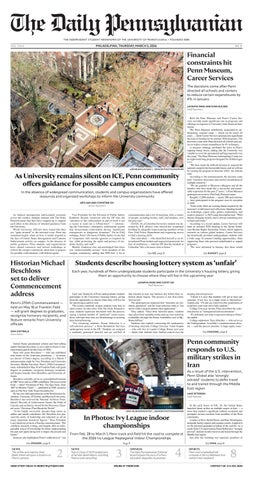
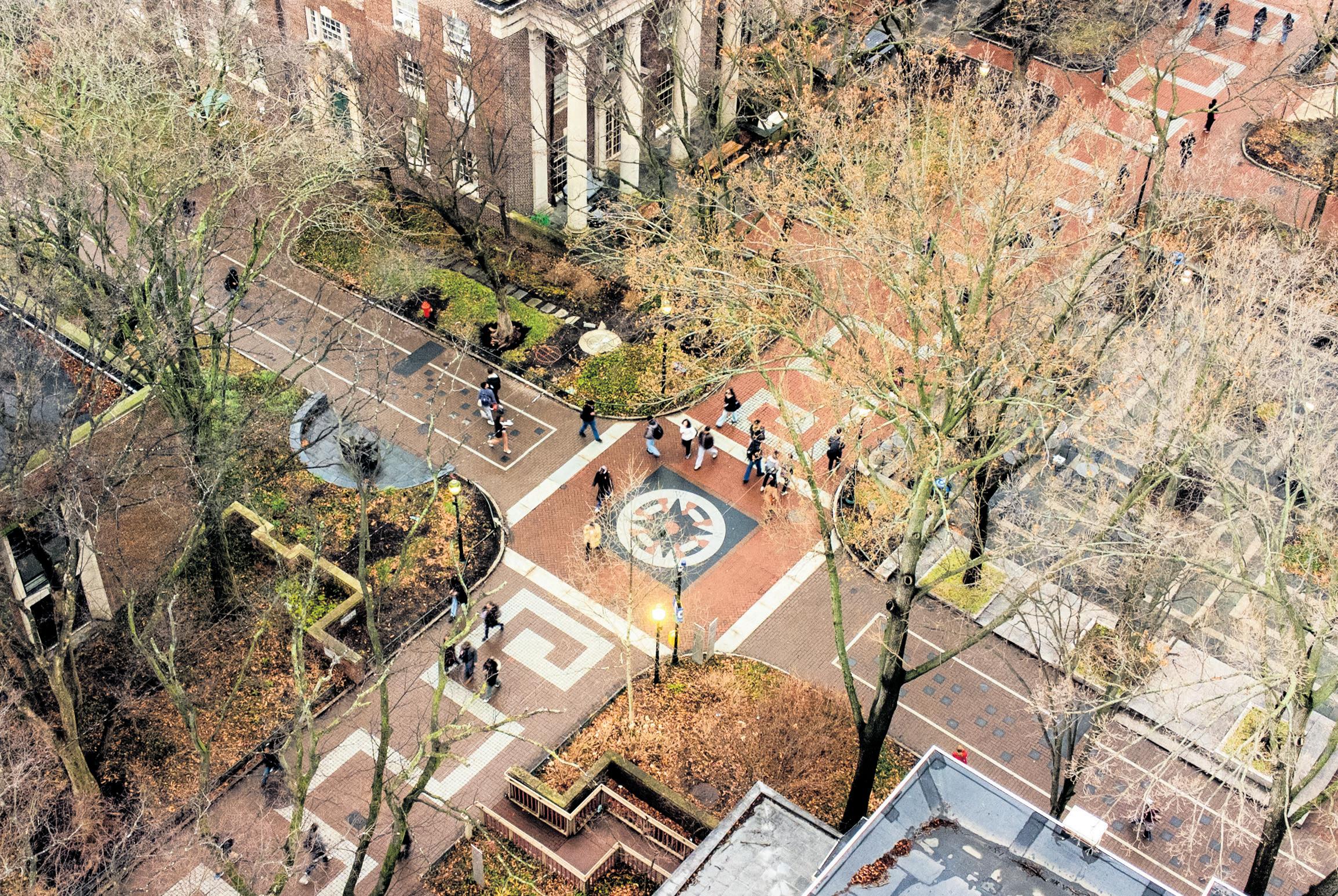
The cafe will be located near the Penn Bookstore and the Inn at Penn, occupying the space previously held by Bluemercury. At approximately 3,500 square feet, the University City storefront is expected to be one of the brand’s largest cafés in the United States.
“We’re thrilled to have Blank Street join the SHOP PENN retail district, creating a destination for students, faculty, staff, and our surrounding neighbors,” Ed Datz, Penn’s executive director of real estate, wrote in the March 3 press release.
Founded in New York in 2020 by Vinay Menda, Issam Freiha, and Ignacio Llado, the company began as a single battery-powered coffee cart in Brooklyn before expanding rapidly across major cities. Today, Blank Street operates locations across the United States and the United Kingdom, with American storefronts in New York, Boston, and Washington.
HOUSING, from front page
She added that some students pay hundreds or even thousands of dollars to secure an earlier slot.
“I know Penn students are super savvy, [and] often very entrepreneurial, but I don’t think this is the best way it can manifest,” Allardice said.
“We are aware of concerns raised about students potentially exchanging or selling room selection timeslots,” the Residential Services spokesperson wrote.
“The Undergraduate Assembly recently shared similar feedback with our office.”
They added, “While we strongly discourage students from attempting to exchange or sell timeslots, no specific incidents have been formally reported to our office. We continue to emphasize expectations around participating in the process as intended.”
“We have housing like Gutmann, which is very, very nice, like a whole different quality of living,” Pinto said on the differences between available housing options.
“Then we have the towers, where there’s several reports of mice, rodents, and mold. It’s just very unfair.”
Pinto additionally expressed discontent with the two
ICE, from front page
“People have leaned on the fact that it’s not as common to see this happening on university campuses, maybe even in this area of America,” she said. “Seeing it happen at Columbia just makes it feel like all the more reason for us to worry about it at Penn.”
The student said that while she had confidence in DPS’ ability to respond to ICE, she did not know “if all students would agree.”
A separate student affiliated with Penn for Immigrant Rights, which aims to support “the local undocumented immigrant community,” told the DP that she has met with DPS multiple times regarding immigration enforcement. The student requested anonymity out of concern for her personal safety.
According to the PIR member, DPS dismissed the possibility of ICE presence on campus during one interaction with the group.
“Every conversation that I have with DPS, it’s always like, ‘They’re not gonna come on campus,’” she said.
BUDGET, from front page
unfortunately not be funds available for Summer 2026,”
Executive Director of Career Services Barbara Hewitt
wrote in a statement to the DP.
Career Services previously offered a general summer funding opportunity to any currently enrolled, full-time undergraduate students receiving financial aid from the University who intended to pursue a summer “internship, service program, or research opportunity.”
The Turner Schulman Human Rights Internship Award, which is still available for students, was established to support students pursuing internships that aim to “further human rights causes in the U.S. and around the globe.”
The award grants students up to $5,000 and is intended to cover “travel expenses, living expenses, and/ or other expenses related to the summer experience.” Career Services is responsible for the management and
“We’re excited to be getting closer than ever to the UPenn community,” Menda wrote in the press release. He added that the size of the University City café will allow the company to “invest deeply in design and bring an elevated, hospitality-forward experience to the neighborhood.”
The chain has gained popularity for its specialty coffee and matcha drinks.
“Their dedication to high-quality coffee fit seamlessly with our vision of offering goods and spaces that inspire, energize, and bring people together across the retail district,” Datz wrote.
The new café will join several other coffee options on and around Penn’s campus — including Paris Baguette, Haraz Coffee House, ELIXR Coffee, and Pret A Manger in Huntsman Hall.
Blank Street is the latest dining concept to join Penn’s retail district. Late last year, Insomnia Cookies opened a new location on Penn’s campus, and
stages in the room selection process. “By the time you’re filling a bed, your options are very limited,” she said.
The housing process presents additional obstacles for students with disabilities, a student who requested anonymity told the DP. The student — who participated in an earlier selection process because her roommate required accommodations — said that their needs were not met when choosing a dorm for the upcoming year.
According to the student, their group was told that they would have the option to select an accessible room in Gutmann College House. However, at their designated time slot, they found that no rooms matching that description were available.
“The only option left was staying in a high-rise, which would cost $4,000 more,” the student said. She added that it was “against ADA standards to make an individual with a disability pay a substantial amount more for something out of their control.”
According to Allardice, the problem of limited housing availability is exacerbated by the requirement that students live on campus through their sophomore year. She said that there is “a handful of sophomores who have the means to stay off campus in other apartments while technically still filling up a room.”
“There are students coming on exchange or upperclassmen who aren’t necessarily guaranteed housing,
DPS wrote in a statement to the DP that “the University has advised the campus community, including building staff and security, to contact Penn Police” should they be “approached on campus by any external law enforcement, including federal officials.”
A student leader who has been in direct communication with Penn administrators stated that DPS has an unofficial contingency plan in the case of student detainment, wherein they would notify the individual’s family — but only if they first make a report to the University. The student leader added that they were told DPS would not send out alerts if ICE was present on campus to avoid spreading misinformation and panic in the case of unverified information.
Jessa Lingel, a professor at the Annenberg School for Communication and an at-large member of the Faculty Senate Executive Committee, told the DP that she believes “there isn’t anything that Penn is doing that will make it less likely that ICE shows up.”
“As far as I have been informed, ICE has not visited Penn’s campus,” Lingel said. “That just hasn’t happened yet.”
Lingel added that “one of the most frustrating
distribution of these funds.
According to the Career Services website, though, the upcoming program’s “funding is limited and we expect to be able to award 2-3 students.”
While the decrease in funding will impact students, Hewitt emphasized that Career Services still offers many other means to connect students with opportunities.
“Career Services remains committed to helping students explore other sources of funding at Penn or externally, for example, by maintaining a Penn Sources of Funding page as a resource for students,” Hewitt wrote. Penn first implemented “proactive financial measures” in March of last year, pausing all hiring “except for critical positions, student workers, and those funded by active grants or restricted sources.”
In March 2025, 1968 Wharton graduate and President Donald Trump signed an executive order to eliminate the Institute of Museum and Library Services, threatening Penn Museum’s federal funding. In fiscal year 2024, the IMLS awarded the Penn Museum over $1 million.
Taco Bell opened a new storefront in University City. The Daily Pennsylvanian analyzed cafes on and around Penn’s campus in December 2025, and found that shops in the area range from independent businesses to large chains. The 1920 Commons Starbucks location is the largest of the surveyed locations by far, with 150 seats available — nearly double the nextlargest location.
but they would like to live on campus,” she added. “Those opportunities are taken away from them by people who are obligated to fill a room but don’t even stay there.”
Pinto said that she would prefer a model similar to the first-year housing process, in which students rank their preferred houses and get assigned randomly, rather than selecting from available housing at a predetermined time. “There has to be a better way to fix our housing system,” she added.
According to the Residential Services spokesperson, approximately 80% of first-year students receive one of their top three housing choices. They did not share similar data on the satisfaction of sophomore and upperclassmen housing participants.
“The assignment and selection processes are structured to provide equitable access to available housing,” the spokesperson wrote. “Later in March, Residential Services will host focus groups to gather student feedback and identify opportunities to improve the Room Selection process. Students who participated in the selection process will receive an email invitation to participate.”
“Some of us pay, let’s say, almost a hundred thousand dollars in tuition,” Pinto said. “To be living under these conditions, it’s just not adding up.”
things” about Penn’s response has been that “information tends to come really piecemeal” and only after the University “has all its ducks in a row.”
“It sometimes makes it feel like there aren’t really people in charge,” she said. “Students sometimes think faculty know what’s happening, but I get the same Larry Jameson emails you do — that’s how I know what’s happening. It was like that during COVID, it was like that during the encampments, and it’s like that now.”
Lingel added that she hopes to “see a representation of humanity” from the University.
“We’re talking about actual human lives at stake and people’s families and communities,” Lingel said. “I would love to see that kind of communication from leadership, rather than … clearing everything with the Office of General Counsel before letting information trickle down to the people who work and study at Penn.”
Several Penn students and organizations voiced concerns about ICE to administrators at a Feb. 18 University Council meeting. During the open forum, a representative for the Penn Muslim Students Association requested greater clarity from the University, “not only in moments of confirmed enforcement activity, but now.”
At the meeting, a representative for the Latinx Coalition stated their hope that the “University can start showing us it’s proud of its community and demonstrate that it cares about us in proactive ways.”
The PIR member stated that previous incidents of ICE around Philadelphia have made her “terrified.”
“There’s been a number of weeks … that I’ve been unable to attend class,” she added. “Last January, especially, I missed a little more than a few weeks of class because I was scared they were going to come knocking at my door.”
The PIR member added that she no longer makes trips to the grocery store by herself and that “so many” of her friends have done the same.
“These issues are not only what are happening to me, but I’m just one example of so many students that I know are going through these issues,” she said.
She stated that the Columbia student’s detainment raised concerns about how the Penn Directory — which includes housing information for students on campus — could be deployed.
The platform’s website states that Penn community
members are “free to decide which information to display based on their personal privacy needs.” Users must be signed in with their PennKey credentials to view the information.
The PIR member said that she had taken her housing information off the directory, though it was “very hard to do so.” She also “tried pushing” Penn’s University Life division to “spread the word.”
“Few people know that that is actually a thing, that that can be used against you,” she said, adding that PIR had to “figure everything out” due to a lack of direction from the University.
“We are students, above all, not University workers,” the student stated. “This has been an issue that we brought up multiple times to the University. We should not have to use our trauma to teach you to be human beings.”
Since February 2025, PIR has hosted over five Immigration Know Your Rights Trainings with trained immigration attorneys. The PIR member said she personally created a “Know Your Rights” flyer with information on how students can respond if detained by ICE.
The Penn Law Immigrants’ Rights Project held a similar training last month in collaboration with the Immigration and Asylum Law Club and International Refugee Assistance Project.
A College senior — who requested anonymity for fear of retribution — also emphasized Penn’s responsibility to “work with our community members.”
“We have to tap into community resources and be willing to collaborate and really be part of the city,” they said. “What is Penn also doing to support other organizations in the city that are fighting against ICE?”
The College senior added that the University has an obligation to protect students by “truly doing everything to not let ICE on our campus.”
The PIR affiliate stated that “institutionalizing these avenues of support the way that they do for other populations” is necessary for future generations at Penn.
“In six years, when something bad happens again, the same population is going to have to fight with Penn all over again,” she said. “There’s no reason for students to be doing something the University does. That should be something the University does.”
PHOTO COURTESY OF SHOP PENN
A rendering of the cafe’s new location at 3603 Walnut St.
JACOB HOFFBERG | STAFF PHOTOGRAPHER Rodin pictured on Feb. 1.
Where the Class of 2025 landed after Penn, by the numbers
Using Penn Career Services’ annual Post-Graduate Outcomes report, The Daily Pennsylvanian tracked the employment, salaries, and postgraduation education plans for Class of 2025 students
JACK GUERIN Senior Reporter
The job market for Penn’s Class of 2025 featured familiar destinations — finance, consulting, and graduate school
— but not the pay bumps seen in recent years, according to Career Services data released last Friday.
The data — included in Career Services’ annual PostGraduate Outcomes report — tracked the employment, salaries, and post-graduation education plans for Class of 2025 students. For the first time in years, both the mean and median starting salaries saw a slight decline.
Executive Director of Career Services Barbara Hewitt wrote in a statement to The Daily Pennsylvanian that outcomes information is “incredibly important.”
“It allows prospective and current students to have a better understanding of the career options available to them as a Penn graduate, learn what opportunities students have pursued by major, understand the range of compensation for various positions, and discover when offers are typically extended in different industries,” Hewitt added.
For the Class of 2025, the median starting salary decreased by 1.5% from the previous year, going from $105,000 to $103,418 and the mean starting salary decreased marginally from $101,175 to $101,125.
The vast majority of students, 72.5%, entered full-time employment roles after graduating. Another 18.5% decided to continue their education.
5.2% of graduates in the report were seeking employment, and 1.1% were seeking continued education. Part-time employment was at 2%. Only a few students who graduated last year were not seeking employment
PWH’s leadership released a statement responding to 1968 Wharton graduate and President Donald Trump’s strikes on Iran that morning.
PWH Executive Director Marie Harf, Faculty Director Michael Horowitz, and Penn Washington Director of Global Policy Programs Daniel Schneiderman were quoted in a social media post on official PWH accounts.
“This is a war of choice that puts Americans and our friends in the region in danger,” Harf wrote in the post. “With little public debate, President Trump has taken the nation into a military conflict unlikely to produce an Iranian government that is more pro-U.S. or respectful of its people.”
In a conversation with The Daily Pennsylvanian, Harf emphasized that if Trump’s goal is “a democratic, free Iran,” there is “no evidence in history” that military campaigns which overthrow regimes lead to “that kind of outcome.”
“Overthrowing the Taliban, overthrowing Muammar Gaddafi, and overthrowing Saddam Hussein — none of those resulted in thriving pro-U.S. democracies,” Harf said. “The best way to transition from authoritarian government to a democracy is for a homegrown movement of people inside the country, not with the military force from outside, but I don’t even know that that’s the administration’s objective.” Schneiderman — a former senior coordinator for Afghanistan, Department of State official, and National Security Council member — warned in the PWH post that the “follow-on risks” of the conflict “are myriad.”
“The war is already expanding regionally and enmeshing U.S. partners; this will drive a cycle of strike and counter that will be hard to break,” Schneiderman wrote.
“I’m really skeptical that military force is going to achieve the desired effect that the administration is going for, to ensure some kind of democratic transition in place,” he told the DP. “In fact, the president said that this is the moment for the Iranian people to rise up and take their own government into their own hands, which also implies that the United States has limited political and military will to take action to try to make that happen.” He added that he doesn’t “think there’s any question that Iran’s regime and the elements of the IRGC that control Iran’s military forces have done a significant amount to imbue instability across the region.” Still, Schneiderman expressed concern with the United States’ “resources to execute the campaign,” such as “air assets, carrier strike groups, intelligence collection platforms, and time and attention of senior leaders.”
While Penn and its organizations, institutes, schools, and official programs are bound by the University’s policy of institutional neutrality, Penn Washington Executive Director Celeste Wallander told the DP that the “opinions and expertise” of those at the program “are their own” and “do not reflect any policy of Penn
SPEAKER , from front page
country’s 250th anniversary of independence,” adding that “we look forward to his perspectives and guidance for the centuries ahead.”
Over the course of this year, Penn and the city of Philadelphia have planned a series of performances, conferences, and exhibitions to celebrate the 250th anniversary of the signing of the Declaration of Independence. Beschloss described himself as “not by nature a very
— representing 0.3% of total known outcomes — or were in military service and volunteer roles, each of which encompassed 0.2% of surveyed students.
In a statement to the DP, Career Services said it collected direct responses from March through November of last year, but that it also collected supplemental data on the outcomes of nonrespondents through websites such as LinkedIn.
For the Class of 2025, the response rate was 54% and the knowledge rate — which comprises both survey respondents and outcomes found through other sources — was 74%, for a total of 1,938 known post-graduate outcomes.
Career Services defines “first destination” as the “primary post-graduation destination for Penn graduates within the first six months after graduation.” Each reported graduating class is based on the academic year, meaning the Class of 2025 consists of students who graduated in August 2024, December 2024, and May 2025.
Starting salaries showed significant variation across schools. For the Class of 2025, the school with both the highest median and mean starting salaries was the School of Engineering and Applied Science, with a median salary of $122,500 and a mean of $132,508. SEAS has held the top spot since 2021, the first year with available first-outcome data.
The Wharton School followed SEAS with a median of $110,000 and a mean of $111,819. The College of Arts and Sciences had a median salary of $88,000 and a mean of $85,814, while the School of Nursing had a median of
Washington on any issue.”
Harf — who also moderated a PWH rapid response panel regarding Iran on March 3 — said that the “bread and butter” of PWH is bringing “current events to our community.”
The panel focused primarily on the intricacies of the conflict, as well as the possible next steps for the region. Schneiderman spoke on the panel, along with PWH non-resident senior advisor Hussein Banai and Dalia Dassa Kaye, a senior fellow at the Burkle Center for International Relations at the University of California, Los Angeles.
Kaye compared Trump’s Iran strategy to U.S. action in Venezuela.
“The Trump administration was perfectly fine for an outcome in Venezuela that was not a democratic and free Venezuela,” Kaye said. “It did not bring in the opposition and elections … and nothing else has changed.”
Other panelists spoke on the succession plans following the death of Supreme Leader Ali Khamenei, scenarios for regime change, and foreign policy.
That same afternoon, Penn’s Center for Ethics and the Rule of Law hosted a discussion on the conflict in terms of military response, international law, and Israeli involvement.
“As members of the voting public, it is important for the Penn community to be aware of the military operations that our government is engaging in in our names,” CERL Faculty Director and professor Claire Finkelstein wrote to the DP. “This could be a protracted military conflict, and the impact on our lives could extend to posterity.”
Finklestein — who also moderated the panel — spoke with retired General Joseph Votel, former Israel Defense Forces legal advisor Ben Wahlhaus, and Texas Tech University professor Geoffrey Corn about how the conflict related to each of their specialties. Votel covered the military aspects, Wahlhaus the Israeli aspects, and Corn the legal aspects.
“What CERL wants to achieve is to better inform the public and the Penn community about events in the Middle East connected with Operation Epic Fury,” she wrote. “The way we achieve that is by leveraging CERL’s extensive military and national security expertise to provide commentary about ongoing developing events.”
During the panel, Corn emphasized that “our situation would be stronger if the War Powers Resolution were actually complied with by its terms.”
Wahlhaus, who is currently located in Israel, mentioned that he may need to leave the call to seek shelter if there is an attack.
“Since the operation started on Saturday, every few hours we’ve had siren alerts,” Wahlhaus said. “We get them directly to our phone, a blaring noise and gives a bit headway before the rockets or the armed drones reach Israel, and we’re all in close proximity to bomb shelters because the entire country has come under attack from Iran since the operation started.” Iran’s airspace closed following the initial bombings, and Penn Global issued extended travel guidance.
partisan person” and claimed he was a registered Independent in a 2022 interview with Politico.
“I am deeply conservative in terms of preserving institutions of democracy,” he said at the time.
“But if you and I had talked earlier, and we had been told that in the near future, democracy was going to be in danger and a President might be eager to tear apart just about every major institution of democracy that you care about, including free and fair elections as well as the rule of law — would you speak out?” he added about 1968 Wharton graduate and President Donald Trump.
“I would have said yes, I certainly would.”
According to the announcement, four other individuals will join Beschloss in receiving honorary degrees: Carolyn Bertozzi, James Corner, Claudia Goldin, and Ann Hobson Pilot.
Bertozzi — who received a Nobel Prize in chemistry in 2022 — founded the field of bioorthogonal chemistry and is currently a professor at Stanford University. She will receive an honorary doctor of sciences degree.
She is also an elected member of the National Academy of Sciences, National Academy of Inventors, American Academy of Arts and Sciences, and National Academy of Medicine. Corner, a 1986 Penn graduate and Stuart Weitzman School of Design professor emeritus — and the visionary behind New York’s High Line transformation — will receive an honorary doctor of arts degree.
Penn students wait to graduate on Franklin
$85,280 and a mean of $88,414.
Like in past years, roles in financial services and consulting were the most popular for graduates. Financial services and consulting jobs accounted for 34% and 17% of known employment outcomes, respectively. Among these, the most common specific employment area was investment banking and brokerage, which made up more than 20% of employment outcomes in 2025. The most popular employers for the Class of 2025 were also primarily companies in consulting and financial services,
“As of March 2, 2026, Penn travelers are strongly advised to defer travel to and transit through the Middle East region until further notice,” the webpage reads. “Penn-affiliated undergraduate travel to the Middle East is currently prohibited until March 15, 2026, at which time this stance will be reassessed.”
A request for comment was left with a Penn Global spokesperson.
In a statement to the DP, the board of the Persian Students Association at Penn wrote that the group “wants to make clear it stands with the people of Iran.”
“On the one hand, we feel a profound sense of relief that the central figure associated with decades of repression is no longer in power,” the board wrote. “Yet, at the same time, we worry seeing our hometown in smoke and our loved ones under threat.”
The board noted its belief that “Iranians deserve peace, freedom, prosperity, and a future without fear” with free speech, civilian protections, and removal of censorship. Engineering junior and the group’s Cultural Vice President Sasan Sedighi also told the DP that the club organized a “protest” at Penn for the “same reason.”
The rally, where nearly 100 demonstrators gathered on Jan. 16, stressed the need for increased awareness on Penn’s campus surrounding recent protests in Tehran which have faced harsh retaliation from the Iranian government.
Penn international relations lecturer Farah Jan also described the circumstances of the bombing in an article for The Conversation. She specifically connected the current action to the “Shock and Awe” campaign in Iraq — which had the “explicit aim of regime change,” but failed to produce its “political objective.”
Outside of the political and military realm,
In 2023, Goldin received a Nobel Prize for her research into women’s labor market outcomes. Now a professor at Harvard, Goldin previously taught at Penn for over a decade. She has also served as president of the American Economic Association and Economic History Association. Penn will grant Goldin an honorary doctor of laws degree.
Pilot is a renowned harpist who played with the Boston Symphony Orchestra for 40 years. Set to receive an honorary doctor of music degree, Pilot was the first Black principal player to play for the Boston Symphony Orchestra and the first Black female principal player in a major orchestra. Her work and life have been featured in two documentaries: “A Musical Journey” filmed in South Africa and “A Harpist’s Legacy, Ann Hobson Pilot and the Sound of Change.”
Weitzman Prof. Masoud Akbarzadeh
SON NGUYEN
PHOTO COURTESY OF STEPHEN VOSS Penn will grant Beschloss an honorary doctor of letters degreet.
Schneiderman also mentioned the potential effects of this conflict on global markets.
“I think there are real potential energy market implications, and as a result, global economic implications, especially if this war drags on for several weeks or even into several months,” he added.
SANJANA JUVVADI | SENIOR PHOTOGRAPHER PWH pictured on Feb. 12, 2025.
IRAN, from front page
At Penn, we’re no strangers to thinking about our education as an extraordinary financial burden. With an estimated cost of $95,612 for those living on campus this academic year, Penn’s price tag soars far above America’s median annual income. For many, that number speaks louder than the student experience ever could. If Penn really costs that much, it had better be worth it in the minds of those who shell out such high prices, right?
The unintended consequence of such a high price is that students see time at Penn as a product — not a privilege. With that notion of consumership comes a sense of entitlement that students at a university are not rightly due. In one common example, a Sidechat user expressed their dismay at the fact that professors have the right to mandate attendance at their class when they “pay $90k to go here.” Here, the perspective that a student is buying something expensive from Penn collapses the distinction between education and transaction. It reframes the classroom as a service being rendered and the professor as simply an employee whose authority derives not from expertise, but from customer satisfaction. Ultimately, universities are not vendors and students are not clients. Yet, the cost of attendance


at Penn has necessitated this commodification. The sense of irreconcilable financial burden warps the students’ perspective of their education’s value. Any moment spent in class, studying, or even living at Penn must be justified financially, not just through its own pedagogical merit. Education isn’t supposed to be assessed by its return on investment. Rather, it is to be experienced and used as a tool to better oneself and, in turn, better the world. This concept is lost at Penn — our University’s price tag makes it impossible. This vicious cycle is reinforced every time a professor reminds their class that “someone” paid a lot of money for them to be here. You can’t miss class because that costs someone money — a parent, donor, or scholarship fund invested in you — and you can’t let them down. All of these examples feed into the idea that education is a transaction rather than a journey. They tether every lecture to a dollar amount, subtly suggesting that the primary obligation of a Penn student is to maximize the monetary value of their seat in the classroom. Penn students should see themselves not as customers extracting value but as participants in a scholarly community
entrusted with opportunity. The point of being here is not to win a four-year costbenefit analysis. It’s to be challenged and transformed by an education that can’t be replaced with the money you would’ve spent on tuition otherwise.
None of this is meant to say that it’s not worth investing in a Penn education. Our University is incredibly well resourced and produces some of the world’s most successful alumni. In reality, Penn has a very strong return on investment. Yet trying to justify the investment in that way while you are still a Penn student is misguided and diminishes the student experience.
After all, most students are not even making that financial investment. While $90,000 is a lot of money, not everyone pays that, and those who do usually have families that can afford to do so without a major burden. Penn’s financial aid office meets 100% of demonstrated financial need. While the merits of this claim can be contested, at least to some extent, Penn students are seldom going into debt or facing extreme financial strain to attend. That should, in theory, help us resist the commodification of our education. Regardless of the actual cost, Penn students invariably invest a lot of themselves
Does Penn care about us?
No student should be left behind
When was the last time you saw your peer advisor or your Peers Helping Integrate New Students leaders? We never really did to begin with. Since arriving at Penn, we’ve pondered over how Penn provides students with structure. But the answer we’ve come to terms with is actually that it doesn’t. “War flashbacks!” is how most of us typically describe New Student Orientation. For the first week after move-in, we found ourselves floundering, unsure of which events to go to, who to approach, and frankly, where we were. Sure, the NSO gala at the Philadelphia Museum of Art was fun, but college should begin with more than a glorified prom night. Beyond that, the rest of NSO felt more like a rite of passage, a suffering to be endured. By the end, we were exhausted from having had so many frivolous conversations, filled with Instagram-sharing and major-reciting, not enthused by an abundance of budding friendships.
That same attitude carries throughout your first year, when you are joining organizations that “haze” you for the sake of promoting bonding between your peers.
Most students do not have any sort of reliable connection to Penn as an institution. Rather, your sense of stability is completely dependent on the organizations you are part of. For example, Wharton students have first-year cohorts from the moment they step onto campus until the end of their freshman year where they literally take classes together. But for other students, they are left to forge their own paths, making connections wherever they can and figuring out where their classes are by themselves. At other similar schools like Yale University, students have a heavily structured first-year experience set up by the institution. They’re randomly sorted into residential colleges, connect with freshman counselors throughout the year, and are required to participate in Camp Yale programs. At Penn, we have one week of first-year orientation, an uncomfortable mandatory consent circle, and optional pre-orientation programs that are poorly advertised to students and feature unnecessarily long applications. In fact, most forms of connection or community at Penn have a high barrier to entry, when groups often evaluate artistic
talent, technical skill, and even personality. Students who can play the flute, are experienced public speakers, or possess the outgoingness to small-talk strangers have the upper hand. Those who can’t compete suffer devastating ego death in their first weeks of college. Perhaps this is exactly the kind of introduction to Penn that new students should expect. But there is something deeply dysfunctional about this kind of first-year culture — one that requires students to prove their worth through competence instead of acknowledging each student’s inherent value.
It’s not just these first-year events that widely shape your experience at Penn. It goes as far as your entire underclassman experience, when there is a widely different quality in academic advising. We can all acknowledge that the quality of your advisor can shape your future in either highly positive or negative ways. As underclassmen, some students have great experiences with their pre-major advisors where they are given high levels of support, sent encouragement, and made aware of valuable opportunities. Meanwhile, others witness pre-major advisors struggling with the literal technology
for connection.
into their education. Four years is a lot of time, and graduating takes a lot of work. Student satisfaction is important. But satisfaction should stem from intellectual growth and meaningful engagement, not from the feeling that one has successfully optimized a purchase. If we want to protect the integrity of the undergraduate experience, we can’t let the looming concept of the $90,000 annual price tag get in our way. Yes, you have to go to class no matter how much you pay. No, you’re not your professor’s boss. And, most importantly, the value of Penn cannot be captured by a return on investment. When we stop asking whether our efforts are “paying off” and start asking whether they enlightens us, we reclaim the purpose of being here.
Editorials represent the majority view of members of The Daily Pennsylvanian Editorial Board who meet regularly to discuss issues relevant to the Penn community. This body is led by Editorial Board Chair Jack Lakis and is entirely separate from the newsroom. Questions or comments should be directed to letters@thedp.com.
that lifts the registration hold after a brief and detached discussion of their first-semester course plan. In general, it’s easy to feel like there are no faculty members or upperclassmen who genuinely know you or care about your success if it doesn’t benefit them. For many, this comes in stark contrast to high school, where even massive public high schools manage to make it feel like students and teachers are working toward a common goal. But here, most students don’t feel that structured recognition from Penn as an institution and are instead expected to seek out those relationships themselves.
Penn advertises itself as a University that equips its student body with the tools to make their own success. But in reality, that attitude is Penn’s way of absolving itself of any responsibility to foster community. If Penn wants to “enable students to be who they are” and help them “grow by interacting with others,” they ought to create actual spaces for everyone to do so, regardless of their talents or backgrounds. Mentoring resources and first-year experiences should be available to all students, not just those in a specific school. This shared community can look like offering a cohort program to all first-years, requiring them to participate in a robust pre-orientation program, or standardizing faculty mentoring. We acknowledge that Penn tries to create experiences where academic security and personal connections can be formed on campus. However, Penn must start showing its students that it genuinely cares about what happens to us after admission — not just academically or professionally, but personally. Without any sort of University intervention or initiatives, we’re left with our first-week NSO group’s Instagram accounts, not friendship.
DEW UDAGEDARA is a College firstyear studying neuroscience from Long Beach, Calif. His email is dewdunu@ sas.upenn.edu.
LINDSAY MUNETON is a College junior studying sociology from Bergenfield, N.J. Her email is lmuneton@ sas.upenn.edu.
KARA BUTLER | DESIGNER
Columnists Dew Udagedara and Lindsay Muneton examine how Penn’s unstructured transition to college leaves students grasping
EULINA JI | DESIGNER
SAC needs to change
EDENLIGHTENED | How SAC’s funding gridlock is leaving clubs stranded
There is this adage that “a team is only as strong as its weakest link.” In the case of Penn’s student group infrastructure, the Student Allocations Commission has become that weak link, one whose failures ripple outward to affect hundreds of organizations and thousands of students. The Student Activities Fair has always been a staple of student life here at Penn. Clubs table on Locust Walk, making their case to the students walking by, hoping to attract their attention. This event is not only a core part of the rhythm of Penn, but a vital part of the recruitment strategy for student groups, many of which structure programming around the fair. Given their track record, nobody expected SAC to pull off a well-organized fair this semester, but the extent to which they botched the execution was beyond anyone’s wildest presumptions. Throughout the first week back on campus, clubs received no information about when the Student Activities Fair would be held. Those who asked were met with a response from a similarly unaware Office of Student Affairs, which told clubs, “SAC should reach out directly when dates/times/signups are available.” By Jan. 23, the entire event, which was scheduled to be held over the upcoming weekend, was called off indefinitely. Beyond the lack of communication in the early weeks about a date, the only reason many student groups even found out about the fair’s supposed date

was because of an email notifying them of its cancellation. Oh, the irony. A month later, SAC announced that funding awards for their seventh funding round were to be delayed until the backlog from the previous three funding rounds could be cleared, putting every single event happening after March 16 in jeopardy. Since the start of the school year, SAC has centralized funding awards into different rounds where student groups submitted applications to receive financial support. Given the backlog, events that were supposed to have their funding amounts released on the evening of Nov. 13, 2025 — a full three and a half months ago — have already either taken place under severe budget cuts or been scrapped entirely as a result of these delays. If the past rounds are anything to go by, funding awards for round seven will be issued at the same snailish pace, and every treasurer and president can only hope the previous semester’s issues don’t repeat themselves. It is not lost on anyone that the funding cycles are not an easy task to handle. SAC is composed of students who have schoolwork to deal with and other engagements. These are not full-time bureaucrats who devote every hour of the workday to handling the financial applications of over 200 constituents. But the issue remains: With so much at stake, why place all this responsibility on an institution that has already shown itself incapable of overseeing the increased
workload?
The current structure is unsustainable. When funding decisions arrive months late, they cease to be funding decisions at all — they become postmortems. When communication collapses, trust follows suit. And when trust erodes, the very legitimacy of the institution begins to fray. Student organizations cannot operate on uncertainty. Contracts must be signed, venues reserved, and speakers confirmed. Delayed funding is not merely an inconvenience. Rather, it materially alters what programming is possible. If SAC is to remain the gatekeeper of student activity funding, then structural reform is not optional — it is necessary. Whether that means implementing rolling approvals, restructuring internal deadlines, or further decentralizing allocations to funding boards — like the Asian Pacific Student Coalition and the United Minorities Council — that have a track record of delivering at a quicker pace, something must change. Transparency about timelines, enforceable release dates, and contingency mechanisms for backlog must become the norm rather than the exception.
Strain is not isolated. It is borne by every club that cancels a speaker, every cultural group that scales back a celebration, every academic organization that cannot host a conference, and every student who loses an opportunity as a result. A team is only as strong as its weakest link. If Penn values its vibrant student life as
Penn is ignoring the most dangerous cases of hazing
UNHINGED | Students can’t rely on Penn to address the secret everyone knows
Huntsman Hall, the hub of the Wharton School and its trench coat-donning, corporate-speaking attendees, sits just blocks away from Penn’s various fraternity rows — yet the two places might as well belong to different worlds. Occasionally, however, those worlds collide in a bizarre cinematic crossover. Glance up at the right moment and you might spot a pledge streaking by, and now you’re the unwilling extra in a late-night Christian Grey subplot that the University’s administration insists doesn’t exist.
Roughly a quarter of Penn undergraduates participate in greek life. While the specifics differ between organizations, it’s common knowledge that hazing is a routine part of pledging for many fraternities and sororities. Penn’s affiliates already show a willingness not to take themselves seriously, and people who
ELLIE
Senior columnist Mritika Senthil describes how Penn’s latest hazing report stops short of holding campus groups accountable.
accept degradation as a price of belonging are certainly not above replicating it outward. Due to Penn’s history of willful ignorance of criminal activity on campus, our resident pledgemasters and “new member educators” don’t need to fear any real consequences. Of course, publicly, the University champions hazing prevention initiatives (any student organization leader who sat through hours of anti-hazing training sessions in August can attest to that), but privately, Penn’s administration is reluctant to actually drop the hammer on its biggest offenders.
In January, Penn’s Center for Community Standards and Accountability released last year’s hazing transparency report, which documented only two violators: Alpha Iota Gamma, a pre-health fraternity, whose pledges were zip tied together for a routine game of champagne and shackles, and Lotus, an off-campus philanthropic society, that required new members to participate in “mandatory overnight activities.” Neither case involved registered social fraternities or sororities, and the infractions were relatively minor when compared with the more serious practices rumored to occur across campus.
As part of its sanctions, CSA required Lotus to “pursue a process of formal recognition” through either the Office of Fraternity & Sorority Life or the Office of Student Affairs. Aside from the Lotus case, there’s no public evidence of Penn mandating unrecognized societies to seek recognition in recent years. Yet the most “high-profile” unrecognized organizations, often known for drawing wealthy or well-connected members, are frequently discussed as being among the worst offenders.
Registered fraternities and sororities on campus aren’t exempt from allegations of hazing, either, and they can’t fall back on plausible deniability when many of us have seen pledges running naked across campus. In one of the only instances in which hazing details surfaced beyond hearsay, The Daily Pennsylvanian reported on the Phi Kappa Psi fraternity’s new member education — which allegedly includes binge drinking and eating — after murder charges were filed against chapter alumnus and 2020 graduate Luigi Mangione.
Still, with only back-alley evidence in circulation, the University was able to sidestep the allegations, leaving the fraternity more vulnerable to sanctions for oversized parties than for the hazing itself.
On the subject of hazing, though, I realize that much of what we see day to day doesn’t look nefarious. Some of my friends in sororities have had prospective brothers publicly serenade them — a pledging requirement that’s awkward at worst. But while officially unverifiable, the frequency of more sinister accounts suggests that hazing practices at Penn remain far worse than what public disclosures lay out.
I recently spoke with Paige Wigginton, executive director of the CSA, to learn more about how the University responds to hazing. She explained that whether a hazing allegation leads to a finding depends on “the totality of information available” and “whether that information sufficiently demonstrates a policy violation.” Her description of Penn’s safeguards sounds like what you’d expect at any peer institution, yet I struggle to reconcile the intended effects of these policies with what many students say they actually see on campus.
I don’t see Penn confronting hazing head-on in
much as it
the immediate future. Under its current policies, the University can redirect us to reporting channels, yet hazing remains an open secret that’s unlikely to leave a paper trail behind. However, Penn is no stranger to intervening in student social life on the basis of suspicion alone. Just this academic year, University appointees have allegedly pulled fire alarms at parties they believed exceeded a 100-person capacity limit. The irony is that when it comes to hazing, administrators hinge disciplinary action on an imaginary paper trail, even as “hell weeks” continue to mark a pledge’s initiation into brotherhood.
Going forward, the University doesn’t need to raid yet another fraternity house’s basement — but it can make that basement an inconvenient place to run a hell week. The University knows when recruitment season arrives, and if it can hire appointees to monitor party size, it can send the same people to keep watch over new member programming during those weeks. And while those who participate in greek life may consent to its risks, the majority of us who remain unaffiliated are still subjected to its cultural norms: codes of silence, reputation hierarchies, and getting flashed at midnight by people you have to sit next to in lecture the next morning. So at the very least, keep talking about the abuses that pledgemasters want you to hide and administrators pretend not to know about. That’s the only way we can hold the University accountable.
MRITIKA SENTHIL is a College junior from Columbia, S.C. Her email is mritikas@upenn.edu.
PIRTLE | STAFF PHOTOGRAPHER
EDEN LIU is a College sophomore studying philosophy, politics, and economics from Taipei, Taiwan. His email is edenliu@sas.upenn.edu.
CHENYAO LIU | SENIOR PHOTOGRAPHER Columnist Eden Liu argues that chronic delays, communication failures, and structural backlog within SAC have eroded trust and that urgent reform is needed to save what is left.
Turning points On Friday, Collins got Penn back in the game with a buzzer beater from beyond the arc to end the first half.
with strong performances in the high jump and shot put.
The Belarusian was firmly in second behind Cornell’s Paula-Marie Brown until the final event: the 800-meter run. Maslouskaya wouldn’t give up so easily, finishing in a five-second personal record. As if that wasn’t impressive enough, Maslouskaya recorded personal records across every pentathlon event except her specialty — the high jump.
“This meet was the boost,” Maslouskaya said as she came off the track. “I just had to believe in myself … you have to believe that no matter what, you have to remember what you did before.”
“The power of imagination is so big,” Maslouskaya added. “You just have to be tough on the track, you just have to believe it more.”
Freshman sprinter Jailyn Milord was one of the brightest stars on the track, winning the 400-meter run. She currently ranks second in program history in both the 200 and the 400 meters.
but I wasn’t prepared still for what it actually felt,” Kam wrote. Senior multis/hurdles specialist Jake Rose added another Ivy League title to his resume as well, winning the heptathlon in a landslide after finishing first in five of the seven events.
Freshman middle-distance standout Joseph “Tiago” Socarras commanded the stadium from the moment he stepped on the oval for the preliminary rounds of the 1,000 meters. Socarras narrowly led the pack for most of the race during the finals, leading challengers by a stride or two until he began sprinting on the final lap. Although the Miami native took down his program record set at the season opener, he felt as though he had more to give.
With their season settled, the Quakers (16-10, 6-7 Ivy) looked onto greener pastures — bouncing back with an 89-66 victory against Dartmouth (10-16, 1-12).
“I know we fell short versus Harvard, but the Dartmouth game was one of our best games all year. So, I’m super proud of that,” senior guard Simone Sawyer wrote in a statement to The Daily Pennsylvanian. Let’s break down how the Quakers fared last weekend.
Tough beginnings Friday night marked a slow start for the Quakers.
Six minutes into the game, Penn was down 13-0. Junior center Tina Njike stole a defensive rebound and battled her way into the paint to win Penn their first points. While Penn struggled in a 3-2 zone, Harvard (16-9, 9-3) dominated the quarter, draining back-to-back three-pointers and jumpers. With a foul shot from sophomore guard Brooke Suttle and a three from sophomore forward Katie Collins, the first quarter ended with the Quakers down 17-6.
Penn continued to struggle to find its rhythm in the second quarter. Harvard guard Saniyah Glenn-Bello continued to heat up, hitting her third three of the game. The Quakers fought to penetrate the Crimson defense, but were forced to take heavily contested, unsuccessful shots. Nearing the end of the first half, Penn switched into a man-to-man defense, but the Quakers trailed by 15 points.
But one Penn player was unwilling to go into the locker room without sending Harvard a message.
On Saturday, the Quakers started the game with a different offensive tone, with Sawyer scoring five points in the first minute. Throughout the first quarter, Sawyer kept up her electric shooting, going 3-for-3 from the deep. The rest of the Quakers followed, with the team knocking down seven three-pointers in the first half alone, and some jumpers leading to a 31-13 lead to end the first quarter.
“I thought I played really hard both games,” Sawyer wrote to the DP. “I guess there’s some extra jump to ya when you know you are running out of time.”
The Quakers also dominated the Big Green defensively, sticking to their 3-2 zone, which proved to be effective against Dartmouth. Impressive defensive rebounding, blocks, and steals prevented the defensive shortcomings the Quakers faced when battling Harvard on Friday night.
Dartmouth struggled to find its footing at the beginning of the game, but the Big Green converted more shots into points during the second quarter. However, a less aggressive defense prevented Dartmouth from closing the gap against the Quakers.
Njike dropped 15 points before the first half ended. Her unrelenting protection of the paint gave the Quakers the space they needed to extend their lead against Dartmouth, ending the first half with a 51-32 lead.
Collins did not stop there. She started the second half by forcing a turnover from Harvard, which turned into two successful foul shots for Njike. The duo continued their game of hot potato, with Collins hitting a threepointer assisted by Njike, followed by Njike hitting a three assisted by Collins. Third time’s the charm, so Sawyer knocked down Penn’s third back-to-back three.
Momentum and man-to-man defense worked in Penn’s favor, as the Quakers started the second half with a 19-8 lead, making it a one-point game. All players contributed, with junior guard Mataya Gayle dishing out assists and Sawyer snagging steals and rebounds, while Njike and Collins led scoring efforts. Unfortunately, Penn’s run did not come without an answer. Crimson guard Alayna Rocco drilled a three of her own, disrupting the Quaker’s game. Harvard continued to thrive from the mid-range, ending the quarter with Penn down 50-39.
Saturday’s game against Dartmouth featured a similar scoring run, with both teams hustling to expand or close the scoring gap. After a slower start to the third quarter, Sawyer began to heat up the floor again with a tough layup. However, Dartmouth guard Zeynep Ozel had an immediate response, stealing away the ball from Gayle and scoring her own lay in return.
Despite the Big Green’s best efforts, the third quarter still ended with a 23-point lead for the Quakers.
A loss and a lesson
A hard-fought battle for an Ivy Madness spot ended due to offensive struggles and a seven-point final quarter. Turnovers were the team’s Achilles heel, and Harvard capitalized on steals. Strong performances propelled Harvard to a 60-45 win over the Quakers. As coach Mike McLaughlin told ESPN+ gametime reporters during halftime, Penn needed to play better offense to turn this game around.
The Quakers seemingly took McLaughlin’s words to heart, ending Saturday’s game with a score of 89-66, their highest-scoring game against a Division I opponent this season. Njike ended the game with a near double-double, putting up a career-high 19 points and eight rebounds.
Penn continued the game with a permanent home at the perimeter, scoring two more three-pointers to close out the game. Gayle continued to show up offensively for the Red and Blue throughout the game, contributing eight assists and 16 points.
Overall, the Quakers engineered a sweeping offensive victory against the Big Green, with four players — Gayle, Sawyer, Njike, and Collins — ending the night in the double digits.
Fresh off this weekend’s win, the Red and Blue will enter their last game of the season against Brown. They will be back home at the Palestra on March 7 to conclude the season.
“It’s bittersweet for sure,” Sawyer wrote about looking ahead to her last collegiate game. “I am going to enjoy these last few practices as much as I can with my best friends.”
“It feels amazing,” Milord said of winning an Ivy League title as a freshman. “All glory to Jesus, I wouldn’t be here without him … I feel confident, I’ve been working through a lot of mental things, but each and every day, I’m getting stronger, not only physically but mentally.”
Men Freshman pole vaulter Thomas Bucks claimed the first men’s title of the meet in an electric finish. Bucks ecstatically jumped off the mat after tying his personal best at 5.20 meters.
Bucks wasn’t the only freshman to show up and show out on the field. Freshman jumper Matthew Kathiravelu made his presence known early on Sunday morning, improving his personal best by over a foot and a half to win the triple jump. It was Kathiravelu’s first collegiate victory.
In his last year at Penn, senior high jumper and Singaporean national record holder Kampton Kam added another Ivy League title to his resume on Sunday afternoon.
“It’s bittersweet for sure because I had envisioned this being my last competition at practice many times and tried feeling what I needed to feel (the pressure and atmosphere)
finished second behind defending Ivy champion and conference record holder Anya Mostek of Harvard, she tied the previous pool record and lowered the program record with a scorching 52.15 finish.
The NCAA championships are on the table for Qin as well, as the sophomore swam under the national qualifying standard in both the preliminary and final rounds of the 100-yard backstroke competition.
“Going under the standard in [the] 100 back was very pleasant to see,” Qin wrote. “Having the possibility of swimming NCAAs in March is definitely an exciting moment, but it also reaffirms the excellent swim program that Penn has to offer.”
Junior butterfly/backstroke specialist Kate Levensten improved on her regular-season heroics with a secondplace finish in the 200 backstroke. Levensten, who is also a former DP staffer, swam an all-time career best just under the national qualifying standard to claim the silver.
Junior breaststroke specialist Kate Handley rounded out the individual All-Ivy honorees with a second-place finish in the 100 breaststroke. Handley finished eighth in the event in 2025.
The Weston, Mass., native also swam the breaststroke leg on the Quakers’ runner-up 400 medley relay. Qin opened with the backstroke leg, touching second before handing off to Handley. Handley was barely out-touched by 100- and 200-breaststroke champion Jessey Li of Yale, but a quick fly leg from sophomore Margaret Hu brought the Quakers back into contention for the crown. Program standout sophomore Kayla Fu anchored the relay, splitting 48.39 to take the silver.
“Honestly, [I’m] a little disappointed I couldn’t do more,” Socarras said. “I wished I could’ve run the 800 or [that I] could’ve run a faster 1K, but that’s the past, and I’m still pretty happy.” Socarras added more points on the board as a member of the 4x800-meter relay squad. Junior sprinter Nicholas DeVita led off the Quakers in a tight field, handing off to freshman distance runner Vinay Raman in seventh place. Raman moved with momentum, propelling the Quakers from last to first before handing off to senior distance runner Nicolas Pizarro.
When Socarras entered the fray, the Quakers were in second place by a few centimeters. By the time he finished, the Quakers led the field by three seconds. In the 4x400-meter relay, anchor and junior sprinter/ hurdler Ryan Matulonis pulled away at the line to secure a Quaker victory by over three tenths of a second. “It was exhilarating,” Matulonis said of his finish. “The 4x4 at Heps is always an amazing event. I had a bit of a disappointing afternoon, so I was coming out with a little vengeance. I think that helped me get the edge.” Junior sprinter Nayyir Newash-Campbell came away from Heps with his first indoor title in the 400 meters. Newash-Campbell is also the defending outdoor 400meter Ivy League champion.
“I feel really good,” Newash-Campbell
Fu, who won the 2025 Ivy League title in the 100 freestyle, also earned the bronze in the 100 butterfly after getting out-touched by Princeton senior Heidi Smithwick. Freshman backstroke/butterfly specialist Brianna Cong finished just behind Fu in a career-best 53.22. Although she didn’t earn All-Ivy honors, the Quakers have another likely contender at the NCAA championships in junior individual medley phenom Katya Eruslanova. Eruslanova earned her first points on the board with a third-place finish in the 200 individual medley, lowering her program record by two-tenths of a second. Eruslanova won the ECAC title and the Ivy League consolation final of the 200 individual medley last season. The Havertown, Pa. native had her strongest performance of the night in the 400 individual medley, where a strong freestyle leg propelled Eruslanova just under the national qualifying standard in a fourth-place finish. The 400 individual medley finals featured a particularly deep field, with back-to-back defending champion Eleanor Sun of Princeton breaking the Ivy meet record for the win. Howard and fellow divers will compete at Zone A Championships over spring break for a chance to qualify for nationals. Although Bergstrom automatically qualified for the NCAA championships at the end of the month, the official field — which may include other Quakers — will be announced later this week.
“That night displayed our year’s worth of teamwork, grit, and humility,” Qin wrote. “Even reflecting on it right now still feels so surreal, [it] almost feels like the whole week was just a dream!”
“I genuinely could not be more proud of everything PWSD has accomplished this year and how everyone was always willing to do whatever was best for the team,” Bergstrom wrote about her final Ivy League championship meet. “I made the greatest decision of my life coming to this school and choosing to be on this team.”
season-low 21-point half for the Quakers as a whole. For comparison, in the first half of its Jan. 19 matchup with the Crimson, Penn scored 26 points, tied for their second lowest in a half this campaign.
Harvard, which led the league in opponent points per game, opponent field goal percentage, and opponent three-point percentage since the start of Ivy play, did an exceptional job of staying in front of Penn’s drives and rotating when necessary. Their main remedy for Power was guard Chandler Pigge, a stout, stocky 6-foot-5 stalwart capable of limiting Power’s physicality. Penn found itself repeatedly mired in stagnant sets, recording just two assists in the period and trailing by 10 at the break.
“We stood around a little bit in the first half — the ball stuck,” McCaffery said. “If you do that against [Harvard], they’re going to give you problems.”
Then, in the second half, the Quakers returned to the principles that have made them one of the league’s most efficient offenses: ball movement, penetration, and pace. Penn scored on its first four possessions of the second half, emphasizing quick decisions and transition opportunities to reignite a dormant attack.
Sophomore guard AJ Levine was pivotal in Penn’s resurgence. When Levine decides he’s going to the rim, he attacks with supreme speed and intensity. This can occasionally get him into trouble (he missed two contested looks at the basket in the first half), but on the whole, it’s a trait that has served both him and Penn’s offense well. Here, he sees a lane he likes and doesn’t hesitate to take it, knifing to the cup and using his smooth touch off the glass to finish the play.
“The way he played at the start of the second half changed everything,” McCaffery said of Levine.
Power rebounded from his early struggles with a perimeter barrage, connecting on 3-of-4 from beyond the arc in the second half. Here, both his and Levine’s strengths are in action — Levine penetrates, bringing Power’s defender out
of his position, and when Levine dishes out, Power’s quick trigger is ready to fire. All that said, senior guard/forward Ethan Roberts was the story of the night. Roberts, Penn’s leading scorer of the season, notched 19 points per game in the first seven games of Ivy play but had averaged just 11 in the five games prior to Saturday. That downturn has primarily been the product of the rugged attention he’s received from opposing defenses, but there have also been times in recent weeks where Roberts has been more passive than usual. That was not the case against the Crimson. Roberts scored 17 of his 21 points after the break behind an attackfirst mentality, targeting the close and intermediate areas of the floor with his signature change of speed. Here, on one of the game’s most pivotal possessions, Roberts catches on the wing with the Dartmouth defense already scrambling after Levine corralled his own miss. Roberts doesn’t give them a second to breathe, freezing his defender with a ball fake and getting to the rack for a scooping finish.
“Just trying to be aggressive,” Roberts said of his secondhalf approach. “That’s it. Just trying and playing to win.” There are only a handful of Ivy League players capable of taking over a game in that fashion. Two of them play for Penn. That alone gives the Quakers a legitimate chance at their first trip to March Madness since 2018. With the tournament field set, Penn is guaranteed to see Harvard again when the teams face off in the first round on March 15. Clinching a spot in the conference dance was an emotional moment for a program that has made significant strides in one season under McCaffery. But when the ball tips off in Ithaca, N.Y. two weeks from now, the Quakers won’t be satisfied with playing for the conference crown. They have what it takes to claim it.
KENNY CHEN | SENIOR PHOTOGRAPHER
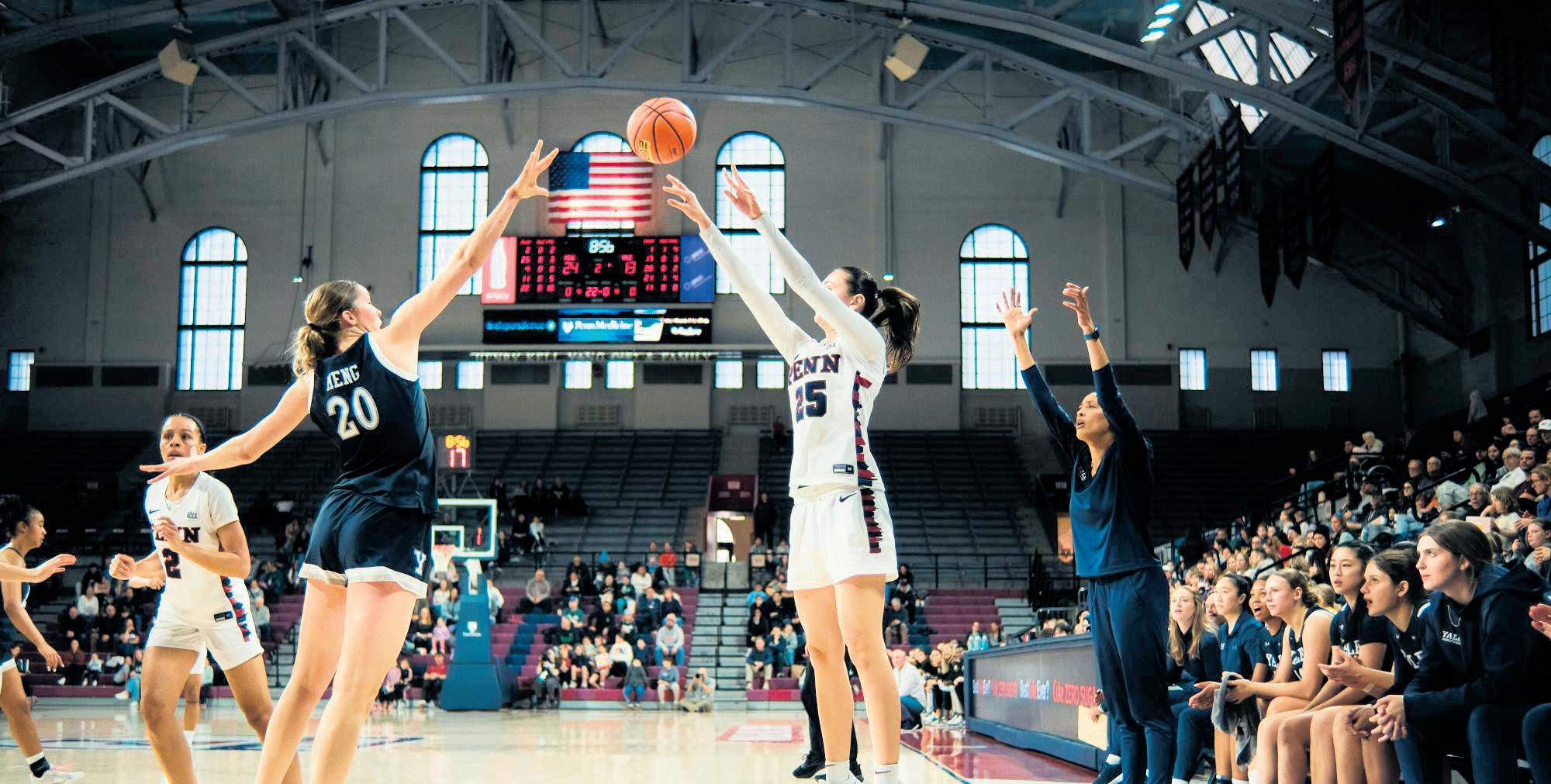
Collins shot a three-pointer in a game against Yale on Feb. 21.
TRACK, from back page
WBB, from back page
SWIM, from back page
CARNATHAN, from back page
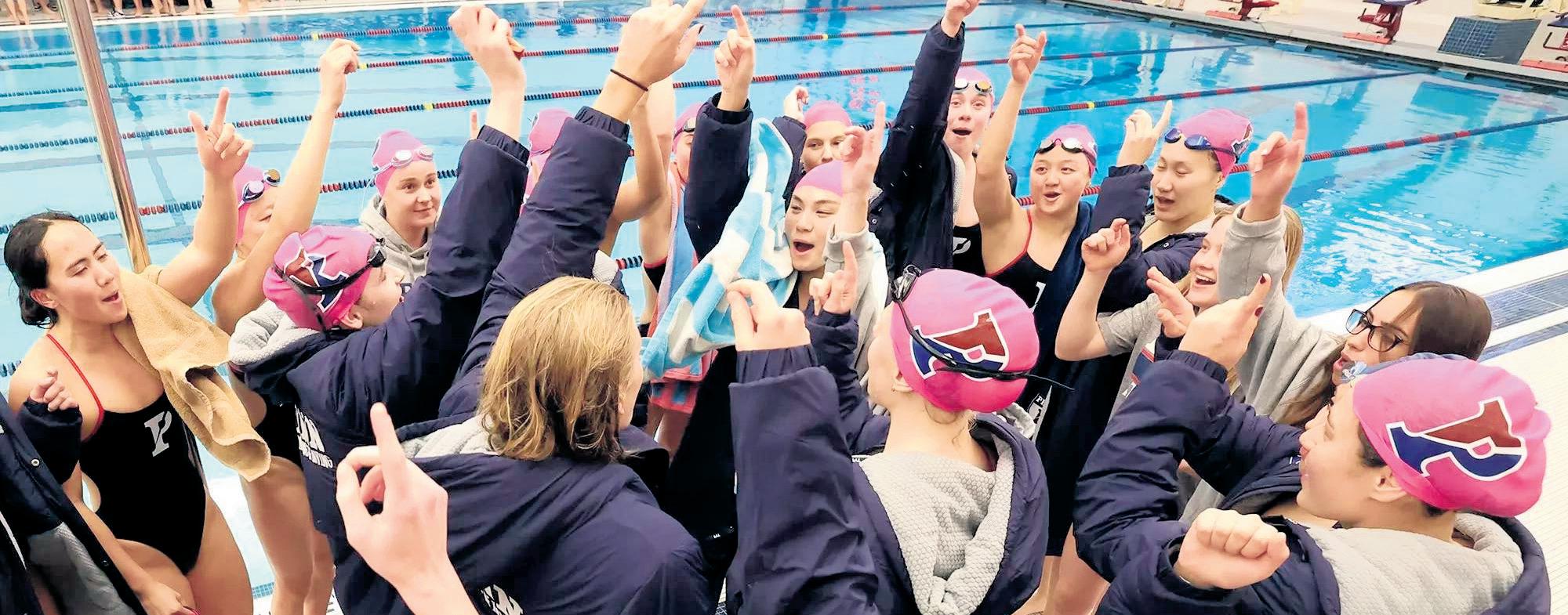
PHOTO COURTESY OF PENN ATHLETICS Penn women’s swimming and diving celebrated as a team on Feb. 22.
for a triple. Unfortunately for Roberts, the Crimson’s offense rolled with the Quakers’ punches. The Arlington Heights, Ill. native’s efforts weren’t enough to shrink the lead to single digits as the half closed with the Crimson leading 31-21.
Quakers fire on all cylinders in second half
Roberts picked up right where he left off to start the second half. He got to the basket for a tough finish at the rim and scored from beyond the arc on his second trip back to the other end.
Roberts’ immediate intensity contributed to the momentum across the court. Junior forward TJ Power seemed to wake up after a quiet start, with two quick triples at the top of the half. The Quakers kept the defensive pressure on high, forcing four turnovers on the Crimson during the first three minutes of play. Harvard’s lead was reduced to a tie, as the Quakers went on a 15-5 run to start the first half. Every time Harvard tried to push back, the Quakers answered with sophomore guard AJ Levine. Levine notched five layups deep into the second half to keep the game competitive between conference foes.
An explosive final minute seals the deal A pair of layups from Hinton brought the game within one point with under a minute left to play. With only 57 seconds left on the clock, the score was 60-59 in the Quakers favor. After a missed bucket by Penn, Levine got the offensive rebound. Roberts scored.
Hinton responded to cut the lead back to one. Penn led 62-61. With 30 seconds left in the game, the Quakers broke the Crimsons full-court press and Roberts secured the game with a lay-in, definitively clinching a berth to Ivy Madness.
“It feels great. I love this place and I just want to give everything back to Penn and how much it means me to wear this jersey. So to do that, it means a lot,” Roberts said. “I hope that caps off my legacy, but I still got more to go because I want to win. That’s what it’s about.”
“ … [It’s] a great feeling as a coach when you know you have a group of guys that have bought in from day one since I got here and want to experience success,” McCaffrey said about his first season as Penn’s head coach. “We earned an opportunity. We have to play well next week and then get ready to play well against two really good teams.”
The Quakers will take on Brown next Friday for their final regular season contest before moving on to Ivy Madness play.
League victories at one championship meet since 2019.
“I’ve always looked up to [Fallon] since [junior year],”
Nguyen said. “In my head, I’m thinking, ‘There’s no way
I’m gonna let this guy, Matt Fallon, the guy I trained with, a guy who embodies Penn swim and dive, the Olympian is going to put a metal over anyone else’s head. In the 100, I’m not letting him put it over anyone else. In the 200, he’s gonna put it over either me or Peter.”