Penn’s athletes hail from 40 U.S. states
New Jersey is the state most represented by student-athletes, according to data collected
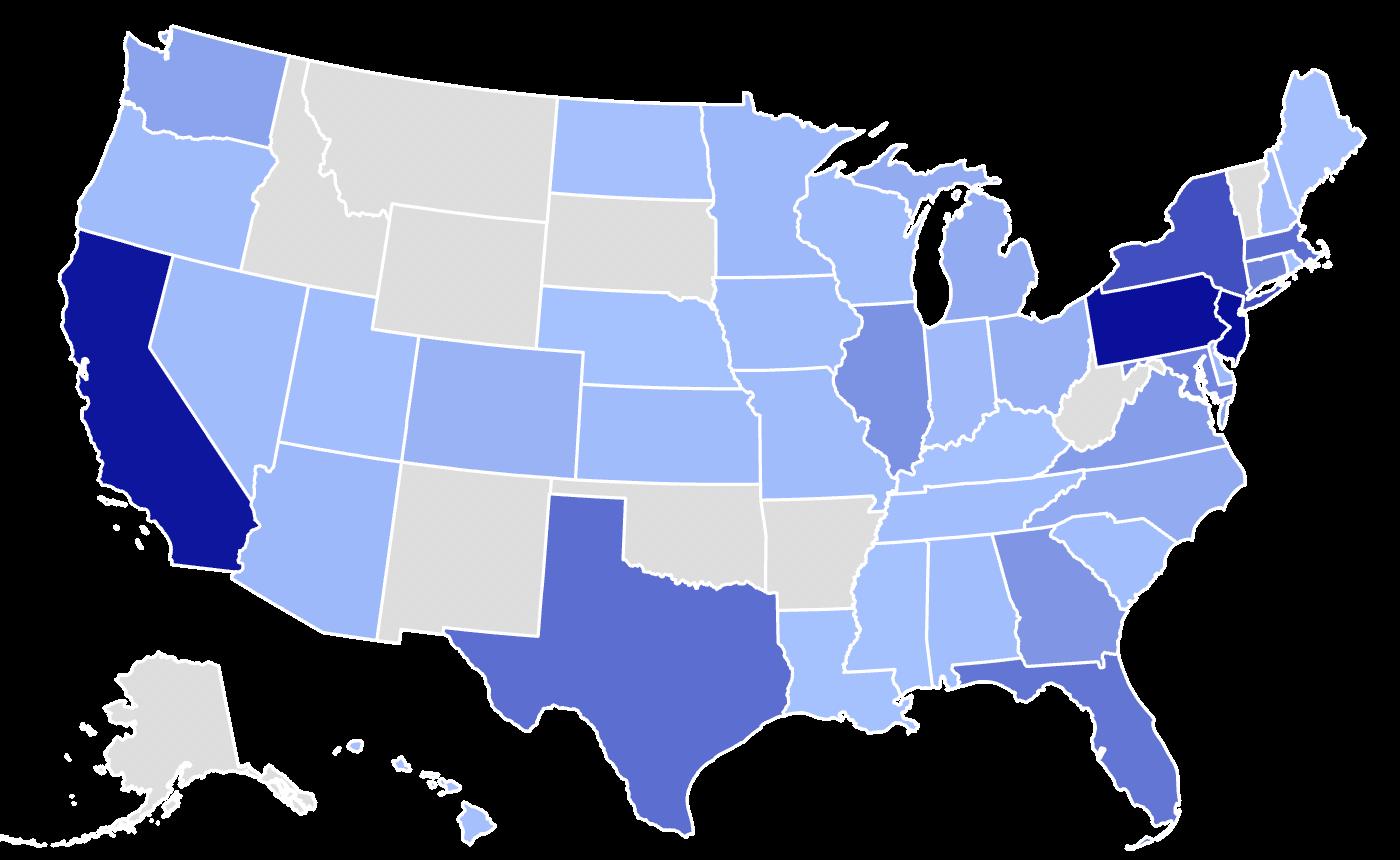
Darker shading indicates a higher concentration of student-athletes’ hometowns.
Penn’s athletes hail from 40 U.S. states
New Jersey is the state most represented by student-athletes, according to data collected
Darker shading indicates a higher concentration of student-athletes’ hometowns.
As the conservative commentator spoke to a crowd of over 600 attendees inside Penn Museum’s Harrison Auditorium, hundreds more waited in line outside
Political commentator Ben Shapiro visited Penn Tuesday to discuss capitalism, conservatism, and affordability in his first appearance on a college campus this year.
The April 14 event — titled “Why Capitalism Makes America Great” — included a keynote speech and a series of audience questions. As Shapiro spoke to a crowd of over 600 attendees inside Penn Museum’s Harrison Auditorium, hundreds more waited in line outside. The event was hosted by the Wharton School’s Adam Smith Society chapter, an association for MBA students and professionals at Penn. Second-year Wharton MBA student Colin Duffy, who serves as the organization’s president, delivered opening remarks for Shapiro.
“It’s one thing to argue anonymously in the comments section, and it’s a whole other to put yourself directly in the line of fire. As we saw with the tragic murder of Charlie Kirk — who considered Ben both a mentor and a friend — this job comes at a very high cost,” Duffy said. As Shapiro walked across the stage, half the audience rose to their feet in a standing ovation.
Penn
The April 9 demonstration drew nearly 300 participants
CANDICE FELDERER AND LUKE PETERSEN Staff Reporters
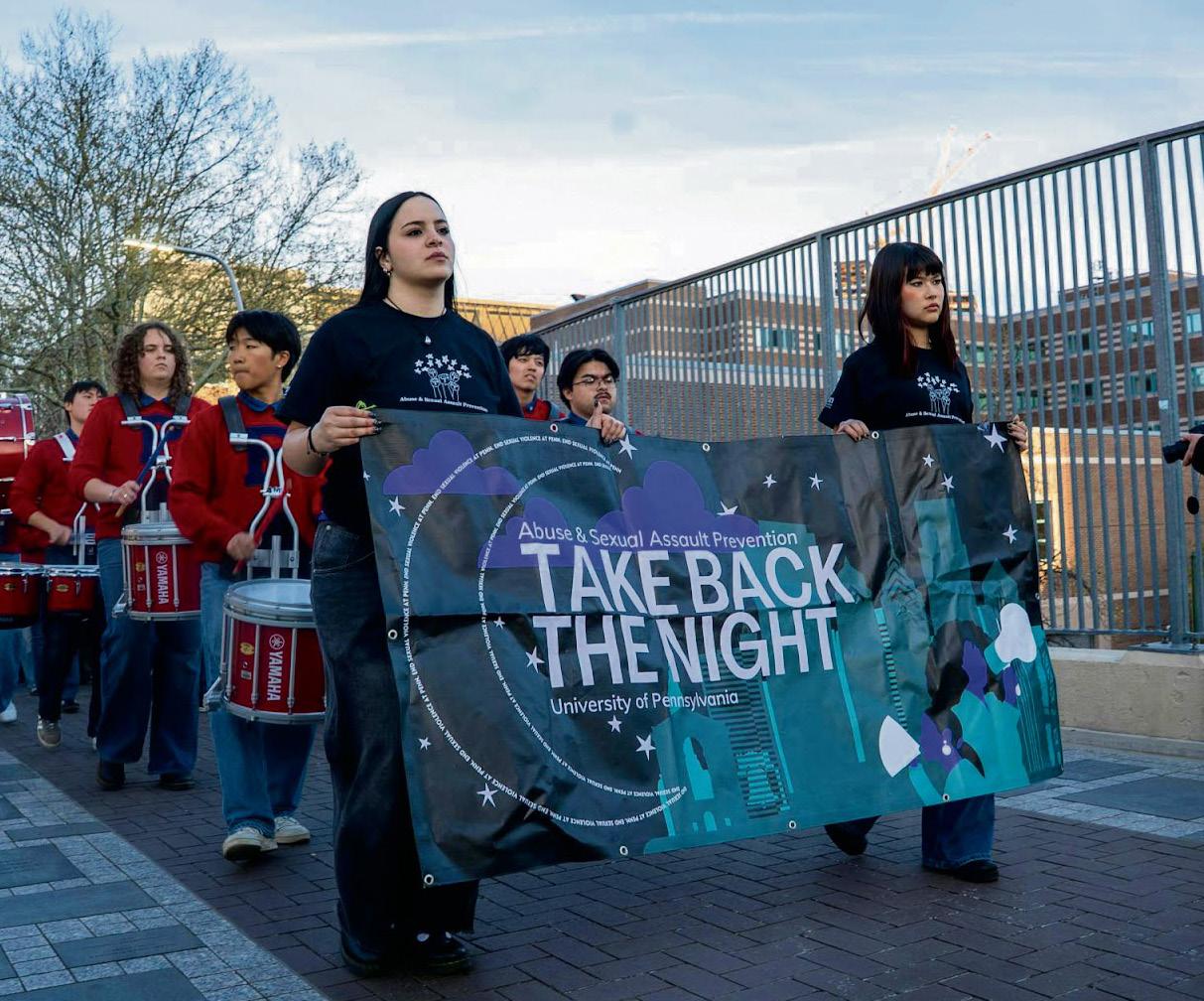
Penn Abuse and Sexual Assault Prevention held its annual Take Back the Night march last Thursday. The April 9 demonstration — organized in collaboration with Penn Violence Prevention and Penn Women’s Center — drew nearly 300 participants. Before the march, a resource fair hosted on College Green featured speeches from Vice Provost for University Life Karu Kozuma and women’s health nurse practitioner Joyce McNeill from the Hospital of the University of Pennsylvania.
ASAP President and Take Back the Night CoChair Ashley Kim, a junior in the College of Arts and Sciences, told The Daily Pennsylvanian that the event was meant to “create a movement where students can participate and really stand in solidarity with survivors.”
The group marched down Locust Walk from College Green before returning to the ARCH building for ASAP’s survivor speak-out.
During the march, participants hoisted posters in the air and chanted slogans such as “students unite, take back the night.”
See CAMPAIGN, page 2
Throughout the event, a noticeable portion of student attendees refrained from clapping when the conservative commentator paused for applause.
Shapiro began by distinguishing between “high-IQ conservatism” and “low-IQ grievance politics.”
The former, he said, relies on “free minds, free markets, public virtue, and a properly constructed government,” while the latter category “rejects all of these essential principles.”
Shapiro listed certain “pseudo” conservative commentators — such as Tucker Carlson, Candace Owens, Megyn Kelly, and Alex Jones — as those within the “low-IQ” category.
“What they have in common is a grievance-based view of the world in which they and those like them are perennial victims of the American system, in which they’ve been betrayed by the very ideas and institutions that make America the greatest place in world history,” he said.
Shapiro added that “high-IQ conservatism will win the day when Americans recognize the inestimable bounty that we’ve been given: a unique country in human history that values free minds and free markets and public virtue.”
He also used the event to reference Penn’s history of controversies surrounding pro-Palestinian protests and the University’s response to allegations of campus antisemitism.
“It’s wonderful to be here at the University of Pennsylvania, a place that now apparently recognizes that calls for genocide against Jews are bad,” Shapiro said.
“Congrats on that,” he said to the applauding crowd.
In December 2023, then-Penn President Liz Magill faced widespread backlash for a congressional testimony in which she said that whether calls for the genocide of the Jewish people violated Penn’s code of conduct was “context dependent.” On Dec. 9, 2023, Magill announced her resignation.
Outside the venue, nearly 25 protestors held up signs — one of which read “smash fascism” — and sounded whistles, drums, and bells.
Many protesters repeated “anti-worker, anti-gay, Ben Shapiro go away” while urging those in line to exit.
According to an April 9 social media post, the protest was coordinated by the Coalition of Workers at See SHAPIRO, page 7
Citing major initiatives under the 53rd session of the Undergraduate Assembly, Nia Matthews said her focus has always been on prioritizing ‘the everyday student experience’
CHRISTINE OH Senior Reporter
On Sunday night, Wharton junior Nia Matthews delivered her final address as president of Penn’s Undergraduate Assembly.
Hours prior, Matthews sat down with The Daily Pennsylvanian to reflect on her tenure. Citing major initiatives under the 53rd session of the UA — including a resolution to support club sports and a budget reallocation project — Matthews said her focus has always been on prioritizing “the everyday student experience.”
Despite serving as her high school’s class president, Matthews — who is also a current staffer at the DP — said she initially had no intention of participating in student government at Penn.
“People would always ask me, ‘Are you going to do student government in college?’” Matthews recalled. “I was always like, ‘Absolutely not,’ because it just took so much of me.” When she arrived at Penn, however, Matthews described feeling a “natural inclination to start running again.”
Reflecting on her presidency, Matthews explained that the role “really changed and defined” what “leadership” meant to her.
“I think that when I first joined the UA, I joined with a much narrower perspective and understanding
of what leadership was and what it was supposed to look like,” she said. Matthews recalled her initial expectations for herself as a leader, describing “someone who was always composed, having the answers, being very certain.”
“But through this role, and through the UA in general, I’ve learned that it’s more so about the patience, the humility, the having difficult conversations, and being comfortable with having uncomfortable conversations,” she said.
She also added that it was “really important” for her to run for the highest office within the UA “in a time that’s so politically fragile and sometimes uncertain.”
“I knew going in that this year was going to be hard, that there was so much political turmoil,” Matthews said. “What I didn’t realize was how much of an impact … the federal administration was going to have on higher education.”
Matthews described the challenges she faced while approaching political issues from a studentcentered perspective — including a March resolution that urged Penn to establish clear protocols in response to potential federal immigration enforcement
See MATTHEWS, page 6
The annual programming, which ran from April 13-15, included University-wide events and activities planned across all four undergraduate schools
MBRESA SIMNICA Staff Reporter
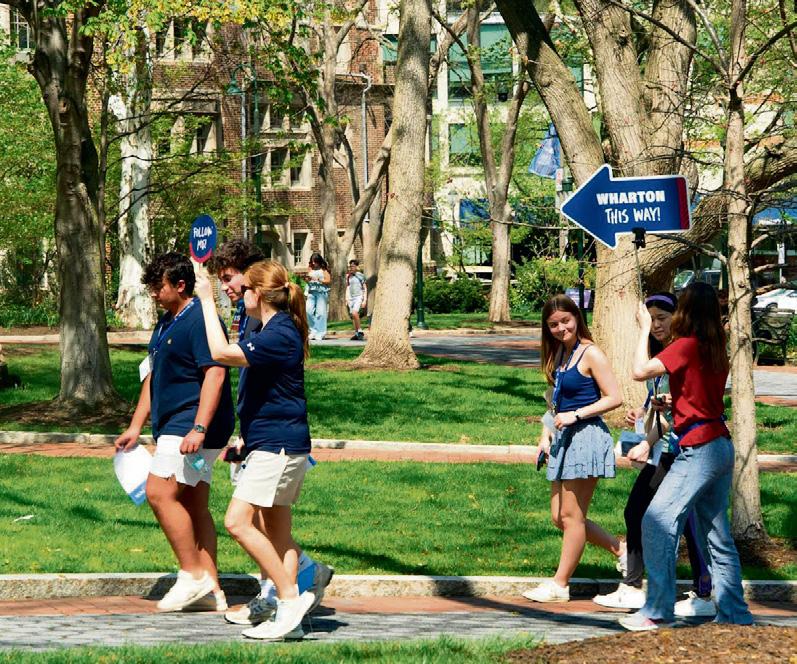
Penn welcomed admitted students from the Class of 2030 to campus this week for Quaker Days.
The annual programming, which ran from April 13 to 15, included University-wide events and activities planned across all four undergraduate schools. Penn will host five “Quaker Campus Visits” throughout the month for students and families who were unable to attend the larger event.
The Daily Pennsylvanian spoke with attendees about their Quaker Days experiences at Penn.
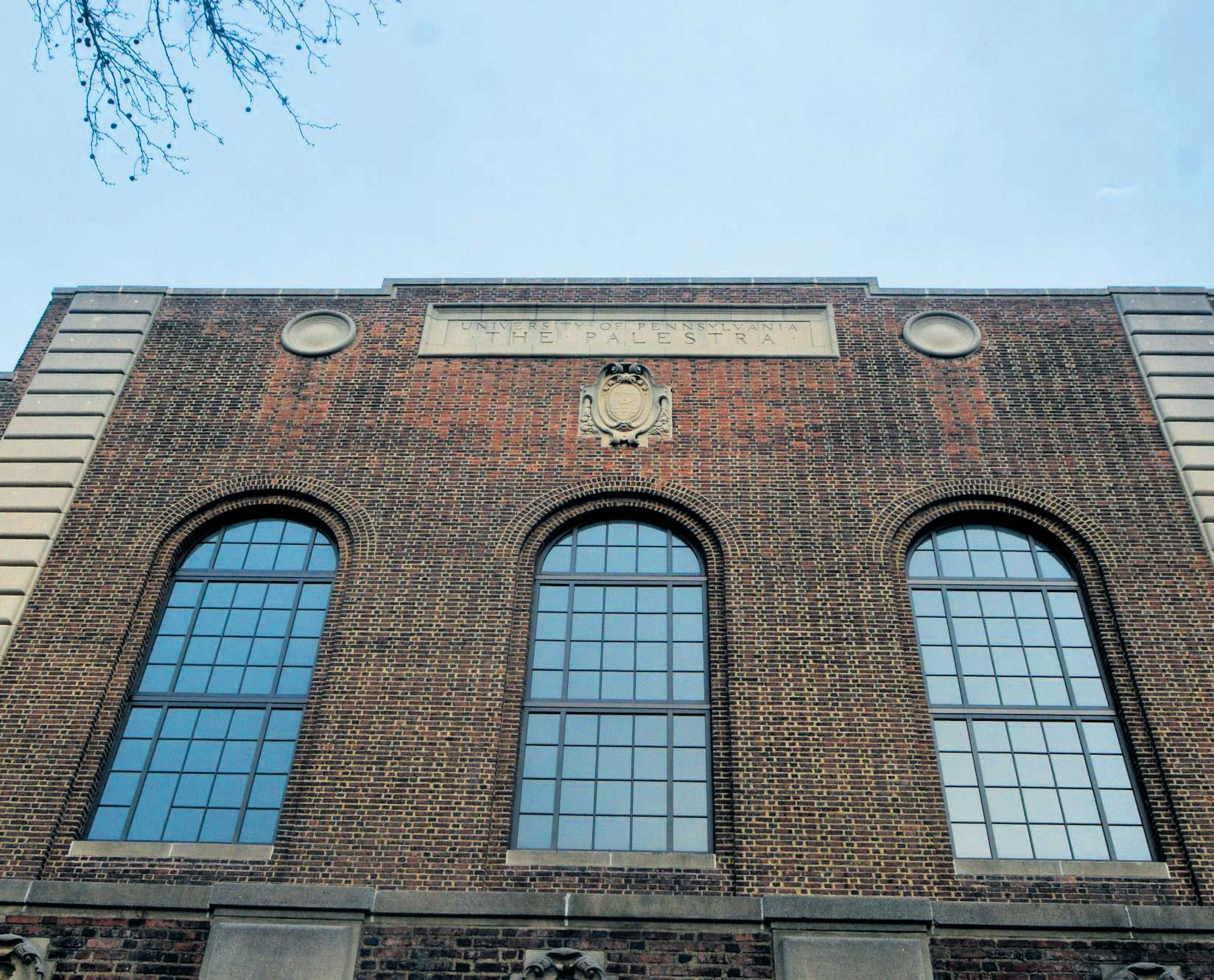
Each of the three days featured similar scheduling, with major events held at the Palestra, Houston Hall, Penn Museum, and on College Green. University Life hosted a recurring “Student Life Fair” in Bodek Lounge, which featured several campus clubs and organizations.
Cultural groups — such as Casa Latina, the Pan-Asian American Community House, and the Penn Women’s Center — held open houses throughout Quaker Days to showcase Penn’s various community hubs.
Academic programming specific to the four undergraduate schools also drew large audiences.
On Monday, students admitted to the College of Arts and Sciences gathered for a question and answer session as Dean Peter Struck, faculty, and current students shared their insights on life at Penn. During the event, Struck described Penn as a “restless” place where “great ideas are made to be put to work.”
“The power of ideas is in front of you,” Struck added. “Find the great idea first, and then figure out how it’s going to transform the world.” He emphasized that “being undecided is
See 2030, page 2
Penn moves to stay court enforcement of antisemitism subpoena
The April 13 motion to stay was filed alongside a notice of appeal to the United States Court of Appeals for the Third Circuit
LAVANYA MANI Staff Reporter
Penn filed a motion Monday requesting a Philadelphia court temporarily halt the enforcement of a ruling ordering the University to comply with a
prevail on the appeal” and would face “irreparable injury absent a stay.”
“Whether the constitution protects against the
See EEOC, page 2

Kim
She explained that campuses and workplaces internationally have Take Back the Night marches to “support survivors” and “show people that these campuses and spaces are safe” for them.
“So we won’t be scared of walking on our own campus,” Bellows said. “I’m amazed at the people who show up and the staff that’s here to support us and the way that student leaders continue to make a difference on campus for the betterment of both their own classes and everyone who comes after them.”
The survivor speak-out, which Kim described as the “capstone to this event” served as a platform for students to share personal stories and offer support to each other.
“Unlike the march and the rally, which is trying to get as many people out there, to be loud, to raise awareness — this one is a lot more intimate, a lot more quiet, it really is just for survivors and supporters,” said Kim.
“It has been such a great experience to be able to provide a space for individuals to share their stories and really feel empowered,” College sophomore
Nicolina Monacelli — who represents ASAP at the University Council — told the DP.
College junior and incoming Undergraduate Assembly President Musab Chummun echoed a similar sentiment.
“A lot of students carry around burdens that we often don’t see and it’s through events like these that we’re able to highlight these issues on campus and hopefully motivate groups on campus to start to become more active and administrators to proactively help students who are in need of support,” Chummun told the DP at the event.
“I think it is through loud marches or actions of disruption that we can show that these issues are not insignificant,” he added.
In a Wednesday announcement to the Penn community, Penn President Larry Jameson wrote that the University’s “condemnation of sexual misconduct is unwavering.”
“I aspire for Penn to become a national model for eliminating sexual harassment and violence—not merely in policy, but in culture,” the April 8 message read. “That aspiration begins with each of us. I commit to continuing this work with urgency, transparency, and accountability, and I ask you to join me.”
Jameson’s message outlined signals of possible sexual harassment, the importance of “allyship,” and a description of the University’s Title IX policies.
“I applaud the student, staff, and faculty leaders of Take Back the Night and thank our resource partners for supporting our community with courage and care,” he wrote. “If we all commit to this work consistently and compassionately, Take Back the Night will one day serve as a reminder of what our community chose to change and what it must continue to protect.”
compelled disclosure of religious information lies at the heart of the privacy claim Penn asserts in defense of the subpoena, and it is not a question squarely addressed by the Court’s decision,” Penn’s Monday filing read. “Penn’s position, however, is rooted in prevailing Supreme Court precedent.”
Requests for comment were left with a University spokesperson and the EEOC. After the initial ruling, a University spokesperson told The Daily Pennsylvanian that Penn intended to appeal the decision.
Penn argued that the Third Circuit is “likely to find” that the EEOC’s charge of a hostile workplace does not comply with the agency’s “statutory and regulatory” requirement to provide a clear statement of alleged wrongdoing. According to the motion, the EEOC “does not remotely” meet that requirement.
The University also cited the lack of precedent for the EEOC’s subpoena.
“This demand is so novel that the EEOC has cited no authority in which a court enforced a subpoena conscripting an employer to identify employees of a specific religion,” Penn’s memorandum in support of its motion read.
“For their legal arguments, respondents contend the charge of discrimination is invalid and the subpoena violates the United States Constitution in various ways,” Pappert wrote in a March 31 memo filed alongside the order. “But the charge is valid and the constitutional claims are easily dispensed with.”
Several student leaders, legal experts, and campus organizations criticized Pappert’s decision in the days following the order.
Wharton School professor Amanda Shanor — who represents a group of intervening organizations in the case — wrote to the DP that the ruling could set a precedent for the government collecting information about any minority group.
“The constitutional freedoms at stake — to be able to join religious and civic groups of your choice, to attend events, and teach and research freely without
2030, from front page
probably the right major to have right now” — encouraging admitted students to explore the College’s 64 departments and programs.
Jonah Staples, who was admitted to the College, explained that Quaker Days offered an opportunity to meet incoming students before arriving at Penn.
“I can introduce myself to people who I’m going to be spending the next four years with, and can make some friends,” Staples added.
Gabe Huber, admitted to the College from Lancaster, Pa., told the DP that he knew Penn was the right fit within “five minutes” of arriving on campus.
“It looked like Hogwarts to me when I first came here,” Huber added. “It’s nothing like any other college campus I had really been to — I saw myself as someone who could go here.”
The School of Engineering and Applied Science hosted tours of University buildings and held advising sessions for admitted students.
worry that your name and contact information will be put on a government list — are foundational to our democracy,” she wrote at the time. “We are optimistic that higher courts will uphold these bedrock constitutional principles and that we will prevail on appeal.”
In his memo, Pappert wrote that the Court’s duty in enforcing the subpoena is to specifically “determine if the charge of discrimination is valid, whether the subpoena seeks information relevant to the charge and whether the subpoena unduly burdens Penn.”
He argued that the EEOC’s subpoena “easily clears” the bar for relevancy because the employees whose contact information was requested “are reasonably likely to have information relevant to whether Penn subjected employees to religious discrimination.”
The EEOC sued Penn in November 2025, alleging that the University failed to comply with the subpoena — which was issued as part of the agency’s investigation into alleged workplace antisemitism on campus.
A University spokesperson told the DP at the time that Penn “cooperated extensively” with the EEOC but would not provide “personal and confidential” information of students and employees without their consent. That same month, a petition criticizing the subpoena received hundreds of signatures from members of the Penn community. Students and faculty expressed concern over the implications of compiling the lists demanded by the EEOC.
In January, the University filed a brief outlining its criticisms of the subpoena requests. It alleged that the EEOC ignored “the frightening and well-documented history of governmental entities that undertook efforts to identify and assemble information regarding persons of Jewish ancestry.”
The EEOC responded later that month, describing Penn’s arguments as “disingenuous” and arguing that the investigation was “no different” from any other request for information.
Pappert heard oral arguments from Penn, the EEOC, and intervening groups in March. The University and Penn-affiliated intervenors described the EEOC’s demands as requiring the University to submit “lists of Jews” to the agency.
Engineering School student — explained that, despite having toured the campus before, Quaker Days let him “see what Penn was all about.” Balachandar chose Penn for its proximity to his hometown of Doylestown, Pa., and the research opportunities “tailored towards” his interest in neuroscience and neurodegenerative diseases.
Current students at the Wharton School hosted panel discussions to expose admits to “The Wharton Experience.”
Ethan Albright — a student admitted to Wharton — told the DP that he is visiting multiple campuses to find a place where he “fits best culturally.” Albright added that he is interested in environmental research and is drawn to Wharton for its career placement opportunities.
“I want to have the economic background that Wharton will give me so that I’m able to fully develop environmental solutions,” Albright explained.
The School of Nursing held a tour of its simulation center in Claire Fagin Hall.
Alternative campus visiting days will include small events where admitted students can experience Penn’s culture. The University will also host virtual introductory events throughout April. CAMPAIGN, from front page
Adhaban Balachandar — an incoming









The Daily Pennsylvanian compiled data on the 848
JACK GUERIN AND KAIA FEICHTINGER-ERHART
Senior Reporter and Deputy Sports Editor
Penn student-athletes hail from 40 states and more than 30 countries.
The Daily Pennsylvanian analyzed data available from Penn Athletics to investigate the geographic and educational backgrounds of Penn’s student-athletes. Using the rosters for each of Penn’s 31 NCAA Division I sports, the DP compiled demographic data on the 848 student-athletes currently competing on campus.
Geographic background
Of the student-athletes with a hometown in the United States, 40 states are represented. New Jersey is the most common, with 95 student-athletes hailing from the Garden State. Pennsylvania and California follow with 94 and 91 student-athletes, respectively. West Virginia is the only state neighboring Pennsylvania without student-athlete representation.
Of the current crop of student-athletes at Penn, 98
— or 11.6% — are listed with hometowns outside of the United States. 40 international student-athletes came from Europe, followed by 29 from North America, 10 from Africa, nine from Asia, eight from Oceania, and two from South America.
Although all continents except for Antarctica are represented, Penn’s international student-athletes come primarily from English-speaking countries. There are 29 individuals from Canada, the largest number for a single country outside of the United States. Currently, excluding Canada and the United Kingdom, no single country has more than six student-athletes at Penn.
The proportion of international student-athletes varies by sport. Nine teams do not have a single international student-athlete listed on their rosters. Penn women’s squash has the highest percentage of international athletes — as nearly half of the team’s players are listed with hometowns outside the United

States — followed by field hockey and men’s squash. 12 of 31 sports teams have a rate of international student participation higher than Penn’s total undergraduate population, 13.9%.
Educational background
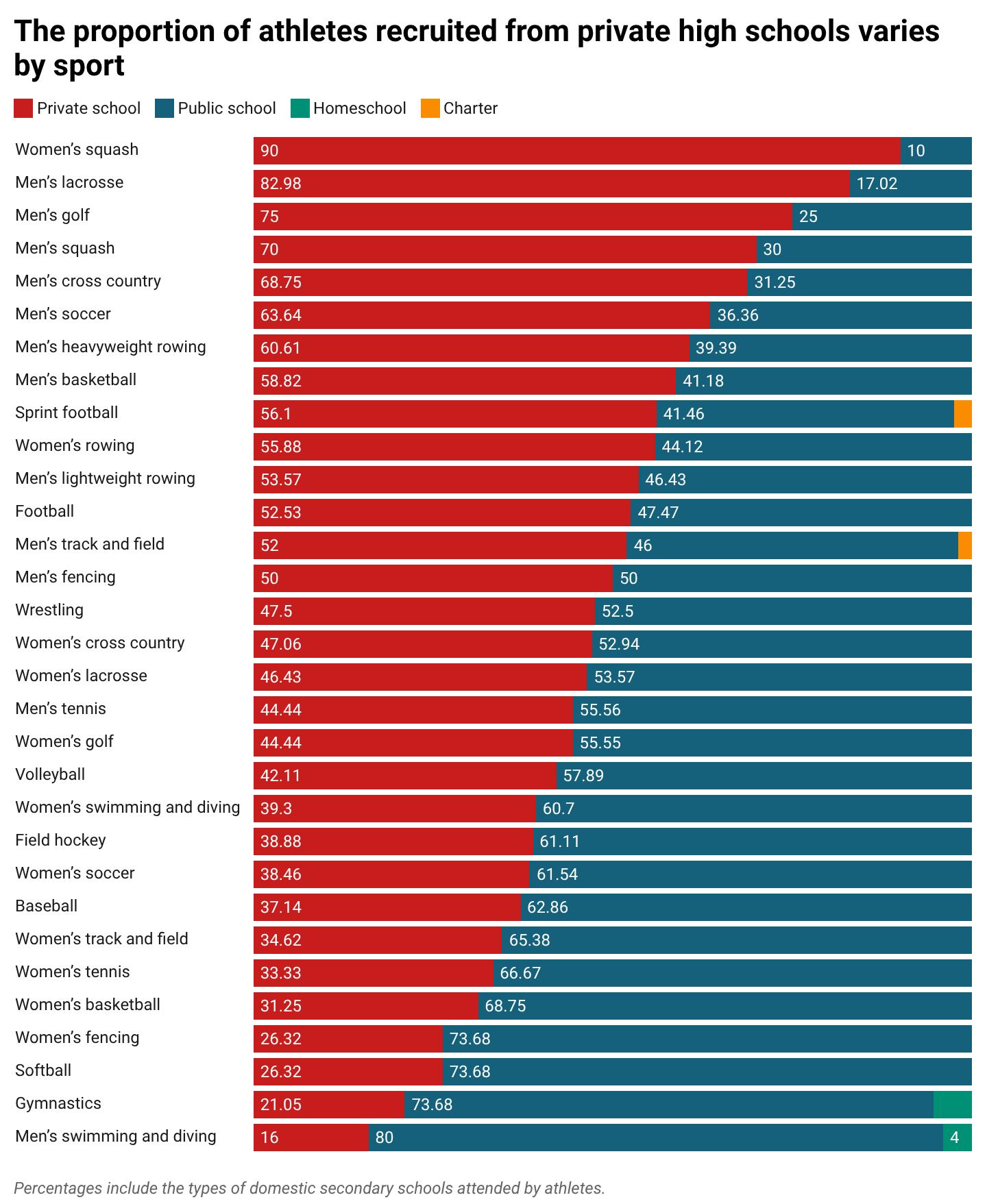
There is significant variation by team in the types of schools attended by student-athletes who went to U.S. high schools. Public and private schools dominate, although some teams include athletes from other educational backgrounds. Sprint football and men’s track and field, for example, each have one athlete who attended charter school, while gymnastics and men’s swimming and diving both have a homeschooled athlete.
The women’s squash team has the highest percentage of student-athletes from private schools, at 90%. On the men’s swimming and diving team, 80% attended public school.
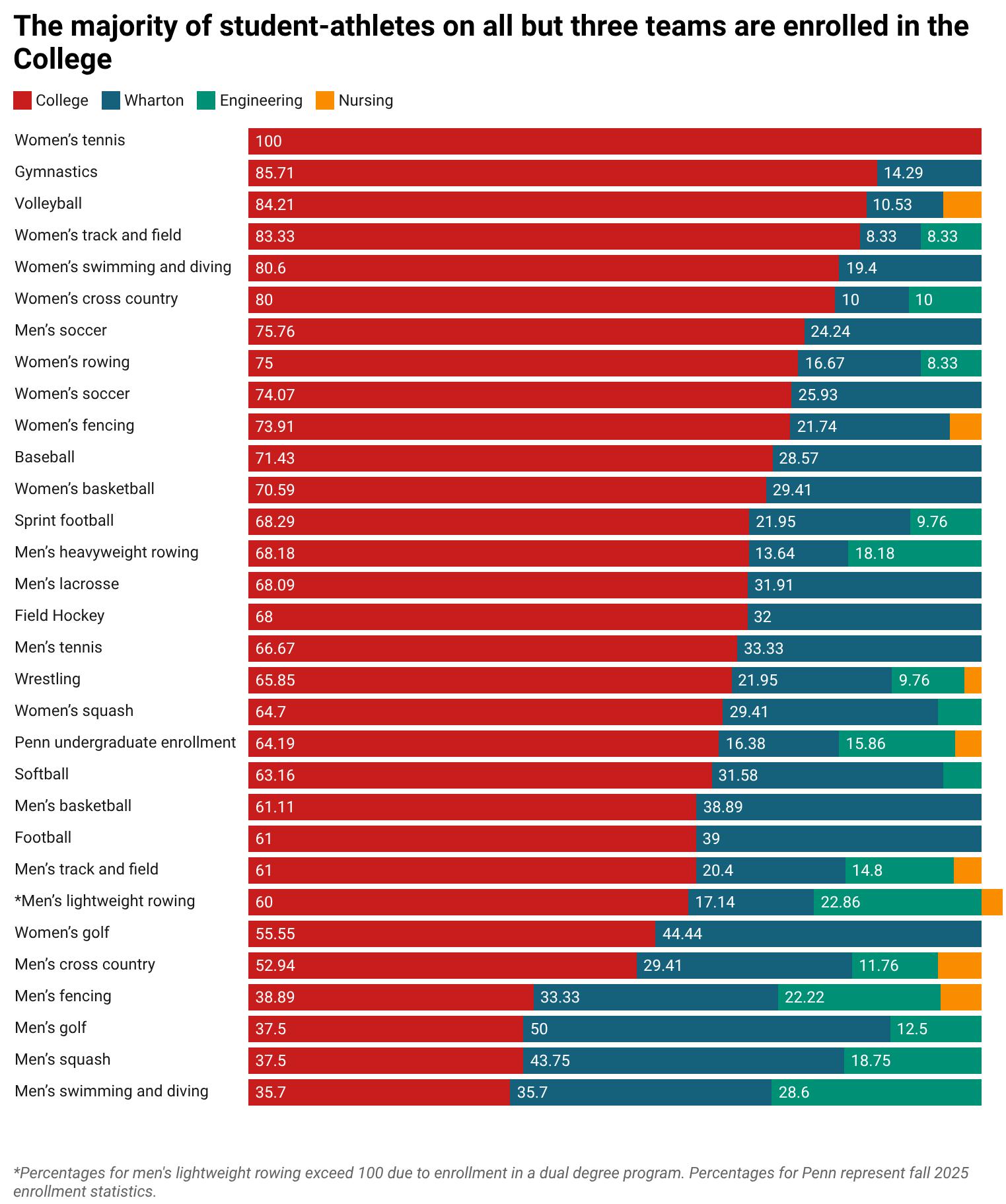
Once they arrive at Penn, student-athletes attend one of Penn’s four undergraduate schools. Just like Penn’s general undergraduate population, most teams enroll the largest number of student-athletes in the College of Arts and Sciences. The only exceptions are men’s golf, men’s squash, and men’s swimming and diving — all of which have significantly higher percentages of athletes in the Wharton School compared to Penn’s overall population.
Women’s tennis is the only team where every athlete is enrolled in the same school, the College. Only five teams — wrestling, men’s track and field, men’s cross country, lightweight rowing, and men’s fencing — have all four schools represented on their rosters. The only student-athlete enrolled in two schools, Wharton and the School of Nursing, is on the lightweight rowing team.
Senior reporter William Grantland and staff reporter Ariel Zhang contributed reporting.














On March 31, Penn released a draft of its revised Guidelines on Open Expression. These new provisions, proposed to replace the 2024 temporary guidelines, signal a troubling path forward in the University’s relationship with student protest. Wrapped up in language around permit requirements and limits on excessive noise, the guidelines seem to suggest that “open” means “only open for some,” and “expression” means “only expressions that the University agrees with.”
Over the past three years, Penn has made every attempt to quell student activism in all its forms. From repeated union busting to arresting its own students, the Penn administration has made it clear that campus organizing is unwelcome. This notion is best underscored by the University’s response to the Gaza Solidarity Encampment in 2024. In May of that year, University officials empowered police in riot gear to arrest Penn community members, including students and faculty. In the fallout from the encampment, students were suspended or placed on mandatory leaves of absence. Well into the next academic year, barricades loomed over Locust Walk to discourage protests from occupying space on College Green. The proposed guidelines are strikingly similar to the 2024 temporary guidelines and almost every bit as restrictive. Their

stringent regulations on University spaces and complete ban on overnight activities effectively put a damper on any meaningful disruptive protest. With the threat of disciplinary action attached to any violations, we are moving toward a future in which all campus demonstrations are University-sanctioned — and therefore do not influence administrative policy in any meaningful way.
Penn’s annual Take Back the Night rally is a strong example of this type of University-sanctioned demonstration.
Rooted precisely in the power of disruption for a cause, the women’s movement at Penn dates back to a 1973 sit-in at College Hall in which students demanded stronger protections against sexual violence on campus. The four-day campaign ended with the University meeting every single one of the students’ demands, including increased campus safety measures and the creation of the Penn Women’s Center.
Today, though, Take Back the Night has lost its disruptive edge. The peaceful sit-ins of 1973 wouldn’t be allowed now under the proposed policy. Planned with the full backing and support of the University, the focus of campus advocacy surrounding sexual violence has moved from holding institutions accountable to giving them an even louder voice.
The participation of greek
organizations in the event, so heavily encouraged by the Office of Fraternity and Sorority Life, is troublingly ironic, considering the culture of violence these groups have historically perpetrated. In fact, it is the past actions of many of these organizations that necessitated the night to be “taken back” in the first place. On top of that, when representatives of Penn University Life are allowed megaphones and designated speech time, it places survivors’ testimonies on the same level as those whose only stake in the matter is following University policy. It funnels expressions of pain and calls for change into institutionally sanctioned events and forces them to embrace what’s already allowed, not what’s possible for victims’ empowerment. Indeed, when it comes to sexual assault on Penn’s campus, the University administration has a lot of work to do. In 2024, 16.7% of female undergraduates at Penn reported that, since entering college, they have experienced “sexual contact involving physical force or inability to consent or stop what was happening.” Yet in the 2024-25 academic year, there were only four documented reports of sexual violence at Penn. This points to a dire underreporting issue that Penn must address and a crucial flaw in assuming that institutionally sanctioned solutions can
LAWSON’S VERDICT | Penn is right to fight off the federal government
On March 31, a federal judge ordered Penn to comply with a subpoena from the United States Equal Employment Opportunity Commission requesting a list of Jewish faculty and students. Since it was first issued in July, the University has been fighting the subpoena tooth and nail, alleging that it violates constitutional rights and is founded on a faulty claim of discrimination. After the decision, Penn almost immediately announced its plans to appeal. Then, on Monday, the University filed a motion requesting that the court temporarily halt the enforcement of the ruling. Penn absolutely made the correct decision in refusing to comply with the EEOC’s subpoena and choosing to appeal. The EEOC investigation is based on unfounded and unsubstantiated claims of discrimination at the hands of the University, and it has serious legal consequences for members of the University community. There are significant constitutional implications that come with allowing the federal government to request a list of all faculty and students affiliated with a certain group. Specifically, the request violates the freedom of association granted by the First Amendment.
The subpoena is really an assault on the entire institution of higher education in disguise.
Certain student or faculty groups might be afraid to register with the University or disclose their religious affiliation because of the precedent this sets. The EEOC has actually already been contacting Jewish faculty members on their personal cellphones, completely disregarding their privacy. If the agency is already finding ways to contact Penn affiliates without their permission, giving it access to a list
of Jewish community members makes the issue far worse. Faculty and student privacy would be pervasively invaded, all in an effort to substantiate an investigation based on lackluster claims of discrimination.
To fully understand why the claims of discrimination are unfounded, we have to take a look at the timeline of this legal battle. More specifically, we should examine what motivated the EEOC to start this investigation in the first place. In the fall of 2023, right as the Israel-Hamas war was unfolding, there were numerous incidents of antisemitism at Penn, including instances of graffiti and verbal attacks. Soon after, former Penn President Liz Magill testified in front of U.S. Congress about antisemitism on our campus. Then — right before she resigned — the EEOC leveled a Commissioner charge against Penn, accusing the University of “subjecting Jewish faculty to an unlawful, hostile work environment.” It’s important to understand that the EEOC has two main pathways through which it can begin an investigation. The first and most common way is when an employee of a business or institution files a complaint. This is a bottom-up approach in which the EEOC is explicitly asked to investigate by someone who reports experiencing illegal discrimination. The second way — and the way in which this investigation began — is through what is called a Commissioner charge, in which a commissioner of the EEOC makes the decision to begin investigating certain institutions or businesses. The Commissioner charge paperwork itself states that the allegations are based on “publicly available information regarding the employer.” This means that at the time of
prevent or properly reckon with the conditions that disruptive protests hope to change. In other words, a resource fair, an awareness-raising event, and a University-sponsored march down Locust are meaningful shows of support, but they won’t force administrators to take action. In a world where the proposed guidelines limit what our expression and, in turn, reality can be, Penn’s administration only allows demonstrations that ask nothing of them. Students are welcome to organize, march, and chant, so long as they do not make any real demands. Perhaps the proposed guidelines say it best: “Disrupting University operations is not permitted.” The implicit message here is that what’s “not permitted” is any dissent beyond where, when, and at what volume the University allows it to occur.
Editorials represent the majority view of members of The Daily Pennsylvanian Editorial Board who meet regularly to discuss issues relevant to the Penn community. This body is led by Editorial Board Chair Jack Lakis and is entirely separate from the newsroom. Questions or comments should be directed to letters@thedp.com.
Columnist Lawson Miller criticizes the motivations of the EEOC investigation and defends the University’s refusal to comply with its subpoena. access to the names and contact information of every Jewish faculty member at the University won’t yield any new information. Penn has to protect its Jewish community members and continue to stand up to unlawful government practices in all spaces. It is absolutely integral to the privacy of our faculty and students that the University fight this illegal subpoena until it is struck down — as it should have been at the district court level.
beginning its investigation, the EEOC had not received a single complaint from a University affiliate and was only relying on “publicly available information” for its charge. This initial investigation was presumably launched as a response to publicly alleged antisemitic acts on campus that were perpetrated by individuals, not the University. But the EEOC has failed to find any evidence that the University itself perpetrated antisemitism through any specific incidents or employment practices. The agency is now attempting to retroactively prove their initial allegations by privately contacting Jewish faculty members. But if it hasn’t been able to find any evidence despite extensive investigations so far, allowing the EEOC
LAWSON MILLER is a College sophomore studying philosophy, politics and economics with a minor in legal studies and history from Philadelphia. His email is lawmil@sas.upenn.edu.
Later this week, standing faculty in the School of Arts and Sciences will vote on the first major reform of the College of Arts and Sciences’ undergraduate curriculum in decades. By now, many of us are familiar with key proposed changes, from the current College Foundations requirement to “Kite and Key,” “First-Year Seminars,” and the new “12+5+3” distribution system. A great deal of work has gone into these proposed changes — years of meetings, countless proposal drafts and listening sessions, rounds of data gathering. Curricular reform is needed, and the proposed changes address significant concerns shared by students and faculty, including reasserting the value of a liberal arts education. Yet underneath these genuinely valuable goals lies a fundamental failure of shared governance: A significant majority of the people who actually deliver Penn’s


education have been sidelined.
As concerned faculty members, we urge our colleagues to vote “no” on these reforms — not based on pedagogical merits (and to be clear, we see many), but because the proposal is a violation of the norms of shared governance. We cannot reform a curriculum while excluding the voices of those who teach roughly 65% of our courses.
The last significant change to the College curriculum was in 1985. Back then, the employment landscape of higher education looked significantly different — nontenure-track faculty made up a much smaller percentage of instructors. Faculty could vote on proposed changes with confidence that even if enrollment shifted in their departments and programs, it wouldn’t risk their employment. But that’s simply not true in 2026. For example, language instruction at Penn, like at most universities, relies heavily on non-tenure-track faculty, and it is their jobs on the line if enrollment drops. Yet while non-tenure-track faculty undoubtedly have the most to lose in these curricular reforms, they are excluded from the vote.
The administration is upfront about the impact of this proposal in terms of pedagogical labor. They note that for this new curriculum to succeed, a “shift in teaching will be needed.” They also invite “all long-term faculty,” including senior lecturers, multi-year lecturers, and long-term staff, to join the effort to roll out a new set of courses and requirements.
But there is a glaring omission in this “inclusive” vision: the right to vote. Non-tenure-track faculty have been largely excluded from the formal feedback and decision-making processes, their participation reduced to a “Curriculum Conversation” held last month and to informal initiatives taken by individual department chairs
at their own discretion. The FAQ notes that “Standing faculty ownership over these courses... is critical.” This phrasing suggests that while the labor of teaching is shared, decision-making power is not.
When the administration says that faculty teaching loads will not increase, they are speaking to standing faculty. For instructors who lack tenure protections, a “shift in teaching” often translates to increased precarity. By proceeding with a vote that excludes these colleagues, the University is treating its most productive teaching cohort as a silent and exploitable workforce rather than a core constituency of our campus community.
Voting yes for this curriculum means endorsing an understanding of shared governance that is shared in name only. We are telling our non-tenure-track colleagues that their labor is essential but their perspective is not.
Tenure-track faculty at SAS who rarely or never teach undergraduates will get a say, while non-tenure-track faculty are not just excluded but treated as expendable.
It’s also worth pointing out that tenure-track faculty at the Annenberg School for Communication and the Stuart Weitzman School of Design are excluded from voting on the proposed changes. These are faculty who consistently teach courses in majors and minors offered through the College, but do not get to vote because their appointments are outside SAS. This is true even when faculty are deeply involved in undergraduate teaching and programming in the College. Yet this violation of shared governance pales in comparison with the exclusion of non-tenure-track faculty.
The American Association of University Professors’ guidelines on inclusive shared governance (which have been recognized and incorporated into the University’s Faculty Handbook) strongly recommend that faculty that hold contingent appointments be involved in matters
BEVAN’S BRIEF | When hospitals become primary care services
For five hours, I sat in the waiting area of a Penn Medicine emergency room, watching two versions of America collide. There I was with a friend who had injured her arm, which we suspected was a broken elbow. And around us were patients who hadn’t come for emergencies at all, but because the ER was the only place they could reliably see a doctor. Surrounded by one of the most elite medical systems in the country, people seeking basic care had nowhere else to go.
Most Penn buildings are gated or require a PennCard, designed to keep the “real world” of West Philadelphia at a distance. The ER is the only place on campus where the “Penn Bubble” is physically impossible to maintain. It is a porous border — you can’t “prestige” your way out of a triage line. In the waiting room of the ER, I got a reality check about the privileges we receive at Penn every day. The emergency room should not be functioning as a primary care clinic for people without money for health care. At that point, the entire health care system is at fault.
The Penn Med system is not unique in failing to provide people of lower economic means with quality service; many institutions fail to do so. But the ER is one of the few places where the West Philadelphia community and the Penn community are forced into the same struggle. I was there due to an accident, while the people next to
me were there because of manageable conditions, but lacked access to a primary care physician. My bad night was their only option. I have the privilege of being frustrated by this experience, while they live knowing this is their only way to be seen by a medical professional.
Penn Med is one of the best medical systems in the country, and Penn makes it known. It’s a leader in innovation, research, and patient care — outstanding nationally for cutting-edge treatment. Yet there is a shocking irony in the data: While Penn ranks at the top for specialized care, its emergency rooms report some of the longest wait times in the state, frequently doubling the national average. It’s a paradox of prestige: Penn actually attributes two-thirds of its $17.3 billion in total revenue to Penn Med, most of that fraction coming from patient revenue, yet it still fails to provide a dignified entry point for its most vulnerable patients. If an institution with billions of dollars and a top-20 ranking still results in this poor of an experience for the marginalized, it proves that the system is fundamentally flawed.
Citizens of Philadelphia already struggle to access health care daily. In 2018, nearly one in five adults in Philadelphia didn’t have a health care provider, even before the pandemic exacerbated the crisis. Despite having one of the highest per capita rates of health care workers in the

country, Philadelphia County has significantly higher rates of ER usage than nearby counties, with many adults relying on the ER as their primary care. In a city that trains one of every six doctors in America, it shouldn’t be this hard to find a primary care appointment.
We prioritize the exotic over the essential — specialized surgery over basic primary care access. While specialized care and research are indispensable, a system that doesn’t put enough emphasis on basic care is a system that fails the multitude of America: those who cannot afford basic health care. The excellence that exists is locked behind closed doors, only accessible to a select few.
Penn prides itself on being in and of Philadelphia, “grounded in and whose greatness depends on and rises hand in hand with its diversity and inclusivity.” But if the health care experience for the average resident is this difficult, the University is failing its neighbors. We spend four years learning how to lead the world from inside limestone buildings and gated quads, but I found myself learning more about the state of the country while sitting on a hard plastic chair in the frigid emergency room. The Penn Bubble isn’t just a social phenomenon, but a barrier that prevents us from seeing that for many, “world class” is merely an empty slogan.
of governance, including in key votes. We are asking Penn to show its commitment to these norms of shared governance by reinstituting a process where our nontenure-track colleagues have substantive input into this curriculum revision. We cannot support a “more consistent and coherent curriculum” that is built upon an inconsistent and incoherent democratic process. A “no” vote is not a rejection of the importance of curricular reform itself; it is a demand for a process that respects the dignity and perspectives of all who teach. We must revise the SAS handbook so that non-tenure-track faculty can vote on changes that have a deep and lasting impact on their classrooms, and indeed their livelihoods. Any curricular change must ensure that every person who bears the “large commitment” of this curriculum has a seat at the table and a vote in the reform.
JESSA LINGEL is an Annenberg School for Communication professor and the director of the Gender, Sexuality, and Women’s Studies Program. Her email is jessa.lingel@asc.upenn. edu.
MARCIA CHATELAIN is Presidential Penn Compact Professor of Africana Studies and undergraduate chair of Africana Studies. Her email is marciach@sas.upenn.edu.
GWENDOLYN BEETHAM is associate director of the Gender, Sexuality and Women’s Studies Program. Her email is gbeetham@sas.upenn. edu.












































































MATTHEWS, from front page
on campus.
According to Matthews, the resolution was drafted as a culmination of “months and months of conversations internally and externally with the 7B groups and through various calls to action and cries during University Council” meetings.
During a Feb. 18 University Council meeting, Penn students and organizations voiced concerns about the possibility of United States Immigration and Customs Enforcement activity on campus. The topic has appared on the group’s agenda on multiple occassions.
“I think a lot of the battle this year for us in some way, shape, or form has always gone back to this idea of holding the University accountable for their own values, being intentional in the things they say and that they do,” Matthews said.
She added that the “biggest challenge consistently” as an intermediary between students and administration has been “navigating the gap between student urgency and the institutional pace and process.”
“Students tend to want answers swiftly and responsiveness as quickly as possible, which makes sense, but universities are built, and the way our administration specifically has constructed itself is to be more slow and cautious through many bureaucratic layers,” she described.
Matthews also pointed to other UA-led initiatives that have required “learning how to advocate for those things while still operating within those systems,” including a joint statement co-authored

and signed by the UA in response to the federal administration’s proposed White House Compact for Academic Excellence in October 2025.
As a first year in 2023, Matthews joined the UA as a new student representative. The following year, she was appointed as a Wharton School representative externally and UA secretary internally, before being elected as UA president for the 2025-26 academic year. She referenced a UA resolution passed in January 2025 — when Matthews was UA secretary — that called on the University to disclose its investments and advocated for increased financial transparency.
“I would love to see more progress on transparency and on the funding reform and some of the broader institutional conversations around belonging

and student protections,” Matthews said.
Matthews said she looked back on her time “already sitting at the table” during important discussions this year.
“It’s been rough,” she said. “The atmosphere changes almost every single day, and I’ve seen how it’s impacted students.”
Matthews told the DP that when she initially outlined goals for her terms, the “number one goal” was to “expand the general student body’s understanding of what the UA is, what we do, who we are, and how we can help them.”
Referencing her school-wide emails, Matthews explained the importance of “having a human touch.”
“The fact that people were connecting myself with
the UA and with the emails that I was sending out and the content that was within the emails meant a lot to me,” she continued.
“In those moments where students needed clarity and urgency, whether that was around their rights or safety, or urging the University to take institutional accountability, we’re willing to speak plainly and push those conversations forward,” Matthews said. “I think broadly speaking, that’s been the general theme that I’m the most proud of.” She acknowledged criticism that the UA is an “ineffective or out of touch” organization. Matthews told the DP that she hopes communication from the UA will continue to improve and that “if students don’t see the work that we do, or if it doesn’t reach them clearly, it makes sense for the disconnect to exist in their minds.”
“It’s not always perfect, and I think student government should continue to be pushed to be better,” Matthews admitted. “I think it’s important that students recognize that if they want a campus that’s more responsive and more equitable and more accountable, then student representation does matter,” she said. Matthews also shared advice for College junior and newly elected UA President Musab Chummun — who she described as her “right hand man.” Chummun served as vice president under Matthews.
“Musab, he bounces back every single time,” Matthews said. “I don’t think I’ve ever seen him take no for an answer. I’d genuinely just tell him to continue doing every single thing that he’s doing.”
“I’m realistic about how much remains unfinished and how much we still need to touch and work on,” she added. “But hope, to me, is not pretending that everything is solved. It’s acknowledging and believing that the work we’re doing is worth continuing.”



The Safeguard American Voter Eligibility Act, intended to address fraud, could introduce new barriers for student voters at Penn
RIANA MAHTANI Staff Reporter
As the United States Senate considers a bill requiring proof of citizenship to register to vote in federal elections, The Daily Pennsylvanian spoke with Penn experts, campus groups, and Philadelphia election administrators about the act’s implications for student voters.
The Safeguard American Voter Eligibility Act — known as the SAVE America Act — would require individuals to present government-issued documentation while registering and voting in person. The bill, intended to address fraud, could introduce new barriers for student voters at Penn Political Science professor Marc Meredith told the DP that the bill could present logistical challenges for Penn students seeking to register to vote in Pennsylvania. Although students may possess the required documentation, he said, they may not have it readily available in their dorm rooms or apartments, which can prevent registration close to the deadline. Philadelphia City Commissioner Seth Bluestein, a member of the city’s Board of Elections, raised similar concerns about student voters in Philadelphia. Bluestein — a 2011 College and Fels Institute of Government graduate — noted that while student IDs are currently accepted as valid identification for voting, they may no longer qualify under the proposed law.
“It would require a government-issued ID, which not every student on campus gets,” Bluestein told the DP. “They’re almost definitely not traveling with their birth certificate, so it will make it harder to register on campus and vote in Philadelphia for students who aren’t from the city.”
Political Science professor Matthew Levendusky wrote in a statement to the DP that even if voters have an original birth certificate, those who have
Penn, an organization established in 2023 to bring together University workers and local labor representatives.
The post — made jointly by Labor Jawn and the Philadelphia Jewish Labor Bund — described Shapiro as “an anti-union, anti-immigrant, bigoted leader of the far-right.”
During the question-and-answer portion of the event, Shapiro was asked about his stance on the 2010 Affordable Care Act, which aimed to “make affordable health insurance available,” expand Medicaid, and support “innovative” delivery care.
Shapiro explained that if he organized a health care system, he would have created a “free market system” where “people gather by social institution and actually help insure each other more at the local level.”
When asked about the 2028 presidential election, Shapiro said that his “beliefs align much more strongly” with United States Secretary of State Marco Rubio than with Vice President J.D. Vance.
“I think Rubio would be more likely to win,” Shapiro stated. According to Shapiro, this was his first event on a college campus “since the tragic murder of our friend Charlie Kirk” in September 2025. Responding to a question about political violence and “the role that debate politics has in spurring on a lot of this division in politics,” Shapiro said Kirk’s assassination created
changed their name would be disenfranchised because it wouldn’t match their government ID while registering.
All three experts said that voter impersonation and noncitizen participation, which the bill seeks to prevent, are rare.
Bluestein, who oversees voter registration and election administration in the city, said that noncitizen participation, although possible, is “pretty rare.” He added that Philadelphia has identified “a few hundred individuals” over the past 15 years who registered or voted improperly.
“The question is whether that level of participation warrants such a huge change that risks disenfranchising potentially thousands of people,” Bluestein said.
Meredith similarly stated that the number of documented cases of voter fraud is “really low” and that the tension between the bill’s scope and the prevalence of the issue has become essential to the debate.
“You’re trying to solve a problem that exists at such a small scale that the idea that this would affect elections is pretty unlikely,” Meredith said.
He added that he is “pretty skeptical” of claims that known cases of improper registration and participation represent only “the tip of an iceberg.”
Levendusky wrote that there is “no credible evidence” of “systemic” voter fraud, citing both government audits and academic research.
According to the experts, the law’s implementation could pose challenges for both voters and election administrators.
“For many people, it’s not just knowing about the policy, it’s knowing about it with enough time to get the documents and re-register ahead of the election,” Levendusky wrote.
Bluestein said that requiring in-person verification of citizenship documents would increase workload and strain local resources for election administrators.
“It would be a burden, not only on the individual voters, but it would require a lot more resources from the county to be able to administer that,” he said.
He added that such changes would be “really difficult to implement in a short period of time.”
Meredith also flagged concerns about the bill’s timeline, noting that it would require major changes before the 2026 elections. He described the bill as an example of legislation that “probably hasn’t given enough thought to how we actually pull this off in the timeframe that we would need to have the 2026 elections use all these policies.”
He added that while it’s difficult to predict which groups would be most affected, the overall impact could include some eligible voters being unable to cast ballots.
“My expectation is there will be a significant number of people prevented from voting, especially if this law went into effect for 2026,” Meredith said.
Student political groups offered sharply different perspectives on how the legislation would play out on Penn’s campus.
A Penn College Republicans spokesperson wrote in a statement to the DP that the bill won’t have an impact on students’ ability to vote.
“Penn students should already possess a valid form of government-issued identification beyond a student ID,” the spokesperson wrote. “We support the SAVE Act and have full confidence in the strength and integrity of the American voting system.”
A spokesperson for Penn Democrats wrote that the

“a permission structure for violence.”
“It’s that kind of stuff that’s truly dangerous,” Shapiro said. “You don’t try to shoot somebody because you think that their ideas are low IQ. You try to shoot somebody because you believe that they are a fullscale danger to you and your family and are going to harm you.”
After the event, Duffy told The Daily Pennsylvanian in that he was “very encouraged and inspired by how well the Penn community came out tonight,” describing the discussions as “very respectful and civil.”
He added that Shapiro “did a great job” discussing
“the debasement of some areas of politics into grievance politics.”
“Penn has a lot of opportunities to teach people those foundational elements of capitalism and virtue,” Duffy said.
Tickets for the event were first made available on March 31. Before Shapiro’s speech was publicly announced, Duffy wrote to the DP that the event had been planned for months but faced repeated “roadblocks” from University administrators.
Duffy stated that Penn’s requests included “limitations on access, live streaming, and the potential for
bill would “create unnecessary barriers in the voter registration process” and that it could disenfranchise “foreign-born Americans, married women who have changed their last names, and student voters.”
“Penn Dems strongly condemns the SAVE ACT, which would deprive millions of Americans of their right to vote,” the spokesperson added. “We urge our Senators, including John Fetterman, to vote NO on the SAVE ACT, and protect our fundamental right to vote.”
The SAVE America Act passed the U.S. House of Representatives in February and now faces the Senate, where its prospect of overcoming a filibuster remains uncertain. If passed, the bill will go to 1968 Wharton graduate and President Donald Trump’s desk to be signed into law.

open-ended security fees tied to anticipated protests.”
At the time, a University Life spokesperson wrote to the DP that “the group has not completed the required steps to obtain a cost estimate and move the event forward.”
Duffy also described the planning “roadblocks” in his opening remarks.
“For months, our team went through bureaucratic delays, shifting requirements, and more roadblocks that should ever stand in the way of a student group trying to host a nationally acclaimed speaker on a college campus,” he said. “At times, it felt like this event was being potentially slow walked by the Penn administration rather than supported. But our team stuck with it because we believe this night was worth fighting for.”
Due to a similar disagreement over live streaming and security costs, a planned debate featuring conservative commentator Steven Crowder — initially set for April 10 at Penn Live Arts — was canceled last week.
Shapiro’s speech at Penn comes after several similar events at other peer institutions — including 2024 addresses at Yale University, Cornell University, and Vanderbilt University.
Duffy said he hoped the audience was able to take away a greater willingness to engage with people “you disagree with.”
“People should be encouraged to have conversations like this with their classmates and bring that pressure level down so that people feel more comfortable to have honest, important conversations across campus,” he added.

The Quakers’ game-winning goal closed out the team’s three spring matches
KAIA FEICHTINGER-ERHART
Deputy Sports Editor
After a months-long break, Penn women’s soccer was back in action, if only briefly.
On April 10, Penn women’s soccer wrapped up a slate of spring games with a 2-1 win over Maryland. The game, which was played in three sections of 30 minutes instead of the usual 45minute halves, saw significant turnout from Penn students, parents, as well as both former and future players.
Although the collegiate soccer season takes place exclusively in fall, teams are allowed a total of three days of competition in the spring as they train for the upcoming season. How these days are used is up to the respective team, and this spring, Penn women’s soccer’s coaching staff chose to play three full matches. The Quakers collected three wins in their games against La Salle, Seton Hall, and Maryland, scoring two goals on each occasion.
went down to the wire, with freshman midfielder Lauren Stevens scoring the winning goal with under a minute of game time remaining. The win confirmed a convincing performance by the Quakers, who spent much of the game in possession and in control.
“I think we had some really, really positive takeaways. I think we’ve shown a lot of growth from start to finish, and we’ve improved in a lot of ways, which I think has been a lot of fun,” coach Krissy Turner said. Friday’s game saw Penn’s toughest opponent of the spring in Big Ten team Maryland. The game
Putting the “team” into “team sport” Against Maryland, it was clear that Penn had been training together for weeks. Its play was cohesive and strategic. Every player knew where to find their teammates with only a few misplaced passes. The Red and Blue looked very comfortable when in possession, using many short passes in their build-up to relieve Maryland’s consistent pressure. Penn’s first goal, which came with around 13 minutes left in the last third of the game, showcased the Quakers’ unselfish game as a team. A long pass was sent across the field to sophomore forward Hailey Adamsky, whose speed put her one-on-one against Maryland’s goalkeeper. She faked out the goalkeeper, but instead of attempting a shot of her own at the goal, she passed the ball to junior forward Magalí Capdevila, who had made a run right in front of the open goal and converted her shot to give Penn the lead.

Junior forward Abbey Cook receives a pass from freshman defender Casey Forman on Oct. 18, 2025.
TRACK, from back page
Columbia sprinter Erison Hurtault in 2007.
The Plainfield, Ind., native’s performance was the 23rd-fastest in the NCAA this season, putting him well within the regional qualifying range.
2. Freshman thrower Jessica Oji shatters outdoor shot put record in her outdoor collegiate debut. The freshman isn’t here to play. Oji made her outdoor collegiate debut last weekend at the Spec Towns Invitational. Just like her indoor debut, Oji decimated the
previous program record with her first throw. It only got better from there, as Oji improved to an 18.10-meter mark on her third attempt, securing second place overall behind three-time Olympian Danniel Thomas-Dodd. The Livingston, N.J., native, who represents Nigeria in athletics competitions, currently ranks No. 1 in the NCAA in the shot put. Her mark at the Ivy League Championships in March is the 19th-best in the world this year.
1. Matulonis runs second-best 400-meter hurdles time in the nation to win Hurricane Invitational, lowers personal best at Spec Towns. Matulonis is nothing short of a generational talent. The junior ended the indoor season on a high


note, staving off Gant at the line to capture the 4x400-meter relay title at Heps. But his real specialty — the 400-meter hurdles — is an outdoor-exclusive event.
A two-time All-American and two-time Ivy League champion in the event, Matulonis entered his junior outdoor season with something to prove. At the Hurricane Invitational, Matulonis went head-to-head with Georgia hurdler and sprinter Mohamed Adoini, who finished seventh in the 400-meter hurdles at last year’s NCAA Division II Outdoor Championships. In his first 400-meter hurdles of the season, Matulonis beat Adoini by thousandths of a second to clinch the win.
“One of the most important things is to keep that [cohesion],” Turner said. “And I think when we do that, that’s only going to allow us to be better.”
Competing until the last seconds
After only allowing one shot on goal in their previous game against Seton Hall, the Red and Blue displayed a strong defensive performance against Maryland. The competitive spirit of the team was noticeable, with players never settling when out of possession and instead constantly fighting to win back the ball. This often paid off, allowing Penn to attempt varying attacks, although many of the attempts lacked the decisiveness to lead to a direct shot at goal.
Although neither of the goalkeepers saw much action for most of the game, Penn’s junior goalkeeper Megan Graves — who saw a move into a starting role come fall due to senior goalkeeper Annabel Austen’s departure — was ready when called upon. One of the game’s highlights came with just minutes left in the second third, when she flew through the air to tip a shot over the crossbar. After trading goals with the Terrapins in the last third, the Quakers were not willing to settle for a tie, continuing to push for a goal. Their efforts paid off, and Stevens’ last-minute goal was celebrated by her teammates on the field and the sidelines and the fans in the stands.
“When you have camaraderie and you have togetherness, it’s going to lead to results. We could have put our heads down and stopped playing, but there was four minutes left, and we got the goal to win the game, which is amazing,” Turner said. Penn leaves off on a positive note after its spring success, but much will have changed come the beginning of the season in August, with a new class of freshman looking to leave their mark on Rhodes Field.

BASEBALL , from back page
outscoring Penn 4-2 in the sixth, but that did not change the trajectory of the game as Penn went on to win 14-5. On Sunday, the third and final game proved to be the most competitive game of this series. After the first three innings, Cornell had cemented a 5-2 lead over the Quakers. By the end of the seventh inning, Penn only managed to reduce that lead by one. And, despite another scoreless inning in the eighth, Penn did not lose hope and continued to push in the ninth. To start the bottom of the ninth, Echevarria hit
Double
bases led to the
and third bases, setting the
occupying the
up in a very good spot for a comeback. Bases loaded, junior infielder Nick Spaventa hit a walk-off single, taking the game home for Penn with a 6-5 score. The Red and Blue outscored Cornell 27-13 across all three games. “It starts on the mound, you gotta throw a lot of strikes and play good defense,” coach John Yurkow said about extending the current win streak, which has seen the Quakers dominating their opponents. “We have done a decent job at doing that,” he added.
Adoini and Matulonis had a much-anticipated rematch at the inaugural Spec Towns Invitational, hosted on Adoini’s home track. Although Adoini won the battle, Matulonis may prove to win the war, as his 49.39 finish was one-hundredth of a second off his all-time personal record set at last year’s FISU World University Games. The Scotch Plains, N.J., native has always been a contender in the 400-meter hurdles. He’s currently ranked second in the NCAA and 12th in the world in the event. But this season, he may achieve the impossible: shattering the program record and Ivy League record, which have stood since 1972. OBI, from back page
With the Wildcats, Obi remained an impact player. She averaged nine points per game and six rebounds per game across her final season while shooting a career-high 51.8% from the floor. With her help, Kentucky ended the season with a 25-11 overall record and made it to the Sweet 16,
The first varsity boat fell to Princeton and Stanford in the morning and Syracuse in the afternoon, while Penn’s fourth varsity eight won both races
ANTONIO MELONI Staff Reporter
On top of a difficult lineup of opponents, Penn had to navigate complicated course conditions.
“It was challenging on the Lake, particularly in the morning,” coach Al Monte said. “There was a cross headwind coming across the racecourse, and pretty choppy conditions on the water. This makes it really hard to compare times from race to race.”
Penn’s A-team boat finished behind first-place Princeton and runner-up Stanford in the Childs Cup race. The crew of eight Quakers was able to best last-place finishers Columbia pretty handily, but ultimately failed to take home the victory.
“I would have liked the team to perform a little bit better in the morning session,” Monte said. “We tried a few lineup changes and some different race strategies that, frankly, I don’t think worked in the morning. It wasn’t necessarily the strategy but the execution of the strategy that didn’t work as well as I was hoping for the guys.”

COURTESY OF PENN
Heavyweight rowing at the Princeton Invitational on April 11.
In the afternoon, Penn’s A-team boat raced again, this time in a head-to-head fashion against No. 9 Syracuse as part of the larger Princeton Invitational event. Although the Red and Blue again fell short, they left the water with their heads held high. “We had to turn things around in the afternoon,” Monte said. “We rowed a different lineup, mainly changing the stroke seat, just to try to find a different rhythm. We got a lot better of a result against a very strong Syracuse boat. While we came up short, I was really happy with the way that they executed the second race.”
PORTAL , from back page
NJCAA powerhouses Mineral Area College and Triton College, where he saw action in the 2024 NJCAA National Championship game.
The 5-foot-11 guard out of Columbia, S.C. was a staple in the lineup during the Steve Donahue era, playing in 25 games during the 2024-25 season. He never found a solid spot on McCaffery’s roster, only appearing in seven games this season, all of which were early-season non-conference matches.
Michelangelo Oberti
The Quakers’ resident ball artist looks to complete his collegiate career somewhere else.
Sophomore center Michelangelo Oberti declared his intent to transfer last week. This is Oberti’s second time entering the portal after deciding to stay with the program when McCaffery was hired last spring. Unfortunately, Oberti never saw significant playing time under either Donahue or McCaffery.
Last season, Oberti put up a season-high seven points in the season opener against Division III Rowan. Although he didn’t see much action during the early season, Oberti became a steady force in rotation after a strong performance against Columbia at the end of January.
Ruke Ogbevire
Freshman guard Ruke Ogbevire, one half of the Ogbevire sister duo, announced her decision to transfer on social media early last week. Ogbevire saw action in eight games for the Quakers, all but one of which were during non-conference play in fall 2025. The 5-foot-7 Houston native averaged 3.5 points per game and 0.9 rebounds per contest while shooting 55% from the field.
She notably put up 11 points in the season
SHURTLEFF, from back page
the years to come.
As a sophomore, his role expanded, pitching nearly twice as many innings as he did in his first year, while cutting his ERA from 10.91 to 4.13. A year later, Shurtleff again would take on more responsibilities when he shifted into a higher-leverage role out of the bullpen. He would tie for the lead in saves for the Ivy League and would again significantly improve his ERA. Coming into this season, Shurtleff had the fortunate opportunity to pitch in the Cape Cod Baseball League, the premier summer league for college students looking to stay sharp while away from school. Growing up in Massachusetts, the CCBL was a staple of Shurtleff’s childhood.
“My family has been going to the Cape my

The fourth varsity eight had the most success on the day for Penn, winning both of its races.
opener against Division III King’s College while shooting 71% from the field and 50% from the deep. Ogbevire also displayed a strong nonconference effort against Hofstra, putting eight points on the board while shooting 75% from the field and 66% from the deep.
Sarah Miller On April 4, sophomore guard Sarah Miller announced that she was entering the transfer portal via social media. The Phoenix native saw limited action this past season, appearing in 15 matchups for an average of 3.2 minutes per game. This was a stark contrast to her rookie season.
Over the 2024-25 season, Miller played in all 28 games and started for 11. That season during non-conference play, Miller had her breakout game in the inaugural Big 5 Classic — hitting four three-pointers in a three-minute span, en route to a game-high of 21 points in the Quakers’ victory over La Salle. For that performance, Miller added two weekly honors to her resume: Ivy League Rookie of the Week and USBWA National Freshman of the Week.
Miller had a quieter conference play by those standards, but at the end of the season, she was ranked second on the team for made threes and shot an average of 35.9% from beyond the arc.
In the summer, Miller continued this strong momentum while representing the Japanese women’s national basketball team. In June 2025, Miller told the DP that a goal of hers was to play professionally.
Bradyn Foster Sophomore forward Bradyn Foster is hoping to get minutes outside the Ivy League.
Foster never cemented his place on either Donahue’s or McCaffery’s lineup. The 6-foot-8 Pittsburgh native recorded a career-high eight points in a December 2024 contest against Penn State. Under McCaffery, Foster only saw action in the season opener against Rowan, and even
whole life,” Shurtleff said. “It was always something we always talked about as a pie in the sky, dreaming about it. To actually have the opportunity to do it was sick. I love all the guys there, the coaches, and everyone. It was just top notch.”
The experience was not only a dream come true for Shurtleff, but also allowed him to develop from a shorter-length reliever into a longer reliever and starter this year. After gaining more experience with higher pitch counts over the summer, Shurtleff returned to Penn ready to expand his role once again.
“When I came back here in the fall, I talked to [pitching] coach [Josh] Schwartz a decent amount about how he anticipated the season going for me, and what we wanted to work towards,” Shurtleff said. “We both agreed that pitching more innings would be better for me and, hopefully, better for the team. We worked towards that this offseason, and I came back with the intent to keep building the pitch count in January and February.”




In the morning, this crew bested Princeton by a three-second margin and easily beat the Lions. In the afternoon, they beat Columbia again, as well as their other Ivy League rival, Brown. The third varsity eight crew, comprised of freshmen Moses Lewis and Nick Antich, sophomores Keenan Heinz, Oscar Pierre, Luke Meisenbach, and Chris Inglis, junior James Glomb, and senior Matt Radell, improved from morning to afternoon. Penn fell to the Tigers by a 2.7-second margin and earned a second-place finish in its first race.
“Conditions were pretty bad, and I just don’t think we went into that race with a great mindset,” sophomore stroke seat rower Heinz said. “I think a lot of us came off the water a little bit upset, and I think we knew we could all do a lot better. We took some time off, and then, fortunately, in the afternoon, we got to race against Syracuse … I think we went in with a stronger mindset and almost had a little chip on our shoulder.”
Indeed, they took their opportunity. The Quakers bested the Orange by a near four-second margin of victory, leaving the Princeton Invitational on a high note. More cup races against top rival programs are up next for heavyweight rowing. The regattas serve as stepping stones to the Eastern Association of Rowing Colleges Sprints and the Intercollegiate Rowing Association National Championships at the end of the season. Penn will continue making small tweaks over the next few weeks to ready itself for these upcoming races.
“We prioritize all of these events equally,” Monte said. “We are fully at our peak fitness and peak readiness at the end of the year. Right now, we prioritize training over racing. We go out there every week, and we want to win; that’s the goal. But in high endurance sport like ours, you only get one or two opportunities to actually be at your full readiness and need to plan for that.” The Red and Blue are in the midst of running the gauntlet in preparation for the national championships. This Saturday, they travel to the Housatonic River in Connecticut to take on Yale and Columbia at the Blackwell Cup.
The
against a D-III opponent, he only saw three minutes of play on the
Helena Lasić Former Penn women’s basketball forward
Helena Lasić decided to sit out her senior season with the Quakers in favor of finishing her Penn degree and finding greener pastures elsewhere. Or, in her case, basketball courts.
Despite the plan for an expanded role with more innings, Penn still did not anticipate Shurtleff playing as big a role on this year’s pitching staff as he has. Injuries to the rotation forced coach John Yurkow’s hand, which has played out relatively smoothly for the Quakers.
“In the fall, the plan was to keep him in the bullpen, and then we had a couple injuries in the fall, and we decided he was one of our better arm[s], so it doesn’t really make sense to just let him throw a couple innings on the weekend,” Yurkow said. “It almost felt like you were shortchanging the team, so we started to lengthen him out.”
Shurtleff has proven Yurkow right thus far, with formidable performances both as a starter and a long reliever. He has played a pivotal role in wins over Dartmouth and Columbia, while also throwing eight and one-third strong innings in a loss against Yale. More than his performance on the field, though, Shurtleff is an excellent leader of
which is the Canadian equivalent of the NCAA.
this year’s Quakers pitching staff.
“He’s kind of been through it all since he’s been here,” Yurkow said. “He’s pitched in relief; we’ve used him as a starter. He’s just a really resilient kid. He does so much for the pitching staff, and I think all the guys on the team look up to him. He just has a great work ethic; he has a plan, and he follows it to a T.”
The senior leadership Shurtleff brings to the team will surely be missed next season after he graduates this May, but Shurtleff’s baseball journey isn’t over yet.
“I’m looking to keep playing,” Shurtleff said of his plans after he graduates. “I’m preparing for whatever opportunities come next, whether that’s pro ball or something else, but I’d like to keep playing, and I have my eyes on pro ball.” Before that, though, Shurtleff and the Quakers are looking to bookend what will be remembered as a great Penn career with another Ivy League championship.





















The senior pitcher played a pivotal role during the Quakers’ 2023 Ivy League championship run
LUCAS MILGRIM Staff Reporter
Almost every young baseball player imagines coming through in a ninth-inning situation in a big game while playing wiffle ball. Senior pitcher
Thomas Shurtleff is no different.
“I got my start probably around three years old,” Shurtleff said of his earliest baseball memories. “Playing wiffle ball in my backyard.”
Those dreams came true at Penn, on the back end of what Shurtleff describes as a “very bad” and “terrible” freshman year. Shurtleff, a Massachusetts native, joined the Quakers after playing high school baseball for Medfield High School. The coaching staff, mainly pitching coach Ronnie Glenn, was a big part of Shurtleff’s decision to come to University City.
The Quakers continued their dominant streak, outscoring Cornell 27-13 across three games
CAVANCE SNAITH Staff Reporter
Too much Red and Blue for the Big Red to handle.
This past weekend, Penn baseball (14-15, 8-4 Ivy) extended its win streak to six games in a row after sweeping Cornell (6-21, 4-8) in a three-game series. The Quakers were dominant on the mound and solid defensively, paired with a clutch offense that ultimately sealed the series for Penn. The Quakers faced a long Saturday, scheduled to play a doubleheader. The first game began with Cornell putting the first runs on the board, jumping out to a 2-0 lead early. As the game progressed both defenses competed toe-to-toe until the seventh inning, when Penn prevailed as the stronger defensive team. With the help of sophomore catcher Ernie Echevarria and junior outfielder Gavin Collins, the Quakers’ at-bats were converted to runs. Collins hit a home run, which secured a 7-3 victory in game one.
“[I was staying] composed and having a lot of confidence and came through for the team,” Collins said of his home run.
Game two of the doubleheader made the first game seem like the warmup for Penn. As soon as the first inning began, the Red and Blue were ready to bring it home. In the first inning alone, the Quakers took a 6-1 lead, aided by freshman infielder Jay Secretarski’s two-run homer. As the fourth inning concluded, Penn had extended its lead to a stunning 12-1 score. Cornell had a brief moment of respite, See BASEBALL , page 8

“My pitching coach in high school went here, and he’s been a big mentor figure in my life as soon as I met him my sophomore year,” Shurtleff said. “I wanted to follow his path and what he had done here.”
Glenn, a 2015 College graduate, is partly to thank for the Quakers’ Ivy League championship run in 2023, something the team never accomplished while he was at Penn. Had Glenn not been the role model he later became for Shurtleff, or had he chosen to attend a different college, one of the greatest comebacks in Penn baseball history might never have happened.
In the second game of the final series of the 2023 season, Shurtleff entered a game led 6-3 by
Columbia, with home-field advantage and the Ivy League tournament on the line.
“I pitched the eighth and the ninth, and we were down by a good bit,” Shurtleff recalled. “I brought some intensity to the game and was getting super fired up after I got some outs for us. We ended up coming back in the ninth and winning that game, and that was one of the wins that helped us clinch home-field advantage for the title run that year.”
Shurtleff would come up big once again in the tournament, securing the victory against Princeton in the championship game with two shutout innings, securing his spot as a key bullpen arm in
See SHURTLEFF, page 9
The 2024 graduate played three seasons at Penn and is the first player drafted in program
GUEVARRA Senior Reporter
See OBI, page 8
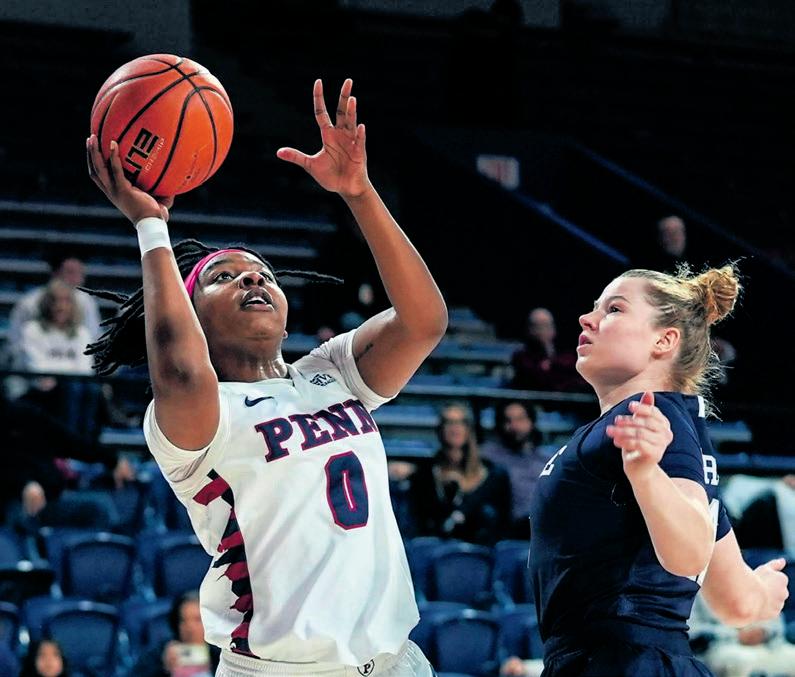
Five players from men’s basketball and three from the women’s team have entered the transfer portal
ELLIE CLARK AND VALERI GUEVARRA Deputy Sports Editor and Senior Reporter
It’s the most exciting time of the season — the transfer portal has officially opened following the conclusion of the NCAA basketball tournaments. Commitments are being tested as rosters get shaken up by new talent.
2026 will be the first year the NCAA utilizes a 15-day transfer window, following changes to the system ratified in January. This is the only time teams can offer prospective transfer players a position on their squad, but transfers can commit on their own timeline.
Let’s break down which of the Quakers decided to continue their collegiate careers elsewhere.
Ethan Roberts
Senior guard/forward Ethan Roberts is finally leaving the Palestra.
Roberts was the Quakers’ leading scorer this season, and he looks to take his talents elsewhere for his final year of eligibility. Although Roberts said he was “forever a Quaker” when The Daily Pennsylvanian broke the initial news
of his transfer, he cannot play his final season at Penn due to the Ivy League’s 4-in-4 eligibility rules.
Roberts earned second team All-Ivy honors this past season for his efforts on the court. The 6-foot-5 guard out of Arlington Heights, Ill. declared for the portal last season but ultimately chose to stay with the Quakers when coach Fran McCaffery was hired.
He came to Penn as a junior after a redshirt year at Drake, which was preceded by a strong rookie season at Army. He’ll almost certainly be a key asset for high-major teams looking to pick up a consistent scorer with strong ball control.
Cam Thrower
Senior guard Cam Thrower was the sole member of the Quakers to see action during both of their post-pandemic Ivy Madness campaigns. Now, he’s one of five Penn men’s basketball players looking to transfer out of the program.
The 6-foot-3 guard out of Manhattan Beach, Calif. is an anomaly in modern college
basketball, having not attempted to transfer at any point during his undergraduate career. He has one year of eligibility left as he sat out the 2024-25 season due to injury. Thrower was a crucial contributor this past season. During Roberts’ absences due to injury, Thrower stepped into the starting lineup seamlessly, most notably in the title-winning run at the 2026 Ivy League tournament. Thrower made the all-tournament team after shooting 4-of-6 from beyond the arc, en route to a career-high 19 points in the championship final against Yale. At Penn’s subsequent March Madness first-round matchup against Illinois, Thrower notched 14 points and four rebounds. In other high-profile matchups between Villanova and Rutgers, Thrower tied for team-high scoring honors in both.
Dylan Williams
Senior guard Dylan Williams joined the Quakers in the 2024-25 season after stints at See PORTAL , page 9
All-time performances, NCAA leaders, and strong finishes highlight the season so far
ELLIE CLARK Deputy Sports Editor
Leading up to the highly anticipated The Penn Relay Carnival later this month, Penn track and field has competed in a strong slate of meets.
Program records have been reset. Underclassmen have etched their names in the record books among the greats. The Quakers are making themselves known on the national level as the height of the outdoor season approaches.
Before the Quakers head to Gainesville, Fla., and Chester, Pa., for the Tom Jones Invitational and Paul Donahue Invitational this weekend, let’s break down the five most impressive performances of the early season.
5. Senior thrower Angeludi Asaah wins the discus in Athens, Ga.
Asaah stunned in her signature event at the inaugural Spec Towns Invitational last weekend.
Asaah displayed remarkable consistency, going out with a season-best 56.66-meter throw. She never threw under 53.7 meters and only fouled twice in the pit, beating out the secondplace finisher by one-and-a-half meters. The Honolulu native was also only half a meter off
her career-best 57.04-meter throw set last April at the South Florida Invitational.
An All-American in the event, Asaah is determined to make her way back to Hayward Field for NCAAs in June. Her showing last weekend helps her case tremendously, as she currently sits 11th in the nation in the discus.
4. Men’s 4x400-meter relay program record falls at the Spec Towns Invitational.
A relay record fell just in time for Penn Relays. The Quakers proved themselves among the best at the Spec Towns Invitational in a deep 4x400-meter relay field. Sophomore hurdler David Davitt led the charge before handing off to junior sprinter Nayyir Newash-Campbell, who kept the Quakers in contention with the Purdue Boilermakers and Georgia Bulldogs.
Georgia freshman Jonathan Simms split a 43.98 on the Bulldogs’ third leg, propelling Georgia to first place, while Penn sophomore distance runner Benjamin Markham held off
an advance from Princeton’s Kavon Miller. The anchor leg saw junior hurdler Ryan Matulonis and Princeton sprinter Joey Gant push each other to the line. Ultimately, while the Tigers came out on top by two hundredths of a second, the Quakers captured a program record.
3. Newash-Campbell runs the first sub46-second 400-meter dash in program history at the Sam Howell Invitational. Newash-Campbell earned his first individual indoor Ivy League title in March. He’s out for blood during the outdoor season, hoping to defend his outdoor 400-meter title in May and capture his first berth to NCAAs in June. Newash-Campbell famously broke the 400meter program record last season, which was the longest-standing program record at the time. Just last weekend, he lowered the record once again, crossing the line in 45.89 for the first sub46-second 400-meter dash in program history. Newash-Campbell is just over half a second off the modern Ivy League record, which was set by See TRACK , page 8