Our Absence of Light column returns after three years to give voice to formerly incarcerated people in the Syracuse area.
C • 100 years
Drumlins County Club has been a hub of community for Syracuse Univeristy students and locals for the last century.
S • Friends to foes
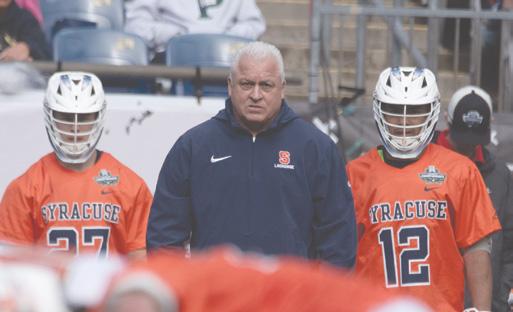
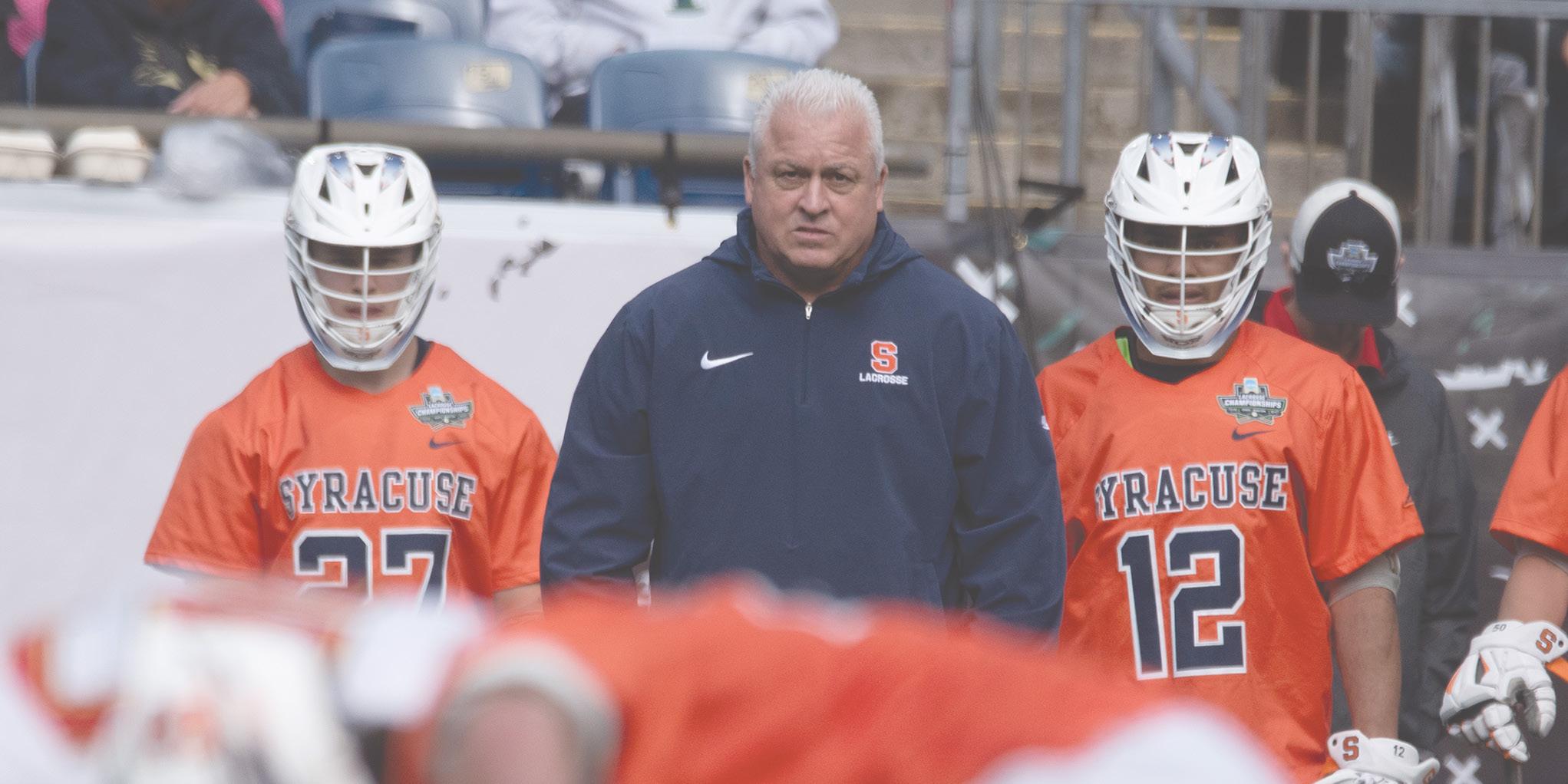
Page 16 Gary Gait’s coaching career began at Maryland. The Terrapins are now the Orange and Gait’s nemesis.
Former SU lacrosse player expelled after Title IX investigation
april 24, 2024
first allegedly violent incident
aug. 24, 2024
Hunter and the complainant engage in a verbal argument with mutual pushing that was reported to DPS by an anonymous caller
march 22, 2025
Hunter reportedly physically assaults the complainant in his South Campus apartment
oct. 8-9, 2025
A Title IX hearing is held on Zoom
feb. 3, 2026
A final decision is released, affirming the hearing officer’s determination and factual findings, as well as Hunter’s expulsion
By Cooper Andrews and Kendall Luther the daily orange
Editor’s note: This story includes descriptions of dating and domestic violence.
Former Syracuse men’s lacrosse player Chrishawn Hunter has been expelled from the university after a Title IX investigation found evidence that he engaged in dating and domestic violence.
Syracuse University received a formal Title IX complaint against Hunter on May 5, 2025. The complainant, a female undergraduate student, alleged three incidents that caused her to fear for her safety, accord-
ing to hearing outcome documents obtained by The Daily Orange.
A Title IX hearing officer designated by SU found Hunter responsible for two of the three alleged incidents, violating SU’s Sexual Harassment, Abuse and Assault Prevention Policy related to both dating and domestic violence, as well as sections 1, 2 and 3 of the university’s Student Conduct Code. The sections address physical assault and intentional conduct causing harm. The hearing officer found insufficient information to conclude that Hunter engaged in sexual harassment, according to the decision.
The hearing officer found that Hunter subjected the undergraduate student to “continued and unwelcome actions” from
spring 2024 through spring 2025, the documents state.
Hunter is no longer a student at SU and has not been a student since spring 2025, Sarah Scalese, the university’s vice president for communications, confirmed in a statement to The D.O.
Though two “physical acts” were separated by several months, the hearing officer found a “pattern of behavior” as Hunter “chose to engage in physical violence as a response when frustrated by someone with whom he was in a dating relationship.”
Hunter’s expulsion means he is ineligible to “receive any diploma, degree, or certificate from Syracuse University and is permanently
see hunter page 5
By Justin Girshon senior staff writer
Syracuse Director of Athletics John Wildhack is set to retire, the university confirmed in a press release Wednesday afternoon. Wildhack will remain in his role through July 1 to conclude his 10-year tenure at SU. ESPN’s Pete Thamel was the first to report the news.
“It was my decision,” Widlhack told Cuse Sports Talk Wednesday afternoon. “So let me be very definitive about that.” Wildhack’s retirement plans came over four months after it was announced that Chancellor Kent Syverud — who will become Michigan’s next president — will leave SU after the 2025-26 academic year. In September, Wildhack, 67, said he had no plans to leave his position after it was announced Syverud would be stepping down.
“From the moment John returned to his alma mater in 2016, he has been relentless in his pursuit of excellence across all facets of Syracuse Athletics,” Syverud wrote in a press release. “John has supported our student-athletes as competitors and scholars, he has transformed our athletics facilities. He has been a vital leader in the work of the Atlantic Coast Conference, and he has navigated the rapidly evolving college athletics landscape with expertise and vision. I am deeply grateful to John and wish him and his family the very best as he begins this well-deserved retirement.”
As Syracuse’s 11th director of athletics, the Orange’s most notable athletic accomplishment under Wildhack was the men’s soccer team winning the 2022 National Championship. Though the men’s and women’s lacrosse programs each made Final Fours during his tenure, they fell short of reaching National Championship games. On the hardwood, SU’s women’s basketball program made five NCAA Tournaments while the men’s program faltered to just three. Wildhack was also tasked with hiring Felisha Legette-Jack to lead the women’s program after turbulence under previous head coach Quentin Hillsman, and he navigated Jim Boeheim’s retirement following 47 years at the helm. Though football had its ups and downs, the Orange had two 10-win seasons during
see w ildhack page 14
ICE concerns, calls for transparency consume USen open forum
By Samantha Olander and Griffin
Brown
Attendees at Syracuse University Senate’s annual open forum had lots of questions about immigration enforcement and SU’s commitment to diversity. Few were answered. At this year’s forum, attendees raised concerns — mostly in the form of questions — related to U.S. Immigration and Customs Enforcement, following false reports Monday that ICE agents were seen on campus. The open forum, held in lieu of the senate’s monthly meeting, is not structured as a question-and-answer session. Unlike regular meetings, there is no one designated to answer attendee questions. Instead, it serves as a space for the university community to voice issues they want the senate to prioritize in the coming year.
Michael Bunker, chief of SU’s Department of Public Safety, answered a handful of ICE-related questions early in the meeting. He said DPS has investigated multiple recent reports of ICE activity in the area, but there has been no evidence to substantiate them.
“We’ve had three reports recently that come into the Department of Public Safety,” he said. “All three of those we’ve been able to look into and have not seen ICE in the area.”
Bunker said the reports came from the Westcott neighborhood, Salt City Market area and Harrison Street corridor. DPS worked with the Syracuse Police Department and the Onondaga County Sheriff’s Office, reviewed camera footage and sent personnel to the reported locations, he said.
He also addressed a Monday incident that involved two U.S. Marshals investigating an unrelated federal
matter on campus. Their presence, he said, was “quite alarming” to those who were on campus that day.
DPS confirmed the marshals were present for “a legitimate, nonICE related issue,” he said, adding he contacted their supervisor to express concerns about the fear their appearance incited.
Still, several senators questioned why DPS never sent an official
see US en page 5
leonardo eriman senior staff photographer
The
occurs inside Chrishawn Hunter’s South Campus apartment
Editor@dailyorange.com
News@dailyorange.com
Opinion@dailyorange.com
Culture@dailyorange.com
Sports@dailyorange.com
Digital@dailyorange.com
Design@dailyorange.com
Photo@dailyorange.com
BUSINESS 315-443-2315
how to join us
The Daily Orange is an independent, nonprofit newspaper published in Syracuse, New York. The editorial content of the paper — which started in 1903 and went independent in 1971 — is entirely run by Syracuse University students.
The D.O., a 501(c)(3) nonprofit, is editorially and financially independent from SU, and the paper receives no funding from the university. Instead, The D.O. relies on advertising revenue and donations to sustain operations.
This spring, the paper will be published Thursday when SU classes are in session. The D.O.’s online coverage is 24/7, including while SU is on break.
To show your support to The D.O.’s independent journalism, please visit dailyorange.com/donate. Donations are tax deductible.
If you are a Syracuse University or SUNY-ESF student interested in contributing to The D.O. on either its advertising or editorial teams, please email editor@dailyorange.com.
corrections policy
The D.O. strives to be as accurate in our reporting as possible. Please email editor@dailyorange.com to report a correction.
letter to the editor policy
The D.O. prides itself as an outlet for community discussion. To learn more about our submission guidelines, please email opinion@dailyorange.com with your full name and affiliation within the Syracuse community. Please note letters should not include any personal information pertaining to other people unless it is relevant to the topic at hand. All letters will be edited for style and grammar.
The forecast for this upcoming week, per The Weather Channel.
BASKETBALL LACROSSE
We want to hear what you think about our content. Email editor@dailyorange.com or send us a message on social media.
Help us report on stories that matter to you. Email editor@dailyorange.com with your ideas. Tips may be shared anonymously. Send tips and story ideas 2.
EDITOR-IN-CHIEF
Kendall Luther
Rosina Boehm
Griffin Uribe Brown
on campus
SU career services hosts 4th Black History Month career mixer
By Vivian Collins asst. news editor
Syracuse University’s Career Services hosted its fourth annual Black History Month career mixer Wednesday, allowing students to network with alumni and ask them questions about their careers.
The mixer, a collaboration with the Office of Belonging & Student Success and the Student Government Association’s BHM committee, was set to kick off with a speech by Syracuse Mayor Sharon Owens. However, the mayor was in Albany “attending to official business,” which went longer than expected, Black Student Union President Za’Mani Pierre-Louis said.
“She sends her warm regards and appreciation to everyone here, and she looks forward to future opportunities to connect our campus community,” Pierre-Louis said regarding Owens’ absence from the event.
The mayor’s office did not immediately provide comment.
SU alumni at the event took turns introducing themselves to attendees to kickstart the mixer. Newhouse School of Public Communication Professor J. Christopher Hamilton and CNY Central Assignment Editor Jason Distant spoke to students about their experience in the media industry.
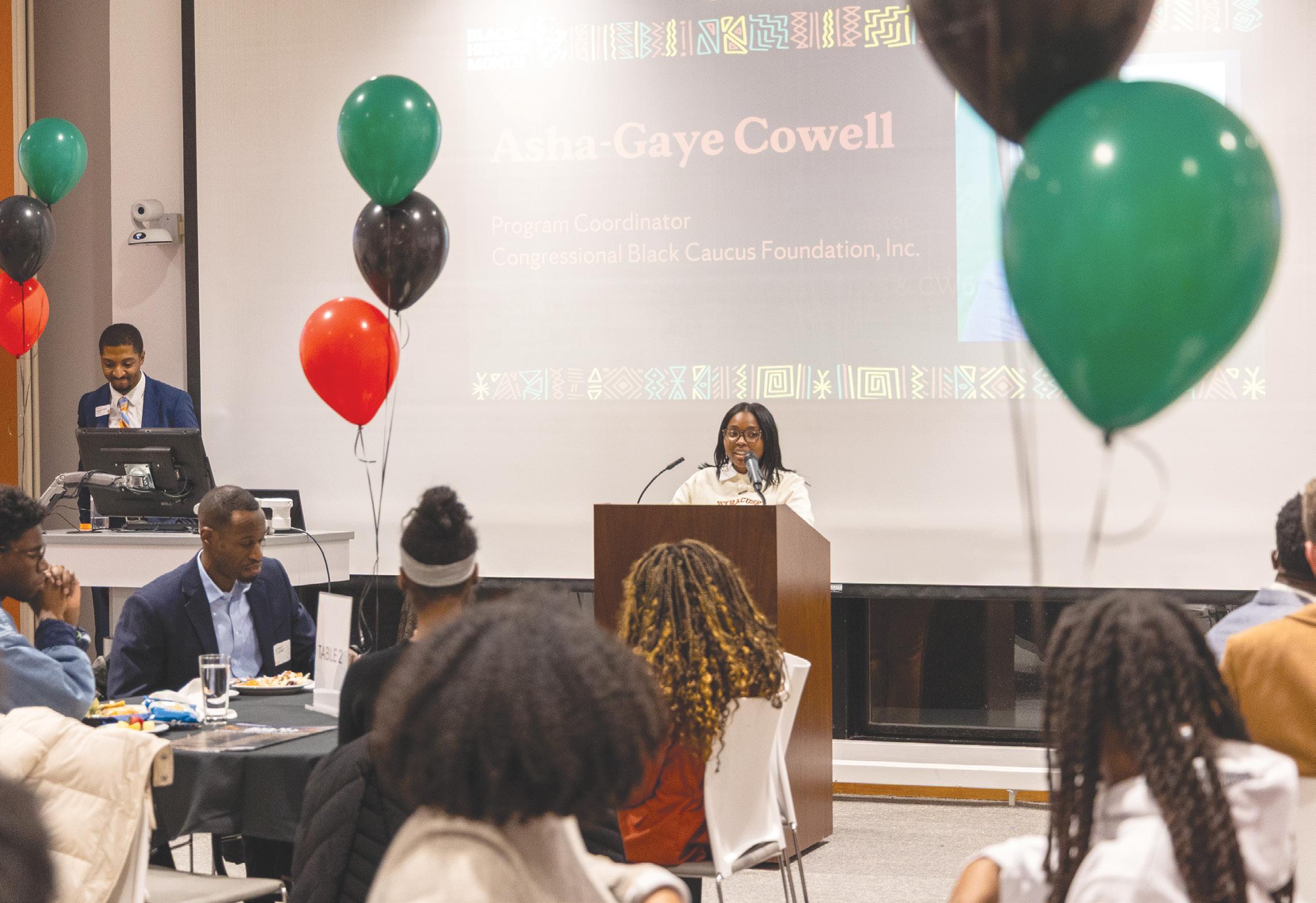
Programming Director of the Congressional Black Caucus Foundation Asha-Gaye Cowell spoke about her work matching students with congressional internships, followed by Excel Consulting CEO El-Java Abdul Qadir, who shared his path to the consulting world. Central NY Community Foundation Scholarships VP Ahmeed Turner discussed gaps in the Syracuse education system with students.
With students sitting at different tables, alumni took turns talking to each group of students. Each alum spoke to students about topics ranging from internship advice to career experience.
Chloe Narcel, an SU freshman, said while she was disappointed the mayor didn’t attend, she was still excited to learn from other alumni. She said it would have been “cool” to hear from Syracuse’s first Black mayor.
esports
“I think it’s important to help college students connect as soon as they can,” Narcel said. “I wish people knew more about (the event).”
Freshman Braydon Southerland serves as the Director of Government Affairs for SGA and works to connect the student government with Syracuse’s government.
Southerland said he was excited about the opportunity to connect with people who have similar backgrounds to him. He thinks it’s important to make meaningful connec -
tions during Black History Month “whenever possible.”
“Syracuse definitely has a very diverse campus, and we have the ability to hold these events,” Southerland said. “I’m very proud of the university for how they’ve put up Black History Month and how even in this divisive time they’ve continued to stay strong and believe in diversity.”
The event was held in the Schine Student Center and organized by Erin Smith, SU’s internship program coordinator. He was offered
the opportunity to work on career-related events for Black History Month four years ago and said it sounded like “a dream come true.” “I hope (students) understand the benefit of networking, and it gives them a little bit of practice before they step outside of the campus environment and get into the real world of networking,” Smith said.
Owens is willing to partner for future programming, Smith said.
viviancollins@dailyorange.com
Esports community reflects on program as SU opens 3rd facility
By Owen Smith asst. digital editor
After Syracuse University officially opened its third esports facility Friday, its “fandom” said it marked a new beginning for building the major’s participation and fanbase.
SU’s new facility, located at the Marley Education Center, hosted its first Super Smash Bros. competition following a grand opening on Friday.
SU’s existing spaces for esports in the Schine Student Center and Barnes Center at The Arch focus on student recreation. The Marley facility is meant to act as a dedicated academic facility, according to SU’s Director of Esports Competition Travis Yang.
Yang said although the competitive sport is young, there’s potential for a big future.
“We are so early in esports,” Yang said. “If you think back to any traditional sport that’s been around for dozens of years, fandom takes a while to build and establish.”
The new esports center is designed specifically to support the university’s esports majors, with higher end equipment than the other centers, Yang said.
The new facility includes the first ever esports control room on campus and an auditorium. The additions were built to provide a professionallevel environment previously unavailable at other locations, Yang said.
“When you talk about really engaging students in a PCR that they’re used to from Newhouse, that did not exist for the esports side of things,” Yang said. “The space that they now have in that classroom can support anywhere from eight to a dozen students live, working a show each night.”
The facility hosts some of the same high end camera and audio equipment found in Newhouse School of Public Communications’ main broadcast centers, including game replay and technical director’s stations to assist with livestream visuals.
The new facility’s black box studio, used for commentary during live esports games, was expanded to accommodate four student broadcasters simultaneously.
Rayshawn King, a sophomore esports communications and management major, called the facility “one of a kind” nationally. King said new features of the facility, including four “observer” PCs and a sound booth to assist with live games.
“Eventually it will become an actual classroom for students to go and learn the production side of esports,” King said.
We are so early in esports. If you think back to any traditional sport that’s been around for dozens of years, fandom takes a while to build and establish.
Travis Yang director of
esports
The rapid expansion of esports facilities comes after a direct order from SU Chancellor Kent Syverud, Yang said. The chancellor’s involvement ensures the esports program has the resources to lead the field nationally, Yang added.
“What makes Syracuse different from any other school I’ve been to is that the chancellor actually provided the resources and the administrative backing to actually accomplish those goals,” Yang said.
Now, the investment is starting to pay off in recruitment. Syracuse recently hosted the New York State High School Esports Championship and participated in recruiting combines in New Jersey, Yang said.
Yang said SU’s facilities have become a “beacon” on the East Coast, drawing in inter-
Syracuse University’s Esports department welcomes its third esports facility, located at the Marley Education Center. avery magee photo editor
Black Student Union President Za’Mani Pierre-Louis explains Mayor Sharon Owens’ absence at career mixer. The mayor was in Albany “attending to official business.” eli schwartz asst. photo editor
on campus
Brewster Hall trash can fire causes sprinkler damage, flooding
By Brenne Sheehan news editor
A trash can fire in Syracuse University’s Brewster Hall activated a sprinkler that flooded several rooms on Wednesday, the Syracuse Fire Department confirmed.
The SFD responded to the alarm a little before 2 p.m. The sprinkler extinguished the flames with “limited” fire damage, an SFD spokesperson wrote in a statement to The Daily Orange. There were no reported injuries.
At least two dorm rooms were affected by water damage, according to SFD reports.
“There was significant water damage but limited fire damage thanks to the sprinkler system doing its job,” the spokesperson wrote.
The cause of the fire is still under investigation, an SFD spokesperson said.
SU’s Department of Public Safety had no immediate comment.
This story is developing and will be updated with further reporting.
brennesheehan@dailyorange.com
Theta Chi fraternity under investigative status
By Brenne Sheehan news editor
Syracuse University’s chapter of Theta Chi is under investigation as of Feb. 6, according to SU’s Hazing Awareness Hub.
During the investigation conducted by Community Standards, Theta Chi cannot recruit new members or hold social events. However, it can continue community service and philanthropy events.
There is no definitive timeline for the investigation, as they can vary depending on interviews, scheduling constraints and other factors, an SU spokesperson recently told The Daily Orange.
Neither Theta Chi’s Alpha Chi chapter nor the national organization responded to The D.O.’s request for comment. An SU spokesperson referred to The D.O. back to the Hazing Awareness Hub.
Theta Chi’s investigation comes just a few weeks after the same status was imposed on Sigma Alpha Epsilon, another SU fraternity, for hazing that occurred during the fall semester. brennesheehan@dailyorange.com
Blakeman announces Hood as running mate
By Arabella Klonowski asst. news editor
Todd Hood was confirmed as Republican Bruce Blakeman’s running mate in the New York state gubernatorial election on Tuesday. Blakeman announced his selection of Hood as a candidate for lieutenant on Monday before the Tuesday at the New York State Republican Convention. Hood spent over 30 years in law enforcement and public safety, according to a Monday release.
Hood was elected as sheriff in nearby Madison County in 2018, supervising criminal investigations, civil services and law enforcement. Before that, Hood served as a Syracuse police detective.
“As Sheriff, I see the real-world consequences of Albany’s failed policies every day — rising crime, higher costs and repeat offenders released back into our communities,” Hood said in the release.
Prior to serving as sheriff, Hood worked as a detective specializing in gang and organized crime-related investigations at the Syracuse Police Department. He also worked as a criminal investigator for the Onondaga County District Attorney’s Office.
On the ballot, Blakeman and Hood will join Joseph Hernandez and Saritha Komatireddy, running as comptroller and attorney general, respectively.
Together, Hood and Blakeman are running on a platform of eliminating Hochul’s
bail laws, enforcing “consequences” for crime, cutting taxes and lowering the cost of living, according to the release. The pair also said they pledge to “stand up” to far-left politicians like Zohran Mamdani who are pushing for higher taxes and “less police.”
“(Hood) understands what Kathy Hochul refuses to admit: reckless bail laws and antipolice policies put repeat offenders back on the street, drive businesses out of New York and make families less safe,” Blakeman said. “Todd Hood and I believe in accountability, results and putting taxpayers first.”
The duo will face current Democratic Gov. Kathy Hochul, along with her running mate Adrienne Adams, in November. arabellaklonowski@dailyorange.com
state Antonio Delgado drops out of 2026 election
By Priya Schmit asst. digital editor
Lieutenant Governor Antonio Delgado suspended his primary campaign for the 2026 New York gubernatorial race, he announced on a social media post Tuesday.
Delgado failed to receive an automatic spot on the June primary ballot at the state’s Democratic Convention in Syracuse last Friday. Without this, he would have had to collect 15,000 signatures to be on the ballot. New York Gov. Kathy Hochul received the party nomination.
“I’ve decided to end my campaign for Governor of New York,” Delgado wrote. “After much consideration, I’ve concluded that there simply is no viable path forward.”
Delgado also did not receive an endorsement from the New York Working Families Party on Saturday – another potential path to the ballot – who opted against supporting any candidate, The New York Times reported.
Hochul selected Delgado as her lieutenant governor in 2022 after he served in the U.S. House of Representatives as the first person of color to represent an upstate New York district.
In June 2025, Delgado announced he would challenge Hochul for the New York governor position in the 2026 Democratic primary. He remained Hochul’s lieutenant governor during his campaign against her.
Hochul announced Adrienne Adams, the former speaker of New York City Council, as her running mate last Wednesday.
The primary election will take place on June 23. The New York gubernatorial election is scheduled to take place on Nov. 3. priyaschmit@dailyorange.com
A trash can fire in Brewster Hall activated a sprinkler that flooded several rooms on Wednesday.
tara deluca asst. photo editor
Theta Chi is under investigation. During the Community Standards investigation, it cannot recruit new members or hold social events. francis tang daily orange file photo
Delgado dropped out of the New York gubernatorial race. avery magee photo editor
NY Republican gubernatorial candidate Bruce Blakeman selected Todd Hood as his running mate, running on eliminating Hochul’s bail laws, higher crime enforcement and cutting taxes. courtesy of blakeman for new york
state
ineligible for re-admission,” according to the documents. He is also banned from SU property.
Hunter did not respond to The D.O.’s request for comment. His university-appointed advisor is “not permitted to comment on students, matters, or outcomes,” they wrote to The D.O., and does not provide statements to the media.
Federal privacy laws prevent SU from commenting on specific cases, Scalese wrote, but all reports submitted through the Title IX process are “thoroughly reviewed.”
“Syracuse University’s policies and procedures for investigating and adjudicating Title IX cases fully comply with federal and state law and are applied fairly and expeditiously to all parties in the investigative and disciplinary hearing process,” Scalese wrote.
The complainant asked that The D.O. not use her name because she is still enrolled at SU and has concerns about her privacy and safety.
Dating and domestic violence cover any violent act against someone who’s in a relationship with the respondent — or used to be, according to the documents. This includes romantic relationships, domestic partnerships or other close personal connections. It also applies if the respondent tried to start these kinds of relationships with someone.
Hunter submitted his full written appeal of the hearing officer’s decision and the sanction between Oct. 31 and Nov. 6, according to the documents. The Appeal Panel in the Title IX investigation confirmed the initial findings in a Dec. 17 letter, cementing his expulsion.
He reappealed the sanction on Jan. 20, arguing the hearing officer’s findings did not justify his expulsion. The Appeal Panel affirmed the hearing officer’s decision on Feb. 3.
Hunter participated in SU’s men’s lacrosse program from 2024-25. He grew up in Rochester and played field and box lacrosse around central and western New York. After attending the Westtown School in Pennsylvania to further his athletic career, Hunter became a three-star midfield recruit and committed to Syracuse on Nov. 8, 2022.
In 2024, Hunter did not see the field as a true freshman. He appeared in three games during the 2025 season as a sophomore: Feb. 1 versus Jacksonville, Feb. 7 against Vermont and March 18 versus Manhattan.
Hunter’s “physical violence” continued during SU men’s lacrosse’s spring 2025 season, according to the documents. Hunter remained on Syracuse’s active roster throughout a season where the Orange won the Atlantic Coast Conference title and made the NCAA Final Four.
SU Athletics did not respond to The D.O.’s request for comment.
Hunter is currently enrolled at Onondaga Community College, about four miles from SU, where he is rostered as a midfielder on the school’s men’s lacrosse team. On Nov. 7, 2025, Hunter posted a highlight reel of him participating in OCC’s fall practices.
Roger Mirabito, OCC’s executive director of communications, confirmed Hunter is a student at the community college and a member of its men’s lacrosse team, but said additional information is protected under the Family Educational Rights and Privacy Act.
campus alert to quickly dispel rumors. They suggested using the university’s Orange Alert system to push out notifications for students and faculty. Bunker did not respond to the suggestion.
Senator Crystal Bartolovich, an associate professor of English, said some students emailed faculty saying they would not attend class due to the perceived ICE presence.
“A lot of students wrote to professors and said, ‘I’m not coming to class because there’s ICE on campus,’” Bartolovich said. “It would have been helpful to have that dispelled quickly to the students, so that they could go to class and be reassured.”
Harvey Teres, an English professor, said, “pertinent questions have been asked, and not all have been answered” — specifically regarding whether a policy exists to alert students about ICE’s presence.
Graduate and international student leaders described ongoing anxiety among students, particularly those on visas.
Jean Molly Ameru, a doctoral student in inclusive special education at SU, said graduate student representatives were asked why the university had not released a campus-wide statement clarifying if ICE was present.
“I would like to understand what role the university plays in effectively communicating such incidents to students so that the grad leaders are able to relay that very information,” she said.
“Onondaga Community College is an open access institution, committed to equal opportunity in its enrollment and participation procedures and educational programs,” Mirabito wrote.
Hunter acknowledged the impact of his actions in his appeals, was willing to seek therapy and had a desire to learn from this experience, according to the documents. But the director of community standards wrote in the documents that probation was “simply not an appropriate outcome in this case.”
While the two were in a relationship, the complainant alleged Hunter pushed her into a wall and choked her twice at his South Campus apartment in April 2024, according to the hearing outcome. Hunter claimed this incident did not happen, according to the documents.
Text messages between Hunter and the complainant, referenced in the hearing, corroborated the complainant’s account, according to the documents. The complainant provided a screenshot from May 2024, of a text exchange reportedly with Hunter “in which they discussed her talking to another male,” according to the documents.
The complainant wrote in a text message, “At least he wouldn’t have thrown me against a wall and choke slammed me!” Hunter responded, “ik (I know) I’m terrible.”
Hunter claimed the complainant’s text conversation was not with him. The complainant provided the hearing officer with screenshots showing Hunter’s face as the contact’s profile picture, according to the documents. The hearing officer deemed Hunter’s testimony of the incident not credible.
At the start of the fall 2024 semester, Hunter and the complainant had a verbal argument that “escalated to mutual pushing,” per the documents. But Hunter’s expulsion from SU was determined by the two allegedly violent incidents reviewed by the Title IX panel, according to the documents.
Ling Gao LeBeau, who works in the College of Arts and Sciences and the Maxwell School’s Office of Student Success, said international students continually express fear about federal agents arriving on campus.
“Every day I have students … that are so scared,” LeBeau said, recounting concerns about traveling out of state. “I think we do need to do something as a university.”
Several senators raised concerns on behalf of international students on campus, especially after multiple staff members from the Center for International Students did not return for the fall semester.
Senator Phillip Arnold, a professor in the Department of Religion, said the department’s graduate students feel safer on campus than at their off-campus housing.
“Are there some other sorts of documents other than visas and passports that the university can give to international students?” he asked.
Other faculty members connected the discussion to broader campus climate concerns.
“I’m wondering what the administration is doing to counteract this erasure of its commitment to public erasure of its commitment to racial equity,” said Coran Klaver, an associate professor and co-chair of the Senate Committee on Intersectional Equity for Race, Ethnicity, Sexuality, Gender Identity & Disability.
Michele Combs, lead archivist at the Special Collections Research Center, said the “Dear Colleague” letter sent by the Trump administration was the “impetus” for recent changes at SU, including revisions to the IDEA requirement, core competency descriptions
SU’s Department of Public Safety responded to Hunter’s apartment after receiving an anonymous call about the argument. Hunter told DPS, the investigator and the hearing officer that he spoke with the complainant with his “hands behind (his) back so that (he) can make the deliberate point that (he) was not touching her at all.”
The D.O. posed questions to DPS and SU Athletics, including if the men’s lacrosse team was notified of DPS’ response to the verbal dispute. Neither responded to The D.O.’s request for comment.
The complainant’s third and final formal complaint alleged that, in March 2025, Hunter physically assaulted her in his apartment on South Campus.
The complainant was visiting Hunter, took his phone and checked if he was communicating with other women, according to her initial complaint described in the hearing outcome. After Hunter noticed the complainant going through his phone, he allegedly tackled her, pinned her down, took back the phone and slept on his couch. It was uncontested that Hunter woke up to find her going through his phone, per the hearing officer.
Then around 8 a.m., the hearing outcome states Hunter and the complainant engaged in an argument that she claims lasted for “several hours.”
The complainant claims Hunter shoved her approximately 15 times, shoved her to the ground twice and pinned her against a window, according to the documents. Hunter denied pushing, grabbing or touching her.
The documents also indicate Hunter grabbed the complainant by the arm and scratched it, drawing blood. The D.O. also obtained a copy of the photo that showed the complainant’s injury. The alleged incident caused her to fear for her safety, the documents claim.
and the renaming of the Office of Diversity, Equity, Inclusion and Accessibility to the Office of People and Culture. She added that the letter was later dropped by a federal judge.
She said the university may have been “a little hasty” in removing language and renaming offices, urging administrators to be more cautious before taking a “leap to comply.”
Meredith Bruster, a public administration graduate student, asked for more “transparency” around the presence of Flock Safety cameras on campus, including whether SU still has a contract with the company. This week, the city of Syracuse voted to replace Flock license plate readers with units from Axon Enterprise, after months of scrutinizing Flock and its ties to ICE.
“Transparency is absolutely paramount,” Bruster said. “We shouldn’t have to come to a senate meeting that’s capped at 500 people to learn about why the marshals were on campus.”
Julie Hasenwinkel, the associate provost for academic programs, addressed a question about updates to the First Year Seminar curriculum. She said a working group implemented changes to the class during the fall semester, but they brought “no significant changes” to learning outcomes.
While Chancellor Kent Syverud and Provost Lois Agnew spoke at last year’s open forum, and frequently answer questions at other senate meetings, they did not speak during Wednesday’s discussion.
As with other open forums, the Agenda Committee is set to review the topics discussed in Wednesday’s meeting and determine if any of the issues apply to senate committees. news@dailyorange.com
The hearing officer found that Hunter caused the injury in the course of the altercation, according to a sanctioning letter after Hunter’s first appeal. The officer ultimately found “sufficient evidence” that Hunter committed these actions, according to the documents. The officer noted the parties’ accounts differed, and there were no eyewitnesses to the reported conduct.
Hunter’s family backstory includes a history of domestic violence. His father, Christopher Hunter, killed his mother, Melissa Hammond, after a heated argument in November 2006. Investigators said Christopher slashed Hammond 59 times with a fishing knife. Hunter was 2 years old at the time.
Hunter’s father was found guilty of seconddegree murder on Nov. 18, 2007. He’s still serving a maximum prison sentence and is eligible for parole in 2032, The Oak Ridger reported in 2007.
In Hunter’s Title IX trial, the hearing officer explained they looked at how credible each person’s story was and weighed several factors: how detailed their accounts were, whether there was any supporting evidence and whether each party had a reason to be biased. They also kept in mind the context of the relationship between Hunter and the complainant.
The officer also confirmed in the documents that they adhered to the Sexual Harassment Policy’s requirement that the respondent is presumed not responsible. The respondent can only be found responsible if the evidence shows it is more likely than not the violation occurred, according to this standard.
Expulsions are a rare outcome for formal Title IX case complaints, said Kathryn Holland, an associate professor at the University of Nebraska-Lincoln.
“It’s very rare for any kind of formal grievance procedure to result in a finding of responsibility,” said Holland, who studies the implementation, use and effectiveness of formal support systems for sexual assault in higher education. “Even the ones that do result in the finding of responsibility, it is very rare for them to receive any kind of sanction that would result in things like termination, suspension, expulsion, et cetera.”
The Syracuse men’s lacrosse team last saw a domestic violence incident in 2021, when Chase Scanlan was arrested and jailed on domestic violence charges. A member of the Syracuse women’s lacrosse team who was in an on-again, off-again relationship with Scanlan then filed a lawsuit against the university, alleging it showed deliberate indifference to her as a domestic violence victim and didn’t fulfill its obligations under the law.
The D.O. obtained a copy of the Title IX Appeal Panel’s third and final decision from Feb. 3. Hunter’s punishment of expulsion was upheld as reasonable.
With this decision, the Title IX process between Hunter and the complainant is over. Hunter, now a student at OCC, is indefinitely expelled from SU and banned from accessing its campus.
“Based on the findings of the Hearing Officer, the sanction of expulsion was one of the options available and fully within the appropriate exercise of discretion by the Director of Community Standards,” the Appeal Panel’s final decision states. “We will not disturb that exercise of discretion.”
editor@dailyorange.com
est from high school esports athletes. Esports is currently at an “interesting” spot, he said, because many SU students are familiar with casual gaming, but aren’t invested or aware of the competitive side of video games.
Despite its new state-of-the-art equipment, some gamers said the program faces the challenge of building a consistent on-campus network. Praket Ehimay, an SU law student and Gaming and Esports Club member, said the SU’s esports centers sometimes feel quiet.
“I haven’t really seen it packed before,” Ehimay said. “More activity starts with the people at the top who coordinate events regularly.”
Yang said building a fandom on campus takes time. He compared it to the history of “traditional” sports like basketball or football.
“We know that the audience is there. We see that in the number of students we have in our facilities,” Yang said. “The next step is how can we then get that in front of the students to be like, ‘Hey, take your fandom one step further.’”
King said the new Marley center will become the primary venue for varsity matches. While Schine’s esports remains the “home ground” for many students, he said he believes the superior tech at Marley will eventually make it the heart of the academic program.
“(Marley) feels 10 times better than it is inside Schine,” King said. “Once people find that place out and take a step inside and experience it, they’re going to be stuck on it.” owensmith@dailyorange.com
Hunter played in three lacrosse games during his season as a sophomore. His physical violence toward the female student continued in the 2025 season. leonardo eriman senior staff photographer
CULTURE
Centennial club
SU’s Drumlins Country Club
celebrates its 100th anniversary this year
By Eliana Rosen culture editor
As a teenager in the 1970s, John Vieau’s earliest memories of Drumlins Country Club were spent ice skating in the wintertime and roaming the golf course in the summer. He and his friends would escape from their parents’ watchful eyes for their own afternoons of adolescent freedom.
“If you lived within a couple miles, that was basically your playground,” Vieau said. “It was kind of like fantasyland for a kid growing up in a workingclass neighborhood.”
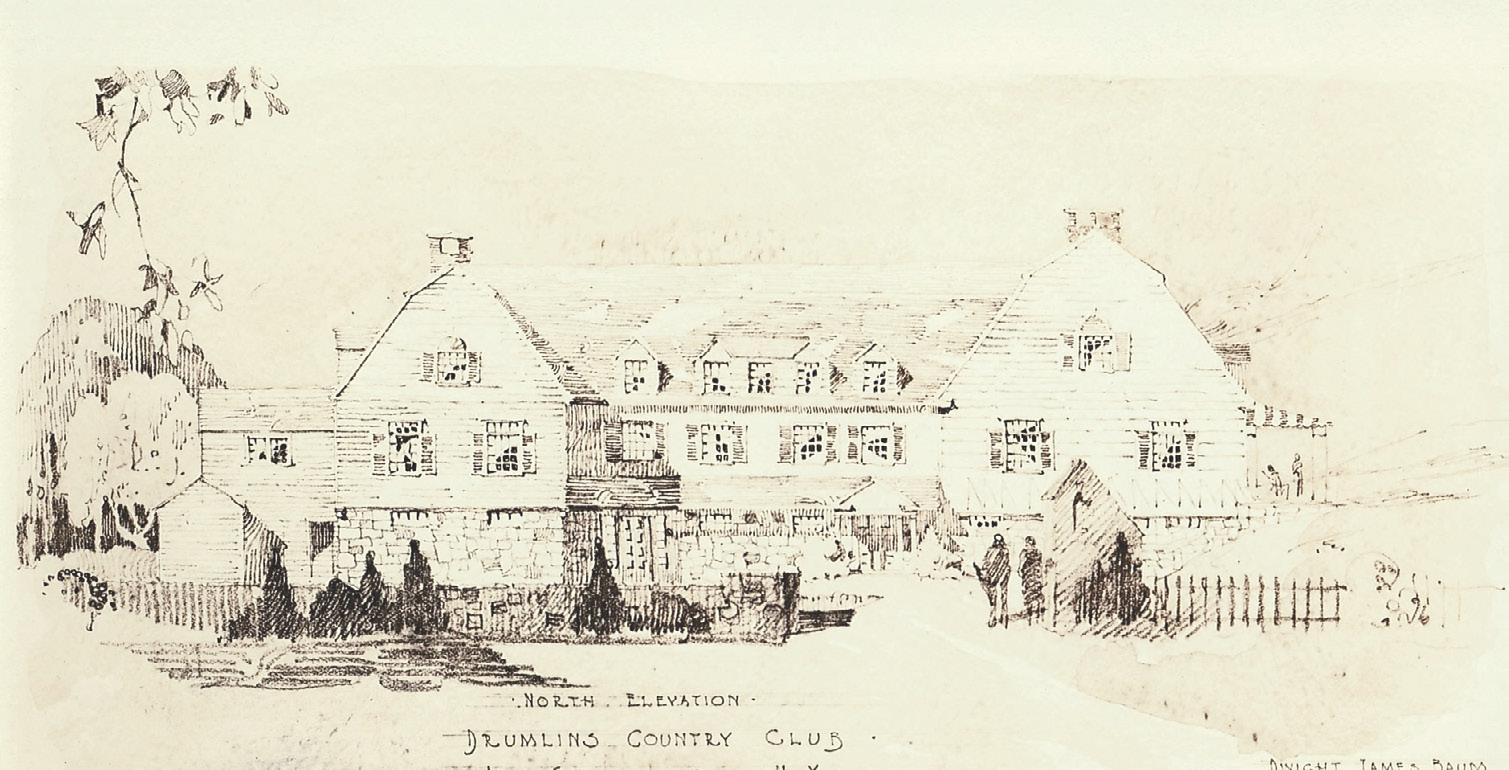
Drumlins, now owned by Syracuse University and just a few miles from campus, is celebrating its centennial anniversary this year.
With two 18-hole golf courses, tennis courts, banquet spaces, a restaurant and pool, Drumlins has been a “hub of action” for the local community since 1926, interim director Joe Sidoni said. The club’s East Course is private for members and the West Course is open to the public, including SU students.
For the guys my age, it’s our playground. As adults, we don’t have a lot of places to play. To be ourselves, to be like kids again.
John Vieau longtime member of drumlins
To celebrate its 100th birthday, Drumlins is hosting a centennial-themed event each month of 2026. Events include a special menu with members’ previous favorite dishes in April and a historical exhibit of the club’s artifacts in May. In December, the club is hosting a 1920s-themed New Year’s Eve Gala.
“Anytime something has any kind of longevity, longevity like 100 years, you look at it and you say, ‘Oh, they must be doing something, right,’” Rosemarie Nelson, a Syracuse resident who’s been a member for seven years, said.
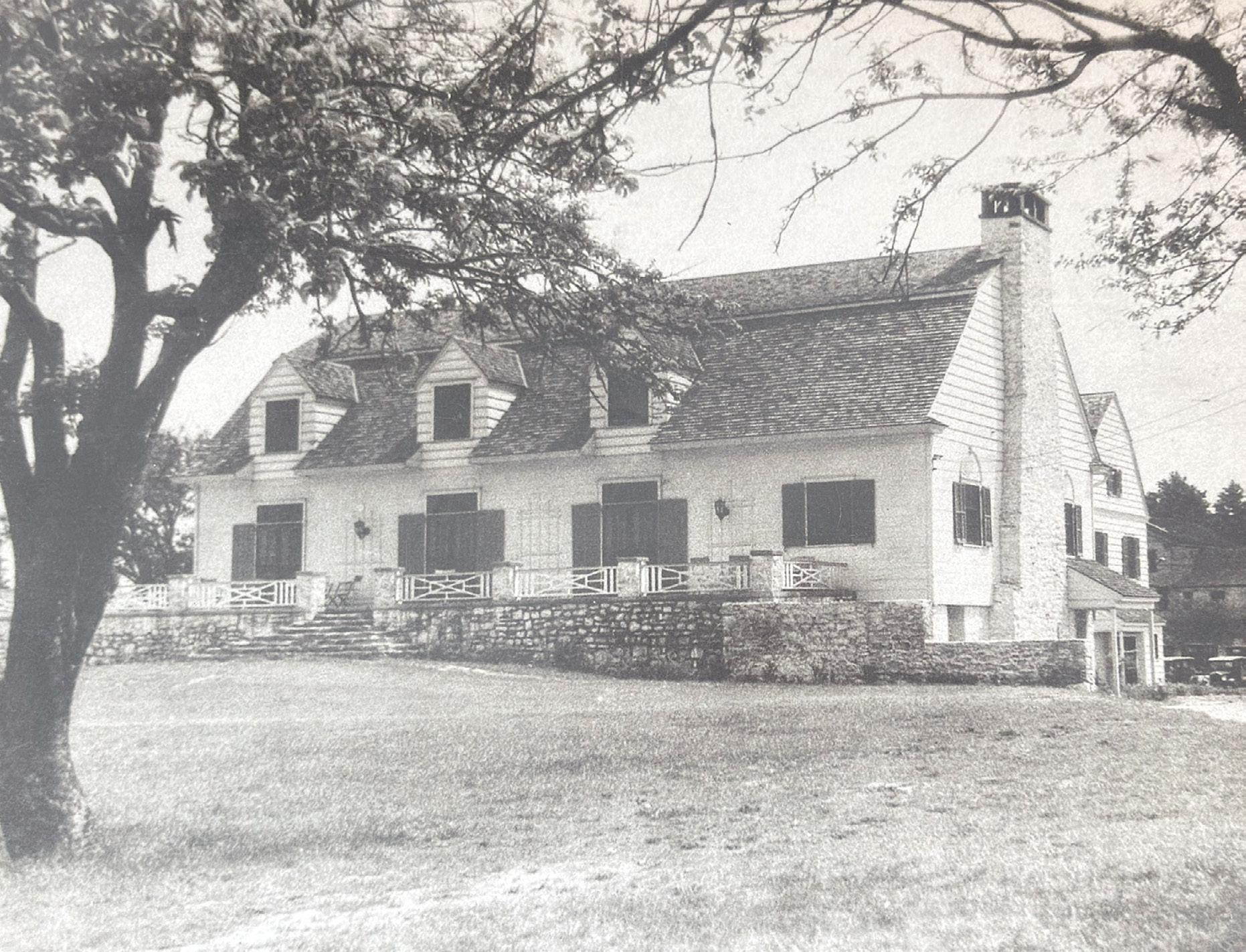
The club was founded in 1926 by Roderick Burlingame Sr., who converted the space from Nottingham Farm into a place of leisure, Sidoni said. In 1969, SU purchased the property from the family. The farm’s original barn is still in use today as the club’s restaurant, Bistro 1926. The original club also included an ice skating rink and bowling alley, which closed for financial reasons.
For many families, Drumlins has a “deep-seated history,” Marion Nies, the current director of tennis, said. After working at the club for over 30 years, Nies has seen generations of families build traditions and
see drumlins page 9
Gregg Yeti hosts radio show, shares lore from his living room
By Lily Zuckerman
asst. culture editor
Visitors to Gregg Yeti’s Syracuse home are immediately welcomed into his makeshift studio — though it has more instruments and sound machines than most professional ones. Every crevice is covered in instruments, cassettes, records and posters that Yeti has spent years collecting.
“I’ve loved music ever since I can remember,” Yeti said. “Music is the front page, it’s the main course. I can just sit in a chair and listen to ‘Exile on Main Street’ by The Rolling Stones all the way through, and that’s the entertainment.”
Born and raised in Syracuse, 50-year-old Yeti grew up listening to music “as an activity,” he said. When Yeti’s not working at Pastabilities
as the restaurant’s purchasing manager, where he’s worked for over 25 years, he is probably prepping for his weekly radio show “Yetiland” or performing with his rock band, The Flashing Astonishers. From the makeshift studio in his living room, Yeti produces his weekly radio show. In the room filled with instruments galore — dulcimer, mandolin, bass, air organ, 12-string guitar, electric guitar, acoustic guitar, a
drone and more — Yeti uses programs like REAPER on his computer to record the show. Before he records, Yeti combs through the different categories of songs he has in folders across his computer, ranging from Syracusebased bands to strong guitar instrumental songs. Hosting his show is completely recreational, he said, he doesn’t make any money from it. He does it purely because “music is life.”
“I’m a big fan of eclecticness, really. It’s the freedom of being able to play whatever I want, as long as there’s no swearing,” Yeti said. “What I try to impart on people is to keep exploring. Because to me, that’s life, that keeps you alive, it keeps your brain moving.”
Yeti said curating what songs he will play on the show is very similar to the mixtapes that he would
From highly engaged members to free access to amenities for SU students, Drumlins Country Club has long connected with the community. courtesy of drumlins country club
Stoney’s Cuse line dancers move indoors, broaden community
By Alex Rice asst. copy editor
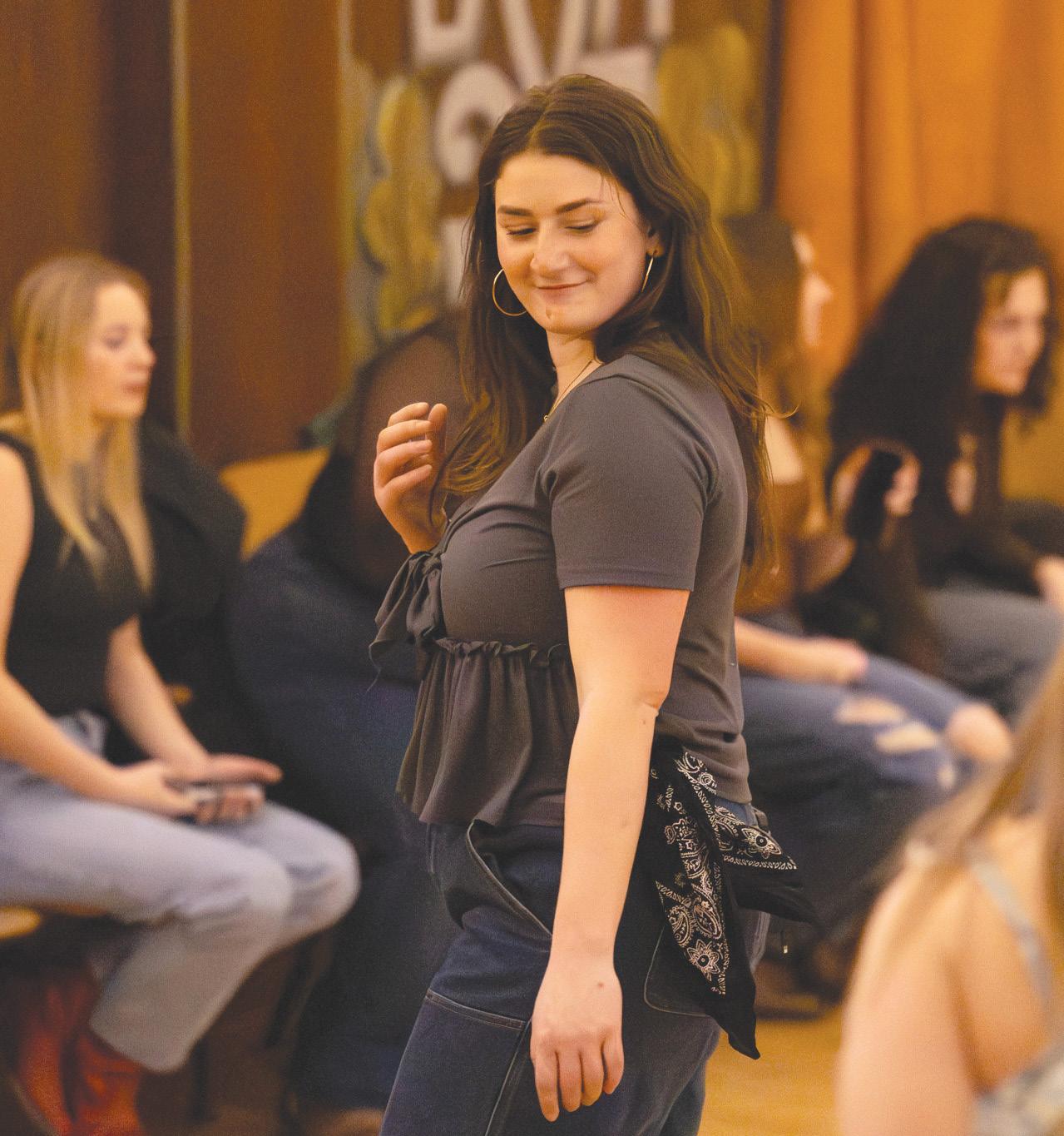
Last semester, hundreds of students huddled in a South Campus backyard with a makeshift wooden dance floor for weekly line dancing meetings. Now, four months later, they’re gathering with both university students and locals at downtown events.
“It’s still very trial and error but we are starting to get the flow of things,” said Sarah Jacoby, Syracuse University senior and line dancing instructor. “People keep coming back because line dancing is all about community.”
Brothers Jackson and Xavier Carrier have been hosting line dancing nights in Xavier’s backyard under the name “Stoney’s Rockin’ Country Cuse.” This semester, Stoney’s has expanded into the downtown Syracuse area, hosting an event at Middle Ages Brewery Co. and more recently at the Ukrainian National Home.
With their transition indoors, Jackson, an SU senior, said the attendance rates have stayed consistent, with about 70 people continuously showing up. At their most recent event with the Ukrainian National Home, Jackson said he noticed a difference in the crowd demographics.
The Ukrainian National Home hosts other dancing events that Jackson has attended, since they have a large stage and sound system. They also have a bar and kitchen that people can grab food and drinks from in between dances, Jackson said.
“Our crowd is usually younger, lower classmen and students so having events in spaces with bars or restaurants brings in more of an elevated demographic,” Jackson said.
In the future, the brothers said they want to partner with other organizations with “good causes” they can support. The Ukrainian National Home is a nonprofit organization that is run completely by volunteers, who Jackson found to be super friendly and easy for them to partner with, he said.
Jacoby helped the brothers with the indoor transition and expanded Stoney’s social media presence. Jacoby met the brothers through SU’s Outing Club. On the bus ride back from a hike, she got talking with Xavier, and they worked together to come up with ways to grow their social media.
Stoney’s began to grow their social media platforms in December, with their TikTok page
now reaching over 2,300 followers. The brothers post clips from their events and instructional line dancing videos for viewers to follow along with. Their most popular video, a tutorial of the dance to “Texas Time” by Keith Urban, gained more than 41,000 views.
The growth of the TikTok page has introduced them to people at other schools, bringing attendees to their events from places like Oswego and other SUNY schools, Jackson said.
“Our TikTok has started reaching a greater audience. I edit the videos to try and include all the steps. It’s reaching beyond the university community, which means it’s helping someone, and that’s what matters in all of this,” Jacoby said.
The location changes were also spurred on by winter weather. But the brothers didn’t want to have to stop dancing, said Jackson.
“We really wanted to keep going and keep up with the event because it’s something that we built a really nice community around and people have asked us to continue,” Jackson said.
As members of the SU Western Equestrian team, the brothers learned that registered student organizations can rent spaces on campus for free or a small fee. Since Stoney’s are still working on becoming a RSO, the group partnered with the Western Equestrian team to host their first event, “Boots at the Barn,” at SkyBarn on South Campus on Dec. 13.
Their recent indoor events required a cover fee of $5, and all of the proceeds were used to pay for the space and donated to the equestrian team, Jackson said.
SU senior Thomas Condon attended several line dancing events that Stoney’s had last year, and more recently, “Boots at the Barn” in addition to the event at the Ukrainian National Home. For Condon, the $5 cover fee made his money’s worth.
“They take their time to slow things down and even help you one-on-one if you need it and $5 to have three hours of fun dancing is totally worth it,” Condon said.
Originally from California, Jacoby said she was always interested in line dancing but was never able to participate since most places require attendees to be 21 or older. She wanted to learn how to dance in a “low-stakes environment” where there was no pressure to be perfect, she said.
After attending her first line dancing event through Stoney’s, she said she found the commu-
nity to be a safe environment that isn’t as scary as it seems.
“All of us are acting like fun and goofy, and us instructors make mistakes too, nobody’s perfect, and you can just let loose and have a bit of fun,” Jacoby said.
In the coming months, the Carriers and Jacoby are working to officially become an SU RSO to expand their outreach, Jacoby said. They are also planning an event for March where they hope to partner with a local country-rock band for a live music element, Jackson said.
Since attending Stoney’s in the fall, Condon has seen how the welcoming environment has accepted dancers with all experience levels. Even with very little experience, he said he found the lessons and instructors to be hands-on and attentive.
“Everyone is very welcoming and there either to learn or to spread the fun. Showing everyone that line dancing can be a great time whether you’re a beginner or have been a dancer for eight years,” Condon said.
arice19@syr.edu
arts Trade quarters for a surprise mini print at SU Art Museum
By Claire Zhang asst. digital editor
Working at the front desk of Syracuse University’s Art Museum, SU senior Kyle Henry has recently noticed an influx of salt tracks in one of the lobby’s corners. Visitors have started to gather around the museum’s newest addition: a bright red mini print vending machine.
“It brings so much foot traffic,” Henry said. “It’s a vehicle for getting people to the museum.”
Installed over winter break, SU Art Museum’s new machine by Inciardi Prints has been operating since Jan. 20. By putting coins through the machine slots, visitors are surprised with one of 10 prints, depicting various images, from a SpongeBob popsicle to a jar of pickles. Each one is hand printed with a linocut design on a 3-by-5 inch card.
“It’s fun, it’s cool and it’s unique to be able to walk into a museum with four quarters and come out with your very own piece of handmade art,” Taylor Dean Westerlund, the museum’s communications and outreach specialist, said.
Founded in 2022 by artist Anastasia Inciardi, these mini print vending machines are stationed in museums, bookshops, restaurants and stores all over the country. Before shipping to vendors, the prints start as linocuts; a process where artists cut away an image’s negative space in a linoleum block. From there, ink is rolled over the carved block and pressed onto the canvas.
Westerlund has known about Inciardi Prints for a while, following Inciardi’s story online and visiting other machine locations. He and his colleagues thought the machine would be a “natural fit” for the school’s museum.
Inciardi Prints puts out several series of prints for host museums to choose from. The museum’s team picked out nine of Inciardi’s original prints, looking for Syracuse-oriented ones, like an orange or a salt shaker. They then coordinated with Inciardi to create one exclusive to SU — a mini print version of the “Winged Victory of Samothrace” statue.
“People are delighted to see our school and our school’s culture represented on a small scale like this,” Westerlund said.
Some students, like Henry who’s been working at the museum’s front desk since his freshman year, are drawn to the SU-specific prints. He’s seen many visitors cycle in for the machine, but he understands the popularity. He’s also used his own coins to purchase a print.
“It’s the coolest little thing for a college student,” Henry said. “You can just put it on a pin board or on a mirror.”
While some may be stopping into the museum between classes or while passing through campus, others, like Syracuse local Jocelyn Melchor, are serious print collectors.
Melchor runs the Instagram account @ miniprints4joy and has followed Inciardi Prints around the country. She began the account in 2024, when she revisited New York City and stumbled upon an Instagram post of the Inciardi Prints MetroCard print at their Grand Central Station pop up. She knew the city was phasing out physical MetroCards and wanted to take a print as a souvenir.
That one trip turned into a hobby for Melcho. Now she has collected over 400 prints from all over the country, including San Francisco and New Orleans. Soon after obtaining the MetroCard print, she joined an Inciardi Prints trading group on Reddit and now maintains a connection with the online community.
Melchor works a remote corporate job, so collecting prints is a chance to tap into her creative side and also visit different cities that host the print machines. Last October, she and her mother met Inciardi at an event in Maine, where Inciardi told Melchor that a machine would be coming to Syracuse.
“Ever since October, I’ve been twiddling my thumbs, wondering, ‘When is this gonna happen?’” Melchor said.
It was incredible to hear that something Melchor had been following was coming so close to home, she said.
The machine has attracted SU students and dedicated collectors, but its internet popularity
has also drawn in others who are just curious about the art. On Monday, Syracuse locals Ajay Hicks and McKenna Hammill were scrolling TikTok when they saw a video featuring the mini print machine.
The duo drove to campus specifically for the machine, prepared with a purse full of quarters. Pushing the change through the slots, they left with six prints, then later went back for more. Hammill’s favorite was a detailed Tropicana orange juice carton, which she said reminded her of SU’s orange memorabilia.
“We love a trinket, something fun,” Hammill said. “It’s very cool how people can get these that are local to the area they’re visiting. It’s like a little memento.”
The machine is a means for all kinds of interaction, Westerlund said. He often sees people
come in groups, get their prints and then trade with one another. Seeing people’s faces light up when they’re surprised with their new print gives him hope that they’ll come back for more, he said.
With just a month on site, it’s only the beginning of the traction the machine will bring in, Westerlund said. Incorporating initiatives to make art more accessible and communal is a big part of the museum’s mission. He hopes this will resonate with all kinds of art enjoyers, as anybody can walk away with their own print.
“It’s a conversation that we’re always having,” Westerlund said. “How can we innovate to make art, to meet people where they are and to engage them in that conversation around the art?”
cmzhang@syr.edu
Visitors at SU Art Museum can insert four quarters into the new museum’s machine to get a surprise Inciardi Print. tara deluca asst. photo editor
With Stoney’s Rockin’ Country Cuse’s expanded social media presence, the group has seen students outside of SU participate in the line dances. courtesy of audrey becker
arts Comedian Alex Cureau visits The Playground
Ava Demcher staff writer
The basement of Harry’s Bar was packed with attendees chatting, greeting each other and enjoying $2 Shirley temples on Wednesday night. The bar was filled with laughter and excitement, even before the main act took the stage — The Playground’s, Syracuse University’s studentrun comedy club, first time being a stop on a comedian’s tour.
“Generally, once a year we get a big name comic to come in,” Liz Crandall, The Playground student manager, said. “I got a DM from Cureau asking us to be a stop on his tour. The Playground has never been an official stop on someone’s tour before, so it was cool to be a part of that journey.”
On Wednesday night, comedian Alex Cureau headlined The Playground at Harry’s Bar. Cureau stopped in Syracuse as the second stop on his current tour, which began on Tuesday in Buffalo.
American High’s Tommy Armstrong and SU senior Crandall opened for him.
“My jokes resonate with middle-aged white guys,” Cureau said during his set. “You guys make me nervous.”
From New Orleans, Cureau said he took an unusual journey to comedy; he played football in junior college and eventually took stand-up gigs in Texas. In 2023, he opened for comedian Matt Rife during his “ProbleMATTic World Tour.” Performing for college students is new for him, Cureau said.
The Playground’s atmosphere and audience are more familiar for Crandall. Performing at The Playground since her freshman year, Crandall is well-versed in the world of open mics and stand up sets.
SU senior Emma Velardi, didn’t know much about Cureau before the show, but knew that her friend Crandall was “pretty funny.”
As a host on Citrus TV’s sketch comedy show, Cuse Tonight, Velardi said she is well tapped in the comedy world. Tonight, Velardi came to support her fellow comics and see her first show at The Playground since their transfer to Harry’s Bar from their original Comstock Avenue location.
During her set, Crandall thanked audience members for braving the extreme cold to go to the bar to watch the show. She criticized the SU party scene, laughed at her past relationships and made jokes about her own therapist.
“There’s a real science to finding a therapist,” Crandall said during her set. “And the truth is to find the person that’s the most like your most problematic parent.”
make as a kid on CDs. Now, his three-hour show is an extension of those. While Yeti’s music taste is diverse, he shares his favorite genre of rock and roll with his coworkers, like Pastabilities kitchen manager Rachel Heagerty, whose family owns the restaurant.
Heagerty has known Yeti for over 20 years, since he started working at Pastablities when she was 12 years old. Now 34, Heagerty still loves Yeti’s humor, the books he recommends and his expansive music taste.
In 1995, Yeti formed The Flashing Astonishers — whose name is a spinoff of The Rolling Stones — and still plays bass, vocals and guitar for the band.
Chuck Gwynn was in another band with Yeti, beginning in the late 1990s. He said that he was a fan of Gregg before he had even met him or joined his band.
“Gregg is the guy who comes up with a f-cking idea like that and actually does it. He puts the time in to do it,” Gwynn said. “I’ve never met anybody who puts that kind of time into music like that.”
When Dana Bonn, president of Syracuse Community Radio, took notice of Yeti’s passion and diverse knowledge in music five years ago, she asked Yeti if he would join Spark! Radio. Since 2021, he has hosted the “Yetiland” show on the station from 9 p.m. to 12 a.m. every Wednesday night.
When someone hears Yeti’s show, listeners are not only listening to great music, but are also learning something from his show as well, Bonn said. Often, Yeti plays decades-old classics or local bands that are based in central New York.
“It’s almost like when you sit down to read a good book and you just sort of snuggle into the chair,” Bonn said. “His show has that kind of effect when you’re listening.”
In the five years that he’s hosted his three-hour radio show, Yeti said he’s hosted about 300 different episodes and appeared as a guest on other shows.
A true testament to Yeti’s commitment to music is the preparation that he puts into one of his radio shows. Yeti said he felt nostalgic one day and decided to compile as many songs as he could with the word “rock” in the title, like what he listened to religiously on mainstream rock radio stations as a child.
As Crandall closed her act to the sounds of audience cheering and clapping, Armstrong took the stage with a harmonica in hand.
“My name’s Thomas, Tommy for short,” Armstrong said during his set. “Unless you say it really slowly. Then it’s Tommy for long.”
Armstrong told the audience he has done stand up hundreds of times. However, he’s been told that he has “a lot of courage” to put himself out there.
“That’s not a compliment,” Armstrong said during his set. “No one says ‘How was the comedy show last night?’ ‘Oh it was great. They were really courageous.’”
Promptly after finishing that joke, Armstrong fished a harmonica out of his pocket and riffed, playing badly on purpose. As the audience clapped, he warned them to stop, or he would do it again.
Cureau started his set by asking if anyone would rather be at the basketball game than at his set. When no one responded, he rolled his eyes.
Cureau made fun of Syracuse, but also he supported his criticisms with his own college inexperience. Asking the crowd what their majors were, audience members shouted out various studies such as film, anthropology and history.
Cureau said that they were all “useless.”
“I was raised stupid,” Cureau said. “I grew up learning how to run away from alligators. But what are you guys gonna do with those degrees?”
Crowdwork was a big part of Cureau’s set. He invited the audience to talk to him, ask him questions and make fun of his jokes. One audience member asked about Cureau’s hat, which the
audience member first laughed off. Cureau kept pressing, joking that it made him look like he wasn’t supposed to be there.
“Seriously man, you look like you’re from Albany,” Cureau said.
Finishing up his set, Cureau thanked the crowd for letting him try out some new material. Looking over at the lamps being held in the corner as impromptu stage lights, Cureau laughed.
“That’s my favorite part of Syracuse,” Cureau said. “Everything is always a little broken all the time.”
As an early tour stop, Cureau said his jokes were on a trial run, and that there was no better place to try something new than in front of “scary young people.”
Velardi said the SU comedy scene has helped her grow as a professional comic. As a transfer student, she said that being involved with the community helped her feel more at home at SU.
“We’re like one big family,” Velardi said. “We all support each other, and that’s why I’m here.”
Crandall said her and The Playground team take the opportunity to work with a professional comedian seriously. As an aspiring comic, having Cureau perform with her is making her a better, more prepared performer before she graduates in May. It also advances The Playground’s mission.
“We’re a safe space for students to try out sketch comedy,” Crandall said. “It’s a no-stakes, fun environment. Having Cureau here just makes us want to be funnier.” ahdemche@syr.edu
Now, he has a running list with over 1,200 songs that he plays on his own radio show for the “all-rock” days, each of which have “rock” in their song name.
When Yeti isn’t curating music for his radio show, his music taste is the soundtrack of the restaurant. If music isn’t playing through the Pastabilities speakers when Yeti arrives, he immediately turns some on, Heagerty said.
In the five days a week Yeti works at Pastabilities, he assesses the kitchen’s inventory and buys groceries in addition to cooking. His favorite part of the job is “experimenting” with the soup menu.
“He knows so much more than just the music,” Heagerty said. “He knows the history and where the lead singer grew up and what guitar they play on. His depth of knowledge of music and books is extraordinary.”
CONCERTS THIS WEEKEND
Valentine’s Dazed
Dazed, a student-run live music venue, will be hosting a Valentine’s Day-themed show on Friday. The night will feature performances from student bands, The Goode and PROM.
WHEN : Friday, 10:30 p.m.
PRICE: $10
WHERE: DM @dazedcuse on Instagram for address
Mike Powell and The Echosound
This Syracuse-based folk-rock band plays original music. Since its inception in 2020, the band of five has played all over the state. You must be 21 years or older to attend.
WHEN : Friday, 8 p.m.
PRICE: Kings of Clubs
WHERE: $13.07
Rock and roll can be attributed to every part of life, Yeti said. Playing in a band and curating music for his show is an activity in itself.
As a musician, Yeti often talks about the chords and melodies being played in the songs on his radio show, Gwynn said. The songs that Yeti chooses to play are ones that he’s been playing in his own car, he said.
For Yeti, music is his past, present and future. He said he lives by German-American novelist Charles Bukowski’s quote, “Find what you love and let it kill you.”
“It’s probably going to be music that’s going to put me in my grave,” Yeti said. “It’s just going to be like, I’m gonna die with headphones on or playing guitar on stage, or something. Music is an all encompassing thing.” lvzucker@syr.edu
Master Thieves
This Syracuse-based folk-rock band plays original music. Since its inception in 2020, the band of five has played all over the state. You must be 21 years or older to attend.
WHEN : Friday, 8 p.m.
PRICE: Free
WHERE: Shifty’s Bar & Grill
Ronnie Leigh: A Valentine’s Affair to Remember at the 443
Whether you’re looking for a place to celebrate Valentine’s Day with a special someone or solo, visit The 443 Social Club & Lounge on Friday to get in the mood for the holiday. Ronnie Leigh, co-founder and artistic director of CNY Jazz in the City, will be accompanied by Dino Losito, Peter Chwazik and Jimmy Johns. You must be 18 years or older to attend.
WHEN : Friday, 7 to 9 p.m.
PRICE: $39.11 for a single bar seat, $76.41 for a table for two WHERE: The 443 Social Club & Lounge
2025-26 MASTERWORKS IV: LOVE STORIES
In honor of Valentine’s Day, The Syracuse Orchestra is hosting a love-inspired orchestral show for the special day. Opening with Missy Mazzoli’s “These Worlds in Us,” the show will conclude with RimskyKorsakov’s “Scheherazade.”
WHEN : Saturday, 7:30 p.m.
PRICE: $24 to $80
WHERE: The Oncenter Crouse Hinds Theater
Comedian Alex Cureau was accompanied by The Playground host Liz Crandall and American High comic Tommy Armstrong in his comedy show on Wednesday. charlie hynes staff photographer
From his well-equipped, makeshift music studio, to starting his own radio show, music has become all-encompassing for Gregg Yeti. avery magee photo editor
They don’t discriminate, male (or) female. It doesn’t matter.”
share a love for the club. People often learn to play golf and tennis at Drumlins and pass that love for the sport, and the club, to their children and grandchildren. It’s telling that people keep coming back, Nelson said.
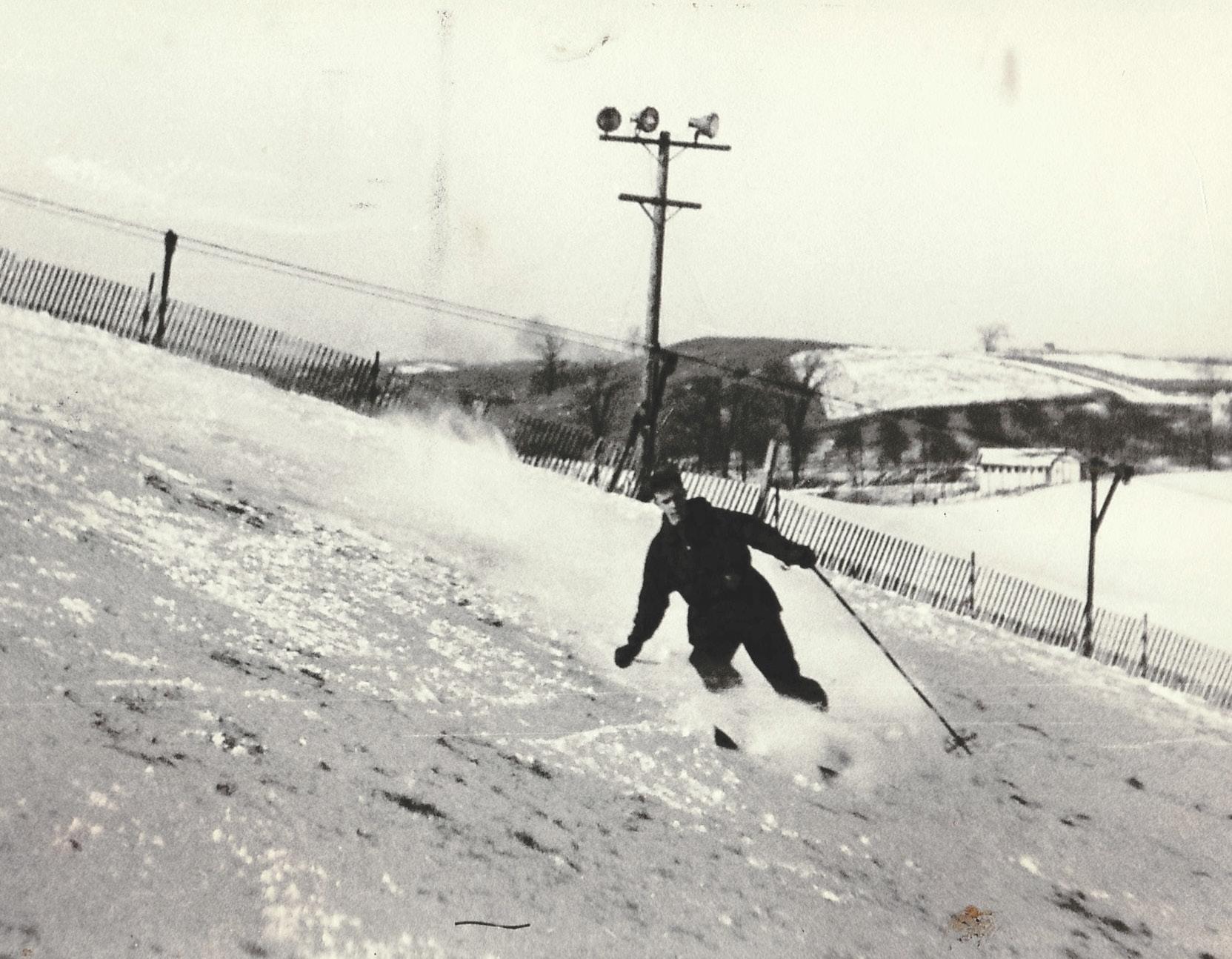
Vieau learned to ski at Drumlins as a teenager and spent decades playing golf. His youngest son — a former Drumlins club champion in golf — is also a member.
“I’ll always cherish the fact that I could be coming down number five fairway, and look over and see my sons teeing it up on the seventh tee,” Vieau said. “Then seeing them right afterwards, and hearing ‘Dad, I shot a 75 today.’ Or, ‘Dad, I almost hit a hole in one.’”
Richard Jones has belonged to Drumlins for 45 years, first joining with his family at 17. He grew up down the street from the club and said he remembers walking down to play golf with his stepfather and his friends. Many of them were World War II veterans, who told Jones stories of their lives and time in the war during rounds of golf. Jones said these conversations influenced him to eventually become a history major in college.
This feeling of family and community is what has kept Drumlins thriving for so long, Nies said. Commemorative benches and signs in the flower gardens honor members who have died. Over the last 10 years, members have come together to fund kids to compete in golf tournaments at the club and support younger players, member Madelyn Hornstein said. One such player recently received a scholarship to play golf at Penn State University.
“Whether you’re 90 years old and you’re in a golf cart and it takes you forever to play a round of golf or you’re 8 years old and you’re out there learning, we embrace you,” Hornstein said.
Drumlins has been a part of Hornstein’s family for three generations. In the 1960s, her mother learned to ski at the country club; her youngest son is now also a member.
After joining another local golf club with restrictions on when and how often women could play, Hornstein joined Drumlins in 1984. These restrictions are “appalling,” she said, especially those that still exist today. At Drumlins, she was immediately able to play freely, as she still does.
Drumlins has the largest group of women golfers in the Syracuse Women’s District Golf Association, compared to the other courses in the group, Hornstein said. Playing with other women is part of what makes Drumlins so fun, she said.
“It’s my kind of club,” Hornstein said. “I went over to Drumlins, and I never looked back. It’s just a lot of good people. It’s not hoity-toity.
Even for relatively new members, like Nelson, there is still a strong community feel.
“What really speaks to it is the sense of community and neighborliness. It’s like the Cheers Bar, where everybody knows your name,” Nelson said, referencing the popular TV show. “They know so many people’s regular drink that you walk in, and they’re reaching for it and it’s on the bar before you can even ask for it.”
Partnering with SU allowed Drumlins to expand resources and provide more to the community, Laura Massa, banquets and events manager, said. Food and beverage at the club moved under university management six years ago, allowing the restaurants to get a complete “facelift,” Massa said. The ownership also allowed for better property maintenance, cohesive SU branding and the opening of summer ice cream shop, ’Cuse Scoops.
SU students can play golf and tennis at Drumlins for free during the academic year. In the winter, cross-country skiing and snowshoeing are free for students. These incentives help “bridge the gap” between the SU community and surrounding area, making the country club feel like an extension of campus, Massa said.
When Nies began working at Drumlins, there were only four indoor tennis courts. In the early 1990s, they added three additional courts, giving Drumlins the capacity to host matches efficiently, Hornstein said.
Hornstein said a highlight of her decades at the club has been seeing the community members embrace and support SU’s tennis players. The Division I team uses Drumlins courts to host their home matches.
“We essentially share a property line with South Campus, it’s right in the university’s back door,” Sidoni said.
This «magnificent» location is part of what has kept it surviving for a century, Jones said. It’s “smack in the middle of Syracuse,” accessible to students, the local community and attracts people from “all different directions,” Hornstein said. Plus, no other private or public clubs in central New York have two 18-hole golf courses, Nelson said.
Today, nearly 50 years after he first became a member, Vieau said Drumlins is still a place he holds dearly. Though Vieau lives in North Carolina during the year, he still spends his summers the same way he did at 15 — on the Drumlins golf course.
“For the guys my age, it’s our playground,” Vieau said. “As adults, we don’t have a lot of places to play. To be ourselves, to be like kids again.” ehrosen@syr.edu
People have gathered at Drumlins to play golf for the last 100 years. The club is the only one in the area to offer two 18-hole courses. courtesy of drumlins country club
Drumlins Country Club is honoring its 100 year history with centennial-themed events every month of 2026. leonardo eriman senior staff photographer
Many generations first learned to ice skate at Drumlins. The original club included an ice skating rink and bowling alley, which both closed for financial reasons. courtesy of drumlins country club
Democrats fear change. Kathy Hochul’s party endorsement proves it.
By James Reed columnist
Last week, New York Gov. Kathy Hochul dominated her sole opponent, current Lt. Gov. Antonio Delgado, at the Democratic Convention. Held at the Oncenter Carrier Theatre in Syracuse, Hochul received more than 85% of the state committee’s vote, prompting the lieutenant governor to drop out and solidifying her as the party’s primary candidate.
But, the overwhelming support from the State Committee and major figures such as New York Mayor Zohran Mamdani proves the Democrats have yet to conquer their biggest fear: change.
Historically, Hochul’s center-left philosophy has been a major point of criticism throughout her political career. Her moderate stance has been a turnoff for progressive groups, an issue that has persisted into her current campaign. Organizations such as the Working Families Party and the Democratic Socialists of America have refused to back her.
But, Mamdani’s endorsement has boosted her reputation among progressives, despite the fact she has declined to adopt every policy he proposed.
Undeterred by Mamdani’s pleas, Hochul has refused to raise taxes on New York City’s ultra-wealthy, insisting there are other avenues to increase revenue. She has maintained this stance in the face of a $12 billion budget deficit left by the former Adams administration.
Her unwavering position exhibits loyalty towards the top 1%, rather than those who depend on the state’s resources.
Unfortunately, the influence of money on Hochul isn’t limited to the city’s tax policy. During her first term, fossil fuel lobbyists spent more than $16 million attempting to relax the state’s climate restrictions. Their efforts proved to be effective as Hochul began to backtrack on climate initiatives, delay state climate laws and approve a highly controversial natural gas pipeline off the shore of New York City.
The pipeline drew criticism from environmental activists and public figures alike, sparking concerns of pollution and public health among the city’s residents. Furthermore, Davis Polk & Wardell law firm would be representing the owners of the Williams Pipeline – the very law firm where her husband, William Hochal Jr., works – a convenient coincidence for the already wealthy couple.
Hochul’s questionable ties to energy companies and her efforts to protect corporate interests demonstrate the indifference she has towards the people of New York. But the Democratic Party remains willing to support her, highlighting their indifference and inability to change.
Over the past several years, Democrats have failed the public in nearly every aspect imaginable. Their eagerness to keep the status quo – when it’s clearly ineffective – is insulting to everyday Americans who want leaders to better their lives, not line the state’s pockets.
This type of “pay-to-play” system is a major reason Americans feel democracy is broken. Being forced to pick the lesser of two evils does little to inspire confidence in the future of the country.
As of late, Hochul and Mamdani have worked together to bring some beneficial changes. Free childcare initiatives are a great first step to improving the lives of constituents. But we should all take issue with the fact that Hochul doesn’t seem to truly care about improving our lives, only supporting progressive policies when it’s convenient for her to do so.
Hochul’s reelection must act as a warning sign for Democrats across the nation. If we want positive change for this country, we need to use our vote. Electing the same people year after year won’t enact change – it will only further ingrain corruption into the fibers of our political system and send the message that America is fine right where it is.
James Reed is a freshman studying political science. He can be reached at jcreed@syr.edu.
Proposed alcohol tax would hurt SU party scene, benefit New York
By Sam Jacobs columnist
In 2026, Syracuse University ranked at No. 7 on Niche’s list of partying on United States campuses, a designation suggesting a campus environment where drinking is common and the risk of alcoholism persists.
The ranking may spark debate, but it’s indisputable that SU has a reputation for an active party scene.
But, this culture may be on the brink of change.
On Feb. 6, lawmakers in the New York state legislature proposed a 5% excise tax on all alcoholic beverages, with the revenue earmarked for substance addiction treatment centers. Lawmakers cited two factors behind the proposal: expanded access to regulated markets for addictive substances and recent federal cuts to treatment services.
As the top party school in New York, SU students and faculty will be directly impacted by the policy. If implemented, the excise tax would raise prices, a change likely to be unpopular among students.
The proposed tax is expected to face strong opposition from the alcohol lobby and potentially be criticized as regressive. Yet, it would act as a public good for New York and could set a precedent for other states. The tax could generate millions of dollars in revenue, helping prevent addiction deaths, reduce reliance on the federal government and protect underage drinkers.
More than 2.8 million New Yorkers have struggled with addictions to major substances such as opioids, marijuana and cocaine.
Opinions differ on the causes of rising addictions over the past four decades, ranging from the war on drugs to the nationwide opioid epidemic and
socioeconomic factors. Still, it’s clear that drug addiction is a serious problem in New York.
Additionally, people struggling with addiction, particularly in rural areas, often face difficulty attaining treatment due to limited access to care centers. Increased funding could help expand treatment availability across New York, especially for those who formerly lacked access.
Without a doubt, alcohol taxes would rake in substantial revenue for the state. New Yorkers spent nearly $12 billion on alcoholic beverages in 2025. If enacted, a 5% excise tax would generate roughly $600 million annually for substance addiction treatment programs.
With this increase in funding, facilities treating drug addiction could afford higherquality medical technology, aiding patients and preventing relapses. These improvements could save hundreds, potentially thousands, of lives a year in New York state, making the tax a worthwhile public health measure.
As President Donald Trump continues to cut federal support to states, many important New York state addiction programs have struggled to secure adequate funding. Just last month, the Trump administration cancelled over $2 billion in federal funding for nationwide mental health and addiction programs. Although the cuts were later reversed, the move demonstrates both the administration’s ability and intent to reduce support for vital services.
Further federal cuts, particularly to public health funding, remain highly plausible and could place additional strain on these addiction programs. Revenue from the excise tax could help offset these losses, providing a consistent monetary base and reducing reliance on federal decisions that can fluctuate with each administration.
In the long term, the excise tax could complement federal funding for addiction programs or serve as a financial safeguard during periods of major cuts. This stability would allow programs to plan more effectively without being dependent on federal support.
Underage drinking remains a problem in New York, and higher alcohol prices through additional taxes have been shown to discourage consumption. While a tax wouldn’t eliminate underage drinking entirely, it could deter young
people with little disposable income from purchasing alcohol.
Although the proposal is new and has not yet faced major opposition, resistance is likely. The New York State Liquor Store Association, an influential lobbying group, is expected to oppose this tax. The NYSLSA has contributed large sums to New York state lawmakers through political action committees in recent years.
Many New Yorkers may oppose the tax, given that it’s expensive, may harm businesses and could disproportionately affect low-income residents. These are viable arguments, but they largely fall apart under a cost-benefit analysis.
Businesses that rely on alcohol sales will see a decrease in revenue and low-income New Yorkers will feel the price increase more acutely than higher-income residents. But, these drawbacks are outweighed by the broader benefits.
Expanded funding would allow treatment centers to help the greatest number of people, including low-income New Yorkers who are often the least able to access care.
While this is not a permanent fix to issues of alcoholism, drug abuse and addiction, it provides an immediate mitigation of these issues. While New York state continues its various programs to address addiction headon, the excise tax has potential to greatly boost research and recovery, something that will, in turn, benefit all New Yorkers.
At the same time, many college students have limited spending power, so a tax on alcohol may hit hard for many on this campus. Prices for alcohol will increase by 5%, which may sound insignificant, but for some liquors and beers, means up to an extra $10 to $15 depending on the brand.
Higher prices shouldn’t be the end of the conversation. The minor inconvenience of paying slightly more for alcohol is small compared with the opportunity to support addiction treatment and prevention across New York state. It’s extremely important to understand that this tax, like many, is a public good that will improve the quality of life of many New York residents.
Sam Jacob is a freshman majoring in political science and international relations. He can be reached at stjacob@syr.edu.
avery magee photo editor
absence of light
Like diamonds, we require transformation
By Cliff Ryan Jr. columnist
A diamond is not born dazzling. It begins its existence buried beneath pressure, heat and time – unseen, misunderstood and uncelebrated. Only through transformation does it become something worthy of admiration. In this way, the diamond mirrors the human journey. When viewed through a diamond’s eye, we begin to understand that the same standards used to measure a jewel’s worth are quietly applied to human character as well. Jewelers call them the Four Cs: clarity, cut, color and carat. Society may not name them the same, but life measures us by these very principles.
Clarity: The Inner Transparency
In diamonds, clarity refers to internal flaws –imperfections that may cloud brilliance. No diamond is entirely free of inclusions; what matters is how visible they are and whether they diminish the stone’s light.
Humans, too, carry inclusions. These are our traumas, mistakes, doubts and fears. Clarity in a person is not the absence of flaws, but the honesty with which they are acknowledged. A human with clarity does not deny their past; they understand it, learn from it and refuse to let it obscure their ability to shine.
In society, clarity is often tested through accountability. When faced with error, does a person distort the truth to protect their image, or do they stand transparent, allowing growth to polish their character? Those with clarity become trusted – not because they are perfect, but because they are real. Like a diamond, their light passes through unblocked.
Cut: The Shaping of Purpose
The cut of a diamond is not about shape alone; it determines how well the stone reflects light. A
absence of light
poorly cut diamond, regardless of size or purity, will never reach its full brilliance.
Human cut is the shaping of discipline, choices and purpose. Life cuts us through adversity – loss, rejection, responsibility, pressure. These moments are not meant to break us but to define us. A well-cut person learns when to stand firm and when to yield, how to channel pain into precision.
In society, cut is visible in conduct. Two people may have equal potential, but the one who allows life’s challenges to refine their focus will shine brighter. The cut represents character under pressure – the ability to reflect wisdom, not bitterness, when life’s blade has passed over an individual.
Color: The Essence of Identity
In diamonds, color measures how close a stone comes to being colorless – how little it is tinted by impurities. Ironically, the most valuable diamonds often appear invisible in their purity.
Human color speaks to essence rather than appearance. It is the moral tone, values and integrity that remain when no one is watching. Society often judges color superficially – by race, status, or background – but life reveals a deeper truth: character has no pigment.
A person with refined color moves through environments without absorbing corruption. They are not stained by greed, hatred or fear. Instead, they remain grounded in principle. In social spaces where compromise is rewarded, true color stands out – not loudly, but unmistakably.
Carat: The Weight of Responsibility
Carat measures a diamond’s weight, not its worth – yet society often mistakes size for value. A heavier diamond draws attention, but without clarity, cut and color, it is merely mass without meaning.
In human terms, carat represents the weight one can carry. This includes responsibility, influence, leadership and legacy. Some people
Our Absence of Light column has returned after three years. Created in collaboration with Auburn Correctional Facility in central New York, Absence of Light gives voice to writings and experiences of current and formerly incarcerated people in the Syracuse area. The Daily Orange is proud to revive the column and continue amplifying perspectives too often unheard.
desire prominence without preparation. But life only entrusts weight to those whose character can sustain it.
In society, carat is revealed when pressure increases. Can the person bear responsibility without collapsing into ego? Can they carry success without losing humility? True human carat is not measured by how much one possesses, but by how much one can carry without losing themselves.
The Authentication of Life
Just as diamonds are certified under magnification, human beings are authenticated through lived experience. Life examines us closely –under stress, temptation, loss and time. Titles fade, appearances change and words lose their power. What remains is character. Through the diamond’s eye, we see that worth is not accidental. It is forged. Pressure is not punishment; it is preparation. Heat is not destruction; it is refinement. Time is not an enemy – it is the final certifier.
A diamond does not argue for its value. It simply reflects light as it was designed to do. Likewise, a human refined by clarity, shaped by cut, grounded in true color and capable of carrying weight does not need validation. Their life speaks.
In the end, the diamond teaches us this wisdom: You are not measured by how you begin, but by how well you transform.
Cliff Ryan Jr., formerly incarcerated, can now be reached at cliffordryanjr09@gmail.com.
Legal institutions fail communities they are meant to protect
By Cliff Ryan Jr. columnist
Across the country, legal institutions created to support incarcerated people, detained immigrants and underserved neighborhoods are failing at their core mission. These organizations – some with multimillion-dollar budgets – were established to protect the vulnerable, defend the voiceless and ensure that justice is not reserved for the wealthy or well-connected. Yet in practice, many have allowed laziness, burnout, internal politics and personal issues to overshadow their duty to the people who rely on them for survival.
This failure is not abstract. It’s traumatic and often life-altering. Its consequences ripple far beyond prison walls and detention centers.
The Promise of Service — and the Reality of Neglect Legal aid groups, jail and prison advocacy organizations and public interest law centers are funded,in many cases very generously, to provide representation, support and oversight. Their budgets come from public grants, philanthropic foundations and taxpayer dollars. These funds are meant to ensure that poor defendants receive quality representation, incarcerated people have access to legal assistance and detained immigrants are not left to navigate the system alone. Administrative decisions are also challenged when communities facing systemic injustice are denied the advocacy they deserve.
Yet in real-world practice, countless people report that these institutions are complacent, unresponsive or outright negligent. Phone calls go unanswered. Legal deadlines are missed. Case files collect dust on desks. Urgent concerns, including medical neglect, abuse, wrongful confinement, never make it past the inbox.
All the while, these organizations continue to secure funding year after year.
This raises the unavoidable question: Where is the money going?
Follow the Funding: A System That Rewards Non-Performance
While it is true that many legal service staff members are committed and overworked, the system frequently allows – and even protects –underperformance, much like grants with minimal accountability. Many grants require only surface-level reporting: how many trainings were held, how many intakes occurred and how many pamphlets were distributed. They rarely measure impact, responsiveness or quality of support. Leadership disconnected from frontline duties, directors and executives often earn comfortable
salaries while having little day-to-day interaction with the communities they claim to serve. This breeds an environment where people become statistics rather than human beings in crisis.
Internal workplace conflicts, office politics, personality disputes, hostile work environments and staff turnover disrupt casework.
Unfortunately, the consequences of that dysfunction fall on people who are incarcerated who cannot advocate for themselves. Few systems exist to evaluate whether these institutions actually serve clients effectively.
In many cases, the only people able to report failures are prisoners and detainees, whose complaints are ignored or dismissed.
Why
Are Responsibilities Being Neglected?
The reasons can vary, but common patterns appear across states and institutions. Burnout is a major factor, as high caseloads and emotionally demanding work lead some staff to detach instead of pushing harder. Disorganization is another. Poorly managed offices lose documents, forget tasks and overlook urgent needs.
In addition, there is a lack of cultural understanding. Staff who have never lived in or connected with the communities they serve often lack urgency and empathy. Comfortable complacency sets in when funding is guaranteed without strict performance evaluations, creating an environment where mediocrity goes unchallenged.
Personal issues arise as well, like staff dealing with their own internal struggles sometimes projecting frustration onto clients or avoiding tasks altogether.
Meanwhile, those incarcerated and underserved are left in dangerous conditions –sometimes life-or-death situations – with no one answering the phone.
The Human Cost: Trauma, Delay and Lost Hope
When a legal institution fails to do its job, the consequences are severe. Parents remain separated from their children, innocent people remain incarcerated longer than necessary and detainees face deportation due to paperwork errors. Also, individuals endure abuse, inadequate medical care or solitary confinement with no advocate. Communities continue cycles of poverty and violence because systemic issues go unchallenged. These are not minor administrative mistakes – they are failures that shape the course of a person’s life.
What Options Do Communities and Incarcerated People Have?
The people most affected by these institutional failures often have the least power. But there are avenues for action, like file grievances and documenting everything. Documentation creates a paper trail that outside organizations, journalists or oversight bodies can later use.
Community-based advocacy groups, grassroots organizations, family-led coalitions and mutual aid networks often fight harder and respond faster than large institutions. They can contact local news outlets, since media attention can pressure institutions to act when complaints would otherwise be ignored.
Further, they can reach out to elected officials like city council members, state legislators and oversight committees, who can investigate stagnant agencies. Independent community support systems, community legal literacy programs, “know your rights” workshops and volunteer legal clinics can bypass failing institutions altogether.
The Case for Reform: Accountability, Oversight, Transparency At the heart of the problem lies a simple truth: No institution improves without accountability. Reform must include transparent reporting that shows not just activities but outcomes. Community involvement
is essential in evaluating effectiveness. Importantly, there must be consequences for negligence, including revoked funding or leadership restructuring. New channels for incarcerated people to report issues safely are also imperative.
Reform is not just needed – it is overdue.
A Call to Action: Rebuilding Trust, Restoring Purpose
People behind cages, and those living in marginalized neighborhoods, deserve institutions that fight for them – not ones that make excuses while collecting checks. The cracks in the system have grown too wide, and too many lives have slipped through.
Reform is not about punishing organizations – it is about reviving the mission they were created for. Communities deserve to know: Someone is watching.
Someone is listening.
Someone is prepared to fix what has been left to deteriorate. The underserved deserve more than hollow promises. They deserve justice – and the institutions funded to provide it must rise to meet that obligation.
Cliff Ryan Jr., formerly incarcerated, can now be reached at cliffordryanjr09@gmail.com.
khloe scalise contributing illustrator
maria masek contributing illustrator
sometimes be package deals. With SU amid its search for a new chancellor, it’s very realistic that the job opening is more attractive if they pick their AD.
That’s why Wildhack’s plan to retire makes sense.
With the added clarity that Wildhack won’t be at Syracuse following the school year, it’s smart that the announcement came well before a decision needs to be made about Autry’s future — why potentially leave it in limbo leading into one of the biggest decisions the university will ever have to make about one of its sports teams?
Still, the timing, coming one month before the ACC Tournament begins, raises eyebrows. And with Wildhack still in his role until July 1, it’s confusing.
With Syverud having one foot out the door, does Wildhack have free rein to decide as is?
Since Wildhack won’t be here come July, is he still the main decision maker?
Is Syracuse looking to find Wildhack’s replacement in the next month so that they can play a role in deciding Autry’s future?
Will the Orange’s chancellor and AD positions be more or less attractive if the basketball program’s decision is made by the previous regime?
These are all questions that need answers as soon as possible. Given how influential the looming Autry decision is, Syracuse needs a clear plan and a defined process for that verdict.
As Autry said preseason, every fan or person familiar with SU knows it’s one of the best programs in college basketball history. Right now, the Orange are best known for freshman Kiyan Anthony logging a DNP and star forward Donnie Freeman taking the crust off of an uncrustable.
That doesn’t necessarily mean Autry can’t be the one to bring SU back to the “Orange Standard.” But if the seemingly inevitable strikeout of missing March Madness comes, there’d be great reason to look in another direction.
Without question, this program means something. Six Final Fours. The 2003 National Champions. Basketball Hall of Famers in Boeheim, Carmelo Anthony and Dave Bing.
Syracuse is too good and historic a program for that something to be an afterthought any longer.
The best way to bring SU back is to nail the head coach decision.
If that happens, the fire will be extinguished, and the Orange will once again be a nationally prominent basketball school.
But if the decision is screwed up? The fire will continue burning the program down.
justingirshon@gmail.com
@JustinGirshon
“Obviously, the officials thought it was from a guy,” Switzer said.
Switzer left his office satisfied. That was all she really wanted. But as the door swung shut, she heard him deliver a stinging blow.
“I guess I got rid of that one,” Switzer recalled him saying between laughs with his colleagues.
“I didn’t know what to do,” Switzer said. “And then I said, ‘You know what? You show up. You either show up, or you go away. And he said I was welcome, so I’m gonna show up.’”
Switzer began running with the cross country team under Arnie Briggs’ tutelage. Briggs, a volunteer coach with the program, had run the Boston Marathon 15 times. He encouraged Switzer to run the race that changed the course of her life.
In 1966, when the fall became an unforgiving winter, the rest of the team moved indoors. Switzer and Briggs, however, opted to remain outdoors and spent hours running through Syracuse’s back roads through snow, slush and sub-freezing temperatures. Switzer ran over 100 miles a week.
“I think there were nine yards of snow that year,” Switzer said. “It really made me tough.”
To pass the time, Briggs told Switzer countless stories of his Boston Marathons. Eventually, Briggs’ stories helped make up Switzer’s mind: She wanted to sign up.
Ironically, her journalistic passion inadvertently became a key part of her marathon participation.
When Switzer was born, her father accidentally misspelled her first name, Kathrine, leaving out the “e” in the traditional spelling of “Katherine.” It wasn’t really an issue until she became a journalist.
“Every time I signed my copy in the high school newspaper, the typesetter in those days would change and put the ‘e’ in. And I got really, really tired of that,” Switzer said.
She spent her high school years reading sportswriters who used their initials. In high school, she relished authors like J.D. Salinger, E.E. Cummings and T.S. Elliot.
Fast forward to a few years later, and a 20-year-old Switzer stood before an entry form for the Boston Marathon. She signed it with her initials — “K.V. Switzer” — taking inspiration from her favorite storytellers.
So, with her official entry, Switzer, Briggs, her then-boyfriend Tom Miller and fellow runner John Leonard drove to Boston. The only person back at SU who knew was one of her professors: Dr. Edmund Arnold. Switzer had a big test in Arnold’s graphic arts class that day, and she asked to take it another day. Arnold agreed to keep her secret, and kept his promise until noon on the day of Switzer’s would-be exam.
“At this moment, the gun is going off in Boston,” Arnold told his class. “One of your classmates is running the Boston Marathon.”
Upon hearing the news, Switzer recalled hearing that Ken Rudnick — a former D.O. editor — jumped out of his seat and began exclaiming in disbelief.
During the marathon, Switzer was physically assaulted by race organizer Jock Semple. It took Switzer four hours and 20 minutes to finish the marathon on that first run, a time she’s since smashed. When she returned to campus, Rudnick sat her down.
“Well, come on,” she recalled Rudnick saying. “Five o’clock deadline. You’re gonna write the story and give us a first-person piece.”
So, she did, telling her own story for the first time. The Boston Marathon served as an introduction to the rest of Switzer’s life.
She continued to run marathons, running a 10k each morning before going to class — where she worked to earn her master’s degree in public relations at SU. Once again, Switzer focused on carving her own path and creating opportunities for herself.
It was 1972, and the Munich Olympics were approaching. She had no idea how she was going to get there, but her mind was made up: She was going, no matter what.
The New York Times already had Olympic correspondents lined up. But the New York Daily News didn’t. So, Switzer walked into the Daily News building and confronted its sports editor — Bob Smith — directly.
“Why don’t you hire me?” she asked.
Smith pulled out a piece of copy, placed it in front of Switzer and, as a test, told her to write a story on it.
So, Switzer did. Smith read it and told Switzer he enjoyed it. But the credentials were closed — she wouldn’t be able to go to the Olympics after all.
“That’s no problem,” Switzer replied. “I’m gonna get in the village.”
Smith, perplexed, asked her how she planned on accomplishing that.
That wasn’t his issue to worry about. When she arrived in Munich, Switzer put on her sweatsuit, knowing no one was going to stop her, and ran into the village every day. She acted with the confidence of an athlete to blend in. She kept the copy she wrote on rolled up in her sleeve and gave it to some friends at the Associated Press, who sent it to the Daily News.
Then, Palestinian terrorists invaded the Olympic Village, killing several members of the Israeli Olympic team and taking more hostage.
“I guess I could say it was one of the saddest days of my life, and it was the end of the golden dream,” Switzer said. “And, of course, that fueled me even more.”
Switzer said she interviewed Olympians who had been stranded in Germany, due to a lockdown, and impacted by the crisis. She spoke to war reporters who witnessed terrorists climbing the fence into the Olympic Village. She learned how to report on the ground and had to accept that there was still a long way to go in the fight for women’s equality.
“It was a really hard lesson for me as a journalist, but a really good lesson,” Switzer said. “You’re never gonna get those stories unless you go. You got to be on the spot. You’ve got to be persistent.”
That experience taught her that some things just have to be done, no matter how daunting they seem. To run a marathon, you need to sign up. To cover the Olympics, you need the courage to walk into a newsroom and ask.
Switzer hit her stride, winning the women’s division of the New York City Marathon in 1974, finishing 59th overall with a time of 3:07:29. She ran the Boston Marathon again in 1975, finishing with her personal best time of 2:51:37. She proved — 39 additional times — that women can run marathons, too.
Switzer knew that running could empower women to learn the same lessons that she had, teaching them how to make choices, gain control of their lives and live fearlessly.
So, she founded the Syracuse Track Club in 1969, fighting countless structural obstacles to create change within the sport of running. Fifteen years later, she accomplished what she called “the biggest goal of her life,” spearheading a movement to get the women’s marathon into the Olympics.
“You can’t complain about it. You’ve got to get in there and do something about it,” Switzer said. Now, 261 Fearless carries on her legacy, operating in 12 countries. In the summer of 2025, a cohort of Afghan refugees escaped the Taliban and joined the club in Vienna, Austria. When she visited, Switzer hoped to photograph at least one of them in an effort to share their stories. Imagine her surprise when all of them — 15 in total — showed up, fresh off their miraculous escape.
“Everything I’ve done is nothing compared to what those women have gone through,” Switzer said. “And if I, in any way, can empower them … that kind of stuff is where I’ve always wanted to go. And I never thought I could do that in my lifetime.”
With the benefit of hindsight, it’s clear Switzer never could have been a cheerleader. But decades ago, just a young girl standing before her father, she didn’t know what else to dream of.
“Oh, honey,” she recalled her father telling her. “You don’t want to be a cheerleader. Cheerleaders cheer for other people. You want people to cheer for you.”
Confused, she looked to her father and asked what he meant.
“The game’s on the field,” he told her. “Not on the sidelines.”
When she was running that first race in Boston, Switzer said there were only a few spectators around. It was a cold day with sleet and snow and wind — hearkening back to the hours she’d spent training on those Syracuse back roads. But the few who gathered to watch ended up witnessing history.
“Come on, honey,” Switzer recalled a spectator telling her as she ran, grasping onto the fence and falling to her knees. “Do it for all of us.”
Since that day in Boston, Switzer has never been on the sidelines of her story. It’s not really her style. Instead, she’s written every chapter of her own story, rewriting the rules for countless women in the process.
fmchugh@syr.edu
Syracuse’s men’s basketball made the NCAA Tournament just three times in John Wildhack’s 10-year tenure as director of athletics. leonardo eriman senior staff photographer
from page 15
Syracuse alum Kathrine Switzer was honored at halftime of the Orange’s women’s basketball game against No. 9 Louisville. Switzer’s No. 261 bib from becoming the first woman to compete in the Boston Marathon was raised into the JMA Wireless Dome rafters. courtesy of su athletics
SU ends 2-game skid with 107-100 win over Cal after 2OT
By Aiden Stepansky senior staff writer
Syracuse is reeling. The blue seats around the JMA Wireless Dome prove it.
Fresh off back-to-back road losses to ranked opponents, the Orange certainly didn’t expect a hero’s welcome home. But this was worse than normal.
Cal head coach Mark Madsen’s marching orders could be heard clearly from across the lower level. A simple high five between Syracuse’s Akir Souare and Sadiq White echoed to the press row like it was feet away. If it wasn’t poetic enough, the power went out multiple times. All on the same day, SU’s director of athletics announced his retirement.
It’s just another day in the current state of Syracuse men’s basketball.
Syracuse (14-11, 5-7 Atlantic Coast) took down Cal (17-8, 5-7 ACC) 107-100 Wednesday in double overtime, notching a Quad 2 victory and its best in conference play. Nate Kingz and J.J. Starling combined for 58 points as 50 minutes of play ended with the Orange on top.
The pandemonium within the JMA Wireless Dome, considering a small crowd and a matchup between two middling ACC teams, was remarkable. Both sides at times looked as if they were trying not to win.
In the second overtime, two hours and 30 minutes after the game tipped off, Donnie Free-
Wildhack’s tenure. Arguably one of his best decisions was the risky hiring of Fran Brown — who had no prior head coaching experience — after former head coach Dino Babers was fired for failing to eclipse a seven-win benchmark in 2023.
It’s unclear what Wildhack’s retirement could mean for men’s basketball head coach Adrian Autry’s future. The Orange are 13-11 (4-7 ACC) in a potential make-or-break year for the thirdyear head coach. But because Wildhack is set to retire, it’s unknown if he will decide whether SU sticks with Autry or moves in another direction.
“I said back last spring in terms of what the expectations were for this year,” Wildhack said of the men’s basketball program Wednesday. “Those haven’t changed.”
“We still have a month to go, but our margin for error is incredibly, incredibly small right
box. Look for creative ways of scoring, or creative ways of looking at the game.”
Gait’s hiring was unorthodox. Few men coached in the women’s game, and lacrosse coaching staffs were minuscule. It was only Gait, Timchal and maybe the occasional graduate assistant. So, Timchal put plenty on Gait’s plate, including running the offense.
First, he had to learn the rules. When Gait arrived, women’s lacrosse didn’t have boundaries or restraining lines. Out-of-bounds calls were up to officials’ discretion, and all 12 players could travel wherever they wanted.
Tori Hannah, who played at UMD from 1997-2001, said Gait used to carry around a rulebook at practice, filled with sticky notes and highlighted paragraphs. Gait searched for any advantage, he joked, “much to the chagrin of officials at times.”
“I looked at the women’s game as just a different version (of men’s) with a different rule book,” Gait said. “As a player becoming a coach, I just analyzed the rule book, started teaching skills and tried to develop players that could do more offensively on the field.”
When Gait wasn’t hounding referees, he was implementing a free-flowing attack. That started with the basics. Missy Doherty (1993-97) sarcastically said half of Maryland’s practices were spent playing wall ball or passing with a partner. Drills like that emphasized efficiency in each movement, and Gait added another layer.
He implored players to go behind-the-back, throw sideways feeds and dodge with one hand. Gait was known for his innovation as a player, renowned for his famous “Air-Gait” goal and numerous highlight-reel plays.
The women’s game was very vanilla at the time, and Gait wanted to push the envelope. He demonstrated drills to his players with a women’s stick, which was still wooden when Gait began his tenure. He emphasized it should be an “extension of your body,” according to Jen Adams (1998-2001), who won the first-ever women’s Tewaaraton Award in 2001.
man overcame his shortcomings through the first 45 minutes of play to help the Orange garner a 96-93 lead with under three minutes to play.
The lead grew to six with a 3 from Kingz. The Orange remained with a cushion the rest of the way, making just enough free throws to hold on. February madness.
How did we get here?
Given how the game went back and forth, it was destined for at least one overtime. Dai Dai Ames missed a fadeaway at the regulation buzzer to force overtime. The Orange took the first lead of the extra period with a free throw from Freeman. Ames answered with a tough finish inside, and Freeman missed two free throws.
As the scoreboard went out in overtime, the game resumed with just a shot clock and a game clock. Old-fashioned, you could say.
Tied at 87-87 with under a minute to go in overtime, Starling drove to the bucket and finished the layup. The Orange then corralled a loose ball with the possession arrow, getting Naithan George to the free-throw line.
George split the pair, and Ames flushed a deep 2 to make it 90-89 with 10 seconds to play in regulation. Kingz split another pair, and the Golden Bears made SU pay again. Ames’ shot attempt was blocked, but Milos Illic followed the shot up at the buzzer, forcing another overtime. Way before an all-out scoreboard outage and late-night heroics, there was, of course, a regulation.
now,” Wildhack added. “So I think everybody is disappointed with our record today.”
Wildhack exits a volatile college sports landscape. He doesn’t think college sports are broken, but they’re in “need of significant repair.”
Wildhack’s first concern with college sports pertains to eligibility. He feels it’s “critically important to really define that.”
Secondly, Wildhack expressed concern over the transfer portal — and he called it what it really is: “free agency.” In Wildhack’s opinion, this is how the portal would work best:
1. Every athlete gets a free one-time transfer.
“If you go to school, X, you know what? And after the first year, it’s not great. You want to go to school Y? As long as you’re eligible, you should be able to do that.”
2. If an athlete wants to transfer a second time, they must sit out for a year unless their coach at their current school left.
“This has become a transactional business, and I don’t think that’s healthy for the athletes,”
“The trademark of Gary as a coach is he really didn’t shackle us,” said Adams, now the head coach at Loyola (Maryland).
Some of Gait’s instructions seemed bizarre. Multiple players initially thought those fancy skills didn’t have much utility, but they practiced them so much that the moves became natural.
To instruct his players, Gait jumped into seven-on-seven games. Still at the peak of his powers, players were wowed by Gait’s abilities. If he told them to make a certain move, they “didn’t have an excuse,” said Karen MacCrate-Henning (199396), since he was doing it with a women’s stick.
Adams was a beneficiary, inventing the “Twizzler” — a move in which a player fires a lowangle back-hand shot while facing away from the goal — and making it one of her go-to tricks.
Shots like that were foreign in the 90s. They’re nownow commonplace in women’s lacrosse.
“My process was to demonstrate and show these players that they can do a lot more with their stick, their dodging and everything if they just work at it,” Gait said.
“He changed the landscape, the way that players played and the approach to the game itself,” Adams added. “This game is where it is today (because) of people like Gary Gait and the University of Maryland’s success.”
Gait didn’t want players to fear making mistakes, MacCrate-Henning said. He never lambasted any of his athletes and allowed them to go off-script. If MacCrate-Henning saw an opening during a crucial moment, she never worried about deviating from the designed play.
“He wanted us to think, and be present in the game and take advantage of the things that were available to us,” MacCrate-Henning said.
The confidence Gait instilled in people was the cornerstone for Maryland’s success. The Terrapins didn’t lose a game until Gait’s third season and finished 164-16 with him as an assistant, including four undefeated seasons.
But that near-unblemished record didn’t mean Maryland never ran into challenges.
The Terrapins had six one-score games in 2001 — Gait’s final campaign with UMD — en route to their perfect 23-0 record. One of them came in the regular season against Princeton.
With under six minutes to play in regulation, both squads were tied at 69-69. Then came Chris Bell’s momentary revenge. The former Orange forward squared up a 3 from straightaway, splashing it. As he ran back down the court, Bell raised three fingers to the air before tapping the top of his head.
Syracuse carved into the three-point deficit at the free-throw line with splits from William Kyle III and Starling. The Orange had a chance to reclaim the lead with Freeman at the charity stripe, though he missed both. Ames drove for a layup to pad the lead to three, but with less than two minutes to play, Starling answered back with one of his own.
Like a seesaw, both sides traded the lead on and off in the contest’s final minutes.
Ames came back with a spinning layup to tie the game 78-78, with just under 40 seconds left. SU called a timeout with all the time in the world to draw up a potential leadtaking play in the closing seconds. Instead, the play was busted before it started, as Starling traveled at mid-court with 22.3 seconds to go.
Starling made up for his mistake on the other end to force overtime, holding Ames to a poor shot.
In his return to Syracuse, Bell attempted a 3 out of the gate but missed. He later knocked one down off an offensive rebound, receiving some boos from the sparse crowd.
Wildhack said. “I think in some ways, it, candidly, makes a mockery of the educational system and component.”
“It’s not healthy long term for college, and you’re going to need some help to do that.”
Whether that’s through collective bargaining or help in Congress, Wildhack feels there needs to be systems and procedures in place.
“Those who don’t abide by the rules of the (College Sports Commission) settlement need to be punished,” Wildhack said. “There needs to be consequences; without any consequences, who’s going to abide by the rules?”
In college sports’ current model, Wildhack said he’s not sure it’s sustainable for more than a handful of schools.
“That was one of the factors in my decision,” Wildhack added. “Because I don’t see any solutions in the next six months or 12 months.”
To fix college sports, Wildhack provided a suggestion:
The Tigers shut down Adams, Hannah remembers, resulting in a 3-3 halftime tie.
The tension in the locker room was palpable. The wait for Gait and Timchal felt like an eternity, and Hannah thought they’d get chewed out. Instead, the coaching duo posed a simple question.
Do you guys really want this?
Maryland won the game 7-6.
“Demeanor-wise, (Gait) just didn’t make things a big deal in the moments (where) teammates start to feel that angst,” Doherty said. “He’d be like, ‘What’s the big deal?’”
Doherty felt that power came from his championship pedigree. Any time Adams peered toward the sideline during a pressure-filled situation, she was met with Gait’s classic grin. He knew what success looked like. It didn’t mean Gait was cocky, but the proof was in the pudding. He rarely lost during his playing career at Syracuse, and that didn’t change at Maryland.
Eventually, he’d have to come up with that formula at his alma mater. From 2008-21, Gait led SU’s women’s team to eight Final Fours and three national championship appearances, yet was never victorious.
In 2021, after legendary coach John Desko left Syracuse’s men’s program, Gait was hired to replace him. Now, he affords the responsibility once given to him as an assistant to defensive coordinator John Odierna and offensive coordinator Pat March. Odierna said Gait gives assistants a lot of room and freedom to lead their group.
It’s why the former Manhattan head coach left the Jaspers in 2023. He explained Syracuse was the only place he would’ve become an assistant because of the environment Gait created.
Gait focuses on connecting with individuals. Miscues are forgiven, as long as they come from a place of aggression. Odierna said SU’s defensive strategy is extremely player-driven — as is its offensive blueprint — and the scheme “isn’t the star of the show.” The variance comes in decision-making and teaching players how to make decisions, and live with them whether they’re good or bad, Odierna said.
“(Gait) gives you an opportunity to try things and fail, or try things and succeed,” Odierna added. “He gives you a lot of space to work, so you’re not micromanaged.”
When Bell wasn’t shooting, the rest of the Golden Bears were still clawing from deep. Cal entered third in the conference from 3 at 37.3%. With Bell as an obvious threat, Ames and John Camden both have shot over 40% from deep this year.
Justin Pippen knocked down a 3 to start, and Camden also found nothing but nylon. The Golden Bears maneuvered through the Orange while working in a 2-3 zone, opening up the perimeter. SU reclaimed the lead off a few 3s and worked into its bench with Kiyan Anthony, making his first appearance since the North Carolina game. He didn’t add much, though Sadiq White made multiple strong moves inside as both sides wrestled back and forth with the lead.
With the Golden Bears’ 3-point prowess, the Orange’s game plan was clearly to match it. Syracuse attempted 16 shots from deep in the first half, with many of them way off the mark and just three going in. At some points, SU was simply shot-chucking. The Orange still found a way to enter the half tied at 35-35.
Down the stretch, it was anyone’s game to win. For Syracuse, it will take anything it can get. For Cal, it’s trying to keep its March Madness bubble status alive with a Quad 1 win. Amid all the distractions, the Orange found a way.
amstepan@syr.edu
@AidenStepansky
“Bigger brands have an inherent advantage. But if you create some degree of competitive equity, you have hard and fast rules that if you don’t follow those rules, there are significant consequences.”
“If you had a system like that, as popular as college sports is today, I believe it would be even more popular and more valuable.”
Wildhack replaced Mark Coyle, who left to become Minnesota’s athletic director, as SU’s Director of Athletics in July 2016. Previously, Wildhack was the executive vice president for programming and production at ESPN, where he had worked for 36 years.
It’s unknown what SU’s plans are to fill its soon-to-be vacant Chancellor and Director of Athletics roles. However, it’s important to note that former Pittsburgh AD Heather Lyke was hired in July to work with Syverud and Wildhack in an advisory role.
justingirshon@gmail.com
@JustinGirshon
That message rings truer with March. A holdover from Desko’s staff, March has had full offensive autonomy everywhere he’s coached, from Division III Dickinson College to Vermont and Princeton.
As Timchal once did with him, Gait realized he just needed to trust March’s coaching. It helped that March’s offensive philosophy aligns with Gait’s, allowing players to freely display their strengths. March grew up watching the brilliance of the Gait and Powell brothers, and as a coach, he wanted players to express themselves, as seen in SU’s hidden-ball tricks and Joey Spallina’s wild cross-field feeds.
“I’ve always leaned into the freedom, and it fits here at Syracuse because that’s how the game is played,” March said.
Lacrosse’s revolution in the men’s and women’s game can be attributed to Gait. He gave the sport new life by pulling off the impossible as a player at Syracuse. He furthered that by adding wrinkles coaching at Maryland, but Gait’s tenure in College Park ended on a sour note.
In 2001, UMD’s men’s coach Dick Edell retired, and Gait was considered for the job. The Terrapins ended up hiring Dave Cottle, much to the chagrin of Gait, who “had a different understanding of the way that was going to result.”
A decade later, Cottle flamed out and didn’t have his contract renewed. Having just finished his fifth season as SU’s women’s coach, Maryland alumni reached out to Gait and encouraged him to apply for the job again.
Gait declined.
Taylor was set to attend Syracuse, and Gait felt at home in central New York. Maryland hired John Tillman, who has won two national championships and is widely considered to be the sport’s best coach.
Gait’s still searching for his first-ever win over Tillman, having lost all five meetings. He’ll look for it, alongside those trusted assistants, on Friday.
Even though Maryland haunts him every step of the way, Gait has no qualms with his decision.
“I’m happy,” Gait said. “Life works out for a reason, and I’m right where I want to be.” zakwolf784254@gmail.com @ZakWolf22
10 days in Okinawa laid foundation for Uche Izoje’s SU move
By Jordan Kimball asst. sports editor
Mornings on Kouri Island started quietly. Breakfast was served on small circular tables facing the beach. The turquoise water of the East China Sea stretched in every direction. Players walked along the shoreline, sinking their feet in the warm waves.
In a few minutes, two vans would cross the Kouri Bridge to take a group of 10 basketball players to the Okinawa, Japan, mainland. Among them was Uche Izoje, a 6-foot-3, 20-year-old Nigerian.
During the 45-minute drive to a multi-sport facility in Ginoza Village, Izoje’s peers muttered in Japanese or scrolled their phones. Izoje often sat in silence, mentally counting down the minutes until they’d arrive.
“That’s someone who loves basketball,” said Bob Willett, one of Izoje’s trainers. “You have someone that’s not only athletic, she knows how to use her athleticism.”
About two months before moving to Syracuse for her first college basketball season, where she’s flourished as a freshman this season, Izoje needed one last tune-up. She’d played on the Chanson V-Magic in the Women’s Japan Basketball League for two years after harnessing her love for the sport in Nigeria.
But she hadn’t been exposed to the nuances of American basketball, where the players are stronger and more physical. A 10-day retreat with some of Japan’s best players, coached by two top Canadian trainers in Bob and his son Nolan Willett, was designed to prepare her for the next level.
“It was just continuing to pour fuel on the fire of what she was good at,” Nolan said. “She isn’t a finished product, and she’s as good as she is now.”
Before the event, Izoje didn’t know any of the retreat’s attendees personally, but she recognized their names. Evelyn Mawuli, the organizer, represented Japan during two Olympic campaigns, winning a silver medal at the 2020 Summer Games.
From her condo on Kouri Island, which she made available to each player, Mawuli set out to promote women’s basketball while helping polish Japan’s top talent.
Mawuli brought in Bob and Nolan to train the group. As the creators of Canada’s largest player development program, per Bob — and regular visitors to Japan for several years — there were few better trainers for Izoje to learn from.
“She was still raw in a lot of areas, but the potential upside for her was high,” Bob said.
Three weeks before the event, Bob and Nolan sat in their Calgary residence, reviewing the retreat’s participant list. Bob said Izoje’s name held little expectation.
As he did with every player, Nolan searched YouTube and Google for film. When he got to Izoje, what he saw was hard to ignore.
A video surfaced: Izoje, wearing a bright red jersey, soaring for a right-handed dunk off her left foot. As Bob and Nolan watched Izoje’s jam on repeat, they thought to themselves, “How come we haven’t heard of her?”
After a deeper dive, they discovered Izoje was a two-time WJBL All-Star and Rookie of the Year. In 2024-25, she ranked second in the league in scoring (14.4) and rebounding (9.9) per game, and led it in blocks (1.7).
Bob and Nolan were accustomed to training guards, but they considered Izoje — an “up-andcoming” big — a fun challenge.
“It’s funny because when you watch her play, you’re like, that’s a grown-ass woman that’s kicking ass,” Bob said. “There’s a lot of male and female players that don’t even know how to run properly.”
When they first met her, the spark they’d seen from Izoje on video wasn’t there. Bob said she was timid, while Nolan said she tried to encourage herself by murmuring words under her breath. She was tall, athletic and in shape, but clearly unsure of her abilities.
Bob thought it was due to her lack of prior player development. Izoje moved to Japan at a young age and attended high school in Kyoto, the western-central region of the country. She’d skipped college to go pro, where you’re expected to arrive polished. Yet Izoje still had a long way to go.
But Bob and Nolan soon recognized her potential. On the first day, they noticed Izoje take one dribble from the perimeter and get to the basket with one large stride. A few more reps prompted Nolan to ask her a question.
“Have you ever thought about playing college basketball?”
Izoje was one step ahead. She was heading to Syracuse two months later, she responded, instantly shifting Bob and Nolan’s focus to preparing her for the NCAA.
They emphasized the importance of getting to your spot while drawing contact. They reiterated basketball isn’t a game of height; it’s a game of territory. Izoje stood up straight and struggled to take contact. They pushed her to stay grounded and aggressive.
Nolan said Japan’s style of play is more “robotic” and focuses less on individual skill. Izoje and Mawuli, the sole frontcourt players, ran pick-and-pops — meaning a player set a screen, and Izoje gravitated outside for a jump shot — and sharpened their triplethreat work, learning to be proficient at all three levels.
The workouts always finished with some form of live action: one-on-ones, coaches versus players and sometimes even one-on-twos. Bob said Izoje showed more energy each day and a willingness to make mistakes.
“This wasn’t a dance routine,” Bob said. “She knew that she had to understand why she was doing everything, and she would talk it through until she would master it, and then we would move on.”
By day three or four, Izoje was yelling at Mawuli on the court, pushing her just as she’d pushed Izoje days prior while matching her jovial energy. Bob said it created a dynamic that allowed Izoje to open up.
She expressed her nerves about going to the United States for the first time, unsure of what to expect from the culture. She repeatedly asked Bob and Nolan questions, drawing on her previous references from movies and TV shows.
At dinners, which spanned from barbecues near the beach to local restaurants to guest chefs at the condo, Izoje sat close to Bob and Nolan. She had no interest in discussing the money that comes with college sports. Instead, she wanted to pick their brain about what her new life would be like.
As Bob ensured she’d be in good hands, Izoje’s confidence grew. She made TikToks with her teammates at meals and told stories from her past, becoming the “life of the party.”
“It was almost like we had been part of the family for years,” Bob said. “When you get to that college stage, it is work, and it is a business, and it is hard. So the fact we get to see little snippets of her just being herself and having fun is really cool.”
Back on the court, the Willetts taught Izoje about the slower American pace of play. They worked on moving her shot to a one-hand release and crow-hopping into the lane, which they said she replicated like Derrick Rose and Dominique Wilkins.
Izoje caught on quickly. Although the retreat had translators, she used the opportunity to work on her English with Bob and Nolan.
After the workouts and practices — sometimes multiple per day — Mawuli planned excursions around the area. The group went kayaking and jet skiing. They volunteered for a local charity. There was even a ceremony with the government to celebrate the players, many of whom were Japanese National Team members. By playing against some of the nation’s best, Bob said Izoje became the best.
Since Boston, trailblazer Kathrine Switzer
By Fiona McHugh asst. copy editor
Growing up, Kathrine Switzer had a dream. One day, when she was in elementary school, Switzer revealed her grand ambition to her father, Homer: She wanted to be a cheerleader.
Of course she did. The cheerleaders were pretty, popular and always dated the captain of the football team. What else was there to ask for?
“Wasn’t that every little girl’s dream?” Switzer said.
It’s hard to imagine a world where Switzer stopped herself at that goal. Decades later, the 79-year-old has a racked up myriad of accomplishments, most notably becoming the first woman to complete the Boston Marathon in 1967, when she was a 20-year-old journalism student at Syracuse University.
She’s been a broadcaster at the Olympics. She’s established over 400 races across the world and ran in hundreds herself. She has a nonprofit named for her bib number during her historic marathon, 261 Fearless — the same number that was raised to the JMA Wireless Dome rafters on Feb. 8.
“Kathrine Switzer is a trailblazer whose courage and determination changed the landscape of
During one of the final practices, Bob was shadowing Izoje and struggled to stay at her hip. The space she covered led him and Nolan to realize the “on switch” she could channel at any moment.
“When she got on the floor at Syracuse, it was gonna be such a good learning curve,” Nolan said. “It was guaranteed she was gonna have success.” Safe to say Nolan was correct.
In 24 games this season, Izoje has racked up 10 double-doubles with the Orange, leads the squad in points, rebounds and blocks and is drawing national attention on both sides of the ball.
The quiet mornings on Kouri Island were more than a postcard view. Izoje knows those 10 days didn’t build her. She was already built. But beside the East China Sea on an island that houses just 350 people, Izoje’s foundation took shape.
More than 7,000 miles away, it’s impossible to miss.
jordankimball28@gmail.com
@JordanKimball_
women’s athletics forever,” said Syracuse Director of Athletics John Wildhack in a press release. But before that, before the recognition and the noise, before the number 261 had any meaning, Switzer wanted to be a cheerleader. Then, she wanted to be a journalist, focusing on women’s sports in high school, since they didn’t attract as much coverage.
That mindset became a theme throughout Switzer’s life. No one else was doing it, but why shouldn’t she be the first?
When she arrived at Syracuse, Switzer began working at The Daily Orange, where she fondly remembers working to make 5 p.m. deadlines with space heaters turned up to stave off the frigid Syracuse winters. Switzer began working for its sports section, covering the SU men’s cross country team. But Switzer was eager to run herself. When she arrived on campus for her junior year, there were no women’s sports — running or otherwise. So, she took matters into her own hands and approached the men’s cross country head coach to see if she could run with the team. It was against NCAA rules, the head coach told her, but he said she was welcome to train with them.
With her determined mindset, Syracuse alum Kathrine Switzer became the first woman to run the Boston Marathon in 1967. courtesy of su athletics
Uche Izoje’s 10-day trip to Okinawa, Japan, prepared her for the nuances of American basketball, helping her adjust to SU. eli schwartz asst. photo editor
Uche Izoje spends time with teammates in Okinawa, Japan. courtesy of bob willett
Maryland made
Gary Gait developed as a Maryland women’s assistant. Now, he can’t beat UMD.
By Zak Wolf senior staff writer
When Cindy Timchal first called Gary Gait back in 1994, he had only watched a few minutes of women’s lacrosse. While playing with the National Lacrosse League’s Philadelphia Wings, Gait worked for STX, a sports manufacturing company based in Baltimore, Maryland. There he met Erin Millon, a former UMD All-American.
Timchal, then Maryland’s women’s lacrosse head coach, had a spot open up on her staff. Millon was the first person Timchal approached, but she declined and suggested the head coach reach out to Gait. The then-28-year-old was already a lacrosse icon, leading Syracuse to three straight national championships just a few years before.
Coaching wasn’t on his radar. Especially in the women’s game. But after the birth of his first child, Taylor Gait, his mind began wandering.
“I thought, ‘You know what, why not?’ Maybe one day I’ll coach her,” Gait told The Daily Orange. “So I said, I’ll give it a shot.”
He changed the landscape, the way that players played and the approach to the game itself. This game is where it is today (because) of people like Gary Gait.
Jen Adams
former maryland women’s lacrosse star
Gait’s instincts paid off. He became an integral part of Maryland’s dynasty, helping it win seven straight national championships from 1995 to 2001. But the titles don’t tell the whole story. Timchal didn’t limit Gait’s creativity, paving the way for him to usher in a new era of freedom-driven tactics. He taught his players to use their sticks in ways they hadn’t before. It sounds rudimentary, but Gait changed how the women’s game was played.
Gait — ever-so-laid-back — acted as a calming presence, a trait he still carries today. His time at Maryland laid the groundwork for his later ascension to his roles as Syracuse’s women’s and men’s head coaches. Now, he affords his assistants the same responsibilities he was given decades ago.
And when No. 2 Syracuse takes on No. 1 Maryland — a team the Orange haven’t defeated since 2009 — in the JMA Wireless Dome Friday, he’ll once again be put to the test.
Before joining UMD, Gait’s only coaching experience came as a 15-year-old, when he led 12-year-olds alongside his brother Paul. In their lone season at the helm, the pair helped their team to a British Columbia Provincial Final.
The task at Maryland was a little different. Timchal won the 1992 National Championship in her first season in charge, and she wanted to build something special. She described Gait’s hiring as a “leap of faith” and “belief without proof.”
“I wasn’t looking for anything really rigid or, ‘This is how the guys do it,’” Timchal said. “I felt that Gary was a type of person, player and then, obviously, a coach that would just look outside the
see gait page 14
basketball
Syracuse men’s basketball is burning, and the questions surrounding what comes next may be as damaging as the fire itself.
In times of crisis like this, direction is necessary. But with SU Director of Athletics John Wildhack and Chancellor Kent Syverud set to leave their
respective positions at the end of the 2025-26 school year, it’s unclear what direction actually looks like.
The looming decision Syracuse makes will define the future of its men’s basketball program. Whether that means retaining head coach Adrian Autry or moving in a new direction after the season, the choice will determine whether the Orange can return to college basketball’s upper echelon.
When Wildhack began his tenure as director of athletics in 2016, he inherited a Jim Boeheim-led pro-
gram that made seven of the last eight NCAA Tournaments, including a team coming off a Final Four.
Following his retirement announcement on Wednesday, Wildhack will likely leave Syracuse with a Boeheim/Autry-led program that made just three NCAA Tournaments from 2017-26 and hasn’t been ranked in the AP Poll since the 201819 season.
If SU (13-11, 4-7 ACC) misses March Madness — which it’s tracking toward — it’ll mark its fifth con-
secutive absence. A spell that long (six straight seasons from 1967-72) hasn’t happened since Lyndon B. Johnson and Richard Nixon were in the Oval Office.
It’s clear: SU’s men’s basketball program plummeted under Wildhack.
If Wildhack has a hand in what happens next, the decision he makes regarding the head coach will define his legacy as Syracuse’s director of athletics. Wildhack said on Cuse Sports Talk Wednesday that stepping down from his role will not prohibit
him from making a change if he feels it’s necessary.
The timing of Wildhack’s retirement announcement is simultaneously reasonable, interesting and confusing. With Syverud’s plans to leave SU announced in August and to become Michigan’s next president revealed in January, there was always going to be a cloud looming over Wildhack’s head.
Like general managers and head coaches in the NFL, a university’s chancellor and athletic director can
see girshon page 13
Gary Gait’s first coaching job was with Maryland’s women’s . With a free-flowing offense, he helped UMD win seven national championships. jacob halsema staff photographer