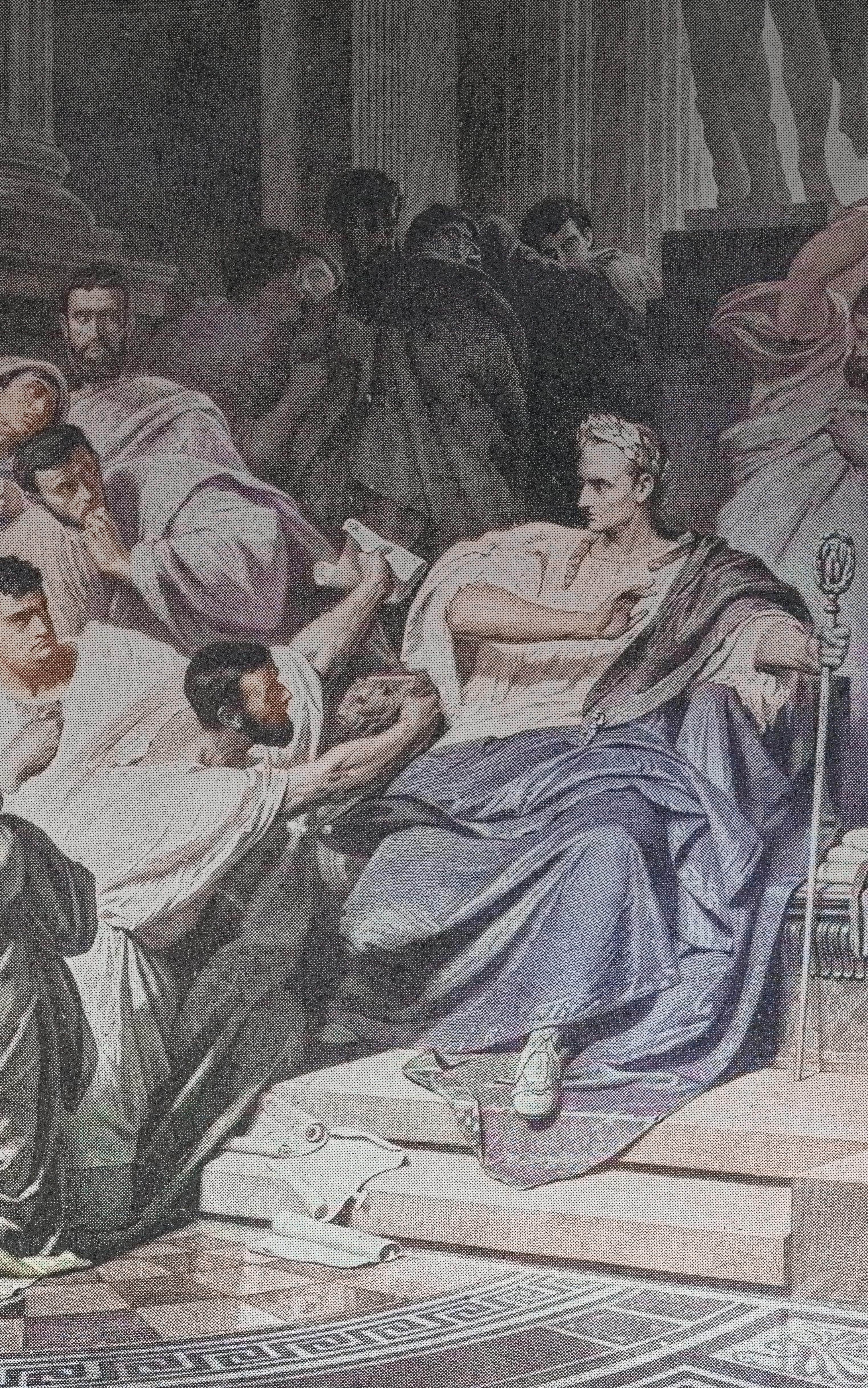
Trump v. Barbara treats birthright citizenship as a political issue, but it’s long been settled law, our columnist writes.
Page 11
C • Throwback
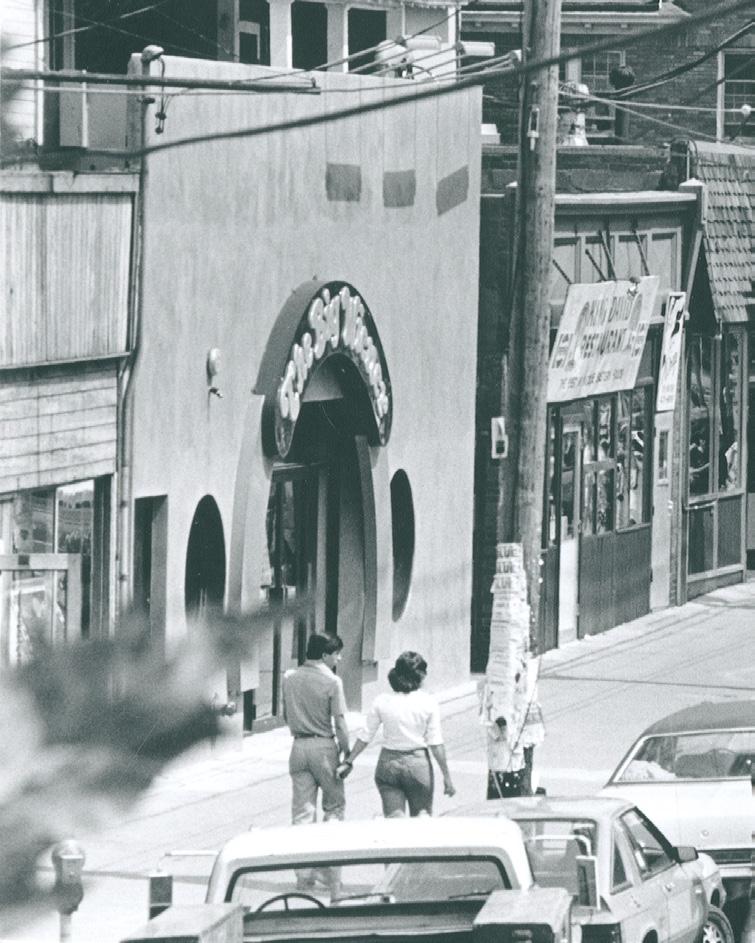
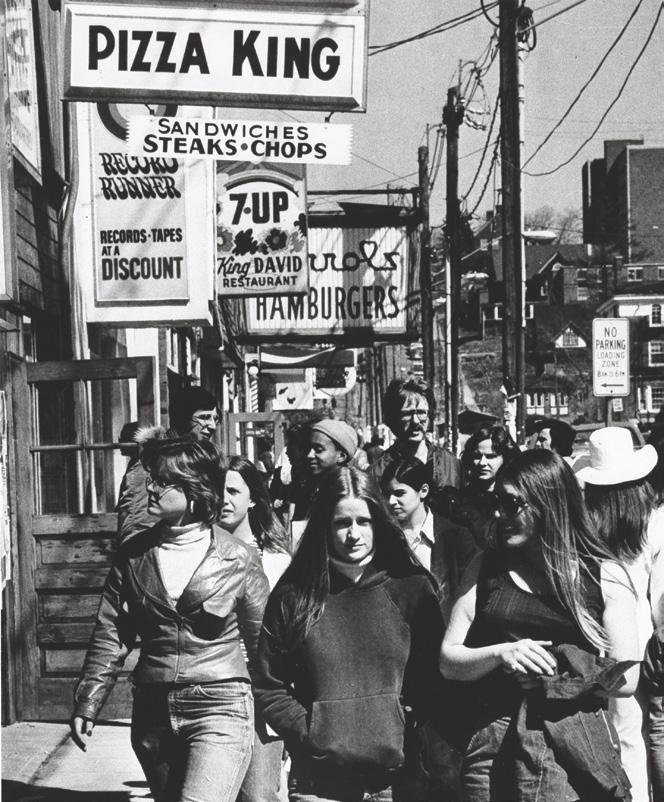
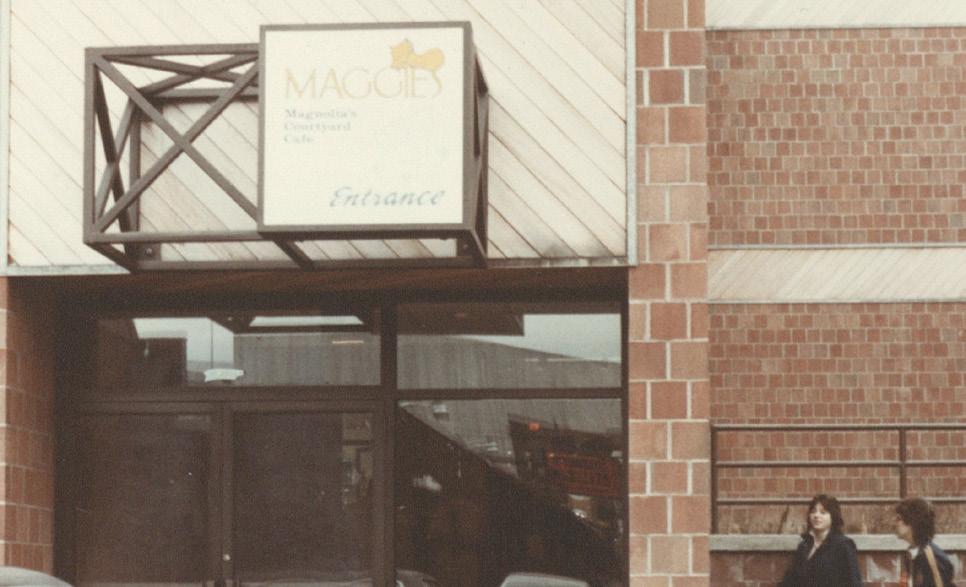
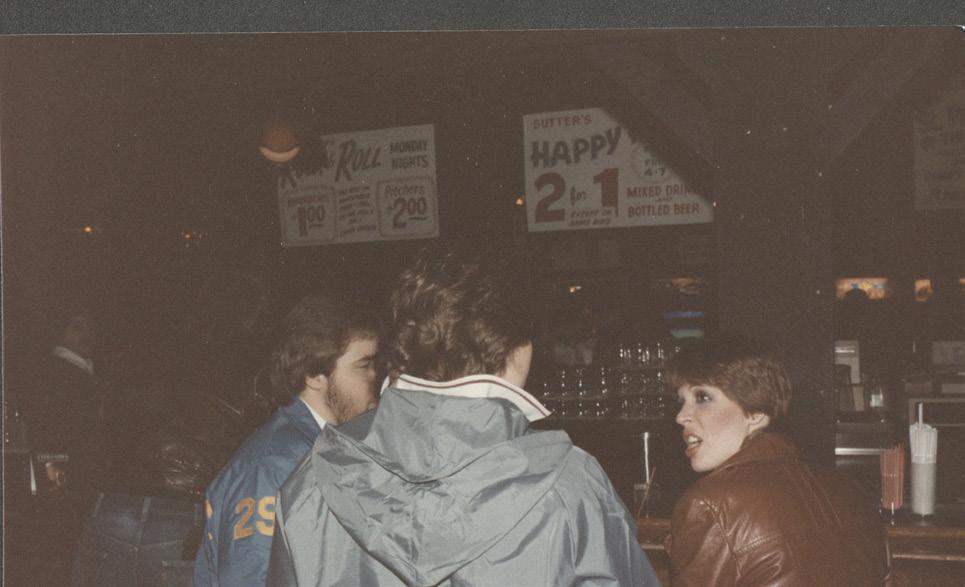
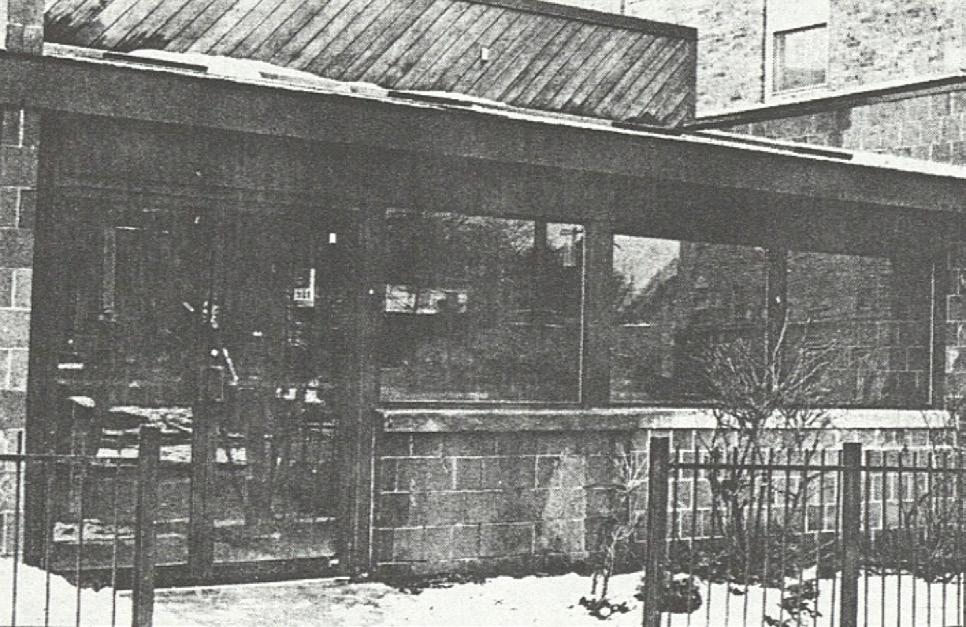
Alumni look back at Marshall Street. It was the center of Syracuse University’s social life — packed with bars, restaurants and regulars.
S • ‘A Syracuse kid’ Page 16
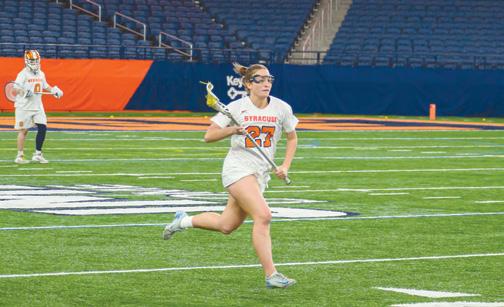
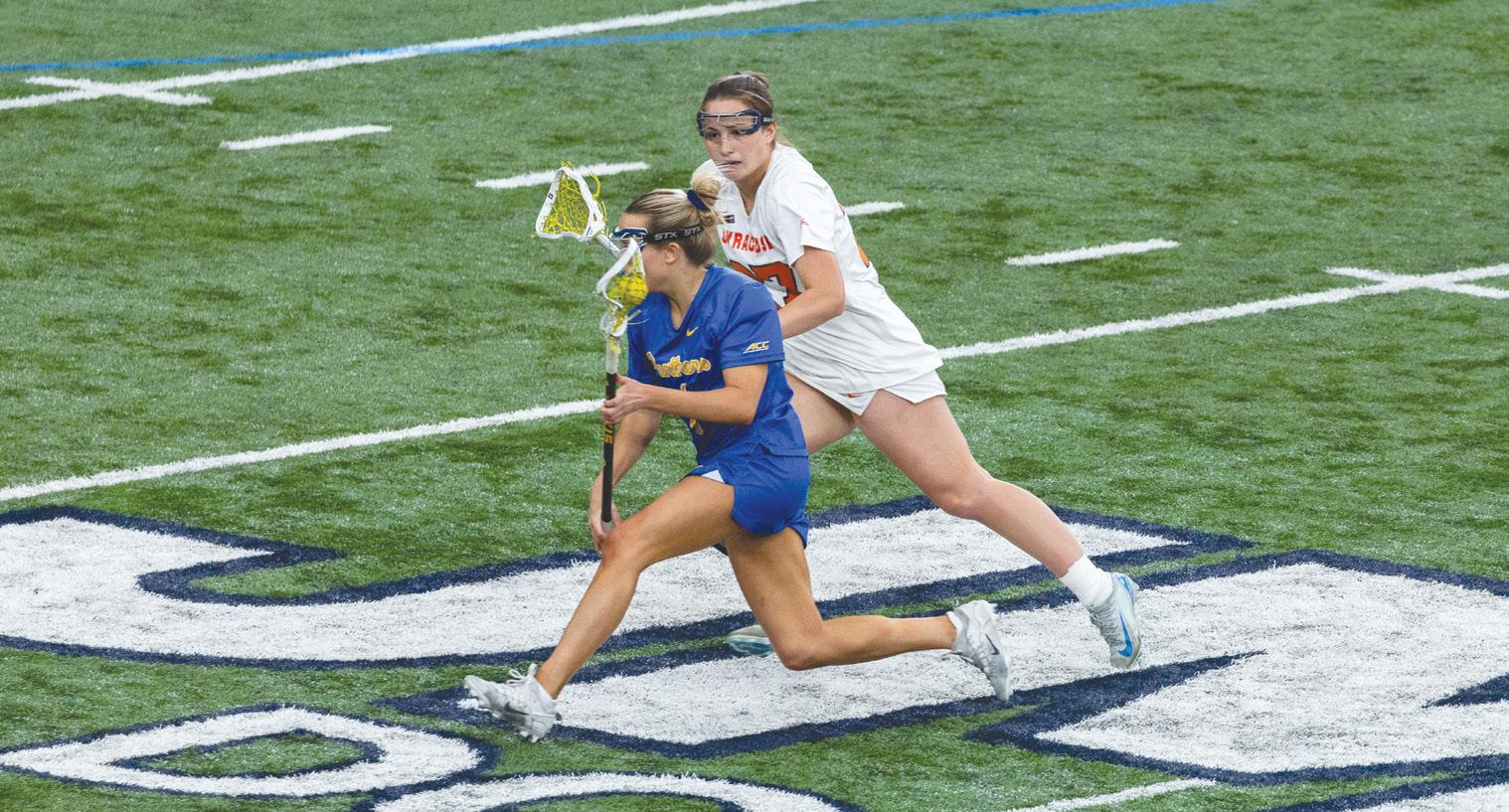
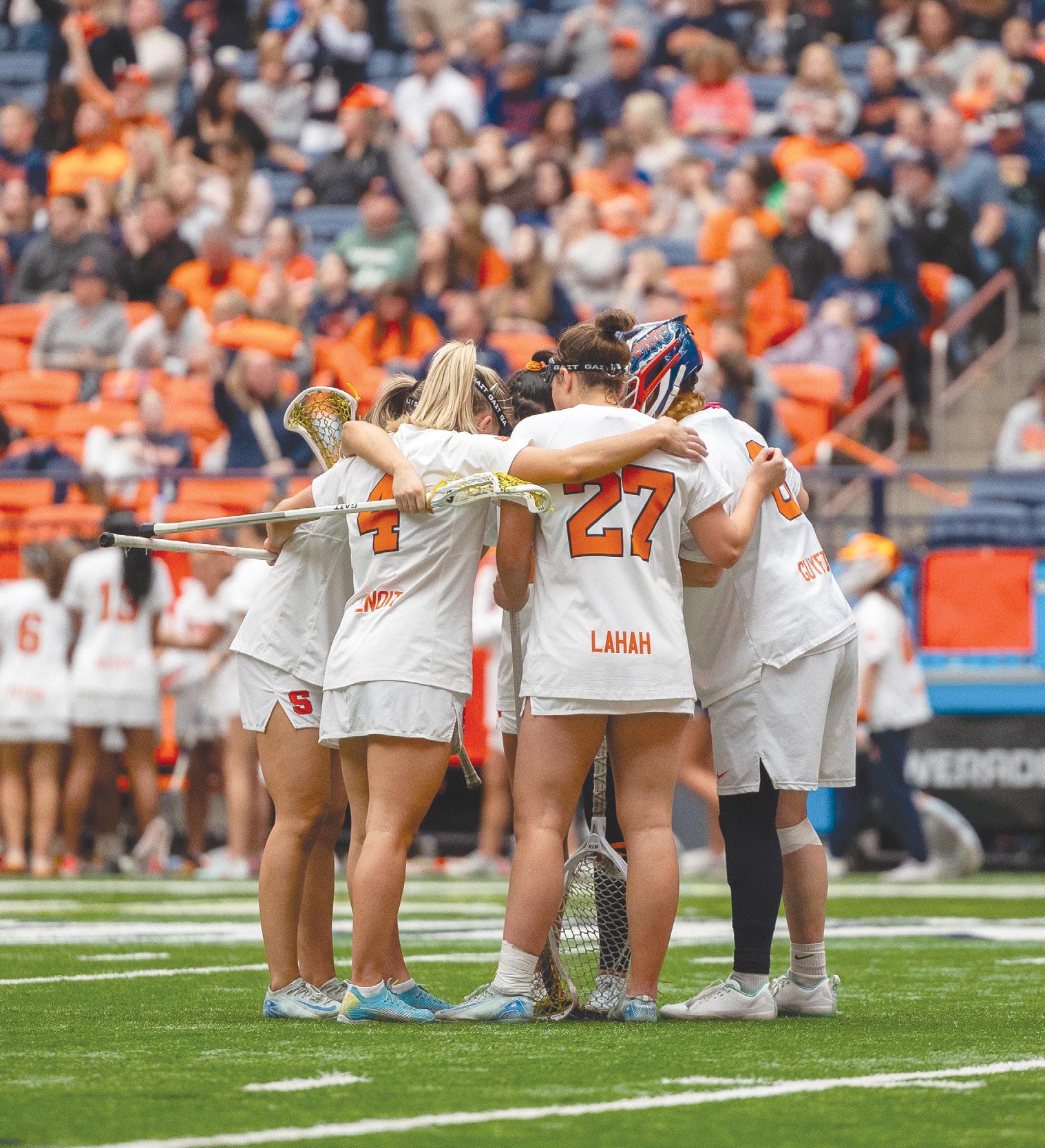
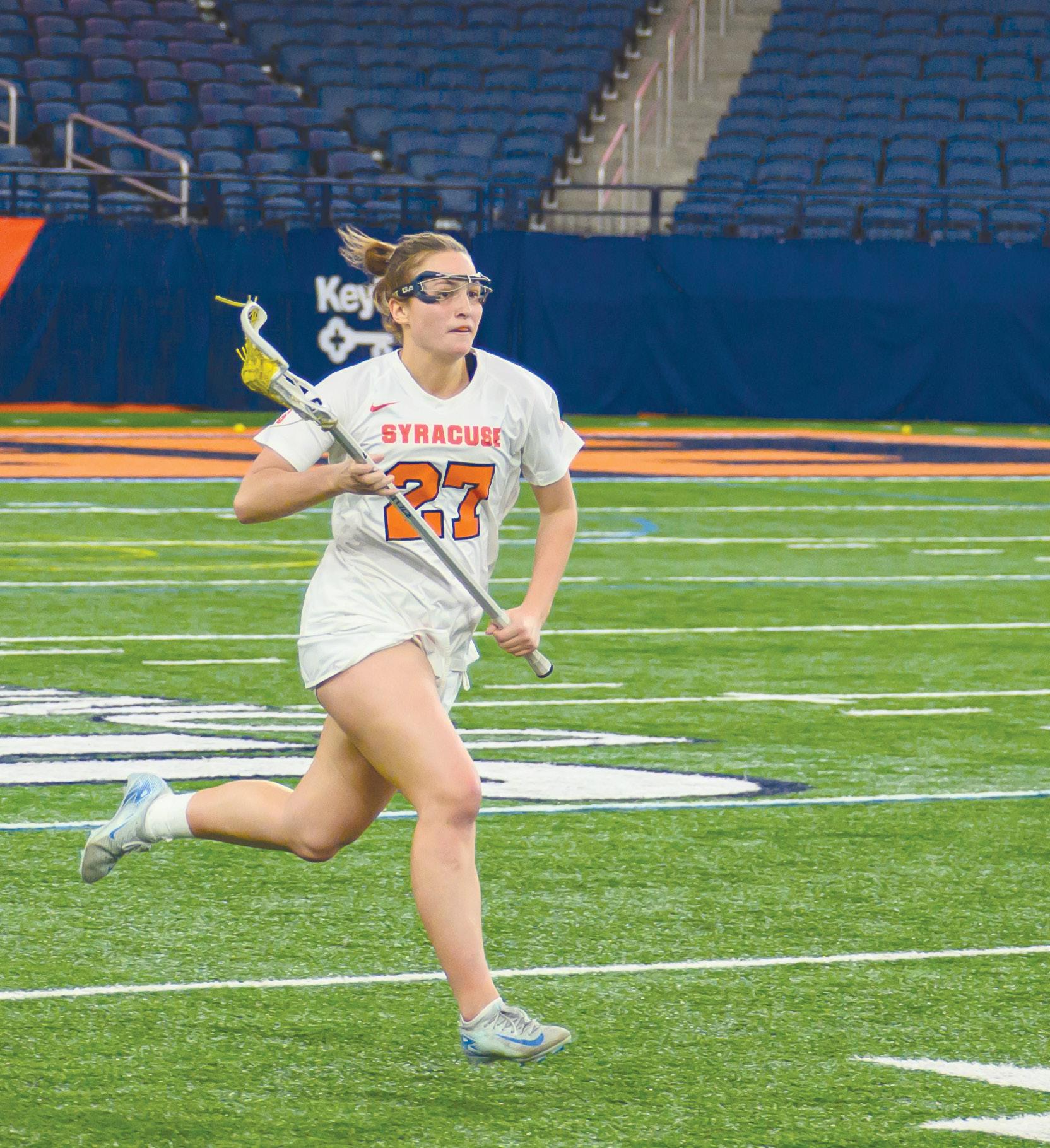
Izzy Lahah was always told she was meant to play at Syracuse. Now, she’s proving those people right as SU’s top defender.
Haynie takes over after Syverud announces cancer diagnosis
By Brenne Sheehan news editor
Syracuse University Chancellor-elect Mike Haynie will assume leadership of SU effective immediately, after outgoing Chancellor Kent Syverud announced he’s been diagnosed with a form of brain cancer.
Syverud will no longer serve as president of the University of Michigan, the school he was slated to begin at in May, according to a UMich statement. He will, instead, join UMich as a professor of law and special advisor to its Board of Regents.
The outgoing chancellor underwent care at Crouse Hospital and is currently under -
going treatment at University of Michigan Medicine, he wrote in a Wednesday campuswide email.
“I want you to know that I am ready to meet this challenge. I am approaching this with optimism, with determination, and with full confidence in the people who are caring for me,” Syverud wrote. “I believe in the road ahead, and I intend to walk it with everything I have.”
Domenico Grasso, UMich’s interim President, will continue as president until a new one is appointed, according to UMich’s statement.
At Wednesday’s in-person University Senate meeting, SU Vice Chancellor and Provost Lois
‘One
Agnew commemorated the outgoing chancellor with “a reflection on his legacy,” including his commitment to “steady leadership” and fiscal responsibility amid federal changes.
Agnew added that she’ll be working closely with Haynie — who she referred to as “acting chancellor” — in scheduling meetings to “establish extensive dialogue” across the university.
“These are uncertain times for higher education, but we’re positioned for success thanks to the strong foundation we’ve received from Kent Syverud, the vision and experience of our new chancellor and the creativity, generosity and resilience of this community,” Agnew said. “In the meantime,
I know that you’ll join me in sending thanks and best wishes to the chancellor.”
Others also issued statements about Syverud’s health — including United States Sen. Chuck Schumer and SU Women’s Basketball Coach Felisha Legette-Jack.
Haynie was originally set to take office May 11.
Syverud will provide updates on his health as he undergoes treatment, he wrote.
“Syracuse University is in extraordinary hands, and I look forward to staying connected with this community that means so much to me,” Syverud wrote. brennesheehan@dailyorange.com
of our own’
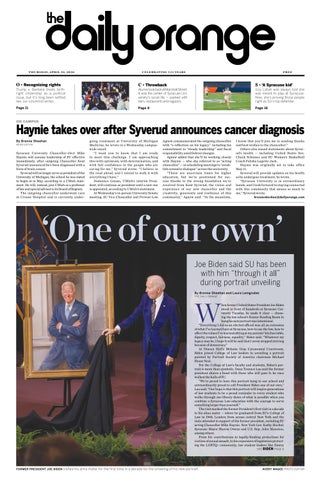
Joe Biden said SU has been with him “through it all” during portrait unveiling
By Brenne Sheehan and Laura Lemgruber the daily orange
hen former United States President Joe Biden stood in front of hundreds at Syracuse University Tuesday, he made it clear — choosing the law school’s Kossar Reading Room to hang his new portrait was intentional.
“Everything I did as an elected official was all an extension of what I’ve learned here at Syracuse, how to use the law, how to affect the values I’ve learned sitting at my parents’ kitchen table, dignity, respect, fairness, equality,” Biden said. “Whatever my legacy may be, I hope it will be said that I never stopped striving because of democracy.”
At Dineen Hall’s Melanie Gray Ceremonial Courtroom, Biden joined College of Law leaders in unveiling a portrait painted by Portrait Society of America chairman Michael Shane Neal.
For the College of Law’s faculty and students, Biden’s portrait is more than symbolic. Dean Terence Lau said the former president shares a bond with those who will pass it: he once walked the halls of SU.
“We’re proud to have this portrait hung in our school and extraordinarily proud to call President Biden one of our own,” Lau said. “Our hope is that this portrait will inspire generations of law students to be a proud reminder to every student who walks through our library doors of what is possible when you combine a Syracuse Law education with the courage to serve something larger than yourself.”
The visit marked the former President’s first visit in a decade to his alma mater — where he graduated from SU’s College of Law in 1968. Leaders from across central New York and the state attended in support of the former president, including SU acting Chancellor Mike Haynie, New York Gov. Kathy Hochul, Syracuse Mayor Sharon Owens and U.S. Rep. John Mannion, among others.
From his contributions to legally-binding protections for victims of sexual assault, to his expansion of legislation protecting the LGBTQ+ community, law student leaders like Emery see biden page 6
Editor@dailyorange.com
News@dailyorange.com
Opinion@dailyorange.com
Culture@dailyorange.com
Sports@dailyorange.com
Digital@dailyorange.com
Design@dailyorange.com
Photo@dailyorange.com
BUSINESS 315-443-2315
If you are a Syracuse
The Daily Orange is an independent, nonprofit newspaper published in Syracuse, New York. The editorial content of the paper — which started in 1903 and went independent in 1971 — is entirely run by Syracuse University students.
The D.O., a 501(c)(3) nonprofit, is editorially and financially independent from SU, and the paper receives no funding from the university. Instead, The D.O. relies on advertising revenue and donations to sustain operations.
This spring, the paper will be published Thursday when SU classes are in session. The D.O.’s online coverage is 24/7, including while SU is on break.
To show your support to The D.O.’s independent journalism, please visit dailyorange.com/donate. Donations are tax deductible.
please email editor@dailyorange.com.
The D.O. strives to be as accurate in our reporting as possible. Please email editor@dailyorange.com to report a correction.
The D.O. prides itself as an outlet for community discussion. To learn more about our submission guidelines, please
The D.O. is published weekdays during the Syracuse University academic year by The Daily Orange Corp., 230 Euclid Ave., Syracuse, NY 13210. All contents Copyright 2026 by The Daily Orange Corp. and may not be reprinted without the expressed written permission
university senate University Senate votes to pause ‘faculty workload policy’
By Samantha Olander and Vivian Collins the daily orange
The University Senate voted to approve a resolution calling for a pause and review of a proposed Syracuse University “faculty workload policy” at its final meeting of the year Wednesday.
The faculty workload policy — which aims to standardize teaching, research and service responsibilities across schools and colleges — would set clear expectations for instructional loads and class sizes.
Backed by more than a dozen senators and a faculty petition with over 100 signatures, the “resolution on shared governance and university policy creation” calls for an “immediate pause” on the policy’s implementation and retraction of related school or college-level teaching policies, including minimum course enrollment requirements.
Under the resolution, the policy’s implementation cannot move forward before the 2026-27 academic year. The resolution states it can only proceed after administrators provide “clear and documented evidence” that the proposed changes would improve teaching quality, faculty workload efficiency and conditions for research productivity.
It also states that any revised policy must align with the “principles of shared governance” and the university’s academic mission, describing the current approach as “a major departure from long-standing institutional practices.”
The vote passed with 62% of senators in favor, 26% opposed and 12% abstaining.
Associate Provost for Faculty Affairs Jamie Winders told senators her office paused the policy until the fall semester and plans to “post it for public comment.”
Robert Van Gulick, a philosophy professor and senator, said the resolution spoke to a broader concern about whether faculty have been adequately consulted on academic decisions.
“So one can have concern about the process independently of any of the particular criteria or standards that are being put down,” Van Gulick said. “It’s just as to whether or not faculty have been as fully involved as they should be.”
The monthly meeting, USen’s first in-person one of the semester, was held in Dineen Hall’s
on campus
Melanie Gray Ceremonial Courtroom. The meeting came just hours after Chancellor Kent Syverud announced his brain cancer diagnosis in a campus-wide email. Syverud, who had been slated to deliver remarks, was not in attendance.
“I think we all came in this morning expecting one kind of meeting, and then the Chancellor’s email arrived,” Agenda Committee Chair
Heather Coleman said. “We will attend our Senate business today. That is what the chancellor would want.”
Coleman briefly reflected on Syverud’s 12-year tenure, pointing to his role in strengthening the university’s finances and campus development. She also thanked Ruth Chen, Syverud’s wife and a professor in the College of Engineering and Computer Science, for her dedication to SU’s students, particularly its international student population.
We
will
attend
our
Senate business today. That is what the chancellor would want.
Heather Coleman agenda committee chair
“You leave this place better than you found it and that is no small thing,” Coleman said.
In her remarks, Provost Lois Agnew said the university is facing financial and enrollment challenges, including an anticipated “enrollment cliff” and increased competition for students, but said SU remains well-positioned compared to peer institutions.
“Over the past two years, you’ve heard Chancellor Syverud say we’re facing financial challenges like everybody else, but we’re still better off at Syracuse,” Agnew said. “A lot of people have said, ‘What does that mean? Are we better off? Are we facing financial challenges? What does that really mean?’ And I would say both are true. We are definitely facing financial challenges.”
Agnew credited Syverud’s leadership with preparing the institution for those pressures and said she looks forward to working with acting Chancellor Mike Haynie.
“We are hoping that we can collectively position the university to sustain our excellence in research and teaching,” Agnew said. “We believe that everyone here and across the university will play a critical role in that effort.”
Alongside the workload vote, senators approved the formation of a bylaws committee to evaluate potential changes to Senate structure and membership.
The motion, introduced by USen’s Ad Hoc Committee on Senate Representation, directs the Agenda Committee to form a Senate Bylaws Committee to review and potentially implement recommendations from the group’s report. The senate’s current composition includes 123 faculty members, 20 staff, 41 students and 17 ex official members, according to data presented by the committee.
Committee chairs Melissa Almeyda and Brice Nordquist said their findings — based on a survey of 465 faculty and staff and a review of peer institutions — show many respondents perceive the senate as too large, yet believe staff is “underrepresented.”
The committee recommended increasing staff seats by reallocating the number of chancellor-appointed positions. They also suggested reducing the number of senators to achieve “manageable committee sizes” and more active participation.
After opening the floor for discussion, Maxwell School of Citizenship and Public Affairs professor Tom Perreault, and chair of the Academic Freedom, Tenure and Professional Ethics committee, raised concerns about the current size of his committee, claiming that it’s understaffed.
“If we’re reducing the number of senators, we’re reducing the pool of people who are available to serve on committees,” Perreault said. “I don’t want my committee to suffer as a result.”
Director of Media Studies at the Newhouse School for Public Communications Nick Bowman countered that smaller senates force their members to be more active.
“My voice feels smaller here than it did there,” Bowman said, referring to the smaller
senate bodies he’s worked on at past universities. “It’s not an inherent critique, it’s just a matter of structure.”
The senate approved the formation of the bylaws committee, which was already approved by the Agenda Committee, with 92% in favor.
Senators also voted to accelerate the timeline for the Ad Hoc Committee reviewing changes to the Idea, formerly IDEA, course requirements catalog language, moving the deadline from February 2027 to November 2026 after Harvey Teres, a humanities professor and senator, argued the original timeline was not prompt.
“At the last regular meeting of this body, we voted overwhelmingly to have the faculty vote on the merits of the idea requirement changes,” Teres said. “We expected that to be placed on the agenda for today’s meeting.”
The vote passed with 66% in favor, 27% opposed and 7% abstaining.
Other business:
• The Committee on Curriculum and Instruction reported a record 1,066 curriculum proposals across 11 schools and colleges this year, with the College of Arts and Sciences submitting the most at 377, followed by the College of Visual and Performing Arts at 163 and the College of Information Studies at 105.
• The Committee on Appointments and Promotions reported that it reviewed four tenure and promotion appeals this year and is currently working on a proposal to change the terminology for nontenure-track faculty.
• The Committee on Employee Services, Fiscal Affairs and Operations presented an updated resolution from the Parking and Transportation Advisory Council calling for the creation of a permanent standing council on parking and transportation.
• USen voted unanimously to recommend the Board of Trustees confer degrees for this year’s graduating class, an annual procedural tradition. news@dailyorange.com
Continuity, inclusivity emphasized in Hendricks dean search
By Sean Harrington staff writer
The committee tasked with the search for the next dean of Syracuse University’s Hendricks Chapel heard campus-wide input regarding the qualities, goals and background a desirable candidate for the role would possess in a virtual session Wednesday.
Led by Vice President for the Student Experience Dawn Singleton, the last of three Zoom sessions posed an open conversation with members guiding participants on their preferences for the prospective leader of Hendricks.
Singleton first asked the students, staff and faculty in attendance what they hope the next dean accomplishes. Christina Papaleo, a learning and development specialist in the Office of People and Culture, was the first to offer input. Papaleo looked back on the prior leadership and the lessons that could be learned in her answer.
According to Papaleo, former dean Brian Konkol “redefined what it means to have a life
on campus
of faith.”
Konkol held the role of Hendricks dean from 2017-25 and now serves as president of Valparaiso University. Faculty in the meeting, including Director of Parent and Family Services Missy Mathis-Hanlon, praised the state of Hendricks amid Konkol’s absence.
“The current state of Hendricks Chapel is in a very good place. I think there are a lot of opportunities already there,” Mathis-Hanlon said. “Of course, you can always do better, but I think maintaining this point happening now is really important.”
Others, including Cheryl Fabrizi, associate vice president of auxiliary services, hope the next dean will focus on helping students find purpose and community regardless of their background.
“One of the things that I personally witnessed is some of the students,” Fabrizi said. “They’re desiring that belonging and that moral grounding.”
Singleton then shifted the conversation toward specific qualities listeners believe are
necessary for the next leader of Hendricks.
The first to respond was Karin Botto, a senior human resources business partner at SU.
“(We need) a really good listener, a person that can bring groups together, listen, understand different components of empathy, compassion,” Botto said.
In addition to these personal skills, Botto emphasized the need to maintain the same volume of revenue streams under Konkol that finance the organization and allow it to continue operating.
Botto cited wanting to maintain two things with Hendricks’ new dean — the continual fundraising and ability to continue building on its 70 years of success.
Singleton asked the group what makes them proud to be part of the Syracuse community, and what might inspire a candidate to join SU.
Amy Smith, a paralegal in SU’s Office of University Counsel, mentioned the impact Hendricks had in helping her find a place in Syracuse.
“I really quickly got connected with the
Christian staff and faculty association, (which) helped me to put down roots really early on. And it gave me a really good foundation, apart from the work that I do here,” Smith said.
Despite being a secular university, Smith underscored the SU community’s “strong faith” and the opportunity for the new dean to connect to the “vibrant” interfaith community among students, faculty and staff.
Respondents focused on proposing a new dean who is community oriented, well connected and welcoming to all faith traditions, but Papaleo emphasized the need for Konkol’s successor to be personable and remove the common “barriers” in higher education.
“Meeting them where they’re at …. meeting them at the dining hall, having the dean attend events, translate from one faith tradition to the next, letting students know this person is here,” Papaleo said of what she hopes to see. “It would be really helpful for the next dean to be visible.”
sharri43@syr.edu
Global Career Accelerator brings partnerships with global brands
By Owen Smith asst. digital editor
Syracuse University’s recent partnership with Podium Education promises a crucial difference from a typical internship — an opportunity to work at “leading” companies such as OpenAI, Netflix and Spotify.
In an April 10 campus-wide email, Julie Hasenwinkel, associate provost for academic programs, announced the Global Career Accelerator, which uses technology pioneered by Podium Education to match students with hands-on working experience.
The virtual program previously partnered with a number of universities, including Harvard University and the University of Michigan.
“Students get to collaborate weekly in teams of peers from over 90 other universities,” Hasenwinkel said. “They work on actual business challenges that companies bring to the table, things like market research, brand positioning, operational analysis, and communications strategy.”
The accelerator will be offered for the summer 2026 term, running from May 18 to August 7, and will cost the equivalent of three credits of SU tuition. Students hoping to participate in the program must enroll in UGR 270. Hasenwinkel said students will receive three credits for completing the course.
The classes alternate between live virtual sessions – dubbed “LiveLabs” – and pre-recorded video lessons. LiveLabs sessions last an hour
and a half and occur once a week, with dedicated drop-in hours to further assist students. Companies range in industry, from big tech to consumer goods, Hasenwinkel said. Students will select a track and have the opportunity to work on real-world projects with companies like L’Oréal, Intel, Wells Fargo, Crocs, Netflix, OpenAI, Charity Water and the Grammy Awards.
Chris Parrish, co-founder and president of Podium Education, said with a declining entry-level job market for college graduates, experience with brands further strengthens a student’s resume.
“It’s never been more important for students to gain early-career experience during their college degree, and our partnership will ensure every Syracuse student has the chance to do just that,” Parrish said.
While the program is powered by Podium Education’s tech, SU holds full authority on when students receive credit, and applications are open to students from any major or college.
“The program is open to students across all majors and has no prerequisites, so the goal is for it to complement a wide variety of academic paths rather than serving only one corner of campus,” Hasenwinkel said.
Tommy Powell, assistant provost for academic programs, said the GCA allows students to participate more than a regular, “observational” internship.
Although the program uses a third-party partnership, the accelerator was formed with involvement from SU’s Center for Student Excellence. see accelerator page 6
By Lily Zuckerman asst. culture editor
‘M-Street’
Over the years, Marshall Street’s neighbor, Syracuse University, has bought more space on and around Marshall Street.
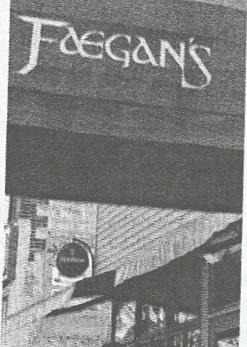
Born and raised in Syracuse, Dellas’ father opened Varsity in 1926. In 2001, Dellas inherited Varsity with his cousin, when his father retired. But, Dellas is no stranger to Marshall Street. He and his cousin opened Faegan’s a few doors down from Varsity in 1978.
Those Marshall Street, known to many as “M-Street,” staples are ingrained into some families, like that of Ira Berkowitz. Berkowitz, who graduated from SU in 1982, remembers the street as “the center of campus activity at the time.”
chain stores, there was 44’s Tavern and Konwas Maggie’s Tavern.
Cosmos Pizza & Grill
Surfer’s Bar. establishments have been Popeyes and Chipotle
place, and throughout Dellas, Varsity Pizza
feel this shift. In the last many of its indepenplace of chain restauof the area. For some has deteriorated. and around Marshall Varsity, Faegan’s Cafe the only businesses
In the summer of 1981, Berkowitz worked as a bartender and then as a greeter at the now defunct Magnolia’s Courtyard, also known as Maggies. The legal drinking age at the time was 18, and Maggies was just one of the plethora of bars around Marshall Street, Berkowitz said.
Aside from Burger King, Berkowitz remembers the other restaurants and bars near and on Marshall Street being independent and family-owned, like Cosmos.
Cosmos was more than a place where students gathered. It was also where locals would see a concert, said Howard Groopman, who graduated SU in 1972.
During Groopman’s senior year at SU, he spent Saturday nights waiting tables at Cosmos from 7 p.m. to 3 a.m. Back then, Groopman said a slice of pizza or a burger at Cosmos would cost between 25 and 35 cents.
But, he said the real perk of working at Cosmos wasn’t the paycheck — it was seeing the crowds of different people and groups congregate after concerts every Saturday night into early Sunday morning.
“After concerts downtown, all these hungry hippies would flood in looking for food,” Groopman said.
Decades after working at Maggies in Marshall Square Mall, Berkowitz’s daughter, who graduated SU in 2011, happened to be at the same bar her father had worked at.
Maggies was renamed to Maggies Restaurant and Sports Bar and moved to 161 Marshall St. In 2009, Maggies Restaurant and Sports Bar was raided and shut down for good.
Besides Maggies, Berkowitz said he stuck to two other nearby spots during his time at SU — Varsity and Cosmos. Through the experiences of other SU alumni like his children and nephew, Berkowitz said his family has seen Marshall Street change from independent, family-run bars and restaurants to a strip of chains.
But out of all the restaurants that have since “shuttered,” Berkowitz said Cosmos closing left the biggest void in his returns to SU. The restaurant’s absence leaves SU without their classic toasted honey buns — known to Berkowitz as the “THB.”
Bags of toasted honey buns were even given away as a goodie bag at his son’s Syracuse-themed bar mitzvah, along with Cosmos’ recipe for the signature dish.
When Berkowitz returned to Syracuse for a game or to see his kids, he would always go to breakfast at Cosmos and order his favorite toasted honey buns.
But, the tradition ended in 2014 when Cosmos closed its doors for good.
“I remember being on campus and thinking to myself, I don’t have any place to go for breakfast anymore,” Berkowitz said.
For some SU alums, like Bruce Waltuck, who graduated SU in 1973, eating on Marshall Street was a daily occurrence — sometimes more than once a day.
“Marshall Street was the place, it was just the center of our casual and recreational culture,” Waltuck said.
Evan Brudney, who graduated SU in 2013, worked at Cosmos for four semesters. While working, Brudney would see friends through the window or they would visit him.
Compared to other eateries on Marshall Street, Brudney described Cosmos as “grungier” than other Marshall Street establishments with jukeboxes on the tables adding a vintage touch. Marshall Street was “just very alive, very active,” he said.
“I was just really sad to see it go. I thought it would be there forever,” Brudney said.
For Linda Epstein, it was as if no time had passed inside Faegan’s nearly 30 years after graduating. Epstein, who graduated SU in 1989, spent Sunday nights during her senior year at Faegan’s, a tradition they called “Senior Sundays.”
Every year, when Epstein returns to her alma mater for a Newhouse School of Public Communications visual communications workshop, she returns to Faegan’s with the group, showing fellow workshop coaches her favorite college bar.
“It was the social life,” Epstein said.
Amid the recycling of chain restaurants and closing of family businesses, Dellas said he’s fortunate to have seen Marshall Street’s evolution and keep Faegan’s and Varsity as Marshall Street’s constants.
“I don’t stop and say, ‘Wow, we’ve been there the longest of anybody.’ It’s just another day in my life, you know?” Dellas said.
When Epstein was at SU, she frequented Faegan’s, Varsity, Harry’s, Maggies, 44’s Tavern and Buggsy’s — all located in the Marshall Street vicinity. But the real place was Marshall Street itself.
“It felt like a place to be. It felt like home,” Epstein said. “You knew the stores, you knew the owners, you knew the restaurants and you knew what food you wanted, because you’ve gone there so many times.”
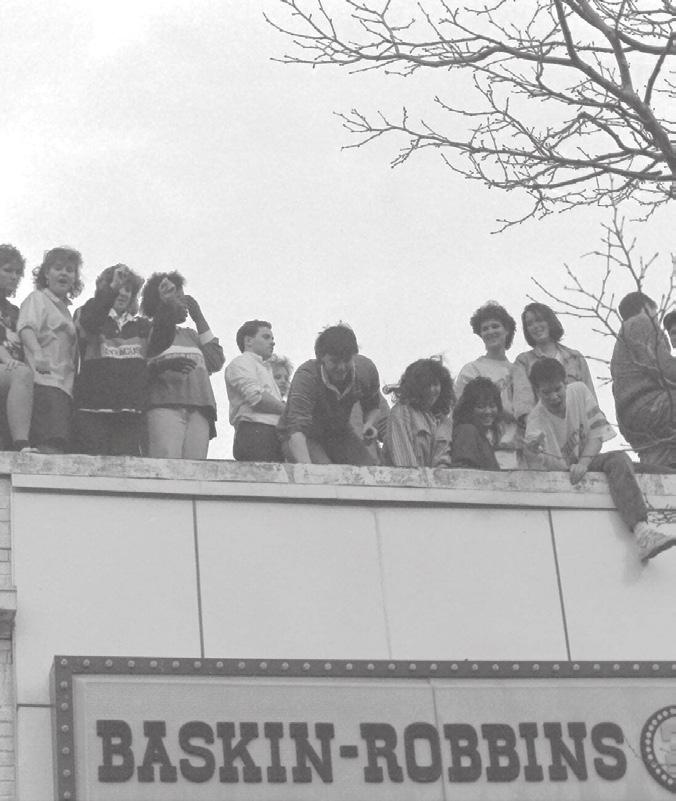
When Epstein thinks about Marshall Street, the first memory that pops into her head is the day SU’s men’s basketball team made it to the Final Four in 1987. Marshall Street was swarmed by SU student fans and city residents.
Not much changed on Marshall in April 2003, Brian Harrison said. The 2005 alum said he was at a friend’s house on Livingston Avenue when SU’s men’s basketball won the Final Four game against the University of Texas. Immediately after the win, Harrison ran down to Marshall Street with nearly 8,000 other people, he estimated. He found himself in Darwin’s Restaurant and Bar.
That was just the beginning of festivities. When SU defeated the University of Kansas and became the 2003 national champions, Harrison was watching the game through a livestream in the then-Carrier Dome. Harrison celebrated the same way he had two days prior — running down to M-Street.
“Nothing beats when your school wins at that level,” Harrison said. “Obviously it’s not the reason that you go to school, but it is one of the reasons why you go to a big school.”
But this time around, there were police guarding storefronts, people climbing nearby trees and T-shirts set on fire.
Years ago, Marshall Street was unpaved, until receiving a $3.8 million “facelift” in 2001, according to a story from The Daily Orange that year.
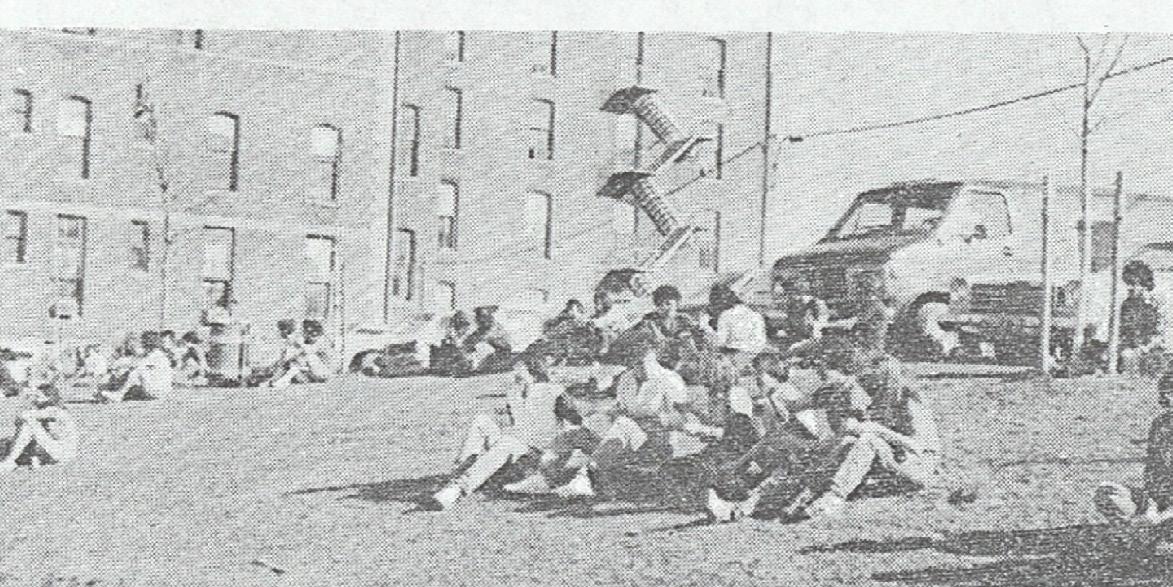
Dellas said he feels fortunate Varsity and Faegan’s spots were in close proximity to the now-extinct grass area across the street, where the National Veterans Resource Center now stands.
“That’s where all the students would hang out, right across the street from the Varsity, that was ‘The Beach,’” he said. “You didn’t see that paved area. That was all just a hill of grass, and people used to hang out on it while eating Varsity.”
Though Berkowitz and Harrison both considered Cosmos a “greasy spoon” place, it was one of Harrison’s favorite restaurants on Marshall Street. Friday afternoons were spent at Darwin’s and Faegan’s. If there was a home game, Harrison’s Saturdays were spent at Varsity for postgame traditions with the marching band.
“My mom used to say, ‘Well, you didn’t make the dean’s list, but you got your name on the wall at Faegan’s,’” Harrison said. “It was like the center of all kinds of the social stuff that we did near or on campus.”
When Linda Landau was at SU from 1972 to 1976, Marshall Street’s bars didn’t just serve upperclassmen or graduate students, they also served underclassmen. Hours before Landau would walk into her Friday morning Newhouse School of Public Communications class her freshman year, she would venture into Marshall Street’s bars.
Then, the legal drinking age was 18 in New York. It was the height of counter culture, Landau said.
“Of course, Friday morning we were all shutting down the bars at 4 a.m. and showing up for class at 8 a.m. Let’s just say people would still be a little inebriated,” Landau said.
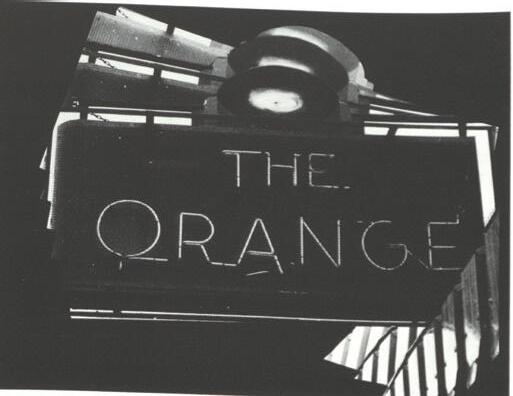
Landau’s mom, who attended SU in the 1940s, always told her stories of roaming Marshall Street and neighboring streets many nights, always finding herself at The Orange bar.
When Brudney attended SU in the late 2000s, “pretty much whatever you needed or wanted in a way you were going to find over on Marshall Street,” she said.
But when people like Berkowitz return to SU and their beloved eateries are replaced with new storefront signage, Marshall Street feels different. Every time Berkowitz passes by Taste of Asia, which used to be Cosmos, he cries.
Among SU alumni, there’s a shared feeling about what Marshall Street is presently.
“It’s not the same,” Berkowitz said.
lvzucker@syr.edu
Launched by SU alum, JD Meals works to deliver meals daily
By Mirren Grimason staff writer
At the height of the COVID-19 pandemic in 2020, Syracuse University alum Jaclinn Tanney received a call. A 1,000-meal order from her catering that she’d already prepared had been canceled. While most would flounder, Tanney immediately pivoted, donating all 1,000 meals to emergency workers in hospitals.
It was then that Tanney decided to shift her business model away from catering and toward a company that served quality meals to not just hospital workers, but anyone in need of food.
This inspiration led her to launch JD Meals — a food service management company based in Queens that currently produces and sells thousands of cooked and shelf-stable meals daily to government offices, schools and other organizations. A portion of their profits is used to distribute meals to those without homes or experiencing hunger.
“We called upon all of our restaurant industry friends, we asked them to empty their kitchens so that we could cook and deliver meals to hospitals citywide,” Tanney said. “Very quickly during that process, we realized that the need went beyond the four walls of the hospitals.”
Having graduated from SU’s Maxwell School of Citizenship and Public Affairs in 2005 with a degree in policy studies, Tanney said the program’s emphasis on community engagement and service helped shape her career path.
She added that recently retired professor and founder of policy studies at Maxwell, Bill Coplin, was one of her primary influences at SU. His emphasis on “bringing your studies to
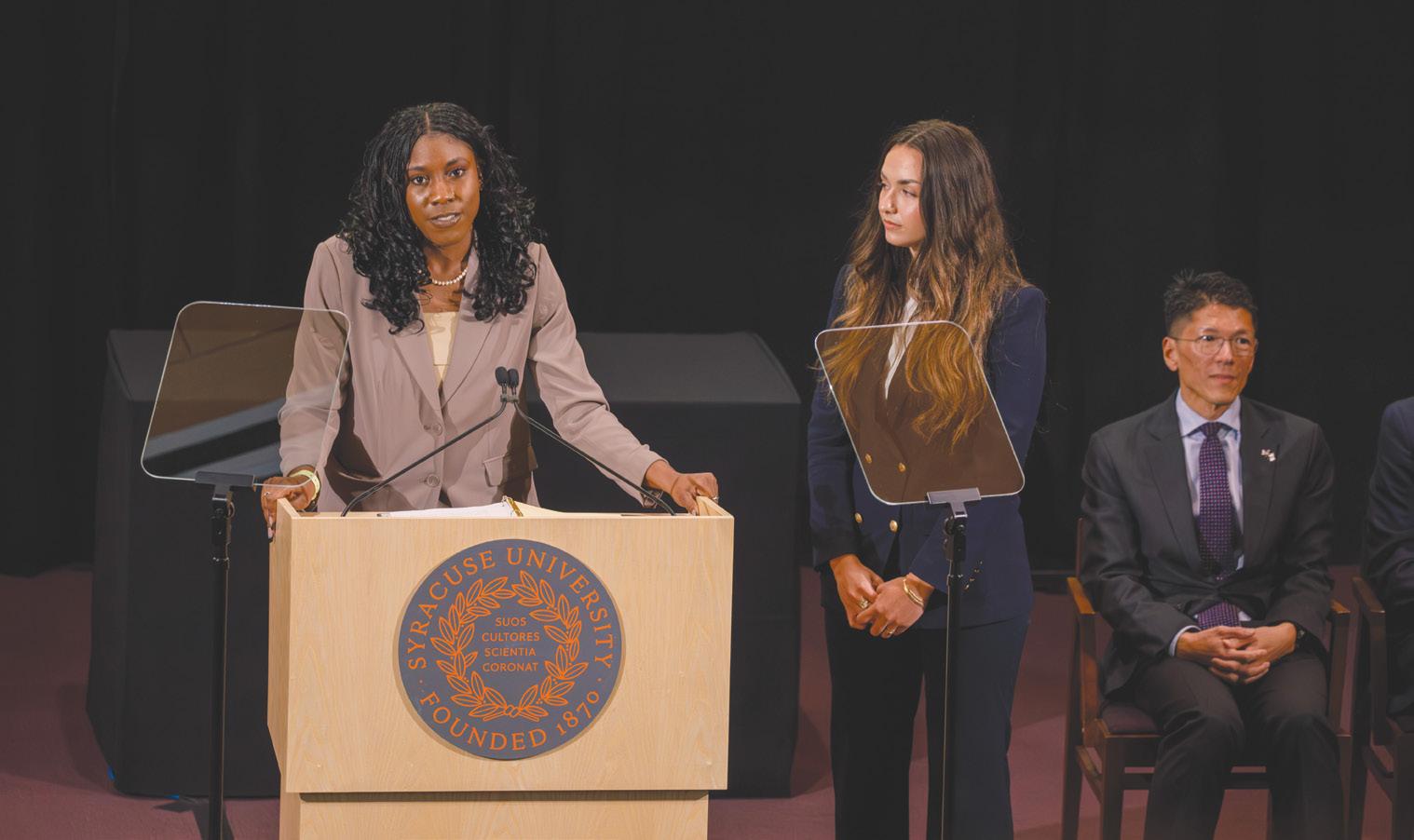
Bielecki, president of the Student Bar Association, and Kayzjah Charles, the School of Law’s class of 2026 president, highlighted the career politician’s commitment to upholding the college’s “dedication to those who need a voice.”
“The common thread through his remarkable career is his unwavering desire to put others ahead of himself, to fight for the everyday American and to lead with integrity and honor,” Charles said. “I’d like to think that his time at the College of Law had some part in shaping this portrait, and will serve as a permanent reminder for all who pass through our doors that a life in service to others is not a sacrifice.”
Throughout his approximately 50-year political career, Biden made several impacts on the U.S. legal system. Just four years after graduating, he was elected to his U.S. Senate seat — a position he’d hold for 36 years before becoming vice president under Barack Obama and, eventually, president of the U.S.
While serving as president and vice president, Biden appointed hundreds of federal judges. During his presidential term, he appointed Ketanji Brown Jackson to the Supreme Court, the first Black woman to hold the position. His presidency also marked several Supreme Court precedents that constrained his executive power — including Biden v. Nebraska, which struck down student loan forgiveness, and National Federation of Independent Business v. OSHA, limiting the government’s authority over workplace vaccine mandates.
But before that, Biden was a 22-year-old graduate student walking the halls of White Hall, where SU’s law school was once located. During his three years at the College of Law, the former president was a senior advisor for the freshman orientation program, co-chairman for the Speakers Program and part of the International Law Club. Biden graduated below the 20th percentile of his graduating class — with a class rank of 75 out of 86.
Biden even joked in his Tuesday speech about his contentious class presidential election between him and William Brodsky — drawing a comparison to the dispute over his 2020 election win.
“It’s the only head-to-head election I’ve ever lost in my career,” Biden said. “Maybe I should have asked for a recount.”
Brodsky, an SU life trustee, commissioned the portrait all these years later.
page 3 accelerator
“Working alongside students from peer institutions adds a layer of professional networking and perspective that a traditional internship setting rarely offers,” Powell said. Powell said Podium Education’s years of work “building and maintaining live employer partnerships” is why the accelera -
life by applying yourself to the community” was important to her, she said.
Coplin noticed Tanney’s attention to detail and preparation immediately, which directly coincided with her starting JD Meals.
“She was unusual in that she didn’t say, ‘Oh, what can I do?’ She had specific questions. ‘What about this? What about that?’” Coplin said. “She was very mature, and she had a plan. I didn’t realize at the time she had a plan, but she obviously had a plan.”
Today, JD Meals helps those experiencing food insecurity everyday. It was important to Tanney that the meals weren’t just enjoyable but also culturally relevant and served with dignity. These two attributes became the pillars of her company and its mission.
Biden’s ties to Syracuse don’t end with his education. The former president met his first and late wife, Neilia Hunter Biden, a member of SU’s chapter of Kappa Alpha Theta, at SU. When coping with the death of Neilia and his first daughter, Naomi, in the years following graduation, he said his SU law classmates stuck around.
“My Syracuse classmates were there for me then as well,” Biden said. “Since the time I left, my life has handed me significant high highlights and very low blows. The Syracuse community has been looking through it all.”
But what connects the former president to SU the most is sharing an alma mater with his late son. Beau Biden, who died of brain cancer in 2015, is also a 1994 alum of the College of Law.
“Sharing Syracuse as an alma mater is one of the many things that makes me remember my son with such pride,” Biden said.
Biden has remained dedicated to Syracuse following his graduation. The alum returned to SU almost 10 times since 1968. He gave the graduation speech at the law school’s 1994, 2002, 2006 and 2016 commencements — and even hosted the law school’s centennial celebration in 1995. Beyond speeches, Biden has participated in several events in Syracuse for his political projects, such as a Middle Class Task Force meeting and a talk for his “It’s on Us” initiative.
Most recently, he returned to the Salt City in 2024, touting his presidential-era CHIPS and Science Act, which included a $6.1 billion federal grant toward a local Micron Technology semiconductor facility.
Biden’s visit comes at a critical time for law students amid a presidency that is “challenged” by an “autocratic” leadership leadership style, former SU Law professor David Driesen said. Driesen, author of “The Specter of Dictatorship: Judicial Enabling of Presidential Power,” hopes the former president’s visit serves as a reminder of the role of lawyers in a democratic society.
“His presence should remind us that it’s a bit of a higher calling,” he said. “Lawyers are an important constituency of the rules of law in a Democratic society, that’s under attack now.”
During Biden’s presidency, central New York and the university felt the impacts of his policy.
In August 2022, Biden signed the CHIPS and Science Act, which invested $53 billion into the semiconductor industry. Shortly after, Micron announced it would build the largest semiconductor manufacturing facility in the country in Clay, New York, bringing 50,000 jobs to the
tor program was never considered internally at SU.
“This is not an outsourcing of our educational mission,” Hasenwinkel said. “It is an extension of it, done thoughtfully and with our students’ outcomes at the center.”
The program offers five tracks to choose from: Digital Marketing, Data Analytics, Web Development, Coding for Data and Career Rotation. Each one features unique partnerships,
“When we were providing meals, the meal recipients were giving us feedback. It wasn’t only around the taste of the food that they enjoyed. It was the way in which we donated it,” Tanney said. “It was making sure that when we were providing meals, we didn’t have signage that was offensive or made anybody feel less than (others).”
JD Meals employs nearly 100 team members, 95% of whom Tanney says represent the diverse communities the company serves.
“You can hear among the team that people say, cook as if you’re abuelitas or your grandmas are eating this food, because oftentimes they are,” Tanney said. “That is really the key to us celebrating our success … our team can so deeply relate to the communities that are enjoying our food.”
Head chef Alex Hernandez has worked at JD Meals since the company started up in 2020. He said working for JD Meals is unlike working for any restaurant — he never leaves the facility feeling frustrated, which stems back to Tanney’s kind demeanor.
“Jaclinn is a really nice person. She always (has) the best words to say to you,” Hernandez said. “She is never sad. She’s never upset. She treats everybody like a really, really nice sister. It’s really enjoyable to work with her.”
With two young kids at home, Tanney said it’s important to her that they see how serving your community while still achieving your career goals is possible.
Influencing non-profit organizations and other companies working to end hunger by producing and donating food with dignity is also an important long-term goal, she added.
“Food, especially food that tastes like home and is served respectfully, brings people a sense of comfort and belonging into the community,” Tanney said.
Having already provided over four million meals to those in need, JD Meals recently expanded its mission to Philadelphia this past fall.
Despite the upscaling, Tanney hopes to continue JD Meals’ mission of serving cultural, dignified and nutritious meals, not just through her own company, but vicariously through others working to achieve the same things.
Still, Tanney is at the forefront of it all.
“She’s dynamite, and she gets things done,” Coplin said. “It shows that she always wanted to do good.”
msgrimas@syr.edu
region. Biden’s administration also passed the Infrastructure Investment and Jobs Act, which provided funding for the Interstate-81 reconstruction project regionally.
Beyond the administration’s investment in technology and infrastructure, it also passed significant policies around diversity and inclusivity, including an executive order to expand diversity and inclusion in the federal government. In 2020, SU created its Office of Diversity and Inclusion after demands from the student body. The office’s title recently changed to People and Culture in July 2025, amid a national effort from the current administration to erase DEI language.
The event’s two student speakers, Bielecki and Charles, emphasized the importance of Biden’s visit. For Charles, Biden’s career serves as a testament to the work students can accomplish with a foundation in law.
“This portrait will serve as a permanent reminder for all who pass through our doors that a life in service to others is not a sacrifice for the highest calling a lawyer to answer,” Charles said.
Along with Charles and Bielecki, many other students filled the auditorium’s seats, including some Student Government Association members. Emily Castillo, the incoming SGA president, was among them.
Although Castillo is not a law student herself, the president’s visit held a different meaning. As a rising junior who is worried about the reality of
such as learning social media with OpenAI or web analytics with The Grammys.
Some tracks include learning about how the partnered businesses operate. Students on the digital marketing track will learn about e-commerce with Shopify, while those on the web development track will learn more about building AI chatbots with L’Oréal.
All tracks are led by experts in their
tive fields, such as Rita Cidre, a former market-
graduation, Castillo said she was overcome with emotion as the president spoke, and his words put her at ease.
“I don’t have to have my life figured out right now,” she said. “But I do know that I have the opportunities, and if I put in that effort, I can go a long way once I graduate.”
Castillo noted the university is working amid a dynamic period, with new leadership, changing curriculum and federal changes for higher education nationally. Despite a hectic year, Castillo said the event highlighted the university’s strength and the various high-profile alumni who remain connected to their Orange home.
Now 83 years old, Biden told attendees he hopes he can continue a legacy of “democracy.” He said that when students look at the portrait that will adorn their study spaces, he hopes they don’t just see himself, but a symbol of dedication to “protect the Constitution.” Biden is also in the process of building his presidential library in Delaware and establishing a foundation with his wife, Dr. Jill Biden, also present at the unveiling.
“What my legacy may be, I hope it will be said that I never stopped striving because of democracy,” Biden closed. “God bless the students of this university. God bless the United States of America, and then, God protect our troops.”
news@dailyorange.com
ing director at Zillow, Robert Alvarez, a former data scientist at Intel and Matthew Small, a senior software engineer at Google.
“The Accelerator is the ideal opportunity for students interested in exploring different industries and building their resumes as part of an elective course,” Parrish said.
The program will be offered to its first cohort of students in summer 2026.
owensmith@dailyorange.com
Law class of 2026 students Kayzjah Charles and Emery Bielecki, introduce former President Joe Biden at his portrait unveiling ceremony on Tuesday. avery magee photo editor
respec-
In 2020, SU alumna Jaclinn Tanny founded a food catering company that distributes meals to schools and those who are experiencing hunger. courtesy of jaclinn tenney
CULTURE
Goinganalog
As the world grows more digital, some students return to analog roots by junk journaling or collecting CDs
By Caroline Erskine asst. digital editor
On the wall of Anzor Mustafa and his roommates’ Syracuse University dorm room, a growing collection of Polaroid photos documents a year’s worth of friendships. The group has made a tradition of documenting every guest who walks through their door in Booth Hall.
Each photo is signed and displayed, creating a record of the people who have passed through and the memories they’ve made.
Over time, the collection has grown to around 25 photos.
For Mustafa, the appeal goes beyond decoration.
“We’re sort of in a digital age right now,” he said. “Having physical reminders of the things that we love and the people that we love is so important.”
Across SU’s campus, some students are turning toward analog forms of media and creativity, from CDs and vinyl records to journaling and crafting, as a way to disconnect from screens and use their time more intentionally. This has become a nationwide trend for Generation Z — a distaste for the increas -
ing digitization of society ironically spreading over social media.
Sophomore Avalon Whitney’s connection to physical media began at 14, when she received a CD player from her parents and inherited some old CDs. Since then, her collection has grown to over 100.
She often searches for new additions while thrifting, making CDs the first section she checks in secondhand stores. Whitney listens to the CDs regularly while doing chores or driving, often choosing them over streaming platforms, she said.
see analog page 10
Performers flaunt fashion, expressive makeup at drag show
By Alex Rice asst. copy editor
The final touches to drag queen Addie Raw’s look — lashes, last-minute outfit tweaks and a quick style to their hair — are made possible by the help of other queens. Addie Raw (Syracuse University sophomore Ivy Monroe) has a drag mother back in Arkansas who inspired her look and personality onstage.
“She taught me how to do my makeup, she taught me how to dance, what moves to do, what moves not to do,” Monroe said. “She taught me
good things and bad things. She sat me down to watch drag and taught me everything I needed to know.” Monroe felt that same sense of camaraderie from fellow drag queens on Saturday at SU Pride Union’s 24th annual Student Drag Show finale. The event, which was split into preliminary and final rounds, featured student performers and guest drag queen stars. The preliminary round was held in Schine Underground on March 20, with special hosts from prominent drag queens and former “RuPaul’s Drag Race”
contestants: Mariyea, Aja and Kandy Muse. The finale was held Saturday in Goldstein Auditorium.
Seven of the eight contestants in the preliminary round were performing in their first-ever drag show. Pride Union Vice President Landon Nance said going onstage for the first time is a fundamental moment for a lot of performers.
“As an audience member getting to sit there and watch and share that experience, I think is powerful and a type of excitement in its rawest form,” Nance said.
Performing for an audience was nothing new for Malichi Simmons, since he is a singer and dancer. But doing it in drag is a completely new experience, he said. Simmons’ friends encouraged him to get involved with drag, and recognizing the importance of new experiences, he decided to do a drag performance that incorporated something he does best: singing. On March 20, Simmons debuted his drag queen persona Ruffles. In the drag world, it is most common for queens to lip sync a song as
they dance and act onstage. But, at the preliminary round, Simmons sang “Before He Cheats” live. Simmons was one of four contestants who went on to the final round. He said he was shocked to find out he had made the cut and knew he had to go bigger for the finale. Simmons said he wanted to engage with the crowd more and improve his presence.
Another one of the finalists was graduate student Hunter Kusak — who goes by quirt on-stage.
has been in the drag space since 2021, see drag page 10
Kusak
yusra khasawneh uses found materials like pamphlets, newspaper clippings and everyday objects to include in her junk journals, storing them in her “junk drawer.” She said she enjoys the way junk journaling allows her to create something tangible. caroline erskine asst. digital editor
Movie lover Jack Auger brings his film to Syracuse
By Joel Pelachik asst. copy editor
Syracuse University graduate student Jack Auger, 32, has always loved watching movies and TV; his Star Wars-themed tattoo sleeve — featuring Yoda, Darth Vader, Luke Skywalker and more — proves that.
But, he didn’t view filmmaking as a career until 2018.
Roughly two years into his recovery from alcoholism and drug addiction, Auger, disillusioned with playing music after being a guitarist in a metal band, turned to screenwriting.
“It was kind of a dark time for me creatively, and then I just started writing a screenplay based on my life and this kind of sh-tty situation that I was in in my early 20s,” Auger said. “It was my first time ever writing, but I just fell in love with it.”
Now, Auger is an award-winning filmmaker, and his 2025 short film, “Bright Future,” even got selected for last year’s Austin Film Festival, an Oscar-qualifying festival. Its first showing was at SU’s College of Visual and Performing Arts’ first- and second-year graduate showcase. This Sunday, the movie will be shown at Syracuse’s SASFest film festival.
Auger spent a year in college in 2012 right after high school. Auger then returned to college in January 2020, earning an associate degree in his hometown of Tallahassee, Florida.
In May 2021, Auger began studying film at the University of Central Florida. Nearly three years later, Auger proposed to his now-wife and creative partner, Hope Yohn, while the credits rolled to a shared favorite film, Richard Linklater’s “Before Midnight.”
“I always knew when I was going to propose to her, whenever that would be, we’d watch ‘Before Midnight.’ Did I think it was going to be at like 3 p.m. in the afternoon on a Thursday? No, I didn’t,” Auger said.
During their wedding, a projector played “Before Sunrise” — the first entry in Linklater’s “Before” trilogy — and “When Harry Met Sally...” in the background, Auger said.
Auger and Yohn have collaborated on several films, sharing writing credits on projects like
campus life
“Bright Future” and Auger’s upcoming release, “Portrait of an Apologetic Man.”
Auger said he didn’t think he’d get into film school. After earning his bachelor’s degree from UCF in May 2024 for film, he was admitted as one of six students into UCF’s Bachelor of Fine Arts screenwriting program. Auger also didn’t think he’d get into any graduate schools but actually got accepted into most of them, he said.
Auger decided on VPA, pursuing a master’s degree in film.
“Bright Future” was shot entirely at the GereBlock coworking space in Syracuse and will be screened at the Syracuse Actors Studio’s first annual SASFest this Sunday at the Palace Theatre. The six-minute movie is about a woman trying to convince her boss not to hire his son-in-law because of his bad past.
The film stars Jay Merante, a member of SAS, and Amanda Kristin Cox. Auger said he thinks the Syracuse audience will appreciate having a local actor in the project. Auger said he enjoys sharing his work in person and hopes the Syracuse audience will appreciate the film.
“It’s just great getting to hear an audience gasp at the right time, at the time where there’s a twist or a thing. And it’s just like, oh my god, I love that. I get a high off that,” Auger said.
Cox said Auger prioritized listening to women’s voices and highlighting how women are marginalized in the workplace. She described real-life interactions with Auger that parallel the film’s theme of listening to other perspectives. Despite “Bright Future” dealing with sensitive topics, Cox said she felt safe on set.
“Sometimes as a director, as a filmmaker, as a storyteller, your own story that you want to tell can be so important that maybe you don’t listen to the people around you,” Cox said. “But I just always had this sense that he just wanted to know. He was so collaborative.”
Bonnie Gross was a producer on “Bright Future” and “Portrait of an Apologetic Man.” Gross first met Auger at the 2024 Florida Film Festival while he was studying at UCF.
The festival offered a program where filmmakers could be matched with UCF students taking
a film marketing class. Gross, who was screening her film, “Lady Parts,” chose to participate in the program and got paired with Auger. Gross said Auger was immediately on board and excited to help. After “Lady Parts” was screened at the festival, Gross said she remembers Auger being the first person to stand and cheer.
“He was just so himself, vulnerable and open about every aspect of life and everything going on,” Gross said. “Bringing that into his personal relationships, you can just kind of see it shine through with all the people he kind of surrounds himself with.”
Auger and Gross’ “Portrait of an Apologetic Man” will premiere on May 2 at VPA’s first- and second-year graduate showcase screening on campus.
After struggling to find actors, Auger reached out to Joe Cunningham, the president and cofounder of SAS and pitched the project at a SAS meeting. Auger said his new film is a “full-on comedy” (a change of pace for him) that mostly features SAS members and is fully filmed in the Syracuse area. With eight roles, Auger said it’s the first time he’s made a movie with more than two characters.
“He’s just a really down-to-earth guy, a really nice guy and a really talented filmmaker,” Cunningham said. “You couldn’t ask for a better guy.”
Auger said he’d like to continue making films, traveling and meeting new people. When Auger’s not in Syracuse, he resides in Denver, where Yohn is pursuing her Ph.D.
Auger and Yohn are trying to continue being involved in the Colorado film community. They made a film, “Bad Therapist,” as part of the 48 Hour Film Project in Denver.
Auger said he sees a community in Syracuse filled with great actors and filmmakers — even beyond the Hill. Auger said Cunningham has an inspiring mentality: “If one of us makes it, we’re all making it.”
“I’m just happy to be a part of this (Syracuse) community while I’m here,” Auger said. “I’m glad that I seem to have had some success working with people, and they like to work with me.”
jdpelach@syr.edu
Nest cam follows red-tailed hawks ‘bonded for life’
By Remi Turner asst. copy editor
Ruth remains unbothered as a light spring breeze ruffles her dark brown feathers. Suddenly, Oren returns from a campus flight, and the pair switch places in their nest as Ruth soars off.
The couple — together for a third hatching season — are bonded for life.
“I just find them fascinating, beautiful, majestic,” Anne Marie Higgins, an SU alum and true “hawkaholic,” said. “Just very loving to each other, to their chicks, (they’re) very protective.”
Syracuse University installed new nest cameras this year, offering a front-row viewing of the redtailed hawk pair’s nesting season. Situated in the east side archways of Lyman Hall, the 24/7-accessible livestream provides not only an intimate look into Ruth and Oren’s day to day, but an outlet for wildlife science education — at zero cost.
A third camera offers a wider view of the pair’s movements from the top of the Life Sciences Complex.
Nest cameras aren’t new to SU, nor is the redtailed hawk species. Oren was born in 2020 to SU-Sue and Otto, a pair of red-tailed hawks who raised 28 chicks from 2012-22. The couple died of avian influenza in 2023.
Higgins named both Ruth and Oren in honor of two SU alumni — Oren after Oren Lyons, an All-American lacrosse player and one of the first Native Americans to attend SU, and Ruth after Ruth Johnson Colvin, founder of Literacy Volunteers of America and a Presidential Medal of Freedom recipient.
Two other red-tailed hawk pairs actively frequent SU’s campus. Oren’s sibling, Sarah, and her partner, Jesse, are currently incubating eggs in an off-campus tree. Ensley, a 2016 offspring of SU-Sue and Otto, and her partner, Cliff, claim South Campus.
Red-tailed hawks typically establish their own territories near their general birthplace. Last year, Oren returned to the building where he once took his first flight to raise his own.
Funded by Higgins, the cameras are monitored by her and seven volunteers. Higgins has donated 11 nest cameras on campus — with six currently active — over the past decade in memory of her late husband, Thomas Higgins Jr., also an SU alum.
The Higginses were avid birders, often exploring central New York for their favorite raptors, redtailed hawks. The species is monogamous, meaning they typically mate for life.
Higgins said her late husband now communicates with her through hawks.
“Hawks were our favorite bird, and we mated for life, even though he had to go and die on me,”
Higgins said.
The nest cameras, similar to outdoor security cameras, capture high-quality resolution. Their zooming abilities and night-vision mode give viewers a glimpse of Ruth incubating her two eggs from dusk to dawn.
The live feed often plays on loop on the desks of some College of Arts and Sciences faculty members, but its viewership has expanded far beyond SU’s campus. Higgins said the cameras have even gained international viewership.
“Not only is it making (birding) more accessible to people … but it also spreads awareness,” SUNY ESF junior Anthony Russo said. “It’s going to make a lot more people understand sort of what’s going on behind urban ecology.”
Known as the “bird guy” on ESF’s campus, Russo always keeps a pair of binoculars with him — just in case. Despite growing up with a bird-loving father, Russo always thought birding was the “most boring thing in the world.” But after joining his high school’s birding club, Russo became fixated on his father’s passion.
“Anyone can do birding,” Russo said. “It doesn’t need to be hard, like sleeping in the woods every
CONCERTS THIS WEEKEND
Karaoke Night: Broadway Edition
Take the stage on Thursday night at The Song & Dance and sing your favorite Broadway showtunes. A ticket to the opening night of “& Juliet” at The Landmark Theatre is on the line. The night will also include music trivia. You must be 18 or older to attend.
WHEN : Thursday, 7:30 p.m.
PRICE: Free in advance, $5 at the door
WHERE: The Song & Dance
day, as long as you are looking for or listening for birds, you’re birding.”
Since learning about Ruth and Oren, Russo has felt a “connection” to the pair, saying he plans to keep watching the livestream for the rest of their nesting season and hopefully years to come. Whenever he sees them on campus, he snaps a picture.
SU physics professor Alan Middleton is also no stranger to a birds-of-prey-centric camera roll. With over 30 years of working experience at the university, Middleton has photos of red-tailed hawks on campus dating back to 2011.
Middleton’s been following the various iterations of nest cams over the years and said these cameras emphasize the intersection between the urban environment and nature.
“It would be great for students to be aware of (the cameras) and to understand that we are living side by side with these animals on campus,” Middleton said.
During his graduate school days at Princeton University, Middleton’s wife introduced him to birding. Now, his passion for ornithology has entered his curriculum. He uses bird feathers he collects to conduct experiments on the wave properties of light.
The third installment of Rave at the Rocks is set to happen during sunset on Friday. The renegade rave will feature nine DJs, including Troy Conner, URBX and BAYBEE.
WHEN : Friday, 7 p.m.
PRICE: $5
WHERE: Location directions on Instagram Rave at the Rocks
Nirvani
Nirvani, a grunge tribute band of the 1990s classic Nirvana, will be bringing their distorted riffs, vocals and “rebellious spirit” to Syracuse this weekend. The show is set to include hits from the original band, like “Smells Like Teen Spirit,” “Come As You Are” and “Heart-Shaped Box.”
WHEN : Friday, 8 to 11 p.m.
PRICE: $19.04
WHERE: Middle Ages Music Hall
Mama Said
Mama Said String Band brings its bluegrass, folk and Americana sound to Syracuse. Based out of Kentucky, the four-person band earned Best Bluegrass Band in the Appalachian Arts & Entertainment Awards. You must be 18 or older to attend.
WHEN : Saturday, 7 to 9 p.m.
PRICE: $15
WHERE: The 443 Social Club & Lounge
Saturday is the annual Spring Madhouse showcase, run and organized by students from Syracuse University’s Bandier Program. DJs GoVanni, Gwill and Dwany will be performing.
WHEN : Saturday, 9:30 p.m.
PRICE: $19.78
WHERE: The Song & Dance Spring Madhouse
Ruth, a red-tailed hawk that resides by Lyman Hall, catches a glimpse of SU’s campus from her nest. Ruth is waiting for her two eggs to hatch.
tara deluca asst. photo editor
For Whitney, the appeal is partly convenience, since her 2012 Subaru Outback doesn’t easily connect to Bluetooth. But there’s also a comfort and pride to the physical presence of the collection, she said.
That interest in tactile hobbies extends beyond music. Whitney also builds Lego flower sets, something she does with her boyfriend to step away from her phone and focus on a more hands-on project.
“I like doing things with my hands,” Whitney said. “It’s nice to just have something to sit down and focus on for a while. It’s nice to get off my phone that way, too.”
Sophomore Yusra Khasawneh began junk journaling — where artists glue pieces of “junk” aesthetically into a journal — about a year and a half ago after stepping away from more traditional art forms.
“With junk journaling, it feels like there’s no skill barrier,” Khasawneh said.
Built from materials Khasawneh finds, including pamphlets, newspaper clippings and everyday objects, her journals are built from what she comes across in daily life, she said. Over time, Khasawneh revisits pages, layering and adjusting them as her ideas evolve.
when he began photographing for other queens. He officially performed for the first time at a Pride Union show in 2023. Kusak said he was grateful to Pride Union for giving him a space to explore his own drag.
Quirt’s signature look features elaborate clown makeup. For his performance at the preliminary show, Kusak decided to perform a remix of Tag Team’s “Whoomp! There It Is” and Sir Mix-A-Lot’s “Baby Got Back” because he has memories of listening to the songs with his grandmother.
Kusak wanted to showcase his growth throughout his time doing drag through music and remembers being connected to it as a kid.
“I recently came across videos of me before I transitioned when I was probably like 10, dancing to ‘Born This Way’ by Lady Gaga in my grandmother’s kitchen,” Kusak said. “It was right when MacBooks were released, I would record myself in the photobooth. It’s (drag) that taught me to lean into my creativity and be less shy.”
Simmons, a first-time drag queen, said it was initially difficult for him to be comfortable going onstage in makeup, lashes and a more revealing outfit.
“Oh my God, I felt great. When I was onstage, I wasn’t Malichi, I was Ruffles,” Simmons said.
Audience members showed up and out for the performers, said Pride Union Secretary Madalyn Paige. Paige described the audience-to-performer relationship as a “mutually beneficial experience,” allowing them to create an encouraging environment for everyone.
Middleton said his interest in birds stems from their indicator abilities, diverse variety and adaptability — pointing to their descent from dinosaurs.
“They are the bit of nature that stands out the most,” Middleton said. “They’re fascinating animals, and there are so many of them.” Red-tailed hawks are one of the most common hawk species in North America. With broad, rounded wings, a short brick-red tail and keen eyesight, they’re also exceptional hunters. Some days, Oren brings back feed to the nest for him and Ruth, or vice versa, Higgins said.
Red-tailed hawks have adapted to urban environments. SU’s campus and the surrounding area serve as a sufficient hunting ground for their small-mammal diets.
Oren will often perch on top of Lyman Hall, surveying his surroundings for supper. Other
Some pages remain untouched for weeks or months before she returns to them, adding new material until they feel complete. Khasawneh said the practice feels like a more productive use of her time than being on her phone.
“It feels like I’m creating something for myself, rather than just consuming something someone else created,” she said.
The difference between creating something and participating in passive consumption is part of what makes the practice feel more intentional, Khasawneh said. She sees journaling as a way to produce something tangible.
Still, Khasawneh doesn’t fully reject digital entertainment. She often plays YouTube videos in the background while working, describing it as a “compromise” between productivity and entertainment.
SU freshman Lexi Weber also approaches creativity by blending physical and digital practices together rather than rejecting one.
Weber began collecting vinyl records after receiving a record player and vinyl from her sister in middle school. Now, her collection fills a milk crate. She often plays records while cleaning or spending time with friends, letting others choose what to play to share the experience.
For Weber, the process of playing a physical record is part of the charm. Unlike streaming
platforms, which offer endless options, vinyl requires more deliberate choices, Weber said. She often listens to albums in full rather than skipping between songs.
“It’s so easy to just pull up Spotify,” she said. “But taking a moment to actually think about what you want to play, you only have a limited choice.”
Weber does, however, maintain a digital journal on her phone. The experience complicates the analog-versus-digital divide: while she values the intentionality of vinyl records, her creative writing process exists primarily online, she said.
These digital writings are more accessible, Weber said, especially when she’s on the move. Both Weber and Mustafa said they aren’t fully abandoning digital tools, but instead purposefully separating them — analog for presence, digital for speed and access.
Mark Povinelli, an adjunct professor in SU’s Renée Crown University Honors Program, teaches his classes, including one about technology ethics, almost completely on paper. He’s done this for years, even though much of his course content has historically covered engineering and technology — topics that would typically be mostly online.
He said his choice to stay away from digital practices is based on research that
“The energy in the room doesn’t make it feel like much of a competition,” Nance said. “Part of that is the varying relationships people have with drag and that’s kind of what’s powerful about it.”
Paige and Nance worked together for both the preliminary and final shows. Paige acted as a “stage mom,” the last person the performers would see before going onstage. She said she wanted the contestants to feel like they can go out confidently and have fun.
“I know how beneficial it is to just have someone looking dead in your face and saying to you that they believe in you and know
times, he’s peering down at the hundreds of students shuffling in between classes. Not to worry, he doesn’t find nourishment from fraternity boys.
“I hope the impact (of the cameras) is to teach people about the natural world and that we coexist,” Higgins said. “We’re just a part of their environment.”
The nest cameras allow for learning from a safe distance, according to Higgins. She recommends SU community members learn about hawk behaviors to avoid disrupting their natural activities, especially when eyas, or chicks, are fledging. The “Watch for Hawks!” signs around campus every spring are another one of Higgins’ efforts to protect the chicks.
Ruth and Oren’s eggs hatch after around 35 days of incubation. Then, they’ll train their young for six to 10 weeks, beginning approximately 45 days following hatching. The hatchlings will eventually become fully
that you can do whatever you’re gonna do,” Paige said.
In preparation for the finale, Nance worked with management and talent to get wellknown drag queens as hosts. The final round was hosted by Symone, Season 13 winner of “RuPaul’s Drag Race.”
After a performance from Symone, each of the four finalists took their turns onstage, battling to see who would win the drag show’s prize: a sash and crown.
Quirt performed to a mashup of multiple genres of music, including rap, R&B and country.
independent, and Ruth and Oren will move on from their chicks, but not each other.
“It’s really remarkable that you have a pair because they’re monogamous,” Middleton said.
“They’re bonded for life.”
ESF master’s student Kennedy Sullivan has committed her life to bird conservation. Though she mostly studies piping plovers for the Great Lakes Piping Plover Program and is a National Audubon Society board member, she’s also become interested in hawks.
For Sullivan, the red-tailed hawk nest cams are a great educational resource for people unfamiliar with birds.
“Nest cams are helpful in getting the public interested in bird conservation and caring about a certain species,” Sullivan said. “Birds encourage people to steward the land. So if people come to a site and they see a wide variety of different-looking birds, I think it encourages people to care a little bit more about an area.”
keeping a “blank-page journal” helps with nonlinear thinking, retention, creativity and reasoning.
Povinelli advocates for both analog and cyber practices, however. He acknowledges that some skills or processes require the high-computation abilities of the digital world.
“It’s not an either-or thing here,” Povinelli said. “It’s not a moving on, it’s an adding to.”
All of the skills learned via analog practices, he said, are crucial when it comes to education. Moving into the digital space allows teachers to “push off” education onto a computer, depriving students of learning important skills.
Povinelli said he views Gen Z’s return to analog as an acknowledgement that they’re being cheated.
“That’s them recognizing something, that they’ve been shortchanged in their development, education,” Povinelli said.
For Whitney, the motivation is simpler than any generational critique.
“It’s nice to get off my phone,” she said.
Disclaimer: Anzor Mustafa formerly worked as a staff writer for The Daily Orange. Mustafa did not influence the editorial content of this article.
cberskin@syr.edu
His opening song was “Kiss” by Prince, an homage to his first drag number in 2023, where he used the same song, Kusak said.
Ruffles sang “I Kissed A Girl” by Katy Perry and Addie Raw went with a maneater-themed performance, lip syncing to Kesha’s “Cannibal” and even featuring fake blood toward the end of the dance.
After the contestants completed their numbers, the audience voted on which two contestants would advance to the final round. The last two queens in the competition were Addie Raw and quirt.
In an intense ending, the two simultaneously competed in an improvised lip-sync dance-off before the final voting. After minutes of crowd work and dancing, Addie Raw was crowned the winner.
Monroe was shocked by the SU community and support, they said, especially coming from Arkansas, where support for the LGBTQ+ community has been declining.
“I come here, and everyone is so happy and I get to hang out with people who actually care. I walked around outside, and people were not even batting an eye. I feel a lot more safe here,” Monroe said.
The Pride Union drag shows have not only fostered an environment for students to try something new, but also a safe space for anyone in or in support of the community, Nance said.
“On an even greater scale, you’re seeing so many different windows into the community in a time when the community is being villainized beyond belief,” Nance said. “It’s brutal, but it’s kind of the time to own it and reclaim what they want to take away.”
arice19@syr.edu
Local schools also collaborate with Higgins to integrate the nest cams in their classrooms. The Syracuse Latin School tunes in to teach students about chick embryology and their life cycle. Higgins will often share her wisdom with elementary students over Zoom. She also runs a hawk-dedicated Facebook page.
By constantly monitoring the nest cameras on SU’s campus, Higgins ensures the wellbeing of the hawks and takes note of their behavior. With her own camera in hand, Higgins visits Ruth and Oren every day, snapping a closer look at her feathered friends. Ruth and Oren’s eggs are expected to hatch over the next 10-14 days, right in time for commencement. As the semester ends, both SU’s class of 2026 graduates and the hatchlings prepare to take flight.
“We’re all a part of one big world, and they deserve to be here just as much as we do,” Higgins said. “Live and let live.”
rturne03@syr.edu
madalyn paige (left) and Landon Nance lip syncing at Syracuse University Pride Union’s 24th Annual Drag Show. madison cox staff photographer
column
Trump’s push to deny birthright citizenship uproots U.S. identity
By Navya Varma columnist
On April 1, the Supreme Court of the United States heard arguments in Trump v. Barbara, a case brought by the American Civil Liberties Union that, until recently, wouldn’t have been up for discussion. Birthright citizenship is now being challenged at the highest level of American law.
On the first day of President Trump’s second term, he issued an executive order stating that birthright citizenship — guaranteed by our Constitution — only applies to children of U.S. citizens or green card holders.
The order excludes children of temporary visitors, such as student visa holders, H-1B skilled workers and tourists.
It also ignores a fundamental right. Birthright citizenship isn’t a policy preference, as framed by Trump’s order. It’s a constitutional guarantee made unmistakably clear by the 14th Amendment.
“All persons born or naturalized in the U.S., and subject to the jurisdiction thereof, are citizens of the U.S. and of the State wherein they reside,” the 14th Amendment states.
The order’s supporters argue that the phrase “subject to the jurisdiction thereof” was never meant to include children of noncitizens. That interpretation was tested — and rejected — over a century ago.
The Supreme Court clarified the meaning of the 14th Amendment in U.S. v. Wong Kim Ark (1898). Ark was born in San Francisco to Chinese parents who were legal residents but not citizens.
He was denied reentry to the U.S. after a trip abroad, and the government argued he was never a citizen to start. The Court disagreed. The majority opinion made clear that “subject to the jurisdiction thereof” simply meant not owing allegiance to any foreign power that would exempt a person from U.S. law.
The amendment was never written to exclude children of immigrants who lived, worked or started families in the U.S. v. Wong Kim Ark established a clear precedent. Trump’s current challenge reframes a settled constitutional rule as an unsettled question.
The legal debate can’t be separated from its human consequences. After speaking with Ashlee Coloma, a Syracuse University freshman double-majoring in political science and Spanish, it became clear how questions of citizenship shape identity and belonging. Coloma reflected on her father, an Ecuadorian immigrant.
“To him, having legal status means protection, being able to live in this country without a constant fear of deportation or uncertainty,”
column
Coloma said. “It provides a sense of stability that not everyone has, especially for those with different immigration statuses.”
She explained how her birthright citizenship represents more than her identity as a firstgeneration college student; it offers her a chance for a better future for both herself and her family.
I see that reality reflected in my own experience, too. I have birthright citizenship, and my parents immigrated from India on an H1-B Visa.
One came to the U.S. to attend graduate school, and the other came to work. Their decision to start a family here has shaped every opportunity I’ve had. My citizenship represents the stability that made those opportunities possible.
The 14th Amendment was ratified to rectify one of the most infamous U.S. Supreme Court rulings in our nation’s history, Dred Scott v. Sandford (1857). The amendment was a deliberate repudiation of the idea that the government could pick who belongs in the U.S.
So, Trump’s executive order asks the Supreme Court to forget all of that and erase what was already confirmed.
If the Court sides with the Trump administration, it won’t just be ruling on immigration policy. Birthright citizenship has never been a loophole; it’s the law.
The Supreme Court is expected to issue a ruling by the end of June on the legality of Trump’s
executive order ending birthright citizenship. At its core, this case is about whether a settled constitutional decision can be rewritten by a constitutional order. For more than a century, the 14th Amendment’s promise of birthright citizenship has remained clear.
Weakening that guarantee now unsettles a principle that has defined who we are as a nation. Some rights aren’t meant to shift with different administrations — birthright citizenship is one of them.
a
Trump’s defense budget will bring costs, harm higher education
By James Reed columnist
As the conflict between the United States and Iran approaches its 50th day, President Donald Trump has proposed an increase to the nation’s defense budget for the next fiscal year. The conflict has already cost U.S. taxpayers billions of dollars and has claimed the lives of 13 U.S. service members with hundreds more wounded.
The revised budget calls for a 42% increase in defense spending from the current budget, allocating an outrageous $1.5 trillion toward the U.S. military. This would be the highest military budget in U.S. history. The funds would be used for munitions resupply, increased pay for service members and the construction of the Golden Dome, a missile defense shield similar to Israel’s Iron Dome.
To fund this proposed defense budget, the administration would need to make substantial cuts to social services, such as the Unaccompanied Alien Children program and the Refugee Resettlement Program. The administration even proposed a $5 billion budget slash for the National Institutes of Health, proving the White House is more concerned with its foreign influence than economic challenges or citizens’ well-being.
The White House has no interest in helping the average American through its budgeting.
“It’s not possible for us to take care of day care, Medicaid, Medicare, all of these individual things,” President Trump said.
He later reiterated this sentiment, claiming military strength as the nation’s top priority.
These actions suggest Trump won’t hesitate to brush off federal programs built to aid the American public. An already weak economy is affecting Americans nationwide. As students, parents and
workers struggle to keep up with rising costs of living, our government is simultaneously cutting programs designed to help them. To fund the remaining portion of the budget, the president will likely pursue aggressive tariffs
globally, which would function as a tax against Americans and raise prices for low-income families once again.
Unsurprisingly, the war in Iran has resulted in skyrocketing oil prices, pushing the average price of gas to $4.12 per gallon, with experts predicting it could exceed $5. Rather than focusing on corralling that issue, the Trump Administration finds foreign policy and militant power to be a more pressing matter.
College students rely heavily on their vehicles, with 85% commuting to school rather than living on campus nationwide. Students are already forced to deal with the financial burden that a four-year degree in the U.S. brings. Rising oil prices and costs of living can easily push education out of reach for many Americans.
But student troubles don’t stop there. SU and other private universities nationwide have recently faced fallout from budget cuts. Instead of unnecessarily bolstering our defense budget, federal funds should be refocused on universities. This would allow for an accessible education, where universities aren’t forced to cut programs or layoff faculty when experiencing financial hardship.
Students need to be conscious of the impact the U.S. budget has on their education and even personal finances. Understanding how our government directs funds and can impact our learning is vital. Advocating against this hyperfixation on militant spending is necessary to ensure that essential programs are allotted necessary resources.
James Reed is a freshman studying political science. He can be reached at jcreed@syr.edu.
maria masek contributing illustrator
Navya Varma is
freshman majoring in political science. She can be reached at navarma@syr.edu.
emma lee contributing illustrator
did Stephanie Bissett, another Mass Elite coach and SU alum. They both said she had unteachable skills, ones that screamed: This is a Syracuse kid.
“Any time I see a kid, and I’m like ‘I want them on my team,’ I want them on Syracuse,” Bissett said. “I always tell all the kids that, ‘You’re gonna go where you’re meant to go.’ But with Izzy, I felt like Syracuse was the one.”
This wasn’t just an ego boost. To Farkes and Bissett, this was personal. They know what it takes to play at SU, and they were certain Lahah fit the bill. During her time playing for Syracuse from 2000-03, Farkes remembers starting the day with high-intensity, full-speed practices and ending with a lighthearted dinner that night.
Lahah strip-checked teammates in Mass Elite practice before jokingly chirping at them as she backpedaled into place. She bumped them and then flashed a smile. When her teammates were on the sideline, scrolling their phones, Lahah returned to the field and created games for herself, often trying to hit the crossbar from dozens of yards out.
“It reminds me of all of my teammates, always playing games and competing and trash-talking with each other,” Farkes said. “It’s hard to sell it if you haven’t lived it.”
Bissett felt the same. She and Farkes teamed up, trying to nudge Lahah toward Syracuse when she was just a middle schooler. They didn’t mean to pressure her, but Lahah’s coaches genuinely couldn’t picture her anywhere else.
Lahah hadn’t even chosen a high school yet, let alone college. But Farkes and Bissett spoke highly of their time at Syracuse and told her to “keep it on her list,” which she had barely formulated. Lahah, meanwhile, smirked, nodded and eyed them like they were out of their minds, Farkes said.
Lahah grew up in a hockey household in North Attleboro, Massachusetts. Her mother, Michele, played Division I hockey at St. Lawrence, while her father, Kevin, grew up on the ice before his Division III lacrosse career at New England College. Lahah’s younger sister, Maddie, is committed to playing D-I hockey at Yale next year. Pretty much, if your last name was Lahah, you skated.
So Lahah skated, too. But in fifth grade, two years after she first picked up a lacrosse stick, she realized she preferred the sport. When North Attleboro launched a lacrosse program, Kevin volunteered to coach. He joked that the “rest is
Powell Lacrosse 16” video game on their Xbox, where they’d argue over the merits of any goal they scored. They often used rivals, like Duke and North Carolina, and performed tricks whenever they could.
In addition to their Xbox battles, the brothers frequently went to high school lacrosse games around Long Island and cheered on Duke, Yvette’s alma mater, in the NCAA Tournament. They also celebrated when their Brunswick High School (New York) teammates, Notre Dame’s Will and Andrew Donovan, won consecutive national championships in 2023 and 2024.
After years together playing club lacrosse, Casey and Tommy had one final chance to play together in Tommy’s senior year at Brunswick in 2021. Casey, however, was kept off the varsity team due to a lack of strength, size and quickness.
But the setback didn’t impact him. Tommy went on to play Division III lacrosse at Denison after that season, and Casey made varsity as a sophomore. He fought through hip injuries in his underclassmen years to post 56 points and scoop up 39 ground balls as a senior.
“He was probably pretty close as a freshman,” Brunswick head coach David Bruce said. “I don’t think there was any question that we weren’t going to take him as a sophomore.”
Tommy, who also played under Bruce, said the veteran head coach was crucial in Casey’s development. Casey’s daunting off-ball presence stemmed from Bruce putting him in situations where he could develop his awareness.
“(Bruce) is a super successful coach, and he’s run a super successful Brunswick program,” Tommy said. “Casey was able to grow his career a lot under him, and I think I was as well.”
When recruiting season rolled around, Casey toured Providence, Bucknell and Vermont, but his decision dwindled to Colgate and Middlebury. He didn’t rule out playing D-III lacrosse, but he felt he deserved a Division I opportunity.
So, after receiving an offer from Colgate, Casey visited the school twice in fall 2023. During his first visit on Sept. 8, Casey watched a team practice, met with head coach Matt Karweck and toured the school.
Two months later, he returned for a second visit. Casey and Karweck met at a cafe near the school. The head coach drew out offensive
izzy lahah defends Pitt’s Kaitlyn Giandonato in SU’s 16-7 win over the Panthers on March 28. Lahah leads the Orange with 44 ground balls. tara deluca asst. photo editor
history,” but in all seriousness, it wasn’t initially easy for Lahah.
Farkes and Bissett both admitted Lahah wasn’t the most polished player. Bissett said she played “slippery,” while Farkes said she had issues with her footwork and switching her stick between hands. Lahah put in hours of work in her front yard, turning her chimney into a wall for wallball, Kevin said, and absorbed his advice during road trips to tournaments.
Kevin didn’t talk much about his own lacrosse career, but he reiterated physicality and aggressiveness — traits imparted through the Lahah hockey background — were Lahah’s greatest assets.
“If you needed the ball, there’s a good chance Izzy is coming up with it,” Kevin said. “She’s just one those kids where she puts the helmet on or the mask on and just goes to work.”
Lahah described her lacrosse career as a “slow burn.” She initially struggled to adapt to Mass Elite’s competitiveness when she joined the club in middle school. Practices entailed two hours of intense conditioning. All age groups practiced together, so Lahah was facing far more experienced players.
With Mass Elite, Lahah played alongside Dartmouth’s Annie and Fiona O’Keeffe, Boston College’s Molly Driscoll and Boston University’s Izabella Amonte. Driscoll, who also had a hockey background, naturally connected with Lahah, and the pair was soon dubbed “The Bash Brothers.” Bissett put it simply: “If you were trapped in a double team with them, you couldn’t breathe.”
“They were vicious,” Bissett said. “They would run girls off the field.”
Lahah began her high school career at St. George’s, a boarding school an hour south of North Attleboro. There were surfboard racks in front of every dorm, as the school rested on Rhode Island’s eastern shore. Two professionalsized turf fields sat in the heart of the campus where lacrosse was played.
By the time Lahah was a junior, Blair Ingraham, Lahah’s St. George’s coach, said she was the best athlete at the school. With her recruiting process impending, the real question was whether Syracuse would be a part of it.
Lahah and Kevin had been on SU’s campus before, driving through it without fully exploring its facilities. But the real visit came in fall 2021, when her recruitment window opened up. Lahah was initially skeptical. Syracuse’s cold weather made her question whether she was meant to be there.
Then came a sunny day, clear skies and the promise she would never have to live in a dorm again, which — if the fortunate weather day and SU’s lacrosse prestige weren’t enough — might have sealed Lahah’s commitment. For good measure, Lahah toured the Manley Field House, attended a football game and talked to current players. That weekend made all the difference.
“You could tell the athletes had so much pride and loved the school,” Lahah said. “I could really envision myself having a great time at Syracuse.”
Lahah texted her Mass Elite coaches a selfie in front of SU’s Ensley Athletic Center. When she
told Ingraham she was going to commit there, Lahah’s high school coach broke down in tears.
“Carla and I were just as excited as her and her parents,” Bissett said. “I said, ‘Live it up for me again.’”
When arriving at Syracuse, though, Lahah was put in an unfamiliar spot. Ingraham said Lahah had never touched a bench before, but with the Orange, she lived on it. Lahah was put on the scout team, assigned to impersonate BC’s Rachel Clark and Northwestern’s Izzy Scane. Lahah committed to the gig. She knew it would pay off, embracing her parents’ advice to dig in and find a way to stand out. She went up against Katie Goodale, Natalie Smith and Emma Tyrrell in practice and was tasked with making them better, which improved her game, too.
Those improvements wouldn’t be visible for quite some time, but Lahah patiently waited. In early April 2025, when starting defender Lexi Reber went down with injury, Lahah was finally called upon. She’d only played midfield before, but she was slotted in on defense for the next six games, three of which were postseason bouts. She forced eight turnovers in that stretch.
“When an opportunity opened for her, she grabbed it by the horns,” Farkes said. “She rolled up her sleeves and got to work.”
The field is Lahah’s happy place. That’s why Ingraham used to hesitate to take Lahah off it. Now, Syracuse head coach Regy Thorpe has found himself in a similar conundrum. Lahah hasn’t left the starting lineup since last spring.
“It’s a story I will share for years,” Ingraham said. “To rise above. That’s a testament to a true athlete, and that’s who she is.”
Lahah’s pregame routine hasn’t changed. She arrives at the JMA Wireless Dome and meets with the rest of the defense for 30 minutes before coaches arrive. She tapes her left ankle, does her hair and rolls out.
Then she checks her phone. There it is, that evergreen text, waiting for a response. For years, Lahah wanted to “activate beast mode.” On the same turf as her former coaches, in a spot those same coaches said she was destined to be in. It seemed like a pipe dream back then.
But now, it’s reality. Check the tape. Lahah doesn’t even need to respond. Farkes can turn on the game and just watch her pupil. No text, but the message is received. This is beast mode.
“She’s just a different type of kid,” Farkes said. “She’s a Syracuse kid.”
jordankimball28@gmail.com
@JordanKimball_
a hockey
quinson
schemes using salt and pepper shakers. A plate on the table was the net, and Karweck explained how Casey and incoming teammate Freddy Fowler, acting as the shakers, would fit in.
From there, Colgate became a no-brainer. Casey received the offer at a central New York golf course on his second visit, and he immediately committed.
“He wants guys who want to be there,” Casey said of Karweck. “It doesn’t matter if you’re the best lacrosse player in the world if you don’t have attitude.”
Behind-the-back and shovel shots. Using his wrist and toe drag to fake out defenders. Casey said there are many ways he can be creative in games, and it all stems from those backyard games with Tommy.
He doesn’t often beat defenders with size and speed, but he’ll find other ways to get a defender to bite, especially with Karweck’s encouraging coaching.
“(Karweck) wants us to play with confidence in that kind of style where it’s free,” Casey said. “That’s where people can be more creative and have fun.”
Casey’s play style starts with deception. If he wants to shoot top left, he’ll signal with his arms, shoulders and head that he’s aiming bottom right. That technique stemmed from the basement, where Casey said he’d try those same dekes on Tommy.
Rory and Liam Connor headlined Colgate with 88 combined goals last season, while Casey scored just 20 as a freshman.
With the Connors gone, though, this year is Casey’s chance to display his full potential. The Raiders started a measly 1-6 before winning four straight games. Through the ups and downs, Casey has been the lone constant.
He’s produced a team-leading 32 goals, 34 ground balls and nine caused turnovers. Colgate’s offense may not have a rigid scheme, but Casey’s creative playstyle has kept it competitive.
and
games
Chris has been to each of Casey’s games this season. In the Raiders’ comeback overtime win over Navy on March 28, Casey logged six goals and an assist. But his seven ground balls impressed Chris the most.
“(Casey) takes his position as an attack to ride and play defense when the offense turns over the ball,” Chris said. “(He does) everything he can to get the ball back.”
Tommy was at one of his Denison friends’ apartments in New York City during that game. They watched it on TV, and when Casey notched his game-winning sixth goal, Tommy texted his brother with pride. That message was a full-circle moment. And it never would’ve occurred without friendly competition in the backyard.
“It was a real advantage to be able to play with your brother in the backyard,” Yvette said. sabrod@syr.edu @spencerbrod20
casey
(right) poses in
rink alongside his brother, Tommy. Practices
backyard
with Tommy influenced Casey’s creative playstyle. courtesy of casey quinson
Syracuse exits ACC Tournament in 4-1 loss to Wake Forest
By Toph McWilliams staff writer
The postseason in sports can do one of two things: It can either elevate teams to another level and unlock the David within that can take down Goliaths, or it can reinforce and magnify everything that was seen in the regular season.
Syracuse’s regular season was far from pretty. It only won three Atlantic Coast Conference showdowns and dropped multiple games during the nonconference schedule. Many of its losses weren’t close.
On Wednesday, No. 13 seed Syracuse had the opportunity to flip the script and advance to the third round of the ACC Tournament for the second year in a row, something it had never accomplished before. The only thing that stood in its way was the No. 12 seed Wake Forest squad that SU had already beaten on the road less than a month ago.
However, Syracuse (7-12, 3-9 ACC) didn’t rise to the postseason occasion, but rather locked the team into its regular season form with a 4-1 loss to the Demon Deacons (12-12, 4-8 ACC). Wake Forest won the doubles point and never looked back, only dropping three total sets in singles.
After losing 4-3 to SU, Wake Forest went on to win three out of its remaining five matches ahead of the tournament. Nevena Carton and Kady Tannenbaum also climbed all the way to No. 66 in doubles, according to the Intercollegiate Tennis Association.
On the other side, Syracuse only won one match after its meeting with the Demon Deacons, defeating Georgia Tech 4-1 in Drumlins
women’s lacrosse
By Jordan Kimball asst. sports editor
Country Club. Syracuse also entered the tournament without any ranked players.
As doubles began, SU was quickly outmatched. It swiftly lost the first set in all three matches, with the No. 2 and No. 3 matches quickly falling to a 4-1 deficit. As the matches went on, the Orange started to find its footing. At No. 2, Serafima Shastova and Monika Wojcik came all the way back, tying the match at four.
No. 3 also started to come back, but ultimately fell 6-3. Shortly after, Shastova and Wojcik lost momentum, losing the set 6-4 and winning Wake the doubles point.
This season, Syracuse has struggled when it has dropped the doubles point, only winning one match without it. Ironically, the match it was able to come back from the early deficit was against Wake Forest.
Knowing this, SU shouldn’t have been discouraged as singles began. Once again, the Orange started out slow, splitting the first games.
Despite this, Shastova added to her impressive 2026 senior campaign. She picked up her eighth win of the season in stunning fashion. After dropping the first game, she won five in a row before closing out the first set with a dominant 6-2 scoreline. The second set was looking to be more of the same before her opponent was forced to retire the match, giving Shastova an early victory.
This was the only thing to go in Syracuse’s favor. Leena Bennetto couldn’t hang with Wake’s Sankavi Gownder. Gownder took the first set off a deuce point, propelling her in the second set to win 6-3, 6-2. Additionally, Anastasia Sysoeva started each set strong, building a small lead or keeping the match even, but slowly lost more and more points in a 6-2, 6-2 loss.
Facing a 3-1 deficit, Nelly Knezkova gave Syracuse its only other set in a thrilling 7-6 tiebreak against Eva Oxford where she came back late. Knezkova was also leading in her second set before the match was abandoned.
With the match on the line, Monika Wojcik dropped her first set 7-5. After taking a critical deuce point to go up 5-4, Wojcik failed to capitalize.
The deficit now seemed insurmountable.
SU’s regular-season finale against BC
It’s an unfortunate reality for Syracuse, but if there’s a time for its nation-best 12-game winning streak to come to an end, it’s now. The Orange most recently miraculously topped Notre Dame in quadruple overtime Saturday.
SU head coach Regy Thorpe had his standard takeaways postgame. The defense stood on its head and Daniella Guyette pulled through when needed most. But even Thorpe, who wasn’t with Syracuse last year, knows the Orange can’t focus on the past when Boston College is ahead.
The Eagles are Syracuse’s annual kryptonite, and their most recent meeting marked a program low for the Orange. In a 17-2 defeat on April 17, 2025, SU’s two goals were its fewest ever, and its 15-goal deficit was its worst in 20 years.
Although BC is having a considerably worse season than last year and Syracuse is miles better, the Eagles always pose a challenge when the Orange are on the opposite sideline.
Here’s everything to know about No. 16 Boston College (8-6, 5-3 Atlantic Coast) before it hosts No. 4 Syracuse (12-3, 7-2 ACC) Thursday at Alumni Stadium:
All-time series Syracuse leads 17-15.
Last time they played
This is a long-standing rivalry, but the all-time series doesn’t tell half of the story. The Eagles have won the squads’ last eight matchups, and as previously mentioned, last year’s was the most lopsided.
Boston College rolled out to a ridiculous 10-0 halftime lead. The game was over long before that, though, as the Eagles scored five goals in the first 10 minutes, while SU tried just four shots in that span.
Syracuse goalie Daniella Guyette allowed 16 goals, tying her career worst, and saved just four shots. BC’s Rachel Clark scored a careerbest eight goals, and Mckenna Davis and Emma LoPinto each added a pair.
The Eagles report
BC will always be menacing to Syracuse, but this is SU’s best shot at vanquishing its fiveyear skid. The Eagles lost Clark, LoPinto, Mia Mascone and Davis, four of BC’s top five goal scorers last season. They only retained Molly Driscoll of the bunch, but she’s carried her weight with a team-best 47 points.
But like Molly Guzik’s SU-leading 46 points, Driscoll’s total isn’t too daunting. The Eagles sport a balanced offense, with Marissa White chipping in 44 points and Giulia Colarusso
adding 41. Those three make up BC’s statistical backbone. But don’t forget about its star power, which can deliver at any moment.
Shea Baker is a defensive fiend, and Shea Dolce is a demon in net. They’ve both tormented Syracuse in the past. Although the Eagles’ defensive performances have been far from sunshine and rainbows, it wouldn’t be surprising if they find a rhythm against SU.
The Orange also see some familiarity on BC’s sideline, with former standout midfielder Savannah Sweitzer serving as Boston College’s graduate assistant. While Sweitzer didn’t play under Thorpe, Syracuse lacrosse is Syracuse lacrosse, and her experience with several of SU’s key pieces could prove crucial Thursday.
How Syracuse beats Boston College Syracuse will need yet another massive performance from Guyette. She saved seven shots
after the third quarter Saturday, three of which came across the four overtime periods. Guyette is having a career year, stamped by two ACC Defensive Player of the Week awards, but BC’s potent attack has the chance to derail that.
The Eagles try 30.43 shots per game, which ranks third in the ACC, and 21.93 attempts on goal, which comes in fifth. Sure enough, Notre Dame is one of the four teams ahead of BC, but can Guyette come out on top again?
Boston College is also lethal on woman-up opportunities. It’s scored 34 goals in that situation, third-best in the conference, and will look to add a few more against SU’s netminder.
Stat to know: 7.93
One of these days, Syracuse’s draw control struggles are going to come back to bite it. The Orange average just 7.93 draw wins per game, a tally that ranks dead last in the ACC. Thorpe
After a season with some highs and many lows, the Orange were simply outclassed in its first match of the ACC Tournament. However, this season took SU in a positive direction overall and has given head coach Younes Limam something to build on next season.
cemcwill@syr.edu
With her back against the wall, Emma Scaldalai, trailing 5-2, brutally mishit the final serve, giving the match to Wake Forest and ending Syracuse’s season.
is accustomed to mentioning SU’s struggles postgame, but he doesn’t dwell on it due to Syracuse’s success elsewhere.
Some of the best specialists in the nation roam the ACC, but BC’s Abbey Herod isn’t one of them. Still, it seems anyone can exploit Syracuse. So if Boston College — which wins 14 draws per game — hits that mark against SU, the draw control may finally separate Syracuse from a win and a loss.
Player to watch: Molly Driscoll, attack, No. 29
Driscoll is next up in a long line of dominant BC attacks. What makes her even deadlier is she knows Syracuse’s defensive tendencies better than most, stemming from her time playing with SU defender Izzy Lahah for Mass Elite in high school.
Lahah and Driscoll earned the nickname “The Bash Brothers” for their physicality and aggressiveness. That moniker still rings true for BC’s junior, who has had nine multi-goal games this year and could be at the front of the next Boston College dynasty.
After tough 1st year, Shea Baker is backbone of BC’s defense
By Georgia Hudson contributing writer
When everything is going wrong for Boston College’s Shea Baker, she remembers her head coach Acacia Walker-Weinstein’s four-word mantra.
Just be Shea Baker.
The phrase came after a particularly rough game during Baker’s freshman year, when she couldn’t get out of her head after a mistake. Since then, just being Shea Baker has taken the senior defender far.
After a sophomore breakout, Baker evolved into one of the best defenders in the country. She was named a 2025 Inside Lacrosse First Team All-American and leads the Eagles in ground balls (22) and caused turnovers (23) this season. She was selected seventh overall in the Women’s Lacrosse League College Draft by the Boston Guard Wednesday, extending her stellar career.
As Boston College navigates its worst record in Baker’s tenure, sitting at 8-6 and 5-4 in Atlantic Coast Conference play, she internally repeats Walker-Weinstein’s words. To upset No. 4 Syracuse Thursday, the No. 16 Eagles and Baker will depend on it more than ever before.
“I lean on my athleticism and my speed and my love for the sport before any technical skill sets,” Baker said. “It doesn’t have to be pretty, it doesn’t have to be perfect, but it has to be something you’re fighting for every day.”
During Baker’s recruiting process, Boston College fell in love with her athleticism. WalkerWeinstein said Baker ran circles around everyone she played with, which stemmed back to Baker’s time at Ithaca High School (New York).
Even as a tireless worker, Baker’s skill set didn’t instantly transfer to the college level. As a two-way midfielder, Baker spent her first season playing wherever the Eagles asked her to. She said that freshman year was one of the most difficult times in her lacrosse career.
inspired by people like Sydney Scales and Kayla Martello and Andrea Reynolds.”
Baker’s impact was immediate. She recorded 43 caused turnovers and 99 draw controls after finishing with 13 and 24 the year prior.
start her USA career together — I feel like that’s a privilege for me.”
The USA jersey means more to Baker. With two appearances on the national team, she said she’s met girls from around the world, some she’s faced in college and others who aspired to be in her position. Back in Ithaca, Hoffay said Baker has continued to inspire other players. Her career started with a local team her dad, Todd Baker, partially founded. Now, the senior leads lacrosse clinics with some of Hoffay’s current high school players whenever she’s back home.
“I don’t think you could pick a better person,” Hoffay said. “For her to represent Ithaca and the lacrosse community here, it’s just a big proud moment for anyone that’s met her or coached her or played with her.”
Baker credits her grassroots upbringing for her grounded relationship with lacrosse. When the losses come or her love for the sport wavers, she’s learned to trust the process and remember the victories, the latest being her selection to the WLL.
Former BC stars like Charlotte North and Kenzie Kent set the standard for Baker’s success and that professional opportunity.
“I’m forever indebted to them,” Baker said. “I’m so excited to see where this work goes in the next few years, and to have another avenue post-grad is so amazing, because I never want this sport to end in my life.”
“I don’t think I’ve ever seen the kid get tired,” said Kaitlyn Hoffay, Baker’s high school head coach. “Obviously, she worked hard in preparing and being at a level where she never needed to come off the field. But I also think her mindset was a tough mindset of she’s never going to give up, she’s never going to let anything slow her down.”
Baker felt pressure to find her footing quickly. In her second year, she finally did. She shifted her focus to defense, which brought her an increased confidence Walker-Weinstein noticed.
The United States National Team took notice, too. So much so that Baker, after playing with the USA U-20s, was named to the senior team for the 2026 World Championship. She’ll join Team USA in July in Japan alongside teammate Shea Dolce and with Walker-Weinstein at the helm.
For now, Baker’s still focused on delivering while she’s at BC. She said she’ll always be chasing the feeling of the Eagles’ 2024 National Championship win against Northwestern. For Baker, it’s never out of reach. Especially if she’s just Shea Baker.
“She just decided that she wanted to be more than great,” Walker-Weinstein said. “I think she wanted to be one of the best. And I think that happened in her sophomore year when she was
“I don’t ever want it to end with someone like Shea,” Walker-Weinstein said. “But the fact that we get to end her college career together and
“Anything is possible if you have 32 girls chasing after one shared goal,” Baker said. “That’s something we’ve been reminding ourselves of, that no matter how how many games we’ve lost, or whatever start we had to our season, it’s still possible if we turn the ship around.”
gphudson@syr.edu women’s
women’s lacrosse
BC embarrassed SU last season. Will Thursday be different?
By Harris Pemberton asst. sports editor
Syracuse women’s lacrosse had never stooped as low as it did at Christian Brothers Academy last April.
The No. 16 Orange were obliterated by No. 2 Boston College in their regular-season finale, falling 17-2 — the fewest goals SU scored ever. It was the nadir in a season that already showed significant signs of regression from Syracuse’s Final Four appearance the year prior.
It also highlighted a prolonged issue for Syracuse — falling to BC. The Eagles have beat the Orange eight consecutive times dating back to 2021. SU’s current senior class is 0-6 against the Eagles. Last year’s loss also marked the beginning of the end for then-head coach Kayla Treanor, who left the program a few weeks later with an 0-7 record against BC.
However, times are different as Syracuse enters its matchup with Boston College Thursday. This time, the Orange are ranked in the top four while BC sits at No. 16.
Syracuse is the hottest team in the sport, riding a 12-game winning streak dating back to February. But BC has won three of its last four, including a victory over then-No. 2 Stanford. SU still looks to be the favorite, and it can avenge its historically poor defeat against the Eagles last season.
Here’s a look at how last year’s contest played out, and where the Orange have gone since:
Setting the stage
Syracuse certainly didn’t enter last year’s matchup as the favorite, but the way it played out was still shocking. The Orange were 9-7 heading into the final game of the regular season, with mixed results across the board.
SU started 3-0, launching it into the top five before it was crushed by future national champion North Carolina on Feb. 22, 2025. It marked the beginning of a three-game losing streak in Atlantic Coast Conference play. Syracuse then won five of its next six but suffered a stunning upset at Virginia Tech five days before it squared off with BC.
The Eagles, on the other hand, enjoyed relatively smooth sailing through the regular season. BC opened the year with 13 consecutive wins before falling to UNC. It later stomped then-No. 11 Virginia five days before it met rival Syracuse. Boston College was undoubtedly the better team. And it was apparent instantly when the two faced off last season.
The turning point: BC’s 7-0 firstquarter run
The game was over before it really got started. That’s what happens when you allow seven goals in the first 15 minutes.
Boston College featured one of the nation’s most prolific attacking duos last season in Rachel Clark and Mckenna Davis. They combined for seven points in the first quarter. Molly Driscoll drew first blood for BC, finishing past Daniella Guyette at the 11:58 mark.
Syracuse’s two goals against BC last season are the fewest it’s scored in a game in program history
Davis then scored and assisted back-to-back goals before Clark promptly rattled off three straight scores for a first-quarter hat trick. Clark logged her fourth point two minutes later, assisting Emma LoPinto at the 2:44 mark to make it 7-0 by the end of the first. SU, meanwhile, only had three shots on target, and no goals to show for it in the first frame.
Syracuse was already in a monumental hole 15 minutes into the game. That deficit never lessened; it climbed to a whopping 12-0 by the third quarter. The Orange never really stood a chance if they couldn’t limit BC’s attack, especially Clark and Davis. The duo combined for 16 points on the evening.
Player of the game: Rachel Clark
While both attackers wreaked havoc on Syracuse all day, Clark’s outing was absolutely unforgettable. The senior totaled nine points on eight goals, tied for the fourth-most scores in a single game in Boston College history.
Clark logged a hat trick by the 4:37 mark in the first quarter and had six goals by the time Syracuse scored its first.
Caroline Trinkaus finally broke Syracuse’s 41-minute scoring drought roughly four minutes into the third, but Clark shut down any idea of a moral victory for the Orange. She tallied another two goals in the fourth quarter, bringing BC’s lead to a game-high 15 goals at the 5:53 mark in the fourth.
Clark’s eight scores paved the way for an utter embarrassment of the Eagles’ rival.
Where SU has gone since
In the 2016 Universal Studios production “Sing,” the protagonist, a savvy koala named Buster Moon — played by Matthew McConaughey — left viewers with an inspiring quote: “You know what’s great about hitting rock bottom? There’s only one way left to go, and that’s up.”
While Syracuse likely didn’t mean to follow the animated marsupial’s advice exactly, the Orange have seemingly adopted his mantra since that embarrassment to Boston College last season.
After Treanor left, the Orange rebuilt their coaching staff with the addition of head coach Regy Thorpe and offensive coordinator Nicole Levy. The roster changed slightly since last season — SU lost its two best attackers in Emma Ward and Olivia Adamson — but the change in results has been even more drastic.
Syracuse started the year 0-3 but has been scorching hot in the two months since, rattling off 12 straight wins. SU’s defense has been the catalyst behind that stretch, hold -
ing opponents to just 7.33 goals per game. Even after losing Ward and Adamson, the offense has come into its own over the past few weeks, averaging 11.20 goals over its last five contests.
Now, SU enters its matchup with BC Thursday riding the hottest stretch it’s seen in two years. At his Tuesday media availability, Thorpe insisted the Orange aren’t looking at the matchup as a rivalry. His team is just focused on securing the No. 3 seed in the ACC Tournament.
But beating the Eagles is something Syracuse hasn’t done in five years.
Boston College is the team Syracuse can’t beat. And now, Syracuse is the team that nobody in the country wants to play. But something has to give Thursday night. Otherwise, the Orange will be left sulking, having squandered an opportunity to avenge their greatest defeat.
harrispemberton@gmail.com
shea baker has been Boston College’s top defender in 2026, leading the Eagles with 23 caused turnovers and 22 ground balls.
courtesy of boston college athletics
Syracuse midfielder Sam DeVito squares off with BC’s Devon Russell during SU’s matchup with the Eagles last season. The Orange lost the contest 17-2. avery magee photo editor
meant to be
In 3rd season, Izzy Lahah is finally proving she’s ‘a Syracuse kid’
By Jordan Kimball asst. sports editor
Afew hours before every game, Izzy Lahah gets a text. It’s always the same.
Activate beast mode.
Lahah doesn’t think much of it. It’s from Carla (Gigon) Farkes, Lahah’s club coach from Mass Elite, a Syracuse alum and — by Lahah’s own admission — possibly a bigger fan of hers than her parents. Lahah reads it, grins and continues getting ready.
“She knows what I’m capable of,” Lahah said. “(It’s) super cool when you know you have a fan like that.” Farkes refrains from calling herself a fan. Stalker is more apt. She’s far from the only Lahah enthusiast out there. Nowadays, pretty much every Syracuse fan is a Lahah fan.
In her first full season as a defender, Lahah has become the most important piece on one of the nation’s best defenses. She leads the Orange with 42 caused turnovers and 44 ground balls. She’s the keystone of the unit. Just ask Coco Vandiver, who shares the back line with Lahah and wore the label for the past few years.
“She is our best defender,” said Vandiver, who recently broke Syracuse’s all-time caused turnovers record.
The praise is remarkable for a player who was a midfielder until late last year, spent almost two full seasons on the scout team and — in all sincerity — constantly asked Farkes if she was good enough to play at Syracuse.
But she always was. It just took a while for all of the pieces to fall into place. Farkes knew it. So
see lahah page 13
Colgate’s Casey Quinson fueled by brotherly competition
By Spencer Brod asst. digital editor
Yvette Quinson was furious. She had every right to be.
Eighth graders shoved her 5-yearold son, Casey Quinson, into a lacrosse net and pelted him with lacrosse balls as fast as they could.
What are you doing?
Yvette was perturbed. Casey — only wearing hockey pads — wasn’t. He regularly saved the shots, said Tommy Quinson, Casey’s older brother who is two years older.
Despite how it sounds, Tommy said Casey enjoyed playing lacrosse with older kids. The McCormacks, their
neighbors who were then in eighth grade, were one example. Facing them helped Casey improve his reaction time and hand-eye coordination.
“Casey was definitely in full support of the idea,” Tommy said.
“He loves to get in full pads, especially when the older kids are wanting to shoot on him.”
That small moment was the first step in Casey’s evolution into a lacrosse connoisseur — where he’s now Colgate’s leading scorer as a sophomore.
Between playing with mini sticks in their basement or shooting with him outside, Tommy molded Casey into the creative player that is featured in the Raiders’ offense every game.
“It was just friendly, brotherly competition,” said Chris Quinson, Casey’s dad. “I think that fire burned for both of them and made them both better in the long run.”
In second grade, Tommy played for the Huntington Blue Devils, a Long Island lacrosse team that was mainly composed of his classmates. Casey, a kindergartener, insisted his parents sign him up.
From then on, Chris said, Casey did everything he could to emulate Tommy’s play style. Casey learned to shoot behind his back, which he credits for helping him fall in love with the sport. A mini lacrosse net sat in the Quinson family’s
basement, where Casey and Tommy rotated between playing goalie and attack, using those mini sticks and tennis balls for safety.
“Playing like that is where I think my creativity has come from,” Casey said. “I’m not a fast guy, so I’ve always had to use more of my brain.”
Since Casey and Tommy both played attack, they focused on dodging drills together, especially tough-angle shots. Tommy positioned himself at X, and Casey tried to find space to get a shot off.
When the weather improved, they’d move to the backyard or a local field with their father. Chris struggled to keep up with the
brothers as they aged, Tommy said, but he still enjoyed messing around with them.
“It was unstructured, and we were just having fun,” Chris said. “There wasn’t anybody telling you how to hold your stick or throw. They just played the way they felt as athletes.”
After long days of Zoom classes during the COVID-19 pandemic, Casey and Tommy went outside and played games of horse or pig at any open field they could find. One would fire at a target, and the other had to hit the same shot.
Aside from drills, Casey and Tommy also played the “Casey see quinson page 13
izzy lahah runs during Syracuse’s win over Yale on March 17. Lahah matched SU’s culture, and now she’s a star defender for the Orange. charlie hynes staff photographer