AI finds its home in Iowa
Cedar Rapids data centers ignite concern from energy advocates, excitement from o icials.


Wally Taylor, legal chair for the Iowa Sierra Club, the largest environmental nonprofit in the state, has lived in Cedar Rapids since 1979.
Taylor has grown increasingly concerned in recent months after a new wave of technology found its way into his community — the artificial intelligence, or AI, industry. A pair of data centers are under construction in Cedar Rapids, and while proponents of the projects express their excitement, community members and environmental advocates aren’t so sure the project is in the community’s best interest. Data centers are used to house and process data. The centers are also used to store, compute, and AI. Taylor said he is concerned not only about the increasing reliance on AI but also the water and energy usage of the data centers.

The developments bring immense uncertainty to the Cedar Rapids community, Taylor said, and he worries that both water and electricity bills for Linn County residents could be affected.
“There are a lot of unknowns that really need to be determined before we just jump blindly into thinking these data centers are a great thing,” Taylor said.
The in ux of data centers is widely associated with the rapid expansion of AI usage. Research from Goldman Sachs found that spending on the construction of AI infrastructure in the .S. has tripled over the last three years.
According to Data Center Map, a global data center directory, Iowa is now home to 10 developments.
University of Iowa professor of business analytics Thiago Serra Azevedo Silva said AI saw gradual improvements over the last 10 years before it exploded with the introduction of ChatG T, a chatbot that uses AI to provide human-like responses to prompts.
Serra Azevedo Silva said tech giants want to develop data
centers in areas, such as Iowa, where land is cheap, water and electricity are accessible, and incentives — such as tax breaks — are offered.
ohn Madden, associate broker at LL in Chicago, a global real estate company, helps tech clients acquire sites for data center developments. He said the industry has grown and changed rapidly since the introduction of AI.
“It has exploded, both in terms of demand and amount of power needed,” Madden said.
Madden said corporations have turned to Iowa not only for its accessible energy but because Illinois, which was previously a data center hub, instituted restrictions on data storage.
Illinois’ Biometric Information rivacy Act, passed in 008, prevents companies from storing individuals’ biometric data — personal data such as fingerprints, used for identification — and has deterred tech corporations from targeting the state in recent years, Madden said.
IC’s ‘Mammita’ earns statewide recognition
Mammitas Co ee credits family, faith for continued success of the Latin American café.
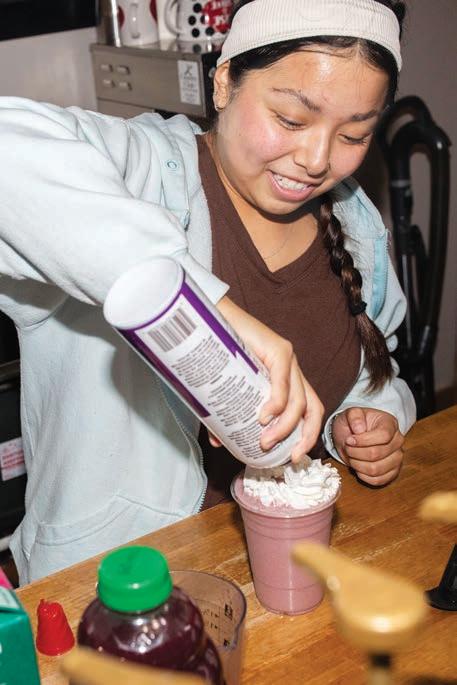
When acqueline Milian opened Mammitas Coffee in 019, she never planned to be a chef. Six years later, the coffee shop earned her a spot among the Iowa Restaurant Association’s “Top 40 Women to Watch in the Hospitality Industry,” a recognition honoring not just her business knowledge but her ability to turn a small Iowa City coffee shop i nto a beloved community gathering space.
“To be recognized in the state of Iowa was huge,” Milian said. “And there are a lot of women in Iowa City. To be one of four or five women in Iowa City was a really big honor, and to be able to sit there and listen to all those stories was incredible.”

Mammitas Coffee was built by three generations of the Milian family. The shop is named for Milian’s mother, Teresa Sotomayor, whose grandchildren affectionately refer to her as “Mammita.”
Sotomayor works at the caf alongside her daughter and granddaughters, making pastries, flan, and other Salvadoran dishes.
Milian’s daughter, Angelina Ortega, who also works at the coffee shop and runs its social media pages, said her mom’s continued success inspires her every day.
“I am Hispanic, I am a woman, I am a

single mom, and I’m not from the greatest area, demographically,” Ortega said. “To see somebody in my mom’s shoes, it wasn’t just watching my mom do it. It was also watching
How national tari s could a ect UI construction
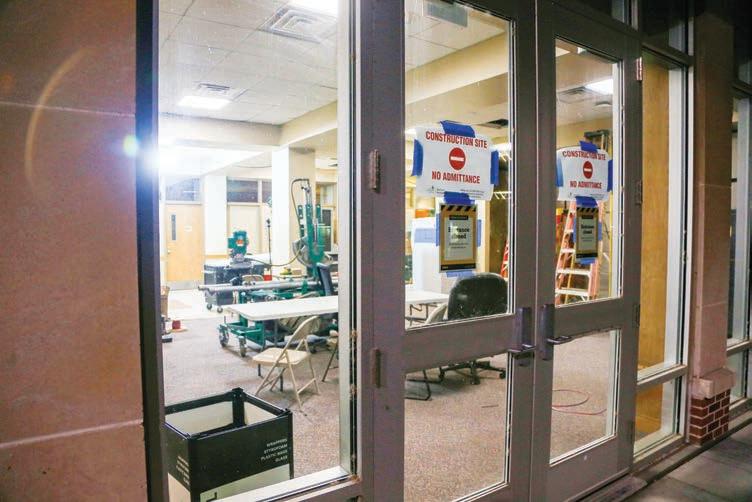
Large projects like the IMU renovations are expected to be completed by August 2027.
the same period.
This is an installment in a multi-part series.
Rising national material costs linked to new federal tariffs currently under review by the .S. Supreme Court and a tightening construction labor market are raising questions about how upcoming niversity of Iowa projects could be affected.
According to Associated General Contractors of America, or AGCA, resident Donald Trump’s administration’s recent tariffs have caused extreme price hikes in steel, aluminum, and lumber — core materials used in construction.
AGCA found in a November analysis that the producer price index, which tracks the change over time of the selling prices that domestic producers receive from their output, of aluminum mill products increased 6 percent from September 0 4 and steel mill products increased by 1 .4 percent in
AGCA also conducted a 0 survey with over a 1,000 nationwide respondents and found that 9 percent of construction firms reported having a hard time filling open positions, and 4 percent indicated labor shortages are causing project delays.
While large-scale I projects like the north of billion inpatient tower project and the 81.4 million IM renovations were postponed earlier in the year due to federal funding cuts, the I has not announced any projects postponed due to the tariffs enacted by the Trump administration.
Randy Clarahan, Iowa market executive for Mortenson, the Coralville-based general contractor hired for the IM renovations, said although material costs are volatile and recent tariffs could cause prices to surge, Mortenson is seeing no significant price increases at this time.
“We are watching very closely things like steel,” he said. “74 percent of steel that is utilized during construction is imported. That has caused tariff exposure to potentially
increase. The other possibility is aluminum, a little over half of which is imported.”
Clarahan cited the Mortenson Quarterly Cost Index, which tracks changes in nonresidential construction costs in selected .S. cities for the third quarter of 0 , saying nonresidential construction costs in key cities like Chicago and Denver rose by 1.16 percent over the past quarter and 6.6 percent over the previous 1 months, numbers he noted as normal and in line with the direction of the construction market before the tariffs.
Clarahan also said that approximately 40 percent of construction costs come from materials, half of which are imports. He said predicting construction costs is difficult enough without having to factor in tariffs.
“There’s so many factors relative to the uncertainty,” he said. “Material suppliers currently are not holding their price as long as they used to. They’re only holding their prices for a few weeks versus over a month or two, which adds a little more uncertainty to
somebody from where I came from do it. So it is really inspiring in multiple ways.” Milian, her husband, and their four
He said when finding sites for data centers, he looks for markets with the most available energy and the best tax incentives.
Madden said AI projects, which account for the in ux of data centers, are often located in rural areas because they don’t need to bein communication hubs like traditional developments.
Both QTS and Google, the tech corporations behind the Cedar Rapids projects, were offered incentives by the city. Incentives in the Google agreement include a 0-year, 70 percent tax exemption, as long as the project meets the job threshold of at least 31 full-time positions at a high-quality wage rate of at least 6. 0 per hour after construction.
Cedar Rapids Mayor Tiffany O’Donnell said the data centers provide an exceptional opportunity for the city to introduce an additional industry to the area.
“It brings Cedar Rapids to the forefront of cutting-edge technology,” she said.
O’Donnell said the state of Iowa has all the assets needed for data centers.
“We are fortunate that, not only through what is here naturally, we’ve had some tremendous foresight by the City of Cedar Rapids to ensure that we are prepared to support projects of this size,” she said.
The developments, located in the Big Cedar Industrial Center, are projected to be completed in five to seven years, according to the City of Cedar Rapids Economic Development Team. However, formal agreements include a much longer timeframe.
The Google project, which is estimated to cost 76 million, must be completed by 031. The 7 0 million QTS development, set to be the largest data center development in Eastern Iowa, has an agreed completion period of years.
The Google project has been in the works since May, while QTS began construction in August.
Cedar Rapids is the newest Iowa location of the expanding AI industry. Tech giants like Meta, Google, and Microsoft already have developments in the state, including Iowa’s largest data center on a Meta campus in Altoona, a northwest suburb of Des Moines. Business Insider estimates power use at the Meta campus to fall between 8 ,000 and 131, 00 megawatt-hours per year. Megawatt-hours are the amount of work done by one megawatt, or 1 million watts, in an hour.
Google has invested nearly 7 billion in a data center in Council Bluffs, built in 007. In May, the tech giant announced an additional 7 billion investment in Iowa to expand AI infrastructure at the Council Bluffs campus and to develop the new Cedar Rapids location.
In response to the development boom, the ohnson County Board of Supervisors instituted a yearlong moratorium, delaying the approval and construction of data center projects in unincorporated ohnson County.
ohnson County Supervisor on Green said the moratorium will be used to study resource costs and evaluate the impacts of construction.
“We want to ensure that any development is done sustainably and responsibly,” Green said. Green said he is uncertain about any positive economic impacts of the developments, and he doesn’t think ohnson County will fall behind other counties due to the moratorium.
“I don’t believe that the capital investment is going to lead to a lasting economic boom for whatever jurisdiction hosts these facilities,” he said.
Sami Scheetz, a Linn County supervisor, said the board is drafting an ordinance for data centers in its unincorporated Linn County jurisdiction. He said the board is wary of any data center developments in the area before they can ensure the county has adequate resources to support such large projects.
He said Linn County has already commissioned two water studies intended to evaluate available
resources in the area.
“We want to be mindful of our resources and taxpayers, making sure that we’re not overextending and that we’re being really prudent and careful with the resources that we have in our community, especially when trillion-dollar corporations want to come and build,” Scheetz said.
O’Donnell said she has heard residents’ concerns about rising utility rates. However, she wants to assure community members that the developments will not cause price spikes but will instead benefit the city.
O’Donnell said the projects will “subsidize infrastructure improvements that need to happen anyway.” She specifically noted improvements to water and wastewater services, and said the money from incoming data centers using the services will subsidize the upgrade.
“Individual users will now have better service because of the improvements and expansion that these companies are affording for Alliant,” O’Donnell said.
Both the QTS and Google developments include a “community betterment” component in their agreements, which O’Donnell said is another reason the data centers will benefit Cedar Rapids.
Google has committed to making annual payments of 400,000 for the next 1 years. QTS agreed to contribute 18 million over the next 18 years to the betterment fund.
She said philanthropic efforts, including donations to local nonprofits, are another positive contribution of the companies but are separate from the community betterment funds.
O’Donnell said the city has not yet considered which funds would be used, but she anticipates most development agreements going forward will include the beneficial component.
“Anybody we invite to our community, we are going to encourage to be partners in multiple ways,” she said. “It gives us a little extra insurance when we can put it in the development agreement.”
Critics of data center development insist that environmental implications outweigh potential community benefits of the projects.
ames Martin Schramm, policy analyst for Clean Energy Districts of Iowa, said negative impacts of data center production come in multiple forms. He cited concerns surrounding water usage, greenhouse gas emissions, grid strain, and electronic waste.
According to N R, an average data center uses 300,000 gallons of water daily — enough to serve 1,000 homes. Water is used to cool internal equipment, including large computer servers. Martin Schramm compared the heat to regular laptops but on a much larger scale.
“ ou put your hand over your computer, it’s hot,” Martin Schramm said. “ ou need to get the heat away otherwise the equipment cooks itself.”
He said the large amount of water needed for the task is alarming and should be a cause for concern among residents. Martin Schramm said water usage becomes even more concerning when the water is pulled from aquifers, which he said are being extracted from quicker than they can regenerate.
Taylor, the Cedar Rapids resident and legal chair for the Sierra Club at Iowa, said he is concerned because both the amount of water usage and the amount of available water in aquifers is unclear.
“If [data centers] are taking more out than is being recharged, you are going to lose water in those aquifers that people and cities depend on,” Taylor said.
O’Donnell said she has heard concerns from residents about the water usage, but the manufacturing industries in the area are advanced enough to handle it. O’Donnell said Cedar Rapids water comes from both aquifers and the Cedar River, and evaluations have concluded the city has adequate access to the natural resource.
While the Google center is using the traditional water cooling
Data center locations in Iowa
Des Moines has the highest number at 77, with Council Bluffs having the second most at 13.
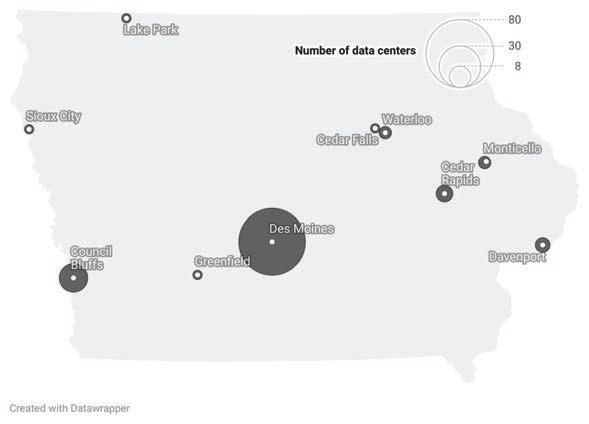
method, the QTS development is using a newer “water-free cooling” method which recirculates water within the plant. QTS estimates it will conserve 4 billion gallons of water annually with the method as opposed to traditional evaporative cooling, which releases evaporated water directly into the atmosphere.
Madden said corporations are beginning to turn toward closed loops systems to conserve water. He said because of this, availability of electricity is a bigger factor than water when searching for land.
O’Donnell said the Google plant is estimated to use just over 4 million gallons of water a day, a third of the amount of water used by the highest user in Cedar Rapids. O’Donnell did not specify what the city’s highest user is.
She said QTS’ closed loop system will limit the usage. O’Donnell said the city intends to reuse water from the QTS center by selling the graywater — lightly-used, untreated water — to other industrial customers.
“Our potential challenge is not the water itself, but the means to treat it and get it to people,” O’Donnell said.
Madden said finding adequate power sources for prospective developments is the biggest challenge, and qualified sites are becoming harder to find.
“The country is running out of power and not enough people are talking about it,” he said.
According to Goldman Sachs, power demand for data centers is projected to increase 0 percent by 0 7 and up to 16 percent by 030. Global power usage by data centers is estimated to be around gigawatts. Coleman said due to the massive amount of energy needed to power data centers, there is a concern among clean energy advocates that fossil fuel plants, including coal plants, across the country will stay online or even reopen.
“They need so much energy, so then they’re just turning to wherever they can get it from,” she said.
Martin Schramm emphasized similar concerns and said states are already having to face harsh realities of increasing energy needs.
This includes in Michigan, where resident Donald Trump recently extended an order requiring the state to keep a coal plant, originally scheduled to close May 0 4, open in order to meet demand.
While there has not been any indication of a similar situation in Iowa, a recent announcement on the reopening of the Duane Arnold Energy Center, a nuclear plant in alo, Iowa, 0 minutes northwest of Cedar Rapids, has spurred concern. The plant was decommissioned in 0 0 after sustaining immense damage from a derecho.
Nuclear energy is not a source of greenhouse gas emissions, but it is not a renewable resource because it relies on the finite supply of uranium.
The reopening stems from a partnership between Google and NextEra Energy, one of the largest utility companies worldwide. The Oct. 7 announcement cited the need for increased support of AI infrastructure in the state, which includes a potential additional — not yet approved — data center development in unincorporated Cedar Rapids.

Scheetz said the Linn County board is open to allowing the plant to provide energy to a nuclear plant in unincorporated parts of the county. He said since Google is paying NextEra Energy to reopen the plant and covering costs for all power from the plant, Linn County residents will not see an uptick in utility costs.
“I think it’s a very good thing that the plant is going to be reopening,” Scheetz said. “It will create 00 union good paying jobs, and it’ll be a huge boost to that part of the county.”
Alliant Energy, the power provider for both the QTS and Google developments, uses a mixture of sources including coal, natural gas, solar, and wind. Alliant has pledged to complete coal generation by 040 in order to shift toward more renewable sources.
Martin Schramm said while natural gas has around half the carbon content of coal, it is a significant source of greenhouse gas emissions,
which is a cause for unease considering the high amount of energy needed to power data centers.
“Data centers are extraordinarily energy intensive — it is 4 7, 36 ,” Martin Schramm said. “The challenge is associated with producing all of that natural gas, delivering it on site, combusting it, and then inevitably emissions are simply emitted into the atmosphere,” Martin Schramm said. He said while Alliant Energy owns a significant amount of wind and solar, and has worked to use clean energy, it is impossible to decipher how much of it is powering data centers.
Emma Coleman, organizing representative at the Iowa Sierra Club, said companies see Iowa as an attractive place to build data centers because of the cheap, clean energy. But she said the intense spike in demand, which has caused Alliant Energy to increase power generation, could result in ratepayers seeing increased costs. Martin Schramm said he doesn’t foresee utility rates increasing initially but rather in response to increased wholesale power costs in Alliant service territory, or a decrease in AI’s market value.
“Theres a lot of speculation right now that the AI industry is overvalued,” he said. “It’s possible these new power plants that are on the books or being built might be canceled, and that’s one way ratepayers could be on the hook.”
I Economics rofessor Anne Villamil said economic implications of data centers remain to be seen, but overbuilding is one of the factors that could lead to increased rates.
She said overbuilding could occur because data center developers are providing utility companies in ated growth plans, which may lead to utilities ramping up production for a nonexistent demand.
“If all this power gets built, it is ratepayers like you and I who are going to pay for a substantial part of that, and it could end up leaving consumers holding the bag,” Villamil said.
Villamil said nationwide electricity prices have already risen 6 percent this year, including 16 percent in Illinois, according to the Financial Times.
Serra Azevedo Silva said while there is not yet a clear calculation on how data centers will impact local economies, he said communities who have given tax breaks for companies to build data centers may be left with negative earnings, especially due to limited full-term job offerings.
“If you think about a building full of software engineers working for Google and a building with a data center, the first one would give you jobs, the second one, not so much,” he said.
Serra Azevedo Silva said overbuilding poses a serious concern nationwide, with local economies bearing the brunt of the impact.
O’Donnell anticipates positive economic impacts stemming from the data centers. She said Cedar Rapids will see an influx of dollars due to taxes paid by Google and QTS, along with the building permits, which she said topple 1 0 million.
She said the “ripple effects” of data centers are underestimated, as O’Donnell anticipates supporting businesses will come to Cedar Rapids because of the new development. She noted an increase in the local workforce due to the projects also benefitting the economy.
O’Donnell said the data centers will require thousands of construction jobs, and she is hopeful for hundreds of long-term positions. However, full-time job requirements for the companies are much lower than the aspirations, with Google’s agreement being for just 31 positions.
O’Donnell said the data centers will bring immense technological advancement to Cedar Rapids, and the city is working to ensure the projects will promote long term viability of the community.
“I’m really proud of the work that the city has done alongside both companies, Google and QTS, to make sure that both [the companies and the community] have this tremendous opportunity,” O’Donnell said.
children moved to Iowa City almost a decade ago and opened Mammitas’ doors in February 2020. However, shortly after opening, they were forced to shut down to comply with COVID-19 restrictions in 2020.
Milian said those times were some of the hardest for her business.
“My best friend came by, and she said, ‘Hey, Merry Christmas. Here’s a check for the rent. You’re not going to close. I believe in you,’” Milian said. “For three months, my rent was paid by God.”
Following the COVID19 pandemic, Milian and her family credit their faith in God and the Iowa City community with helping Mammitas stick around.
“This community itself is built upon thousands of different cultures,” Ortega said. “Our students, our community, and Iowa City as a whole have always had our backs, and that love is always reciprocated from us.”
Sofia Sabogal, a fourth-year student at the University of Iowa, is one of these community members who has “become familia,” Milian said, after Sabogal joined the Mammitas team just four months ago and went with Milian to Des Moines for her Top 40 Women to Watch recognition. She even has her own item on Mammitas’ extensive and ever-evolving menu: “Sofy’s Special.”
“I’m really grateful to be in Iowa, like everyone here, I’ve just found such a great community, and I think Mammitas has contributed to that,” Sabogal said. “It was really special to be able to meet other Latinos in Iowa who are really happy to be the way that they are, and also want to express that through food.”
When Sabogal, who is Colombian, learned Mammitas was a Latin-owned space, she reached out to Milian and ended up with an internship to manage the cafe’s social media presence.
“I knew that whether or not I was going to come back and help them out with social media, I really found a home there,” Sabogal said. “She just puts all of her energy and love into this restaurant and cooks with the most love.”
Sabogal plans to pursue culinary arts upon her graduation, in large part
forecasting costs.” Clarahan said if UI were to run into rises in construction costs due to either tariffs or a labor market shortage, Mortenson would recommend they premanufacture materials, which reduces labor needed on site, and substitute materials that surge in price, like steel with other elements like concrete.
While Clarahan said it is important to remain vigilant for market changes, he is excited about ongoing projects at the university.
“We’re happy to be a partner at the University of Iowa,” he said. “We’re excited about the Student Union and its 100th anniversary.”
Andy Roberts, the president of Central Iowa’s State Building Trades Council, a coalition of 16 trade
because of her experience working at Mammitas.
“It’s wonderful to have good food and enjoy the thing that you’re eating, but there’s a whole other world behind eating something that’s prepared
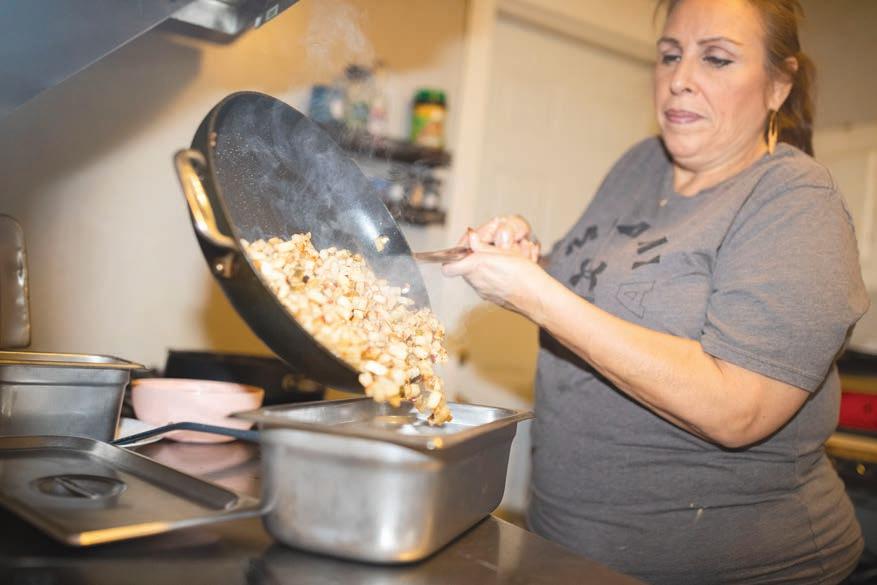
over the last six years.
“I think a lot of people are amazed by the shop and what she’s done in that span of time,” Ortega said. “My mom downplays herself so much, to be honest, but I think

with love,” Sabogal said. “And I think that’s what builds that family experience.”
Milian said Sabogal is just one example of how the café has grown through relationships as much as recipes. And while Mammitas now has a menu with signature items like its Cuban sandwich, street tacos, and Latin pastries — getting there was not easy.
“When we fi rst started offering food at the caf , it was a little overwhelming because I’ve never been a chef, so it was fear, you know? I mean, it was the fear of failure, right? And then the fear of wondering if I could actually make this happen.”
But today, Ortega said her mom’s Top 40 Women to Watch recognition feels like a culmination of everything Milian has poured into her business
workers, said the subcontractors the council works with have seen a rise in material costs.
“When it comes to tariffs on steel and manufactured components, critical building material is driving up,” he said. “When you see the price jump because of international trade decisions made far outside Iowa, that cost ultimately lands on project owners, taxpayers, and the skilled task force delivering these facilities.”
Roberts said that the council hosts one of the largest apprenticeship centers in Iowa, with over 400 apprentices actively working across its network.
“To be able to buy what we need to educate our apprentices down here from our local wholesale houses, being made from copper pipe, fittings, valves, welding rod, welding pipe, we’ve seen a substantial rise in the cost
she is a great example of what could become of anybody.”
Milian has lots of plans for the future of Mammitas, including the upcoming launch of Ita’s Boutique, a small storefront she plans to open at the entrance of the coffee shop before the new year.
She is also planning to expand the café’s food menu, host oral pop-up shops, hold new “Mammita’s Mixology” classes, and obtain a liquor license.
But Milian said what remains most important to her is that her customers always feel at home when they step through the door.
“On my website, it says you walk in here as customers and leave here as familia,” Milian said. “And that’s true. That’s what I love about this place.”
Roberts said the council’s apprenticeship program is growing, but simply can’t train new workers fast enough to meet construction demand.
Roberts said Iowa needs the federal government to ensure materials ow at reasonable prices, continued investment in apprenticeship programs, and for project owners to understand that the best way to weather economic pressures is to work with skilled laborers on construction projects to make sure their needs are met.
Chris Brewer, public relations manager in the UI’s Office of Strategic Communication, sent an email to The Daily Iowan explaining how the tariffs are affecting the university.
“The University of Iowa actively monitors market conditions and works with suppliers to minimize cost uctuations, including the impact of tariffs,” he said.
Brewer said the UI’s Purchasing team has been working ahead of time with their usual suppliers to reduce or avoid the impact of tariffs as much as they can.
Although the UI, general contractors, and trade unions all interpret the immediate impacts of the Trump administration’s tariffs differently, all put emphasis on keeping a watchful eye to the cost effects of the tariffs.
“When you combine the rising material costs with an already stretched labor market, you create a perfect storm right there,” he said. “Contractors struggle to bid competitively, projects become harder to staff, and pressure on the existing workforce intensifies.”

OPINIONS
Put your cards on the counter
Bring a pack of cards next time you go out to the bars in Iowa City.

Whoever said baseball is America’s pastime is dead wrong, metaphorically and physically. It’s an old saying after all, they probably aren’t around anymore. Cards have long been America’s true pastime, and the king of cards, one might argue, at least in the West, is poker. A poll by YouGov found 60 percent of Americans have played the game at least once.
Our modern-day version of poker comes from the older French card game poque, which was adopted and changed by American settlers until it was given
strangers, if the game is open to the public. It is also relatively easy to get involved in.
Most bars in Iowa City prioritize dancing, with music so loud you can barely hear yourself speak. Yet somehow they’re considered one of the staples of the University of Iowa social scene, as we’re considered a “bar school.” We need more sit-down bars, not more bars for dancing, and cards can help with that.
There is some trouble in actually bringing card games to bars, though.
In Iowa, poker games are allowed in bars only if the losses and wins are kept minimal, with nobody able to win or lose more than $200 in 24 hours. The employees of the bar can’t participate, and all players must have a relationship outside of the game, according to the Iowa Department of Inspections, Appeals, and Licensing.
There’s a fair reason for the regulation, again referring to what can be disastrous consequences of gambling. But defending poker is simple.
Poker isn’t the problem; the money is. Any card game can be bet on, but with poker chips and betting being an essential part of the game, poker is often one of the chief gambling card games alongside Blackjack.
its modern rules and name. From there, it spread and became a staple of frontier saloons. Later on, states would institute laws to control not just poker, but gambling in general, for the violence and destitution the game can incite.
Poker can also be an excellent way to bring people together, especially
But people seem to forget poker doesn’t actually require money. If bars were to give out chips the same way some, such as George’s Buffet, give out packs of cards, people could play the game without money being involved. Have each person start with a set amount of chips, and play until one person is left. The game then has no money
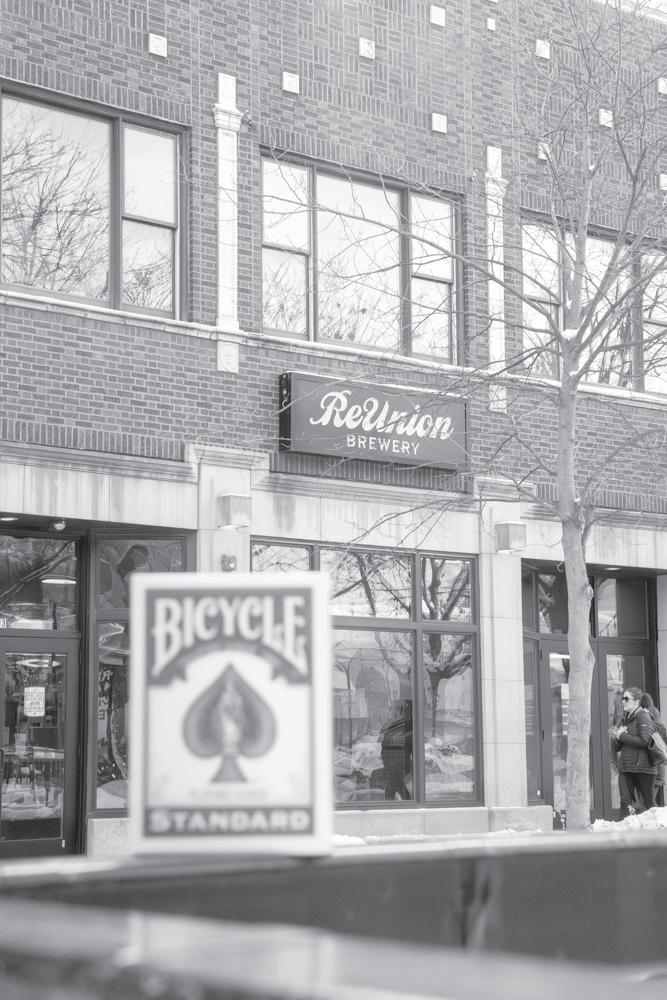
deception and how to spot it. It’s similar to chess but on a larger scale, with the ideal number of players being six to eight, according to Britannica.
Gigi Piazza has been a server at Deadwood Tavern in Iowa City since July and often sees patrons playing cards
hang out with friends and help when the conversation dies. If not poker, it would be nice to see bars or communities set up regular events where strangers can play cards with each other, or to see a stranger challenge another stranger to a game of dual solitaire.
Lamenting Iowa City’s leasing season
The timing of when landlords want leases signed is exploitative toward students.

Barely two to three months into the school year, students are expected to know what they’re doing for housing the following year. They must decide where they’re living, who they’re living with, and how much they need to set aside for the security deposit before even completing midterms. It’s ridiculous.
Generally, students begin signing leases and confirming their housing plans around midterms, with most students having decided on their plans by the end of the semester, if not sooner. It goes without saying this is a stressful enough time of year without adding in
the same place, for others, it’s more complicated. Not everyone is a great fit with their current roommates.
After living with a roommate for a couple of months, how untidy they keep the room may become more noticeable. Some people need more roommates to fill extra bedrooms, while others have too many for the expected space. Certain housing locations are too close or far from campus, while others are too expensive or not nice enough. It seems as though the “Big Bad” landlords of Iowa City are taking advantage of students by forcing them to make a hasty decision out of fear of not securing housing. Quality, fairly priced housing in a good location near campus can quickly become scarce due to the
on their own. They may lack the prior experience or knowledge required to find and secure the best place to live. It’s already easy to overlook an important aspect of a lease or fail to scope out a problematic detail of the living space. The time constraint further hinder students’ ability to assess relevant details. Finding a roommate for the dorms is fairly easy, and living there is even easier. Students don’t need to pay utility bills or find a place to do laundry; everything is provided. But it’s still the start of the college career, and the friends made in the first couple of months might not last. In an ideal world, the landlords of Iowa City, particularly the conglomerates who control much of the available real estate, would wait to open up leases until the new year. Not only would this timing better align with university housing decisions

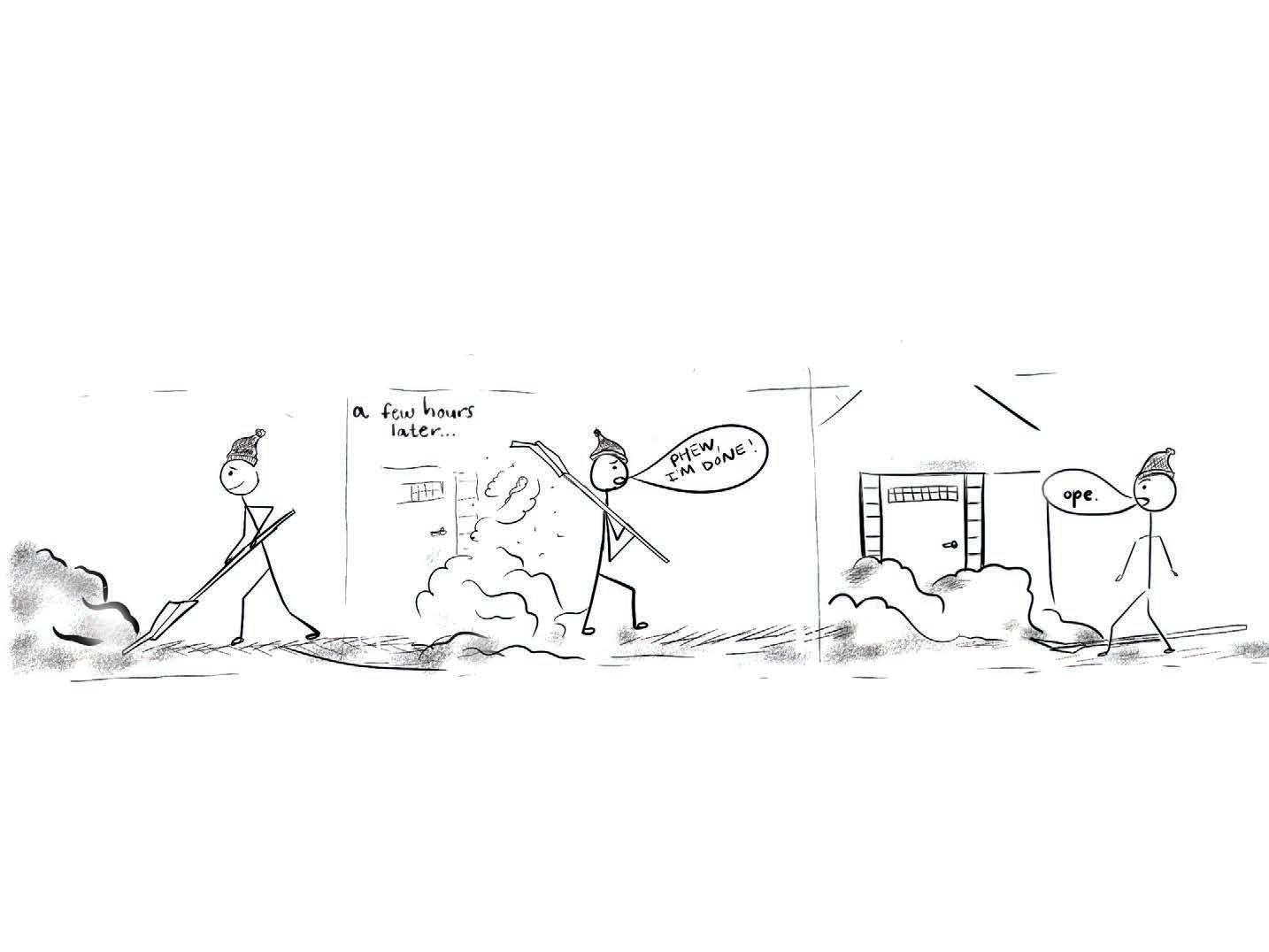
Reach out to landlords to arrange showings of potential properties. It never hurts to have a trusted and experienced adult look over the lease papers with you before signing. Adulting is hard, but we all manage to get through it one way
Johnson County reports animal surrender uptick
With animal surrenders increasing, shelters and rescues work to provide for animals.
Animal rescues and animal control
officers in ohnson County have reported an increase in surrendered pets in the last three months as residents face increased pet ownership costs, leaving many stretched thin.
Amanda Rushton, development director at Last Hope Animal Rescue in Cedar Rapids, said animal surrenders have been steadily increasing over the last two years. She said on animal surrender forms, she is seeing more people saying they cannot take care of their animal due to financial reasons, as opposed to behavioral or other issues.
“The overall cost of pet ownership has gone up,” she said. “The prices are so out of most people’s budget that I think they get forced to make a very tough decision they don’t want to, which is surrendering an animal or forfeiting them to an organization.”
According to the American Pet Products Association, 37 percent of .S. pet owners are concerned about access to veterinary care, with 60 percent citing affordability.
Chris Whitmore, a Coralville Animal Control officer, said surrenders can also be attributed to the loss of Supplemental Nutrition Assistance rogram, or SNA , benefits for pet owners, as millions of Americans could not afford pet food and groceries.
She has worked in animal services for 31 years and was the director of the Iowa City Animal Care and Adoption Center from 018 until her retirement in 0 4.
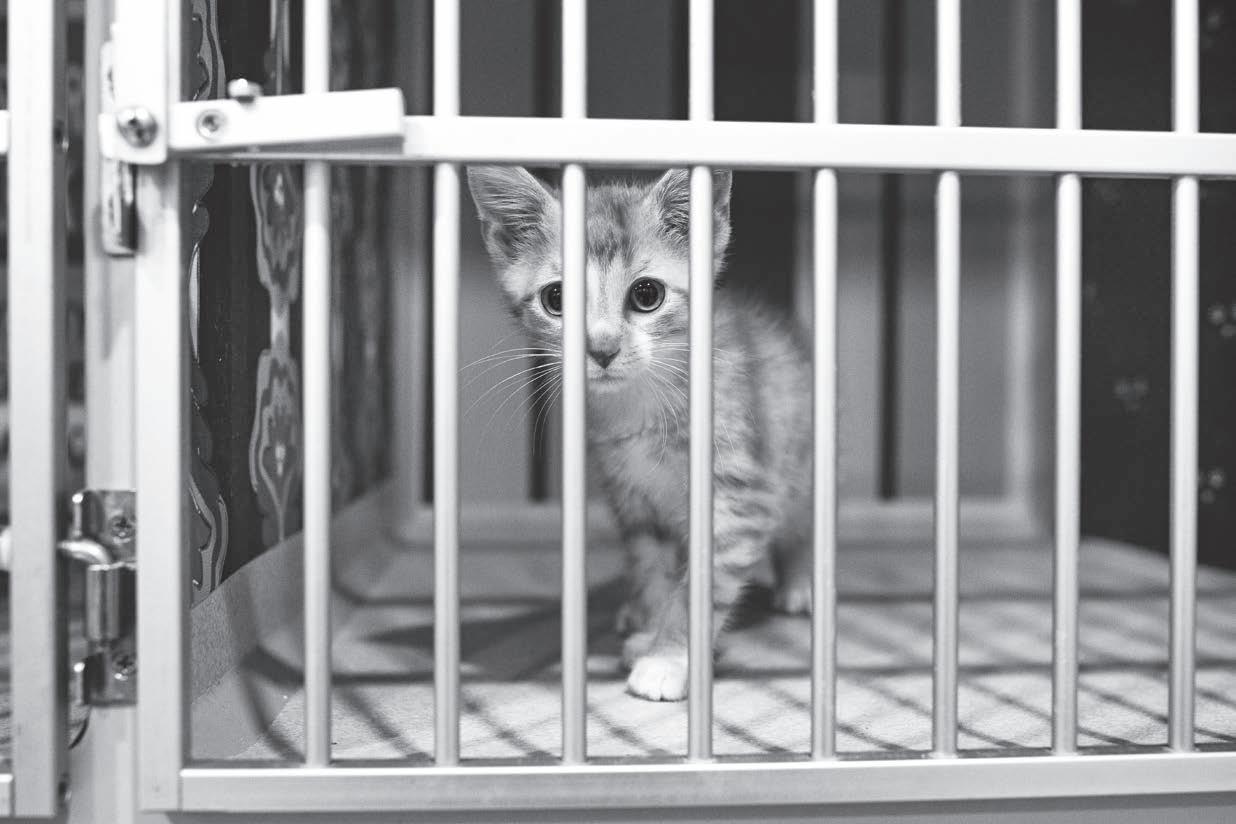
Whitmore said she has noticed an increase in surrenders compared to years past, despite the winter months being a slower season for animal control services, including picking up animals and connecting owners with resources. Calls to Coralville Animal Control have remained consistent, she said.
“This time of year, we’re at our slowest, but it definitely has not been as slow as it has been in the past,” she said. “We’ve actually had quite a few calls of people going, I can’t make ends meet.’”
Whitmore said cutting SNA benefits would impact the number of pet owners who feel the need to surrender.
“If you can’t put food on the table for your family, your animals are going to suffer, too,” she said. “I think it definitely has made a difference.”
Devon Strief, animal services coordinator at the Iowa City Animal Care and Adoption Center, said it is typical for the shelter to get about one or two calls about animal surrenders a week, but the shelter can typically only take in one animal. Strief also said she could
see SNA benefits being cut long term as a potential issue.
“Our biggest phone call is, Can you take this animal?’ and most of the calls that we take, unfortunately, are outside of our jurisdiction. We end up having to turn a lot of them away,” Strief said.
Whitmore said when surrender calls come in, Coralville Animal Control does its best to keep animals in the home and connect owners with resources.
“Pets are a part of your family, we think [owners] should stay with them,” she said. “We are seeing an uptick in [surrenders]. And unfortunately, I think it’s just going to get worse.”
Whitmore said it’s not just pet food that owners can’t afford — it’s vaccinations and other medical needs a pet might have. While animal control offers spay and neutering services, they cannot provide vet services to owners.
“A lot of times people say, Well, if you can’t afford a pet, you shouldn’t have it.’ eople have pets before they couldn’t afford them,” she said. “These people already have these pets. We want them to keep them.”
Whitmore said if control services need to take an animal, they contact the Iowa City Animal Care and Adoption Center to see if and when they will have beds available, but this can be an issue, as the shelter has
limited room.
“It puts us in a terrible spot because we want to help. We don’t want you to just kick the animal out because that’s not the answer either,” Whitmore said.
Last Hope Animal Rescue does not have a pet food pantry, but Rushton said they continue to have clients ask if the rescue has the service, despite there being other pantries in the area.
Iowa City Animal Care and Adoption Center has its own pet food bank for animals and owners in need. Strief said with the high volume of need, their services are utilized consistently.
Rushton, who has been at Last Hope Animal Rescue for 10 years now, said with the increase in requests for services, shelters and rescuers cannot always keep up.
“We don’t have the manpower, volunteer homes, or people to even support these requests,” Rushton said. “It’s hard not to be considered the bad guy when somebody’s reaching out, feeling very vulnerable and feeling very desperate, and you have to say, Sorry, I can’t help you.’”
Coralville light show celebrates five years
Holiday Lights at the Lake is a fundraiser for Bird House Hospice Home of Iowa City.
Driving through Holiday Lights at the Lake, a local drive-through light show in Coralville towering light displays illuminate an otherwise dark pathway. Lighted arches, snow akes, and Santa Claus glow around the park. Holiday Lights at the Lake, a legacy fundraiser for the Bird House Hospice Home of Iowa City, is celebrating its fifth year in winter 0 . Five years in, the light show has welcomed 33,9 vehicles on drive-through nights, Kayla Fisher, head volunteer for the light show, said.
These vehicles come in all shapes and sizes, including family cars, limos, senior-living shuttles, and full-size party buses.
The fundraiser charges 10 per vehicle, and drive-through nights happen six nights of the week, excluding Wednesday nights, which are designated walk-throughs, charging per person. On those nights, visitors can walk the mile-long route, where the light show has welcomed a total of 10,17 visitors. In five years, the fundraiser has raised 4 0,000 for the Bird House Hospice Home, Fisher said.
The Bird House’s Dignity Fund supports individuals who cannot afford end-of-life care and provides free services. The Bird House provides residents with a garden and pond area, kitchen, living room, and fireplace. Fisher said the goal of the Bird House is to make residents feel as comfortable as possible.
Since beginning to use the funds in uly 0 , the hospice home has served seven individuals until their death.
The light show is located at the West Overlook Campground in Coralville, right along the Coralville Lake. Open every night between Thanksgiving and New Year’s Eve, Holiday Lights at the Lake is completely reliant on volunteers, Fisher said.

“They’re all out there just to help us with our mission of spreading holiday cheer and raising important funds for the Bird House,” Fisher said.
During the season, the light show has over 00 individual volunteer shifts that need to be filled. Outside of the nightly season, Fisher said volunteers also help with countless hours of setup and take down. They start setting up in October and takedown the light show in anuary.
Maddie Schieltz, a niversity of Iowa first-year student, volunteered at the light show in 0 4, and said she is excited to be back for another year. Schieltz said seeing the behind-the-scenes of the light show makes the event even more special.
“Knowing my time and energy was going towards such a great cause of helping to provide comfort to individuals and families during a difficult stage of life was so rewarding,” Schieltz said.
The cold makes the volunteer shifts more difficult, Schieltz said. She endures the cold by bundling up and wearing many layers of clothing.
“My mom and I usually volunteer together, so we bring a huge pack of hand warmers to give to other volunteers as well,” Schieltz said. “Most of the time, the organizers have hot chocolate and cookies for us as well.”
When the fundraiser began in 0 1, organizers behind the light show hoped to create a community event that would brighten the holiday season, while supporting individuals and their families during end-of-life care.
“One hundred percent of funds raised go to support our Dignity Fund for this purpose,” ana Michael, executive director of the Bird House, said. “This enables us to use our guest rooms at the Bird House for those individuals that need financial support in their greatest time of need.”
The Bird House was initially created by Lois Bird, who had previously been forced to take her husband to an out-of-town nursing home for his final days. Lois saw a need for a hospice home in ohnson County, and in 01 , the Bird House board of directors purchased
a 4,300-square-foot home located on Lime Kiln Lane in Iowa City.
The hospice employs 16 full and part-time hospice caregivers and has over 40 active volunteers each month who help at the home.
The light show changes its displays yearly, and Fisher said she is especially excited about this year’s lineup, which includes an under-the-sea theme.
“We’ve got a friendly sea serpent up in the upper loop as well as some fish archways, complete with a scuba diver and bubbles and a big Santa ship,” Fisher said.
In addition to the under-the-sea theme, displays including “Snowmerican Gothic,” a twist on Grant Wood’s “American Gothic” painting, and “Farming in Iowa,” a collection of Iowa farming classics, will be shown. Also making its return is “Memory Lane,” a collection of illuminated trees paying tribute to loved ones in the community.
Fisher said she is grateful for the support from her community during the last five years and is excited to see what is next for the event.
“This organization is just so special, and seeing the growth that [the light show] has had is so rewarding,” Fisher said.
Immigrants assist as population, labor needs grow
Demand for immigrant labor remains as policy changes heighten fear.
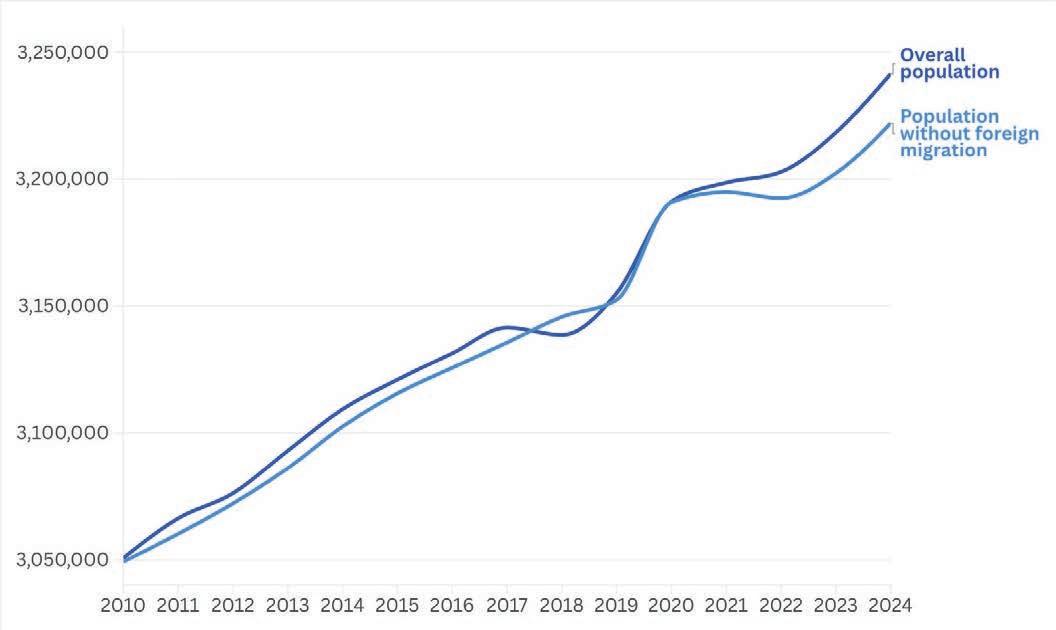
Iowa’s population is growing after years of stagnation, and state analysts say one force is almost entirely responsible for the increase: immigration.
As federal and state immigration policies shift rapidly, labor leaders and immigrant advocates warn that Iowa’s economic stability could be undermined if Iowa continues to lose immigrant workers who have become essential across labor industries.
According to a recent Iowa Economic Trends report published by the nonpar tisan Legislative Services Agency, Iowa’s population increased by 50,942 people, or 1.6 percent, between 2020 and 2024. Nearly 80 percent of that growth came from migration, with almost all of it resulting from international migration, rather than domestic.
The report shows Iowa added 49,793 international migrants during those four years. Over the same period, the state lost 9,482 residents who moved to other states. The growth, driven by international new comers, offsets sluggish birth rates, an aging population, and a persistent “brain drain,” which is the emigration of highly skilled or educated individuals from a geo graphic area.
In 2020, Iowa’s birth rates dropped from 11.9 to 11.3 births per 1,000 residents. That remained the lowest rate on record until 2023, when births fell to 11.2 per 1,000 residents.

The gap between births and deaths has shrunk to under 4,000, compared to 8,863 in 2019. While higher than the U.S. average, Iowa’s 2023 birth rate of 1.7 falls well below the 2.1 replacement rate needed to sustain population levels without migration.
These figures align with the Common Sense Institute of Iowa’s research, which estimates immigrants now make up almost 8 percent of Iowa’s workforce — and closer to 9 percent by other measures. The group found that if immigration halted for four years, the state would lose roughly 11,000 workers and $300 million in gross domestic product, or GDP.
Elena Casillas-Hoffman, a communications specialist at Iowa Migrant Movement for Justice who works closely with immigrant communities, said she sees the impacts immigrants have on the state.
“Immigrants are the backbone of some really important industries,” she said, pointing to construction, meatpacking, and health care.
She noted one often-overlooked statistic from Common Good Iowa: “One in four physicians in Iowa is an immigrant.”
Casillas-Hoffman said immigrant workers bolster urban and rural communities in the state.
“They’re contributing to the local economy, they’re bringing their families or paying their rent or buying groceries,” she said. “Their impact in the workforce is important, but we shouldn’t ignore everything that comes with it. They’re supporting the local economy, they’re putting their children into the school, and furthering education.” Her organization has observed how immigration fills labor gaps created by the loss of young Iowans.
“Iowa is one of the worst in the country for ‘brain drain’,” she said. “Who’s filling that gap? It’s our immigrant and refugee communities.”
As Iowa becomes more dependent on immigrant workers, the legal environment surrounding immigration has become increasingly unstable. Casillas-Hoffman said policy changes at the state and federal levels since 2021 have created height-
ened fear and uncertainty among workers.
According to the American Immigration Council, in the six months before Trump took office, the U.S. admitted more than 59,000 refugees. By contrast, during its first six months, the Trump administration largely focused on resisting court orders to allow just a few hundred refugees in.
The administration also introduced new hurdles for legal immigration. These include broad “travel bans,” blocking entrants from 12 countries and sharply restricting entry from seven more. Many of the other obstacles it created are procedural, case-specific, and often arbitrary — making them less visible but still significant.
can be attributed to immigration.
“We need immigrants. Iowa needs immigrants and refugees to uphold our state. We’re just not seeing it reflected in our national and state government,” Casillas-Hoffman said.
She emphasized that Iowa immigrants are recieving neccessary protections, alongside the possibility of losing their immigration status, and with that, losing their work authorization.
“These very real concerns about how Iowa is going to function, and how we’re going to move forward. It is not a one-day type of thing,” Casillas-Hoffman said. “It’s happening right now.”
His union has received reports similar to those from immigrant advocates about abrupt detentions. Hird referenced stories from northeast Iowa where advocates describe “disappearing dads,” or workers who “would go to work and not come home.”
Casillas-Hoffman and Hird pointed to wage theft as one of the most severe and widespread issues facing immigrant workers.
Casillas-Hoffman said her organization sees cases in which workers are not paid, especially in industries such as construction and meatpacking. Some employers, she said, threaten workers when they raise concerns.
During the administration’s early months, the total number of immigrant and nonimmigrant visas issued remained similar to 2024 levels through April 2025, though this data predates the full rollout of the country-specific travel bans.
“What our immigrant and refugee workforce is facing really often feels insurmountable. It is this constant barrage of changes,” she said.
Casillas-Hoffman said the consequences of policy instability are economic as much as personal.
“If we do not protect our immigrant, refugee workers, we all lose,” she said.
“We’re going to lose hundreds of millions of dollars in taxes. We’re going to lose millions… of their spending power into our economy.”
According to the American Immigration Council, $1.8 billion of tax contributions and $5.2 billion of spending power
The impact of immigration on Iowa’s population
Peter Hird, secretary-treasurer of the Iowa Federation of Labor, AFL-CIO, said the uncertainty is affecting both undocumented workers and legal U.S. citizens.
He said some Iowans carry passports at all times because they worry their state IDs will be questioned.
“Every person who resembles an immigrant is kind of threatened right now… They’ve been suspected of potentially having false identification, even though they’re American citizens who were born here,” Hird said. “It’s just the way that people are targeting them.”
Hird said immigrant and refugee workers contribute to virtually every sector.
“I think you could probably visit small towns and large towns all across Iowa and see [the] presence of immigrants and culture everywhere,” he said.
The state recorded a jump in overall population following an increased demand for labor workers.
“We’re hearing more and more reports of employers saying, ‘Well, I’ll just call ICE on you,’” she said. ICE refers to U.S. Immigration and Customs Enforcement, which had a national daily average of 851 arrests between January 20 and October 2025. Hird said exploitation, like wage theft, grows when workers fear immigration enforcement.
The U.S. Department of Labor says labor exploitation is the unfair, unethical, or illegal treatment of workers for profit, involving abuse like wage theft, forced long hours, unsafe conditions, or controlling documents.
“Anytime that people are driven further underground, they become more likely to be exploited by scrupulous employers,” he said.
Iowa has 18 Occupational Safety and Health Administration, or OSHA, inspectors, enough to inspect every workplace in the state only once every 140 years, according to the 2025 national Death on the Job report from the AFL-CIO. Advocates say low enforcement capacity enables wage theft, misclassification, and unsafe conditions to persist.
“You don’t see employers in the paper going to jail for stealing money from workers,” Hird said. “But if a worker stole money from an employer, they’d be in jail.”
As state lawmakers debate immigration enforcement proposals and regulatory changes, labor and immigrant advocates say Iowa’s economic future is directly tied to its treatment of immigrant workers.
Casillas-Hoffman said policies combating wage theft would benefit all Iowans.
“If you do a hard day’s work, you deserve a hard day’s work pay,” she said. “Making sure that individuals are paid for a hard day’s work is something that benefits all Iowans.”
Hird said Iowa needs immigration pathways that cannot be “changed at the whim of one individual,” arguing that workers who build lives in Iowa deserve stability. He said stronger wage-theft enforcement, misclassification penalties, and OSHA protections would support both immigrants and U.S.-born workers. For now, advocates stress that immigration is not a marginal economic issue — it is central to keeping Iowa’s workforce viable.
“If it were not for immigrants and refugees, this state would be collapsing, socially, financially,” Casillas-Hoffman said. “It is really because of immigrants and refugees that we are seeing any type of growth in this state.”
Pressure mounts to defend immigrant rights
Escucha Mi Voz calls on Iowa City and Johnson County to pass workplace resolution.
Over two months after orge Elieser Gonz lez Ochoa was detained by Immigration and Customs Enforcement, or ICE, at Bread Garden Market in Iowa City, Escucha Mi Voz, a nonprofit, faith-based immigrant worker group, continues to push for a Fourth Amendment resolution supporting immigrants in the workplace.
Attending multiple city council meetings in both Iowa City and Coralville, Escucha Mi Voz members have voiced opinions on how and why their efforts should be supported by local government.
The resolution has not been voted on, leading community members to ask councilors why there has been inaction.
The resolution, which gained unanimous support from the Iowa City Human Rights Commission on Oct. 8, has the goal of requiring law enforcement to obtain judicial warrants for nonpublic access to private spaces, prohibiting staff consent to ICE entry, and designating safe worker areas.
The resolution will also provide “Know our Rights” training, which are educational workshops, often led by lawyers or advocates, that teach individuals their constitutional and civil protections, especially during interactions with law enforcement, immigration officials, or in public protests.
In a news release, Escucha Mi Voz said local unions and immigrant families are trying to warn local governments that without clear policies in place, “Iowa City could become a staging ground for constitutionally questionable immigration enforcement actions.”
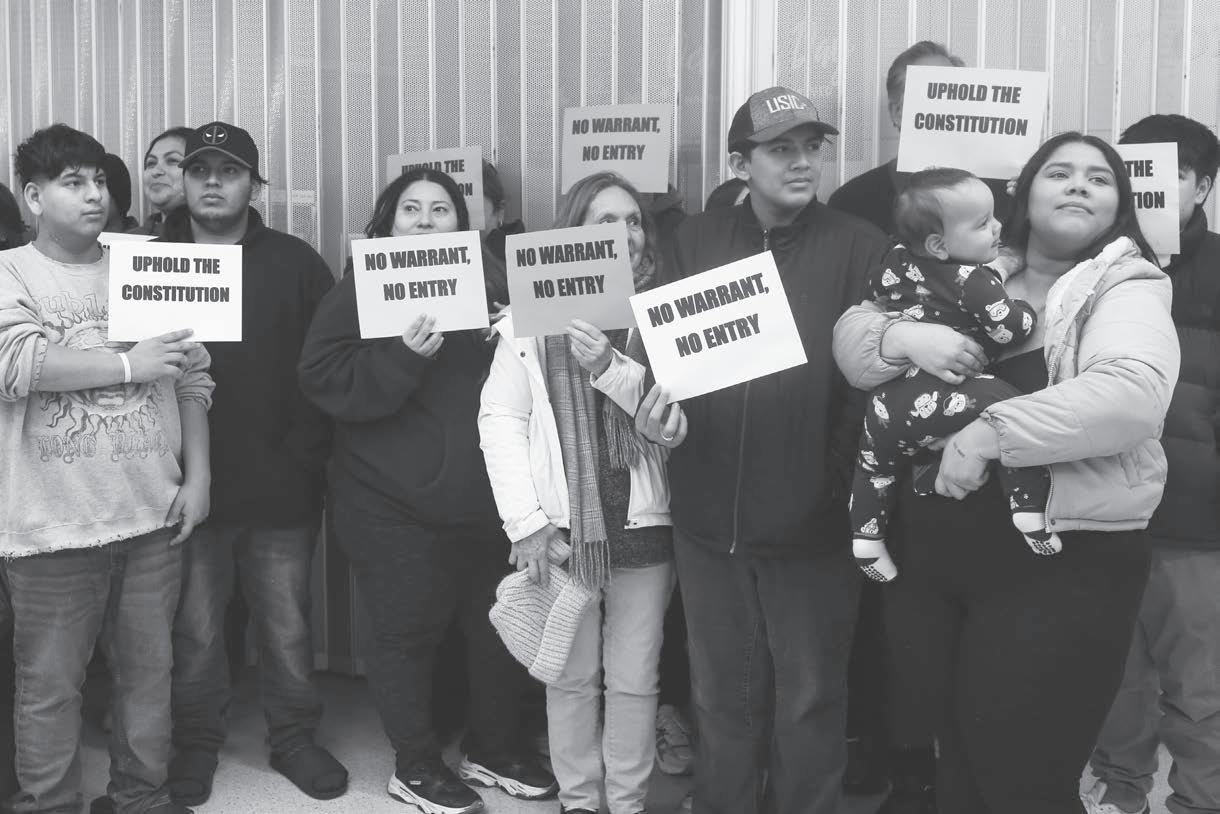
Escucha Mi Voz community organizer Alejandra Escobar said the organization is trying to gain support, not just from the city council, but also from the ohnson County Board of Supervisors, who are set to discuss the resolution on Dec. 10.
She said immigrants need support from local entities that hold power within the community.
“At the end of the day, nothing can really protect you 100 percent from getting arrested or brutalized by ICE,” Escobar said. “But it means support from the city and the county, because right now, it’s just organizations and community members protecting immigrant families or workers.”
The resolution has gained support from niversity of Iowa graduate student Clara Reynen and engineer for the Iowa Department of Transportation Newman Abuissa, who both ran for at-large seats in the Iowa City City Council election.
Abuissa, who is a Syrian immigrant, said ICE is a symbol of a broken and harmful immigration system and is an agency that has separated families. He said there are offices within the city, including the Office of Human Rights, that can help integrate the legislation within communities.
concern for the well-being of individuals and communities in ohnson County with Escucha Mi Voz and other local organizations,” he said.
While it still remains unclear when the Iowa City City Council will vote on the resolution, Escobar said Escucha Mi Voz will continue to press the issue in the city and the county to support immigrants.
“That would be a big win if we can have it on the [agenda] and voted on before the year [is over],” she said. “But the end of the year is just in a couple of weeks, and then we’re back at it. Even if [it gets passed at] the beginning of 0 6, that would be an amazing way to start the new year.”
Iowa City City Council declined The Daily Iowan’s request for comment on the resolution.
Ed Moreno, the director of Iowa City League of United Latin American Citizens, or L LAC, the Iowa City chapter of the nation’s largest Hispanic civil rights organization, said the organization are committed to advancing the rights and opportunities of Latinos through “advocacy, community building, and education.”
“Fear is what they [ICE] are striving for, and this is why we are asking the City of Iowa City to provide action to this operation,” Abuissa said. “They might need help because they don’t know all the rules and regulations, and I expect the city council to work with these communities ahead of time and activate available resources to help our communities.”
“LULAC stands for the dignity of all people and shares
By passing the resolution, Escobar said local government will be showing that they want to protect immigrant families to the best of their ability.
“It’s important to see local government support doing what they can in a nonviolent way to protect immigrant workers and families,” she said. “It means support. It means that they got our backs, too. It’s not only us protecting ourselves — it’s also the local government trying to do something to slow down this craziness.”
IC roasters grind through tari trouble
As the cost of co ee beans continues to rise, demand for co ee beverages remains.
This is an installment in a multi-part series.
With a growing trade system increasingly shaped by tariffs and inflation, uncertainty for local coffee roasters in the Iowa City area has heightened with increases in the price of coffee beans over the last year.
The average price per pound of ground coffee has risen 3 percent. In December 2024, the cost per pound of ground roast coffee was 6.77. In September of 0 , that amount rose to 9.13 per pound, according to data released by the .S. Labor Department.
The price of unroasted beans is not set locally, but through the global commodity futures market, otherwise known as the “C market.” The marketplace sets future prices for essential goods, including food, beverages, and household goods, and is commonly in uenced by global economic health, including tariffs, which change the price per pound of coffee.
Futures markets are a trading mechanism primarily used in commodity markets like corn, soybeans, and other agricultural outputs, allowing commodities produced now to be sold later at a set price. Setting a contract price for the future allows producers to protect themselves against potential price drops.
These uctuations have been amplified by the presence of tariffs, specifically tariffs placed on Brazilian coffee imports.
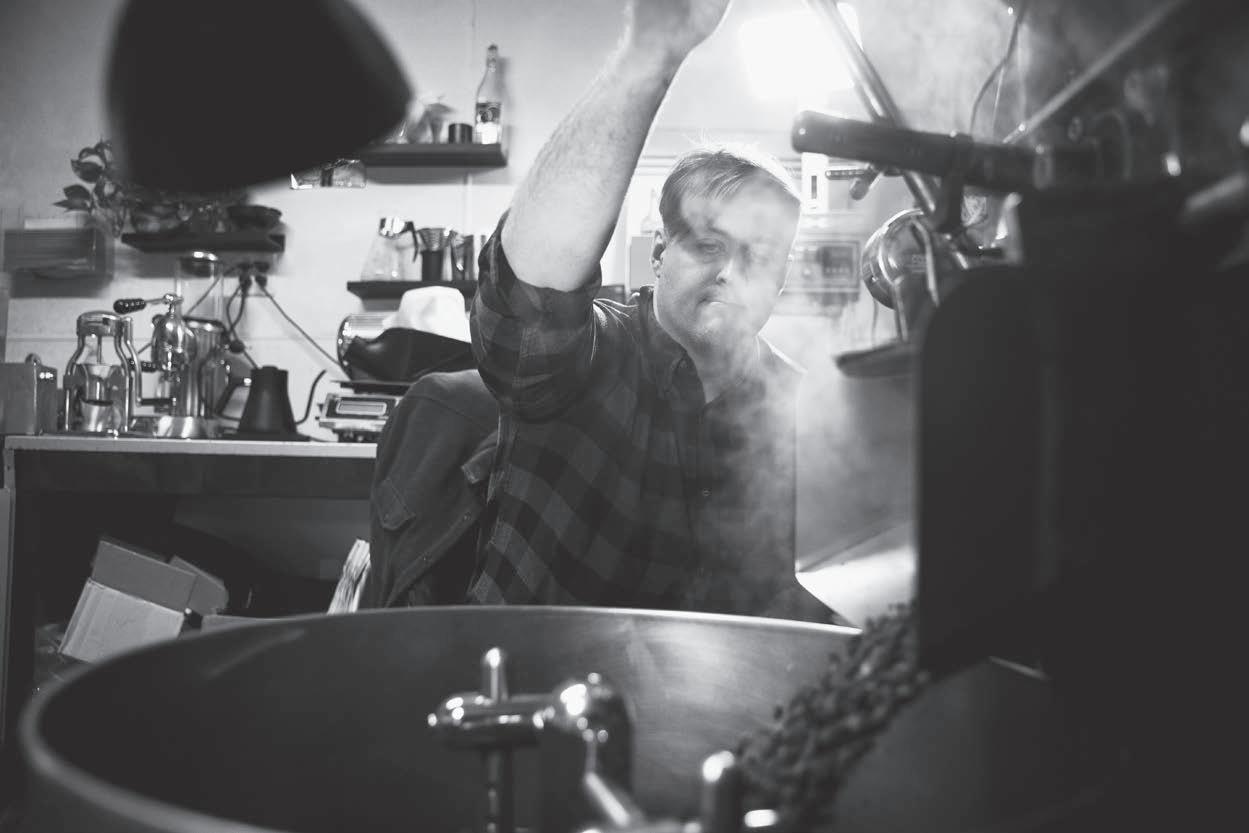
Sam Caster, owner and operator of Brass Ring Coffee in Iowa City, said Brazil produces roughly 40 percent of the world’s coffee supply, making the county an important player in the coffee market as a whole.
However, resident Donald Trump rolled back tariffs, on Brazilian coffee on Nov. 1. This did not immediately resolve negative price effects, as the futures price dropped, erasing 6 percent of the Brazilian coffee market’s value, according to Reuters.
“I am ordering far less Brazilian coffee because of the incredibly steep tariffs that have been levied against them,” Caster said. “This is a real nightmare scenario.” Encounter Cafe, a local coffee shop in downtown Iowa City, however, has not seen the immediate impacts of these tariffs, as the cafe does not purchase Brazilian-sourced beans, meaning they are not paying more for their coffee beans and are not having to raise their prices.
“We only buy beans from Central America, so from places like Honduras, Nicaragua, and Guatemala,” Ray utzy, general manager of Encounter Cafe, said. In November 0 , the Trump administration reached a trade agreement
with Argentina, Guatemala, El Salvador, and Ecuador on goods that cannot be grown in the .S. This includes goods like bananas, coffee, and textiles.
“We just haven’t seen any significant increases at all,” utzy said. “I think we just got really lucky that none of our coffee is coming from countries with high tariffs.”
Caster compared his situation to trying to run a gas station without any access to oil from major oil-producing companies. Coffee beans have no viable domestic alternative and cannot be grown at the necessary scale in the nited States due to climate limitations.
Coffee beans need the tropical climate countries in the “coffee belt,” which include Mexico, Brazil, and Ethiopia. Because the .S. lacks this climate, American roasters remain dependent on imports.
“If the C market changes from 3.80 to 4.1 , then roasters have no choice but to adjust our prices or accept slimmer profit margins,” Caster said. “The tariff situation has created a ton of chaos in the C market, causing massive price spikes accompanied by sudden price drops.”
These swings in the market have forced Caster to rethink how and when he orders and sources his beans. Caster said he tends to carefully watch the market and wait for prices to fall before putting in orders.
“This has caused me to be incredibly opportunistic when ordering coffee,” Caster said. “If the market is at a crazy high, I’ll usually just wait until it drops and source as much coffee as possible once the C market goes back down.”
To offset rising costs, Caster said he is buying beans in bulk to reduce shipping fees. Even so, price increases have been unavoidable for Caster.
“I have had to do a price increase this year,” Caster said. “I would say customers have been a bit surprised, but overall very understanding of the situation.”
But Caster said he isn’t very worried about the impact of raising prices on his business. In a coffee-oriented community like Iowa City, Caster said demand is not an issue for him.
“Demand for coffee, especially in Iowa City, is as high as it has ever been,” Caster said.
This demand is shaped by consumer
habits, and in downtown Iowa City, students make up a large percentage of these consumers. niversity of Iowa first-year student Grace Market said she prefers to go to chain coffee shops like Starbucks or Dunkin’, rather than local coffee shops.
“It is just too expensive,” Market said. “It is hard to justify spending that kind of money on coffee when you know it will be cheaper at Starbucks.”
A 1 -ounce latte at Starbucks costs .4 , excluding tax. At ava House, a local coffee shop in Iowa City, a 1 -ounce latte costs . . While the prices are similar, Market said chain coffee shops are more appealing to her because she always knows what she is going to get.
Market is originally from Wisconsin, and said she has noticed an increase in prices since moving to Iowa City, specifically the pricing in local coffee shops. She said for her, it feels like she never knows what she is going to end up spending on a coffee.
“The other day I went into a local coffee shop and paid around 8 for a hot chocolate, which is unreasonable in my opinion,” Market said.
STUDIO 13 TURNS 25
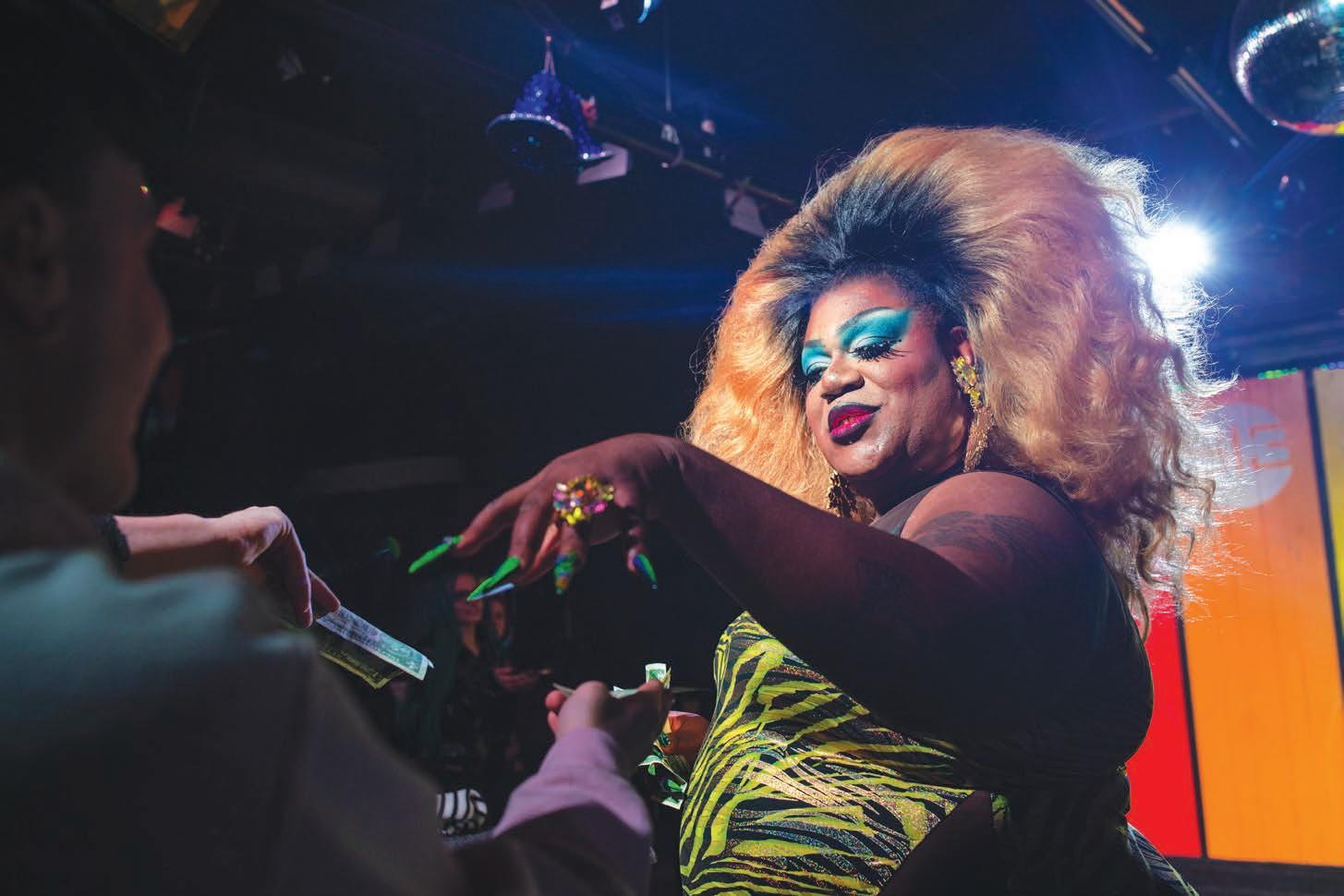
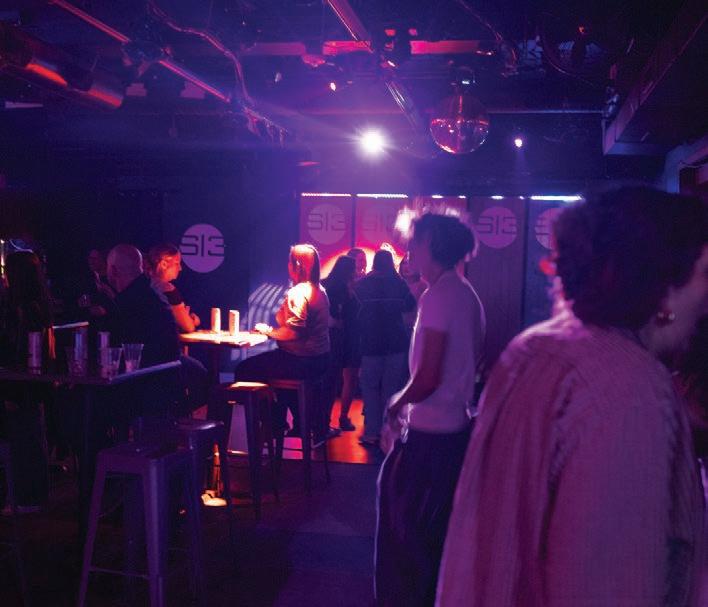
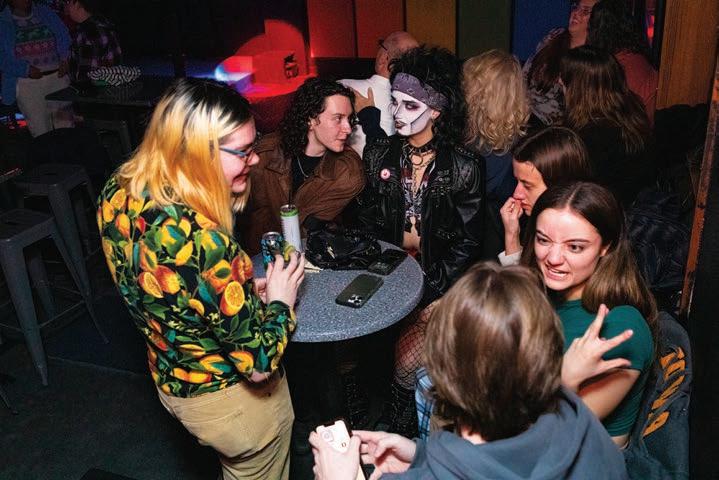
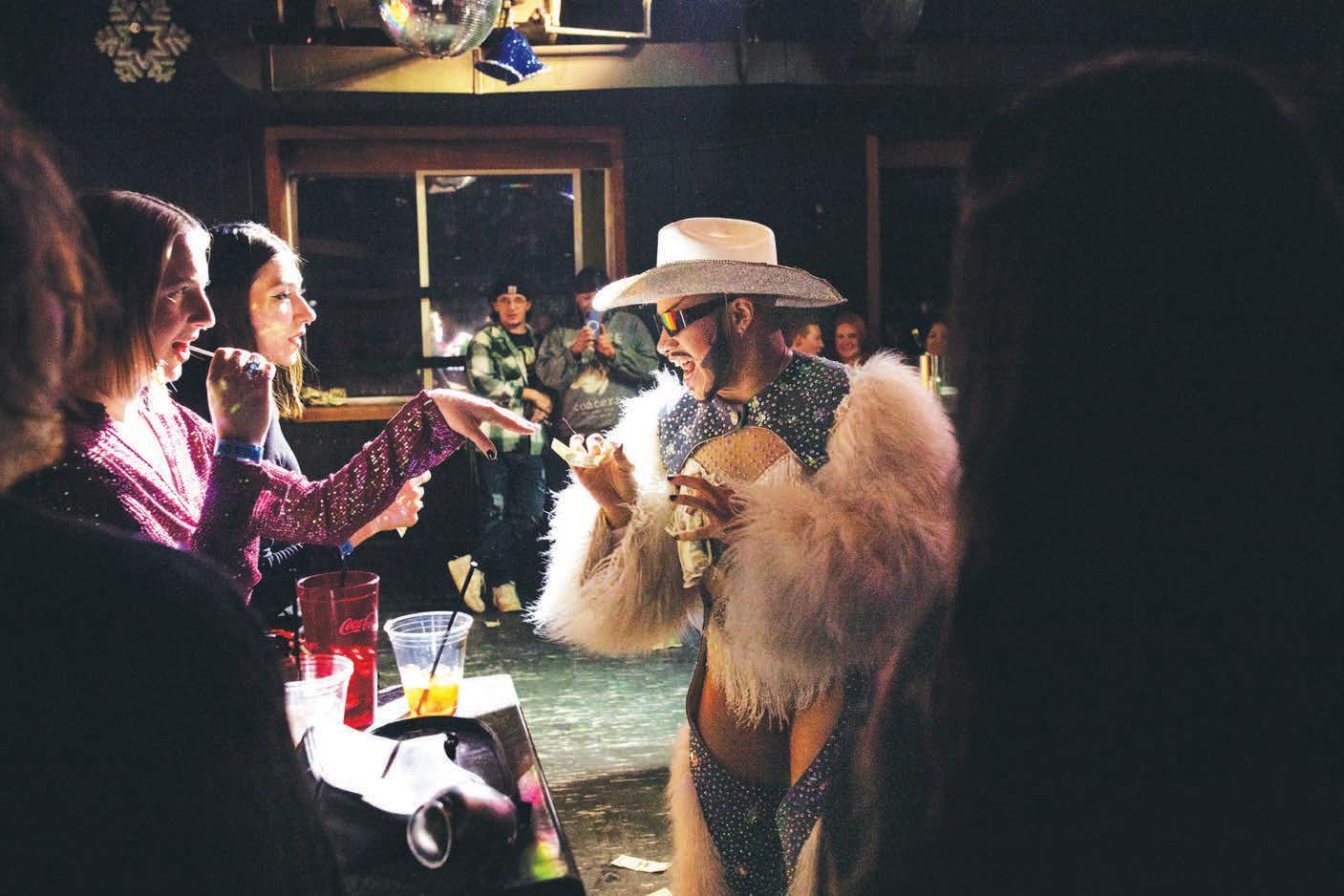
Studio 13 is the only LGBTQ+ bar in Iowa City. Celebrating 25 years of business, the bar has hosted many anniversary parties throughout the year. Studio 13 fosters diversity and creates a safe space, allowing patrons 19 years old and older into the scene.


SPORTS

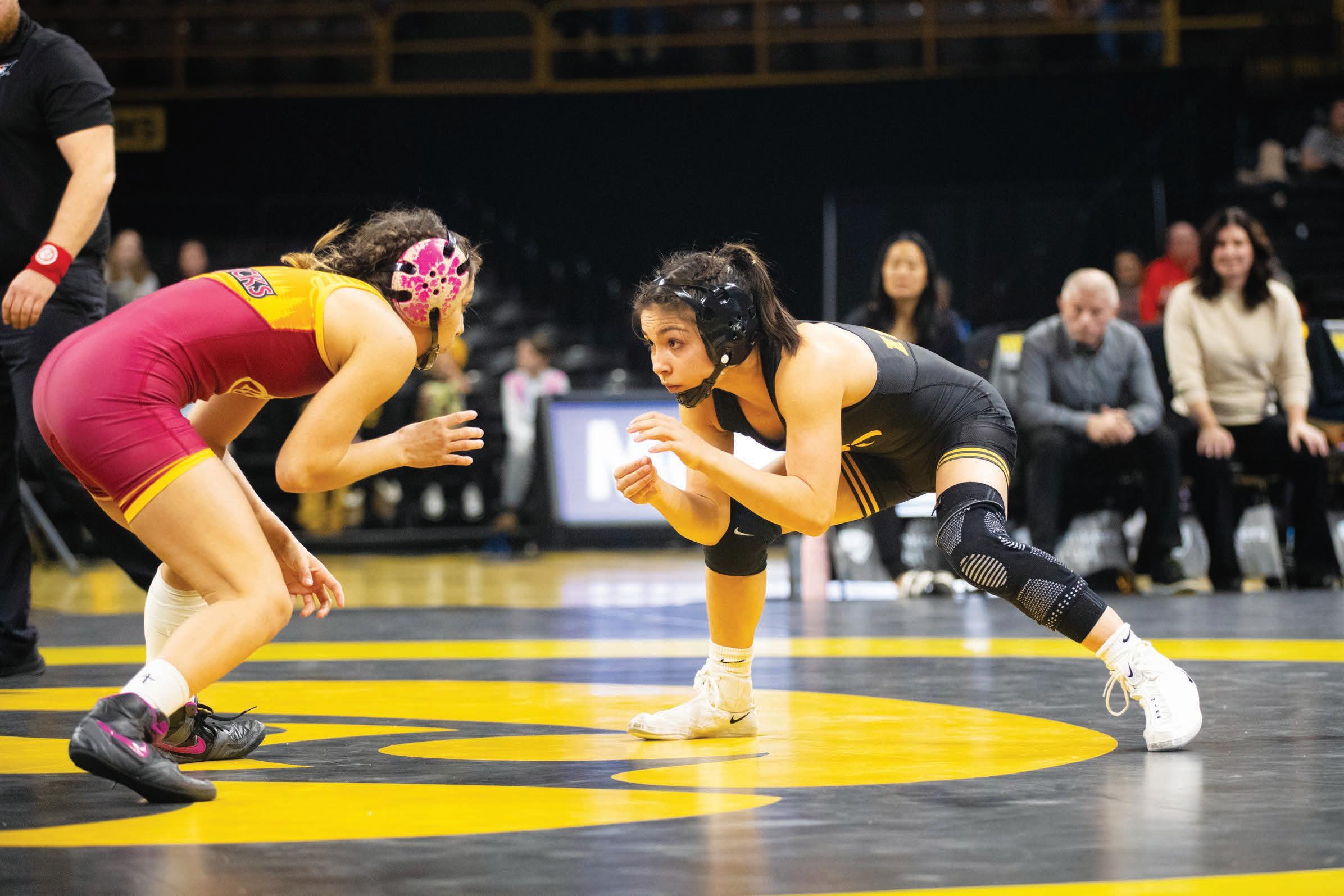
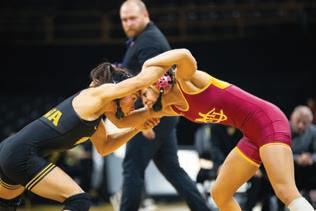
wrestling. Her dreams of competing for the Hawkeyes in 2023-24 came to a screeching halt at the U.S. Open Wrestling Championships in the spring of that year.
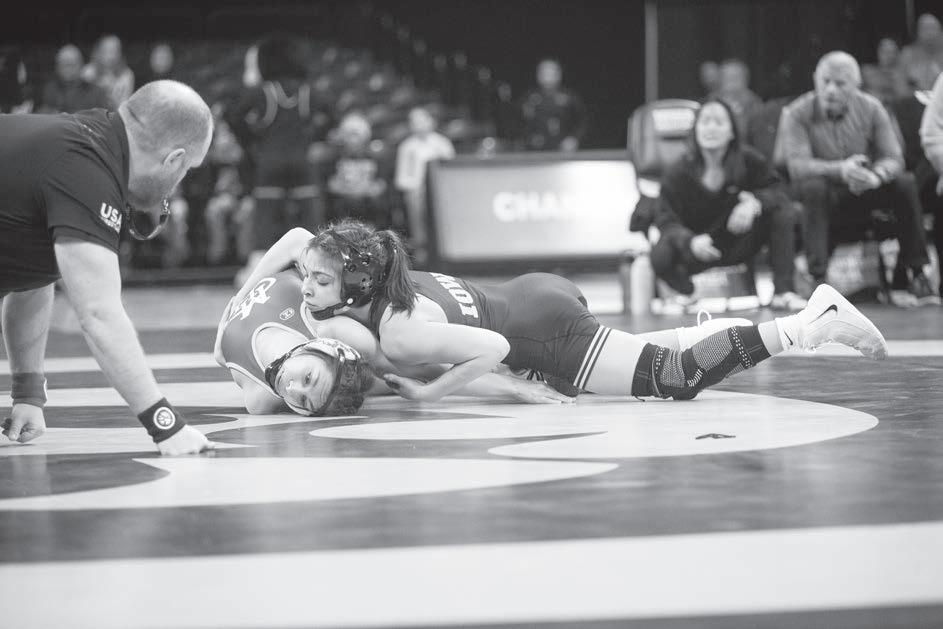
Valencia faced off with Sage Mortimer, who currently wrestles at Grand Valley State, in the quarterfinals of the tournament. Valencia was leading the match, but it would end in disaster.
“We ended up in this throwing spree, and I heard this really loud pop, and then a lot of pain in my knee,” Valencia
Olympic Team Trials, and that was pretty much out of the picture,” Valencia said. “I missed every qualifying event, so I was thinking I wouldn’t be able to compete at all.”
The Morgan Hill, California, native was unable to compete for the Hawkeyes in their first sanctioned season, shattering the dream she had since her senior year of high school.
When Valencia reached 11 months post-operation, she had an opportunity to compete at the last-chance
Voinovich brothers blend competition, collaboration


















incident happened,” Valencia said.
With the Pan-American tournament in less than a month, Valencia hoped for the injury to be a partial tear or something that could heal in a few weeks. She received scans on the same day of her injury and woke up to a devastating notification the next morning. At around 6 a.m., Valencia checked her scan results to
Journey Houston finds fit on home state team
Hailing from Davenport, the first-year Hawkeye provides consistent rebounds and e ort.

With 1,710 points, 786 rebounds, 340 steals, and 285 assists, Journey Houston’s basketball career at Davenport North High School was nothing short of dominant, especially considering an injury limited her to two and a half seasons with the Wildcats.
Ranked the 85th overall prospect by ESPN, the four-star recruit made the decision to stay in her home state and play for the Hawkeyes. Her first name was given to her to follow the trend of “J” names in the Houston home. Now, she’s looking to make herself a household name in Iowa City.
Arriving at one of the nation’s top teams, Houston has already begun adapting to the atmosphere both in the locker room and on the court.
“Being a part of the culture with all the positivity just means a lot,” she said.
As Houston adapts to the culture, she continues to make improvements on the court. While the first-year hasn’t seen a lot of minutes as the season progresses, head coach Jan Jensen sees potential in Houston’s work ethic.
“Journey is going to keep growing,” Jensen said. “She’s got a nice motor that I like.”
father, Victor Voinovich. A former collegiate wrestler at Edinboro and Mount Union in Pennsylvania, Victor Voinovich wanted his
boys in the right frame of mind for every practice. Every car ride, he’d force them to watch highlights of Tom and Terry Brands wrestling at Iowa while Disturbed’s “Down with the Sickness” blared in the background. The aggressive, determined, Iowastyle wrestling was Victor Voinovich’s ideal goal for his sons, who grew up wearing Hawkeye T-shirts. Now, his two sons are donning black Iowa singlets and competing at Carver-Hawkeye Arena as Iowa wrestlers under the Brands brothers. Despite a three year age gap, Victor
Voinovich III and Kael Voinovich couldn’t be closer in college. The two are each others’ roommates, coaches, and biggest supporters. “They get more nervous watching each other than they do competing themselves,” Victor Voinovich said. The brothers’ wrestling journeys began at a young age and neither was a linear path. The elder brother, Victor Voinovich III, tried out wrestling in kindergarten and hated the sport. His
Houston said she feels as if certain aspects of her game have improved as she continues to figure out her role on the team.
“My shot has definitely improved,” Houston said. “I’m playing the forward position, and a lot of big girls like to sag off, which gives me an open shot.” Houston backs up star forward and senior Hannah Stuelke. Stuelke has averaged 26 minutes per game, while Houston has averaged 11. The impact Houston brings to the game is an option of depth for Jensen. Houston has competed with sophomore Teagan Mallegni for minutes off the bench.
Heartlanders forward embraces change
Ma hew Sop spent five years with his hometown team in Ontario before arriving at Iowa.
When Matthew Sop was learning how to walk as a baby, his dad put him in skates, effectively starting his hockey career. Hailing from Kitchener, Ontario, Sop’s passion for the game also sprang from his environment. An early convert, Sop described hockey as a religion in Canada.
“My dad always says I used to tilt my head when a hockey game was on the TV,” Sop said. “It’s just always been in my blood, and it is a pretty easy thing to get into in Canada.”
In 2020, Sop started to play for his home town team, the Kitchener Rangers of the Ontario Hockey League, or OHL, a develop mental league for 16-20 year olds in Canada, which he said was a dream come true.
“When you’re young in Kitchener you look up to all of those Rangers and think they are the coolest.” Sop said. “I couldn’t have asked for a better place. The atmosphere and the fans were electric and the coaches I had throughout the years helped me in so many ways.”
When Sop turned 20 years old, it was time to move on from his beloved Rangers and find his next team to start his professional hockey career. The Iowa Wild offered him a contract, and it was one he couldn’t pass up.
“I had an unreal time my first year, with a lot of learning experiences on and off the ice,” Sop said. “Iowa has been great to me, and I’m happy I ended up here.”

Coming from the Ontario Hockey League to play in the American Hockey League in Des Moines, Sop noticed a difference in speed and strength in the gameplay but said adjusting to these contrasts has only improved his game.
“You have to think quicker and almost play chess out there,” Sop said. “But I think that adapted to my game, and I’m still working to get faster and stronger.”
Sop only played in 27 games with the Wild over two seasons compared to 43 with the Heartlanders, where he’s found a home despite his short tenure.
“Playing with the Rangers for all those years, I know what it’s like to be comfortable in your situation,” Sop said. “It is reassuring when you know the area, and I couldn’t have asked for a better spot than Iowa City.”
One of Sop’s memorable moments with the Heartlanders arrived on a Friday night in Bloomington, Indiana, in an overtime matchup against the Bison. On a two-on-one breakaway, Sop fired a wrist shot that snuck past the goalie into the back of the net for a 3-2 win. Although the forward had a few overtime winners in the OHL, he said the feeling never gets old.
“There is no better feeling than scoring a goal, and adding onto that, being an overtime winner made it even better,” Sop said. “Whenever I see overtime, I chase that and want to be the guy to win it for the boys.”
Heartlanders forward’s hobbies, rituals
The Daily Iowan: Do you have a favorite memory of your time with the Heartlanders?
Matthew Sop: Probably our double overtime winner last year in the playoffs. That was really exciting to be a part of.
Do you have any pregame rituals?
I’ll go and throw all the pucks on the ice before warmups. I’ll also try to hit every dot on the ice then top shelf on the net. I just try to do everything at a certain time on gamedays.
What is your favorite Heartlanders jersey?
The Heartlanders have struggled early with a 7-11 record and currently sit on the outside of the playoff picture. Sop tallied 32 points for the squad last season as the Heartlanders qualified for the postseason for the first time in franchise history. Despite the setbacks, Sop said wins are on the horizon.
“We come in each day with a learning mindset, and our headspace is in a good spot,” Sop said. “It’s a little slow start, but that’s okay because we are so skilled. With all of the systems we have put in place and the positive leaders in the locker room, we’re still in a good spot despite the results.”

I love our cream jerseys. I think that they look the cleanest out of all of the others.
Do you have any off the ice hobbies?
I love to mountain bike back home. I’d also like to get into hiking mountains more during the off season.
Do you prefer the winter or the summer?
I’d probably say summer because of the weather. I don’t mind the cold, but I do like the warm weather.
What do you think of the Denver Broncos’ performance so far this season?
I think we all expected them to be good this
What’s the best
season but not this good. It’s pretty exciting especially being from Denver and having our other teams like the Avalanche and Nuggets be good as well.
What is your favorite restaurant in Iowa City or Coralville?
I really like Basta, I’ve gone a couple times and I really like the food there.
Who is your favorite artist?
It’s a tie between Zach Bryan, Drake, and Louis the Child.
What is your favorite movie and TV series?
My favorite TV series is definitely “The Office.” I’d say my favorite movie is “Inglorious Basterds.”
Cy-Hawk game?
Sports reporter Jack Birmingham argues for the annual football game, while Trey Benson makes a case for basketball.

While the outcome may not have been desirable for the Hawkeyes in their last few showings, there’s no doubt that football is the best part of the Cy-Hawk rivalry. The main reason for this is the fact that college football at both Iowa and Iowa State is simply more enjoyable than college basketball.
While I once held the belief that Carver-Hawkeye Arena was the superior venue, my view has since shifted more heavily toward Kinnick Stadium. It has a bigger capacity, more enthusiastic fans, and some of the best traditions in college football, from the team’s entrance to AC/ DC’s “Back in Black” to the iconic Hawkeye Wave. Kinnick Stadium only hosts every other Cy-Hawk game, but even Iowa fans can appreciate
elements of Jack Trice Stadium in Ames. It’s grown significantly in capacity, from 42,500 in 1975 to 61,500 currently. It also has a rich history, being the only Division I FBS stadium or arena to be named after a Black athlete. ack Trice was Iowa State’s first Black athlete, and some have even credited him as the innovator of football’s “shovel” pass. Neither of those accomplishments should be taken lightly.

It’s no surprise that every Cy-Hawk football game is both heavily attended and endorsed. The days leading up to the game see both schools making signs and banners to root for their team, and while the festivities surrounding “hate week” may not exactly be wholesome, they culminate in what’s arguably one of the biggest rivalries in college football.
Yes, basketball is an exciting college sport, and yes, both the men’s and women’s squads at Iowa and Iowa State have proven staples of the sport.
But you just can’t compare the contests of Carver-Hawkeye Arena and Hilton Coliseum to the sheer spectacle of one of the NCAA’s greatest rivalry games –Cy-Hawk football.
With origins all the way back to 1894, Iowa and Iowa State have been pitted against each other in a bitter in-state rivalry. Looking across the multiple sports, one sport distinctly stands above the rest as supreme – basketball. When revisiting the history between these two programs, standout memories like Jordan Bohannon leaving his game-worn shoes at center court following Iowa’s 16-point triumph in 2019, and Caitlin Clark dropping 35 points in 2023 as the No. 4 Hawkeyes beat Iowa State, 67-58, amid a hostile Hilton Coliseum crowd immediately come to mind.
The rivalry has seen many college athletes move onto the NBA and WNBA, with famed Cyclones like George Niang, Tyrese Haliburton, and Bridget Carlton taking the next step. The Hawkeyes have also seen athletes make the jump to the next
level as well, as Luka Garza, Keegan Murray, and Joe Wieskamp are all getting stints in the NBA.
With talent like this, fans are itching for more games with the same passion and effort displayed on the court.
While many like to think of the Iowa and Iowa State football match as the crown jewel of the rivalry, basketball involves the men’s and women’s teams, giving fans two separate opportunities to see athletes compete. The women’s game has recently leaned in favor of the Hawkeyes, with an all-time series record of 32-23 and eight out of the last nine going to Iowa. The same cannot be said for the men’s squad, which is fresh off an 80-89 home loss last season to then-No. 3 Iowa State. However, with the departure of Fran McCaffery and the arrival of new head coach Ben McCollum and a 8-1 record many Hawkeye fans believe this year could be the year the tides change in favor of the black and gold.
The Cy-Hawk rivalry on the court has continued to deliver on the highest levels of excitement in the past and will likely continue for years to come.
find the exact same injury as her first one, this time on the opposite knee — a full ACL tear with a second-degree MCL tear, along with some meniscus damage.
The emotions were overwhelming, as Valencia immediately burst into tears, waking up her roommate and current teammate Ella Schmit. Valencia’s head coach and assistant coach, Clarissa Chun and Gary Mayabb, were at the camp and were able to take her to the airport to go home.
“I was very distraught and didn’t know how to feel,” Valencia said. “I felt like I had just done it, and I couldn’t fathom having to do it all over again.”
Valencia decided the best thing to do was to take a step back from wrestling and focus on her recovery, taking the full 1 months off to recover both physically and mentally.
The recovery process for Valencia went smoothly the second time, as she was able to rehab in time for her longawaited Hawkeye debut at the All-Iowa Dual on Nov. . Valencia’s first match was pure domination, taking down Cornell’s Angelica Benitez by technical fall in just 34 seconds.
Emotion took over for Valencia after the referee raised her hand at the center of the mat, embracing her coaches and athletic trainer after the victory.
All of Valencia’s teammates also embraced her in the corner after the bout, creating a moment that Valencia said she wishes she could relive.
“My teammates were emotional. They all shed some tears, and it was just an awesome moment,” Valencia said. Since that moment at Carver-Hawkeye Arena, Valencia’s confidence has only grown this season. The redshirt third-year has a 10-1 record with four ranked wins, including one over her teammate, Ava Bayless, who was ranked No. 1 at 110 pounds.
Valencia said the reason for her success this season is because of a change in mentality since her injuries. She focuses more on the process of getting better and learning
dad put it simply: “He was getting his butt kicked.”
Victor Voinovich III preferred ag football, and when second grade rolled around, he wanted to switch to tackle. Doubtful his son was tough enough to make the transition, Victor Voinovich made him try wrestling again as proof he could handle the physicality.
A pudgy kid at the time, Victor Voinovich III still struggled in his return. His dad remembered one season starting out 0-12. Victor Voinovich coached on his sons’ teams for most of their youth. He explained how at younger ages, wrestlers who mature first win often, but once everyone grows up, technique determines who triumphs.
“You could see that he was going to be good. He was doing the right things,” Victor Voinovich said. “I knew it would be a matter of time, and fortunately, he believed that as well.”
While Victor Voinovich III listened to his father’s coaching, his brother interpreted the loud instruction differently. Kael Voinovich heard his father’s shouts not as passion, but anger. He stopped wrestling around second grade.
“I thought he just didn’t like me because of how bad I was doing,” Kael Voinovich said.
Outside of wrestling, the brothers grew up going to Catholic school and then were homeschooled before attending Brecksville High School, whose wrestling program competes on a national stage and where Victor Voinovich III’s career took off. The older brother won two state titles, three AllState honors, and five All-American nods.
A sixth-grade Kael Voinovich watched his older brother with both awe and a twinge of envy. Ever the rival, he didn’t want others thinking Victor Voinovich III as the superior athlete.
“I was like, I can do better than him. Let me get back into this,’” Kael Voinovich said.
from her mistakes rather than thinking about who she’s facing in her next match.
“[It’s about] using those takeaways to be even more prepared for my next match,” Valencia said. “I used to dwell and focus on who I was wrestling and not how I was wrestling.”
The return for Valencia has been an exciting time for her and for Chun as well, who expressed her excitement to see her return to the mat in 0 .
“Her return to the mat is an exciting time. I’m excited for her opportunity to have her very first college season, which is so bizarre to say,” Chun said at media day on Oct. 30. “For us, it’s like we want to make sure that we are smart with her return to the mat and the competition side of things.”
Valencia’s battle back from two serious injuries took lots of resilience and trust in her coaches, training staff, family, and teammates. The redshirt junior expressed her gratitude for the support system around her during the recovery process, knowing she couldn’t have done it without them.
“My number one supporters were definitely my parents,” Valencia said. “My mom was with me during both recovery periods Coach Chun, Coach Tonya [Verbeek], and Coach Mayabb were very good about checking in with me and making sure I was doing well, mentally, more importantly.”
Valencia also said the coaches did a wonderful job of making sure she felt included and a part of the team, even though she wasn’t competing. She also said she contributed to the team through leadership and morale.
One of the biggest questions Valencia was asked was how she stays motivated while injured. While everybody’s experience through injury can be different, her response is simple.
“I like the combination of what I can do,” ensen said. “If we need defense and a motor down low, we can go with ourney, but Teagan’s got a heck of a shot, and she’s really improved on defense.”
At this point in the season, Houston seems to have earned ensen’s trust as the first option off the bench for Stuelke, earning 89 minutes to Mallegni’s 16, but some of the disparity is due to injury.
Mallegni missed Iowa’s game against Fairfield due to her tonsil removal, and Houston stepped up production. The -foot-11 forward delivered seven points in 20 minutes of action before topping that performance the following weekend with a career-high 14 points against Rutgers.
Hoston credits Stuelke as a leader for her this season “because she’s in the same position as me.”
“She’s been great and her rebounding has been really good,” Stuelke said. “I’m really proud of her for working so hard.”
Houston averages 4.4 rebounds per game, ranking fourth on the team that leads the Big Ten in the category. Iowa sophomore guard Taylor Stremlow sees Houston as embodying a “blue-collar mentality,” accepting her limited minutes but maximizing her production.
Houston takes her opportunity and capitalizes, unafraid to snag boards under the basket and confident in taking shots, averaging 0 percent from the oor this season.
While she may have a minor role as the season continues, it’s likely Houston will be asked to step up in a major way after Stuelke’s departure at the season’s end.
“I want to be here,” Houston said. “I’m gonna give it everything I can, take it day by day, and keep learning and getting better.”
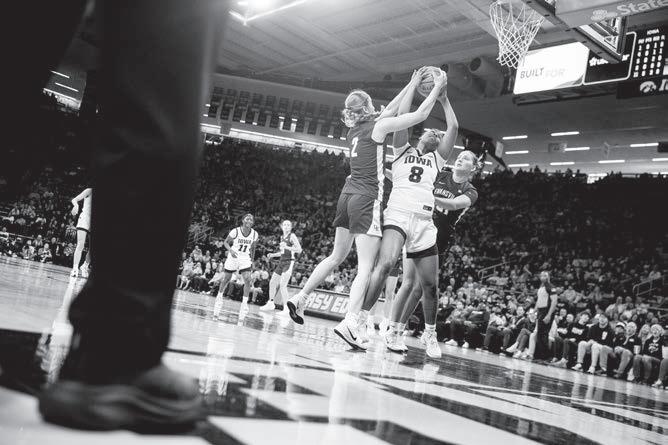
“There’s always a way to get better,” Valencia said. “I set a lot of goals, so that kind of helped me make checkpoints for myself that I was able to go through and work towards, even when I wasn’t competing.”
Despite his relative inexperience, Kael Voinovich possessed a natural talent. His dad said his younger son possesses more of a nasty streak and results were immediate. Kael Voinovich won a state title in seventh grade and began relying on Victor Voinovich III as a sparring partner, not trying to hurt each other but rather to learn.
But with Victor Voinovich III a prep star and Kael Voinovich gradually rising in his shadow, the sessions were initially more frustrating than constructive. Kael Voinovich lost often in their matchups, and his competitive nature made him take the defeats harshly at the time. His older brother, the one who rarely won a match as a kid, was now almost unbeatable, finishing as No. 1 in the nation twice for his weight class.
“ He’s not a pudgy little fourth-grader, Kael,’” Victor Voinovich remembered telling his son.
Looking back on those sessions, Kael Voinovich is more grateful for the experience, noting he made his biggest jump in the sport during that time.
When Victor Voinovich III began his college career at Oklahoma State and transferred to Iowa two years later, Kael Voinovich followed along, winning high school state titles in both states. When it came time for Kael Voinovich to choose a college, his brother stepped in as a recruiter.
Kael Voinovich never wavered in following in his older brother’s footsteps, as Victor Voinovich III’s experience provided ample guidance. Whether it be training, cutting weight, or rehabbing from an injury, Victor Voinovich III’s choices paved a path for his younger brother’s success.
“He made a lot of mistakes I didn’t have to make,” Kael Voinovich said.
At Iowa, the Voinoviches compete one
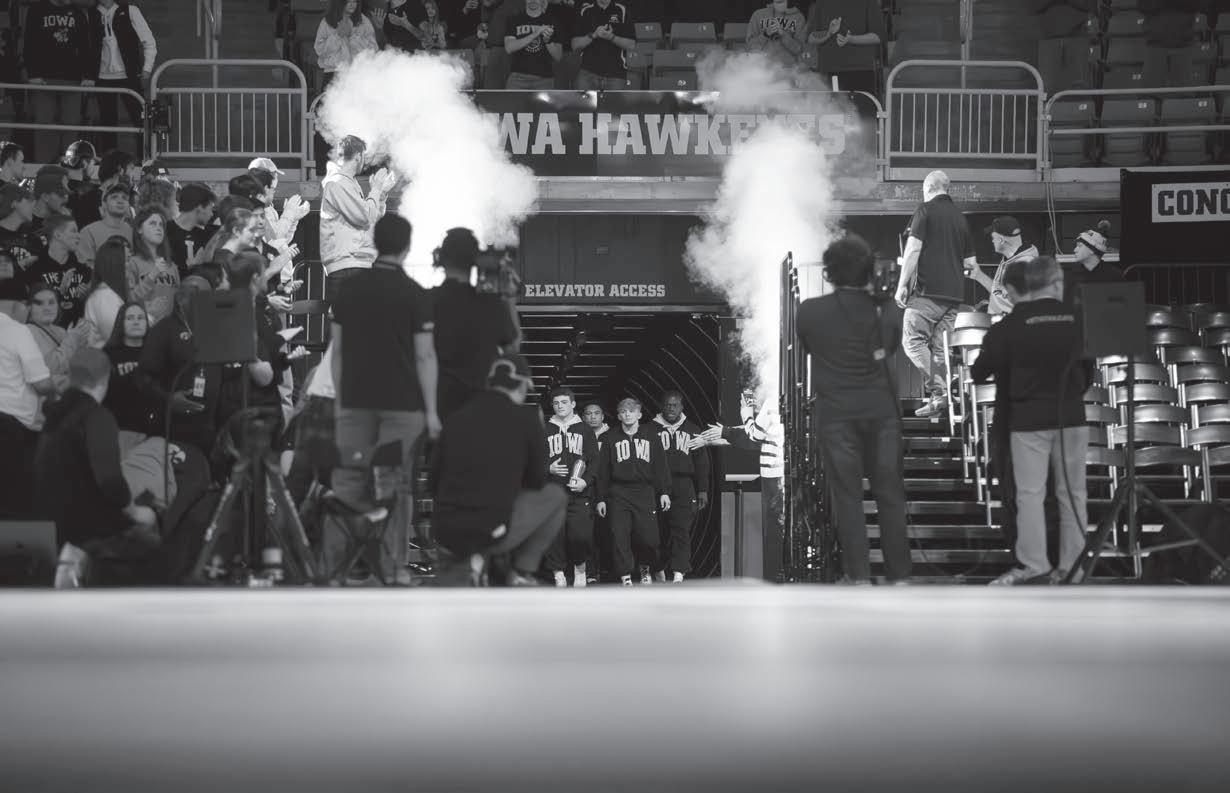
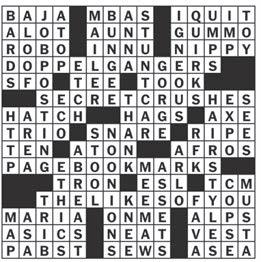

weight class apart, Victor Voinovich III at 1 7 pounds and Kael Voinovich at 149. Nevertheless, the sparring sessions continue. Tom Brands joked there would be eye pokes, jabs, and other brotherly antics on the mat, and Victor Voinovich III admitted some bouts would get heated. Yet after every practice, the Voinovich brothers return home and turn competition into collaboration.
“We’re just always looking to get better,” Victor Voinovich III said. “It’s nice to have someone to bounce ideas off of because I teach him and he teaches me. It’s great to have someone as high level as your brother.”







HAWKEYES STEP ON THE GAS


The Iowa Hawkeyes defeated the Maryland Terrapins, 83-64, during a men’s basketball game at Carver-Hawkeye Arena in Iowa City, on Dec. 6. Iowa’s record now sits at 8-1 overall and 1-1 in Big Ten play.

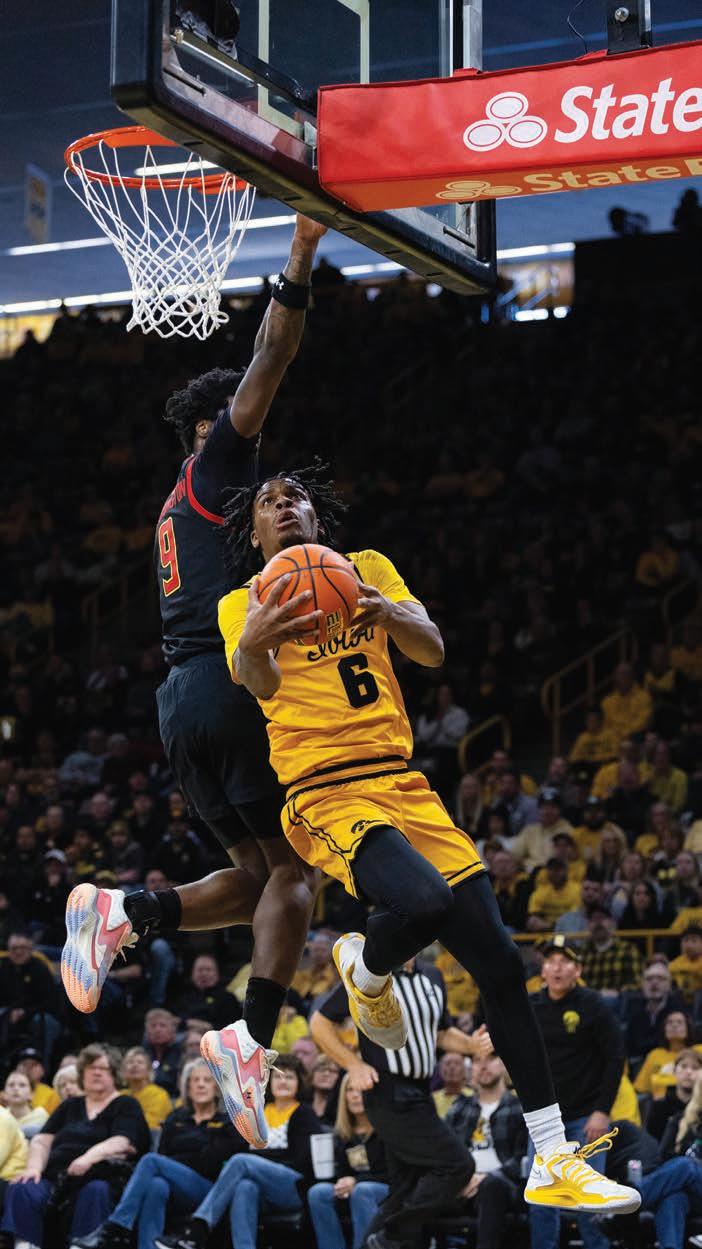






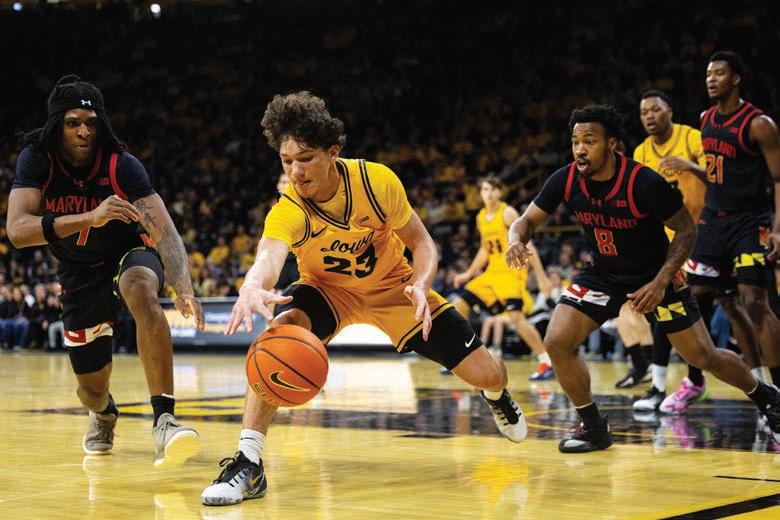
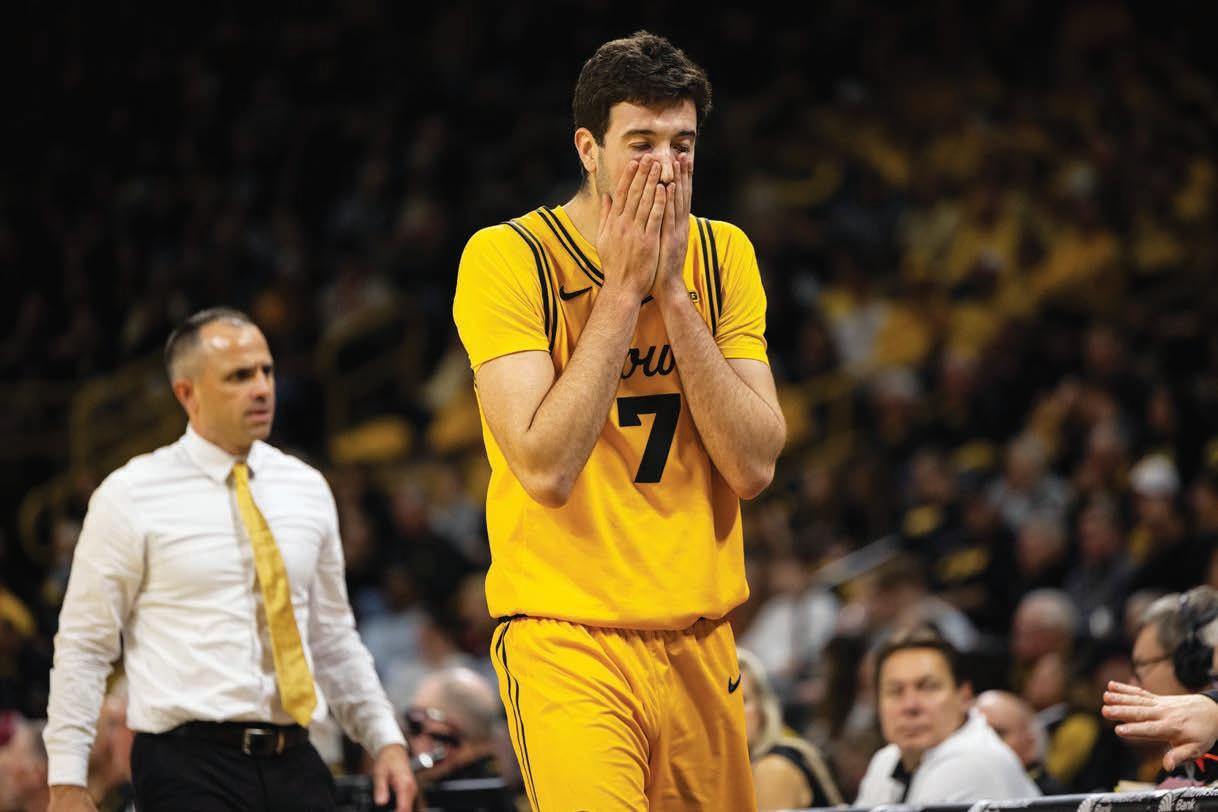
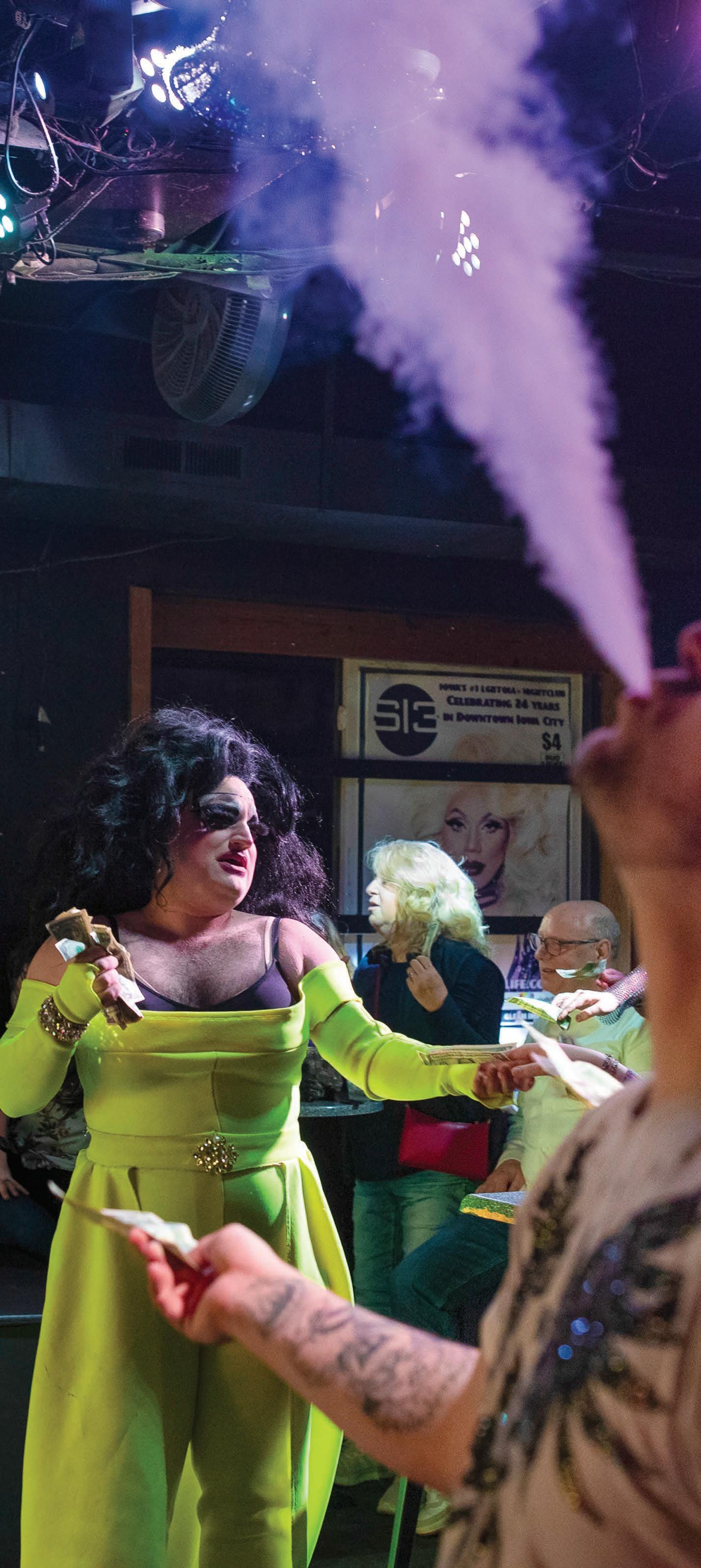




Iowa City reflects on 25 years of Studio 13
Over the years, the LGBTQ+ club has become an inclusive staple of nightlife.
The nearly negative degree weather in Iowa City might be numbing, but the moment bargoers step inside Studio 13, they are met with a special kind of warmth: community. But this community is not found in conformity. Groups of friends enter the doors, some with sharp, bright green eyeliner and wrapped in big fur coats, while others within the same group dress more casually, wearing a simple jacket and a pair of sweats.
Despite the smoke machine filling the room with clouds, Studio 13 feels like a place where everyone breathes a little easier and dresses how they want.
The first oor hums with movement. Met with streaks of electric, rainbow-colored lights and charged by Chappell Roan’s “HOT TO GO!” and Lady Gaga's "Poker Face,” customers dance for hours.
The beloved and only LGBTQ+ nightclub in town is celebrating 25 years. But Studio 13 has never waited for a milestone. It celebrates pride and queer community every day. Starting in the new year, “Drag U” shows will return, giving newcomers a chance to try drag for the first time.
Lil Kimmie Blaque has been a drag performer at Studio 13 for about 10 years. In 0 3, she was crowned Miss Iowa City Pride. Now, she hosts her own show called “Black Excellence,” and just finished her fifth season of Star Search with her co-host Beep Beep. Star Search is a competition for drag performers held on Sundays at 9 p.m. throughout the year.
“My drag aesthetic is 90s video vixen meets mob wife, with a dash of camp. I like to do lots of rap and R&B, as well as funny mixes to camp it up a bit,” Blaque said.
Lauren ackson, a fifth-year niversity of Iowa student, started attending events at Studio 13 after turning 19.
“It was my first time going out, and it was the best experience,” ackson said. “It was my first time seeing drag queens, and I had also never been somewhere that had dancing and places where you could sit and hang out, too.”
One of Jackson’s favorite regular events is Star Search.
“It’s so beautiful just to watch and see everyone’s version of drag be presented,” Jackson said.
Many of the queens who participate in Star Search are local to the Iowa City area. However, some also come from farther away places, such as Des Moines, Jackson said.
Jackson appreciates Star Search and other similar events because of those events’ ability to provide spaces for people who perform in drag, particularly in smaller, community-oriented cities such as Iowa City.
“I’m really appreciative that we do have a space like that for our drag queens, for our dolls, and for anyone who is queer, just to be able to celebrate,” Jackson said. “I feel like Star Search is one of the best places to experience or even show your friends queer culture for the first time.”
The word doll refers to a transgender women and is meant as a term of endearment within drag communities.
For Jackson, as long as Studio 13 continues to provide a welcoming and inclusive environment, she will keep returning.
She encourages audience members at drag performances to bring money to tip the queens.
“There is so much energy and time and money that goes into the craft, so give back,” Jackson said. “They’re giving you a show, so give them your all by giving them your cash.”
Drag shows and dancing aren’t all that Studio 13 has to offer. On the first Tuesday of every month, local poet and author Lilo B. hosts Pride Poetry, a unique blend of slam and open-mic poetry that is meant to celebrate LGBTQ+ identities and allows a safe space for people to gather and enjoy art.
Lilo B. is the stage name of Lilo Baurer, a UI fourth-year student who enjoys Studio 13’s audience and atmosphere.
“Everyone there is nonjudgmental in the poetry sense,” Baurer said. “I’ve already had people come up to me afterward saying, ‘I had so much fun, I can’t wait for next month.’”
For Baurer, knowing their poetry has touched the community has been deeply rewarding, allowing them to share the sense of belonging they first found at Studio 13 in 2021.
For Studio 13’s head DJ, Nathan Kelley, the club’s special events are home to some of the most impactful nights of the year.
“My favorite sets happen during three major celebrations: Iowa City Pride, Halloween, and New Year’s
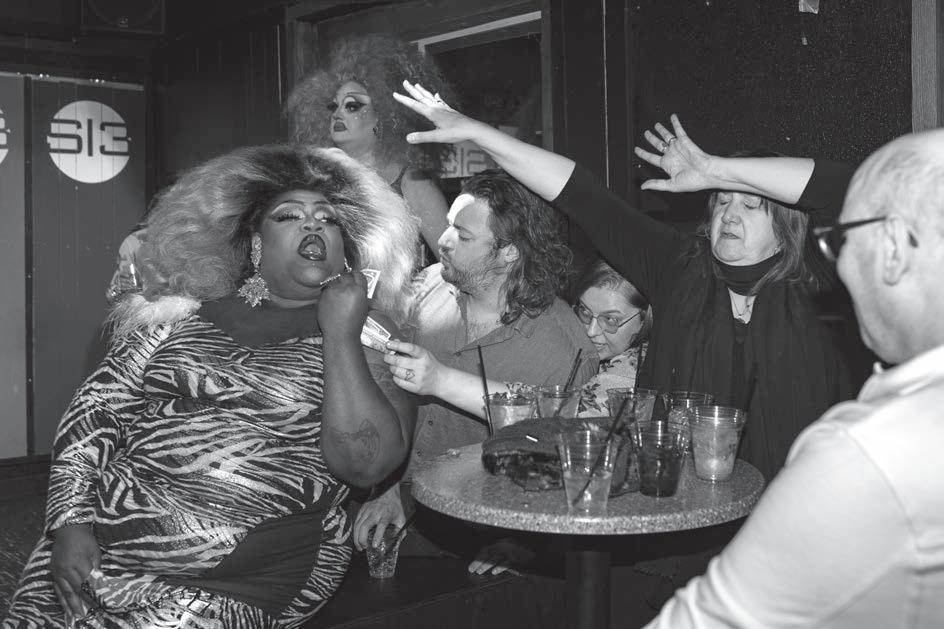
Eve,” he said. “All three share something powerful in common — they are nights when people show up ready to celebrate community, connection, and life.”
At every event, this sense of belonging is tangible to patrons.
A typical night at Studio 13 for Kelley would resemble the energy at any LGBTQ+ nightclub in Chicago. Chicagostyle circuit dance music has in uenced the D , but he certainly puts his own spin on it. Whether it be a twist on the iconic Whitney Houston or familiar 2000s hits, Kelley said the audience shapes the music.
In Iowa, this urban dance and music scene might not be for everyone, especially those who prefer the over twodozen bars in downtown Iowa City, but it certainly doesn’t stop crowds of people from attending each show.
Studio 13 offers inclusivity in both sexuality and age.
Through its 19 years and older events, the bar provides access to the queer community for younger audiences who are unable to patronize the 21-only bars.
“ ou have to respond to the people on the dance oor — their energy, their mood, the way the room shifts and breathes,” Kelly said. “That’s what keeps the music alive.”
In an email to The Daily Iowan, Jason Zeman, Studio 13’s owner and chief executive officer, said he and other members of Studio 13’s leadership team have been proud of the club’s ability to change and grow over time. Throughout the years, Studio 13’s leadership has worked to take feedback from its customers in the community.
“Our current owners have not only helped solidify Studio 13’s place in Iowa City, hopefully for another 25 years, but have also been fortunate enough to take over the only LGBTQIA+ venues in Cedar Rapids and Waterloo, preserving safe spaces throughout the corridor,” Zeman said.
Studio 13 opened a location in Waterloo, Iowa in August. Both the Waterloo club and the Iowa City location host similar events throughout the year.
Zeman has many memories of shows, performers, and customers who have visited Studio 13’s vibrant dance oor over the years but wrote that his best memory is one that he’s seen play out dozens of times and one that continues to occur from time to time – hearing the impact his club has on people’s lives.
A large portion of Studio 13’s audience members are college students, many of whom eventually move away. Upon returning to Iowa City, some of these former crowd members come up to him and express how much of a difference Studio 13 has made in their lives.
“It’s a place where they felt comfortable finally expressing their true self, the first place they were able to be ‘out,’ or encouraged to perform,” Zeman wrote.
That positive feeling and impression is felt by Studio 13 performers as well. Kelley has never taken his opportunity to DJ at Studio 13 for granted.
“I’ve had the honor of playing sets that helped people celebrate big moments, push through heartbreak, escape the stress of everyday life, and sometimes simply forget their problems for a few hours on the dance oor,” he said.
those performances to life is something Kelley takes seriously. To him, Studio 13 is more than a club — it’s a creative partnership between the DJ, performers, and the dance oor.
As Studio celebrates 25 years, this partnership continues to grow.
Zeman said Studio 13 is constantly looking to improve upon its space and offerings. In 0 6, the nightclub plans to increase fundraisers and community support.
The Cedar Rapids location, Basix, has recently added a food exchange and bimonthly community market. In the new year, Zeman is hoping to bring something similar to Iowa City.
As 2025 winds down, Studio 13’s space and unique atmosphere continues to be impactful for many visitors, including Jackson.
“Every time I go, I just have such a fun time, because I’m able to sit and chill and hang out with my friends. If I want to dance, I can dance,” Jackson said. “It’s such a freeing place to be. For me, it feels so much safer and homey. It’s the best place to be, where I can connect with my friends and my community.”

Drag is an art form, and being trusted to help bring
PS1 exhibit highlights transgender artists
The exhibit, which runs until Dec. 13, features print artworks by 17 artists from across the country.
drew inspiration from their own puberty experience and recalled the feeling of being trapped inside their own body. Hernandez also knew other transgender people who related to the feeling.
Public Space One’s latest exhibit, “T4T Print Exchange: Trans Joy,” highlights prints made by 17 transgender artists across the U.S. and Canada. From colorful, playful works with animals and characters to more serious works with impactful statements, each artist worked off the prompt of transgender joy. The exhibit will be displayed at Public Space One until Dec. 13.
Vero Hernandez, artist and co-exhibit organizer, is a 2022 graduate from the University of Iowa who majored in printmaking. They have been creating art since 2018. They became involved with the print exchange through a mutual acquaintance who shared information about the project through Instagram. From there, they became connected with Julien Riendeau, the project organizer.
“It’s the first I’ve seen of just specifically trans artists in printmaking,” Hernandez said. “I think the goal was to go across the United States, potentially internationally.”
Hernandez’s featured work is a 0 4 print titled “My Body Isn’t My rison,” featuring a central figure of a Frankenstein collage surrounded by blues and pinks and the words, “I make this body mine.”
“That was a print I made about a month before I personally had my first gender-affirming surgery,” they said. “So, it’s about finally feeling like my body belongs to me.”
The Frankenstein aspect of the print was a collage highlighting Hernandez’s close friends who had supported them during the surgery. Hernandez said they made three print layers with the help of a silk screen, which featured photo-edited body parts of their friends, along with some hand-drawn elements, using tools such as Photoshop, Q-tips, and ink.
For the title itself, “My Body Isn’t My rison,” Hernandez
“I personally felt like I was trapped in a body that didn’t belong to me, which was kind of awful,” they said. “Now, not so much, and that’s what I was looking forward to while I was making my print.”
While this particular print was centered around the themes of gender and identity, Hernandez said they do not typically make art about their identities. For this print exchange’s prompt about transgender joy, they enjoyed the experience of making art with themes outside of their typical work.
For John Engelbrecht, Public Space One’s executive director, the themes of joy were one of the things that resonated the most. For Engelbrecht, the untitled 2024 piece by Louisville, Kentucky, artist Parker Anment stood out. In black text, the work simply states, “A world without trans people has never existed and never will.”

“The piece resonates with me as its message is a truth that, for me, cuts through a lot of divisive hubbub in a powerful, succinct way,” Engelbrecht wrote in an email to The Daily Iowan
Engelbrecht is a member of the Public Space One gallery team, which is responsible for selecting artists' awards, which resulted in the 0 - 6 exhibition series. Engelbrecht was excited to see that Hernandez, a member of the Iowa City Press Co-op, was selected. The Iowa City Press Co-op is Public Space One’s print-making studio, Engelbrecht said.
For Allyson Swim, a gallery team volunteer, the artwork that stood out to her was the 2024 piece titled “We Hold the ower” by Chicago artist Martin Trent. The piece included a chain of people surrounded by various objects, including a mini Garfield, which caught Swim’s attention.
“I like how it effectively toes the line between creating
something playful, such as tiny Garfield, yet includes a powerful call to action: to give to your neighbor and share resources while also reminding us that crafting is a powerful tool of connection and release,” Swim wrote via email to the DI Hernandez hoped viewers of the exhibit would take away the messages behind these works. As a queer person, Hernandez lost their civil rights protections in Iowa.
“It’s hard to find joy and reprieve for a lot of the stuff that’s been happening in the last 10-15 years in the U.S., and I just hope that other people can continue to live their lives while also standing up for everyone else, too,” Hernandez said.
‘The Mousetrap’ joins Riverside’s repertoire
The iconic Agatha Christie whodunit, brings a seasonal mystery to Iowa City.
property. Four guests had already arranged their stays, and a fifth guest mysteriously showed up at the venue.
There’s nothing more cozy than a classic whodunit, especially one written by the incomparable Agatha Christie. “The Mousetrap,” although inspired by dark themes and brutal historical events, follows the same trend of coziness.
“The Mousetrap” has been running in London’s West End since its opening in 1952, with a short hiatus due to COVID19 restrictions in 2020. The director of Riverside’s production of “The Mousetrap,” Jon Whitmore, is no stranger to the iconic play.
“I actually directed it a long, long time ago, and when Adam [Knight, the producing artistic director of Riverside Theatre] put it on his schedule, I said, ‘Oh, I can't wait to see “The Mousetrap,”’ but he ended up asking me if I wanted to do it,” Whitmore said.
“The Mousetrap” has undergone many directors and cast members, as these roles rotate fairly quickly. In London, the cast changes approximately twice a year, while the director changes roles more irregularly.
The show, which endured the cancellation of its Nov. 29 evening performance due to a winter storm hitting Iowa City, tells the story of a husband and wife, Giles and Mollie Ralston, played by Luke McGee and Allison Meyer, respectively, who transform a recently inherited residence into a guest house.
The grand opening of the guest house, dubbed Monkswell Manor, very fittingly coincided with a day with heavy snowfall, cutting off roads and all paths from the
A murder occurs on a farm in London, with a suspect description that can be tied to nearly everyone in the area at the time: a long black overcoat, a light scarf, and a black felt hat.
Similarly, a note was found on the body claiming there were “three blind mice” that would be killed and noting the address of Monkswell Manor. This led to a police sergeant being sent to the home, and a house full of anxious guests who all became suspicious of one another.
Walking into the theater, there were several posters setting the scene for the audience.
One poster told the story of the origin of the actual play — a 30-minute radio play commissioned by the BBC and written to honor Queen Mary, the consort of King George V, on her 80th birthday.
However, this play is considered more than just an honor. Whitmore said there are theories this particular show was written to remind the queen of the importance of efforts to protect children, especially those in the foster system.
The show, although coated with whimsy, is based on a dark history that helped kick off these child protection efforts.
“It has a dark story, but she had to cloak it in a more pleasant story because in those days, they had a sense of censorship. They had a censor board, and she wouldn’t have passed that had she just made a story of a murder that was real or wasn't humorous,” Whitmore said.
The dark history is the real testimony
Mysteries of a medieval transcript
A piece in the UI’s Special Collections and Archives holds prophecies.
It contains the works of various people throughout the centuries up until the late 16th century.

of Dennis O’Neill and his younger brother Terence O’Neill, who were sent to live on a rural farm just outside of Birmingham, England, after they had evacuated London during World War II. The boys were severely neglected by their foster parents, and Dennis was found dead by a doctor who had been summoned to the farm.
Dennis’ death was the catalyst for a movement for reform of the United Kingdom’s foster care system and led to the passage of the Children Act of 1948.
Because of the radio show’s success, Christie adapted it into a full-length play, adding characters and a fuller plot. The play changes several details about the original story, including adding a sister to the group of siblings.
The set is unassuming at first. The coloring is nearly all grayscale, meant to resemble a 1940s black and white television show, except for several objects that become important to progress the plot.
It’s set up as a classic living room with several chairs, a love seat, and other random props, such as lamps, newspapers, and a notebook.
Throughout the show, there are subtle
hints dropped at who the murderer and their next victim would be, although they are not easily picked up and can change from show to show. Audience members are left trying to solve the mystery before the end, usually to no avail.
Two audience members, Susan Enzle and Gene Savin, were trying to piece together information during the intermission of the show.
“I kept wondering about the young woman, the dark-haired woman, who really had seemed like she was very mysterious, but I also knew that it was a surprise ending, totally,” Enzle said. Similarly, Savin was curious about the character’s motives for arriving at Monkswell Manor, as each character had a different reason for wanting to escape to the countryside.
“It was a question of why she was in the area and why she came. It was all very suspicious,” Savin said.
In a mystery like this, secrecy is important. All audience members at this show, and at every previous show for the past 70 years, were sworn to secrecy, which helps the thrill of the story live on.
Did any of these prophecies come true?
This is an installment in a multi-part series. The University of Iowa Special Collections and Archives contains hundreds of books. From centuries ago to recent memory, the deeper the shelves, the more obscure the books seem to be.
One book from the 16th century, written between 1580 and 1585, stands out to archivist Ursula Romero as one of the most interesting late Medieval transcripts.
The Daily Iowan: What is in this transcript?
Romero: A researcher described it as a “reader’s digest of prophecies.” Its prophecies relate specifi cally to future popes and secular rulers.

The prophecies are vague, for example, “Snakes will befall.” They’re not solid. Everything is in Latin, so we have a translation. It’s not very clear cut stuff. Each prophecy is about a different pope. They list the pope’s names next to what the prophecy is. There is a lot about schisms, and I believe there had been a schism in the late 14th century. According to a thesis on this book, they were talking about that specifically.
What is a schism?
A schism is when there is a group that fights in factions, so they split apart. In

the case of the book, it could be that one part of the Catholic Church and another part are fighting, and they have a falling out and form their own groups.
What do some of the drawings on the pages represent?
There are some papal seals [officiating a document written by a pope]. These are seals for specifi c popes. But then, there are a couple of dozen miniatures. All hand-drawn and hand-colored, the miniatures are just fantastic. A lot of them get increasingly strange
as you go through the book.
As you move on, there are dragons and animals. aThe researcher who wrote the thesis goes into as much detail as possible to try and decipher what they might mean. But ultimately, this book is very opaque in what it’s trying to say.
Whoever wrote it didn’t really tell us what it meant, how to use it, what all the little symbolism was — it’s just a series of various prophecies by various prophets and then illustrations of future popes and leaders doing various things that we in 2025 can’t understand.
How signifi cant was the book in its time?
This is a completely unique book; it is a manuscript. There is nothing else that has these exact words written or these illustrations completely hand-done. However, there are other similar books that are either manuscripts or printed. Is this a common theme from this time, when there was a manuscript and printed versions?
It’s definitely not uncommon. For this one, the researcher found four other copies of this kind of book. If you Google the name, you’ll find more images of it and examples of the book in other libraries. But the second copy we have is pretty cool because it’s actually printed. It’s from around the same time as the original copy, but this copy is interesting because it looks handmade.