Commonwealth Avenue Starbucks strike ends, contradicting perspectives from corporate and union
BY FIONA BROADIE Campus Associate Editor
The Starbucks workers striking at 874 Commonwealth Avenue concluded their picket line on Monday night, marking the end to a 64-day stakeout demanding a new manager and better workplace policies.
Boston Starbucks Workers United wrote the strike culminated in a “victory,” in a letter posted to Twitter on Sept. 21. However, a Starbucks spokesperson wrote in an email statement the strike ended in an “unconditional return to work” and that “no negotiations were conducted with these partners for their return” for the cease of the strike.
The Starbucks Workers Union concluded their strike in response to Starbucks’ announcement that their “minimum availability requirement” — requiring workers to be available a certain number of hours per week — would no longer apply to stores unionized on or before July 11, including the 874 Commonwealth Ave. location.
Allston Starbucks employee Kylah Clay, who participated in the strike at 874 Commonwealth Ave., said the availability requirement was a “direct retaliation for union organizing.” Several Starbucks employees involved in the strike also noted that this requirement, paired with the management tactics of their interim store manager Tomi Chorlian, put a strain on student workers.
“Tomi, the manager, wanted them to be available for 35 hours a week, even if you’re only getting scheduled
18 hours a week,” Clay said. “That jeopardized all of the BU students’ jobs, for example, because if you can only work part time or you’re in class, probably Starbucks is a great place to work with an accommodating schedule. But instead, they’ve made
about the manager with the strikers. “(Mann) assured us that our former store manager would not be an issue for us moving forward,” Rossi said.
Boston SBWU’s Twitter statement wrote of Chorlian’s “illegal threats of discipline or termination,” cutting
work was “unconditional,” Clay said the company is “trying to switch the narrative.” She added despite the lack of official conditions, Starbucks has addressed several of their concerns.
“Although they say that there’s been no formal negotiation, we have spoken directly to our district manager, Phil Mann, who has told us that he intends to find a replacement for Tomi,” she said. “We have full faith that he will be fulfilling that.”
Starbucks union workers at 874 Commonwealth Ave. are working alongside union lawyers to continue to negotiate and maintain fair labor practices upon their return to work.
“We’re working with lawyers in the sense that we want to make sure that we’re not getting exploited by Starbucks,” said Rossi.
Corporate Starbucks wrote in a statement they will move “forward” with scheduling collective bargaining sessions with the 874 Commonwealth Ave. location staff.
Clay said she is still processing the end of the strike.
Haymarket vendors in negotiations
BY XIAOYA SHAO Contributing Writer
The Haymarket Pushcart Association, an organization of produce vendors outside the historic outdoor market located in downtown Boston, are in discussions with Hilton-brand hotel Canopy regarding the vendors’ storage space.
The recently built hotel took up some of Haymarket’s storage space, said Otto Gallotto, president of the Haymarket Pushcart Association. As compensation, the hotel provided the market with new tents and an additional 1,615 square feet of indoor storage, according to a Boston Planning and Development Agency document.
However, the tents took up most of the 1,615 square feet of space, which left forklifts, pallets, and tables outside the tents, said Gallotto.
it much harder.”
After submitting a notice on Sept. 19 detailing their return to work, the strikers talked on the phone Tuesday with Starbucks District Manager Phil Mann about the removal of Chorlian. Several strikers corroborated that Mann assured them Chorlian would no longer be their manager.
Nora Rossi, a Starbucks shift manager at 874 Commonwealth Ave., said Mann discussed their concerns
hours for “long-time employees” and misalignment with Starbucks’ values in the areas of culture and respect.
Several political figures have publicly congratulated the strikers on their efforts, including Sens. Elizabeth Warren, Ed Markey and Bernie Sanders. Sanders wrote on Twitter that he was “proud to have stood on the picket line with them.”
In response to Starbucks’ statement that the strikers return to

“It’s been a long two months,” she said. “A lot of work obviously has gone into this. A lot of heart and dedication… We know that it will have a positive impact in the labor movement, and we’re really, really proud and so thankful for our community.”
At the time of publication, 874 Commonwealth Ave. manager Tomi Chorlian, Starbucks District Manager Phil Mann and involved union lawyers did not reply to The Daily Free Press inquiries.
“Once we put the tents in, we realized that (with) all these other stuff we used to build the stands with, we don’t have room for that,” said Mike Crews, a pushcart worker at Haymarket. “Without it, we can’t do business.”
Canopy Hotel’s attorney sent a notice of default to the Haymarket Pushcart Association on Aug. 23, which noted the improper placement of pallets on the sidewalk, wrote Gallotto.
Gallotto said there was “an initial shock” by the hotel’s extreme move to the law firm.

SMED program stops accepting applicants
 BY AVA BERGER Co-Features Editor
Boston University Seven-Year Liberal Arts/Medical Education program has stopped admitting students for the 2022-2023 application cycle.
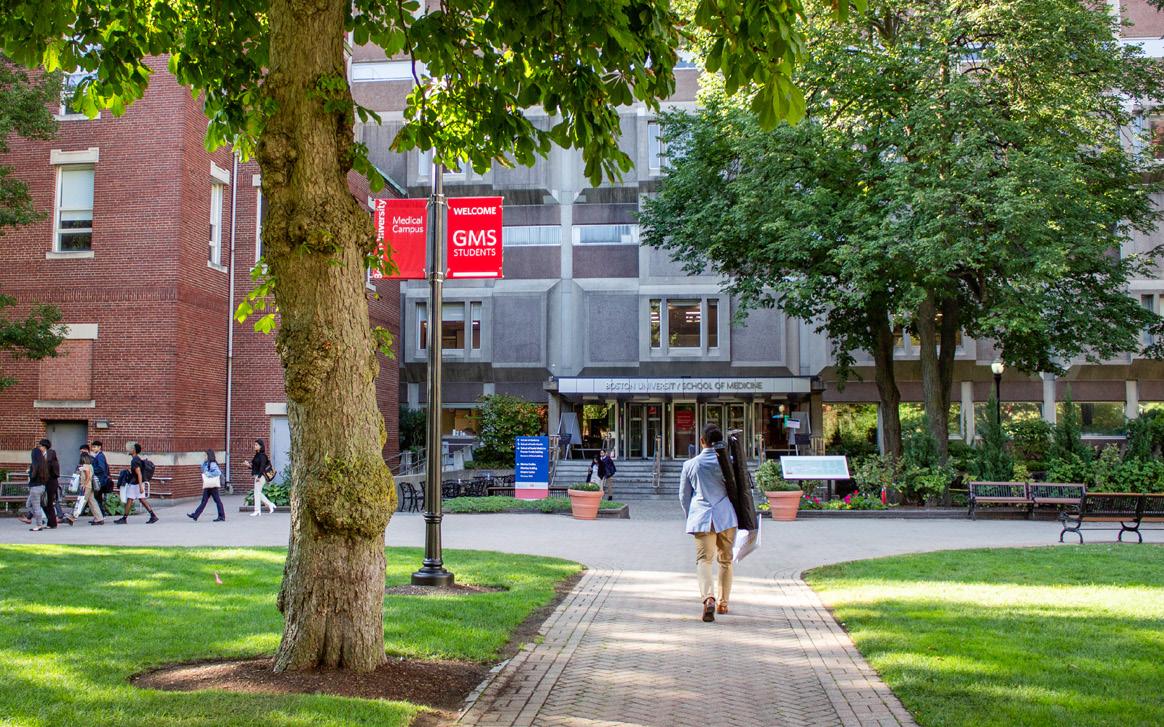
The program was designed for students to complete a Bachelor of Arts degree in the College of Arts and Sciences in three years and a Medical Degree at Boston University School of Medicine in the following four years.
Kristen Goodell, director of the SMED program and the associate dean for admissions at BUSM, said the decision to officially end the program has not been made.
“We cannot say the program is dissolved,” Goodell said. “It’s working its way through the process.”
BU spokesperson Colin Riley also repeated Goodell’s statement.
“I just want to reiterate that there
is a process in reviewing university programs, and there is not a final decision regarding that one at this time,” Riley wrote in an email.
This process started with a steering committee and now, two more university committees must look into SMED before dissolution. Goodell said the final decision should be made this Fall “within a month or so.”
When the program started in the late 1960s or early ‘70s, Goodell said its goal was to, “attract really highly academically qualified students.”
“In many ways, the program did its job,” Goodell said. “It helped to make the university better, and now we’ve got loads of people that want to come here.”
Goodell said when the program started it was a “novel” idea and received a “lot of acclaim,” but now BU is one of 81 other schools with the joint BA/MD program which makes it
“no longer unique.”
Northwestern University permanently discontinued their own seven-year program in 2020, “after a general review of all our pipeline programs and their effectiveness regarding diversity,” according to the Daily Northwestern. No other sevenyear joint programs have ended.
Specifically, Goodell said she was worried the program is not “really fair” to undergraduates as they cannot waive program requirements in order to join extra-curricular clubs or study abroad due to the strict schedule of the program.
“Today’s students are more interested in flexibility and customizing their education than people thought of being in the 1970s,” Goodell said. “We want to make sure that we’re giving students the best opportunity.”
Goodell said this doesn’t affect the students already enrolled in the program.
“They’re going to have exactly the same meetings, the same activities, the same opportunities that they’ve always had,” she said. “We’re 100% committed to that.”
Students in the BU SMED program were made aware of the decision to stop accepting and recruiting applicants for the 2023-24 school year in a town hall meeting over the summer.
Riya Manchanda, a second-year in the College of Arts and Science and student in the SMED program, said she believes students know what “they are getting themselves into” when they apply to the program.
“We’re all here because we know 100% that we want to do medicine, and
to be honest, I think life as a normal pre-med student would be even more hard in terms of flexibility with your schedule and having a normal social life in college,” Manchanda said.
Manchanda said she was “extremely disappointed” that the program was no longer accepting applicants.
“I think SMED is a very, very amazing opportunity for a lot of people,” Manchanda said, “and I think taking that away was something that not a lot of us were happy about, especially because it seemed to be sort of done without taking any of our opinions into account.”
Other students like Sabah Choudhury, a third-year in CAS and a student in the SMED program, said she respects the decision to stop accepting applicants.
“I think most of us trust that they’re making the right decision for the future of the program,” Choudury said. “I think a lot of us are nostalgic, honestly, because this program gave us a lot of friends and a lot of good opportunities.”
Rithik Reddy, a fifth-year student in the SMED program, said he was “very disheartened” about the possible end to SMED because of the “mentorship aspect that existed in the program.”
“The really big benefit of SMED was that emotional, professional relationship I was able to develop with other people who were underneath me,” Reddy said.
Reddy said the undergraduate portion of his SMED experience was “very positive for [his] self-growth.”
“My favorite part about being a SMED has been the creative freedom that I have with how I want to live or
do things for myself,” Reddy said. “I was able to explore a lot of passions and do things with a lot of time that I normally wouldn’t have had during my undergrad years.”
In terms of preparation for medical school, Reddy said he believed the overall curriculum of the SMED program and his minor in sociology helped him to understand the “comprehensive depth of social terms in health.”
“The patient population that our medical school sees is primarily underserved,” Reddy said. “My undergraduate education really did prepare me to a very like high degree oftentimes actually even higher than I would even consider a lot of my peers,”
Regarding the future of BUSM, Goodell said they want to tackle a larger problem in the medical community.
“So one of the needs of the medical school is to try to diversify the physician workforce,” Goodell said. “There’s really good research that shows that having physicians from a wide variety of different backgrounds is really beneficial to patients.”
With this knowledge, Goodell said BUSM wants to start a “social justice program” which is in its “very early stages.”
“Since it’s making people healthier, one of the things we need to do in medicine is to really make sure that we’re getting doctors that kind of mirror the population,” Goodell said. “One of the things that we have talked about is creating another direct entry program where that would really focus on some of the groups that are currently underrepresented in medicine.”
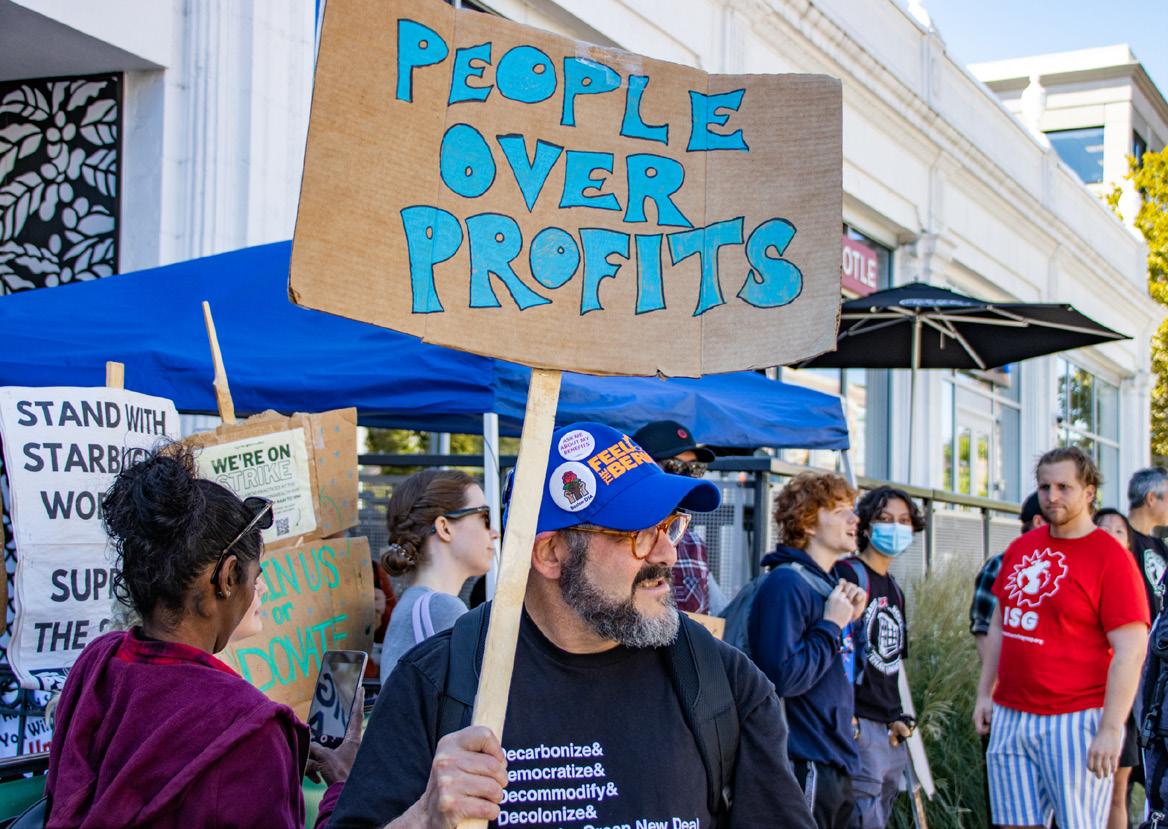
A protestor at the 874 Commonwealth Avenue Starbucks rally on Sept. 15.
CLARE ONG | DAILY FREE PRESS STAFF
CELEBRATING OVER 50 YEARS OF INDEPENDENT STUDENT JOURNALISM THE INDEPENDENT STUDENT NEWSPAPER AT BOSTON UNIVERSITYFRIDAY, SEPT. 23, 2022 YEAR LIII. VOLUME B. ISSUE II NEWS, 3 Multiple businesses close in Allston after major fire FEATURES, 4 Chef Grace Ramirez brings authentic Latin cuisine to BU LIFESTYLE, 9 Learn some easy dorm-style autumn recipes! GAMES, 10 Challenge yourself with the iPhone Eats First Crossword puzzle
SEAN YOUNG | DAILY FREE PRESS STAFF The Boston University School of Medicine at 72 East Concord Street.
Food Edition
CONTINUED ON PAGE 3
Shu Da Xia Hotpot opened after delayed construction due to COVID-19
 BY XIAOYA SHAO Contributing
Shu Da Xia Hotpot opened in May after a prolonged construction due to the COVID-19 pandemic.
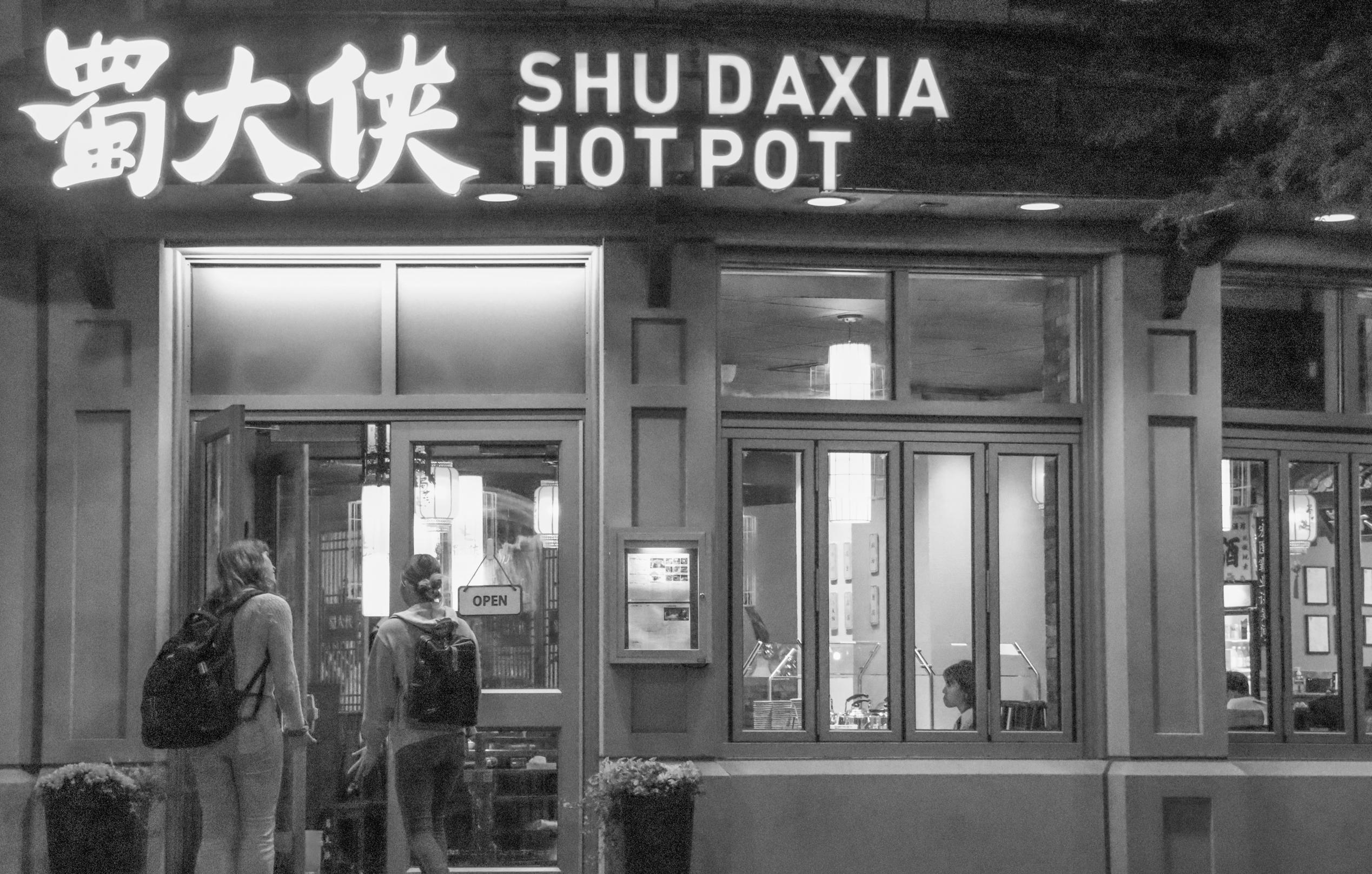
The restaurant is located at 580 Commonwealth Avenue, across the main entrance of Questrom School of Business. It specializes in “authentic Sichuan spicy hotpot,” with a variety of soup bases adjusted to different levels of spiciness, two buffet tables for customized dipping sauce, and distinct raw meat ready to be served in innovative ways.
Some tables are separated by wooden doors which resemble ancient Chinese architecture, next to crimson chairs and food stands. Each table is suited for four or more customers with one or two circular heaters at the center for poaching sliced pork belly or priming marinated beef.
According to Leroy Lee, the manager of Shu Da Xia Hotpot, the plan was to start business at the end of 2019, but COVID-19 disrupted the construction and delayed its opening.
“A lot of BU students thought we were closed because we put our logo outside for a really long time,” Ivory Guan, manager and shareholder of the restaurant and a BU alumni, said. “It never closed. We just didn’t open at that time.”
After its opening, the restaurant has seen brisk business despite its lack of advertising.
“(The restaurant) meets my expectations,” Guan said. “Since COVID almost ended, students are coming back.”
Some knew the opening of Shu Da Xia Hotpot from their friends
or notifications on social media, while others knew from passing by the restaurant.
“It’s a good place to enjoy time with my friends and it’s very near to BU,” Yaning Song, a sophomore in the College of General Studies, said. “So after classes, we can go there to have our dinner or lunch.”
The restaurant has a special way to greet customers, which
impressed Song when she went with her friend.
“After we arrive and have our seats, they will say ‘Da Xia liang wei,’” Song said, which means “two great warriors of two.” “I was surprised with that because other restaurants don’t have that.”
Anni Tang, a sophomore in CGS, said she heard about Shu Da Xia as a hotpot’s brand before,
which prompted her to dine in with her roommate.
“I thought Shu Da Xia was a (chain restaurant), but I haven’t tried it before in other areas,” Tang said. “So I’m really looking forward to try it (in Boston).”
Huayu Chen, a senior at College of Arts and Science, said they have already been to the restaurant three times.
“There is one dish
called Brown Sugar Rice Cake,” they said. “I order it every single time. It was pretty good.”
Overall, students feel satisfied with having another restaurant they can go eat at nearby campus.
“The location was good, but the price was a little bit pricey but not like super pricey,” Chen said. “If there is a rating for this restaurant 1 to 10, I would rate it 9 out of 10.”
BY RUIHAN YANG Staff Writer
The Boston Fire Department responded to a fire in Allston on the night of Sep. 13. Several local restaurants on Brighton Avenue were affected, which BFD said “quickly went to a third alarm fire.”
The BFD chased the fire through several businesses and restaurants, and there were no injuries. The fire originated from the IFresh Noodle restaurant and was caused by an electrical short in the ceiling area above the kitchen, according to a BFD incident report. Restaurants Amelia’s Taqueria and Thai Place both were exposed to the fire. According to the report, the fire caused roughly $3 million in property damage and an additional $300,000 in personal property damage. The Bank of America, Metro by T-Mobile, La Mamma Pizza and More and other businesses were affected by “smoke travel and forcible entry,” the report said.
Amir Shiranian, the owner and president of Amelia’s Taqueria said he received a call from the restaurant around 9 p.m. informing him that employees smelled smoke. Shiranian called the fire department, but the fire soon “erupted” in Amelia’s Taqueria and Thai Place.
Food injustice concerns growing in Boston since pandemic
BY JENNIFER SMALL
Amid growing concerns about living expenses, declining incomes and inflation, Boston residents are experiencing increased food prices, insecurity and inaccessibility.
Approximately 1.8 million Massachusetts residents, 32% of the state’s population, struggled with food insecurity in 2021, according to a survey conducted by the Greater Boston Food Bank.
Nick Owen, program director of food insecurity at Action for Boston Community Development, said increasing unemployment and rising costs of goods has led to more food insecurity in Massachusetts.
“Currently, the rising costs of everything that’s essential (like) utilities, fuel, food, has really put many people in a difficult situation of deciding where their limited money is going,” Owen said. “(This has) been impacting those who are lower income as well as BIPOC or people of color, especially in residential neighborhoods like Dorchester, Roxbury, Mattapan.”
The amount of people utilizing ABCD’s food pantries across Boston has increased since the COVID-19 pandemic, said Josh Young, director of field operations and legislative affairs at ABCD. Young noted that food insecurity has “dramatically” affected lower income residents and also begun to impact middle class people in Boston.
Hae-In Kim, deputy director of planning and development at the Office of Food Justice in Boston, said neighborhoods in Boston experience different rates of food insecurity due
Boston University Graduate Workers United rallied for unionization
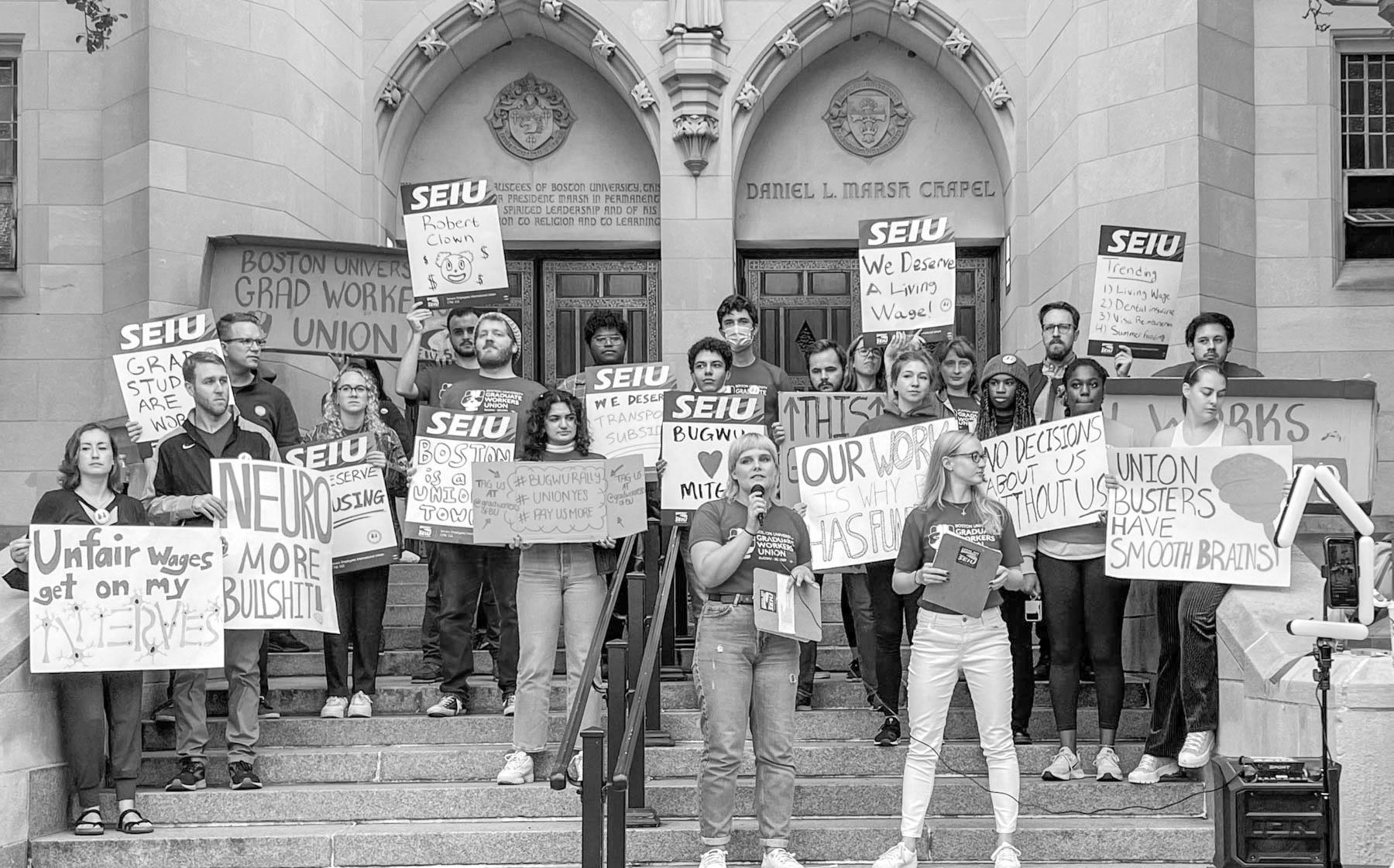 BY JIT PING LEE Senior Writer
Boston University Graduate Workers held a rally at Marsh Plaza Sept. 20 as part of their bid for unionization, capping off a sustained labor rights campaign that began Sept. 2.
BU Graduate Workers United cited wages and workload as two of their biggest concerns. Graduate workers are not earning a living wage, which was constantly said at rally. According to the Massachusetts Institute of Technology living wage calculator, $46,918 is a living wage for an adult with no children living in Boston.
While stipends vary across departments, BU graduate workers generally earn between $24,000 and $30,000 a year, Jordan Pickard, a doctoral student in the English department said.
“There are graduate students who have to rely on food pantries or have to borrow canned beans from their roommate,” Pickard said. “I recall students saying things like they have lost 15 pounds for the summer just because they don’t have enough money to feed themselves regularly.”
Nairan Wu, a doctoral student in linguistics and a speaker at the rally, said graduate students were upset over how the school’s COVID-19 policies were made without consulting graduate workers.
“We are the people who are actually teaching in their poorly ventilated rooms,” Wu said. “They treat us like students when it’s convenient for them, and they use us as workers when it benefits them.”
Aarohi Goel, a junior in the College of Arts and Sciences and action coordinator at the Boston University Young Democratic Socialists of America said graduate students are overworked and underpaid.
“It is very important to us as undergraduate students that our workers at the University are fairly compensated for all the work that they do,” Goel said.

The call for a living wage comes amidst BU’s growing assets, which stood at 8.3 billion in 2021. Katie
Meyer, a doctoral student at the Wheelock College of Education and Human Development said this has prompted those speaking at the union to question why the money cannot be spent on graduate workers.
“President Brown has made a million dollars in salary. There are definitely instances in which we can see that BU for certain has the funds.” said Meyer. “In any way us asking for a living wage should be taken away from students.”
A minimum of 30% of graduate
workers must sign authorization cards before the National Labor Relations Board can conduct an actual vote for graduate workers to vote on unionization.
Meyer said unionization is a method of coming together.
“Unions are incredibly important for securing material gains like a contract and a living wage,” Meyer said, “but it’s also a really important community where we can all come together and support one another.”
“Pretty much everything was on fire, and the fire department had to break the windows and open up the roof in order for the air to go, so they can actually battle with the fire,” Shiranian said. “It took them, I would say, around three to four hours, and finally the fire was stopped totally.”
Mandy Wilkens, an Allston resident who lives on Quint Avenue, said there was a lot of noise and “commotion” on Brighton Avenue that night.
“There were maybe four or five fire trucks in front of the street, and they were going on top of the restaurant,” Wilkens said. “Six of them [businesses] have visible damage on the outside.”
Shiranian said the staff for Amelia’s Taqueria checked the restaurant on the next day, and the restaurant was “totally destroyed” inside.
“They have told us it may take at least six months for the reconstruction of the building,” Shiranian said. “We pretty much lost all our equipment, and luckily nobody got hurt, which was the most important thing during this sort of accident.”
Shiranian said he appreciates all the support Amelia’s Taqueria got after the fire and hopes the restaurant can be reopened in the same place.
“We hope that we can open up soon, as we are one of the staples of the neighborhood,” he said.
Currently, Amelia’s Taqueria, iFresh Noodle, Thai Place, a Bank of America ATM location, a MetroWest store, Change Express Money Transfer, and La Mamma Pizza are temporarily closed and locked down.
“Those are restaurants that I walk by literally every day of my life. I think I know a lot of people use Amelia’s, I use that Bank of America on a regular basis,” Wilkens said.
“I really hope they’ll survive.”
“Some folks who were in a middle class category who, for whatever reason, lost their income or they lost their housing or they just have been dramatically affected by rising food prices, they’ve come into our food pantries for the first time,” Young said.
to economic and social disparities.
“Food insecurity mostly impacts communities of color and lowincome communities,” Kim said.
“Racism has impacted who has access to land [and] who has access to grocery stores.”
Food insecurity has most heavily impacted Black, Latinx and LGBTQ+ communities in Massachusetts, with
all three groups reporting more than 50% of people experienced food insecurity in 2021, according to the GBFB survey.
Erin McAleer, CEO of Project Bread, a Massachusetts organization that aims to aid food-insecure individuals, wrote in an email statement the Supplemental Nutrition Assistance Program provides 10 times the amount of food than food banks and is offered in over 5,000 retail establishments in Massachusetts.
Many individuals who are eligible for SNAP, however, do not enroll
in the program due to language barriers in the application process or concerns of being judged for using SNAP, according to McAleer. Project Bread found 659,340 SNAP-eligible Massachusetts residents did not enroll in the program.
“Food insecurity does not exist in a vacuum and … racist structures and policies can cause barriers to SNAP participation,” McAleer wrote.
McAleer explained Project Bread recently partnered with the City of Boston to implement education, training and research initiatives that

help address food insecurity.
“The City of Boston’s response to food insecurity across government, community and the private sector has been incredible,” McAleer wrote.
“It’s clear Bostonians are committed to lifting one another up.”
Grace McEnery, outreach and development manager at Haley House, a food pantry and soup kitchen in Boston’s South End, wrote in an email statement food justice is the convergence of many different social issues including health, community, culture, the environment and resource distribution.
“What makes this system unjust is that, to my understanding, we don’t necessarily have an issue of a shortage of food, but an inability to properly distribute resources equitably,” McEnery wrote.
Haley House receives most of its food from grocery stores that would otherwise dispose of it, according to McEnery.
“Most of the food that we serve in our soup kitchen and distribute in our food pantry is food rescued from stores like Whole Foods and Trader Joe’s and brought to Haley House by a food rescue organization,” she said.
“All of the food is high quality, not expired and would otherwise become waste from these stores.”
Owen at ABCD said the City of Boston has been connecting various food justice and advocacy groups together in the fight against food insecurity.
McEnery at Haley House wrote it will take many different groups of people to address food injustice in Boston.
“Continued investment and common desired outcomes from all of these stakeholders will hopefully move us towards a more just society,” McEnery wrote.
“The neighborly thing would have been to just come out and talk to us and say, ‘Hey we have to do something about those pallets out there,’” Gallotto said.
Cristina Gallotto, Gallotto’s daughter, started an online petition asking the community to help protect the market’s storage space on Aug. 26, which has collected 1,032 signatures.
Representatives from the Haymarket Pushcart Association and managers of Canopy by Hilton Boston Downtown met on Sept. 15.
“It’s all positive feedback that I got from this meeting that we had,” Gallotto said. He added the hotel is willing to help add new tables and get pallets off the sidewalk. Hiltondidnotrespondtorequestsforcomment.
“There’s never been a situation where we would ever move,” Gallotto said. “The one thing is at the end of the month, we still don’t have a place to put all our storage, and what they didn’t appreciate was that we were putting it there Saturday night through Thursday.”
Peter Drummey, chief historian and Stephen T. Riley Librarian at the Massachusetts Historical Society, said the romantic scene of an outdoor market draws in tourists and locals alike.
“(Haymarket) has that vital connection with people going shopping essentially together, across class and economic and



ethnic and racial lines,” Drummey said.
“The people who run the stalls and buy the food, represent the changes in Boston in ethnicity and then the makeup of the city.”
The 400-year-old history of Haymarket predates the establishment of the Haymarket Pushcart Association, Drummey said.
Today’s Haymarket has endured many threats to its existence, including being pushed underneath an elevated highway, and later having to deal with Boston’s Big Dig in the early 2000s, Drummey said.
“Haymarket today is not where Haymarket Square was,” he said. “I think an outdoor market survives in that way. It’s displaced rather than being removed.”

Ledyn Jaimes, who was shopping at Haymarket, said although she lives far away, she enjoys the market because of the affordable prices.
“If I had time to come over here every Saturday, I should be here every Saturday,” she said.
The Pushcart Association and the Canopy Hotel are set to meet at the end of the month to resolve the storage issue and possibly eliminate wooden pallets entirely, Gallotto said.
“I’m hoping they can work it out,” Gayle Schumacher, a resident from Dover, said.
“Because it [Haymarket] is a treasure to our city.”

Hilton hotel continues to negotiate storage dispute with Haymarket Pushcart Association
The Boston University graduate workers union and their supporters at the rally at Marsh Chapel on Sept. 20. The rally was held as part of their bid for unionization.
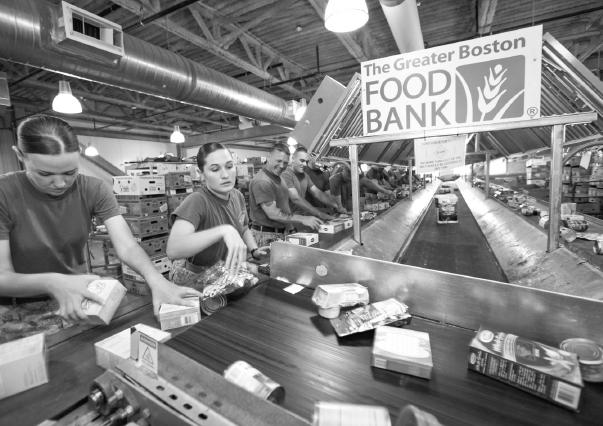
Volunteers sorting food at The Greater Boston Food Bank.
COURTESY OF WIKIMEDIA COMMONS
Shu Daxia Hotpot at 580 Commonwealth Avenue.
TALIA LISSAUER DAILY FREE PRESS STAFF
Fire in Allston leaves $3 million in damage, closing several businesses
HAYMARKET CONTINUED FROM 1
3NEWS
2 NEWS
Campus Associate
Writer RSVP TO BE A VIP FOR PERKS: Skip the line, chance to win exclusive prizes and more OCT 1, 2022 11AM-5PM GATE B @collegefest @collegefest /collegefest collegefest.com FREE TO COLLEGE STUDENTS WITH A STUDENT ID Dozens of Brands · SWAG · Photo Opps Sweepstakes · Free access to Fenway Sponsored by:
A fruit stand at Haymarket. SEAN YOUNG DAILY FREE PRESS STAFF TALIA LISSAUER DAILY FREE PRESS STAFF
Magic, makeup, maki, and mental wellbeing:
BY EDEN MOR Senior Staff Writer
Whether it be through bodypositivity content, a simple magic trick or food reviews, these four Boston University students have found internet-fame.
A path to recovery
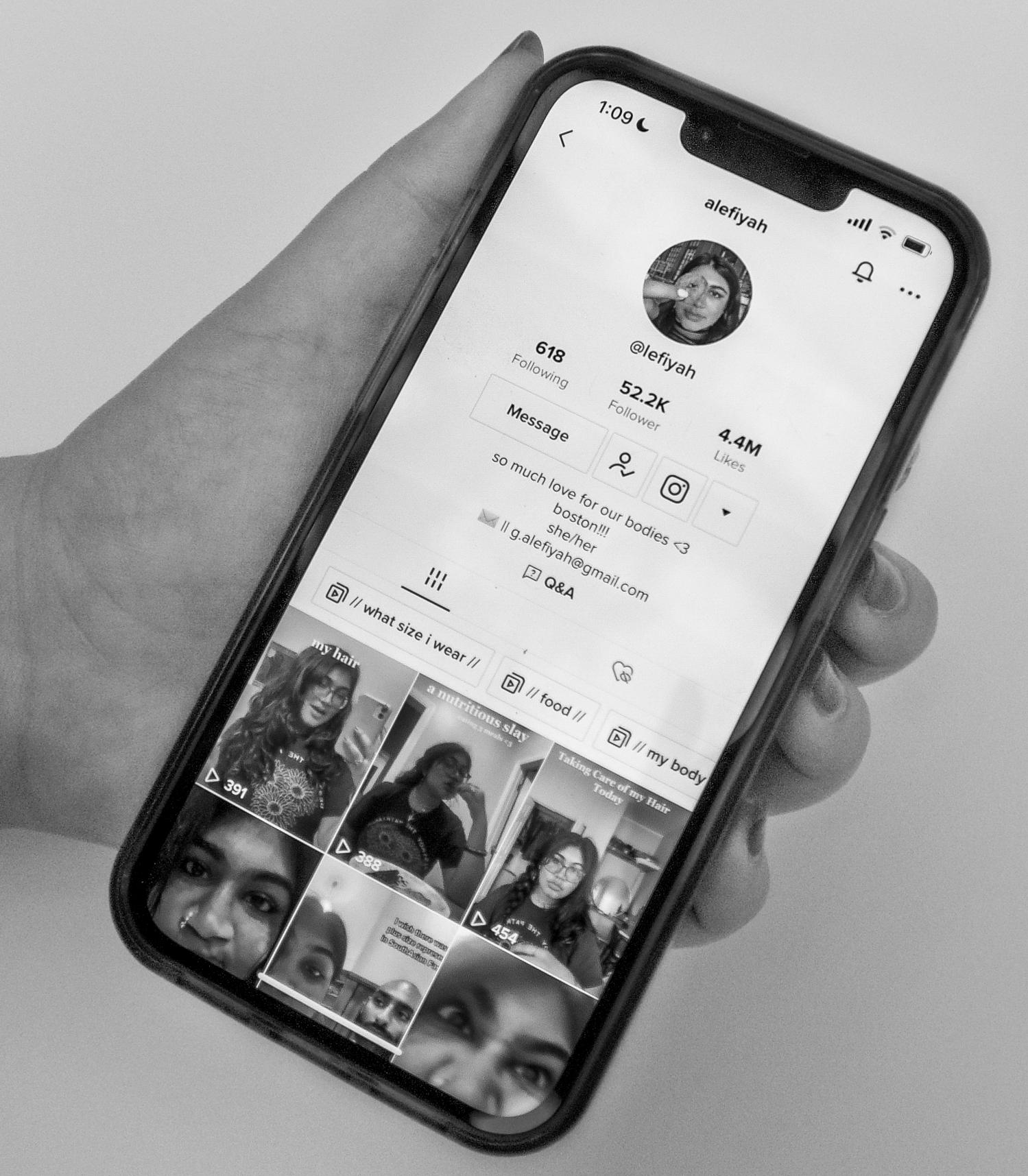
Alefiyah Gandhi, a junior in the College of Arts and Sciences, said she first started posting on TikTok at the height of her eating disorder.
“It was the first time I have ever talked to anyone about any body image issues really,” Gandhi said.
Gandhi’s TikTok page, @lefiyah, has amassed 52.2k followers.
Through her videos, Gandhi says she hopes to show people the “raw truths” behind eating disorders and recovery.
“The whole point of my page is to show that my own recovery isn’t linear,” she said. “There’s no expectations attached to anyone watching my content.”
Although Gandhi’s platform has allowed her to work with brands like Pepsi and MTV, she said she has a “love-hate relationship” with TikTok.
“A part of me very much dislikes TikTok because of how addictive it is and how almost toxic it is to the minds of young people,” Gandhi said. “But another part of me feels a sense of responsibility to be the authentic representation for those younger people.”
Gandhi said people who have “completely different lives” than her reach out and share how “impactful” her content is to them.
“It really feels like it’s a no strings attached moment of understanding between you and like a stranger…and I think that’s really special.”
From home cooked meal to viral chef
Stuck at home during the pandemic with nothing to do, Irene Kim, a senior in the College of Communications, said she began tasting and reviewing new foods on her TikTok account.
“My first viral video was me eating sushi because my parents are sushi chefs,” Kim said. “We would have sushi nights at my house because they were just a normal thing.”
Now, with 468.9k followers on her TikTok @ireneykim, Kim continues to post food-related content, but also get-ready-with-me videos, day-in-thelife vlogs as a student and the latest TikTok trends.
“People liked the food content, the food reviews,” Kim said. “It eventually kind of snowball-effected into videos now, where I just try different foods and I just kind of show off what I do in my life.”
Kim said that she loves sharing her experiences as a BU student with her followers and said her role as a BU student is “integral” to her videos.
Although Kim participates in paid campaigns, she said she still wants TikTok to be “something fun to do’’ rather than a full-time job.
“I don’t want to make it my sole source of income,” she said. “It also just makes it less authentic if I do that.”
Can you feel the magic?
Henry Di, a junior in the Sargent College of Health and Rehabilitation Sciences, said he started learning magic tricks when he was just 12 years old, inspired by an old magic trick his grandfather taught him.
In Di’s senior year of high school, he decided to make magic videos on TikTok for a school project. Now, Di performs anything from card tricks, to optical illusions to mind-
readings on his TikTok account, @ enriquethemagician.
Over the years, he has amassed 480.5k followers, a collective 9.7 million likes on his videos and requests to create content for big companies such as Google.
His most popular TikTok, in which he asks viewers to choose a card from the deck and subsequently guesses which one they chose, has 73 million views.
“On TikTok, people like to be engaged by like…the way I talk,” he said. “Most of the time, you have to make short form stuff so that people are engaged the whole time and watch the entire thing.”
Although being in college has not changed the type of content Di creates, it has made keeping up with his account “a lot more challenging,” he said.
“Over the summer I was posting like two videos a day almost everyday, whereas now that I’ve started school… there’s been a couple days where I haven’t been posting,” Di said.
Di said TikTok fame has “opened a lot of doors” for him and he hopes to one day “create a living off of [social media].”
“I feel like I have the potential to do stuff with this,” he said. He’ll “keep growing, keep posting and reaching out to different companies, things like that, (and) I’ll be able to eventually make this a full-time thing.”
The international vlogger
For Russian international student Masha Yuzhakova, a sophomore in COM, social media fame did not come instantly. Yuzhakova began her Youtube channel at age 13, when there weren’t many Russian social media creators out there.
In the beginning of her YouTube career, Yuzkahova said she would
post “anything that was trending” at the time, such as “room tours” and “what’s in my bag?” videos.
Yuzhakova said she now mainly posts vlogs in Russian, taking her 530k subscribers along with her for everyday activities.
“I think the best part of my blog personally is that I’m trying to be myself and I never post when I’m not in the mood,” she said. Her growing popularity has allowed her to turn a hobby into a job and she
said she works with worldwide brands such as Tommy Hilfiger, Sephora and Victoria’s Secret.
Yuzhakova said that moving to the U.S. last year gave her the opportunity to share new experiences with her followers.
“I would say that moving here is one of the reasons why people are interested in my content,” she said. “Not everyone has the opportunity to study abroad, and I’m very grateful that I was given a chance to experience
Dining halls welcome Latin cuisine aficionado Chef Grace Ramirez
BY
Authentic, comforting and colorful Latin cuisine — inspired by Masterchef USA contestant Grace Ramirez’s cookbook, “La Latina” — is coming to all of the Boston University dining halls this Friday.
“For Latino students, I hope they feel fairly represented,” Ramirez said. “I hope that they’re able to have a bite of those black beans and [it] reminds them of their grandmother’s beans or their mom’s beans.”
In celebration of Hispanic Heritage Month, Ramirez said she worked with Aramark, the food supply company that works with BU Dining Services, to design “La Latina Cocina.” Students can expect a series of “station takeovers” for lunch on Sept. 16, 20, Oct. 4, 12, and for dinner on Sept. 22, 28 and Oct. 6, according to Campus Culinary Director Chef Christopher Bee. Menu items include Mojo pulled pork tacos, frijoles negros, vegan chipotle tostadas, and horchata, a traditional Latin beverage made of soaked white rice and flavored with cinnamon, maple syrup and sugar, Bee wrote in an email.
Bee wrote that they partnered with Ramirez specifically because she “understands that food is culture and loves sharing the nourishing traditions of Latin American cuisine.”
“We look at this as an educational opportunity,” John Webster, director of BU dining, said in an interview. “We want to make sure that we’re teaching
you about food and culture in an appropriate way.”
Ramirez said she created the concept after hearing that students wanted healthier, authentic flavors and more representation in their dining halls.
“Students were being vocal about how they wanted representation and traditional flavors in schools,” Ramirez said.
“That is the most exciting part, that it came from students being vocal and someone like Aramark
understanding.”
BU isn’t the only school awaiting Ramirez’s recipes — La Latina Cocina is rolling out at 75 Aramark-affiliated schools across the country this fall. Ramirez said she has been working with Aramark to test and tweak recipes since January.
“To be able to celebrate Latin American food and culture at this scale is very exciting,” Ramirez said. “I feel very honored and privileged to be right now in this
position.”
Starting off her career as a production assistant for Latin American television, Ramirez said, she worked her way up in the industry and eventually landed roles as producer and director for “Throwdown with Bobby Flay” on the Food Network. After a critical run on “Masterchef USA,” Ramirez switched careers and landed a scholarship to the French Culinary Institute.
“I didn’t go very far in the
show, but it got me to where I needed to be, which was Gordon Ramsay saying to me, ‘you should do culinary school and then come back,’” Ramirez said.
Ramirez described pursuing her dreams in working with food as a turning point. She would yet again work her way up, but this time on the culinary ladder.
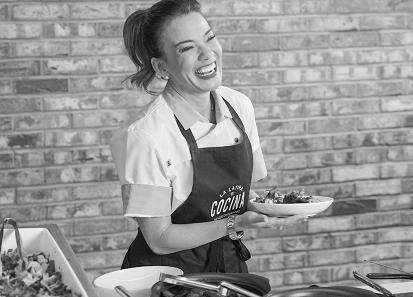
“I think that the challenges are real of being a Latina woman in all these different spaces [and] being a pioneer,” Ramirez said. “When I did ‘La Latina’ there were only a couple of cookbooks that were for Latin food and culture in general done by a major publication.”
Chef Melissa Tung, a BU alumni who graduated from the College of Arts and Sciences in 2008, said she helped Ramirez design the concept for Aramark.
Since meeting at culinary school in 2010, Tung said, the pair have been amazing friends as well as business partners.
“Having another strong female minority person to lean on, and ask for advice between the two of us, really has helped us navigate to the place that we are now, to feel that much more confident,” Tung said.
Ramirez said growing up surrounded by “powerful Latinos” didn’t prepare her for the stereotypes she would face in the culinary industry where none of the executive chefs looked like her.
“If you can’t enter through the front door, you have to enter through the back door or the side door or the window,” Ramirez said.
Students voice concerns over long wait times at FitRec
BY CATERINA TOMASSINA Contributing Writer
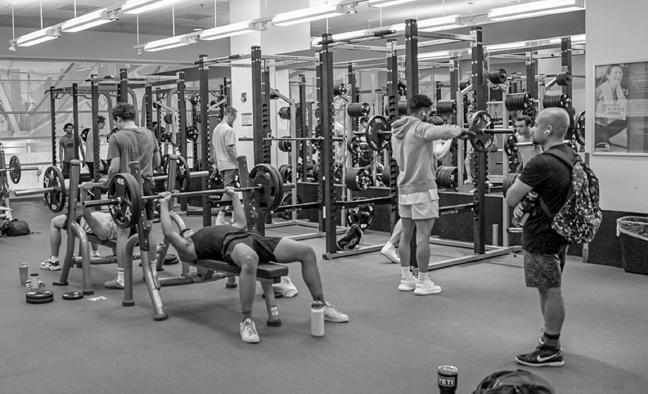
Boston University’s Fitness and Recreation Center — open every day and frequented by students working out, playing sports or participating in credited fitness classes — gets crowded frequently, students say.
“There isn’t very much room to do anything in the weight room,” said Isabella Nocetti, a daily FitRec user and a freshman in the College of Arts and Sciences. “You sort of have to dodge people if you want to get to anything.”
Tommie Lee, a sophomore in the College of Arts and Sciences, said long waiting times cut into the amount of time she spends at the gym. Waiting too long between sets, she said, can cause her to cool down and make her workout feel harder.
“I feel like there’s way more people coming in,” Lee said. “I love people getting into fitness, but also I don’t want to wait 20 minutes for a piece of equipment.”
Demand is high in the afternoons, BU Spokesperson Colin Riley wrote in an email. More than 5,000 students use FitRec each day, he wrote.
“The occasional heavy demand at FitRec has more to do with the times students choose to use the facility than with enrollment,” Riley wrote. “Every year demand tends to even out as students adjust their workout times over the first few weeks of classes.”
Michelle Grullon, a freshman in the College of Communications and a student worker at the front desk services at FitRec, said
she has heard a lot from other students and her coworkers that the number of students coming in this year is “absolutely crazy” and can get “super overwhelming” at times.
“They’ve just been noticing the massive influx of people, even one day having nearly a line of people outside the door waiting to get into FitRec as it was opening,” Grullon said.
Elsa Jenkins, a first year graduate student in Sargent College of Health and Rehabilitation Sciences and a BU FitRec student manager, said she hasn’t noticed much of a change
in the amount of students coming in this year as opposed to before the pandemic regulations.
“I don’t think it’s any busier than usual,” Jenkins said. “It also helps that we just got a bunch of new equipment which is supposed to help with the crowds of course, but obviously, like the first couple of weeks of school are crazy.”
However, Karla Lovato, a sophomore in Sargent College of Health and Rehabilitation Science, said she switched to using GymIt — a non-BU affiliated fitness center across the street from FitRec — last spring, after experimenting with
going to FitRec at different hours throughout the day, with no success.
“We have a big school, and the gym is nice. It’s big, but not big enough for that amount,” Lovato said. “I think they just have to expand and get new machines, make a bigger space, or honestly do like reservation times or something like that.”
Lovato said she is willing to pay an additional cost to frequent GymIt in order to avoid large crowds and have quicker access to equipment.
“I was like … I cannot just keep avoiding the gym just because it’s
really full, ” Lovato said. “I know [FitRec] is convenient because it’s … included in our tuition, but … it’s just a waste of time.”
Marcus Perriello, a sophomore in the College of General Studies, said he’s willing to stick with FitRec because of its convenient location and new machines.
“I don’t think I would waste my money on a gym membership,” Perriello said. “It would have to be truly off, the machines would have to be breaking, and I would have to be waiting in line routinely for 40 minutes every time … and that’s just not the case.”
Perriello said he thinks this is an issue that BU can’t do much about. There’s little room for more machines, he said, and making people book gym appointments would not be ideal.
“I think this is something that would just have to solve itself … people give up on the gym eventually,” he said.
“Stop going to FitRec please,”
Perriello said, laughing. “I don’t want to wait in line anymore.”
Lee said there are usually more people at the beginning of the school year, or around New Year’s.
“A lot of people are having ready access to a gym that they might not have had previously … usually after a month, that dies down, … but as for the rest of the crowd, we’ll see,” Lee said.
“Once the CGS cubs kids come in January, I think we’re gonna see another spike because that also coincides with New Year’s. So, we’ll see.”
Lost in the broth: Santouka Ramen opens Allston restaurant
BY ADITHYA IYER Science Asssociate Editor
International restaurant chain Hokkaido Ramen Santouka is set to open its newest location in Allston on Sept. 23, expanding its empire to Boston University’s backyard.
The Japan-based ramen food chain has approximately 55 locations worldwide across 9 countries, with its newest location at 169 Brighton Avenue, just 5 blocks from the Star Market in West Campus and a five minute walk from Packard’s Corner.
The story of Santouka started in mid-November of 1987 with founder Hitoshi Hatanaka.
“One day I was watching a movie with ramen in it and that made me want to eat ramen,” Hatanaka said through an interpreter. “I tried to find some ramen in the city, but I could not find anything good so I got really upset. So I said to my son, ‘I’m going to make a better ramen.’”
Hatanaka said he rushed to open his first restaurant on March 10, 1988 mainly because of the name of his restaurant.
“The shop name was already decided, it was Santouka.” Hatanaka said. “San means three, tou means ten. Even if the shop was not ready, the shop must open on March 10.”
At first, Hatanaka struggled with the restaurant.
“Nobody came to the restaurant at the beginning, but I asked friends to come and have a beer and then it looked like the restaurant was popular,” Hatanaka said.
Hatanaka opened 13 restaurants throughout Japan and 40 restaurants internationally, including two more in Boston located in Harvard Square and Back Bay.
Boston Area Manager

Tatsunori Tanaka said the Harvard Square location brought in the largest revenue out of all of the Santouka locations worldwide after its opening in 2015.
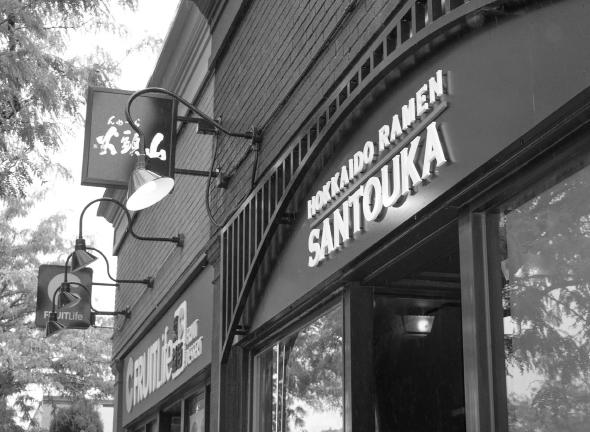
A celebration for the opening of the new Allston took place on Sept. 9. Hatanaka flew in from Japan to attend this event.
“It’s such a rare opportunity to get a founder, so let’s celebrate him today,” Chris Haynes, a restaurant publicist for Santouka, said.
Alesandra Pollina, a guest at
the opening event and 2011 BU alumna, said she’s heard good things about the other Santouka Ramen restaurants in Boston.
“The other location too … I hear they always have lines out the door,” Pollina said. “I don’t know if that’s because they’re tiny, but that’s how good it is. People are always trying to come.”
Sam Wu, a junior in the College of Arts and Sciences, said he has many fond memories at a Santouka restaurant.
“The first time I went [to
Santouka] was a date. My first date in college was actually at Santouka,” Wu said. “It felt like a good start to college.”
Wu said he has a yearly tradition of going with other members of the Chinese Student Association to Santouka.
“Other places might have other things besides just ramen but Santouka really is just all about ramen,” Wu said. “Every single ingredient they put into it has a lot of thought and it all works together.”
TAYLOR COESTER DAILY FREE PRESS STAFF The weight room in the gym at Boston University’s Fitness and Recreation Center in West Campus. Students expressed their displeasure with the gym’s overcrowding and excessive wait time for equipment use.
5FEATURES
4 FEATURES
FEATURES
Influencers share their talents and messages COURTESY OF ARAMARK Chef Grace Ramirez holding a dish made from La Latina Cocina for Boston University Dining Services SHANNON RUSNAK DAILY FREE PRESS STAFF Hokkaido Ramen Santouka located at 169 Brighton Avenue in Allston. The restaurant is scheduled to open Sept. 23.
EMMA HAGERT Community Associate Editor Scan the QR code to take the DFP audience engagement survey
KOTA TSUKADA DAILY FREE PRESS STAFF Alefiyah Gandhi’s TikTok page.
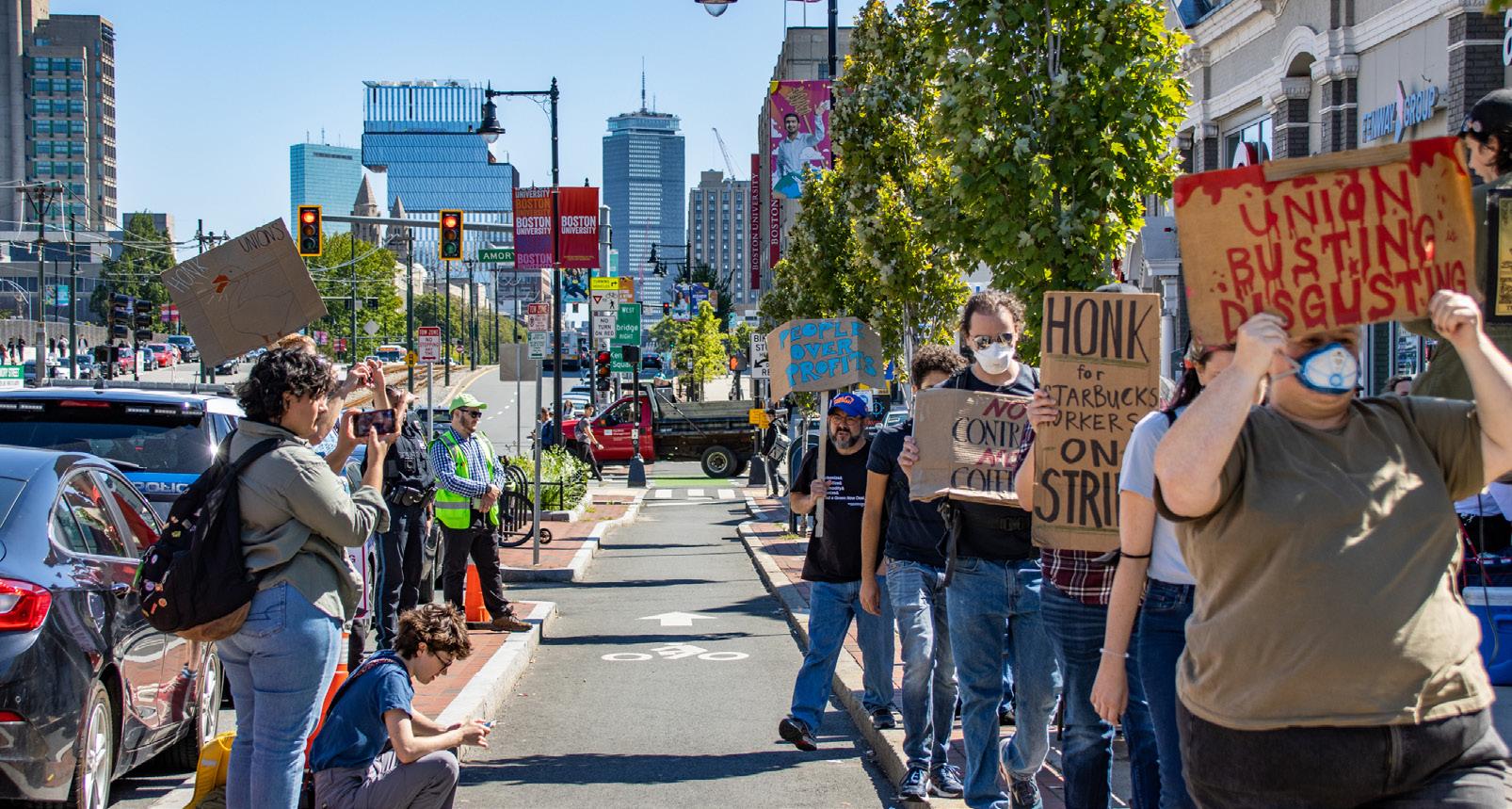
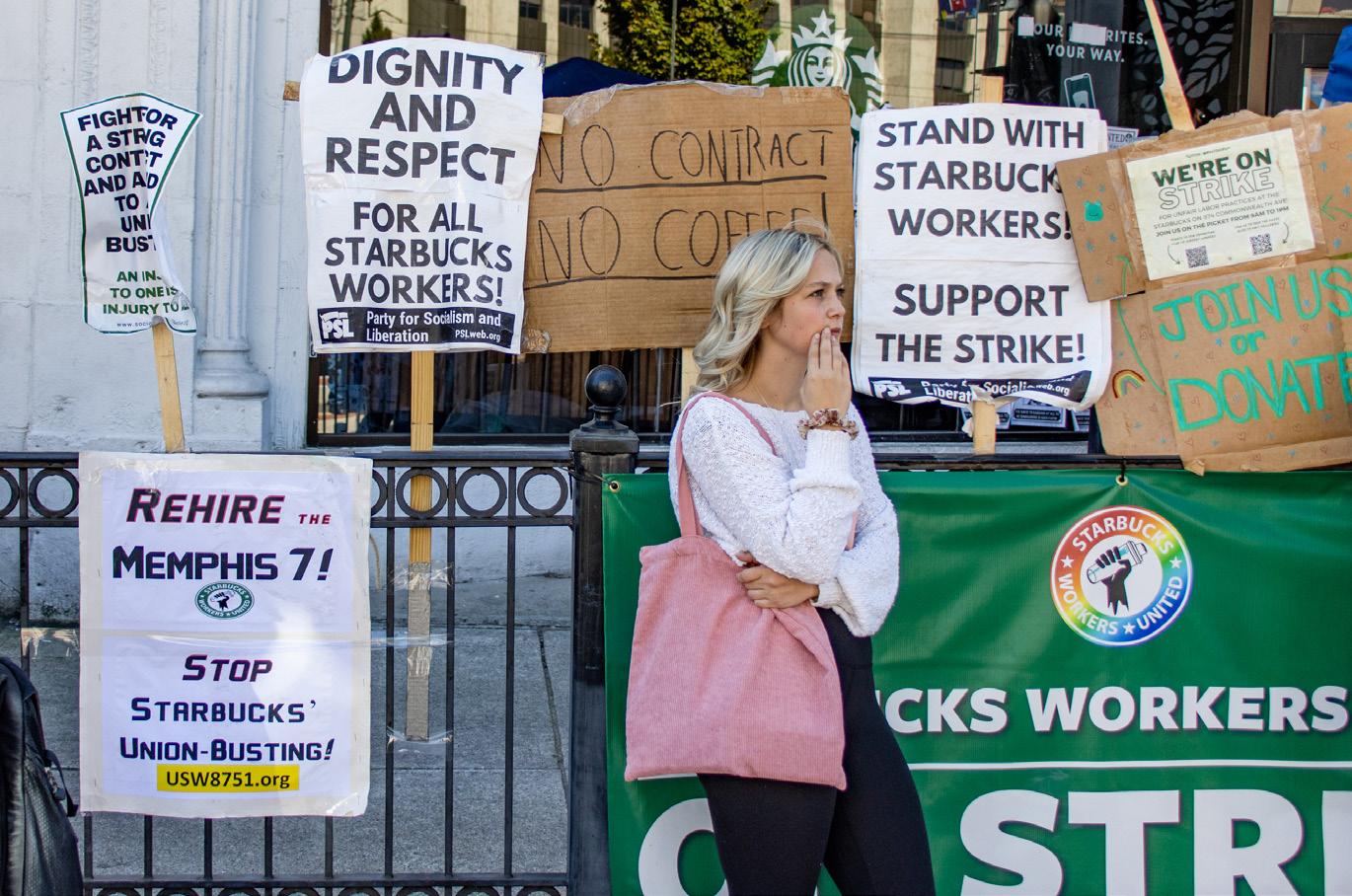
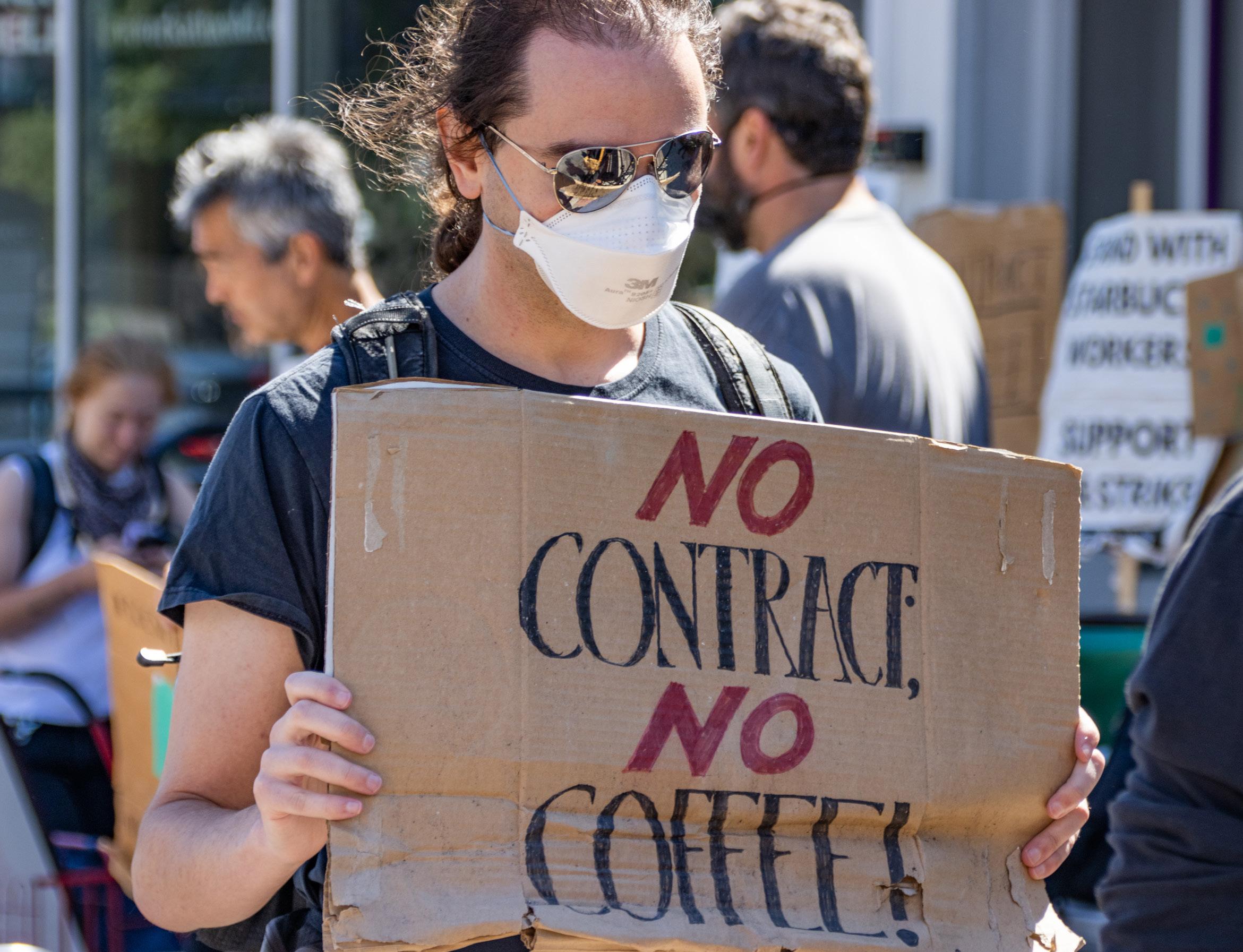
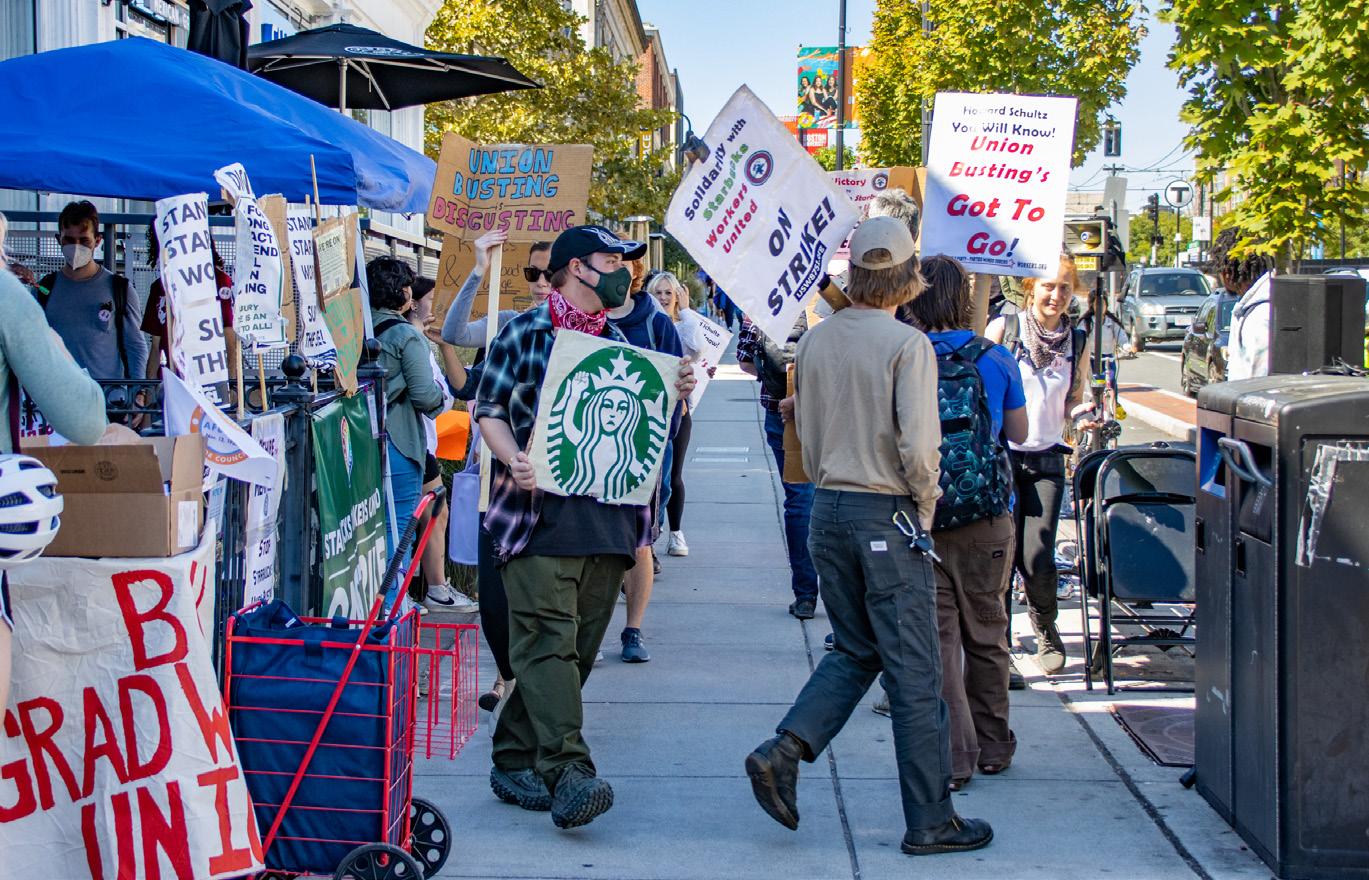
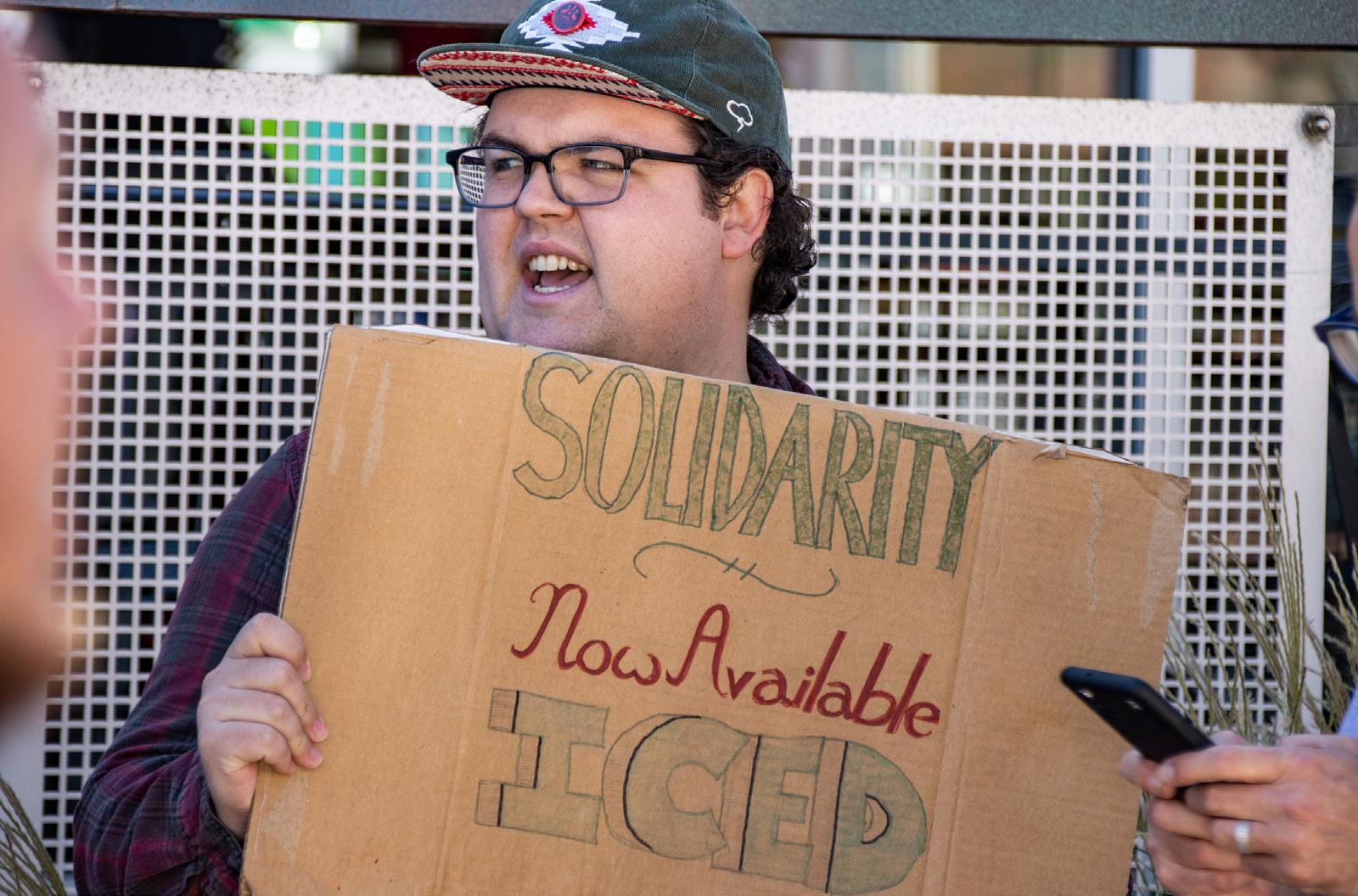
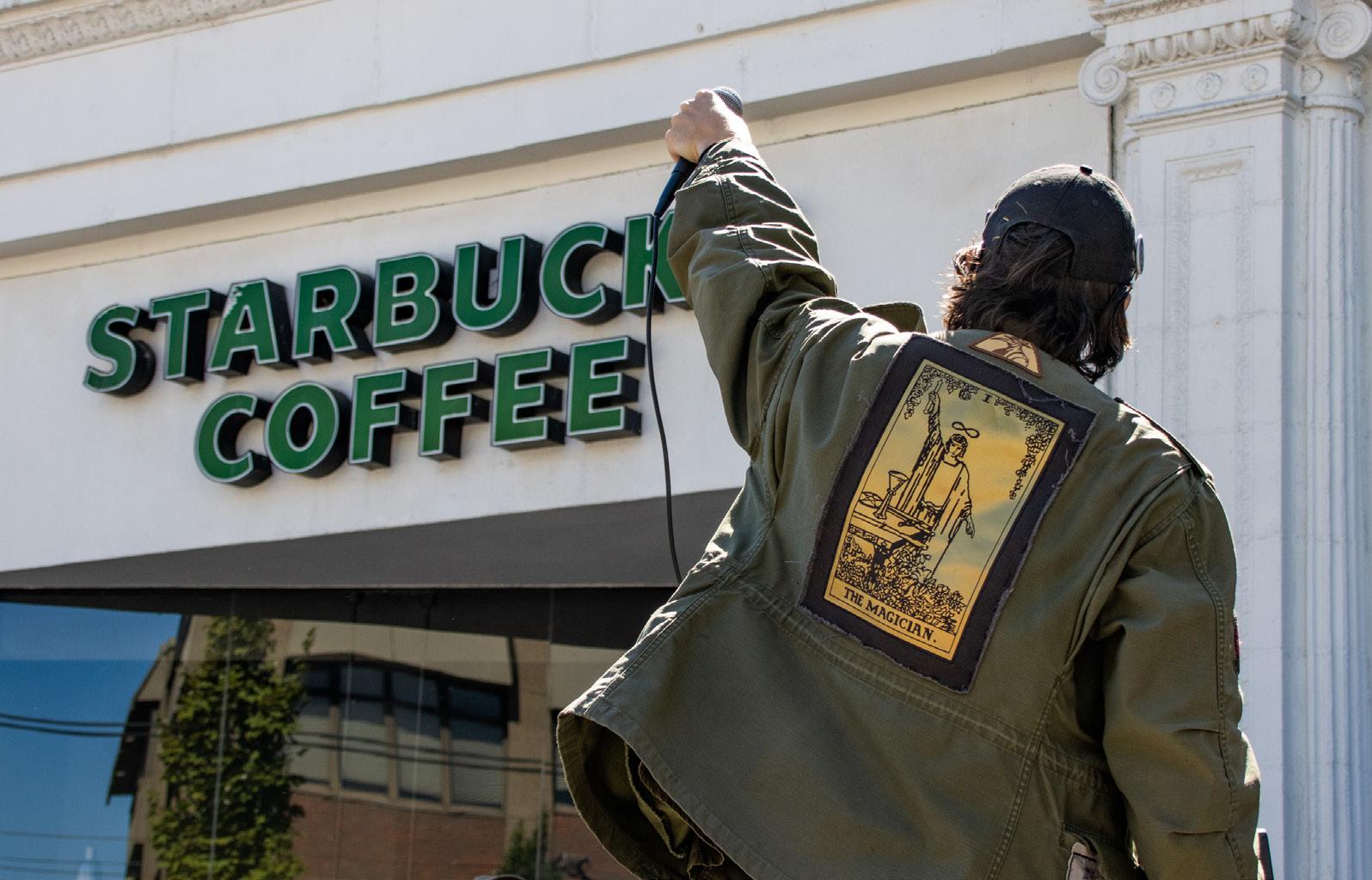
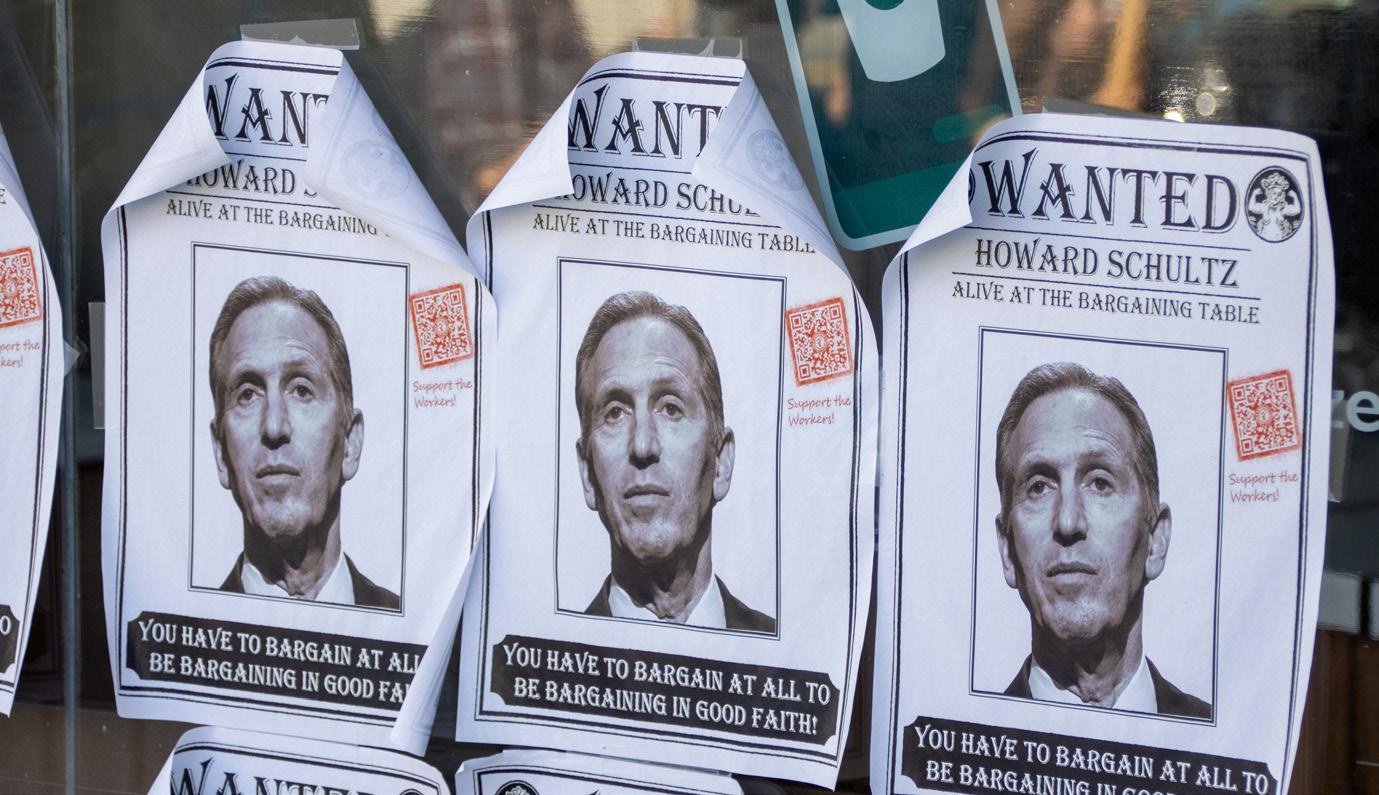
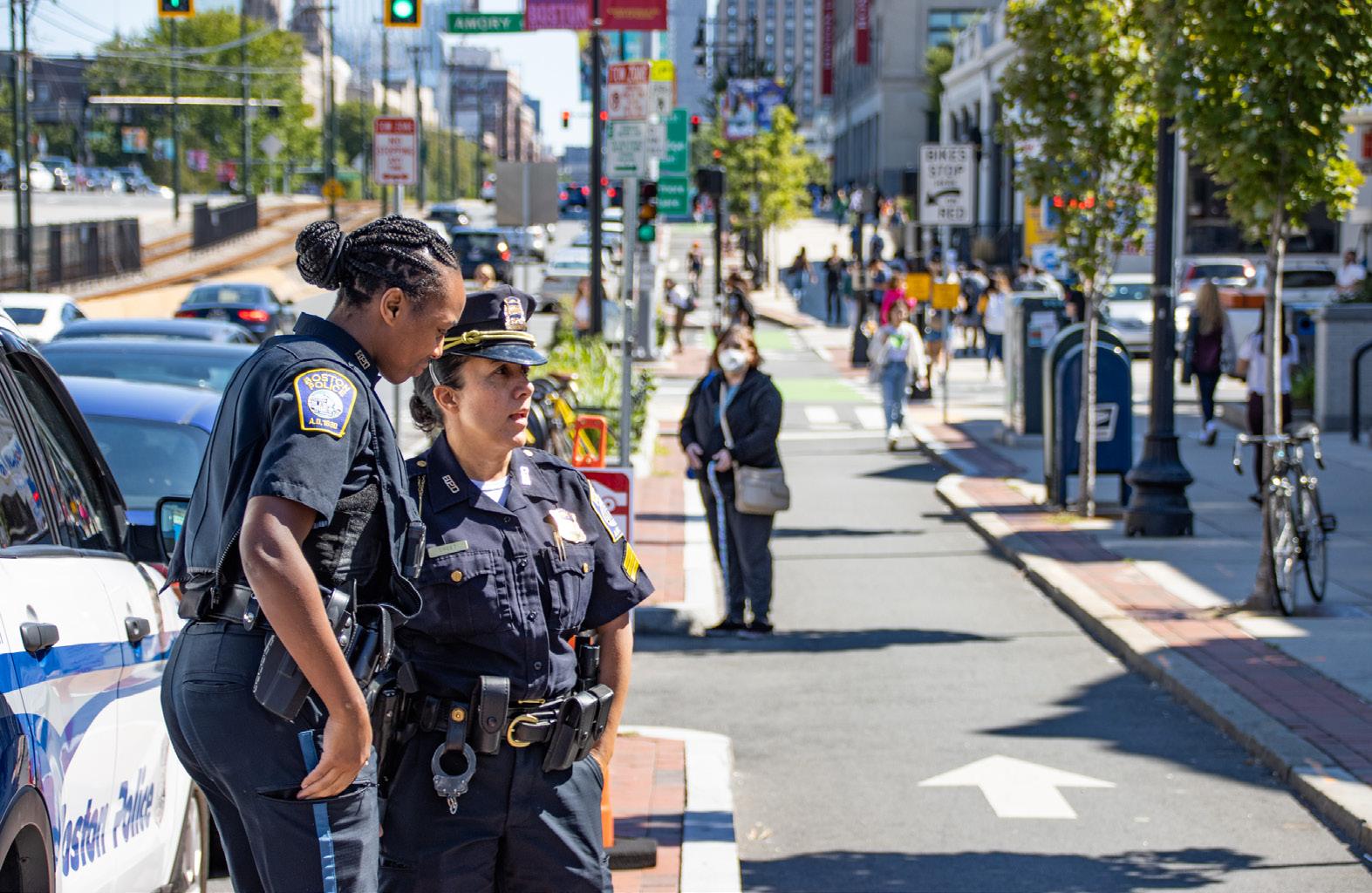
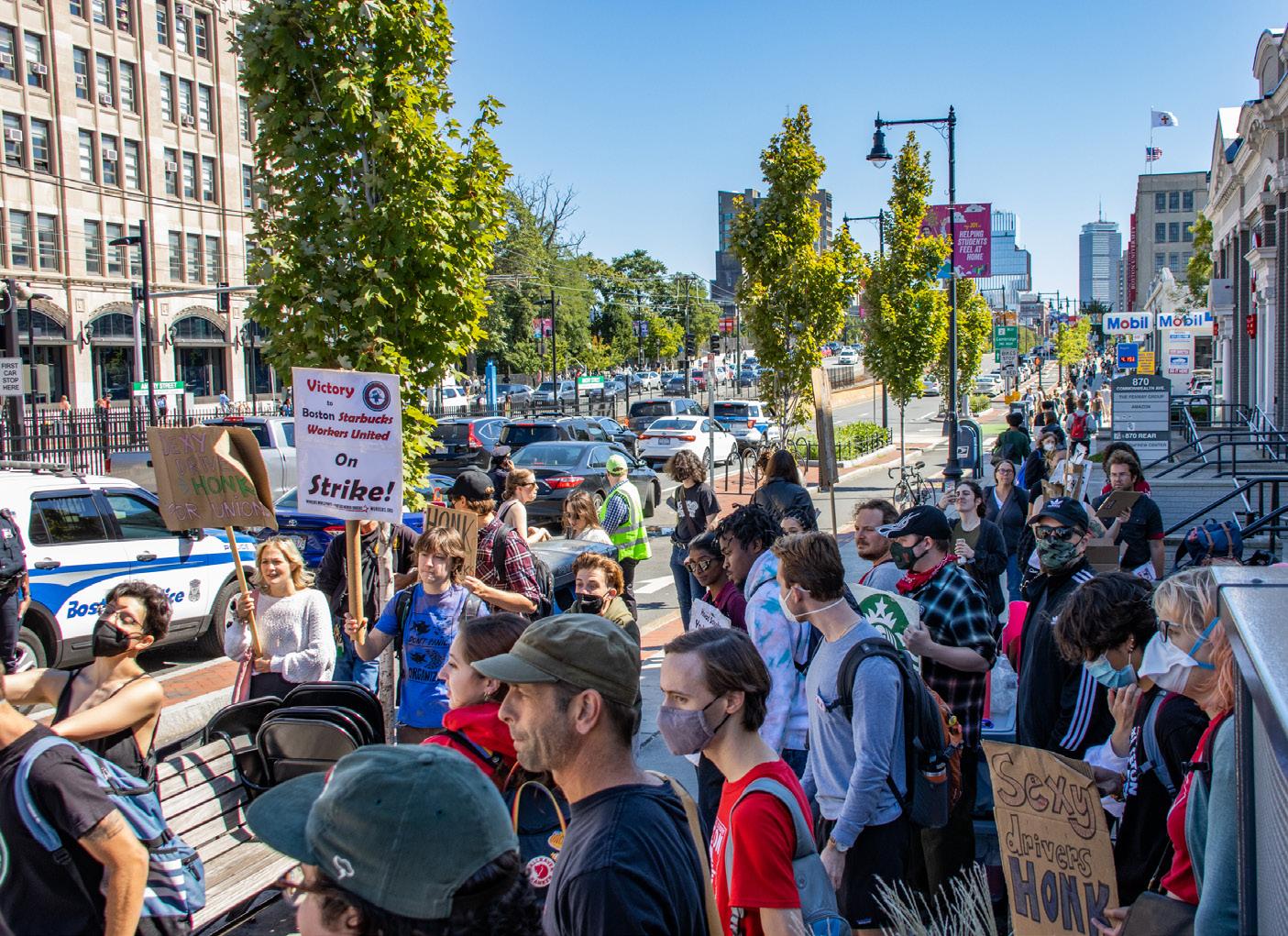
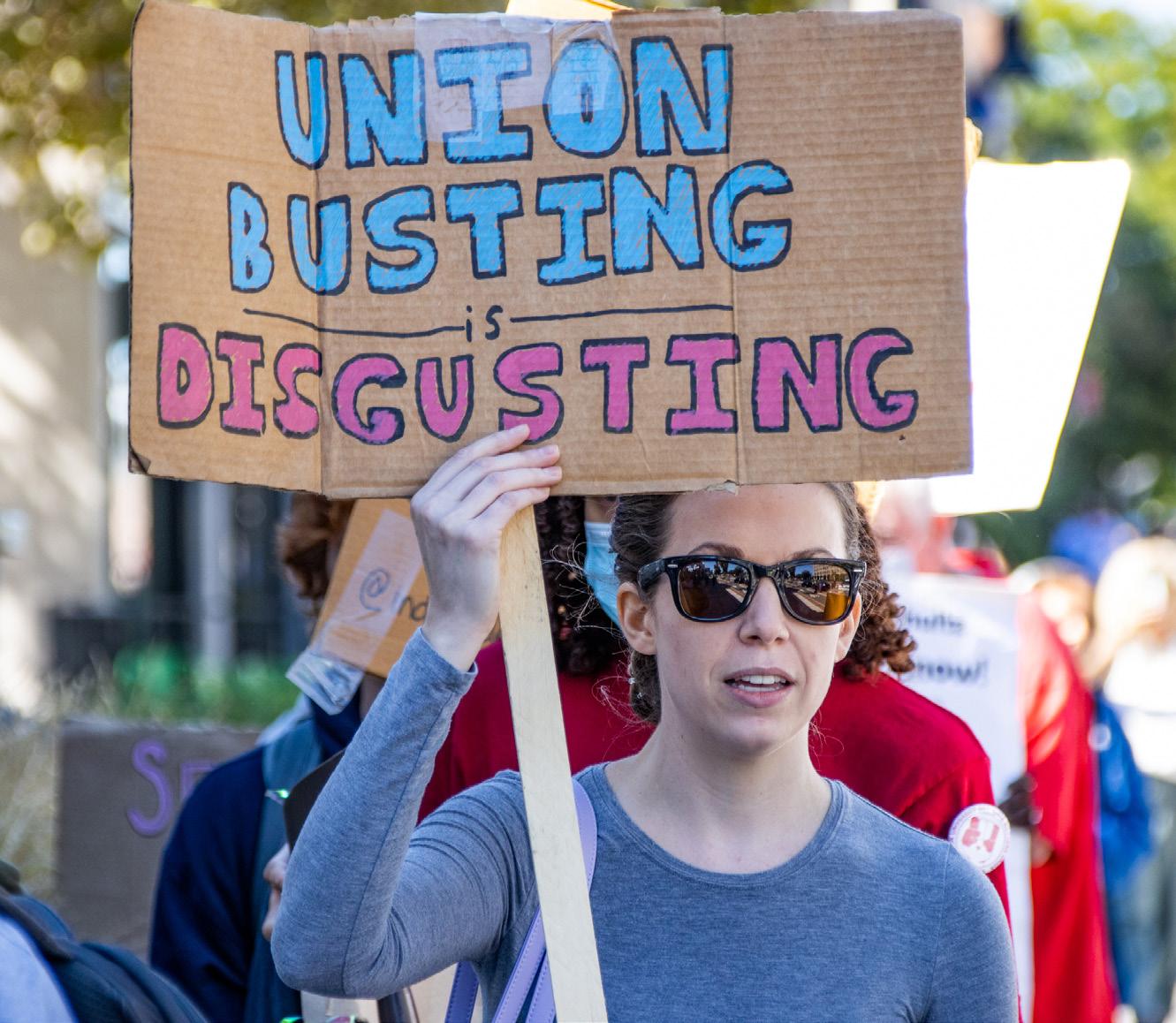
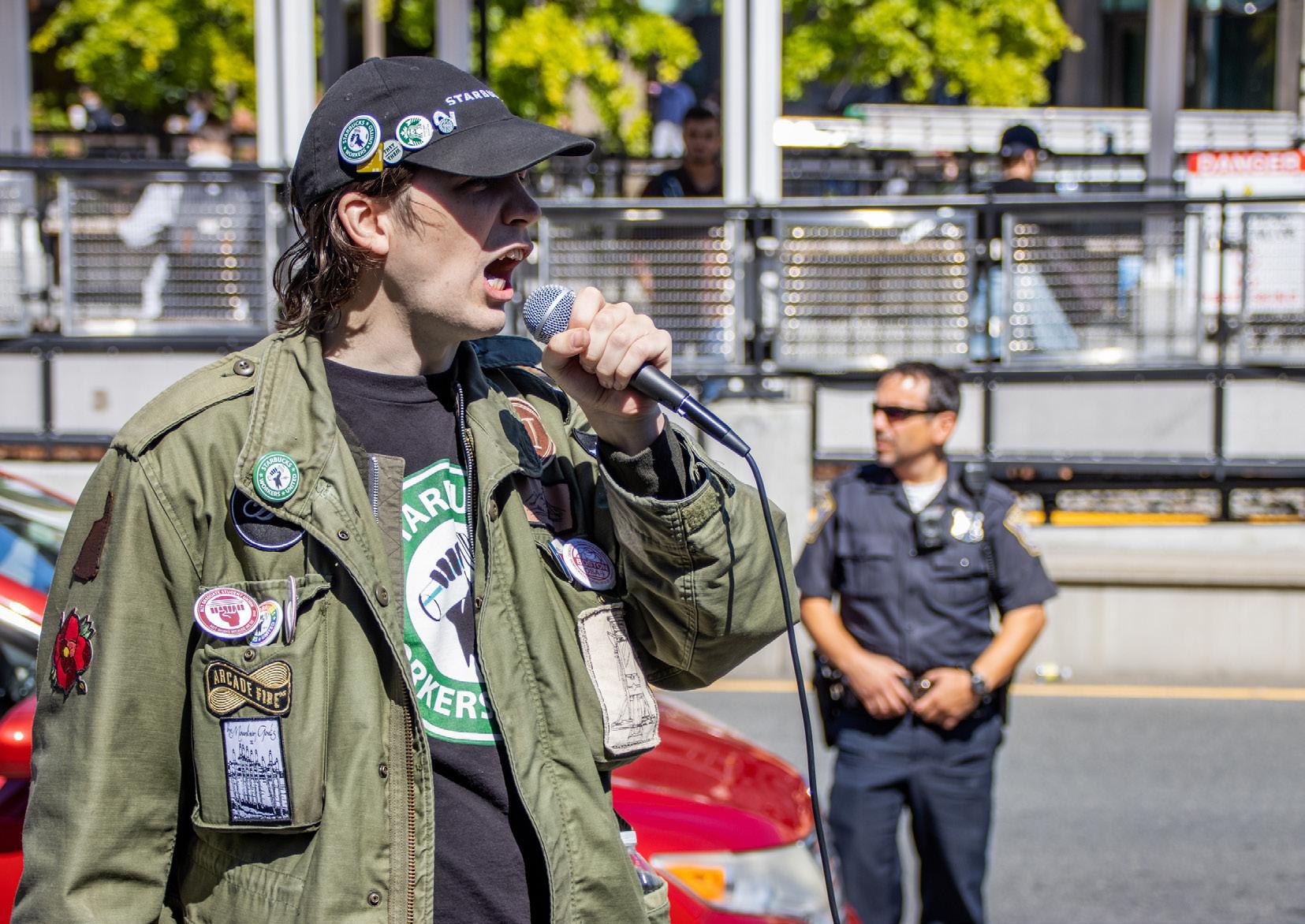


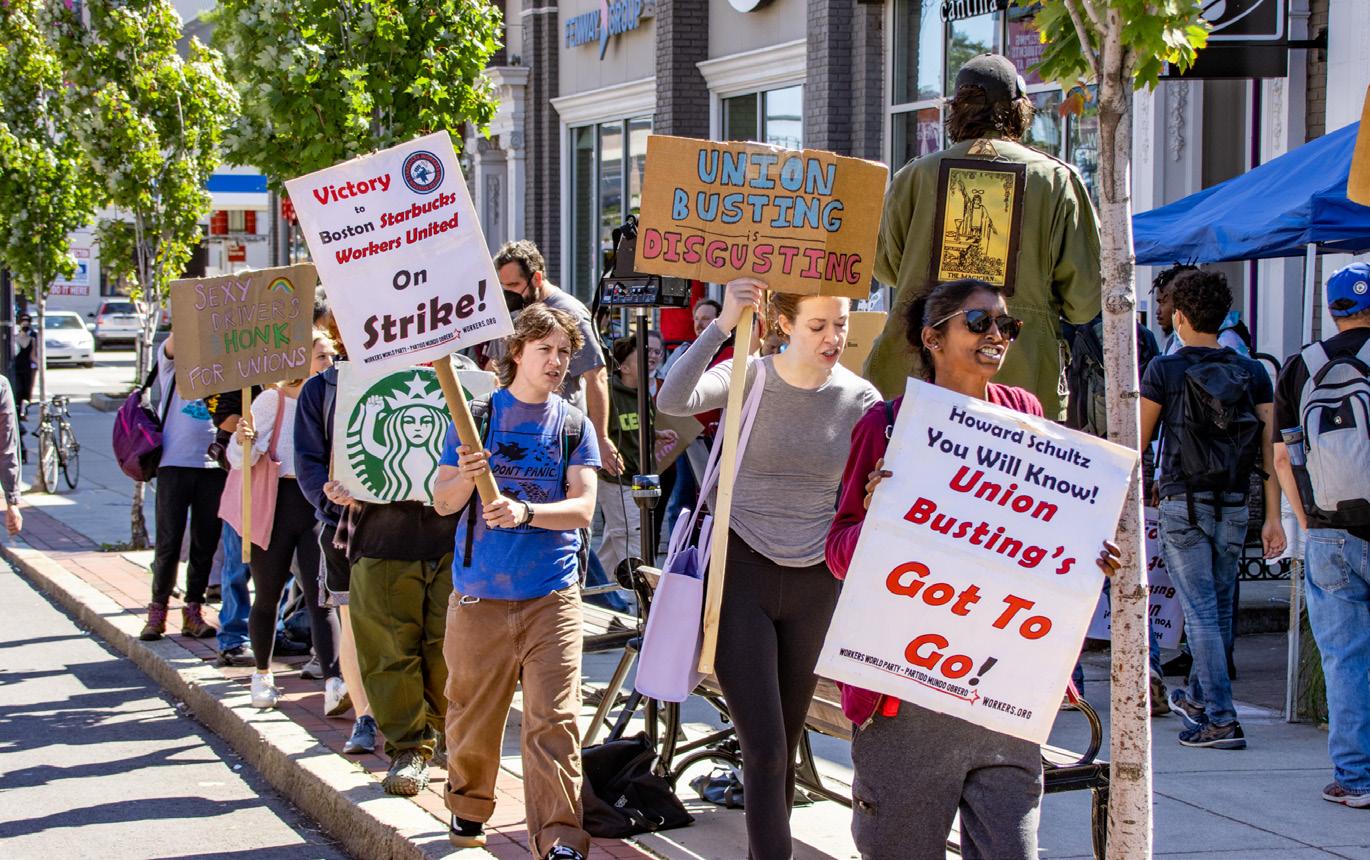
7PHOTOS GALLERY 6 PHOTOS Strikers on their 60th day on Comm. Ave. BY CLARE ONG Co-Photo Editor An attendee standing in front of signs posted on the fence of Starbucks. CLARE ONG/DFP STAFF Commonwealth Avenue in between Amory Street and Saint Paul Street was lined with protesters and spectators on Sept 15. CLARE ONG/DFP STAFF A protester holding a sign that says, “No contract, No coffee!” CLARE ONG/DFP STAFF Protesters circling in front of Starbucks. CLARE ONG/DFP STAFF A protester holding a sign reading, “Solidarity, now available iced.” CLARE ONG/DFP STAFF Protesters forming a picket line outside the Starbucks on 874 Commonwealth Avenue. CLARE ONG/DFP STAFF Spencer Costigan, an active unionizer and Starbucks worker of more than two and a half years from the Brookline branch, helped initiate the strike. CLARE ONG/DFP STAFF Boston Police officers at the scene of the rally. CLARE ONG/DFP STAFF Protesters and spectators gathered in front of the Starbucks. CLARE ONG/DFP STAFF Anxious? Depressed? Isolated? • Fully Online • Flexible Schedule • Individual & Group Counseling • Covered by Most Insurance Plans Reach Out Today 831.921.5700 AustenRiggs.org/IOP-BU Or contact Student Health Services Behavioral Medicine Intensive Outpatient Program We can help. Wanted posters of Starbucks CEO Howard Schultz stuck across the windows of the 874 Commonwealth Ave. Starbucks. CLARE ONG/DFP STAFF Union workers and volunteers held a strike on the Starbucks 874 Commonwealth Avenue for 64 days before agreeing to return to work on Sept. 19. The strikers maintained their stakeout in front of the store day and night. On Day 60, Sept. 15, strikers and supporters picketed with signs and chants. Costigan leading chants while a Boston Police officer looks on the scene. CLARE ONG/DFP STAFFA protester holding a sign that reads, “Union busting is disgusting.” CLARE ONG/DFP STAFF
Busting Starbucks | Bad Business
Nathan Metcalf Columnist

Starbucks is the epitome of an idyllic coffee shop. A place where you can sip an expertly crafted caffeinated beverage, grind out some work on your laptop or just relax with a good book.
However, to an increasing number of others, which hopefully will soon include you, it is known as one of the most aggressive union busting major players in the service industry today.
If you’ve been to Boston University in the last two months it would have been hard not to notice the picket line outside of the Starbucks at 874 Commonwealth Avenue.
While I encourage everyone to stand in solidarity with those strikers, their situation is depressingly common in Starbucks stores across the country.
As the largest coffee chain in the world, Starbucks’s success story, as with any company, has been built off the labor of their employees, who are called “partners.”
The first Starbucks stores were actually unionized by their partners back in 1985.
However, foreshadowing events to come, when the longrunning CEO of Starbucks, Howard Schultz, was first appointed in 1987 promising to respect the union contract, he actually hired consultants and lawyers whose specialty were in anti-union campaigns, brought in new management and within less than a year, the union was decertified, supposedly by its own workers. Fast forward to 2020, after Starbucks had already undergone its meteoric rise to the top. The efforts of Starbucks’s underappreciated partners experienced a brief moment of recognition during the COVID-19 pandemic when they became classified as “essential workers” and received a pay increase. Yet by only October of that year these raises were rolled back. This all too brief taste of what things could be like compelled partners nationwide to set the current movement for unionization in motion.
Over 220 Starbucks locations from coast to coast have voted to unionize. Despite this, Starbucks has opened up negotiations with a whopping three of them. This refusal to bargain has led to strikes at over 55 locations and for the official slogan of Starbucks Workers United to become “No Contract No Coffee.” Partners’ reasons for unionizing vary from store to store but according to the Washington Post, the most common trends include improving job security, as Starbucks has very high turnover rates, as well as increased wages considering many Starbucks are concentrated in high cost of living urban areas. On top of this, most partners are in their late teens or early twenties, saddled with student loan debt, and facing the worst economy seen in generations.
Starbucks has a variety of tactics for trying to deny these demands. The workplace environment they try to cultivate across stores is very hostile to organized labor with “union” becoming somewhat of a dirty word at most locations. If management discovers a partner has union sympathies they are frequently either fired under false pretenses or have their hours cut until quitting becomes their only viable option.
Fired partner organizer Tori Tambellini said that a new position has even been created in the corporate chain, called “Support Manager,” whose primary function is to go around to all of a district’s locations and root out any union activity.

Under most circumstances the only situation in which partners are even permitted the chance to vote on unionization, as was the case with the strike on Comm. Ave., is when someone in middle management defects from the company line long enough to allow a vote to take place. These individuals are often a sort of sacrificial lamb who are usually fired immediately afterwards. If this doesn’t work, they will either outright refuse to be bargained with for weeks at a time or suffocate the negotiations in so much red tape and bureaucracy that no meaningful objectives could ever be achieved.
EDITORIAL
Starbucks knows they can get away with this because they’re a multibillion-dollar company and most of their employees are barely scraping by on minimum wage. They know if they wait out their prounion partners, most will either be forced to find new jobs or fall in line in order to support themselves. And, if all else fails, they have the nuclear option: terminating a location. Over 400 Starbucks have been closed over the past two years, and many of
Despite having the obvious upper hand, Starbucks hasn’t been completely beyond reproach. The National Labor Relations Board has opened over 170 cases against Starbucks for being overly explicit in surveilling and terminating partners
Starbucks markets itself as a company which champions progressive values, attracting a much more progressive consumer base. However, as of recently, blatant union busting has tarnished their good reputation. Partners are entitled to the basic rights Starbucks continues to deny
If you are a Starbucks consumer who claims to value democracy consider this while drinking your next grande frappuccino — do you want to support a business that adamantly to give their a say in workplace
Nikki’s recs for the best Boston date spots
BY NiKKI LERNER Contributing Writer
Whether you’re going on a nerve-wracking first date or celebrating another day with your boo, these food spots are affordable and unbeatable.
Pho Basil
Located on Mass. Ave. near the Northeastern campus, Pho Basil serves Thai and Vietnamese cuisine that will warm up your soul during those abominable Boston winters. You can stop by on the way back from a culturally immersive promenade around the Museum of Fine Arts for an immaculate museum and food combination.
Thinking Cup
I am personally a big fan of the coffee date. There is nothing like getting to know your special someone more intimately over a cup of Joe — hot or iced. If you’re going to the Boston Common or Copley Market, Thinking Cup is a great place to stop by beforehand to grab coffee and brunch. They even have a build your own grilled cheese option for all you cheese-lovers! There are three locations in the Back Bay, the North End and Boston Common — all are hot-spots for a cute walk.
Bottega Fiorentina
This cute Italian market and restaurant has an incredible selection of desserts, pasta dishes, sandwiches and more. You can find Bottega Fiorentina on Harvard Ave. in Brookline. It’s a very close walk from Brookline Booksmith and Buffalo Exchange, both of which also happen to be fun spots to take your date.
Source Besides the fact that Harvard Square is the perfect spot to live out your fall “Gilmore Girls” fantasy, it’s also home
Harvard University student and confidently walking around their campus.
Zaftigs Delicatessen
Listen, I’m a brunch girl
Boston University and the terrible, horrible, no good, very bad, dining plans
O ne unanimous complaint unites Boston University’s student population: the call for more dining plan options.
BU offers five dining plans for oncampus students, none, arguably, more convenient than the other. Considering these plans are mandatory, it may be presumed some attractive options lie in wait. However, as any student who has made the dreaded decision can tell you, picking a dining plan is like choosing between a rock and a hard place. That is, if both the rock and the hard place were the food you were expected to eat nine months out of the year, and they cost at least $6,140.
The stringent nature of the plans makes it impossible to bend them to your needs. While the 330 plan’s 9 to 11 meals per week offers enough to eat at least once per day, or multiple times considering how you divide your swipes, this option only works if the BU dining halls meet your dietary restrictions.
Students that are vegan, vegetarian, or have allergies automatically have less choices at any given dining hall — making a meal plan which prioritizes meal swipes a non-option. In that case, the 250 plan might be proposed, which allows the most dining points of all the plans, offering $665 per semester in dining points and 6 to 7, possibly

unusable, meal swipes per week. However, on campus restaurants can be far from affordable.
The 250 plan allows students roughly $55 per week, but when a sushi bowl at Basho Sushi starts at $13.99 and the beloved Pumpkin Cream Cold Brew at Starbucks costs a whopping $5.62, the stipend hardly lasts the entirety of the semester.
Hacks exist to mold these plans to your liking. Starting the Fall semester off with the 330 plan and switching to the 250 for the Spring will convert leftover meal swipes into dining points. This hack takes advantage of the well known fact that using all of one’s meal swipes is a rare occurrence.
These workarounds, while innovative, are no cheat. In fact, BU Dining themselves may have implemented these strategies to allow those with dietary restrictions to make the most of their gourmet meal plan.

If it’s the case that even BU understands dining points are in high demand, why is there no meal plan option which prioritizes the points over swipes?
The University’s inflexibility is only exaggerated when you realize the majority of dorms don’t have kitchens to give students the option to cook for themselves. BU microfridges — the only university-approved heating device beside popcorn machines — cost $239 per year, an option typically more expensive than buying one’s own separate fridge and microwave to use over the next four years.
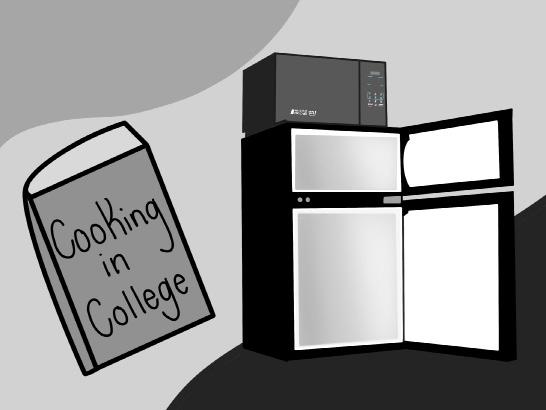
High prices such as these serve as another example of BU feeding off our desperation. By jacking up the price of
microwaves and fridges, BU proves they understand what nutritional agency, even the small amount utilized when cooking a frozen dinner, truly means to students.
Many students each semester make the move to off-campus living, going out of their way and perhaps more out of pocket than they’d like, to avoid buying a dining plan.
With so many hoops to jump through it’s hard to draw any conclusion besides that BU’s systems are intentionally rigid, hoping to make these plans unreliable to force students to spend money on convenience points, rental appliances, or directly at on campus restaurants.
The obvious argument is that the suckage of college dining halls and plans is a universal experience, but perhaps it doesn’t have to be. Business Insiders’ “15 best college dining halls in America” lists universities from across the country — all but two of the plans included were cheaper than BU’s. If the best of the best can still manage to be affordable, why does mediocrity cost an arm and a leg?
There should be a dining plan option which offers students, or at least students with significant dietary restrictions, enough dining points to stretch out over the course of a semester. Or, a customizable option, which sets a given price and allows students to allot where the money goes — whether that be to meal swipes or dining points.
Food isn’t a privilege, it’s a right. We all need to eat, and what we eat greatly impacts how we perform in our day-today lives. If students have no choice but to pay for a plan, at least give us our money’s worth.
just how much of a fan-fave they are but is also completely worth it. It’s in a great area to walk around, digesting all the beautiful food. Coolidge
dessert. They have desserts that will melt in your mouth and heavenly pastries you will be thinking about for the next week. It’s walking distance from Faneuil Hall and Quincy Market if you want to have your Boston tourist moment, which I highly recommend. Buttermilk and Bourbon
Let’s be clear: Boston is quite distant from Southern culture, but just because we’re far, doesn’t mean we can’t enjoy the classics with a twist. As a mac and cheese enthusiast, theirs is absolutely delicious, and their beignets are perfect for anyone with a sweet tooth. Their space is brilliantly designed. I swear the chefs are geniuses. I want to try everything on their menu.
I’m so frustrated that everytime I go, I can only get one or two things. Buttermilk and Bourbon is located at our own Commonwealth Avenue but is a lot closer to the Newbury street side.
Boston Burger Company
Yes, I know a burger might not be ideal for a first date, but this place is TO DIE FOR. I had the “Mac Attack” burger which had mac and cheese and bacon. It was actually lifechanging. They have a ton of different creative burgers and insane milkshakes. You can find Boston Burger Company in Davis Square, Cambridge or Boylston Street.
to some fantastic restaurants. You could be basic and go to Tatte for the thousandth time. However, Source has delicious brunch and dinner options that are sure to impress that special someone. Personally, I think Source is best paired with a day of pretending to be a
through and through. Zaftigs in Brookline has to be the best I’ve had in the Boston area. I don’t mean to be dramatic when I say that I would do literally anything for their challah french toast. On weekends, you can expect a little bit of a wait. The wait not only shows
Corner also hosts a bunch of cute small shops to satisfy any shopping addiction.
Caffé Vittoria
The North End hosts a plethora of amazing authentic Italian spots and this café is the perfect place to end a meal or grab some coffee and
If you want a good, satisfying meal to ease the nerves of a first encounter, these really are some must-hit places. But even if it’s not your first date or you’re on a date at all, you must visit these spots anyway. I promise you won’t regret it.
Autumn delicacies, the dorm life way
BY KENDALL O’BRIEN Associate Editor
Starting your first semester ofIt’s that time of year again. Fall is around the corner. The temperature is dropping, the leaves are beginning to change color and our shorts are being replaced by pants. We all have our favorite harvest-time food. And, no — Halloween candy doesn’t count.
It can be difficult to create our favorite seasonal dishes as college students living in dorm rooms. Students living on campus normally don’t have kitchens to whip up five-star meals, but there are loopholes to make fall treats in our dorms.
Caramel apples

Want to feel like you’re at a local Hayfest? Caramel apples
are a great, dorm-friendly option to try out this season. All you need is some apples, skewers, parchment paper, cocoa powder, honey or maple syrup, nut butter and melted coconut oil.
Mix two to three tablespoons of the cocoa powder, syrup, nut butter, and three tablespoons of coconut oil together in a bowl. Add the skewers to the base of the apples and dip them into the bowl. Put the parchment paper on a plate and place the apples on the plate. The skewers should be facing up. Pop the apples into the fridge for half an hour, and you’re ready to go!
Five-minute apple crisp Unfortunately, most college students don’t have the luxury of having ovens and recreating our grandma’s famous apple
pie. Luckily, microwaves can be a great replacement for ovens. This five-minute apple crisp recipe has the scent of an ovenmade apple pie and a delicious taste that screams fall.
You need three tablespoons of coconut oil, one-fourth cup of quick oats, two tablespoons of chopped pecans, two-andhalf tablespoons of wheat flour, two-and-half tablespoons of brown sugar, half a teaspoon of cinnamon, an eighth teaspoon of salt, and two chopped apples. Melt the coconut oil in the microwave and mix the oats, pecans, two tablespoons of flour, two tablespoons of sugar, and one-fourth teaspoon of cinnamon. Mix the half tablespoon of flour, half tablespoon of sugar and a fourth teaspoon of cinnamon with the chopped apples. Get a mug and place the oat mixture at the bottom of the mug, then add the apple mixture and top it with the oat mixture. Place the mug in the microwave for three minutes and 30 seconds. Then wait for it to cool down.
Pumpkin spice cookie dough dip
What’s fall without pumpkins? Pumpkin spice anything is all the rage whenever October rolls around, but this pumpkin take on cookie dough is a sweet treat you can have as a late-night snack or as a healthier replacement for regular, storebought cookie dough.
You need one cup of pumpkin puree, three tablespoons of maple syrup, two tablespoons of coconut flour, two tablespoons of melted peanut butter, half a teaspoon of pumpkin spice and a fourth cup of chocolate chips (optional). All you need to do is mix the ingredients into a bowl and voila! You can eat it by itself or add some apple slices to dip in it.
Fall quinoa bowl
Now onto something a little healthier. This quinoa bowl is a great breakfast meal — with a seasonal spin. If you want a fun replacement for your morning oatmeal, maybe try this recipe out.
You will need half cup of uncooked quinoa, one cup of water, a dash of salt, two tablespoons of coconut milk (or any milk of your choosing), one tablespoon of maple syrup, one tablespoon of chia seeds, one tablespoon of pumpkin seeds, and half sliced pear and apple. After rinsing the quinoa, place it with the cup of water in a microwave-safe bowl. Add the salt and place a lid or plate over the bowl. Leave the quinoa in the microwave for seven minutes. Remove the lid and stir the quinoa for a good minute or so, place it in another bowl, then add the milk. Stir well, top with your toppings and enjoy!
COLUMN
8 OPINION LIFESTYLE 9 ILLUSTRATION BY HALEY ALVAREZ-LAUTO
LIFESTYLE
ILLUSTRATION BY HALEY ALVAREZ-LAUTO
ILLUSTRATION BY MICHELLE NIE ILLUSTRATION BY JACKLYN TSUNG
BY CLARA MONTES
Brendan Hawthorne Co-Podcast Editor



Men’s soccer draws 0-0 with Boston College
 BY ANNIKA MORRIS Contributing Writer
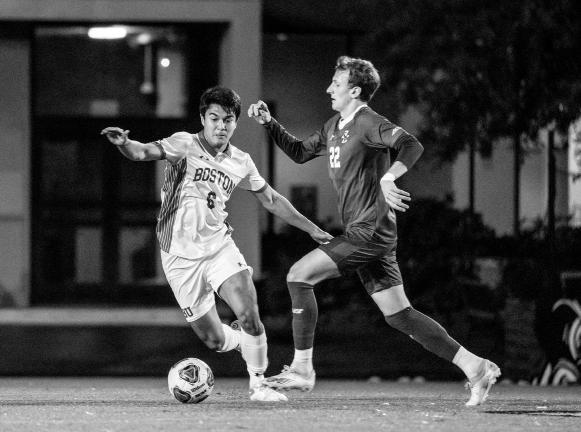
The Boston University men’s soccer match was delayed—due to a campus-wide power outage— before what would end up being a scoreless 90 minutes against Boston College.
After a tough loss at Colgate University last weekend when the Terriers (2-2-3, 0-1 Patriot League) conceded three goals and scored none, the Terriers bounced back and shut out the Eagles (22-3).
The power went out at Nickerson Field about 20 minutes before gametime, shutting down the overhead lights as well as the scoreboard and speaker system. Most of the necessary technological function returned less than 15 minutes after the game was supposed to start. However, the scoreboard remained bright green for the first hour of the match before it eventually began showing live footage of play like usual.
Before the game started, both teams honored Team IMPACT night. Team IMPACT is a nonprofit organization that matches children with chronic illnesses and disabilities with college sports programs across the United States. Pierce and Reese, the kids matched with the Terriers and the Eagles respectively, joined the players as they took the field
for introductions and the national anthem.
“The game brings you so much, and sometimes there’s more to life than the game,” BU head coach Kevin Nylen said. “Tonight, both programs got to come together through our partnerships with Team IMPACT and honor Reese from BC and honor Pierce from BU.”
The Terriers started the game aggressively. In the second minute, sophomore midfielder Brian Hernandez aired a shot while battling one-on-one with
senior defender Victor Souza of BC, missing high.
Not long after, BC freshman defender CJ Williams was given a yellow card within the fourth minute.
BU senior midfielder Quinn Matulis nailed the crossbar, narrowly missing the first score with the free kick awarded by the yellow card.
The Eagles’ first shot of the match came from midfield over ten minutes in when freshman midfielder Camilo Ponce sent the ball into the ivy wall beyond the
field of play.
Over 20 minutes passed before either team made any additional offensive action. Both teams made substitutions in the 32nd minute, with four Eagles being subbed out. Only three minutes later the game’s first corner was given to BC over 35 minutes into the game, with freshman midfielder Ted Cargill making the kick. The kick was batted away by multiple defenders clustered around the goal before landing in front of BC graduate midfielder Adrian Zenko. Zenko booted the ball straight into the arms of senior goalkeeper Francesco Montali, who made the first save of the game.
The Terriers’ offense began to pick up shortly after the save with an impressive sequence in front of the BC goal. Then, the ball was knocked out of the end line, setting up a goal kick for BC junior goalkeeper Leon Musial. With three minutes left in the half, BU freshman forward Diego Rived made the last shot before the halftime break, only to have Musial jump on top of the ball near the end line.
“I think we had some chances in the first half, specifically early on with Brian [Hernandez]. There’s a couple of other chances [too], whether they’re half chances or not,” Nylen said. “[In] the first half, we’re walking away, and we’re saying ‘Hey, listen, we look
at one thing based upon what [BC was] doing, and, now, how can we continue to push on?’”

The Eagles entered the second half hot with two shots by senior midfielders Amos ShapiroThompson and Walker Davey, both made in the first three minutes.
Shapiro-Thompson would go on to make two additional shots, with the latter on target. BC maintained offensive control of the ball for much of the second half, shooting six additional times, while BU only shot twice in the entire 45 minutes.




“They probably had a little more of the ball in the second half than in the first, but I thought it was an overall really solid performance by our team tonight,” Nylen said.
The Terriers maintained their trend of putting together a solid defense throughout the game, with Montali finishing the game with seven saves. Through seven games of the season, BU has only given up seven goals.
“I mean anytime you have a clean sheet, I think it speaks volumes not only on the goalkeeper, and tonight, that’s on [Montali], but on the team in the group defending,” Nylen said.
The Terriers will continue Patriot League play with a Pride Night matchup against Lafayette College on Saturday at 6 p.m coming up next.
Off the Post: From UMass Amherst to Madison Square Garden, Mollie Walker breaks into the industry
BY BELLE FRASER Columnist
From the Mullins Center to Madison Square Garden, Mollie Walker’s press credentials have upgraded since covering Minutemen hockey during her collegiate years. Now the New York Rangers’ beat writer for the New York Post, Walker has climbed the ladder of the sports journalism industry and made a name for herself through some of the city’s most read headlines.
Walker had always been an athlete and joked that the only other thing she was good at was writing. After getting into hockey around eighth grade, Walker found there was a professional field that could tend to her two interests –– sports and writing.
“Late in high school, I kind of realized that there was such a thing as sports journalism and I could put the two together and make a career out of it,” she said.
This led her to a sports journalism concentrated major at University of Massachusetts Amherst. For the first time, her words had an audience as her opinions hit the paper for Minutemen fanatics to digest.
Walker was a four-year member of the student newspaper and also covered high school sports for the Daily Hampshire Gazette in Northampton, which were part of the foundation that got her to where she is today, she said.
While UMass is now a powerhouse
in college hockey with two Hockey East championships and one NCAA championship under their belts in the past two seasons, the Minutemen were not always on everyone’s radar.
Their 2019 “Cinderella run” to the national championship final gave Walker a taste of high-stake sports journalism, she said.
“Nobody paid attention to UMass. It was just us student reporters and a couple of people from UMass Live and the Daily Hampshire Gazette. It was all very local,” Walker said. “Our student newspaper was a go-to source for the average college hockey fan to follow UMass because there was just no other big media outlet doing it.”

Although UMass fell to the Minnesota–Duluth Bulldogs for runner-up that year, the reporting experience was invaluable, she said, and earned her some exposure from the NHL, college hockey and chicken parm aficionado John Buccigross.
“I’ll never forget John Buccigross tweeted out my article,” she said. “Here I am, a senior in college, and that was very surreal and introduced me to what it was like to have a lot of eyeballs on your work.”
When Walker arrived at the New York Post, it was not completely new. She interned for the publication before her senior year of college, so it felt like she was picking up where she left off, Walker said.
Nonetheless, Manhattan is Rangerstown and the Post is where

the fanbase goes for in-depth coverage of their Blueshirts.
Although raised as a New York sports fan, Walker had a job to do and would not let the top-level access hinder the quality of her articles or relationship with the team.
“Once you’re on the scene, you can really tell amongst your competition who is more of a fanboy or fangirl and that doesn’t come off as professional — you want to shed that immediately and leave that at the door,” she said.
While this sentiment holds true for all journalists in sports media, it carries a particular importance to women in the field. Sports journalism is a male-dominated industry covering male-dominated sports. Women have to go the extra mile to get their peers to take them seriously. Walker has seen this first hand, she said, but has also gotten lucky with her Rangers crew.
“There’s always going to be people who still have the stigma in them. There’s no doubt about it. You run into it more often than you would like to, so it still exists,” she said. “But when I look at the people who I’m closest with, people who I interact with every day, I truly couldn’t have gotten any luckier.”
Larry Brooks, infamous New York Post hockey reporter, is one of the people Walker has gotten to work with on the Rangers beat. Brooks is one of the greats, and now, one of

Walker’s closest friends.
“He is not only my mentor, but he is my best friend in the entire world, which is also a dynamic you can never really dream up better... It has been absolutely surreal,” she said.
With the Rangers’ home opener on Oct. 11 inching closer, the dynamic duo will have an exciting season to cover following the young and hungry team’s whirlwind — and surprising — Eastern Conference Finals playoff run last spring. The Rangers are pulling together their fullest form roster since 2014 this year with the signing of Vincent Trocheck, to which Walker gives her sign of approval.
“Vincent Trocheck gives them a different look in the top six. He’s
much more of a grinding, harderedge kind of player in a top six that is so skill-dependent ... also think a lot of the Rangers’ success this season depends on the young kids,” she said.
“My hot take is that Filip Chytil is going to have a huge season.”
Walker is coming into the 20222023 campaign for her second entire season of reporting since COVID-19 scrambled the NHL’s schedule and media rules. Although she’s just beginning her career, Walker’s words have already become a core part of the New York Rangers fandom.





“It’s really cool to see how many people my words have touched,” she said. “The novelty still hasn’t worn off. All my colleagues tell me that it will eventually, but I hope not.”
 Nellie Maloney, Co-Podcast Editor Samantha Betsko Multimedia Editor
11SPORTS10 GAMES THE INDEPENDENT STUDENT NEWSPAPER AT BOSTON UNIVERSITY The Daily Free Press is published Monday through Friday during the academic year except during vacation and exam periods by Back Bay Publishing Co., Inc., a nonprofit coporation operated by Boston University Students. Copyright © 2022 Back Bay Publishing Co., Inc. All right reserved. Molly Farrar, Editor-in-Chief Sangmin Song, Co-Campus Editor Tanisha Bhat, Managing Editor Clare Ong Co-Photo Editor Ava Berger, Co-Features Editor Maxwell Pociask, Co-Opinion Editor Haley Alvarez-Lauto Layout & Graphics Editor Talia Lissauer, Co-Campus Editor Eliza Nuestro, Co-Photo Editor Claire Law, Co-Features Editor Bella Ramirez Co-City Editor Casey Choung Co-City Editor Lydia Evans, Co-Opinion Editor Payton Renegar Lifestyle Editor
Nordstrom Co-Sports Editor Chloe Patel, Co-Sports Editor Taylor
SPORTS
Editorial Board
Bottom Line Freshman forward Diego Rived at the game against Boston College on Sept. 20. He had two shots on goal in the match against BC. ILLUSTRATION BY ALEXIA NIZHNY HUI-EN LIN DAILY FREE PRESS STAFF Sept. 28 vs Army West Point at Nickerson Field MEN’S SOCCERWOMEN’S ICE HOCKEY Oct. 1 vs Rensselaer at Walter Brown FIELD HOCKEY Sept. 29 vs Harvard University at Berylson Field WOMEN’S SOCCER Oct. 1 vs Lehigh University at Nickerson Field MEN’S ICE HOCKEY Oct. 1 vs Bentley University at Agganis Arena COMIC BY ELYSE GENRICH (i)Phone Eats First
ACROSS 1 Korean multigrain powder ____garu 5 Catholic edu. program for kids 8 Textbook section 12 “B ____ boy” 13 Toyota SUV 14 Total after deductions, across the pond 15 Highly variable type of musical ensemble* 17 Age of someone nearing retirement, perhaps 18 Like theater kids and mathletes, in stereotypical high school dramas 19 The type of metrical foot in “poetry” 20 A formation made up of dirty laundry or fallen leaves 21 Nickname of Brazilian football coach Adenor Bacchi 22 To spot 25 Japanese camera brand* 29 Centenarian fashionista Iris 30 Central African country that gained its independence from France in 1960 31 Way, to Laozi 32 Like trees covered in white 33 Car with four doors 34 Discrete “Over here!” 35 Gran follower word 36 Actress Phoebe of Fast Times at Ridgemont High and Gremlins 37 Came up 38 Heavenly Bodies and Gilded Glamour, for two* 40 What might precede or follow “you do too” 41 Oil org. 42 Ctrl + B 43 Monastery bigwigs 46 Those in touch with their spiritual sides 49 Canadian pop sensation to fans, often with “the” 50 Maryland delicacy* 52 Dirección del amanecer 53 Telecommunications company founded by Alexander Graham Bell 54 Divergent actor James 55 “There’s gold in them ____ hills” 56 Commonest English 57 Mended DOWN 1 “Happy” musical key, abbr. 2 The middle of veni, vidi, vici, in English 3 Marvel Comics special issue, Giant-____ X-Men 4 Like an undesirable fly 5 Vonnegut classic Cat’s ______ 6 Rudimentary water vessel 7 Video store stock 8 Child support? 9 Ariana Grande hit “thank u, ____” 10 Super small 11 Texted sign-of 16 60’s New York City pop music factory, the _____ Building 17 Glossy fabric 19 Mustard city 21 Sousaphones and Wagners 22 Bit of information 23 With 34 down, the cultivars hidden in each of the starred clues and the object doing the eating in this puzzle’s title 24 If the area of a rectangle is A square feet, the perimeter is _____ 25 Common transitions in film editing 26 What one might say to an adversary 27 Rodeo rope 28 Early type of polyphonic composition, especially popular during the Renaissance era 30 Eke out a passing grade, perhaps 33 Dwight’s division in The Office 34 See 23 down 36 Army officers, abbr. 37 Go off-book 39 Finish the lyrics: “Oh, I’m a goofy ______ (yeah!)” 40 IO3− 42 Mooring place 43 Aid partner 44 Love Island fishmonger Luca’s apt surname 45 Soft launch version, often 46 Med school application hurdle 47 Largest Seychelles island 48 Opposite of straighten 51 A long, long time SCAN QR CODE FOR CROSSWORD ANSWERS
12 Fit Check. Textbooks, Check. amazon.com/joinstudent Start your 6-month trial.
