
CELEBRATING OVER 50 YEARS OF INDEPENDENT STUDENT JOURNALISM
THE INDEPENDENT STUDENT NEWSPAPER AT BOSTON UNIVERSITY

THE INDEPENDENT STUDENT NEWSPAPER AT BOSTON UNIVERSITY
FEB. 14
BU is ordered by the Trump administration to cease all consideration of race in decisions pertaining to scholarships, hiring and administrative support by Feb. 28.
MARCH 31
University officials say BU is suffering from ‘unsustainable’ budget practices in part due to revoked federal funding for research grants.
APRIL 3
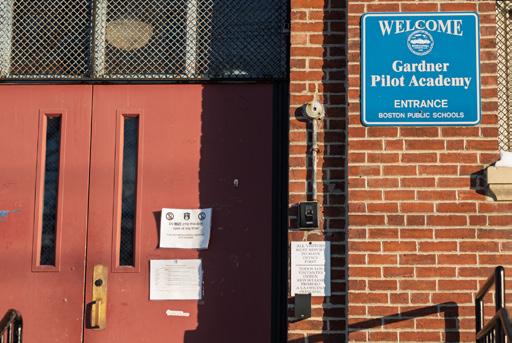
Homeland Security officer is spotted at BU while student groups hold walkout for a sanctuary campus.
The officer was conducting a “routine background check” on a BU alum related to their recent employment, according to BU Spokesperson Colin Riley.
Sarah Sherman-Stokes, associate professor at BU School of Law and director of the LAW Immigrants’ Rights and Human Trafficking Clinic, said she does not believe the officer “undertook the appropriate protocols” to notify people of his presence.
APRIL 15
Raul Fernandez, a senior lecturer at Boston University’s Wheelock College of Education, resigns from the University’s Learn More Series in response to changes in BU’s DEI programs.
MARCH 10
BU is placed under investigation by the U.S. Education Department for antisemitic discrimination.
Boston University was one of 60 universities under investigation by the US Department of Education for Title VI violations “relating to antisemitic harassment and discrimination,” according to a March 10 press release from the ED Office for Civil Rights.
“The Supreme Court had some major rulings in the last several years, and those rulings are what guide the University’s policies and practices,” Riley said. “University policies and practices comply with those with those rulings and federal law.”
APRIL 8
A number of BU students are confirmed to have visas revoked.
Some terminations may have been linked to past immigration violations and arrest records, even for minor incidents like traffic violations.
APRIL 22
Gilliam joins more than 400 other college presidents and leaders in co-signing a letter speaking out against “unprecedented government outreach.”
The letter opposed “undue government intrusion in the lives of those who learn, live, and work on our campuses.”
BY ANIKA KAPASI Associate City Editor GRAPHICS BY EMMA CLEMENT Campus Co-Editor
JAN. 20, 2025
President Donald Trump is inaugurated. He signs an executive order allowing federal immigration agents to enter “sanctuary” spaces, including schools.
JAN. 22
BU faculty conducting grant-funded research are informed they may receive stop-work orders from their funding agency due to the executive order.
JAN. 24
BU students hold walkout in response to executive orders targeting immigrants and enacting mass deportations.
“[The university] supports protest, peaceful protest, civil discourse,” Riley said in an interview. “There are ways to do all these things. We are an open, open campus. We appreciate civil discourse and civic discourse.”
MARCH 11
More than 70 Jewish BU affiliates sign a letter titled “Not In Our Name” criticizing the Trump administration’s conflation of pro-Palestinian advocacy as anti-Jewish.
APRIL 8
American Association of University Professors’ BU chapter joins an amicus brief with more than 20 universities calling for an end to federal government action that “subjects the entire system of higher education in the United States to a shock that threatens serious and lasting damage,” according to the brief.
JAN. 21
Trump signs an executive order titled “Ending Illegal Discrimination and Restoring Merit-Based Opportunity” to curb affirmative action and diversity, equity and inclusion practices in higher education institutions.
“Institutions of higher education with endowments over 1 billion dollars” were put under investigation, according to the order. Boston University has an endowment of over $3 billion, but BU spokesperson Colin Riley wrote that he was “not aware of any investigation.”
FEB. 11
BU slows spending in preparation for federal funding cuts and starts to require approval before hiring full, part-time or temporary employees.
The National Institute of Health imposed “a flat 15% indirect cost rate on research institutions,” according to the BU Office of Research. Research grants cover indirect costs categorized as facilities and administration, according to NIH.
MARCH 14
Trump proposes his second travel ban targeting 43 countries.
The BU’s International Students and Scholars Office advised international students — especially those graduating — to avoid leaving the country to ensure they can stay and work in the U.S.
“Trump is kind of making it clear that international people aren’t as welcome here anymore,” said a BU senior from Myanmar said, speaking on the condition of anonymity for fear of reprisal.
APRIL 11
A federal judge in Boston grants a temporary restraining order to prevent ICE from “arresting or detaining” a BU student whose visa and legal status were revoked.
FEATURE PAGE 4
‘She can do it all’: Izzy Pingrey makes her
BY ELIZABETH MEHLER City Co-Editor
Mayor Michelle Wu last week led a coalition of 44 mayors across the U.S. in the filing of an amicus brief challenging the surge of federal authorities into Minneapolis and St. Paul, arguing the enforcement effort is unlawful and unconstitutional.
In partnership with the Public Rights Project, the City of Boston filed the amicus brief in U.S. District Court in Minnesota on Jan. 22 in support of a lawsuit initiated by the State of Minnesota and the Twin Cities.
The lawsuit seeks a temporary restraining order to end the “occupation” of more than two thousand federal agents in Minneapolis and St. Paul, the Mayor’s office said in a press release.
The amicus filing describes the Immigration and Customs Enforcement operation in Minnesota as “by far the most extensive, aggressive, reckless, and chaotic deployment” of federal immigration officers.
Renee Good and Alex Pretti, two Minnesota residents without criminal records, were shot and killed by Border Patrol agents in Minneapolis this month, igniting nationwide outrage and an increase in anti-ICE protests.
In a statement, Wu described recent ICE activity as “politicallymotivated invasions of cities.”
“We are urging the courts to curb the dangerous impulses of a reckless federal administration,” Wu said.
Jonathan Miller, Chief Program Officer at PRP, wrote in a statement to The Daily Free Press that PRP helped coordinate leaders across the country to “present a unified position” in the amicus brief.
“Our hope is that the court will reaffirm the rule of law by preventing further federal actions that exceed clear legal authority and by clarifying the constitutional boundaries governing federal–local relations,” Miller wrote.
Newton Mayor Marc Laredo and Somerville Mayor Jake Wilson joined the coalition, along with seven other Massachusetts mayors. Laredo said in an interview that he viewed ICE’s actions in Minnesota as “unacceptable” and felt it was “the right thing for the city to sign [the amicus brief].”
In a statement to the Daily Free Press, Wilson said he
Continued on page 11
BY CORNELIA NISBET
DFP Writer
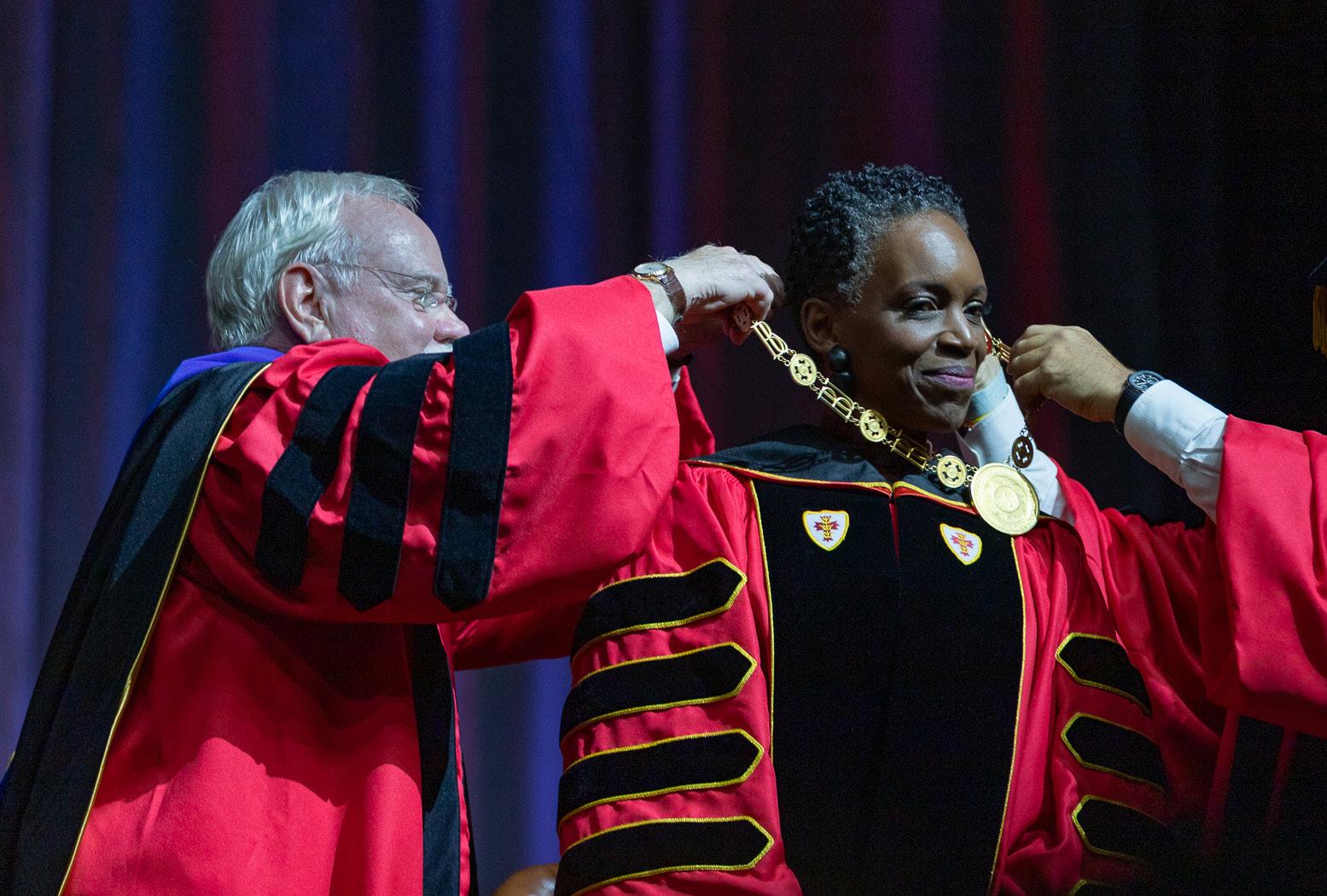
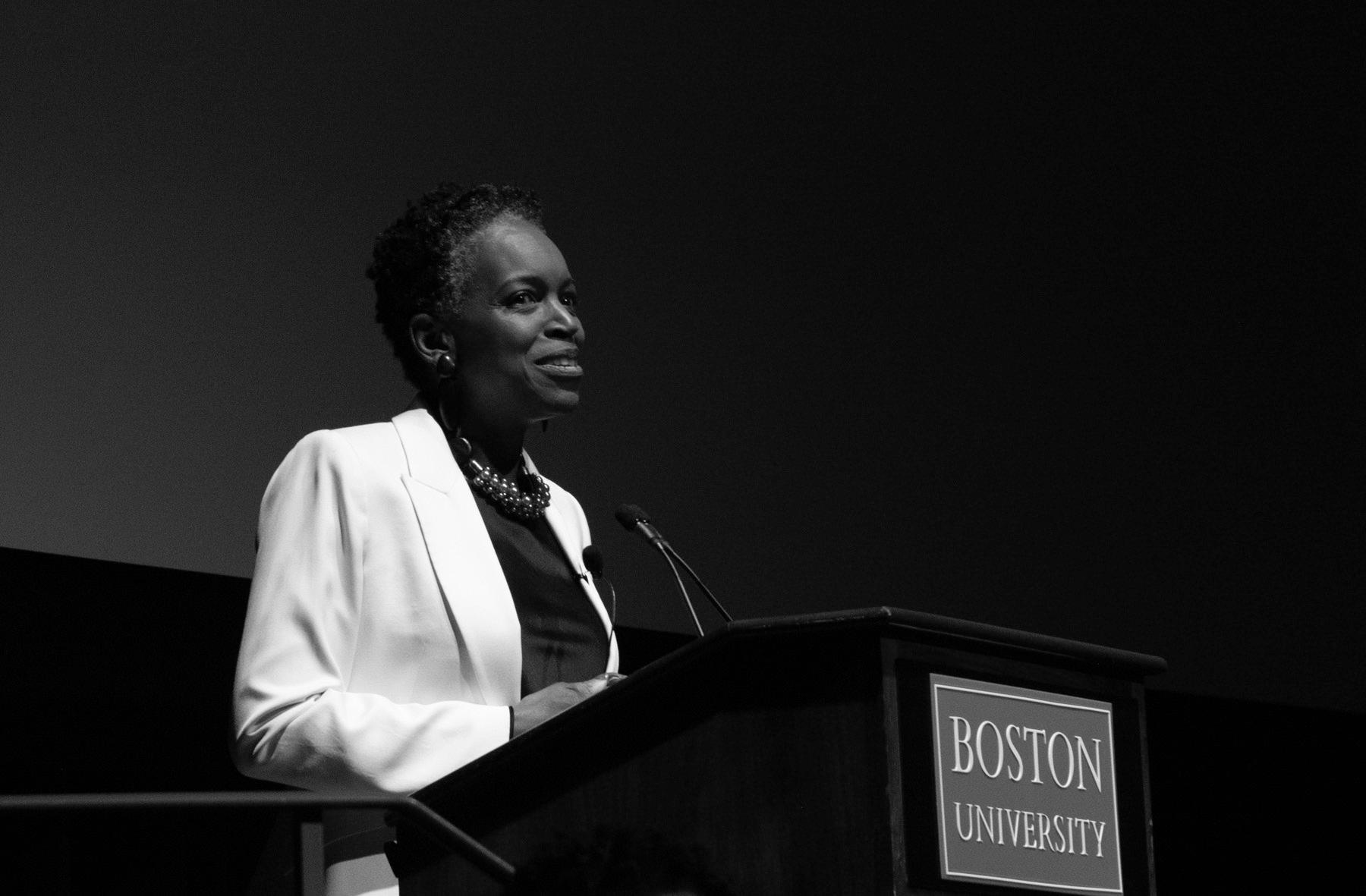
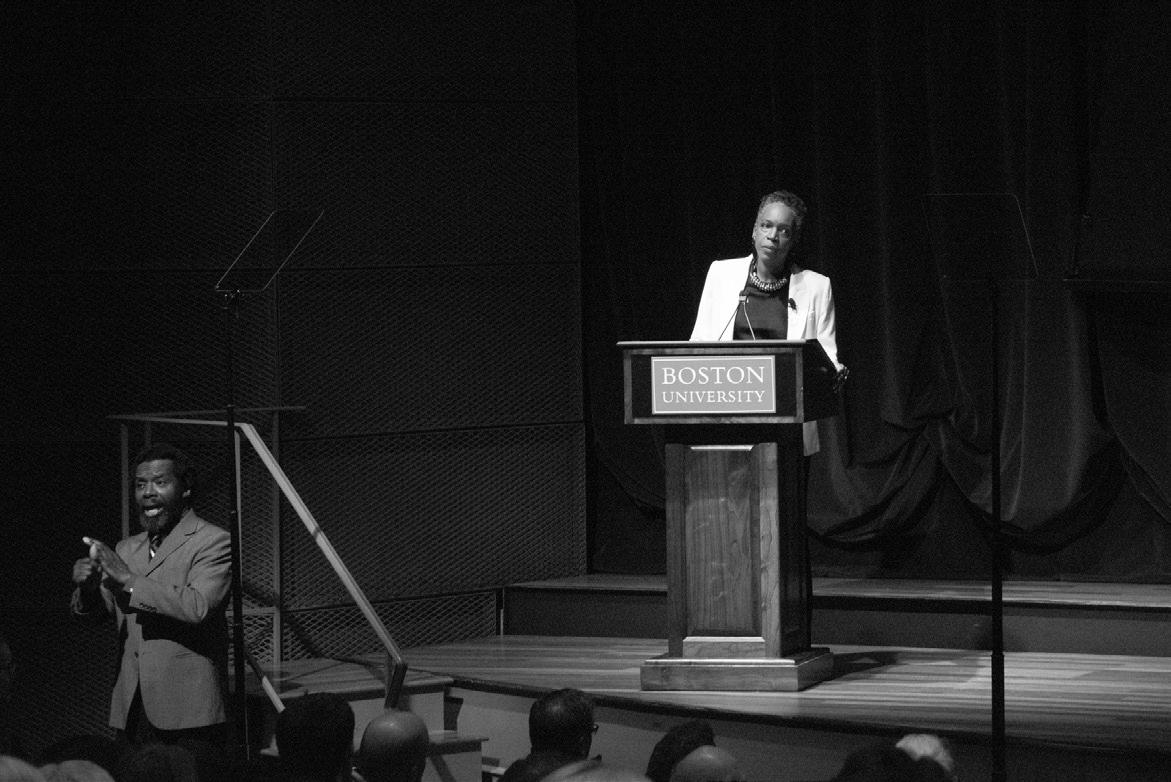
Boston University President Melissa Gilliam delivered her first annual presidential address Wednesday afternoon at the Tsai Performance Center, announcing efforts to further BU’s reputation as a leading research institution through continued support of interdisciplinary initiatives.
“Boston University will be the global destination of discovery, education and human connection — an epicenter where disciplines, communities and realities merge and visionary thinkers unite to create transformative experiences and solutions for the world’s greatest challenges,” Gilliam said.
She detailed the University’s eight areas of priority pertaining to convergent research — merging disciplines to create new fields of study — which span topics including health, environment, youth wellbeing and education, artificial intelligence and economic opportunity.
“Convergence — it is our past, it is our present, it is our future,” Gilliam said, drawing on BU’s history of interdisciplinary research, such as former BU President Robert Brown’s construction of The Rajen Kilachand Center for Integrated Life Sciences.
To fulfill her supposed “north star vision,” Gilliam said BU has partnered up with Boston Medical Center CEO Alistair Bell to strengthen the relationship between the two institutions.
“With Dr. Bell’s help, we have already begun the work of streamlining, educating our medical workforce,” Gilliam said. “Together we can enhance our standard of care and invest in a role we both take seriously, to care for Boston’s underserved
communities.”
One component of the partnership is BEACON, an initiative using AI to study and report “emerging biological threats” to people, animals, plants and the environment, according to a press release issued by BU last year.
In an interview, BU spokesperson Colin Riley said Gilliam is “on a roll” staying on track with the goals she promised when first inaugurated in 2024.
“Getting us to this transition is very, very difficult, but I think she’s got her legs under her, and she’s learned a lot, and she’s made a big impression here,” Riley said.
Riley said Gilliam has also had success navigating financial issues.
“It has been a challenging time,” Riley said. “She’s done a
terrific job getting through it, her and the senior administration.”
Dr. Lindsey Butler, attendee, executive director of the Boston Green Ribbon Commission and inaugural graduate of BU’s URBAN Program — a graduate program focused on preparing students to discover urban environmental solutions by working across departments and sectors — said she believes climate action falls into all eight convergence categories.
“[I’m] thrilled to hear about that framework, and to hear from some of the leaders across the city and beyond that we’re going to be partnering with in the future,” Butler said.
Jennifer King, another attendee and a BU associate university librarian for academic engagement and special collections, said Gilliam’s
speech helped her to understand the direction BU will take in the future.
“For me, I think it’s inspiring
that she is helping all of us at the University understand Boston University’s long tale of history, and it helps me envision not just the immediate next five years and next decade, but I can imagine the next century,” King said.
Michelle Maheu, attendee and associate vice president for Planning, Design & Construction at BU, said she was excited by the work already done on Gilliam’s research initiatives.
“The more I hear President Gilliam talk about the north star [vision] and give examples of it, the better I can deliver potential solutions for the future of BU and helping to shape the future of this physical campus is such an exciting role to be in,” Maheu said.
Lisa Wendt, chair of the University Advisory Board, said Gilliam is “unflappable in the face of everything going on right now” with higher education and that her energy and enthusiasm is needed.
“I think outside partnerships are going to continue to be increasingly important going forward, especially in this new landscape of higher education,” Wendt said.
BY DANIELA GINSBURG Associate Campus Editor
Activism has been prominent within the Boston University community since the release of the Daily Free Press’ first issue, which detailed a student rally at the Statehouse against the Vietnam War in 1970.
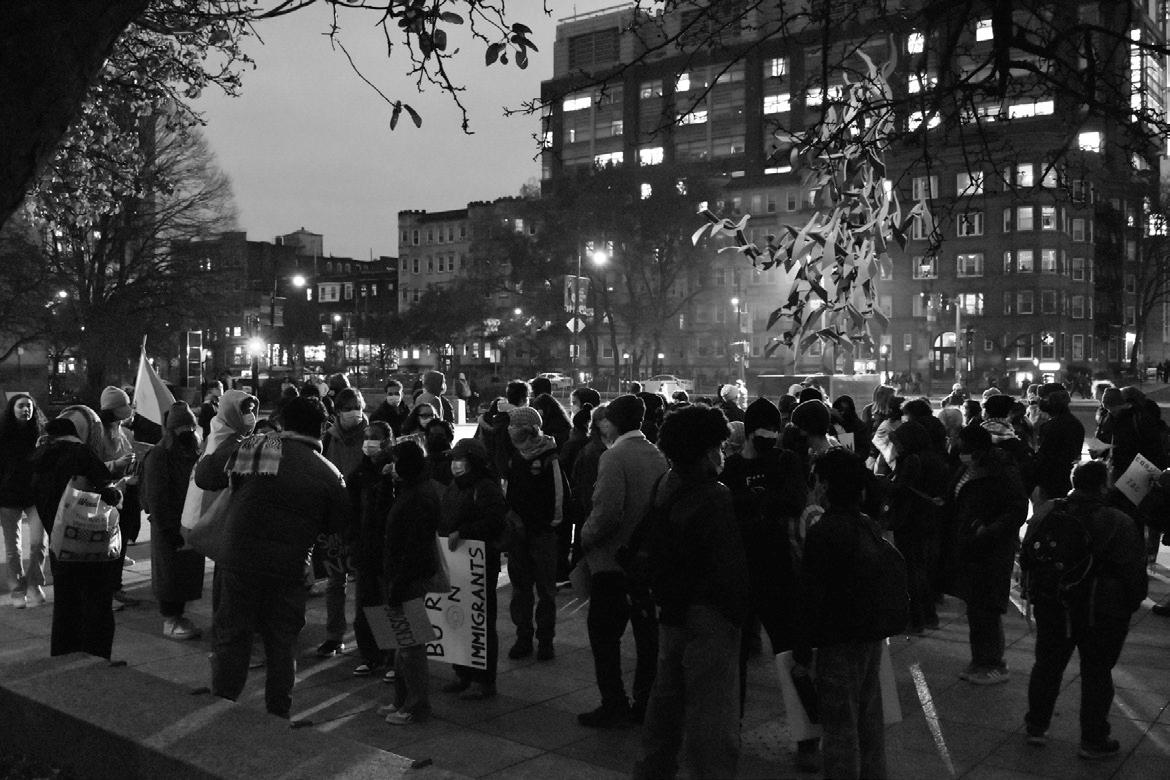
To this day, members of the BU community continue to protest against national and global issues, with BU-affiliated and independent student groups collaborating through organized walkouts, and programs such as BU ICE Watch.
As protests against the U.S. Immigration and Customs Enforcement ramp up in Minneapolis and across the country, BU professors and students with backgrounds in activism emphasized the impact protests can have.
For the last several years, however, BU has received an “F” grade in a survey ranking free speech on college campuses, published by the Foundation for Individual Rights and Expression.
Nathan Phillips, a professor of Earth and Environment, was arrested last September for attempting to deliver nutritious food to ICE detainees in Burlington, Massachusetts.
He said he broke the law to
“prevent [the] larger injustice” of “meager” and “poor” quality food being served to inmates.
“‘Protest’ is a word that I think we should think carefully about,” Phillips said. “Like simply being there to protect the community. Is that protest, or is that just caring for our neighbors?”
Phillips said he believes protest is an effective means for communicating opposition against “horrible” circumstances, which helps build up movements against the group enabling those circumstances.
Back in 2016, he joined BU students in protesting for the University’s divestment from
fossil fuels, noting that as a professor, his expression had weight on the students.
“I came to realize that I was either with the students or I was against the students in that, and I decided I needed to be with the students,” Phillips said.
He continues to advocate for students with hopes that the current BU administration upholds the values and legacies of political activists Martin Luther King Jr. and Elie Wiesel.
BU sophomore Kayleaa Moore said many students fear losing their scholarship or being arrested if they protest on school grounds.
“The majority of students who
do protests, they’re finding that, ‘Okay, this is how I can gain control over what I think and not be suppressed by higher people,’” Moore said. “I can show what I think, I can feel what I think, I can express what I think and so on.”
Moore started protesting in the fifth grade, after the sister of her classmate was paralyzed due to gun violence. Protesting is a means to give voice to those who cannot fight for themselves, she said.
Protesting is effective because it allows people from different backgrounds to fight against an issue collectively, Moore said.
“It just shows that in a time where people think the world is the most divided, we are the most united for a cause,” Moore said.
BU junior River Craciun said whether a protest is effective depends on if there’s a goal in mind and on how receptive the target audience is.
Craciun said he believes people rely too heavily on protests, and don’t consider alternative political actions. While protests can create a sense of solidarity and can be effective when done under the right conditions, he said people should be more direct by contacting representatives in the areas they want to see change.
“Protests are useful when people need to be inspired to rise up,” Craciun said. “Right now, in our day and age, I don’t think it’s necessarily that people need to
rise up, I think people need to take responsibility.”
Mary Battenfeld, a clinical professor of American studies at BU, said people often protest with the hope of pushing forward legislation.
“It’s important to be able to say something, but you want to say something because you want the truth of what you’re saying to be enacted into public policy,” Battenfeld said.
When legislation isn’t passed, she said, it still brings attention to a wider population. She cited the silent protests in New York City led by the NAACP in 1917, saying while it did not spur anti-lynching legislation, it influenced children who would later be part of the Civil Rights Movement.
Protesting not only influences government action, but also aids individuals’ sense of self, said Dawn Belkin Martinez, a clinical professor and associate dean of equity and inclusion at the BU School of Social Work, who researches community organizing.
Martinez said she received an email from someone in Minneapolis, who wrote that many protesters feel a sense of solidarity from the growing number of supporters across the country.
“Authoritarian governments are able to rule by fear,” said Martinez. “So being out there protesting, you are afraid … but you keep marching anyway.”
BY ISABELLE ZHANG City Co-Editor CITY
A federal judge in Boston last week issued an order protecting the visas of noncitizen university students and faculty who voiced pro-Palestinian opinions and who earlier won a landmark free speech lawsuit against the Trump administration.
The order, issued by U.S. District Judge William Young on Jan. 22, came four months after his initial ruling, in which he found the Trump administration had violated the First Amendment by targeting students’ political expression and speech.
“[Federal] threats to continue detaining, deporting, and revoking visas based on political speech serves as circumstantial evidence that such enforcement exists, is viewpoint discriminatory, and has objectively chilled The Plaintiffs’ speech,” Young wrote in the decision.
Unsealed court documents indicate that several international students who were detained by immigration law enforcement were recommended for deportation based on their involvement in pro-Palestine campus activism.
Tufts University doctoral student Rümeysa Öztürk, who was arrested last March, was mentioned in these documents.
The Trump administration said the students’ actions were
antisemitic, but Young ruled them as protected free speech.
The plaintiffs include the Middle East Studies Association, the American Association of University Professors and four of the AAUP’s campus chapters. In a statement to the Daily Free Press, the Knight First Amendment Institute at Columbia University, which represented the plaintiffs, wrote Young’s protection extends to all noncitizen students in the U.S.
A Reagan-appointed judge, Young wrote that any attempts by the Trump administration to change a noncitizen plaintiff’s immigration status will be void unless the government provides clear reasoning or evidence for doing so.
Michel DeGraff, a faculty member at the Massachusetts Institute of Technology who also serves on the board of a free speech advocacy group, said he hoped Young’s ruling leads students and faculty to feel “empowered” to speak freely.
“I do believe in the power of the courts to roll back tyranny, and I also believe that we should not be fearful,” DeGraff said. “Fear is the best companion of the tyrants, and we have to go against that.”
DeGraff said he was “not at all surprised” by the unsealed documents’ conflation of antiZionism with antisemitism — a comparison he says he doesn’t believe in — and that he sees “similar patterns of distortions” among other universities in the U.S., like Harvard, M.I.T. and
Columbia.
“I have so many colleagues across the U.S. who are suffering, who are being fired, who are being suspended, being censored for the same reason that we see in these documents from DHS,” DeGraff said. “Because they are protesting a genocide, they are being branded antisemites, or worse, as terrorists.”
Jonathan Feingold, a law professor at Boston University, said the unsealed documents demonstrate how the Trump administration “continues to marshal cynical accusations of antisemitism in order to delegitimize” and target political opponents.
“Rümeysa wrote a totally reasonable opinion editorial that criticized [Tufts University] and called on her university to divest from the state of Israel, which is a wholly legitimate opinion to have,” Feingold said. “The Trump administration recast that opinion as one that was inherently antisemitic.”
Feingold said if the federal government can “target an individual because of an article that they write, then you do not have academic freedom,” and free speech is also limited.
“The federal government [is] saying quite clearly that if you articulate an opinion that is one we dislike, we are going to target you,” he added.
The chair of Northeastern University’s Young Democratic Socialists of America chapter, who asked only to be identified by her first name for fear of being
doxxed, said while the reasoning behind Rümeysa Öztürk and other students’ deportations was “nothing unexpected,” the Trump administration’s actions are “utterly unjustifiable” and impacting noncitizen students’ willingness to participate in political activism.
“A lot of international students are getting scared,” the person, Lokesh, said.
NEU international students are “less receptive to union organizing because they feel like if they do participate in union organizing, they will be deported,” Lokesh said.
“However, I think it’s very important to remember that it may not be enough,” Lokesh added. “There’s only so many things that people within the system can do to prevent Trump from acting the way he is.”
Lokesh said people should focus on community organizing, rather than depending solely on the “mechanisms that exist within the state” for pushing back against Trump.
“The Democrats have failed us time and time again,” Lokesh said. “It’s time that we stop waiting for them to save us. It’s time that we save ourselves.”
Lokesh said Young’s ruling demonstrated that “local officials are willing to fight against the Trump administration.”
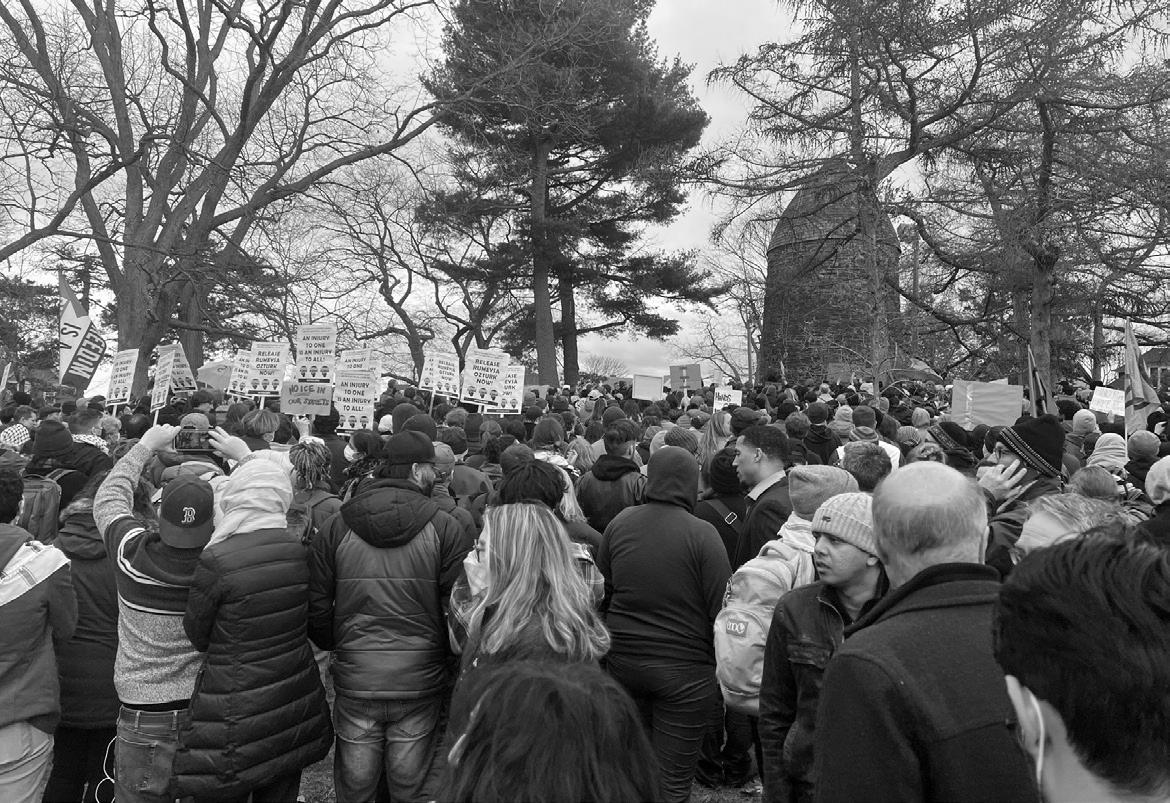
Hundreds gathered in March last year in Somerville to call for the release of a Tufts PhD student, Rümeysa Öztürk, who was arrested by federal authorities and sent to a detention center in Louisiana. Last week, a federal judge in Boston ordered the protection of the visas of Pro-Palestinian university students and staff.
BY GIANNA NICCOLI Associate Campus Editor CITY
Programs across Greater Boston remain committed to providing support to immigrants amid a national surge in U.S. Immigration and Customs Enforcement activity.
The Welcome Project, an education and advocacy-based nonprofit for immigrants based in Somerville, hosts programs to provide a safe space for immigrants to gather and build community.
The organization teaches English classes “in the context of
different topics that are important to living here in the U.S.,” including transportation, education and immigration law, said Sara Kirubi, executive director of The Welcome Project.
Kirubi said many of the organization’s immigrant clients are “very anxious” due to increased ICE activity across the country.
“It’s just changed the entire atmosphere of what we’re doing,”
Kirubi said. “The people we’re working with are not operating in normal times, they’re facing a crisis right now.”
Kirubi said The Welcome Project is doing its best to support
immigrants despite a surge in federal enforcement.
“Obviously there’s a limit to what organizations can do in the face of such lawlessness and terror, and so we’re trying to take our place,” she said.
Students have withdrawn from The Welcome Project’s in-person English classes or transferred to virtual classes due to the surge of ICE activity, Kirubi said.
Kelly Interiano, membership director at East Boston YMCA, said their English classes are in high demand because families want to strengthen their immigration cases and decrease
risk of deportation.
“It’s very admirable to see in the families because even though they’re not being treated in the best way by our own government, they’re still doing everything they can and following the rules to show that they are good standing, abiding citizens,” Interiano said. “They’re part of the community, they’re part of the East Boston family.”
Kirubi said anytime ICE activity is rumored around greater Boston on social media, class attendance plummets at The Welcome Project.
“I understand where people are coming from, not wanting to risk leaving their houses if they’re vulnerable,” Kirubi said. “But it’s also really unfortunate, because this is where people come to learn skills that they need to continue thriving in this country.”
The East Boston YMCA paid programming attendance has decreased, including swim lessons, soccer and basketball practices, because families are hesitant to send their children outside unnecessarily, Interiano said.
Kirubi also said The Welcome Project is struggling “to continue operations” due to federal funding cuts.
“A lot of foundations and private donors have stepped up and… tried to increase their donations in response,” Kirubi said, “But… it hasn’t covered the losses that we’ve incurred from losing government source funding.”
Donors willing to give money are often splitting their funds between different organizations, Kirubi said, “because there’s just so much going on right now.”
Interiano said the YMCA is committed to being a welcoming
space for all Boston residents.
“If we can help at least one family a day to feel at least a little bit safer, or to feel at least a little bit normal in these crazy times, then we feel okay,” Interiano said. “We feel like we did a day’s work.”
Sofie Turck is the outreach director of Assisting Refugees through Initiative, Service and Education, a student-led initiative at Boston University that collaborates with volunteer programs to aid immigrant families.
ARISE partners with Resettle Together, a community sponsorship organization that pairs local volunteers with newly arrived refugees.
However, Turck said a lack of refugees coming into the U.S. in recent years means their work has changed to providing support to a current immigrant family.
Students in ARISE are paired with a local refugee family to provide support as they settle into Boston, Turck said, “whether that’s job preparations or tutoring or … doing fun things like going ice skating or taking them out.”
Jasmine Lee, the secretary of BU ARISE, said the club has shown her the importance of community programs and the people who run them, especially given “everything that’s happening” with immigration law enforcement.
Turck said she “admires” people who remain committed to volunteer work.
“I think you are putting yourself in a position that’s risky, but it’s so, so important that we have these organizations and these passionate people doing this work and protecting these vulnerable communities,” Turck said.
BY AVA WISELEY DFP Writer
The walls of Isabella Pingrey’s dorm room are adorned with photos of her friends. Outside the door and down the hallway of her Student Village suite, her roommates can be heard cracking jokes and laughing.
“Every day, consistently — and I go to bed at 10 p.m.,” she said, referring to the commotion.
But the comment had a loving undertone — because without the support of her friends, Pingrey said she might not be where she is today.
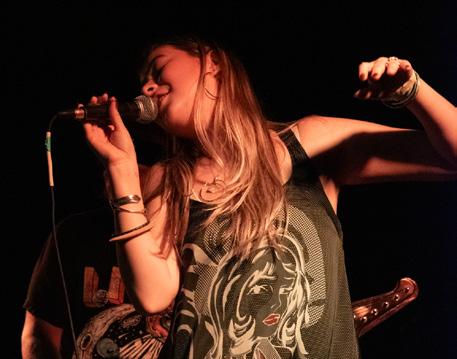
Pingrey — who goes by her nickname, Izzy — is a sophomore at Boston University with a blossoming music career. With over 2,000 monthly listeners on Spotify and multiple songs with over 100,000 streams, the New York City native released her first single when she was 16. On Jan. 22, Pingrey debuted her first Boston show at The Middle East in Cambridge.
Though she only began sharing her songs with the world in the past few years, Pingrey has been surrounded by music from a young age. Her father Arthur Pingrey, a producer and composer in the industry, began involving her with music when she was four, directing her first song and taking her to perform in theater troupes in the city.
It was only during the COVID-19 pandemic when she started writing songs.
Pingrey was in eighth grade when the pandemic shut down schools, which prevented her from playing an Olivia Rodrigo song from “High School Musical: The Musical: The Series” at her school’s talent show.
A “super fan” of Rodrigo, Pingrey saw the famed singer writing songs during the pandemic — she quickly followed suit.
Pingrey’s dad started working more frequently with independent

artists as she got older, and together they recorded and released Pingrey’s first song when she was 16.
“My dad always just kind of said, ‘Whenever you want, we can just start messing around,’” she said.
“[We] do it together. I write things, and I bring them to him.”
Pingrey’s music, described as indie pop by Berklee College of Music, is typically inspired by her personal relationships and her latest single, “opposite in love,” is no different.
“The song is about how frustrating it is, and [how] uncool it is that I just totally let one person’s opinion of me rock my world,” Pingrey said.
Her dad said he embraces the personal quality of her lyrics, something he said more parents should do.
“I think a traditional parent is trying to [be] very conscious of shaping a child to conform to society and to … ignore bad feelings,” he said. “I think that if you’re making work that’s personal, it’s usually a lot better because a lot of people are afraid to go there.”
Thursday night’s show only emphasized the relatability of her lyrics.
While performing her 2025 single “new york just for you,” Pingrey held out her microphone, and the crowd — a cluster of digital cameras and Xs on hands — shouted back her lyrics in perfect unison.
Many of the audience members were Pingrey’s friends, and their love and support for her was made clear by the energy they brought into the small venue.
BY MARY GOETZ Associate Arts Editor
If you grew up somewhere cold, chances are you’ve wished for a snow day before.
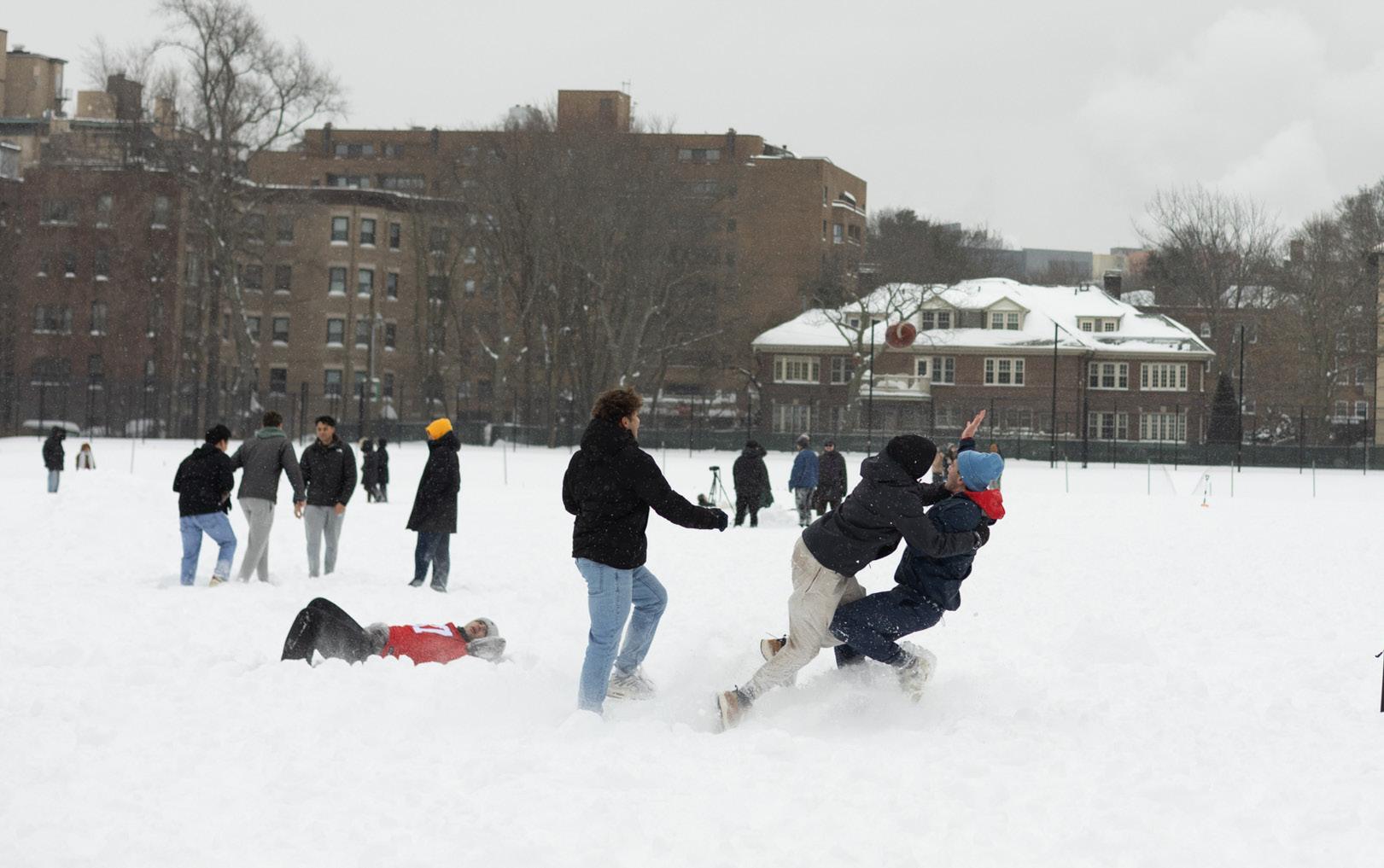
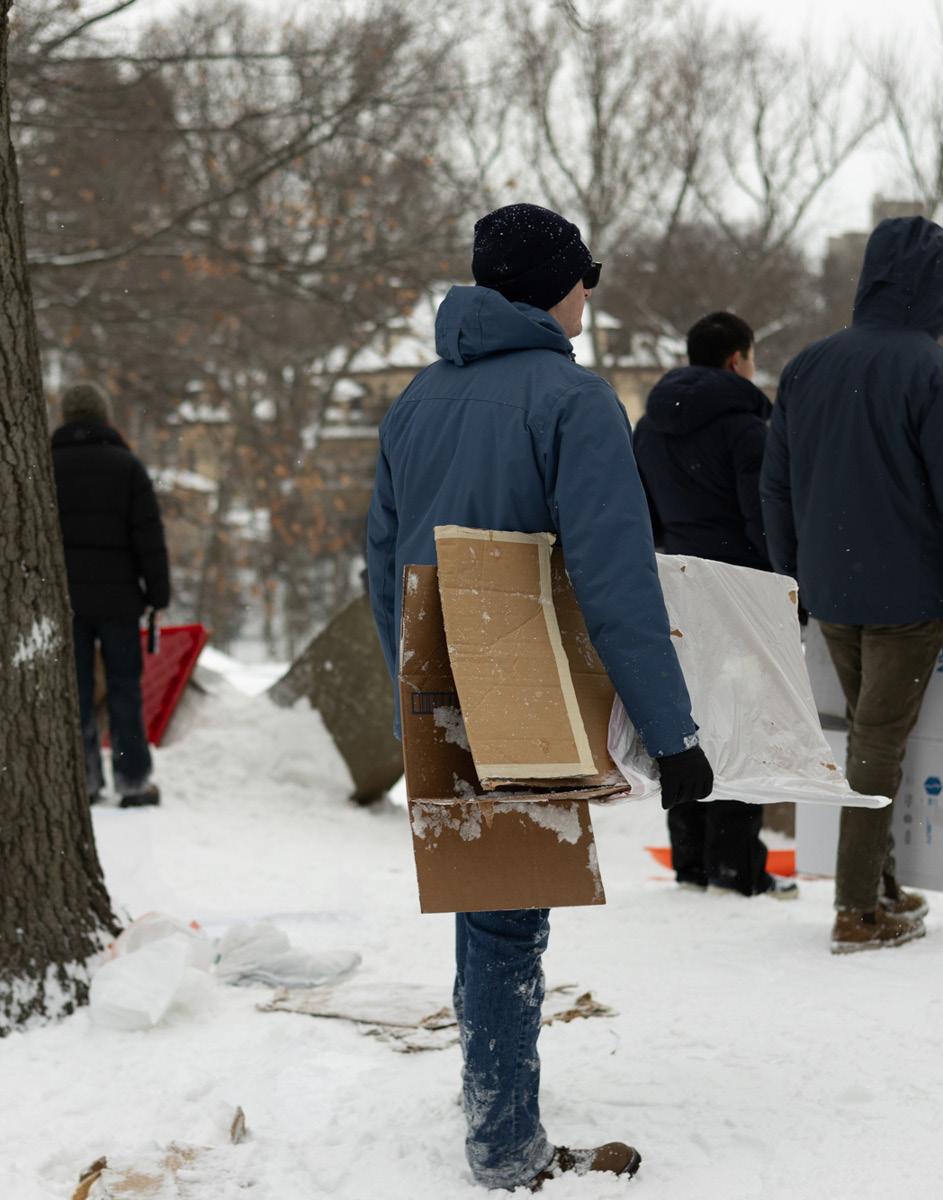
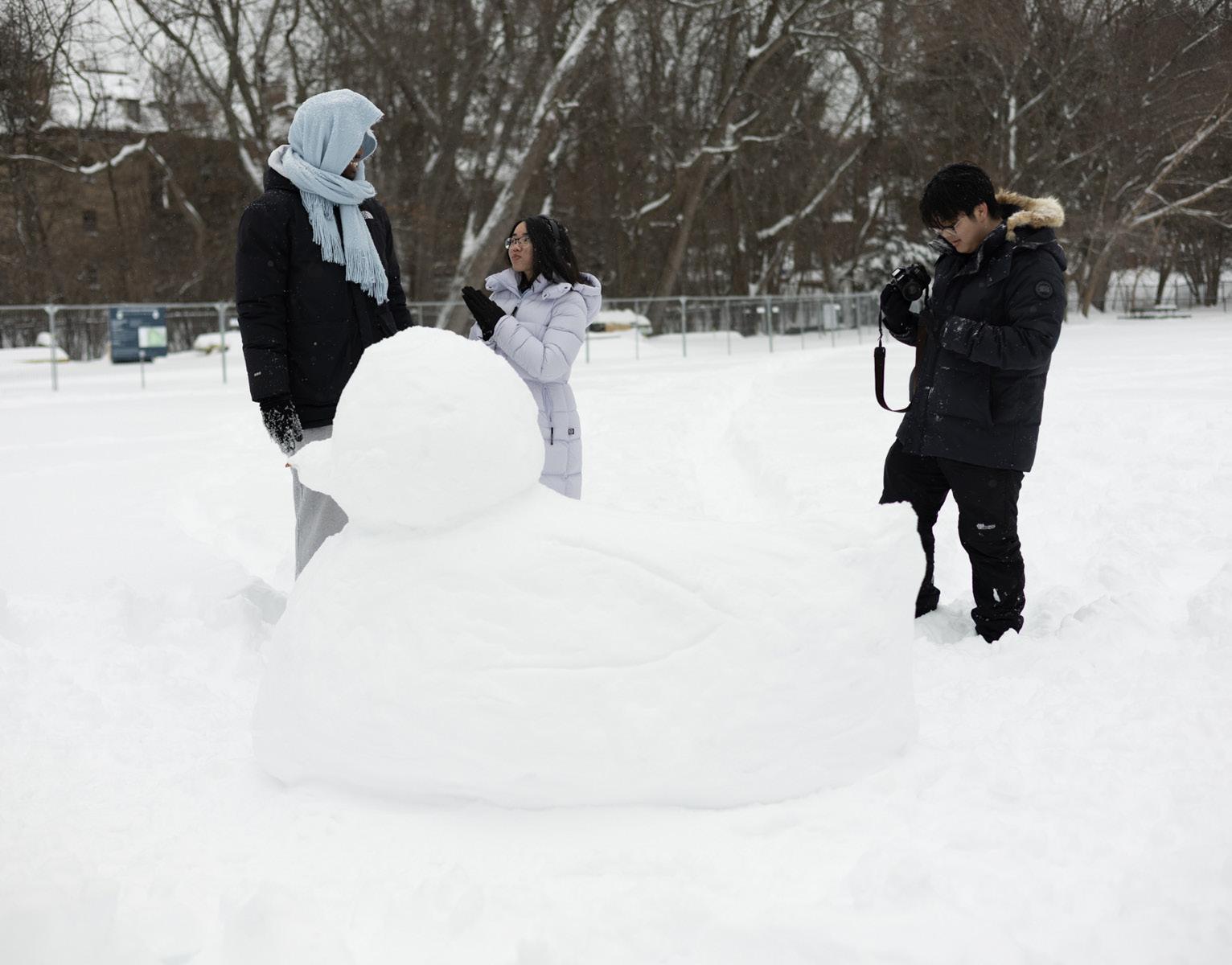
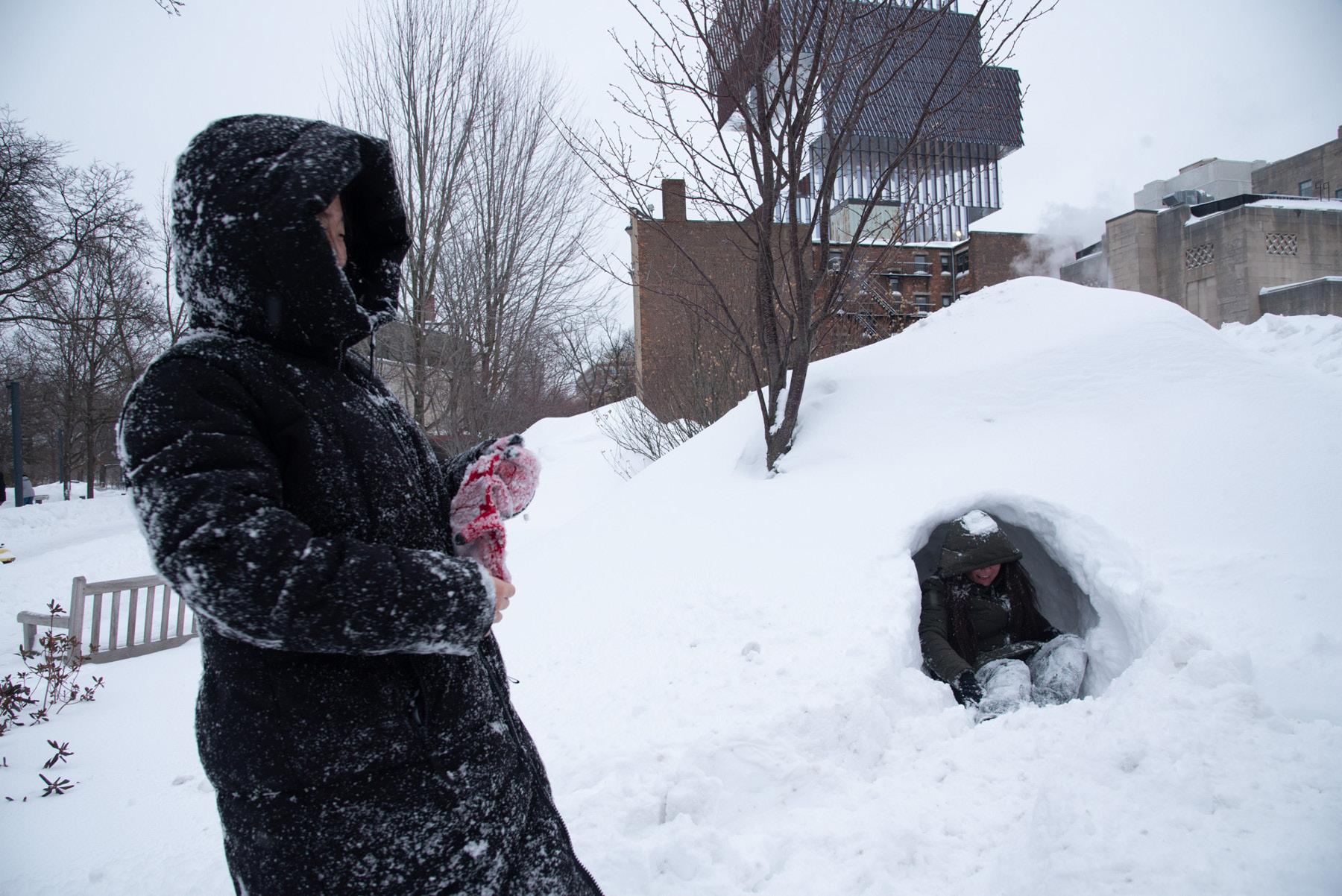
Some had superstitious rituals, like putting a spoon under their pillow or wearing their pajamas inside out. Others would stay up to watch the news, eyes glued to the bottom banner, hoping their school’s name would appear.
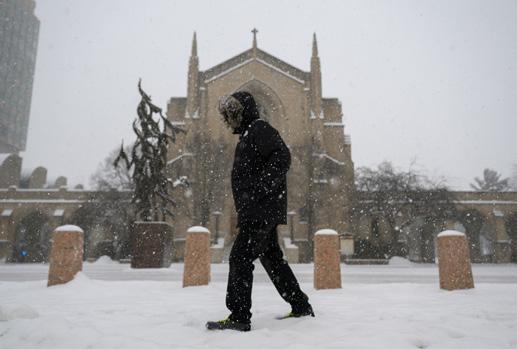
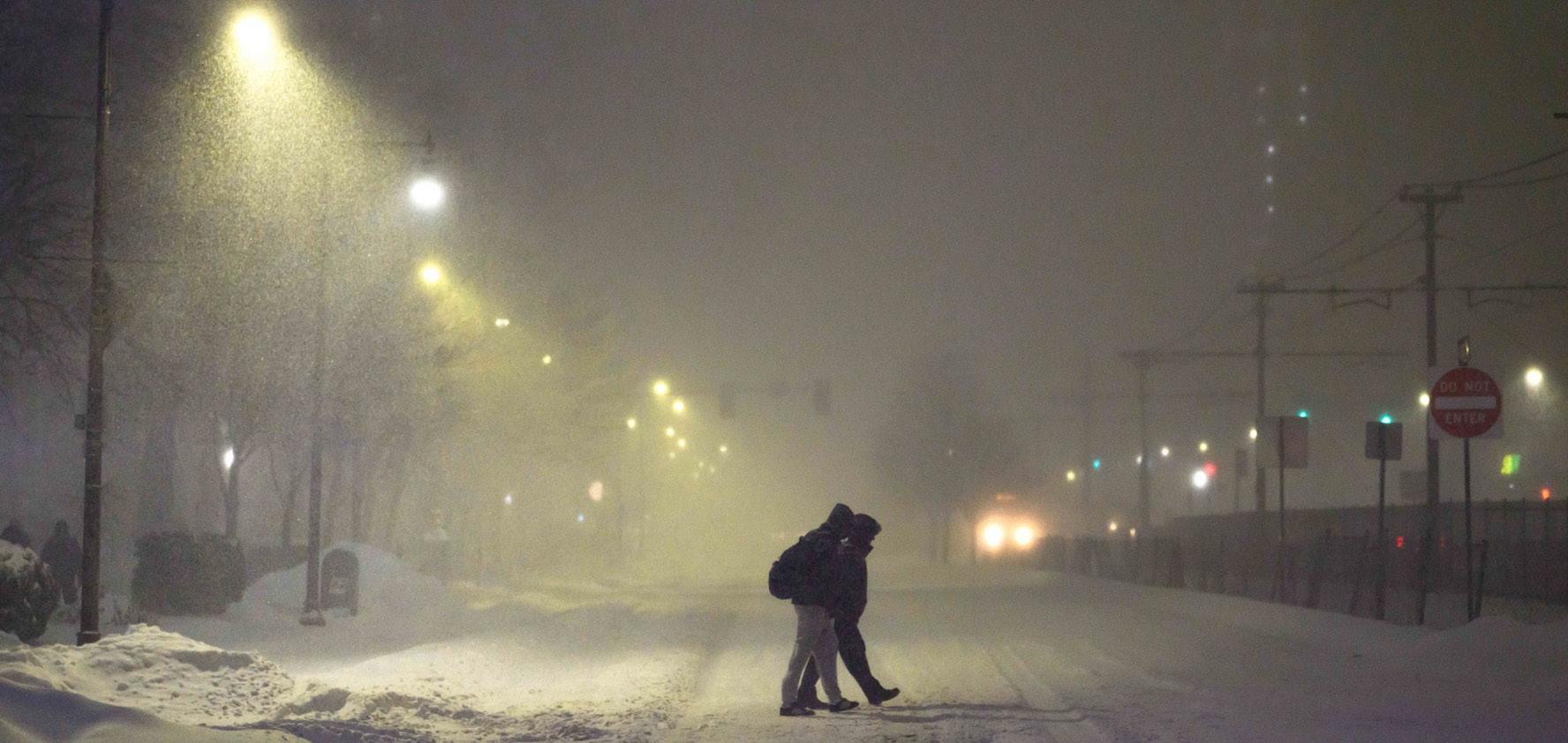
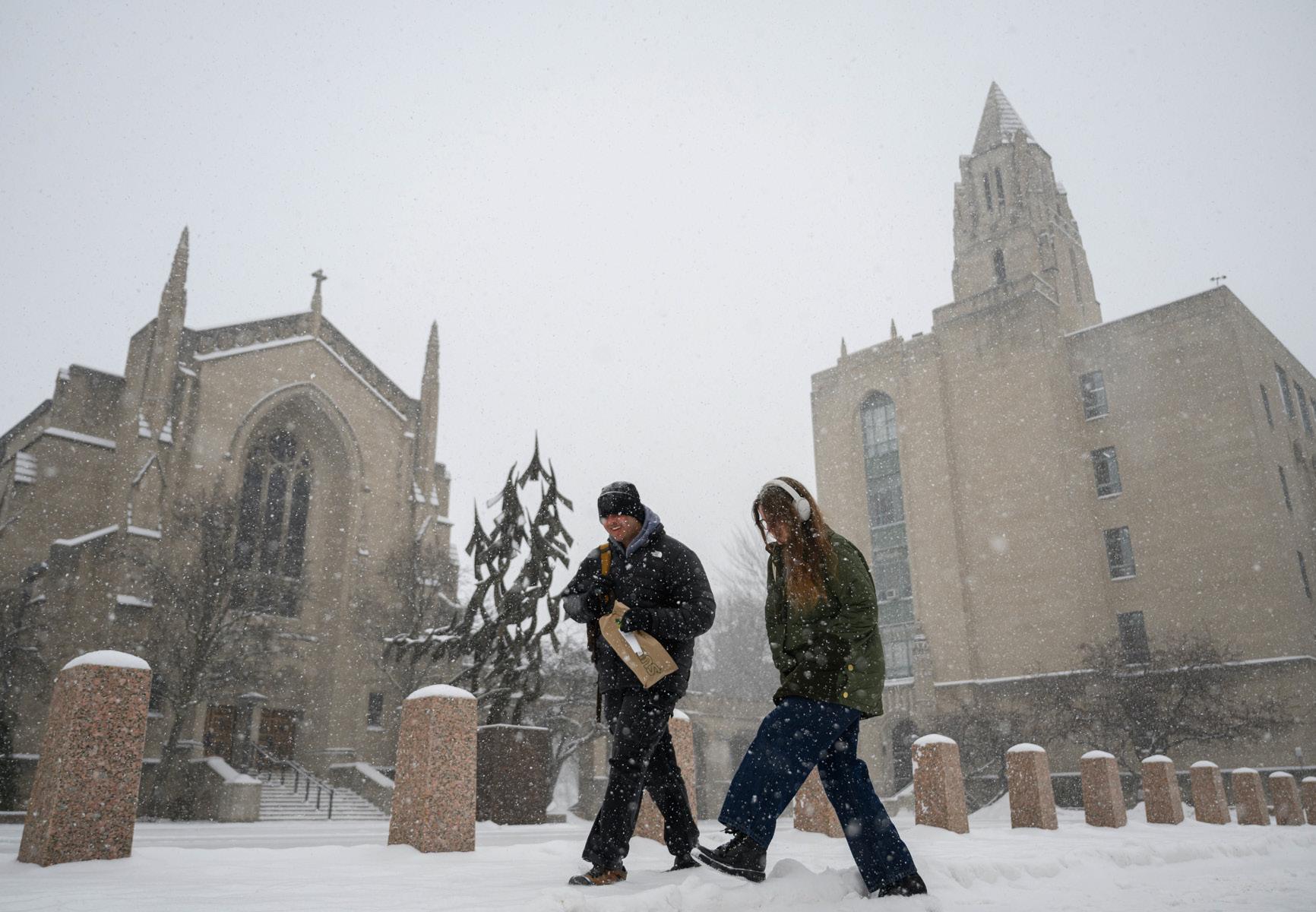
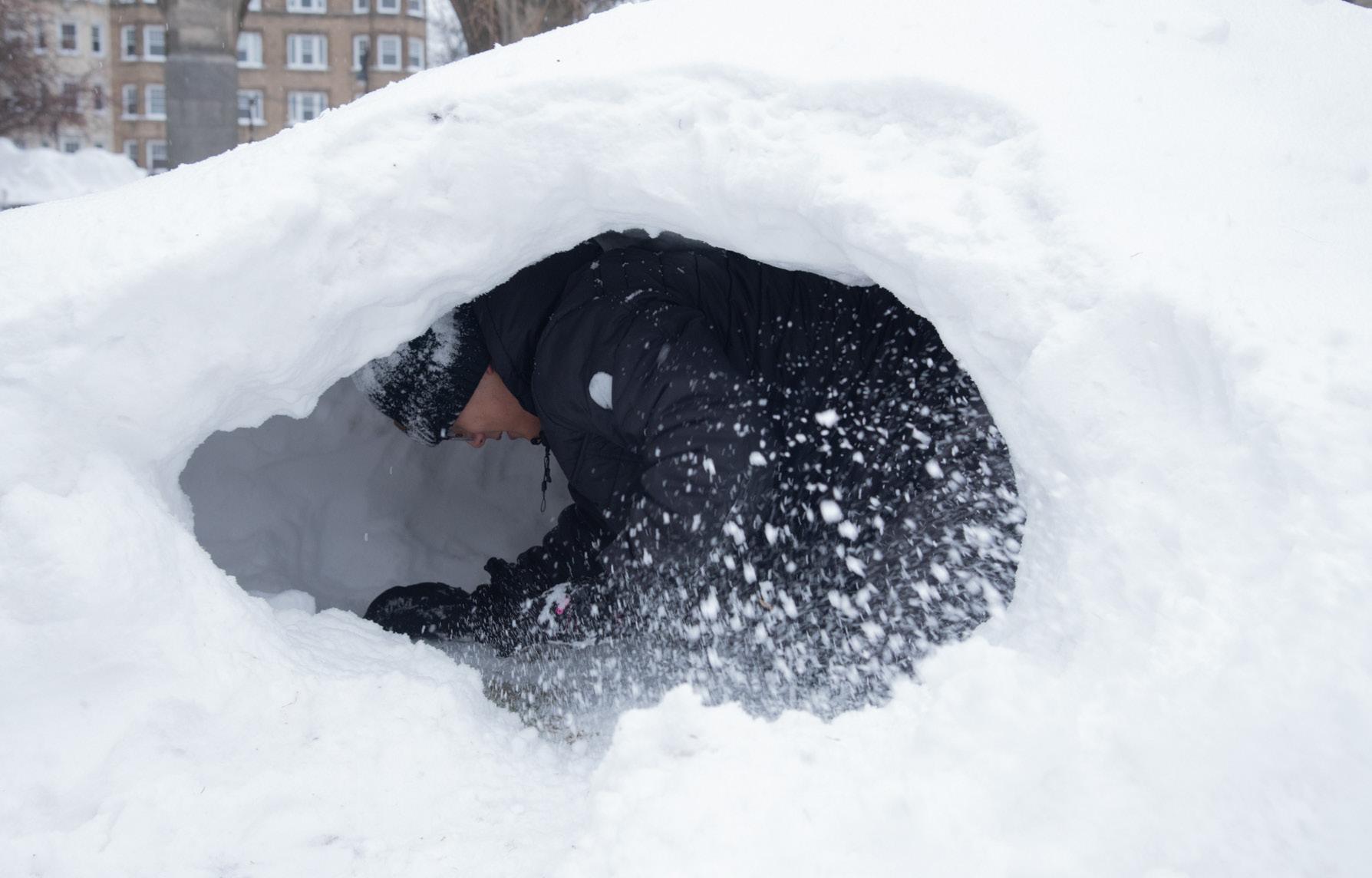
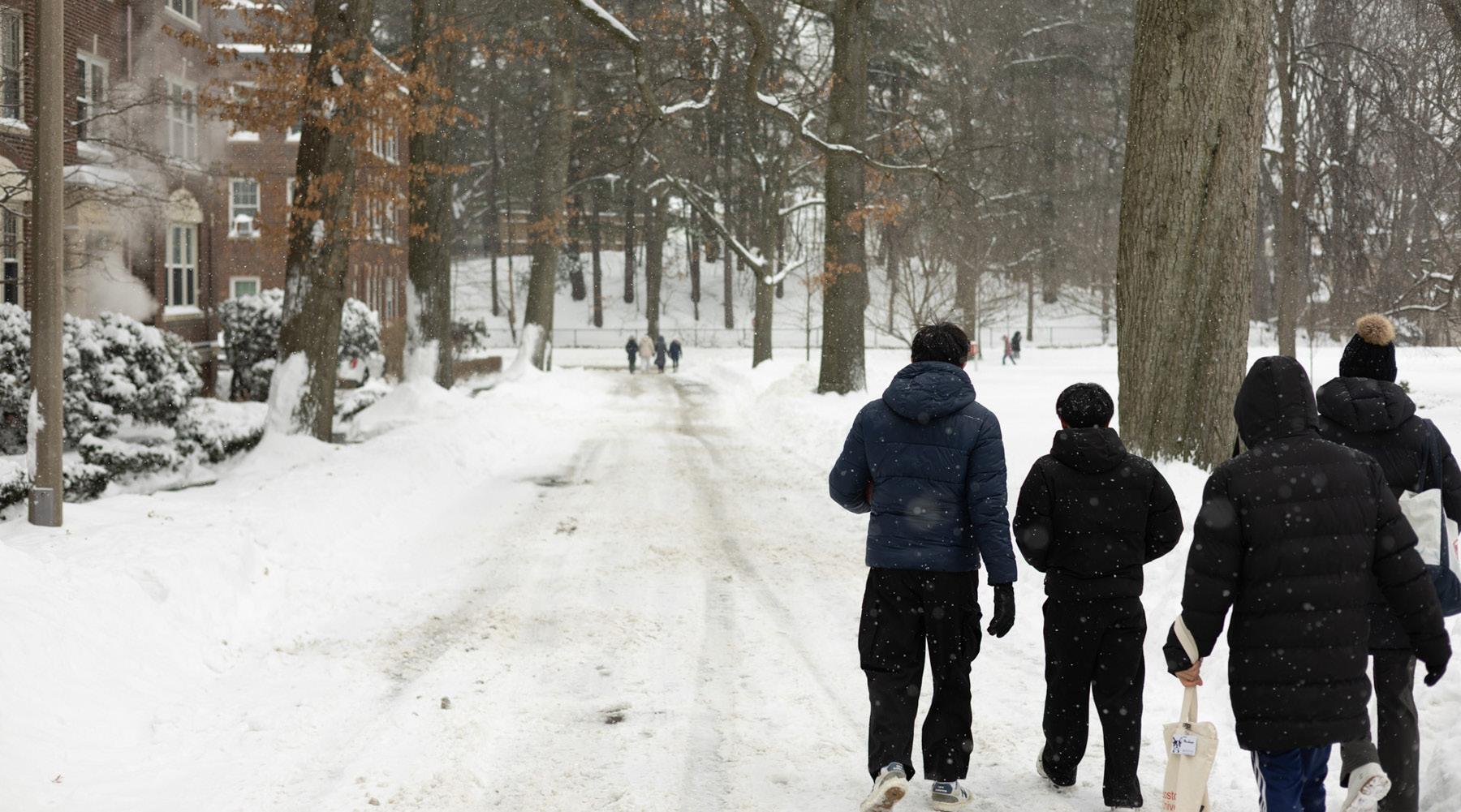
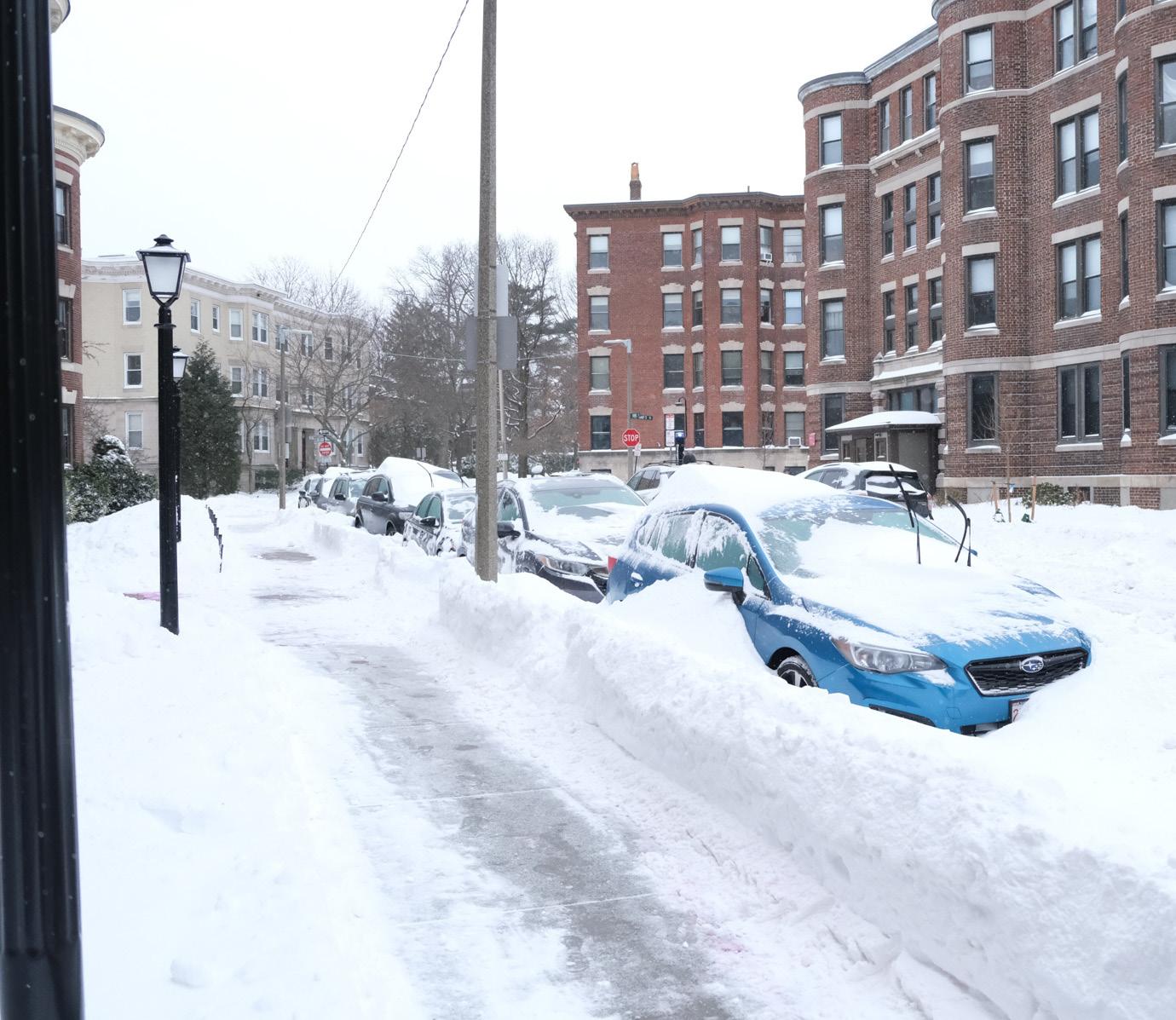
As a major snowstorm swept the northeast, Boston University students’ wildest dreams came true, with campus shutting down from noon on Sun. Jan. 25 through Mon. Jan. 26 for a rare snow day.
“We’re still so stressed from all of our work, but it feels like a day off of just [going] back to being a kid,” said BU sophomore, Alessia Leonardini.
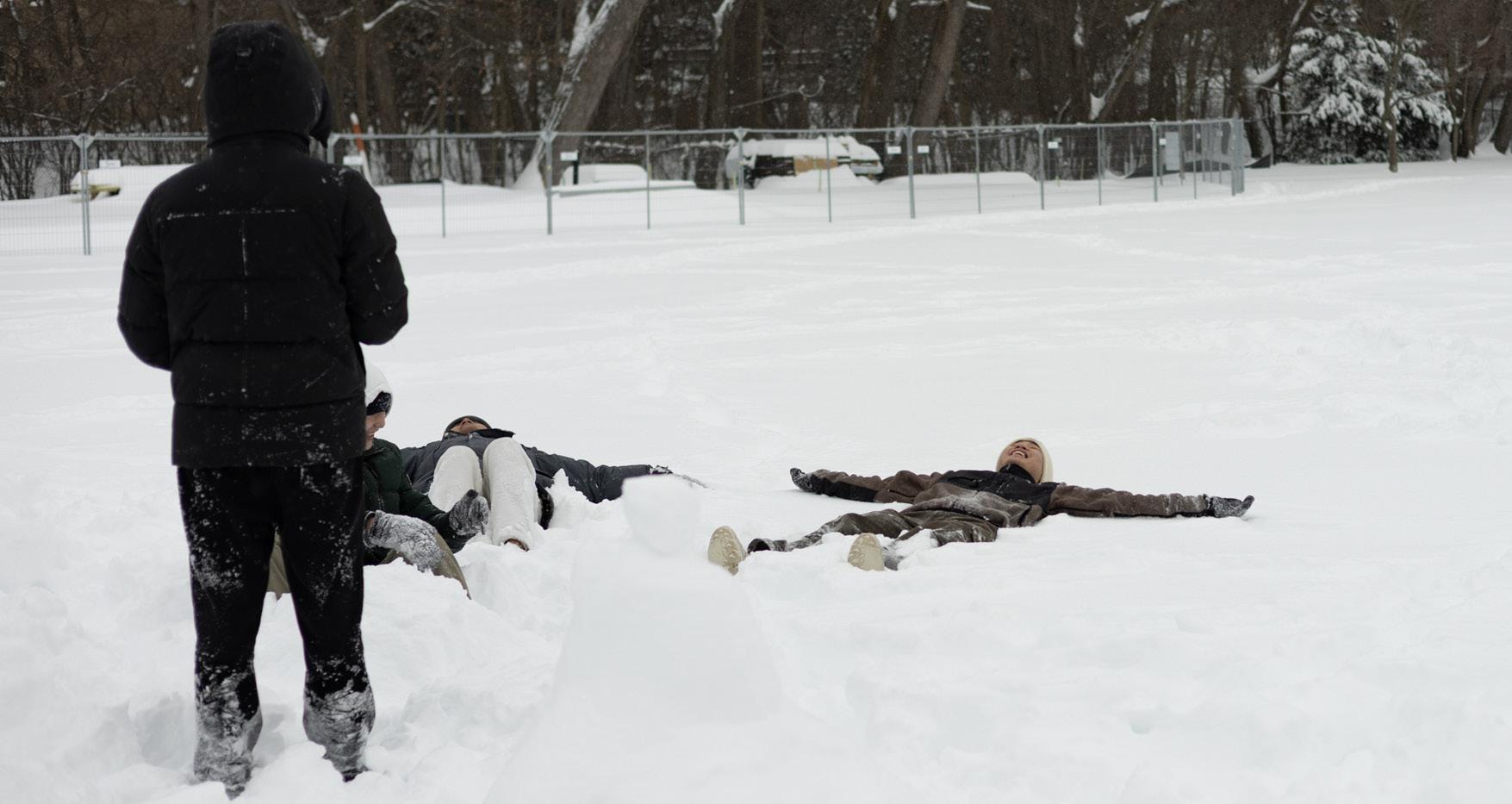
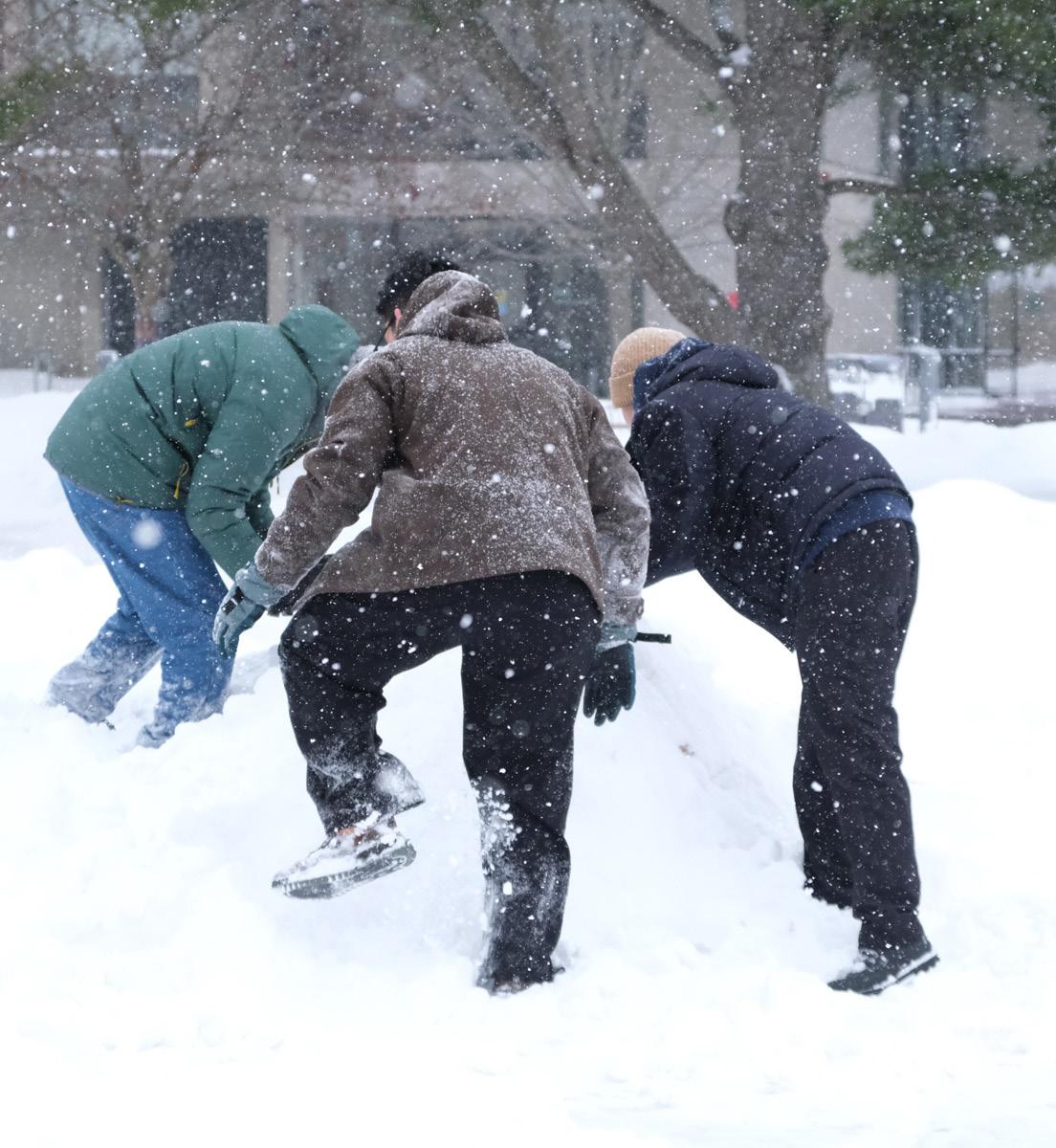
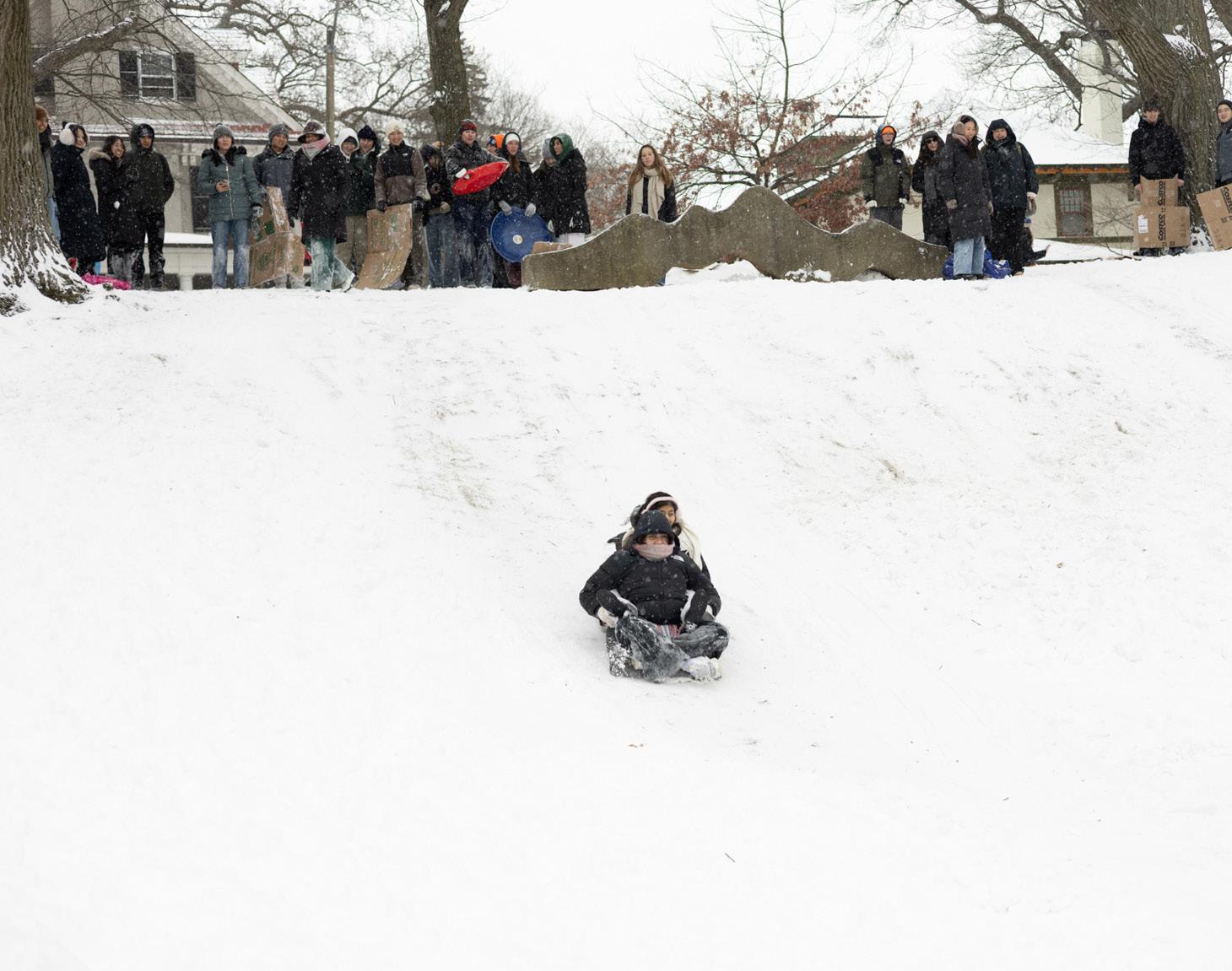
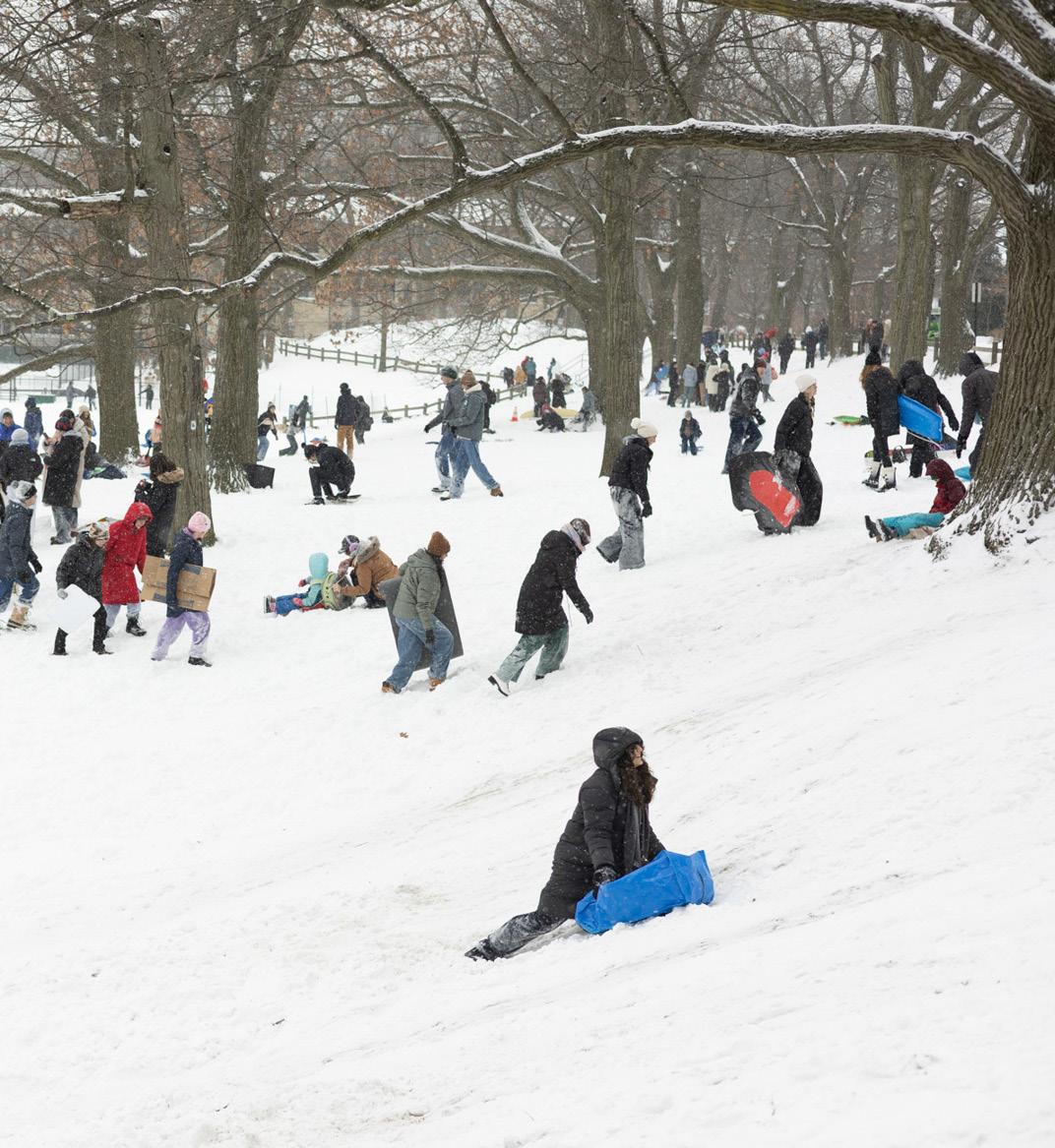
During the snow day some students relished the cold weather by building snowmen and sledding at Amory Park, while others hunkered down in the warmth of their dorms. But no matter where they braved the storm, most said they felt a sense of nostalgia for their snow days in childhood.
Though Leonardini grew up
with snow days in New York, she said the nostalgia of having an entire day off to spend with her college friends made it special.
“It’s important to spend it with people — with your friends — just because there’s so many friends who haven’t experienced snow yet,” Leonardini said. “It’s the first snow experience here so it feels very nostalgic.”
After having a snow day in his freshman year despite it hardly snowing that day, BU junior Paul Vae said he didn’t think the school would ever announce another.
“It’s a nice surprise,” he said.
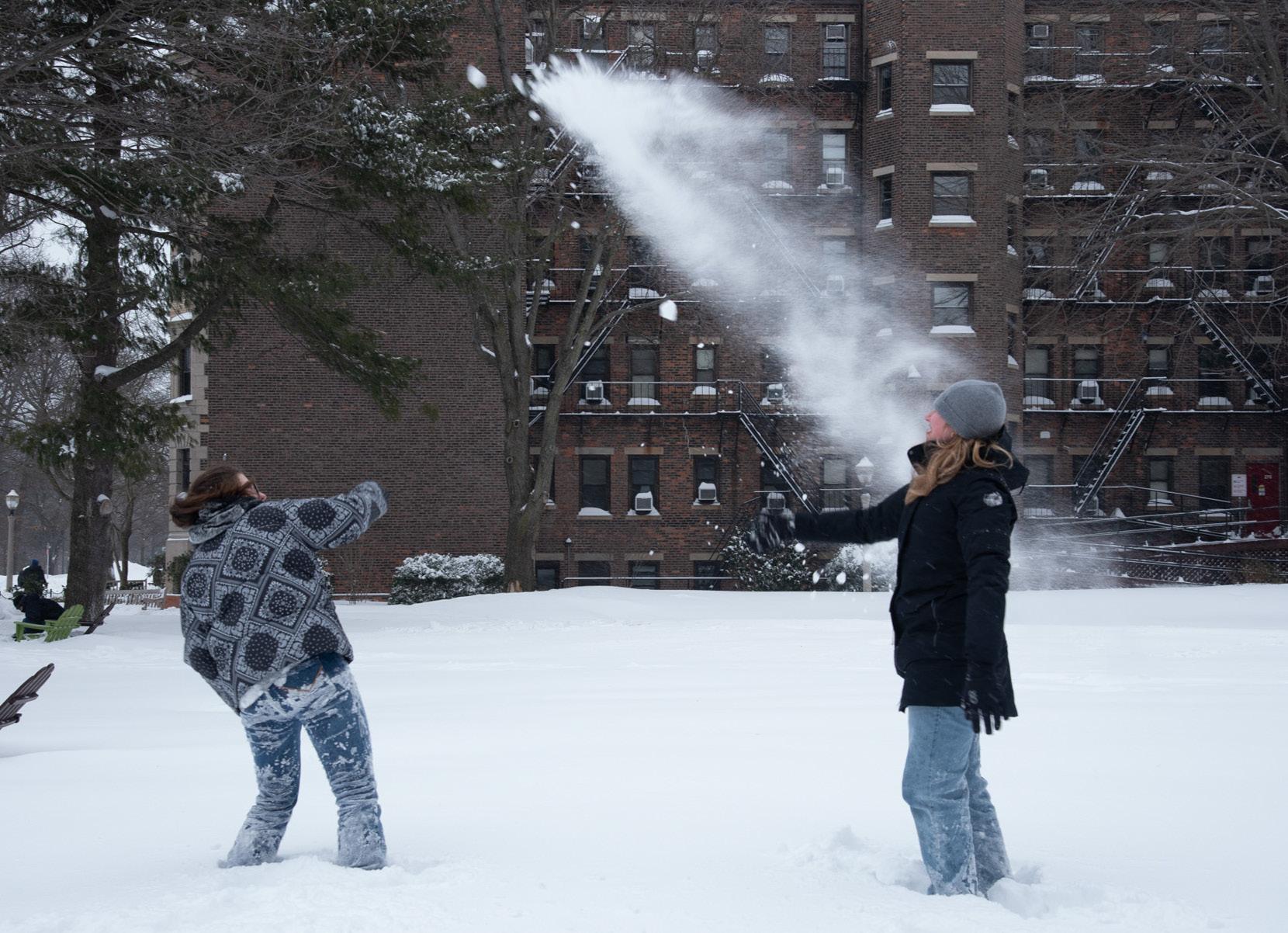
BU sophomore Aiman Arshad and his friends took to Amory Park for sledding. With only one sled and a torn-up cardboard box, the rest opted for a snowball fight.
Though some students had grown up in the snow, others were experiencing its magic for the first time.
Joaquin Sorrentino, a BU sophomore from Buenos Aires and Sarasota, said this weekend was his first time having a snow day. After kicking off the weekend with a snowball fight on Sunday he relaxed indoors with a movie night on Monday.
“We walked around, up and down, playing in the snow,”
Sorrentino said. “It was pretty fun.”
Natalia Van Brackel, a BU freshman from Miami, went sledding in Amory Park to commemorate her first snow day.
“I feel like this is the first time I was able to play and feel like a kid again,” Van Bracken said.
Other students took advantage of the day off, holing up at home, sleeping in and catching up on homework through the storm.
“It’s really good to just get cozy,” said BU sophomore Liv Swerdlow.
Growing up in Chicago, she said she’s used to snow but hadn’t seen this much in years.
BU freshman Hudson Heuter said he also planned to stay in until he and his friends saw others playing in the snow outside. Despite not having gloves, Heuter said they went out.
“It was fun to just not have to worry about anything and be able to just play in the snow with my friends,” he said.
Van Brackel, who doesn’t have the nostalgia of snow days’ past, said the community made the day special.
“In college, people see it as such an adult world,” she said. “But I felt like I was five years old again playing around with everyone.”

“I know all these people in the front,” she said on stage, as she clasped their hands.
Pingrey said she owes a lot of her growth as an artist to her friends.
“I have a really supportive network of friends who come to everything, and it makes it easier to book [shows because] they’re so religious about it,” she said. “It means the world to me that there are people in my life who are so supportive.”
BU sophomore Phoebe Stern, a friend of Pingrey’s whom she met during their freshman year orientation, said she was impressed by all aspects of her performance.
“She captivates the stage so well,” Stern said. “I love that she’s out there with her dad. That just inspires me and [she] provides such an awesome example for a relationship … She
can do it all.”
After the show, Pingrey weaved through the crowd, greeting people and giving hugs. The mingling lasted long enough for the venue staff to have to tell people to leave, where it then spilled out onto the sidewalk. Pingrey is slated to release her sophomore EP this year, and she’ll be playing another show in Boston on Mar. 28 at Berklee’s Red Room at Cafe 939.
In the future, Pingrey said her dream is to be a hitmaker for other artists, but is open to anything in the arts.
“My vague, broad, 19-year-old version of the future is that I’m doing something in music or fashion or arts,” she said. “I just really like being around creating things.”
‘Deliberately catering to underage clientele.’ Popular offcampus bar shut down for underage drinking violations, students respond
BY BRIAN CHAN Associate Business Editor
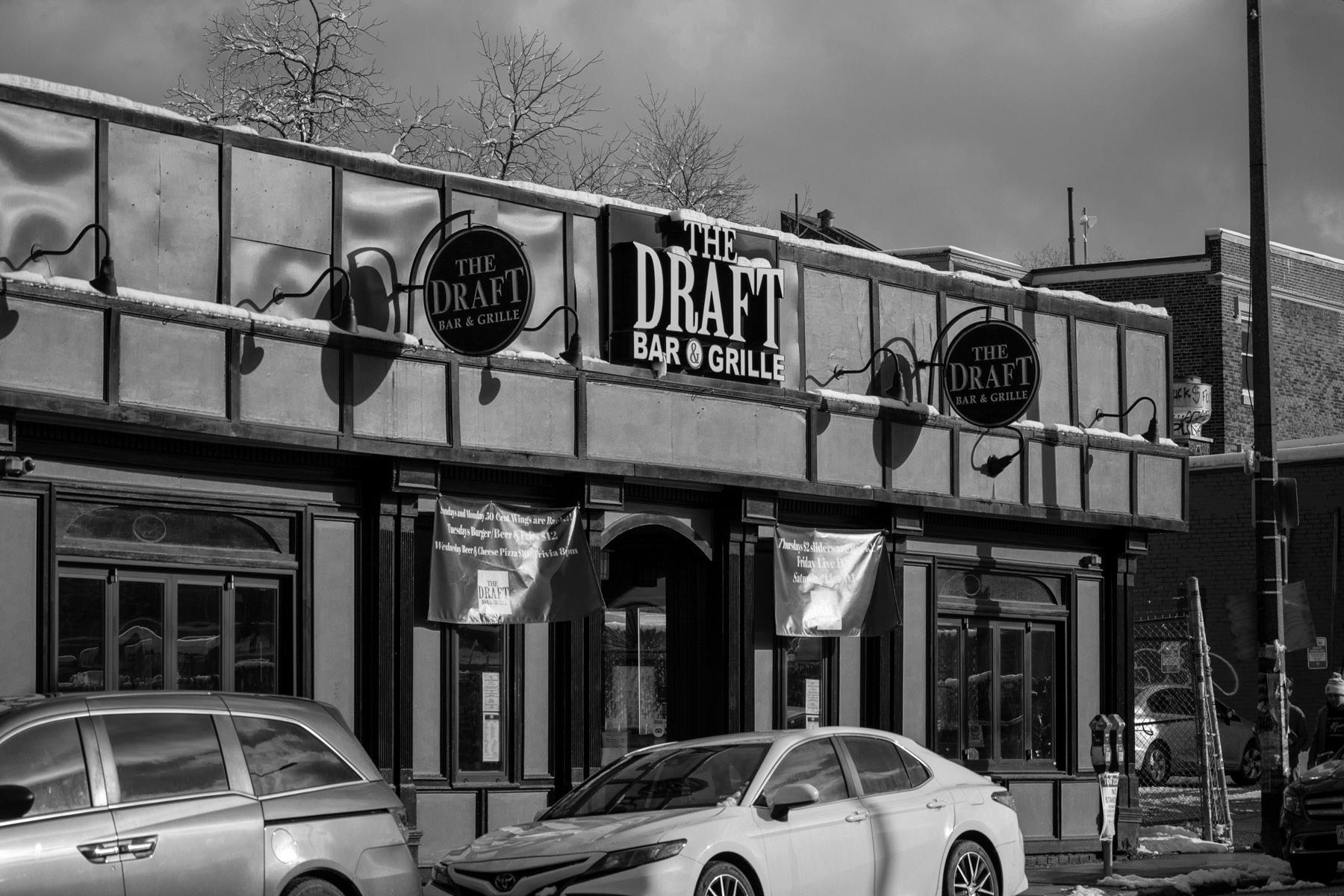
The Draft Bar and Grille in Allston, a popular watering hole for students, was closed indefinitely on Jan. 8 after the Boston Licensing Board suspended the bar’s liquor license for repeated violation of underage drinking laws.
This decision followed an Oct. 16 incident where police officers found three underage people drinking at the bar. Around 75 to 100 people left when they realized police were scanning IDs, according to Boston Police Detective Eddie Hernandez’s statement at a Boston Licensing Board meeting.
The board approved the decision during a series of hearings from Jan. 6 to 8 with the bar’s owner, Derek Brady.
A three-day ban was originally proposed, but board members ultimately voted to suspend the bar’s license indefinitely due to the numerous underage drinking violations and Brady’s decision to rehire a manager involved in a violent incident in 2024 at another bar Brady owns..
Brady said during a Jan. 6 hearing that while The Draft did use an ID scanning machine, it had been broken since March and was never replaced.
“It makes me question whether or not this person should manage any licensed premise in the city. I’m not sure people are safe going into his establishments,” Licensing Board Chairwoman Kathleen Joyce said during the Jan. 8 hearing.
“He has a lack of appreciation for what goes into keeping people
safe, and he actually doesn’t seem like he cares,” she said.
Licensing Board Commissioner Liam Curran speculated that Brady is “deliberately catering to underage clientele” because “business is tough.”
For some Boston University students, the bar’s closing came as an unfortunate shock.
A BU senior, who spoke on the condition of anonymity because she used a fake ID at the bar, said she always knew of The Draft as the “third space” BU was lacking.
“I knew it was the place that a bunch of people went to on Thursday nights. And I was like, ‘Why not?’” the student said.
The bar’s proximity to BU made it a special space for students to gather, said BU alum Nicholas Cucchi.
“It was the only bar where you could find a bunch of BU-related people. People you’d see in class would just all be there. It was the one college bar that BU had,” he said. The student who spoke on the condition of anonymity also said it was a popular spot for BU students, and it contributed to a sense of community at the bar.
“It’s also nice to just be around people from your school. It enforces a sense of togetherness, I guess. It makes you feel more a part of a community,” she said.
During her time there, the student said she saw people she recognized as being under 21 at the bar, which she said was unusual given how strict bars in the area usually are.
When he first heard of the closing, Cucchi said he was sad that nightlife options for BU students are declining because he considers them to be an important part of the college experience.
“There’s very few places where
BU students can come together and let loose, and I think that that’s an important part of college, so I’m sad that that’s being lost for future generations of BU students,” he said.
First-year BU graduate student Ranjan Mithal said Boston’s nightlife scene was already lackluster, and The Draft’s closure doesn’t help matters.
“It’s really hard to see places that are open past 1 a.m. in the morning, especially on the weekends … It doesn’t feel like the city is doing anything past midnight,” he said.
The student who spoke on the condition of anonymity said while she understood why the board would shut the bar down, she would still miss having a space
The Draft Bar & Grille. After repeated violations of underage drinking, the
closed indefinitely on Jan. 8 when its liquor license was suspended.
like the bar to go to on Thursday nights.
Cucchi shared a similar sentiment, saying BU students would have one less space to be with their friends and relax.
“You’re all BU students. It’s a Thursday night, and you’ve just gotten through a long week, and you’re a step away from the weekend,” he said. “They should have been shut down, but ultimately, I am sad to see them go.”
Mithal said the absence of bars around the BU area could be a positive since it could encourage students to interact with people
from elsewhere in the city.
“One place that seems to have a better set of nightlife has been in the Cambridge area. And if you go, you’ll end up running into a lot of the students from the other colleges in the area,” he said.
The student who spoke on the condition of anonymity said while people are going to miss The Draft, it will not be long until something pops up in its place.
“I feel like there will definitely be a new Thursday bar, for sure. People got so used to this place being the Thursday bar. I couldn’t imagine something not taking the place of that,” she said.
SPH study puts a ‘magnifying glass’ on 46.6 million Americans living within a mile of fossil fuel infrastructure
BY LUKE WISE Contributing Writer
Most Americans in cities aren’t passing high-polluting power plants or oil rigs on their commute to work or walk to class. However, other potentially dangerous components of the fossil fuel production process that aren’t visible to average passersby such as transport, storage and refinement could be closer to
home than previously thought.
According to a recent study conducted by Boston University’s School of Public Health and Institute for Global Sustainability, upwards of 46.6 million people in the U.S., or about 14.1% of the country’s population, are living within a mile of fossil fuel infrastructure.
By using publicly available data and comparing it with census information, researchers estimated the distance between American residents and fossil fuel
infrastructure.
While most previous research has focused on oil and gas facilities largely found in rural areas, this study aimed to provide a more comprehensive view of the fossil fuel supply chain.
“While we know… how many people live near an oil and gas well, we don’t really know who lives near any of these midstream pieces,” said Mary Willis, one of the study’s co-leads. “That was a really important part of this project, quantifying who is near

this particular hazard.”
“Midstream” fossil fuel infrastructure like pipelines and processing plants have proven association with various health risks, according to the study. While the study can help researchers make more accurate inferences about possible health impacts, more local epidemiologic studies will be needed to assess direct outcomes, Willis added.
Beyond expanding opportunities for future health impact assessments, the study also revealed disparities in exposure across the supply chain.
Predominantly non-white groups were found to be within a mile of refining, transportation, storage and end-use infrastructure at disproportionate rates.
While giving a wider look at current racial and ethnic disparities in exposure to fossil fuel infrastructure, it did not investigate whether individual communities became predominantly non-white before or after fossil fuel infrastructure was sited, study co-lead Jonathan Buonocore said.
Their research, however, could be used to make change on these disparities by influencing policy decisions and zoning laws around future and current fossil fuel infrastructure, Buonocore said.
“It could be involved in decisions around whether or not [fossil fuel infrastructure] retires,” he said.
At a local level, the primary decision-maker for the placement
and retirement of fossil fuel infrastructure is zoning law, Willis said. The study’s design lends itself to helping communities address this area of policy more easily by providing better data, she added.
While the study quantifies how many people are exposed to hazardous fossil fuel infrastructure, more research is needed to discern the safest distance between residential areas and different pieces of the fossil fuel supply chain, Willis said.
By providing a reference point for the type, location and proximity to residents for fossil fuel infrastructure nationwide, the study’s findings could be leveraged to encourage future research by health experts across the country, Brian Sousa, BU SPH PhD student and co-author of the study, said.
Putting a “magnifying glass” on this topic through their work could also help researchers garner additional funding for closer study in the future, Sousa said.
Buonocore, Willis and their research team plan to continue their work by creating a database for the public to track energy infrastructure as it changes over time, Buonocore said.
“I think it’s kind of just pointing out that a large proportion of the population is actually living or are located pretty close to all of these different types of infrastructure,” Sousa said. “I think it’s a foundational baseline piece to push that type of work forward.”
BY
JENNY CHEN Photo Co-Editor SUMMER LAROSE Photo Co-Editor
SARAH CRUZ
DFP Photographer
ANDREW BURKE-STEVENSON
GRETCHEN FULLER
DFP Photographer
When snow falls, Boston residents get busy.
DFP Photographer
DANIEL GARBER
DFP Photographer
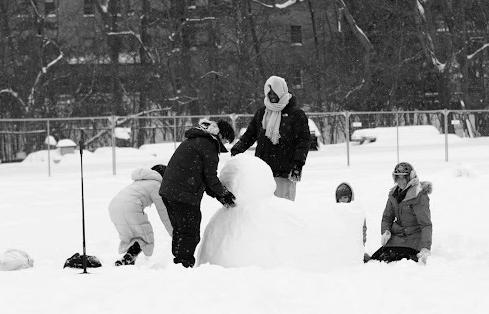
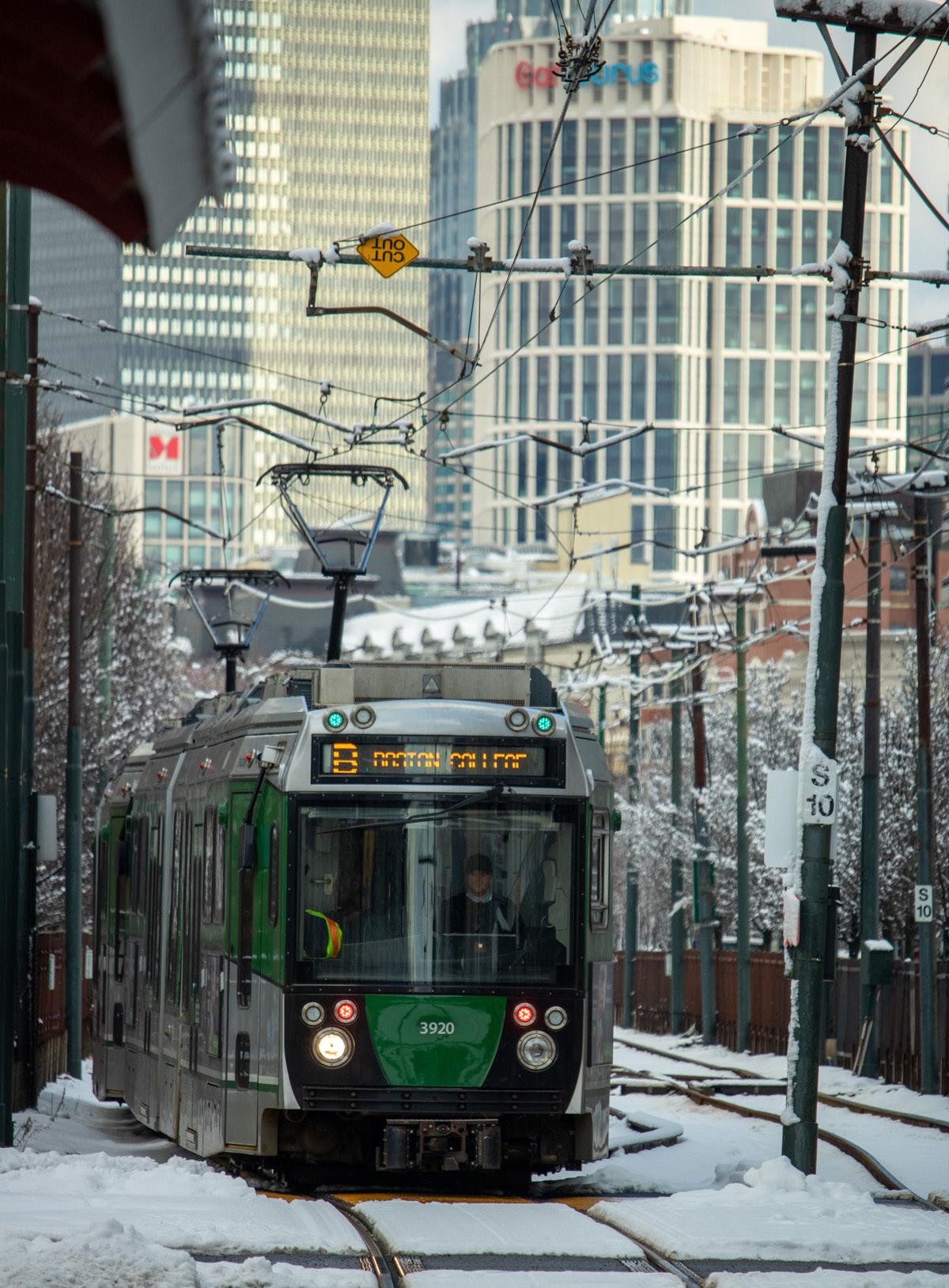
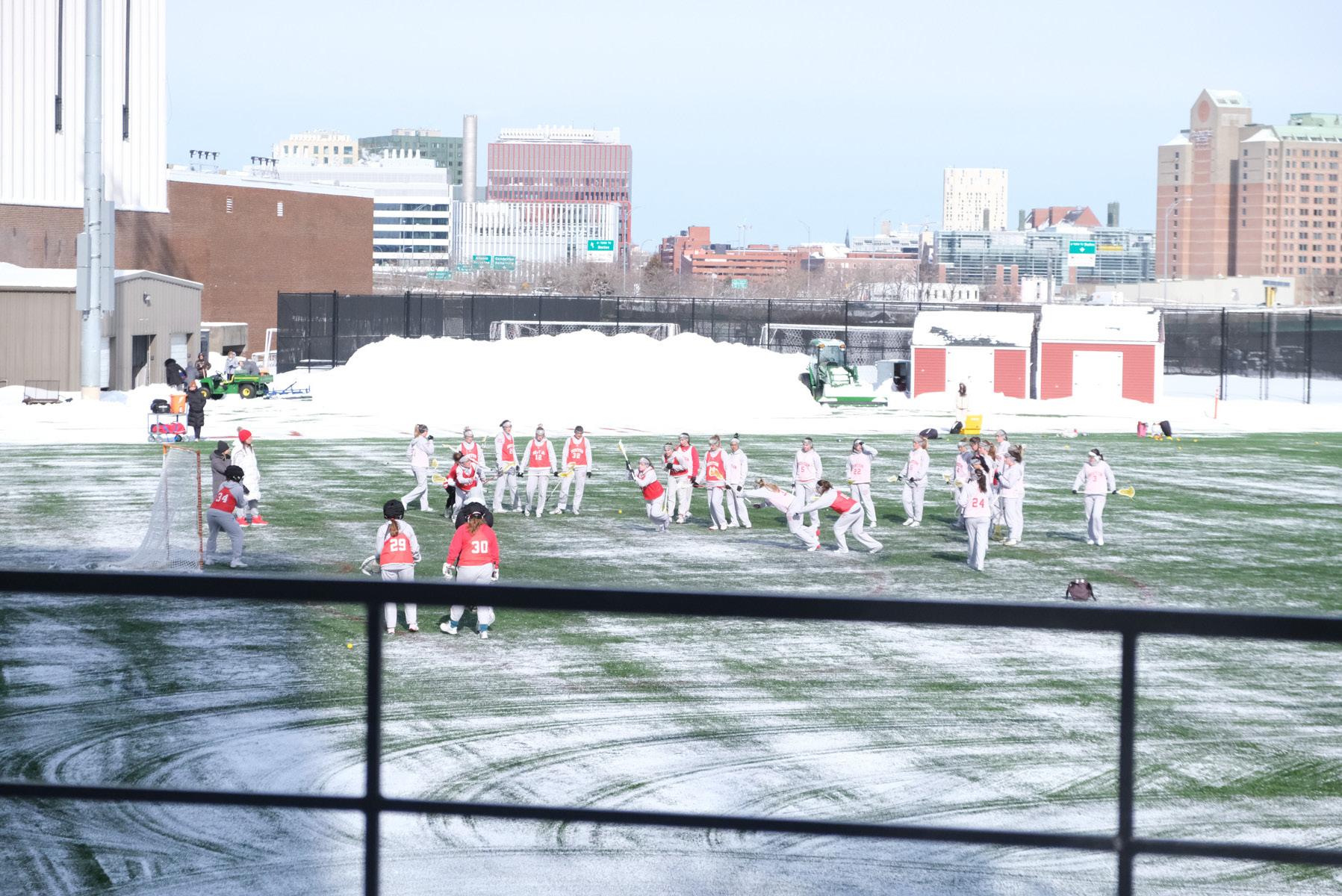
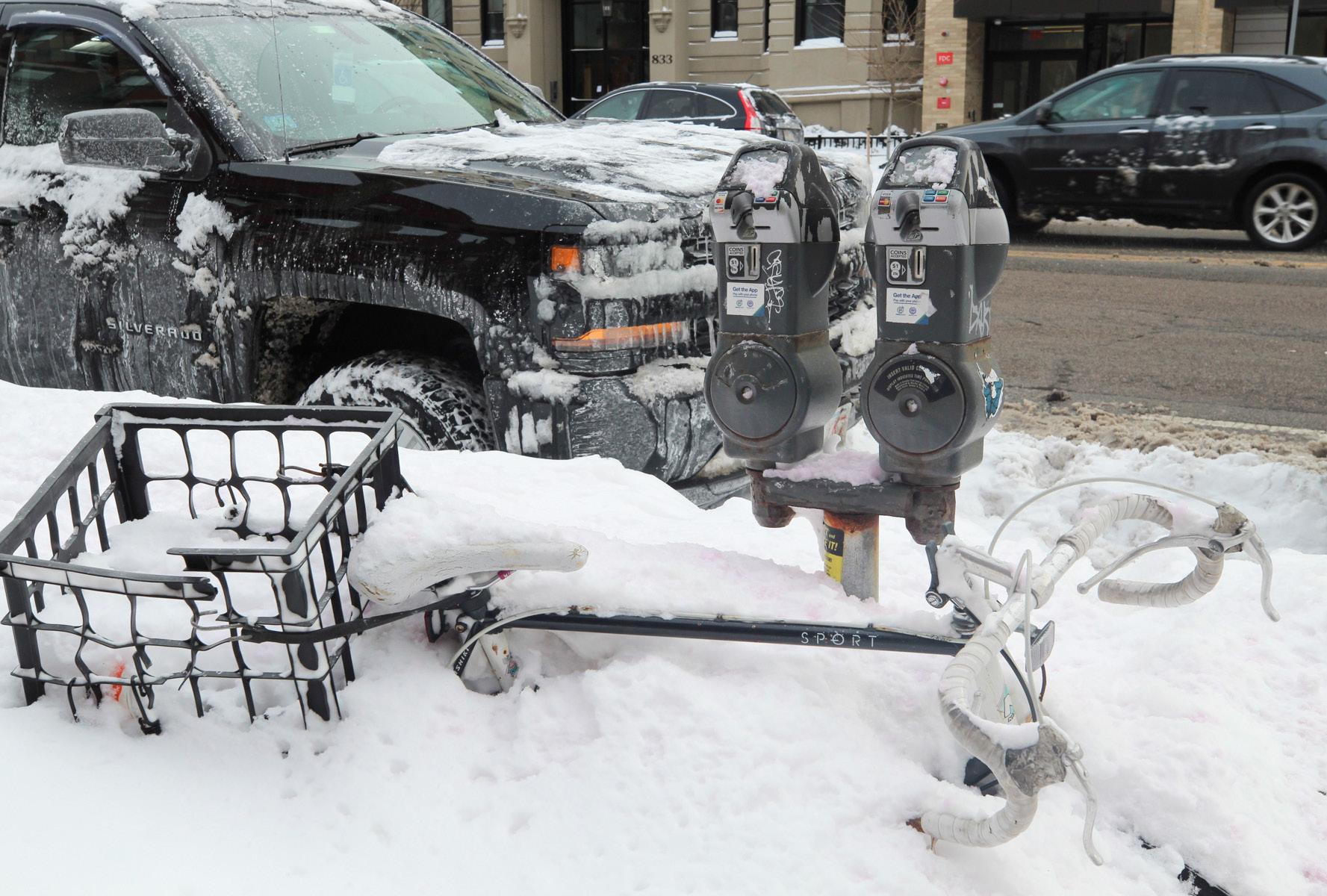
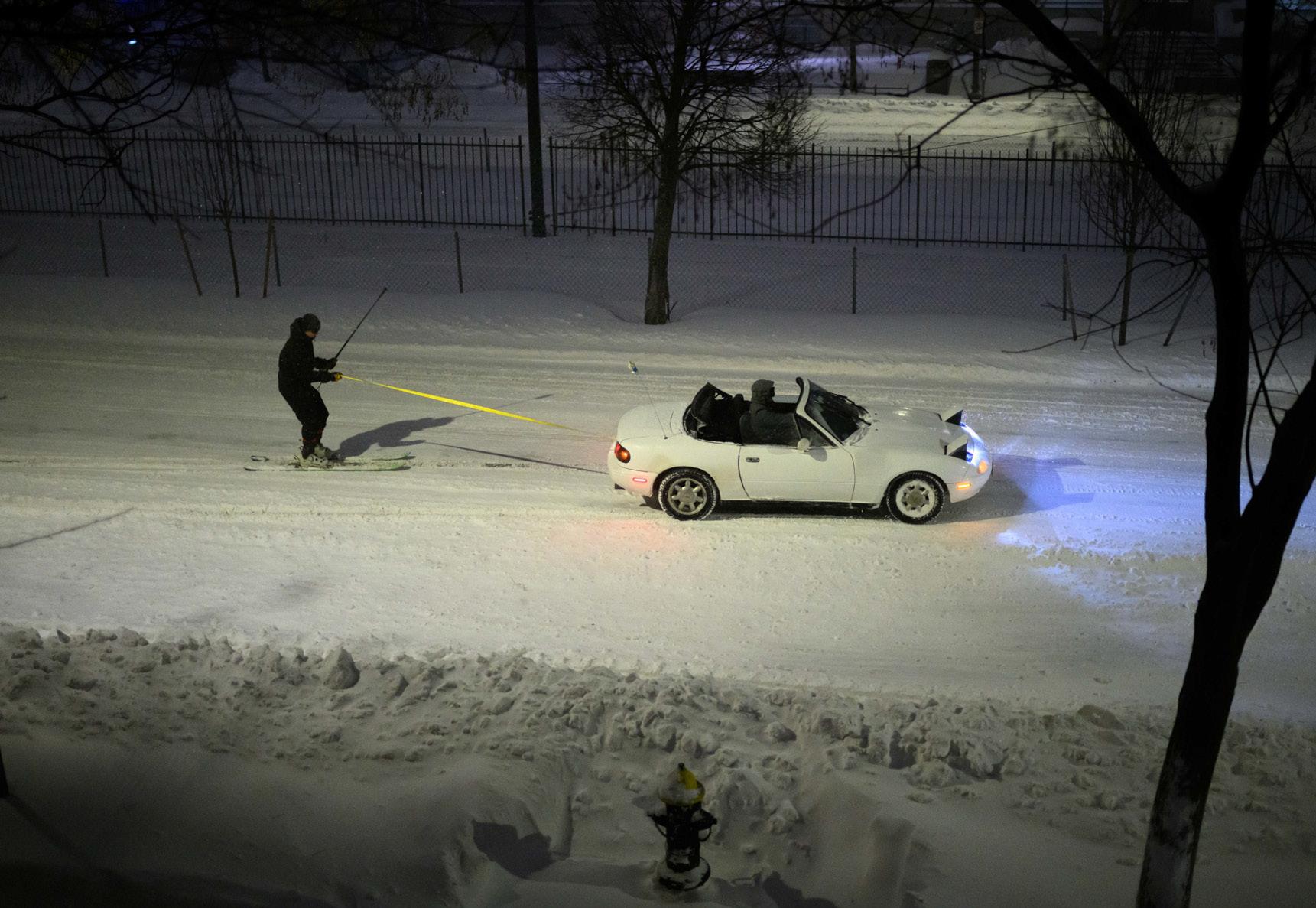
The outcome of Boston University’s cancellation of classes on Monday in anticipation of the snowstorm that swept over the northeast on Sunday was no different. Some students went sledding, others skied or built snow sculptures.
BY FRANK YANG Senior Columnist
Barely a year into President Donald Trump’s second term, it’s hard to remain stoic with each passing day.
In the same way our country has become desensitized to gun rights advocates’ tolerance for schoolchildren dying, we’re be coming desensitized to the Trump administration’s ever-growing list of war crimes — contempt for the law, human rights violations, the protection of pedophiles and lies.
We Americans now have to live with new norms: The pos sibility of being kidnapped or murdered by U.S. Immigration and Customs Enforcement offi cers, being ignored by Trump’s Federal Emergency Management Agency when a catastrophic cli mate event occurs or the possibil ity of being gunned down in our classrooms, with Federal Bureau of Investigation Director Kash Patel too incompetent to prevent or catch the perpetrators.
Which brings me to the middle of winter break, doomscrolling on Twitter, where I came across an X post by @HorizonCasts, a League of Legends esports commentator, ridiculing another user for asking whether the international esports championship scheduled to take place in the U.S. should be relo cated this year.
Horizon described the question

loyalist soon, the economy may be entirely crushed in due time. And with the ignorance surrounding climate change perpetuating abnormal weather events like the cold storm this month or intensified hurricanes, our globe is being torn apart.
All of this, while our eyes are shot out by ICE during peaceful protests in California and people are murdered by ICE on the streets in Minnesota and students are gunned down at Brown Uni-
The midterm elections are this year. We failed during the most important election of our lives in 2024, but we can at least partially make up for it in 2026. And we do so by making sure voting suppression efforts by Republicans aren’t successful and ensuring we’re still registered to vote. We do so by actually going to the polls or mailing in our ballots in November.
And that’s the bare minimum. We can do more to protect ourselves from state-sanctioned terror by continuing to speak out against Republican voters and their administration, showing up to peaceful protests, supporting opposition candidates and following good, honest journalism.
Trump’s hands have exploited this country for its wealth to stuff his loyalists’ wallets and sell our country out to other dictators. His hands are now stained red with
It’s time to put those hands in
On Oct. 11, 2023 a pe culiar billboard truck pa rading a digital display cruised through the streets of Harvard Yard. Passers by on campus gathered in small crowds and stu dents watched from their dormitory windows.
The display was not advertising merchan dise, nor was it promoting a company.
In bright, bold letters read “Harvard’s Leading An

the targeted
public demonstrating the effectiveness of these mechanisms in protecting students during coordinated harassment campaigns. Universities are no longer confronting isolated incidents of interpersonal misconduct. They
munities, but they can control how prepared they are when it occurs. When universities lack clear, public responses to political intimidation, the risk of burden shifts onto the targeted individual. That is an unacceptable BU has the opportunity, and the obligation, to build systems that ensure students and faculty are not left to navigate mass retaliation on their own.
This Editorial was written by Opinion Co-Editor Velana Valdez.

YEAR LVI. VOLUME B. ISSUE I.
Published Friday, January 30, 2026.
The Daily Free Press is published Sunday through Thursday during the academic year, except during vacation and exam periods, by Back Bay Publishing Co., Inc., a nonprofit corporation operated by Boston University students. Copyright © 2026 Back Bay Publishing Co., Inc. All rights reserved.
Truman Dickerson, Editor-in-Chief
Liam Dunne, Managing Co-Editor
Anjola Odukoya, Managing Co-Editor
Emma Clement, Campus Co-Editor
Jack Schwed, Campus Co-Editor
Elizabeth Mehler, City Co-Editor
Isabelle Zhang, City Co-Editor
Nicole Abrams, Investigative Editor
Toby Moses, Sports Co-Editor
Ethan Pott, Sports Co-Editor
Sophie Shatzky, Arts & Community Editor
John Tatum, Business & Science Editor
Sameeha Sood, Opinion Co-Editor
Velana Valdez, Opinion Co-Editor
Erica Schwartz, Lifestyle Editor
Jenny Chen, Photo Co-Editor
Summer LaRose, Photo Co-Editor
Emma Jee, Master of Games
Bri Thel, Multimedia Editor
Elaine Liu, Layout Co-Editor
Anna Paleen, Layout Co-Editor
Gianna Horcher, Graphics Co-Editor
Melissa Lemieux, Graphics Co-Editor

1. Tree locations
8. CFA signals
12.“Disney on Ice,” for one
13. Takes for granted
17. Cross country strength
18. Strip (of)
19. “___ rider!,” from 25-Across’ game
20. Swipe
22. Kind of market
23. Fortnite developer
25. Supercell guild
26. “And’s, but’s, __”
27. Moses’ mountain
29. Rice-shaped pasta: rhymes with 31-Across
31. Approximately, colloquially
32. 2015 Boston winter event moniker
35. Older sisters, in the Philippines
36. Wants vengeance
37. 32-Across household warmers
42. Finsta accts
43. “Turn over ___ leaf”
44. Hollywood award
48. Batter stat
49. Pork cut
51. As well
52. Tire parts
54. Mic drop remark
56. Mass. adolescent protection agency
57. Boston College and Northeastern, to BU
59. Vinyl sound markings
61. Defeat narrowly, or the Broncos to the Bills
62. Clear as day
63. Pushover
64. Gobi, Sahara, for example
1. Sea creatures
2. Molluck catches of 1-Down
3. Allergy antibody, for one
4. ENG minor, backwards
5. Hollanov, e.g.
6. Bartender’s mixer
7. Chug
8. Chamber orchestra solo
9. Computer owner
10. Sixth sense, for short
11. Browse, as in online
14. English noblemen
15. “Be it ___ humble...”
16. Fall or winter
21. Stardew Valley locale
24. Classes
28. Sent to the hospital
30. Shrek, e.g.
31. Marty Supreme actress
33. Work safety org.
34. German money
35. Every so often
37. BU renovation spot
38. Colorless
39. Joins, for students in ROTC
40. Billion years, in astronomy
41. Caught on, in Britain slang
45. Lucky leafed plant
46. Artemis II’s route to the Moon
47. Cuts of beef
50. “The cheek, the ___, the gall, the audacity!”
53. Diving duck
54. King of Greek gods
55. Questrom nums.
58. Debt abbreviation
60. Poem of praise
BY MAE SERGEANT Contributing Writer
Welcome to a new year and a new semester. With fresh starts and new years, there is always a sense of hope and eagerness in the air for what the new year will bring. I know that I’m excited for this year.
This week, we will look at a poem by world-renowned poet Emily Dickinson titled, “‘Hope’ is the thing with feathers.” I encourage you to read it aloud.
“‘Hope’ is the thing with feathersThat perches in the soulAnd sings the tune without the wordsAnd never stops - at all -
And sweetest - in the Gale - is heardAnd sore must be the stormThat could abash the little Bird
That kept so many warm -
I’ve heard it in the chillest landAnd on the strangest Sea -
Yet - never - in Extremity, It asked a crumb - of me.”
New semesters and new years bring new opportunities: new classes we can excel in, new people to meet and interact with and sometimes a whole new outlook on life.
When a new year begins, many people develop a fresher, more optimistic outlook on life. However, it’s easy to get caught up in the school year and lose your sense of that optimism or hope when it all begins again, and
we get back into the motions that we’ve been doing all school year. But it’s to remember just because you might be living in the same place and going through the same things, you’re not necessarily the same person who started out doing them.

Times change, and we change with them. Sometimes it just
Sometimes these changes make us melancholy or nostalgic for the life we used to have and the people who used to be in it. But you’re growing into a new space, and it’s important fill up the space you’ve been given. Instead of being upset about the things that change, we should be hopeful for all the other things in our lives right now that might change by next
It does not take a new year for you to make a change in your life. If you want to make a change, you
months. Sometimes, what makes New Year’s resolutions intimidating is how big we tend to make them. In college, working towards a big goal can become stressful and a hassle with all the other activities and responsibilities we have. You don’t have to have some big goal, such as weight loss, a consistent gym routine or making smarter financial decisions. Instead, you can have smaller goals, like avoiding your phone when you wake up in the morning, living in the

moment or simply drinking more water.

Choosing a small resolution that might just be a new habit to implement doesn’t have to be hard, just intentional. Sometimes, even if they are smaller in scale, the more intentional goals are the ones that impact your life the most.
These goals are all built on some sort of hope for the future, and hope will never cost you anything. Hope is there to get you through the hard times and remind you to appreciate the good times. Hope is a beautiful thing — allow it to help you think of the future with optimism. No matter where, no matter when, hope lingers in the echoes of everything we do. Don’t push it aside. Live in it and allow it to change you for the better.



Popular leftist politics are here. Democrats will do anything
BY ANALISE BRUNO Senior Writer
Dear Abby: I’ve been with my boyfriend for a little over two years now and he’s great. The one problem is he is my first and only “real” boyfriend. I love him dearly, but I feel like I’m maybe missing out on not getting to date or experience other people physically? I’m not sure, I just feel incredibly guilty.
Okay girl, I hear you.
When you’ve been in a relationship with just one person for an extended period of time, it creates this strange paradox. You’re torn between loving them deeply and wondering whether that love exists because it’s genuine or simply because it’s the only version of love you’ve ever known.
Don’t get me wrong: How we love romantically is not dependent on how many people we’ve been with. Experience does not equal depth. Still, seeing other people can sometimes help us clarify what qualities and traits we are truly looking for in a partner.
You know that saying, “You don’t know if you like it until you try it?” Maybe that applies to new foods or hobbies, but relationships are far more complex. Love isn’t a sample platter.
The more I thought about it, the more I couldn’t help but wonder: Are we really trapping ourselves by only ever experiencing one person?
To the girls who have only had one boyfriend
There’s a strange, unspoken feeling of superiority that can
exist when you’ve only been with one guy — even if you don’t consciously realize it. Especially when we consider the reputation society gives women who have had multiple partners or accumulated “too many bodies.”
In that context, wanting to explore beyond one relationship can feel almost shameful, like a moral failure rather than a natural human curiosity.
On top of that, we romanticize longevity. People coo over couples labeled “high school sweethearts” or those who’ve been together forever. We praise endurance as if time alone is proof of love.
I talk a lot about time in this column because it is crucial. Many women stay in unhealthy or unfulfilling relationships simply because they’ve
them. How could they possibly start over? How could they ever find someone else — or get over this one?
But hear me clearly: Being in a long-term relationship with only one person is not inherently bad.
Do you believe in soulmates?
While the word itself feels fantastical, it is possible for two people to connect so deeply that it feels like fate. And if your relationship is healthy and your emotional and physical needs are being met, you shouldn’t feel like you’re missing out simply because you haven’t been with anyone else.
People are not trends. They are not things to be overconsumed and replaced once they feel familiar. Our society cycles through what’s new and exciting, but that logic should not apply to human beings. Some couples grow apart, but others grow together. Figuring out which type of couple you are is

Still craving something more?
This is real life, involving real people and real feelings. You don’t magically “level up” the more people you date. Dating is not a linear ladder — it’s messy, repetitive and sometimes disappointing. In some instances, you only learn that by living it.
A sprinkle of boredom will grace every long-term relationship. Not boredom in the literal sense, but comfort and familiarity. Eventually, you’ve learned someone inside and out.
Boredom becomes a problem only when it turns literal and you’re no longer fulfilled emotionally or physically in ways that matter to you.
Here’s what I’m getting at: You don’t
want to stay simply because you’re afraid of what you haven’t explored.
I once had a friend who complained that her boyfriend of three years rarely bought her flowers, even after she expressed how much it meant to her. I reminded her that there are a million and one men out there who would jump at the chance to give her flowers without being asked. Compromise is important, but it is not always worth keeping something that only makes you intermittently happy.
My caution about locking in with just one person is that you must practice frequent introspection. Ask yourself whether you feel satisfied, seen and cared for. If you’re always begging for crumbs, you’ll spend your entire life starving.
What it all comes down to First boyfriends, girlfriends and partners play a much larger role in our love lives than we like to admit. Whether we stay with them or not, they shape how we understand intimacy, wholeness and fulfillment.
They are our first exposure to closeness — the blueprint for what we like, what we tolerate and what we need. Some become lifelong lovers while others are simply a chapter. But it’s never as black and white as we pretend it is.
If you’re feeling guilty about not having dated other people, look deeper into the mechanics of your relationship. Are you staying purely out of love — or to avoid the pain of heartbreak and starting over?
Settling and heartbreak often feel the same internally. The difference is that only one of them shows on the outside.
Choose your partners wisely. But never forget that you have complete agency over your life — to grow, reassess and make it better — whether that’s with your first partner or not.
ALICE LEE | DFP FILE
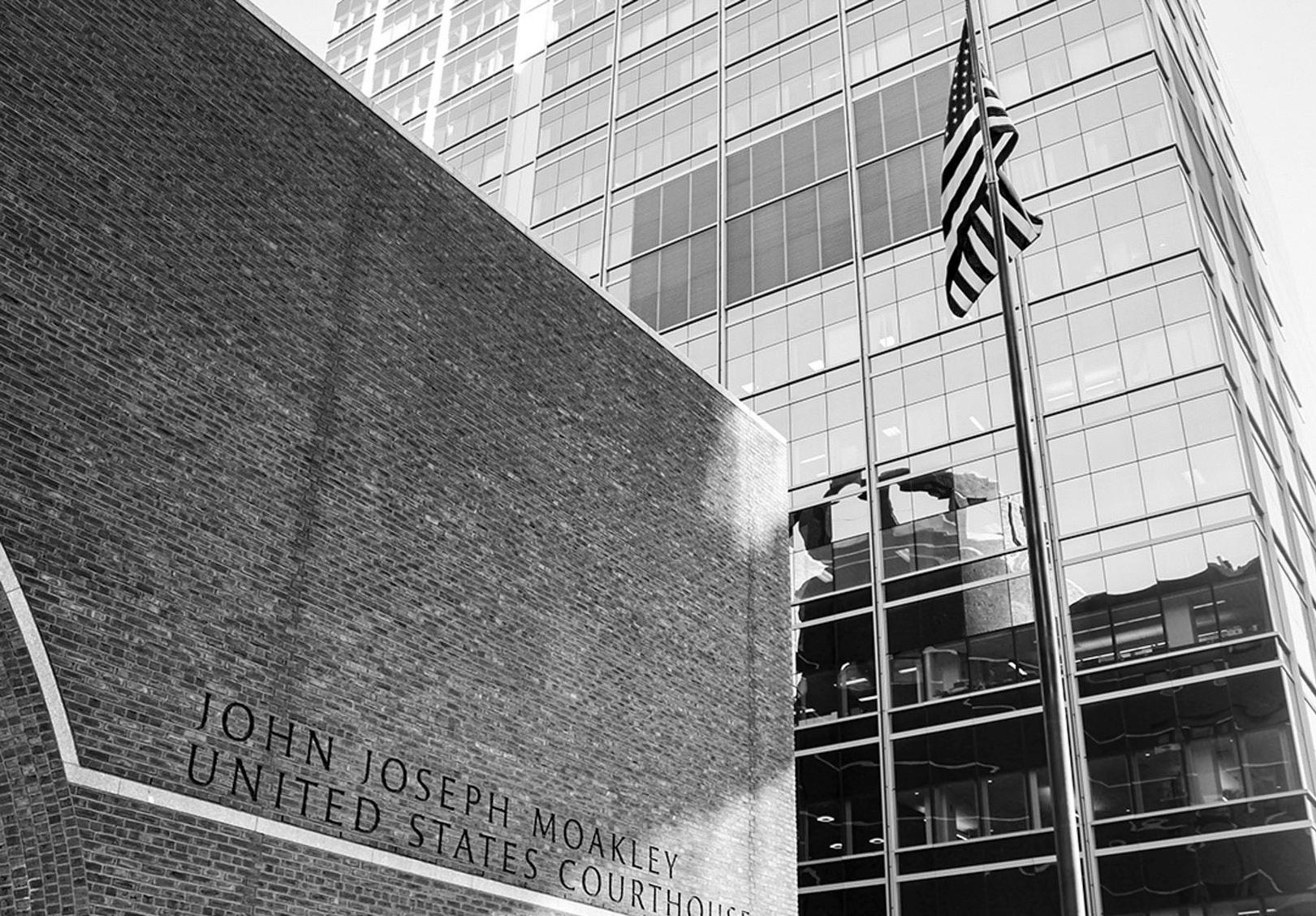
John Joseph Moakley United States Courthouse, which houses the U.S. District Court for the District of Massachusetts. Last week, in response to the increase of federal authorities in Minneapolis and St. Paul,
led a coalition of 44 mayors
the
file an amicus brief to challenge unlawful and unconstitutional law enforcement.
Continued from page 1
signed the amicus brief to stop “unconscionable ICE surges.”
“Every community, city, and person in our nation should be concerned not only about ICE surges, but how these tactics could be applied to any of us for any reason in the future if we allow our nation to slip away from the rule of law and common decency,” Wilson wrote.
BU law associate professor Sarah Sherman-Stokes is associate director of the Immigrants’ Rights and Human Trafficking Clinic, which provides free legal representation for people facing deportation. Sherman-Stokes said she was “glad” Wu filed the amicus brief and is “standing up to the White House.”
“I also hope she changes policies in the city to better keep immigrants safe,” she added.
The Boston Police Department recently reported that it ignored all 57 requests from ICE to detain immigrants in 2025. Despite this, some ICE arrests did occur in the city.
Sherman-Stokes said the heightened ICE activity in Boston has left the clinic’s clients “scared” to go to school or work.
“Our clients, their families and their communities are really living under siege,” she said. “They’re in a state of constant fear and terror.”
The Boston Trust Act, passed in 2014, prohibits the Boston Police Department from working with ICE for civil immigration efforts. This policy sparked criticism from White House Border Czar Tom Homan, who last year said he was “bringing hell” to Boston.
Boston’s City Council passed an order for a hearing to audit the implementation and effectiveness of the Trust Act at its Wednesday meeting
“We’re seeing aggressive federal immigration enforcement across the country, including actions that have led to tragic deaths like we’ve seen in Minneapolis,” said Councilor Julia Meija, who introduced the order. “These realities make it even more important for Boston to take a hard look at whether or not our local protections are strong enough in today’s environment.”
City Council President Liz Breadon said the Trust Act has been a “useful tool” in managing ICE activity, but added that the
SARAH CRUZ | DFP PHOTOGRAPHER
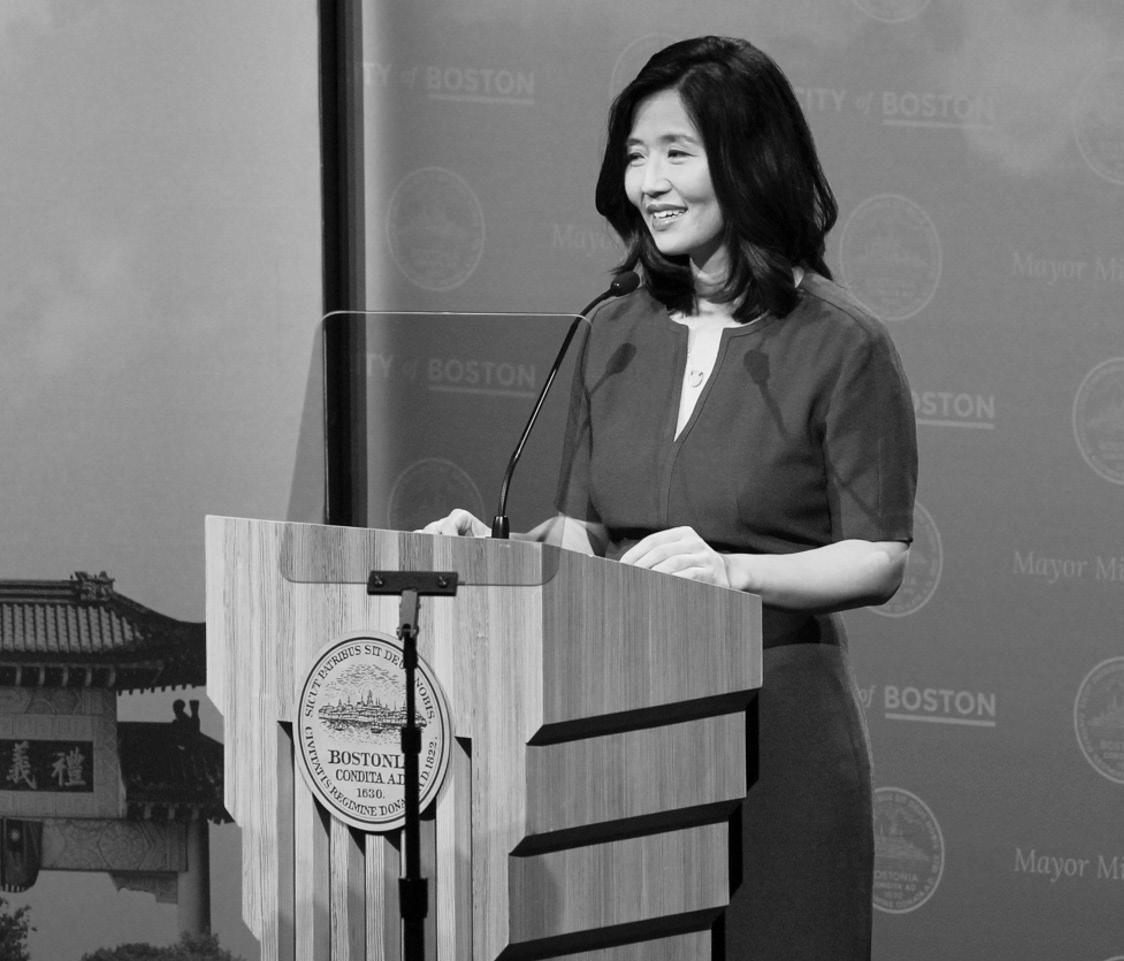
Mayor Michelle Wu delivers her 2025 State of the City Address.
hearing will serve as a way to review its effectiveness.
“My impression is that it has been effective, but I think scrutiny of the numbers and a conversation with the police department would be helpful,” she said.
Sherman-Stokes criticized Wu’s support of the Boston Regional Intelligence Center, a federal grant from the U.S. Department of Homeland Security used to surveil crime and violence, which she said she believes aids ICE.
In Wu’s 2021 mayoral campaign, she pledged to abolish BRIC due to concerns about transparency and racial bias. However, in 2023, Wu supported an additional $3.4 million in funding for BRIC and reapplied for the federal DHS grant in August.
“[BRIC is] all about surveilling people,” Sherman-Stokes said. “It feeds non-citizens, and immigrant communities and black and brown communities directly into the ICE deportation machine and that’s something we could walk away from.”
Breadon said she recognizes “we’re in a moment of great concern with regard to surveillance of citizens,” but BRIC is useful in stopping and solving crimes throughout the city.
Breadon also said she is “anticipating a surge of ICE activity in Boston.”
“I think our best defense in that situation is community organizing
Continued from page 1
APRIL 25
The Trump administration announces it will reinstate international student visas, after more than 1,500 student visas were abruptly canceled in the weeks prior.
Gilliam introduced the Support Pathways Initiative, a resource hub to offer free, one-time, confidential consultations with an external immigration lawyer to eligible undergraduate students, graduate students, faculty and staff seeking guidance on their immigration status in the U.S.
JULY 24
WBUR and GBH are affected by the Trump administration canceling $1.1 billion of funding for the Corporation for Public Broadcasting.
SEPT. 19
H1-B visa fee increase sparks concern among international students.
Employers must now pay a $100,000 fee to sponsor a H1-B visa, a special visa category for highly skilled foreign workers in speciality fields.
OCT. 14
BU professor testifies before the Massachusetts Joint Committee against federal DEI losses, framing the issue as both a legal and educational equity concern for universities.
OCT. 31
PhD admissions cancelled again for five BU departments.
The cancellations are part of greater cuts toward humanities and social studies programs resulting from a $30 million budget shortfall, wrote BU President Mellissa Gilliam in an Oct. 9 public letter to the BU community.
MAY 1
BU Community & Inclusion moves under President’s Office amid Provost reshuffle.
MAY 31
BU’s Jumpstart program shuts down amid termination of AmeriCorps grants. The grant-funded program serves as a federal workstudy, allowing university students to mentor children ages 3 to 5 in Boston community preschools. Students who train under the program act as members of AmeriCorps.
SEPT. 12
The Department of Education defunds the Foreign Language Area Studies Fellowship, which would have provided $15,000 for the 2025-2026 academic year, according to an email sent to fellows by program administrators. They were only able to offer one fellowship for spring 2026.
The fellowship supported students enrolled in African language courses paired with Global Studies classes containing at least 25% Africa-focused content, fellow Bil Biswas said. He attributed the defunding to “DEI rollbacks … instituted by the Trump administration.”
NOV. 7
BU College Republicans President Zac Segal writes on X he called ICE and requested they detain employees at Allston Car Wash, the site of a Nov. 4 raid where nine employees were arrested.
[with] folks on the ground level alerting their neighbors of ICE [and] having Neighborhood Watch groups, very similar to what they’ve organized in Minnesota,” Breadon said.
Breadon added that if the time comes, she hopes “the residents in Boston will step up on the way that the folks in Minnesota have.”
Joe Whitcomb, the communications coordinator for Boston Democratic Socialists of America, said municipal and state authorities should be committing local “forces and power to prevent ICE operations,” instead of relying on Boston citizens.
“There’s obviously things local authorities could do to take on the burden of preventing this that they’re currently leaving to protesters and regular citizens to do by themselves,” he said.
According to Whitcomb, Boston DSA works with the LUCE Immigration Justice Network of M.A., a group that verifies ICE sightings throughout the state, and is part of a protest coalition with other activist groups.
Whitcomb said although he was pleased with Wu’s decision to file the amicus brief, he felt that “it’s not enough.”
Whitcomb added that politicians cannot take a “traditional posture” in opposing ICE’s actions.
“These people are operating on the street,” he said. “You need to operate on the street too.”
Gilliam attributed the budget shortfall to “lower-than-expected graduate enrollments and missed revenue targets” and wrote that BU must be “prepared to face what might come next in these uncertain times” given the “uncertainty regarding federal research dollars.”
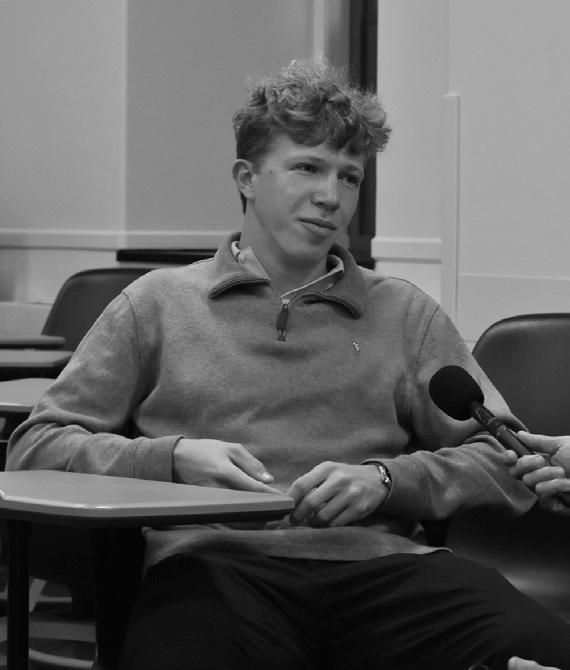
Segal’s comments triggered intense campus backlash, demands for administrative action, and a public response from BU leadership alongside statements from Segal and BUCR women disaffiliating from the chapter’s leadership. In January 2026, a conservative law firm alleged BU failed to protect Segal after he received personal threats.
DEC. 4
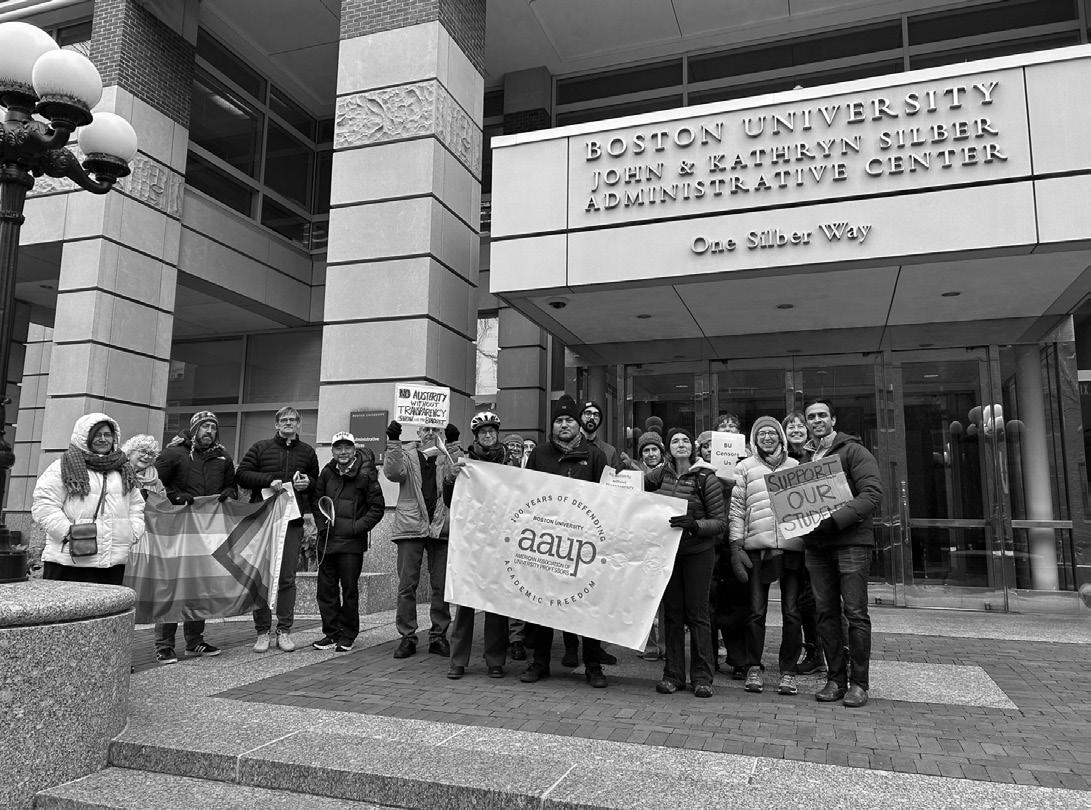
Professors demonstrate outside 1 Silber Way over pride flag removal request. Faculty and staff reported requests from the administration to remove public-facing pride flags as part of the school’s signage policy in September 2025.
BY OLIVER HETTENBACH Contributing Writer
The Boston University men’s basketball team was edged out by the league-leading U.S. Naval Academy on Wednesday night, the final score settling at 58-50. Sophomore forward Ben Defty continued his impressive sophomore campaign, leading the Terriers (8-14, 3-6 Patriot League) in points, rebounds and blocks — 19, 8 and 4 respectively.
Senior center Aidan Kehoe,
defensively, and did a good job on a kid that was dominating our league,” he said, referring to Kehoe.
The Terriers came off the blocks firing, opening the contest with a 14-0 run. The Midshipmen (16-6, 8-1 Patriot League) were held scoreless for the first six minutes of the game until senior forward Donovan Draper’s jumper put them on the board.
Taking more shots, making more shots and grabbing six more rebounds than the Midshipmen,
percentage, left the door open for Navy to emerge as the better side in the second half.
After the intermission, BU shot only 25% from beyond the arc, 32.0% from the floor and turned the ball over five times. Navy capitalized, shooting 45.5% from three, 53.6% from the field and committing only two turnovers.
The pre-season Patriot League player of the year — Navy’s Austin Benigni — threw another wrench in BU’s defense. The senior guard erupted for a gamehigh 20 points, shooting an efficient 8-13 from the floor and

“They have arguably the best, one of the best guards in the league,”
make some big, big plays.
Despite the Terriers’ poor shooting and lackluster ball security, the score remained tight through the second half. Timely three pointers from freshman guard Chance Gladden and junior guard Michael McNair kept the Terriers alive.
Eventually, BU found themselves down six points with a minute left in the game and the ball in their possession. But the Terriers were unable to hit shots to close the gap.
difference in the game,” Jones said. “If we wouldn’t have turned it over as much as we did, and we would have made our threes, I thought it would have put us in a position to win the game.”
row,” he added.
during the full 40 minutes of the game was tangible, generating seven steals
blocked shots. Though playing the Patriot League leaders shorthanded, the Terriers’ effort was on full display from the tipoff to the final whistle.
“They’re awesome to coach, man,” Jones said. “I mean, that’s why we’re this close, because they’re just awesome to coach.”
When asked about potential returns for currently injured Terriers, Jones said he hopes “to get Malcom [Chimezie] back, he’s the only one.”
(Left to Right)
1. Sophomore forward Ben Defty (14) attacks the paint. Defty finished with 19 points and eight rebounds in a 58-50 loss to Navy.
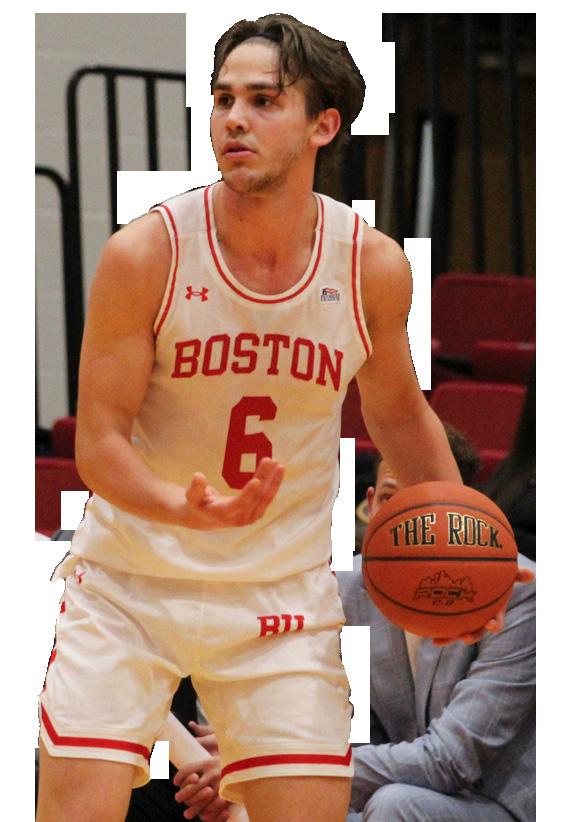
2. Freshman forward Sam Hughes (6) looks for an open teammate to pass to.
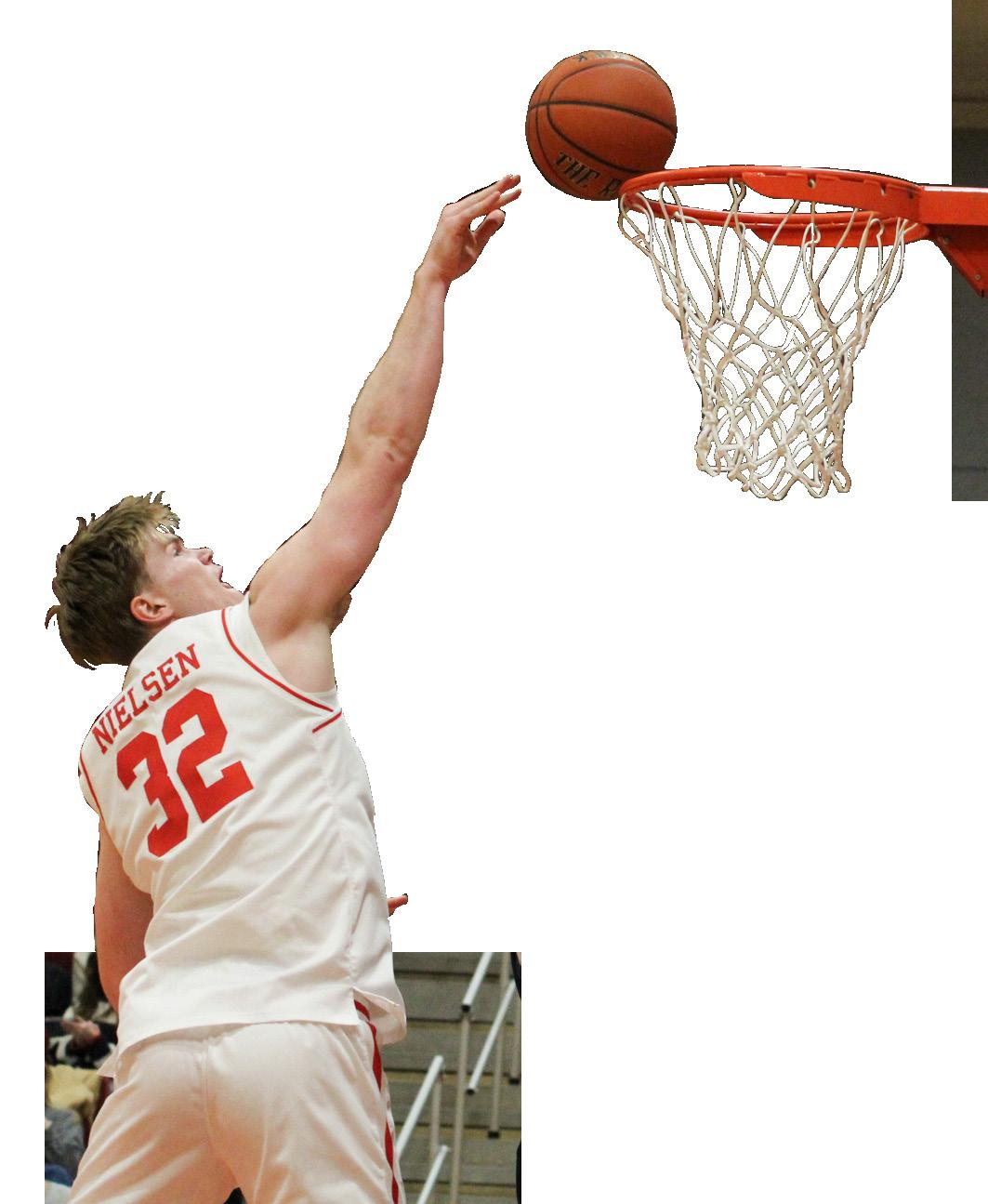
3. Junior forward Quinn Nielsen (32) tips in the basketball.
BY JENNY CHEN
Photo Co-Editor
There is no doubt that he is the favorite for the men’s singles title.
Since capturing his first Junior

Chock and Evan Bates brought the U.S. two gold medals, achieving this feat for the first time since 1996. Then, in 2025, when Boston’s TD Garden hosted the world’s best figure-skating talent, the Americans won three of the four available world titles for the first time in team history.
Over the last four years, momentum has trended upwards. On figure skating’s biggest stage, with the world’s eyes on it, the time is now for Team USA.
Ilia Malinin is a star. He has won two of the last three World Championships and landed the first-ever quadruple axel, a jump that once seemed impossible.
in 2022, Malinin has seen gold at the U.S. Championships, Grand Prix Final and World Championships. In 2026, he won his fourth consecutive national title and secured his first Olympic berth.
But it is not only Malinin’s sustained success that makes him the favorite for the gold medal. Looking at the technical aspect, his routines are among the most difficult in the world. He is the first figure skater to land seven quadruple jumps in a single routine, doing so last December. On the women’s side, the
Americans boast reigning world champion Alysa Liu, 2022 world junior champion and 2024 world silver medalist Isabeau Levito and three-time reigning national champion Amber Glenn.
While the race for the women’s singles title is more competitive this Olympics compared to the men’s, the U.S. has formed a trio rooted in youth and experience.
Although Glenn and Levito are both first-time Olympians, they have seen success at both the national and international levels.
Liu is no stranger to the spotlight. She finished No. 6 in the women’s singles at the 2022 Games, won bronze
World Championships, and collected her first national title when she was 13, the youngest woman to ever do so. Though she unexpectedly retired following Beijing 2022, she returned to the sport in 2024, ending the season with a gold medal at the 2025 World Championships. With a comeback of this caliber, and ascending to the top of the sport so quickly, it is a no-brainer that Liu can do something special again in the season’s biggest competition.
One pair dominated


Madison Chock.
After winning bronze at the 2022 World Championships, the pair has skated to three consecutive world titles since
This will be Bates’ and Chock’s fourth Olympic Games, and they come into this edition
Championships.
But with three strong disciplines out of four, the U.S. is poised to defend its team-event gold. Since the team competition was introduced at the 2014 Sochi Games, the Americans have yet to miss the podium.
After team-event medals the last few Olympics, and gold medals in individual disciplines in 2014 and 2022, the stars have aligned for the U.S. to continue building on its title as the most decorated country in Olympic figure skating.