LONG BEACH CU RRENT
1250 Bellflower Blvd., LA4-203
Long Beach, CA, 90804
Editorial Office
Phone (562) 985-8000
Dante Estrada
Multimedia Managing Editor multimedia@lbcurrent.com
Grace Lawson
Community Engagement Editor community@lbcurrent.com
News Editor
Arts & Life Editor
Opinions Editor
Sports Editor
Design Editor
Chief Copy Editor
Photo Editor
Social
Media Editor
Video Editor
Podcast Editor
News Assistants
Arts & Life Assistants
Opinions Assistants
Sports Assistants
Design Assistants
Copy Assistants
Photo Assistants
Social Media Assistants
Video Assistants
Podcast Assistants
Khoury Williams Editor-in-Chief eic@lbcurrent.com
Isabella Garcia Managing Editor managing@lbcurrent.com
Haley Lopez Business Manager business@gobeach.media
Annette Quijada news@lbcurrent.com
Delfino Camacho arts@lbcurrent.com
Leyna Vu opinions@lbcurrent.com
Timothy Hessen sports@lbcurrent.com
Rebecca Lavond design@lbcurrent.com
Angela Osorio copy@lbcurrent.com
Charlotte LoCicero photo@lbcurrent.com
Erinna Lam socials@lbcurrent.com
Skylar Stock video@lbcurrent.com
Gianna Echeverria podcast@lbcurrent.com
Ethan Brown
Jayden Sandstrom
Josephine Robinson
Joshua Flores
Nasai Rivas
Ni Baliness
Jason Green
Lila Mukasa
Joseph Lee
Monica Garcia
Christian Robledo
Alexys DeMaria
Monica Badolian
Xavier Constantino
Brianna Apodaca
Alan Ibarra
Junior Contreras
Brooke Williams
Gabrielle Lashley Nhi Ho
Leyla Crail
Sasha Marantz
Josephine Kim
Joshua Min
Diego Perez
Eddy Cermeno
Rehansa Kulatilleke
Jorge Hernandez
Ethan Cohen
Valentina Villarreal
Alejandra Guerra
Mikaela Perez
Kiara Fillinim
Eli Vice
Kristyn Ward
Bryan Viteri
Ava Richards
Brandon Rodriguez
Crow Vides
Business
Creative Director
Web & Technology Director
PR & Marketing Manager
Distribution Manager
editors assistants advisers
Design Adviser
Content Adviser
Advertising & Business Adviser
Alicia Taylor creative@gobeach.media
Tasneem Iqbal web@gobeach.media
Erika Lacy pr@gobeach.media
Seiana Spencer-Kendrick distribution@gobeach.media
Gary Metzker
Barbara Kingsley-Wilson
Jennifer Newton
KULATILLEKE/Long Beach Current
Second-year documentary film major Zion Ervin (left) and second year Santiago Canyon College student Jordan Sanders were among the many vendors featured at the BSU Black History Month Night Market at the Kinesiology Courtyard on Feb. 20.
BY KHOURY WILLIAMS Editor-in-Chief
DIGEO PEREZ/Long Beach Current
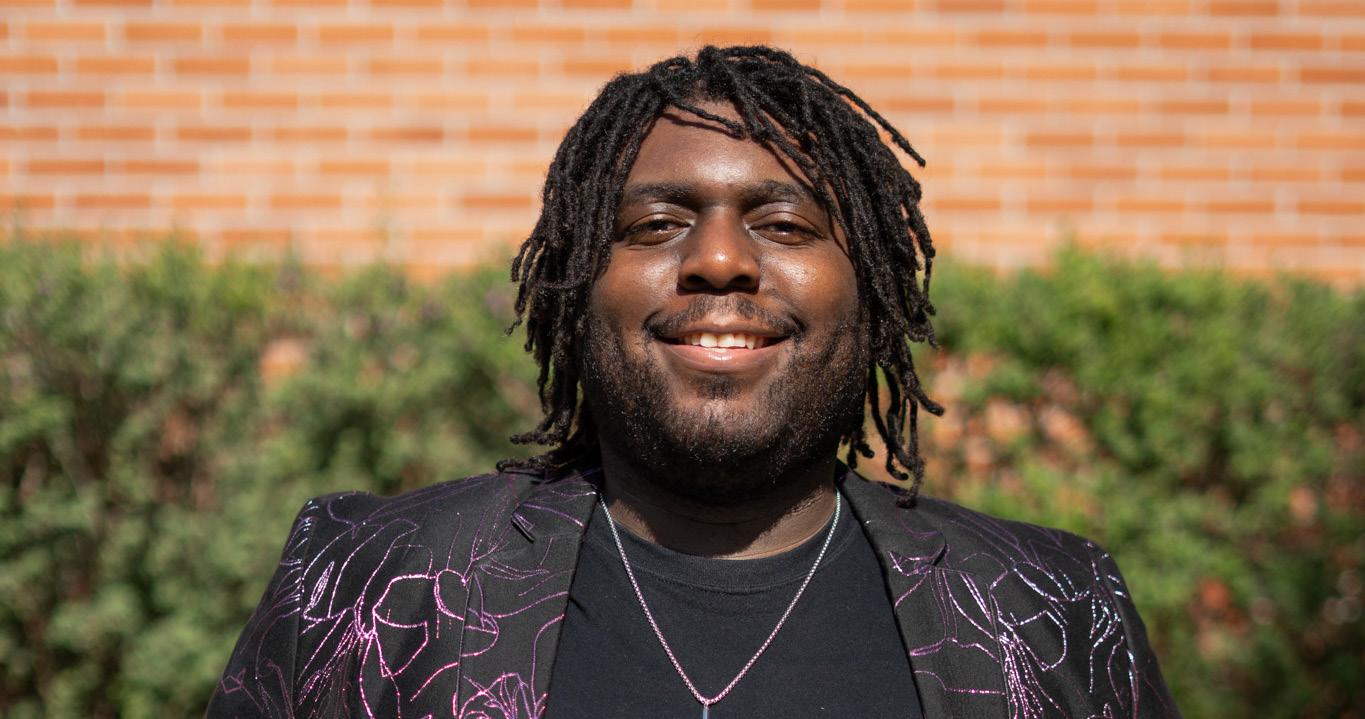
Fourth-year journalism major and Long Beach Current Editor-in-Chief Khoury Williams reflects on the importance of his African American heritage and his commitment to highlighting Black voices throughout the year at CSULB.
Black students only make up 4% of the total student population at Long Beach State. While it’s a small percentage, the Black community on campus continues to make a profound impact by not only leaving an undeniable mark on the university’s history but also shaping the core identity and the future of CSULB.
As a Black student myself, I know that being underrepresented comes with its own unique challenges — from sitting in classrooms where few classmates look like you, to building community in spaces that may not fully understand the history and enduring resilience of African Americans. Yet despite the social disparities, Black students at CSULB continue to carve out spaces of belonging and lead efforts that move the university toward greater inclusivity for all student groups.
Black history is not confined to the past; it is woven deeply into America’s past, present and future as well. Black history is innovation, resilience and excellence all happening together in real time. Black history is culture that shapes music, politics, art and entertainment across generations. For
CSULB, Black history is the work of students organizing events, faculty mentoring the next generation and alumni leading in their career fields. These contributions deserve recognition not just in February, but throughout each calendar year.
This special Black History Month edition of the Long Beach Current features stories about CSULB’s first permanently appointed Black president, Black students coming together to celebrate each other during the university’s first night market event, a CSULB alumnus and poet becoming the Black Resource Center’s assistant director, Black inventions that are everyday essentials and more.
As editor-in-chief, my commitment to this work is deeply personal, as I take pride in my African American roots and the creativity and excellence they embody. That pride fuels my dedication to ensuring Black voices are not only included in our coverage but also amplified and heard year-round.
Our staff at the Long Beach Current remains committed to celebrating, honoring and telling the stories of our Black students, staff, faculty and alumni with the care and intention you deserve.
Here at the Long Beach Current we acknowledge that the school we report on is located on the sacred site of Puvungna, “the gathering place.” We are on the land of the Tongva/ Gabrieleño and the Acjachemen/Juaneño Nations who have lived and continue to live here.
We also acknowledge the Gabrieleño/Tongva (pronounced: GABRIEL-EN-YO/TONG – VAH) and Acjachemen/Juaneño (pronounced: AH-HACH-AH-MEN/JUAN-EN-YO) as the traditional custodians of the Los Angeles region along with the Chumash (pronounced: CHOO-MOSH) to the north and west, and the Tataviam (pronounced: TAH-TAH-VEE-YUM) and Cahuilla (pronounced: KAH-WEE-YAH) Nations to the east.
We respect and value the many ways the Tongva/Acjachemen cultural heritage and beliefs continue to have significance to the living people and remind us about the sacred and spiritual relationship that has always existed here at what we now call California State University Long Beach. Land acknowLedgment ON
editoriaLs:
editoriaLs: All opinions expressed in the columns, letters and cartoons in the issue are those of the writers or artists. The opinons of the Long Beach Current are expressed only in unsigned editorials and do not necessarily reflect the opinions of the journalism department or the views of all staff members. All such editorials are written by the editorial board of the Long Beach Current.
Letter PoLicy

Letter PoLicy: All letters and emails must bear the phone number of the writer and must be no more than 300 words. The Long Beach Current reserves the right to edit letters for publication in regard to space.
Monday, February
BY ANNETTE QUIJADA News Editor
Incoming Long Beach State President Loren J. Blanchard is coming in with one mindset he’s all too familiar with: student success.
Blanchard, 63, from Lake Charles, Louisiana, grew up with parents who wanted, more than anything, to ensure that he and his sister received the best quality of education from K-12 through college.
As a child, Blanchard said he and his sister had everything they needed, not realizing the sacrifices his parents made to support their education, extra-curricular activities and other necessities, including food and clothing.
Blanchard said his parents were advocates for the civil rights era, and his father resonated with many aspects of the movement, especially the idea of education as a pathway to advancement.
“My father would also always say that he wanted our lives to be better than theirs,” Blanchard said. “He believed that education was the empowering factor to make that happen.”
Every night at the dinner table, Blanchard’s father asked him and his sister the same question: one that would ultimately shape the trajectory of his life.
“What did you do to make somebody else’s life better today?” Blanchard said, quoting his father.
Blanchard is a first-generation college student who earned his bachelor’s in speech pathology education with a minor in psychology from Xavier University of Louisiana.
Blanchard said he learned a lot about academic support and getting the help he needed as a first-gen student at Xavier.
Afterward, he attended McNeese State University in Lake Charles and received his master’s in educational administration and supervision.
He later completed his doctorate in educational psychology at the University of Georgia.
Blanchard, who will become CSULB’s first permanently appointed Black president, brings more than three decades of
KHOURY WILLIAMS/Long Beach Current
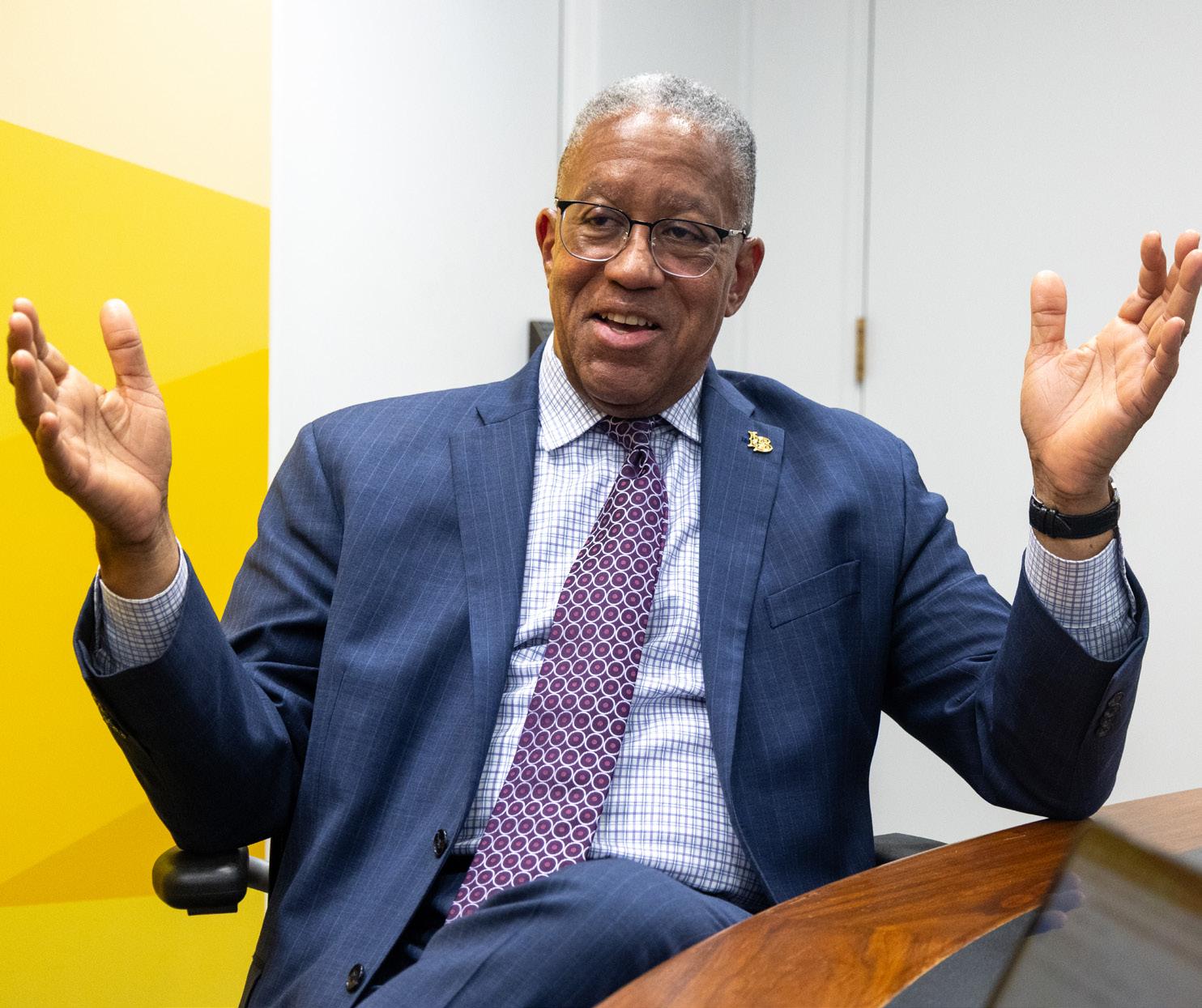
Newly appointed CSULB President Loren J. Blanchard visits Long Beach State on Feb. 5 to discuss several topics with the Current's staff, including his 30-year career in higher education-based leadership and his future goals for CSULB.
experience in higher education leadership to the role.
He started as provost and senior vice president of academic affairs at Xavier from 2002 to 2007.
Other positions Blanchard held include associate vice chancellor for Academic and Multicultural Affairs at the Louisiana State University Health Sciences Center and another role within the University of Louisiana System as associate vice president for Accreditation, Leadership and Accountability.
Previously, he joined the CSU Chancellor’s Office in 2015 as executive vice chancellor for Academic and Student Affairs.
“It was the best six years of my life at [the] California State University chancellor’s office,” Blanchard said. “We did a lot of strategic work around student success, but also just really trying to improve conditions so that students, particularly many of them who are underserved, could be successful.”
During his time at the CSU, Blanchard led the development of Graduation Initiative 2025. The initiative was an effort by the CSU to ensure students had an equal opportunity to earn a col-
lege degree regardless of race, ethnicity or financial background.
Currently, he serves as president of the University of Houston-Downtown and has held the position since 2021.
Blanchard said his time at UHD has been a good experience and that the city of Long Beach is very similar to Houston when it comes to the challenges of living in an urban space.
University of Houston Downtown Social Work Program
Blanchard highlighted the Social Work Program at UHD, where the university has been working closely with the city and other agencies to address homelessness in downtown Houston.
“It has regrettably served as a deterrent for even many, many Houstonians who don’t even want to go into the downtown area where there are plenty of resources that are available,” Blanchard said.
He said the students in the Social Work Program are working as interns to provide support to people experiencing homelessness, including mental health services and housing.
They also worked with the Houston Police Department and the Metro De-
partment to investigate whether homeless individuals were increasing criminal activity in the downtown area.
“We are now, through the support of the state, able to get some funding in order to create the center for crime, urban research and education,” Blanchard said.
He said the funding has allowed them to gather data and regularly produce reports showing where crime is highest and lowest in downtown Houston. It has also helped police departments adopt more predictive policing tactics to ensure they are at the root of resolving crime in the city.
“You know the piece for me that matters a whole lot is the degree to which a university can partner with the city, especially when you’re living in an urban space,” Blanchard said.
A look into the future of CSULB
Announced as CSULB’s new president on Jan. 28, Blanchard said he was drawn back to Long Beach by the university’s strong reputation and its commitment to student success — a focus that aligns closely with his own.
He visited campus a week later, on Feb. 5, and said his impression of the campus was one he had had all along during the six years he worked at the CSU: the university is the best of the best.
Blanchard said his plan to meet with everyone and collect feedback from those who work and attend CSULB will consist of listening sessions.
He said he knows by the time he starts on May 1, some students will be graduating from the university, and many faculty don’t teach during the summer, so listening sessions will be extended through the fall semester.
“That’s the way I plan to engage with the entire community, [the] entire CSU Long Beach community, but also looking at our external partners … as well as our alums,” Blanchard said.
When looking at CSULB’s mission statement, what stands out to Blanchard is the idea of faculty and staff working together to ensure that students not only reach the peak of excellence, but also “the whole notion of superiority, of beyond excellence.”
“I’m just looking ever so forward to beginning my role, officially as president of CSU Long Beach,” Blanchard said.
Editor-in-Chief Khoury Williams contributed to this story.
BY SUZUNOSUKE IDA Contributor
Long Beach State alumnus Marcus Hobbs was recently awarded the city’s Martin Luther King Jr. Peacemaker Award for his role as a community leader, opening doors to educate, heal and bring unity.
Hobbs was among five recipients of the annual MLK Peacemaker, which pays tribute to “the enduring legacy of Dr. Martin Luther King Jr., who brought forward community values and strategies to promote peace, unity, compassion and kindness,” said Councilwoman Suely Saro in the District 6 newsletter. Hobbs graduated in 2023 with a bachelor’s in English, and has dedicated himself to serving the community through his nonprofit Project X LB, and volunteering with other nonprofits, including The SIX.
Hobbs started Project X LB in 2023 with a “Load of Kindness” initiative, in which he partnered with a local laundromat and offered free laundry to local families, as well as resources like CalFresh.
The idea for the nonprofit came to
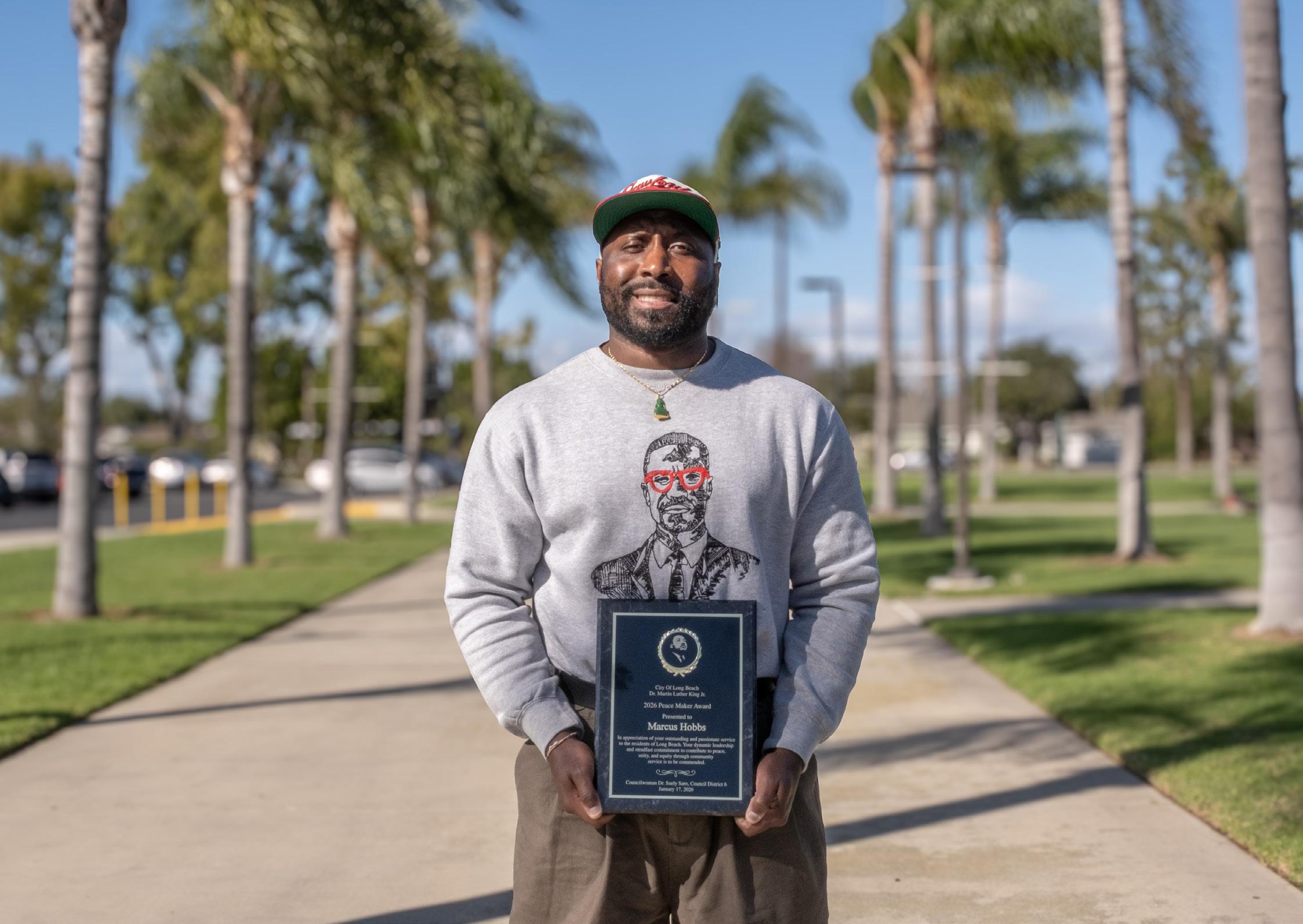
CHARLOTTE LOCICERO/Long Beach Current CSULB alumnus Marcus Hobbs was awarded the Martin Luther King Jr. Peacemaker Award on Jan. 17. Hobbs is the founder of Project X LB, a nonprofit supporting families who struggle with financial hardship.
him when he realized the people who need these services often don’t have the time to learn about them.
“We have families that are surviving … they don’t always have the capacity to go to a building to apply for these resources,” Hobbs said. “Everyone needs to wash their clothes. Why not bring the resources to the laundromat?”
Hobbs recognized the importance of laundry as he witnessed families bring up to six months worth of dirty clothes. This led him to contact Long Beach schools such as Lindbergh Middle School and Millikan High School to donate washers and dryers.
“I never did it to be recognized. I did it because there was a need,” Hobbs said.
Hobbs’s nonprofit expanded to include a youth development program called S.H.I.F.T, where he teaches elementary to high school students social and emotional learning through art.
“To tackle violence prevention, we have to first build their capacity to be trusting of [other] adults,” Hobbs said.
However, Hobbs realized that it’s not only kids who need healing from gener-
ational patterns – it’s the parents, too. “There’s a ton of workshops that cater to the youth, but how do we provide intergenerational workshops, so the youth doesn’t go home to an environment that’s unhealed?” Hobbs said.
Hobbs credits his time at CSULB for widening his perspective through Long Beach’s diversity and openness.
He recalled a time when Dennis López, an associate English professor who specializes in U.S. ethnic literature, introduced him to the book “A Different Mirror.”
Told from the lens of a non-white and non-male perspective, the book allowed Hobbs to consider other perspectives.
López said Hobbs has always been a person who cared about his community, and he is not surprised Hobbs received the award.
“He was an engaged and thoughtful student, one who always reminded us of the importance of connecting the thinking and learning in the classroom to the social realities facing our communities,” López said.
Hobbs commended the city’s ability to recognize community leaders, as he feels that most nonprofits are unseen in other cities. Long Beach is appreciative, he said.
Hobbs spoke fondly of Long Beach, saying it’s a special place where the community is connected, just like a Pando tree in Utah.
“The [Pando] trees are connected through one root system … and that’s Long Beach,” Hobbs said.
For aspiring student community leaders who want to change lives, Hobbs said: “Do it with love and intention.”
The next event for Project X LB is “P.E.A.C.E in the Park” at Silverado Park on May 16, where the Long Beach Alumnae Chapter of Delta Sigma Theta Sorority, Inc. is expected to collaborate.
The event will offer healing activities for families, including yoga, meditation and art therapy, in addition to workshops and resources they can use to spend the summer together.
More information can be found on Project X LB website.
BY ISABELLA GARCIA & GRACE LAWSON Managing Editor & Community Engagement Editor
When a measure was voted down by students in 2015, any future plans of renovation for Long Beach State’s University Student Union were halted.
Although the need for a complete renovation of the Union still proved necessary, as the building, upon initial construction in 1972, was built to accommodate only 10,000 students.
For the university’s current student population of over 41,000, a number Beach Building Services knows will continue to grow, a renovated student union that meets modern needs would be necessary.
“I think the industry standard is 10 square [feet] per student in a union, and ours is four square feet per student, so we’ve known for a really long time that it wasn’t big enough,” said Melissa Soto, CSULB’s manager of Capital Project Development.
According to CSULB’s manager of Capital Projects Program, Lisa Salgado, the current major USU renovation project, known as the Future U Project, the biggest in the university’s history, broke ground in September 2025 and is currently at around 5 to 6% completion.
“This is like barely a portion of the project, the actual demo,” said Aaron Serrano, Project Engineering intern and second-year construction management major. “It may look like a lot, but there is so much more we have to actually build.”
The most recent construction renovation took place in the ‘90s with the West addition to the student union. However, the solution was still meant to be a temporary addition for a problem that would eventually have to be addressed.
The urgency to begin the Future U construction project stemmed from the building’s deferred maintenance. The university continually invested in the upkeep of spaces within the USU to maintain its functionality, while not addressing the overarching problem: the building would eventually reach a point where this form of maintenance could not keep up with the need to renovate the space as a whole.
Maintenance had also reached a point where the Associated Students, Inc. budget could no longer cover the repairs. Examples of the required deferred maintenance included plumbing, electrical, telecom, HVAC and AC.
“Over so much time, the building is very well used and well loved, and all the systems were just slowly breaking down, and ASI was doing the best job they could to patch [it],” Soto said. “But there’s a certain point where one system is beyond what is called its useful life.”
Although contractor-architect team Penta- Gensler are expected to complete the renovation by 2028, Soto said projects of this scale must be carried out in phases While the drawings have already been reviewed and approved, Beach Building Services will draft a contract to initiate the next phase of construction.
“All of that impacts how we have enough funding to start with the stairs and then issue the contract for demolition, for abatement, safe enough for all the utilities before we [could] actually get into construction [this past] January,” Salgado said.
In the project’s contract agreement, there are guaranteed-price contracts, in which BBS will meet with a contractor to approve the documents and begin budgeting for each specific phase of the project.
According to Soto, at every step of the construction process, there is an overall estimated budget, but it is not finalized until this point. During the approval discussion, parts of the contract may be cut out, changed or added to fit

within that budget range.
Planning starts in advance, using a cash flow that is continually revised as the project progresses. The cash flow follows the design process by mapping cost percentages to industry standards or past university projects.
According to Soto and Salgado, no parts of the project can be started until the university has the funds to pay for them, which is why the project benefits from being phased.
The USU design process is born from a collaborative design-build delivery method, in which the contractor and the architect team up from the beginning of the project to work on design and construction. This is contrary to most traditional construction processes, where an architect prepares plans, and the contractor receives them to begin the physical work.
The process for selecting contracting teams involves a six-month selection process with the university and construction companies.
The Capital Program Development team will ask questions related to problem-solving and campus scenarios, such as logistics, maintaining the worksite, detours, signage, etc., as well as a process of getting to know companies and curating the team, which must also qualify through the CSU system’s technical requirements.
Soto and Salgado also addressed the question of renovating parts of the space while still keeping other parts open for student use. This would have added years to the project, made it less efficient to budget and, in the long run, made it less beneficial for the future student population.
“Just trying to think about like, everybody’s experience is exhausting. It’s exhausting. I think that’s kind of all the things we didn’t really even think about until you’re in it. There’s a part of it you have to just wait and see,” Soto said. “I think this is the hardest part. This is the hardest year, because it’s the transition. It’s taking something away from what people are used to having.”
Construction officials noted they are still on track with the timeline detailed in the contract, are still in the demolition process and that construction of the addition to the USU will begin at the end of this year.
Completion of the Future U Project remains on track for August 2028.
BY JASON GREEN Arts & Life Assistant
Jakeel Harris was quiet in his youth.
“In school, I didn’t really talk much and I didn’t really express myself well,” he said. “My counselor saw that I needed to find a way to actually put down my thoughts and my feelings.”
Poetry was the medium that helped the CSULB alum unlock the voice he uses today.
While in the poetry rabbit hole, Harris discovered Def Jam.
Def Jam Poetry is a popular spoken-word poetry TV show that centers on Black performers; the show inspired his storytelling by connecting it to his experiences.
It has been almost six years since he graduated from Long Beach State with a master’s degree in counseling, returning in a new capacity.
Harris, now 33, has been the assistant director of the Black Resource Center since October 2025.
Fourth-year theater arts major Shayla Forest said Harris made an impact on her sorority last semester, the Lambda Alpha Chapter of Alpha Kappa Alpha Sorority, Inc.
“We partner[ed] with the BRC to host a toy drive, and Jakeel allowed us to leave bins in here and to collect toys over the course of about two to three weeks,” Forest said. “He was very helpful in the facilitating of that.”
It was at MiraCosta College, a community college in Oceanside, where Harris first began performing poetry, in part pushed by his mentor, Bruce Hoskins, a professor of sociology and a spoken-word poet.
In 2012, while at the college, Harris founded his nonprofit organization, Project SPEAKS Inc.
SPEAKS stands for Spread Positivity, Encourage Awareness and Know Something. The name originated from Harris’s conversation with an unhoused man, during which he was nicknamed “SPEAKS.” He also uses the name as a pseudonym for his spoken-word poetry.
Some aspects of the nonprofit include community engagement and providing academic and non-academic resources to marginalized communities.
Harris transferred and attended Cal Poly Humboldt from 2012 to 2014 or 2015 as the Black Lives Matter movement began to rise. As the campus hosts a predominantly white student population, Harris would find himself having conversations with students about BLM, recalling responses to “get over slavery.”
“I went through the motions of code switching 24/7 or pretending to be something that I wasn’t because I just didn’t know how people were going to take my Blackness,” Harris said.
By connecting with other Black students and exploring his Black identity, Harris grew more confident.
He pursued his master’s degree in counseling at CSULB from 2017 to 2020. During that time, he was a coordinator for Residential Life and Student Housing programs, where he directed? Led? activities for Black students.
Harris found it easier to encounter other Black students at The Beach. Never shy, he spoke with fellow students in what is now the Black Resource Center, the College of Education and the University Student Union.
Shametrice Davis, a Black professor, led Harris’s master’s program and was a
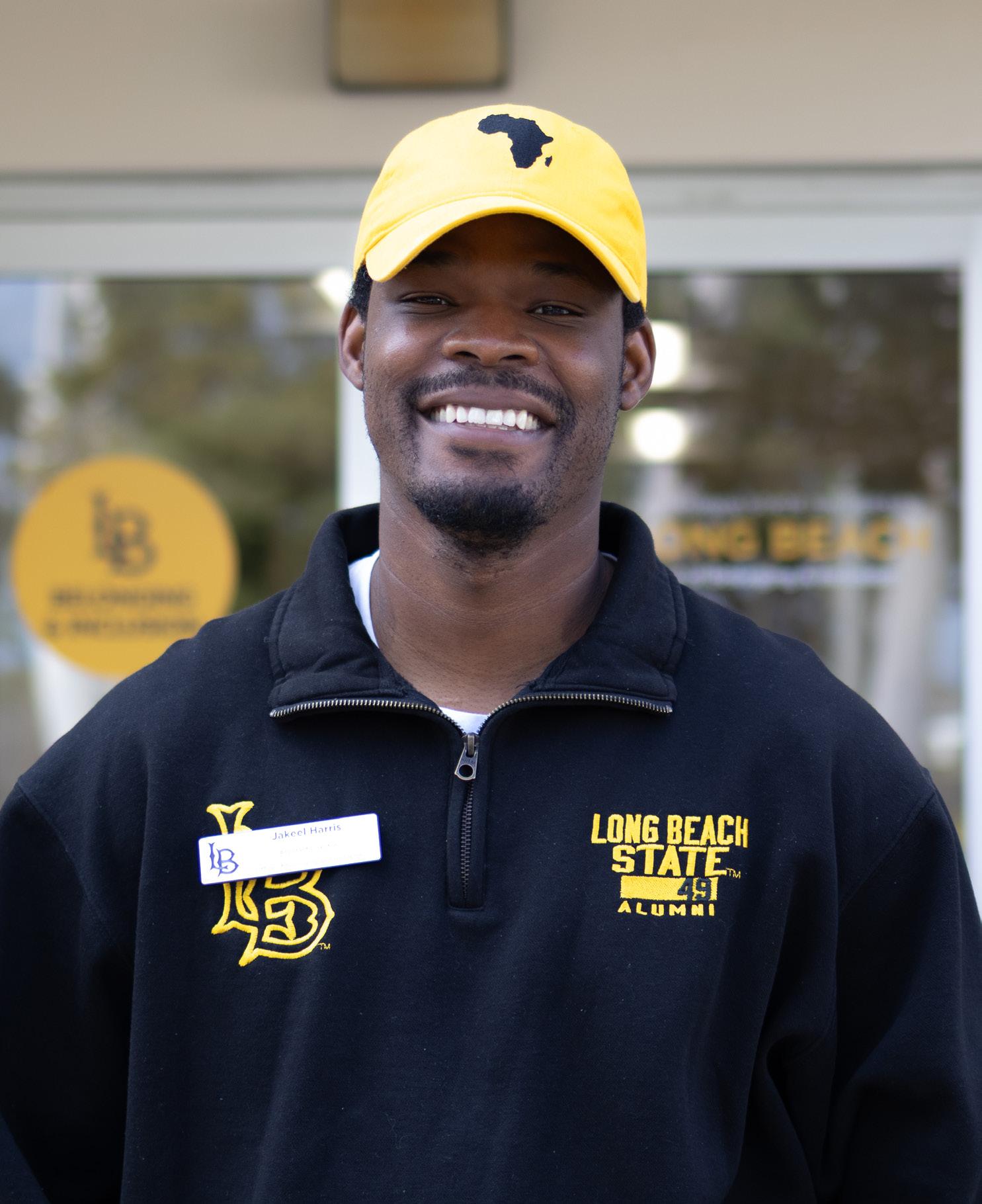
Jakeel Harris, a CSULB alumnus and a published poet of several books, has served as the assistant director of the Black Resource Center for six months. When he performs spoken word poetry, he goes by SPEAKS.
major reason he stayed in it.
“I think we have historically been taken out of education,” Davis said. “So when you’ve been historically excluded, when you randomly start getting invitations to go to a space that you’ve been excluded from for so long, you kind of get skeptical about it.”
Harris said the stigma of community college has prevented Black individuals from entering higher education.
Harris still uses poetry to express himself in ways he cannot verbalize, as seen in his published works.
The most recent was a duology of poems released in 2025, called “The Year Was…” The duology is about six-months in 2024, reflecting on his experiences.
“I call it a love letter to my family and friends who know me because I like
to consider myself an open book, but I think I’m very selective on how that book reads,” Harris said. “This was like the first time where I’m like, ‘OK, I’m going to start talking about things that people knew about, but they didn’t know the context to.’”
For example, the poem, “The Day My Ex Died,” reflects on his grief and provides insight into his relationship with his fiancée, who died in a car accident.
The poem was written toward family and friends who did not seem to grasp their relationship. It served as an explanation for behaviors he exhibited.
Harris sees a short film in the future.
“I celebrate Black history every day 24/7,” he said. “I live in Black skin. I love myself, I love my culture, and I very much honor and celebrate it every day.”
BY CHRISTIAN ROBLEDO Opinions Assistant
In 2021, the Long Beach Current posted an extensive list of 31 Blackowned businesses that were still running during the pandemic.
Now, in 2026, many of those businesses have risen and fallen.
Detailed here are four up-and-coming Black-owned businesses not far from The Beach.
Suds N Stuff
1004 Alamitos Ave.
Open from 7 a.m. – 9 p.m.
Suds N Stuff is a laundromat owned by self-proclaimed serial entrepreneur Teves Lee.
“We’re a local laundromat, kind of centrally located,” Lee said. “We’re in a plaza here with a very busy donut spot.”
Opened on July 1, 2025, Lee took ownership of the Suds N Stuff location after the previous 20-year-old laundromat closed. With existing foot traffic,
Lee was keen to add the laundromat to her growing list of small businesses like that of her school for barbers, the Master Barbering Academy.
Lee, who owns other shops in Long Beach, said she enjoyed adding this storefront to her portfolio, but wished the community had a stronger response to her newest venture.
“It hasn’t been as, I guess, as fast as I would have liked it to be,” Lee said, “The store was closed for about a year before I got here, but because the location has been a laundromat for the last 20 years, the neighborhood just needed to know that it was back open. So, they’ve started to return.”
Pop’N Flavors
3916 Atlantic Ave.
Open from 11a.m. – 7 p.m. | Closed on Mondays
Pop’N Flavors is a shop specializing in curating various types of popcorn.
Owned by Vernon Chatman, the shop takes inspiration from his upbring-
ing in Chicago and his wife’s love of the sweet or savory corn treat.
“When we moved out here, we couldn’t find any popcorn places to get fresh popcorn from,” Chatman said, “So, we thought it would be a good idea to bring a little culture from Chicago out to California.”
Having been open for four years, Pop’N Flavors has had an amazing response from the community. Chatman shared that his most popular flavor is the strawberry cheesecake popcorn, though his multitude of options - from savory dill to sweet chocolate - is bound to make many a tongue water.
“We’ve gotten a great response from the community,” Chatman said, “They love the popcorn. The kids love it. It’s been nice. “
Level Up Barber Studio
Phenix Salon Suites, 300 E 4th St. Tuesday- Friday 9 a.m. – 7 p.m. | Saturday – 8 a.m. – 5 p.m. | Closed Mondays and Sundays
Level Up Barber Studio is a shop run by Omari Hudson. The business has been in the suites since Oct. 2024. Since changing storefronts, Hudson has noticed the impact on his clients, noting that the community he serves is very close-knit.
“It’s a very insulated community, so it’s not like a big neighborhood, and it’s very easy to miss, but the people who catch us, they embrace it,” Hudson said.
While small, Hudson expressed his community has a big impact on how he runs his service. His inspiration as a barber originated from creating connections with people, sharing that cutting hair isn’t just about styling, but also about having a space to interact with the public.
“They give me good energy, good time and we all grow together,” Hudson said, smiling and preparing his tools for the next client.
Read the full story on lbcurrent.com.
BY DELFINO CAMACHO Arts & Life Editor
Ilike WAR.
By which I mean, the So Cal-based funk rock band WAR.
Not the concept of “war.”
Hailing from right here in Long Beach, WAR formed in 1969. Now 57 years old, the band just received a star on the Hollywood Walk of Fame last year. While there’s no denying the group’s longstanding relevance within the city — surviving members received the Key to the City in 2025 alongside former Long Beach State President Jane Close Conoley — they still feel underrecognized in the broader music conversation.
Lately, I’ve been thinking about how much more credit WAR deserves as a pioneering, mostly Black and genre-bending rock band.
The original seven members — Howard Scott,
Lee Oskar, Charles Miller, Morris “B.B.” Dickerson, Sylvester “Papa Dee” Allen, Harold Ray Brown and Leroy “Lonnie” Jordan – were all Black, except for Oskar. That diversity helped them blend funk, soul, rock, Latin and jazz into something distinctly Southern California.
The band formed and rehearsed around Long Beach and Compton, crediting the region’s cultural mix as fuel for their eclectic sound.
They were originally hired as a backing band for British Invasion rocker Eric Burdon of The Animals. They released two albums together, including the hit song “Spill the Wine,” before going solo.
Their mega-breakout came in 1972 with “The World Is a Ghetto,” which topped the charts and became Billboard’s bestselling album of 1973, edging out Pink Floyd’s “Dark Side of the Moon” and Elton John’s “Goodbye Yellow Brick Road.” The band credited Long Beach’s diversity and contradictions with inspiring the album’s themes of urban struggle and resilience.
Beyond the title track album, standouts include
the swaggering “The Cisco Kid” and especially the 13 -minute instrumental “City, Country, City,” a hypnotic jazz-fusion showcase that proves how good the band was beyond the hits.
I’d pair that with their seventh album, 1975’s “Why Can’t We Be Friends?”
If “Ghetto” is their socially conscious masterpiece, this one is their pop culture titan.
Its two biggest tracks, “Low Rider” and the title song, have been absorbed into pop culture so thoroughly it’s easy to forget how innovative they were. Beyond the memes (including perhaps my favorite Simpsons gag), the rhythms remain joyful and deceptively complex.
WAR was multicultural before it was a marketing tool, socially aware without being preachy and endlessly inventive. I would argue they helped shape Southern California’s sound as much as they reflected it.
For those looking to explore music by local Black artists, all we’re saying at the Long Beach Current is to give WAR a chance.
BY JOSEPH LEE & NI BALINESS Arts and Life Assistants
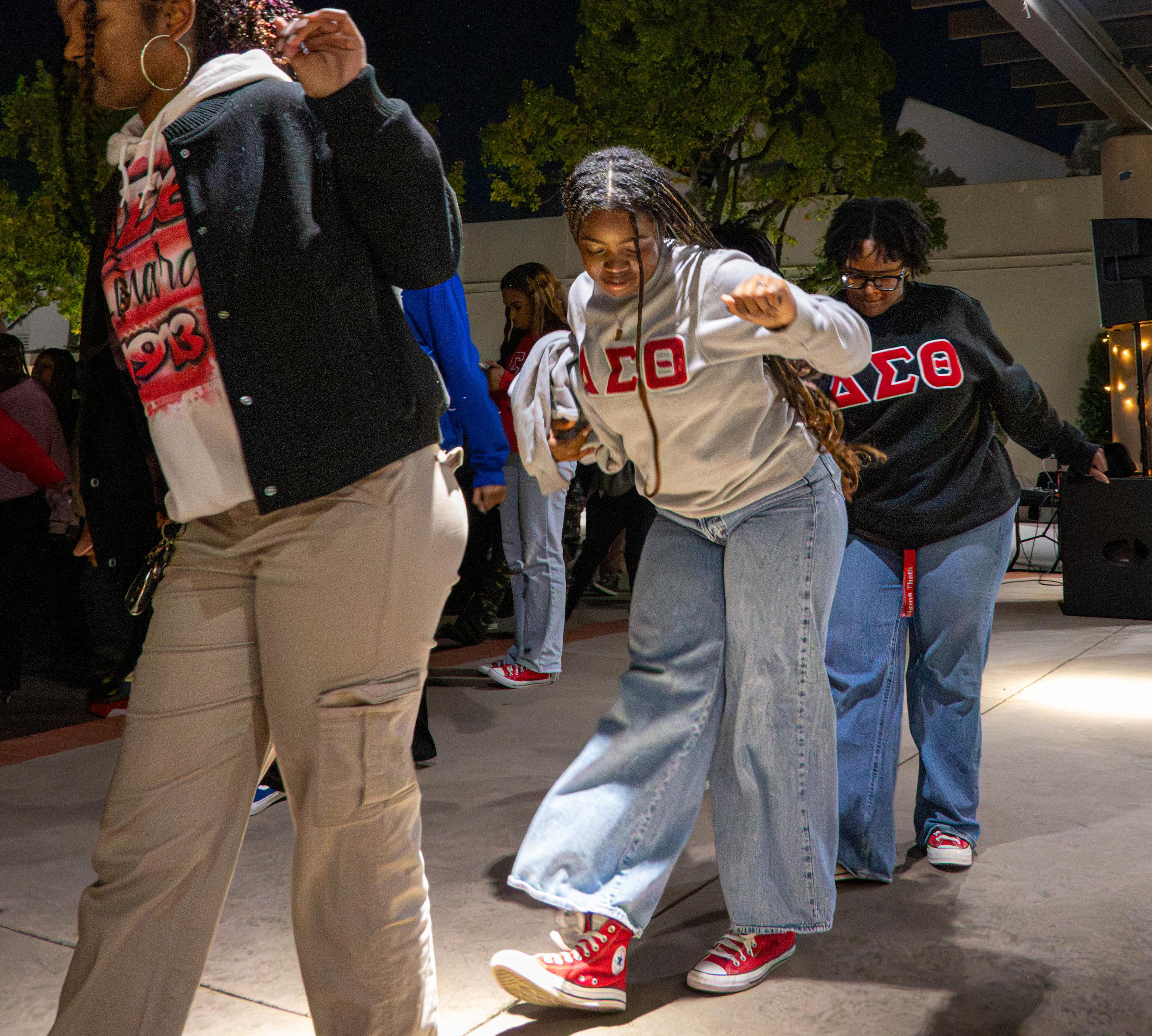
Silhouettes danced in the dark under the soft glow of paper lanterns as the Kinesiology Courtyard hosted the Black History Month Night Market on Friday, Feb. 20.
Although the air was cold enough to cut through layers of clothing, it didn’t seem to bother the visiting crowds, there from 6 to 11 p.m.
Rebecca Adebayo, a third-year health science major and president of the Black Student Union, said this was the BSU’s first night market, adding that they tried to deviate from the standard tabling.
“I hope everyone just feels the sense of community, the sense of belonging [and] the sense of fellowship,” Adebayo said. “I want this event to be something fun that people will remember.”
Around the courtyard, vendors sold and displayed handmade crafts, clothing and miscellaneous paraphernalia on portable tabletops. Adebayo said the number of submissions from community vendors made her realize there was already so much talent at Long Beach State.
“We wanted to give them a spot [to] really showcase that [talent] to the Black community on campus,” Adebayo said.
One such vendor was 23-year-old second-year documentary films major Zion Ervin.
Ervin was representing her brainchild company Zhyun, a Long Beach-based streetwear brand (pronounced like her name — zai-aan). Ervin said her name stands for “a place of unity and love for God’s people to come together.”
“I liked the meaning of the name, but I didn’t want people associating it with me,” Ervin said. “So I changed the spelling to give it a little flavor.”
Inspired by Musician and Designer Pharrell and his work in the fashion industry, Zhyun offers a wide range of hats, including embroidered logo snapbacks and knit beanies.
Other products include T-shirts and sweatshirts, all made from heavyweight 100% cotton fabrics.
While Zhyun mainly operates as a clothing brand, Ervin is also passionate about fostering community.
Currently, the brand hosts mental health workshops for young adults. When Ervin founded the brand two years ago, she said she was in a “really dark place.”
“I was very lonely and I know that’s a common thing in my generation,” she said. “Often [when you’re] feeling what you’re struggling with, you’ve got to keep it to yourself and suppress it.”
Within the next five years, Ervin envisions an evolution in her business from just clothing to an organization, complete with a community space, aimed at helping young adults grapple with their mental health struggles.
Another vendor was fourth-year anthropology major Kiana Davidson and her“makeshift skate shop,” which displayed clothes and skateboard deck graphics from her business, KEYSCLOSET.
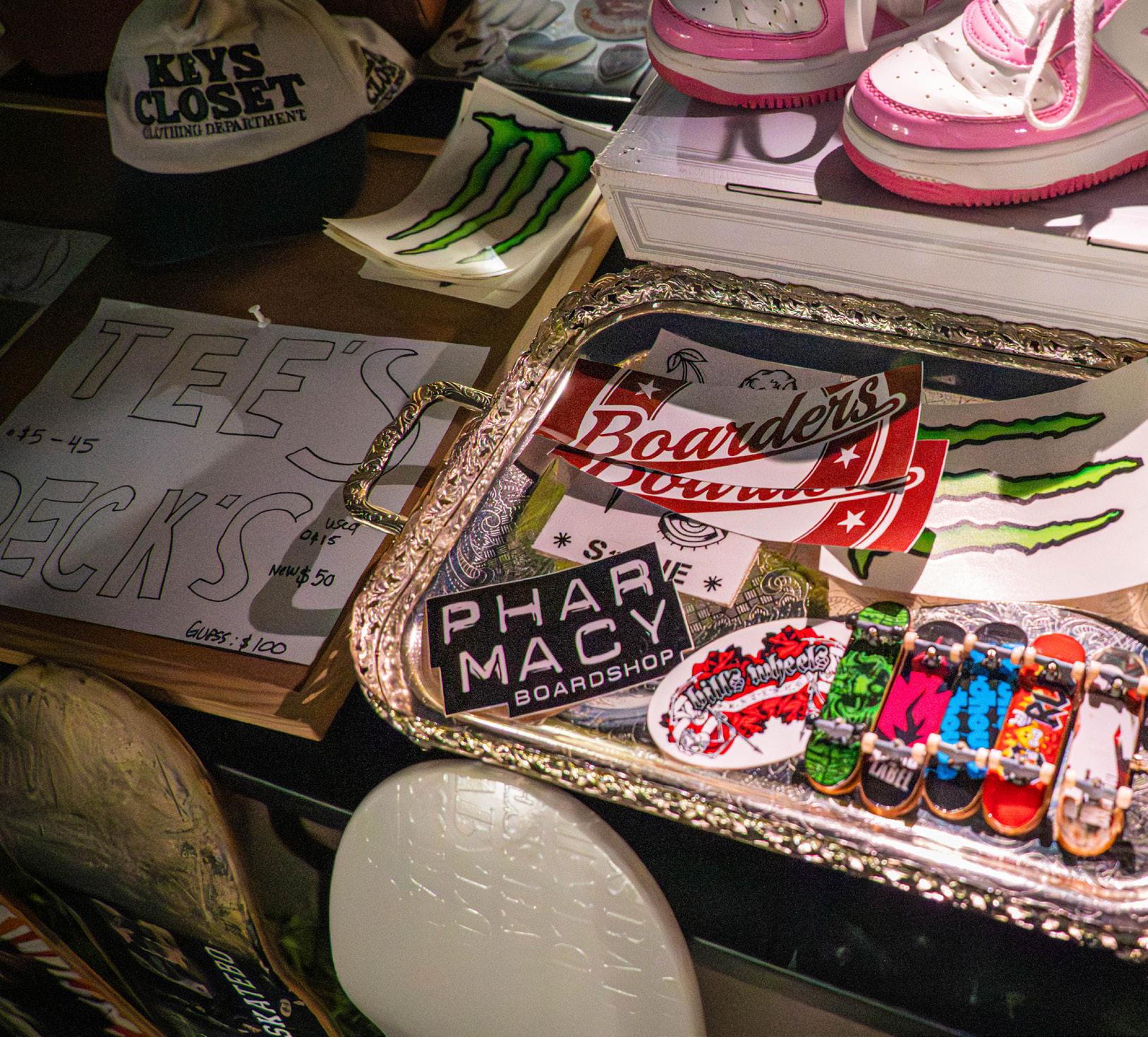
Growing up interested in skateboards and clothing, Davidson made sure to create a table that blended high fashion, street style and skateboarding.
“I think I capture the essence of what it’s like to grow up as a Black teen or child,” Davidson said.
As her first in-person vendor event, being part of the Black Night Market was exciting.
“Overall, I’m just enjoying the fun,” Davidson said.
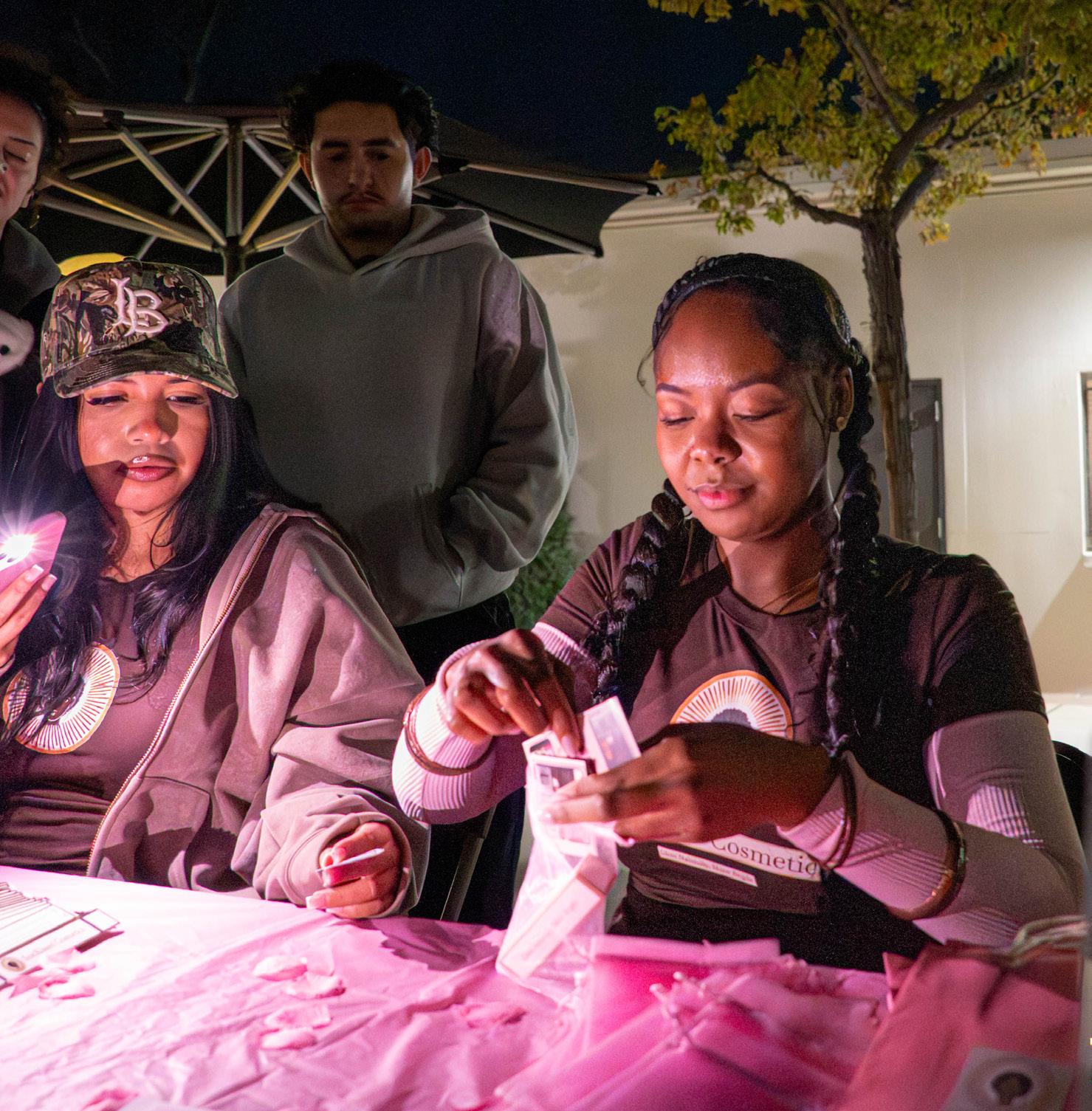
Across the courtyard was a pink table decked out with pink flower petals and Hello Kitty stickers that second-year biology major Trinity Grant had set for her business, SunKissed Cosmetics.
Growing up, Grant would sometimes have up to 80 lipglosses from different stores. As of now, her business mainly sells lip glosses, but she hopes to branch out into other cosmetics such as eyeliner.
Alongside being a Black-owned business, Grant is dedicated to her Christian faith and felt that God was telling her to “start something.” So, true to her convictions, Grant started her business.
With gold seals and glosses with different shades that ranged from clear to pink, customers would also notice Grant’s logo of a dark-skinned Black woman with an afro.
“The women who are the darkest never get highlighted, so I thought in a brand like this, I should put them on a pedestal,” Grant said.
Grant said she’s dealt with challenges stemming from others who underestimate her potential and don’t view her as someone who can offer so much to this world.
“I want to kill that stigma and maybe grow past that,” Grant said.
As the night went on, some silhouettes rose to the stage. As they stepped into the light, students wearing red, blue, purple, pink and green revealed themselves as representatives of Black sororities or fraternities.
One by one, members of the Divine Nine performed dances that gave the audience a brief history on who they were.
The Divine Nine are part of the National Pan-Hellenic Council and represent the
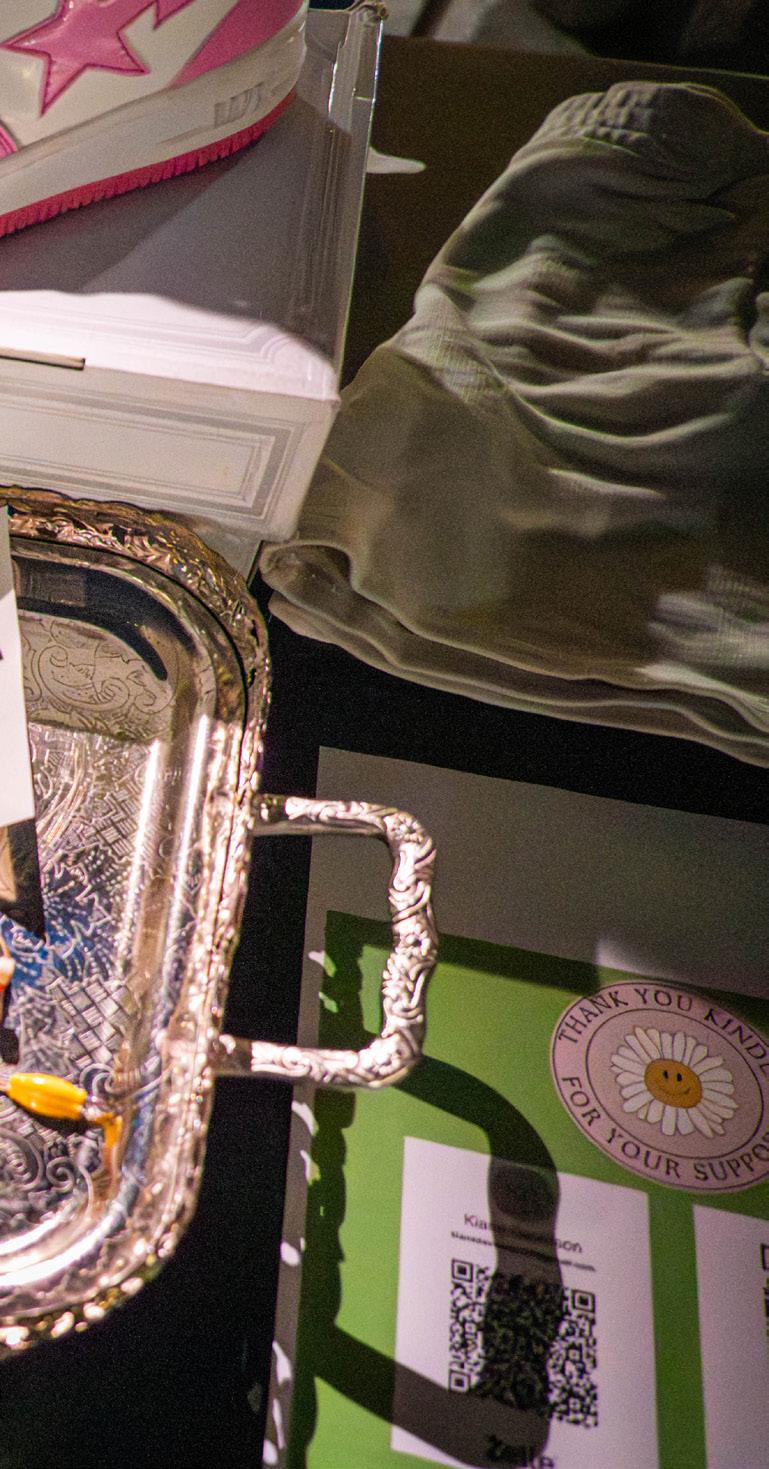
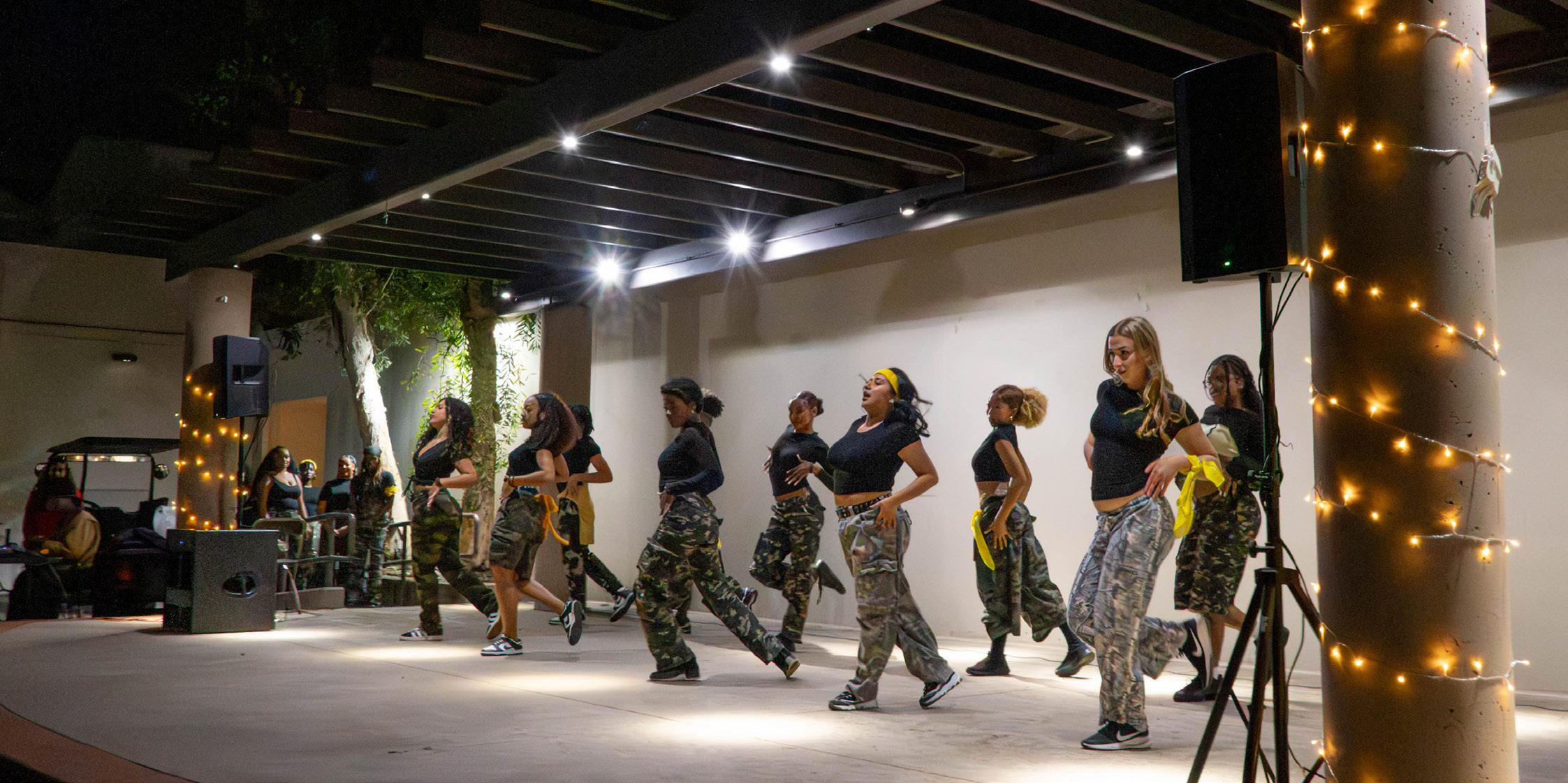
KEYSCLOSET, owned by fourth-year anthropology major Kiana Davidson, was one of the vendors at the BSU Black History Month Night Market at the Kinesiology Courtyard on Friday, Feb. 20. Above: The Honeys, a campus dance team, performed to any array of songs at the Black History Month Night Market. Below: Second-year biology major Trinity Grant, the owner of SunKissed Lips Cosmetics, was one of the featured booths at the night market, selling gold seals and glosses that ranged from clear to pink.
nine historical African American sororities and fraternities. CSULB currently hosts eight.
Fourth-year liberal arts major and NPHC President Alyssa Reamer is part of the sorority, Delta Sigma Theta, Incorporated.
Reamer had always been a “change maker,” so when she came to CSULB, she discovered that Delta Sigma Theta shared the same beliefs in social action.
“My biggest thing has been to enact change in the educational community and be that African American face in a place where there aren’t as many,” Reamer said.
Sharing Reamer’s commitment to helping others was Landen Williams, a thirdyear health care administration major and Alpha Phi Alpha, Incorporated chapter president.
“Carrying on the legacy and representing means everything to us,” Williams said. “Showing up for our community like the Black community and the school is what we stand for first and foremost.”
Williams shared that some members come from “misfortunate” situations and giving back is their way to spark change.
“Our letters are forever,” Williams said. “When you’re an Alpha in college, you’re an Alpha until the day you die and those same principles that we embody will live on forever.”
Saniya Debose, fourth-year linguistics major and Alpha Kappa Alpha, Incorporated-Lambda Alpha chapter member, was beaming as she and her sorority finished their performance toward the end of the night.
Founded at Howard University in 1908 by 20 women, Debose and her sorority sisters were happy to show off their chapter.
“I feel like every Black person should be able to see themselves, especially in people of high self-esteem,” Debose said. “To be a member of the Divine Nine is to put forth hours and hours worth of work in serving the community.”
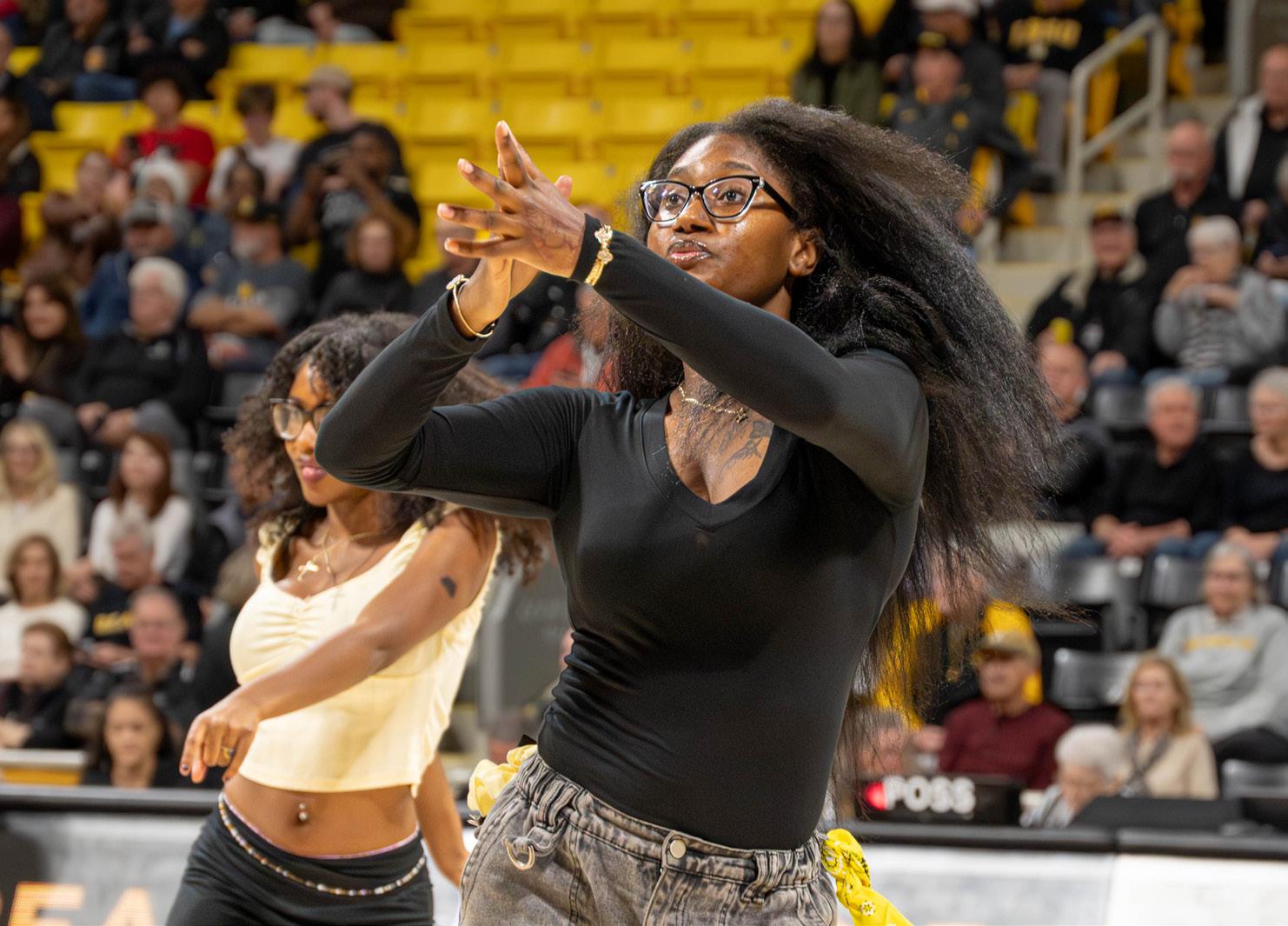
REHANSA KULATILLEKE/Long Beach Current Fourth-year criminal justice major Hope Hutchinson is the Honeys’ secretary this semester. She performed at the halftime show on Feb. 12 at the Pyramid.
BY MONICA GARCIA Arts & Life Assistant
Each heel click sends an exciting buzz through the wooden floors of the practice room. Like the collective hive mind of a bee colony, the Long Beach Honeys dance team follow the sweetness of music with their dance.
Their steps are coated with an irresistible substance, a sisterhood built upon trust and practice.
The Long Beach Honeys Dance Team came into fruition in 2019 as a way to welcome a diverse group of dancers with any levels of experience. Since then, the dance team has served as a staple for half-time sporting events at Long Beach State and received coverage from a national news outlet in honor of Black History Month celebrations in Long Beach.
There are currently over 25 members in the group who meet twice a week for rehearsal and have been invited to perform in collaboration with sororities, fraternities and other student life events on campus.
Last February, the Honeys were invited to perform at The Queen Mary, where they were filmed by Fox News for the Roots & Rhythm celebration, honoring Black History Month.
But the Honeys aren’t just performers; they’re scene setters.
“Are y’all excited?” Dynasty Reed, president of the Long Beach Honeys called out as the team finished their stretches.
There was a collective and excited
“yes” from the team.
The Honeys met for a Heels Valentine’s Edition Honey Jam on Feb. 13, one of several Honey Jams hosted throughout the semester.
Honey Jams allow students who aren’t part of the team to join a rehearsal and learn a routine.
The valentine’s edition required high heels for an evening of sensual choreography and community.
An R&B song played while Reed instructed the members to strut down the room as a warm up.
The goal? To set the tone for a Honey Jam in high heels.
Members strut down the room, locking eyes with themselves in the mirror. Like shadows of each other, they’re synchronized, slow, tall, confident and sure.
The Honeys wear yoga pants, sport bras, crop tops, socks with heels — it is just a rehearsal, but they still put on a show. The hive mind is in motion.
“Five, six,” Reed called. “Five, six, seven, eight and walk.” The Honeys move on cue.
Then a blood-curdling scream cuts through the music.
No one is hurt, that was just Reed — the Honeys’ excited president, taken aback by her own team’s seductively uniform strut.
“You can just feel the energy throughout the room that no one is discouraged and everyone is uplifted,” Honeys member Z’nya Spears, thirdyear molecular cell biology and physiol-
ogy major, said.
Spears served as secretary for the Honeys for three years. Despite her busy schedule, Spears found leadership experiences within the team that helped her build better relationships.
When she first auditioned, Spears said she knew the Honeys would help her reconnect with her passion for dance.
But despite a passion for their craft, the Honeys still look to each other for guidance. Their bond has grown with trust and practice.
Once team president Reed guided her members through the first steps of their seductive valentines Honey Jam routine to “When We” by Tank, questions flew in the air from the Honeys.
After a few more tries and some unsteady moves, they ventured out like bees, each with an important job to keep the collective strong, their creative individuality blended with the choreography.
“The dance world can be very crucial sometimes, but within the Honeys … I felt that community, that support,” Honeys member Amy Espinoza Garza said, first year kinesiology major.
Garza has been a dancer since she was five years old, learning various styles like ballet folklorico, ballet, lyrical and jazz.
Raised in a religious household, Garza wasn’t allowed to practice hip-hop but is now exploring it with the Honeys while building networking opportu-
nities as a kinesiology major working closely with the sports department.
“Even having the opportunity to perform is a big thing,” Reed said. “So I always want them to be proud of themselves for just that, for being able to perform.”
Reed, who has been with the Honeys for three and half years, first began dancing in high school. There were about five members when she auditioned. Reed worked her way up from a general member position, to treasurer and eventually president.
As the team grows, Reed said she wants to continue to foster a culture of diversity and inclusivity for the team. In her experience as president, Reed wants to remind her members about their character. If they get nervous before performances, she makes a point of reminding them to find the qualities that make them who they are while performing on stage.
“When we’re doing performances, people can see others that look exactly like them,” Reed said. “I want them to know that there are places where you don’t have to dim your light just for the comfort of others.”
BY KIMBERLY ROSS
Contributor
In recent years, there has been heavy tension between Black and Asian communities, especially with viral videos and media coverage highlighting moments of conflict. However, this division often ignores the long history of solidarity between the two groups.
People rarely talk about how Asian American activist Yuri Kochiyama supported Malcom X and held him as he died, or how Black activists spoke out against the internment of Japanese Americans during World War II. This shared history shows that unity is possible and has existed before.
To bridge today’s division, both
communities need to remember their shared history and actively support each other in the present.
One important step is education. Many students, including myself, were never taught about Black and Asian solidarity in school. Instead, we mostly learn separate histories that don’t show how these communities worked together. Ethnic studies programs can help change that by teaching more inclusive narratives.
According to UCLA’s Asian American Studies Center, ethnic studies courses help students develop empathy and understand the interconnected struggles of different racial groups.
When people see how their histories overlap, it becomes harder to antagonize others. This is especially important at diverse campuses like CSULB, where
students from different backgrounds interact every day.
Another way to rebuild solidarity is through community support. This can be as simple as attending each other’s cultural events, supporting minority-owned businesses or speaking out against racism, regardless of who it affects.
During the rise of anti-Asian hate during the COVID-19 pandemic, many Black activists showed support at rallies and online. At the same time, Asian activists joined protests against police brutality. These actions show that solidarity is not just a matter of the past; it can still happen today.
The media also plays a major role in creating division. News outlets often focus on conflict because it gets more attention and views. According to a Pew Research Center report, new coverage tends to emphasize crime and racial tensions, which can reinforce negative stereotypes and fear between groups.
When people constantly see stories about conflict, they may start to believe that division is normal or unavoidable. The media rarely highlights stories of unity, which creates an unbalanced picture. This can lead communities to
blame each other rather than focus on the larger systems of inequality that affect both groups.
The media benefits from this division because it keeps people distracted. When minorities are focused on blaming each other, they are less likely to challenge bigger issues like racism, economic inequality and lack of representation.
Division weakens collective power, while solidarity strengthens it. Historically, many civil rights victories have occurred when different communities worked together, not separately.
Ultimately, rebuilding Black and Asian solidarity starts with awareness, education and action.
Both communities have experienced discrimination and exclusion. Recognizing these shared struggles can help build empathy and understanding. Instead of letting media narratives define their relationship, people can choose to learn from history and support each other.
Solidarity is not automatic, but it is possible. By remembering the past and making intentional efforts in the present, both communities can move forward together instead of apart.

BY SASHA MARANTZ
Copy Assistant
When it comes to race, there can be spaces in between — ambiguity that prevents you from being defined as one or another. Having that in between can cause confusion, not only for those who look at you but also for yourself.
Identifying with more than one race can be more difficult than it seems. Most of the time, it’s because society will only treat you as the race you predominantly look like.
I have often considered myself to be “ethnically ambiguous,” meaning when people look at me, they don’t quite know what ethnicity I am.
Being half white, a quarter Filipino and a quarter Black has always raised the question: What am I? Naturally, this same question is raised to me by others, often getting asked, ‘What are you?’ when people are trying to learn about my ethnicity.
Being multiracial was a concept I didn’t fully grasp when I was younger, in part because of how I looked compared to those around me. If I were given a questionnaire asking me to identify my ethnicity, I would often select “Other.”
Being only a quarter Black, I always had trouble feeling “Black enough.” Having curly hair made it easier to identify with the Black part of my identity; it was the most visible, defining feature.
When I got my hair done in braids for the first time, I hoped I would feel “more Black,” almost seeing it as a justification for my race — a solidifying answer to the ambiguity. However, knowing I was technically “more white,” percentage-wise, it still didn’t feel right.
It’s hard being comfortable in your own skin when your skin doesn’t help you figure out what you are.
I have never felt white — the color of my skin wouldn’t match. This same reasoning is why I have never felt like I could identify as Black, as I’m too light.
My features have also made it hard to feel Filipino, as though I look like an outsider in a giant family of people who look the same.
Oftentimes, I feel “too Black” to be considered white but “too white” to be considered Black.
Being a student at Long Beach State helped me gain a better understanding of Black culture, and I spent my first year living on campus in the Pan-African Scholars dorm.
However, considering myself “too white,” I was hesitant when it came to assimilating myself among my group of Black friends — feeling like a “white sheep,” so to speak. Being among people who were “more Black,” I feared I would be shunned or not considered a “true” part of the community.
Over time, I learned that it didn’t matter the amount of Black I am, as it is still a part of me.
Even though these races make up my identity, it used to feel as though the Black and white parts of me were at war. They almost clashed, making me feel like a walking juxtaposition, a living contradiction.
However, it’s just like with history. When people realized Black and white can coexist, they realized being mixed with Black and white can coexist as well. While I am made up of multiple parts, these parts are not broken but are living in perfect balance.
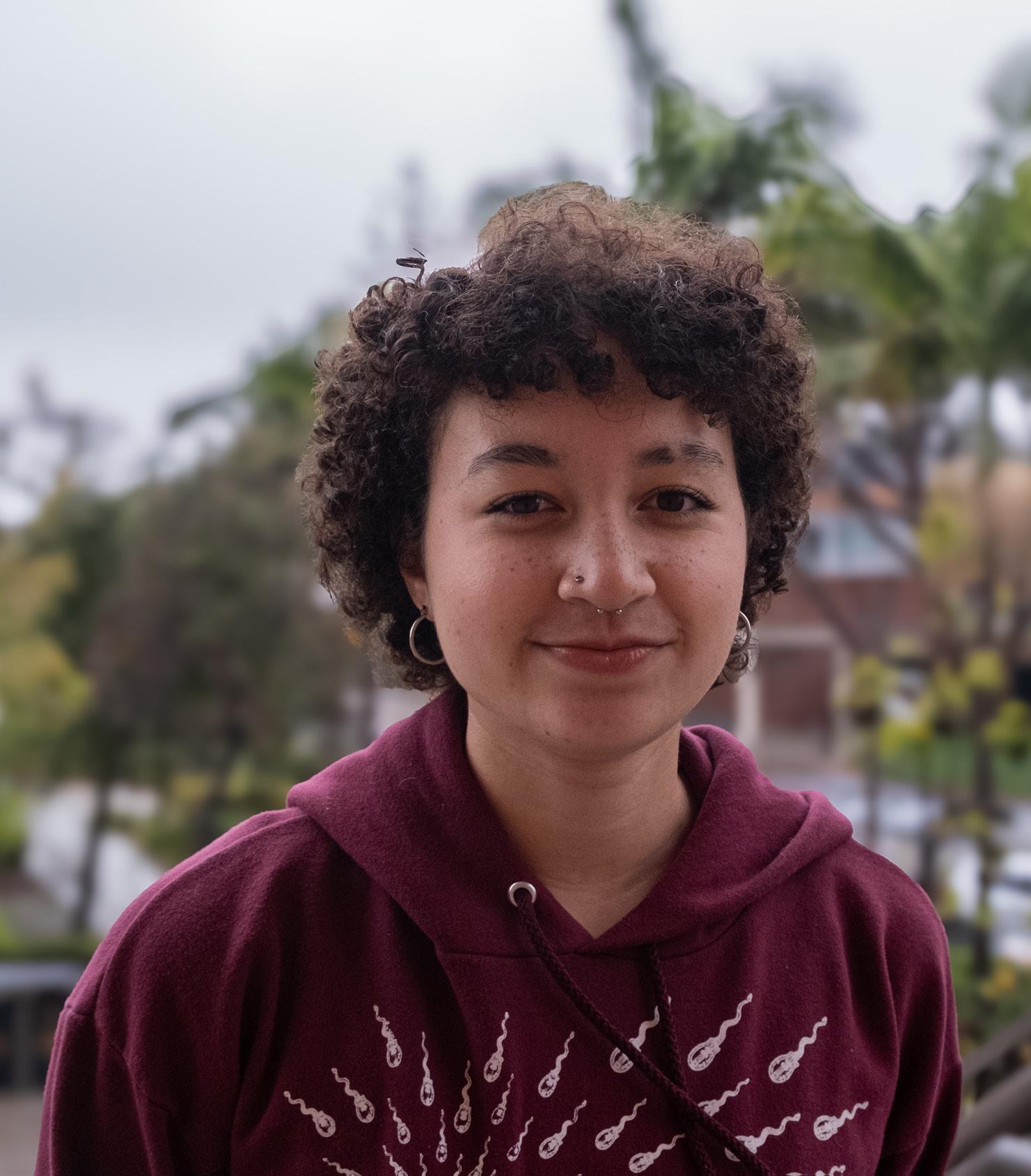
Over time, I learned that it didn’t matter the amount of Black I am, as it is still a part of me. ”
Sasha Marantz Copy Assistant
BY JOSEPH LEE & GABRIELLE LASHLEY Arts and Life Assistant and Design Assistant
It is often said that music is a universal language. While that may be true, no two people encounter it in the same way.
Sometimes it’s inherited, while other times it’s discovered.
As Black History Month comes to a close, the Long Beach Current’s staff come together to spotlight albums by Black artists — honoring those who defined generations past and those who are now shaping the sounds of the future.
Design Assistant Gabrielle Lashley’s recommendations:
1) Alligator Bites Never Heal - Doechii
Doechii has been my favorite artist since 2020. Sitting alone in my room, shut off from the world and the virus that took it, Doechii’s unapologetically raunchy quips and lyrical expertise swept me off my feet. When it comes to exploring self-worth, heartbreak and success, Doechii is one of the most introspective rising voices of the new decade.
In a phenomenal, heart-wrenching debut, Doechii’s “Alligator Bites Never Heal” is a skillful telling of her fears, hopes, regrets and the perceptions of others toward her.
Released on Aug. 30, 2024, Doechii described her second mixtape as a “therapy session,” according to a Variety article. Using humor and an experimental sound that can only be described as “swamp-like,” mostly due to her use of the bassoon and bass, she delivers an indepth story that perfectly culminates her musical and personal journey.
In the album, Doechii maintains a consistent sound while delivering a unique vocal performance every few songs. The difference in delivery of “STANKA POOH” to “BLOOM” all the way to “NISSAN ALTIMA” was a beautiful thing to listen to.
As I listen to Doechii, I can’t help but feel more like myself. As a Black queer woman, I’ve always had a complicated re-

lationship with my identity and how others perceive me. Doechii discusses her dark skin, queerness and overall personality with an attitude I find familiar. Her self-expression echoes my own. When it comes to her future release plans, I’m happy I have a front-row seat to see her progress.
Smino’s “Luv 4 Rent” is a relaxing, diverse album that explores the intricacies of relationships and community. This is an album I’ve played in the background of a day out with my friends because, to put it simply, it’s a vibe.
All of Smino’s songs exude the feeling of a warm day at the beach. Smino’s artistry is that of a painter, and his jazz-inspired instrumentation is the perfect backdrop to the layers of voice he builds upon through each track. His mellow tone and atmospheric cadence further
reinforce his ability to discuss love and family in a carefree way.
I’ve been a casual listener of Smino since 2017, when he released “blkswn.” For years now, his songs have never failed to make a party feel like a function, which is why it’s so disheartening when I still hear people say they’re not familiar with him. I wouldn't say he’s “underground,” but I can say with confidence that he is extremely underrated.
“Luv 4 Rent” is a shameless declaration of loving Black culture and Black bodies. Songs such as “Pudgy” and “Pro Freak” exemplify one of my favorite parts of this album: his love for Black femininity. Other songs, including “No L’s” and “Defibrillator,” deepen the roots he has with his community. Roots that extend to me and millions across the U.S. Whatever he has in store for his next release, I know it’ll make me feel at home in my own skin.
Arts & Life Assistant Joseph Lee’s recommendations:
1) Voodoo - D’Angelo
As an avid music forum peruser, I’d known of “Voodoo” for a very long time, as it has consistently been hailed as one of the greatest albums of all time. Still, I kept myself at arm’s length, partly because of its iconic cover: a shirtless D’Angelo, eyes fixed on the camera — an image that would catapult him to sex symbol status — and also one that would eventually lead to his fall from stardom. However, when I finally gave “Voodoo” a listen, I instantly regretted ever turning a blind eye to it. The record is laced with layers of laid-back groove and sensual harmonies that make you want to do nothing else but sway your hips and snap your fingers to the beat. will forever be set in stone, largely due to this album.
“Fresh” by Sly & The Family Stone is an album that I feel often goes underappreciated among both funk fans and the masses. Of course, the reputation of its landmark predecessor, “There’s A Riot Goin’ On,” looms large, but for me, I find “Fresh,” released nearly two years later in 1973, to be the more enjoyable listen. In fact, it’s the album that made me fall in love with funk music, as it provides everything one would need from the genre and more — unshakable rhythm, bouncy basslines and a groove more infectious than the common cold.
Defined by its lighter, more approachable sound compared to the group’s previous project, I believe “Fresh” to be the quintessential Sly record, above “There’s A Riot Goin’ On,” especially for new fans. For those looking to learn more about the legacy of Sly & The Family Stone, I’d recommend the 2025 documentary film “Sly Lives! (aka The Burden of Black Genius)” directed by Questlove.
BY CHRISTIAN ROBLEDO Opinions Assistant
Few careers blend imagination and impact like invention, where building something new can also mean building a legacy.
When people picture inventors, the image that often surfaces is the same: a handful of old white men. While figures such as Thomas Edison are often credited in classrooms and pop culture, countless everyday essentials were created by African American inventors whose names rarely receive the same recognition.
To change this, here are a few inventions by Black inventors that I doubt most people can live without, underscoring the importance of memorializing these creatives.
The Home Security System
Waking up safely in your own bed is something many people take for granted, yet the threat of intrusion is a very real concern. Thankfully, for many, the stress of intruders is eased by a home security system. And for that, we have an African American woman to thank.
According to History.com, this invention was created by Marie Van Brittan Brown, who, in 1966, worked as a nurse and often found herself at home in the evenings, looking for ways to ensure her safety.
Thus, the home security system was born and gradually refined, leading to products including the Ring cameras many rely on today to ensure their
porches are pirate-free.
Without this creation, intruders could pose a much bigger problem, underscoring that many really couldn’t live without safety measures such as those of the visionary Marie Van Brittan Brown.
Open-Heart Surgery
This literal lifesaver has stood the test of time, pulling countless people back from the brink of death during severe cardiovascular emergencies. And for this groundbreaking innovation, we have an African American physician to thank.
While not created by him, in 1893, Dr. Daniel Hale Williams was the first surgeon to successfully perform an openheart surgery, according to Columbia University’s Surgery Department, setting the groundwork for future surgeons who would have to take on the difficult procedure.
Difficulty be damned, Dr. Williams made medical magic on his patient, James Cornish, restoring his stabbed heart and allowing it to beat again.
The Gas Mask and Traffic Light
This is a special two-for-one, because these inventions, while vastly different in purpose, were made by the same man: the African American wiz-kid, Garrett Morgan. Whether you’re safely stopped at an intersection or glad that tear gas can’t touch you, you have Morgan to thank.
According to blackamericaweb.com, this inventor created the two inventions out of necessity. The gas mask came
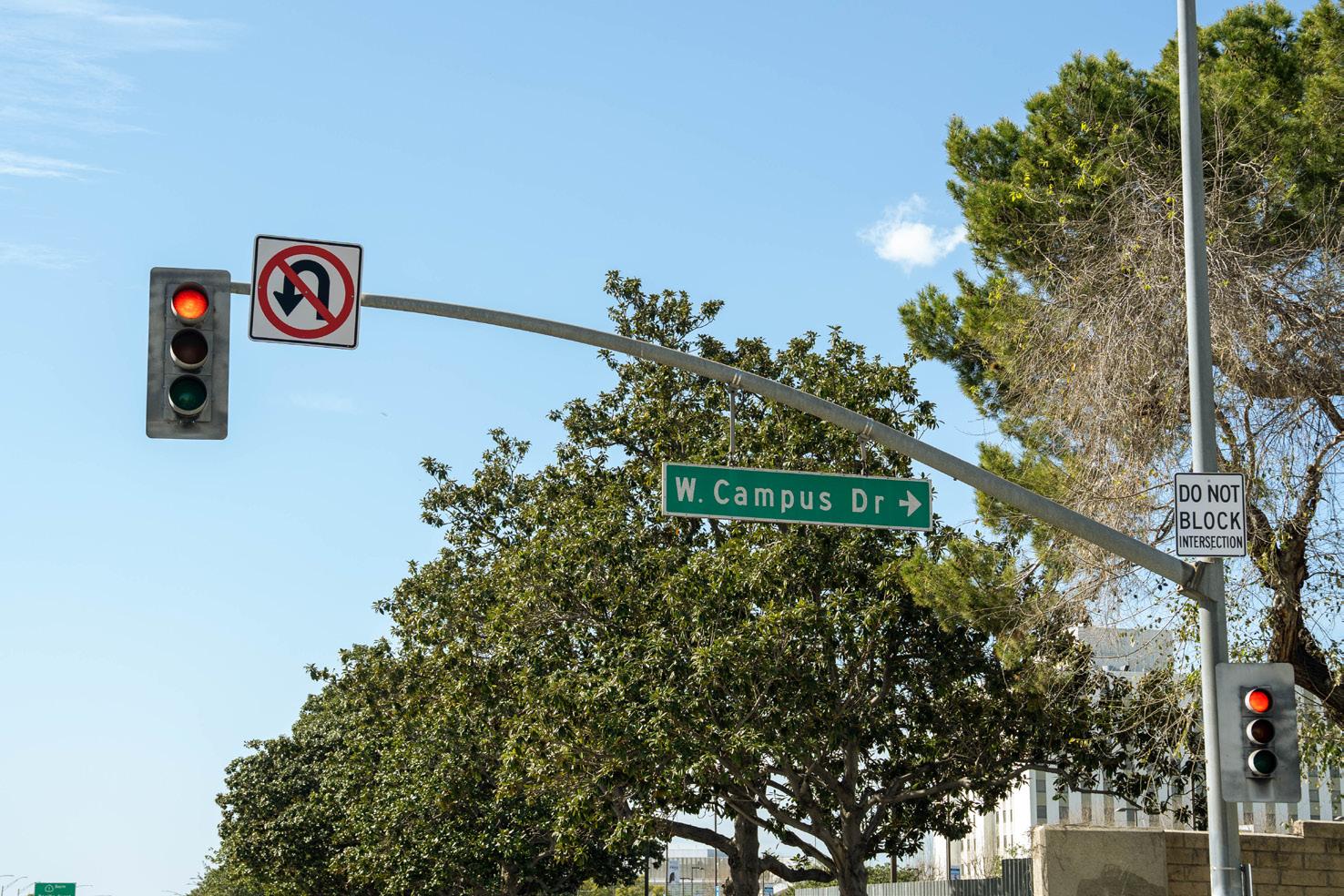
The three-signal system that helps to regulate traffic was invented by Black pioneer Garrett Morgan. Pictured on Feb. 20, West Campus Drive is one of the most popular streets used by the CSULB community.
from his desire to save a group of people trapped in a tunnel collapse in 1912, making him patent his creation that same year.
A little more than a decade later, Morgan noticed that the stop-and-go system of traffic at the time caused too many accidents. This discovery led him to create the pause period that is the yellow light, and thus, the traffic light was born.
And now, to any commuter reading this, make sure to thank Morgan for his contribution to your safety. Furthermore, anyone who’s ever used a gas mask should definitely thank Morgan, because without these two inventions, many people alive today may very well not be.
With family members in law enforcement, I carry a deep appreciation for the invention of the bulletproof vest — an innovation that has saved countless lives. I would know. And that’s not to mention the lives of those saved, whom I do not know.
Either way, it’s abundantly clear that Dr. Jackson Robinson deserves his due respect for his creation of the “Kevlar,” a material required to make the vests that white inventor Richard C. Davis would produce and continue to improve in the 1970s.
Thus, without the material made by Dr. Robinson, the bulletproof vest would cease to exist, and many of the people sent to protect us would be in greater
danger.
Peanut Butter (and 299 other peanut products)
Ah, yes, peanut butter. Many people can’t live without their PB&J sandwiches and therefore cannot be without a jar made from the lovely legume. Consequently, many actually do know the creator of peanut butter, the farmer extraordinaire, George Washington Carver. Being discussed in school and with his face promptly on a “Who Was” book, Carver is no stranger to public knowledge.
However, many are surprised to learn that Carver did not stop at peanut butter. Post-mortem, it has been said that Carver made more than 300 products from the peanut. According to History. com, peanut butter was just one; Carver also created milks, soaps, sauces, cosmetics and many more peanut-made products.
Knowing that Carver was not just a one-trick wonder, perhaps Black History Month is the perfect excuse to look into his other inventions and discover other inventors.
Maybe then, with a more knowledgeable society, we can challenge unspoken biases and dismiss the notion that inventions of value only came from white men — that we couldn’t live without the inventions of Black creatives, then, or in the future.
BY JUNIOR CONTRERAS
Sports Assistant
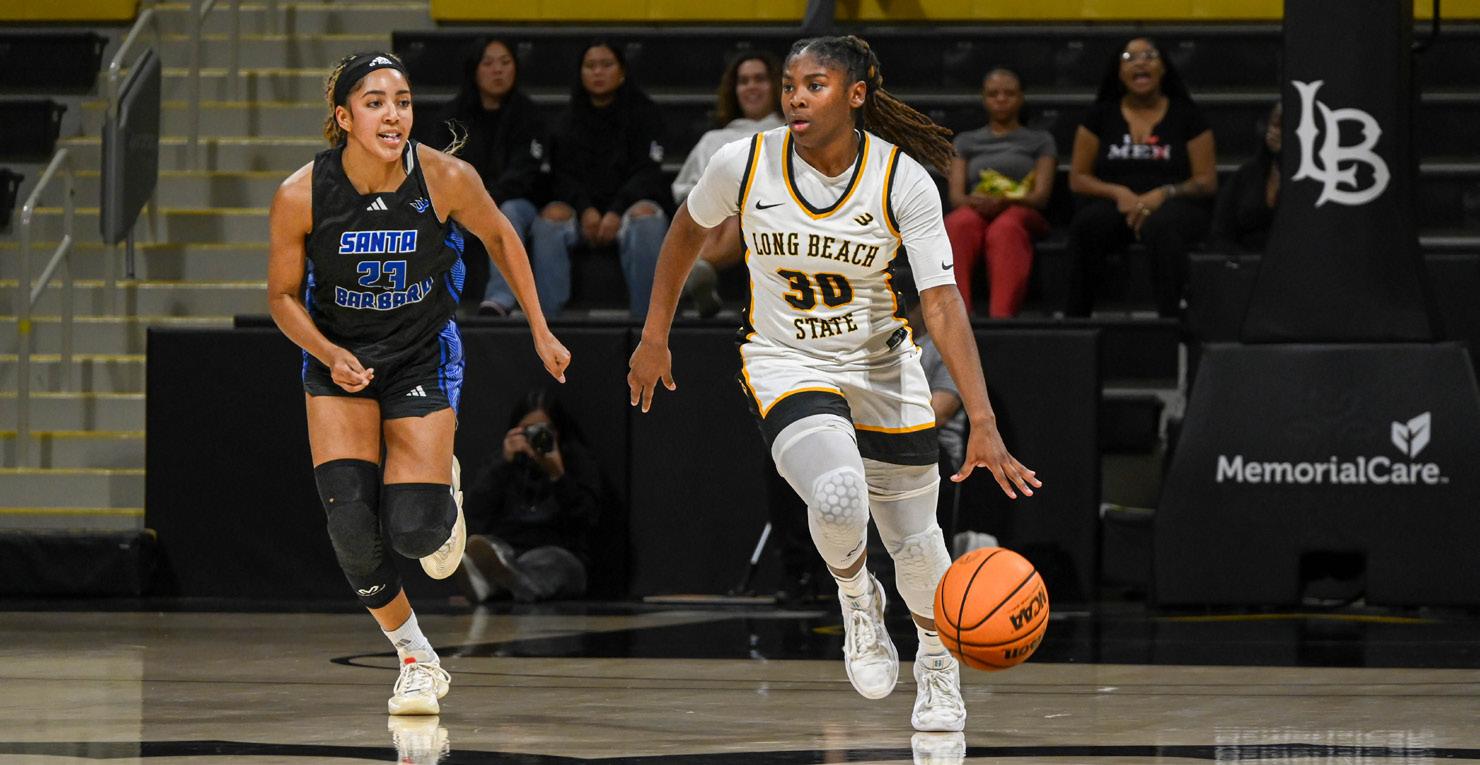
Ranked third in scoring in the Big West Conference, LBSU sophomore guard JaQuoia JonesBrown embodies heart over height. Standing at just 5-foot-6-inches tall, she is tied for the second shortest player on the Long Beach State women’s basketball team.
As a freshman, Jones-Brown averaged 7.1 points per game, never cracking 20 points, but a year later, the sophomore guard now averages 17.1 points per game with eight 20-point performances, scoring double digits in all but one game this season.
The elite scorer credits her success to her work ethic and the knowledge gained from her mentors from last year’s team, LBSU guards Savannah Tucker and Patricia Chung.
“From Pat [Patricia Chung] and Sav
[Savannah Tucker], I would see the work they put in other than in practice, so picking up on that, and then also their leadership roles that they had,” JonesBrown said.
Scoring comes easily for LBSU’s leading scorer, but Jones-Brown leads the team in rebounds as well, as she is ranked eighth in the Big West in rebounds per game at 7.2. The guard does the dirty work off the glass.
Moving from Florida to Georgia at 12 years old helped prepare Jones-Brown for collegiate play, as the “physicality and the competition” were higher in the Peach State.
West of Georgia is where JonesBrown’s inspiration grew up, Simone Biles, the most decorated Olympic gymnast in history, standing at just 4-foot8-inches tall. The guard relates to the heart over height factor in Biles.
“Even though she’s [Simone Biles] small, she’s really great at what she does,
and she doesn’t base it off her height, so
I’m kind of similar,” Jones-Brown said.
“I’m not the tallest, but I know I can have an impact in other ways.”
Jones-Brown’s impact on the game in scoring, rebounding and leadership allowed her to be recognized as Big West Women’s Basketball Player of the Week twice this season, which was a goal of hers heading into her sophomore year.
“The fact that I’ve done it twice is more than an accomplishment,” JonesBrown said.
LBSU head coach Amy Wright reflected on Jones-Brown’s successful leap from year one to two.
“She’s such a selfless teammate…she
does the unrequired work, so she’s kind of everything you want in a player,” Wright said. “She’s only a sophomore, you know, she’s a baby, so she’s got a long way to go.”
Jones-Brown reflected on what Black History Month means to her as a Black collegiate student-athlete.
“Being a Black student-athlete has taught me the importance of resilience, purpose and pride,” Jones-Brown said. “I aim to honor the legacy of Black athletes by competing with excellence and inspiring the next generation both on and off the court.”
Read the full story at lbcurrent.com.
BY TIMOTHY HESSEN Sports Editor
The storied legacy of sports at Long Beach State has produced many star athletes who have etched their names into the school record books and won championships at the collegiate and professional level.
To commemorate Black History Month, this week’s edition of Catching The Wave celebrates some of the greatest Black athletes in The Beach’s history.
Lucious Harris, men’s basketball
The leading all-time scorer in program history, Lucious Harris crafted his legacy at LBSU in 1993, when he led the 49ers to their first NCAA Tournament in 16 years. Harris was the Big West Tournament Most Valu-
able Player that season, as LBSU took home the conference crown. After concluding his collegiate career, Harris went on to have a successful decade-long career in the NBA after being drafted by the Dallas Mavericks.
Terrell Davis, football
While the football program at LBSU is no more, one of the greatest players in National Football League history once wore a Long Beach State uniform.
Terrell Davis, who was the NFL’s MVP in 1998, played for the 49ers for the final two seasons in the program’s history under head coach George Allen.
While Davis did not have the most prolific collegiate career, the sixth-round pick in 1995 blossomed quickly into a superstar in the NFL playing for the Denver Broncos.
Davis won two Super Bowls as a Bronco in 1997 and 1998, and in his MVP season, became the fourth player
in league history to ever rush for over 2,000 yards in a season.
While injuries unfortunately shortened the LBSU alumnus’ career, Davis received the pinnacle of recognition for his NFL dominance when he was inducted into the Pro Football Hall of Fame in 2017. Tara Cross-Battle, women’s volleyball
You cannot tell the story of the prestigious history of women’s volleyball at LBSU without first mentioning Tara Cross-Battle.
The back-to-back NCAA Player of the Year in 1988 and 1989, Cross-Battle led LBSU to its first NCAA Division I Championship in 1989.
By the end of her career at LBSU, Cross-Battle had recorded more kills than any man or woman in NCAA history, and her dominance sparked the dynastic run of Beach women’s volleyball in the late ’80s and ’90s.
BY BRIANNA APODACA Sports Assistant
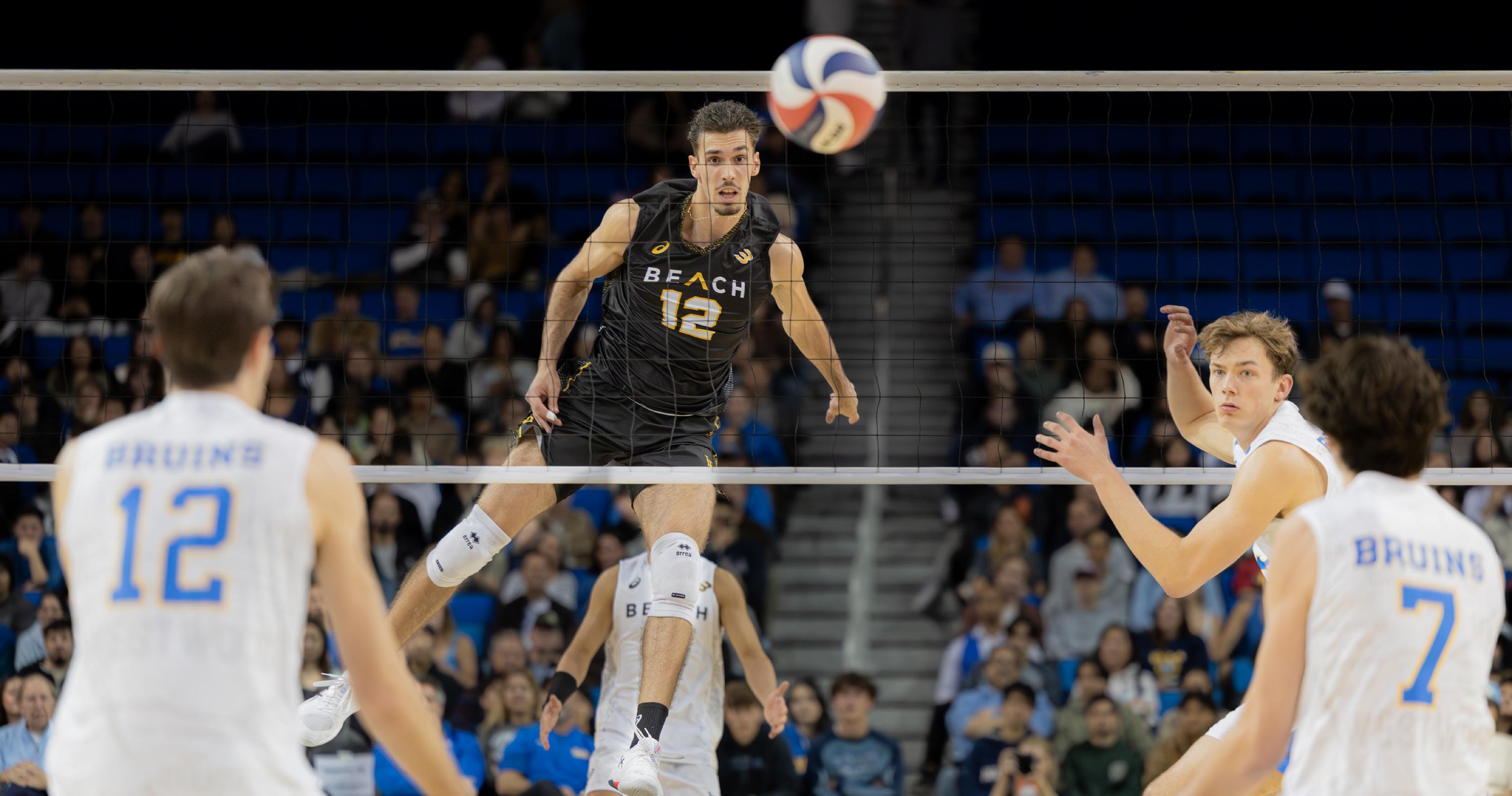
LOS ANGELES – In a back-and-forth clash between the top two teams in the nation, No. 2 Long Beach State once again fell to No. 1 UCLA 3-1 at Pauley Pavilion on Friday, Feb. 20.
UCLA (12-0) carried over the same formula from its Feb. 6 win in Long Beach, leaning on aggressive serving and a disciplined block to apply the pressure to LBSU (9-2) early on.
“We got punched in the first set. We lost by a handful and then it was lessons learned from the past,” LBSU head
coach Nick MacRae said. “The most important thing in that moment is winning the next set.”
The Beach came in undaunted from the result of their reverse sweep loss at home, as they found a good offensive rhythm and played the Bruins to the very end of the deciding third and fourth sets,
The third set proved pivotal, as the two powerhouses tied 12 times before UCLA separated to take it 27-25 and eventually end it in the fourth set.
“That’s what we train for, it’s composure and execution late and that’s what you see with a very professional volleyball team,” MacRae said. “It’s who’s gon-
na stay composed late and who’s not gonna get rattled by a set loss.”
UCLA led by a strong offensive attack, following strong serving pressure and elite middle play.
The Bruins found success at the net throughout the match, particularly in late-set situations where disciplined blocking and controlled swings made the difference. Despite The Beach ranking third in blocks per set in the nation, the Bruins outpaced them with 10.5 blocks to LBSU’s 5.5 in the UCLA victory.
Senior outside hitter Skyler Varga finished with 18 kills on a .389 hitting percentage, but his impact was more than matched by a dominant performance from UCLA senior middle blocker Cameron Thorne, who recorded 13 kills and a whopping six blocks in the victory.
Frustration with the officiating crept in for LBSU, as two calls late in the match drew visible reactions from The Beach bench, with Varga briefly speaking with the official following one sequence.
“We can control the situation by having dialogue, part of it as a head coach is ensuring that I have my guys back,” MacRae said. “If they’re passionate about it too, I will always have their back and I spoke to the ref and he was great with communicating with me afterwards.”
LBSU freshman opposite hitter Wojciech Gajek added 13 kills and eight digs, while UCLA sophomore outside hitter Sean Kelly and senior outside hitter Zach Rama recorded 13 and 12 kills, respectively.
Redshirt freshman setter Jake Pazanti dished out 46 assists as The Beach placed five players in double figures in points scored.
LBSU will look to regroup ahead of its upcoming non-conference matchups, as the start of Big West play looms ahead.
The Beach will head on the road again in their next outing, this time in Irvine against the Concordia Irvine Golden Eagles on Friday, Feb 27.