When renting didn’t work out, this CSULB student found an unconventional solution.
FROM SCRUBS TO STAGE LIGHTS
DIVIDED AT HOME
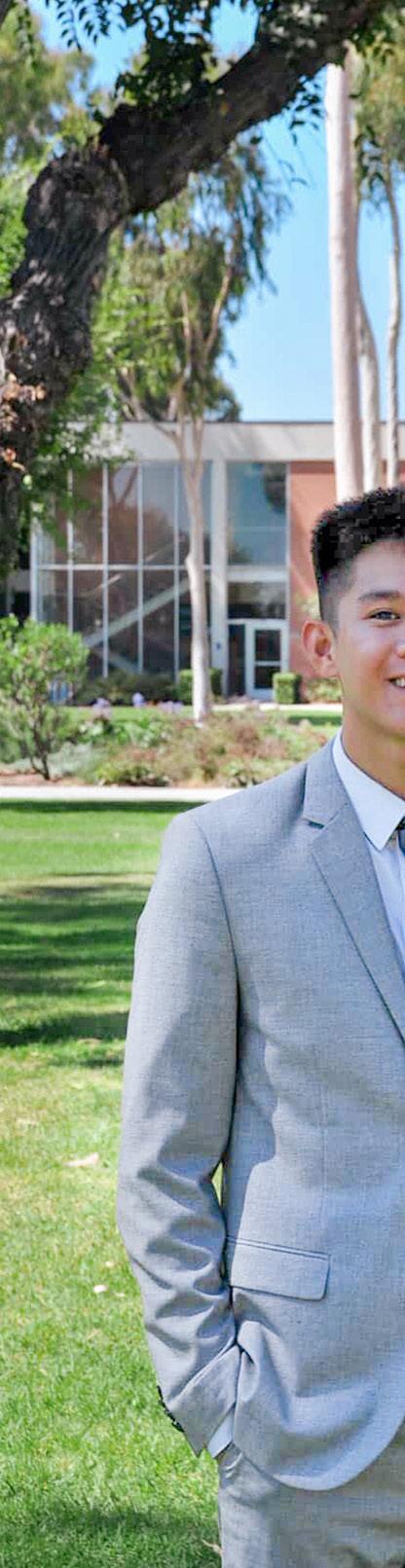
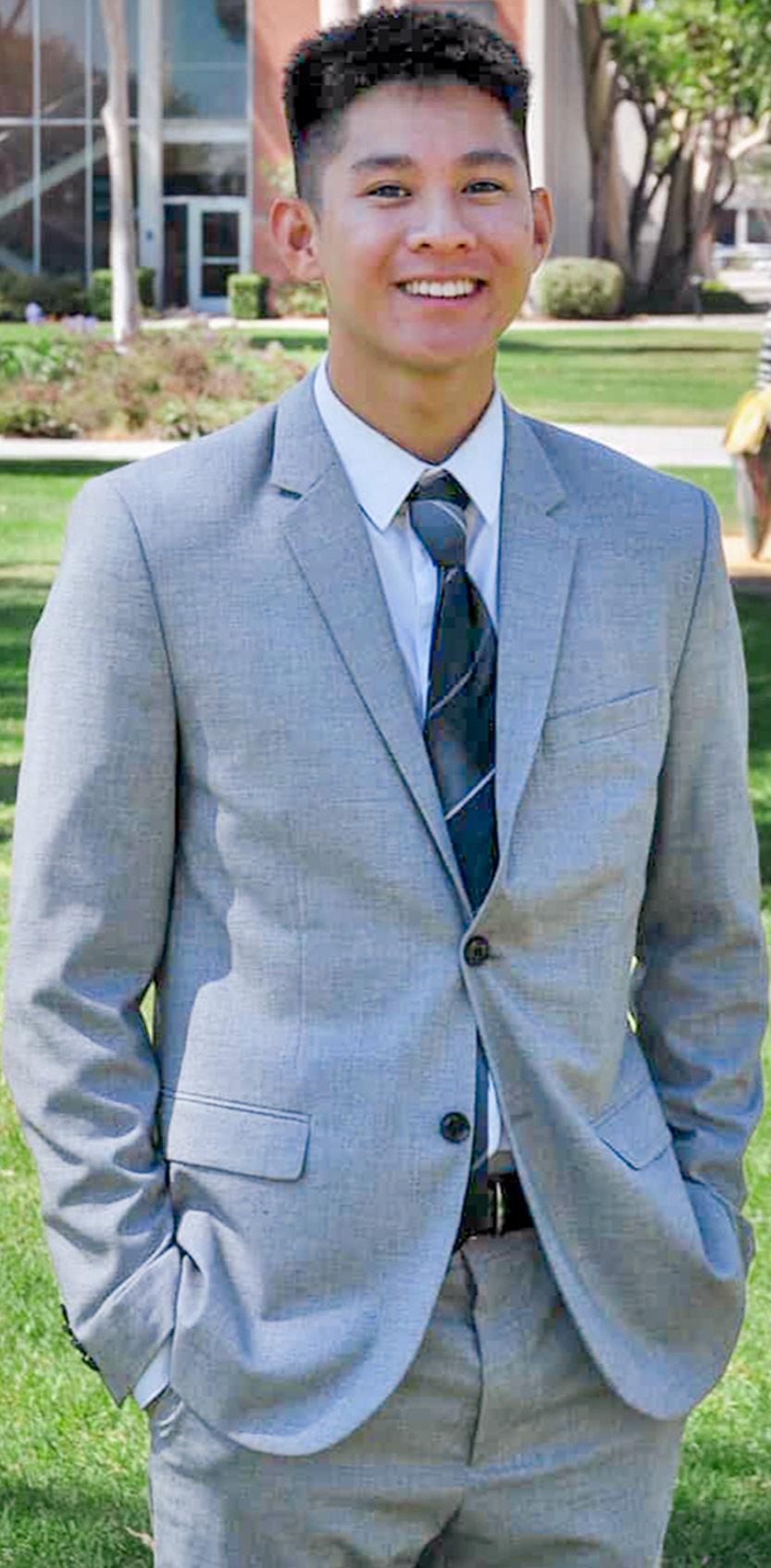
The political gap between Vietnamese-American generations.
Scan the QR code or visit lbsfcu.org/beach to get started, or come see us at our campus branch on the 2nd floor of Beach Shops.
Life in My Hotel Dorm Room
BY KC LAMPA
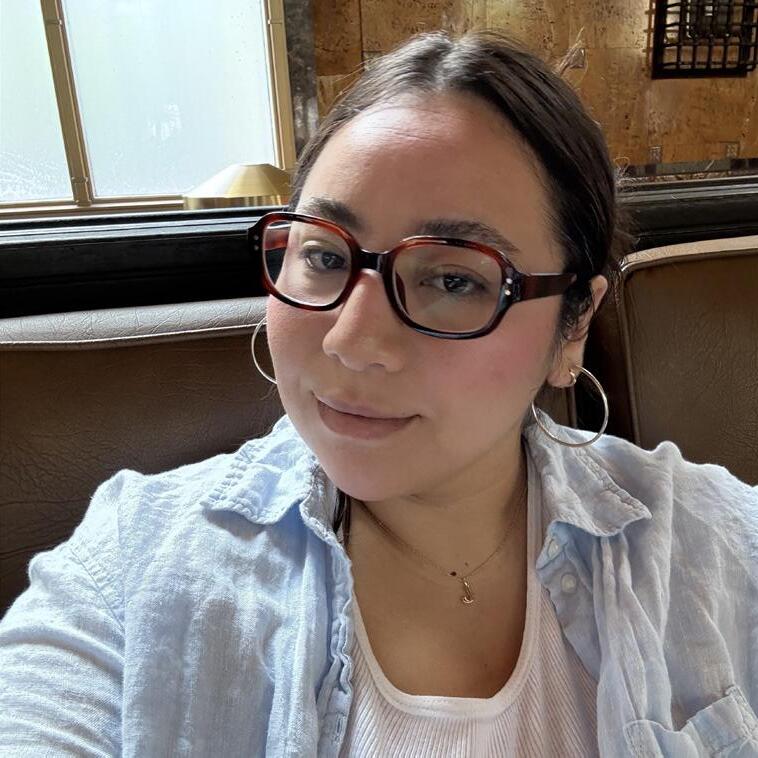
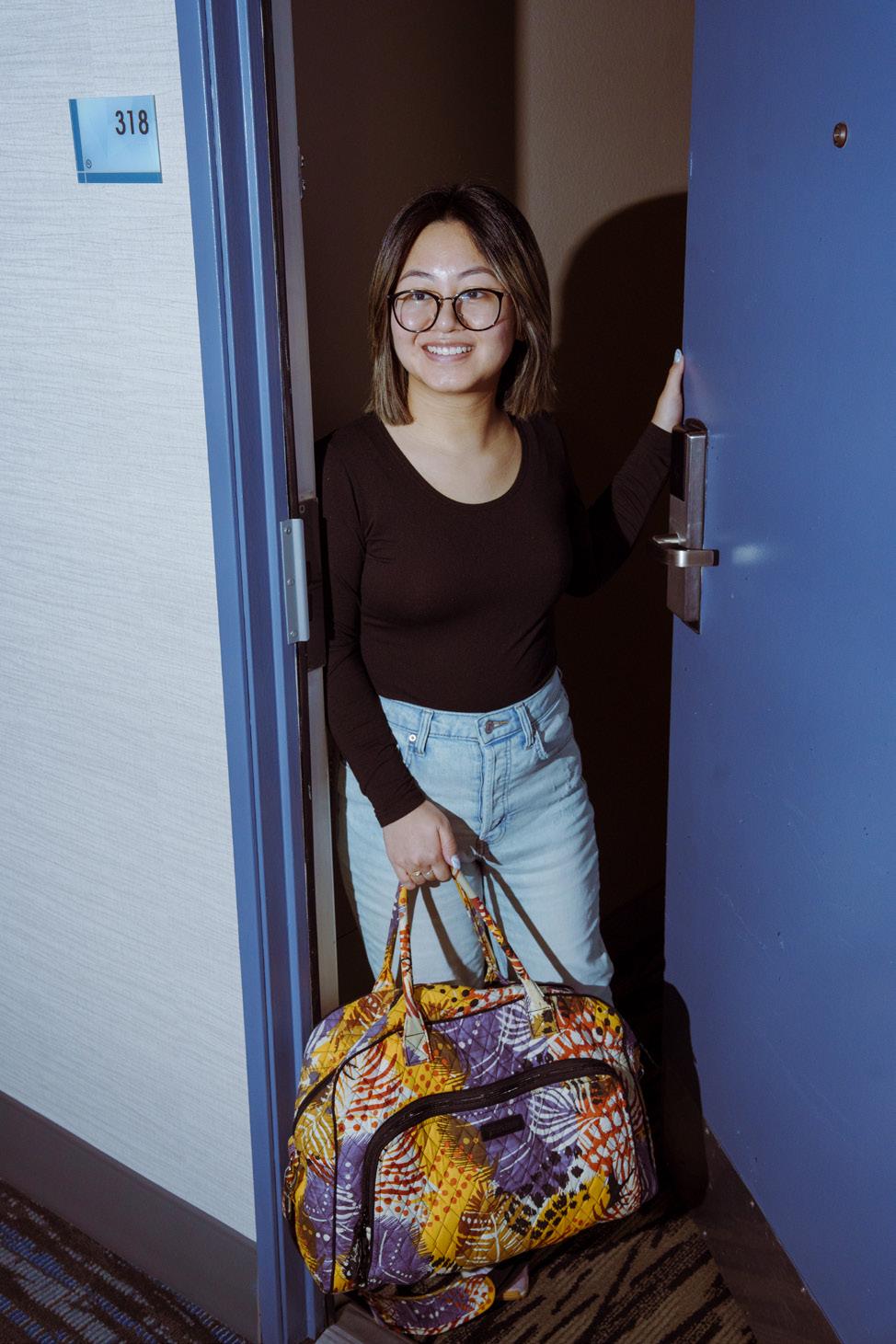
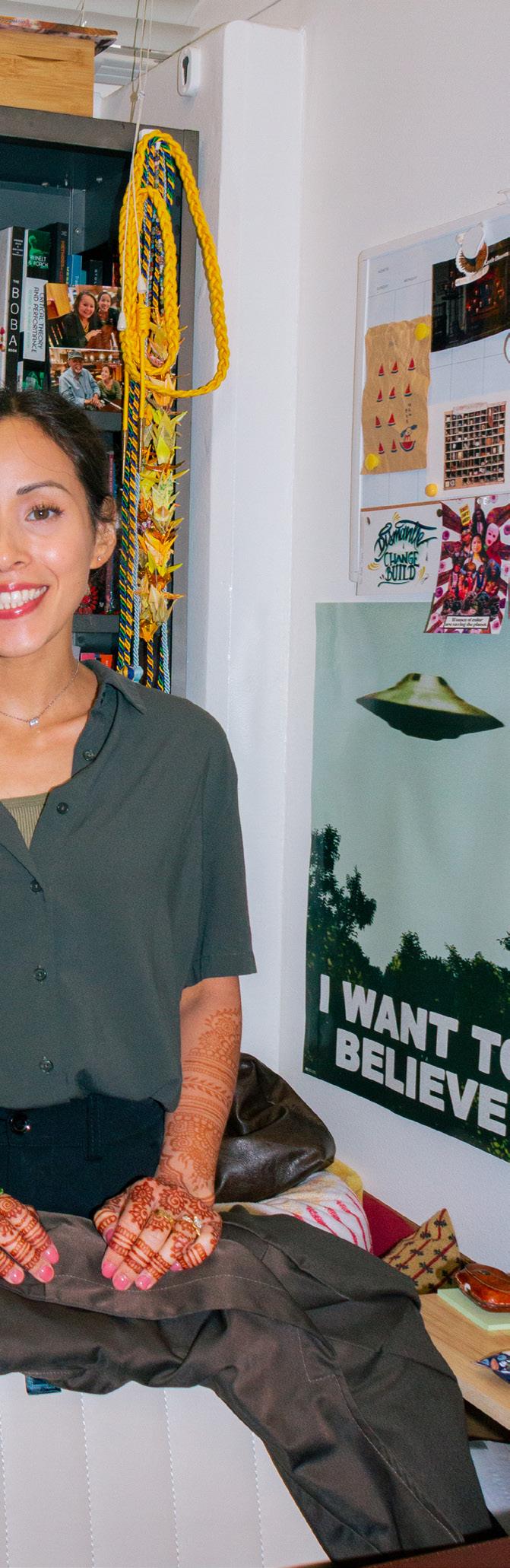
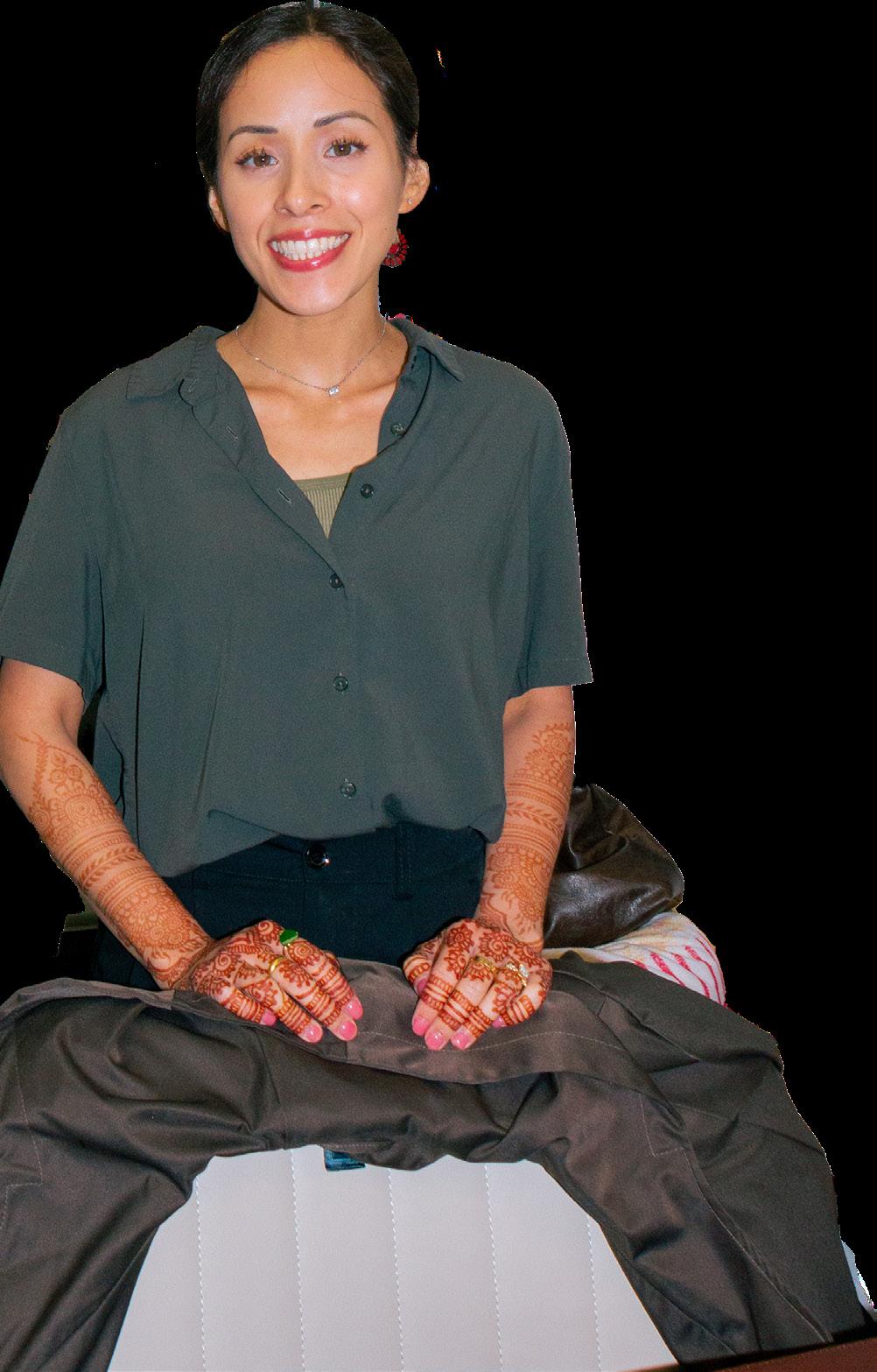
CSULB senior KC Lampa never intended to spend her college years in a hotel room, but that’s where she (happily) ended up. Now, three years into commuting between her hotel and home in Antelope Valley, she shares insights and tips about her untraditional dorm room.
The Underlying Political Tension in Vietnamese-American Homes
BY LILLIAN NGUYEN
Vietnamese-American families typically avoid tough political conversations due to unique cultural and generational differences. These differences result in a political makeup consisting of far-right grandparents, far-left grandchildren, and those caught in the middle.
A Microscopic Look at Dr. Lamar Thomas
BY NI BALINESS
Since childhood, science has fascinated CSULB assistant professor Lamar Thomas. From Jamaica to New York to Long Beach, her career has been driven by a desire to create meaningful solutions for women’s care and advocate for minority students.
Photo by Filippos Metaxas.
ABOUT US
DIG MAGAZINE is the insider’s guide to Long Beach for the CSULB community, inspiring readers to immerse themselves in the Long Beach lifestyle through in-the-know stories about the latest in food, arts, entertainment and culture; in-depth features about people and trends on the campus and in the city; poetry, fiction, and literary journalism written by students; and beautiful photography and design. Published by the Department of Journalism and Public Relations at CSULB, it is produced entirely by students.
California State University, Long Beach, 1250 Bellflower Blvd., LA-4 203, Long Beach, CA 90840-4601
ADVERTISING
Haley Lopez
advertising@gobeach.media (562) 985-8000
Photo by Diego Perez.
DEAR READER,
While doomscrolling on Instagram, I came across a post explaining why spring should be the start of the new year. After all, spring is the season of rebirth and abundance, following the harsh (and for much of human history, deadly) winter.
Maybe I’m biased from living my whole life with the new year as Jan. 1, but I think the Romans were on to something when they chose the cold and dark to celebrate new beginnings.
New years come with a lot of pressure. Resolutions, promises to ourselves, possibly some regretful reflection of the year prior. It’s … a lot. At the start of every year, I already feel like I’ve fallen behind.
But just around the corner is a season full of second chances.
Oh, sweet spring, the quieter reset. No grandiose parties or loud declarations of intent — just the gradual lengthening of sunlight and the promise of warmer tomorrows.
Spring brings relief to those who need a reason to start anew. To have a season of regeneration free of the demands of a turning number is a gift that I, for one, cherish.
In the same vein, as I was pondering the delay of nature’s rebirth cycle from our human calendar, I was reminded that even without the spring season, a new chance is always a sunrise away. Tomorrow may be better than today or it may be worse, but nevertheless it is new and full of possibilities.
May your spring be renewing and your tomorrows full of light.
Sincerely,
Nikoletta Anagnostou EDITOR-IN-CHIEF
THE LONG BEACH COOKBOOK CLUB
STORY BY MELIA FRANKS
PHOTOS COURTESY OF VANESSA MARQUEZ
In search of a friend group and community, Vanessa Marquez founded the Long Beach Cookbook Club, which has fostered friendships far beyond the kitchen.
TWENTY-NINE-YEAR-OLD Vanessa Marquez started the Long Beach Cookbook Club in early January 2025. What began as a spontaneous TikTok video evolved into the community of women she had been searching for all her life.
“I’m a pretty shy girl,” Marquez said. “When people used to ask me questions as a kid, I would look to my parents for them to answer. That’s how shy I was. I did not talk.”
Still, as an adult, Marquez was afraid to branch out and build new connections. She felt like she lacked a large friend group, and staying connected to close friends across cities and busy schedules was difficult. In January 2025, Marquez saw a TikTok of a girl starting a cookbook club in her city. From there, inspiration hit her.
“I started it with the intention of, you know, a friend group,” Marquez said. “I know that food brings people together so that was an easy intro for me. But yeah, it was never really about the cooking. Ideally, I wanted to create a space where
we could connect and support one another. I feel like women friendships are really pivotal in all our lives. It was something that I myself was craving.”
Encouraged by her New Year’s resolution to step out of her shell, Marquez filmed a similar TikTok of her own. “I was just like, ‘What the heck? Let me just do it.’ So I literally filmed a video right after watching [the TikTok], and I posted it the very next day,” she said.
She had not expected her 15-second video, which called on women in Long Beach to form a cookbook club, to reach as many as it did.
The video garnered almost 4,000 likes and 600 comments. Marquez created a Google Form so potential members could introduce themselves, and that form drew about 400 responses from women of all ages, reaching far beyond Long Beach to cities such as Montebello and Bakersfield.
“The response was so overwhelming, but in the best way,” Marquez said.
Vanessa Marquez, founder of the Long Beach Cookbook Club.
She didn’t want to leave anyone out, but with limited space and so much interest, she had to be a little selective. She encouraged people from other cities to start their own clubs, and kept the age range between 25 and 35 to facilitate lasting friendships built on relatability and shared experiences.
In the end, she put together two groups of 20 women. Still, she worried whether her 750-square-foot apartment could comfortably host everyone.
“It really took a lot of time to plan and organize,” Marquez said. “Even my fiancé was like, ‘You’re doing a lot,’ and I was like, ‘I know — I just really want it to be perfect.’”
Before hosting the first official meetup, she planned a casual coffee hangout so everyone could meet and establish a foundation for friendship.
After the successful coffee hang, she finally figured out the nuts and bolts of the club. Marquez participates in both groups, which each meet once a month, and instead of her hosting every time, the host alternates. Each month, the designated host suggests two or three possible dates. Members then vote in the group chat for the option that works best for them, and whichever date gets the most votes becomes the official meeting day.
The host also chooses the cookbook for that month and provides the location, utensils and drinks, along with selecting the recipes. Beyond that, participation is collaborative and shared among the group.
Marquez has been pleasantly surprised at all the amazing recipes she’s gotten to try, but she was even more excited by the genuine friendships and support that the club had fostered.
“It’s honestly been really, really fun,” Marquez said. “Just seeing friendships form within the group. I think at one meeting, someone hosted and had a card game … “Let’s Get Deep” or something. And honestly, it was really refreshing to have that, we all ended up in tears.”
Since then, the group has only gotten closer. “It’s just crazy,” she said. “Months ago, we didn’t even know each other, and now we’re in each other’s homes and we’re celebrating. We’re going to dinner, doing workouts together, going on birthday trips. It’s insane.”
“Months ago, we didn’t even know each other, and now we’re in each other’s homes and we’re celebrating.”
Despite being a shy child and and struggling to make new friends in early adulthood, Marquez has now cultivated the community she always dreamed of.
“Honestly, I feel like it’s one of the most rewarding things that I’ve done,” she said. “I think we all are craving that sense of community, and something as simple as food has brought us together here in Long Beach. It just really showed that leap of faith that everybody took. It’s scary meeting new people. But it’s nice to see that people can meet you halfway, and they’re ready to connect and build something as nice as this.”
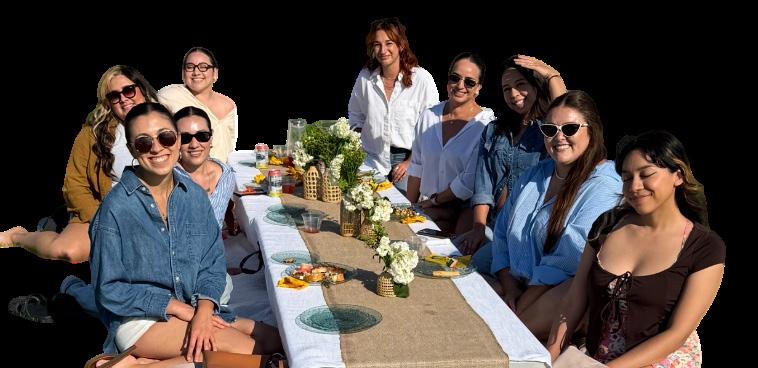
The club sometimes trades meetings at a host’s house for an outdoor picnic, like this meeting at Bluff Park in Long Beach.
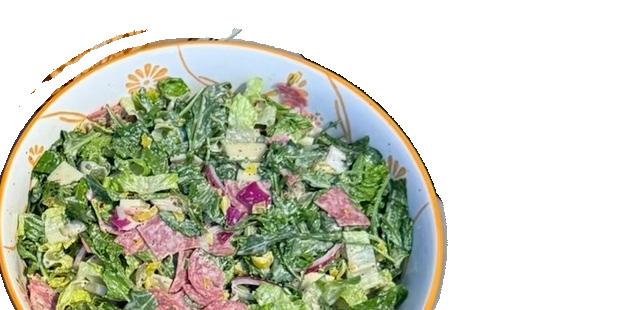
This dish and the salad below are some of the Long Beach Cookbook Club’s creations from the cookbook “Dinner Tonight” by Alex Snodgrass.
ALEC JOHNSON’S FAVORITE LONG BEACH ARCHITECTURAL STRUCTURES
STORY BY JARED CHAVEZ
PHOTOS BY FILIPPOS METAXAS
Explore the iconic landmarks and buildings of Long Beach with architect, CSULB lecturer and Long Beach Native Alec Johnson.
LONG BEACH native Alec Johnson grew up visiting museums with his father, who taught English and art history. Thus his love of design began. He began working for an architect at 18 and went on to graduate from the Southern California Institute of Architecture. Johnson has since worked on a wide range of projects and has contributed to renowned structures such as the Getty Villa in Malibu and the Greek Theatre in Los Angeles. Currently, he is a full-time lecturer at Cal State Long Beach’s Department of Design.
The following are buildings that he recognizes throughout the city of Long Beach for their creative architecture.
CASE STUDY HOUSE #25
82 Rivo Alto Canal, Long Beach
Also known as the Frank House, the Case Study House #25 was built in 1962 as part of a series of experimental homes by Arts & Architecture Magazine. The program commissioned architects to build modern housing in southern California during the suburbanization that followed World War II.
The two-story minimalist home overlooks the Rivo Alto Canal on Naples Island and was designed by architect Edward Killingsworth, who also designed much of CSULB. Stone steps lead to the 17-foot-tall front door that opens up to a courtyard surrounded by water. Walls are replaced with glass windows that create transparency to rooms on both floors of the house.
“It really internalizes the space and it captures changing sun patterns,” Johnson said. “It is one of the most iconic homes in Long Beach.”
JENNY OROPEZA ELEMENTARY SCHOOL
700 Locust Ave., Long Beach
Named after the former California State Senator of the 28th district, the Jenny Oropeza Elementary School was constructed in 1999. Located downtown, the dense area may seem like a difficult place to build a school.
However, Morphosis Architects designed the school to hold the playground on the roof of the building, reducing the amount of necessary land. Perforated metal leans inward on top of the building to provide shade from above, while also serving as a protective wall.
“From an urban standpoint, the scale blends in nicely with the urban fabric,” Johnson said. “It has this nice geometry and vocabulary that I think is conducive to learning.”
BILLIE JEAN KING MAIN LIBRARY
200 W. Broadway, Long Beach
The Long Beach Main Library dates back to 1909. The building was damaged from an earthquake in 1933 and a fire in 1972, each disaster prompting renovations. But in 2019, the renamed Billie Jean King Main Library was built in its place.
The SOM designed structure is surrounded by tall windows and heavy timber. Natural sunlight peers into the 46-foot-tall building, highlighting the wooden interior.
“Using heavy timber as a structure material is something that we’re leaning towards,” Johnson said. “It’s less environmentally impactful as steel and concrete, but it also gives warmth and a feeling of community.”
The library received Platinum certification from the Leadership in Energy and Environmental Design and won Metropolis Magazine’s Planet Positive Award in 2022.
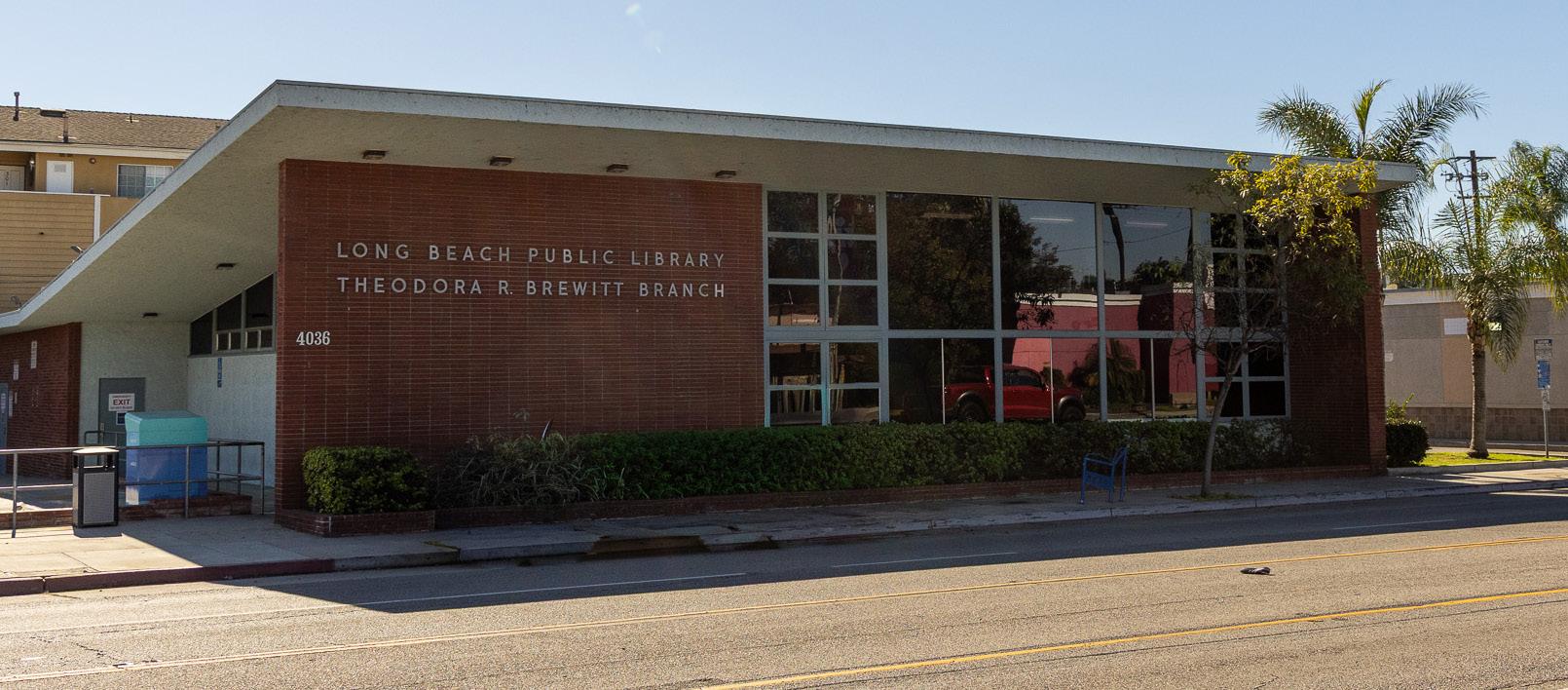
BREWITT NEIGHBORHOOD LIBRARY
4036 E. Anaheim St., Long Beach
Regarded as one of the first modern libraries in Long Beach for its time, the Brewitt Neighborhood Library was built in 1948 with brick walls in front and large windows to receive sunlight.
The mid-century modern style was new and inspiring at the time for a growing city. Initially named the East Long Beach Branch, it was renamed after the librarian Theodora Brewitt for her 29 years of working for the library.
“When you see it in its context, you can imagine it in 1948 with the old school cars and it became this very symbolic [piece] of architecture,” Johnson said.
VILLA RIVIERA
800 E. Ocean Blvd., Long Beach
This 16-story Châteauesque style structure is one of the most historic buildings in Long Beach. The Villa Riviera has towered over Ocean Boulevard since 1928, initially serving as a luxury apartment building. It was converted to a hotel during the Great Depression and U.S. Navy admirals would reside there during World War II.
The Villa Riviera holds 134 condominiums and is a landmark in the city. Its recognizable copper roof serves as an iconic memory of life in Long Beach when it was built.
“It became this really kind of cool marker of how society was changing,” Johnson said. “It’s almost symbolically Long Beach.
RN BY DAY, INDIE ARTIST BY NIGHT
STORY BY EMILY TREJO
Hannah Calimpusan is no ordinary nurse. Once her scrubs come off, she becomes Calinnah, a Long Beach-based rising artist working to make a name for herself beyond the hospital.
BY DAY, Hannah Calimpusan, 36, checks vitals and charts patient progress. By night, she becomes Calinnah — a Long Beach-based independent singersongwriter who translates her emotions into music and spends every spare minute chasing her lifelong dream.
“It’s been quite a journey,” Calimpusan said.
Calimpusan grew up in a FilipinoAmerican immigrant family surrounded by music in both her church and household. Her father was a musician; she recalls having fun musical competitions during car rides at a young age.
Her first performance on stage was in choir at age 7. Calimpusan grew up playing classical piano and dancing hiphop, which only fueled her love for music. As a young adult, she picked up guitar and began composing her own songs.
“I started composing around 19, the beginning of college, over heartbreak,” Calimpusan said. “I remember singing and performing in my room and always looking in the mirror and practicing.”
Calimpusan said everything she did growing up, from church choir, to dance, to playing piano, subconsciously prepared her for what she is doing now.
The COVID-19 pandemic changed everything for Calimpusan. She had just finished nursing school and secured a job at a hospital when she was thrown into being a frontline worker.
“That’s when my depression really set in,” Calimpusan said. “I was away from my family, who was living abroad, and the uncertainty of that time was overwhelming. A few months later, my
hospital held a singing competition. I was really hesitant to join, but coworkers — and someone I was dating at the time — encouraged me. Since it was a voting competition, [my ex-boyfriend and I] filmed and posted videos online. That experience gave me an adrenaline rush, and after that we decided to work on a project together. Once I started creating again, that momentum never left.”
The project inspired Calimpusan to pursue a career in music. She wrote a couple of songs and eventually began releasing them on Spotify, under the name Calinnah, born from the combination of her last and first name. With her music, a mix of R&B, pop and reflective ballads, Calimpusan garnered around 1,800 streams within the past year.
Calimpusansaid that herinspirationfor songwriting comes from her real, raw emotions. She channels what she feels in the moment and likened the songwriting process to journaling — just with rhymes.
“One of my favorite songs I’ve made is ‘Mistake.’ I had just come out of a toxic relationship and was fueled by that emotion,” said Calimpusan. “The lyrics came to me in about 20 minutes, which doesn’t happen often. Writing it felt freeing and was a really important emotional release for me.”
After she released several songs, Calimpusan was asked to perform at a show
Hanna Calimpusan, aka Calinnah to her musical fans.
Photo by Corbin Tyler Simms.
at a local venue called Grey LB. Since then she’s performed all around the Long Beach area. Her rising career as an artist, however, hasn’t deterred her from her job as a nurse. Today, she works as a preop nurse.
Juggling between her day job and her music isn’t easy. Calimpusan is always managing whatever time she has left after her shifts to allocate for her artistry. She also collaborates with other artists to achieve her goals.
“Now, because I work full-time as a nurse, I usually collaborate with producers and musicians,” Calimpusan said. “They handle most of the production, while I focus on lyrics and melodies. Over time, I’ve learned how powerful collaboration is … I really don’t think that any of this can be possible just doing it alone. It really takes like a whole village to help you.”
She said that eventually, she’d love to experiment with producing her own music and becoming a one-woman show.
“The goal is to do less nursing,” Calimpusan said. “It is very rewarding to take care of others, but what’s even harder is to remember to take care of yourself and what you really want to do in your life. I do picture myself as an artist and I don’t think long term I could do both at the same rate.”
In addition to being a nurse and artist, Calimpusan has explored other creative endeavors.
In May 2025, Calimpusan launched a podcast called “Cozy with Calinnah,” to highlight creatives and entrepreneurs and talk about her own experiences. Since then, she’s produced over 50 episodes, and she hopes to grow the podcast alongside her music.
Additionally, her Instagram account, @calinnah, currently has over 10,000 followers. She posts about her music journey, her podcast, and makes comedic skits about being a nurse.
This past September, Calimpusan experienced an especially moving moment while performing at Garden Grove’s Garden Amphitheater, when the crowd’s support reaffirmed her decision to chase herdream despite the challenges.
“For the first time I felt a sense of being in my community,” she said.
“I really don’t think that any of this can be possible just doing it alone. It really takes like a
“So when I was finally on stage and there were people who were supporting me it was definitely a moving performance where I felt like, ‘This is why I do what I do.’”
Hannah Calimpusan (center) performs with dancers Camie Gutierrez (left) and Reina Lalisan (right) at The Constellation Room in Santa Ana, California. Photo by Carlos Garcia.
Calimpusan poses during the photoshoot for her song, “Whatcha Wanna Do With Me?”
Photo by Cesar Romero.
BEST BEAUTY BANG FOR YOUR BUCK
Certified makeup artist Stephanie McCallum shares her favorite high-performance makeup products that make the most of a college budget.
MAKEUP ARTIST and Long Beach native Stephanie McCallum, aka @glamsbystephenny, first got into makeup while working at a Macy’s jewelry counter in 2015. She’d go over to the adjacent makeup counters with many questions, eager to learn how to apply her own makeup. After she got her answers (and a little bit of practice), she quickly began receiving compliments from friends and customers who sometimes asked her to do their makeup, and she’s been doing makeup ever since.
In 2021, McCallum became a certified makeup artist. She currently works out of her home studio in Lakewood and also travels to clients throughout Long Beach and surrounding areas.
Specializing in soft glam for special events — and even dabbling in special effects — McCallum has worked with countless brands across many price ranges, and she believes that anyone can achieve their desired look within their budget.
“A lot of people say ‘Drugstore can’t do what the more expensive products can do,’ which is false. There are many expensive products that can’t do what drugstore products can do. I don’t feel like the price makes the product. I’ve done a full face, half with drugstore, half with expensive and it looked the exact same. It lasted the same throughout the day. It’s really all about how you apply everything.”
Makeup artist Stephanie McCallum showcases bold and intricate makeup looks on her personal Instagram account @makeupbystephenny. Photo courtesy of Stephanie McCallum.
For A Glowing Base: e.l.f. Halo Glow Liquid Filter $15 at Ulta Beauty
Largely regarded online as a dupe for Charlotte Tillbury’s Hollywood Flawless Filter, the e.l.f. Cosmetics Halo Glow Liquid Filter is McCallum’s No. 1 recommendation for a skin-like finish that boosts your complexion.
“I love the [product’s] natural glow,” McCallum said. “It just enhances your natural skin. It doesn’t do too much — it has good coverage because it’s buildable. It has a natural finish that blends really well. I’ve tried it with different concealers and primers. It works really well.”
McCallum recommends putting the foundation on top of the e.l.f. Cosmetics Power Grip Primer with Niacinamide and using a foundation brush to blend it in. She mostly uses brushes from Real Techniques, an affordable line available at Ulta Beauty. For those wanting a more traditional foundation and expanded shade range, she recommends the Maybelline Fit Me Foundation, which retails at Ulta Beauty for $11.99 and comes in dewy and matte formulas.
STORY AND PRODUCT PHOTOS BY NIKOLETTA ANAGNOSTOU
For the Perfect Pout: NYX
Professional Makeup Slim Lip Pencil and Butter Gloss
$15
at Ulta Beauty
McCallum’s go-to affordable lip combo costs only $12 and blends together beautifully. She wears the NYX Slim Lip Pencil in shade Brown and the NYX Butter Gloss in shade Sugar High, which she said works on many skin tones.
“My favorite affordable brand [for lips] is NYX,” McCallum said. “I probably have NYX Butter Gloss in almost every color. I’m wearing Sugar High, and I just go over with any clear gloss [for added shine].”
Unlike many other lip glosses, McCallum said that the NYX Buttergloss isn’t sticky and doesn’t run if too much is applied. With 28 shades in the Slim Lip Pencil and 32 shades in the Butter Gloss, you can mix and match to create your perfect lip combo.
For Defined Brows: Morphe Definer
Dual-Ended Brow Pencil & Spoolie
$11
at Ulta Beauty
Choosing the right brow products out of hundreds of brow pencils, powders and pomades can be daunting — and expensive. Fear not, because McCallum’s recommendation — Morphe’s Dual-Ended Brow Pencil and Spoolie — is affordable and draws on smoothly.
The Morphe Brow Pencil lasts throughout the day, especially when applying a brow gel on top,” McCallum said. “I like to use the Ulta brand brow gel. Even without the brow gel, [the pencil] still lasts.
McCallum said she especially loves the pencil’s angled applicator for easy and precise application. When applying any pencil, she suggests going in with a light hand and building up the product to prevent harsh-looking brows.
For Eyes that Pop: wet n wild Mega Length Mascara
$3.29 at Target
Getting beautiful, long lashes is cheaper than your morning latte. wet n wild’s Mega Length Mascara — a whopping $3.29 — is one of McCallum’s favorite affordable mascaras for its small bristles, staying power and price point.
“The bristles are tiny … and I like how the bristles grab each lash when applying as it helps lengthen your natural lashes; this mascara grabs almost every lash on my bottom line,” McCallum said. “I’m a sweater. Sometimes my eyes tear, I don’t really see it run.”
To complement your mascara, McCallum suggests applying whatever bronzer you already own across your eyelids; the added warmth creates some natural dimension and glow.
For a Vibrant Flush: Juvia’s Place
Blushed Duo Blush
$20 at Ulta Beauty
For an affordable powder blush that doesn’t compromise on quality, McCallum recommends Juvia’s Place Blushed Duo Blush. While the $20 price point may seem higher at first, the compact includes two generously sized shades. McCallum said the high pigment payoff and the smooth, non-patchy finish make it a standout budget buy.
“I really like how they lay on the face and the different shade ranges — you can play with them,” McCallum said. “I don’t feel like you have to really build it. It’s easy to use. If you go in with a couple strokes, you have blush!”
At the same time, because the blushes are so pigmented, McCallum suggests dusting your brush with a hand or tissue before going on your face for an even and buildable application.
To make commuting to CSULB a little easier, I’ve saved money and time by staying in hotels during the school week. Here’s how it happened and how I make a hotel room my own.
WHEN I wake up, the first thing I do is contemplate whether or not I actually want to go to class in the morning. Oftentimes, the answer is, “No, I don’t want to, but I should.” And so I drag myself out of bed, get ready, and go.
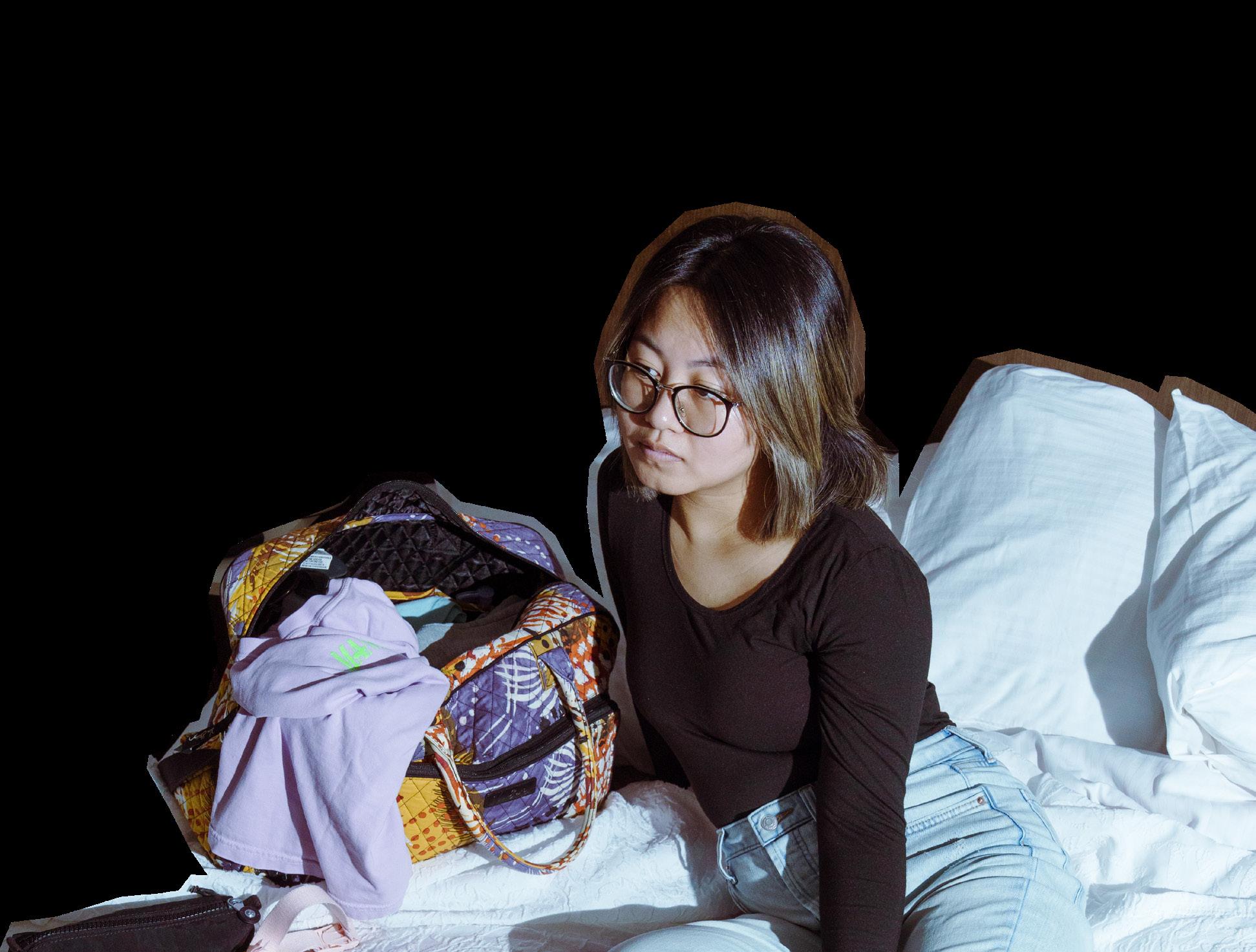
But the bed is never actually my own. It’s mine in the sense that I sleep in it, and I pay for it, but it doesn’t belong to me. It belongs to a hotel.
In my first year of college, I had a mostly “standard” experience. I stayed in a dorm room, ate meals from the dining hall, and went to class enough to not risk getting dropped. In general, I kept to myself.
I didn’t talk to my roommate much — not because I didn’t like them, but because I was too nervous to say the wrong thing and make our first year awkward. I never made any friends, which never bothered me because I had friends from other schools that I talked to all the time.
I walked to and from class alone; if there was a game or event, I had nobody to go with. When a new semester started, I didn’t have anyone to schedule my classes with.
While I’ve never minded that, it did make being here a little lonely sometimes. Most importantly, it meant I didn’t have anyone to share a place with if I didn’t get a dorm for my second year — and that’s exactly what happened.
Without someone to split rent with, I had to find another arrangement. While commuting was an option, a traffic-heavy, five to seven-hour commute round-trip from Antelope Valley wasn’t optimal.
STORY BY KC LAMPA
PHOTOS BY DIEGO PEREZ
During summer 2023, I spent every day frantically searching for places to live. I looked all over Long Beach, Lakewood, Signal Hill and Cerritos, turning up empty-handed almost every time. Any time I did find a place that looked nice, it was either out of budget or unavailable to rent. I also looked for potential roommates on social media, but they often had roommates already or were committing to places that wouldn’t work for me.
For lack of a better word, I was stumped.
KC Lampa at Best Western Los Alamitos Inn & Suites.
My mother suggested I look into local hotels to see if I could stay somewhere short-term while I looked for an apartment.
That’s when we came upon Golden Sails Hotel, which was less than 10 minutes from CSULB and offered a very affordable price specifically for students looking to stay there.
We scheduled a short stay, and the plan was set. I would live in a hotel until I found a more permanent solution.
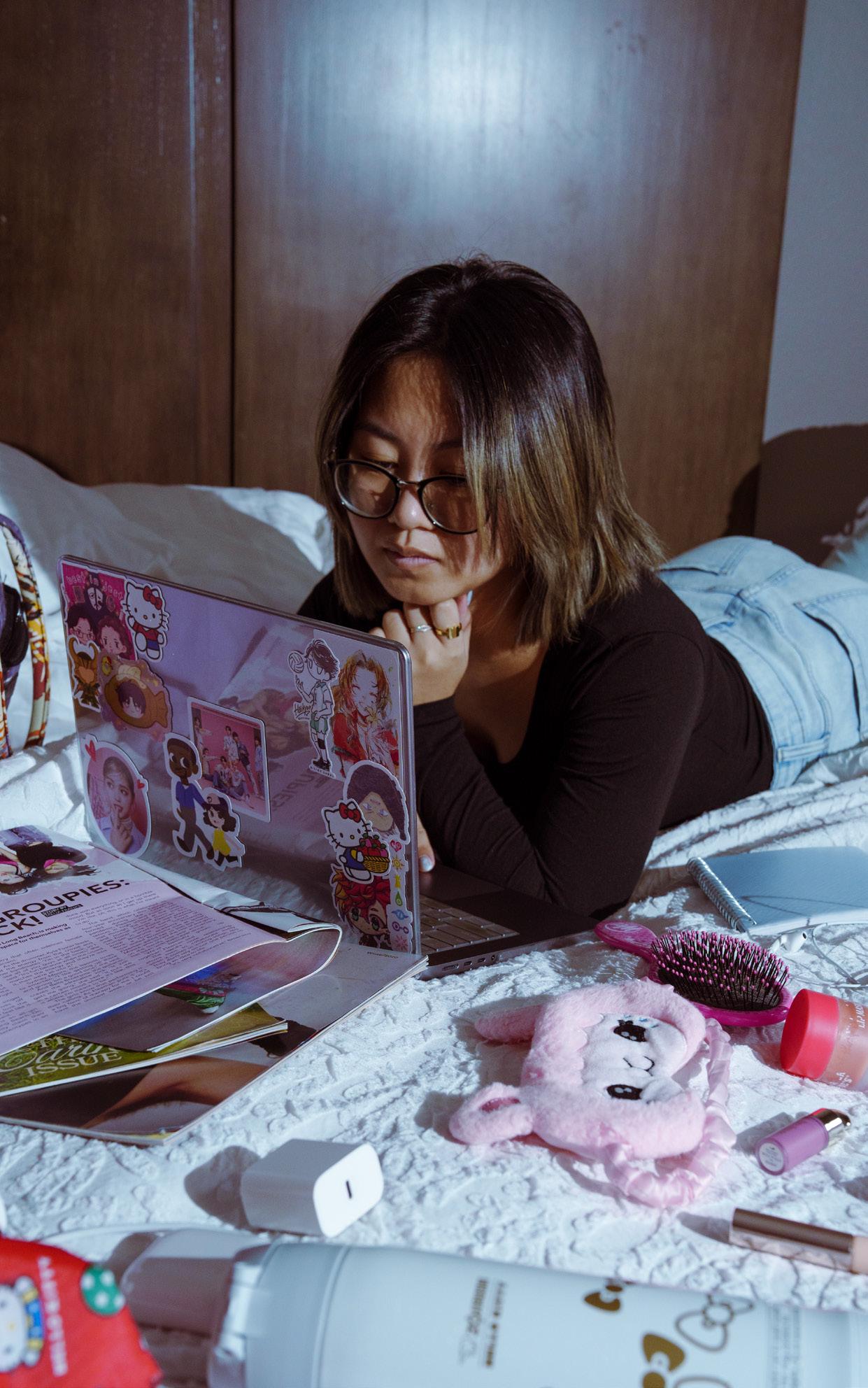
At the hotel, my routine for the next two years quickly fell into place. I drove from the Antelope Valley to Long Beach the night before my first class, checked into the hotel, then went to class the next day. Once I was done, I went out and got food, then returned to the hotel. There, I ate, showered, slept, did homework and played video games. When I finished with classes for the week, I drove home. There, I did my laundry, relaxed, did more homework, packed for the week, and repeated the cycle all over again. Some semesters, I only needed to stay two nights a week, and others I stayed four nights a week, and these nights in the week weren’t always consecutive either.
Now, in my last semester of college, my routine has hardly changed. I still haven’t found a suitable permanent living space in the Long Beach area. But hotel living hasn’t let me down yet.
What began out of necessity turned into a smart personal and financial decision. Most of the apartments I saw available cost over $2,000 a month, excluding utilities, internet, parking, furniture and more. Most apartments also required a 12-month lease, though I wanted to be home during the breaks, which amounted to about four months of the year. With this hotel arrangement, my commute has only been around four hours maximum per week, and I always came back from classes to a clean room.
This November, the Golden Sails permanently closed, and since then, I’ve been bouncing between a couple different ones, including the Best Western Los Alamitos Inn & Suites. This hotel offers students lodging rates starting at $124 a night, which is more than the Golden Sails was, but still an affordable option for my family compared to an apartment.
“I still haven’t found a suitable apartment living space in the Long Beach area. But hotel living hasn’t let me down yet.”
I’m not the only one in my family that benefits from my long-term hotel residence. When my brother works near the area, he often stays with me instead of getting home late. And when my friends come to visit, they stay with me and leave the next morning.
I won’t lie and say that it’s perfect, though. I would love nothing more than to have an apartment filled with my own decor, where I can make homemade meals any time I like.
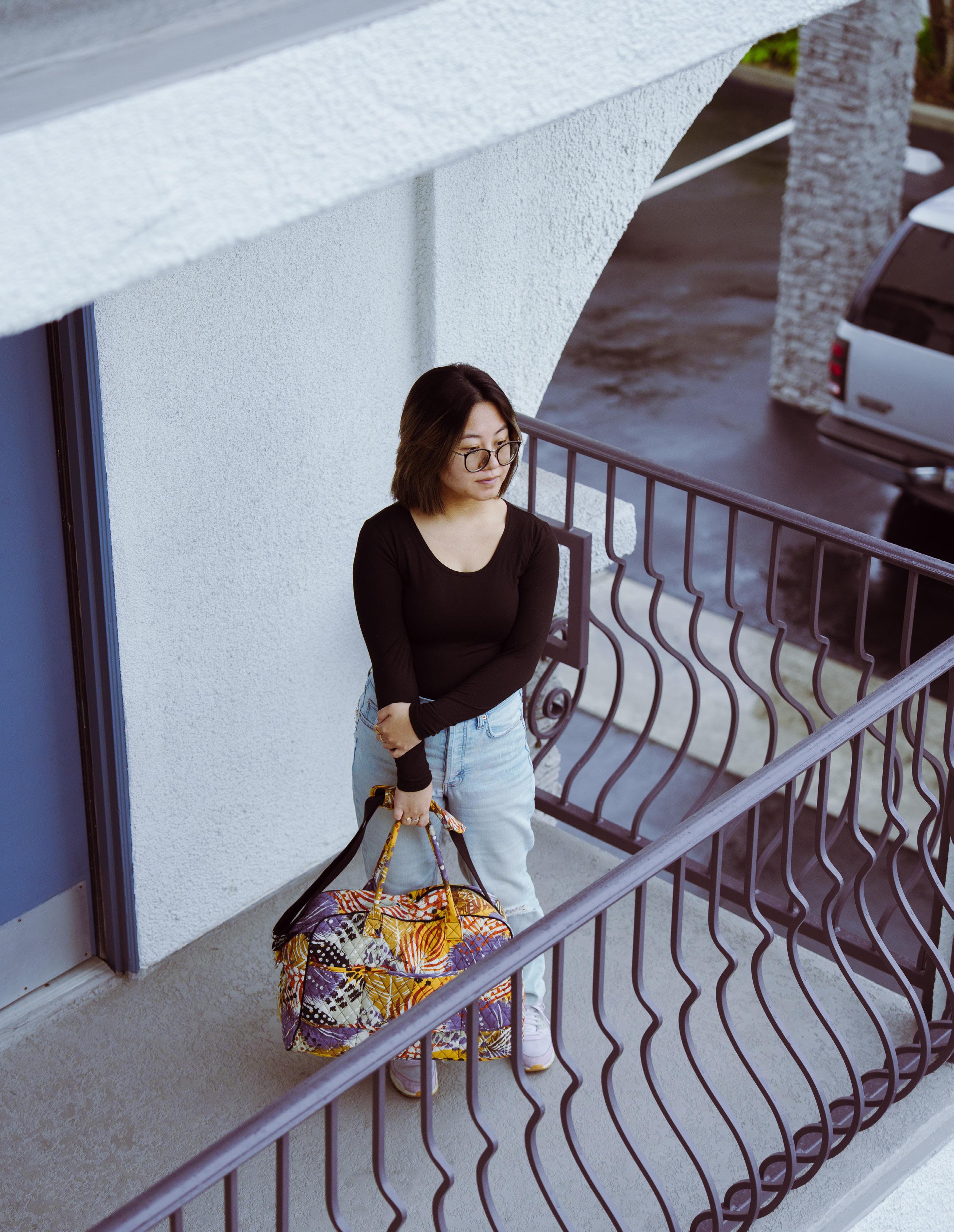
Pictured here is all the stuff I bring for my hotel stays: a duffel bag, backpack and toiletries bag.
I would love to be able to come home every night to a place that is truly, genuinely mine.
But that doesn’t mean I hate it. I have actually grown somewhat fond of the system that allows me to live in Long Beach and visit home as often as possible.
I’ve had the chance to explore Long Beach, and I’ve found many delicious local restaurants and started learning my way around without a GPS.
A lot of this I have done by myself. Going out alone was never something I was given the opportunity to do in my family, so gaining this sense of freedom while still being able to visit my dogs and my parents back home is something this setup has given me that I’m grateful for.
I’ve also been forced to get out of my comfort zone living like this. When I check in, I’m the one who signs forms and pays. If I have issues in the room, I’m the one who has to call the front desk and sort it out. When there’s somewhere I want to go, I’m the one driving there and making the purchases. I’m always moving and discovering, so I’m also growing all the time
Staying in a hotel can be a more affordable option, especially if you’re a long-distance commuter like me. Just treat the space and people with the same respect you’d treat your own things and yourself, and you’ll thrive.
“The bed is never my own … It belongs to a hotel.”
Best Western Los Alamitos Inn & Suites
Illustration by Damien Herrera
A glimpse into one of the rooms at the Best Western Los Alamitos Inn & Suites. The hotel offers student room rates starting at $124 a night and is only a 10-to-15-minute drive from campus (room pictured is not available for student room rates).
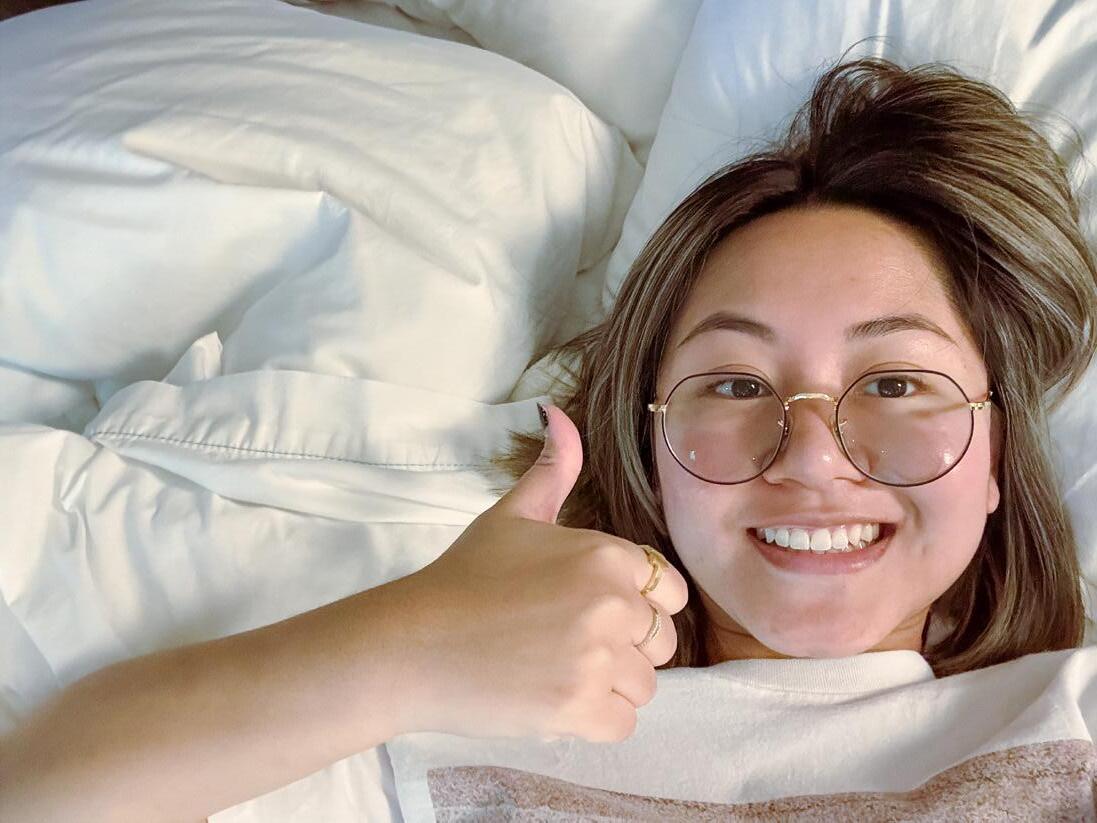
Here I am at my former hotel home, Golden Sails Hotel.
Photo courtesy of KC Lampa.
HOTEL DORMING TIPS
TIP ONE: BATHROOM PRODUCTS
Get your own bathroom supplies, such as body wash, shampoo and conditioner, if you have the money to spare. While it’s completely fine to use supplies provided by the hotel, your own hygiene products will help give a sense of comfort and make the room feel like your own.
TIP TWO: BYO PILLOWS
Bring your own pillows and blankets to help the room feel more homey and improve your sleep. If a hotel bed isn’t as comfortable as the one you have at home, decorating your bed with your favorite blanket and sleeping on your own pillow can make all the difference.
TIP THREE: CLEANING SUPPLIES
Have some cleaning supplies of your own, even if it is just Lysol wipes, rubbing alcohol, and paper towels. After all, for the duration of your stay, the room is your space, and keeping it clean can help you feel more comfortable and more at home.
THE UNDERLYING POLITICAL TENSION IN VIETNAMESEAMERICAN HOMES
STORY BY LILLIAN NGUYEN
Local Vietnamese-Americans face the political and cultural divide that has grown between different generations of family members.
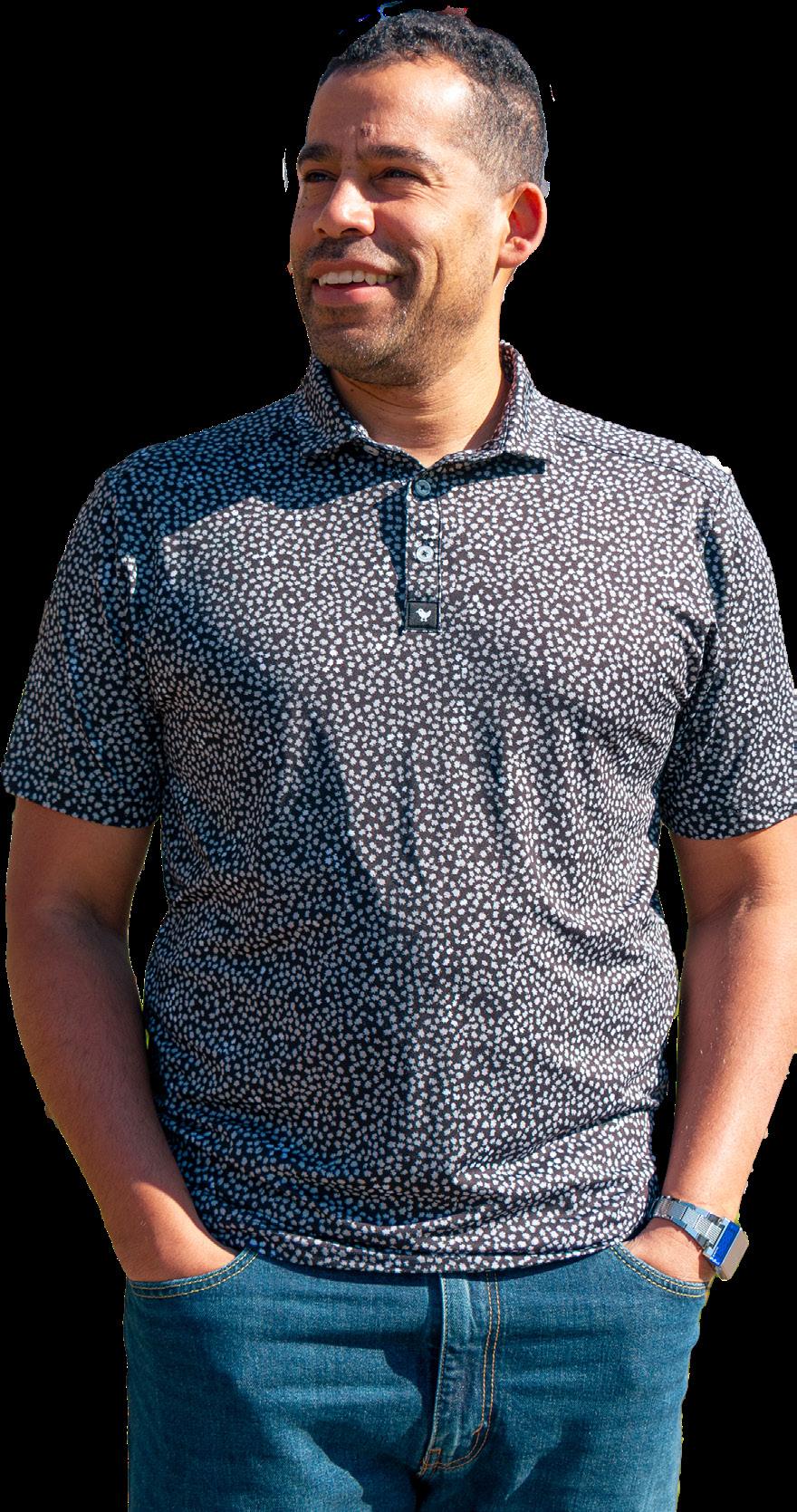
ALTHOUGH 20-year-old Cal State Long Beach accounting major Tyler Luong identifies as mildly conservative, he never wants to talk about politics with his fellow conservative uncle, who is one of the most important members of Luong’s extended family.
“We’ll come over to his house from time to time and he’ll have Fox News on a lot,” Luong said. “[My parents] try to avoid speaking politics with him because he’s very aggressive ... He’ll always manage to bring in something political in [the] conservation.”
During one of their recent family events, Luong’s uncle suddenly started talking about the right to bear arms for self-defense.
In response, Luong told him the rise of school shootings warrants stricter gun laws, thus leading to them having a heated argument about the Second Amendment.
“I was trying to argue that school shootings and stuff — all the deaths that have been occurring due to guns — [prove] it’s not worth it to keep the Second Amendment as it is and there should be so much more moderation on … background checks [and] psychology tests, ” Luong said. “And then he disagreed obviously, so we went back and forth.”
Though the argument was volatile, Luong said his moderateleaning/apolitical parents continue to
include his uncle in family events, sharing that they did not intervene during the argument in fear of ruining family relations. Since then, Luong avoids talking about politics during family events and keeps political discussions brief with his parents. Additionally, he believes his parents’ and his differing devotion to Catholicism contributes to their lack of political conversations.
“My mom is a little more religious than my dad, but dad isn’t that religious,” he said. “I think as I grew in my faith, I started to obtain a more conservative ideology and that was the result of reading scripture and following the Church’s teachings. So, I would say my politics are very much founded upon my religion.”
Luong is also hesitant to talk about politics with his three younger siblings, the youngest one being 11-years-old, thus he resorts to his conservative male friends instead.
Luong’s family is one example of a larger trend amongst the country’s two political parties, their supporters and everyone in-between. This tension is especially present in VietnameseAmerican households across California, which is home to the largest population of Vietnamese-Americans in the United States. However, due to a mix of cultural and generational differences, this tension remains largely unexplored.
Compared to other Asian-American populations, Vietnamese-Americans
Photo courtesy of Tyler Luong.
Ann Thuy-Ling Tran in her office.
Photo by Kimberly Wong.
are political outliers. According to a Pew Research Survey from May 2024, Vietnamese-Americans are more likely to be conservative than other AsianAmerican groups. Matthew Lesenyie, a CSULB assistant professor of political science, said this statistic derives from anticommunism sentiment, which is especially common amongst older VietnameseAmericans. As such, they tend to associate U.S. Democratic policies with those of Vietnam’s communist government, which has historically suppressed dissent.
Lesenyie said that Vietnamese voters who immigrated to the U.S. before 1990 are likely to view American politics through the
lens of Vietnam’s communist history. Because of this, he said that political campaigns for Republican candidates are often successful among first-generation Vietnamese immigrant voters because Republicans employ anti-communist rhetoric against their Democratic opponents.
“That is their framework for understanding where the parties stand,” said Lesenyie. “It is easy [for conservatives] to pander to [Vietnamese immigrants] by using those political … references because they may not know much, or they may know a lot. But, what they do know is that they don’t want a certain version of Vietnamese politics here.”
This is most evident in the city of Westminster, which contains one of the biggest populations of Vietnamese immigrants.
“I reference Westminster constantly in my Race and Ethnic Politics class,” Lesenyie said. “Just right here, at the border of Orange County, is a really interesting sort-of political lap. There’s a real cleavage between firstgeneration immigrants, particularly those who were relocated following the Vietnam War, second- and now, third-generation immigrants that are grandchildren of those original re-settlers.”
According to a 2025 AAPI Policy Priorities Survey, a large majority of AsianAmericans and Pacific Islanders view the current Trump administration and Supreme Court unfavorably. This majority includes younger Vietnamese-Americans, who are more likely to have more progressive opinions than their older counterparts on topics such as healthcare, education and immigration.
“Research has shown that younger generations of Vietnamese-Americans … tend to vote more democratic, ” said Ann Thuy-Ling Tran, CSULB assistant professor of Asian-American Studies/Asian Studies. “We’re much more open to democraticleaning issues or policy level issues affecting our communities rather than [those issues] being symbolic or anti-communist, [like] amongst the older Vietnamese generations.”
Matthew Lesenyie.
by Kimberly Wong.
Photo
Tran cited that VietnameseAmericans have a 60-to-70% voter turnout, which also indicates a significant amount of apolitical or swing voters. She said this demographic of moderate voters manifests from intergenerational trauma and the lack of awareness for certain policies on welfare, job and social security and SNAP benefits. Tran highlighted that grassroots work such as door-to-door canvassing is essential for spreading awareness of local politics.
“Not just youth advocacy groups, but community organizing groups are [also] trying to tell us that outside of our bipartisanism, we have to understand that these policies affect us,” Ann Thuy-Ling Tran said. “I think that it is a very strategic and very smart way of approaching local politics and offering a more critical perspective of these things by saying — ‘This is policy and this affects us.’”
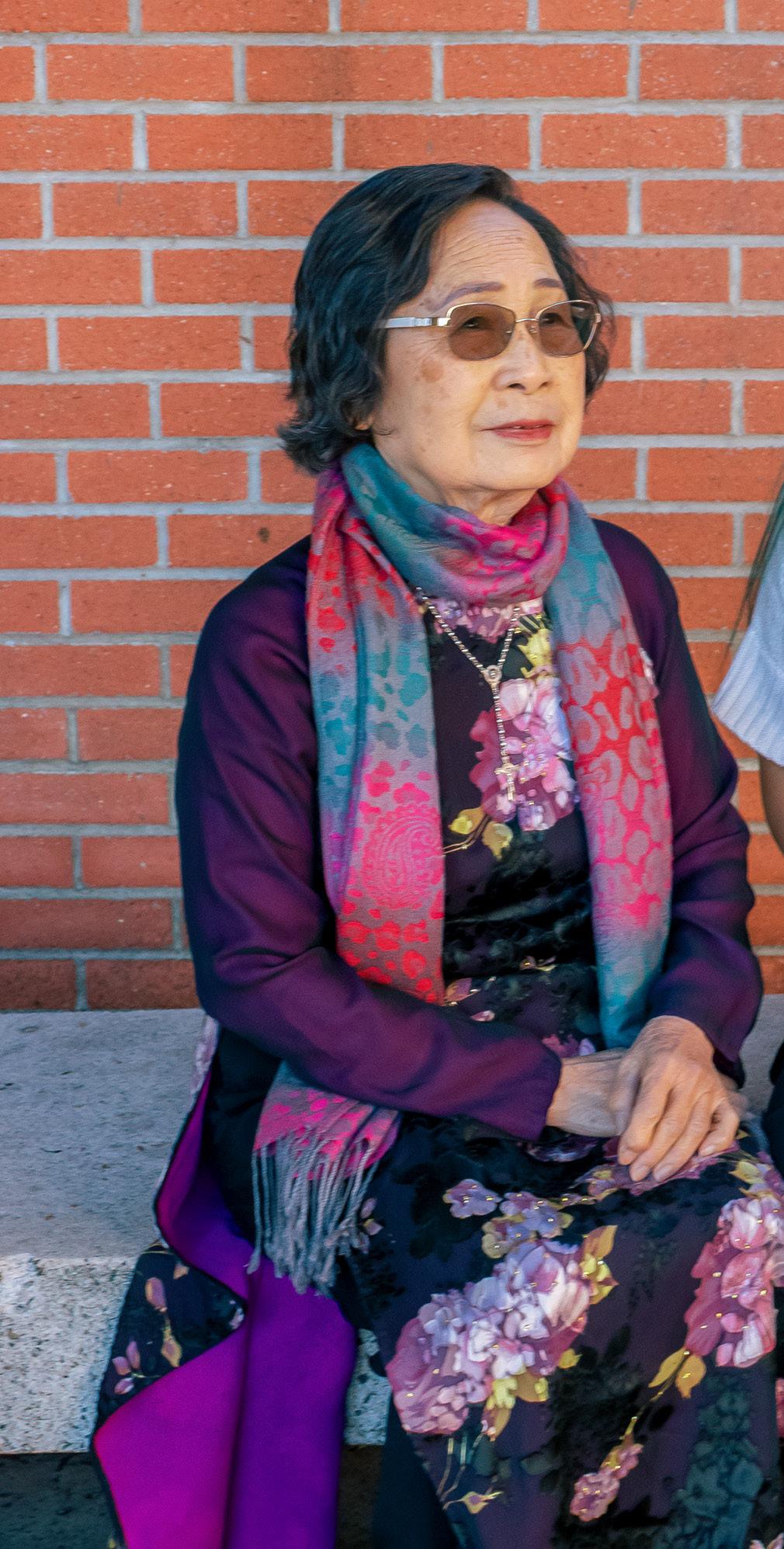
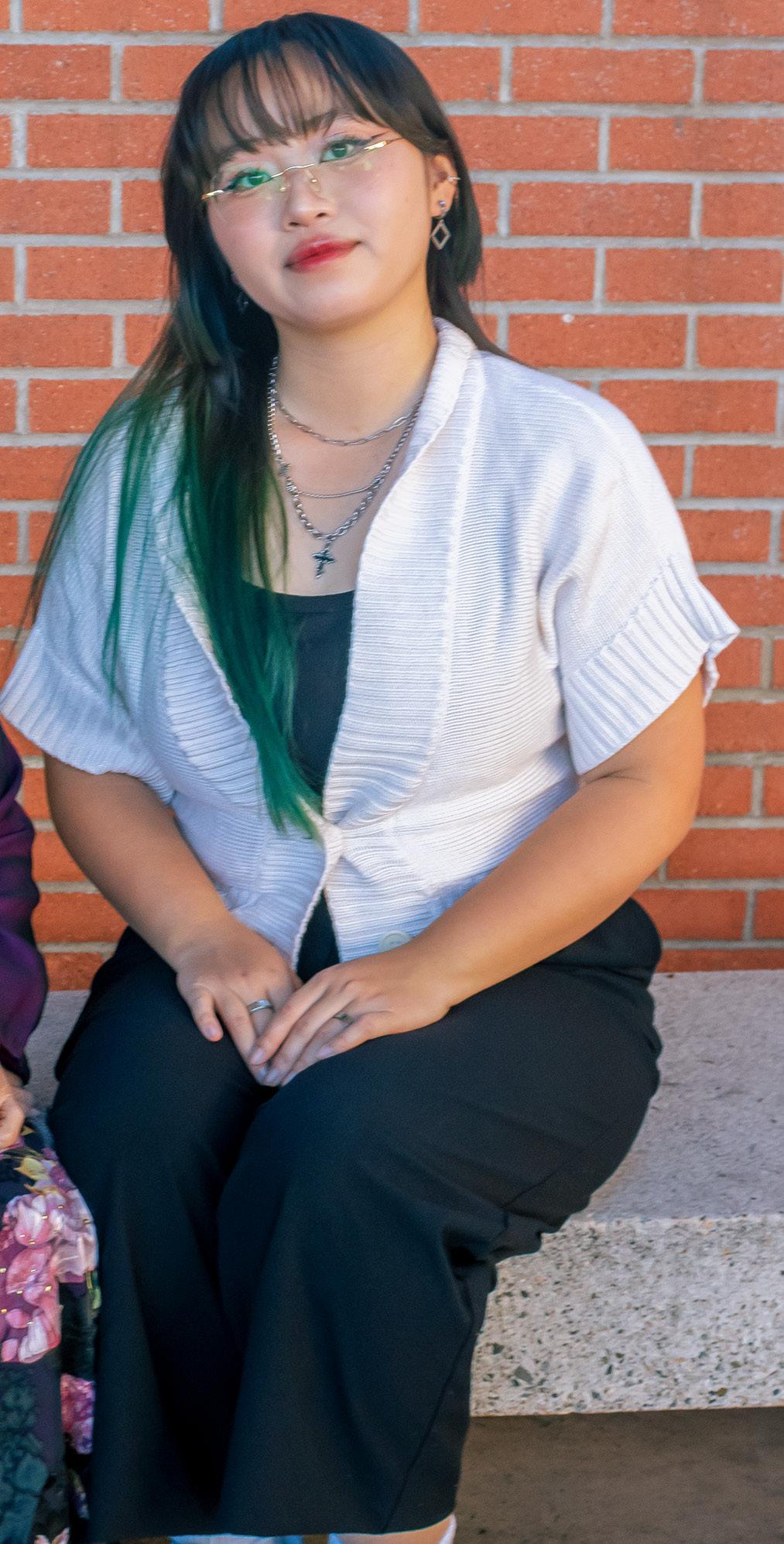
Still, many Vietnamese-American families rarely discuss politics with each other to keep the peace. This is the case for Tamnhu Tran, a 20-year-old CSULB public health major who lives alone with her 86-year-old grandma Jenny Nguyen in Orange County.
“I come from a traditional Vietnamese Catholic upbringing,” Tamnhu Tran said. “I think [the] majority of my family are very traditional and very conservativeleaning, especially considering that we’re in Orange County, which has a huge population of conservative AsianAmericans.”
Tamnhu Tran identifies with neither the Democrat nor Republican party, but she strongly believes in the Green Party’s policies on environmentalism and supports policies which improve access to education, healthcare and other public resources. She said her political beliefs stem from her family’s low-income background and her frequent use of social media for news. Tran sees social media as her main outlet for political participation.
“I think a good [thing] everyone should be trying to achieve is just educating yourself and staying updated with the current events,” she said. “If you look at my Instagram reposts, I try to repost actual, educational and informative posts. … If you’re affected by the lack of food stamps for instance, ‘Here’s a bunch of pantries that you can visit and the addresses,’ and things like that.”
“She says, ‘Oh, why are people attacking Trump or his personal character or the personal characters of other politicians?’ rather than looking at the facts and at what’s happening locally … She focuses more on the drama of it all.”
Tamnhu Tran is usually reluctant to talk to her conservative grandmother about politics because she feels frustrated about their differing opinions.
“We don’t usually talk because of the language barrier and there’s a whole generation between us, [so] I don’t talk about anything political with her,” Tamnhu Tran said.
However, she recalls times when she has had to inform her grandma of news that would affect them, such as the recent changes in financial aid qualifications and the pause on SNAP benefits during the latest government shutdown.
“I don’t think she fully [gets] that the office she voted in is doing that,” Tamnhu Tran added.
Conservative Nguyen primarily relies on Fox News and other right-wing television channels for news. So, she often asks Tamnhu Tran questions about negative responses to the Trump administration and notable political figures.
“She says, ‘Oh, why are people attacking Trump or his personal character or the personal characters of other politicians?’ rather than looking at the facts and at what’s happening locally. … She focuses more on the drama of it all,” Tamnhu Tran said.
“I’ll be like, ‘Oh, he’s the president, ya know? He’s there for a reason and it’s his job to be the face of the government. And if something goes wrong, he [will] be blamed because he is the face. That’s the whole purpose of his [job],’” she continued. “So, I try to explain to her that … his policies benefit certain people, but you also have to realize his policies may not be benefiting [other] people, and these people are probably the ones that are like, ‘Hey, that’s affecting me,’ and it’s their right to express that.”
Photo by Lillian Nguyen.
As for her parents and two sisters who live in Texas, Tamnhu Tran actively shares her political knowledge with them in hopes of educating them on current events. Ironically, she does so because of her Republicanleaning mother Susan Lu, who taught Tran and her siblings how to develop their own political opinions.
“Rather than trying to interject her own ideology, [she might say] ‘Okay, I need you to be able to critically think. I need you to be able to argue your point and know what you’re talking about.’ So even though she is more Republican-leaning, we’re able to coexist and just talk about it,” Tamnhu Tran said.
Moving forward, Lesenyie predicted that younger generations of VietnameseAmericans will become more liberal in the next few years, stating that most young adults tend to differentiate themselves from their parents and grandparents when voting.
“It isn’t just a rebellion or a shedding of party affiliation. It’s a shedding of other traditions — some traditions stick, some don’t,” he said. “And so, when we look at polling on this, younger Vietnamese-Americans don’t share partisanship at the same rates as their grandparents. Will that continue to unfold? Absolutely.”
Ann Thuy-Ling Tran hopes that classes such as ethnic studies, which have a strong focus on empathy, will foster healing among Vietnamese-American families in future election seasons.
“Younger generations are going to be impacted by this more critical understanding of the world and the communities that they live in, and therefore will vote accordingly,” she said. “I do think that there is a future world in which … people can become much more empathetic and understanding and practice these kinds of analytical skills in their voting logic and reasoning.”
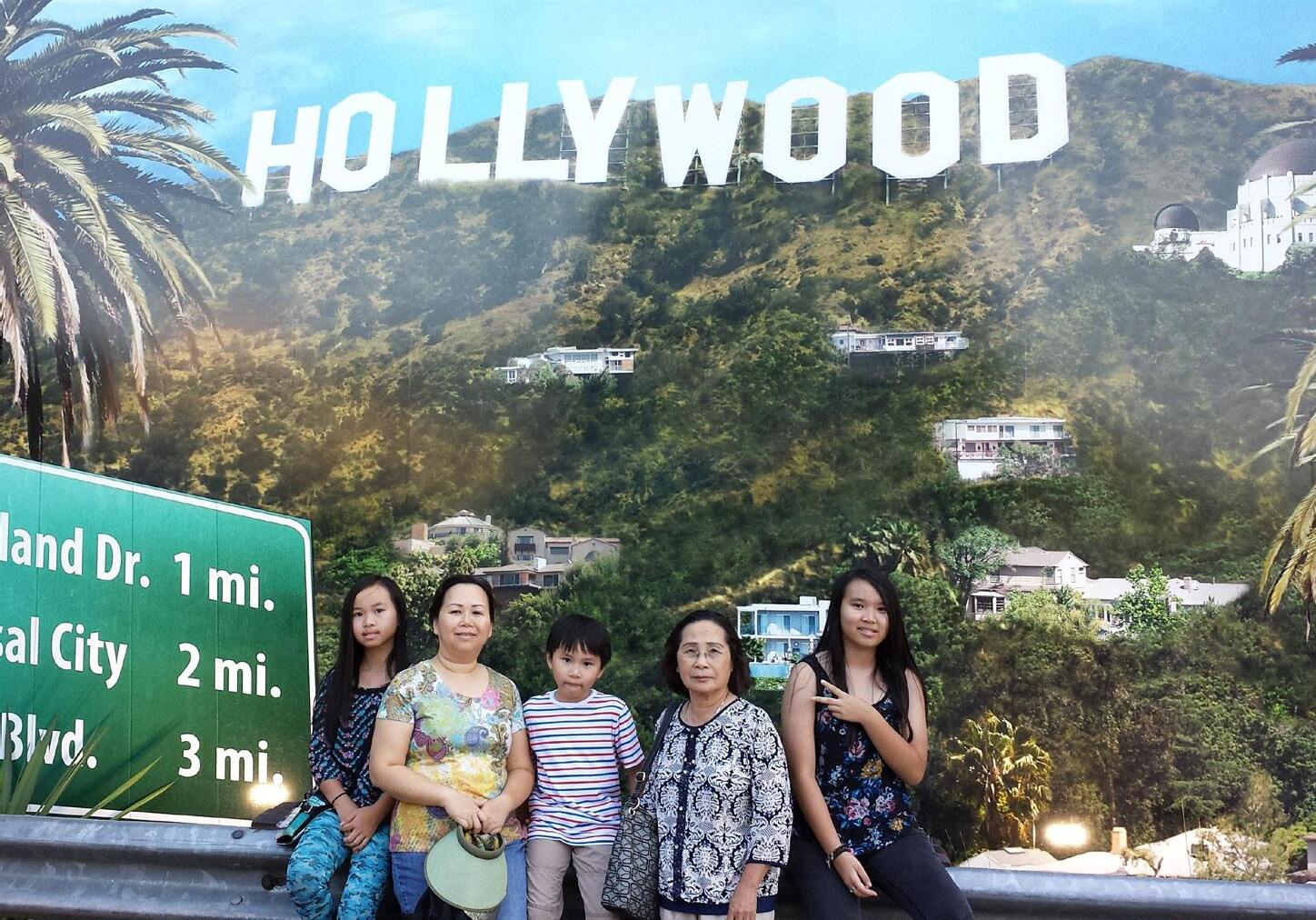
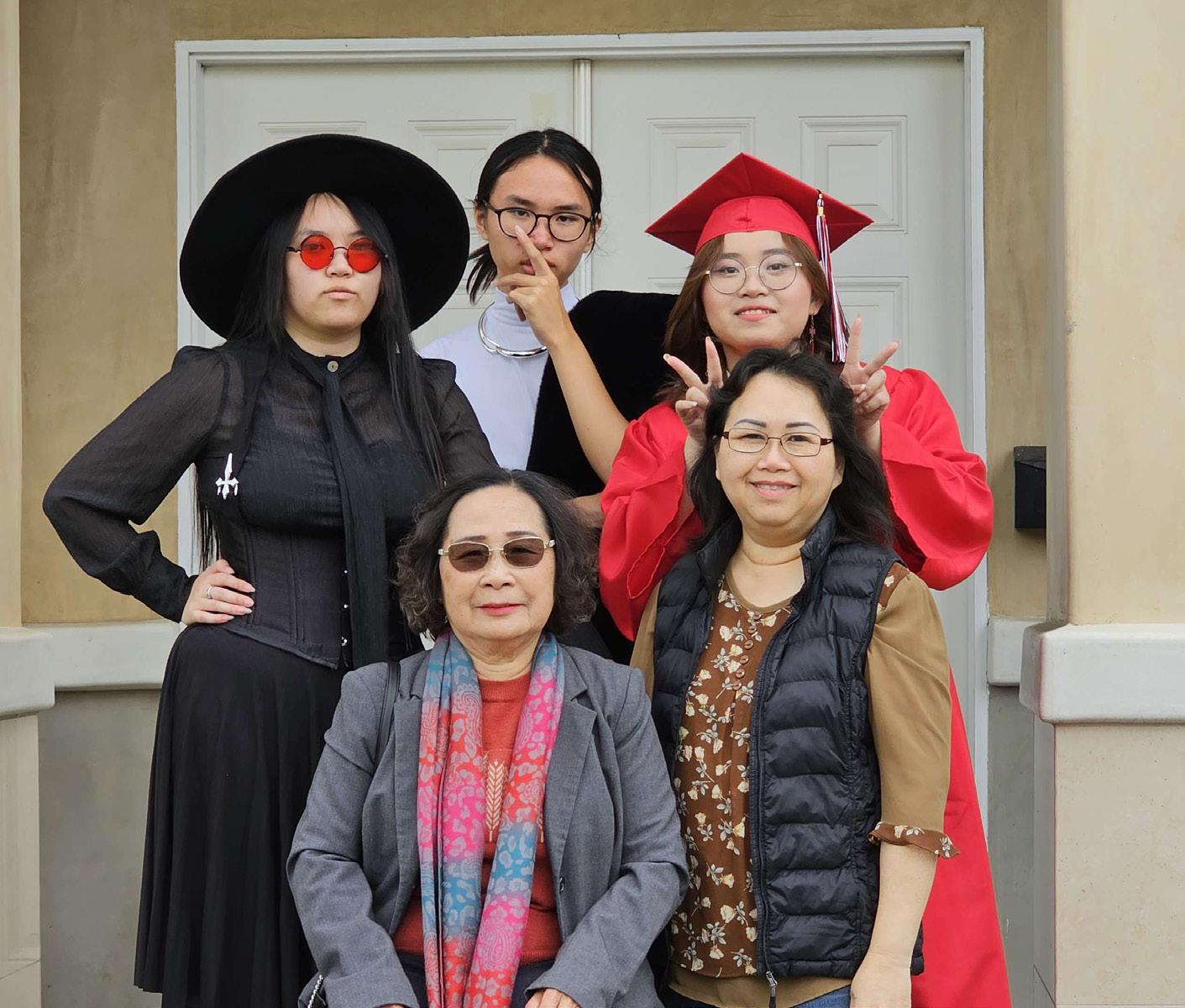
Family photos of Tamnhu Tran and her sisters, mother and grandmother. Pictured are grandma Jenny Nguyen (front left), mother Susan Luu (front right), older sister Taman Tran (middle left), Tamnhu Tran (middle right) and younger sister Petra Tran (back). Photos courtesy of Tamnhu Tran.
A MICROSCOPIC LOOK AT DR. LAMAR THOMAS
Assistant professor Lamar Thomas researches and develops treatments while trailblazing a path for minorities in STEM and giving back to her community.
STORY BY NI BALINESS
LAMAR Thomas’ passion for science started with a gash on her knee. While playing outside with her family, she hit a metal part and cut herself.
As blood oozed out and the wound was stitched back up, Thomas was left fascinated by how her body was able to heal itself.
“I was amazed that I could get hurt and have an open gash and it just [would] close on its own,” Thomas said. “I was intrigued. How did this happen? What’s the biology behind it?”
Today, Thomas is an assistant professor of bacteriology at Cal State Long Beach. Growing up in Jamaica, Thomas’s initial dream was to become a doctor. She shared that in Jamaica, high school students can specialize in what they want before college, so Thomas took all the science courses she could.
After high school, Thomas was accepted to a medical program, but fainting episode when met with a bloody cadaver in anatomy class, she decided research was a better fit.
Thomas pursued her bachelor’s in biology and master’s in biotechnology at the University of the West Indies. Though she originally wanted to go into biomedical research, the Jamaican government would sometimes ban the importation of ethanol, which would have made this research harder, so she switched to plants.
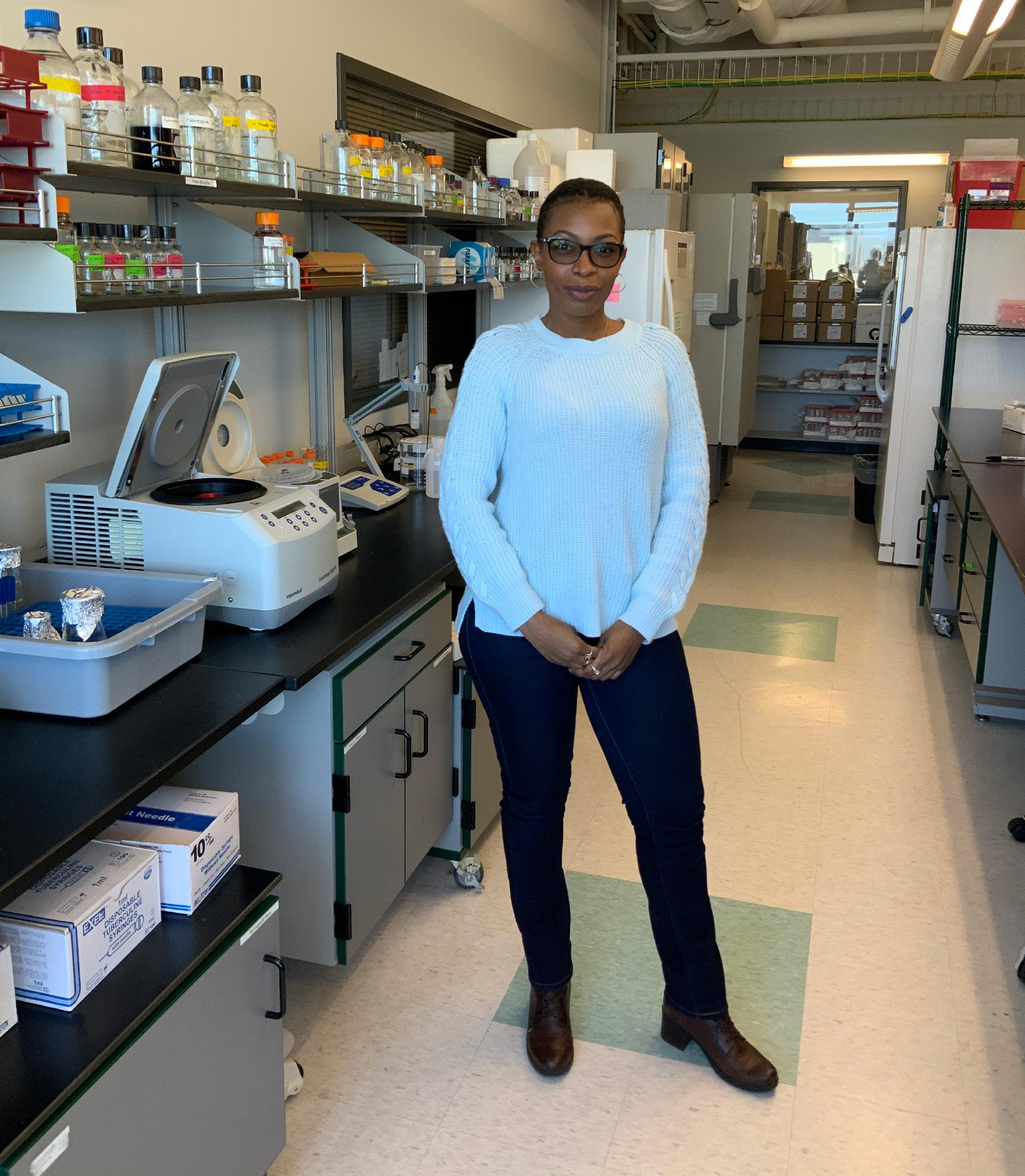
Lamar Thomas, CSULB assistant professor of biological sciences, in her natural element: the lab.
Photo courtesy of Lamar Thomas.
During an undergraduate ecology field trip, Thomas’ class went onto a farm, where she noticed how strange certain pumpkin leaves looked.
Alongside taking an ecology class, she was also taking a virology class, so she suspected the problem to be a virus infection.
“I picked a couple of leaves because I wanted to take it to my virology teacher to ask her,” Thomas said. “She was like, ‘Oh yeah, that definitely looks like a
At once, her professor proposed a research project for Thomas to focus on throughout her undergraduate and master’s studies. In her research on pumpkin leaves, Thomas identified several new fungi that had never before been discovered
For her master’s thesis, Thomas collaborated with a chemist at her university to create an antifungal
compound that farmers still use today.
Looking back, Thomas credits her undergraduate professor, Dr. Paula Tennant for believing in her capabilities.
“She saw the potential in me and changed my whole trajectory,” Thomas said.
In 2017, Thomas moved to the U.S. to attend Binghamton University in New York to obtain a doctorate in biomedical research.
Even though she had specialized in plant pathology thus far in her educational career, her dream of conducting biomedical research never ceased.
“The skills or the type of experiments that you do to understand the cause of the disease in a plant is very similar to trying to [those you do to] identify the cause of the disease in any other species,” Thomas said.
Thomas knew her research had to be impactful. As a woman of color in science, she had seen how the patriarchy dominates the healthcare and research field, so she wanted her research to make a meaningful change in women’s healthcare.
At Binghamton, a new assistant professor asked Thomas to join her lab, which was researching Streptococcus and
With a hearty laugh, Thomas shared that during her time as an undergrad, she didn’t always get A’s. Now being a mentor, she believes a student’s motivations matters much more than their grade.
Photo courtesy of Lamar Thomas.
Thomas said that while she’s at CSULB, she wants to help students of color in guiding them toward their goals. Photo by Ni Baliness.
“It made me realize the importance of my presence in the field as a Black woman, as an immigrant.”
the female reproductive system.
“And I said, ‘What? I love vagina,’” Thomas said.
Streptococcus agalactiae, or GBS, colonizes in the female reproductive system. While this bacterium is present in men and women, researchers still don’t know what triggers the shift from the bacteria having a neutral effect on women to becoming harmful when a woman is pregnant, according to Thomas.
“The goal is to have more of a preventative strategy rather than a treatment strategy,” Thomas said.
While doing a postdoctoral fellowship at University of California, San Diego, Thomas expanded her research to pediatric care, where she studied Streptococcus pyogenes, or GAS. She observed that when young people get recurring strep throat, they often develop an autoimmune disease or rheumatic heart disease.
As accomplished as Thomas is, she has still dealt with racism. She recounted a time at Binghamton when she tried to help a student of color attain funding to go with her to the Annual Biomedical Research Conference for Minoritized Scientists. Thomas asked a professor for help, but they made it clear they had no “special money for a special conference.”
“While I could take racism from people I don’t know, this was someone I saw everyday, someone I thought I had a relationship with, so it hurt deeply,” Thomas said.”
Thomas filed a discrimination report, but the student still was not able to attend.
During the conference, Thomas truly felt just how much diversity in the science field matters, especially in the face of systemic challenges.
“It made me realize the importance of my presence in the field as a Black woman, as an immigrant,” Thomas said.
After graduating from Binghamton, her dissatisfaction with the investigation and outcome following her report compelled her to write a letter to the provost, where she detailed how much the event affected her mentally.
In August 2025, Thomas joined the Cal State Long Beach community as an assistant professor of microbiology.
Thomas believes that community and representation for minority groups is essential. She believes that her position means that she should leverage resources and give back to others, especially other women and students of color.
Giving back to CSULB means providing the same trust and resources for her students that Thomas received from Tennant, her former professor. Inside the microbiology building, Thomas runs a lab, where she’s working to find a preventive strategy for GBS and GAS.
Scarlett O’Brien is a student researcher in Thomas’ lab and commended Thomas’ commitment to creating a space of care and encouragement for her and other students.
“Despite the fullness of her schedule, Dr. Thomas carves out the time to meet with all seven members of her lab individually, which has truly allowed me to grow more under this form of mentorship,” O’Brien said.
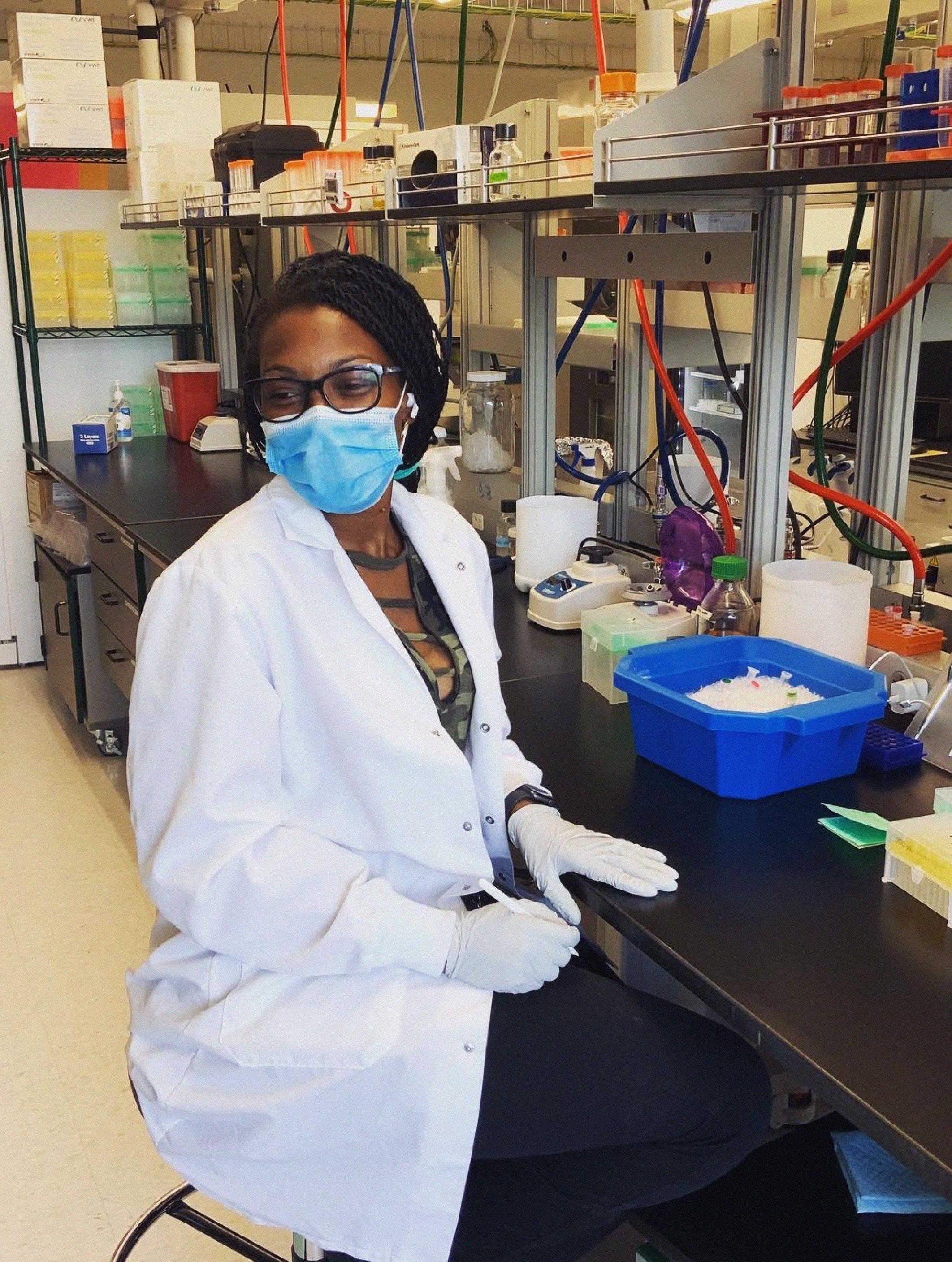
Lamar Thomas in the lab at Binghamton University in New York.
Photo courtesy of Lamar Thomas.
“It gives me so much joy and so much gratitude to be a part of someone’s journey and to see them fly. I think that’s the most beautiful thing.”
Like many scientists, Thomas relies on the National Institute of Health and the National Science Foundation for grants and support. With the current presidential administration pulling scientific funding, Thomas is also looking into finding funding from private organizations.
In the past, Thomas could freely say that she was researching a vaccine for a pathogen that affects women. Now, Thomas said she has to be savvy with her wording and cater to conservative agendas.
government’s agenda is to increase reproduction so I had to … turn my research from being about preventive care to [explaining how] it is important to study women’s reproduction because it’s going to affect the population’s productivity.”
According to Thomas, words like “woman,” “vaccine” and “female” will throw a grant application out. Though frustrating, she perseveres. Thomas may have to adjust her wording for now, but she said that won’t stop her from doing the same research.
Currently, Thomas is developing research on how cranberry juice can clear a urinary tract infection. From Jamaica’s history of natural remedies and her studies in plants, Thomas hopes to find an effective and natural way to treat UTIs in the U.S.
Alongside her goals to naturopathy, nothing brings a bigger smile to Thomas than being the best mentor to her students in hopes that wherever they go, they’ll succeed at what they do.
“Despite the fullness of her schedule, Dr. Thomas carves out the time to meet with all seven members of her lab individually, which has truly allowed me to grow more under this form of mentorship,” O’Brien said.
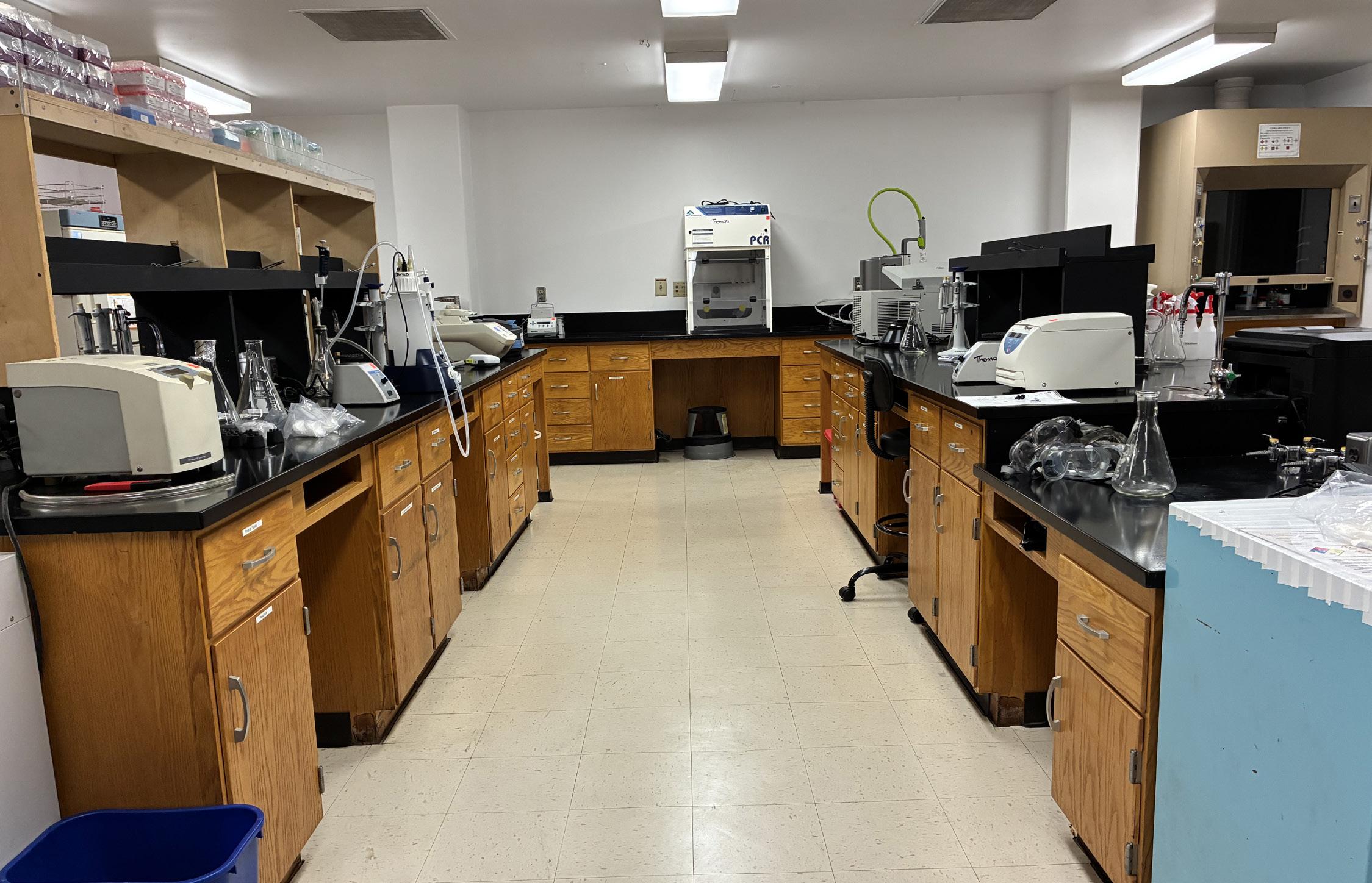
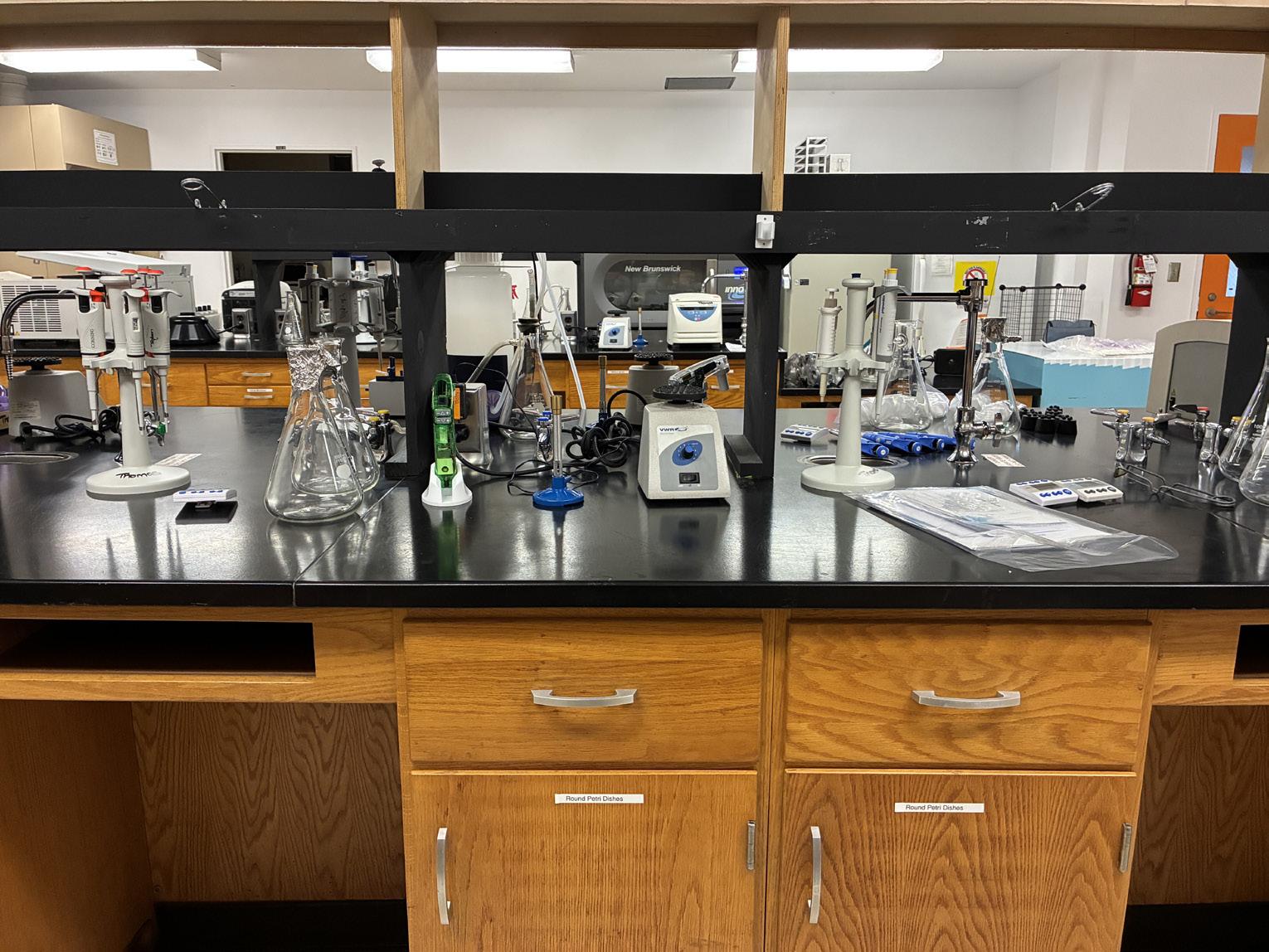
One of the labs in the microbiology building, where Lamar Thomas works to develop preventative strategies for GBA and GAS bacteria and advance women’s health research. Photo courtesy of Lamar Thomas.
“Even while writing grants, I have to try to find a way to rephrase my research goals,”
Thomas said. “One of the
“It gives me so much joy and so much gratitude to be a part of someone’s journey and to see them fly,” Thomas said. “I think that’s the most beautiful thing.”
Lamar Thomas
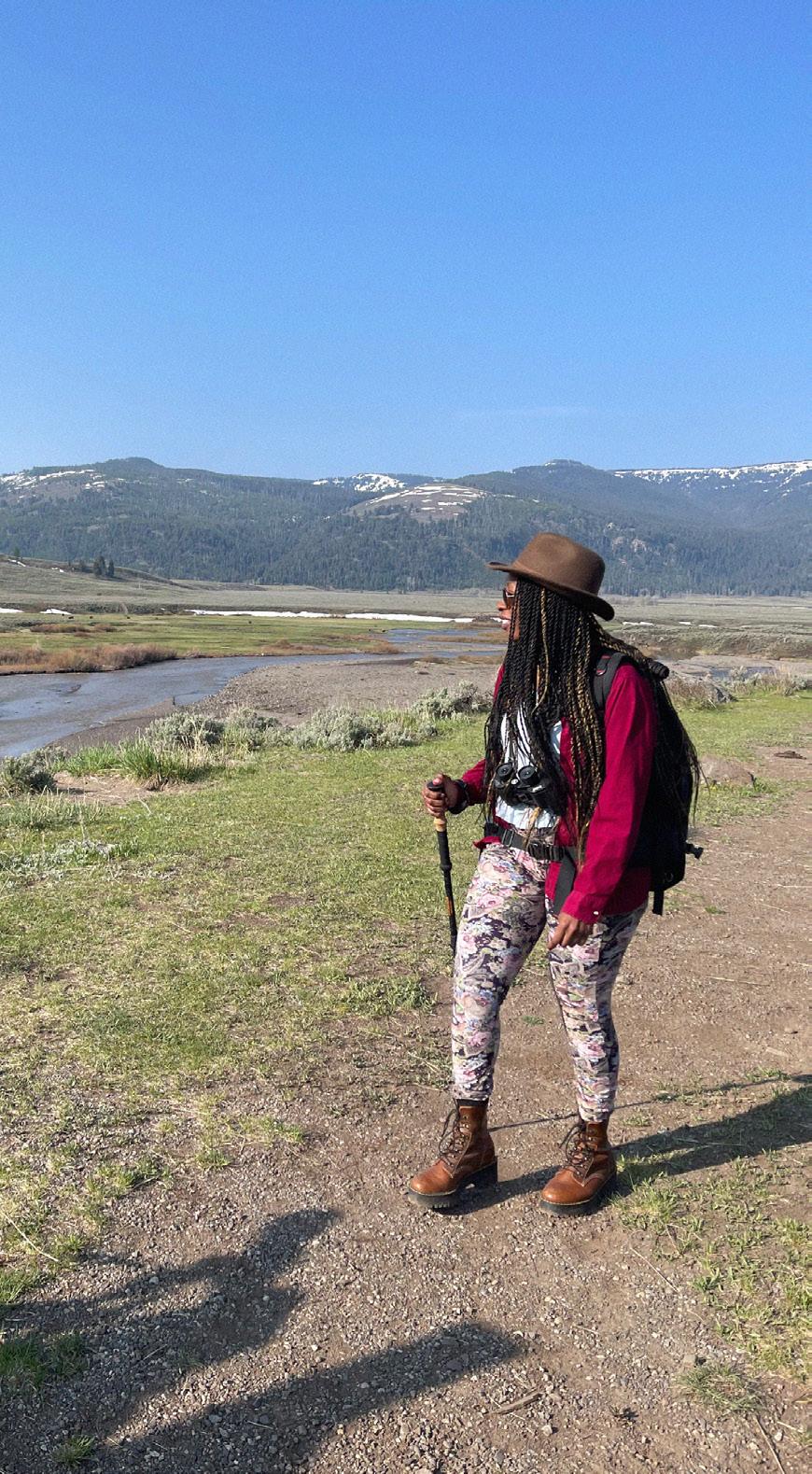
hiking in the Lamar Valley in Yellowstone. Photo courtesy of Lamar Thomas.