

![]()


By Heart.org News Provider
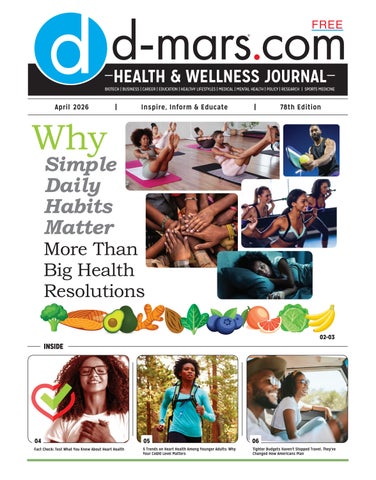
ost people don’t set out to ignore their health. It usually slips down the list somewhere between the morning alarm and the last email of the day. Breakfast gets rushed or skipped. Exercise is postponed until tomorrow. Sleep is cut short to catch up on everything else. By the end of the week, healthy intentions are still there, but the follow-through feels harder than expected.

MFor many, the challenge is not motivation but finding habits that fit into real life. Small, repeatable choices around sleep, exercise, nutrition, mental well-being and social connection can support how the body and mind function over time.
SLEEP WELL
Sleep is essential for physical recovery, mental focus and emotional balance, but it’s often the first habit to slip when schedules get busy.
Establishing a regular bedtime routine helps signal when it’s time to rest. Limiting screen exposure in the evening, keeping sleep and wake times consistent and creating a dark, quiet sleep environment can support more restorative sleep. Over time, better sleep contributes to improved mood, focus and overall heart health.
EXERCISE IN MANAGEABLE WAYS
Exercise often falls into the same trap as sleep. When schedules get full, it becomes something to get back to rather than something that fits into the day as it unfolds. A missed workout can quickly turn into a missed week, even for people who value staying active.


Regular movement supports heart health, muscle strength and overall energy, but it doesn’t need to be all-or-nothing. Short periods of activity spread throughout the day can still make a difference, especially when long stretches of sitting are the default.
Walking between meetings, stretching in the morning or adding light strength exercises at home are simple ways to stay active without blocking out extra time.
Food decisions often happen on autopilot as meals are squeezed into busy schedules and long days, making nutrition one of the most influential daily habits.
Meals do more than provide fuel. When built around nutrient-rich foods, they support muscle health, brain health and heart health. An overall healthy eating pattern includes a variety of whole foods like fruits, vegetables, whole grains and lean proteins, helping the body keep up with everyday demands.
Protein plays an important role in maintaining muscle and supporting daily movement, especially as people age. High-quality protein from foods, along with a balanced diet and regular exercise, can help support all the muscles in the body. Choosing protein sources that are easy to prepare, and repeat supports consistency when schedules are full.

As part of a balanced approach to healthy habits, nutrition guidance from the American Heart Association’s Healthy for Good initiative, nationally sponsored by the Egg Nutrition Center, highlights how everyday food choices can support the body and brain over time. Eggs are an example of a high-quality protein, and they fit easily into meals throughout the day.
Eggs also deliver choline, a nutrient many Americans don’t get enough of. Choline is a critical nutrient, among others, for supporting brain development, memory and mood. Along with protein, choline helps support brain health, making it an important consideration across life stages.
According to the American Heart Association, healthy people can include one egg daily, up to seven eggs per week, as part of a heart-healthy diet. For healthy older adults with normal cholesterol, two eggs per day can be included as part of a heart-healthy dietary pattern.
The way people eat, sleep and move does not just affect the body. It also shapes how the brain responds to stress and daily demands. When routines feel rushed or inconsistent, mental well-being is often one of the first areas to feel the strain.
Ongoing stress can interfere with focus, sleep and eating habits, making it harder to maintain healthy routines. Simple practices like deep breathing, mindfulness or stepping away from screens for a few minutes can help reduce tension and restore attention.
Making time for rest and reflection, and setting realistic expectations, can also support emotional balance. What supports the brain often supports the heart as well, reinforcing the value of caring for mental and physical health together.
Mental well-being is shaped by both daily routines and relationships. When life feels busy or stressful, social connection is often the first thing to get pushed aside, even though it plays an important role in emotional health.
Staying connected doesn’t require packed calendars or constant interaction. Shared meals, short conversations or a quick check-in with a friend or family member can help maintain a sense of connection.
Healthy routines are more likely to last when they fit into the rhythm of everyday life rather than compete with it. Big changes can feel motivating at first, but it is often the small, repeatable choices that quietly shape how people feel over time.
Choosing foods that are easy to prepare, finding enjoyable ways to exercise and protecting time for sleep can make healthy habits feel more realistic. When routines are built around what is already happening during a typical day, they are easier to return to even when schedules get busy.
For more information and educational resources on nutrition and healthy living, visit Heart.org.


By Esperion News Provider
As you age, your doctor's interest in your cholesterol level is likely to increase. That's no coincidence. High cholesterol and age are two significant risk factors for heart disease, which is the leading cause of death in the United States.
You may not be able to slow the hands of time, but elevated low-density lipoprotein (LDL) cholesterol, also known as "bad" cholesterol, is one of the most significant addressable risk factors for the development of cardiovascular disease. Uncontrolled high LDL-C can lead to death, heart attack, stroke or the need for a coronary revascularization.
While statins are considered first-line treatment for people with high LDL cholesterol, an estimated 29% of patients stop taking their statin within the first year, based on findings published in the "American Journal of Cardiology." Up to 30% of people have some degree of statin intolerance, according to research published in the "Journal of Clinical Lipidology."
TEST YOUR HEART HEALTH KNOWLEDGE AND LEARN MORE ABOUT MANAGING YOUR RISK FACTORS, INCLUDING HIGH CHOLESTEROL, WITH THIS QUICK QUIZ:
1. Do cardiovascular diseases, including heart disease and stroke, claim more lives in the U.S. than all forms of cancer and accidental deaths (the Nos. 2 and 3 causes of death, respectively) combined?
Yes. Cardiovascular disease is the No. 1 killer of men and women in America and worldwide, killing more people than both cancer and accidents each year.
2. According to the American Heart Association, which of the following are true?
+ Men are more likely to have heart attacks at a younger age than women.
+ Women experience different symptoms indicating potential heart disease.
+ Women have a higher risk of fatality because their symptoms are frequently misunderstood or misdiagnosed, leading to delayed treatment.
All are True. While many factors are at play, one major underlying issue is historically, women simply haven't been well represented in clinical trials of heart-related conditions.
However, Harvard Health reports that culture is slowly changing and some of the gaps are starting to close.
3. Does statin intolerance mean statins are not effective?
No. On the contrary, statins are the standard of care to lower LDL cholesterol. However, some people cannot take statins at any dose because of statin intolerance symptoms such as muscle pain, while others may have their LDL cholesterol remain uncontrolled because they are not able to take higher doses.
4. Are women more likely to be statin intolerant than men?
Yes. According to the National Institutes of Health, being female is a risk factor for statin intolerance.
5. If a person is statin intolerant, are there other treatments available to help lower their uncontrolled LDL-C?
Yes. Alternative treatments are available for people with statin intolerance. A health care provider can help explain what options are available if you experience potential statin-associated side effects.
6. Are muscle-related symptoms typically the most common side effect of statins?
Yes. Muscle pains or cramps (myalgias) are the most common symptoms people experience. Your health care provider may run tests or change your medication to address these symptoms.
For more information on statin intolerance, talk with your health care provider or visit statinalternatives.info.
LDL cholesterol, commonly referred to as "bad" cholesterol, leads to plaque in your arteries, reducing blood flow and potentially damaging your cardiovascular system.
If your bloodwork shows elevated LDL cholesterol levels, you can take steps to reduce it.
1. Eat a healthy diet low in saturated and trans fats and high in fiber, with an emphasis on fruits, vegetables and whole grains.
2. Get at least 30 minutes of exercise daily, and if you carry extra weight, work to lose it.
3. Talk to your health care provider about cholesterol-lowering medications, which can help lower bad cholesterol and reduce the risks associated with heart disease.
Source: Esperion

By Doctor's Best News Provider
eart disease is something many adults push to the back of their minds if they are not experiencing symptoms; a concern for "later" in life. However, that mindset may be changing. New research suggests younger generations are thinking about their cardiovascular health earlier and with greater urgency
HThey're right to be thinking about it, too. Data from the American Heart Association shows heart disease is still the No. 1 killer of Americans. In fact, someone dies from cardiovascular disease every 34 seconds in the United States. Risk factors such as obesity, high blood pressure, diabetes, and kidney disease are on the rise, too. Nearly half of U.S. adults have high blood pressure (47%), and obesity (42%), and more than half (57%) have type 2 diabetes or prediabetes. Despite growing concern about heart health, many adults remain unclear about their personal risk. In fact, a majority of respondents (62%) in a survey conducted by Atomik Research on behalf of Doctor's Best said they don't know their current risk for heart disease. To provide context on these findings and highlight emerging heart health trends, Dr. Tania Elliott, a dual board-certified physician in internal medicine, offers some insights.
FEELING
In the study, only 50% of respondents reported feeling energetic on a daily basis. Among


those who reported feeling fatigued, 46% listed stress as their top perceived contributor, followed by insufficient sleep (38%), both of which are closely tied to cardiovascular health.
TROUBLING SYMPTOMS
Among Gen Z respondents, 25% reported having shortness of breath during activity or while lying down, compared to just 16% of Baby Boomers, which is commonly associated with compromised heart health.
STATINS AND YOUTH
Statins, which help address cardiovascular risk factors such as high cholesterol, are among the most commonly prescribed drugs in America, with more than 92 million Americans currently taking them, according to the Cleveland Clinic. Although most survey respondents (76%) aren't currently taking a statin, 17% of adults ages 25-34 reported using statin therapy, which is an unexpectedly high proportion given their age and the group's low anticipated risk of cardiovascular disease.
SIDE EFFECTS OF STATINS
Among those taking statins, which are considered a first-line treatment for treating high cholesterol and reducing heart disease risk, 54% reported experiencing side effects, particularly muscle pain (23%) and fatigue (31%). However, taking statins can also affect levels of Coenzyme Q10 (CoQ10), which supports cellular energy and cardiovascular function.
Cells use CoQ10 to produce energy and detoxify. Studies have shown people with heart failure who took CoQ10 had around a 50% reduction in mortality. Despite this, awareness is low. Nearly two-thirds (66%) of respondents had never heard of CoQ10 and that number jumps to 76% of adults ages 25-34. Additionally, only a small percentage of respondents (8%) who were on a statin reported having their CoQ10 level tested."We have a real opportunity to help younger adults take a more proactive approach to heart health," Elliott said. "CoQ10 plays a critical role in cellular energy production and heart muscle function, and it can decline with age and statin use."If you're among the 71% of survey respondents who expressed a willingness to learn more about improving your heart health, talk with your health care provider and visit DoctorsBest.com to learn more.
While some risk factors for heart disease, like age and family history, are out of your control, you can make lifestyle changes to help lower your risk:
Eat Whole Foods: A heart-healthy eating plan includes plenty of lean proteins as well as fruits, vegetables, beans, whole grains and foods high in omega-3s, such as salmon, nuts and plant oils. ? Know Your CoQ10 Levels: If you're low, look for a high-quality, bioavailable formula, like Doctor's Best High Absorption CoQ10 with BioPerine, which supports energy production and muscle function.
Get Moving: The American Heart Association recommends 150 minutes of moderate-intensity or 75 minutes of vigorous aerobic activity per week to help control weight and lower the risk for conditions that negatively impact the heart.
Source: Doctor's Best


By ALG Vacations
The flight search is open, but many travelers are pausing before they book. Prices feel higher than last year, headlines are heavy and budgets are tighter. Still, the question isn't whether to take a vacation, but how to make it work.
A November 2025 survey from ALG Vacations of U.S. adults planning to travel in 2026 shows that financial pressure is reshaping how people approach vacations, not whether they take them. While 81% say they have at least some concern about their household finances in the months ahead, 92% say they would still travel even if tighter finances required scaling back.
FINANCIAL PRESSURE SHAPES DECISIONS, NOT DEMAND
That shift shows up in the small moments of planning. Travelers are taking longer to compare prices, reconsidering timing and adjusting expectations before they book.
Inflation and rising prices top the list of concerns, cited by 61% of respondents, reinforcing why travelers are rethinking destinations, trip length and overall costs.
Concerns about global events and safety follow at 39%, with broader political and economic instability close behind at 38%.
Still, those worries rarely lead travelers to walk away from travel altogether. Instead, many describe pulling back in measured ways, scaling down plans, rethinking details and making trade-offs that keep a trip possible, even if it looks different than originally imagined.
Not all travelers navigate those trade-offs the same way. For some, uncertainty slows the process. For others, familiarity helps clear the final hurdle.
Among respondents who have previously booked a packaged vacation through a major vacation brand, 80% say they plan to take an international trip in the next year, compared with 46% of those without that experience.
That confidence carries into spending decisions as well. Sixty-seven percent of packaged-vacation travelers expect to spend more than $2,500 on their next trip, compared with 47% of those who have never booked a packaged vacation.
Taken together, the findings point to a confidence gap, with prior experience linked to greater comfort committing to international travel and higher spending.
PROFESSIONAL GUIDANCE PLAYS A LARGER ROLE WHEN PLANNING GETS COMPLEX
For many travelers, planning no longer stops at picking dates and destinations. Rising prices, shifting availability and higher expectations have turned vacation planning into a series of decisions that feel harder to navigate alone.
That complexity shows up most clearly among travelers with prior packaged-vacation experience. Ninety-four percent say they plan to use a travel advisor, compared with 81% of those without prior packaged-vacation experience.
The gap suggests that familiarity with structured travel planning often leads travelers to seek expert guidance. As trips become more layered, getting the details right matters as much as the destination itself.
The findings suggest that travel is still very much on the table, even as decisions take longer to make. Travelers are weighing trade-offs, seeking guidance and leaning on experience as they plan, rather than walking away altogether.
The flight search may stay open a little longer this year. But for many Americans, the trip is still happening.
ALG Vacations commissioned Atomik Research to conduct an online survey of U.S. adults planning to travel and travelers with prior packaged-vacation experience in the United States.
The survey included 1,000 adults planning to travel and a subsample of 502 respondents who had previously booked a packaged vacation through a major vacation brand.
The margin of error is plus or minus 3 percentage points for the full sample and 4 percentage points for the packaged vacation subsample at a 95 percent confidence level. Fieldwork was conducted in November 2025. Atomik Research, part of 4media group, is a creative market research agency.
Source: ALG Vacations