





At a Faculty Senate Executive Committee (FSEC) open meeting on April 15, faculty members had a chance to bring up concerns to the FSEC. One of the main concerns raised was the proposal to hire the consultant that the Board of Trustees (BoT) said they were planning in order to ‘rebuild the trust’ between the faculty and President Jim Wohlpart. The Executive Committee revealed that the BoT plans to hire two different consultants.
Professor of Sociology and former Interim Dean of the College of the Sciences (COTS) Mike Harrod joined Mathematics professor and Interim chair of the Computer Science department Tim Englund, along with four others, at the FSEC’s open meeting to bring up different concerns around campus.
Harrod said he was concerned that the hiring of the consultant wasn’t public. “I was wondering if we know or can get access to the RFP (Request for Proposal) for the consultant,” Harrod asked. An RFP is a document that requests the proposal of a service by a company. Harrod continued, “That should be a public process.”
Professor of Child Development and Family Science and Faculty Senate Chair-Elect Amy Claridge answered Harrod’s question and explained what the FSEC knew about the process. “We haven’t seen the RFP’s either,” Clar -
idge stated. Harrod said that if the hiring isn’t using state money, the BoT probably doesn’t need to follow the rules when it comes to RFP’s. Claridge and Lindsey corrected, stating that if the BoT spent over a certain amount, they would have to do an RFP.
Executive Committee Chair Natashia Lindsey expanded on the details of the BoT’s plan, stating, “There’s going to be a consultant that’s going to come in and work with the BoT, AAC (Academic Affairs Committee) and the EC on Shared Governance stuff.” Lindsey continued, “And there’s going to be a consultant to come in and help us work on building trust.”
David Leder, associate director of strategic communications, responded to a request for further information about the RFP process from The Observer. “The Board
“The Board has been vetting a number of possible consultants with higher education through the Request For Proposal process. More information will be shared with the university community soon.”
has been vetting a number of possible consultants with higher education through the Request For Proposal process. More information will be shared with the universi -
ty community soon,” Leder stated. “RFP’s usually take a while to complete.” Leder declined to comment on the recent protest that the faculty had hosted.
Claridge spoke about what the FSEC knew of the consultants. “We know very little about the second one, the trust-building one, because Zabrina (Jenkins) is running that and she’s a trustee, but she hasn’t, as far as we know, talked to any faculty at all in her development of it. So that’s concerning,” Claridge said. “They (BoT) made it sound like … they’re trying to contract somebody for at least a year. I think the other one, it seemed like it was a little bit short-term.”
Other issues brought up during the meeting were the bike lockers outside Samuelson Hall being inaccessible to students, proposing a longer spring break so professors have more time to prepare for the spring quarter, the rates at the Early Childhood Learning Center increasing and the expiration of the Statistical Package for the Social Sciences (SPSS) program and student internship rules.
MORE ON THE APRIL 9
This quarter, as every quarter is, has been non stop from day one, and as we enter week four I am definitely feeling the effects of this nonstop energy. That said, we have great news coming out of The Observer, seeing that as of this past Tuesday we have already hit the $5,000 donation goal on our Give Central campaign. I am incredibly grateful to anyone who shared the campaign or donated, and this money will go a long way in helping both PULSE and The Observer in the coming quarters.
Additionally, we also placed as a finalist for best website in the Region 10 Society for Professional Journalist (SPJ) awards, which is always a very gratifying experience. I am really excited to share this issue with everyone, as a bulk of the stories are first time stories from our staff of new writers! For many, this is not only their first time making print, but their first time being published at all.
Since I took over as Co-Editor-In-Chief (EIC), and then later solo EIC of The Observer, my time with The Observer has been unexpected to say the least. Immediately going into a time of defunding, then reduced funding, and somehow coming out in this current era of consistent reporting and increased readership has been both a challenge and a blessing. But I am very proud of everyone on the team, both past and present, who helped fight to get us back to where we are today. We are still adapting to our new budgets, and growing back into where we were not just pre-defunding, but pre-COVID as well, but I’m confident the place we’re growing into is a place we will all be proud to be in.
My goal is the same as it has been since I became EIC, which is to give a voice to the students and staff of CWU, and to share the stories of this community in the most accurate and transparent way we can. This is the angle we take on every story, opinions aside, and it’s the angle I plan to continue into the coming weeks and months of The Observer.
Thank you to every new reader to this paper, and every reader who has stuck with us through every change and turn we have gone through over these past couple quarters. To me, as a writer and as the EIC, seeing people reading the paper, hearing that they learned something from it, is the reason I continue to do this job, and the reason it will always feel so important to me.



concerns, email
at cwuobserver@gmail.com.




Gabriel Genzel Staff Reporter
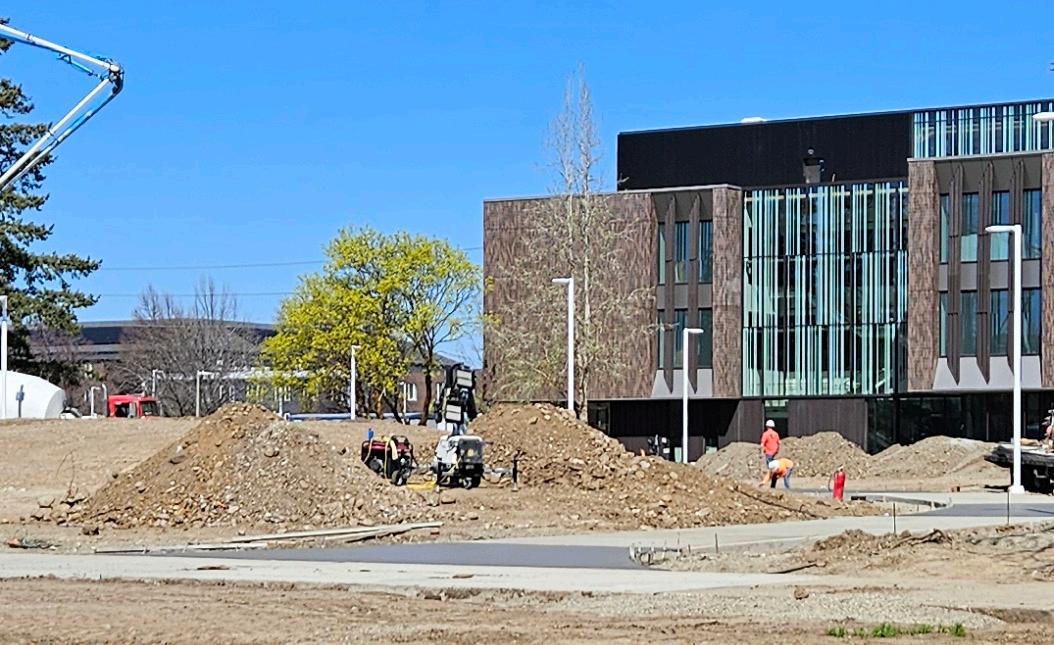
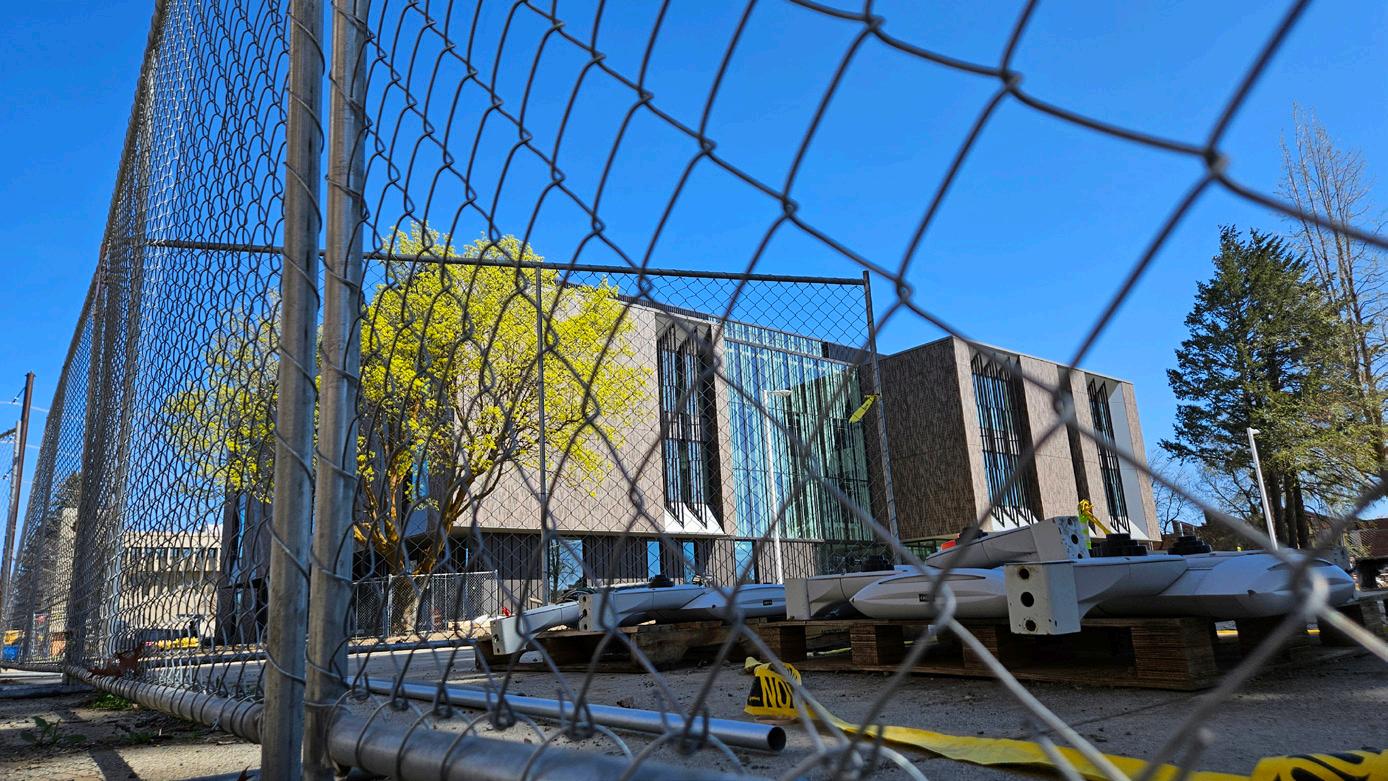
Ongoing construction by Capital Projects and Planning on the new North Academic Commons building will soon draw to a close, with spring being the final quarter that most students will be on campus to feel its impacts.
As the construction of both the North Academic Complex (NAC) and geothermal plant across the street nears its completion goal of fall 2026, students across campus have begun breathing sighs of relief.
“When I first moved in, I would have my windows open during the fall quarter,” Primate Behavior student Alisyn Rozzano Werning said. “I was very, very aware of the construction noises.”
Rozzano Werning is a resident near the ongoing construction of the NAC and has yet to live on campus without active construction. “The thing I’m most excited for is being able to walk through that part of campus again without having to dodge gates or fences.”
Formerly the Language and Literature (L&L) building, the initial demolition dispersed the Humanities Studies program’s classes across campus. With the teardown of the L&L beginning in the fall of 2023, development on campus has now lasted over two and a half years.
“I’m excited for the students to have this very nice new facility that’s going to be able to grow with the university and have space for more students to come and experience what Central has to offer for them,” Wildcat Pantry Coordinator Charles Johnson said.
“When I was in student government, we got to see the design plans for the building, and I remember it was so beautiful,” Johnson said.
Having returned to campus as a staff member postgraduation, Johnson said he has felt every aspect of the ongoing construction.
According to Johnson, the development has had its downsides. “It still impacts me today, having L&L torn down closed off a large area of campus,” Johnson said. “It was definitely a huge learning curve for the campus community and kind of a pain for students at the time.”
This “pain” included muddy paths, unsafe crosswalks, crowded parking lots and general concerns of accessibility.
With sustainable practice at the forefront of Capital Project’s development, construction has been done with the goal of being able to reduce CWU’s carbon footprint, according to the CWU official webpage. Its presence, however, is felt every day by students who are forced to take detours around construction, or can hear construction from their dorm.




Jade Marsden Staff Reporter
Many CWU students and other job seekers have said they are struggling to find work, causing them to broaden their prospects by searching in nearby towns up to an hour or two away.
A statistical analysis collected by Natasa Milojevic, a former contributor to cake.com and P.H.D. graduate in human communication and collaboration, looks at Gen Z work culture and how it might be affecting this challenging job market.
Milojevic procured an array of data, bringing awareness to this issue nationally by collecting responses between 2020 and 2025 amongst Gen Z workers. According to their findings, workers born between 1997 and 2012 are prioritizing their passions over the traditional 9-to-5 grind that previous worker generations have adapted to.
In addition, Milojevic noted in their research that 92% of Gen Z would like to discuss mental health in the workplace, along with solutions to handle these challenges. Some advocate for more mental health days or specific spaces for workers to decompress throughout the day.
A Fred Meyer employee in Ellensburg, Hunter Ely, spoke about how challenging it is to find an entry-level position that provides a livable wage while still being able to have a life outside of his work. “I would rather not slave away for these poor wages,” Ely said.
Gabriel Rogers, who lives in Ellensburg, is struggling to find work locally because the town’s population currently outnumbers available jobs. “With the limited job market, it is hard to find a passion-driven field to get into,” Rogers said.
Rogers also stated that they have tried to find a 9-to-5 in Ellensburg, but the struggle at work has affected their mental health.
A cook with Holmes Dining at CWU, Edgar Perez-Chavez, said he appreciates the students he works with, both past and present, pointing out the plethora of issues the older generations tend to ignore or have unnecessarily adapted to. Mental health, he said, is one of the issues that is rarely discussed.
“[It’s a] struggle that everyone deals with, yet is rarely confronted in the workplace,” Perez-Chavez said. He added that student dining employees can now take mental health days when they are needed.
“Sometimes you just need a mental break because working, especially in a kitchen, can be mentally taxing,” Perez-Chavez said. He noted that even if there isn’t a dedicated space for workers to decompress, employers could give workers a break to step outside and take a deep breath or to scream in their car if it has been an extremely difficult day.
Both Ely and Rogers also agreed that mental health awareness is crucial in the workplace. They claimed that managers should discuss and care about mental well-being to maintain a healthy and cohesive environment.
"Sometimes you just need a mental break because working ... can be mentally taxing."
- Edgar
Perez-Chavez,
Holmes Dining chef


Gabriel Genzel Staff Reporter
The Trump Administration is reorganizing the U.S. Forest Service. According to a press release issued by the United States Department of Agriculture (USDA) on March 31, the Forest service will see cuts to offices and staff, as well as a planned move of the main headquarters from Washington D.C. to Salt Lake City, Utah.
According to the press release announcing the cuts, the decision to downsize and relocate is aligned with the Trump Administration’s “common sense” approach to government. "This is about building a Forest Service that is nimble, efficient, effective and closer to the forests and communities it serves," Forest Service Chief Tom Schultz said in the press release.
Despite reassurance that the restructuring would prioritize creating new jobs, some in the field remain concerned.
"Decisions to downsize and relocate the U.S. Forest Service risk longterm consequences for many areas across the US,” CWU Sustainability Coordinator Jordan Spradlin said.
“The agency plays a critical role in wildfire mitigation, ecosystem health, and community resilience, and reducing its capacity could weaken our ability to manage our forests proactively,” Spradlin continued. “We could see increased wildfire risk, loss of institutional knowledge, and weaker support for the rural communities that rely on these lands."
Hannah Campbell, a Geography major with specialization in Natural Resource Management, who is also the president of the Environmental Club and student sustainability ambassador at CWU, shared her views on the cuts.
“As someone who has studied hard in their undergraduate years to become a natural resource manager with hopes to one day work in a career within the Forest Service, I am truly disgusted to witness erasure of such critical forces that maintain our parks and prevent exploitative destruction,” Campbell said.
Campbell continued, “I, much like many others, will never stop resisting and combating those who desire to eradicate the land and its people that have stood here time immemorial.”

"We could see increased wildfire risk, loss of institutional knowledge, and weaker support for the rural communities that rely on these lands." -CWU Sustainability Coordinator Jordan Spradlin

Jackson Lawler Staff Reporter
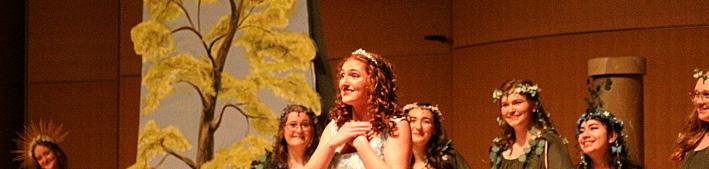
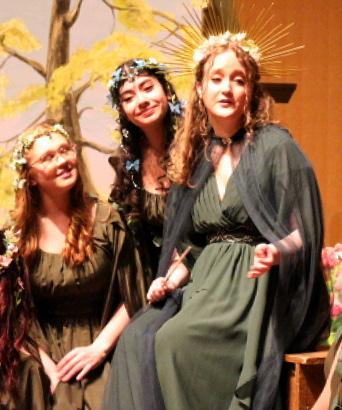
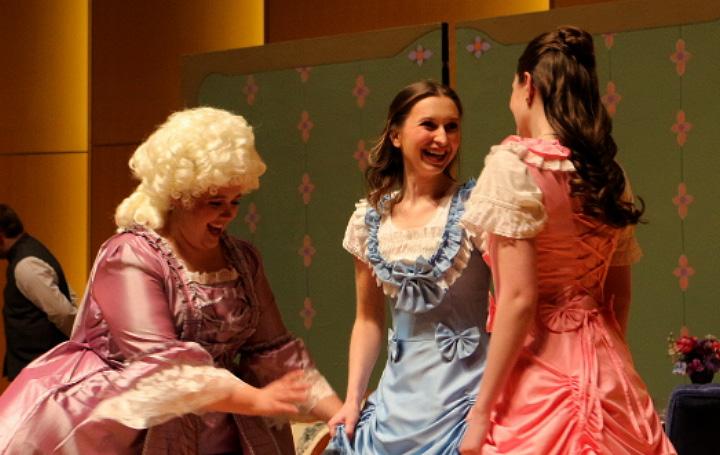
CWU Music Ensemble’s latest opera, “Cinderella” by Jules Massenet, followed an 1899 retelling of the classic 1697 Charles Perrault fairy tale. The show took place in CWU’s Hertz Concert Hall during the second weekend of April, with four performances between April 9 and 12.
The principal cast was doubled-up, meaning that audiences attending the April 9 and 11 performances would see the “odd” cast, while those attending the April 10 and 12 performances would see the “even” cast.
Professor of Voice and Opera Gayla Blaisdell shared her vision as the opera's director. “We want the audience to enjoy this fairytale,” Blaisdell said. “We are all familiar with the story, so we aren't trying to re-write the content, but we want the audience to enjoy the comfort and warmth of this re-telling of the story, like re-watching your favorite childhood movie or reading your favorite book over and over and over again.”
Massenet’s “Cinderella” featured an additional challenge for the orchestra and vocalists to tackle: it was originally written in French (titled “Cendrillon”), but the CWU Music Ensemble performed it in English.
“Since we are singing in English, the rhythms are sometimes tricky in this opera because the translation from the original is sometimes a little awkward. We've changed some lyrics to help, but some moments are just difficult to count and be together with the orchestra because of the complexity of the musical material and the need for text and diction,” Blaisdell said.
However, this level of challenge was intentional on Blaisdell’s part, as she said she knew she had a class of highly skilled students up to the task.
“As a professor, I balance the curricular needs of the students and the capability and level of the students that we currently have in the program,” Blaisdell said. “We have not done something from the Grand Opera tradition as our full production before since I got here in 2008, so this was a great opportunity for our students to learn the style and demands of this repertoire. We also have a very talented and hard-working core of vocal students right now who were up to the vocal and musical challenge this opera presented.”
The cast performed without microphones, but this was no issue within McIntyre Hall’s Hertz Concert Hall. The vocalists and orchestra alike utilized the room's acoustics to their advantage, allowing their music to carry easily, even when performing behind or next to the audience, such as The Fairy Godmother’s, portrayed by Caitlyn Leners or Morgan Lenz, numerous entrances from the back of the concert hall.
“Cinderella” featured multiple memorable moments that electrified the audience in one way or another. Any time Cinderella’s wicked stepmother (Anna Grushevskiy/Kyra Ross) and spoiled stepsisters (Miranda Wojciechowicz/Alex Chandler and Ashley Both/Kristina Svistunov) were onstage, they’d bring the audience to applause and laughter with their physical comedy.
The same applied to occasional members of the ensemble, such as one lady of the kingdom (played

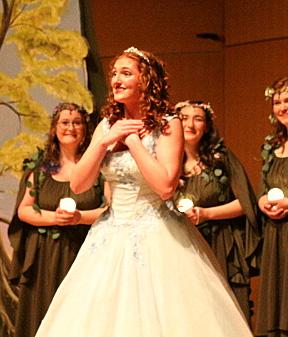
by Arlette Villalobos), letting out a relieved “phew” when Cinderella’s iconic glass slipper did not fit her. The first time Cinderella (Violet Madson/Camille Brennan) revealed her blue ball gown and glittering tiara, members of the audience murmured in awe. Vocalists from opposite casts were even spotted in the audience, supporting their fellow artists on their nights off.
The operatic music enhanced the already familiar tale in ways that would not be possible in similar art media, according to the cast and crew. As Blaisdell put it, “Because this opera was written in the late 1800s and was written for the commercial opera theaters of Paris, the music of the opera is accessible. Still complex at times, but accessible. Some moments have an almost cinematic, film-score feeling to them, while it also has moments of gorgeous, lyrical melodies.”
Unlike standard musicals, operas often use their librettos not only to accompany the action onstage but also to inform it. “Cinderella” was no different. There were times when the orchestra, conducted by Director of Orchestras Nikolas Caoile, had its own moments to shine, setting the tone of a scene or allowing audiences to better understand a character’s feelings through the underscore alone.
The show concluded with its happy ending, as did the weekend of performances. The audience gave standing ovations and the vocalists sent the audience off by singing the words, “That’s all, thanks for coming, goodnight!”
NOTE: Due to how double-cast shows work, there is a chance that audience members saw a different cast than staff at The Observer did. When discussing characters played by two people, both actors’ names were included, with the “odd” cast member listed first and the “even” cast member second.

Noah Lovell Staff Reporter
Baseball is a game of inches and the Wildcat family witnessed that Saturday night. It came down to the end, bottom of the ninth inning, tied at seven apiece, bases loaded with the Mariners ready to score.
After a line drive in the ninth and final inning, the Mariners ended the night in an 8-7 walk-off victory, creating a night with the Seattle team that CWU students will never forget.
During the April 11 game, the Mariners went up against their biggest rival, the Houston Astros. The game began after CWU Alumna and Foundation Board Chair Janet Backus took the mound and threw the ceremonial first pitch.
Senior Law and Justice major and current Associated Students of Central Washington University (ASCWU) Student Life and Facilities Director Alexa Silva got the opportunity to go on the field for the ceremony and described it as “a once-in-alifetime opportunity.”
Silva recounted how special it was sharing the moment with Backus, stating, “She was really ex-
cited, her son was there, her husband, it was just adorable just to see her family and she was kind enough to introduce us to everyone who worked for the Mariners.”
Fifth-year Instructional Foundations major and current ASCWU President Hondo Acosta-Vega also got the opportunity to be on the field for the ceremony and see the first pitch. Acosta-Vega described the feeling as “surreal, even now to say I was on the Mariners field.”
The Mariners took command early in the first inning after Catcher Cal Raleigh hit a two-run home run, putting them up 2-0 in the first inning. That lead wouldn’t last for long, however.
The Astros took off the next three innings, putting up seven unanswered runs, leading 7-2 at the end of the fourth inning. In many ballparks across Major League Baseball (MLB), fans at this point might’ve been demoralized, but not Seattle.
The Mariners struck back in the fifth inning after Shortstop J.P. Crawford hit a ball to center field, helping two runners get home, making the deficit 7-4, still in favor of the Astros. Up next,
Raleigh hit a fly ball to left field, getting out but allowing infielder Leo Rivas the chance to score, putting two points between the Mariners and the Astros. Center Fielder Julio Rodriguez was then up to bat, smashing the ball past center field, hitting a home run that brought him and Crawford home, tying the game up at seven apiece. The stadium roared in excitement, especially the CWU student section.
Crawford was the hero of the night, hitting a line drive into left field and bringing in the game-winning run. In the end, Crawford had two hits, two scores and helped three runners get home, making him responsible for five of the Mariners’ eight runs.
Acosta-Vega described the energy and faithfulness of the ballpark along with fellow Wildcat students, even when the Mariners were down, commenting, “It was ecstatic, not just CWU students, but all the energy in the stadium and just seeing how much fun the CWU students had was really great.”
The Equity and Services Council (ESC) hosted a night market on Friday, April 17, in the SURC Corridor, where seven ESC organizations set up booths and sold food, beverages and other goods. Attendees received a “passport” to be signed by the organizations, and if they visited every booth, they received either a sticker or a pin of their choice.
Gabriel Carillo Valdez, a first-year Aviation Management student, had a nostalgic reason to visit the night market. “I saw various foods that reminded me of the markets I would visit back in Texas and decided they were worth getting as a
reminder of home,” Valdez said. “I got two things, a pupusa and a horchata. I specifically wanted to support [LatinX Student Organization, or LSO] since it was the food I was most craving for. If I weren’t broke, I would have loved to get something from each organization.”
Of the seven organizations tabling at the night market, five of them sold food and beverages, often coming from the culture that the organization represents. LSO sold pupusas and agua fresa, FASA (Filipino American Student Association) sold lumpia and ube rice krispies and MEChA (Movimiento Estudiantil Chicane
de Aztlán) sold horchata and jamaica. Similarly, FGSO (First Generation Student Organization) sold churros and the BSU (Black Student Union) held a cake sale.
Not every booth sold food, however. PISA (Pacific Islanders Student Association) didn’t sell anything, but rather gave out candy and stickers for free while advertising for an info session they were hosting. EQuAL (Equality through Queers & Allies) sold beaded bracelets and keychains representing the colors of various LGBTQ+ pride flags.
Meisner Dunlap Copy Editor
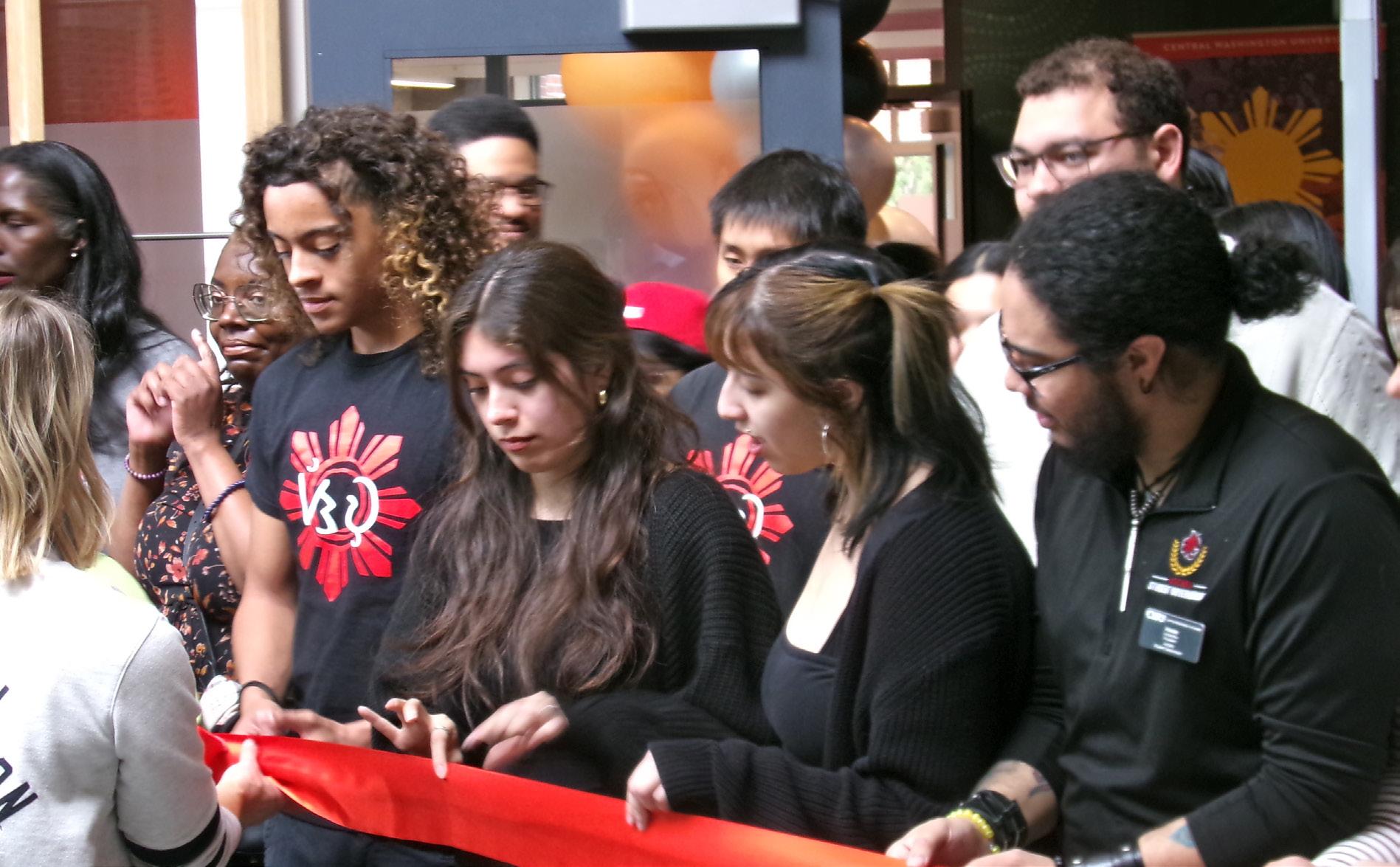
To celebrate the Multicultural Center’s (MCC) new facility, faculty, staff, students, state legislators and other Kittitas County community members gathered just outside the Zabrina Jenkins Family Welcome Lounge of the MCC on April 10 for a ribbon-cutting ceremony and official tour.
Mal Stewman, the director of the MCC, began the series of ribbon-cutting speeches by recognizing everyone who helped build the facility and form the new organization. “Today is about more than a building. It’s about the people that made this happen,” Stewman said.
Stewman, along with other keynote speakers, thanked all the students who fought hard to see the MCC happen and come together. The students Stewman acknowledged included members of the Associated Students of Central Washington University (ASCWU) and the Equity And Services Council (ESC).
According to the flyers in the foyer just outside the MCC, students across campus wanted to see a prayer room, a dance space and other unique opportunities in the new MCC. Stewman acknowledged the contractors and architects for meeting every request listed on the flyers.
In his speech, ASCWU President Hondo Acosta-Vega described the MCC as “a space that demonstrates the power the community has when it comes together, when others try to suppress the blood in our veins or the lives we celebrate and the songs we sing.”
“The Multicultural Center will stand as a beacon of hope amongst this time of darkness. Never again will our cultures and history be forgotten or lost and I cannot wait to see what our students bring to CWU,” Acosta-Vega continued.
Veronica Gomez, the Vice President for Student Engagement and Success, has worked in the northwestern section of the first floor of Black Hall ever since it was the Center for Diversity and Social Justice. She saw the area evolve to the Diversity and Equity Center and now to the Multicultural Center.
“I spent countless hours here meeting with students, listening to their stories and building community alongside them. For many, especially our multilingual students, they felt they saw the center as a place for them to be able to speak in their native tongue and be able to see themselves reflected in the space,” Gomez said in her speech.
“It was a place where their names were pronounced correctly, where they didn’t have to change their name and make it easier for others. In that, something powerful also happened. This became a place as those before us spoke, a place where students found themselves and where they became even stronger and more confident in versions of who they are,” Gomez continued.
President Jim Wohlpart acknowledged everyone contributing to the evolution of the MCC for staying flexible as their diversity, equity and inclusion (DEI) dreams had to change due to budget concerns.
“[The ASCWU] dreamed that dream and students worked with the administration on a variety of plans that captured those dreams and those hopes and it landed on a standalone building,” Wohlpart said. “Unfortunately, the funding in the state did not allow us the $15 or $20 million that it would have taken to develop a standalone building. So, we got the funding and we started working with the students on a different dream, something new and different.”
“I want to acknowledge that when your dream shifts, it’s hard to give up what you were imagining and take on something and then examine our beliefs, our hopes, the dreams we have created in our hearts and in our imaginations,” Wohlpart continued.
The MCC covers 12,000 square feet, Wohlpart stated. He mentioned that CWU’s Multicultural Center is even larger than that of Western Washington University (WWU), which has 6,000 more students.
“This renovated space, now called the Multicultural Center at Central Washington University, serves our entire student population, providing an opportunity for interactions across race and ethnicity and background in history, languages and literacies,” Wohlpart said.
Zabrina Jenkins, a CWU alumna, trustee, longtime donor and the namesake of the MCC’s Welcome Lounge, served as the last keynote speaker of the ceremony.
“My decision to make this gift is rooted in gratitude and legacy. I am here today because of the people who poured into me long before I ever imagined standing at a podium like this. I want to honor my late parents, who were early supporters of the CWU Foundation,” Jenkins said. “They believe deeply in the power of higher education and in the responsibility to lift others as you climb their example of generosity, service and benevolence. They shaped my life and made this gift possible.”
After Jenkins finished speaking, the students who contributed to establishing the MCC cut a ribbon
to honor their completed mission. During the tour of the new facility, several MCC student employees and other Wildcats expressed gratitude for the successes the MCC has had so far.
For example, Special Education major Synthia Gomez, who already regularly uses the MCC as a resource, said, “I think it’s doing well at representing multiple cultures, not just one or two. There’s multiple and everybody’s represented.”
Other students highlighted specific resources and activities within the MCC space. For instance, Bianca Gil De Lamadrid, the MCC Social Media Coordinator, majoring in Law and Justice, said, “One of the main things I think they’re doing great right now is with our dance room. I’m part of the Folklorico myself and I think having that space here, especially in the Multicultural Center, is one of the greatest things.”
Some students also encouraged the MCC to continue to make minor improvements so that the organization can become even more effective and meaningful.
For instance, being of Indigenous descent himself, Sociology major Aaron Whiteman said he encourages the MCC to add a student organization specifically for those of American Indian heritage.
“I think it would take a student organization,” Whiteman said. “It’s definitely growing and how they could do it is really supporting a spot for tribal or Indigenous students.”
Public Policy student Rachel Haley stated that the MCC could improve its publicity by “sending out more announcements or recognition with different months, such as different heritage months, women’s history, things like that.”
“They’ve already done a good job, but I think making sure they stay on top of every kind of recognition day or month up there that’s happening,” Haley continued. “Posting on social media or sending out a quick email would make a difference in having students feel more recognized.”
Meisner Dunlap
Copy Editor
“Resilience”
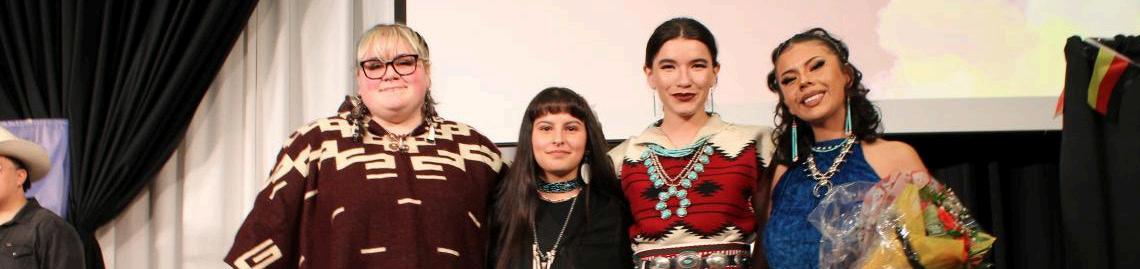
Rooted in Resilience” was the theme of this year’s Parade of Nations. Lashaya Doty, the Student Program Coordinator for the Multicultural Center (MCC), organized this year’s Parade of Nations and set the event’s theme as “rooted in resilience.”
Meaning of “Rooted in Resilience”
Cris Veloz, who danced and represented Movimiento Estudiantil Chicanx de Aztlán (MEChA) at the Multicultural Center’s event on Tuesday, April 14, in the SURC ballroom, recognized that his performance was “rooted in resilience.”
“Rooted in resilience really means that, through the history of your people, through all that fighting, that you got the opportunity to shine, to show what you’re capable of, to show that the effort and fight that your ancestors put really shows that you have the opportunity to shine even better than the people who came before you,” Veloz said.
Lashaya Doty, the Student Program Coordinator for the Multicultural Center (MCC), organized this year’s Parade of Nations and set the event’s theme as “rooted in resilience.”
Parade of Nations program summary
The event began with a short performance by the Black Lodge Singers, an Indigenous northern drum group from White Swan, Washington.
The rest of the entertainment acts included spoken word, fashion walks and dance routines. All the performers based their acts around their ethnic and cultural identities.
The crowd got especially loud during the parade’s fashion walks, with my members yelling and cheering their own national cultures along. “The fashion walks–oh my god, they did such a good job,” Law and Justice student Alexa Silva-Cabrera said.
Spoken word
Parade of Nations speaker Liz Storm wrote a poem titled “A-Z on our Economy,” which addressed the hardships Indigenous people currently experience in the United States.
“Abuse from the outside world. Banned to do what we want. Constantly told who we are is wrong. Diversity between communities. Each and everyday we get told that’s a sin. For every mother and father who turns away from their child they lose a life,” Storm recited.
MCC Assistant Director Justin Santoli recited a poem that his grandfather, Jaime Gates, wrote, called “Four Teddy Bears.”
“Four little ones rocking on the old sofa, with four sweet giggles for Grandpa. Four stuffed animals in a little angel’s dream; four little bears in my baby’s crib,” Santoli recited.
According to Santoli, Gates wrote “Four Teddy Bears” two months after his oldest sister was born. “I think this poem is particularly striking because it represents the legacy of my grandfather, who came here for a better life and worked hard to create opportunities for his children that then allowed myself and my siblings to pursue our dreams,” Santoli said in his introduction to the poem.
Then, MCC Program Coordinator Andesha Birch recited “Dutty Tough” by Louise Bennett, “The sun is shining, but things aren’t bright. The pot is boiling, but there isn’t enough food. The river is flooding, but water is still scarce. Rain is falling, but the ground is still hard,” Birch recited from Bennett’s poem.
The Dancers
Silva-Cabrera, along with 10 other performers, concluded the event with a folklorico dance routine. “The three songs that we performed today are from Sinaloa,” Silva-Cabrera said. “It’s a very, very creative and very loud type of dance, very expressive and each region in Mexico is different in
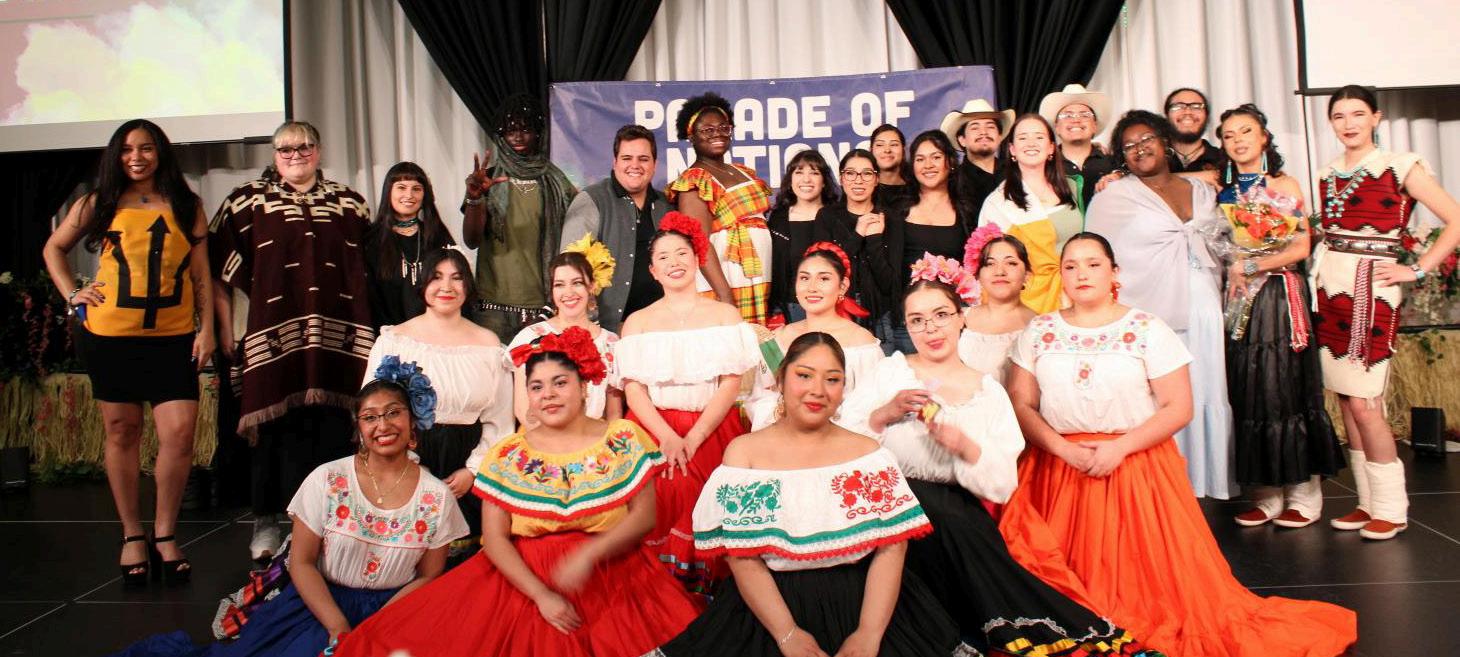

how they dance.”
“I think there’s so much culture and beauty in Mexico, especially with all different regions of Folklorico,” SilvaCabrera said. “Sinaloa is just one of them. There’s so many. But I’m so happy to be able to bring that today and show people that there’s different dances for different parts of Mexico and hopefully, in the future, we can showcase many, many more.”
Jose Milanes, one of the MEChA dance performers, said he felt happy with how well the event showed his Mexican culture.
“[This event] definitely made me even prouder to be Mexican, especially with everything going on right now, where being Mexican seems like as if that was something bad. Being able to do this event made me realize that I’m Mexican and I’m proud,” Milanes said.
Corazon de cultura: Dance planned for May 2
After the “Rooted in Resilience” event ended, Milanes and Veloz advertised MEChA’s upcoming signature event, Corazon de cultura.
Corazon de cultura will take place on May 2 in SURC Room 301 from 6-9 p.m. According to Milanes, the MEChA event will feature dancing, food and more.
“If I’m allowed to do the dance that we performed tonight, we will be performing, but it’s not just the only dance routine that we will be doing,” Milanes said. “At the end of the night, it’ll be an open dance floor. So, get your knees ready. Prepare to have fun.”
STUDENT REMOVED FROM ASU AFTER EVENT Copy Editor
Wood
At the event, two students brought an American flag and began waving it during performances and speeches. Following their actions, one of the two students was unanimously impeached as an officer of the Asian Student Union (ASU).
The students were later posted on Fizz, a students -only social media app, in a post that gained over a thousand 1,000 likes with students stating they were blocking large portions of the performance.
“Okay, you have your flag there, wave it … I was assuming they were gonna be a part of some type of performance when they got there or just kind of showing their support,” Cris Veloz, a dancer in the event, said. “But, the way they were constantly moving the flag … I’ve heard from other people that they were heckling people on stage … It’s really annoying.”
Multiple attendees at the event alleged that one of the two students tried to take down a flag that served as decoration for the event, seeking to replace it with an American flag. The student was removed from the Asian Student Union (ASU)from ASU following the allegations, with the club sharing a statement announcing the removal on their Instagram story.
“Following a review of the incident and in accordance with our club constitution, the board members have unanimously voted to impeach the officer involved,” the Instagram story stated.
“Following a review of the incident and in accordance with our club constitution, the board members have unanimously voted to impeach the officer involved,” the Instagram story stated.
Orion Phillips Columnist
More than 50 years after the last human moon mission, NASA (National Aeronautic Space Agency) sent a crew of four astronauts to fly around the moon.
What was the Artemis II mission?
The mission was a 10-day crewed lunar flyby. It tested the equipment’s ability to support human life and was crucial for gathering information that would inform a future lunar base. Additionally, it gave the world new views and images of the far side of the moon.
What did they learn on the mission?
The crew flew around the far side of the moon, the furthest any humans have ever been away from the Earth. The human eye is more sensitive to minute color differences that a camera cannot capture, and the crew reported different mineral differences visible in subtle shades of brown, gray and even blue. In addition to discoveries about the moon, the mission revealed how the spacecraft resists radiation, how the heat shield works and how laser communications work.
Why didn’t we land on the moon?
Like with the Apollo missions, there are several test flights before we land on the moon. The Artemis II mission tested the Space Launch System (to get the spacecraft into space) and features aboard the spacecraft to support human life. While we didn’t land on the moon on this mission, it was incredibly informative for future missions.
The Crew
Reid Wiseman: The crew’s commander.
Christina Koch: The first woman to go on a lunar mission.
Victor Glover: The first Black astronaut to go on a lunar mission.
Jeremy Hansen: The first non-American to leave Earth’s Orbit.
Mission Highlights:
Carroll: The crew discovered a crater on
the far side of the moon, and they unofficially named it after Carroll, Reid Wiseman’s wife, who died in 2020.
Rise: This cute plush was designed by 3rd grader Lucas Ye and will be used by the crew as a zero-gravity indicator. Inside the plush is an SD card with names submitted by people on Earth to catch a ride around the moon.
The Toilet: There were many troubleshooting issues with the toilet, often prompting reactions from people on Earth and leading to the conclusion that a workday in space isn’t that different from a workday in the office.
The Livestream: NASA livestreamed the entire mission, switching between views of the crew, the outside of the spacecraft, mission control, and various interviews and educational materials.
The Artemis II crew splashed down off the coast of San Diego at 5:07 p.m. PDT on April 10, 2026, after a successful mission.

Ethan Kennedy Columnist
Amazon’s ‘The Boys’ has dropped the first three episodes of its fifth and final season. Released on April 8, the first episode was called “Fifteen Inches of Sheer Dynamite,” and the second titled “Teenage Kix.”
‘The Boys’ will release a new episode every Wednesday until May 20, when the series finale, “Blood and Bone,” will be released. The third episode aired April 15, and is titled “Every One of You Sons of Bitches.”
The fourth season ended with the members of The Boys getting captured, all apart from Billy Butcher and Annie. Hughie, Frenchie and MM (Mother’s Milk) start this season in a Vought-built internment camp. Homelander, along with a majority of superpowered individuals (supes), now run the United States government behind the scenes.
The opening scene had my jaw on the floor, with Homelander giving a speech to a crowd of his supporters. Simultaneously, Starlight infiltrated backstage while defending herself from Black Noir. What had me speechless was the screen behind Homelander glitching to then reveal his true thoughts and intentions when trying to save civilians.
‘The Boys’ as a show can get extremely ‘meta’, incorporating scenes and characters that parallel our society. So, naturally, the supes defend Homelander by claiming ‘AI’ was used. Homelander remains in a position of power this season so far, but his followers and supporters are diminishing.
Butcher meets with Kimiko, and the two join up with Starlight to rescue the rest of the boys. During the rescue, Homelander arrives and all hell breaks loose. Amid the chaos, the unsung hero A-Train Reggie Franklin arrives, carrying with him his own slow-motion speedster scene.
Sadly, I was right… A-Train was indeed on the chopping block this season. After Reggie saves The Boys, Homelander chases him down and kills him. His last words being, “What was I so afraid of? You’re nothing. You’re just an empty suit. Take away these powers and what are you? A pathetic, weak, sniveling loser.”
Reggie goes out laughing in Homelander’s face, and the episode ends there with nothing to fill the silence during the credits, leaving you with your own thoughts.
The creator and showrunner, Eric Kripke, responded to questions on whether season five will have any big battles.
“I mean, there are not full battle scenes because we still don’t have Game of Thrones’ budget, but there are a lot of very direct confrontations,” Kripke said. “A lot of people that you want to see smashing into each other smash into each other. I hope it’s cathartic and emotionally satisfying.”
Not to say that Kripke lied, but the first episode alone had multiple action scenes that lasted 10 minutes consecutively. The action scenes, in my opinion, have been phenomenal, delivering shock and awe with each confrontation. I think the reason the first episode was titled “Fifteen Inches of Sheer Dynamite” was that this season starts with a bang.
The second episode, aptly titled “Teenage Kix,” kicks off with Homelander deciding to wake up his genetic father, Soldier Boy. Played by Jenson Ackles in the third season, the character returns for the final season, awoken from stasis.
The boys’ ultimate goal this season is to perfect and spread a ‘supe’ virus. By the second episode, the virus is made and ready to be tested.
‘The Boys’ remains as gruesome as ever with their violence this season. The production team used a mix of practical effects and computer-generated imagery (CGI) when portraying the supes’ powers. A notable example is the character Love Sausage.
By the third episode, Soldier Boy is recruited into the “Seven” publicly, which upsets Homelander, who reveals that he is Soldier Boy’s son. Homelander, while on a psychotic break, envisions Madelyn Stillwell in a biblical-esque style, showing his further descent into madness.
I had been wondering when Ryan would appear, being a focal character in season four, he did not appear in the first two episodes of season five. Episode three cleared those concerns right away, having him in the opening scene and putting Ryan front and center for the episode.
After a heart-to-heart between Ryan and Butcher, if you want to call it that, Ryan agrees to face his father. The climax of the episode has Ryan confronting Homelander about Becca, Ryan’s mother. The two clash and trade blows, ending with Homelander having an “Omni-Man” moment, leaving Ryan beaten and bruised.
Starlight leaves Hughie and the rest of the group after a run-in with Cindy, a telekinetic and quite dangerous “supe” who leaves Annie scarred when almost killing Hughie. Homelander sets course to obtain immunity from the “supe” virus.
Soldier Boy appears in quite a few scenes in the trailers that have not been featured in the show yet, most prominently standing next to Jared Padelecki’s character, who has not been seen yet either.
Padelecki has been seen in trailers showcasing what looks like super speed. During a panel at the FACTS convention, Padelecki himself revealed his character would be Mister Marathon, a notable character from the comics who has been subtly alluded to in the show before.







Designed
by Z Morris
Divined
by
Ethan Kennedy
Aries (March 21 - April 19): They’ve made memes about you! Don’t let your god complex take over. It’s okay that you have a human side, don’t need to lose that too. Your member of the Seven: Homelander.
Taurus (April 20 - May 20): Episode three and ya gone. Yo where you at? Where did you go? You just disappeared… Your member of the Seven: Translucent.
Gemini (May 21 - June 20): Can’t stop the A-Train babayyyy! Well… okay uhm. Still can’t stop me though, so like… yeah. Your member of the Seven: A-Train.
Cancer (June 21 - July 22): Wait a minute, aren’t you part of the X-Men? Wait a minute, don’t you have ice abilities? Wait a minute, I thought you were a good guy… Your member of the Seven: Lamplighter.
Leo (July 23 - Aug. 22): DUDE! Your gills are talking… Silence Kevin. Okay I’m sorry, you are… THE PEAK. Go talk to an octopus. Your member of the Seven: The Deep
Virgo (Aug. 23 - Sep. 22): Sneaky lil crap, saw you out of the corner of my eye. Are you going to say something? Hello…? Your member of the Seven: Black Noir.
Libra (Sep. 23 - Oct. 22): What, you in some kinda boy band? Yeah go along Drummer Boy, yeah I know that was your nickname. Your time in the Seven was… short lived. Your Member of the Seven: Supersonic.
Scorpio (Oct. 23 - Nov. 21): Well sweet corn chilli and a hot plate of butter balls… I don’t know what that was. I am so sorry. Your member of the Seven: Firecracker.
Sagittarius (Nov. 22 - Dec. 21): You’re one of the only people to me Homelander bleed btw. Good stuff good stuff. You will be missed dearly. Your member of the Seven: Queen Maeve.
Capricorn (Dec. 22 - Jan.19): You gotta be playing chess or something cause I’m playing checkers and don’t understand a thing you just said. En joy your lil Taco Bell sponsor though. Your member of the Seven: Sister Sage.
Aquarius (Jan. 20 - Feb.18): Annie January has got to be a fake name. Alrighty goody two shoes. Your member of the Seven: Starlight.
Pisces (Feb. 19 - March 20): Give it up for his return. Give it up for the man, the myth and the legend… Your member of the Seven: Soldier Boy.
1 p.m. to 3 p.m. - Upcycling Unwrapped: Understanding Creating Reuse | SURC 137
10 a.m. to 3 p.m. - Wildcat Academic Mentoring Cornhole Tournament | SURC Rec Center
12 p.m. - 3 p.m. - Baseball vs Saint Martins | CWUJ Baseball Field
12 p.m. to 2 p.m. - Softball vs Montana State | Gary and Bobbi Frederick Field