Friday, February 27, 2026
Volume LVII, Issue 21 Est. 1969

Friday, February 27, 2026
Volume LVII, Issue 21 Est. 1969
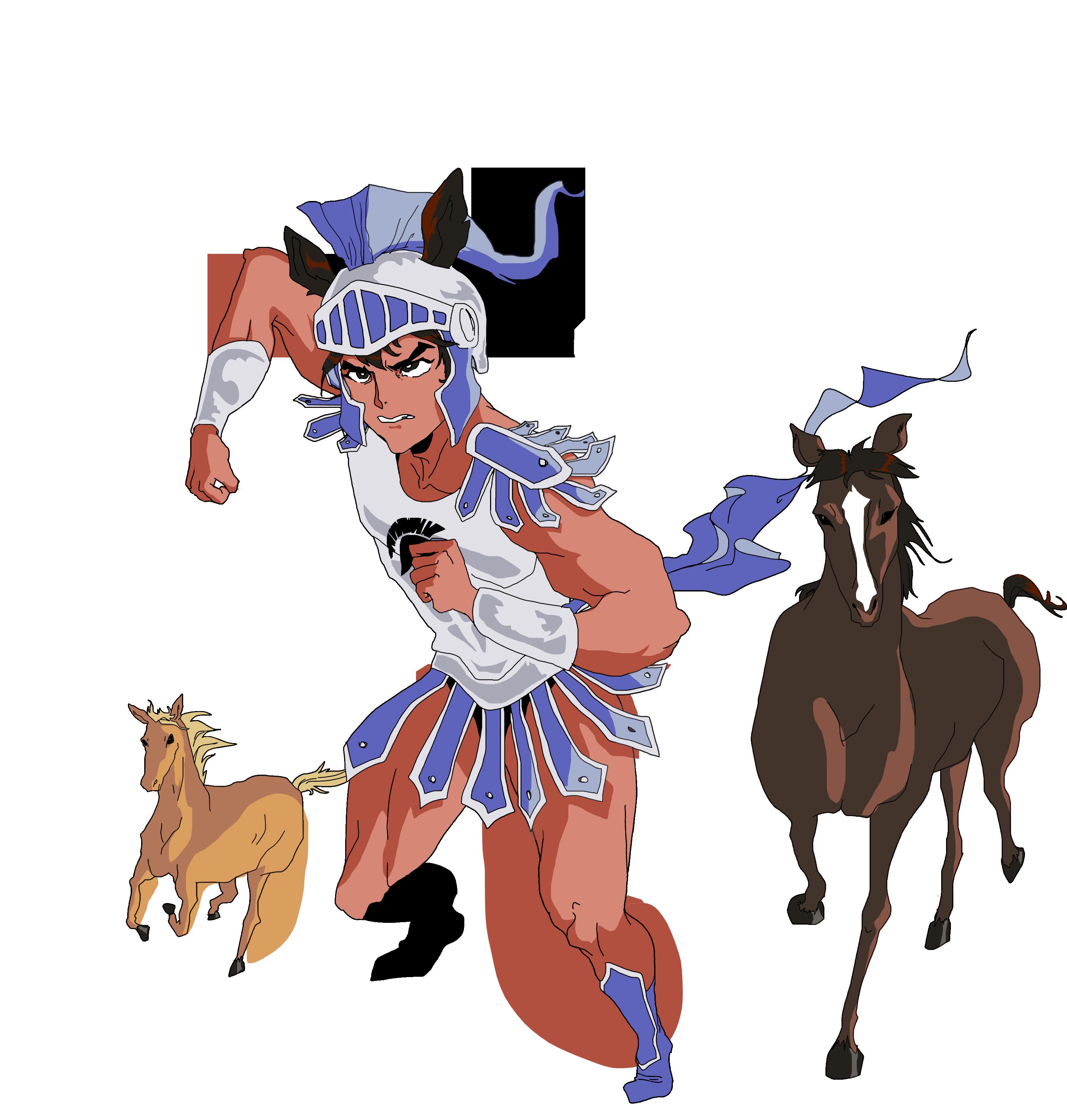
Because The Observer could not obtain permission to use likenesses from the Uma Musume franchise, we have instead included a graphic demonstrating its anthropomorphized racehorse concept. Lucas Yang/The Observer
Penelope Cloonan Life Editor
Friday, Feb. 27, the United States premiere of “Uma Musume: Pretty Derby - Beginning of a New Era” (2024) is coming to Strosacker Auditorium. As part of the CWRU Film Society’s third-quarter lineup, they will host three showings at 7 p.m., 9 p.m. and 11:59 p.m.
“Uma Musume: Pretty Derby,” the game, is set in a world in which no horses exist. Instead, these horse-girl hybrids race each other in the competitive circuit. The horse girls are based on real-life Japanese race horses, both in name and personality.
Based on the video game of the same name, “Uma Musume: Pretty DerbyBeginning of a New Era” (2024) tells the story of Jungle Pocket’s journey to become the fastest horse girl, encountering a polar-opposite rival, obsession and the difficulties of horse girl racing along the way. This novel premise is part of the reason the property garnered a cult following.
It is from this cult following that the idea for the screening emerged. Second-year Film Society member, Say Mead, said the idea came from the club’s interests, “People like anime, so everyone would just start referencing ‘Uma Musume.’ And it just became, like a funny little inside joke.”
It was a happy accident that Case
Western Reserve University was part of the premiere. After interest in the movie was shown, third-year and Film Society Director Eddie Rodriguez reached out to the distributors to request a showing for their fourth quarter. “I emailed the distributor while asking if we could show it in April,” said Rodriguez, “And they were like, no, but you can premiere it instead.”
From there, the Film Society was able to adapt its previously planned showings to accommodate the premiere. Instead of removing any films from their lineup, Saturday will instead have a double feature. “Uma Musume: Pretty Derby” coupled with this weekend’s showings of “Killer Bean Forever” (2008) and “Parkour
Civilization” (2024), creating what Rodriguez dubbed “Brainrot weekend.”
As funny as the concept of an anime horse girl movie premiere sounds, its showing also holds a deeper purpose. “We are trying to improve the diversity of our programming,” said Rodriguez. This premiere marks an effort to bring overseas films and diverse directors to the CWRU community and further enrich the campus zeitgeist.
To hear it straight from the horse’s mouth, when asked about their final thoughts on bringing a premiere to campus, Rodriguez said, “I am bewildered [the] Film Society is premiering a movie about anime horse girls racing, as in regular horse racing.”
Alyssa Wang News Editor
On Feb. 12, Ohio state representative Tom Young introduced House Bill 698, also known as the S.B. 1 Compliance Supplemental Appropriation Act, to the Ohio House of Representatives. The bill seeks to implement changes to higher education in Ohio.
The proposal builds upon Ohio Senate Bill 1, signed by Governor Mike DeWine in March 2025, which banned diversity, equity and inclusion efforts (DEI) at all public universities across the state. House Bill 698 aims to enforce that law by withholding funds from universities that do not comply with the state’s anti-DEI efforts.
According to Spectrum News Cleveland, a press release from Young’s office stated that “the bill is meant to ‘strengthen transparency, accountability and compliance’ at institutions of higher education within Ohio.”
In an interview with News 5 Cleveland, the executive director of the Ohio Conference of the American Association of University Professors, Jennifer Price, expressed her disapproval of the bill.
“It’s a huge disappointment to see them coming out with another bill that just further undermines and erodes higher education in Ohio,” she said.
After its adoption, Senate Bill 1 met resistance from students, professors and civil rights groups, including the American Historical Association, the American Civil Liberties Union and K-12 unions. The bill also required schools to agree not to influence student opinion on “controversial” topics, implemented a mandatory civics
course and banned DEI coursework and initiatives. However, House Bill 698 expands on this legislation further by tying institutional funding directly to universities’ compliance.
Young defended the bill in an interview of his own with News 5 Cleveland.
“Senate Bill 1 sets the expectations, but House Bill 698 ensures that these expectations are verifiable and enforceable,” he stated.
Although House Bill 698 mainly applies to public colleges, private universities also face some financial consequences. If they don’t follow similar terms, they would be ineligible to receive funding tied to the Governor’s Merit Scholarship, which offers up to $5,000 annually to encourage Ohio’s top students to attend in-state colleges. In 2024, the scholarship’s first year, about 20% of recipients enrolled at a private college in Ohio, with Case Western Reserve University enrolling the majority of students. Following the 2024-25 school year, CWRU ended its DEI initiatives, including removing the DEI lecture during first-year orientation.
In response to the bill’s proposal, one male student, who requested anonymity, said he believed withholding state funding is a productive accountability method for schools.
“The concept of DEI makes companies and schools look at people of different races and classes in a different light. They’re treating people differently based on their race, class and sex.” The student claimed that “United Airlines lowered Federal Aviation Administration (FAA) scoring requirements to meet its quota of hiring a certain number of female pilots and pilots of color. It shouldn’t make sense to
hire less qualified pilots just so the pilot team can be diverse. If we shouldn’t use it in the workforce, it doesn’t make sense to use it in schools.”
House Bill 698 would require public colleges and universities to formally certify to the Ohio chancellor of higher education that they are complying with the state’s Revised Code—a collection of laws currently in effect in Ohio. If an institution fails to submit this certification, the state would withhold its instructional funding; and if schools submit a false certification, they could also lose funding and face civil penalties. The bill also states that these schools cannot attempt to preserve banned DEI activities under a different name or reorganized departments.
After hearing about the bill’s funding penalties, an anonymous student at American University commented on the legislation.
“I was definitely really disappointed to hear about the recent legislation doubling down on the anti-DEI bill,” they said. “For a lot of people, DEI initiatives are not abstract political ideas; they’re real support systems for students who often feel overlooked and marginalized. College should be a place where we are encouraged to engage with diverse perspectives, learn from each other and prepare to enter a world that is becoming increasingly interconnected.”
As Ohio institutions adjust to the new bill, its long-term effects on campus programs are still developing. In compliance with the bill, public colleges and some private institutions are already changing their DEI initiatives, though the bill’s full impact remains unclear.
Darcy
Chew Executive Editor
Hannah Johnson Director of Print
The Case Western Reserve University Undergraduate Student Government held their Open General Assembly this past Tuesday, Feb. 24 in Thwing Atrium. The assembly opened with comments from Vice President of Student Affairs Travis Apgar and Interim Executive Director and Senior Director of Operations of University Health and Counseling Services Melissa Borowski.
Apgar emphasized the importance of Student Affairs, highlighting the 23 departments and offices in the division and the mantra it operates by: “You’re welcome here. You belong here. You’re supported here, and you’ve got this.”
He then discussed the reorganization of the division, spotlighting a new project called Student and Family Connections, meant to “bring together a lot of those offices that work with student organizations [to] ensure that every student who comes [to CWRU] has a meaningful connection.” In turn students would ideally feel like they are part of a community, “do[ing] much better academically [and] personally [at and beyond CWRU].” Apgar also wants to get families more involved in
the education of their students by keeping them informed about deadlines, in addition to first and second-year processes.
Another key topic was mental health and the university’s efforts to help support students’ well-being.
“We’re actually in the process right now of hiring two senior-level leaders for University Health and Counseling. Both of them will be assistant vice presidents reporting to me,” Apgar said. “One will focus on [the] physical health side of things, the other will focus on the mental health side of things.”
Alongside mental health support, Apgar emphasized the various academic support resources for students such as tutoring and group study sessions, and for crisis support he pointed to the Public Safety Dispatch Center and the Office of Public Safety as resources. “We also have things like our student emergency fund,” Apgar said. “So if there’s a financial crisis and you need some money to get by, we have a fund available for that.”
Borowski made a short speech after Apgar, covering the basics of University Health and Counseling Services and mentioning that the department is “available to all students, as long as [they are] enrolled with at least one credit hour.” She said that the health insurance a student has doesn’t matter as they offer services at no cost to

Cleveland salt shortage eases as city restores winter road reserves By Colton Molesky From Cleveland 19 News
Cleveland moves to end federal oversight of police after more than a decade By Nick Castele and Frank W. Lewis From Signal Cleveland
Who is on Ohio’s 2026 primary ballot? See names, important voting dates By Alex Perry From The Columbus Dispatch
Severe Storm Batters Northeast, Snarling Travel By Gareth Vipers, Joseph De Avila and Jack Morphet From Wall Street Journal
Rep. Ilhan Omar demands investigation after arrest of State of the Union guest By Mariana Alfaro From The Washington Post
Trump’s Push for Election Power Raises Fears He Will ‘Subvert’ Midterms By Shane Goldmacher and Nick Corasaniti From The New York Times
students. For mental health concerns, students also have access to the university’s TimelyCare partnership.
“If you’re enrolled in spring and enrolled in fall, you can utilize TimelyCare over the summer. In the United States, if you’re an international student and you go home to an international country, as long as you have the app downloaded, you can use the call panel service so you can still access in-the-moment mental health support.”
Similarly to the Student Emergency Fund, CWRU also offers the Student Mental Health Fund to help students cover costs of any mental health care they have, even outside of emergencies.
During the event, there was a discussion about where information about events like Wellness Wednesdays should be posted, and Borowski took suggestions from participants. Some attendees suggested posting events on an electronic board in Sears think[box], and another mentioned the practicality of social media. Another participant highlighted the oversaturation of CampusGroups, stating that it makes it difficult to find events unless someone knows exactly what they are looking for.
There is a plethora of resources available to students, and events like these are meant to provide transparency and bridge the gap between students and the administration.
Vance says Minnesota’s Medicaid funds halted as part of Trump’s ‘war on fraud’ By Lauren Gambino From The Guardian
Trump Officials Seek to Break Editorial ‘Firewall’ at U.S.-Funded News Agen- cies By Minho Kim From The New York Times
DOJ to Review Whether Epstein Files About Trump Were Improperly Withheld By Sadie Gurman From Wall Street Journal
Trump administration’s third-country deportation policy is unlawful, judge rules By David Nakamura From The Washington Post
U.S. Will Offer Embassy Services in a West Bank Settlement for the First Time By David M. Halbfinger From The New York Times
Riya Kulkarni Copy Editor
The Netflix miniseries “Agatha Christie’s Seven Dials” presents a story filled with suspense, humor and complexity through three one-hour episodes. After growing up with David Suchet’s portrayal of Hercule Poirot in “Agatha Christie’s Poirot,” I was very interested to see another Agatha Christie adaptation, and it did not disappoint. Initially drawn in by the visuals, I stayed for the plot and characters. I will admit that I have not read the book this show was adapted from, so these insights will come only from the show.
Turn your clocks back to the year 1925, and head over to England! Meet Lady Eileen “Bundle” Brent (Mia McKenna-Bruce), a young woman who we learn very quickly is sharp, discerning and curious—a dangerous combination that is perfect for a detective. She lives with her mother, Lady Caterham (Helena Bonham Carter). Bundle’s brother, Thomas, died in the war, and her father, the late Lord Caterham (Iain Glen), died of the Spanish flu five years prior. This hardship turned Lady Caterham into a recluse, remaining isolated from the outside world.
It is when Lady Caterham rents her estate to Sir Oswald Coote (Mark Lewis Jones) for a party that things begin to go wrong. Gerry Wade (Corey Mylchreest), the man who may have proposed marriage to Bundle in a matter of days, is
found dead in his bed the next morning after overdosing on a sleeping draught. Seven clocks are found on the mantle, their ring alerting everyone to the situation. It is deemed an accidental death, maybe even a suicide, but Bundle is not convinced. So begins the quest to figure out what could have happened before the bloodshed and the schemes escalate—or the perpetrator gets away with their plans.
The feeling of suspense is well maintained throughout the story; any long silence makes you wonder whether another person has died. While not gruesome, these deaths are depicted on screen, and our characters may be a little too friendly with guns. No character truly has plot armor, though Bundle seems to have some from the way she deftly avoids any physical conflict and survives jumping out of windows several times. We are also classically conditioned to associate the ticking of the clock with danger, hiding under the score and growing louder to build this suspense.
Perhaps as a result of this being a book adaptation, the story is sound and so much is told in these three episodes. We’re captivated until the very end as nothing was as it first seemed. One finds themselves yelling at the screen, “Well, what about this?” only for it to get answered in the most unexpected way. All of the scenes tie together quite neatly, and it’s very satisfying to see it come together. Was some of the evidence rather
convenient? Of course, but there’s only so much work you can have the protagonist of a mystery show do in a short runtime (that is, if you want to keep the story clear). There are some cliche mystery tropes, such as the curious amateur beating the very accomplished detective at his own craft despite being told several times to stay out of the investigation. The cliches do serve the story well, so I will not complain.
Another strength of the show is the characters, who are all complex in their own right. I honestly wish we got to learn more about them, but these gaps in knowledge make the story realistic and open to interpretation. McKennaBruce displays Bundle’s curiosity and the naivety that comes from her youth, as well as the desperation for answers arising from her grief. Helena Bonham Carter, in her depiction of Lady Caterham, added complexity to her character, allowing the perspective of the widow and grieving mother to shine through her humorous xenophobic tendencies.
It is this humor throughout the show that I have concern with. Though we meet charming characters who introduce random moments that make the audience laugh through the suspense, the humor sometimes seems contrived rather than chaotic. There are several chaotically funny scenes, but a lot of it just seems distracting, almost as if the characters don’t want to take things seriously. Some characters become flat, and we could have seen more of their
character without the added humor.
The show has no narrator, and we see none of Bundle’s internal thoughts, so the only exposition we get is from what we directly see and hear. In each of the scenes, it’s as if the audience has the perspective of someone who follows Bundle around on her adventures, learning with her in real time. This prevents us from getting confused and having to pull out a notebook to keep track of everything. The focus remains on the story.
The show is also visually stunning and aware of that fact. There is a certain grandeur to the way everything was shot. Many of the scenes start with an overhead or wide shot, treating us to lush green gardens, tall buildings, long spiral staircases and dramatically suspicious alleyways. When there is a certain level of suspense, or we’re chasing Bundle around town, the camera “walks” behind her. Maybe I’m biased, but it did feel like the scenes could have jumped out of the book, solely based on how dramatic some of the angles were. Outside scenes are light and fairy-like, the night seems menacing and dinners are just the right combination of warm candlelight and dark corners. Who or what is “Seven Dials?” Why is there a slightly suspicious detective following Bundle around during the investigation? How many men will propose to Bundle as she is otherwise occupied with a murder investigation? Discover all of this and more in this new Netflix adaptation of an old classic.
Penelope Cloonan Life Editor
After the post-valentines day crush, it can be comforting to indulge in a little dramatic yearning. What better way to do so than to listen to some jazzy pop? Let me introduce you to an upand-coming, college-age vocalist for you to follow this season of love: Natalie Jones. Known by her stage name, natalie jinju, her music has a consistently soft tonality that leans heavily on dreamy jazz instrumentation. This past week, she released her first EP, “nobody cares.” Contrary to the title, you should care.
“nobody cares” is a tight five tracks, four of which were previously released as singles. The album opens on the only new song, “letters to my lover,” a delightful romp about the singer’s devotion to her love and subsequent correspondence. It sets up the EP with a sweet, loving tone, backed by the jazz standards expected in a traditional pop piece. It is the perfect taster for the EP, telling the story of her love, easing the listener into her hazy musicality, all while subtly suggesting that this album is a love letter on its own.
The next track strikes a more realistic tone. “buttons,” a more popular single of hers, conveys the singer’s frustration with her lover; the universal experience of loving someone despite their idiosyncrasies. It cuts through the lovey-dovey haze of her first track, while sticking with some semblance of affection. Throughout the chorus, she repeats the line, “...you push my buttons, but you push ‘em just right.” It is a cute joke and by no means extravagant lyricism, but the simplicity adds to her meaning. Though it first seems
that jinju presents an idealistic version of love, in acknowledging its reality, she adds legitimacy to her message. It is worth working through conflict, and learning to love all of a person makes a relationship work.
“calico” leans far into the acoustic feel of the album. jinju meanders through her confusion about whether or not her lover cares for her at all, backed by guitar strums and sweet vocals. The metaphor of a lover as an aloof and beautiful cat is sweet, if obvious. Again, its simplicity does not detract from jinju’s storytelling. The image of a calico lazing about a bed, ignoring our beloved singer is easy to conjure. It works; especially with the dreamy mood jinju has already established, you can’t help but feel sympathy for her.
Her most popular track off the EP and my personal favorite is “reminisce.” The penultimate track brings us back to when she first met her lover. She places you right in the moment, and the music swells with her feelings, building to an almost bossa nova backing. jinju conveys the heart of a relationship and how it all builds from one single, fateful moment. Fitting with the theme of her album, it makes you believe in the simplicity of love while inviting you to think back to when you first met those you care about. “reminisce” warms your heart and puts some pep in your step.
The final and title track “nobody cares” carries over that upbeat mood and turns jinju’s narrative of love on its head. In her last track, she tackles the most underlooked aspect of love: selflove. Jinju embraces the mantra “nobody cares” to take pressure off oneself, in her words, “who will you be when nobody’s watching?” jinju could be
talking to anyone here: the listener, her lover or maybe even herself. Mirroring the opening of the album as a letter to her lover, “nobody cares” is a letter to her audience. She has breathed love into this whole album through compassionate vocals and gracefully jazzy instrumentals, and now she gives that love to her audience.
It is refreshing to see traditional vocal pop coming back so strongly. Barbra Streisand and Jennifer Hudson
have been major players for years, but with superstars like Laufey and newcomers like natalie jinju entering the scene, it seems like the genre is really alive again. Tackling modern themes of yearning and devotion set to dreamy jazz standards creates an ambiance no other genre can capture. natalie jinju takes advantage of this to the fullest extent. “nobody cares” and jinju’s entire body of work is worth checking out if you need a little love in your life.
Tyler Sun Photo Editor
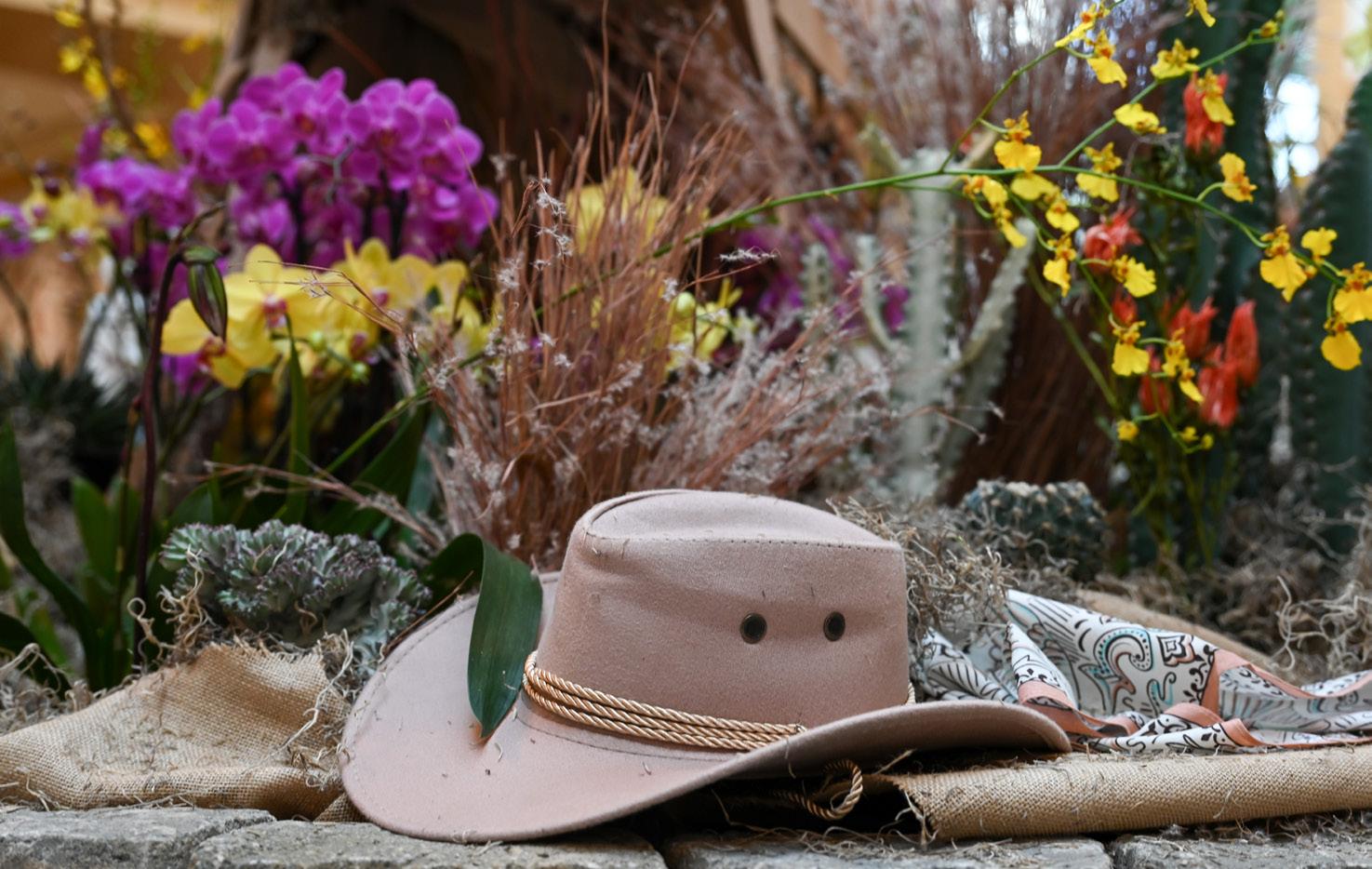
The “Orchid Rodeo” is in full swing at the Cleveland Botanical Garden. The event opened on Saturday, Feb. 14, Valentine’s Day, and will remain open to the public until April 5. The show features over 3,000 flowers, and each section of the garden offers its own twist on orchids. This year’s orchid bloom is accompanied by Wild West Americana theming. Near the entrance, a sign compares orchid organs (lateral petals, column, dorsal sepal and lateral sepals) to the parts of a cowboy hat (hatband, crown, brim and roll).
Further along, visitors are met by a blue-vested volunteer with a patch reading “Ambassador.” One of these ambassadors is Mary Ann, a volunteer of nine years at the Holden Forests & Gardens.
“I started out as a garden assistant, so I worked in the gardens outside,” says Mary Ann. “Then the ambassador position started two years ago, and I started doing this. I really enjoyed it.” In response to being asked what she gained from helping at the gardens,
the hybrid “Miltoniopsis Amber x Cindy Kane” seems to be the only booth with a scent. The smell carries a hint of cleanliness, as if someone spoke the words “laundry sheets” into the wind.
“Some people will get a different scent than somebody else will,” Mary Ann chuckles, “depending on your biology.”
Working on Valentine’s Day, she quickly finds a couple looking around, seemingly lost, and directs them to a circular room filled with silk paintings.
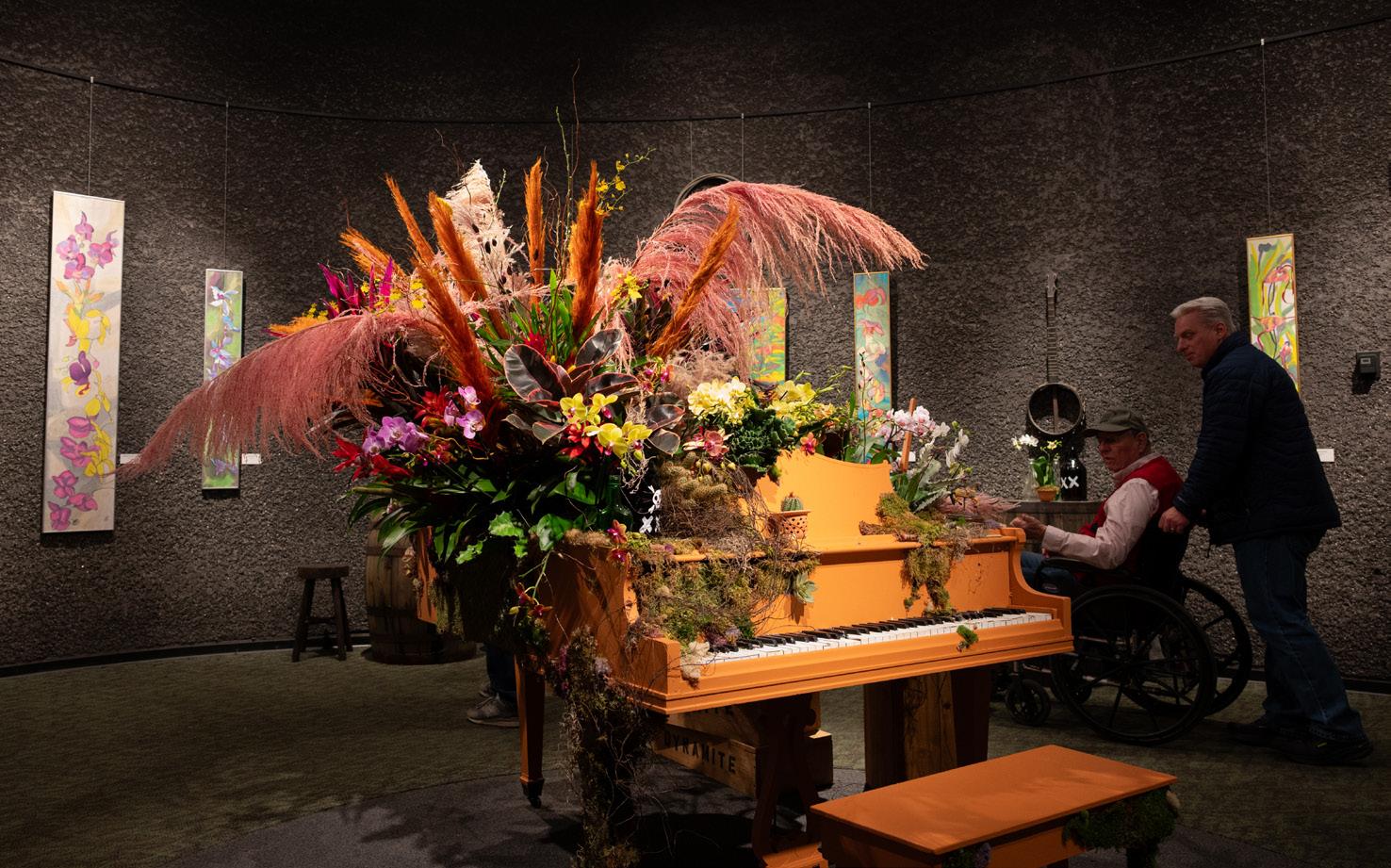
In this room, an explosion of vibrant yellows, pinks, reds and violets erupts from a bed of green leaves, and moss is draped over a grand piano. Below, a stack of boxes filled with fake dynamite sits next to a detonator cartoonishly labelled “TNT.” Surrounding the acoustic centerpiece, vertical silk paintings adorn the walls and serve as a silent audience. Painted by Gunter Schwegler, a Cleveland Heights resident, his artist statement exclaims, “My work is a celebration of life.” His scenes depict calm landscapes and floral still lifes. The narrow framing slowly guides the viewer’s gaze up and down, as if floating down a lazy river. In “Backyard Haven,” a heron stands in the bottom

Mary Ann says, “They’ll give me plants that I can take home and plant in my own gardens.” So far, she has been given hellebores, which flower in late winter, and a rose bush. Her favorite exhibit of the show is the specialty orchids for smelling.
Back in the Wild West of Orchids, a row of five booths displays pots of orchids. Out of the five sniffing stations,
rock like pennant flags. In one corner, a sculpture of a tornado emerges from the earth, composed of white folds that resemble marshmallows. Further inspection shows a cowboy falling off his horse, a cactus sprouting and, of course, more orchids to remind the visitors of the theme.
Despite the event, the animals that inhabit the gardens year-round continue to serve as the center of attention for garden goers. Matt Edwards, an animal care specialist, holds Gene Simmons, a red and green chameleon named after a member in the metal band KISS, for his white lips and long tongue. Edwards points to a bird with an orange coat and explains to a visitor that it is a red bishop weaver. The gardens are home to orange-cheeked waxbills, yellow bishop weavers, a blue-billed teal and the elusive pintailed whydah. Edwards describes the whydah as a “white and black bird with a tail about eight inches long.” He adds, “There’s only one male here.”
Before the breeding season, increased testosterone levels stimulate plumage growth, creating long ribbons of feathers to complement the songbird’s mating dance. A volunteer


of the lower half of the silk. Its face is a mix of peach and grey, bordered by gold ridges that rise off the surface. These outlines in silver or gold that enclose each shape of analogous color remain consistent across Schwegler’s silks. While each leaf or flower petal ranges different shades of the same hue, Schwegler creates contrast by putting shapes against each other to create dramatic displays of natural beauty. The effort put into these works doesn’t go unnoticed. “Intertwined,” a complex layering of flowers of every color and shape on silk, proudly displays a red sticker, signifying a sale of at least $400.
Beyond the gallery, more wild west decorations line the walkway. Bandanas are tied across flanking walls of
behind him says that the birds also display their orange beaks. The two go back and forth on the various traits of the whydah, which remains yet to be seen. As Edwards mentions that male whydahs lose their tail at the end of the breeding season, he spots a flash of black and white behind a curtain of branches. The whydah takes off and flies past his head to land in a taller tree. A small crowd forms to look at what has been distracting the two helpers, but the group loses interest, leaving the whydah to continue its song out of sight.
Walking through the air lock to exit the animal exhibit, the air shifts from dry to tropical. Stepping into the forest atrium, purple and white orchids reflect off puddles, and the trees cast

large shadows on the ground. In the shade, the world moves more slowly. A man dressed in a white sweater leads a woman to a small clearing. He drops to one knee and pulls out a ring, causing her to gasp. A pot of orchids with photos of the fiancée and her father gaze toward the crowd. The newly-engaged couple embrace after the successful proposal.
Along a narrow walkway, Yolonda Lyons, a visitor, appreciates the large faces of an orchid growing on a tree. She explains that the flowers make her feel sentimental.
“It reminds me of Thailand,” Lyons says. “What I love are the colors and the differences.” Her hand meets one of the orchids.“They’re so simple, yet so beautiful.”



There’s a price to pay to attend Case Western Reserve University, figuratively and literally. The anticipated cost of attendance for the 2026-2027 school year is broken down like this: $71,410 for tuition, $11,969 for housing and $8,600 for the unlimited meal plan. This equates to the sticker price of attendance at CWRU annually, totaling a whopping $91,979. It doesn’t take a cost breakdown to recognize the immense privilege we have as college students, but the loans and payments are likely looming in the backs of our minds. Everything we do, or don’t do, creates or augments our experience at college. So, for example, the choice you make to either skip courses or attend and take advantage of office hours makes all the difference in that matter. However, looking at the bigger picture, are tuition prices justified by the experience and value we receive?
According to a U.S. News report, the average college tuition and fees at ranked private colleges for the 2025-2026 academic year are $44,961. Luckily, CWRU is a generous grantor of need-based aid. In 2023, the average need-based scholarship or grant awarded to first-year students was $45,353, according to U.S. News. In 2023, CWRU met 98% of students’ financial aid needs, and 60% of the first-year student population received need-based aid. Though it is good news that students can have their financial needs met, they should be afforded more agency in decisions on how their money is spent.
The most prominent optional expense from the get-go is the meal plan. The price distribution between one meal plan and the next unfairly favors the universal meal plan, making it more difficult for students to find a middle ground when weighing the cost and benefits of each meal plan. Most students take on an “all or nothing” mentality when selecting a meal plan, because the difference between the universal meal plan and 17 meals/week plan is only $105 per semester. The difference between the universal meal plan and
the 10 meals/week plan is $365 plus a $100 bonus in CaseCash each semester. Evidently, students can save some money, yet it is arguably not justifiable to take on a smaller meal package. Maintaining a healthy balance of nourishment is also vital for any student, and some are not able to fully consider eliminating their meal plan to cook for themselves, whether that is due to limited access to a kitchen space or other miscellaneous reasons.
On-campus housing is lacking in its amenities if you are unable to afford, or simply unwilling to pay, the cost for an improved living experience. For example, for the secondyear living experience, to reap the benefits of an updated air-conditioning and heating system, you have to relinquish the right to a suite-style, private kitchen. Whereas those who want to have the possibility of having an in-suite kitchen must forget about the AC system. Each of these living experiences is variable in cost, and so it is up to the students to decide what is best for them with financial limitations in mind. However, housing is bound to get more costly as students upgrade from underclassmen to upperclassmen housing options. There should be more flexibility in housing prices. One idea could be an opt-out option for professional cleaning services, which would allow students to be responsible for their own cleanliness in the common spaces. Another is the idea of purchasing one’s own dorm resources, like toilet and hand towel rolls, taking ownership of one’s dorm and upkeep. These are a couple of ways to cut down on housing costs to alleviate the financial burden of steep tuition costs.
Meanwhile, CWRU has a host of decrepit dormitories that students continue to stay in, including the Property Management Apartments, some of which have uneven heating, leaving students freezing during the winter months, or shabby flooring, with tiles cracking or unsticking from the floor. When the temperature drops below freezing, university housing advises residents to shut their windows, and as a result, some people report extremely hot temperatures in their apartments. Some residents in The Village houses have
experienced flooding, resulting in carpet replacement or been provided with faulty microwaves. Yet the prices of these options remain relatively high, disproportionate to what they are worth.
It seems like the CWRU budget caters towards the improvement of the overall CWRU image through superficial expenses in the form of branding and new grandiose construction projects, with little left over to invest in student well-being and
comfort through improvements in day-to-day usage, like student transportation. The shuttle service and SafeRide continue to be congested by the undersized vehicle-to-student ratio, despite year-long complaints about the matter.
CWRU upholds a moral obligation to prioritize student experience and satisfaction, and that could start with the conversation of cost-reduction to give students more leeway financially and autonomously.

Milo Vetter Staff Writer
On April 20, 2010, an explosion on an oil rig off the coast of New Orleans called the Deepwater Horizon caused a continuous leak of crude oil into the Gulf of Mexico until it was plugged about four months later. In addition to the 11 people killed by the initial explosion, the leaking oil (estimated at 4.9 million barrels) caused the largest, single, man-made environmental disaster in human history. 4.9 million barrels is impossible to comprehend—the oil slick visible from satellite images was roughly one-tenth the size of the entire state of Louisiana. Multiple investigations were performed in response to the Deepwater Horizon Spill. The general conclusion was that the explosion was caused by defective equipment, over-
worked employees and a lax safety culture. And yet, despite British Petroleum (BP) being held responsible for billions of dollars in damages and cleanup, there were no criminal consequences for its executives. Now, why exactly is that? Well, a big reason is that the organizational structure of corporations is well-suited, perhaps even designed, to obscure individual decisions and collectivize responsibility. A significant amount of legal history regarding corporations has involved defining their personhood, conferring on them the rights that humans have and cementing this collectivization of responsibility.
The rule of law binds individuals—we have a strong incentive not to break the law because we fear legal punishment. But if you knew that no matter what you did at your job, the worst thing that could happen to you is having to shuffle around some of the corporation’s money, and pos-
sibly being deposed by the board of directors with a massive golden parachute, where’s the justice?
We’ve seen that imprisoning bad actors can be a major boon to industries that have trustability problems. For example, the conviction and imprisonment of cryptocurrency fraudster Sam Bankman-Fried was a sobering wake-up call to the dangers of absolute belief in the blockchain, even though many cryptocurrency evangelists chose to hit the snooze button. But the point is, Sam Bankman-Fried’s prosecution was a critical step in demonstrating that there are serious consequences for malfeasance in crypto while calibrating the public’s trust in what kind of behavior they should expect from executives.
Public confidence is the key here. We currently live in times of unprecedented distrust in institutions. Conspiracy theories are now
mainstream Republican talking points that even infect Democrats. Much of this distrust is manufactured by those deliberately trying to weaken, or even destroy, these institutions. Yet, no matter where you look, you’ll always find a tiny, little kernel of truth in even the most deranged conspiracies. Take, for example, Robert F. Kennedy Jr.’s (FRK Jr.) Make America Healthy Again movement, which is driven in no small part by a general distrust of the American food and medical industries. RFK’s anti-vaccine beliefs are obviously insane, but part of why people support them is because they’ve already been primed to believe that Big Pharma is bad by actual cases of unpunished wrongdoing.
Continue reading on page 8
The biggest case would be the Sackler family, who are described as the worst drug dealers in history and are largely responsible for the opioid epidemic today. They’ve been sued for their willful marketing of horribly addictive and harmful drugs many times over. Not a single one of them has faced conviction. Can we blame people for instinctively agreeing with anyone who says that Big Pharma is out to get you when people like the Sacklers are still walking free?
Then there’s the government itself, which arguably has the worst case of public distrust. Republicans are openly contemptuous of the rule of law itself, so there’s not much
point in complaining that they don’t hold each other accountable. But Democrats have not properly upheld the rule of law. It’s understandable why: Republicans have spent years talking about “weaponizing the justice system” against freedom-loving patriots, and some Democrats are worried about looking like they’d rather imprison their opponents than fight them fairly. But to accept that framing is to betray the American people. Can we really believe that Democrats care about saving democracy when they won’t even punish the people who try to destroy it? Under a very basic reading of the Fourteenth Amendment, Republican politicians who
supported the Jan. 6 insurrection could easily be barred from holding office, and that’s a lenient punishment compared to what they deserve. Merrick Garland, the attorney general under Joe Biden, naively believed that imprisoning Republican politicians was counterproductive because voters would surely reject Donald Trump. But it’s the other way around. Citizens will only reject political corruption when it’s actually taken seriously. In an administration as corrupt as this one, if the Watergate Scandal happened again, it’d just be another Tuesday.
Obviously, just locking up all the bad actors is not a substitute for ac-
tually fixing the systems that were broken enough to reward them, but it’s a critical step in that process. We apply a law-and-order mentality to crimes among the poor all the time, even though their decisionmaking ability is often hampered by stress, lack of education and economic pressure. But when rich and powerful people steal money or power from the American people, while being well-educated and rational enough to know that they shouldn’t, why don’t we punish those crimes twice over? Crimes committed by powerful people will never end until it is made clear to them forcefully that such behavior is unacceptable.
Lucy Candeub Contributing Writer
With how far we’ve come thanks to medical interventions, antibiotics deserve their standing ovation as one of the most impactful pharmaceutical inventions in history. In the U.S. alone, 256 million antibiotics were dispensed in outpatient facilities, and approximately 50% of all long-term hospital patients were prescribed at least one type of antibiotic in 2024. It’s hard to imagine a world where we don’t rely on the most basic illness prevention measures, but if we continue to misuse antibiotics and lack sufficient intervention, we won’t have to imagine that world. We’ll be living in it.
In 2019, an estimated 1.27 million people lost their lives due to antibacterial-resistant bacteria (ABR), with an additional 3.68 million deaths having ABR be a significant contributor. Approaching solutions to antibacterial resistance is complicated on every level, from the bacterial biology to the medical application, all dictated by economic and political involvements. On the scientific level, ABR is incredibly difficult to predict and mitigate due to the inherent defense mechanisms of bacteria. Their incredibly adaptable genetic code allows them to rapidly evolve resistance to our antibiotics. There are several mechanisms that aid their ability, including but not limited to frequent mutations in the proteins that antibiotics target and horizontal and cross-species gene transfer.
If it was just for the complications arising from their impressive, albeit dangerous, evolution patterns, matters would not be as dire as they are now. As with every single biomedical concept, the policies and economics that control our world unfortunately control the mechanisms behind any possible intervention or solution. There are three overlapping factors at play: the economic perspective, the current policies dictating ABR research and use and the underlying global health threat looming over the former.
Economically speaking, there is little motivation for any private biotechnology companies to develop antibacterial therapies: the monetary rewards for a drug that will likely be useless in the coming decades is simply too low to invest in. This is especially devastating with the recent National Institutes of Health (NIH) and national STEM grant funding being drastically cut. Since the majority of ABR research
resides in the academic sphere and these programs provide immense funding to academic labs across the country, there are now even less resources being devoted to the study of possible ABR treatments.
To further exacerbate this issue, current U.S. policies do not properly mediate antibiotic use, according to the Association of American Medical Colleges. At least 28% of antibi-
otics prescribed to outpatients are seen as unnecessary. While there are some proactive measures put in place over the past decade, without proper funding, medical awareness or agricultural awareness, bacteria can easily adapt against the common antibiotics we’ve grown accustomed to using. Antibacterial resistance, while not an imminent threat, will undoubtedly be the worst case
scenario if it gets out of hand. By the end of the century, it’s entirely possible we’ll be living in a world where the risk of any invasive surgeries outweighs the benefit, individuals with compromised immune systems are left even more vulnerable and a once treatable common infection— say from slicing your finger on the edge of a book—results in a deadly, untreatable bacterial disease.

Lily Zhang Copy Editor
In my very first biology class here at Case Western Reserve University, we covered a brief history of evolutionary science. During this lecture, we learned about Aristotle and his form of evolutionary thinking, which is a simple ranking of all living organisms. This was dubbed the scala naturae, or the “Great Chain of Being,” and it went
like this: God on the very top, then angels, men, women, animals, all the way down to inanimate objects such as rocks. Of course, there are a number of things wrong with this ranking, and we now have a much more systematic, perhaps less skewed, perspective of life. Though science has evolved since medieval times, the foundational, inaccurate science that backed thinking back then still fortifies much of modern society’s ideologies. It goes without saying that the
Established in 1969 by the undergraduate students of Case Western Reserve University
Darcy Chew Executive Editor & Publisher
Hannah Johnson Director of Print
Sabrina Feldberg News Editor
Alyssa Wang News Editor
Penelope Cloonan Life Editor
Aleksandra Majewski Opinion Editor
Ellie Palaian Sports Editor
Michelle Bai Copy Editor
Riya Kulkarni Copy Editor
Siya Motwani Copy Editor
We’ve all been there, trying to study or finish that last assignment when all we want to do is … anything else. Maybe we’re overwhelmed with the work we have to do, or maybe we feel the pressures of perfectionism and don’t want to start. We push ourselves to “lock in,” but call it quits too often, feeling guilty each time we pick up our phones to doomscroll again and again. Doing anything but the work we have piled up always seems to feel better than actually getting things done, but the sinking feeling in our stomach knowing we’ve wasted time is much worse. Can we really consider these pauses to be “breaks” if we feel worse after taking them?
Kashvi Madhwani Copy Editor
Abhishek Nambiar Copy Editor
Mariana Parilli-Castillo Copy Editor
Lily Zhang Copy Editor
DESIGN
Anjali Bhuthpur Director of Design
Lucas Yang Director of Design
Shareen Chahal Layout Designer
Sahar Kapasi Layout Designer
Reva Kolhe Layout Designer
Kiera Ng Layout Designer
Nithya Pandari Layout Designer
Jana Ashour Graphic Designer
Kristina Guo Graphic Designer
Anna Trusova Graphic Designer
We may trap ourselves in a cycle of counterproductivity and double the time it takes to complete a task. In this “popcorn brain” mindset, we work and get little done, then stop working and think about how we could be working. By the time we resume our work, we feel ashamed, not refreshed, and we stay up late in attempts to catch up.
DIGITAL MEDIA
Auden Koetters Director of Digital Media
Moses Fleischman Web Editor
Ayan Sheikh Video Editor
Matthew Stall Video Editor
Obafami Tidjani Web Editor
Phillip Kornberg Photo Editor
Tyler Sun Photo Editor
A break is not shameful, not when it has the potential to act as a tool that makes productivity much more efficient. We just need to know how to use them.
Esha Bagora Social Media Editor
Benjamin Kang Social Media Editor
Timothy Le Social Media Editor
Rhea Soni Social Media Editor
Just as an athlete wouldn’t do 150 consecutive bicep curls while strength training at the gym, as students we must take meaningful breaks in reasonable intervals. One popular example of this is the Pomodoro method, where 5 minute breaks follow 25 minutes of work (10 minutes of break to 50 minutes of work is also a popular option). By time-boxing our productivity and knowing we will be rewarded, we remain more focused when we work in the meantime. When we do
BUSINESS
Tyler Vu Director of Business Operations
Riya Dixit Ad Manager
Divya Kurma Business Manager
Anya Lin Analytics Manager
Ria Trivedi Marketing & Distribution Manager
The Observer is the weekly undergraduate student newspaper of Case Western Reserve University. Established in 1969, The Observer reports news affecting students and provides an editorial forum for the university community. Unsigned editorials are typically written by the opinion editor but reflect the majority opinion of the senior editorial staff. Opinion columns are the views of their writers and not necessarily of The Observer staff. For advertising information, contact via e-mail at observer@case.edu.
LETTERS TO THE EDITOR should be e-mailed to observer@case.edu or submitted on our website at observer.case.edu. Letters can be mailed to Thwing Center 11111 Euclid Avenue, Suite 01, Cleveland, Ohio 44106. For policy and guidelines related to the submission of Letters to the Editor, refer to observer.case.edu/submit-a-letter.
The Observer is a proud member of CWRU’s University Media Board. Follow The Observer on Facebook, Twitter, TikTok and Instagram @cwruobserver.
ranking of men over women by Aristotle was a sign of the times, yet it still continues today. However, it’s also worth noting that, within his ranking, women were ranked closer to animals, effectively dehumanizing them. This phenomenon of dehumanizing people and characterizing them more closely with animalistic features is one that persists today. A prominent example that comes to mind is the dehumanization of undocumented individuals living in the United States. Of course, that’s not what they’re often called in the media—“aliens” is often what this current administration deems them to be. In other words, they’re deemed the “other,” as sub-human and closer to animals, just like how Aristotle did so many centuries ago.
It would be a whole new conversation to discuss why many people, especially those in Eurocentric nations, treat some animals as closer to humans, such as dogs, and some animals as inferior, such as pigs. (By the way, pigs have been argued to be smarter than dogs. So, why do we treat dogs so much better?) But, for now, it’s important to note the parallels between how the current administration falls back on this outdated scientific mindset to dehumanize this important and dynamic population of people within the US.
Science not only seeps into the current political sphere through osmosis, but is often cited explicitly in many current arguments from both ends of the political spectrum. For instance, abortion and reproductive health care are topics in which science is used substantially to support efforts and make claims by both parties. The newest U.S. Department of Agriculture (USDA) dietary guidelines are another. Although it could be argued that one political side misuses science more than the other, it is still worth noting that science is malleable and has likely been shaped by those from all ends of the spectrum. Like all things, science is a product of the times and a product of the person—or the group of people— performing the science.
The history of science is just as bloody and marred as the history of war. Take, for instance, the so-called birth of American gynecology. In the mid 1800s, an American “gynecologist” James Marion Sims began experiments on enslaved Black women— including a 17-year-old girl named Anarcha—in Alabama. On Anarcha, in particular, Sims performed over 30
surgeries, and on all women, no pain medication was used. Numbing agents at the time were popular, but Sims decided not to use them because he believed that Black people could not feel pain. When using science, regardless of the claim one is trying to support, it is important to note that science is not a sterile field. It is a part of history, and thus, within it, there inevitably must be historical marks that date it.
Although science is a marker of the time it was made in, there are still some arguably objective ways that science can be used wrongly in support of a claim. I once saw a video of a person arguing that women were “passive” because they were “biologically designed [so].” They argued specifically that, because the egg is “passive” during fertilization, the woman herself is also passive, the receiver of the relationship. Now, I have only taken one introductory course in evolution, and even I could tell this person was weaponizing an incredibly outdated (and just wrong) scientific assumption to support his misogyny. To start, one of the core principles of evolution is that it is random—nature doesn’t design people, and it definitely does not assign personality traits to people. Nature doesn’t really care about who you are, unfortunately. Furthermore, the idea that the egg is passive is inaccurate. The egg itself releases chemical signals to attract sperm, thus playing a critical, active role in the fertilization process. Modern research has shown that these chemicals not only lead sperm to the egg, but also effectively choose the sperm that is most successful. Thus, his claim fails to consider the very core principles of evolution, as well as the many new (and by new, I mean within the past decade or so) studies that all point to the egg having the most active role within the fertilization process. This, in my opinion, is an example of someone using science incorrectly. He doesn’t consider the full picture and, frankly, doesn’t seem to understand the topic he is so confidently talking about.
As CWRU students, many of us are deeply engaged in the sciences, taking advanced classes, conducting research and getting ready to launch into careers filled with science. But it’s important to understand the role science has played, and will continue to play, in the way people interact, treat each other and think. Science is political, and only when we accept that can we improve.

Ellie Palaian Sports Editor
Abhishek
Nambiar Copy Editor
Saturday, Feb. 28 marks this year’s Senior Day for the Case Western Reserve University men’s and women’s basketball teams, a celebration of the graduating members who have left a lasting mark on the program. On the men’s side, the team honors fourthyear co-captains guard Anand Dharmarajan and forward Aaron Rucker, fourth-year forward Andrew Fox and graduate student guard Ethan Edwards, all of whom have played their entire tenures under Head Coach Todd McGuinness and exemplified the spirit of teamwork and dedication.
Meanwhile, the women’s team, carrying just three seniors, recognizes co-captains Emily Plachta, Maya Roberts and Emi Hutter-DeMarco, who over the past four years have helped shape a culture that embodies what it means to be a CWRU student-athlete while leaving their mark on the program’s history.
Men’s Basketball
Anand Dharmarajan
Fourth-year guard and co-captain Anand Dharmarajan has spent his time at CWRU balancing the demands of being a pre-med student with a key role on the men’s basketball team.
Since picking up basketball at age seven, he has grown into a team leader, appearing in 70 games and serving as co-captain in his senior season. Beyond athletics, Dharmarajan has contributed to the community by helping launch the CWRU chapter of the Hope Lodge Volunteer Partnership, supporting cancer patients.
“It’s been the best experience of my life. Hanging out off the court and competing on the court with your friends is the best way to spend college,” Dharamarjan reflected.
After graduation, he plans to take a gap year as a medical assistant while preparing to apply to medical school.
Aaron Rucker
Fourth-year forward and co-captain Aaron Rucker has spent his time at CWRU balancing the demands of varsity basketball with the rigor of being an economics major.
Since starting basketball at age nine, Rucker has grown into a key leader for the Spartans, appearing in 60 games and serving as co-captain in his senior season. Beyond athletics, he has contributed to the CWRU community through roles with the Journal of Economics and as treasurer for the Black Latinx Athlete Coalition.
“I have enjoyed learning more about myself and my friends on the team because I feel like we have had strong connections that will last years after graduation,” Rucker said.
After graduation, he plans to pursue analyst or market research roles while preparing for an MBA and a future in economic consulting.
Ethan Edwards
Graduate student guard Ethan Edwards has spent much of his life playing basketball, and in his first year at CWRU, he made an immediate impact on the Spartans’ court. During the season, he set program and UAA records, including a 54-point game against Rochester, the highest individual scoring performance in any NCAA game this year.
Beyond athletics, Edwards has pursued a master’s degree in finance while balancing the demands of varsity basketball.
“I have only been here a year, but I have built a family,” Edwards said. “We hang out together, travel to practices together, take classes and more. They have shown me the ropes, teaching me certain things and providing resources that have made my transition and experience better.”
After graduation, Edwards plans to continue playing basketball while building a holding company with
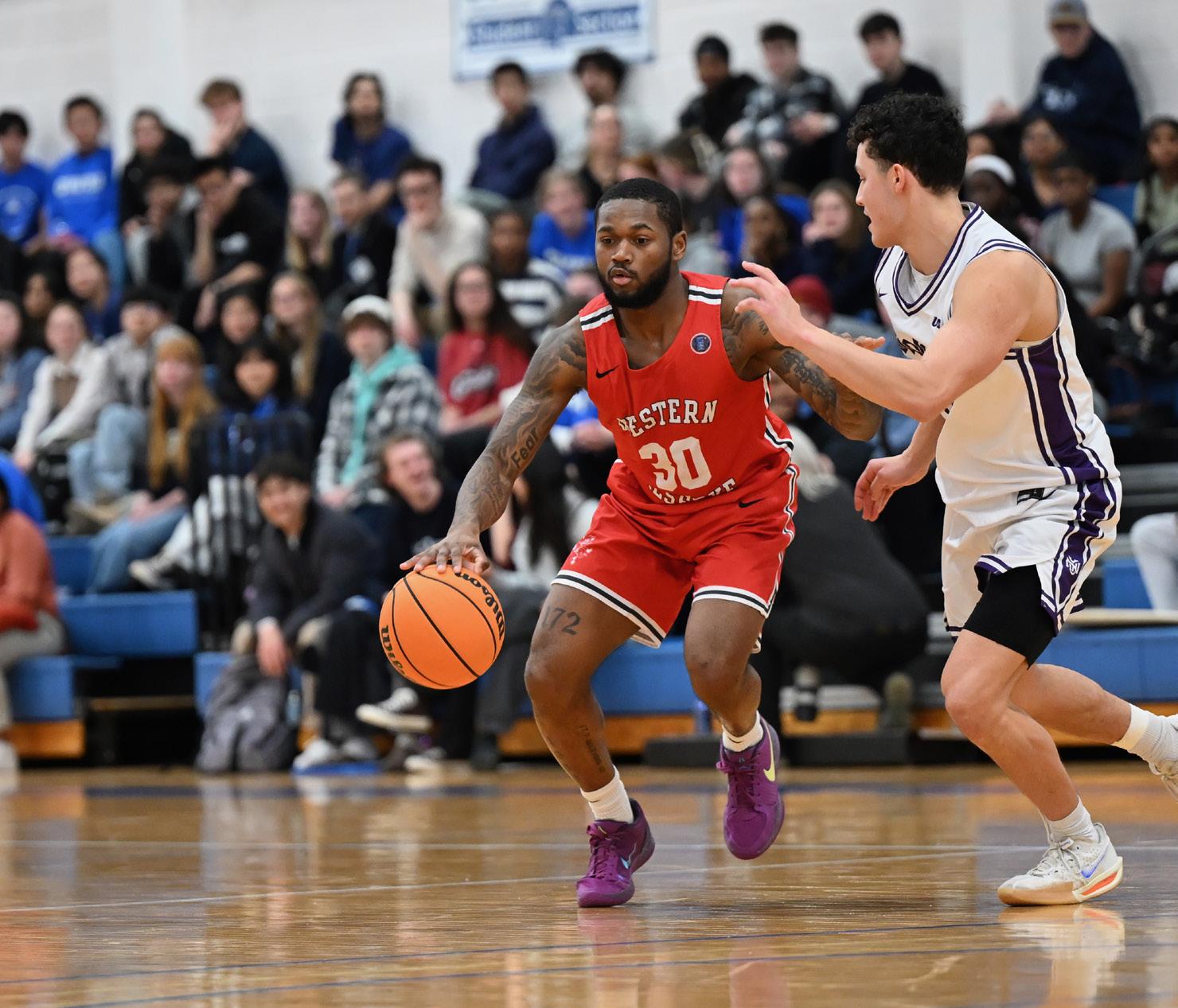
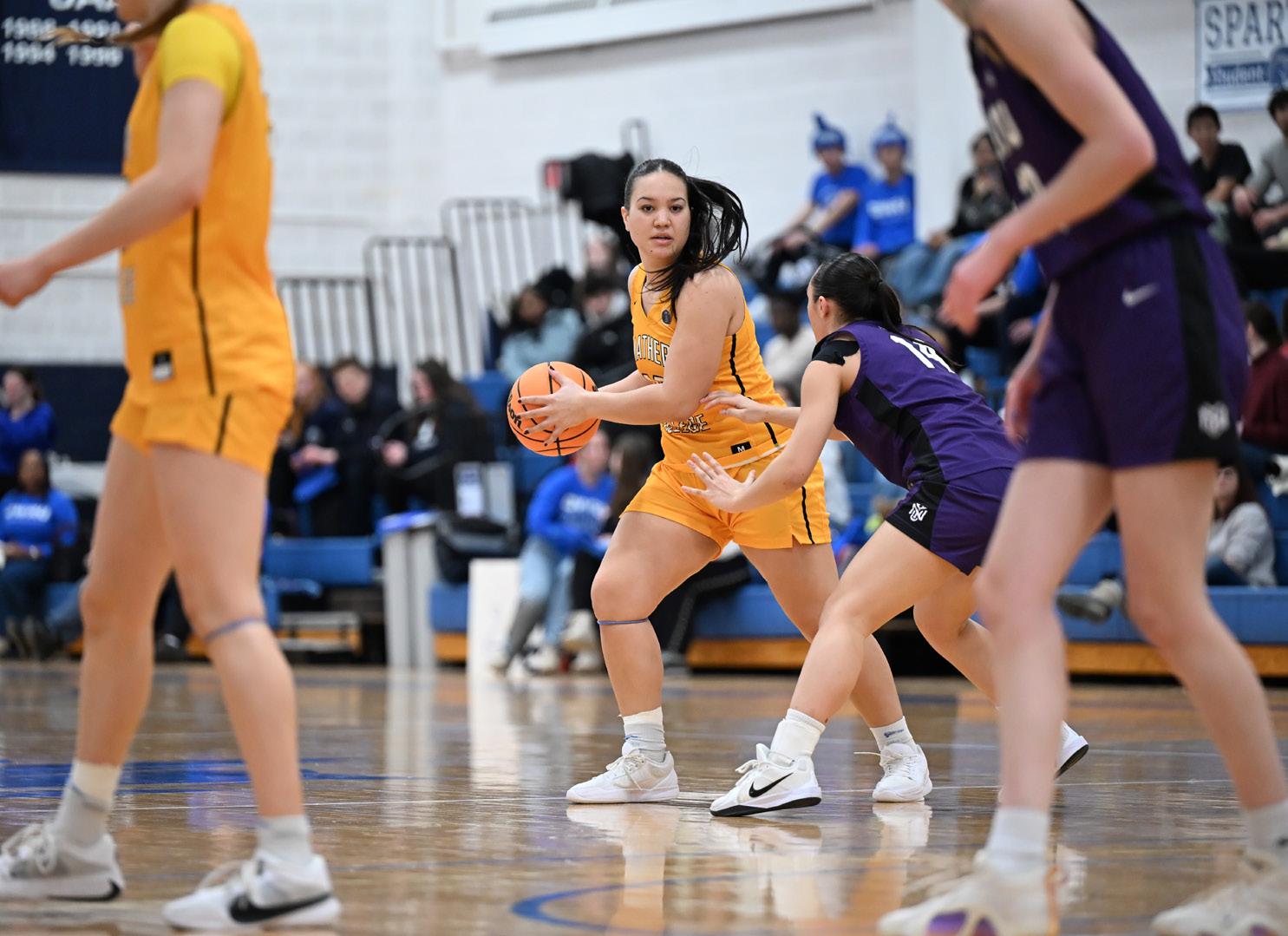
Both the men’s and women’s basketball graduating members have experienced the ups and downs of their respective programs, including two UAA championships for the men’s team. Courtesy of Phillip Kornberg/The Observer
several business ventures, taking the lessons and relationships from his time at CWRU with him into the next chapter.
Andrew Fox
Fourth-year forward Andrew Fox has spent the past two years at CWRU making an impact on the Spartans’ basketball program while pursuing a mechanical engineering degree. Since transferring from the Rochester Institute of Technology, he has appeared in 45 games, including 20 starts, and has been a consistent contributor on the court.
Beyond athletics, Fox has balanced the challenges of varsity basketball with rigorous coursework, emphasizing time management and communication to succeed.
“It hasn’t always been easy, but the people and the relationships that I have been lucky enough to build here are one reason why I am glad I came to Case,” Fox reflected.
After graduation, Fox will begin his career as a process engineer in Knox, Indiana, taking the lessons and friendships from CWRU with him.
Women’s Basketball
Emily Plachta
Since stepping on the court as a first-year at CWRU, Emily Plachta has made an immediate impact on the Spartans’ women’s basketball team. She has started nearly every game of her career, earned selection to the Nan Nichols All-Tournament Team, and recently surpassed 1,000 career points.
Beyond athletics, Plachta has balanced a Civil Engineering degree with the demands of varsity basketball, crediting her teammates and the team’s culture for much of her success.
“A lot of the success we achieve as a team can be attributed to how close we are. We have a lot of fun competing in games and practice, and everyone plays their best when they are having fun,” Plachta said.
After graduation, she plans to return to Long Island to begin her career as a project engineer, taking the lessons and friendships from CWRU with her into the next chapter.
Maya Roberts
Fourth-year guard and co-captain Maya Roberts has overcome injuries and challenges to leave a lasting mark on CWRU women’s basketball while pursuing a degree in nursing. Despite setbacks, she posted career highs in her third season and has served as a team leader and captain in her senior year.
Roberts credits her teammates and the close-knit team culture for much of her success.
“We’ve literally grown up together,” Roberts said. “Since day one we have had such a great friendship and I honestly don’t think I would’ve made it through these four years without them. They’re always there for me when I need them and I am guaranteed to laugh when I’m around them. Those two are stuck with me for life.”
After graduation, she will begin her career in a Level IV Neonatal Intensive Care Unit, caring for the most critically ill newborns, carrying the lessons and friendships from CWRU with her into the next chapter.
Fourth-year co-captain Emi Hutter-DeMarco has been playing basketball since she was seven, and her connection to CWRU runs deep—her grandfather served as the university’s athletic director for 19 years, her uncle played for the Spartans and her mother also worked at CWRU.
Pursuing a degree in computer science with a minor in mathematics, Hutter-DeMarco has balanced rigorous academics with varsity basketball while embracing the lessons of discipline, teamwork and resilience the sport has taught her.
“The greatest gift that this program has given me is my friendship with my fellow seniors,” HutterDeMarco said. “We have been close since we first met our freshman year and the three of us have been living together since our sophomore year. They’re going to be my lifelong friends and I am so grateful to have them in my life.”
After graduation, she looks forward to the next chapter, carrying the friendships and experiences from CWRU with her beyond the court.
For an extended profile on the Class of 2026, visit observer.case.edu
Ellie Palaian Sports Editor
The 2026 Milan-Cortina Winter Olympic Games came to a close on Sunday, Feb. 22, marking the end of a memorable two weeks of competition. For athletes who dedicate years of training for just a few moments on the Olympic stage, the performances did not disappoint. Throughout the Games, countless standout achievements and remarkable statistics emerged. Here’s a look at some of the most impressive numbers from this year’s Winter Olympics.
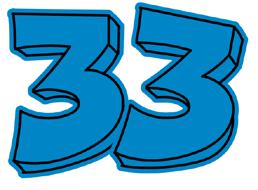
The U.S. finished second in the overall medal standings with 33 total medals, only trailing Norway, which set a new record with 41 medals. Of the United States’ 33 medals, 12 were gold, 12 silver and nine bronze. Although this was not the highest overall medal count in U.S. Winter Olympic history—that record remains 34 medals at the 2002 Salt Lake City Games—Team USA did set a new mark for the most gold medals won at a single Winter Olympics.
The strongest performances for the U.S. came in speed skating, ice hockey and both alpine and freestyle skiing. Speed skater Jordan Stolz led the way with three medals, while both the men’s and women’s ice hockey teams

Of the 33 medals won by the United States, women accounted for 17—63.6% of the total, including six gold medals. Their male counterparts earned 12 total medals, four of which were gold, not including the four medals won in mixed events.
The stage was set for U.S. women at the Winter Olympics, and they delivered. Their success reflects the long-term impact of equity-driven initiatives such as Title IX, which have expanded access and opportu-
nities for female athletes at all levels. Even while disparities in funding, media coverage and resources persist, American women continue to raise the standard and, in many cases, outperform their male counterparts on the world’s biggest stage.
Notably, women’s sports received slightly more Olympic primetime coverage than men’s events, drawing 42.33% of coverage compared to 41.33% for men—a shift that underscores both their competitive success and growing audience interest.

One of the most compelling aspects of the Olympics is that many competitors, despite being world-class in their sport, live relatively ordinary lives outside of competition. Of the 232 U.S. athletes at the Milan-Cortina Games, 52 hold what many would consider “normal” jobs—making their Olympic achievements even more remarkable.
Curling, in particular, showcases a wide range of professions. On the women’s side, Tara Peterson is a dentist, her sister Tabitha Peterson Lovick is a pharmacist, Aileen Geving works in insurance and Cory Thiesse is a lab technician. The men’s team is just as diverse: Rich Ruohonen is a personal injury attorney, Luc Violette is a civil engineer, Danny Casper is a business development consultant, Ben Richardson is a professional cellist, Korey Dropkin is a realtor and Aidan Oldenburg is an environmental scientist.
Other Team USA athletes have equally interesting careers. Alpine skier Ryan Cochran-Siegle works at his family’s maple syrup shop, snowboarder Cody Winters owns a window washing business and alpine skier Paula Moltzan works as a whitewater rafting guide. Skeleton athlete Dan Barefoot is a landscape architect, and snowboarder Jake Vedder created an autobiographical comic book series—proof that Olympic talent often extends far beyond the slopes and ice.
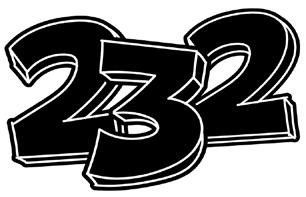
Team USA sent 232 athletes to the Milan-Cortina Winter Olympic Games, marking the largest U.S. delegation ever sent to a Winter Olympics. Of those 232 athletes, 98 were returning Olympians competing in at least their second Games, and seven represented the United States for the fifth time in their careers. Collegiate athletics continue to serve as a strong pipeline to the Olympic stage, as 84 members of Team USA were current or former NCAA athletes. The roster also highlighted the wide age range represented at the Games. The youngest U.S. athlete was 15-yearold freeskier Abby Winterberger, while the oldest was 54-year-old curler Rich Ruohonen—a reminder that it’s never too early or too late to pursue a dream.
The Winter Olympics seemed to fly by, leaving athletes and fans with the familiar four-year wait before we once again watch competitors launch themselves down mountains and across the ice—all while couch spectators suddenly become expert judges.
This year’s Games were among the most watched in Winter Olympic history, averaging nearly 23.5 million daily viewers over the 15-day span. Along with unforgettable performances came headline-making controversy, including cheating allegations surrounding Canada’s curling teams, an ongoing investigation into male ski jumpers allegedly injecting hyaluronic acid for an aerodynamic advantage and a Norwegian biathlete who publicly admitted to cheating on his girlfriend of six months after winning bronze—only for her to decline his attempt at reconciliation. Fortunately, the Olympic calendar never stays quiet for long. The world now turns its attention to the 2028 Summer Games in Los Angeles, and before we know it, the Winter Olympics will return in 2030 in the French Alps— ready to deliver another two weeks of unforgettable moments.
Ellie Palaian Sports Editor
After a 30-12 2025 season making it to Game Six of the NCAA regional tournament, the Case Western Reserve University softball team is back and ready to tackle the 2026 season.
“Overall I’m just very excited,” thirdyear infielder Karen Potts said. “We’ve been practicing inside for the past six weeks, so the chance to play games on a real field is going to be great. We’ll finally be able to all play together as a team with the energy we all bring, and I’m excited to see where that can take us.”
The CWRU softball team is one of the most successful programs in CWRU athletics, earning a spot in the NCAA Tournament for four consecutive seasons and ranking among the 64 qualifying teams each year, with the exception of 2021 when the tournament was canceled due to the COVID-19 pandemic.
Each year, the Spartans face the challenge of preparing for their season amid Cleveland’s notoriously unpredictable weather. Looking to build on their past success, the team has focused on indoor training and conditioning to ensure they start the season strong.
This year, the Spartans have added a new component to their preparation by working with a mental performance coach hired by the athletic department, coming together as a team to strengthen their confidence both individually and in one another.
“One new thing we’ve started doing this pre-season is weekly team mental performance sessions, focusing on the mental aspects of the game,” Potts said. “I think these have really brought us closer as a team, opening up our minds to each other and our different experiences, perspectives and goals, while also giving us additional resources to handle the in-season pressure of sports, and to stay strong mentally as much as possible.”
Another new challenge for the Spartans this year will be navigating a roster made up largely of underclassmen. Of the team’s 22 players, 15 are underclass students, including 10 first-years competing in their first collegiate season. Despite the team’s relative inexperience, fourth-year Tara Fritscher expressed strong confidence in the group’s talent, chemistry, and determination to make a deep run this season.
“We have some incredible players on this team—power hitters, strong arms, and speed on the bases; but I think
what truly sets us apart is our resilience and the bond we share,” Fritscher said. “We’ve had some incredible comebacks and have battled through tight, lowscoring games. That kind of toughness comes from the trust and joy we have as teammates. When we stay loose and have fun, we stay united, and that unity fuels our success.”
With a long history of being a successful program, the Spartans seem to have big shoes to fill. Fritscher is eager to see how the team can build on last season’s foundation and use its early ending as motivation to push even further this year.
“Last season, though we didn’t come out as UAA champions or NCAA champions, I saw so much grit in my teammates, working to pull through hard games and continuously fighting to win in tough conference series,” Fritscher said. “We also overcame many challenges together, and it was when I saw my teammates facing struggles together that we became so much stronger. I think if we carry that fire and that willingness to move together, not alone, we will be in a strong spot for this season.”
The Spartans will open their season this weekend with a two-day, fourgame slate against the Catholic University of America and Roanoke College.
Men: No team scoring
Women: No team scoring
Men’s Baseball vs Oswego State (2/20)
Game 1: W 12-7
Game 2: W 7-1 vs Oswego State (2/21) W 12-3
Wrestling at Regional Futures Invitational (2/21) No Team Scoring
Spartan Invite (2/20-21)
Men: 1st of 4 teams
Women: 1st of 4 teams vs Emory (2/20) L 73-76 vs Rochester (2/22) W 63-50 vs Ed Finnigan Invitational (2/20)
Men’s Basketball vs Emory (2/20) L 93-101 vs Rochester (2/22) W 110-98
2026 ITA Division III National Men’s Team Indoor Championship vs Johns Hopkins (2/20) W 5-2 vs Claremont-Mudd-Scripps (2/21) L 2-5 vs Denison (2/22) W 4-3
Groundhog Palooza at Washington & Lee (2/21) W 7-0 vs Christopher Newport (2/21) W 5-2
Abhishek Nambiar Copy Editor
Wrestling
NCAA Region V Tournament 2/27-28
vs Carnegie Mellon 2/28
Horsburgh Gymnasium, 1pm
UAA Indoor Championship 2/28-3/1 vs Carnegie Mellon 2/28
Horsburgh Gymnasium, 3pm
Swim and Dive
NCAA Diving Regional 2/27-2/28
Men’s Tennis
vs Wayne State 3/1
vs Grand Valley State 3/1
Women’s Tennis
vs St. Mary’s 2/27 vs Trinity (Texas) 3/1
vs University of Scranton 2/28 at Washington & Jefferson 2/28 at Washington & Jefferson 3/1 vs Oberlin 3/4
at Catholic 2/27
vs Roanoke 2/27
at Catholic 2/28
vs Roanoke 3/1
After a historic showing during its 2025 season, the Case Western Reserve University baseball team looks to keep the momentum going into its 2026 season.
Last season, the team reached the NCAA Division III Super-Regionals for the first time in program history following a comeback victory over Centre College in the Regional Championship Game. Though the Spartans fell to top-ranked Johns Hopkins University, the end result was one that highlighted the potential of the team—something fourthyear infielder/outfielder Thomas Downs is excited to show off again this season.
“The start of the season is always really exciting because we get to show all the work we have been putting in during the offseason,” Downs said. “The fall and the winter are spent building chemistry and strength, which we can finally showcase in the record column.”
While last year’s squad made history with its Super Regionals trip, this year’s team will rely on a younger core eager to prove itself. Out of 36 players on the roster, 11 are firstyears making their collegiate debuts. Another 13 are sophomores—many of whom experienced the team’s Super Regionals run last year but nonetheless exemplify a shift in roster the team is undergoing this year.
This shift is notable, especially with how prior years the team was led by graduate students and fourthyears who have since left. Despite the lack of extensive game experience among many returning players, Downs believes the group’s mentality is one of its greatest strengths.
“While we may be weaker in experience this year, the hunger and want to succeed is probably the largest it has ever been since I’ve been here,” Downs said. “Everyone wants to contribute and win by any means.”
That hunger will be tested throughout the season, particularly as younger players adjust to the expectations of playing collegiate baseball. Downs acknowledged that the transition may lead to moments of undeveloped execution but is optimistic about the team’s prospects.
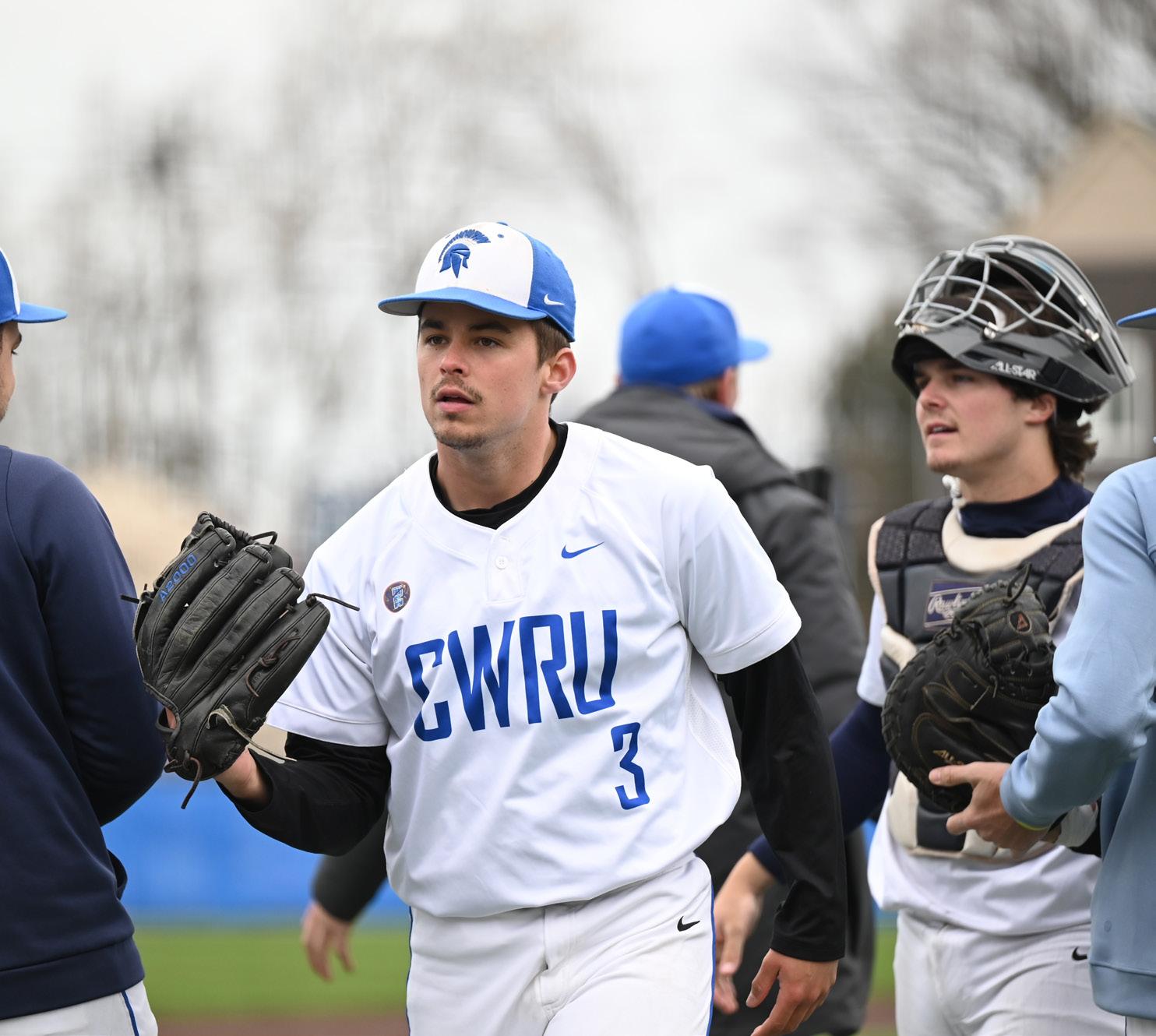
After reaching the NCAA Super-Regionals for the first time in program history last year, the CWRU baseball team looks to build upon that success for its 2026 effort. Courtesy of Phillip Kornberg/The Observer
“Experience is a big challenge for us, as almost all are getting their first shot at true playing time,” he said. “During games, there may be situations where we aren’t as ‘clean’ in our execution compared to last year, but everyone trusts each other to make the best plays possible.”
Early results from this season suggest that the team has already been finding its footing. During opening weekend from Feb. 20-21, the Spartans achieved a clean sweep against State University of New York at Oswego, winning all three of their games against the Lakers. The team’s performance during these games is one that Downs believes reflects how the team intends to compete during the rest of the season.
“Our 3 wins against Oswego State really set the tone for how we want to win games this season,” Downs reflected. “Instead of home runs, we run the bases well, pitch with confidence, and punish mistakes by opposing pitchers.”
Also drawing Downs’s attention
during these games was the number of players the team has on the bench, especially compared to other teams. This advantage will be beneficial over the course of the season, especially as they play against numerous competitive teams. Still, the focus remains on growth, energy and continuing to build the culture that helped spark last season’s success. Downs emphasized that fans will notice the team’s passion and hunger every time they take the field.
“The games are awesome to come to,” Downs said. “The energy in the ballpark is always high. Come to the games for a few innings, and you will understand the passion that all of us have for the game.”
That passion will be on display for all to see during the Spartans’ next home game against Oberlin College on Wednesday, March 4. Before then, the team will be on the road for a series of matches against University of Scranton and Washington and Jefferson College from Saturday, Feb. 28 to Sunday, March 1.
Derick Su Staff Writer
It is the end of an era for basketball fans. On February 13, 2026, Chris Paul—affectionately known as CP3— decided to hang up his sneakers after 21 years in the National Basketball Association (NBA). The man also known as the “Point God” broke the news on social media with a message that read: “This is it!” For anyone who has grown up watching the NBA over the past two decades, it is impossible to imagine an NBA season without CP3 running the show on the court.
Paul’s journey began in 2005 with the New Orleans Hornets, where he immediately proved himself to be a star by earning the 2005-06 NBA TMobile Rookie of the Year award. But he was more than talent—he was the embodiment of leadership. Whether it was building the Los Angeles Clip-
pers into “Lob City,” leading a young Oklahoma City Thunder roster into the playoffs or guiding the Phoenix Suns to the Finals, Paul could make every single one of his teammates better. He will go down as one of the most decorated players in history, a 12-time All-Star and second all-time in both assists and steals, as well as being named to the NBA’s 75th Anniversary team alongside other legends like LeBron James, Kareem AbdulJabbar and John Stockton. He was the type of player who saw the court three plays ahead of everyone else, using his brain as much as his talent for the game.
However, the final chapter of his career was a bit of a rollercoaster to say the least. After a fantastic stint as a young players’ coach for the San Antonio Spurs, he attempted to have one final “homecoming” run with the Clippers. Unfortunately, it did not end quite like a fairy tale. After a brief
stint with the Toronto Raptors following a trade earlier this month, the 40-year-old veteran realized that instead of putting on yet another jersey, he was ready to call it quits on his own terms. In his final farewell, he admitted that being a leader is exhausting and “not for the weak,” but also made it clear that basketball would always be in his DNA.
Even without a championship ring, Paul’s legacy is firmly etched in NBA history. He was more than an elite player; he served as president of the National Basketball Players Association for eight years and became a mentor to the next generation of stars. He proved that greatness isn’t measured by height, but by heart, intelligence and leadership. As he goes into retirement, the NBA loses a veteran, a mentor and one of the smartest floor generals in history, and his impact on the game will never be forgotten.